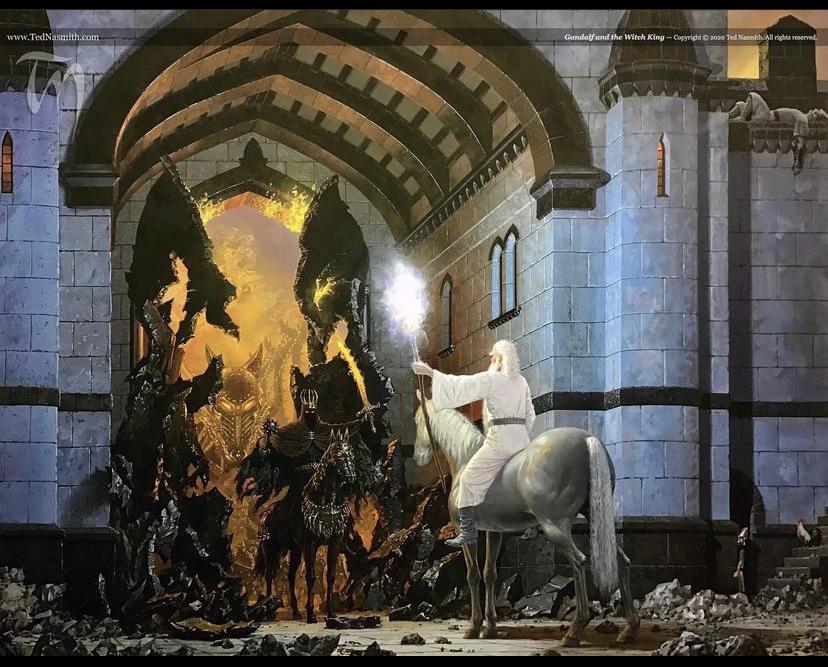
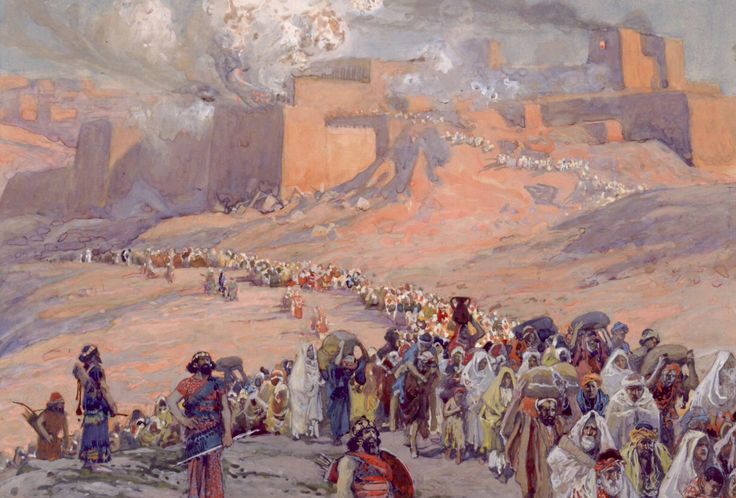
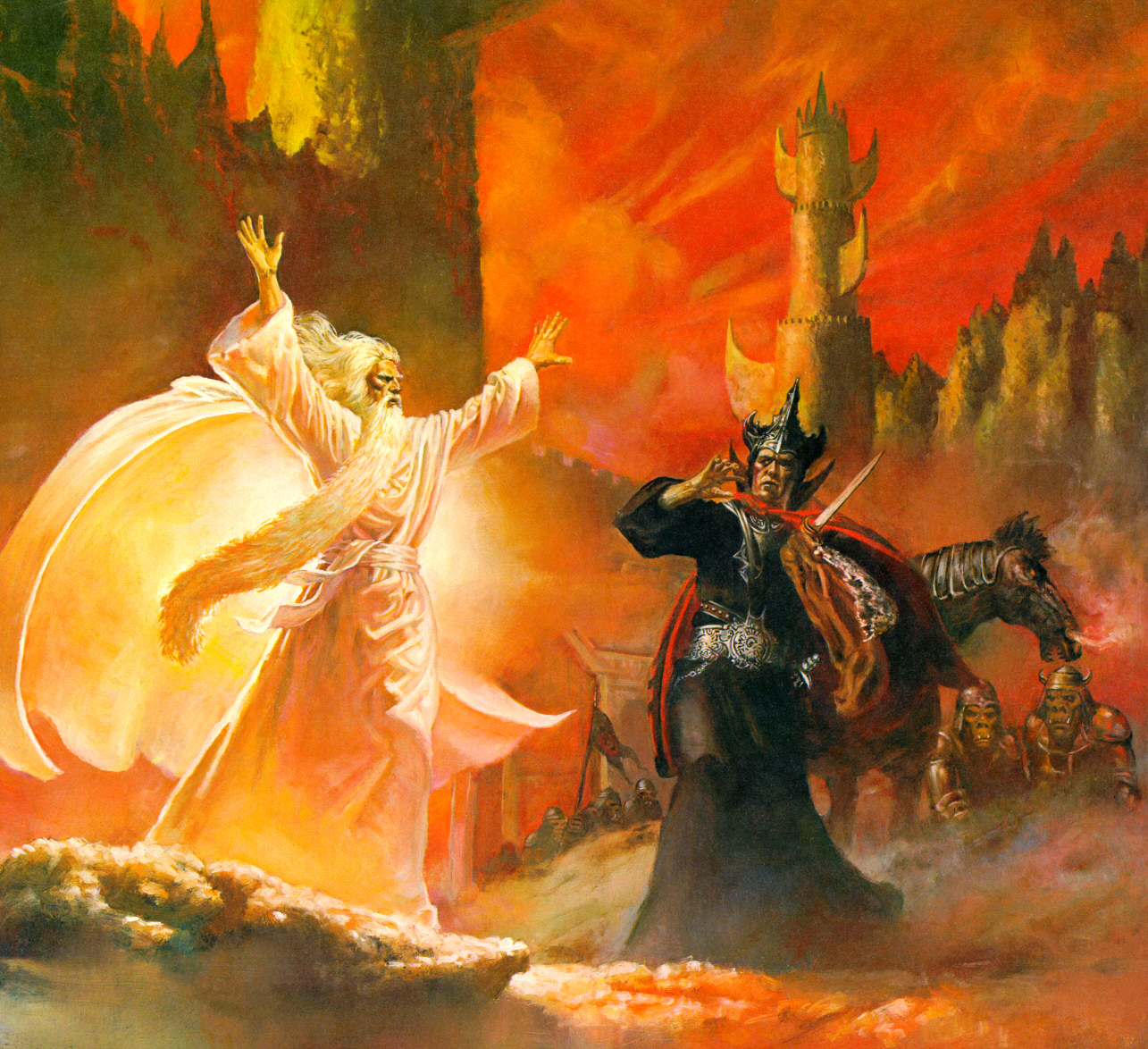
• About

doubtfulsea

~ adventure fantasy

Tag Archives: Fantasy

Do You Speak Villain? (Part 1)

04 Wednesday Feb 2026

Posted by Ollamh in Uncategorized

≈ Leave a comment

Tags

Fantasy, Gandalf, lotr, rhetoric, Saruman, Sauron, speaking villain, The Lord of the Rings, The Ring, Tolkien

As ever, welcome, dear readers.

How do antagonists talk? 

If you do a quick search of the internet for discussion on creating villains, you can be almost overwhelmed with all the advice you find.  Much is about behavior, but one important point which I’ve seen more than once (I’m quoting here from Gillian Adams’ website) is to avoid:  “1. Grandiose Speeches”.  (For more of her list, see:  https://gillianbronteadams.com/2011/12/villainy-101/ )   Such speeches can easily lead to what beginning writers are often warned against and which is commonly called an “information dump”, where an author employs that grandiose speech to fill in a great deal of plot—often criticized as lazy writing.

Tolkien was certainly, if anything, not a lazy writer and I thought that it would be fun to look at the speech not of one antagonist, but of several, in The Lord of the Rings to see how he portrays their dialogue and, through it, them.

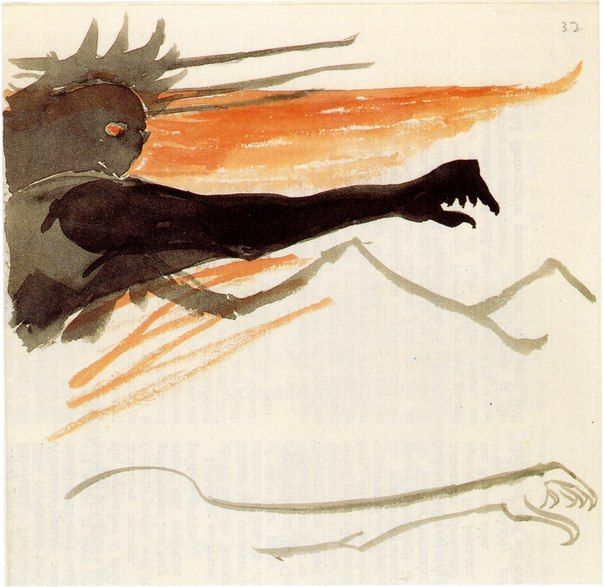
Sauron, the chief antagonist, although he presents the main difficulty in the story has, unfortunately, few lines—just questions and imperatives—but then he’s only an eye—

although I suppose we could take that brevity as implying that, as a character, he is nothing but a strong will, used to making demands on all those around him and expecting instant obedience.

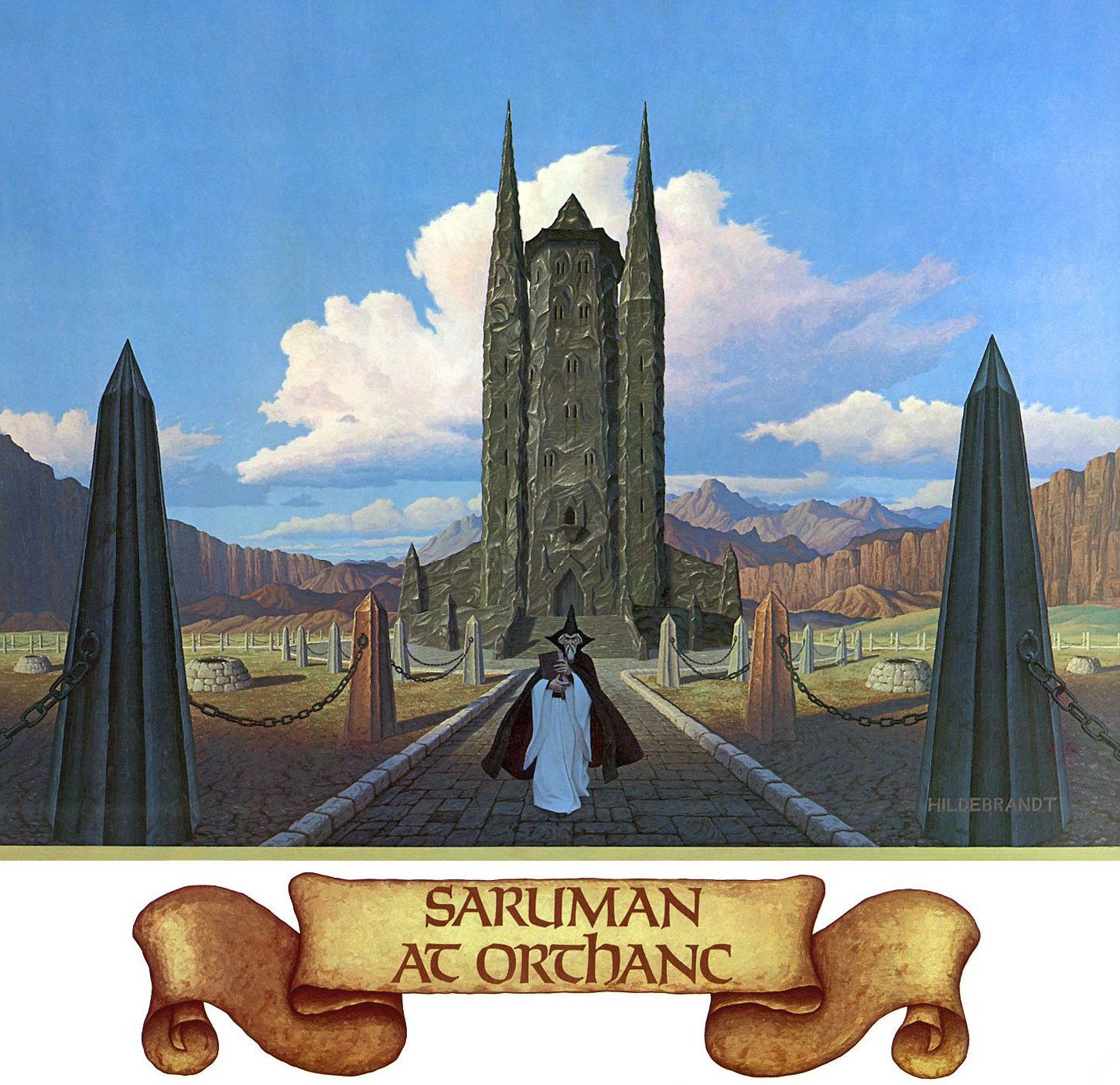
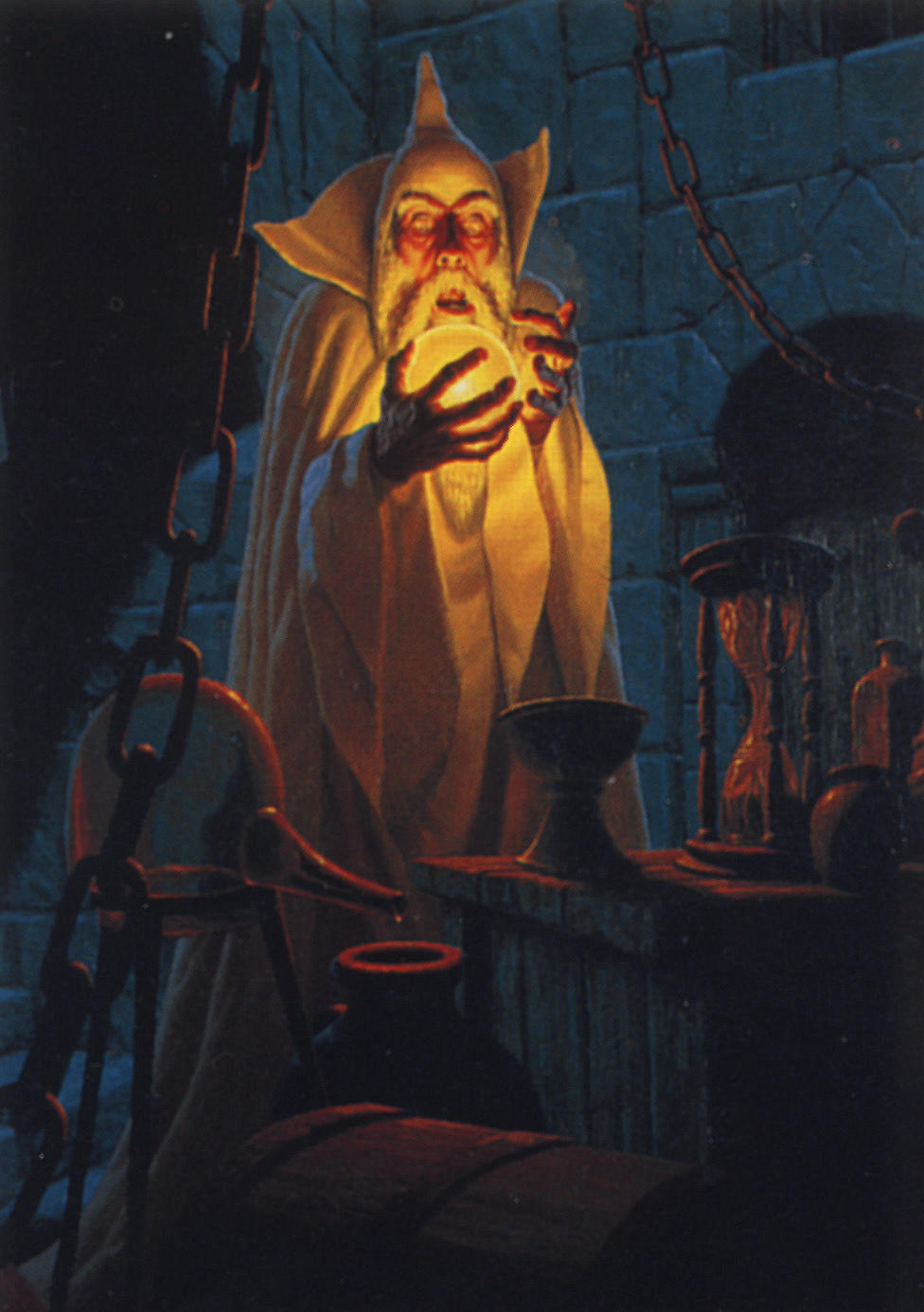
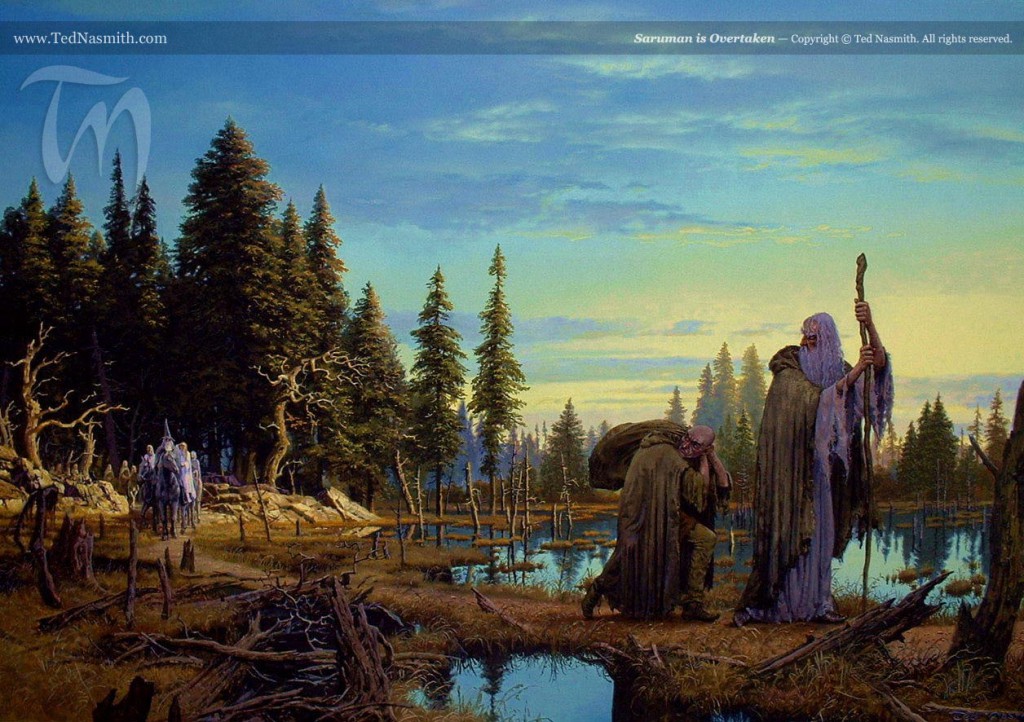
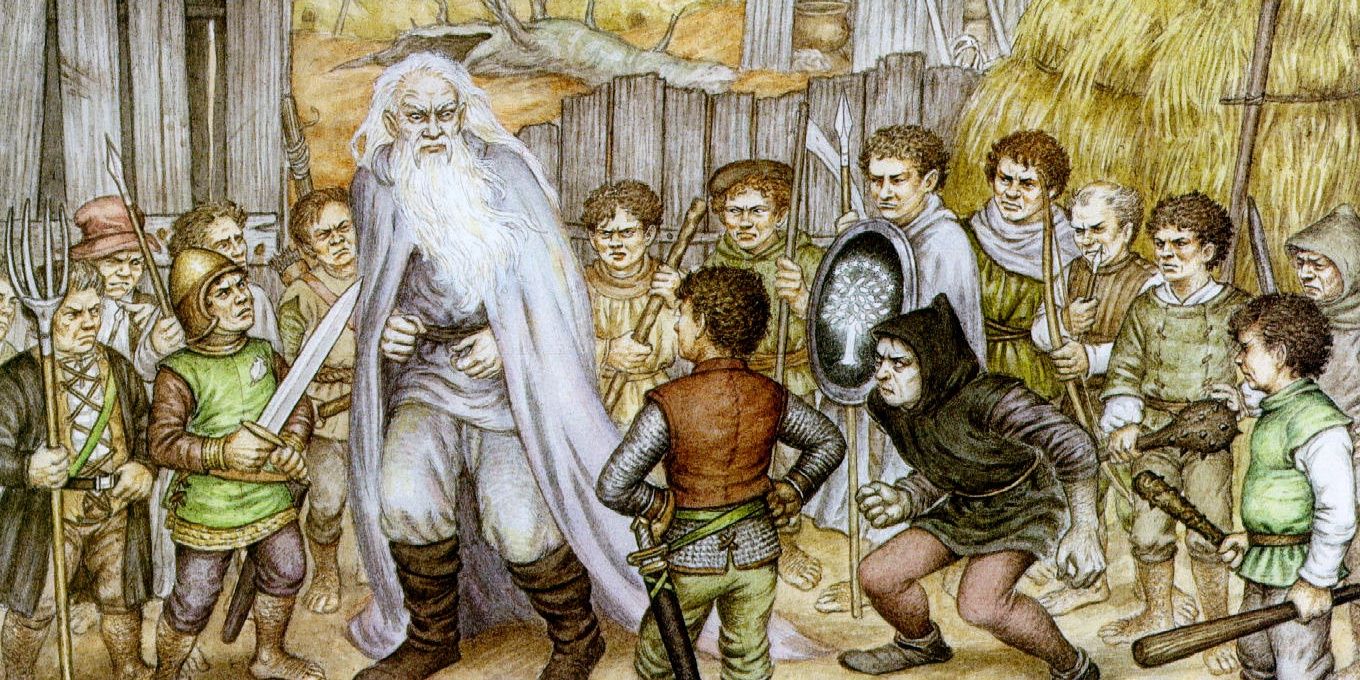
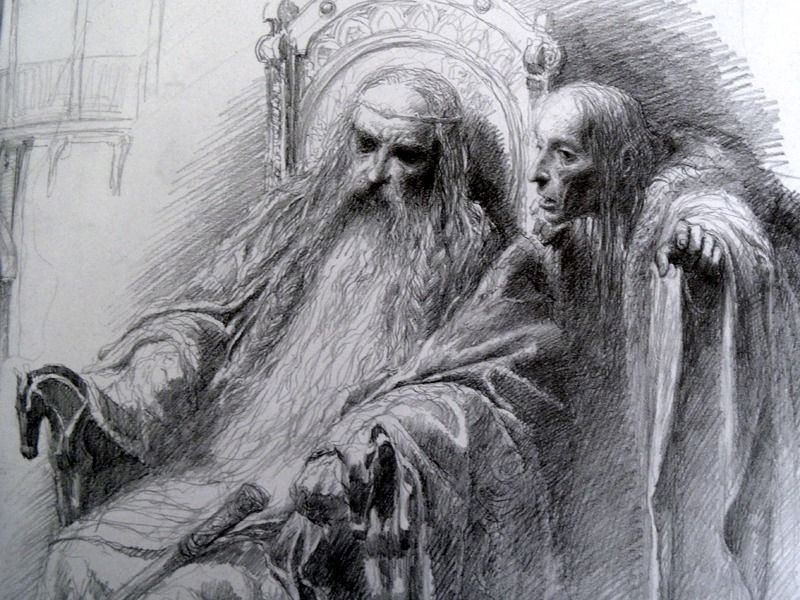
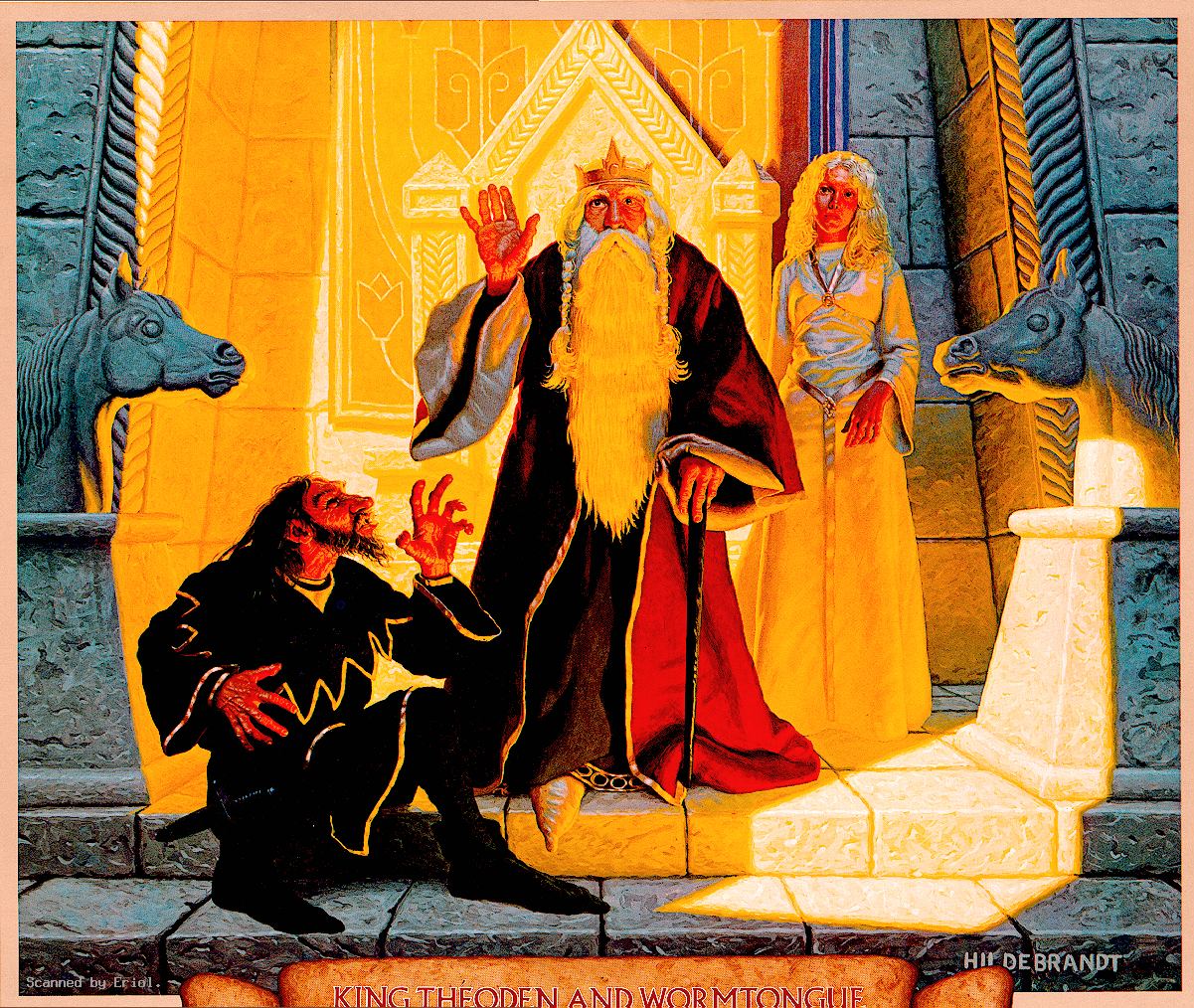
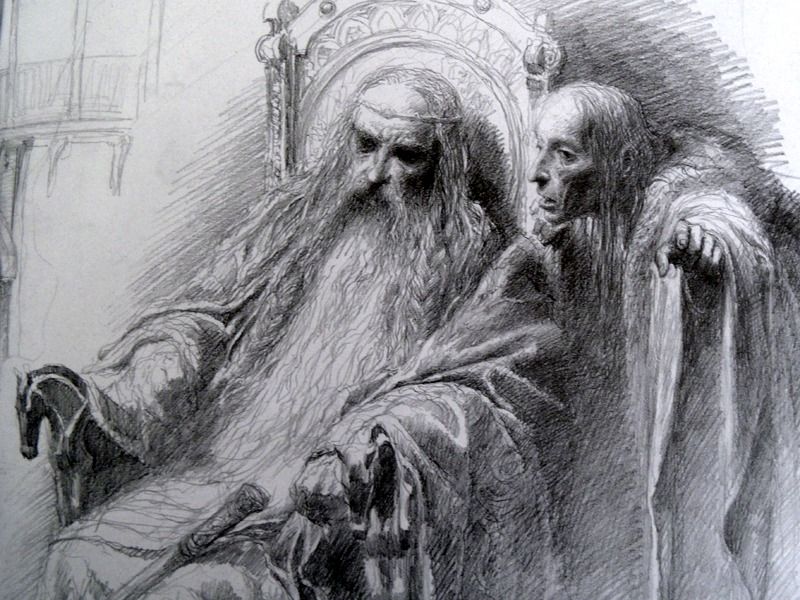
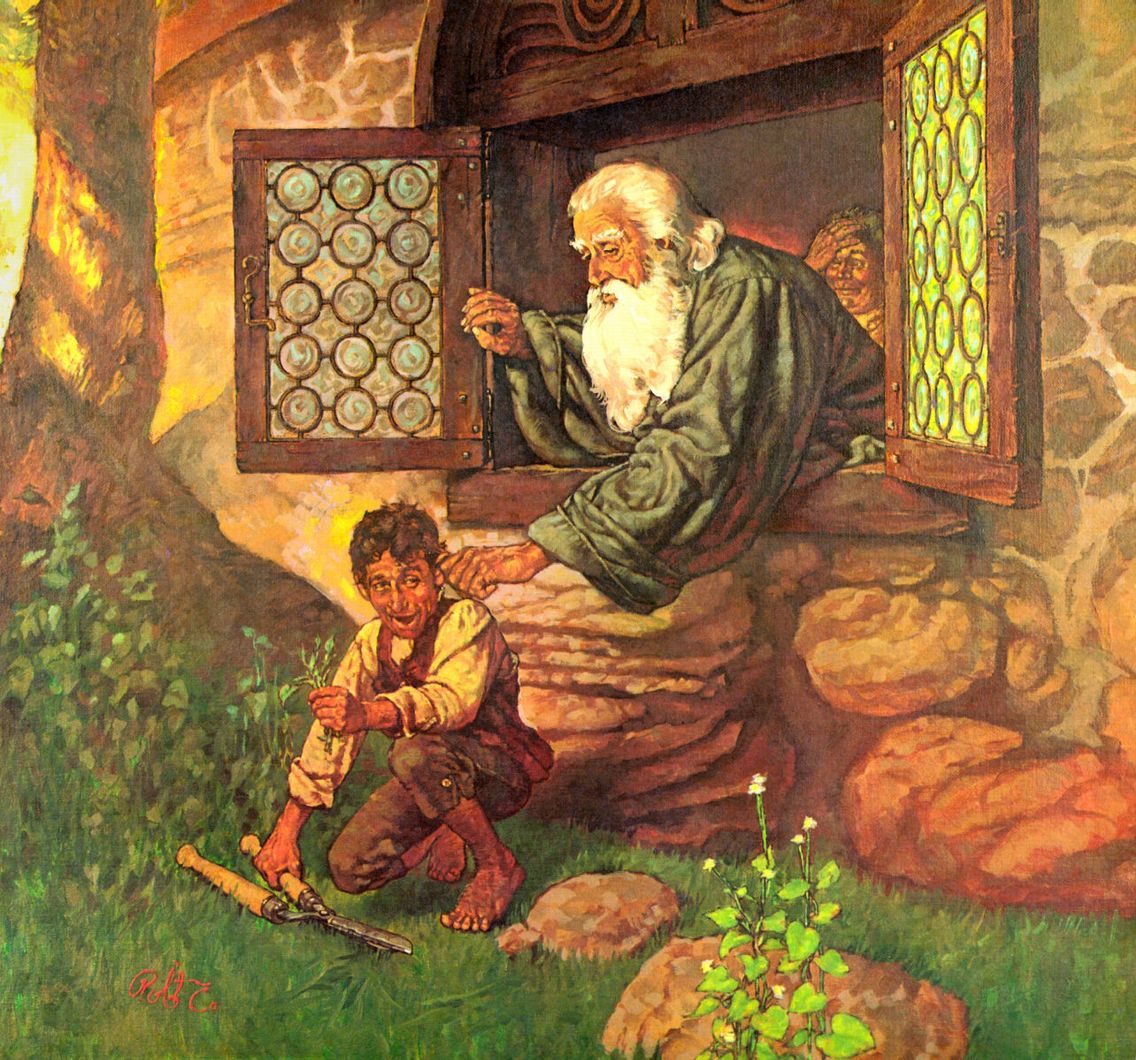
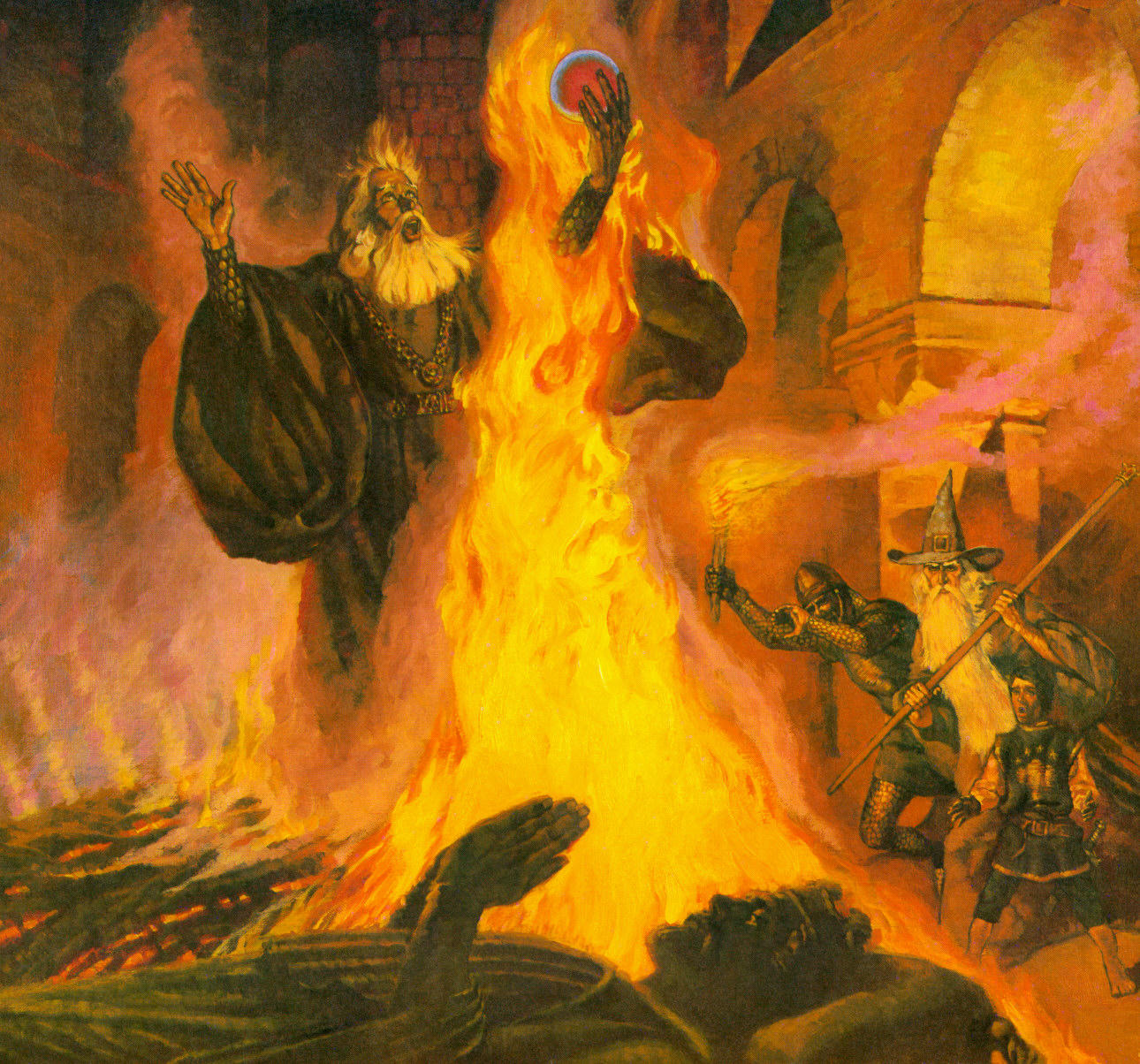
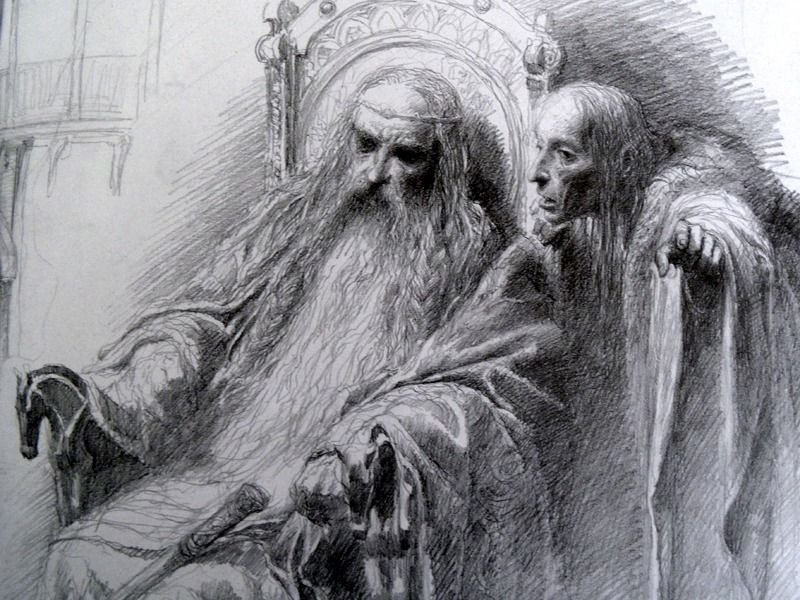
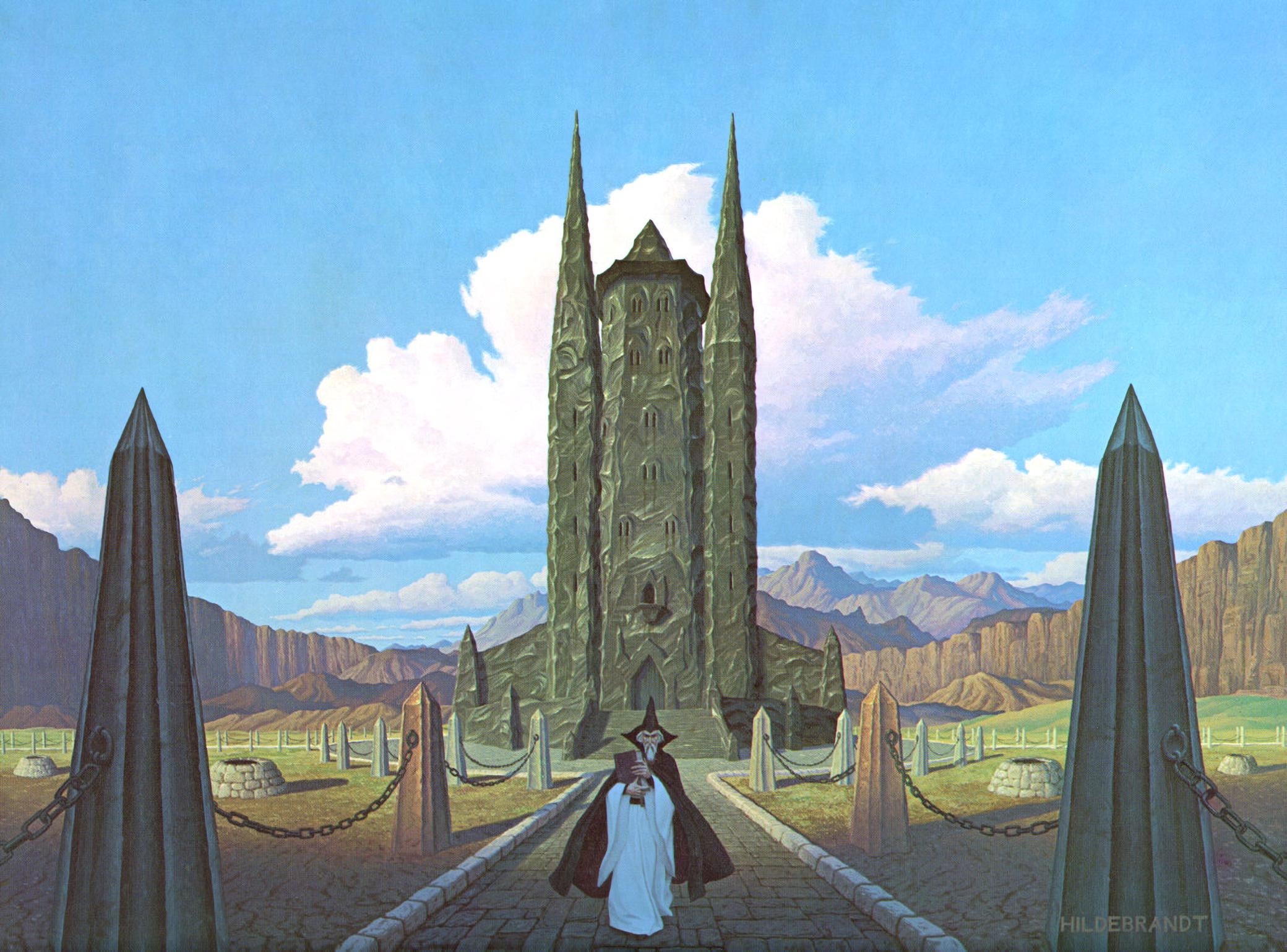
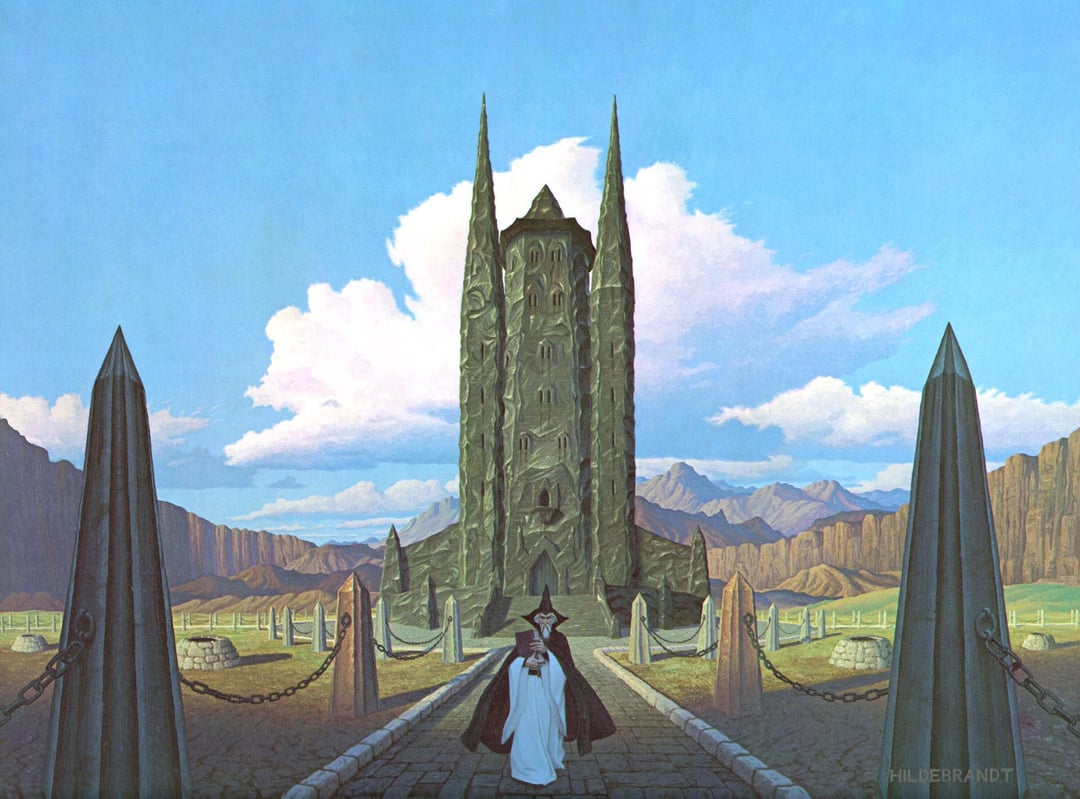
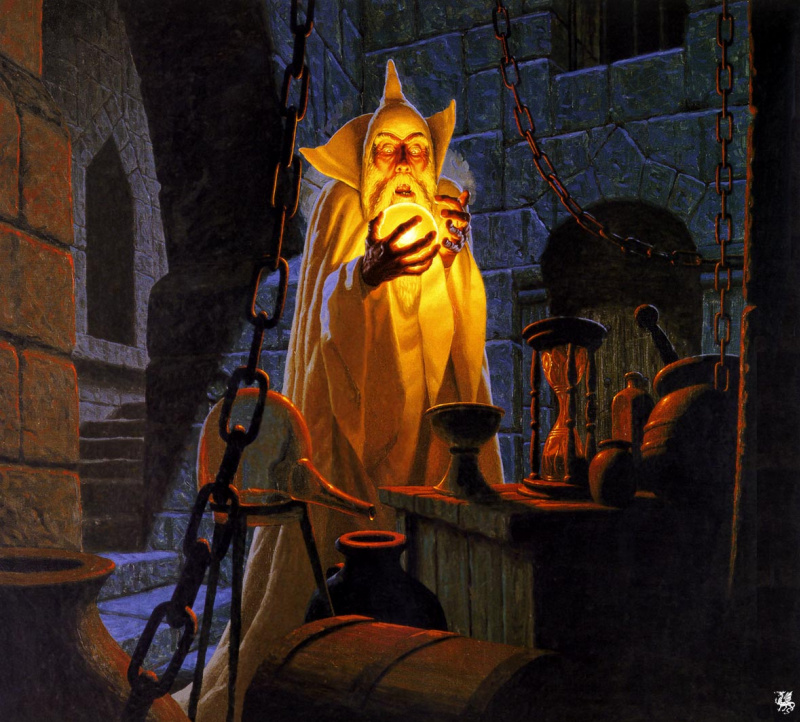
So let’s begin with his (although he doesn’t know it) minion, Saruman—

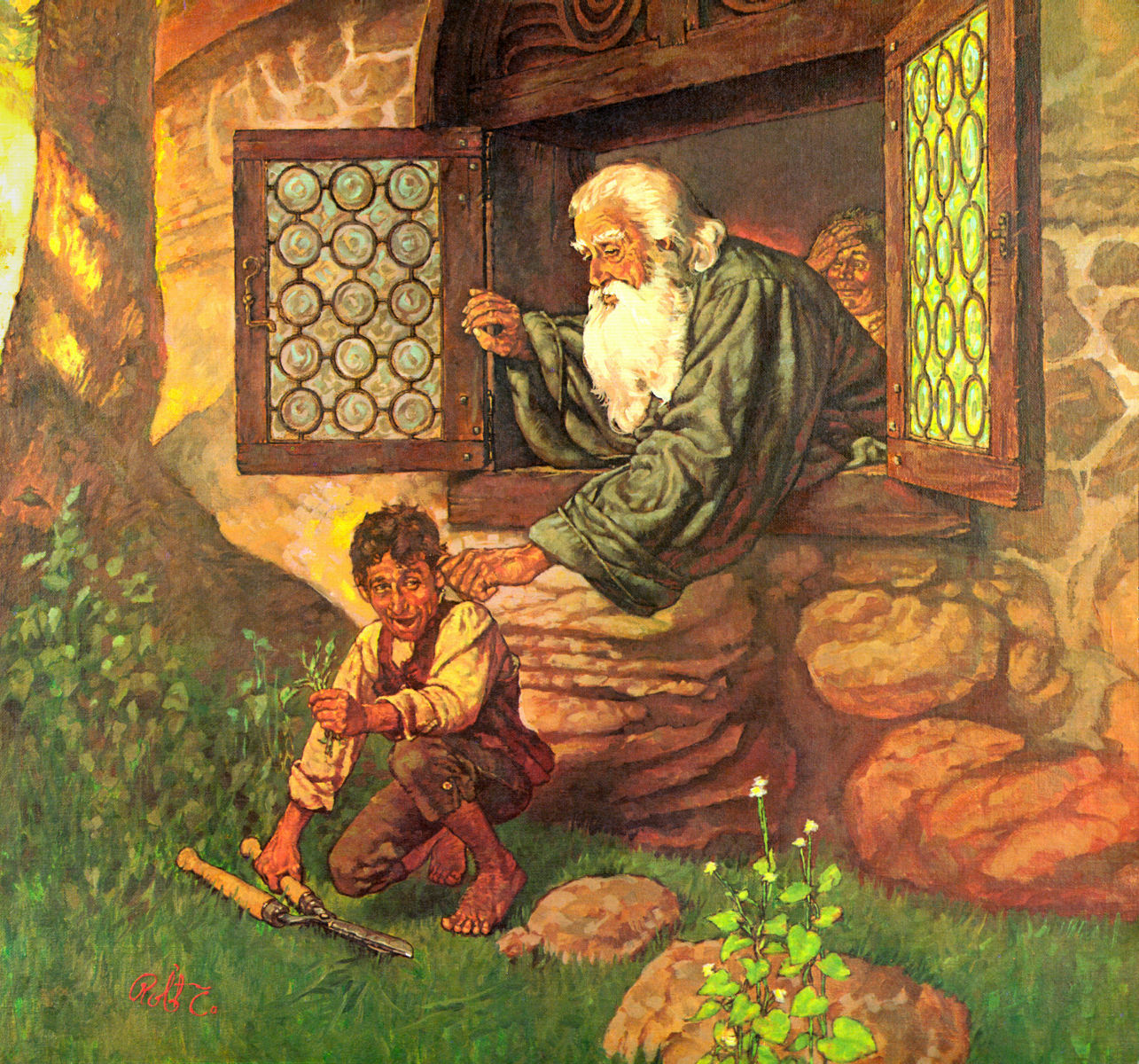
(the Hildebrandts)

as initially reported by Gandalf.

Saruman, although, through Radagast the Brown, has sent for Gandalf, is hardly welcoming:

“ ‘So you have come, Gandalf…For aid?  It has seldom been heard of that Gandalf the Grey sought for aid, one so cunning, so wise, wandering about the lands, and concerning himself in every business, whether it belongs to him or not.’”

This leads him to continue:

“ ‘How long, I wonder, have you concealed from me, the head of the Council, a matter of greatest import?  What brings you now from your lurking-place in the Shire?’ ”

So, we hear sarcasm,–“so cunning, so wise” and “lurking-place”–but then there’s something more—and  it seems characteristic of Saruman that this villain, at least, can be quite roundabout in coming to the point—the real point—of his invitation.  But then we’re shown something which begins to look like he’s launching into the Grandiose–

“ He drew himself up then and began to declaim, as if he were giving a speech long rehearsed“ Gandalf begins—and notice that we’re being given stage directions, providing us with an idea not only of Saruman’s posture, but of his tone—this is an oration, not an intimate conversation:

“ ‘The Elder Days are gone.  The Middle Days are passing.  The Younger Days are beginning.  The time of the Elves is over, but our time is at hand:  the world of Men, which we must rule.  But we must have power, power to order all things as we will, for that the good which only the Wise, can see.’ “

Here, in true oratorical fashion, Saruman provides a preface:  three grand ages—and note, as well, that rhetorical pattern of three—of which the first is gone, the second about to be gone, and the third just coming into being.  And then he begins to come to his point—but only begins:  “the world of Men, which we must rule.”  Upon which he then expands:  “But we must have power, power to order all things as we will, for that good which only the Wise can see.”

So far, then, this definitely might seem like it was leaning towards the Grandiose—although JRRT has already suggested that Gandalf is aware of that lean by having him say that Saruman seems not to be speaking naturally, but declaiming.  At the same time, however, we can also see that, although Saruman’s subject is power, he suggests that Gandalf is his natural confederate in gaining it, attempting flattery—“…we must have power, power to order all things as we will…’ ” and that “we” are the [capital W] Wise.

From declamation, Saruman slips into the more conversational—really conspiratorial—tone:

“ ‘And listen, Gandalf, my old friend and helper!’ he said, [and another stage direction here] coming near and speaking now in a softer voice, ‘I said we, for we it may be, if you will join with me.’ “

From a history lesson, Saruman has quickly exposed his real theme, and he continues:

“ ‘A new Power is rising.  Against it the old allies and policies will not avail us at all.  There is no hope left in Elves or dying Numenor.’ “

So—not even men—after all, Numenorians—or, rather the descendants of the Numenorians—are men—are enough, and the Elves are just about out of the picture, meaning that, potentially, not only is there no hope left in either of them, but no hope left at all—but hope of what, Saruman has not yet said.  He’s about to hint at it, however, continuing his roundabout method:

“ ‘This then is one choice left before you, before us.  We may join with that Power.  It would be wise, Gandalf.  There is hope that way.  Its victory is at hand; and there will be rich reward for those that aided it.’ “

Still not saying what that hope might be of—until

“ ‘As the Power grows, its proved friends will also grow; and the Wise, such as you and I, may with patience come at last to direct its courses, to control it.’ “

Saruman’s hope, then, is that he—uh, they—although unable to resist that Power (as Saruman persists in capitalizing it), can come to be its directors—

“ ‘We can bide our time, we can keep our thoughts in our hearts, deploring maybe evils done by the way…’ “

  And now, discarding rhetoric, Saruman has begun to reveal himself:  once sent by the Valar as a counterbalance to Sauron, to gain his own power, Saruman is willing to act like the very one he was sent against—or worse:

“ ‘…but approving the high and ultimate purpose:  Knowledge, Rule, Order; all the things that we have so far striven in vain to accomplish, hindered rather than helped by our weak or idle friends.’ “

If the Valar had meant the Maiar, the Wizards, to oppose Sauron, their purpose was certainly not to gain abstractions like “Knowledge, Rule, Order” (which sounds like something from Orwell’s 1984) and Saruman gives away his own “high and ultimate purpose” in this and underlines it with:

“ ‘There need not be, there would not be, any real change in our designs, only in our means.’ “

Tolkien so far, then, has shown Saruman through his speech as sarcastic, then pompous, acting like a public orator in front of a crowd, although speaking only to Gandalf—then sly, attempting to flatter by suggesting that: 

1. Gandalf is his “old friend and helper”

2. and that, if Gandalf goes along, he, too, will be one of “the Wise”

as well as glossing over what Gandalf might object to—“deploring maybe evils done by the way”, to achieve goals which seem the very opposite of that of the Valar—“Knowledge, Rule, Order”, and continuing that slyness by not defining any of those, simply implying that Gandalf must already not only understand them, but have already been a partner in working towards them in the past—although we notice that, although he’s called Gandalf “his old friend”, he has added “and helper”, reducing Gandalf to a subordinate position with that one word.

Still, Saruman continues to be oblique—he talks about the Power, talks about somehow coming to manage and direct it although never suggesting how, but, when Gandalf objects, he comes a little closer to the point—with more stage directions:  “drew himself up”, “speaking now in a softer voice”,

“He looked at me sidelong, and paused a while considering.  ‘Well, I see that this wise course does not commend itself to you…Not yet?  Not if some better way can be contrived?’

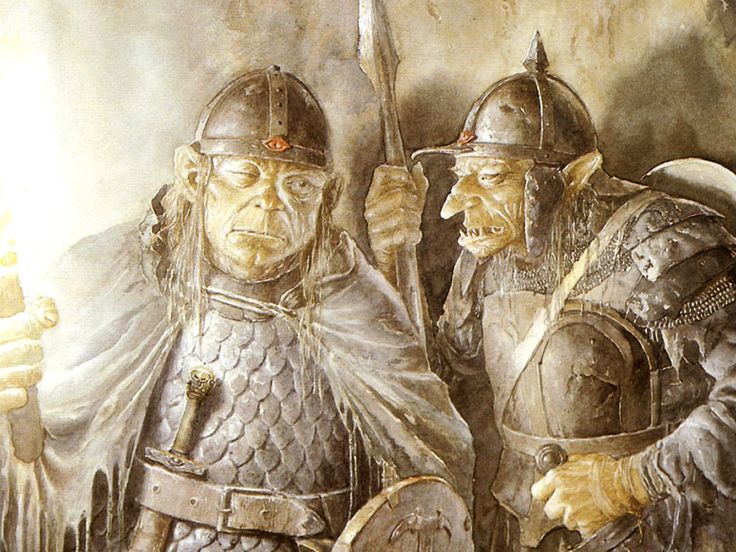
He came and laid his long hand on my arm. [Think here about Saruman’s badge—on the shields and helmets of his orcs]

“ ‘And why not, Gandalf?’ he whispered.  ‘Why not?  The Ruling Ring?’ “

And now we come to the real reason for Saruman’s invitation:

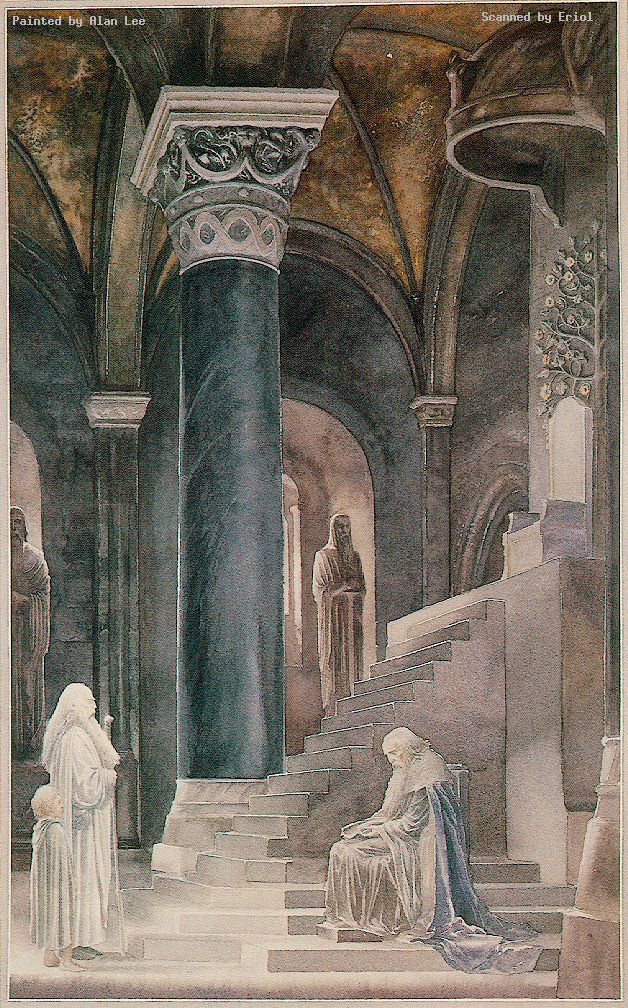
“ ‘If we could command that, then the Power would pass to us.  That is in truth why I brought you here.  For I have many eyes in my service, and I believe that you know where this precious [from Saruman’s badge to Gollum with one word!]

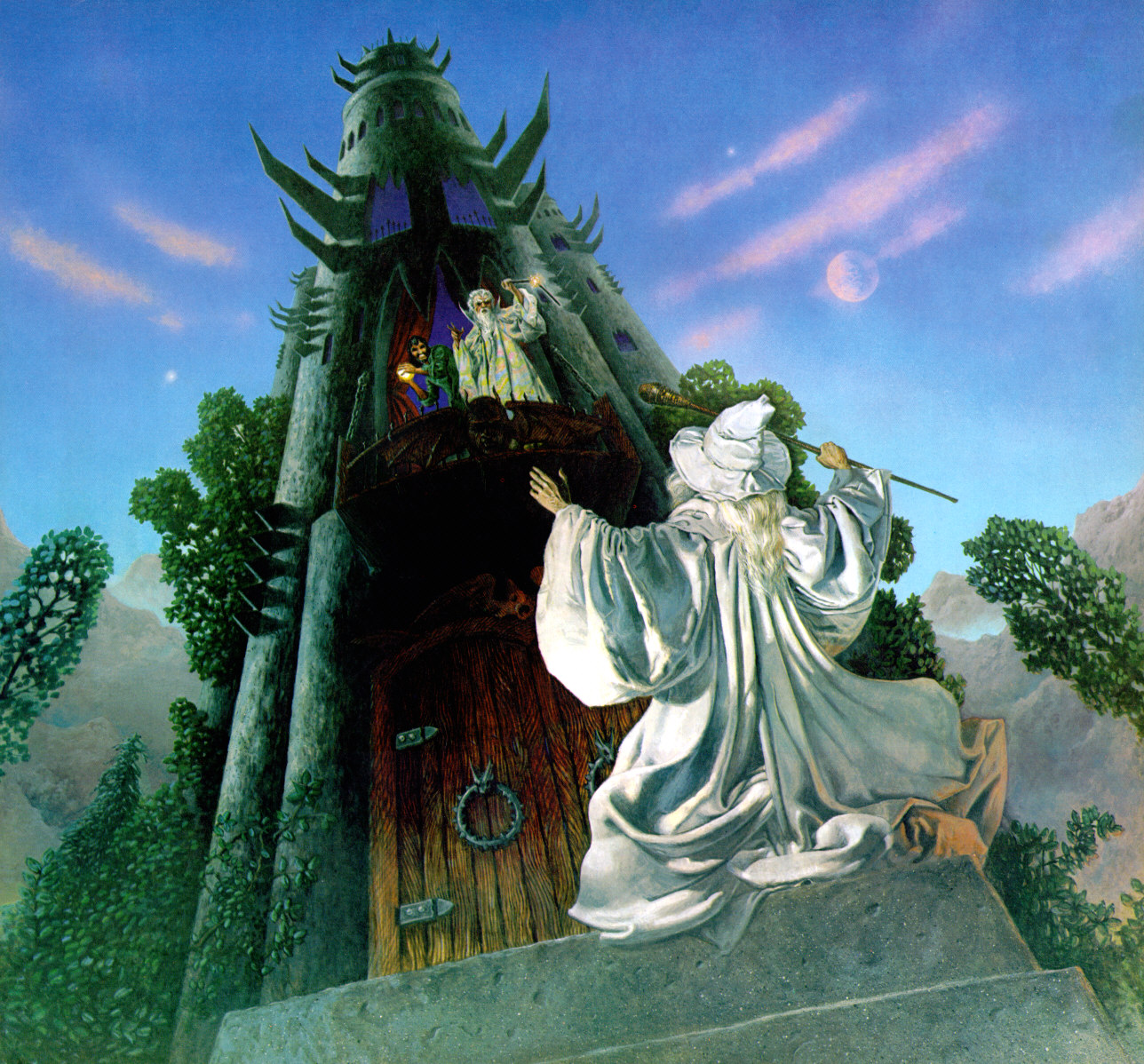
(Alan Lee)

thing now lies.  Is it not so?  Or why do the Nine ask for the Shire, and what is your business there?’ “

So, so far, we’ve seen Saruman’s speech as sarcastic, pompous/declamatory, sly, and whispering/conspiratorial, but, when Gandalf once more rejects his approach, he takes on one more tone–menace:

“He was cold now and perilous.  ‘Yes,’ he said, ‘I did not expect you to show wisdom, even in your own behalf; but I gave you the chance of aiding me willingly, so saving yourself much trouble and pain.  The third choice is to stay here, until the end…Until you reveal to me where the One may be found.  I may find means to persuade you. Or until it is found in your despite, and the Ruler has time to turn to lighter matters:  to devise, say, a fitting reward for the hindrance and insolence of Gandalf the Grey.’ “

(all of the quotations are from The Fellowship of the Ring, Book Two, Chapter 2, “The Council of Elrond”)

What has happened to “my old friend and helper”?  and “the Power would pass to us”?  Now it’s “I gave you the chance of aiding me” and someone wants to become “the Ruler”.  Although Tolkien has provided us with a certain number of physical clues, as in“laid his long hand on my arm”, it’s in his manner of speaking and how it changes throughout the scene that we see Saruman,  once the Head of the Maiar, become “Saruman the Wise, Saruman Ring-maker, Saruman of Many Colours!”, traitor to the good people of Middle-earth, far from his original mission, and ultimately not “the Ruler” he foolishly assumes that he will be, with or without Gandalf.

In Part 2, we’ll move from this greater villain to much lesser ones, to see what their speech tells us about them.

As always, thanks for reading.

Stay well,

Beware of people who call you “my old friend”, and then threaten you,

And remember that, as always, there’s

MTCIDC

O
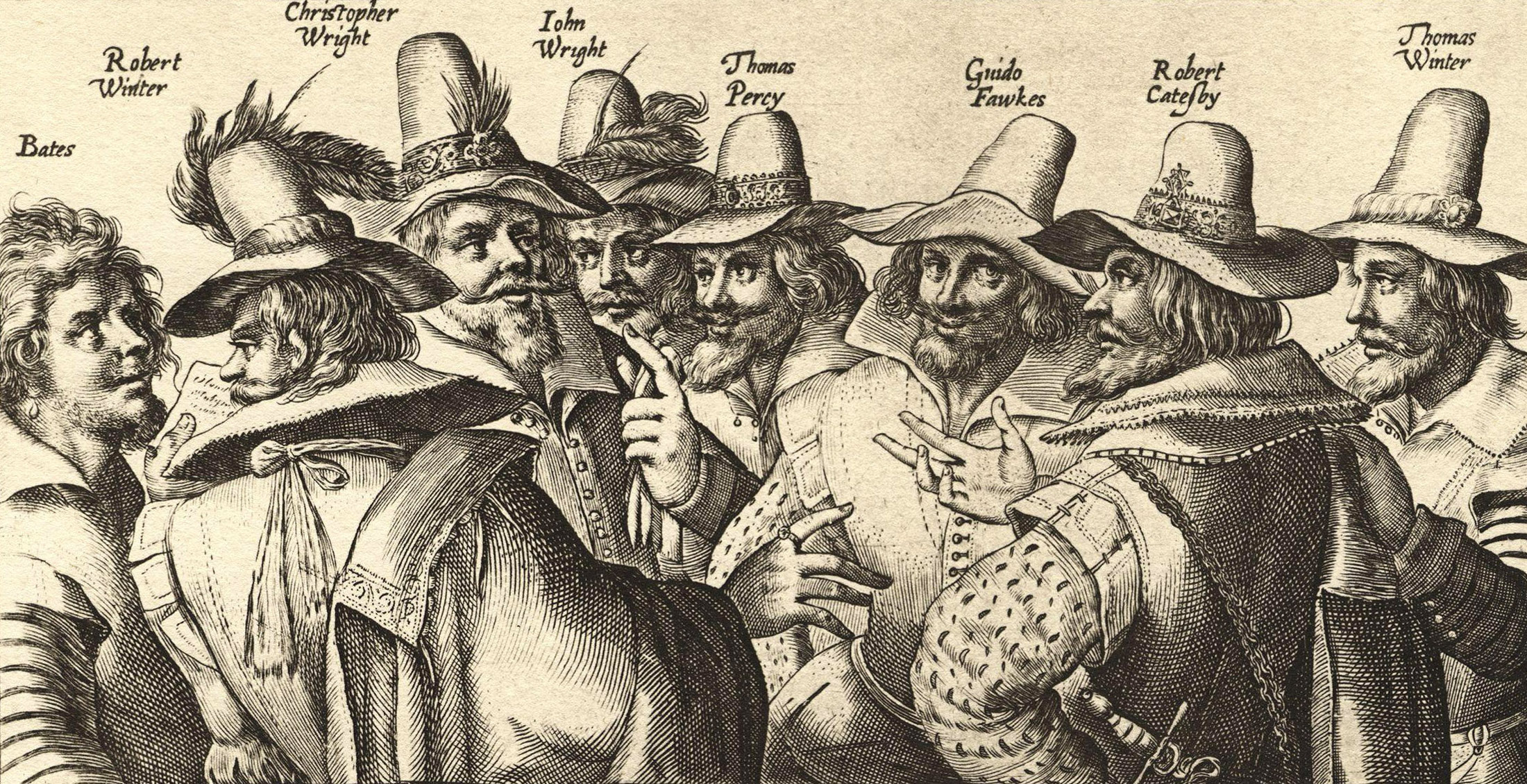
PS

For more on Saruman’s manner of speaking—in his second appearance, when he’s a prisoner in his own tower—see:  “By Ear (2)”, 14 May, 2025.

Towering

28 Wednesday Jan 2026

Posted by Ollamh in Uncategorized

≈ Leave a comment

Tags

battering ram, Fantasy, Helm's Deep, Helms Deep, Hera, Hornburg, mangonel, movies, siege, siege tower, sieges, The Lord of the Rings, The War Of the Rohirrim, Tolkien, trebuchet, undermining, Wulf

Welcome, as always, dear readers.

This is another in a short series of mini-reviews of The War of the Rohirrim, a film which I’ve now, as is my custom, seen several times before I review it.  It’s complex enough, I would say, to make it worth taking it apart and reviewing different sections/details–for another in the series, see:  Heffalumps? 31 December, 2025.  The previous review was about the introduction of a mumak into the story, for which there was no textual authority in the 2+ pages of the original in Appendix A of The Lord of the Rings and, on the same theme, I want to talk a little more about that earlier war.

If you were an ancient Roman

or medieval

soldier, and you were faced with an enemy’s wall,

you would have a number of options.  The most dangerous would be to pick up a ladder and attempt to climb—an escalade–

as, after all, high on a ladder, exposed to the enemy above you and, with men climbing below you making it difficult to climb down, you would be in a very awkward position—so perhaps other choices would be preferable?

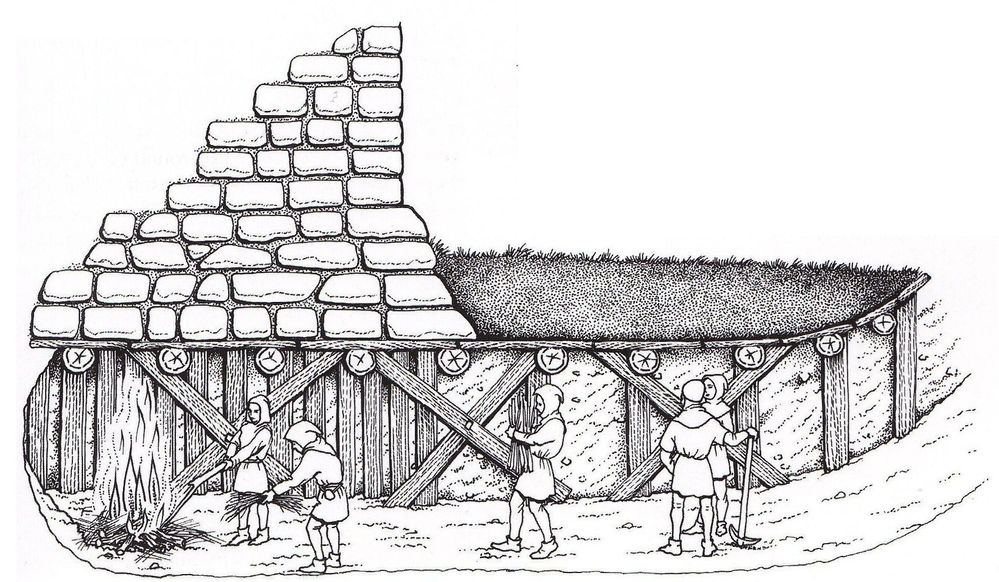
One possibility would be to dig under.

And here in this illustration we see two choices, really:

1. digging a tunnel all the way under the wall and popping out behind the defenders

2. undermining the wall:  cutting away the ground below the wall, substituting wooden props for the missing ground, then setting fire to the props so that the wall above, lacking support, would come crashing down (or so you would hope)  This worked at the siege of Rochester castle in AD1215, where it brought down a corner tower–

If, however, a wall had been built on a rocky base, as was sometimes the case, tunneling would not be a option.

Another choice:  try battering the wall with a ram (or the gates—often the weakest point)

(Julius Caesar, in his commentaries on his campaigns in Gaul, used the image of battering to suggest that, although he was always inclined towards clemency, once one of his rams had touched an enemy’s town wall (in this case that of the Atuatuci) and those inside hadn’t surrendered–si prius quam murum aries attigisset se dedidissent—his clemency was at an end—and so was the town.  See Caesar De Bello Gallico, Book II, Chapter XXXII (32) for the quotation, either in Latin here:  https://www.thelatinlibrary.com/caesar/gall2.shtml or in English here:  https://classics.mit.edu/Caesar/gallic.2.2.html  Interesting to note that Caesar also describes the Roman use of a siege tower just before this—see Chapters XXX and XXXI.)

(Lincoln Renall—an artist who seems to be able to draw/paint anything—see more about his work here:  https://lincoln.artstation.com/ )

or, if the wall isn’t stone, but mud brick, try prying the wall apart—the ancient Assyrians even seem to have had a device dedicated to it (sometimes captioned as a “battering ram”, but it employed a kind of chisel, rather than a ram).

You might try a stone-thrower of some sort, gradually breaking down the wall from above, like this mangonel–

or its big brother, the trebuchet.

(for an interesting video on trebuchets and the damage they can do, see:  https://www.youtube.com/watch?v=QVO8VznqMeQ )

Then again, you could attempt to go over the wall with a siege tower, in what might be a safer manner than an escalade .

This is a machine made of wood, placed on rollers, built to approach a wall, but to be a little higher and, when it reaches the wall, a drawbridge is dropped and you and your companions rush across it, over the wall, and onto the walkway behind it, where, if your plan works, you then deal with the enemy soldiers there and move towards opening a gate below.  Instead of climbing on a totally exposed ladder set against a hostile wall, then, you will climb on a ladder protected by the tower, safe until you reach that drawbridge.  To  further insure the attackers’ safety, the tower has to be rolled as close to the wall as possible and the drawbridge has to fall onto the wall so that the assault team (you) won’t be vulnerable for long in passing from the tower to the walkway, although, after that, you’re on your own.  (The Atuatuci in Caesar’s narrative, first spot the tower from a distance and make fun of it, laughing at the idea that the Romans would build such a big thing so far away—until the Romans begin to move it closer and they stop laughing and talk surrender.)

We hear of such towers at the siege of Minas Tirith:

“Then perceiving that the valour of the city was already beaten down, the hidden Captain put forth his strength.  Slowly the great siege-towers built in Osgiliath rolled forward through the dark.”  (The Return of the King, Book Five, Chapter 4, “The Siege of Gondor”)

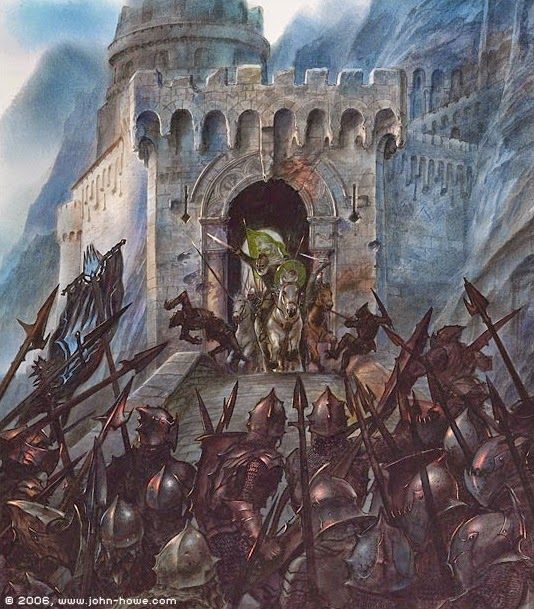
Saruman’s forces at the siege of Helm’s Deep don’t appear to use them, however, having only ladders,

but of course they also have early gunpowder, or something like it.

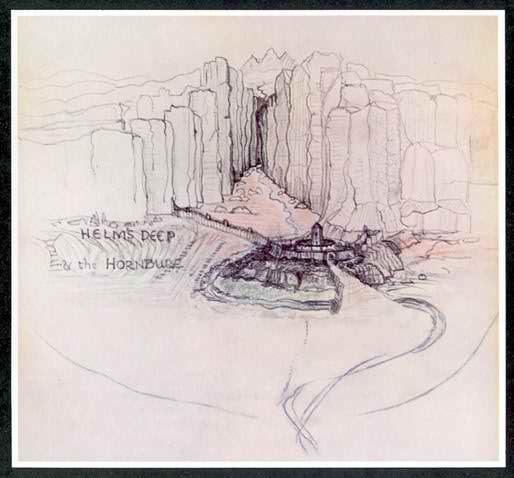
At the earlier attack on Helm’s Deep, almost 200 years before, as realized in 2024’s The War of the Rohirrim, we see an earlier use of a siege tower.  And here, as in the case of the mumak, this was created by the screen writers—there’s no mention of such a device in the brief summary of that earlier war which appears in The Lord of the Rings.  (See The Lord of the Rings, Appendix A, II “The House of Eorl”)  The siege of Helm’s Deep went through a long winter (“November to March, 2758-9” says the text), but says nothing at all about anything but a kind of standoff, in which Rohan’s enemies lay outside the Hornburg  and “Both the Rohirrim and their foes suffered grievously in the cold, and in the dearth which lasted longer.”  And it lasted until:

“Soon after the winter broke.  Then Frealaf, son of Hild, Helm’s sister, came down out of Dunharrow, to which many had fled, and with a small company of desperate men surprised Wulf in Meduseld and slew him, and regained Edoras.  There were great floods after the snows, and the vale of Entwash became a vast fen.  The Eastern invaders perished or withdrew and there came help at last from Gondor…Before the year (2759) was ended the Dunlendings were driven out, even from Isengard, and Frealaf became king.” (The Lord of the Rings, Appendix A, II “The House of Eorl”)

The film, however, has the siege continue while Wulf, the antagonist, commands the building of that siege tower—

(I apologize for the somewhat dim image—it’s a screen capture from the film, the best I can provide as this whole scene is very dark in the film.)

And the tower, as depicted, is hardly something of the sort created by Roman or medieval siege engineers, being tall and spindly—rickety might also be a useful term—with no protection at all for those inside.  In fact, it is built in place, rather than rolled up to the wall, so that, when finished, it needs an enormously long drawbridge which it seems like the entire besieging army then attempts to cross at once, including horses—something no ancient or medieval soldier would do, as, first, the bridge might not be able to take such weight and movement and, second, the watching enemy would fill such a mass of men and horses full of arrows before it could even cross to the wall.

“Hera”, the protagonist, then confronts Wulf at first on that very drawbridge—and on horseback—

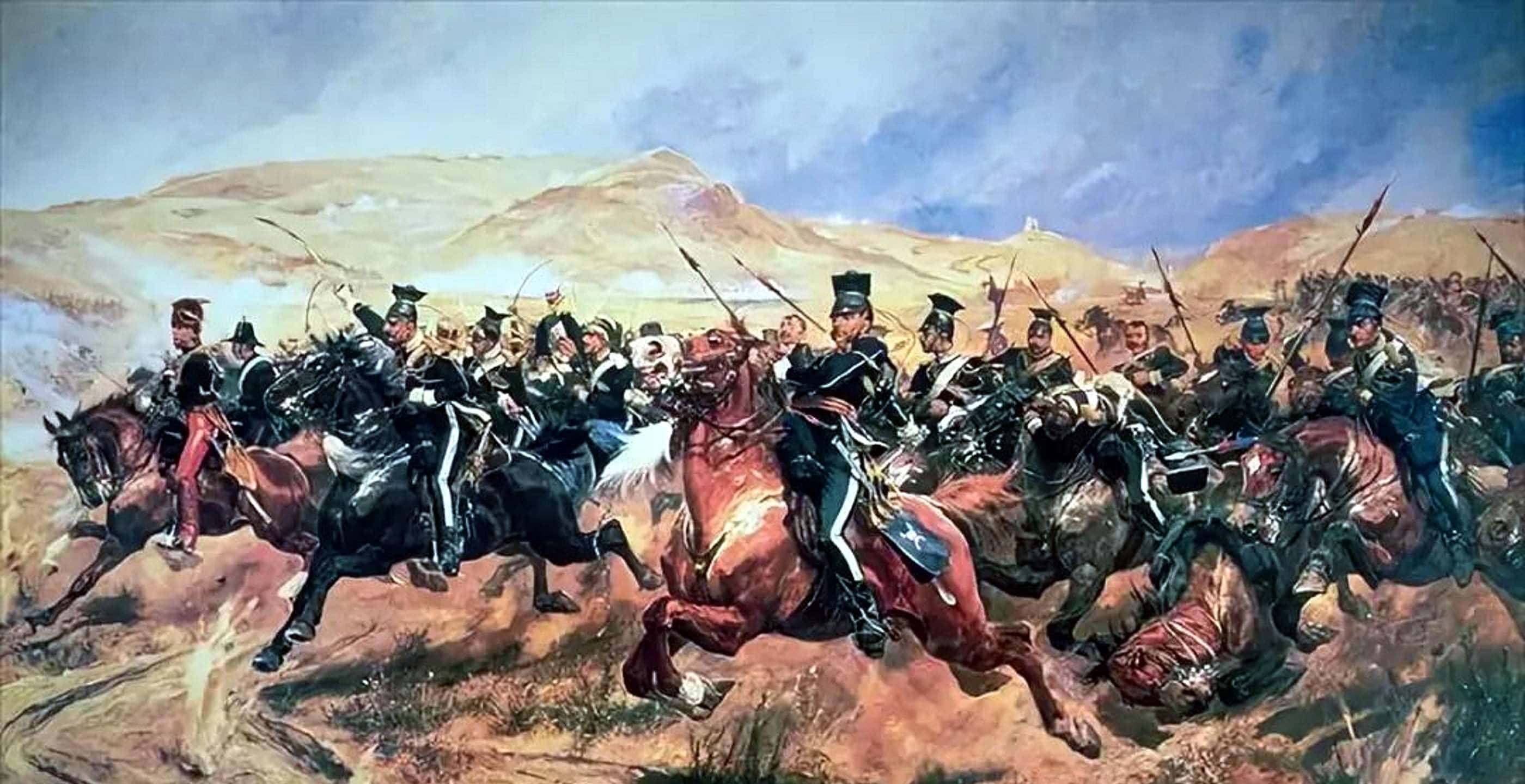
before finally killing him, rather improbably, with a shield, before standing back to see the besiegers fleeing from her cousin, Frealaf, coming like the cavalry in an old western.

(Frederick Remington)

As I’ve said before, I have nothing but praise for the hard work in making such a film, but look at what the script writers have done to Tolkien’s short text:

1. they employ a heroine plus several supporting characters, none of whom appears in JRRT’s text,

2. who then kills the main antagonist (who appears at the siege in the film when JRRT says that he’s back in Meduseld and is killed there)

3. after he attempts an assault via an impossible tower not mentioned in the narrative which Tolkien published.

As always, I approach films and books believing that those who create them are not out to cheat us, but to provide genuine entertainment and do so after long, hard labor, which clearly The War of the Rohirrim was.  At the same time, I wonder about the honesty of making so many changes and additions to a text, then attaching it to the work of an author who, long dead, had no say in what was done and, in fact, had very strong feelings about others making changes to his work.  With so many changes, it feels more like fan fiction, than the original, and, while I think fan fiction, if well-meaning, is a good tool for learning how to write, no one doing so should then attach the original author’s name to it.  All one has to read are Tolkien’s comments on an earlier attempt at filming his work (see his letter to Forrest J. Ackerman, June, 1958, in Letters, 389-397 ) to imagine what Tolkien would say and the best I can say is that he would be both puzzled and probably very unhappy.

Thanks, as ever, for reading.

Stay well,

If not rickety towers, at least avoid rickety bridges,

And know that, as always, there’s

MTCDIC

O

Tolkien Among the Indians

21 Wednesday Jan 2026

Posted by Ollamh in Uncategorized

≈ Leave a comment

Tags

Dickon Among the Indians, Fantasy, Ghan-buri-Ghan, James Fenimore Cooper, Native Americans, On Fairy-Stories, Orcs, Sam Gamgee, The Last of the Mohicans, The Lord of the Rings, Thte Last of the Mohicans, Tolkien, William Morris, Wose

Welcome, as always, dear readers.

I’ve borrowed the title of this posting from a 1938 book by M.R. Harrington, Dickon Among the Lenape Indians (shortened for a reprint to Dickon Among the Indians),

a very interesting attempt to recreate the lives of Algonkian-speaking Native Americans in New Jersey and eastern Pennsylvania at the beginning of colonization.  (Harrington was fortunate in having local Native Americans to help him in his research.  For more on Harrington, see:  https://en.wikipedia.org/wiki/Mark_Raymond_Harrington , himself a very interesting man.  Please note, by the way, that, although I will use “Indians” occasionally in this piece, when appropriate, I commonly employ the now-standard “Native Americans”.)

The subject of early Native Americans is worth many postings in itself, but where does JRRT fit in? 

Well, when you visualize Tolkien, what do you think of?

The schoolboy?

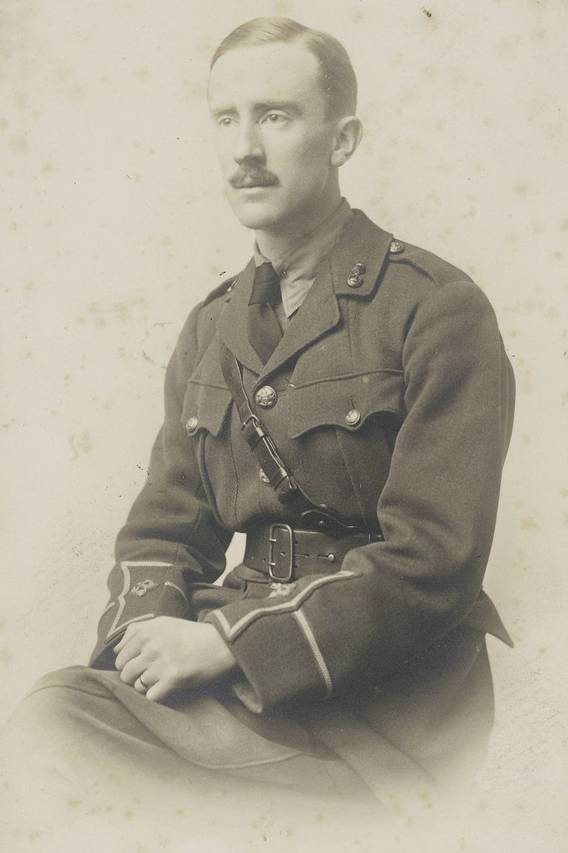
The 2nd lieutenant?

The serious professor?

The man who loved trees?

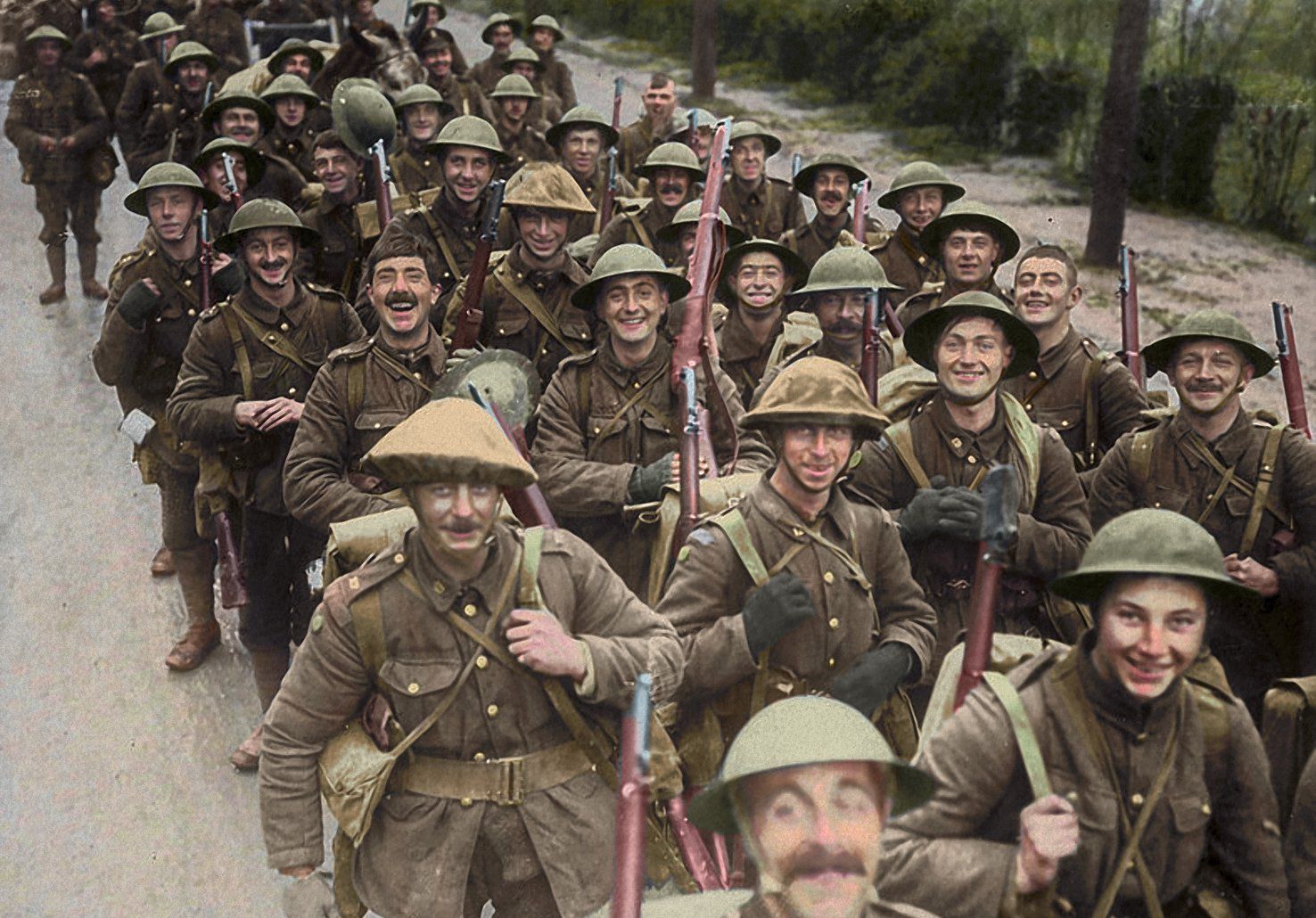
Suppose, however, instead of military caps

or the shapeless thing we see on his head in later pictures,

we provide him with something as splendid as this—

(A recreation of a Lakota war headdress)

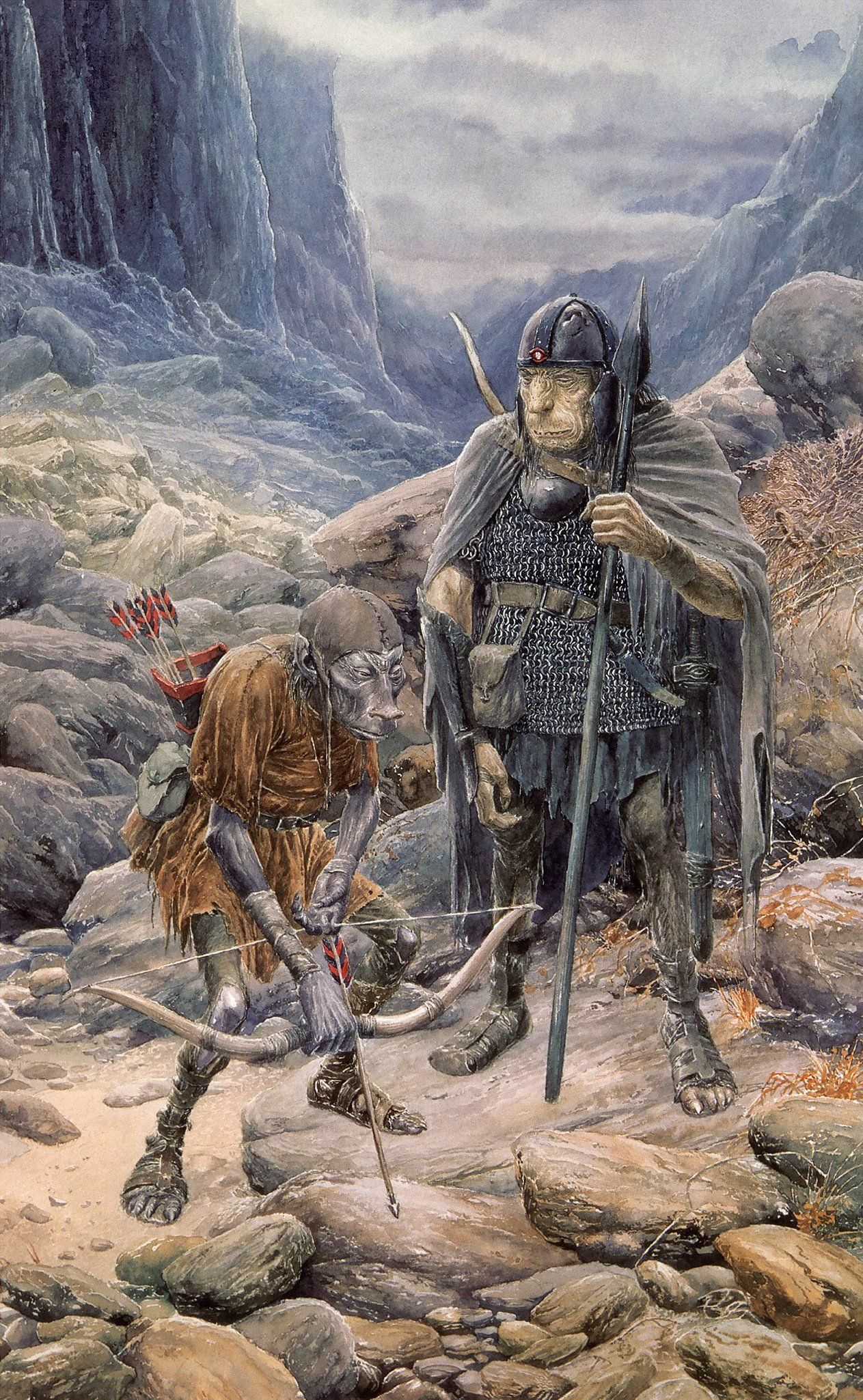
As a man obsessed (a radical term, perhaps, but really accurate, I would say) with language and languages, Tolkien had set himself a problem, when it came to his approach to The Lord of the Rings.  It was meant to be a translation, and he himself the editor/translator.  Although he would mix in bits of several languages he had invented, the main body of the text would be in English—but English would, in fact, substitute for what he called the “Common Speech”.   And yet, because of his passion for language, he wouldn’t allow for complete uniformity of speech, especially as not everyone in his Middle-earth spoke the Common Speech as their first language.  One possibility would be to approximate the Common Speech with marks for different accents—the speech of the Rohirrim, for instance, as speakers of what was actually a Germanic language (Old English), might be depicted with the effects of English-speaking Germanic speakers in Tolkien’s day.  There was definitely a danger in this, of course—the effect is easily overdone and Tolkien would have been well aware of things like what was—and is—called “stage Irish” with lots of “sure an begorras!  and “top of the mornin’s”, caricaturing, in fact, Anglo-Irish.  As far as I know, JRRT never considered this approach (although we notice that Sam speaks in a different dialect from Frodo—imitated in the Jackson films by having him speak what in the UK is called “Mummershire”, based upon the distinctive sound of West Country English).  Were there other possible models?  And, if so, what might be useful?  Consider the Orcs, for instance.  As Pippin notices, to his surprise, he can understand the Orcs who have captured him and Merry because the first who speaks to him speaks “in the Common Speech, which he made almost as hideous as his own language.”  (The Two Towers, Book Three, Chapter 3, “The Uruk-hai”)  The Orcs, then, although they use the Common Speech with outsiders, have their own distinctive language (actually languages, but use the Common Speech as their lingua franca—for more, see The Lord of the Rings, Appendix F, “Of Other Races”).

What, then, might Tolkien employ as a model for an Orc leader giving a speech, one which would be in the Common Speech, but yet distinctively Orcish—and yet not “stage Orchish”?

And here is where I suggest that Tolkien turned to his childhood reading and his interest in Native Americans—at least those he found in books.

If we go by something which he himself once remarked, perhaps this isn’t so far-fetched a theory as it might appear at first:

“I had very little desire to look for buried treasure or fight pirates, and Treasure Island left me cool.  Red Indians were better:  there were bows and arrows (I had and have wholly unsatisfied desire to shoot well with a bow), and strange languages, and glimpses of an archaic mode of life, and, above all, forests in such stories.”  (On Fairy-Stories in The Monsters and the Critics, 134  For those who might like to see if they remain cool to Treasure Island, see https://archive.org/details/treasureisland00stev/mode/2up  with its beautiful illustrations by N.C. Wyeth—and, if you do open it, be sure to read the epigraph:  “To the Hesitating Purchaser” as a kind of response to JRRT, although Tolkien would have been a toddler when Stevenson died in 1894.)

We know that William Morris (1834-1896)

 was a strong influence on Tolkien’s writing, inspiring medieval elements in JRRT’s work, but there may have been another influence we can detect, which provided a model, using Tolkien’s “strange languages, and glimpses of an archaic mode of life” as a clue—at least for speech:  the work of James Fenimore Cooper (1789-1851), a once-famous author of historical fiction about the 18th-century US, and, probably, the first author to present Native Americans to Tolkien.

So, how does an Orc leader speak?—sometimes collectively in a highly rhetorical fashion :

“We are the fighting Uruk-hai!  We slew the great warrior.  We took the prisoners.  We are the servants of Saruman the Wise, the White Hand:  the Hand that gives us man’s-flesh to eat.  We came out of Isengard and led you here, and we shall lead you back by the way we choose.  I am Ugluk.  I have spoken.”  (The Two Towers, Book Three, Chapter 3, “The Uruk-hai”)

Compare it, then, with this:

“We came from the place where the sun is hid at night, over

great plains where the buffaloes live, until we reached the big

river. There we fought the Alligewi, till the ground was red with

their blood. From the banks of the big river to the shores of the

salt lake, there was none to meet us. The Maquas followed at a

distance. We said the country should be ours from the place

where the water runs up no longer on this stream, to a river

twenty suns’ journey toward the summer. The land we had

taken like warriors, we kept like men. We drove the Maquas

into the woods with the bears. They only tasted salt at

the licks; they drew no fish from the great lake; we threw them

the bones.”

This is Chingachgook, a Mohican (the last, in fact), speaking to another major character, Natty Bumpo, in James Fenimore Cooper’s The Last of the Mohicans, 1826 (Chapter III—you can read the novel—again illustrated by N.C. Wyeth—here:   https://dn720005.ca.archive.org/0/items/lastofmohicansna00coop/lastofmohicansna00coop.pdf  I should add a small warning:  Cooper is a man of his time and therefore racism slips in here and there.  As well, he is not the world’s best prose stylist, but he was once a best-selling author and the first famous US novelist, so worth your time—and his basic story is still, as far as I’m concerned, a good one.  For comic criticism of him, however, see Mark Twain’s “Fenimore Cooper’s Literary Offences”,1895, here:  https://www.gutenberg.org/files/3172/3172-h/3172-h.htm ).

And such a manner of speaking might be adapted to other “strange languages, and glimpses of an archaic mode of life”–

“ ‘Let Ghan-buri-Ghan finish!…More than one road he knows.  He will lead you by road where no pits are, no gorgun walk, only Wild Men and beasts.  Many paths were made when Stonehouse-folk were stronger.  They carved hills as hunters carve beast-flesh.  Wild Men think they ate stone for food.  They went through Druadan to Rimmon with great wains.  They go no longer.  Road is forgotten, but not by Wild Men.  Over hill and behind hill it lies still under grass and tree, there behind Rimmon and down to Din, and back at the end to Horse-men’s road.  Wild Men will show you that road.  Then you will kill gorgun and drive away bad dark with bright iron, and Wild Men can go back to sleep in the wild woods.” (The Return of the King, Book Five, Chapter 5, “The Ride of the Rohirrim”)

(the Hildebrandts)

This is, in fact, the chief of the Woses, an early people of Middle-earth now confined to a forest area not far from Minas Tirith.  His home language (of which JRRT tells us very little) is clearly not the Common Speech and so his address to Theoden and his lieutenants follows that of Ugluk and, in fact, of Chingachgook, suggesting, once more by the use of the model provided long before by James Fenimore Cooper, that Tolkien has earned his own place “among the Indians”.

As ever, thanks for reading.

Stay well,

If someone from many centuries before the time of The Lord of the Rings, the chief Nazgul, speaks in what is meant to be an archaic dialect, what would Sauron, older yet, sound like?

And remember that, as always, there’s

MTCIDC

O
Thin and Stretched

14 Wednesday Jan 2026

Posted by Ollamh in Uncategorized

≈ Leave a comment

Tags

Bilbo, Death, Eowyn, Fantasy, Frodo, Gandalf, John Milton, lotr, Merry, Nazgul, Paradise Lost, Rings, Ringwraiths, The Lord of the Rings, Tolkien, Witch King of Angmar, Witch-King of Angmar

Welcome, dear readers, as always.

You recognized where the title of this posting comes from, I’m sure.  Bilbo and Gandalf

have been talking and Bilbo describes his current state:

“ ‘I am old, Gandalf.  I don’t look it, but I am beginning  to feel it in my heart of hearts.  Well-preserved indeed!…Why, I feel all thin, sort of stretched, if you know what I mean:  like butter that has been scraped over too much bread.’ “ (The Fellowship of the Ring, Book One, Chapter 1, “A Long-expected Party”)

(You’ll notice the pun here—as I’m sure JRRT did–in the combination of “preserve(d)”  with butter and bread—did he write this originally during breakfast one morning?)

After this, there is a very tense scene where Gandalf inquires about the Ring, Bilbo becomes hostile, but, in the end, Bilbo leaves the Ring and clearly feels great relief, even singing.

Nine years later, in a subsequent scene, after Gandalf had related, the previous night, some details about the Ring to Frodo, we can see what had been going on in Gandalf’s mind those nine years before and his concern for Bilbo then, persuading him to put the Ring aside:

“ ‘A mortal, Frodo, who keeps one of the Great Rings, does not die, but he does not grow or obtain more life, he merely continues, until at last every minute is a weariness.  And if he often uses the Ring to make himself invisible, he fades:  he becomes in the end invisible permanently, and walks in the twilight under the eye of the Dark Power that rules the Rings.  Yes, sooner or later—later, if he is strong or well-meaning to begin with, but neither strength nor good purpose will last—sooner or later the Dark Power will devour him.”  (The Fellowship of the Ring, Book One, Chapter 2, “The Shadow of the Past”)

Bilbo was, indeed, as stretched as he felt—and in more danger than he could know.  And it was a danger others had undergone before him—had they known what would happen?

(David T. Wenzel—you can see more of his work here:  https://ixgallery.com/artists/davidwenzel/  and visit his website here:  https://davidwenzel.com/   Be sure to spend time looking at his sketches—he’s a beautiful draftsman and his work is a pleasure to examine.)

Gandalf goes on to explain the history of the Nazgul to Frodo, in relation to the very Ring we see here:

“ ‘Nine he gave to Mortal Men, proud and great, and so ensnared them.  Long ago they fell under the dominion of the One, and they became Ringwraiths, shadows under his great Shadow, his most terrible servants.  Long ago.’ “

And Gandalf continues, being more prophetic than he knows:

“ ‘It is many a year since the Nine walked abroad.  Yet who knows?  As the Shadow grows once more, they too may walk again.’ ”  (The Fellowship of the Ring, Book One, Chapter 2, “The Shadow of the Past”)

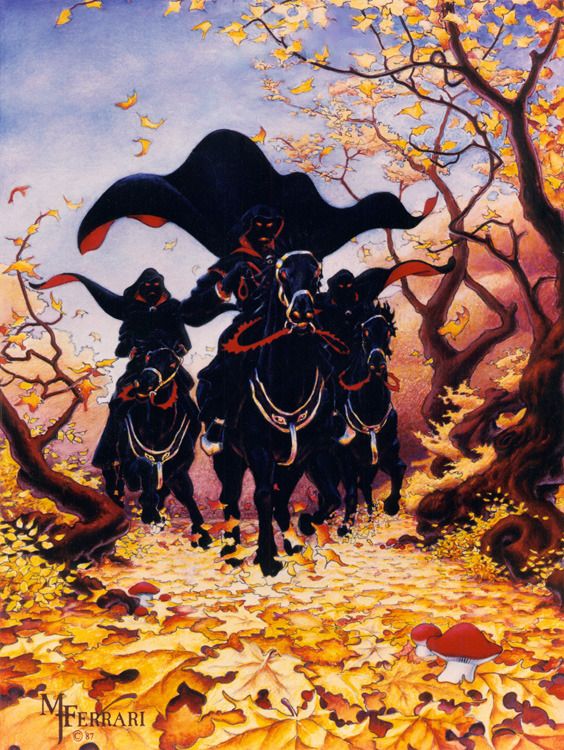
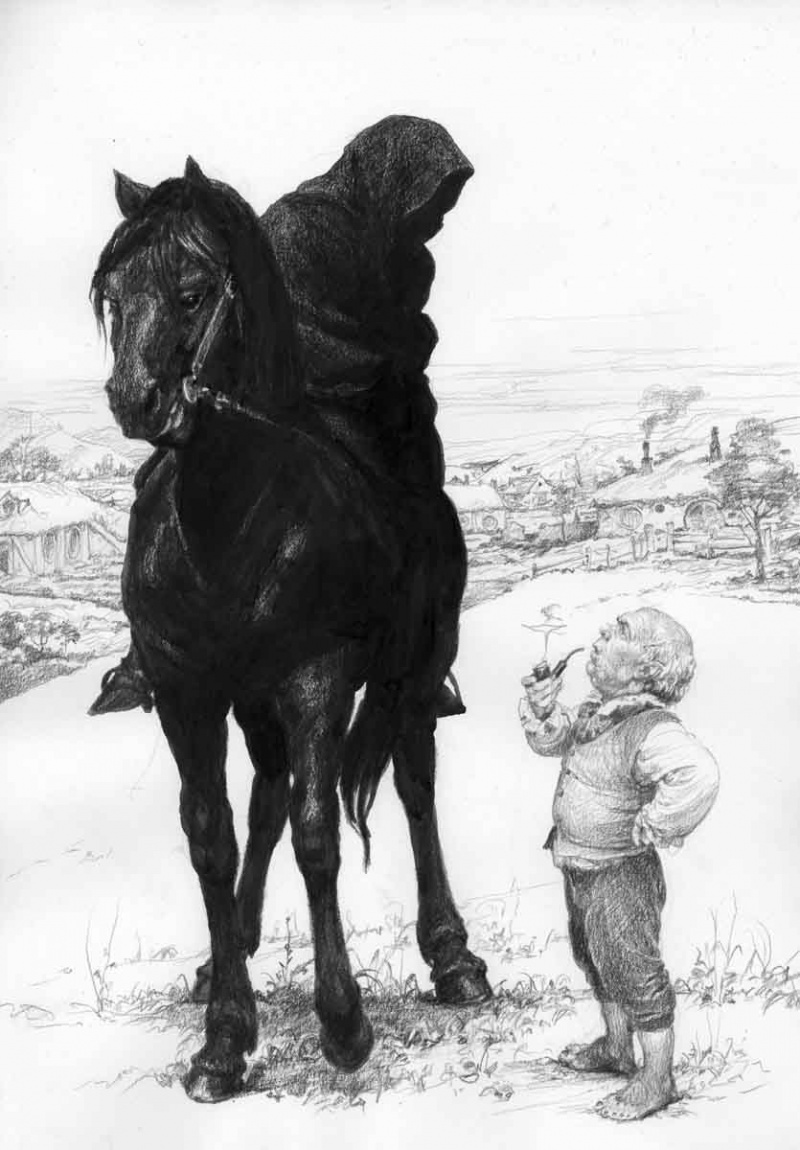
The Ringwraiths, the Nazgul, will appear again and again in the story, pursuing Frodo and his friends in their initial journey from the Shire, attempting to bribe Gaffer Gamgee,

(Denis Gordeev)

making  an attack upon Frodo and his friends at the Prancing Pony,

(Ted Nasmith)

nearly fatally wounding Frodo on Weathertop,

(John Howe)

pursuing him to the ford,

(Denis Gordeev)

but, although washed away there,

(Ted Nasmith)

after a pause (although occasionally seen in the sky), participating in the assault on Minas Tirith,

(Denis Gordeev)

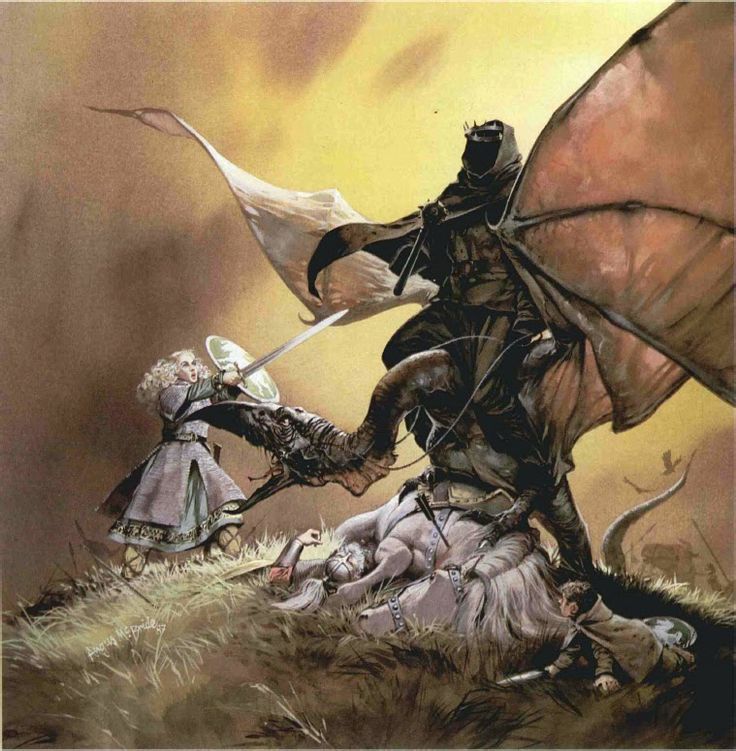
with the leader of their number finally destroyed by a combination of Eowyn and Merry.

(Ted Nasmith)

But this brings up a question:  if the Ringwraiths are “shadows under [Sauron’s] Great Shadow”, how can they:

1. carry weapons (think of the Morgul knife which wounds Frodo)

2. ride horses

3. somehow, after those horses are destroyed, make their way back to Mordor for replacements

4. although disembodied, be wounded and even destroyed by mortal weapons?

And the answer is:  unclear.  This is a place where I think JRRT wanted spookiness and substance, too, so his insubstantial menace—the Nazgul seem, in fact, to need those cloaks to be embodied—can do things like ride horses and other, unmentionable, things,

(Alan Lee)

and wield real weapons, as well as suffer wounds, like the mortals they once were.  And that leader even wears a crown—

“Upon [the beast] sat a shape, black-mantled, huge and threatening.  A crown of steel he bore, but between rim and robe naught was there to see, save only a deadly gleam of eyes.” (The Return of the King, Book Five, Chapter 6, “The Battle of the Pelennor Fields”)

which might, in fact, give us a clue as to where that invisibility—and something more– might originally have sprung from.

Recently, I’ve been rereading John Milton’s (1608-1674) Paradise Lost 1667-1674),

where I came upon this scene, in which we see Satan, defeated in battle, with plans for revenge, is flying towards new-made Eden.   In his flight, he sees:

“…The other shape,

If shape it might be called that shape had none

Distinguishable in member, joint, or limb,

Or substance might be called that shadow seemed,

For each seemed either; black it stood as Night,

Fierce as ten Furies, terrible as Hell,

And shook a dreadful dart; what seemed his head

The likeness of a kingly crown had on.”  (Paradise Lost, Book II, lines 666-673)

This is, in fact, Death, we’re told, the offspring of Satan and the personification of Sin.  The Witch King of Angmar (the head of the Nazgul) may not be quite so dramatic a figure as that, and, for all that he’s the shadow of a shadow, he isn’t deathless, but the similarities—the lack of substance, the crown– are such that it makes me wonder:  while he was having that creative breakfast, did Tolkien have his copy of Paradise Lost propped up on the table in front of him?

Thanks for reading, as always.

Stay well,

Always try to come between the Nazgul and his prey,

(Federico—for more of his work, see:  https://pigswithcrayons.com/author/federico-piatti/ )

And remember that, as ever, there’s

MTCIDC

O

Through a glass…

07 Wednesday Jan 2026

Posted by Ollamh in Uncategorized

≈ Leave a comment

Tags

2nd Corinthians, Apostle Paul, Boromir, Dracula, Fantasy, Frodo, lotr, Mirror of Galadriel, mirrors, Sam, Sauron, Snow White, Through the Looking Glass, Through the Looking-Glass, Tolkien

Dear readers, as always, welcome.

When I was small, I was puzzled about this line:

“Now we see through a glass, darkly…”

which comes from the apostle, Paul’s, first letter to the Corinthians (Chapter 13, Verse 12).

I knew about glasses—I drank from them—

and I looked through them—

and all I could think of was that maybe the glass was dirty.

It was only as a grownup that I found out that “glass” was Jacobean shorthand (from the “King James Bible” of 1611) for “looking glass” as we can see in Jerome’s (c.342-420AD) Latin translation

“videmus nunc per speculum in enigmate”

of the Greek

“βλέπομεν γὰρ ἄρτι δι’ ἐσόπτρου ἐν αἰνίγματι,”

in which “speculum”, “mirror”, is his version of the Greek εἴσοπτρον (eisoptron), “mirror”. 

Here’s what the Jacobean translators might have thought of as a “glass”,

but Paul would have imagined something more like this—

which would have been made of highly-polished metal, commonly bronze, so it’s easier to imagine that “darkly”, if the metal became tarnished.

But that translation of “in enigmate” or the original ἐν αἰνίγματι, might make the mirror even darker, as it comes from αἴνιγμα, which means “riddle” and this isn’t surprising as I, at least, have always found mirrors a little odd—spooky, even—and I’m hardly alone in this—think of the wicked, vain queen in “Snow White”, with her magic mirror—

(from Disney’s 1937 “Snow White”)

or Alice’s adventures in a mirror world—

( You can read a first edition, with the original Tenniel illustrations here:    https://dn710100.ca.archive.org/0/items/throughlooking00carr/throughlooking00carr.pdf  )

or that moment in Chapter 2 of Dracula where Jonathan Harker, in Dracula’s castle, has an unnerving experience—

“I only slept a few hours when I went to bed, and feeling that I could not sleep any more, got up. I had hung my shaving glass by the window, and was just beginning to shave. Suddenly I felt a hand on my shoulder, and heard the Count’s voice saying to me, “Good-morning.” I started, for it amazed me that I had not seen him, since the reflection of the glass covered the whole room behind me. In starting I had cut myself slightly, but did not notice it at the moment. Having answered the Count’s salutation, I turned to the glass again to see how I had been mistaken. This time there could be no error, for the man was close to me, and I could see him over my shoulder. But there was no reflection of him in the mirror! The whole room behind me was displayed; but there was no sign of a man in it, except myself.”  (You can read this—and the whole book—in a first edition here:  https://gutenberg.org/files/345/345-h/345-h.htm#chap02 )

So, what about another mirror, but one not made of bronze, or silvered metal behind glass, like more modern versions—but more like a miniature reflecting pool–

the mirror of Galadriel?

(Greg Hildebrandt)

I’ve written a little about this before  (see:   “Mirror, Mirror”, 9 December, 2015 ), but I’ve come back to this chapter with—I hope—further thoughts.  Why is it there at all?  One reason might be that, after their harrowing adventure in Moria, the Fellowship—and the readers—need a breather and, though they could continue on foot, having already come hundreds of miles that way, perhaps this is a way to vary their travels by adding water and that’s something  with which the elves can and do aid them —

“ ‘I see that you do not yet know what to do,’ said Celeborn.  ‘It is not my part to choose for you; but I will help you as I may.  There are some among you who can handle boats:  Legolas, whose folk know the swift Forest River; and Boromir of Gondor; and Aragorn the traveller.’ “ (The Fellowship of the Ring, Book Two, Chapter 8, “Farewell to Lorien”)

I would add that Lorien, Galadriel’s home, although it seems to be a place of refuge for the Fellowship,is also clearly a place for testing—and not all of that testing appears friendly, at least at first, and the deepest test for the two most important for the fate of the Ring lies in that mirror.

The testing begins, however, when Galadriel says:

“But I will say this to you:  your Quest stands upon the edge of a knife.  Stray but a little and it will fail, to the ruin of all.”

And then she continues:

“Yet hope remains while all the Company is true.”

And, having said this—

“And with that word she held them with her eyes, and in silence looked searchingly at each of them in turn.  None save Legolas and Aragorn could long endure her glance:  Sam quickly blushed and hung his head.”  (The Fellowship of the Ring, Book Two, Chapter 7, “The Mirror of Galadriel”)

Beyond her glance lies, we’re told, a kind of temptation—as Sam reveals:

“ ‘If you want to know, I felt as if I hadn’t got nothing on, and I didn’t like it.  She seemed to be looking inside me and asking me what I would do if she gave me the chance of flying back home to the Shire to a nice little hole with—with a bit of garden of my own.’ “

And, although almost none of the Fellowship reveals what he was offered, there was the same approach:

“All of them, it seemed, had fared alike:  each had felt that he was offered a choice between a shadow full of fear that lay ahead, and something that he greatly desired:  clear before his mind it lay, and to get it he had only to turn aside from the road and leave the Quest and the war against Sauron to others.”

Boromir’s experience might suggest that the test was even more revealing—and perhaps damning—than simply being allowed to leave the Quest, as Gimli says, “ ‘And it seemed to me, too…that my choice would remain secret and known only to myself.’ “  While Boromir explains:

“ ‘To me it seemed exceedingly strange…but almost I should have said that she was tempting us, and offering what she pretended to have the power to give.  It need not be said that I refused to listen.  The Men of Minas Tirith are true to their word.’ “

the narrator reveals the potentially damning part—remembering what Boromir later tried to do:

“But what he thought that the Lady had offered him Boromir did not tell.”

Did she offer him the Ring?

And now we come to the second test, a more selective one, as only Frodo and Sam are involved.

(Alan Lee)

It’s interesting to see the mirrors I’ve already mentioned and how they function in their stories.  “Snow White’s” queen employs hers as a surveillance device, in which the mirror encloses an omniscient spy and not her own reflection.  Alice’s looking glass is a barrier to another world and the fact that it’s a mirror which she must climb through suggests that, as mirrors invert things, so the world which she enters will be reversed, or at least topsey-turvey—definitely like stepping into an enigma.  Jonathan Harker’s  is a simple traveler’s shaving mirror, but stands in the middle of a mystery:  Dracula seems at first like the customer Jonathan has traveled to Transylvania to meet, businesslike, but hospitable and yet, for a nobleman living in a castle, he appears to have no servants and the castle is nearly ruined.  And then:  he has no reflection—what is Dracula?

Galadriel’s mirror, although it can repeat an image—

“Sam climbed up on the foot of the pedestal and leaned over the basin.  The water looked hard and dark.  Stars were reflected in it.”

has other properties—and, interestingly, can be controlled, to some extent, by Galadriel:

“ ‘Many things I can command the Mirror to reveal…and to some I can show what they desire to see.’ “

This has an ambiguous ring to it:  does she mean that she can make the Mirror simply reflect what people want to see, rather than what really may be seen?  If so, this seems in line with her earlier temptation/testing.  She goes on, however:

“ ‘But the Mirror will also show things unbidden, and those are often stranger and more profitable than things which we wish to behold.’”

This would then suggest that the Mirror may also have a mind of its own, beyond her control—“things unbidden”—and yet perhaps more useful—“profitable”. 

She then continues:

“ ‘What you will see, if you leave the Mirror free to work, I cannot tell.  For it shows things that were, and things that are, and things that yet may be.  But what it is that he sees, even the wisest cannot always tell.’ “

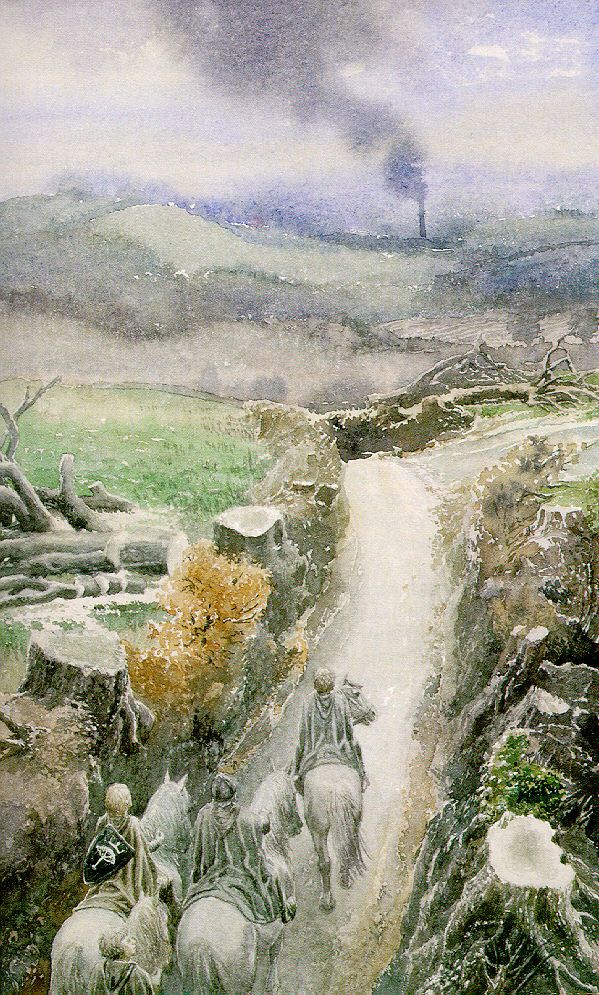
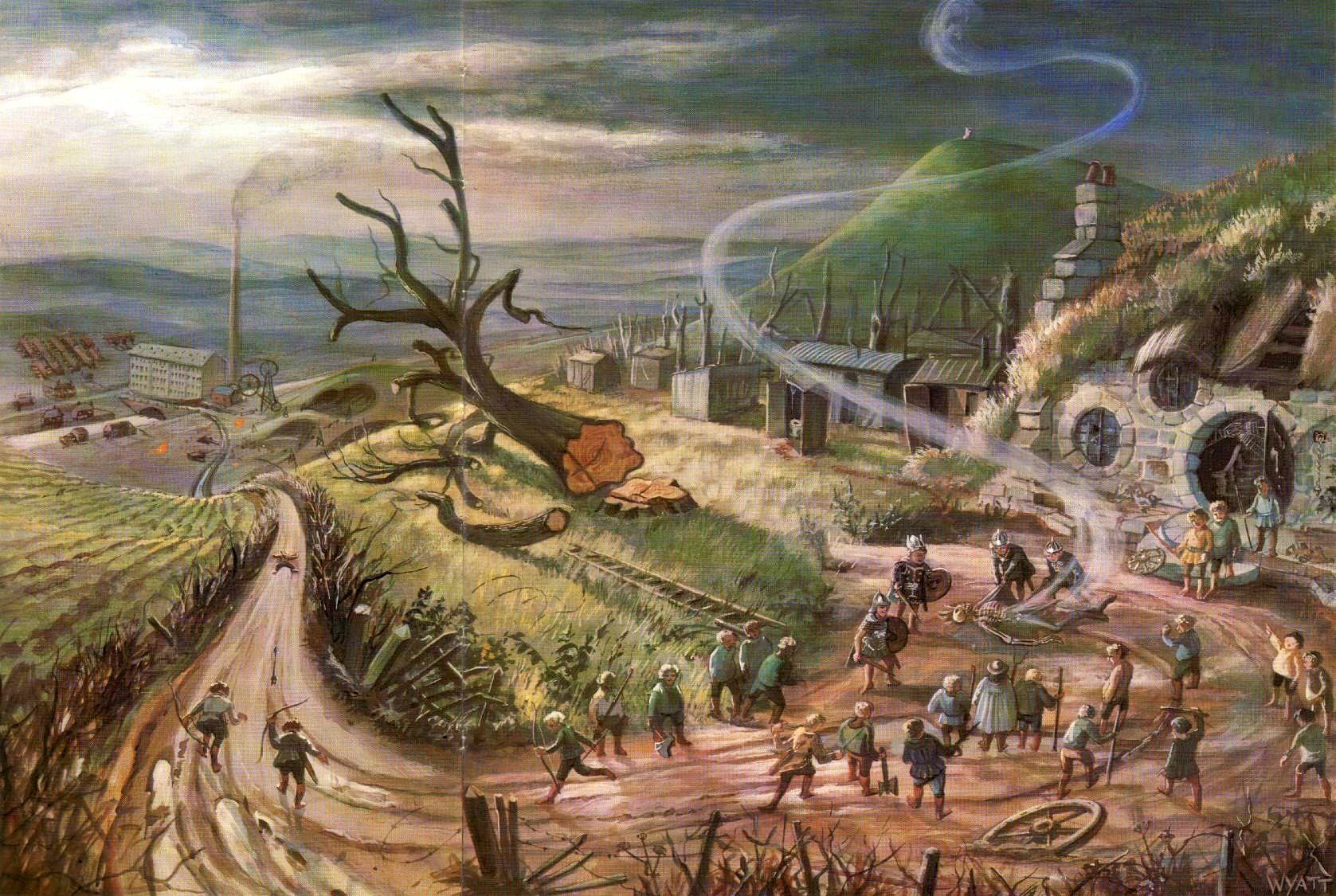
We notice right away that third part:  “things that yet may be”—and this important for what happens next.  Sam looks in, sees a little of the future which we know will happen:  “Frodo with a pale face lying fast asleep under a great dark cliff…himself going along a dim passage, and climbing an endless winding stair”—we can imagine that this is the crossing of the mountains into Mordor.  But then Sam sees the Shire and what we know will be Saruman/Sharkey’s planned industrialization—and ruin—of the Shire, with its “tall red chimney nearby” and here Sam almost fails the test, panicking and shouting “I must go home!”

(Alan Lee)

Here, Galadriel intervenes, reminding Sam of something she has already told him and Frodo:

“ ‘Remember that the Mirror shows many things, and not all have yet to come to pass.’”

To which she adds an important caution, echoing also her earlier warning:

“ ‘But I will say this to you:  your Quest stands upon the edge of a knife.  Stray but a little and it will fail, to the ruin of all.  Yet hope remains while all the Company is true.’ ”

saying to Sam:

“ ‘Some never come to be, unless those that behold the visions turn aside from their path to prevent them.  The Mirror is dangerous as a guide to deeds.’ “

And, at this, Sam, though miserable, then passes the test:

“ ‘No, I’ll go home by the long road with Mr. Frodo, or not at all.’ “

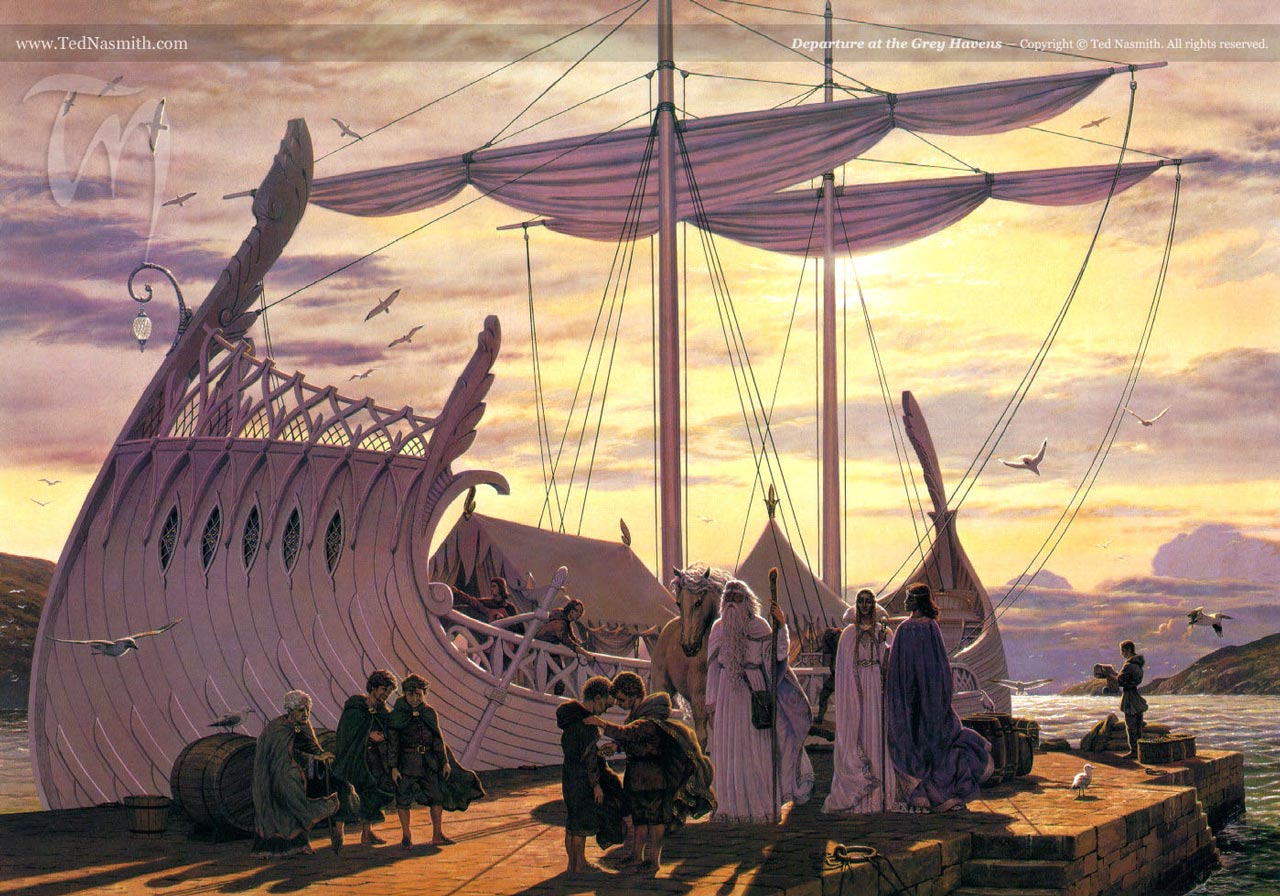
Frodo’s visions include Gandalf (although he believes that it might be Saruman), then sees what looks to be Sauron’s attack on Minas Tirith, but then something which might be the ship which takes him and others from the Grey Havens towards Valinor (“…and into the mist a small ship passed away, twinkling with lights.”) before his visions are replaced with

“…a single Eye that slowly grew, until it filled nearly all the Mirror.”

And it gets worse:

“The Mirror seemed to be growing hot and curls of steam were rising from the water.”

before Galadriel stops things by quietly saying, “Do not touch the water.”

With this interruption, however, the test, if, as it was for Sam, a test, is never completed, and so we don’t know if Frodo would have passed it.  But perhaps it is a warning:  should Frodo foolishly try to keep the Ring for himself, as he almost does before Gollum seizes it,

( Ted Nasmith)             

would he, unable to master it, be swallowed up into Sauron’s eye, or worse?

As always, thanks for reading.

Stay well,

Beware of breaking mirrors,

And remember that, as always, there’s

MTCIDC,

O

Heffalumps?

31 Wednesday Dec 2025

Posted by Ollamh in Uncategorized

≈ Leave a comment

Tags

Alexander, Dunlendings, elephant, Fantasy, Hannibal, Heffalumps, movies, Mumak, Perseus, Poros, Seleucus, The Lord of the Rings, The War Of the Rohirrim, the-war-of-the-rohrrim, Tolkien, Winnie the Pooh

Welcome, as always, dear readers.

“And then, just as they came to the Six Pine Trees, Pooh looked round to see that nobody else was listening, and said in a very solemn voice:

‘Piglet, I have decided something.’

‘What have you decided, Pooh?’

‘I have decided to catch a Heffalump.’ ” (Winnie-the-Pooh, Chapter V, “In Which Piglet Meets a Heffalump”)

Winnie-the-Pooh has just turned 100,

the book’s birthday being in1926, but the Pooh himself first appeared on Christmas eve, 1925, in the The Evening News.

(For more Poohsiana, including the origins of the character, see:  https://en.wikipedia.org/wiki/Winnie-the-Pooh )

Although it’s never defined, from the tone of the chapter, I’ve always imagined that a “heffalump” was, in fact, an elephant. 

(An elephant and a tradional mortal enemy.  This is from the 13th-century Harley MS 3244, in the British Library, which I found at a wonderful medieval site:  https://medievalbestiary.info/index.html  )

And that elephant reminded me—traditionally, elephants are supposed to have wonderful memories, after all–that I was going to continue my review of the anime The War of the Rohirrim, where, surprisingly, a heffalump—sorry—a mumak—that is, an elephant, appears.

But why? 

The West first encountered war elephants when Alexander, marching eastwards, came up against the forces of Poros, an Indian king.

(a Macedonian commemorative coin c.324-3222BC, depicting an elephant-borne Poros.  For more on Poros, see:  https://en.wikipedia.org/wiki/Porus  )

One of Alexander’s generals—and successors—Seleucus, c.358-281BC,

in a treaty with the Indian Mauryan kingdom, received 500 war elephants, which were then employed at the Battle of Ipsus, in 301BC,

during the wars which Alexander’s generals fought among themselves to define who would control various parts of Alexander’s empire.

Elephants could be seen as rather like tanks—large, mobile weapons to break enemy lines—

(Peter Dennis)

(Giuseppe Rava)

and would continue to be used in the West at least until the Romans defeated the last Macedonian king, Perseus, at the Battle of Pydna, in 168BC, but saw perhaps their most dramatic use in the wars of Carthage against Rome, particularly in the second war, where the Carthaginian general, Hannibal, invaded Italy by crossing the Alps, bringing a number of elephants with him.

(Angus McBride)

Unfortunately for Hannibal—and his elephants—the Romans had learned to deal with the great beasts and even to turn them back against their owners—

(Peter Dennis)

(for more on war elephants, see:  https://en.wikipedia.org/wiki/War_elephant )

Another factor in warfare was the belief that horses are frightened of elephants,

(Giuseppe Rava)

something which even Tolkien mentions—

“But wherever the mumakil came there the horses would not go, but blenched and swerved away…” (The Return of the King, Book Five, Chapter 6, “The Battle of the Pelennor Fields”)

(For more on horses’ potential hippophobia, see:  https://iere.org/are-horses-scared-of-elephants/  )

But that is in relation to the allies of Mordor in its attack on Minas Tirith:  why is there one of these monsters prominent at the Dunlendings’ attack on Edoras, some 250 years earlier? 

The film’s script-writers seem to be depending upon this passage from Appendix A of The Lord of the Rings:

“Four years later ([TA2758) great troubles came to Rohan, and no help could be sent from Gondor, for three fleets of the Corsairs attacked it and there was war on all its coasts.  At the same time Rohan was again invaded from the East, and the Dunlendings seeing their chance came over the Isen and down from Isengard.  It was soon known that Wulf was their leader.  They were in great force, for they were joined by Enemies of Gondor that landed in the mouths of Lefnui and Isen.”   (Appendix II:  The House of Eorl)

Thank goodness for a map—as, although I know the Isen from Isengard, I had no idea where the Lefnui was—and here, from the Tolkien Gateway, you can see both.  And you can also wonder about how such forces got to Rohan, about which JRRT is completely silent, particularly those who landed at the mouth of the Lefnui, as, straight ahead of them would have been miles of the White Mountains.  Long detour north, then east, through the Gap of Rohan, then southeast into Rohan itself?  

(from the Encyclopedia of Arda)

To which they might add:

“In the days of Beren, the nineteenth Steward, an even greater peril came upon Gondor.  Three great fleets, long prepared, came up from Umbar and the Harad, and assailed the coasts of Gondor in great force;  and the enemy made many landings, even as far north as the mouth of the Isen.  At the same time the Rohirrim were assailed from the west and the east, and their land was overrun, and they were driven into the dales of the White Mountains.” (Appendix A, (iv) Gondor and the Heirs of Anarion; The Stewards)

You can see where this argument might go:  Wulf—the antagonist of The War of the Rohirrim—invades Rohan.  His invasion force includes “…Enemies of Gondor that landed at the mouths of Lefnui and Isen” and those enemies, who were part of the fleet which attacked the west coast of Gondor, “…came up from Umbar and the Harad”, and we’re told in The Lord of the Rings that “…the Mumak of Harad was indeed a beast of vast bulk…” (The Two Towers, Book Four, Chapter 4, “Of Herbs and Stewed Rabbit”).

(Ted Nasmith)

So, their reasoning goes:

1. some of the Corsairs were from Harad

2. Harad is where Mumakil come from

3. some of the invasion force which followed Wulf were from the Corsairs who attacked the west coast of Gondor and therefore were from Harad

4. and thus there was the possibility that they might have brought Mumakil with them

Back in 2024, I had written a posting (“Dos Mackaneeks”, 26 June, 2024—here:  https://doubtfulsea.com/2024/06/26/dos-mackaneeks/ ) in which, while discussing “The Phantom Menace”, I had followed this reasoning:  both Saruman and Sauron clearly have access to blasting material of some sort–Saruman’s forces blow a hole in the wall of Helm’s Deep and Sauron’s do the same with the Causeway Forts on their way into the Pelennor.  And so, why would the next step not have been arming their orc armies with early “hand gonnes”?

(Angus McBride)

The answer is, they didn’t:  because the author chose for them not to, even though he provided evidence that he could have.  It’s clear that Tolkien was a very deliberate writer, taking years to construct his texts in draft after draft.  And so, had he wanted to have Wulf’s forces include Mumakil, I would suggest that, as he chose to depict them both ambushed by Faramir’s rangers and forming part of the armies which attacked Minas Tirith, they were certainly a possibility at any other point in his long story, but they don’t appear there.

At base, the real problem here, as I and others have suggested, is the extreme thinness of the material upon which The War of the Rohirrim is based:  it’s really only a little over two pages in Appendix A in my 50th Anniversary edition (1065-67).  To flesh this out into a film more than 2 hours long, the script writers created a character named “Hera” out of the nearly-anonymous “Helm’s daughter”, making her a “shield maiden”, adding a nurse for her (“Olwyn”), and a kind of page (“Lief”), as well as constructing a childhood friendship for “Hera” and Wulf, among other additions to a very small story, which is really only background to the later story of Helm’s Deep. 

If you read this blog regularly, you know that I dislike vicious reviews, mostly because, along with what they suggest about their authors, they’re usually simply not helpful, and I don’t write them.  This is my second partial review of The War of the Rohirrim (see “Plain and Grassy”, 24 September, 2025, for the first part:  https://doubtfulsea.com/2025/09/24/plain-and-grassy/ )  and, while I will continue to praise the enormous artistic effort which went into making this film—I’d love to see more anime of heroic stories—I wish someone would make an anime Beowulf, or Sir Gawaine and the Green Knight, just as easy examples—I also wish that the creators would move on—what about a Ramayana, for instance, if they wanted to choose a long-established story?—or, even better, create a completely new story, one in which there would be a fierce, independent heroine, rather than try to make her out of Arwen or Galadriel or invent one like “Tauriel” or “Hera”? 

In the meantime, it’s back to Pooh and Piglet, as they try to trap the illusive Heffalump (which they never succeed in doing).

(E.H. Shepard)

As always, thanks for reading.

Stay well,

Enjoy the New Year and may it be a very happy one for you,

And remember that, as always, there’s

MTCIDC

O
On the Roads Again—Once More

10 Wednesday Dec 2025

Posted by Ollamh in Uncategorized

≈ Leave a comment

Tags

Bilbo, Fantasy, Frodo, lotr, Minas Morgul, Mordor, Mt Doom, Orcs, Orodruin, Osgiliath, Roads, Sam, The Lord of the Rings, Tolkien, Udun

As always, dear readers, welcome.

“The Road goes ever on and on
Down from the door where it began.
Now far ahead the Road has gone,
And I must follow, if I can,
Pursuing it with eager feet,
Until it joins some larger way
Where many paths and errands meet.
And whither then? I cannot say.”

as Bilbo sings, on his way away from the Shire to Rivendell.

(JRRT)

We, however, are currently standing at the broken bridge

at Osgiliath,

(from The Encyclopedia of Arda)

but, through the magic of the internet, we’ll hop over the Anduin and continue our journey along the roads of Middle-earth, this time to the worst possible place (unless you’re an orc)—

(Alan Lee)

Mordor.

To get there, we walk the old road which, in the days before Sauron’s previous invasion attempt, ran from Minas Anor (the “ Tower of the Sun”—now Minas Tirith, “Tower of Guard”),

(Ted Nasmith)

to Minas Ithil (the “Tower of the Moon”)—now Minas Morgul  (the “Tower of Black Sorcery”).

(another Ted Nasmith)

This will lead us eastwards to the crossing of the Ithilien north/south road, where there is a much- abused seated figure—

“The brief glow fell upon a huge sitting figure, still and solemn as the great stone kings of Argonath.  The years had gnawed it, and violent hands had maimed it.  Its head was gone, and in its place was set in mockery a round rough-hewn stone, rudely painted  by savage hands in the likeness of a grinning face with one large red eye in the midst of its forehead.  Upon its knees and mighty chair, and all about the pedestal, were idle scrawls mixed with the foul symbols that the maggot-folk of Mordor used.”  (The Two Towers, Book Four, Chapter 7, “Journey to the Cross-roads”)

(and one more Ted Nasmith.  Notice—except for the figure’s size, perhaps, which here wouldn’t be called “huge” nor its chair “mighty”—how carefully the artist has paid attention to the text—typical of Nasmith’s always fine work.)

Frodo and Sam pause here, but we’ll keep moving eastwards on the road towards Minas Morgul.

(the Hildebrandts, with a very different view of it and of Gollum)

We don’t appear to have a description of this road, but, if you’ve read the previous postings on roads, you’ll know that I would like to imagine that it’s not just a worn dirt track,

but the sort of thing which the Romans built all over their empire,

but now grassgrown and abandoned, like the figure at the crossroads.

Frodo, Sam, and Gollum skirt Minas Morgul, climbing around it, and we’ll join them, although we’ll avoid the tunnel in which Shelob lives,

(and one more Ted Nasmith)

to come down into Mordor itself.

(Christopher Tolkien)

This is, to say the least, a very bleak place,

(in reality, this is Mt Haleakala National Park, on the island of Maui)

but it seems heavily populated with camps of orcs and Sauron’s allies.

“As far as their eyes could reach, along the skirts of the Morgai and away southward, there were camps, some of tents, some ordered like small towns.  One of the largest of these was right below them.  Barely a mile out into the plain it clustered like some huge nest of insects, with straight dreary streets of huts and long low drab buildings.”  (The Return of the King, Book Six, Chapter 2, “The Land of Shadow”)

(Alan Lee)

There are clearly roads, at least in the northern area—

(from the Encyclopedia of Arda)

and when Frodo and Sam disguise themselves as orcs,

(Denis Gordeev)

they make their way along a major one, only to be taken for potential deserters and driven into an orc marching column.

(Denis Gordeev)

Before they reach such a road, however,

“…they saw a beaten path that wound its way under the feet of the westward cliffs.  Had they known, they could have reached it quicker, for it was a track that left the main Morgul-road at the western bridge-end and went down by a long stair cut in the rock to the valley’s bottom.” (The Return of the King, Book Six, Chapter 2, “The Land of Shadow”)

We’ll follow them down this path and eventually reach a road:

“…at the point where it swung east towards the Isenmouthe  twenty miles away.  It was not a broad road, and it had no wall or parapet along the edge, and as it ran on the sheer drop from its brink became deeper and deeper.”  (The Return of the King, Book Six, Chapter 2, “The Land of Shadow”)

When Frodo and Sam are picked up and driven along in the column,

(John Howe)

we can now see that the column is headed for Isenmouthe and the entrance to the northernmost part of Mordor, Udun,

(from Karen Wynn Fonstad, The Atlas of Middle-Earth)

but the two manage to escape just before the entrance, dropping

“…over the further edge of the road.  It had a high kerb by which troop-leaders could guide themselves in black night or fog, and it was banked up some feet above the level of the open land.”  (The Return of the King, Book Six, Chapter 2, “The Land of  Shadow”)

(perhaps something like this on the right?)

Frodo and Sam now try cutting across open country, which, although full of places to hide, is hard going—

“As the light grew a little [Sam] saw to his surprise that what from a distance had seemed wide and featureless flats were in fact all broken and tumbled. “  (The Return of the King, Book Six, Chapter 3, “Mount Doom”)

The going, however, is simply too rough for them in their current condition, and they return to the road, as will we, approaching Orodruin (Mt. Doom), where, for the first time since finding a spring on the eastern slope of the Mountains of Shadow, they find water—

“All long ago would have been spent, if they had not dared to follow the orc-road.  For at long intervals on that highway cisterns had been built for the use of troops sent in haste through the waterless regions. 

In one Sam found some water left, stale, muddied by the orcs, but still sufficient for their desperate case.”   (The Return of King, Book Six, Chapter 3, “Mount Doom”)

Struggling to the foot of Mt. Doom (Orodruin), Sam discovers a path—our last road in this series of postings—which is actually part of Sauron’s road from the Barad-dur to the volcano.

(from the Encyclopedia of Arda)

“…for amid the rugged humps and shoulders above him he saw plainly a path or road.  It climbed like a rising girdle from the west and wound snakelike about the Mountain, until before it went round out of view it reached the foot of the cone on the eastern side.”  (The Return of King, Book Six, Chapter 3, “Mount Doom”)

Finally coming to the path, they find

“…that it was broad, paved with broken rubble and beaten ash” The Return of King, Book Six, Chapter 3, “Mount Doom”)

But, before the eagles come to rescue Frodo and Sam, we’ll take our own eagle back to the door where our roads began.

(the Hildebrandts)

As always, thanks for reading.

Stay well,

Remember how perilous it may be to step out your front door,

And remember, as well, that there’s always

MTCIDC

O

PS

For a bit more on the roads of Middle-earth, see:  https://thainsbook.minastirith.cz/roads.html

On the Road(s) Again

19 Wednesday Nov 2025

Posted by Ollamh in Uncategorized

≈ Leave a comment

Tags

Argonautica, Bilbo, Bree, Fantasy, Frodo, Gondor, Great East Road, Jason, Journey to the West, lotr, Tharbad, The Argonautica, The Bridge of Strongbows, the Greenway, The Hobbit, The Lord of the Rings, The Odyssey, the-great-east-road, Tolkien, Willie Nelson

“Just can’t wait to get on the road again
The life I love is makin’ music with my friends
And I can’t wait to get on the road again
And I can’t wait to get on the road again”

As always, welcome, dear readers.  This is from a Willie Nelson, a US country and western singer’s,

virtual theme song, and it seemed to fit where this posting wanted to go.

Having just written two postings about traveling to Bree, it struck me just how many Western adventure stories, as a main element of the plot, require the characters to travel, often long distances.  (I’m sure that there are lots of Eastern stories which do this, too—see, for example, Wu Cheng’en’s (attributed) Journey to the West, which appeared in the 16th century—see, for more:  https://en.wikipedia.org/wiki/Journey_to_the_West  You can read an abridged translation  of this at:  https://www.fadedpage.com/books/20230303/html.php ) 

Such adventures are commonly quests—that is, journeys with a particular goal and are commonly round- trip adventures.  (For more on quests, see:  https://en.wikipedia.org/wiki/Quest )

There are lots of folktales with this pattern, but the literary begins for us with the story of Jason, and his task of finding the Golden Fleece and bringing it back to Greece.  (You can read a summary of the story here:  https://en.wikipedia.org/wiki/Golden_Fleece  The full Greek version we have of the story is from a 3rd century BC poem, the Argonautica of Apollonius of Rhodes, which you can read in a translation here:  https://archive.org/details/apolloniusrhodiu00apol   And you can read about the poem itself here:  https://en.wikipedia.org/wiki/Argonautica  )

(Jason delivering the fleece to King Pelias—for more on Pelias, who is actually Jason’s uncle, see:  https://en.wikipedia.org/wiki/Pelias )

Then there’s the Odyssey, a later story, in mythological time, in which the main plot is that of Odysseus, a Greek and ruler of the island of Ithaka, who, having participated in the war against Troy, spends 9+ years of many adventures getting home to his island once more.

It’s no wonder, then, that Tolkien, originally destined to be a classicist, in telling a long story to his children, would make it a quest.

This quest would take the protagonist, Bilbo Baggins, from his home in the Shire hundreds of miles east, to the Lonely Mountain (Erebor) and back.

(Pauline Baynes—probably JRRT’s favorite illustrator—and whom he recommended to CS Lewis, for whom she illustrated all the Narnia books.  You can read about her here:  https://en.wikipedia.org/wiki/Pauline_Baynes )

In the last two postings, we first followed Bilbo eastwards to Bree—only to find that, in The Hobbit, there is no Bree.  We then retraced our steps and followed Frodo and his friends as they journeyed in the same direction, although this time with more success.

(Ted Nasmith)

Part of Frodo’s trip (with some detours), took him along the Great East Road, which ran through the Shire,

(Christopher Tolkien)

crossing the Greenway ( the old north/south road—more about this in a moment) at Bree and proceeding eastwards from there–

(Barbara Strachey, The Journeys of Frodo, 1981)

although Frodo and his friends, led by Strider,

(the Hildebrandts)

took an alternate route from there to Weathertop.

Because I’m always interested in the physical world of Middle-earth, I try to imagine what, in our Middle-earth, either suggested things to JRRT, or at least what we can use to try to reconstruct something comparable. 

For the Great East Road, because it was constructed by the kings of Arnor, and had a major bridge (the Bridge of Strongbows—that is, strong arches), across the Brandywine,

(actually a 16thcentury Ottoman bridge near the village of Balgarene in Bulgaria.  For more on Bulgarian bridges, some of which are quite spectacular, see:  https://vagabond.bg/bulgarias-wondrous-bridges-3120 )

I had imagined something like a Roman road, wide, paved, with perhaps drainage on both sides.

The Romans were serious engineers and roads could be very methodically laid out and built.

Latest research suggests that they may have constructed as many as almost 200,000 miles of roads (299,171km)—not all so elaborate, and some were doubtless improved local roads, but a vast number (see for more:  https://www.sciencealert.com/massive-new-map-reveals-300000-km-of-ancient-roman-roads ) were of the standard construction.

This may have been true once, but the road Frodo and his friends eventually reach doesn’t sound much like surviving Roman work—

“…the Road, now dim as evening drew on, wound away below them.  At this point it ran nearly from South-west to North-east, and on their right it fell quickly down into a wide hollow.  It was rutted and bore many signs of the recent heavy rain; there were pools and pot-holes full of water.”  (The Fellowship of the Ring, Book One, Chapter 8, “Fog on the Barrow-downs”)

Following the road, however, has made me consider just how many miles of roads we actually see in Middle-earth and over which various characters travel and how they might appear.  Just look at a map—

(cartographer? clearly based on JRRT and Christopher Tolkien’s map)

The Great East Road (named “East-West Road” there) is drawn and identified, and we can see the North Road (as “North-South Road”), but these are hardly the only roads in Middle-earth and certainly not in the story, and, as we’re following Frodo & Co. on their journeys, I thought that it would be interesting to examine some of the others—the main ones, and one nearly-lost one.

So, when Frodo and his friends eventually reach the edge of Bree, they’re actually at a crossroads—

“For Bree stood at the old meeting of ways:  another ancient road crossed the East Road just outside the dike at the western end of the village, and in former days Men and other folk of various sorts had traveled much on it.  ‘Strange as News from Bree’ was still a saying in the Eastfarthing, descending from those days, when news from North, South, and East could be heard in the inn, and when the Shire-hobbits used to go more to hear it.”

With the fall of the northern realm of Arnor about TA1974, however, things had changed:

“But the Northern Lands had long been desolate, and the North Road was now seldom used:  it was grass-grown, and the Bree-folk called it the Greenway.”  (The Fellowship of the Ring, Book One, Chapter 9, “At the Sign of the Prancing Pony”)

We’re not given a detailed description of this road—was it like what I had imagined the Great East Road might have looked like, Roman and paved, but overgown?

If so, it led back to the city of Tharbad to the south, which had had its own elaborate bridge at the River Greyflood—

“…where the old North Road crossed the river by a ruined town.”

Of this bridge we know:

“…both kingdoms [Arnor and Gondor] together built and maintained the Bridge of Tharbad and the long causeways that carried the road to it on either of the Gwathlo [Greyflood]…”  (JRRT Unfinished Tales, 277)

It must have been massive—could it have looked something like this?

(the 1ST century Roman bridge at Merida, Spain—you can read about it here:  https://en.wikipedia.org/wiki/Puente_Romano,_M%C3%A9rida )

As we also know, it had fallen into ruin, becoming only a dangerous ford, as Boromir found out, losing his horse there on the way north (The Fellowship of the Ring, Book Two, Chapter 8, “Farewell to Lorien”)

(the “Ponte Rotto” (“ruined bridge”) actually the 2nd century BC Pons Aemilius.  You can read about it here:  https://en.wikipedia.org/wiki/Pons_Aemilius  This is a 1690 painting by Caspar van Wittel, a very interesting and talented man, and you can read about him here:  https://en.wikipedia.org/wiki/Caspar_van_Wittel   )

We’ll pause here, however, waiting, perhaps, for a drought,

before we continue down the road towards Gondor…

Thanks for reading, as always.

Stay well,

Don’t cross any bridge till you come to it,

And remember that there’s always

MTCIDC

O

To Bree (Part 2)

12 Wednesday Nov 2025

Posted by Ollamh in Uncategorized

≈ Leave a comment

Tags

Barrow-downs, Barrow-wight, Bilbo, Bree, bridge-of-strongbows, Fantasy, Frodo, Great East Road, Nazgul, Shire, The Bridge of Stonebows, The Lord of the Rings, The Prancing Pony, Tolkien, Tom Bombadil, travel

As always, welcome, dear readers.

In “To Bree (Part 1)”, we had followed Bilbo & Co.

(Hildebrandts)

(Hildebrandts)

eastwards,

but only as far as Bree, echoing the remark in The Lord of the Rings:

“It was not yet forgotten that there had been a time when there was much coming and going between the Shire and Bree.” (The Fellowship of the Ring, Book One, Chapter 9, “At the Sign of the Prancing Pony”)

Oddly, however, although I supposed that we were traveling through the East Farthing

(Christopher Tolkien)

through Frogmorton and Whitfurrows,

to the Bridge of Strongbows,

(Stirling Bridge, actually—for more see:  https://www.historicenvironment.scot/visit-a-place/places/stirling-old-bridge/ )

the description in The Hobbit was wildly different:

“Then they came to lands where people spoke strangely, and sang songs Bilbo had never heard before.  Now they had gone on far into the Lone-lands, where there were no people left, no inns, and the roads grew steadily worse.  Not far ahead were dreary hills, rising higher and higher, dark with trees.  On some of them were old castles with an evil look, as if they had been built by wicked people.”  (The Hobbit, Chapter 2, “Roast Mutton”) 

with, eventually, a surprise for us Bree-bound folk:  no Bree.

So, back we went to the Green Dragon, in Bywater, where Bilbo started and now we begin again, with Frodo.  Times have changed, however, and unlike the innocent Bilbo, we are in a different world, where Mordor isn’t just a distant place name and its servants are looking for Baggins.

(Denis Gordeev)

Frodo doesn’t take the Great East Road,

(Christopher Tolkien)

but cuts across country, narrowly avoiding one of the searchers,

(Angus McBride)

taking shelter with a local farmer, and finally reaching the ferry across the Brandywine just ahead of his pursuers.

Although this is a very indirect route, Frodo and his companions eventually reach Bree, but even though I would love to meet Tom Bombadil,

(the Hildebrandts)

I prefer a direct route, so we’ll continue on the Great East Road, cross the Bridge of Strongbows, and head eastwards. 

(from Barbara Strachey, The Journeys of Frodo, a much-recommended book, if you don’t have a copy)

So what do we see?  

Over the bridge—and here’s another possibility for it, the Clopton Bridge at Stratford-upon-Avon—

(you can see more of Stratford and the shire—Warwickshire, that is—here:  https://www.ourwarwickshire.org.uk/content/catalogue_wow/stratford-upon-avon-clopton-bridge-2 )

the road runs, not surprisingly, due eastwards and here, consulting our map,

 is the Old Forest to our right,

described, by our narrator, as Frodo and his friends see it on their detour away from the Great East Road:

“Looking ahead they could see only tree-trunks of innumerable sizes and shapes:  straight or bent, twisted, leaning, squat or slender, smooth or gnarled and branched; and all the stems were green or grey with moss and slimy, shaggy growths.” (The Fellowship of the Ring, Book One, Chapter 6, “The Old Forest”)

Keep in mind, however, that we’re seeing it through a long line of trees planted alongside the road, probably as a windbreak.

We know that they’re there because Merry says:

“ ‘That is a line of trees,’ said Merry, ‘and that must mark the Road.  All along it for many leagues east of the Bridge there are trees growing.  Some say they were planted in the old days.’ “ (The Fellowship of the Ring, Book One, Chapter 8, “Fog on the Barrow-downs”)

As we travel farther along the road, if we look to our right, through the trees, we then come to the edge of the Barrow-downs,

with their ancient standing stones

and tumuli—

where Frodo and his friends almost end their trip.

(Matthew Stewart)

But we haven’t strayed, as they did, and, passing the Downs, we see, again on our right:

“The dark line they had seen was not a line of trees but a line of bushes growing on the edge of a deep dike, with a steep wall on the further side.”

A dike is a ditch, usually with an earthen embankment made from the spoil of the ditch.  There are several of these in England, like Offa’s Dyke—

The narrator adds:

“…with a steep wall on the further side”

and I’m presuming that that is the earthen embankment, with:

“…a gap in the wall” through which Frodo and friends rode and

…when at last they saw a line of tall trees ahead…they knew that they had come back to the Road.”

If you’re read the first part of this posting, you will know that I’ve been assuming that that Road, laid in ancient times to a stone bridge and beyond, would be like a Roman road, and be paved,

if a bit weedy, but now we find:

“…the Road, now dim as evening drew on, wound away below them.  At this point it ran nearly from South-west to North-east, and on their right it fell quickly down into a wide hollow.  It was rutted and bore many signs of the recent heavy rain; there were pools and pot-holes full of water.”

Does this suggest that it was, at best and in the past, simply a dirt road, through well-kept?  Or is it a very run-down road, worn and covered over with leaves and dirt, the ancient blocks gradually becoming separated under the weight of centuries, allowing for pot-holes?

In any event, we now continue our journey with Frodo and his compantions until–

“…they saw lights twinkling some distance ahead.

Before them rose Bree-hill barring the way, a dark mass against misty stars; and under its western flank nestled a large village.  Towards it they [and we] now hurried desiring only to find a fire, and a door between them and the night.”

We’re not in Bree yet, however, as:

“The village of Bree had some hundred stone houses of the Big Folk, mostly above the Road, nestling on the hillside with windows looking west.  On that side, running in more than half a circle from the hill and back to it, there was a deep dike with a thick hedge on the inner side.  Over this the Road crossed by a causeway; but where it pierced the hedge it was barred by a great gate.  There was another gate in the southern corner where the Road ran out of the village.  The gates were closed at nightfall; but just inside them were small lodges for the gatekeepers.”  (The Fellowship of the Ring, Book One, Chapter 9, “At the Sign of the Prancing Pony”)

We’ve seen a dike just now, at the Great East Road, but now we have to add a hedge

and a gate.

Once inside, however, lies the Prancing Pony

(Ted Nasmith)

and one more pint before bed.

As always, thanks for reading.

Stay well,

Read road signs carefully,

And remember that, as always, there’s

MTCIDC

O
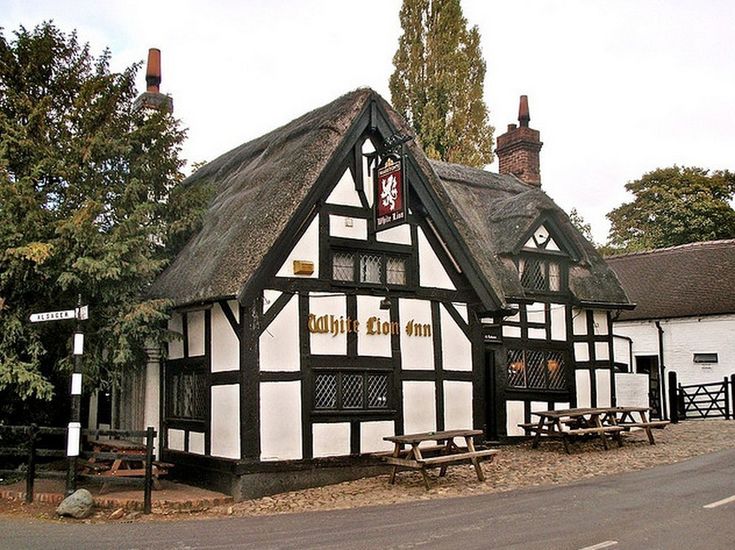
To Bree (Part 1)

05 Wednesday Nov 2025

Posted by Ollamh in Uncategorized

≈ Leave a comment

Tags

Bilbo, Bree, Fantasy, The Bridge of Strongbows, The Green Dragon, The Hobbit, The Lord of the Rings, the Sphinx, the Three Farthing Stone, the-great-east-road, Tolkien, travel-in-middle-earth, trolls

Welcome, as always, dear readers.

For me, one of the great pleasures of The Hobbit and The Lord of the Rings is that they are both so wonderfully imagined.  Consider the beginning of The Hobbit, for example, where the opening could just have been the bare line “In a hole in the ground there lived a hobbit.” Instead, it continues:

“Not a nasty, dirty, wet hole, filled with the ends of worms and an oozy smell, nor yet a dry, bare, sandy hole with nothing in it to sit down on or to eat:  it was a hobbit-hole, and that means comfort.”

(JRRT)

And even this is not enough, as it continues:

“It had a perfectly round door like a porthole, painted green, with a shiny yellow brass knob in the exact middle.”

And it will go on for an entire paragraph beyond that sentence, listing rooms and even explaining why some are preferred.

Even with so much detail, I sometimes find myself wanting more—often more of the outside world.  In this posting, then, I thought that we might take a trip to Bree and spend some time sightseeing as we go.  Via the Great East Road, this is about 100 of our miles (160 km), according to the very useful website of Becky Burkheart (which you can visit here:  https://www.beckyburkheart.com/traveltimesinmiddleearth ).

Why Bree?  To quote The Lord of the Rings:

“It was not yet forgotten that there had been a time when there was much coming and going between the Shire and Bree.” (The Fellowship of the Ring, Book One, Chapter 9, “At the Sign of the Prancing Pony”)

If we use both The Hobbit and The Lord of the Rings together, however, we’ll soon encounter some difficulties, as we shall see.

Our starting point for Bilbo is the Green Dragon Inn, in Bywater. 

(Christopher Tolkien)

Tolkien doesn’t describe the inn, but, using a real inn, we might imagine the Green Dragon as looking something like this–

(This is the White Lion in Barthomley, in Cheshire, built in 1614.  You can read more about it and about Barthomley here:   https://drive.google.com/file/d/1oeQEpGsXlN1A_4T8nOhUwpggDA_pEFTM/view )

Just to the south of Bywater is the spot where the Hobbiton road meets the Great East Road.  Again, Tolkien gives us no description, but there may be a hint as to this road in the original grant of the Shire by Argeleb II in TA1601:

“For it was in the one thousand six hundred and first year of the Third Age that the Fallohide brothers, Marcho and Blanco, set out from Bree; and having obtained permission from the high king at Fornost, they crossed the brown river Baranduin with a great following of Hobbits.  They passed over the Bridge of Strongbows, that had been built in the days of the power of the North Kingdom, and they took all the land beyond to dwell in, between the river and the Far Downs.  All that was demanded of them was that they should keep the Great Bridge in repair, and all other bridges and roads, speed the king’s messengers, and acknowledge his lordship.”   (The Lord of the Rings, Prologue I, “Concerning Hobbits”)

We’ll cross the bridge a little later in our journey, but we might start with the road.  That it’s sometimes called “the Great East Road” suggests that it’s more than a dirt path.

Could Tolkien have been thinking of the bits of surviving Roman road which crisscross England?  Most are now buried under modern roads, but, here and there some are still available on the surface, as here—

and perhaps we can use this as a model. As an ancient stone road, it would certainly fit in with the ancient stone Bridge, as we’ll see.

Just beyond the spot where the lesser road meets the greater, we see marked on our map, the “Three Farthing Stone”.  A “farthing” is a “four-thing”—that is, a quarter, and it marks the spot where three of the quarters, the four farthings, of the Shire meet.  This appears to be modeled on the “Four Shire Stone” in our Middle-earth

which you can read about here:  https://thirdeyetraveller.com/four-shire-stone-tolkien/ )

And, from here, we head eastwards—and meet our first difficulty.  Here’s the description in The Hobbit—

“At first they had passed through hobbit-lands, a wide respectable country inhabited by decent folk, with good roads, an inn or two, and now and then a dwarf or a farmer ambling by on business.”

That fits our Shire map:  we might be traveling through Frogmorton and Whitfurrows, villages which might look like this—

but then there’s—

“Then they came to lands where people spoke strangely, and sang songs Bilbo had never heard before.  Now they had gone on far into the Lone-lands, where there were no people left, no inns, and the roads grew steadily worse.  Not far ahead were dreary hills, rising higher and higher, dark with trees.  On some of them were old castles with an evil look, as if they had been built by wicked people.”  (The Hobbit, Chapter 2, “Roast Mutton”) 

The bridge is just ahead, but “dreary hills”?  “old castles”? 

And you can really see the difference here between the two books.  Tolkien had yet to discover much of the East Farthing and was simply penciling in something which we might think of as “travel filler”, to indicate that the expedition was riding eastwards, but the trip was already becoming more difficult.

And then we come to the (here unnamed) bridge:

“Fortunately the road went over an ancient stone bridge, for the river, swollen with the rains, came rushing down from the hills and mountains in the north.”

As this is the first bridge mentioned, I’m going to assume that this is the “Bridge of Strongbows/Great Bridge” mentioned in Argeleb II’s grant to the original hobbit settlers.

(This is the Roman Pont Julien in southeastern France—over a bit drier patch than described in the book.  For more on this ancient bridge, see:  https://en.wikipedia.org/wiki/Pont_Julien )

Once over this bridge, we’re in a different world.  We reach another river:

“Then one of the ponies took fright at nothing and bolted.  He got into the river before they could catch him…” 

Then, attempting to camp in the rain, Bilbo and the dwarves spot a fire, go to it, and find trolls.

(JRRT)

With the trolls dealt with by Gandalf, we move on to Rivendell–

(JRRT)

and suddenly we realize that:   there’s no Bree!

It’s at the crossroads of the Great East Road and what the locals call “the Greenway”, the old north/south road, now long overgrown,

but, somehow, Bilbo and the dwarves have not encountered it.  The reason is clear, of course:  just as the Tolkien of The Hobbit had yet to discover the East Farthing, so, too, he had yet to discover Breeland.

So, it looks like we have to turn around, back to the Green Dragon, stop for a pint, as any hobbit would,

and try again—in “To Bree (Part 2”).

As always, thanks for reading.

Stay well,

When approaching a crossroads, be prepared for anything—especially monsters with questions–

And remember that, as always, there’s

MTCIDC

O
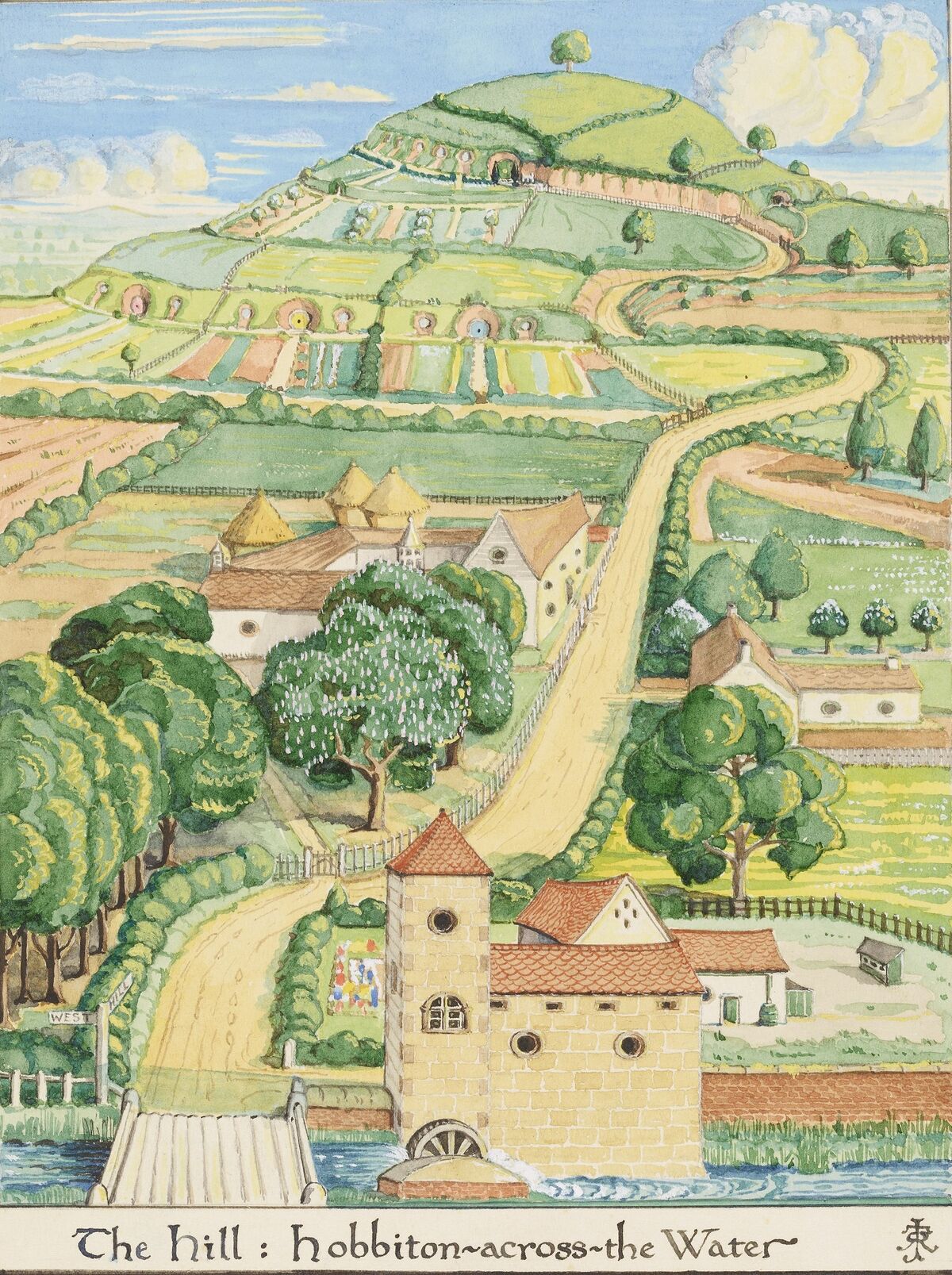
← Older posts
Newer posts →

The Doubtful Sea Series Facebook Page

The Doubtful Sea Series Facebook Page

  • Ollamh

Categories

  • Artists and Illustrators
  • Economics in Middle-earth
  • Fairy Tales and Myths
  • Films and Music
  • Games
  • Heroes
  • Imaginary History
  • J.R.R. Tolkien
  • Language
  • Literary History
  • Maps
  • Medieval Russia
  • Military History
  • Military History of Middle-earth
  • Narnia
  • Narrative Methods
  • Poetry
  • Research
  • Star Wars
  • Terra Australis
  • The Rohirrim
  • Theatre and Performance
  • Tolkien
  • Uncategorized
  • Villains
  • Writing as Collaborators
Follow doubtfulsea on WordPress.com

Across the Doubtful Sea

Recent Postings

  • Making Money May 27, 2026
  • Blood Money May 20, 2026
  • Saruman’s Sigh May 13, 2026
  • Silents Are Golden May 7, 2026
  • Planting April 29, 2026
  • Subterranean April 22, 2026
  • Serendipity? April 15, 2026
  • Serendipity April 8, 2026
  • Verisimilitude April 1, 2026

Blog Statistics

  • 114,328 Views

Posting Archive

  • May 2026 (4)
  • April 2026 (5)
  • March 2026 (4)
  • February 2026 (4)
  • January 2026 (4)
  • December 2025 (5)
  • November 2025 (4)
  • October 2025 (5)
  • September 2025 (4)
  • August 2025 (4)
  • July 2025 (5)
  • June 2025 (4)
  • May 2025 (4)
  • April 2025 (5)
  • March 2025 (4)
  • February 2025 (4)
  • January 2025 (5)
  • December 2024 (4)
  • November 2024 (4)
  • October 2024 (5)
  • September 2024 (4)
  • August 2024 (4)
  • July 2024 (5)
  • June 2024 (4)
  • May 2024 (5)
  • April 2024 (4)
  • March 2024 (4)
  • February 2024 (4)
  • January 2024 (5)
  • December 2023 (4)
  • November 2023 (5)
  • October 2023 (4)
  • September 2023 (4)
  • August 2023 (5)
  • July 2023 (4)
  • June 2023 (4)
  • May 2023 (5)
  • April 2023 (4)
  • March 2023 (5)
  • February 2023 (4)
  • January 2023 (4)
  • December 2022 (4)
  • November 2022 (5)
  • October 2022 (4)
  • September 2022 (4)
  • August 2022 (5)
  • July 2022 (4)
  • June 2022 (5)
  • May 2022 (4)
  • April 2022 (4)
  • March 2022 (5)
  • February 2022 (4)
  • January 2022 (4)
  • December 2021 (5)
  • November 2021 (4)
  • October 2021 (4)
  • September 2021 (5)
  • August 2021 (4)
  • July 2021 (4)
  • June 2021 (5)
  • May 2021 (4)
  • April 2021 (4)
  • March 2021 (5)
  • February 2021 (4)
  • January 2021 (4)
  • December 2020 (5)
  • November 2020 (4)
  • October 2020 (4)
  • September 2020 (5)
  • August 2020 (4)
  • July 2020 (5)
  • June 2020 (4)
  • May 2020 (4)
  • April 2020 (5)
  • March 2020 (4)
  • February 2020 (4)
  • January 2020 (6)
  • December 2019 (4)
  • November 2019 (4)
  • October 2019 (5)
  • September 2019 (4)
  • August 2019 (4)
  • July 2019 (5)
  • June 2019 (4)
  • May 2019 (5)
  • April 2019 (4)
  • March 2019 (4)
  • February 2019 (4)
  • January 2019 (5)
  • December 2018 (4)
  • November 2018 (4)
  • October 2018 (5)
  • September 2018 (4)
  • August 2018 (5)
  • July 2018 (4)
  • June 2018 (4)
  • May 2018 (5)
  • April 2018 (4)
  • March 2018 (4)
  • February 2018 (4)
  • January 2018 (5)
  • December 2017 (4)
  • November 2017 (4)
  • October 2017 (4)
  • September 2017 (4)
  • August 2017 (5)
  • July 2017 (4)
  • June 2017 (4)
  • May 2017 (5)
  • April 2017 (4)
  • March 2017 (5)
  • February 2017 (4)
  • January 2017 (4)
  • December 2016 (4)
  • November 2016 (5)
  • October 2016 (6)
  • September 2016 (5)
  • August 2016 (5)
  • July 2016 (5)
  • June 2016 (5)
  • May 2016 (4)
  • April 2016 (4)
  • March 2016 (5)
  • February 2016 (4)
  • January 2016 (4)
  • December 2015 (5)
  • November 2015 (5)
  • October 2015 (4)
  • September 2015 (5)
  • August 2015 (4)
  • July 2015 (5)
  • June 2015 (5)
  • May 2015 (4)
  • April 2015 (3)
  • March 2015 (4)
  • February 2015 (4)
  • January 2015 (4)
  • December 2014 (5)
  • November 2014 (4)
  • October 2014 (6)
  • September 2014 (1)

Blog at WordPress.com.

  • Subscribe Subscribed
    • doubtfulsea
    • Join 75 other subscribers
    • Already have a WordPress.com account? Log in now.
    • doubtfulsea
    • Subscribe Subscribed
    • Sign up
    • Log in
    • Report this content
    • View site in Reader
    • Manage subscriptions
    • Collapse this bar

Loading Comments...