• About

doubtfulsea

~ adventure fantasy

Tag Archives: Captain Hook

Saruman’s Sigh

13 Wednesday May 2026

Posted by Ollamh in Uncategorized

≈ Leave a comment

Tags

books, Captain Hook, Fantasy, Gandalf, Isengard, lotr, Orcs, Palantir, Saruman, Sauron, Tolkien

Welcome, as always, dear readers.

When it comes to The Lord of the Rings, I’m sure that everyone has favorite characters.  I suppose that mine, if I had to pin it down to one, would be Sam.  At the same time, I would also say that, for me, if you asked for other favorites, I might say Saruman—and, perhaps surprisingly, this might have been true for Tolkien, I would suggest, as well.

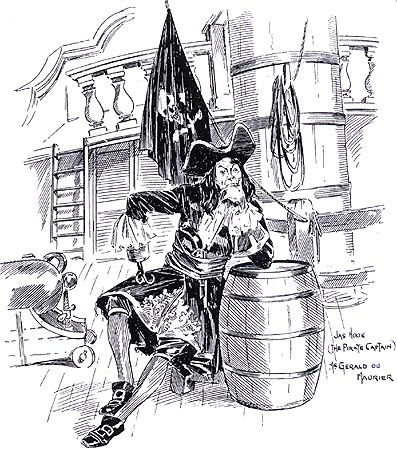
Saruman?  Maybe I just have a perverse taste for villains—after all, I’ve always secretly liked Captain Hook,
and have a sneaking fondness for the Orcs,
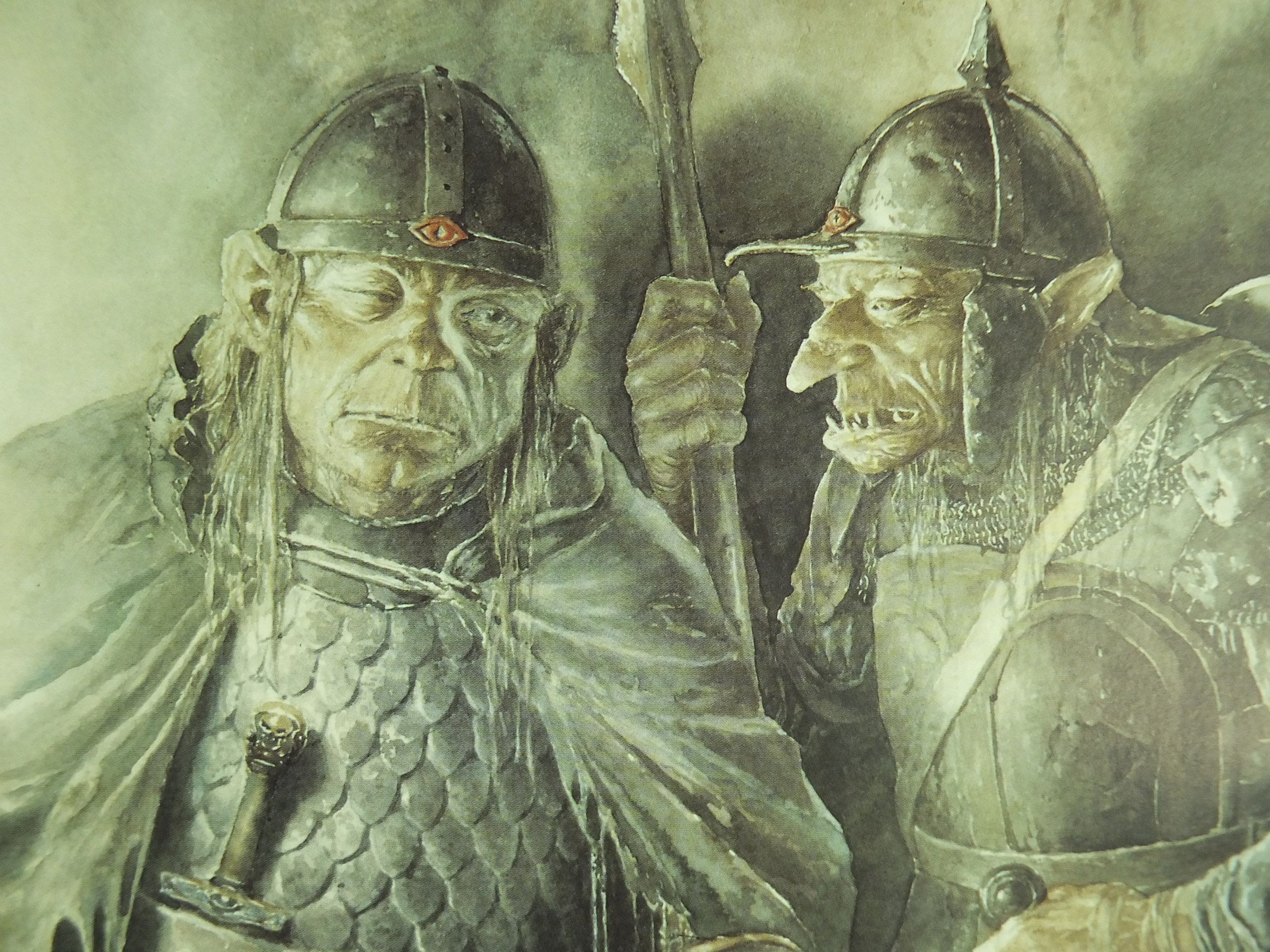
(Alan Lee)

but I think that there’s, ultimately, a poignancy about Saruman—not in his behavior in the earlier parts of The Lord of the Rings, but in his end–which Tolkien, who could simply have painted him as a villain, clearly chose to add to his depiction, which says to me that he, too, found something more to say about the character.

Consider the end of Sauron, which is quite dramatic, if not downright apocalyptic—
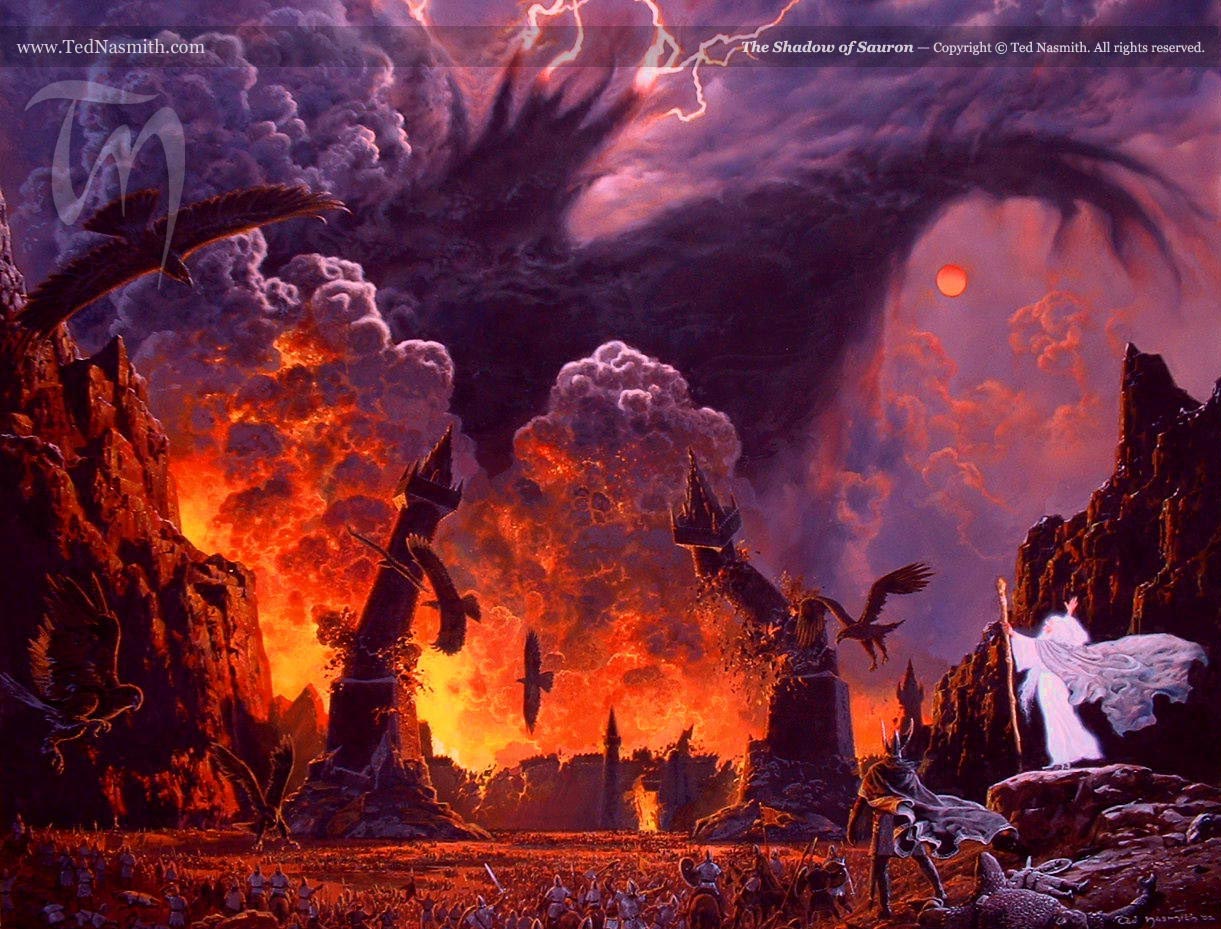
A Tolkien illustration by Ted Nasmith

(Ted Nasmith)

“And even as he spoke the earth rocked beneath their feet.  Then rising swiftly up, far above the Towers of the Black Gate, high above the mountains, a vast soaring darkness sprang into the sky, flickering with fire.  The earth groaned and quaked.  The Towers of the Teeth swayed, tottered, and fell down; the mighty ramparts crumbled; the Black Gate was hurled in ruin; and from far away, now dim, now growing, now mounting to the clouds, there came a drumming rumble, a roar, a long echoing roll of ruinous noise…

And as the Captains gazed south to the Land of Mordor, it seemed to them that, black against the pall of cloud, there rose a huge shape of shadow, impenetrable, lightning-crowned, filling all the sky.  Enormous it reared above the world, and stretched out towards them a vast, threatening hand, terrible but impotent; for even as it leaned over them, a great wind took it, and it was all blown away, and passed; and then a hush fell.”  (The Return of the King, Book Six, Chapter 4, “The Field of Cormallen”)

In contrast, there is the death of Saruman—

“To the dismay of those that stood by, about the body of Saruman a grey mist gathered, and rising slowly to a great height like smoke from a fire, as a pale shrouded figure it loomed over the Hill  For a moment it wavered, looking to the West; but out of the West came a cold wind, and it bent away, and with a sigh dissolved into nothing.

Frodo looked down at the body with pity and horror, for as he looked it seemed that long years of death were suddenly revealed in it, and it shrank, and the shrivelled face became rags of skin upon a hideous skull.  Lifting up the skirt of the dirty cloak that sprawled beside it, he covered it over, and turned away.”  (The Return of the King, Book Six, Chapter 8, “The Scouring of the Shire”)
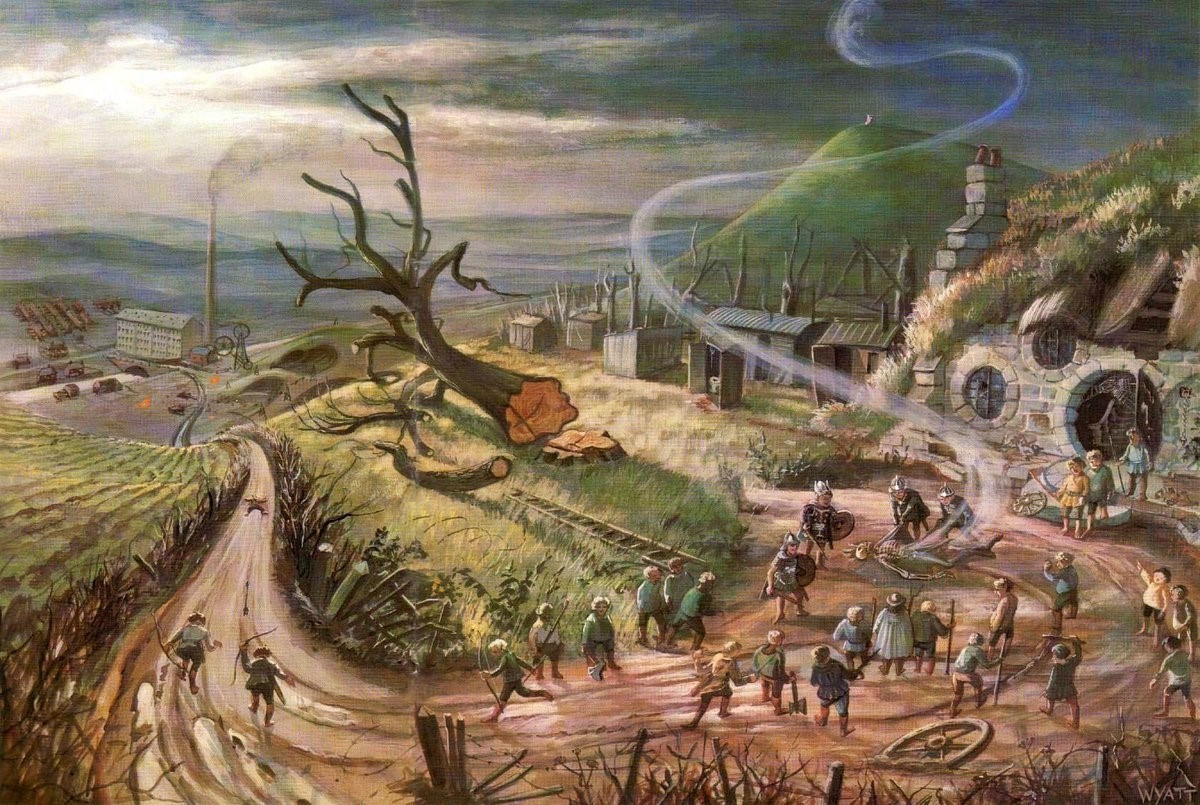
(Joan Wyatt—you can see more of her work here:  https://gallerix.org/storeroom/1692737256/ )

And yet both were powerful beings, Sauron being the more powerful, but both Maiar, the equivalent, we might say, of angels, in our Middle-earth. 

As if it were only an expression of his personality, when Sauron was destroyed, all Mordor came crashing down, although all that we see of Sauron himself is that one “vast, threatening hand, terrible but impotent…”
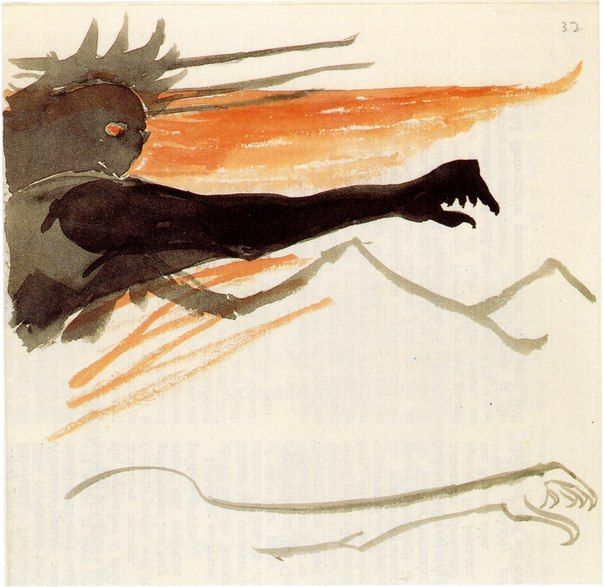
(JRRT)

So what is the purpose, the meaning, of that simple sigh?

For all that they might attempt to control it in their various ways and scales, these two were not natives of Middle-earth.  Rather, they were once inhabitants of Valinor, to the far west.
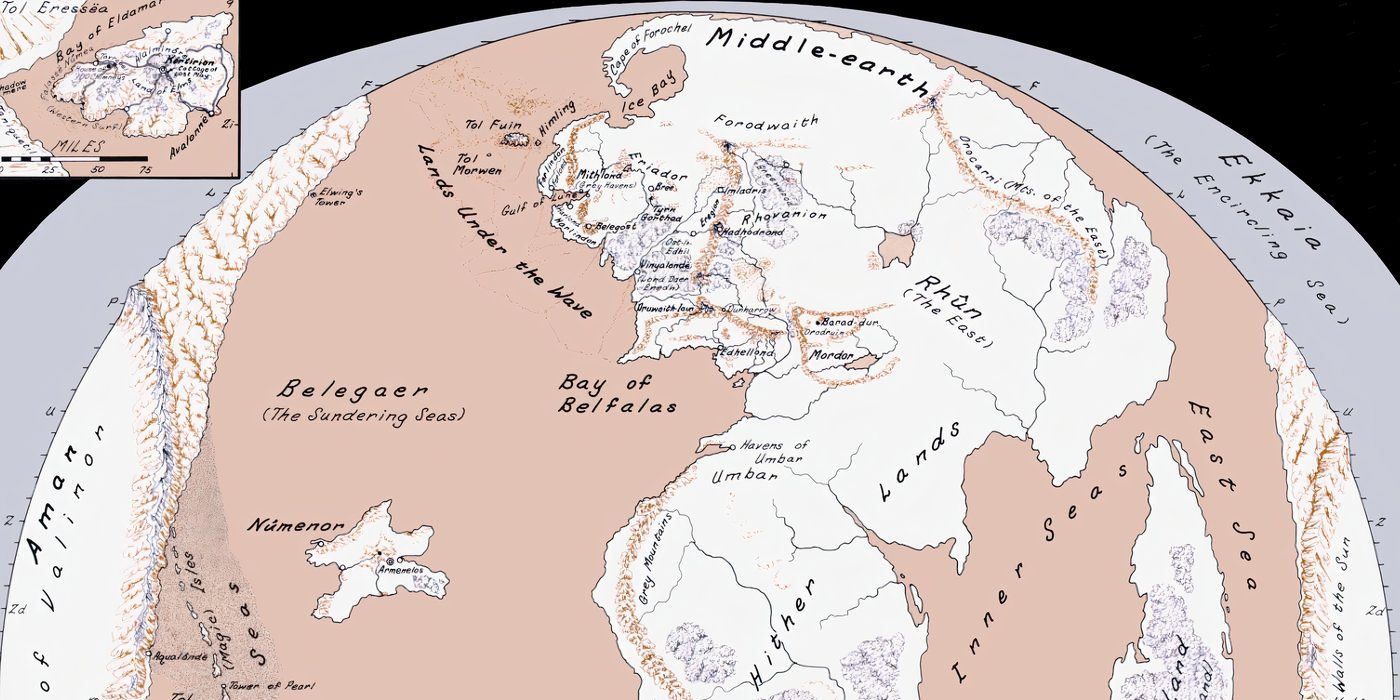
(Karen Wynn Fonstad)

Sauron had come in an earlier age of his own accord, intent upon conquest, whereas Saruman had been sent as one of the five Istari, as a counterbalance to Sauron, once servant to the fallen Vala, Melkor, and now a would-be Melkor himself, until something began to go wrong and, instead of countering Sauron, Saruman began to become like him.

This had happened, I think, in stages.

To begin with, there is the question of how the Istari were to act as a balance.  It’s interesting that the two others of whom we know anything, Gandalf and Radagast, appear to have been sent as wanderers, as if their role was to counter Sauron’s influence over a wide area and perhaps in different ways, depending upon that influence.

In contrast, Saruman has not just a fixed home, but a fortress, Isengard,
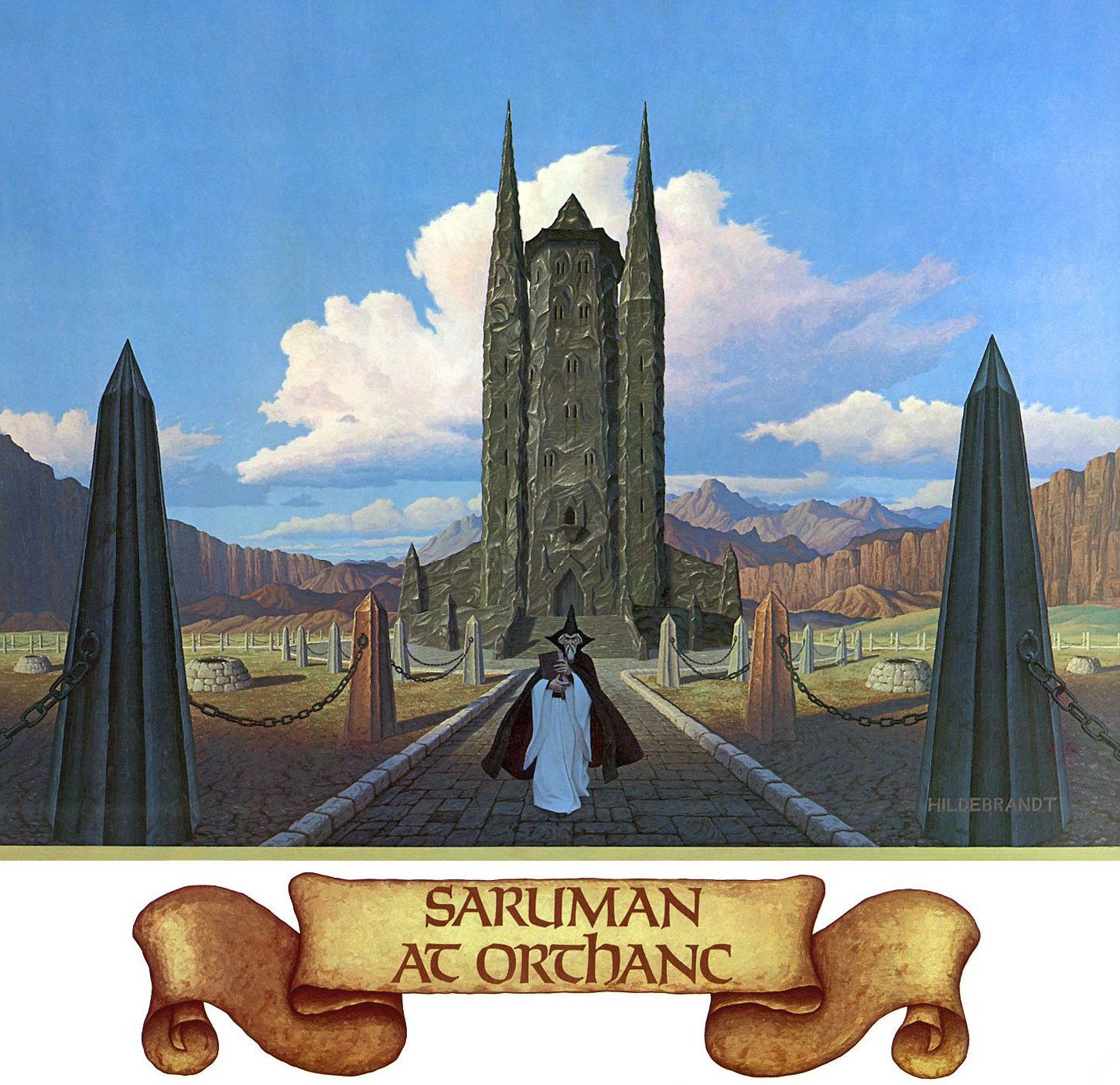
(the Hildebrandts)

where he has found one of the seeing-stones, the Palantiri,
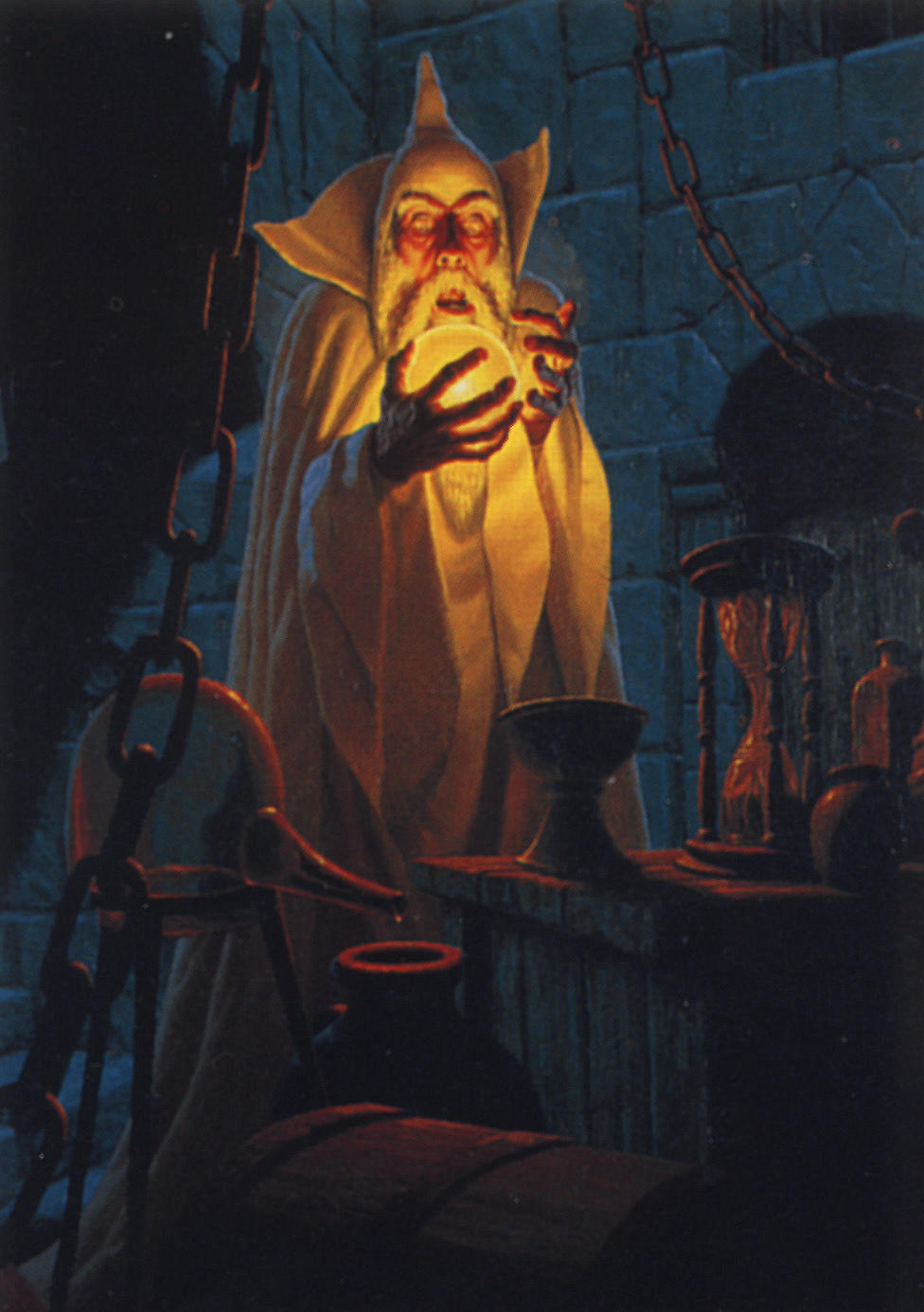
(the Hildebrandts)

although he has kept this discovery secret, only to be revealed after his defeat—a disturbing sign:  why not let the other Istari know–unless its use was in itself suspect?   

At the very beginning of The Lord of the Rings, Gandalf identifies Saruman to Frodo as “…great among the Wise…chief of my order…” and yet adds something very interesting, and perhaps another disturbing sign:  “His knowledge is deep, but his pride has grown with it, and he takes ill any meddling.”  (The Fellowship of the Ring, Book One, Chapter 2, “The Shadow of the Past”)

We can’t know whether that pride which Gandalf mentions was already displaying itself then, but it’s clear that that discovery was fatal, the second stage in his corruption, pushing Saruman away from his role as a defender of Middle-earth into, in his own mind, the role of a potential conqueror and perhaps even rival to Sauron, although Saruman was

“…being deceived—for all of those arts and subtle devices, for which he forsook his former wisdom, and which fondly he imagined were his own, came but from Mordor; so that what he had made was naught, only a little copy, a child’s model or a slave’s flattery, of that vast fortress, armoury, prison, furnace of great power, Barad-dur, the Dark Tower, which suffered no rival, and laughed at flattery, biding its time, secure in its pride and its immeasurable strength.”  (The Two Towers, Book Three, Chapter 8, “The Road to Isengard”)

In his description of Saruman to Frodo, Gandalf had been specific about Saruman’s knowledge:

“The lore of the Elven-rings, great and small, is his province.  He has long studied it, seeking the lost secrets of their making…”

And here perhaps is revealed another stage in Saruman’s corruption:

“…but when the Rings were debated in the Council, all that he would reveal to us of his ring-lore told against my fears…”

That is, just as in the case of the Palantir, Saruman has kept things back.  Was Saruman acting on his own in this, or had the seeing-stone and its real controller already been working at his mind? 

Certainly, when he makes his pompous and revelatory speech to Gandalf, hoping to persuade him to join him (which Gandalf immediately not only sees through, but sees how much of it isn’t even Saruman’s thinking, but the words of someone else), we have the sense that, whoever Saruman had been when he came to Middle-earth, that person had been twisted away from protecting Middle-earth from Sauron and  was stating, instead, completely alien goals, as Gandalf recognized:

“We can bide our time, we can keep our thoughts in our hearts, deploring maybe evils done by the way, but approving the high and ultimate purpose:  Knowledge, Rule, Order; all the things that we have so far striven in vain to accomplish, hindered rather than helped by our weak or idle friends.  There need not be, there would not be, any real change in our designs, only in our means.”  (The Fellowship of the Ring, Book Two, Chapter 2, “The Council of Elrond”)

To Gandalf, this is Sauron talking:

“ ‘Saruman…I have heard speeches of this kind before, but only in the mouths of emissaries from Mordor to deceive the ignorant.’ “

and it’s clear to him that Saruman, seemingly unknowingly, has become a puppet of someone more powerful and devious than he. 

The immediate instrument for this was, as I would suggest, that seeing-stone, but, beyond that, there was a vulnerability inherent in Saruman’s very being in Middle-earth, as Tolkien describes in a letter:

“But since in this tale & mythology Power—when it dominates or seeks to dominate other wills and minds (except by the assent of their reason)—is evil, these ‘wizards’ were incarnated in the life-forms of Middle-earth, and so suffered the pains both of mind and body.  They were also, for the same reason, thus involved in the peril of the incarnate:  the possibility of ‘fall’, of sin, if you will.  The chief form this would take with them would be impatience, leading to the desire to force others to their own good ends, and so inevitably at last to mere desire to make their own wills effective by any means.  To this evil Saruman succumbed.”  (drafts to Michael Straight, “probably January or February 1956”, Letters, 342-343)

And here is where that “pride”, which Gandalf had mentioned to Frodo had appeared, added to which was his losing sight of the Valar’s purpose in sending him and acquiring a fortress, where Sauron was able to turn him to his own purposes—although we might imagine that, under Sauron’s domination, Saruman might still believe that he could escape Sauron’s notice, when he suggests to Gandalf

“As the Power grows, its proved friends will also grow; and the Wise, such as you and I, may with patience come at last to direct its courses, to control it.” 

And even that he might imagine that he himself might employ the Ring—

“ ‘Why not?  The Ruling Ring?  If we should command that, then the Power would pass to us.’ “

Gandalf’s reply to this:   “ ‘Saruman…only one hand at a time can wield the One, and you know that well, so do not trouble to say we…You were head of the Council, but you have unmasked yourself at last.” shows that Saruman has failed completely, both in his immediate quest to persuade Gandalf to tell him where the Ring currently is, and in his attempt to bring a fellow Istar to his side, having dismissed Radagast completely (“Radagast the Bird-tamer!  Radagast the Simple!  Radagast the Fool!”).

This, however, is only Saruman’s first failure.  His attempt to out-Sauron Sauron by a war of conquest not only fails at Helm’s Deep, but brings about the destruction of his fortress at Isengard.
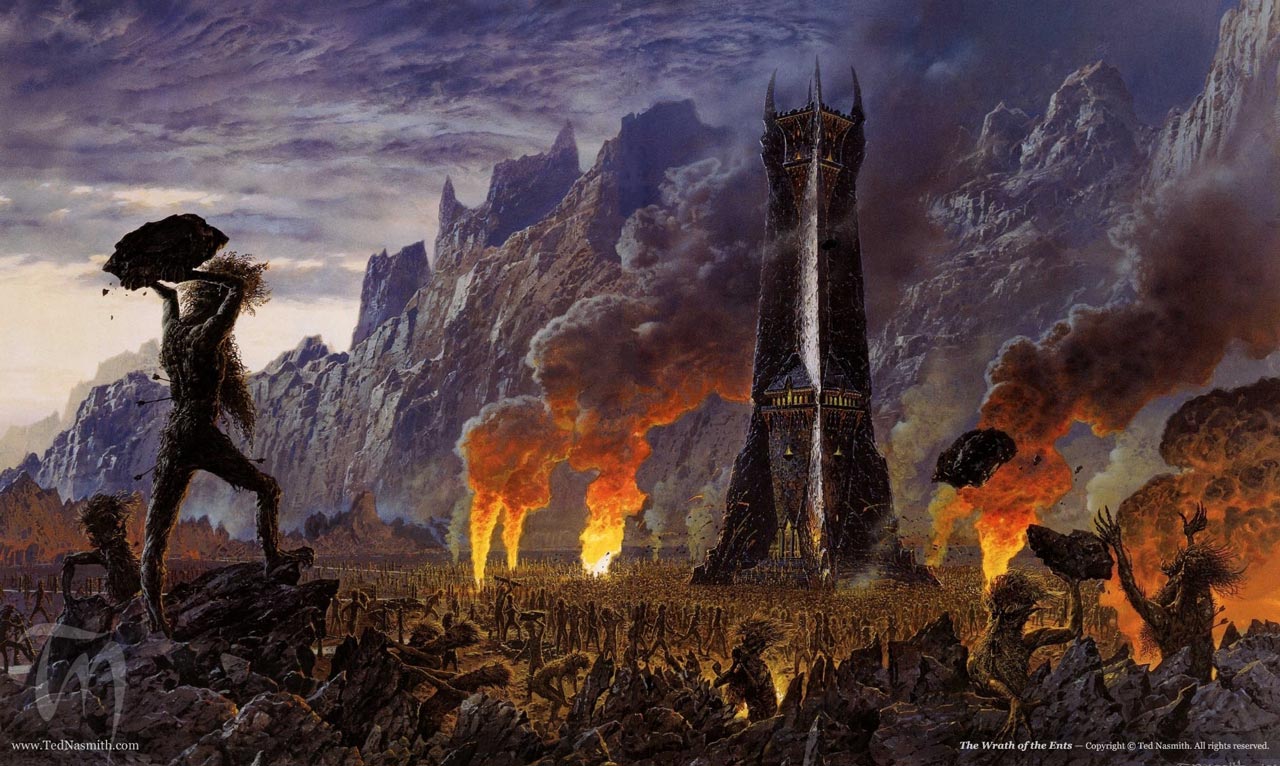
The Wrath of the Ents, by Ted Nasmith

(Ted Nasmith)

He then loses the Palantir,
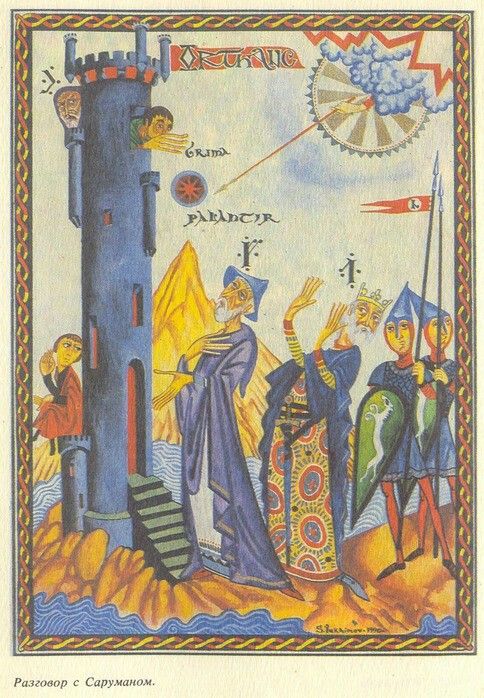
(Sergei Lukhimov—you can see a little more of his work here:  https://imgur.com/gallery/1993-ukranian-artist-sergei-lukhimov-created-32-illustrations-first-ever-russian-edition-of-lord-of-rings-eastern-orthodox-iconography-meets-anglo-saxon-modern-mythology-Ct7ojT5 )

and is even exiled from his one-time place of power,
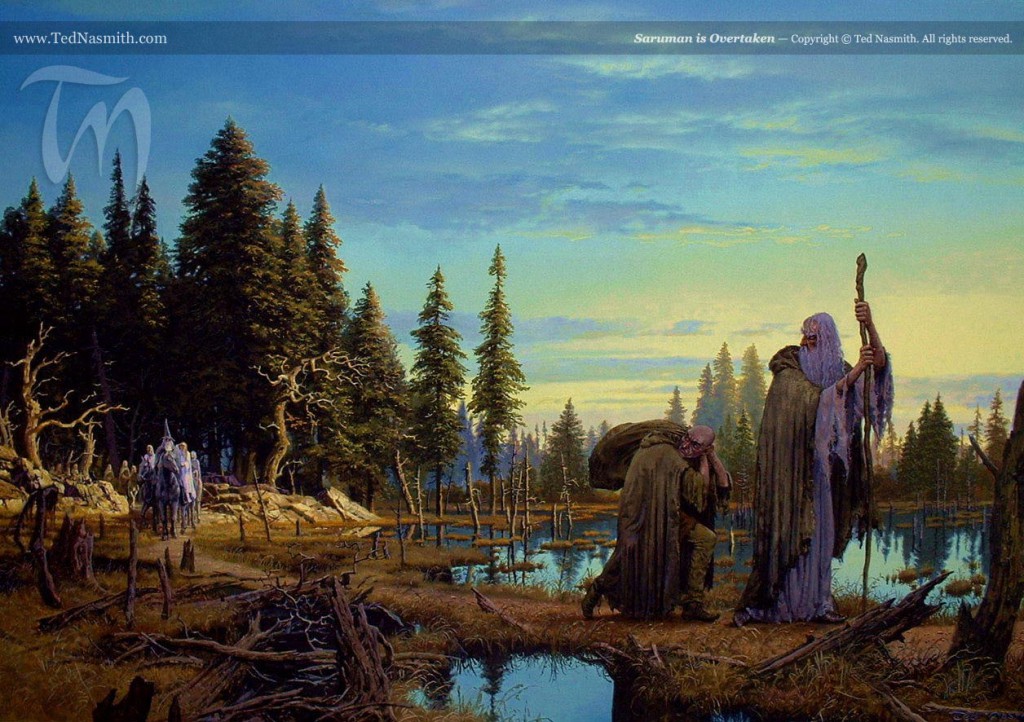
(Ted Nasmith)

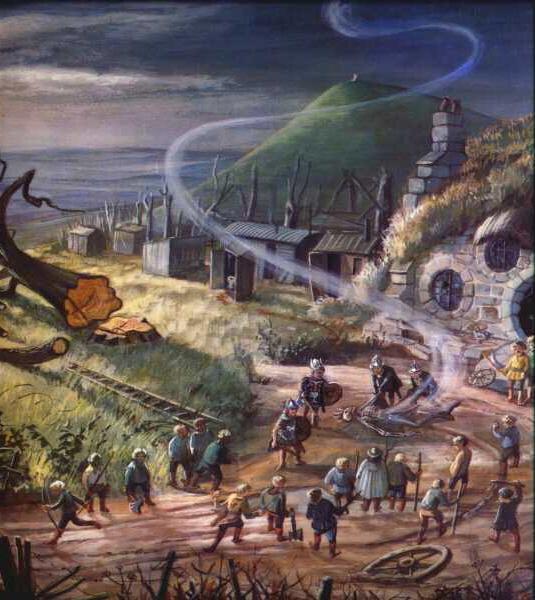
before his attempt to ruin the Shire is stopped by the return of Frodo and his friends
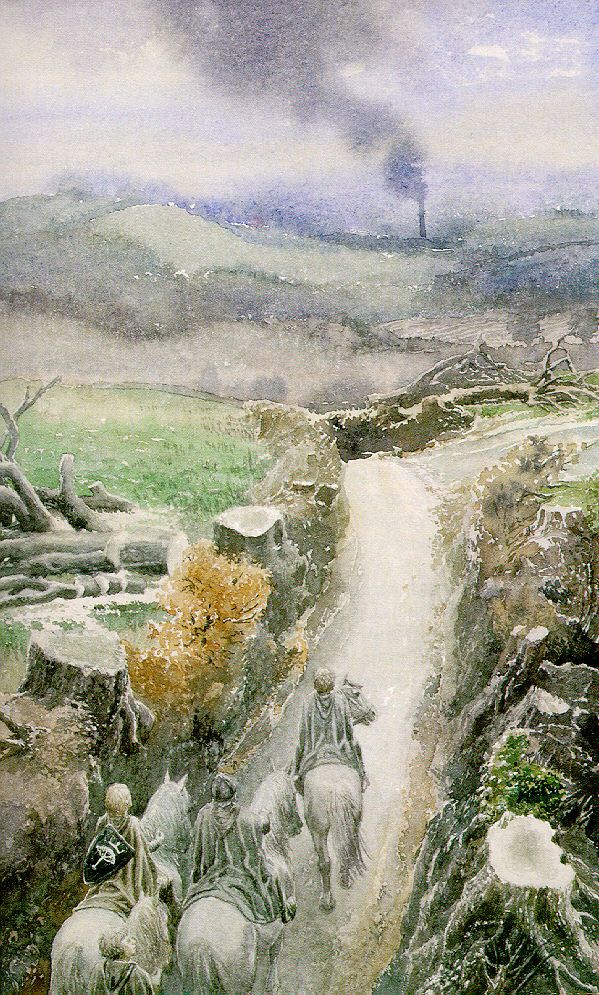
(Alan Lee)

and his final confrontation with Frodo
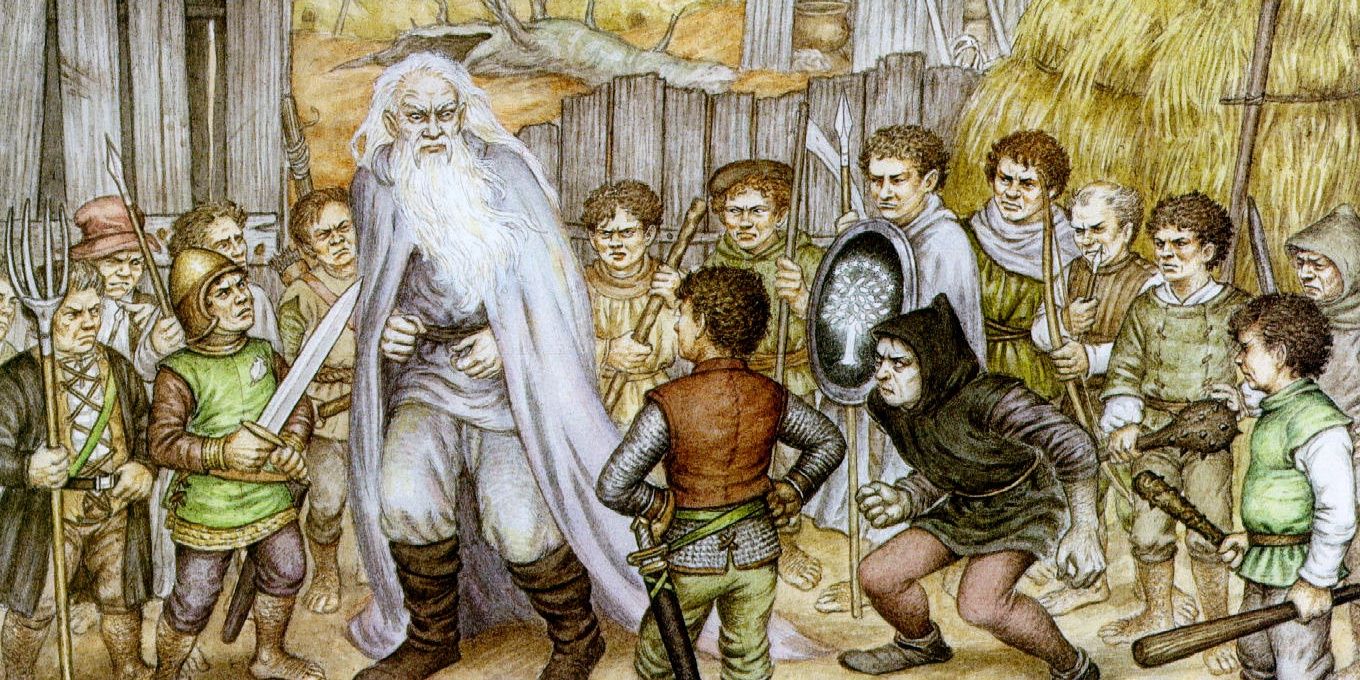
(Inger Edelfeldt—you can read about her here:  https://en.wikipedia.org/wiki/Inger_Edelfeldt )

ends in his death—or the closest thing like it to someone from Valinor in the West—his rejection by it–
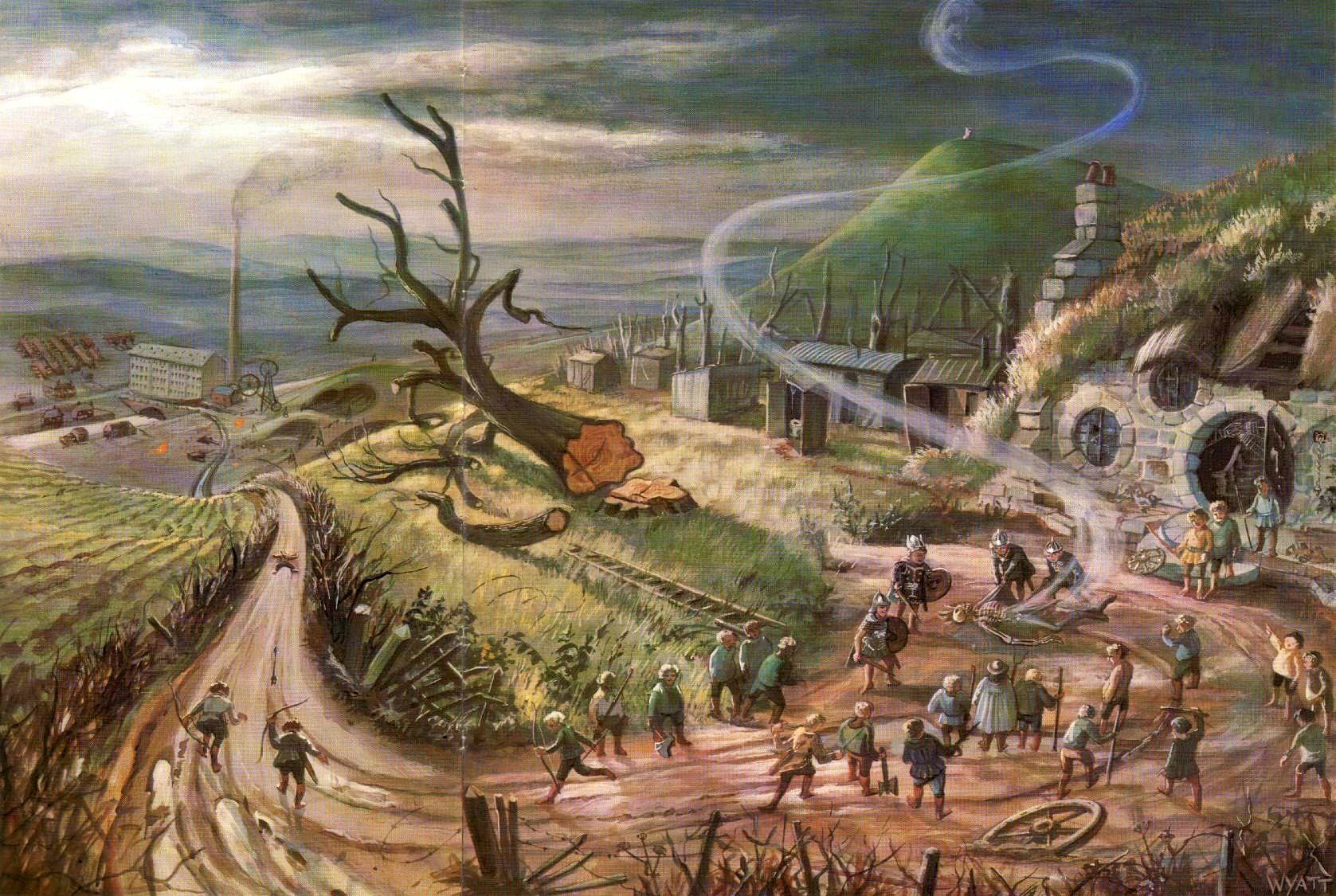
(Joan Wyatt)

“To the dismay of those that stood by, about the body of Saruman a grey mist gathered, and rising slowly to a great height like smoke from a fire, as a pale shrouded figure it loomed over the Hill  For a moment it wavered, looking to the West; but out of the West came a cold wind, and it bent away, and with a sigh dissolved into nothing.”

One has only to remember the beautiful, melancholy farewells at the Grey Havens to see what Saruman might have been part of—
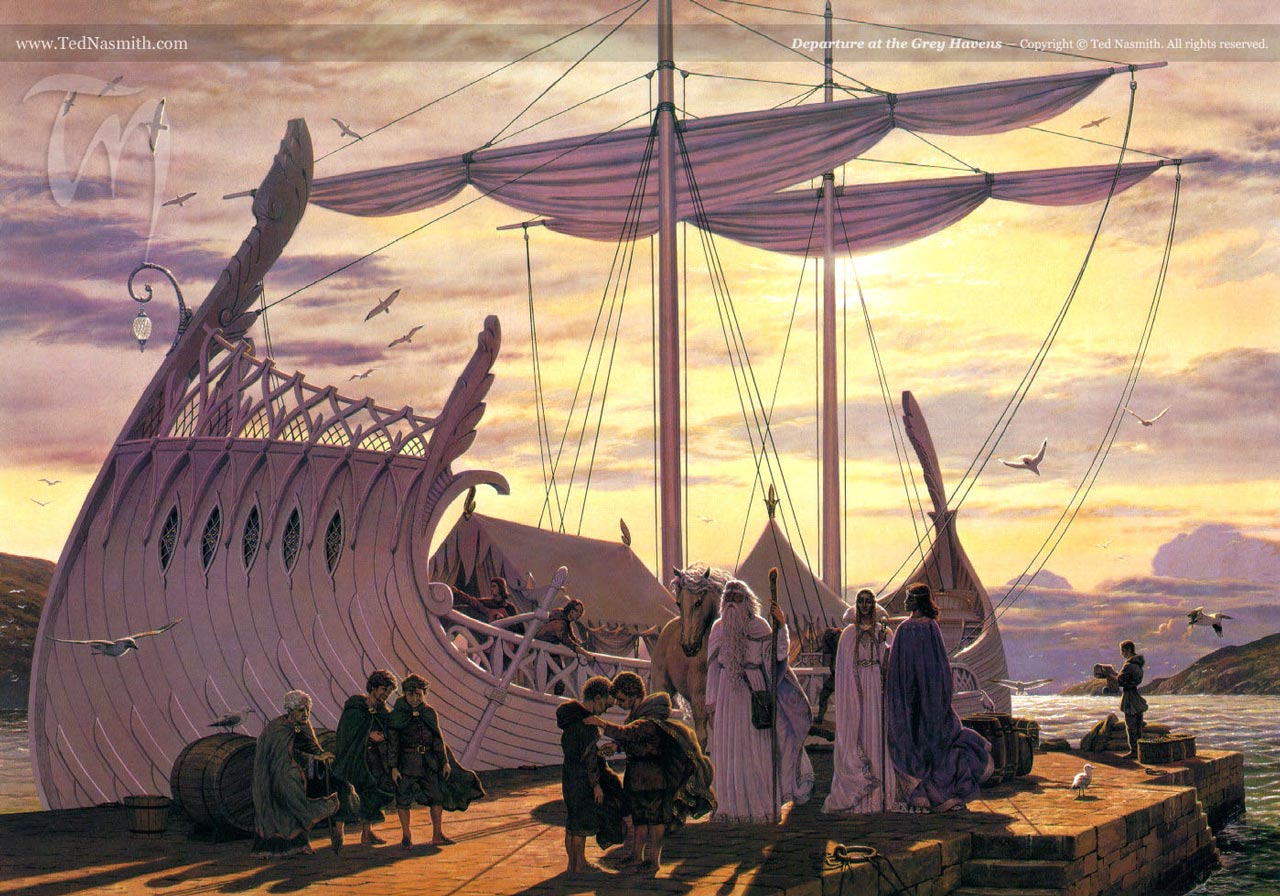
(Ted Nasmith)

Gandalf, with Sauron defeated, returns whence he came, his task complete.  Saruman, failing in that task, has no home to which to return and “dissolved into nothing”, but that sigh—so important here—says that he knows that he has failed and, in depicting that recognition, I believe we see JRRT show some deeper feeling for him than he might ever have expressed for Sauron, even as he had written that Sauron had not begun as evil (see draft to Peter Hastings, September, 1954, Letters, 284).

Thanks, as always, for reading.

Stay well,

As well, consider the deep feeling which can rest even in a sigh,

And remember that, as always, there’s

MTCIDC

O

Two Fingers

09 Wednesday Apr 2025

Posted by Ollamh in Uncategorized

≈ Leave a comment

Tags

Captain Hook, Dracula, Pirates, poison ivy, Remington, rum, Sherlock Holmes, The Lord of the Rings, Tolkien, Tolkien typing, typewriters, whisky

As ever, dear readers, welcome.

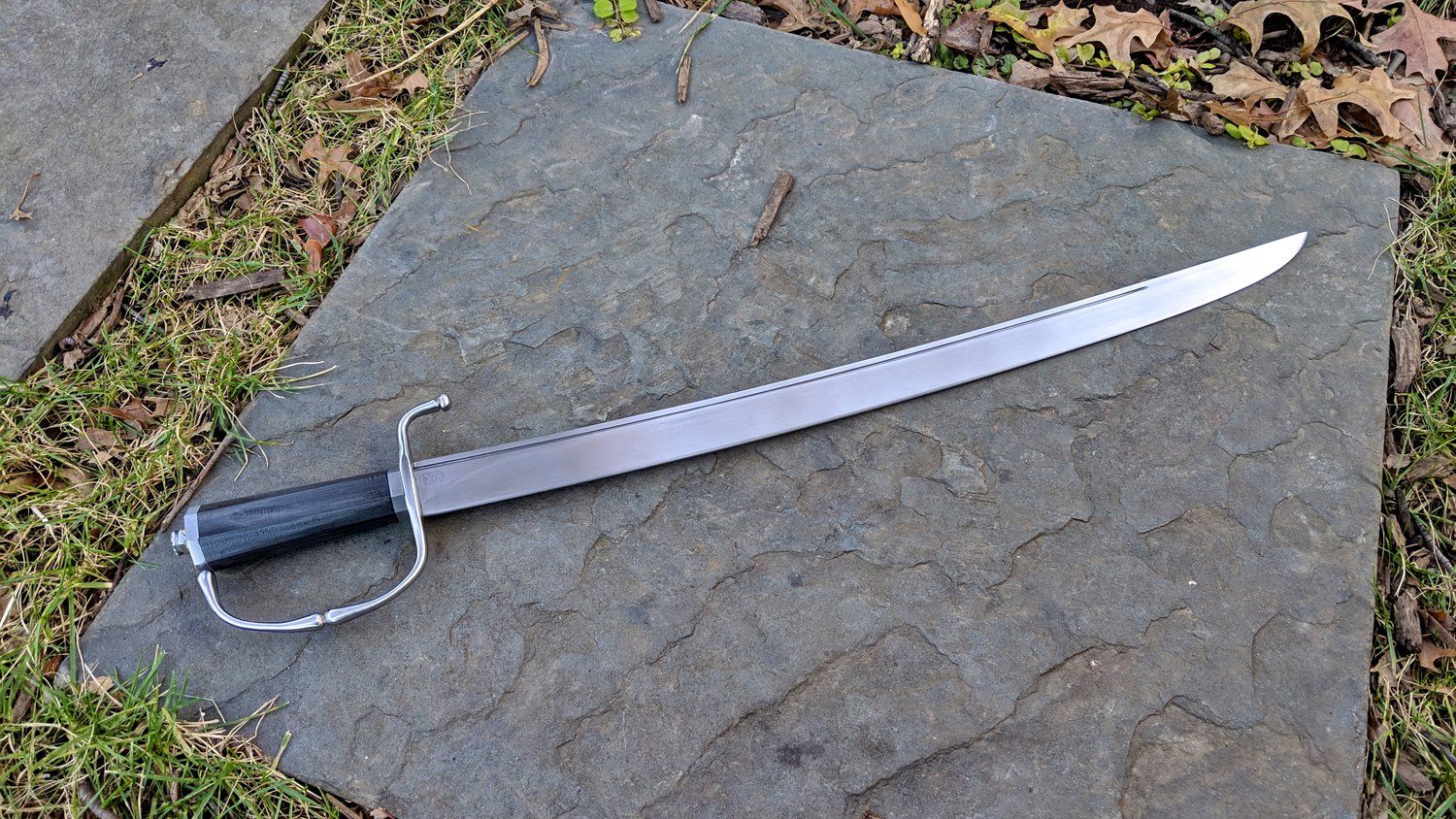
From the title of this posting, you, imaginative readers, might create any number of topic subjects.  It could be the name of a pirate,

his other fingers lost to a cutlass.

It could be the order by that pirate for whiskey,

since the barkeep has run out of rum–

or perhaps the pirate is an elegant gentleman, like James Hook,

(William Nicholson’s costume design for the original captain, 1904, in the V&M–Victoria and Albert Museum—collection)

a graduate of Eton College,

who knows his malts and knows that “two fingers” is a standard measure.

In Philip Pullman’s The Subtle Knife,

one of the protagonists, Will Parry, has lost two fingers in gaining the knife of the title—could this be the topic?

In the US, poison ivy

has the colloquial name “Three-fingered Jack”—perhaps this is a variant so deadly that it only needs two fingers? 

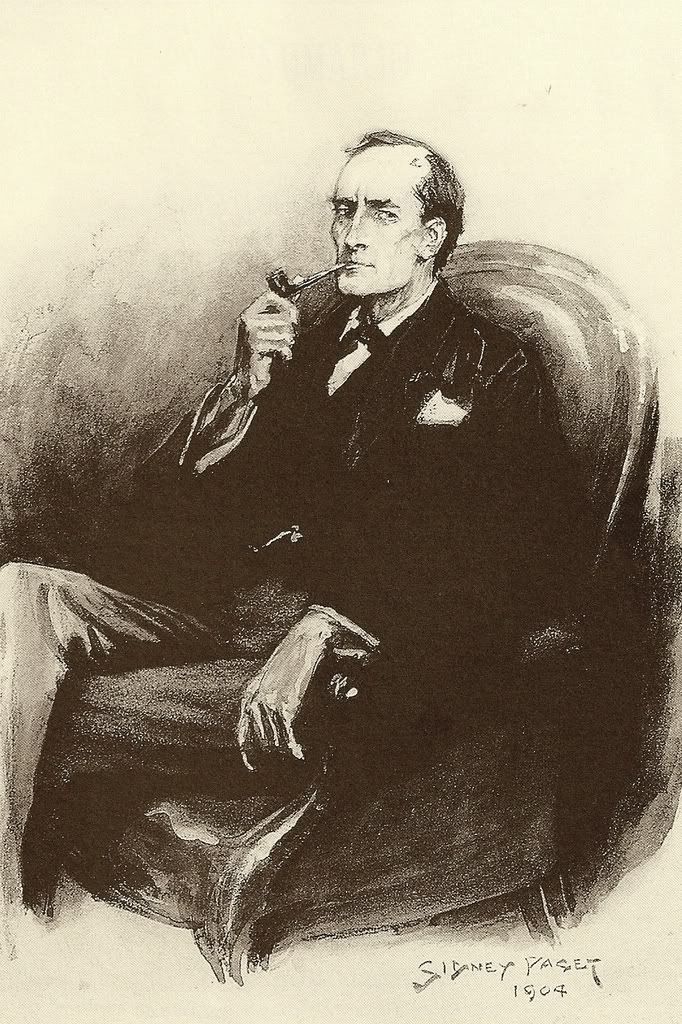
Or is this the title for one of Sherlock Holmes’

cases that Watson is so desperate to see—but never will:  “The Adventure of the Two Fingers”?

As you’re imaginative, I’ll let you go on from there, and I hope that you won’t be disappointed to learn that it’s none of the above, but, instead, it’s about typing.

The history of typewriters is a complex one (you can read all about it here:  https://historycooperative.org/who-invented-the-typewriter/  but, if the history of technology interests you as it does me, be sure to veer over to the article on the Hansen “writing ball”, which you can find here:  https://en.wikipedia.org/wiki/Hansen_Writing_Ball )

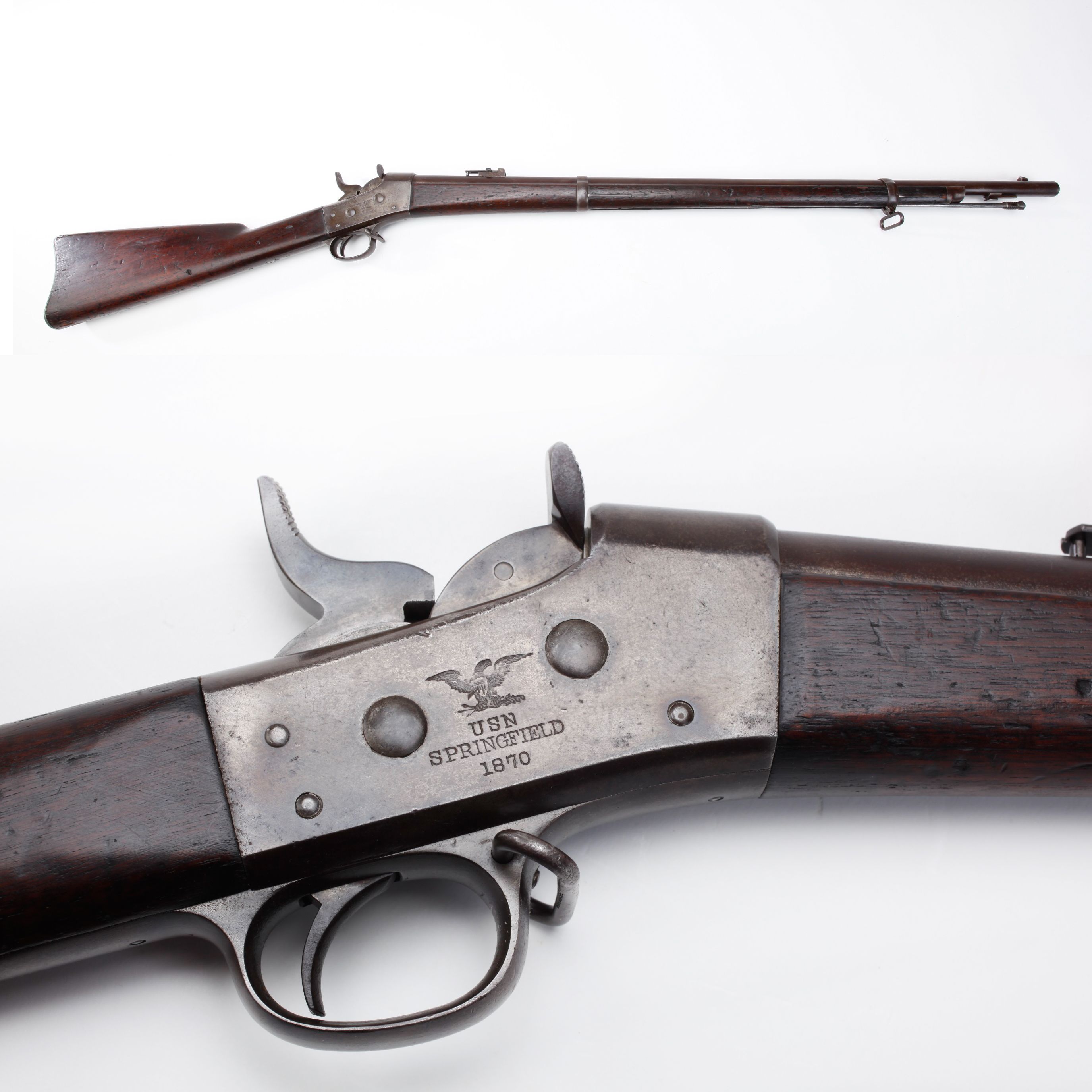
but Christopher Latham Sholes (along with Samuel Soule , Carlos Glidden, and James Densmore) is credited with producing the first commercially viable machine in 1868, the “Remington No.1”,

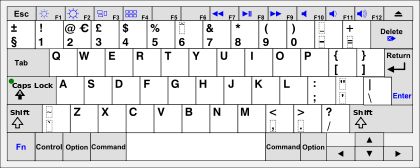
which employed the QWERTY pattern still seen today.

(For a wonderfully-detailed and enlighteningly-illustrated article on this, see:   https://readmultiplex.com/2022/10/21/the-actual-reasons-the-qwerty-keyboard-layout-was-invented-and-how-it-changed-us/   And yes, that “Remington” was the firearms company, which was diversifying.)

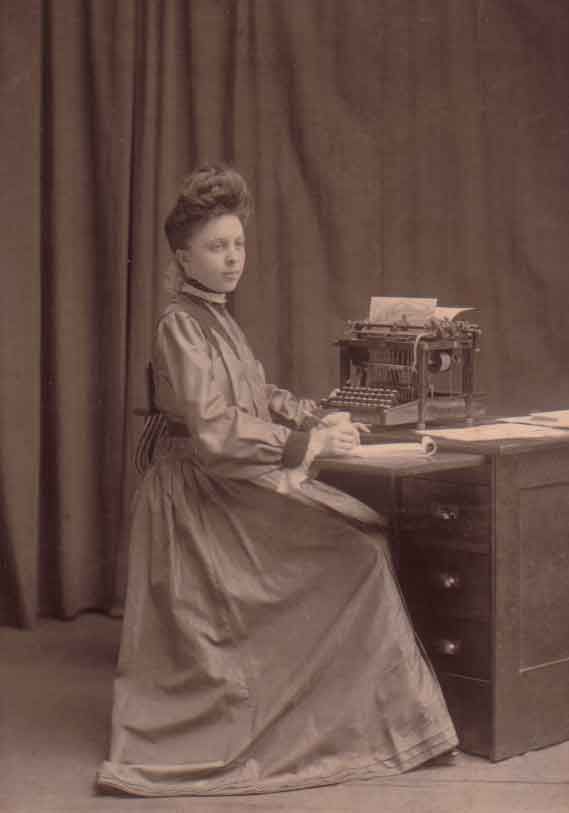
In the later 19th century, the Industrial Revolution seemed  to begin to find a second wind and offices were increasingly full of typewriters and typists (one of the ways in which young women came into the workforce).

You can really see this in 1897’s Dracula,

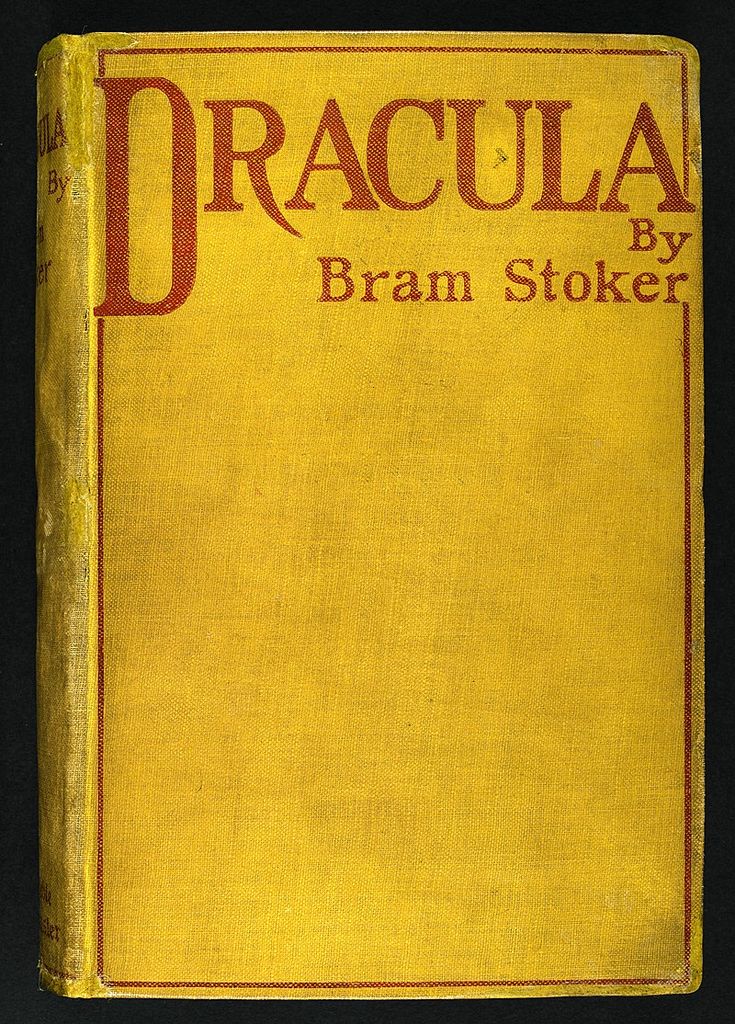
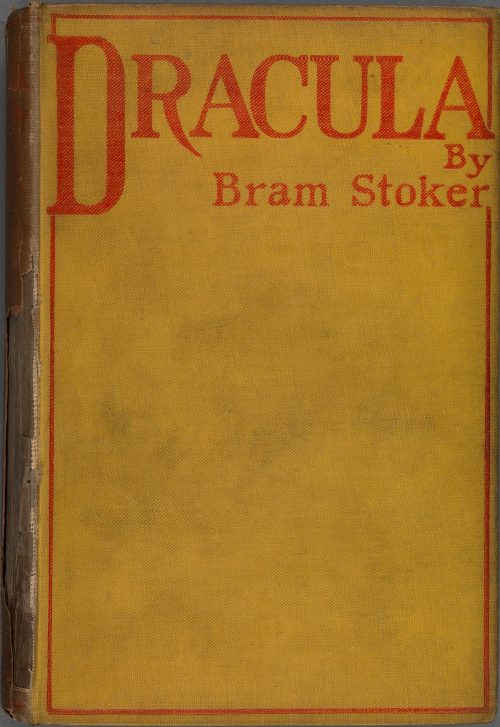
where a major character, Mina Harker, uses her typing and other secretarial skills to help to defeat the vampire.  (And, if you’ve never read it, here’s an American first edition for you:    https://www.gutenberg.org/cache/epub/45839/pg45839-images.html  For more on using the office to defeat Dracula, see “Take a Letter”, 30 December, 2020 on this blog)

But the machine which is the focus of this posting—and appears above, just after that Sidney Paget image of Holmes, wasn’t a Remington, but a Hammond, first put on the market in 1884.

(for more on early Hammonds, see:  https://www.antikeychop.com/hammondno1typewriter )

A much later version of one of these was owned by a Professor JRR Tolkien and, as he tells us, on which “I typed nearly all of The Lord of the Rings” (letter to Rayner Unwin, 22 June, 1952, Letters, 236).

The Hammond was a very different machine from the Remingtons in their various iterations, including, in time, the ability to shift typefaces (JRRT mentions in an airmail letter to Christopher during the war that he’s using a “midget” typeface to cram in more writing in the limited space of an airmail letter—see the letter of 7 July, 1944, Letters, 124.  For a very good article on Tolkien’s writing habits, see:  https://tonyriches.blogspot.com/2014/06/j-r-r-tolkiens-writing-habits.html )

With 1200 pages of manuscript, and only Tolkien to do the typing (or most of it, from his various accounts it’s unclear if he did every page himself—he had earlier typed out The Hobbit—see the letter to Christopher Bretherton, 16 July, 1964, Letters,  257), it’s not surprising that it took him so long to do a readable draft (and he only had one, as he tells Hugh Brogan –from a letter to Hugh Brogan, 4 September, 1950, Letters, 199-200), especially as he was not a trained typist.  “Touch typing” appeared as early as the 1880s, but it was a specialized skill (see https://en.wikipedia.org/wiki/Touch_typing )and we can only presume that JRRT was self-taught. 

And that he typed everything with only two fingers (see Philip Norman, “The Prevalence of Hobbits” in the New York Times Book Review, 15 January, 1967, which you can find here:   https://archive.nytimes.com/www.nytimes.com/books/01/02/11/specials/tolkien-mag67.html ).

And that’s where the two fingers of the title meet Tolkien’s Hammond typewriter.

Thanks, as always, for reading.

Stay well,

Imagine what JRRT could have done with a laptop,

And remember that there’s always

MTCIDC

O
Eternally Yours, or Do You Believe in Magic?

06 Wednesday Jun 2018

Posted by Ollamh in Artists and Illustrators, Fairy Tales and Myths, Films and Music, Literary History, Military History

≈ Leave a comment

Tags

17th Century fashion, AB Durand, American Revolution, Arthur Rackham, Battle of Kolin, Bram Stoker, Captain Hook, Charles II, Christopher Lee, Darling Family, Darlings, Disney, Dracula, Fenian Cycle, Frederick the Great, Gerald du Maurier, Half Moon ship, Hudson River, J.M. Barrie, N.C. Wyeth, Neverland, Nina Boucicault, Oscar Wilde, Peter and Wendy, Peter Pan, Peter Pan in Kensington Gardens, Rip Van Winkle, Saruman, Tepes, The Little White Bird, The Lord of the Rings, The Picture of Dorian Gray, The Wanderings of Oisin, Tinkerbell, Tir na nOg, Tolkien, vampire, Vlad, Washington Irving, WB Yeats

Welcome, as ever, dear readers.

In our last, we spent some time thinking about immortality and Middle-earth.  Our main focus was upon the puzzle of Saruman’s seeming dissolution after his murder by Grima.

image1deathofsaruman.jpg

As one of the Maiar, it would seem that Saruman was, at least potentially, immortal, but his melancholy disappearance would suggest otherwise—perhaps because of his gradual betrayal of the trust the Valar had put in him to be an opponent of Sauron?

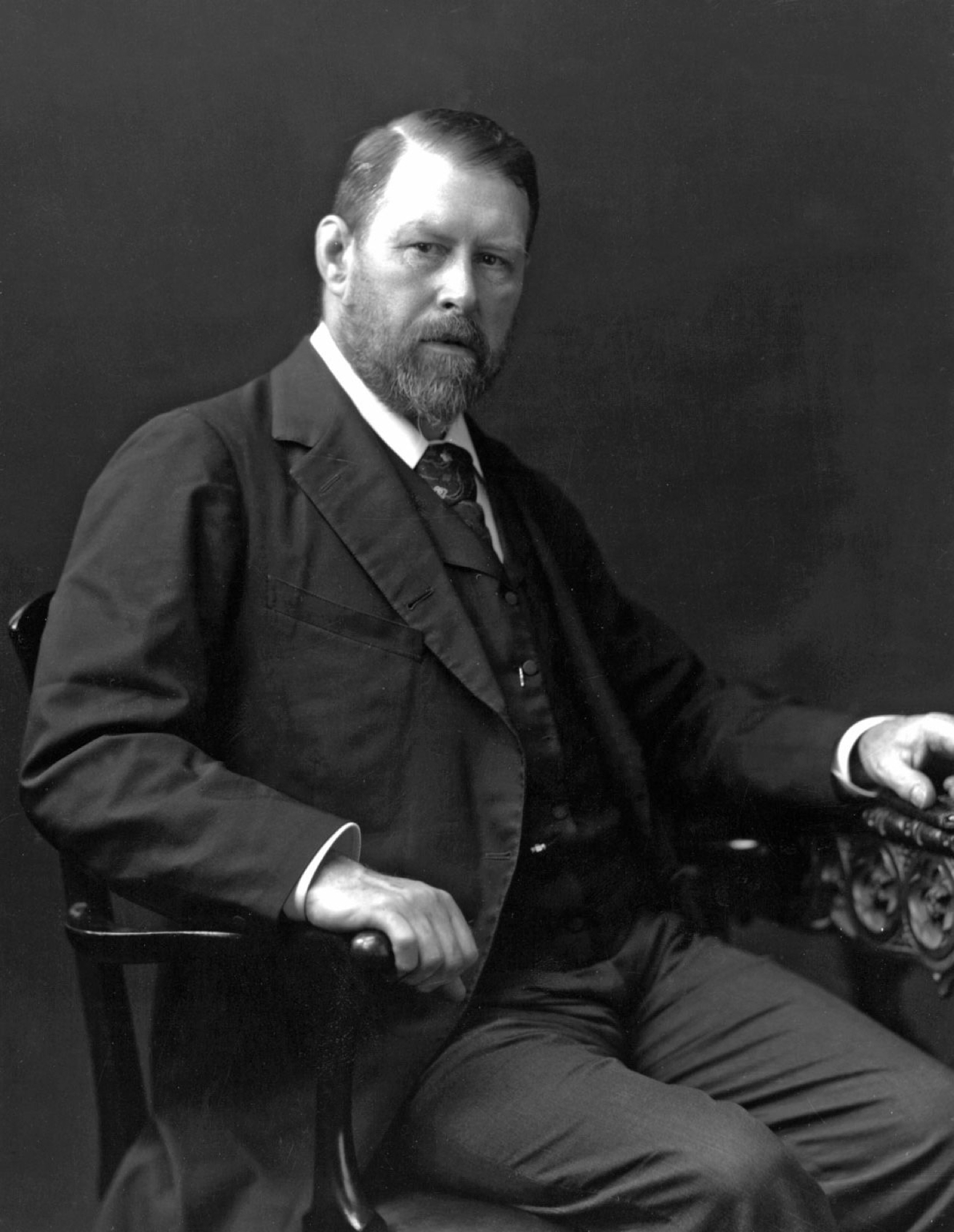
We had begun, however, with Bram Stoker’s (1847-1912)

image2bramstoker.jpg

1897 vampire classic, Dracula, and this has made us consider what appears to have been a popular theme in the late-Victorian-to-Edwardian literature we imagine JRRT read, growing up:  immortality (or at least lengthened life-span) through, for want of a better word, magic, and several instances immediately spring to mind.

image3dracfirst.jpg

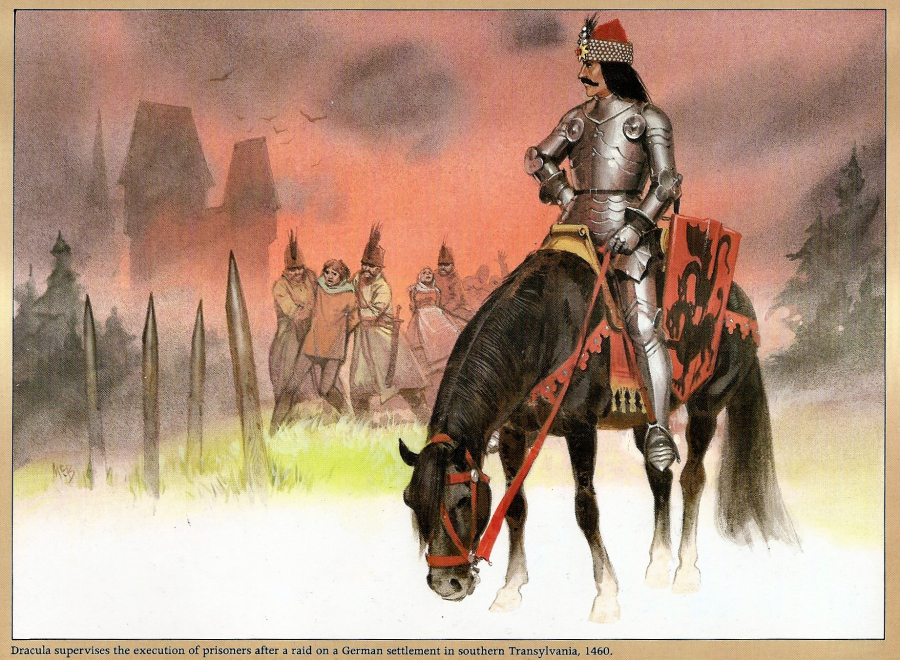
As for Dracula, we know that he was based upon a real late-15th-century eastern European border lord, Vlad, nicknamed “Tepes” (said TSE-pesh), “impaler”, who lived from about 1428 to 1477, when he was murdered.

image4drac.jpg

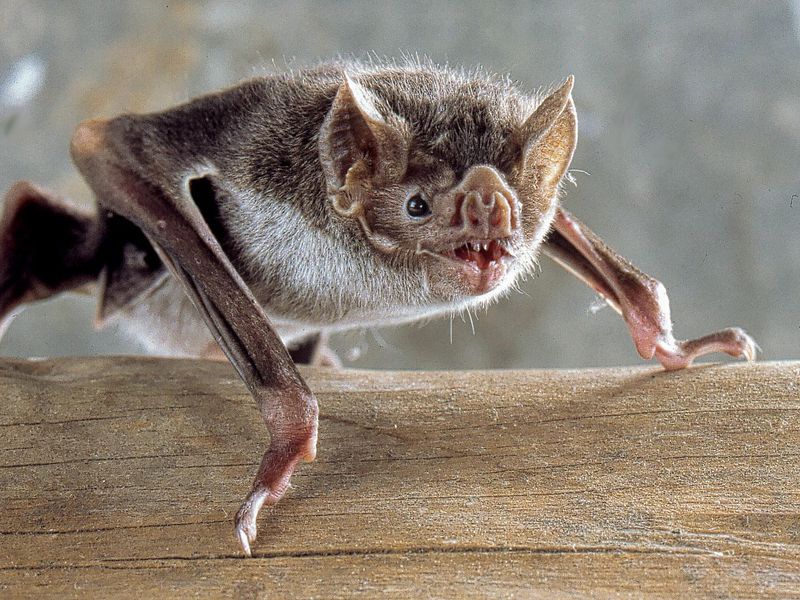
Stoker’s character has somehow avoided that death and has lived on for a further 500 years—how?  By being “un-dead”, a condition whose origin is never really explained, but in which a dead person continues to exist—and even flourish—if able to feed upon the blood of living people.  As this is not scientifically possible—dead is dead and actual vampire bats, after all, are alive, even if they drink blood.

image5avampirebat.jpg

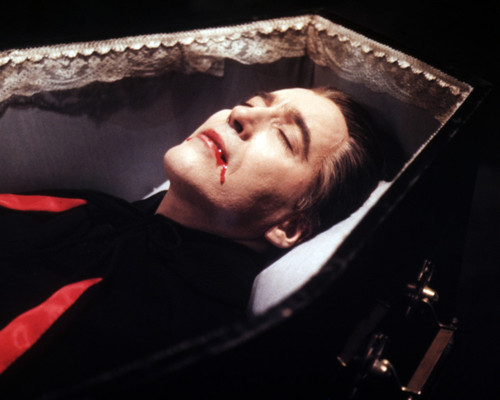
All that we can say, then, is that, for all of one of the protagonists’, Dr. van Helsing’s, talk of science, we have no idea what gives Dracula his extended life–though here’s Christopher Lee, as Dracula,

image5clee.jpg

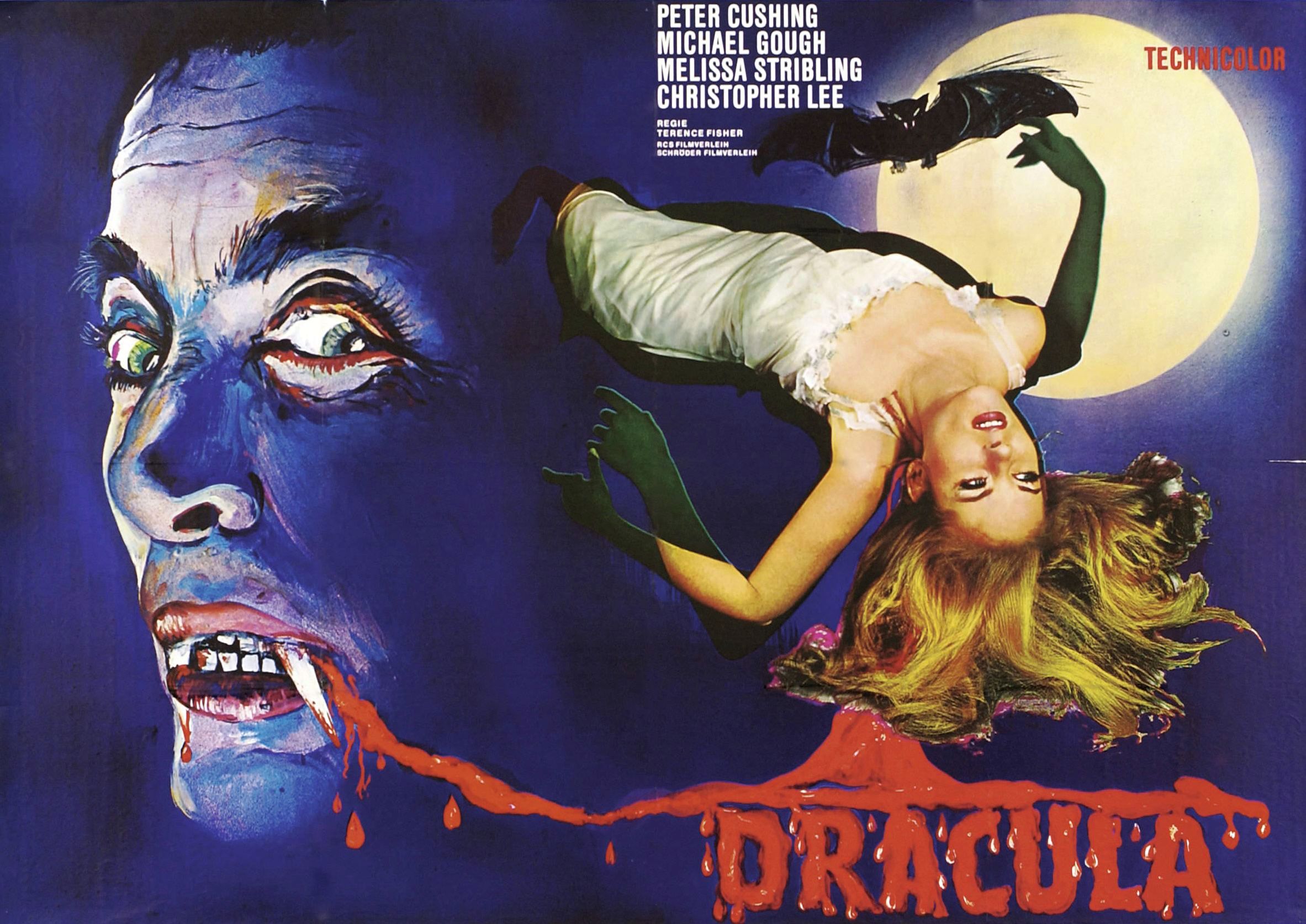
from the 1958 film, Dracula (in the US, Horror of Dracula), with the basis of his continued existence fresh on his lips.

image6poster.jpg

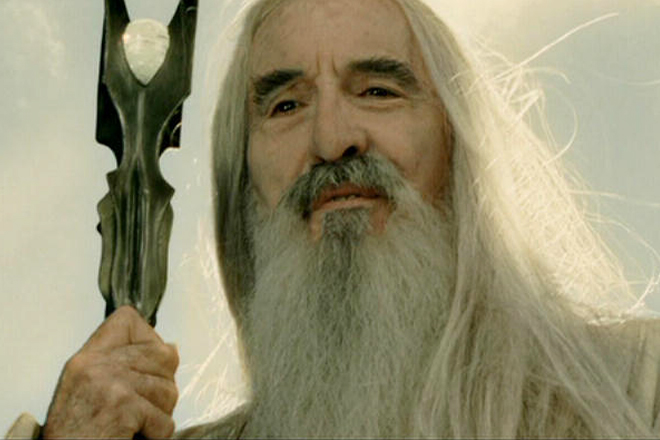
Considering our last post, by the way, it’s an odd coincidence that, in 1958, Lee could play Dracula and in 2001-2003, he would play Saruman.

image7leeassaruman.jpg

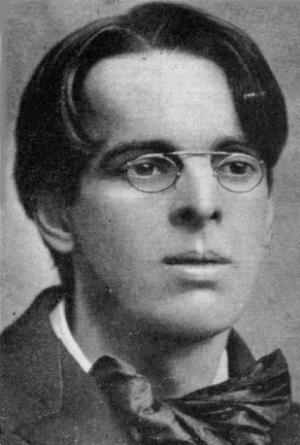
A few years before Stoker’s novel, in 1889, the young WB Yeats (1865-1939)

image8wby.jpg

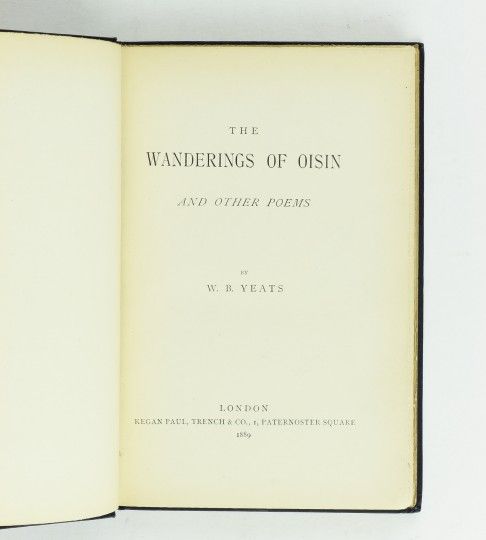
had published The Wanderings of Oisin (AW-shin).

image9wander.jpg

This is the story in verse based upon material from the “Fenian Cycle”,  the third series of tales about early Ireland preserved by medieval monks.  Yeats’ poem deals with an ancient Irish hero who traveled to the Otherworld, spent years there without knowing that it’s a place where time works differently, and returned, only to find that he’d been gone for 300 years and, once he’d actually touched Irish soil, he immediately changed from a vigorous young man to someone 3 centuries old.  The place to which Oisin traveled, called Tir na nOg, “the Land of Youth”, is, unfortunately, not found on any ancient map, so, like Dracula’s vampirism, it is simply accepted.

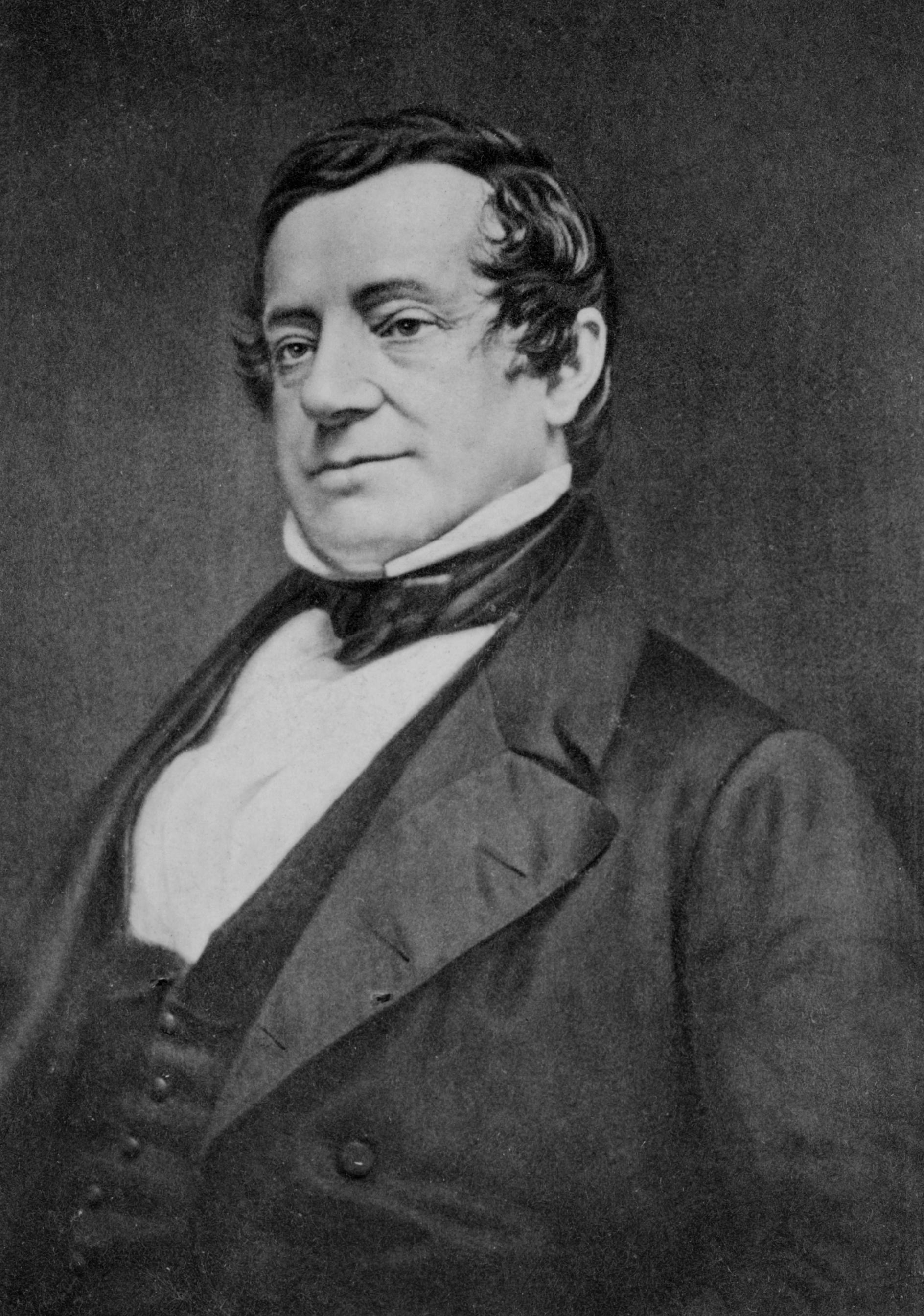
This time-warp also makes us think of the 1819 story of Rip Van Winkle, by Washington Irving (1783-1859).

image10washirv.jpg

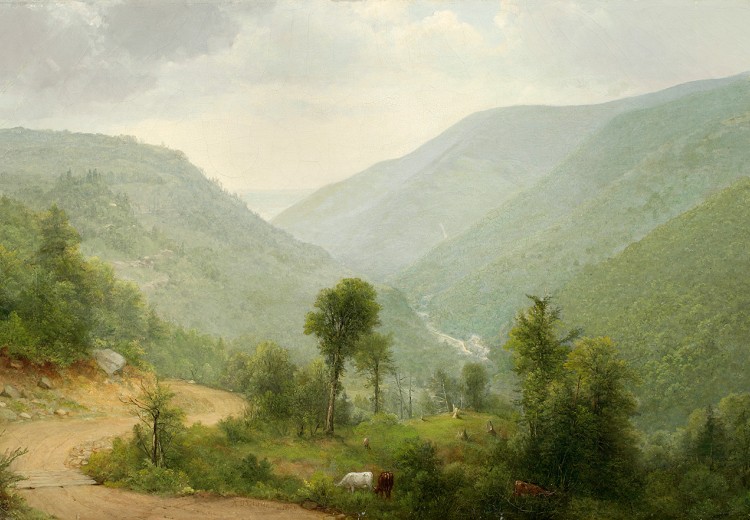
Rip Van Winkle goes off to hunt in the mountains, the Catskills, to the west of the Hudson River before the American Revolution.

(Here’s an 1864 painting of those mountains by AB Durand (1796-1886), who belonged to the first great group of American landscape painters, called the “Hudson River School”.)

image11hudsonriverschool.jpg

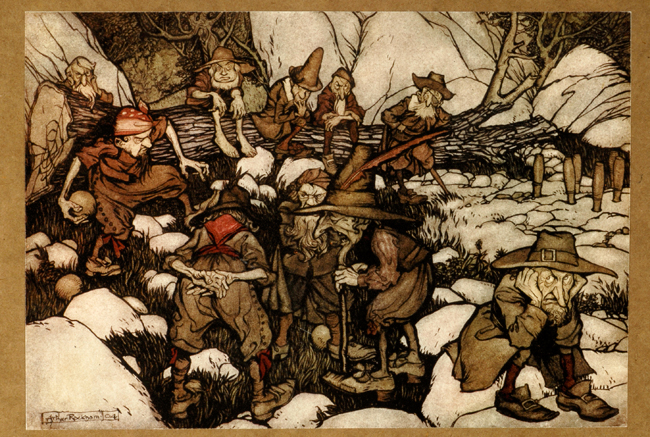
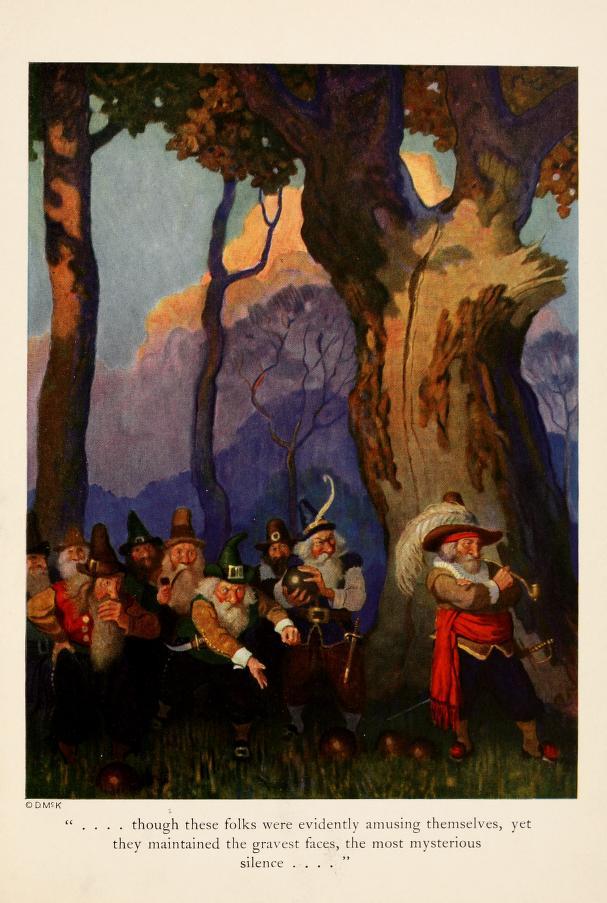
While out hunting, Rip bumps into a group of troll-like creatures, who turn out to be the enchanted members of Henry Hudson’s crew

image12huds.jpg

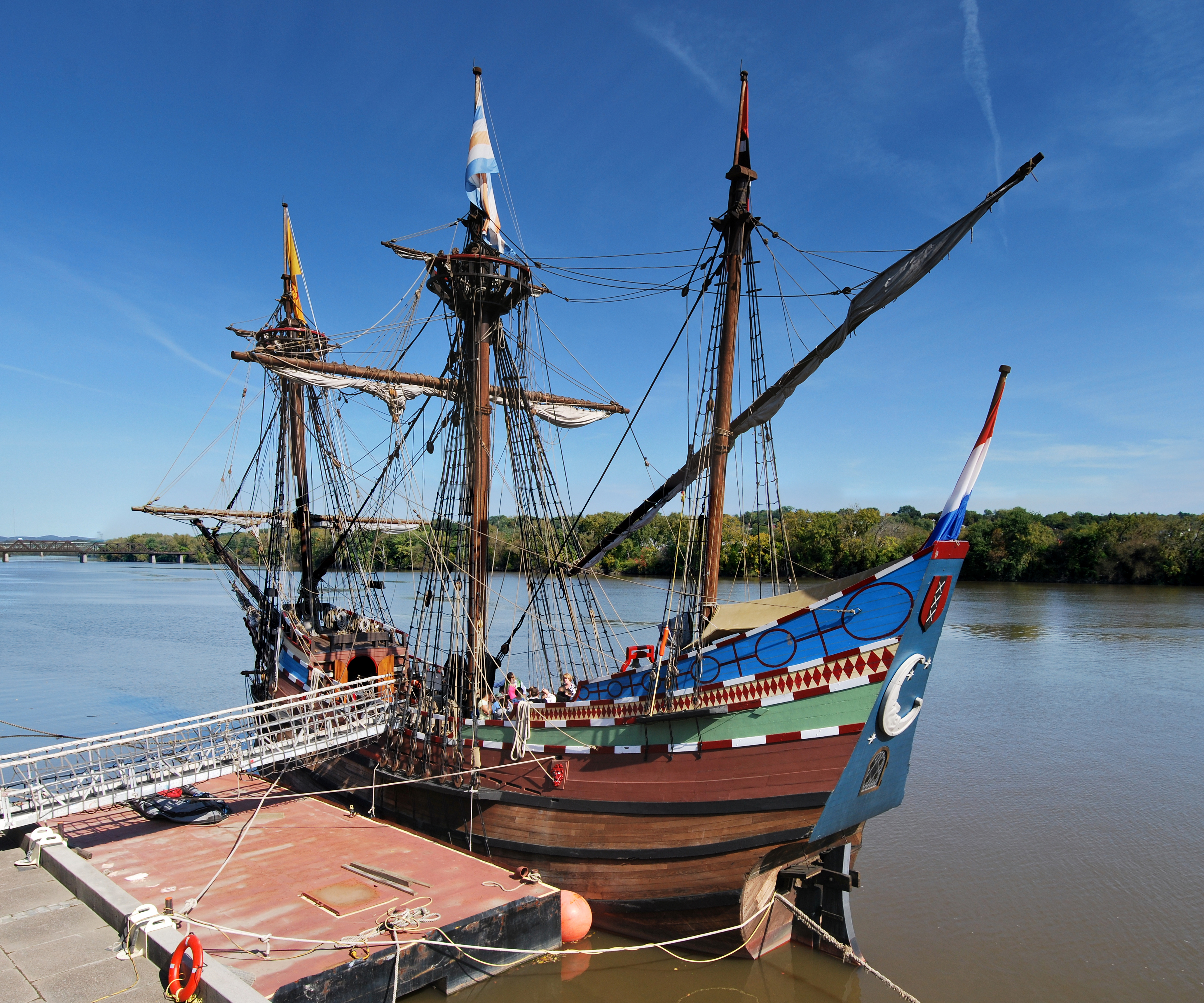
from his ship, the Half Moon—this is an image of the 1989 recreation of the ship—

image13haelvemaen.jpg

with which he explored the Hudson River in 1609.

image14hudson.jpg

(We see here Edward Moran’s 1892 painting of Hudson’s ship entering New York harbor.)

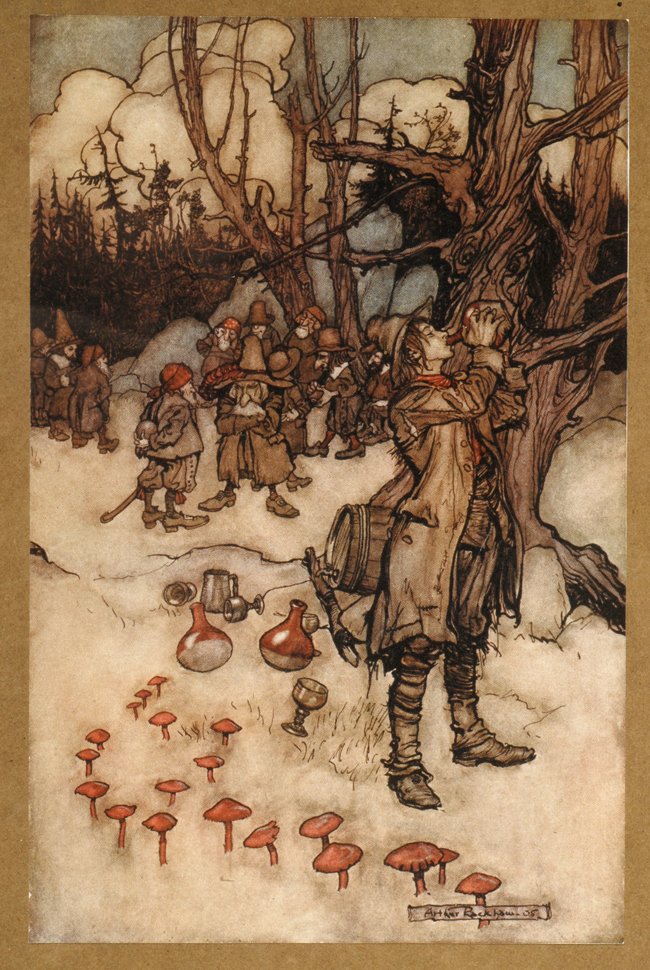
Rip drinks and bowls with them,

image15ripdrinks.jpg

image16ninepins.jpg

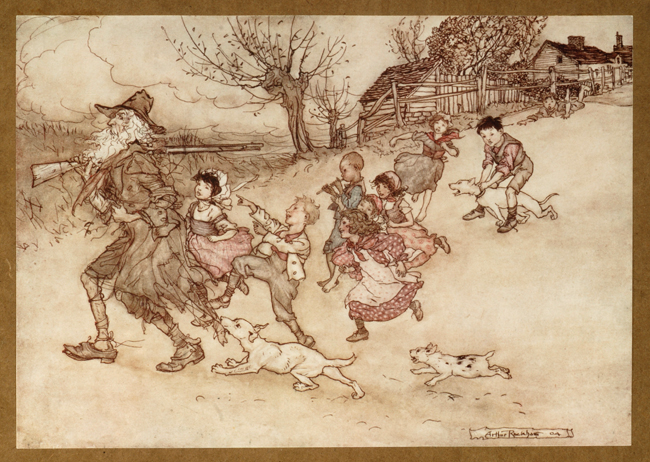
then falls asleep, only to awaken over twenty years later to find himself old and now a citizen of the new United States.

image17oldrip.jpg

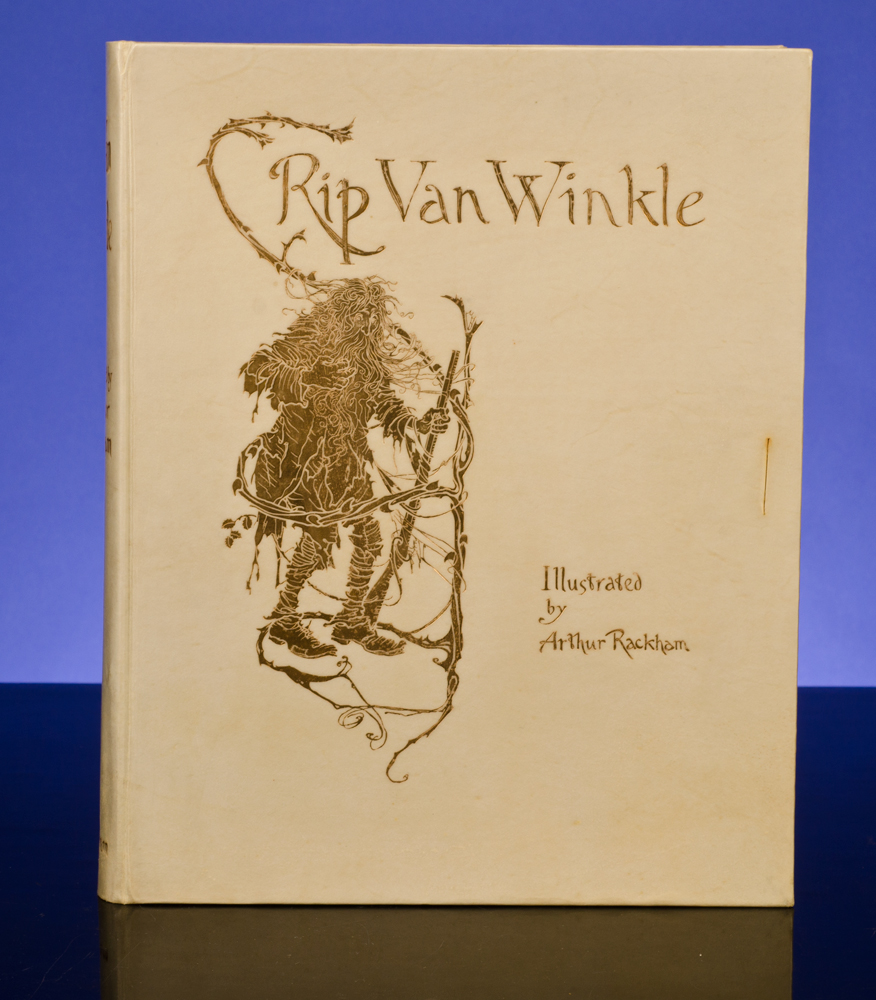
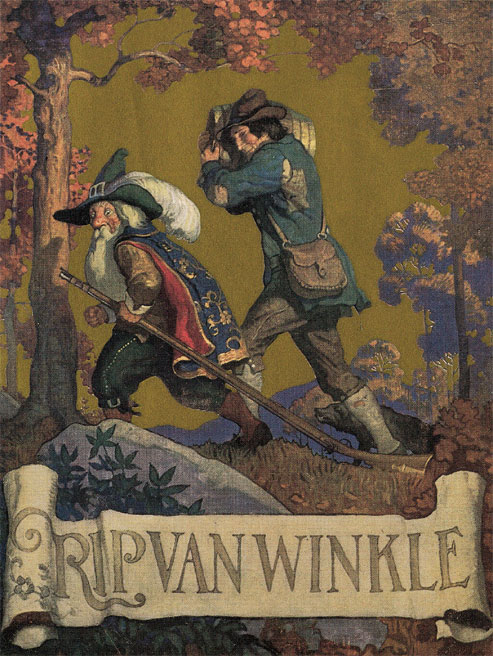
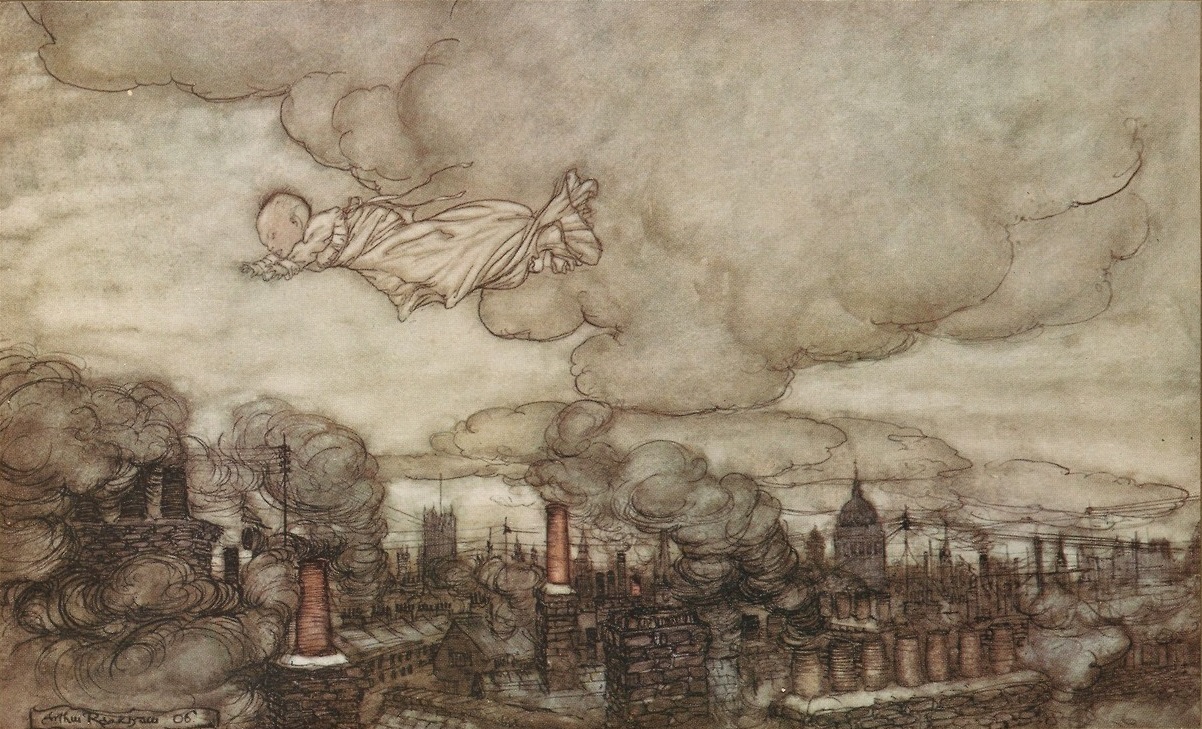
(If you follow us regularly—and we hope you do!—then you know of our great affection for late-19th-early-20th-century illustrators and, when it comes to this story, we’re very lucky in that Arthur Rackham illustrated it in 1905

image18rackham.jpg

and NC Wyeth in 1921.)

image19wyeth.jpg

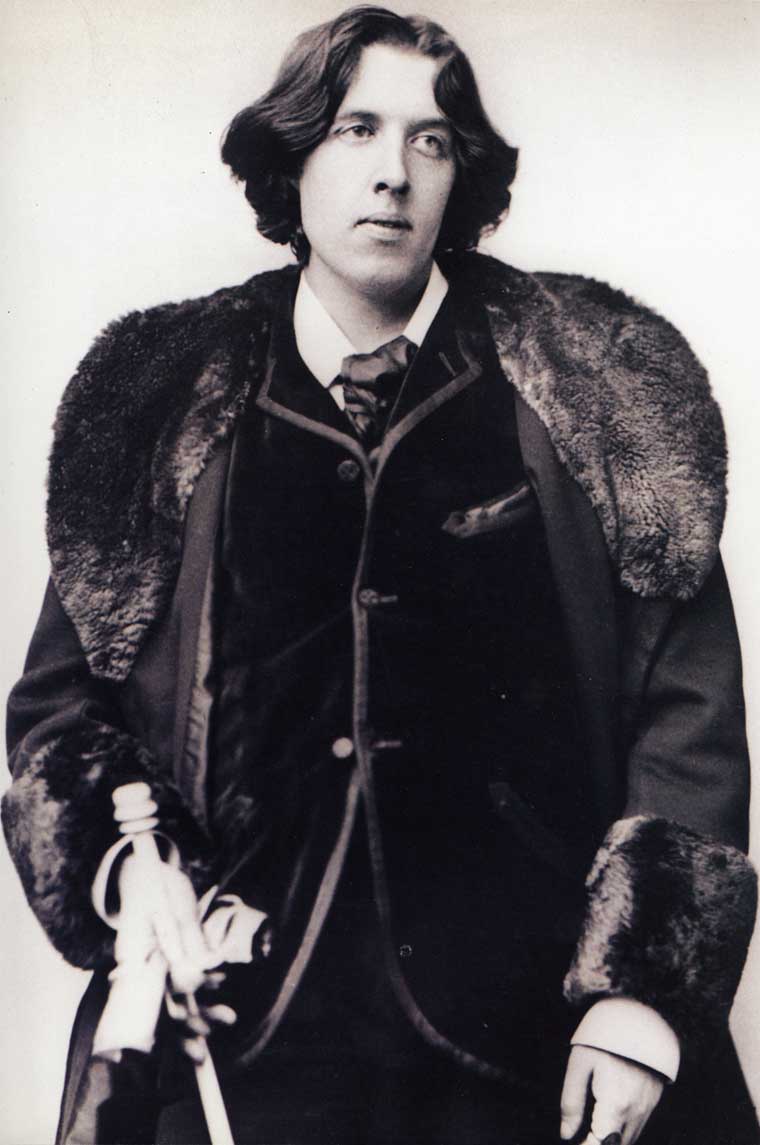
Another late-Victorian story with the theme of the supernatural and long life is Oscar Wilde’s (1854-1900)

image20wilde.jpg

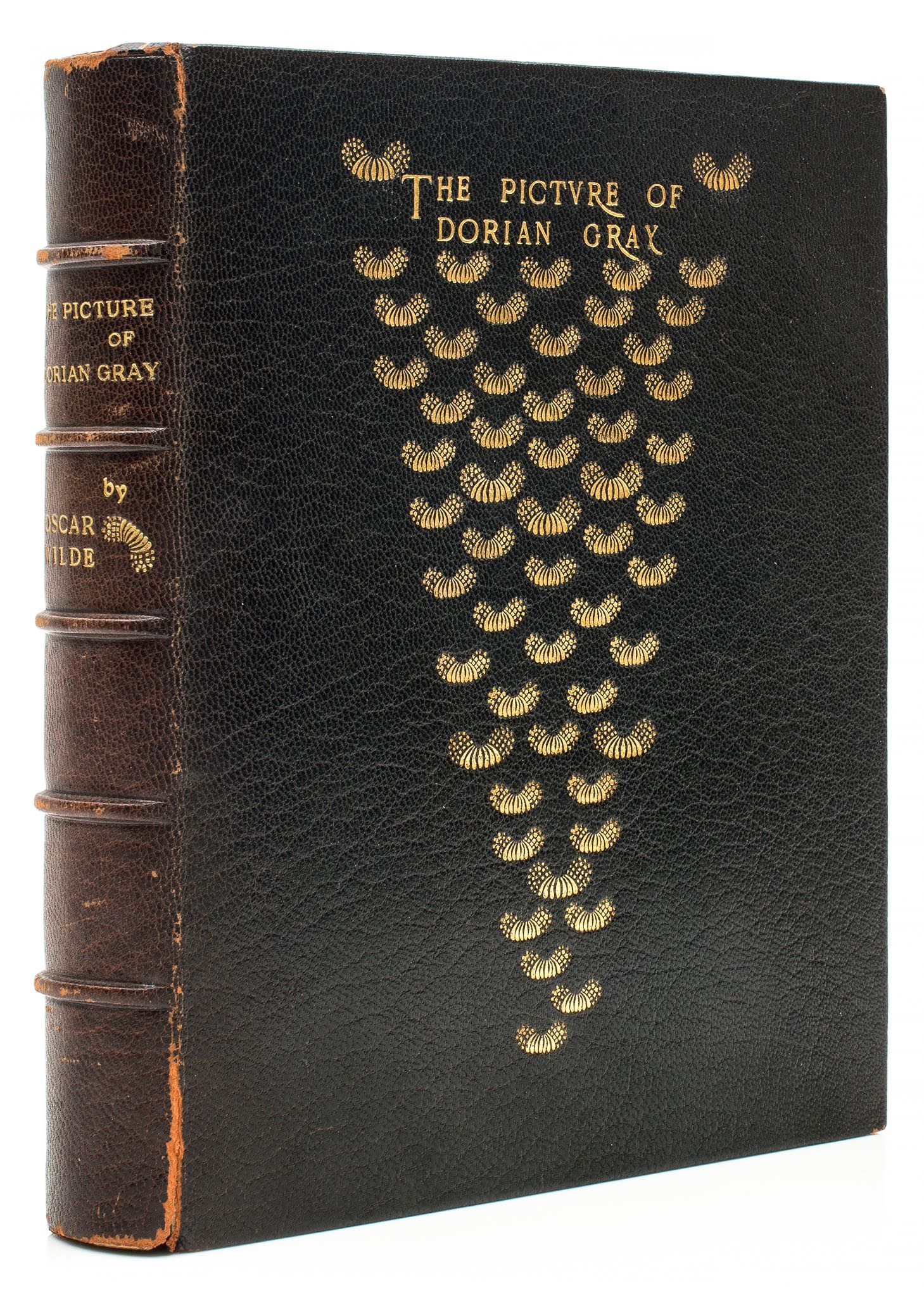
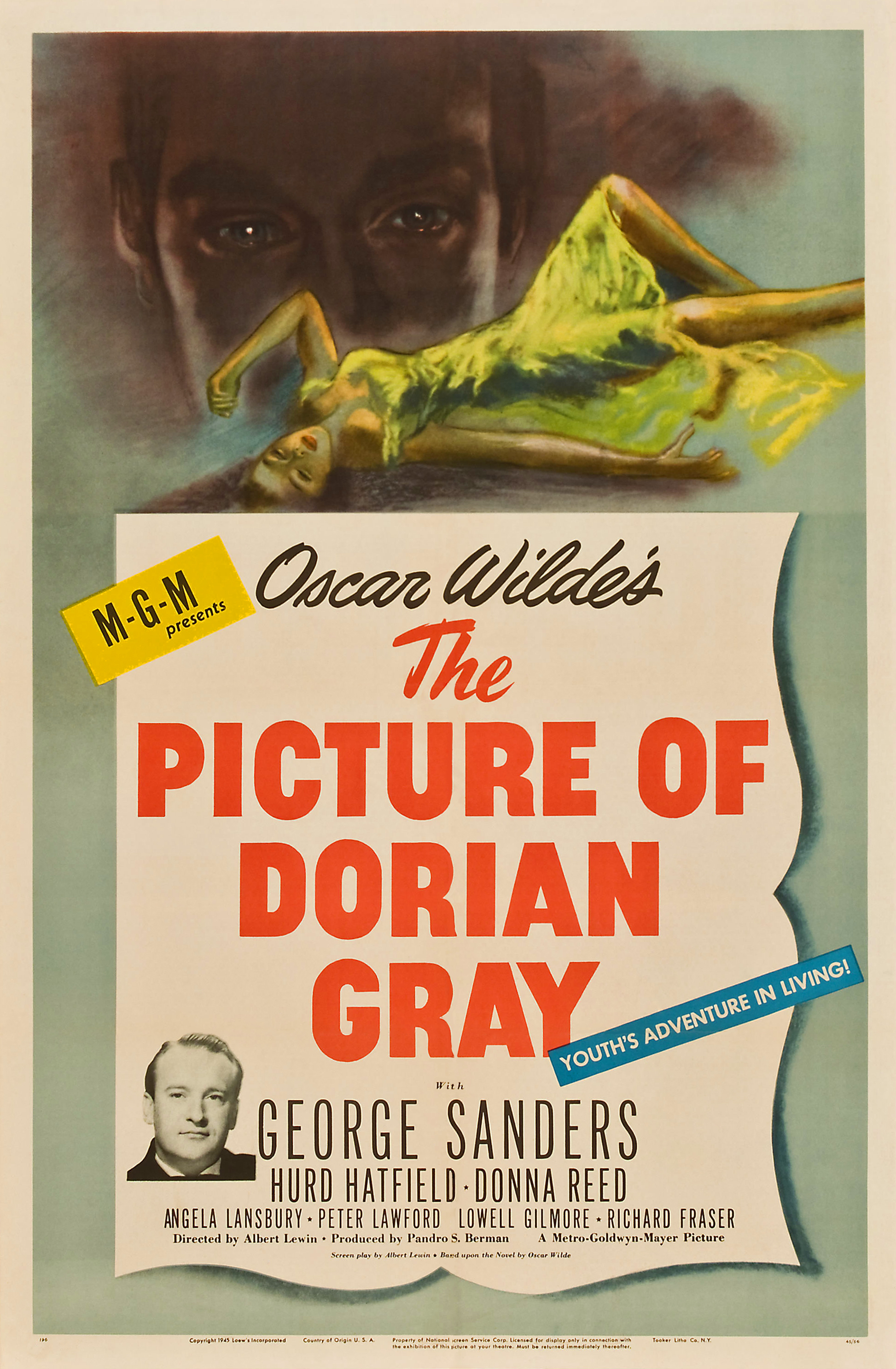
The Picture of Dorian Gray, first published in book form in 1891.

image21picture.jpg

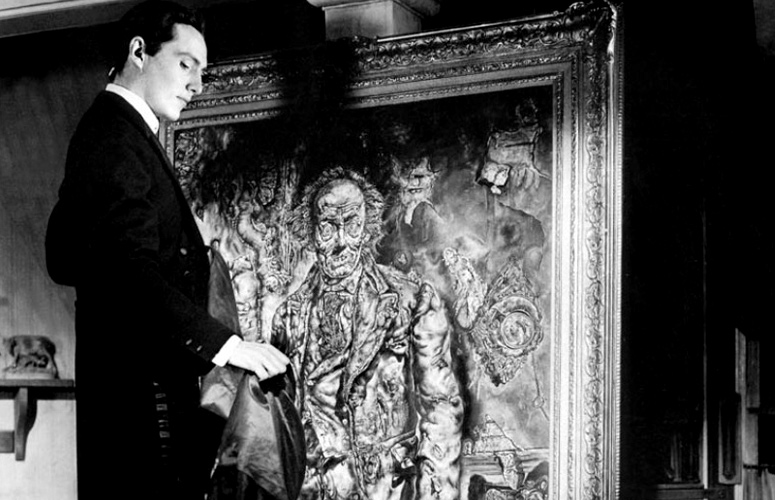
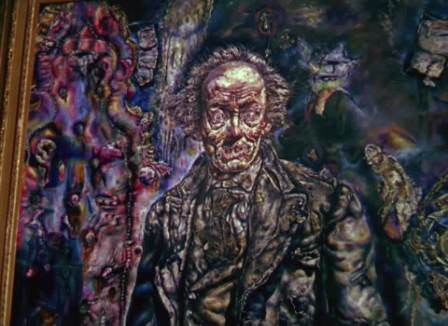
The picture here is a sinister one:  all of that which would age the protagonist, Dorian—who has an increasingly dark, secret life—is transferred to the image on canvas, so that the sitter for the portrait never seems to age.  We can see what that would look like from this image—as well as the tinted version, which is even worse,

image23picture.jpg

image24pic.jpg

from the 1945 film.

image25poster.jpg

How the picture acts as a sponge for all of the worst of Dorian is, like vampirism, never explained—Dorian promises his life if he will never age, but we never see, for example, a satanic figure, standing to one side, nod in agreement.

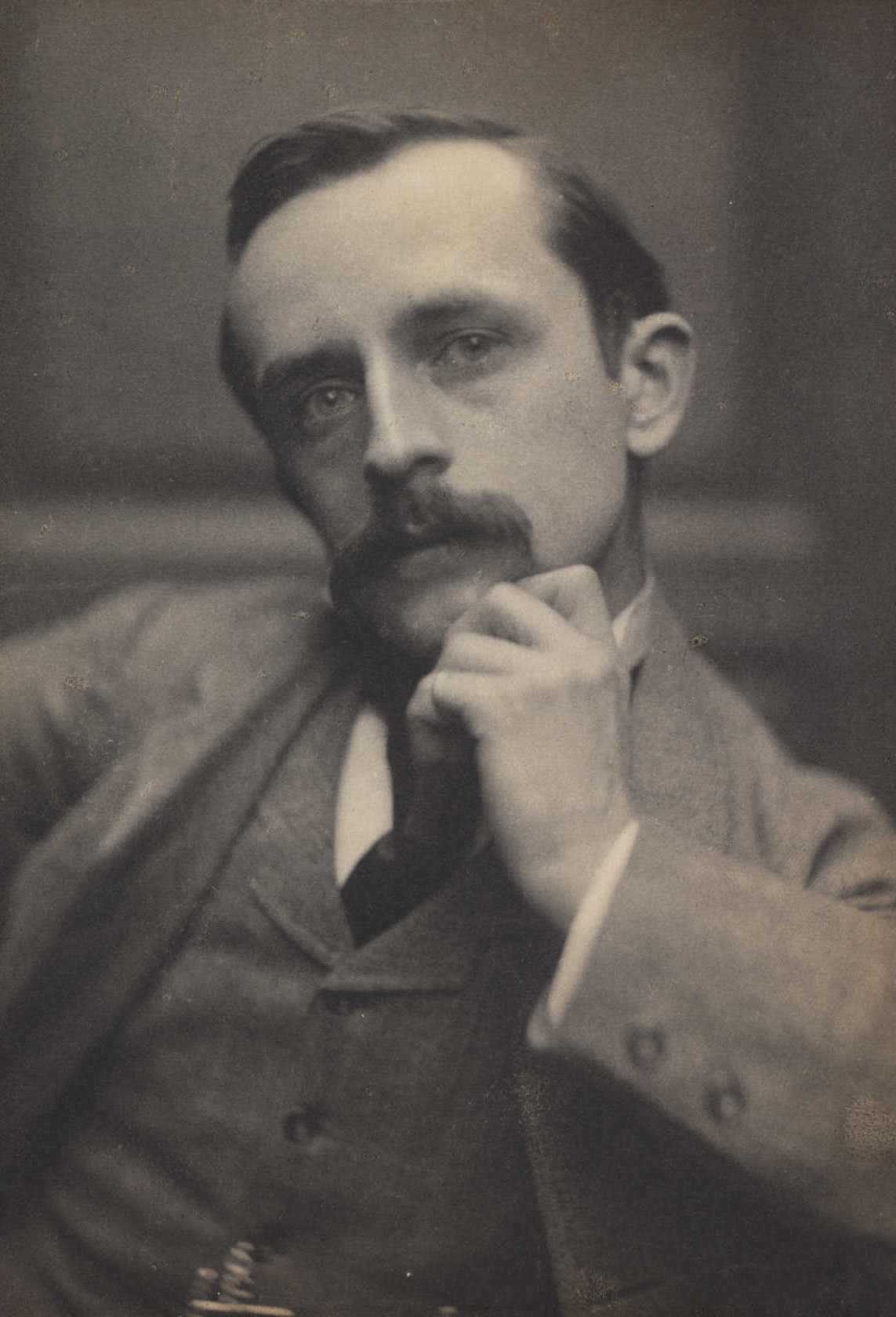
We want to end, however, with a happier story—well, sort of.  In 1902, the Scots novelist and dramatist, JM Barrie (1860-1937),

image26jmb.jpg

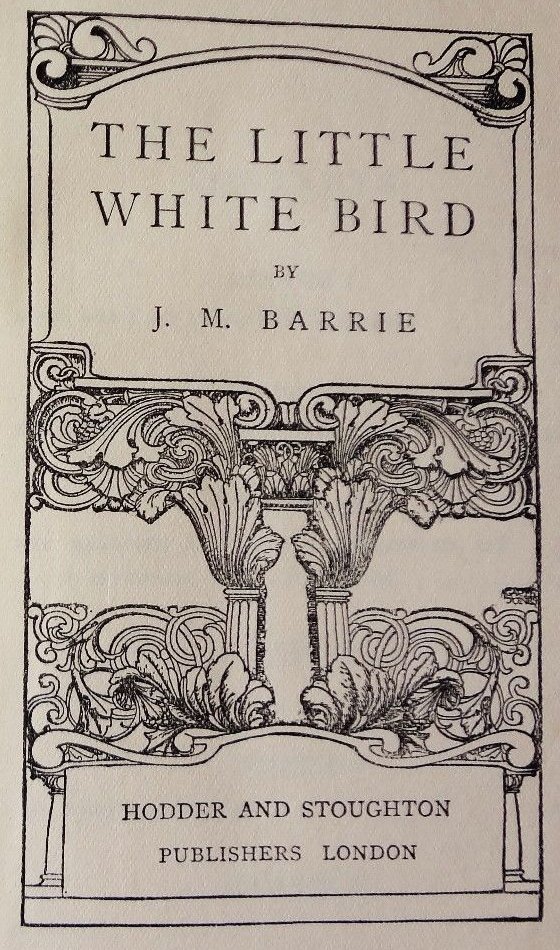
published a novel, The Little White Bird.

image27lwb.jpg

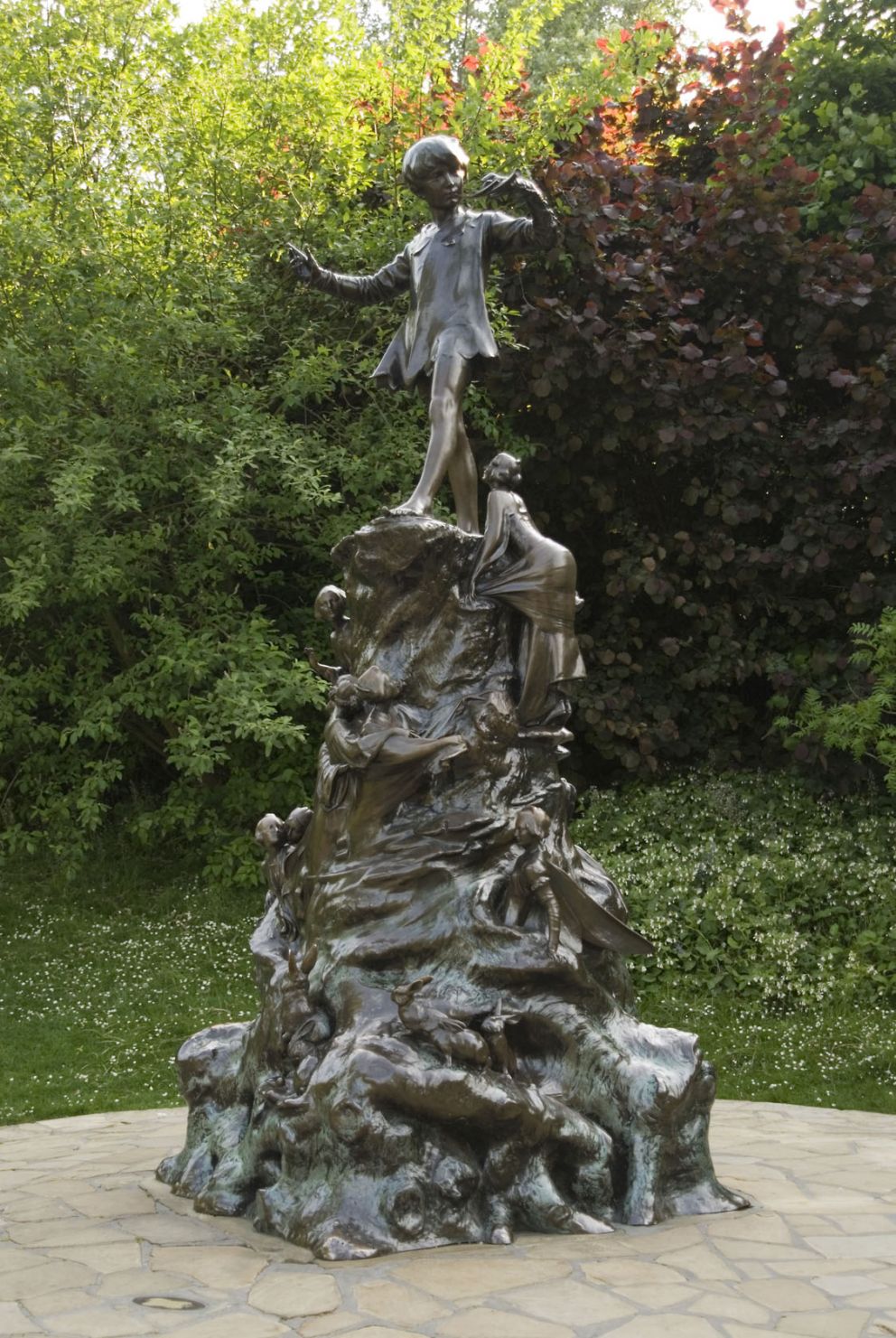
In it appeared for the first a seemingly-deathless character, Peter Pan.

image28ppstatue.jpg

Unlike Oisin, who has gone to a magical place, or Dorian Gray, who has his enchanted portrait, Peter just seems to be suspended in time—originally at the age of 7—days—old.

image29pp.jpg

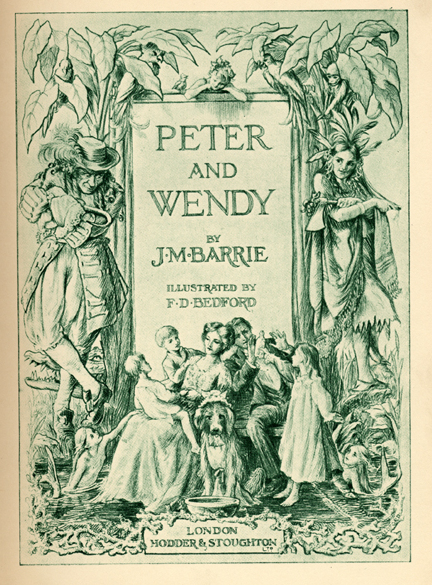
When Barrie returned to the character, in 1904, however, he made Peter grow up–slightly.  His age isn’t exactly clear, but we know from the 1911 novelized version, Peter and Wendy,

image30pandw.png

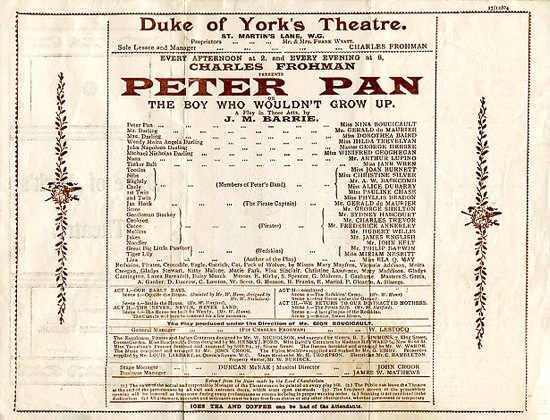
that he still has his first set of teeth.  [Footnote:  not a very exact clue—children can begin shedding baby teeth beginning at 6 and continue till 12.]   This is the Peter of Barrie’s famous play, Peter Pan,

image31playbill.jpg

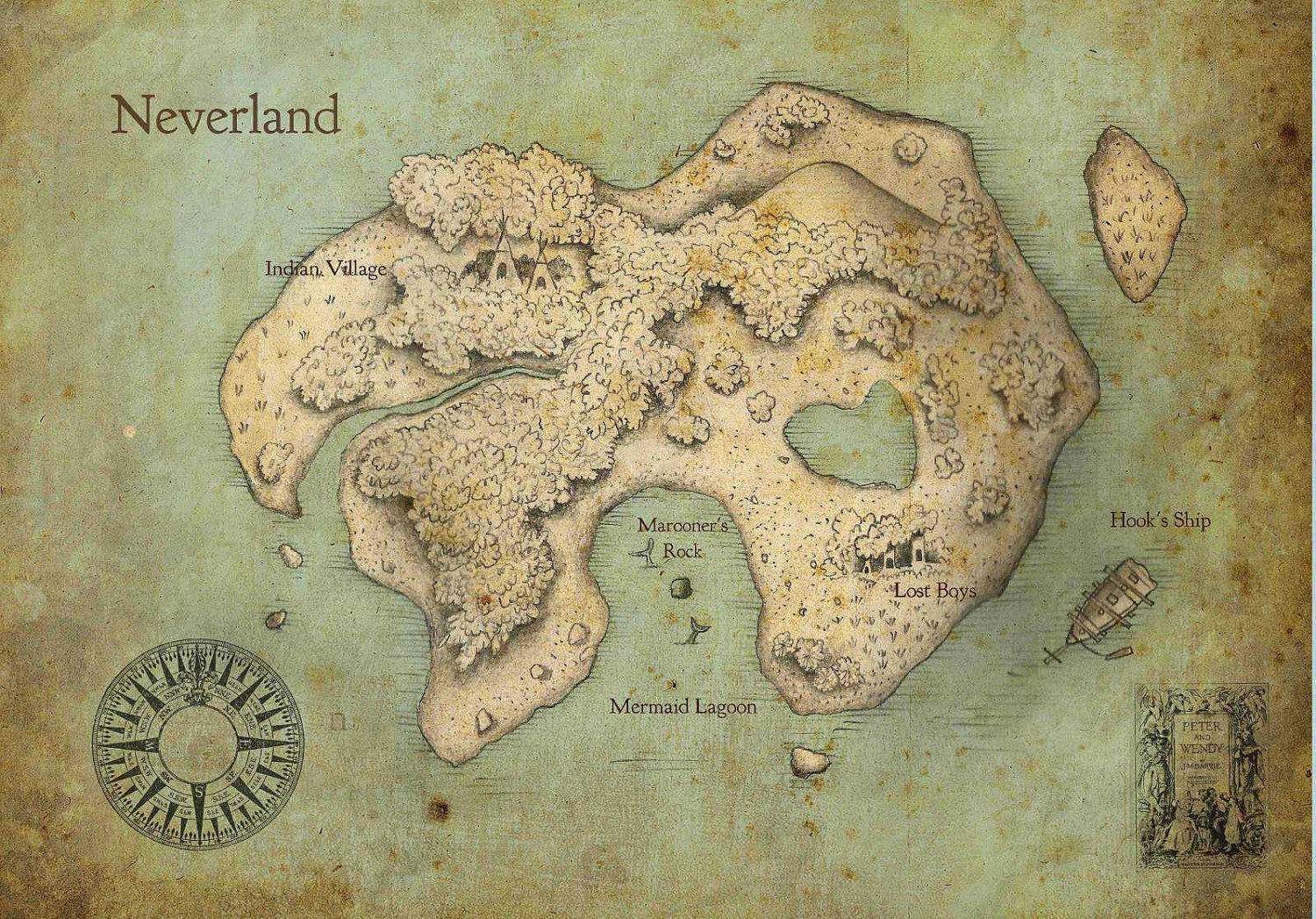
about a boy who lives on an island in Neverland

image32map.jpg

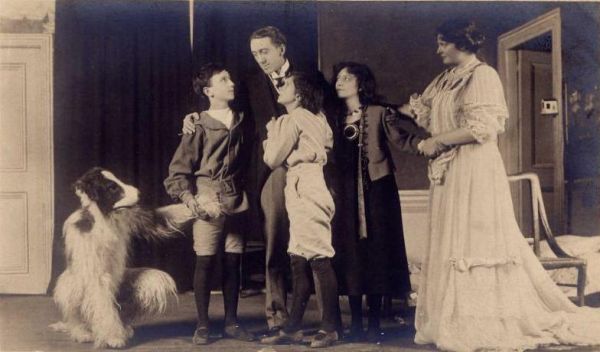
and, on a visit to London, loses his shadow while eavesdropping on the three Darling children, whose oldest sibling, Wendy, tells stories about him, which she had learned from her mother.

image33darlings.jpg

Peter is able to fly and, with the help of a fairy, Tinkerbell, he takes the Darling children back to Neverland with him, where they have all sorts of adventures.

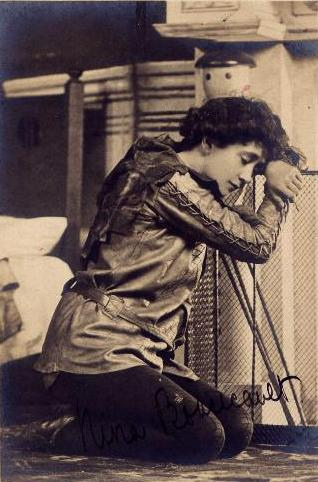
The original Peter—like so many Peters over a century to come—was a woman, Nina Boucicault.

image34nina.jpg

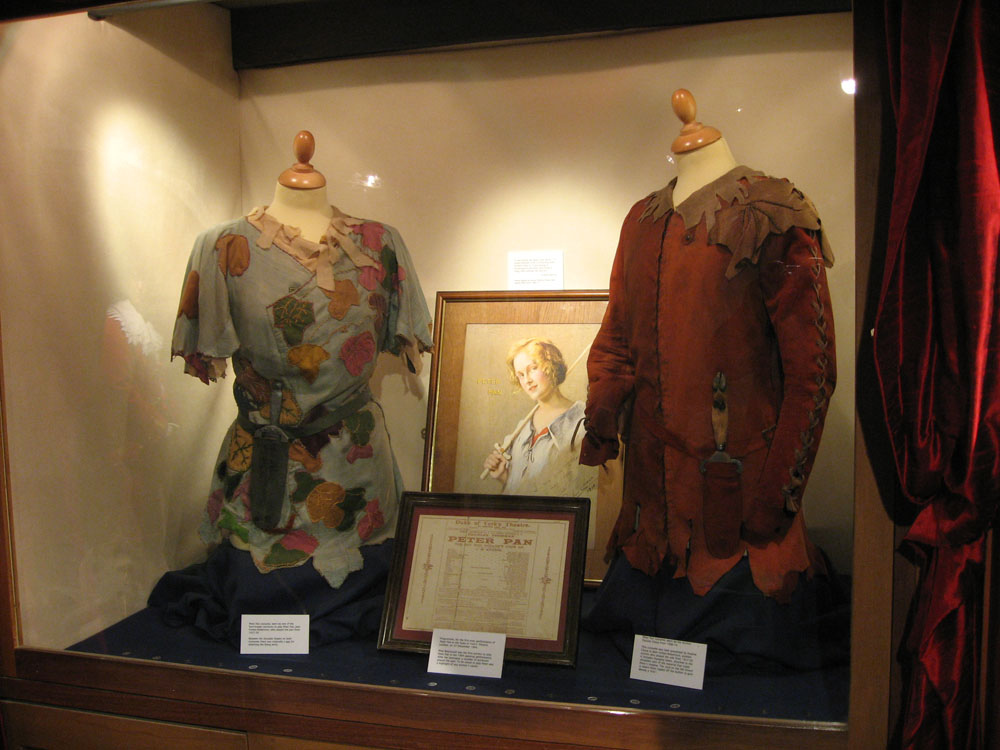
We are lucky to have her costume, which differs a good deal from the Peter Pan everyone knows now from the 1954 Disney film.

image35costume.jpg

image36disney.jpg

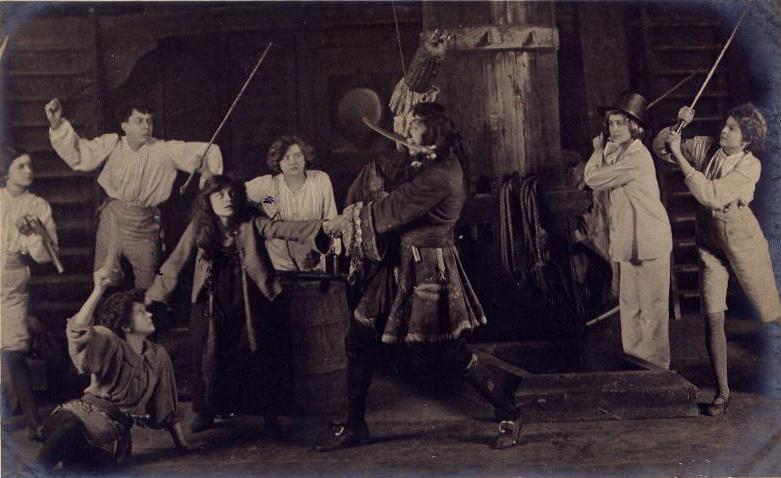
The villain of the piece, Captain Hook, however, has maintained his general outline from 1904.

image37capt.jpg

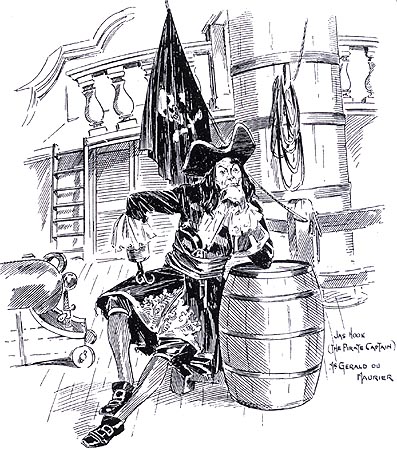
This is Gerald du Maurier, the original Captain.

image38hook.jpg

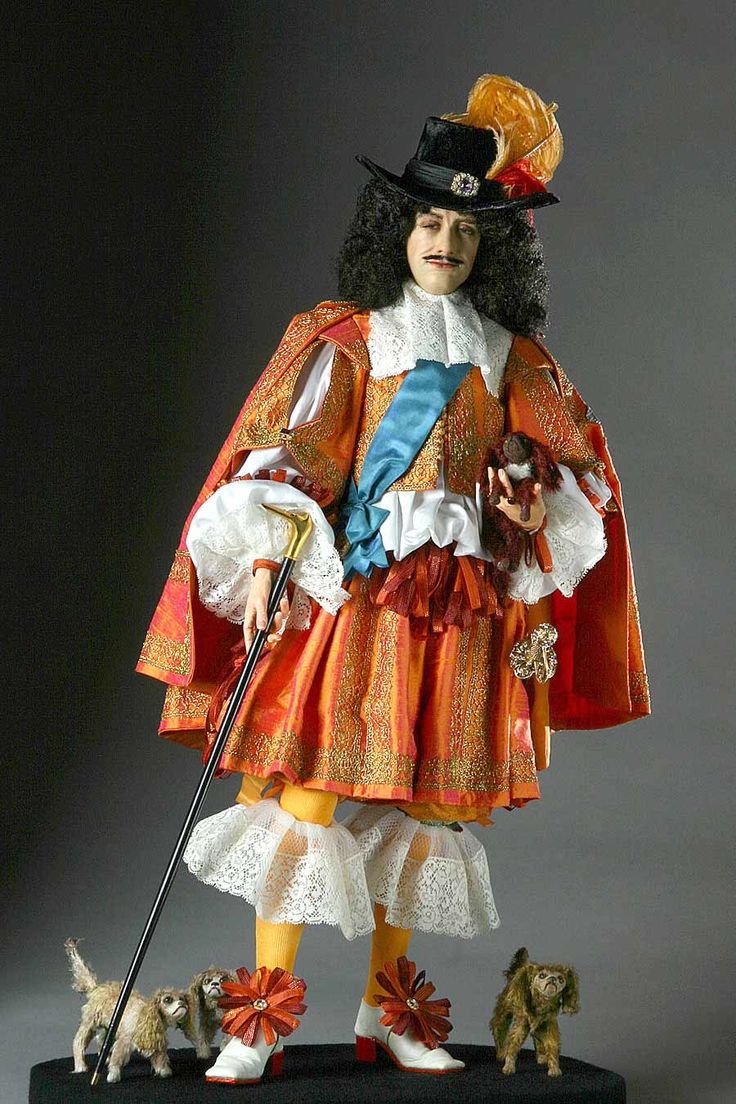
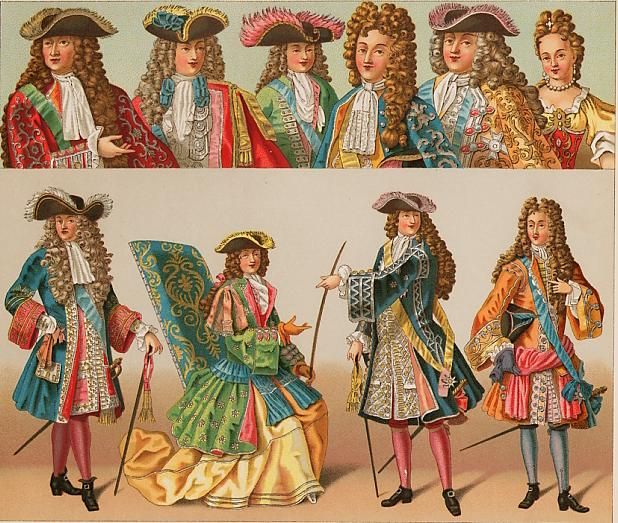
Although Barrie himself suggested that Hook should look like someone from the time of Charles II (1660-1685),

image39achas2.jpg

to us, he appears to be modeled on the fashions of the late 17th century—note the long coat with the big cuffs, not to mention the big wig.

image39costume.jpg

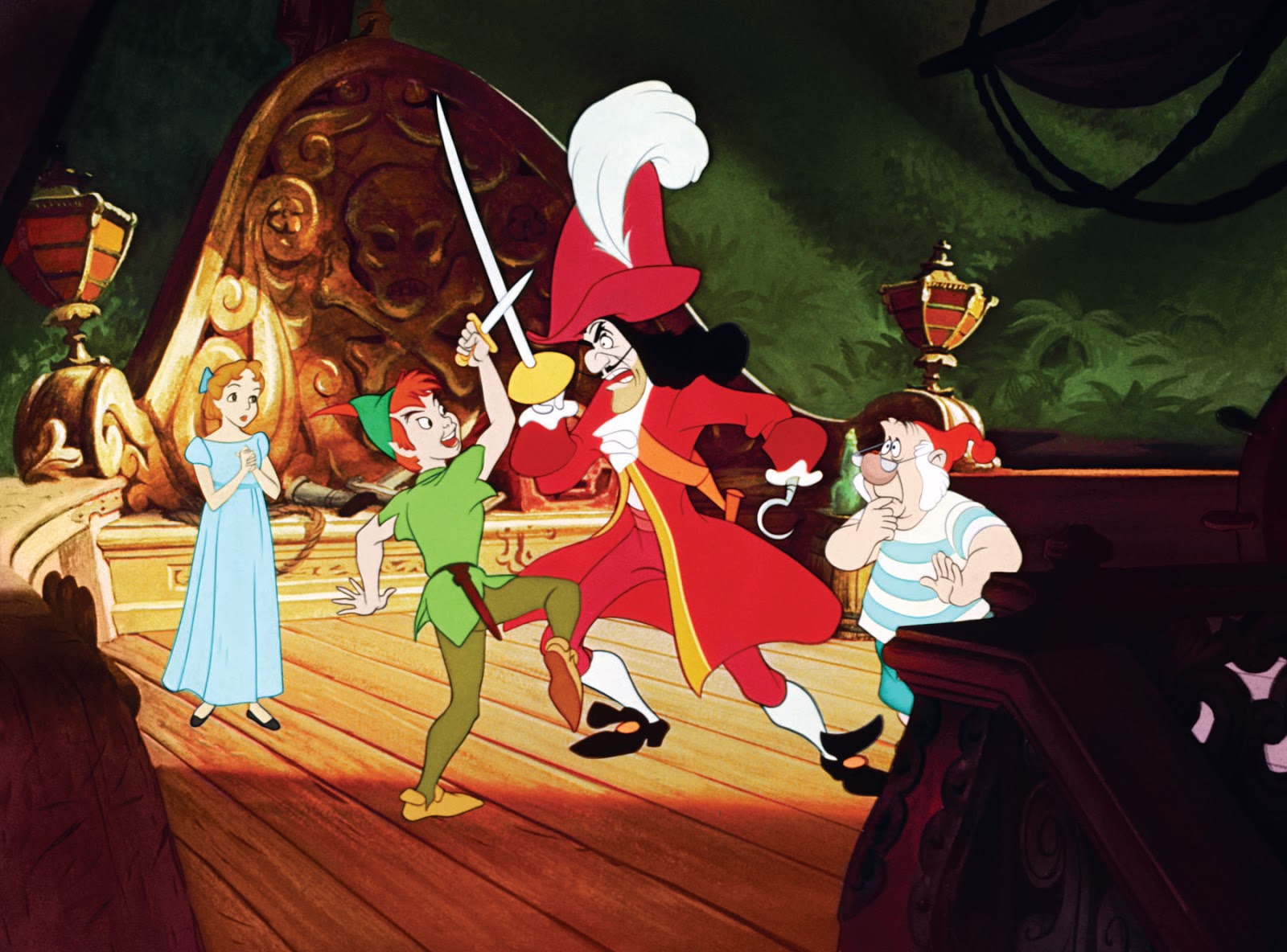
And here is Disney’s 1954 Hook.

image40disney.jpg

(A footnote:  in 1904, Barrie had planned to have different actors play Mr. Darling, the children’s father, and Captain Hook, but du Maurier persuaded him to allow du Maurier to play both roles, which is still the tradition.)

The subtitle of Peter Pan is Or, the Boy Who Wouldn’t Grow Up, and here we see, for the first time on our little tour, an explanation for the immortality in which the mortal is an active agent:  unlike Dracula or Oisin or Dorian Gray, Peter defies time simply by refusing to acknowledge its effects.  He won’t age because he doesn’t want to.

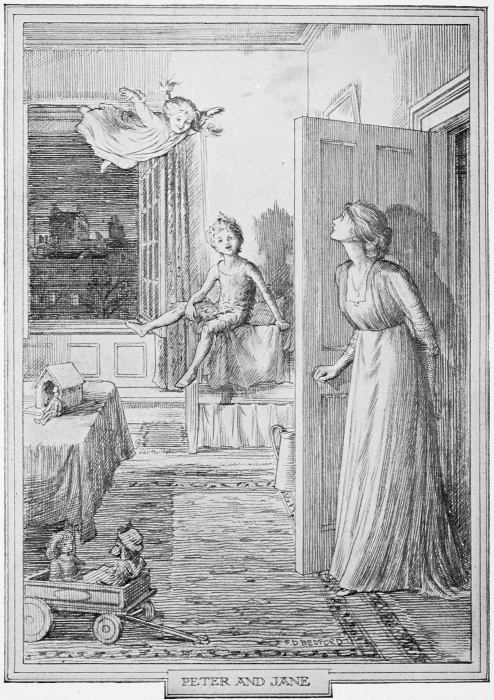
We said that we wanted to end on a “sort of” happy story and Peter’s stubborn immortality might fit that, but Barrie later added a kind of epilogue, a one-act play first performed in 1908.  In it, Wendy Darling, the oldest of the Darling children, has now grown up and gotten married, and had a daughter, Jane.  One night, while Wendy is putting Jane to bed in the same nursery from which the earlier adventures began, Peter appears.

Peter_and_Wendy_pg_243.jpg

At first, he simply refuses to believe that Wendy has grown up, and wants her to return to Neverland with him, although she has lost the ability to fly.  When she tries gently to explain that she can’t go with him because she has now become an adult, he collapses in tears and she runs from the room, leaving Jane asleep in her bed.  Jane wakes up and soon Peter invites her to fly to Neverland with him.  When Wendy reappears, she is quickly convinced and off the two go, leaving Wendy behind, but with the hope that Jane will have a daughter and she, in turn, will be taken to Neverland in an endless succession of daughters—perhaps immortality of a different sort?  (Here’s a LINK to the play, if you would like to read it for yourself.)

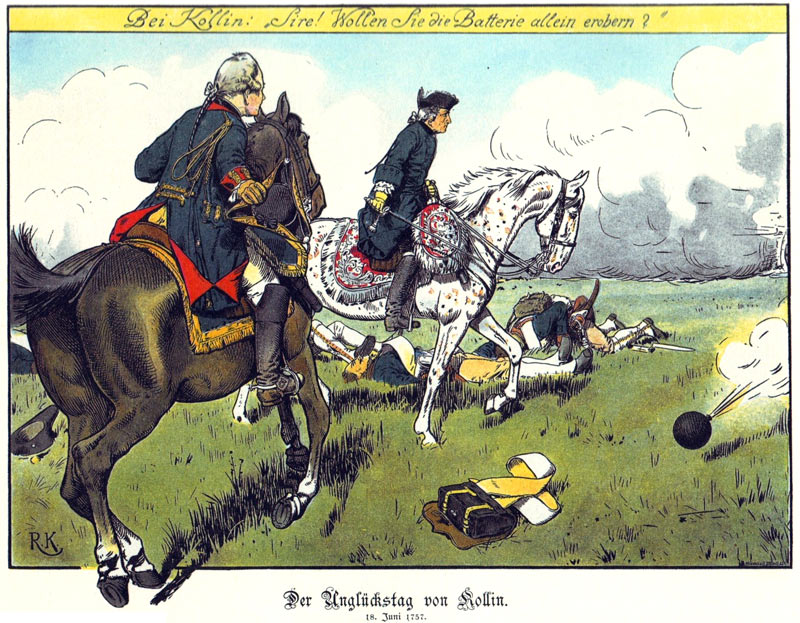
This has been a long posting, but we can’t resist a brief ps.  In 1757, Frederick the Great, the king of Prussia (1712-1786), was losing the battle of Kolin.  Desperate to win, he tried to rally his men for a counterattack, shouting, “You rascals!  Do you want to live forever?”

image41kolin.jpg

Virtually no one followed him, so we guess that most did.

Thanks, as always, for reading.

MTCIDC

CD

PS

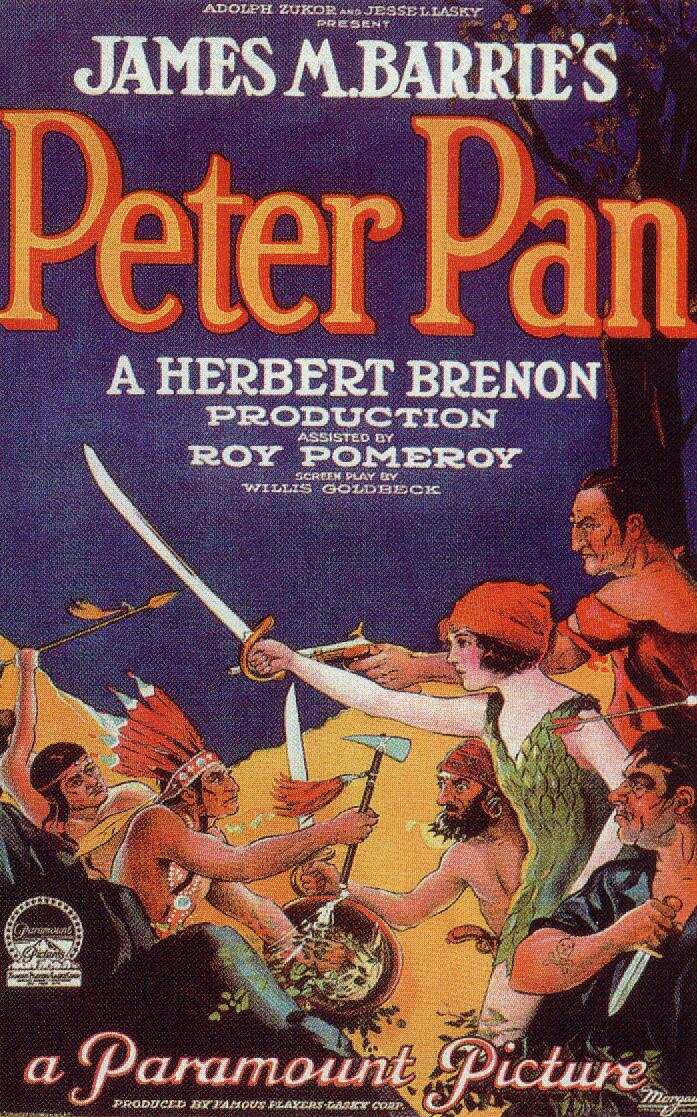
And another ps—in 1924, the first film version of Peter Pan appeared.

image42film.jpg

It was much praised at the time and here’s a LINK so that you can see it for yourself.

A Pirate’s Life

24 Wednesday Feb 2016

Posted by Ollamh in Artists and Illustrators, Imaginary History, J.R.R. Tolkien, Literary History, Military History, Military History of Middle-earth, Villains

≈ Leave a comment

Tags

Barbary Coast, Captain Blood, Captain Hook, Corsairs, Errol Flynn, Gilbert and Sullivan, Howard Pyle, Jack Sparrow, Jolly Roger, mariners, Napoleonic Wars, Narnia, Peter Jackson, Pirates, Scharb, shipbuilding, Tamora Pierce, The Black Pearl, The Lord of the Rings, Tolkien, Tortall, Treasure Island, Umbar, USS Philadelphia, xebec

“Oh, a pirate’s life is a wonderful life,

A-rovin’ over the sea,

Give me a career as a buccaneer

It’s the life of a pirate for me…”

Wallace/Penner, Peter Pan (1953)


Dear readers, welcome, as ever.

Being clever, you can tell immediately where this posting is going to go. Yep, the corsairs of Umbar.

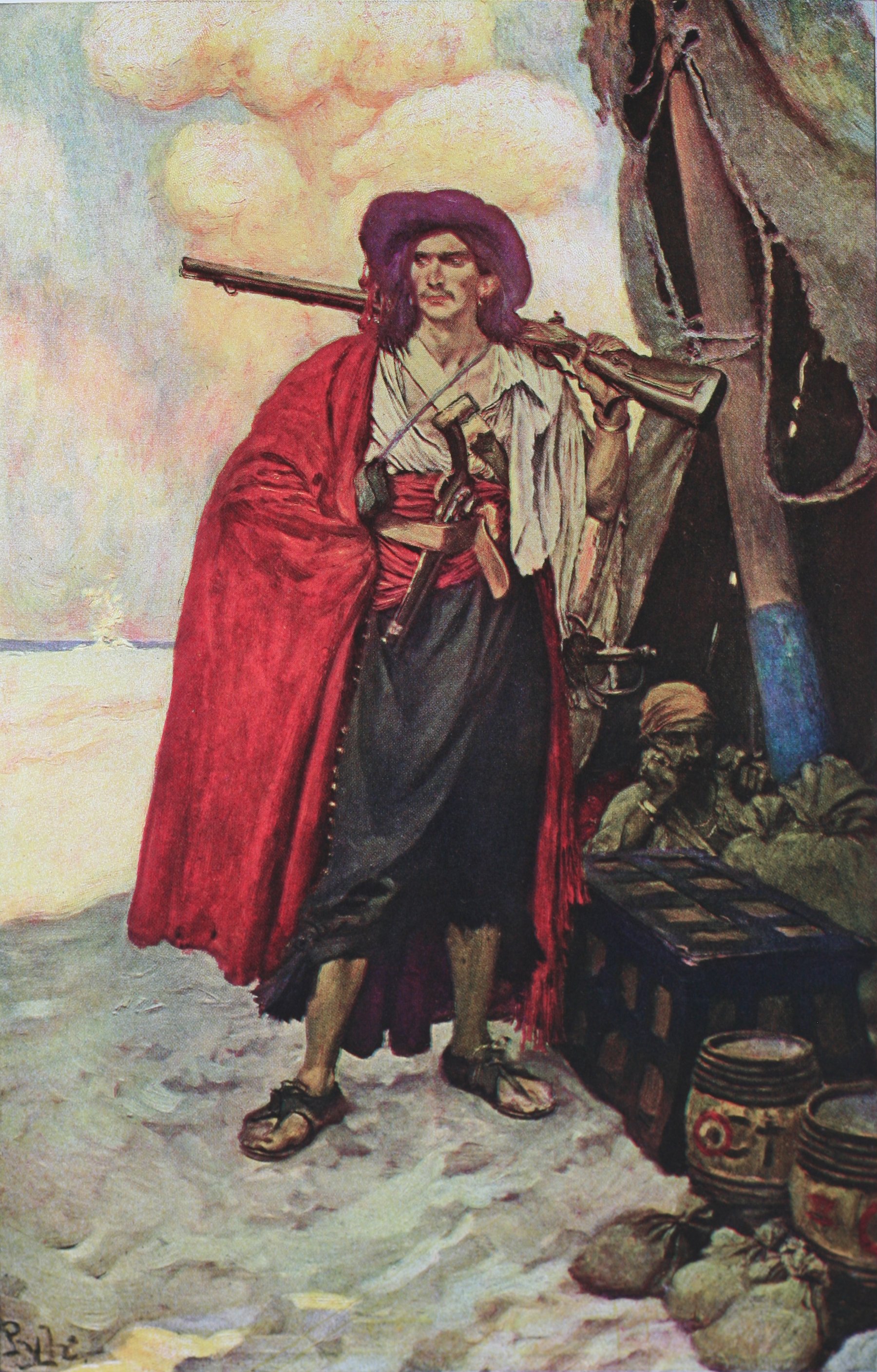
A corsair is another word for pirate. And, when we think “pirate”, first there’s the late-19th-early-20th-century work of Howard Pyle.

Pyle_pirate_handsome.jpg


And the silly pirates from Gilbert and Sullivan’s The Pirates of Penzance.

piratesofpenzance.jpg


And Long John Silver, from Treasure Island.

longjohnsilver.jpg


And then there is Captain Hook and the Jolly Roger.

TigerLilyandHook.jpg


And Errol Flynn in the 1935 movie, Captain Blood.

1023_captblood.jpg


And who could forget Jack Sparrow and The Black Pearl?

Captain-Jack-captain-jack-sparrow-14117613-1242-900.jpg

blackpearl.jpg

We think that Tolkien has something rather different in mind, however. Let’s start with a little history.

Umbar’s past in relation to Gondor is summed up by Damrod in “Of Herbs and Stewed Rabbit”:

“ ‘Aye, curse the Southrons!’ said Damrod. ‘Tis said that there were dealing of old between Gondor and the kingdoms of the Harad to the Far South; though there was never friendship. In those days our bounds were away south beyond the mouths of Anduin, and Umbar, the nearest of their realms, acknowledged our sway. But that is long since. ‘Tis many lives of Men since any passed to and fro . Now of late we have learned that the Enemy has been among them, and they are gone over to Him, or back to Him—they were ever ready to his Will—“ (The Two Towers, Book 4, Chapter 4,“Of Herbs and Stewed Rabbit”)

Damrod’s mistrust is confirmed by what Beregond says to Pippin in “Minas Tirith”:

“…There is a great fleet drawing near to the mouths of Anduin, manned by the corsairs of Umbar in the South. They have long ceased to fear the might of Gondor, and they have allied them with the Enemy, and now make a heavy stroke in his cause. For this attack will draw off much of the help that we looked to have from Lebennin and Belfalas, where folk are hardy and numerous.” (The Return of the King, Chapter 1, “Minas Tirith”)

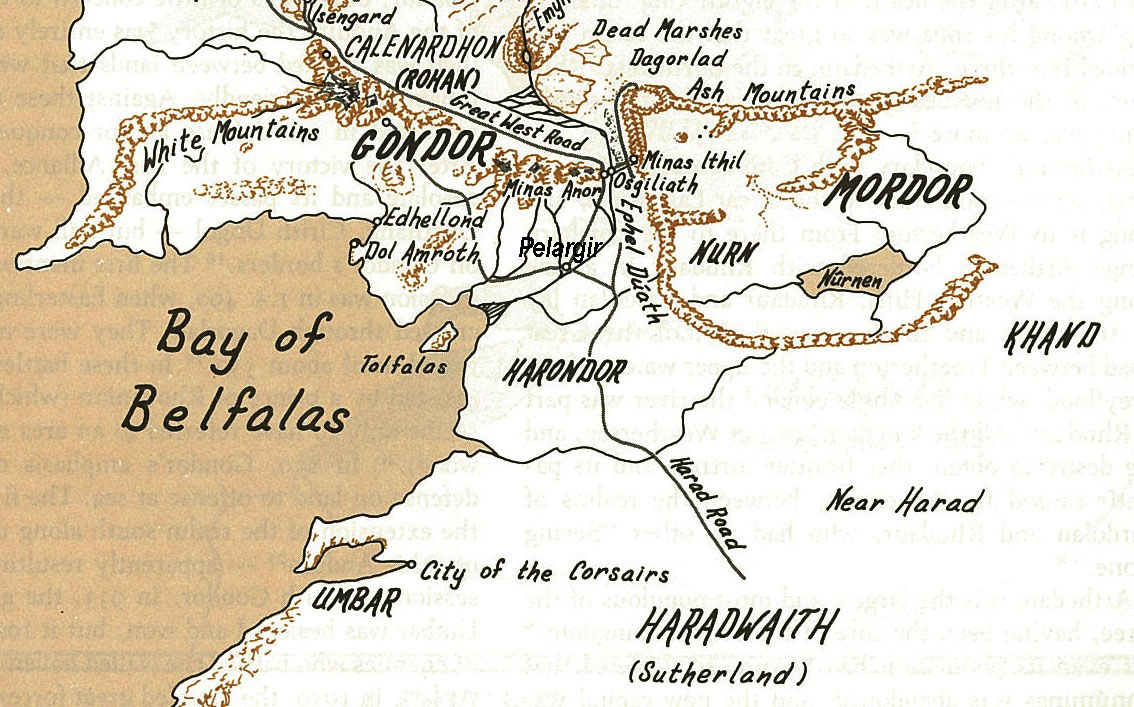
As Damrod has said, Umbar is to the far south.

map-of-gondor-and-neighbors2.jpg

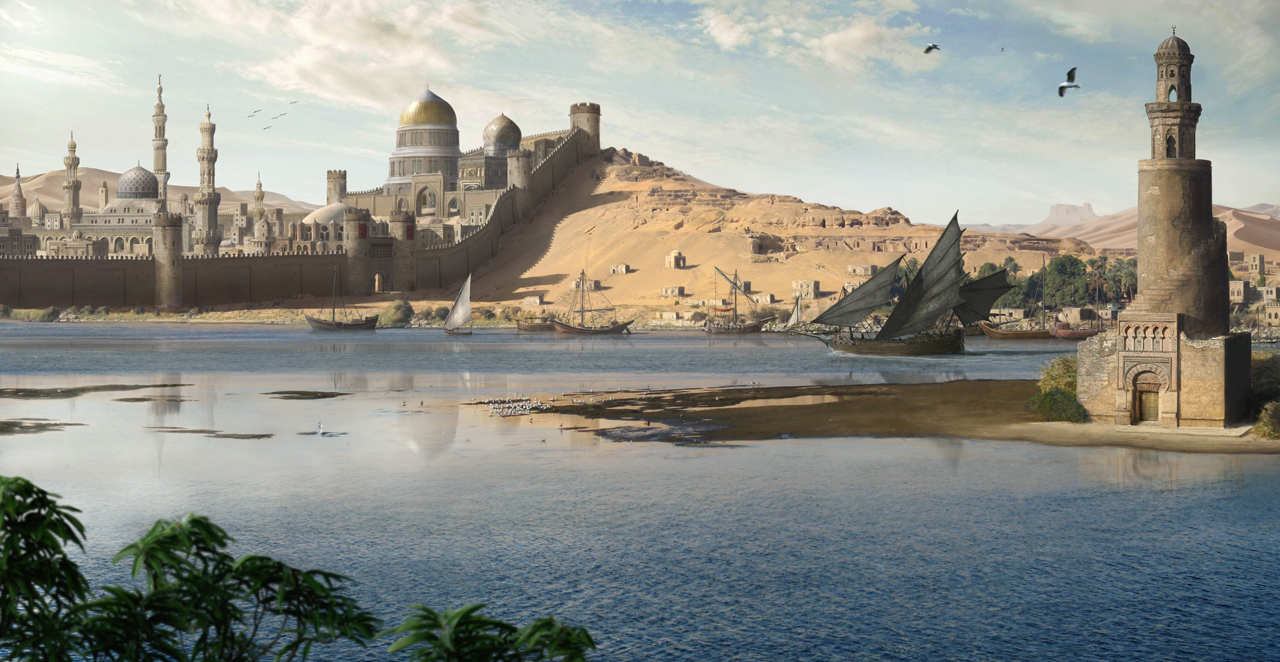
Here is a view of it as imagined by the Czech artist, Scharb.

thecityofumbar.jpg

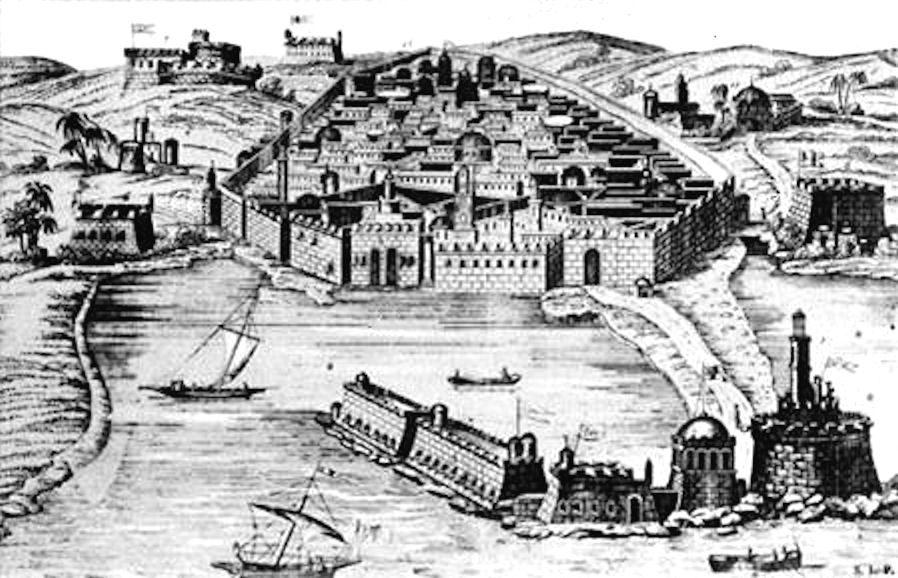
To us, this resembles cities along the southern Mediterranean coast, especially as seen in old engravings of the Barbary Coast.

Old_algiers_16th_century.jpg

Take, for example, this copperplate of Tunis, from 1778.

tunisengraving.JPG


There are all kinds of ships depicted here, from three-masters to a galley, in the center, to a small xebec, to the far right.

The galley seemed once to be the characteristic ship of the pirates of the Barbary Coast, coming from earlier Turkish galleys.

Galley1500ca.jpg


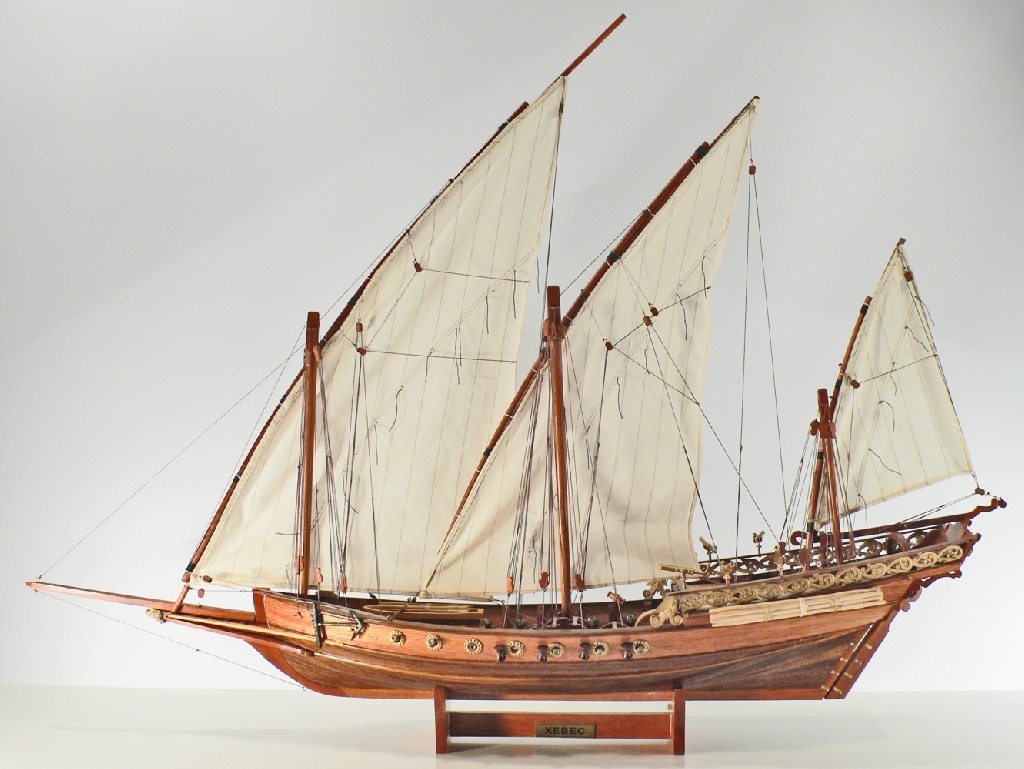
What the Czech artist appears to have picked up upon, however, is something from P. Jackson’s third The Lord of the Rings film, in which the xebec

Xebec L80 - 01.jpg_0_1024x769.jpg


is the model for the corsairs’ vessels.

corsairMastSails.jpg


Jackson’s corsairs look like this (including Jackson himself, mugging to the left).

jacksonandcorsairs.jpg

The crews of actual Barbary ships probably looked more like this:

21c27fb9a0a7cdf4d123d6e12bcbbd83.jpg

This makes perfect sense, as these are North Africans, and very tough people, as European mariners came to know. Their swift, daring ships attacked any vessel which might bring them profit.

barbary-pirate-galleon.jpg

The young United States first paid them tribute to keep them away from US ships.

tribute.jpg

But, as the government somewhere found the money, it began a shipbuilding program to provide the country with its first national navy.

buildingthephiladelphia.jpg

This particular ship was the ill-fated USS Philadelphia, which ran aground and was captured by the pirates.

philly.jpg

captureofthephiladelphia.jpg

It was destroyed, however,

destructionofthephiladelphia.jpg

in a daring raid by Stephen Decatur, seen in this miniature.

stephendecatur.jpg

The United States fought two wars against the Barbary pirates, 1801-5 and 1815, doing a great deal of damage to the pirates.

USS-Enterprise-barbary-war.jpg

Ultimately, however, it was a combination of governments and navies, including the US, the British, and the Dutch, which put a stop to piracy in the southern Mediterranean after the end of the Napoleonic Wars in 1815.

Decatur_Boarding_the_Tripolitan_Gunboat.jpg

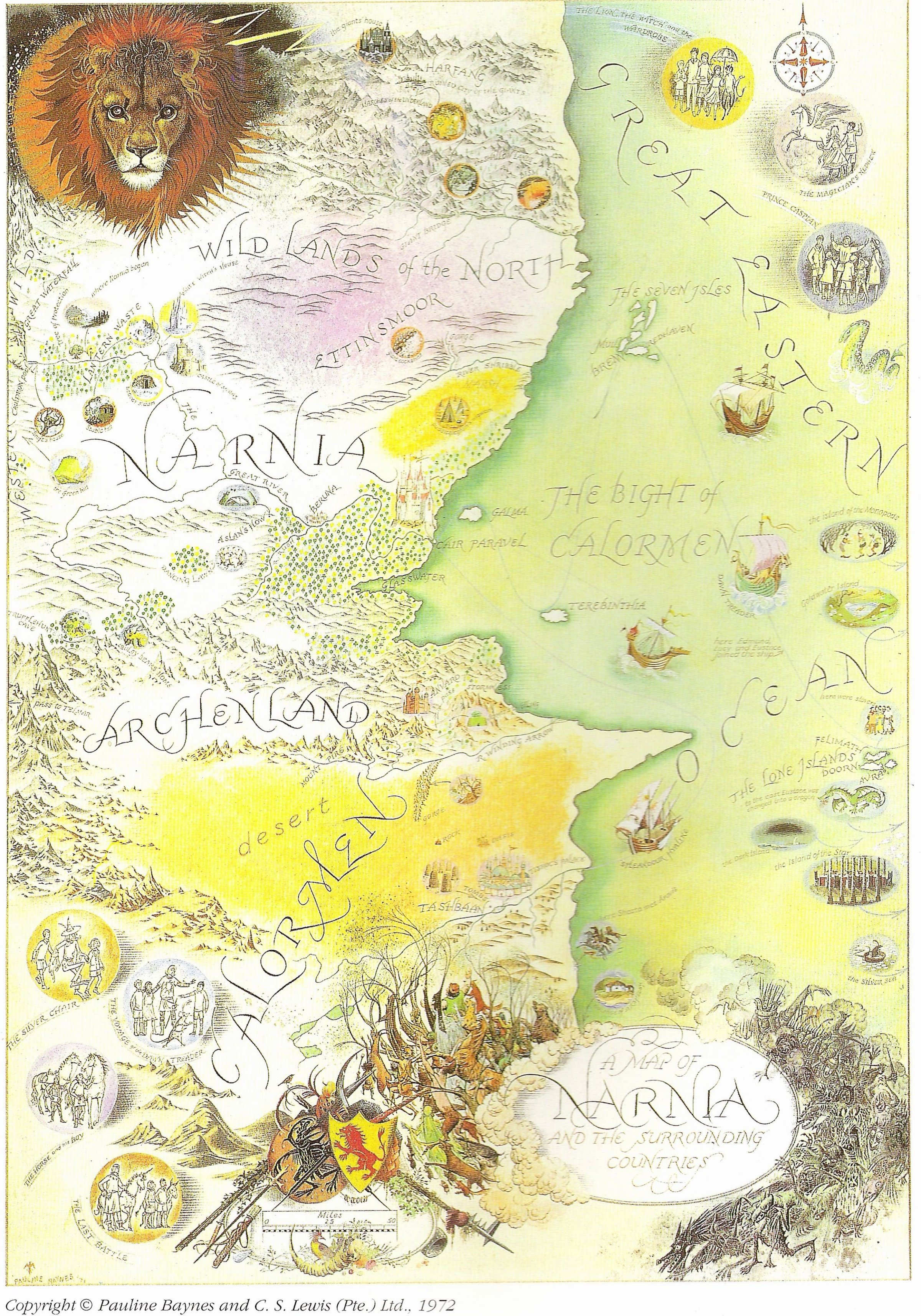
So, like Scharb, we took the idea from JRRT that Umbar was in the far south and, influenced by our experience, not only of the Barbary pirates, but of Narnia and the country called Calormen

Baynes-Map_of_Narnia.jpg

and of Tamora Pierce’s “Tortall” with its Carthaki southland,

Tortall_1.gif

we imagined the corsairs to look like this.

barbarypirates.jpg

So, dear readers, what do you think?

Thanks, as always, for reading.

MTCIDC

CD


The Doubtful Sea Series Facebook Page

The Doubtful Sea Series Facebook Page

  • Ollamh

Categories

  • Artists and Illustrators
  • Economics in Middle-earth
  • Fairy Tales and Myths
  • Films and Music
  • Games
  • Heroes
  • Imaginary History
  • J.R.R. Tolkien
  • Language
  • Literary History
  • Maps
  • Medieval Russia
  • Military History
  • Military History of Middle-earth
  • Narnia
  • Narrative Methods
  • Poetry
  • Research
  • Star Wars
  • Terra Australis
  • The Rohirrim
  • Theatre and Performance
  • Tolkien
  • Uncategorized
  • Villains
  • Writing as Collaborators
Follow doubtfulsea on WordPress.com

Across the Doubtful Sea

Recent Postings

  • Making Money May 27, 2026
  • Blood Money May 20, 2026
  • Saruman’s Sigh May 13, 2026
  • Silents Are Golden May 7, 2026
  • Planting April 29, 2026
  • Subterranean April 22, 2026
  • Serendipity? April 15, 2026
  • Serendipity April 8, 2026
  • Verisimilitude April 1, 2026

Blog Statistics

  • 114,225 Views

Posting Archive

  • May 2026 (4)
  • April 2026 (5)
  • March 2026 (4)
  • February 2026 (4)
  • January 2026 (4)
  • December 2025 (5)
  • November 2025 (4)
  • October 2025 (5)
  • September 2025 (4)
  • August 2025 (4)
  • July 2025 (5)
  • June 2025 (4)
  • May 2025 (4)
  • April 2025 (5)
  • March 2025 (4)
  • February 2025 (4)
  • January 2025 (5)
  • December 2024 (4)
  • November 2024 (4)
  • October 2024 (5)
  • September 2024 (4)
  • August 2024 (4)
  • July 2024 (5)
  • June 2024 (4)
  • May 2024 (5)
  • April 2024 (4)
  • March 2024 (4)
  • February 2024 (4)
  • January 2024 (5)
  • December 2023 (4)
  • November 2023 (5)
  • October 2023 (4)
  • September 2023 (4)
  • August 2023 (5)
  • July 2023 (4)
  • June 2023 (4)
  • May 2023 (5)
  • April 2023 (4)
  • March 2023 (5)
  • February 2023 (4)
  • January 2023 (4)
  • December 2022 (4)
  • November 2022 (5)
  • October 2022 (4)
  • September 2022 (4)
  • August 2022 (5)
  • July 2022 (4)
  • June 2022 (5)
  • May 2022 (4)
  • April 2022 (4)
  • March 2022 (5)
  • February 2022 (4)
  • January 2022 (4)
  • December 2021 (5)
  • November 2021 (4)
  • October 2021 (4)
  • September 2021 (5)
  • August 2021 (4)
  • July 2021 (4)
  • June 2021 (5)
  • May 2021 (4)
  • April 2021 (4)
  • March 2021 (5)
  • February 2021 (4)
  • January 2021 (4)
  • December 2020 (5)
  • November 2020 (4)
  • October 2020 (4)
  • September 2020 (5)
  • August 2020 (4)
  • July 2020 (5)
  • June 2020 (4)
  • May 2020 (4)
  • April 2020 (5)
  • March 2020 (4)
  • February 2020 (4)
  • January 2020 (6)
  • December 2019 (4)
  • November 2019 (4)
  • October 2019 (5)
  • September 2019 (4)
  • August 2019 (4)
  • July 2019 (5)
  • June 2019 (4)
  • May 2019 (5)
  • April 2019 (4)
  • March 2019 (4)
  • February 2019 (4)
  • January 2019 (5)
  • December 2018 (4)
  • November 2018 (4)
  • October 2018 (5)
  • September 2018 (4)
  • August 2018 (5)
  • July 2018 (4)
  • June 2018 (4)
  • May 2018 (5)
  • April 2018 (4)
  • March 2018 (4)
  • February 2018 (4)
  • January 2018 (5)
  • December 2017 (4)
  • November 2017 (4)
  • October 2017 (4)
  • September 2017 (4)
  • August 2017 (5)
  • July 2017 (4)
  • June 2017 (4)
  • May 2017 (5)
  • April 2017 (4)
  • March 2017 (5)
  • February 2017 (4)
  • January 2017 (4)
  • December 2016 (4)
  • November 2016 (5)
  • October 2016 (6)
  • September 2016 (5)
  • August 2016 (5)
  • July 2016 (5)
  • June 2016 (5)
  • May 2016 (4)
  • April 2016 (4)
  • March 2016 (5)
  • February 2016 (4)
  • January 2016 (4)
  • December 2015 (5)
  • November 2015 (5)
  • October 2015 (4)
  • September 2015 (5)
  • August 2015 (4)
  • July 2015 (5)
  • June 2015 (5)
  • May 2015 (4)
  • April 2015 (3)
  • March 2015 (4)
  • February 2015 (4)
  • January 2015 (4)
  • December 2014 (5)
  • November 2014 (4)
  • October 2014 (6)
  • September 2014 (1)

Blog at WordPress.com.

  • Subscribe Subscribed
    • doubtfulsea
    • Join 75 other subscribers
    • Already have a WordPress.com account? Log in now.
    • doubtfulsea
    • Subscribe Subscribed
    • Sign up
    • Log in
    • Report this content
    • View site in Reader
    • Manage subscriptions
    • Collapse this bar

Loading Comments...