Tags
Aragorn, Bingo, bishop, Bladorthin, crozier, Elder Edda, Fantasy, Gandalf, Grima, Gundulf of Rochester, Lanfranc, lotr, Poetic Edda, Rochester Cathedral, stigand, The Hobbit, The Lord of the Rings, The White Tower, Theoden, Tolkien, tolkiens-names, Trotter, Trotter., Voluspa
As always, dear readers, welcome.
Bladorthin? How would we feel if, as in early drafts of The Hobbit, this were the name by which we knew the somewhat mysterious figure who visited Bilbo Baggins, looking for someone to go on an adventure?
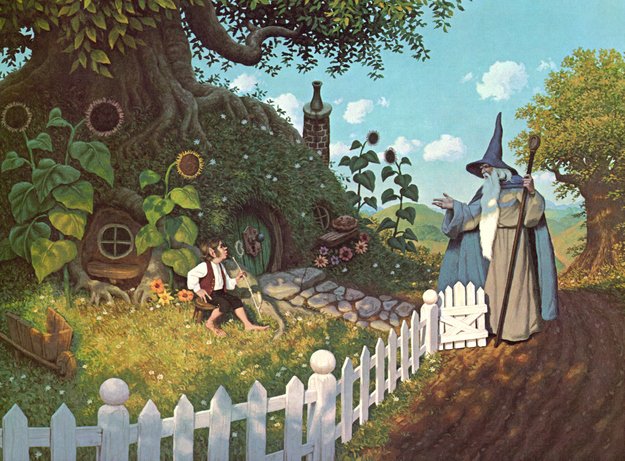
(the Hildebrandts)
I, for one, am glad to see that name consigned to manuscripts, along with other early names, like “Bingo” (Frodo) and “Trotter”, later to become “Aragorn” and turn as well from a “Hobbit ranger” into the rightful heir to the throne of Gondor,
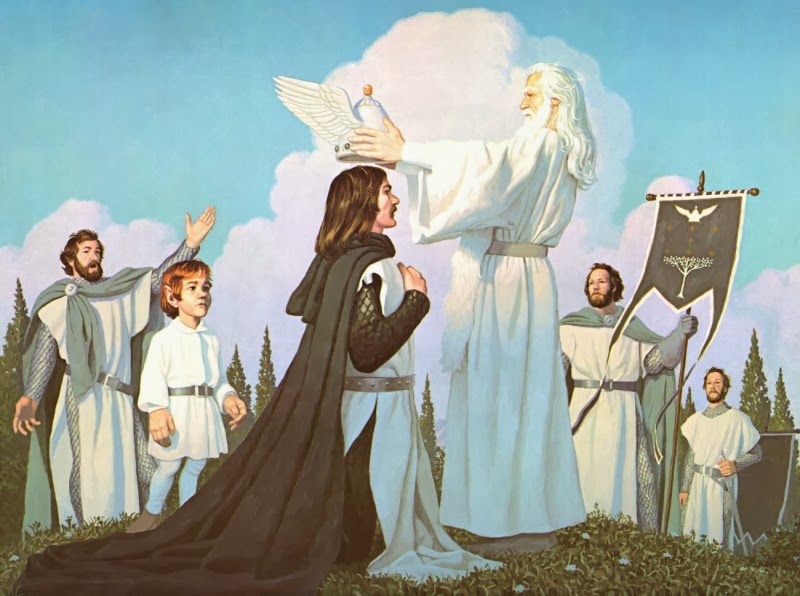
(the Hildebrandts again)
initially, as he tells us, to the surprise of the author (see a letter to W.H. Auden, 7 June, 1955, Letters, 315-16)
(If you want to read that draft in which Bladorthin appears, see John D. Rateliffe’s monumental The History of the Hobbit, 30-31, where the name appears just where we now read “Gandalf”, as in:
“Bladorthin! If you had heard only a quarter of what I have (and I have heard only a tiny bit what there is to hear) about him you would be prepared for any sort of remarkable tale.” (30) )
Instead, we know him as Gandalf, whose name—along with those of the dwarves—as Tolkien tells the editor of the Observer: “…are from the Elder Edda.” (letter to the editor of the Observer, published 20 Ferbruary, 1938, Letters, 41)
By “Elder Edda”, JRRT was referring to a 13th century collection of poems also referred to as “the Poetic Edda” and, within it, to one specific section, called “Voluspa”, “prophesy of the volva”, a kind of seeress. (Also called a “vala”–for more on such magical figures, see: https://en.wikipedia.org/wiki/Seeress_(Germanic) For more on the Eddas, see: https://en.wikipedia.org/wiki/Edda )
In this particular poem, the seeress mentions the creation of the dwarves (quoted here from Benjamin Thorpe’s 1906 translation of both the “Poetic Edda” and the “Prose Edda” which you can read here: https://www.gutenberg.org/files/14726/14726-h/14726-h.htm ):
“9. Then went all the powers to their judgment-seats, the all-holy gods, and thereon held council, who should of the dwarfs the race create, from the sea-giant’s blood and livid bones.
10. Then was Môtsognir created greatest of all the dwarfs, and Durin second; there in man’s likeness they created many dwarfs from earth, as Durin said.
11. Nýi and Nidi, Nordri and Sudri, Austri and Vestri, Althiôf, Dvalin Nâr and Nâin, Niping, Dain, Bivör, Bavör, Bömbur, Nori, An and Anar, Ai, Miodvitnir,
12. Veig and Gandâlf, Vindâlf, Thrain, Thekk and Thorin, Thrôr, Vitr, and Litr, Nûr and Nýrâd, Regin and Râdsvid. Now of the dwarfs I have rightly told.
13. Fili, Kili, Fundin, Nali, Hepti, Vili, Hanar, Svior, Billing, Bruni, Bild, Bûri, Frâr, Hornbori, Fræg and Lôni, Aurvang, Iari, Eikinskialdi.” (Thorpe, “Voluspa”, page 2)
You can see a number of familiar dwarf names here, as well as other names which Tolkien didn’t use, and, in section 12, “Gandalf” (although this was, originally, Tolkien’s choice for the character who then become Thorin, possibly because Tolkien might have associated him with the medieval ruler of Alfheim, in southern Norway? The part of Norway he ruled might also have appealed to Tolkien, “Alfheim” meaning “Elfhome/world/land”—see: https://en.wikipedia.org/wiki/Gandalf_Alfgeirsson as well as Rateliffe, “Introduction”, xi-xii)
So our documentation goes, but, by an odd chance, I came across someone whose name might also have been an influence: Gundulf, the 11-12th-century Bishop of Rochester and architect.
I had originally simply been thinking about the name “Gandalf”, which appears to be a compound of two Old Norse words, “gandr” , “[magic] staff” and “alfr”—“elf”—see Geir Zoega, A Concise Dictionary of Old Icelandic, 1910, for further details. And JRRT certainly is aware of that staff—see his illustration, for instance, of the turning of the trolls into stone—
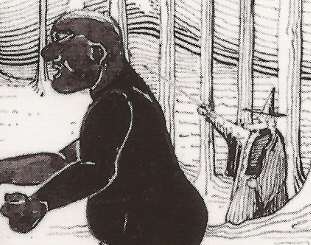
(JRRT)
Then I found that Norse king, Gandalf, and, prompted by that, I wondered about alternate spellings, which brought up this Wikipedia list:
“Gondulf of Provence, 6th-century duke and possibly made Bishop of Metz in 591
Indulf (6th century) (fl. 549–552 or 553), also known as Gundulf, Byzantine mercenary and Ostrogoth army leader
Gondulphus of Berry, 7th-century bishop
Gondulph of Maastricht (died after 614), bishop and Roman Catholic and Eastern Orthodox saint
Gondulphus of Metz (died 823), Bishop of Metz
Gundolfo, early 11th century Italian heretic
Gundulf of Rochester (died 1108), English bishop”
Unlike the etymology of “Gandalf”, “Gundulf”, although a compound like “Gandalf”, combines “gund”, “battle” and “ulf”, “wolf”—“–“battlewolf”–fierce, but not so Tolkienesque as “Elfmagicstaff”.
It certainly seemed like an interesting collection of characters, however, and, thinking of Tolkien’s medievalism, Englishness, interest in religion, and how this might tie in with bishops, I wondered about Gundulf of Rochester, who, being a bishop, would have carried, as a badge of office, a crozier, a kind of staff, as we see in this modern (1888) depiction of Gundulf, from the west façade of Gundulf’s own Rochester Cathedral—
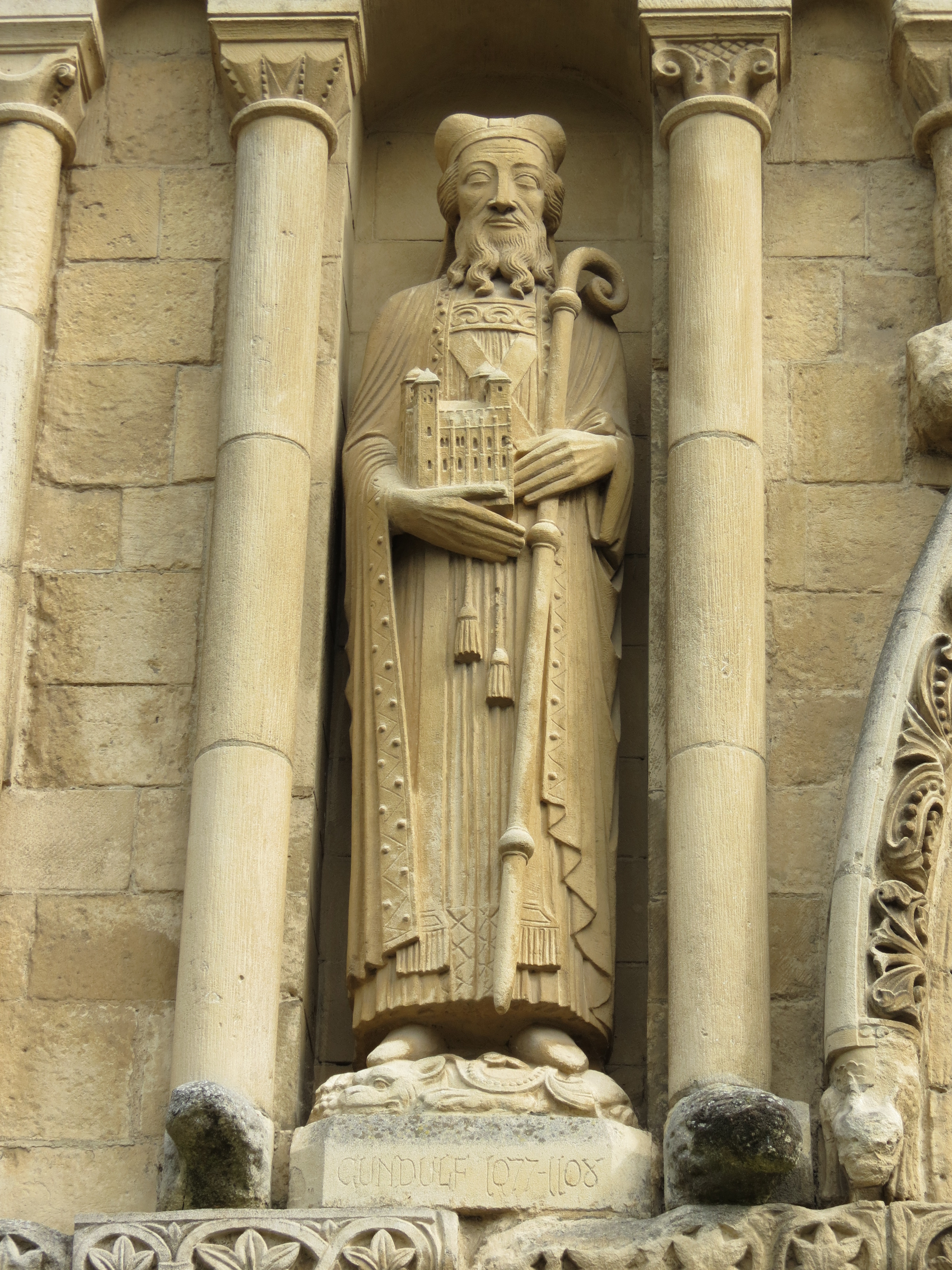
Gundulf seems to have been a remarkable man, having been a Norman monk brought to England by his patron, Lanfranc, the Abbot of the Abbey of St. Etienne in Normandy, and an ally of William, Duke of Normandy, who, when he had conquered England after 1066, appointed Lanfranc Archbishop of Canterbury.
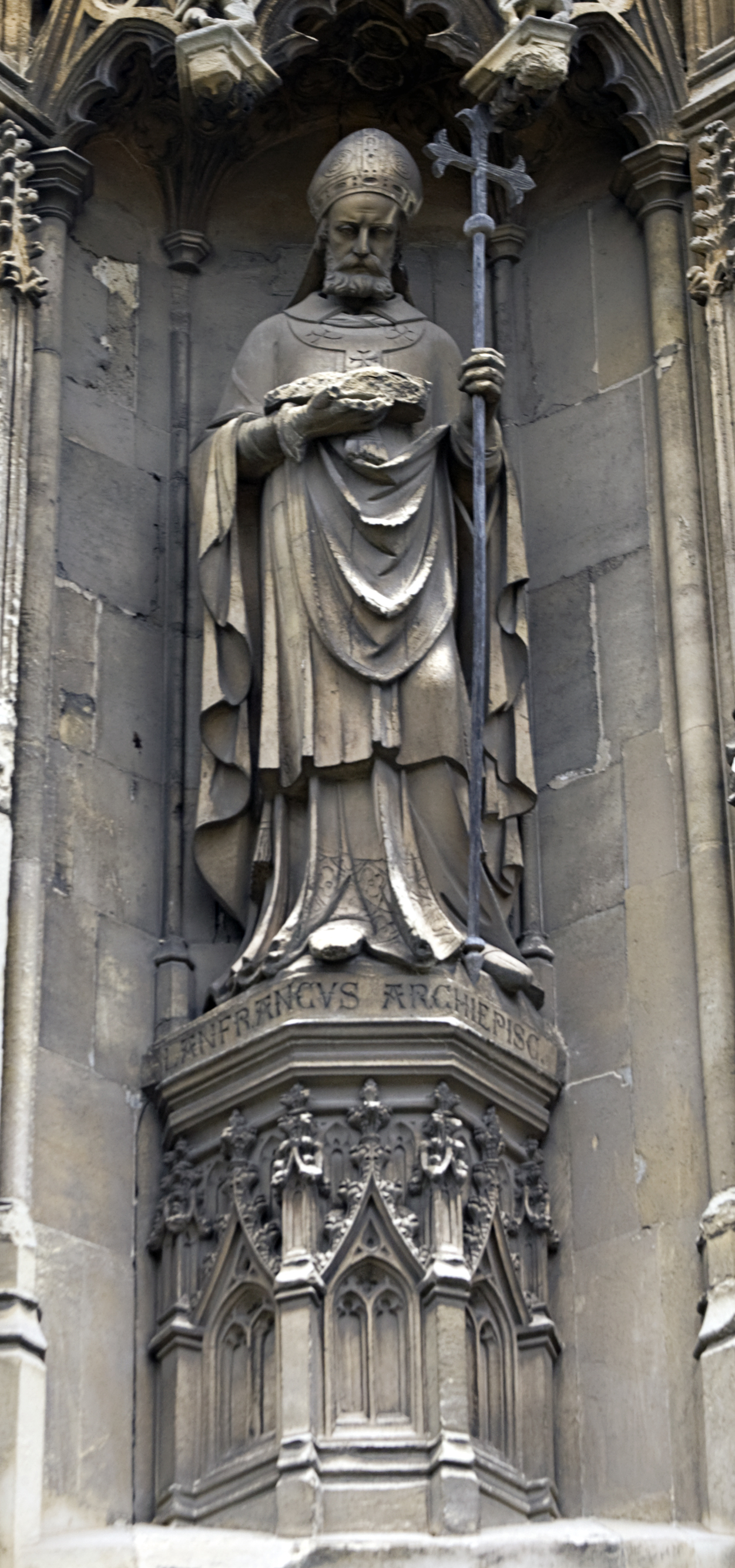
(a 19th-century depiction, from the south face of the southwest porch of Canterbury Cathedral. For more on Lanfranc, see https://en.wikipedia.org/wiki/Lanfranc )
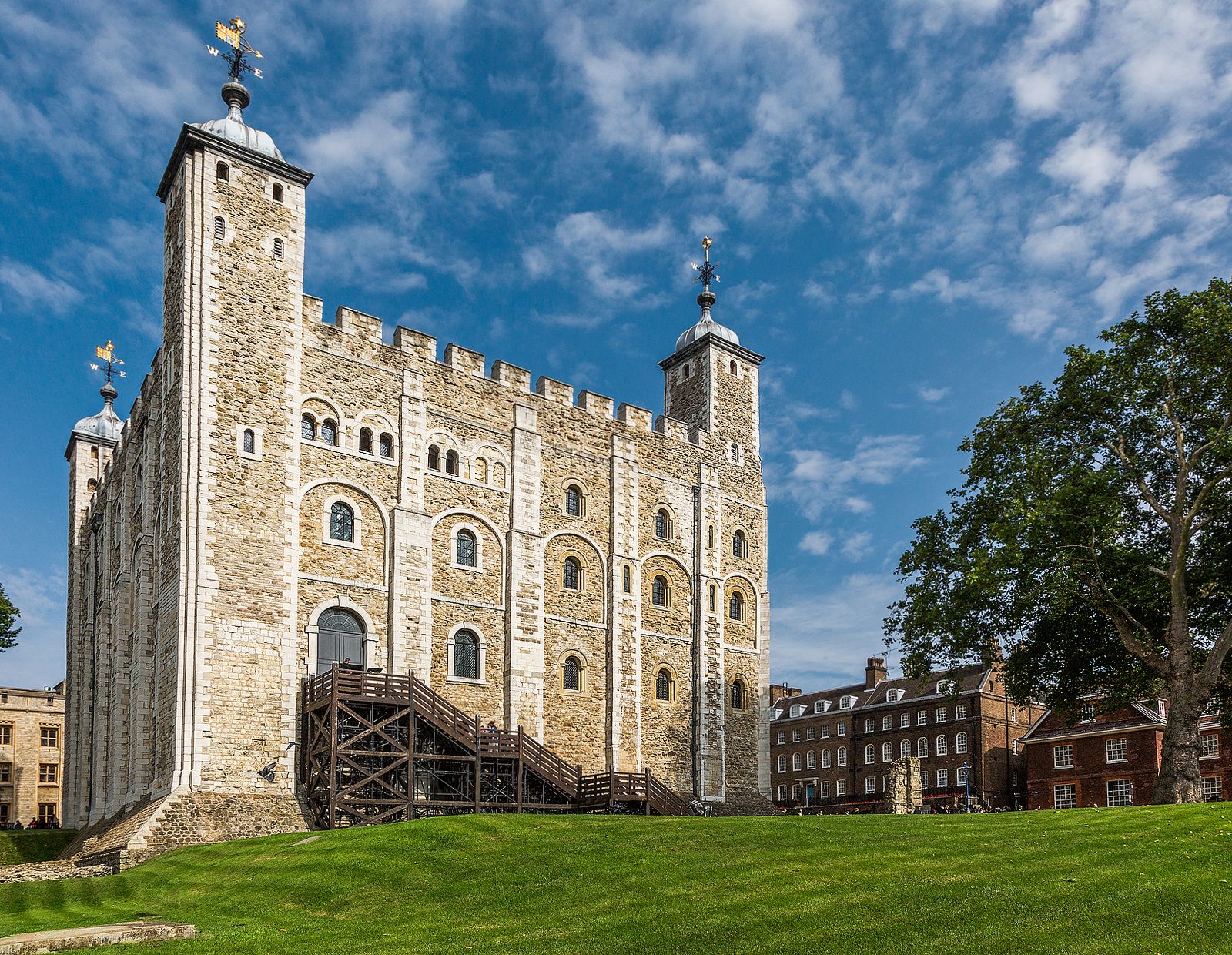
In 1077, Gundulf was made Bishop of Rochester, but, besides whatever his ecclesiastical interests, he was apparently also a talented architect, building, among other works, the White Tower at the center of the Tower of London—not quite what one would expect of a bishop,
but we should remember that his patron, Lanfranc, had only become Archbishop of Canterbury when the Anglo-Saxon Archbishop, Stigand,
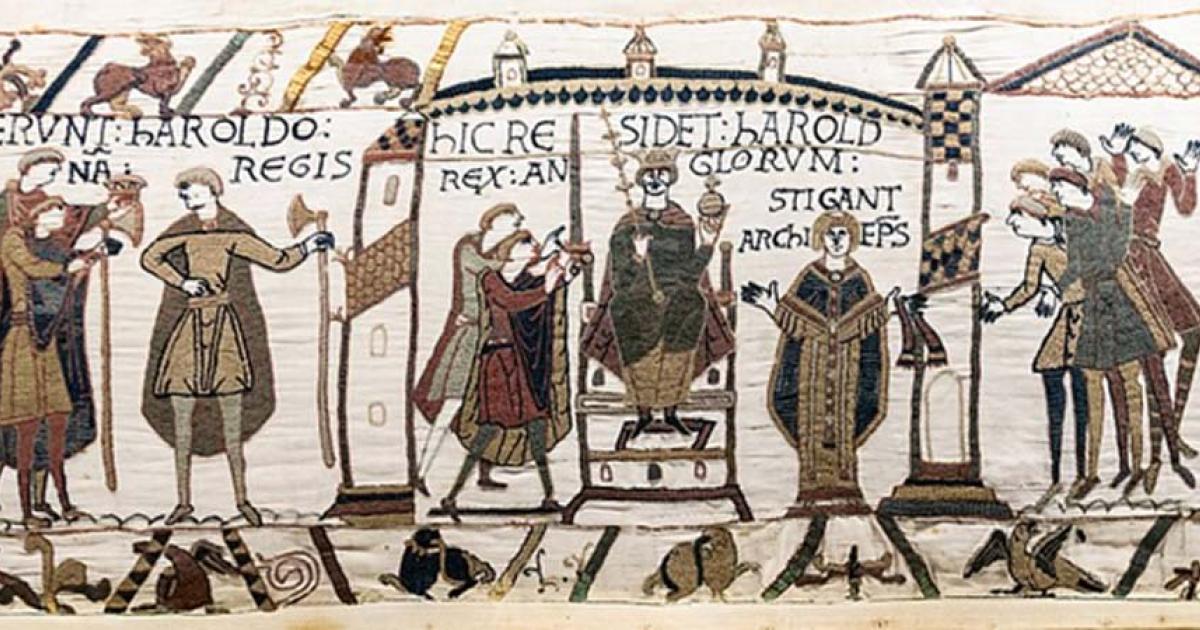
(For more on Stigand, see: https://en.wikipedia.org/wiki/Stigand )
was deposed and imprisoned by the Normans, so Gundulf’s own position was seemingly only safe as long as the Normans remained in power, so self-interest alone might have kept him at work as an ecclesiastical/military architect. (For more on Gundulf, see: https://en.wikipedia.org/wiki/Gundulf_of_Rochester )
Could he have been another influence in turning Bladorthin into Gandalf? I can find no evidence in Tolkien’s letters that he knew of Gundulf, or even ever visited Rochester, but all of the interests above—medievalism, religion, and that crozier–
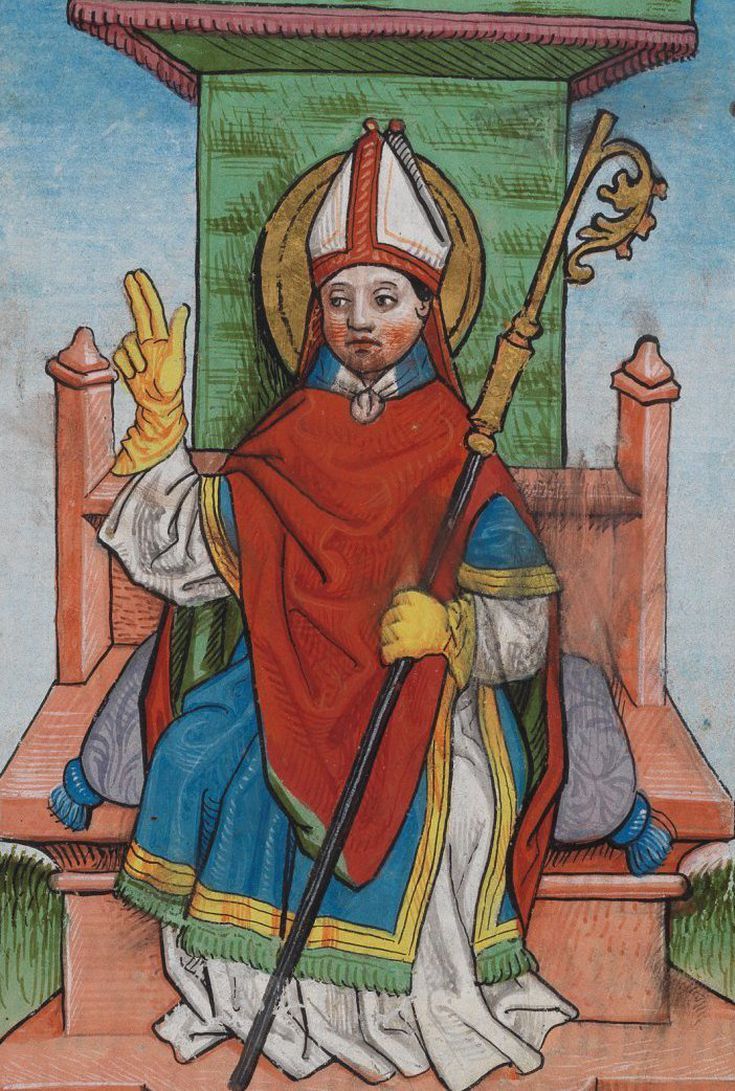
might have suggested a magic staff, perhaps, like the one Gandalf kept when entering Edoras and which he used to break Grima’s enchantment of Theoden:
“He raised his staff. There was a roll of thunder. The sunlight was blotted out from the eastern windows; the whole hall became suddenly dark as night. The fire faded to sullen embers. Only Gandalf could be seen, standing white and tall before the blackened hearth.” (The Two Towers, Book three, Chapter 6, “The King of the Golden Hall”)
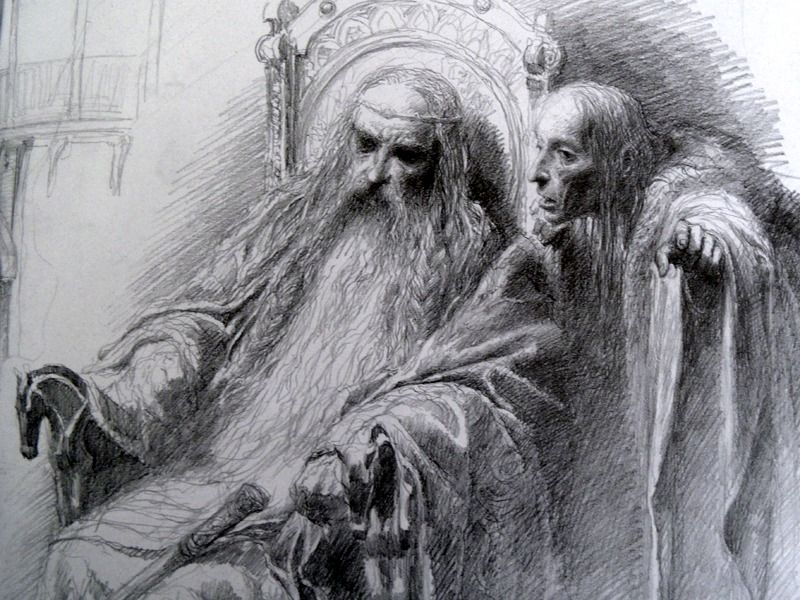
(Alan Lee)
Might we from all of that then imagine that the “Voluspa” alone wasn’t the only reason for the disappearance of Bladorthin and his new baptism as Gandalf?
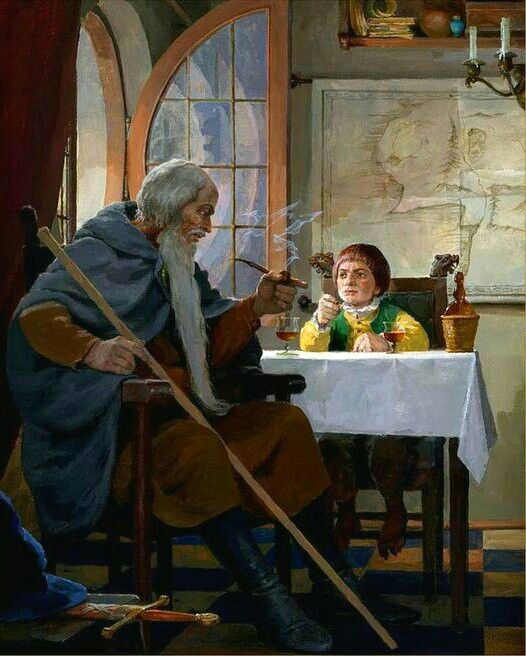
(Denis Gordeev)
Thanks, as ever, for reading.
Stay well,
Beware of evil counselors who claim that they’re acting in your best interest.
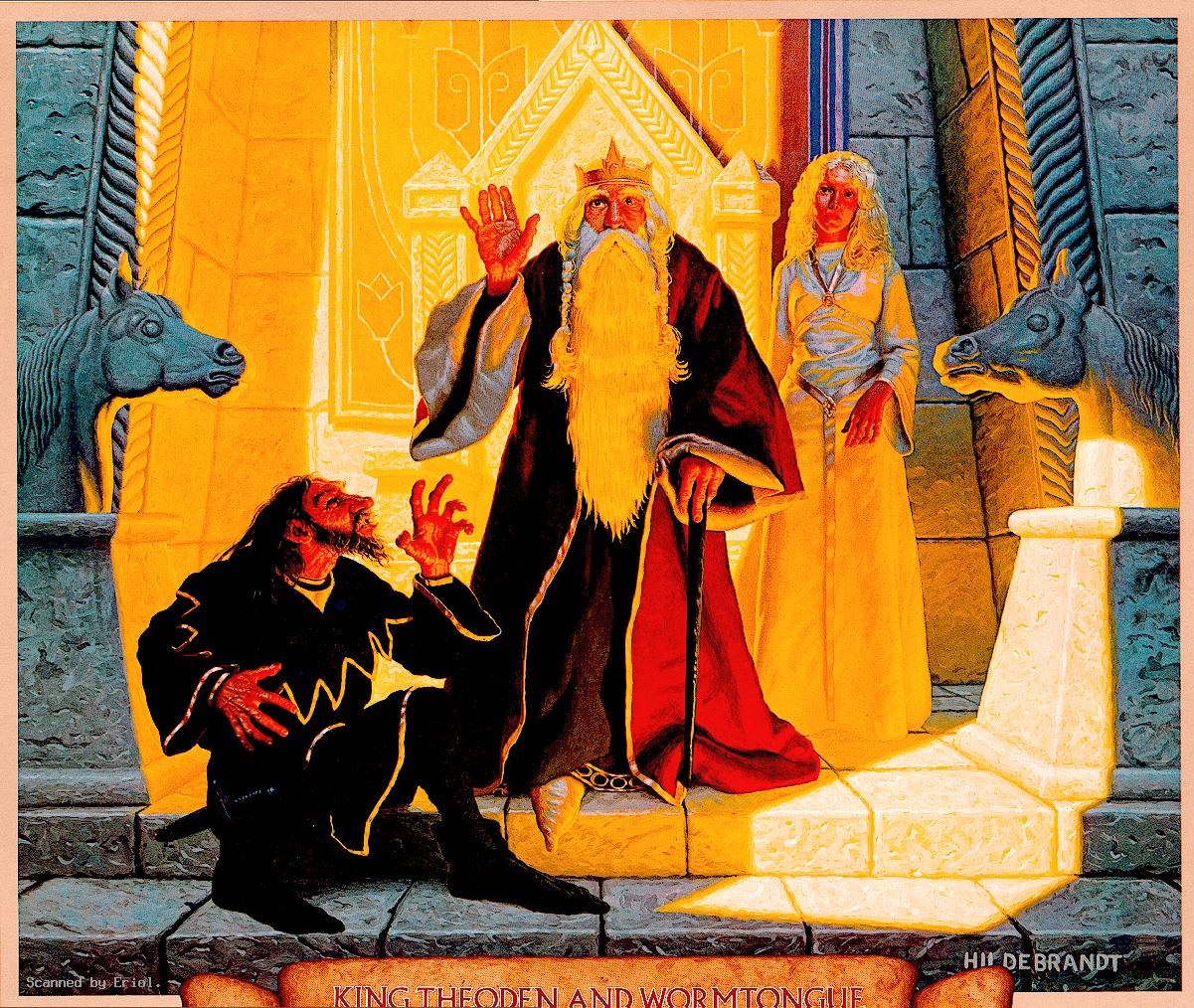
(the Hildebrandts)
And remember that, as always, there’s
MTCIDC
O
 doubtfulsea