• About

doubtfulsea

~ adventure fantasy

Tag Archives: The White Tower

Gundulf

24 Wednesday Jun 2026

Posted by Ollamh in Uncategorized

≈ Leave a comment

Tags

Aragorn, Bingo, bishop, Bladorthin, crozier, Elder Edda, Fantasy, Gandalf, Grima, Gundulf of Rochester, Lanfranc, lotr, Poetic Edda, Rochester Cathedral, stigand, The Hobbit, The Lord of the Rings, The White Tower, Theoden, Tolkien, tolkiens-names, Trotter, Trotter., Voluspa

As always, dear readers, welcome.

Bladorthin?  How would we feel if, as in early drafts of The Hobbit, this were the name by which we knew the somewhat mysterious figure who visited Bilbo Baggins, looking for someone to go on an adventure?
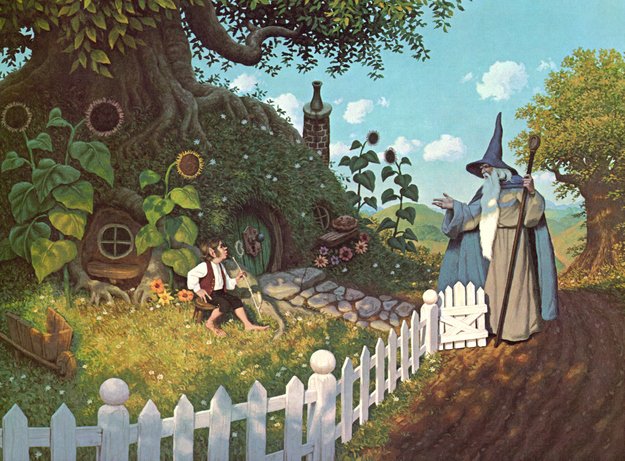
(the Hildebrandts)

I, for one, am glad to see that name consigned to manuscripts, along with other early names, like “Bingo” (Frodo) and “Trotter”, later to become “Aragorn” and turn as well from a “Hobbit ranger” into the rightful heir to the throne of Gondor,
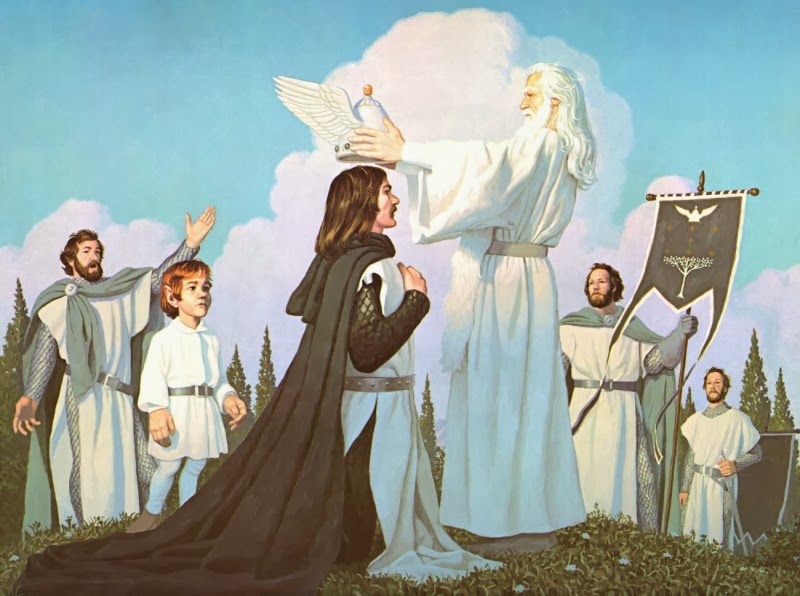
(the Hildebrandts again)

initially, as he tells us, to the surprise of the author (see a letter to W.H. Auden, 7 June, 1955, Letters, 315-16)

(If you want to read that draft in which Bladorthin appears, see John D. Rateliffe’s monumental The History of the Hobbit, 30-31, where the name appears just where we now read “Gandalf”, as in:

“Bladorthin!  If you had heard only a quarter of what I have (and I have heard only a tiny bit what there is to hear) about him you would be prepared for any sort of remarkable tale.” (30) )

Instead, we know him as Gandalf, whose name—along with those of the dwarves—as Tolkien tells the editor of the Observer:  “…are from the Elder Edda.” (letter to the editor of the Observer, published 20 Ferbruary, 1938, Letters, 41)

By “Elder Edda”, JRRT was referring to a 13th century collection of poems also referred to as “the Poetic Edda” and, within it, to one specific section, called “Voluspa”, “prophesy of the volva”, a kind of seeress.  (Also called a “vala”–for more on such magical figures, see:  https://en.wikipedia.org/wiki/Seeress_(Germanic)  For more on the Eddas, see:   https://en.wikipedia.org/wiki/Edda  )

In this particular poem, the seeress mentions the creation of the dwarves (quoted here from Benjamin Thorpe’s 1906 translation of both the “Poetic Edda” and the “Prose Edda” which you can read here:  https://www.gutenberg.org/files/14726/14726-h/14726-h.htm ):

“9. Then went all the powers to their judgment-seats, the all-holy gods, and thereon held council, who should of the dwarfs the race create, from the sea-giant’s blood and livid bones.

10. Then was Môtsognir created greatest of all the dwarfs, and Durin second; there in man’s likeness they created many dwarfs from earth, as Durin said.

11. Nýi and Nidi, Nordri and Sudri, Austri and Vestri, Althiôf, Dvalin Nâr and Nâin, Niping, Dain, Bivör, Bavör, Bömbur, Nori, An and Anar, Ai, Miodvitnir,

12. Veig and Gandâlf, Vindâlf, Thrain, Thekk and Thorin, Thrôr, Vitr, and Litr, Nûr and Nýrâd, Regin and Râdsvid. Now of the dwarfs I have rightly told.

13. Fili, Kili, Fundin, Nali, Hepti, Vili, Hanar, Svior, Billing, Bruni, Bild, Bûri, Frâr, Hornbori, Fræg and Lôni, Aurvang, Iari, Eikinskialdi.”  (Thorpe, “Voluspa”, page 2)

You can see a number of familiar dwarf names here, as well as other names which Tolkien didn’t use, and, in section 12, “Gandalf” (although this was, originally, Tolkien’s choice for the character who then become Thorin, possibly because Tolkien might have associated him with the medieval ruler of Alfheim, in southern Norway?  The part of Norway he ruled might also have appealed to Tolkien, “Alfheim” meaning “Elfhome/world/land”—see:  https://en.wikipedia.org/wiki/Gandalf_Alfgeirsson as well as Rateliffe, “Introduction”, xi-xii)

So our documentation goes, but, by an odd chance, I came across someone whose name might also have been an influence:  Gundulf, the 11-12th-century Bishop of Rochester and architect.

I had originally simply been thinking about the name “Gandalf”, which appears to be a compound of two Old Norse words, “gandr” , “[magic] staff” and “alfr”—“elf”—see Geir Zoega, A Concise Dictionary of Old Icelandic, 1910, for further details.  And JRRT certainly is aware of that staff—see his illustration, for instance, of the turning of the trolls into stone—
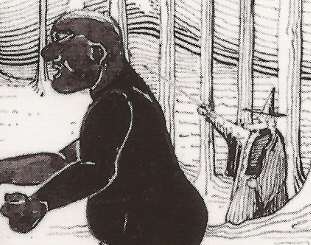
(JRRT)

Then I found that Norse king, Gandalf, and, prompted by that, I wondered about alternate spellings, which brought up this Wikipedia list:

“Gondulf of Provence, 6th-century duke and possibly made Bishop of Metz in 591

Indulf (6th century) (fl. 549–552 or 553), also known as Gundulf, Byzantine mercenary and Ostrogoth army leader

Gondulphus of Berry, 7th-century bishop

Gondulph of Maastricht (died after 614), bishop and Roman Catholic and Eastern Orthodox saint

Gondulphus of Metz (died 823), Bishop of Metz

Gundolfo, early 11th century Italian heretic

Gundulf of Rochester (died 1108), English bishop”

Unlike the etymology of “Gandalf”, “Gundulf”, although a compound like “Gandalf”, combines “gund”, “battle” and “ulf”, “wolf”—“–“battlewolf”–fierce, but not so Tolkienesque as “Elfmagicstaff”.

It certainly seemed like an interesting collection of characters, however, and, thinking of Tolkien’s medievalism, Englishness, interest in religion, and  how this might tie in with bishops, I wondered about Gundulf of Rochester, who, being a bishop, would have carried, as a badge of office, a crozier, a kind of staff, as we see in this modern (1888) depiction of Gundulf, from the west façade of Gundulf’s own Rochester Cathedral—
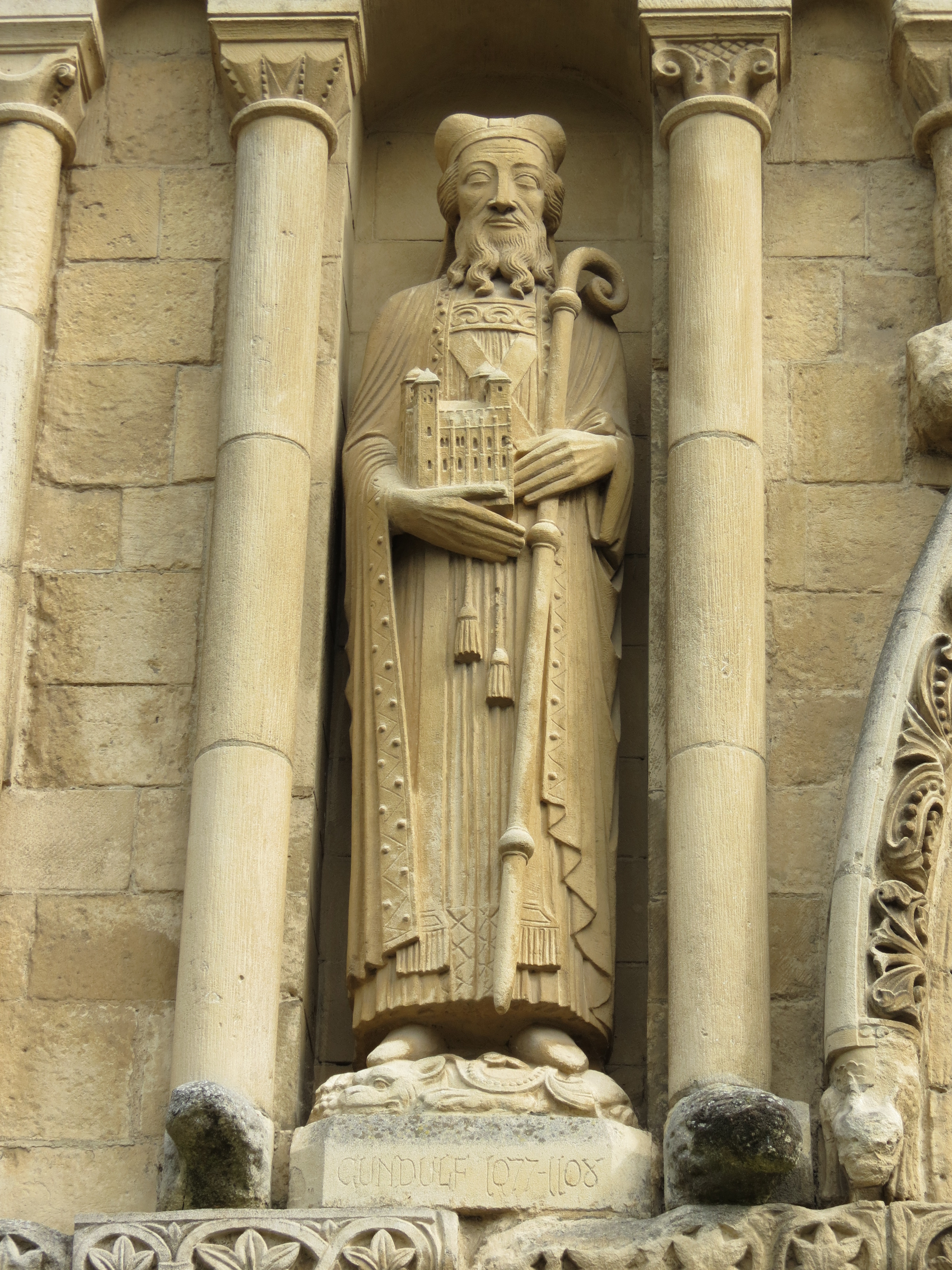
Gundulf seems to have been a remarkable man, having been a Norman monk brought to England by his patron, Lanfranc, the Abbot of the Abbey of St. Etienne in Normandy, and an ally of William, Duke of Normandy, who, when he had conquered England after 1066, appointed Lanfranc Archbishop of Canterbury.
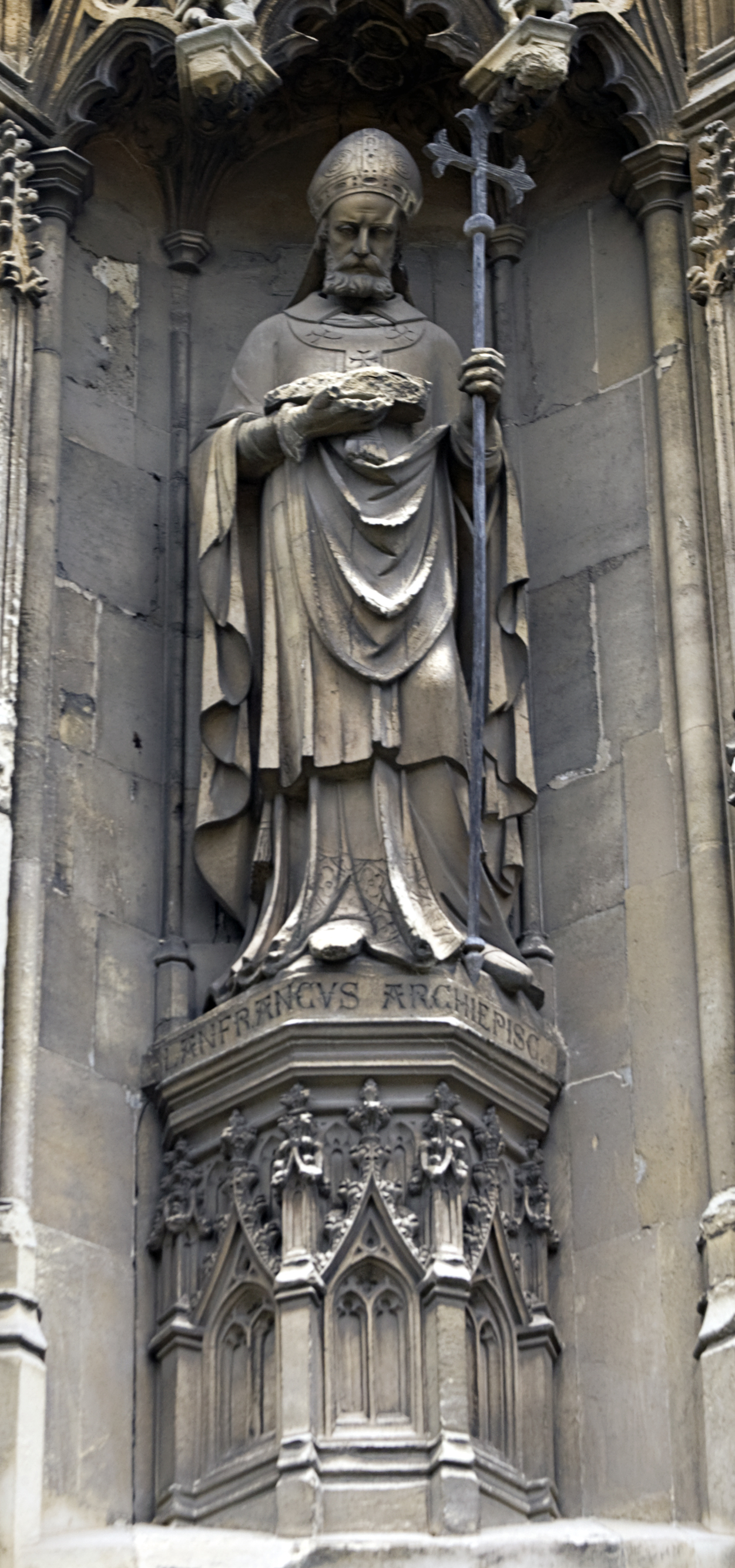
(a 19th-century depiction, from the south face of the southwest porch of Canterbury Cathedral.  For more on Lanfranc, see  https://en.wikipedia.org/wiki/Lanfranc )

In 1077, Gundulf was made Bishop of Rochester, but, besides whatever his ecclesiastical interests, he was apparently also a talented architect, building, among other works, the White Tower at the center of the Tower of London—not quite what one would expect of a bishop,
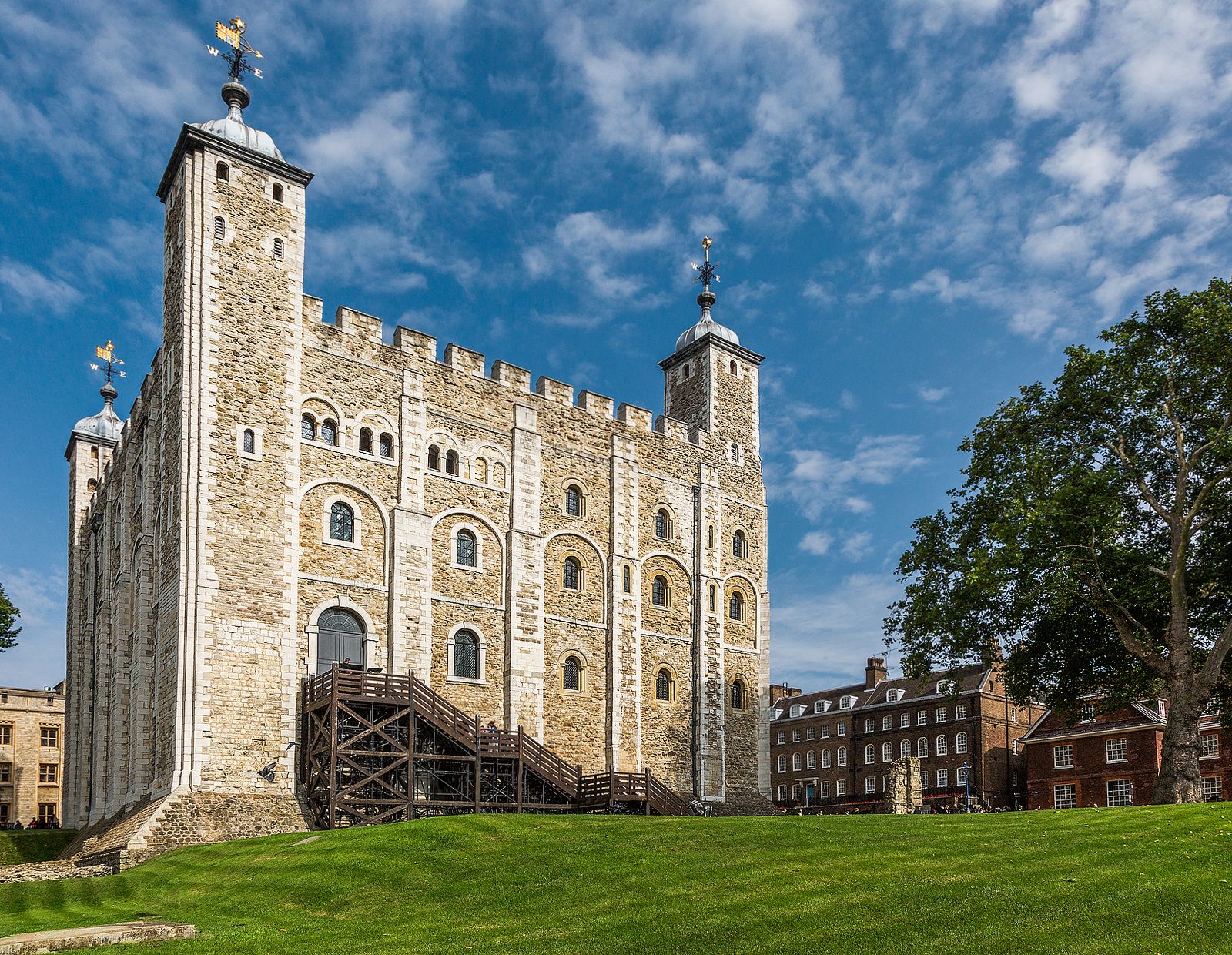
but we should remember that his patron, Lanfranc, had only become Archbishop of Canterbury when the Anglo-Saxon Archbishop, Stigand,
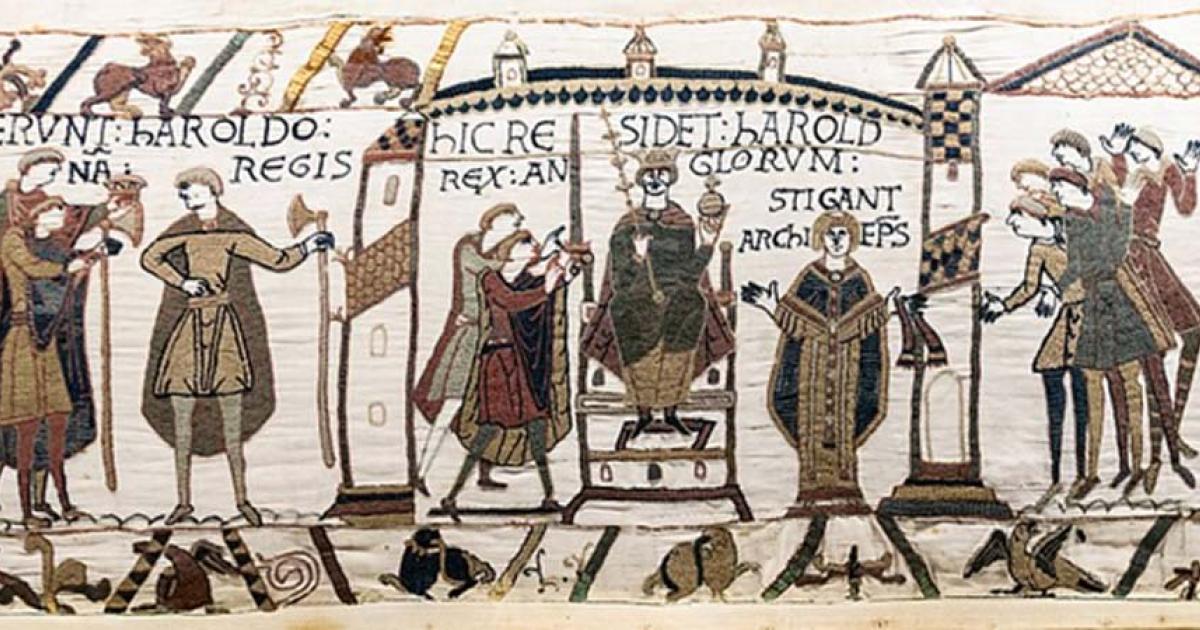
(For more on Stigand, see:  https://en.wikipedia.org/wiki/Stigand )

was deposed and imprisoned by the Normans, so Gundulf’s own position was seemingly only safe as long as the Normans remained in power, so self-interest alone might have kept him at work as an ecclesiastical/military architect.  (For more on Gundulf, see:  https://en.wikipedia.org/wiki/Gundulf_of_Rochester )

Could he have been another influence in turning Bladorthin into Gandalf?  I can find no evidence in Tolkien’s letters that he knew of Gundulf, or even ever visited Rochester, but all of the interests above—medievalism, religion, and that crozier–
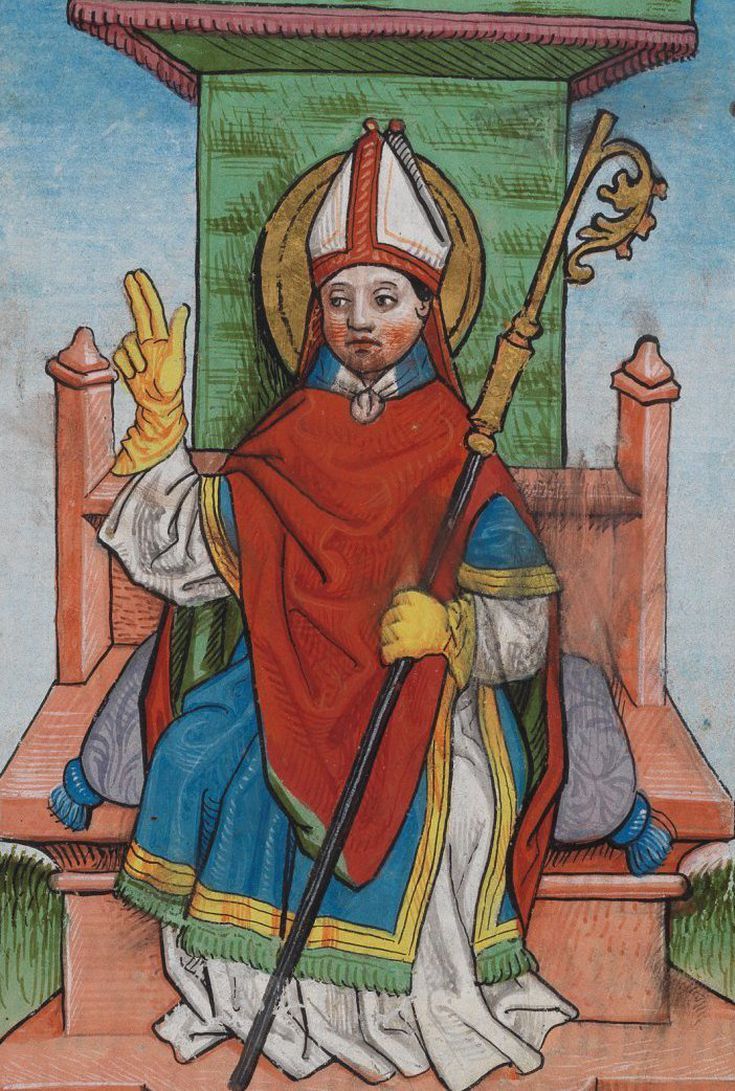
might have suggested a magic staff, perhaps, like the one Gandalf kept when entering Edoras and which he used to break Grima’s enchantment of Theoden:

“He raised his staff.  There was a roll of thunder.  The sunlight was blotted out from the eastern windows; the whole hall became suddenly dark as night.  The fire faded to sullen embers.  Only Gandalf could be seen, standing white and tall before the blackened hearth.”  (The Two Towers, Book three, Chapter 6, “The King of the Golden Hall”)
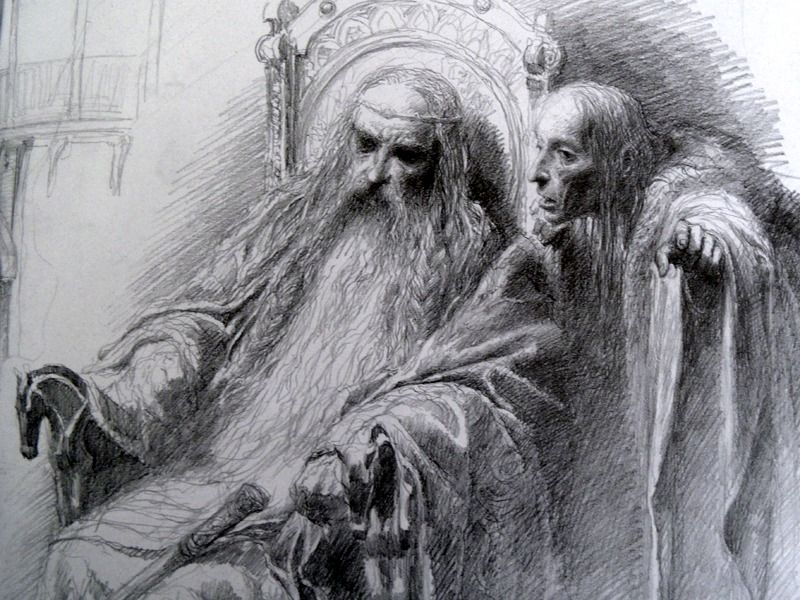
(Alan Lee)

Might we from all of that then imagine that the “Voluspa” alone wasn’t the only reason for the disappearance of Bladorthin and his new baptism as Gandalf?
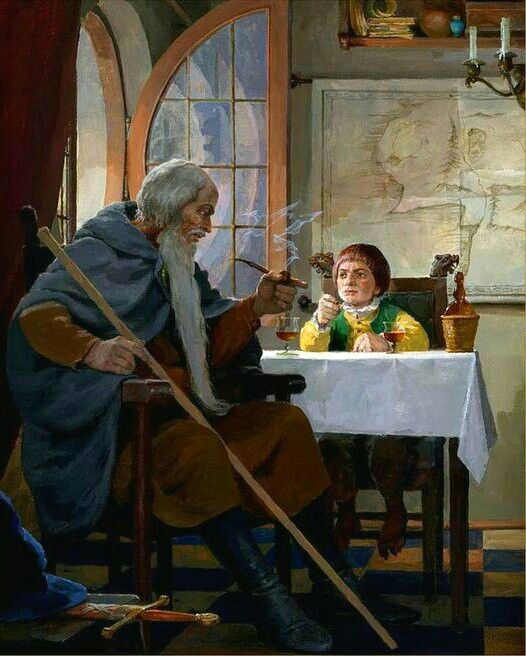
(Denis Gordeev)

Thanks, as ever, for reading.

Stay well,

Beware of evil counselors who claim that they’re acting in your best interest.
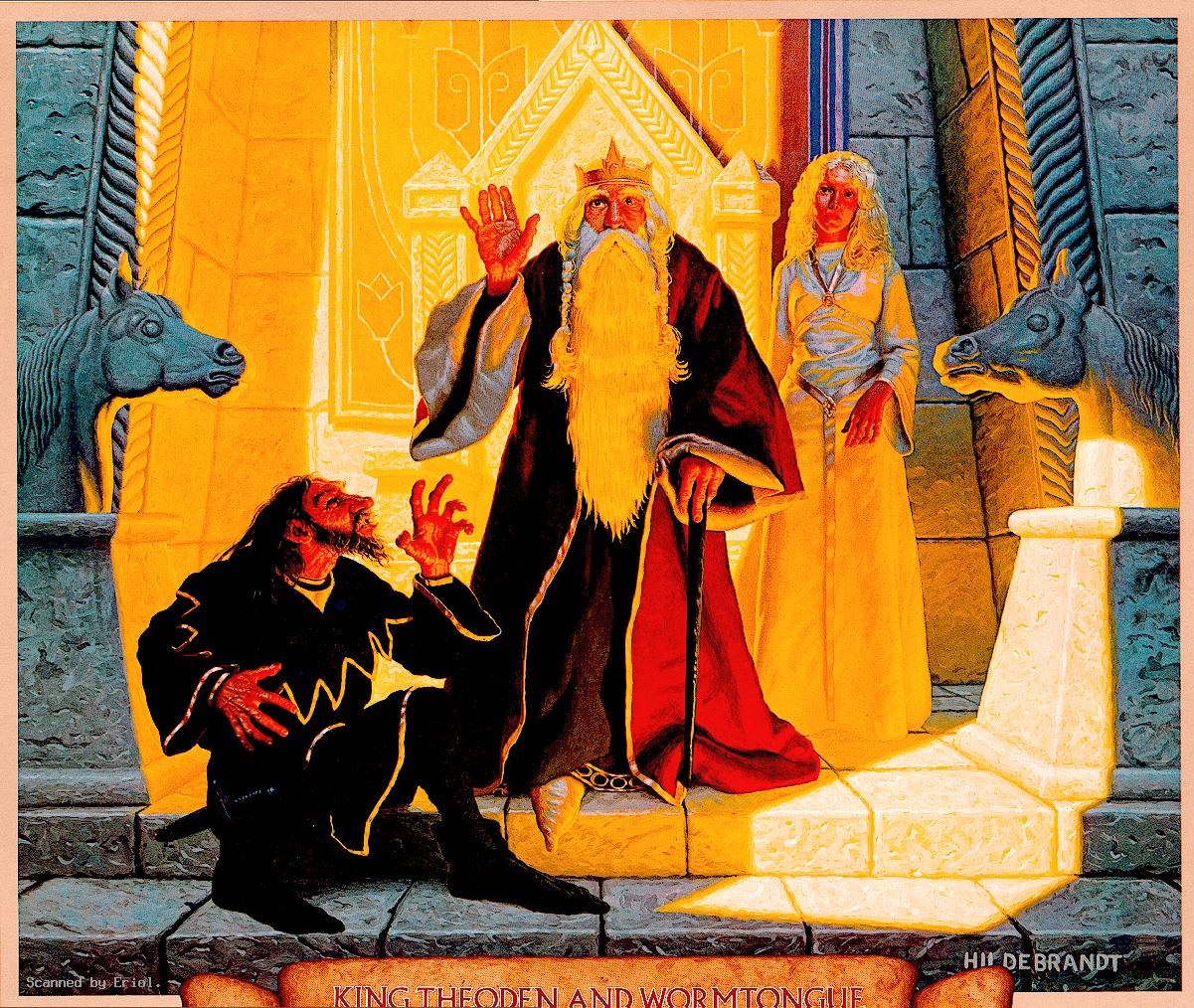
(the Hildebrandts)

And remember that, as always, there’s

MTCIDC

O

In Bad Hands

30 Wednesday Aug 2017

Posted by Ollamh in Heroes, J.R.R. Tolkien, Literary History, Maps, Military History, Narrative Methods

≈ Leave a comment

Tags

CBS Television News, Denethor, Dunkirk, Early newspapers, early radio, Ecthelion, fake news, Gandalf, Henry IV, Isengard, Lifestyle Magazine, Minas Tirith, Nazi, Nazi Propaganda, news, newspaper, Orthanc, Osgiliath, Palantir, propaganda leaflet, Relation, rumors, Saruman, Shakespeare, texting while driving, The Detroit News, The Illustrated London News, The White Tower, Tolkien

Welcome, dear readers, as ever.
Not so long ago, news came to most people through one—very undependable–source: rumor and gossip. As Shakespeare’s Rumor (depicted as “all painted with tongues” in a stage direction), who appears at the beginning of Henry IV, Part 2, Prologue, 1-5, describes herself:
“Open your ears, for which of you will stop
The vent of hearing when loud Rumour speaks?
I, from the orient to the drooping west,
Making the wind my post-horse, still unfold
The acts commenced on this ball of earth.”
At almost the same time as this play was written and first performed (1596-99), the first printed Western newspaper appeared, the Relation, in Strasbourg in 1605.
image1a1609newspaper.jpg
For the next 300-and-some years, newspapers were then the accepted conveyor of popular information about local, national, and world events. Until 1842, these could only convey that information in words, but, in that year, the first illustrated newspaper appeared, The Illustrated London News.
image1billustratedlondonnews.jpg
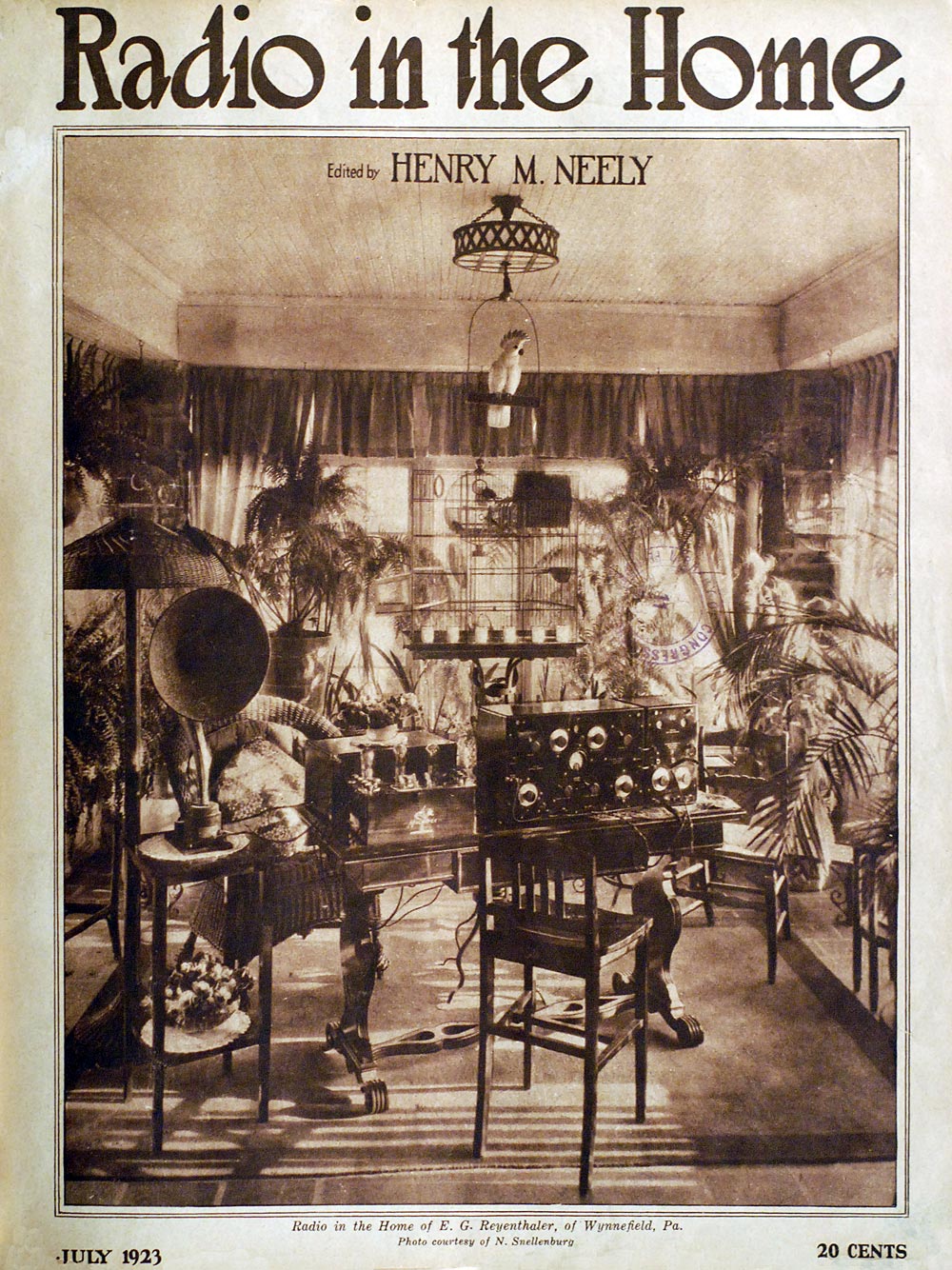
And soon other newspapers followed, opening a wider world of information to the reading public. In under a century, however, news appeared in a new form of technology entirely: the first news broadcast by radio believed to have been on August 31, 1920, by a set owned—perhaps not surprisingly by a newspaper— The Detroit News. Considering what radios looked like in the early 1920s, we doubt that many people heard it (this is an image from Lifestyle Magazine from 1923).
image1cearlyradio1923.jpg
Radios soon improved, however, so that, along with newspapers, people could tune in to hear news, news sometimes more up-to-date than even the newspapers could supply. And then came television. Experiments had been made with television broadcasting as early as 1940, but steady broadcasting really only began in 1948, with CBS Television News.
And then the internet appeared, so that, today, more people are believed to get their news from some form of electronic means than any other (or so electronic means tell us). Practically anywhere you go in our world, you see people staring at screens (not always reading the news, of course—with the universe of apps, people can be doing almost anything imaginable), many of them so portable that you can watch people doing it while walking
image1walktext.jpg
eating,
image2eattext.jpg
even while driving (which, frankly, terrifies us!).
image3textdrive.jpg
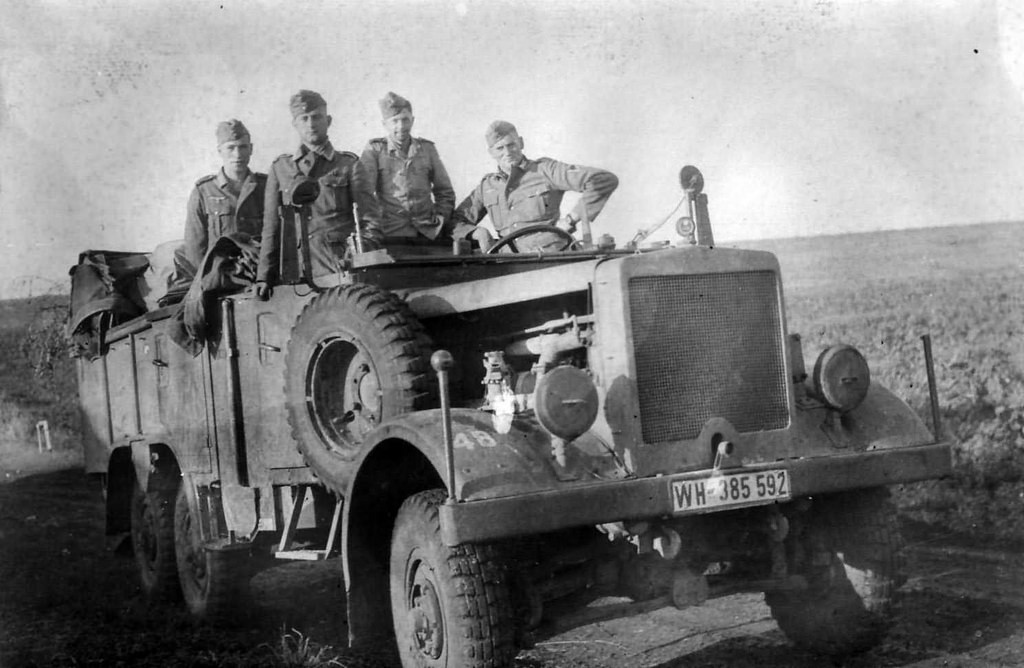
There is a problem with news, however, in every era. Shakespeare’s Rumor may have been pushed to one side by later technological innovations, but, in the form of so-called “fake news”, it’s still with us. And, in fact, faked news—news distorted—or even manufactured—has become a standard feature in newer technology. One has only to think about Nazi propaganda (certainly not the first, but perhaps, for us, the most extensive and most vivid), where—just as one example out of thousands—the mostly horse-powered German army of 1940
image4awehrmacht.jpg
was publicly depicted as streamlined and gasoline-powered (or, even more high-tech, diesel-powered).
image4bwehrmachttruck.jpg
Some time ago, we talked about literacy in Middle-earth. There was no printed material, of course, and literacy appears to have been limited (we only have to mention Gaffer Gamgee saying of Sam, “Mr. Bilbo has learned him his letters—meaning no harm, mark you, and I hope no harm will come of it.” to imagine that not only was it limited, but there might even be a certain suspicion attached to it.)
And what news there was came by the oldest of methods:
“There were rumours of strange things happening in the world outside; and as Gandalf had not at that time appeared or sent any message for several years, Frodo gathered all the news he could. Elves, who seldom walked in the Shire, could now be seen passing westward through the woods in the evening, passing and not returning; but they were leaving Middle-earth and were no longer concerned with its troubles. There were, however, dwarves on the road in unusual numbers. The ancient East-West Road ran through the Shire to its end at the Grey Havens, and dwarves had always used it on their way to their mines in the Blue Mountains. They were the hobbits’ chief source of news from distant parts—if they wanted any: as a rule dwarves said little and hobbits asked no more. But now Frodo often met strange dwarves of far countries, seeking refuge in the West. They were troubled, and some spoke in whispers of the Enemy and of the Land of Mordor.” (The Fellowship of the Ring, Book One, Chapter 2, “The Shadow of the Past”)
(See also the scene in The Green Dragon a little later in the chapter, where there is discussion, all based on hearsay, about Shire and extra-Shire events, between Sam and Ted Sandyman.)
For two people in Middle-earth, however, news came by a method in a strange way like that of the internet: the palantir, and that news which they received was not to their advantage. Made “from beyond Westernesse, from Eldamar. The Noldor made them…” Gandalf tells Pippin. (The Two Towers, Book Three, Chapter 11, “The Palantir”)

The palantiri were made “to see far off, and to converse in thought with one another.” Although there were seven, one, that at Osgiliath, was the master: “each palantir replied to each, but all those in Gondor were ever open to the view of Osgiliath.” Saruman had one of the others
image4saruman.jpg
—the one under discussion in this chapter, after Pippin had almost come to disaster from looking in it—which Grima flung off Orthanc
image5sarumanorthanc.jpg
in what, although unexplained, must have been an attempt to brain Gandalf.
image6gandalforthanc.jpg
Unfortunately for Saruman, what he presumably thought would benefit his quest for what he speciously tells Gandalf is “Knowledge, Rule, Order; all the things that we have so far striven in vain to accomplish…” (The Fellowship of the Ring, Book Two, Chapter 2, “The Council of Elrond”), becomes a snare, as it seems that the master stone of Osgiliath has fallen into Sauron’s hands and “Easy it is now to guess how quickly the roving eye of Saruman was trapped and held; and how ever since he has been persuaded from afar, and daunted when persuasion would not serve.” (The Two Towers, Book 3, Chapter 11, “The Palantir”)
There is another surviving stone, however, and, though it doesn’t turn its possessor into an unwilling ally of Sauron, its propaganda—faked news—does terrible damage, all the same. In the White Tower of Ecthelion in Minas Tirith,
image7awhitetower.jpg
Denethor
image7denethor.jpg
holds a palantir and he, too, is caught, as Gandalf surmises:
“…I fear that as the peril in his realm grew he looked in the Stone and was deceived: far too often, I guess, since Boromir departed. He was too great to be subdued to the will of the Dark Power, he saw nonetheless only those things which that Power permitted him to see. The knowledge which he obtained was, doubtless, often of service to him; yet the vision of the great might of Mordor that was shown to him fed the despair of his heart until it overthrew his mind.” (The Return of the King, Book Five, Chapter 7, “The Pyre of Denethor”)
This overthrow, brought on by Sauron’s propaganda, results in Denethor accusing Gandalf of plotting “to rule in my stead, to stand behind every throne, north, south, or west” as well as delivering what clearly sounds like the “speech long rehearsed” Gandalf has long ago said that Saruman delivered to him in Orthanc:
“For a little space you may triumph on the field, for a day. But against the Power that now arises there is no victory. To this City only the first finger of its hand has yet been stretched. All the East is moving. And even now the wind of thy hope cheats thee and wafts up the Anduin a fleet with black sails. The West has failed. It is time for all to depart who would not be slaves.”
“to depart” quickly seems a euphemism for something much more radical as Denethor:
“leaped upon the table, and standing there wreathed in fire and smoke he took up the staff of his stewardship that lay at his feet and broke it on his knee. Casting the pieces into the blaze he bowed and laid himself on the table, clasping the palantir with both hands upon his breast.”
image8denethorontable.jpg
Here, we thought of all of those people we see who seemingly can never put down their phones—even in death Denethor still grips the very thing which has brought about his destruction.
image9textdrive.jpg
Was JRRT sending us, here in the future, a warning: beware of your source of news—and sometimes let go of what brings it to you? We can only add his description of Denethor’s palantir when it was retrieved from the pyre:
“And it was said that ever after, if any man looked in that Stone, unless he had a great strength of will to turn it to other purpose, he saw only two aged hands withering into flame.”
image10dshands.jpg
Thanks, as always, for reading!
MTCIDC
CD
PS
The new film, Dunkirk, opens with a British soldier catching a German propaganda leaflet based upon an actual one. Below on the left is the movie version, on the right the original. (Notice, by the way, that, in the one on the right, the English is not quite parallel to the French, including the line, “Your commanders (chefs) are going to flee by airplane.”) If Middle-earth had had a print culture, it’s easy to see such a leaflet being dropped by Nazgul over Minas Tirith!
image11leaflet.jpg

The Doubtful Sea Series Facebook Page

The Doubtful Sea Series Facebook Page

  • Ollamh

Categories

  • Artists and Illustrators
  • Economics in Middle-earth
  • Fairy Tales and Myths
  • Films and Music
  • Games
  • Heroes
  • Imaginary History
  • J.R.R. Tolkien
  • Language
  • Literary History
  • Maps
  • Medieval Russia
  • Military History
  • Military History of Middle-earth
  • Narnia
  • Narrative Methods
  • Poetry
  • Research
  • Star Wars
  • Terra Australis
  • The Rohirrim
  • Theatre and Performance
  • Tolkien
  • Uncategorized
  • Villains
  • Writing as Collaborators
Follow doubtfulsea on WordPress.com

Across the Doubtful Sea

Recent Postings

  • Towering.3 July 8, 2026
  • Towering.2 July 1, 2026
  • Gundulf June 24, 2026
  • Homeric? June 17, 2026
  • Tennis, Anyone? June 10, 2026
  • 1002? June 3, 2026
  • Making Money May 27, 2026
  • Blood Money May 20, 2026
  • Saruman’s Sigh May 13, 2026

Blog Statistics

  • 116,509 Views

Posting Archive

  • July 2026 (2)
  • June 2026 (4)
  • May 2026 (4)
  • April 2026 (5)
  • March 2026 (4)
  • February 2026 (4)
  • January 2026 (4)
  • December 2025 (5)
  • November 2025 (4)
  • October 2025 (5)
  • September 2025 (4)
  • August 2025 (4)
  • July 2025 (5)
  • June 2025 (4)
  • May 2025 (4)
  • April 2025 (5)
  • March 2025 (4)
  • February 2025 (4)
  • January 2025 (5)
  • December 2024 (4)
  • November 2024 (4)
  • October 2024 (5)
  • September 2024 (4)
  • August 2024 (4)
  • July 2024 (5)
  • June 2024 (4)
  • May 2024 (5)
  • April 2024 (4)
  • March 2024 (4)
  • February 2024 (4)
  • January 2024 (5)
  • December 2023 (4)
  • November 2023 (5)
  • October 2023 (4)
  • September 2023 (4)
  • August 2023 (5)
  • July 2023 (4)
  • June 2023 (4)
  • May 2023 (5)
  • April 2023 (4)
  • March 2023 (5)
  • February 2023 (4)
  • January 2023 (4)
  • December 2022 (4)
  • November 2022 (5)
  • October 2022 (4)
  • September 2022 (4)
  • August 2022 (5)
  • July 2022 (4)
  • June 2022 (5)
  • May 2022 (4)
  • April 2022 (4)
  • March 2022 (5)
  • February 2022 (4)
  • January 2022 (4)
  • December 2021 (5)
  • November 2021 (4)
  • October 2021 (4)
  • September 2021 (5)
  • August 2021 (4)
  • July 2021 (4)
  • June 2021 (5)
  • May 2021 (4)
  • April 2021 (4)
  • March 2021 (5)
  • February 2021 (4)
  • January 2021 (4)
  • December 2020 (5)
  • November 2020 (4)
  • October 2020 (4)
  • September 2020 (5)
  • August 2020 (4)
  • July 2020 (5)
  • June 2020 (4)
  • May 2020 (4)
  • April 2020 (5)
  • March 2020 (4)
  • February 2020 (4)
  • January 2020 (6)
  • December 2019 (4)
  • November 2019 (4)
  • October 2019 (5)
  • September 2019 (4)
  • August 2019 (4)
  • July 2019 (5)
  • June 2019 (4)
  • May 2019 (5)
  • April 2019 (4)
  • March 2019 (4)
  • February 2019 (4)
  • January 2019 (5)
  • December 2018 (4)
  • November 2018 (4)
  • October 2018 (5)
  • September 2018 (4)
  • August 2018 (5)
  • July 2018 (4)
  • June 2018 (4)
  • May 2018 (5)
  • April 2018 (4)
  • March 2018 (4)
  • February 2018 (4)
  • January 2018 (5)
  • December 2017 (4)
  • November 2017 (4)
  • October 2017 (4)
  • September 2017 (4)
  • August 2017 (5)
  • July 2017 (4)
  • June 2017 (4)
  • May 2017 (5)
  • April 2017 (4)
  • March 2017 (5)
  • February 2017 (4)
  • January 2017 (4)
  • December 2016 (4)
  • November 2016 (5)
  • October 2016 (6)
  • September 2016 (5)
  • August 2016 (5)
  • July 2016 (5)
  • June 2016 (5)
  • May 2016 (4)
  • April 2016 (4)
  • March 2016 (5)
  • February 2016 (4)
  • January 2016 (4)
  • December 2015 (5)
  • November 2015 (5)
  • October 2015 (4)
  • September 2015 (5)
  • August 2015 (4)
  • July 2015 (5)
  • June 2015 (5)
  • May 2015 (4)
  • April 2015 (3)
  • March 2015 (4)
  • February 2015 (4)
  • January 2015 (4)
  • December 2014 (5)
  • November 2014 (4)
  • October 2014 (6)
  • September 2014 (1)

Blog at WordPress.com.

  • Subscribe Subscribed
    • doubtfulsea
    • Join 75 other subscribers
    • Already have a WordPress.com account? Log in now.
    • doubtfulsea
    • Subscribe Subscribed
    • Sign up
    • Log in
    • Report this content
    • View site in Reader
    • Manage subscriptions
    • Collapse this bar

Loading Comments...