Tags
barrow, Barrows, Beowulf, Edoras, Fantasy, howe, Nazgul, Rohirrim, Snowmane, Sutton Hoo, The Iliad, The Lord of the Rings, the-iliad, Theoden, Tolkien
Welcome, dear readers, as always.
“I myself will go to war, to fall in the front of the battle, if it must be. Thus shall I sleep better…”
says Theoden to Gandalf. (The Two Towers, Book Three, Chapter 6, “The King of the Golden Hall”)
As Theoden has just said “to fall in the front of the battle”, it’s clear that he means here not falling asleep, but dying, and that’s exactly what he does, leading the Rohirrim against Sauron’s armies at the battle of the Pelennor Fields,
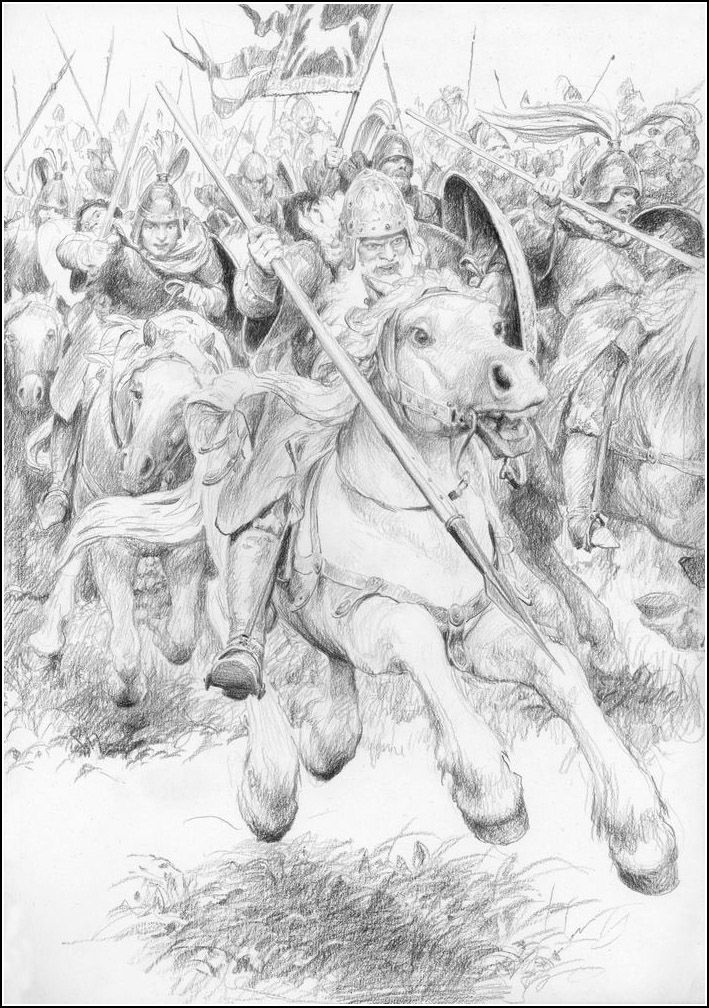
(Denis Gordeev)
and dying after tangling with the chief of the Nazgul.
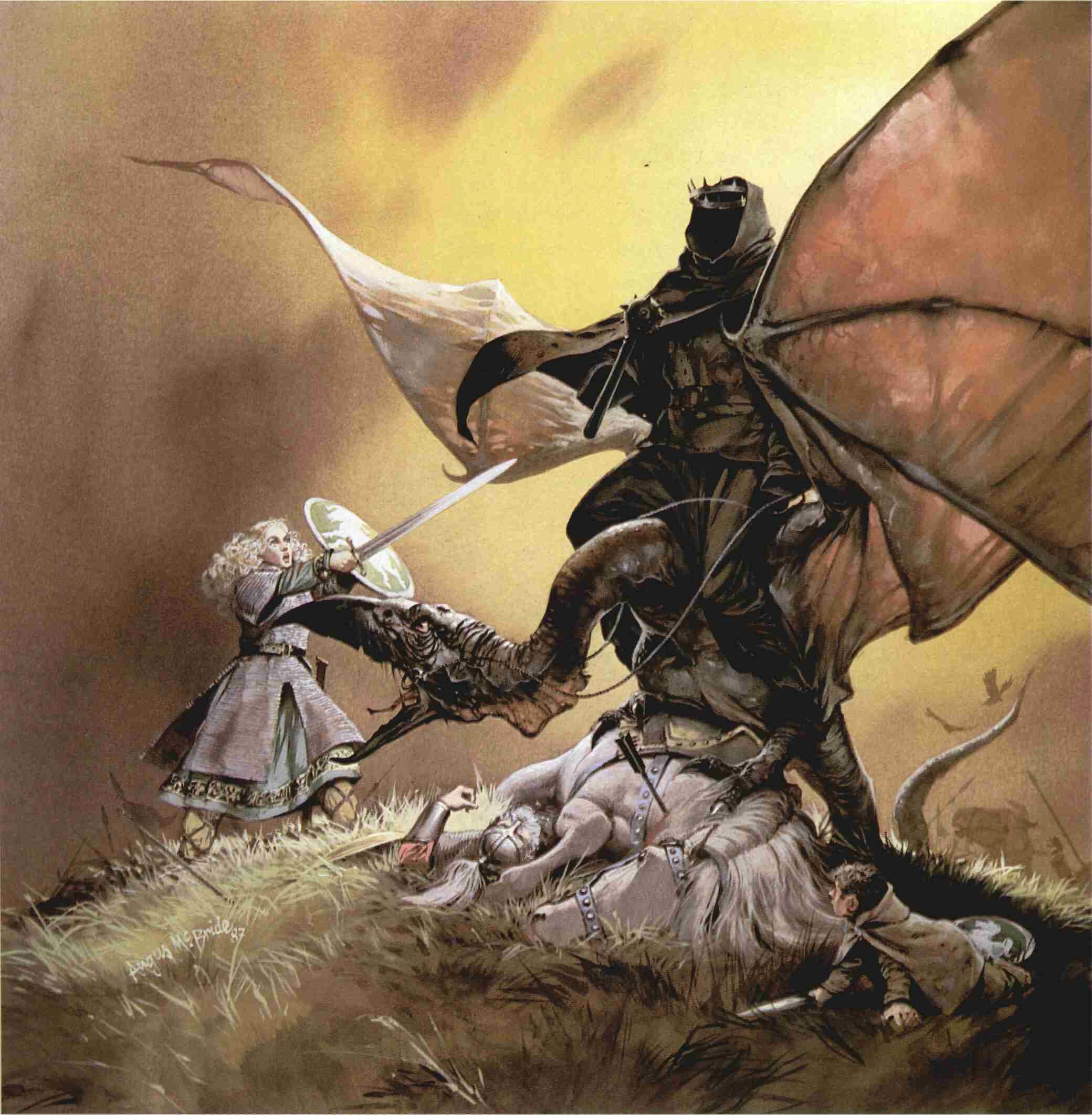
(Angus McBride)
But where will he “sleep”?
Snowmane, his horse, whose reaction to the Nazgul’s ghastly mount,
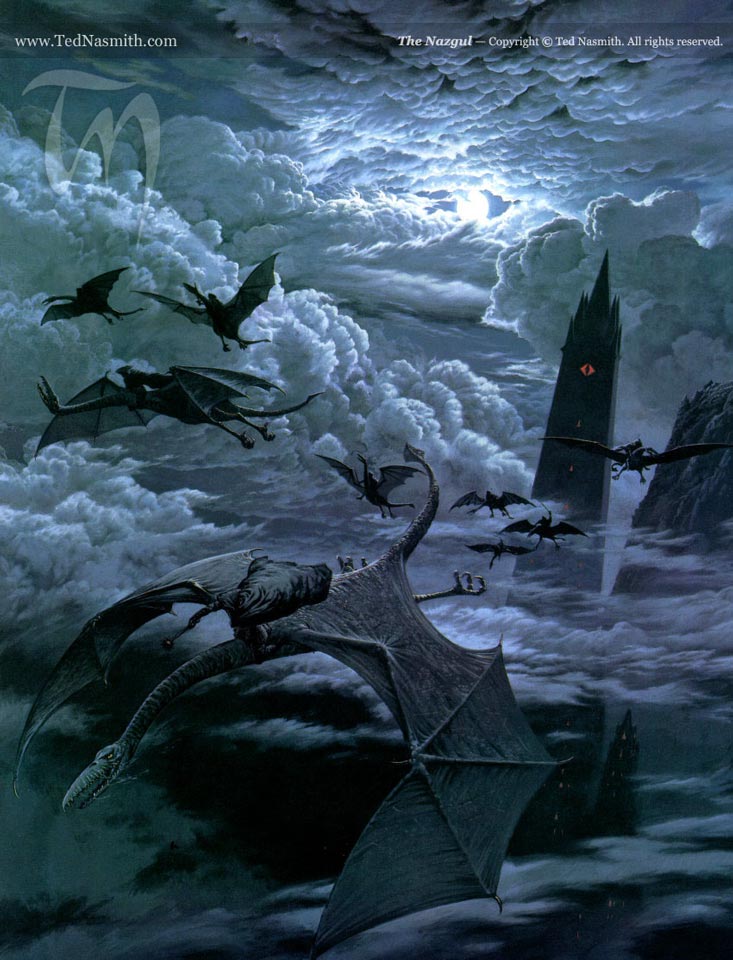
(Ted Nasmith)
led to Theoden’s death, is buried under a mound on the battlefield—
“…but for Snowmane they dug a grave and set up a stone upon which was carved in the tongues of Gondor and the Mark:
‘Faithful servant, yet master’s bane,
Lightfoot’s foal, swift Snowmane.’
Green and long grew the grass on Snowmane’s Howe…” (The Return of the King, Book Five, Chapter 6, “The Battle of the Pelennor Fields”)
A “howe” is a burial mound,
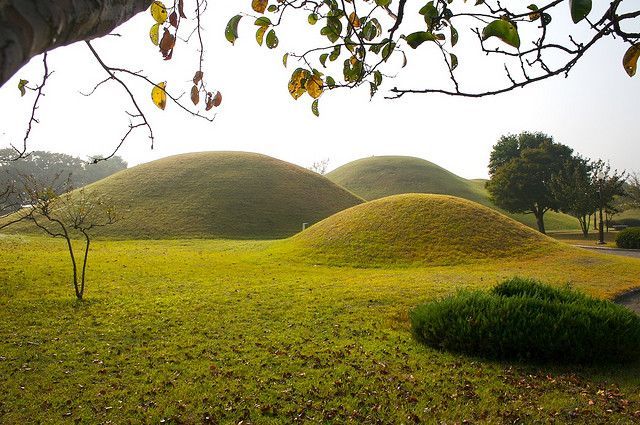
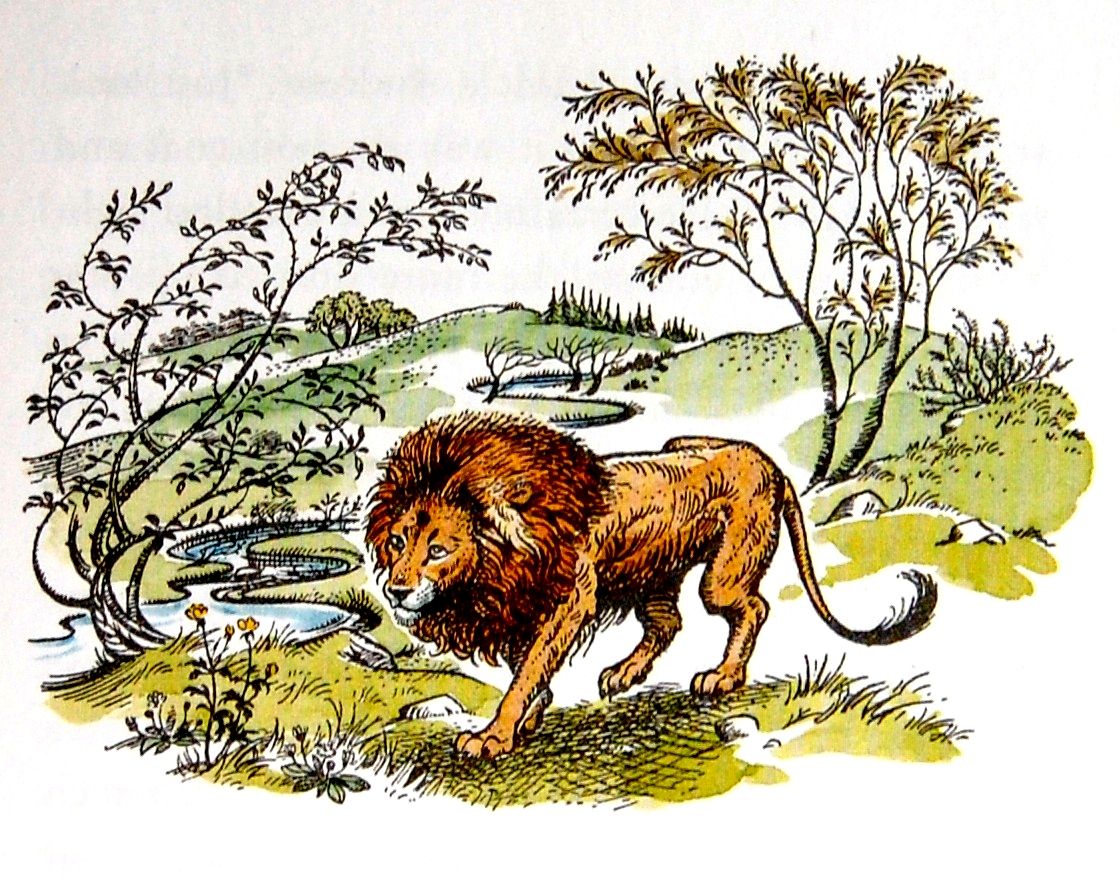
and the word appears to come originally from Norse haugr, “mound; cairn” says Etymonline (https://www.etymonline.com/word/howe If you are a Narnia fan, you probably think immediately of Aslan’s Howe— )
(Pauline Baynes)
When Sauron is finally defeated, we know what then happens to Theoden’s body—
“Then the kings of Gondor and Rohan went to the Hallows and they came to the tombs of Rath Dinen, and they bore away King Theoden upon a golden bier, and passed through the City in silence. Then they laid the bier upon a great wain
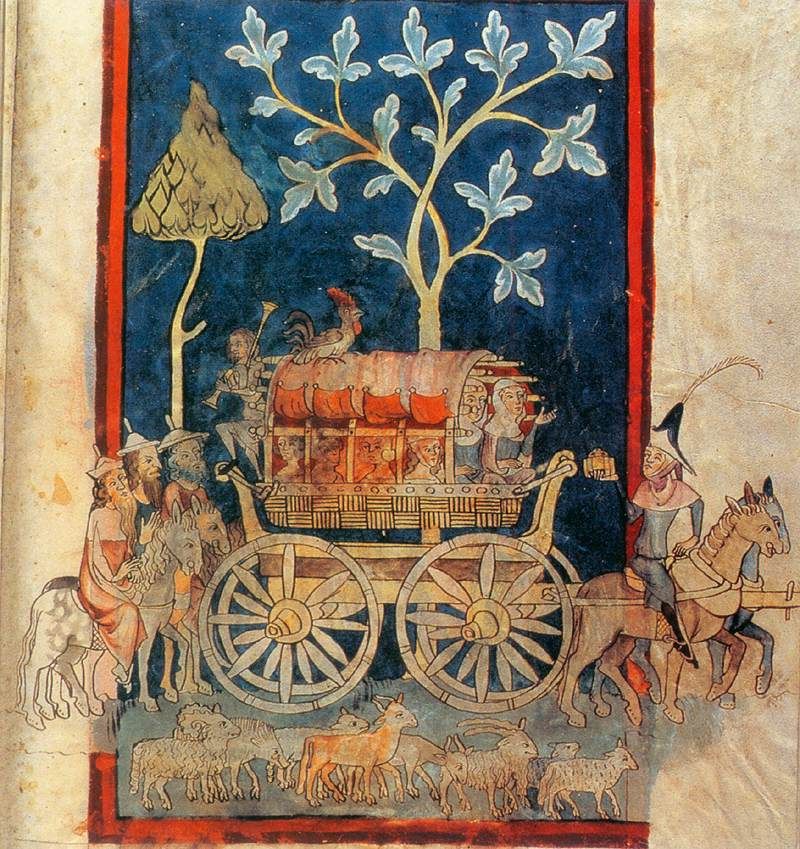
(perhaps something like this—but without the bagpiper—and the rooster)
with Riders of Rohan all about it and his banner borne before; and Merry being Theoden’s esquire rode upon the wain and kept the arms of the King…
At length after fifteen days of journey the wain of King Theoden passed through the green fields of Rohan and came to Edoras; and there they all rested…after three days the Men of the Mark prepared the funeral of Theoden; and he was laid in a house of stone with his arms and many other fair things that he had possessed, and over him was raised a great mound, covered with green turves of grass and of white evermind. And now there were eight mounds on the east-side of the Barrowfield.” (The Return of the King, Book Six, Chapter 6, “Many Partings”.)
We’ve seen these mounds before—
“At the foot of the walled hill the way ran under the shadow of many mounds, high and green…
‘Look!’ said Gandalf…we are come to the great barrows where the sires of Theoden sleep.’
‘Seven mounds upon the left, and nine upon the right,’ said Aragorn.” (The Two Towers, Book Three, Chapter 6, “The King of the Golden Hall”)
Since first reading this, I could always see those mounds—
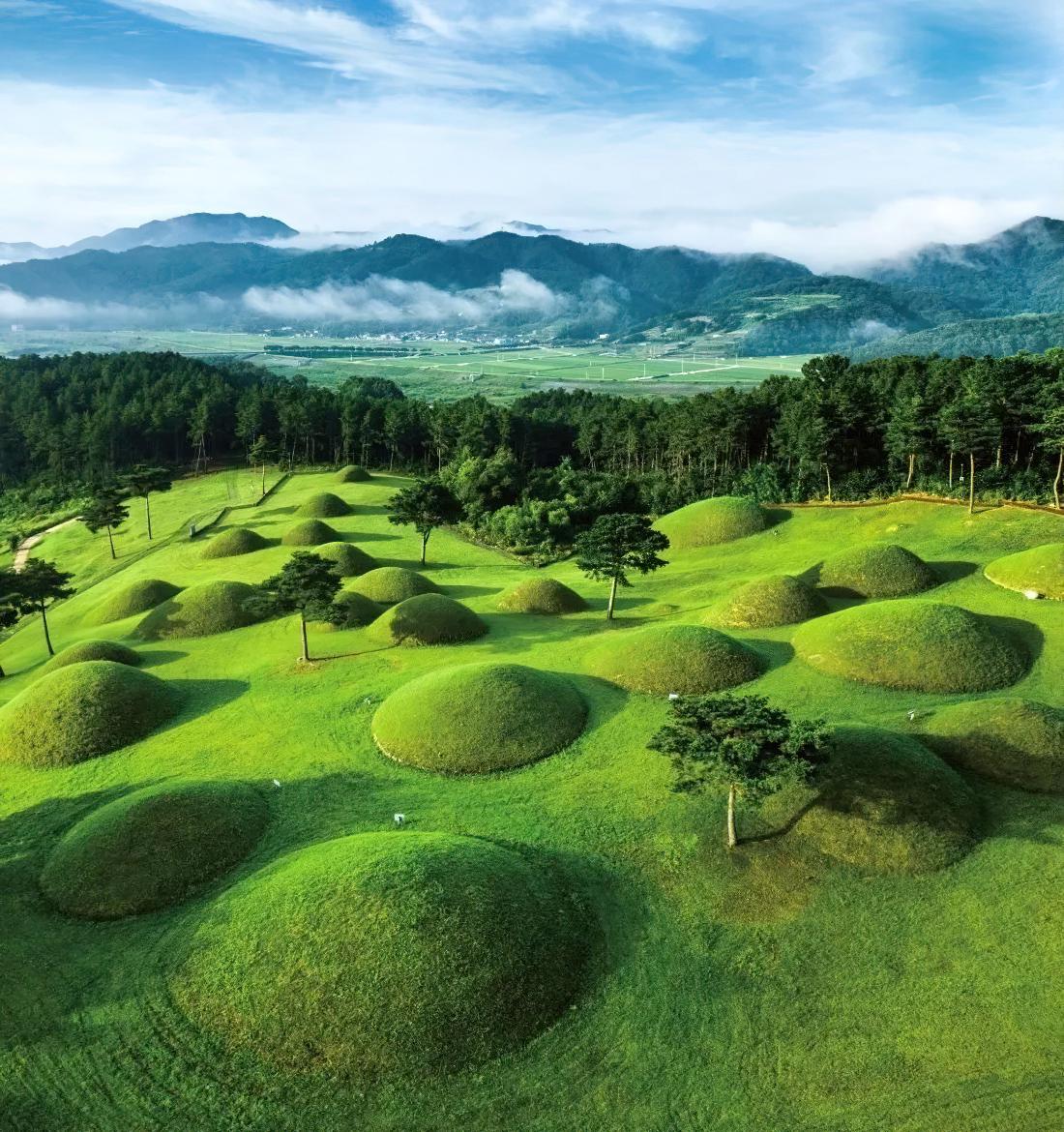
and it made me wonder where JRRT got the idea. My first thought was the ship burial at Sutton Hoo, which came to public attention in 1939—
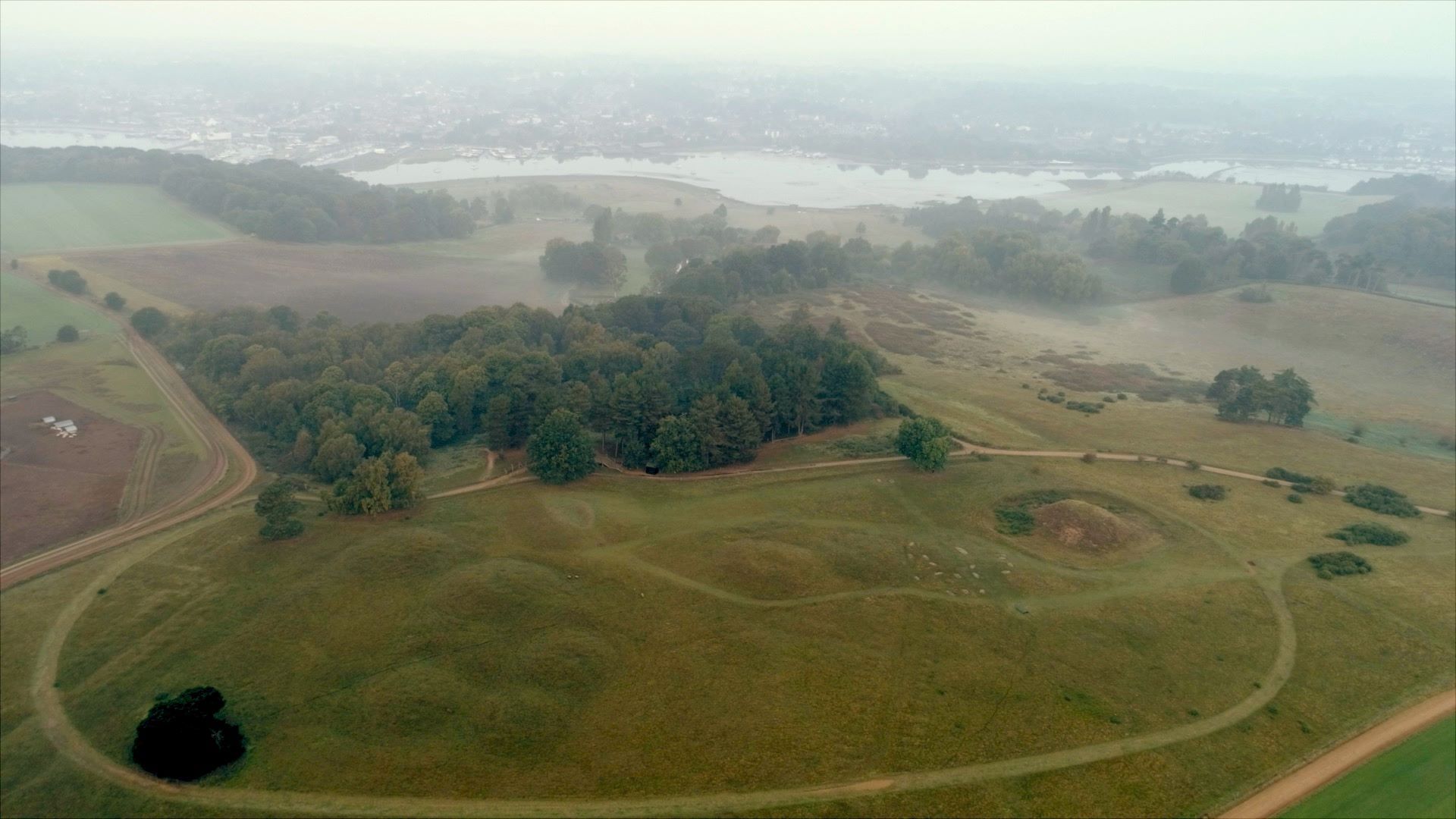
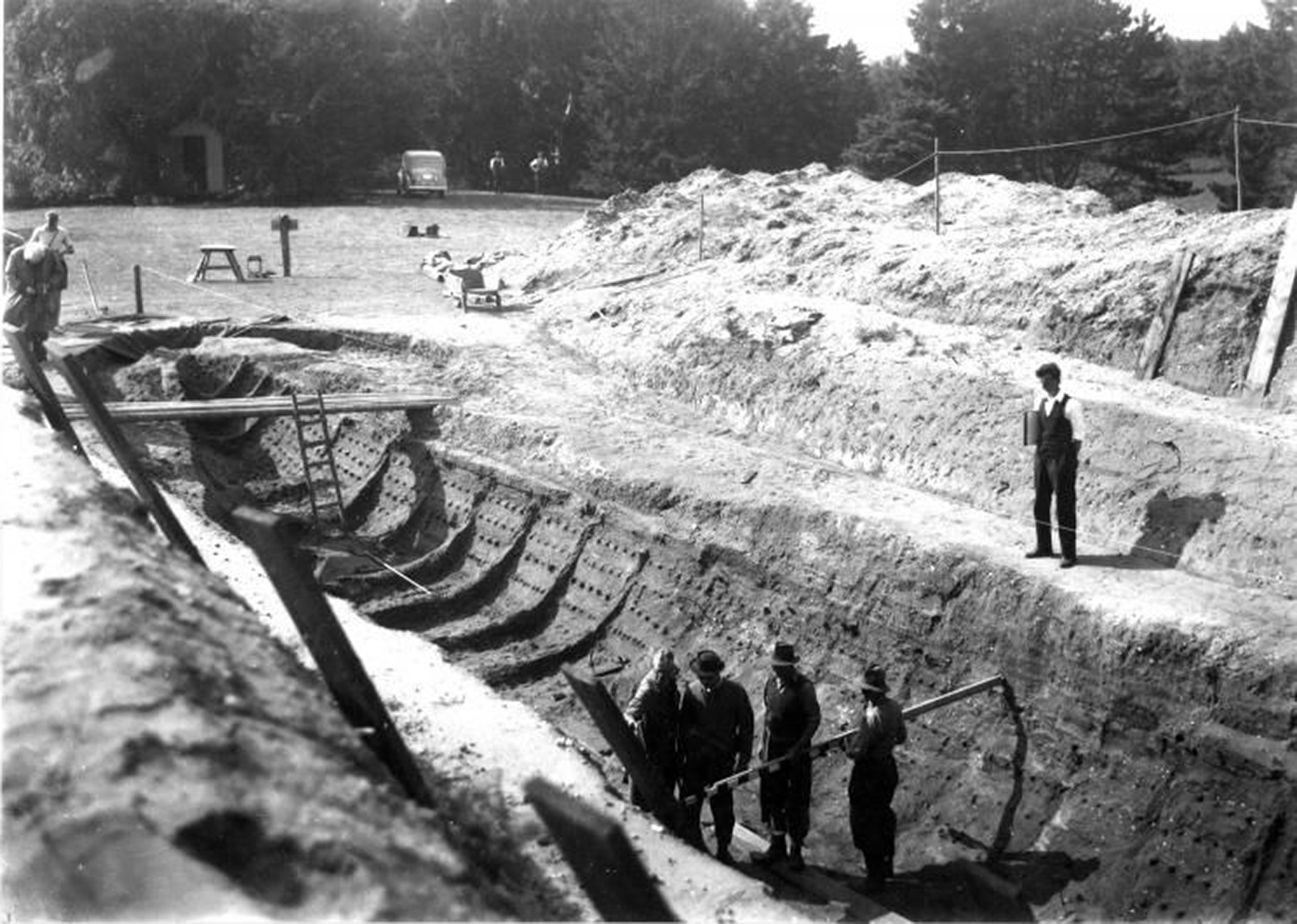
and which Tolkien would have read about in the news of the day. (And which you can read about here: https://en.wikipedia.org/wiki/Sutton_Hoo# )
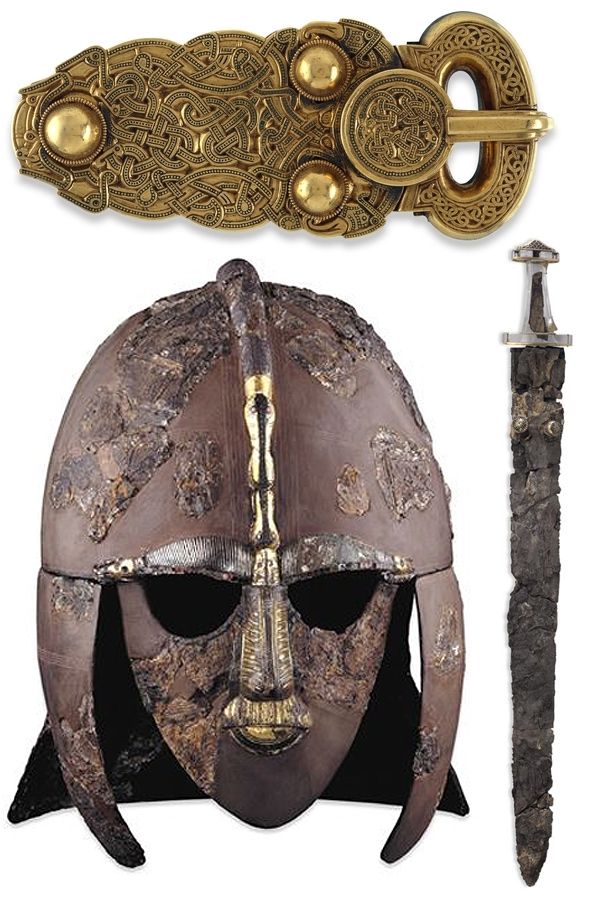
The person buried in the ship certainly had “many…fair things”, now restored and kept in the British Museum—
Tolkien might also have been aware of Viking ship burials in Scandinavia, like that of the Oseberg ship, excavated in Norway in 1904-5—
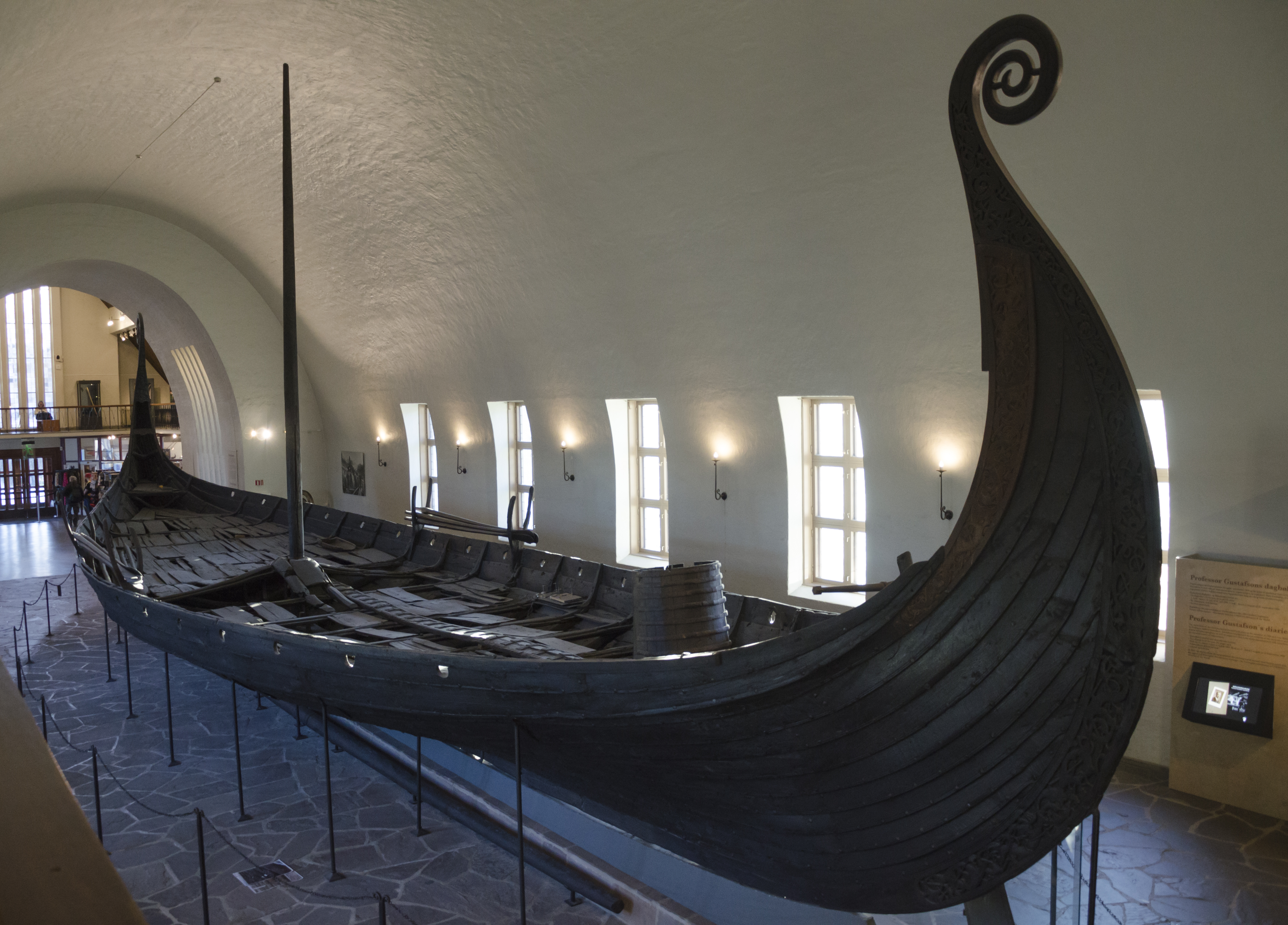
which you can read about here: https://en.wikipedia.org/wiki/Sutton_Hoo# And you can read about Viking ship burials in general here: https://en.wikipedia.org/wiki/Norse_funeral
He could also have been aware of the Six Hills in Stevenage, England, thought to be Roman burial mounds—
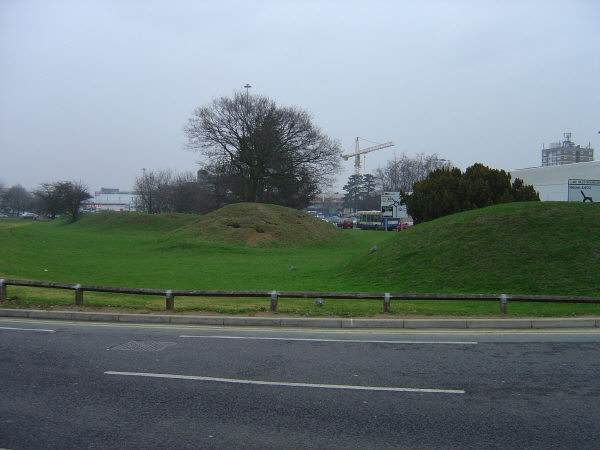
(ricjl For more images, see: h)ttps://www.megalithic.co.uk/article.php?sid=1475 For more on the site, see: https://en.wikipedia.org/wiki/Six_Hills )
or he might have been inspired by places like the early Neolithic West Kennet Long Barrow—
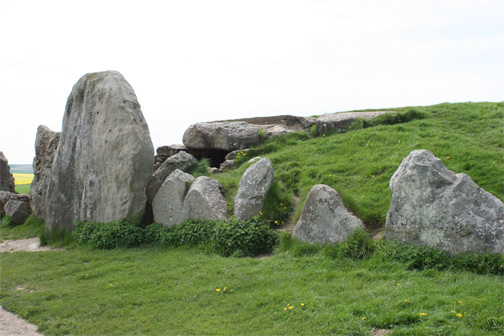
(see for more: https://en.wikipedia.org/wiki/West_Kennet_Long_Barrow )
or even the many barrows in Ireland (for more, see: https://www.danielkirkpatrick.co.uk/irish-history/irish-barrows-map/ )
but his ultimate sources were probably the burials of Patroclus (in Iliad, Book 23, lines 245-248—my translation—Achilles is speaking to the Greeks)–
τύμβον δ’ οὐ μάλα πολλὸν ἐγὼ πονέεσθαι ἄνωγα,
ἀλλ’ ἐπιεικέα τοῖον· ἔπειτα δὲ καὶ τὸν Ἀχαιοὶ
εὐρύν θ’ ὑψηλόν τε τιθήμεναι, οἵ κεν ἐμεῖο
δεύτεροι ἐν νήεσσι πολυκλήϊσι λίπησθε.
“But I order you not to labor over a very big barrow,
But such as is suitable [for the moment]. But then
Make it broad and high, [you] Greeks,
Those of my survivors who may be left in the many-oared ships.”
and of Hector (Iliad, Book 24, 795-799—again, my translation)
καὶ τά γε χρυσείην ἐς λάρνακα θῆκαν ἑλόντες
πορφυρέοις πέπλοισι καλύψαντες μαλακοῖσιν.
αἶψα δ’ ἄρ’ ἐς κοίλην κάπετον θέσαν, αὐτὰρ ὕπερθε
πυκνοῖσιν λάεσσι κατεστόρεσαν μεγάλοισι·
ῥίμφα δὲ σῆμ’ ἔχεαν…
“and taking them [Hector’s bones], they put them in a golden chest,
Covering [them] with soft purple robes.
At once they placed [the chest] in a hollowed-out grave, then from above
They covered it with big, thick-set stones.
And quickly then they heaped up the mound…”
and, of course, Beowulf–
“The men of the Weders made accordingly
A hill on the height, high and extensive,
Of sea-going sailors to be seen from a distance,
And the brave one’s beacon built where the fire was,
In ten-days’ space, with a wall surrounded it,
As wisest of world-folk could most worthily plan it.
They placed in the barrow rings and jewels,
All such ornaments as erst in the treasure
War-mooded men had won in possession :
The earnings of earlmen to earth they entrusted,
The gold to the dust, where yet it remaineth
As useless to mortals as in foregoing eras.”
(Beowulf, John Lesslie Hall, translator, 1892—see: https://archive.org/details/beowulfanglosaxo00hall/page/106/mode/2up )
And even more Beowulf in this—
“Then the Riders of the King’s House upon white horses rode round about the barrow and sang together a song of Theoden Thengel’s son…” (The Return of the King, Book Six, Chapter 6, “Many Partings”.)
which clearly comes from this—
“Round the dead-mound rode then the doughty-in-battle,
Bairns of all twelve of the chiefs of the people,
More would they mourn, lament for their ruler,
Speak in measure, mention him with pleasure,
Weighed his worth, and his warlike achievements
Mightily commended, as ’tis meet one praise his
Liegelord in words and love him in spirit,
When forth from his body he fares to destruction.
So lamented mourning the men of the Geats,
Fond-loving vassals, the fall of their lord,
Said he was gentlest of kings under heaven,
Mildest of men and most philanthropic,
Friendliest to folk-troops and fondest of honor.”
(again from the Hall translation)
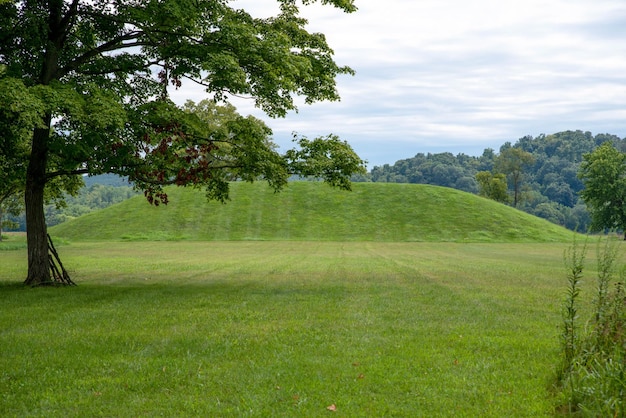
And there, we can imagine, Theoden sleeps still.
Thanks, as ever, for reading.
Stay well,
And remember that, as ever, there’s
MTCIDC
O

