Tags
Fantasy, Helm's Deep, Isengard, Minas Ithil, Minas Morgul, Minas Tirith, Orthanc, The Lord of the Rings, Tolkien, Tower Hills, Tower of Echthelion, towers, towers in The Lord of the Rings, Weathertop
Welcome, dear readers, as always.
Walls have always been a problem for attackers, as they’re clearly meant to be. There have always been several possibilities of how to deal with them:
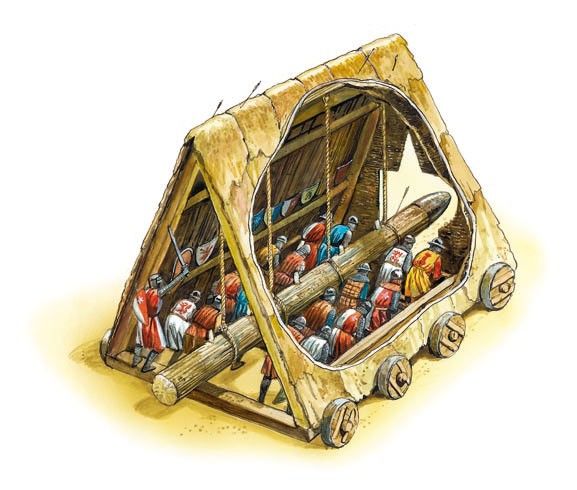
1. attack its fabric
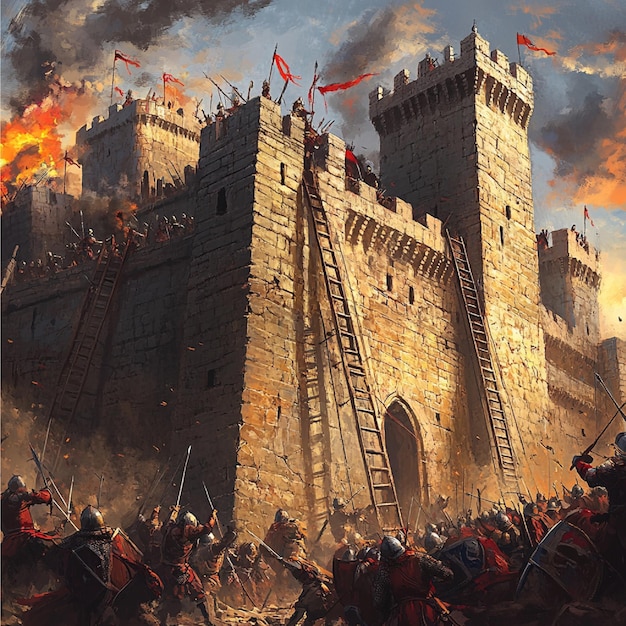
2. go over with a ladder (this is called an “escalade” and is, as you can imagine, an iffy method of assault)
3. dig under (tunneling)
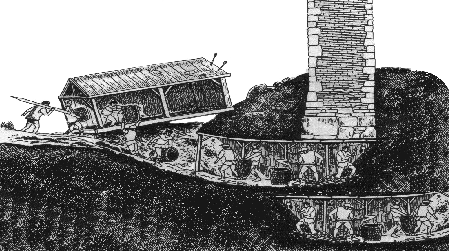
(This is from the very good “War History Online” site: https://www.warhistoryonline.com/
4. dig under to destroy (undermining)
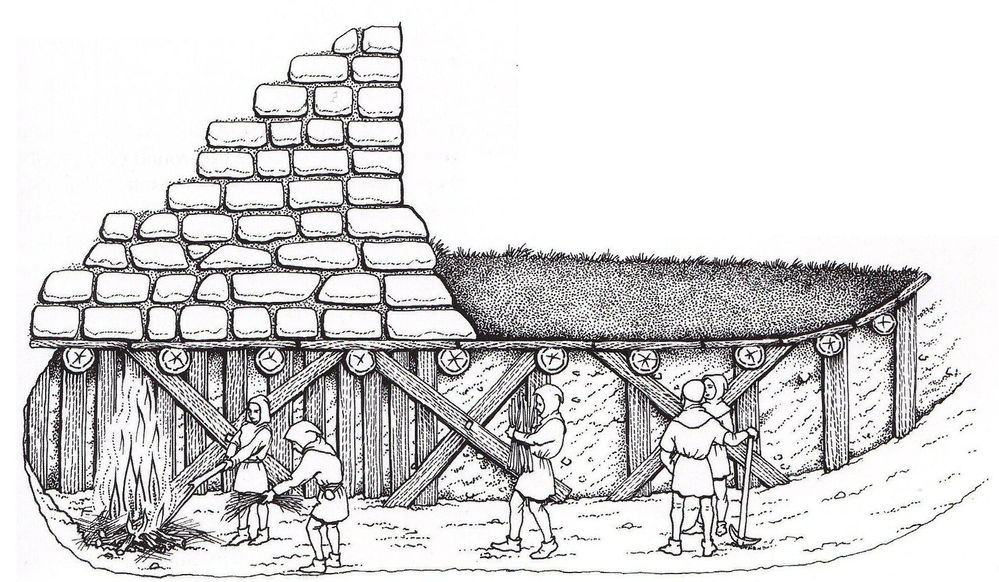
(And this is from another very interesting site, “Classroom Adventures”, which has an educational agenda with which I agree: https://www.classroomadventures.co.uk/ )
5. if you’re the Romans, you might build an enormous ramp to lead up to the top of the wall
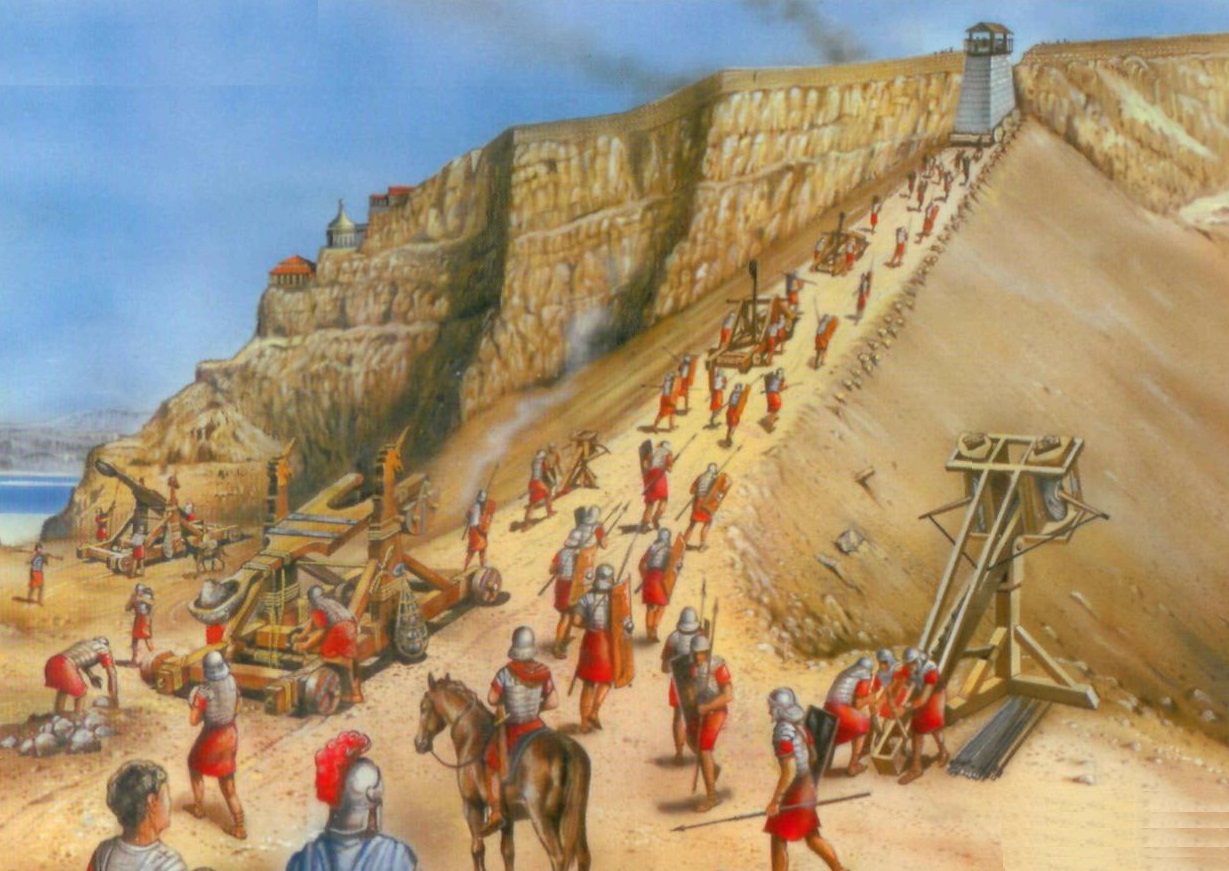
6. or you might build a tower a little higher than the wall, roll it up to the wall, and climb from it onto the wall
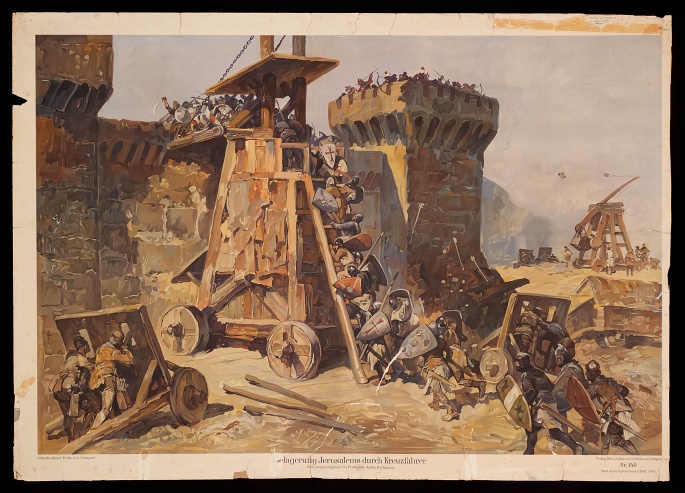
In an earlier posting, I examined this last in a review of the recent The War of the Rohrrim
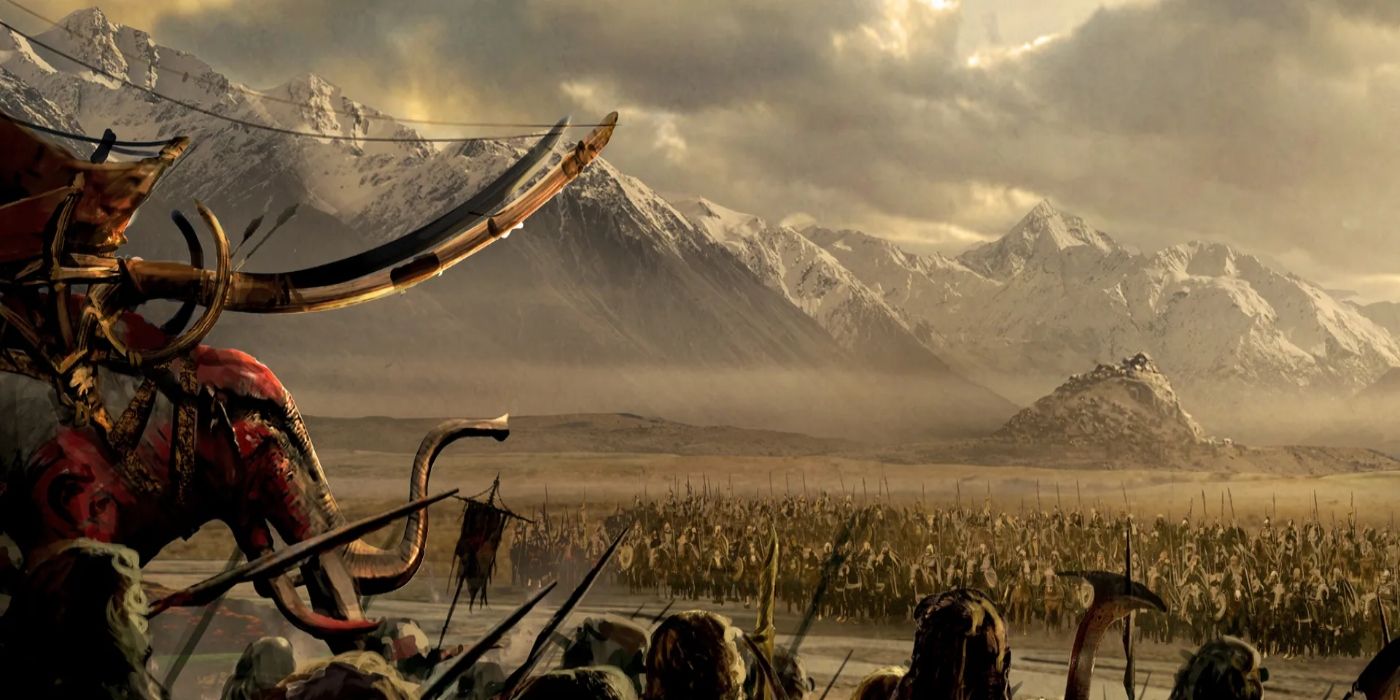
for which, see “Towering”, 28 January, 2026.
I have titled this “Towering.2”, but it’s not about walls and getting over them using a tower, however, but about towers themselves, specifically towers in The Lord of the Rings, in which there are a surprising number, of which I thought it might be fun to make a sort of catalogue, visiting them more or less geographically.
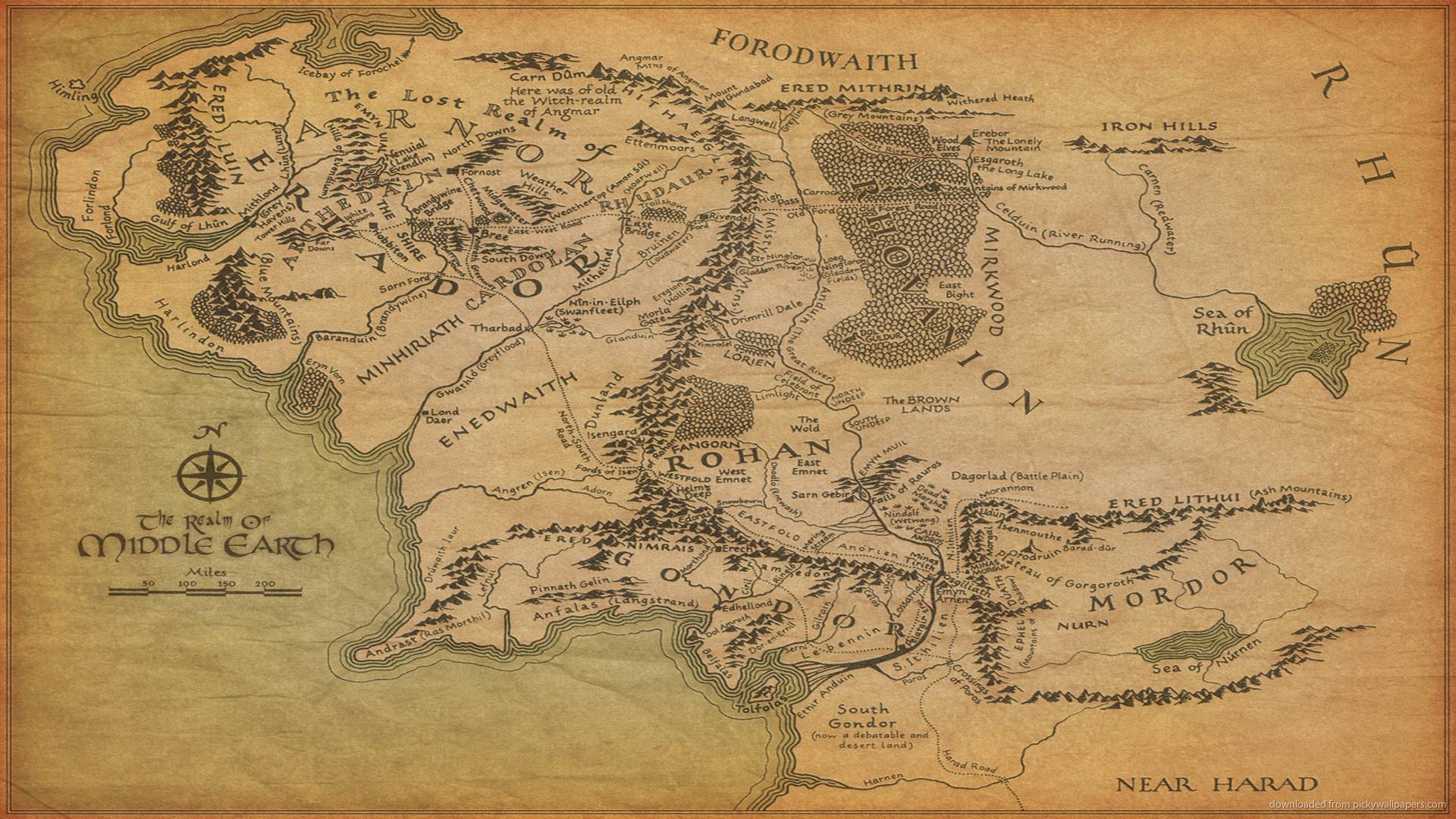
To do so, we begin to the far west of the Shire, just this side of the Grey Havens, where we see the Tower Hills.
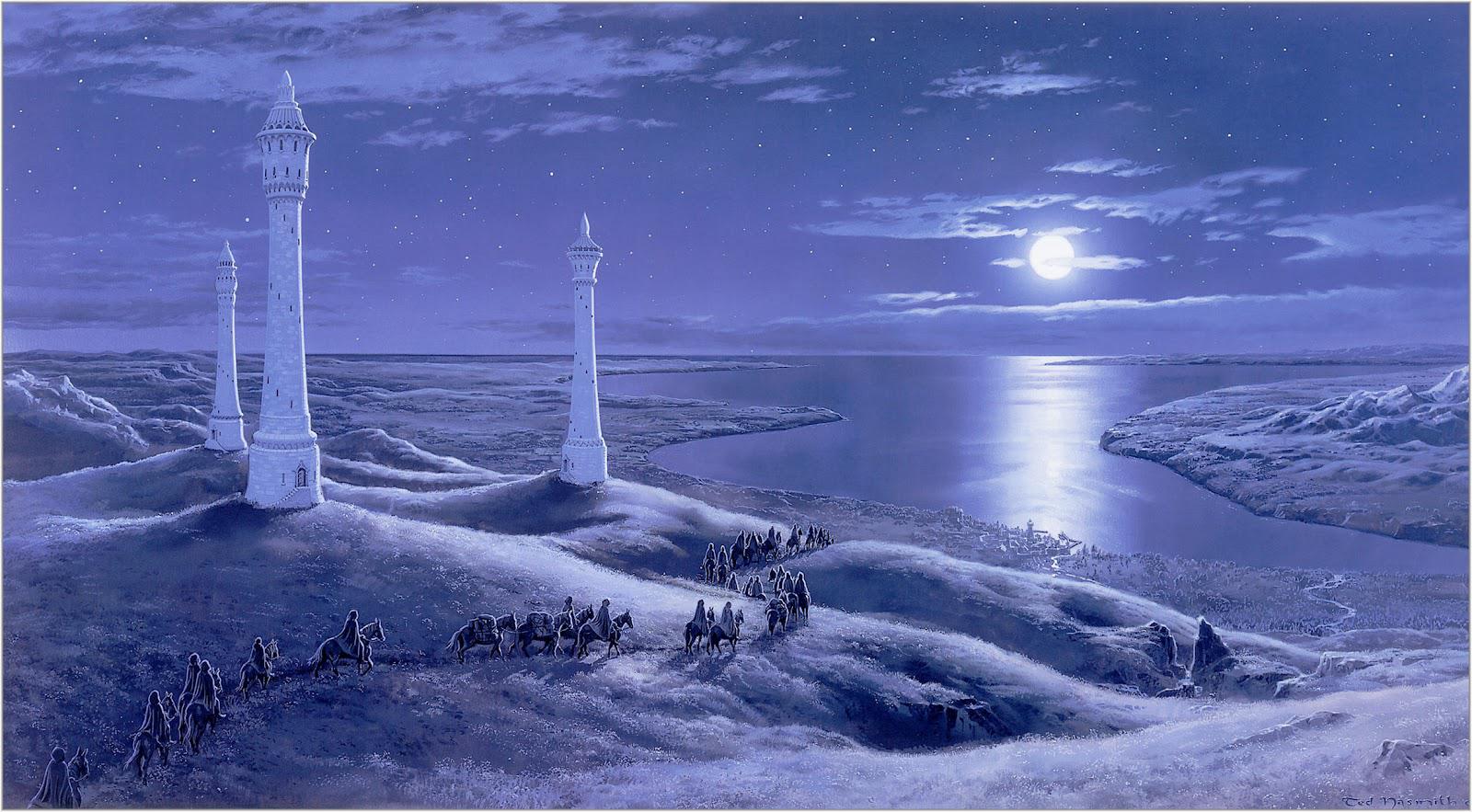
(Ted Nasmith)
As Tolkien describes them:
“Three Elf-towers of immemorial age were still to be seen on the Tower Hills beyond the western marches. They shone far off in the moonlight. The tallest was furthest away, standing alone upon a green mound.” (“Prologue”, The Lord of the Rings)
Walking eastward towards the Misty Mountains, crossing the Shire, but veering south from Bree, we reach Weathertop,
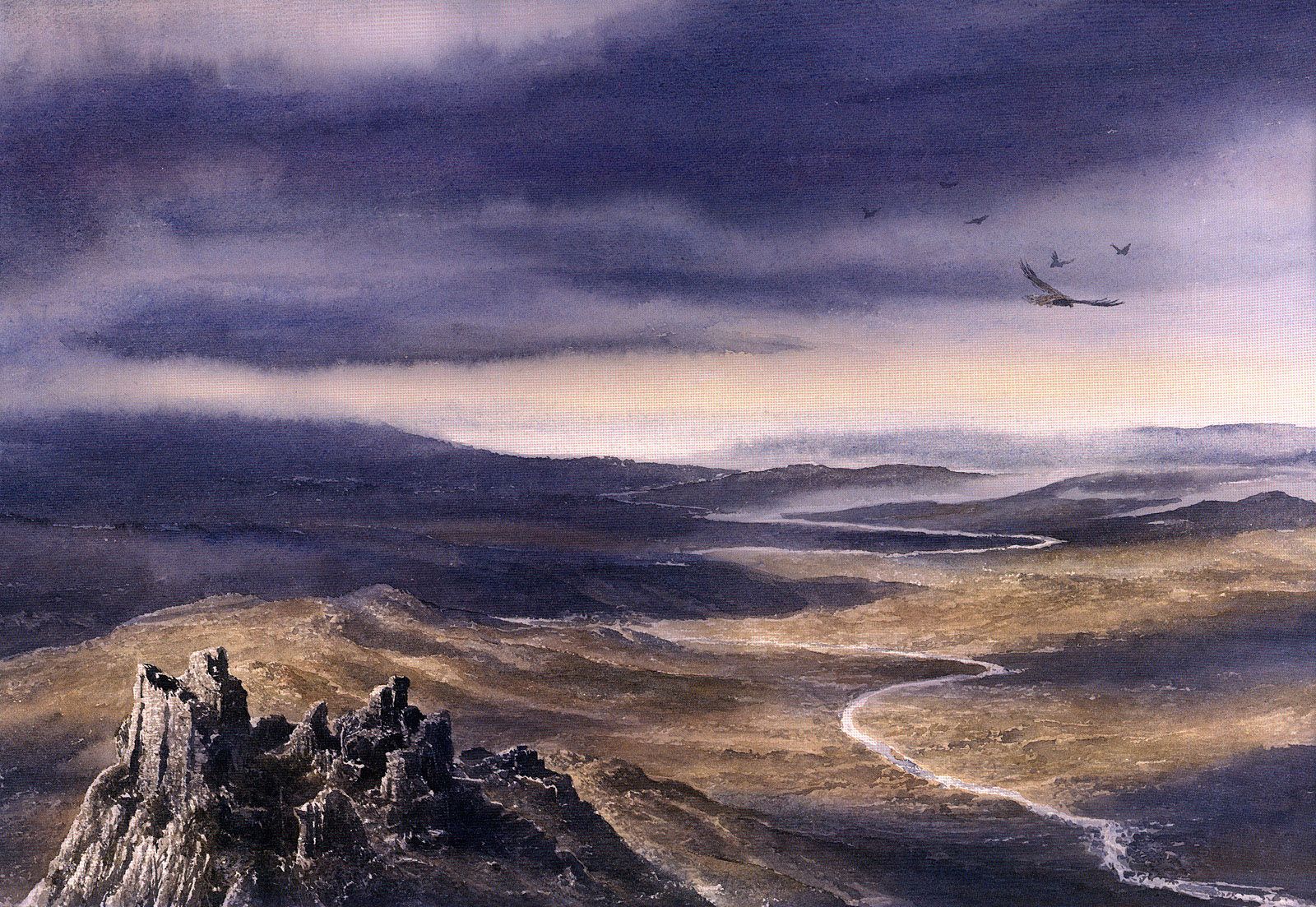
(Alan Lee)
of which Aragorn says:
“The Men of the West did not live here; though in their latter days they defended the hills for a while against the evil that came out of Angmar. This path was made to serve the forts along the walls. But long before, in the first days of the North Kingdom, they built a great watch-tower on Weathertop, Amon Sul they called it…once it was tall and fair.” (The Fellowship of the Ring, Book One, Chapter 11, “A Knife in the Dark”)
Even with just two towers, we can begin to understand what JRRT was at such pains to suggest: settlement in Middle-earth is very old and, as we’ll see, no one has built in such an elaborate fashion for many centuries—the Elf towers are of “immemorial age” and Amon Sul was built during the later reign of Argaleb I (ruled TA 1349-1356—just to give you a sense of time, Frodo was born in TA 2968).
From Weathertop, heading south and around the southern end of the Misty Mountains, we reach Isengard and the tower of Orthanc,
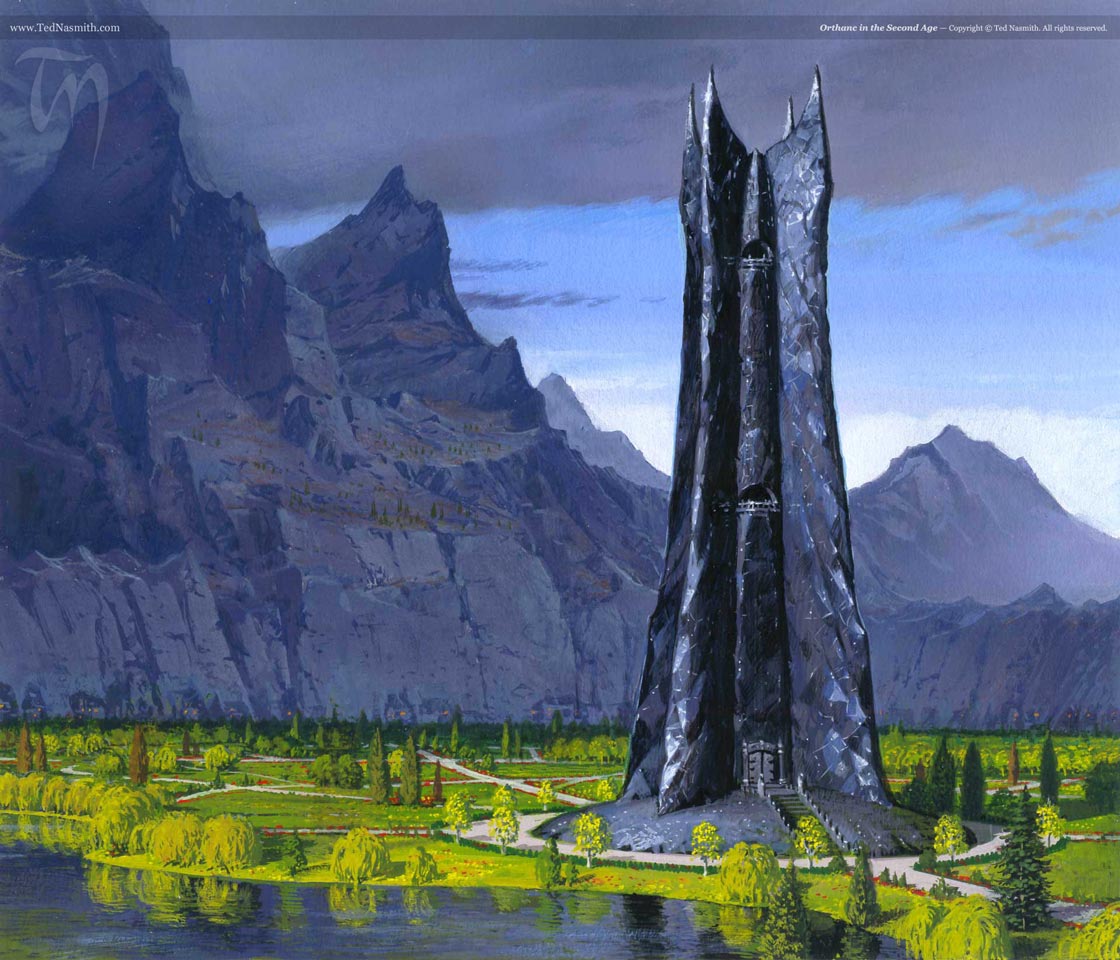
(Ted Nasmith)
built sometime during the Second Age (Tolkien never appears to have provided a founding date—the Tolkien Gateway offers: “it must have been built between S.A. 3320, the year in which the realms of Gondor and Arnor were established, and S.A. 3430, the year in which the Last Alliance of Elves and Men was formed to resist Sauron‘s tyranny”).
We can say, however, that Saruman began his occupation of the site in TA 2759, so, at the time of The Lord of the Rings and the Ents’ attack upon it (TA 3019)
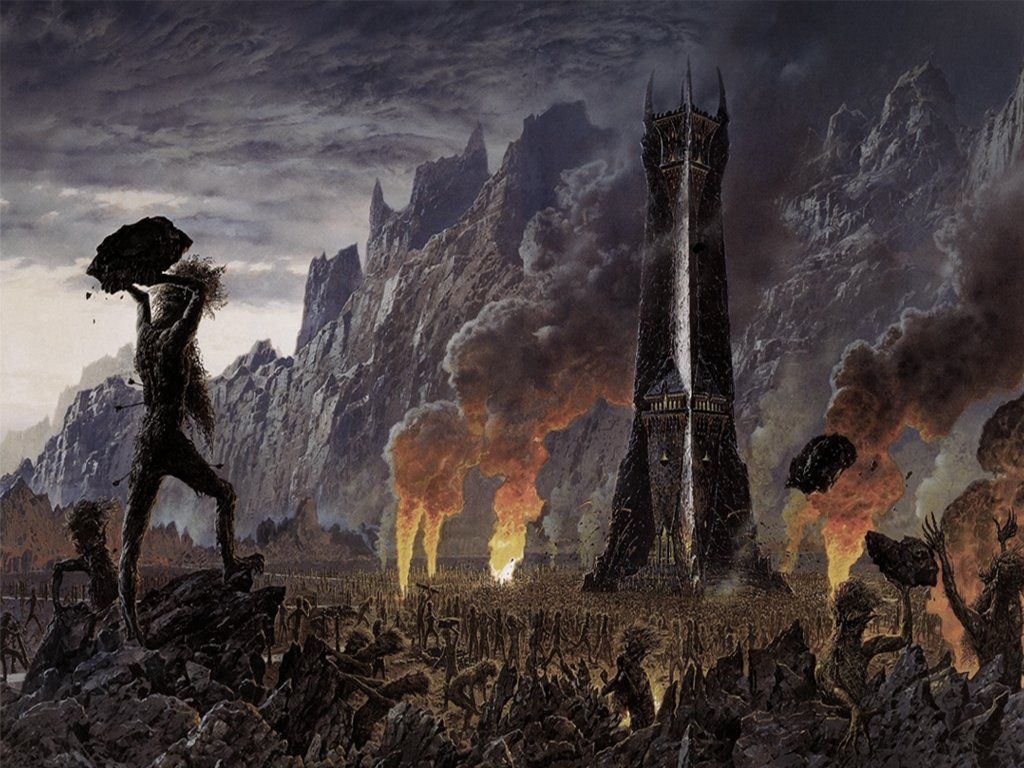
(Ted Nasmith)
he had been in possession of it for over 250 years—one more example of how aged everything in Middle-earth is. It’s described as something of a technological wonder—but also quite menacing—especially when we remember that Saruman attempted to keep Gandalf captive at the top, among those pinnacles:
“There stood a tower of marvellous shape. It was fashioned by the builders of old, who smoothed the Ring of Isengard, and yet it seemed a thing not made by the craft of Men, but riven from the bones of the earth in the ancient torment of the hills. A peak and isle of rock it was, black and gleaming hard; four mighty piers of many-sided stone were welded into one, but near the summit they opened into gaping horns, their pinnacles sharp as the points of spears, keen-edged as knives.” (The Two Towers, Book Three, Chapter 8, “The Road to Isengard”)
From here, we travel farther south, along the eastern side of the Ered Nimrais, the White Mountains, until we reach Helm’s Deep and its fortification with its tower, the Hornburg.
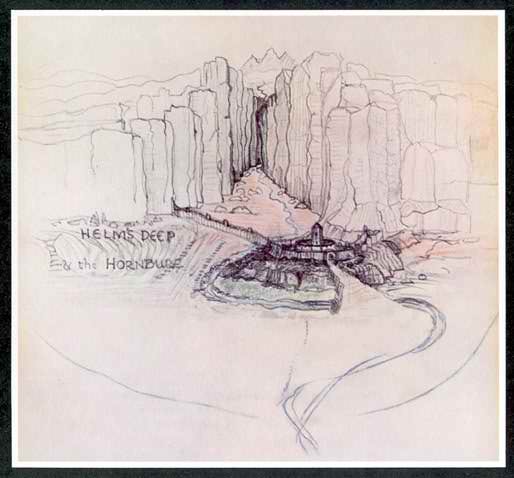
(JRRT)
As to foundation date, like Isengard, it seems vague:
“At Helm’s Gate, before the mouth of the Deep, there was a heel of rock thrust outwards by the northern cliff. There upon its spur stood high walls of ancient stone, and within was a lofty tower. Men said that in the far-off days of the glory of Gondor the sea-kings had built this fastness with the hands of giants.” (The Two Towers, Book Three, Chapter 7, “Helm’s Deep”—that phrase “with the hands of giants” may have echoed in Tolkien’s memory from the Old English poem named “The Ruin”, which possibly describes the remains of Roman Aquae Sulis (modern Bath) and which has the phrase “brosnað enta geweorc”, “ruined is the work of giants”—with that “enta”, from which the Ents came—along with a similar phrase in “Maxims II”. For more on this very poignant poem see: https://en.wikipedia.org/wiki/The_Ruin )
Southeast now, along those same White Mountains, will bring us in the direction of the first of the two towers of the title of the second volume (but which towers? Tolkien wrote to Rayner Unwin: “The Two Towers gets as near as possible to finding a title to cover the widely divergent Books 3 and 4; and can be left ambiguous—it might refer to Isengard and Barad-dur, or to Minas Tirth and B; or Isengard and Cirith Ungol.” Letter to Rayner Unwin, 17 August, 1953, Letters, 250)
We now see ahead of us Minas Tirith,
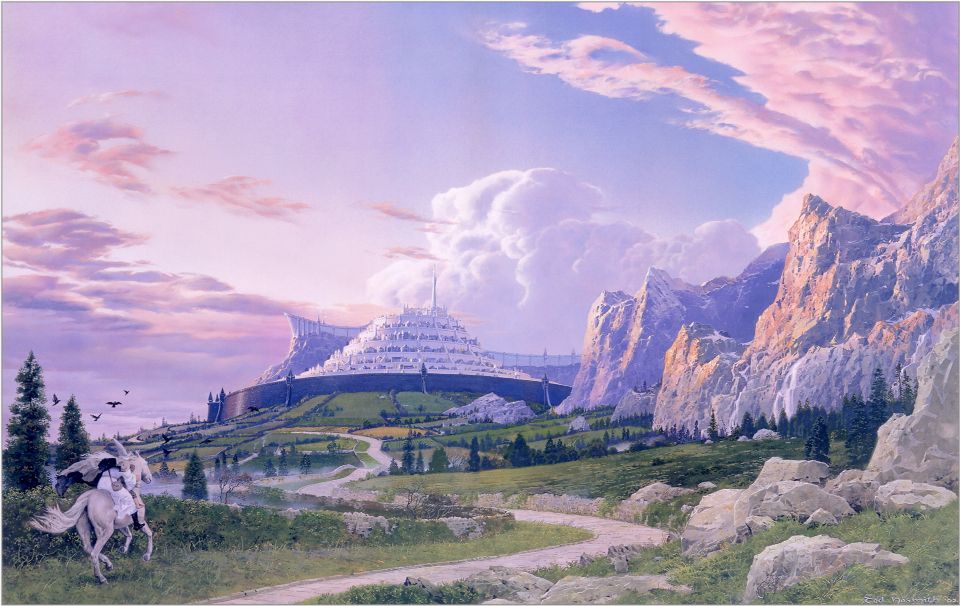
(Ted Nasmith)
constructed in SA 3300’s, by Anarion, son of Elendil, and called initially Minas Anor, “the tower of the sun”, with its Tower of Echthelion, as one of the Fellowship first views it:
“…the Tower of Echthelion, standing high within the topmost wall, shone out against the sky, glimmering like a spike of pearl and silver, tall and fair and shapely, and its pinnacle glittered as if wrought of crystals; and white banners broke and fluttered from the battlements in the morning breeze, and high and far [Pippin] heard a clear ringing as of silver trumpets.” (The Return of the King, Book Five, Chapter 1, “Minas Tirith”)
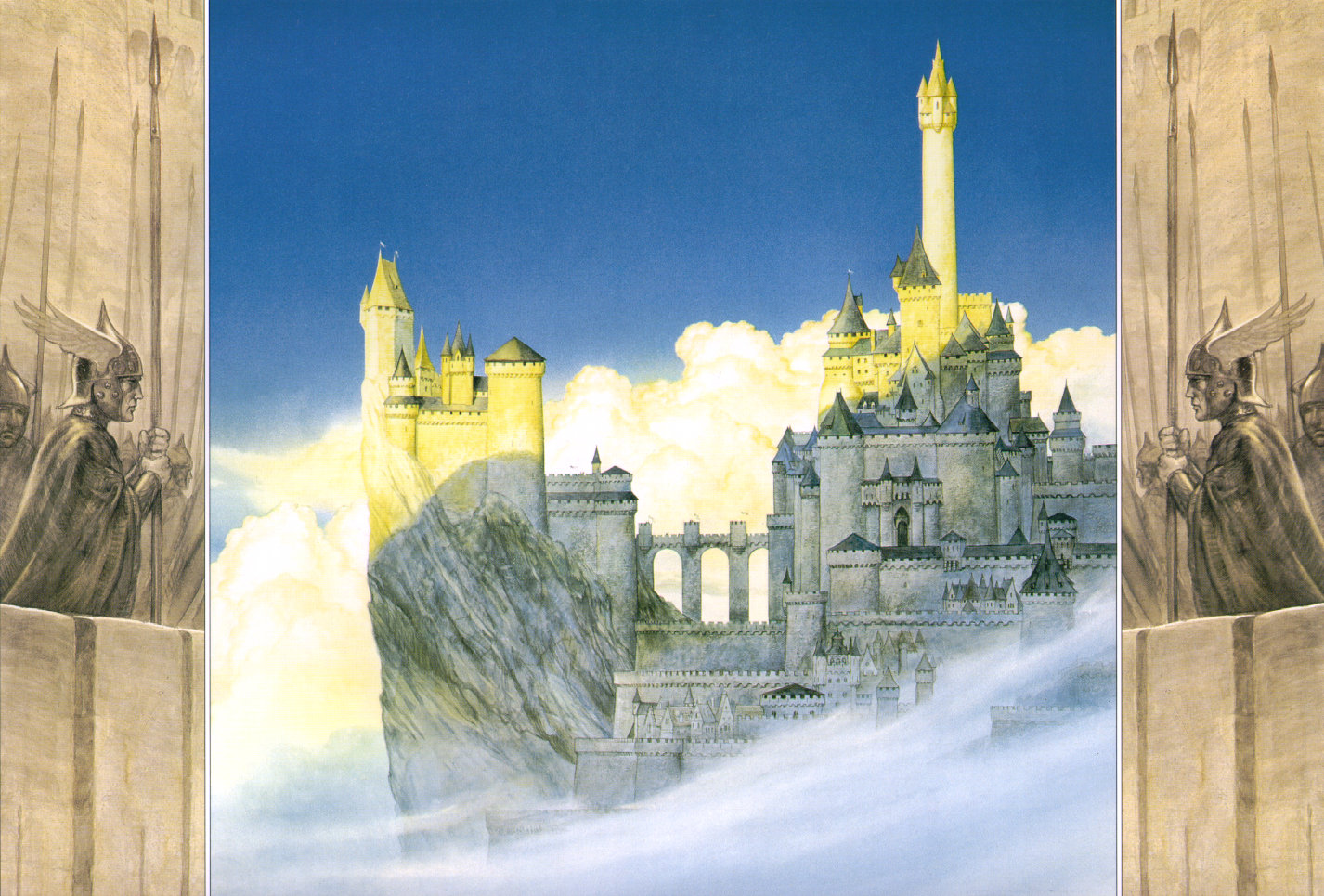
(I couldn’t resist adding this John Howe illustration, done in the style of Maxfield Parrish)
But now, on our tour, we turn eastwards, to the land of shadow and, first, to that other tower, that of Minas Ithil, “the tower of the moon”, built about the same time as Minas Anor, by Elendil’s other son, Isildur.
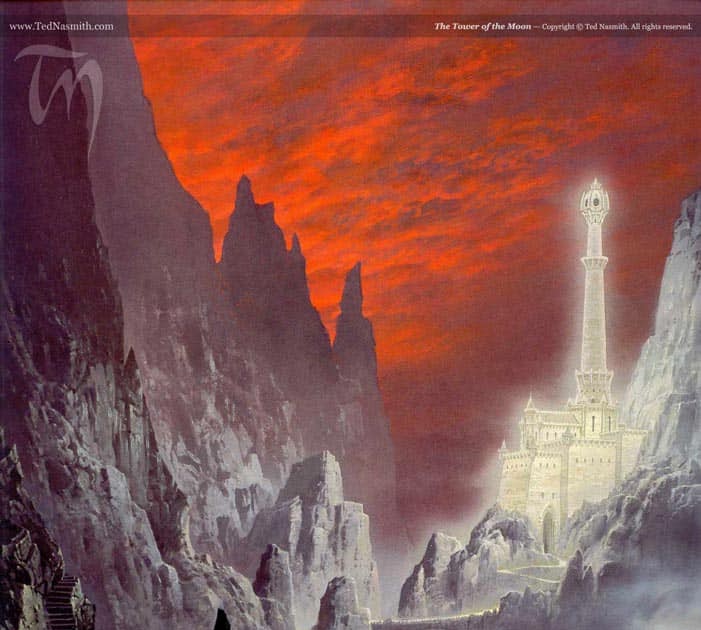
(Ted Nasmith)
Elrond gives us a small picture of it in its earlier days:
“And Minas Ithil they built, Tower of the Rising Moon, eastward upon a shoulder of the Mountains of Shadow…”
But then he goes on to add:
“And on a time evil things came forth, and they took Minas Ithil and abode in it, and they made it a place of dread; and it is called Minas Morgul, the Tower of Sorcery.” (The Fellowship of the Ring, Book Two, Chapter 2, “The Council of Elrond”)
The forces of Mordor besieged and captured Minas Ithil in TA 2002 and, with their occupation, this is what it began to look like:
“Upon the further side, a deep gulf of shadow, ran back far into the mountains. Upon the farther side, some way within the valley’s arms, high on a rocky seat upon the black knees of the Ephel Duath, stood the walls and tower of Minas Morgul. All was dark about it, earth and sky, but it was lit with light. Not the imprisoned moonlight welling through the marble walls of Minas Ithil long ago, Tower of the Moon, fair and radiant in the hollow of the hills. Paler indeed than the moon ailing in some slow eclipse was the light now, wavering and blowing like a noisesome exhalation of decay, a corpse-light, a light that illuminated nothing. In the walls and tower windows showed, like countless black holes looking inward into emptiness; but the topmost course of the tower revolved slowly, first one way and then another, a huge ghostly head leering into the night.” (The Two Towers, Book Four, Chapter 8, “The Stairs of Cirith Ungol”)
I find that topmost course, “revolving slowly, first one way and then another”, as if always on watch, the most disturbing part of this description so we’ll stop here for now before Frodo and Sam take the next and near fatal step on our tower tour.
Thanks, as always, for reading.
Stay well,
Remember that your slippery guide may have other plans for you,
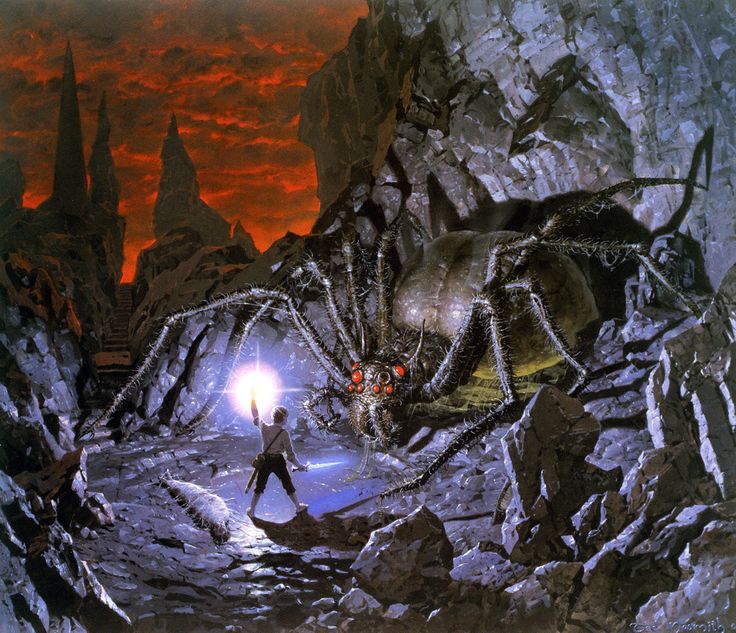
(Ted Nasmith)
And remember, as well, that, as always, there’s
MTCIDC
O

