• About

doubtfulsea

~ adventure fantasy

Monthly Archives: June 2026

Gundulf

24 Wednesday Jun 2026

Posted by Ollamh in Uncategorized

≈ Leave a comment

Tags

Aragorn, Bingo, bishop, Bladorthin, crozier, Elder Edda, Fantasy, Gandalf, Grima, Gundulf of Rochester, Lanfranc, lotr, Poetic Edda, Rochester Cathedral, stigand, The Hobbit, The Lord of the Rings, The White Tower, Theoden, Tolkien, tolkiens-names, Trotter, Trotter., Voluspa

As always, dear readers, welcome.

Bladorthin?  How would we feel if, as in early drafts of The Hobbit, this were the name by which we knew the somewhat mysterious figure who visited Bilbo Baggins, looking for someone to go on an adventure?
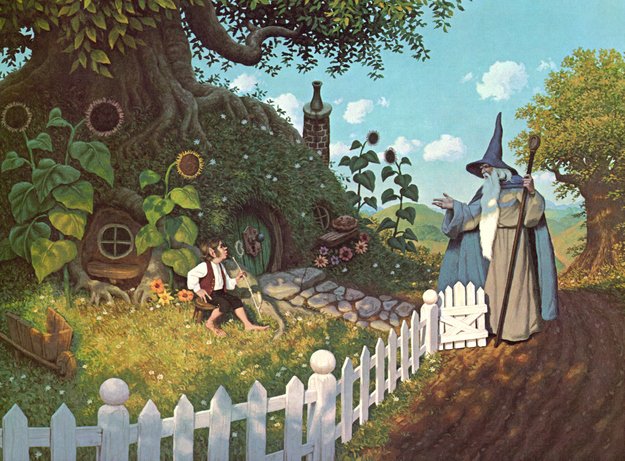
(the Hildebrandts)

I, for one, am glad to see that name consigned to manuscripts, along with other early names, like “Bingo” (Frodo) and “Trotter”, later to become “Aragorn” and turn as well from a “Hobbit ranger” into the rightful heir to the throne of Gondor,
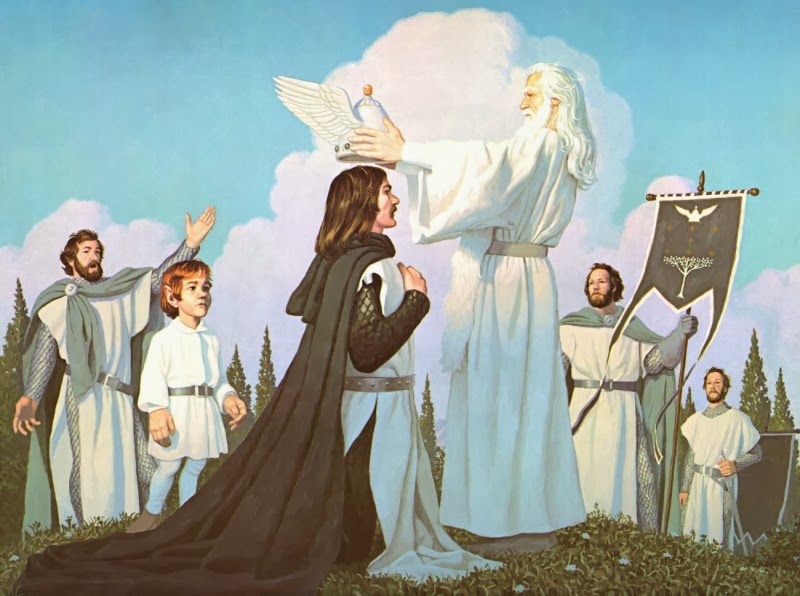
(the Hildebrandts again)

initially, as he tells us, to the surprise of the author (see a letter to W.H. Auden, 7 June, 1955, Letters, 315-16)

(If you want to read that draft in which Bladorthin appears, see John D. Rateliffe’s monumental The History of the Hobbit, 30-31, where the name appears just where we now read “Gandalf”, as in:

“Bladorthin!  If you had heard only a quarter of what I have (and I have heard only a tiny bit what there is to hear) about him you would be prepared for any sort of remarkable tale.” (30) )

Instead, we know him as Gandalf, whose name—along with those of the dwarves—as Tolkien tells the editor of the Observer:  “…are from the Elder Edda.” (letter to the editor of the Observer, published 20 Ferbruary, 1938, Letters, 41)

By “Elder Edda”, JRRT was referring to a 13th century collection of poems also referred to as “the Poetic Edda” and, within it, to one specific section, called “Voluspa”, “prophesy of the volva”, a kind of seeress.  (Also called a “vala”–for more on such magical figures, see:  https://en.wikipedia.org/wiki/Seeress_(Germanic)  For more on the Eddas, see:   https://en.wikipedia.org/wiki/Edda  )

In this particular poem, the seeress mentions the creation of the dwarves (quoted here from Benjamin Thorpe’s 1906 translation of both the “Poetic Edda” and the “Prose Edda” which you can read here:  https://www.gutenberg.org/files/14726/14726-h/14726-h.htm ):

“9. Then went all the powers to their judgment-seats, the all-holy gods, and thereon held council, who should of the dwarfs the race create, from the sea-giant’s blood and livid bones.

10. Then was Môtsognir created greatest of all the dwarfs, and Durin second; there in man’s likeness they created many dwarfs from earth, as Durin said.

11. Nýi and Nidi, Nordri and Sudri, Austri and Vestri, Althiôf, Dvalin Nâr and Nâin, Niping, Dain, Bivör, Bavör, Bömbur, Nori, An and Anar, Ai, Miodvitnir,

12. Veig and Gandâlf, Vindâlf, Thrain, Thekk and Thorin, Thrôr, Vitr, and Litr, Nûr and Nýrâd, Regin and Râdsvid. Now of the dwarfs I have rightly told.

13. Fili, Kili, Fundin, Nali, Hepti, Vili, Hanar, Svior, Billing, Bruni, Bild, Bûri, Frâr, Hornbori, Fræg and Lôni, Aurvang, Iari, Eikinskialdi.”  (Thorpe, “Voluspa”, page 2)

You can see a number of familiar dwarf names here, as well as other names which Tolkien didn’t use, and, in section 12, “Gandalf” (although this was, originally, Tolkien’s choice for the character who then become Thorin, possibly because Tolkien might have associated him with the medieval ruler of Alfheim, in southern Norway?  The part of Norway he ruled might also have appealed to Tolkien, “Alfheim” meaning “Elfhome/world/land”—see:  https://en.wikipedia.org/wiki/Gandalf_Alfgeirsson as well as Rateliffe, “Introduction”, xi-xii)

So our documentation goes, but, by an odd chance, I came across someone whose name might also have been an influence:  Gundulf, the 11-12th-century Bishop of Rochester and architect.

I had originally simply been thinking about the name “Gandalf”, which appears to be a compound of two Old Norse words, “gandr” , “[magic] staff” and “alfr”—“elf”—see Geir Zoega, A Concise Dictionary of Old Icelandic, 1910, for further details.  And JRRT certainly is aware of that staff—see his illustration, for instance, of the turning of the trolls into stone—
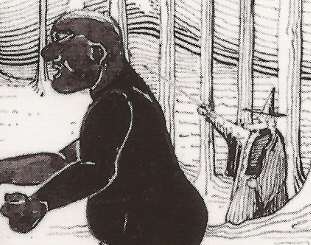
(JRRT)

Then I found that Norse king, Gandalf, and, prompted by that, I wondered about alternate spellings, which brought up this Wikipedia list:

“Gondulf of Provence, 6th-century duke and possibly made Bishop of Metz in 591

Indulf (6th century) (fl. 549–552 or 553), also known as Gundulf, Byzantine mercenary and Ostrogoth army leader

Gondulphus of Berry, 7th-century bishop

Gondulph of Maastricht (died after 614), bishop and Roman Catholic and Eastern Orthodox saint

Gondulphus of Metz (died 823), Bishop of Metz

Gundolfo, early 11th century Italian heretic

Gundulf of Rochester (died 1108), English bishop”

Unlike the etymology of “Gandalf”, “Gundulf”, although a compound like “Gandalf”, combines “gund”, “battle” and “ulf”, “wolf”—“–“battlewolf”–fierce, but not so Tolkienesque as “Elfmagicstaff”.

It certainly seemed like an interesting collection of characters, however, and, thinking of Tolkien’s medievalism, Englishness, interest in religion, and  how this might tie in with bishops, I wondered about Gundulf of Rochester, who, being a bishop, would have carried, as a badge of office, a crozier, a kind of staff, as we see in this modern (1888) depiction of Gundulf, from the west façade of Gundulf’s own Rochester Cathedral—
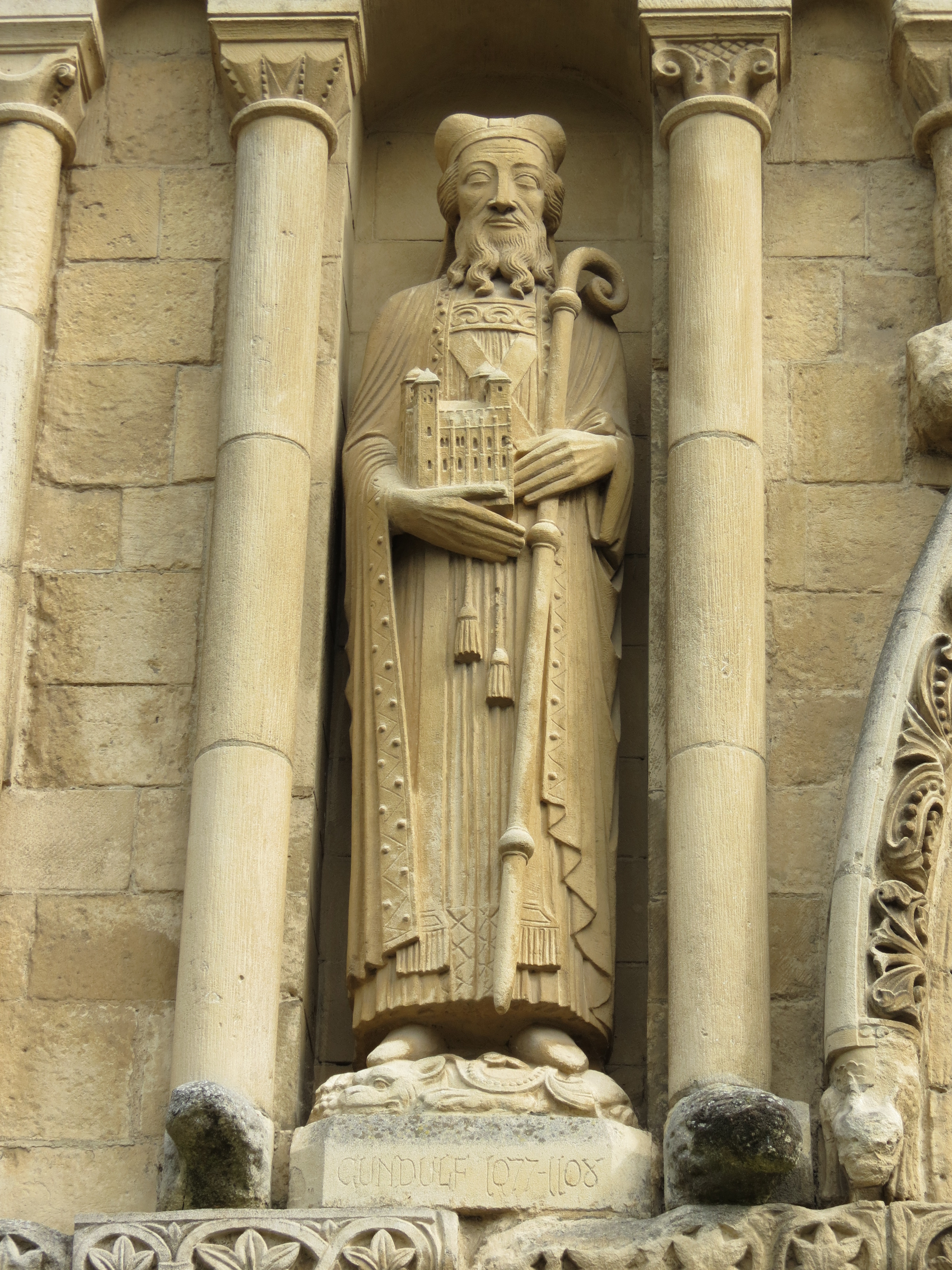
Gundulf seems to have been a remarkable man, having been a Norman monk brought to England by his patron, Lanfranc, the Abbot of the Abbey of St. Etienne in Normandy, and an ally of William, Duke of Normandy, who, when he had conquered England after 1066, appointed Lanfranc Archbishop of Canterbury.
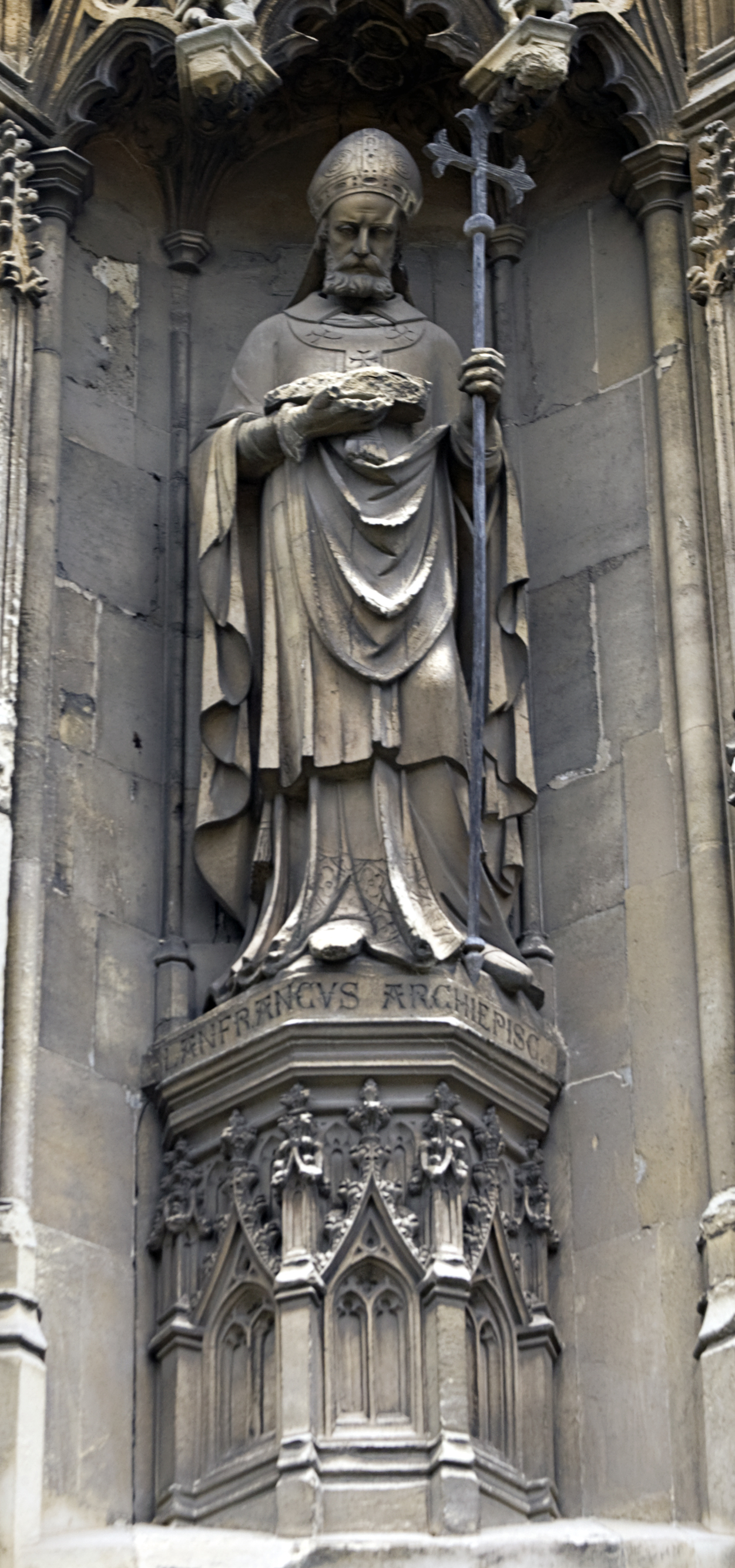
(a 19th-century depiction, from the south face of the southwest porch of Canterbury Cathedral.  For more on Lanfranc, see  https://en.wikipedia.org/wiki/Lanfranc )

In 1077, Gundulf was made Bishop of Rochester, but, besides whatever his ecclesiastical interests, he was apparently also a talented architect, building, among other works, the White Tower at the center of the Tower of London—not quite what one would expect of a bishop,
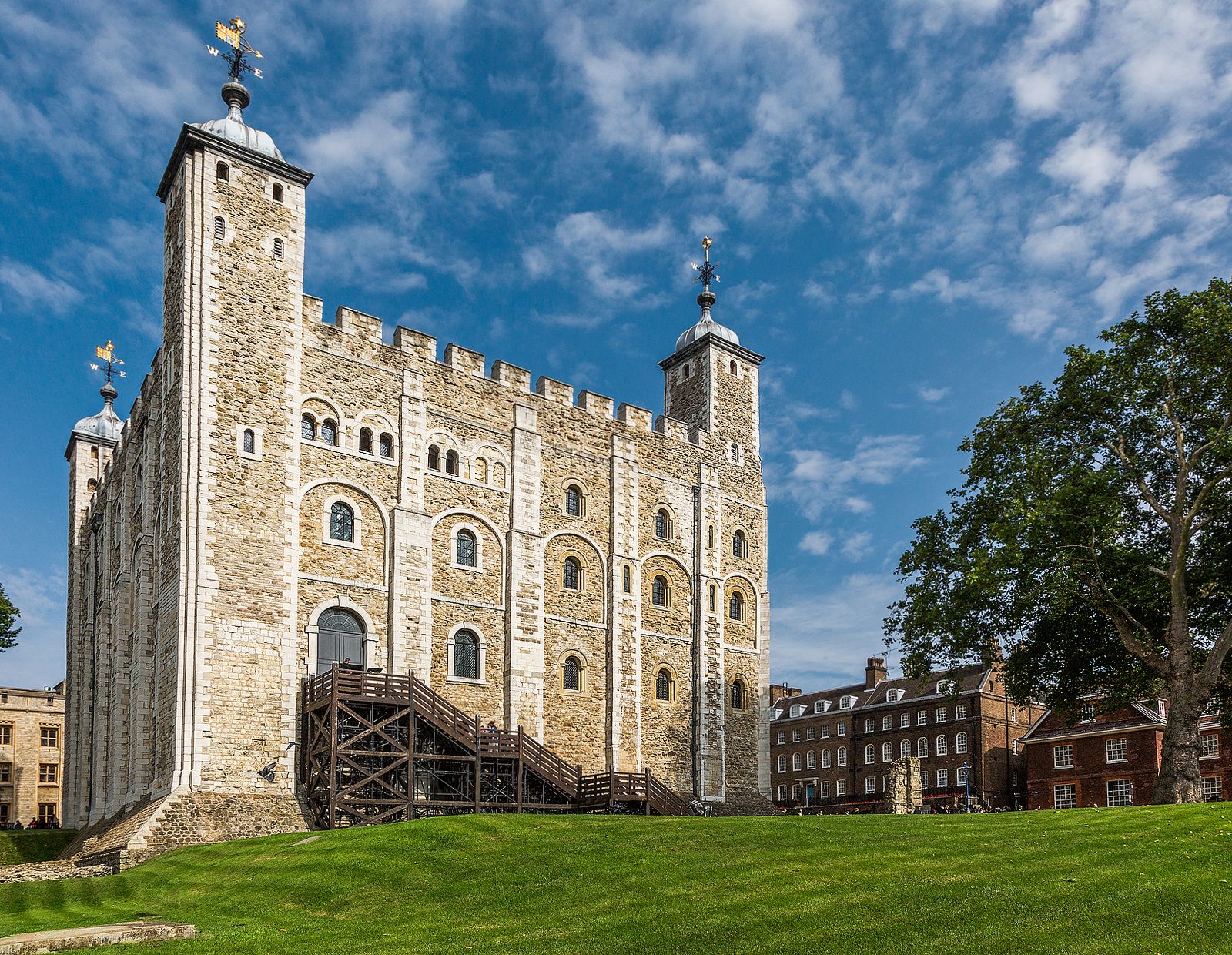
but we should remember that his patron, Lanfranc, had only become Archbishop of Canterbury when the Anglo-Saxon Archbishop, Stigand,
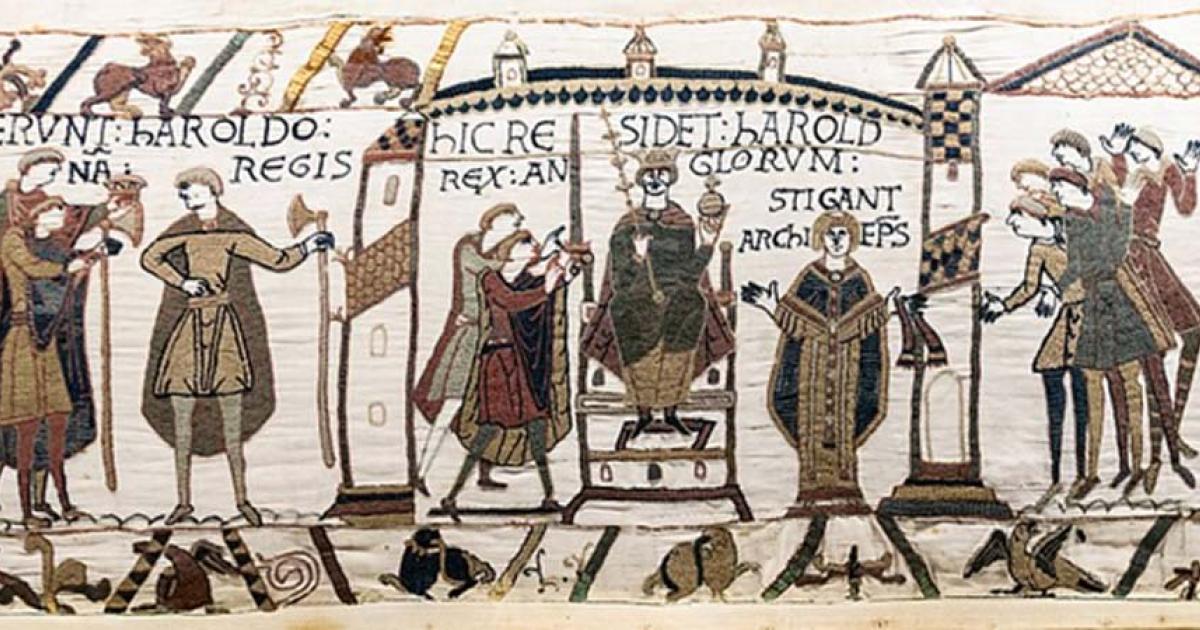
(For more on Stigand, see:  https://en.wikipedia.org/wiki/Stigand )

was deposed and imprisoned by the Normans, so Gundulf’s own position was seemingly only safe as long as the Normans remained in power, so self-interest alone might have kept him at work as an ecclesiastical/military architect.  (For more on Gundulf, see:  https://en.wikipedia.org/wiki/Gundulf_of_Rochester )

Could he have been another influence in turning Bladorthin into Gandalf?  I can find no evidence in Tolkien’s letters that he knew of Gundulf, or even ever visited Rochester, but all of the interests above—medievalism, religion, and that crozier–
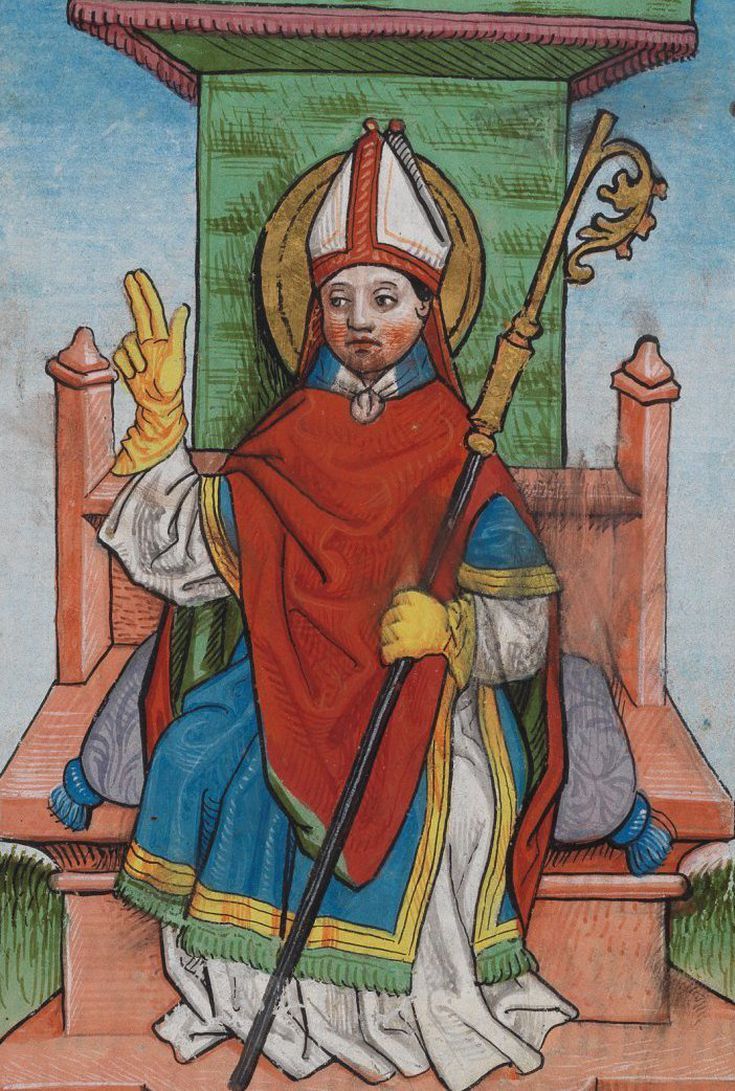
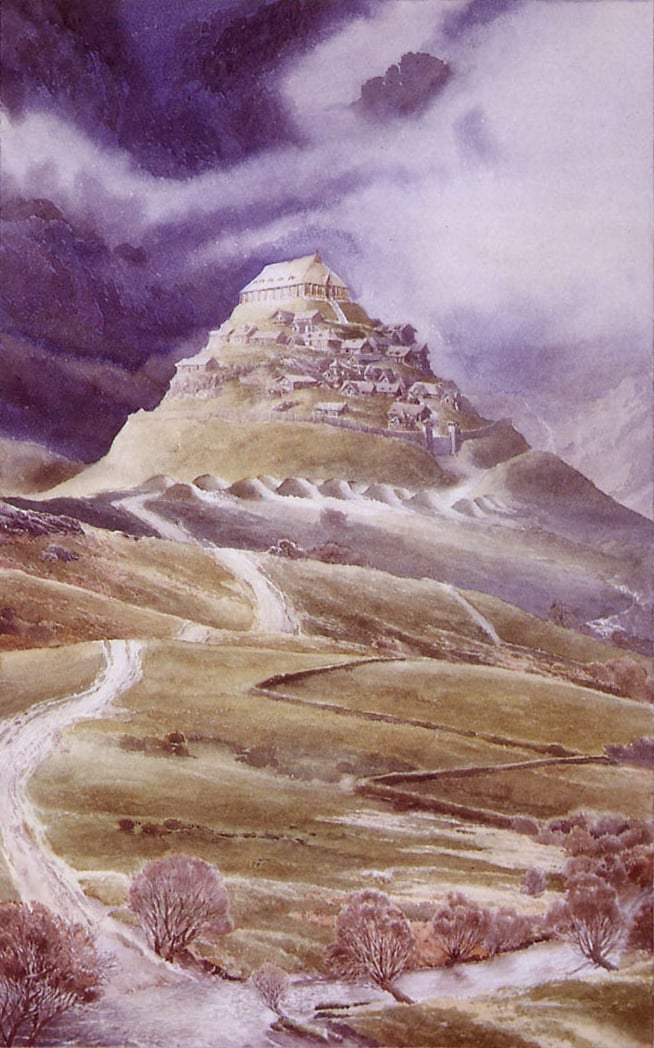
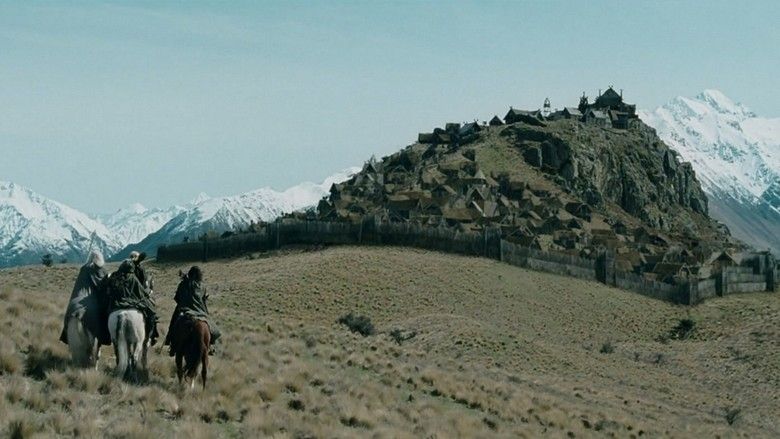
might have suggested a magic staff, perhaps, like the one Gandalf kept when entering Edoras and which he used to break Grima’s enchantment of Theoden:

“He raised his staff.  There was a roll of thunder.  The sunlight was blotted out from the eastern windows; the whole hall became suddenly dark as night.  The fire faded to sullen embers.  Only Gandalf could be seen, standing white and tall before the blackened hearth.”  (The Two Towers, Book three, Chapter 6, “The King of the Golden Hall”)
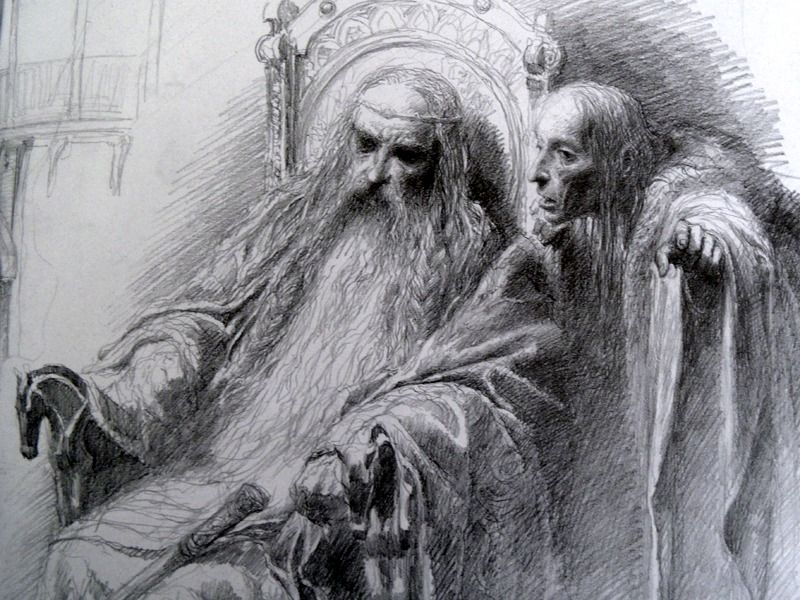
(Alan Lee)

Might we from all of that then imagine that the “Voluspa” alone wasn’t the only reason for the disappearance of Bladorthin and his new baptism as Gandalf?
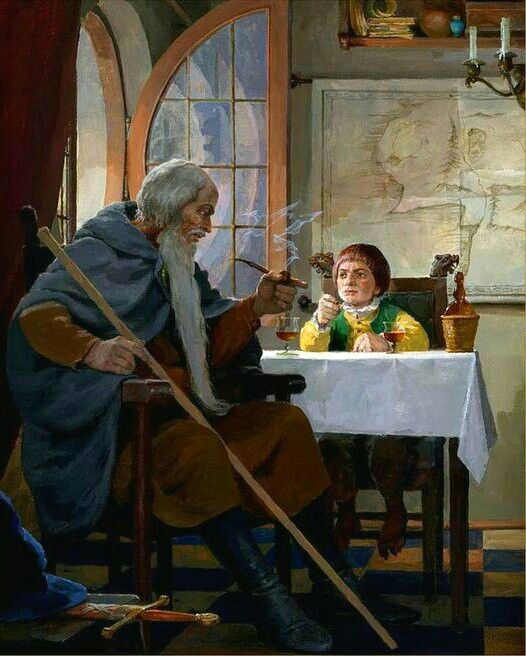
(Denis Gordeev)

Thanks, as ever, for reading.

Stay well,

Beware of evil counselors who claim that they’re acting in your best interest.
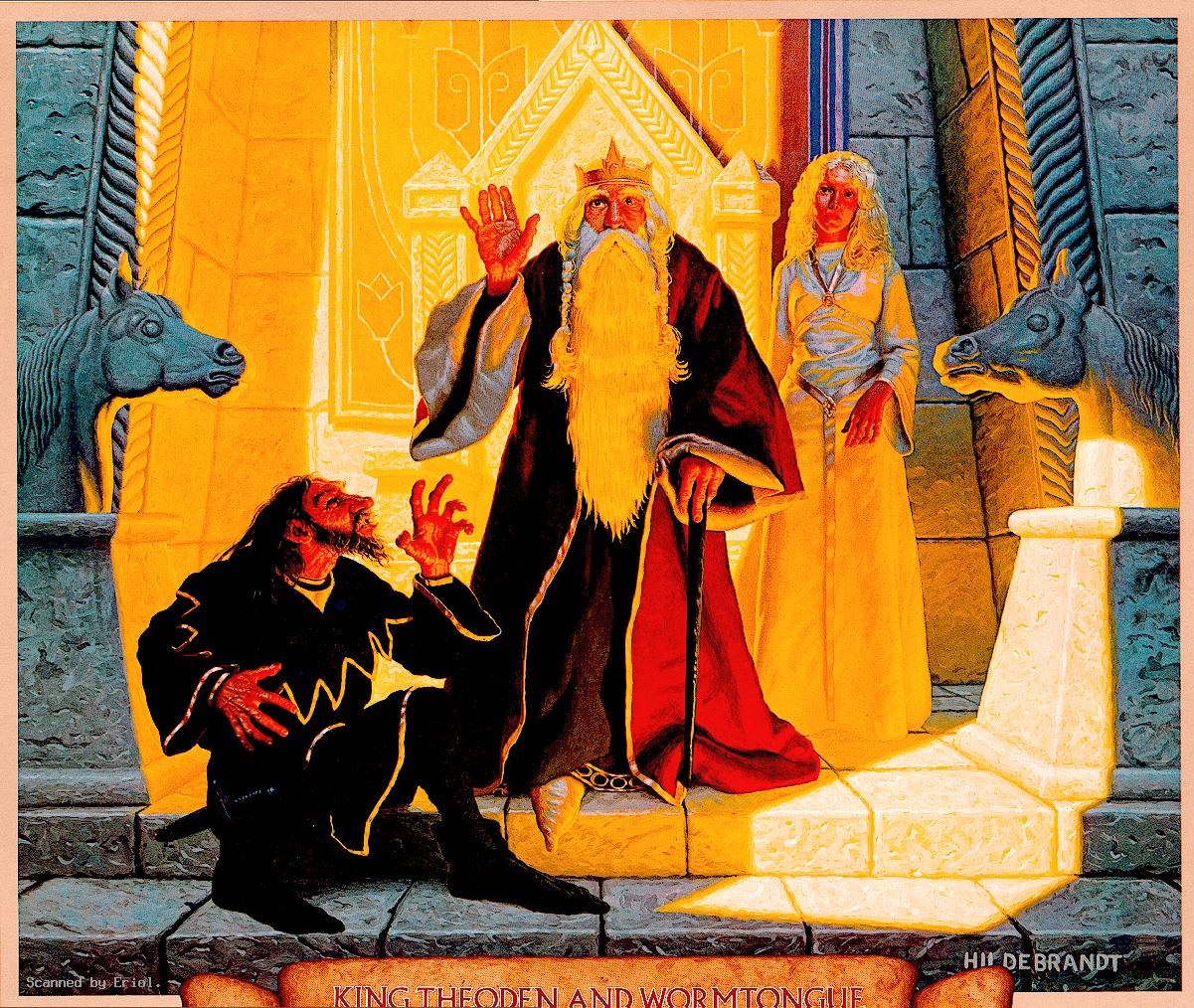
(the Hildebrandts)

And remember that, as always, there’s

MTCIDC

O
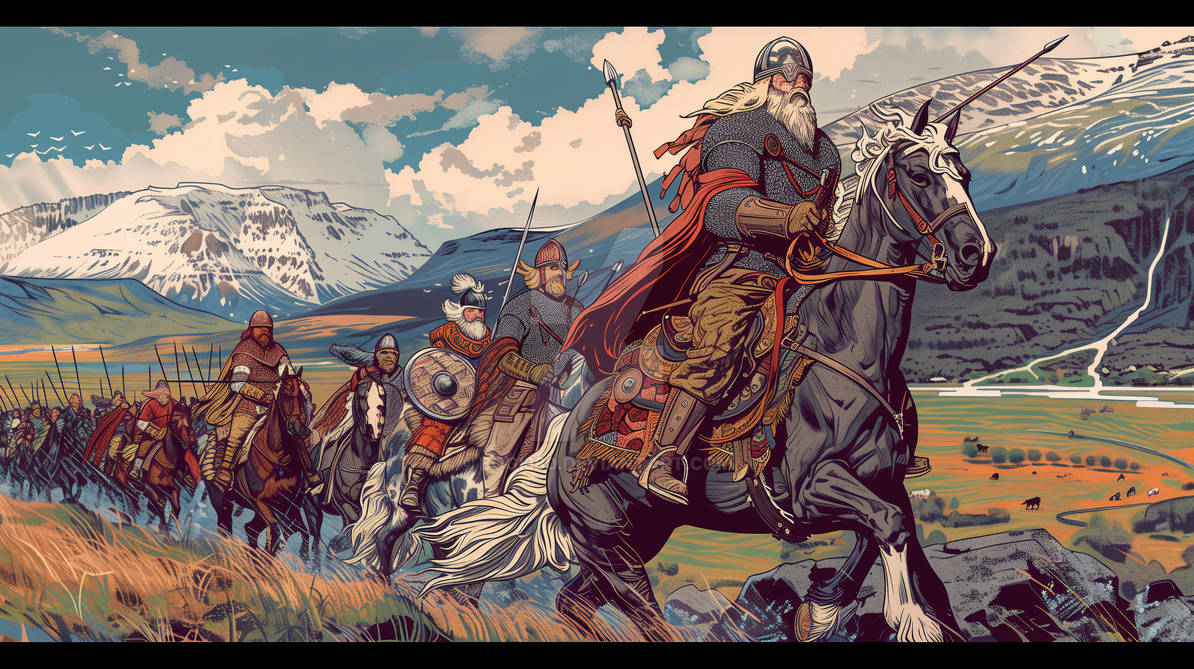
Homeric?

17 Wednesday Jun 2026

Posted by Ollamh in Uncategorized

≈ Leave a comment

Tags

Achilles, armor, Bayeux Tapestry, Celtic mythology, chariots, feudal system, Helm's Deep, hero, Homer, Mongols, Normans, Patroklos, Rohirrim, The Lord of the Rings, Theoden, Tolkien

As always, dear readers, welcome.

In my last posting, I returned to an old favorite, the Rohirrim,

(Bogi389)

whom Tolkien had described to Rhona Beare as “…not ‘medieval’ in our sense.” (letter to Rhona Beare, 14 October, 1958, Letters, 401.

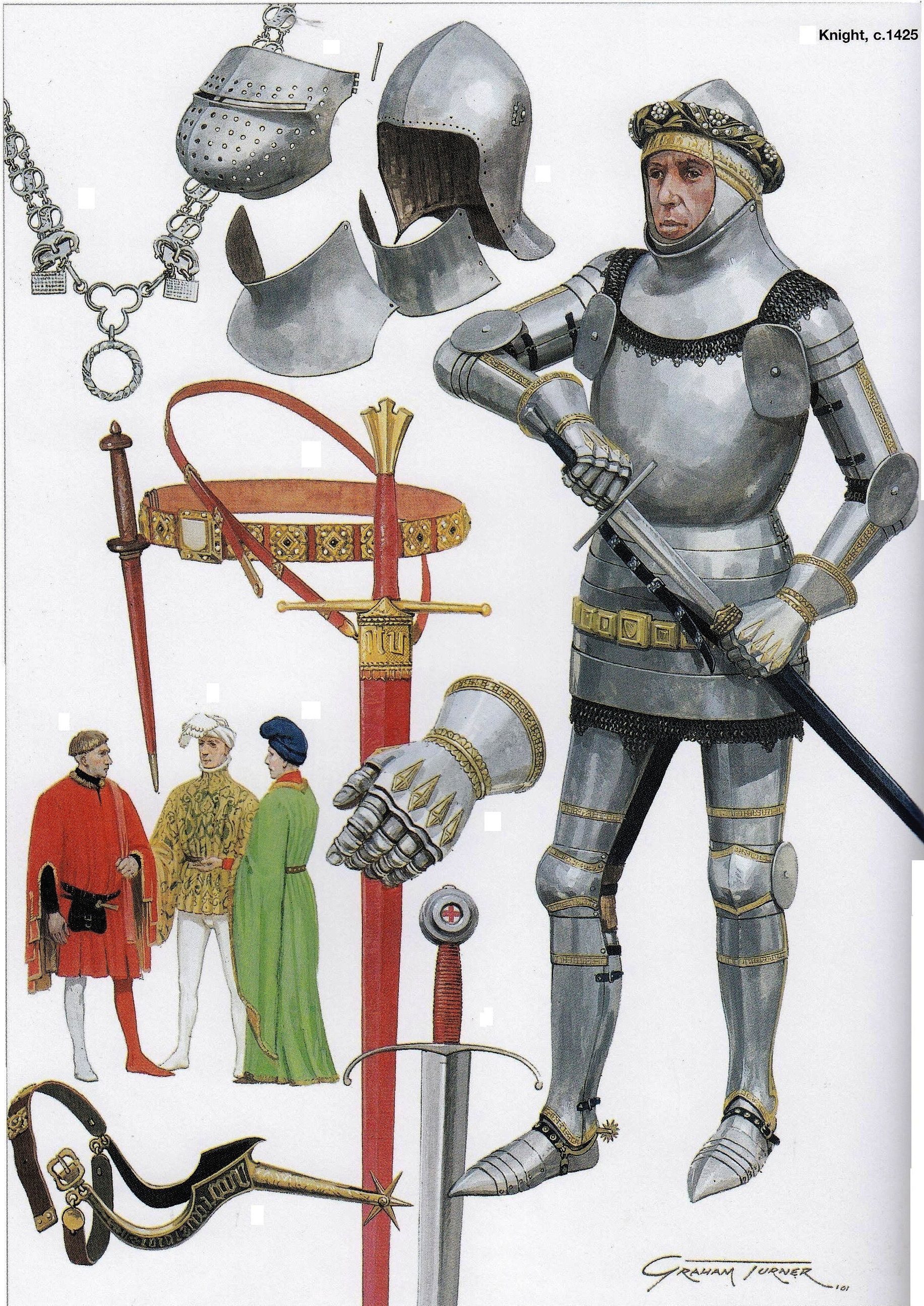
I presumed, as he was referring to their armor, that “not medieval” meant not something like this—

(Graham Turner—see my last posting for more on him.)

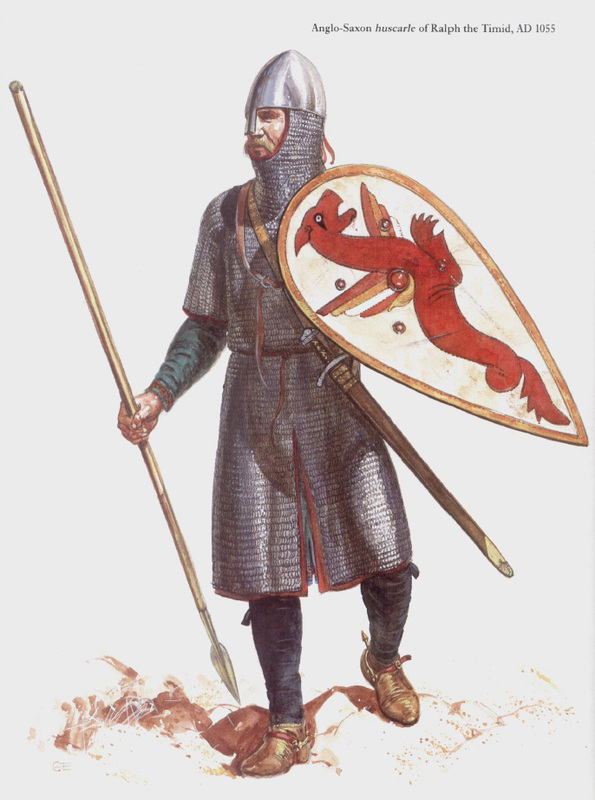
but more like this—

(Gerry Embleton)

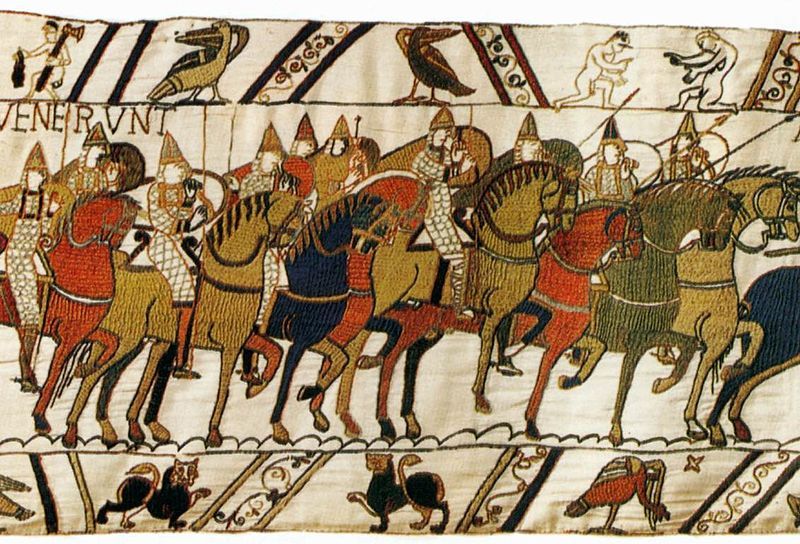
as his reference point was the Bayeux Tapestry—

In an earlier letter, to Milton Waldman, Tolkien had used another interesting phrase for describing the Rohirrim, “heroic ‘Homeric’ horsemen”.  (letter to Milton Waldman, “late 1951”, Letters, 221)

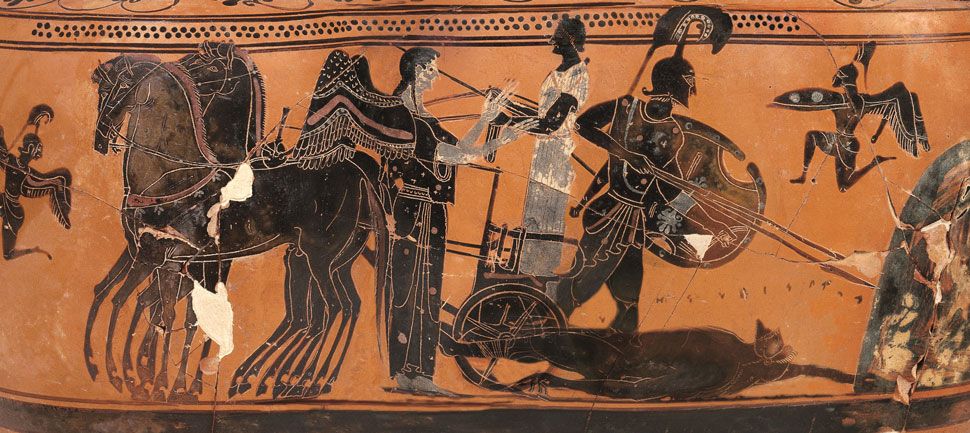
Although horsemen are briefly mentioned in The Iliad, (and one of the major Greeks, Nestor, is even regularly called “the “Gerenian horseman”)  the standard equine involvement is by chariot,

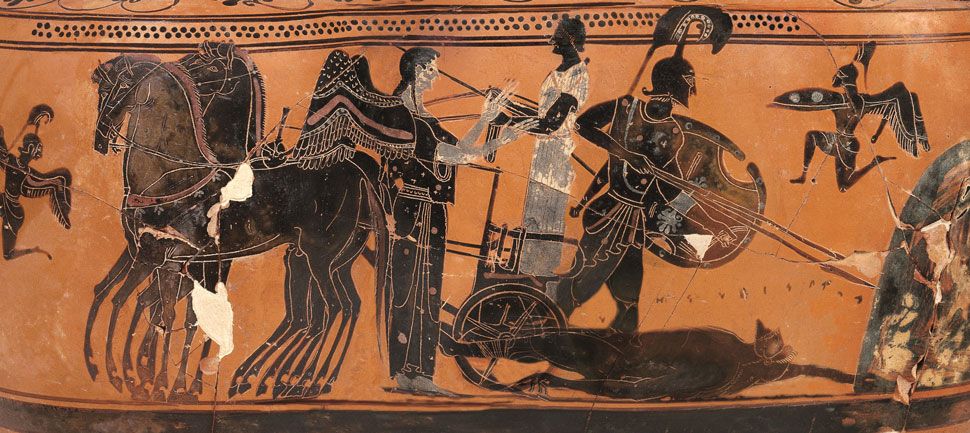
(This is Achilles dragging the body of the dead Hector around Troy, as described in Iliad Book 22, from line 395 on),

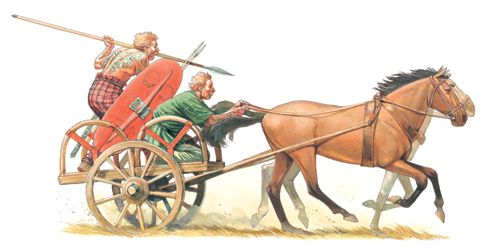
warriors sometimes leaping to the ground to confront their opponents, but, at other times, battling from their chariots, as we see Celtic warriors doing, both in their Irish mythological versions as well as in their real-life confrontations with the Romans in Britain.

(Peter Connolly)

JRRT says of himself:

“I was brought up in the Classics, and first discovered the sensation of literary pleasure in Homer.”  (letter to Robert Murray, SJ, 2 December, 1953, Letters, 257)

Thus, as someone who was a late-Victorian/Edwardian schoolboy, raised in the Classics, and who almost made a career in them himself, JRRT would have been well aware of this earlier warfare as reported by Julius Caesar, but, if “Homeric” doesn’t mean “horsemen”, what does it imply?

In that same earlier letter to Milton Waldman, Tolkien uses the word again, describing certain people of the Second Age:

“In the West—actually the North-West is the only part clearly envisaged in these tales—lie the precarious refuges of the Elves, while Men in those parts remain more or less uncorrupted if ignorant.  The better and nobler son [should this be “sort”?] of Men are in fact the kin of those that had departed to Numenor, but remain in a simple ‘Homeric’ state of patriarchal and tribal life.”  (Letters, 214)

So here “Homeric” is associated not with a military but with a social system:  “patriarchal and tribal”.

I’m presuming here that the operative word is “simple”—and, if we consider the Rohirrim as a horse people, rather like the Mongols in our Middle-earth’s history, who moved westwards from the Great Steppe–

but, unlike the Mongols, were not set upon destruction and conquest,

and, instead, helped to defeat the Wain-riders and became allies of Gondor,

then we might imagine them as remaining more like the horse-pasturing Mongols, even as they spread across Rohan and settled into permanent lodgings, like Edoras.

(Alan Lee)

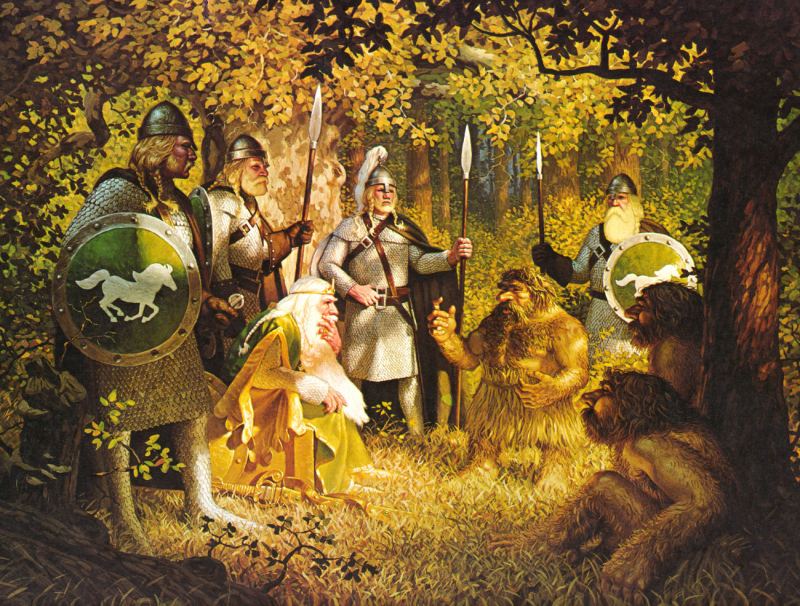
As such, they have a king,

(the Hildebrandts)

whose power is passed down through his family—through male heirs—at the time of The Lord of the Rings through Theoden’s nephew, Eomer, as Theoden’s son, Theodred, is killed in the initial fighting against Saruman—and this is where “patriarchal”, might come in.

“Tribal”, however, puzzles me.  The Rohirrim appear to retain something of their horse-people origins, but Tolkien never gives us much of the further social structure of the Rohirrim, to suggest where this might be evident.

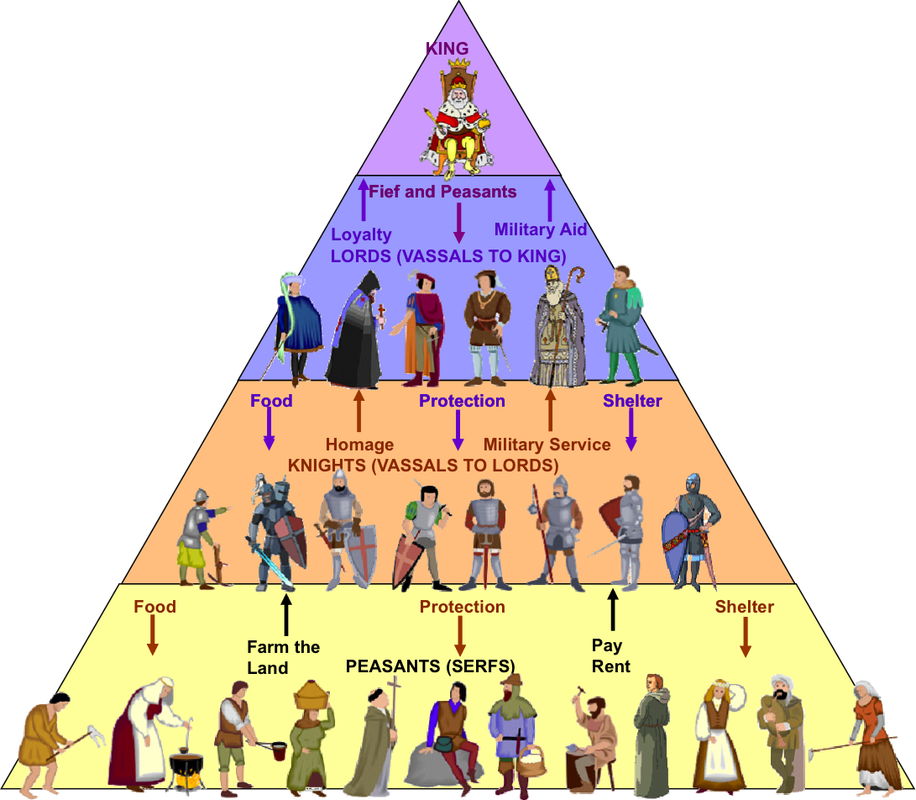
The Rohirrim don’t appear to be a feudal culture, however, of the sort which the Normans brought to England and imposed upon the Anglo-Saxons—that is, the pyramidal method of land-holding and population-controlling you can see in this illustration—

and which Tolkien might have thought of as “medieval” and, along with plate armor, might have distinguished for him the difference between the Rohirrim, with their Tapestry look, and the later Middle Ages.  (In case you’re not familiar with the term, there’s a useful article on feudalism here:  https://en.wikipedia.org/wiki/Feudalism )

One more of his words might help us better to understand what he meant when he described the Rohirrim:  “heroic”.

In contemporary terms, “hero” is often used as the equivalent of “protagonist”, but the older Greek concept is of someone almost supernatural in his powers (possibly the child of a god and human, like Herakles or Achilles or even Aeneas) and, after death, might be given his own shrine—an heroon (he-RO-on) and honored there.

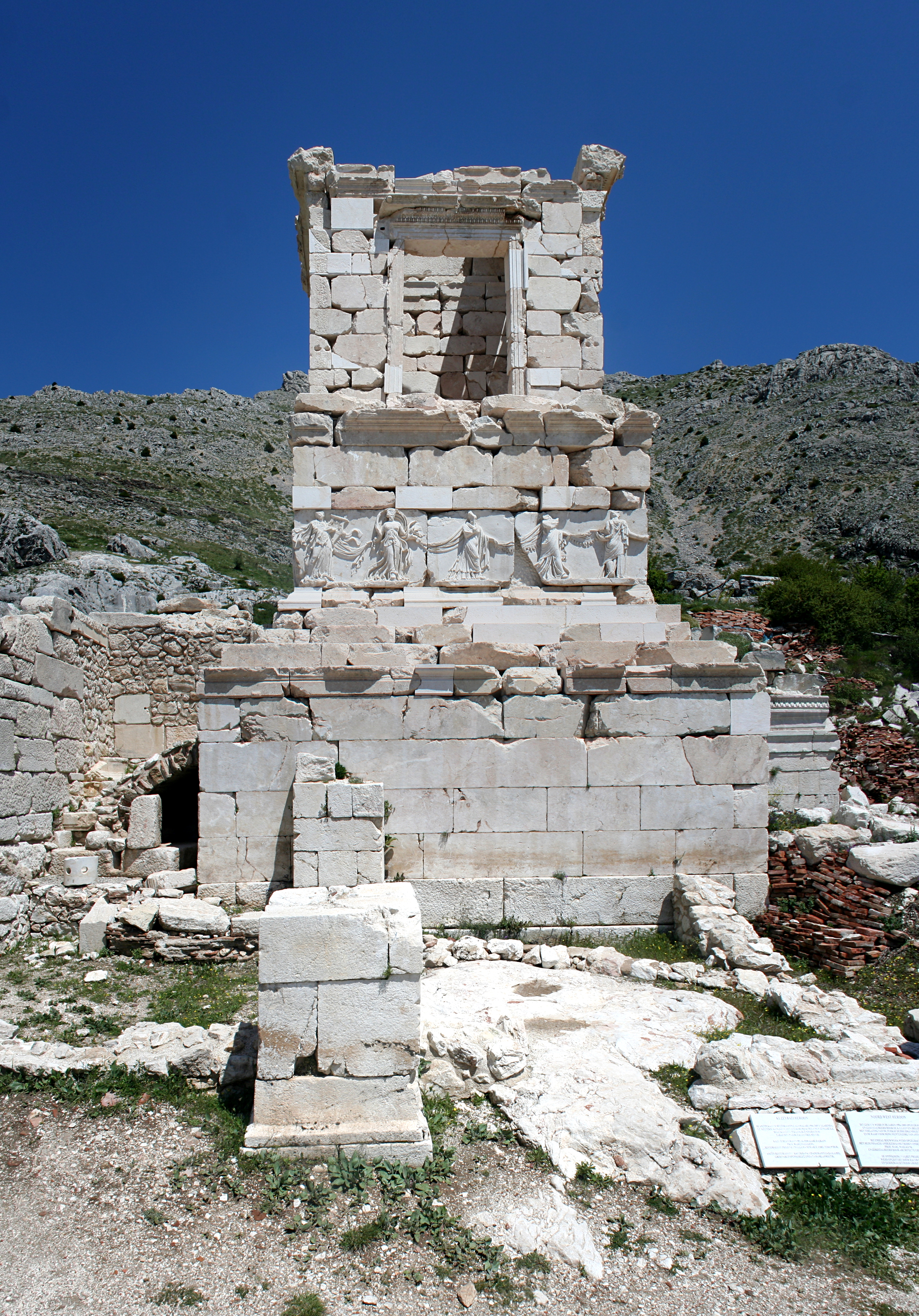
(for more on heroes and their worship, see:  https://en.wikipedia.org/wiki/Hero%C3%B6n )

Although JRRT would not have wanted to suggest a religious element in his use of the word, we can imagine that what he intended was something more like “people given to bold, dramatic actions, even at the risk of death”, which would fit Achilles, for example, perfectly.

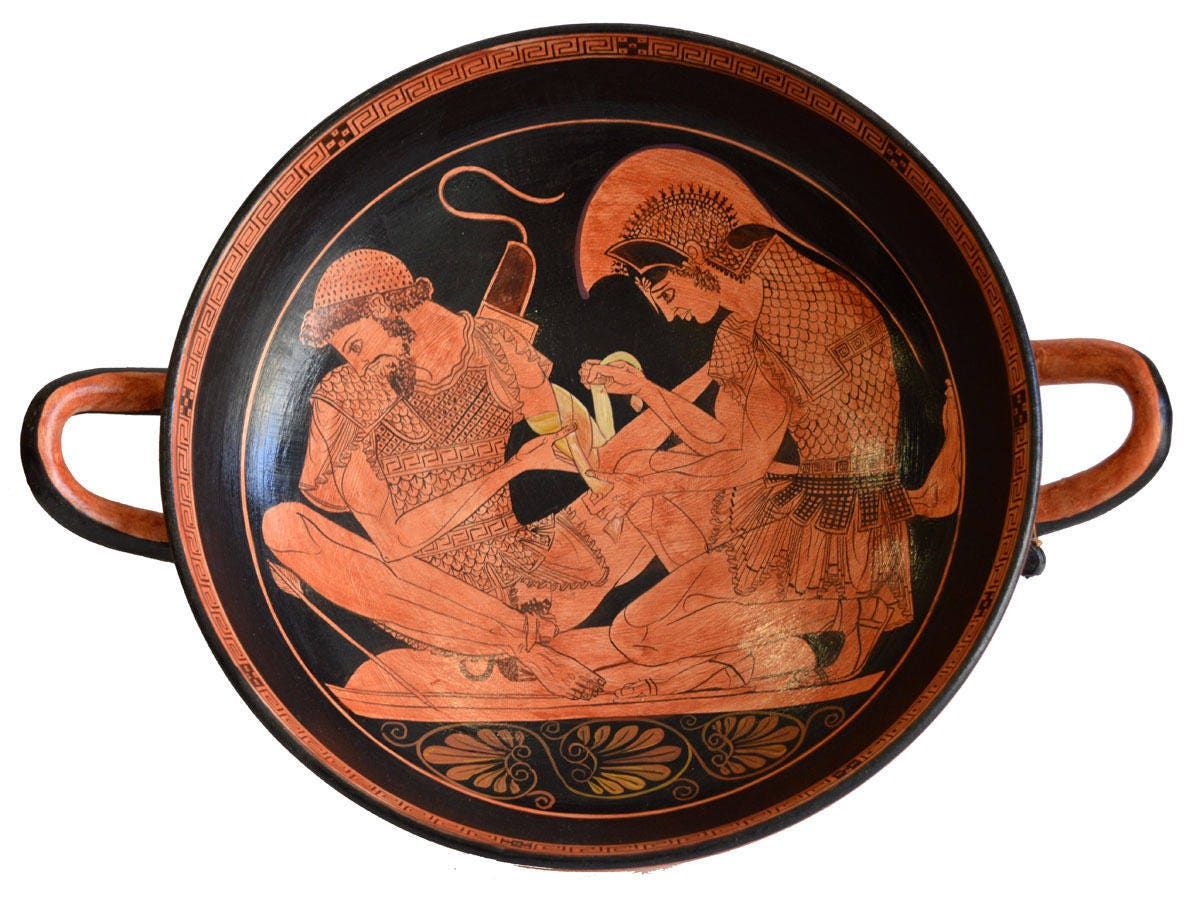
This is Achilles, binding a wound for his companion, Patroklos.  Against Achilles’ warning, Patroklos attempts to confront the Trojan hero, Hektor, but is killed and Achilles, although he himself is cautioned by his mother, Thetis, that, if he fights and kills Hektor, will soon die himself, does so anyway. 

This brings us back to that image earlier in this posting, of Achilles dragging Hektor’s body around the walls of Troy

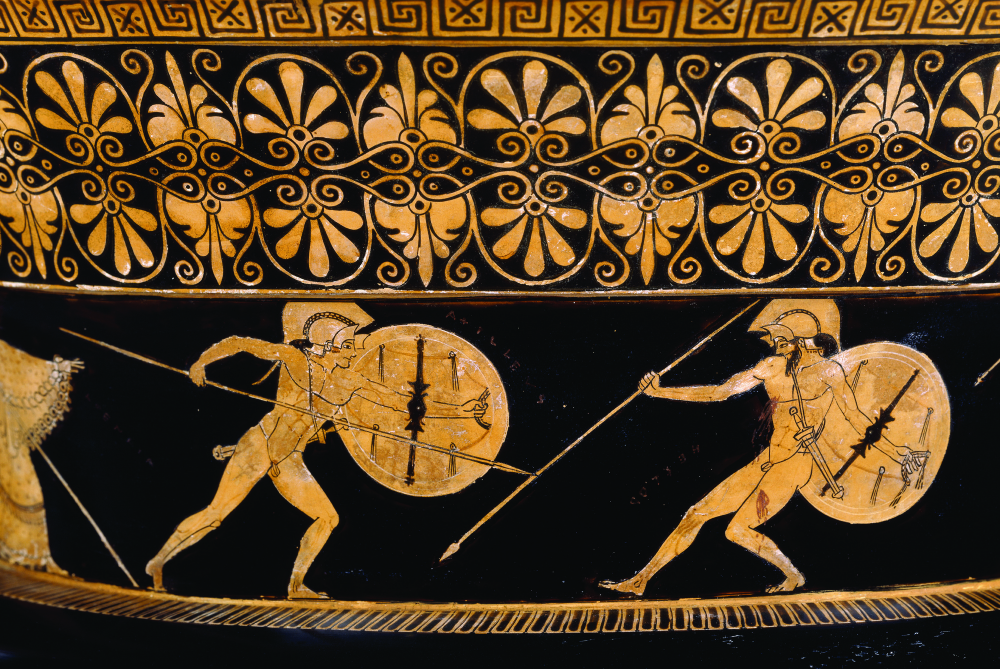
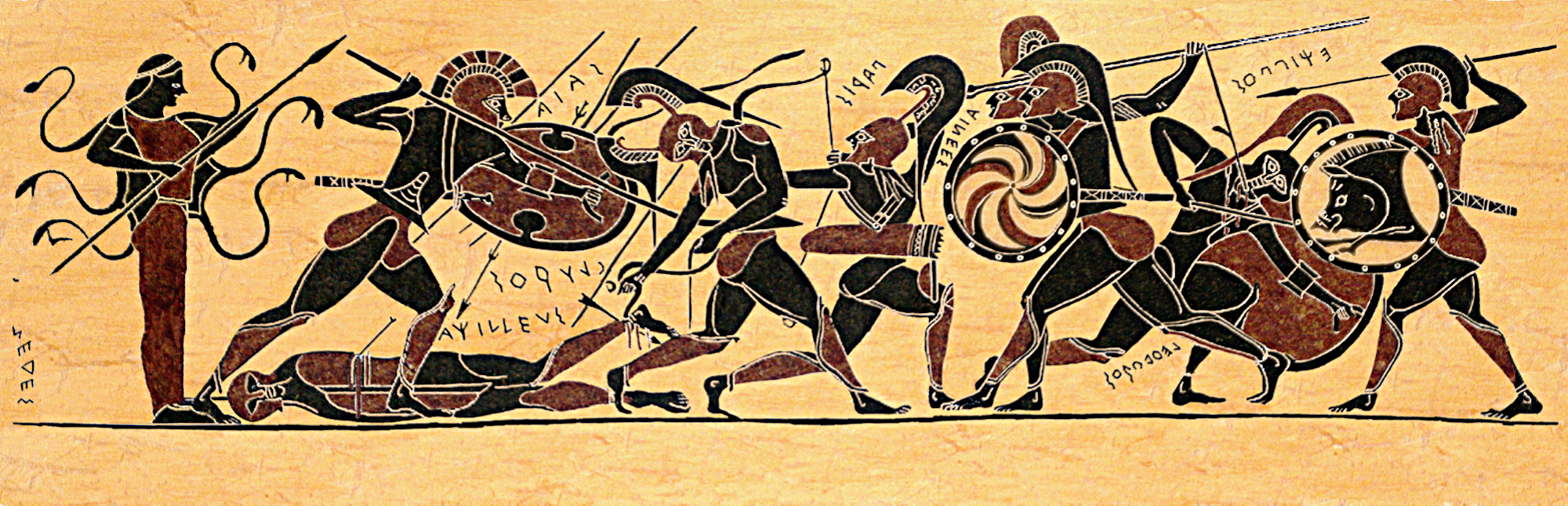
and also leads to a further image:  Achilles, in turn, being killed by an arrow shot by the Trojan prince, Paris.

(In this scene, depicting the battle over Achilles’ body, you can see Achilles fallen, an arrow through the back of his leg.)

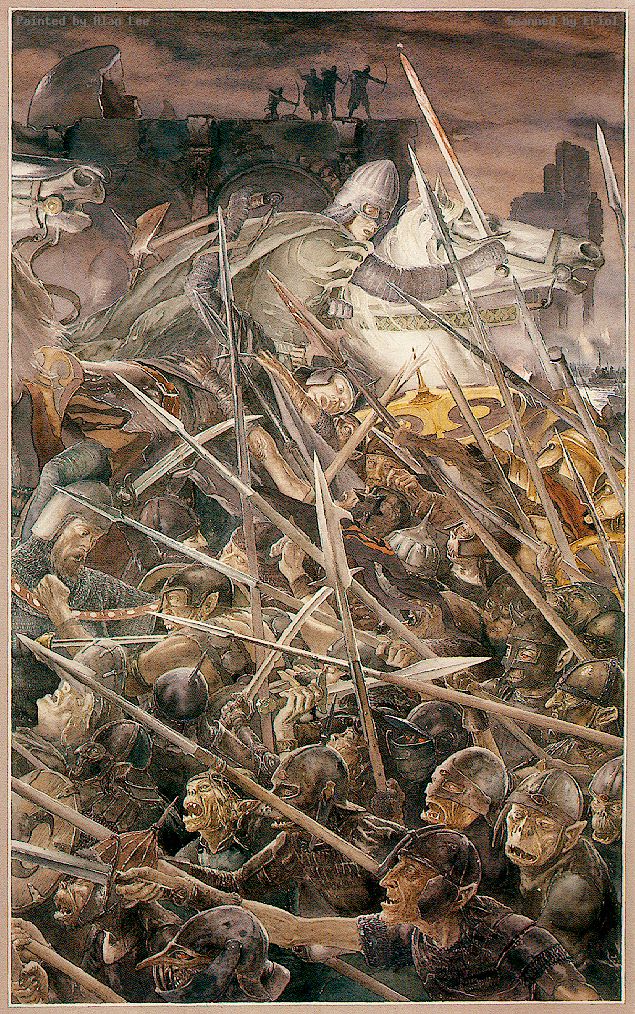
And, for the Rohirrim, the term would then fit Theoden perfectly, as well, as he says to Aragorn at Helm’s Deep:

“The end will not be long…But I will not end here, taken like an old badger in a trap.  Snowmane and Hasufel and the horses of my guard are in the inner court.  When dawn comes, I will bid men sound Helm’s horn, and I will ride forth.  Will you ride with me the, son of Arathorn?  Maybe we shall cleave a road, or make such an end as will be worth a song—if any be left to sing of us hereafter.”  (The Two Towers, Book Three, Chapter 7, “Helm’s Deep”)

(Alan Lee)

Potentially, an heroic—and Homeric—end.

Thanks for reading, as always.

Stay well,

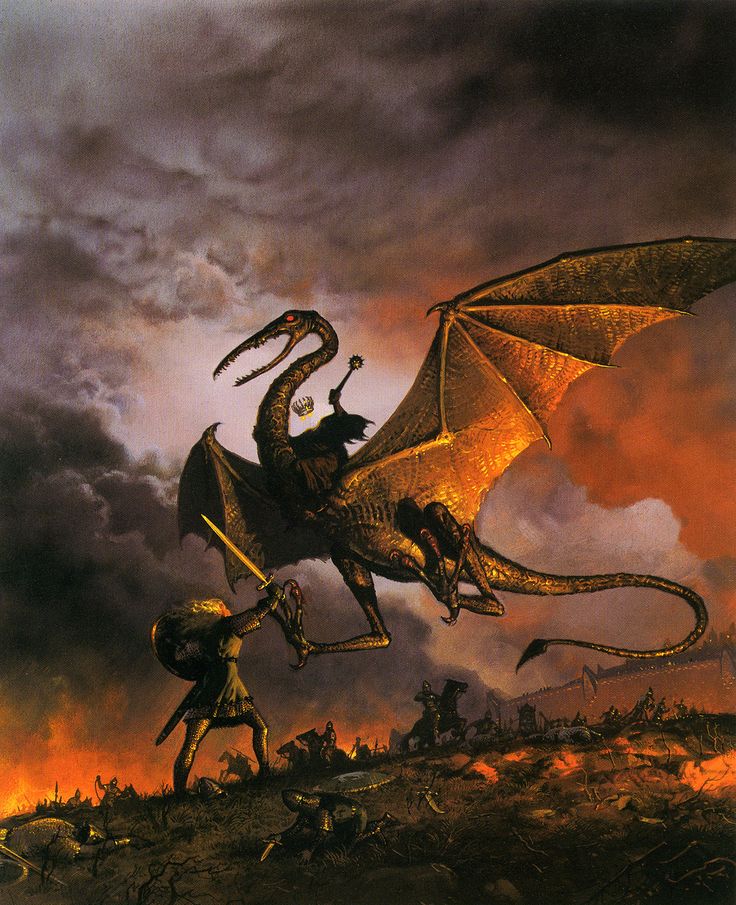
If possible, avoid fell beasts while attempting heroic endeavors,

(Ted Nasmith)

And remember, that, as always, there’s

MTCIDC

O

Tennis, Anyone?

10 Wednesday Jun 2026

Posted by Ollamh in Uncategorized

≈ 1 Comment

Tags

Anglo-Saxon, anglo-saxons, armor, Duke William, Fantasy, Harold Godwinson, Jacksons The Lord of the Rings, Norman, Normans, The Battle of Hastings, The Bayeux Tapestry, The Lord of the Rings, The Rohirrim, the Siege of Minas Tirith, the-charge-of-the-rohirrim, Thing One/Thing Two, Tolkien

Welcome, dear readers, as always.

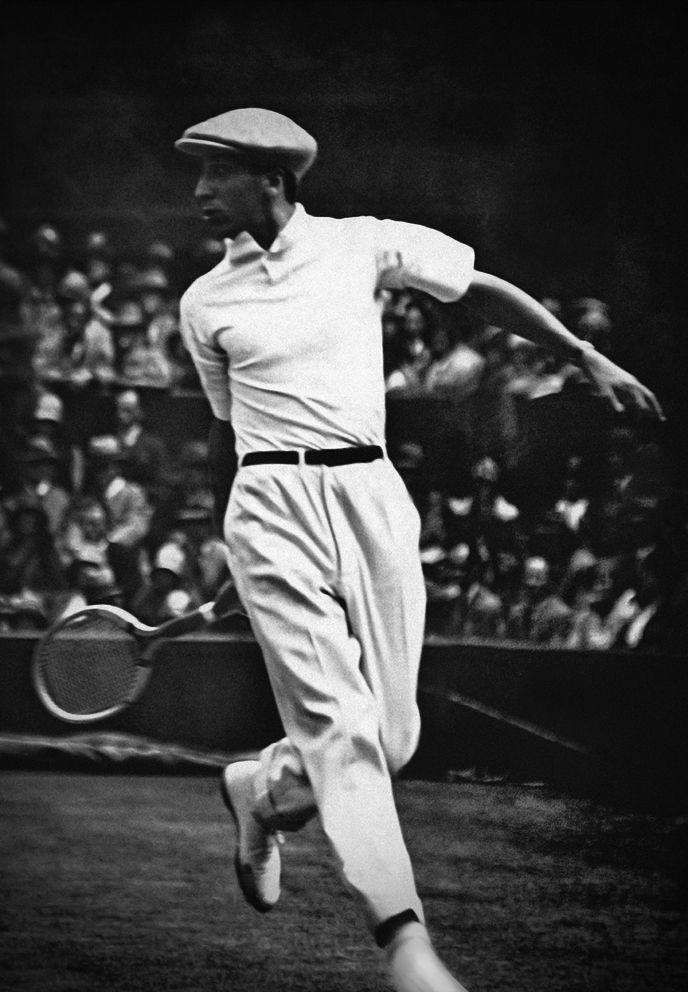
The title of this posting is based upon a scene in 1920-30s country house plays where someone known as a “bright young thing”–no, not one of those—

bounds onto the stage in his whites, cheerily chirping “Tennis, anyone?”

But, lest you think that you’ve stumbled into the wrong blog, I’m actually not going to talk about tennis—except as Tolkien uses it analogically—in this quotation:

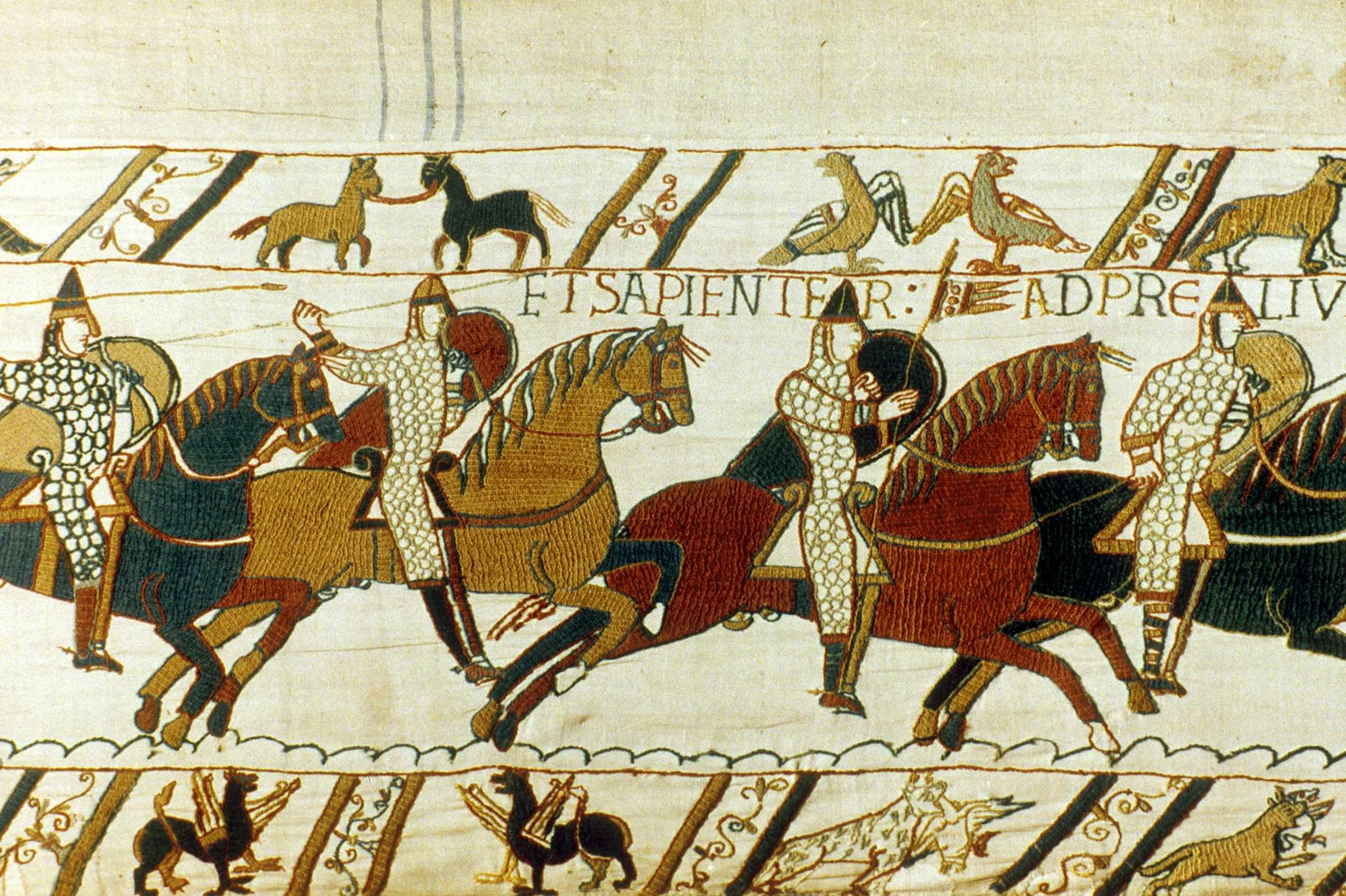
“The Rohirrim were not ‘medieval’, in our sense.  The styles of the Bayeux Tapestry (made in England) fit them well enough, if one remembers that the kind of tennis-nets [the] soldiers seem to have on are only a clumsy conventional sign for chain-mail of small rings.”  (letter to Rhona Beare, 14 October, 1958, Letters, 401)

Here’s a tennis net, in the unlikely event that you’ve never seen one—

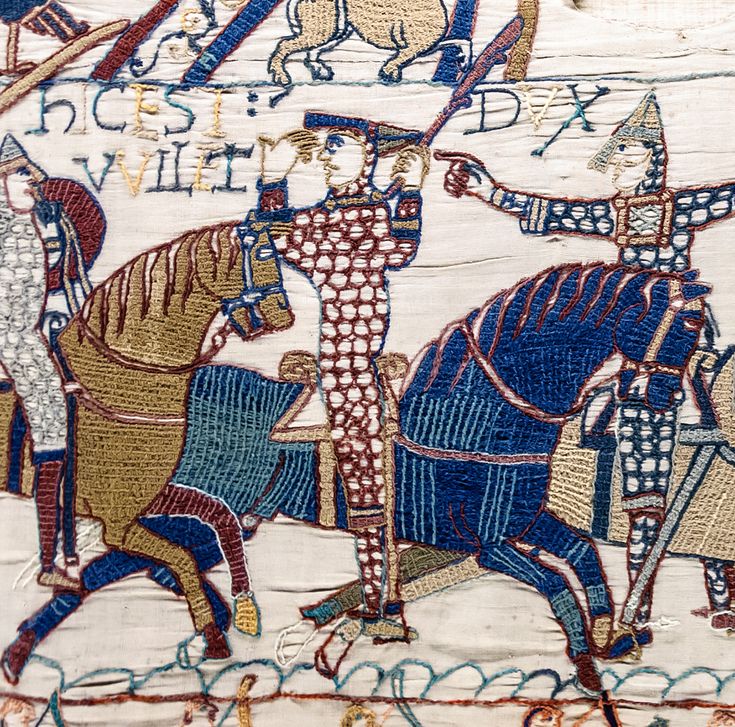
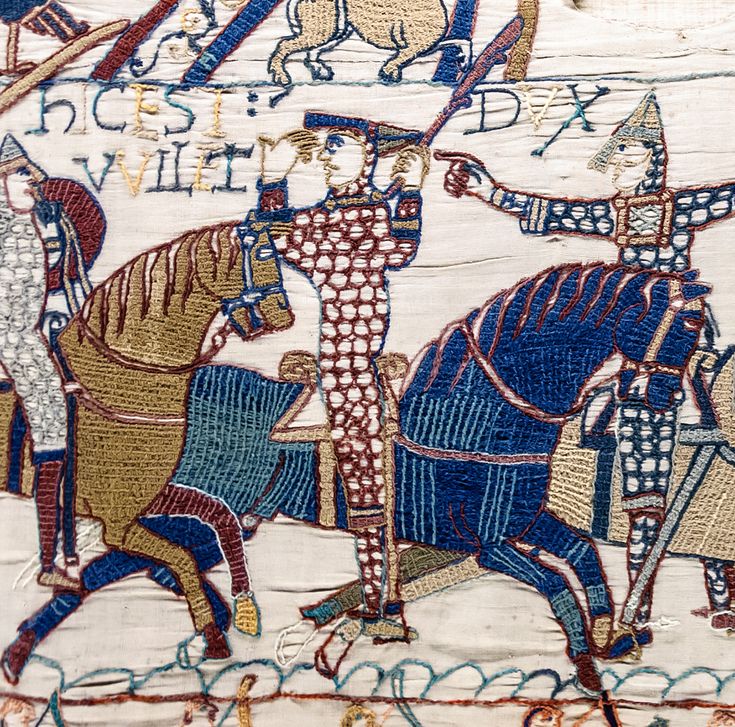
and here’s a segment of the “Bayeux Tapestry” (actually a massive embroidery) with some warriors wearing what JRRT is talking about—

What’s going on in this scene is that a rumor during the battle of Hastings was spreading through the Norman army that William had been killed, so the Duke rode among his men with his helmet raised, and therefore anyone who knew him, at least by sight, would realize that the rumor was false (note also, in case you didn’t know about this event, the Latin caption—“Hic est Dux Will[helm”—“here is Duke William”, as well as the mounted Norman to the right who is pointing—and doubtless shouting “Iloc!”—“There [he is]!” –for something about Norman French, see: https://en.wikipedia.org/wiki/Norman_language )

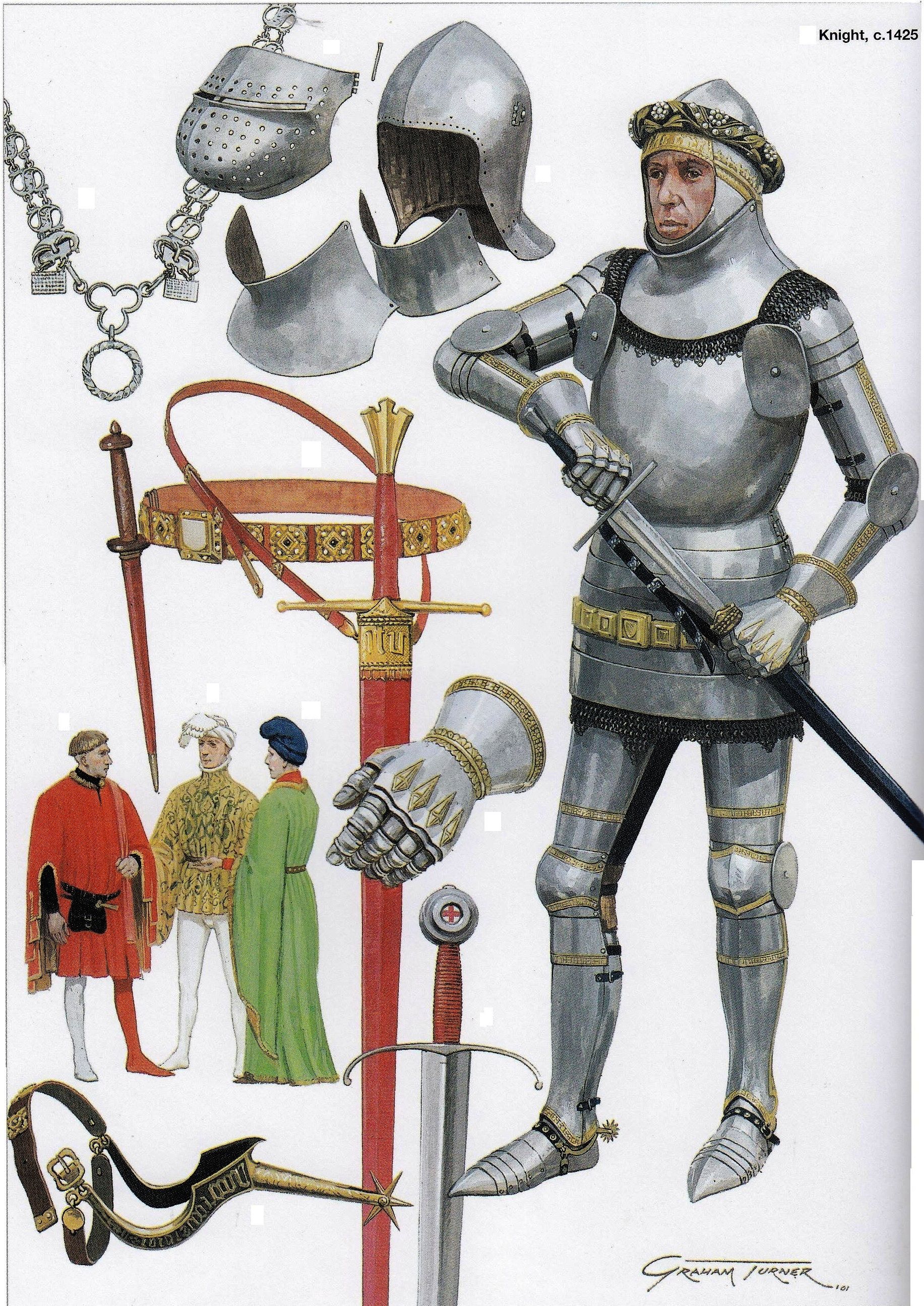
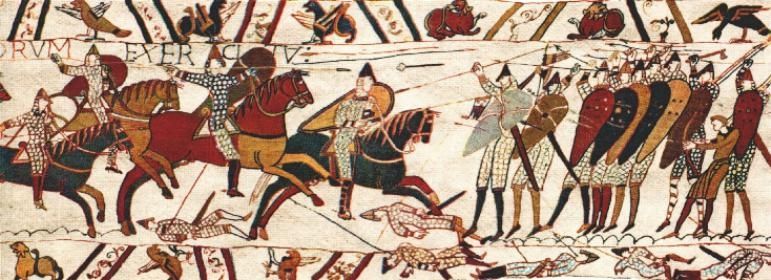
Although he doesn’t explain “medieval”, I expect that what Tolkien means is that the Rohirrim shouldn’t look like this—

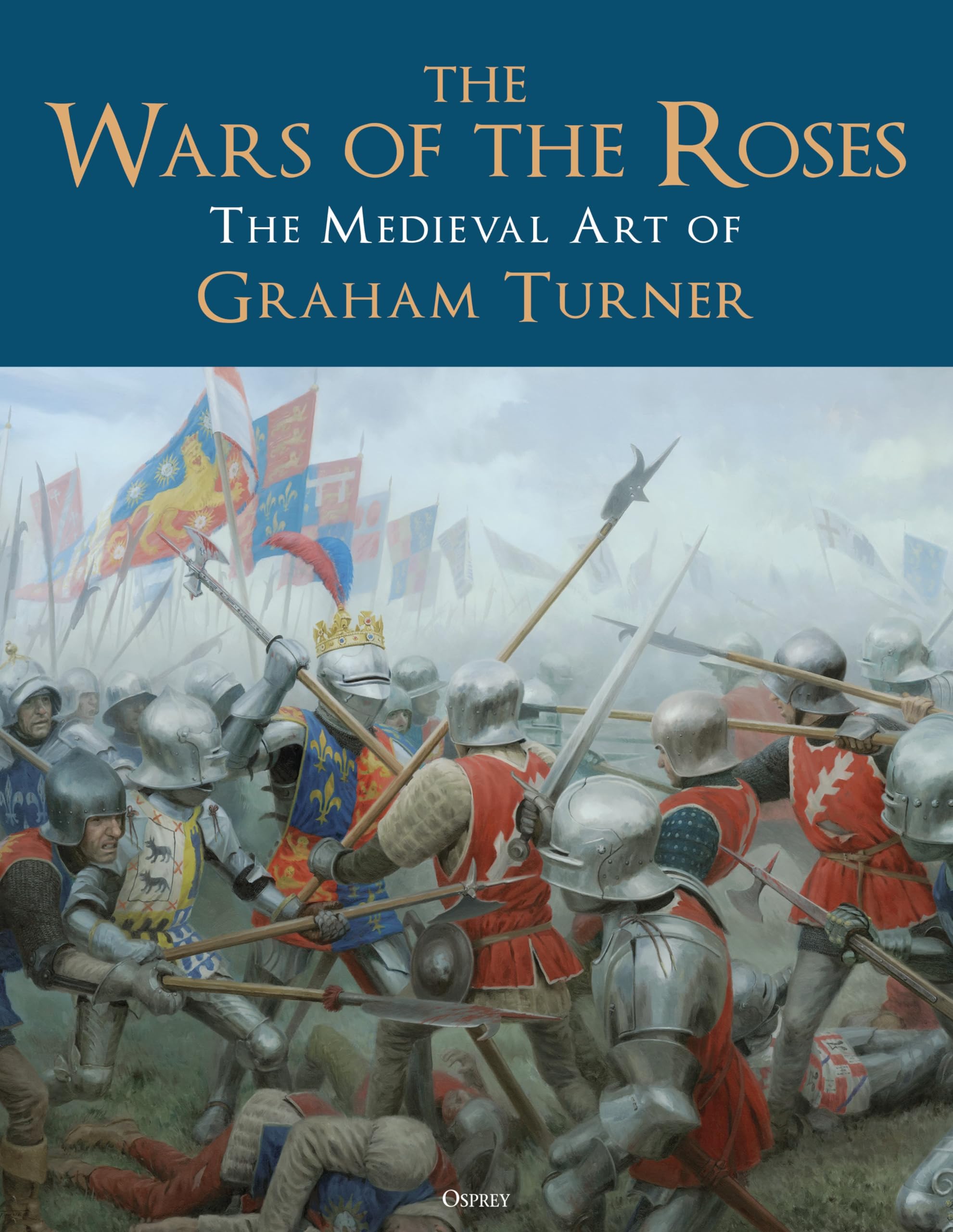
(Graham Turner—who has made a specialty of the 15th-century military—with a wonderful illustrated history of the Wars of the Roses, which I recommend highly.)

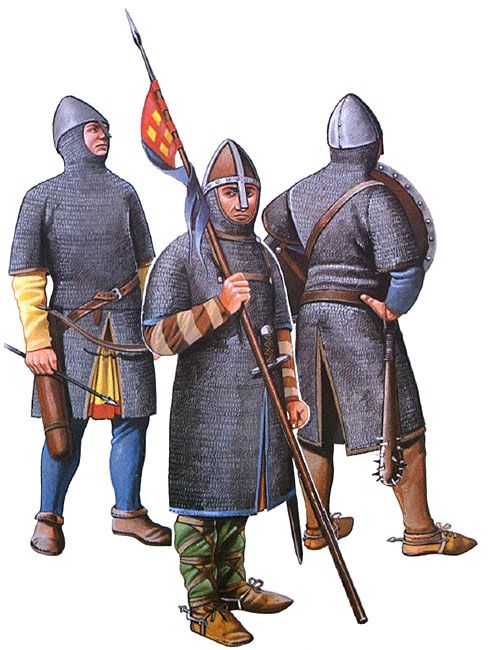
but rather like this—

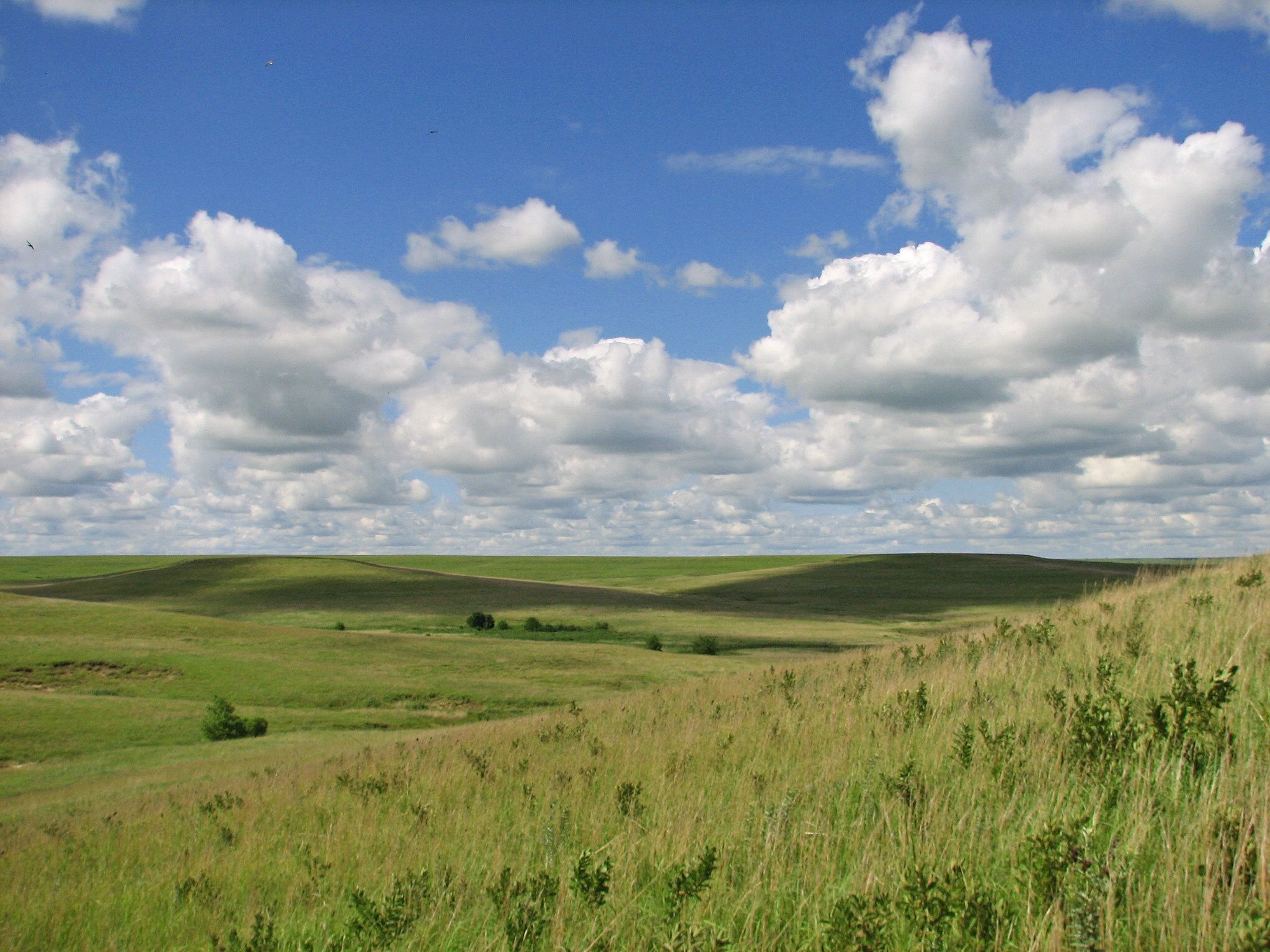
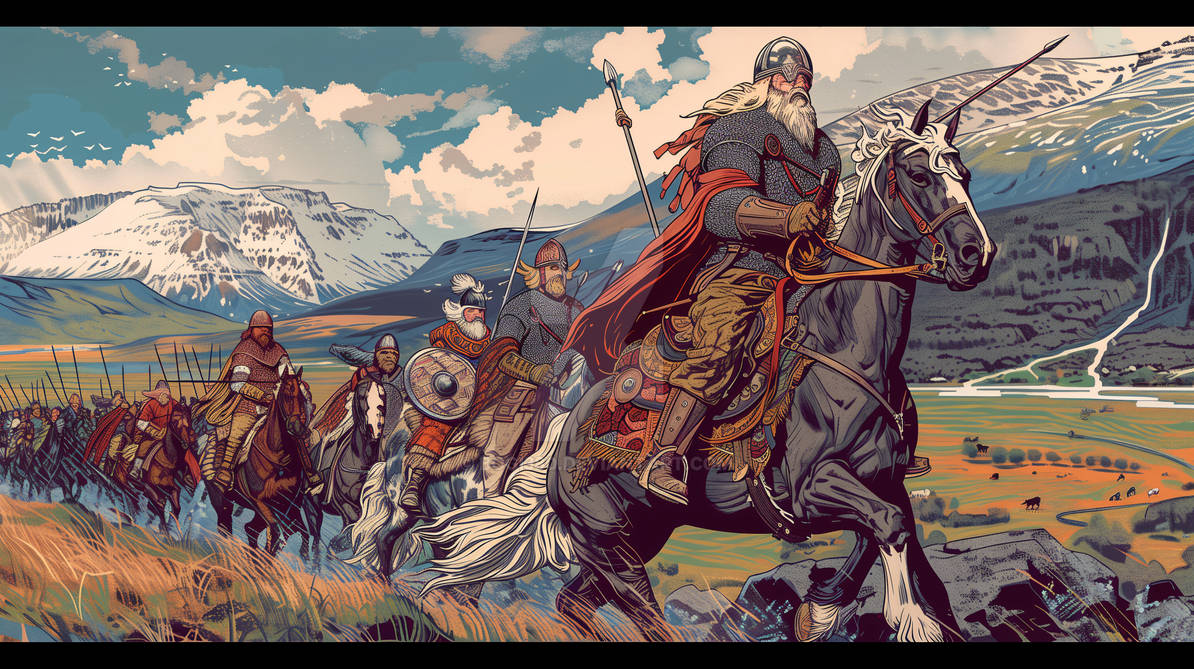
If you read this blog regularly, you know that my favorite part of Jackson’s The Lord of the Rings films is the depiction of the Rohirrim—with the exception of Rohan, which should be a great, grassy plain,

but, as New Zealand doesn’t possess such, the best that could be done was this rather withered- looking landscape—

(For more on this, see “Plain and Grassy”, 24 September, 2025)

Now, however, I begin to think that, though the Rohirrim are still my favorite part, I want to add a second exception:  how the Rohirrim look.

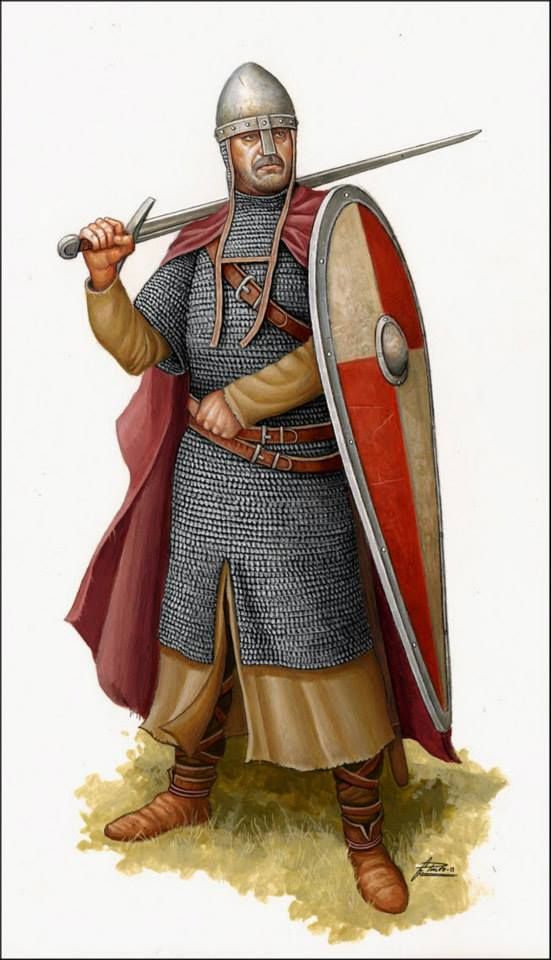
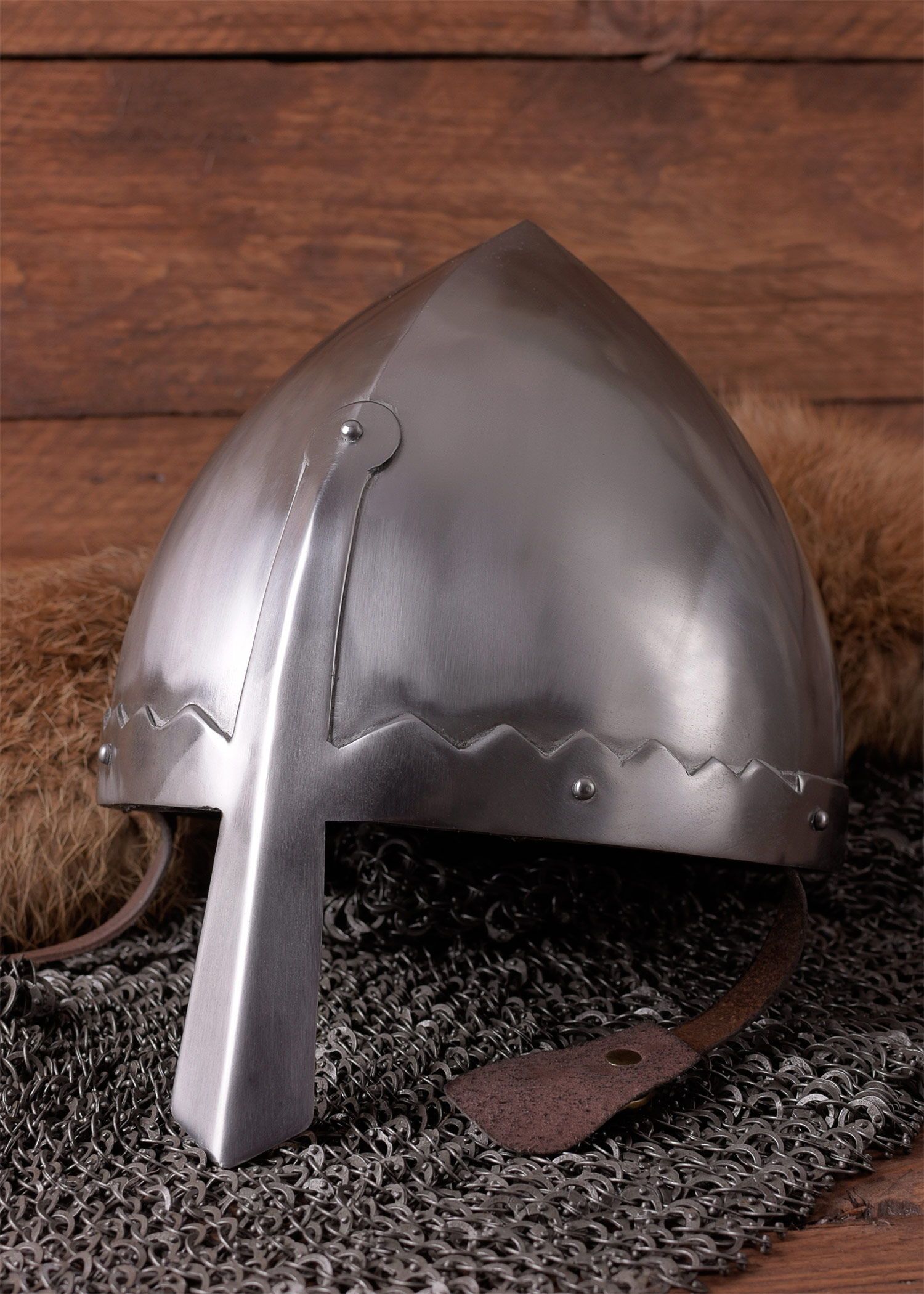
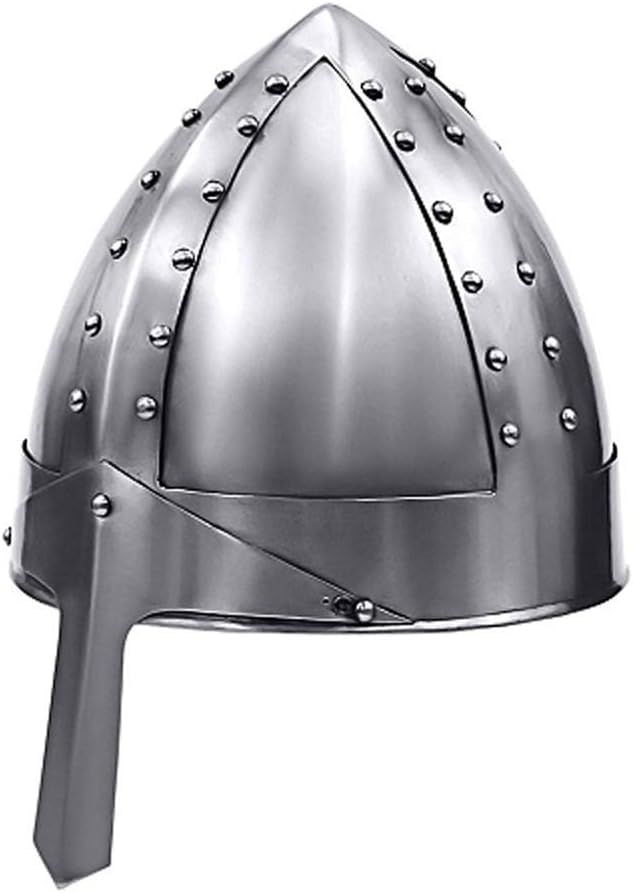
Tolkien, after all, has given us a definite picture of what he wanted.  The Rohirrim were to be imagined as looking like the Normans (and Anglo-Saxons) we can see on the Tapestry:  wearing rather simple helmets, either hammered from one sheet of metal,

or made of a series of plates attached to a frame—called a “spangenhelm”,

and a long coat of chain mail,

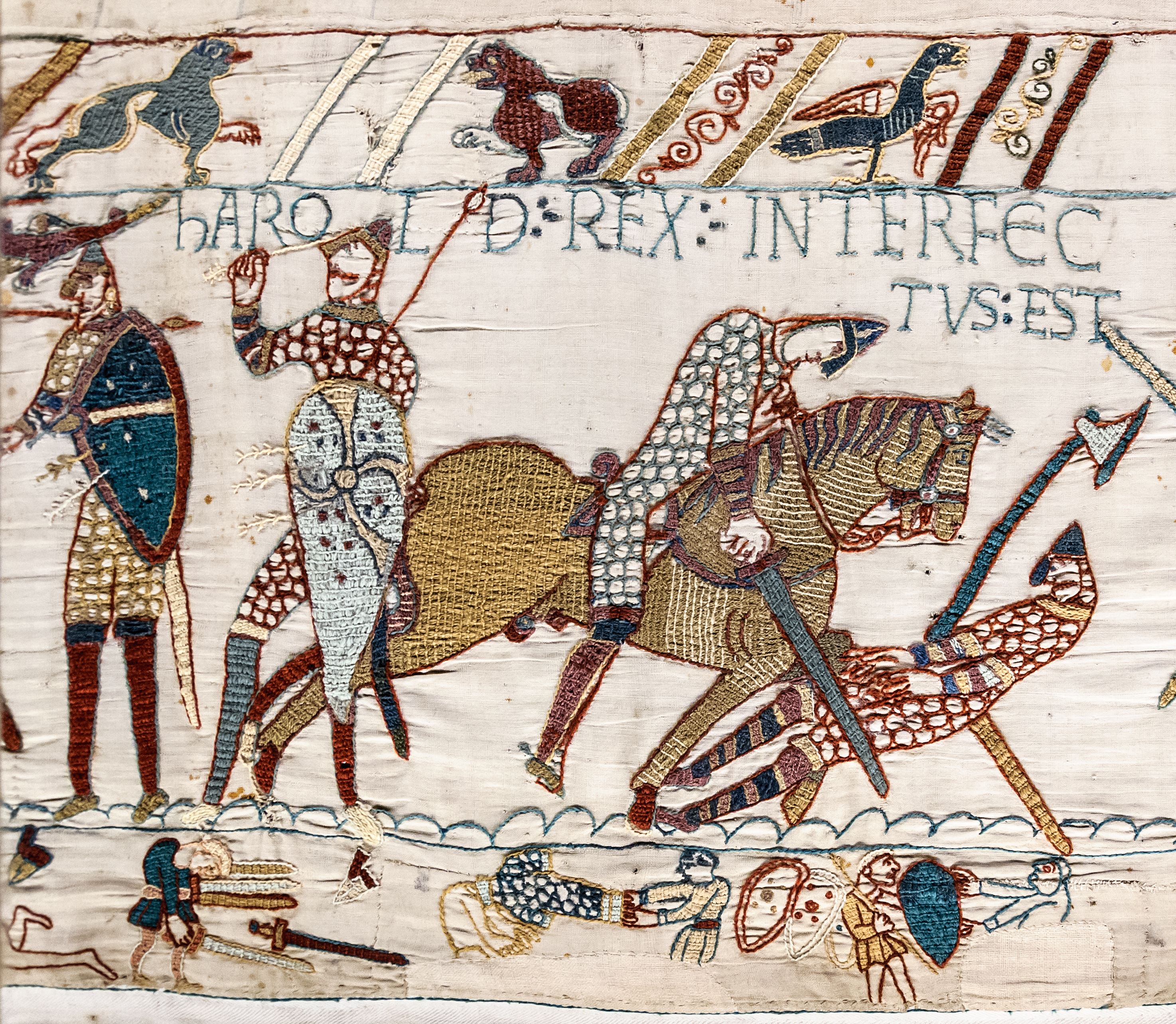
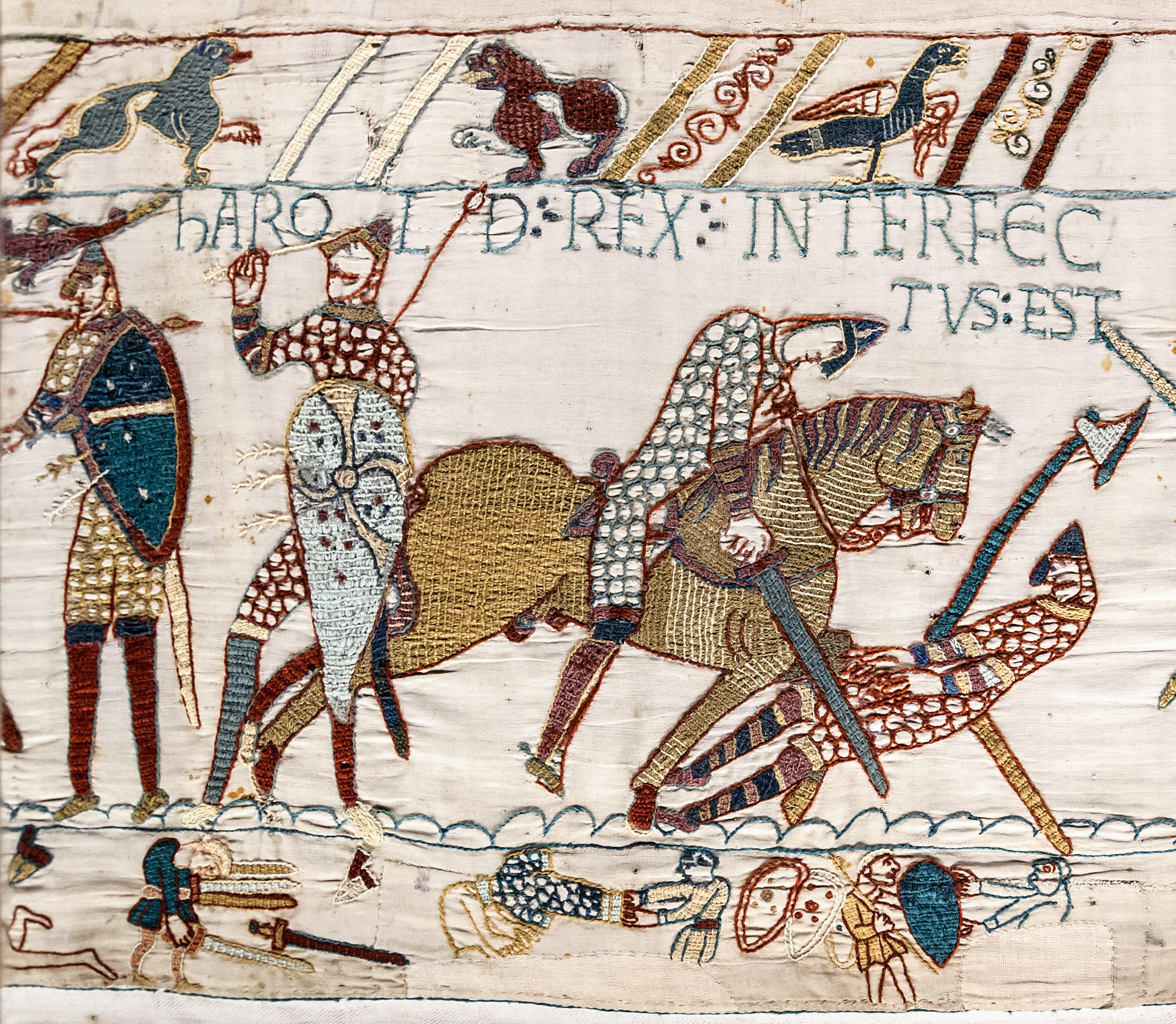
which was pulled over the head, like some sweaters (“pullovers”), as you can see at the bottom of this scene from the Bayeux Tapestry–

The top part of this scene is labeled, “Harold Rex interfectus est”—“King Harold has been killed”, but there is some confusion here as to which figure is Harold.  There is an early account which says that he had been hit in the eye with a Norman arrow, so that would suggest the figure in the middle, but the arrow seems to have been a replacement for something else, so perhaps it’s the figure being struck down on the right?  (For more on this, see: https://historiamag.com/harold-death-truth/  )  In any event, we can see those same “tennis nets” on both the mounted Norman (winning) and the Anglo-Saxons on foot (losing).

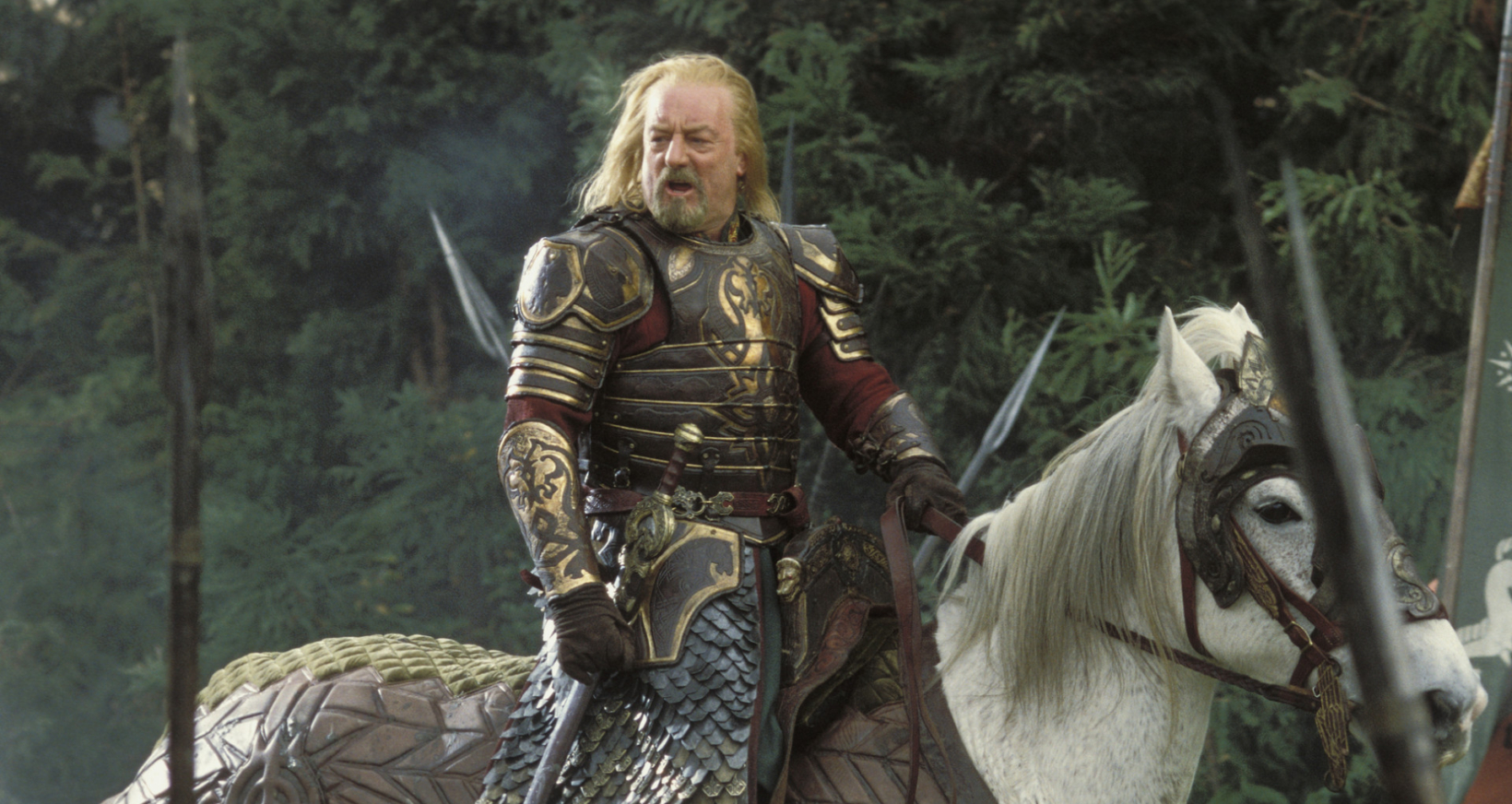
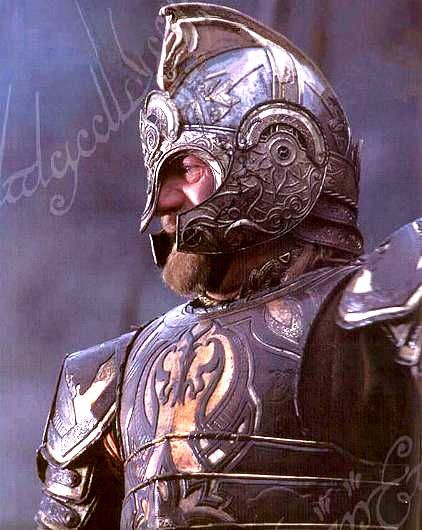
In contrast, here’s Theoden, as portrayed in the Jackson films—

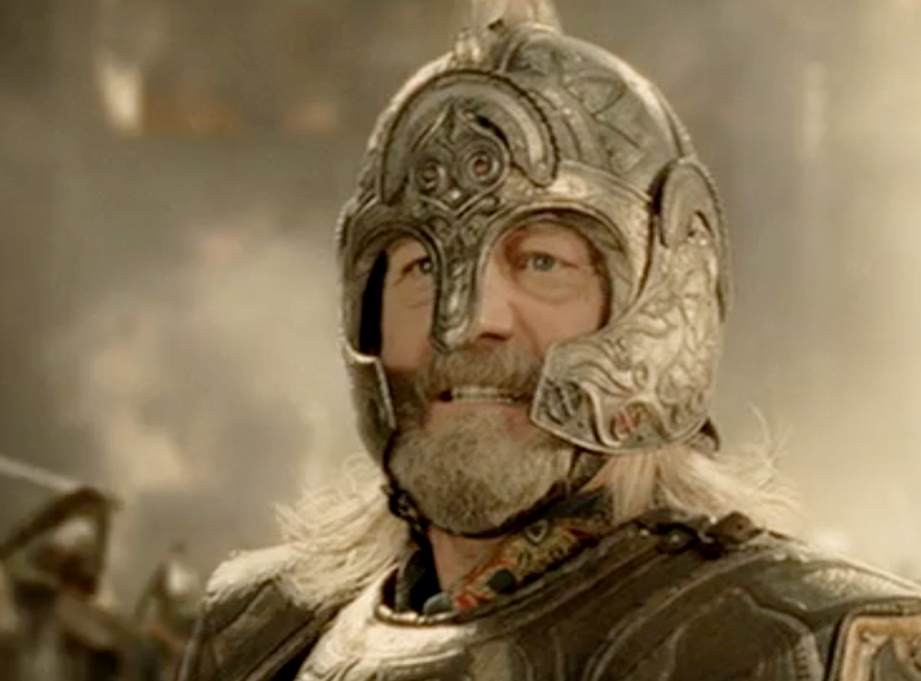
and add in his helmet.

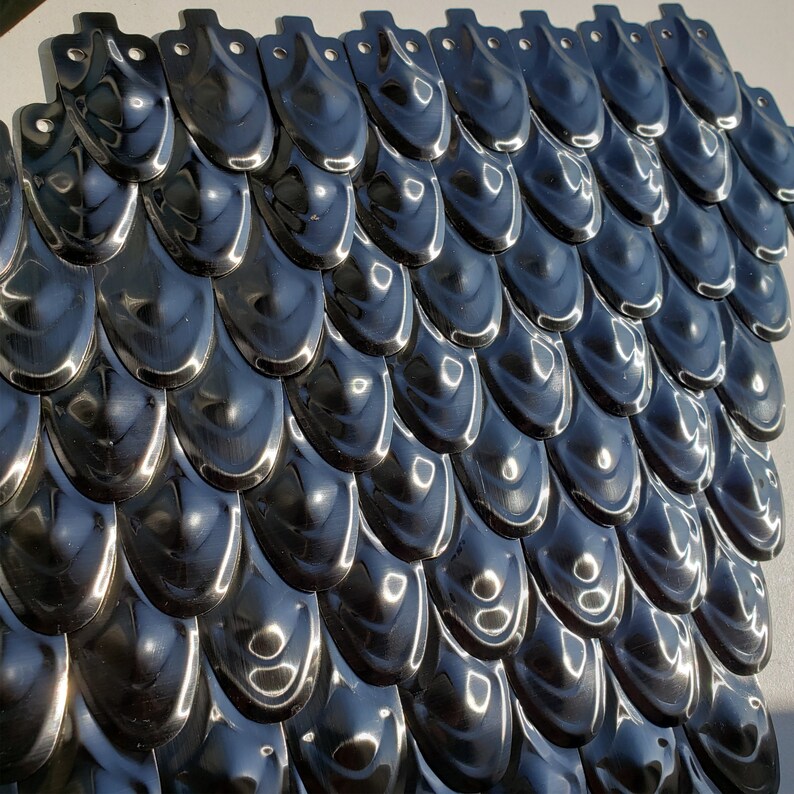
What in the world is all of this?  Certainly not anything like the Bayeux Tapestry which JRRT suggested as a model and yet not the “medieval” I’m assuming he intended to steer Rhona Beare away from.  Instead, it seems like something patched together, with a leather coat underneath (?), lamellar (scale) armor below,

and other things attached—a very odd-looking breastplate in several sections, pauldrons (shoulder pieces), and vambraces (arm pieces).  There is also that helmet—

(This image comes from an amazing site:  https://www.blindsquirrelprops.com/theoden-helmet/  The Squirrel seems to be able to make/reproduce anything and, in this posting, he/she demonstrates how he/she made a reproduction of Theoden’s helmet, based upon a couple of screen captures.)

The Anglo-Saxon king, Harold,

and the Norman-king-to-be, William,

seem content with simple conical helmets—does Theoden really need more?  I’m also puzzled as to where Theoden is wearing his sword—on the right.  Soldiers on the Tapestry wear theirs on the left

and this is true for mounted men over the centuries in general, who then use the left as their bridle hand and their right to draw and use their swords (or spears as is often the case on the Tapestry).  Was Bernard Hill, who played Theoden in the films, left-handed and the director wanted him to feel comfortable? 

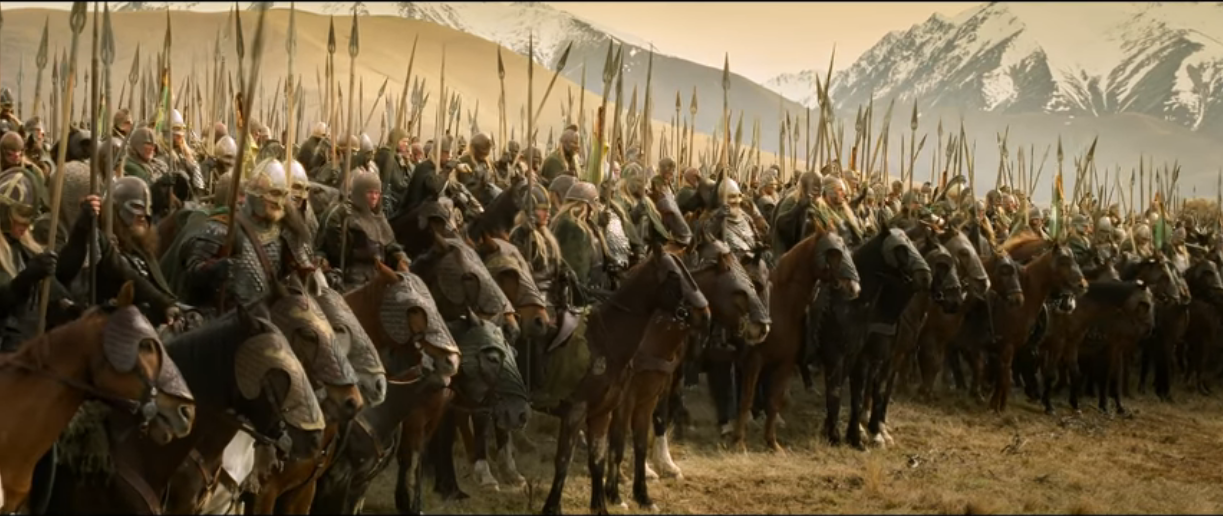
The mass of the Rohirrim, we mostly never see closely—

but, blowing up this image, it’s possible to determine that some attempt has been made to provide the extras with conical helmets, although what little armor one can see appears to be lamellar, rather than chain—probably for the budget’s sake—chain mail taking longer to make and the man-hours making it more expensive—for more on chain mail, here’s a very useful article—and site in general:  https://www.ironskin.com/faq-chainmail-weight-and-cost/

Tolkien was very clear as to what he intended—you have only to read his sometimes outraged comments about a proposed film to be made of The Lord of the Rings to see just how seriously he took his work and its interpretation—letter to Forrest J. Ackerman, June, 1958, Letters, 389-397—and this is an abbreviated form before he appears to have given up in frustration.

And yet, although Tolkien’s letter to Rhona Beare was certainly available to them, with its description, the director and designers of the films clearly paid little attention to his intentions when it came to the look of the Rohirrim.

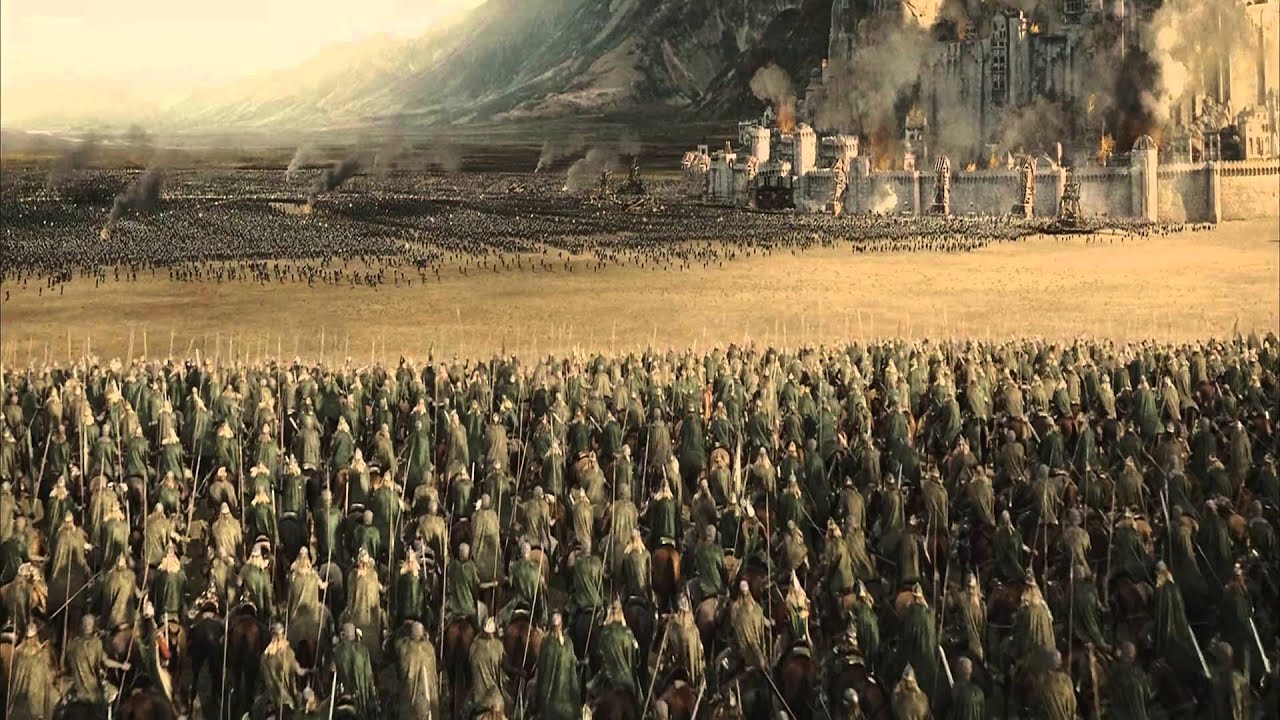
So, will I still find the Rohirrim my favorite part of the films?  Well, there is that moment when we see them sweep against Sauron’s Orcs from behind—

which you can see here:  https://www.youtube.com/watch?v=HVmWl7PrBcc

and that would be hard to give up, because, even if they don’t look like Tolkien’s idea of the Rohirrim, certainly the charge is as stirring as he described it.

At the same time, however, I’ll offer you this image, by “Bogi380”, of a very different view of the Rohirrim, much closer to Tolkien’s model—

Given the choice of what I would want the Rohirrim to look like, I know what I would choose, but, as the films are not about to be remade, I guess that I’ll stick with my favorites and, as in the case of the ungrassy Rohan, be glad for all that I do enjoy.

Thanks for reading, as always.

Stay well,

Imagine, however, what that scene might have looked like if they’d followed Tolkien’s model–

And remember, that, as always, there’s

MTCIDC

O

PS

For a practically frame-by-frame analysis of the attack of the Rohirrim and a sometimes zany one, see: https://www.extended-cut.com/p/the-charge-of-the-rohirrim-is-the

1002?

03 Wednesday Jun 2026

Posted by Ollamh in Uncategorized

≈ Leave a comment

Tags

1001 Nights, Aladdin, Ali Baba, books, Djinn, Sharahzad, Sinbad, Tam Lin, Yokai

As ever, dear readers, welcome.

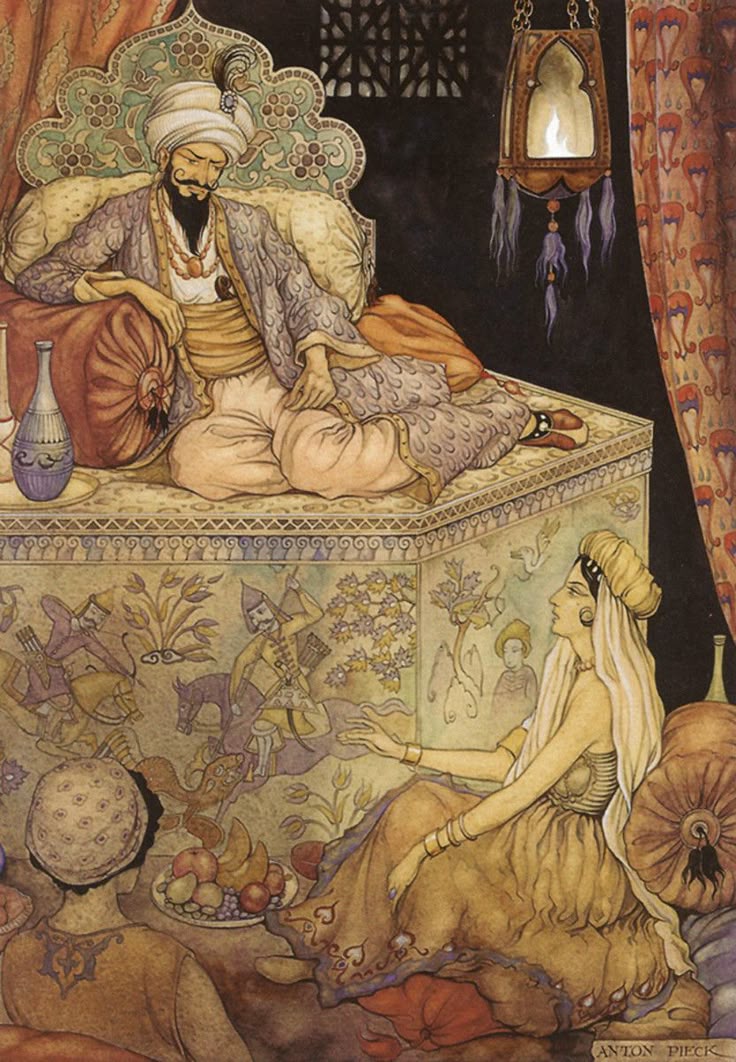
Way back in 2024, I gave myself the task of reading the whole of the massive work with several titles like “The Thousand Nights and One Night” and “The Arabian Nights”.  (See “Arabian Nights for Days”, 31 January, 2024)

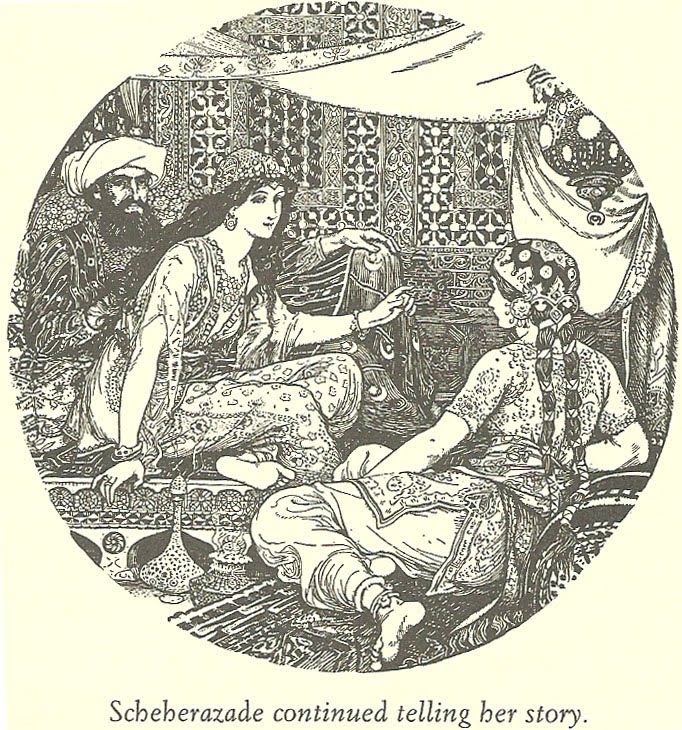
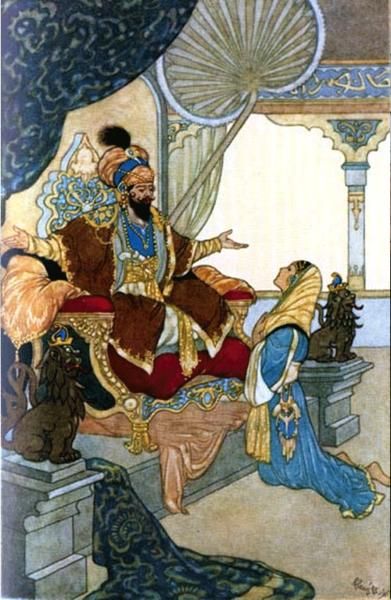
This is massive because, each night, for 1001 nights, Sharahzad, so the story goes, begins a new story to keep the misogynistic sultan from beheading her.

Each story leads to another, maintaining the monstrous sultan’s curiosity until he finally allows her to live–which is actually a very clever way to put together such a gigantic collection—and to maintain the reader’s curiosity, as well. 

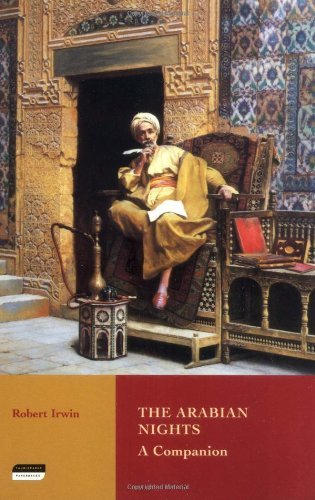
Before I began, I read Robert Irwin’s introductory volume—

which, even if you don’t go on to do as I did, I would recommend just as an excellent summary of the work and its background.

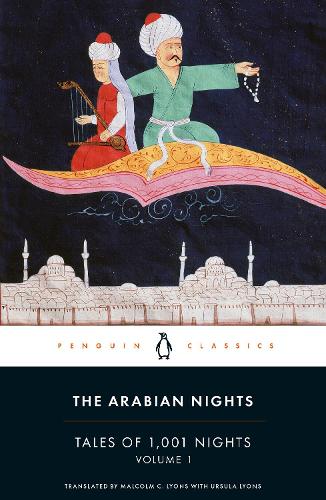
Having done so, I then tackled Volume 1 of the Penguin 3-volume set.

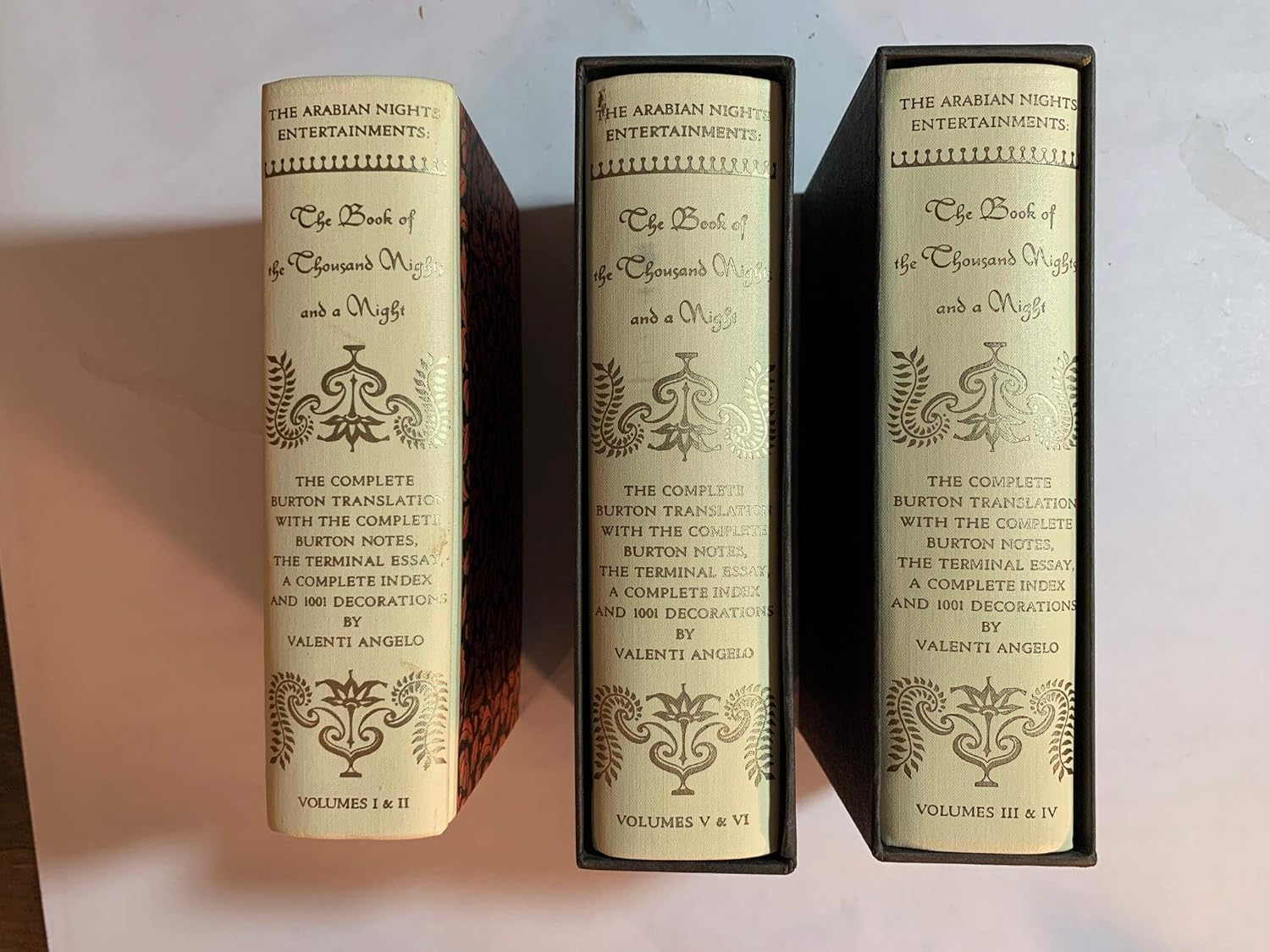
There are a fair number of translations in English, some of them employing very unusual language, such as the. Sir Richard Burton’s,

but the Penguin seemed the best choice, using Irwin as a guide.

And Irwin provided a very encouraging beginning, but it was a long read:  only up through Night 294 was 928 pages, and there were moments, I confess, when I felt that the story was being dragged out beyond its natural length (Sharahzad seeing the sultan beginning to nod off?), and sometimes there was that motif which would appear again and again through the whole 1001 nights:  someone spots a beautiful stranger, immediately falls in love, and then the story spends itself scheming to meet the stranger, meeting the stranger, having difficulties, then finally uniting with the stranger and staying together until Death comes for them (a more realistic “happily ever after” I guess).

I persevered, however, into the second volume.

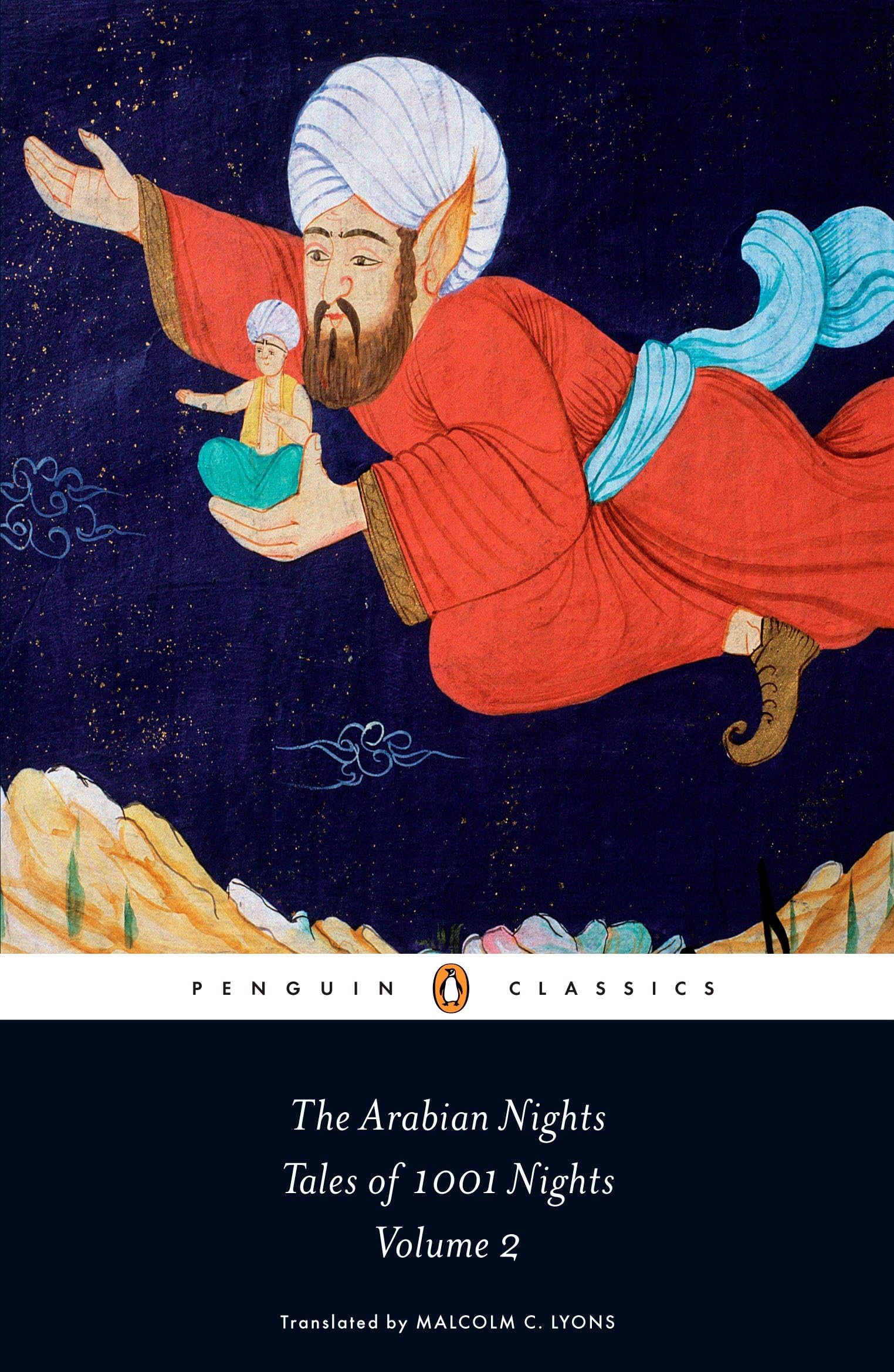
And there I got stuck.  It was another 856 pages, bringing me up through Night 719, but somewhere, I think about Night 500, I began to nod off mentally—was it possible to have too many stories?  Did there begin to be a certain sameness as this one was shipwrecked and that one was lovelorn and the other was helped by a djinn?

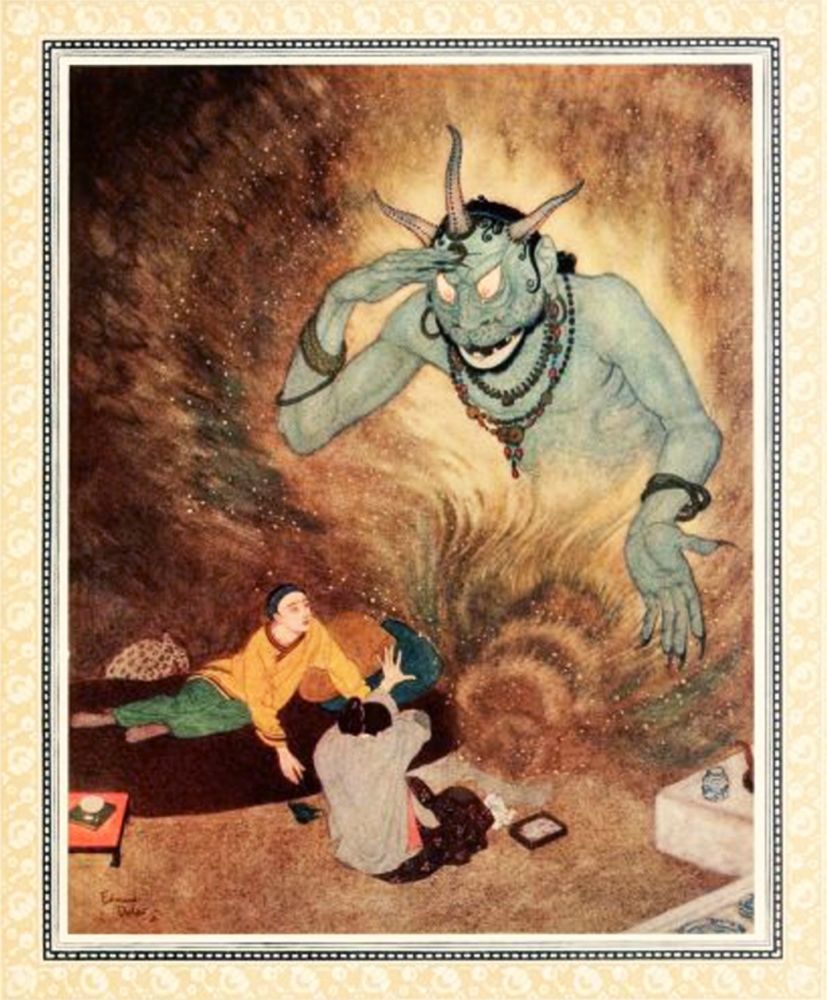
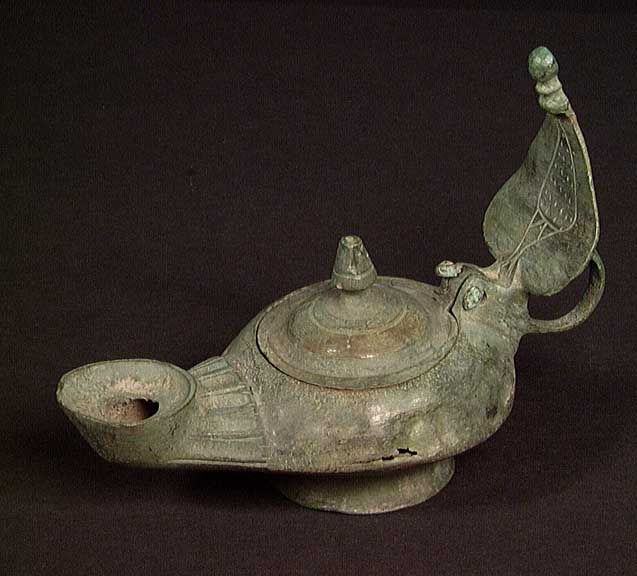
But then the djinn were really interesting.  They rarely popped out of lamps,

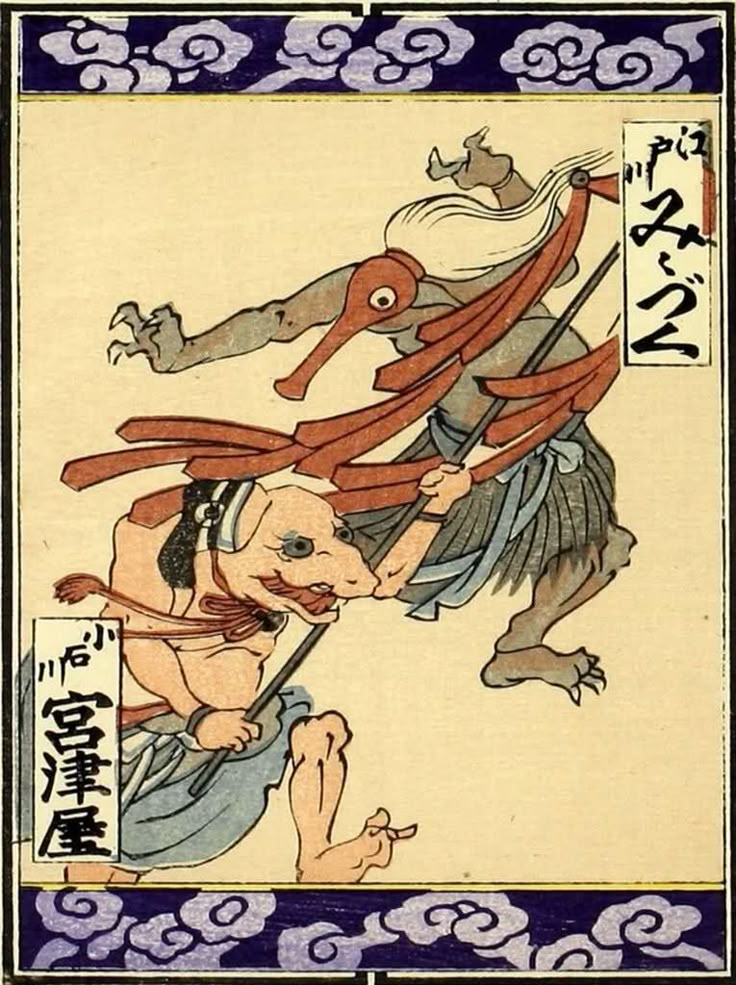
there were male and female, as well as whole tribes, some heathen, some Muslim, all fierce and occasionally at war with each other, who inhabited a world outside our world, but who could interfere or be drawn into human affairs.  This reminded me of the world of the Yokai, of Japanese folklore,

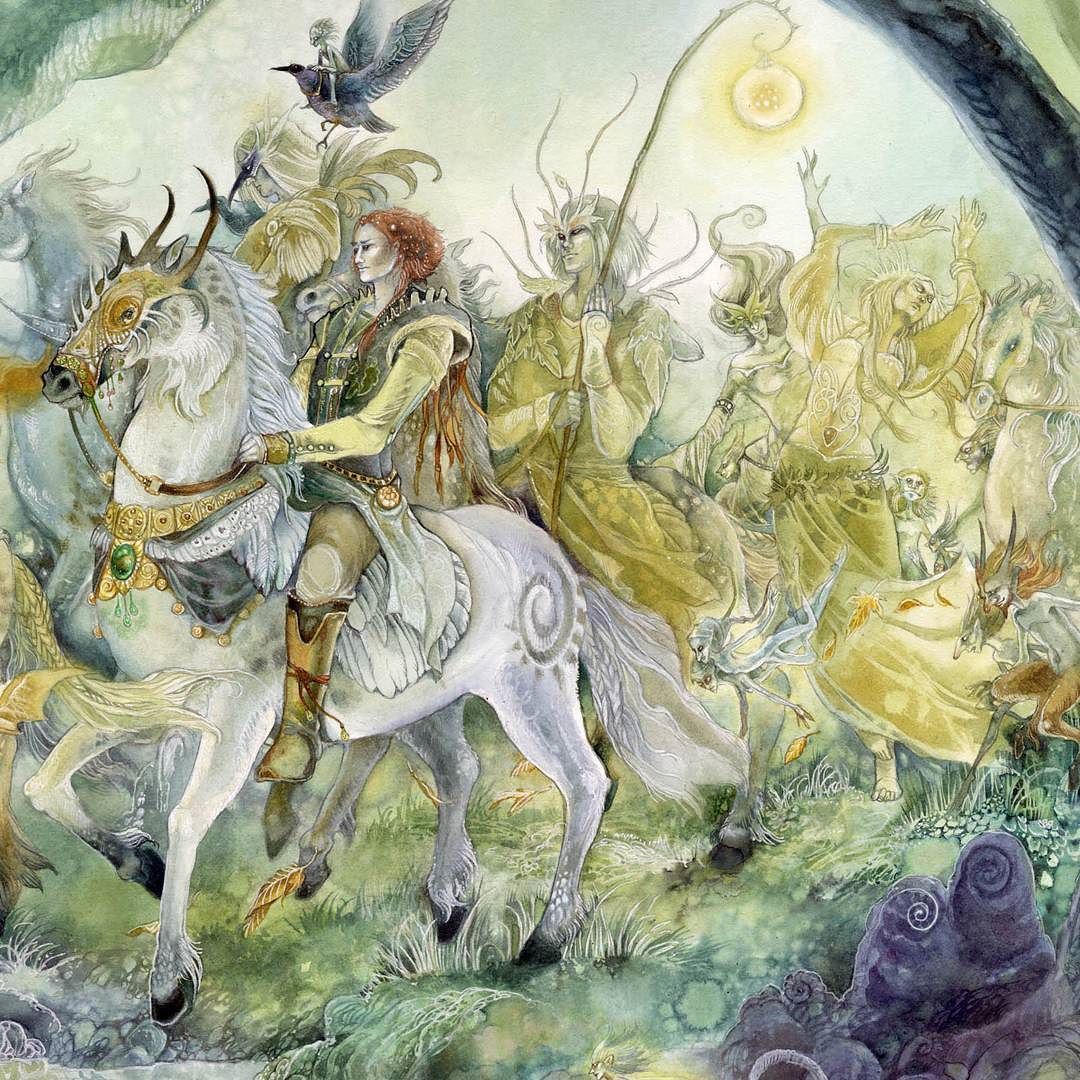
or the grimmer folk of the Other World which one sees in the Celtic tradition of the UK and Ireland, in stories like Tam Lin.

(Stephanie Law–visit her site to see more wonderful fantasy illustrations like this: https://www.shadowscapes.com/page_theartist.php )

Although I thought that sometimes they were a bit too conveniently obliging to humans, they did add a certain spice here and there, loosening the frame of the narrative by their behavior.

Time went on, then, and that second volume, only half-finished, sat on the shelf till this spring.  Maybe it was spring itself, but, somehow, I got a second wind, finished the second volume, and galloped through the third,

finishing its 734 pages and its 1001st night only the other day.  My sigh of relief probably echoed Sharahzad’s,

as the violent sultan relented—although, realistically, who could ever trust such a person when it took a 1001 stories and what must have been nearly 3 solid years of telling him stories every night before he did? 

But, although grounded in the real medieval Arab world, none of this is realistic, of course, and we never hear Sharahzad mutter to her sister, “About time!”  Instead, it’s a very long fairy tale—which brings me to the question you might be asking:  was this all worth it?

For myself, I would definitely answer yes.  If you read this blog regularly, you know that I love stories of all sorts and am especially interested in how they’re told, whether in the form of song, prose narrative, or illustration, or film, and watching a 1001 stories told over, in my case, at least 2 years, gave me a real sense of the culture, the kind(s) of audience to whom the stories were told, the tastes of the listeners, and the narrative twists which kept the longer story going throughout all of those shorter ones.

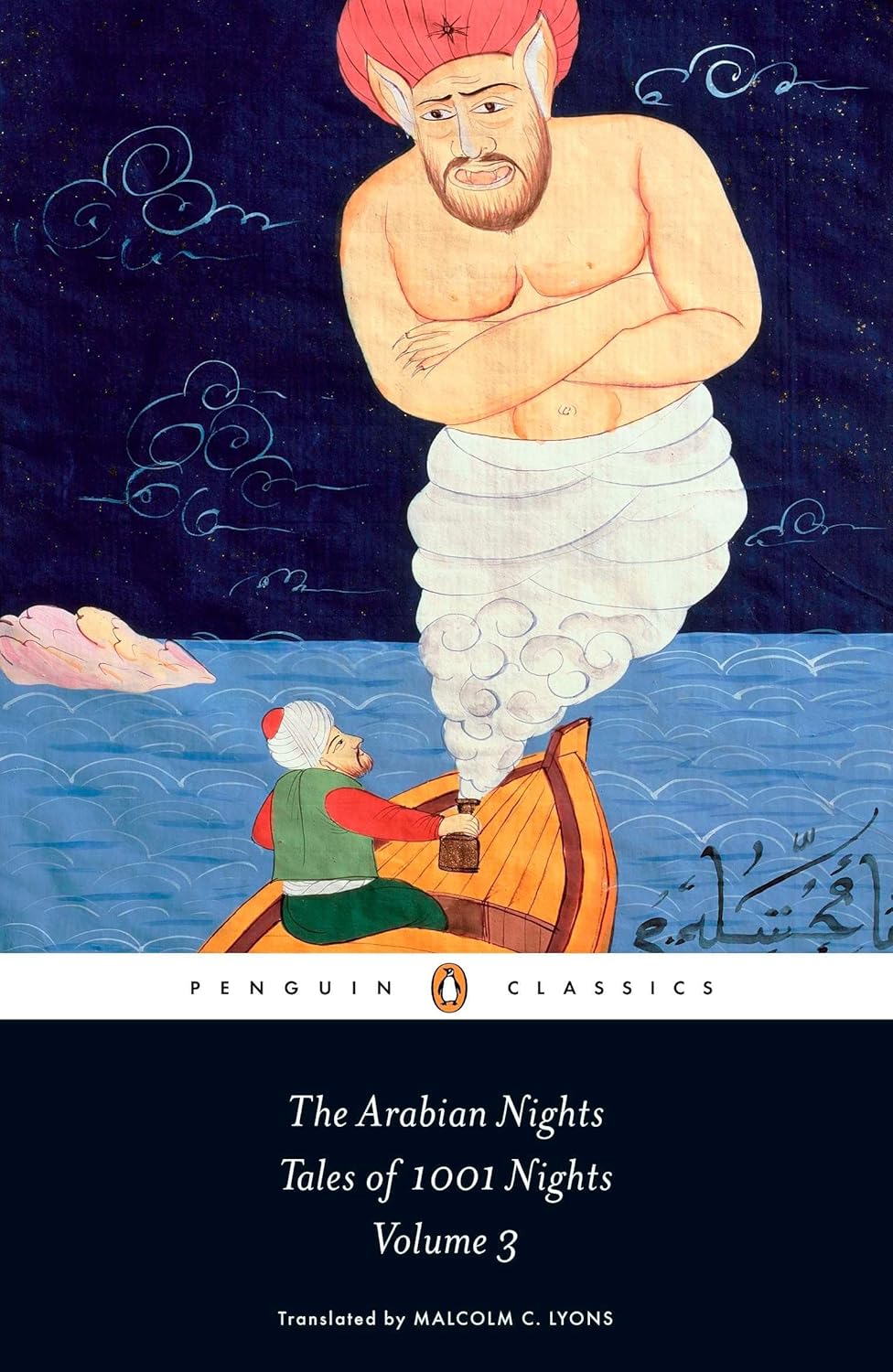
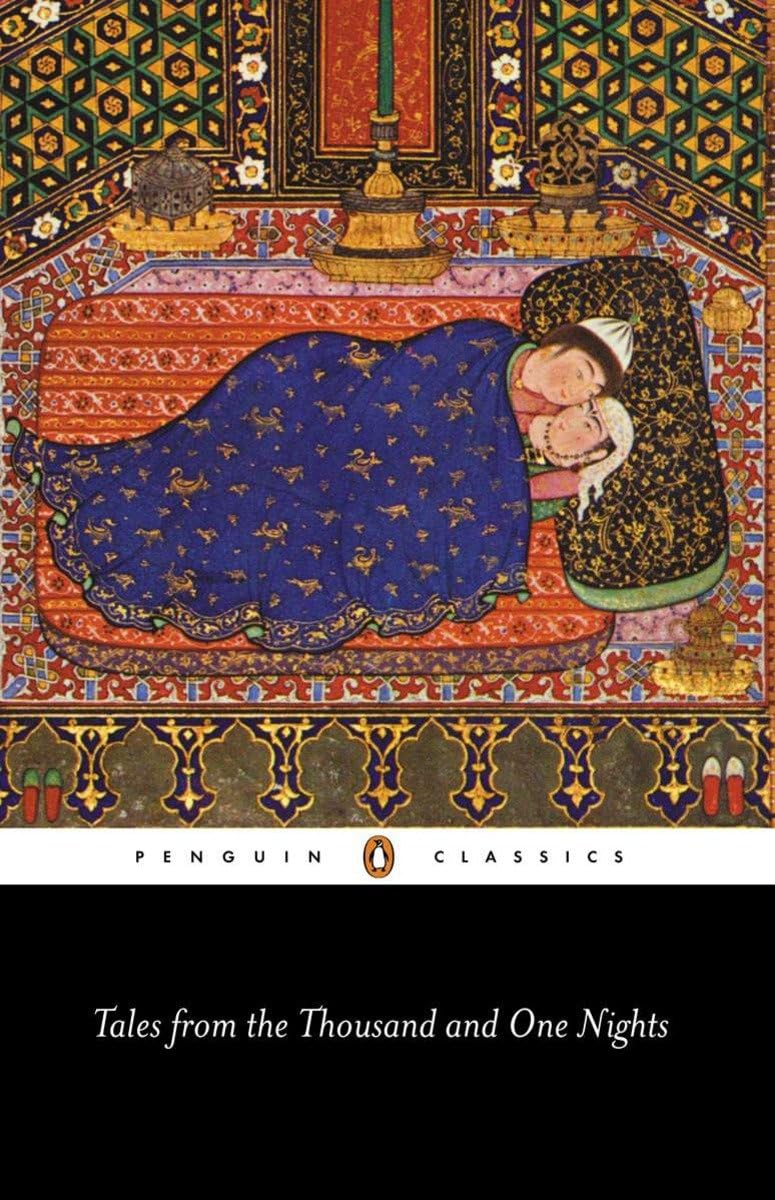
Would I recommend picking up the three volumes and doing what I did?  I would never say no to a reader, as I believe that what I might not enjoy, others might, and the broadest reading is the best.  Perhaps, however, before plunging in, a reader might begin with something like this—

which will include those few tales with which she/he might already be familiar—

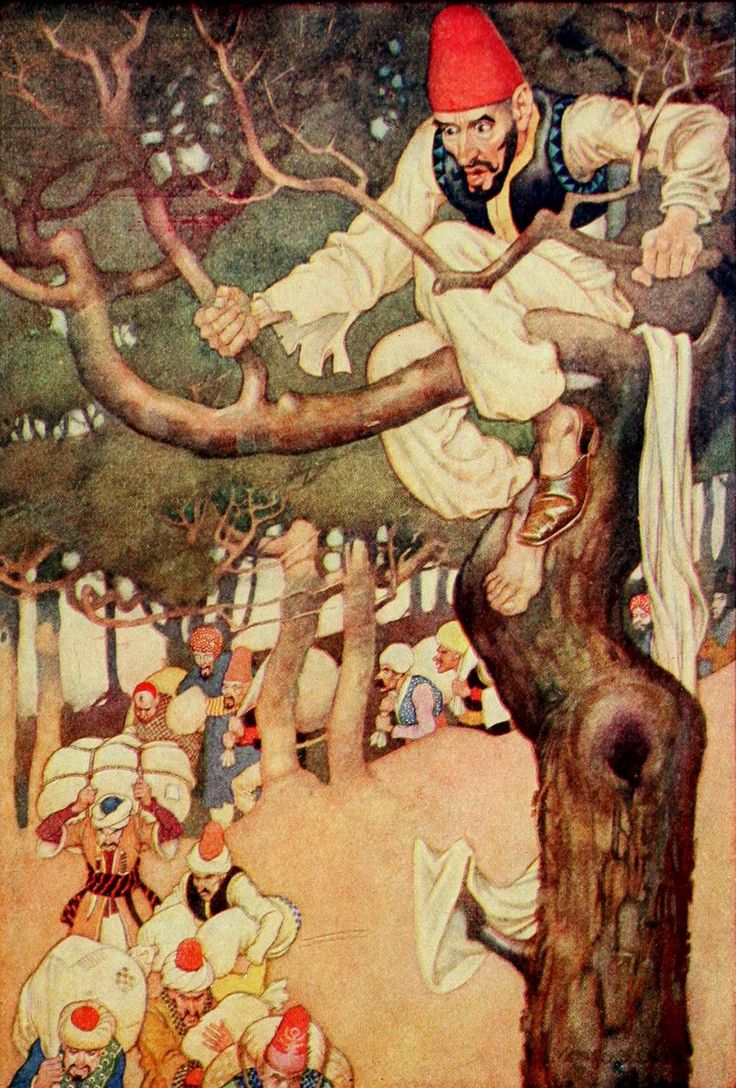
Ali Baba and his thieves,

(Munro S. Orr)

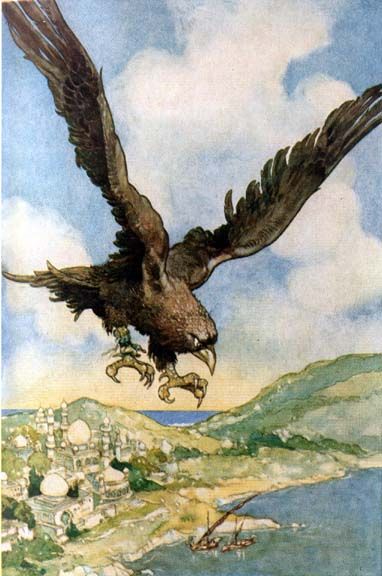
Sinbad with his wild adventures, including the giant Roc,

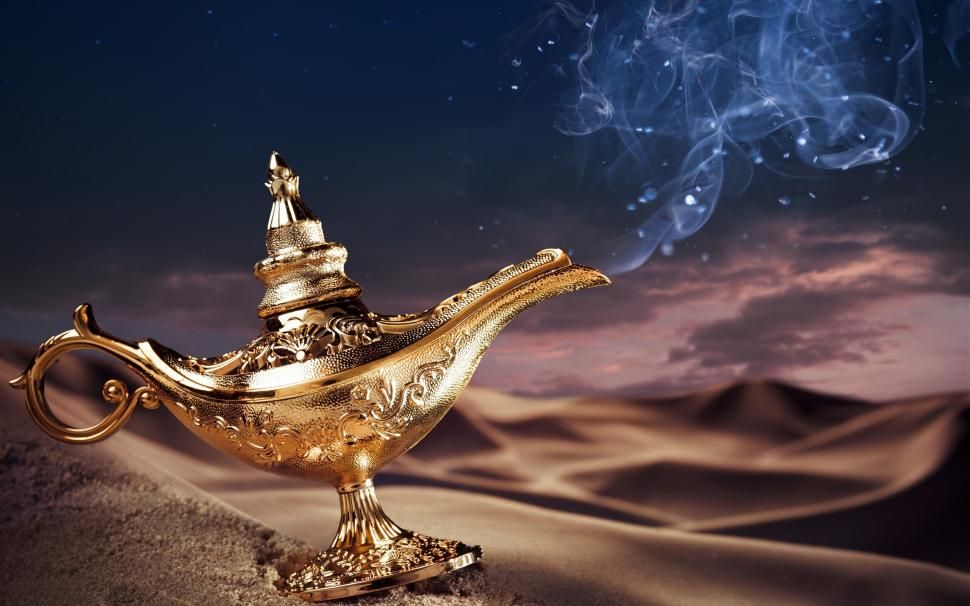
and, of course, Aladdin and his lamp.

After that, the choice will be up to you.  Perhaps you will be willing to sit, as that sultan did, and let Sharahzad keep you awake for 1001 nights.

As ever, thanks for reading.

Stay well,

Beware of what lamps you polish, unless Robin Williams is inside,

And remember that, as always, there’s

MTCIDC

O
PS

Perhaps, to get you started, you might read this very full and helpful article:  https://en.wikipedia.org/wiki/One_Thousand_and_One_Nights

The Doubtful Sea Series Facebook Page

The Doubtful Sea Series Facebook Page

  • Ollamh

Categories

  • Artists and Illustrators
  • Economics in Middle-earth
  • Fairy Tales and Myths
  • Films and Music
  • Games
  • Heroes
  • Imaginary History
  • J.R.R. Tolkien
  • Language
  • Literary History
  • Maps
  • Medieval Russia
  • Military History
  • Military History of Middle-earth
  • Narnia
  • Narrative Methods
  • Poetry
  • Research
  • Star Wars
  • Terra Australis
  • The Rohirrim
  • Theatre and Performance
  • Tolkien
  • Uncategorized
  • Villains
  • Writing as Collaborators
Follow doubtfulsea on WordPress.com

Across the Doubtful Sea

Recent Postings

  • More Troy? July 29, 2026
  • Prismatic July 20, 2026
  • Arboricidal July 15, 2026
  • Towering.3 July 8, 2026
  • Towering.2 July 1, 2026
  • Gundulf June 24, 2026
  • Homeric? June 17, 2026
  • Tennis, Anyone? June 10, 2026
  • 1002? June 3, 2026

Blog Statistics

  • 118,296 Views

Posting Archive

  • July 2026 (5)
  • June 2026 (4)
  • May 2026 (4)
  • April 2026 (5)
  • March 2026 (4)
  • February 2026 (4)
  • January 2026 (4)
  • December 2025 (5)
  • November 2025 (4)
  • October 2025 (5)
  • September 2025 (4)
  • August 2025 (4)
  • July 2025 (5)
  • June 2025 (4)
  • May 2025 (4)
  • April 2025 (5)
  • March 2025 (4)
  • February 2025 (4)
  • January 2025 (5)
  • December 2024 (4)
  • November 2024 (4)
  • October 2024 (5)
  • September 2024 (4)
  • August 2024 (4)
  • July 2024 (5)
  • June 2024 (4)
  • May 2024 (5)
  • April 2024 (4)
  • March 2024 (4)
  • February 2024 (4)
  • January 2024 (5)
  • December 2023 (4)
  • November 2023 (5)
  • October 2023 (4)
  • September 2023 (4)
  • August 2023 (5)
  • July 2023 (4)
  • June 2023 (4)
  • May 2023 (5)
  • April 2023 (4)
  • March 2023 (5)
  • February 2023 (4)
  • January 2023 (4)
  • December 2022 (4)
  • November 2022 (5)
  • October 2022 (4)
  • September 2022 (4)
  • August 2022 (5)
  • July 2022 (4)
  • June 2022 (5)
  • May 2022 (4)
  • April 2022 (4)
  • March 2022 (5)
  • February 2022 (4)
  • January 2022 (4)
  • December 2021 (5)
  • November 2021 (4)
  • October 2021 (4)
  • September 2021 (5)
  • August 2021 (4)
  • July 2021 (4)
  • June 2021 (5)
  • May 2021 (4)
  • April 2021 (4)
  • March 2021 (5)
  • February 2021 (4)
  • January 2021 (4)
  • December 2020 (5)
  • November 2020 (4)
  • October 2020 (4)
  • September 2020 (5)
  • August 2020 (4)
  • July 2020 (5)
  • June 2020 (4)
  • May 2020 (4)
  • April 2020 (5)
  • March 2020 (4)
  • February 2020 (4)
  • January 2020 (6)
  • December 2019 (4)
  • November 2019 (4)
  • October 2019 (5)
  • September 2019 (4)
  • August 2019 (4)
  • July 2019 (5)
  • June 2019 (4)
  • May 2019 (5)
  • April 2019 (4)
  • March 2019 (4)
  • February 2019 (4)
  • January 2019 (5)
  • December 2018 (4)
  • November 2018 (4)
  • October 2018 (5)
  • September 2018 (4)
  • August 2018 (5)
  • July 2018 (4)
  • June 2018 (4)
  • May 2018 (5)
  • April 2018 (4)
  • March 2018 (4)
  • February 2018 (4)
  • January 2018 (5)
  • December 2017 (4)
  • November 2017 (4)
  • October 2017 (4)
  • September 2017 (4)
  • August 2017 (5)
  • July 2017 (4)
  • June 2017 (4)
  • May 2017 (5)
  • April 2017 (4)
  • March 2017 (5)
  • February 2017 (4)
  • January 2017 (4)
  • December 2016 (4)
  • November 2016 (5)
  • October 2016 (6)
  • September 2016 (5)
  • August 2016 (5)
  • July 2016 (5)
  • June 2016 (5)
  • May 2016 (4)
  • April 2016 (4)
  • March 2016 (5)
  • February 2016 (4)
  • January 2016 (4)
  • December 2015 (5)
  • November 2015 (5)
  • October 2015 (4)
  • September 2015 (5)
  • August 2015 (4)
  • July 2015 (5)
  • June 2015 (5)
  • May 2015 (4)
  • April 2015 (3)
  • March 2015 (4)
  • February 2015 (4)
  • January 2015 (4)
  • December 2014 (5)
  • November 2014 (4)
  • October 2014 (6)
  • September 2014 (1)

Blog at WordPress.com.

  • Subscribe Subscribed
    • doubtfulsea
    • Join 75 other subscribers
    • Already have a WordPress.com account? Log in now.
    • doubtfulsea
    • Subscribe Subscribed
    • Sign up
    • Log in
    • Report this content
    • View site in Reader
    • Manage subscriptions
    • Collapse this bar
Loading Comments...