• About

doubtfulsea

~ adventure fantasy

Tag Archives: Fantasy

Towering.3

08 Wednesday Jul 2026

Posted by Ollamh in Uncategorized

≈ Leave a comment

Tags

Aucassin et Nicolette, Barad-Dur, chantefable, Childe Roland, dark-tower, English Fairy Tales, Fantasy, Illustrations of Northern Antiquities, King Lear, lotr, Men and Women, Minas Morgul, Robert Browning, Shakespeare, the Dark Tower, The Lord of the Rings, the Morannon, Tolkien, towers

As ever, welcome, dear readers.

In our last, we began a tour and catalogue of towers as we see them in The Lord of the Rings.

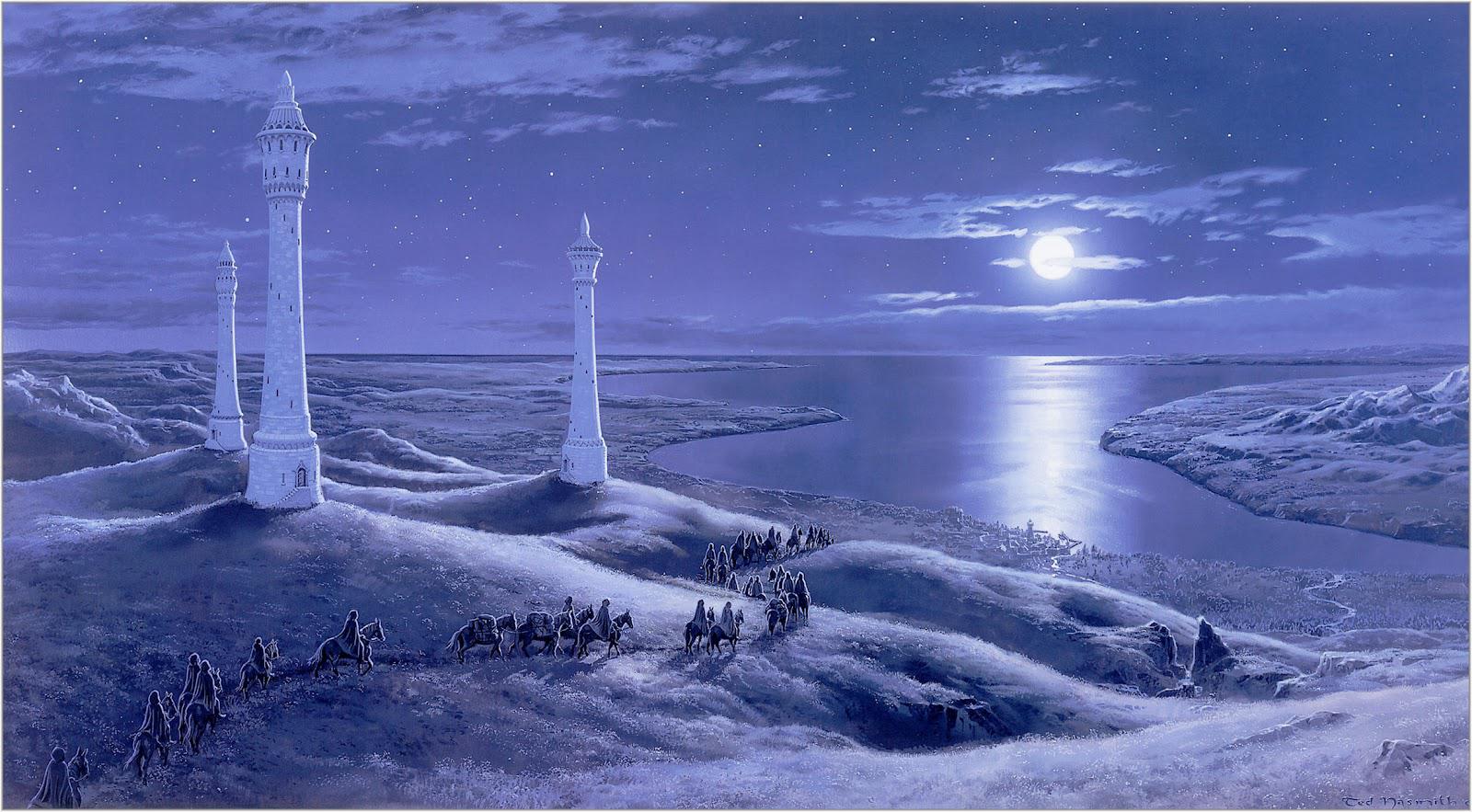
We set off from the Elvish towers in the far west of Middle-earth.

(Ted Nasmith)

From there, we traveled east and south to Amon Sul, aka Weathertop.

(Alan Lee)

Unlike the Fellowship, we then went all the way down along the western side of the Misty Mountains

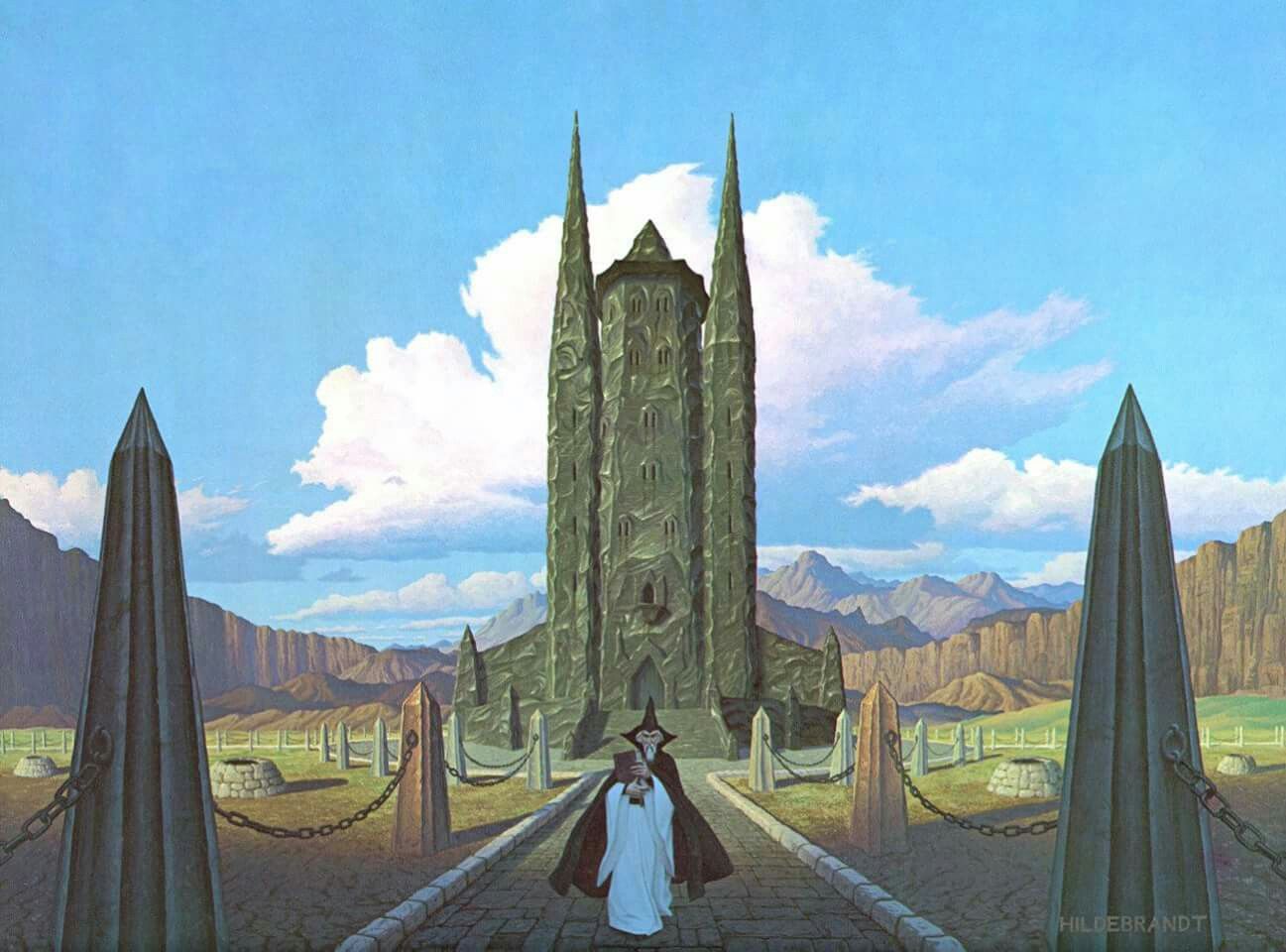
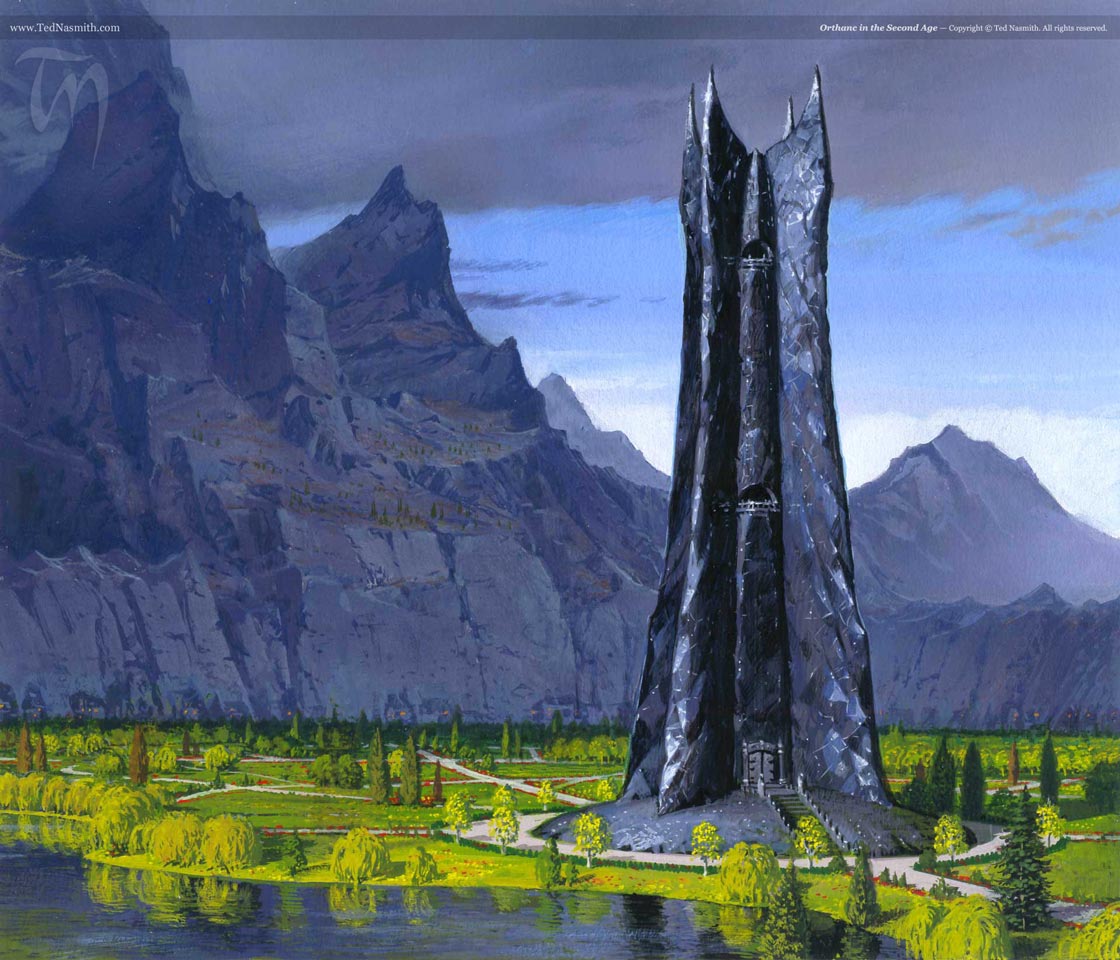
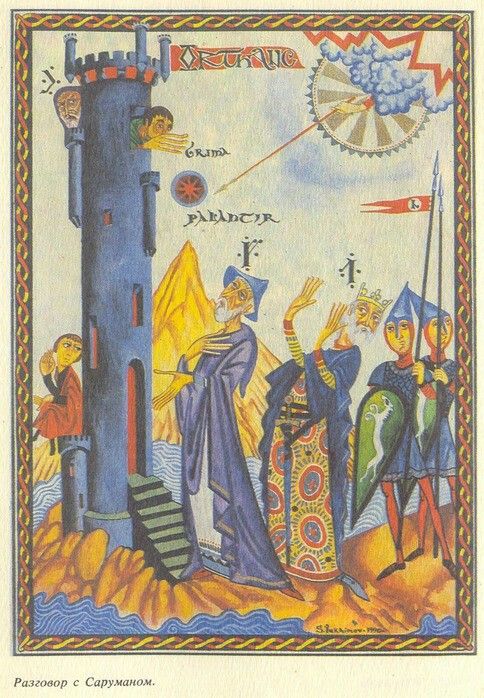
until we reached Isengard and the tower of Orthanc.

(Ted Nasmith)

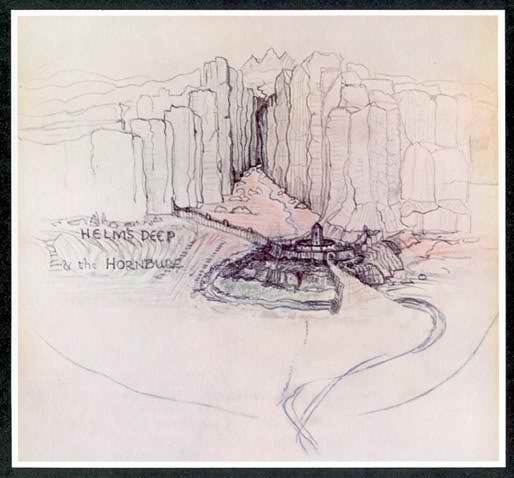
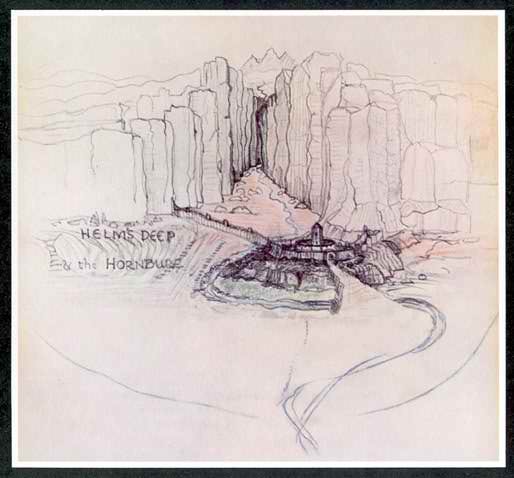
Leaving Isengard, we journeyed farther south yet to Helm’s Deep and its tower

(JRRT)

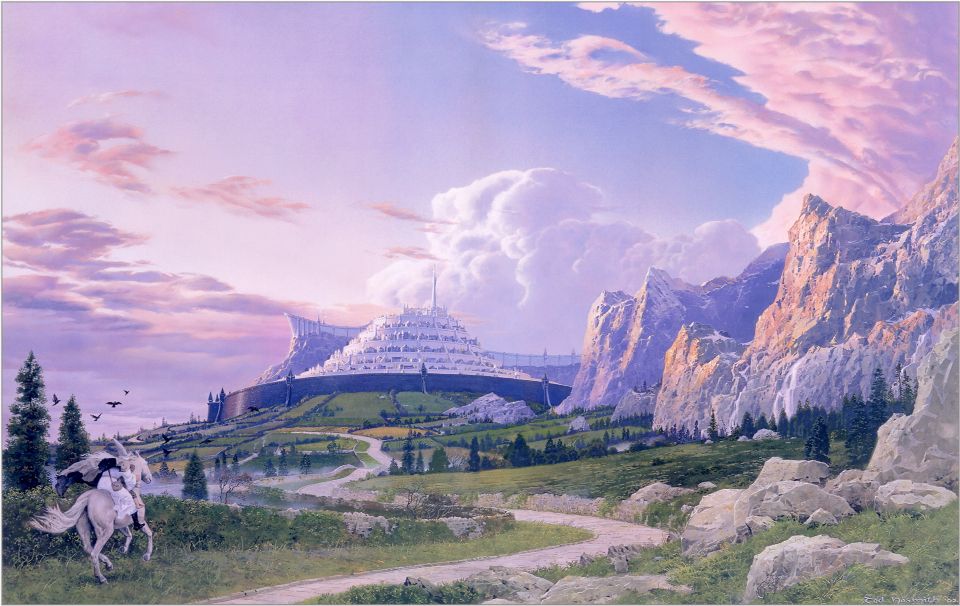
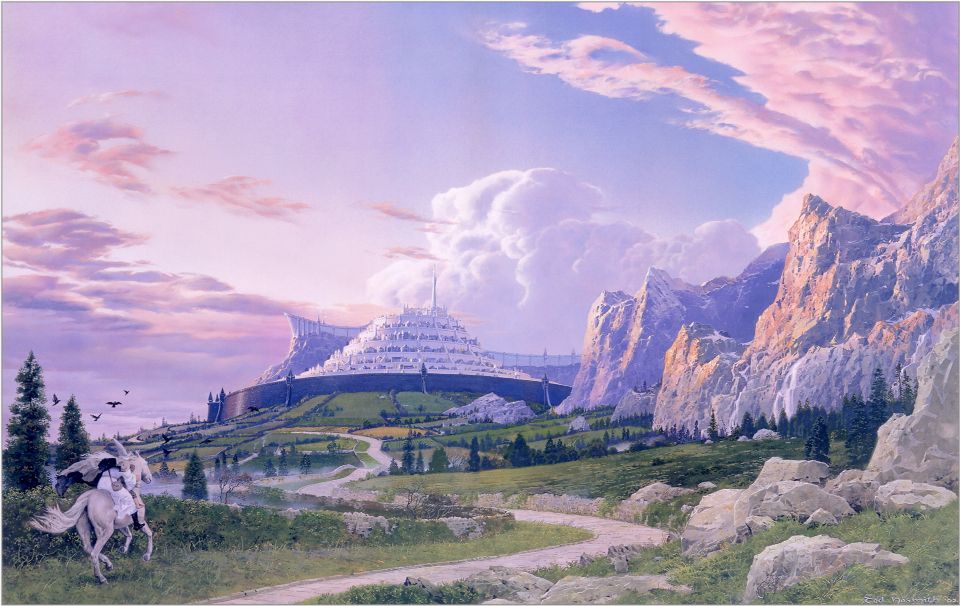
and then farther yet to Minas Tirith and the tower of Echthelion

(Ted Nasmith)

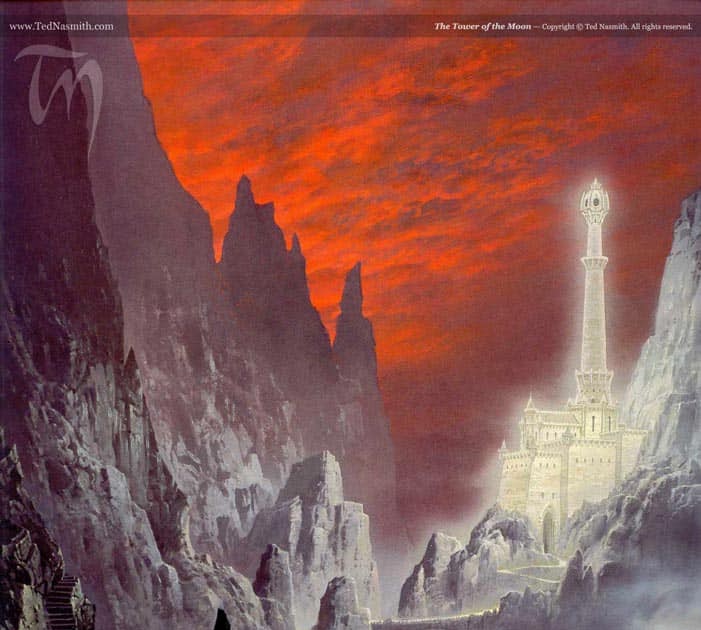
before turning eastwards, crossing the Anduin, to finish part 1 at Minas Morgul—formerly Minas Ithil.

(Ted Nasmith)

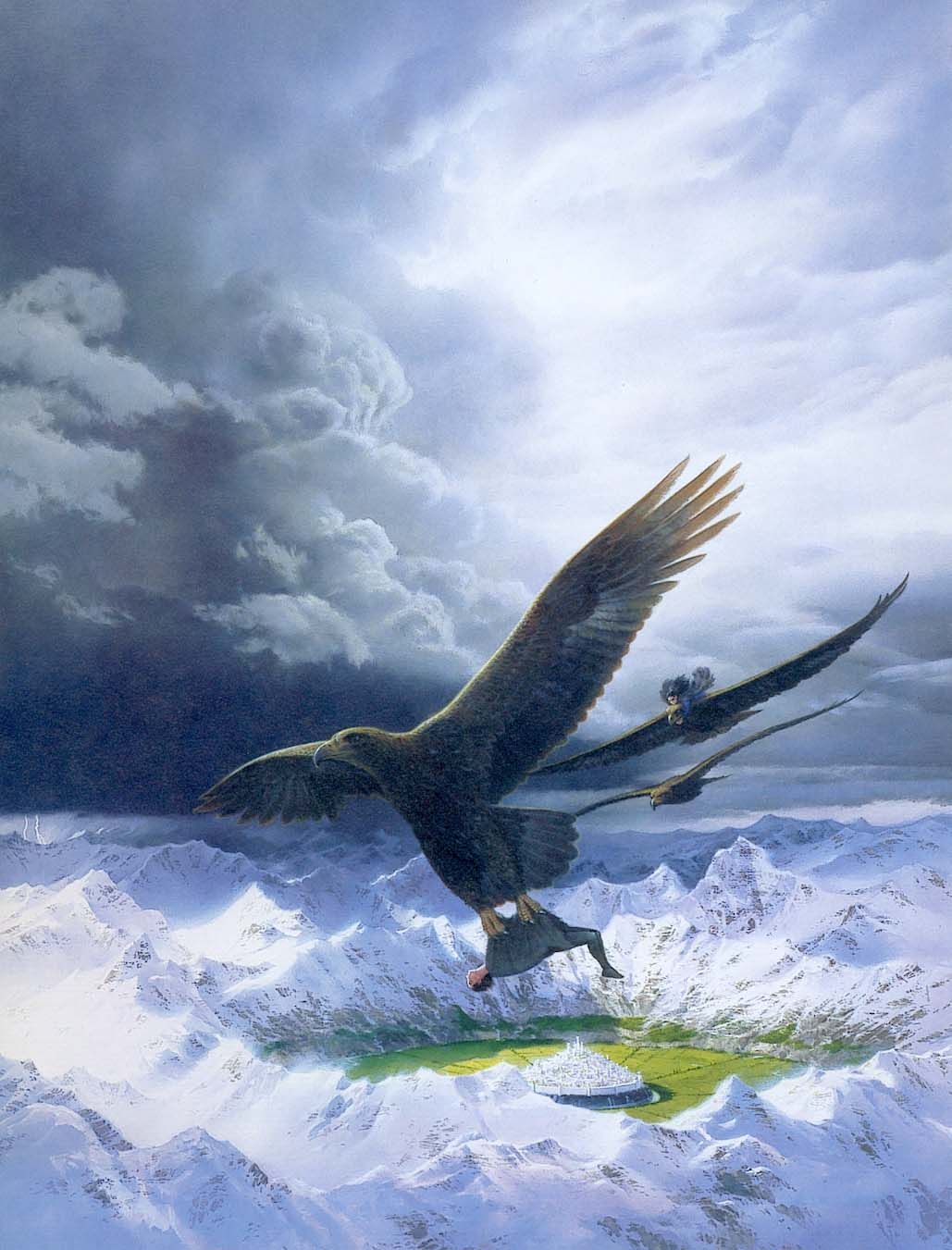
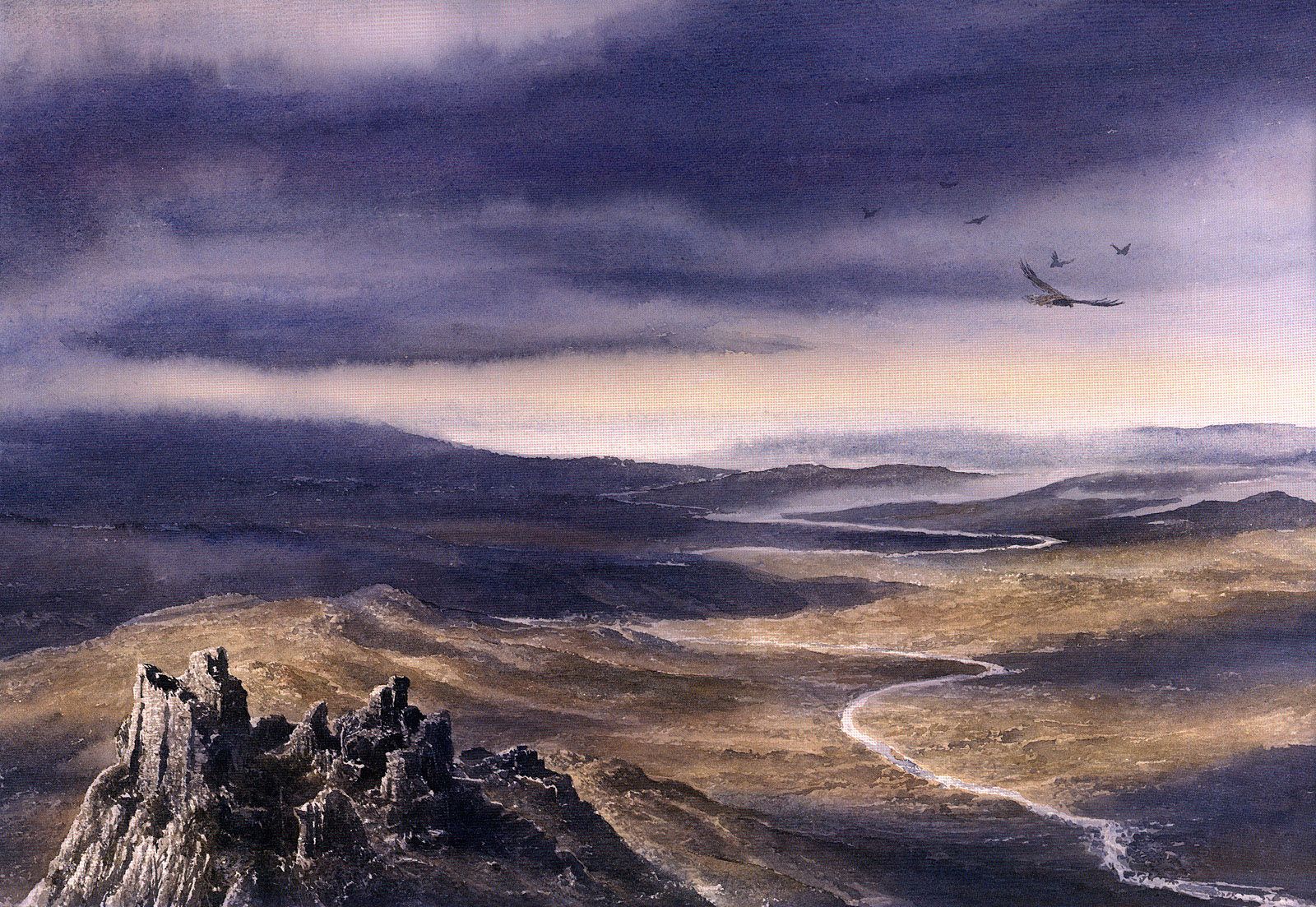
This marks the beginning of Frodo and Sam’s final leg, into Mordor, where we paused for the moment—but now we pick up the journey again and step into Mordor itself—but, as we’ll finish with Sauron’s hangout, let’s first grab an eagle

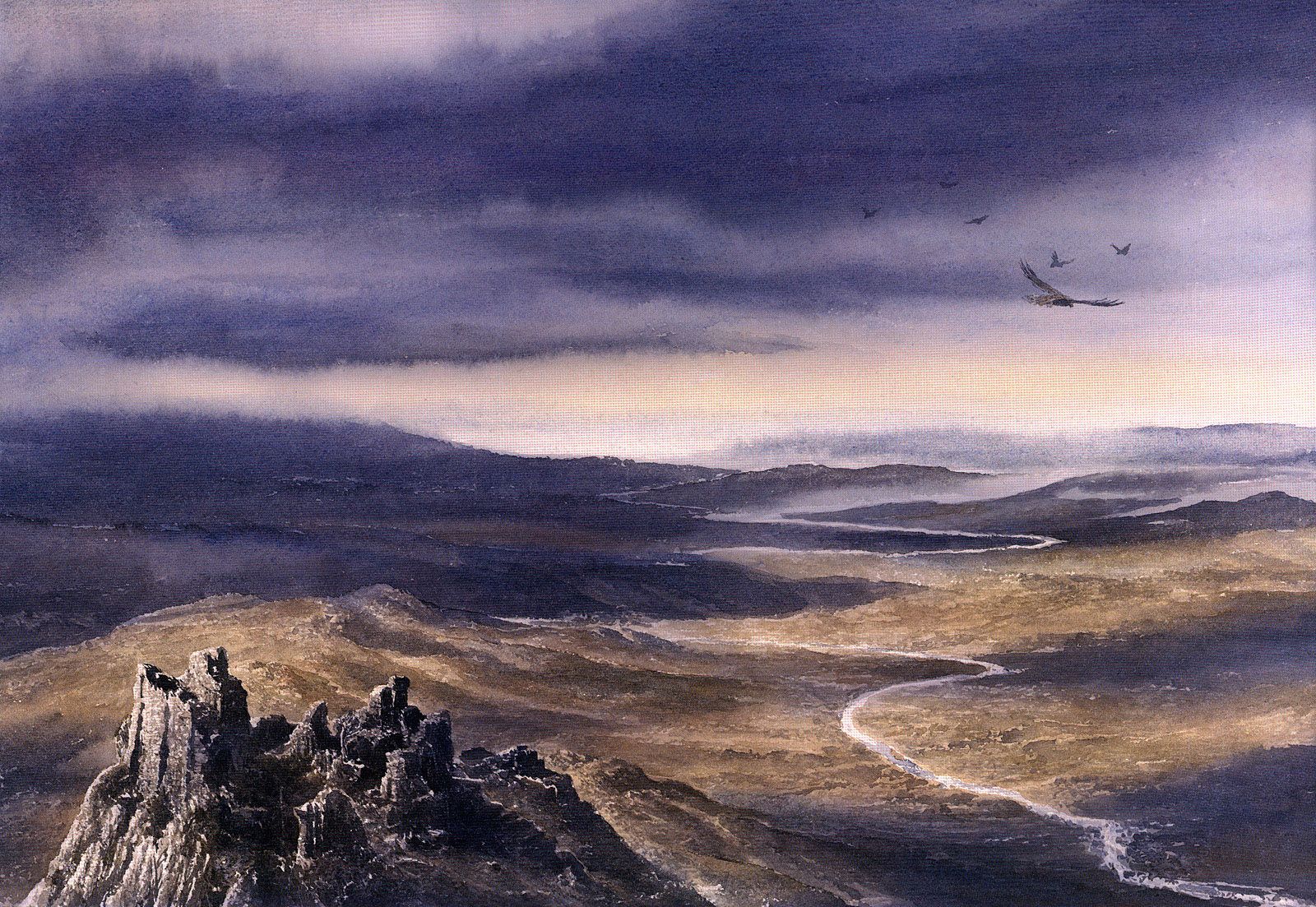
(Ted Nasmith—and I want to point out that this wonderful artist has illustrated things from Tolkien beyond The Hobbit and The Lord of the Rings—this image, for instance is an illustration from the history of the Elvish city of Gondolin.  For more on Gondolin, see:  https://en.wikipedia.org/wiki/Gondolin )

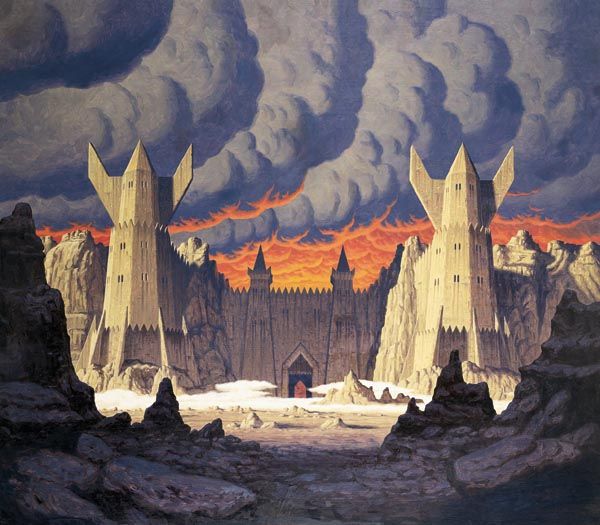
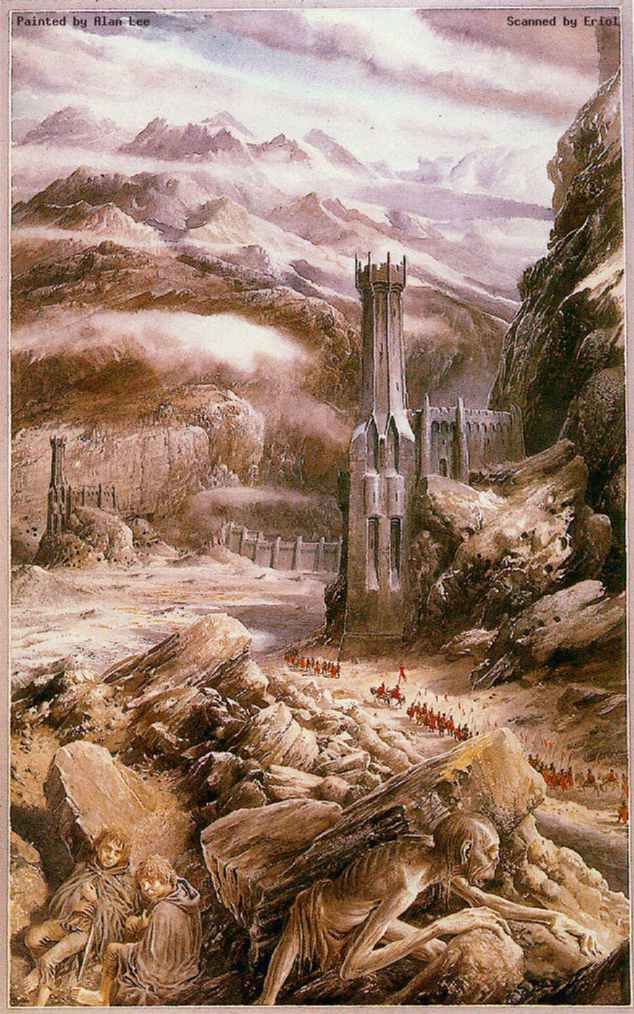
and fly north to the other entrance to Mordor, at the Morannon—the Black Gate.

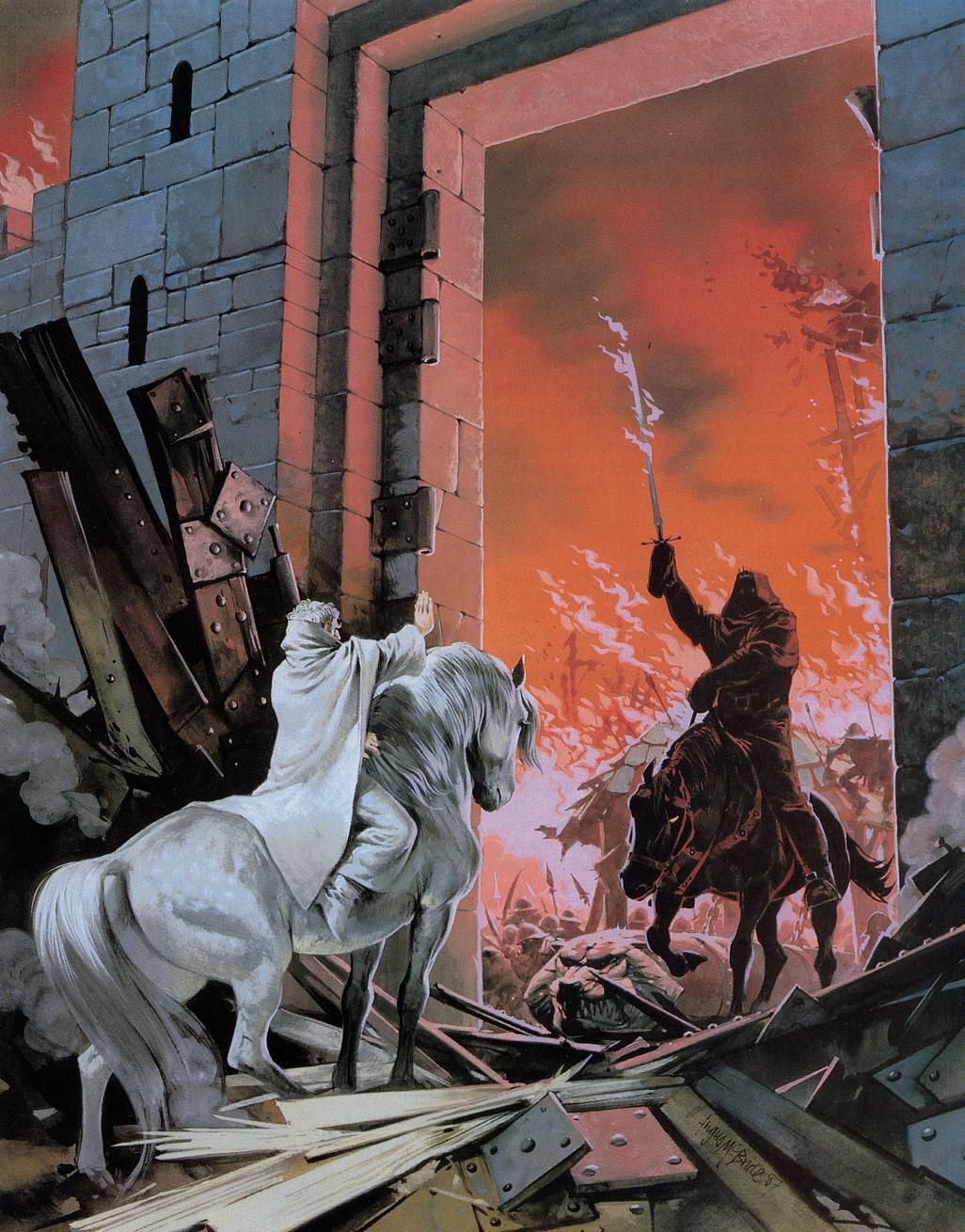
(an early illustration by the Hildebrandts)

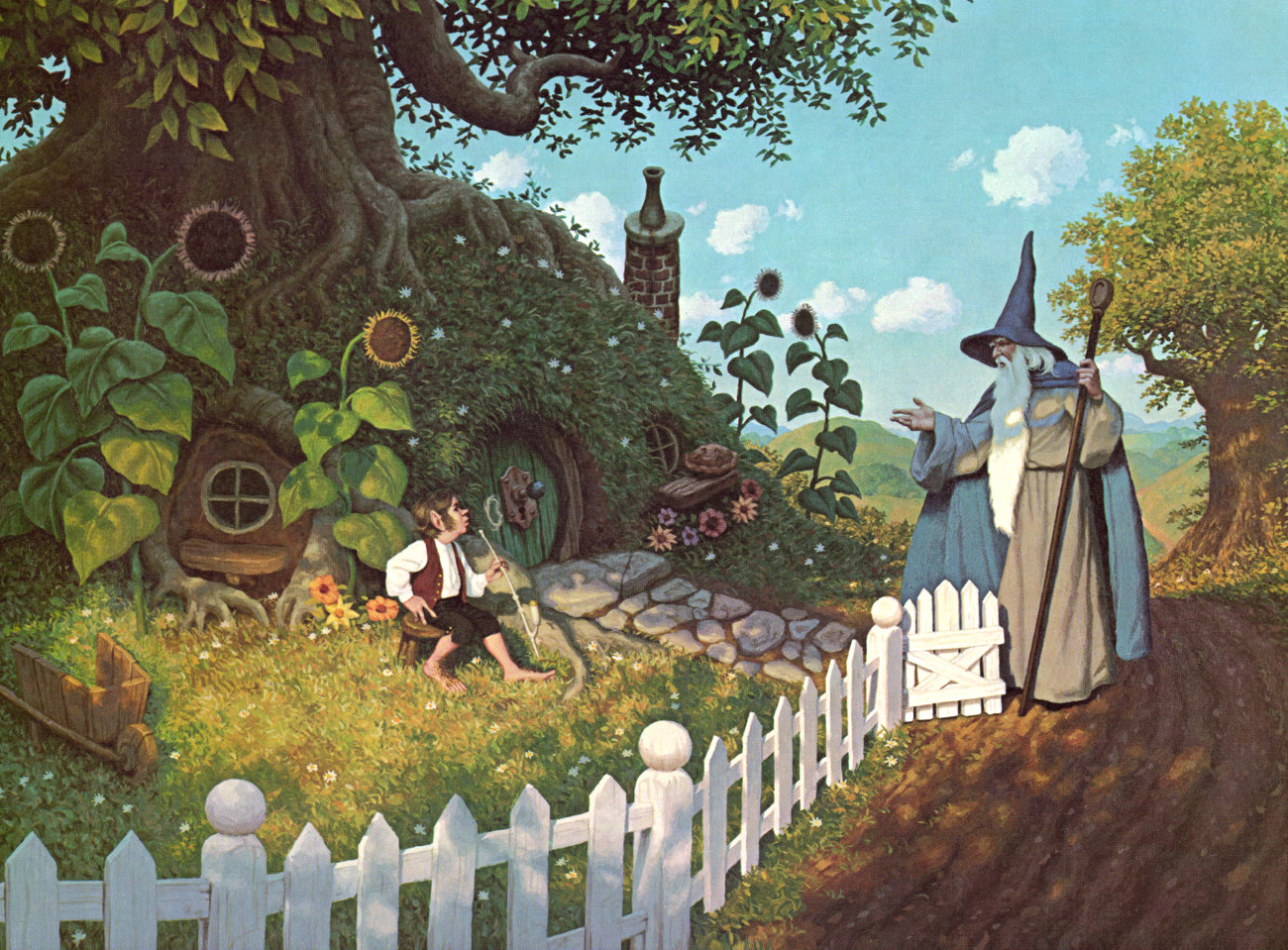
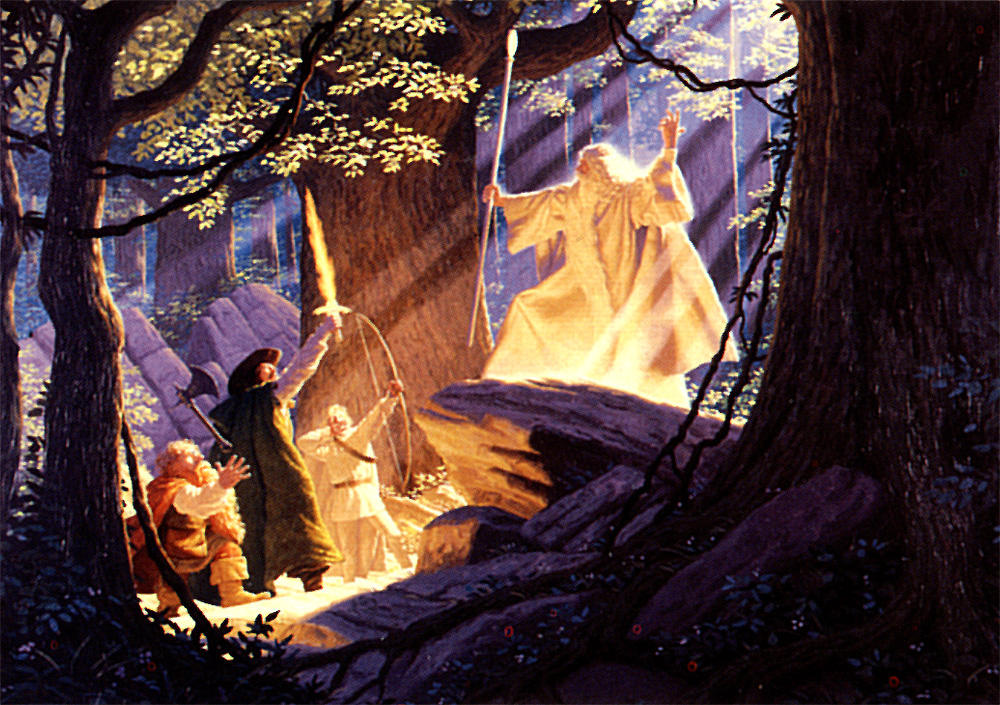
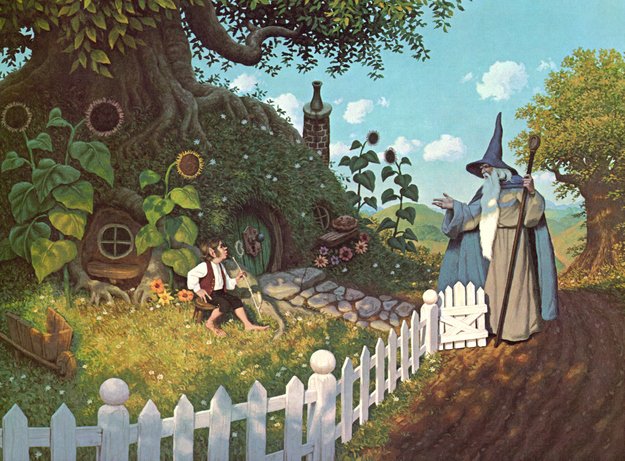
(a later illustration by Alan Lee—I thought the contrast in conceptions of the Gate was interesting.  The Hildebrandts were pioneers in Tolkien illustration and certain of their images—like Gandalf’s original appearance to Bilbo—have always been favorites.)

Our narrator gives us a description—and history–of the place:

“But as the ranges [of Ephel Duath and Ered Lithui] approached one another, being but parts of one great wall about the mournful plains of Lithlad and of Gorgoroth, and the bitter inland sea of Nurnen amidmost, they swung out long arms northward; and between these arms there was a deep defile.  This was Cirith Gorgor, the Haunted Pass, the entrance to the land of the Enemy.  High cliffs lowered upon either side, and thrust forward from its mouth were two sheer hills, black-boned and bare.  Upon them stood the Teeth of Mordor, two towers strong and tall.  In days long past they were built by the Men of Gondor in their pride and power, after the overthrow of Sauron and his flight, lest he should seek to return to his old realm.  But the strength of Gondor failed, and men slept, and for long years the towers stood empty.  Then Sauron returned.  Now the watch-towers, which had fallen into decay, were repaired and filled with arms, and garrisoned with ceaseless vigilance.  Stony-faced they were, with dark window-holes staring north and east and west, and each window was filled with sleepless eyes.

Across the mouth of the pass, from cliff to cliff, the Dark Lord had built a rampart of stone.  In it there was a single gate of iron, and upon its battlements sentinels paced unceasingly.  Beneath the hills on either side the rock was bored into a hundred caves and maggot-holes…”  (The Two Towers, Book Four, Chapter 3, “The Black Gate is closed”)

As always, we see in The Lord of the Rings a Middle-earth which has a history which stretches back far from the present moment.  Sauron had been defeated by the Last Alliance in SA 3441.  While traveling with Frodo and Sam, we set off in TA 3018—over 3000 (!) years later.  (Frodo is astonished to hear from Elrond an eye-witness account of that event—see The Fellowship of the Ring, Book Two, Chapter 2, “The Council of Elrond”)  Thus, the two original towers—ironically constructed to keep Sauron out—must have been built somewhere at the end of the Second Age or at the beginning of the Third, and the wall between constructed after c.TA 2942, when  Sauron had been driven by the White Council from Dol Goldur,

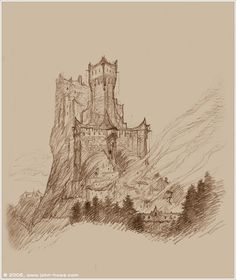
(John Howe—if we had more information about this place, I might have included it in our tour, but it appears to be more mentioned than explained in detail.)

and returned to Mordor.

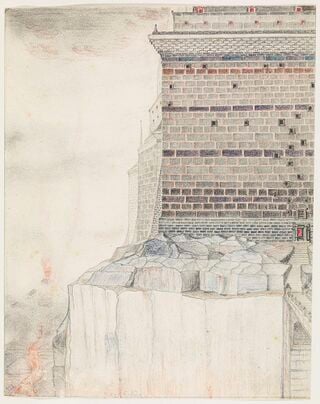
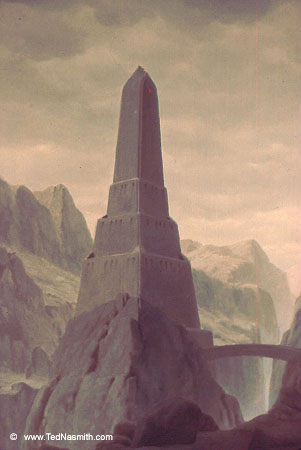
And now we come to the end of our tower tour at the most fearsome of those towers:  the Barad-dur.

(JRRT—a shame that this is only a fragment)

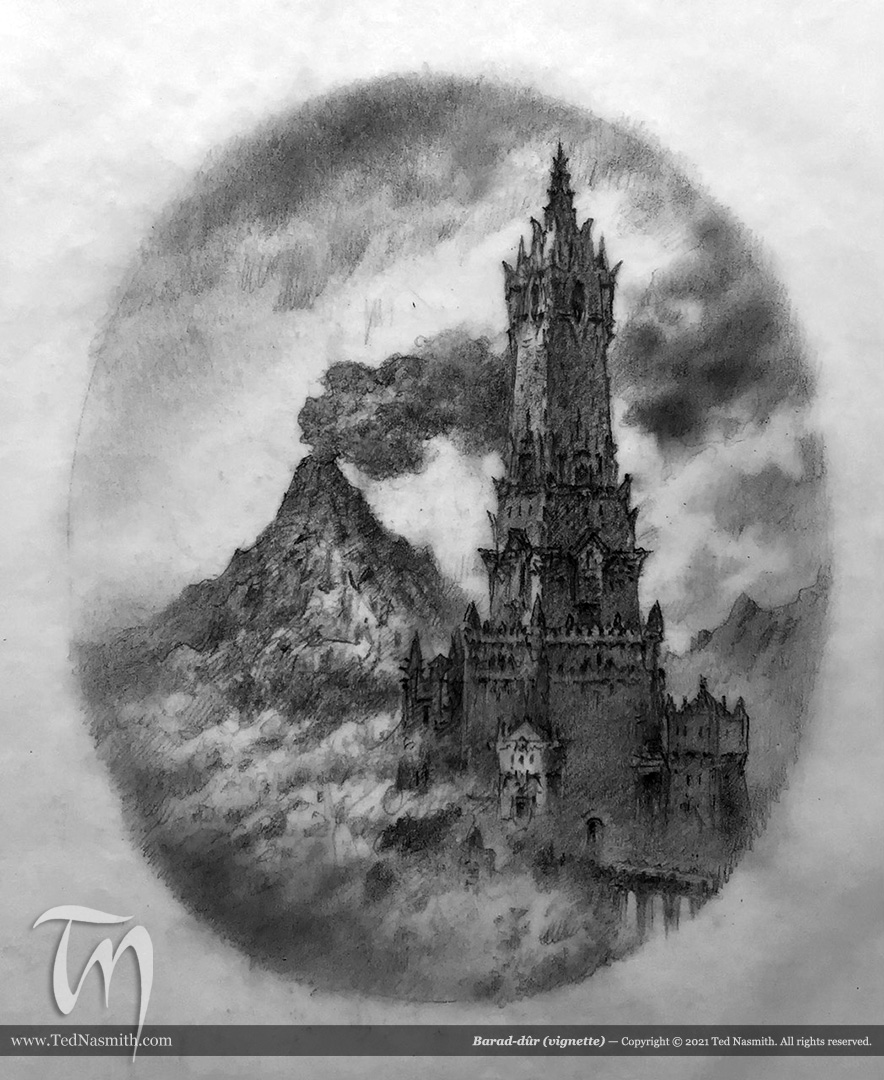
(both by Ted Nasmith—the first strikes me as more menacing in its monumentality, the second, more elaborate and baroque, suggesting a Sauron with a taste for the ornamental, rather than simply the grimly practical.)

Frodo first sees it at Amon Hen,

(Scott Peery—for more images see:  https://tolkiengateway.net/wiki/Category:Images_by_Scott_Peery )

when he puts on the Ring and first Minas Tirith appears, but then—

“But against Minas Tirith was set another fortress, greater and more strong.  Thither, eastward, unwilling his eyes were drawn…Then at last his gaze was held:  wall upon wall, battlement upon battlement, black, immeasurably strong, mountain of iron, gate of steel, tower of adamant, he saw it:  Barad-dur, Fortress of Sauron.”  (The Fellowship of the Ring, Book Two, Chapter 10, “The Breaking of the Fellowship”)

Sauron had begun the construction of this menacing place in SA 1000, completing it 600 years KinAlliance, returns to rebuild it in TA 2951 (Appendix B, “The Third Age”), its final destruction coming with the destruction of the Ring in TA 3019.

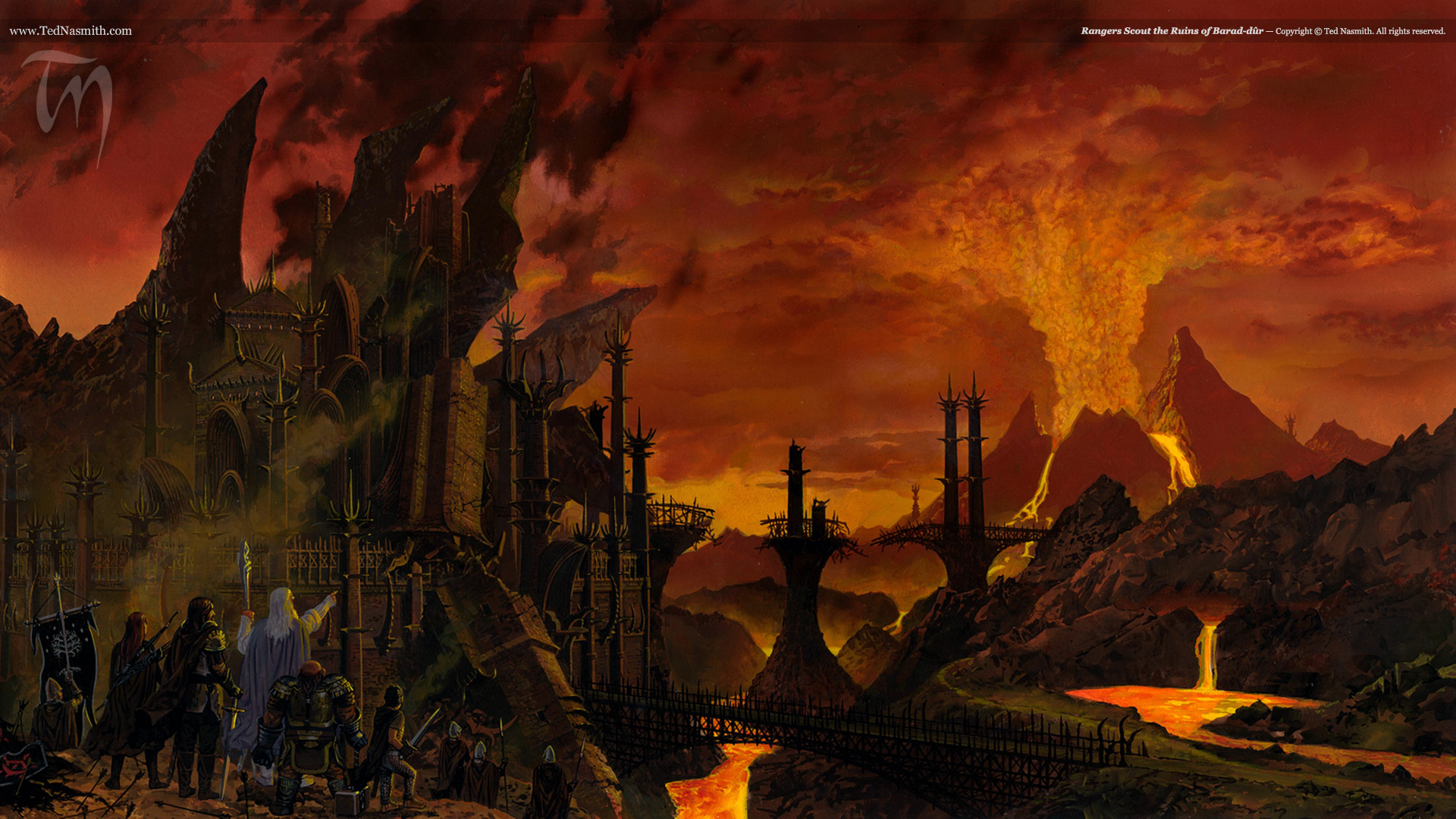
(Ted Nasmith—with the very interesting label “Rangers scout the ruins of Barad-dur”)

As we know, “Barad-dur” means “Dark Tower” and that name made me wonder about where it might have come from, apart from JRRT’s amazingly fertile imagination.

One possibility could be a poem by Robert Browning (1812-1889), entitled “Childe Roland to the Dark Tower Came”, which is in his 1855 collection Men and Women. 

It’s a rather creepy poem about a knight on an unknown mission—except that it seems to end at that Dark Tower.  You can read it here:  https://www.poetryfoundation.org/poems/1597010/childe-roland-to-the-dark-tower-came

The only reference in Letters is to another Browning poem, “The Pied Piper of Hamelin”, which Tolkien said he loathed, but the medieval setting and the popularity of Browning in the later 19th century might suggest that Tolkien had read it—with perhaps less distaste than he did “The Pied Piper”—but the Browning poem is actually his recreation of what might have been a much earlier ballad, only a fragment of which appears to survive, in Shakespeare’s King Lear, where, at the end of Act 3, Scene 4,  a major character, Edgar, pretending to be “Poor Tom”, a madman, recites:

“Childe Rowland to the darke Tower came,

His word was still, fie, foh, and fumme,

I smell the blood of a Brittish man.”

(This is from the “First Folio” of 1623—I always prefer using early versions of Shakespeare’s texts as their spelling echoes earlier English pronunciation—so-called “Shakespearean”, which you can hear here:  https://www.youtube.com/watch?v=y2QYGEwM1Sk  You can read the whole play in this older spelling here:  https://internetshakespeare.uvic.ca/doc/Lr_F1/scene/1.1/index.html )

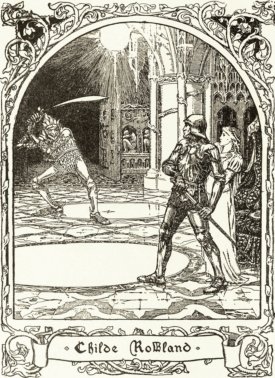
You probably know two of these lines from the English fairy tale “Jack and the Beanstalk”—sometimes called “Jack the Giant-Killer”–which you can read here, if you don’t know it, or would like to refresh your memory (start on page 99):  https://archive.org/details/englishfairytal00jacogoog/page/n8/mode/2up  You’ll also notice, facing the title page of this volume, an illustration entitled “Childe Rowland”,

a story which you can find beginning on page 117.  The editor of this text (English Fairy Tales, 1890), Joseph Jacobs, has provided a long note (pages 238-245) about his major source, citing Jamieson’s 1814 collection, Illustrations of Northern Antiquities where Jamieson reconstructs something which combines verse and prose—as JRRT sometimes does—in what is called a “chantefable”, in which a character called “Burd Ellen” is rescued from Elfland by “Child Rowland”, (“Child/e” is a title for a young nobleman pre-knighthood.) a familiar theme in a number of ballads and which Jamieson links to a Danish balled, “Rosmer Hafmand”.  You can read Jamieson’s account here:  https://archive.org/details/cu31924027097868/page/396/mode/2up

(For more on the one known surviving example of the “chantefable”, the 12th-13th century “Aucassin et Nicolette”, see:  https://en.wikipedia.org/wiki/Aucassin_and_Nicolette ) 

So, did at least the name “Dark Tower” come from a literary source—Browning’s poem, say?

Or, can we turn to Browning’s source:  King Lear?

For all that Tolkien was not, initially a Shakespeare fan (see his letter to W.H. Auden, 7 June, 1955, Letters, 312), he later came to appreciate him—at least in performance—(see letter to Christopher Tolkien, 28 July, 1944, Letters, 126), and we know that he had been exposed to Shakespeare’s works at an early age, so perhaps Shakespeare was a—if not the—inspiration?

In any event, that tower was doomed to ultimate destruction with that of the Ring, as we read:

“The earth groaned and quaked.  The Towers of the Teeth swayed, tottered,  and fell down; the mighty rampart crumbled; the Black Gate was hurled in ruin; and from far away, now dim, now growing, now mounting to the clouds, there came a drumming rumble, a roar, a long echoing roll of ruinous noise.”  (The Return of the King, Book Six, Chapter 4, “The Field of Cormallen”)

A Tolkien illustration by Ted Nasmith

(Ted Nasmith)

And with the end of the Dark Tower, this tour of towers ends, as well.

Thanks for reading, as always.

Stay well,

If you are trapped underground and find a simple ring, consider, before you pick it up, that there may be consequences,

And expect

MTCIDC

O

Towering.2

01 Wednesday Jul 2026

Posted by Ollamh in Uncategorized

≈ Leave a comment

Tags

Fantasy, Helm's Deep, Isengard, Minas Ithil, Minas Morgul, Minas Tirith, Orthanc, The Lord of the Rings, Tolkien, Tower Hills, Tower of Echthelion, towers, towers in The Lord of the Rings, Weathertop

Welcome, dear readers, as always.

Walls have always been a problem for attackers, as they’re clearly meant to be.  There have always been several possibilities of how to deal with them:

1. attack its fabric

2. go over with a ladder (this is called an “escalade” and is, as you can imagine, an iffy method of assault)

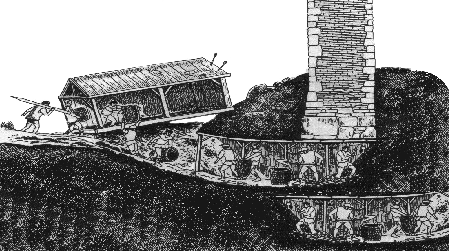
3. dig under (tunneling)

(This is from the very good “War History Online” site:  https://www.warhistoryonline.com/

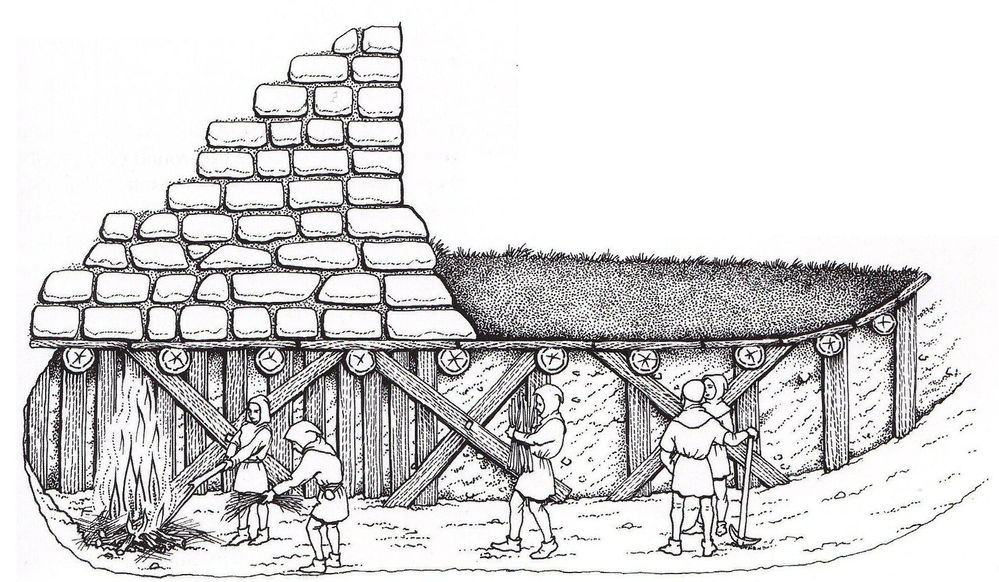
4. dig under to destroy (undermining)

(And this is from another very interesting site, “Classroom Adventures”, which has an educational agenda with which I agree:  https://www.classroomadventures.co.uk/ )

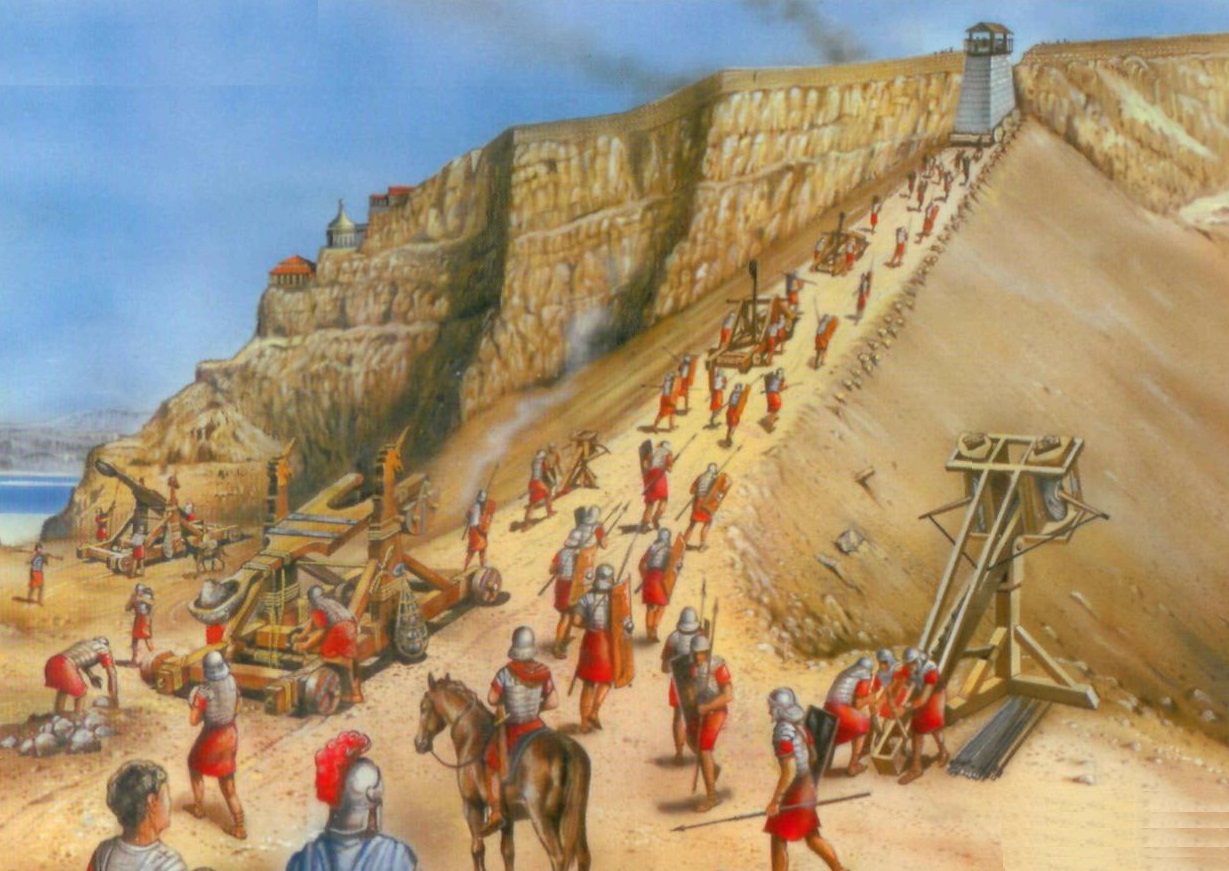
5. if you’re the Romans, you might build an enormous ramp to lead up to the top of the wall

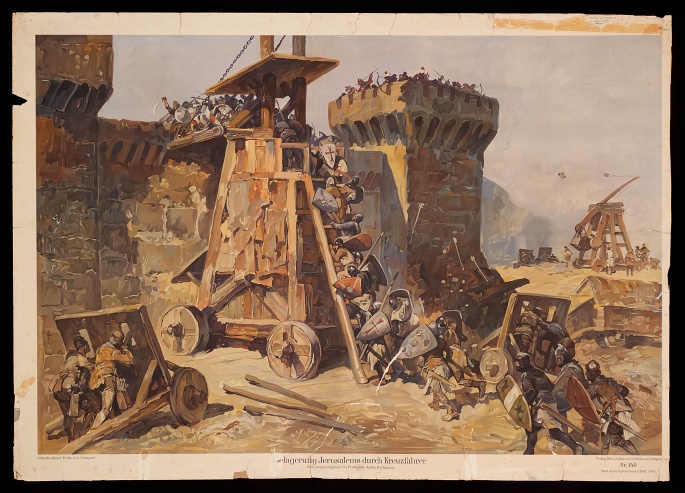
6. or you might build a tower a little higher than the wall, roll it up to the wall, and climb from it onto the wall

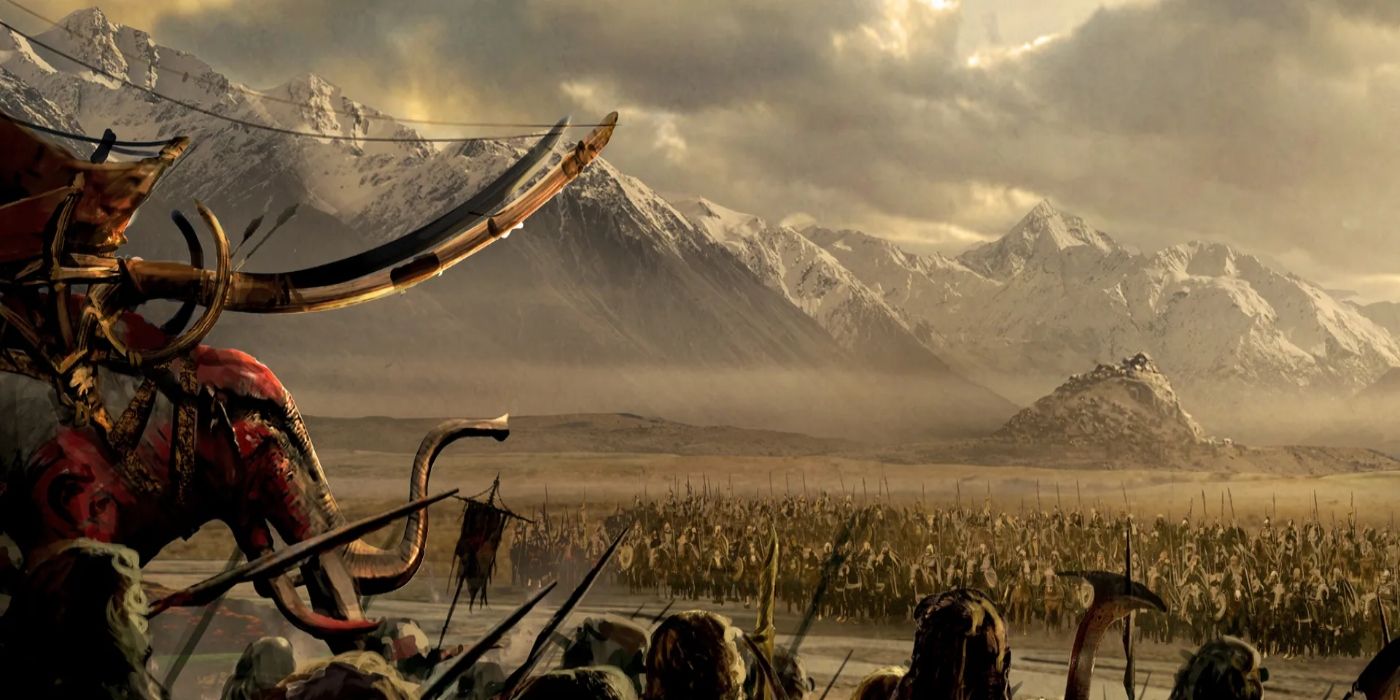
In an earlier posting, I examined this last in a review of the recent The War of the Rohrrim

for which, see “Towering”, 28 January, 2026.                                       

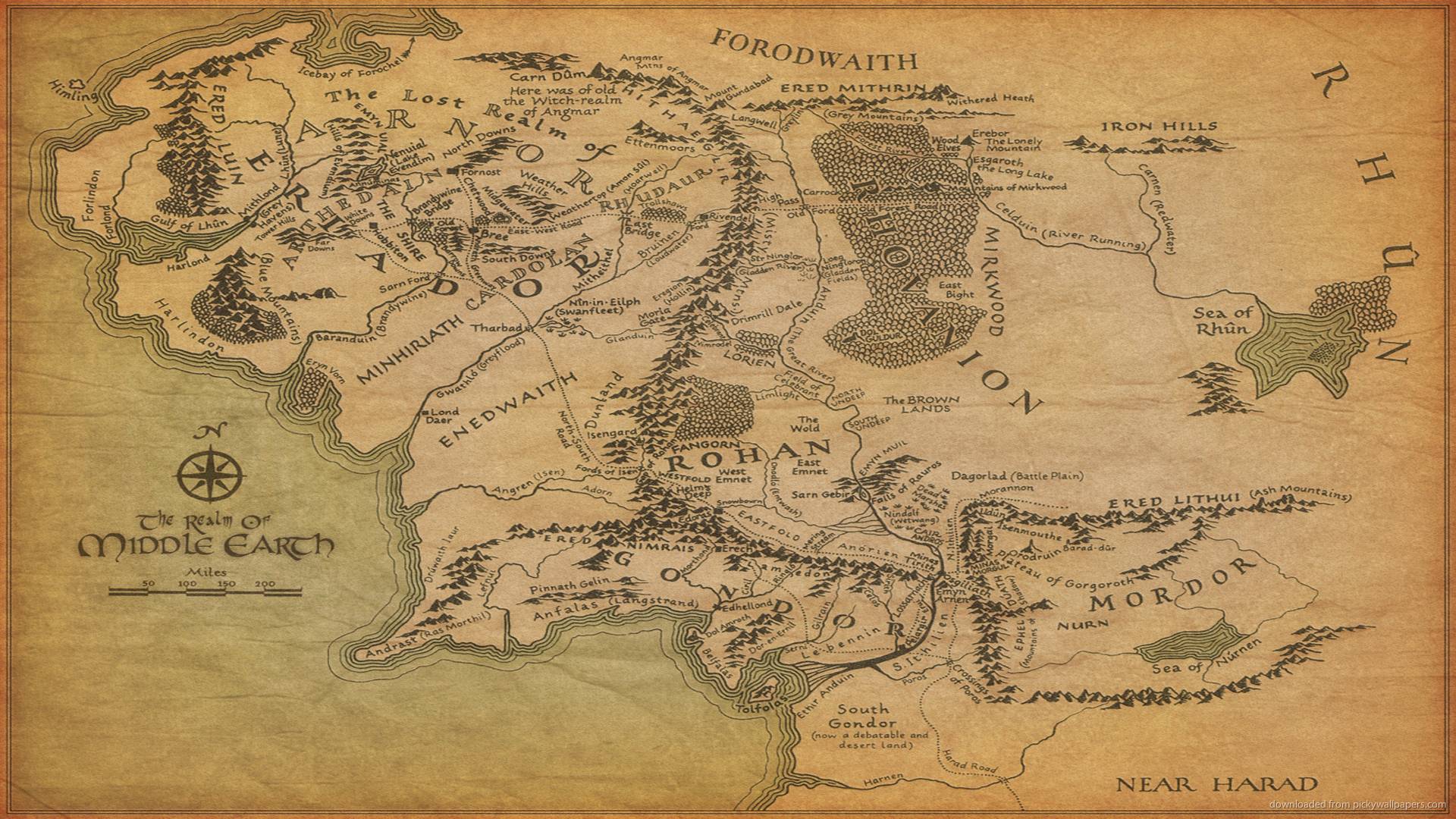
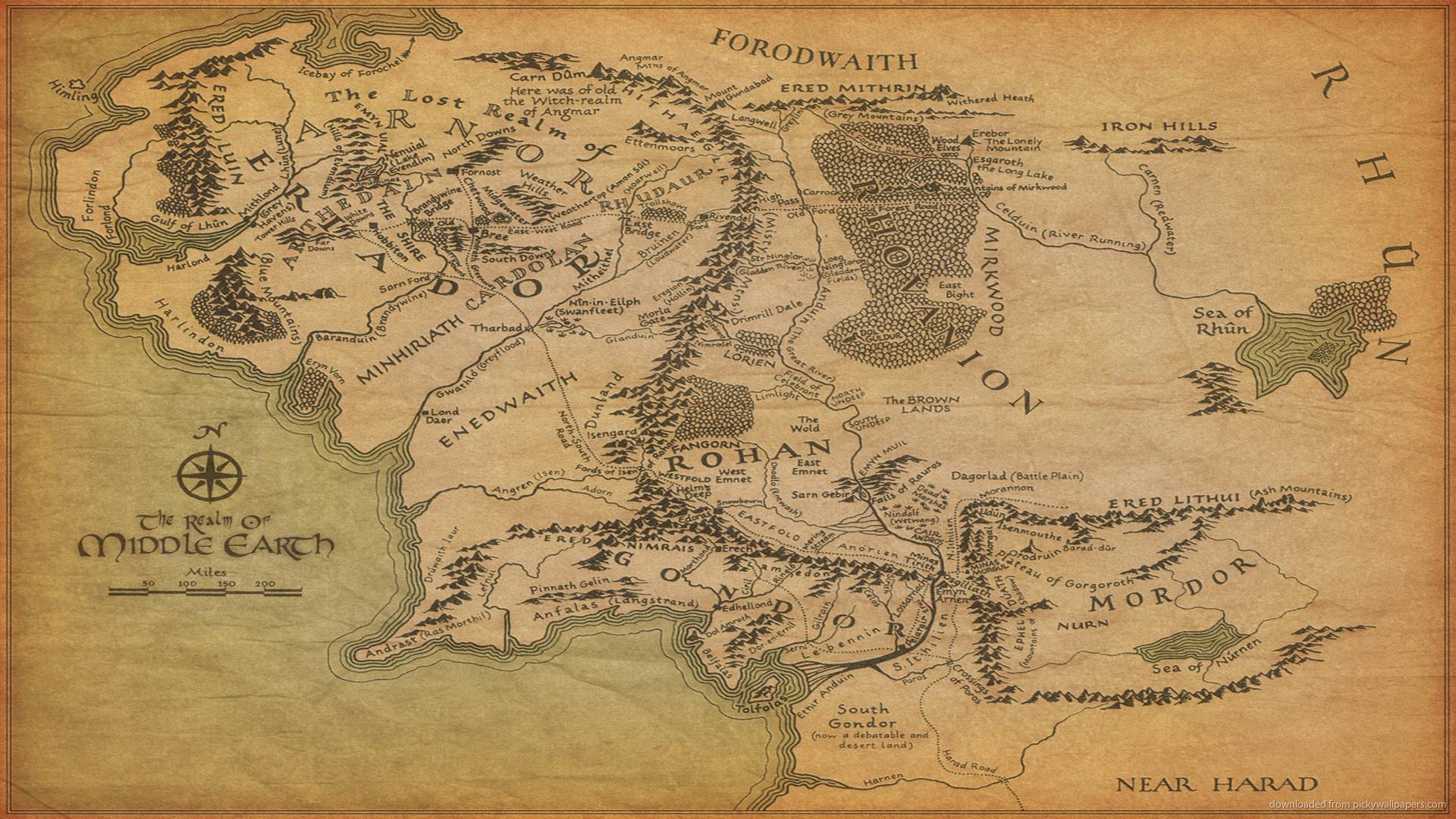
I have titled this “Towering.2”, but it’s not about walls and getting over them using a tower, however, but about towers themselves, specifically towers in The Lord of the Rings, in which there are a surprising number, of which I thought it might be fun to make a sort of catalogue, visiting them more or less geographically.

To do so, we begin to the far west of the Shire, just this side of the Grey Havens, where we see the Tower Hills.

(Ted Nasmith)

As Tolkien describes them:

“Three Elf-towers of immemorial age were still to be seen on the Tower Hills beyond the western marches.  They shone far off in the moonlight.  The tallest was furthest away, standing alone upon a green mound.”  (“Prologue”, The Lord of the Rings) 

Walking eastward towards the Misty Mountains, crossing the Shire, but veering south from Bree, we reach Weathertop,

(Alan Lee)

of which Aragorn says:

“The Men of the West did not live here; though in their latter days they defended the hills for a while against the evil that came out of Angmar.  This path was made to serve the forts along the walls.  But long before, in the first days of the North Kingdom, they built a great watch-tower on Weathertop, Amon Sul they called it…once it was tall and fair.”  (The Fellowship of the Ring, Book One, Chapter 11, “A Knife in the Dark”)

Even with just two towers, we can begin to understand what JRRT was at such pains to suggest:  settlement in Middle-earth is very old and, as we’ll see, no one has built in such an elaborate fashion for many centuries—the Elf towers are of “immemorial age” and Amon Sul was built during the later reign of Argaleb I (ruled TA 1349-1356—just to give you a sense of time, Frodo was born in TA 2968).

From Weathertop, heading south and around the southern end of the Misty Mountains, we reach Isengard and the tower of Orthanc,

(Ted Nasmith)            

built sometime during the Second Age (Tolkien never appears to have provided a founding date—the Tolkien Gateway offers:  “it must have been built between S.A. 3320, the year in which the realms of Gondor and Arnor were established, and S.A. 3430, the year in which the Last Alliance of Elves and Men was formed to resist Sauron‘s tyranny”).

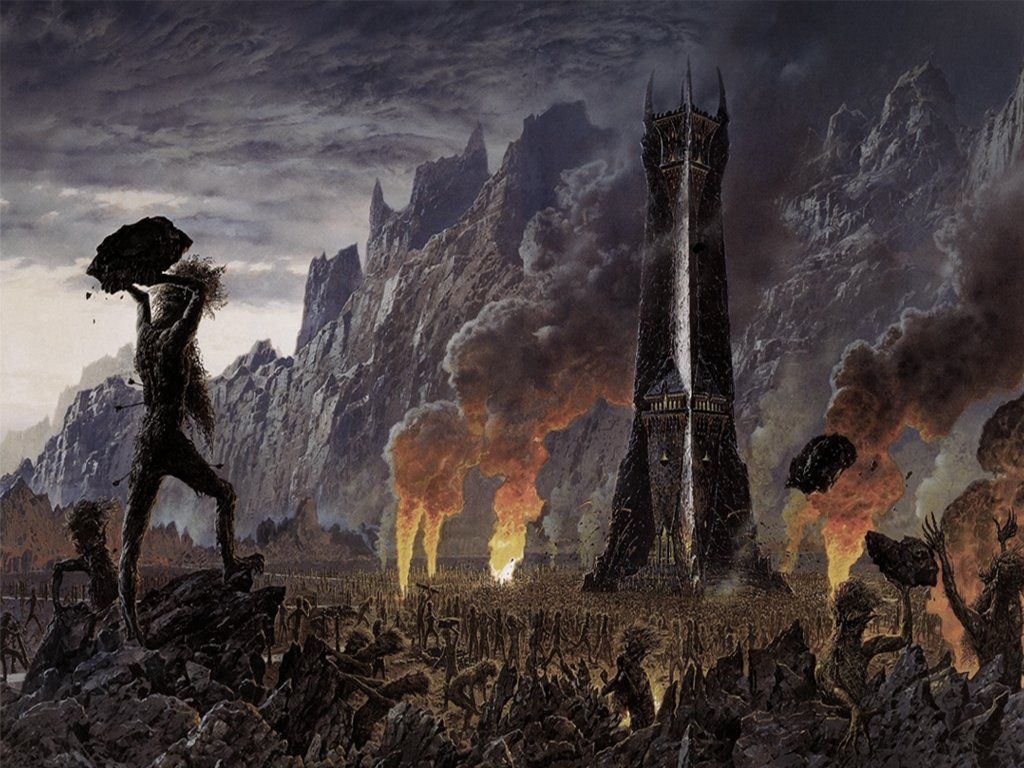
We can say, however, that Saruman began his occupation of the site in TA 2759, so, at the time of The Lord of the Rings and the Ents’ attack upon it (TA 3019)

(Ted Nasmith)

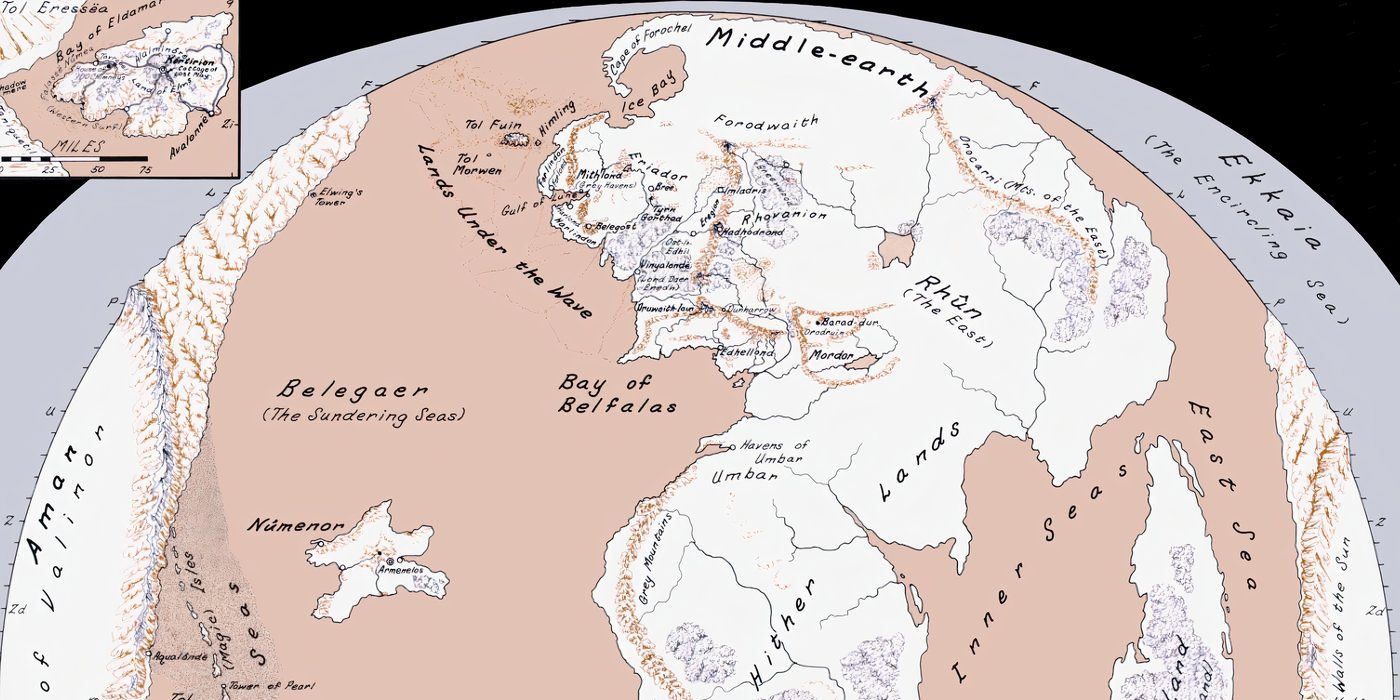
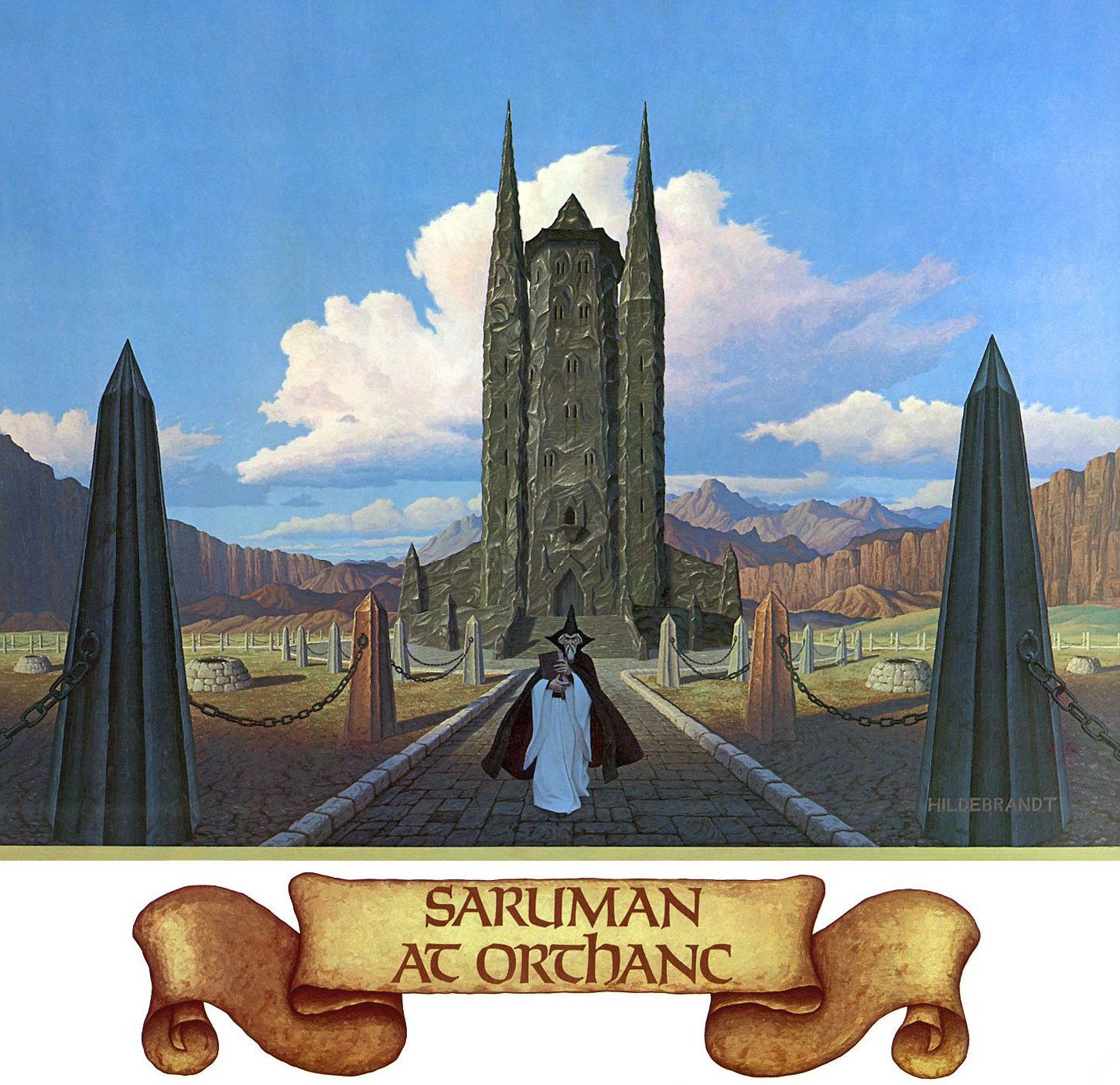
he had been in possession of it for over 250 years—one more example of how aged everything in Middle-earth is.  It’s described as something of a technological wonder—but also quite menacing—especially when we remember that Saruman attempted to keep Gandalf captive at the top, among those pinnacles:

“There stood a tower of marvellous shape.  It was fashioned by the builders of old, who smoothed the Ring of Isengard, and yet it seemed a thing not made by the craft of Men, but riven from the bones of the earth in the ancient torment of the hills.  A peak and isle of rock it was, black and gleaming hard; four mighty piers of many-sided stone were welded into one, but near the summit they opened into gaping horns, their pinnacles sharp as the points of spears, keen-edged as knives.”  (The Two Towers, Book Three, Chapter 8, “The Road to Isengard”)

From here, we travel farther south, along the eastern side of the Ered Nimrais, the White Mountains, until we reach Helm’s Deep and its fortification with its tower, the Hornburg.

(JRRT)

As to foundation date, like Isengard, it seems vague:

“At Helm’s Gate, before the mouth of the Deep, there was a heel of rock thrust outwards by the northern cliff.  There upon its spur stood high walls of ancient stone, and within was a lofty tower.  Men said that in the far-off days of the glory of Gondor the sea-kings had built this fastness with the hands of giants.”  (The Two Towers, Book Three, Chapter 7, “Helm’s Deep”—that phrase “with the hands of giants” may have echoed in Tolkien’s memory from the Old English poem named “The Ruin”, which possibly describes the remains of Roman Aquae Sulis (modern Bath) and which has the phrase “brosnað enta geweorc”, “ruined is the work of giants”—with that “enta”, from which the Ents came—along with a similar phrase in “Maxims II”.  For more on this very poignant poem see:  https://en.wikipedia.org/wiki/The_Ruin )

Southeast now, along those same White Mountains, will bring us in the direction of the first of the two towers of the title of the second volume (but which towers?  Tolkien wrote to Rayner Unwin:  “The Two Towers gets as near as possible to finding a title to cover the widely divergent Books 3 and 4; and can be left ambiguous—it might refer to Isengard and Barad-dur, or to Minas Tirth and B; or Isengard and Cirith Ungol.”  Letter to Rayner Unwin, 17 August, 1953, Letters, 250)

We now see ahead of us Minas Tirith,

(Ted Nasmith)

constructed in SA 3300’s, by Anarion, son of Elendil, and called initially Minas Anor, “the tower of the sun”, with its Tower of Echthelion, as one of the Fellowship first views it:

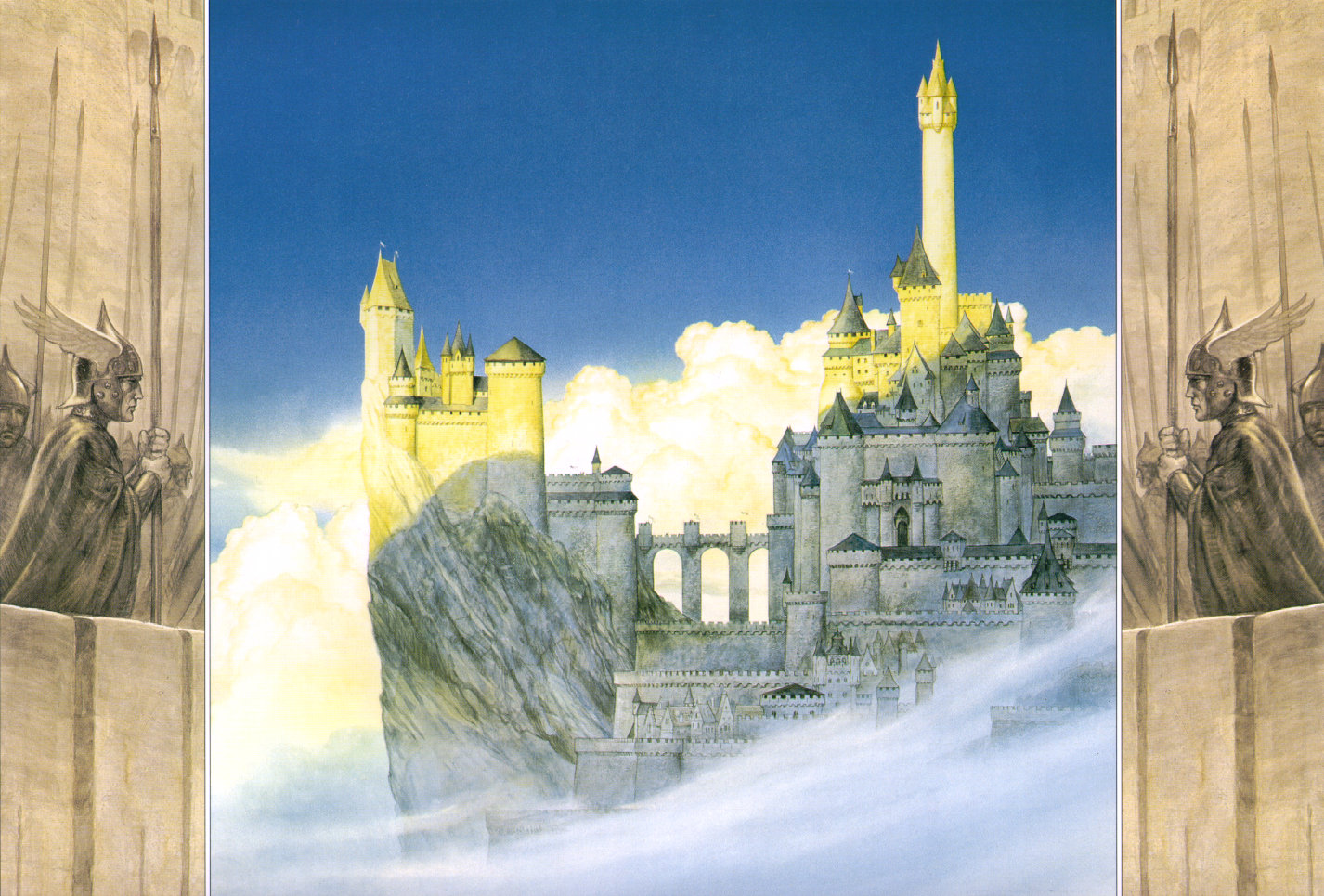
“…the Tower of Echthelion, standing high within the topmost wall, shone out against the sky, glimmering like a spike of pearl and silver, tall and fair and shapely, and its pinnacle glittered as if wrought of crystals; and white banners broke and fluttered from the battlements in the morning breeze, and high and far [Pippin] heard a clear ringing as of silver trumpets.”  (The Return of the King, Book Five, Chapter 1, “Minas Tirith”)

(I couldn’t resist adding this John Howe illustration, done in the style of Maxfield Parrish)

But now, on our tour, we turn eastwards, to the land of shadow and, first, to that other tower, that of Minas Ithil, “the tower of the moon”, built about the same time as Minas Anor, by Elendil’s other son, Isildur.

(Ted Nasmith)

Elrond gives us a small picture of it in its earlier days:

“And Minas Ithil they built, Tower of the Rising Moon, eastward upon a shoulder of the Mountains of Shadow…”

But then he goes on to add:

“And on a time evil things came forth, and they took Minas Ithil and abode in it, and they made it a place of dread; and it is called Minas Morgul, the Tower of Sorcery.”  (The Fellowship of the Ring, Book Two, Chapter 2, “The Council of Elrond”)

The forces of Mordor besieged and captured Minas Ithil in TA 2002 and, with their occupation, this is what it began to look like:

“Upon the further side, a deep gulf of shadow, ran back far into the mountains.  Upon the farther side, some way within the valley’s arms, high on a rocky seat upon the black knees of the Ephel Duath, stood the walls and tower of Minas Morgul.  All was dark about it, earth and sky, but it was lit with light.  Not the imprisoned moonlight welling through the marble walls of Minas Ithil long ago, Tower of the Moon, fair and radiant in the hollow of the hills.  Paler indeed than the moon ailing in some slow eclipse was the light now, wavering and blowing like a noisesome exhalation of decay, a corpse-light, a light that illuminated nothing.  In the walls and tower windows showed, like countless black holes looking inward into emptiness; but the topmost course of the tower revolved slowly, first one way and then another, a huge ghostly head leering into the night.”  (The Two Towers, Book Four, Chapter 8, “The Stairs of Cirith Ungol”)

I find that topmost course, “revolving slowly, first one way and then another”, as if always on watch, the most disturbing part of this description so we’ll stop here for now before Frodo and Sam take the next and near fatal step on our tower tour.

Thanks, as always, for reading.

Stay well,

Remember that your slippery guide may have other plans for you,

(Ted Nasmith)

And remember, as well, that, as always, there’s

MTCIDC

O
Gundulf

24 Wednesday Jun 2026

Posted by Ollamh in Uncategorized

≈ Leave a comment

Tags

Aragorn, Bingo, bishop, Bladorthin, crozier, Elder Edda, Fantasy, Gandalf, Grima, Gundulf of Rochester, Lanfranc, lotr, Poetic Edda, Rochester Cathedral, stigand, The Hobbit, The Lord of the Rings, The White Tower, Theoden, Tolkien, tolkiens-names, Trotter, Trotter., Voluspa

As always, dear readers, welcome.

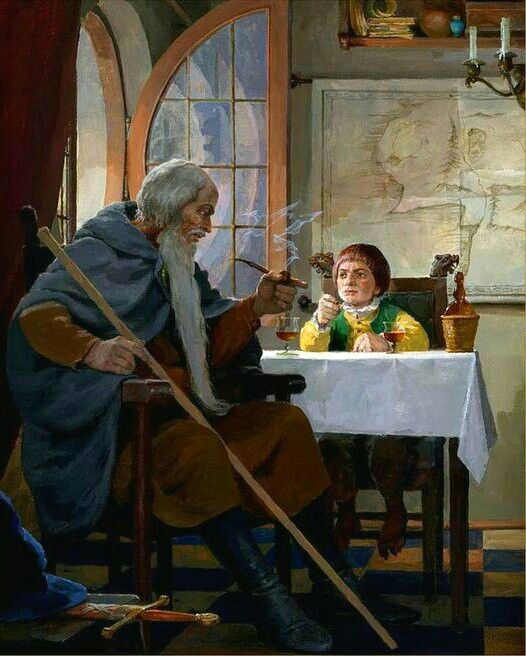
Bladorthin?  How would we feel if, as in early drafts of The Hobbit, this were the name by which we knew the somewhat mysterious figure who visited Bilbo Baggins, looking for someone to go on an adventure?

(the Hildebrandts)

I, for one, am glad to see that name consigned to manuscripts, along with other early names, like “Bingo” (Frodo) and “Trotter”, later to become “Aragorn” and turn as well from a “Hobbit ranger” into the rightful heir to the throne of Gondor,

(the Hildebrandts again)

initially, as he tells us, to the surprise of the author (see a letter to W.H. Auden, 7 June, 1955, Letters, 315-16)

(If you want to read that draft in which Bladorthin appears, see John D. Rateliffe’s monumental The History of the Hobbit, 30-31, where the name appears just where we now read “Gandalf”, as in:

“Bladorthin!  If you had heard only a quarter of what I have (and I have heard only a tiny bit what there is to hear) about him you would be prepared for any sort of remarkable tale.” (30) )

Instead, we know him as Gandalf, whose name—along with those of the dwarves—as Tolkien tells the editor of the Observer:  “…are from the Elder Edda.” (letter to the editor of the Observer, published 20 Ferbruary, 1938, Letters, 41)

By “Elder Edda”, JRRT was referring to a 13th century collection of poems also referred to as “the Poetic Edda” and, within it, to one specific section, called “Voluspa”, “prophesy of the volva”, a kind of seeress.  (Also called a “vala”–for more on such magical figures, see:  https://en.wikipedia.org/wiki/Seeress_(Germanic)  For more on the Eddas, see:   https://en.wikipedia.org/wiki/Edda  )

In this particular poem, the seeress mentions the creation of the dwarves (quoted here from Benjamin Thorpe’s 1906 translation of both the “Poetic Edda” and the “Prose Edda” which you can read here:  https://www.gutenberg.org/files/14726/14726-h/14726-h.htm ):

“9. Then went all the powers to their judgment-seats, the all-holy gods, and thereon held council, who should of the dwarfs the race create, from the sea-giant’s blood and livid bones.

10. Then was Môtsognir created greatest of all the dwarfs, and Durin second; there in man’s likeness they created many dwarfs from earth, as Durin said.

11. Nýi and Nidi, Nordri and Sudri, Austri and Vestri, Althiôf, Dvalin Nâr and Nâin, Niping, Dain, Bivör, Bavör, Bömbur, Nori, An and Anar, Ai, Miodvitnir,

12. Veig and Gandâlf, Vindâlf, Thrain, Thekk and Thorin, Thrôr, Vitr, and Litr, Nûr and Nýrâd, Regin and Râdsvid. Now of the dwarfs I have rightly told.

13. Fili, Kili, Fundin, Nali, Hepti, Vili, Hanar, Svior, Billing, Bruni, Bild, Bûri, Frâr, Hornbori, Fræg and Lôni, Aurvang, Iari, Eikinskialdi.”  (Thorpe, “Voluspa”, page 2)

You can see a number of familiar dwarf names here, as well as other names which Tolkien didn’t use, and, in section 12, “Gandalf” (although this was, originally, Tolkien’s choice for the character who then become Thorin, possibly because Tolkien might have associated him with the medieval ruler of Alfheim, in southern Norway?  The part of Norway he ruled might also have appealed to Tolkien, “Alfheim” meaning “Elfhome/world/land”—see:  https://en.wikipedia.org/wiki/Gandalf_Alfgeirsson as well as Rateliffe, “Introduction”, xi-xii)

So our documentation goes, but, by an odd chance, I came across someone whose name might also have been an influence:  Gundulf, the 11-12th-century Bishop of Rochester and architect.

I had originally simply been thinking about the name “Gandalf”, which appears to be a compound of two Old Norse words, “gandr” , “[magic] staff” and “alfr”—“elf”—see Geir Zoega, A Concise Dictionary of Old Icelandic, 1910, for further details.  And JRRT certainly is aware of that staff—see his illustration, for instance, of the turning of the trolls into stone—

(JRRT)

Then I found that Norse king, Gandalf, and, prompted by that, I wondered about alternate spellings, which brought up this Wikipedia list:

“Gondulf of Provence, 6th-century duke and possibly made Bishop of Metz in 591

Indulf (6th century) (fl. 549–552 or 553), also known as Gundulf, Byzantine mercenary and Ostrogoth army leader

Gondulphus of Berry, 7th-century bishop

Gondulph of Maastricht (died after 614), bishop and Roman Catholic and Eastern Orthodox saint

Gondulphus of Metz (died 823), Bishop of Metz

Gundolfo, early 11th century Italian heretic

Gundulf of Rochester (died 1108), English bishop”

Unlike the etymology of “Gandalf”, “Gundulf”, although a compound like “Gandalf”, combines “gund”, “battle” and “ulf”, “wolf”—“–“battlewolf”–fierce, but not so Tolkienesque as “Elfmagicstaff”.

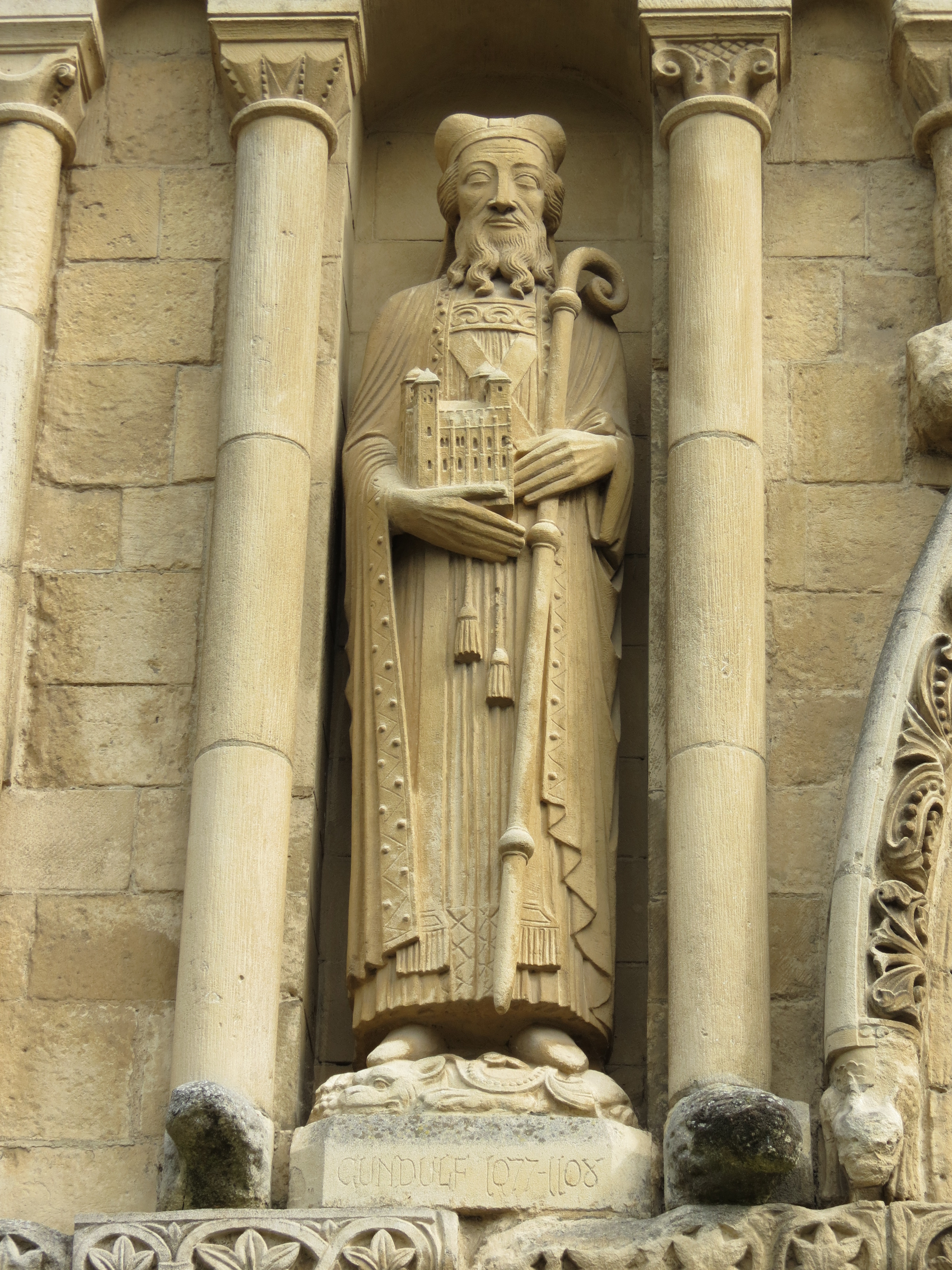
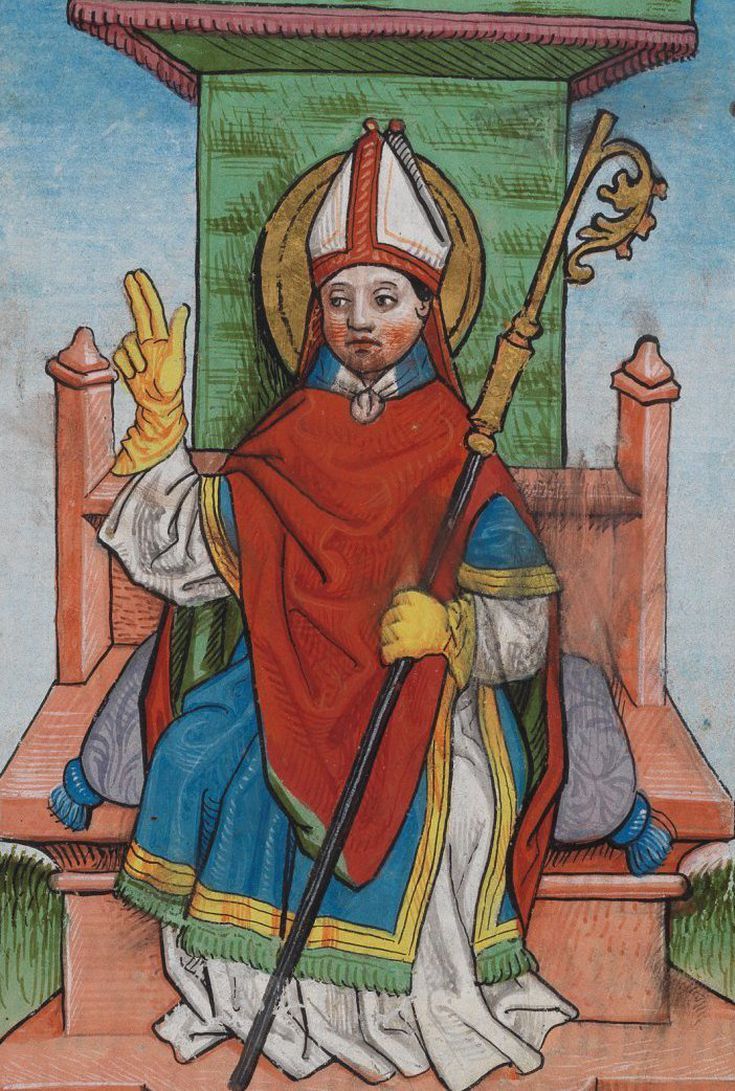
It certainly seemed like an interesting collection of characters, however, and, thinking of Tolkien’s medievalism, Englishness, interest in religion, and  how this might tie in with bishops, I wondered about Gundulf of Rochester, who, being a bishop, would have carried, as a badge of office, a crozier, a kind of staff, as we see in this modern (1888) depiction of Gundulf, from the west façade of Gundulf’s own Rochester Cathedral—

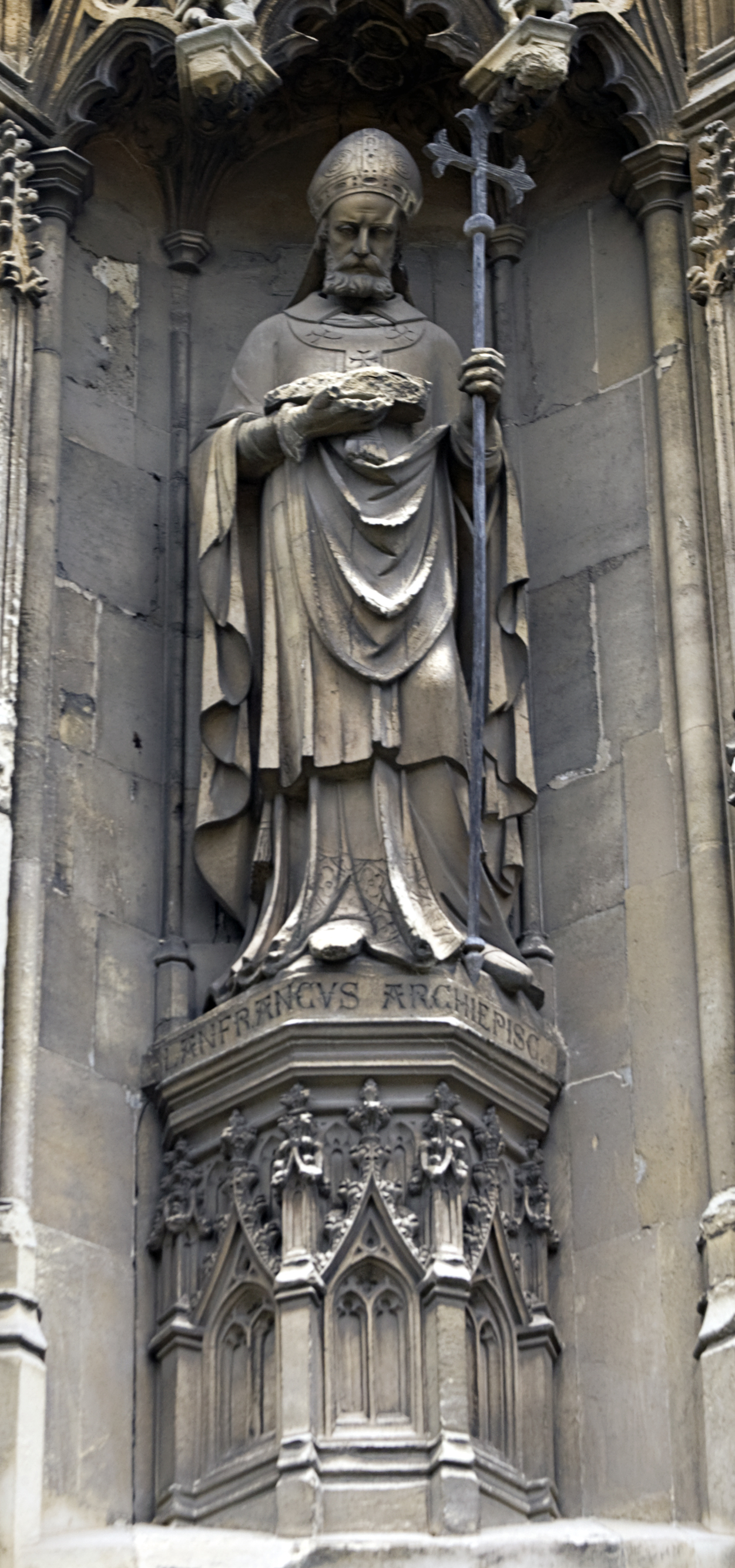
Gundulf seems to have been a remarkable man, having been a Norman monk brought to England by his patron, Lanfranc, the Abbot of the Abbey of St. Etienne in Normandy, and an ally of William, Duke of Normandy, who, when he had conquered England after 1066, appointed Lanfranc Archbishop of Canterbury.

(a 19th-century depiction, from the south face of the southwest porch of Canterbury Cathedral.  For more on Lanfranc, see  https://en.wikipedia.org/wiki/Lanfranc )

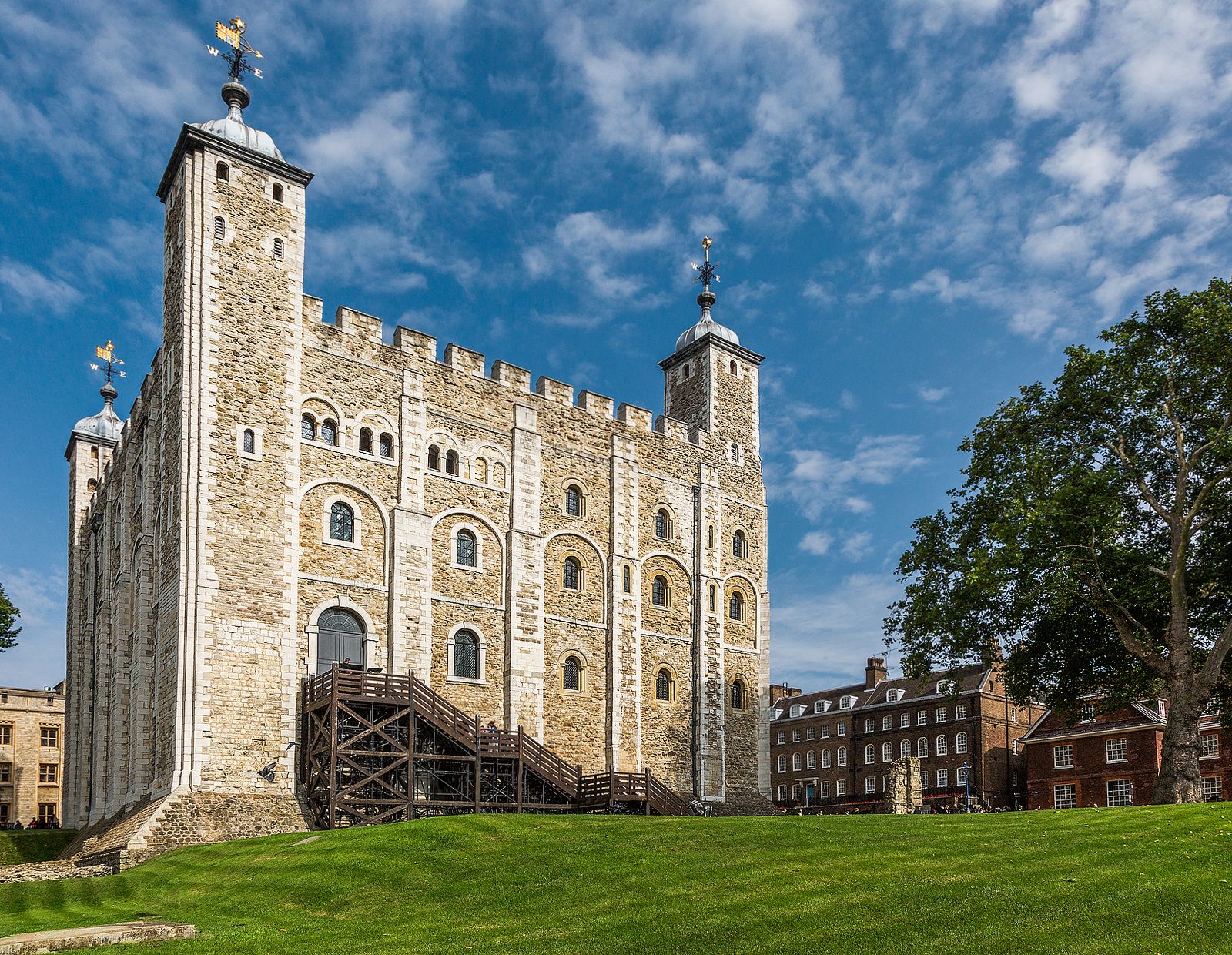
In 1077, Gundulf was made Bishop of Rochester, but, besides whatever his ecclesiastical interests, he was apparently also a talented architect, building, among other works, the White Tower at the center of the Tower of London—not quite what one would expect of a bishop,

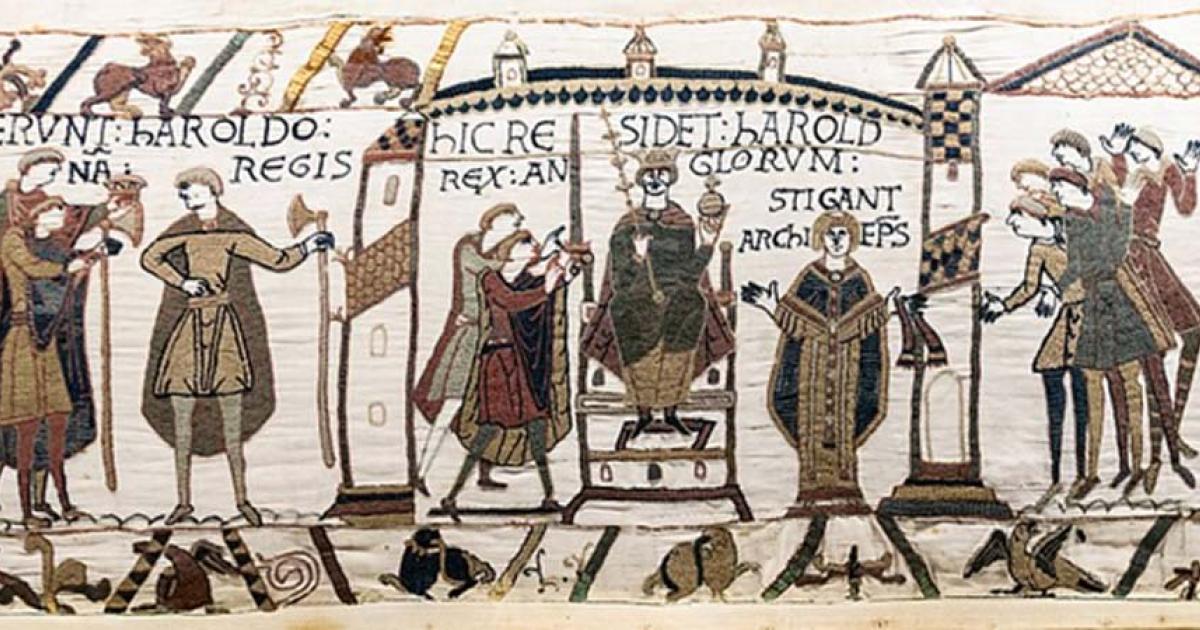
but we should remember that his patron, Lanfranc, had only become Archbishop of Canterbury when the Anglo-Saxon Archbishop, Stigand,

(For more on Stigand, see:  https://en.wikipedia.org/wiki/Stigand )

was deposed and imprisoned by the Normans, so Gundulf’s own position was seemingly only safe as long as the Normans remained in power, so self-interest alone might have kept him at work as an ecclesiastical/military architect.  (For more on Gundulf, see:  https://en.wikipedia.org/wiki/Gundulf_of_Rochester )

Could he have been another influence in turning Bladorthin into Gandalf?  I can find no evidence in Tolkien’s letters that he knew of Gundulf, or even ever visited Rochester, but all of the interests above—medievalism, religion, and that crozier–

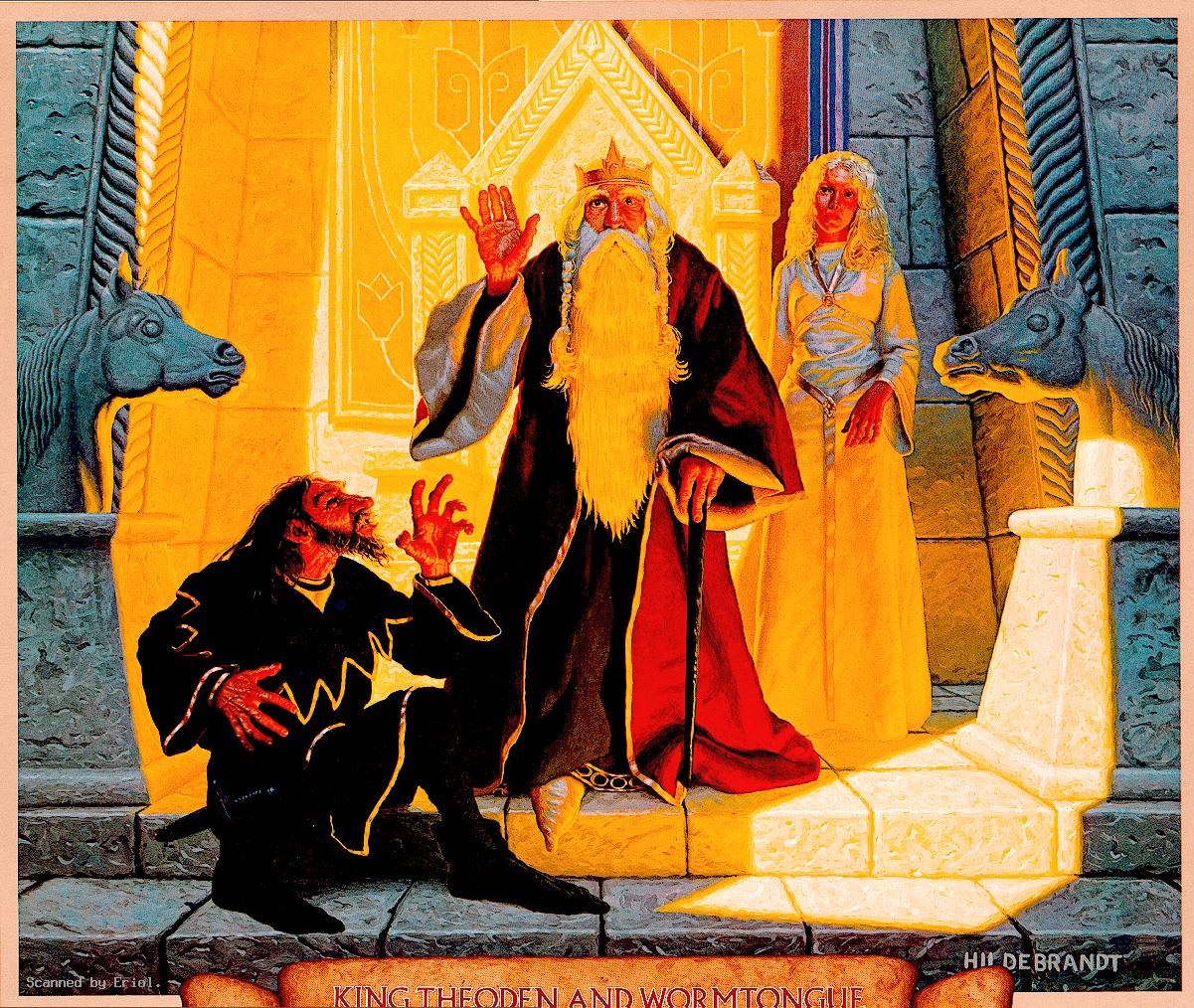
might have suggested a magic staff, perhaps, like the one Gandalf kept when entering Edoras and which he used to break Grima’s enchantment of Theoden:

“He raised his staff.  There was a roll of thunder.  The sunlight was blotted out from the eastern windows; the whole hall became suddenly dark as night.  The fire faded to sullen embers.  Only Gandalf could be seen, standing white and tall before the blackened hearth.”  (The Two Towers, Book three, Chapter 6, “The King of the Golden Hall”)

(Alan Lee)

Might we from all of that then imagine that the “Voluspa” alone wasn’t the only reason for the disappearance of Bladorthin and his new baptism as Gandalf?

(Denis Gordeev)

Thanks, as ever, for reading.

Stay well,

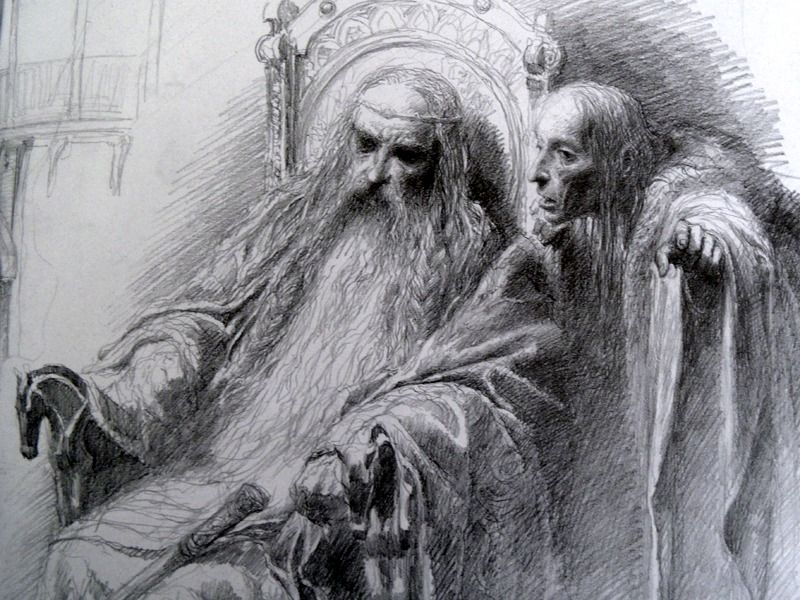
Beware of evil counselors who claim that they’re acting in your best interest.

(the Hildebrandts)

And remember that, as always, there’s

MTCIDC

O

Tennis, Anyone?

10 Wednesday Jun 2026

Posted by Ollamh in Uncategorized

≈ Leave a comment

Tags

Anglo-Saxon, anglo-saxons, armor, Duke William, Fantasy, Harold Godwinson, Jacksons The Lord of the Rings, Norman, Normans, The Battle of Hastings, The Bayeux Tapestry, The Lord of the Rings, The Rohirrim, the Siege of Minas Tirith, the-charge-of-the-rohirrim, Thing One/Thing Two, Tolkien

Welcome, dear readers, as always.

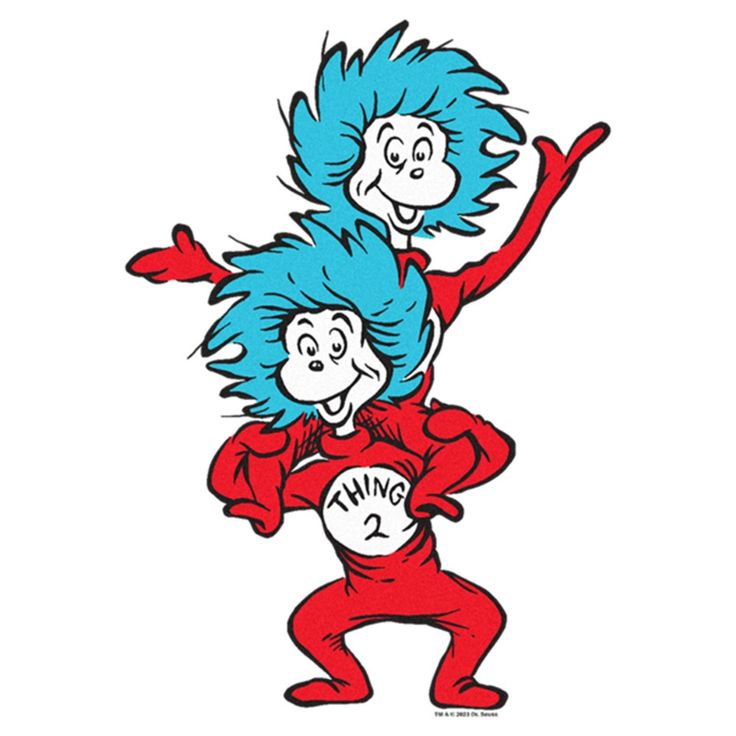
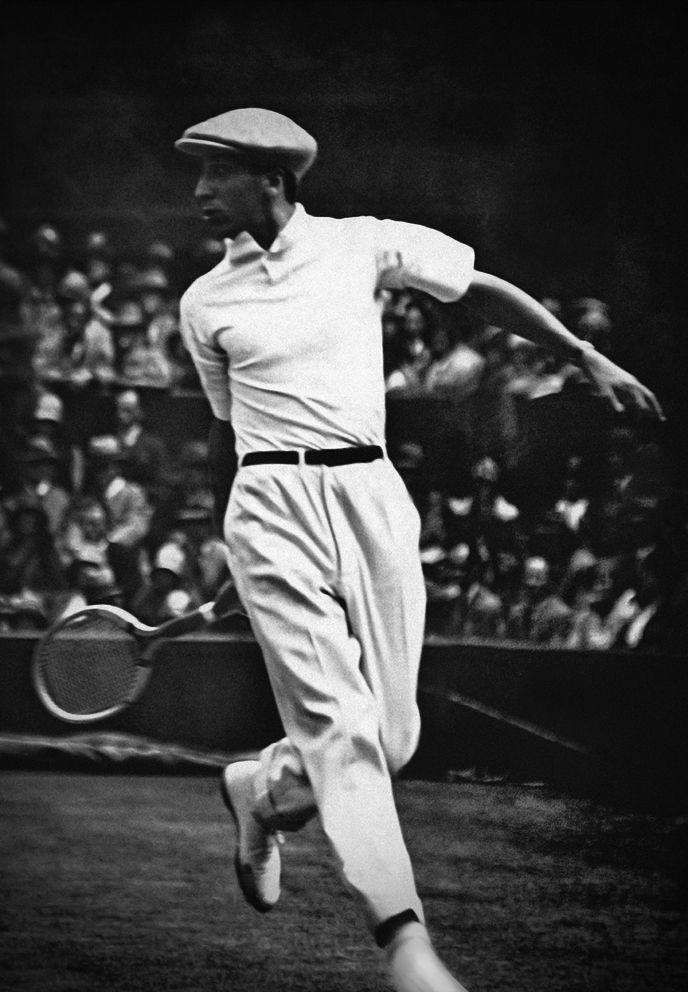
The title of this posting is based upon a scene in 1920-30s country house plays where someone known as a “bright young thing”–no, not one of those—

bounds onto the stage in his whites, cheerily chirping “Tennis, anyone?”

But, lest you think that you’ve stumbled into the wrong blog, I’m actually not going to talk about tennis—except as Tolkien uses it analogically—in this quotation:

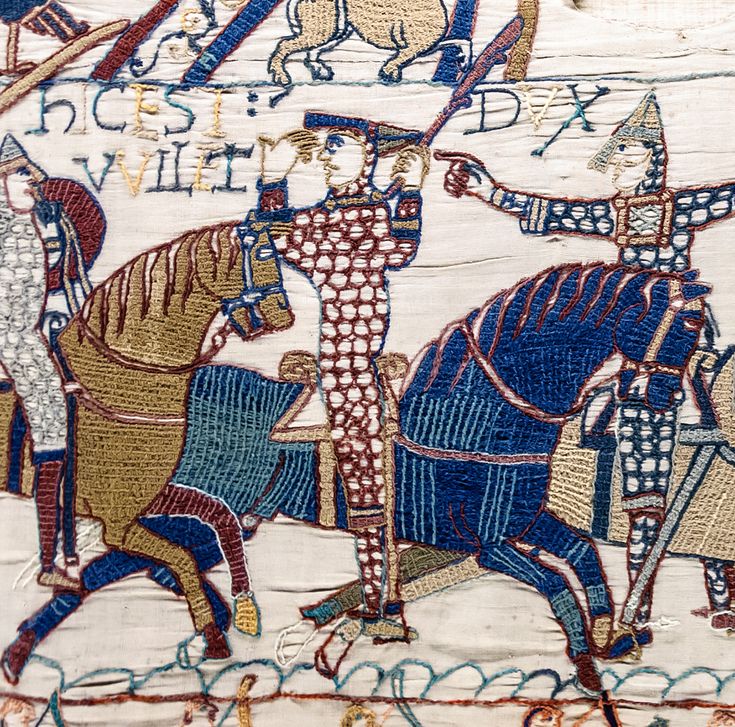
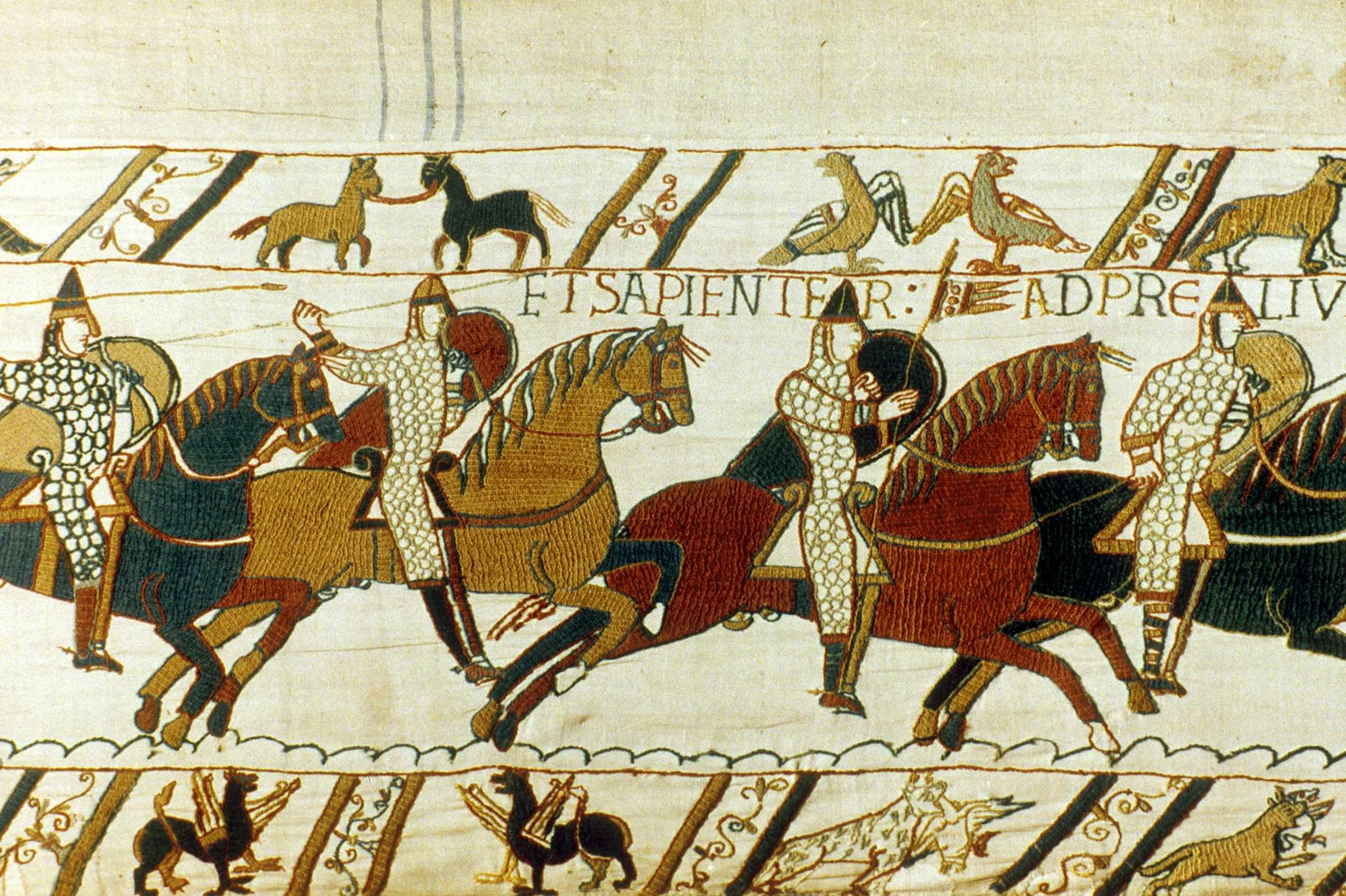
“The Rohirrim were not ‘medieval’, in our sense.  The styles of the Bayeux Tapestry (made in England) fit them well enough, if one remembers that the kind of tennis-nets [the] soldiers seem to have on are only a clumsy conventional sign for chain-mail of small rings.”  (letter to Rhona Beare, 14 October, 1958, Letters, 401)

Here’s a tennis net, in the unlikely event that you’ve never seen one—

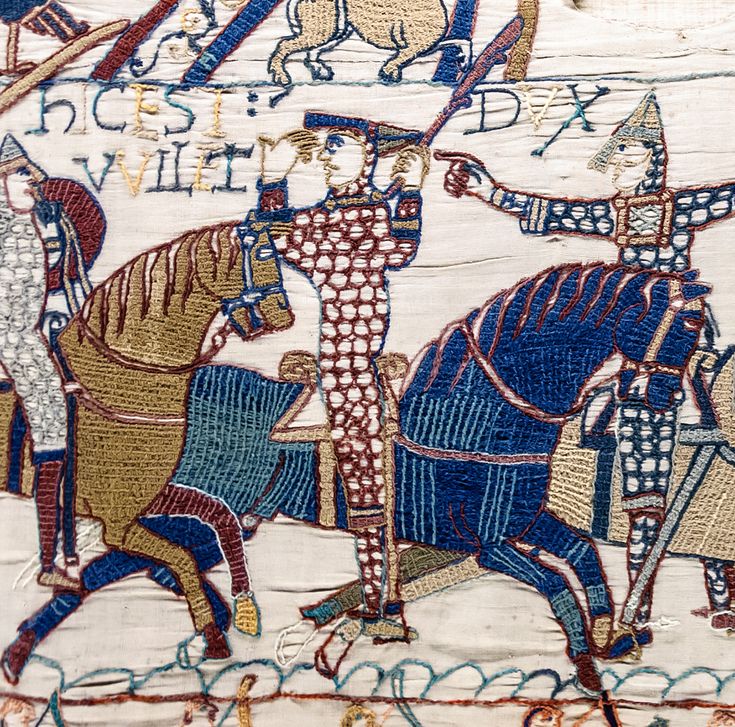
and here’s a segment of the “Bayeux Tapestry” (actually a massive embroidery) with some warriors wearing what JRRT is talking about—

What’s going on in this scene is that a rumor during the battle of Hastings was spreading through the Norman army that William had been killed, so the Duke rode among his men with his helmet raised, and therefore anyone who knew him, at least by sight, would realize that the rumor was false (note also, in case you didn’t know about this event, the Latin caption—“Hic est Dux Will[helm”—“here is Duke William”, as well as the mounted Norman to the right who is pointing—and doubtless shouting “Iloc!”—“There [he is]!” –for something about Norman French, see: https://en.wikipedia.org/wiki/Norman_language )

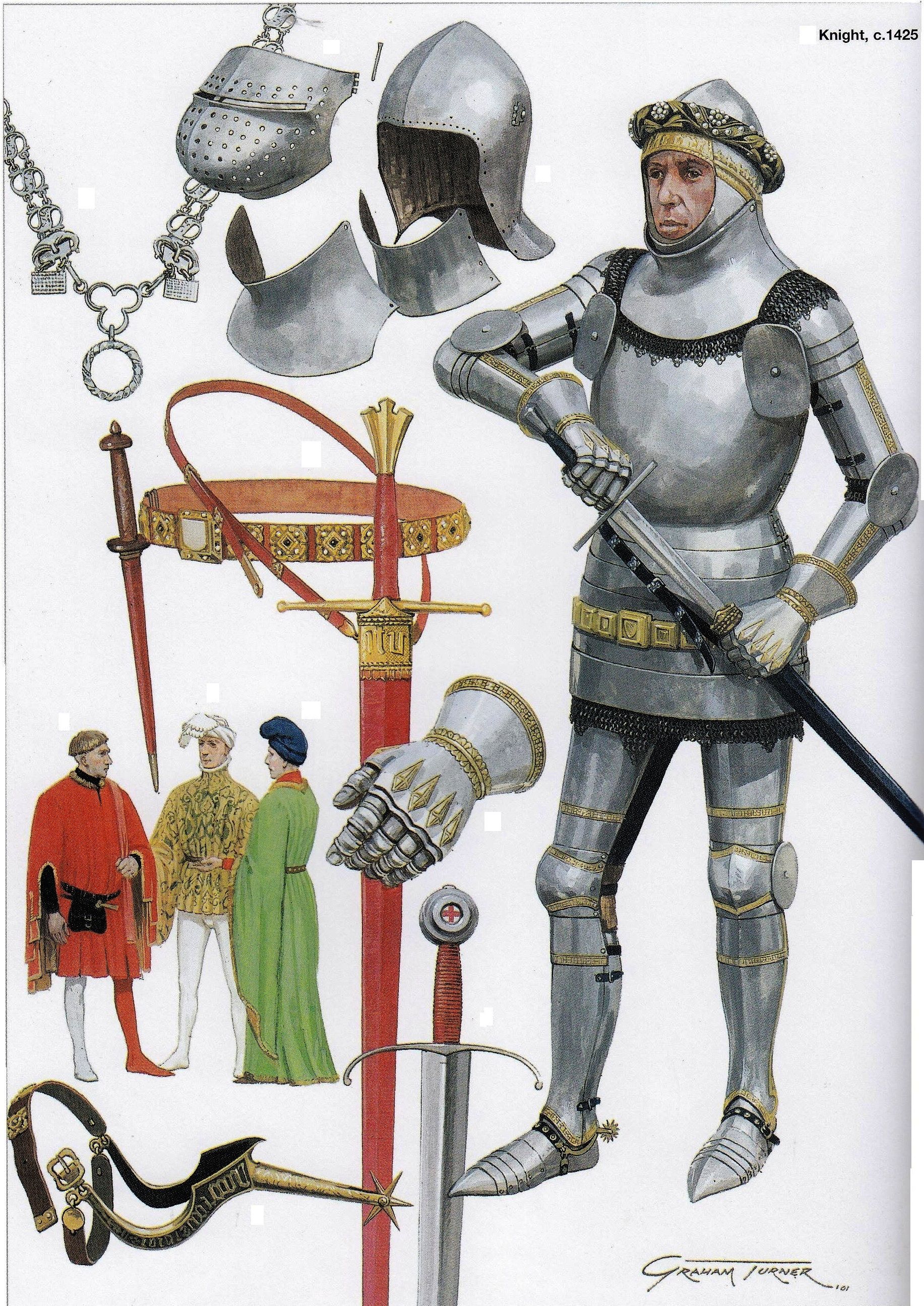
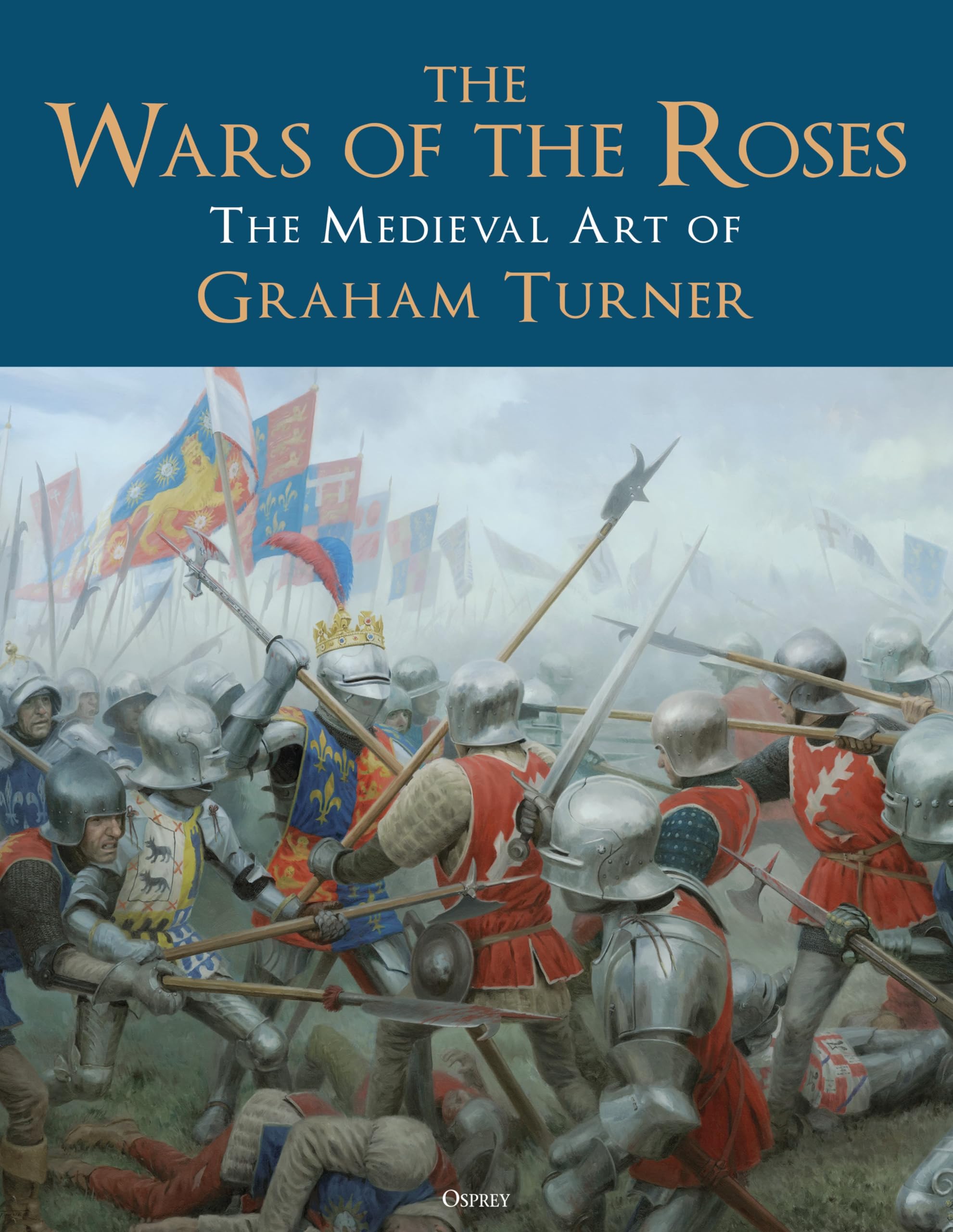
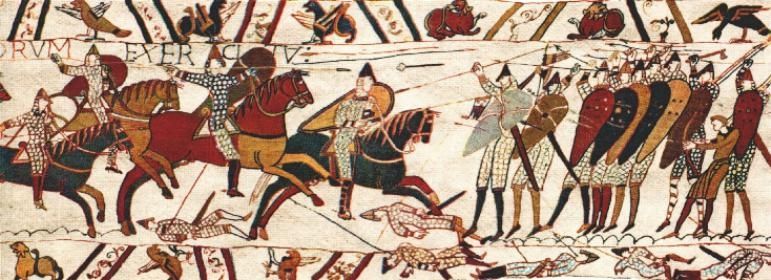
Although he doesn’t explain “medieval”, I expect that what Tolkien means is that the Rohirrim shouldn’t look like this—

(Graham Turner—who has made a specialty of the 15th-century military—with a wonderful illustrated history of the Wars of the Roses, which I recommend highly.)

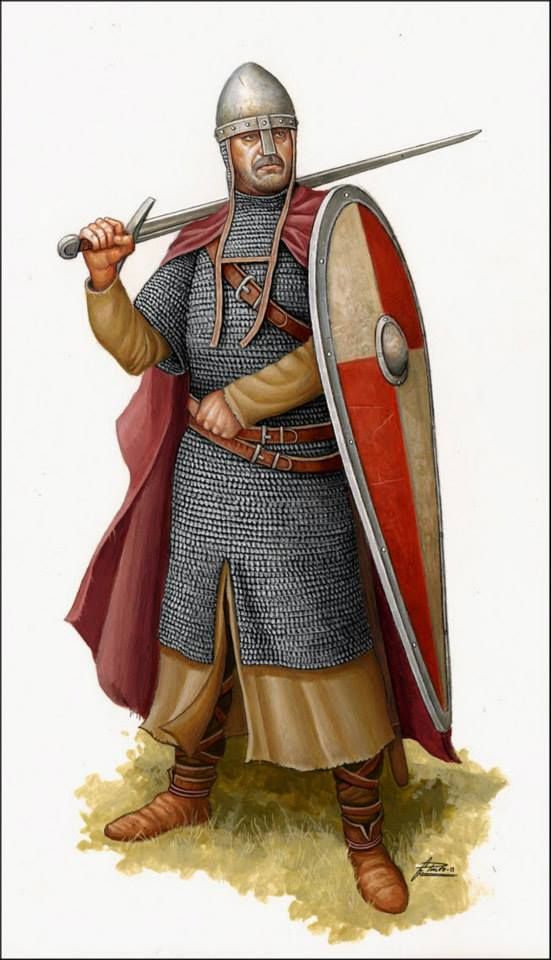
but rather like this—

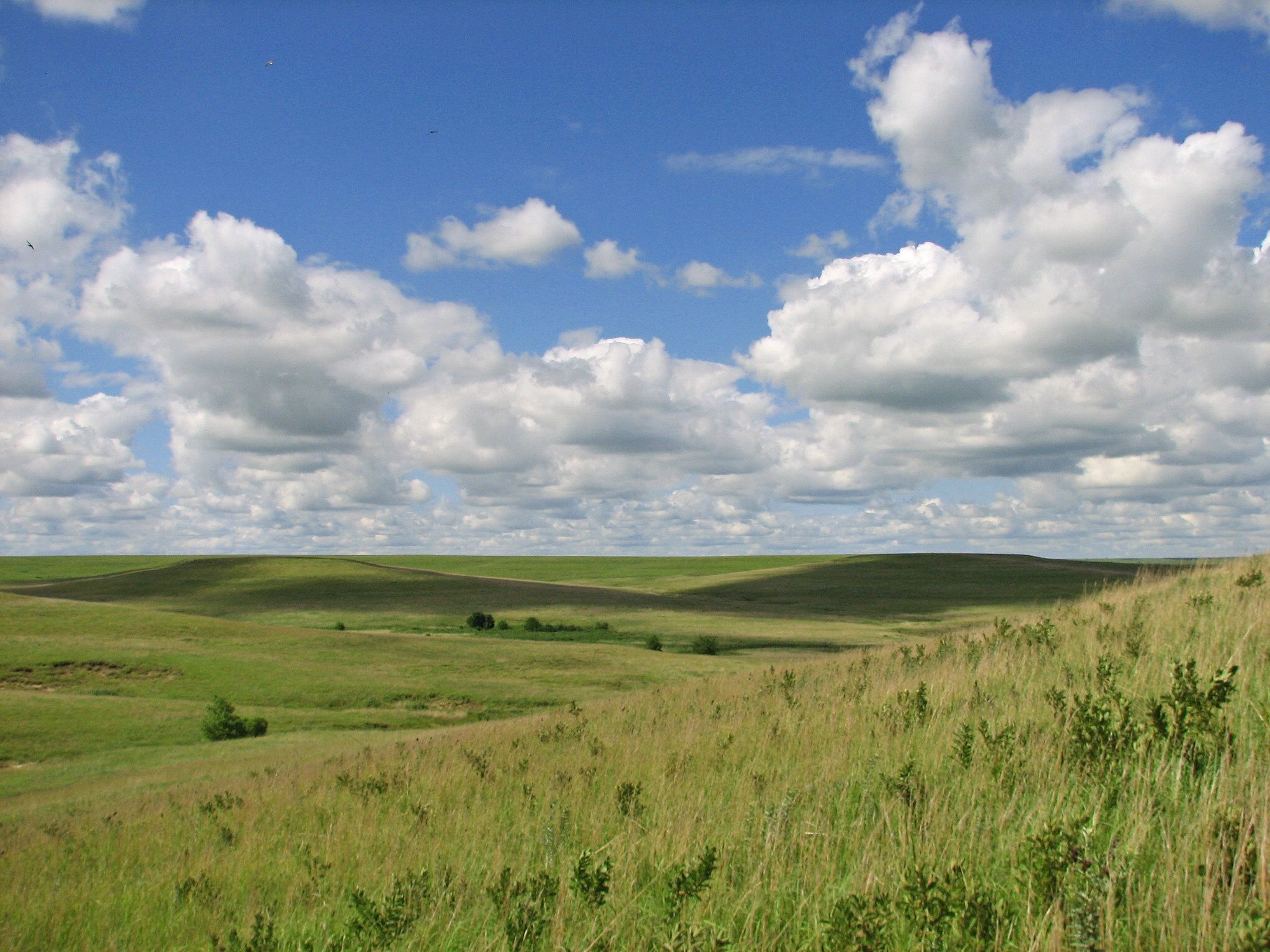
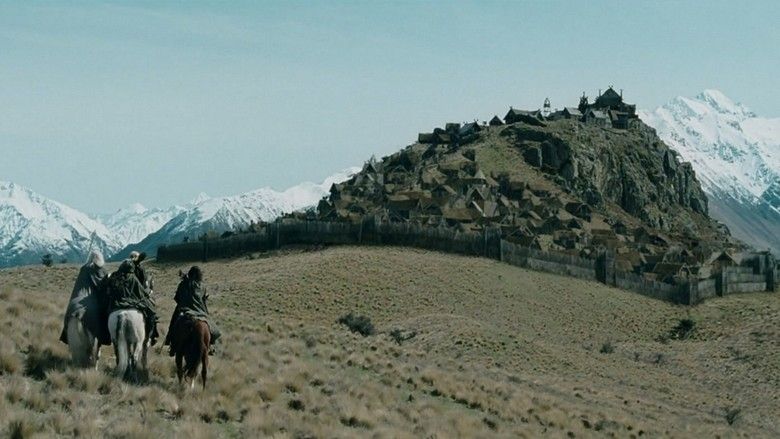
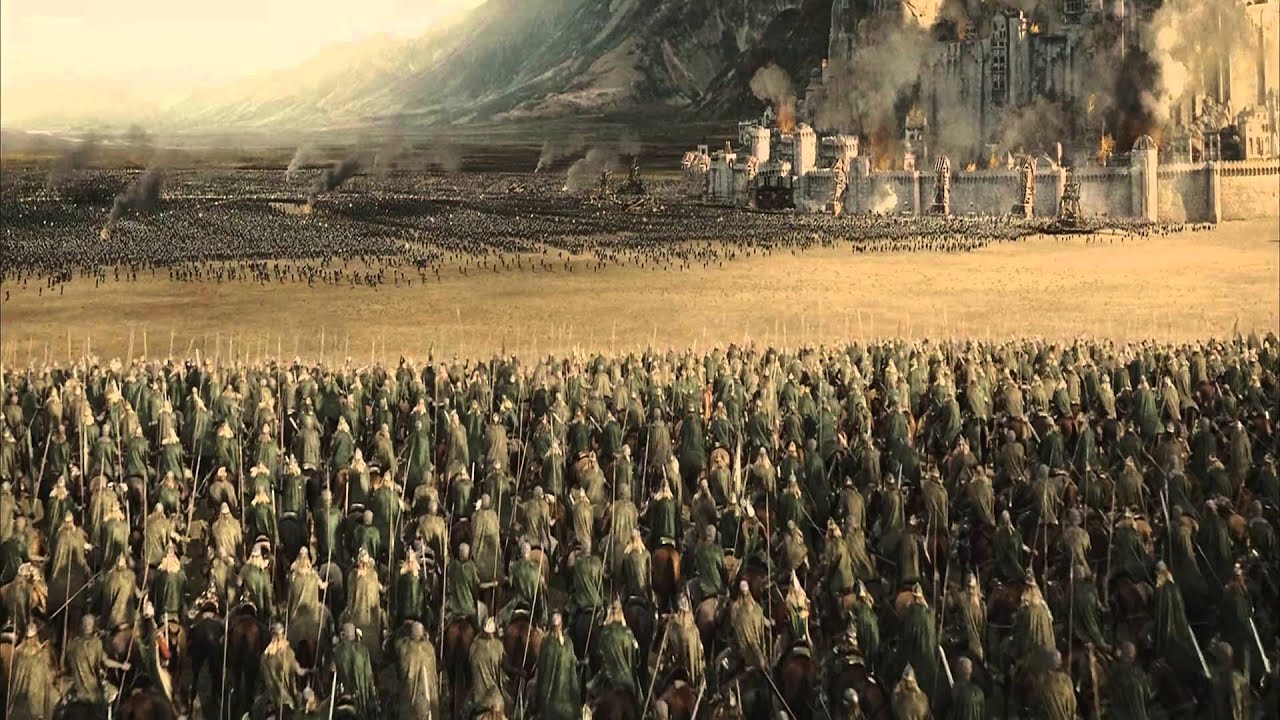
If you read this blog regularly, you know that my favorite part of Jackson’s The Lord of the Rings films is the depiction of the Rohirrim—with the exception of Rohan, which should be a great, grassy plain,

but, as New Zealand doesn’t possess such, the best that could be done was this rather withered- looking landscape—

(For more on this, see “Plain and Grassy”, 24 September, 2025)

Now, however, I begin to think that, though the Rohirrim are still my favorite part, I want to add a second exception:  how the Rohirrim look.

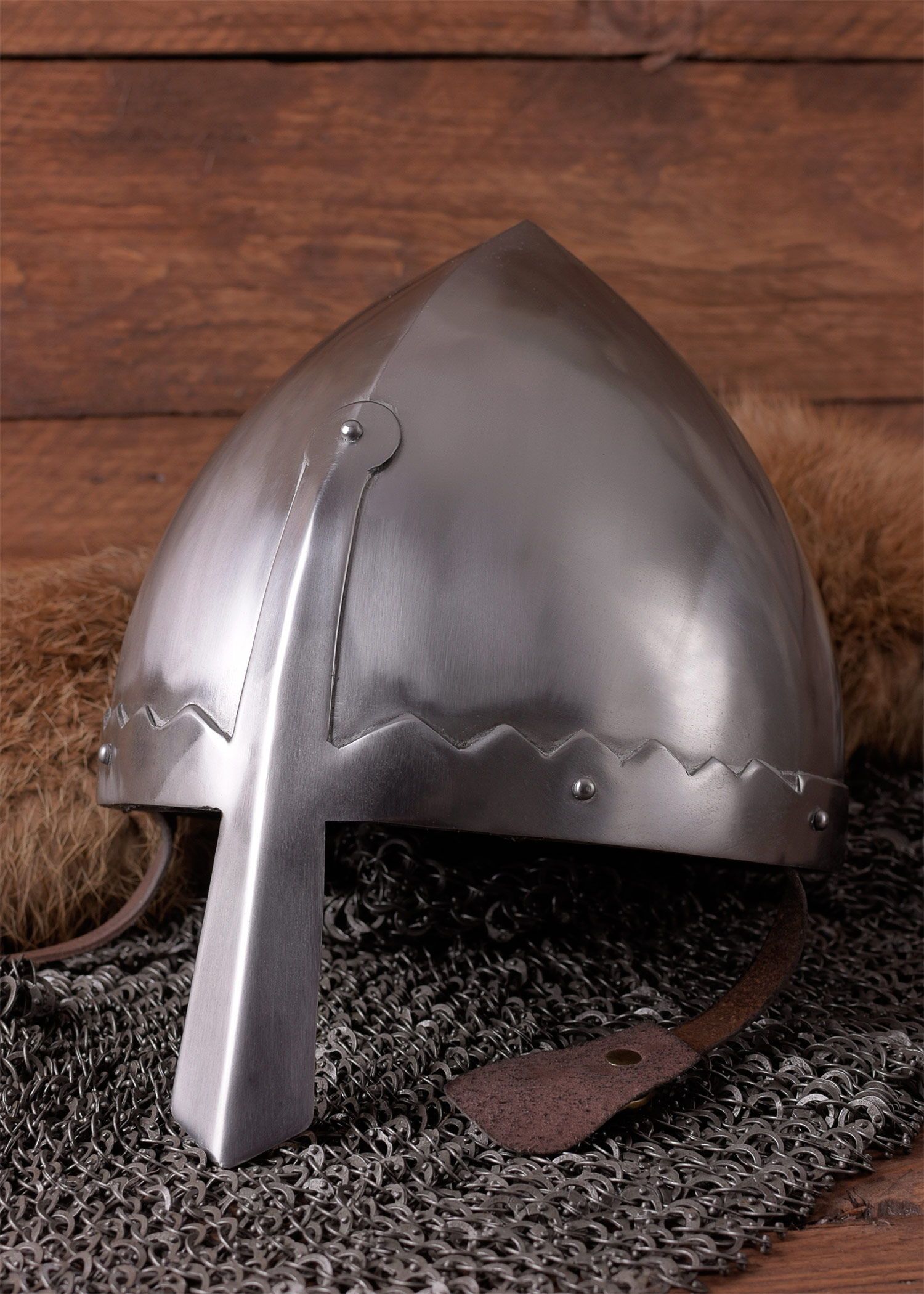
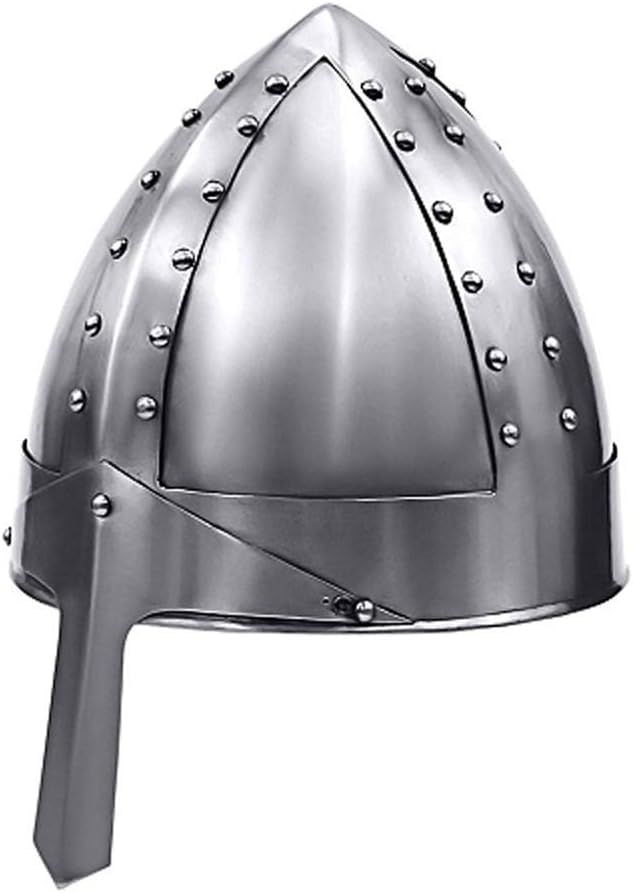
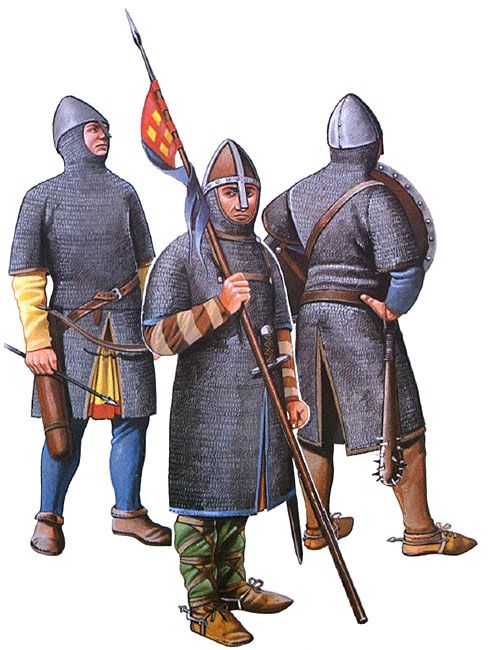
Tolkien, after all, has given us a definite picture of what he wanted.  The Rohirrim were to be imagined as looking like the Normans (and Anglo-Saxons) we can see on the Tapestry:  wearing rather simple helmets, either hammered from one sheet of metal,

or made of a series of plates attached to a frame—called a “spangenhelm”,

and a long coat of chain mail,

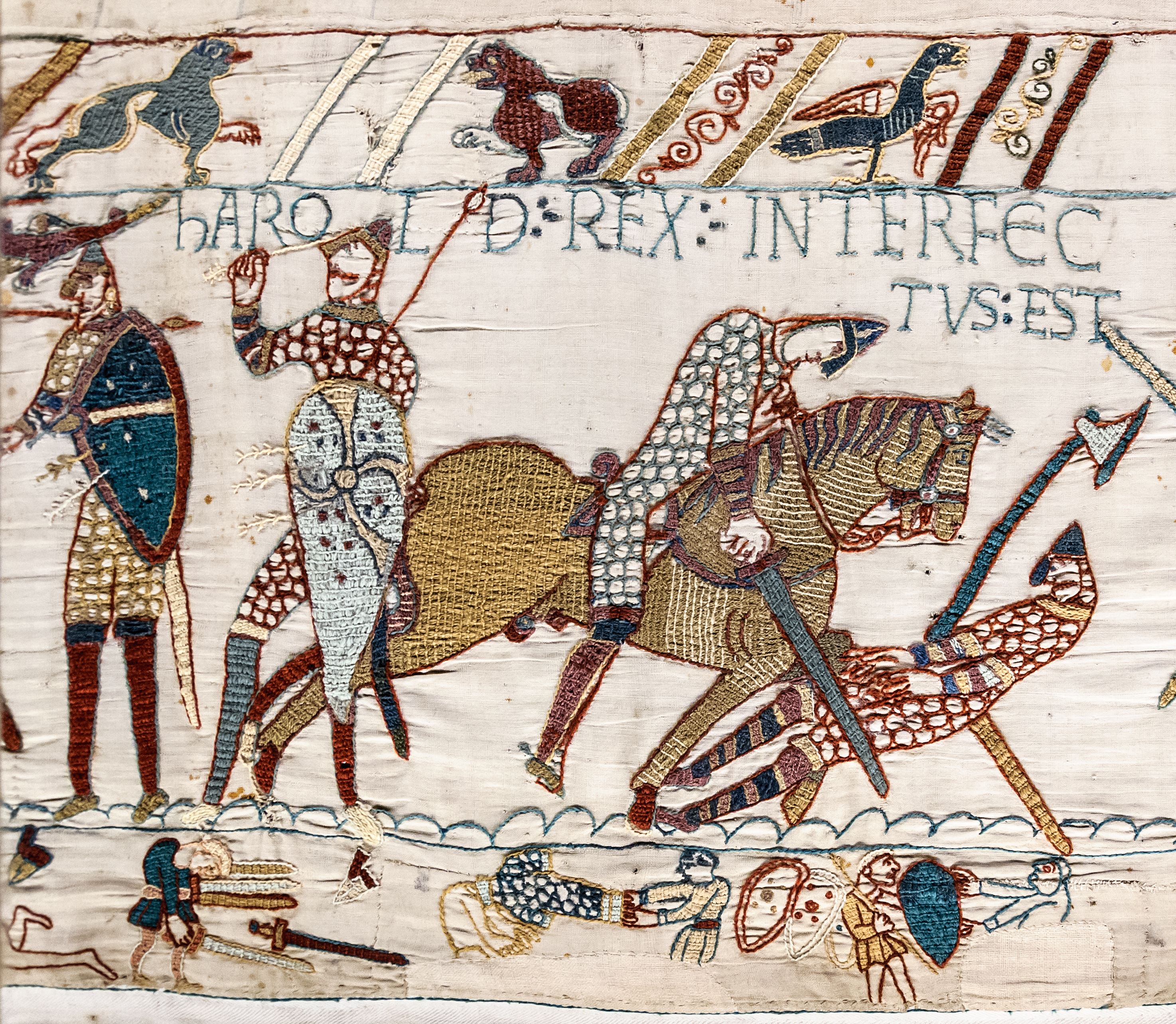
which was pulled over the head, like some sweaters (“pullovers”), as you can see at the bottom of this scene from the Bayeux Tapestry–

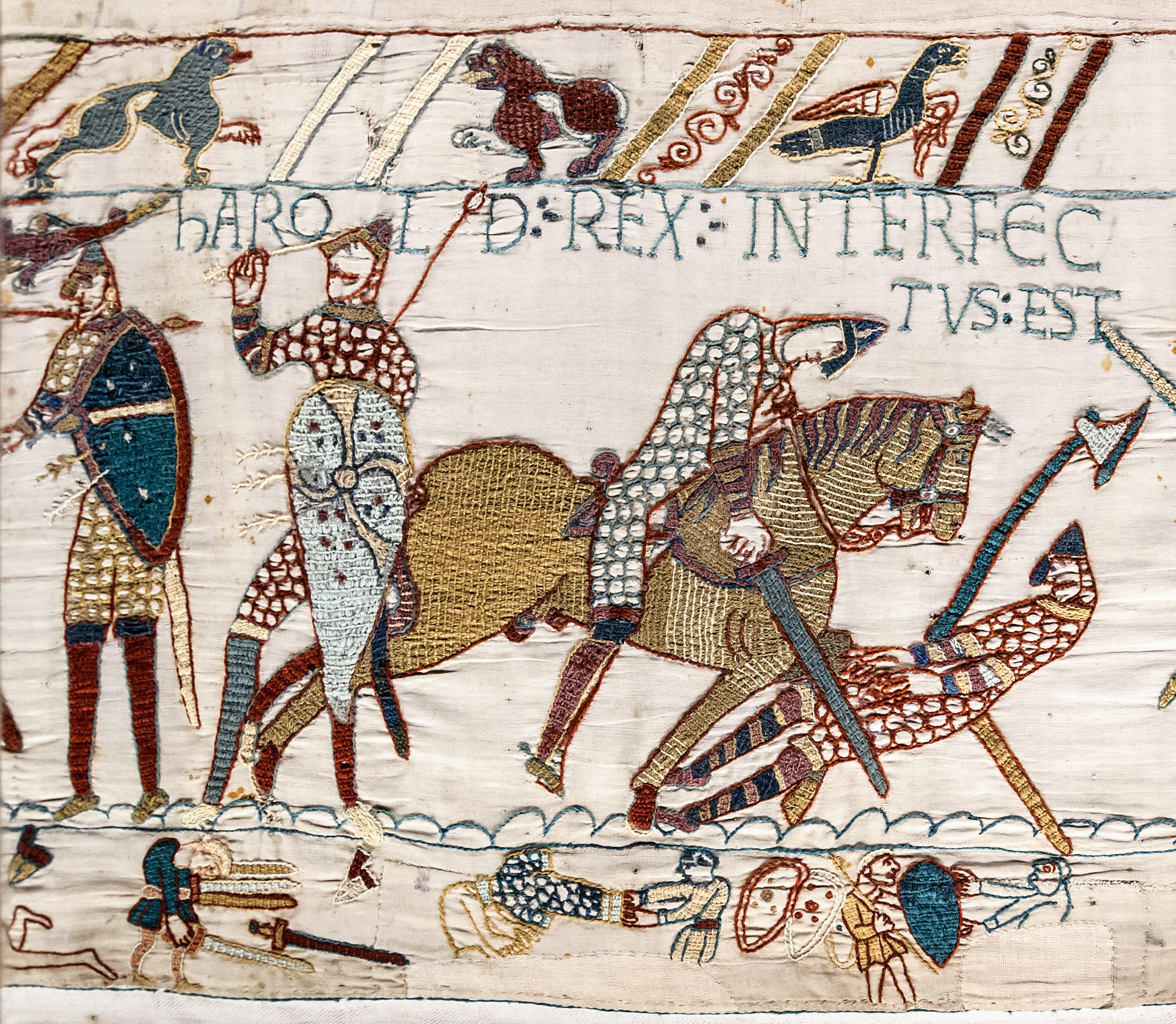
The top part of this scene is labeled, “Harold Rex interfectus est”—“King Harold has been killed”, but there is some confusion here as to which figure is Harold.  There is an early account which says that he had been hit in the eye with a Norman arrow, so that would suggest the figure in the middle, but the arrow seems to have been a replacement for something else, so perhaps it’s the figure being struck down on the right?  (For more on this, see: https://historiamag.com/harold-death-truth/  )  In any event, we can see those same “tennis nets” on both the mounted Norman (winning) and the Anglo-Saxons on foot (losing).

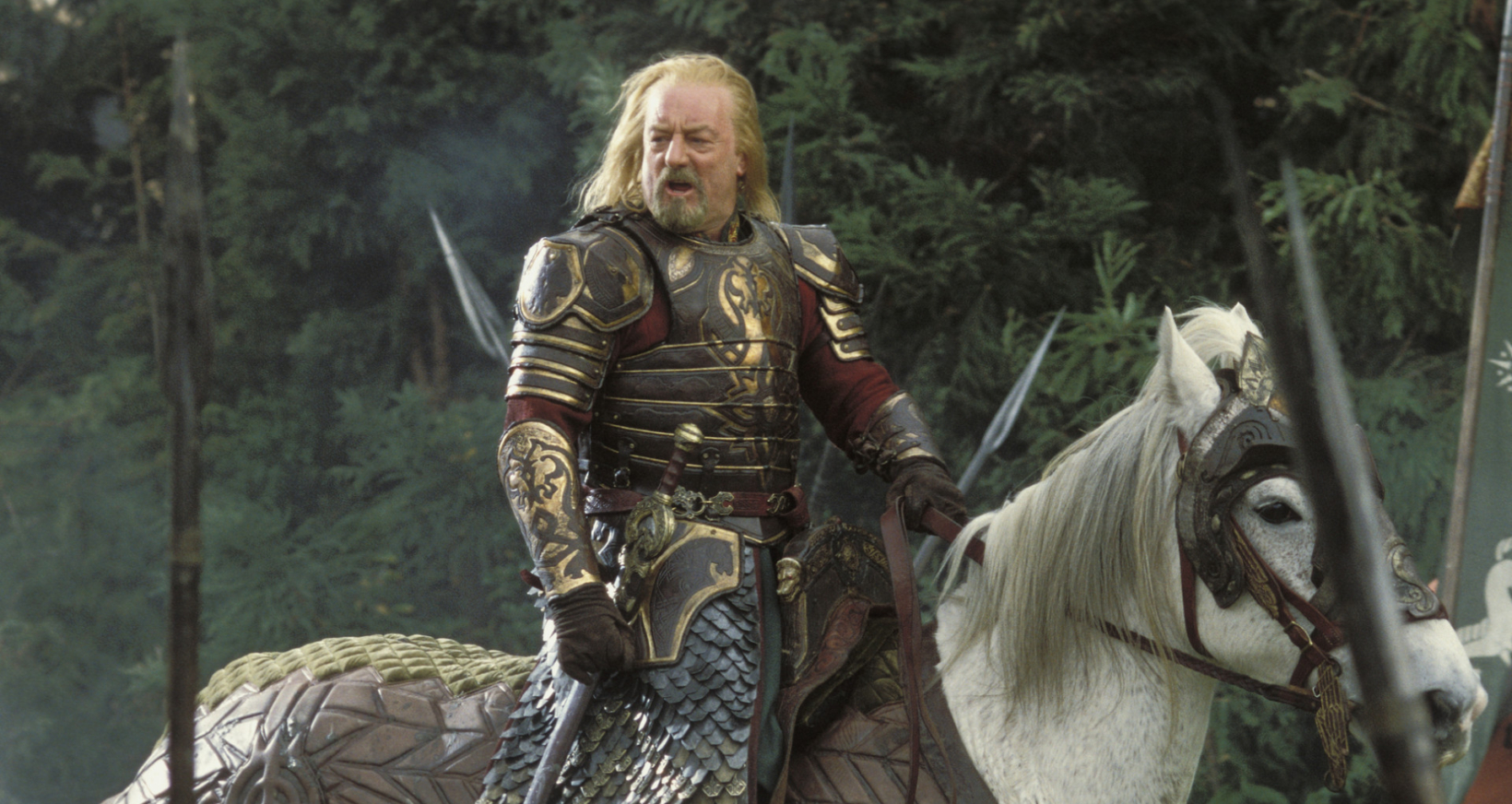
In contrast, here’s Theoden, as portrayed in the Jackson films—

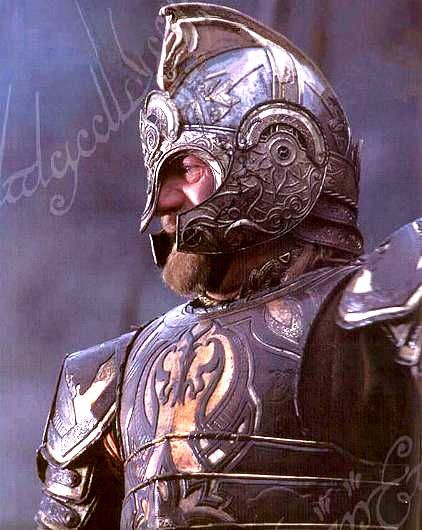
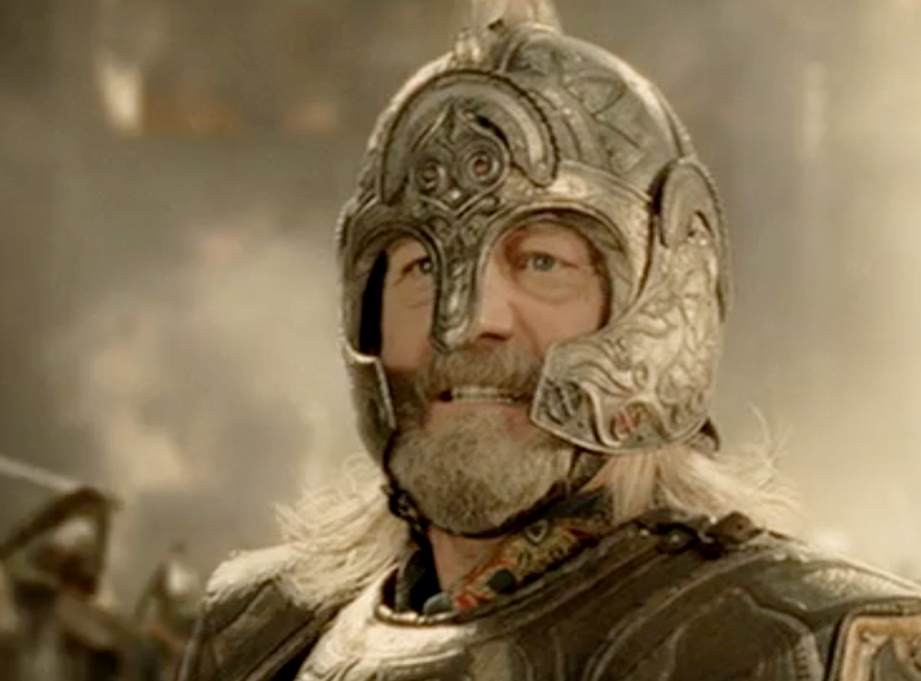
and add in his helmet.

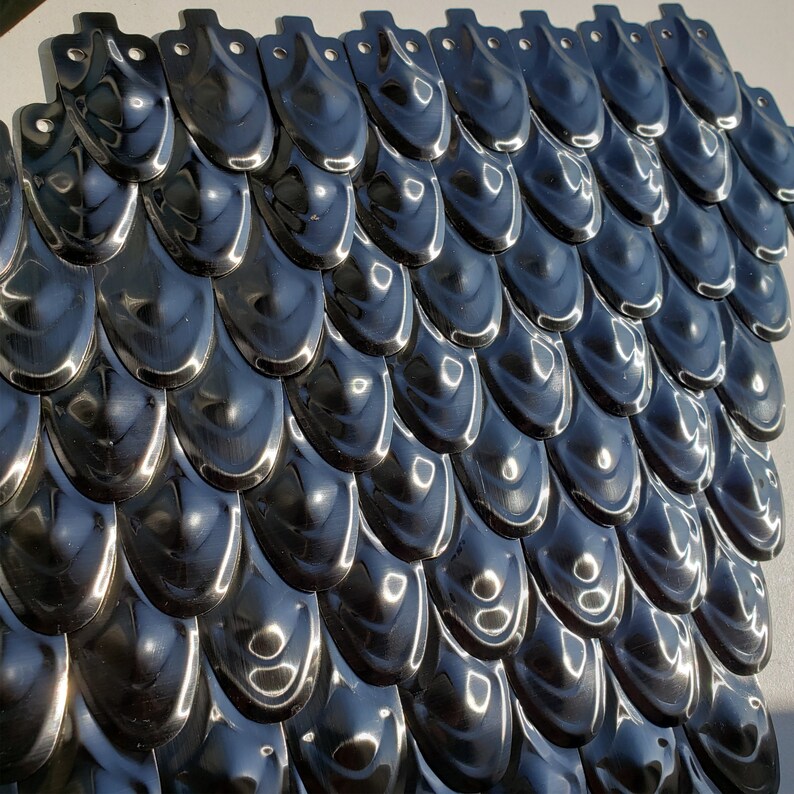
What in the world is all of this?  Certainly not anything like the Bayeux Tapestry which JRRT suggested as a model and yet not the “medieval” I’m assuming he intended to steer Rhona Beare away from.  Instead, it seems like something patched together, with a leather coat underneath (?), lamellar (scale) armor below,

and other things attached—a very odd-looking breastplate in several sections, pauldrons (shoulder pieces), and vambraces (arm pieces).  There is also that helmet—

(This image comes from an amazing site:  https://www.blindsquirrelprops.com/theoden-helmet/  The Squirrel seems to be able to make/reproduce anything and, in this posting, he/she demonstrates how he/she made a reproduction of Theoden’s helmet, based upon a couple of screen captures.)

The Anglo-Saxon king, Harold,

and the Norman-king-to-be, William,

seem content with simple conical helmets—does Theoden really need more?  I’m also puzzled as to where Theoden is wearing his sword—on the right.  Soldiers on the Tapestry wear theirs on the left

and this is true for mounted men over the centuries in general, who then use the left as their bridle hand and their right to draw and use their swords (or spears as is often the case on the Tapestry).  Was Bernard Hill, who played Theoden in the films, left-handed and the director wanted him to feel comfortable? 

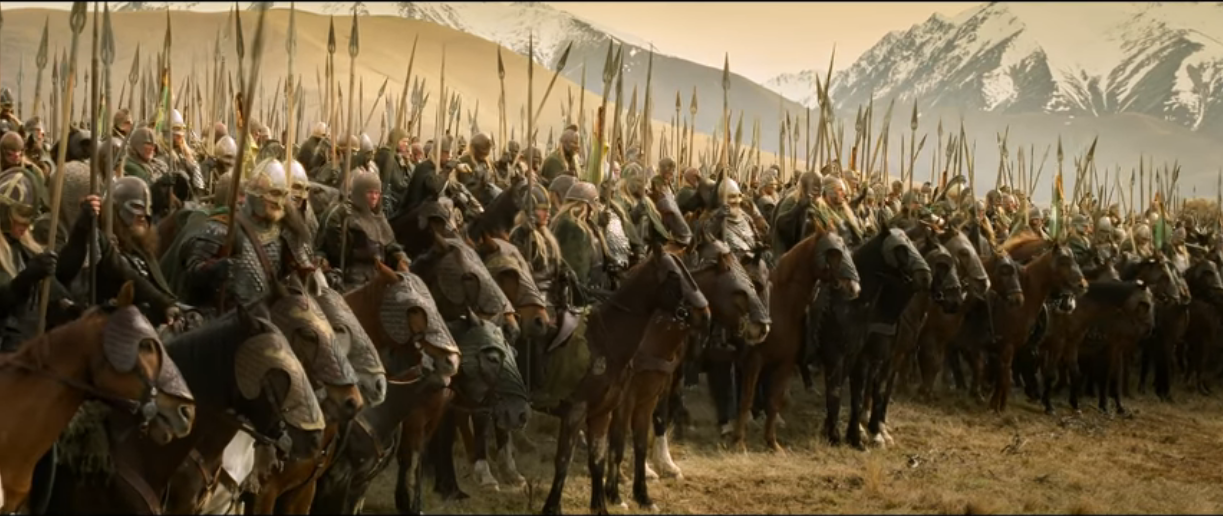
The mass of the Rohirrim, we mostly never see closely—

but, blowing up this image, it’s possible to determine that some attempt has been made to provide the extras with conical helmets, although what little armor one can see appears to be lamellar, rather than chain—probably for the budget’s sake—chain mail taking longer to make and the man-hours making it more expensive—for more on chain mail, here’s a very useful article—and site in general:  https://www.ironskin.com/faq-chainmail-weight-and-cost/

Tolkien was very clear as to what he intended—you have only to read his sometimes outraged comments about a proposed film to be made of The Lord of the Rings to see just how seriously he took his work and its interpretation—letter to Forrest J. Ackerman, June, 1958, Letters, 389-397—and this is an abbreviated form before he appears to have given up in frustration.

And yet, although Tolkien’s letter to Rhona Beare was certainly available to them, with its description, the director and designers of the films clearly paid little attention to his intentions when it came to the look of the Rohirrim.

So, will I still find the Rohirrim my favorite part of the films?  Well, there is that moment when we see them sweep against Sauron’s Orcs from behind—

which you can see here:  https://www.youtube.com/watch?v=HVmWl7PrBcc

and that would be hard to give up, because, even if they don’t look like Tolkien’s idea of the Rohirrim, certainly the charge is as stirring as he described it.

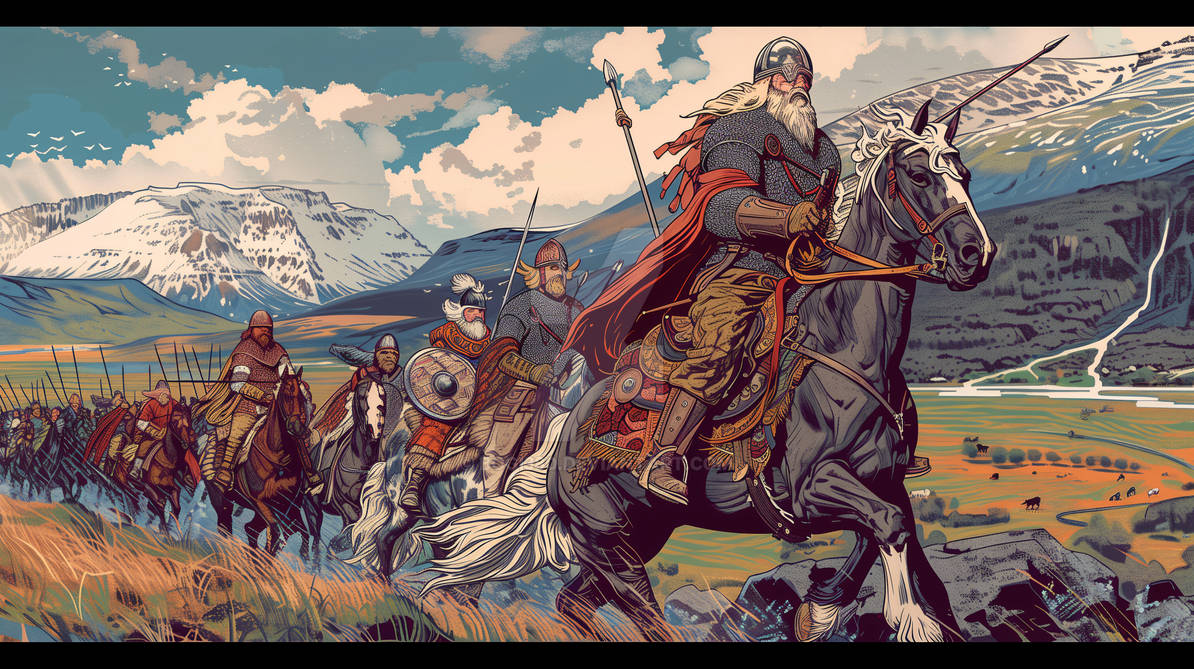
At the same time, however, I’ll offer you this image, by “Bogi380”, of a very different view of the Rohirrim, much closer to Tolkien’s model—

Given the choice of what I would want the Rohirrim to look like, I know what I would choose, but, as the films are not about to be remade, I guess that I’ll stick with my favorites and, as in the case of the ungrassy Rohan, be glad for all that I do enjoy.

Thanks for reading, as always.

Stay well,

Imagine, however, what that scene might have looked like if they’d followed Tolkien’s model–

And remember, that, as always, there’s

MTCIDC

O

PS

For a practically frame-by-frame analysis of the attack of the Rohirrim and a sometimes zany one, see: https://www.extended-cut.com/p/the-charge-of-the-rohirrim-is-the

Saruman’s Sigh

13 Wednesday May 2026

Posted by Ollamh in Uncategorized

≈ Leave a comment

Tags

books, Captain Hook, Fantasy, Gandalf, Isengard, lotr, Orcs, Palantir, Saruman, Sauron, Tolkien

Welcome, as always, dear readers.

When it comes to The Lord of the Rings, I’m sure that everyone has favorite characters.  I suppose that mine, if I had to pin it down to one, would be Sam.  At the same time, I would also say that, for me, if you asked for other favorites, I might say Saruman—and, perhaps surprisingly, this might have been true for Tolkien, I would suggest, as well.

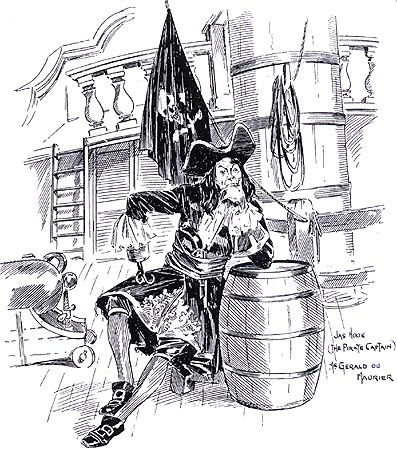
Saruman?  Maybe I just have a perverse taste for villains—after all, I’ve always secretly liked Captain Hook,

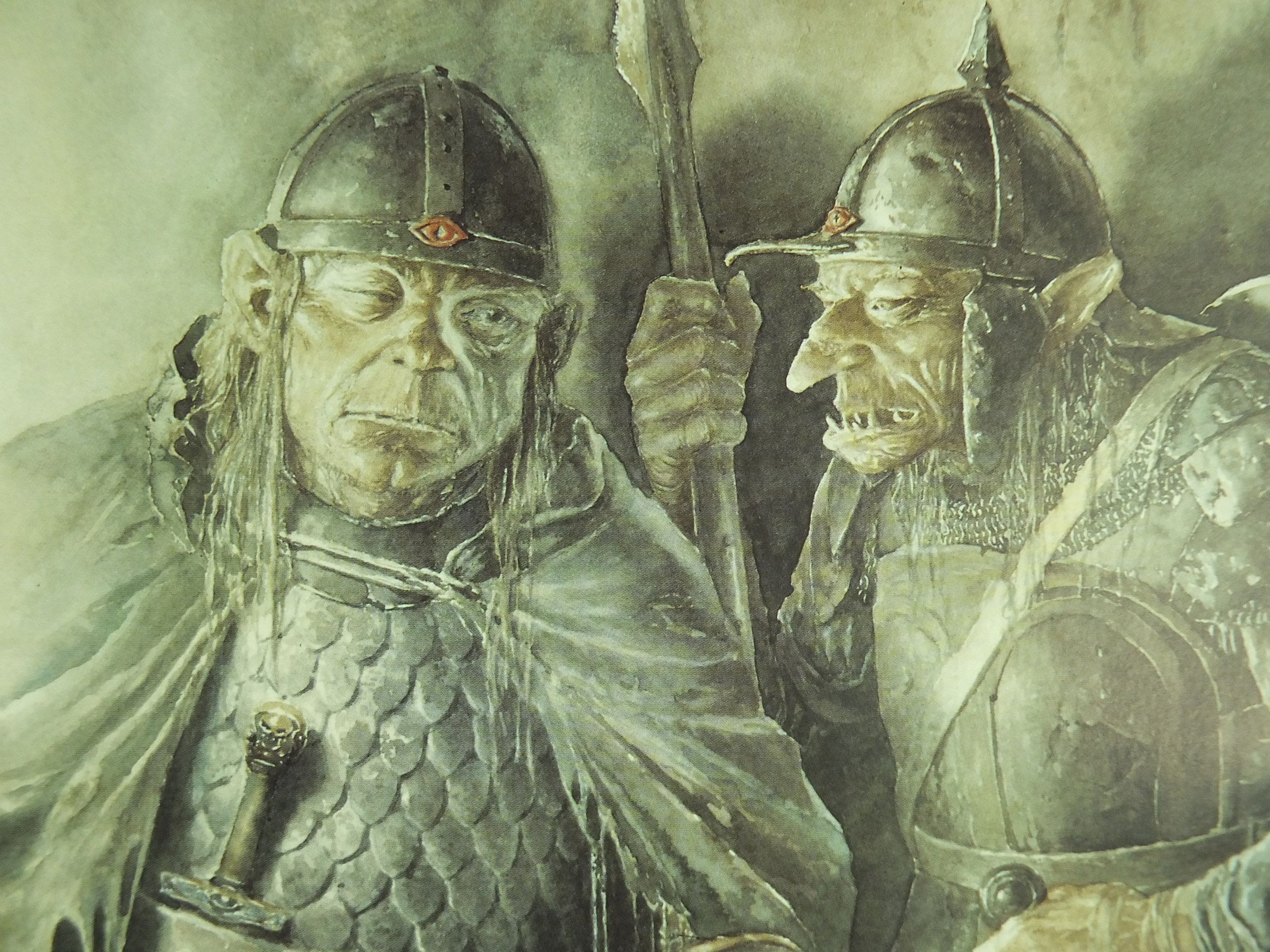
and have a sneaking fondness for the Orcs,

(Alan Lee)

but I think that there’s, ultimately, a poignancy about Saruman—not in his behavior in the earlier parts of The Lord of the Rings, but in his end–which Tolkien, who could simply have painted him as a villain, clearly chose to add to his depiction, which says to me that he, too, found something more to say about the character.

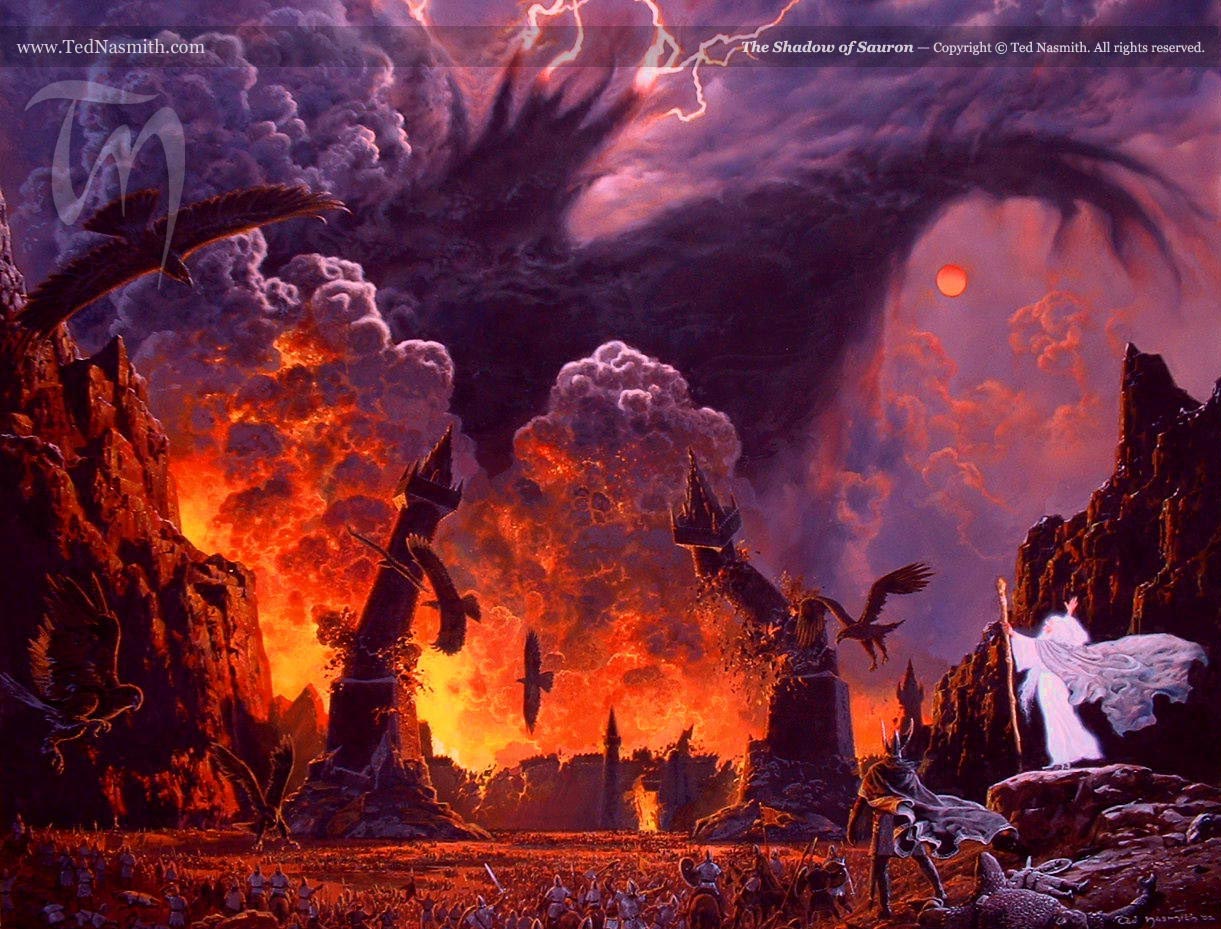
Consider the end of Sauron, which is quite dramatic, if not downright apocalyptic—

A Tolkien illustration by Ted Nasmith

(Ted Nasmith)

“And even as he spoke the earth rocked beneath their feet.  Then rising swiftly up, far above the Towers of the Black Gate, high above the mountains, a vast soaring darkness sprang into the sky, flickering with fire.  The earth groaned and quaked.  The Towers of the Teeth swayed, tottered, and fell down; the mighty ramparts crumbled; the Black Gate was hurled in ruin; and from far away, now dim, now growing, now mounting to the clouds, there came a drumming rumble, a roar, a long echoing roll of ruinous noise…

And as the Captains gazed south to the Land of Mordor, it seemed to them that, black against the pall of cloud, there rose a huge shape of shadow, impenetrable, lightning-crowned, filling all the sky.  Enormous it reared above the world, and stretched out towards them a vast, threatening hand, terrible but impotent; for even as it leaned over them, a great wind took it, and it was all blown away, and passed; and then a hush fell.”  (The Return of the King, Book Six, Chapter 4, “The Field of Cormallen”)

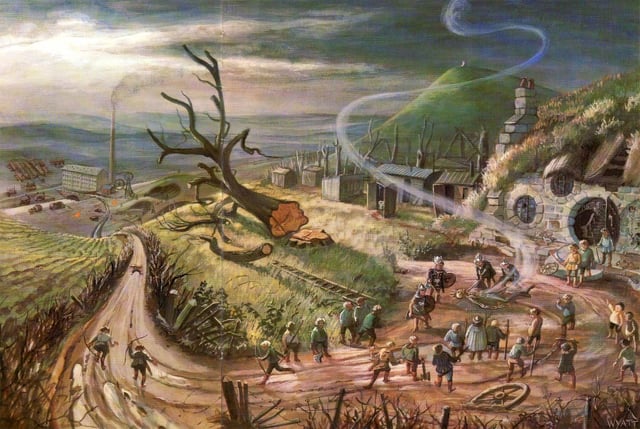
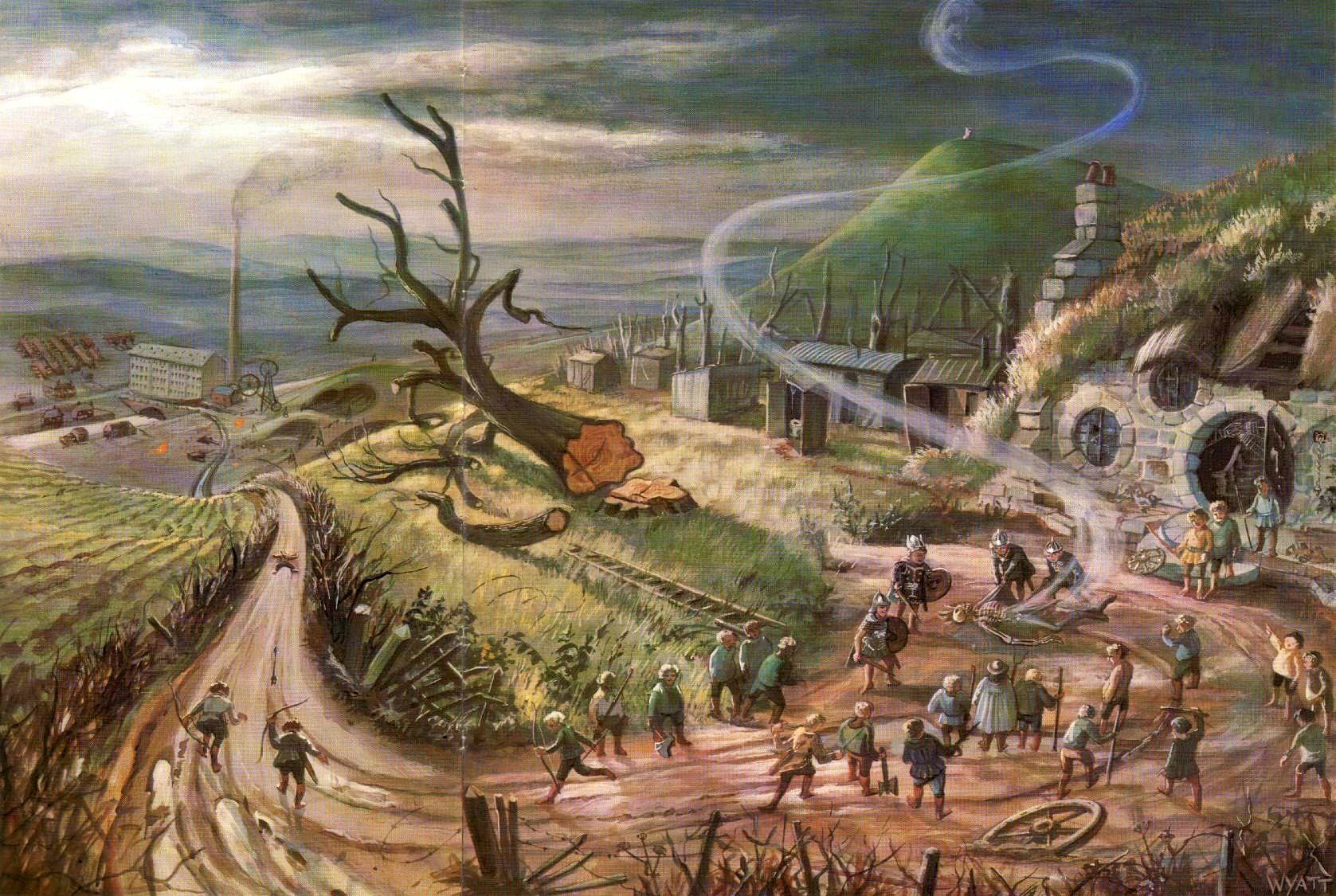
In contrast, there is the death of Saruman—

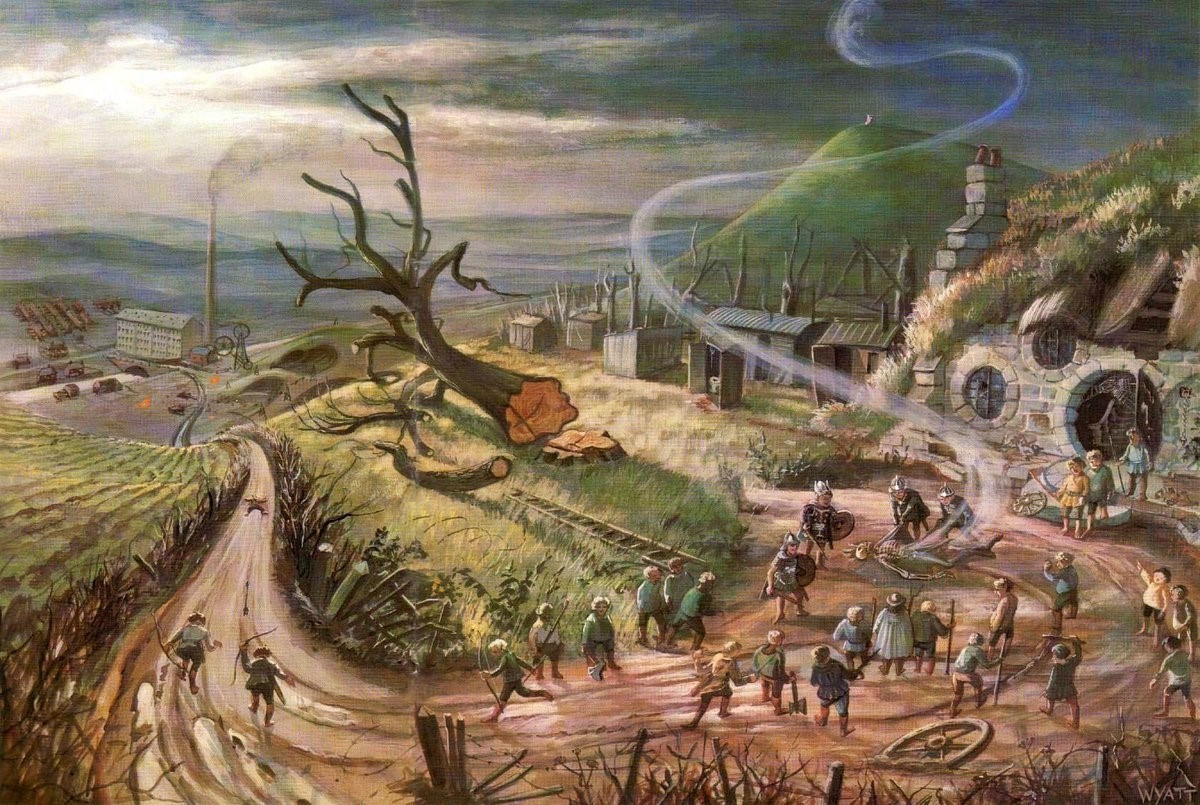
“To the dismay of those that stood by, about the body of Saruman a grey mist gathered, and rising slowly to a great height like smoke from a fire, as a pale shrouded figure it loomed over the Hill  For a moment it wavered, looking to the West; but out of the West came a cold wind, and it bent away, and with a sigh dissolved into nothing.

Frodo looked down at the body with pity and horror, for as he looked it seemed that long years of death were suddenly revealed in it, and it shrank, and the shrivelled face became rags of skin upon a hideous skull.  Lifting up the skirt of the dirty cloak that sprawled beside it, he covered it over, and turned away.”  (The Return of the King, Book Six, Chapter 8, “The Scouring of the Shire”)

(Joan Wyatt—you can see more of her work here:  https://gallerix.org/storeroom/1692737256/ )

And yet both were powerful beings, Sauron being the more powerful, but both Maiar, the equivalent, we might say, of angels, in our Middle-earth. 

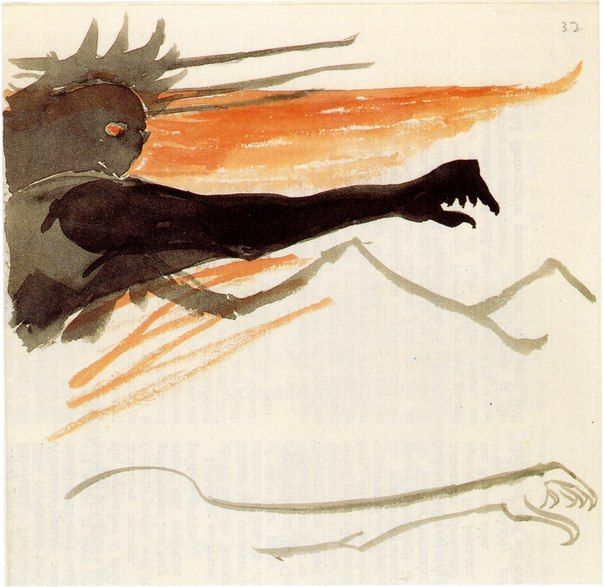
As if it were only an expression of his personality, when Sauron was destroyed, all Mordor came crashing down, although all that we see of Sauron himself is that one “vast, threatening hand, terrible but impotent…”

(JRRT)

So what is the purpose, the meaning, of that simple sigh?

For all that they might attempt to control it in their various ways and scales, these two were not natives of Middle-earth.  Rather, they were once inhabitants of Valinor, to the far west.

(Karen Wynn Fonstad)

Sauron had come in an earlier age of his own accord, intent upon conquest, whereas Saruman had been sent as one of the five Istari, as a counterbalance to Sauron, once servant to the fallen Vala, Melkor, and now a would-be Melkor himself, until something began to go wrong and, instead of countering Sauron, Saruman began to become like him.

This had happened, I think, in stages.

To begin with, there is the question of how the Istari were to act as a balance.  It’s interesting that the two others of whom we know anything, Gandalf and Radagast, appear to have been sent as wanderers, as if their role was to counter Sauron’s influence over a wide area and perhaps in different ways, depending upon that influence.

In contrast, Saruman has not just a fixed home, but a fortress, Isengard,

(the Hildebrandts)

where he has found one of the seeing-stones, the Palantiri,

(the Hildebrandts)

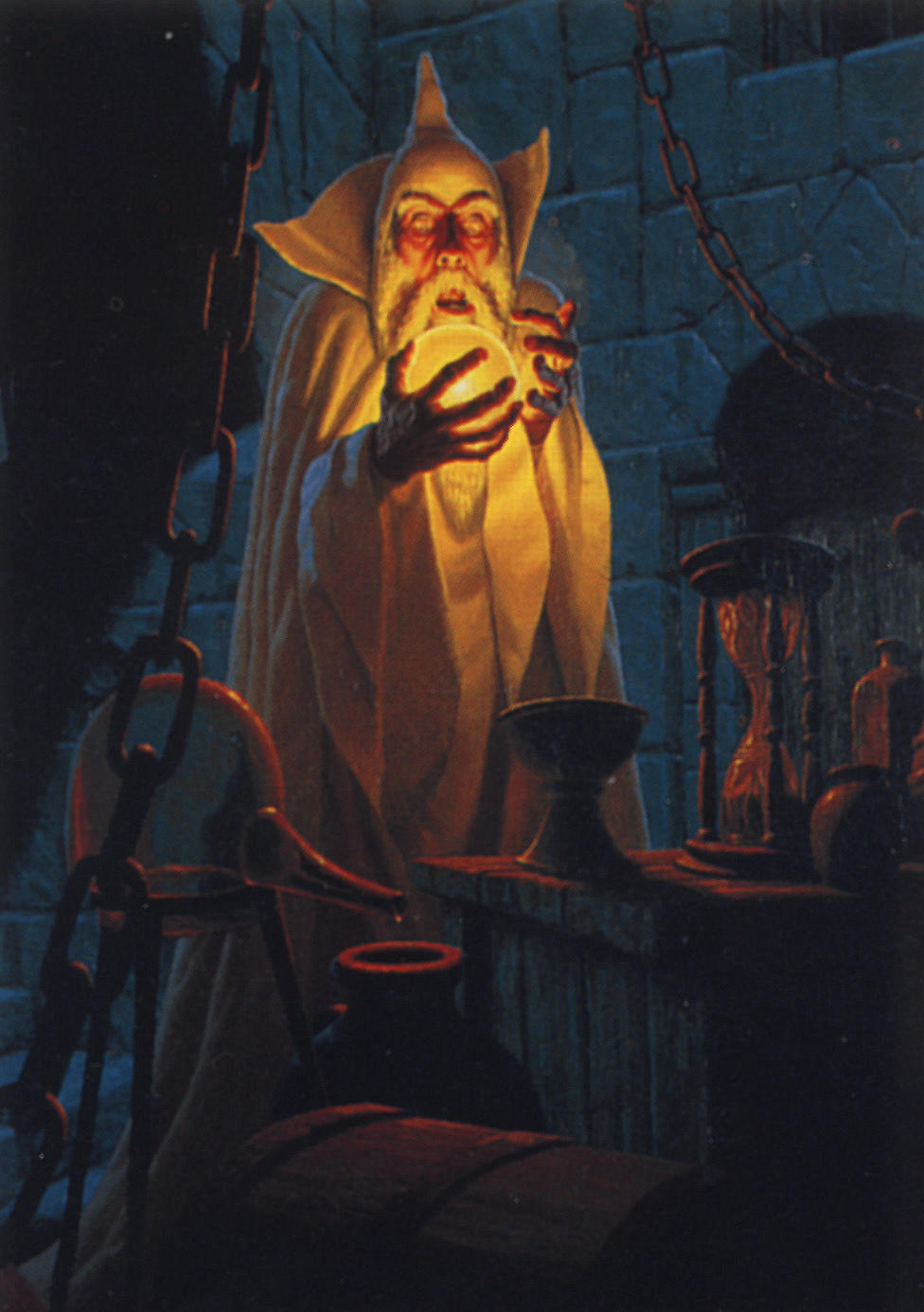
although he has kept this discovery secret, only to be revealed after his defeat—a disturbing sign:  why not let the other Istari know–unless its use was in itself suspect?   

At the very beginning of The Lord of the Rings, Gandalf identifies Saruman to Frodo as “…great among the Wise…chief of my order…” and yet adds something very interesting, and perhaps another disturbing sign:  “His knowledge is deep, but his pride has grown with it, and he takes ill any meddling.”  (The Fellowship of the Ring, Book One, Chapter 2, “The Shadow of the Past”)

We can’t know whether that pride which Gandalf mentions was already displaying itself then, but it’s clear that that discovery was fatal, the second stage in his corruption, pushing Saruman away from his role as a defender of Middle-earth into, in his own mind, the role of a potential conqueror and perhaps even rival to Sauron, although Saruman was

“…being deceived—for all of those arts and subtle devices, for which he forsook his former wisdom, and which fondly he imagined were his own, came but from Mordor; so that what he had made was naught, only a little copy, a child’s model or a slave’s flattery, of that vast fortress, armoury, prison, furnace of great power, Barad-dur, the Dark Tower, which suffered no rival, and laughed at flattery, biding its time, secure in its pride and its immeasurable strength.”  (The Two Towers, Book Three, Chapter 8, “The Road to Isengard”)

In his description of Saruman to Frodo, Gandalf had been specific about Saruman’s knowledge:

“The lore of the Elven-rings, great and small, is his province.  He has long studied it, seeking the lost secrets of their making…”

And here perhaps is revealed another stage in Saruman’s corruption:

“…but when the Rings were debated in the Council, all that he would reveal to us of his ring-lore told against my fears…”

That is, just as in the case of the Palantir, Saruman has kept things back.  Was Saruman acting on his own in this, or had the seeing-stone and its real controller already been working at his mind? 

Certainly, when he makes his pompous and revelatory speech to Gandalf, hoping to persuade him to join him (which Gandalf immediately not only sees through, but sees how much of it isn’t even Saruman’s thinking, but the words of someone else), we have the sense that, whoever Saruman had been when he came to Middle-earth, that person had been twisted away from protecting Middle-earth from Sauron and  was stating, instead, completely alien goals, as Gandalf recognized:

“We can bide our time, we can keep our thoughts in our hearts, deploring maybe evils done by the way, but approving the high and ultimate purpose:  Knowledge, Rule, Order; all the things that we have so far striven in vain to accomplish, hindered rather than helped by our weak or idle friends.  There need not be, there would not be, any real change in our designs, only in our means.”  (The Fellowship of the Ring, Book Two, Chapter 2, “The Council of Elrond”)

To Gandalf, this is Sauron talking:

“ ‘Saruman…I have heard speeches of this kind before, but only in the mouths of emissaries from Mordor to deceive the ignorant.’ “

and it’s clear to him that Saruman, seemingly unknowingly, has become a puppet of someone more powerful and devious than he. 

The immediate instrument for this was, as I would suggest, that seeing-stone, but, beyond that, there was a vulnerability inherent in Saruman’s very being in Middle-earth, as Tolkien describes in a letter:

“But since in this tale & mythology Power—when it dominates or seeks to dominate other wills and minds (except by the assent of their reason)—is evil, these ‘wizards’ were incarnated in the life-forms of Middle-earth, and so suffered the pains both of mind and body.  They were also, for the same reason, thus involved in the peril of the incarnate:  the possibility of ‘fall’, of sin, if you will.  The chief form this would take with them would be impatience, leading to the desire to force others to their own good ends, and so inevitably at last to mere desire to make their own wills effective by any means.  To this evil Saruman succumbed.”  (drafts to Michael Straight, “probably January or February 1956”, Letters, 342-343)

And here is where that “pride”, which Gandalf had mentioned to Frodo had appeared, added to which was his losing sight of the Valar’s purpose in sending him and acquiring a fortress, where Sauron was able to turn him to his own purposes—although we might imagine that, under Sauron’s domination, Saruman might still believe that he could escape Sauron’s notice, when he suggests to Gandalf

“As the Power grows, its proved friends will also grow; and the Wise, such as you and I, may with patience come at last to direct its courses, to control it.” 

And even that he might imagine that he himself might employ the Ring—

“ ‘Why not?  The Ruling Ring?  If we should command that, then the Power would pass to us.’ “

Gandalf’s reply to this:   “ ‘Saruman…only one hand at a time can wield the One, and you know that well, so do not trouble to say we…You were head of the Council, but you have unmasked yourself at last.” shows that Saruman has failed completely, both in his immediate quest to persuade Gandalf to tell him where the Ring currently is, and in his attempt to bring a fellow Istar to his side, having dismissed Radagast completely (“Radagast the Bird-tamer!  Radagast the Simple!  Radagast the Fool!”).

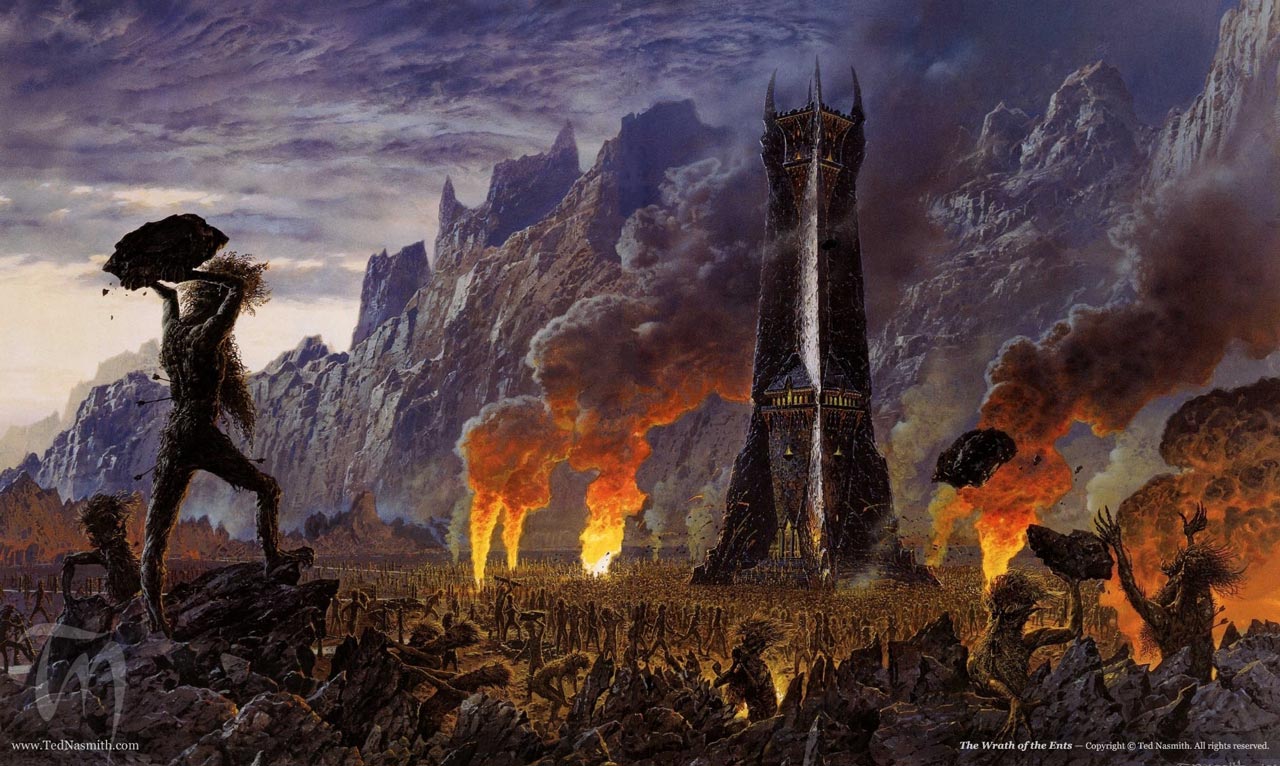
This, however, is only Saruman’s first failure.  His attempt to out-Sauron Sauron by a war of conquest not only fails at Helm’s Deep, but brings about the destruction of his fortress at Isengard.

The Wrath of the Ents, by Ted Nasmith

(Ted Nasmith)

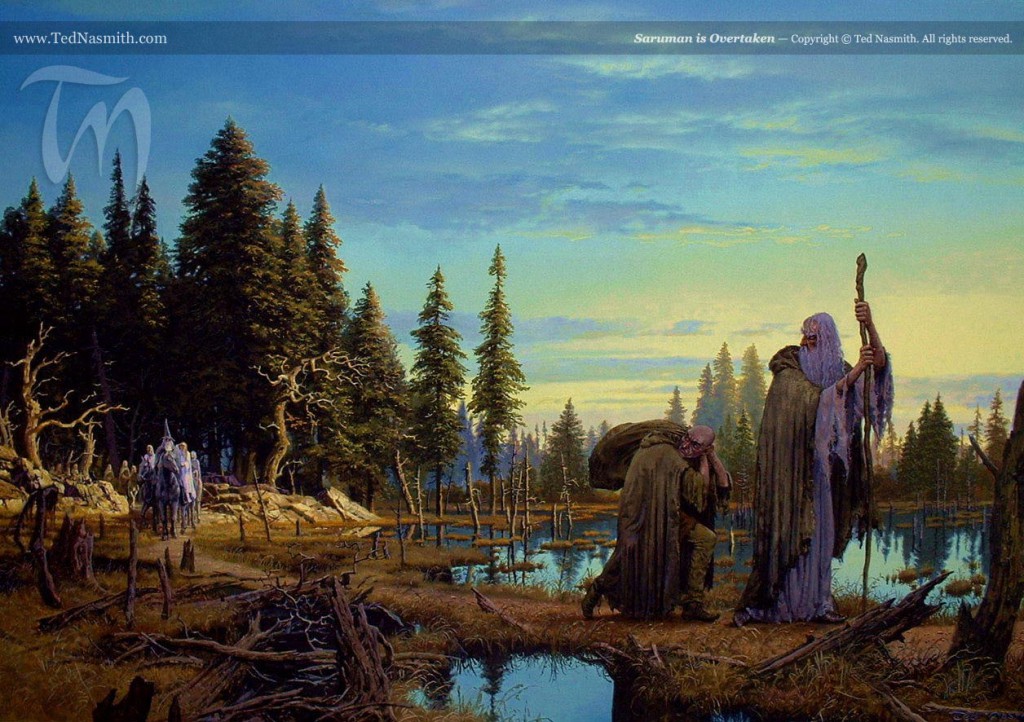
He then loses the Palantir,

(Sergei Lukhimov—you can see a little more of his work here:  https://imgur.com/gallery/1993-ukranian-artist-sergei-lukhimov-created-32-illustrations-first-ever-russian-edition-of-lord-of-rings-eastern-orthodox-iconography-meets-anglo-saxon-modern-mythology-Ct7ojT5 )

and is even exiled from his one-time place of power,

(Ted Nasmith)

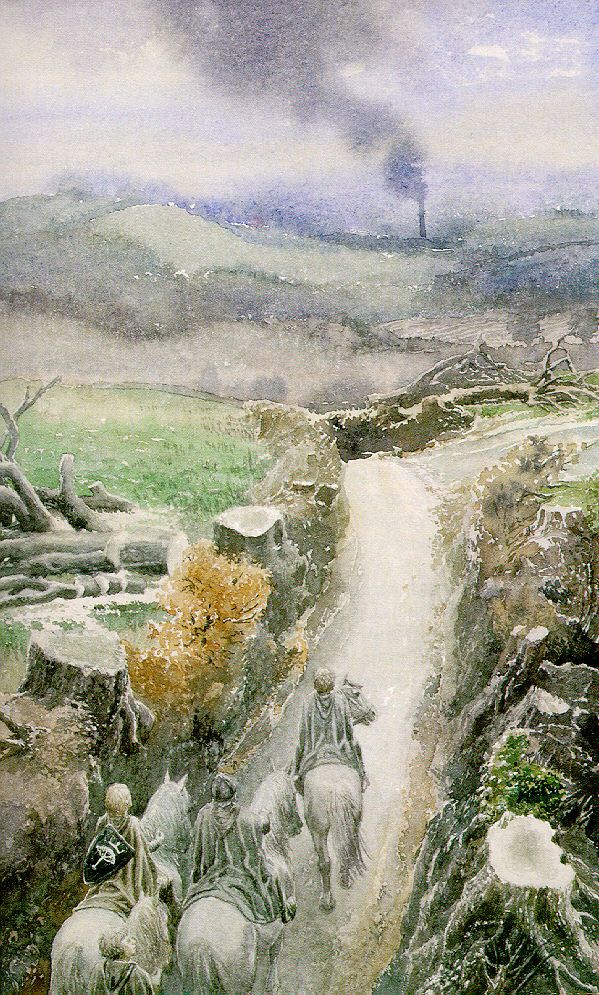
before his attempt to ruin the Shire is stopped by the return of Frodo and his friends

(Alan Lee)

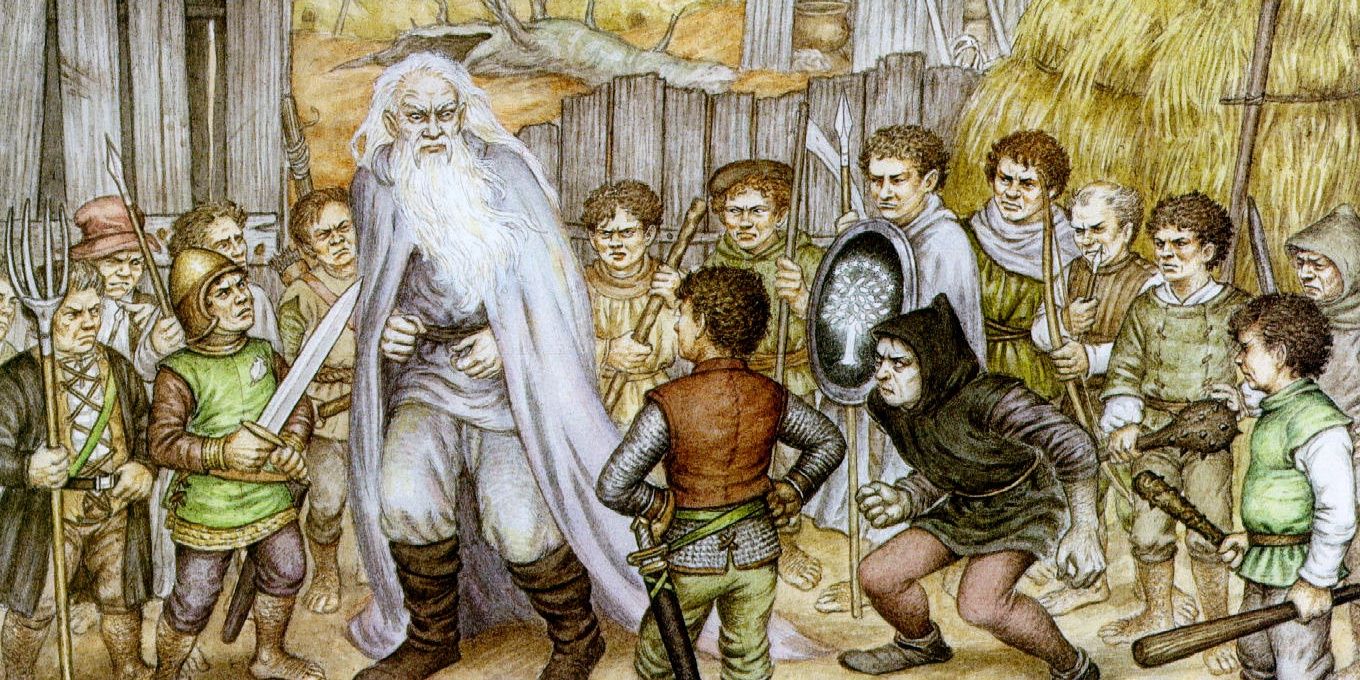
and his final confrontation with Frodo

(Inger Edelfeldt—you can read about her here:  https://en.wikipedia.org/wiki/Inger_Edelfeldt )

ends in his death—or the closest thing like it to someone from Valinor in the West—his rejection by it–

(Joan Wyatt)

“To the dismay of those that stood by, about the body of Saruman a grey mist gathered, and rising slowly to a great height like smoke from a fire, as a pale shrouded figure it loomed over the Hill  For a moment it wavered, looking to the West; but out of the West came a cold wind, and it bent away, and with a sigh dissolved into nothing.”

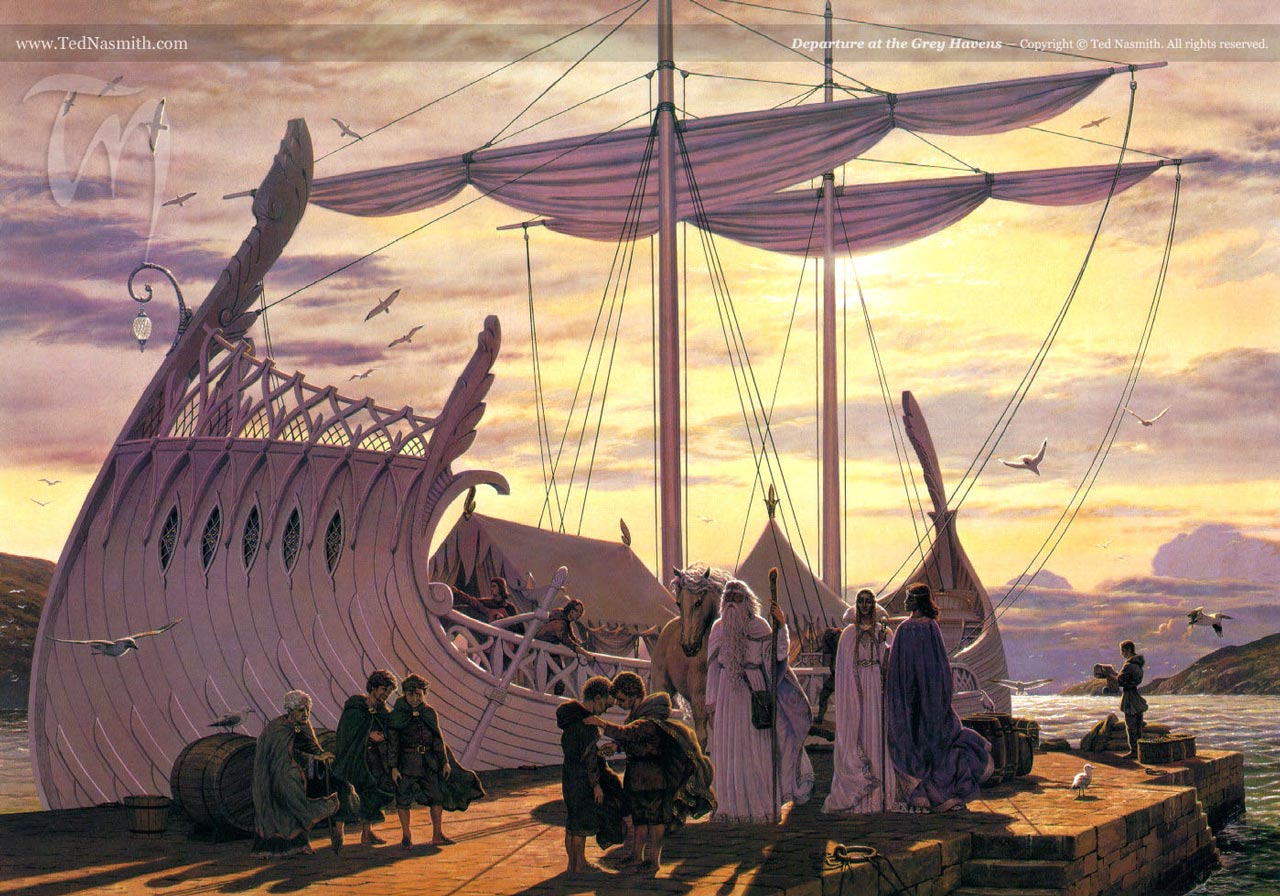
One has only to remember the beautiful, melancholy farewells at the Grey Havens to see what Saruman might have been part of—

(Ted Nasmith)

Gandalf, with Sauron defeated, returns whence he came, his task complete.  Saruman, failing in that task, has no home to which to return and “dissolved into nothing”, but that sigh—so important here—says that he knows that he has failed and, in depicting that recognition, I believe we see JRRT show some deeper feeling for him than he might ever have expressed for Sauron, even as he had written that Sauron had not begun as evil (see draft to Peter Hastings, September, 1954, Letters, 284).

Thanks, as always, for reading.

Stay well,

As well, consider the deep feeling which can rest even in a sigh,

And remember that, as always, there’s

MTCIDC

O

Planting

29 Wednesday Apr 2026

Posted by Ollamh in Uncategorized

≈ Leave a comment

Tags

Bag End, Eavesdropping, Fantasy, Gardening, Guy Fawkes, lotr, plotting, Sam Gamgee, the Gaffer, The Ivy Bush, The Lord of the Rings, Tolkien

Welcome, as always, dear readers.

Recently, I’ve been thinking about plotting—not as in conspiracies, like Guy Fawkes,

who planned to blow up Parliament and James I with it,

but in the construction of fictional plots.  The worse kind is what I would call examples of “fiat” writing—from the Latin subjunctive “let it be”, as in “fiat lux”—“let there be light”.  In plots like this, things happen because the author wants them to and is too lazy or inept to work the details out in a systematic, believable way.  (As I avoid harsh criticism in this blog, I won’t mention any examples, but I suspect that, if you are a reader of this blog, you know exactly what I mean and can supply your own.)

So let me show you an example of good, if not downright elegant, plotting, instead.

It’s about to be spring here, with things reluctantly beginning to flower and bud and spread, and that makes me think of gardens—which, I hope logically, makes me think of gardeners and that makes me think of the Gamgees, who have been gardeners for the Baggins for at least two generations—

“No one had a more attentive audience than old Ham Gamgee, commonly known as the Gaffer [a dialect form of “grandfather”]. 

(my favorite image—there don’t appear to be many—of the Gaffer, by Denis Gordeev)

He held forth at The Ivy Bush,

(I imagine it—minus the modern road—as looking something like this, which is the White Lion Inn in Bartholmley, Cheshire—about which you can read a little here:  https://en.wikipedia.org/wiki/White_Lion,_Barthomley )

a small inn on the Bywater road; and he spoke with some authority, for he had tended the garden at Bag End for forty years, and had helped old Holman in the same job before that.  Now that he was himself growing old and stiff in the joints, the job was mainly carried on by his youngest son, Sam Gamgee.”  (The Fellowship of the Ring, Book One, Chapter 1, “An Unexpected-party”)

And here the plotting begins, which will end with Sam incorporated into Frodo’s adventure with the Ring—not by “fiat”, but by a careful planting (sorry!) of details.

So, we know that the Gamgees are long-established at Bag End, not only the Gaffer, but his son, Sam.

Now we’re given another detail—and a very important one:

“ ‘But my lad Sam will know more about that.  He’s in and out of Bag End.  Crazy about stories of the old days, he is, and he listens to all of Mr. Bilbo’s tales…

‘Elves and Dragons!’ I says to him.  ‘Cabbages and potatoes are better for me and you.  Don’t go getting mixed up in the business of your betters, and you’ll land in trouble too big for you.’ “

So now we know that Sam already has a taste for adventure, cultivated (sorry), if inadvertently, by Bilbo.

This is further developed in the next chapter—

“[Sam] believed that he had once seen an Elf in the woods, and still hoped to see more one day.  Of all the legends that he had heard in his early years such fragments of tales and half-remembered stories about the Elves as the hobbits knew, had always moved him most deeply.” (The Fellowship of the Ring, Book One, Chapter 2, “The Shadow of the Past”)

And now the scene is set:

“Sam sat silent and said no more.  He had a good deal to think about.  For one thing, there was a lot to do up in the Bag End garden, and he would have a busy day tomorrow, if the weather cleared.  The grass was growing fast.  But Sam had more on his mind than gardening.  After a while he sighed, and got up and went out.

…He walked home under the early stars through Hobbiton and up the Hill, whistling softly and thoughtfully.”

And here we even get the suggestion of a sound effect to come.

But there’s even more scene-setting:

“…It was over nine years since Frodo had seen or heard of [Gandalf]…But that evening, as Sam was walking home and twilight was fading, there came a once familiar tap on the study window.

…Next morning after a late breakfast, the wizard was sitting with Frodo by the open window of the study.

…There was another long silence.  The sound of Sam Gamgee cutting the lawn came in from the garden.”

There is a puzzle here.  Where were the lawn and garden of Bag End?  Here are two images by Tolkien—the first from a distance,

the second close up,

but I can’t make out where those items are supposed to be.  In the first, the road appears to run just below the house, with perhaps lawn and garden on the far side and down the hill?  In the second image, there appears to be a bench (where Bilbo would have sat, smoking and reading his mail when Gandalf turned up in the first chapter of The Hobbit) and, to the right, some garden? 

Let’s put this aside, however, to continue the action.

Gandalf has begun to talk about the Ring, and even closes the shutters and the curtains when he does so, but now the narrative inside and the action outside are about to be linked—as Gandalf begins to describe the search for Gollum—

“A heavy silence fell in the room.  Frodo could hear his heart beating.  Even outside everything seemed still.  No sound of Sam’s shears could be heard.”

Sam is still at work, however, as—

“[Gandalf] went to the window and drew aside the curtains and the shutters.  Sunlight streamed back into the room.  Sam passed along the path outside whistling.”

But is Sam really occupied with grass-cutting?

“Suddenly [Gandalf] stopped as if listening.  Frodo became aware that all was very quiet, inside and outside.  Gandalf crept to one side of the window.  Then with a dart he sprang to the sill, and thrust a long arm out and downwards.  There was a squawk, and up came Sam Gamgee’s curly head hauled by one ear.”

(Robert Chronister—I can find a few paintings by him, but no website or further biographic material than that he was born in 1933.)

Sam tries to defend himself—

“ ‘…I was just trimming the grass-border under the window, if you follow me.’ He picked up his shears and exhibited them as evidence.”

When pressed, however, he confesses that he had been listening:

“…I heard a deal that I didn’t rightly understand, about and enemy, and rings, and Mr. Bilbo, sir, and dragons, and a fiery mountain, and—and Elves, sir.  I listened because I couldn’t help myself, if you know what I mean.  Lor bless me, sir, but I do love tales of that sort…Elves, sir!  I would dearly love to see them.  Couldn’t you take me to see Elves, sir, when you go?”

And here we see how all of this has been patiently laid out:  the Gamgees and the Bagginses, the gardening, Sam and his interest—through Bilbo—in Elves and stories of adventure, Gandalf’s appearance and his narrative, which Sam overhears while gardening—and listening–only to be apprehended in his eavesdropping, with only one detail still needed and now mentioned:

“ ‘Get up, Sam!’ said Gandalf.  ‘I have thought of something better than that.  Something to shut your mouth, and punish you properly for listening.  You shall go away with Mr. Frodo!’ “

After all of the careful plotting, Sam’s reaction is no wonder, then—

“ ‘Me go and see Elves and all!  Hooray!’ he shouted and then burst into tears.” 

Elegant, and yet practical and completely convincing.

Thanks, as always, for reading.

Stay well,

How is your garden doing?

And remember that, as ever, there’s

MTCIDC,

O

PS

While working on this posting, I came across this very interesting and thoughtful piece:  https://thoughtsontolkien.wordpress.com/2024/04/14/gardens-in-the-lord-of-the-rings/

Subterranean

22 Wednesday Apr 2026

Posted by Ollamh in Uncategorized

≈ Leave a comment

Tags

Bag End, Balrog, Bilbo, Chamber of Mazarbul, Cirith Ungol, clowns, enclosed-spaces, Erebor, Fantasy, Frodo, Goblins, Gollum, heights, Helm's Deep, Indiana Jones, Misty Mountains, Moria, Mt. Doom, needles, phobias, Smaug, spiders, Star Wars, Star Wars IV, The Hobbit, The Lord of the Rings, The Paths of the Dead, the-misty-mountains, Tolkien, trolls

As ever, dear readers, welcome.

I’m always amazed at how many kinds of phobias there are.

There’s the classic acrophobia—

and nyctophobia—

and trypanophobia

(of which George Lucas takes advantage in Star Wars IV

that needle is positively dripping!)

and one of my favorites, coulrophobia–

(and who wouldn’t be afraid of that?)

as well as the seemingly common arachnophobia,

of which Steven Spielberg took advantage in the first Indiana Jones movie—

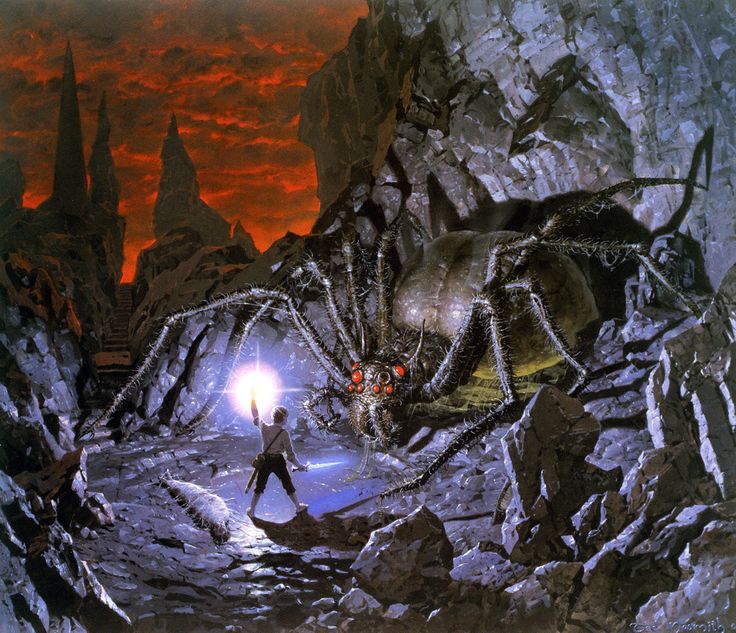
Because of Shelob in The Lord of the Rings,

(Ted Nasmith)

Tolkien, perhaps suspected of this—after all, there are also those large spiders in The Hobbit—

(Alan Lee)

wrote to W.H. Auden in 1955:

“But I did know more or less all about Gollum and his part, and Sam, and I knew that the way was guarded by a Spider.  And if that has anything to do with my being stung by a tarantula when a small child,

people are welcome to the notion (supposing the improbable, that any one is interested).  I can only say that I remember nothing about it, should not know it if I had not been told; and I do not dislike spiders particularly, and have no urge to kill them.  I usually rescue those whom I find in the bath!”  (letter to W.H. Auden, 7 June, 1955, Letters, 316.  For more on this, see:   “Phobe” 24 May, 2023 here:  https://doubtfulsea.com//?s=phobe&search=Go )

So, as far as we know, then, JRRT makes no mention of any other fears and insists that he had no dread of arachnids, even if they make two major appearances in his works.  There is another possible phobia which he doesn’t discuss, however—claustrophobia—

and I’ve wondered:  could we perhaps see a mild form in his case?

I suppose that one might immediately point out that Bilbo, in effect, lives in a cave—

(JRRT)

but Tolkien’s illustration suggests that this isn’t a place for spelunking—

and his description of Bag End underlines this:

“Not a nasty, dirty, wet hole, filled with the ends of worms and an oozy smell, nor yet a dry, bare, sandy hole with nothing in it to sit down on or to eat:  it was a hobbit-hole, and that means comfort.

…The door opened on to a tube-shaped hall like a tunnel:  a very comfortable tunnel without smoke, with panelled walls, and floors tiled and carpeted, provided with polished chairs, and lots and lots of pegs for hats and coats…”  (The Hobbit, Chapter One, “An Unexpected Party”)

But consider all of his adventures in the novel:  how many of them take place in adverse conditions under ground?

First, there’s the mention of the cave where the trolls

(JRRT)

kept their loot:

“There were bones on the floor and a nasty smell in the air; but there was a good deal of food jumbled carelessly on shelves and on the ground among an untidy litter of plunder, of all sorts from buttons to pots full of gold coins standing in a corner.  There were lots of clothes, too, hanging on the walls—too small for trolls, I am afraid they belonged to victims…” (The Hobbit, Chapter Two, “Roast Mutton”—there was also “bacon to toast in the embers of the fire”—but, considering a major troll protein source and remembering William’s remark—“Yer can’t expect folk to stop here for ever just to be et by you and Bert.  You’ve et a village and a half between yer since we come down from the mountains.”  I wonder that Bilbo and the dwarves would touch it!)

Then there was the network of caves cut by the goblins under the Misty Mountains,

(JRRT—but looking from the east westwards)

where Bilbo and the dwarves were briefly held prisoner by the goblins

(Alan Lee)

and where Bilbo had his encounter with Gollum.

(Alan Lee again)

Later, we have the halls of Thranduil, where the dwarves are again held prisoner,

(JRRT)

before the final underground nightmare, the Lonely Mountain.

IJRRT)

And those are just the subterranean terrors in The Hobbit.

Continuing to The Lord of the Rings, we have Moria,

(Alan Lee)

where, besides being temporarily trapped by orcs in the Chamber of Mazarbul,

(Angus McBride)

the Fellowship loses Gandalf to the Balrog.

(Angus McBride)

There are the caves at Helm’s Deep, about which Gimli is enthusiastic, but Legolas is not.

(JRRT)

Then there are the Paths of the Dead,

(Darrell Sweet—you can read about him here:  https://blackgate.com/2022/04/17/andventure-to-be-had-a-journey-through-the-art-of-darrell-k-sweet/ )

then the tunnels of Cirith Ungol, where Frodo and Sam encounter Shelob,

(Ted Nasmith)

and, finally, the cavern under Mount Doom, where Frodo almost changes the plot, before Gollum appears.

(Ted Nasmith)

All evidence of a deep-seated fear of being trapped underground? 

Bag End may mean comfort, but what about:

“a nasty, dirty, wet hole, filled with the ends of worms and an oozy smell” and who knows what else?

As always, thanks for reading.

Stay well,

When possible, stick to the sunlight,

And remember that, as always, there’s

MTCIDC

O

Goblins and Goblin

25 Wednesday Mar 2026

Posted by Ollamh in Uncategorized

≈ Leave a comment

Tags

Book Goblin, books, Despicable Me, Droids, Elizabeth Wheatley, Emperor Palpatine, Fantasy, George Macdonald, Goblins, Gru, Minions, Orcs, Order 66, Sauron, Star Wars, The Lord of the Rings, Tolkien

Welcome, dear readers, as always.

Villains with ambitious plans for world conquest need armies.

Emperor Palpatine

initially employs droids by the million to face the Republic’s clone armies, and not just ordinary foot soldier droids—

but super battle droids

and even commando battle droids

before, in his complex plan, he turns the Republic’s clones against his real target, the Jedi, in Order 66.

On a lighter level, Gru,

of Despicable Me, has masses of Minions to work his will (sort of)—

It’s clear that Sauron has similar plans—and similar armies—orcs—along with masses of humans.

(Alan Lee)

Orcs, we’re told, are a kind of distortion of actual living creatures—

“But Trolls are only counterfeits, made by the Enemy in the Great Darkness, in mockery of Ents, as Orcs were of Elves.”  (The Two Towers, Book Three, Chapter 4, “Treebeard”)

Orcs began, however, as something more traditional and, for Tolkien, begin with the works of George MacDonald (1824-1905),

and, in particular, with one of his fantasy novels, The Princess and the Goblin, 1870-2.

(First US edition, 1871)

For our purposes, the princess, although an heroic figure, can be removed, as we’re interested in those goblins.

(Arthur Hughes)

Later in life, Tolkien became disenchanted with MacDonald’s work, failing to complete a proposed preface for his The Golden Key, a short story from MacDonald’s Dealings with the Fairies, 1867—you can read it here:  https://archive.org/details/dealingswithfair00macd_0/page/n5/mode/2up

and you can read about his disenchantment in Carpenter’s J.R.R. Tolkien, page 244.).  Earlier, however, he had acknowledged MacDonald’s influence, writing to the editor of The Observer about The Hobbit:

“As for the rest of the tale it is, as the Habit [the pen name of a commentator on the book] suggests, derived from (previously digested) epic, mythology, and fairy-story—not, however, Victorian in authorship, as a rule to which George Macdonald [sic] is the chief exception.” (letter to the editior, February, 1938, Letters, 40-41)

Tolkien refers to this influence again in a much later letter to Hugh Brogan:

“Your preference of goblins to orcs involves a large question and a matter of taste, and perhaps historical pedantry on my part.  I personally prefer Orcs (since these creatures are not ‘goblins’, not even the goblins of George MacDonald, which they do to some extent resemble).”  (letter to Hugh Brogan, 18 September, 1954, Letters, 278)

And a little earlier, in a letter to Naomi Mitchison:

“They are not based on direct experience of mine [an interesting remark—did JRRT have supernatural experiences which he doesn’t discuss?]; but owe, I suppose, a good deal to the goblin tradition (goblin is used as a translation in The Hobbit, where orc only occurs once, I think), especially as it appears in George MacDonald, except for the soft feet which I never believed in.”  (letter to Naomi Mitchison, 25 April, 1954, Letters, 267)

Those soft feet turn out to be the Achilles’ heel (sorry!) of the goblins as we overhear in a conversation between a goblin father and son:

” ‘You say so, dad. I think myself I’m all right. But I could carry ten times as much if it wasn’t for my feet.’

‘That is your weak point, I confess, my boy.’

 ‘Ain’t it yours, too, father?’

‘Well, to be honest, it is a goblin-weakness. Why they come so soft, I declare I haven’t an idea.’  (The Princess and the Goblin, Chapter VIII, “The Goblins”  You can read more here:   https://archive.org/details/princessgoblin00macd/mode/2up  And you can read more about the author here:   https://en.wikipedia.org/wiki/George_MacDonald )

Recently, however, I’ve met another goblin, to whom I was introduced by a dear friend.  This is Book Goblin.

Unlike the clones and droids and Minions and orcs, who only exist to do their master’s bidding, Book Goblin lives for books, stacking shelves full, longing for the mailman to bring more, even believing in “Bookhalla”, which is, basically, an immense library, where those who are gathered there read books all day and hold book clubs all night.  You can see and hear Book Goblin describing it here:  https://www.youtube.com/shorts/vkjErlwUA2A   Only brave readers are allowed to go there, including those who read “without bookmarks”!

Book Goblin is, in fact, the creation of the fantasy author Elizabeth Wheatley

and you can read more about her and her work here:  https://www.bookseriesinorder.com/elisabeth-wheatley/   And YouTube has many short features in which Book Goblin discusses likes and dislikes and often seems like the Id of all passionate readers, which is why I bring her to your attention.  Unlike droids, clones, Minions, and orcs, however, she is one of kind and, as for world conquest—I suspect that it would interfere with her reading.

Thanks for your reading, as always,

Stay well,

If you’re like me, you probably aren’t brave enough to read without a bookmark, so I guess no Bookhalla, sadly,

But remember that, as always, there’s

MTCIDC

O
Crowing and Raven

18 Wednesday Mar 2026

Posted by Ollamh in Uncategorized

≈ Leave a comment

Tags

crow, Cuchulain, Fantasy, Gandalf, Grima, Huginn, Muninn, nursery rhyme, nursery-rhymes, Odin, Poe, raven, Sing a Song of Six Pence, Sleipnir, The Hobbit, The Lord of the Rings, Theoden

Welcome, as always, dear readers.

“ ‘I greet you…and maybe you look for welcome.  But truth to tell your welcome is doubtful here, Master Gandalf.  You have ever been a herald of woe.  Troubles follow you like crows, and ever the oftener the worse….Here you come again!  And with you come evils worse than before, as might be expected.  Why should I welcome you, Gandalf Stormcrow?’ “  (The Two Towers, Book Three, Chapter 6, “The King of the Golden Hall”)

Theoden is being less than hospitable, although we soon learn that he’s being manipulated by Grima to be so,

(Alan Lee)

but his insulting name seems odd:  “Stormcrow”? 

If we were southerners in the US, we might imagine that Theoden is actually calling Gandalf a cuckoo, as the yellow-billed cuckoo, native there, is sometimes called that,

because, as the Wiki article says, the nickname perhaps comes from the fact of “the bird’s habit of calling on hot days, often presaging rain or thunderstorms”.  (For more, see: https://en.wikipedia.org/wiki/Yellow-billed_cuckoo )

Although we don’t hear of cuckoos in Middle-earth, certainly Gandalf appears in Meduseld in the middle of another kind of tempest, as Grima continues Theoden’s line of reasoning:

“ ‘It is not yet five days since the bitter tidings came that Theodred your son was slain upon the West Marches:  your right-hand, Second Marshal of the Mark.  In Eomer there is little trust…And even now we learn from Gondor that the Dark Lord is stirring in the East…Why indeed should we welcome you, Master Stormcrow?’ “

And there that word is again.  What does Tolkien have against crows?

There might be a clue in that line “troubles follow you like crows”, which reminds me of something which happened earlier in The Lord of the Rings when “Flocks of birds, flying at great speed”, appeared over the Fellowship.  Aragorn wakes and reports to Gandalf:

“ ‘Regiments of black crows are flying over all the land between the Mountains and the Greyflood…and they have passed over Hollin.  They are not natives here; they are crebain out of Fangorn and Dunland.  I do not know what they are about…but I think they are spying out the land.’ “  (The Fellowship of the Ring, Book Two, Chapter 3, “The Ring Goes South”)

It’s clear that, in Tolkien’s mind, crows do not get good press.  Here they are in The Hobbit, as well, as Balin says to Bilbo:

“ ‘Those were crows!  And nasty suspicious-looking creatures at that, and rude as well.  You must have heard the ugly names they were calling after us.’ “ (The Hobbit, Chapter 15, “The Gathering of the Clouds”)

So, crows are “nasty suspicious-looking creatures”, “rude”, and even possibly spies. 

They are also in contrast to another large black bird—

(I apologize to my non-North American readers for using North American birds in this chart, but this seemed the best choice and the European varieties are similar.)

“ ‘I only wish he was a raven!’ said Balin.

‘I thought that you did not like them!  You seemed very shy of them, when we came this way before.’

‘Those were crows!…But the ravens are different.  There used to be great friendship between them and the people of Thror; and they often brought us secret news…

‘They live many a year, and their memories are long, and they hand on their wisdom to their children.’ “  (The Hobbit, Chapter 15, “The Gathering of the Clouds”)

(Alan Lee)

Why the preference for ravens?

Possibly, as a small child, Tolkien was upset by this nursery rhyme—

“Sing a song of sixpence,
A pocket full of rye.
Four and twenty blackbirds
Baked in a pie.

When the pie was opened,
The birds began to sing.
Wasn’t that a dainty (or dandy) dish
To set before the king?

The king was in his counting house,
Counting out his money.
The queen was in the parlour,
Eating bread and honey.

The maid was in the garden,
Hanging out the clothes,
When down came a blackbird
And pecked off her nose.”

(This is by Winifred Smith from her 1895 collection of nursery rhymes—all of which you can read here:  https://archive.org/details/nurserysongsrhym00smit/page/n7/mode/2up )

and he associated blackbirds with crows?  (For more on this rather mysterious rhyme, see:  https://en.wikipedia.org/wiki/Sing_a_Song_of_Sixpence )

Crows are also linked to the death of the Irish hero, Cuchulain,

the Morrigan, 3-formed battle goddess, who brings about the hero’s end , sometimes employing that form as “the Badb” (“Bath-v”, where the  “a” is that in “father” and “th” is like the “th” in “either”, the name meaning “crow”).  And Tolkien was not fond of Old Irish literature, writing:

“I do know Celtic things (many in their original languages Irish and Welsh), and feel for them a certain distaste:  largely for their fundamental unreason.  They have bright colour, but are like a broken stained glass window reassembled without design.”  (letter to Stanley Unwin, 16 December, 1937, Letters, 35— I would strongly disagree with JRRT.  Raised in Classics and fond of medieval chivalry, Tolkien, I suspect, found the Irish stories in particular full of an earlier, more chaotic, world-view, as well as sometimes wild violence, which, to him, meant “unreason”.   But this is one of those times when I wish that we could e-mail him and ask him to say more!  For the death of Cuchulain, see:   The Cuchullin Saga in Irish Literature here:   https://archive.org/details/cu31924026824940  beginning on page 251)

The real reason for his choice of ravens might actually be completely different:  an association with Gandalf.

In a letter to Stanley Unwin in which he discusses potential illustrations by Horus Engels for a German translation of The Hobbit, he says:

“He has sent me some illustrations (of the Trolls and Gollum) which despite certain merits, such as one would expect of a German, are I fear too ‘Disnified’ for my taste:  Bilbo with a dribbling nose, and Gandalf as a figure of vulgar fun rather than the Odinic wanderer that I think of…”  (letter to Stanley Unwin, 7 December, 1946, Letters, 172)

Odin is the Germanic high god and has not only a many-legged horse, Sleipnir,

(from the Tjaegnvide Image Stone—about which see:  https://en.wikipedia.org/wiki/Tj%C3%A4ngvide_image_stone )

but also two ravens, Huginn and Muninn,

(bronze helmet plate from one of the Vendel period helmets—550-800AD–see for more:  http://early-med.archeurope.com/iron-age-scandinavia/the-late-iron-age-in-scandinavia/helmets-from-the-vendel-period/ )

whom he sends around the world every day to seek information about world events.  (You can learn more about Odin here:  https://en.wikipedia.org/wiki/Odin  and about his ravens here:  https://en.wikipedia.org/wiki/Huginn_and_Muninn )

If Tolkien sees Gandalf as “Odinic”, then we can imagine that his preference for ravens over crows may not come from dread of a nursery rhyme or dislike of a Celtic warrior, but from his strong attachment to things northern Germanic and, if so, then Theoden and his puppeteer, Grima, were right in picking a bird to label Gandalf, but wrong in choosing which one—although “stormraven” sounds a little clunky in comparison with “stormcrow”.

Thanks, as ever, for reading.

Stay well,

Avoid birds with a one-word vocabulary,

And remember that there’s always

MTCIDC

O

The Damage of Dragons

11 Wednesday Mar 2026

Posted by Ollamh in Uncategorized

≈ Leave a comment

Tags

Beowufl, Beowulf, Dragons, Fantasy, Smaug, The Blitz, The Great War, The Hobbit, The Lonely Mountain, The Reluctant Dragon, Tolkien

Welcome, as always, dear readers.

I’m always interested in influences on Tolkien and have written about them here and there in the past.   It’s clear that he was always susceptible to them and would sometimes, when questioned, candidly admit to them, as he did, in this letter to the editor of The Observer:

“Beowulf is among my most valued sources; though it was not consciously present to the mind in the process of writing, in which the episode of the theft [of a cup by an escaped slave from a dragon’s hoard] arose naturally (and almost inevitably) from the circumstances.  It is difficult to think of any other way of conducting the story at that point.  I fancy the author of Beowulf would say much the same.”  (letter to the editor of The Observer, printed 20 February, 1938, Letters, 41)

This theft and its consequences are readily apparent in Beowulf.  Athough, unlike Smaug,  he never speaks a word, the dragon who has suffered the loss very eloquently protests that theft—

”Then the baleful fiend its fire belched out,
and bright homes burned. The blaze stood high
all landsfolk frighting. No living thing
2315would that loathly one leave as aloft it flew.
Wide was the dragon’s warring seen,
its fiendish fury far and near,
as the grim destroyer those Geatish people
hated and hounded. To hidden lair,
2320to its hoard it hastened at hint of dawn.
Folk of the land it had lapped in flame,
with bale and brand.”

(from Francis Gummere’s 1909 translation, which you can read here:  https://en.wikisource.org/wiki/The_Oldest_English_Epic   This is an old, but still very handy, volume, as it contains not only Beowulf, but a number of other Old English poems, and includes, as well, the Germanic  Hildebrandslied.  The latter is one of the puzzles of early Germanic literature and there’s a very useful article about it here:  https://en.wikipedia.org/wiki/Hildebrandslied#Sources   If you’d like to see where Tolkien might have first learned the story as a child, see:   https://en.wikisource.org/wiki/The_red_book_of_animal_stories/The_Story_of_Beowulf_and_the_Fire_Drake  which is from the 1899 The Red Book of Animal Stories which you can read here:  https://archive.org/details/redbookanimalst00fordgoog/page/n11/mode/2up )

Along with the theft, Tolkien actually uses the idea of dragon destruction more than once, beginning with:

“The pines were roaring on the height,

The winds were moaning in the night.

The fire was red, it flaming spread;

The trees like torches blazed with light.

The bells were ringing in the dale

And men looked up with faces pale;

The dragon’s ire more fierce than fire

Laid low their towers and houses frail.”

(The Hobbit, Chapter One, “An Unexpected Party”)

where the dwarves sing it in the dark in Bilbo’s house.

(the Hildebrandts)

This is a poetic description of Smaug’s initial taking possession of Mt Erebor (“the Lonely Mountain”), after destroying the town of Dale, just below it.

(JRRT     You can see the remains of Dale, just to the lower right.)

We’ll see more of this when Smaug later attacks Lake-town—

(Christopher Burdett—you can see more of his work at:  https://christopherburdett.blogspot.com/2012/08/lotr-battle-of-lake-town.html   For Burdett’s grand  and wonderfully imaginative project, “The Grand Bazaar of Ethra VanDalia”, see:  https://christopherburdett.com/work/grandbazaar  )

“Fire leaped from thatched roofs and wooden beam-ends as he [Smaug] hurtled down and past and round again…Back swirled the dragon.  A sweep of his tail and the roof of the Great House crumbled and smashed down.  Flames unquenchable sprang high into the night.  Another swoop and another, and another house and then another sprang afire and fell…”  (The Hobbit, Chapter Fourteen, “Fire and Water”)

This is wonderful, vivid story-telling, but, for me, the most powerful part of it is not the destruction itself, but the consequences of such destruction, beginning with Smaug’s original arrival, something which Bilbo only learns about from eavesdropping on the boatmen, in whose barrels Bilbo has hidden the dwarves in their escape from the forest elves.

(JRRT)

“As he listened to the talk of the raftmen and pieced together the scraps of information they let fall, he soon realized that he was very fortunate ever to have seen it [the Lonely Mountain] at all, even from this distance…The talk was all of the trade that came and went on the waterways and the growth of the traffic on the river, as the roads out of the East towards Mirkwood vanished or fell into disuse; and of the bickering of the Lake-men and the Wood-elves about the upkeep of the Forest River and the care of the banks.  Those lands had changed much since the days when dwarves dwelt in the Mountain…Great floods and rains had swollen the waters that flowed east;  and there had been an earthquake or two (which some were inclined to attribute to the dragon…).  The marshes and bogs had spread wider and wider on either side.  Paths had vanished, and many a rider and wanderer too, if they had tried to find the lost ways across.  The elf-road through the wood which the dwarves had followed on the advice of Beorn now came to a doubtful and little used end at the eastern edge of the forest…” (The Hobbit, Chapter Ten, “A Warm Welcome”)

The dragon, the cup and its theft, and the consequences for Beowulf’s southern Sweden all are derived from the Old English poem.

For all of this landscape of destruction described by the raftsmen, however, I would propose one further source, not something which Tolkien had read, but which he himself had experienced.

When JRRT arrived in northern France in June, 1916, just in time for the Somme offensive, the war had been going on for nearly two years in the region and the heavy artillery of the era

had done a very good job of leveling virtually everything in sight, from  houses

to churches

to whole towns

to bridges

to railways,

and this was the world  through which Tolkien walked for some months, till invalided out with trench fever  in November, 1916.

The destruction either caused by or attributed to Smaug would seem to be everywhere in these images.

I would add, however, a prophetic element to JRRT’s description.

The idea of Tolkien’s Great War experiences and how they may have shaped his views on many things has become a commonplace of Tolkien studies, the seminal work being John Garth’s Tolkien and the Great War, 2003.

But then another war came, and, with it, many dragons flying over Britain,

bringing more fiery destruction.

Oxford escaped bombing (see:    https://www.exploringgb.co.uk/blog/whywasntoxfordbombedworldwar2  ), but Tolkien could see vivid images of London and other British cities suffering terrible damage from Nazi aerial attacks from 1940 on—

and, did  images like this

remind him, on the one hand, of what he had seen in the Great War, and, on the other, of what he had imagined  and described from what he had seen then?

“They removed northward higher up the shore; for ever after they had a dread of the water where the dragon lay.  He would never again return to his golden bed, but was stretched cold as stone, twisted upon the floor of the shallows.  There for ages his huge bones could be seen in calm weather amid the ruined piles of the old town .  But few dared to cross the cursed spot, and none dared to dive into the shivering water or recover the precious stones that fell from his rotting carcase.”  (The Hobbit, Chapter Fourteen, “Fire and Water”)

Thanks, as always, for reading.

Stay well,

When you think of dragons, remember the Reluctant one, as well as the terrible,

And remember, as well, that, as always, there’s

MTCIDC

O
PS

If you don’t remember the Reluctant Dragon, see:  https://www.gutenberg.org/cache/epub/35187/pg35187-images.html#Page_149

← Older posts

The Doubtful Sea Series Facebook Page

The Doubtful Sea Series Facebook Page

  • Ollamh

Categories

  • Artists and Illustrators
  • Economics in Middle-earth
  • Fairy Tales and Myths
  • Films and Music
  • Games
  • Heroes
  • Imaginary History
  • J.R.R. Tolkien
  • Language
  • Literary History
  • Maps
  • Medieval Russia
  • Military History
  • Military History of Middle-earth
  • Narnia
  • Narrative Methods
  • Poetry
  • Research
  • Star Wars
  • Terra Australis
  • The Rohirrim
  • Theatre and Performance
  • Tolkien
  • Uncategorized
  • Villains
  • Writing as Collaborators
Follow doubtfulsea on WordPress.com

Across the Doubtful Sea

Recent Postings

  • Towering.3 July 8, 2026
  • Towering.2 July 1, 2026
  • Gundulf June 24, 2026
  • Homeric? June 17, 2026
  • Tennis, Anyone? June 10, 2026
  • 1002? June 3, 2026
  • Making Money May 27, 2026
  • Blood Money May 20, 2026
  • Saruman’s Sigh May 13, 2026

Blog Statistics

  • 116,608 Views

Posting Archive

  • July 2026 (2)
  • June 2026 (4)
  • May 2026 (4)
  • April 2026 (5)
  • March 2026 (4)
  • February 2026 (4)
  • January 2026 (4)
  • December 2025 (5)
  • November 2025 (4)
  • October 2025 (5)
  • September 2025 (4)
  • August 2025 (4)
  • July 2025 (5)
  • June 2025 (4)
  • May 2025 (4)
  • April 2025 (5)
  • March 2025 (4)
  • February 2025 (4)
  • January 2025 (5)
  • December 2024 (4)
  • November 2024 (4)
  • October 2024 (5)
  • September 2024 (4)
  • August 2024 (4)
  • July 2024 (5)
  • June 2024 (4)
  • May 2024 (5)
  • April 2024 (4)
  • March 2024 (4)
  • February 2024 (4)
  • January 2024 (5)
  • December 2023 (4)
  • November 2023 (5)
  • October 2023 (4)
  • September 2023 (4)
  • August 2023 (5)
  • July 2023 (4)
  • June 2023 (4)
  • May 2023 (5)
  • April 2023 (4)
  • March 2023 (5)
  • February 2023 (4)
  • January 2023 (4)
  • December 2022 (4)
  • November 2022 (5)
  • October 2022 (4)
  • September 2022 (4)
  • August 2022 (5)
  • July 2022 (4)
  • June 2022 (5)
  • May 2022 (4)
  • April 2022 (4)
  • March 2022 (5)
  • February 2022 (4)
  • January 2022 (4)
  • December 2021 (5)
  • November 2021 (4)
  • October 2021 (4)
  • September 2021 (5)
  • August 2021 (4)
  • July 2021 (4)
  • June 2021 (5)
  • May 2021 (4)
  • April 2021 (4)
  • March 2021 (5)
  • February 2021 (4)
  • January 2021 (4)
  • December 2020 (5)
  • November 2020 (4)
  • October 2020 (4)
  • September 2020 (5)
  • August 2020 (4)
  • July 2020 (5)
  • June 2020 (4)
  • May 2020 (4)
  • April 2020 (5)
  • March 2020 (4)
  • February 2020 (4)
  • January 2020 (6)
  • December 2019 (4)
  • November 2019 (4)
  • October 2019 (5)
  • September 2019 (4)
  • August 2019 (4)
  • July 2019 (5)
  • June 2019 (4)
  • May 2019 (5)
  • April 2019 (4)
  • March 2019 (4)
  • February 2019 (4)
  • January 2019 (5)
  • December 2018 (4)
  • November 2018 (4)
  • October 2018 (5)
  • September 2018 (4)
  • August 2018 (5)
  • July 2018 (4)
  • June 2018 (4)
  • May 2018 (5)
  • April 2018 (4)
  • March 2018 (4)
  • February 2018 (4)
  • January 2018 (5)
  • December 2017 (4)
  • November 2017 (4)
  • October 2017 (4)
  • September 2017 (4)
  • August 2017 (5)
  • July 2017 (4)
  • June 2017 (4)
  • May 2017 (5)
  • April 2017 (4)
  • March 2017 (5)
  • February 2017 (4)
  • January 2017 (4)
  • December 2016 (4)
  • November 2016 (5)
  • October 2016 (6)
  • September 2016 (5)
  • August 2016 (5)
  • July 2016 (5)
  • June 2016 (5)
  • May 2016 (4)
  • April 2016 (4)
  • March 2016 (5)
  • February 2016 (4)
  • January 2016 (4)
  • December 2015 (5)
  • November 2015 (5)
  • October 2015 (4)
  • September 2015 (5)
  • August 2015 (4)
  • July 2015 (5)
  • June 2015 (5)
  • May 2015 (4)
  • April 2015 (3)
  • March 2015 (4)
  • February 2015 (4)
  • January 2015 (4)
  • December 2014 (5)
  • November 2014 (4)
  • October 2014 (6)
  • September 2014 (1)

Blog at WordPress.com.

  • Subscribe Subscribed
    • doubtfulsea
    • Join 75 other subscribers
    • Already have a WordPress.com account? Log in now.
    • doubtfulsea
    • Subscribe Subscribed
    • Sign up
    • Log in
    • Report this content
    • View site in Reader
    • Manage subscriptions
    • Collapse this bar

Loading Comments...