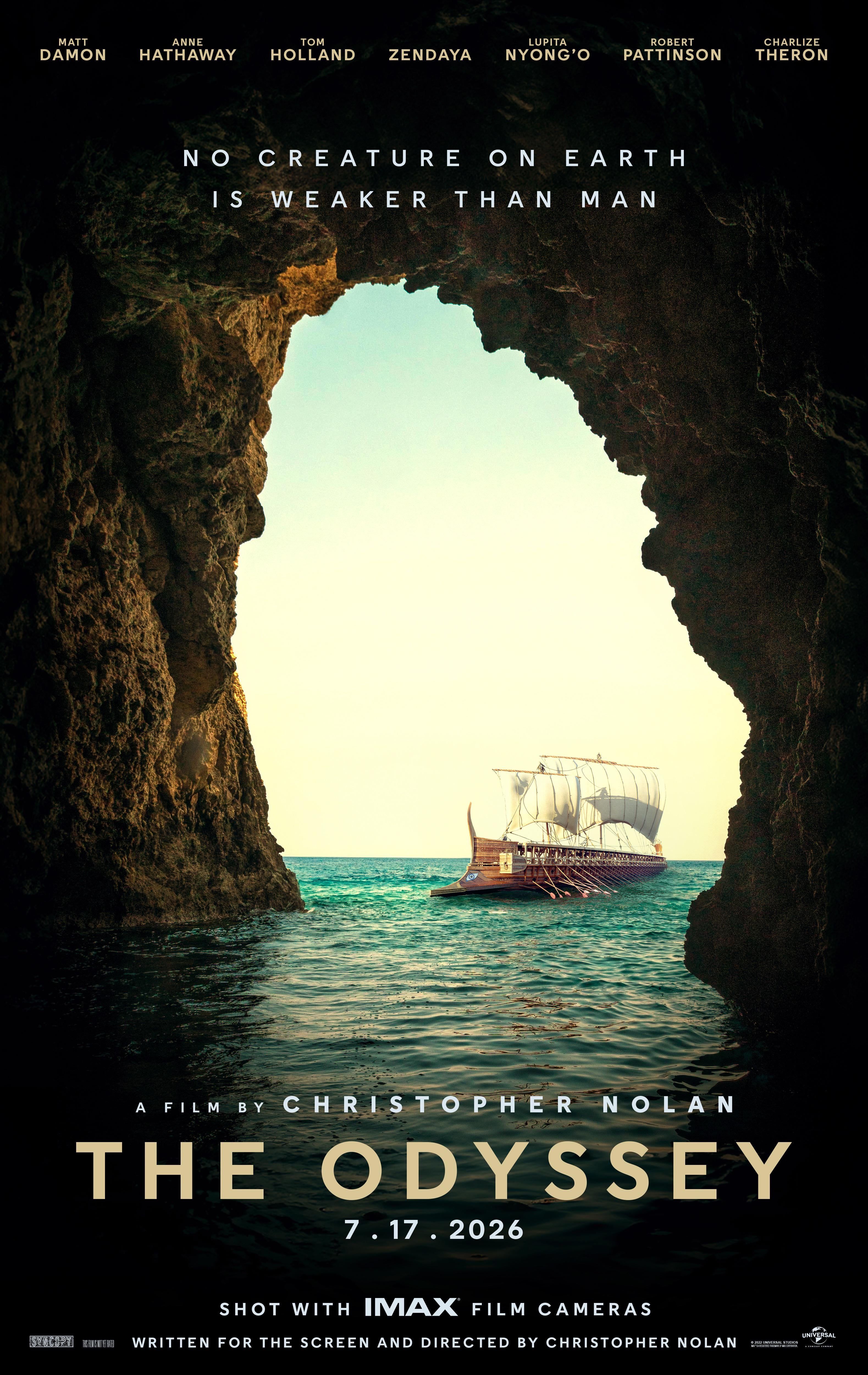
A new film of the Odyssey has just appeared this summer.
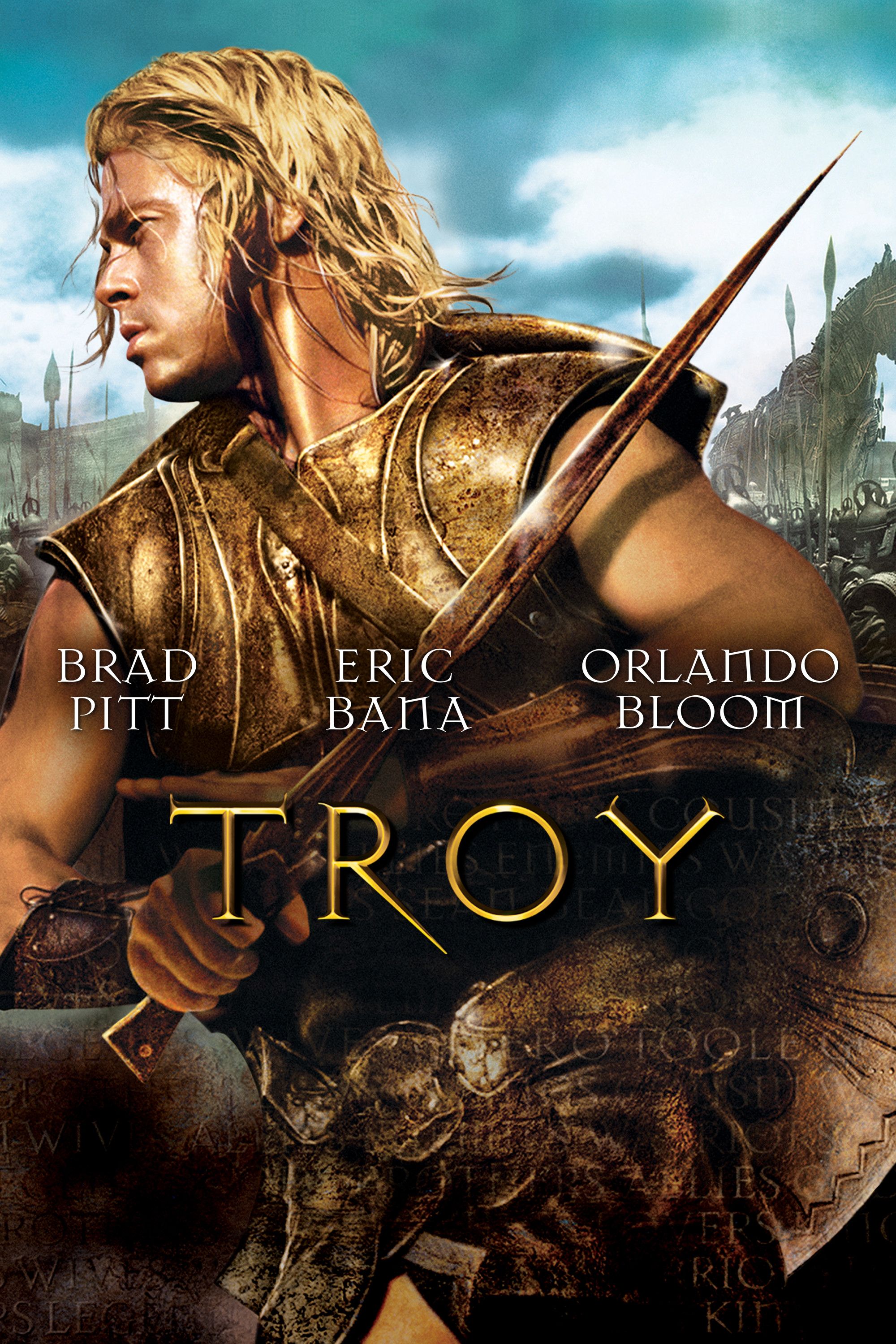
I’m always interested to see what creative people can do with an old favorite, although I was disappointed by Troy (2004),
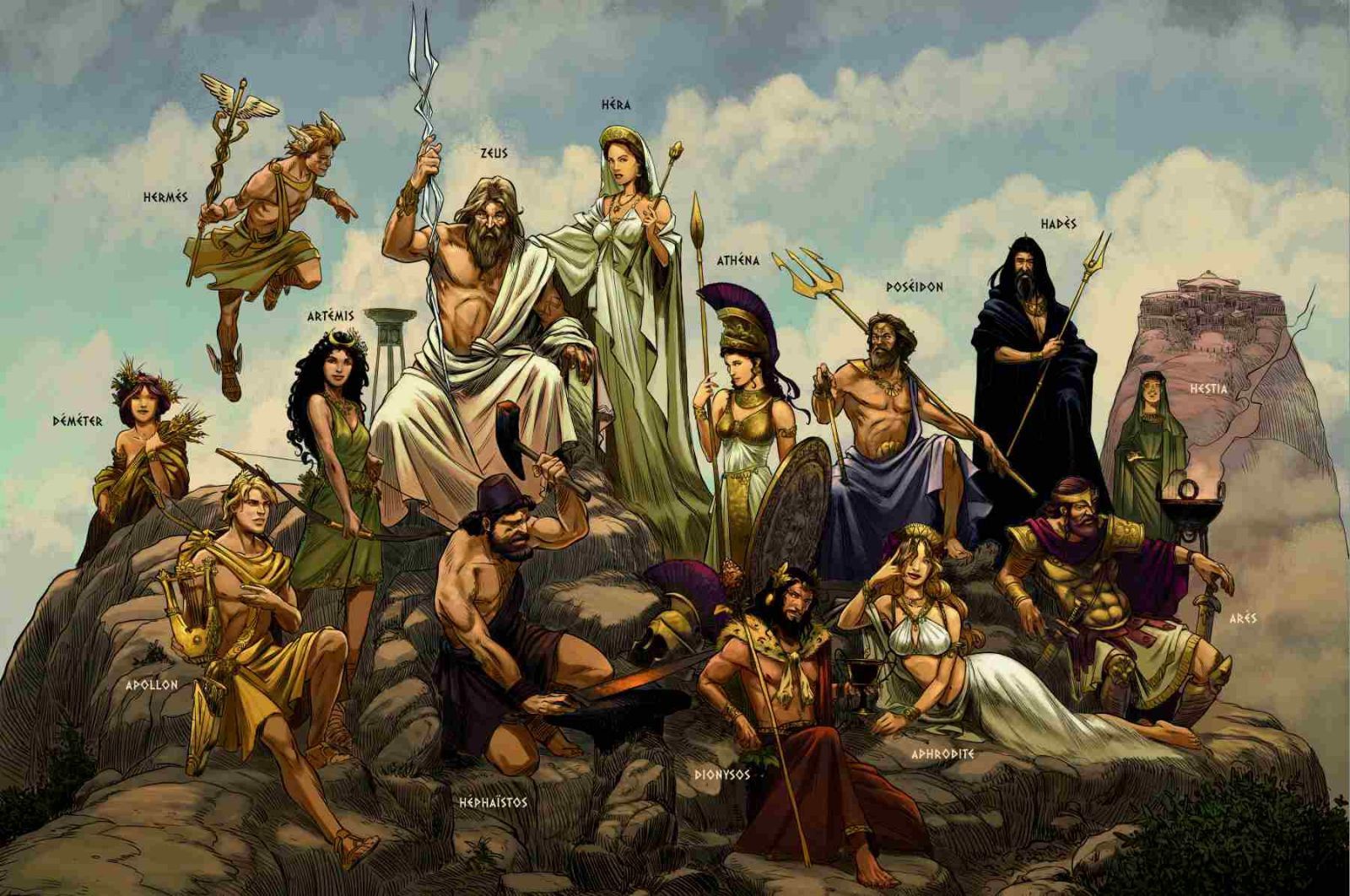
not only because of the many changes to the story, but also because the gods, who, ultimately, are behind the Trojan War, were removed completely, thus telling, really, only half of the tale of Troy.
If you read this blog regularly, you know that I try to see a film or even series at least twice, if I can, and I always attempt to understand what it is that the creators are trying to do before I review it, trusting that the work was made with the best intentions. Having only seen trailers and read about it, I’ll hold off on making any comments about this new Odyssey until I’ve actually sat in the theatre and watched.
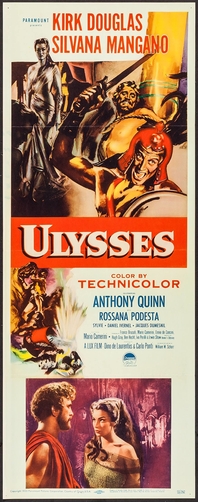
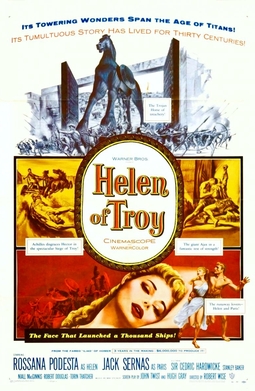
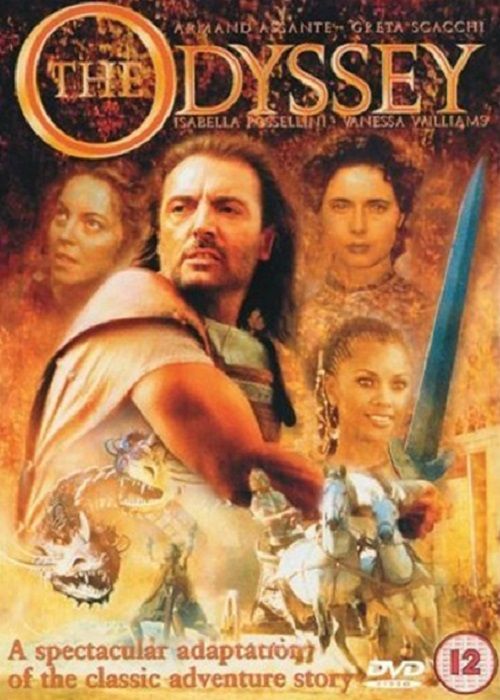
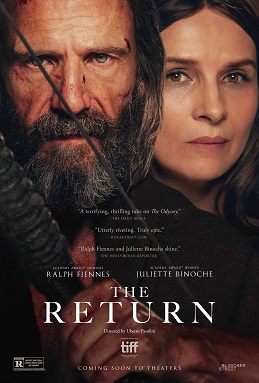
Even before seeing it, however, I’m impressed, once more, by the interest the story of Troy continues to hold, and not only in films, of which we have, among others, Ulysses (1954)
Helen of Troy (1956),
a television series with Armand Assante (1997),
as well as Troy (2004) and The Return (2024),
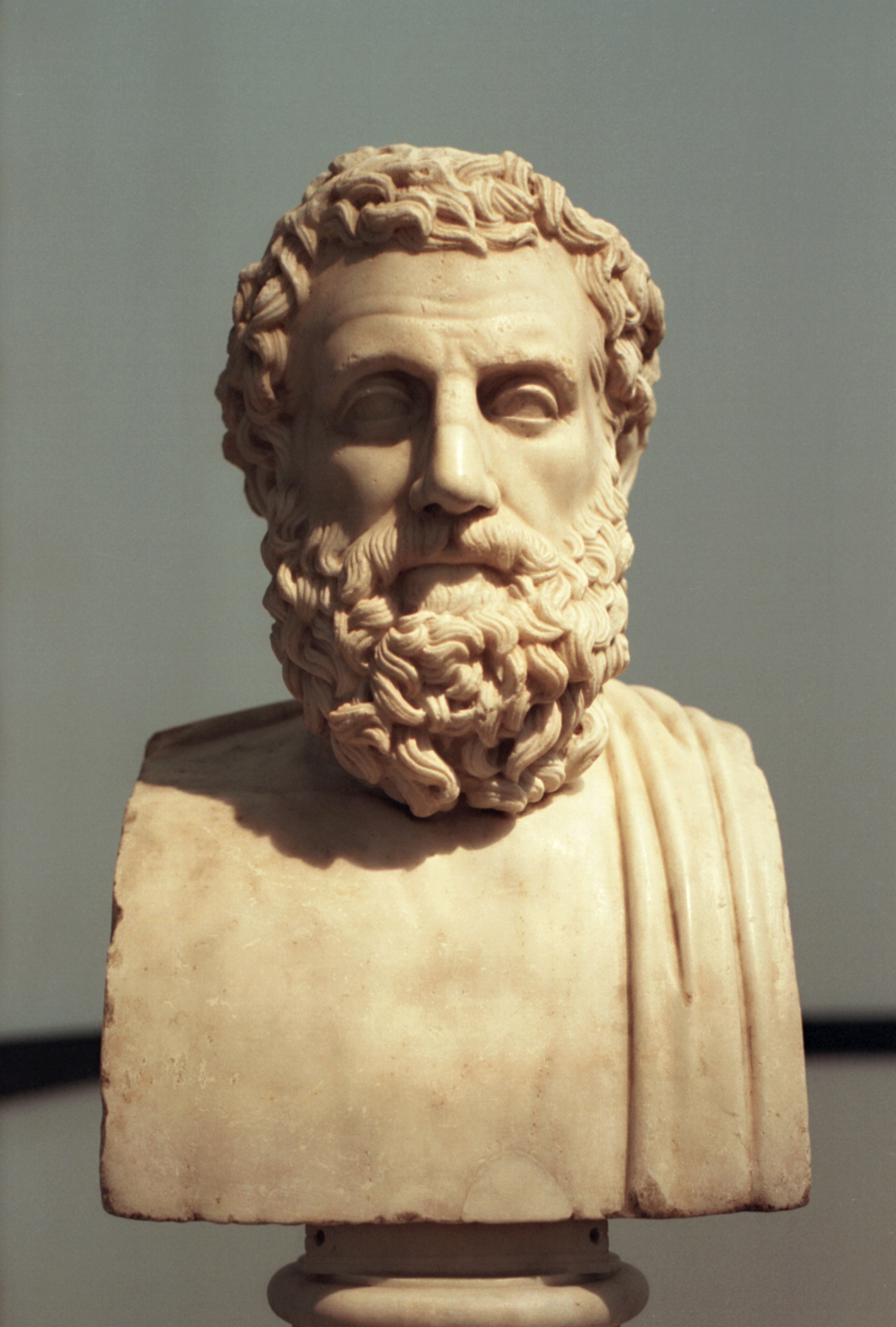
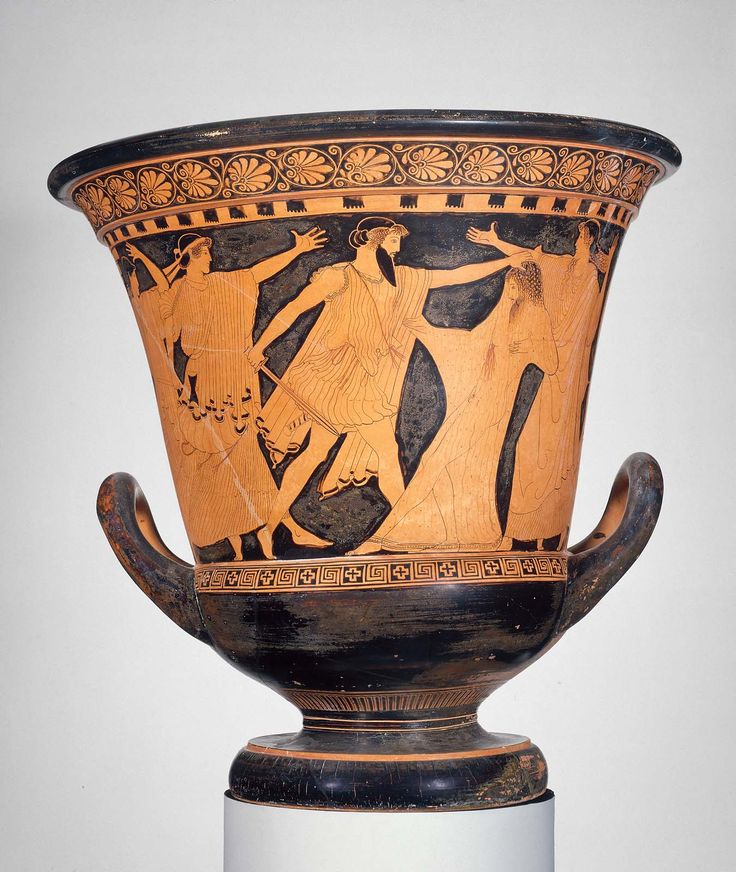
but through time—ancient Greek dramatists based plots upon it, like Aeschylus (c.525-455BC),
who used the consequences of the war upon the victorious returning Greeks in his Oresteia trilogy, beginning with the murder of the Greek leader, Agamemnon.
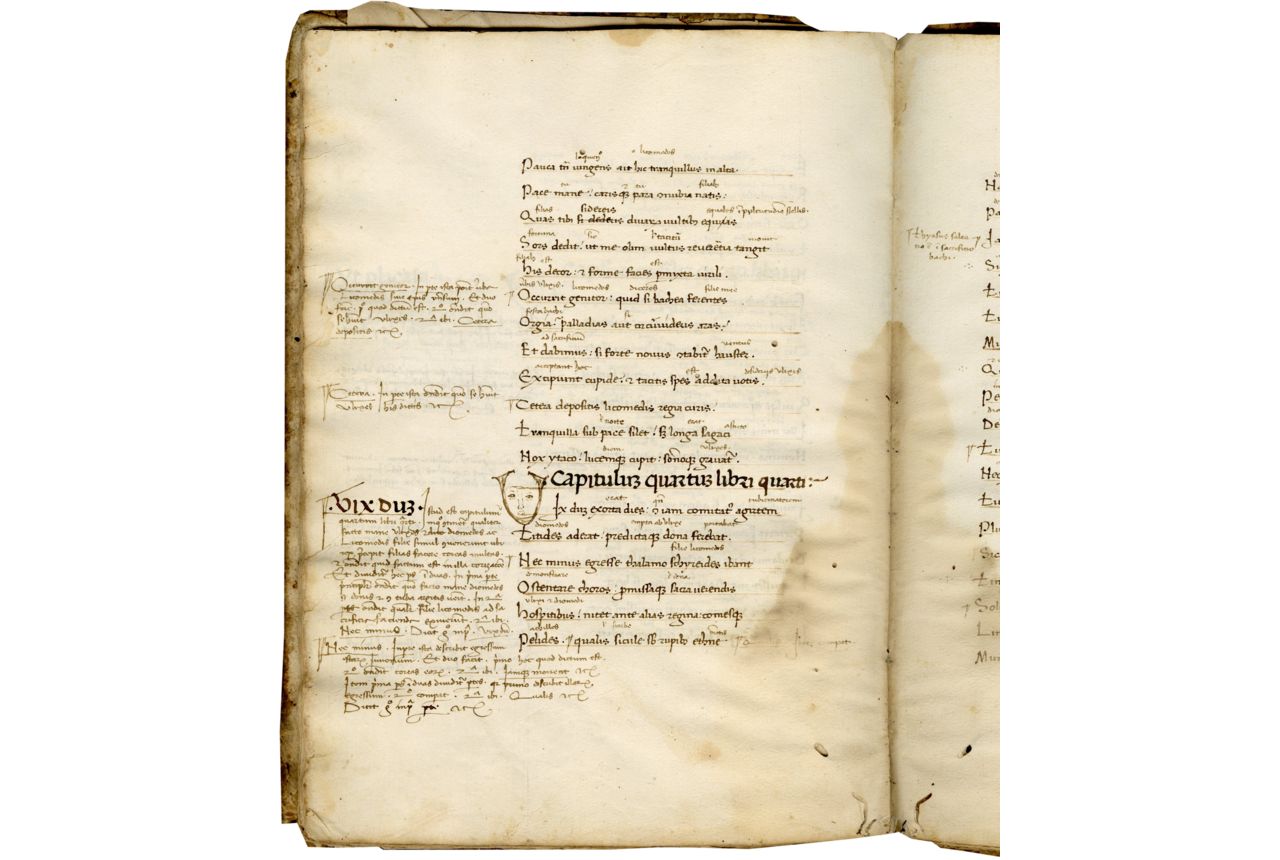
Roman poets, like Statius (c.45-96AD), planned epics, like his unfinished Achilleid, using material from the huge field of earlier tradition,
(a late 14th-early-15th-century ms)
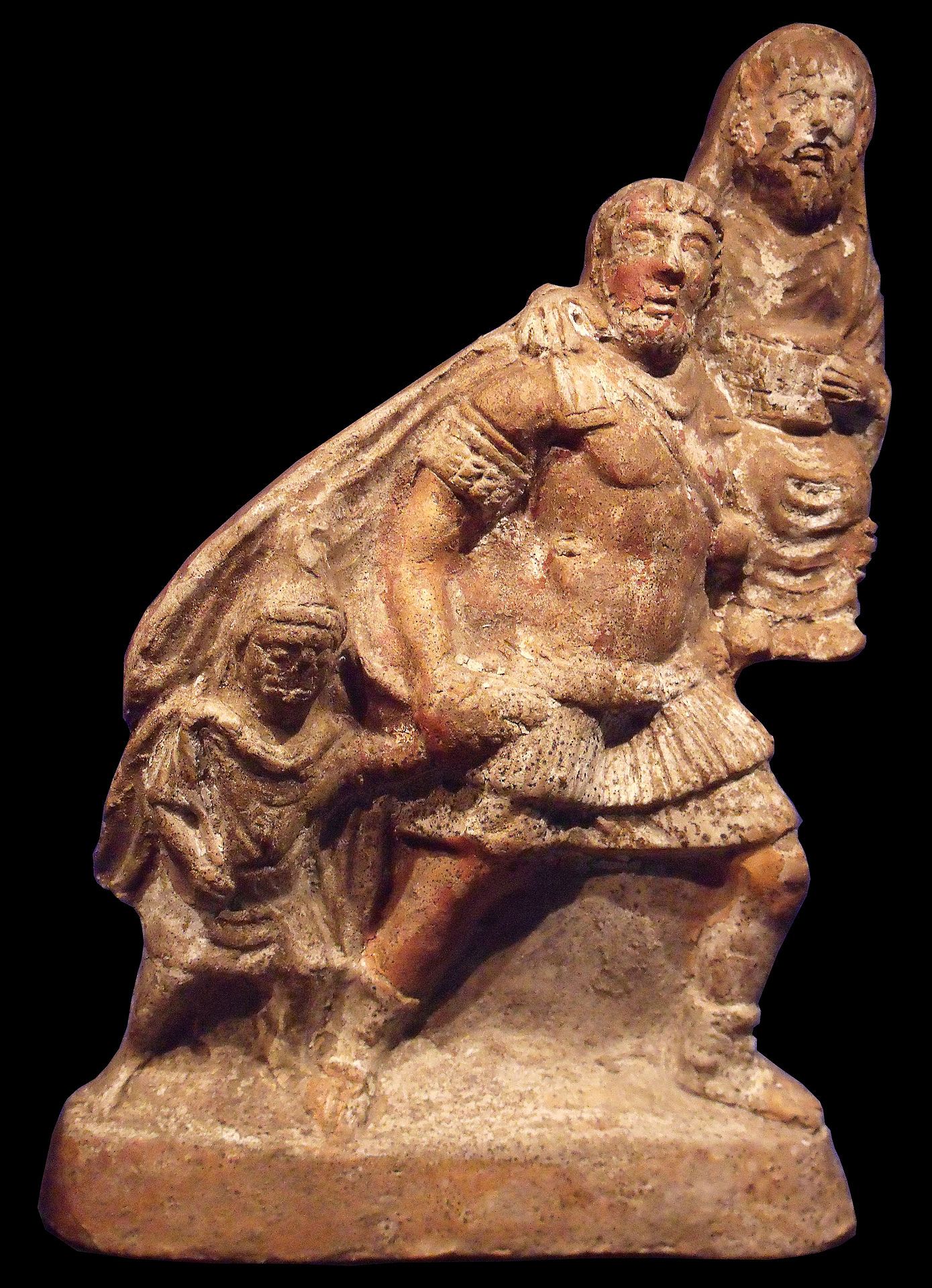
and Vergil (70-19BC) has left us, in Book 2 of his Aeneid, a striking depiction of the fall of Troy from the viewpoint of an inhabitant, Aeneas, the subject of his epic,
(Aeneas is carrying his aged father, Anchises, and leading his son, Ascanius)
and founding father of the Roman state to come, as he leads his band of Trojan fugitives across the Mediterranean, finally to settle in Italy.
This new tradition of fugitive founders even comes to England, first in the form of Geoffrey of Monmouth’s (c.1095-1155AD) Historia Regum Britanniae (“History of the Kings of Britain”), where a certain Brutus, the great grandson of Aeneas (via Ascanius and his son, Silvius), exiled from Italy (having accidentally killed his father, Silvius), then leads Trojan refugees to war in Greece before heading an expedition westwards where, after consulting the goddess, Diana, he lands in England to found a new homeland there, which is named “Britain” after himself (suggesting that the place should really have been called “Bruton”?). (You can read about Brutus and his complex adventures—including war in Gaul on his way westwards–here: https://www.sacred-texts.com/neu/eng/gem/gem02.htm Start with Book I, Chapter III. Medieval people loved the Troy tale and elements of it turn up everywhere, from the 12th-century Roman de Troie of Benoit de Sainte-Maure to Chaucer’s “Troilus and Criseyde” and beyond.)
I would also suggest that, removing the Trojans, but keeping the idea of refugees, we might see that theme continuing in England in the form of a new mythology—
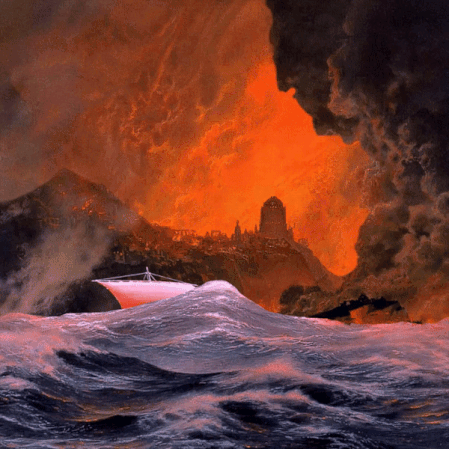
“…but when Ar-Pharazon set foot upon the shores of Aman the Blessed, the Valar laid down their Guardianship and called upon the One, and the world was changed. Numenor was thrown down and swallowed in the Sea, and the Undying Lands were removed for ever from the circles of the world. So ended the glory of Numenor.
The last leaders of the Faithful, Elendil and his sons, escaped from the Downfall with nine ships, bearing a seedling of Nimloth, and the Seven Seeing-stones (gifts of the Eldar to their House); and they were borne on the wind of a great storm and cast upon the shores of Middle-earth. There they established in the North-west the Numenorean realms in exile, Arnor and Gondor.” (The Lord of the Rings, Appendix A, I, “The Numenorean Kings”)
(Ted Nasmith)
As someone who was on his way to becoming a classicist, but then veered off into medieval studies, JRRT, would have had all of that rich past behind him, so would we be wrong in thinking that, in founding a new Numenor, he was inspired by other founders, all the way back to Aeneas?
As always, thanks for reading.
Stay well,
Imagine that, in the 250th anniversary of the founding of the US, those “founding fathers”, trained in the classics, probably also thought of Aeneas,
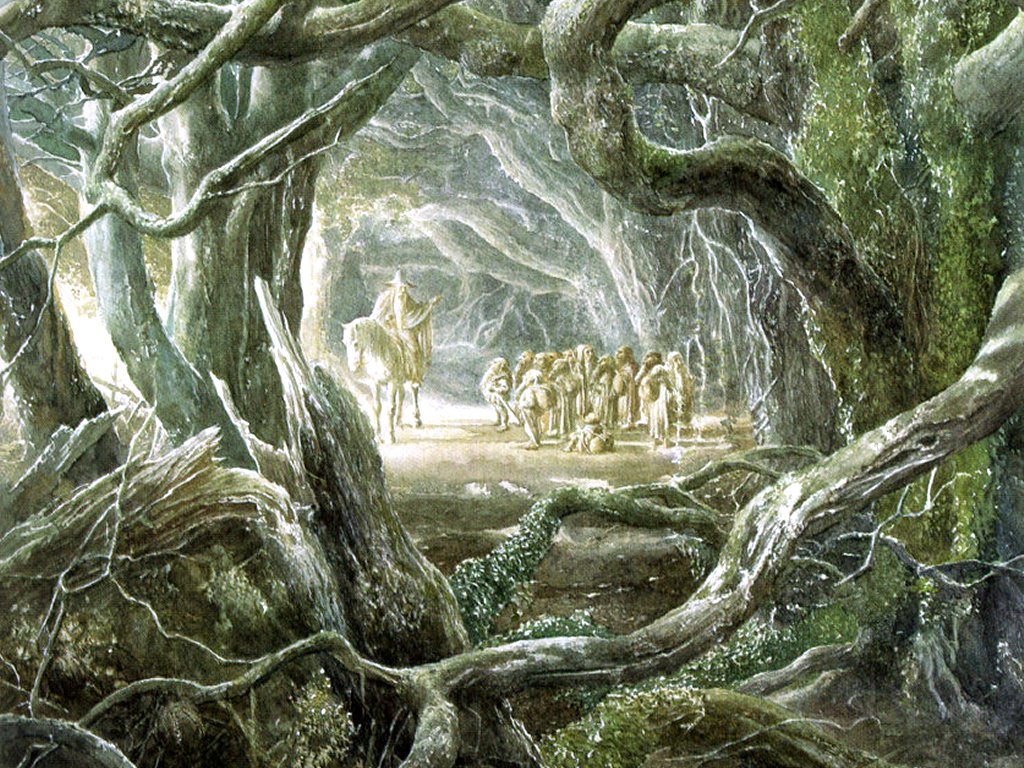
“ ‘So you have come, Gandalf,’ he said to me gravely; but in his eyes there seemed to be a white light, as if a cold laughter was in his heart.
‘Yes, I have come,’ I said. ‘I have come for your aid, Saruman the White.’ And that title seemed to anger him.
‘Have you indeed, Gandalf the Grey!’ he scoffed…”
This seems like an odd bit of dialogue—why such an emphasis on colors? And there’s more—
“ ‘Radagast the Brown!’ laughed Saruman, and he no longer concealed his scorn. ‘Radagast the Bird-tamer! Radagast the Simple! Radagast the Fool!’ “ (The Fellowship of the Ring, Book Two, Chapter 2, “The Council of Elrond”)
These colors began with the arrival of the 5 “wizards” (Istari) on Middle-earth, a thousand years into the Third Age. They are, in fact, Maiar, which we may think of as a form of “lesser angel”—that is, belonging to the orders of spiritual beings who inhabit Valinor, to the far west of Middle-earth.
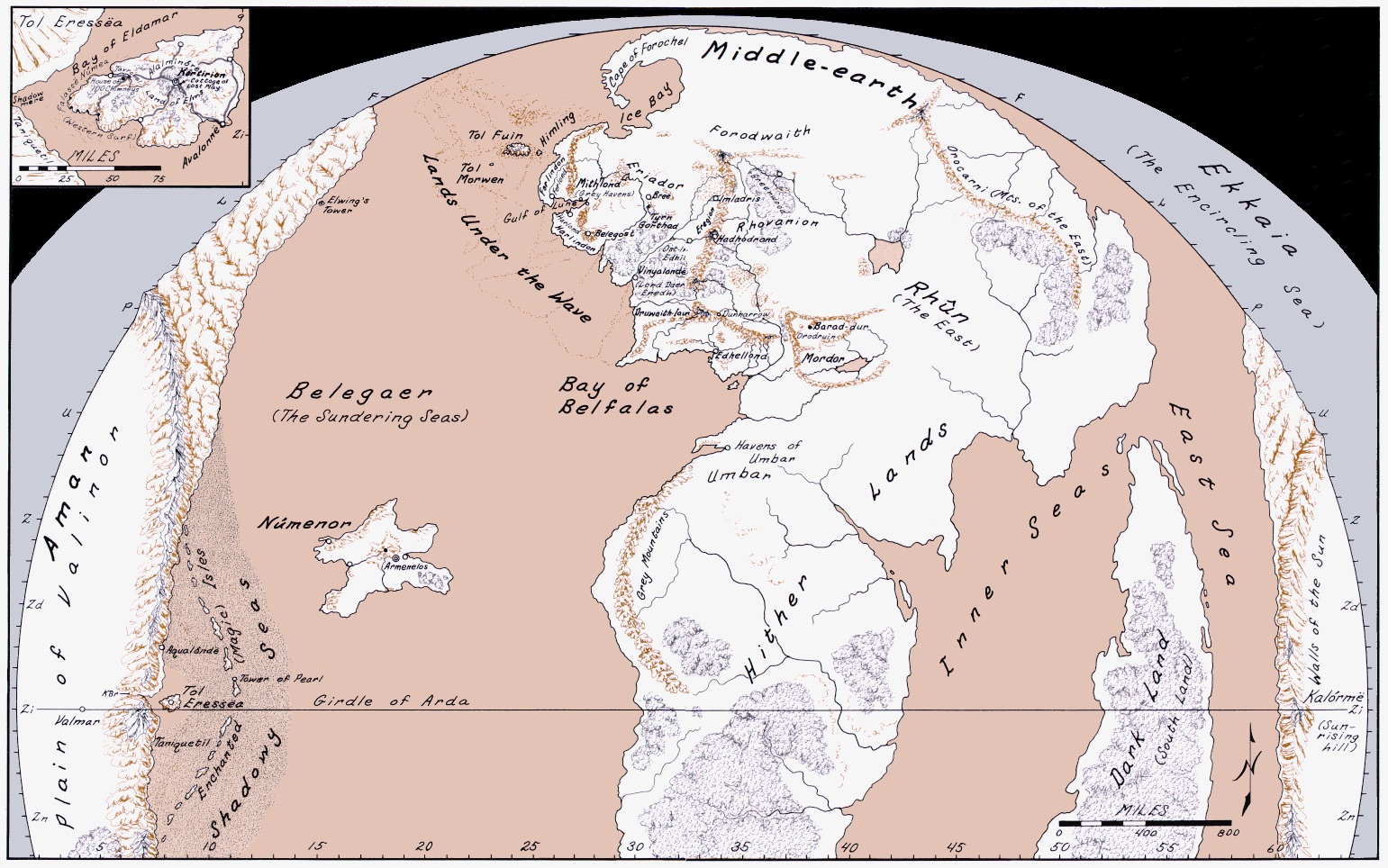
(Karen Wynn Fonstad)
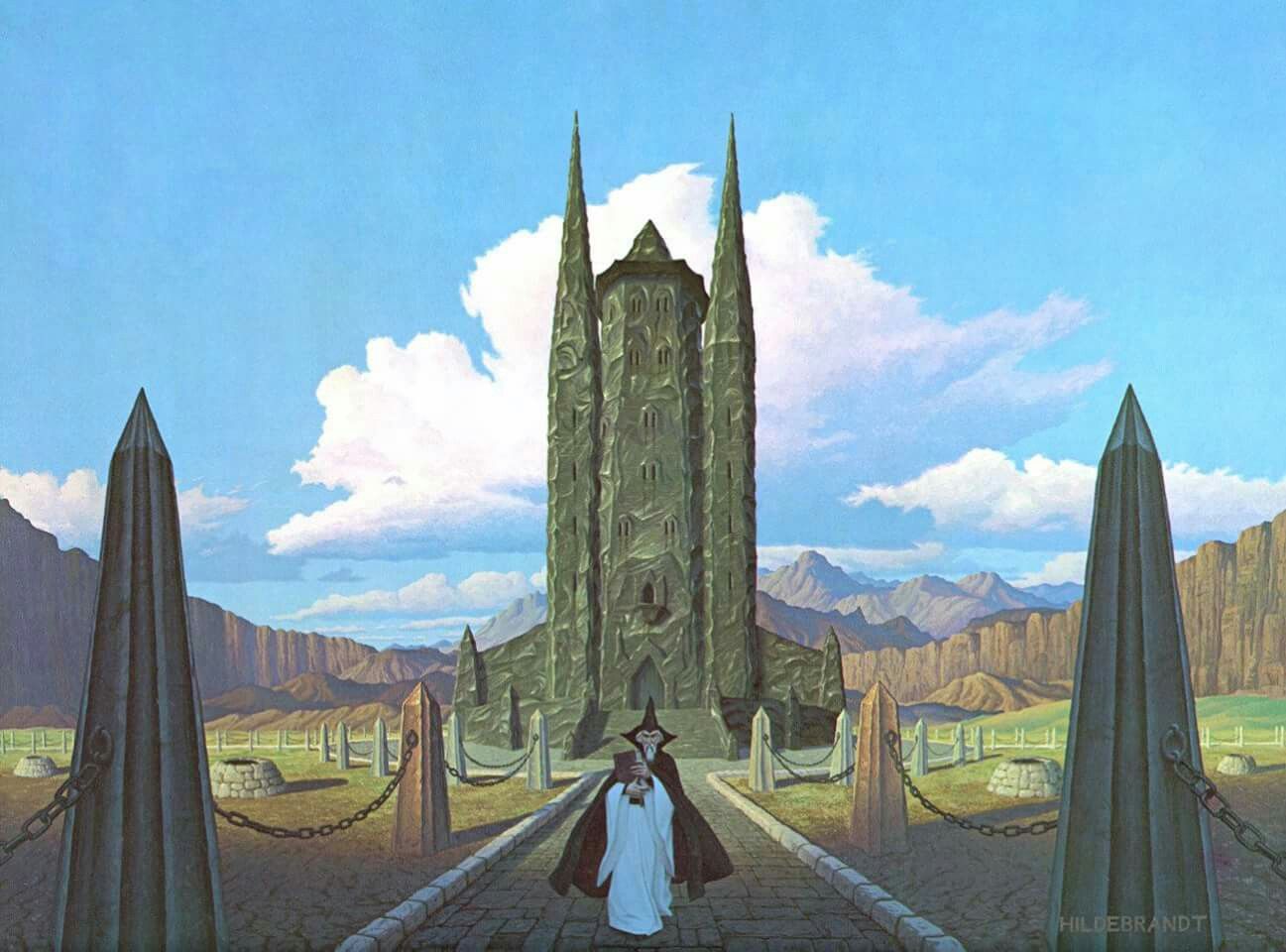
These particular Maiar were intended to be a counterforce to Sauron, who appeared to be once more on the rise. Although there were 5 of them—Saruman, Gandalf, Radagast—and two more who may have been named Alatar and Pallando—and all had colors attached to them—Saruman white,
(the Hildebrandts)
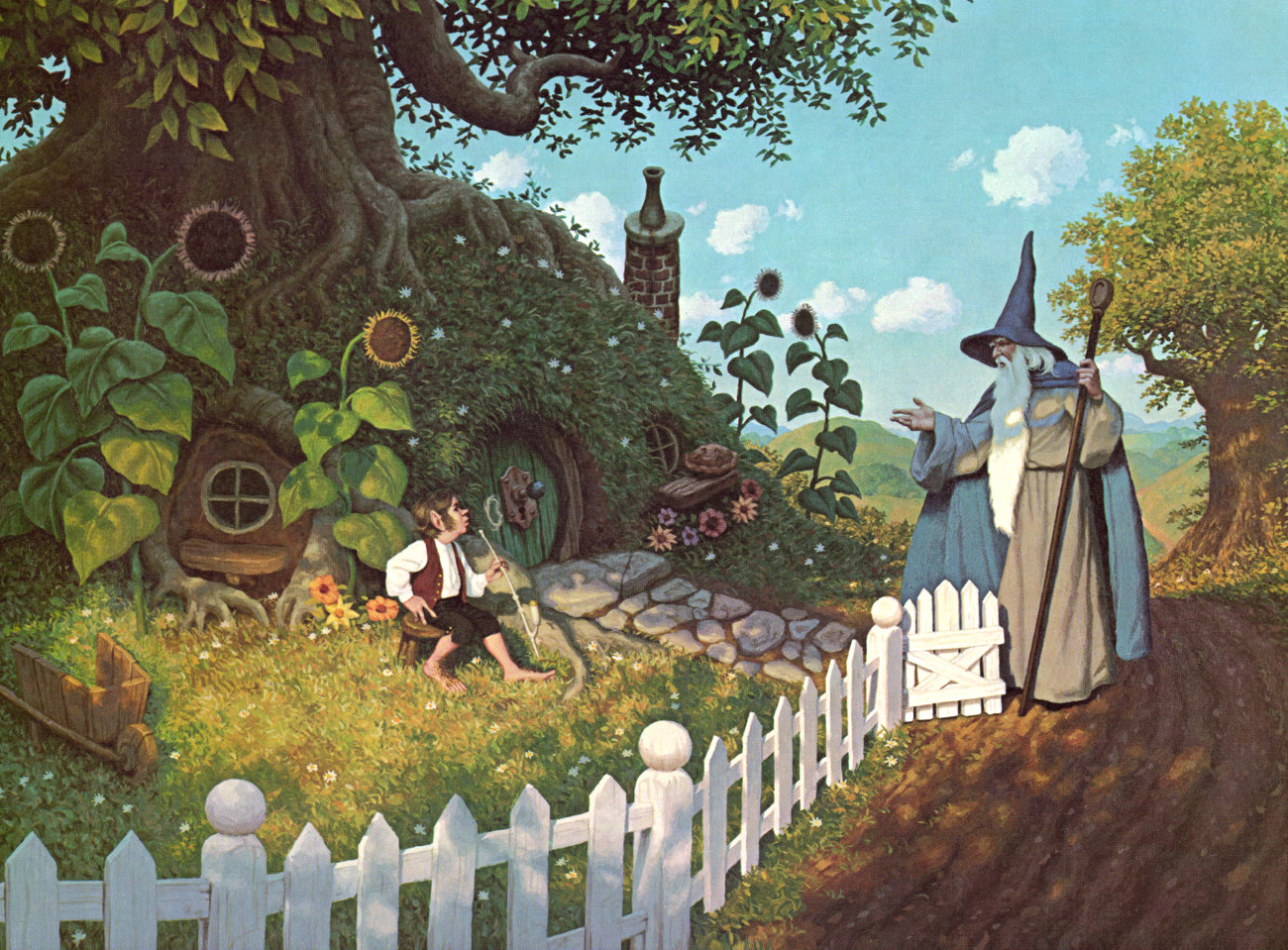
Gandalf grey,
(the Hildebrandts)
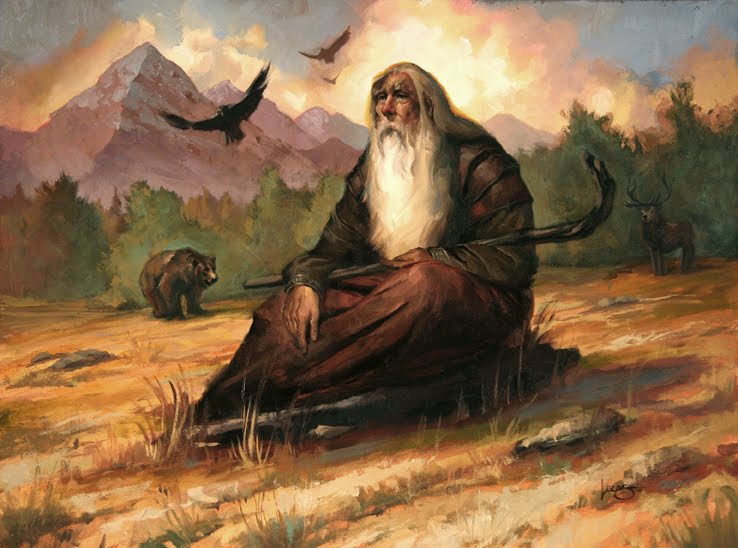
Radagast brown,
(I can’t find an artist for this, but it strikes me as a much better depiction than that seen in the Jackson Hobbit movies.)
and the other two blue—those last two, only briefly mentioned, go eastwards and disappear entirely from the narrative. (For more details, see Unfinished Tales, 405-420)
As for the other three, their colors appear to have a definite significance: Radagast is an earthy type, with a passion for birds and animals, Gandalf is seen as an elderly man, grey as his garments, and Saruman as “the greatest of my order”, as Gandalf once described him, could be stainless in white.
And this is where color comes in in a different way and we see why Saruman is not pleased at being given his old title—
“ ‘For I am Saruman the Wise, Saruman Ring-maker, Saruman of Many Colours!’
I looked then and saw that his robes, which had seemed white, were not so, but were woven of all colours, and if he moved they shimmered and changed hue so that the eye was bewildered.”
Although Gandalf’s eye might have been bewildered, his mind was clearly not:
‘I liked white better,’ I said.”
White was the color in which Saruman had appeared on his mission to Middle-earth and his behavior at Gandalf’s arrival shows that he has already betrayed that mission:
“ ‘For you have come, and that was all the purpose of my message. And here you will stay, Gandalf the Grey, and rest from journeys.’
“Rest”, of course, is not quite what Saruman has in mind.
‘He was cold now and perilous. ‘Yes,’ he said. ‘I did not expect you to show wisdom, even in your own behalf; but I gave you the chance of aiding me willingly, and so saving yourself much trouble and pain. The third choice is to stay here until the end.’
‘Until what end?’
‘Until you reveal to me where the One may be found. I may find means to persuade you. Or until it is found in your despite, and the Ruler has time to turn to lighter matters: to devise, say, a fitting reward for the hindrance and insolence of Gandalf the Grey.’ “
“The Ruler”, we can suppose, is Sauron, but Saruman has plans of his own, proposing, when the Ring has been discovered, not to turn it over to that “Ruler”, but to keep it:
“ ‘Why not? The Ruling Ring? If we could command that, then the Power would pass to us.’ “
But Gandalf sees through this immediately:
“ ‘Saruman…only one hand at a time can wield the One, and you know that well, so do not trouble to say we!’ “
Thus, not only has Saruman betrayed his mission from the Valar, but he plans to betray the object of that mission, Sauron, as well. It’s no wonder, then, that he no longer wears white—and, in fact, has nothing but contempt for it:
“ ‘White!’ he sneered. ‘It serves as a beginning. White cloth may be dyed. The white page can be overwritten; and the white light can be broken.’ “
And here Tolkien suggests that Saruman has rather advanced information about the science of optics.
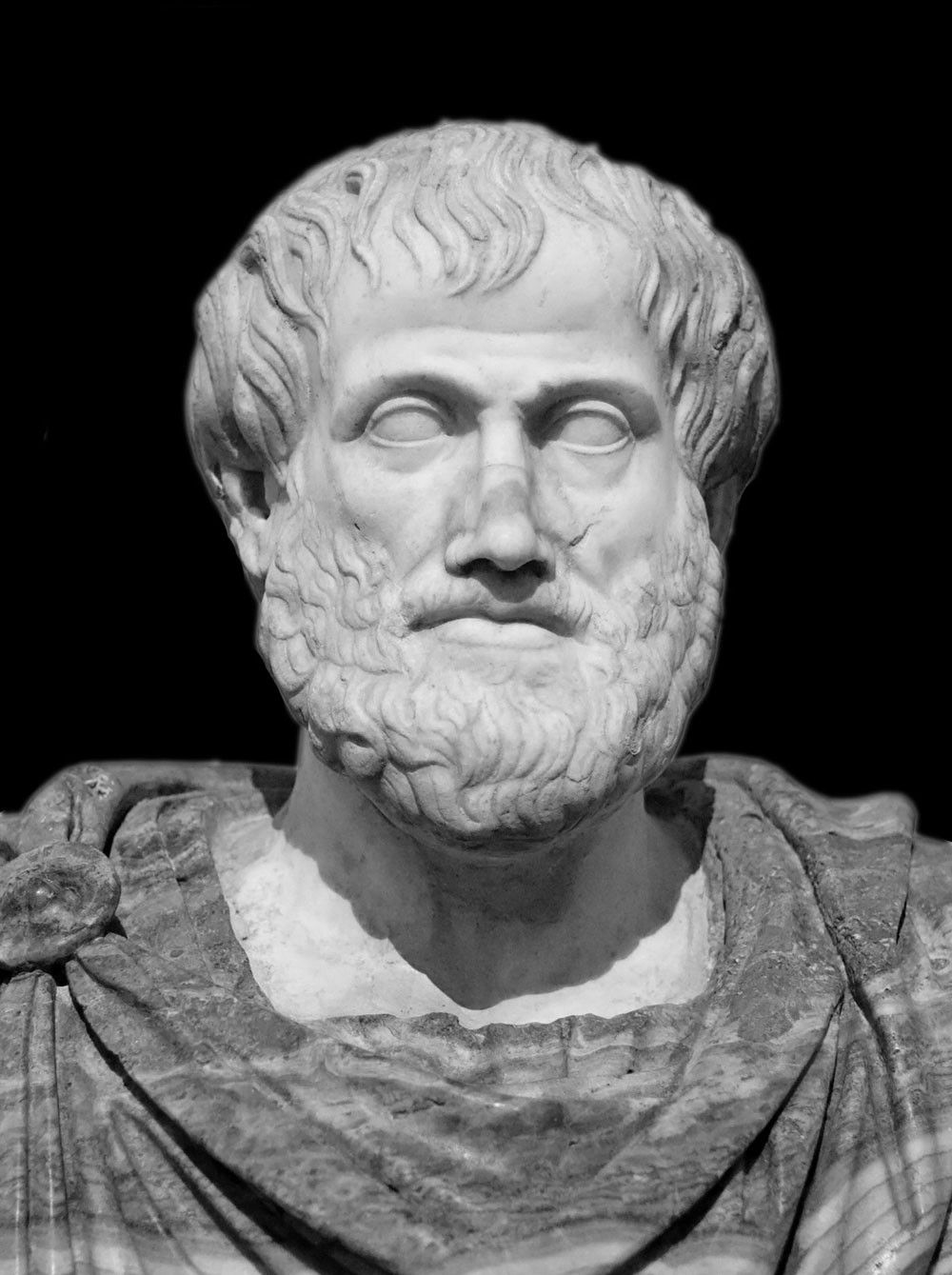
In our Middle-earth, up until at least the beginning of the 18th century, people subscribed to the theory, created perhaps by Aristotle (384-322BC),
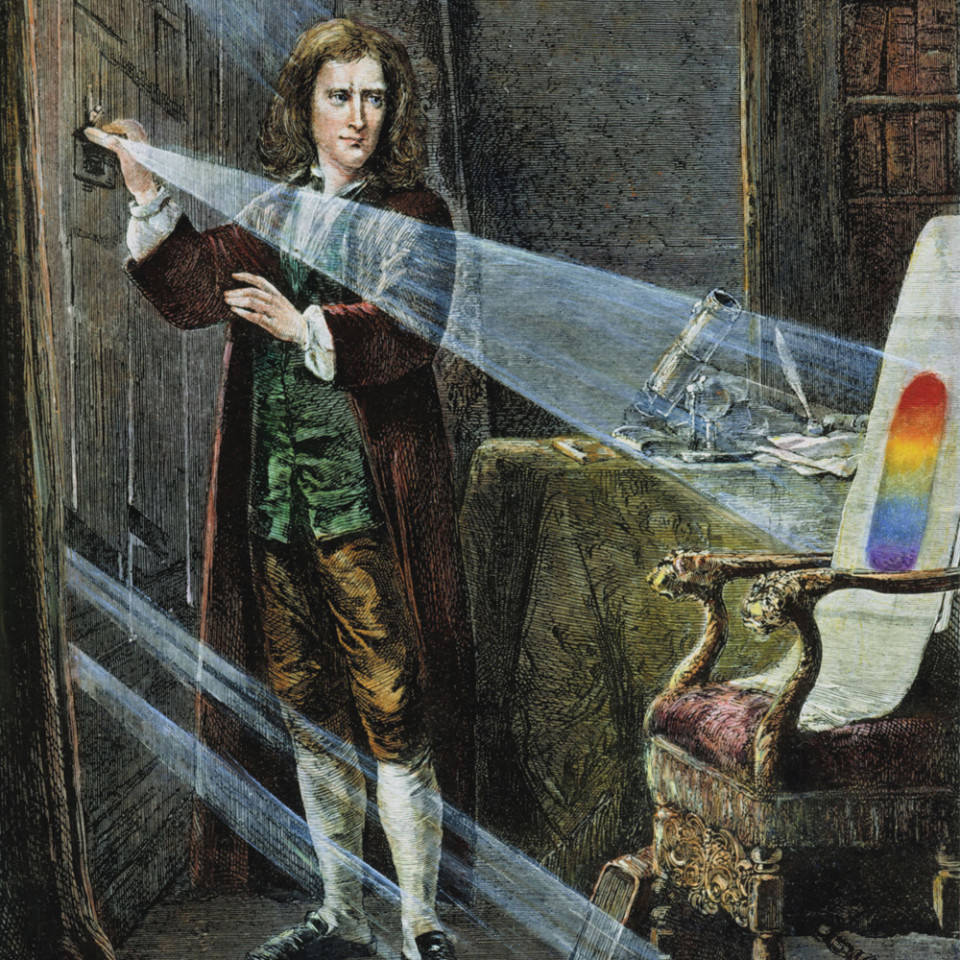
It was Isaac Newton’s (1642-1727) experiments with prisms
which led to a different theory—that the “white” light which he passed through a prism
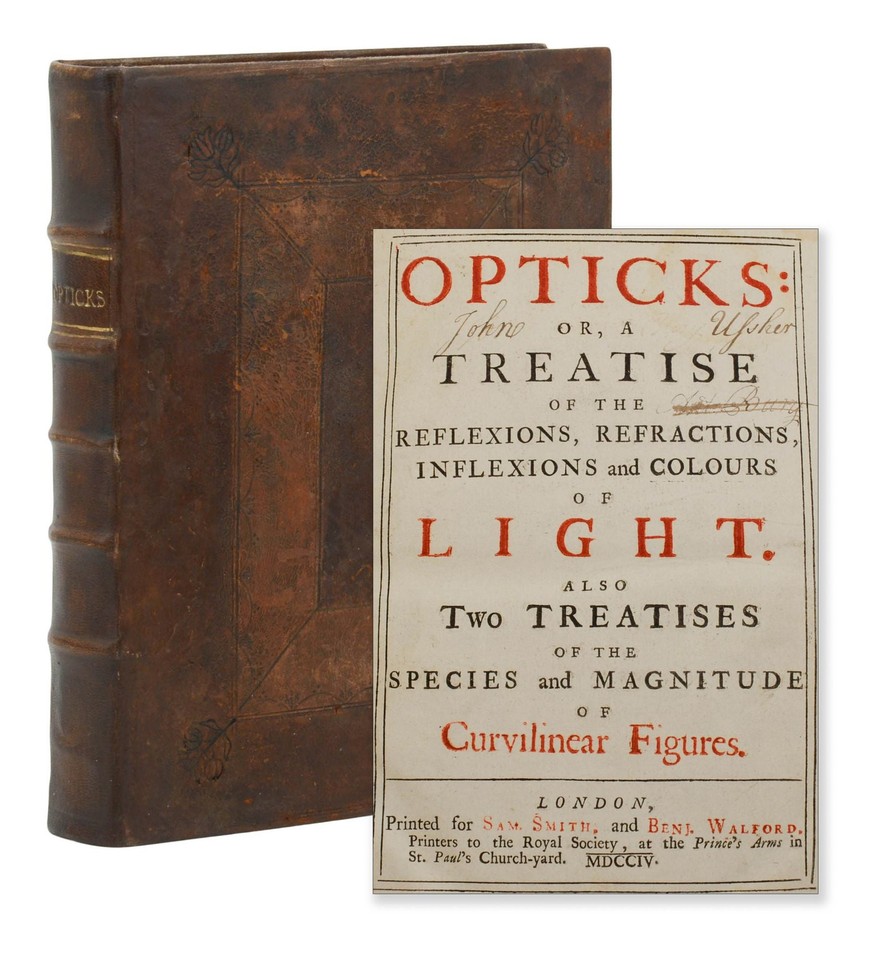
was actually a series of colored lights, a theory which he published in 1704,
and which is the basis of our current understanding of light and color. (For more on the electromagnetic spectrum, see: https://www.youtube.com/watch?v=9Vsl0Iom3S0 This is from a children’s program and about my level of understanding!)
To Gandalf, seeing Saruman’s actions as the betrayal they are, replies:
“ ‘In which case it is no longer white,’ I said.”
Just as Saruman is no longer the leader of the Maiar mission to Middle-earth, but a would-be Sauron, an imitation “Ring-maker”, who will, in time, be overthrown and eventually die a miserable death, murdered by his own agent.
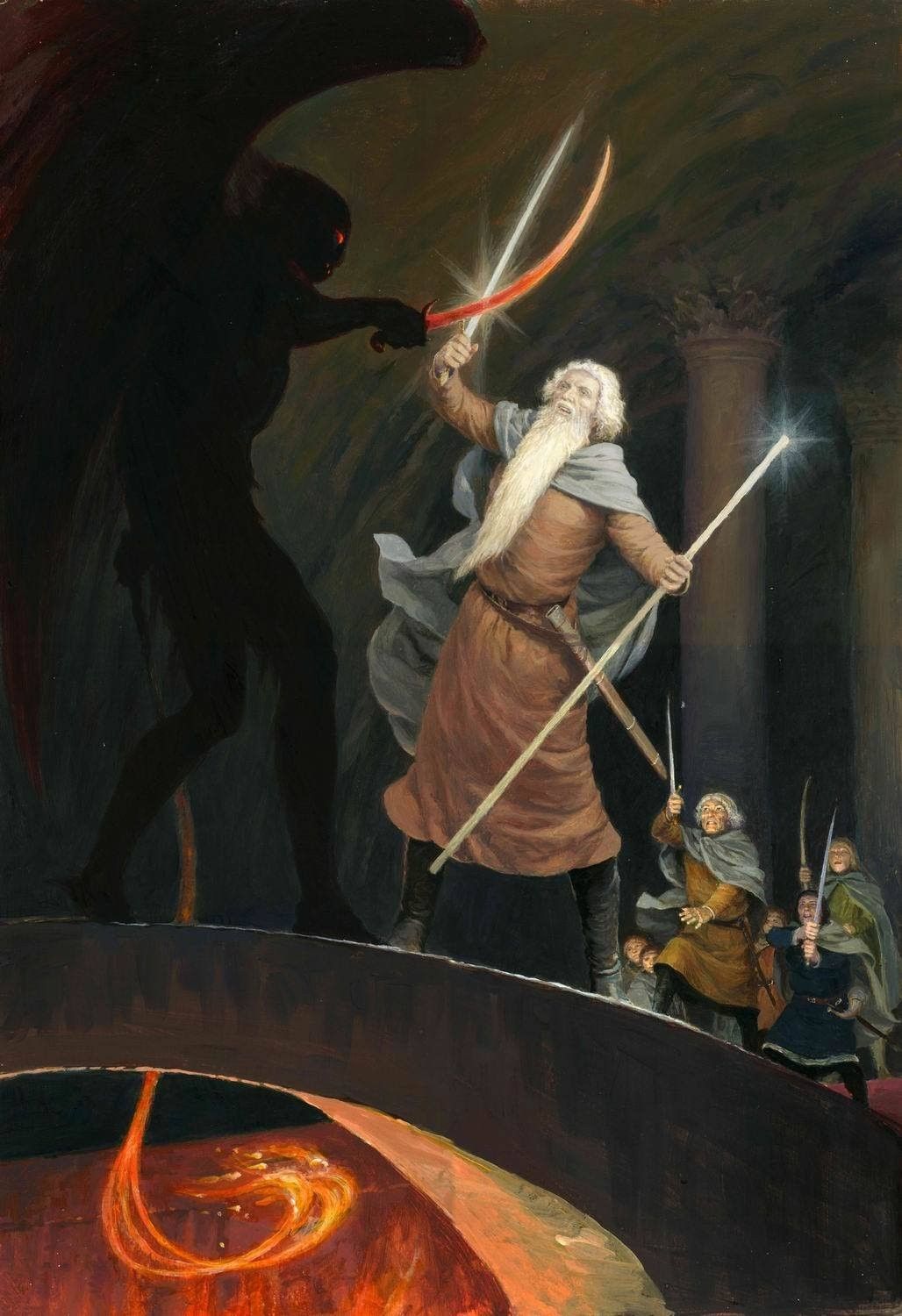
But this is not the end of wizard colors, of course. Gandalf appears to die, dragged down into the depths of Moria along with the Balrog,
(Denis Gordeev)
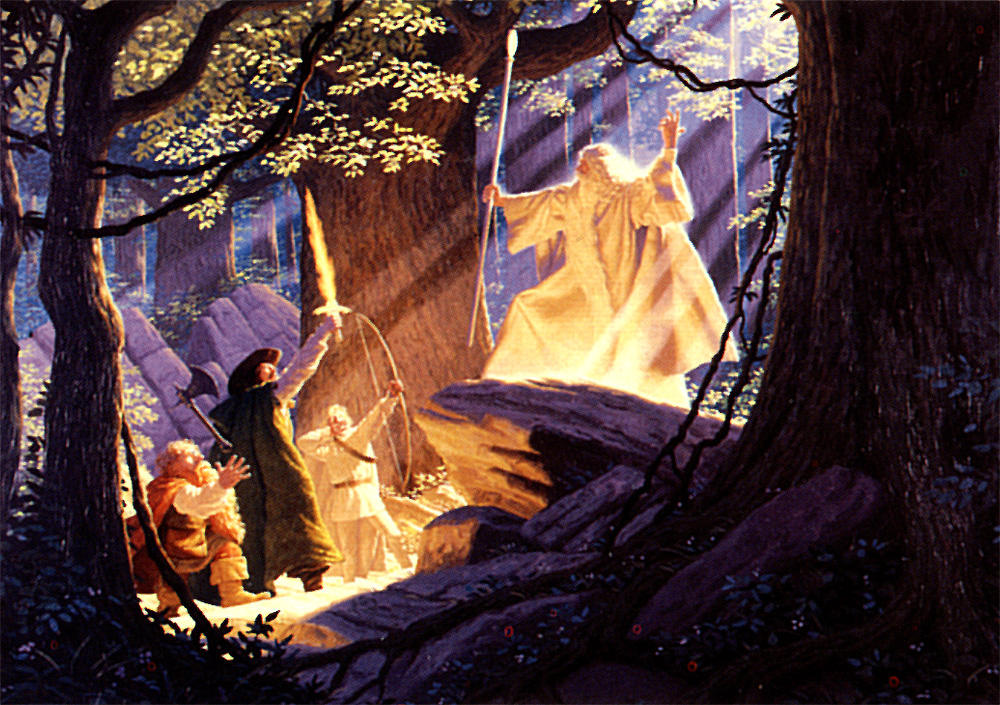
but reappears, not as Gandalf the Grey or Gandalf of Many Colors, but as Gandalf the White,
(the Hildebrandts)
and here we see white in a new light (sorry!): as the color of someone who has been purified by his near-death experience and returned to become that leader of resistance to Sauron that Saruman, in breaking that trust, has betrayed.
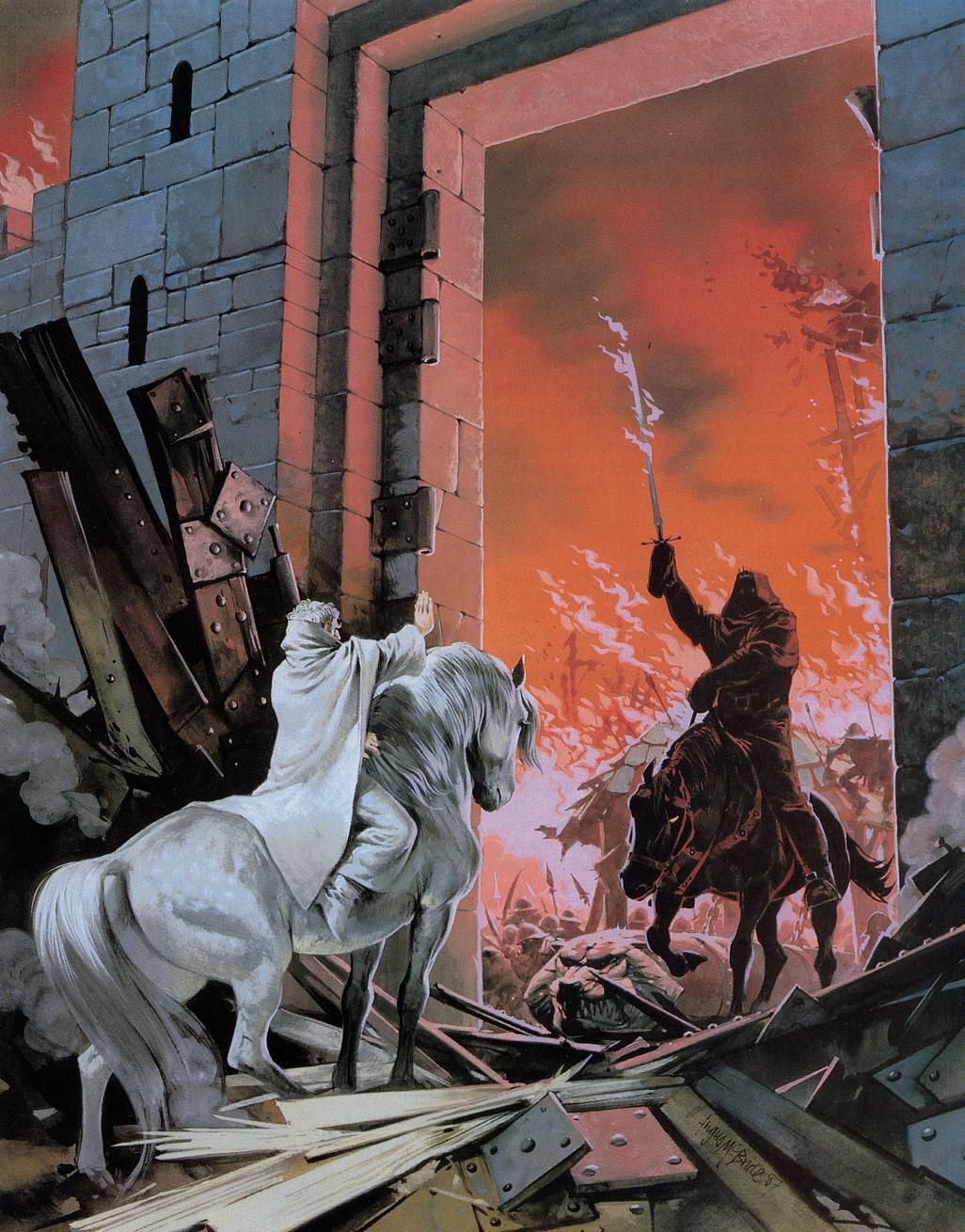
Is it surprising that Shadowfax, his horse, is white, as well?
(Angus McBride)
Thanks, as always, for reading.
Stay well,
Imagine a spectrum where we could see all of the other elements, like ultraviolet and gamma-rays,
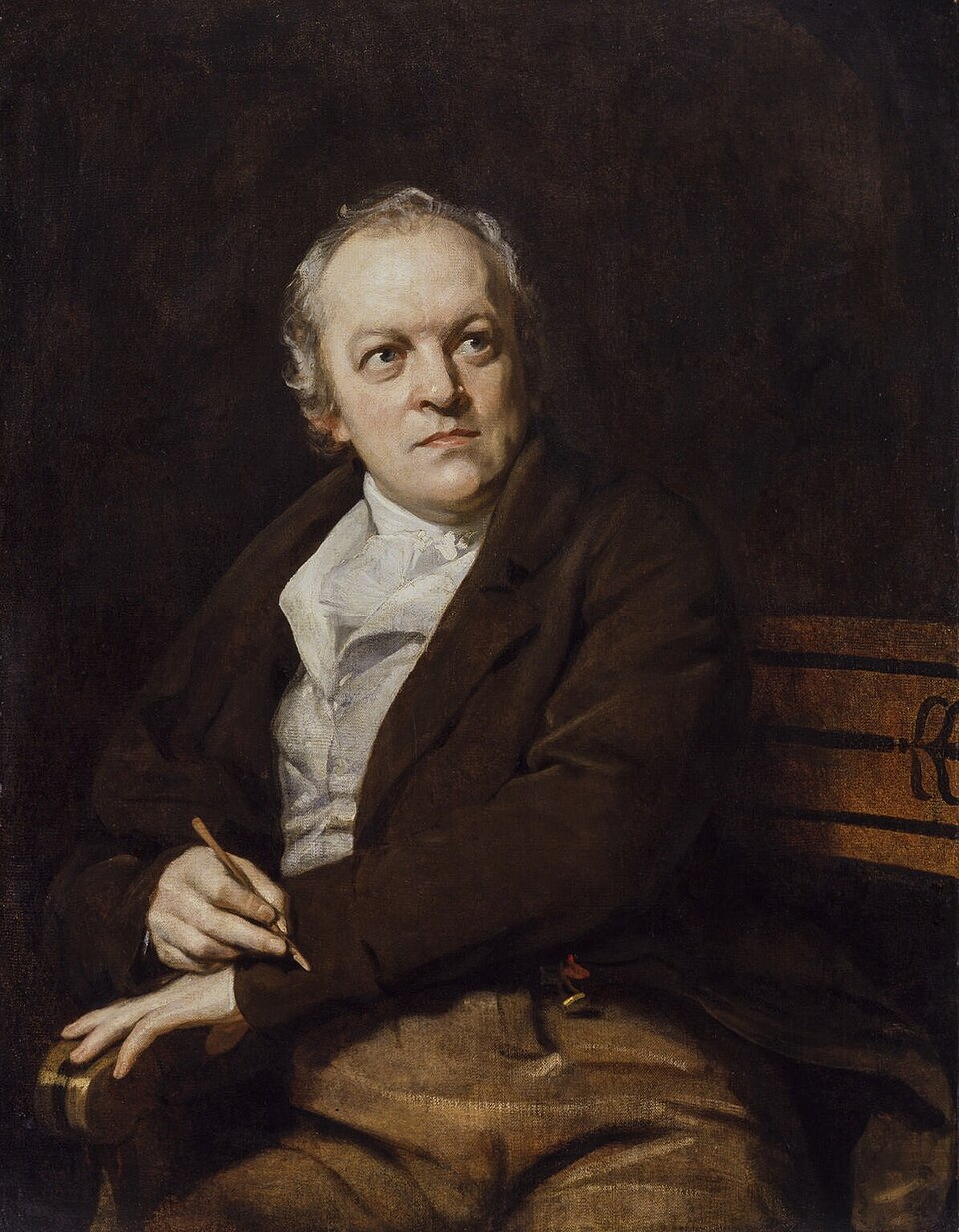
Recently, I was rereading a book on the Romantic poet, artist, and visionary, William Blake (1757-1827),
and happened upon this:
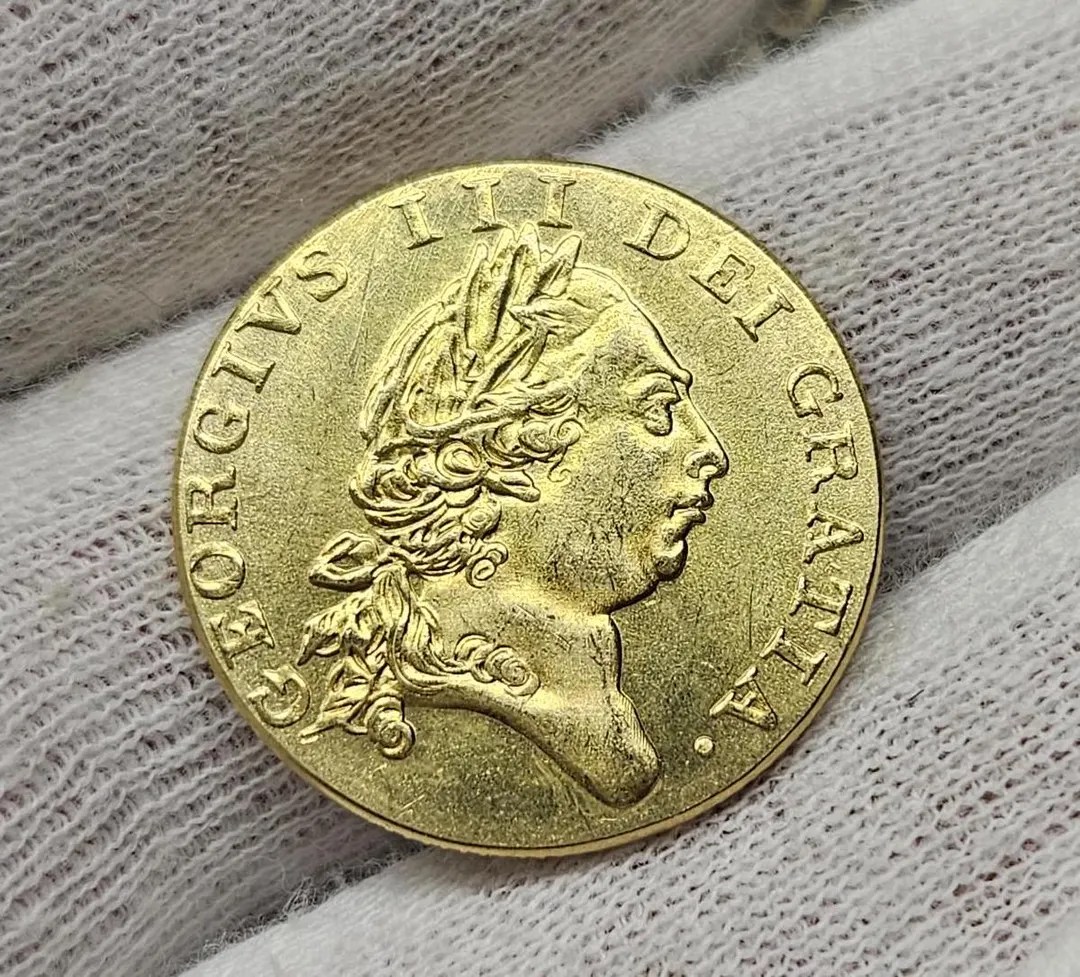
“To the eyes of a miser, a guinea
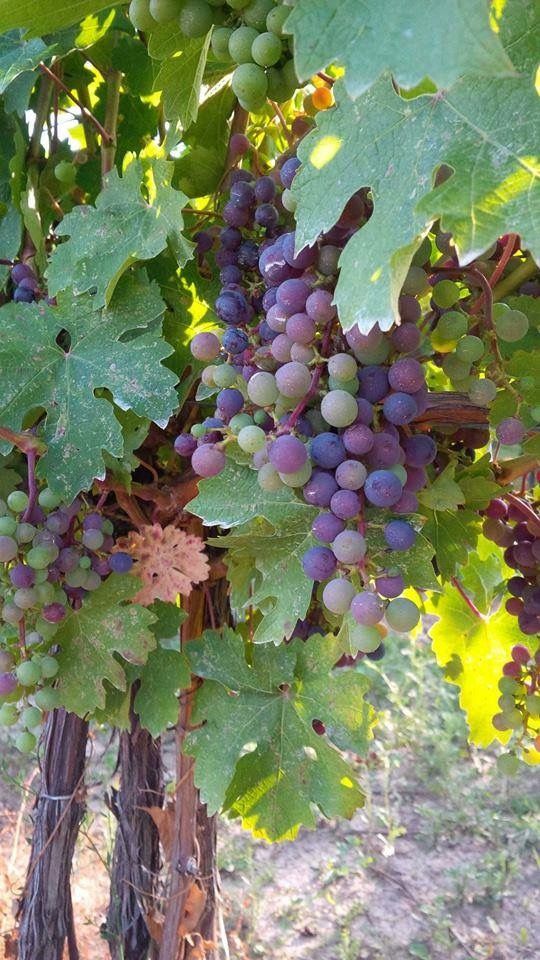
is more beautiful than the sun, and a bag worn with the use of money has more beautiful proportions than a vine filled with grapes.
The tree which moves some to tears of joy is in the eyes of others only a green thing that stands in the way.” (Damrosch, Eternity’s Sunrise, 40–a book I recommend, by the way, if you’d like to learn more about the very complex Blake.)
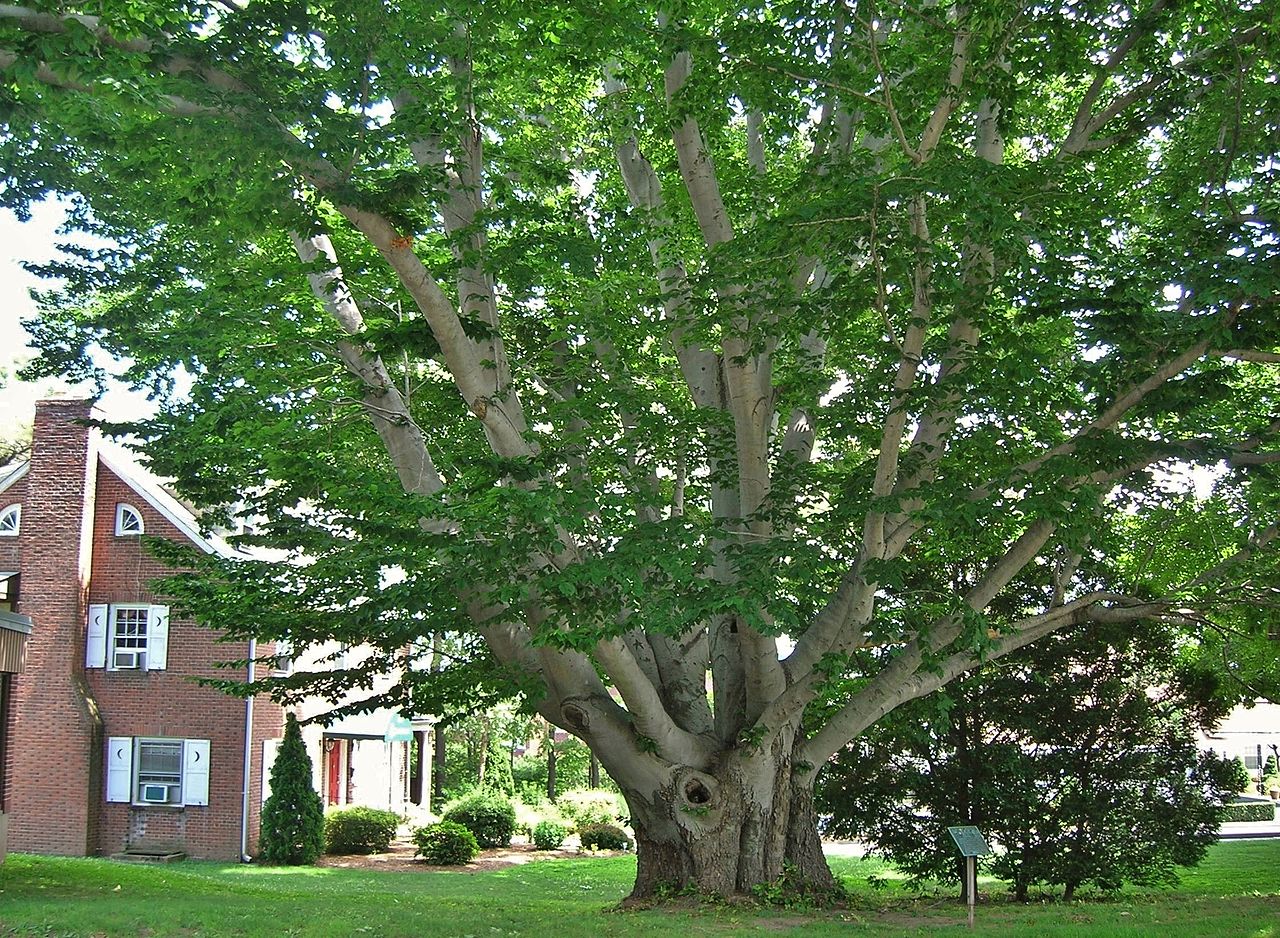
(A beech tree—a favorite of JRRT’s—and mine.)
It immediately struck me as something Tolkien himself might have said and of which he would certainly have approved.
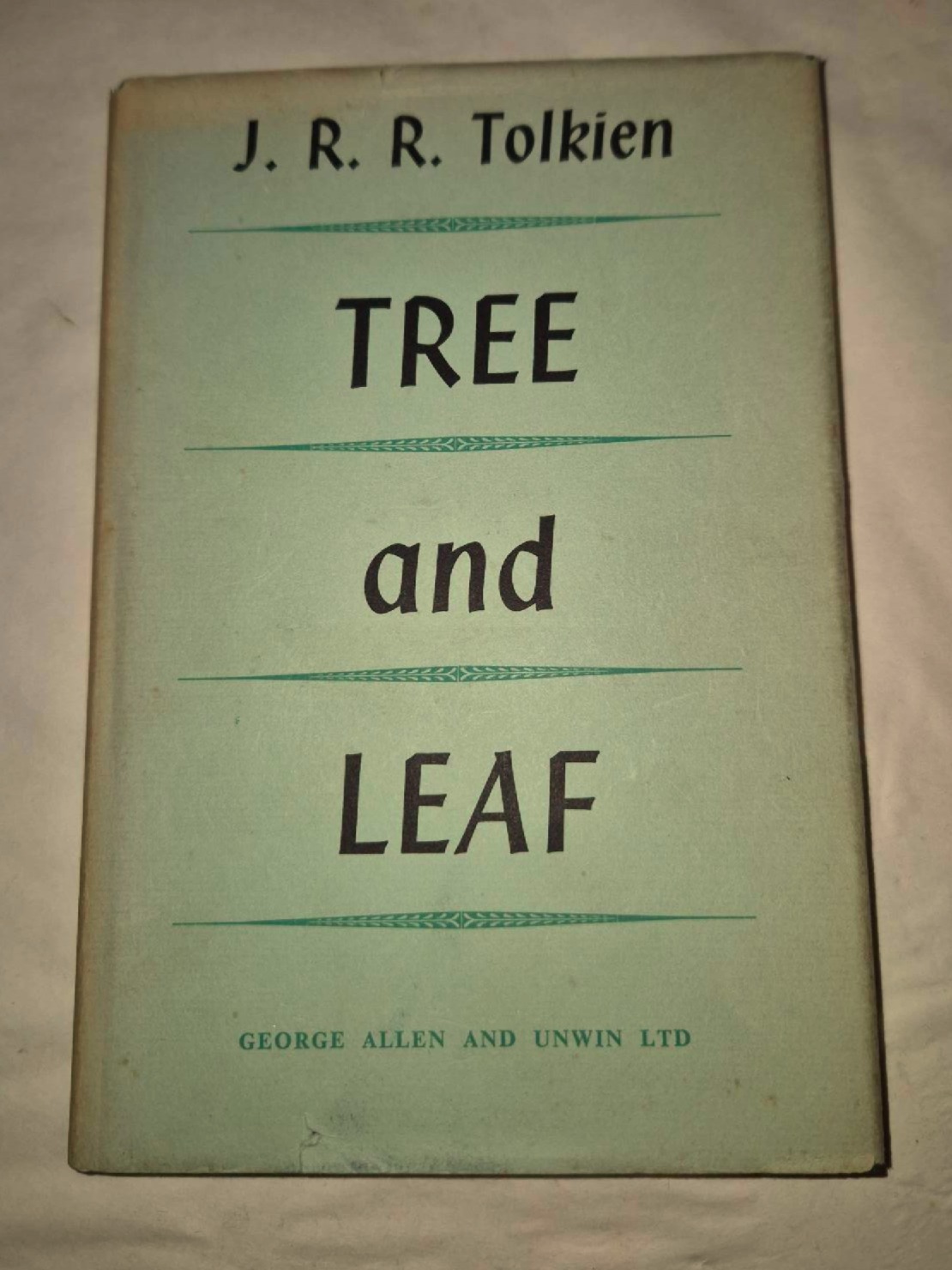
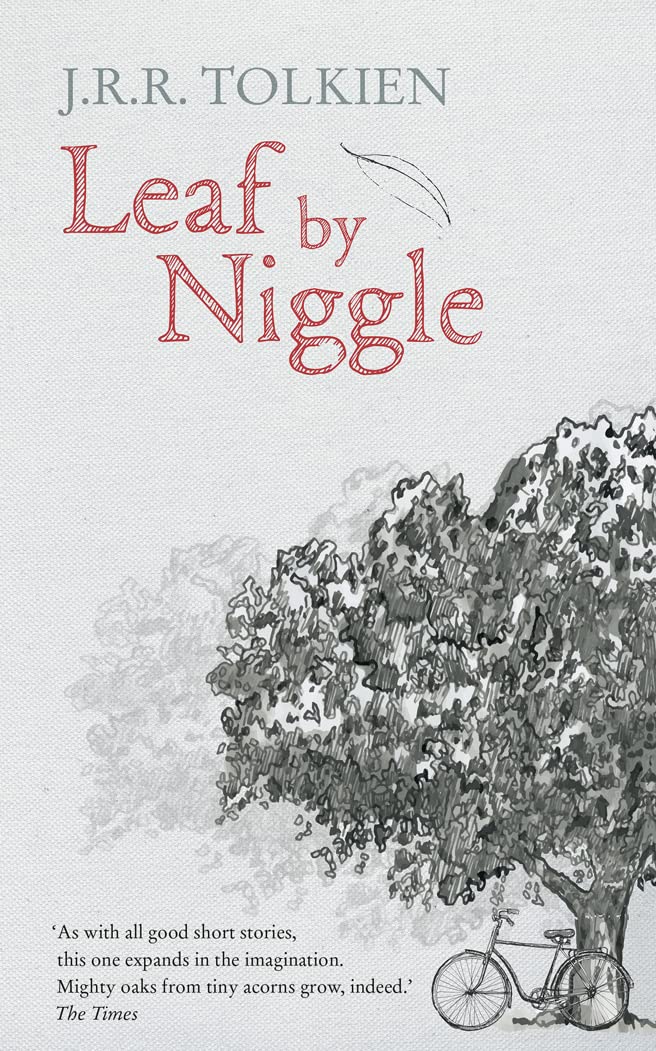
Tolkien’s passion for trees is well known and that passion seems to be everywhere in his work—even in a title–
and, contained in the volume,
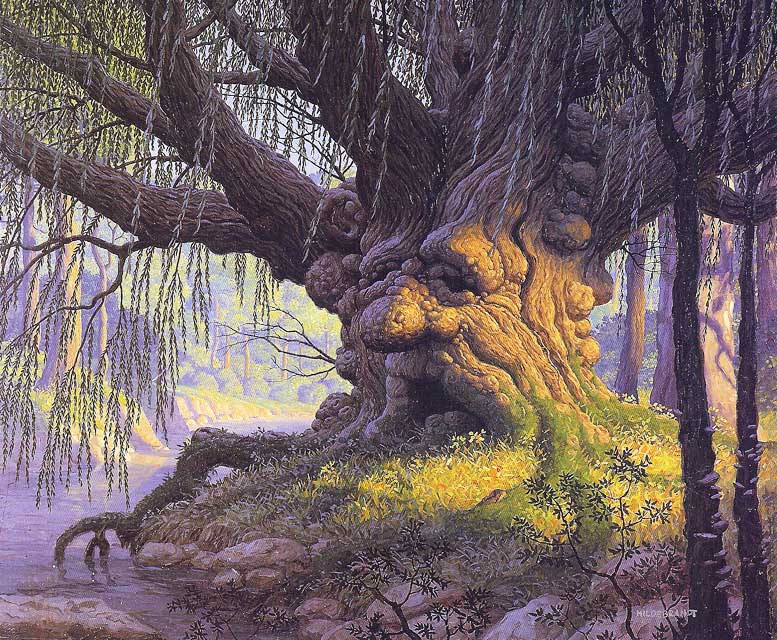
with forests seemingly everywhere—from the Old Forest, with Old Man Willow,
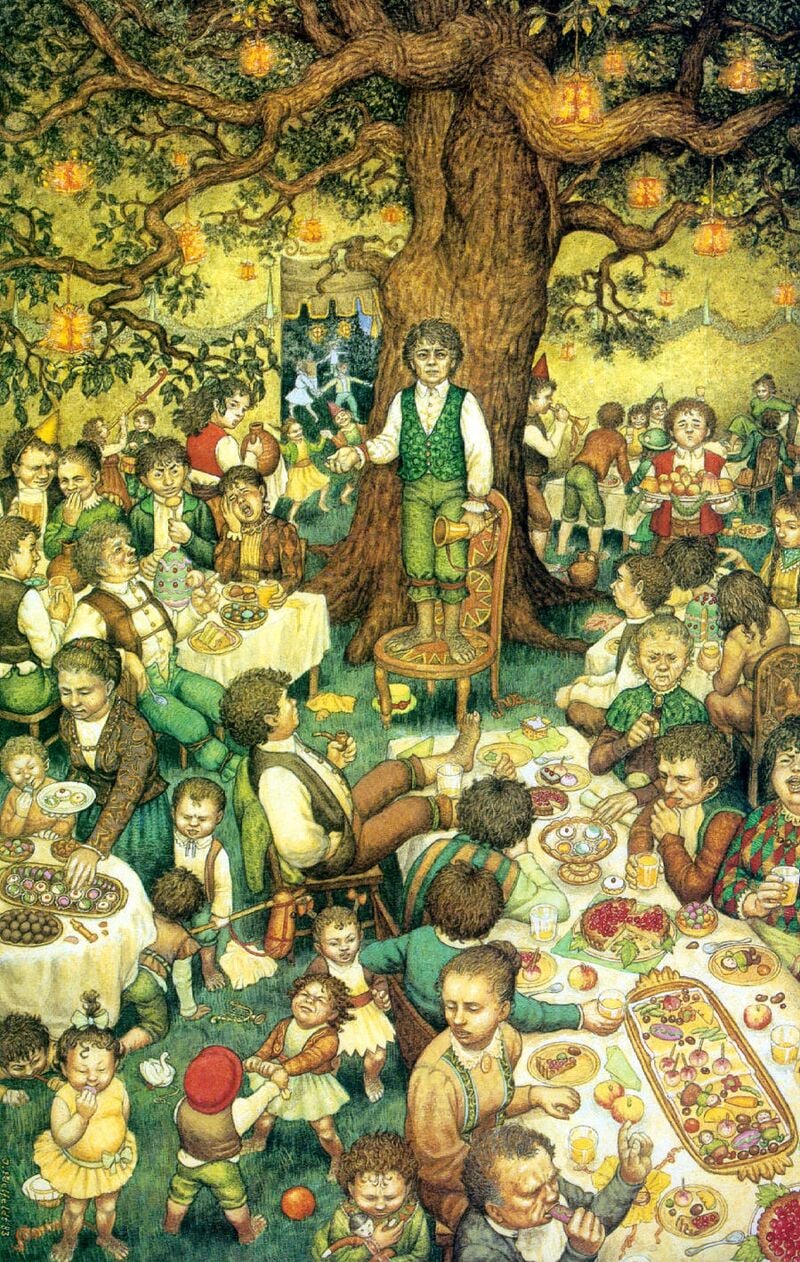
If we started serious cataloguing, we’d find more—think of the Party Tree—
(Inger Edelfeldt)
and the White Tree, the badge of Gondor, and I’m sure that there are more yet,
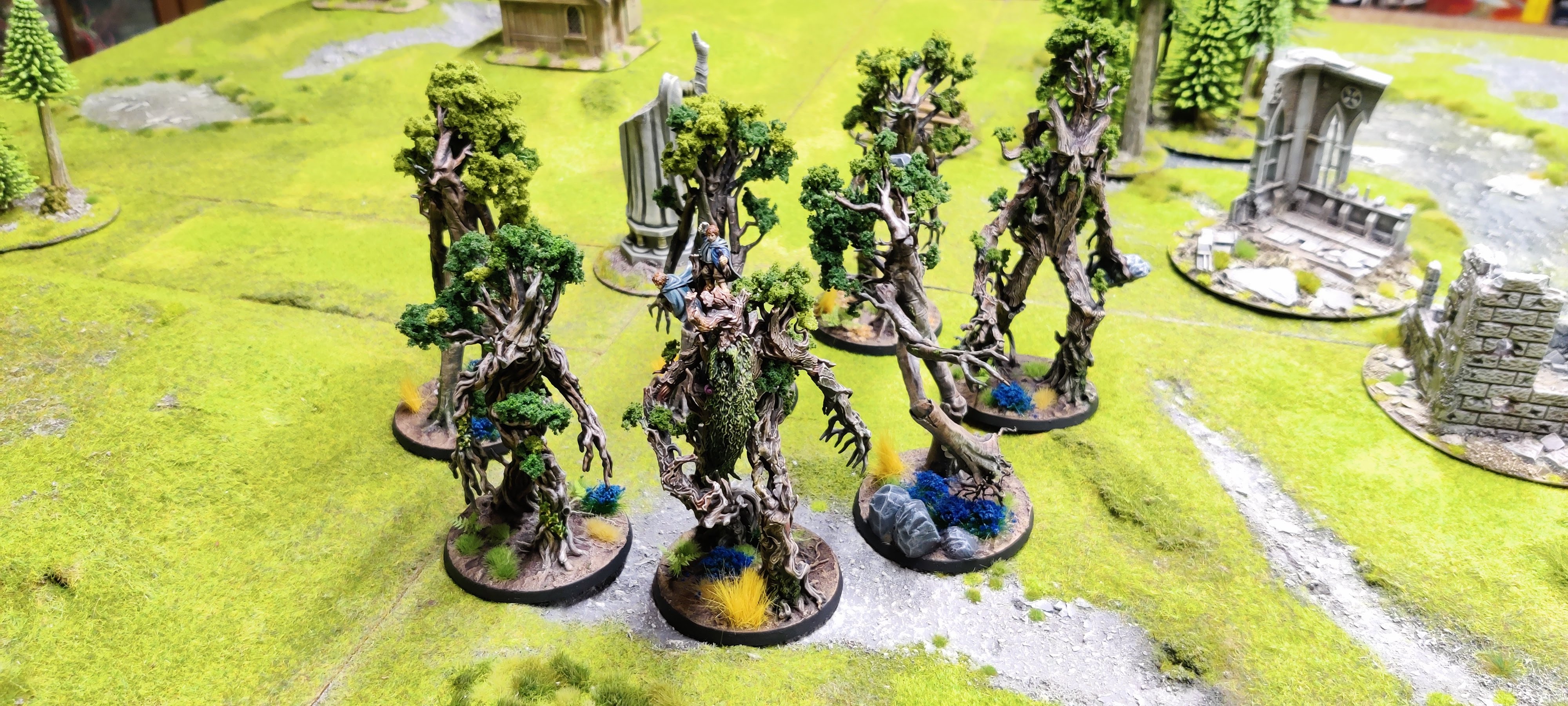
but I want to go back to Fangorn and Treebeard.
When people talk about the origins of Treebeard and the Ents, they always quote this:
“Their part in the story is due, I think, to my bitter disappointment and disgust from schooldays with the shabby use made in Shakespeare of the coming of ‘Great Birnam wood to high Dunsinane hill’: I longed to devise a setting in which the trees might really march to war.” (letter to W.H. Auden, 7 June, 1955, Letters,310)
Tolkien’s relationship with the works of Shakespeare varied throughout his life, from an early loathing of reading them (see letter to W.H. Auden, 7 June, 1955, Letters, 312 ), to an appreciation of Hamlet in performance many years later (see letter to Christopher Tolkien, 28 July, 1944, Letters, 126), but, although we must trust JRRT in what he believed to be his inspiration, I think that there’s more to what lay behind his creation than that—and Treebeard is a clue.
When Merry and Pippin first meet him, and tell him what little they know about the much bigger adventure in which they seem to form such a small part, he is an avid listener, but clearly only a listener:
“…I have not troubled about the Great Wars…they mostly concern Elves and Men. That is the business of Wizards…I am not altogether anybody’s side, if you understand me…”
And yet—
“…there are some things, of course, whose side I am altogether not on; I am against them altogether: these—burarum…these Orcs, and their masters.”
For Treebeard, the Orc-master is Saruman, and Merry and Pippin’s intelligence leads him to some unhappy but important conclusions:
“I think that I now understand what he is up to. He is plotting to become a Power. He has a mind of metal and wheels; and he does not care for growing things, except as far as they serve him for the moment. And now it is clear that he is a black traitor. He has taken up with foul folk, with the Orcs….He and his foul folk are making havoc now. Down on the borders they are felling trees—good trees. Some of the trees they just cut down and leave to rot—orc-mischief that; but most are hewn up and carried off to feed the fires of Orthanc.. Curse him, root and branch!…there are wastes of stump and bramble where once there were singing groves. I have been idle. I have let things slip. It must stop!” (The Two Towers, Book Three, Chapter 4, “Treebeard”)
As we know that Tolkien loved trees, we also know that he was opposed to the Industrial Revolution—or at least to its effects upon the modern world, even though he once owned an automobile and certainly traveled by train. To him “the machine” (sometimes capitalized in his letters as “the Machine”) represented the certain destruction of what he loved—
“Oxford continues to suffer from the ravages of the machine-worshippers. I remember it as a little old university town nestling in the country—and it had about 55,000 inhabitants. It now has nearly 100,000 more, sprawls in every direction, and is jammed with noise and smell…” (from a letter to Joan Anne Tolkien, November, 1961, Letters, 438—although, to be fair, JRRT then adds that there is some good change—the removal of a “slum-fringe”.)
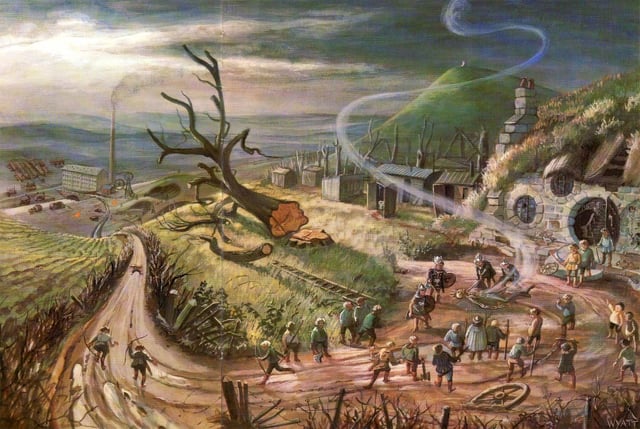
This sounds a bit like what Saruman had done to Isengard—
“Once it had been green and filled with avenues, and groves of fruitful trees, watered by streams that flowed from the mountains to a lake. But no green thing grew in the latter days of Saruman. The roads were paved with stone flags, dark and hard; and beside their borders instead of trees there marched long lines of pillars, some of marble, some of copper and of iron, joined by heavy chains…The plain, too, was bored and delved…The shafts ran down many slopes and spiral stairs to caverns far under…Iron wheels revolved there endlessly, and hammers thudded. At night plumes of vapor stream from the vents, lit from beneath with red light, or blue, or venomous green.” (The Two Towers, Book Three, Chapter 8, “The Road to Isengard”)
Saruman, then, who had so changed Isengard and whose Orcs destroy forestland, has a mind “of metal and wheels” therefore embodies exactly what JRRT dislikes. He cannot stop the effects of the Industrial Revolution in our Middle-earth, but there is much which might be done in his Middle-earth—at least in his imagination.
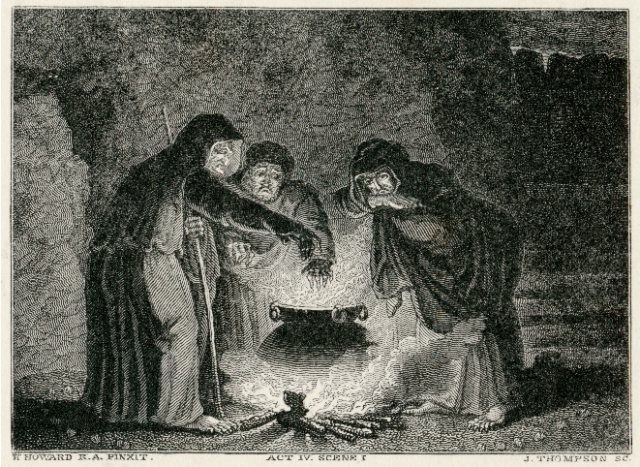
In his MacBeth, Shakespeare had literally interpreted a prophesy which the “weird sisters” (i.e., witches)
had given to MacBeth as a warning. In Act 4, Scene 1, the sisters produce apparitions, the third of which says:
“3 Appar. Be Lyon metled, proud, and take no care:
Who chafes, who frets, or where Conspirers are:
Macbeth shall neuer vanquish’d be, vntill
Great Byrnam Wood, to high Dunsmane [Dunsinane] Hill
Shall come against him.”
To which, MacBeth, reassured, comments
“Macb. That will neuer bee:
Who can impresse the Forrest, bid the Tree
Vnfixe his earth-bound Root? Sweet boadments, good:
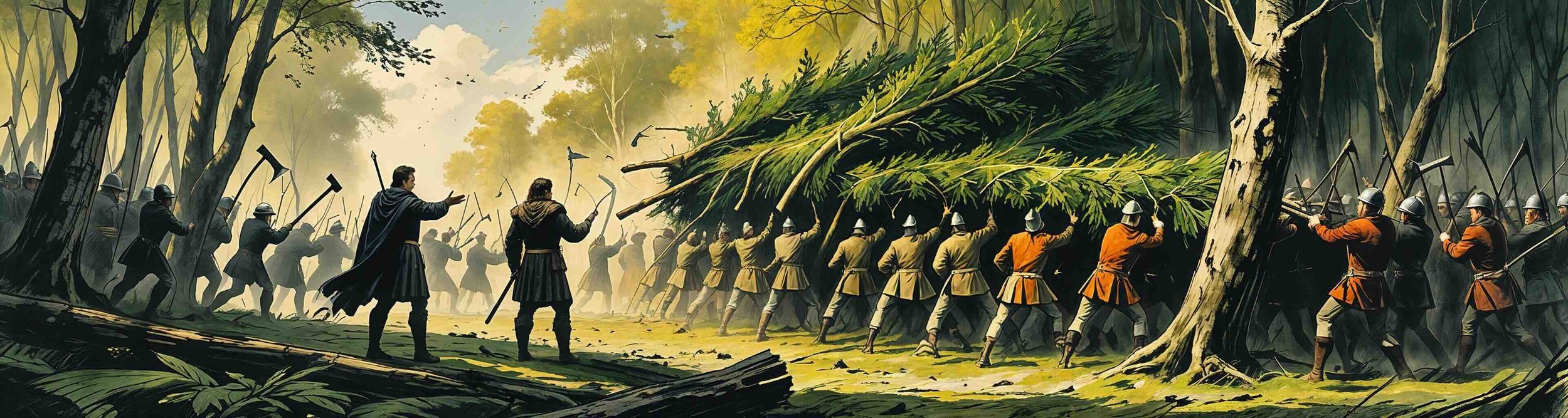
MacBeth is proved wrong, of course, when his enemy’s soldiers use foliage from the wood as camouflage to approach MacBeth’s stronghold, where he is trapped and killed.
(This illustration comes from a very interesting site, “Shakespeare Retold”, which offers both a modern translation and interpretation of Shakespeare’s plays and sonnets, with some very thoughtful, useful commentary. You can visit the site here: https://www.shakespeareretold.com/macbeth-scene-analysis/act-5-scene-4 Although the tactic has been used for centuries, the word “camouflage” only appeared relatively recently in English—seemingly first in 1917—see: https://www.etymonline.com/word/camouflage )
His enemies use only foliage, but Tolkien animates much of the forest in his version, and, whereas the play’s foliage is only meant to conceal numbers of soldiers, JRRT’s trees cause massive destruction—
(Ted Nasmith)
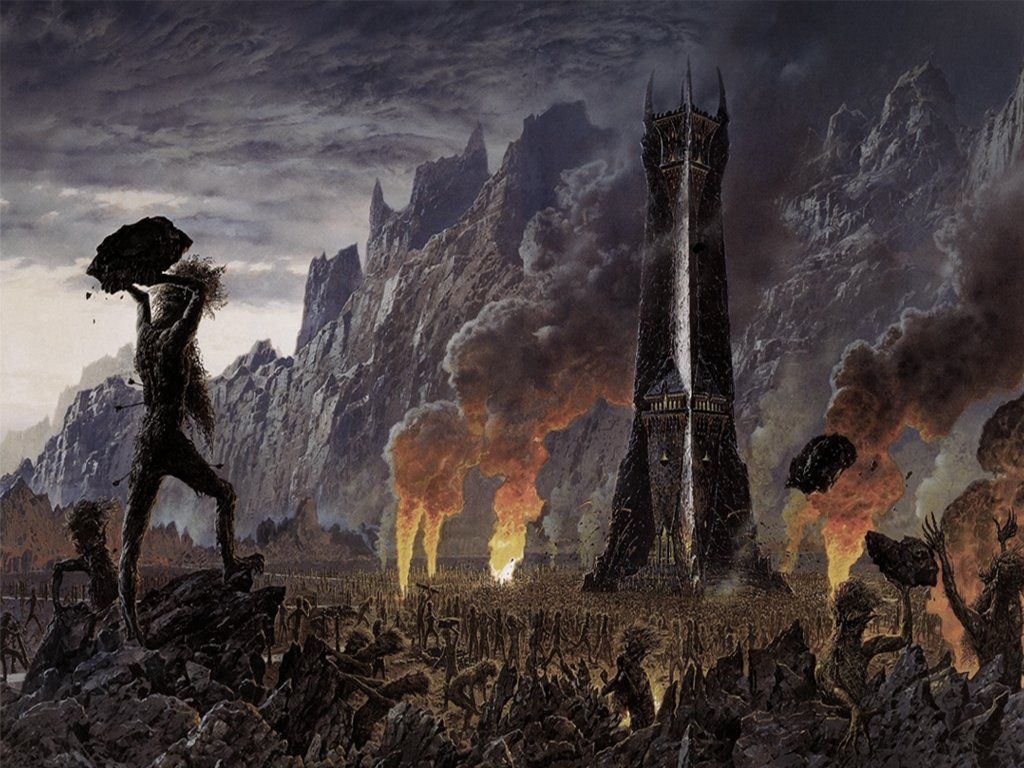
“The ring beyond was filled with steaming water: a bubbling cauldron, in which there heaved and floated a wreckage of beams and spars, chests and casks and broken gear. Twisted and leaning pillars reared their splintered stems above the flood, but all the roads were drowned.” (The Two Towers, Book Three, Chapter 8, “The Road to Isengard”)
Is this what Tolkien would have liked to do to the Industrial Revolution and its products? In a letter to The Daily Telegraph, he writes:
“In all my works, I take the part of trees as against all their enemies. Lothlorien is beautiful because there the trees were loved; elsewhere forests are represented as awakening to consciousness of themselves. The Old Forest was hostile to two legged creatures because of the memory of many injuries. Fangorn Forest was old and beautiful, but at the time of the story tense with hostility because it was threatened by a machine-loving enemy.”
Here are those machines again and trees.
Tolkien’s letter is in response to commentary about the work of the Forestry Commission and he continues:
“It would be unfair to compare the Forestry Commission with Sauron because as you observe it is capable of repentance; but noting it has done that is stupid compares with the destruction, torture and murder of trees perpetrated by private individuals and minor official bodies. The savage sound of the electric saw is never silent wherever trees are still found growing.” (letter to the editor of The Daily Telegraph, 30 June, 1972, Letters, 588-589)
“Torture”? “Murder”? Perhaps it’s just as well that Tolkien never owned a chainsaw.
Thanks, as always, for reading.
Stay well,
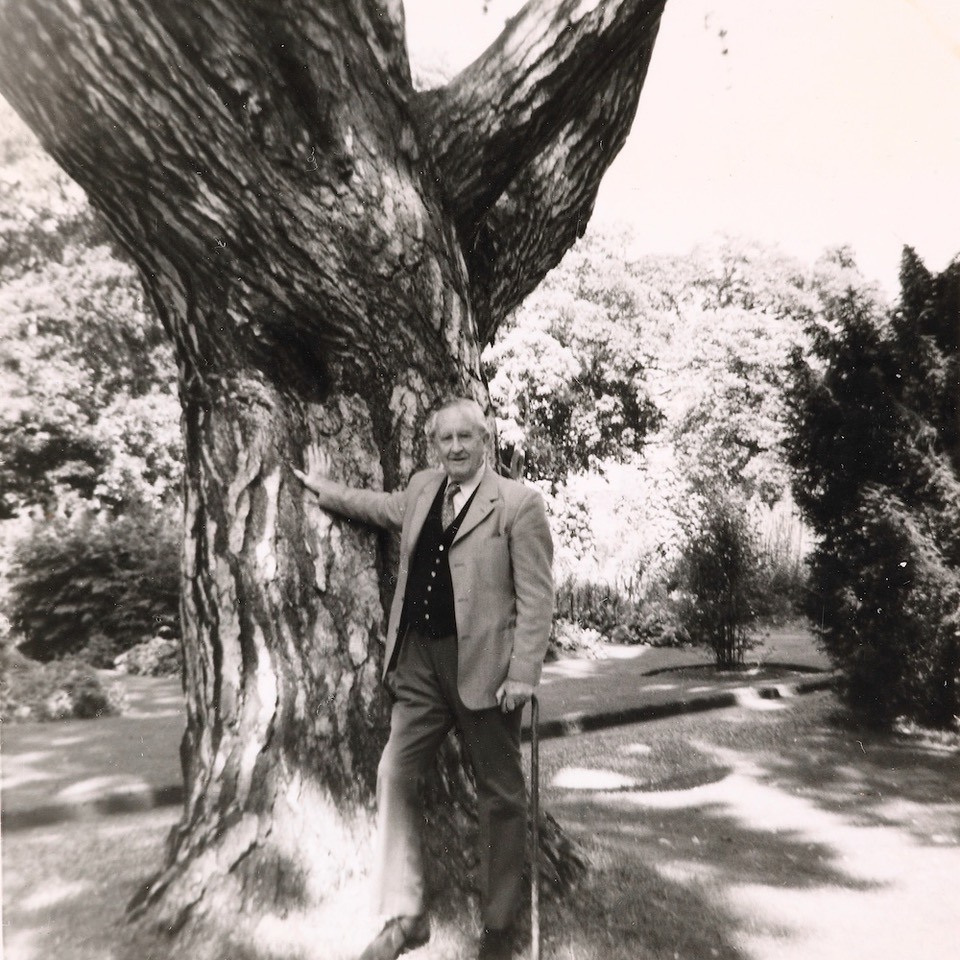
Here’s a peaceful JRRT writing in his garden, to remind us to be peaceful,
In our last, we began a tour and catalogue of towers as we see them in The Lord of the Rings.
We set off from the Elvish towers in the far west of Middle-earth.
(Ted Nasmith)
From there, we traveled east and south to Amon Sul, aka Weathertop.
(Alan Lee)
Unlike the Fellowship, we then went all the way down along the western side of the Misty Mountains
until we reached Isengard and the tower of Orthanc.
(Ted Nasmith)
Leaving Isengard, we journeyed farther south yet to Helm’s Deep and its tower
(JRRT)
and then farther yet to Minas Tirith and the tower of Echthelion
(Ted Nasmith)
before turning eastwards, crossing the Anduin, to finish part 1 at Minas Morgul—formerly Minas Ithil.
(Ted Nasmith)
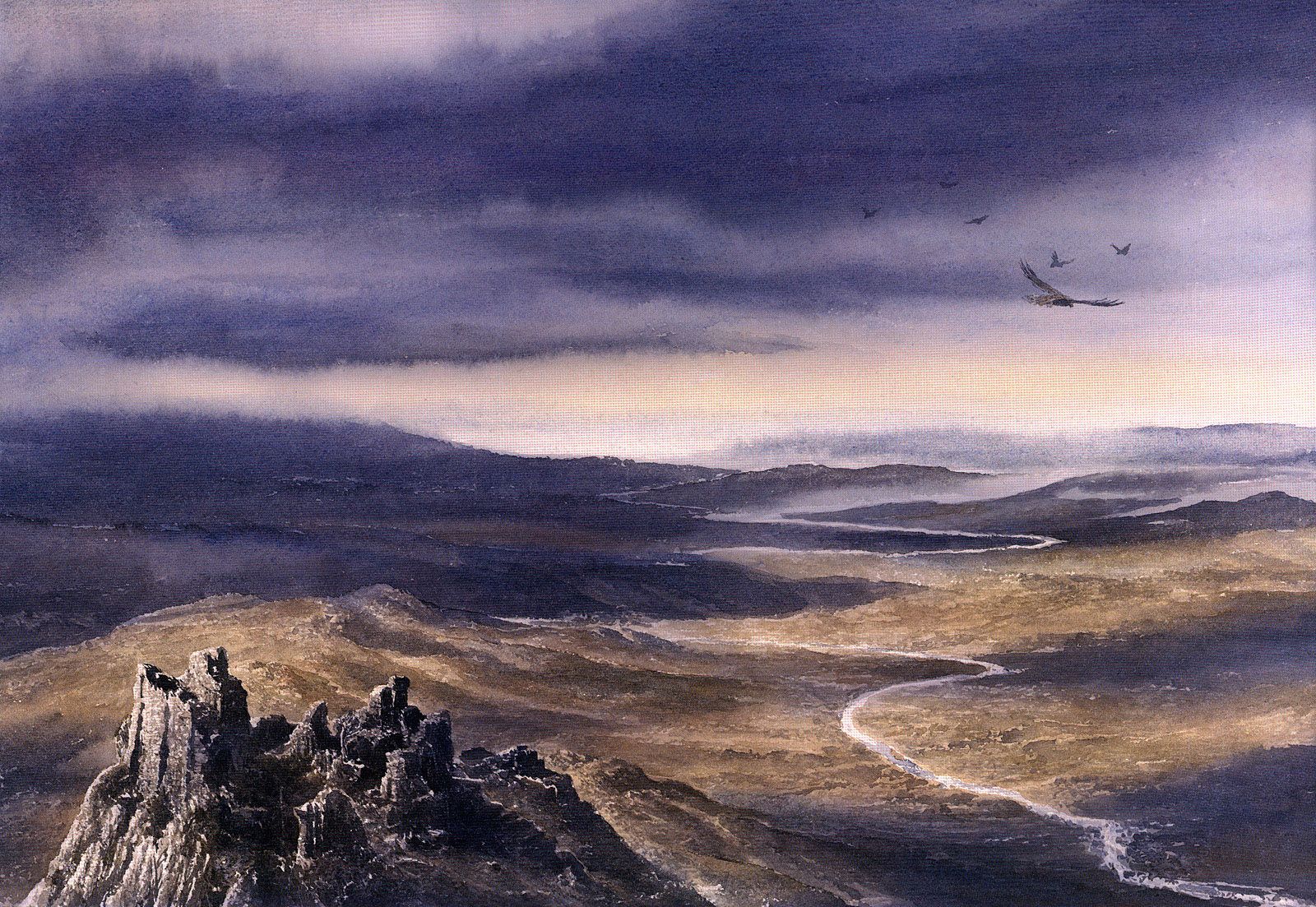
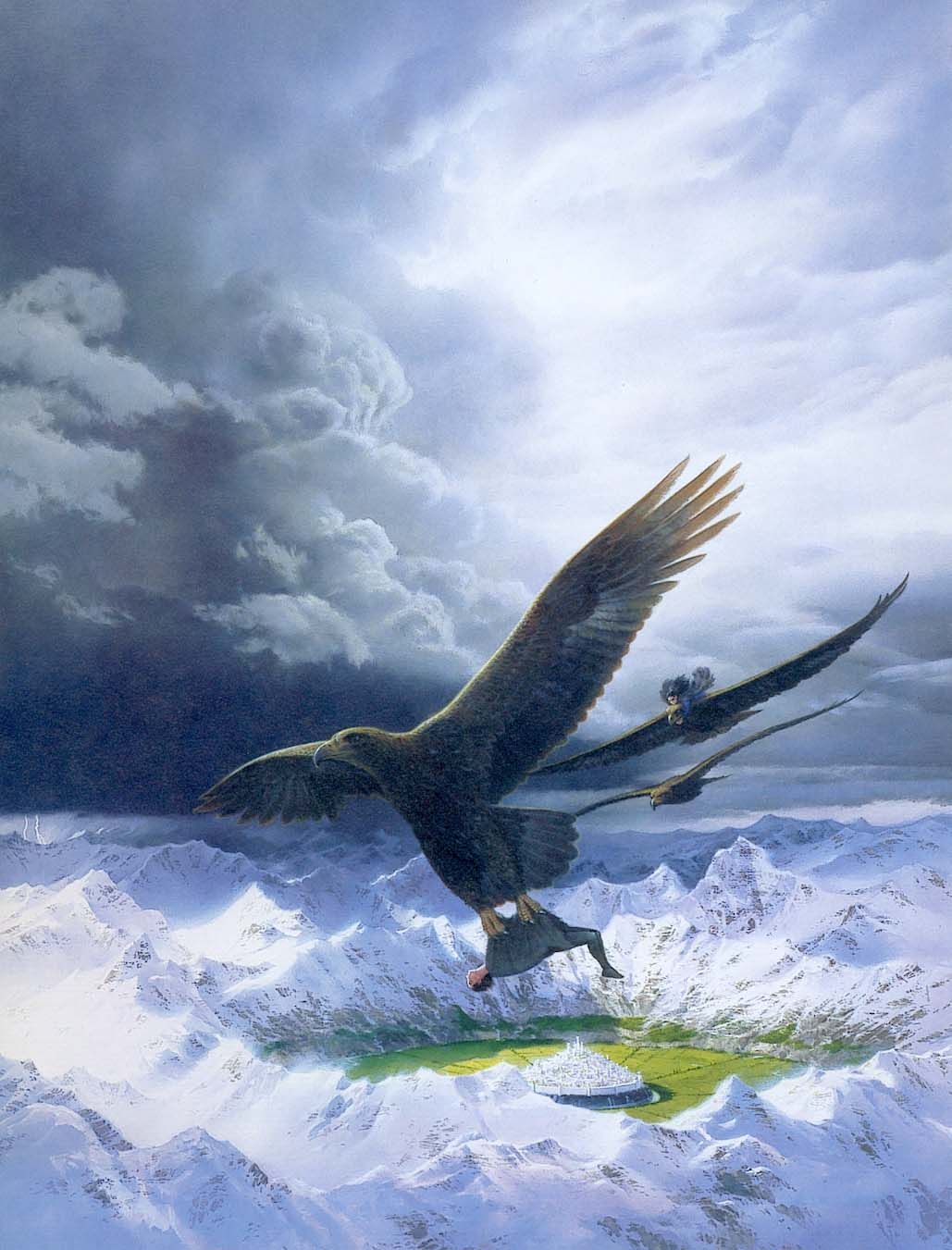
This marks the beginning of Frodo and Sam’s final leg, into Mordor, where we paused for the moment—but now we pick up the journey again and step into Mordor itself—but, as we’ll finish with Sauron’s hangout, let’s first grab an eagle
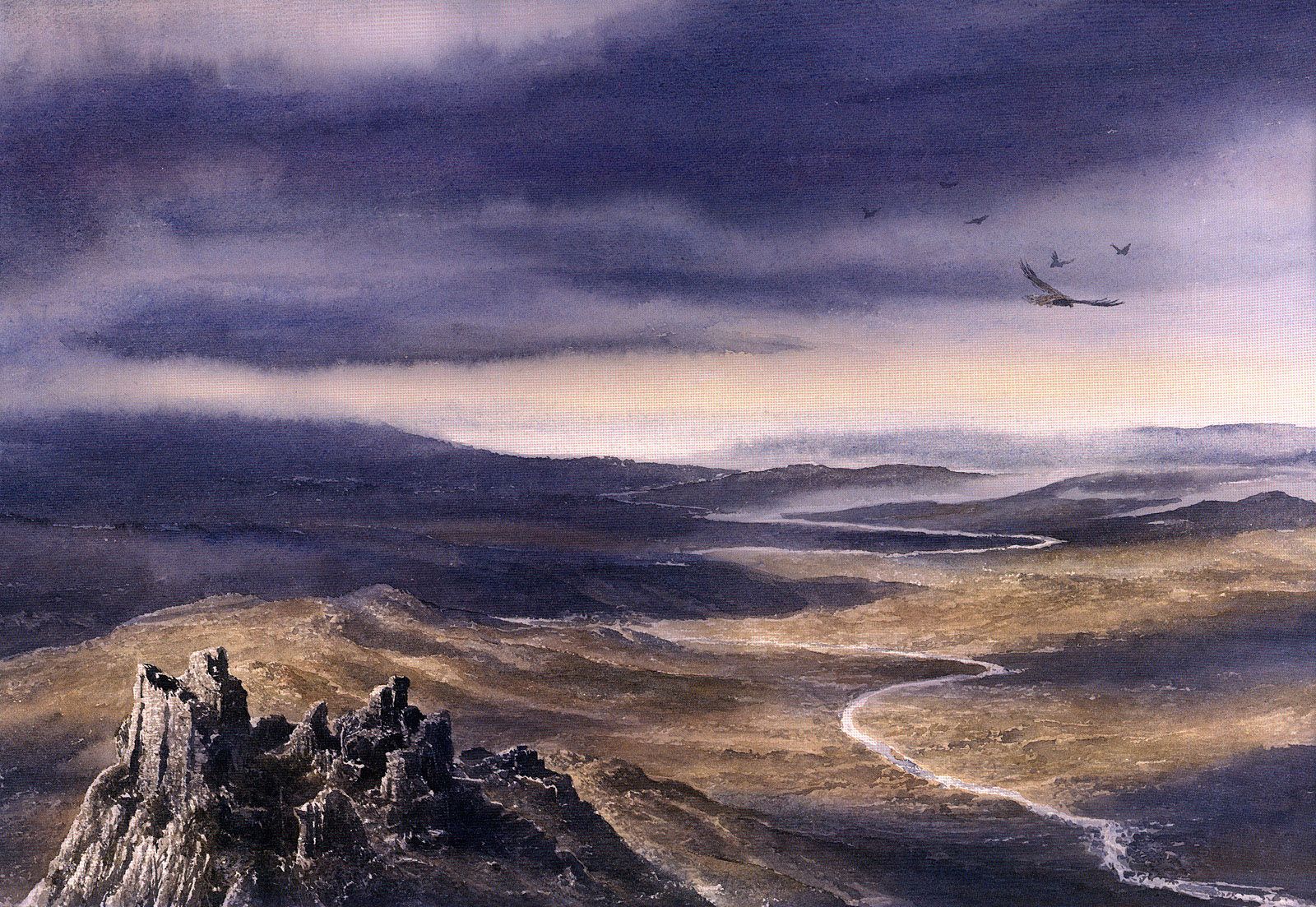
(Ted Nasmith—and I want to point out that this wonderful artist has illustrated things from Tolkien beyond The Hobbit and The Lord of the Rings—this image, for instance is an illustration from the history of the Elvish city of Gondolin. For more on Gondolin, see: https://en.wikipedia.org/wiki/Gondolin )
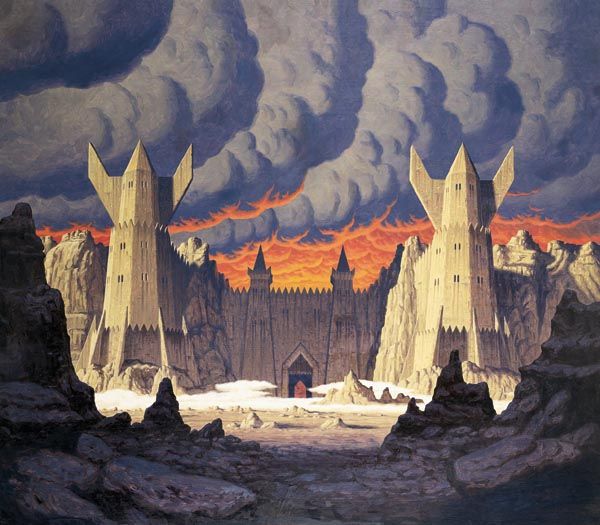
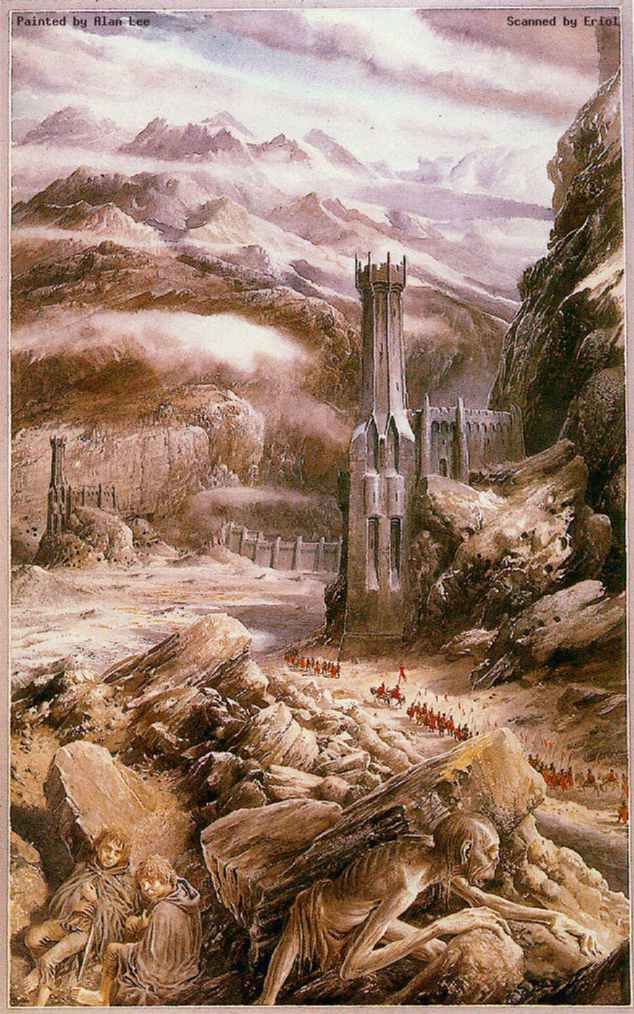
and fly north to the other entrance to Mordor, at the Morannon—the Black Gate.
(an early illustration by the Hildebrandts)
(a later illustration by Alan Lee—I thought the contrast in conceptions of the Gate was interesting. The Hildebrandts were pioneers in Tolkien illustration and certain of their images—like Gandalf’s original appearance to Bilbo—have always been favorites.)
Our narrator gives us a description—and history–of the place:
“But as the ranges [of Ephel Duath and Ered Lithui] approached one another, being but parts of one great wall about the mournful plains of Lithlad and of Gorgoroth, and the bitter inland sea of Nurnen amidmost, they swung out long arms northward; and between these arms there was a deep defile. This was Cirith Gorgor, the Haunted Pass, the entrance to the land of the Enemy. High cliffs lowered upon either side, and thrust forward from its mouth were two sheer hills, black-boned and bare. Upon them stood the Teeth of Mordor, two towers strong and tall. In days long past they were built by the Men of Gondor in their pride and power, after the overthrow of Sauron and his flight, lest he should seek to return to his old realm. But the strength of Gondor failed, and men slept, and for long years the towers stood empty. Then Sauron returned. Now the watch-towers, which had fallen into decay, were repaired and filled with arms, and garrisoned with ceaseless vigilance. Stony-faced they were, with dark window-holes staring north and east and west, and each window was filled with sleepless eyes.
Across the mouth of the pass, from cliff to cliff, the Dark Lord had built a rampart of stone. In it there was a single gate of iron, and upon its battlements sentinels paced unceasingly. Beneath the hills on either side the rock was bored into a hundred caves and maggot-holes…” (The Two Towers, Book Four, Chapter 3, “The Black Gate is closed”)
As always, we see in The Lord of the Rings a Middle-earth which has a history which stretches back far from the present moment. Sauron had been defeated by the Last Alliance in SA 3441. While traveling with Frodo and Sam, we set off in TA 3018—over 3000 (!) years later. (Frodo is astonished to hear from Elrond an eye-witness account of that event—see The Fellowship of the Ring, Book Two, Chapter 2, “The Council of Elrond”) Thus, the two original towers—ironically constructed to keep Sauron out—must have been built somewhere at the end of the Second Age or at the beginning of the Third, and the wall between constructed after c.TA 2942, when Sauron had been driven by the White Council from Dol Goldur,
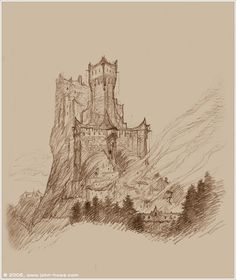
(John Howe—if we had more information about this place, I might have included it in our tour, but it appears to be more mentioned than explained in detail.)
and returned to Mordor.
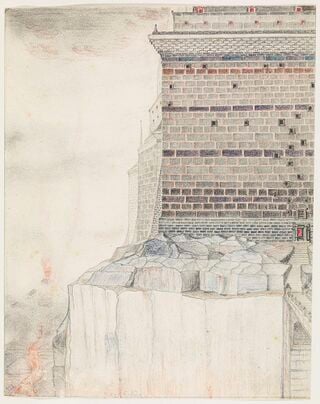
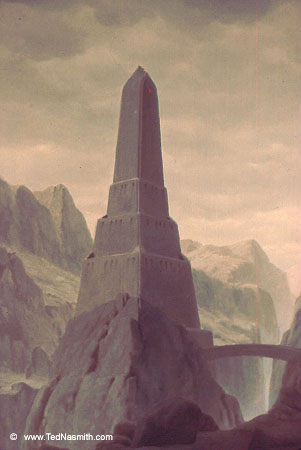
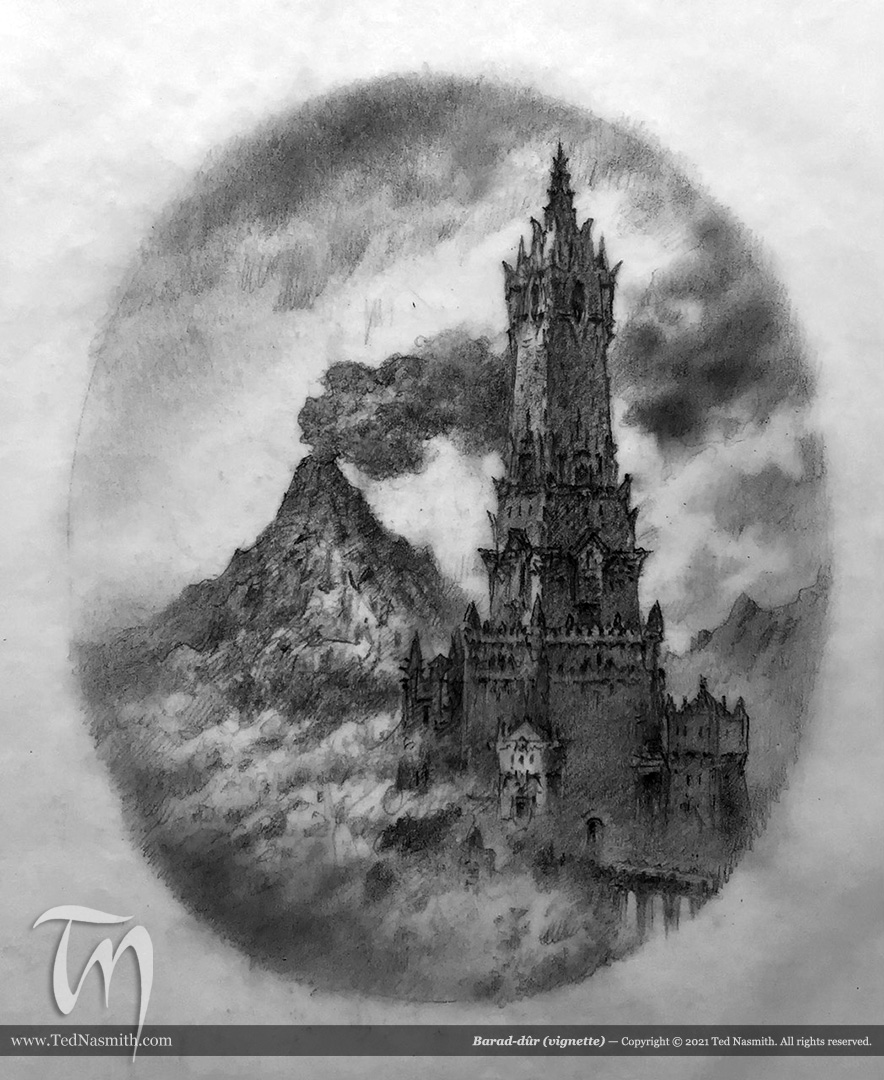
And now we come to the end of our tower tour at the most fearsome of those towers: the Barad-dur.
(JRRT—a shame that this is only a fragment)
(both by Ted Nasmith—the first strikes me as more menacing in its monumentality, the second, more elaborate and baroque, suggesting a Sauron with a taste for the ornamental, rather than simply the grimly practical.)
when he puts on the Ring and first Minas Tirith appears, but then—
“But against Minas Tirith was set another fortress, greater and more strong. Thither, eastward, unwilling his eyes were drawn…Then at last his gaze was held: wall upon wall, battlement upon battlement, black, immeasurably strong, mountain of iron, gate of steel, tower of adamant, he saw it: Barad-dur, Fortress of Sauron.” (The Fellowship of the Ring, Book Two, Chapter 10, “The Breaking of the Fellowship”)
Sauron had begun the construction of this menacing place in SA 1000, completing it 600 years KinAlliance, returns to rebuild it in TA 2951 (Appendix B, “The Third Age”), its final destruction coming with the destruction of the Ring in TA 3019.
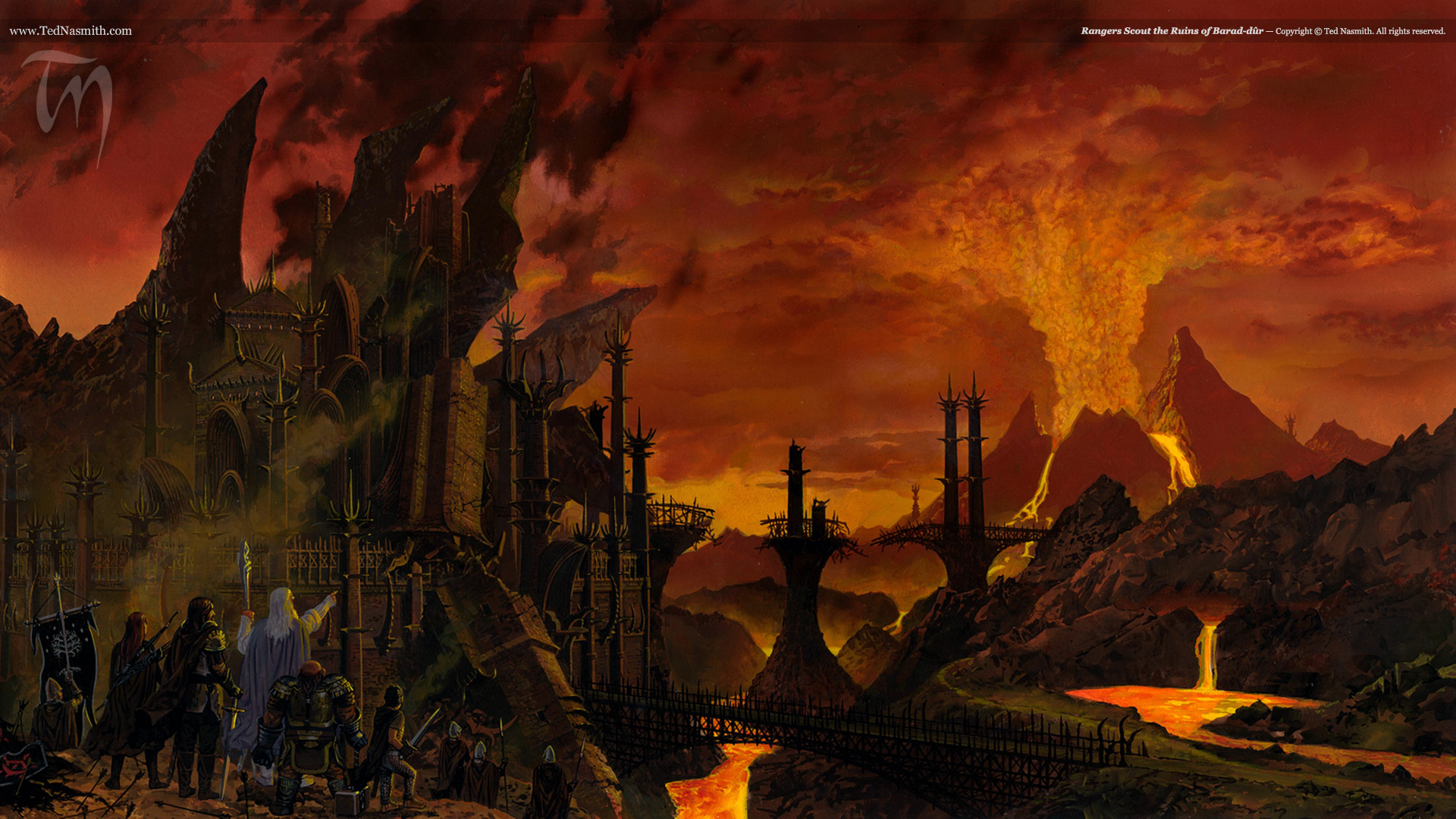
(Ted Nasmith—with the very interesting label “Rangers scout the ruins of Barad-dur”)
As we know, “Barad-dur” means “Dark Tower” and that name made me wonder about where it might have come from, apart from JRRT’s amazingly fertile imagination.
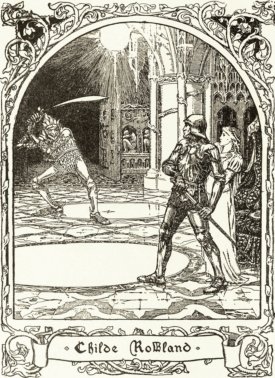
One possibility could be a poem by Robert Browning (1812-1889), entitled “Childe Roland to the Dark Tower Came”, which is in his 1855 collection Men and Women.
The only reference in Letters is to another Browning poem, “The Pied Piper of Hamelin”, which Tolkien said he loathed, but the medieval setting and the popularity of Browning in the later 19th century might suggest that Tolkien had read it—with perhaps less distaste than he did “The Pied Piper”—but the Browning poem is actually his recreation of what might have been a much earlier ballad, only a fragment of which appears to survive, in Shakespeare’s King Lear, where, at the end of Act 3, Scene 4, a major character, Edgar, pretending to be “Poor Tom”, a madman, recites:
You probably know two of these lines from the English fairy tale “Jack and the Beanstalk”—sometimes called “Jack the Giant-Killer”–which you can read here, if you don’t know it, or would like to refresh your memory (start on page 99): https://archive.org/details/englishfairytal00jacogoog/page/n8/mode/2up You’ll also notice, facing the title page of this volume, an illustration entitled “Childe Rowland”,
a story which you can find beginning on page 117. The editor of this text (English Fairy Tales, 1890), Joseph Jacobs, has provided a long note (pages 238-245) about his major source, citing Jamieson’s 1814 collection, Illustrations of Northern Antiquities where Jamieson reconstructs something which combines verse and prose—as JRRT sometimes does—in what is called a “chantefable”, in which a character called “Burd Ellen” is rescued from Elfland by “Child Rowland”, (“Child/e” is a title for a young nobleman pre-knighthood.) a familiar theme in a number of ballads and which Jamieson links to a Danish balled, “Rosmer Hafmand”. You can read Jamieson’s account here: https://archive.org/details/cu31924027097868/page/396/mode/2up
So, did at least the name “Dark Tower” come from a literary source—Browning’s poem, say?
Or, can we turn to Browning’s source: King Lear?
For all that Tolkien was not, initially a Shakespeare fan (see his letter to W.H. Auden, 7 June, 1955, Letters, 312), he later came to appreciate him—at least in performance—(see letter to Christopher Tolkien, 28 July, 1944, Letters, 126), and we know that he had been exposed to Shakespeare’s works at an early age, so perhaps Shakespeare was a—if not the—inspiration?
In any event, that tower was doomed to ultimate destruction with that of the Ring, as we read:
“The earth groaned and quaked. The Towers of the Teeth swayed, tottered, and fell down; the mighty rampart crumbled; the Black Gate was hurled in ruin; and from far away, now dim, now growing, now mounting to the clouds, there came a drumming rumble, a roar, a long echoing roll of ruinous noise.” (The Return of the King, Book Six, Chapter 4, “The Field of Cormallen”)
A Tolkien illustration by Ted Nasmith
(Ted Nasmith)
And with the end of the Dark Tower, this tour of towers ends, as well.
Thanks for reading, as always.
Stay well,
If you are trapped underground and find a simple ring, consider, before you pick it up, that there may be consequences,
(And this is from another very interesting site, “Classroom Adventures”, which has an educational agenda with which I agree: https://www.classroomadventures.co.uk/ )
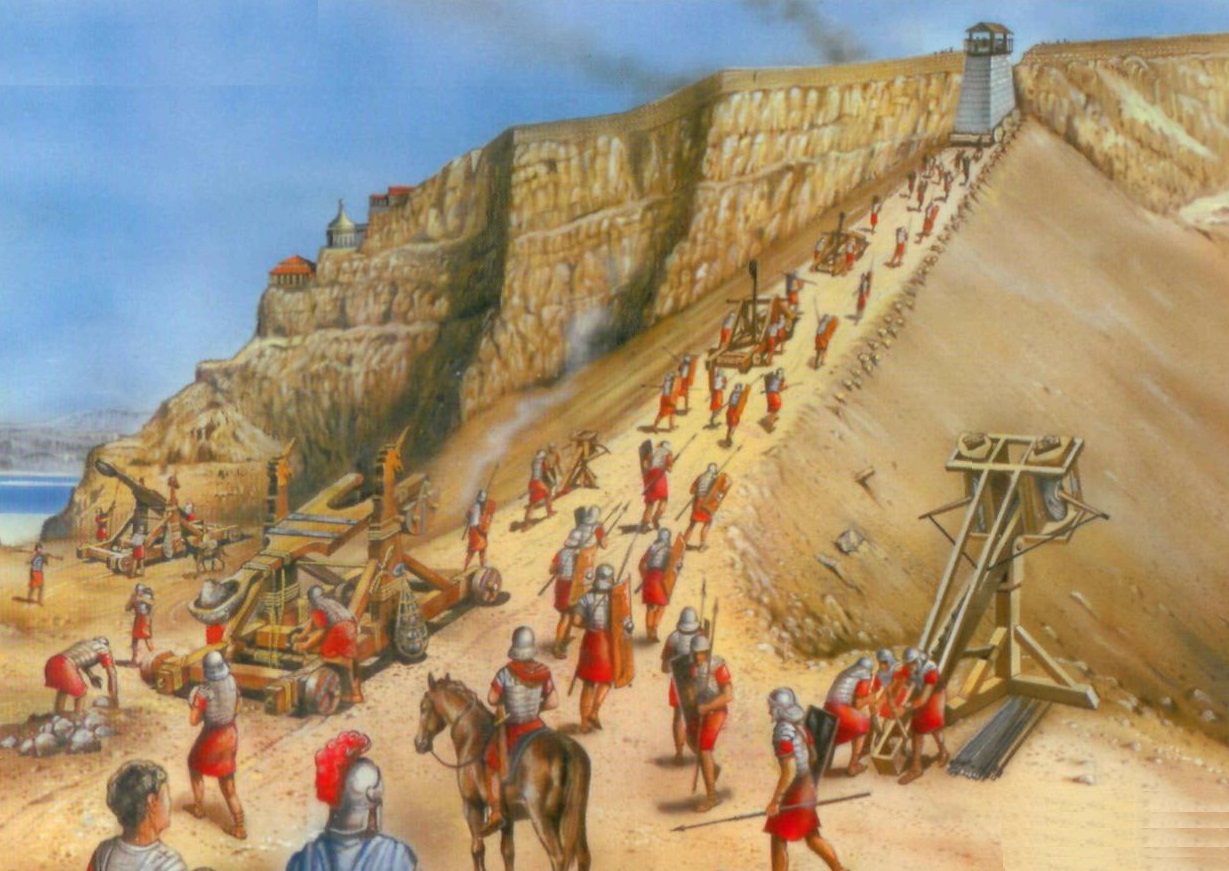
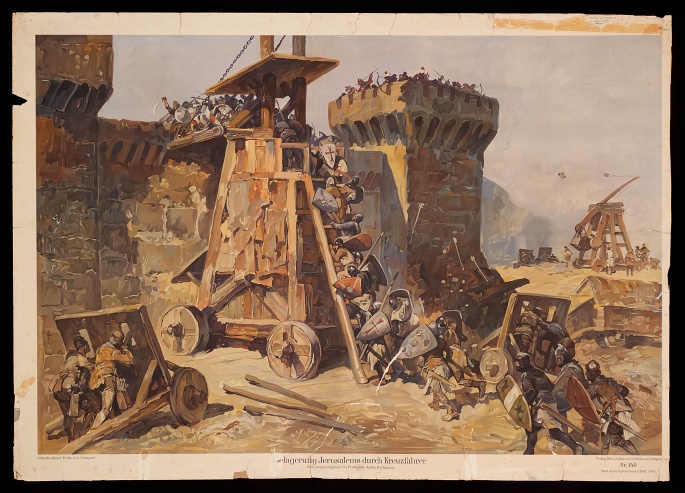
5. if you’re the Romans, you might build an enormous ramp to lead up to the top of the wall
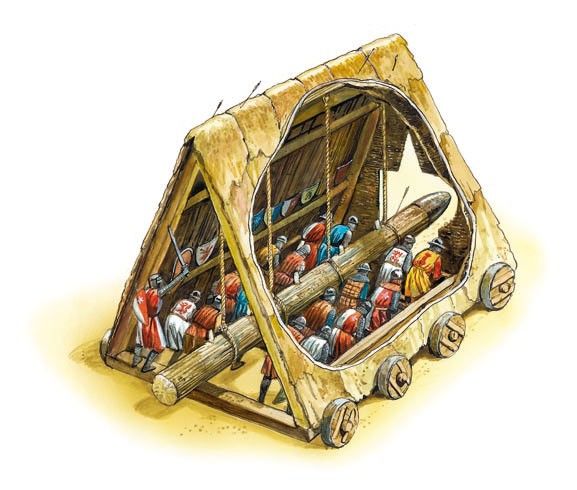
6. or you might build a tower a little higher than the wall, roll it up to the wall, and climb from it onto the wall
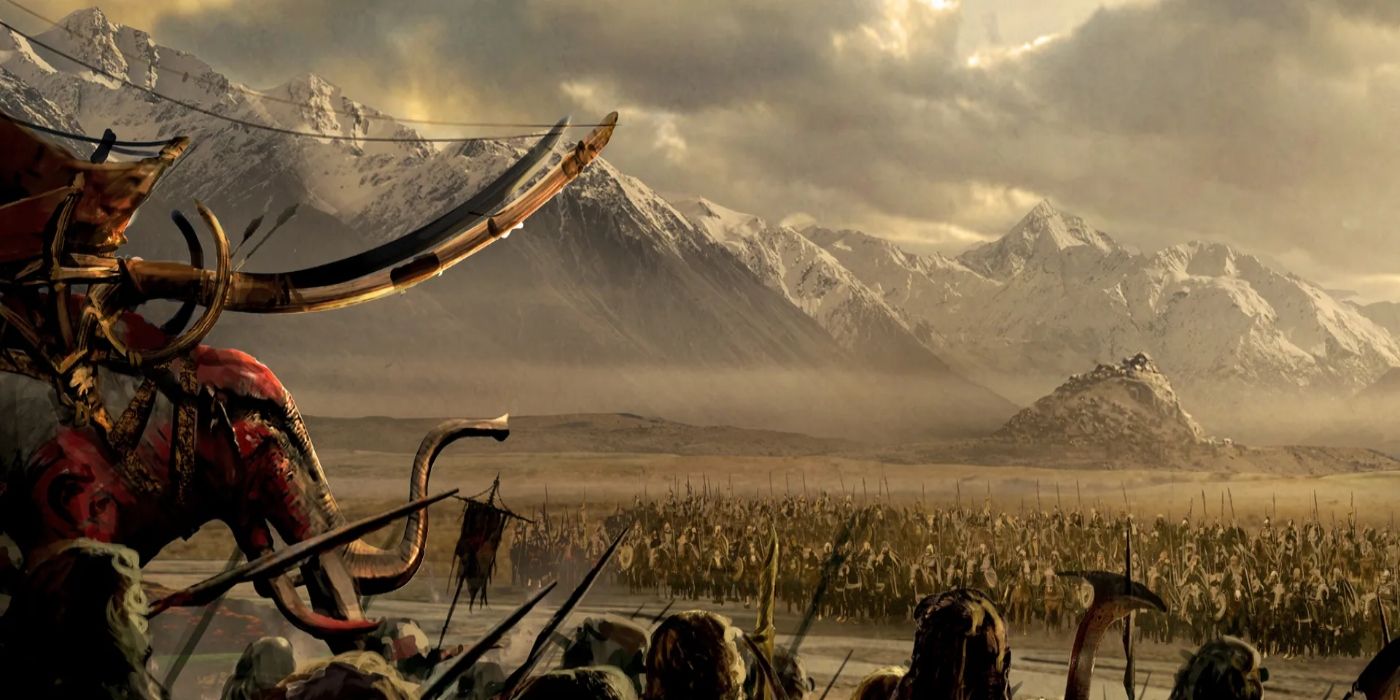
In an earlier posting, I examined this last in a review of the recent The War of the Rohrrim
for which, see “Towering”, 28 January, 2026.
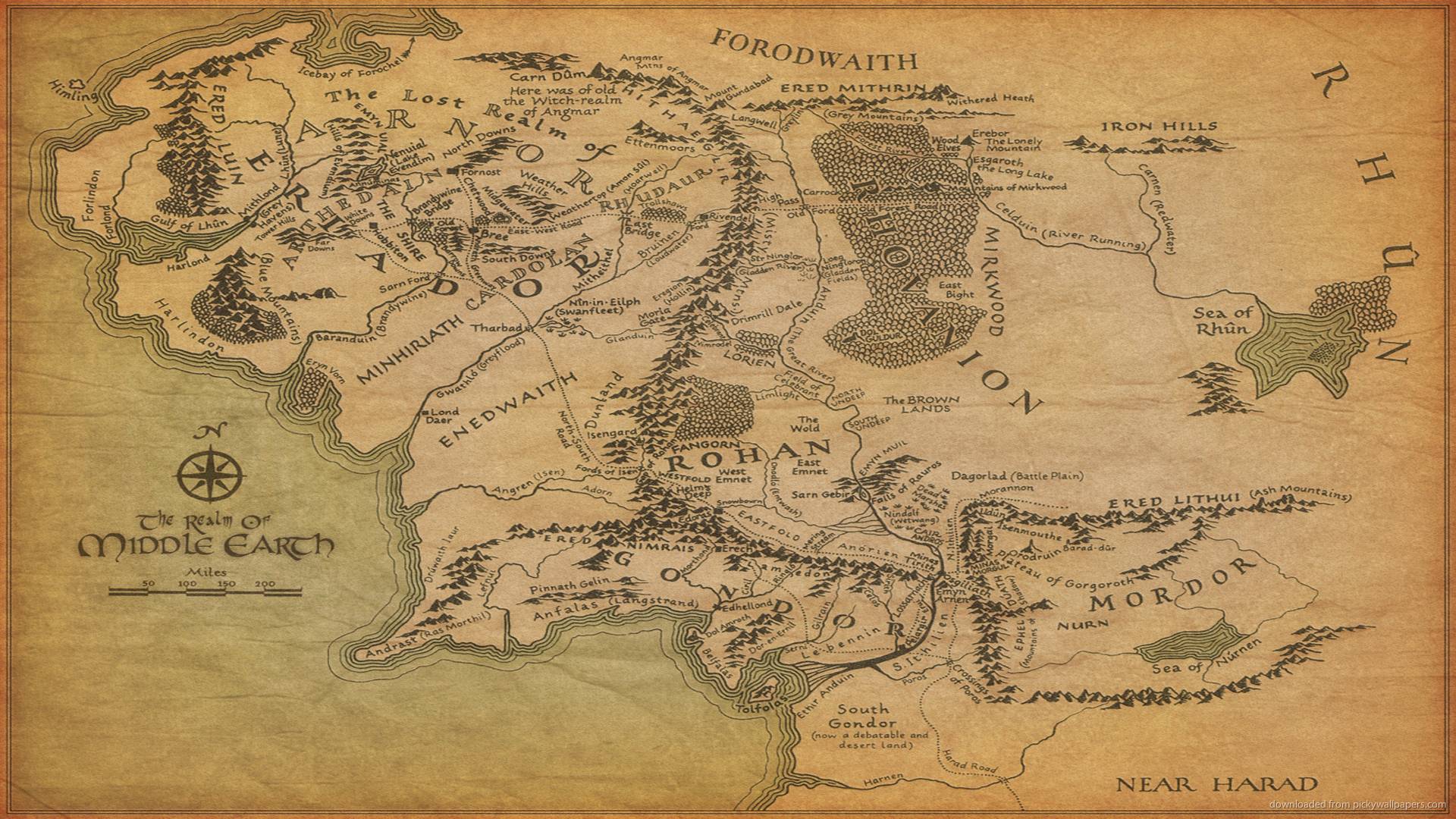
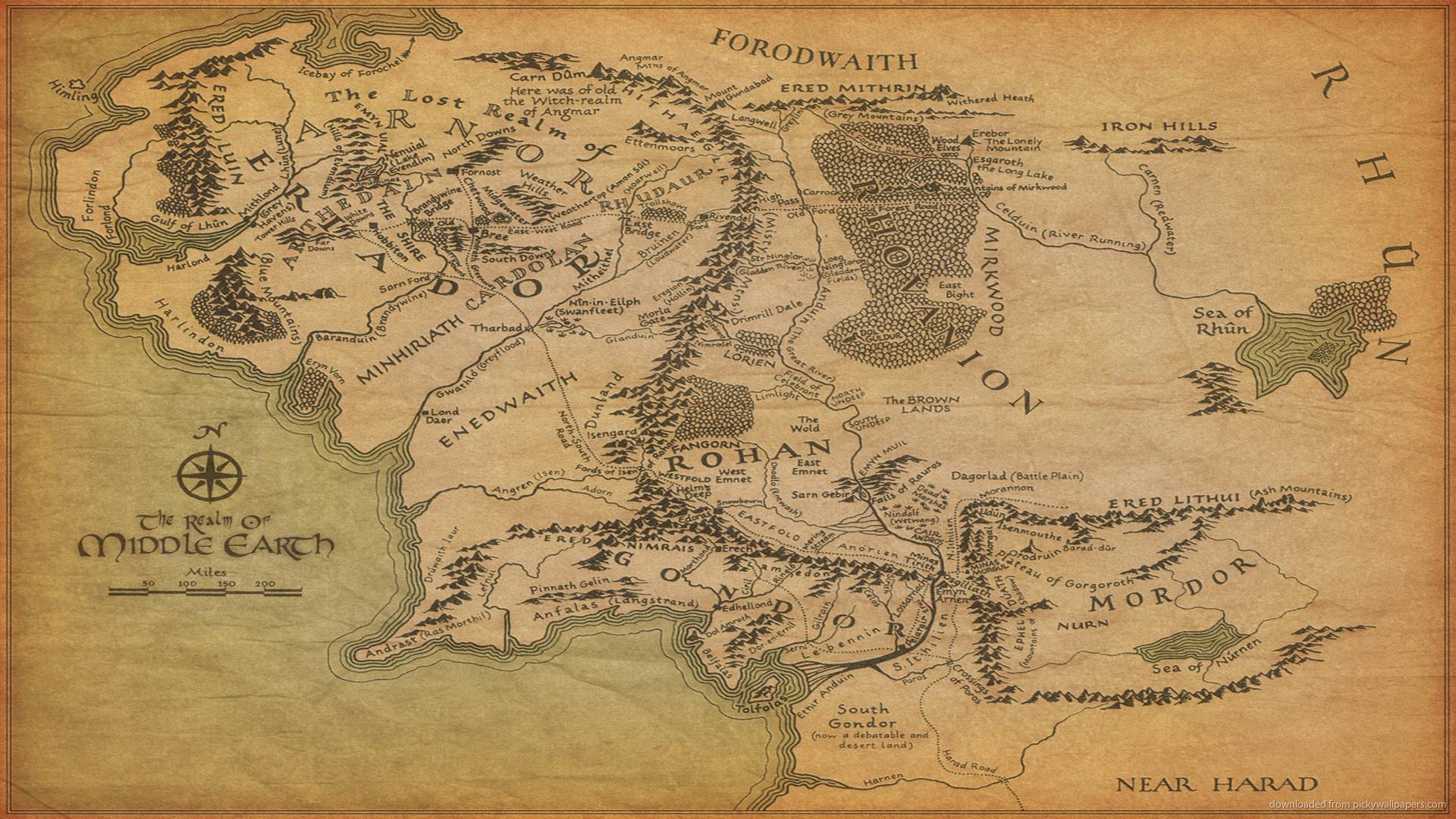
I have titled this “Towering.2”, but it’s not about walls and getting over them using a tower, however, but about towers themselves, specifically towers in The Lord of the Rings, in which there are a surprising number, of which I thought it might be fun to make a sort of catalogue, visiting them more or less geographically.
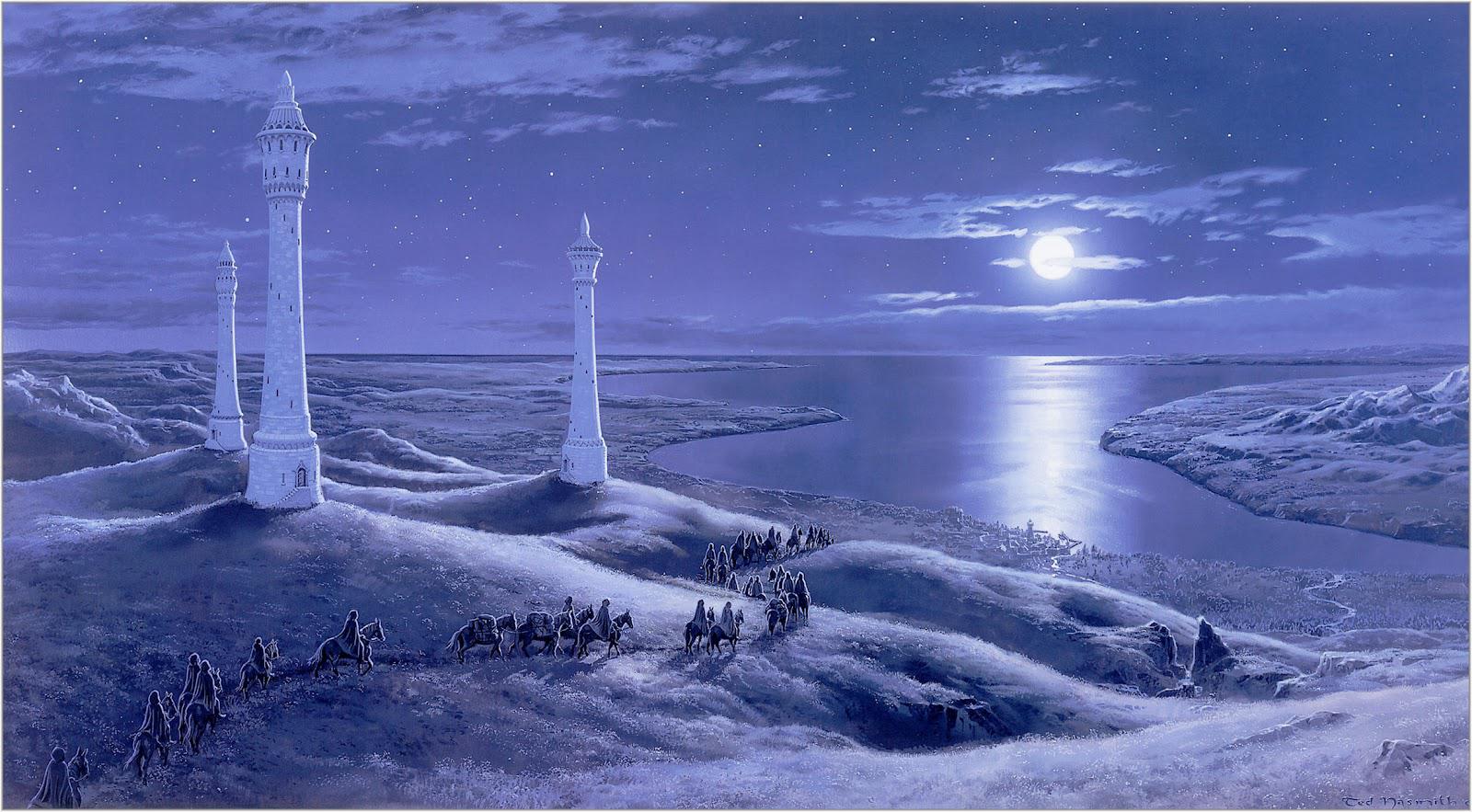
To do so, we begin to the far west of the Shire, just this side of the Grey Havens, where we see the Tower Hills.
(Ted Nasmith)
As Tolkien describes them:
“Three Elf-towers of immemorial age were still to be seen on the Tower Hills beyond the western marches. They shone far off in the moonlight. The tallest was furthest away, standing alone upon a green mound.” (“Prologue”, The Lord of the Rings)
Walking eastward towards the Misty Mountains, crossing the Shire, but veering south from Bree, we reach Weathertop,
(Alan Lee)
of which Aragorn says:
“The Men of the West did not live here; though in their latter days they defended the hills for a while against the evil that came out of Angmar. This path was made to serve the forts along the walls. But long before, in the first days of the North Kingdom, they built a great watch-tower on Weathertop, Amon Sul they called it…once it was tall and fair.” (The Fellowship of the Ring, Book One, Chapter 11, “A Knife in the Dark”)
Even with just two towers, we can begin to understand what JRRT was at such pains to suggest: settlement in Middle-earth is very old and, as we’ll see, no one has built in such an elaborate fashion for many centuries—the Elf towers are of “immemorial age” and Amon Sul was built during the later reign of Argaleb I (ruled TA 1349-1356—just to give you a sense of time, Frodo was born in TA 2968).
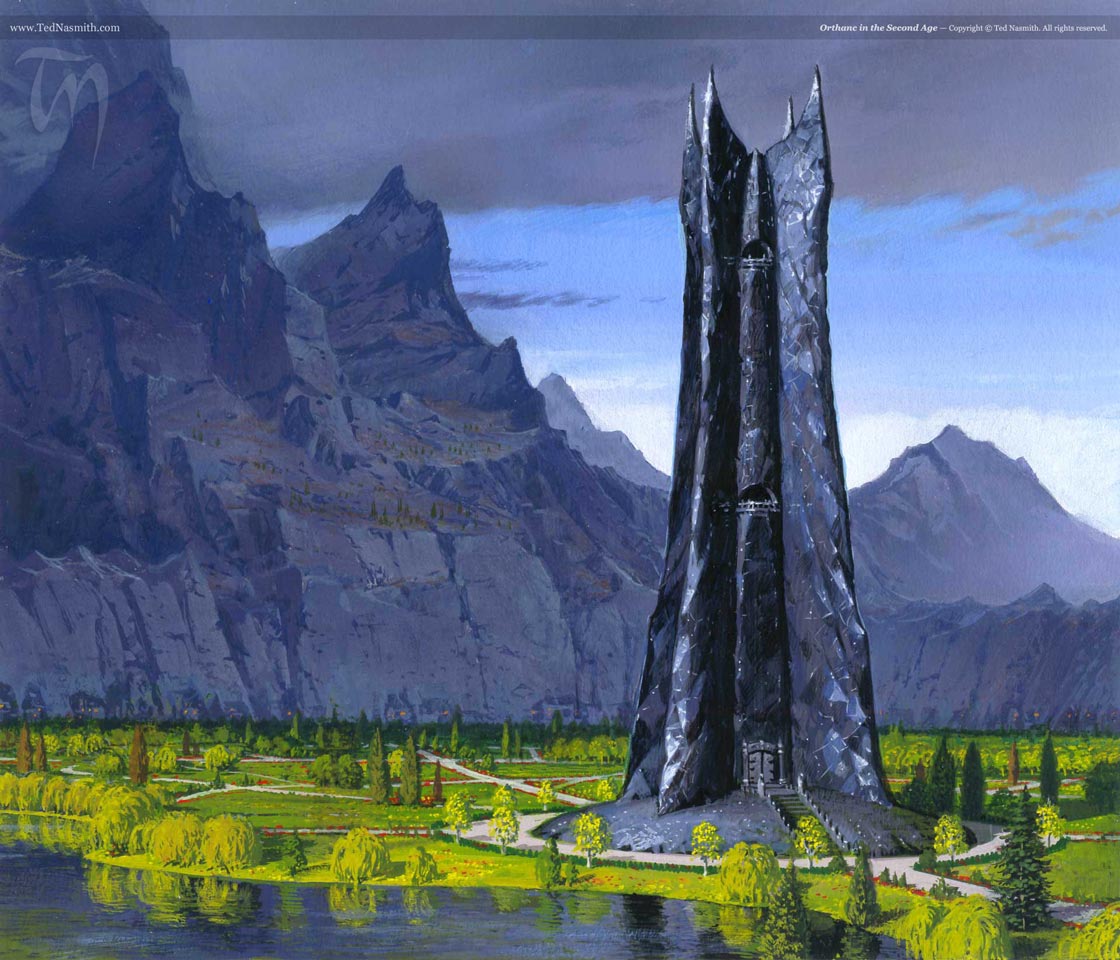
From Weathertop, heading south and around the southern end of the Misty Mountains, we reach Isengard and the tower of Orthanc,
(Ted Nasmith)
built sometime during the Second Age (Tolkien never appears to have provided a founding date—the Tolkien Gateway offers: “it must have been built between S.A.3320, the year in which the realms of Gondor and Arnor were established, and S.A.3430, the year in which the Last Alliance of Elves and Men was formed to resist Sauron‘s tyranny”).
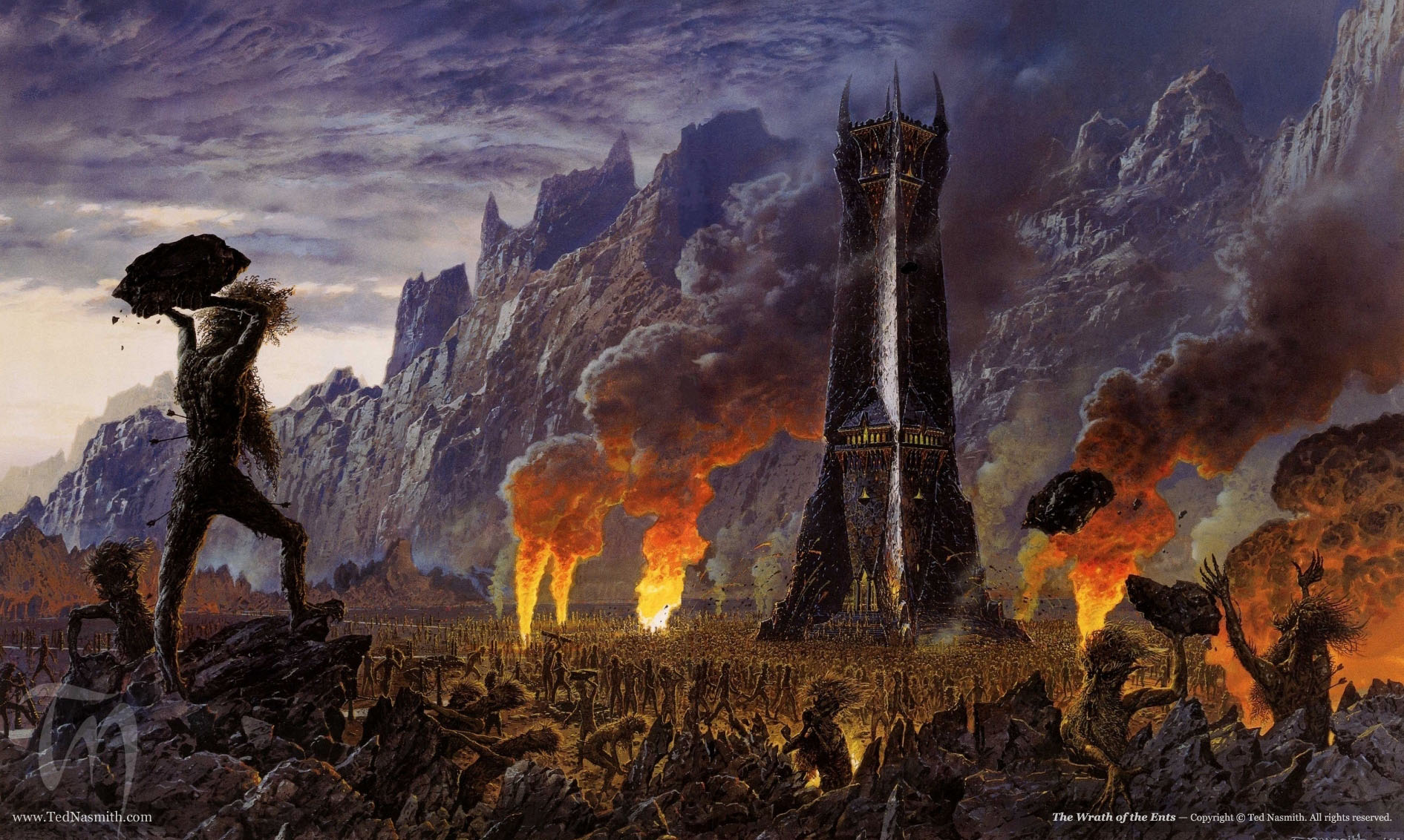
We can say, however, that Saruman began his occupation of the site in TA 2759, so, at the time of The Lord of the Rings and the Ents’ attack upon it (TA 3019)
(Ted Nasmith)
he had been in possession of it for over 250 years—one more example of how aged everything in Middle-earth is. It’s described as something of a technological wonder—but also quite menacing—especially when we remember that Saruman attempted to keep Gandalf captive at the top, among those pinnacles:
“There stood a tower of marvellous shape. It was fashioned by the builders of old, who smoothed the Ring of Isengard, and yet it seemed a thing not made by the craft of Men, but riven from the bones of the earth in the ancient torment of the hills. A peak and isle of rock it was, black and gleaming hard; four mighty piers of many-sided stone were welded into one, but near the summit they opened into gaping horns, their pinnacles sharp as the points of spears, keen-edged as knives.” (The Two Towers, Book Three, Chapter 8, “The Road to Isengard”)
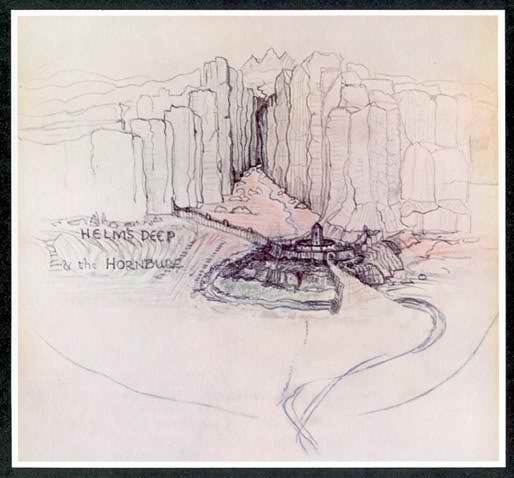
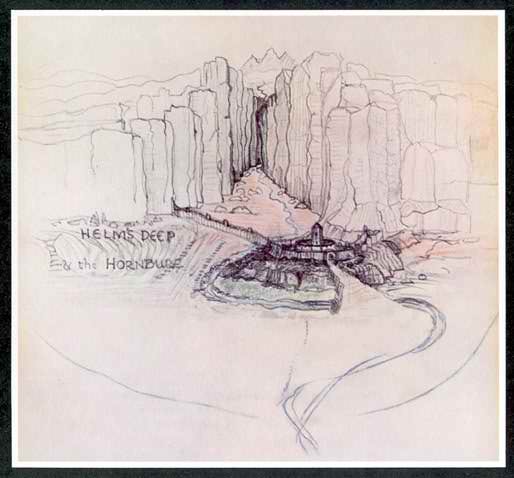
From here, we travel farther south, along the eastern side of the Ered Nimrais, the White Mountains, until we reach Helm’s Deep and its fortification with its tower, the Hornburg.
(JRRT)
As to foundation date, like Isengard, it seems vague:
“At Helm’s Gate, before the mouth of the Deep, there was a heel of rock thrust outwards by the northern cliff. There upon its spur stood high walls of ancient stone, and within was a lofty tower. Men said that in the far-off days of the glory of Gondor the sea-kings had built this fastness with the hands of giants.” (The Two Towers, Book Three, Chapter 7, “Helm’s Deep”—that phrase “with the hands of giants” may have echoed in Tolkien’s memory from the Old English poem named “The Ruin”, which possibly describes the remains of Roman Aquae Sulis (modern Bath) and which has the phrase “brosnað enta geweorc”, “ruined is the work of giants”—with that “enta”, from which the Ents came—along with a similar phrase in “Maxims II”. For more on this very poignant poem see: https://en.wikipedia.org/wiki/The_Ruin )
Southeast now, along those same White Mountains, will bring us in the direction of the first of the two towers of the title of the second volume (but which towers? Tolkien wrote to Rayner Unwin: “The Two Towers gets as near as possible to finding a title to cover the widely divergent Books 3 and 4; and can be left ambiguous—it might refer to Isengard and Barad-dur, or to Minas Tirth and B; or Isengard and Cirith Ungol.” Letter to Rayner Unwin, 17 August, 1953, Letters, 250)
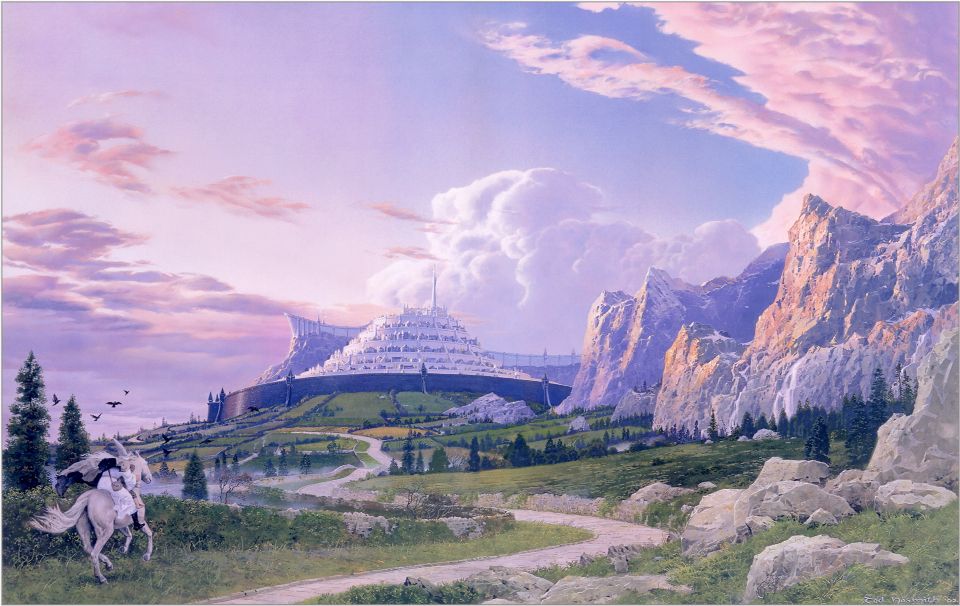
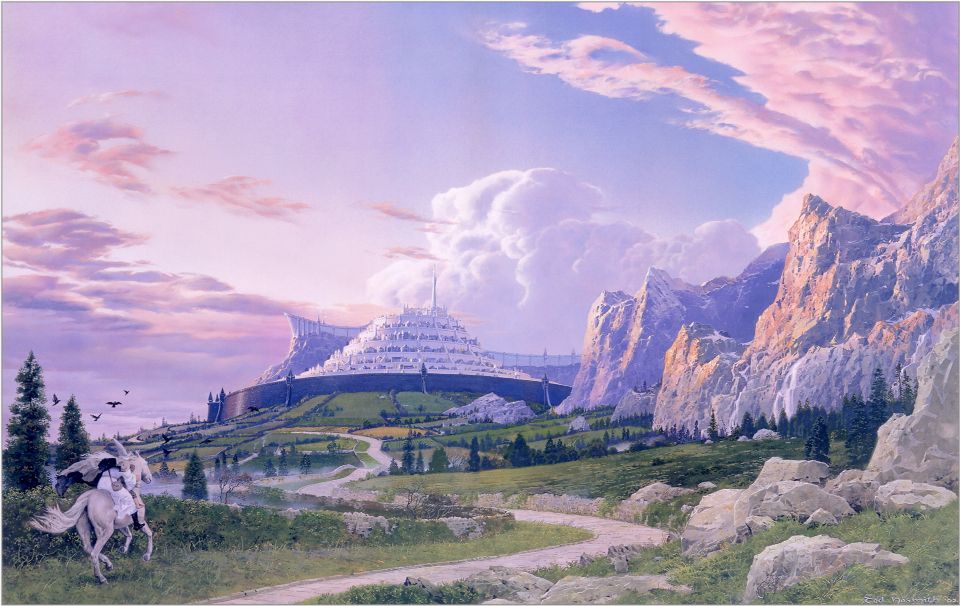
We now see ahead of us Minas Tirith,
(Ted Nasmith)
constructed in SA 3300’s, by Anarion, son of Elendil, and called initially Minas Anor, “the tower of the sun”, with its Tower of Echthelion, as one of the Fellowship first views it:
“…the Tower of Echthelion, standing high within the topmost wall, shone out against the sky, glimmering like a spike of pearl and silver, tall and fair and shapely, and its pinnacle glittered as if wrought of crystals; and white banners broke and fluttered from the battlements in the morning breeze, and high and far [Pippin] heard a clear ringing as of silver trumpets.” (The Return of the King, Book Five, Chapter 1, “Minas Tirith”)
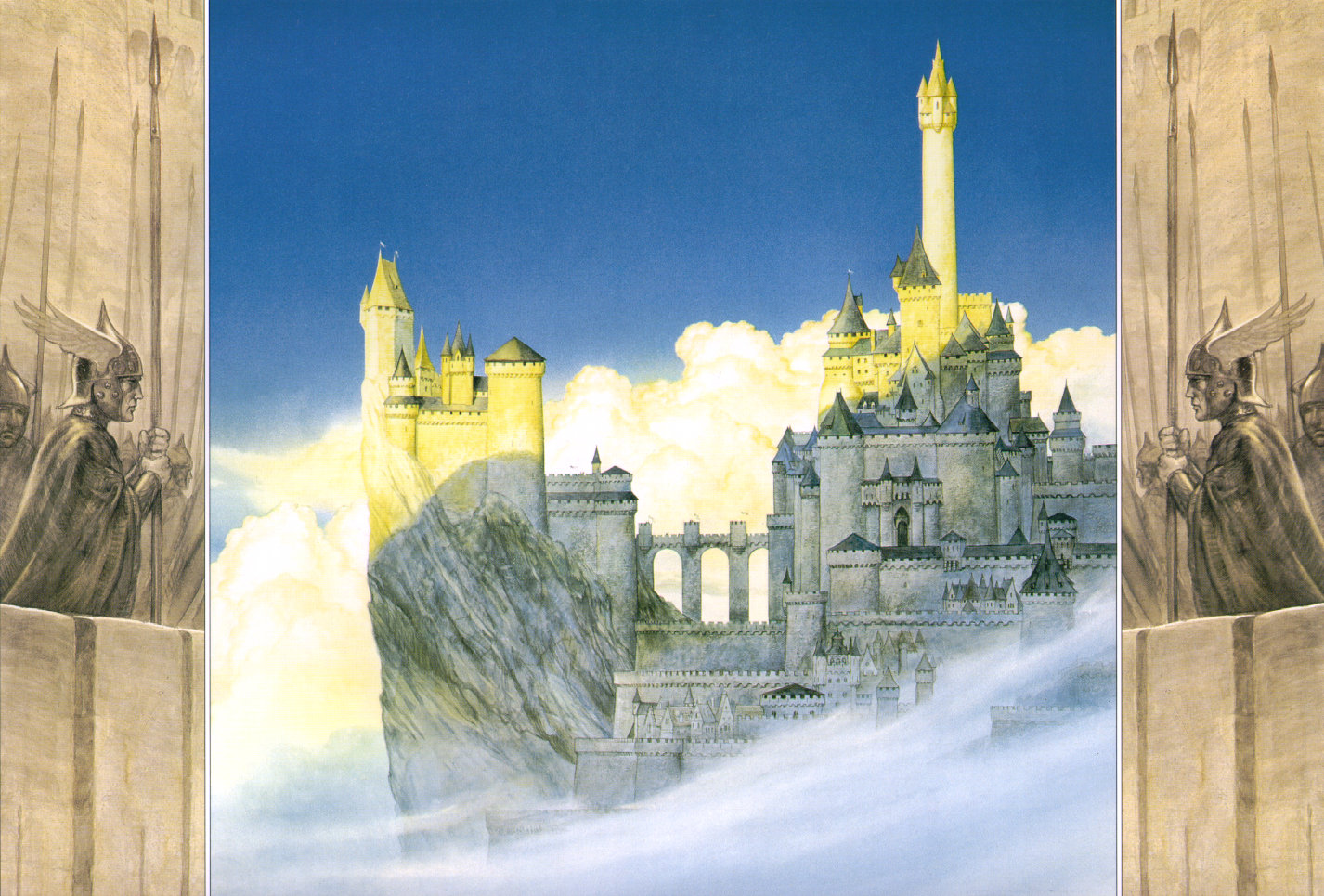
(I couldn’t resist adding this John Howe illustration, done in the style of Maxfield Parrish)
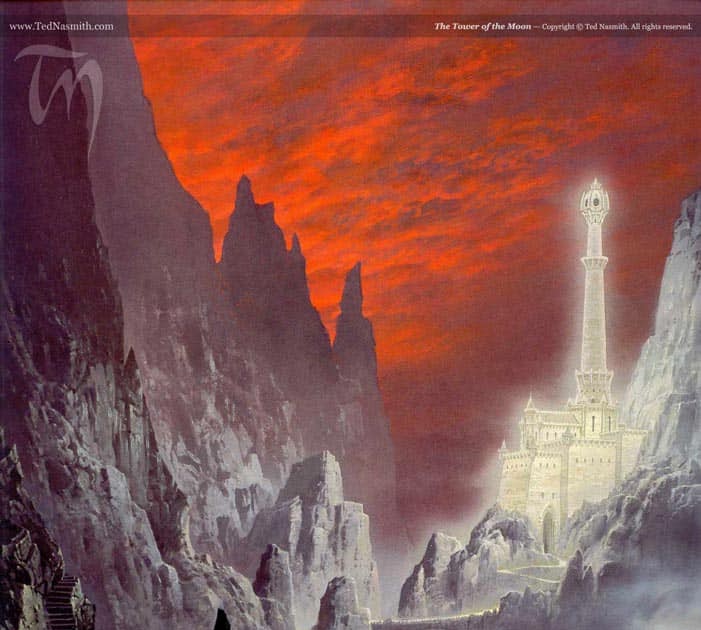
But now, on our tour, we turn eastwards, to the land of shadow and, first, to that other tower, that of Minas Ithil, “the tower of the moon”, built about the same time as Minas Anor, by Elendil’s other son, Isildur.
(Ted Nasmith)
Elrond gives us a small picture of it in its earlier days:
“And Minas Ithil they built, Tower of the Rising Moon, eastward upon a shoulder of the Mountains of Shadow…”
But then he goes on to add:
“And on a time evil things came forth, and they took Minas Ithil and abode in it, and they made it a place of dread; and it is called Minas Morgul, the Tower of Sorcery.” (The Fellowship of the Ring, Book Two, Chapter 2, “The Council of Elrond”)
The forces of Mordor besieged and captured Minas Ithil in TA 2002 and, with their occupation, this is what it began to look like:
“Upon the further side, a deep gulf of shadow, ran back far into the mountains. Upon the farther side, some way within the valley’s arms, high on a rocky seat upon the black knees of the Ephel Duath, stood the walls and tower of Minas Morgul. All was dark about it, earth and sky, but it was lit with light. Not the imprisoned moonlight welling through the marble walls of Minas Ithil long ago, Tower of the Moon, fair and radiant in the hollow of the hills. Paler indeed than the moon ailing in some slow eclipse was the light now, wavering and blowing like a noisesome exhalation of decay, a corpse-light, a light that illuminated nothing. In the walls and tower windows showed, like countless black holes looking inward into emptiness; but the topmost course of the tower revolved slowly, first one way and then another, a huge ghostly head leering into the night.” (The Two Towers, Book Four, Chapter 8, “The Stairs of Cirith Ungol”)
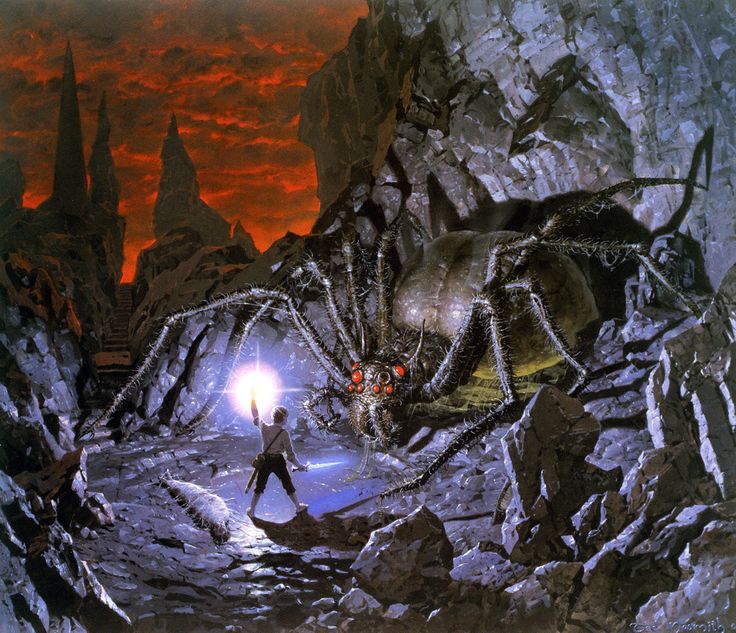
I find that topmost course, “revolving slowly, first one way and then another”, as if always on watch, the most disturbing part of this description so we’ll stop here for now before Frodo and Sam take the next and near fatal step on our tower tour.
Thanks, as always, for reading.
Stay well,
Remember that your slippery guide may have other plans for you,