Villains with ambitious plans for world conquest need armies.
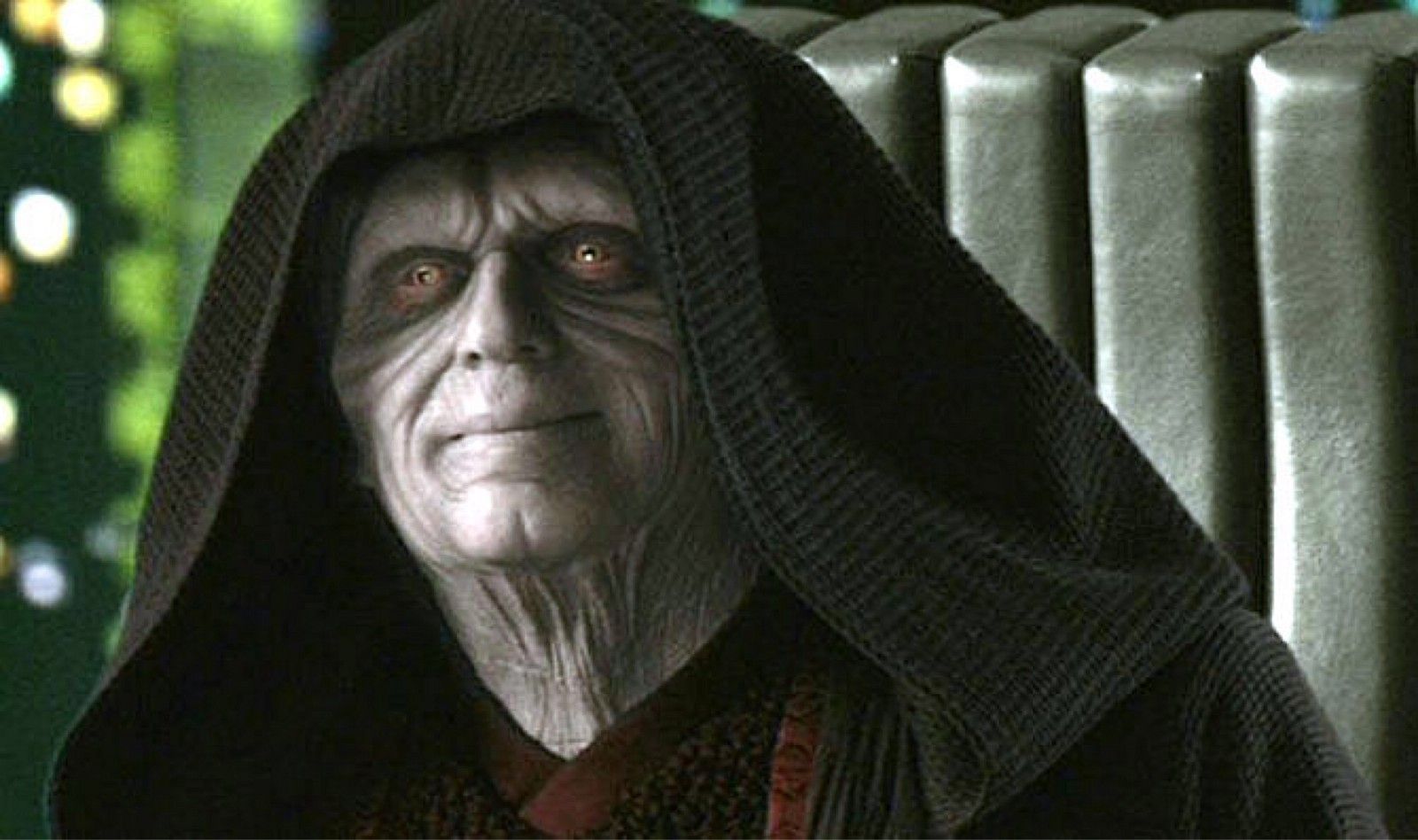
Emperor Palpatine
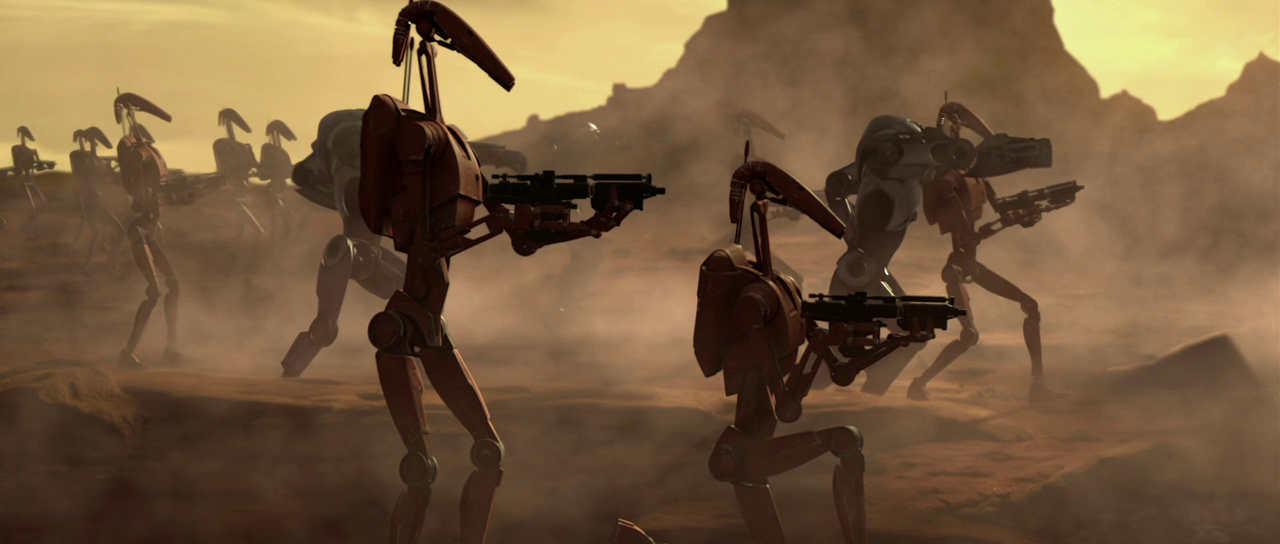
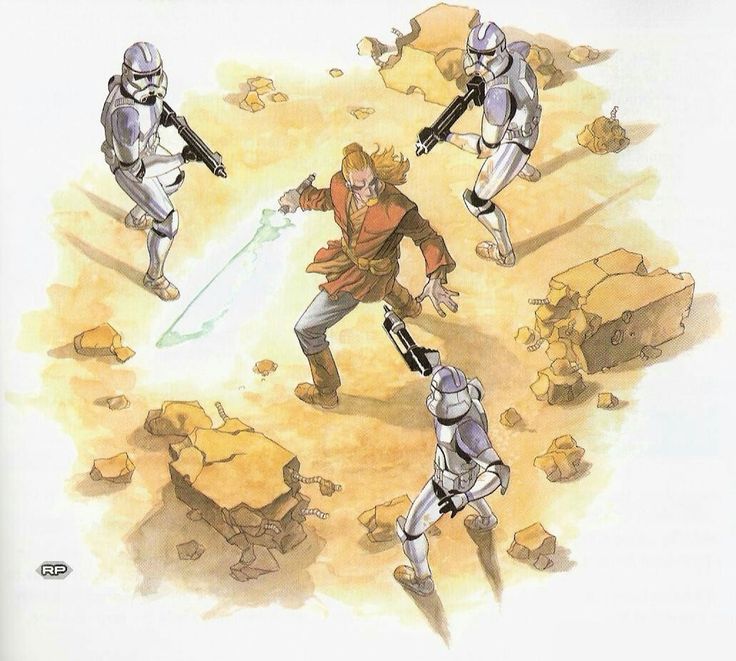
initially employs droids by the million to face the Republic’s clone armies, and not just ordinary foot soldier droids—
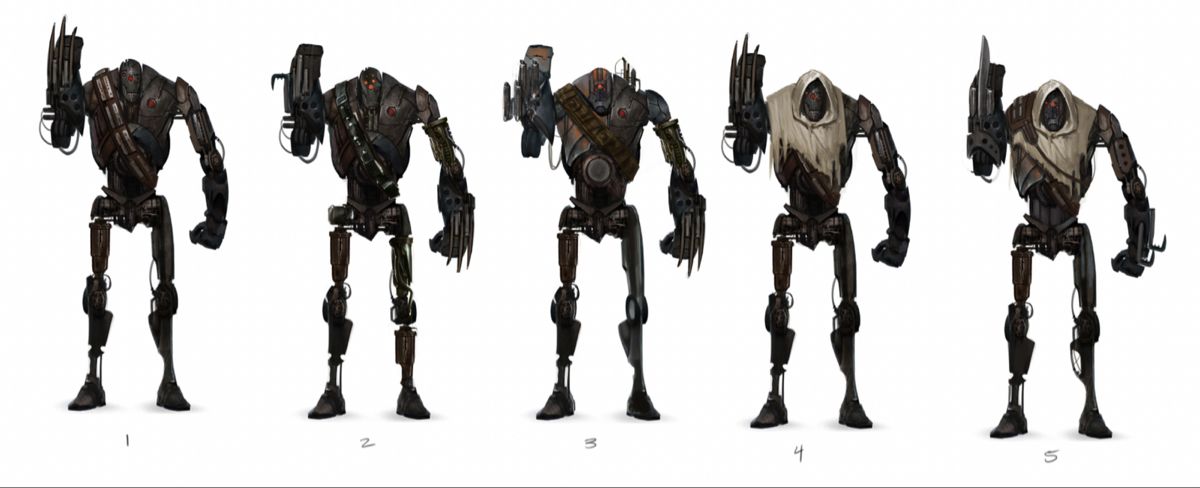
but super battle droids
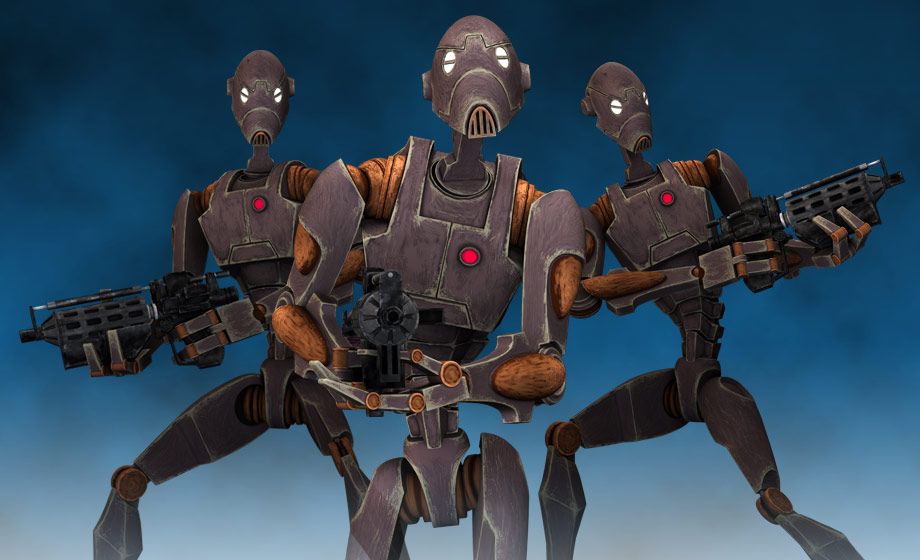
and even commando battle droids
before, in his complex plan, he turns the Republic’s clones against his real target, the Jedi, in Order 66.
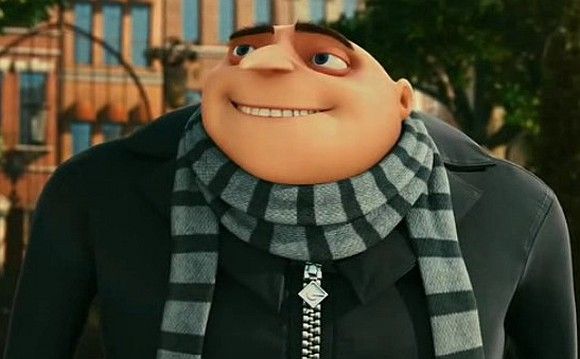
On a lighter level, Gru,
of Despicable Me, has masses of Minions to work his will (sort of)—
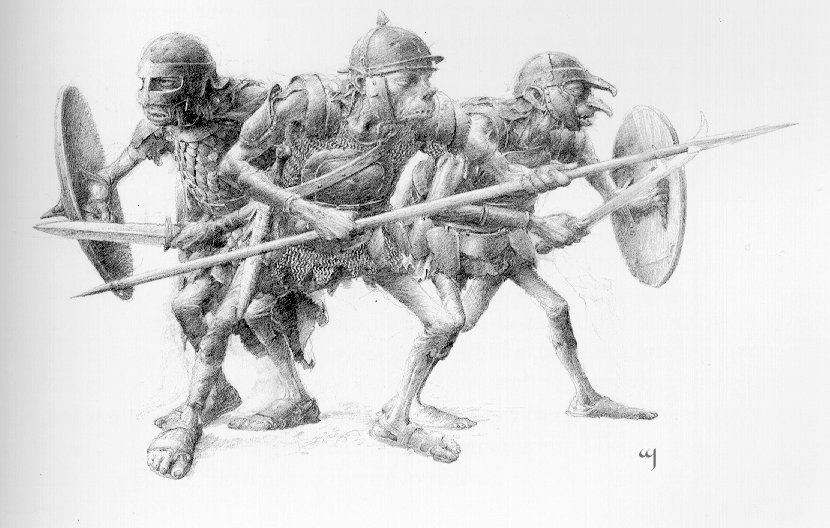
It’s clear that Sauron has similar plans—and similar armies—orcs—along with masses of humans.
(Alan Lee)
Orcs, we’re told, are a kind of distortion of actual living creatures—
“But Trolls are only counterfeits, made by the Enemy in the Great Darkness, in mockery of Ents, as Orcs were of Elves.” (The Two Towers, Book Three, Chapter 4, “Treebeard”)
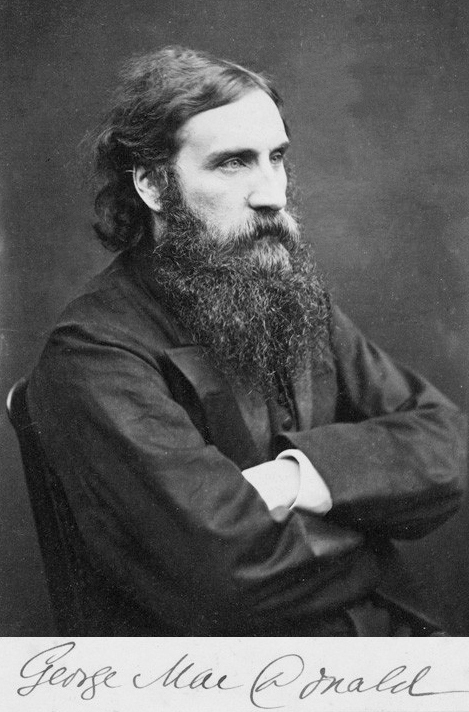
Orcs began, however, as something more traditional and, for Tolkien, begin with the works of George MacDonald (1824-1905),
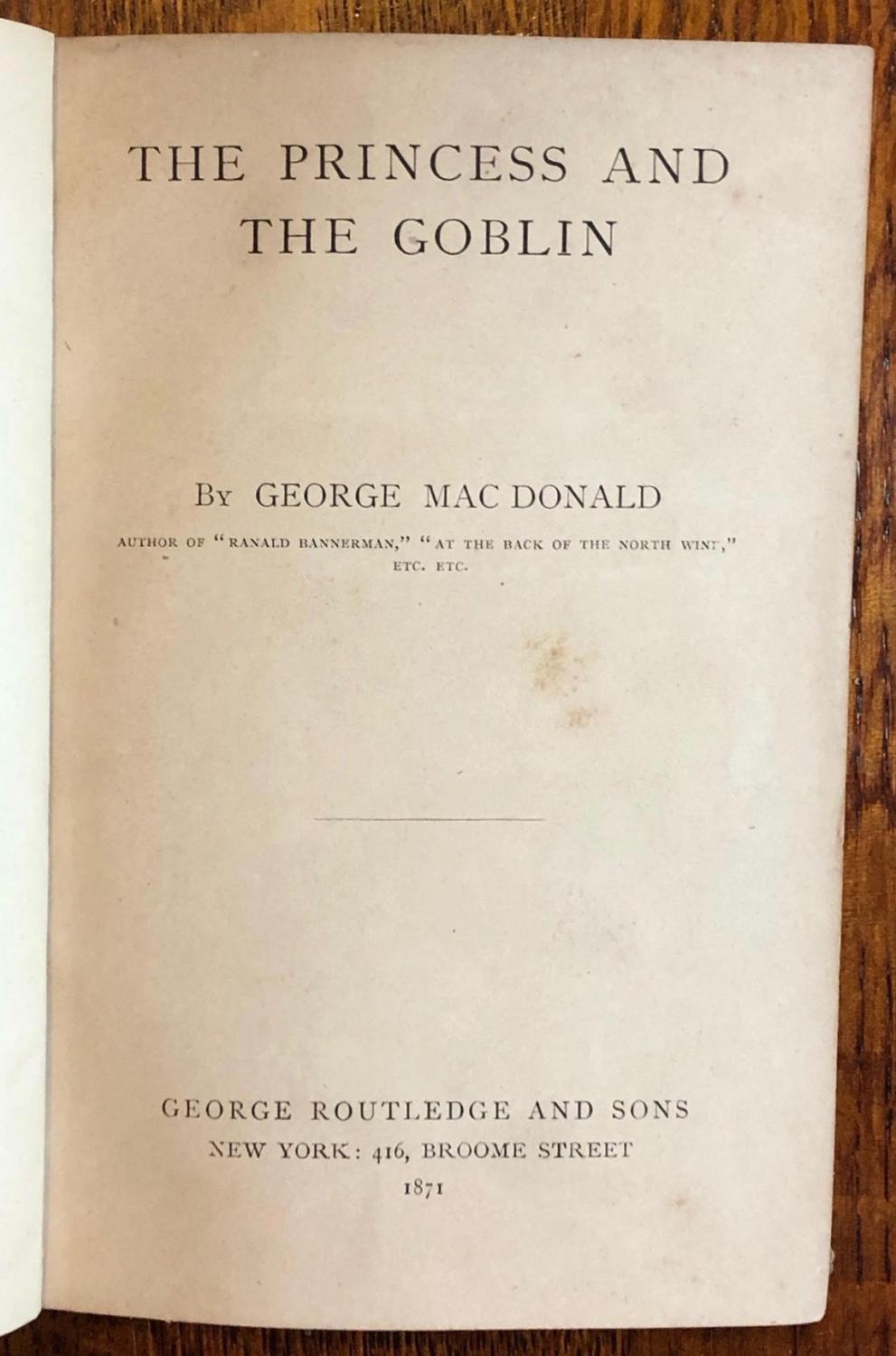
and, in particular, with one of his fantasy novels, The Princess and the Goblin, 1870-2.
(First US edition, 1871)
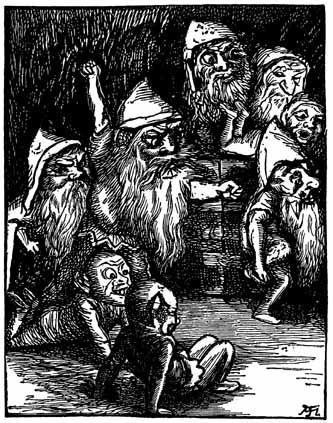
For our purposes, the princess, although an heroic figure, can be removed, as we’re interested in those goblins.
(Arthur Hughes)
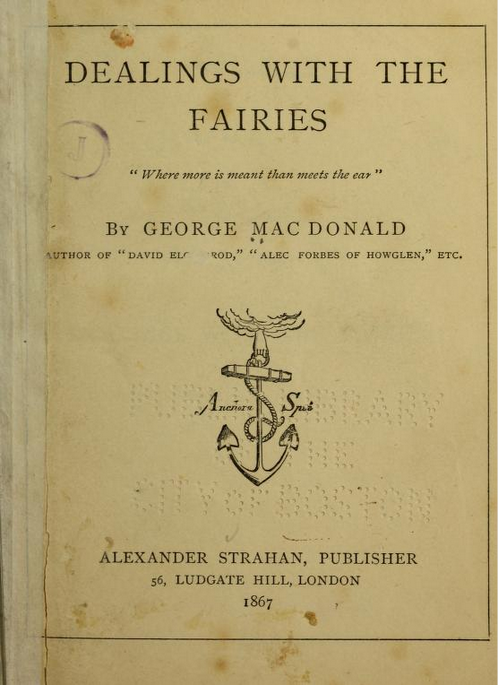
Later in life, Tolkien became disenchanted with MacDonald’s work, failing to complete a proposed preface for his The Golden Key, a short story from MacDonald’s Dealings with the Fairies, 1867—you can read it here: https://archive.org/details/dealingswithfair00macd_0/page/n5/mode/2up
and you can read about his disenchantment in Carpenter’s J.R.R. Tolkien, page 244.). Earlier, however, he had acknowledged MacDonald’s influence, writing to the editor of The Observer about The Hobbit:
“As for the rest of the tale it is, as the Habit [the pen name of a commentator on the book] suggests, derived from (previously digested) epic, mythology, and fairy-story—not, however, Victorian in authorship, as a rule to which George Macdonald [sic] is the chief exception.” (letter to the editior, February, 1938, Letters, 40-41)
Tolkien refers to this influence again in a much later letter to Hugh Brogan:
“Your preference of goblins to orcs involves a large question and a matter of taste, and perhaps historical pedantry on my part. I personally prefer Orcs (since these creatures are not ‘goblins’, not even the goblins of George MacDonald, which they do to some extent resemble).” (letter to Hugh Brogan, 18 September, 1954, Letters, 278)
And a little earlier, in a letter to Naomi Mitchison:
“They are not based on direct experience of mine [an interesting remark—did JRRT have supernatural experiences which he doesn’t discuss?]; but owe, I suppose, a good deal to the goblin tradition (goblin is used as a translation in The Hobbit, where orc only occurs once, I think), especially as it appears in George MacDonald, except for the soft feet which I never believed in.” (letter to Naomi Mitchison, 25 April, 1954, Letters, 267)
Those soft feet turn out to be the Achilles’ heel (sorry!) of the goblins as we overhear in a conversation between a goblin father and son:
” ‘You say so, dad. I think myself I’m all right. But I could carry ten times as much if it wasn’t for my feet.’
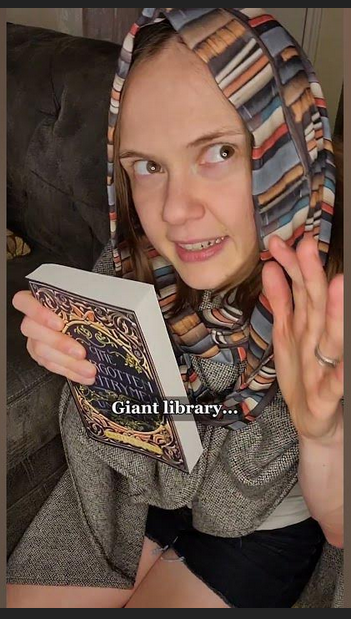
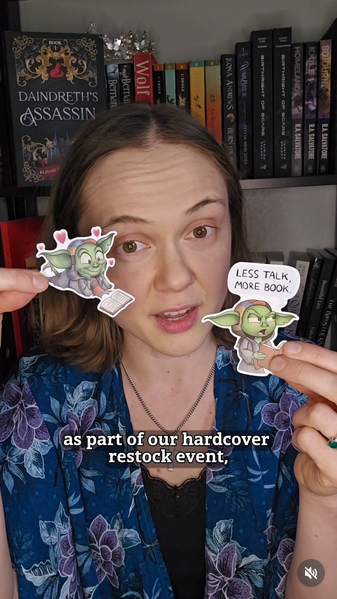
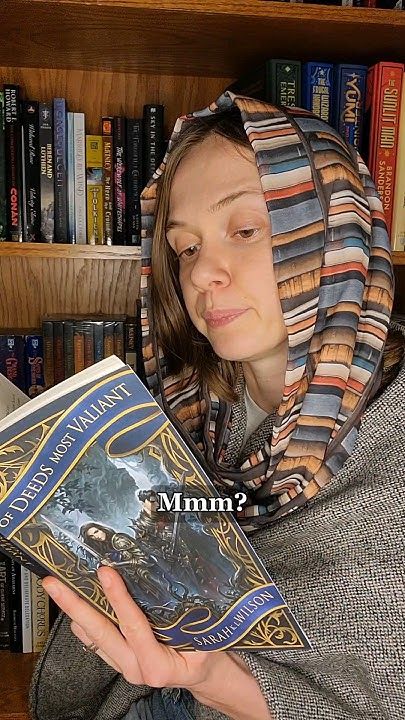
Recently, however, I’ve met another goblin, to whom I was introduced by a dear friend. This is Book Goblin.
Unlike the clones and droids and Minions and orcs, who only exist to do their master’s bidding, Book Goblin lives for books, stacking shelves full, longing for the mailman to bring more, even believing in “Bookhalla”, which is, basically, an immense library, where those who are gathered there read books all day and hold book clubs all night. You can see and hear Book Goblin describing it here: https://www.youtube.com/shorts/vkjErlwUA2A Only brave readers are allowed to go there, including those who read “without bookmarks”!
Book Goblin is, in fact, the creation of the fantasy author Elizabeth Wheatley
and you can read more about her and her work here: https://www.bookseriesinorder.com/elisabeth-wheatley/ And YouTube has many short features in which Book Goblin discusses likes and dislikes and often seems like the Id of all passionate readers, which is why I bring her to your attention. Unlike droids, clones, Minions, and orcs, however, she is one of kind and, as for world conquest—I suspect that it would interfere with her reading.
Thanks for your reading, as always,
Stay well,
If you’re like me, you probably aren’t brave enough to read without a bookmark, so I guess no Bookhalla, sadly,
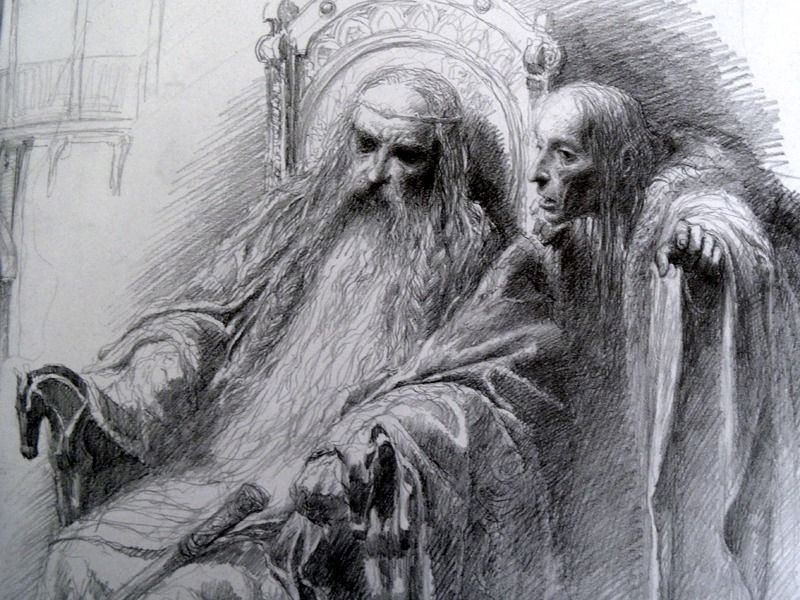
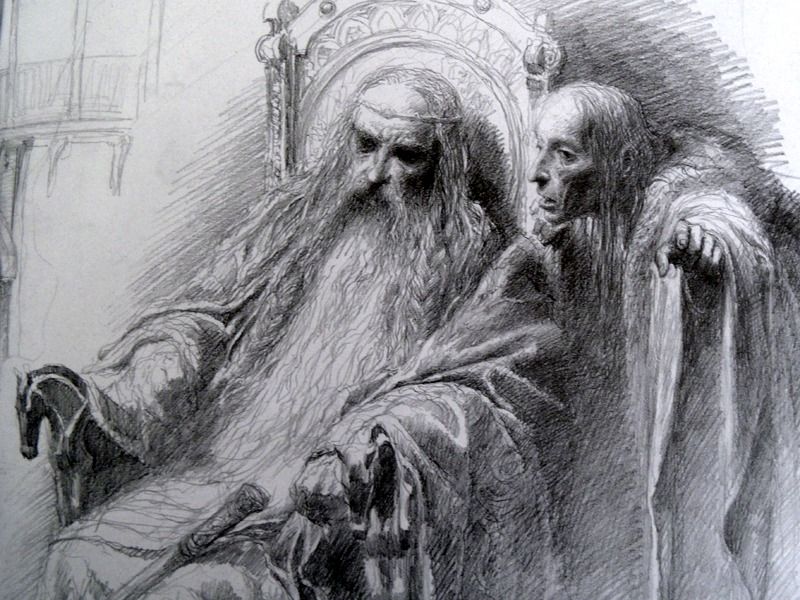
“ ‘I greet you…and maybe you look for welcome. But truth to tell your welcome is doubtful here, Master Gandalf. You have ever been a herald of woe. Troubles follow you like crows, and ever the oftener the worse….Here you come again! And with you come evils worse than before, as might be expected. Why should I welcome you, Gandalf Stormcrow?’ “ (The Two Towers, Book Three, Chapter 6, “The King of the Golden Hall”)
Theoden is being less than hospitable, although we soon learn that he’s being manipulated by Grima to be so,
(Alan Lee)
but his insulting name seems odd: “Stormcrow”?
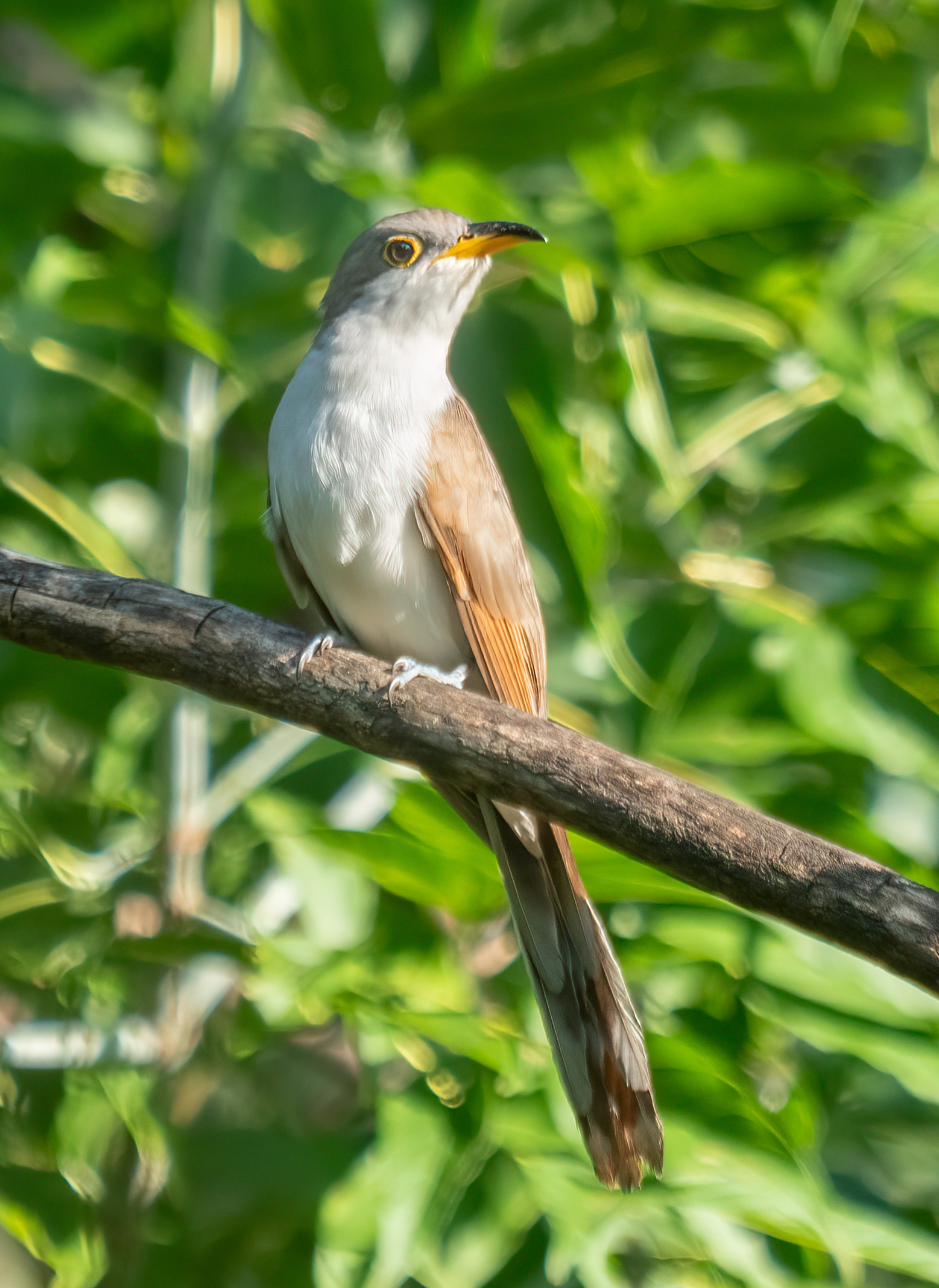
If we were southerners in the US, we might imagine that Theoden is actually calling Gandalf a cuckoo, as the yellow-billed cuckoo, native there, is sometimes called that,
because, as the Wiki article says, the nickname perhaps comes from the fact of “the bird’s habit of calling on hot days, often presaging rain or thunderstorms”. (For more, see: https://en.wikipedia.org/wiki/Yellow-billed_cuckoo )
Although we don’t hear of cuckoos in Middle-earth, certainly Gandalf appears in Meduseld in the middle of another kind of tempest, as Grima continues Theoden’s line of reasoning:
“ ‘It is not yet five days since the bitter tidings came that Theodred your son was slain upon the West Marches: your right-hand, Second Marshal of the Mark. In Eomer there is little trust…And even now we learn from Gondor that the Dark Lord is stirring in the East…Why indeed should we welcome you, Master Stormcrow?’ “
And there that word is again. What does Tolkien have against crows?
There might be a clue in that line “troubles follow you like crows”, which reminds me of something which happened earlier in The Lord of the Rings when “Flocks of birds, flying at great speed”, appeared over the Fellowship. Aragorn wakes and reports to Gandalf:
“ ‘Regiments of black crows are flying over all the land between the Mountains and the Greyflood…and they have passed over Hollin. They are not natives here; they are crebain out of Fangorn and Dunland. I do not know what they are about…but I think they are spying out the land.’ “ (The Fellowship of the Ring, Book Two, Chapter 3, “The Ring Goes South”)
It’s clear that, in Tolkien’s mind, crows do not get good press. Here they are in The Hobbit, as well, as Balin says to Bilbo:
“ ‘Those were crows! And nasty suspicious-looking creatures at that, and rude as well. You must have heard the ugly names they were calling after us.’ “ (The Hobbit, Chapter 15, “The Gathering of the Clouds”)
So, crows are “nasty suspicious-looking creatures”, “rude”, and even possibly spies.
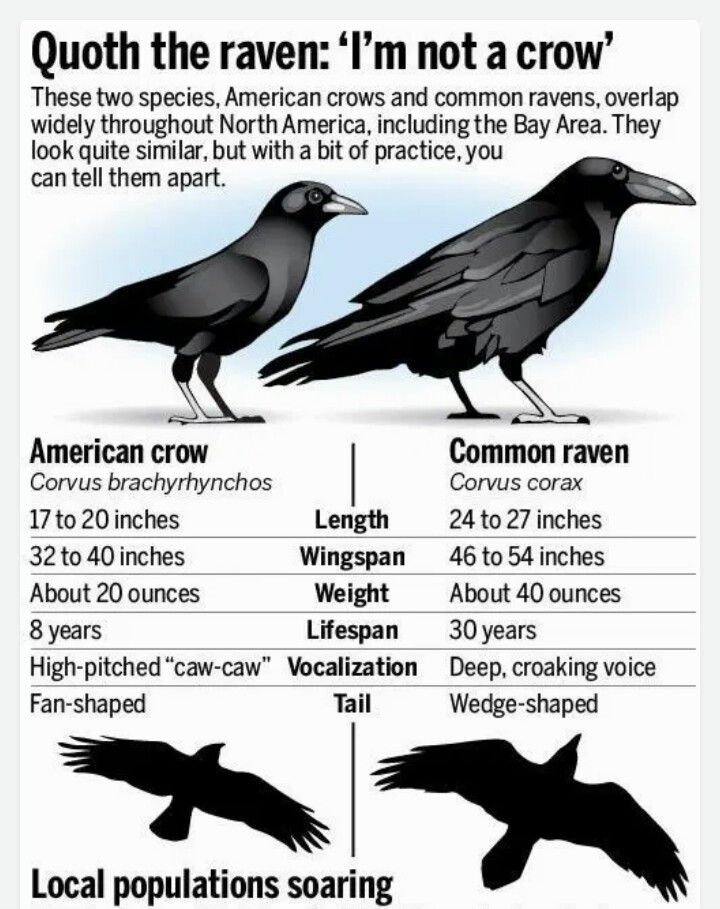
They are also in contrast to another large black bird—
(I apologize to my non-North American readers for using North American birds in this chart, but this seemed the best choice and the European varieties are similar.)
“ ‘I only wish he was a raven!’ said Balin.
‘I thought that you did not like them! You seemed very shy of them, when we came this way before.’
‘Those were crows!…But the ravens are different. There used to be great friendship between them and the people of Thror; and they often brought us secret news…
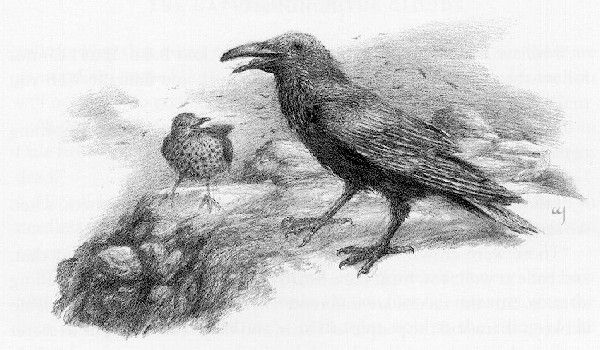
‘They live many a year, and their memories are long, and they hand on their wisdom to their children.’ “ (The Hobbit, Chapter 15, “The Gathering of the Clouds”)
(Alan Lee)
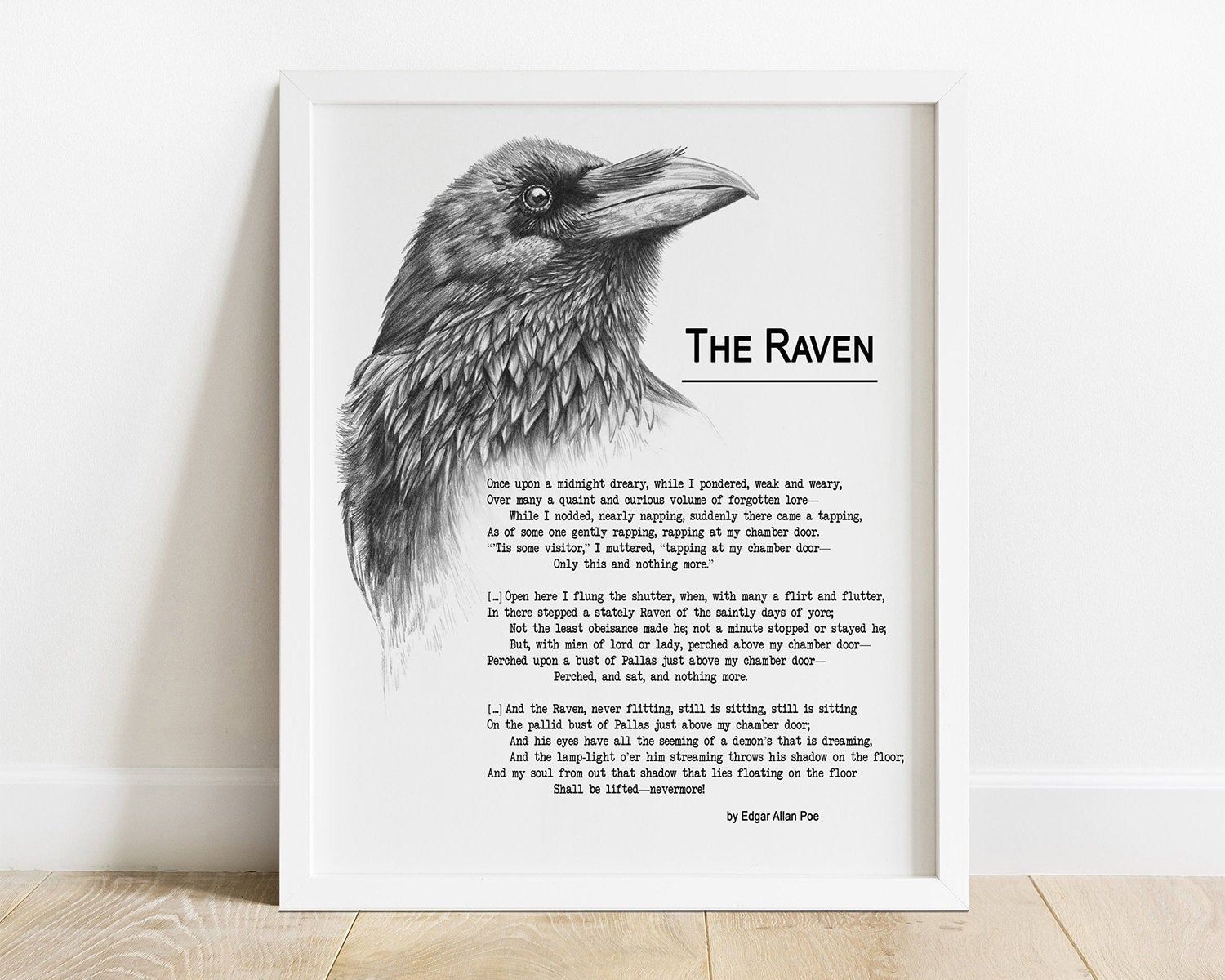
Why the preference for ravens?
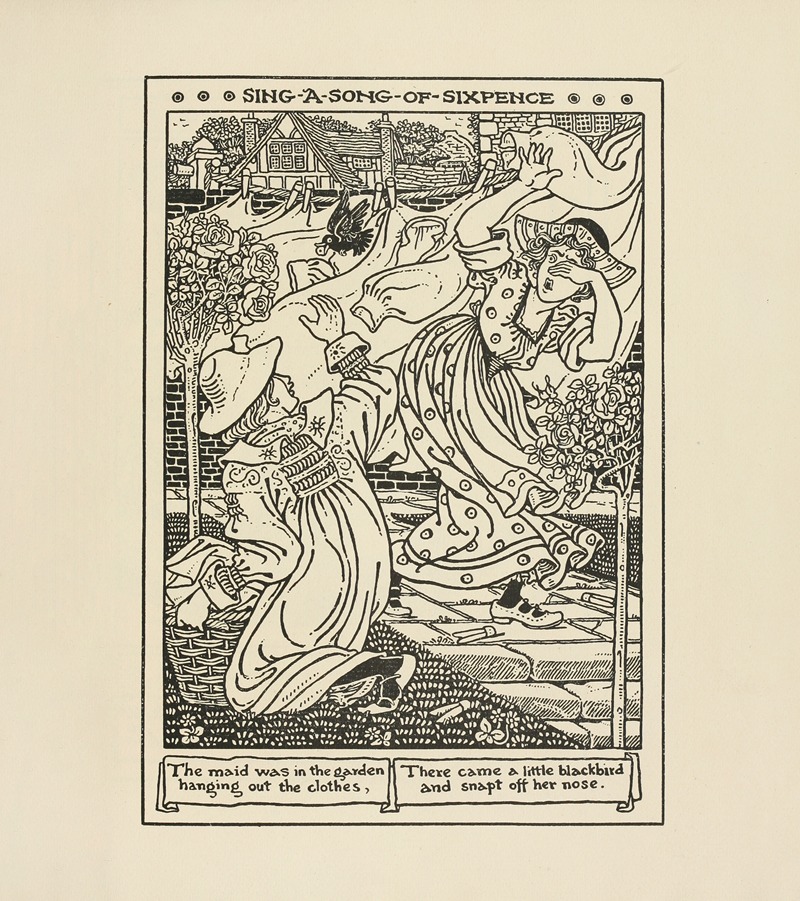
Possibly, as a small child, Tolkien was upset by this nursery rhyme—
Crows are also linked to the death of the Irish hero, Cuchulain,
the Morrigan, 3-formed battle goddess, who brings about the hero’s end , sometimes employing that form as “the Badb” (“Bath-v”, where the “a” is that in “father” and “th” is like the “th” in “either”, the name meaning “crow”). And Tolkien was not fond of Old Irish literature, writing:
“I do know Celtic things (many in their original languages Irish and Welsh), and feel for them a certain distaste: largely for their fundamental unreason. They have bright colour, but are like a broken stained glass window reassembled without design.” (letter to Stanley Unwin, 16 December, 1937, Letters, 35— I would strongly disagree with JRRT. Raised in Classics and fond of medieval chivalry, Tolkien, I suspect, found the Irish stories in particular full of an earlier, more chaotic, world-view, as well as sometimes wild violence, which, to him, meant “unreason”. But this is one of those times when I wish that we could e-mail him and ask him to say more! For the death of Cuchulain, see: The Cuchullin Saga in Irish Literature here: https://archive.org/details/cu31924026824940 beginning on page 251)
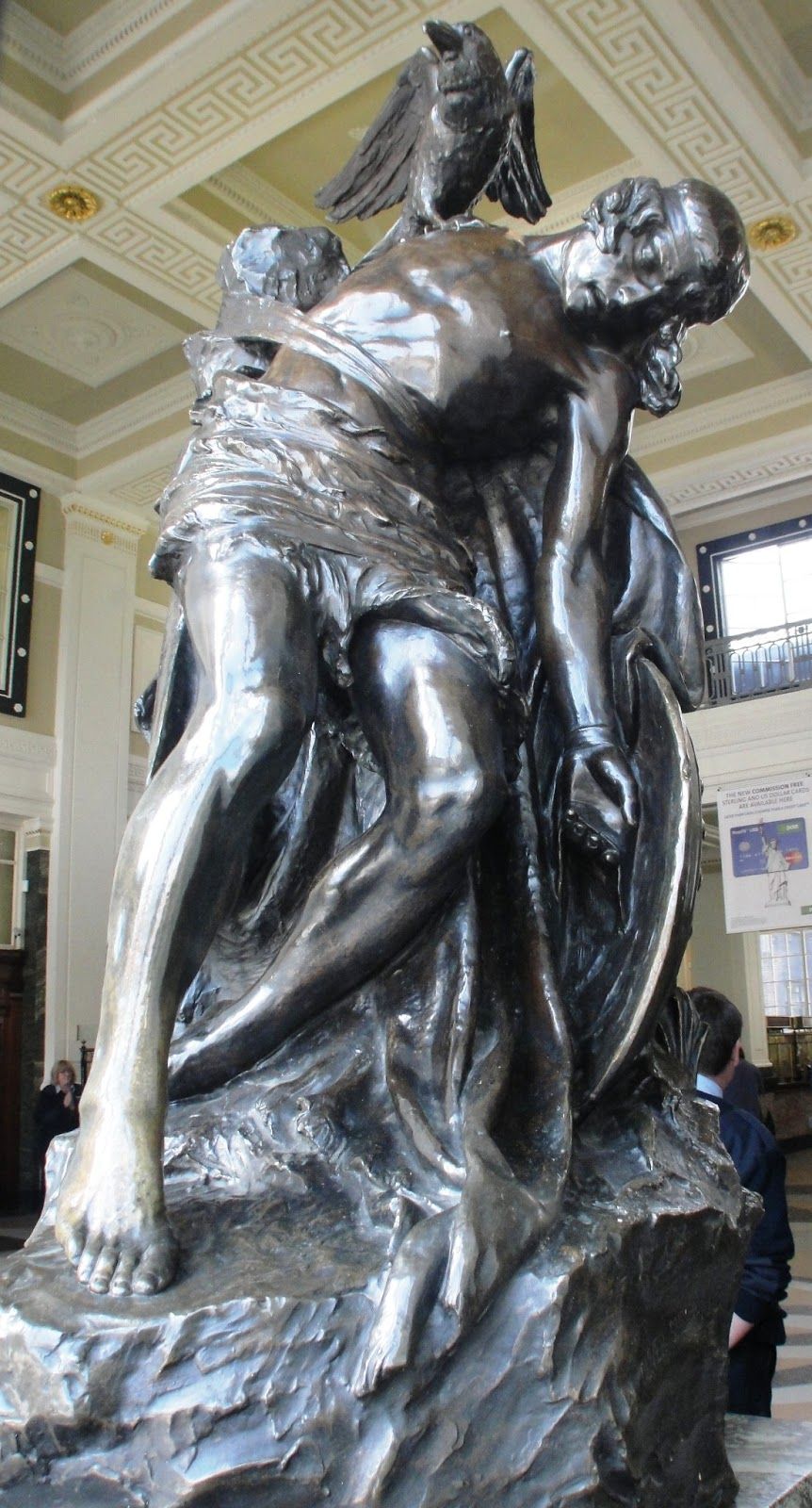
The real reason for his choice of ravens might actually be completely different: an association with Gandalf.
In a letter to Stanley Unwin in which he discusses potential illustrations by Horus Engels for a German translation of The Hobbit, he says:
“He has sent me some illustrations (of the Trolls and Gollum) which despite certain merits, such as one would expect of a German, are I fear too ‘Disnified’ for my taste: Bilbo with a dribbling nose, and Gandalf as a figure of vulgar fun rather than the Odinic wanderer that I think of…” (letter to Stanley Unwin, 7 December, 1946, Letters, 172)
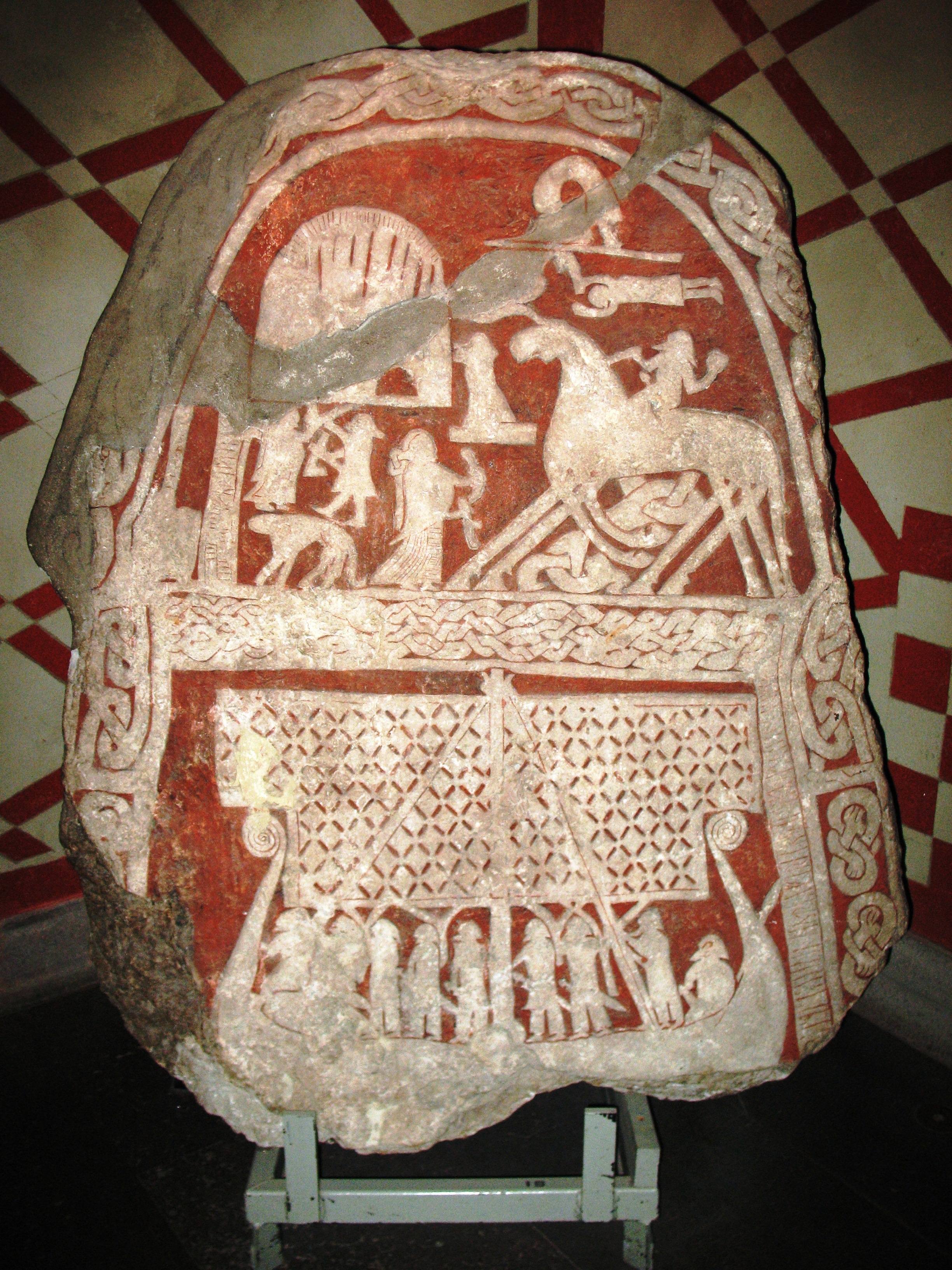
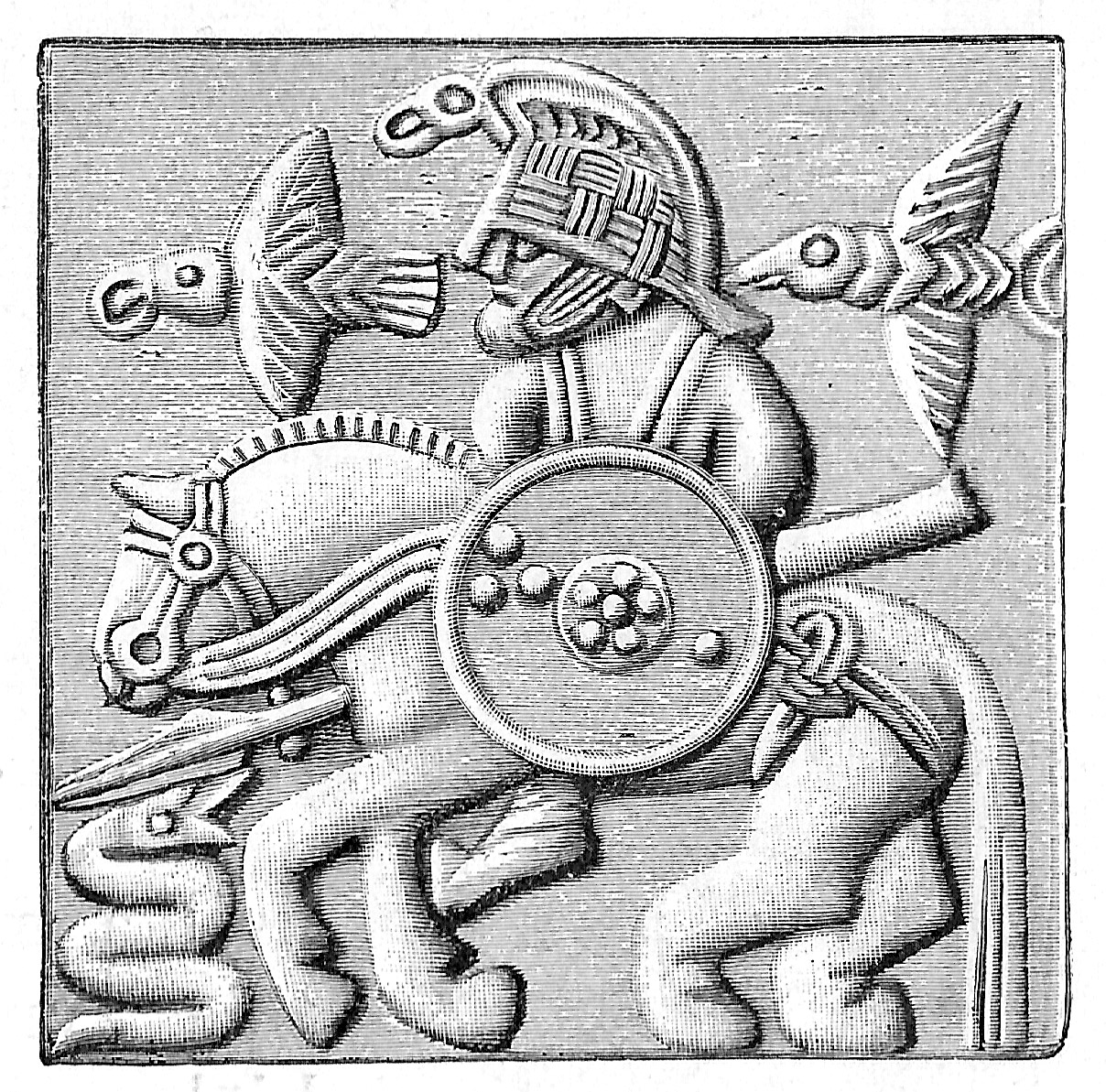
Odin is the Germanic high god and has not only a many-legged horse, Sleipnir,
If Tolkien sees Gandalf as “Odinic”, then we can imagine that his preference for ravens over crows may not come from dread of a nursery rhyme or dislike of a Celtic warrior, but from his strong attachment to things northern Germanic and, if so, then Theoden and his puppeteer, Grima, were right in picking a bird to label Gandalf, but wrong in choosing which one—although “stormraven” sounds a little clunky in comparison with “stormcrow”.
I’m always interested in influences on Tolkien and have written about them here and there in the past. It’s clear that he was always susceptible to them and would sometimes, when questioned, candidly admit to them, as he did, in this letter to the editor of The Observer:
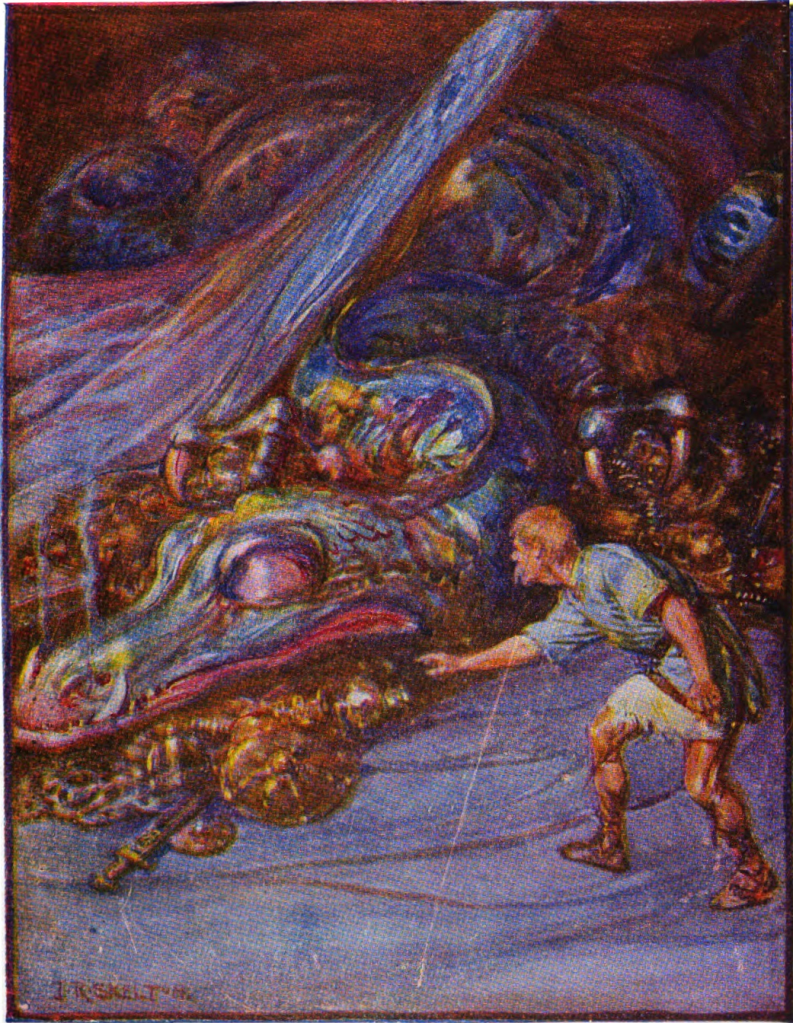
“Beowulf is among my most valued sources; though it was not consciously present to the mind in the process of writing, in which the episode of the theft [of a cup by an escaped slave from a dragon’s hoard] arose naturally (and almost inevitably) from the circumstances. It is difficult to think of any other way of conducting the story at that point. I fancy the author of Beowulf would say much the same.” (letter to the editor of The Observer, printed 20 February, 1938, Letters, 41)
This theft and its consequences are readily apparent in Beowulf. Athough, unlike Smaug, he never speaks a word, the dragon who has suffered the loss very eloquently protests that theft—
”Then the baleful fiend its fire belched out, and bright homes burned. The blaze stood high all landsfolk frighting. No living thing 2315would that loathly one leave as aloft it flew. Wide was the dragon’s warring seen, its fiendish fury far and near, as the grim destroyer those Geatish people hated and hounded. To hidden lair, 2320to its hoard it hastened at hint of dawn. Folk of the land it had lapped in flame, with bale and brand.”
Along with the theft, Tolkien actually uses the idea of dragon destruction more than once, beginning with:
“The pines were roaring on the height,
The winds were moaning in the night.
The fire was red, it flaming spread;
The trees like torches blazed with light.
The bells were ringing in the dale
And men looked up with faces pale;
The dragon’s ire more fierce than fire
Laid low their towers and houses frail.”
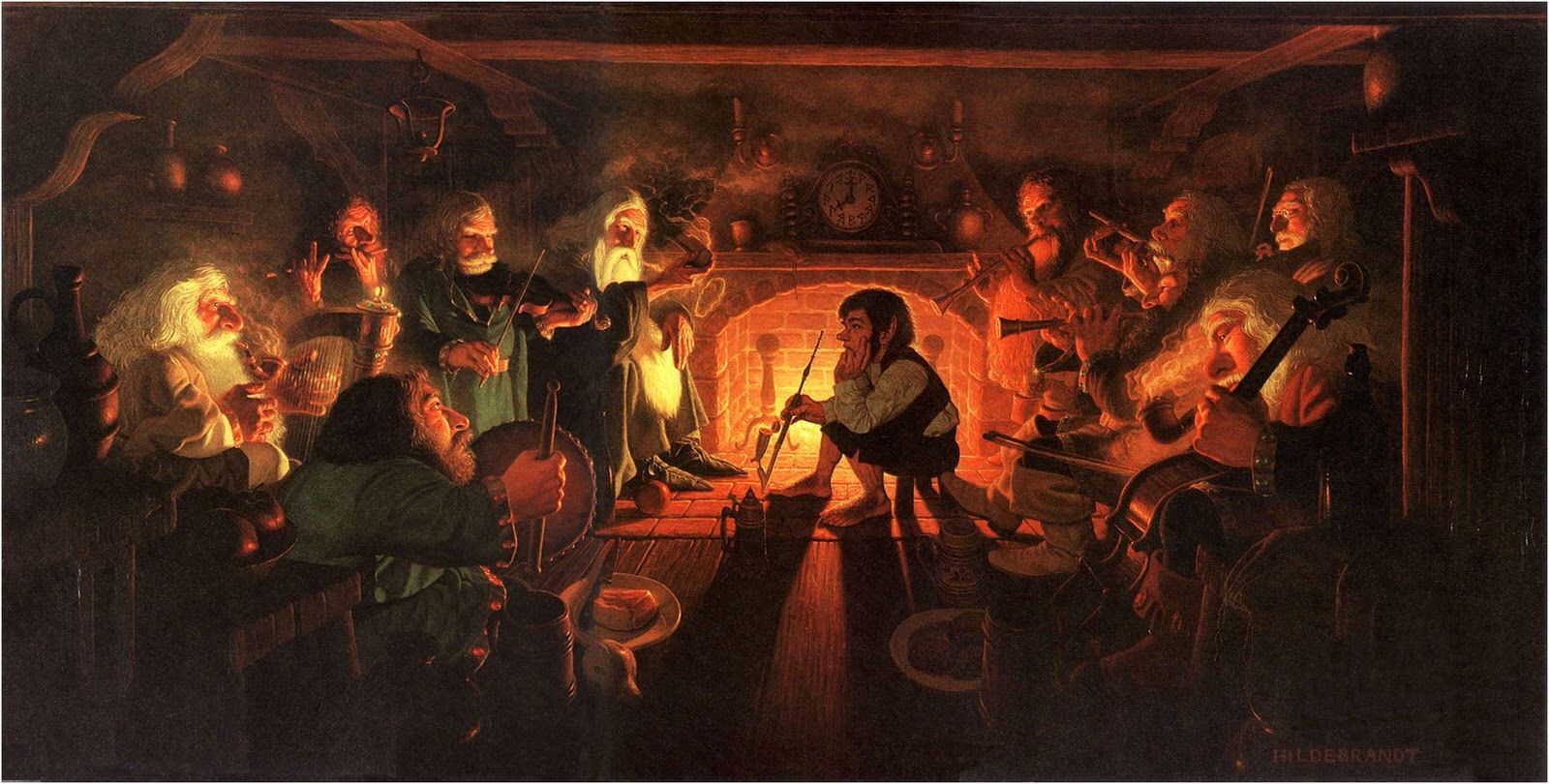
(The Hobbit, Chapter One, “An Unexpected Party”)
where the dwarves sing it in the dark in Bilbo’s house.
(the Hildebrandts)
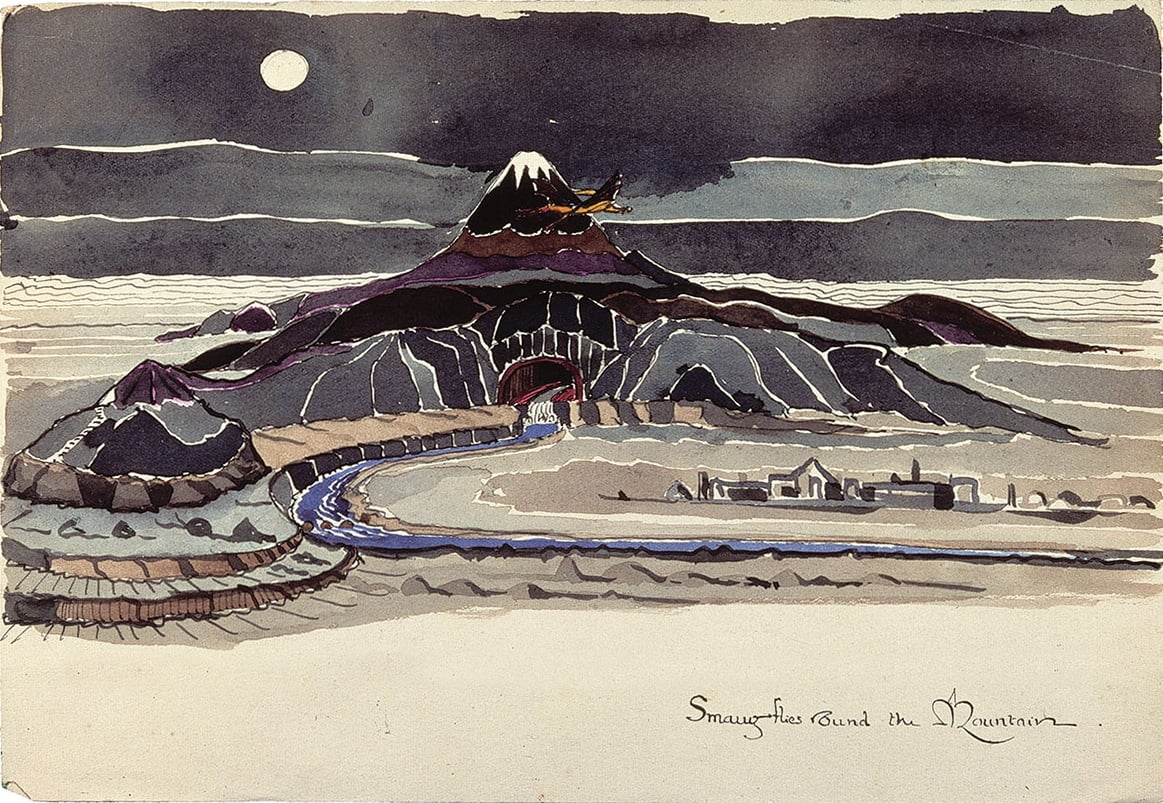
This is a poetic description of Smaug’s initial taking possession of Mt Erebor (“the Lonely Mountain”), after destroying the town of Dale, just below it.
(JRRT You can see the remains of Dale, just to the lower right.)
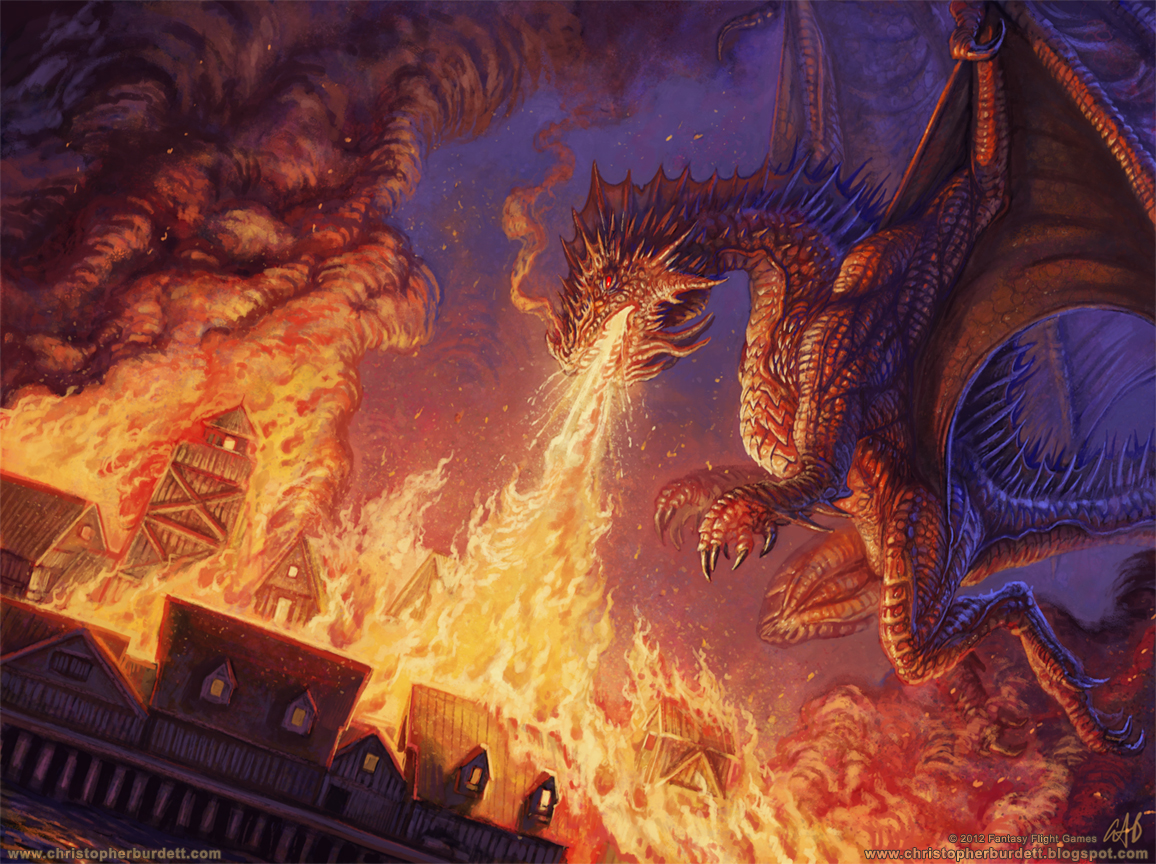
We’ll see more of this when Smaug later attacks Lake-town—
“Fire leaped from thatched roofs and wooden beam-ends as he [Smaug] hurtled down and past and round again…Back swirled the dragon. A sweep of his tail and the roof of the Great House crumbled and smashed down. Flames unquenchable sprang high into the night. Another swoop and another, and another house and then another sprang afire and fell…” (The Hobbit, Chapter Fourteen, “Fire and Water”)
This is wonderful, vivid story-telling, but, for me, the most powerful part of it is not the destruction itself, but the consequences of such destruction, beginning with Smaug’s original arrival, something which Bilbo only learns about from eavesdropping on the boatmen, in whose barrels Bilbo has hidden the dwarves in their escape from the forest elves.
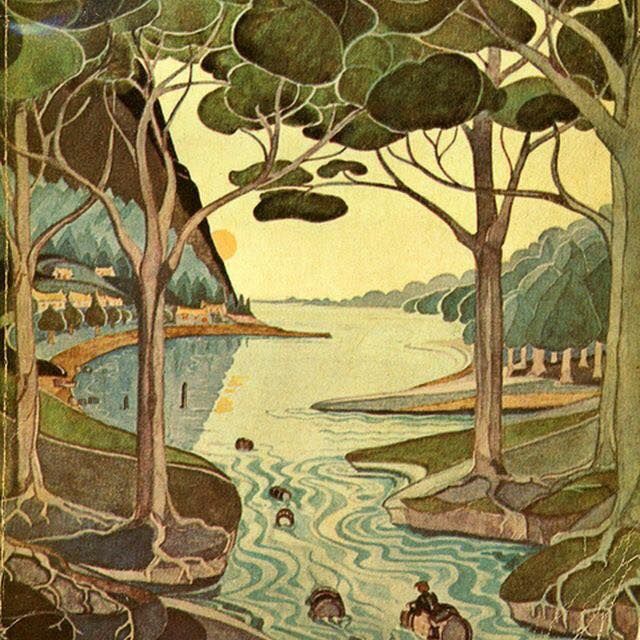
(JRRT)
“As he listened to the talk of the raftmen and pieced together the scraps of information they let fall, he soon realized that he was very fortunate ever to have seen it [the Lonely Mountain] at all, even from this distance…The talk was all of the trade that came and went on the waterways and the growth of the traffic on the river, as the roads out of the East towards Mirkwood vanished or fell into disuse; and of the bickering of the Lake-men and the Wood-elves about the upkeep of the Forest River and the care of the banks. Those lands had changed much since the days when dwarves dwelt in the Mountain…Great floods and rains had swollen the waters that flowed east; and there had been an earthquake or two (which some were inclined to attribute to the dragon…). The marshes and bogs had spread wider and wider on either side. Paths had vanished, and many a rider and wanderer too, if they had tried to find the lost ways across. The elf-road through the wood which the dwarves had followed on the advice of Beorn now came to a doubtful and little used end at the eastern edge of the forest…” (The Hobbit, Chapter Ten, “A Warm Welcome”)
The dragon, the cup and its theft, and the consequences for Beowulf’s southern Sweden all are derived from the Old English poem.
For all of this landscape of destruction described by the raftsmen, however, I would propose one further source, not something which Tolkien had read, but which he himself had experienced.
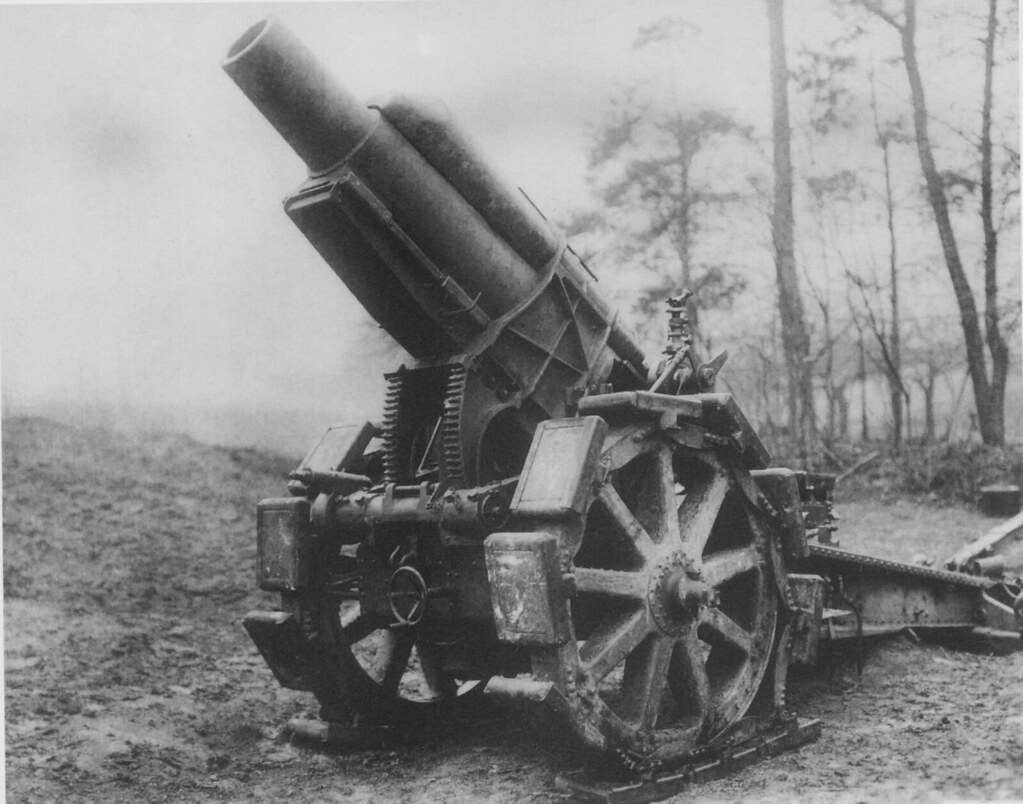
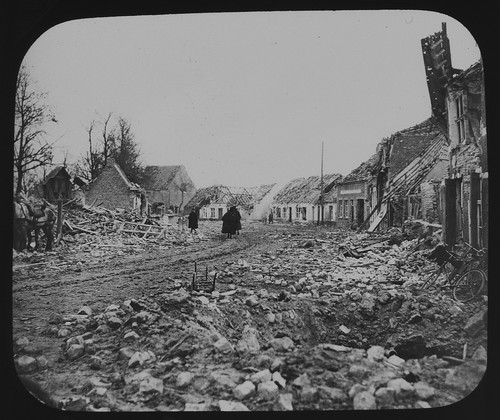
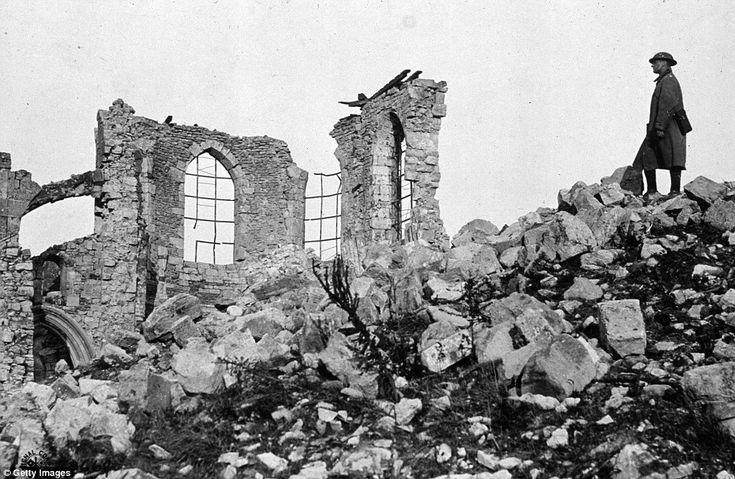
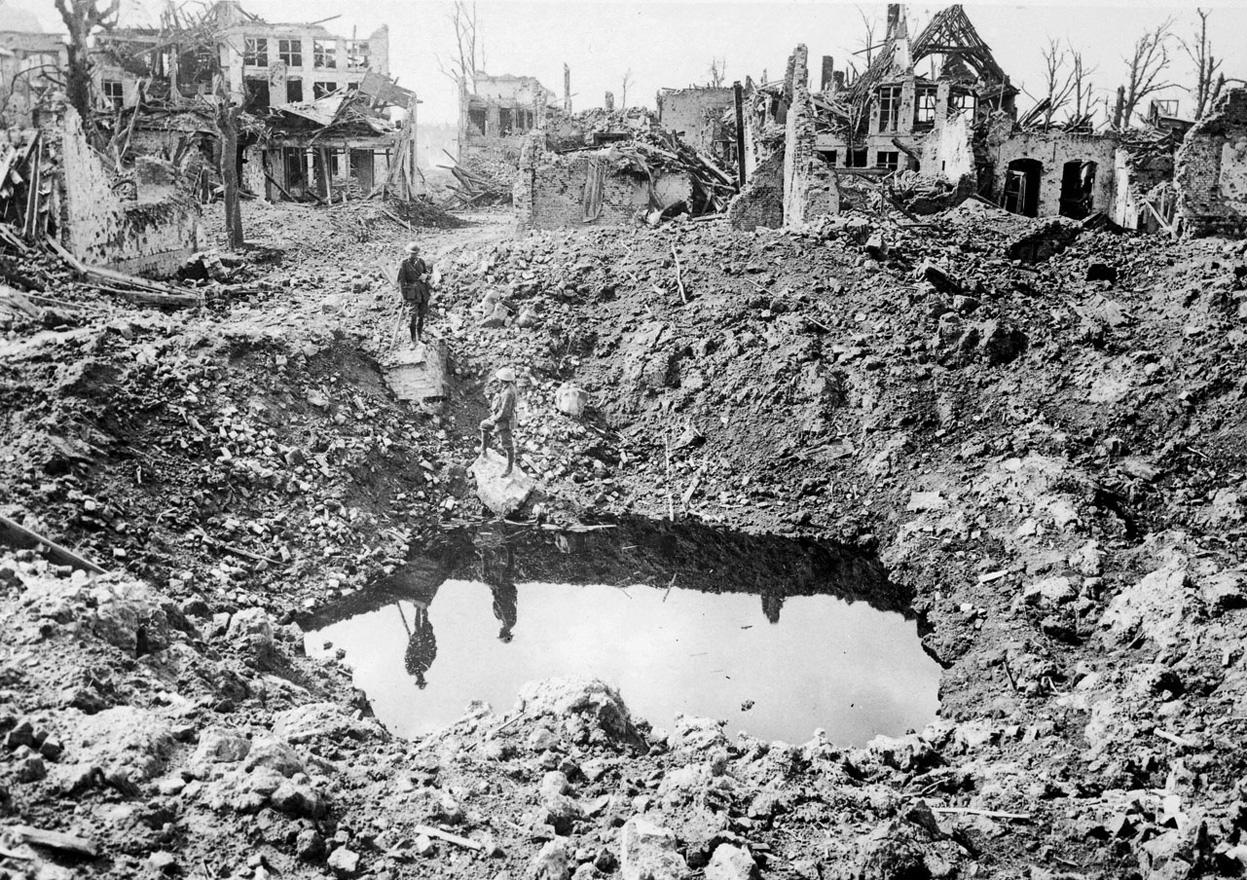
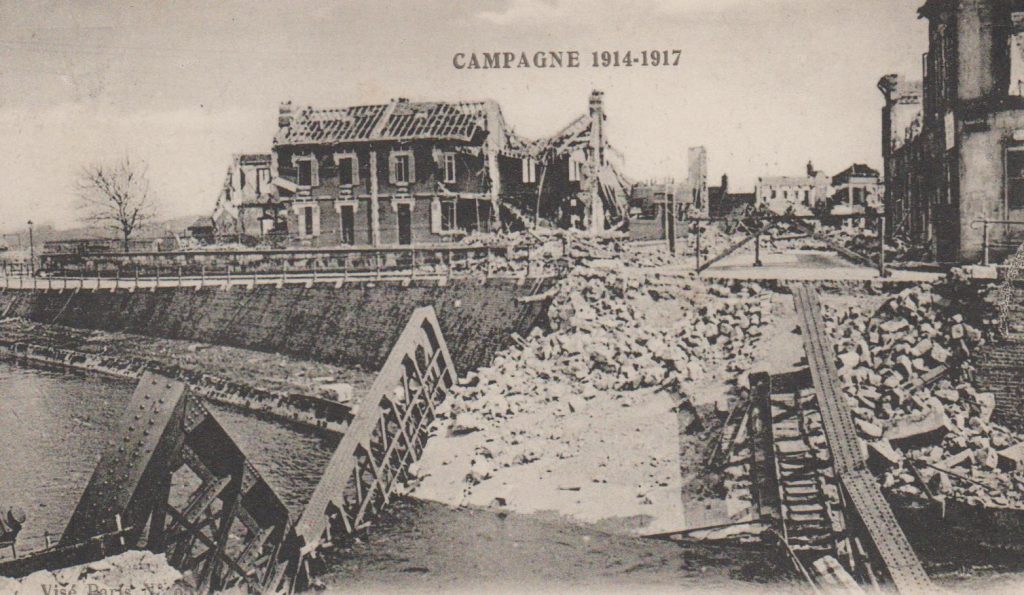
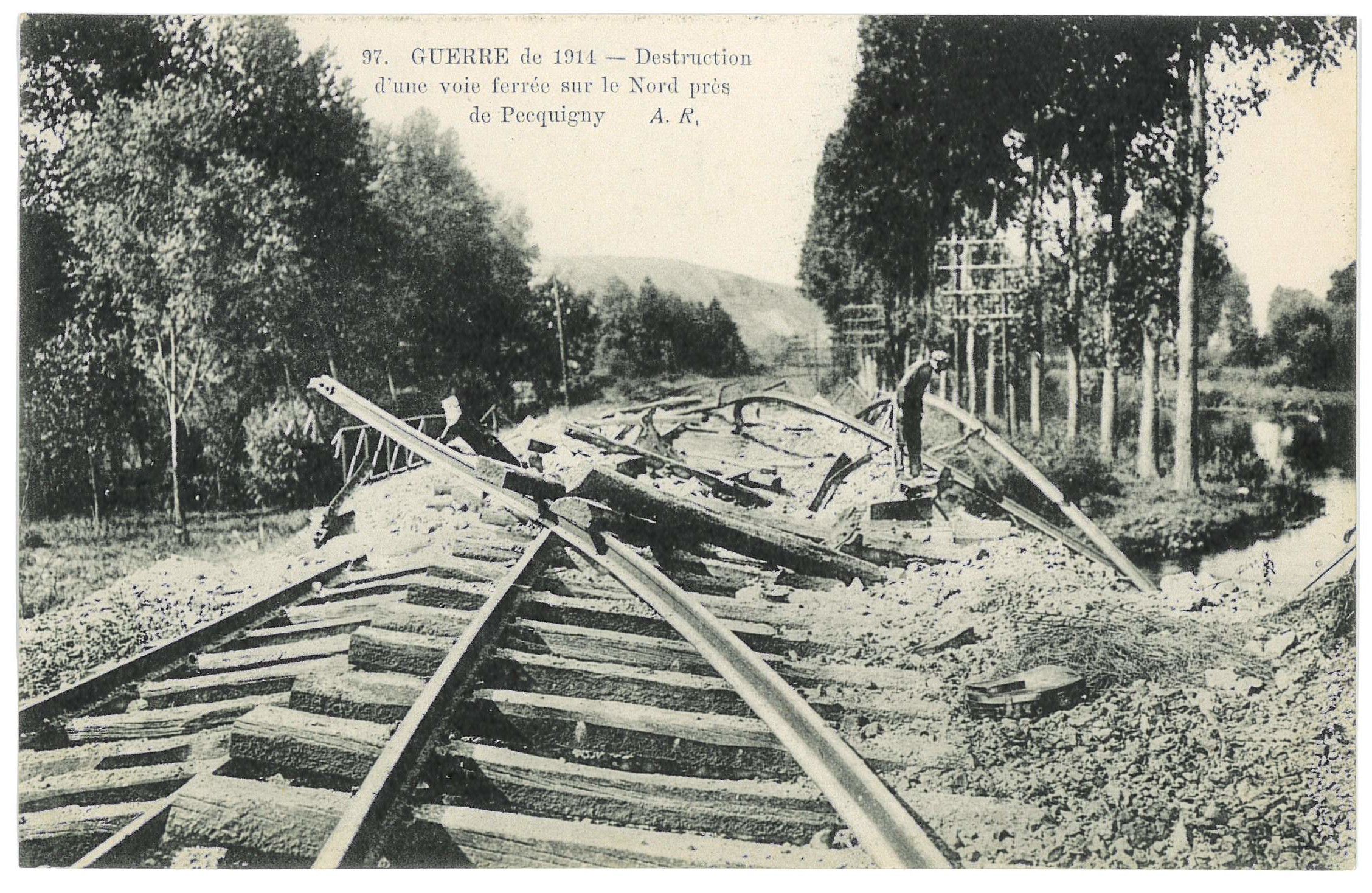
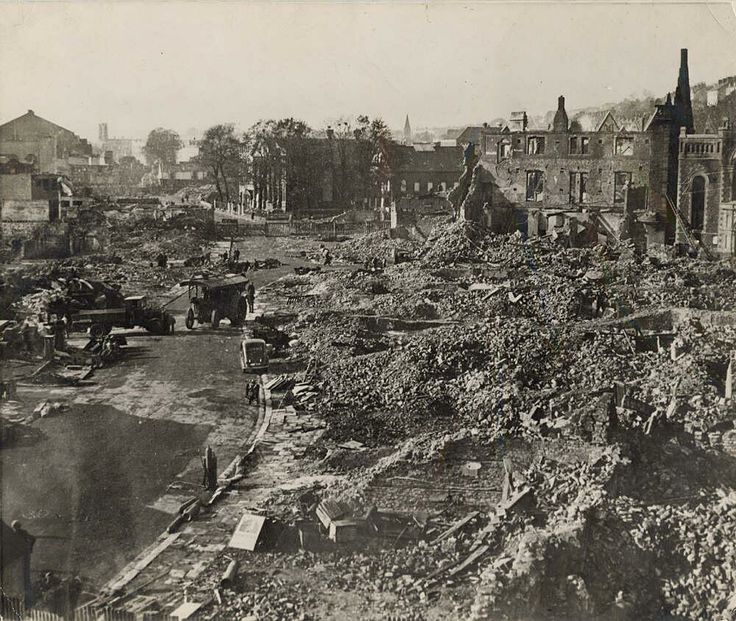
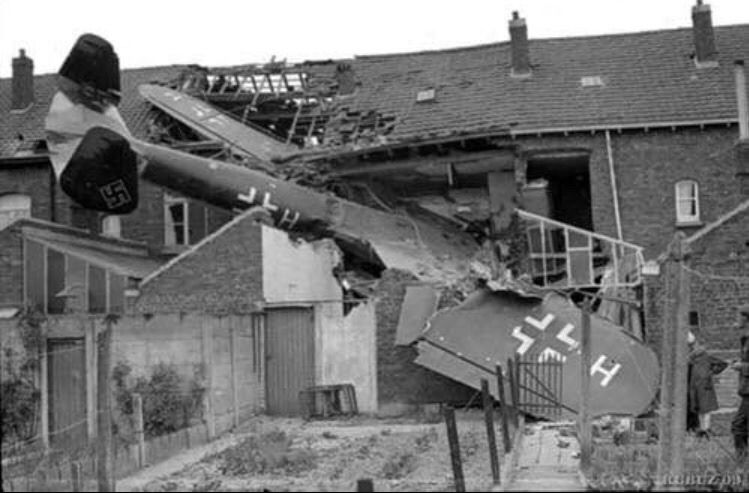
When JRRT arrived in northern France in June, 1916, just in time for the Somme offensive, the war had been going on for nearly two years in the region and the heavy artillery of the era
had done a very good job of leveling virtually everything in sight, from houses
to churches
to whole towns
to bridges
to railways,
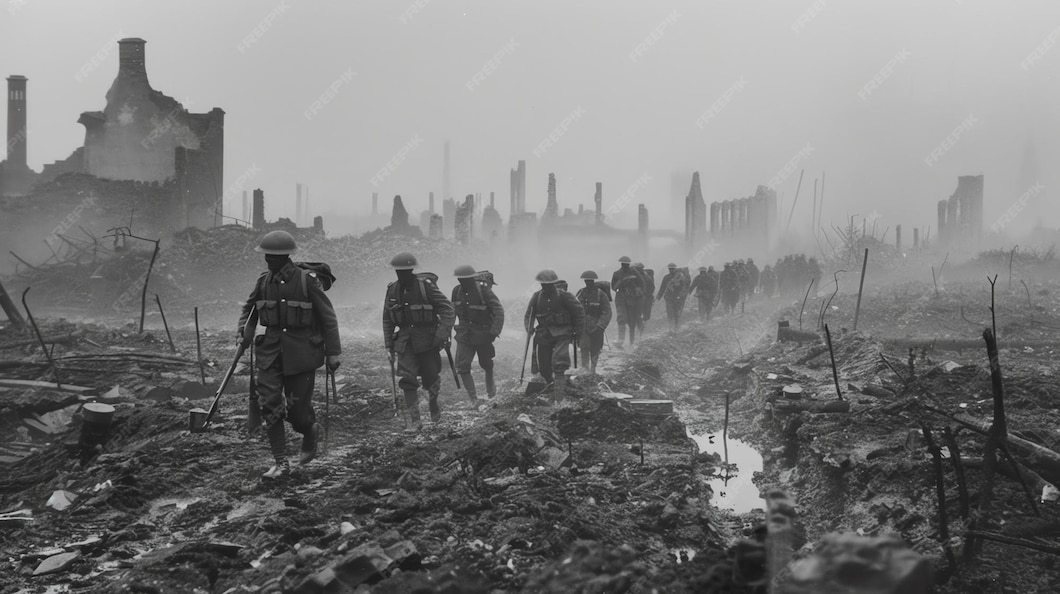
and this was the world through which Tolkien walked for some months, till invalided out with trench fever in November, 1916.
The destruction either caused by or attributed to Smaug would seem to be everywhere in these images.
I would add, however, a prophetic element to JRRT’s description.
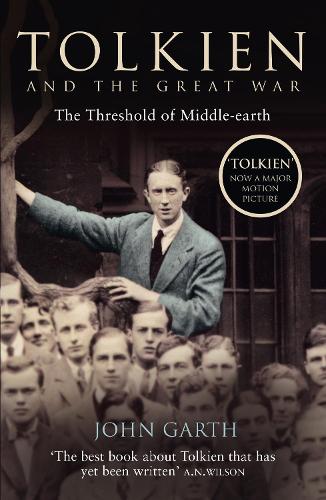
The idea of Tolkien’s Great War experiences and how they may have shaped his views on many things has become a commonplace of Tolkien studies, the seminal work being John Garth’s Tolkien and the Great War, 2003.
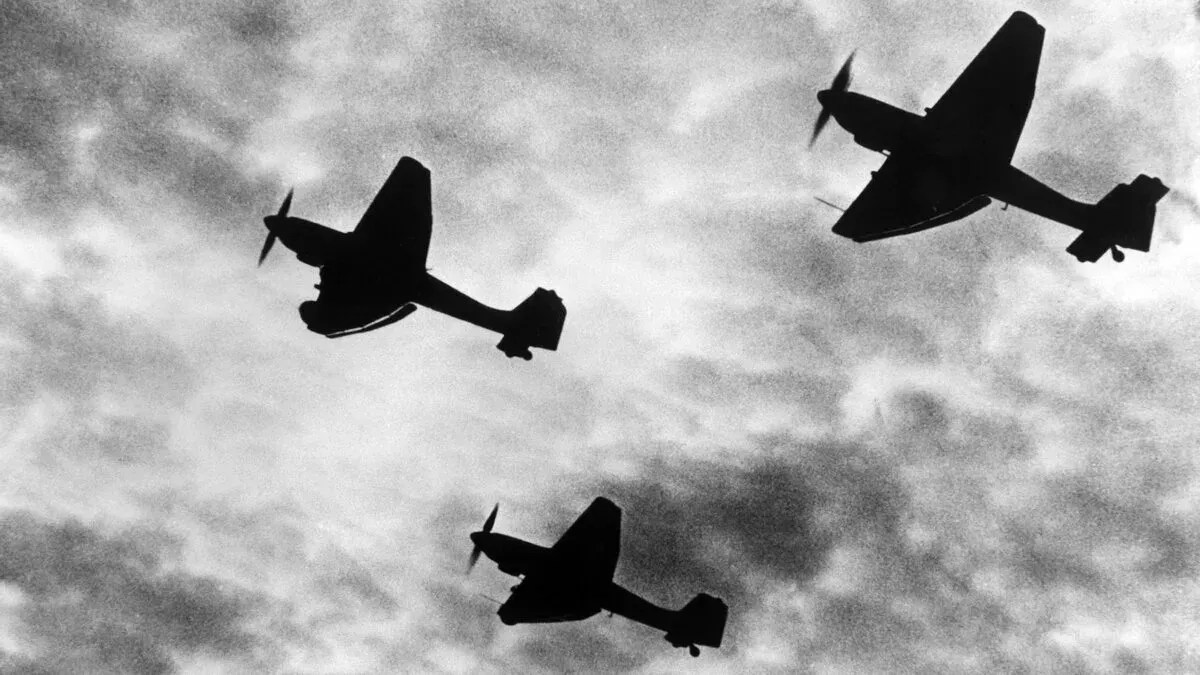
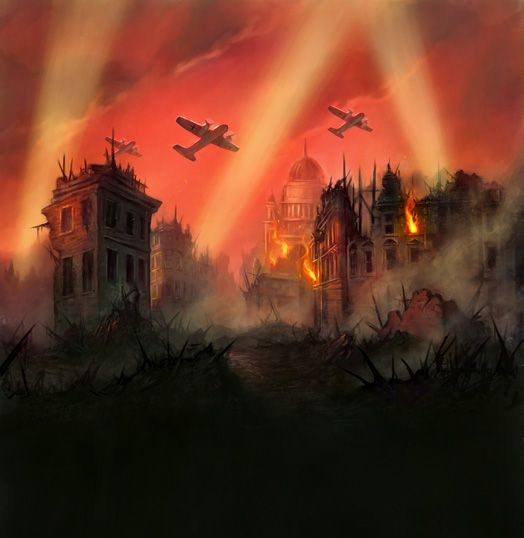
But then another war came, and, with it, many dragons flying over Britain,
remind him, on the one hand, of what he had seen in the Great War, and, on the other, of what he had imagined and described from what he had seen then?
“They removed northward higher up the shore; for ever after they had a dread of the water where the dragon lay. He would never again return to his golden bed, but was stretched cold as stone, twisted upon the floor of the shallows. There for ages his huge bones could be seen in calm weather amid the ruined piles of the old town . But few dared to cross the cursed spot, and none dared to dive into the shivering water or recover the precious stones that fell from his rotting carcase.” (The Hobbit, Chapter Fourteen, “Fire and Water”)
Thanks, as always, for reading.
Stay well,
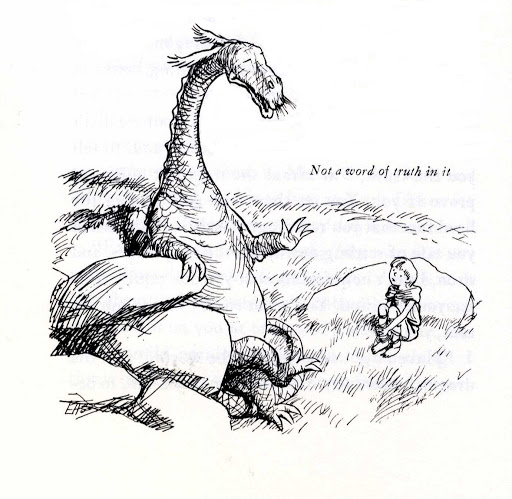
When you think of dragons, remember the Reluctant one, as well as the terrible,
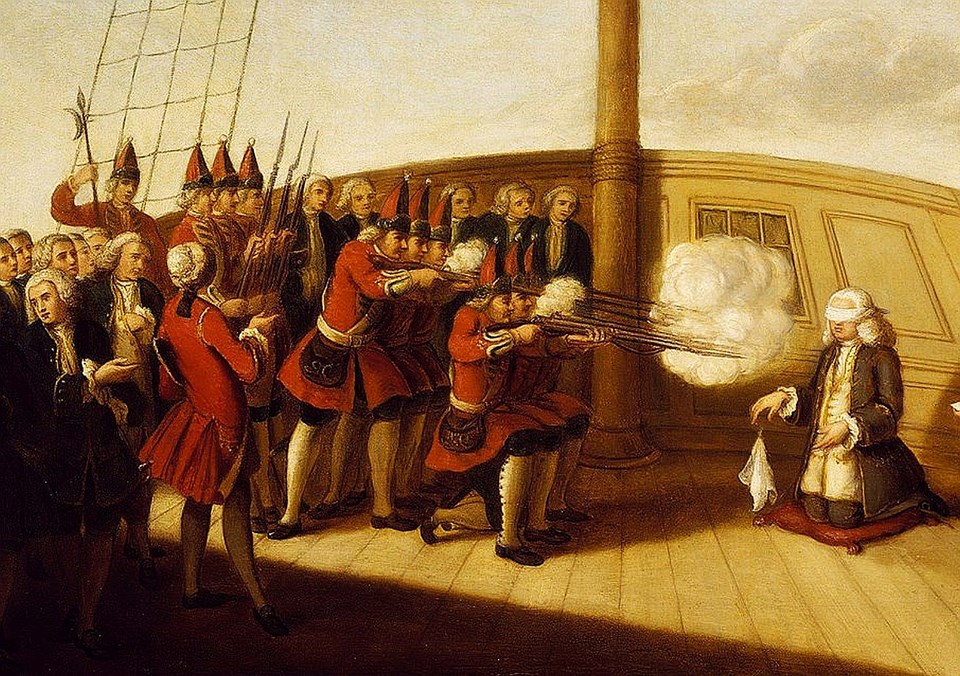
I almost feel like I should be delivering a parental warning before adding this terrible image.
This is the execution of a senior British naval officer, Admiral John Byng (1704-1757), by firing squad on the quarterdeck of HMS Monarch, 14 March, 1757, for what we might call “hesitation in the face of the enemy”. (For more on this, see: https://en.wikipedia.org/wiki/John_Byng#Death_warrant )
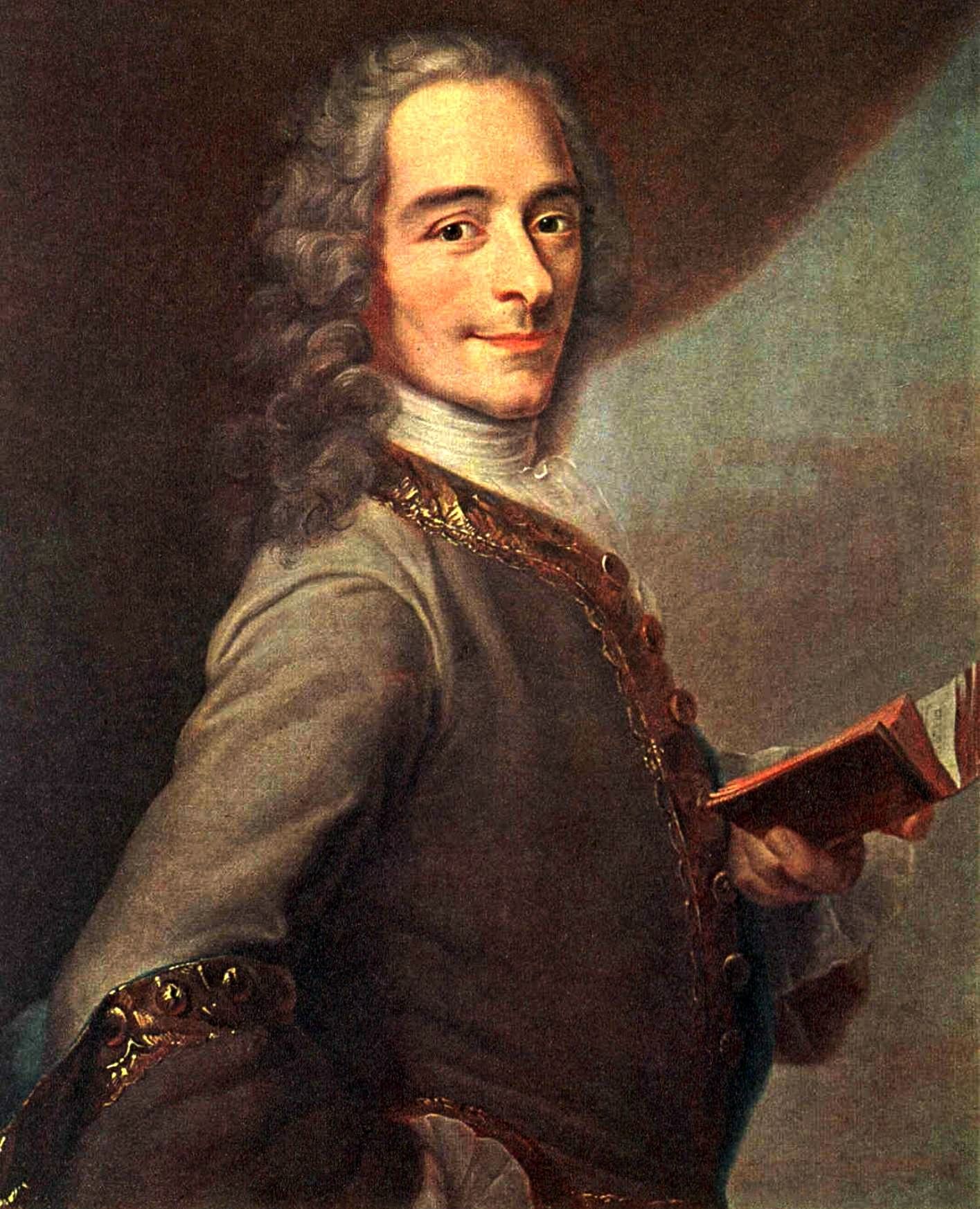
Byng was, it would seem, a scapegoat for poor naval policy and government mismanagement of the war with France, and this provoked the French philosopher, dramatist, and satirist, Voltaire (Francois-Marie Arouet, 1694-1778),
who had a personal connection to Byng, to include his death in his satirical novel, Candide (1759).
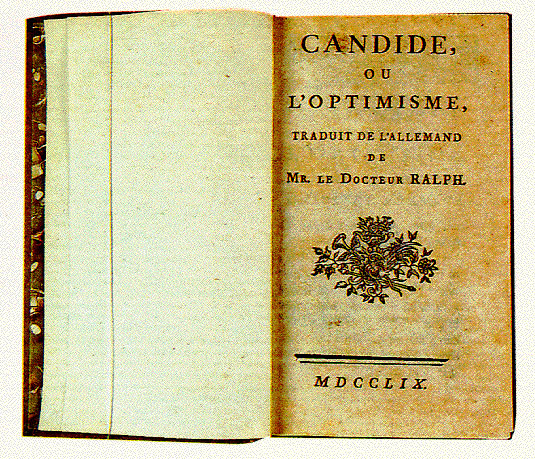
(Because of its controversial nature, the novel was published outside France and, as you can see by this image of the title page of the first edition, not even under the author’s name—for more on this see: https://en.wikipedia.org/wiki/Candide )
In Chapter XXIII, entitled “Candide and Martin Land on the English Coast: What They See There”, we read a description of Byng’s execution—although Byng himself is never named, the victim simply being called “un Amiral”—“an admiral”. Puzzled as to what’s happening, Candide asks who the man is and why he’s being shot, the reply becoming a classic quotation: “Mais dans ce pays-ci il est bon de tuer de tems en tems un Amiral pour encourager les autres.”—“But in this country it’s good to kill an admiral, from time to time, in order to put heart in the others.”
This is obviously meant as a jab at what Voltaire thought of as the barbaric behavior of Britain towards a distinguished officer, but it made me think about that “putting heart” in a military context in The Lord of the Rings. Here, however, instead of focusing upon encouraging the leaders, as Voltaire has mockingly remarked, I want to examine how certain leaders try—or don’t try—to do the same for their followers, focusing upon two kings, Theoden
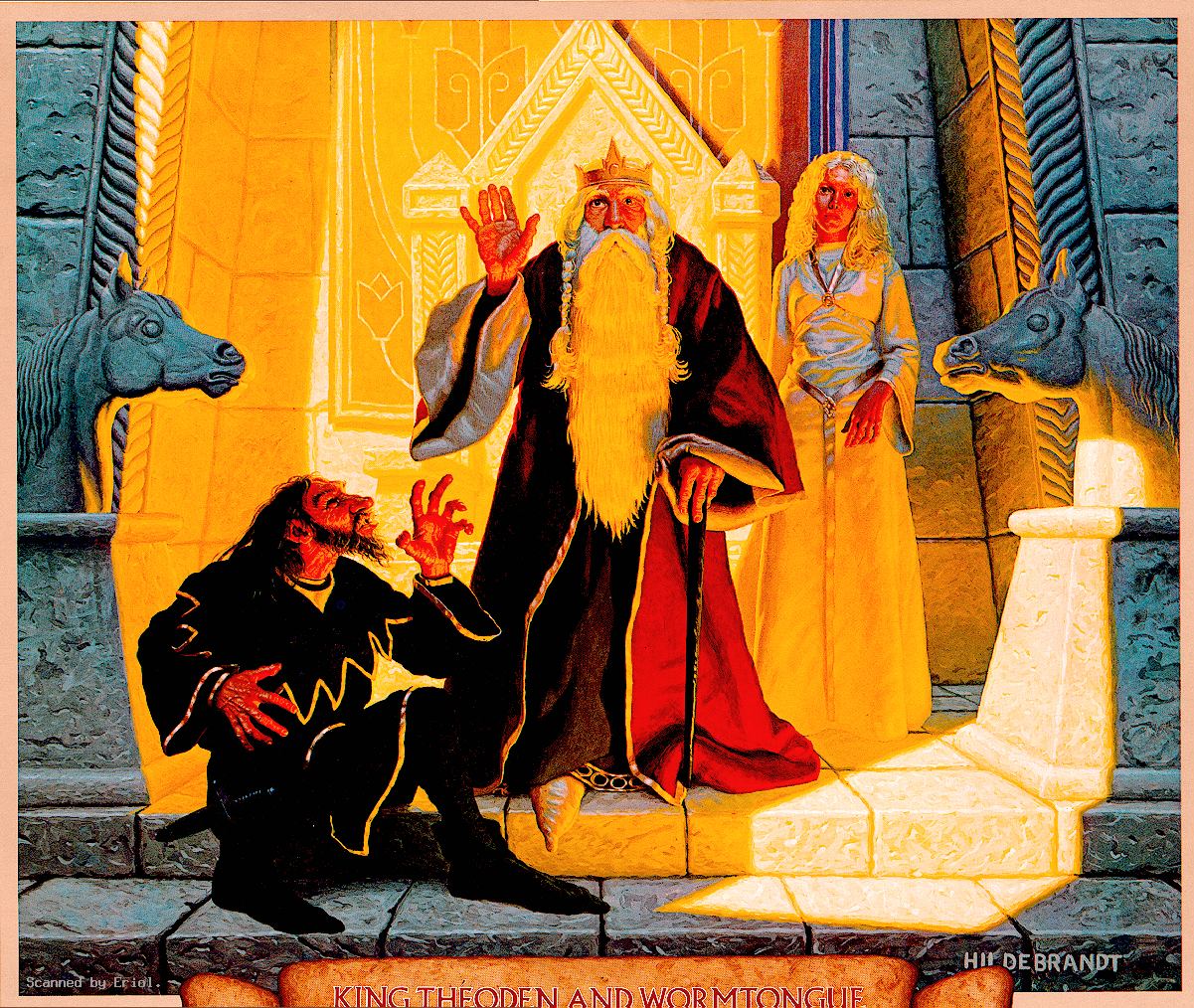
Theoden, when we first meet him, has almost lapsed into senescence and certainly has developed a hostility towards those who were once his allies.
(the Hildebrandts)
“Slowly the old man rose to his feet, leaning heavily upon a short black staff with a handle of white bone…
‘I greet you…and maybe you look for welcome. But truth to tell your welcome is doubtful here, Master Gandalf. You have ever been a herald of woe. Troubles follow you like crows, and ever the oftener the worse. I will not deceive you: when I heard that Shadowfax had come back riderless, I rejoiced at the return of the horse, but still more at the lack of the rider…”
It soon turns out that this hostility—and, perhaps the senescence—are the work of Theoden’s counselor, Grima Wormtongue.
(Alan Lee)
“Wormtongue” would seem a strange epithet for a counselor, unless we remember Bilbo’s experience with Smaug, where, because of Smaug’s speech, Bilbo begins to question his trust in the dwarves: “That is the effect that dragon-talk has on the inexperienced.” (The Hobbit, Chapter 12, “Inside Information”) “Wormtongue”, then, can suggest persuasiveness—but maybe persuasiveness to be wary of, which is certainly the case here, where it’s clear that Grima is, in fact, behind Theoden’s look and behavior, and, freed from Grima by Gandalf, Theoden becomes a different man, taking Eomer’s sword and
“As his fingers took the hilt, it seemed to the watchers that firmness and strength returned to his thin arm. Suddenly he lifted the blade and swung it shimmering and whistling in the air. Then he gave a great cry. His voice rang clear as he chanted in the tongue of Rohan a call to arms.
‘Arise now, arise, Riders of Theoden!
Dire deeds awake, dark is it eastward.
Let horse be bridled, horn be sounded!
Forth Eorlingas!’ “
And here’s where the encouragement begins:
“The guards, thinking that they were summoned, sprang up the stair. They looked at their lord in amazement, and then as one man they drew their swords and laid them at his feet. ‘Command us!’ they said.
‘Westu Theoden hal!’ cried Eomer. ‘It is a joy to us to see you return into your own. Never again shall it be said, Gandalf, that you come only with grief!’ “ (The Two Towers, Book Three, Chapter 6, “The King of the Golden Hall”)
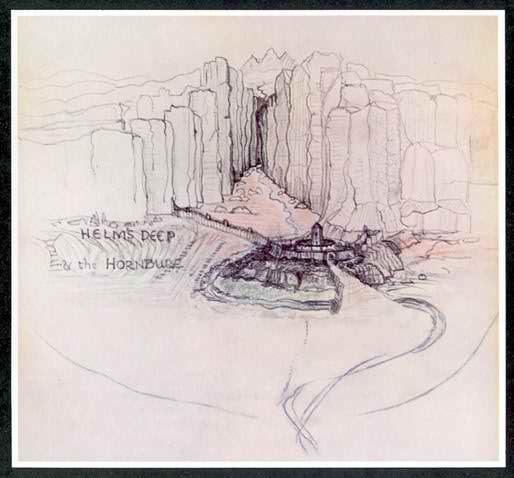
The King’s sudden energy energizes his men, and that energy is mixed with a kind of fierce joy, which Theoden will soon need as it is learned that Saruman is directing an attack against Rohan. With the threat of being overwhelmed, Theoden and the others enter the stronghold of Helm’s Deep.
(JRRT)
There, with the threat of Saruman’s “blasting fire”, Theoden decides to make a sortie—that is, to make a mounted attack on the besieging forces outside the walls and here we see his determination—even if it’s of a grim variety:
“ ‘But I will not end here, taken like an old badger in a trap…When dawn comes, I will bid men sound Helm’s horn, and I will ride forth. Will you ride with me then, son of Arathorn? Maybe we shall cleave a road, or make such an end as will be worth a song—if any be left to sing of us hereafter.’ “
(In fact, badgers, when cornered, are very fierce, as I’m sure that JRRT was aware, seizing an opponent in a kind of death grip. For more, see: https://en.wikipedia.org/wiki/Badger#Culling )
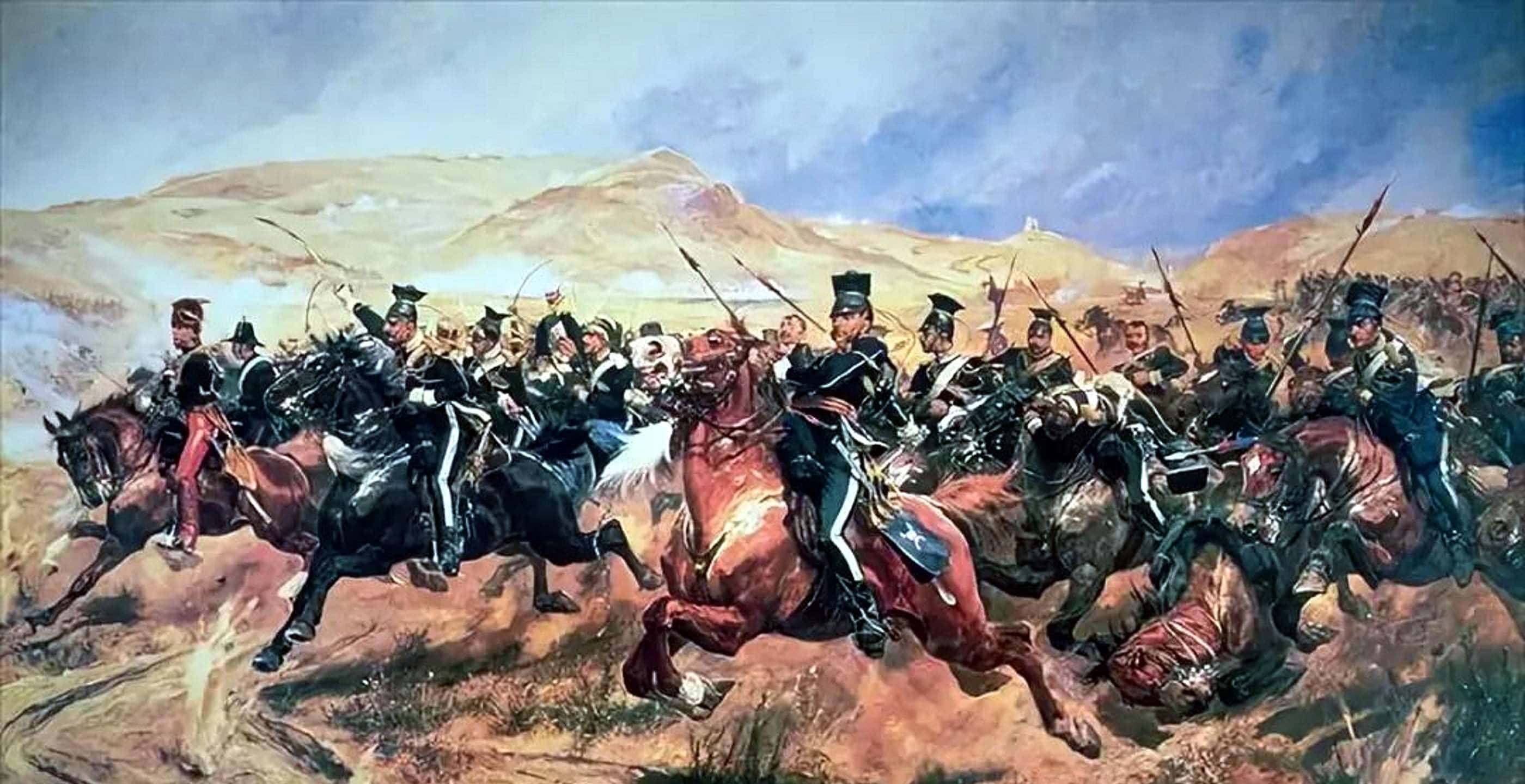
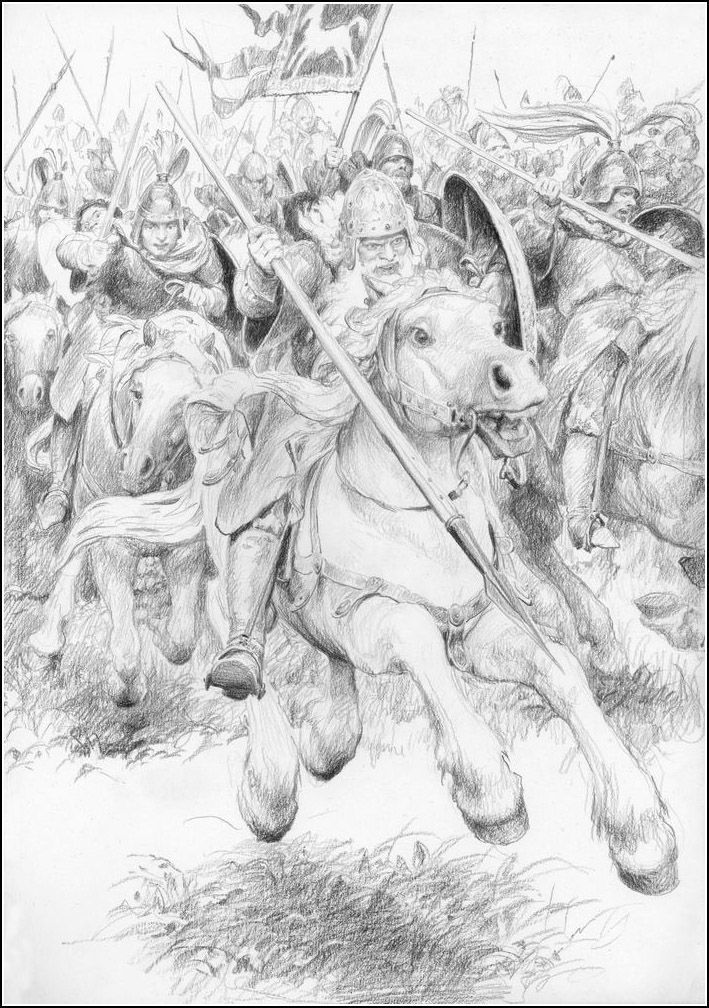
He then leads a charge of the traditional “hell for leather” sort, which JRRT would have known from such earlier historical events as the charge of the Light Brigade at Balaclava in October, 1854—
and, once again, we see a kind of fierce excitement which the King brings to his men.
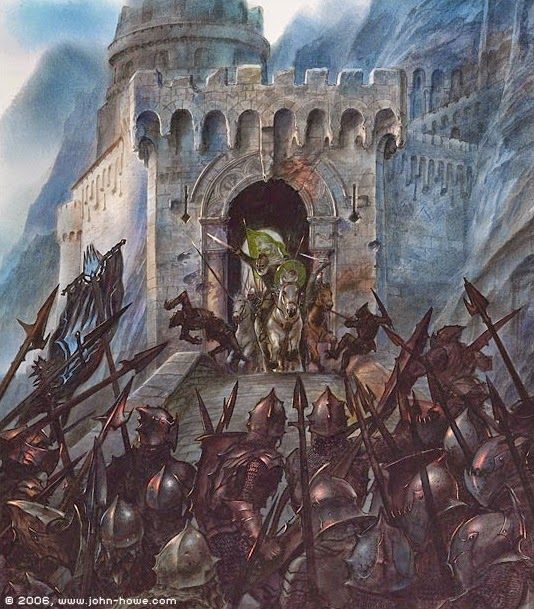
“ ‘Helm! Helm!’ the Riders shouted. ‘Helm is arisen and comes back to war. Helm for Theoden King!’
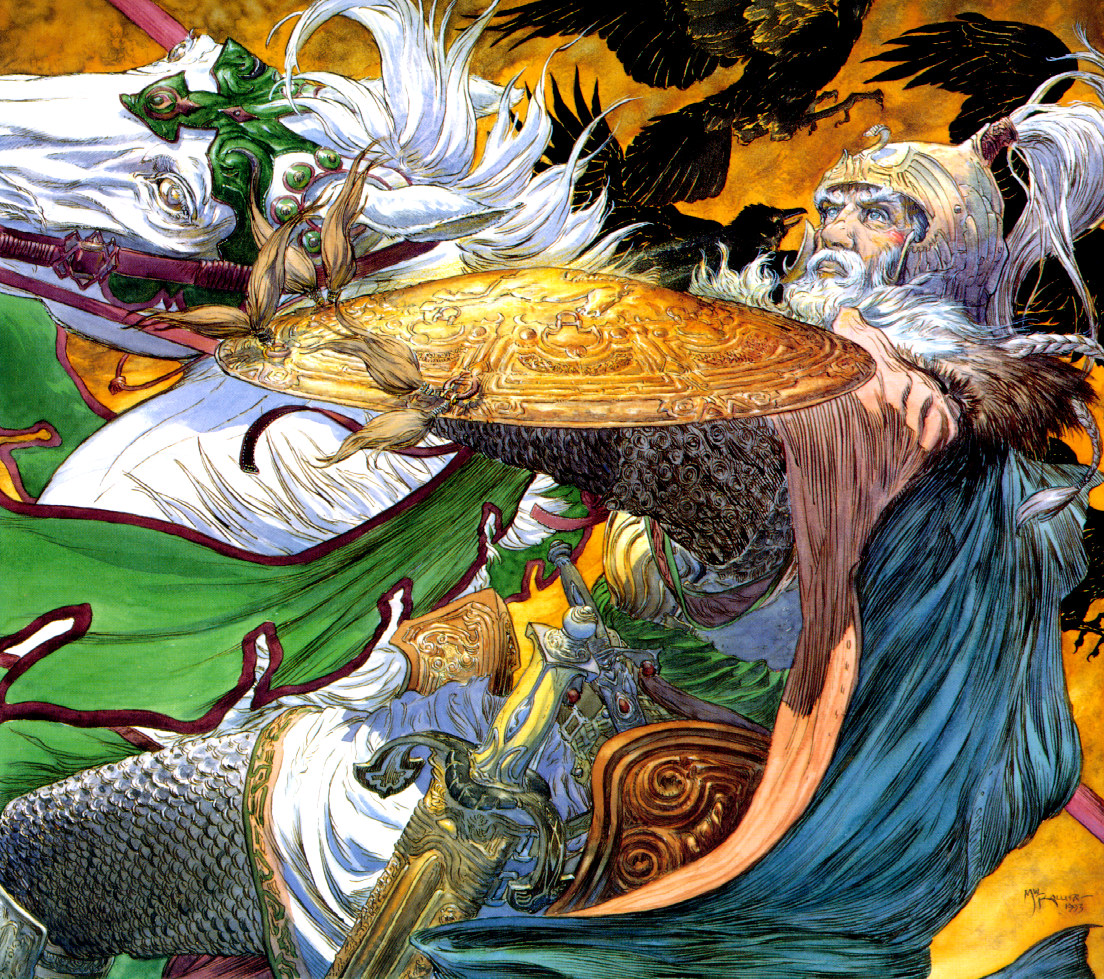
And with that shout the king came. His horse was white as snow, golden was his shield, and his spear was long….Light sprang in the sky. Night departed.
‘Forth Eorlingas!’ With a cry and a great noise they charged. Down from the gates they roared, over the causeway they swept, and they drove through the hosts of Isengard as a wind among grass.” (The Two Towers, Book Three, Chapter 7, “Helm’s Deep”)
(John Howe)
Theoden will repeat this at his final battle in the Pelennor Fields–
(Denis Gordeev)
“At that sound the bent shape of the king sprang suddenly erect. Tall and proud he seemed again and rising in his stirrups he cried in a loud voice, more clear than any there had ever heard a mortal man achieve before:
‘Arise, arise, Riders of Theoden!
Fell deeds awake: fire and slaughter!
spear shall be shaken, shield be splintered,
a sword-day, a red day, ere the sun rises!
Ride now, ride now! Ride to Gondor!’
Suddenly the king cried to Snowmane and the horse sprang away. Behind him his banner blew in the wind, white horse upon a field of green, but he outpaced it. After him thundered the knights of his house, but he was ever before them…And then all the host of Rohan burst into song, and they sang as they slew, for the joy of battle was on them, and the sound of their singing that was fair and terrible came even to the City.” (The Return of the King, Book Five, Chapter 5, “The Ride of the Rohirrim”)
We can see now how Theoden’s encouragement works: he’s always in the lead and he has stirring words in poetic form to give heart to his followers.
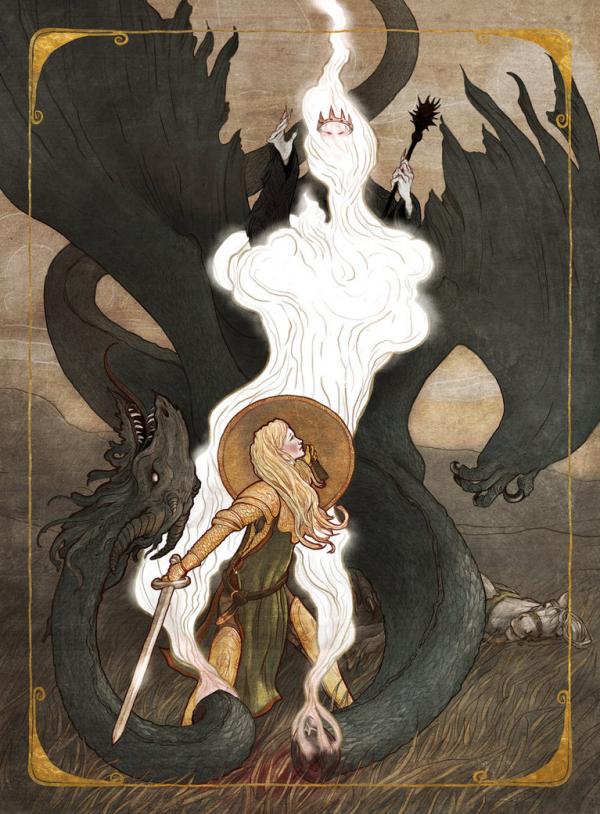
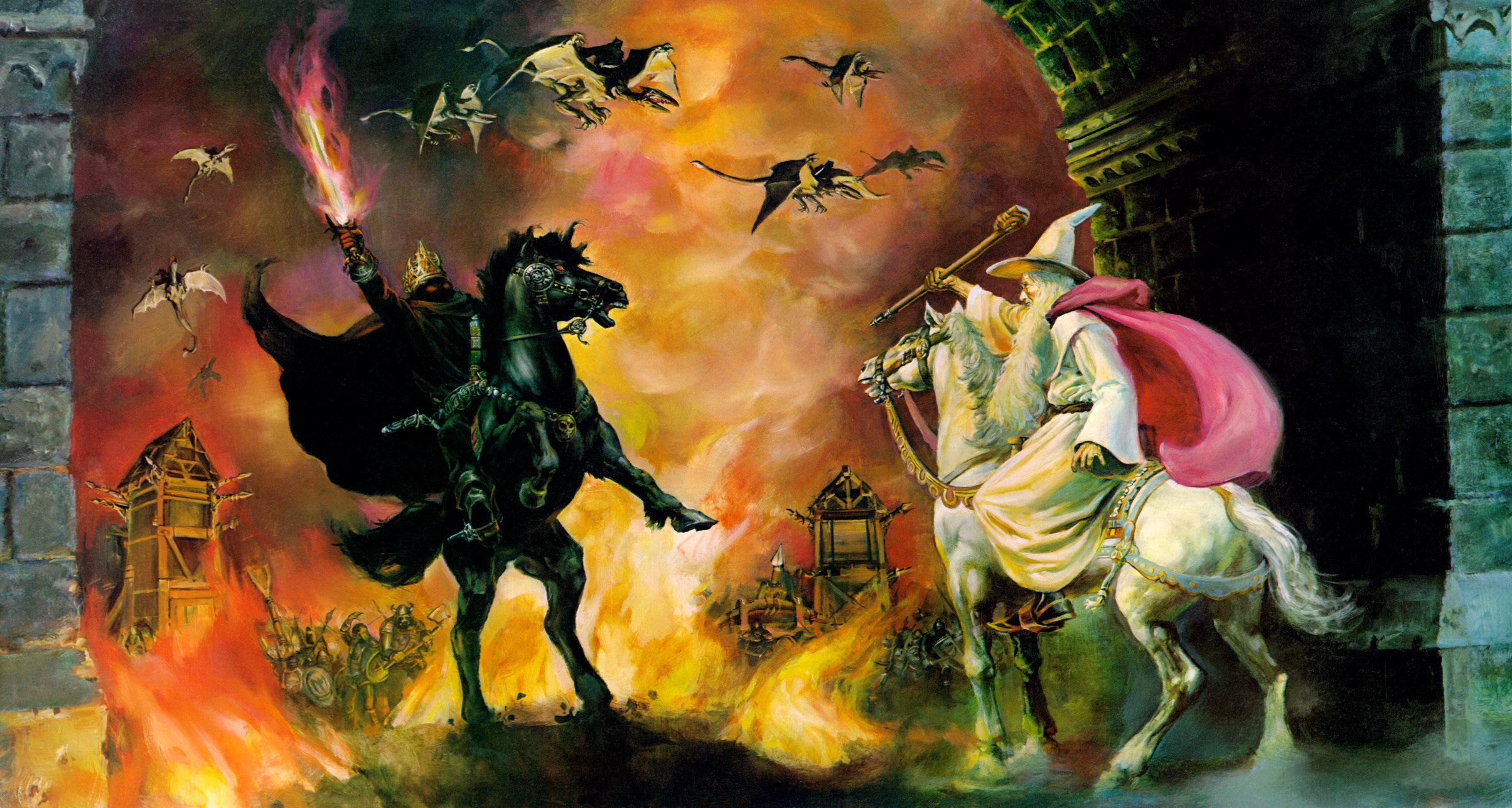
In contrast, there is the chief of the Nazgul, once a king himself.
Unlike Theoden, who has had a kind of rebirth, that chief is clearly one of the undead, a disturbing figure among a group of disturbing figures, as we hear in Grishnakh’s reaction—
“ ‘Nazgul, Nazgul,’ said Grishnakh, shivering and licking his lips, as if the word had a foul taste that he savoured painfully. ‘You speak of what is deep beyond the reach of your muddy dreams, Ugluk!’ “ (The Two Towers, Book Three, Chapter 3, “The Uruk-hai”)
His method of leading is also disturbing—as an anonymous messenger says of him:
“ ‘But it is the Black Captain that defeats us. Few will stand and abide even the rumour of his coming. His own folk quail at him, and they would slay themselves at his bidding.’ “ (The Return of the King, Book Five, Chapter 4, “The Siege of Gondor”)
To which we can add Gandalf’s description:
“…the Captain of Despair does not press forward yet. He rules rather according to the wisdom that you have just spoken, from the rear, driving his slaves in madness on before.’ “
Unlike Theoden, he has no poetry and virtually no words—certainly nothing encouraging. His only two speeches are full of contempt, addressed to Gandalf, at the ruined gate of Minas Tirith–The Return of the King, Book Five, Chapter 4, “The Siege of Gondor”—and to Eowyn—The Return of the King, Book Five, Chapter 6, “The Battle of the Pelennor Fields”, although before he sneers at Gandalf, he seems to chant a spell of some sort to help Grond destroy the gate—
“Then the Black Captain rose in his stirrups and cried aloud in a dreadful voice, speaking in some forgotten tongue words of power and terror to rend both heart and stone.
Thrice he cried. Thrice the great ram boomed. And suddenly upon the last stroke the Gate of Gondor broke. As if stricken by some blasting spell it burst asunder: there was a flash of searing lightning, and the doors tumbled in riven fragments to the ground.” (The Return of the King, Book Five, Chapter 4, “The Siege of Gondor”)
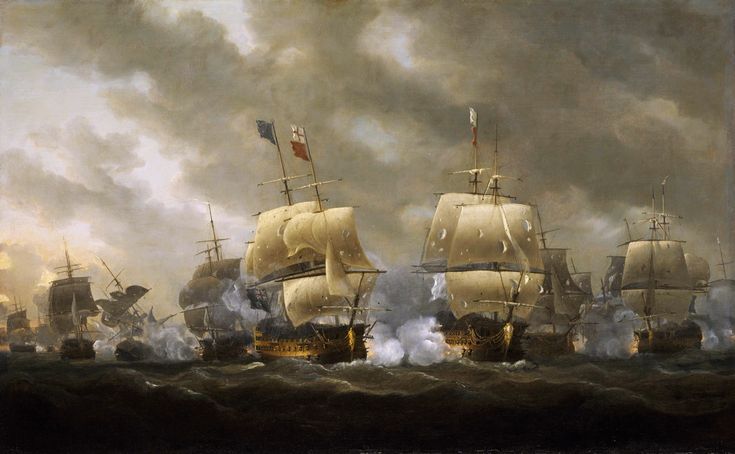
It seems then, that, in contrast to Theoden, the chief of the Nazgul’s only method of encouragement is the very opposite of giving heart, being more like what Voltaire suggested was behind the execution of poor Admiral Byng: the desire to create fear. Does it work? Britain defeated France at sea, their greatest victory being at Quiberon Bay in 1759,
although Hawke, the British admiral there, had always been an aggressive and imaginative sailor (who had also testified against Byng) and would have needed no threat of court martial to spur him on.
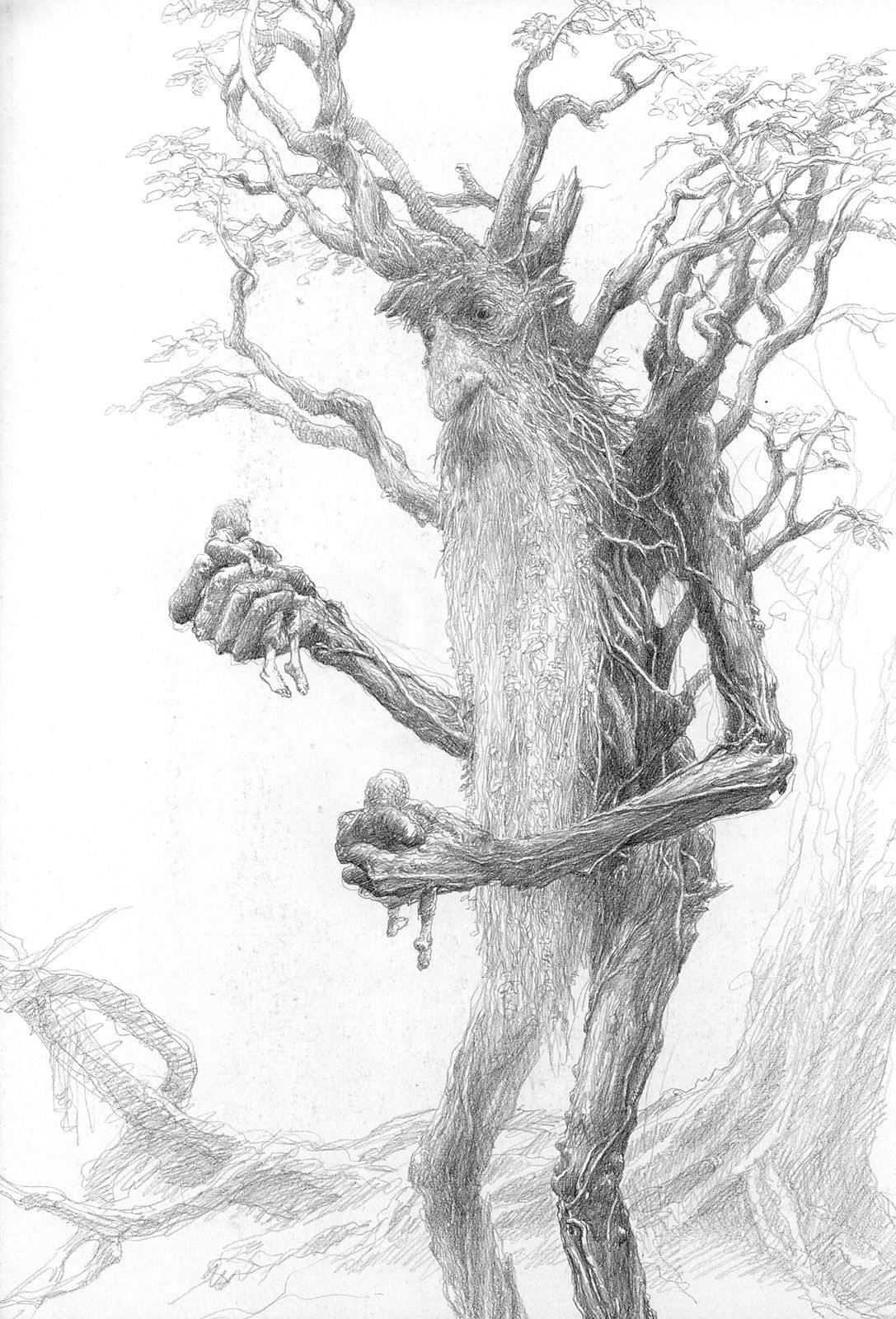
With the aid of Fangorn,
(Alan Lee)
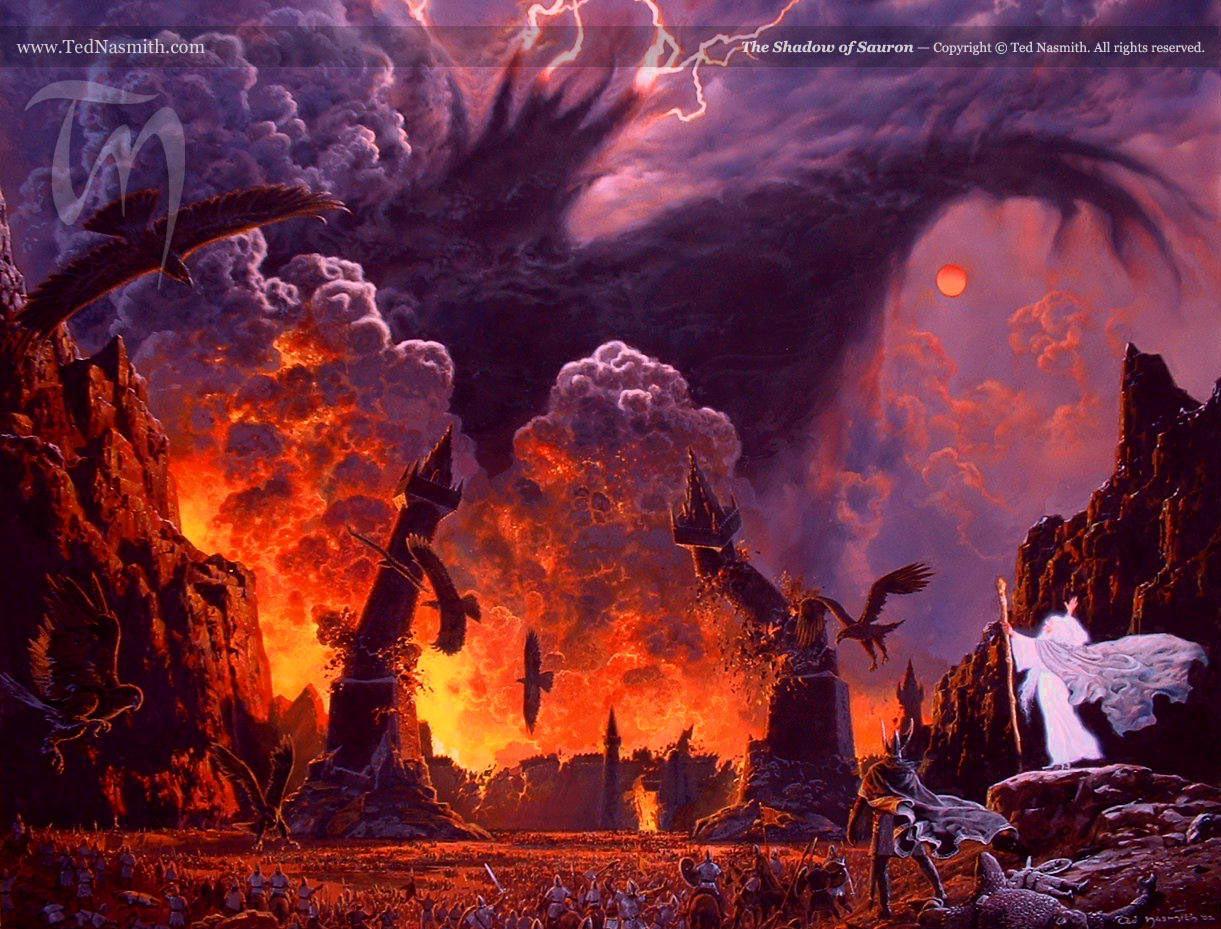
the Ents, and Gandalf, Theoden’s men destroy Saruman’s army at Helm’s Deep, and, with the aid of Aragorn, his men ruin Sauron’s plans for Gondor, which leads, with the destruction of the Ring, to the destruction of Sauron himself.
(Ted Nasmith)
The end of Sauron brought peace and a new Age to Middle-earth. War broke out again between Britain and France in 1778, which led to the loss of 13 of Britain’s North American colonies, and there was war with France again between 1793 and 1815. Granted that the wars of our Middle-earth are often larger and more long-lasting (no Ring to destroy Napoleon—although Britain, I’m sure, would have been glad of one) but, given the choice, I, for one, would rather follow Theoden than a Nazgul.
Thanks, as always, for reading.
Stay well,
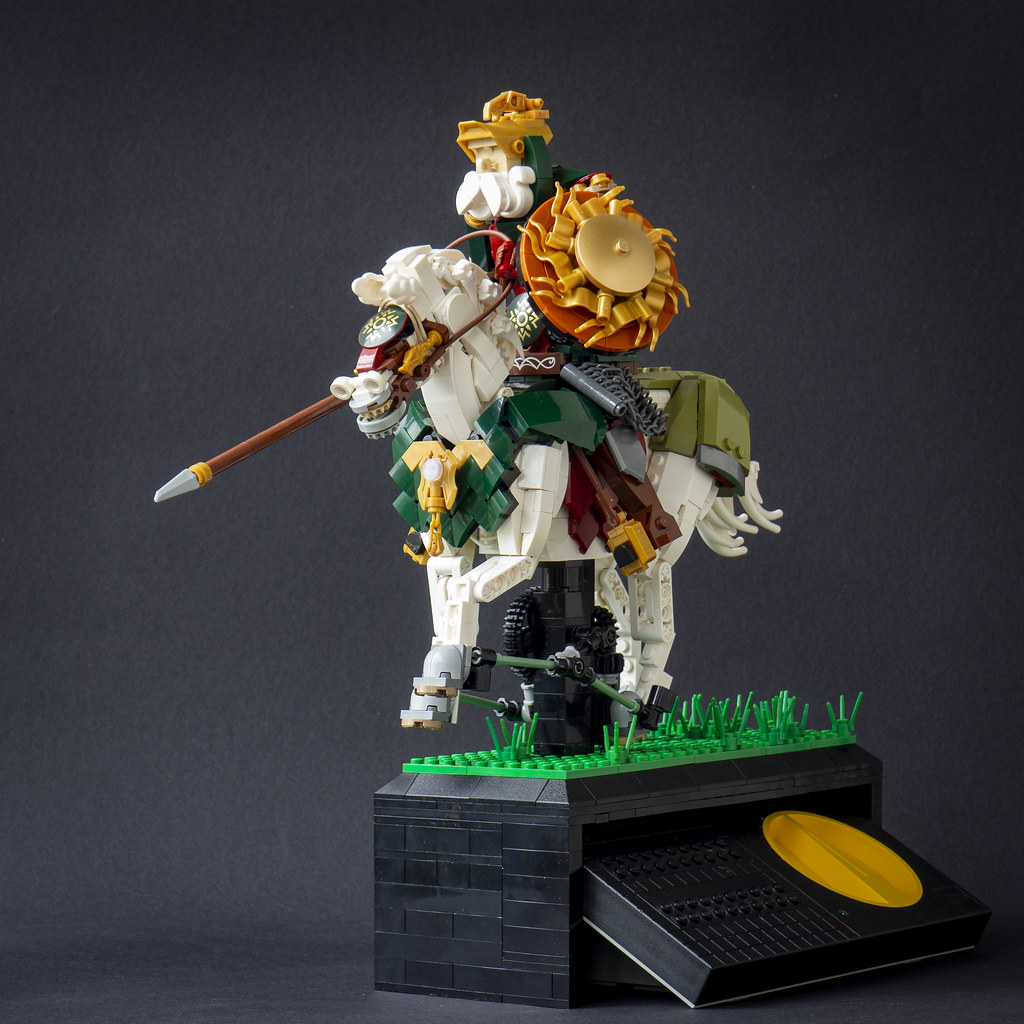
When you think of Theoden, imagine this wonderful creation made from Legos,
And remember that, as ever, there’s
MTCIDC
O
PS
For an English translation of Chapter 18 of Candide: