Tags
Aeschylus, Beowulf, cattle culture, Grendel, Isildur, Oresteia, Salic Law, The Lord of the Rings, The Ring, Tolkien, weregild
As ever, welcome, dear readers.
The Greek tragedian, Aeschylus, c.525-456BC,
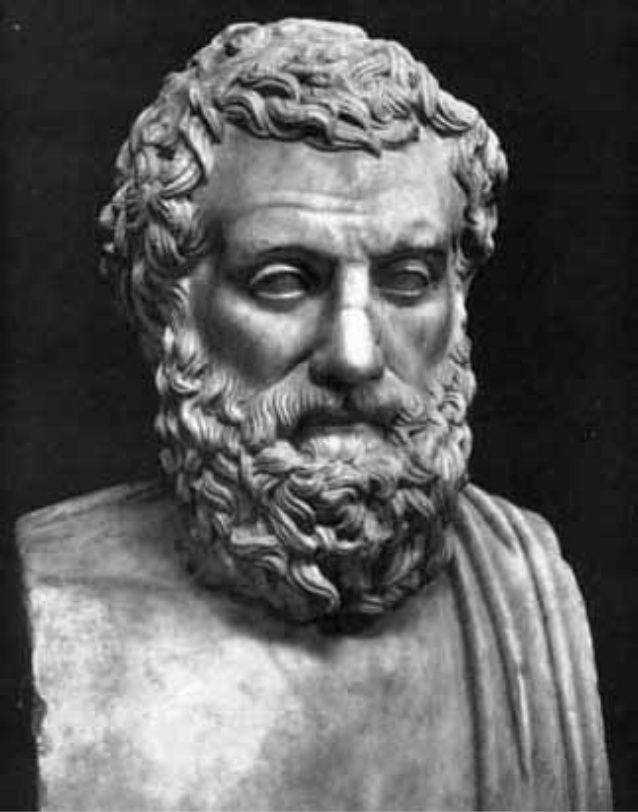
was interested in murder—and revenge, and, in fact, wrote an entire trilogy of tragedies based upon the topic, the Oresteia.
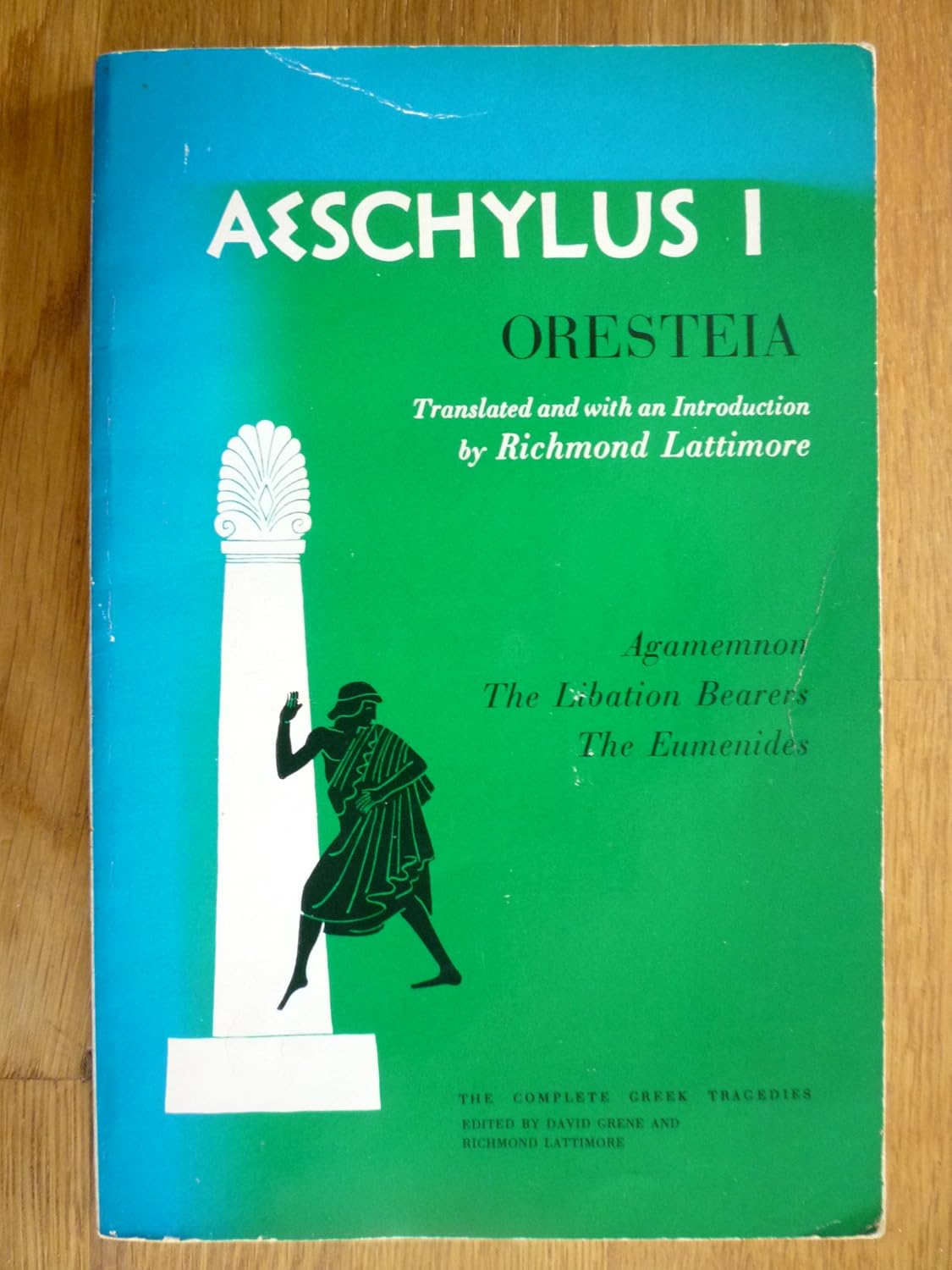
In the three plays, Aeschylus gives us the initial murder of Agamemnon, high king of Greece, by his wife, Clytemnestra, and her boyfriend, Aegisthus, in Agamemnon,
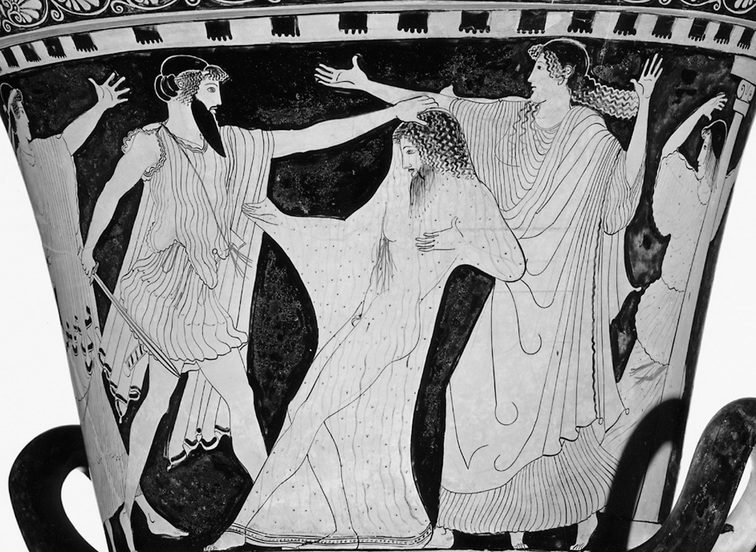
Agamemnon’s son, Orestes’, revenge upon his mother and that boyfriend in The Libation Bearers,
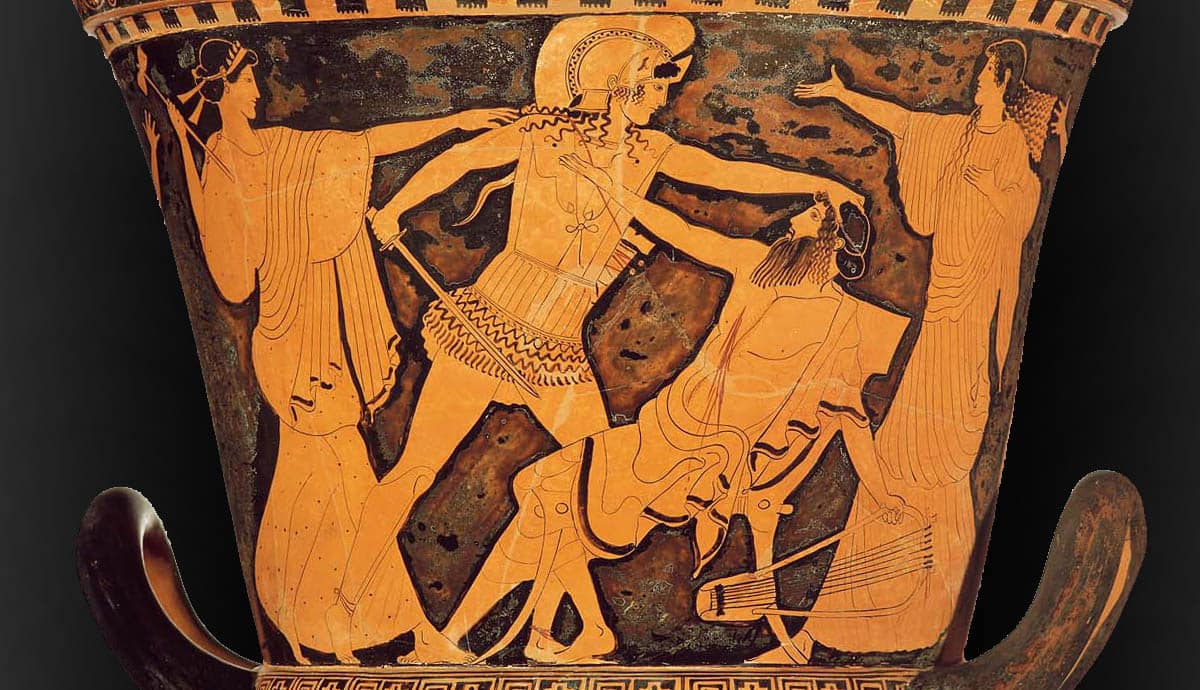
which includes, at its conclusion, Orestes’ pursuit by the Furies, the supernatural avengers of kin-murder, and his final salvation, with the aid of Athena, in The Furies,
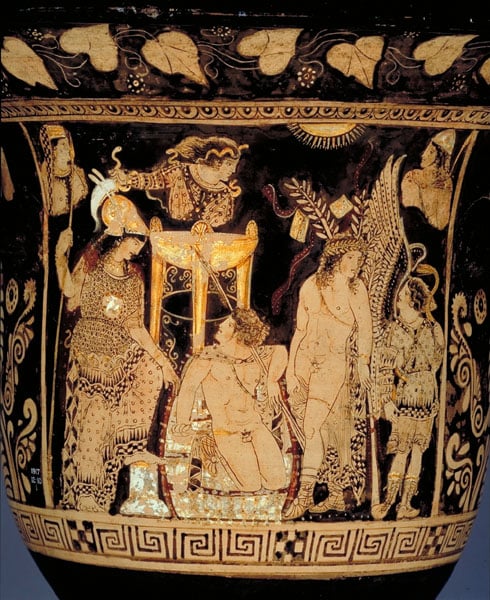
which includes both the pacification of the Furies and the first trial in Athens for murder, and also signals the beginning of the rule of law and the end of revenge as the way of dealing with murder—the old idea of “eye for an eye” justice being meted out by the family of the victim.
Other early societies lacked the Furies, but definitely had law and it’s interesting to see that their view of what to do about violent crime was decidedly different from ours, in which a murderer can be sentenced to a long term in prison or even executed, depending upon the country and the circumstances.
A major difference lies both in the lack of prison or execution and in providing compensation for the victim’s family.
What is a person worth? In modern terms, we probably think of life insurance and death compensation—

Early societies might have a kind of value scale. Early Ireland, for instance, was an agricultural world, and so everyone’s worth could be based upon cattle.

(for more on this, see: https://brehonacademy.org/cows-as-currency-in-early-ireland/ )
In the Germanic world, we see monetary compensation. The Frankish “Salic Law” had, basically, tables which showed the worth of different levels of society and what would be owed in compensation for a murder. Here is one portion so that you can see just how specific it is—
“Title XLI. Concerning the Murder of Free Men.
1. If any one shall have killed a free Frank, or a barbarian living under the Salic law, and it have been proved on him, he shall be sentenced to 8000 denars.
2. But if he shall have thrown him into a well or into the water, or shall have covered him with branches or anything else, to conceal him, he shall be sentenced to 24000 denars, which make 600 shillings.
3. But if any one has slain a man who is in the service of the king, he shall be sentenced to 24000 denars, which make 600 shillings.
4. But if he have put him in the water or in a well, and covered him with anything to conceal him, he shall be sentenced to 72000 denars, which make 1800 shillings.
5. If any one have slain a Roman who eats in the king’s palace, and it have been proved on him, he shall be sentenced to 12000 denars, which make 300 shillings.
6. But if the Roman shall not have been a landed proprietor and table companion of the king, he who killed him shall be sentenced to 4000 denars, which make 100 shillings.
7. But if he shall have killed a Roman who was obliged to pay tribute, he shall be sentenced to shillings.
9. If any one have thrown a free man into a well, and he have escaped alive, he (the criminal) shall be sentenced to 4000 denars, which make 100 shillings.”
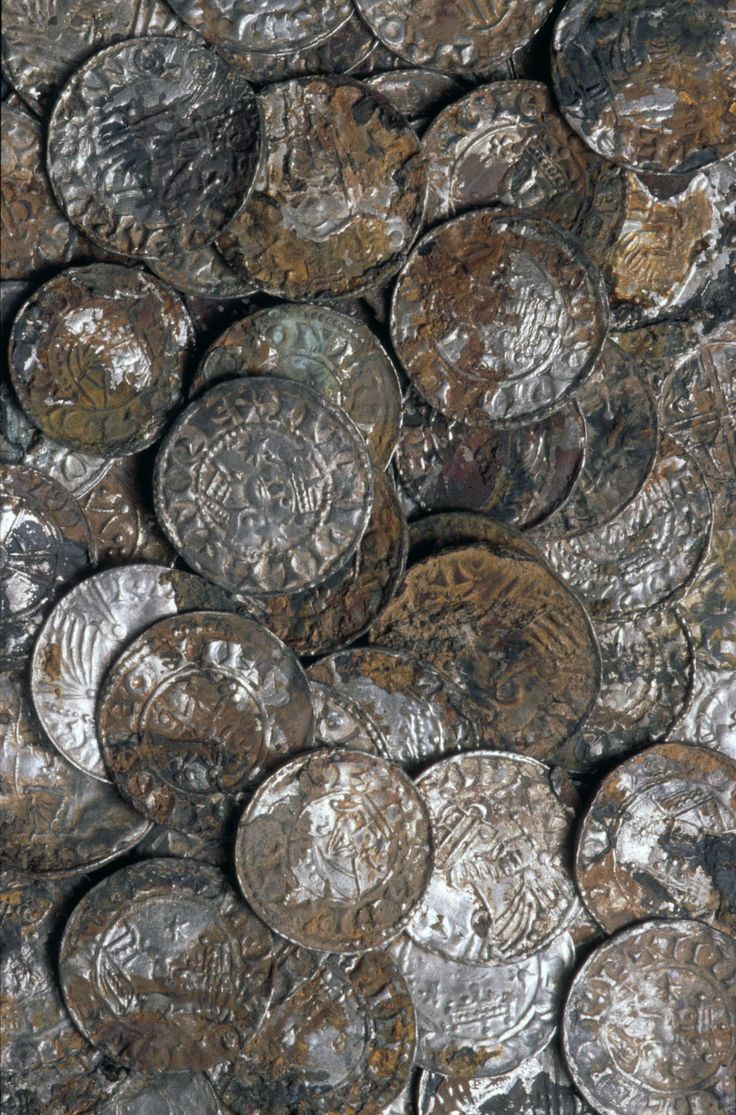
(quoted from the Yale Law School “Avalon Project” and you could read more here: https://avalon.law.yale.edu/medieval/salic.asp A “Roman” is a citizen. A “denar” is a penny in the Merovingian/Carolingian monetary system of what we might think of as Roman Gaul +. Here’s an example—
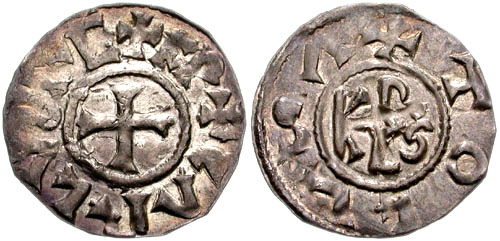
12 of these made a shilling and 20 shillings made a pound. For more on this system, see: https://en.wikipedia.org/wiki/Carolingian_monetary_system )
Payment for a death in this system was called “weregild”, or, depending where and when you lived, “mangaeld” or “leodardi”. (for more, see: https://en.wikipedia.org/wiki/Weregild For another valuation list, see: https://en.wikipedia.org/wiki/Nor%C3%B0leoda_laga )
We don’t know when or where Tolkien first encountered the term. It is interesting, however, to see the concept used in one of his favorite medieval works, Beowulf,
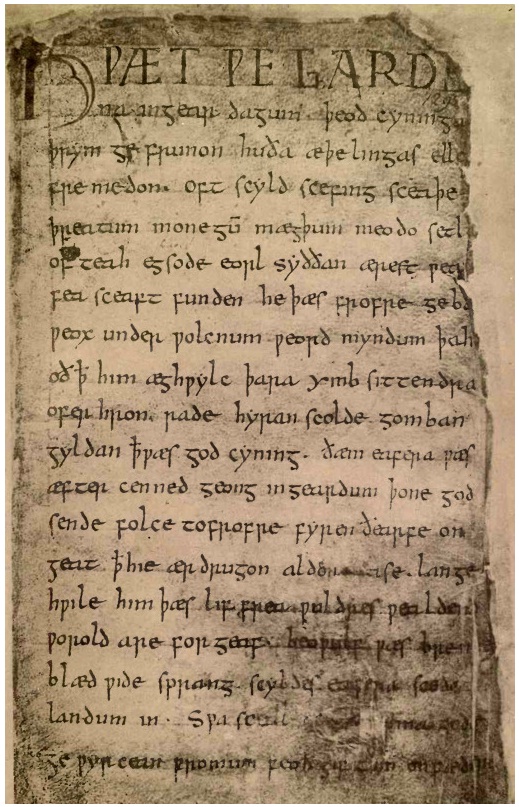
where it suggests that the monster, Grendel,
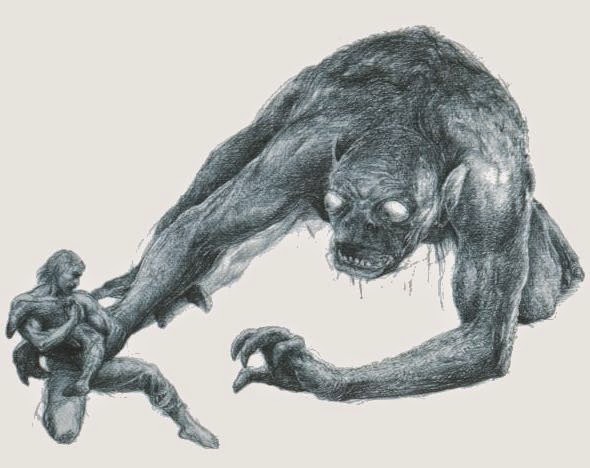
(Alan Lee)
is uncivilized, seeming not to understand that, in Danish society, killing requires rebalancing through financial compensation—
“feorhbealo feorran, fea thingian to desist in life-destruction, to settle it with payment,
ne thear naenig witena wenan thorfte none of the counsellors had any need to hope for
beorhtre bote to banan folmum noble recompense from the slayer’s hands.”
(lines 156-158, text and translation from the Heorot site, which contains helpful notes, as well as the Old English text and a modern English translation. Here it is: https://heorot.dk/beowulf-rede-text.html There’s a later mention of the Danish king, Hrothgar, paying weregild for a killing by Beowulf’s father, Ecgtheow, 456-472, and here the word used is “fee”—“feo”—which comes from a Germanic word for “cattle”, implying that, like the early Irish, the Germanic peoples were also once a cattle culture. For more on “fee”, see: https://www.etymonline.com/word/fee )
JRRT employs the term in a bit of ancient history about the Ring—
“ …and Isildur cut the Ring from [Sauron’s] hand with the hilt-shard of his father’s sword and took it for his own…
‘This I will have as weregild for my father, and my brother,’ he said…” (The Fellowship of the Ring, Book Two, Chapter 2, “The Council of Elrond”)
Isildur is aware that this isn’t a bit of costume jewelry, writing:
“The Great Ring shall go now to be an heirloom of the North Kingdom; but records of it shall be left in Gondor, where also dwell the heirs of Elendil, lest a time come when the memory of these great matters shall grow dim.”
In the same note, however, we see the signs that the Ring has already begun to exert its power over him:
“But for my part I will risk no hurt to this thing: of all the works of Sauron the only fair. It is precious to me, though I buy it with great pain.” (The Fellowship of the Ring, Book Two, Chapter 2, “The Council of Elrond”)
It will bring about his death, riddled with Orc arrows in the Anduin, and I wonder if, even as he obviously valued it, at the moment it slipped from his finger, he realized that his “weregild” wasn’t just an expensive equivalent of coins or cattle?
Thanks, as always, for reading.
Stay well,
Perhaps best to leave anything you see glittering on the ground,
But know that, as ever, there’s
MTCIDC
O

