• About

doubtfulsea

~ adventure fantasy

Tag Archives: Saruman

A Power

25 Wednesday Apr 2018

Posted by Ollamh in J.R.R. Tolkien, Narrative Methods, Villains

≈ Leave a comment

Tags

Gandalf, Grima, Harry Potter, Isengard, Istari, Mini-Me, Mirkwood, Necromancer, Ornthanc, Palantir, power, Rings of Power, Rohan, Saruman, Sauron, The Council of Elrond, The Hobbit, The Lord of the Rings, Theoden, Tolkien, Voldemort, White Council, Wormtongue

Welcome, dear readers, as ever.

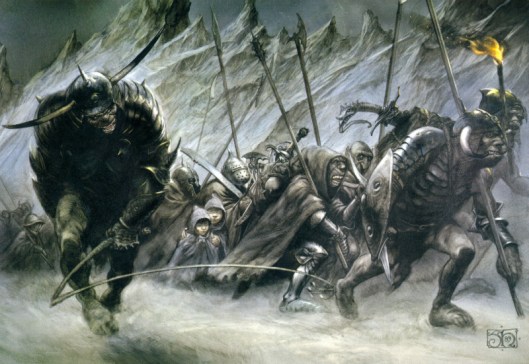
Some time ago, we did a post on Saruman as a “Mini-Me” version of Sauron

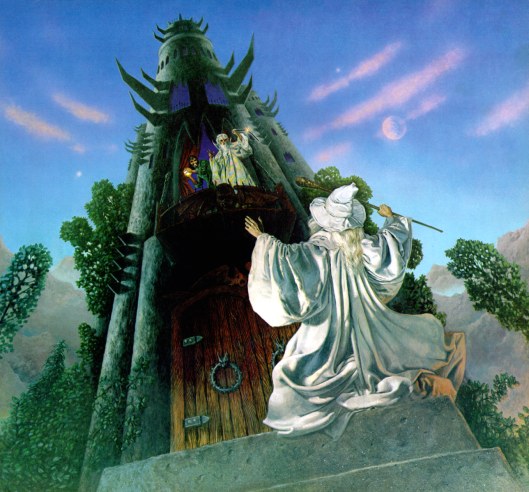
image1minime.jpg

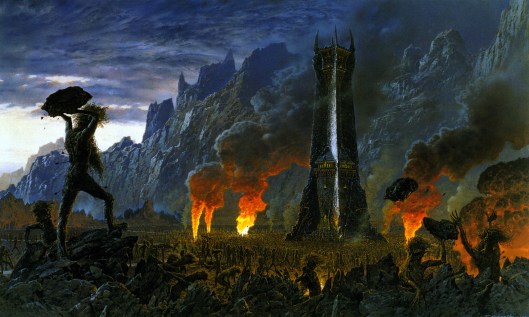
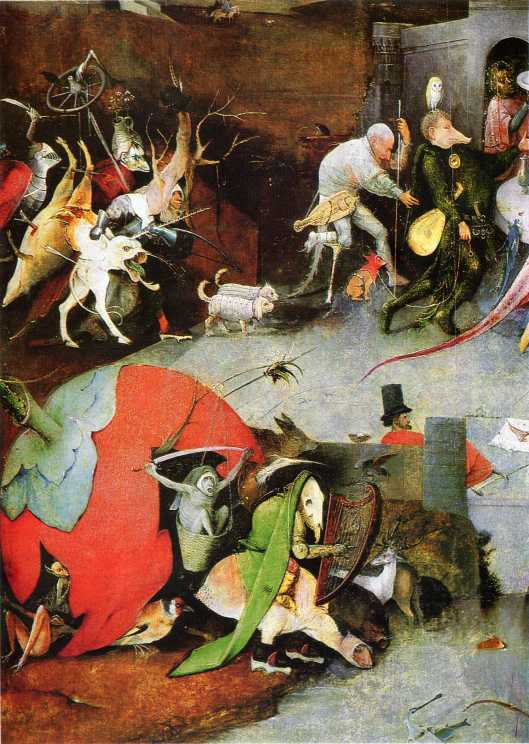
but, since that time, one of us has used The Hobbit in a class.  Mirkwood

image2mirkwood.jpg

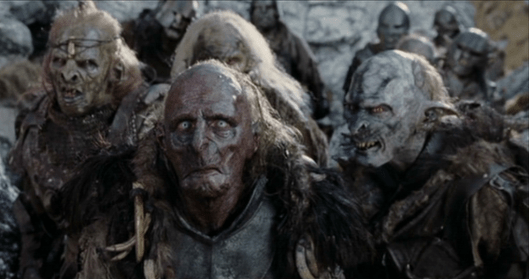
and the Necromancer

image3necromancer.jpg

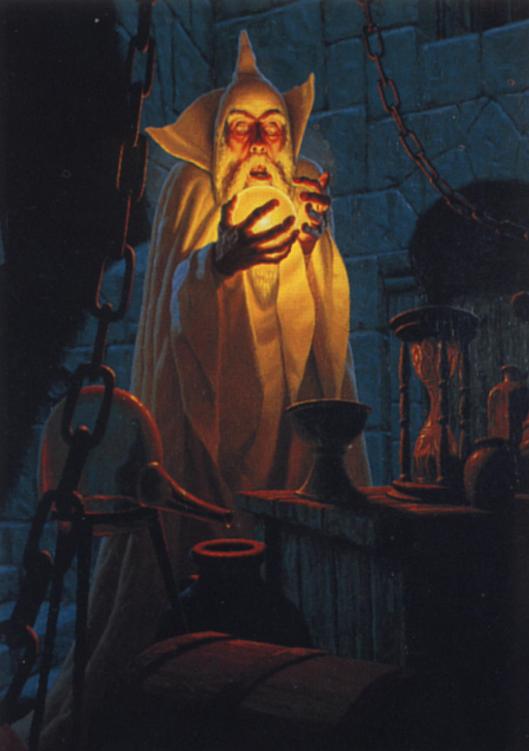
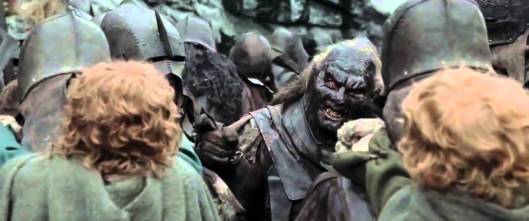
came up and we began to think about him again, this time to consider his strategy:  how long has he been planning something and what might be the elements within that plan?

image4saruman.jpg

Although there is no hard evidence for just how long Saruman has been at work, it seems like his scheme has been under construction for at least 80 years.  We base that upon Gandalf’s description of the White Council’s meeting on the subject of Sauron and what to do when it’s discovered that he is in Dol Guldur, calling himself the Necromancer:

“Some, too, will remember also that Saruman dissuaded us from open deeds against him, and for long we watched him only.  Yet at last, as his shadow grew, Saruman yielded and the Council put forth its strength and drove the evil out of Mirkwood and that was in the very year of finding this Ring…”

(The Fellowship of the Ring, Book One, Chapter 2, “The Council of Elrond”)

Almost 80 years before the story of Bilbo and the Ring, then, it appears that one element in Saruman’s plot was shielding Sauron—a fact clearly not lost on Treebeard:

“He was chosen to be the head of the White Council, they say; but that did not turn out too well.  I wonder now if even then Saruman was not turning to evil ways.”

(The Two Towers, Book Three, Chapter 4, “Treebeard”)

From something Saruman says to Gandalf we might guess the obvious reason for helping Sauron to escape action by the White Council:

“A new Power is rising.  Against it the old allies and policies will not avail us at all.  There is no hope left in Elves and dying Numenor.  This then is one choice before you, before us.  We may join with that Power.  It would be wise, Gandalf.  There is hope that way.  Its victory is at hand; and there will be rich reward for those that aided it.”

(The Fellowship of the Ring, Book One, Chapter 2, “The Council of Elrond”)

But being a lackey to that Power is not quite his ultimate design, as we see:

“As the Power grows, its proved friends will also grow; and the Wise, such as you and I, may with patience come at last to direct its courses, to control it.  We can bide our time, we can keep our thoughts in our hearts, deploring maybe evils done by the way, but approving the high and ultimate purpose:  Knowledge, Rule, Order; all the things that we have so far striven in vain to accomplish…”

As is well-known, Saruman, as one of the Istari, was sent into Middle-earth as a counter to Sauron, not as an ally, and their purpose was:

“…coming in shapes weak and humble were bidden to advise and persuade Men and Elves to good and to seek to unite in love and understanding all those whom Sauron, should he come again, would endeavor to dominate and corrupt.”

(Unfinished Tales, 406)

Knowledge, yes, but Rule and Order?  Emphatically not!  But if that Power (and we note that even Saruman won’t just come out and say “Sauron” at this point, rather like the use of “He Who Must Not Be Named” in the Harry Potter books)

image5voldemort


can be used as a tool in Saruman’s hands—which may show us one element in his grand design.

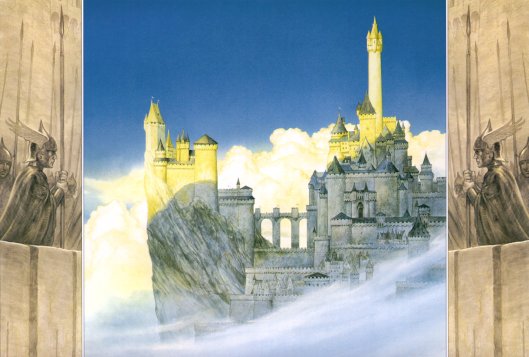
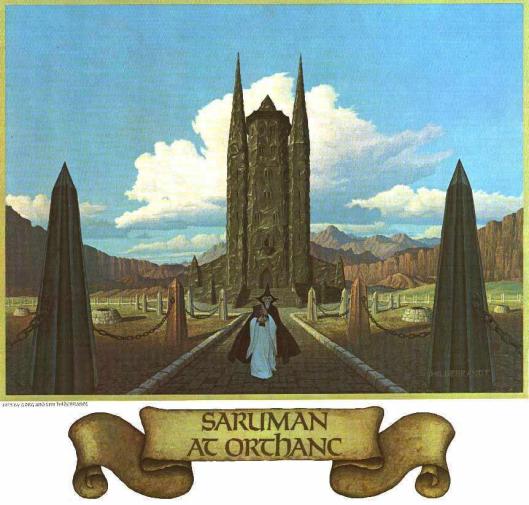
First, however, it would seem that he needed a base.  As Treebeard tells Merry and Pippin:

“He gave up wandering about and minding the affairs of Men and Elves, some time ago—you would call it a very long time ago; and he settled down at Angrenost, or Isengard as the Men of Rohan call it.”

(The Two Towers, Book Three, Chapter 4, “Treebeard”)

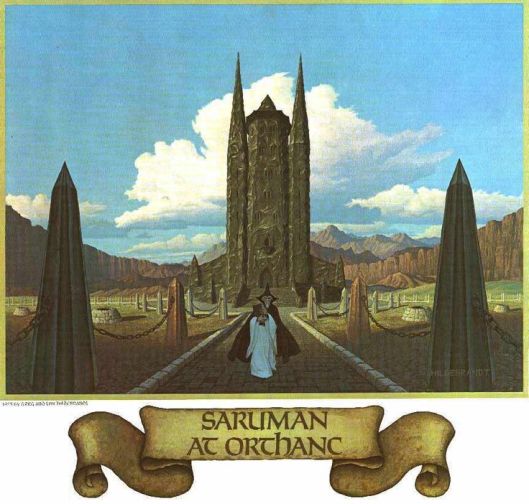
image6orthanc


Saruman even then was already thinking of something, though the purpose was intentionally shrouded:

“There was a time when he was always walking about in my woods.  He was polite in those days, always asking my leave…and always eager to listen.  I told him many things that he would never have found out by himself; but he never repaid me in like kind.  I cannot remember that he ever told me anything.  And he got more like that; his face, as I remember it…became like windows in a stone wall:  windows with shutters inside.”

Although he was powerful, Saruman needed allies—or, rather, servants—and he wasn’t too particular who or what they were:

“He has taken up with foul folk, with the Orcs…Worse than that:  he has been doing something to them; something dangerous.  For these Isengarders are more like wicked Men.  It is a mark of evil things that came in the Great Darkness that they cannot abide the Sun; but Saruman’s Orcs can endure it, even if they hate it.  I wonder what he has done?  Are they Men he has ruined, or has he blended the races of Orcs and Men?  That would be a black evil!”

With the help of these servants, Saruman has turned his base into a factory and storehouse for his scheme, as Gandalf says:

“…it had once been green and fair, it was now filled with pits and forges.  Wolves and orcs were housed in Isengard, for Saruman was mustering a great force on his own account, in rivalry of Sauron and not in his service, yet.”

(The Fellowship of the Ring, Book One, Chapter 2, “The Council of Elrond”)

In fact, it would appear from what Saruman has told Gandalf, that he actually never intends to offer his service to Sauron.

From his base, he has been extending his own power into Rohan, in the south.  In his encounter with Aragon and his companions, Eomer says:

“But at this time our chief concern is with Saruman.  He has claimed lordship over all this land, and there has been war between us for many months.  He has taken Orcs into his service, and Wolf-riders, and evil Men, and he has closed the Gap against us, so that we are likely to be beset both east and west.”

(The Two Towers, Book Three, Chapter 2, “The Riders of Rohan”)

His attacks aren’t always military and Eomer hints at another possibility:

“His spies slip through every net, and his birds of ill omen are abroad in the sky.  I do not know how it will all end, and my heart misgives me; for it seems to me that his friends do not all dwell in Isengard.  But if you come to the king’s house, you shall see for yourself.”

We know that this is “fifth-column” work—Grima Worm-tongue, who has been slowly poisoning King Theoden with defeatism.

image7grima.png

And now we can see, in broad outline, what Saruman is up to:

  1. establish a base
  2. recruit an army
  3. build up an intelligence network (birds, spies, even wandering himself to pick up information)
  4. use your strength to expand power into the next land, Rohan
  5. at the same time undercut the King of Rohan’s ability to resist by subversive methods

So far, so good, as long as all that Saruman wants is to be the ruler of the land south of the Gap of Rohan and north of Gondor, but we’ve already seen that he’s more ambitious yet, suggesting to Gandalf that they—really he, as Gandalf knows—can take over that unnamed Power and use it for their—his– purposes, Knowledge, Rule, Order.  When he sees that Gandalf is unconvinced, Saruman lets slip the capstone of his scheme:

“Well, I see that this wise course does not commend itself to you…Not yet?  Not if some better way can be contrived?…And why not, Gandalf?  Why not?  The Ruling Ring?  It we could command that, then the Power would pass to us.”

And here is the real heart of Saruman’s design:  to obtain the One Ring.

He has been searching for it for a long time, even traveling to Minas Tirith to examine ancient records.

“In former days the members of my order had been well received there,” says Gandalf to the Council of Elrond, “but Saruman most of all.  Often he had been for long the guest of the Lords of the City.”

His purpose is now easy to guess.

Gandalf had been aware that Saruman had seemed to know a great deal about the Ring, even to its appearance, as Saruman had said to the White Council:

“The Nine, the Seven, and the Three had each their proper gem.  Not so the One.  It was round and unadorned, as it were one of the lesser rings; but the maker set marks upon it that the skilled, maybe, could still see and read.”

How had Saruman known that since, as Gandalf says, “What those marks were he had not said.  Who now would know?  The maker.  And Saruman?  But great though his lore may be, it must have a source.  What hand save Sauron’s ever held this thing, ere it was lost?  The hand of Isildur alone.”

Gandalf discovers the truth of this in the dusty records of Gondor:

“…there lies in Minas Tirith still, unread, I guess, by any save Saruman and myself since the kings failed, a scroll that Isildur made himself.”

And, with the discovery and reading of that scroll, Gandalf knows not only about much more about the Ring, but how Saruman knew about its appearance and now, in Orthanc, pressed by Saruman to join him, he understands the last element in Saruman’s design—and also why Saruman has summoned him:

“That is in truth why I brought you here.  For I have many eyes in my service, and I believe you know where this precious thing now lies.  Is it not so?  Or why do the Nine ask for the Shire, and what is your business there?”

So here, lacking only one element, the real element under all, is Saruman’s long plan—but lacking “this precious thing” (a telling phrase!), we will see how successful the rest will be.  Treebeard has said of him,

“He has a mind of metal and wheels; and he does not care for growing things, except as far as they serve him for the moment.”

What will happen when, without the Ring, Saruman will find that growing things, instead of serving him for the moment, might unseat him forever?

image8destruction.jpg

As always, thanks for reading!

MTCIDC

CD
Wormy

21 Wednesday Feb 2018

Posted by Ollamh in J.R.R. Tolkien, Military History, Military History of Middle-earth, Villains

≈ Leave a comment

Tags

Adolf Hitler, Bilbo, Dragon, Fifth Column, Gandalf, Germany, Grima, Madrid, Middle-earth, Nazis, Norway, Norwegian facist party, Republican government, Rohan, Saruman, Second World War, Smaug, Spanish Civil War, The Hobbit, The Lord of the Rings, The Scouring of the Shire, Theoden, Tolkien, traitor, Vidkun Quisling, William Blake, worm, Wormtongue

Welcome, as always, dear readers.
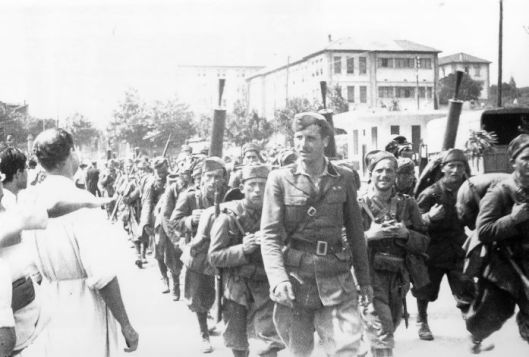
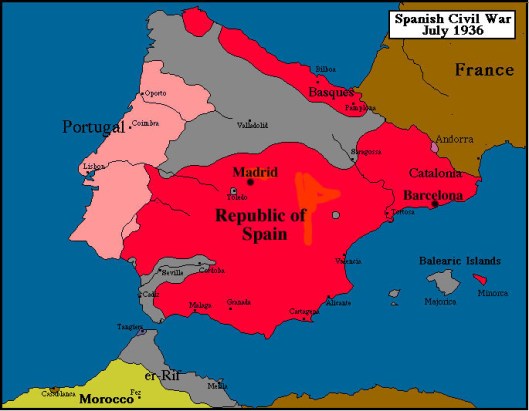
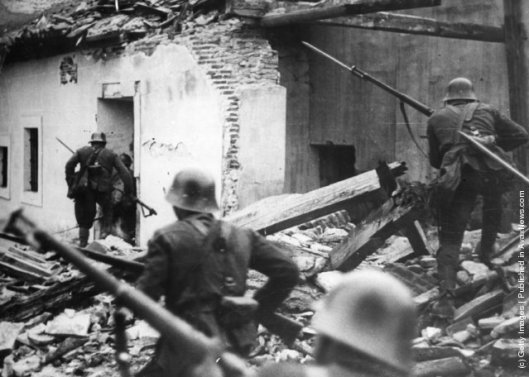
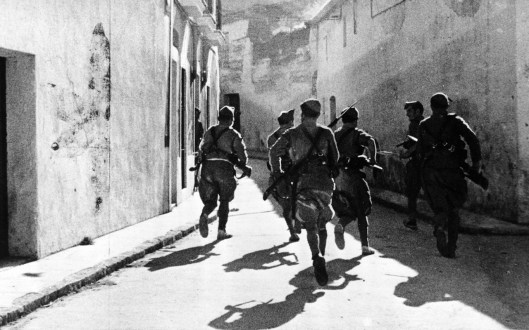
In 1936, the Nationalist forces were marching to attack the Republican government in Madrid, during the Spanish Civil War.
image1nationalists.jpg
image2attackonmadrid.jpg
When interviewed, a Nationalist general is reported to have said that, as four military columns were about to assault the city,
image3natattack.jpeg
a fifth column of loyalists would join the attack from inside.
image4natattack.jpg
This phrase “fifth column”, then, was picked up and began to be used world-wide to mean “traitors/betrayers from within” and was popular during the Second World War era.
image5thcol.jpg

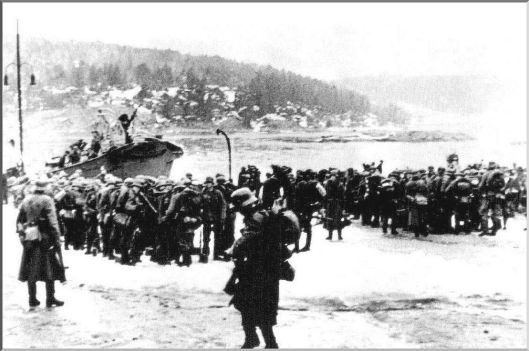
When the Nazis attacked Norway in 1940,
image6nazislandinginnorway.jpg
and the Allies failed to defend their positions there successfully and were forced to surrender or flee
image7capturedtroops.jpg
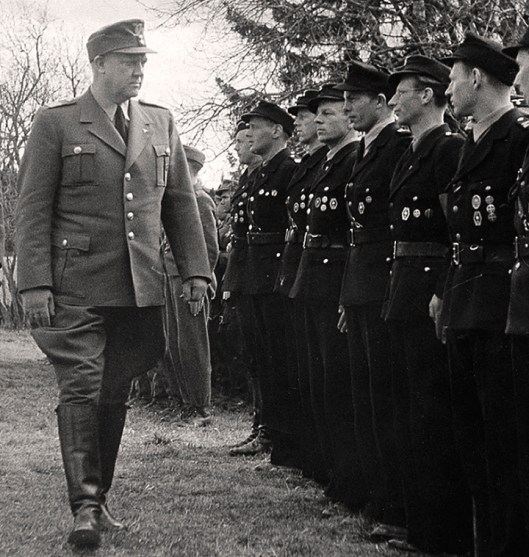
a member of the small Norwegian fascist party, Vidkun Quisling,
image8quisling.jpg
declared himself ruler as the Germans marched in.
image9conqueringgermans.jpg

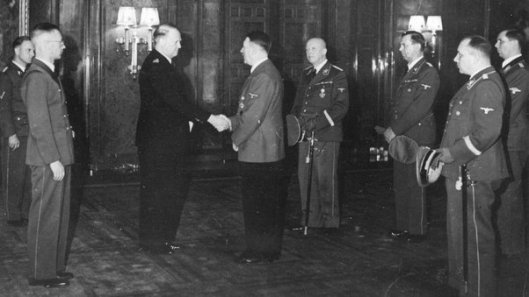
In time, the Nazis recognized him as the head of Norway and he even had an audience with Hitler.
image10hitandquis.jpg

This time, a specific “fifth columnist” had not only betrayed his country, but also profited greatly from it and, when we looked at the dates—1936 and 1940—we wondered, as we so often do, if the current events of our world may have colored JRRT’s relation of the events in Middle-earth—even as we hasten to say, as we always do, that this is just a suggestion.
In his first meeting with Aragorn, Eomer is troubled and his veiled comments suggest just the same sort of fifth-columnist action:
“But at this time our chief concern is with Saruman. He has claimed lordship over all this land, and there has been war between us for many months…”
His concern, however, as we see, is for more than border security, as he says of Saruman:
“His spies slip through every net, and his birds of ill omen are abroad in the sky. I do not know how it will all end, and my heart misgives me; for it seems to me that his friends do not all dwell in Isengard. But if you come to the king’s house, you shall see for yourself.” (The Two Towers, Book Three, Chapter 2, “The Riders of Rohan”)
So, all is not well, not only in Rohan, but in Meduseld itself. When Gandalf and the other survivors of the Fellowship arrive at the gates of Edoras, they are stopped by guards and by a command from Theoden, king of Rohan—or is it? A guard says:
“It is but two nights ago that Wormtongue came to us and said that by the will of Theoden no stranger should pass these gates.” (The Two Towers, Book Three, Chapter 6, “The King of the Golden Hall”)
“Wormtongue” seems a very odd name—do worms actually have tongues?
image11worm.JPG
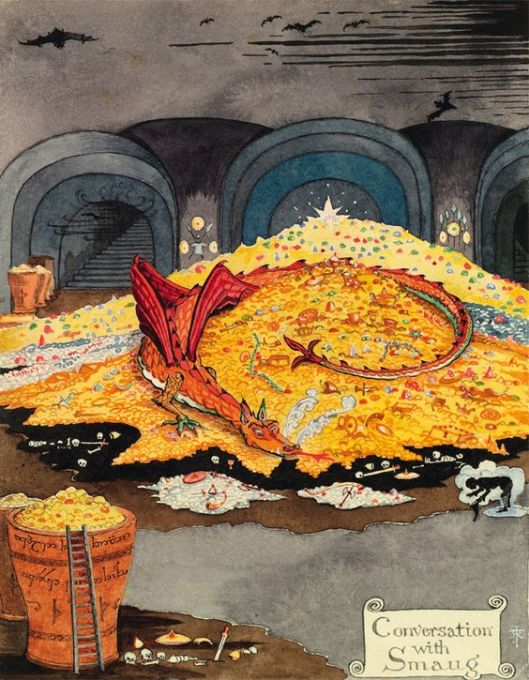
But this isn’t a worm, it’s a “worm”—an old term for “dragon”.
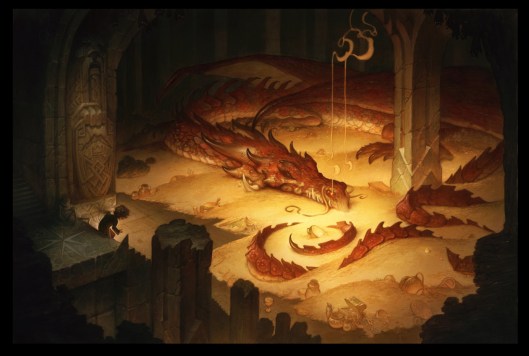
image12smaug.jpg
And, if Smaug’s speech and its effect upon Bilbo is anything to go by:
“Bilbo was now beginning to feel really uncomfortable. Whenever Smaug’s roving eye, seeking for him in the shadows, flashed across him, he trembled, and an unaccountable desire seized hold of him to rush out and reveal himself and tell all the truth to Smaug. In fact he was in grievous danger of coming under the dragon-spell.” (The Hobbit, Chapter 12, “Inside Information”)
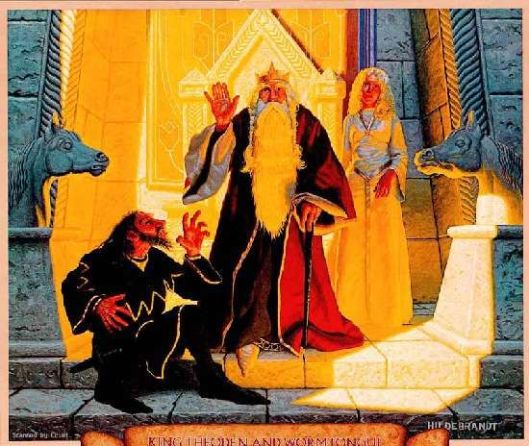
then a person having a dragon tongue might be a real threat, as Wormtongue, seated at Theoden’s feet,
image13theodenandgrima.jpg
inserts himself between Gandalf and Theoden:
“Why indeed should we welcome you, Master Stormcrow? Lathspell I name you, Ill-news; and ill news is an ill guest they say.”
Gandalf immediately resists this and, in a burst of power, breaks the real “spell”—the dragon’s words which Grima Wormtongue has been pouring into Theoden’s ears, as Theoden says to him of Gandalf’s efforts: “If this is witchcraft…it seems to me more wholesome than your whisperings. Your leechcraft [that is, “medical skill”—obviously ironic here] ere long would have had me walking on all fours like a beast.”
[A footnote here—is JRRT making a quiet reference to the fate of Nebuchadnezzar, king of Babylon, mentioned in the book of Daniel in the Old Testament? In Chapter 4, the king is driven mad and spends seven years as a grazing animal to prove the power of the Hebrew divinity. Here is William Blake’s (1757-1827) striking depiction of the mad king.]
image14blake.jpg

Certainly something Grima has been doing has affected Theoden, as he is initially described as “a man so bent with age that he seemed almost a dwarf…” and this shrinking is suddenly reversed when Gandalf strikes Grima down:
“From the king’s hand the black staff fell clattering on the stones. He drew himself up, slowly, as a man that is stiff from long bending over some dull toil. Now tall and straight he stood, and his eyes were blue as he looked into the opening sky.”
For all that Grima has been blocked and Theoden restored, the fifth columnist tries once more. When he is told that he must ride with the king and his warriors to battle, he makes a countersuggestion:
“One who knows your mind and honours your commands should be left in Edoras. Appoint a faithful steward. Let your counsellor Grima keep all things till your return…”
But he gives himself away by finishing that sentence with “and I pray that we may see it, though no wise man will deem it hopeful.”
And Gandalf sees all too clearly what is behind Grima’s proposal—and who is behind it:
“Down, snake!…Down on your belly! How long is it since Saruman bought you? What was the promised price?…”
image15fallofgrima.jpg

Although it is said that Grima deserves death for his treachery, he is allowed to flee, and, when we next see him, he is with his true master, acting as his “footman” as Gandalf calls him (The Two Towers, Book Three, Chapter 10, “The Voice of Saruman). And here, as Bilbo’s pity has preserved Gollum for an unseen but vital part in the later story of the Ring, so Gandalf’s mercy to Grima preserves him for two final acts: first, his mistaken use of a palantir as a missile, which puts it into Gandalf’s hands and, ultimately into Aragorn’s, who shakes Sauron’s nerve with it; second, Saruman’s ultimate end:
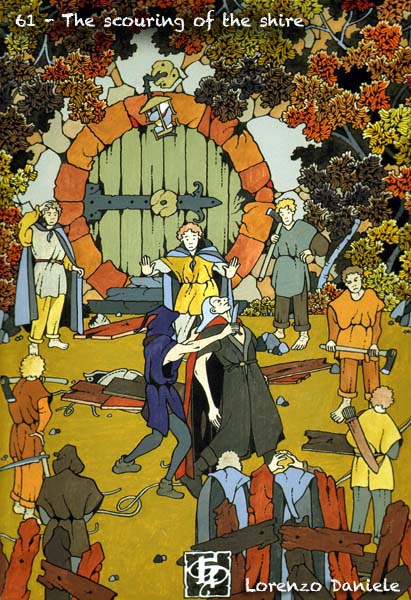
“[Saruman] kicked Wormtongue in the face as he groveled, and turned and made off. But at that something snapped: suddenly Wormtongue rose up, drawing a hidden knife, and then with a snarl like a dog he sprang on Saruman’s back, jerked his head back, cut his throat, and with a yell ran off down the lane.” (The Return of the King, Book Six, Chapter 8, “The Scouring of the Shire”)
image16deathofsaruman.jpg
Grima doesn’t survive this attack, however: “Before Frodo could recover or speak a word, three hobbit-bows twanged and Wormtongue fell dead.”
Merry calls these final acts of violence “the very last end of the War”, but we would suggest a parallel with a specific event in our world: the end of Vidkun Quisling–executed by firing squad in October, 1945, for treason. Could we say that Grima’s death—deserved earlier, but deferred—was also a kind of execution for treason, against Rohan, finally carried out?
And a final thought: after World War 2, Quisling’s name became, for a time, an easy synonym for “fifth columnist/traitor”—could we imagine that, in the Common Speech of Middle-earth after the War of the Ring, the same might have happened to “Grima Wormtongue”?
Thanks, as ever, for reading.
MTCIDC
CD
I Think That I Shall Never See…

10 Wednesday Jan 2018

Posted by Ollamh in Artists and Illustrators, Economics in Middle-earth, Fairy Tales and Myths, J.R.R. Tolkien, Literary History, Military History, Military History of Middle-earth, Narrative Methods, Uncategorized

≈ Leave a comment

Tags

Alan Lee, Alexander Volkov, Battle of the Somme, C.S. Lewis, Caspar David Friedrich, deforestation, Fangorn, Fangorn Forest, German Romantics, Grimm Brothers, Haensel and Gretel, Industrial Revolution, Isengard, Kansas, L. Frank Baum, Leonid Vladimirsky, Mordor, pre-industrial, Saruman, The Lord of the Rings, The Scouring of the Shire, The Wizard of Emerald City, The Wizard of Oz, Tin Woodman, Tolkien, trees

Welcome, dear readers, as always.

In a letter to his aunt, Jane, dated 8-9 September, 1962, JRRT wrote:

“Every tree has its enemy, few have an advocate.” (Letters, 321)

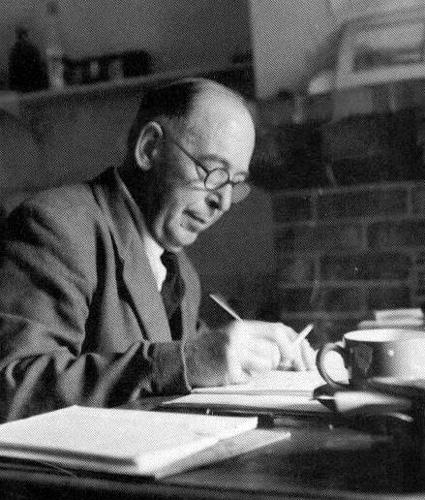
We know, from his letters and from interviews, just how passionate he was about trees,

image1jrrt.jpg

but we were immediately caught by just how very Treebeardish he sounded:

“I am not altogether on anybody’s side, because nobody is altogether on my side, if you understand me…” (The Two Towers, Book Three, Chapter 4, “Treebeard”)

image2tbd.jpg

Trees almost seemed to be people to Tolkien—in fact, we know that Treebeard was based in part upon a person—his friend, CS Lewis—at least his voice and manner of speaking.

image3csl.jpg

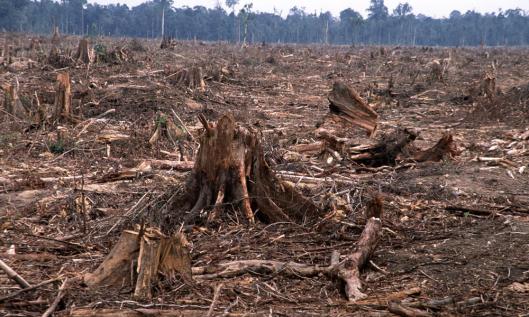
As near-people, then, to Tolkien, their destruction would have been a kind of murder.  With that in mind, we thought of our last posting, in which we quoted Farmer Cotton talking about Sharkey’s regime in the Shire, including “They cut down trees and leave ‘em lie.”  (The Return of the King, Book Six, Chapter 8, “The Scouring of the Shire”).  And we wondered whether, behind this, JRRT was talking not only about the orcs’ wanton devastation of trees,

image4treeruin.jpg

but also reliving the Battle of the Somme, in 1916, and seeing once more the acres of unburied dead (60,000 British casualties alone on the first day, 1 July, 1916).

image5dead.jpg

Certainly Treebeard saw this as murder, as he says to Merry and Pippin about Saruman

“He and his foul folk are making havoc now.  Down on the borders they are felling trees—good trees.  Some of the trees they just cut down and left to rot—orc-mischief that; but most are hewn up and carried off to feed the fires of Orthanc…Curse him root and branch!  Many of those trees were my friends, creatures I had known from nut and acorn; many had voices of their own that are lost for ever now.  And there are wastes of stump and bramble where once there were singing groves.”  (The Two Towers, Book Three, Chapter 4, “Treebeard”)

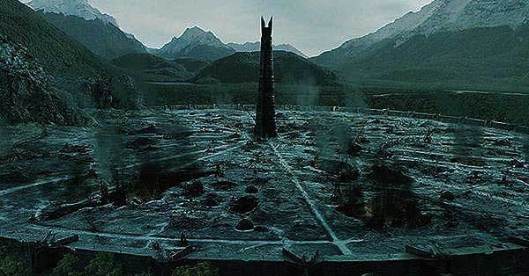
Saruman, a person with “a mind of metal and wheels”, who was “plotting to become a Power”,

image6saruman.jpg

has turned Isengard into a vast factory, where “there is always a smoke rising”.

image7isengard.jpg

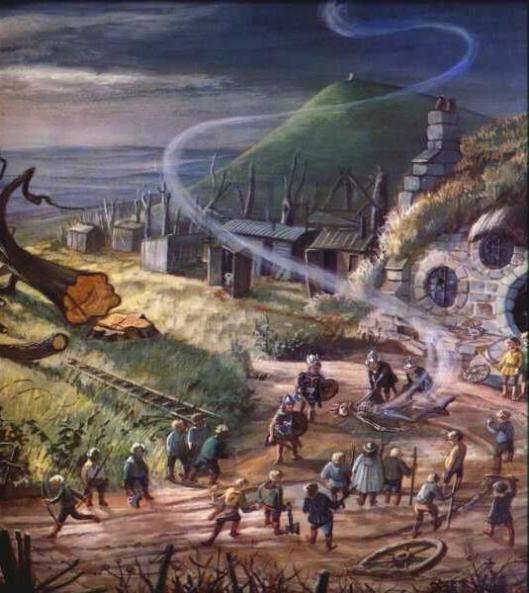
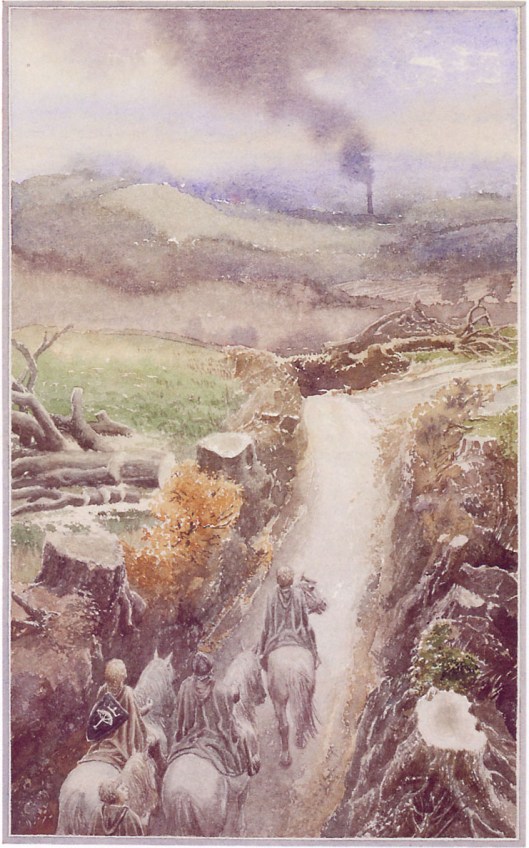
Thus, just as JRRT may have been recalling the Battle of the Somme, so perhaps he was also suggesting  the industrialization which had been in full swing when he was born and which he disliked intensely and which was reducing much of the part of England in which he grew up to the smoking wasteland Sharkey tried to make the Shire

image8.jpg

as we see in this Alan Lee depiction.

image9.jpg

Of course the deforestation went back long before the Industrial Revolution began.  Once upon a time, great forests covered much of the northern European world and humans lived in the midst of miles and miles of trees in clearings which they cut for themselves.

image10schwarz.jpg

image11farm.jpg

And we still have a distant memory of these, we would suggest, in some of our fairy tales.  If you think about the Brothers Grimm fairy tale of “Haensel and Gretel”, for example,

image12grimms.jpg

image13kinderund.jpg

image14schatten.jpg

you’ll remember that, not only did the children live in the middle of such forest, as did the witch, but their father was a woodcutter, someone who would have been involved in that very deforestation, if in a very small way.

image15woodcutter.jpg

This memory, collected by the Grimms and others in folktale form in the early 19th century, also provided inspiration for the German Romantics—as you can see in this painting by one of their greatest painters, Caspar David Friedrich (1774-1840).

image16chasseur.jpg

To those Romantics, the forest was scary—but fascinating, as well—and disappearing, as the industrialism which JRRT disliked swallowed it.

image17blackcountry.jpg

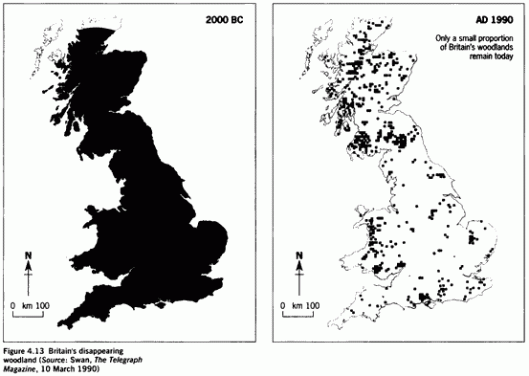
Wood was, however, the plastic of the world for many generations, with infinite uses, from home heating to ship-building, and, wherever humans settled, wood was eaten up.  Here is a telling chart for Britain of the contrast between 2000BC and 1990AD.

image18mapofgb.gif

It is no surprise, then, that, during the 17th century colonization of what is called New England in the US, a major attraction was the availability of wood and the colonists took full advantage of that availability, as this chart shows—

image19deforest.jpg

The forest which Treebeard shepherds is, in fact, rather like the forest depicted in that chart of Britain, as Aragorn says:

“Yes, it is old…as old as the forest by the Barrow-downs, and it is far greater.  Elrond says that the two are akin, the last strongholds of the mighty woods of the Elder Days, in which the Firstborn roamed while Men still slept.”  (The Two Towers, Book Three, Chapter 2, “The Riders of Rohan”)

But what would have happened to it had Saruman not lost Isengard to the very trees he was destroying?

image20destructionofisengard.jpg

In thinking about this, we were reminded of another woodcutter in a children’s story.

image21tinwoodsman.png

Or, if you prefer the film—

image22woodsman.jpg

He lives in the still-wooded land of Oz

image23oz.png

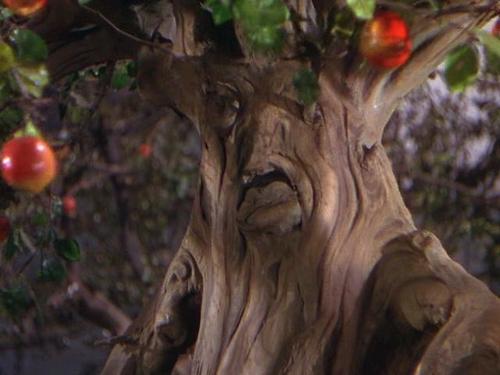
where there are even talking trees (although a lot less friendly than Treebeard).

image24talkingtree.jpg

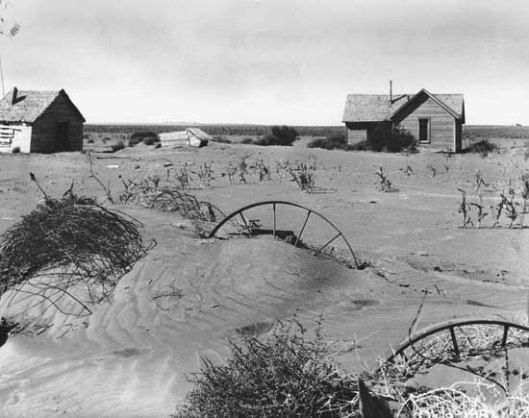
Dorothy, however, lives in a Kansas seemingly blighted by the so-called “Dust Bowl” of the 1930s.

image25kansas.jpg

image26dustbowl.jpg

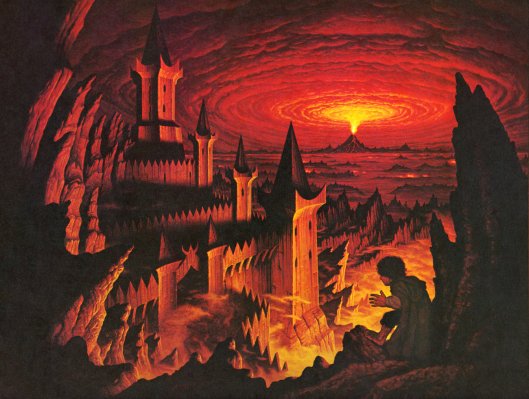
Would this have been Fangorn’s fate?  We have only to look at Mordor to believe it might have been, when all the trees fell silent.

image27mordor.jpg

As ever, thanks for reading.

MTCIDC

CD

PS

In 1939, a Russian children’s author, Alexander Volkov, published The Wizard of the Emerald City.  When one compares it with a certain American book of about 40 years before, striking similarities appear, starting with the title character.  And the illustrations, by Leonid Vladimirsky, also have something familiar about them…

image28vlad.jpg

There was one very practical change, however:  the Tin Woodman became the “Iron Lumberjack”, which rectifies a mistake in the original.  When Dorothy discovers the Woodman, he has rusted in place, but tin can’t rust!

Contraption

27 Wednesday Dec 2017

Posted by Ollamh in Economics in Middle-earth, J.R.R. Tolkien, Narrative Methods

≈ Leave a comment

Tags

Bag End, Barbegal, Birmingham, Caillebotte, contraptions, haymows, Hobbiton, machines, mill, plowing, reaping, Roman bread, Sandyman's Mill, Sarehole, Sarehole Mill, Saruman, sowing, The Lord of the Rings, The Shire, Tolkien, water mill, wheels, winnowing

Welcome, as always, dear readers.

Although we think we might have another post or two on things in Bilbo’s hall, we thought it would be fun to take a break and look elsewhere in Middle-earth.

In a posting long ago now, we looked at Saruman and his attempt to ruin the Shire.  Cutting down trees was certainly part of his plan, as Farmer Cotton tells the hobbits:  “They cut down trees and let ‘em lie” (The Return of the King, Book Six, Chapter 8)  There was much worse, however, as he continues:

“Take Sandyman’s mill now.  Pimple knocked it down, almost as soon as he came to Bag End.  Then he brought in a lot o’ dirty-looking men to build a bigger one and fill it full o’ wheels and outlandish contraptions.”

“Wheels” made us think of two things:

  1. Fangorn’s description of Saruman himself: “He has a mind of metal and wheels” (The Two Towers, Book Three, Chapter 4, “Treebeard”)
  2. and, secondly, just what level of technology Middle-earth actually has

JRRT himself wrote of Hobbits, in the Prologue to The Lord of the Rings:

“They do not and did not understand or like machines more complicated than a forge-bellows, a water-mill, or a hand-loom, though they were skilful with tools.”

As far as authentic depictions, we have one, by Tolkien himself, in this picture of Hobbiton.

image1hobbitonmill.jpg

Presumably, that’s the Sandyman mill in the foreground.  You can see in the left middleground what appear to be hay stacks (also called “haymows”) which rather resemble these from a painting by Caillebotte (whose work appeared in our posting on umbrellas) and are where the material saved from the growing/reaping cycle is stored.

image2haystackscaillebotte.jpg

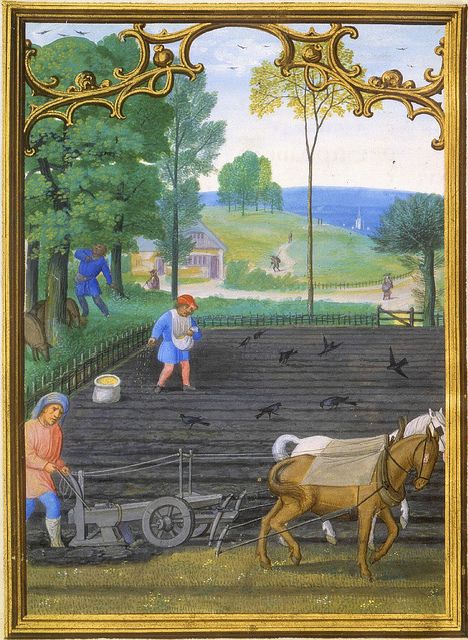
The whole process for what eventually gets to the mill begins with plowing the land and sowing the seed (and keeping off the birds, if possible).

image3plowing.jpg

Then, when the grain is ripe, it is reaped and stacked.

image4reapingstacking.jpg

At this point, the grain is still on the stalk and needs to be detached.  This is done by flailing it.

image5flailing.jpg

At that point, however, it’s still in its beard

image6wheatinbeard.jpg

and the kernels of wheat need to be shaken free by the process called winnowing.  This can be done by a number of methods, but the easiest includes using the air currents to help remove the hull (the chaff—and, if you know the expression “to separate the wheat from the chaff”, now you also know where it comes from).

image7winnowing.jpg

Now, when you finally have the pure grain, the next step is to grind it to a powder.  The most ancient method (still used for crushing grain in some parts of the world) is this—

image8quernstone.jpg

But the Romans sped this up with a kind of early machine, both slave-driven and animal-propelled—

image9slave.jpg

image10animal.jpg

The flour (pretty coarse and gritty, we understand—which wore down people’s teeth) was then mixed with water and baked

image11bakingprocess.jpg

and sold as this.image12.jpg

(This is real Roman bread—abandoned in an oven when Vesuvius exploded and found many centuries later, still in the oven.)  Some bakers liked to label their bread, as you can see, with a special name stamp.

image13breadstamp.jpg

In time, some clever Roman got the idea that there might be a more efficient method than slaves and animals and harnessed water as a power source and even occasionally harnessed it more than once, as here, at Barbegal, in southern France.

image14multiplemill.jpg

This technology does not appear to have been lost along with so much else of the Roman world and continued to be used in later centuries.

image15irishmill.jpg

As you can see from this illustration, the basic idea is simple:  the water is channeled to pour over the paddles of the wheel, thus turning it.  The turning motion is then conveyed through a series of gears until it spins the upper stone of the two millstones, thus grinding the grain.

image16romanmill.jpg

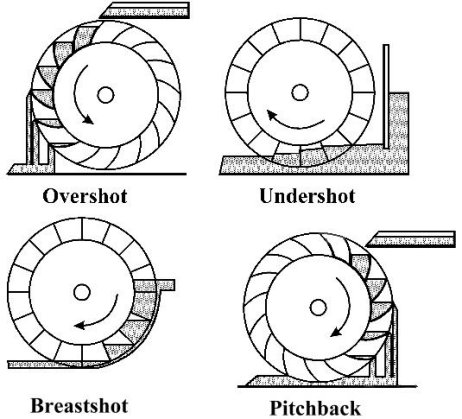
There are several types of wheel:  overshot, breast, undershot, and pitchback.

image17typesofwheel.jpg

Our research suggests that the overshot is the most powerful—but, as you can see in JRRT’s illustration, the Hobbiton mill is of the undershot variety.

image18hobbiton.jpg

Tolkien’s model for this is assumed to have been the Sarehole Mill, in the village of Sarehole, south of Birmingham, where his mother took him and his brother to live, for about 4 years in the late 1890s, in this house.

image19tolkienhouse.jpg

From its front door, he could look across and see this mill—here’s a 1905 postcard of the mill.

image20sareholemill1905.jpg

After a certain amount of searching, we still can’t tell what kind of wheel Sarehole had in Tolkien’s day, but there are certainly some other strong differences visible between it and the Hobbiton mill.  First, of course, there’s that chimney on Sarehole, which was installed in 1852 as part of the addition of a steam engine to the mill’s older water-driven system.  (Is this one of the “outlandish contraptions” Farmer Cotton complains about?)  But perhaps this suggested the tower on the left of the Hobbiton mill?  Second, and a little stranger, might be those round windows—although we might see these as a quiet joke:  just as an older Hobbit hole, like Bag End, had such windows, so it might be fitting for a Hobbit mill to have them, too?

Thanks, as ever, for reading.

MTCIDC

CD
ps

Here’s a LINK, by the way, to a 1966 interview with JRRT about his early years in Sarehole.

Orcked

22 Wednesday Nov 2017

Posted by Ollamh in Economics in Middle-earth, Imaginary History, J.R.R. Tolkien, Literary History, Narrative Methods

≈ Leave a comment

Tags

Arthur Rackham, Bosch, Brueghel, counterfeit, creation, Elves, Ents, Fangorn, Goblins, John Bauer, mockery, Orcs, Saruman, Sauron, The Hobbit, The Lord of the Rings, Tolkien, Treebeard, trolls, US Treasury Department, Weimar Republic

Welcome, dear readers, as always.

In our last, we discussed less familiar characters in The Lord of the Rings, the Corsairs of Umbar, and what we imagine they could look like.

In this posting, we want to look at much more familiar characters, Orcs—but from the viewpoint of Fangorn.

image1treebeard.jpg

He says of them:

“Maybe you have heard of Trolls?  They are mighty strong.  But Trolls are only counterfeits, made by the Enemy in the Great Darkness, in mockery of Ents, as Orcs were of Elves.”  (The Two Towers, Book Three, Chapter 4, “Treebeard”)

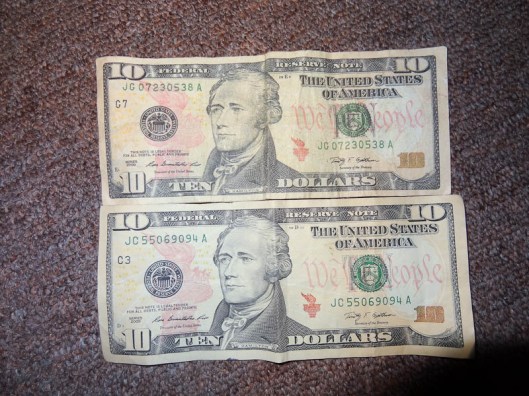
We’ve always been a bit puzzled by this.  “Counterfeit” makes us think, immediately, of counterfeit money.  Here are a pair of US 10-dollar bills:  can you tell the counterfeit (from Old French via a Latin compound, contra, “against” + facere, “make/do”—in Medieval Latin a contrafactio is a thing put against another, something in contrast, thus “imitation”)?

image2hamiltons.jpg

To be a successful counterfeit, normally, it’s necessary that the imitation be as close to the original as possible, as in the case of these two tens.  The US Treasury Department goes to a lot of time and expense to make counterfeiting as difficult as possible

image3anticounterfeit

but, if a counterfeiter is successful, he stands to make (in two senses) a lot of money.  He can also cause a great deal of financial damage, breeding distrust in a government’s ability to coin money and to stand behind it.  The more counterfeit money in the system, the more money the government has to back, which, in time, could lead to what is called hyperinflation and can bring a currency to collapse.  When a government does this itself it can cause havoc with a country’s economy, as happened in the Weimar Republic in 1921-1924.  At that time, for complex reasons having to do with paying off the German Empire’s war debts, the government began producing too much paper money and too rapidly.  This caused the money to lose value very quickly, rendering it almost worthless.

image4weimarmoney

It’s no wonder that the penalty for counterfeiting was usually the most severe possible.

image5tyburn

Treebeard’s use of the word “counterfeit”, then, would suggest that what Sauron was doing was trying to make nearly-exact copies of something, either Ents or Elves, in his creation of Trolls and Orcs.  So what do we find when we first see a description of Orcs?

“There were four goblin-soldiers of greater stature, swart, slant-eyed, with thick legs and large hands.”

(The Two Towers, Book Three, Chapter 1, “The Departure of Boromir”)

That’s not much to go on:

  1. “greater stature” would suggest that most Orcs were short
  2. “swart” means “dark-complexioned” (a term Sam uses to describe men from Harad, whom he calls “Swertings”—The Two Towers, Book Four, Chapter 3, “The Black Gate is Closed”)
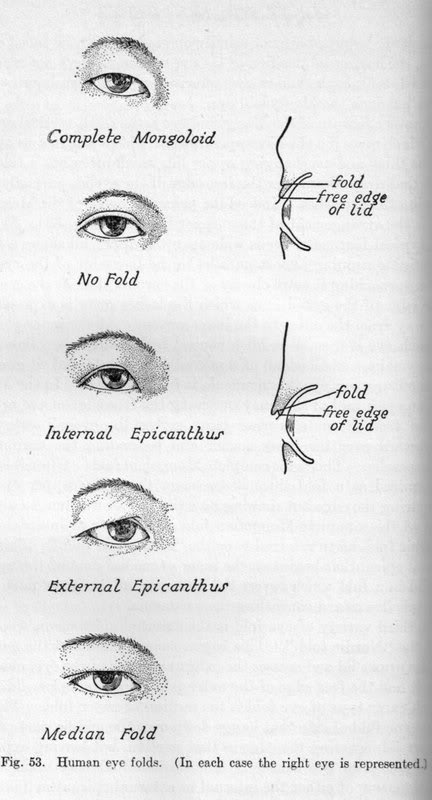
  3. “slant-eyed”—for contemporary people this is a tricky term, even a racial slur, but JRRT probably meant no more than that these Orcs had epicanthic folds to their eyelids, which is not uncommon among many of the world’s peoples.

image6epicanth

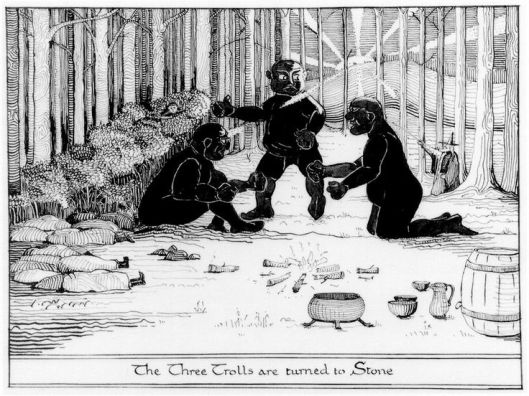
  1. “with thick legs and large hands” suggests very stocky builds—like the “Trolls turned to stone” in JRRT’s illustration of the scene in The Hobbit.

image7stonetrolls

This is a start, but will our next view help?  Pippin and Merry are the prisoners of the Orcs and Pippin is listening to a quarrel between those of Saruman and those of Sauron:

“In the twilight he saw a large black Orc, probably Ugluk, standing facing Grishnakh, a short crook-legged creature, very broad and with long arms that hung almost to the ground.” (The Two Towers, Book Three, Chapter 3. “The Uruk-hai”)

Counterfeit Elves?  Of course we know—also from Fangorn—that perhaps Saruman was up to something more, as Fangorn says of him:

“He has taken up with foul folk, with the Orcs.  Brm, hoom!  Worse than that:  he has been doing something to them; something dangerous.  For these Isengarders are more like wicked Men.  It is a mark of evil things that came in the Great Darkness that they cannot abide the Sun; but Saruman’s Orcs can endure it, even if they hate it.  I wonder what he has done?  Are they Men he has ruined, or has he blended the races of Orcs and Men?  That would be a black evil!” (The Two Towers, Book Three, Chapter 4, “Treebeard”)

This might account for the size of the Uruk-hai, as well as for their ability to endure daylight, but what about the crook-leggedness and “long arms that hung almost to the ground”?

Perhaps here we should remember the end of Fangorn’s description:  “…in mockery of Ents, as Orcs were of Elves.”

Hmm.  Trolls certainly don’t look much like Ents—

image8.jpg

image9leetreebeard.jpg

Is this the “mockery”?  It’s certainly not counterfeiting in the usual sense!

Should we understand the same for Orcs vs Elves?  Here are illustrations of Galadriel and Legolas (both by the Hildebrandts):

image10galadriel.jpg

image11legolas.jpg

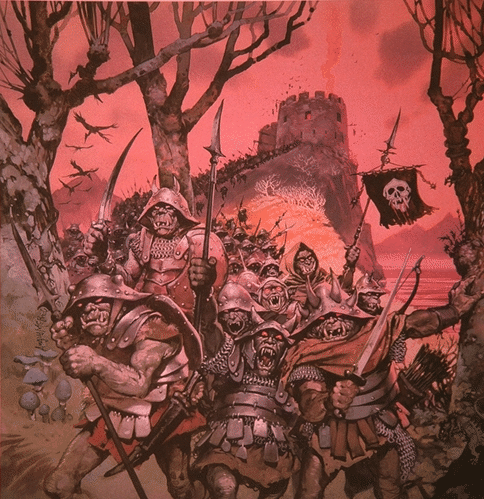
Set those against any modern artist’s view of Orcs and, again, it’s not counterfeiting, in the strictest sense, so we suppose that we have to assume “mockery”—but with the added assumption that Sauron had a very twisted sense of humor.  (There’s also that nasty half-suggestion of Fangorn’s that, since Saruman’s Orcs are behaving more like men, Saruman has been performing genetic experiments, something even Fangorn doesn’t want to think about.)

image12mcbride.gif

image13lee.jpg

image14howe.jpg

Looking at all of these illustrations, by the way, we were struck by where we’d seen creatures like this before.  Could it be in the works of those strange Flemish/Dutch painters like Brueghel and Bosch?

image15bosch.jpg

Or Arthur Rackham?

image16rackham.jpg

Or the early 20th-century Swedish painter, John Bauer, who, in his depiction of forests was an influence upon JRRT?

image17bauer.jpg

And, more recently, considering P. Jackson’s Orcs,

image18orcs.png

image19orcs.jpg

their skin color and general look:  is there a suggestion here of the so-called “Bog People” (about whom we wrote a posting some time ago)—a whole series of bodies, at least one dating from the 4th century bc

image20tollundman.jpg

who have been discovered buried in peat bogs (a great preservative) in northern Europe?

image21peatbog.jpg

And, in their color and oozy look–not to mention that they seem to move in scuttly groups–is there something cockroachy about them?

image22cockroaches.jpg

But, just as there is a place Fangorn doesn’t want to go, it’s true for us as well!

Thanks, as ever, for reading.

MTCIDC

CD

PS

You probably spotted this (we have very intelligent readers), but it’s the top 10-dollar bill which is the counterfeit.

PPS

It has also occurred to us that JRRT more than once discussed the fact that Sauron, as a lesser deity-figure, could never originate, only copy and “subcreate”—perhaps suggesting another reason for making “mockeries”:  his anger at his inability to do original work?

In Bad Hands

30 Wednesday Aug 2017

Posted by Ollamh in Heroes, J.R.R. Tolkien, Literary History, Maps, Military History, Narrative Methods

≈ Leave a comment

Tags

CBS Television News, Denethor, Dunkirk, Early newspapers, early radio, Ecthelion, fake news, Gandalf, Henry IV, Isengard, Lifestyle Magazine, Minas Tirith, Nazi, Nazi Propaganda, news, newspaper, Orthanc, Osgiliath, Palantir, propaganda leaflet, Relation, rumors, Saruman, Shakespeare, texting while driving, The Detroit News, The Illustrated London News, The White Tower, Tolkien

Welcome, dear readers, as ever.
Not so long ago, news came to most people through one—very undependable–source: rumor and gossip. As Shakespeare’s Rumor (depicted as “all painted with tongues” in a stage direction), who appears at the beginning of Henry IV, Part 2, Prologue, 1-5, describes herself:
“Open your ears, for which of you will stop
The vent of hearing when loud Rumour speaks?
I, from the orient to the drooping west,
Making the wind my post-horse, still unfold
The acts commenced on this ball of earth.”
At almost the same time as this play was written and first performed (1596-99), the first printed Western newspaper appeared, the Relation, in Strasbourg in 1605.
image1a1609newspaper.jpg
For the next 300-and-some years, newspapers were then the accepted conveyor of popular information about local, national, and world events. Until 1842, these could only convey that information in words, but, in that year, the first illustrated newspaper appeared, The Illustrated London News.
image1billustratedlondonnews.jpg
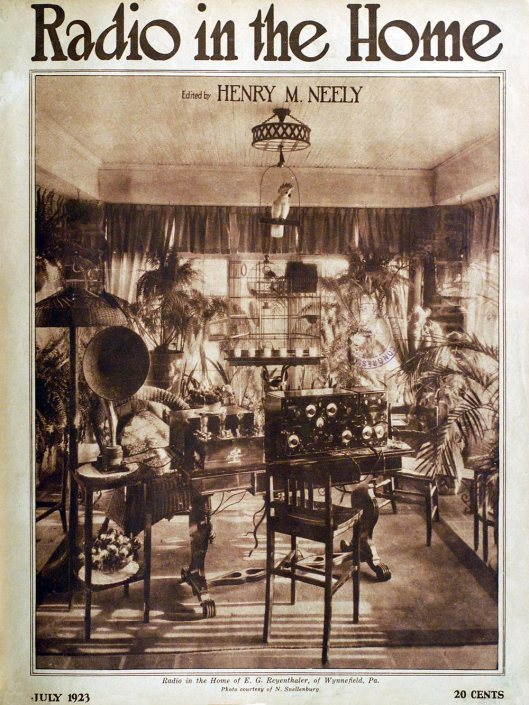
And soon other newspapers followed, opening a wider world of information to the reading public. In under a century, however, news appeared in a new form of technology entirely: the first news broadcast by radio believed to have been on August 31, 1920, by a set owned—perhaps not surprisingly by a newspaper— The Detroit News. Considering what radios looked like in the early 1920s, we doubt that many people heard it (this is an image from Lifestyle Magazine from 1923).
image1cearlyradio1923.jpg
Radios soon improved, however, so that, along with newspapers, people could tune in to hear news, news sometimes more up-to-date than even the newspapers could supply. And then came television. Experiments had been made with television broadcasting as early as 1940, but steady broadcasting really only began in 1948, with CBS Television News.
And then the internet appeared, so that, today, more people are believed to get their news from some form of electronic means than any other (or so electronic means tell us). Practically anywhere you go in our world, you see people staring at screens (not always reading the news, of course—with the universe of apps, people can be doing almost anything imaginable), many of them so portable that you can watch people doing it while walking
image1walktext.jpg
eating,
image2eattext.jpg
even while driving (which, frankly, terrifies us!).
image3textdrive.jpg
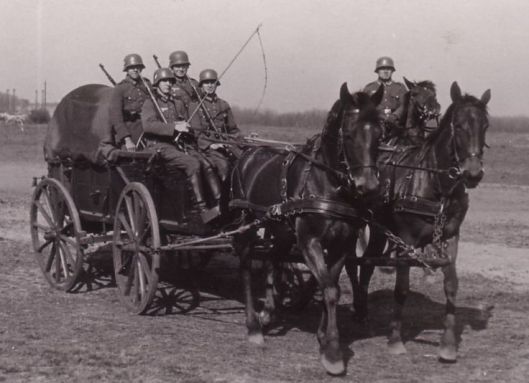
There is a problem with news, however, in every era. Shakespeare’s Rumor may have been pushed to one side by later technological innovations, but, in the form of so-called “fake news”, it’s still with us. And, in fact, faked news—news distorted—or even manufactured—has become a standard feature in newer technology. One has only to think about Nazi propaganda (certainly not the first, but perhaps, for us, the most extensive and most vivid), where—just as one example out of thousands—the mostly horse-powered German army of 1940
image4awehrmacht.jpg
was publicly depicted as streamlined and gasoline-powered (or, even more high-tech, diesel-powered).
image4bwehrmachttruck.jpg
Some time ago, we talked about literacy in Middle-earth. There was no printed material, of course, and literacy appears to have been limited (we only have to mention Gaffer Gamgee saying of Sam, “Mr. Bilbo has learned him his letters—meaning no harm, mark you, and I hope no harm will come of it.” to imagine that not only was it limited, but there might even be a certain suspicion attached to it.)
And what news there was came by the oldest of methods:
“There were rumours of strange things happening in the world outside; and as Gandalf had not at that time appeared or sent any message for several years, Frodo gathered all the news he could. Elves, who seldom walked in the Shire, could now be seen passing westward through the woods in the evening, passing and not returning; but they were leaving Middle-earth and were no longer concerned with its troubles. There were, however, dwarves on the road in unusual numbers. The ancient East-West Road ran through the Shire to its end at the Grey Havens, and dwarves had always used it on their way to their mines in the Blue Mountains. They were the hobbits’ chief source of news from distant parts—if they wanted any: as a rule dwarves said little and hobbits asked no more. But now Frodo often met strange dwarves of far countries, seeking refuge in the West. They were troubled, and some spoke in whispers of the Enemy and of the Land of Mordor.” (The Fellowship of the Ring, Book One, Chapter 2, “The Shadow of the Past”)
(See also the scene in The Green Dragon a little later in the chapter, where there is discussion, all based on hearsay, about Shire and extra-Shire events, between Sam and Ted Sandyman.)
For two people in Middle-earth, however, news came by a method in a strange way like that of the internet: the palantir, and that news which they received was not to their advantage. Made “from beyond Westernesse, from Eldamar. The Noldor made them…” Gandalf tells Pippin. (The Two Towers, Book Three, Chapter 11, “The Palantir”)

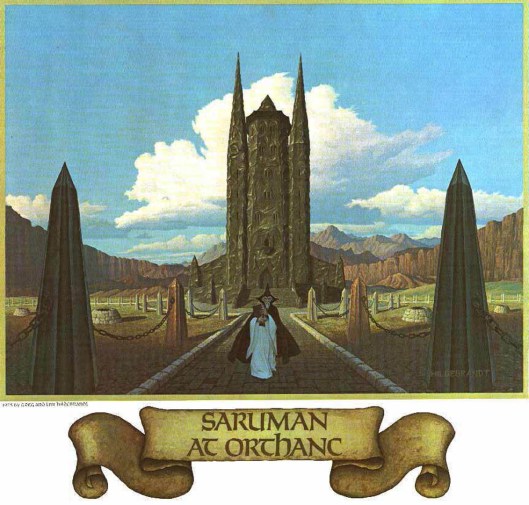
The palantiri were made “to see far off, and to converse in thought with one another.” Although there were seven, one, that at Osgiliath, was the master: “each palantir replied to each, but all those in Gondor were ever open to the view of Osgiliath.” Saruman had one of the others
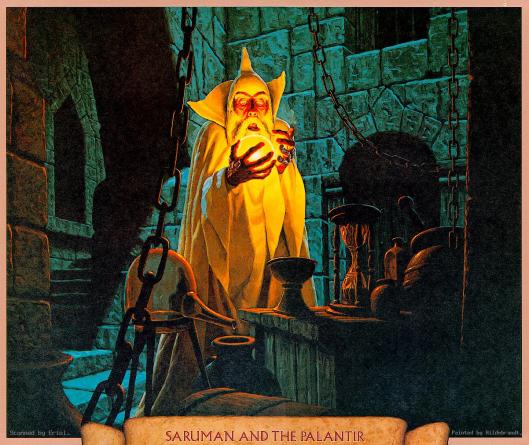
image4saruman.jpg
—the one under discussion in this chapter, after Pippin had almost come to disaster from looking in it—which Grima flung off Orthanc
image5sarumanorthanc.jpg
in what, although unexplained, must have been an attempt to brain Gandalf.
image6gandalforthanc.jpg
Unfortunately for Saruman, what he presumably thought would benefit his quest for what he speciously tells Gandalf is “Knowledge, Rule, Order; all the things that we have so far striven in vain to accomplish…” (The Fellowship of the Ring, Book Two, Chapter 2, “The Council of Elrond”), becomes a snare, as it seems that the master stone of Osgiliath has fallen into Sauron’s hands and “Easy it is now to guess how quickly the roving eye of Saruman was trapped and held; and how ever since he has been persuaded from afar, and daunted when persuasion would not serve.” (The Two Towers, Book 3, Chapter 11, “The Palantir”)
There is another surviving stone, however, and, though it doesn’t turn its possessor into an unwilling ally of Sauron, its propaganda—faked news—does terrible damage, all the same. In the White Tower of Ecthelion in Minas Tirith,
image7awhitetower.jpg
Denethor
image7denethor.jpg
holds a palantir and he, too, is caught, as Gandalf surmises:
“…I fear that as the peril in his realm grew he looked in the Stone and was deceived: far too often, I guess, since Boromir departed. He was too great to be subdued to the will of the Dark Power, he saw nonetheless only those things which that Power permitted him to see. The knowledge which he obtained was, doubtless, often of service to him; yet the vision of the great might of Mordor that was shown to him fed the despair of his heart until it overthrew his mind.” (The Return of the King, Book Five, Chapter 7, “The Pyre of Denethor”)
This overthrow, brought on by Sauron’s propaganda, results in Denethor accusing Gandalf of plotting “to rule in my stead, to stand behind every throne, north, south, or west” as well as delivering what clearly sounds like the “speech long rehearsed” Gandalf has long ago said that Saruman delivered to him in Orthanc:
“For a little space you may triumph on the field, for a day. But against the Power that now arises there is no victory. To this City only the first finger of its hand has yet been stretched. All the East is moving. And even now the wind of thy hope cheats thee and wafts up the Anduin a fleet with black sails. The West has failed. It is time for all to depart who would not be slaves.”
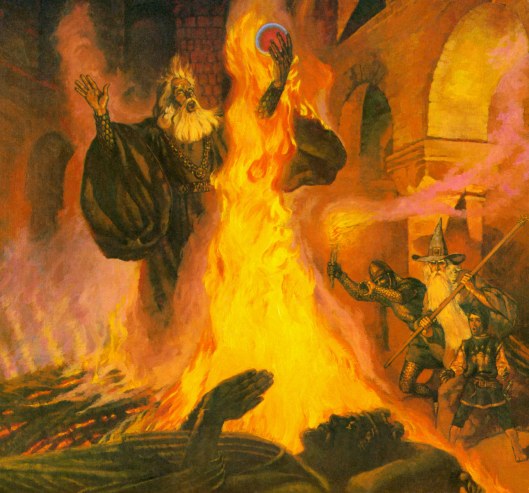
“to depart” quickly seems a euphemism for something much more radical as Denethor:
“leaped upon the table, and standing there wreathed in fire and smoke he took up the staff of his stewardship that lay at his feet and broke it on his knee. Casting the pieces into the blaze he bowed and laid himself on the table, clasping the palantir with both hands upon his breast.”
image8denethorontable.jpg
Here, we thought of all of those people we see who seemingly can never put down their phones—even in death Denethor still grips the very thing which has brought about his destruction.
image9textdrive.jpg
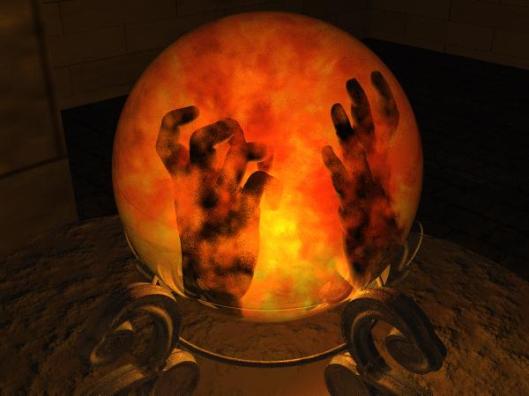
Was JRRT sending us, here in the future, a warning: beware of your source of news—and sometimes let go of what brings it to you? We can only add his description of Denethor’s palantir when it was retrieved from the pyre:
“And it was said that ever after, if any man looked in that Stone, unless he had a great strength of will to turn it to other purpose, he saw only two aged hands withering into flame.”
image10dshands.jpg
Thanks, as always, for reading!
MTCIDC
CD
PS
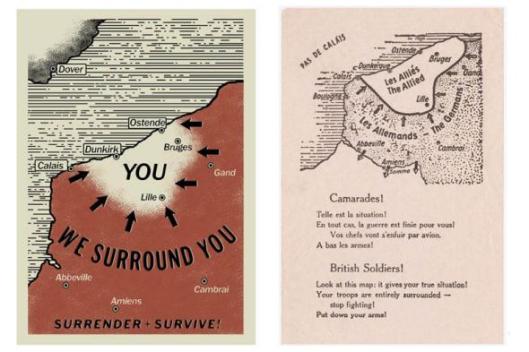
The new film, Dunkirk, opens with a British soldier catching a German propaganda leaflet based upon an actual one. Below on the left is the movie version, on the right the original. (Notice, by the way, that, in the one on the right, the English is not quite parallel to the French, including the line, “Your commanders (chefs) are going to flee by airplane.”) If Middle-earth had had a print culture, it’s easy to see such a leaflet being dropped by Nazgul over Minas Tirith!
image11leaflet.jpg

Re: Tree

23 Wednesday Aug 2017

Posted by Ollamh in Imaginary History, J.R.R. Tolkien, Literary History, Narrative Methods, Poetry

≈ Leave a comment

Tags

Alfred Tennyson, Dreamflower, Fangorn Forest, Galadriel, Gondor, Helm's Deep, Isengard, Laurelindorenan, Lothlorien, Lotus-eaters, mallorn, Minas Tirith, Mirkwood, Old Forest, Old Man Willow, Palantir, Rath Dinen, Samwise Gamgee, Saruman, The Lord of the Rings, The Odyssey, Tolkien, Treebeard, trees, White Tree of Gondor

Welcome, as always, dear readers.
image1ajrrttree
The inspirations for our postings come from many places: from something we’re reading or have just watched/seen, from a connection between two texts, or between Tolkien’s world—the real or Middle-earth—and something from the history of this world. Sometimes ideas come from the Sortes Tolkienses—our take on an ancient fortune-telling method, in which one posed a question, then opened a copy of an important text like The Bible or Vergil’s Aeneid, closed one’s eyes, and pointed and the text where the finger landed was believed, through interpretation, to contain an answer to that question. In our case, should we require inspiration, we sometimes use our 50th Anniversary hardbound of The Lord of the Rings to do this and, surprisingly often, what we find gives us an idea about what to write.
In the case of this posting, however, it was more of a “we were working on something else entirely and then there it was.” The “it” here is the White Tree of Gondor.
image1treeofgondor
(We confess, by the way, that we have iphone cases with the image—and we are often complimented on them.)
image2phonecase
We had, in fact, been thinking about another post, this one about corruption through technology, as represented by the palantiri, and had been reading references to Denethor. This had led us to his fiery death in Rath Dinen, “Silent Street”, which led to the tombs of the kings and stewards of Gondor. Besides the rulers of Gondor, however, the street had another occupant, the old White Tree, long dead,
image3deadwhitetree.png
but which, when a new sapling
imag4blossom.jpg
was found in the mountains by Gandalf and Aragorn, was still treated with ceremony:
“Then the withered tree was uprooted, but with reverence; and they did not burn it, but laid it to rest in the silence of Rath Dinen.” (The Return of the King, Book Six, Chapter 5, “The Steward and the King”)
This seemed a rather odd thing to do to a tree and this led us, finally, to consider one function of trees in The Lord of the Rings: just as the White Tree is buried, as human rulers were, could trees act as a mirror for the condition of the human world at what would be the end of the Third Age? And can they also act as a mirror of change for the better?
Consider, for example, the dead White Tree as a symbol for the withering of Gondor itself, as Minas Tirith is described:
Pippin gazed in growing wonder “at the great stone city, vaster and more splendid than anything that he had dreamed of; greater and stronger than Isengard, and far more beautiful. Yet it was in truth falling year by year into decay; and already it lacked half the men that could have dwelt at ease there…(The Return of the King, Book Five, Chapter 1, “Minas Tirith”)
And this decay of city and tree appears to be echoed in the natural world of Middle-earth in general, as Treebeard says of Lothlorien:
image5alorien.jpg
“Do not risk getting entangled in the woods of Laurelindorenan! That is what the Elves used to call it, but now they make the name shorter: Lothlorien they call it. Perhaps they are right: maybe it is fading, not growing. Land of the Valley of Singing Gold, that was it, once upon a time. Now it is the Dreamflower.”
[Just a quick footnote here. “Dreamflower” immediately takes us to Odyssey, Book 9, 82-105, where a small party of Odysseus’ men, set ashore to explore, meet up with the Lotus-eaters, who give them the mysterious lotus to eat and that “whoever might eat of the sweet fruit of the lotus, no longer wished to bring word back or to return home/but wanted, feeding on lotus, to remain in the very same place with the lotus-eating men and to forget about home-going.” (94-97, our translation). This certainly could describe at least some of the Fellowship’s reaction to Lothlorien. Here’s an illustration from a cartoon-version:
image5blotuseaters.jpg
Alfred Tennyson wrote a poem on the same subject—here’s a LINK, in case you would like to read his 1832 (revised 1842) interpretation.]
Beyond Lothlorien, other parts of the tree-covered natural world seem more menacing–there’s the Old Forest,
image5oldforest.gif
and Mirkwood,
image6mirkwood.jpg
described by Haldir:
“ ‘There lies the fastness of Southern Mirkwood…It is clad in a forest of dark fir, where the trees strive against one another and their branches rot and wither.’ “ (The Fellowship of the Ring, Book Two, Chapter 6, “Lothlorien”)
It wouldn’t take much imagination to replace “where the trees strive” with “where the humans strive against one another and their kind rots and withers”!
There is the sentient, malevolent Old Man Willow,
image7omw.jpg
and even Treebeard and his forest do not at first offer the kind of invitation one hears in the first verse of this song, from Shakespeare’s As You Like It:
Under the greenwood tree
Who loves to lie with me
And tune his merry note,
Unto the sweet bird’s throat,
Come hither, come hither, come hither:
Here shall he see
No enemy
Than winter and rough weather.

Instead, when Treebeard
image8fangorn.jpg
overhears Pippin say:
“This shaggy old forest looked so different in the sunlight. I almost felt I liked the place.” (The Two Towers, Book Three, Chapter 4, “Treebeard”)
he says, “ ‘Almost felt you liked the Forest!’ That’s good! That’s uncommonly kind of you…Turn round and let me have a look at your faces. I almost feel that I dislike you both…”
Treebeard’s hostility towards Pippin and Merry actually springs from another source—Saruman:
“He and his foul folk are making havoc now. Down on the borders they are felling trees—good trees. Some of the trees they just cut down and leave to rot—orc-mischief that; but most are hewn up and carried off to feed the fires of Orthanc.”
Treebeard’s growing anger, however, then marks a turn in the behavior of the natural world: somehow the appearance of Pippin and Merry acts as a catalyst:
“Curse him, root and branch! Many of those trees were my friends, creatures I had known from nut and acorn; many had voices of their own that are lost for ever now. And there are wastes of stump and bramble where once there were singing groves. I have been idle. I have let things slip. It must stop!”
And it’s not simply the Revenge of the Ents. Treebeard has a larger strategy, saying to the two hobbits:
“You may be able to help me. You will be helping your own friends that way, too; for if Saruman is not checked Rohan and Gondor will have an enemy behind as well as in front.”
As we know, Treebeard convinces the other Ents to help and, in a short time, they not only destroy Isengard
image8trbdisen.jpg
but also the orcs at Helm’s Deep,
image9helmsdeep.jpg
effectively removing Saruman from the story except as an empty threat—and a final, petty Sauron, ruining the Shire, which included cutting down numbers of trees—among them the famous Party Tree. And here we see one more symbol, perhaps. Long before, Galadriel had given Sam a gift which, in her wisdom (and perhaps in her foresight?) seemed almost perfect for a gardener:
“She put into his hand a little box of plain grey wood, unadorned save for a single silver rune on the lid….’In this box there is earth from my orchard, and such blessing as Galadriel has still to bestow is upon it…Though you should find all barren and laid waste, there will be few gardens in Middle-earth that will bloom like your garden, if you sprinkle this earth there.’ “ (The Fellowship of the Ring, Book Two, Chapter 8, “Farewell to Lorien”)
Once the Shire has been scoured of Saruman’s final evil, Sam remembers this present and uses it, spreading the earth across the Shire:
“So Sam planted saplings in all the places where specially beautiful or beloved trees had been destroyed, and he put a grain of the precious dust in the soil at the root of each.” (The Return of the King, Book Six, Chapter 9, “The Grey Havens”)
And his plan succeeds:
“His trees began to sprout and grow, as if time was in a hurry and wished to make one year do for twenty.”
In midst of such fertility, there is an extra favor. Sam had found within Galadriel’s box “a seed, like a small nut with a silver shale [shell or husk].”
Sam planted this in the Party Field, where the tree had once stood, and, in the spring:
“In the Party Field a beautiful young sapling leaped up: it had silver bark and long leaves and burst into golden flowers in April. It was indeed a mallorn [the golden tree specific only to Lothlorien], and it was the wonder of the neighborhood.”
Just as the human world of Middle-earth, stunted by Sauron and his minions, is now free, so is the natural world free once more—no more orcs to abuse its forests, no malevolent will to taint its woods, and the reflowering of the Shire and, at its center, the mallorn, may stand as a symbol for that rebirth—and even be twinned with the new White Tree of Gondor, far to the south.
image10mallorns.jpg
[With thanks to Britta Siemen’s blog, where we found this image—LINK here]
Thanks, as ever, for reading!
MTCIDC
CD

Finding a Voice

10 Wednesday May 2017

Posted by Ollamh in Heroes, J.R.R. Tolkien, Literary History, Military History, Narrative Methods

≈ Leave a comment

Tags

Abraham Lincoln, Abraham Lincoln Vampire Slayer, American Civil War, Daniel Day Lewis, early photography, Edward Everett, Gettysburg, Gettysburg Address, National Cemetery, Saruman, Smaug, spell-casting, Steven Spielberg Lincoln, The Battle Cry of Peace, The Blue and the Gray, The Hobbit, The Lord of the Rings, The Voice of Saruman, Tolkien, voices

Welcome, dear readers, as always.

Recently, it has been thought that a new picture of Abraham Lincoln

Lincoln-CGerman-1861.jpg

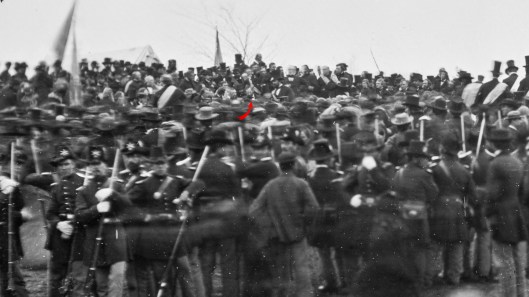
at Gettysburg, on November 19, 1863 has been discovered. Lincoln had been invited as one of the speakers for the dedication of a new National Cemetery to honor the Union dead from the battle fought at Gettysburg on 1-3 July, 1863.

Battle of Gettysburg - Cyclorama - Paul Philippoteaux SAM_1322.JPG

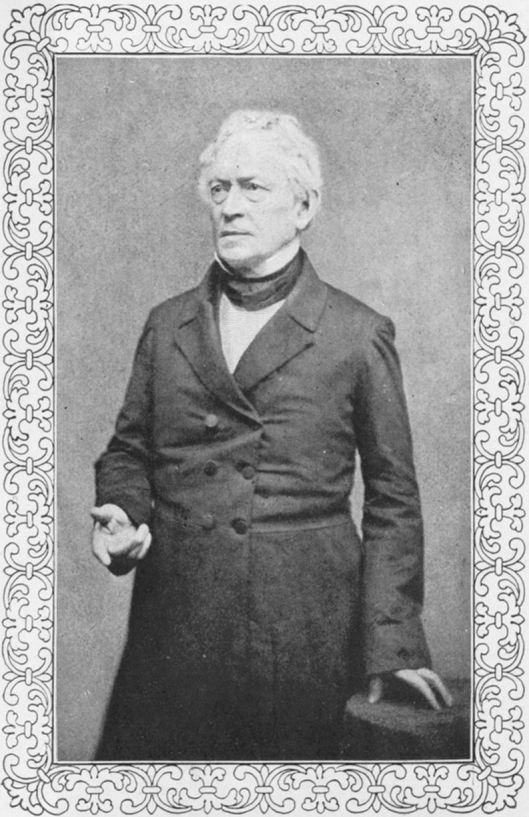
The main speaker, and the one everyone was waiting for, was the famous orator, Edward Everett,

Edward_Everett.jpg

whose speech is now totally forgotten (here’s a link to it—it’s worth reading as a specimen of mid-19th-century American oratory—something Everett was famous for), but, to say that Lincoln’s speech has survived is, for Americans—and for anyone who loves good rhetoric, for that matter–an understatement.

nicolaycopy.jpg

Up until recently, there was one definite photograph of Lincoln on the occasion.

Crowd_of_citizens,_soldiers,_and_etc._with_Lincoln_at_Gettysburg._-_NARA_-_529085_-crop.jpg

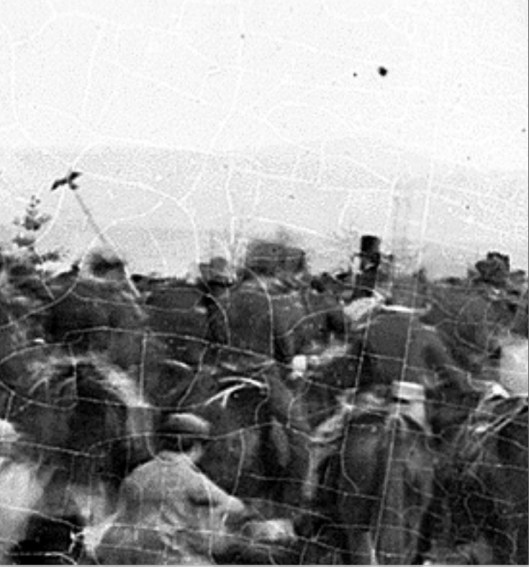
(There is a second picture, supposedly of Lincoln on horseback, but it’s been pointed out that the figure appears to be wearing epaulettes,

image5a1notabe.jpg

image5aepaulettes.jpg

And, if so, is therefore more likely to be one of the military dignitaries at the ceremony.)

This new photo, which seems pretty convincing to us, now gives us two illustrations of one of the most famous moments of Lincoln’s presidency.

o-LINCOLN-570.jpg

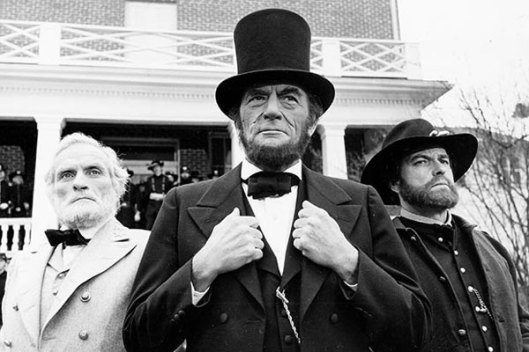
There are a number of films about Lincoln, at least since the 1915 The Battle Cry of Peace, with Lincoln portrayed by numerous American actors, some of them famous, such as Gregory Peck, from the television series The Blue and the Gray (1982)

Gregory-Peck-Lincoln.jpg

with the most recent being two films from 2012, the improbable Abraham Lincoln Vampire Hunter

abraham_lincoln_vampire_hunter_ver3.jpg

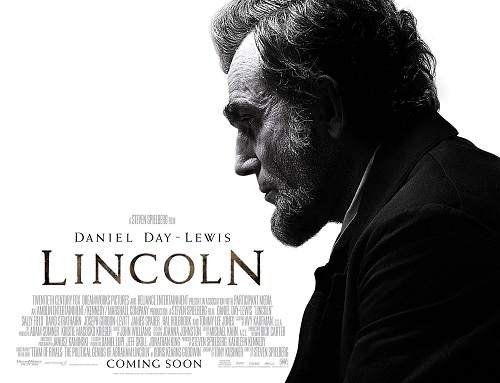
and Steven Spielberg’s Lincoln

LINCOLN-landscape-poster.jpg

starring Daniel Day Lewis.

Lewis, an actor famous for his strenuous preparations for every role he’s ever played, was sometimes criticized in reviews for his light voice, the impression being that such a deep, thoughtful man should have had a voice to match. In fact, contemporary accounts of Lincoln tell us that his voice was higher—a tenor rather than a baritone—and that his accent was a rural one, mirroring his boyhood years on the Indiana/Kentucky border (his sometimes somewhat phonetic spelling helps here to reconstruct this).

Thus, though his self-presentation—especially his voice–might have seemed to some (especially those who hated him—one of his main generals even referring to him as “the original gorilla”) less than impressive, his words, at least in written form, have endured.

This made us think of the opposite, from JRRT, characters whose words might not matter much, but the way in which they were delivered was persuasive—or almost.

We began with Smaug.

bilbo and smaug.jpg

As we said in our last, Smaug’s voice has a danger for Bilbo in it:

“Whenever Smaug’s roving eye, seeking for him in the shadows, flashed across him, he trembled, and an unaccountable desire seized hold of him to rush out and reveal himself and tell all the truth to Smaug. In fact he was in grievous danger of coming under the dragon-spell.” (The Hobbit, Chapter 12, “Inside Information”)

This dragon-spell has a persuasive power to it.   It’s never explained, but it seems to embody the idea that the tone can bring out the worst in someone:

“Now a nasty suspicion began to grow in his mind—had the dwarves forgotten this important point too, or were they laughing in their sleeves at him all the time? That is the effect that dragon-talk has on the inexperienced. Bilbo of course ought to have been on his guard; but Smaug had rather an overwhelming personality.”

Perhaps this is what gives the “dragon-spell” its power: that it somehow embodies the personality of the spell-caster. As Smaug is evil and corrupt and suspicious, so his spell can cause others to have corrupt and suspicious thoughts, as Bilbo does.

We see this same effect on the inexperienced when Gandalf, the companions, and Theoden visit the defeated Saruman at Orthanc

obra-tolkien-mano-hildebrandt-ilustradores-fa-L-q4g6J8.jpeg

in the chapter named, appropriately, “The Voice of Saruman”:

“Suddenly another voice spoke, low and melodious, its very sound an enchantment. Those who listened unwarily to that voice could seldom report the words that they heard; and if they did, they wondered, for little power remained in them. Mostly they remembered only that it was a delight to hear the voice speaking, all that it said seemed wise and reasonable, and desire awoke in them by swift agreement to seem wise themselves. When others spoke they seemed harsh and uncouth by contrast; and if they gainsaid the voice, anger was kindled in the hearts of those under the spell.” (The Two Towers, Book Three, Chapter 10, “The Voice of Saruman”)

When Gandalf first meets Saruman in Orthanc, Saruman’s “robes, which had seemed white, were not so, but were woven of all colours, and if he moved they shimmered and changed hue so that the eye was bewildered.” (The Fellowship of the Ring, Book Two, Chapter 2, “The Council of Elrond”)

It may be, then, that the power of Saruman’s voice is in the same shimmer—he appears to be not just one, but many and therefore both momentarily persuasive, as well as ultimately insubstantial, since “those who listened unwarily to that voice could seldom report the words that they heard”. It’s clear, however, that, like the voice of Smaug, the spell within the voice was, potentially, horribly persuasive:

“For some the spell lasted only while the voice spoke to them, and when it spoke to another they smiled, as men do who see through a juggler’s trick while others gape at it. For many the sound of the voice alone was enough to hold them enthralled; but for those whom it conquered the spell endured when they were far away, and ever they heard that soft voice whispering and urging them.”

And yet—although

“..none were unmoved; none rejected its pleas and its commands without an effort of mind and will, so long as its master had control of it.”

There are those of the party on this visit to Orthanc who are not taken in at all. Gimli appears to be unaffected, saying, “The words of this wizard stand on their heads”, and Eomer calls Saruman “an old liar with honey on his forked tongue”. Theoden even breaks the spell, although he is said to speak “thickly and with effort.” At such resistance, Saruman shows both a degree of control and a losing of it, cajoling and calling names alternately, until “Gandalf laughed.” And “The fantasy vanished like a puff of smoke.”

Knowing Saruman’s eventual end, murdered by another whose tongue was persuasive enough to keep Theoden a prisoner once upon a time,

leegrima.jpg

can we see the beginning of that end here? Once the “fantasy” created by Saruman’s voice is broken by Gandalf’s gentle mockery, what is left for him after his grand plans to be (at least) Sauron’s ally but “some mischief still in a small mean way”? (The Return of the King, Book Six, Chapter 6, “Many Partings”)

And, at the end of that mischief, Grima only escapes Saruman and his voice through murder—and his own quick death, following.

Gandalf’s laughter suggests that the source of escape from Saruman’s voice may be detachment: if one can step away from the sound, that sound loses its (literal) charm. It may take effort—as it does for Theoden—but, once away, whatever magic was in the voice vanishes into the smoke it really was.   As well, obvious resistance seems always to shake Saruman’s control and that flattering tongue, which can say, on the one hand,

“Theoden Lord of the Mark of Rohan..declared by your noble devices, and still more by the fair countenance of the House of Eorl. O worthy son of Thengel the Thrice-renowned!”

But, when thwarted, can cry:

“Dotard! What is the house of Eorl but a thatched barn where brigands drink in the reek, and their brats roll on the floor among the dogs?” (The Two Towers, Book Three, Chapter 10, “The Voice of Saruman”)

It is striking that, in neither case, are his words to be trusted, any more than his voice—and here we can return to Abraham Lincoln, whose voice may not have impressed, but whose words continue to be remembered.

z235445.jpg

Thanks, as always, for reading.

MTCIDC

CD

Smoke (No Mirrors)

22 Wednesday Mar 2017

Posted by Ollamh in Economics in Middle-earth, J.R.R. Tolkien, Literary History, Narrative Methods

≈ Leave a comment

Tags

Algonquian, Aragorn, Bag End, Baggins, Daemonologie, domestic, Gandalf, Gimli, Hernandez de Boncalo, hogsheads, Isengard, James I, Jamestown, John Rolfe, Longbottom Leaf, Matoaka, Merry and Pippin, Native Americans, Nictotiana, Philip II of Spain, pipe, plantations, Pocahontas, Popeye the Sailor, Saruman, Scouring of the Shire, Sharkey, Sherlock Holmes, Shire, smoking, Southfarthing, The First Part of Ayres of the Musicall Humours, The Hobbit, The Illiad, The Lord of the Rings, The Odyssey, Tobacco, Tobias Hume, Tolkien

As always, welcome, dear readers.

This posting takes us away from the Shire and back to it, all in a couple of pages, as well as linking itself with a recent one on Sharkey and his attempt at revenge on the Hobbits who have helped in his downfall.

We begin just after Helm’s Deep, at the moment when Gandalf and all of the major characters involved have followed the invasion route back to Isengard, only to find it in ruins and:

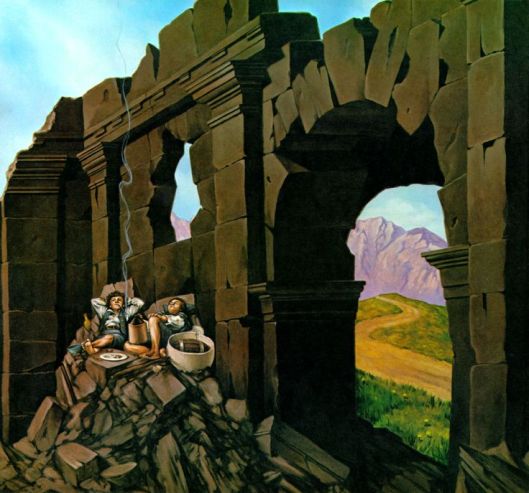
“And now they turned their eyes towards the archway and the ruined gates. There they saw close beside them a great rubble-heap; and suddenly they were aware of two small figures lying on it at their ease…One seemed asleep; the other, with crossed legs and arms behind his head, leaned back against a broken rock and sent from his mouth long whisps and little rings of thin blue smoke.” The Two Towers, Book Three, Chapter 8, “The Road to Isengard”

image1ruins.jpg

For Gimli, himself a smoker, that latter sight is not a surprising. For Theoden, however, not only are the Hobbits a surprise, but: “I had not heard that they spouted smoke from their mouths.”

Merry’s reply then leads us into today’s posting.

“That is not surprising…for it is an art which we have not practised for more than a few generations. It was Tobold Hornblower, of Longbottom in the Southfarthing, who first grew the true pipe-weed in his gardens, about the year 1070 according to our reckoning. How old Toby came by the plant…”

Gandalf interrupts Merry here, concluding with “Some other time would be more fitting for the history of smoking.”

But not for us.

For us, smoking, in the The Lord of the Rings, as in The Hobbit, belongs to a whole category of what we call the “domestication of the heroic”, a distinctive and important feature of JRRT’s narrative style. Earlier epics, like the Iliad and the Odyssey, certainly have their moments where combat and travel and dealing with monsters and enchantresses are not the only features of the stories. People sometimes pause to eat and drink and even sleep. JRRT goes beyond this, however, to provide what he himself might call the “homely” in his texts. By this term, we mean the ordinary and familiar, including such things as a brief inventory of the contents of Bag End, food more detailed than the “endless meat and sweet dark wine” of Homer–such as the mushrooms and bacon which Farmer Maggot offers–and Bilbo reading his letters and forgetting his pocket handkerchief. Such seemingly-trivial things give the stories—and certain of the characters within them—an extra depth and thus a deeper believability, as well as anchoring the story in something more ordinary than kings and wizards.

In fact, the center of this domestication are the Hobbits: think of Sam wanting a bit of rope or explaining taters to Gollum or that heart-breaking moment when Sam discards his pots and pans and “The clatter of his precious pans as they fell down into the dark was like a death-knell to his heart.” (The Return of the King, Book Six, Chapter 3, “Mount Doom”) And, along with things like rope and conies, there is what once was called “the pleasures of the pipe”.

We live in a different world from JRRT. When he took up the pipe, in the early 20th century, no one knew the dangers of smoking.

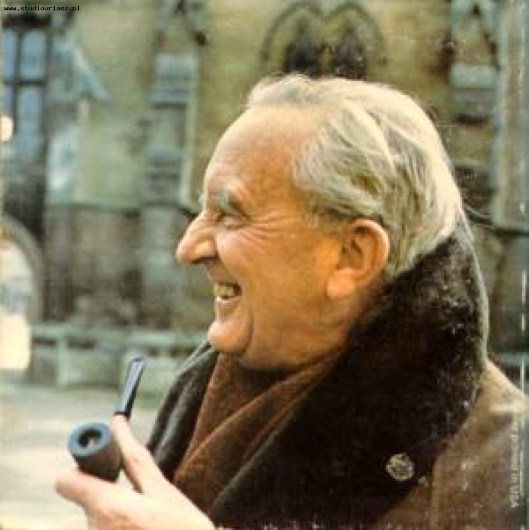
image2jrrt.jpg

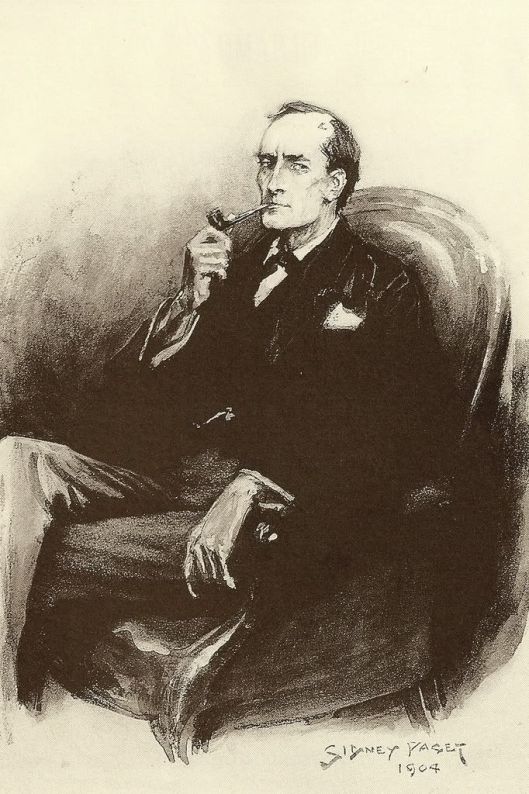
It was simply something men, in particular, did. After all, there was Sherlock Holmes, with his famous “three-pipe problem” (“The Red-Headed League”, The Strand Magazine, August, 1891) as a perfect model.

image3holmessmoking.jpg

Thus, smoking was acceptable and, potentially, domestic: after all, although the ancient comic book and cartoon character, Popeye the Sailor (1929-1957), may hold a pipe in his mouth while battling,

image3apopeye.jpg

it is generally something done in quiet and contemplation. Perhaps, then, for the times in which JRRT was writing, a perfect symbol of the domestic. (Hence the old expression for household comfort that someone—typically his wife–brings the owner “his pipe and slippers” when he comes home from work?)

And it appears very early in our experience of Hobbits. After all, the first time we see Bilbo, he is “standing at his door after breakfast smoking an enormous long wooden pipe that reached nearly down to his woolly toes”. (The Hobbit, Chapter 1, “An Unexpected Party”)

image4bilbo.jpg

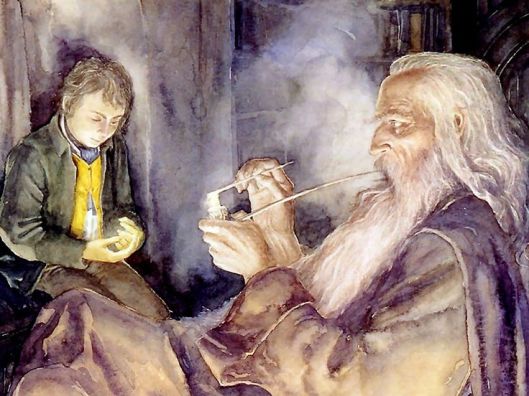
In time, we’ll see Gandalf smoking

image5gandalfsmoking.jpg

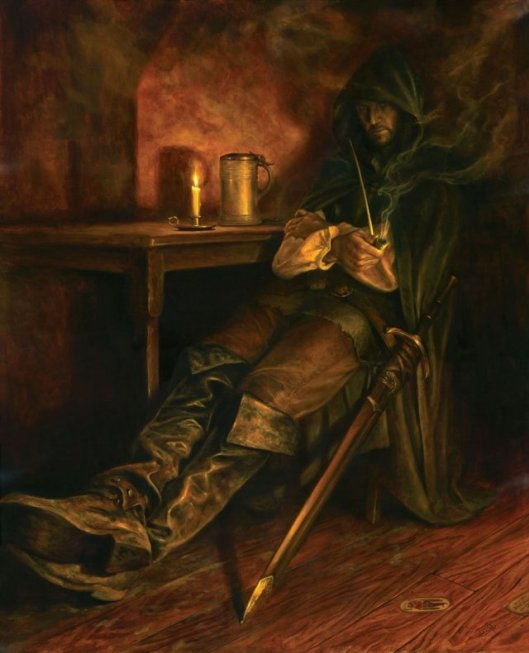
and Strider/Aragorn, too.

image6strider.jpg

In fact, we wonder if it isn’t a kind of unconscious sign that someone is a positive character—after all, as we said, Gimli smokes, too.

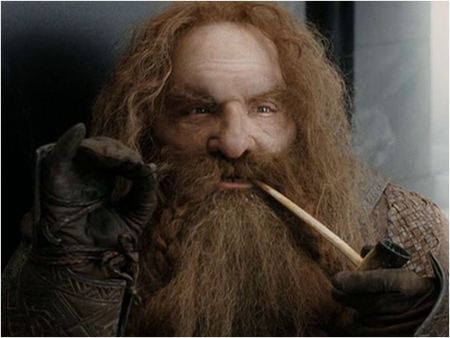
image7gimli.jpg

There is one exception, of course—and we’ll come back to that!

It should be no surprise, then, that one more positive character, Merry, is a smoker. Knowing, from the Prologue to The Lord of the Rings, that he is also the author of Herblore of the Shire, among other works, it is also not surprising that he appears to be the main authority on “pipe-weed”, claiming that the Hobbits were the inventors of its consumption:   “Hobbits first put it into pipes. Not even the Wizards first thought of that before we did.”

This, of course, made us think about who invented tobacco-smoking in our world—or, at least, in the English-speaking Western Hemisphere. (Although we are glad to point out that, as early as 1559, Philip II of Spain ordered Hernandez de Boncalo to bring back tobacco seeds from the New World to plant in Spain.)

Merry says of the plant (which he correctly identifies with our genus Nicotiana):

“…observations that I have made on my own many journeys south have convinced me that the weed itself is not native to our parts of the world, but came northward from the lower Anduin, whither it was, I suspect, originally brought over Sea by the Men of Westernesse. It grows abundantly in Gondor, and there is richer and larger than in the North, where it is never found wild, and flourishes only in warm sheltered places like Longbottom.”

In our world—that is, in the Americas– Native Americans first cultivated tobacco—as can be seen in this engraved version of John White’s 1580s drawing of the Algonquian village of Secoton by Theodor de Bry for the 1590 second edition of Thomas Harriot’s A Briefe and True Report of the New Found Land of Virginia.

image8secoton.jpg

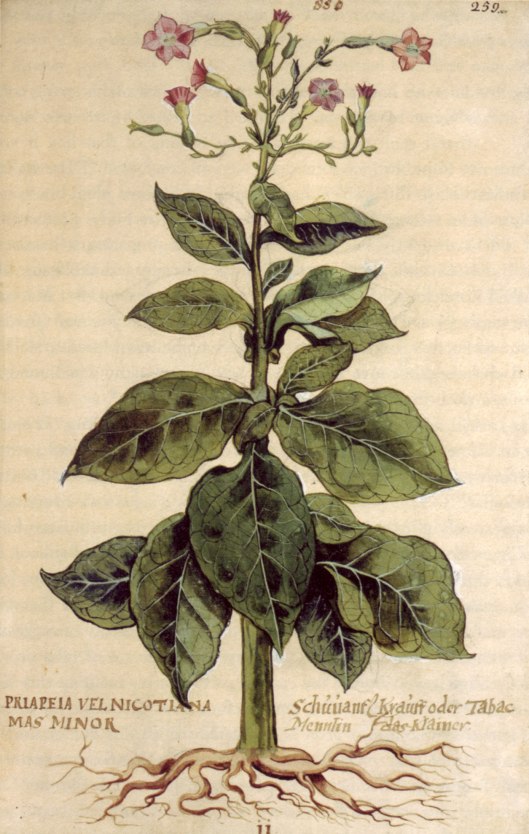
At the top, center, is a tobacco field, with stylized plants, which, up close, might look like this:

image9tobacco.jpg

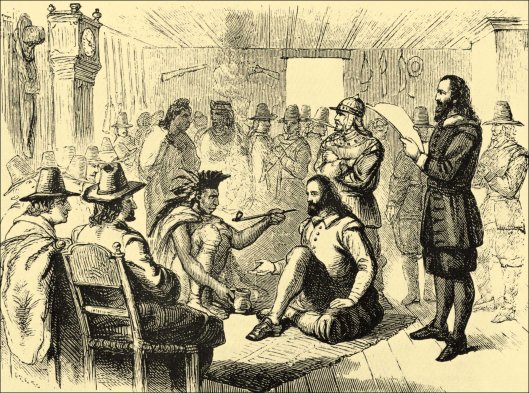
Native Americans appear to have used tobacco—and its smoke—primarily for religious and political ceremonies, rather than for recreation.

image10pipeceremony.jpg

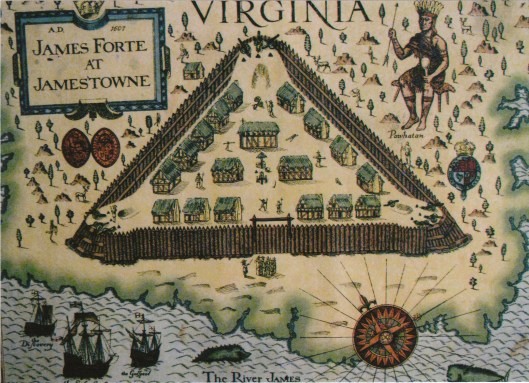
This soon changed, however, when a member of the newly-established (1607) colony of Jamestown, John Rolfe, in what would become the US state of Virginia,

image11jamestown.jpg

saw the commercial possibilities and began to cultivate tobacco for export.

image12growingtobacco.jpg

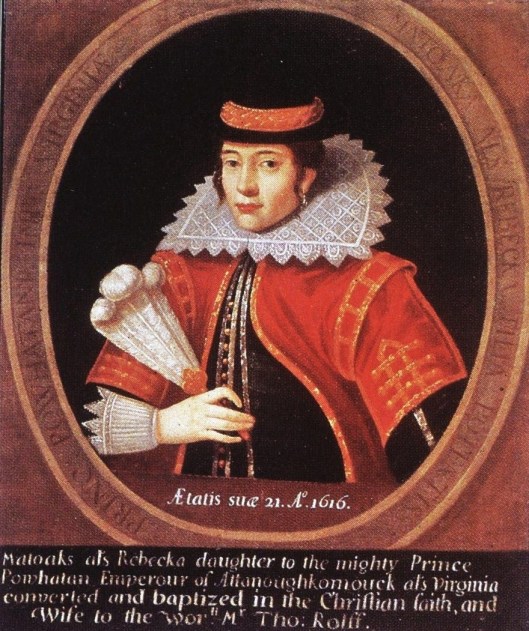
Although John Rolfe is known to those interested in early English colonization, his wife is much more famous. She was Matoaka, called Pocahontas as a nickname (it means something like “playful/lively”), the 400th anniversary of whose funeral is the day of this writing, 21 March (although it will be posted tomorrow, the 22nd).

image13pocahontas.jpg

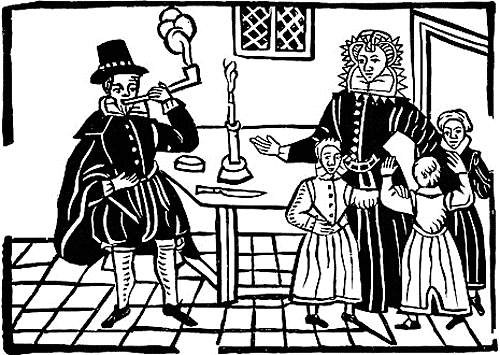
Tobacco was already known in England,

image14drinker.jpg

had become a sort of craze,

image15tobaccosmoking.gif

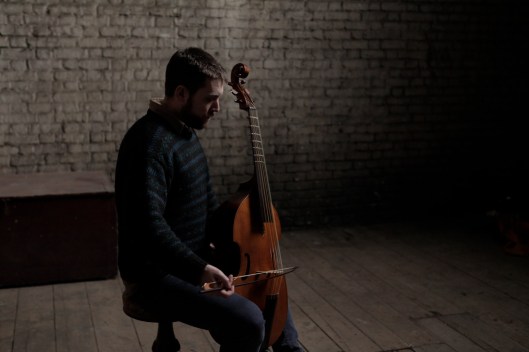
and even inspired at least one pop song, Tobias Hume’s “Tobacco”, from his The First Part of Ayres of the Musicall Humours (1605). Hume was a big fan of the lyra viol (a member of the string bass family).

image16lyraviol

(We include here a link so that you can hear the song sung and accompanied by his favorite instrument.  Oh—and it’s sung in the pronunciation of the early 17th century, so be prepared for some differences in sound.)

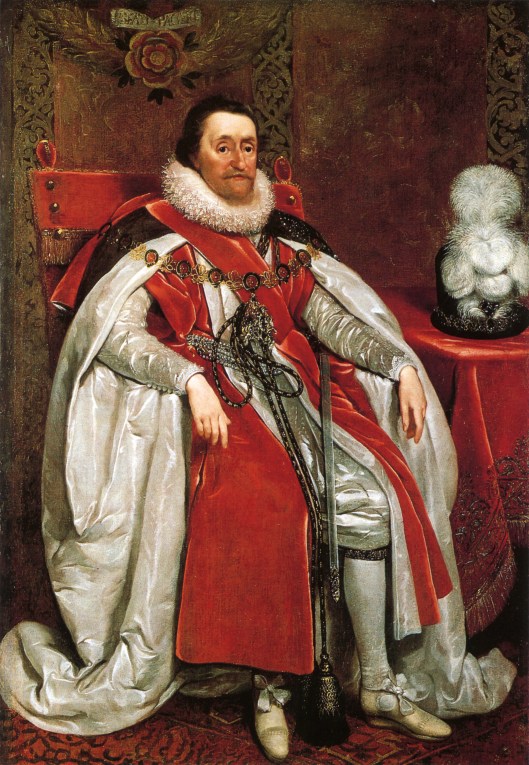
Thus, Rolfe’s exploitation was a good business investment, even though tobacco quickly ran afoul of the British government, in the form of the new king, James I,

image17james1

who had already published an attack on smoking in 1604.

image18counterblast

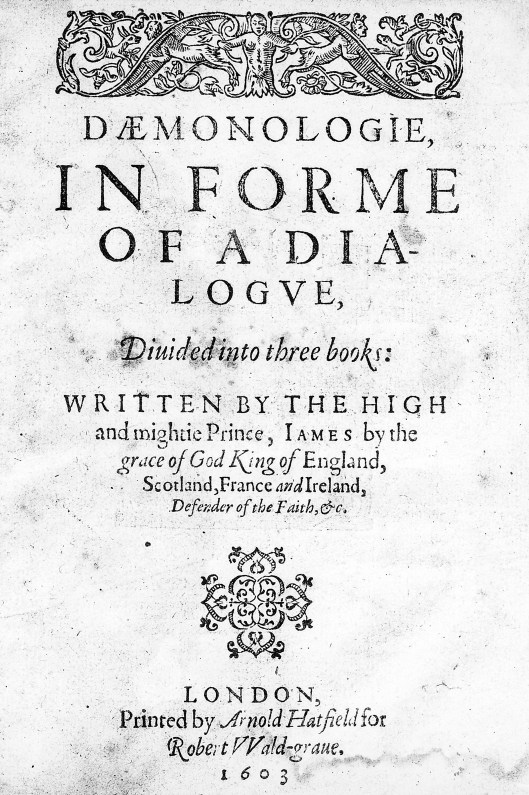
James I had opinions on numerous subjects, including witches, about whom he had published a book, Daemonologie, in 1597.

M0014280 James I: Daemonologie, in forme of a dialogue. Title page.

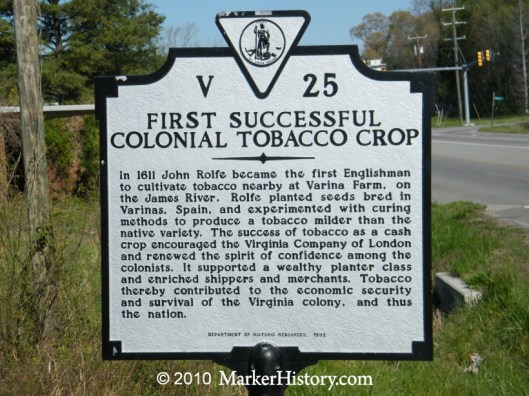
His attack on tobacco—although more sensible than believing in witches—didn’t stop it from becoming the major Virginia crop, however—as this roadside sign points out.

image20sign.jpg

Virginia farmers planted huge fields of tobacco,

image21tobaccofield.jpg

cultivated it (a major use of slave labor, like the sugar plantations of the Caribbean),

image22cultivation.jpg

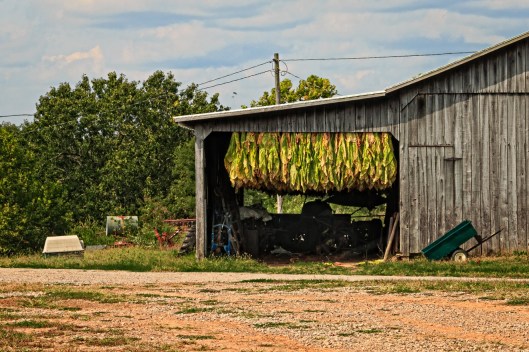
cut and dried it,

image23drying.jpg

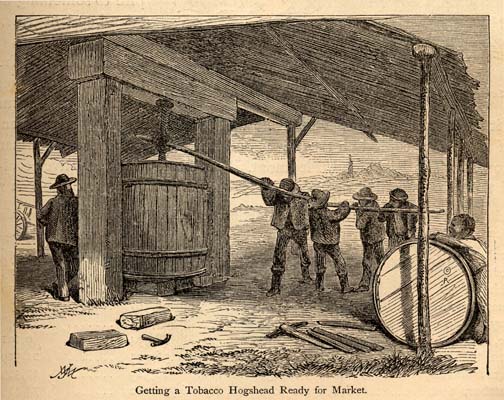
packed it into huge barrels, called hogsheads,

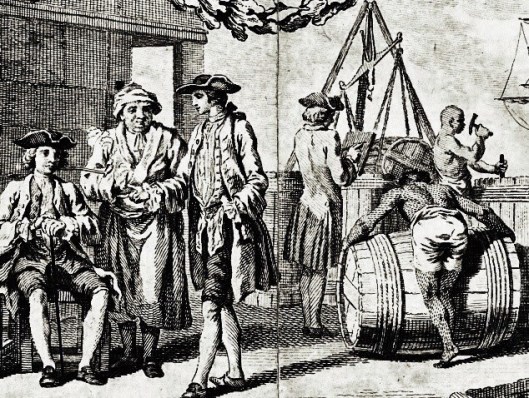
image24hogsheadpacking.jpg

dragged those hogsheads to a port,

image25dragging.jpg

and shipped those hogsheads to England

image26shipping.jpg

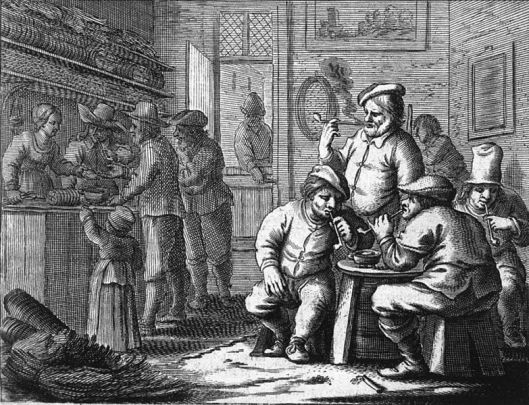
where smokers enjoyed it.

image27smoking.jpg

We don’t know the methods used in the Southfarthing, but, looking at tobacco around the world in our world, the main difference seems to be in the curing (drying) technique used. We can imagine, then, that, when Merry talks about “pipe-weed” and its cultivation, if we visited the southern part of the Shire, we would see familiar sights—except, perhaps, for those hogheads. The stuff which Merry is smoking came from “two small barrels, washed up out of some cellar or store-house…When we opened them, we found they were filled with this: as fine a pipe-weed as you could wish for, and quite unspoilt.” (The Two Towers, Chapter Nine, “Flotsam and Jetsam”)

Gimli admires the quality and Merry says, “My dear Gimli, it is Longbottom Leaf! There were the Hornblower brandmarks on the barrels, as plain as plain. How it came here, I can’t imagine. For Saruman’s private use, I fancy.”

This brings us back to the final smoker and one exception to our fanciful rule that, in Tolkien, if you smoke, you’re a positive character: Saruman.

image28saruman.jpg

It’s hard to think of Saruman as indulging in the domestic. As Treebeard says of him: “He has a mind of metal and wheels” (The Two Towers, Book Three, Chapter 4, “Treebeard”). And yet, although he has lost his position as head of the White Council, and has lost Isengard, as well, as Gandalf says of him, “I fancy he could do some mischief still in a small mean way.” (The Return of the King, Book Six, Chapter 6, “Many Partings”). Thus, what better small, mean way than to attack that very domesticity which is embodied in the Hobbits and their Shire? As Sharkey, he does so, destroying the Shire by cutting down trees, knocking or burning down houses, replacing water mills with steam, and turning a nearly a-political place into a little fascist state. And, perhaps, as a last straw, he attacks one last small comfort, saying to Merry, as he keeps his tobacco pouch:

“Well, it will serve you right when you come home, if you find things less good in the Southfarthing than you would like. Long may your land be short of leaf!” (The Return of the King, Book Six, Chapter 6, “Many Partings”)

If so, perhaps there is a certain horrible irony, then, that, when Saruman is murdered, he is last seen as “a grey mist…rising slowly to a great height like smoke from a fire”. (The Return of the King, Book Six, Chapter 8, “The Scouring of the Shire”)

Thanks, as always, for reading.

MTCIDC

CD
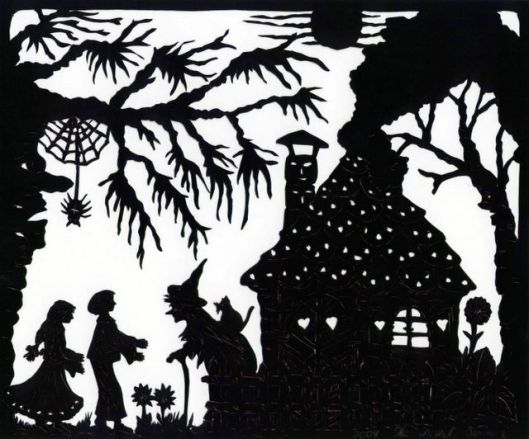
Shire Portrait (5b): Hostile Takeover

15 Wednesday Mar 2017

Posted by Ollamh in Economics in Middle-earth, Imaginary History, J.R.R. Tolkien, Military History, Military History of Middle-earth, Narrative Methods, Villains

≈ Leave a comment

Tags

Baggins, Chief, Der Fuehrer, Gestapo, Hitler, Lotho, SA, Sackville-Bagginses, Saruman, Sharkey, Shire, Shirriffs, Southfarthing, The Hobbit, The Lord of the Rings, The Scouring of the Shire, Tolkien

Welcome, dear readers, to the second part of our last (for the moment?) posting on the Shire. This is actually a two-part posting and is devoted to the takeover of the Shire by “Sharkey” and his followers and how it might have happened, based upon evidence from the texts of The Hobbit and The Lord of the Rings.

We decided upon a two-part posting because we saw the takeover as a two-step process. Initially, we believe that Saruman looked for someone within the Shire to act as his agent there and, as a local agent, both to foment the kind of discontent which would provoke a demand for change, and to act as the leader of that change.

Because the Shire had so little government and most problems were dealt with within families, we wondered if that discontent wouldn’t begin as something Shire-wide, but be found within one or more families, instead.

With this in mind, we immediately thought of the Sackville-Bagginses. From the final chapter of The Hobbit, it was clear that the S-Bs (as they’re called) had grievances against their cousins, the Bagginses, mostly because they wanted Bag End and its contents.

How this led to leaguing with Saruman is not explained, but merely suggested, by Pippin, who says, of reported disturbance in the Southfarthing:

“ ‘Whatever it is…Lotho will be at the bottom of it:   you can be sure of that.” The Return of the King, Book Six, Chapter 7, “Homeward Bound”

This is then confirmed when the hobbits reach the bridge over the Brandywine and one of the hobbit guards (Hob Hayward), mentions “the Chief…up at Bag End.”

Frodo, who has sold his house at Bag End (see The Fellowship of the Ring, Book One, Chapter 3, “Three is Company”) to the S-Bs, immediately asks Hob, “ ‘Chief? Chief? Do you mean Mr. Lotho?’ said Frodo.” The Return of the King, Book Six, Chapter 8, “The Scouring of the Shire”

Otho and Lobelia had been Bilbo’s enemies long ago, but, whereas Lobelia is still alive, Otho is long dead and Lotho (and yes, the word “loathe” must lie just below the surface here, though this is probably not his name in the Common Tongue, just as Pippin’s name isn’t Pippin), his son, has somehow become not the Mayor of the Shire (who is actually Will Whitfoot), but the much vaguer (and more menacing) “the Chief”. (We also note that “Mr. Lotho” is a courtesy title and one for established land-owners, really, and not for Lotho.)

The family theme is underlined when Hob replies that “we have to say ‘the Chief’ nowadays” and Frodo says, in turn:

“ ‘Do you indeed!’ said Frodo. ‘Well, I am glad he has dropped the Baggins at any rate. But it is evidently high time that the family dealt with him and put him in his place.’ ”

If Frodo’s remark suggests the familial aspect of justice in the Shire, the reply of an anonymous hobbit to it suggests the second or external step of the takeover:

“A hush fell on the hobbits beyond the gate. ‘It won’t do no good talking that way,’ said one. ‘He’ll get to hear of it. And if you make so much noise, you’ll wake the Chief’s Big Man.’ ”

As JRRT began The Lord of the Rings in 1937, just four years after the Nazis took control of Germany, “The Chief” surely has echoes of “Der Fuehrer”, which simply means “The Leader”.

adolf-hitler-34.jpg

In which case, should we associate the threat of “the Chief’s Big Man” with everything from the SA

0001.jpg

to the Gestapo?

0e24494b5019c1007e9214e03d77c2d8.jpg

Merry, at least, certainly makes a connection with something which Butterbur had said earlier:

“It all comes of those newcomers and gangrels that began coming up the Greenway last year, as you may remember; but more came later. Some were just poor bodies running away from trouble; but most were bad men, full o’ thievery and mischief.” The Return of the King, Book Six, Chapter 7, “Homeward Bound”

Answering the anonymous voice, Merry says:

“If you mean that your precious Chief has been hiring ruffians out of the wild, then we’ve not come back too soon!”

When the Big Man appears, Merry’s conclusion is confirmed: it’s Bill Ferny, who, Butterbur believes, who had been involved in a minor battle in Bree, in which five hobbits had been killed:

“ ‘And Harry Goatleaf that used to be on the West-gate, and that Bill Ferny, they came in on the strangers’ side, and they’ve gone off with them; and it’s my belief they let them in. On the night of the fight I mean.’ “

If some of these “Big Men” were criminal drifters from the east, almost randomly recruited, there were others who were sent.

“ ‘It all began with Pimple, as we call him,’ said Farmer Cotton; ‘and it began as soon as you’d gone off, Mr. Frodo.   He’d funny ideas, had Pimple. Seems he wanted to own everything himself, and then order other folk about. It soon came out that he already did own a sight more than was good for him; and he was always grabbing more, though where he got the money was a mystery: mills and malt-houses and inns, and farms, and leaf-plantations. He’d already bought Sandyman’s mill before he came to Bag End, seemingly.

Of course he started with a lot of property in the Southfarthing which he had from his dad; and it seems he’d been selling a lot o’ the best leaf, and sending it away quietly for a year or two. But at the end o’ last year he began sending away loads of stuff, not only leaf. Things began to get short, and winter coming on, too.   Folk got angry, but he had an answer. A lot of Men, ruffians mostly, came with great wagons, some to carry off the goods south-away, and others to stay. And more came. And before we knew where we were they were planted here and there all over the Shire, and were felling trees and digging and building themselves sheds and houses just as they liked…”

There is a bit more to add to this. The “Big Men” were not alone. As in our own historical world of Nazi occupiers, there were those willing to collaborate, as Robin Smallburrow tells Sam:

“There’s hundreds of Shirriffs all told, and they want more, with all these new rules. Most of them are in it against their will, but not all. Even in the Shire there are some as like minding other folk’s business and talking big. And there’s worse than that: there’s a few as do spy-work for the Chief and his Men.”

With Farmer Cotton’s narrative, however, the two steps come together: the local was, indeed, as Pippin has suspected, Lotho. The external was a combination of opportunists, like Bill Ferny, and agents dispatched from an unnamed southern source, but we know that it was “Sharkey” who sent them, just as we know that “Sharkey” was Saruman, who was still capable of mischief—but not “in a small mean way”.

Thanks, as always, for reading.

MTCIDC

CD
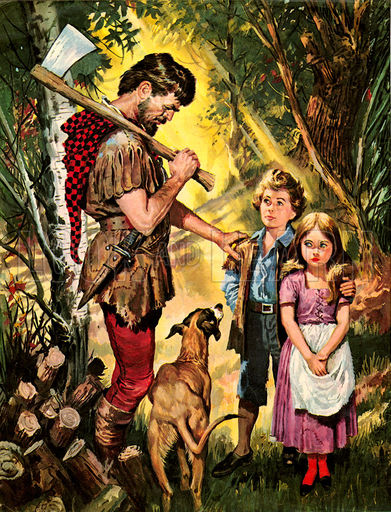
← Older posts
Newer posts →

The Doubtful Sea Series Facebook Page

The Doubtful Sea Series Facebook Page

  • Ollamh

Categories

  • Artists and Illustrators
  • Economics in Middle-earth
  • Fairy Tales and Myths
  • Films and Music
  • Games
  • Heroes
  • Imaginary History
  • J.R.R. Tolkien
  • Language
  • Literary History
  • Maps
  • Medieval Russia
  • Military History
  • Military History of Middle-earth
  • Narnia
  • Narrative Methods
  • Poetry
  • Research
  • Star Wars
  • Terra Australis
  • The Rohirrim
  • Theatre and Performance
  • Tolkien
  • Uncategorized
  • Villains
  • Writing as Collaborators
Follow doubtfulsea on WordPress.com

Across the Doubtful Sea

Recent Postings

  • Demons on the Big Screen August 26, 2026
  • Solution (2) August 19, 2026
  • Out of Work Athena August 12, 2026
  • Solution (1) August 5, 2026
  • More Troy? July 29, 2026
  • Prismatic July 20, 2026
  • Arboricidal July 15, 2026
  • Towering.3 July 8, 2026
  • Towering.2 July 1, 2026

Blog Statistics

  • 120,309 Views

Posting Archive

  • August 2026 (4)
  • July 2026 (5)
  • June 2026 (4)
  • May 2026 (4)
  • April 2026 (5)
  • March 2026 (4)
  • February 2026 (4)
  • January 2026 (4)
  • December 2025 (5)
  • November 2025 (4)
  • October 2025 (5)
  • September 2025 (4)
  • August 2025 (4)
  • July 2025 (5)
  • June 2025 (4)
  • May 2025 (4)
  • April 2025 (5)
  • March 2025 (4)
  • February 2025 (4)
  • January 2025 (5)
  • December 2024 (4)
  • November 2024 (4)
  • October 2024 (5)
  • September 2024 (4)
  • August 2024 (4)
  • July 2024 (5)
  • June 2024 (4)
  • May 2024 (5)
  • April 2024 (4)
  • March 2024 (4)
  • February 2024 (4)
  • January 2024 (5)
  • December 2023 (4)
  • November 2023 (5)
  • October 2023 (4)
  • September 2023 (4)
  • August 2023 (5)
  • July 2023 (4)
  • June 2023 (4)
  • May 2023 (5)
  • April 2023 (4)
  • March 2023 (5)
  • February 2023 (4)
  • January 2023 (4)
  • December 2022 (4)
  • November 2022 (5)
  • October 2022 (4)
  • September 2022 (4)
  • August 2022 (5)
  • July 2022 (4)
  • June 2022 (5)
  • May 2022 (4)
  • April 2022 (4)
  • March 2022 (5)
  • February 2022 (4)
  • January 2022 (4)
  • December 2021 (5)
  • November 2021 (4)
  • October 2021 (4)
  • September 2021 (5)
  • August 2021 (4)
  • July 2021 (4)
  • June 2021 (5)
  • May 2021 (4)
  • April 2021 (4)
  • March 2021 (5)
  • February 2021 (4)
  • January 2021 (4)
  • December 2020 (5)
  • November 2020 (4)
  • October 2020 (4)
  • September 2020 (5)
  • August 2020 (4)
  • July 2020 (5)
  • June 2020 (4)
  • May 2020 (4)
  • April 2020 (5)
  • March 2020 (4)
  • February 2020 (4)
  • January 2020 (6)
  • December 2019 (4)
  • November 2019 (4)
  • October 2019 (5)
  • September 2019 (4)
  • August 2019 (4)
  • July 2019 (5)
  • June 2019 (4)
  • May 2019 (5)
  • April 2019 (4)
  • March 2019 (4)
  • February 2019 (4)
  • January 2019 (5)
  • December 2018 (4)
  • November 2018 (4)
  • October 2018 (5)
  • September 2018 (4)
  • August 2018 (5)
  • July 2018 (4)
  • June 2018 (4)
  • May 2018 (5)
  • April 2018 (4)
  • March 2018 (4)
  • February 2018 (4)
  • January 2018 (5)
  • December 2017 (4)
  • November 2017 (4)
  • October 2017 (4)
  • September 2017 (4)
  • August 2017 (5)
  • July 2017 (4)
  • June 2017 (4)
  • May 2017 (5)
  • April 2017 (4)
  • March 2017 (5)
  • February 2017 (4)
  • January 2017 (4)
  • December 2016 (4)
  • November 2016 (5)
  • October 2016 (6)
  • September 2016 (5)
  • August 2016 (5)
  • July 2016 (5)
  • June 2016 (5)
  • May 2016 (4)
  • April 2016 (4)
  • March 2016 (5)
  • February 2016 (4)
  • January 2016 (4)
  • December 2015 (5)
  • November 2015 (5)
  • October 2015 (4)
  • September 2015 (5)
  • August 2015 (4)
  • July 2015 (5)
  • June 2015 (5)
  • May 2015 (4)
  • April 2015 (3)
  • March 2015 (4)
  • February 2015 (4)
  • January 2015 (4)
  • December 2014 (5)
  • November 2014 (4)
  • October 2014 (6)
  • September 2014 (1)

Blog at WordPress.com.

  • Subscribe Subscribed
    • doubtfulsea
    • Join 75 other subscribers
    • Already have a WordPress.com account? Log in now.
    • doubtfulsea
    • Subscribe Subscribed
    • Sign up
    • Log in
    • Report this content
    • View site in Reader
    • Manage subscriptions
    • Collapse this bar
Loading Comments...