• About

doubtfulsea

~ adventure fantasy

Author Archives: Ollamh

Green and Quiet.1

05 Wednesday Sep 2018

Posted by Ollamh in Economics in Middle-earth, J.R.R. Tolkien, Literary History

≈ Leave a comment

Tags

Birmingham, Charles Dickens, Cottage industry, factories, Goblins, Hard Times, Hilary Tolkien, I Can't Find Brummagem, Industrial Revolution, Isengard, James Dobbs, John Ezard, Mabel Tolkien, Mills, Ornthanc, Sarehole, Sharkey, The Hobbit, The Scouring of the Shire, Tolkien, World War I

As always, dear readers, welcome.

We’ve always loved the lines

“By some curious chance one morning long ago in the quiet of the world, when there was less noise and more green…”

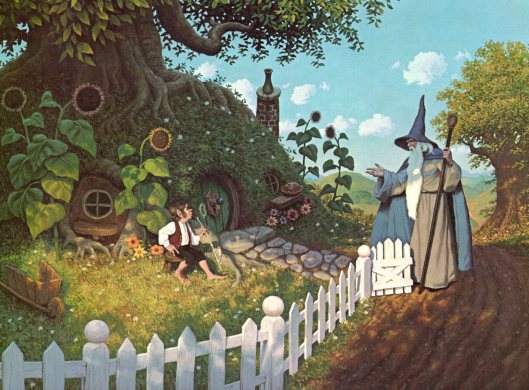
which open the paragraph in which Gandalf first appears in The Hobbit and the story actually begins.

For JRRT, green and quiet are the ideal, but things have clearly changed—as this sentence implies, now there is more noise and less quiet.  In our time—and even before Tolkien’s childhood in the late 19th century—the green and quiet were and are going thanks to the Industrial Revolution.  Or so we thought.  Reading Tolkien, however, we begin to believe that it’s goblins:

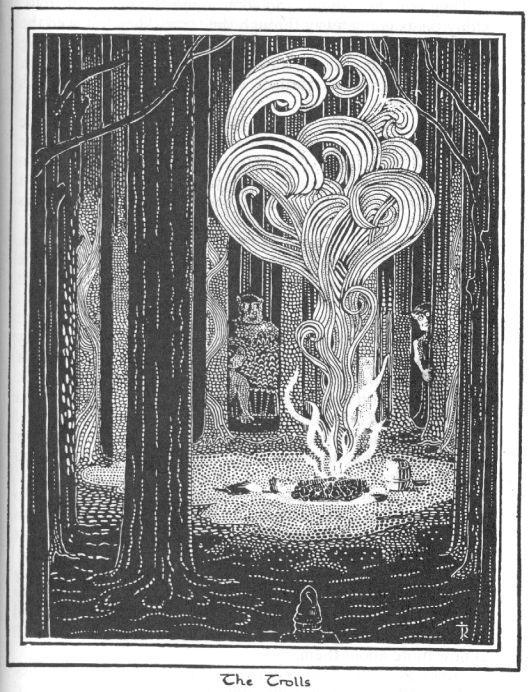
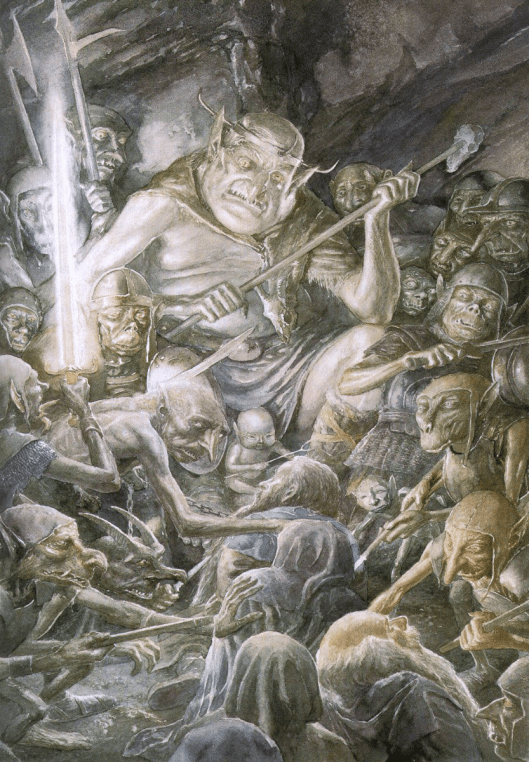
“Now goblins are cruel, wicked, and bad-hearted.  They make no beautiful things, but they make many clever ones.  They can tunnel and mine as well as any but the most skilled dwarves, when they take the trouble, though they are usually untidy and dirty.  Hammers, axes, swords, daggers, pickaxes, tongs, and also instruments of torture, they make very well, or get other people to do the work to make to their design, prisoners and slaves that have to work till they die for want of air and light.  It is not unlikely that they have invented some of the machines that have since troubled the world, especially the ingenious devices for killing large numbers of people at once, for wheels and engines and explosions always delighted them, and also not working with their own hands more than they could help; but in those days and those wild parts they had not advanced (as it is called) so far.”  (The Hobbit, Chapter Four, “Over Hill and Under Hill”)

In our last posting, we had linked this passage with the invention of poison gases by German scientists and their use first by German soldiers and then by the Allies in the Great War, but we would like to add to that idea that this may be in reality a larger indictment, of the Industrial Revolution and the effects it had had upon the English countryside.

This revolution had begun in the 18th century, in Britain, when the country was first becoming a major mercantile and colonial power and the demand for British goods—especially British wool and cloth—was growing.  A succession of inventions from the 1760s on had turned a (literal) “cottage industry” of clothing-making—

image1weaver.jpg

into something which produced thread and cloth on a massive scale in early factories.

image2powerlooms.jpg

These factories, often called “mills” because of their original use of waterpower,

image3waterpower.jpg

as was done in the small factories which, all the way back to Roman times, had ground grain into flour,

image4agrainmill.jpg

could also, in time, be run by steam power.

image4steammill.jpg

Mills of this sort soon became prototypes for factories built to mass-produce anything

image5factory.jpg

and soon the air around cities was thick with smoke and industrial waste.

image6pollution.jpg

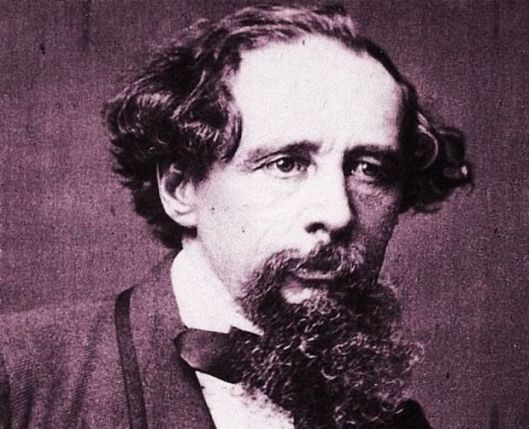
With no laws to stop them, mill/factory owners bought up land, employed people (many of them ex-cottage workers thrown out of work by the very factories they now sought work in) in near-slave conditions—including children–and polluted water and air with no fear of punishment.  Here is Charles Dickens’ description of a town filled such places, from his 1854 novel, Hard Times:

“It was a town of red brick, or of brick that would have been red if the smoke and ashes had allowed it; but as matters stood, it was a town of unnatural red and black like the painted face of a savage. It was a town of machinery and tall chimneys, out of which interminable serpents of smoke trailed themselves for ever and ever, and never got uncoiled. It had a black canal in it, and a river that ran purple with ill-smelling dye, and vast piles of building full of windows where there was a rattling and a trembling all day long, and where the piston of the steam-engine worked monotonously up and down, like the head of an elephant in a state of melancholy madness. It contained several large streets all very like one another, and many small streets still more like one another, inhabited by people equally like one another, who all went in and out at the same hours, with the same sound upon the same pavements, to do the same work, and to whom every day was the same as yesterday and to-morrow, and every year the counterpart of the last and the next.”

Set this next to Gandalf’s description of what had happened to Isengard and you can see what we mean about goblins (here, Saruman and his orcs—but JRRT sometimes uses goblin and orc interchangeably) as what has destroyed the quiet and green:

“I looked on it and saw that, whereas it had once been green and fair, it was now filled with pits and forges…Over all his works a dark smoke hung and wrapped itself about the sides of Orthanc.”  (The Fellowship of the Ring, Book Two, Chapter 3, “The Council of Elrond”)

image7aisengard.jpg

In 1895, Tolkien’s mother, Mabel,

image7mabel.png

who had been living in South Africa with her husband, brought her two sons, JRRT and Hilary, to the Birmingham area of England for a visit to relatives.

image8.jpg

Unfortunately, while they were gone, Tolkien’s father died of rheumatic fever.  Mabel decided to stay in England and found a place for her sons and herself at Sarehole, southeast of Birmingham itself.

image9housesarehole.jpg

Birmingham was a booming product of that Industrial Revolution, which we’re sure is why Mabel chose a tiny village several miles away.

image10brum.jpg

Birmingham was also an ancient settlement, (here’s a LINK to a minitour of the medieval town) but had mushroomed, both in factories and population even at the beginning of the 19th century, as this verse from a music hall song from 1828 by James Dobbs depicts:

‘I remember one John Growse,
Who buckles made in Brummagem,
He built himself a country house,
To be out of the smoke of Brummagem
But though John’s country house stands still,
The town itself has walked up hill,
Now he lives beside a smoky mill,
In the middle of the streets of   Brummagem.”

(James Dobbs (1781-1837), “I Can’t Find Brummagem”.  Brummagem is an old local nickname for Birmingham.  Here’s a LINK so that you can see the whole song and its tune, which we know as “Duncan Grey”.  If you go to the link, you’ll notice we’ve made a few editorial additions, which we knew from another version of the song and which help the words to better fit the tune.)

And yet, although Sarehole had an old mill, it was not like those in Birmingham or even in Dickens,

image11mill.jpg

and, in later years, in fact, Tolkien saw the little village beyond it as a kind of paradise, as he said in an interview:

‘It was a kind of lost paradise,’ he said. ‘There was an old mill that really did grind corn with two millers, a great big pond with swans on it, a sandpit, a wonderful dell with flowers, a few old-fashioned village houses and, further away, a stream with another mill. I always knew it would go – and it did.’

(This is taken from an article by John Ezard in The Guardian for 28 December, 1991—here’s a LINK so that you can read all of it.)

This strong contrast between green and quiet and its opposites, as seen in Sarehole versus Birmingham, early in Tolkien’s life, and the two stages of Isengard, will appear again in the Shire as Saruman/Sharkey has planned.  The green and quiet is literally uprooted and even Sandyman’s old mill is a victim of the goblinesque work as Farmer Cotton says:

image12mill.jpg

“But since Sharkey came they don’t grind no more corn at all.  They’re always a-hammering and a-letting out a smoke and stench, and there’s no peace even at night in Hobbiton.  And they pour out filth a purpose; they’ve fouled all the lower Water, and it’s getting down into Brandywine.”

(The Return of the King,  Book Six, Chapter 8, “The Scouring of the Shire”)

image14shire.jpg

Those who work for Sharkey are men, but, as you can see, under his influence, they act very much like those destructive goblins with which we began.   For all that he rode in automobiles and trains and used telephones and typewriters, JRRT was never quite happy in the modern world and, considering that the goblins seemed always poised to ruin more green and produce more noise at the command of a modern-day Saruman, it’s perhaps not surprising.  It’s also not surprising, we would add, that his favorite creatures, trees, are the ones who destroy Saruman’s handiwork at Isengard and return it to a leafy park.

image15isen.jpg

Thanks, as ever, for reading.

MTCIDC

CD


ps

In our next, we want to talk about another aspect of quiet which had changed from Tolkien’s childhood and may be a reason why there are Rohirrim and why JRRT himself enlisted in the volunteer cavalry…

image16yeomanry.jpg

Gobs and Hobs.2

29 Wednesday Aug 2018

Posted by Ollamh in Artists and Illustrators, Fairy Tales and Myths, J.R.R. Tolkien, Language, Literary History

≈ Leave a comment

Tags

A Midsummer Night's Dream, Arthur Rackham, Christina Rossetti, Elf Child, Fairies, Fairy Tale, George Macdonald, Goblin Feet, Goblin Market, Goblins, Historia Ecclesiastica, Hobgoblin, James Whitcomb Riley, John Garth, John Singer Sargent, King Edward's Horse, Little Orphan Annie, Orderic Vitalis, Pat Walsh, Psalm 91, Robin Goodfellow, The Crowfield Curse, The Crowfield Demon, The Hob and the Deerman, The Hobbit, The Lord of the Rings, The Princess and the Goblin, Tolkien, Tolkien and the Great War, Tolkien at Exeter College

As always, dear Readers, welcome!

In our last, we were talking about JRRT’s 1915 poem, “Goblin Feet” its origins, original publication, and context.

In this, we want to think out loud a bit about the idea of goblins in general.

Although the poem was entitled “Goblin Feet”, Tolkien seemed not to focus so much on goblins—there are also other creatures from the Otherworld, including fairies and gnomes and even leprechauns (not to mention bats—called by their old country name “flitter-mice”—and beetles and coneys).

In this posting, however, we’re going to stick to goblins—well, and hobgoblins—but more about those later.

We first encountered goblins as very small children when a teacher read us a poem by the American poet, James Whitcomb Riley (1849-1916).

image1riley.jpg

(We can’t resist a second picture.  This is by one of our favorite late-19th-early-20th-c. American Painters, John Singer Sargent—1856-1925.)

image2riley.jpg

This poem, first entitled “Elf Child”, originally appeared in a newspaper in 1885.  After that, it was meant to be “Little Orphan Allie”, but, owing to a typsetter’s error, it gained its present title, which it’s had ever since.

Little Orphant Annie – Poem by James Whitcomb Riley

To all the little children: — The happy ones; and sad ones;
The sober and the silent ones; the boisterous and glad ones;
The good ones — Yes, the good ones, too; and all the lovely bad ones.

Little Orphant Annie’s come to our house to stay,
An’ wash the cups an’ saucers up, an’ brush the crumbs away,
An’ shoo the chickens off the porch, an’ dust the hearth, an’ sweep,
An’ make the fire, an’ bake the bread, an’ earn her board-an’-keep;
An’ all us other childern, when the supper-things is done,
We set around the kitchen fire an’ has the mostest fun
A-list’nin’ to the witch-tales ‘at Annie tells about,
An’ the Gobble-uns ‘ll git you
Ef you
Don’t
Watch
Out!

Wunst they wuz a little boy wouldn’t say his prayers,–
An’ when he went to bed at night, away up-stairs,
His Mammy heerd him holler, an’ his Daddy heerd him bawl,
An’ when they turn’t the kivvers down, he wuzn’t there at all!
An’ they seeked him in the rafter-room, an’ cubby-hole, an’ press,
An’ seeked him up the chimbly-flue, an’ ever’-wheres, I guess;
But all they ever found wuz jist his pants an’ roundabout:–
An’ the Gobble-uns ‘ll git you
Ef you
Don’t
Watch
Out!

An’ one time a little girl ‘ud allus laugh an’ grin,
An’ make fun of ever’ one, an’ all her blood-an’-kin;
An’ wunst, when they was ‘company,’ an’ ole folks wuz there,
She mocked ’em an’ shocked ’em, an’ said she didn’t care!
An’ jist as she kicked her heels, an’ turn’t to run an’ hide,
They wuz two great big Black Things a-standin’ by her side,
An’ they snatched her through the ceilin’ ‘fore she knowed what she’s about!
An’ the Gobble-uns ‘ll git you
Ef you
Don’t
Watch
Out!

An’ little Orphant Annie says, when the blaze is blue,
An’ the lamp-wick sputters, an’ the wind goes woo-oo!
An’ you hear the crickets quit, an’ the moon is gray,
An’ the lightnin’-bugs in dew is all squenched away,–
You better mind yer parunts, an’ yer teachurs fond an’ dear,
An’ churish them ‘as loves you, an’ dry the orphant’s tear,
An’ he’p the pore an’ needy ones ‘at clusters all about,
Er the Gobble-uns ‘ll git you
Ef you
Don’t
Watch
Out!

In some ways, this is a typical Victorian moral poem:  children better behave, or…  But, instead of being in “proper” English, it’s been told in the dialect of the US state of Indiana and this was something for which Riley was well-known, having written numbers of poems in the so-called “Hoosier” dialect.  (This includes what looks like a misprint for the proper spelling “orphan”.)

Our acquaintance with goblins has continued to be literary, from Christina Rossetti’s (1830-1894)

image3acr.jpg

Goblin Market (1862)

image3gobmark.jpg

to George Macdonald’s (1824-1905)

image4gmacd.jpg

1872 fantasy novel, The Princess and the Goblin.

princessandgoblin1872.jpg

Our biggest—and longest—exposure, of course, was in The Hobbit (1937).

image6hob.jpg

Goblins turn up from the moment Bilbo and the dwarves fall into their hands in Chapter 4, “Over Hill and Under Hill” and we see them again in their pursuit of the party once they’ve escaped the goblin stronghold and finally at the Battle of the Five Armies.  At their first appearance, they are described as “great ugly-looking goblins” and, unlike the nimble-footed creatures of Tolkien’s 1915 poem, these have flat feet and flap them as they move.  They live in a monarchy, ruled (for the moment) by a king described as “a tremendous goblin with a huge head”.

So far, we might see that as traditional nightmarish beings, like the “great big Black Things” in stanza 3 of Riley’s poem, but JRRT does something further and very interesting with them.  This first novel was written in the 1930s, only twenty years after the Great War which had ruined much of western Europe and killed all but one of Tolkien’s oldest friends, and the emotional scar was still fresh, it seems.  He was too humane (and too wise) to blame Germany for what had happened, but it’s clear that he wouldn’t excuse the Industrial Revolution and the goblins become a stand-in for all the worse of it:

“Hammers, axes, swords, daggers, pickaxes, tongs, and also instruments of torture, they make very well, or get other people to make to their designs, prisoners and slaves that have to work till they die for want of air and light.  It is not unlikely that they invented some of the machines that have since troubled the world, especially the ingenious devices for killing large numbers of people at once, for wheels and engines and explosions always delighted them, and also not working with their own hands more than they could help; but in those days and those wild parts they had not advanced (so it is called) so far.”  (The Hobbit, Chapter 4, “Over Hill and Under Hill”)

The word “goblin” has a rather mysterious etymological history and, like so many early words, that history is a murky one, full of guesses and suggestions.  A little research produces the explanation that the word first seems to appear in Latin, in Orderic Vitalis’ (1075-c1142) Historia Ecclesiastica, Book 5, Chapter 7, in which, while reviewing the life of the early French saint, Taurinus, (lived c.400AD), Orderic mentions a demon whom the saint has vanquished, but which still haunted the area around the town of Evreux in Normandy, a demon the locals called “gobelinus”.

A century later, in the long Old French poem on the Third Crusade (1189-1192) of Ambroise of Normandy (who lived at the end of the 12th century), a noted figure in the actual history of the period, Balian d’ Ibelin, is referred to as being “more false than a gobelin” (L’Histoire de la Guerre Sainte, line 8710), with no explanation, suggesting that readers would be aware of what a gobelin was (and that he wasn’t trustworthy).

The word first appears in English in John Wycliffe’s translation of the Bible in the late 14th century, in Psalm 91, in which a God-fearing person will never be afraid of various things, including

“of a gobelyn goyng in derknisses”.

If 14th-century people knew what this creature was, we wonder whether it was still clear to people two centuries later—the older standard English translation (the so-called “King James Bible”, 1611) translates this as

“the pestilence that walks in darkness”

(which actually is close to the Hebrew original, as best as we can make out, as we don’t, unfortunately, read Hebrew—see this LINK to read for yourself.)

In the preface to the 1951 second edition of The Hobbit, Tolkien gives his own gloss, based upon the word he will employ almost entirely in The Lord of the Rings for such creatures:

“Orc is not an English word.  It occurs in one or two places but is usually translated goblin (or hobgoblin for the larger kinds).  Orc is the hobbits’ form of the name given at that time to these creatures…)

thus blending villains from 1937 with those readers would soon see in his new work, The Lord of the Rings (1954-1955).

“Hobgoblin” brings us to our conclusion, however.  As in the case of “goblin”, things get murky here, too, with some stating that, as “Hob” is an old nickname for “Robert” (compare “Hodge” as an old nickname for “Roger”), so a hobgoblin is related to “Robin Goodfellow”, (“Robin” being another nickname for “Robert”) aka the Puck we see in A Midsummer Night’s Dream (1595-96?).

image7puck.jpg

(This image is from Arthur Rackham’s (1865-1939) 1933 version of the play.)

https://pictures.abebooks.com/BLAEU/md/md20625435733.jpg

Hobgoblins sometimes appear as prickly household helpers (rather like Dobby in the Harry Potter books), and those who want to associate the “hob” of “hobgoblin” with the “hob” (earlier “hubbe”), “the side of a fireplace” see that prefix as suggesting that “hobgoblins” might be a subset of “goblins” in general.

For us, however, a “hob” is a character in an on-going series we recommend to our readers.  These are novels set in and around a decaying medieval monastery in 1347 and the haunted world around it, written by Pat Walsh, an archaeologist/fantasy author.

image8pw.jpg

The first two in the series are The Crowfield Curse (2010) and The Crowfield Demon (2011)

image9crowc.jpg

image10crowd.jpg

In this series, the hero, Will, an orphan, discovers a wounded creature and brings it back to the monastery.  It’s a hob—and will be a major character as the series develops.  In 2014, Walsh began a new series with The Hob and the Deerman.

image11thehob.jpg

Walsh has promised a third book in the Crowfield series, Crowfield Rising, but it has yet to appear—unlike our next posting, which will appear (provided that there is no space alien invasion or implementation of Order 66 or Sauron producing a new ring), next week.

Till then, thanks, as ever, for reading.

MTCIDC

CD

PS

In our last, we mistakenly identified a photo of JRRT in a uniform which we thought belonged to a unit at his alma mater, King Edward’s School, as the caption with it said “1907”.   It seemed odd to us, however, because it had the look of a cavalry unit (the bandoleer across the chest was common during the period for cavalry and for artillerymen) and, for all that he writes admiringly of horses, we had no sense that he himself was ever a horseman.  This nagged at us until we did a little research and realized our mistake:  the uniform was for King Edward’s Horse, the equivalent of a national guard/volunteer unit raised before the Great War.  Tolkien was a member of this at the beginning of his Oxford career in 1911, but later resigned.  John Garth’s two really useful books, Tolkien at Exeter College and Tolkien and the Great War, set us straight.

image12keh.jpg

PPS

If you read us regularly, you know that we have a special love for early, silent film  While researching this posting, we learned that, in 1918, a film was made based upon “Little Orphant Annie” and that a copy of it has survived for us to see.  Here’s a poster and a still.

image13littleorphant.jpg

image14still.jpg


Gobs and Hobs (1)

22 Wednesday Aug 2018

Posted by Ollamh in Fairy Tales and Myths, J.R.R. Tolkien, Literary History, Military History

≈ 2 Comments

Tags

A E Mason, A Midsummer Night's Dream, Brunhilde, cadet, cockfighting, Edith Bratt, Exeter College, Faeries, Fairies, Gilbert and Sullivan, Goblin Feet, Iolanthe, Oxford Poetry, Richard Doyle, Richard Wagner, The Four Feathers, The Great War, The Lord of the Rings, Tolkien, white feather, William Shakespeare, World War I, Yeats

As always, dear readers, welcome.

In 1915, Tolkien was

image1jrrt.jpg

scrambling to finish his BA at Exeter College

image2aexeter.jpg

before he was swept up into the war which was gradually devouring the younger male populations of much of western Europe

image2bcasualties.jpg

and would soon swallow him, as well.

image2jrrt.jpg

Although he had been a cadet in his earlier days,

image3cadet.jpg

he resisted the societal pressure to join up and that must have been difficult, as it was not uncommon in 1915 for young men not in uniform to be stopped in the street by civilians, particularly women, and asked why they hadn’t enlisted yet before being presented with a white feather as a symbol of cowardice.

image4feather.png

image5feather.jpg

The use of a white feather appears to have been derived from the old sport of cockfighting, in which it was believed that a rooster with a white tail feather would be a poor combatant.

image6cockfighting.jpg

For us, the image is directly related to a famous 1902 adventure novel, The Four Feathers

image7fourfeathers.jpg

by A E Mason (1865-1948).

image8aemason


In this book, the main character, Harry Feversham, is thought to be a coward by his brother officers and by his fiancé and goes to heroic lengths to prove otherwise (here’s a LINK so that you can enjoy the book for yourself, if you would like).

As well as the book, there have been a number of films made from it, including the one which we believe to be the best, from 1939.

image9fourfeathers.jpg

During this scramble to finish, Tolkien wrote a poem in late April for his wife-to-be, Edith Bratt (1889-1971).

image10edith.jpg

Called “Goblin Feet”, it was first published in Oxford Poetry 1915.  (Here’s a LINK so that you may have your own copy of the book.)

image11opo.jpg

Here’s the text:

I am off down the road
Where the fairy lanterns glowed
And the little pretty flitter-mice are flying;
A slender band of gray
It runs creepily away
And the hedges and the grasses are a-sighing.
The air is full of wings,
And of blundery beetle-things
That warn you with their whirring and their humming.
O! I hear the tiny horns
Of enchanted leprechauns
And the padded feet of many gnomes a-coming!
O! the lights! O! the gleams! O! the little twinkly sounds!
O! the rustle of their noiseless little robes!
O! the echo of their feet — of their happy little feet!
O! the swinging lamps in the starlit globes.

I must follow in their train
Down the crooked fairy lane
Where the coney-rabbits long ago have gone.
And where silvery they sing
In a moving moonlit ring
All a twinkle with the jewels they have on.
They are fading round the turn
Where the glow worms palely burn
And the echo of their padding feet is dying!
O! it’s knocking at my heart—

Let me go! let me start!
For the little magic hours are all a-flying.

O! the warmth! O! the hum! O! the colors in the dark!
O! the gauzy wings of golden honey-flies!
O! the music of their feet — of their dancing goblin feet!
O! the magic! O! the sorrow when it dies.

Two things strike us immediately about this text.  First, its tone of subdued longing for Otherness—“I must follow”, “O! it’s knocking at my heart”, “O! the sorrow when it dies”.  This reminded us of WB Yeats’  (1865-1939) “The Hosting of the Sidhe” (from the volume The Wind Among the Reeds, 1899)

The host is riding from Knocknarea
And over the grave of Clooth-na-Bare;
Caoilte tossing his burning hair,
And Niamh calling Away, come away:
Empty your heart of its mortal dream.
The winds awaken, the leaves whirl round,
Our cheeks are pale, our hair is unbound,
Our breasts are heaving, our eyes are agleam,
Our arms are waving, our lips are apart;
And if any gaze on our rushing band,
We come between him and the deed of his hand,
We come between him and the hope of his heart.
The host is rushing ‘twixt night and day,
And where is there hope or deed as fair?
Caoilte tossing his burning hair,
And Niamh calling Away, come away.

(Here, by the way, is the cover to the first edition of the volume, artwork by Yeats’ friend, Althea Giles.

image12windcover.jpg

And here’s a LINK to the earliest edition we can find on the internet—it’s the 4th, from 1903.)

Yeats, in this part of his creative life, was just leaving the late-Victorian era called the “Celtic Twilight”, in which Irish artists of all sorts were attempting to create a new art, independent of British art and literature and based upon what they conceived were “Old Irish models”.  To someone of late-Romantic temperament, like Tolkien, the attraction must have been very strong—note that leprechauns have somehow gotten mixed with the goblins!

This mixing of all kinds of beings from Faerie—goblins, fairies, leprechauns, gnomes—and their diminutive size—note five uses of “little” and one “tiny” –is the second thing which strikes us. The shrinking of otherworld beings in English literature can be traced at least as far back as Shakespeare and A Midsummer Night’s Dream,

STC 22302, title page


but really catches hold in the 19th century, with the pictorial work of artists like Richard Doyle

image14doyle

image15fairyland

and which is parodied by WS Gilbert (1836-1911), in Iolanthe (1882), in which the human-sized (and often played by a stout woman) Queen of the Fairies talks all about curling “myself inside a buttercup”, all the while being costumed to look like a Valkyrie from Wagner’s operas—an extra visual joke (which is, in our Gilbert and Sullivan experience, no longer employed—a pity!).

image16queen

image17brunhilde

(Arthur Sullivan (1842-1900), who was the composer of Iolanthe, has left us a very beautiful overture for it.  Here’s a LINK so that you can hear it.)

JRRT seems, at the very beginning of his literary life, to have been caught up in this mixture of Shakespeare and Victoriana and Yeats’ “Celtic Twilight” mood and it’s perhaps for that reason that, later in life, looking back on it, he said of this early poem:

“I wish the unhappy little thing, representing all that I came (so soon after) to fervently dislike, could be buried forever.” (The Book of Lost Tales Part One, “The Cottage of Lost Play”, 32)

Was he embarrassed at his own youthful influences?  And there have certainly been later critics who have been hard upon the poem.

If we put it into the context of 1915, however, this longing to be anywhere but in wartime 1915 makes perfect sense, especially for a young, sensitive, highly-intelligent man deeply in love with a girl he’d worked so hard to be with. The real horrific violence of the Great War was kept hidden from the people of the UK by the Government.  Newspapers and magazines were censored, soldiers’ letters were censored (Tolkien and Edith developed a secret code in his letters to get around that censorship), soldiers were not allowed to keep diaries or have cameras (only official photographers were permitted to work at the Front—and their work was closely watched), but word still got back, mainly, we suspect, from those on leave, often wounded, who had experienced events which turned out like this—

image18casualties

Is it any wonder, with what he knew about and dreaded being part of, that JRRT would have wished to be on the road to Fairyland?

Thanks, as always, for reading.

MTCIDC

CD

ps

In our next, we want to think out loud a bit about the goblins whose feet JRRT wants so much to follow…

In Depth

15 Wednesday Aug 2018

Posted by Ollamh in J.R.R. Tolkien, Language, Literary History

≈ Leave a comment

Tags

Beowulf, Canterbury Tales, Chaucer, Christopher Tolkien, conlang, Danian, David J Peterson, Dothraki, Elvish, English, Game of Thrones, Hamlet, Ilkorin, James Joyce, Jane Austen, language, Noldorin, Pride and Prejudice, Qenya, Shakespeare, Star Wars, Telerin, The Art of Language Invention, The Lord of the Rings, Tolkien, Ulysses

Welcome, as always, dear readers.

In 1977, the more observant viewers and critics commented upon the look and feel of a new film.  Instead of a world in which everything appeared newly-produced and sparkling, this was one in which it was clear that people had lived for a long time and many different peoples, at that.

image1moseisley.png

Even their vehicles had a scratched and dusty look.

image2speeder.jpg

We had been told, of course, in the very opening sequence that this was an old place—

image3long.png

but actually seeing its used look was that much more convincing

image4crawler.jpg

as was seeing—and hearing—its peoples,

image5jawas.jpeg

who sometimes even required subtitles, as if the audience were watching a foreign film.

image6greedo.png

In time, as the success of this film produced not only more films, but mountains of other material, from novels to graphic novels to spin-off series to toys and t-shirts and kitchen ware,

image7mugs.jpg

a whole literature appeared about this world—or, we should say, worlds. Its geography and even its extremely-varied animal life.

image8atlas.jpg

image9fauna.jpg

And, along with all of the other material, information about its languages began to appear.

image10aura.png

What prompted this posting, however, was something odd about one of those languages, that spoken by a character in what would, in time, become the sixth in the series.

image11boushh.jpg

This was pointed out to us by David J. Peterson

image12peterson.jpg

in his 2015 book, The Art of Language Invention.

image13book.jpg

As a child, what had puzzled Peterson was that the character (who is subtitled), says only “Yate, yate, yoto, ei, yato, cha”—in total, only six different words, but they are translated as everything from “I have come for the bounty on this Wookiee” to “50,000, no less”.  (This is quoted and discussed on pages 3 to 5 of Peterson’s book—which is, by the way, one we would recommend, if you’re as interested in languages as we are.)

How could so few words mean so many different things?  As an adult, looking back, Peterson had his doubts and we would agree—especially when reading about the world in which Peterson lives, the world of “conlang”, which is short for “constructed languages”.  Peterson is the creator of Dothraki, the language of the nomadic Dothraki people,

image14dothraki.jpg

one of the numerous races which inhabit the landscape of George R R Martin’s Game of Thrones, first novels, then a huge, elaborate, and engrossing television series.

image15gamebooks.jpg

image16tv.jpeg

The difference between “yate”, etc and Dothraki is that those few words are there to suggest that someone is speaking in a language different from the language spoken by the majority of the characters—which is the method employed throughout not only this film, but its two immediate successors.

image17swset.jpg

What Peterson set out to do was to create the shape of an entire language (something he has done more than once).  Here’s a LINK to the Wiki site, which, as usual, leads to other sites, which lead to other sites, which lead… if you’d like to learn more.

As worn-looking buildings and vehicles, different peoples and flora and fauna, and at least the suggestion of other languages create a bigger, deeper picture of the setting of an adventure, so, too, does the suggestion of great age.  Over time, the huge pile of material for the film series we first mentioned showed, in detail, that what we were seeing was, in fact, only the latest phase in a whole galaxy of civilizations over many centuries—after all, “For over a thousand generations, the Jedi Knights were the guardians of peace and justice in the Old Republic”.

image18obiwan.jpg

Another way to suggest that great age is a much less dramatic one—perhaps even a nearly-invisible one–practiced by one of our favorite authors and the subject of innumerable postings, and here is one of his efforts.

image19chart.jpg

What we’re seeing here is JRRT working out the history of sounds throughout a series of Elf languages, Qenya, Telerin, Noldorin, Ilkorin, and Danian, part of his immense and immensely-detailed work on the tongues of Middle-earth.   All languages change through time, of course—here’s a rough version of the succession of periods of English—

Old English (the opening lines of Beowulf, 700-1000AD,

image20beo.jpg

Middle English (the opening of Chaucer’s Canterbury Tales, c.1400AD),

image21chaucer.jpg

Early Modern English (the beginning of the first scene of Shakepeare’s Hamlet, 1603),

image22hamlet.jpg

early 19th-century English (the first lines of Jane Austen’s Pride and Prejudice, 1813),

image23pp.jpg

and early 20th-century English (the opening of James Joyce’s Ulysses, 1922).

image24ulysses.jpg

And Joyce even attempted to suggest the procession of those periods in Chapter 14 of Ulysses, “The Oxen of the Sun”, where the story is told through paragraphs which sound like earlier versions of the language gradually moving towards modern English.  (The novelist Nabokov, who played with language constantly, actually found this chapter boring, perhaps because it seemed to him like a one-off, not really in aid of the plot and its characters in general, but rather just a piece of private fun by and for the author?)

JRRT, however, goes one better.  Like other creators of big adventures, he used lots of means to deepen his story, from an extensive and detailed map

image25map.jpg

to describing the remains of earlier times still standing in the landscape of Middle-earth of the present,

image26argonath.jpg

to adding detailed historical appendices and chronologies (and his valiant son, Christopher, has added many volumes more),

image27ct.jpg

but using intricate sound changes and their logical development takes the idea of depth into new regions, especially because it would probably go unnoticed by most readers—there’s an awful lot of detail in those appendices—but whose meticulous creation is not in the least surprising for someone who once wrote, “The ‘stories’ were made rather to provide a world for the languages than the reverse.” (Letters, 219)

Thanks, as ever, for reading.

MTCIDC

CD


ps

Ah yes—the nearly-inevitable post scriptum—if the normal world/s of the films we first mentioned are “scruffy-looking” (to quote a character about another character), we notice that the world of the villains—the soldiers of the Empire and their surroundings—are hard and clean and shiny—which makes us feel a little better when we wonder when we may last have shined our shoes.

image28deathstar.jpg

Dayless Dawn

08 Wednesday Aug 2018

Posted by Ollamh in Artists and Illustrators, Heroes, J.R.R. Tolkien, Military History, Military History of Middle-earth

≈ Leave a comment

Tags

Battle of the Somme, British Expeditionary Force, chemical warfare, Fritz Haber, Gas warfare, Great War, John Singer Sargent, maxim gun, mustard gas, tear gas, The Lord of the Rings, The Siege of Gondor, Tolkien, trench warfare, trenches, Vale of Anduin, WWI, Young Indiana Jones

Welcome, as always, dear readers.

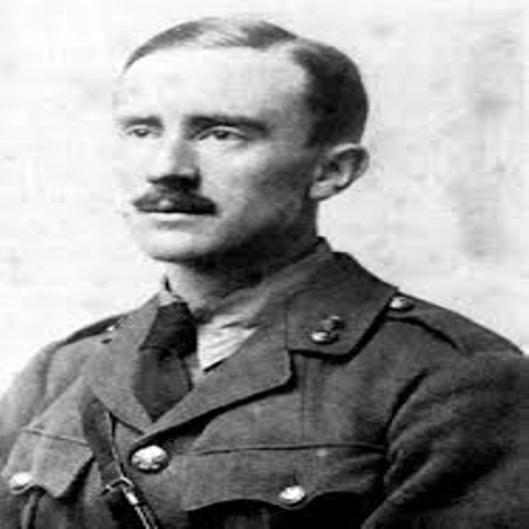
In this, the last year of the centennial of the Great War, we are often reminded not only of that conflict, but also that Second Lieutenant J R R Tolkien took part in it.

image1jrrt.jpg

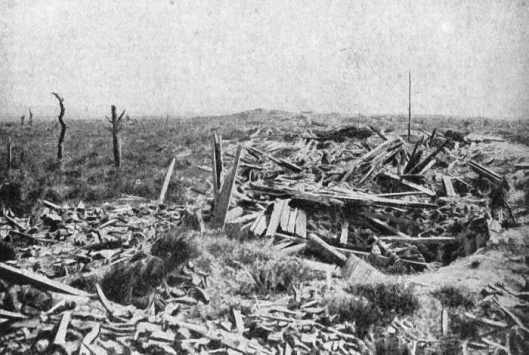
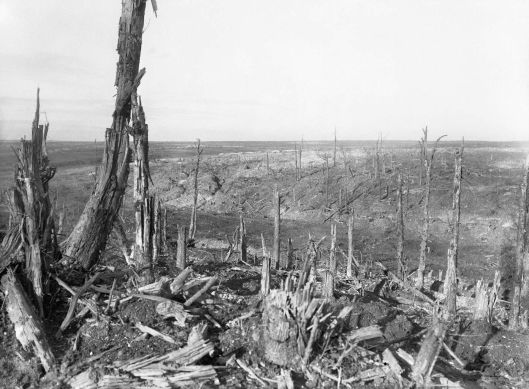
By the time he had reached the Front, in July, 1916, the latest round of blood-letting, the infamous Somme, was already in progress.

image2over.jpeg

image3somme.jpg

“Blood-letting” is an understatement:  on the first day of the battle, 1 July, 1916, there had been nearly 60,000 British casualties and attacks would continue till November.  The problems faced were mainly those of 1914.  The well-equipped, well-trained professional soldier of the British Expeditionary Force

image4tommy.jpg

met the Maxim Gun

image5maxim.jpg

and took heavy casualties.  These casualties were multiplied by the number and range of German artillery.

image6haubitzer.jpg

To defend themselves against these modern weapons, soldiers went to ground as soon as they could.

image7frenchembankment.jpg

Digging in moved from a simple scrape of the earth into 500 miles (from Switzerland to the North Sea) of often very elaborate earthworks.

image8trench.jpgimage9system.jpeg

Equip these with machine guns

image10mg.jpg

and spread acres of barbed wire in front

image11barbedwire.jpg

and you can think that you’re safe from attack.

image12trapped.jpg

So, the problem then was:  how to break through?  And this is where the German chemical industry

image13factory.jpg

and its brilliant chemist, Fritz Haber,

image14haber.jpg

(who will share the Nobel Prize for chemistry in 1918) came in.

Haber, famous for creating artificial fertilizer—his positive side—was also a captain in the Kaiser’s army (hence the uniform in our illustration), intensely convinced that Germany was justified in waging war on Europe, and began to develop a reply to elaborate fortifications:  poison gases—Haber’s dark side.

Nearly twenty years before, in 1900, many of the world’s nations, including Germany, had signed an agreement at the Hague that, among other things, they wouldn’t employ such a weapon, but, clearly, the temptation was too great, and not only for Germany.  After the first major attack, 22 April, 1915, in which the Germans had killed or driven a large number of French troops from their trenches, the British and French began their own development programs.

Over time, the gases varied as experiments showed scientists and military men what worked and what didn’t.  There were simple tear gases, which incapacitated soldiers by blinding them with their own tears and disturbed their breathing, to much deadlier blister agents—but here’s a chart to lay out the effects.

image15gaschart.jpg

Delivery systems varied.  Gas might be released from canisters, allowing the prevailing wind to carry it to the enemy.

image16gas.jpg

The difficulty here was the variability of winds—should the direction change, the releasers of gas might—and sometimes did—find themselves the victims.

Gas packed into artillery shells was more dependable.

image17gas.jpg

Shells were marked to identify which gas was inside, as in this illustration.

In time, the British developed a method of projecting gas bombs in large numbers with what were called “Livens projectors”.

image18gasbomb.jpg

image19livens.jpg

This simple mechanism could be used in banks to blanket the enemy line with poisonous air.

image20projectors.jpg

Initially, there had been no defense against this weapon, but, in time, both sides developed gas masks.

image21masks.jpg

And, of course, something had to be done for the hundreds of thousands of horses both depended upon.

image22amask.jpeg

Here’s how the later, more efficient ones worked.

image22mask.jpg

They might have prevented suffocation, but they were uncomfortable and, worse, the lenses soon fogged over, making it difficult to see the enemy in their masks advancing through the clouds of gas.

image23advance.jpg

image24combat.jpg

In the television series about young Indiana Jones of some years ago, there was a very graphic depiction of this—and here’s a LINK so that you can see for yourself.  (We very much recommend this series, by the way.  On the whole, it has many episodes which not only fill in Indie’s past, but are good adventure stories in themselves.)

We can imagine, then, what might have been going on in JRRT’s mind when he wrote:

“It was dark and dim all day.  From the sunless dawn until evening the heavy shadow had deepened, and all hearts in the City were oppressed.  Far above a great cloud streamed slowly westward from the Black Land, devouring light, borne upon a wind of war; but below the air was still and breathless, as if all the Vale of Anduin waited for the onset of a ruinous storm.”  (The Return of the King, Book Five, Chapter 4, “The Siege of Gondor”)

image25gondor.jpg

Were those orcs approaching, or the Kaiser’s infantry?

image26gas.jpg

Thanks, as ever, for reading.

MTCIDC

CD

ps

The horrific effects of chemical warfare have, to us, never been more powerfully depicted than in John Singer Sargent’s (1856-1925)  Gassed (1919), based upon Sargent’s visit to the Western Front in July, 1918.

image27gassed.jpg

pps

But, you know us—if we can add a little something more, we always will and, in this case, we want to end not with just this image, horrible and moving as it is, but with something from another of Sargent’s works.  Along with being a society painter, he was one of the greatest American watercolorists and has left us a collection of beautiful, atmospheric works from Europe, the US, and the Caribbean.  We want to end, then, with these very different clouds–

image28sargent.jpg

Charge!

01 Wednesday Aug 2018

Posted by Ollamh in Artists and Illustrators, Films and Music, J.R.R. Tolkien, Military History, Military History of Middle-earth, The Rohirrim

≈ Leave a comment

Tags

16th Lancers, Aliwal, Australian Light Horse, Australians, Balaclava, Beersheba, Cavalry, Charges, Great War, Light Brigade, Palestine, Rohirrim, Scots Greys, The Lighthorsemen, The Lord of the Rings, Tolkien, Turks, Warhorse, Waterloo

As always, dear readers, welcome.

In an addition to an entry in Letters, the main portion of which has rather a murky history (see 217-218), but which the editor dates as “presumably written circa 1966”, Tolkien says that several features of The Lord of the Rings “still move me very powerfully”.  These features include being “most stirred by the sound of the horses of the Rohirrim at cockcrow”.

As this is one of our favorite parts of the book,


image1

we would absolutely agree, but, as is so often the case, both with JRRT and with ourselves, we wondered why.

The easiest answer is that it’s a highly-dramatic moment:  the main gate of Minas Tirith is giving way under the blows of Grond, the orcs are about to pour in, and it looks like Aragorn and his companions won’t appear in time to save the situation.

image2grond.png

We have been following the Rohirrim, of course, from their muster to their march

image3roh.jpg

to their meeting with Ghan-buri-Ghan,

image4ghan.jpg

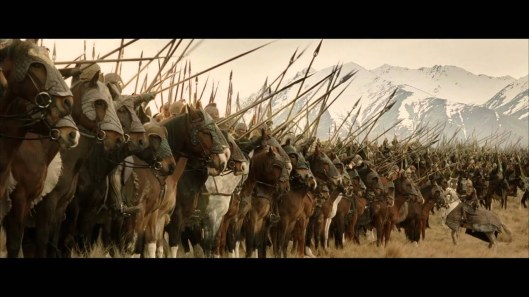
so the build is two-fold:  the attack, which is completely focused on breaking in, and the approach of the Rohirrim.  Thus, when it looks darkest, the charge is like sunlight breaking through heavy cloud.

image5charge.jpg

This is a beginning, we thought, to why, but could there have been another reason for JRRT?

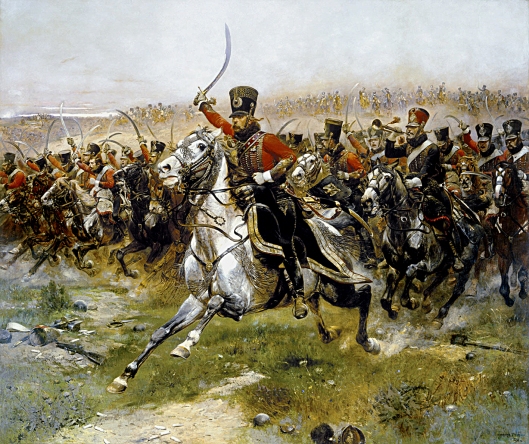
When Tolkien, growing up, thought of cavalry charges, he probably saw, in his mind’s eye, the glorious mounted attacks of Britain’s past, like the Scots Greys at Waterloo


image6scot

or the 16th Lancers at Aliwal

image7aliwal.jpg

or the Light Brigade at Balaclava.

image8balaclava.jpg

In all of these, soldiers in bright-colored coats waved swords and lancers and dashed fearlessly against the enemy.  Even his toy soldiers would have had that same devil-may-care look

image9britains.jpg

as did the real cavalry of his childhood,

image10aqueenslancers.jpg

but, when 1914 and the Great War came, soldiers put away those bright colors and put on khaki.

image10twentyfirst.jpg

But did that wild courage have to be put away, as well?  In 1914, there were a few moments when even mud-colored mounted men had a moment of glory.

image11attack.jpg

This wasn’t to last—at least on the Western Front and a major reason was this—

image12maxim.jpg

(Here’s a LINK to a clip from the film Warhorse, which shows the effect in rather a symbolic way, thank goodness!  We love horses and mourn their terrible losses through all of world history—they never asked to be part of human violence and, so often, their fate was to die because of it.  We also think that it’s just as well that the commander of this imaginary attack didn’t survive it—it’s absolutely inept, both in conception and its carrying-out and he would deserve to have been court-martialed.)

So, instead, those men dismounted and became infantry, fighting from hole in the ground to hole in the ground.

image13trench.jpg

This was the world which JRRT

image14ajrrt.jpg

knew:  heavy guns, gas, and the rattle of machine guns, no place for wide double ranks of sabre-wavers.

image14charge.jpg

There was at least one bright moment, but not on the Western Front.  Instead, it was in far-off Palestine, where, on 31 October, 1917, Australians and their horses swept over a line of Turkish trenches  at Beersheba in a charge very reminiscent of the 19th -century world.

image15beersheba.jpg

Ironically, these were not cavalry at all, but Australian Light Horse—mounted infantry—who, lacking swords or sabres or lances, attacked using their long bayonets, instead.

image16alh.jpg

(You can see this charge reenacted wonderfully in the 1987 Australian movie, The Lighthorsemen, one of our very favorite films of the Great War.

image17poster.jpg

Here’s a LINK to the charge scene, before you see the whole film—but we recommend that you see that charge in context.)

On the whole, however, modern war had become one big, bloody ditch,

image18trench.jpg

and victory came in mud-color and mass industrial slaughter.  Perhaps it was a relief to imagine another world, where brave men in armor, mounted on flying horses, still had a place?

image19ro.jpg

As always, thanks for reading!

MTCIDC

CD

Games with Shadows

25 Wednesday Jul 2018

Posted by Ollamh in Artists and Illustrators, Fairy Tales and Myths, Narrative Methods, Theatre and Performance

≈ Leave a comment

Tags

Claude Debussy, cuntastori, Estampes, gamelan, Hacivat, Indian shadow puppets, Indonesia, Javanese, Karaghiozis, Karagoez, Lotte Reiniger, Mahabharata, Marionettes, metallophones, Mimmo Cuticchio, Pagodes, Paris Exposition, puppets, Ramayana, shadow puppets, Teatro dell'Opera dei Pupi, Turkey, Wallace and Gromit, wayang kulit

Welcome, as always, dear readers.

From our childhood, we’ve been interested in puppets.  We began with marionettes.

image1mar.jpg

(These, by the way, are from Palermo, in Sicily, and come from the famous Teatro dell’Opera dei Pupi, whose chief puparo, or puppeteer, is a hero of ours, Mimmo Cuticchio,

image2mimmo.jpg

who is also  a street-corner storyteller, a cuntastori, who, with only a cape and wooden sword, can make anything happen.)

image3mimmo.jpg

All kinds of puppets interest us, however, from the most elaborate, like marionettes,

image4cashore.png

to the most basic–

image5cookiem.jpg

and what can be more basic than Cookie Monster?

In our last, we briefly mentioned the work of Lotte Reiniger (1899-1981),

image6alr.jpg

who, in a long career, created hundreds of figures in silhouette, employing them to tell both traditional stories as well as original ones.

image7avoi.jpg

Her method was to draw and cut out figures, then film them with stop-motion photography—if you know the adventures of Wallace and Gromit, you’ll have seen the clay figure version of this method.

image7bwall.jpg

Her figures, as we wrote, reminded us of traditional shadow puppets, once popular in many parts of the world, from Karagoez, in Turkey (KAH-rah-goes on the right, with his friend, Hacivat—HA-tsih-vat)

image7ckara.jpg

to his Greek cousin, Karaghiozis,

image7dkara.jpg

to Indian shadow puppets

image7eindia.jpg

to their direct descendants, the wayang kulit, or “leather puppets” of Indonesia.


Not only the look of these puppets, but how they’re managed against a screen reminded us of Lotte Reiniger’s work.

image8lr.jpeg

image9dalang.jpg

We say “direct descendants” because, considering the two main stories Indonesian puppeteers tell, as well as elements of the puppets themselves, it’s clear that this part of shadow puppet tradition has come to the island from farther west, those two stories, the Mahabharata and the Ramayana, being traditional Indian epics, like the West’s Iliad and Odyssey.

(If you don’t know Indian epic, we would recommend this English version of the Ramayana.  It’s meant for children, but it’s nicely told and keeps to the basic story—we also like the fact that the author’s first name, Bulbul, (“Nightingale”) is that of one of our main characters in our new novel, Grey Goose and Gander.)

image10aramayana.jpg

Lotte Reiniger’s puppets are cut from what appears to be black cardboard and therefore lack color.

image10reincutout.jpg

Traditional puppets are made of buffalo leather, scraped thin, and painted in such a way that they almost look like figures from medieval stained glass windows.

image11stainedglass.jpg


image12puppet

They are large and are supported on a rod, with thinner rods allowing the arms to move.

image13apuppets.jpg

image13puppet.jpg

The stage is a large, white screen

image14screen

and the shadows are created by a lamp behind it.  Traditionally, an oil lamp is used, but you can now see performance pictures with an electric light which, to us, is too bright and rather spoils the old-fashioned, smoky effect.

image15lamplight.JPG

Because of the bright colors of the puppets, some people actually prefer to sit behind the screen,

image16behind.jpg

where they can also better hear the accompanying orchestra, a gamelan, or group of metallophones.

image17gamelan


Here’s a LINK to music used in performances.  We recommend it, believing it to be very beautiful, as well as being very different, both in sound and structure, from western classical music (and, if you read us regularly, you know that we’re passionate about that, as well).  In fact, it has even influenced western classical music, particularly that of Claude Debussy (1862-1918).

image18debussy.jpg

Debussy first heard a gamelan in 1889 at the Paris Exposition,

image19parisexpo1889.jpg

was impressed with what he heard, and began to play with effects which echo gamelan compositions.  “Pagodes” from his 1903 collection, Estampes (“Prints”) is a good example.  Here’s a LINK so that you can compare it with the gamelan.

The performances themselves are an interesting mixture, typical of what was originally an oral tradition.  Although plot lines are taken directly from epic, they act as a mere skeleton for the play.  The puppeteer, like someone rebuilding a body on a skeleton, adds his own material—dialogue, subplots, extra characters, jokes, and, sometimes, political commentary—to (literally) flesh out the basic frame.  It’s interesting, too, that the characters can be on two levels.  On the upper level, they are all princesses and princes, kings and queens, nobles and generals.

image20bima.jpg

On the lower level, they can be demons,

image21semar.jpg

who act not only as servants, but as interpreters, a very necessary function as the upper level characters tend to speak in Old Court Javanese, an archaic language which the audience wouldn’t understand.  The lower level speaks the local language and so can guide the audience through the (often complex) plot, as well as make local references and jokes.

Unfortunately, it’s difficult to see wayang kulit outside of Indonesia or in any language besides those of Indonesia, but one of us has been fortunate to see several performances in English by the US puppeteer, Larry Reed, of Shadowlight Productions.  These shows are about two hours long (very short in comparison with Indonesian performances, which can go on all night) and feel like 10 minutes, the magic being in the shadows, the plot, and the quick wit of the puppeteer.  Here’s a LINK to Shadowlight to tell you more.

We want to end on a different note, however.  A long time ago, we saw a very good amateur production of The Hobbit as a play.  At the time, we were struck by how much could be done very simply on stage and, in particular, how Smaug could be brought to life with a small group of actors bunched together, swaying in a strobe light (that’s one of those flashing lights which alternates light and shadow effects) and all speaking at once.  Ever since, we’ve thought about shadow plays and The Hobbit—just look at this dragon from a production by the Great Arizona Puppet Theatre—what do you think, dear readers?

image22dragon.JPG

And thanks, as ever, for reading!

MTCIDC

CD

ps

If you’re bitten by the puppet bug, and would like to know more, visit The World Encyclopedia of Puppetry Arts at this LINK.

Theme and Variations.5

18 Wednesday Jul 2018

Posted by Ollamh in Artists and Illustrators, Fairy Tales and Myths, Films and Music, Literary History, Theatre and Performance

≈ Leave a comment

Tags

Arthur Rackham, Aschenputtel, Brothers Grimm, Cendrillon, Charles Perrault, Cinderella, CS Evans, Disney, Histoires ou Contes du Temps Passe, Jardin des Tuileries, Julie Andrews, La Belle au Bois Dormant, Lotte Reiniger, My Fair Lady, Ombres Chinoises, Oscar Hammerstein, Richard Rodgers, Sergei Prokofiev, Shadow puppet plays, Sleeping Beauty, Tchaikovsky, wayang kulit, Zolushka

Welcome, as always, dear readers.

In this post, we come to the end of our series on other ways of presenting fairy tales, in which we have taken two by the author who is usually cited as beginning the modern Western tradition, Charles Perrault (1628-1703).

image1chasp.jpg

In 1697, Perrault had published this,

image2histoires.jpg

entitled Histoires ou Contes du Temps Passe (“Stories or Tales of/from Past Time”), with a kind of subtitle, Contes de Ma Mere L’Oye (“Tales of My Mother Goose”).

The volume contained only 8 stories, with two being “La Belle au Bois Dormant” (“The Beautiful Girl in the Sleeping Wood”)

image3sb.jpg

and “Cendrillon” (“Cinderella”), which we chose to be the basis of our posts.

image4cindy.JPEG

So far in these posts, we’ve looked at “Sleeping Beauty” in everything from ballet to Disney and “Cinderella” in early operas and silent films.  In this final post of the series, we want to begin by saying, as we did in our first post, that “Cinderella” exists in two basic forms, that of Perrault, from 1697, and that of the Brothers Grimm,

image5grimms.jpg

from 1812.

image6kinder.jpg

In this version of the story, the fairy godmother is removed and replaced by birds seemingly sent by Cinderella’s dead mother.

image7aschenp.jpeg

We mention this because this is the version followed by our next creator, Charlotte (Lotte) Reiniger (1899-1981)

image8lotte.png

in her 1922 film, Aschenputtel (“Cinderella”)

image9aschen.jpg

This is a silent film in which delicately-cut paper figures through stop-motion photography are manipulated to tell the story.

image10aschen.png

Here’s a LINK so that you can enjoy the short (about 13 minutes) film.  And, if you enjoy that, there are more of Reiniger’s works on YouTube for you to see.

To us, her work very much resembles wayang kulit, the traditional shadow plays of Bali,

image11wayang.jpg


as well as the Ombres Chinoises, (“Chinese Shadows”—Chinese shadow puppets) brought to France in the 18th century.

image12ombres.jpg

It also closely resembles two works illustrated by Arthur Rackham (1867-1939),

image13ar.jpg

his Cinderella (1919)

image14cindy.jpg

and The Sleeping Beauty (1920).

image15sleep.jpg

In each of these, Rackham employs silhouettes to tell the story (in versions by CS Evans), giving both the look of stories told by moonlight.

image16cindy.png

We could easily show you all of the illustrations, marveling at them right here, but, instead, we give you a LINK to an on-line version of The Sleeping Beauty (with apologies for not being able to locate an on-line Cinderella).

In one of our previous posts in the series, we discussed Tchaikovsky’s ballet, Sleeping Beauty, now we add to this Cinderella (Zolushka) by the Russian composer, Sergei Prokofiev (1891-1953),

image17sp.jpg

premiered in 1945.  Here’s a LINK to a suite of music from it, along with two sheets of costume designs from the original production, suggesting what a sumptuous spectacle it must have been.

image18costumes.jpg

image19costumes.jpg

Prokofiev and his collaborators followed Perrault and the fairy godmother was back.  Here’s the pumpkin coach from a more modern—but still Russian—production.

image20pumpkin.jpg

And this coach brings us to our next and next-to-last item.

image21disney.jpg

We grew up with this image of the story in our heads, as well as its music.

image22disney.jpeg

This is the 1950 Disney version, which stuck fairly closely to the Perrault, but, along with the fairy godmother, kept the helpful birds (changing their color)

image23abluebirds.jpg

and added a gang of equally helpful mice.

image23disney.jpg

To which we add our final piece.  In 1957, the well-known composer/lyricist team of Rodgers and Hammerstein created a first, a made-for-television musical production of Perrault’s version, starring someone who was already becoming a star by appearing as Eliza Doolittle in Lerner and Lowe’s My Fair Lady, Julie Andrews.

image24rodgersham.jpg

image25andrews.jpg

In five postings, we’ve traveled from 1697 to 1957 and visited a number of places in between, all of which was based upon two traditional stories recreated in new tellings by Charles Perrault.  Is it any wonder, then, that in 1910, this bust was erected to his memory in the Jardin des Tuileries in Paris?

image26chasp.jpg

Thanks, as always, for reading.

MTCIDC

CD
Theme and Variations.4

11 Wednesday Jul 2018

Posted by Ollamh in Artists and Illustrators, Fairy Tales and Myths, Films and Music, Literary History, Narrative Methods

≈ Leave a comment

Tags

A Trip to the Moon, Alexandre Dumas, Arthur Rackham, Cendrillon, Charles Perrault, Charles S Evans, Cinderella, Cinderella 1899, Cinderella 1911, Cinderella 1912, Cinderella 1914, Contes de Ma Mere L'Oye, Film, Florence La Badie, Georges Melies, Gustave Dore, Henri IV, Histoires ou Contes du Temps Passe, Hugo, Le Voyage dan la Lune, Louis XIII, Mary Pickford, silent film, Sleeping Beauty, The Invention of Hugo Cabret, The Three Musketeers

Welcome, dear readers, as ever.

This is the next-to-last in a little series on several of the fairy tales of Charles Perrault (1628-1703) from his 1697 collection, Histoires ou Contes du Temps Passe (“Stories or Tales of Past Time”), better known by a kind of subtitle, Contes de Ma Mere L’Oye (“Tales of My Mother Goose”).

image1chasp

So far, we’ve devoted two posts to “Sleeping Beauty” (actually called by Perrault “La Belle au Bois Dormant”—“The Beautiful Girl in the Sleeping Wood”), covering everything from 19th-century theatrical performances to book illustrations to Disney.

image2belle.jpg

In the third post, we began to look at “Cinderella”, more specifically in opera, from Isouard’s 1810 Cendrillon to Viardot’s 1904 Cendrillon.

Now, in this post, we want to look at “Cinderella” in film, beginning with the 1899 work of Georges Melies (1861-1938)

image3melies.jpg

whom you may know from the 2011 film Hugo

image4hugoposter.jpg

based upon Brian Selznick’s 2007 wonderfully inventive novel, The Invention of Hugo Cabret.

image5hcabret.jpg

Even if you aren’t familiar with Melies, you may recognize his work in this image

image6moon.jpg

from his 1902 science fiction film, Le Voyage dans La Lune (“The Trip to the Moon”), thought by scholars to be the first science fiction film (or at least first surviving such film.  Silent film historians estimate that only about 10% of all silent films made are still available to us.  Here’s a LINK to the film so that you can enjoy it for yourself).

Cendrillon was Melies’ most elaborate film to date and was a commercial success, even though only just under 6 minutes long—which says something for the expectations of the movie-going public of 1899.

image7cend.png

As it is so short, it has only a couple of scenes—the kitchen in Cinderella’s house, the palace ballroom, Cinderella’s room, and what appears to be the outside of the palace—and very much depends upon the viewer already knowing the basic story (it begins, for example, with a very fancily-dressed woman leaving the kitchen and the sudden appearance of the Fairy Godmother, with no introduction at all).  Its greatest strength, for us, is in its transformation scenes (a Melies’ specialty), particularly the change of rats/mice into coachmen and footmen. (And here’s a LINK to the film, see if you agree with the 1899 audience.)

image8trans.jpg

Our second film is from 1911 and is nearly 15 minutes long, meaning that it actually has time to tell the story, if not in a leisurely fashion, at least in a more complete one than the Melies.  This is a US version of the story, starring an early popular favorite, Florence La Badie (or Labadie).

image9aflo.jpg

Forgotten except by silent film enthusiasts, La Badie was a hardworking dare-devil, appearing in nearly 200 films between 1909 and her death in 1917, and doing most of her own stunts.  She was also someone who personified a new look for young women in the years leading up to the Great War—as this portrait (and there are more like it) shows.

image9flo


If you follow this LINK, you can see not only the actress, but a “Cinderella” which has almost everything we would expect from the Perrault original.

Florence La Badie had gotten into films through the suggestion of an acting friend, Mary Pickford,

image10pick


who starred in our next Cinderella, in 1914.

image11cind

Two things strike us about this:

  1. it’s over 50 minutes long—a great advance from the 1911 15 minutes
  2. the advertising seems to suggest that the audience of 1914 was expected to visit the theatre to see Mary Pickford in Cinderella, rather than Cinderella in which Mary Pickford plays the title role. For us, this foreshadows the obsession with film celebrities which is still with us today.

image12pick

This version, with its almost luxurious length, has plenty of time not only to tell the Perrault story, but to makes two additions to the plot:  Cinderella actually meets the prince before the ball, near her home and they fall in love—but are then separated; the stepsisters visit a fortune-teller, who informs them cryptically that one of their family will be successful at the ball.  (Here’s a LINK so that you can enjoy this more elaborate version.)

In the midst of these US versions, Georges Melies issued a second one himself.  At about 24 minutes long, it is much grander than his 1899 production, spending nearly a quarter of its length on the transformation of Cinderella from kitchen maid to grand lady alone.  The contrast between the 1899 pumpkin coach and the 1913 one illustrates this nicely.

image13acoach.jpg

image13melies2

It did not enjoy the success of the 1899 original, perhaps because, the weight of production values was simply too heavy for the little story inside, which was smothered by all of the plumed hats and sweeping bows.  We admit that we find this version a little slow, but the creation of the pumpkin coach is still as impressive to us as it must have been in 1913.  Here’s a LINK so that you can judge for yourself. It’s dated 1912, by the way, when the film was made, but it premiered in 1913, so we are sticking to the later date.

It has been suggested that Melies, in the look of this later take on the story, was influenced by the work of Gustave Dore (Do-RAY) (1832-1883).

image14dore.jpg

In 1867, Dore—a well-known illustrator–among other things–published Les Contes de Perrault, dessins par Gustave Dore. image15contes

Here’s one of the three illustrations done for the story.

image16cend

To us, however, Melies thinks of the story taking place in the time of Louis XIII (reigned 1610-1643), when Dumas’ “Musketeers” novels are set (with a little 18th-century addition here and there).

image17musk

Dore would appear to be setting it earlier, in the time of Louis’ father, Henri IV (reigned 1589-1610).

image18henri4

One of our very favorite illustrators, Arthur Rackham (1867-1939),

image19ar

tackled both “Cinderella” in 1919 and “Sleeping Beauty” in 1920, with retellings by Charles S. Evans.  Always original and surprising in his approach, Rackham here has produced what we believe to be two of his most inspired works—we’ll talk about them, as well as more versions of “Cinderella”, in our next.

But we’ll finish this post with one more image—as a teaser…

image20sketch

And thank you, as ever, for reading.

MTCIDC

CD

Theme and Variations.3

04 Wednesday Jul 2018

Posted by Ollamh in Fairy Tales and Myths, Films and Music, Literary History, Narrative Methods

≈ Leave a comment

Tags

Cendrill, Charles Perrault, Cinderella, Edmund Dulac, Fairy Godmother, Four and Twenty Fairy Tales, Frederic Chopin, Georges Melies, Giacomo Rossini, Histoires ou Contes du Temps Passe, James Robinson Planche, Jules Massenet, La Cenerentola, Nicolo Isouard, Opera, Pauline Viardot, Sleeping Beauty, William Henry Margetson

As always, dear readers, welcome!

In this posting, we’re continuing the little series we began on the fairy tales of Charles Perrault and what other creators have done with those stories over the centuries.

In 1697, Perrault (1628-1703) published Histoires ou Contes du Temps Passe (“Stories or Tales of Past Time”).

image1perrault.jpg

This little collection (which also came to be known by a secondary title as Contes de Ma Mere L’Oye–“Tales of My Mother Goose”)–contained, among other stories, “Sleeping Beauty”—which we’ve discussed in the first two posts of this series—and “Cinderella”.  (The original 1697 version is available from the BnF—the Bibliotheque nationale de France—here’s a LINK.)

image2cend.JPEG

If you’d like to read the closest one might get to Perrault’s late-17th-century French, you might try the translation by James Robinson Planche, the dramatist/costume-designer/etcetc, whom we mentioned in the first post in this series.  He had conscientiously searched for a first edition of Perrault’s collection, but had to make do with a second, as he tells us, but he strove to recreate in his English the feel of the French original.  Here’s a LINK to Planche’s 1858 Four and Twenty Fairy Tales.  Selected from Those of Perrault, and Other Popular Artists.

image3afourandtwenty.jpg

image3cind.jpg

This is an illustration for that story by Edmund Dulac (1882-1953)

image4dulac

from Edmund Dulac’s Picture-Book for the French Red Cross (1916)—with a LINK to it here.  (It’s an especially interesting book, not only for the beautiful illustrations, but also for the wide range of stories, including a version of the famous Persian/Arabic story of “Majnun and Layla”.)

“Cinderella” has been a favorite subject for opera composers, at least back to 1810, when Nicolo Isouard’s (1773-1818)

image5isouard.jpg

version, Cendrillon, was a  hit in Paris—and then internationally.  Here’s a LINK to a recording of its overture so you can see what pleased Europe in the middle of the Napoleonic Wars.

Isouard’s opera’s popularity was quickly overtaken by Giacomo Rossini’s (1792-1868)

image6rossini.jpg

version in 1817, La Cenerentola.  Here’s an early Italian playbill for it.

image7playbill

And here’s a LINK to the overture. (If you like it, there is at least one complete performance available on YouTube—you can easily find it when you follow this link.)

What’s interesting about these versions is that the Fairy Godmother of the original story has been replaced by a human—in Isouard’s version, with some magical powers, in Rossini’s, with native wit.  There’s no explanation for this—it’s simply the case and, for us, it somehow diminishes the story.  It’s like the Troy movie of 2004, from which the gods had been removed.

image8troy.jpg

Perhaps we’ve always wanted a fairy godmother?

image9fg.jpg

(An image by William Henry Margetson, 1861-1940.)

Our third opera comes from the very end of the 19th century:  Jules Massenet’s (1842-1912)

image10massenet

Cendrillon.

image11cendrillon

Unlike Isouard and Rossini, the fairy godmother, plus assorted fairies, are present and active in this very elaborate telling.  Here’s a LINK to some of the ballet music to give you an idea of the sound of the opera.

Our last opera is the very opposite of Massenet’s, being a chamber opera with only a piano for an orchestra.  It is by a woman composer who began her career as a famous mezzo-soprano, Pauline Viardot (1821-1910).

image12pv.jpg

Not only was she a brilliant singer, with an enormous range, but she was also a pianist so good that she regularly played duets with her friend, Frederic Chopin,

image13fc

as well as speaking half-a-dozen languages fluently.  When her voice began to fail her, she moved to teaching and composition, as well as keeping a salon in which many of the most famous and influential creators of the second half of the 19th century spent their evenings.

Her version of the Cinderella story, Cendrillon, was first performed in 1904.

image14score

As we suggested, it’s the very opposite of the very sumptuous Massenet opera:  7 singers, no chorus, piano for accompaniment, but it’s musically very rich—and includes the fairy godmother—and the pumpkin, etc., although these are all off-stage.  It is not often performed—there’s one recording—

image15pvcend

which we heartily recommend, as it’s beautifully sung.  And here’s a LINK to a production on YouTube, if you’d like to see it.

We’re going to close this posting, take a deep breath, and start writing the last in this little series:  Cinderella on film, beginning, in a surprisingly-early (if brief) version by Georges Melies—from 1899.

But thanks, as always, for reading and definitely

MTCIDC

CD
ps

If you read us, you know us—we can never resist a PS—and this is just a visual.  In our survey of Cinderella images, we found this.  Need we say more?

image16bedroom.jpg

← Older posts
Newer posts →

The Doubtful Sea Series Facebook Page

The Doubtful Sea Series Facebook Page

  • Ollamh

Categories

  • Artists and Illustrators
  • Economics in Middle-earth
  • Fairy Tales and Myths
  • Films and Music
  • Games
  • Heroes
  • Imaginary History
  • J.R.R. Tolkien
  • Language
  • Literary History
  • Maps
  • Medieval Russia
  • Military History
  • Military History of Middle-earth
  • Narnia
  • Narrative Methods
  • Poetry
  • Research
  • Star Wars
  • Terra Australis
  • The Rohirrim
  • Theatre and Performance
  • Tolkien
  • Uncategorized
  • Villains
  • Writing as Collaborators
Follow doubtfulsea on WordPress.com

Across the Doubtful Sea

Recent Postings

  • Planting April 29, 2026
  • Subterranean April 22, 2026
  • Serendipity? April 15, 2026
  • Serendipity April 8, 2026
  • Verisimilitude April 1, 2026
  • Goblins and Goblin March 25, 2026
  • Crowing and Raven March 18, 2026
  • The Damage of Dragons March 11, 2026
  • Encouragement March 4, 2026

Blog Statistics

  • 112,313 Views

Posting Archive

  • April 2026 (5)
  • March 2026 (4)
  • February 2026 (4)
  • January 2026 (4)
  • December 2025 (5)
  • November 2025 (4)
  • October 2025 (5)
  • September 2025 (4)
  • August 2025 (4)
  • July 2025 (5)
  • June 2025 (4)
  • May 2025 (4)
  • April 2025 (5)
  • March 2025 (4)
  • February 2025 (4)
  • January 2025 (5)
  • December 2024 (4)
  • November 2024 (4)
  • October 2024 (5)
  • September 2024 (4)
  • August 2024 (4)
  • July 2024 (5)
  • June 2024 (4)
  • May 2024 (5)
  • April 2024 (4)
  • March 2024 (4)
  • February 2024 (4)
  • January 2024 (5)
  • December 2023 (4)
  • November 2023 (5)
  • October 2023 (4)
  • September 2023 (4)
  • August 2023 (5)
  • July 2023 (4)
  • June 2023 (4)
  • May 2023 (5)
  • April 2023 (4)
  • March 2023 (5)
  • February 2023 (4)
  • January 2023 (4)
  • December 2022 (4)
  • November 2022 (5)
  • October 2022 (4)
  • September 2022 (4)
  • August 2022 (5)
  • July 2022 (4)
  • June 2022 (5)
  • May 2022 (4)
  • April 2022 (4)
  • March 2022 (5)
  • February 2022 (4)
  • January 2022 (4)
  • December 2021 (5)
  • November 2021 (4)
  • October 2021 (4)
  • September 2021 (5)
  • August 2021 (4)
  • July 2021 (4)
  • June 2021 (5)
  • May 2021 (4)
  • April 2021 (4)
  • March 2021 (5)
  • February 2021 (4)
  • January 2021 (4)
  • December 2020 (5)
  • November 2020 (4)
  • October 2020 (4)
  • September 2020 (5)
  • August 2020 (4)
  • July 2020 (5)
  • June 2020 (4)
  • May 2020 (4)
  • April 2020 (5)
  • March 2020 (4)
  • February 2020 (4)
  • January 2020 (6)
  • December 2019 (4)
  • November 2019 (4)
  • October 2019 (5)
  • September 2019 (4)
  • August 2019 (4)
  • July 2019 (5)
  • June 2019 (4)
  • May 2019 (5)
  • April 2019 (4)
  • March 2019 (4)
  • February 2019 (4)
  • January 2019 (5)
  • December 2018 (4)
  • November 2018 (4)
  • October 2018 (5)
  • September 2018 (4)
  • August 2018 (5)
  • July 2018 (4)
  • June 2018 (4)
  • May 2018 (5)
  • April 2018 (4)
  • March 2018 (4)
  • February 2018 (4)
  • January 2018 (5)
  • December 2017 (4)
  • November 2017 (4)
  • October 2017 (4)
  • September 2017 (4)
  • August 2017 (5)
  • July 2017 (4)
  • June 2017 (4)
  • May 2017 (5)
  • April 2017 (4)
  • March 2017 (5)
  • February 2017 (4)
  • January 2017 (4)
  • December 2016 (4)
  • November 2016 (5)
  • October 2016 (6)
  • September 2016 (5)
  • August 2016 (5)
  • July 2016 (5)
  • June 2016 (5)
  • May 2016 (4)
  • April 2016 (4)
  • March 2016 (5)
  • February 2016 (4)
  • January 2016 (4)
  • December 2015 (5)
  • November 2015 (5)
  • October 2015 (4)
  • September 2015 (5)
  • August 2015 (4)
  • July 2015 (5)
  • June 2015 (5)
  • May 2015 (4)
  • April 2015 (3)
  • March 2015 (4)
  • February 2015 (4)
  • January 2015 (4)
  • December 2014 (5)
  • November 2014 (4)
  • October 2014 (6)
  • September 2014 (1)

Blog at WordPress.com.

  • Subscribe Subscribed
    • doubtfulsea
    • Join 75 other subscribers
    • Already have a WordPress.com account? Log in now.
    • doubtfulsea
    • Subscribe Subscribed
    • Sign up
    • Log in
    • Report this content
    • View site in Reader
    • Manage subscriptions
    • Collapse this bar

Loading Comments...