• About

doubtfulsea

~ adventure fantasy

Tag Archives: Middle-earth

Are You Sitting Down?.2 (Some Thrones, but No Games)

11 Wednesday Oct 2017

Posted by Ollamh in Economics in Middle-earth, J.R.R. Tolkien, Literary History, Narrative Methods

≈ Leave a comment

Tags

A Game of Thrones, Bag End, basins, Bree, British monarchs, Buckland, canopy, cart, Cirith Ungol, Coronation Chair, Coronation Throne, Crick Hollow, Edoras, Edward I, Edward VII, Edward VIII, Edwardian, Elizabeth II, Elrond's house, Furniture, George V, George VI, Gondor, high table, Iron Throne of Westros, Lia Fail, Lothlorien, Medieval, Middle-earth, Minas Tirith, monopodium, Moot Hill, parlor, pubs, Rivendell, Rohan, Shire, Stone of Scone, Tara Ireland, The Hobbit, The Lord of the Rings, The Prancing Pony, the Stone of Destiny, throne, Tolkien, Tom Bombadil, UK pubs, Victorian Bedroom, Victorians, washstand

Welcome, dear readers, as always.

In our last, we were talking about furniture in Middle-earth—in that post our subject was The Hobbit.  We continue with The Lord of the Rings and conclude with one specialized piece of furniture.

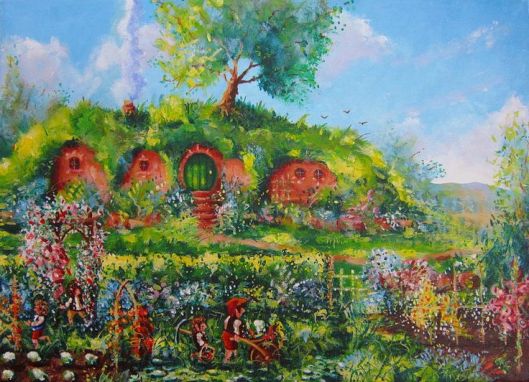
We begin where we began last time, with Bag End.
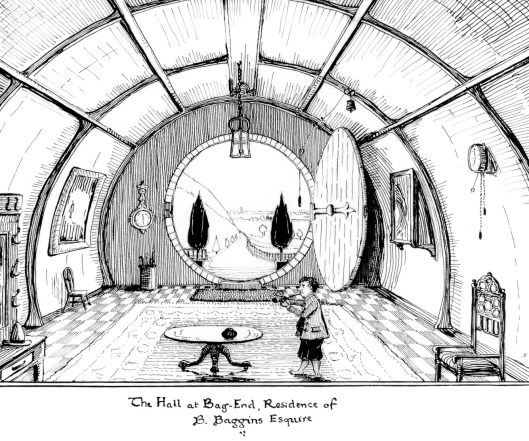
image1bagend.jpg

With all of its rooms and the stuff in them, we suggested then that what JRRT was really doing was depicting the kind of overcrowded place later Victorians and Edwardians—the people with whom he, born 1893, would have grown up around—would have preferred.
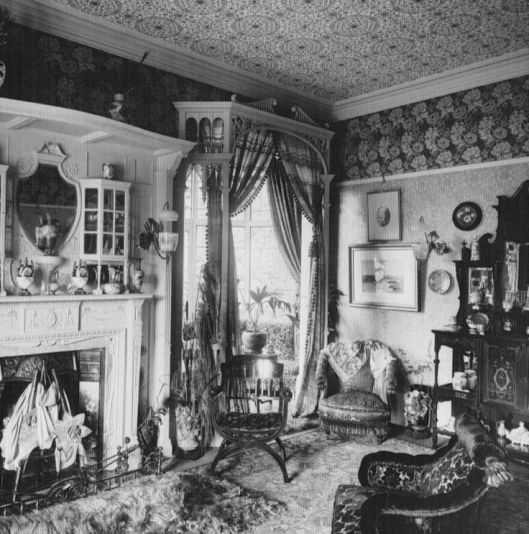
image2vicparlor.jpg

[Note, by the way, the table in the middle of the entryway in Tolkien’s picture of Bag end, and compare it with this “monopodium” table with claw feet, which could be seen in such a parlor.]
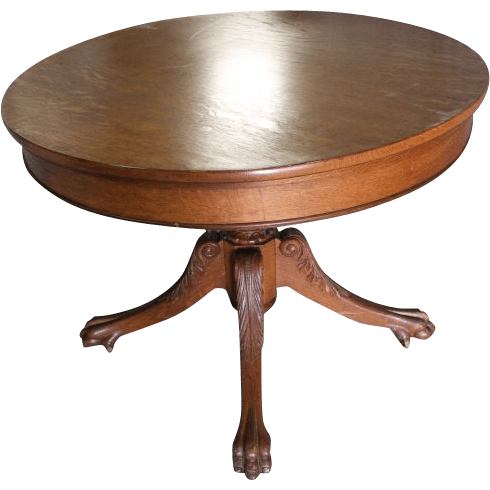
image3monopodium.png

Once the three Hobbits leave Bag End for their journey to Crick Hollow,
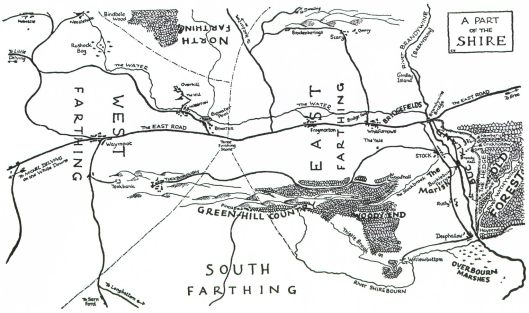
image4shiremap.jpg

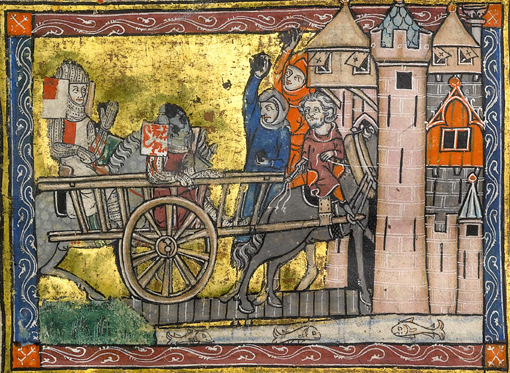
having sent “two covered carts…to Buckland, conveying the goods and furniture…” (and the next day sending off another) (The Fellowship of the Ring, Book One, Chapter 3, “Three is Company), they will spend a great deal of time walking (and paddling and riding), but will enter few buildings.  Here, by the way, is a cart—we imagine “covered” simply means that a blanket of some tough coarse fabric, like canvas, (called a “tilt”) would have been pulled over the load.
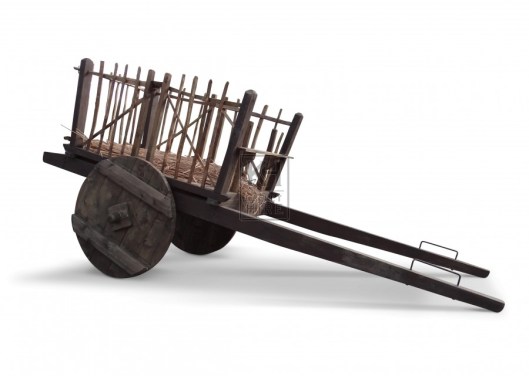
image5cart.jpg

Our chances of getting much furniture detail are not high, then, but let’s see what we find.

Beyond Buckland, the first indoors for the hobbits is Tom Bombadil’s house.  As the hobbits enter, they are in:

“…a long low room, filled with the light of lamps swinging from the beams in the roof; and on the table of dark polished wood stood many candles, tall and yellow, burning brightly.

In a chair, at the far side of the room facing the outer door, sat a woman…” (The Fellowship of the Ring, Book One, Chapter 7, “In the House of Tom Bombadil”)
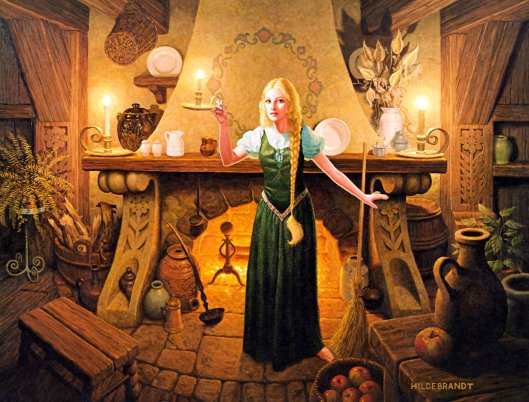
image6agoldberry.jpg

The hobbits are given “low rush-seated chairs”.
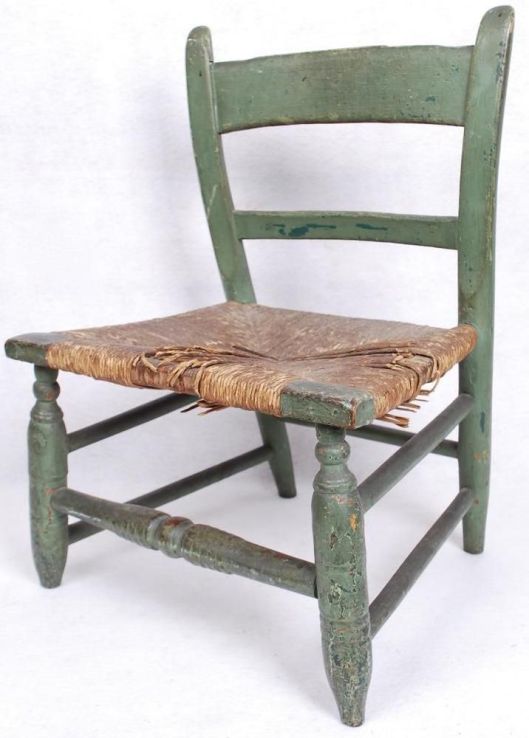
image6rushseatchair.jpg

And, shortly, are shown their bedroom:

“They came to a low room with a sloping roof…There were four deep mattresses…laid on the floor along one side.  Against the opposite wall was a long bench laden with wide earthenware basins, and beside it stood brown ewers filled with water…”

Not much to go on here.  We’ll presume that the bench is wooden and plain, and the basins and ewers (a big pitcher—ultimately from Latin aquarius, “having to do with water”) are of the kind one would have seen in a Victorian bedroom, when indoor bathrooms were still only a wish—or were only in the homes of the extremely wealthy.
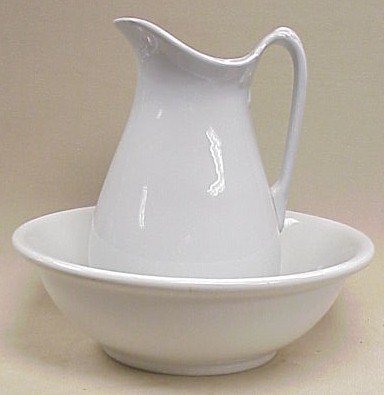
image7ewer.jpg

[Victorians, by the way, could have specialized places for such pitcher/basin combinations.  They’re called “washstands” and here’s a simple but functional one.]
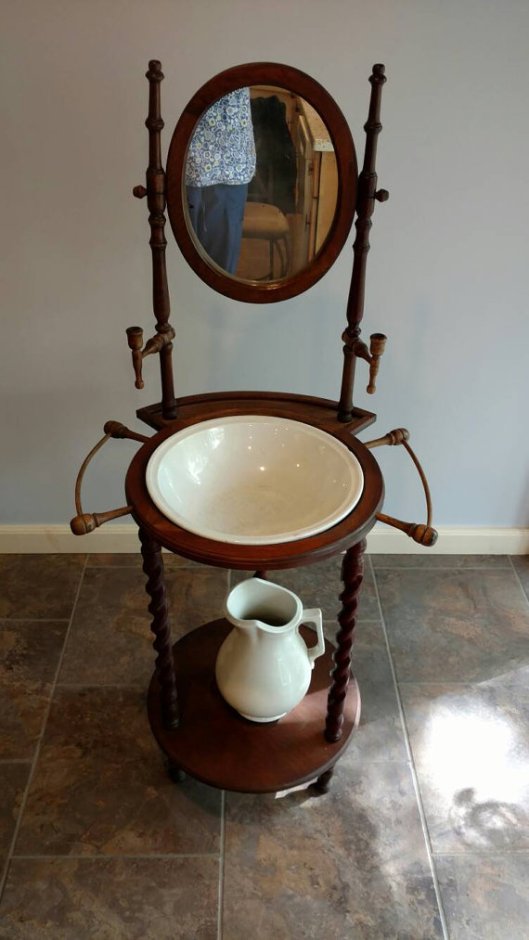
image8awashstand.jpg

Next on their journey (we won’t count the barrow—although the Wight does mention a “stony bed”) is the Prancing Pony.
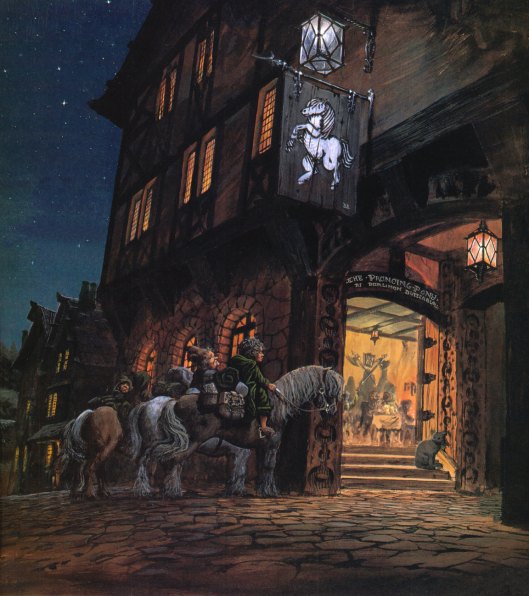
image8prancingponey.jpg

Again—what we have is functional.  The hobbits are initially led to what the landlord, Barliman Butterbur, calls “a nice little parlour” where “There was a bit of bright fire burning on the hearth, and in front of it were some low and comfortable chairs” and “a round table, already spread with a white cloth”. (The Fellowship of the Ring, Book One, Chapter 9, “At the Sign of the Prancing Pony”)

This sounds like a small, private room, found in some UK pubs, and called a “snug” (etymology unclear—but used to mean “comfy” as early as the 1620s).  Here’s one, in fact, from an Irish pub.  (We don’t advertise—this was simply the image which fit best with both our impression and the book.  And “fit best” does a double duty here, as “snug” can also mean “fitting tightly”.)
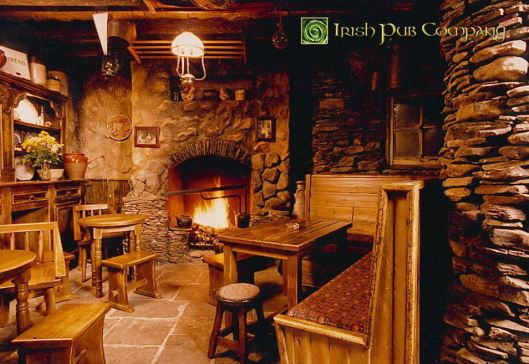
image9snug.jpg

The same will be true of the bedroom the hobbits don’t use—and just as well!—plain and nondescript.

So when, if ever, are we given something with more detail?  If not in Bree, perhaps in Rivendell?
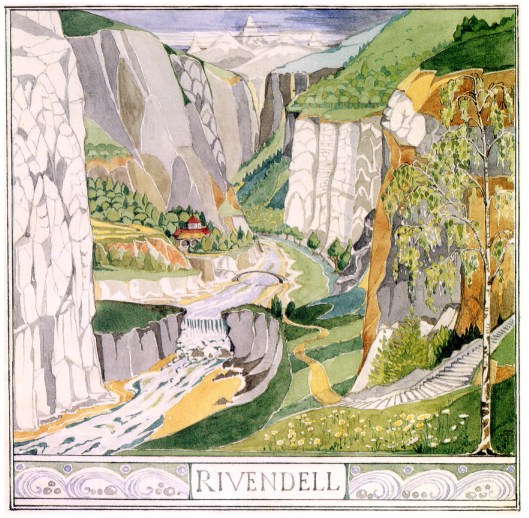
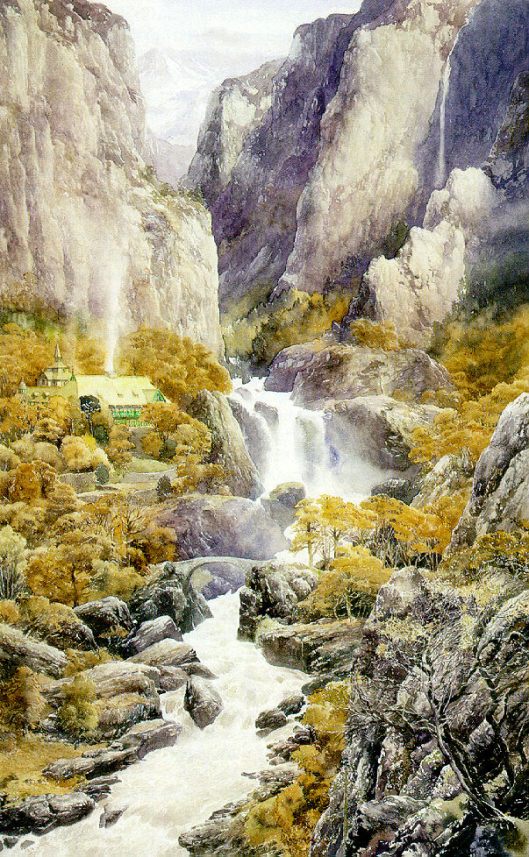
image10rivendell.jpg

Frodo comes to in a generic bed, but the “hall of Elrond’s house” is a bit more promising:

“Elrond, as was his custom, sat in a great chair at the end of a long table upon a dais…In the middle of the table there was a chair under a canopy…” The Fellowship of the Ring, Book Two, Chapter 1, “Many Meetings”)

A “dais” is a raised platform.  If you’re a Harry Potter fan, you’ll remember it at “High Table” (as it’s called in English schools), where the students of the four different colleges meet to dine and the faculty sit on such a platform.

image11hightable.jpg

This is a left-over medieval custom, when royalty/nobles sat on a kind of stage, above the lesser folk, for formal meals.
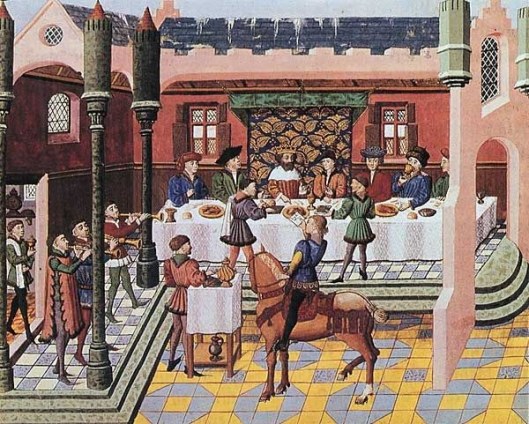
image12feast.jpg

(Oh—and don’t ask about the horse—but it wasn’t required.  Horse and rider do appear at a banquet, of course, in the 14th-century poem “Sir Gawain and the Green Knight”—which JRRT once edited.)

image13agawaingreen.jpg

And that “chair under a canopy” reminds us of thrones with canopies, like this at the Palace of St. James, in London.
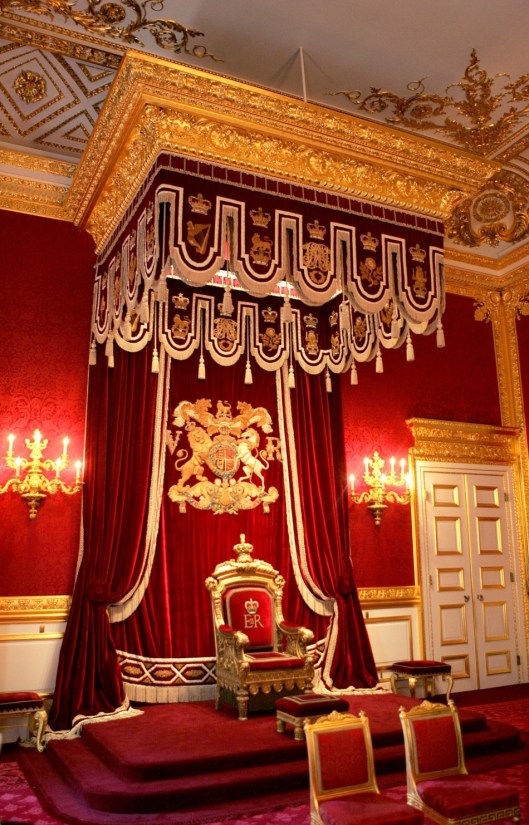
image13thronecanopy.jpg

Which brings us to the subject of thrones, in general.  After Rivendell, indoors will consist of Lothlorien

image14lorien.jpg

for the fellowship, then nothing for Sam and Frodo till Faramir’s cave hide-out and, beyond, the Tower of Cirith Ungol
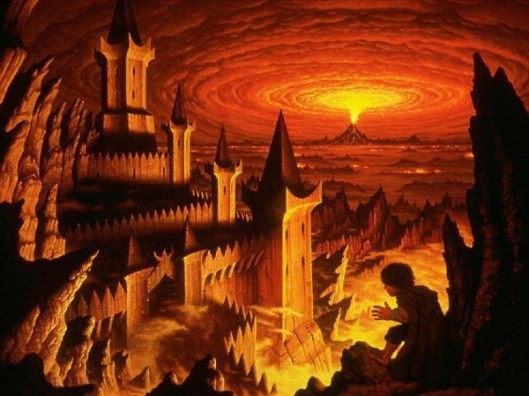
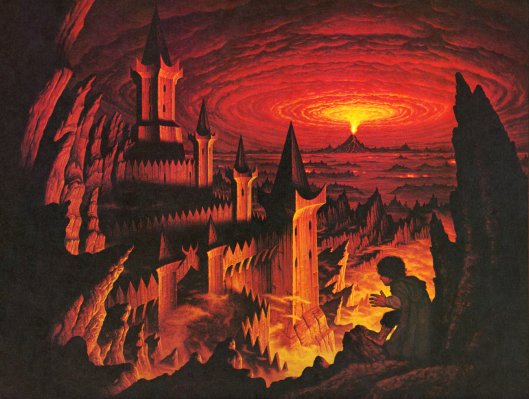
image15towercirithungol.jpg

Hardly places to find any furniture beyond the functional!

For the others, we have Edoras

image16edoras.jpg

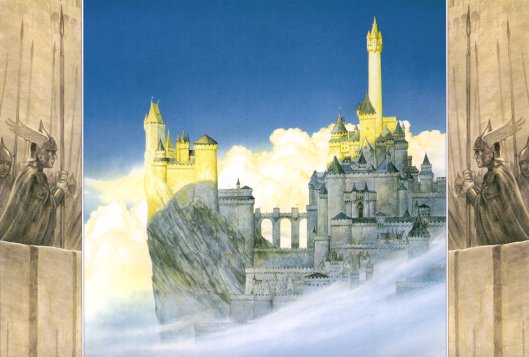
and Minas Tirith.

image17minastirith.jpg

And here we want to conclude by discussing a similar piece of furnishing in each—those thrones.

These days, when we say or write “thrones”, well, what comes immediately?  A Game of Thrones and the Iron Throne of Westeros.
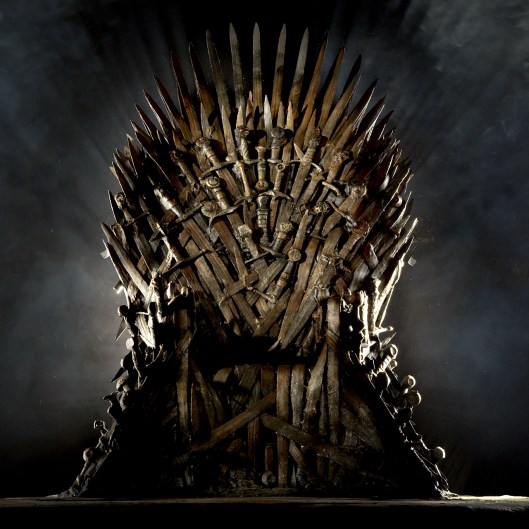
image18ironthrone.jpg

The thrones of Rohan and Gondor are a bit less complicated.

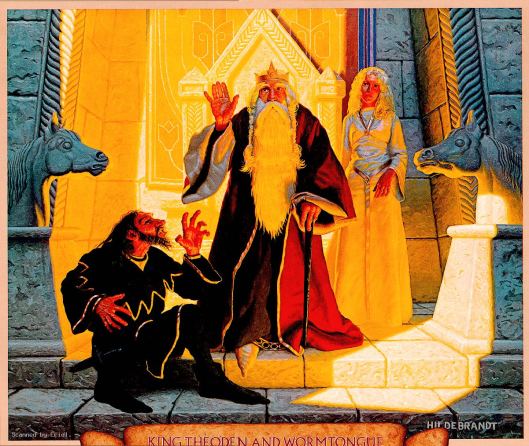
Theoden’s is described simply as “a great gilded chair” on a “dais with three steps”.  (The Two Towers, Book Three, Chapter 6, “The King of the Golden Hall”).

Here’s Allen Lee’s interpretation
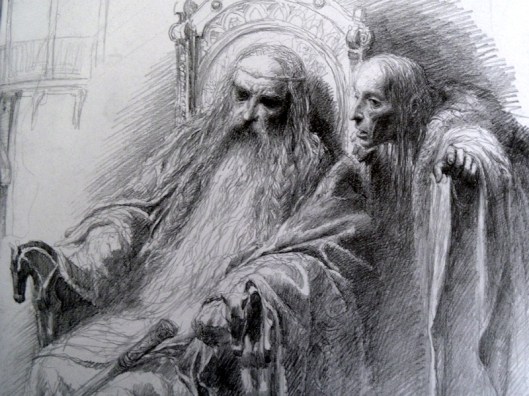
image19alee.jpeg

and here is the Hildebrandts’.

image19bhild.jpg

The throne of Gondor is just a tiny bit more elaborate:

“At the far end upon a dais of many steps was set a high throne under a canopy of marble shaped like a crowned helm…” (The Return of the King, Book Five, Chapter 1, “Minas Tirith”)

Here’s an image from the film.
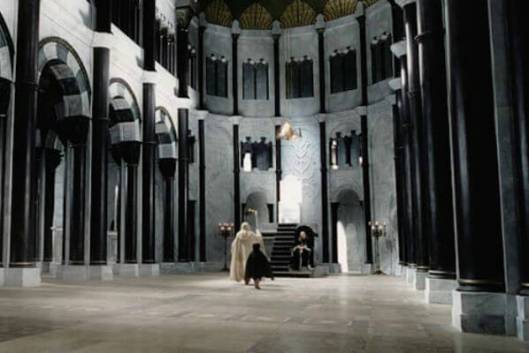
image19cthroneroom.jpg

But wait—there’s no one on it.  Let’s look lower:

“At the foot of the dais, upon the lowest step which was broad and deep, there was a stone chair, black and unadorned, and on it sat an old man gazing at his lap.”image19ddenethor.jpg
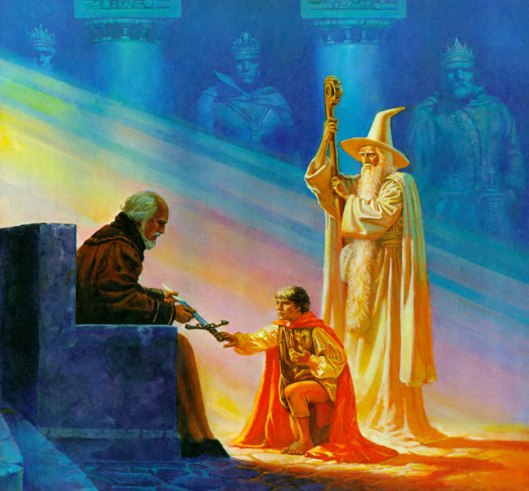
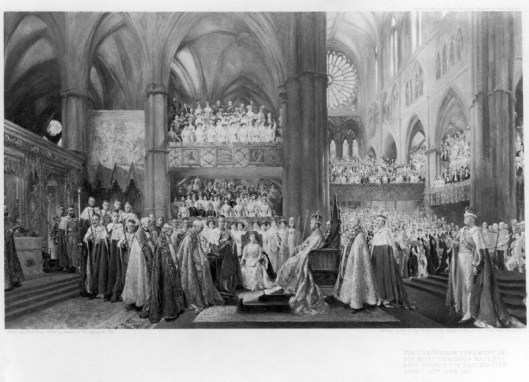
During his lifetime, JRRT would have seen the coronation of five British monarchs:

Edward VII
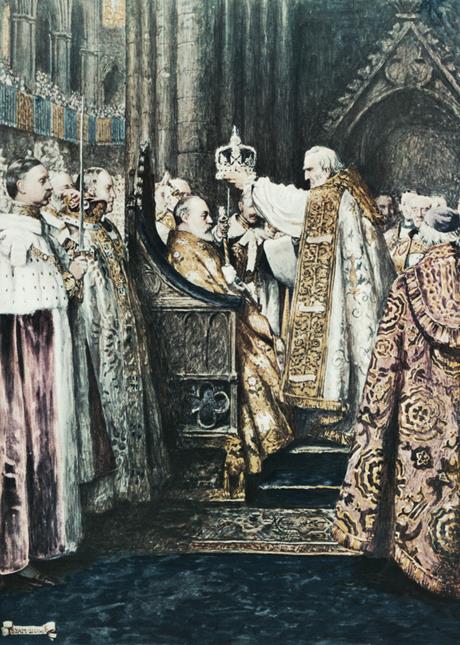
image19ed7.jpeg

George V

image20geo5.jpg

Edward VIII

image21ed8.jpg

George VI

image22ageo6.jpg

and the current monarch, Elizabeth II.
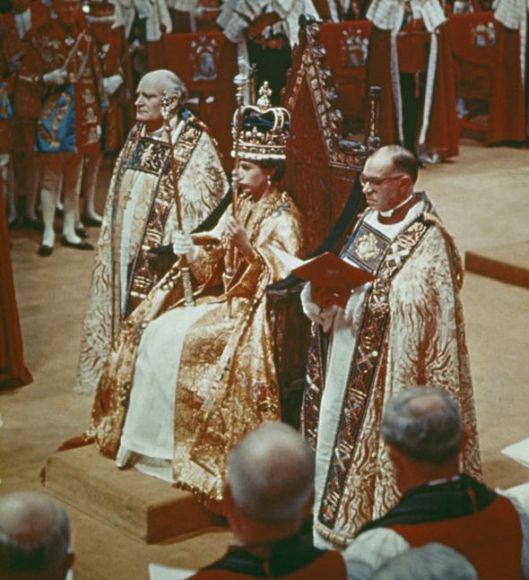
image22liz2.jpg

You’ll notice that, in every case, the throne is the same.
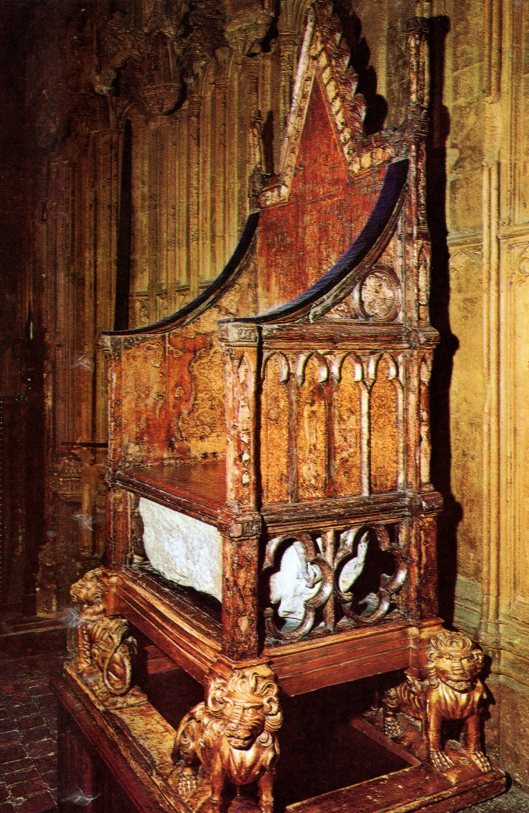
image23throne.jpg

This is the so-called “Coronation Chair”, built between 1297 and 1300 and used since for crowning English monarchs.  It was especially commissioned so that it could hold the “Stone of Scone” (pronounced “skoon”—not like the pastry).  This was an ancient piece of Scottish royal history which Edward I,
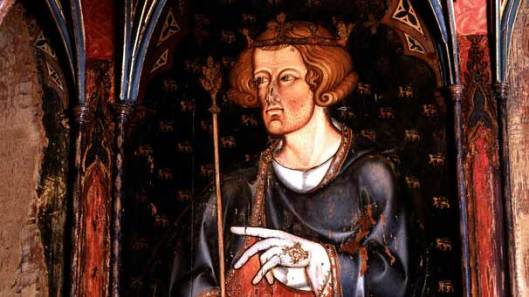
image24ed1.jpg

in an effort to control Scotland, had stolen from its place on Moot Hill, near the Abbey of Scone.

image25sconeabbey.jpg

Supposedly, it was a stone used in the crowning of Scottish kings back to the time of the first one, or that it was even older, having been lugged from Tara, in Ireland, where, under the name “Lia Fail”, “the Stone of Destiny” it was used in coronation ceremonies there.  Its purpose was confirmation:  tradition had it that, when the true king bestrode it (a great old verb form), it gave a great shout.
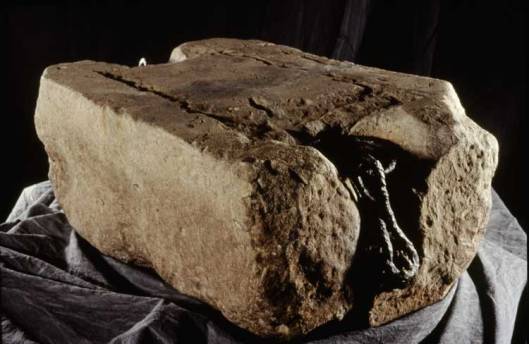
image26liafail.jpg

As far as we know, no shouting has been reported, over the centuries—perhaps because it’s being used for English kings and therefore the stone is holding its tongue till it’s taken back to wear it belongs?

What do you think, dear readers?

Thanks, as ever, for reading.

MTCIDC

CD

PS

And did you notice something(s) out of place in JRRT’s drawing of Bag End?  We’ll talk about it in our next…
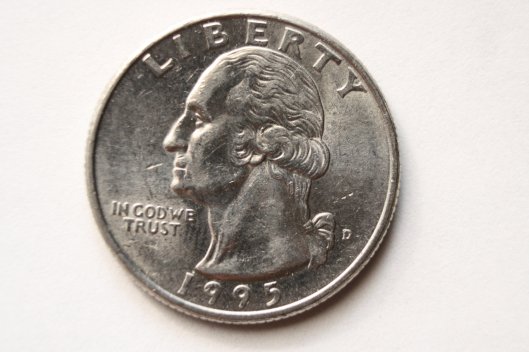
image1bagend


Spare Change?

19 Wednesday Apr 2017

Posted by Ollamh in Economics in Middle-earth, J.R.R. Tolkien, Literary History, Narrative Methods

≈ Leave a comment

Tags

1909 penny, Abraham Lincoln, Alexander the Great, Aragorn, Asia Minor, Augustus, bartering, Bilbo's birthday, British Royal Government, Brutus, Charlemagne, Classical Greek coins, Cleopatra VII, Coinage, daggers, Denethor, Domitian, Egypt, federal law, Frankish king, freedman, George Washington, Gondor, Greek Kings, Hanoverian kings, Hellenistic Greeks, Holy Roman Emperor, Ides of March, Julio-Claudian dynasty, Julius Caesar, libertus, Lucius Plaetorius Cestianus, Lydia, manumission, Middle-earth, Pennies, pilleum, Plebeians, portrait, Prince Charles, Ptolemy I, Queen Elizabeth II, Roman Empire, Romans, Seleucus, Senatus Consulto, The Lord of the Rings, Tolkien

Welcome, dear readers, as always.

We are veering a little to the left in this posting inspired by a comment on “Shire Portrait (2)” from our good friend, EMH. It was about currency and coins in Middle-earth and we were a little vague, but E pointed out:

  1. Bilbo giving “a few pennies away” before the party
  2. the price of Bill, the pony: “twelve silver pennies”
  3. Gandalf praising Barliman and saying his news was “worth a gold piece at the least.”

With E in mind, we decided to do another posting on M-e money. Long ago, we did a posting on imagined currency in Middle-earth, but, since then, we’ve thought a bit more about the subject, and, right now, dear readers, we ask you to produce a coin, any coin. As we live in the US, here’s a US coin, a fourth of a dollar, hence, a “quarter”.

image1quarterobverse.jpg

This is the front, or “obverse” in coin speech, and we’re going to focus on that and not on the back (the “reverse”).  We use coins all day long every day, so we probably don’t look at them more than to note value when we pay for something or receive change, but let’s look at this one a bit more closely.

It seems pretty simple:

  1. at the top a single word, “Liberty”
  2. then a low relief (that is, cut very shallowly) portrait of the first president, General George Washington
  3. then, to the left, a slogan, “In God We Trust”
  4. at the bottom, the date, 1993

Let’s start with that date—1993. In 1993, the president was Bill Clinton.

image2clinton.jpg

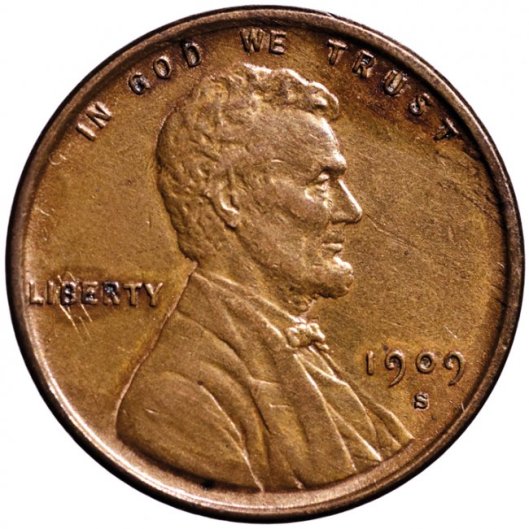
Federal law, however, prevents coins—with very special and rare exceptions—to bear the portraits of living people. The first president on a coin was Abraham Lincoln, on a penny first minted to commemorate his 100th birthday, in 1909.

image31909penny.jpg

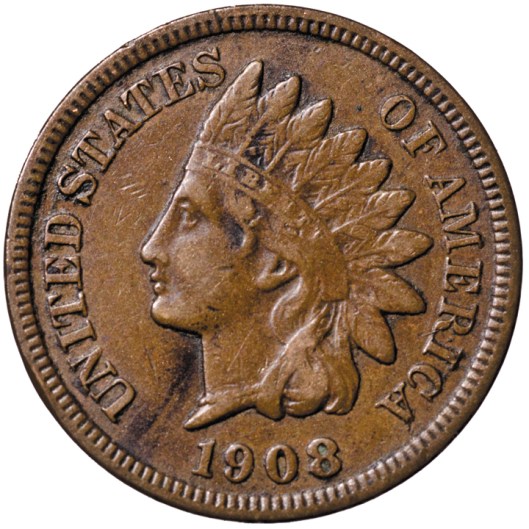
The previous coin, up to 1909, had the idealized head of a Native American,

image41908indianhead.JPG

the pattern for which was first introduced in 1859.

image51859indianhead.jpg

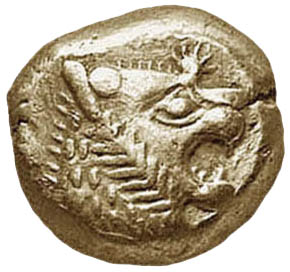
The first coin in western European history is from the late 8th century BC, and comes from Lydia, in Asia Minor.

image6lydiancoin.jpg

Classical Greek coins seem to model themselves on Lydian coins like this, having badges–city emblems and religious tokens, like the famous Athenian owl, rather than portraits of humans, like that quarter with George Washington on it.

image7owlcoin.jpg

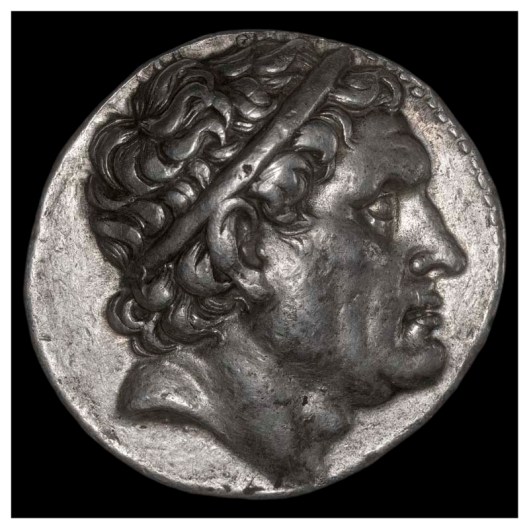
During the Hellenistic Period (post about 300bc and on), however, the Greek kings, from Greece to Asia Minor to Egypt, all began to issue coins with portraits of themselves. These were, initially, the generals of Alexander the Great, who, at Alexander’s death, had grabbed portions of his empire for themselves. We think of Seleucus, who controlled much of Asia Minor

image8seleucus.jpg

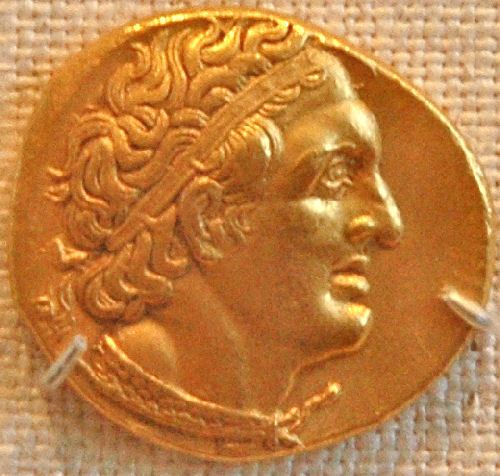
Or of Ptolemy I,

image9ptolemy1.JPG

the founder of a dynasty which ruled Egypt for nearly 300 years until their final descendant, Cleopatra VII, was defeated by the Romans.

image10cleopatravii.jpg

Those Romans, we imagine inspired by the Hellenistic Greeks, produced coins by the bushel .(this is an obsolete dry measurement, based upon what you can put into a basket like this:

image11bushelbasket.jpg

which was, in fact, made up of four pecks

image12peck.jpg

which could also be divided into two kennings of two pecks apiece.)

Considering that Rome produced coins from the late 4th century bc to late in the 5th century ad, it’s not surprising that there would be so many—and considering the size of the Roman empire, as well.

image13coins.jpg

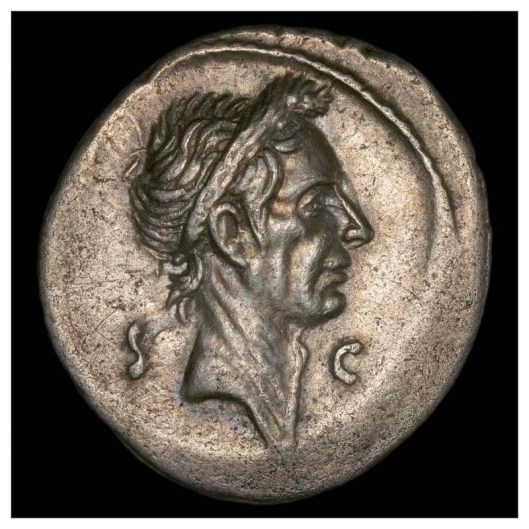
Earlier Roman coins had been unlike Hellenistic coins, however, in not depicting living people—that is, until Julius Caesar gained power.

image14jc.jpg

This opened the floodgates and it’s easy to see why.

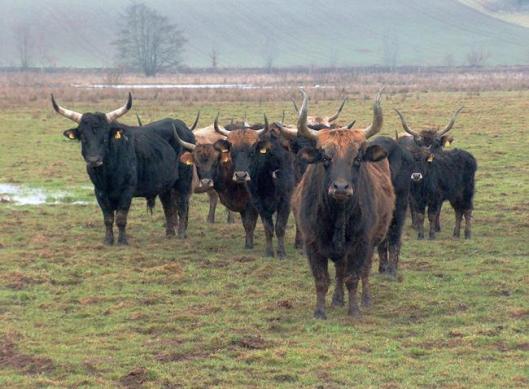
Coins are short-hand wealth, originally standing in for earlier barter items, like flocks and herds.

image15cattle.jpg

As Romans spread out beyond farms and local markets, the wealth in animals and agricultural produce, as well as raw materials, was simply not portable enough, as this cartoon shows.

image16barter.jpg

By making tokens which were accepted as a stand- in for that wealth, the agency which did so was asserting its claim to have a strong hand in, if not control of, the economy.

Julius Caesar, who had already forced the Senate to make him “Dictator for Life” (that “S…C” on both sides of his profile stands for “Senatus Consulto”—“by a decree of the Senate”), by putting his face on the currency is implying that he now is the state—and therefore possesses a power which extends to regulating the money economy by which people live and survive or prosper. (There may be a quiet joke here, as well. “SC” was stamped on bronze coins to guarantee their worth—on the back side—to have those letters surrounding Caesar on the front side, the obverse, may suggest a double meaning: he is dictator by Senatorial decree, but his worth is also being guaranteed by that decree.)

It is no surprise, then, that Brutus, one of those who murdered Caesar, would, in turn, issue his own coins—and these are even more heavily symbolic.

image17brutuscoin.png

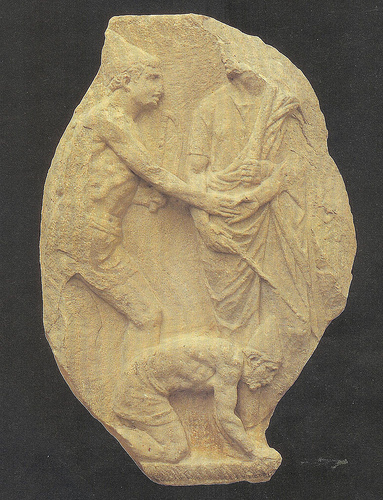
On the obverse, there is Brutus, his name above, to our right his title “imp[erator]”—a title given to a general by his soldiers with the implication “You rule!” To our left is an abbreviated form of the name of the moneyer, the man who directed the mint, L[ucius] Plaet[orius] Cest[ianus]. Although we said that we would only examine obverses, we can’t resist the reverse here. At the bottom is the inscription, “eid mar”, standing for “eides Martis”, the “Ides of March”, the 15th of March, the day Caesar was murdered. Above that is a “pilleum”, the kind of cap worn by a slave during the ceremony called “manumission”, in which a he was turned into a “libertus”, or “freedman”.

image18manumission.jpg

To both sides of the cap are daggers.

image19pugio.jpg

Put all of this together and we see Brutus’ claim: on the 15th of March, we murdered Caesar and, as a consequence, we freed Rome from its slavery.

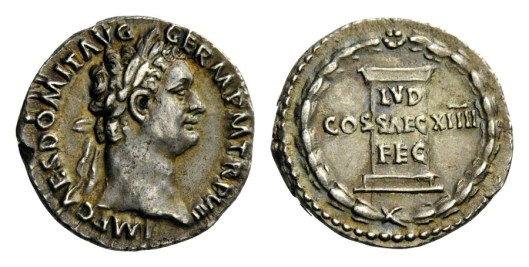
Coins like Caesar’s and Brutus’ are simple in their claims. Later emperors were less so. Look at this coin of Domitian (81-96ad).

image20domitian.jpg

On the rim of the obverse is a pile of information:

Imp[erator] Caes[ar] Domit[ianus] Aug[ustus] Germ[anicus] P[ontifex] M[aximus] Tr[ibunicia P[otestas] VIII

“Emperor Caesar Domitianus Augustus Germanicus, Chief Priest of Rome, Holding the Power of the Representative of the People 8 Times”

In fact, Domitian was sailing under false colors—Caesar, Augustus, and Germanicus all belong to the earlier Julio-Claudian dynasty, of which his family was not a part. As for “Holding the Power of the Representative of the People”, this was an ancient elective office, which allowed a member of the lower class, the Plebeians, special powers in the legislative process. As emperor and son of an emperor most of a century after elections had been abolished, this looked like an honor, but was just an empty title. “Chief Priest” had once been an extremely important position in the state, but, from the time of the first emperor, Augustus, it had simply become another title emperors claimed.

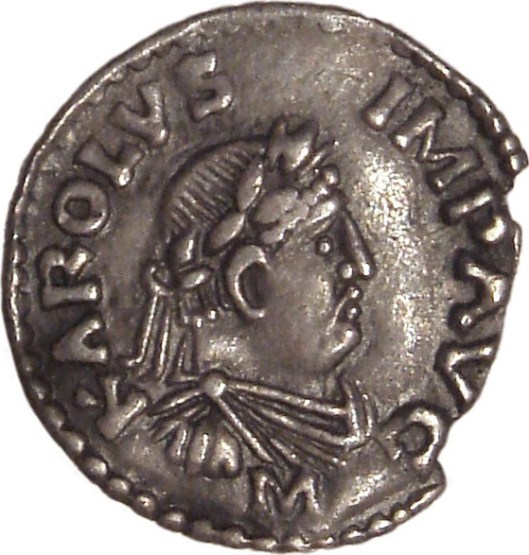
Later European rulers, eager to suggest that they were as powerful as the ancient Romans, used Roman coins as a model. Here’s one from Charlemagne, Frankish king and first Holy Roman Emperor (768-814).

image21charlemagne.jpg

Returning to our George Washington quarter,

image22gw.jpg

let’s look at the comparatively meager inscriptional material. If the coin of Domitian had so much to tell us about how important he was, the inscription on the quarter has a very different message, its focus being upon cultural values: 1.freedom; 2. religion. In our culture, probably everyone would agree with 1, but our ancestor/founders were very adamant on the subject of keeping church and state completely apart, with no influence of either upon the either, so that that 2, “In God We Trust”, shows that there is some confusion about those values. In any case, the plainness might remind us of Caesar’s coin more than Domitian’s, but, in both cases, the point of the artwork and labeling is to put the government’s stamp, whether republic or empire, upon the everyday life of everyone who buys and sells.

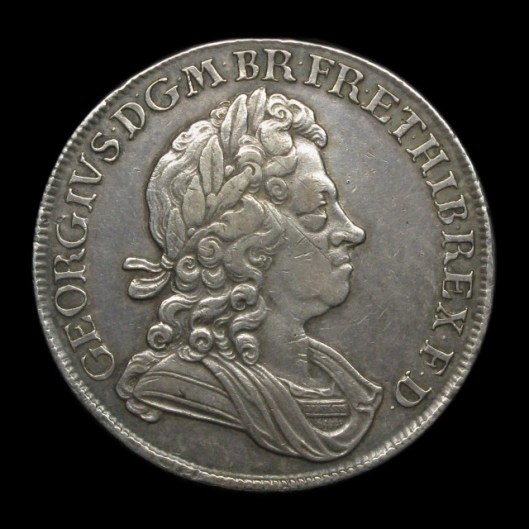
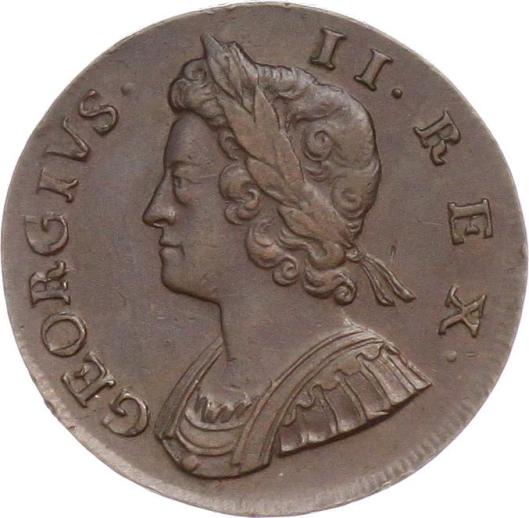
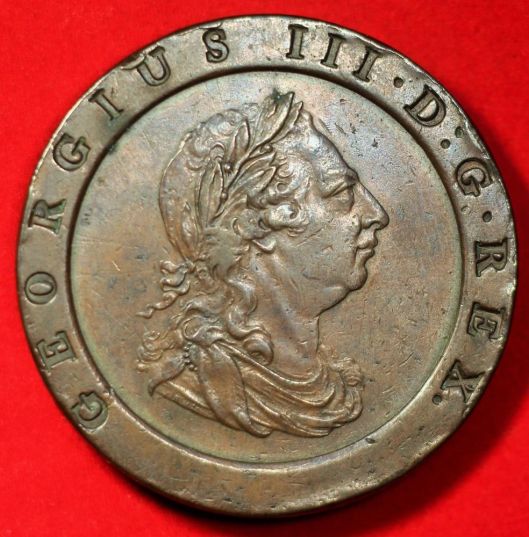
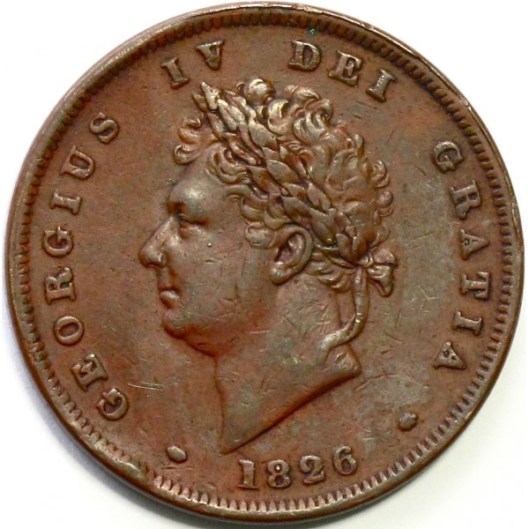
There is another message to be read here, as well. The George Washington quarter was first issued on Washington’s 200th birthday, in 1932, and is still on the obverse of the quarter, suggesting the continuity of what he stood for. In the case of monarchs, however, each new emperor/king/queen demands the issuing of new coinage, with the new ruler’s portrait, suggesting not only royal government continuity, but also, in some cases royal family continuity. Here are the first four Hanoverian kings of England, for example, all sons or grandsons, from 1714 to 1830.

image23geo1.jpg

image24geo2.jpg


image25geo3.jpg

image26geo4.jpgSo, When Prince Charles succeeds his mother, Elizabeth II,
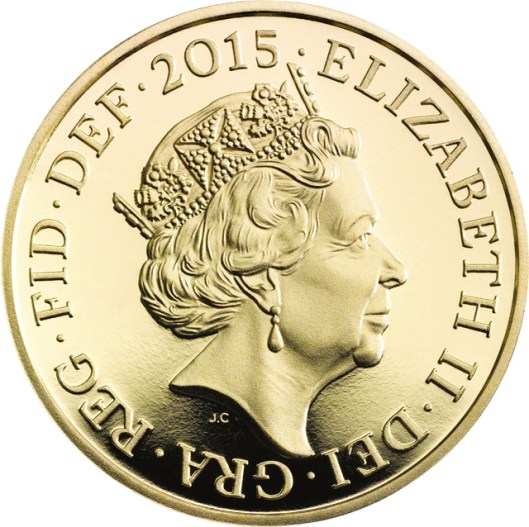
image27liz2.jpg

new coins will have to be minted.

And this brings us back to Middle-earth and to a puzzle about Gondor. There are certainly coins, as our good friend has thoughtfully pointed out. There has been no king on the throne of Gondor for many centuries, however. If Denethor’s behavior is anything to go by, the Stewards have become kings in everything but title, even though Denethor avoids the royal throne. If everyone from the Hellenistic kings to Elizabeth II has his/her portrait on the coinage, are the Stewards on Gondor’s? And what happens when Aragorn becomes King Aragorn II Elessar?

MTCIDC

CD

Shire Portrait (3a)

15 Wednesday Feb 2017

Posted by Ollamh in Economics in Middle-earth, Imaginary History, J.R.R. Tolkien, Literary History, Maps, Narrative Methods

≈ Leave a comment

Tags

Argeleb, Baraduin, Beleriand, Blanco, Bridge of Stonebows, Bronze Age Horse, cable ferry, coins, Dartmoor, Doriath, Dwarves, English South Downs, Fallowhide, Far Downs, Farthings, Fornost Erain, Frodo, Gloucestershire, Government, Great East Road, Green Hill Country, Greenway, Jeremy Brett, Little Delving, Longbottom Leaf, Maps, Marcho, Michel Delving, Middle-earth, Minas Tirith, Misty Mountains, Old Dee Bridge, Oxfordshire, River Baranduin, Roads, Roman Roads, Sherlock Holmes, Sidney Paget, Sir Arthur Conan Doyle, Steven Spielberg, Tharbad, The Hobbit, The Hound of the Baskervilles, The Lord of the Rings, The Shire, Three Farthing Stone, Tobacco, Tolkien, Warwickshire, White Downs, Worcestershire

Welcome, dear readers, to the third installment of our rough portrait of the Shire. We call it a “rough portrait” because, so far, we’ve relied upon only three sources: The Hobbit, The Lord of the Rings, and The Letters of J.R.R. Tolkien. We’ll continue to do so in this installment, but we will add two works of geography, K. W. Fonstad’s The Atlas of Middle-earth and Barbara Strachey’s Journeys of Frodo (although we may take a hint of two from other works).

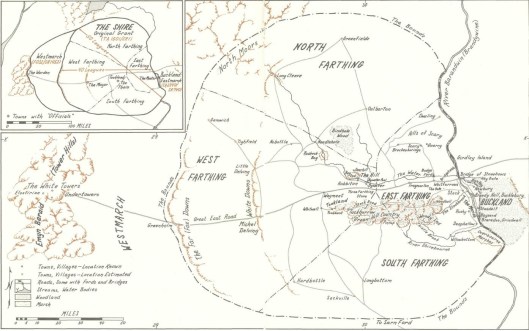
So far, we’ve discussed the government of the Shire (Shire Portrait 1) and the economy (Shire Portrait 2). In this, we want to move on to the geography of the Shire. We begin with Fonstad’s map.

1mapoftheshire.jpg

Except for Buckland, all of the Shire lies west of the River Baranduin (the “Brandywine”). This river can be broad enough to require a cable ferry

2ferryoncable.jpg

and it is navigable, at least by small boats—after all, it was in such a boat that Frodo’s parents were drowned.

As well, there is the Bridge of Stonebows on the Great East Road. Since it’s wide enough for gates and is reported to have had houses on the far side of it, we might imagine it to look like the Old Dee Bridge, at Chester, in England.

3olddeebridgechester

This bridge dates from Norman times (although there was a bridge there from the days of the Roman occupation—“Chester”, after all, is only a corruption of castra, Latin for “military camp”—founded as Deva Victrix in 79AD), with the present version being more-or-less 14th-century. In the Prologue to The Lord of the Rings, the Bridge of Stonebows is said to have been “built in the days of the power of the North Kingdom”, making us wonder whether the Dwarves, who had cut the Great East Road long before, had only had a ford at that place.

To the west of the river stretches the Shire, most of it to the north and south of the Great East Road, which acts as a kind of spine, there being subsidiary roads leading off it towards the various villages. Originally built by the Dwarves in the First Age, it led from Doriath in Beleriand eastward beyond the Baraduin towards the Misty Mountains. After the destruction of Beleriand, the remaining section ran only from the Grey Havens eastward. When Marcho and Blanco, the Fallowhide brothers, gained permission to colonize the area in TA1601 from Argeleb II, the only payment required was “that they should keep the Great Bridge in repair, and all other bridges and roads, speed the king’s messengers, and acknowledge his lordship”, which would have included the Great East Road.

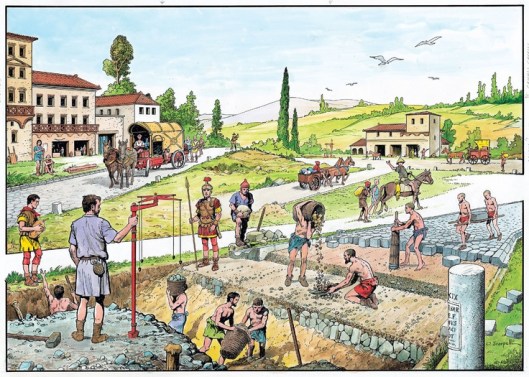
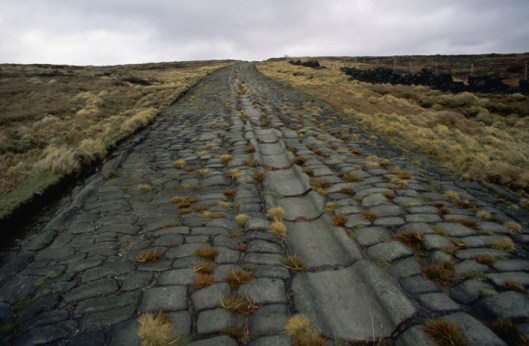
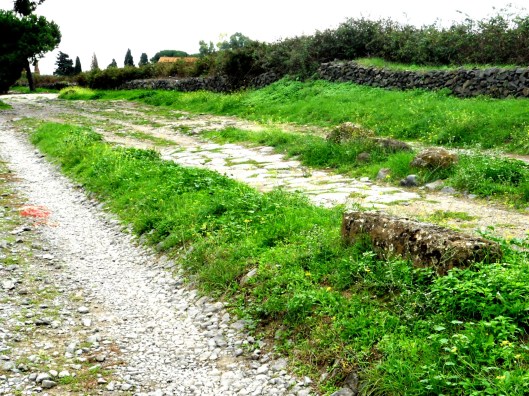
In a previous posting, we talked about the North-South Road (later, the “Greenway”, which once ran from Fornost Erain, in the north, to Minas Tirith, in the south. Because of its ancient importance and places like the causeway and bridge at Tharbad, we imagined it to be like a Roman road—carefully laid out by engineers and paved but, no longer maintained, gone to seed.

4buildingromanroad.jpg

5romanroad.jpg

6overgrownromanroad.JPG

Because of its great age and one-time importance, we’ve always pictured the Great East Road to be similar, especially when it is clear that the kings of Arnor considered its maintenance to be the equivalent of tribute or taxes from the new Shire. Subsidiary roads which split off from the East Road, however, we might see as the usual rutted country roads.

7ruttedroad.jpg

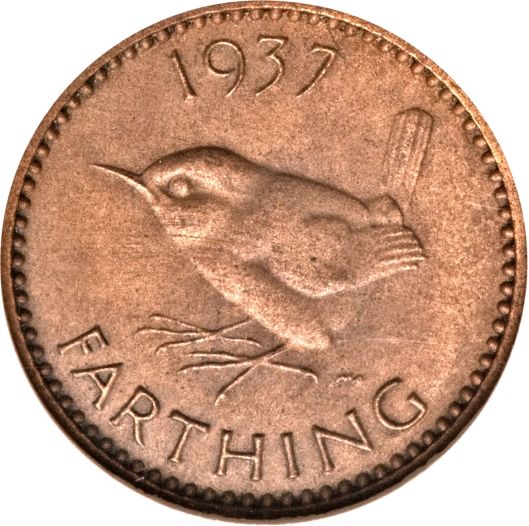
The Shire, besides being bisected by the Great East Road, is also divided into four parts—hence the name “Farthings”—like the pre-decimal English coin, which was a fourth part of a penny (when a penny obviously was worth a lot more!).

8farthingcoin.jpg

We wonder what these divisions were intended to be used for—perhaps for the election of the Mayor? In our previous posting on the government of the Shire, we quoted JRRT as saying in the Prologue to The Lord of the Rings, “The Shire at this time had hardly any ‘government’”, so, for the moment, that’s our best guess.

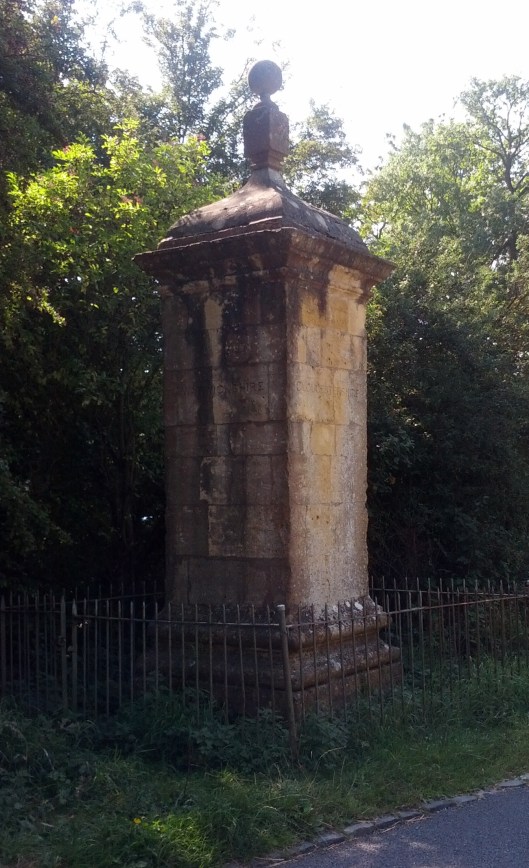
(We should note here the “Three Farthing Stone”, which marks more or less where the North, East, and South Farthings meet. It has been suggested that it has been based upon the actual English “Four Shires Stone”—

9fourfarthingstone.jpg

which sits at the place where, pre-1931, four shires—Worcestershire, Warwickshire, Oxfordshire, and Gloucestershire — touched. Not only is there a similarity in the names and what the stone may function as, but the Three Farthing Stone is just to the west of Frogmorton, whereas the Four Shire Stone is just east of Moreton-in-Marsh. And is JRRT having a quiet joke in that, after a boundary adjustment in 1931, the Four Shire Stone should really be called the Three Shire Stone?)

Just south of the Great East Road is the Green Hill Country, which appears to be heavily forested.

11gribskov

This is mirrored by a smaller wood north of the road, Bindbole.

Other than these (and, of course, the Old Forest in Buckland), the land seems to be open. To the north are the North Moors. These are windy uplands, mostly grass, with little in the way of trees.

13adartmore

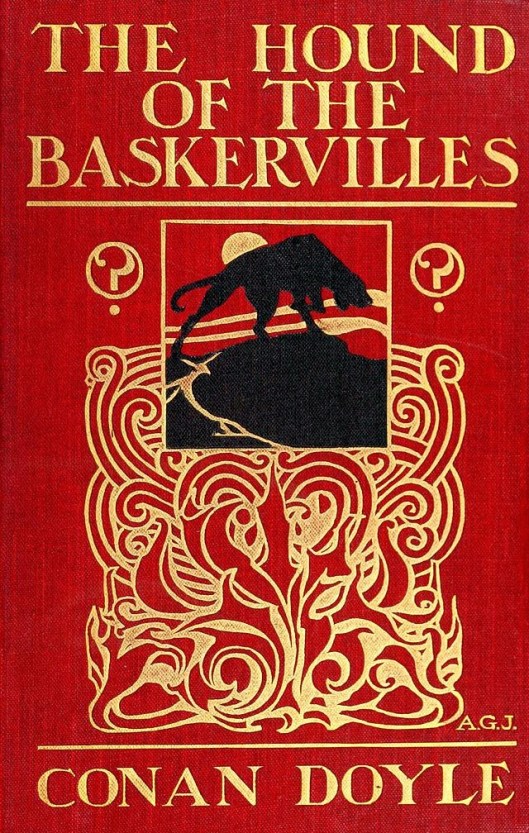
Dartmoor (which is the image above), in southwest England, seems so bare (although it has the fallen remains of earlier cultures on it), that it can seem a little spooky—the perfect setting for Sir Arthur Conan Doyle’s Sherlock Holmes novel The Hound of the Baskervilles (first published in book form in 1902).

13bbaskervilles.jpg

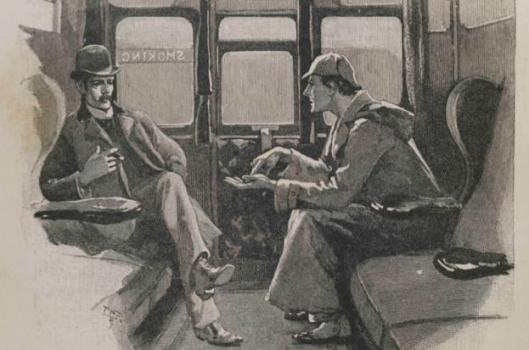
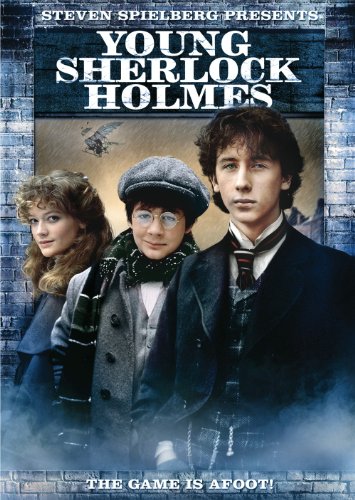
(We love the original Sidney Paget illustrations in The Strand Magazine, but our favorite film version is the one starring Jeremy Brett as Holmes. For pure fun, by the way, we recommend Steven Spielberg’s Young Sherlock Holmes—not for the purist, we hasten to add.)

13cpaget.jpg

13dartmore.jpg

13dbrett.jpg

13eyoungsherlock.jpg

To the west are two lines of downs, the White and the Far (or Fox) Downs. When we think of downs, we think of the chalky rolling hills southeast of the Thames in England. Here’s what the English South Downs look like

14southdowns.jpg

and it’s easy to imagine that the Shire version would look very similar and the chalk would easily be cut into to make Michel Delving (“Big Dig”) and Little Delving (“Little Dig”). The chalk just below the surface is exposed on the south English coast

15chalkcliffs.jpg

making that name “the White Downs” clear. And we can’t resist adding another chalk artifact. In Oxfordshire (but once Berkshire), on the edge of the Berkshire Downs, is a Late Bronze Age horse, cut into the chalk. We wonder why there isn’t one in Rohan…

16uffingtonhorse.jpg

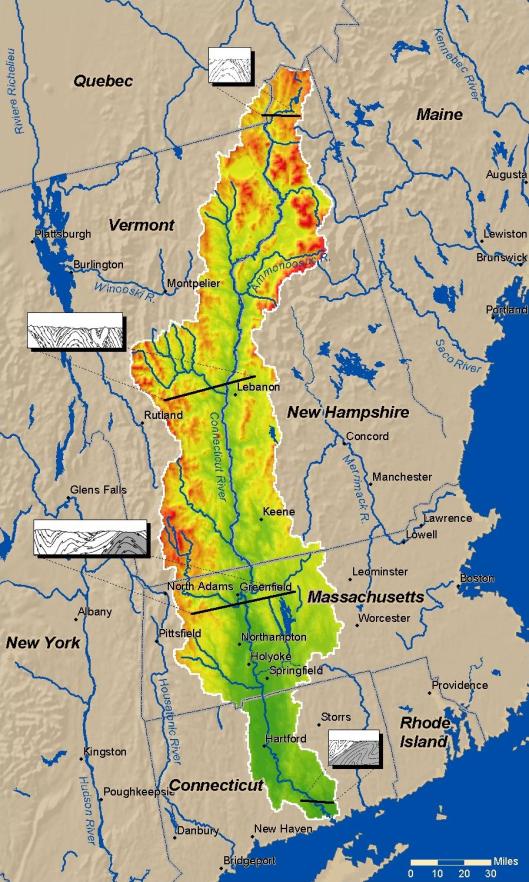
Last of all, there’s the South Farthing, stretching south of The Green Hill Country. As it is a tobacco-growing area, but in a temperate climate (at least, we understand that the Shire is in a temperate zone—they appear to have—or to have had—snowy winters), we visualize it as looking like the Connecticut Valley, which runs south down from Vermont, through western Massachusetts and through central Connecticut, in the US.

17connecticutrvalley.jpg

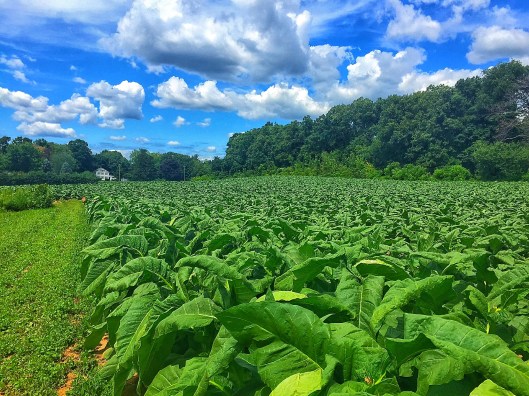
In the central part of the valley are tobacco plantations.

18tobaccofields.jpg

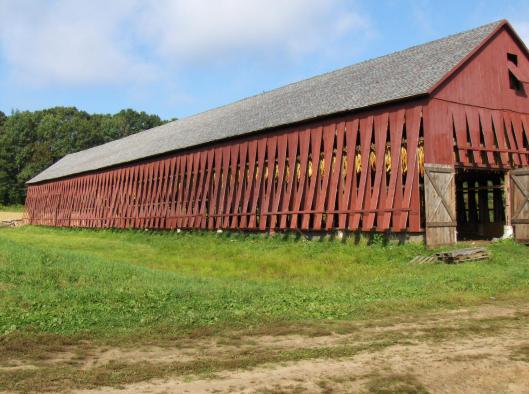
These always include drying barns for the tobacco—which would become the Longbottom Leaf Merry and Pippin discover two casks of in Saruman’s pantry.

19tobaccobarn.jpg

The one farthing we haven’t studied directly is the East Farthing, but, as it contains a continuation of the Green Hill Country, abuts the Brandywine, and has the already-mentioned bridge of Stone Bows, and thus has no main features we haven’t mentioned, we’ll conclude here for the moment. In our next, we want to examine Shire architecture, from hobbit holes to mills.

Thanks, as ever, for reading.

MTCIDC

CD

Shire Portrait (I)

01 Wednesday Feb 2017

Posted by Ollamh in Economics in Middle-earth, J.R.R. Tolkien, Literary History, Maps, Military History, Military History of Middle-earth, Narrative Methods

≈ 1 Comment

Tags

British Museum, culture, elections, farthing, feudalism, Government, Hobbitry-in-arms, Hobbits, Louvre, Maps, Mathom-house, Mayor, Michel Delving, Middle-earth, museums, police, Postmen, Sharkey, Shire, Shire-moot, Shire-muster, Shirriffs, Thain, The Hobbit, The Lord of the Rings, The Scouring of the Shire, thegn, Tolkien, vassal, Vatican, voting, White Downs, Witch-King of Angmar

Welcome, dear readers, as always.

In our last post (well, next-to-last–the last was on circuses), we talked about museums and Mathom-houses and, thinking that the Shire had a museum, made us wonder about what we might call “Shire culture” in general. What is it which makes the Shire the Shire?

1theshire.jpg

To go about answering that, we tried to think of a model. Could we imagine ourselves doing a tourist brochure? A wiki article? And where would we begin?

Suppose, we thought, we begin with the outermost shell, rather as in our world: the government.

The first ten pages of the Prologue to The Lord of the Rings contain a good deal of information about hobbits and their homeland, with many other details to be gleaned from the main body of the text and the appendices and some from The Hobbit. There is undoubtedly more yet to be found in several of the subsidiary volumes, but we decided that, to make this a series of readable posts and not a small encyclopedia, we would stick to the two main works.

With all of that material to help us, all we needed was an entry point—and, almost immediately, we decided that we could begin where we left off, with that very museum, which originally attracted us because it stood out as something one would expect from a much more organized state, rather than from what, on the whole, appears to be such a rural and decentralized place.

After all, museums, as we have discussed, are a relatively recent invention in the west and public museums are even newer (the first state-sponsored museum in Britain, for example, only dates from the 1750s). Since our last posting, we’ve done a bit more research and, with one or two possible exceptions, it seems that public museums only begin to appear at all from the second half of the 17th century. (A quick and useful reference may be found at: https://museu.ms) Even so, such places have a good deal to say about a culture:

  1. that it values elements of its past, both historical and artistic, enough that it is willing to collect and preserve them
  2. that it believes that such elements should then be put upon public display (the why of that might include: to use for educational purposes—which assumes that the past has things to teach the present; to provide aesthetic pleasure; even to show the wealth and power of a state which has such a history and such artists)
  3. that it is willing to provide space, at the public expense, to house and display such things

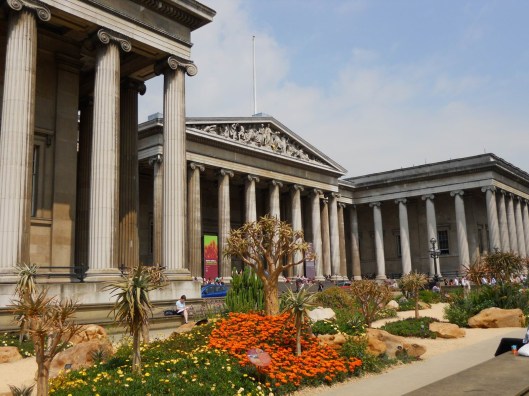
The Mathom-house is hardly, from JRRT’s description, the equivalent of the British Museum

1bm.jpg

or the Louvre

2louvre.jpg

or the Vatican

3vatican.jpg

or any of the other thousand wonderful museums around the world, big or small. And yet it is there and in the closest thing to a capital which the Shire has to offer, Michel Delving. It is only the closest thing because the Shire has almost no formal governing structure.

As the Prologue says:

“The Shire at this time had hardly any ‘government’. Families for the most part managed their own affairs…”

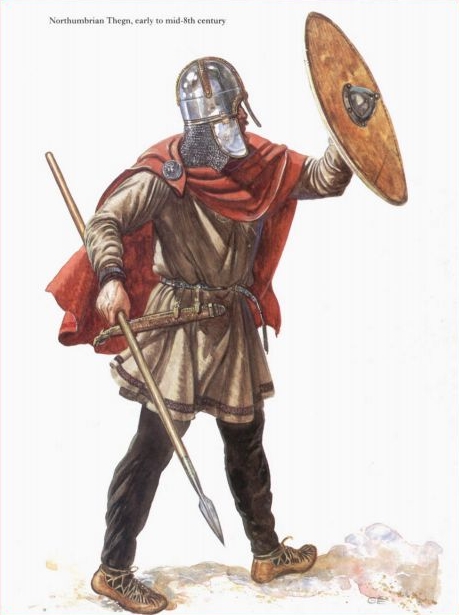
Originally, as the Prologue tells us, the Hobbits had moved into the land which would become the Shire with the permission of the high king of the North Kingdom, at Fornost. When the last king and his kingdom had fallen to the Witch King of Angmar, the Hobbits replaced him with a “Thain” (actually an Old English word for, among other things, a “vassal”—that is, one who acts as a subordinate—in a feudal system, this might imply that the person has received land from someone higher on the social scale in return for taxes and/or military service).  Here’s a thegn (Old English spelling) as a warrior.

5thegn.JPG

By the time of The Hobbit, this office had dwindled, but not quite disappeared:

“The Thain was the master of the Shire-moot, and captain of the Shire-muster and the Hobbitry-in-arms, but as muster and moot were only held in times of emergency, which no longer occurred, the Thainship had ceased to be more than a nominal dignity.”

In fact,

“The only real official in the Shire at this date was the Mayor of Michel Delving (or of the Shire), who was elected every seven years at the Free Fair on the White Downs at the Lithe, that is at Mid-summer. As mayor almost his only duty was to preside at banquets, given on the Shire-holidays, which occurred at frequent intervals. But the offices of Postmaster and First Shirriff were attached to the mayoralty, so that he managed both the Messenger Service and the Watch. These were the only Shire-services, and the Messengers were the most numerous, and much the busier of the two. By no means all Hobbits were lettered, but those who were wrote constantly to all their friends (and a selection of their relations) who lived further off than an afternoon’s walk.

The Shirriffs was the name that the Hobbits gave to their police, or the nearest equivalent that they possessed…they were in practice rather haywards than policemen, more concerned with the strayings of beasts than of people. There were in all the Shire only twelve of them, three in each Farthing, for Inside Work. A rather large body, varying at need, was employed to ‘beat the bounds’, and to see that Outsiders of any kind, great or small, did not make themselves a nuisance.”

This gives us the whole of the top level of Shire culture, the public face: a vestigial Thain (representative of the long-gone King), a figurehead Mayor, a postal service, and a tiny police force/border guard.

And how does any of these hold office?

The Thain, as we know, is hereditary.

The Mayor is, as quoted above, elected—although we have no idea of the process. Does one vote by town? By Farthing? Or is there simply a kind of country-wide method? We also have no idea of suffrage: who has the vote in the Shire? Is it general (England had general suffrage by the time JRRT was writing The Hobbit, all men over 21 by 1918, some women—householders over the age of 30—having been included in elections in 1918, women in general over 21 in 1928)? Or is it the older “only property-holders” method? Or are there “hereditary electors” who do the choosing? (As CD have just gone through an election here in the US, all of these questions, as you can imagine, are fresh in our minds!)

The “postmen” (our word) are, so far as we can tell, a mystery, both as to who they are or how they gain their employment.

Shirriffs appear to be volunteers, as we learn in “The Scouring of the Shire”, when Sam talks to Robin Smallburrow, who says “You know how I went for a Shirriff seven years ago, before any of this began.”

There being so little in the way of government, are there any public buildings except for the Mathom-house? If there are, we have yet to locate them. It’s striking that, when “Sharkey” takes over the Shire, he sets up a number of such places, but neither government buildings nor museums, instead, they are tokens of a police state: barracks and watch houses, dens reminding us of something which JRRT would have seen all too much of in newspapers and magazines, as well as newsreels as he worked on the early stages of The Lord of Rings:

4asentrybox.jpg

4schutzpo.jpg

(More on Sharkey and the takeover in a future posting!)

Considering that there is a small policing force, as well as a kind of postal institution, we looked for another government department: the Internal Revenue Service. After all, we pay for our police and used to pay for postage stamps, back in pre-internet days, and we pay for public museums, too: how does it work in the Shire? The simple answer is, we don’t know. In fact, we don’t really know much about how the economy works in general. And that will be the subject of our next posting.

Thanks, as always, for reading!

MTCIDC

CD

One More River (1)

21 Wednesday Dec 2016

Posted by Ollamh in Artists and Illustrators, Imaginary History, J.R.R. Tolkien, Maps, Narrative Methods

≈ Leave a comment

Tags

Alan Lee, Beorn, Bilbo, bog people, Bombur, Boromir, bridges, causeways, drowsiness, Dwarves, Esgaroth, Great East Road, Greyflood, Gwathlo, Hobbiton-across-the-water, Lethe, Middle-earth, Mirkwood, Rammas Echor, Rivendell, river-crossing puzzle, Roman Roads, Tharbad, The Atlas of Middle-Earth, The Hobbit, The Lord of the Rings, Tolkien, Tollund Man

Welcome, dear readers. Here we are again in Middle-earth, as so often we’ve been over the last couple of years, but, as we said in our last post, one reason why we revere JRRT and his work is that it’s so rich—it seems like one can open it to any page and there is something new to explore. In this post, we began with an odd little detail, just something said almost in passing by Boromir:

“A long and wearisome journey. Four hundred leagues I reckoned it, and it took me many months, for I lost my horse at Tharbad, at the fording of the Greyflood.” (The Fellowship of the Ring, Book 2, Chapter VIII, “Farewell to Lorien”)

Tharbad, we knew from the Companion, was once a river port on the Gwathlo, Boromir’s “Greyflood”. Here’s a description from the extremely helpful introductory section of the Companion called “The Maps of The Lord of the Rings”:

“…with long labour a port capable of receiving seagoing vessels had been made at Tharbad, and a fort raised there on great earthworks on both sides of the river, to guard the once famed Bridge of Tharbad” (lxv)

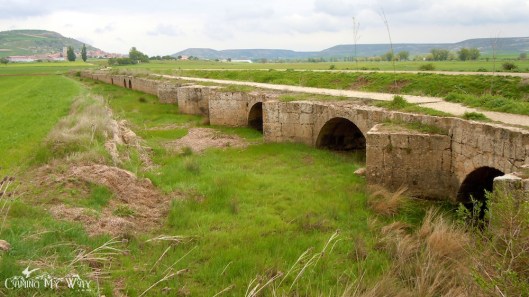
This “once-famed” bridge was clearly long-gone by the time, at the end of the Third Age, when Boromir reached the river it had once offered passage over, for all of the work done once upon a time, including long causeways—raised approach roads above boggy ground—here’s a Roman example from northern Spain with causeway and bridge—

1bridgewithcauseway.jpg

“But in the days of The Lord of the Rings the region had become ruinous and lapsed into its primitive state: a slow wide river running through a network of swamps, pools and eyots [little islands]: the haunt of hosts of swans and other water-birds.” (from a letter of 30 June, 1969, to Paul Bibire, quoted in Companion, 650)

JRRT appears to have left no description of the bridge itself, but we imagine it as looking rather like a Roman one (as JRRT could have seen pictures of surviving ones like this in Portugal

2ponte.jpg

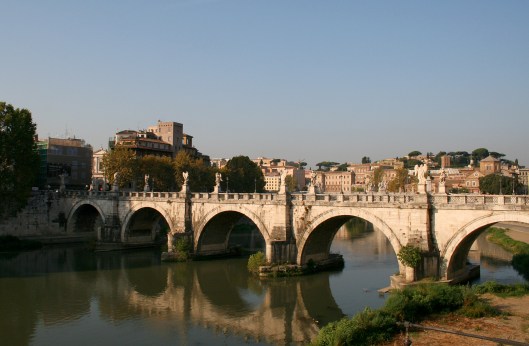
or this in Rome.

3ponteadriano.JPG

Unlike much of the rest of the Roman world, no Roman bridge survives in Britain—only the remains of piers, ramps, and approaches–so we’re assuming that, if he were at all influenced by Roman architecture—and that’s an absolute assumption on our part, we admit, but certainly things like Hadrian’s Wall seem to have been an inspiration—see our earlier posting on the Rammas Echor—it was through photographs.)

This mention, however, sparked us to think about the crossing of bodies of water, both in The Hobbit and in The Lord of the Rings, just how many there were, and the kinds of events which happened at them.

Bilbo’s Bag End, of course, is just down the road from The Water and its mill, as depicted by Tolkien himself.

4imghillandmill.jpg

When he sets off with the dwarves, however, there is little incident involved in running water at first. The party has to cross a river, “swollen with the rains, [which] came rushing down from the hills and mountains in the north.” (The Hobbit, Chapter 2, “Roast Mutton”) They cross this by “an ancient stone bridge” (perhaps like this one at Carrbridge, in Scotland?)

5imagecarbridge.jpeg

but, somehow, they can’t escape the river, as, during the night, “…one of the ponies took fright at nothing and bolted. He got into the river before they could catch him; and before they could get him out again, Fili and Kili were nearly drowned, and all the baggage that he carried was washed away off him.” (The Hobbit, Chapter 2, “Roast Mutton”). So far, when it comes to running water, for all that there was a bridge, it seems difficult for the dwarves to stay out of it.

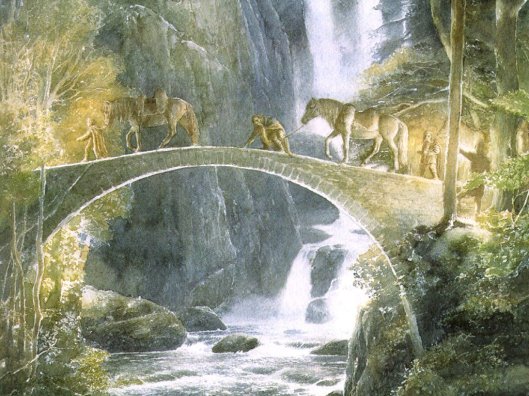
Their second adventure with water is more successful, when they cross the bridge at Rivendell, which we have discussed in a posting on Rivendell architecture, so, for this one, we’ll simply add Tolkien’s illustration of Rivendell, plus a real favorite, Alan Lee’s of the bridge.

6imagerivendelljrrt.jpg

7imagerivendellbridgealanlee.jpg

Beyond Rivendell, it’s into the mountains (literally, when they are pulled into the world of the goblins by a secret door) and, when they come out, their next water barrier is surmounted for them when they’re rescued by eagles and flown to the other side of the northern Anduin.

8eaglerescue.jpg

If they had simply taken the Great East Road (as we presume Bilbo and Gandalf did on the way back), they would have found a ford where the road runs eastward into the Old Forest Road. (see Karen Wynn Fonstad, The Atlas of Middle-earth, 80-81, for a larger view).

9mistymtnsmap.gif

The real problem with a crossing comes at the next water course. They had plunged into Mirkwood

9ajrrtmirkwood.png

and come up across a stream (in fact, the Enchanted River, although they didn’t know it). During their leave-taking at Beorn’s, he had warned them about it:

“There is one stream there, I know, black and strong which crosses the path. That you should neither drink of, nor bathe in; for I have heard that it carries enchantment and a great drowsiness and forgetfulness.” (The Hobbit, Chapter 7, “Queer Lodgings”)

As people with a background in Greek and Roman mythology, we immediately thought of Lethe, the name of which comes from a Greek verb which means “to escape notice/be hidden—therefore, to forget”.

It was one of the rivers of the Underworld and, if you drank from it, you lost all memory of your past. In that part of classical religion which believed in reincarnation, it was one step on the way to returning to earth.

10imagelethe.jpg

Here in Mirkwood, however, the point is to avoid drinking, or even touching, it. The difficulty, of course, is that, if you can’t touch it, how do you get across it, especially when:

“There had been a bridge of wood across, but it had rotted and fallen leaving only the broken posts near the bank.” (The Hobbit, Chapter 8, “Flies and Spiders”)

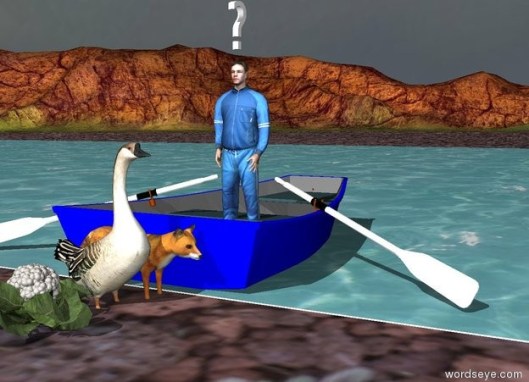
Providentially, there is a boat drawn up on the opposite shore and we’ve always been reminded here of what is called a “river-crossing puzzle”. There are many variations, but the earliest currently known dates from the 9th century AD, and is found in Propositiones ad Acuendos Juvenes (maybe something like “Puzzles for Sharpening [the Minds of] Young Folk”—which makes it sound rather Victorian). We provide links here for: River crossing puzzle, Fox, goose and bag of beans puzzle, and Propositiones ad Acuendos Juvenes, for anyone interested to learn more.

11imagefoxgoose.jpg

In the case of the dwarves, the math goes awry when the largest of them, Bombur, accidentally falls into the water and becomes comatose.

12imageleebombur.jpg

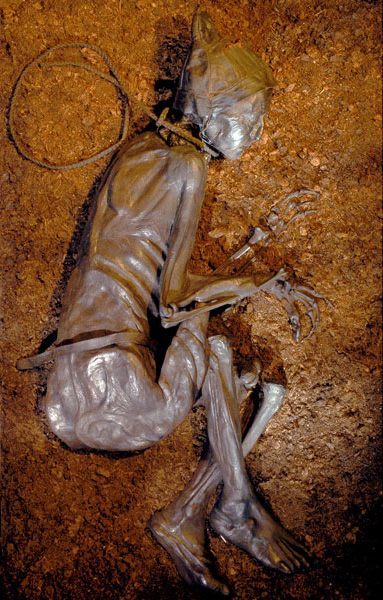
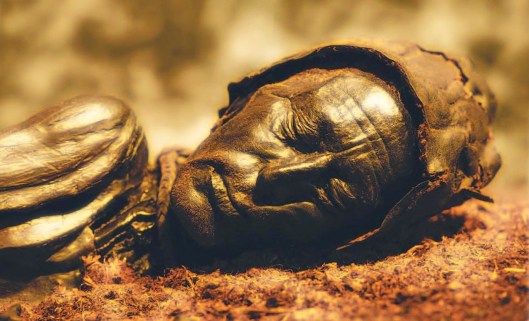
(And this Alan Lee drawing oddly reminds us of “bog people”—that is, the bodies of people, the earliest being from 8000BC, a majority being Iron Age, found in peat bogs throughout northern Europe. Because of the conditions in bogs, some have been amazingly preserved, such as “Tollund Man”—here

13imagetollund.jpg

14imagetollund.jpg)

He eventually awakes, long before the party’s next river, which acts as a moat to the caves of the Elf king of Mirkwood.

15imagethranduilsgate.jpg

This has a bridge, across which, at various times, Thorin, the dwarves, and Bilbo (wearing the Ring) go.

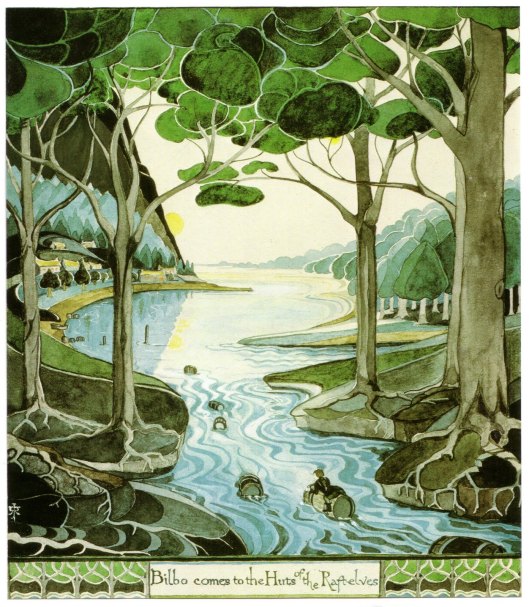
It is the next bit of water, however, which bears the greater interest. This is the underground stream which comes up in the cave where the elves store empty wine barrels to return to the men of Esgaroth. And this, the dwarves and Bilbo don’t cross, but ride down, packed in (or perched on) those empty barrels.

16imagebarrelriding.jpg

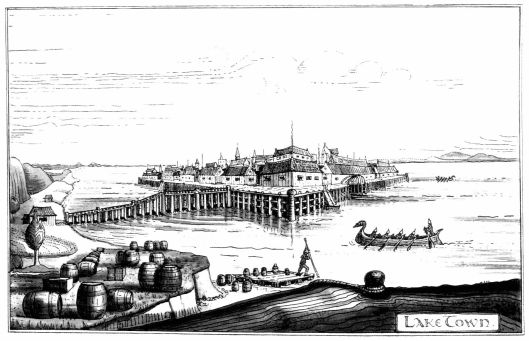
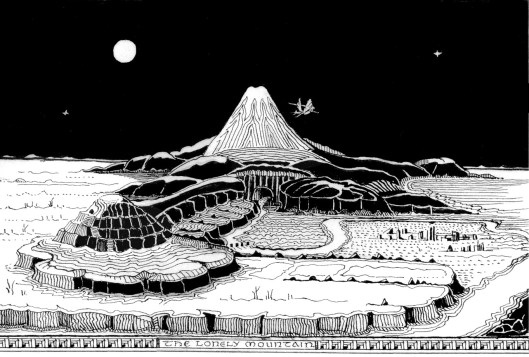
This leads us to the last body of water: the Long Lake, on which Esgaroth stands. From here, the people of Lake Town convey them back north to a landing place from which they will start out for the Lonely Mountain and the climax of their quest.17imageesgaroth.jpg

18lonelymountain.jpg

And here we’ll end our quest for water-crossings for this posting, to be continued with one on The Lord of the Rings in our next—along with all of those extras which we can’t help adding, from medieval puzzles to peat bog people.

Thanks, as always, for reading!

MTCIDC

CD

ps

If you celebrate this time of year for any reason, may your celebration be a happy one! We mostly dream of toys…

19imagetoytownsoldiers.JPG

The Woods for the Trees…

05 Wednesday Oct 2016

Posted by Ollamh in Artists and Illustrators, Fairy Tales and Myths, J.R.R. Tolkien, Literary History

≈ 2 Comments

Tags

A Wonder Book, Arthur Rackham, Enid Blyton, Ent, Fairy Tale, Fairytale Illustrators, Fangorn, Farmer Giles of Ham, Harmsen Van Der Beek, Hawthorne, John Bauer, Middle-earth, Mirkwood, Old Man Willow, Pauline Baynes, Rackham Tree, The Lord of the Rings, The Old Forest, The Wind in the Willows, Tolkien, Treebeard, trees

Dear Readers,

Welcome.

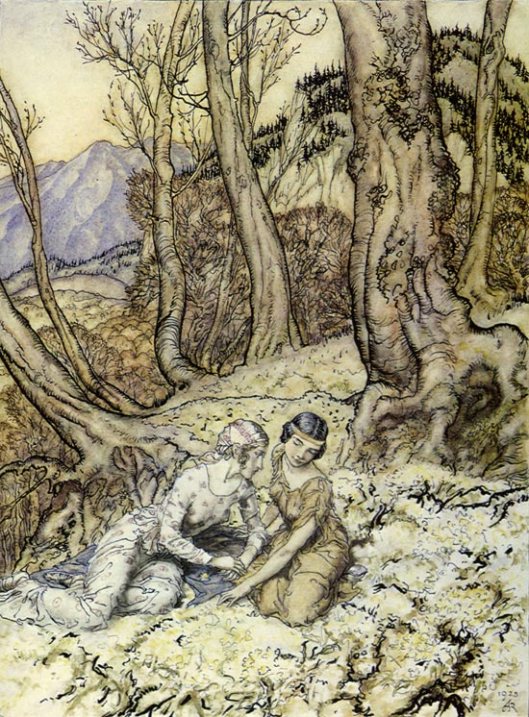
We’ve recently been admiring the illustrations of one of our favorite artists, Arthur Rackham (1867-1939). As a book illustrator, Rackham’s main focus was fairy tales, and for them, he developed a style which was described by E. V. Lucas in a letter to Rackham as his “grace and grotesque”. For us, what may be most striking about his work is the way he depicts landscapes and trees, with their distinctive “Rackhamesque” character.

11a9ca7244bf2060db41e7a5862344ab

From Nathaniel Hawthorne’s A Wonder Book, 1922

39e2b3c42d2341dfc53844a95a32e89d

“Come Now, a Roundel” from William Shakespeare’s A Midsummer Night’s Dream, 1908

429027

From Kenneth Grahame’s The Wind in the Willows, 1940

hermia_and_helena

From William Shakespeare’s A Midsummer Night’s Dream, 1908


As a tree admirer,

12930764_f520

He was certainly not alone.

553fada6b6a1f_

Being Tolkien people, this reminded us, of course, of JRRT’s own admiration of trees, of which he wrote in a sort of letter of introduction to Houghton Mifflin Co.: “I am (obviously) much in love with plants and above all trees, and always have been…” (Letters, 220).

JRRT himself was an illustrator of his own stories, and although he never cited Rackham as a direct influence, we know from Tolkien’s letters that he had seen Rackham’s work. He advised his illustrator Pauline Baynes to “avoid the Scylla of Blyton and the Charybdis of Rackham” (L 312).

Here is Pauline Baynes frontispiece for the first book which she illustrated for JRRT in 1949.

000901-3

Enid Blyton was an author of popular children’s books, but she was not an illustrator. We don’t know to what illustrations Tolkien might have been referring, but here is a Blyton book published in the same year, illustrated by the Dutch artist, Harmsen Van Der Beek. (The cover illustration reminds us of various illustrations for early translations of The Hobbit, illustrations which Tolkien hated.)

520wide+8030070

When we look at Tolkien’s forests

4d77f5a589fa1169c84c4fb29b56715b

we are often reminded of the work of the Swedish artist, John Bauer

John-Bauer-Elk-Cotton3

but for all of Tolkien’s warning to Baynes about Rackham’s style, there is a strong influence there, still.  After all, Tolkien did find Rackham’s illustrations “really astonishingly good pictures” (261). Sharing a passion for fairy tales with Rackham, which JRRT called “one of the highest forms of literature”, it’s no wonder to us that he would have found some inspiration in an artist who had similar tastes.

The influence seems strongest when it comes to animate trees.  As we were looking at the same Rackham illustrations which Tolkien would have seen, we found pictures which immediately reminded us, for example, of JRRT’s illustration of Old Man Willow.

ar_rvw2

7a81198748f0619bf839140c5cd4f60b

Just as Rackham’s work seems to have influenced JRRT as an illustrator, he seems to have inspired JRRT’s writing, as well. Being visual people, we can certainly say that, when writing Across the Doubtful Sea, we looked at several images which helped us to imagine the events, places, and characters in our south seas adventure. If you look at Rackham’s The Hawthorne Tree, dear readers, does it remind you of something—or someone?

b84eb67383d938d33e93ae7cfc9c82bd

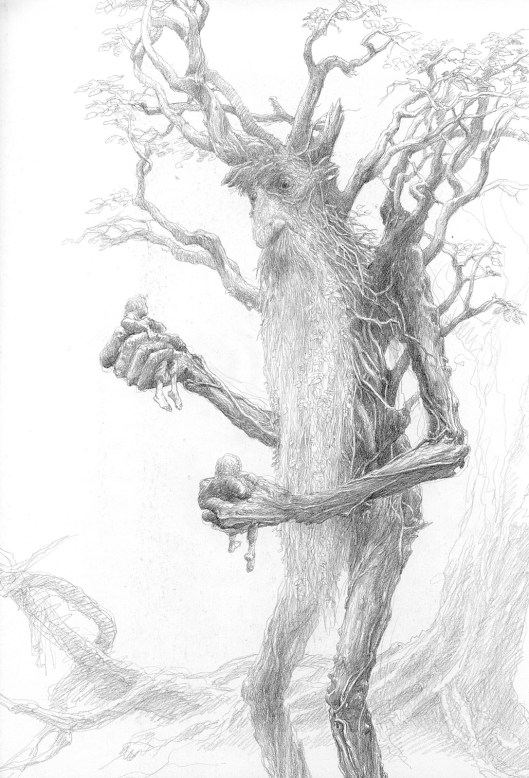
It’s the wizened, knotted old face of Rackham’s Hawthorne Tree which made us think of this passage:

“They found that they were looking at a most extraordinary face. It belonged to a Man-like, almost troll-like, figure, at least fourteen foot high, very sturdy, with a tall head, and hardly any neck. Whether it was clad in stuff like green and grey bark, or whether that was its hide, was difficult to say. At any rate the arms, at a short distance from the trunk, were not wrinkled, but covered with a brown smooth skin… But at the moment, the Hobbits noted little but the eyes. These deep eyes were now surveying them, slow and solemn, but very penetrating.” (The Two Towers, “Treebeard”, 452)

treebeard

Treebeard is, in fact, not a tree, but an Ent. He is an ancient tree-like figure, however, and almost a description of Rackham’s illustration. Looking at Rackham’s paintings and drawings, it’s clear to us that they call out for story, and we wonder– is this how JRRT, with a passion for trees and an eye for illustration, felt about them, too?

Thank you, as always, for reading.

MTCIDC,

CD


Infrastructure and Architecture in Rivendell

28 Wednesday Sep 2016

Posted by Ollamh in Artists and Illustrators, Films and Music, Imaginary History, J.R.R. Tolkien, Literary History, Narrative Methods

≈ 2 Comments

Tags

Alan Lee, architecture, bridge, Bruinen, footbridge, Illustration, Lauterbrunnental, Middle-earth, Ottoman, packhorse bridge, Peter Jackson, Ring of Silvianus, Rivendell, Roman Britain, Roman villa, Sir Mortimer Wheeler, Stari Most, Ted Nasmith, The Lord of the Rings, Tolkien, Wasdale

Welcome, dear readers, as ever. In our last posting, we looked at the Greenway from a comparative perspective. In this one, we’ve got an idea or two from having looked as closely as we could at one of JRRT’s illustrations of Rivendell, comparing it with various modern conceptions, including that in the films of P. Jackson.

Rivendell, Sindarin, Imladris, “deep valley in a cleft”, is located on the eastern edge of Eriador, at the foot of the Misty Mountains. Set in that deep valley, which was formed by the action of the river Bruinen (“Loudwater”), it was besieged on several occasions throughout its lifetime, but had survived to be the last refuge of the Elves on that side of the mountains.

mapofmewithrivendellpointedout

It is understood that Tolkien based it upon a Swiss valley, Lauterbrunnental, which he had visited on a hiking trip in 1911.

1_lauterbrunnen_valley_2012

(And maybe there’s an echo in the name—which is sometimes translated “Louder Springs”—in Bruinen, “Loudwater”?)

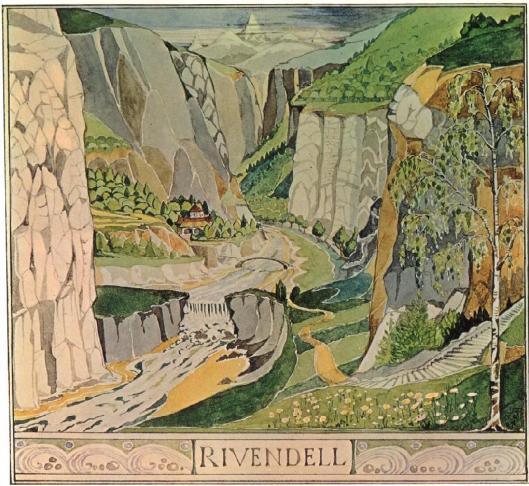
Here is the Tolkien illustration

rivjrrt2

We want to look at two features here. First, in the middle ground, there is that bridge. Here is Alan Lee’s very beautiful version—although you will note that it’s been moved and shortened.The-Hobbit-and-dwarfts-on-the-bridge-alan-lee-18907573-1024-768

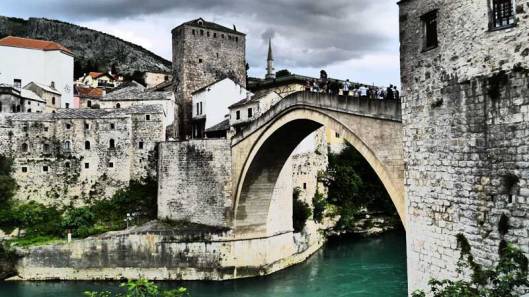
As we examined this bridge as closely as we could, we wondered, where had the idea come from for its shape? And two possibilities came to mind. First, because we’re very much World History people, we thought of those beautiful bridges from the Ottoman world. There are a number of surviving bridges which are more elaborate, but there are also single-arch bridges like these, which bear a strong resemblance to the bridge in Tolkien’s illustration.

otoman_era_bridge_gumushane_province_turkey_photo (1)

hemshin-bridge

1024px-ArchBridgeOverFirtinaDeresi@Rize-Turkey-1

4051359e3eb1f3e0a066f059868152c1

To us, one of the most beautiful is the Stari Most (Bosnian, “Old Bridge”), in Mostar (Bosnian, “Bridge Keeper”), which was built in the 16th century, destroyed in 1993, and rebuilt, and reopened in 2004.

Bosna-Mostar-Stari-Most-800

003

mostar_bg_1

Moving a little closer to home (England, that is, in the case of JRRT), another possibility for a model might be something mentioned in our last posting, when we talked about medieval English roads as mostly packhorse trails. Here’s a perfect example, from Wasdale in the Lake District of northern England, a packhorse bridge.

(n) The pack horse bridge behind the Wasdale Head Inn

Moving upstream from the bridge in Tolkien’s picture, we see a house depicted.

rivjrrt2

It’s hard to make it out, even under magnification, but, when we compare it with:

  1. the buildings in the Jackson films

12887381._SX540_.png

  1. Alan Lee’s Rivendell

leerivendell

  1. or even Ted Nasmith’s,

rivendellTN-Fair_Valley_of_Rivendell

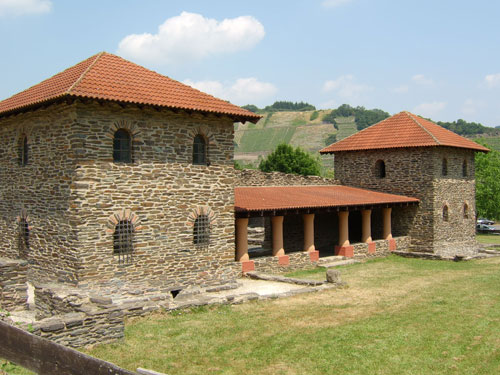
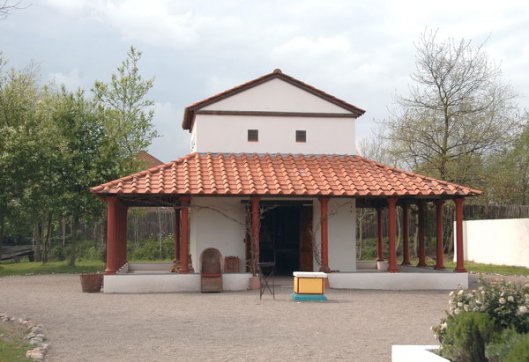
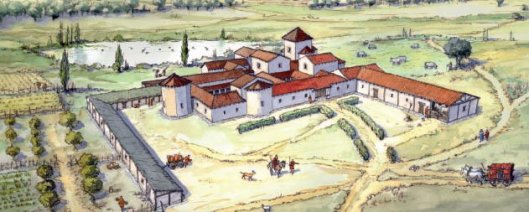
we personally don’t think anyone quite captures what Tolkien drew. To us, there appears to be, as we said before, something closer to home–in the reconstructions of Roman villas and their outbuildings. And, as we said in our last, so much of Roman Britain was still available, either above or below ground, that we can imagine JRRT  being aware of it.  (In fact, in 1929, the archaeologist, Sir Mortimer Wheeler actually consulted him on an ancient curse and the inscription on a Roman-British ring.  See the Ring of Silvianus wiki page).  Possible examples, some from reconstructed sites:

villa_mehring_01villaarcheon_temple_cuijk2delaguiaGayton-Villa-Colour-web

Blow up the Tolkien illustration for yourself, dear readers, and what do you think?

Thanks, as always, for reading.

MTCIDC

CD


The Road (No Longer) Taken

21 Wednesday Sep 2016

Posted by Ollamh in J.R.R. Tolkien, Literary History, Maps, Military History, Narrative Methods

≈ Leave a comment

Tags

Adventure, Fornost, History, Isengard, Medieval, Middle-earth, Numenorean road, pack horses, Ridgeway, Roman bridges, Roman occupation of England, Roman Roads, Stonewain Valley, the Greenway, The Lord of the Rings, the North Road, The Salt Road, Tiber River, Tolkien, Via Salaria

Dear Readers, welcome, as always. In this posting, we’ve been thinking about the subject of roads in Middle-earth and, in particular, the North Road, also called the Greenway.

middle-earth-map.jpg

This was the North-South Road, which ran, once upon a time, from Isengard to Fornost, described by Christopher Tolkien as “the great Numenorean road linking the Two Kingdoms, crossing the Isen at the Fords of Isen and the Greyflood at Tharbad and then on northwards to Fornost”. (Unfinished Tales, 314, n.32)

Mostly, the roads of Middle-earth seem to be what you’d expect in a text which is based upon the actual medieval world: dirt tracks.

medievalroad.jpg

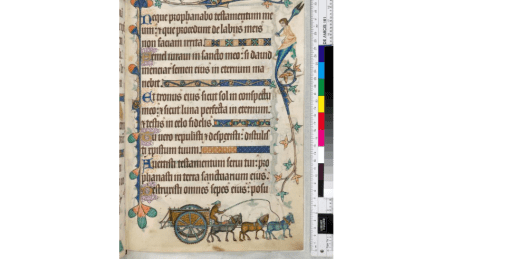
In the real English medieval world, most of these were not really for carts or carriages,

medievalcart.jpg

canvas.png

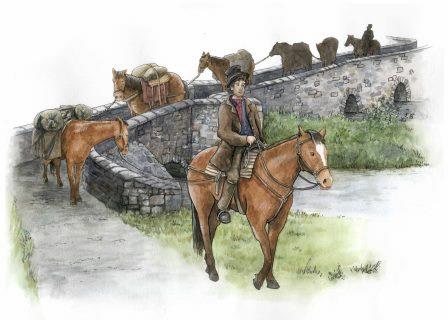
but rather for pack horses and their loads, which only required the narrowest of paths.

packhorsetrain1

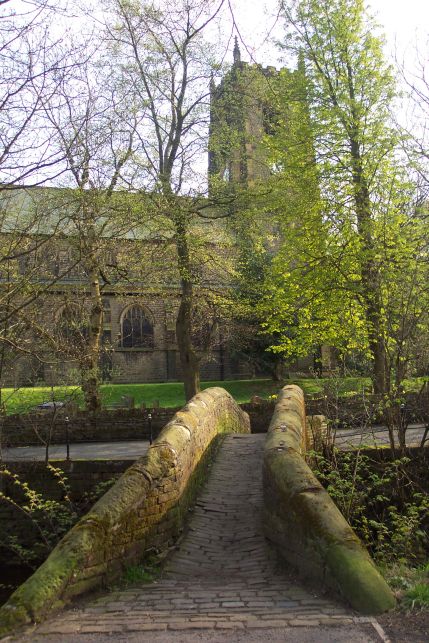
The_Marsden_pack_horse_road,_Marsden_-_geograph.org.uk_-_826758

Bridge in Marsden, West Yorkshire

Bridge in Marsden, West Yorkshire

There had been simple pathways in Britain since earliest times, like the Ridgeway.

Ivinghoe Beacon seen looking north from The Ridgeway.

Ivinghoe Beacon seen looking north from The Ridgeway.

And yet there were still the remains of a different sort of road in Britain, those built under the Roman occupation of England, from 43 to 410AD.

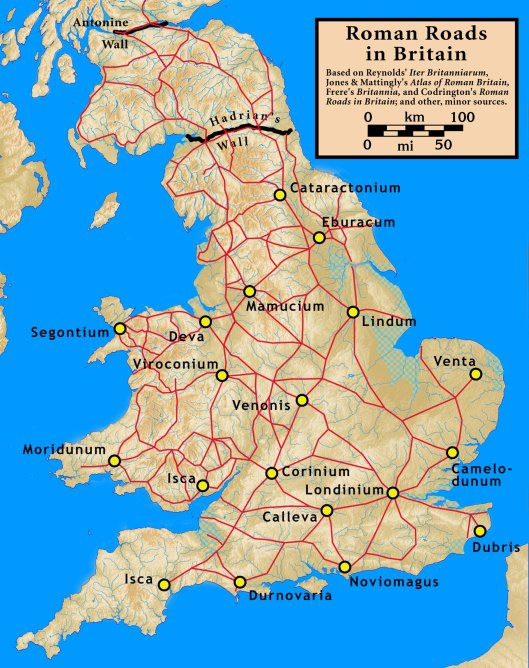
Roman.Britain.roads

The Romans had begun their rise to power in Italy by controlling a road, the Via Salaria, which ran inland from the Mediterranean. A major purpose of this road (you can see it in its name, “The Salt Road”) was to further the salt trade.

The salt came from salt pans on the Mediterranean coast.

saltblocks

saltpans

The early Romans had been lucky (or wise) in founding their city at a major ford of the Tiber River, where the Via Salaria crossed it.

archaicrome

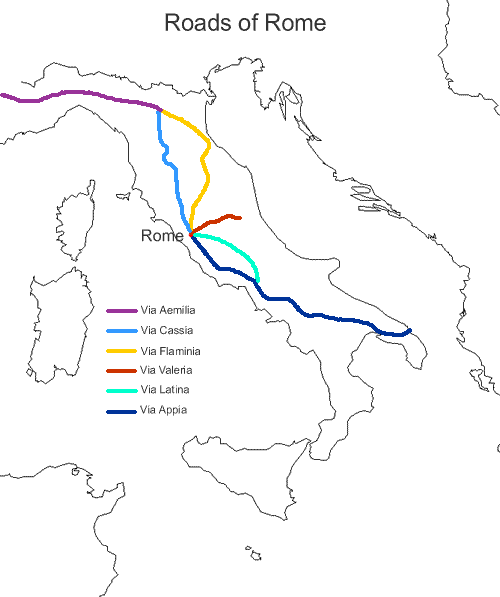
And out from Rome spread a network of roads.

roman-roads-italy-map

In time, the main roads were not simply dirt tracks, but very-carefully-constructed, well-laid-out stone-paved roadways.

Eli dis 2

These included sturdy bridges, as well, some of them still in place.

alcantara-bridge

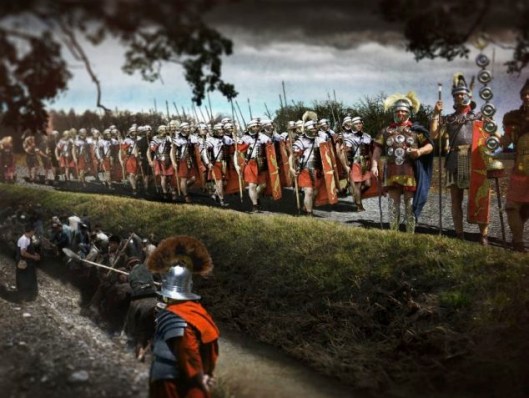
Over these roads marched Roman armies

romantroopsonroad

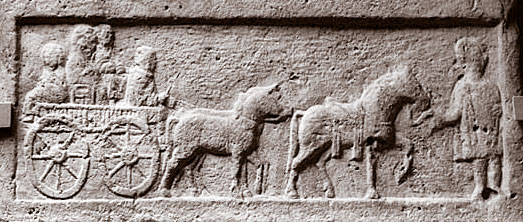
and Roman commerce, as well.

plaustrum2

Eventually, there were over 50,000 miles (80,500 km) of paved roads, as well as many miles more yet of unpaved.roman_empire_117_ad

As far as our current research goes, we have no actual proof that the Greenway was paved like Roman roads. One road for which there is a hint of evidence is that which runs through the Stonewain Valley:

“Through the gap the forgotten wain-road long ago had run down, back into the main horse-way from the City through Anorien; but now for many lives of men trees had had their way with it, and it had vanished, broken and buried under the leaves of uncounted years.” (The Return of the King, Book 5,   Chapter 5, “The Ride of the Rohirrim”)

A comparable illustration—with grass instead of trees and leaves—is this of a Roman road in Lancashire, in northeastern England.

Roman Road walk Lancashire

The idea of a road nearly abandoned and covered with grass—therefore “the Greenway”—seems to fit both this modern photo and JRRT’s idea, though, doesn’t it?

One of the spooky, but wonderful things about the ancient Roman world is that, for all that it’s been gone for 1500 years or more, there is so much of it still there for us, above ground and below—as it was for Tolkien. Thus, when we think about what was once one of the major thoroughfares of Middle-earth, we imagine that he, like us, saw a Roman road, decaying, but still useful.

Thanks, as always, for reading.

MTCIDC

CD

Song in Darkness

14 Wednesday Sep 2016

Posted by Ollamh in Artists and Illustrators, Films and Music, Imaginary History, J.R.R. Tolkien, Narrative Methods

≈ Leave a comment

Tags

Ainur, Arda, Frodo, Iluvatar, In western lands beneath the Sun, Middle-earth, Morgoth, Music, Sam Gamgee, Song, The Lord of the Rings, The Silmarillion, The Tower of Cirith Ungol, Tolkien

Dear Readers,

Welcome, as always.

For this posting, we consulted the Sortes Tolkienses, and landed upon a particular passage which had us thinking about song in Middle-earth:

“It was quiet, horribly quiet. The torch, that was already burning low when he arrived, sputtered and went out; and he felt the darkness cover him like a tide. And then softly, to his own surprise, there at the vain end of his long journey and his grief, moved by what thought in his heart he could not tell, Sam began to sing. “

At this moment, Frodo has been taken by the enemy after the two Hobbits had been led into and escaped Shelob’s lair, and Sam, though only a simple gardener from the Shire, has resolved to carry Frodo’s burden and rescue him from the tower.

cirithungol

Along with carrying the Ring, which would have otherwise been taken from Frodo in the tower, Sam has also brought with him Sting, Frodo’s sword, and Galadriel’s phial, which she gave to Frodo as a gift upon their leave-taking from Lothlorien.

shelob Sam

The phial is used when the two Hobbits are pursued by Shelob, as a means both of light and of defense. Faced with a darkness he has never encountered before, however, but set on finding and rescuing Frodo, even if he’s not sure how, Sam has the option of pulling out the phial straight away when the lights in the tower of Cirith Ungol go out.

Instead, Sam sings—although he’s not quite sure why—and, in the shadow of Mordor, recalls home in the Shire:

“His voice sounded thin and quavering in the cold dark tower: the voice of a forlorn and weary hobbit that no listening orc could mistake for the clear song of an Elven-lord.  He murmured old tunes out of the Shire, and snatches of Mr. Bilbo’s rhymes that came into his mind like fleeting glimpses of the country of his home. And then suddenly new strength rose in him, and his voice rang out, while words of his own came unbidden to fit the simple tune.

            In western lands beneath the Sun

                        the flowers may rise in Spring,

            the trees may bud, the waters run,

                        the merry finches sing.

            Or there maybe ‘tis a cloudless night

                        and swaying beeches bear

            the Elven-stars as jewels white

                        amid their branching hair.


            Though here at journey’s end I lie

                        in darkness buried deep,

            beyond all towers strong and high,

                        beyond all mountains steep,

            above all shadows rides the Sun

                        and stars forever dwell:

            I will not say the Day is done,

                        nor bid the Stars farewell.”

(The talented Tolkien artist, Joe Gilronan, has illustrated what Sam would have imagined singing this song–  a clear contrast to the darkness surrounding him:)

b4d306be0fef7b0b9fdbc7daf47c4d35samwise-the-gardner-joe-gilronan

Why is this, which seems like a last, desperate gesture, successful?  After all, it not only revives Sam’s spirits, but it reaches Frodo who, badly injured as he has been, responds with the same song, enabling Sam to find him.

In Middle-earth, and in Arda more generally, song is both enjoyed and revered on a deeper level. The music of the creator Iluvatar is, as recounted in The Silmarillion, what brought the world into being, and it is such a strong force that Morgoth, the first dark lord, sought to challenge Iluvatar’s song and power with his own. Even here, however, music as a dark force failed.

“Then Iluvatar spoke, and he said: ‘Mighty are the Ainur, and mightiest among them is Melkor; but that he may know, and all the Ainur, that I am Iluvatar, those things that ye have sung, I will show them forth, that ye may see what ye have done. And thou, Melkor, shall see that no theme may be played that hath not its uttermost source in me, nor can any alter the music in my despite.’ ” (The Silmarillion)

180px-Ted_Nasmith_-_Melkor_Weaves_Opposing_Music

Thus in The Lord of the Rings, we never hear an orc song, nor do we see singing, marching uruk-hai. They are beings created by Sauron, who has not the spiritual authority of Iluvatar, and, as Iluvatar is the ultimate creator of all life, so is he the creator of all music in Arda.  In Middle-earth, besides the odd scene in The Hobbit in which the goblins sing in Goblin-town, we see only Elves singing (such as the Hymn to Elbereth), Hobbits (both snatches of Bilbo’s literary songs and drinking-songs), and Dwarves (it was their music which persuaded Bilbo to leave the Shire and join their journey).

Sam’s song, then, holds power in its own right—although it’s simply an old tune from home, its uttermost source is in Iluvatar and the first music, and it becomes clear why even a hobbit’s hum in the darkest of places can bring him comfort—it cannot be contested by darkness.

Thank you, as always, for  reading.

MTCIDC,

CD

Stepping Westward

10 Wednesday Aug 2016

Posted by Ollamh in Artists and Illustrators, Fairy Tales and Myths, Imaginary History, J.R.R. Tolkien, Literary History, Narnia, Narrative Methods

≈ Leave a comment

Tags

Aman, Beliefs, Bran, cult statues, heroa, immrama, Istari, Ithaka, Mael Duin, Middle-earth, monotheistic, N.C. Wyeth, Odysseus, religion, Rip Van Winkle, Saint Brendan, Saruman, shrines, Stone Table, temples, The Grey Havens, The Lord of the Rings, The Odyssey, Tireisias, Tolkien, Valar, Valinor, ziggurats

Dear readers, welcome as always.

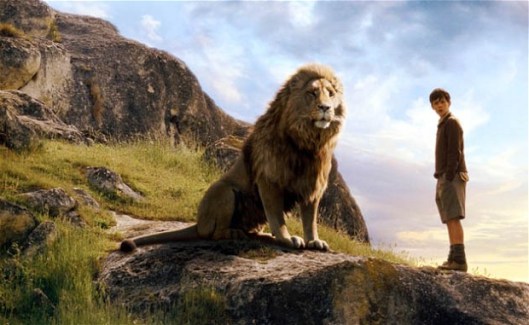
Although there are no temples or shrines to him (the closest thing is perhaps the Stone Table),

narnia stone table

Aslan

1653963a

is clearly someone with divine powers and his influence is felt directly and indirectly throughout all of the Narnia books.

JRRT once said that Middle-earth had a monotheistic religion, but the traces, as has been written about more than once, are almost invisible.

There are no ziggurats,

Ancient_ziggurat_at_Ali_Air_Base_Iraq_2005

no temples,

templeofheraselinus

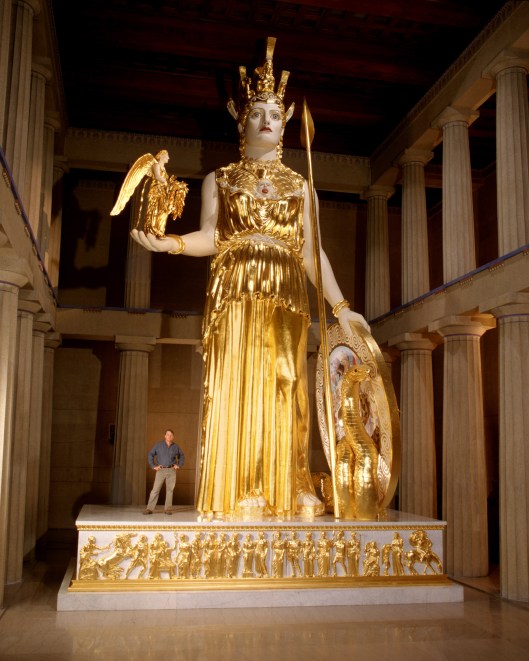
no cult statues

Athena_Parthenos_LeQuire

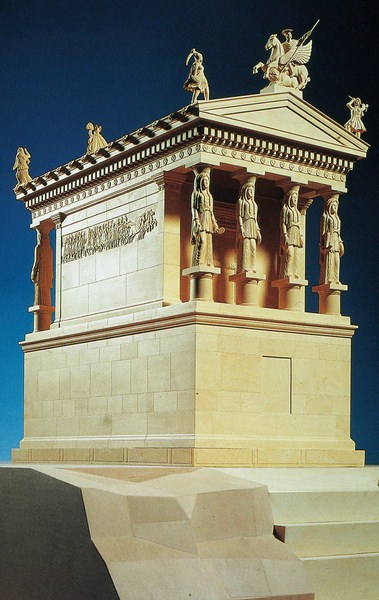
no shrines

97_full

no heroa (shrines for demi-gods or heroes).

heroon

The Valar are mentioned once (some of Faramir’s men call on them to protect them from a mumak), of course, and there is that ceremony of standing and looking west before a meal.

That idea of looking west has long interested us, mainly because, in much of western tradition before the Age of Exploration, the west was looked upon as a place of uncertainty, if not outright fear.

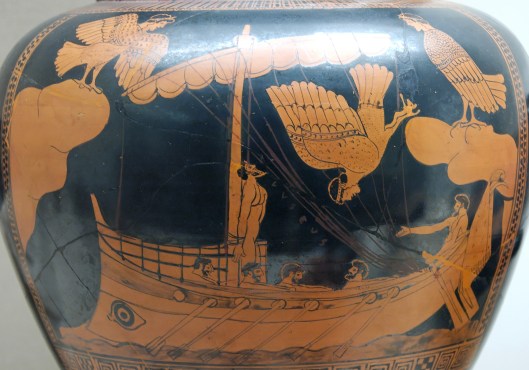
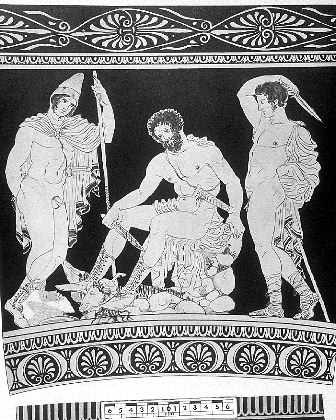
Although Odysseus, in Odyssey 9, is careful to point out that his home island, Ithaka, lies farthest towards dusk in its island group, in Odyssey 11, in the far west lies the Land of the Dead,

lykaon-painter-odysseus-and-elpenor

to which Odysseus sails

Odysseus_Sirens_BM_E440_n2

to consult the seer, Tireisias,

Teir.1993.01.0348

on the way to get home. This is, then, hardly a choice direction in which to sail, for all that Tireisias does provide some guidance.

The same is true for a series of stories about immrama, “voyages” (literally “rowings around”) in Old Irish, not only secular stories, like those of Mael Duin

mailduin

and Bran,

Broighter_Gold,_Dublin,_October_2010_(03)

but a famous religious one about Saint Brendan.

brendan

In each of these stories, sailing westward commonly means sailing rather haphazardly among sea monsters and islands with strange people or creatures. There is also the possibility of time distortion: the voyager believes himself gone in terms of a few years, at most, when, instead, he may have been gone for much longer (as in Washington Irving’s short story, “Rip Van Winkle”, in which Rip, falling asleep in the Catskill Mountains after drinking with the ghosts of the crew of the explorer Henrik Hudson’s ship The Half Moon, thinks that he has been gone only overnight when, instead, he’s been gone for twenty years.)

rip-van-winkle.wyeth

(by one of our all-time favorite illustrators, N.C. Wyeth, from his Rip Van Winkle, 1921—the whole work is available, with all of its wonderful illustrations, to download for free at the Internet Archive, may their beards grow long!)

“To go west”, probably based upon the idea of the sinking sun, as an older English expression has the meaning of “to die/to fail catastrophically” (now people in the US seem to be replacing it with “to go south”, which has none of the older resonance, unfortunately), but it ties in very nicely with these older beliefs about what lies west of Europe, so full of danger and mystery.

But then we come back to that looking west.

In the belief system of Middle-earth, westward across the sea lies the continent of Aman, and on that continent is Valinor, home of the Valar, those powerful and immortal beings who are perhaps to be likened to the archangels of Christian belief—with a bit of patron saint and even Norse and Greco-Roman pantheons thrown in. (We admit to having a very shallow knowledge of Arda theology, being less interested in the finer points of belief than in the adventures and the cultures and the languages of Middle-earth.)

The Istari, the five wizards are from there and it’s for us one of the most melancholy moments when, after his murder by Grima, it is clear that Saruman is denied a return.

jwyatt-sarumande

Gandalf, however, is permitted to return, as are Bilbo and Frodo (and, in time, Sam, apparently), all part of the defeat and disembodiment of Sauron.

greyhavens

The elves are also allowed to make the voyage to Aman, although they have their own separate place there, and, when Gandalf leaves, so do Galadriel, Celeborn, and Elrond, part of a slow general leave-taking of the Elves.

No human is admitted however, to the Undying Lands, as they are called, and it occurred to us that perhaps, in that fact, the mortals of Middle-earth are closer to Saruman than to Gandalf or the Elves:

“To the dismay of those that stood by, about the body of Saruman a grey mist gathered, and rising slowly to a great height like smoke from a fire, as a pale, shrouded figure it loomed over the Hill. For a moment it wavered, looking to the West; but out of the West came a cold wind, and it bent away, and with a sigh dissolved into nothing.” (The Return of the King, Book 6, Chapter 8, “The Scouring of the Shire”)

Could that ceremony of looking westward also be done with a sigh, an acknowledgement that there are no undying lands for them?

What do you think, dear readers?

Thanks, as ever, for reading.

MTCIDC

CD

Ps

This, for us, is a rather historical posting, being our Number 100. By earlier September, we will have reached 104, making exactly two years since we began our blog. We thank you for reading, hope that you will continue to do so, that you will share our work among your friends and that, in the future, you will be willing to share your thoughts with us, as we always encourage you to do.


← Older posts
Newer posts →

The Doubtful Sea Series Facebook Page

The Doubtful Sea Series Facebook Page

  • Ollamh

Categories

  • Artists and Illustrators
  • Economics in Middle-earth
  • Fairy Tales and Myths
  • Films and Music
  • Games
  • Heroes
  • Imaginary History
  • J.R.R. Tolkien
  • Language
  • Literary History
  • Maps
  • Medieval Russia
  • Military History
  • Military History of Middle-earth
  • Narnia
  • Narrative Methods
  • Poetry
  • Research
  • Star Wars
  • Terra Australis
  • The Rohirrim
  • Theatre and Performance
  • Tolkien
  • Uncategorized
  • Villains
  • Writing as Collaborators
Follow doubtfulsea on WordPress.com

Across the Doubtful Sea

Recent Postings

  • Through a glass… January 7, 2026
  • Heffalumps? December 31, 2025
  • We Three Kings December 24, 2025
  • A Moon disfigured December 17, 2025
  • On the Roads Again—Once More December 10, 2025
  • (Not) Crossing Bridges December 3, 2025
  • On the Road(s) Again—Again November 26, 2025
  • On the Road(s) Again November 19, 2025
  • To Bree (Part 2) November 12, 2025

Blog Statistics

  • 104,134 Views

Posting Archive

  • January 2026 (1)
  • December 2025 (5)
  • November 2025 (4)
  • October 2025 (5)
  • September 2025 (4)
  • August 2025 (4)
  • July 2025 (5)
  • June 2025 (4)
  • May 2025 (4)
  • April 2025 (5)
  • March 2025 (4)
  • February 2025 (4)
  • January 2025 (5)
  • December 2024 (4)
  • November 2024 (4)
  • October 2024 (5)
  • September 2024 (4)
  • August 2024 (4)
  • July 2024 (5)
  • June 2024 (4)
  • May 2024 (5)
  • April 2024 (4)
  • March 2024 (4)
  • February 2024 (4)
  • January 2024 (5)
  • December 2023 (4)
  • November 2023 (5)
  • October 2023 (4)
  • September 2023 (4)
  • August 2023 (5)
  • July 2023 (4)
  • June 2023 (4)
  • May 2023 (5)
  • April 2023 (4)
  • March 2023 (5)
  • February 2023 (4)
  • January 2023 (4)
  • December 2022 (4)
  • November 2022 (5)
  • October 2022 (4)
  • September 2022 (4)
  • August 2022 (5)
  • July 2022 (4)
  • June 2022 (5)
  • May 2022 (4)
  • April 2022 (4)
  • March 2022 (5)
  • February 2022 (4)
  • January 2022 (4)
  • December 2021 (5)
  • November 2021 (4)
  • October 2021 (4)
  • September 2021 (5)
  • August 2021 (4)
  • July 2021 (4)
  • June 2021 (5)
  • May 2021 (4)
  • April 2021 (4)
  • March 2021 (5)
  • February 2021 (4)
  • January 2021 (4)
  • December 2020 (5)
  • November 2020 (4)
  • October 2020 (4)
  • September 2020 (5)
  • August 2020 (4)
  • July 2020 (5)
  • June 2020 (4)
  • May 2020 (4)
  • April 2020 (5)
  • March 2020 (4)
  • February 2020 (4)
  • January 2020 (6)
  • December 2019 (4)
  • November 2019 (4)
  • October 2019 (5)
  • September 2019 (4)
  • August 2019 (4)
  • July 2019 (5)
  • June 2019 (4)
  • May 2019 (5)
  • April 2019 (4)
  • March 2019 (4)
  • February 2019 (4)
  • January 2019 (5)
  • December 2018 (4)
  • November 2018 (4)
  • October 2018 (5)
  • September 2018 (4)
  • August 2018 (5)
  • July 2018 (4)
  • June 2018 (4)
  • May 2018 (5)
  • April 2018 (4)
  • March 2018 (4)
  • February 2018 (4)
  • January 2018 (5)
  • December 2017 (4)
  • November 2017 (4)
  • October 2017 (4)
  • September 2017 (4)
  • August 2017 (5)
  • July 2017 (4)
  • June 2017 (4)
  • May 2017 (5)
  • April 2017 (4)
  • March 2017 (5)
  • February 2017 (4)
  • January 2017 (4)
  • December 2016 (4)
  • November 2016 (5)
  • October 2016 (6)
  • September 2016 (5)
  • August 2016 (5)
  • July 2016 (5)
  • June 2016 (5)
  • May 2016 (4)
  • April 2016 (4)
  • March 2016 (5)
  • February 2016 (4)
  • January 2016 (4)
  • December 2015 (5)
  • November 2015 (5)
  • October 2015 (4)
  • September 2015 (5)
  • August 2015 (4)
  • July 2015 (5)
  • June 2015 (5)
  • May 2015 (4)
  • April 2015 (3)
  • March 2015 (4)
  • February 2015 (4)
  • January 2015 (4)
  • December 2014 (5)
  • November 2014 (4)
  • October 2014 (6)
  • September 2014 (1)

Blog at WordPress.com.

  • Subscribe Subscribed
    • doubtfulsea
    • Join 78 other subscribers
    • Already have a WordPress.com account? Log in now.
    • doubtfulsea
    • Subscribe Subscribed
    • Sign up
    • Log in
    • Report this content
    • View site in Reader
    • Manage subscriptions
    • Collapse this bar
 

Loading Comments...