• About

doubtfulsea

~ adventure fantasy

Category Archives: Literary History

Bridges and Battles

04 Wednesday Jan 2017

Posted by Ollamh in Artists and Illustrators, Heroes, J.R.R. Tolkien, Literary History, Military History, Military History of Middle-earth, Narrative Methods

≈ Leave a comment

Tags

Anglo-Saxon, Arnhem, Belisarius, Boromir, bridges, Constantine I, Constantinople, David, Diocletian, Dionysius, Gros, Hal Foster, Harold Godwinson, Horace Vernet, Horatius, Horatius at the Bridge, Justinian, Livy, Marcus Aurelius, Maxentius, Maximianus, Milvian Bridge, Napoleon, Ostrogoths, Pass of Roncevalles, Pegasus Bridge, Pliny the Elder, Pons Sublicius, Prince Valiant, Ravenna, Remagen, River Adige, River Derwent, Roland, Salarian Bridge, San Vitale, Sherlock Holmes, Stamford Bridge, Tacitus, The Council of Elrond, The Lays of Ancient Rome, The Lord of the Rings, The Oath of the Horatii, Thomas Babington Macaulay, Tiber, Tolkien, vikings

Welcome, dear readers, to our first posting for 2017—and a Happy New Year.

In our last, we discussed water-crossings in The Lord of the Rings, but said that our next would be on a more specialized subject, something we thought to call “Battle Bridges”.

This was inspired by this quotation (it’s Boromir speaking, at the Council of Elrond):

“I was in the company that held the bridge, until it was cast down behind us. For only four were saved by swimming: my brother and myself and two others.” (The Fellowship of the Ring, Book 2, Chapter 2, “The Council of Elrond”)

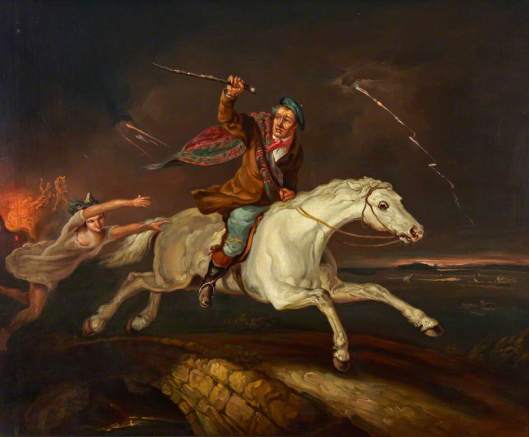
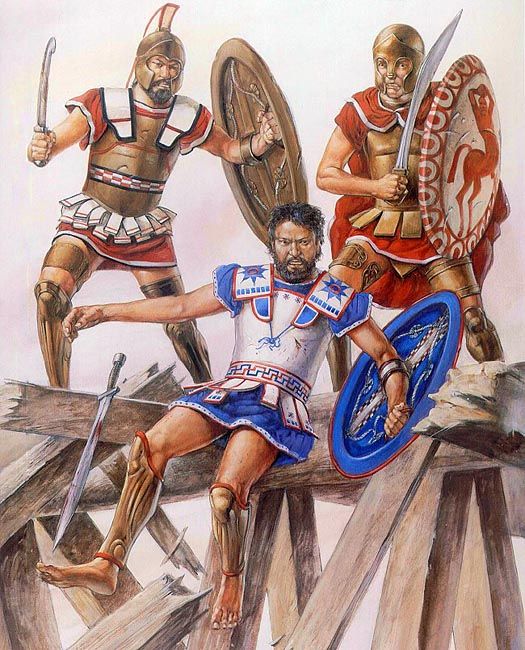
Broken bridges and swimming soldiers made us think of a story told by a number of early historians, including Dionysius of Halicarnassus, Livy, Pliny the Elder, and Tacitus, in which three Roman officers stand as a rearguard at the first bridge over the river Tiber, the Pons Sublicius, and, when two are wounded, the third, Horatius, sends them off, telling them to have the bridge destroyed so that the enemy can’t pursue the defeated Roman army into Rome. When the bridge is gone, Horatius, in his armor and with his arms, leaps into the river and swims to the Roman shore to great acclaim.
1horatiusatbridge.jpg

In the nineteenth century, this story was turned into a poem (a very long ballad) by the historian Thomas Babington, Lord Macaulay (1800-1859),

2macaulay.jpg

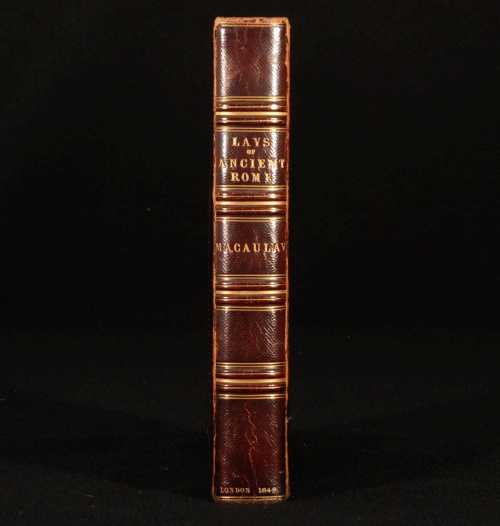
entitled “Horatius at the Bridge” (from his 1842 collection, The Lays of Ancient Rome).
3lays1849ed.jpeg

Once upon a time, it was a standard assignment for schoolboys to memorize its approximately 600 lines and we wonder if this might once have been Tolkien’s task, which is why we have Boromir’s remark.

Once we embarked upon the subject of fights at bridges, we found, beginning with the late classical world, that there were lots more out there (our short mental list roared through time to take us as far as the seizing of Pegasus Bridge in the Normandy invasion and the subsequent bridges at Arnhem and Remagen). There was a difficulty, however: we began with an heroic action—one man or a handful against masses. What mostly came to mind was not Horatian one-man stands. Instead, they were only depicted as parts of larger military maneuvers to gain or block a crossing and individuals disappeared. Take, for example the famous battle at the Milvian Bridge, in 312AD, which led not only towards a reconstituted Roman world based upon the east, but also towards the eventual Christianization of the Roman world.

4milvian.jpg

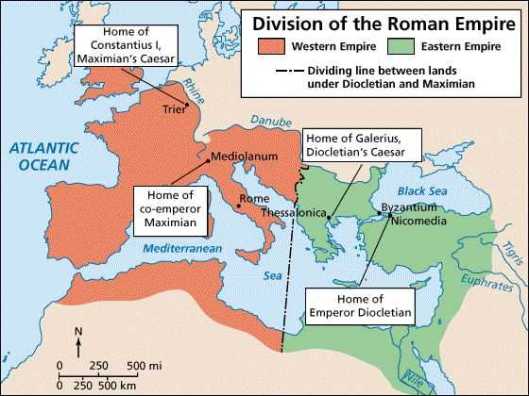
In the civil wars which wracked the late Roman empire, after its division post-284AD by Diocletian,
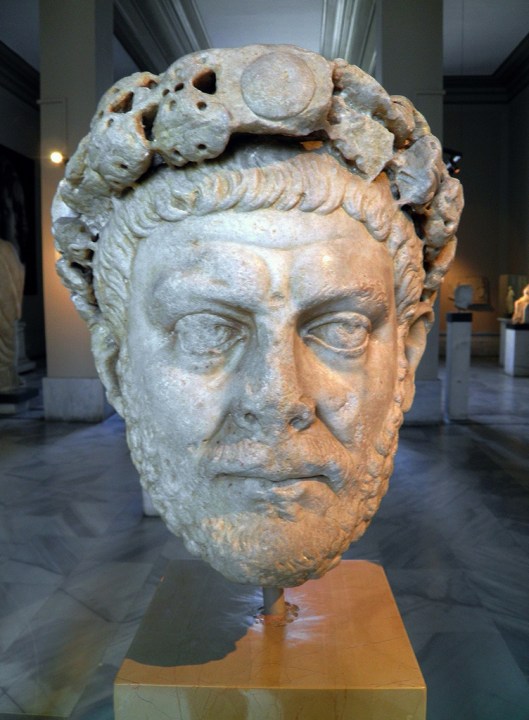
4adiocletian.jpg

4bdiocletiansdivision.jpg

Constantine, the western Augustus (senior emperor)

5Constantine-I-Face.jpg

defeated his rival, Maxentius (who was also his brother-in-law),

6maxentius.jpg

at a bridge outside Rome to become, in time, the sole emperor. Maxentius, who had control of Rome, had planned to block Constantine on the far side of the Tiber, keeping a pontoon bridge available for a retreat, if necessary, since it appears that the actual stone bridge was in the process of being dismantled.

(The Romans were extremely able at producing pontoon bridges—here’s a good illustration from the column of Marcus Aurelius—completed 193AD–)

When that retreat did become necessary, Maxentius was drowned in its midst, the bridge collapsed, and his troops who remained either died on the field or surrendered to Constantine.

4milvian.jpg

In time, Constantine, who believed that the empire’s main focus should actually be on the east, moved the capital to an old Greek colony, called Byzantium, but which he renamed “New Rome”—although it seems that everyone else called it Constantinople.
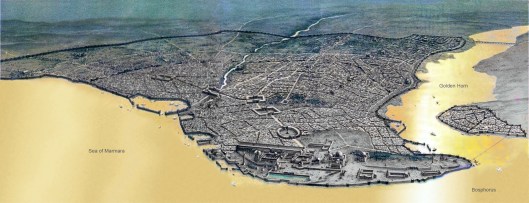
7constantinople.jpg

This would be the capital of the later Byzantine Empire, which, under the emperor Justinian,
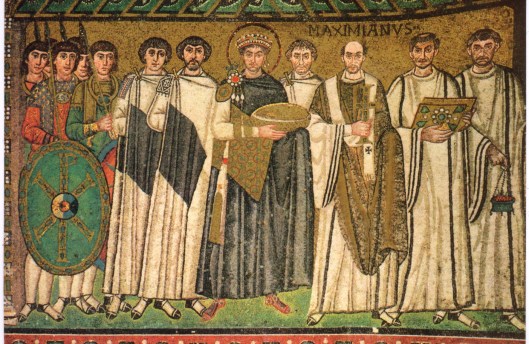
8justinian.jpg

(He’s the one with the bowl of communion bread—the only labeled figure, Maximianus, was the bishop of Ravenna, where this mosaic stands in the church of San Vitale.)

would attempt to reconquer the portions of the old western empire which had fallen into the hands of Germanic invaders.
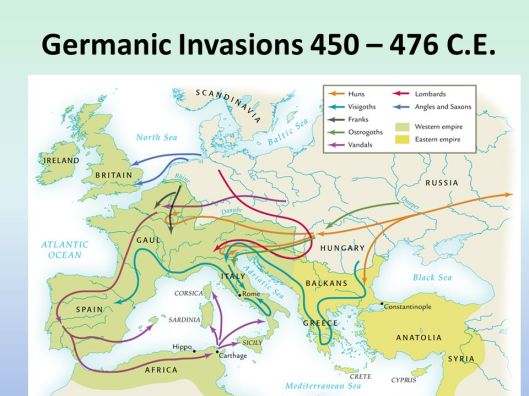
9germanicinvasions.jpg

Under Justinian’s general, Belisarius,
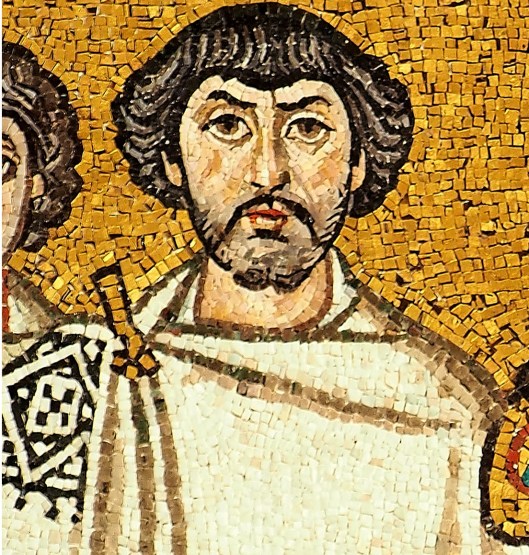
10belisarius.jpg

(this may or may not be a portrait—it’s a scholarly guess),

the Byzantines struggled for control of Rome against the Ostrogoths.

11ostrogoth.jpg

This struggle included a fight outside of Rome for control of the Salarian Bridge (537AD),
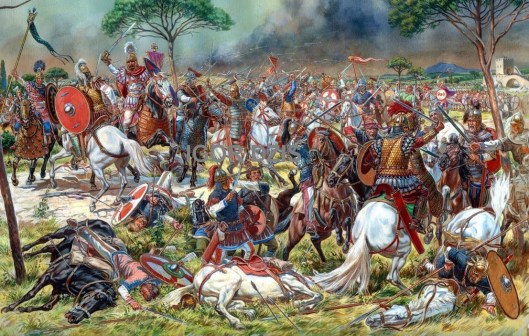
12salarianbridge.jpg

a fight which Belisarius lost, although, for a short time, Justinian’s world was enlarged, if not to the full size of the old empire, at least to include much of the western Mediterranean—quite an accomplishment for the later world of antiquity.
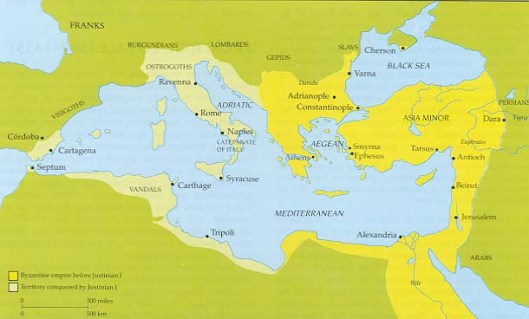
12ajustempire.jpg

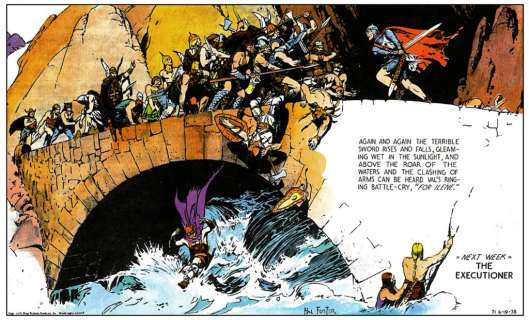
And, speaking of late antiquity, if you regularly read our blog, you know that we have a special affection for the work of Hal Foster, who created the late-antique, early-medieval world of Prince Valiant. The combination of bridge and heroic fighting reminded us of one of our favorite illustrations and so we have to include this scene (published 19 June, 1938), in which Val faces a band of Viking raiders.
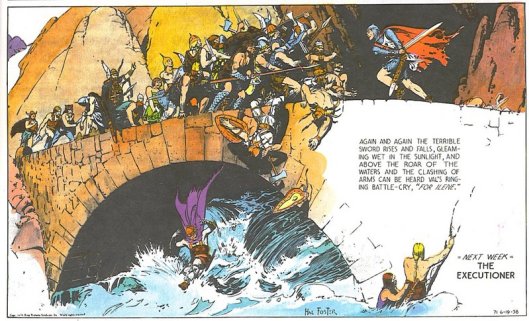
13valatbridge.jpg

This image, of course, brings us back to Horatius, the single warrior against the mass. As we’ve said, in the intervening centuries there are battles at bridges, but only as one element in larger campaigns and the heroic individual disappears into the ranks. We could think of one, somewhat later, figure, however. He appears, unfortunately nameless, in the other battle of the short reign of Harold Godwinson, at Stamford Bridge, 25 September, 1066. The Anglo-Saxon army raced north from London to oppose a Viking invasion, and defeated the Vikings on the near side of the bridge over the River Derwent, but, to complete their victory, the Anglo-Saxons needed to destroy the surviving force on the far side. in the way stood, in the middle of Stamford Bridge, a single Viking warrior, blocking their advance.

14stamfordbridge.jpg

The Anglo-Saxon Chronicle says that he killed 40 of the enemy before an Anglo-Saxon floated underneath the bridge and stabbed him from beneath with his spear, but, well, as much as we believe in heroic tales…

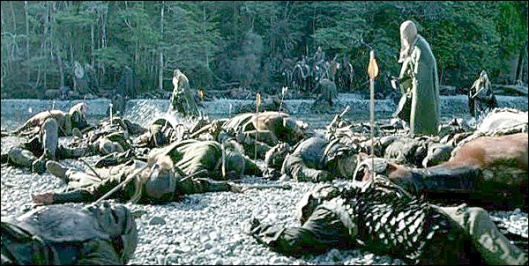
His stand, however, brings us back to Boromir and his final battle, in which he faces two waves of orcs before he is finally mortally wounded.
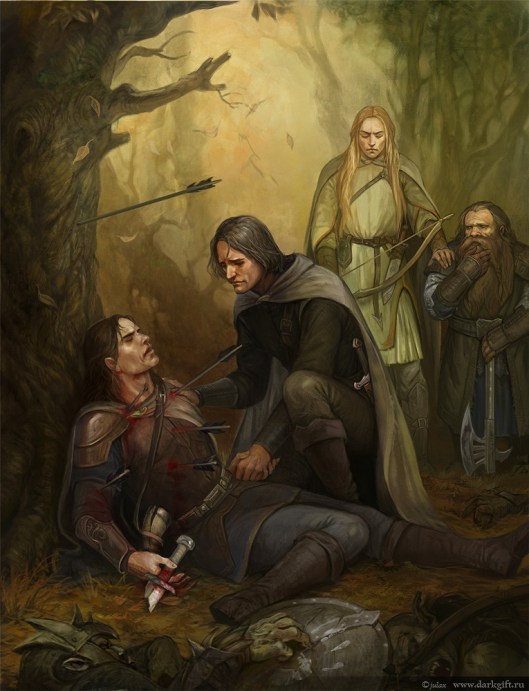
15boromirdeath.jpg

No bridge, but this still follows the theme of the brave man standing alone, with no possible help nearby.
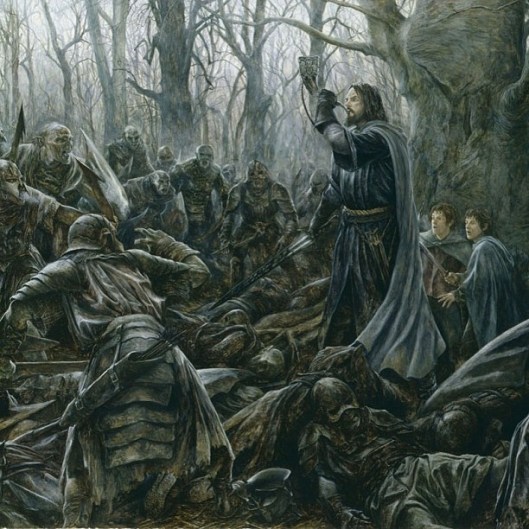
16boromirhorn.jpg

(And, of course, Boromir and his horn are meant to remind any good reader of heroic material—particularly medieval—of Roland at the Pass of Roncevalles…)
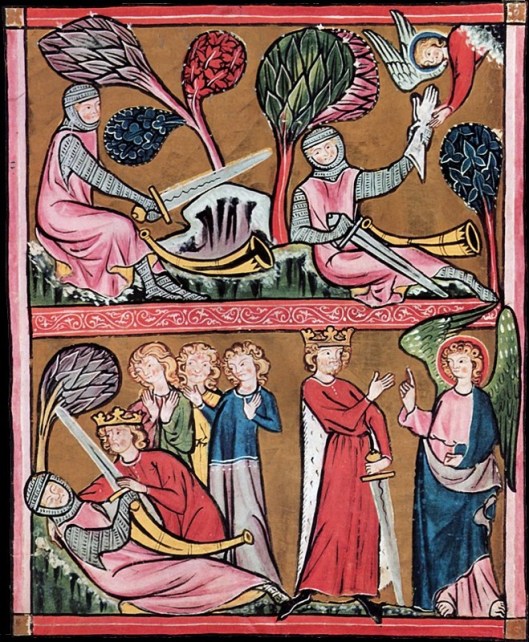
17roland.jpg

We would leave this theme here, back where it began, with Boromir, except we can’t resist (we’re afraid, when it comes to adventure and heroics, that we appear to have little or no willpower at all!) one final image and the idea behind it. There is no end of discussion about Napoleon, which, we’re sure, would please him no end. For us, however, there is a side of him which is endlessly interesting and that is as a Romantic Figure—a view of himself which he worked very hard, at least early in his life, to promote. The late 18th-century very much looked back to the classical world and, we believe, it did so in part because it loved the dramatic gestures it saw as part of that world. We only have to point out paintings like David’s “The Oath of the Horatii”(those Horatii being the direct ancestor of the one in our post), with its operatic ensemble look, to illustrate this. (To us, this looks so much like the set-up for a stirring quartet, right out of Bellini or Meyerbeer.)
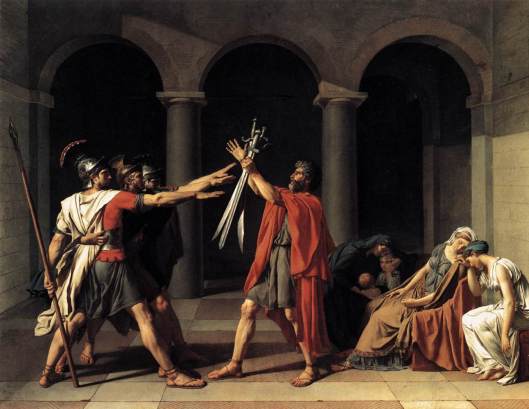
18horatii.jpg

So, during Bonaparte’s brilliant 1796-7 campaign in Italy, there was clearly a classical/Romantic moment. When the French were stalled by their Austrian opponents in crossing the River Adige, Napoleon, to encourage his troops, seized a regimental color and raced alone to the bridge, as Gros (who was actually at the battle) depicted him in his 1797 painting.
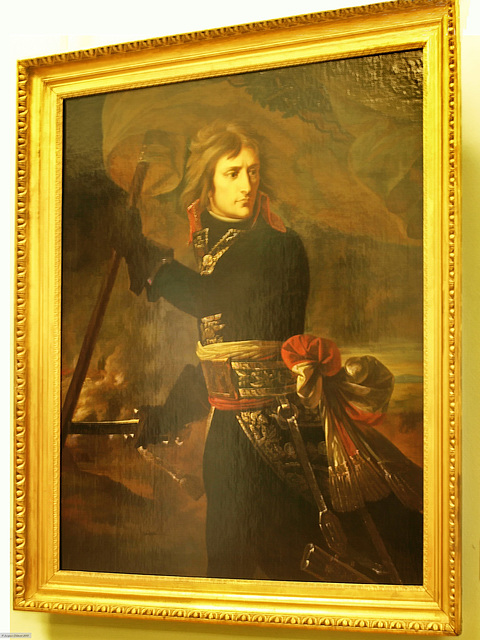
19grosarcola.jpg

Vernet, in his 1826 version, continues the heroic theme, but changes the focus a bit—Napoleon now has followers. (And you know, from its dash—and that’s Horace Vernet in general—who, according to Sherlock Holmes, may be a distant relation–that this is a favorite painting of ours.)
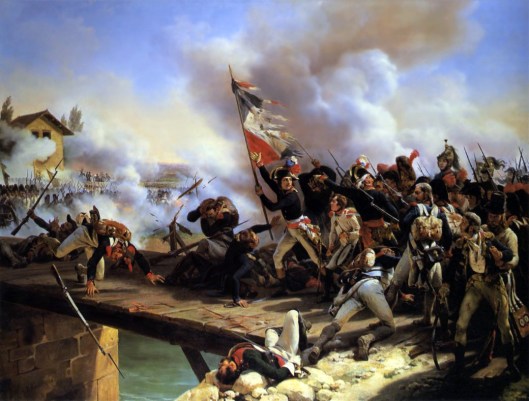
20vernetarcola.jpg

In fact, although Bonaparte did seize a color, he never made it to the bridge, either alone or in a crowd. His illustrators, however, influenced, no doubt, by the potential drama—and perhaps by a faint memory of Horatius?—depict a scene which should have happened, in their view of Napoleon as a Romantic Figure. What is most striking, however, is that, unlike Horatius—or Boromir—Bonaparte is not defending a bridge—he is attacking and his heroism comes from that gesture. This certainly fits in with Revolutionary ideology—France had been at war with much of the world since 1792—but it occurs to us that it may also suggest a shift in the approach to heroism. Horatius, given a bridge, is heroic, but passive. Give a bridge to Bonaparte and stand back (at least in iconography)! Is this the image of heroes in the Romantic world which was just coming into being?

But, as ever, we leave this to you, dear readers, to ponder, even as we thank you, as always, for reading.

MTCIDC

CD
One More River (2)

28 Wednesday Dec 2016

Posted by Ollamh in Heroes, Imaginary History, J.R.R. Tolkien, Literary History, Maps, Military History of Middle-earth, Narrative Methods

≈ 2 Comments

Tags

Amon Hen, Anduin, Bilbo, Blondin, Bombur, Boromir, Brandywine, bridges, Bruinen, Bucklebury Ferry, Celebrant, Dwarves, Elrond, Elves, Enchanted river, Esgaroth, Fangorn, ferry, flight to the ford, Frodo, Gandalf, Gondorians, Hoarwell, Hobbiton, Isen, Khazad-dum, Niagara Falls, Nimrodel, Old Forest, Old Man Willow, Orcs, Prince Valiant, Rivendell, Rivers, Rohirrim, Sam, Tharbad, The Hobbit, The Long Lake, The Lord of the Rings, Theodred, Tolkien, Tom Bombadil, Weathertop, Withywindle, Wraiths

Welcome, dear readers, as always. In our last post, we had turned our attention to water-crossings in The Hobbit. In this, we want to continue our study with The Lord of the Rings.

We were first prompted to look at such crossings by something Boromir said, almost in passing:

“Four hundred leagues I reckoned it, and it took me many months, for I lost my horse at Tharbad, at the fording of the Greyflood.” (The Fellowship of the Ring, Book 2, Chapter 8, “Farewell to Lorien”)

Tharbad had once been famous for its elaborate defenses and bridge, but, symbolic of so much of Middle-earth at the end of the Third Age, it had fallen into decay and was abandoned, the water of the Gwathlo, the Greyflood, spreading wide—an easy place to lose a horse—or a man.

And perhaps Boromir’s loss is also symbolic of the higher level of stress involved in crossing water in the later work. The most Bilbo and the dwarves had to deal with was a water of forgetfulness, whose effect wore off in a relatively short time. There is much worse to come.

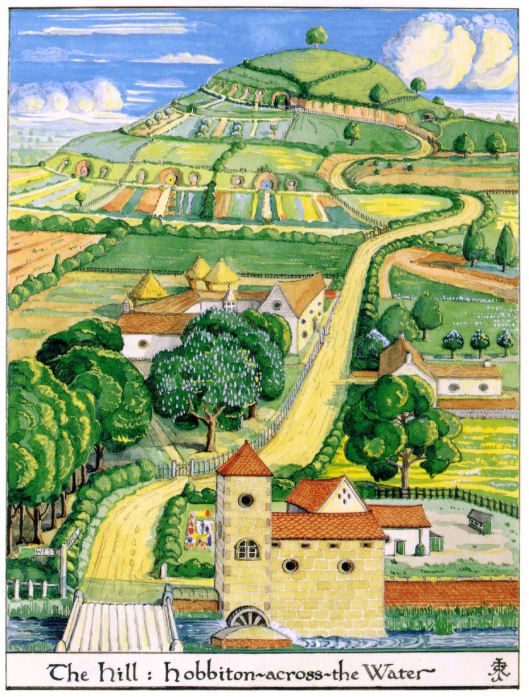
The first crossing (after The Water in Hobbiton)

1hobbiton.jpg

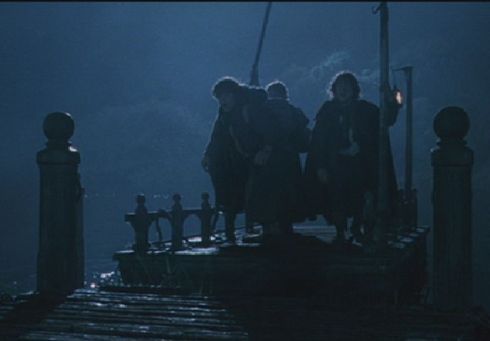
has danger attached, but it’s a danger which pursues the hobbits at the Bucklebury ferry. Here, pursued by one—or more—wraiths,

2wraithatferry.jpg

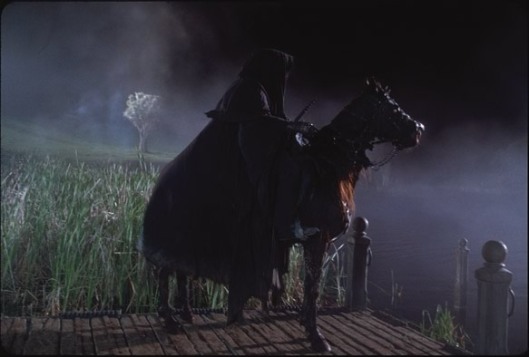
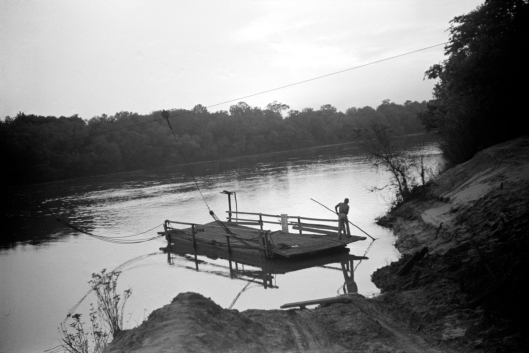
they cross over by what is a kind of do-it-yourself ferry, where the ferry runs on a cable, which keeps it available and on course, while the passengers pole to add propulsion.

3cableferry.jpg

4ferry.jpg

There is a puzzle at their next crossing—because the hobbits don’t appear to have crossed at all! This is the River Withywindle, on whose bank the hobbits meet up with Old Man Willow (not as in the film, where he’s been pulled violently out of context and replanted, for no good reason we can see, in Fangorn’s forest).

5oldmanwillow.jpg

Until we began to study water-crossings, we had never really thought about what happens then. The hobbits come to the river, having become lost in the Old Forest. Pippin and Merry are swallowed by the tree. Tom Bombadil comes to the rescue: but how do they cross the Withywindle? We just couldn’t remember! So we went back to the text, saw Tom lead the four hobbits through the forest, where they almost lose him, then they hear: “Hop along, my little friends, up the Withywindle!” (The Fellowship of the Ring, Book 1, Chapter 6, “The Old Forest”)

And so they never actually ford across or are ferried across. Instead, they walk up its course to Tom’s house, which seems to be near the source.

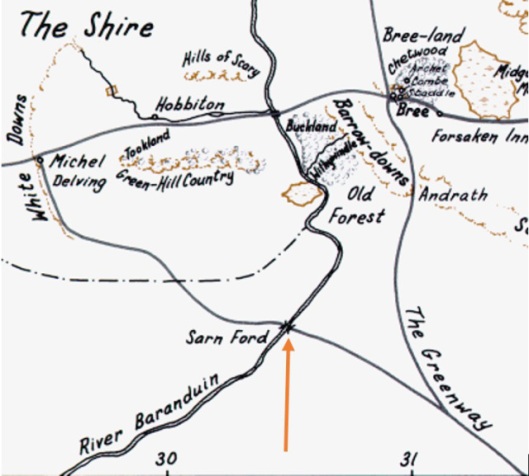
6withywindlemap.jpg

The next crossing is many miles away—over the Barrow Downs, through Bree, past Weathertop, to the Last Bridge, over the Hoarwell. Although Aragorn is anxious that the Wraiths will have gotten there before them, they pass safely and keep moving southwards, towards Rivendell, until, near the ford over the Bruinen, the Nazgul catch up with them at last.

7bruinen.jpg

There is a bridge, of course, at Khazad-Dum, although, as far as we can tell, there is no water even in the depths far below it.

8khazaddum.jpg

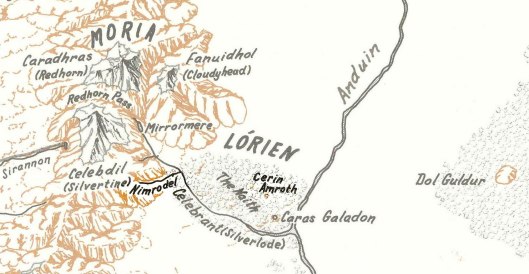
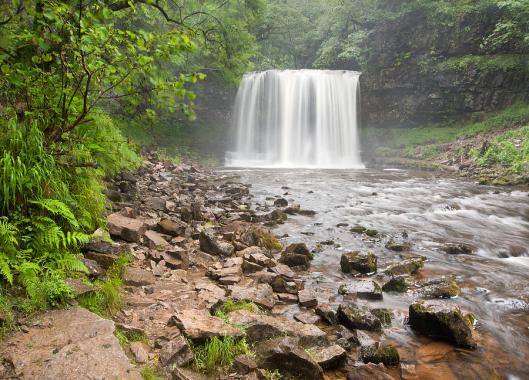
Escaping from Moria, the Fellowship reaches two streams in a row and, as far as we know, none of the prominent illustrators has given us pictures, either of the tributary Nimrodel or the main river, the Celebrant, so we provide a rather generic picture to offer a rather general idea.

9nimrodel.jpg

10nimrodel.jpg

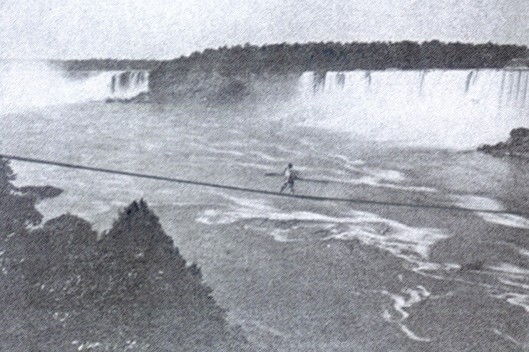
The Nimrodel is shallow enough to wade across, but the Celebrant is wider and deeper and the Elves provide a rather iffy method of transport: a single line of rope to balance on, making us imagine something like the famous Blondin crossing Niagara Falls in 1859—well, a little!

11blondin.jpg

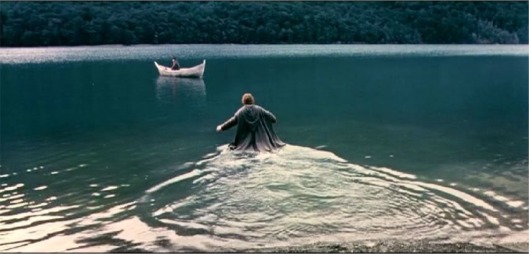
The next crossing is almost inadvertent, or, at least happens sooner than expected: the Fellowship has been paddling down the Anduin, but, putting in at Amon Hen, things go disastrously wrong. Boromir tries to take the Ring, the orcs appear, Boromir is mortally wounded, and Merry and Pippin are carried off (in our edition—the 50th Anniversary, One Volume Edition—this takes all of 12 pages—quite a narrative feat for JRRT!), before Frodo (and Sam) cross the river to the east and story begins its major split.

12samandfrodo.jpg

[We might insert here, although, in The Lord of the Rings, it’s only a footnote that at the crossing of the Isen, during this time, Theodred, son of Theoden, is killed.]

12aTTTIsenFord2.jpg

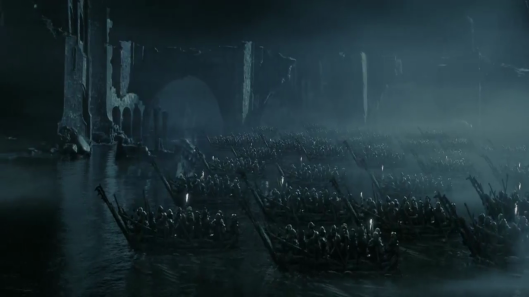
After this, there is only one more crossing of any significance, but it’s not by the main characters: rather, it’s by the orcs, who use boats to assault and capture west Osgiliath, which is the subject of one of our earlier postings.

13orcsosgiliath.png

To which we would add the return crossing, days later, of the Forlorn Hope of Gondor and Rohan, on their way to challenge Sauron (and to distract him from Frodo and Sam).

14marchonmordor.jpg

To finish up this posting, we provide a chart below (clearly now one of a series, after the earlier one on doorways and passages) of the water-crossings found in the two books.

Crossing Characters Outcome Source
Tharbad Boromir Loses horse The Lord of the Rings
The Water Bilbo Joins Dwarves The Hobbit
 An unnamed river Bilbo, Dwarves, and Gandalf Lose baggage The Hobbit
Rivendell Bilbo Dwarves, and Gandalf Helped by Elves The Hobbit
Anduin Bilbo, Dwarves, and Gandalf Transported by eagles The Hobbit
Enchanted River Bilbo and Dwarves Bombur drugged The Hobbit
Underground river Bilbo and Dwarves Using barrels, Bilbo and Dwarves escape The Hobbit
The Long Lake Bilbo and Dwarves Gain help from Esgaroth The Hobbit
The Brandywine (Bucklebury Ferry) Frodo, Sam, Merry, Pippin Escape Wraith The Lord of the Rings
Withywindle Frodo, Sam, Merry, Pippin Reach Tom Bombadil’s house (never actually cross river) The Lord of the Rings
The Bruinen Frodo and Wraiths Elrond causes river surge, Nazgul driven off The Lord of the Rings
Khazad-Dum Balrog and Gandalf Gandalf defeats Balrog, but falls down with him The Lord of the Rings
Nimrodel/

Celebrant

Fellowship and Elves Fellowship brought into Lorien The Lord of the Rings
Anduin Frodo and Sam Set out on journey to the east The Lord of the Rings
Isen Rohirrim and Orcs Rohirrim driven back, Theodred, son of Theoden, killed The Lord of the Rings
Anduin Gondorians vs Orcs Gondorians driven back from West Ogsiliath The Lord of the Rings


This is our last posting for the year 2016 and we close the year with thanks to all who follow our blog or simply stop in for a visit. In 2017, we plan to continue our Tolkien travels, sometimes employing the Sortes Tolkienses, as well as to use Tolkien’s world to visit others, beginning with a posting on “Famous Bridge Battles”, from Boromir and Faramir jumping off one to escape the orcs, to Napoleon at Arcola, and beyond. Here’s a taste…

15princeval.jpg

We also plan to explore other worlds and perhaps to add a review section for books and films we think you might enjoy.

In the meantime, thanks, as ever, for reading. Happy New Year!

MTCIDC

CD

ps

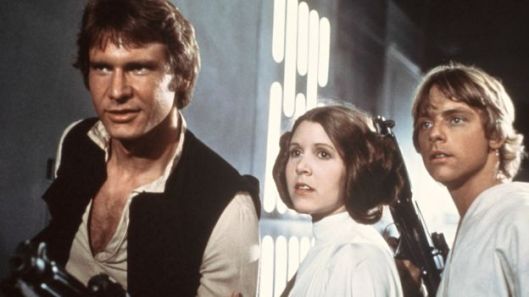
What sad and surprising news! Princess Leia is no more– but no– Princess Leia will always be with us, just like the Force.

_87060782_starwarsap3

Ugluk Was Here

14 Wednesday Dec 2016

Posted by Ollamh in Artists and Illustrators, J.R.R. Tolkien, Language, Literary History, Military History

≈ Leave a comment

Tags

Alan Lee, Alfred Waud, American Civil War, Angus McBride, Argonath, Belgium, Black Speech, cemeteries, Confederate, Egyptian monuments, First Virginia Cavalry, graffiti, Great War, Greek mercenaries, Greeks, Hildebrandt, John Howe, Journey to the Cross-roads, Kilroy, Kilroy was here, Literacy, Napoleon I, Orcs, Pompeii, quarry at Naours, Sauron, The Lord of the Rings, Tolkien, Union, Virginia, World War I, World War II

Welcome, dear readers, as always.

One of our reasons for holding Tolkien’s work in such high esteem is that it’s so rich: practicing Sortes Tolkienses (see our earlier posting on this), we find innumerable subjects to write about.

In this posting, our eye was caught by this:

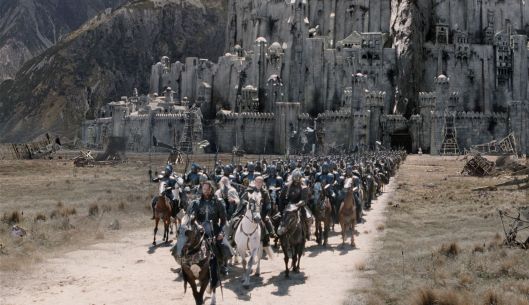
“The brief glow feel upon a huge sitting figure, still and solemn as the great stone kings of Argonath. The years had gnawed it, and violent hands had maimed it. Its head was gone, and in its place was set in mockery a round rough-hewn stone, rudely painted by savage hands in the likeness of a grinning face with one large red eye in the midst of its forehead. Upon its knees and mighty chair, and all about the pedestal, were idle scrawls mixed with the foul symbols that the maggot-folk of Mordor used.” (The Two Towers, Book 4, Chapter 7, “Journey to the Cross-roads”)

crossroads.jpg

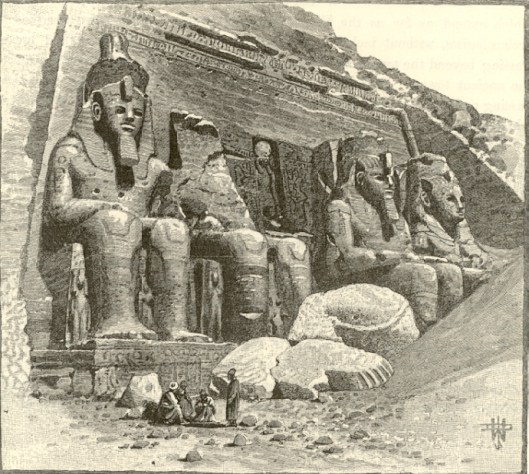
We had the feeling that we’d seen a statue something like this before—and we were curious whether JRRT had, too, and with a little mental rooting-around, we found this:

abusimbelengraving.jpg

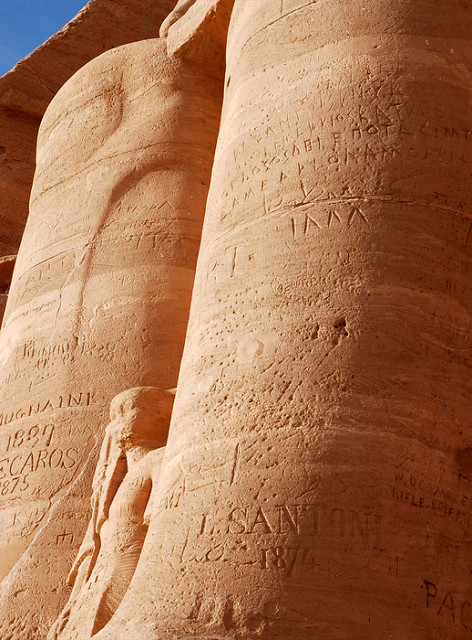
It’s Egyptian (13th century BC), and has a head, but, not only is it monumental, and seated, but it has lots of “idle scrawls” on the bases and lower parts of its legs.

abusimbelgraffiti.jpg

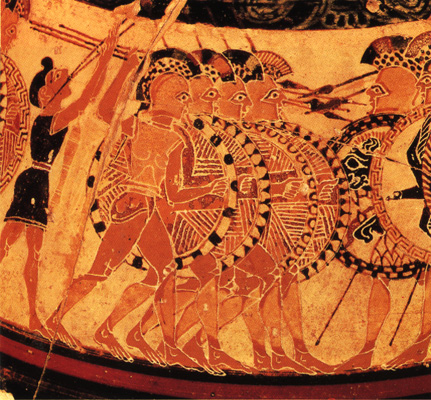
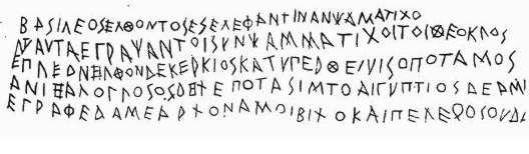
What’s particularly interesting to us is that one piece of the graffiti is actually from some Greek mercenaries c. 600bc

hoplite1.jpg

main-qimg-9eddef3641e25892afa016888b808aa5-c.jpeg

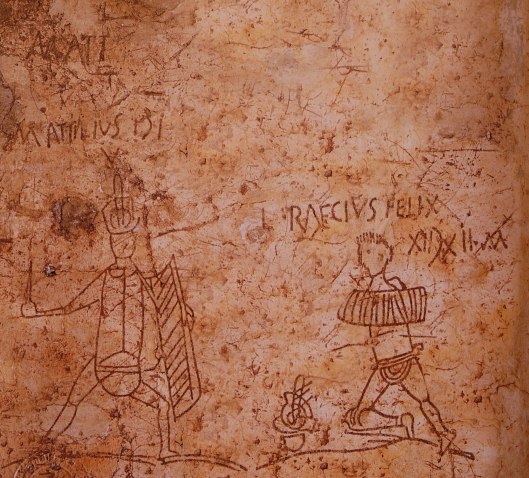
As long as there has been a certain level of literacy, of course, there has been graffiti. The walls of ancient Pompeii (sealed in by the eruption of 79AD) are loaded with everything from election posters to the admiration of gladiators to personal insults.

gladiatorialstats.JPG

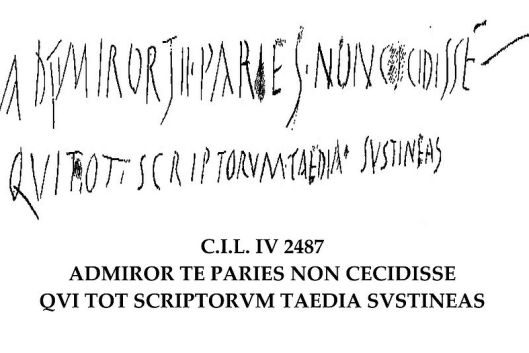
There’s so much, in fact, that this is our favorite:

antigraffiti.jpg

A translation of this might be: “I wonder/am in awe, wall, that, you, who are holding up so much boring writing, haven’t fallen down!”

Soldiers, in particular, seem prone to leaving messages behind—beginning with those 7th-c Greeks, but continuing throughout the centuries. When Napoleon I led an expedition to Egypt in 1798,

napegypt.jpg

his soldiers left their mark in more ways than one upon the landscape.

frenchinegyptgraf2.jpg

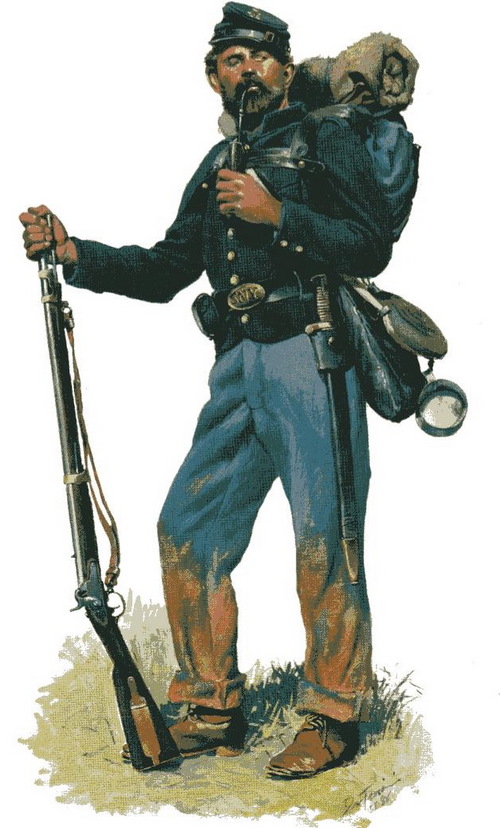
Recently discovered in a house in Virginia was a large collection of inscriptions from the soldiers, Union and Confederate, of the American Civil War.

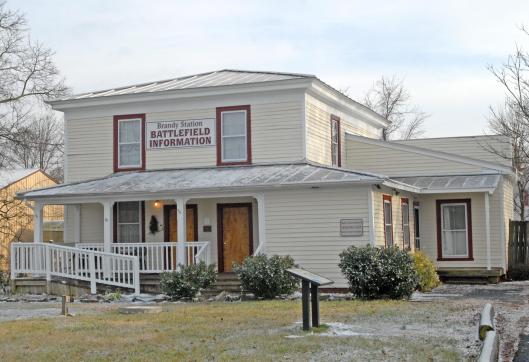
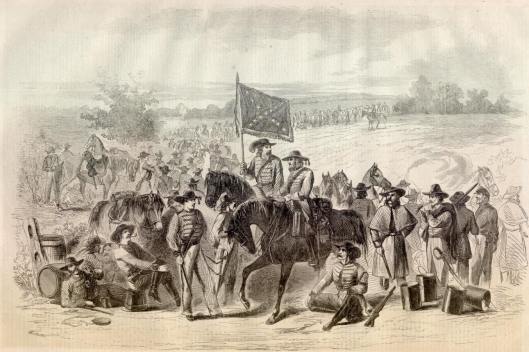
Graffiti-House.jpg Graffiti House Wall and Chair.jpg unionsoldier.jpgAlfred R. Waudfirstva.jpg

(An irresistible footnote: the picture you see of the Confederate cavalry—actually the 1st Virginia—was made by one of the greatest Civil War artists, Alfred Waud (pronounced “woad”). He had been briefly detained by this unit and took the opportunity to sketch them from life. His sketch—with his notes—then went to his publisher in New York, who had a group of engravers ready to turn his sketch into a finished—and publishable—picture.1st-virginia-cavalry-halted-based-on-sketch-by-waud-harpers-sept-27-1862.jpg

For more on the process by which a sketch becomes a magazine illustration, see this link.)

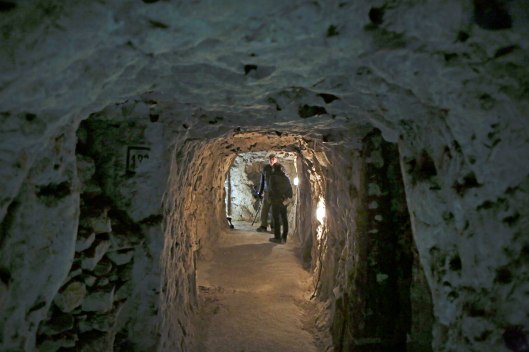
Another recent discovery was a mass of inscriptions (something like 2000 of them) in an abandoned quarry at Naours, in northern France.

quarrynaours.jpg

6XYh68h5xHSK2-3026250-In_this_image_made_on_Feb_20_2015_showing_names_engraved_on_the_-a-32_1428320205858.jpg

These date from the Great War (World War I) and, in a sad way, parallel the epitaphs on the seemingly-endless graves in the seemingly endless military cemeteries in the same region and in southern Belgium.

greatwargraves1.jpg

Tyne Cot 3.jpg

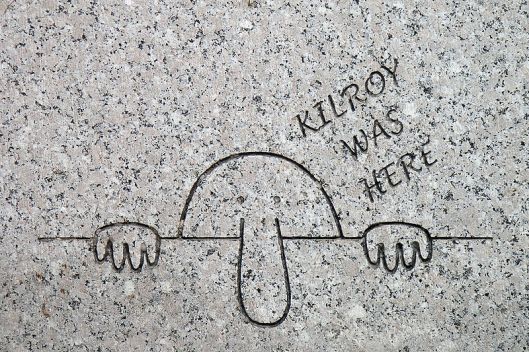
And World War II brought us Kilroy, of the famous (and ubiquitous) “Kilroy was here”.

Engraving-of-Kilroy-on-the-WWII-Memorial-in-Washington-DC.jpg

American prankster soldiers doodled this everywhere they went.

kilroy-was-here-photo.jpg

We have written previously about literacy in Middle-earth: not uncommon among hobbits, it would seem, but much less so among the other peoples. As for orcs, be they Hildebrandt

captured_by_orcs.jpg

Mcbride,

mcba_orc.jpg

Howe

John Howe - Merry et Pippin prisonniers des orcs.jpg

Or Lee,

Alan Lee - Orcs (1).jpg

although the Black Speech was created for them and Sauron’s other creatures, we have no evidence (except for the Ring inscription) of any use of it as a writing tool by any of them.

Which leaves us free to imagine just what those “idle scrawls” might read like. How about:

LUGDUSH SMELLS LIKE MAN FLESH!

LAGDUF + MUZGASH = CLUELESS AND SHIRTLESS!

GORBAG LOVES SHELOB

SHAGRAT IS A SNAGA!

And, of course:

UGLUK WAS HERE

Thanks for reading! (And why not submit your own graffiti? We’d be glad to add them to our list!)

MTCIDC

CD

To the Elves for Counsel

07 Wednesday Dec 2016

Posted by Ollamh in Fairy Tales and Myths, J.R.R. Tolkien, Literary History, Narrative Methods

≈ Leave a comment

Tags

advised by elves, Aelfraed, Aethelwulf, Alaric Hall, Alfred, Alfred of Wessex, Alfred the Great, Anglo-Saxon, Aragorn, Boudicca, council, Counseling the Scippigraed, Danish invaders, Elder Days, Elves, Elves in Anglo-Saxon England, Frodo, Galadriel, Gildor Inglorion, Grey Havens, Hamo Thornycroft, Hobbits, Mirror of Galadriel, Morgul Knife, Shire, statue, T. A. Shippey, The Council of Elrond, The Lord of the Rings, Tolkien, Tolkien in the New Century, Tom Shippey, With Faerstice

Welcome, dear readers, as ever. In this posting, our attention was caught by the first paragraph of an article in Tolkien in the New Century: Essays in Honor of Tom Shippey (McFarland, 2014). The article, entitled, “Counseling the Scippigraed: How T.A. Shippey Taught Us to Read”, by John R. Holmes, begins:

“The Christening of Alfred Aetheling of Wessex in 849 may have played a role in his greatness. Alfred’s father, Aethelwulf, had wanted to establish his own name-prefix, Aethel, which means (more or less) “noble,” as the sign of the royal line: he gave it to his first four sons and a daughter. By the time his sixth child came along, however—his fifth son—there didn’t seem to be any point in giving him the Aethel- prefix, since there seemed to be no reasonable chance this infant could ever become king. But wishing the lad wisdom and happiness, Aethelwulf named him Aelfraed, “advised by elves.” While we have no historical proof that Alfred actually received counsel from elves, there is no evidence to the contrary, and the boy certainly prospered as if he had. Alfred, Elf-counsel, not only outlasted four older brothers to become king, but also would be the only English monarch known to history as “The Great”. “ (11)

Alfred, king of Wessex from 871-899, was perhaps the most distinguished ruler of pre-Norman England. Against heavy odds, he eventually stabilized Wessex against a powerful wave of Danish invaders

vikings.jpg

and even forced the second Danish leader both into a treaty and into conversion to Christianity. As well, he was active in promoting Anglo-Saxon intellectuality and the rise of a vernacular literature.

Statue_d'Alfred_le_Grand_à_Winchester.jpg

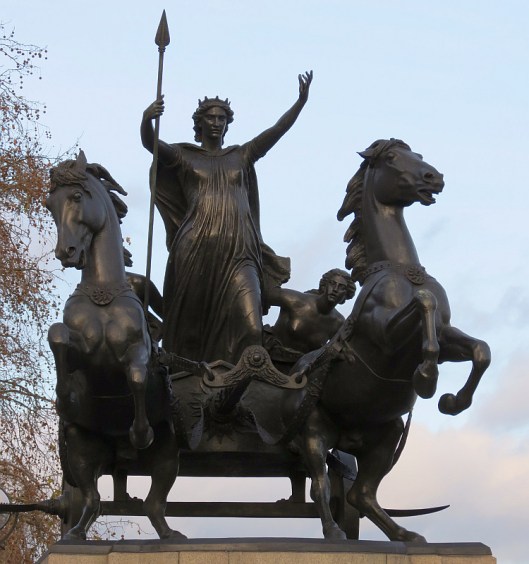
(this statue, from 1901, by the way, was done by Hamo Thornycroft, the son of the man who did the famous Boudicca plus chariot statue on the Thames embankment—erected 1902, but created much earlier–)

boadicea1.jpg

For us, however, what was interesting was none of this, but rather the idea that it might be possible for someone in the 9th century AD to have the kind of contact with elves we see in The Lord of the Rings.

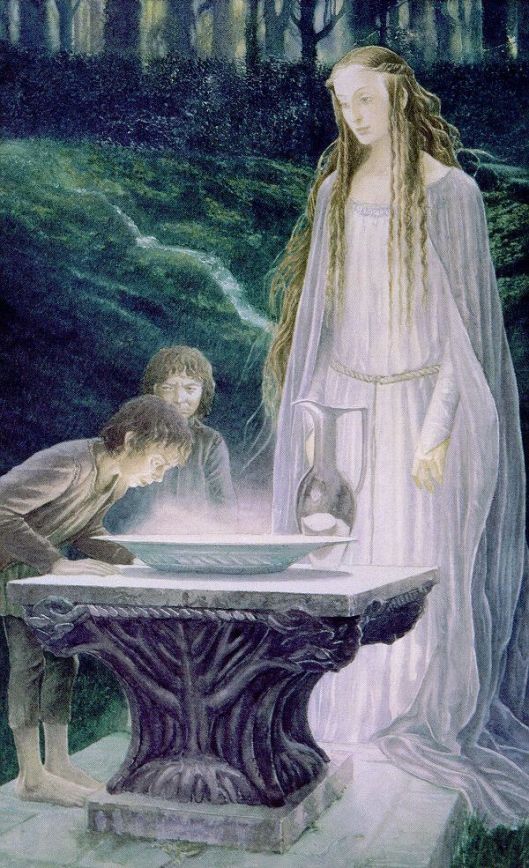
mirrorofgaladriel.jpg

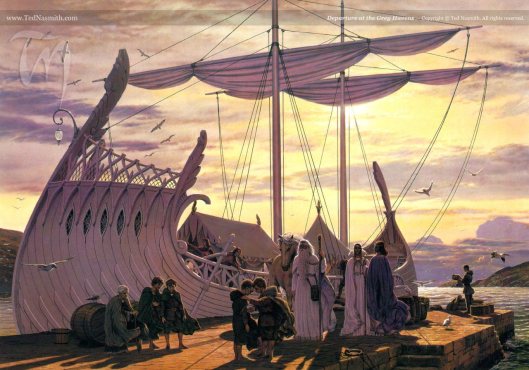
We have always imagined Elves as belonging to the Elder Days and that, eventually, like Elrond and Galadriel, they had all traveled to the Grey Havens and taken ship for the West.

TN-Departure_at_the_Grey_Havens.jpg

Suppose, however, we said to ourselves, that, as JRRT suggests about hobbits, Elves continued to exist, even down into actual historical times:

“Hobbits are an unobtrusive but very ancient people, more numerous formerly than they are today…They do not and did not understand or like machines more complicated that a forge-bellows, a water-mill, or a hand-loom, though they were skillful with tools. Even in ancient days they were, as a rule, shy of ‘the Big Folk’, as they call us, and now they avoid us with dismay and are becoming hard to find. (The Lord of the Rings, “Prologue”)

Of elves, the actual Anglo-Saxon people of the period don’t appear to have much good to say, in fact. The 11th-century recipe, called the With Faerstice (“Against a Stabbing Pain”), suggests that elves were dangerous and, should they attack you, it required serious medical treatment, including what looks like a magic spell, to cure you of the wound, which was made by something which reminded us of the tip of the Morgul Knife broken off in Frodo’s wound.

morgulknife.jpg

Even in Middle-earth, Elves aren’t considered to be the most direct of people, however, as Frodo quotes:

“ And it is also said…’Go not to the Elves for counsel, for they will say both no and yes.’ “

And yet, in this scene, from The Fellowship of the Ring, Book 1, Chapter 3, “Three is Company”, in which Frodo, Sam, and Pippin fall into the company of Elves,

Alan_Lee_-_Gildor_and_the_Hobbits.jpg

their leader, Gildor Inglorion, does offer advice and the way he frames it might provide us with a model for how Alfred could have been counseled.

To begin, we might picture the elves as being unimaginably older than the Anglo-Saxons, and, with that age, having a longer view of things. As Gildor says to Frodo, when Frodo says, “I knew that danger lay ahead, of course; but I did not expect to meet it in our own Shire.”:

“But it is not your own Shire…Others dwelt here before hobbits were; and others will dwell here again when hobbits are no more. The wide world is all about you: you can fence yourselves in, but you cannot for ever fence it out.”

Great age, then, can lend great perspective. When you’ve lived as long as the Elves, you have seen much more of change within time, and what concerns them might be very different from what engages humans, as Gildor tells Frodo:

“The Elves have their own labours and their own sorrows, and they are little concerned with the ways of hobbits, or of any other creatures upon earth. Our paths cross theirs seldom, by chance or purpose.”

So what would be the kind of raed (“advice/counsel”) which the elves would have given Alfred? we asked ourselves. It’s easy to imagine his approach: often, particularly in the early years of his kingship, Alfred was faced with defeat. The Danes were numerous, powerful, and unscrupulous, once even killing hostages after swearing to a peace agreement. His question might then have been: how can I beat the Danes and regain my kingdom?

The elves would have been cautious, of course. Gildor says:

“Elves seldom give unguarded advice, for advice is a dangerous gift, even from the wise to the wise, and all courses may run ill.”

This is spoken by someone who has many centuries of experience behind him, as would an elf advising Alfred. Time and its changes had clearly taught the Elves both caution and patience and we imagine that those two elements would have been the basis of a reply—and, in fact, it appears to have been Alfred’s method, as we learn from the first biography, by Bishop Asser, a contemporary, who was asked by Alfred to join his court. Rather than seek victory in one climactic battle, had that been possible, Alfred attacked the problem from multiple angles, doing things which not only contributed to the Danish defeat (and to the defeat of a subsequent invasion), but also strengthened the kingdom in general, changing and improving the tax and military systems, building the first English navy, as well as producing a law code and encouraging education in Anglo-Saxon. This method brought peace and stability to Wessex (much of southern England), but did so over the period of twenty years or more, suggesting to us that the counsel of elves had surely been at work.

When we picture the scene of Alfred receiving the elves’ advice, we think of this Hildebrandt painting of Galadriel and Aragorn.

gift.jpg

And perhaps those elves said the same thing to Alfred which Galadriel said to Frodo before her mirror:

“ ‘Do you advise me to look?’ asked Frodo.

‘No,’ she said, ‘I do not counsel you one way or the other. I am not a counsellor. You may learn something, and whether what you see be fair or evil, that may be profitable, and yet it may not. Seeing is both good and perilous. Yet I think, Frodo, that you have courage and wisdom enough for the venture, or I would not have brought you here. Do as you will!’ “ ( The Fellowship of the Ring, Book 2, Chapter 7, “The Mirror of Galadriel”)

In Alfred’s case, he would have been brave and wise enough, and therefore has come down to us both as “Alfred the Great” and as “Alfred Elf-counsel”.

as_silver_penny_alfred.jpg

Thanks, as always, for reading.

MTCIDC

CD
PS

If you are interested in knowing more about Anglo-Saxon attitudes about elves, we very much recommend Alaric Hall’s Elves in Anglo-Saxon England which is, miraculously, available for free on-line.


When One Door Closes.4

30 Wednesday Nov 2016

Posted by Ollamh in Imaginary History, J.R.R. Tolkien, Literary History, Maps, Uncategorized

≈ Leave a comment

Tags

Alfred Lord Tennyson, Cirith Ungol, doors, Gilbert and Sullivan, Gondor, Grond, Hobbit door, James Fennimore Cooper, Minas Morgul, Minas Tirith, Morannon, Mordor, N.C. Wyeth, Nazgul, Orodruin, Princess Ida, Shelob's Lair, The Last of the Mohicans, The Lord of the Rings, The Princess, The Siege of Gondor, Tolkien

Welcome, as always, dear readers. In this posting, we’ll complete our survey of doors and entryways and what happens at them in The Lord of the Rings.

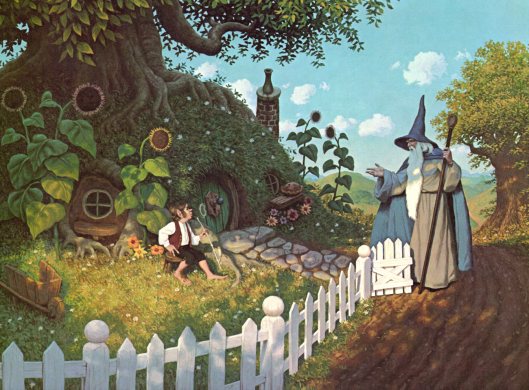
We began this series a little while ago when we got to thinking about Bilbo’s remark to Frodo that: “It’s a dangerous business, Frodo, going out your door.”

Bilbo had learned this the hard way when Gandalf had come to his door and he had embarked upon an adventure he, originally, had no desire to be part of.

gandalfvisitsbilbo

In three postings, we’ve followed the story through doors and entryways from that moment all the way to the moment when Gandalf blocks the Lord of the Nazgul from entering Minas Tirith through its ruined main gate.

mcbridegandalflordofnazgul.gif

In the process, we have come to see that doors and entryways seem to come in two forms: first, there are doors which lead to safety; second, there are doors which lead to danger. We’ve added other elements, natural entryways, like fords and bridges, and the fact that many of the entryways have challenges and challengers barring the way.

In a moment of cheerful intellectual cruelty, we ended the last posting at that crucial moment in “The Siege of Gondor”, in which Grond, the battering ram of the armies of Mordor, has, with the magical aid of the Lord of the Nazgul, broken down the gate and that Lord is about to enter the city, when he meets Gandalf as the challenger:

“ ‘You cannot enter here,’ said Gandalf, and the huge shadow halted. ‘Go back to the abyss prepared for you! Go back! Fall into the nothingness that awaits you and your Master. Go!’ ”

And, just at that moment, “Great horns of the North wildly blowing. Rohan had come at last.”

rohirrim.jpg

[We wondered, by the way, if that “Great horns of the North wildly blowing” was an accidental or deliberate allusion to a lyric from Alfred Lord Tennyson’s

tennysonyoung.jpg

poetic criticism of the idea of women’s education, The Princess (1847),

prncss.jpg

in which we find the line “The horns of Elfland faintly blowing”—here’s the whole poem:

from The Princess: The Splendour Falls on Castle Walls
By Alfred, Lord Tennyson
The splendour falls on castle walls
                And snowy summits old in story:
         The long light shakes across the lakes,
                And the wild cataract leaps in glory.
Blow, bugle, blow, set the wild echoes flying,
Blow, bugle; answer, echoes, dying, dying, dying.
         O hark, O hear! how thin and clear,
                And thinner, clearer, farther going!
         O sweet and far from cliff and scar
                The horns of Elfland faintly blowing!
Blow, let us hear the purple glens replying:
Blow, bugle; answer, echoes, dying, dying, dying.
         O love, they die in yon rich sky,
                They faint on hill or field or river:
         Our echoes roll from soul to soul,
                And grow for ever and for ever.
Blow, bugle, blow, set the wild echoes flying,
And answer, echoes, answer, dying, dying, dying.


This then formed the basis of an 1870 play by W.S. Gilbert, which he converted, with his collaborator, Arthur Sullivan, into an operetta, in 1884.]


Gilbert and Sullivan Cartoon.jpg

Princess-Ida-1884.jpg

For the Aragorn and company half of the story, we see the arrival of the army of Gondor and its allies at the Morannon as the last door.

morannon.1.gif

Here, there are, in fact, two challengers/challenges. First,

“When all was ordered, the Captains rode forth towards the Black Gate with a great guard of horsemen and the banner and heralds and trumpeters…They came within cry of the Morannon, and unfurled the banner, and blew upon their trumpets; and the heralds stood out and sent their voices up over the battlement of Mordor.” (The Return of the King, Book 5, Chapter 10, “The Black Gate Opens”)

In return,

“There came a long rolling of great drums like thunder in the mountains, and then a braying of horns that shook the very stones and stunned men’s ears. And thereupon the door of the Black Gate was thrown open with a great clang, and out of it there came an embassy from the Dark Tower.”

In both cases, it goes without saying that this is a door to danger, the difference being that those from Gondor want those within to come out so that, by defeating them (though they have little hope of this), those from Gondor can enter, while those within the gate want to prevent their entry (except, perhaps, as prisoners).

As we turn to the other half of the narrative, we begin at the same gate, where Gollum has brought Frodo and Sam.

alanleemorannon.jpg

Here, there is no easily visible challenger, just the forbidding nature of the gate, but it is still not an entryway to safety, as, on the other side is an inhospitable landscape, populated by Sauron’s vast armies, constantly on the move, as we see in later chapters. As well, from those later chapters, we gain the sense that Frodo doesn’t believe he’s going to return from Mordor anyway.

Seeing no way to enter, Frodo pushes Gollum to lead them south and, with a diversion to Faramir’s base behind a waterfall (which, to us, is reminiscent of a similar hide-out in James Fennimore Cooper’s The Last of the Mohicans (1826)

mohicansfirstedition.jpg

—and how can we resist mentioning that, in 1919, N.C. Wyeth illustrated an edition?)

05_lastofthemohicans_wyeth_glenfalls.jpg

wyethlast.jpg

they arrive at the southern entryway to Mordor, the pass with Minas Morgul at its western end and Cirith Ungol at its eastern.

Morgul2.jpg

WATCHERS.jpg

The challengers of Minas Morgul are the Lord of the Nazgul and a vast army, on their way to attack Minas Tirith, but these are skirted, as Gollum guides the two hobbits around the site and up on a perilous climb—and into Torech Ungol, Shelob’s Lair. Safety? Gollum wants the hobbits to think so. Danger? With Shelob as a challenger, what else?

shelob.jpg

Even as Sam drives Shelob off, however, he loses Frodo, paralyzed and cocooned, and is faced with an inner door closed by the orcs as they withdraw. Climbing over it, he moves forward, cloaked by the ring, to look out towards Orodruin and the Tower of Cirith Ungol.

cirith-ungol2

And, with this, we have finished our survey.

Unless, of course, we consider two more events.

First, there is what happens at Mount Doom, where Gollum is the challenger, and the door, such as it is, leads to safety for Middle-earth, but not for Sam and Frodo.

gollum__s_dance_by_01gus01-d4rmt18.jpg

And, finally, at the edge of the Shire, in “The Scouring of the Shire”, where the returning hobbits meet with the followers of “Sharkey” at the bridge. Those followers, brain-washed by fear of “The Chief” and his “big man” followers, attempt to deny what should be a door to safety to Frodo, Merry, and Pippin, as the three had expected, but which leads, in fact, to conflict and open violence before their return home is safely accomplished.

scouringoftheshire.jpg

With that, we complete the pattern and here is our chart:


Entryway Source Challenger Challenged Outcome
Bilbo’s door The Hobbit Bilbo Dwarves Bilbo is tricked into hospitality
Beorn’s house The Hobbit Beorn Gandalf Beorn tricked into hospitality
Goblin cave The Hobbit Goblins Bilbo Escapes by use of the Ring
Mirkwood The Hobbit Elves Dwarves/Bilbo Bilbo rescues dwarves with Ring and barrels
Lonely Mountain (Back door) The Hobbit Smaug Dwarves/Bilbo Understanding the inscription, Dwarves open the door
Lonely Mountain (Front door) The Hobbit Dwarves Men, Elves, Goblins Battle of the Five Armies—eventual settlement
Bilbo’s door The Hobbit Hobbits Bilbo Bilbo’s things are up for auctions—Bilbo gets most things back
Ford of Bruinen The Lord of the Rings Wraiths Frodo/Elves After Frodo’s challenge, elf magic overwhelms wraiths
Moria (west gate) The Lord of the Rings Elves of Hollin Fellowship Gandalf discovers password—the group enters
Lothlorien (western side) The Lord of the Rings Elves Fellowship Challenged by elves, but allowed to enter
Edoras The Lord of the Rings Rohirrim Gandalf et al. Challenged by gate guards, but allowed to enter
Meduseld The Lord of the Rings Hama Gandalf et al. Challenged, but allowed to enter
Helms Deep The Lord of the Rings Aragorn Orcs/Wildings Aragorn warns them of their danger
Isengard The Lord of the Rings Merry/Pippin Gandalf et al. Greeted and offered food, drink, and smoke
Paths of the Dead The Lord of the Rings Oath-breakers Aragorn at al. Allowed to enter, but followed—leave safely
Morannon The Lord of the Rings Sauron King Elessar et al. Sauron’s army appears for battle
Morannon The Lord of the Rings Sauron Frodo/Sam/Gollum No way of entry—the three head south
Minas Morgul The Lord of the Rings Lord of Nazgul Frodo/Sam/Gollum Entry blocked by Lord’s Army
Torech Ungol The Lord of the Rings Shelob Frodo/Sam Gollum escapes, Frodo paralyzed by Shelob
Cirith Ungol The Lord of the Rings Orcs Sam With Ring as aid, Sam enters
Mt. Doom The Lord of the Rings Gollum Frodo Gollum gains Ring, but perishes in fire
Shire bridge The Lord of the Rings Hobbits Frodo et al. Hobbits climb over gate, guards run


Because this material becomes increasingly complex, there is always the possibility that, as thorough as we try to be and as inclusive, we’ve missed something. If so, we’d be glad to hear from our readers!

Thanks, as always, for reading!

MTCIDC

CD


When One Door Closes.3

23 Wednesday Nov 2016

Posted by Ollamh in J.R.R. Tolkien, Language, Literary History, Narrative Methods

≈ Leave a comment

Tags

Common Tongue, doors, Doorward, Edoras, Elvish, Fangorn Forest, Gandalf, Gondor, Hama, Helm's Deep, Isengard, John Ruskin, Meduseld, Minas Tirith, Moria, passages, Paths of the Dead, The Hobbit, The King of the Golden Hall, The King of the Golden River, The Lord of the Rings, Tolkien, Witch-King of Angmar

Welcome, dear readers, to the third part of our series on doors and entryways in JRRT’s The Hobbit and The Lord of the Rings.

We began, several postings ago, by writing that we were intrigued by Bilbo’s statement to Frodo: “It’s a dangerous business, Frodo, going out your door.” (The Fellowship of the Ring, Book 1, Chapter 3, “Three is Company”)

It made us want to look at doors (to which we quickly added entryways of all sorts) in Tolkien and, in doing so, we’ve come up with a very crude classification system, in which there were two kinds of doors, those which seemed to promise safety and those through which you might be in danger. And a major component of such places seems to be a challenge, and a challenger of some sort.

At the end of our second posting, we had come to the breaking up of the Fellowship and now we want to continue, having a look at what could be seen as good examples of what we mean along the way.

Because of the major split in the story, we decided to follow Aragorn, Gimli, and Legolas first.

The first part of their adventure takes place across open country or in Fangorn Forest. It’s only when they, with Gandalf, arrive at Edoras that we see the pattern fall into place.

But here we wondered if we should add an extra subcategory, linguistic challenge. We’ve already seen the western gates of Moria and the need to read Elvish and to know the word for friend, and now we have the gates of Edoras

Edoras.jpg

and a suspicious guard of Rohirrim:

“There sat many men in bright mail, who sprang at once to their feet and barred the way with spears. ‘Stay, strangers here unknown!’ they cried in the tongue of the Riddermark.” (The Two Towers, Book 3, Chapter 6, “The King of the Golden Hall”)

[We wonder, by the way, if the chapter’s title owes something to John Ruskin’s 1841/51 fairy tale “The King of the Golden River”, in which a major figure has been changed through evil magic, but is freed and eventually helps the underdog hero…]

King_of_the_Golden_River_-_Title_page.jpg

As he was (eventually) up to the challenge of the gate of Moria, so is Gandalf up to this and challenges them in return:

“ ‘Well do I understand your speech,’ he answered in the same language; ‘yet few strangers do so. Why then do you not speak in the Common Tongue, as is the custom in the West, if you wish to be answered?’ “

After a little parleying in this manner, Gandalf and his companions are allowed to enter and sent up to Meduseld, where there is a second challenger, the Doorward Hama.

Golden_Hall_of_Meduseld.png

meduseld.jpg

Here, after a brief repetition of the previous language challenge, things relax: “Then one of the guards stepped forward and spoke in the Common Speech.” After a tussle about leaving weapons behind (and Gandalf escapes this with his staff), they are permitted into the hall and the scene continues.

After the battle of Helm’s Deep, Denethor, Gandalf, and the rest of the company ride to Isengard, only to find there:

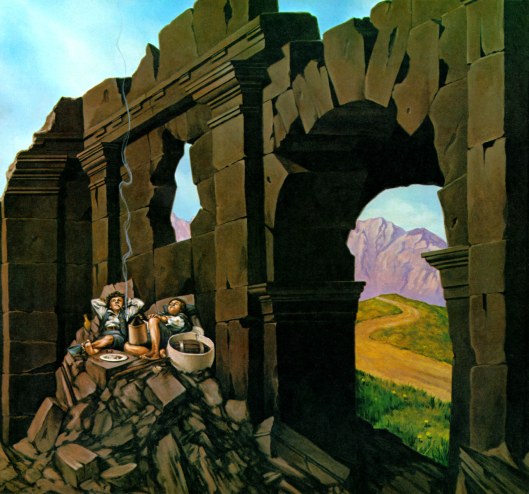
“…ruined gates. There they saw close beside them a great rubble-heap; and suddenly they were aware of two small figures lying on it at their ease, grey-clad, hardly to be seen among the stones. There were bottles and bowls and platters laid beside them…” (The Two Towers, Book 3, Chapter 8, “The Road to Isengard”)

merryandpippinatisengarde.jpg

It’s Merry and Pippin, of course, who describe themselves as “doorwardens”, just as Hama was at Meduseld. The difference is, instead of barring the door and challenging those who would enter, they are welcoming and comical in their lordly self-indulgence. This seems to turn the pattern on its head, and, although it’s the only time such a thing appears, we believe that it is an example of another subcategory, that of parody. It has the elements of other occasions, but, here, the door is a ruin and the guards seem slightly tipsy, rather than menacing, as well as very glad to see those who come to their ward.

In contrast to this merriness, there is stony silence at the next door:   The Paths of the Dead.

EntrancePathsDead-port.jpg

The challenge seems to be in the very air itself:

“And so they came at last deep into the glen; and there stood a sheer wall of rock, and in the wall the Dark Door gaped before them like the mouth of night. Signs and figures were carved above its wide arch too dim to read, and fear flowed from it like a grey vapour.” (The Return of the King, Book 5, Chapter 2, “The Passing of the Grey Company”)

It is Aragorn who accepts the challenge and leads the group through what, in the film, is a kind of funhouse of skulls and greenish figures,

dead.jpg

But, to us readers, what we think is much more disturbing is that there is no more than a restless murmur, which we hear through the dauntless, but quivering Gimli—

“…but if the Company halted, there seemed an endless whisper of voices all about him, a murmur of words in no tongue he had ever heard before.”

And, at the end of their passage, it is Aragorn who is the challenger—not to block those murmurers, but to invite them:

“ ‘Keep your hoards and your secrets hidden in the Accursed Years! Speed only we ask. Let us pass, and then come! I summon you to the Stone of Erech!’ “

We can see in this multiple ends: first, it fits the pattern of confrontations at doors (all feel the sense of Something There and must rise to the challenge, conquering their fear); second, it provides a route for Aragorn’s strategy: to gain supernatural allies on the way to natural ones along the southern seacoast; third, it underlines Aragorn’s right to the kingship: only he has the knowledge and authority to call up the long-dead for his purposes.

Our last challenge of this posting is at what is perhaps the most dramatic moment in the attack upon Minas Tirith. Grond the ram has, with the aid of the Lord of the Nazgul, burst open the great gate and the Wraith is about to enter when he encounters:

“…Gandalf upon Shadowfax…

‘You cannot enter here,’ said Gandalf, and the huge shadow halted. ‘Go back to the abyss prepared for you! Fall into the nothingness that awaits you and your Master. Go!’ ” (The Return of the King, Book 5, Chapter 4, “The Siege of Gondor”)

gandalfgate2.jpg

But—then? We admit it—we shamelessly want a cliffhanger here. And so we’ll stop—till our next, in which we’ll finish the story—we promise!—and provide a breakdown of all of the doors and entryways in a chart, as well.

Thanks, as always, for reading—and we’re sorry that we gave in to temptation, but, as novelists ourselves, we couldn’t resist!

MTCIDC

CD

When One Door Closes (2)

16 Wednesday Nov 2016

Posted by Ollamh in J.R.R. Tolkien, Literary History, Narrative Methods

≈ Leave a comment

Tags

Balin, Barrows, Bree, Bridge of Khazad-Dum, Chamber of Mazarbul, Crickhollow, doors, Dwarves, Elven-way, Farmer Maggot, Gandalf, Greenway, Hobbit door, Hollin, Lothlorien, Moria, Nazgul, picaresque, Rivendell, Robert Burns, Tam O'Shanter, The Fellowship of the Ring, The Ford of Bruinen, The Hobbit, The Legend of Sleepy Hollow, The Lord of the Rings, The Prancing Pony, Tolkien, Washington Irving, Watcher in the Water, Weathertop, West-door, West-gate

Welcome, dear reader, as always. It’s a rather gloomy late autumn day here as we write this, fitting, perhaps, for the gloomier The Lord of the Rings after the cheerier (well, sometimes) The Hobbit, as we continue our look at the functions of doors and their equivalents in JRRT.

If you’ve read our previous posting, you’ll know that, in it, we examined doors and gates in The Hobbit, dividing them into two basic categories: doors which might lead to safety and doors which led to danger, all based upon Bilbo’s remark about how dangerous it can be, just stepping outside your door.

Bilbo’s door adventures had begun with his own.

gandalfvisitsbilbo.jpg

doorwithrune.jpg

When comparing the two books, we get a strong sense of the episodic nature of The Hobbit:  we can almost break it down into movement between doors, from the arrival of the dwarves to the knock of Gandalf and Balin, giving it more the feel of a picaresque novel: that is, a novel with an goal, but with much of its focus upon the adventures along the way, adventures which don’t always necessarily lead to that goal.   This gives it a lighter tone, as well—after all, it was meant as a children’s book in a time (1937) when such books were understood in general never to be too solemn. The Lord of the Rings, in contrast, develops an almost grimly-focused forward motion, which impels it even when the Fellowship breaks into two after the death of Boromir, and much of the action spreads from Frodo and Sam on the way to Mordor to the separate adventures of Merry and Pippin in Rohan and Gondor.

So what might we see as the first door—in either sense—in The Lord of the Rings? we asked ourselves. And we supposed that we might see minor doors of safety at Farmer Maggot’s and Frodo’s new home in Crickhollow, in both cases brief refuges from the Nazgul, but, as we said in our last posting, doors commonly have some sort of challenge to them—and challenger—and the first one of those appears briefly at the hedge in Bree:

“They came to the West-gate and found it shut; but at the door of the lodge beyond it, there was a man sitting. He jumped up and fetched a lantern and looked over the gate at them in surprise.”   (The Fellowship of the Ring, Book 1, Chapter 9, “At the Sign of the Prancing Pony”)

bree.jpg

The watchman, when his challenges (and maybe a little too-inquisitive challenges) are turned aside, lets them in and they reach The Prancing Pony, only to escape murder in their beds and the loss of their ponies.

prancingpony.jpg

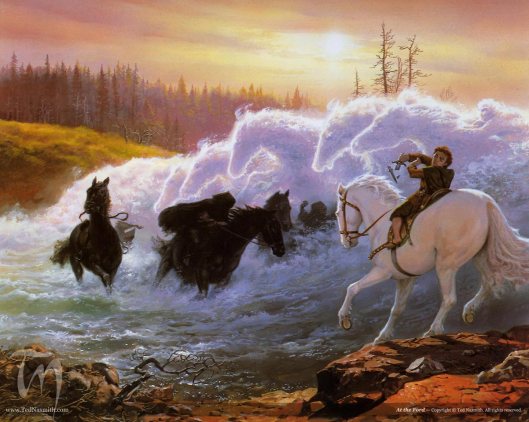
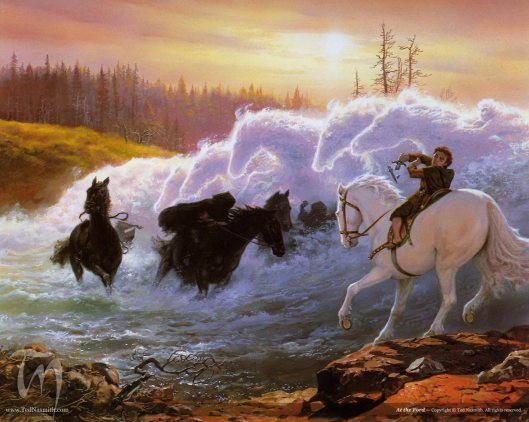
The first gateway which leads to real safety, however, isn’t a door or gate at all, but a natural barrier (with some magical help): the Ford of Bruinen. Here, the role of traveler and challenger is reversed, as the challenged are the Wraiths and the challenger is Frodo, but it is the power of the Elves which closes the door.

At the Ford, by Ted Nasmith

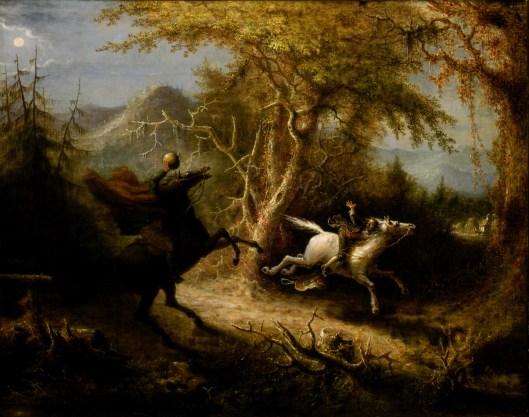
(It is interesting here that Tolkien has chosen not to take advantage of the folk belief—if you know “The Legend of Sleepy Hollow” by Washington Irving, or its inspiration, the poet Robert Burn’s “Tam O’Shanter”, this will be readily familiar to you—that evil spirits are unable to cross running water, even at a bridge.

John_Quidor_-_The_Headless_Horseman_Pursuing_Ichabod_Crane_-_Google_Art_Project.jpg

tamoshanter.jpg

To reach the Shire, the Wraiths have had to cross several bodies of water and now their hesitation to traverse another appears to be derived from their confidence that they can now control Frodo—either by the influence of the Ring, or perhaps from his wound—and call him back across the stream to them.)

From Rivendell, the next such door is that at the western side of Moria.

moriagate.jpg

Here, there is no living challenger. Rather, it is a kind of riddle—or, at least, it is initially understood as such—which bars the way. Its answer is simple, which led us to wonder, what is the purpose of this door scene in the story? As the creature in the pool

watcher.jpg

barricades the door behind them, it adds to the tension: the Fellowship has been watched and, from the hostile mountains to the wolves to the tentacle thing, it has been forced into darker and narrower ways, those ways seemingly chosen by the malevolent force observing their journey. As well, it suggests the gradual decay of what was once a vibrant, active culture, as Gandalf explains:

“Here the Elven-way from Hollin ended. Holly was the token of the people of that land, and they planted it here to mark the end of their domain; for the West-door was made chiefly for their use in their traffic with the Lords of Moria. Those were happier days, when there was still close friendship at times between folk of different race, even between Dwarves and Elves.” (The Fellowship of the Ring, Book 2, Chapter 4, “A Journey in the Dark”)

This is a theme throughout The Lord of the Rings and one which, we believe, adds to its power: the events of the close of the Third Age are set against a background of other times and other events and the landscape still bears traces of those times, from the Barrows to the Greenway and Weathertop and far beyond. As well, so many of those traces suggest that violence and the dark spirit of Sauron, sometimes through his agents, sometimes in person, have had much to do with their end.

Now that the Fellowship is within Moria, it encounters its next door: that of the Chamber of Mazarbul.

marzabul.jpg

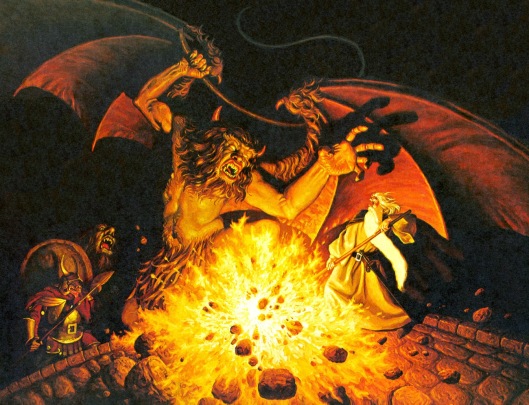
Here, they are the challengers, when forced to defend themselves from a horde of “Orcs, very many of them…And some are large and evil: black Uruks of Mordor.” (The Fellowship of the Ring, Book 2, Chapter 5, “The Bridge of Khazad-Dum”). There is a second door, however, and, when they have beaten back their attackers, they escape by it—but only so that Gandalf may be the challenger at a crossing—as Frodo was at the ford—at the Bridge of Khazad-Dum, although here magic apparently cannot save him, as it had Frodo.

balrog.jpg

With Gandalf gone, we see the repetition of a scene from The Hobbit—the escape through a crowd to the outside world:

“…and suddenly before them the Great Gates opened, an arch of blazing light.

There was a guard of orcs crouching in the shadows behind the great door-posts towering on either side, but the gates were shattered and cast down. Aragorn smote to the ground the captain that stood in his path, and the rest fled in terror at his wrath.” (The Fellowship of the Ring, Book 2, Chapter 5, “The Bridge of Khazad-Dum”)

At this moment in The Hobbit, Bilbo had used his newly-discovered ring to escape (albeit with the loss of a few buttons), but Aragorn’s sword clearly does just as well.

It is easy to see just how prevalent the pattern is: even after that harrowing moment of being chased through the mines and losing Gandalf, where there is a door, there is someone at it to make a challenge, and this holds true even without an actual door, as the remaining members of the Fellowship seek to enter Lothlorien and are stopped by Elven sentries in a tree. (The Fellowship of the Ring, Book 2, Chapter 6, “Lothlorien”)

And the pattern continues, even as the Fellowship breaks up, but let’s take a moment to see what we’ve found so far. On the side of doors to safety, we have: Bree (although it’s not so safe as it looks), the Ford of Bruinen, the main door of Moria, and the entrance to Lorien. As for doors to danger, there are: the western doors of Moria and the door to the Chamber of Mazarbul.

In the third installment, we shall see just how many more doors/gates/entryways we find which continue to fit the pattern—and there are a fair number of them.

Thanks, as ever, for reading.

MTCIDC

CD
When One Door Closes (I)

09 Wednesday Nov 2016

Posted by Ollamh in J.R.R. Tolkien, Literary History, Narrative Methods

≈ Leave a comment

Tags

And Unexpected Party, Baggins, Beorn, Bilbo, Bilbo and Gollum, Chico Marx, doors, Dwarves, Gandalf, Goblins, Groucho Marx, hidden door, Hobbit door, Horse Feathers, Into the Fire, Lake Town, Lonely Mountain, Mirkwood, Out of the Frying-Pan, password, Smaug, speakeasy, Swordfish, The Hobbit, The Lord of the Rings, The Marx Brothers, Thranduil, Tolkien, Took, wargs

Welcome, dear readers, as always.

Recently, we’ve been thinking about Bilbo’s remark to Frodo:

“It’s a dangerous business, Frodo, going out your door.” (The Fellowship of the Ring, Book 1, Chapter 3, “Three is Company”)

What makes this true in Tolkien, we wondered? As an experiment, we began to list all of the significant doors in The Hobbit and The Lord of the Rings and what happened at each of them and we believed that we could see that they fell, roughly, into two categories: doors (and we include gates here) which are the approach to danger, as Bilbo says, and doors which at least seem to offer safety. There are so many, in fact, that we have decided to break them down (no pun intended) and, in this posting, we’ll examine those we found in The Hobbit.

Our first door is Bilbo’s own, in front of which he is sitting when Gandalf first appears

bilbogandalf.jpg

and which he dodges behind, to escape Gandalf—or so he thinks:

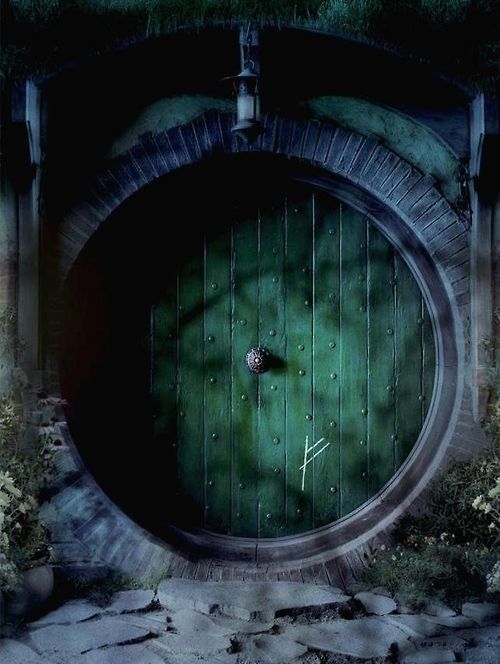
“With that the hobbit turned and scuttled inside his round green door, and shut it as quickly as he dared, not to seem rude.” (The Hobbit, Chapter 1, “An Unexpected Party”)

This door, of course, is hardly a barrier to Gandalf, who scratches a rune on it, turning it from what Bilbo hopes is a “no trespassing” sign to a “welcome” mat.

bilbosdoor.jpg

We then get a scene which reminds us of one in the Marx Brothers’ movie, Horsefeathers (1932)

horsefeatherposter.jpg

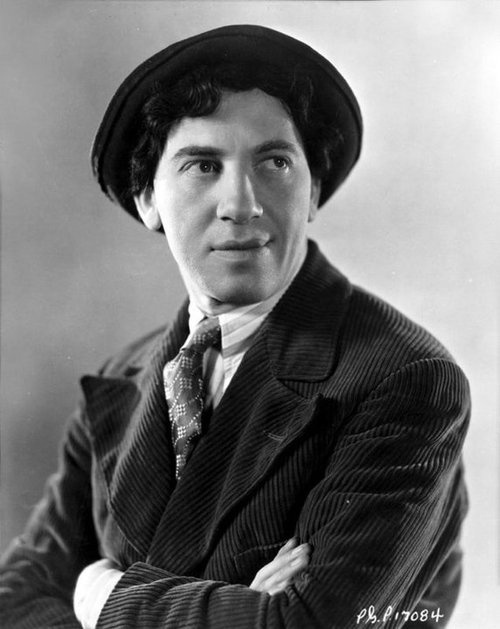
—or maybe it’s just an excuse on our part to bring up the Marx Brothers, who, in our opinion, are never brought up often enough. It’s a scene from the days of Prohibition, when hard liquor had been outlawed in the U.S. by an amendment to the Constitution (1920-1933). It was clearly a batty idea and, very soon, many people (some of whom must even have voted for the amendment), were looking for ways to skirt the federal law. One way to do so was to visit an illegal bar, called a “Speakeasy”, presumably because you could say what you wanted there, including criticizing a stupid law. These were secret places, with guards at the door and a need for passwords, so that people on the inside could detect attempts by the police to raid them. In the movie, Chico (pronounced “chick-o’’—as he was said to be an avid pursuer of girls)

chico.jpg

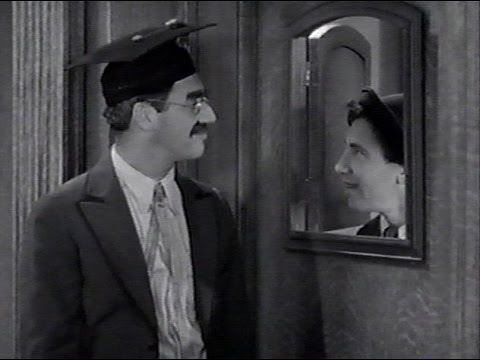
is the guard on the inside and Groucho

groucho_marx_in_duck_soup.jpg

is a potential customer.

speakeasy.jpg

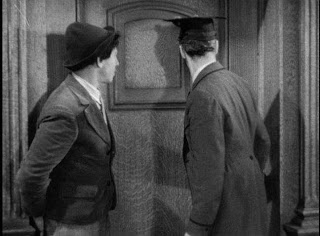
As is typical with the Marx Brothers, the scheme collapses and they both end up on the outside of the door, but, before that happens, there is a lot of knocking and attempts (full of bad puns) to guess the proper password.

horsefeathersbothshutout.jpg

The door, then, is really only a prop, a site where Chico and Groucho can practice one-liners on each other and not much else (as if that matters with the Marx Brothers!). In the next door scene from The Hobbit, however, JRRT uses Bilbo’s door for larger purposes: to show Gandalf’s subtle understanding of Bilbo’s psychological make-up, as well as the beginning of his plan to turn Bilbo from a staid Baggins to a much freer Took, as Bilbo is forced to confront a gang of dwarves and their mission.

unexpected.jpg

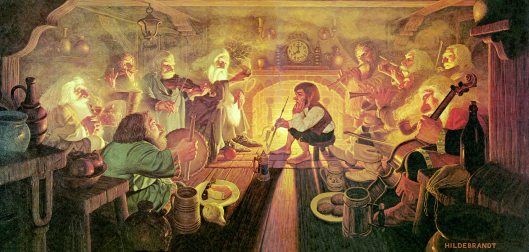
Gandalf’s method, as readers will remember, was to send the dwarves to Bilbo’s door one or two at a time. Gandalf repeats this trick when he and the dwarves (and Bilbo, of course) take refuge at Beorn’s,

beorn.jpg

after their escape from the pursuing wargs and goblins.

warg_rest.jpg

Whereas we might say that the second door scene at Bilbo’s led to danger, this scene leads to safety, although only temporary security, as Bilbo and the dwarves must set out again, even if refreshed and refitted.

(Readers note: this second time has been replaced in the second Hobbit film with a scene which misses both the quiet comedy of the original and its use in the story as a way to provide us with a more rounded picture of Beorn, as well as JRRT’s use of a repeated folk motif perhaps to reinforce the fairy tale-like structure of what was originally an oral tale turned children’s book.)

The dwarves had encountered the goblins through a hidden door (clearly a “danger door”), outside of which they had taken shelter. They are made prisoner

goblinking.jpg

but Bilbo, being lost, finds the Ring, meets Gollum,

Bilbo and Gollum.JPG

and escapes by a door which certainly offers safety. (Although, as the title of the next chapter puts it, not for long, being “Out of the Frying-Pan, Into the Fire”.)

goblinsbackdoor.jpg

This, of course, not only leads us back to Beorn, but also on to Mirkwood and our next door, that of the Mirkwood Elves and their king, Thranduil (who does not ride an elk, as the movies would have it—and really silly-looking that is, in our opinion). This is one of a number of versions by JRRT himself.

palazzo di thranduil 2.jpg

Although this door leads to the dwarves’ imprisonment, the danger appears to be minimal. Thranduil threatens them, but, except for locking them up and putting them on short rations, he does them no harm. (And there is another backdoor escape—this time in barrels—one of JRRT’s own favorite illustrations—and ours, too).

barrel-riding.jpg

The barrels led us to the lake and to Lake Town (a colored version of another JRRT illustration),

Laketown4.jpg

through the gate of which the dwarves had to pass. A strong theme in so many of these entryways is that they are a form of challenge: those who would get in (or out) must deal with a guardian—Bilbo, goblins, elves–and Lake Town is no different. Here, there is a squad of lax gate guards, who are rather easily impressed when Thorin announces who he is and that he wants to see the Master. As the dwarves persuade the Lake Town people to supply their expedition, we would label this one of the doors to safety—the last thing we would say for the final two: the back door and the front gate of the Lonely Mountain.

136TheLonelyMountain.jpg

So far, we have had two front doors (Bilbo’s and Beorn’s), one hidden door (goblins), two sets of gates (elves, Lake Town), and two back doors (goblins and elves). Now we have a door with a spell cast upon it and the riddle of the spell acts as the guardian. It is, of course, the door most desired by the dwarves, but it’s hardly a door to safety as, at its bottom lies the reason they abandoned the mountain to begin with: Smaug.

bilbowithsmaug.jpg

The front gate is hardly better, as it soon becomes a defensive work for the dwarves as they prepare to fend off those who either try to seek recompense or are simply goblin attackers.

the-hobbit-the-battle-of-the-five-armies3.jpg

But wait—we’ve left out a final door, haven’t we? “the door where it began”—and, in front of it, Bilbo experiences one more trial:   finding that he’s been declared dead and his property is up for auction—and just when he believes he is “back again”. But there is a happy ending and The Hobbit itself ends with Bilbo, some years later, answering that same door

tolkien_drawing1.jpg

and entertaining Gandalf and Balin. (Although in the drawing above, Bilbo bears a certain resemblance to someone else…)

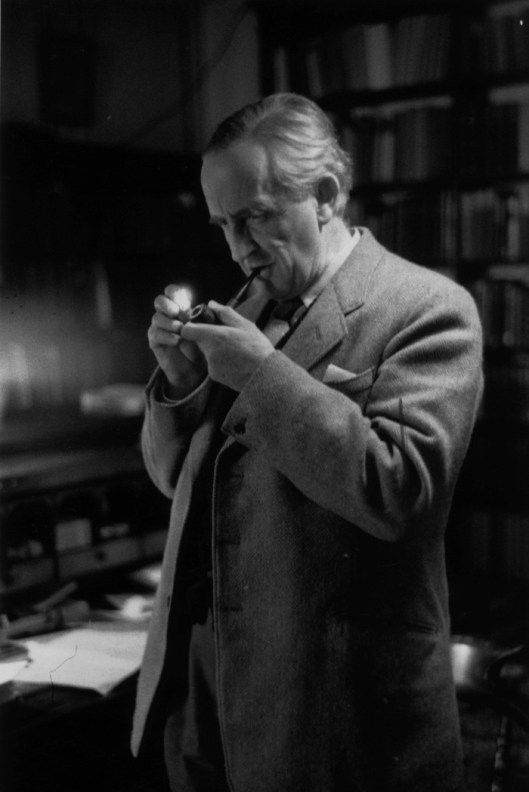
j_r_r_tolkien_-_smoking_pipe-700x1049.jpg

In our next post, we’ll continue by looking at doors and gates in The Lord of the Rings.

Thanks, as always, for reading!

MTCIDC

CD

Further Thoughts

02 Wednesday Nov 2016

Posted by Ollamh in J.R.R. Tolkien, Literary History, Maps, Military History, Military History of Middle-earth, Uncategorized

≈ Leave a comment

Tags

Alexander of Macedon, Athenian Empire, Babylon, Cleopatra VII, Delian League, Mongol Empire, Mordor, Persians, Plataea, Ptolemy, Sauron, Tolkien, W.H. Auden

Welcome, dear readers, as ever.

It is one of the pleasures—perhaps we should say even blessings—of JRRT that there is such a richness available within his work—and within him—that no subject can ever be discussed to a perfect conclusion. In an earlier posting, we talked about Sauron and his demands, but, as we watch our current world and certain powers who are maneuvering to gain increasing control over land and sea, we have come back once more to wondering about what it is that Sauron has planned to do and what he will have if he succeeds.

In an unpublished reply to a review by W.H. Auden, JRRT wrote:

“The theatre of my tale is this earth, the one in which we now live, but the historical period is imaginary. The essentials of that abiding place are all there (at any rate for inhabitants of N.W. Europe), so naturally it feels familiar, even if a little glorified by the enchantment of distance in time.” (Letters, 239)

Thus, we can feel justified, we think, in looking at a would-be world conqueror from an actual historical period to see if we can better understand the fictional Sauron.

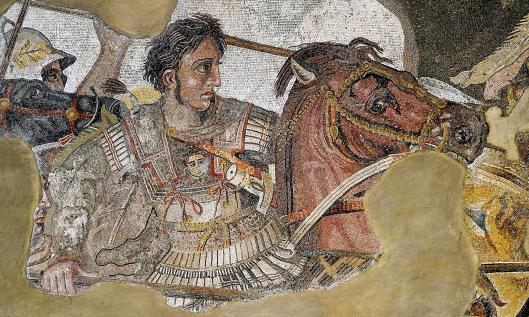
If we consider Alexander of Macedon,

Alexander_the_Great_mosaic.jpg

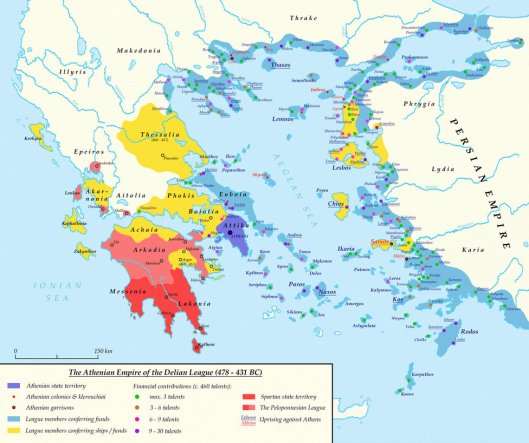
we see someone who began with a project which, in part, went back for a century and more before his own time: to take back the western shore of northern Asia Minor from its Persian overlords. This had been begun by the Delian League,

The Delian League - map.jpg

a group of Greek city-states who had been participants in the ultimate battle defeat of the invading Persians, at Plataea, in 479bc.

47948_PlateaBattleL.jpg

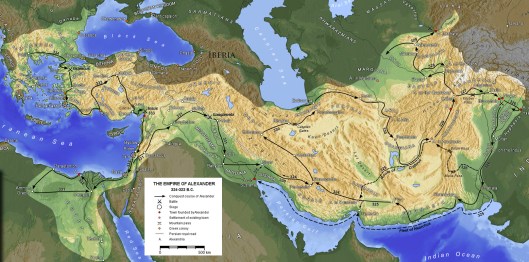
After he had defeated the southern Greeks at Chaeronea in 338bc with the aid of his son, Alexander, it had been Philip II of Macedon’s plan to do what the League had planned and take back Asia Minor from the Persian empire. Philip was murdered (by a “lone spearman”) in 336, but Alexander, took over the plan and, in 334, invaded the Persian empire and, within three years or so, had conquered it—

macedonianempirelarge.jpg

but then had kept moving eastward, besieging cities, winning battles, all the way into western India, where his army finally revolted and refused to go farther.

Alexander_troops_beg_to_return_home_from_India.jpg

He returned to his new capital, Babylon, to die there in 323bc.

the_death_of_alexander_the_great_after_the_painting_by_karl_von_piloty_1886

Because Alexander had no grown male heirs, his new empire fell apart very quickly, his chief generals seizing big chunks and defending them against other generals. We can presume, we think, that he hadn’t been planning to die young (he was born in 356), so we assume that he was out to do something permanent. His generals—the successful ones—founded dynasties, the longest-lived of them being that of Ptolemy,

Coin (Ptolemy I) (Alexandria 305-285 BC).jpg

who grabbed Egypt, and whose last descendant to rule was Cleopatra VII (yes, that Cleopatra), who committed suicide in 30bc.

Kleopatra-VII.-Altes-Museum-Berlin1.jpg

If Alexander was planning to do something similar, only on a larger scale, how do we understand it? What was all of that conquest for and why was it never enough?

Part of the explanation may lie in the analogy of the folk-tradition about sharks: that they have to keep moving to breathe. This is apparently not true (google Discovery.com/tv-shows/shark-week).

great-white-shark-swimming-blue.jpg.adapt.945.1.jpg

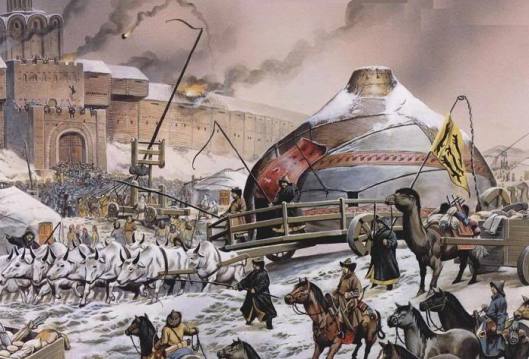
It’s a good image, however, of how an expanding kingdom has to work: the more land you have, the more people you have, the more people you have, the more food you need, therefore you need an increased food supply, which means either buying it or taking it from outside, or making the land itself produce more or simply acquiring more land—and the cycle begins again. This may have been what caused the rapid expansion of the Mongol empire in the 13th century ad, although, in their case, it may not have been expanding population so much as expanding flocks and herds which needed more pasture land.

TitleMongol2.jpg

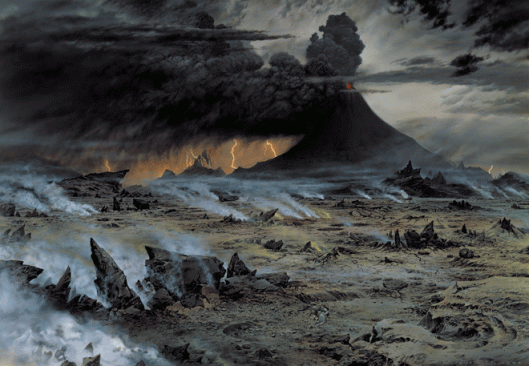
We might see Sauron in the same light: he needed huge armies to conquer Middle-earth, his huge armies, both humans and orcs, would need feeding (even orcs ate, after all, although as to what they ate…) and therefore would have needed a huge amount of growing land to be fed from, and so on and so on. Certainly Mordor was not the place for gardens and grain fields.

gorgoroth.gif

JRRT says of Sauron:

“Sauron desired to be a God-King, and was held to be this by his servants; if he had been victorious he would have demanded divine honour from all rational creatures and absolute temporal power over the whole world.” (Letters 243-244)

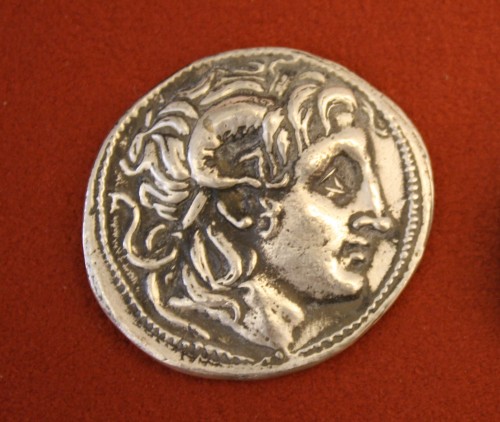
And perhaps this offers another view of Alexander, in turn. As Sauron would have needed land to feed his armies, perhaps Alexander was intent upon collecting worshippers? Certainly he allowed rumors to circulate that he was at least semi-divine—as we see in this coin portrait, where he is portrayed with the horns of Zeus/Ammon, a combination Greek and Egyptian god.

alexaszeusammon.jpg

Alexander succeeded in gaining territory—although not so much as he wished—but died before founding the dynasty which might have given his kingdom stability. Sauron lost, not only his kingdom-in-the-making, but his corporeal form and the bulk of his power. JRRT has given us a hint as to one side of his plans—founding a religion with himself as the god, but perhaps Alexander has given us a clue as to another side, the need to support his means of conquest. In turn, Sauron may supply a clue to another side of Alexander’s plans: inserting himself into the religion of his Greek subjects, then expanding his cult throughout as much of the world as he could conquer.

Thanks, as ever, for reading.

MTCIDC

CD
Which Witch

31 Monday Oct 2016

Posted by Ollamh in Artists and Illustrators, Fairy Tales and Myths, Films and Music, Literary History, Villains

≈ Leave a comment

Tags

Goya, Halloween, Holinshed's Chronicles, Istari, L. Frank Baum, Macbeth, Mother Goose, The Wizard of Oz, Theodore Chasseriau, W. W. Denslow, Welsh traditional clothing, Wicked Witch, William Shakespeare, Witch-King of Angmar, witches, Witches' Sabbath, wizards

Welcome, dear readers.

This is our annual Guy Fawkes’ Day/Halloween/Samain posting. Last year, we looked at GFD. This year, it’s Halloween—and a little puzzle from JRRT (how not?).

Magic and mystery—centered on witches—is a central theme for Halloween celebrations.   Just look at the variety of commercially-made costumes available.

deluxe-child-witch-costume.jpgwitch-costumes-blue-white-storybook-witch-costume-013639.jpg

1867366.jpg

For many of us, our introduction to witches was probably in the person of the Wicked Witch of the West in the 1939 The Wizard of Oz.

The_Wicked_Witch_of_the_West.jpg

This is not quite what the witch in L. Frank Baum’s original book, The Wonderful Wizard of Oz (1900)

(illustrated by W.W. Denslow) looked like,

wicked_witch_of_the_west

but you can see, in her hat and dress, things which were already symbolic of witchery in popular culture: black cats, crescent moons, toads, some of it echoes from the words of the three Weird Sisters in Shakepeare’s Macbeth (1606), who meet the protagonist on the road after his victory over the enemies of Duncan the king of Scotland. (Theodore Chasseriau)

MacbethAndBanquo-Witches.jpg

A dark Cave. In the middle, a Caldron boiling. Thunder.

Enter the three Witches.

1 WITCH.  Thrice the brinded cat hath mew’d.
2 WITCH.  Thrice and once, the hedge-pig whin’d.
3 WITCH.  Harpier cries:—’tis time! ’tis time!
1 WITCH.  Round about the caldron go;
In the poison’d entrails throw.—
Toad, that under cold stone,
Days and nights has thirty-one;
Swelter’d venom sleeping got,
Boil thou first i’ the charmed pot!
ALL.  Double, double toil and trouble;
Fire burn, and caldron bubble.
2 WITCH.  Fillet of a fenny snake,
In the caldron boil and bake;
Eye of newt, and toe of frog,
Wool of bat, and tongue of dog,
Adder’s fork, and blind-worm’s sting,
Lizard’s leg, and owlet’s wing,—
For a charm of powerful trouble,
Like a hell-broth boil and bubble.
ALL.  Double, double toil and trouble;
Fire burn, and caldron bubble.

Somehow, somewhere, witches acquired those distinctive clothes and hat—especially the hat. The story of Macbeth and the witches comes from Holinshed’s Chronicles (1577/1587) and here is that scene illustrated from that first edition of 1577.

holinshed1575.jpg

As you can see, to the modern eye, there’s nothing “witchy” about these ladies. So where do those clothes and hat come from? We have no firm answer for this, just a guess—and from another literary tradition, Mother Goose.

RealMotherGoose1916.jpg

The first published version of stories (and, in time, rhymes) under that name dates from 1695. Here’s the frontispiece from the first English translation (1729).

Houghton_FC6.P4262.Eg729s_-_Perrault,_frontispiece.jpg

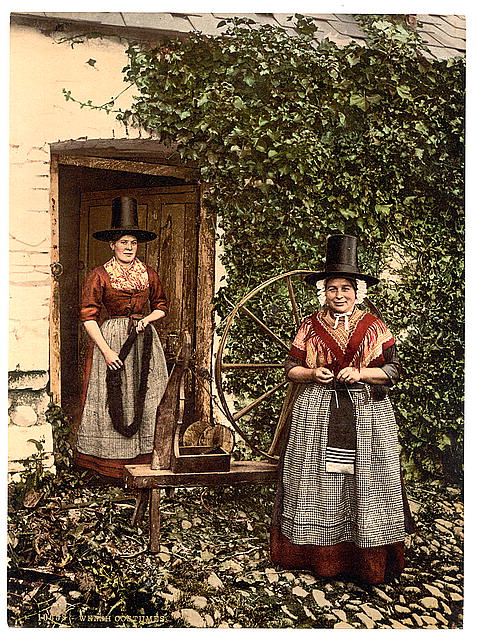
Mother Goose was supposed to be a country woman and, by the latter part of the 19th century, was dressed as one—but we think with a particular look, that of Welsh women in distinctive traditional clothing.

mother-goose.jpg

Welsh_spinnersc1900.jpeg

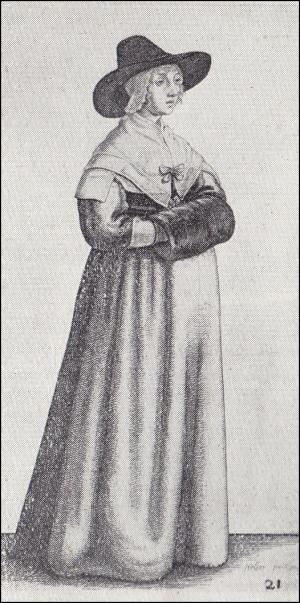
The style of hat is much older—here we have, in succession, three earlier versions from the 17th century—1610, 1640, 1676.

rubens_isabella_brant_c1610

woman21x300hollar1640.jpg

Mrs_Salesbury_-_wright.jpg

Country people tend to be conservative, so something worn in much of the UK in the 17th century appears to have existed, at least in modified form, in the depths of Wales long after then.

copy1-554-78-welsh-national-costume-1911-660x440.jpg

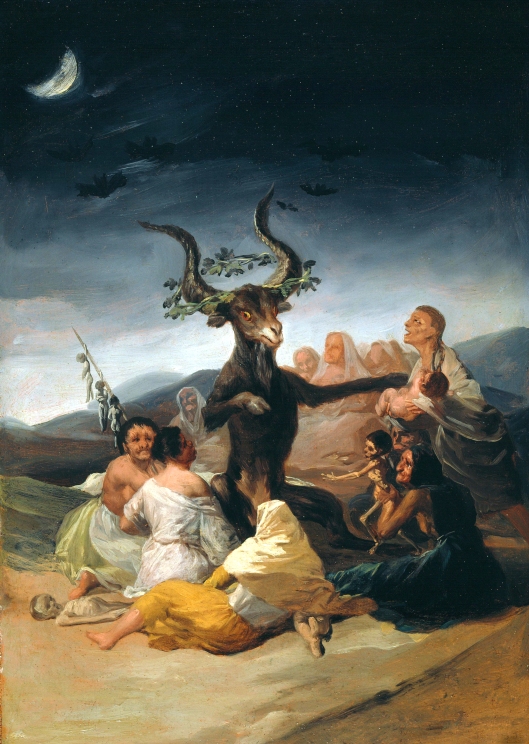
We wonder whether there hasn’t been a kind of cross-over effect: country women to Mother Goose to witches—all conservative dressers. There is also a long tradition in Wales of “wise women”—often mistaken in England for dealers-with-the-devil—those appear in this rather creepy painting by Goya of a witches’ Sabbath (1797-1798). (We note that there are no pointy hats here.) Perhaps the Welsh wise woman was consulted about wardrobe by Mother Goose?

GOYA_-_El_aquelarre_(Museo_Lázaro_Galdiano,_Madrid,_1797-98).jpg

Witches (as the “Harry Potter” books point out) aren’t and weren’t always just women.

hpetal.jpg

Men, too, could take part, sometimes called witches, sometimes warlocks or wizards. When we think wizard, of course, we immediately think of the 5 Istari—

310993_121176884650130_120725101361975_85832_1441609629_n.jpg

When we think of witch, however, in the context of LOTR, we can see that:

  1. In this respect, this is a different kind of culture—for instance, the only equivalent of a “wise woman” is Ioreth, in the “Houses of Healing”
  2. But there is a witch-king, that of Angmar, who is also the head of the Nazgul

eowynvswitchking.jpg

There is a puzzle here, however. In western tradition, witches are the servants of Satan, who spend their time, it seems, troubling humans at the daily level—making cows sick, tormenting babies, holding sabbbaths, casting spells.

witch_john_william_waterhouse_magic_circle_painting_casting_spells.jpg

In that tradition, the only ruler is Satan himself, as depicted in this second Goya painting of a sabbath (and we note here that most of the witches appear to be something between human and other—a great—but horrible—touch—and who is that girl sitting off to the right? This comes from a series of paintings done by Goya in the last years of his life and there is a certain mystery about why he painted them—they’re murals, in fact—and what they might mean.)

francisco_de_goya_y_lucientes_-_witches_sabbath_the_great_he-goat


As there are no other witches in Middle-earth, then, where are the witches for the witch-king to be monarch of?

And that, perhaps, is another mystery for Halloween…

Oh—and Happy Halloween, by the way!


Thanks, as ever, for reading.

MTCIDC

CD

ps

While gathering images for this posting, we happened upon this photograph. Is this a picture from Professor McGonagall’s 50th Hogwarts  reunion?

tumblr_nwrfedgPaR1sdzmuoo1_500.jpg

← Older posts
Newer posts →

The Doubtful Sea Series Facebook Page

The Doubtful Sea Series Facebook Page

  • Ollamh

Categories

  • Artists and Illustrators
  • Economics in Middle-earth
  • Fairy Tales and Myths
  • Films and Music
  • Games
  • Heroes
  • Imaginary History
  • J.R.R. Tolkien
  • Language
  • Literary History
  • Maps
  • Medieval Russia
  • Military History
  • Military History of Middle-earth
  • Narnia
  • Narrative Methods
  • Poetry
  • Research
  • Star Wars
  • Terra Australis
  • The Rohirrim
  • Theatre and Performance
  • Tolkien
  • Uncategorized
  • Villains
  • Writing as Collaborators
Follow doubtfulsea on WordPress.com

Across the Doubtful Sea

Recent Postings

  • Do You Speak Villain? (Part 3) February 18, 2026
  • Do You Speak Villain? (2) February 11, 2026
  • Do You Speak Villain? (Part 1) February 4, 2026
  • Towering January 28, 2026
  • Tolkien Among the Indians January 21, 2026
  • Thin and Stretched January 14, 2026
  • Through a glass… January 7, 2026
  • Heffalumps? December 31, 2025
  • We Three Kings December 24, 2025

Blog Statistics

  • 107,645 Views

Posting Archive

  • February 2026 (3)
  • January 2026 (4)
  • December 2025 (5)
  • November 2025 (4)
  • October 2025 (5)
  • September 2025 (4)
  • August 2025 (4)
  • July 2025 (5)
  • June 2025 (4)
  • May 2025 (4)
  • April 2025 (5)
  • March 2025 (4)
  • February 2025 (4)
  • January 2025 (5)
  • December 2024 (4)
  • November 2024 (4)
  • October 2024 (5)
  • September 2024 (4)
  • August 2024 (4)
  • July 2024 (5)
  • June 2024 (4)
  • May 2024 (5)
  • April 2024 (4)
  • March 2024 (4)
  • February 2024 (4)
  • January 2024 (5)
  • December 2023 (4)
  • November 2023 (5)
  • October 2023 (4)
  • September 2023 (4)
  • August 2023 (5)
  • July 2023 (4)
  • June 2023 (4)
  • May 2023 (5)
  • April 2023 (4)
  • March 2023 (5)
  • February 2023 (4)
  • January 2023 (4)
  • December 2022 (4)
  • November 2022 (5)
  • October 2022 (4)
  • September 2022 (4)
  • August 2022 (5)
  • July 2022 (4)
  • June 2022 (5)
  • May 2022 (4)
  • April 2022 (4)
  • March 2022 (5)
  • February 2022 (4)
  • January 2022 (4)
  • December 2021 (5)
  • November 2021 (4)
  • October 2021 (4)
  • September 2021 (5)
  • August 2021 (4)
  • July 2021 (4)
  • June 2021 (5)
  • May 2021 (4)
  • April 2021 (4)
  • March 2021 (5)
  • February 2021 (4)
  • January 2021 (4)
  • December 2020 (5)
  • November 2020 (4)
  • October 2020 (4)
  • September 2020 (5)
  • August 2020 (4)
  • July 2020 (5)
  • June 2020 (4)
  • May 2020 (4)
  • April 2020 (5)
  • March 2020 (4)
  • February 2020 (4)
  • January 2020 (6)
  • December 2019 (4)
  • November 2019 (4)
  • October 2019 (5)
  • September 2019 (4)
  • August 2019 (4)
  • July 2019 (5)
  • June 2019 (4)
  • May 2019 (5)
  • April 2019 (4)
  • March 2019 (4)
  • February 2019 (4)
  • January 2019 (5)
  • December 2018 (4)
  • November 2018 (4)
  • October 2018 (5)
  • September 2018 (4)
  • August 2018 (5)
  • July 2018 (4)
  • June 2018 (4)
  • May 2018 (5)
  • April 2018 (4)
  • March 2018 (4)
  • February 2018 (4)
  • January 2018 (5)
  • December 2017 (4)
  • November 2017 (4)
  • October 2017 (4)
  • September 2017 (4)
  • August 2017 (5)
  • July 2017 (4)
  • June 2017 (4)
  • May 2017 (5)
  • April 2017 (4)
  • March 2017 (5)
  • February 2017 (4)
  • January 2017 (4)
  • December 2016 (4)
  • November 2016 (5)
  • October 2016 (6)
  • September 2016 (5)
  • August 2016 (5)
  • July 2016 (5)
  • June 2016 (5)
  • May 2016 (4)
  • April 2016 (4)
  • March 2016 (5)
  • February 2016 (4)
  • January 2016 (4)
  • December 2015 (5)
  • November 2015 (5)
  • October 2015 (4)
  • September 2015 (5)
  • August 2015 (4)
  • July 2015 (5)
  • June 2015 (5)
  • May 2015 (4)
  • April 2015 (3)
  • March 2015 (4)
  • February 2015 (4)
  • January 2015 (4)
  • December 2014 (5)
  • November 2014 (4)
  • October 2014 (6)
  • September 2014 (1)

Blog at WordPress.com.

  • Subscribe Subscribed
    • doubtfulsea
    • Join 78 other subscribers
    • Already have a WordPress.com account? Log in now.
    • doubtfulsea
    • Subscribe Subscribed
    • Sign up
    • Log in
    • Report this content
    • View site in Reader
    • Manage subscriptions
    • Collapse this bar
 

Loading Comments...