• About

doubtfulsea

~ adventure fantasy

Tag Archives: Barrows

Death and the Rohirrim

30 Wednesday Sep 2026

Posted by Ollamh in Uncategorized

≈ Leave a comment

Tags

barrow, Barrows, Beowulf, Edoras, Fantasy, howe, Nazgul, Rohirrim, Snowmane, Sutton Hoo, The Iliad, The Lord of the Rings, the-iliad, Theoden, Tolkien

Welcome, dear readers, as always.

“I myself will go to war, to fall in the front of the battle, if it must be.  Thus shall I sleep better…”

says Theoden to Gandalf.  (The Two Towers, Book Three, Chapter 6, “The King of the Golden Hall”)

As Theoden has just said “to fall in the front of the battle”, it’s clear that he means here not falling asleep, but dying, and that’s exactly what he does, leading the Rohirrim against Sauron’s armies at the battle of the Pelennor Fields,
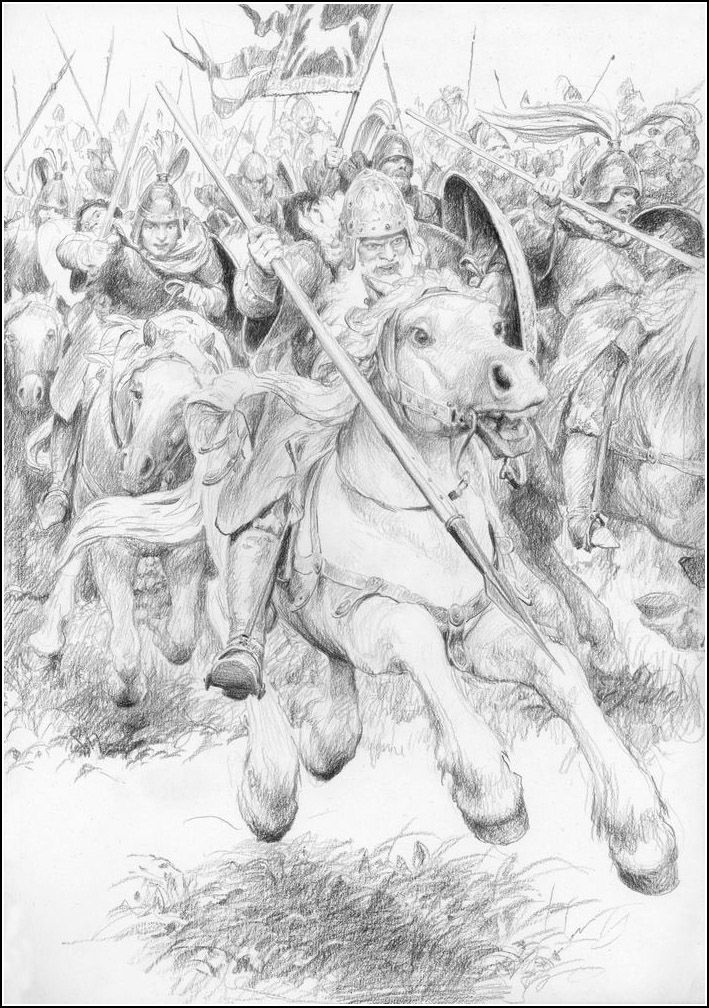
(Denis Gordeev)

and dying after tangling with the chief of the Nazgul.
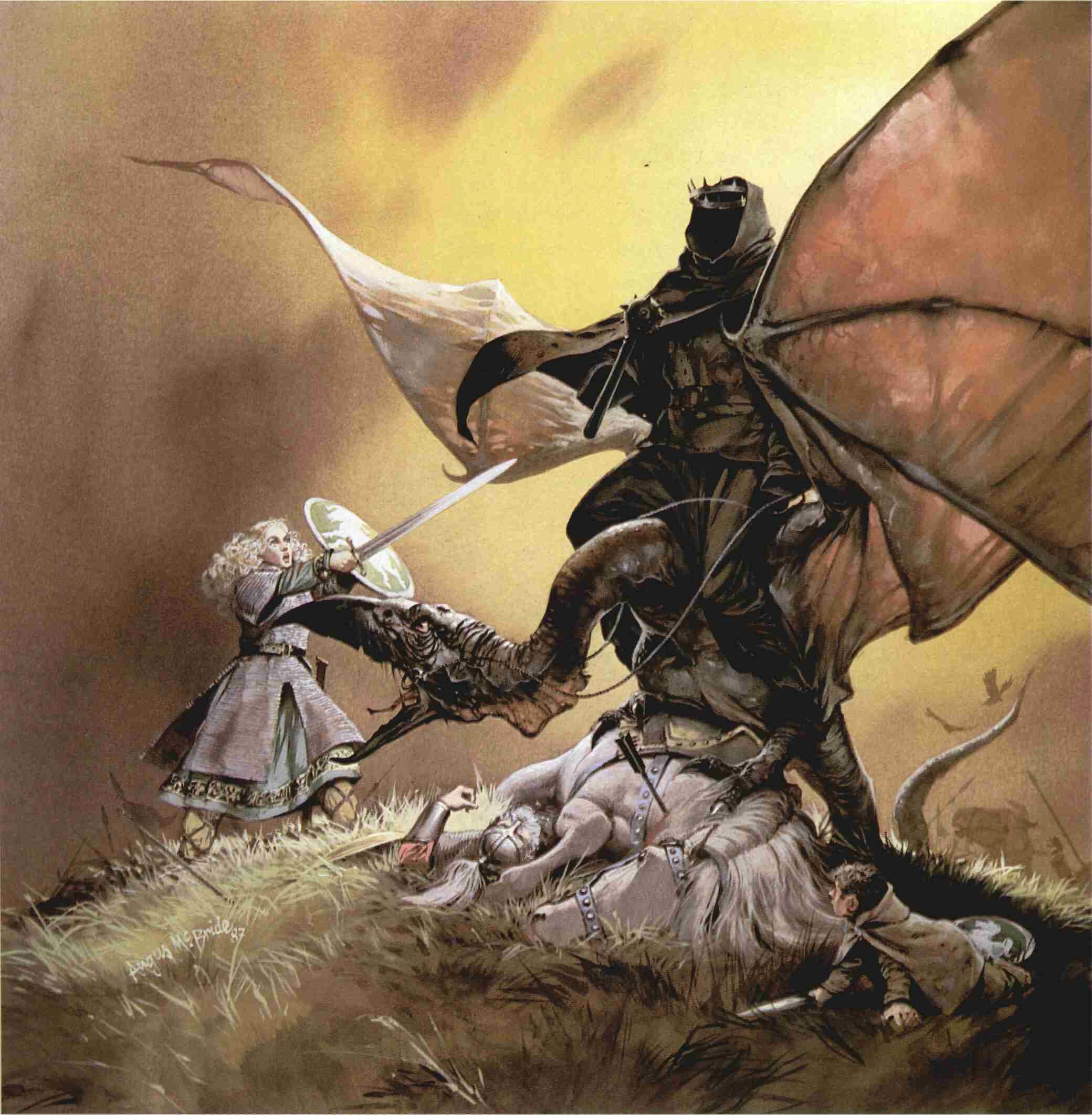
(Angus McBride)

But where will he “sleep”?

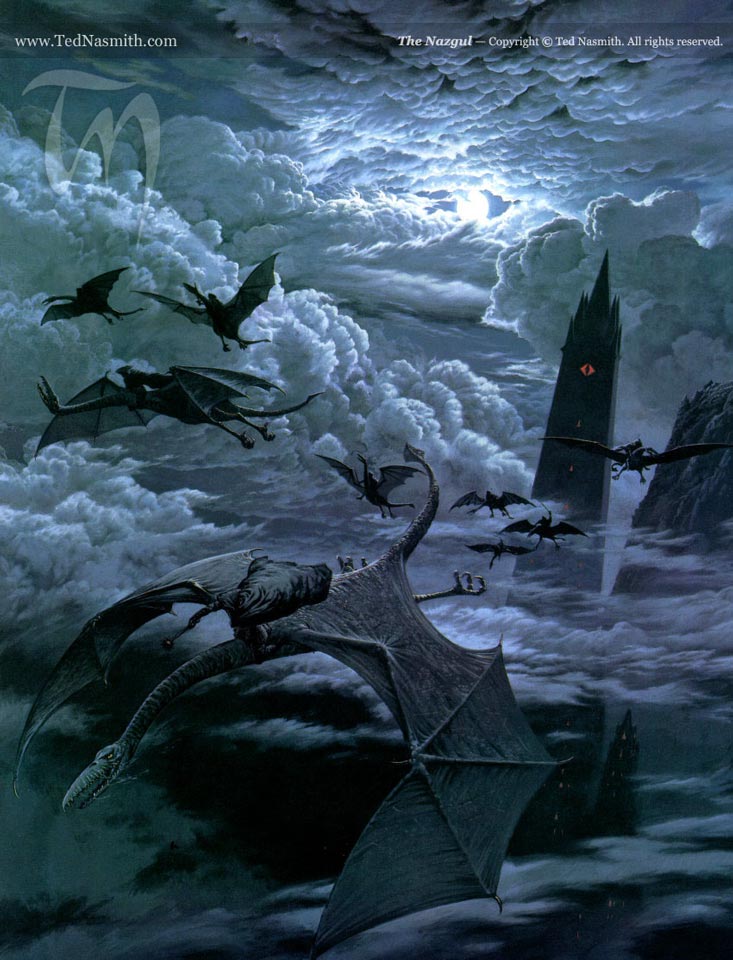
Snowmane, his horse, whose reaction to the Nazgul’s ghastly mount,
(Ted Nasmith)

led to Theoden’s death, is buried under a mound on the battlefield—

“…but for Snowmane they dug a grave and set up a stone upon which was carved in the tongues of Gondor and the Mark:

‘Faithful servant, yet master’s bane,

Lightfoot’s foal, swift Snowmane.’

Green and long grew the grass on Snowmane’s Howe…” (The Return of the King, Book Five, Chapter 6, “The Battle of the Pelennor Fields”)

A “howe” is a burial mound,
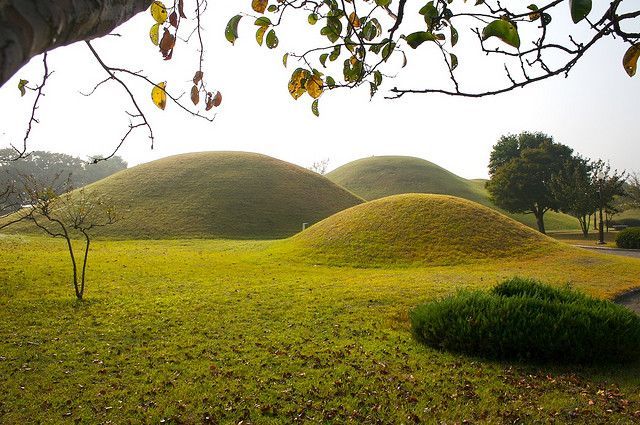
and the word appears to come originally from Norse haugr, “mound; cairn” says Etymonline (https://www.etymonline.com/word/howe If you are a Narnia fan, you probably think immediately of Aslan’s Howe— )
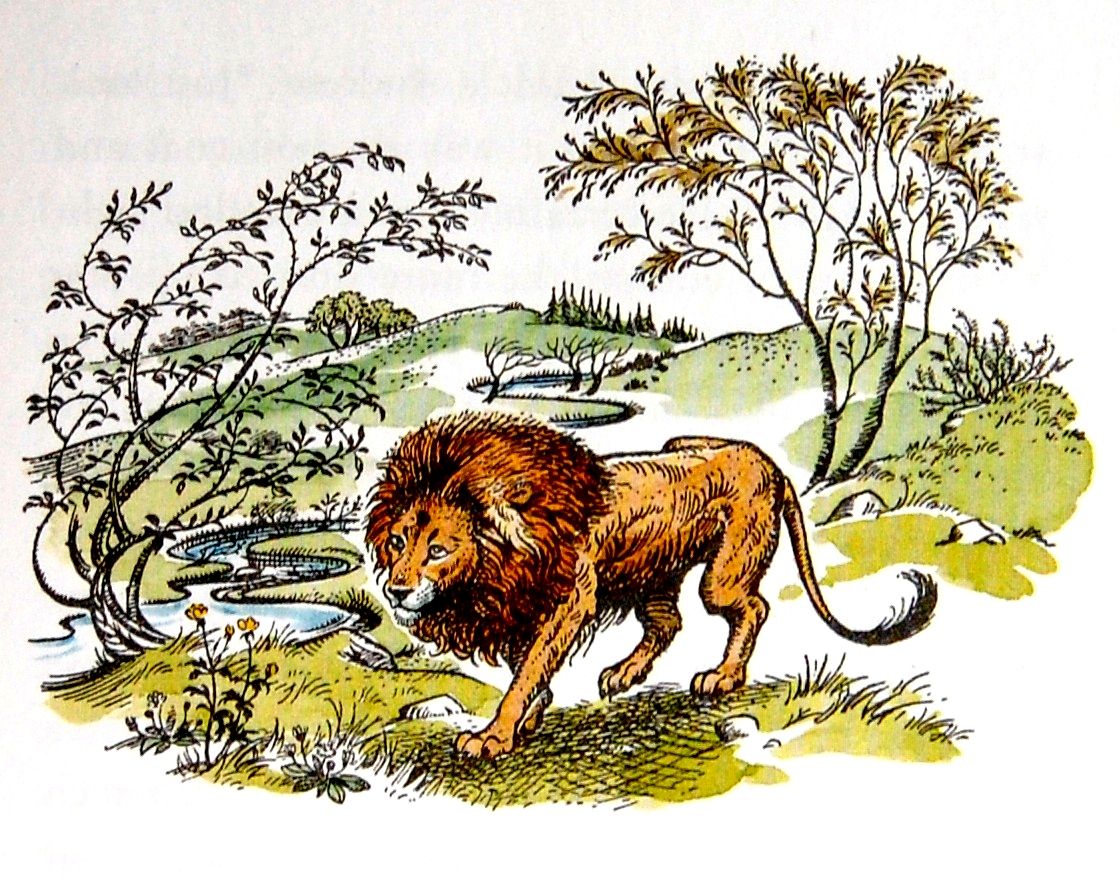
(Pauline Baynes)

When Sauron is finally defeated, we know what then happens to Theoden’s body—

“Then the kings of Gondor and Rohan went to the Hallows and they came to the tombs of Rath Dinen, and they bore away King Theoden upon a golden bier, and passed through the City in silence.  Then they laid the bier upon a great wain
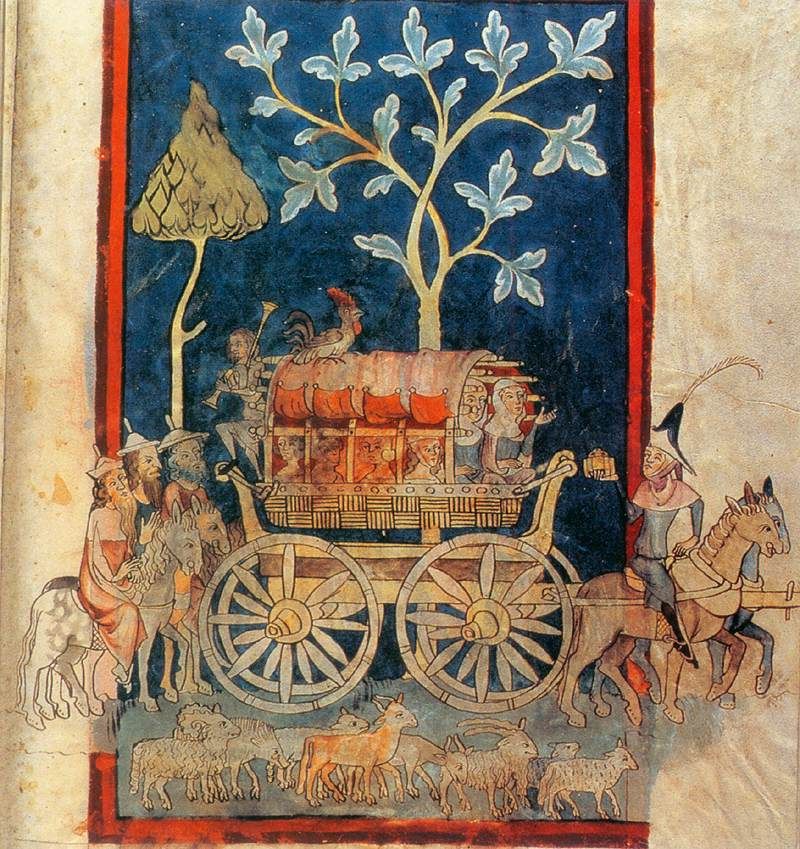
(perhaps something like this—but without the bagpiper—and the rooster)

with Riders of Rohan all about it and his banner borne before; and Merry being Theoden’s esquire rode upon the wain and kept the arms of the King…

At length after fifteen days of journey the wain of King Theoden passed through the green fields of Rohan and came to Edoras; and there they all rested…after three days the Men of the Mark prepared the funeral of Theoden; and he was laid in a house of stone with his arms and many other fair things that he had possessed, and over him was raised a great mound, covered with green turves of grass and of white evermind.  And now there were eight mounds on the east-side of the Barrowfield.”  (The Return of the King, Book Six, Chapter 6, “Many Partings”.)

We’ve seen these mounds before—

“At the foot of the walled hill the way ran under the shadow of many mounds, high and green…

‘Look!’ said Gandalf…we are come to the great barrows where the sires of Theoden sleep.’

‘Seven mounds upon the left, and nine upon the right,’ said Aragorn.”  (The Two Towers, Book Three, Chapter 6, “The King of the Golden Hall”)

Since first reading this, I could always see those mounds—
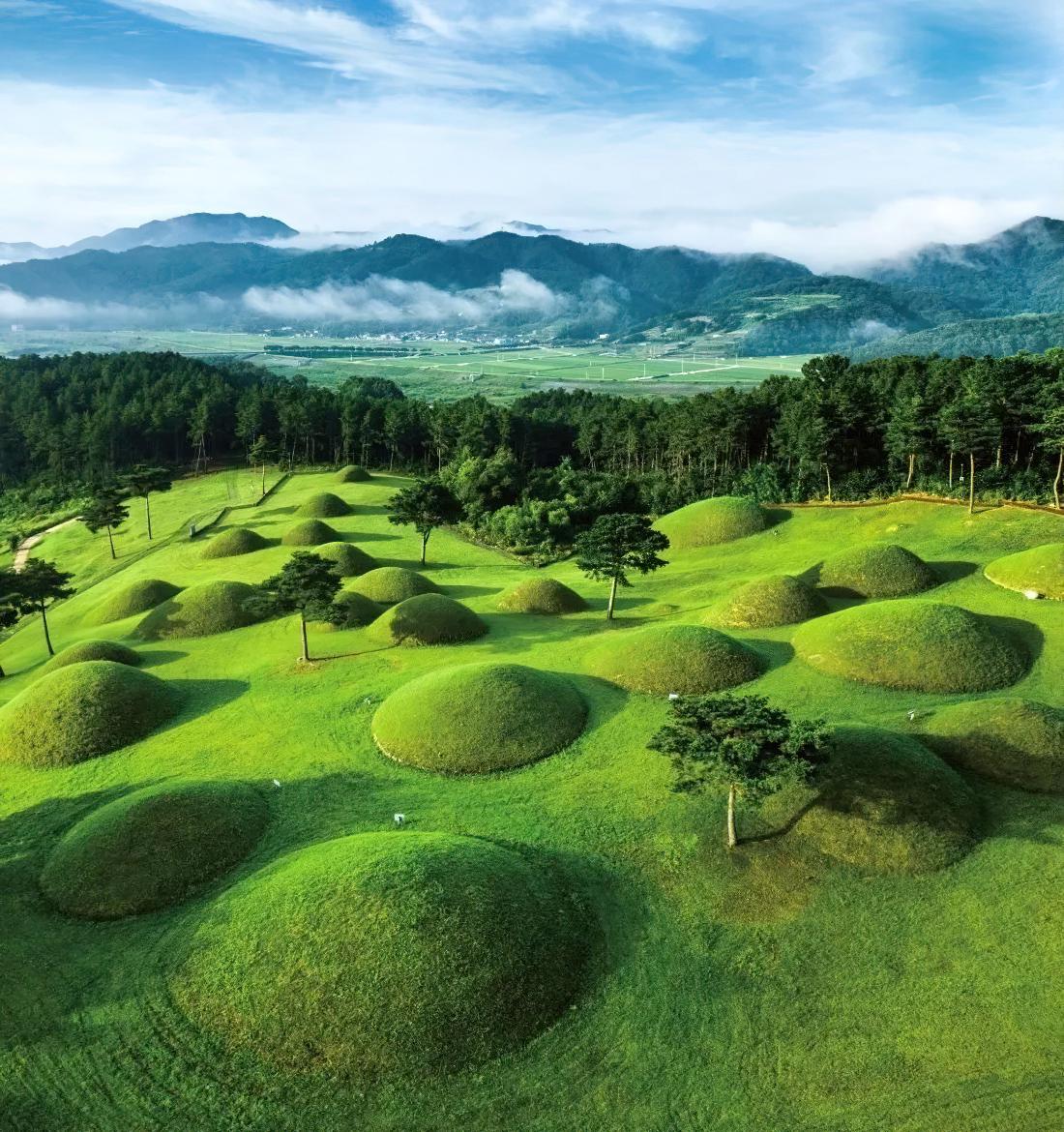
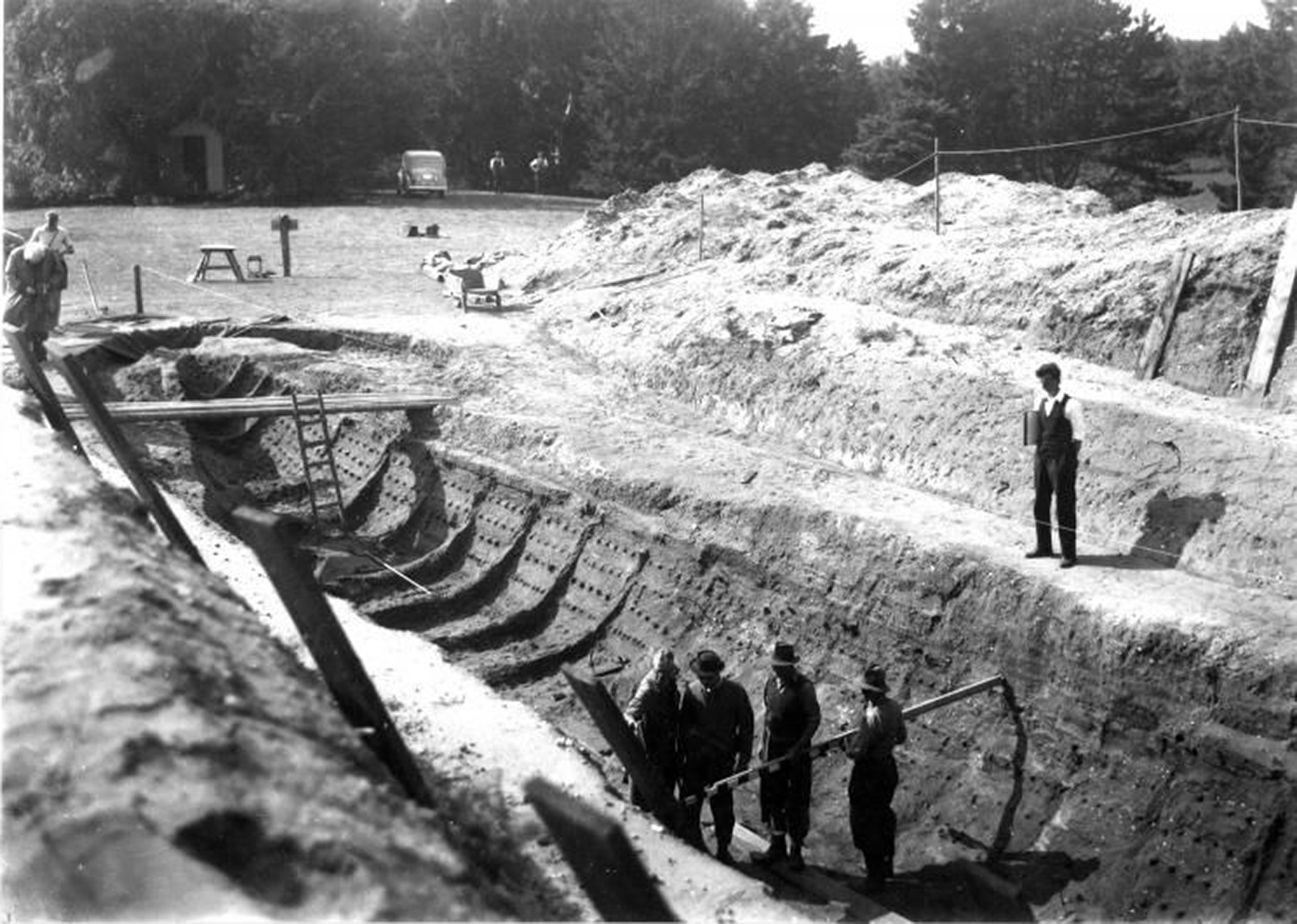
and it made me wonder where JRRT got the idea.  My first thought was the ship burial at Sutton Hoo, which came to public attention in 1939—
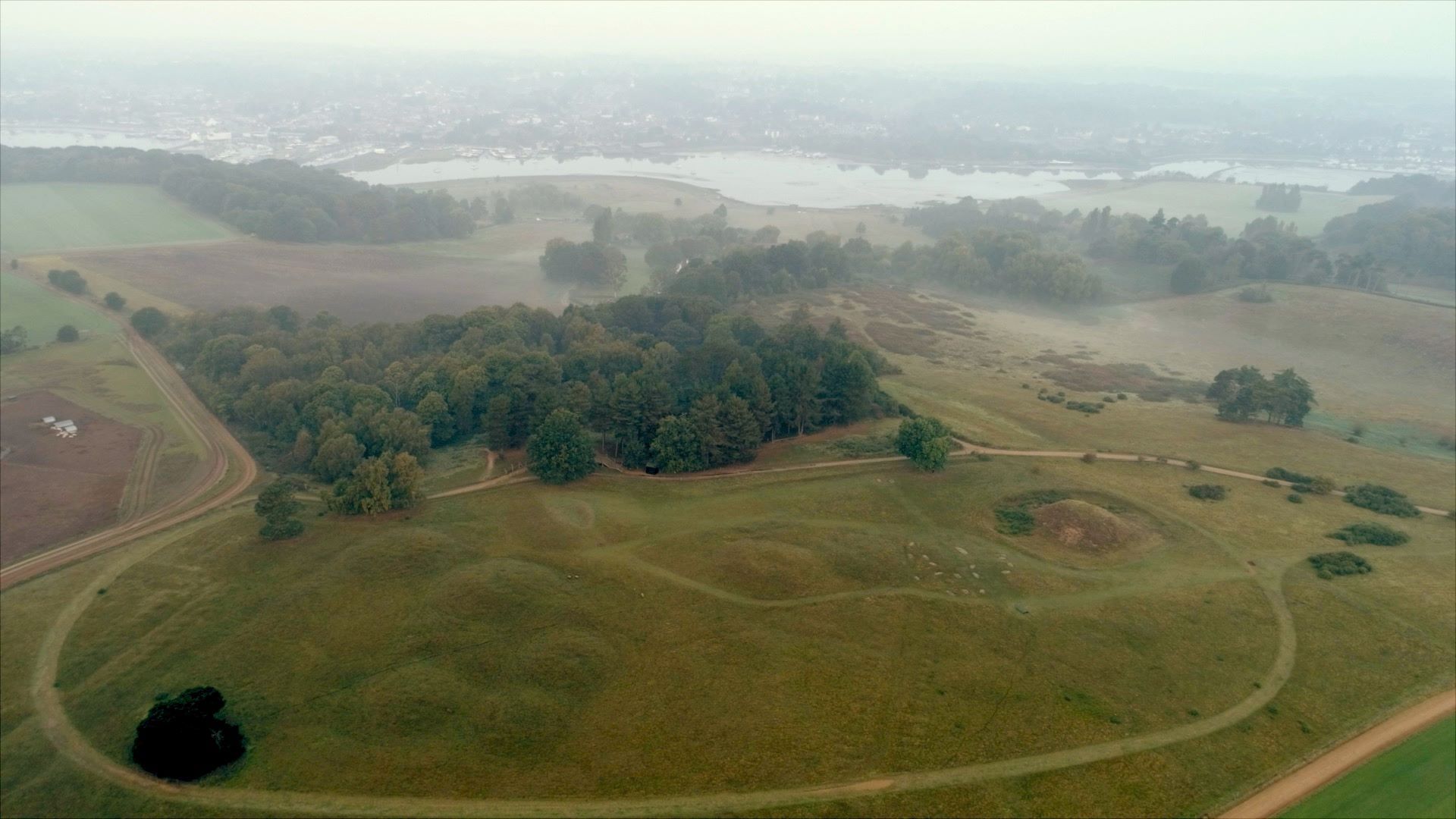
and which Tolkien would have read about in the news of the day.  (And which you can read about here:  https://en.wikipedia.org/wiki/Sutton_Hoo# )

The person buried in the ship certainly had “many…fair things”, now restored and kept in the British Museum—
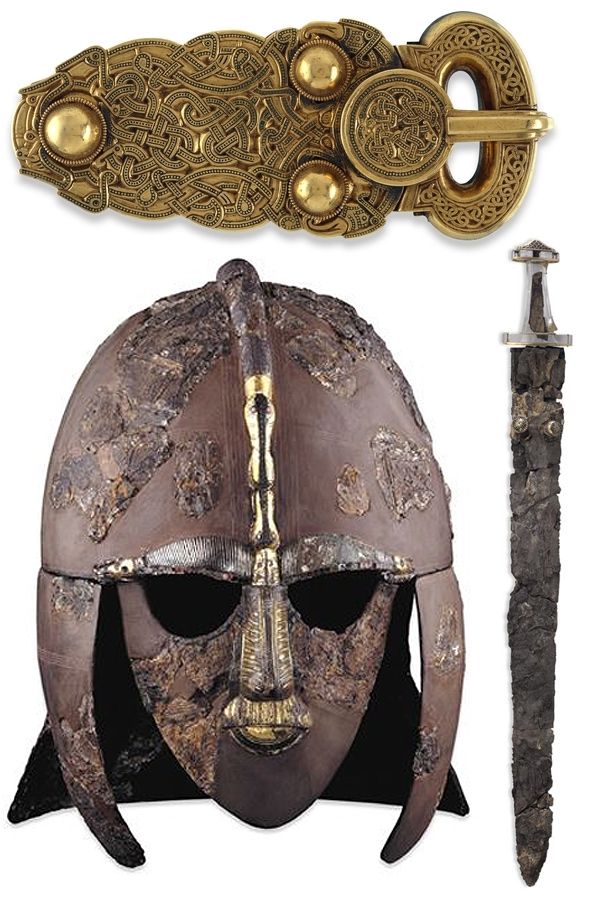
Tolkien might also have been aware of Viking ship burials in Scandinavia, like that of the Oseberg ship, excavated in Norway in 1904-5—
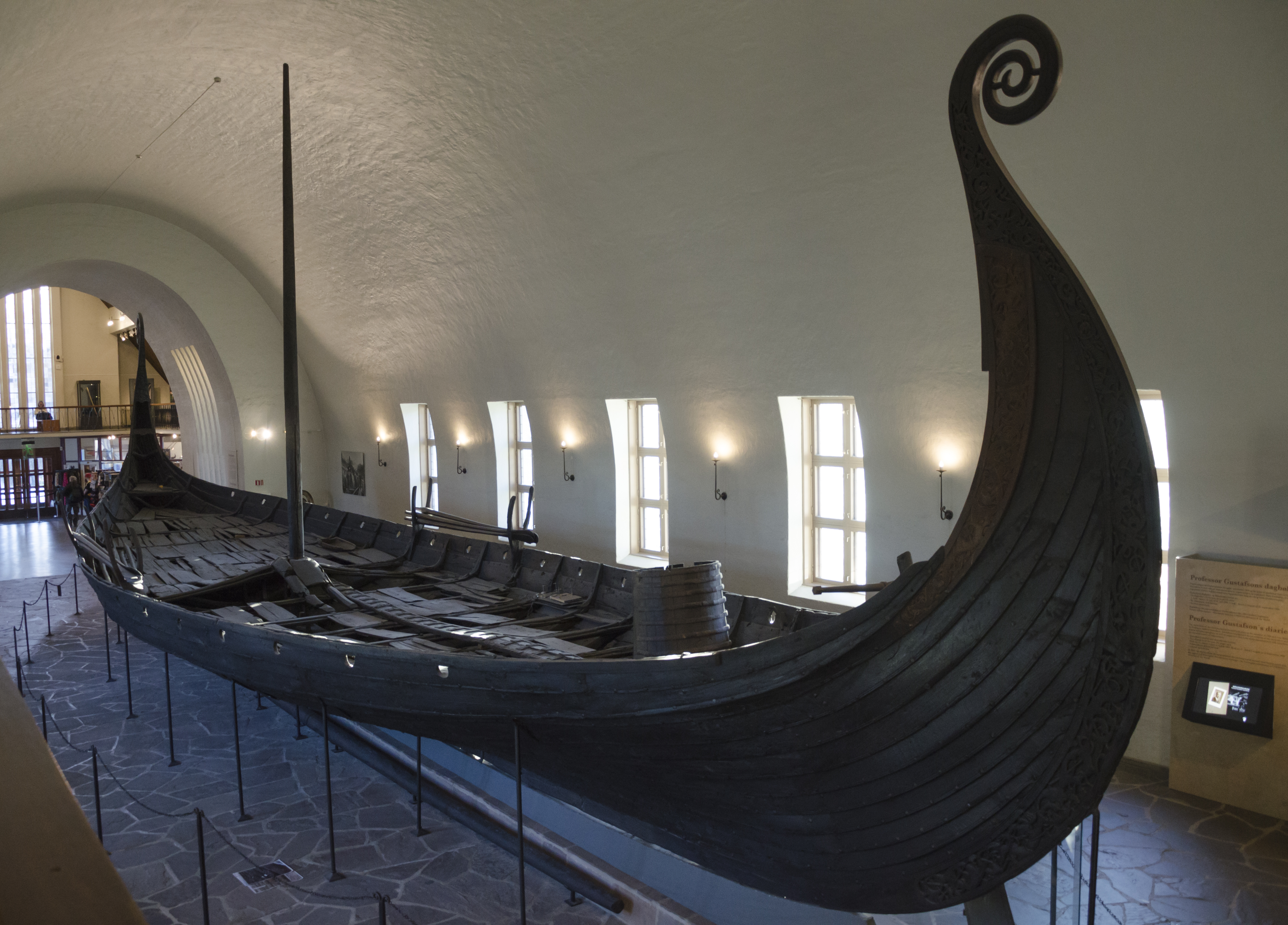
which you can read about here:  https://en.wikipedia.org/wiki/Sutton_Hoo#  And you can read about Viking ship burials in general here:  https://en.wikipedia.org/wiki/Norse_funeral

He could also have been aware of the Six Hills in Stevenage, England, thought to be Roman burial mounds—
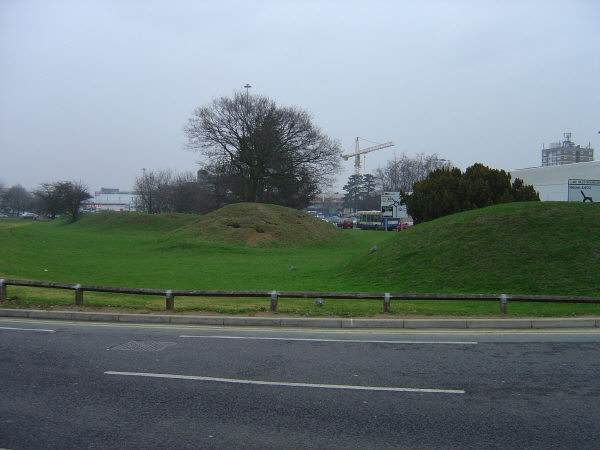
(ricjl   For more images, see:  h)ttps://www.megalithic.co.uk/article.php?sid=1475  For more on the site, see:  https://en.wikipedia.org/wiki/Six_Hills  )

or he might have been inspired by places like the early Neolithic West Kennet Long Barrow—
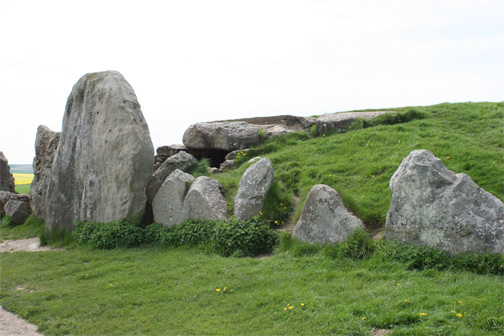
(see for more:  https://en.wikipedia.org/wiki/West_Kennet_Long_Barrow )

or even the many barrows in Ireland (for more, see:  https://www.danielkirkpatrick.co.uk/irish-history/irish-barrows-map/ )

but his ultimate sources were probably the burials of Patroclus (in Iliad, Book 23, lines 245-248—my translation—Achilles is speaking to the Greeks)–

τύμβον δ’ οὐ μάλα πολλὸν ἐγὼ πονέεσθαι ἄνωγα,

ἀλλ’ ἐπιεικέα τοῖον· ἔπειτα δὲ καὶ τὸν Ἀχαιοὶ

εὐρύν θ’ ὑψηλόν τε τιθήμεναι, οἵ κεν ἐμεῖο

δεύτεροι ἐν νήεσσι πολυκλήϊσι λίπησθε.

“But I order you not to labor over a very big barrow,

But such as is suitable [for the moment].  But then

Make it broad and high, [you] Greeks,

Those of my survivors who may be left in the many-oared ships.”

and of Hector (Iliad, Book 24, 795-799—again, my translation)

καὶ τά γε χρυσείην ἐς λάρνακα θῆκαν ἑλόντες

πορφυρέοις πέπλοισι καλύψαντες μαλακοῖσιν.

αἶψα δ’ ἄρ’ ἐς κοίλην κάπετον θέσαν, αὐτὰρ ὕπερθε

πυκνοῖσιν λάεσσι κατεστόρεσαν μεγάλοισι·

ῥίμφα δὲ σῆμ’ ἔχεαν…

“and taking them [Hector’s bones], they put them in a golden chest,

Covering [them] with soft purple robes.

At once they placed [the chest] in a hollowed-out grave, then from above

They covered it with big, thick-set stones.

And quickly then they heaped up the mound…”

and, of course, Beowulf–

“The men of the Weders made accordingly

A hill on the height, high and extensive,

Of sea-going sailors to be seen from a distance,

And the brave one’s beacon built where the fire was,

In ten-days’ space, with a wall surrounded it,

As wisest of world-folk could most worthily plan it.

They placed in the barrow rings and jewels,

All such ornaments as erst in the treasure

War-mooded men had won in possession :

The earnings of earlmen to earth they entrusted,

The gold to the dust, where yet it remaineth

As useless to mortals as in foregoing eras.”

(Beowulf, John Lesslie Hall, translator, 1892—see:   https://archive.org/details/beowulfanglosaxo00hall/page/106/mode/2up )

And even more Beowulf in this—

“Then the Riders of the King’s House upon white horses rode round about the barrow and sang together a song of Theoden Thengel’s son…” (The Return of the King, Book Six, Chapter 6, “Many Partings”.) 

which clearly comes from this—

“Round the dead-mound rode then the doughty-in-battle,

Bairns of all twelve of the chiefs of the people,

More would they mourn, lament for their ruler,

Speak in measure, mention him with pleasure,

Weighed his worth, and his warlike achievements

Mightily commended, as ’tis meet one praise his

Liegelord in words and love him in spirit,

When forth from his body he fares to destruction.

So lamented mourning the men of the Geats,

Fond-loving vassals, the fall of their lord,

Said he was gentlest of kings under heaven,

Mildest of men and most philanthropic,

Friendliest to folk-troops and fondest of honor.”

(again from the Hall translation)

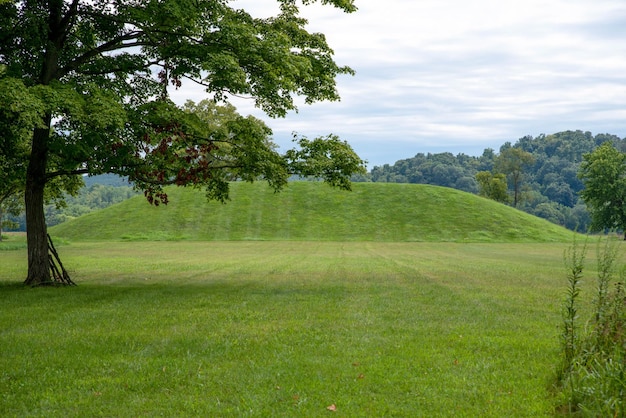
And there, we can imagine, Theoden sleeps still.
Thanks, as ever, for reading.

Stay well,

And remember that, as ever, there’s

MTCIDC

O

When One Door Closes (2)

16 Wednesday Nov 2016

Posted by Ollamh in J.R.R. Tolkien, Literary History, Narrative Methods

≈ Leave a comment

Tags

Balin, Barrows, Bree, Bridge of Khazad-Dum, Chamber of Mazarbul, Crickhollow, doors, Dwarves, Elven-way, Farmer Maggot, Gandalf, Greenway, Hobbit door, Hollin, Lothlorien, Moria, Nazgul, picaresque, Rivendell, Robert Burns, Tam O'Shanter, The Fellowship of the Ring, The Ford of Bruinen, The Hobbit, The Legend of Sleepy Hollow, The Lord of the Rings, The Prancing Pony, Tolkien, Washington Irving, Watcher in the Water, Weathertop, West-door, West-gate

Welcome, dear reader, as always. It’s a rather gloomy late autumn day here as we write this, fitting, perhaps, for the gloomier The Lord of the Rings after the cheerier (well, sometimes) The Hobbit, as we continue our look at the functions of doors and their equivalents in JRRT.

If you’ve read our previous posting, you’ll know that, in it, we examined doors and gates in The Hobbit, dividing them into two basic categories: doors which might lead to safety and doors which led to danger, all based upon Bilbo’s remark about how dangerous it can be, just stepping outside your door.

Bilbo’s door adventures had begun with his own.

gandalfvisitsbilbo.jpg

doorwithrune.jpg

When comparing the two books, we get a strong sense of the episodic nature of The Hobbit:  we can almost break it down into movement between doors, from the arrival of the dwarves to the knock of Gandalf and Balin, giving it more the feel of a picaresque novel: that is, a novel with an goal, but with much of its focus upon the adventures along the way, adventures which don’t always necessarily lead to that goal.   This gives it a lighter tone, as well—after all, it was meant as a children’s book in a time (1937) when such books were understood in general never to be too solemn. The Lord of the Rings, in contrast, develops an almost grimly-focused forward motion, which impels it even when the Fellowship breaks into two after the death of Boromir, and much of the action spreads from Frodo and Sam on the way to Mordor to the separate adventures of Merry and Pippin in Rohan and Gondor.

So what might we see as the first door—in either sense—in The Lord of the Rings? we asked ourselves. And we supposed that we might see minor doors of safety at Farmer Maggot’s and Frodo’s new home in Crickhollow, in both cases brief refuges from the Nazgul, but, as we said in our last posting, doors commonly have some sort of challenge to them—and challenger—and the first one of those appears briefly at the hedge in Bree:

“They came to the West-gate and found it shut; but at the door of the lodge beyond it, there was a man sitting. He jumped up and fetched a lantern and looked over the gate at them in surprise.”   (The Fellowship of the Ring, Book 1, Chapter 9, “At the Sign of the Prancing Pony”)

bree.jpg

The watchman, when his challenges (and maybe a little too-inquisitive challenges) are turned aside, lets them in and they reach The Prancing Pony, only to escape murder in their beds and the loss of their ponies.

prancingpony.jpg

The first gateway which leads to real safety, however, isn’t a door or gate at all, but a natural barrier (with some magical help): the Ford of Bruinen. Here, the role of traveler and challenger is reversed, as the challenged are the Wraiths and the challenger is Frodo, but it is the power of the Elves which closes the door.

At the Ford, by Ted Nasmith

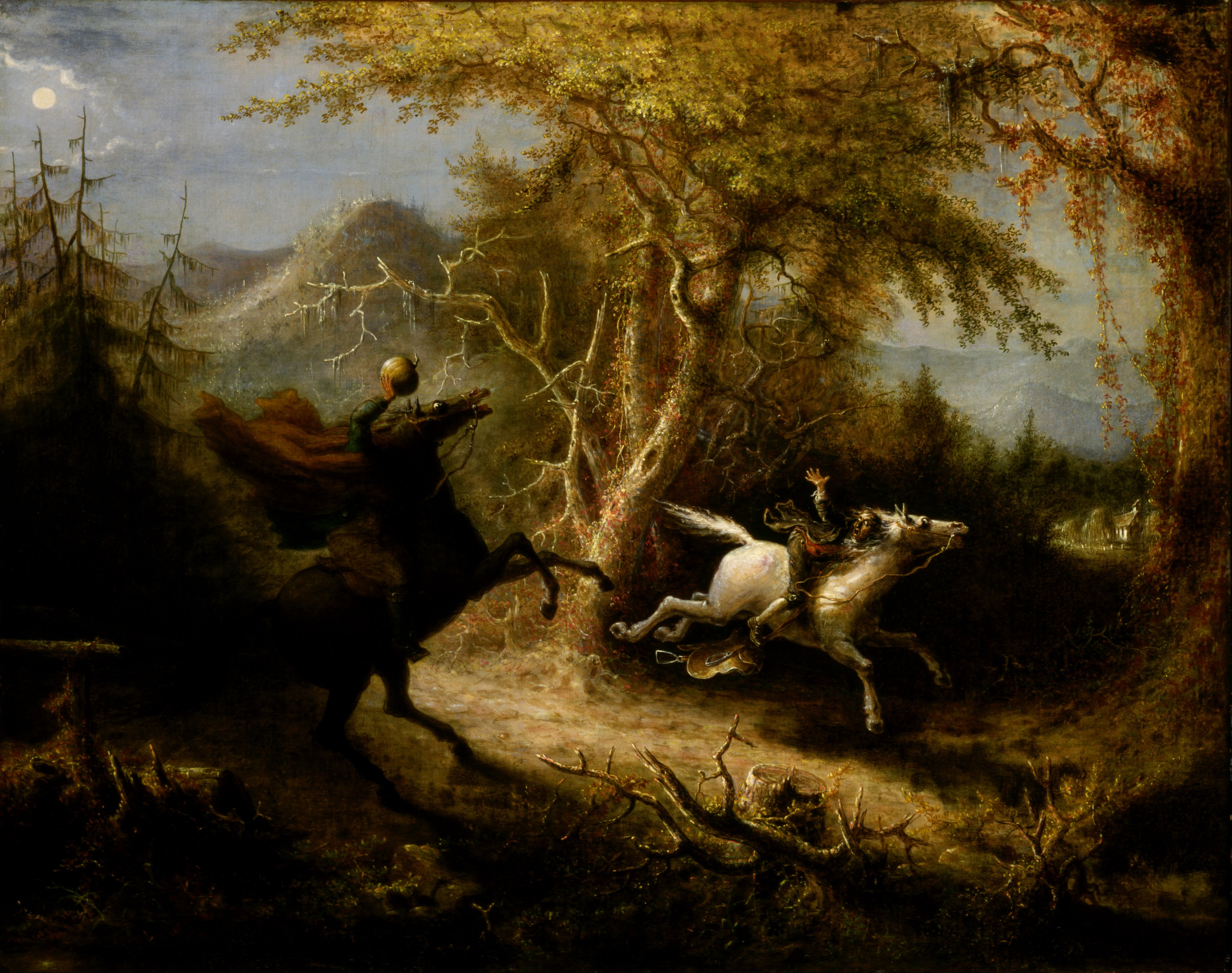
(It is interesting here that Tolkien has chosen not to take advantage of the folk belief—if you know “The Legend of Sleepy Hollow” by Washington Irving, or its inspiration, the poet Robert Burn’s “Tam O’Shanter”, this will be readily familiar to you—that evil spirits are unable to cross running water, even at a bridge.

John_Quidor_-_The_Headless_Horseman_Pursuing_Ichabod_Crane_-_Google_Art_Project.jpg

tamoshanter.jpg

To reach the Shire, the Wraiths have had to cross several bodies of water and now their hesitation to traverse another appears to be derived from their confidence that they can now control Frodo—either by the influence of the Ring, or perhaps from his wound—and call him back across the stream to them.)

From Rivendell, the next such door is that at the western side of Moria.

moriagate.jpg

Here, there is no living challenger. Rather, it is a kind of riddle—or, at least, it is initially understood as such—which bars the way. Its answer is simple, which led us to wonder, what is the purpose of this door scene in the story? As the creature in the pool

watcher.jpg

barricades the door behind them, it adds to the tension: the Fellowship has been watched and, from the hostile mountains to the wolves to the tentacle thing, it has been forced into darker and narrower ways, those ways seemingly chosen by the malevolent force observing their journey. As well, it suggests the gradual decay of what was once a vibrant, active culture, as Gandalf explains:

“Here the Elven-way from Hollin ended. Holly was the token of the people of that land, and they planted it here to mark the end of their domain; for the West-door was made chiefly for their use in their traffic with the Lords of Moria. Those were happier days, when there was still close friendship at times between folk of different race, even between Dwarves and Elves.” (The Fellowship of the Ring, Book 2, Chapter 4, “A Journey in the Dark”)

This is a theme throughout The Lord of the Rings and one which, we believe, adds to its power: the events of the close of the Third Age are set against a background of other times and other events and the landscape still bears traces of those times, from the Barrows to the Greenway and Weathertop and far beyond. As well, so many of those traces suggest that violence and the dark spirit of Sauron, sometimes through his agents, sometimes in person, have had much to do with their end.

Now that the Fellowship is within Moria, it encounters its next door: that of the Chamber of Mazarbul.

marzabul.jpg

Here, they are the challengers, when forced to defend themselves from a horde of “Orcs, very many of them…And some are large and evil: black Uruks of Mordor.” (The Fellowship of the Ring, Book 2, Chapter 5, “The Bridge of Khazad-Dum”). There is a second door, however, and, when they have beaten back their attackers, they escape by it—but only so that Gandalf may be the challenger at a crossing—as Frodo was at the ford—at the Bridge of Khazad-Dum, although here magic apparently cannot save him, as it had Frodo.

balrog.jpg

With Gandalf gone, we see the repetition of a scene from The Hobbit—the escape through a crowd to the outside world:

“…and suddenly before them the Great Gates opened, an arch of blazing light.

There was a guard of orcs crouching in the shadows behind the great door-posts towering on either side, but the gates were shattered and cast down. Aragorn smote to the ground the captain that stood in his path, and the rest fled in terror at his wrath.” (The Fellowship of the Ring, Book 2, Chapter 5, “The Bridge of Khazad-Dum”)

At this moment in The Hobbit, Bilbo had used his newly-discovered ring to escape (albeit with the loss of a few buttons), but Aragorn’s sword clearly does just as well.

It is easy to see just how prevalent the pattern is: even after that harrowing moment of being chased through the mines and losing Gandalf, where there is a door, there is someone at it to make a challenge, and this holds true even without an actual door, as the remaining members of the Fellowship seek to enter Lothlorien and are stopped by Elven sentries in a tree. (The Fellowship of the Ring, Book 2, Chapter 6, “Lothlorien”)

And the pattern continues, even as the Fellowship breaks up, but let’s take a moment to see what we’ve found so far. On the side of doors to safety, we have: Bree (although it’s not so safe as it looks), the Ford of Bruinen, the main door of Moria, and the entrance to Lorien. As for doors to danger, there are: the western doors of Moria and the door to the Chamber of Mazarbul.

In the third installment, we shall see just how many more doors/gates/entryways we find which continue to fit the pattern—and there are a fair number of them.

Thanks, as ever, for reading.

MTCIDC

CD

The Doubtful Sea Series Facebook Page

The Doubtful Sea Series Facebook Page

  • Ollamh

Categories

  • Artists and Illustrators
  • Economics in Middle-earth
  • Fairy Tales and Myths
  • Films and Music
  • Games
  • Heroes
  • Imaginary History
  • J.R.R. Tolkien
  • Language
  • Literary History
  • Maps
  • Medieval Russia
  • Military History
  • Military History of Middle-earth
  • Narnia
  • Narrative Methods
  • Poetry
  • Research
  • Star Wars
  • Terra Australis
  • The Rohirrim
  • Theatre and Performance
  • Tolkien
  • Uncategorized
  • Villains
  • Writing as Collaborators
Follow doubtfulsea on WordPress.com

Across the Doubtful Sea

Recent Postings

  • Death and the Rohirrim September 30, 2026
  • Minor? September 23, 2026
  • An Homeric PS September 16, 2026
  • December in September September 9, 2026
  • Fan/Finn Fiction September 2, 2026
  • Demons on the Big Screen August 26, 2026
  • Solution (2) August 19, 2026
  • Out of Work Athena August 12, 2026
  • Solution (1) August 5, 2026

Blog Statistics

  • 123,221 Views

Posting Archive

  • September 2026 (5)
  • August 2026 (4)
  • July 2026 (5)
  • June 2026 (4)
  • May 2026 (4)
  • April 2026 (5)
  • March 2026 (4)
  • February 2026 (4)
  • January 2026 (4)
  • December 2025 (5)
  • November 2025 (4)
  • October 2025 (5)
  • September 2025 (4)
  • August 2025 (4)
  • July 2025 (5)
  • June 2025 (4)
  • May 2025 (4)
  • April 2025 (5)
  • March 2025 (4)
  • February 2025 (4)
  • January 2025 (5)
  • December 2024 (4)
  • November 2024 (4)
  • October 2024 (5)
  • September 2024 (4)
  • August 2024 (4)
  • July 2024 (5)
  • June 2024 (4)
  • May 2024 (5)
  • April 2024 (4)
  • March 2024 (4)
  • February 2024 (4)
  • January 2024 (5)
  • December 2023 (4)
  • November 2023 (5)
  • October 2023 (4)
  • September 2023 (4)
  • August 2023 (5)
  • July 2023 (4)
  • June 2023 (4)
  • May 2023 (5)
  • April 2023 (4)
  • March 2023 (5)
  • February 2023 (4)
  • January 2023 (4)
  • December 2022 (4)
  • November 2022 (5)
  • October 2022 (4)
  • September 2022 (4)
  • August 2022 (5)
  • July 2022 (4)
  • June 2022 (5)
  • May 2022 (4)
  • April 2022 (4)
  • March 2022 (5)
  • February 2022 (4)
  • January 2022 (4)
  • December 2021 (5)
  • November 2021 (4)
  • October 2021 (4)
  • September 2021 (5)
  • August 2021 (4)
  • July 2021 (4)
  • June 2021 (5)
  • May 2021 (4)
  • April 2021 (4)
  • March 2021 (5)
  • February 2021 (4)
  • January 2021 (4)
  • December 2020 (5)
  • November 2020 (4)
  • October 2020 (4)
  • September 2020 (5)
  • August 2020 (4)
  • July 2020 (5)
  • June 2020 (4)
  • May 2020 (4)
  • April 2020 (5)
  • March 2020 (4)
  • February 2020 (4)
  • January 2020 (6)
  • December 2019 (4)
  • November 2019 (4)
  • October 2019 (5)
  • September 2019 (4)
  • August 2019 (4)
  • July 2019 (5)
  • June 2019 (4)
  • May 2019 (5)
  • April 2019 (4)
  • March 2019 (4)
  • February 2019 (4)
  • January 2019 (5)
  • December 2018 (4)
  • November 2018 (4)
  • October 2018 (5)
  • September 2018 (4)
  • August 2018 (5)
  • July 2018 (4)
  • June 2018 (4)
  • May 2018 (5)
  • April 2018 (4)
  • March 2018 (4)
  • February 2018 (4)
  • January 2018 (5)
  • December 2017 (4)
  • November 2017 (4)
  • October 2017 (4)
  • September 2017 (4)
  • August 2017 (5)
  • July 2017 (4)
  • June 2017 (4)
  • May 2017 (5)
  • April 2017 (4)
  • March 2017 (5)
  • February 2017 (4)
  • January 2017 (4)
  • December 2016 (4)
  • November 2016 (5)
  • October 2016 (6)
  • September 2016 (5)
  • August 2016 (5)
  • July 2016 (5)
  • June 2016 (5)
  • May 2016 (4)
  • April 2016 (4)
  • March 2016 (5)
  • February 2016 (4)
  • January 2016 (4)
  • December 2015 (5)
  • November 2015 (5)
  • October 2015 (4)
  • September 2015 (5)
  • August 2015 (4)
  • July 2015 (5)
  • June 2015 (5)
  • May 2015 (4)
  • April 2015 (3)
  • March 2015 (4)
  • February 2015 (4)
  • January 2015 (4)
  • December 2014 (5)
  • November 2014 (4)
  • October 2014 (6)
  • September 2014 (1)

Blog at WordPress.com.

  • Subscribe Subscribed
    doubtfulsea
    Join 75 other subscribers

    Have a WordPress.com account? Log in now.

  • doubtfulsea
    View site in Reader
    Manage subscriptionsSign upLog in
    Report this content
    Collapse this bar
Loading Comments...