• About

doubtfulsea

~ adventure fantasy

Category Archives: J.R.R. Tolkien

Charge!

01 Wednesday Aug 2018

Posted by Ollamh in Artists and Illustrators, Films and Music, J.R.R. Tolkien, Military History, Military History of Middle-earth, The Rohirrim

≈ Leave a comment

Tags

16th Lancers, Aliwal, Australian Light Horse, Australians, Balaclava, Beersheba, Cavalry, Charges, Great War, Light Brigade, Palestine, Rohirrim, Scots Greys, The Lighthorsemen, The Lord of the Rings, Tolkien, Turks, Warhorse, Waterloo

As always, dear readers, welcome.

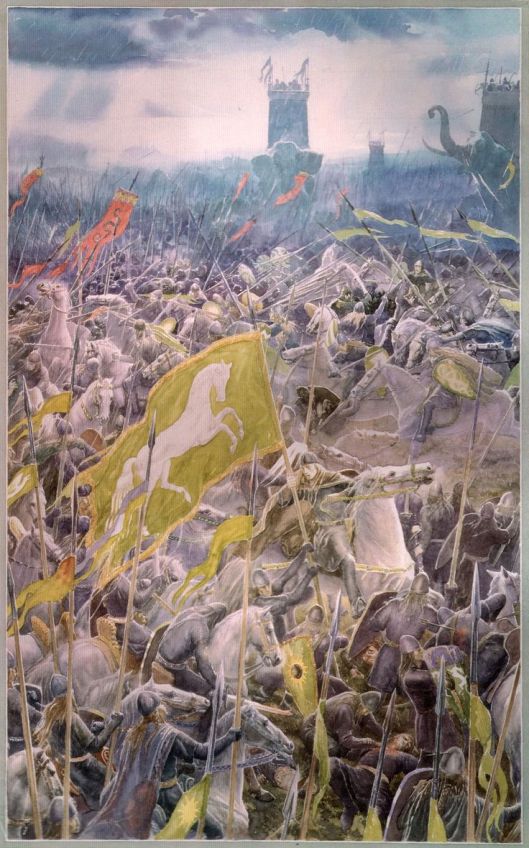
In an addition to an entry in Letters, the main portion of which has rather a murky history (see 217-218), but which the editor dates as “presumably written circa 1966”, Tolkien says that several features of The Lord of the Rings “still move me very powerfully”.  These features include being “most stirred by the sound of the horses of the Rohirrim at cockcrow”.

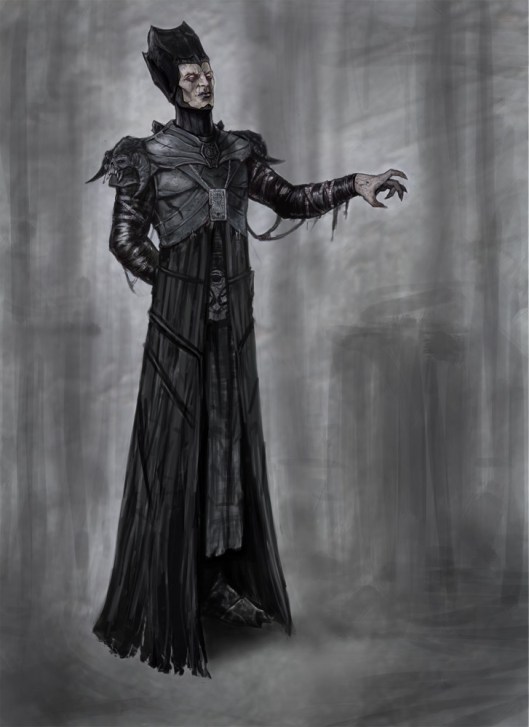
As this is one of our favorite parts of the book,


image1

we would absolutely agree, but, as is so often the case, both with JRRT and with ourselves, we wondered why.

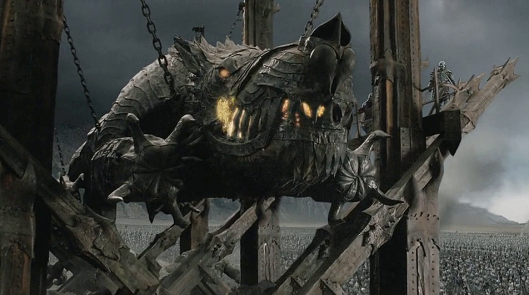
The easiest answer is that it’s a highly-dramatic moment:  the main gate of Minas Tirith is giving way under the blows of Grond, the orcs are about to pour in, and it looks like Aragorn and his companions won’t appear in time to save the situation.

image2grond.png

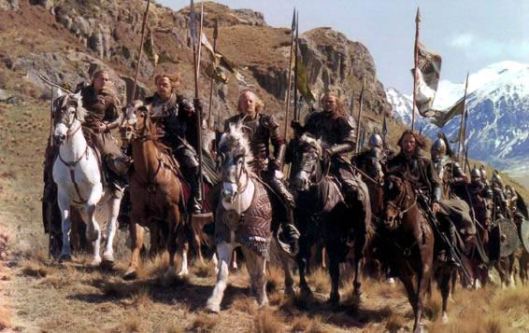
We have been following the Rohirrim, of course, from their muster to their march

image3roh.jpg

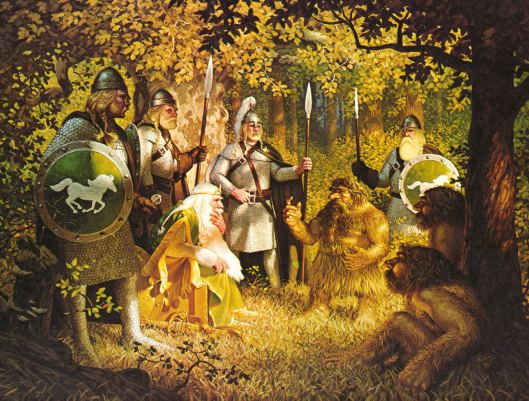
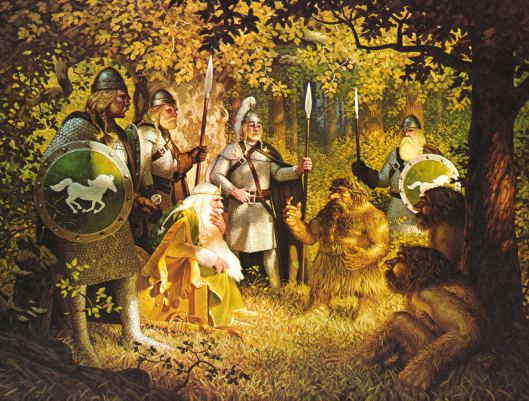
to their meeting with Ghan-buri-Ghan,

image4ghan.jpg

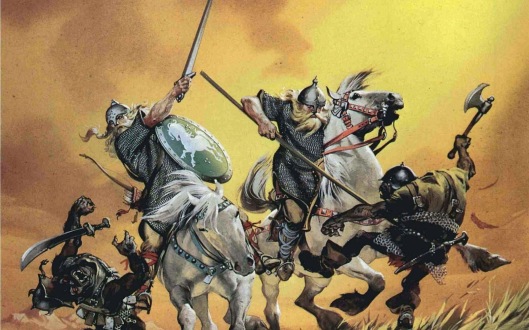
so the build is two-fold:  the attack, which is completely focused on breaking in, and the approach of the Rohirrim.  Thus, when it looks darkest, the charge is like sunlight breaking through heavy cloud.

image5charge.jpg

This is a beginning, we thought, to why, but could there have been another reason for JRRT?

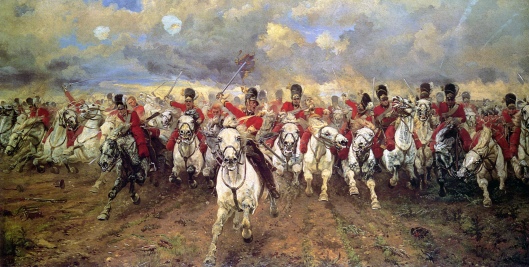
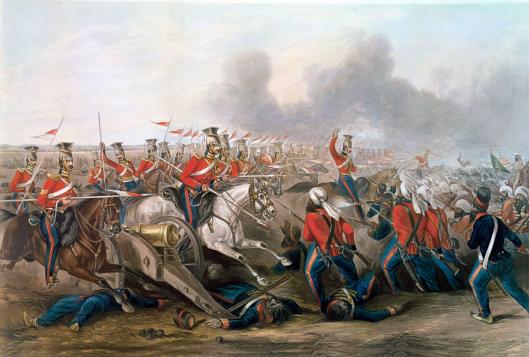
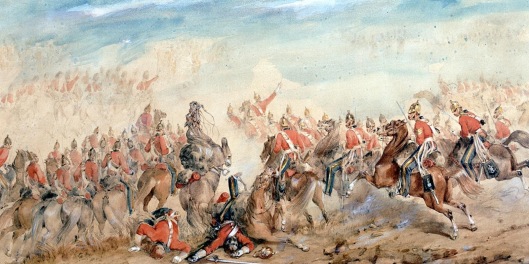
When Tolkien, growing up, thought of cavalry charges, he probably saw, in his mind’s eye, the glorious mounted attacks of Britain’s past, like the Scots Greys at Waterloo


image6scot

or the 16th Lancers at Aliwal

image7aliwal.jpg

or the Light Brigade at Balaclava.

image8balaclava.jpg

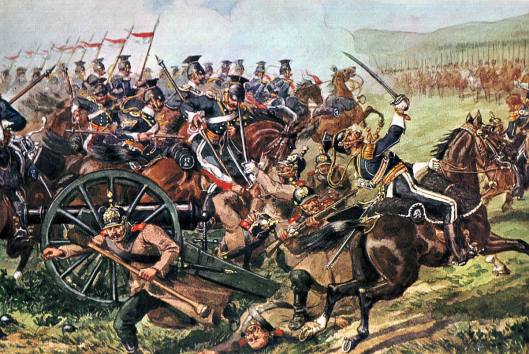
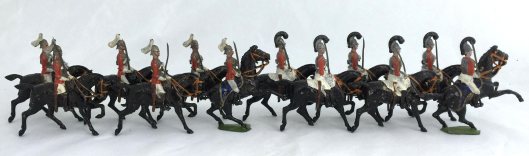
In all of these, soldiers in bright-colored coats waved swords and lancers and dashed fearlessly against the enemy.  Even his toy soldiers would have had that same devil-may-care look

image9britains.jpg

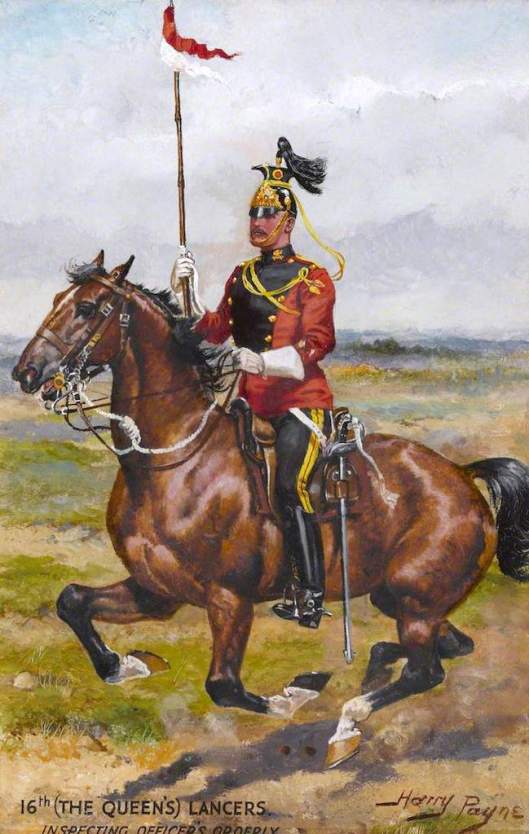
as did the real cavalry of his childhood,

image10aqueenslancers.jpg

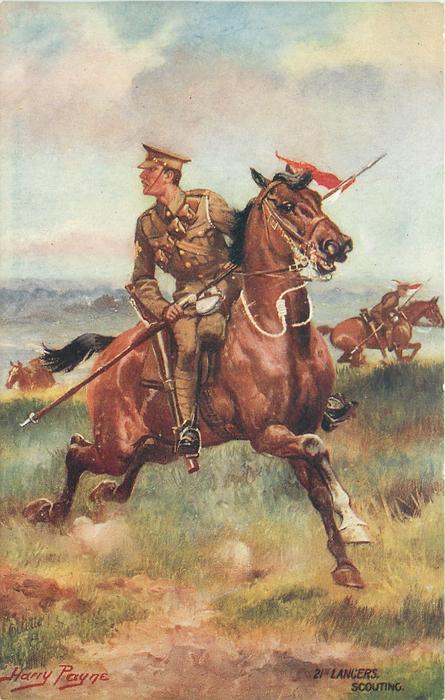
but, when 1914 and the Great War came, soldiers put away those bright colors and put on khaki.

image10twentyfirst.jpg

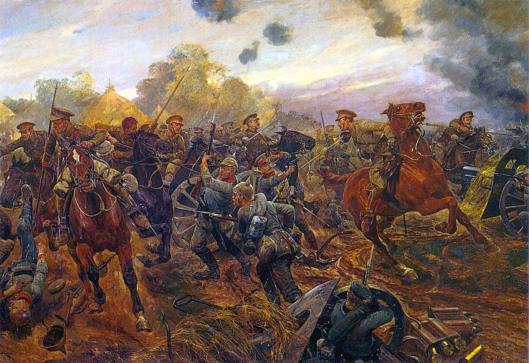
But did that wild courage have to be put away, as well?  In 1914, there were a few moments when even mud-colored mounted men had a moment of glory.

image11attack.jpg

This wasn’t to last—at least on the Western Front and a major reason was this—

image12maxim.jpg

(Here’s a LINK to a clip from the film Warhorse, which shows the effect in rather a symbolic way, thank goodness!  We love horses and mourn their terrible losses through all of world history—they never asked to be part of human violence and, so often, their fate was to die because of it.  We also think that it’s just as well that the commander of this imaginary attack didn’t survive it—it’s absolutely inept, both in conception and its carrying-out and he would deserve to have been court-martialed.)

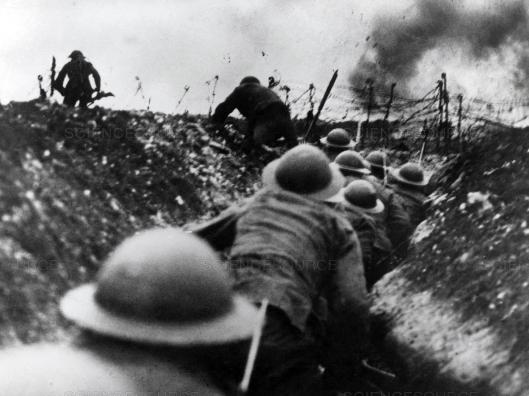
So, instead, those men dismounted and became infantry, fighting from hole in the ground to hole in the ground.

image13trench.jpg

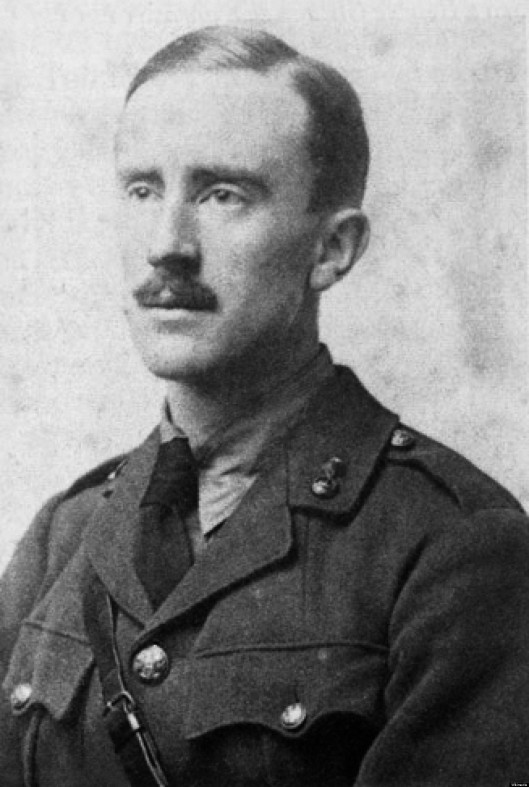
This was the world which JRRT

image14ajrrt.jpg

knew:  heavy guns, gas, and the rattle of machine guns, no place for wide double ranks of sabre-wavers.

image14charge.jpg

There was at least one bright moment, but not on the Western Front.  Instead, it was in far-off Palestine, where, on 31 October, 1917, Australians and their horses swept over a line of Turkish trenches  at Beersheba in a charge very reminiscent of the 19th -century world.

image15beersheba.jpg

Ironically, these were not cavalry at all, but Australian Light Horse—mounted infantry—who, lacking swords or sabres or lances, attacked using their long bayonets, instead.

image16alh.jpg

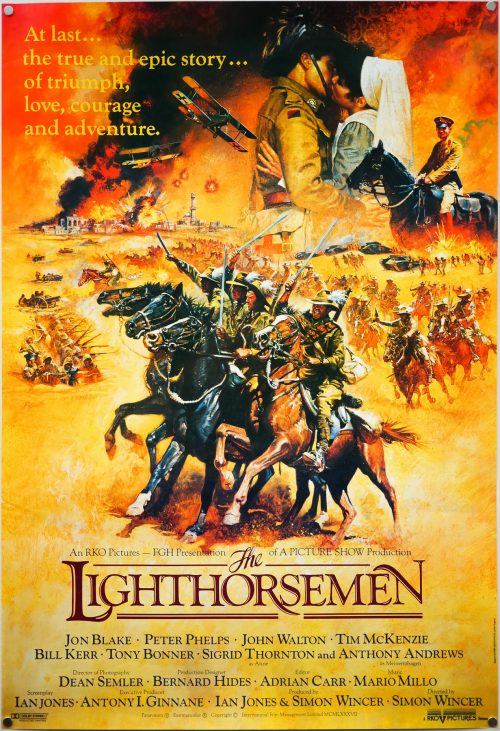
(You can see this charge reenacted wonderfully in the 1987 Australian movie, The Lighthorsemen, one of our very favorite films of the Great War.

image17poster.jpg

Here’s a LINK to the charge scene, before you see the whole film—but we recommend that you see that charge in context.)

On the whole, however, modern war had become one big, bloody ditch,

image18trench.jpg

and victory came in mud-color and mass industrial slaughter.  Perhaps it was a relief to imagine another world, where brave men in armor, mounted on flying horses, still had a place?

image19ro.jpg

As always, thanks for reading!

MTCIDC

CD

Do What I Say, Not What I Speak

13 Wednesday Jun 2018

Posted by Ollamh in Fairy Tales and Myths, Films and Music, J.R.R. Tolkien, Literary History, Narrative Methods

≈ Leave a comment

Tags

Ali Baba and the Forty Thieves, Captain Nemo, Door, Doors of Durin, Franklin Delano Roosevelt, Great War, Horse Feathers, Jules Verne, L. Frank Baum, Marx Brothers, Moria, Nautilus, passwords, Prohibition, Speak Friend and Enter, speakeasy, Swordfish, The Lord of the Rings, The Wizard of Oz, Tolkien, Twenty Thousand Leagues Under the Sea

Welcome, dear readers, as always.

Ever since we heard the story of “Ali Baba and the Forty Thieves” in childhood, we’ve been interested in doors and passwords.

Near the story’s beginning, Ali Baba, a poor woodcutter, happens to observe a group of bandits returning to their cave from a raid.  As he watches, the head of the bandits uses a secret phrase, “Open, sesame!” which opens the cave’s secret door.

[We include a LINK here to the whole story, if you don’t know it.]

Since then, we believe that we’ve had three major examples of the pattern:  door as barrier passed with difficulty.

The first was on a very different level altogether from “Ali Baba”.

After the US passed a law against alcohol just after the Great War, the tumultuous era called Prohibition began.

(The date is 1919 on the newspaper, but the law came into force in 1920.)

For all that the legislatures of various states approved it (“ratified” is the formal word), there were many who did not approve of it.

Because it was national law, however, police everywhere were required to enforce it.

To get around the law, secret bars began to appear.  These received the nickname “speakeasy” because it was a place to relax and drink in (what was hoped would be) safety and privacy.

Such places were made anonymous as possible:  a blank door—with a peephole.

To get in, a potential drinker had to be known—or know the secret password.

This went on until 1933, when the new president, Franklin Delano Roosevelt, worked to have the law repealed.

In 1932, the comedy team of the Marx Brothers

included a speakeasy scene in their latest film, Horse Feathers.

This is an almost indescribable scene in which one of the Marx Brothers (Chico—said “CHIK-o”) is on the inside and another (Groucho) is on the outside and then the fun begins—here’s a LINK so you can watch it for yourself.

The upshot (sorry for the spoiler!)—as you’ll see—is that both end up on the outside.  (We told you that this was on a different level!)

Our next example had no secret password, but, instead, it had a door guard and a very silly one, too!

In 1939, MGM released The Wizard of Oz,

based upon L. Frank Baum’s 1900 The Wonderful Wizard of Oz.

We doubt that we have to explain the plot to anyone who would read our blog, so we’ll just remind you of the moment when Dorothy and her friends—Scarecrow, Tin Woodsman, Lion—and Toto, too—have reached the Emerald City and have come to the door of the Wizard.

The guard (who bears a suspicious resemblance to certain other characters in the film) at first refuses them entry, saying the now-famous line that the Wizard won’t see:  “Not nobody!  Not nohow!” but eventually crumbles when Dorothy explains her quest and he begins to sympathize with her, finally allowing her and her friends to enter—although what they learn there is not the best news.

Finally, there is this door.

And, with this door, we are back to “Ali Baba”, it seems (if not to Horse Feathers).  When Gandalf and the Fellowship arrive, however, there appears to be no door there at all, just a pair of immense holly trees (probably English holly, ilex aquifolium), overshadowing a blank wall.

As the narrator describes them:

“But close under the cliff there stood, still strong and living, two tall trees, larger than any trees of hilly that Frodo had ever seen or imagined.  Their great roots spread from the wall to the water.  Under the looming cliffs they had looked like mere bushes, when seen far off from the top of the Stair; but now they towered overhead, stiff, dark, and silent, throwing deep night-shadows about their feet, standing like sentinel pillars at the end of the road.”  (The Fellowship of the Ring, Book One, Chapter 4, “A Journey in the Dark”)

It is only when Gandalf puts his hands on the rock face and murmurs what appears to be some sort of summoning spell that the doors appear:

“The Moon now shone upon the grey face of the rock; but they could see nothing else for a while.  Then slowly on the surface, where the wizard’s hands had passed, faint lines appeared, like slender veins of silver running in the stone.  At first, they were no more than pale gossamer-threads, so fine that they only twinkled fitfully where the Moon caught them, but steadily they grew broader and clearer, until their design could be guessed.”

As the pattern becomes more visible, so, too, becomes an inscription which reads, in part:

“The Doors of Durin, Lord of Moria.  Speak, friend, and enter.”

And trying to make sense of what it means now turns into a very awkward scene in which Gandalf struggles to find the password he believes is requested in that inscription, while the rest of the company gradually becomes more and more impatient (and it doesn’t help that wolves begin to howl in the distance and that there is something about a pool standing opposite the gate which makes them increasingly uneasy).

Finally, Gandalf realizes that what has stopped him depends upon his understanding of a single word in Elvish, a word which clearly has two meanings—and a little more punctuation might have helped!

As it’s inscribed, the vital part of the wording is:

Pedo Mellon a Minno.

As Gandalf originally translated this, it was “Speak, friend, and enter.”  After a good deal of frustration, Gandalf realizes that he has not only mistranslated—slightly—but mispunctuated—or, rather, overpunctuated– as well.  “Speak” and “say” in English are closely related, but there is a difference—for instance, one can “speak English”, but, idiomatically, one would never “say English”.  Thus, no one would ever give the command to someone else, “Say English”, but, rather would say to someone “Speak English”.  The same must be true in Elvish, where, in fact, it appears that “speak/say” is potentially one verb, whose singular imperative (command) is pedo. At first, Gandalf thought that he was being directed to “speak”—but what he was being told to speak he thought was somehow lost or forgotten.  This caused him to overpunctuate:  “Speak, friend, and enter”, where what he was actually being told was “Say [the word] ‘friend’ and enter”.  He finally does so, and the gates open.

In the case of Ali Baba, inside the thieves’ cave are riches, with some of which he quietly makes off.  Groucho and Chico eventually get into the speakeasy and Dorothy and her friends see the Wizard, all of them leaving the problematic entryway behind.  In the case of the doors to Moria, however, what is left behind refuses to stay that way:

“Frodo felt something seize him by the ankle, and he fell with a cry…Out from the water a long, sinuous tentacle had crawled; it was pale-green and luminous and wet…Twenty other arms came rippling out.  The dark water boiled, and there was a hideous stench.”

And this reminded us of something and made us wonder if JRRT had once read the same book we had (there’s nothing in the Letters, unfortunately).  In 1873, the first English translation of a novel by the French science fiction author, Jules Verne (1828-1905),

appeared, slightly mistitled Twenty Thousand Leagues Under the Sea.

Like the title, the rest of the book was filled with mistranslations (it should be Seas) and big cuts.  We hope, in fact, that, if Tolkien read the book (and we would be surprised if he hadn’t, it being the typical Victorian “boys’ adventure tale” of the period), we hope that he read the 1892 version, which cleaned up the errors.

If you haven’t read it, it’s the story of a French scientist who is invited by the US government to investigate a sea monster who is attacking world shipping in the later 1860s.  As the professor discovers, this isn’t a monster at all, but an early submarine, the Nautilus, invented and piloted by a man who calls himself “Captain Nemo” (nemo being Latin for “no one”) and who has a grudge against the imperialist nations of the world, against which he uses his submarine.  The professor, his assistant, and a third man, a harpooner, Ned Land, are taken aboard the Nautilus and, at one point, are involved in a combat against a pack of giant squid—each with 8 arms and two longer tentacles, one of which almost drags Nemo to his death until he’s saved by Ned.  Sounds a little familiar, doesn’t it?

Our favorite version of the story is that done by Disney in 1954.

There is only one squid here, but, as the poster shows, that seems plenty!  It’s a well-told version (simplified, but not too much so) and has a really splendid Nautilus in a high-Victorian design (steampunk long before steampunk?).

As we began this post with an opening, it seems appropriate to end with a closing:

“Gandalf turned and paused.  If he was considering what word would close the gate again from within, there was no need.  Many coiling arms seized the doors on either side, and with horrible strength, swung them round.  With a shattering echo they slammed, and all light was lost.  A noise of rending and crashing came dully through the ponderous stone.”

Thanks, as ever, for reading.

MTCIDC

CD

ps

Can you, our readers, think of other doors and passwords?  We’ve intentionally left one out here, although, when the thrush knocks…

All Thin, Sort of Stretched

30 Wednesday May 2018

Posted by Ollamh in Fairy Tales and Myths, Films and Music, J.R.R. Tolkien, Villains

≈ Leave a comment

Tags

Aragorn, Bilbo, Bram Stoker, Dracula, Dunedain, Gerontius, immortal, Nosferatu, Numenoreans, Professor Van Helsing, Saruman, The Lord of the Rings, The Scouring of the Shire, The Shadow of the Past, Tolkien, vampire, Voivode Dracula

As always, dear readers, welcome.

Once before, we wrote about the Scouring of the Shire and about the queer events after Saruman’s death, but, recently, we’ve come across something which might suggest an explanation.

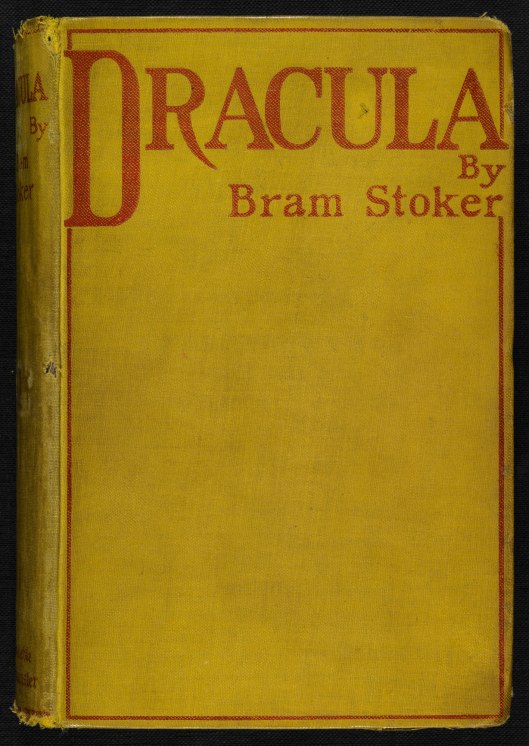
This past term/semester, one of us taught Bram Stoker’s 1897 novel, Dracula, for the first time (and it seemed to be a big hit, we might add), as we’ve also mentioned before.

image1adrac.jpg

In the book, Professor Van Helsing tells the protagonists that Dracula:

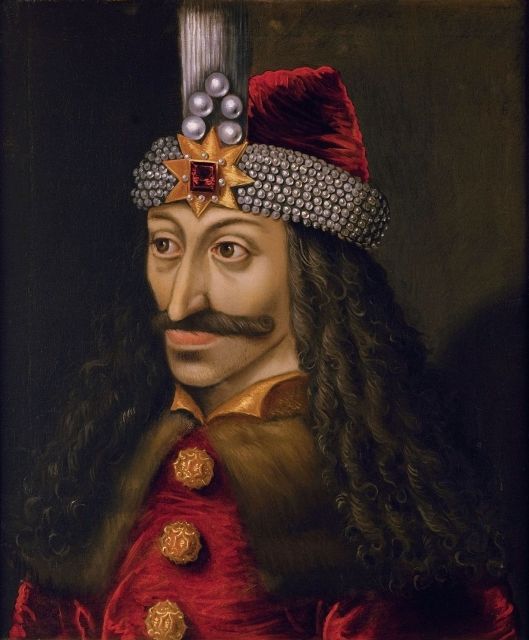
“…must, indeed, have been that Voivode Dracula who won his name against the Turk, over the great river on the very frontier of Turkey-land.” (Dracula, Chapter XVIII)

Vlad_Tepes_002.jpg

If indeed true, this would mean that the Un-dead figure in the novel, who, historically, had been born about 1430, would, at the time of the novel, be about 467 years old.  Van Helsing explains this longevity:

“The vampire live on, and cannot die by mere passing of the time; he can flourish when that he can fatten on the blood of the living.”

Worse—

“Even more, we have seen amongst us that he can even grow younger; that his vital faculties grow strenuous, and seem as though they refresh themselves when his special pabulum is plenty.” [pabulum is a little odd here, to us, as it’s an early word for “baby food”—perhaps Van Helsing is being sarcastic?]

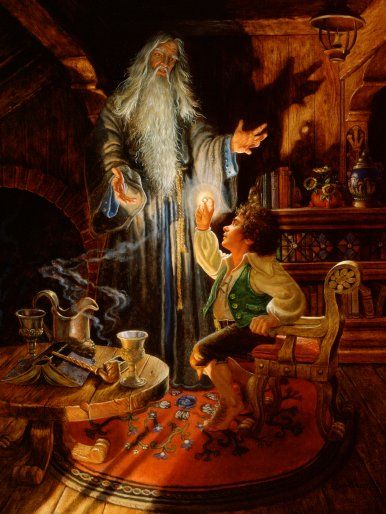
We were easily, as always, prompted back to JRRT here and something Bilbo says to Gandalf when he is about to leave Bag End in the first chapter of The Lord of the Rings:

“I am old, Gandalf.  I don’t look it, but I am beginning to feel it in my heart of hearts.  Well-preserved indeed!…Why, I feel all thin, sort of stretched, if you know what I mean:  like butter that has been scraped over too much bread. That can’t be right.”  (The Fellowship of the Ring, Book One, Chapter 1, “A Long-Expected Party”)

image1bandg.jpg

image2toast.jpg

Hobbits are, in comparison to humans in our current world and among non-Numenoreans in Middle-earth, a long-lived race, Bilbo’s family in particular being perhaps an extreme example, his grandfather, Gerontius (a small academic joke—geron in Greek means “old man”), living to be 130—and Bilbo will even surpass him, if only briefly.

“Stretched”, however, suggests something else—and we know, as Gandalf does, what that is–the Ring:

“A mortal, Frodo, who keeps one of the Great Rings, does not die, but he does not grow or obtain more life, he merely continues, until at last every minute is a weariness.  And if he often uses the Ring to make himself invisible, he fades:  he becomes in the end invisible permanently, and walks in the twilight under the eye of the Dark Power that rules the Rings.  Yes, sooner or later—later, if he is strong or well-meaning to begin with, but neither strength nor good purpose will last—sooner or later the Dark Power will devour him.”  (The Fellowship of the Ring, Book One, Chapter 2, “The Shadow of the Past”)

And so, Bilbo would have felt more and more “stretched”, had he not given it up, even as he continued to go on existing–Gollum, after all, is nearly 600 when he meets Bilbo for the riddling game.

image3gollum.jpg

As we’ve mentioned, the descendants of the Numenoreans had a naturally-extended life.  Aragorn, for instance, is 87 at the time of The Lord of the Rings, and 210 at his death in FA120.

image4arag.jpg

Others in Middle-earth, however, have simply been given what would seem to be life spans practically without limit.  The elves, like Galadriel, are, in effect, immortal.  Likewise are the Istari—the “wizards”, like Gandalf.

image5gandalf.jpg

This should extend to Saruman, as well.

image6saruman.jpg

And yet, something seems to have gone wrong here, as we wrote about some time ago.  Once Grima has cut his throat:

“To the dismay of those that stood by, about the body of Saruman a grey mist gathered, and rising slowly to a great height like smoke from a fire, as a pale shrouded figure it loomed over the Hill.  For a moment it wavered, looking to the West; but out of the West came a cold wind, and it bent away, and with a sigh dissolved into nothing.”

image7deathofsaruman.jpg

This isn’t the end, however.

“Frodo looked down at the body with pity and horror, for as he looked it seemed that long years of death were suddenly revealed in it, and it shrank, and the shriveled face became rags of skin upon a hideous skull.  Lifting up the skirt of the dirty cloak that sprawled beside it, he covered it over, and turned away.”  (The Return of the King, Book Six, Chapter 8, “The Scouring of the Shire”)

It’s never explained why the—for lack of a better word—spirit of Saruman disappears as it does.  The fact that it looks to the West—towards Valinor—and a cold wind blows from there suggests that, somehow, the Valar are punishing Saruman for betraying their trust and forbidding him from returning to them, as the living Gandalf will in the final chapter of the book (and for a second time, it seems, Gandalf having been “sent back” after his apparent death fighting the Balrog).

What Frodo sees in the sprawled body, however, suggests something more:  “long years of death were suddenly revealed in it”.  Here’s Stoker’s description of the end of Dracula:

“As I looked, the eyes saw the sinking sun, and the look of hate in them turned to triumph.

But, on the instant, came the sweep and flash of Jonathan’s great knife.  I shrieked as I saw it shear through the throat; whilst at the same moment Mr. Morris’ bowie knife plunged into the heart.

It was like a miracle; but before our very eyes, and almost in the drawing of a breath, the whole body crumble[d] into dust and passed from our sight.”  (Dracula, Chapter XXVII)

Bilbo and Gollum have continued to live because the Ring has given them the power to do so, but at a great cost, at least for Gollum, as Gandalf says.  Dracula has been given nearly 500 years because he has become a parasite on the living, but those years were his with the loss of his soul.  Could it be that Saruman, although given immortality because he is one of the Maiar, has, through his long years of plotting, either to work with Sauron or even to become Sauron, somehow become more like one of the Un-dead, gradually losing life even though immortal?

image8dracdeath.jpg

(This is the end of Count Orlok, the Dracula figure in our favorite vampire movie, FW Murnau’s 1922 Nosferatu.  If you’d like to see the film, here’s a LINK to it from the Internet Archive site.)

In which case, his end is much worse than that of Dracula, as one of the protagonists, Mina Harker, writes:

“I shall be glad as long as I live that even in that moment of final dissolution, there was in the face a look of peace, such as I never could have imagined might have rested there.”

MTCIDC

CD

First Make a Map

16 Wednesday May 2018

Posted by Ollamh in Artists and Illustrators, J.R.R. Tolkien, Literary History, Maps, Narrative Methods

≈ Leave a comment

Tags

Braemar, Cherna, geography, Lloyd Osbourne, Maps, plot, Robert Louis Stevenson, Story, The Idler, The Lord of the Rings, Tolkien, topography, Treasure Island, Young Folks Magazine

As always, welcome, dear readers.

We have just said goodbye to an old friend, E, who stayed all too briefly with us on his way to and from a conference.  E, like us, is a big fan of maps and we had a lot of conversation on the topographical charting of Middle-earth, particularly as seen in The Lord of the Rings.

A map forms the basis of the plot of The Hobbit, of course.

image1throrsmap.jpg

And the need for an accurate depiction of (fictional) geography haunted its author as he expanded his story, as he says in a letter to Rayner Unwin, 11 April, 1953:

“Maps are worrying me.  One at least (which would then have to be rather large) is absolutely essential.  I think three are needed:  1. Of the Shire; 2. Of Gondor; and 3. A general small-scale map of the whole field of action.  They exist, of course; though not in any form fit for reproduction—for of course in such a story one cannot make a map for the narrative, but must first make a map and make the narrative agree.”  (Letters, 168)

(If you would like to see an interesting selection of Tolkien maps, here’s a LINK to the Tolkien Estate website, which has a number of them, including the first map of the Shire.)

The idea of making a map, rather than a story, first reminded us of an earlier author, who once said much the same thing.

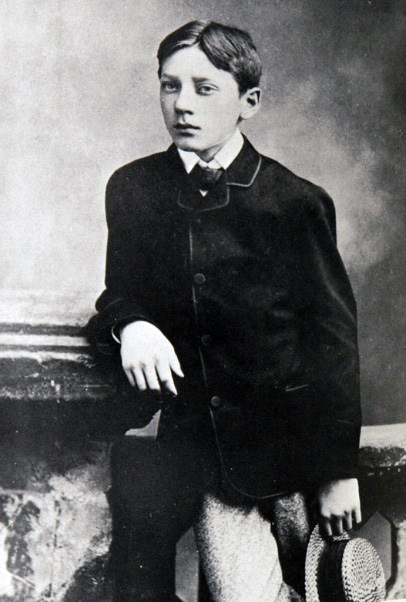
In the summer of 1881, Robert Louis Stevenson

image2rls.jpg

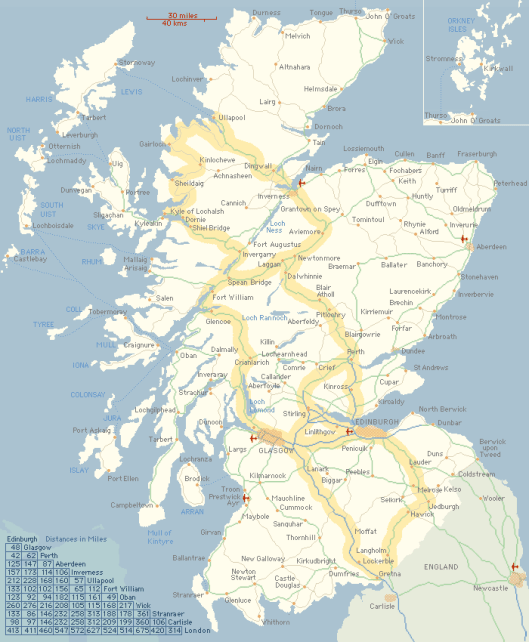
was on an extended tour of central and eastern Scotland with his parents, his wife, and his stepson, Lloyd Osbourne.

image3l0.jpg

From early August to late September, they stayed in Braemar

image4map.png

in this cottage.

image5cottage.JPG

Then the weather intervened:

“There it blew a good deal and rained in a proportion…and I must consent to pass a good deal of my time between four walls…There was a schoolboy [his stepson, Lloyd]…home from the holidays…He had no thought of literature; it was the art of Raphael that received his fleeing suffrages; and with the aid of pen and ink and a shilling box of water colours, he had soon turned one of the rooms into a picture gallery.  My more immediate duty towards the gallery was to be showman; but I would sometimes unbend a little, join the artist (so to speak) at the easel, and pass the afternoon with him in a generous emulation, making coloured drawings.  On one of these occasions, I made the map of an island; it was elaborately and (I thought) beautifully coloured; the shape of it took my fancy beyond expression; it contained harbours that pleased me like sonnets; and with the unconsciousness of the predestined, I ticketed my performance ‘Treasure Island’.”  (RL Stevenson, “My First Book:  ‘Treasure Island’”, The Idler, August, 1894)

In fact, as Stevenson writes earlier in this essay, it was not, in fact, his first book, or even his first novel, but it was his first published novel.  After its inspired beginning as a map, it first saw publication not as a novel, but as a serial in 17 installments in a magazine called Young Folks, from 1 Oct, 1881 to 28 Jan, 1882, under a pen name, “Captain George North”.  Its first appearance as a novel was in November, 1883, with the title, Treasure Island, or, The Mutiny of the Hispaniola.

image6tifirst.png

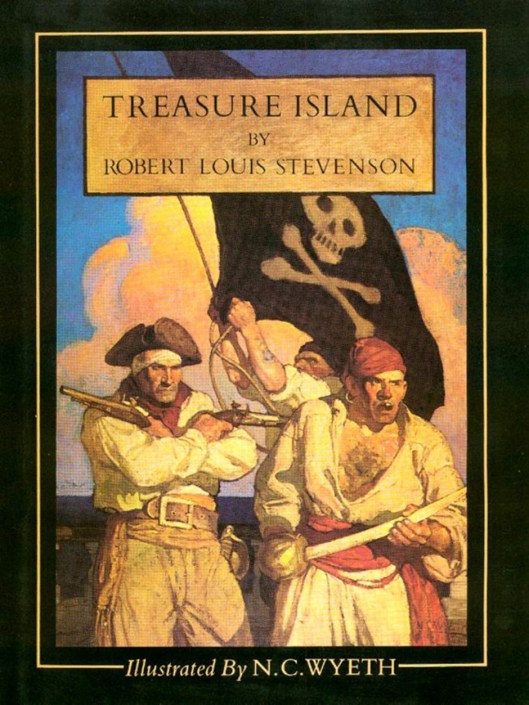
This has produced many subsequent republications over the years, our favorite being the 1911 edition,

image7wyeth.jpg

with its wonderful, atmospheric illustrations by NC Wyeth.

image8ncw.jpg

But what about the map which started it all?

“But the adventures of Treasure Island are not yet quite at an end.  I had written it up to the map.  The map was the chief part of my plot.  For instance, I had called an islet ‘Skeleton Island,’ not knowing what I meant, seeking only for the immediate picturesque, and it was to justify this name that I broke into the gallery of Mr. Poe and stole Flint’s pointer [a sprawled skeleton, if you don’t know the book].  And in the same way, it was because I had made two harbours that the Hispaniola was sent on her wanderings with Israel Hands.  The time came when it was decided to republish [that is, from magazine to book form], and I sent in my manuscript, and the map along with it, to Messrs. Cassell.  The proofs came, they were corrected, but I heard nothing of the map.  I wrote and asked; was told it had never been received, and sat aghast.  It is one thing to draw a map at random, set a scale in one corner of it at a venture, and write up a story to the measurements.  It is quite another to have to examine a whole book, make an inventory of all the allusions contained in it, and with a pair of compasses, painfully design a map to suit the date.  I did it; and the map was drawn again in my father’s office, with embellishments of blowing whales and sailing ships, and my father himself brought into service a knack he had of various writing, and elaborately FORGED the signature of Captain Flint, and the sailing directions of Billy Bones.  But somehow it was never Treasure Island to me.”

So here is that second version.

image9timap.jpg

From his experience, Stevenson drew the same conclusion as JRRT would nearly 60 years later:

“I have said the map was the most of the plot.  I might almost say it was the whole…It is, perhaps, not often that a map figures so largely in a tale, yet it is always important.  The author must know his countryside, whether real or imaginary, like his hand; the distances, the points of the compass, the place of the sun’s rising, the behavior of the moon, should all be beyond cavil…But it is my contention—my superstition, if you like—that who is faithful to his map, and consults it, and draws from it his inspiration, daily and hourly, gains positive support, and not mere negative immunity from accident.  The tale has a root there; it grows in that soil; it has a spine of its own behind the words.  Better if the country be real, and he has walked every foot of it and knows every milestone.  But even with imaginary places, he will do well in the beginning to provide a map; as he studies it, relations will appear that he had not thought upon; he will discover obvious, though unsuspected, short-cuts and footprints for his messengers; and even when a map is not all the plot, as it was in Treasure Island, it will be found to be a mine of suggestion.”

(If you would like to read this little essay in full—and we recommend it—here’s a LINK.)

We will end here as, inspired, we’re off to redo the map for our imaginary medieval Russia, Cherna.

MTCIDC

CD

In a Pukel

09 Wednesday May 2018

Posted by Ollamh in Artists and Illustrators, Fairy Tales and Myths, J.R.R. Tolkien, Maps, Medieval Russia, Military History, Military History of Middle-earth, The Rohirrim

≈ Leave a comment

Tags

balbal, Carnac Stones, Cherna, Denis Gordeev, Druadan Forest, Dunharrow, Easter Island, Eored, Ghan-buri-Ghan, Gondor, menhirs, moai, Pukel-men, Rapa Nui, Rohan, Rohirrim, Stonewain Valley, Ted Nasmith, The Lord of the Rings, Tolkien, Unfinished Tales, Vsadniki, Woses

Welcome, dear readers, as ever.

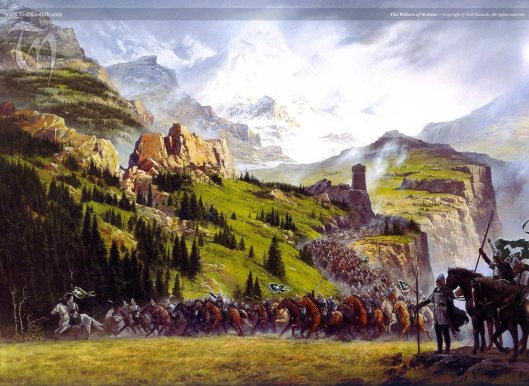
After their mustering and rapid journey to the aid of Gondor, the Rohirrim

image1rohirrim.jpg

have been stopped:

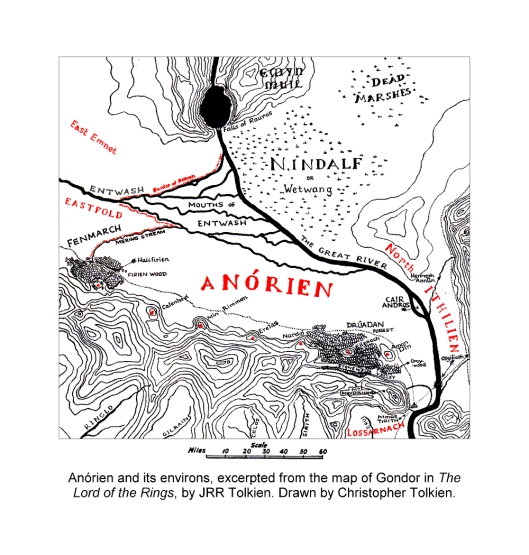
“Scouts had been sent ahead.  Some had not returned.  Others hastening back had reported that the road was held in force against them.  A host of the enemy was encamped upon it, three [4.8km]] miles west of Amon Din, and some strength of men was already thrusting along the road and was not more than three leagues [about 9 miles/14.5km] away.”  (The Return of the King, Book Five, Chapter 5, “The Ride of the Rohirrim”)

image2map.jpg

And so they are camped temporarily in the murk which has fallen over the West—a sign of Sauron on the move.

As they remain there, Merry gradually hears a sound like distant drums and, when Elfhelm, the Marshal of the eored [Rohirrim unit of horsemen] in which Merry and his mysterious companion, Dernhelm, are riding, stumbles over him, Merry asks if it’s the enemy:

“Are those their drums?”

Elfhelm replies:

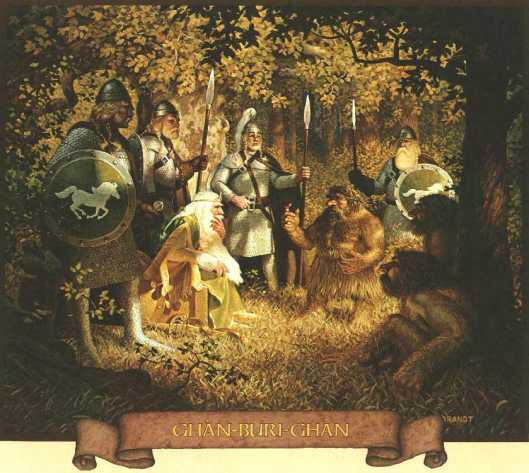
“You hear the Woses, the Wild Men of the Woods…They still haunt Druadan Foest, it is said…But they have offered their services to Theoden.  Even now one of their headmen is being taken to the king.”

Merry follows Elfhelm and soon sees:

“A large lantern, covered above, was hanging from a bough and cast a pale circle of light below.  There sat Theoden and Eomer, and before them on the ground sat a strange squat shape of a man, gnarled as an old stone, and the hairs of his scanty beard straggled on his lumpy chin like dry moss.  He was short-legged and fat-armed, thick and stumpy, and clad only with grass about his waist.”

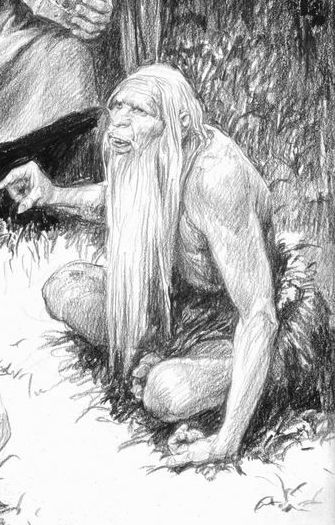
This, we find out, is Ghan-buri-Ghan, leader of the Wild Men, who, as Elfhelm has said, has come to offer his and his people’s aid to Theoden.

image3ghanburighan.jpg

(We note, by the way, that this Hildebrandt illustration has taken certain liberties with the scene as described in the book:  it appears to be daylight—no lantern—if Eomer is there, he isn’t seated, and there is more than one Wild Man–oh, and the Wild Man’s beard has suddenly sprouted.)

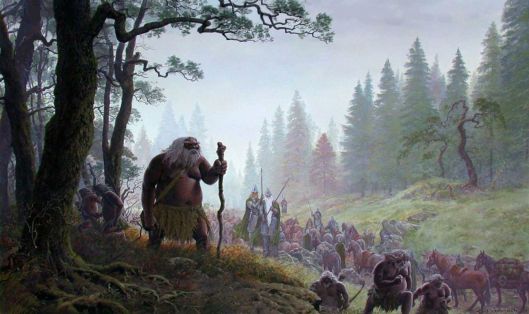
What Ghan-buri-Ghan offers Theoden is a long-forgotten road which would provide a way around the soldiers of Sauron who are blocking the direct route to Minas Tirith:   the path through the Stonewain Valley.

image4stonewainfalley.jpg

What caught our attention here was the connection Merry made between Ghan-buri-Ghan and something he’d encountered only recently:

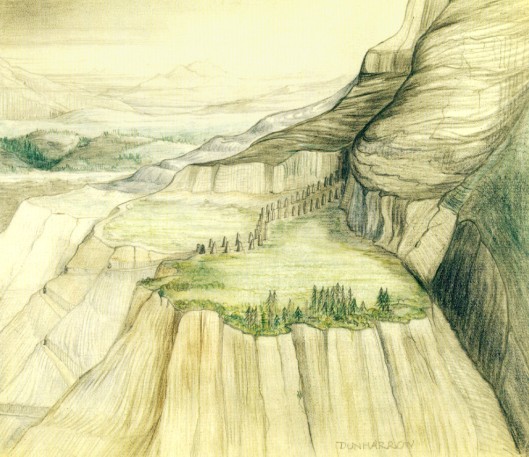
“Merry felt that he had seen him before somewhere, and suddenly he remembered the Pukel-men of Dunharrow.  Here was one of those old images brought to life, or maybe a creature descended in true line through endless years from the models used by the forgotten craftsmen long ago.”

Dunharrow

image5dunharrowjrrt.jpg

was a mysterious place—

“…the work of long-forgotten men.  Their name was lost and no song or legend remembered it.  For what purpose they had made this place, as a town or secret temple or a tomb of kings, none in Rohan could say.  Here they labored in the Dark Years, before ever a ship came to the western shores, or Gondor of the Dunedain was built; and now they had vanished, and only the old Pukel-men were left, still sitting at the turnings of the road.

Merry stared at the lines of marching stones:  they were worn and black; some were leaning, some were fallen, some cracked or broken; they looked like rows of old and hungry teeth.” (The Return of the King, Book Five, Chapter 3, “The Muster of Rohan”)

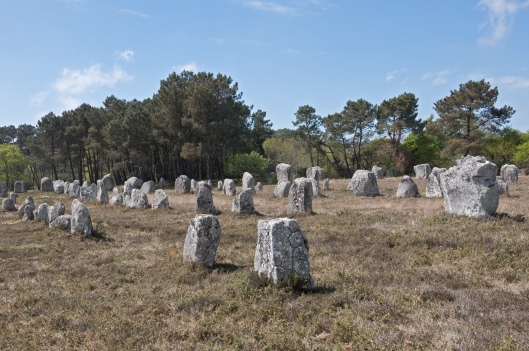
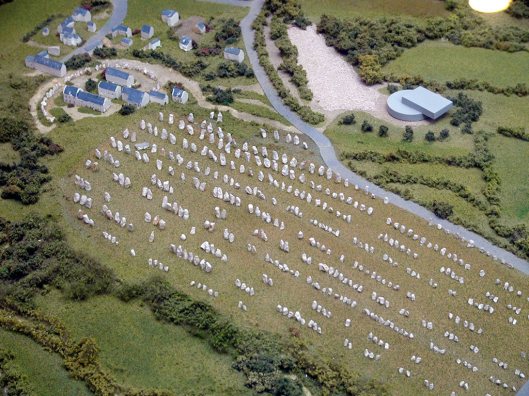
For a moment, this description reminded us of something one sees in Brittany, on the west coast of France, the so-called “Carnac Stones”, a vast field of Neolithic upright stones, now called menhirs (Breton for “long stone”) in long lines in and around the village of Carnac.

image6carnac1.jpg

image7carnacstones2.jpg

And, just as the use or meaning of Dunharrow is lost, so is that of the elaborate construction of the Carnac Stones.

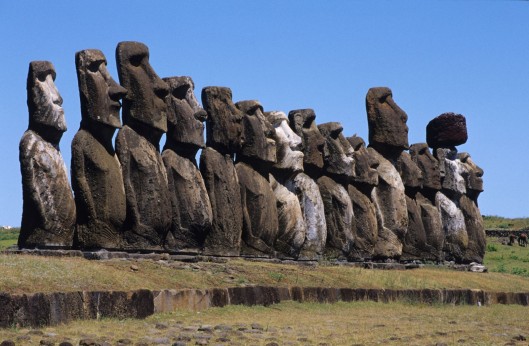
Once the Carnac Stones—and others like them, both in France and in Great Britain—came into our heads, we were whirled away to Rapa Nui (Easter Island) and all of those puzzling outsized heads on less-developed torsos, the moai.

image8moai.jpg

It was not the size or placement of those figures like “rows of old and hungry teeth” however, which made us think further about Ghan-buri-Ghan and his stony cousins, but how the figures were carved:

“At each turn of the road there were great standing stones that had been carved in the likeness of men, huge and clumsy-limbed, squatting cross-legged with their stumpy arms folded on fat bellies.  Some in the wearing of the years had lost all features save the dark holes of their eyes that still stared sadly at the passers-by.  The Riders hardly glanced at them.  The Pukel-men they called them, and heeded them little…”

As the Rohirrim are translated as speaking among themselves a sort of Tolkien-adapted Old English, so “pukel” appears to be derived from “pucel” = “goblin/demon”, which suggests perhaps a quasi-religious or magical use, but, if they once represented spirits, they are now spiritless, with no ability to frighten.  Rather, as the narrator tells us:

“…no power or terror was left in them; but Merry gazed at them with wonder and a feeling almost of pity, as they loomed up mournfully in the dusk.”

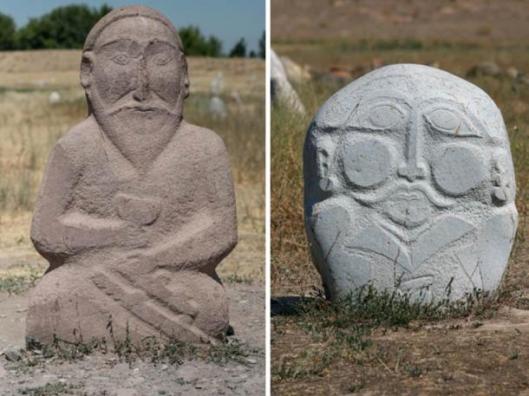
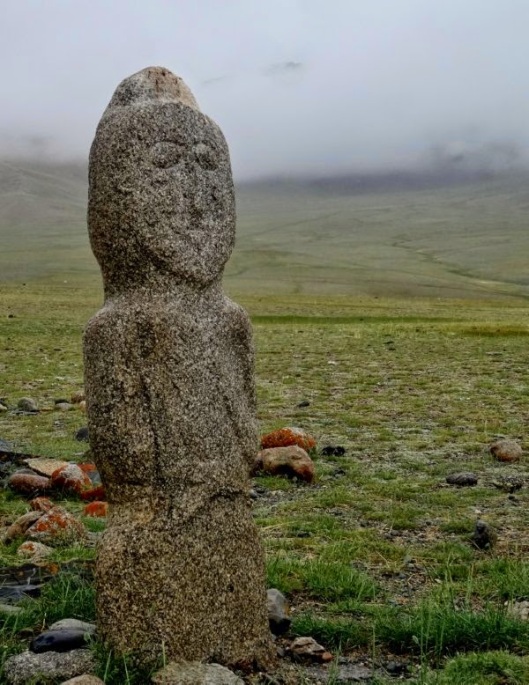
The narrator’s elaboration then reminded us of something else:  balbal.

image9balbal.jpg

image9bbalbal.jpg

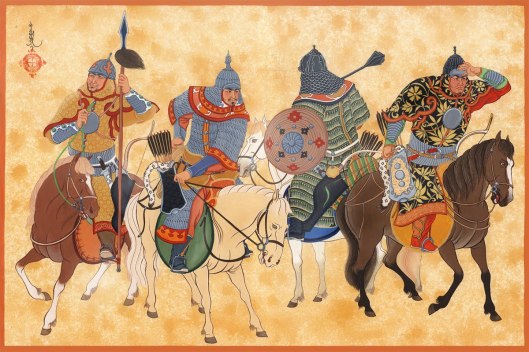
These are carved stone figures with a history probably as long as that of the Pukel-men.  They appear to be the product of Turkic peoples in Central Asia—with even older relatives, perhaps, to the west, as well.  Some may have been tomb guardians or monuments themselves—as with the Pukel-men, their origins and use/s are lost to us.  We ourselves have stolen them for use in our series of novels based in an imaginary medieval fairy tale Russia, called Cherna, “The Black Land”—but please don’t think “Mordor?”  In our case, the reason it’s named that is that it is steppe country with extremely fertile black soil.  So rich, especially as pasture-land, that it’s worth invading and fighting over, which is what the villains of our trilogy, the Vsadniki, modeled on the Mongols, do.

image10mongols.jpg

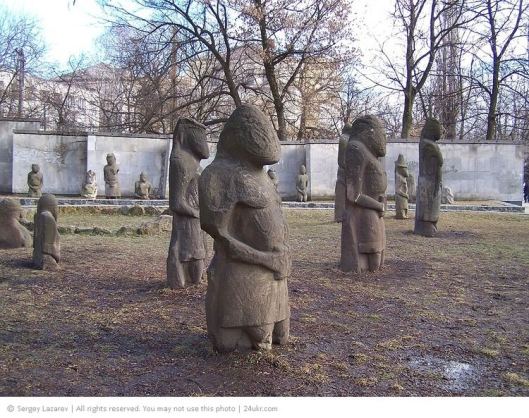
Unlike Pukel-men and menhirs and moai, however, there is no mystery about what the Vsadniki are up to with their stones:  every time they conquer a new land, they set such stones up at their new far-western border to say not only “what’s behind these is ours”, but also “and we’re looking at your lands next”.

image11balbal.jpeg

Thanks, as always, for reading.

MTCIDC

CD

ps

In the Tolkien volume Unfinished Tales, we find further connections between the Wild Men/Woses and carvings.  We use a paperback edition and this has somewhat different pagination from the hardbound, but, should you be interested, you can find it in either form in Part Four, I The Druedain.

pps

Here is a drawing of Ghan-buri-Ghan by Denis Gordeev, who has done a good deal of work illustrating a wide selection of JRRT’s fiction, rather as Ted Nasmith has, along with many other classics as well as modern fantasy fiction.

image11gbg.jpg

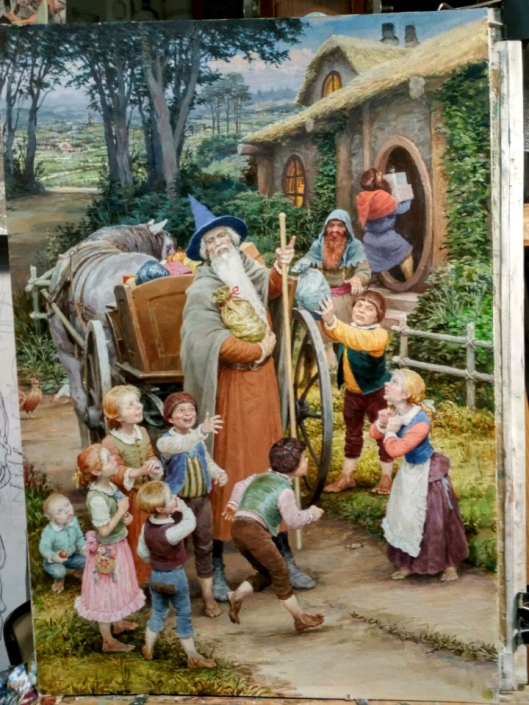
Gordeev has clearly been trained/trained himself in drawing as people did in that golden age of children’s writing and illustration, the 1880s to 1920s, and, once you get used to his very distinctive style, you may come to like it as we do.  Here’s Gandalf arriving in Hobbiton, fireworks and all, just to give you a taste.

image12gandalf.jpg

Small Talk

02 Wednesday May 2018

Posted by Ollamh in Fairy Tales and Myths, Films and Music, Heroes, J.R.R. Tolkien, Narrative Methods, Villains

≈ Leave a comment

Tags

Assyrians, Charles Goodyear, cyclops, David and Goliath, Death Star, Egypt, Ewoks, Greeks, Hetep Senworset, Hobbits, Jack and the Beanstalk, Kelandry of Mindelan, Lachish, Medieval, Odysseus, Polyphemus, Protector of the Small, Romans, Sling, slingers, Slingshot, Smaug, Star Wars, Tamora Pierce, thrush, Tortall, Vulcanized, Woses, Yoda

Welcome, dear readers, as always.

Sometimes, ideas for posts come from something we’ve seen in a movie theatre or something we’re reading or even from something we’re teaching or studying.  Sometimes we employ the Sortes Tolkienses.  And sometimes things just seem to fall into our hands.  And that’s where this post comes from.

We were moving a bookshelf and something literally dropped into our hands, a boxed set of books by one of our favorite YA authors, Tamora Pierce.

image1protector.jpg

As you can see from our image, the series is called “Protector of the Small” and is about the life of Keladry of Mindelan, who lives in Pierce’s imaginary Tortall, where it is possible—just possible—for a girl to become a knight.  Through the four volumes, Kel gradually works her way from pre-page to knighthood and, is always the case with TP’s books, there are both surprises and interesting and not always predictable difficulties along the way, as well as an ultimate humanity which makes her books such satisfying reading.

It wasn’t the actual books, however, which got us to thinking, but the word “small” in the series title.  How often, in our favorite adventure stories, it’s a case of small versus big

image2mouseelephant.jpg

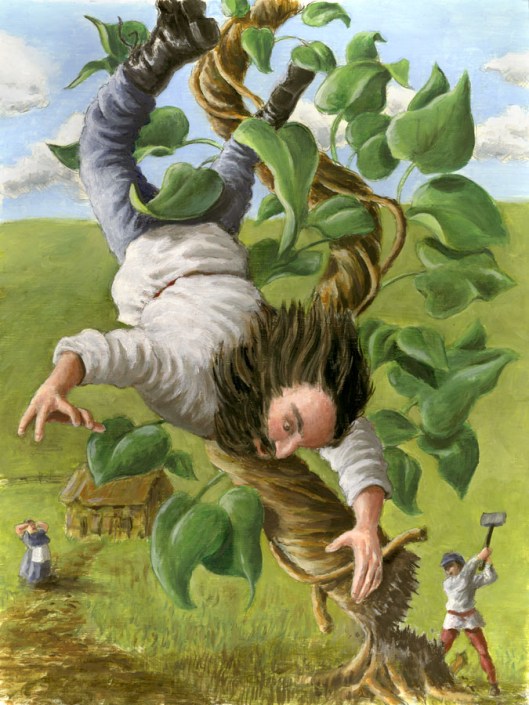
and, very often, the big thinks that that’s all which counts—think of the fairy tale “Jack and the Beanstalk” for example.image3ajackgiant.jpg

For all that the giant is huge and menacing in the story, he’s vulnerable as he climbs down the beanstalk and Jack’s quick thought–to cut down the stalk even as the giant descends–makes quick work of the oversized (but perhaps overconfident—and underbrained?) creature.

image3bdeathofgiant.jpg

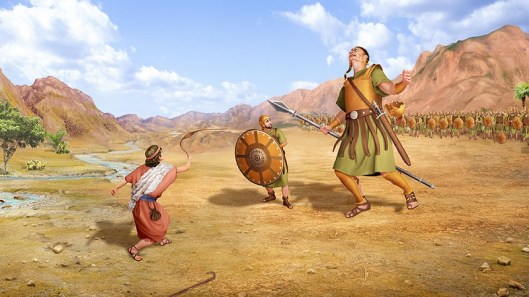
In the Judeo-Christian tradition, we have the Biblical story of David and Goliath.

image3dandg.jpg

Goliath is not only huge, but armored, and David is a boy who has only his shepherd’s staff, a sling, and five stones from a river bed, but it’s all he needs.

A sling is an ancient weapon

image4sling

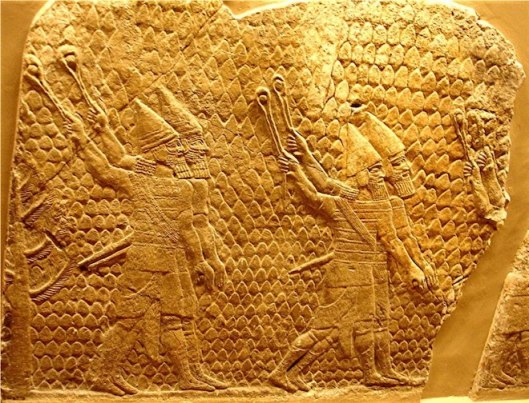
This is from the Egyptian Middle Kingdom town of Hetep Senwosret, c. 1895BC.  The Assyrians were still using the weapon more than a thousand years later, as this scene from one of the Lachish reliefs (c.700BC) shows.

image5assyrians.jpg

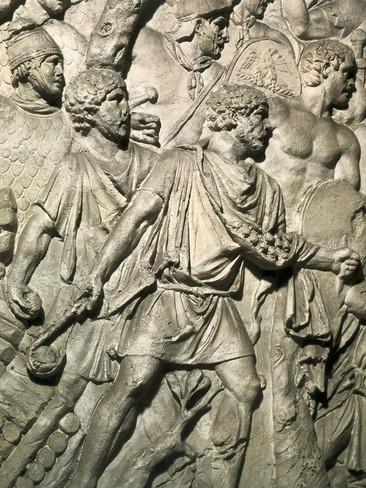
The Greeks had slingers

image6aspendosslinger.jpg

as did the Romans

image7roman.jpg

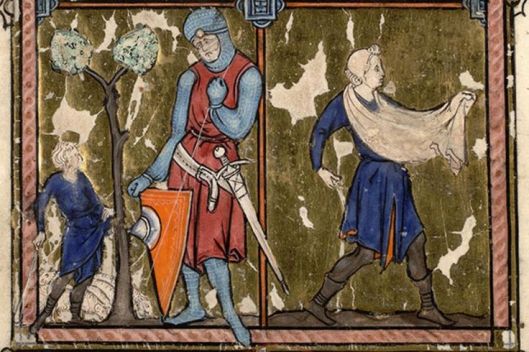
as did medieval westerners.

image8medieval.jpg

Slings shouldn’t be confused with slingshots, by the way.  (Or “catapult” if you’re one of our British friends.)

image9slingshot.jpg

This is the weapon of choice of the cartoon character, Dennis the Menace.

image10dmenace.jpg

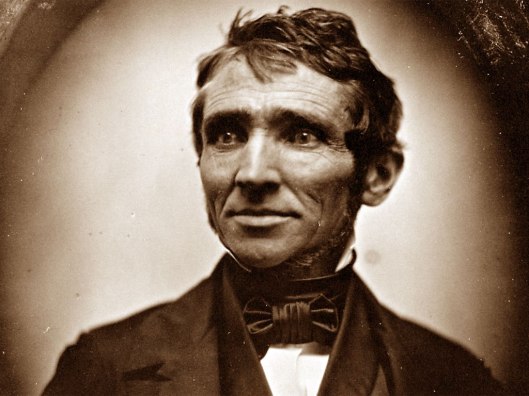
These are a modern invention which requires a large rubber band (an “elastic”) to propel the missile and such rubber bands can only come from the 1840s and beyond, when the process of heat-hardening rubber (“vulcanization”) was patented by Charles Goodyear.

image11chasgoodyear.jpg

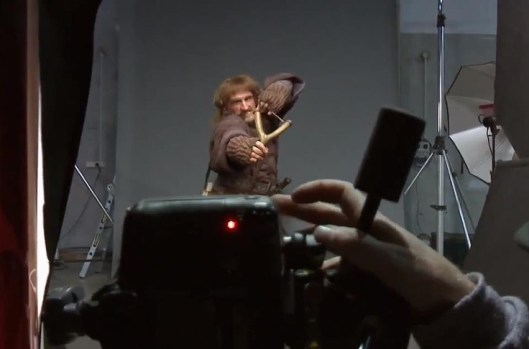
For us, then, the image of Ori in P Jackson’s film armed with a slingshot

image12oriwithslingshot.jpg

goes into our catalogue of anachronisms, like the steam engine whistle, the popgun, and the tomatoes in The Hobbit.

But, as we were saying, small David has no fear of big Goliath, as one of those stones from the riverbed stuns the giant warrior, allowing David to use Goliath’s own sword to cut off his head.

image13dandg.jpg

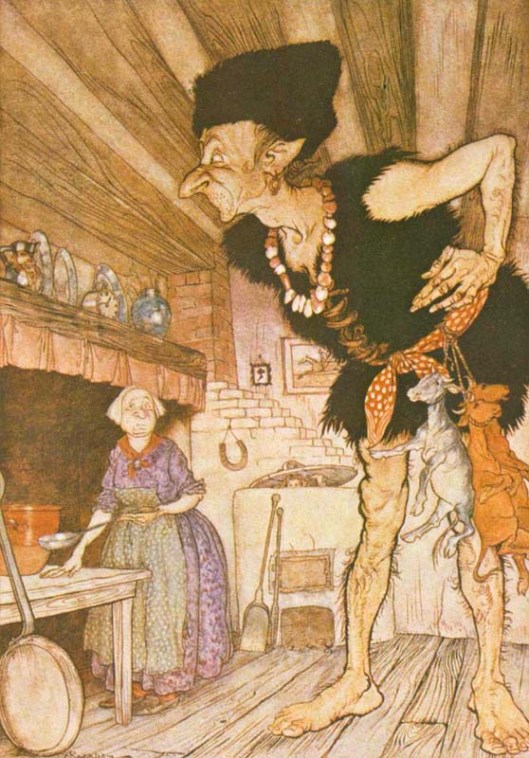
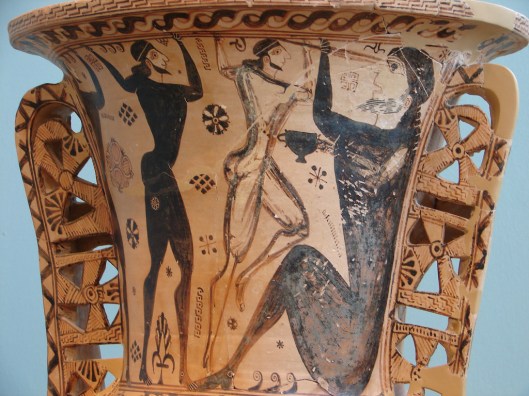
In ancient Greek tradition, Polyphemus the Cyclops obviously thinks his size will allow him to consume all of Odysseus’ men—and then Odysseus, too, saving him for last as a “guest gift”.

image14poly.jpg

Big body, however, doesn’t necessarily mean big brain as Odysseus gets the Cyclops drunk and then blinds him with his own staff.

image15blinding.jpg

Then, he uses the Cyclops’ own sheep as escape vehicles for himself and his men.

image16escaping.jpg

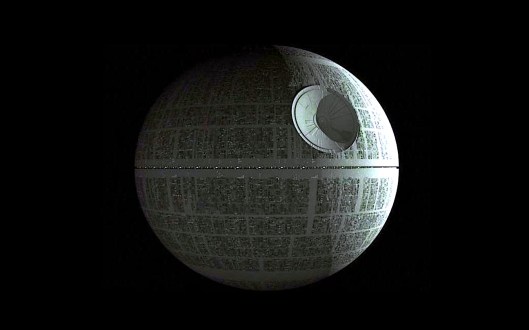
Small versus big is a major theme in Star Wars, from the fact that the gigantic Death Star has a single ventilator duct which makes it vulnerable

image17deathstar.jpeg

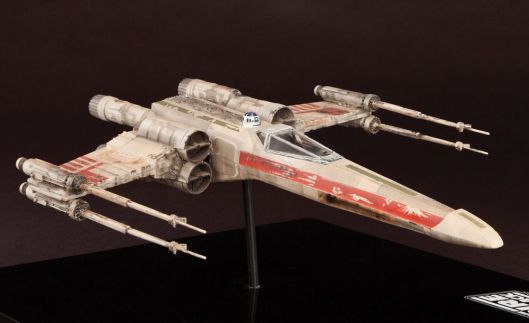
to attack by a single fighter,

image18xwing.jpg

to the ferocious Ewoks,

image19ewoks.jpg

and, of course, Yoda, with his famous question.

image20yoda.jpg

And then there are The Hobbit and The Lord of the Rings, where the world of the small and tough seems to be everywhere, from the hobbits

image21hobbit.jpg

to the dwarves

image22dwarves.jpg

and even to the Woses.

image23woses.jpg

Their opponents are suitably large—trolls,

image24trolls.jpg

dragons

image25smaug.jpg

wizards

image26saruman.jpg

to the biggest evil in Middle-earth (although it’s not clear, really, how big he is, physically).

image27baraddur.jpg

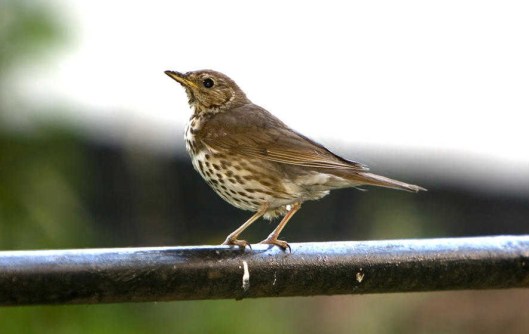
But there’s someone even smaller in The Hobbit who, because of that size, perhaps, is left behind, but is crucial to the story:  the elderly thrush

image28thrush.jpg

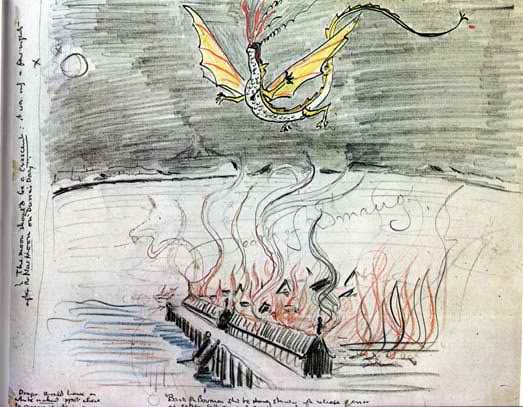
who informs Bard the Bowman just where to fire that black arrow which never fails him—and doesn’t this time, thanks to the bird.

image29deathofsmaug.jpg

We were sorry that his part was completely removed from The Battle of the Five Armies, but perhaps this was, in fact, one of the few times when the small hero lost to the big–studio.

Thanks, as ever, for reading.

MTCIDC

CD


PS

Here’s a LINK to an amazing demonstration of just how accurate the sling can be.

A Power

25 Wednesday Apr 2018

Posted by Ollamh in J.R.R. Tolkien, Narrative Methods, Villains

≈ Leave a comment

Tags

Gandalf, Grima, Harry Potter, Isengard, Istari, Mini-Me, Mirkwood, Necromancer, Ornthanc, Palantir, power, Rings of Power, Rohan, Saruman, Sauron, The Council of Elrond, The Hobbit, The Lord of the Rings, Theoden, Tolkien, Voldemort, White Council, Wormtongue

Welcome, dear readers, as ever.

Some time ago, we did a post on Saruman as a “Mini-Me” version of Sauron

image1minime.jpg

but, since that time, one of us has used The Hobbit in a class.  Mirkwood

image2mirkwood.jpg

and the Necromancer

image3necromancer.jpg

came up and we began to think about him again, this time to consider his strategy:  how long has he been planning something and what might be the elements within that plan?
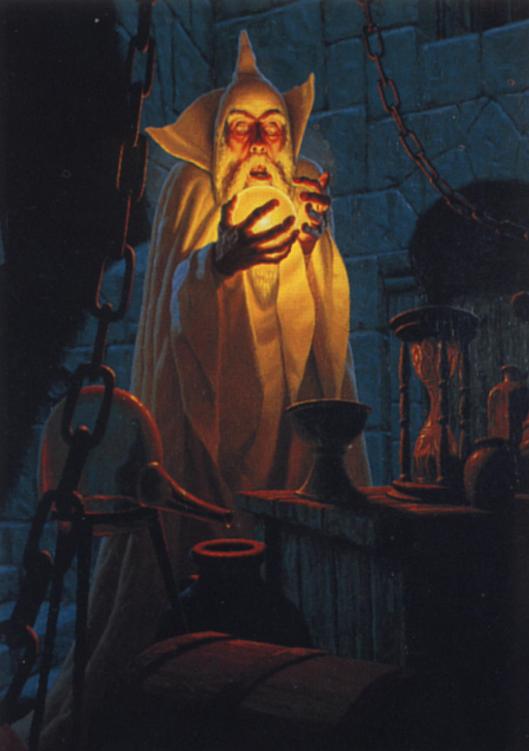
image4saruman.jpg

Although there is no hard evidence for just how long Saruman has been at work, it seems like his scheme has been under construction for at least 80 years.  We base that upon Gandalf’s description of the White Council’s meeting on the subject of Sauron and what to do when it’s discovered that he is in Dol Guldur, calling himself the Necromancer:

“Some, too, will remember also that Saruman dissuaded us from open deeds against him, and for long we watched him only.  Yet at last, as his shadow grew, Saruman yielded and the Council put forth its strength and drove the evil out of Mirkwood and that was in the very year of finding this Ring…”

(The Fellowship of the Ring, Book One, Chapter 2, “The Council of Elrond”)

Almost 80 years before the story of Bilbo and the Ring, then, it appears that one element in Saruman’s plot was shielding Sauron—a fact clearly not lost on Treebeard:

“He was chosen to be the head of the White Council, they say; but that did not turn out too well.  I wonder now if even then Saruman was not turning to evil ways.”

(The Two Towers, Book Three, Chapter 4, “Treebeard”)

From something Saruman says to Gandalf we might guess the obvious reason for helping Sauron to escape action by the White Council:

“A new Power is rising.  Against it the old allies and policies will not avail us at all.  There is no hope left in Elves and dying Numenor.  This then is one choice before you, before us.  We may join with that Power.  It would be wise, Gandalf.  There is hope that way.  Its victory is at hand; and there will be rich reward for those that aided it.”

(The Fellowship of the Ring, Book One, Chapter 2, “The Council of Elrond”)

But being a lackey to that Power is not quite his ultimate design, as we see:

“As the Power grows, its proved friends will also grow; and the Wise, such as you and I, may with patience come at last to direct its courses, to control it.  We can bide our time, we can keep our thoughts in our hearts, deploring maybe evils done by the way, but approving the high and ultimate purpose:  Knowledge, Rule, Order; all the things that we have so far striven in vain to accomplish…”

As is well-known, Saruman, as one of the Istari, was sent into Middle-earth as a counter to Sauron, not as an ally, and their purpose was:

“…coming in shapes weak and humble were bidden to advise and persuade Men and Elves to good and to seek to unite in love and understanding all those whom Sauron, should he come again, would endeavor to dominate and corrupt.”

(Unfinished Tales, 406)

Knowledge, yes, but Rule and Order?  Emphatically not!  But if that Power (and we note that even Saruman won’t just come out and say “Sauron” at this point, rather like the use of “He Who Must Not Be Named” in the Harry Potter books)

image5voldemort


can be used as a tool in Saruman’s hands—which may show us one element in his grand design.

First, however, it would seem that he needed a base.  As Treebeard tells Merry and Pippin:

“He gave up wandering about and minding the affairs of Men and Elves, some time ago—you would call it a very long time ago; and he settled down at Angrenost, or Isengard as the Men of Rohan call it.”

(The Two Towers, Book Three, Chapter 4, “Treebeard”)

image6orthanc


Saruman even then was already thinking of something, though the purpose was intentionally shrouded:

“There was a time when he was always walking about in my woods.  He was polite in those days, always asking my leave…and always eager to listen.  I told him many things that he would never have found out by himself; but he never repaid me in like kind.  I cannot remember that he ever told me anything.  And he got more like that; his face, as I remember it…became like windows in a stone wall:  windows with shutters inside.”

Although he was powerful, Saruman needed allies—or, rather, servants—and he wasn’t too particular who or what they were:

“He has taken up with foul folk, with the Orcs…Worse than that:  he has been doing something to them; something dangerous.  For these Isengarders are more like wicked Men.  It is a mark of evil things that came in the Great Darkness that they cannot abide the Sun; but Saruman’s Orcs can endure it, even if they hate it.  I wonder what he has done?  Are they Men he has ruined, or has he blended the races of Orcs and Men?  That would be a black evil!”

With the help of these servants, Saruman has turned his base into a factory and storehouse for his scheme, as Gandalf says:

“…it had once been green and fair, it was now filled with pits and forges.  Wolves and orcs were housed in Isengard, for Saruman was mustering a great force on his own account, in rivalry of Sauron and not in his service, yet.”

(The Fellowship of the Ring, Book One, Chapter 2, “The Council of Elrond”)

In fact, it would appear from what Saruman has told Gandalf, that he actually never intends to offer his service to Sauron.

From his base, he has been extending his own power into Rohan, in the south.  In his encounter with Aragon and his companions, Eomer says:

“But at this time our chief concern is with Saruman.  He has claimed lordship over all this land, and there has been war between us for many months.  He has taken Orcs into his service, and Wolf-riders, and evil Men, and he has closed the Gap against us, so that we are likely to be beset both east and west.”

(The Two Towers, Book Three, Chapter 2, “The Riders of Rohan”)

His attacks aren’t always military and Eomer hints at another possibility:

“His spies slip through every net, and his birds of ill omen are abroad in the sky.  I do not know how it will all end, and my heart misgives me; for it seems to me that his friends do not all dwell in Isengard.  But if you come to the king’s house, you shall see for yourself.”

We know that this is “fifth-column” work—Grima Worm-tongue, who has been slowly poisoning King Theoden with defeatism.

image7grima.png

And now we can see, in broad outline, what Saruman is up to:

  1. establish a base
  2. recruit an army
  3. build up an intelligence network (birds, spies, even wandering himself to pick up information)
  4. use your strength to expand power into the next land, Rohan
  5. at the same time undercut the King of Rohan’s ability to resist by subversive methods

So far, so good, as long as all that Saruman wants is to be the ruler of the land south of the Gap of Rohan and north of Gondor, but we’ve already seen that he’s more ambitious yet, suggesting to Gandalf that they—really he, as Gandalf knows—can take over that unnamed Power and use it for their—his– purposes, Knowledge, Rule, Order.  When he sees that Gandalf is unconvinced, Saruman lets slip the capstone of his scheme:

“Well, I see that this wise course does not commend itself to you…Not yet?  Not if some better way can be contrived?…And why not, Gandalf?  Why not?  The Ruling Ring?  It we could command that, then the Power would pass to us.”

And here is the real heart of Saruman’s design:  to obtain the One Ring.

He has been searching for it for a long time, even traveling to Minas Tirith to examine ancient records.

“In former days the members of my order had been well received there,” says Gandalf to the Council of Elrond, “but Saruman most of all.  Often he had been for long the guest of the Lords of the City.”

His purpose is now easy to guess.

Gandalf had been aware that Saruman had seemed to know a great deal about the Ring, even to its appearance, as Saruman had said to the White Council:

“The Nine, the Seven, and the Three had each their proper gem.  Not so the One.  It was round and unadorned, as it were one of the lesser rings; but the maker set marks upon it that the skilled, maybe, could still see and read.”

How had Saruman known that since, as Gandalf says, “What those marks were he had not said.  Who now would know?  The maker.  And Saruman?  But great though his lore may be, it must have a source.  What hand save Sauron’s ever held this thing, ere it was lost?  The hand of Isildur alone.”

Gandalf discovers the truth of this in the dusty records of Gondor:

“…there lies in Minas Tirith still, unread, I guess, by any save Saruman and myself since the kings failed, a scroll that Isildur made himself.”

And, with the discovery and reading of that scroll, Gandalf knows not only about much more about the Ring, but how Saruman knew about its appearance and now, in Orthanc, pressed by Saruman to join him, he understands the last element in Saruman’s design—and also why Saruman has summoned him:

“That is in truth why I brought you here.  For I have many eyes in my service, and I believe you know where this precious thing now lies.  Is it not so?  Or why do the Nine ask for the Shire, and what is your business there?”

So here, lacking only one element, the real element under all, is Saruman’s long plan—but lacking “this precious thing” (a telling phrase!), we will see how successful the rest will be.  Treebeard has said of him,

“He has a mind of metal and wheels; and he does not care for growing things, except as far as they serve him for the moment.”

What will happen when, without the Ring, Saruman will find that growing things, instead of serving him for the moment, might unseat him forever?
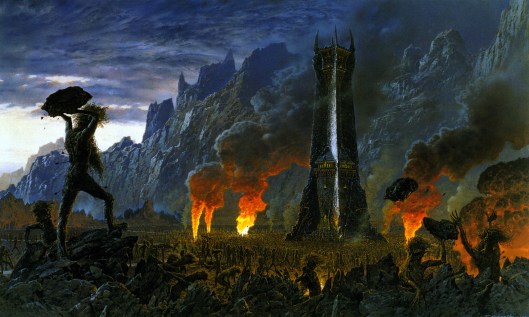
image8destruction.jpg

As always, thanks for reading!

MTCIDC

CD
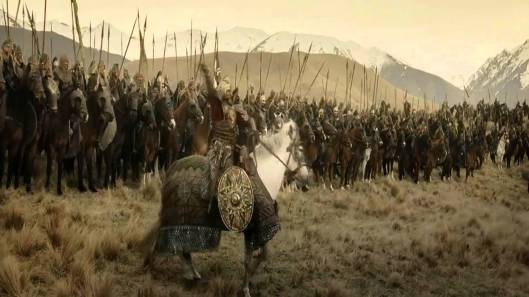
Boom

18 Wednesday Apr 2018

Posted by Ollamh in J.R.R. Tolkien

≈ Leave a comment

Tags

A Long-Expected Party, A Midsummer Night's Dream, Backarapper, Benwell Fireworks, cracker, Elizabethan entertainment, Fireworks, fountain, Gandalf, Kenilworth Castle, Pain's Imperial Fireworks, Queen Elizabeth, Robert Dudley, Robert Langham, Roman Candles, Shakespeare, Sparkler, squib, The Fellowship of the Ring, The Hobbit, The Lord of the Rings, thunderclap, Tolkien, torch

Welcome, dear readers, as always.

When Gandalf first arrives at Bilbo’s door “in the quiet of the world, when there was less noise and more green”, Bilbo’s memories of him are hardly those of someone aware who Gandalf really is:

“Gandalf, Gandalf!  Good gracious me!  Not the wandering wizard that gave Old Took a pair of magic diamond studs that fastened themselves and never came undone till ordered?  Not the fellow who used to tell such wonderful tales at parties, about dragons and goblins and giants and the rescue of princesses and the unexpected luck of widows’ sons?  Not the man that used to make such particularly excellent fireworks!”  (The Hobbit, Chapter 1, “An Unexpected Party”)

And it’s the fireworks in particular which made a strong impression:

“I remember those!  Old Took used to have them on Midsummer’s Eve.  Splendid!  They used to go up like great lilies and snapdragons and laburnums of fire and hang in the twilight all evening!”

[Here, by the way are the three flowers he mentions, in case, like us, you live in a climate where such things won’t appear for months yet!]

image1lily.jpg

image2snapdragons.JPG

image3laburnums.jpeg

And, although he alludes to an edgier side of Gandalf (“Not the Gandalf who was responsible for so many quiet lads and lasses going off into the Blue for mad adventures?”), he concludes as if Gandalf were merely some sort of superior tradesman:

“I beg your pardon, but I had no idea you were still in business!”

Gandalf is patient, however, only replying:

“Where else should I be?… All the same I am pleased to find that you remember something about me.  You seem to remember my fireworks kindly, at any rate, and that is not without hope…”

Perhaps the idea of linking Gandalf and fireworks is pardonable, however, when we see how, after being associated with them at the beginning of The Hobbit, he appears at the opening of The Lord of the Rings actually bringing fireworks to Hobbiton:

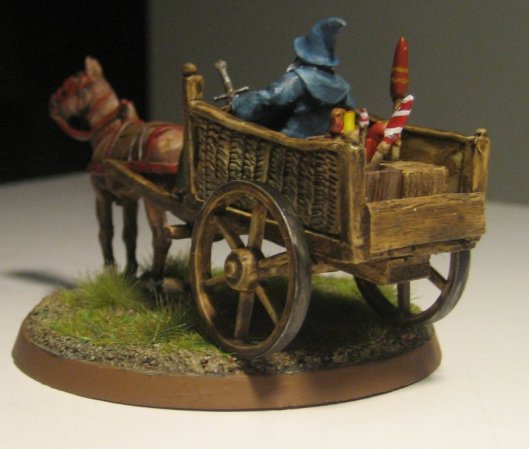
“At the end of the second week in September a cart came in through Bywater from the direction of Brandywine Bridge in broad daylight.  An old man was driving it all alone.  He wore a tall pointed blue hat, a long grey cloak, and a silver scarf.  He had a long white beard and bushy eyebrows that stuck out beyond the brim of his hat.  Small hobbit-children ran after the cart all through Hobbiton and right up the hill.  It had a cargo of fireworks, as they rightly guessed.  At Bilbo’s front door the old man began to unload:  there were great bundles of fireworks of all sorts and shapes, each labeled with a large red G…and the elf-rune…” (The Fellowship of the Ring, Book One, Chapter 1, “A Long-expected Party)

image4cart.jpg

(This is from a site called “Llama’s War of the Ring”, which has all sorts of interesting figures and conversions—here’s a LINK.)

Those great bundles turned into spectacular entertainment at the joint birthday party:

“The fireworks were by Gandalf:  they were not only brought by him, but designed and made by him; and the special effects, set pieces, and flights of rockets were let off by him.  But there was also a generous distribution of squibs, crackers, backarappers, sparklers, torches, dwarf-candles, elf-fountains, goblin-barkers and thunderclaps.  They were all superb.  The art of Gandalf improved with age.”

We ourselves enjoy fireworks, and, for the sake of our readers who might not be familiar with some of the types mentioned, we add here a few images—although some, like “dwarf-candles, elf-fountains, goblin-barkers” no longer seem to be available.

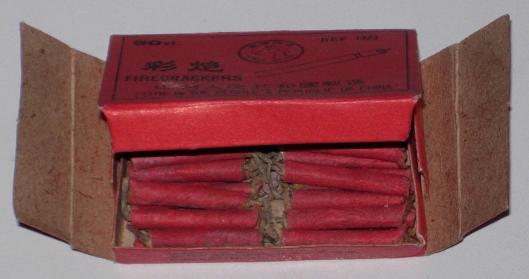
A squib is a small firecracker, like these.

image5squibs.jpg

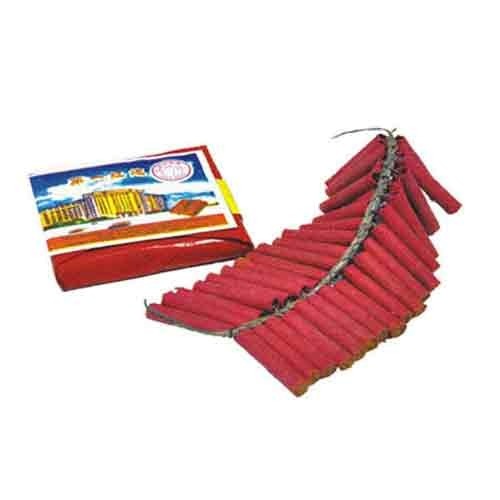
Crackers seem to come in sets.

image6firecrackers.jpg

Backarappers—we don’t have an image, but here’s a definition (and it sounds like the previous image):

“A firework made from multiple firecrackers folded together so that they will explode one after another”.  (from G.F. Northall’s Warwickshire Word-book, 1896)

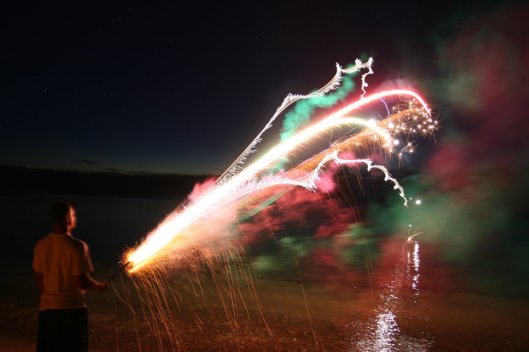
Sparklers are metal rods or bamboo sticks whose upper part has what is called “pyrotechnic composition”—which means something which shoots out sparks when it’s lit.

image7sparkler.jpeg

Torches may be these—which, when lighted, change color as they burn down (or so the manufacturer’s description says).

image8torch.png

Although there are no “dwarf-candles”, there are Roman Candles.  These are built in stages and, as the fire burns down, they shoot out star-patterns—as you can see.

image9romancandle.jpg

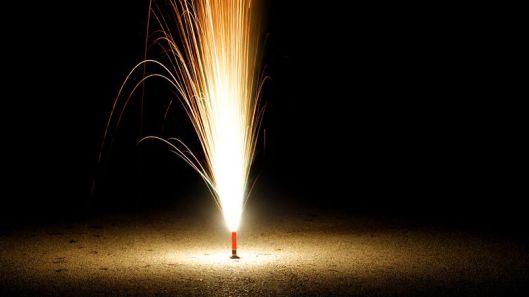
There are no “elf-fountains”, either, but there are fountains and they look like this—

image10fountain.jpeg

Finally, we can date a “thunderclap”, made by Benwell, back to this advertisement from about 1950,

image11benwell.jpg

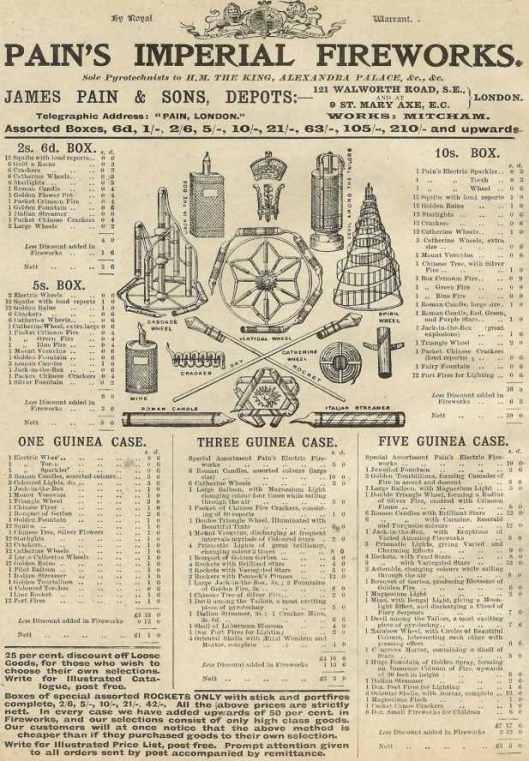
but we wouldn’t be surprised if Pain’s (not the best name for fireworks, we would say!) carried them, as they have something called “Laburnum Blossoms” in this 1903 listing

image12pains.jpg

Gandalf’s productions were clearly quite spectacular—which was undoubtedly why Bilbo remembers them:

“There were rockets like a flight of scintillating birds singing with sweet voices.  There were green trees with trunks of dark smoke:  their leaves opened like a whole spring unfolding in a moment, and their shining branches dropped glowing flowers down upon the astonished hobbits, disappearing with a sweet scene just before they touched their upturned faces.  There were fountains of butterflies that flew glittering into the trees; there were pillars of coloured fires that rose and turned into eagles, or sailing ships, or a phalanx of flying swans; there was a red thunderstorm and a shower of yellow rain; there was a forest of silver spears that sprang suddenly into the air with a yell like an embattled army, and came down again into the Water with a hiss like a hundred hot snakes.”

And then there was the finale.  Pain’s, in that 1903 listing, could make claims to baskets of elaborate pyrotechnics, but this?

“And there was also one last surprise, in honour of Bilbo, and it startled the hobbits exceedingly, as Gandalf intended.  The lights went out.  A great smoke went up.  It shaped itself like a mountain seen in the distance, and began to glow at the summit.  It spouted green and scarlet flames.  Out flew a red-golden dragon—not life-size, but terribly life-like:  fire came from his jaws, his eyes glared down; there was a roar and he whizzed three times over the heads of the crowd.  They all ducked, and many fell flat on their faces.  The dragon passed like an express train, turned a somersault, and burst over Bywater with a deafening explosion.”

In Shakespeare’s A Midsummer Night’s Dream, the fairy king, Oberon, says to his spirit-servant, Puck, these rather mysterious lines:

“My gentle Puck, come hither.  Thou rememberest

Since once I sat upon a promontory

And heard a mermaid on a dolphin’s back

Uttering such dulcet and harmonious breath

That the rude sea grew civil at her song

And certain stars shot madly from their spheres

To hear the mermaid’s music?”

(Act 2, Scene 1)

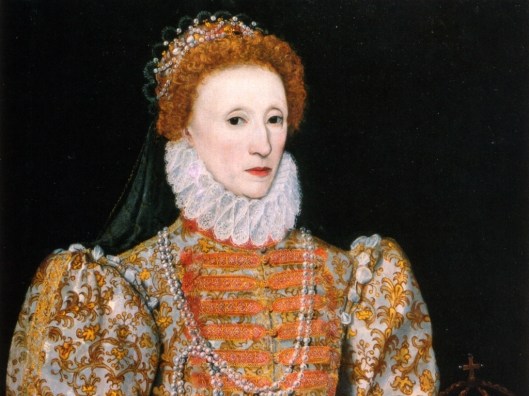
In 1575, Queen Elizabeth I

image14queene1.jpg

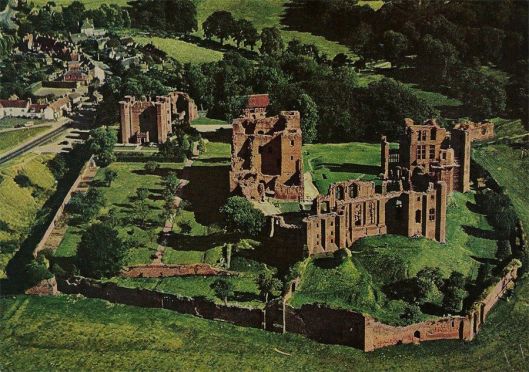
visited Kenilworth Castle,image15kenilworth.jpg

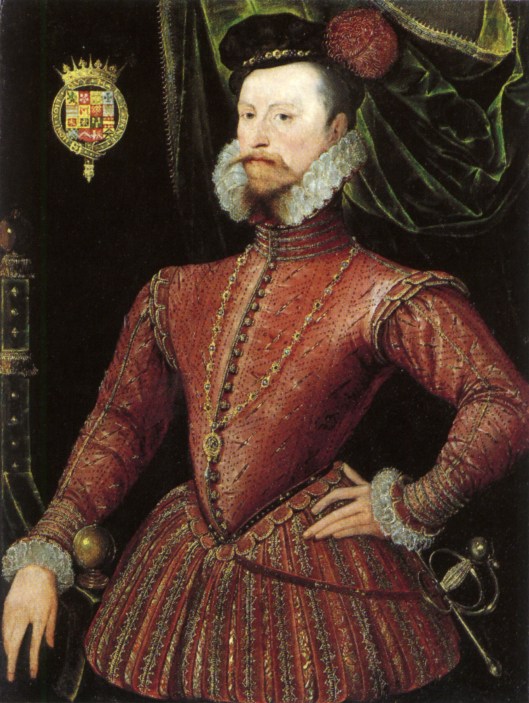
the home of Robert Dudley, the Earl of Leicester,

image16dudley.jpg

and a close friend (and maybe more).  To entertain her, Dudley spent thousands of pounds.

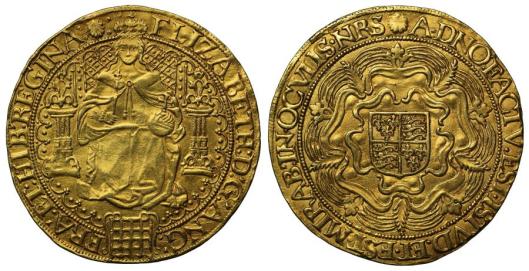
image17sovereign.jpg

(This is actually a gold sovereign—worth 20 shillings—that is, a pound, but there were no actual pound coins till after 1583.)

Among the entertainments was a big fireworks display (as well as at least one mermaid—see the LINK here for Robert Langham/Laneham’s contemporary “letter” in which he describes these entertainments in detail) and some scholars have theorized that those falling stars mentioned by Oberon are, in fact, Shakespeare’s boyhood memory of having seen the fireworks display (and the mermaid).  Kenilworth is only 14 miles from Stratford and Shakespeare was 11 and living at home—we presume—at that time, so we can imagine that this is possibility.  We know that JRRT had seen fireworks shows as a boy—as he tells us in a letter to Donald Swann, 29 February, 1968 (Letters, 390)—but we wonder:  did he ever, in those early years, see Goblin-barkers, or a red-golden dragon?

Thanks, as ever, for reading.

MTCIDC

CD

ps

We almost forgot–in case you’d like to make your own fireworks (definitely not recommended–and definitely illegal in some places!), here’s an 1878 manual on the subject.


Middle-under-earth

04 Wednesday Apr 2018

Posted by Ollamh in Artists and Illustrators, Heroes, J.R.R. Tolkien, Literary History, Narrative Methods

≈ Leave a comment

Tags

Alan Lee, Andrew Lang, Barrow-downs, Beowulf, cyclops, Dragons, George Macdonald, Goblin Feet, Goblins, Great War, Grendel, Grendel's Mother, John Howe, monsters, Polyphemus, Sir Gawain and the Green Knight, Smaug, Storia Moria Castle, Tales of Troy and Greece, The Hobbit, The Lord of the Rings, The Princess and the Goblin, The Red Book of Animal Stories, The Red Fairy Book, Tolkien, trenches, tumulus

As always, dear readers, welcome!

One of us is currently teaching The Hobbit and, is always seems to be the case when we are teaching an old friend, we are struck by something new.  In this case, it’s the idea of “what lurks beneath” and where it might come from.

What occurred to us now was that, virtually every time there is trouble for Bilbo and the dwarves, it is strongly linked with caves and hollowed-out places:  trolls who came out of a cave (“Roast Mutton”), goblins who live in caves (“Over Hill and Under Hill”), Gollum (“Riddles in the Dark”), hostile elves (“Flies and Spiders” and “Barrels Out of Bond”), and, of course, Smaug (“On the Doorstep”, “Inside Information”, and “Not At Home”).  Only the wargs, the overgrown spiders, and the men of Lake-town in the Battle of the Five Armies have above-ground origins, as, after all, the other forces—goblins, elves, and even Iron Hills dwarves (we assume), have subterranean dwellings.

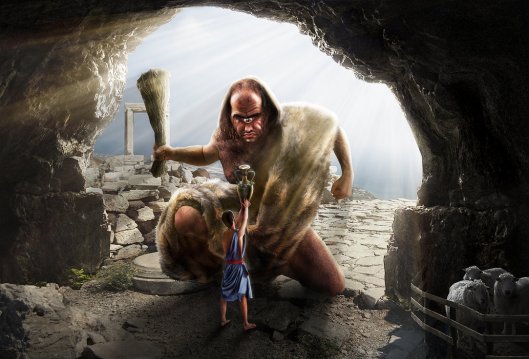
We knew that JRRT thought to become a classicist early in his academic career and we can imagine right away that one influence upon him for this underground menace would have been Polyphemus the Cyclops, who, after all, lives in a cave.

image1cyclops.jpg

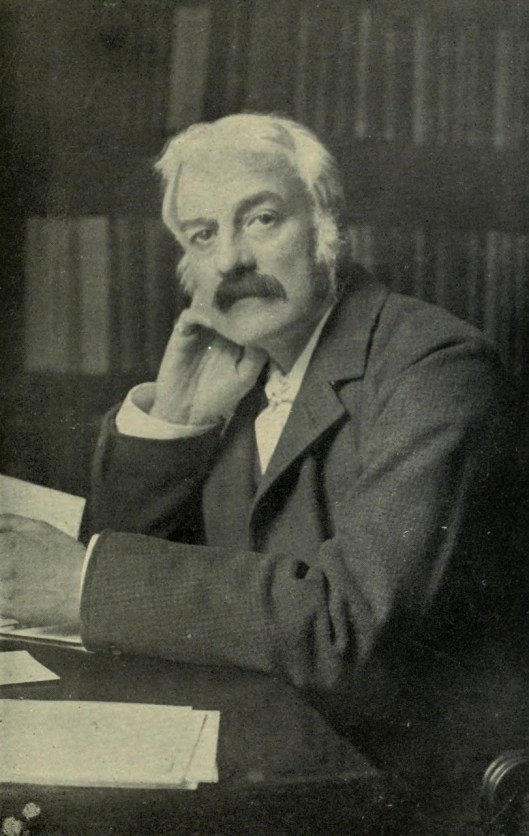
Before he read that part of Odysseus’ story in Greek, he might have seen it in Andrew Lang’s 1907 Tales of Troy and Greece—

image2alang.jpg

image3lang.jpg

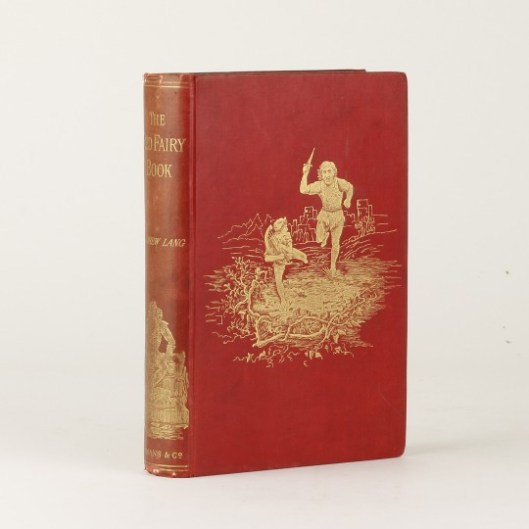
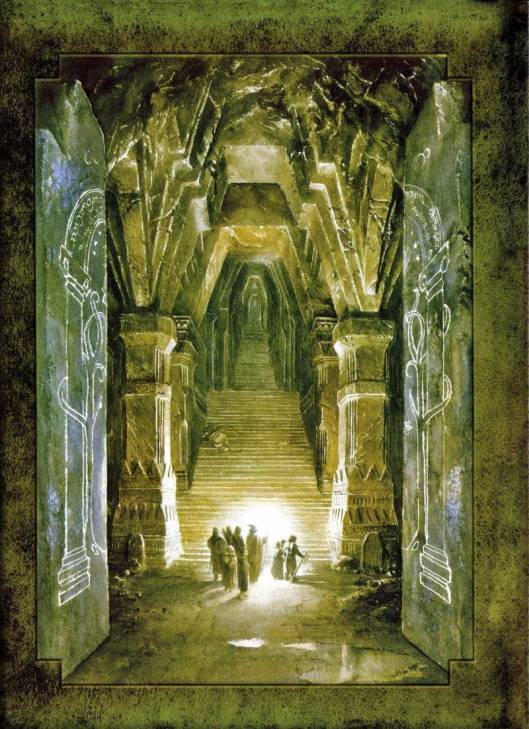
Tolkien tells us that, as a child, he had read other Lang works and a story in one, The Red Fairy Book (1890), might even have influenced some Middle-earth geography, from “Storia Moria Castle”.

image4redfairybook.jpeg

image5leemoria.jpg

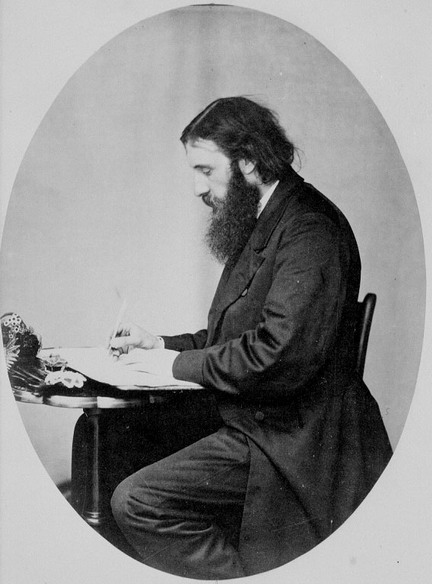
Another childhood favorite (although he appears to have changed his mind later in life) were the fantasy novels of George Macdonald

image6gmacd.jpg

and his The Princess and the Goblin (1872),

image7princess.jpg

as its title suggests, is full of goblins and their underground world.  These goblins are powerful, but have one fatal flaw—tender feet—which JRRT said that he never believed (see Letters, 178)—although Tolkien’s first published poem was entitled “Goblin Feet” (Oxford Poetry 1915).

Beyond possible childhood reading, there is his career focus, which includes two other potential underground influences.

First, there is Beowulf.  Grendel, the monster in this poem,

image8grendel.jpg

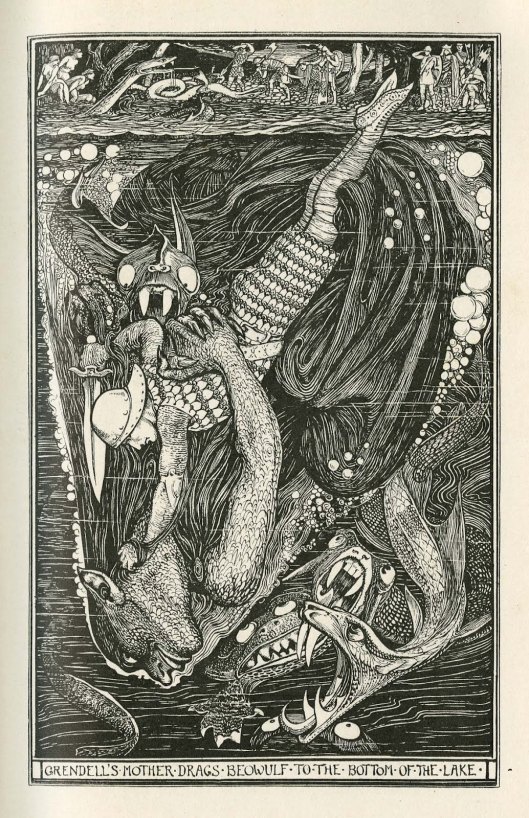
lives in a cave at the bottom of a pool with his mother and, in the second part of his monster-slaying, Beowulf has to dive into that pool to deal with her.image9beowulfandmama.jpg

This illustration comes from another Andrew Lang book, The Red Book of Animal Stories (1899).

image10redbook.jpg

(The picture of Grendel is by Brian Froud.  We found it on the website of K.T.Katzmann, I Write Monsters.  Here’s a LINK.)

Then, of course, there’s that dragon, against whom Beowulf fights and dies—and which is the direct ancestor of another famous and familiar dragon…

image11dragonandhoard.jpg

We are told that it lives in an abandoned tumulus—that is, an ancient grave mound, like this one.

image12tumulus.png

(This is, in fact, a famous Neolithic burial at Gavrinis, in Brittany.)

JRRT worked in Middle English, as well as Old English, and here we find one more possible source in his own edition (with E.V. Gordon) of the 14th-century poem Sir Gawain and the Green Knight.

image13tolkgord.JPG

The Green Knight who challenges King Arthur’s court to a mutual head-chopping contest, is said, in the fourth part of the poem,  to inhabit a “green chapel” and to appear out of a hole when Sir Gawain, who has accepted the challenge and cut off the Green Knight’s head, makes his appearance there to fulfill his half of the contest.

image14sirg.jpg

This chapel has sounded like a tumulus to generations of scholars and here’s John Howe’s 2003 illustration, complete with chapel as tumulus (not to mention a very large green man).

image15johnhowe.png

Tumuli also make their appearance, of course, in The Lord of the Rings, when Frodo and his party go astray on the Barrow Downs.

image16barrowwight.jpg

We can’t finish this posting without at least suggesting one more source, something even more personal than JRRT’s scholarly work:  his experiences in the Great War.

image17lt.jpg

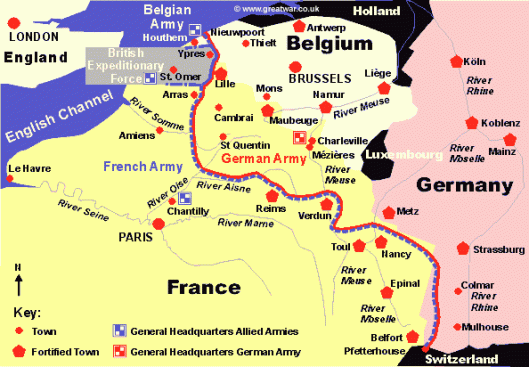
By the time Tolkien entered the service in France, the Western Front was, basically, a 500-mile trench, from Switzerland to the North Sea.

image18trenches.gif

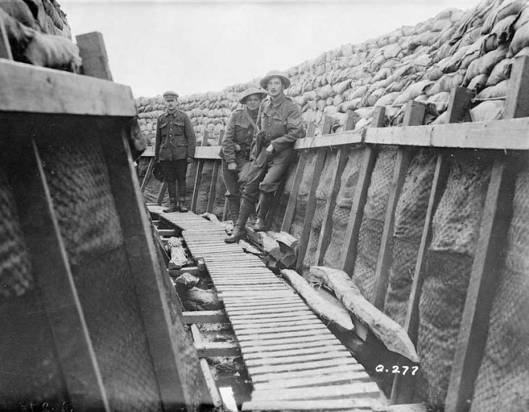
Much of the entrenching was simply deep, reinforced ditching.

image19trenches.jpg

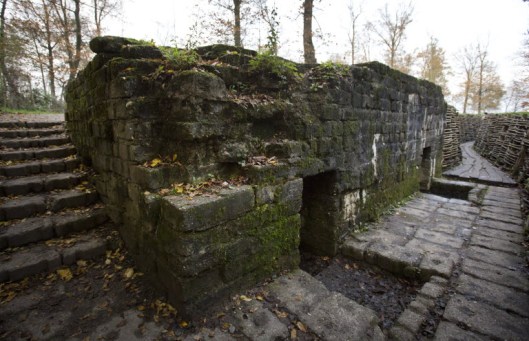
But some—particularly on the German side—could be elaborate, even built with stone or concrete, and set far enough into the ground as to be almost impervious to bombardment.

image21bunker.jpg

And we imagine that, with all of that earlier literary work in his mind, JRRT might have faced such defenses wondering whether what was inside them would be Germans

image22trenchclearing.jpg

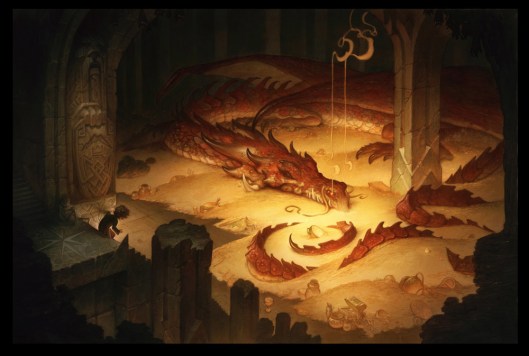
or something much worse.

image23smaug.jpg

And did this haunt his later writing as much as the Great War haunted the minds of soldiers all over the world?

Thanks, as ever, for reading!

MTCIDC

CD
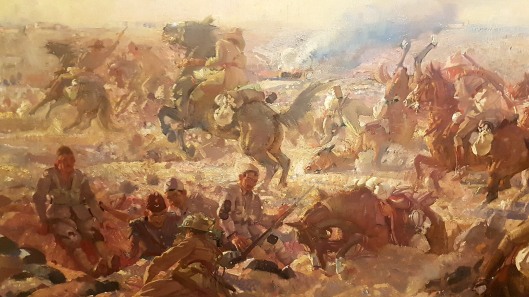
“Dragons, Other”

21 Wednesday Mar 2018

Posted by Ollamh in Artists and Illustrators, Fairy Tales and Myths, Heroes, J.R.R. Tolkien, Literary History, Maps

≈ Leave a comment

Tags

Arthur Rackham, Beowulf, C.S. Lewis, Chrysophylax, Custard the Dragon, Dragons, Dream Days, Esgaroth, Farmer Giles of Ham, Jabberwock, Jabberwock-slayer, Kenneth Grahame, Lewis Carroll, Lonely Mountain, Luttrell Psalter, map, Middle-earth, Narnia, Ogden Nash, Pauline Baynes, Rumer Godden, Smaug, St George, The Chronicles of Narnia, The Dragon of Og, The Hobbit, The Lion The Witch and the Wardrobe, The Lord of the Rings, The Reluctant Dragon, Through the Looking-Glass, Tolkien, Walt Disney

As always, readers, welcome.

One of us is currently teaching a class where our present focus is upon The Hobbit.

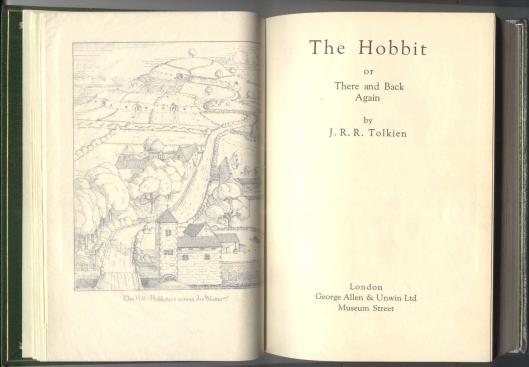
image1hob1st.jpg

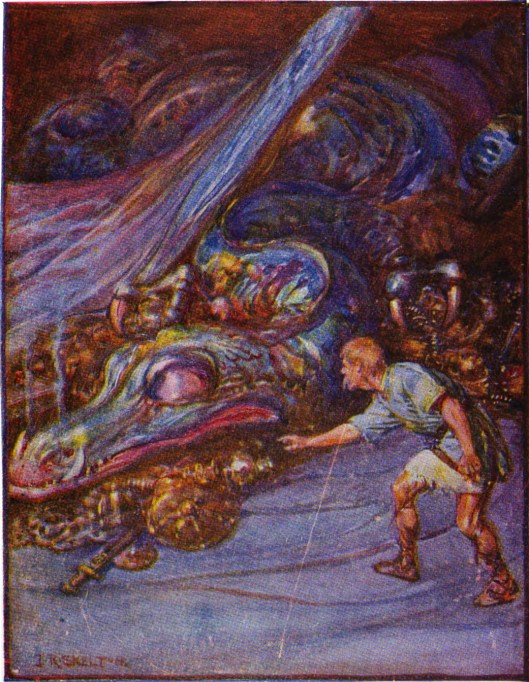
At the center of the book is the Lonely Mountain and at the center of that is Smaug.

image2aerebor.jpg

image2smaug.jpg

This got us to thinking about other dragons in our experience, and some of those are not quite of the same breed as the hoard-sitter faced by Bilbo and the dwarves.  That dragon is closely related to the Beowulf variety

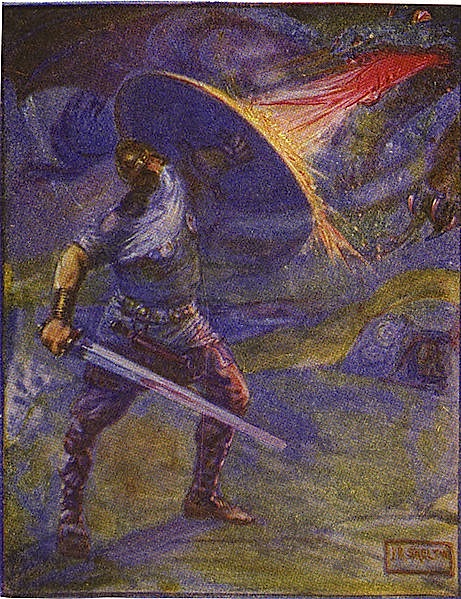
image3beowulfdragon.jpg

which, unlike Smaug, has neither a name nor (it seems) human speech, but it certainly has the same suspicious streak:  when an escaped slave steals a cup from its hoard, it’s almost immediately aware that it’s missing and suspects a human.

image4stealingcup.jpg

And they are both vengeful.  As Smaug devastates Esgaroth, even if he dies for it,

image5esgaroth.jpg

image6smaug.jpg

so Beowulf’s dragon scorches the countryside in revenge for the theft.

But what about those other dragons?

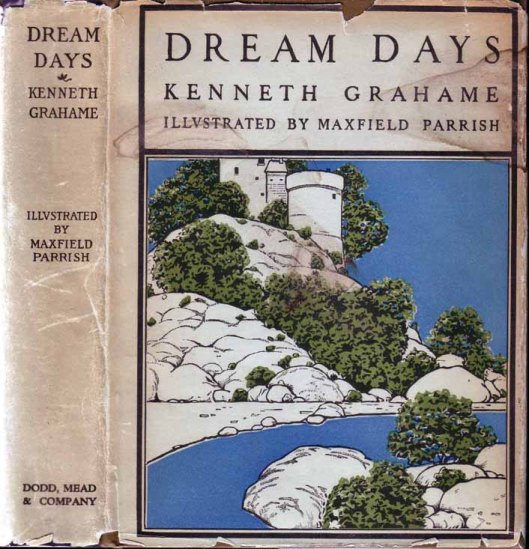
First, we thought of Kenneth Grahame’s Dream Days (1898),

image7kg.jpg

image8dreamdays.jpg

a collection of short stories, the next-to-last of which is “The Reluctant Dragon”.

image9reluct.jpg

This is the story of a beast the very opposite of Smaug—no hoard, no suspicion, no flaming violence, and, in fact, a poetry lover.  This story was then converted into a Disney cartoon of 1941.

image10reluct.jpg

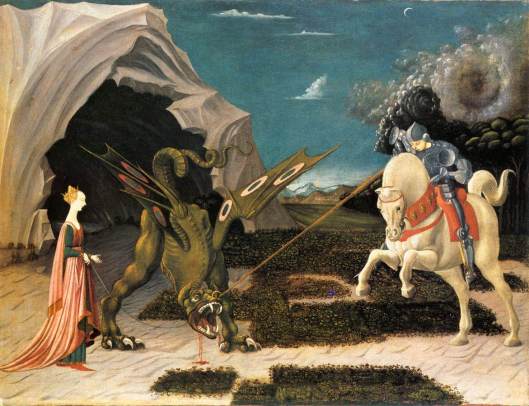
Needless to say, although the core of the plot is the same, what makes the Grahame distinctive is the language.  All of the major characters:  the dragon, the little boy who finds him, and St. George, who is brought in as a dragon-slayer, are thoughtful and articulate late Victorians who would rather discuss literature than do battle—a far cry not only from Beowulf’s encounter, but also from every other earlier depiction we could think of.

image11ucellostgeo.jpg

image12stgeo.jpg

image13stgeo.jpg

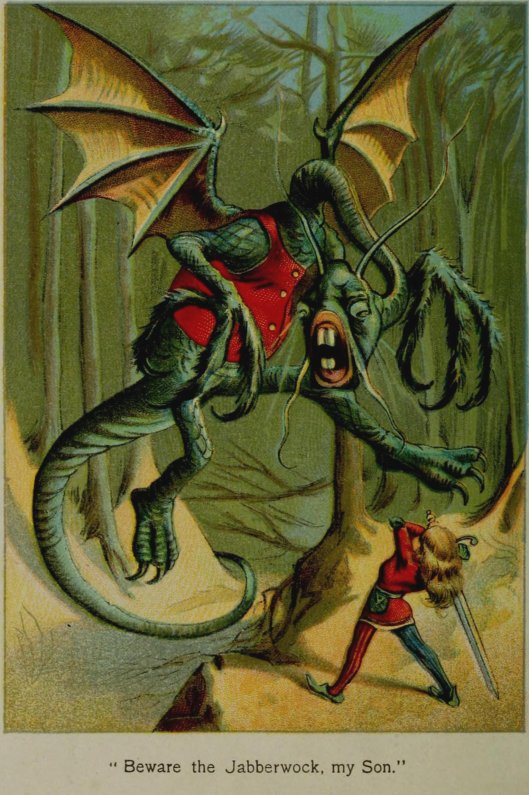
The sword in this last one looks like it actually belongs in the hands of the jabberwock-slayer

image14jabberwocky.jpg

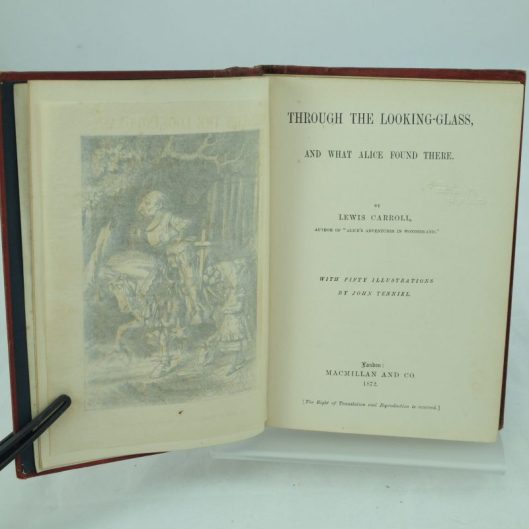
in Lewis Carroll’s Through the Looking-Glass (1872).

image15through.jpg

Here’s a LINK to Dream Days so that you can enjoy the story for yourselves.

Nearly sixty years later, the comic verse writer, Ogden Nash,

image16nash.jpg

produced not a literary dragon, but a timid one in “Custard the Dragon” (1959).

image17custard.jpg

This is a poem in 15 stanzas and is a story about Belinda and her pets, including a dragon, who is taunted by the other pets as being less than brave.  To underline this, the last line in a number of stanzas is a variation upon the first version of the line, “But Custard cried for a nice safe cage”.  (Here’s a LINK to the poem.)

The surprise is that, when a pirate climbs in through the window (this happens all the time here—possibly they escape from dreams?), Custard promptly eats him—and the cries of “Coward!” disappear immediately.

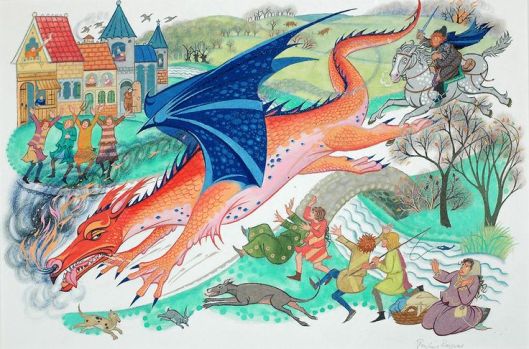
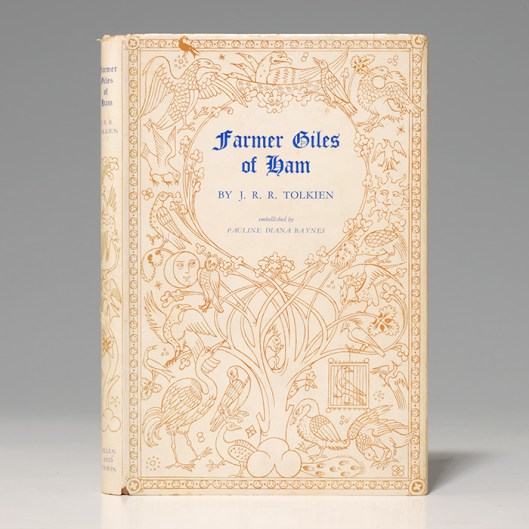
In contrast to the unnamed dragon in “The Reluctant Dragon” and in “Custard the Dragon”, our next dragon is a talker—like Smaug, but also like Smaug, potentially malevolent.  This is Chrysophylax in JRRT’s 1937/1949 Farmer Giles of Ham.  (JRRT is having a quiet joke here—“Chrysophylax” is Ancient Greek for “Goldguard”.)

image18chrysophylax.jpg

image19afgoh.jpg

The artwork is by Pauline Baynes (1922-2008).

image19pb.jpg

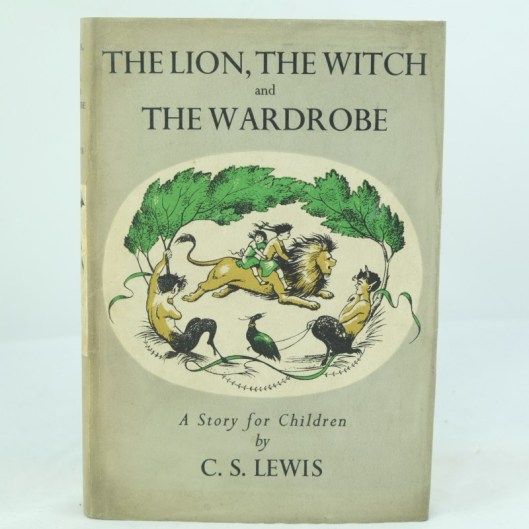
If, like us, you’ve loved the Narnia books, then you know her as their original illustrator.

image20lion.jpg

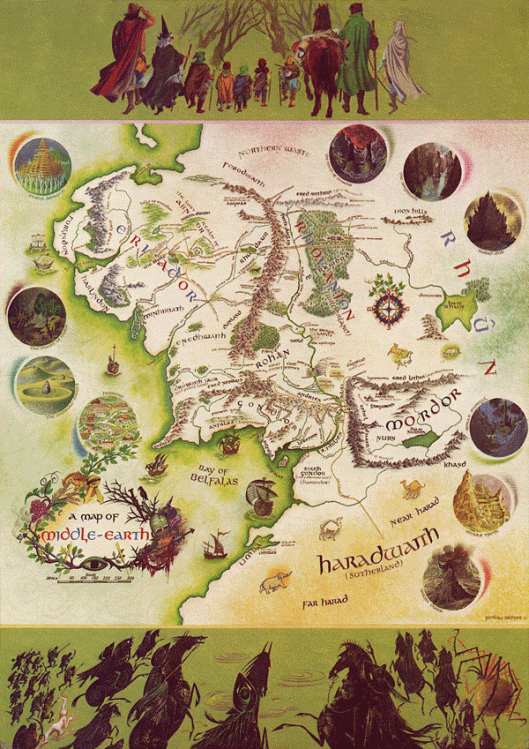
She was also the artist for an early Middle-earth map.

image21memap.gif

Her 2008 obituary in The Daily Telegraph tells of how they came to work together:

“In 1948 Tolkien was visiting his publishers, George Allen & Unwin, to discuss some disappointing artwork that they had commissioned for his novella Farmer Giles of Ham, when he spotted, lying on a desk, some witty reinterpretations of medieval marginalia from the Luttrell Psalter that greatly appealed to him.  These, it turned out, had been sent to the publishers “on spec”by the then unknown Pauline Baynes.”   (The Daily Telegraph, 8 August, 2008)

JRRT was then so impressed with her work that it appeared both in other later publications and his recommendation led to her being engaged by CS Lewis’ publisher for the Narnia books, as well.  (And here’s a LINK to that obituary, which has more on Tolkien and Baynes, as well as Lewis.)

And the Baynes connection leads us to one further dragon, that in Rumer Godden’s  (1902-1998) 1981 The Dragon of Og, for which Baynes provided the cover art.

image22rg.jpg

image23dragog.jpg

It’s not our practice to discuss work we haven’t read, but we’ve just discovered this novel and have already put it on our spring reading list.  The little we know about it comes from a blurb or two, but it looks promising:  this is more of the reluctant dragon, but one who is in danger of being provoked by a new local lord until his wife steps in and cleverly changes the situation.

Before we close, however, we want to look back for a second at the Tolkien/Baynes connection and add two further things.  First off, here’s the first page of JRRT’s graceful letter of thanks and praise to Baynes for her work in illustrating Farmer Giles.

image24letter.jpg

Second, as the Telegraph obituary says, Tolkien was impressed with her versions of the marginalia from the Luttrell Psalter, which is high on our list of favorite medieval manuscripts.

image25luttrellpsalter.jpg

In our next, we want to spend some time looking at that work, thinking about marginalia, and not only there, but also in the work of another favorite illustrator, Arthur Rackham (1867-1939).

Till then, thanks, as always, for reading.

MTCIDC

CD


← Older posts
Newer posts →

The Doubtful Sea Series Facebook Page

The Doubtful Sea Series Facebook Page

  • Ollamh

Categories

  • Artists and Illustrators
  • Economics in Middle-earth
  • Fairy Tales and Myths
  • Films and Music
  • Games
  • Heroes
  • Imaginary History
  • J.R.R. Tolkien
  • Language
  • Literary History
  • Maps
  • Medieval Russia
  • Military History
  • Military History of Middle-earth
  • Narnia
  • Narrative Methods
  • Poetry
  • Research
  • Star Wars
  • Terra Australis
  • The Rohirrim
  • Theatre and Performance
  • Tolkien
  • Uncategorized
  • Villains
  • Writing as Collaborators
Follow doubtfulsea on WordPress.com

Across the Doubtful Sea

Recent Postings

  • Do You Speak Villain? (Part 3) February 18, 2026
  • Do You Speak Villain? (2) February 11, 2026
  • Do You Speak Villain? (Part 1) February 4, 2026
  • Towering January 28, 2026
  • Tolkien Among the Indians January 21, 2026
  • Thin and Stretched January 14, 2026
  • Through a glass… January 7, 2026
  • Heffalumps? December 31, 2025
  • We Three Kings December 24, 2025

Blog Statistics

  • 107,647 Views

Posting Archive

  • February 2026 (3)
  • January 2026 (4)
  • December 2025 (5)
  • November 2025 (4)
  • October 2025 (5)
  • September 2025 (4)
  • August 2025 (4)
  • July 2025 (5)
  • June 2025 (4)
  • May 2025 (4)
  • April 2025 (5)
  • March 2025 (4)
  • February 2025 (4)
  • January 2025 (5)
  • December 2024 (4)
  • November 2024 (4)
  • October 2024 (5)
  • September 2024 (4)
  • August 2024 (4)
  • July 2024 (5)
  • June 2024 (4)
  • May 2024 (5)
  • April 2024 (4)
  • March 2024 (4)
  • February 2024 (4)
  • January 2024 (5)
  • December 2023 (4)
  • November 2023 (5)
  • October 2023 (4)
  • September 2023 (4)
  • August 2023 (5)
  • July 2023 (4)
  • June 2023 (4)
  • May 2023 (5)
  • April 2023 (4)
  • March 2023 (5)
  • February 2023 (4)
  • January 2023 (4)
  • December 2022 (4)
  • November 2022 (5)
  • October 2022 (4)
  • September 2022 (4)
  • August 2022 (5)
  • July 2022 (4)
  • June 2022 (5)
  • May 2022 (4)
  • April 2022 (4)
  • March 2022 (5)
  • February 2022 (4)
  • January 2022 (4)
  • December 2021 (5)
  • November 2021 (4)
  • October 2021 (4)
  • September 2021 (5)
  • August 2021 (4)
  • July 2021 (4)
  • June 2021 (5)
  • May 2021 (4)
  • April 2021 (4)
  • March 2021 (5)
  • February 2021 (4)
  • January 2021 (4)
  • December 2020 (5)
  • November 2020 (4)
  • October 2020 (4)
  • September 2020 (5)
  • August 2020 (4)
  • July 2020 (5)
  • June 2020 (4)
  • May 2020 (4)
  • April 2020 (5)
  • March 2020 (4)
  • February 2020 (4)
  • January 2020 (6)
  • December 2019 (4)
  • November 2019 (4)
  • October 2019 (5)
  • September 2019 (4)
  • August 2019 (4)
  • July 2019 (5)
  • June 2019 (4)
  • May 2019 (5)
  • April 2019 (4)
  • March 2019 (4)
  • February 2019 (4)
  • January 2019 (5)
  • December 2018 (4)
  • November 2018 (4)
  • October 2018 (5)
  • September 2018 (4)
  • August 2018 (5)
  • July 2018 (4)
  • June 2018 (4)
  • May 2018 (5)
  • April 2018 (4)
  • March 2018 (4)
  • February 2018 (4)
  • January 2018 (5)
  • December 2017 (4)
  • November 2017 (4)
  • October 2017 (4)
  • September 2017 (4)
  • August 2017 (5)
  • July 2017 (4)
  • June 2017 (4)
  • May 2017 (5)
  • April 2017 (4)
  • March 2017 (5)
  • February 2017 (4)
  • January 2017 (4)
  • December 2016 (4)
  • November 2016 (5)
  • October 2016 (6)
  • September 2016 (5)
  • August 2016 (5)
  • July 2016 (5)
  • June 2016 (5)
  • May 2016 (4)
  • April 2016 (4)
  • March 2016 (5)
  • February 2016 (4)
  • January 2016 (4)
  • December 2015 (5)
  • November 2015 (5)
  • October 2015 (4)
  • September 2015 (5)
  • August 2015 (4)
  • July 2015 (5)
  • June 2015 (5)
  • May 2015 (4)
  • April 2015 (3)
  • March 2015 (4)
  • February 2015 (4)
  • January 2015 (4)
  • December 2014 (5)
  • November 2014 (4)
  • October 2014 (6)
  • September 2014 (1)

Blog at WordPress.com.

  • Subscribe Subscribed
    • doubtfulsea
    • Join 78 other subscribers
    • Already have a WordPress.com account? Log in now.
    • doubtfulsea
    • Subscribe Subscribed
    • Sign up
    • Log in
    • Report this content
    • View site in Reader
    • Manage subscriptions
    • Collapse this bar
 

Loading Comments...