• About

doubtfulsea

~ adventure fantasy

Category Archives: J.R.R. Tolkien

Herald-ry in Middle Earth

30 Wednesday Mar 2016

Posted by Ollamh in Fairy Tales and Myths, Imaginary History, J.R.R. Tolkien, Literary History, Military History, Military History of Middle-earth, Narrative Methods

≈ 2 Comments

Tags

Achilles, armour, Battle of Bannockburn, Eurybates, flailing and winnowing, Heraldry, Heralds, Hermes, kerykeion, Lakedaimonia, lambda, Medieval, Mouth of Sauron, Robert de Septvans, Robert the Bruce, Roger de Trumpington, Sir Henry de Bohun, Spartans, tabard, Talthybius, The Black Gate, The Illiad, The Lord of the Rings, Tolkien, White Tree of Gondor

Welcome, as always, dear readers.

There is a moment in the film of The Return of the King which has always puzzled us. The Lieutenant of the Tower of Barad-dur has appeared outside the Morannon with taunts and with what appears to be disconcerting news about Frodo.

mouth-of-sauron-1.jpg

In response, Aragorn kills him. Even if you had never seen a movie with knights in it so that you would know that this was a herald or messenger of some sort and that there are rules about such people, there are modern parallels—flags of truce, even the silent protection offered to diplomats—to make you think that this was hardly proper behavior for a king.

If we look at this scene in the chapter entitled “The Black Gate Opens”, we see that this is another of those disturbing—and seemingly arbitrary—changes made by the script writers, showing once more their disregard—or lack of proper understanding—of the author and his wishes.

“Aragorn said naught in answer, but he took the other’s eye and held it, and for a moment they strove thus; but soon, though Aragorn did not stir nor move hand to weapon, the other quailed and gave back as if menaced with a blow. ‘I am a herald and ambassador, and may not be assailed!’ he cried.”

There is a parallel in this, when we are told that Aragorn has used the Palantir and wrestled with Sauron.

“ ‘It was a bitter struggle, and the weariness is slow to pass. I spoke no word to him, and in the end I wrenched the Stone to my own will…Now in the very hour of his great designs the heir of Isildur and the Sword are revealed; for I showed the blade re-forged to him. He is not so mighty yet that he is above fear; nay, doubt ever gnaws him.’ ” (The Return of the King, Book 5, chapter 2, “The Passing of the Grey Company”)

(This is misportrayed in the extended version of the film. For some reason, in return for being shown Anduril, Sauron shows Aragorn a lifeless—perhaps just napping? “she looks like she’s only sleeping!”—Arwen—which, as is so often the case with the clumsy script writers, completely misses the real point of the scene in the book.)

In both of these scenes, what the author clearly meant to show was that Aragorn’s power, now that he has chosen to reveal it, comes from within and is so great that it needs neither words nor violence to assert itself—more signs that he is the true returning king.

Thus, harming a herald, in fact, shows him as the very opposite: not only violent, but, instead of restoring and preserving—his proper task as king—he violates custom.

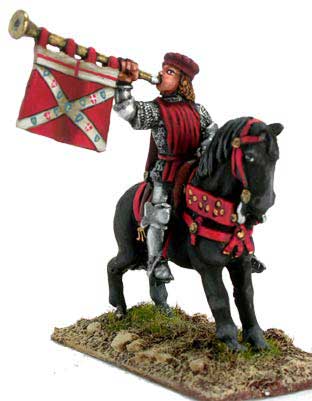
We note, by the way, that, in the book, he looks to be following custom. Under the direction of Gandalf, the army which marches to challenge Sauron formally declares its ownership of Ithilien with trumpet blasts

Black Trumpeterearly16thc.jpg

and its own heralds.

What is a herald, anyway? The Mouth of Sauron claims to be one and even claims immunity because of it—why?

In fact, heralds, in the western world, have an ancient lineage, first appearing in literature in The Iliad, where they act both as messengers
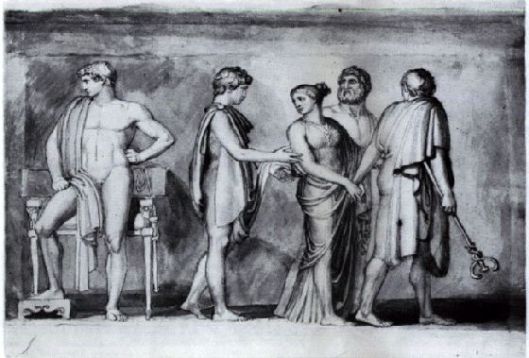
flaxman_Briseis_achil.jpg

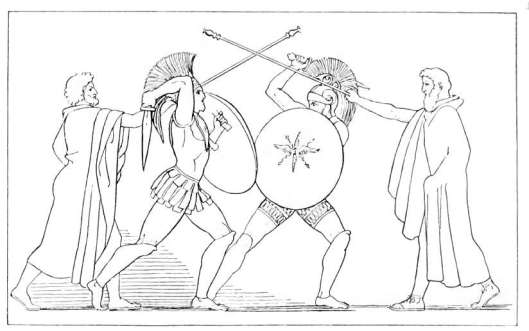
and as referees.

hector-and-ajax-fighting.jpg

You’ll notice, in the first of these two pictures, that the two heralds, Talthybius and Eurybates, have the badge of a herald: a special curved wand, called a kerykeion. Hermes carries one, to indicate that he is the patron god of heralds (and therefore their protector).

0408b5884a2ff2a3c2ad0b51ffde7a13.jpg

At some point in their early history, the convention appeared that heralds were considered, in their role as messengers, to be somehow neutral and therefore were not to be harmed. (It’s not clear, however, during their first appearance, in Iliad 1, that this was so then—or at least when dealing with Achilles–but perhaps that’s just Achilles, who is not necessarily always the most balanced individual.)

Heralds in the western medieval world continued with these functions, but added another.

We have a little evidence that some ancient Greek warriors and states may have used specific designs as badges. Spartan shields, for example, sometimes carried a lambda—a tentlike shape which stands for the sound of L in English and was short for “Lakedaimonia”, which is where Sparta was located.

spartanshield.png

A much more elaborate system of designs gradually developed during the Middle Ages, in part because of the increasingly-elaborate armor, which, from a long shirt of chain mail, came to cover the whole knight, making him, potentially unidentifiable.

normanhorseman.jpg

late12thcknight.jpgEnglish_Knight_13thc.jpg

So, both to make himself distinguishable on the battlefield and probably because it was macho, and therefore sexy, a knight would devise a distinctive design for his shield, possibly his clothing, and maybe even his horse, as well.

Knight14thcmid.png

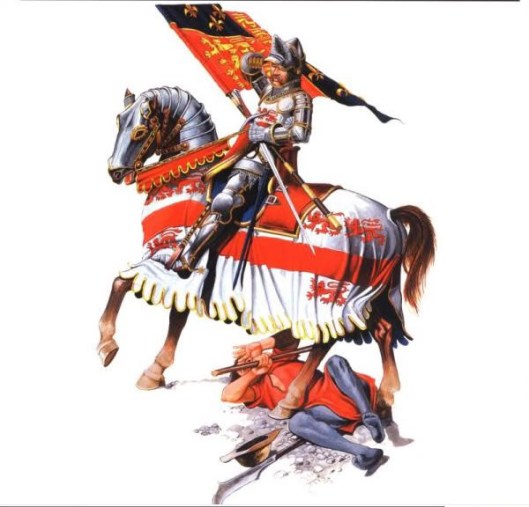
This could be pretty spectacular—just look at Robert the Bruce, king of Scotland in the early 14th century.

heraldic-robert-the-bruce.jpg

[A footnote here– at the site of the Battle of Bannockburn, there is a famous equestrian statue of the Bruce in which the head and facial features have been reconstructed from the Bruce’s actual skull.

bruce-9.jpg

images.jpg

Just before this same battle, the Bruce had shown his knightly skills by splitting, with his battle axe, the helmet and head of the English knight, Sir Henry de Bohun.]

robert-de-bruce-kills-bohun-l.jpg

Sometimes these designs could include puns on their owners’ names. Here’s Roger de Trumpington, with trumpets.

sirrogerdetrumpington.jpg

And Robert de Septvans (Septvans = “seven (winnowing) fans”).

sirrbtde7.jpg

The fan here looks actually like a basket, but was used for helping the wind to carry off the outer husk of the grain ear, a process called winnowing. (To the left is the previous process, flailing, where the beard of grain is being broken off the stalk before it is winnowed.)
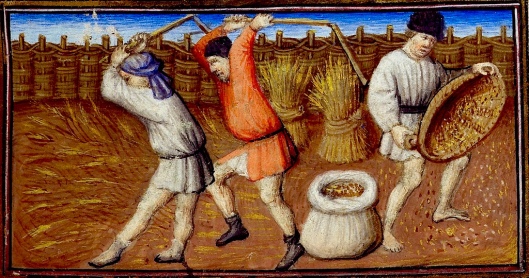
threshingwinnowing.jpg

As the number and complexity of patterns on armor developed, it appears that specialists took over the job of identifying them and keeping track of them, the heralds. And, from their name, we get our general name for the designs used on armor and clothing, heraldry. Because they worked in the world of heraldry, they decorated themselves, as well, and, in England, still do.
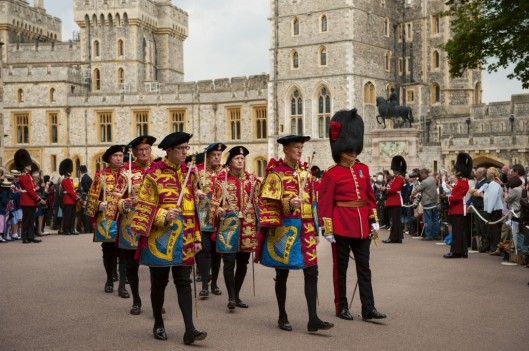
Heralds-at-the-Garter-Service-Julian-Calder-1024x681.jpg

Thus, we can imagine that, when Aragorn, Gandalf, and their companions reached the crossroads in Ithilien,

crossroads.jpg

after the trumpets sounded, heralds wearing a special coat, called a tabard,

Pursuivant_tabard.jpg

which would have been embroidered with the tree and seven stars,

Flag_of_the_Reunited_Kingdom_of_Arnor_and_Gondor.png

would have stepped forward and reclaimed the land for the king. Specially marked, they would have been very visible, and as the lieutenant of the tower tells us, protected by custom from harm. So why is Aragorn, the one man capable of returning order to Middle Earth, scripted to kill one? What do you think?

Thanks, as ever, for reading!

MTCIDC

CD

ps

And now you know what the White Rabbit is wearing and is supposed to be doing in Alice

De_Alice's_Abenteuer_im_Wunderland_Carroll_pic_37.jpg


Lamentable

23 Wednesday Mar 2016

Posted by Ollamh in Fairy Tales and Myths, Heroes, J.R.R. Tolkien, Literary History, Narrative Methods, Poetry

≈ Leave a comment

Tags

Adventure, Ballads, Boromir, Child Ballad, Doune Castle, Earl of Huntly, Eglinton Tournament, Ewan MacColl, Francis James Child, James Stewart, Lallands, Lament for Boromir, Laments, Monty Python and the Holy Grail, Outlander, Scots, The Earl of Morray, The Lady of Mondegreen, The Lord of the Rings, Tolkien

Dear readers, welcome, as always.


“Ye Hielands and ye Lowlands,

O, whaur hae ye been?

They hae slain the Earl o’ Moray,

And laid him on the green.”


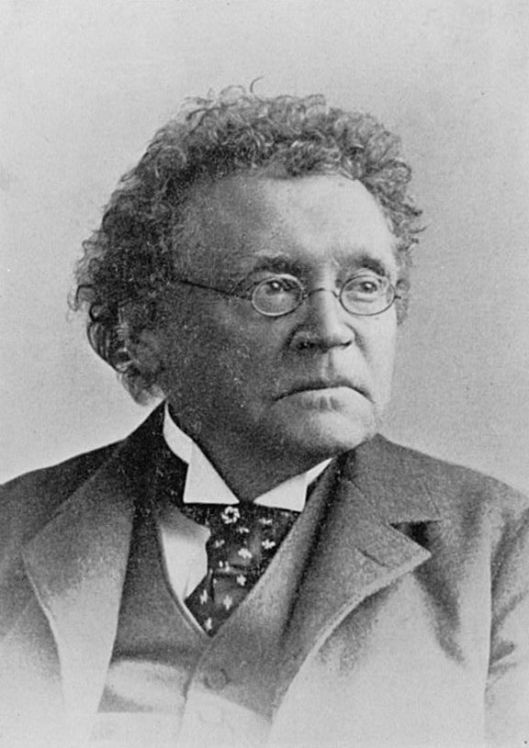
So begins a version of Child Ballad #181. As we are lucky enough to have readers from around the world (and thank you, every one of you, for visiting!), we might explain that a Child Ballad is not a nursery rhyme, but a distinctive type of traditional song from the massive collection of 305 such songs made by Francis James Child, a professor at Harvard, and published in five volumes between 1882 and 1898 under the title The English and Scottish Popular Ballads.

Francis_J._Child.jpg

Ballads are verse narratives, sometimes based upon folk tales, sometimes based upon actual historical events. This particular ballad is historically-based and concerns a murder in 16th-century Scotland. For our purposes, its actual historicity doesn’t matter, however, because what we’re really interested in is the fact that this is a lament for the murdered man, James Stewart, the Earl of Moray (pronounced “Murray”). We also have this posthumous painting, commissioned by his mother, to draw attention to the crime, but it doesn’t appear to have made much difference.

BonnieEarlofMoray.jpg

There are a number of different versions of this ballad, but the one which we heard first and with which we are most familiar (and from which we originally learned a tune—there’s more than one) was recorded by the famous Scots folksinger, Ewan MacColl, and is still available on the Smithsonian/Folkways CD FW03509/FG3509, “The English and Scottish Popular Ballads, Vol.1”.

Ewan-MacColl-by-Chris-Taylor.jpg

As we said, it’s a lament—just like that for Boromir in the chapter entitled “The Departure of Boromir”–and that’s really where we began to think about laments, especially a lament for a prominent person. And, as ever, we looked for a useful parallel between our world and that of Middle Earth. In this case, the murdered man in the ballad was an earl—a high-level nobleman—but he was also the son of the Regent (the temporary ruler) of Scotland and so we might see him as on about the same social level as Boromir the son of the Steward of Gondor.


Here’s how the lament for Boromir begins.

“Through Rohan over fen and field where the long grass grows

The West Wind comes walking, and about the walls it goes.

‘What news from the West, O wandering wind, do you bring to me tonight?

Have you seen Boromir the Tall by moon or by starlight?’ ”

You can see a similarity between this and the ballad already. The ballad begins by addressing all of Scotland. The lament begins by addressing the West Wind. Both appeal to something more than a listener, or even a group of listeners, as if speaking to simple mourners wouldn’t be enough: bigger forces must be involved. In the case of the ballad, the speaker (unknown—but clearly well aware of the facts) asks where the country has been. In the lament, Aragorn (as he is the initial mourner) has a more specific addressee and a more specific question: West Wind, have you seen Boromir?

The ballad then goes right to the point:

“They hae slain the Earl of Moray

And laid him on the green.”

[A footnote here. That last line became famous because of an essay by Sylvia Wright in the November, 1954 issue of the American publication, Harper’s Magazine entitled “The Death of Lady Mondegreen”. In the essay, Wright explains that, as a child, she misheard “and laid him on the green” as “Lady Mondegreen” and imagined that Stewart had been murdered along with a female companion. The word “mondegreen” has become a technical term in language studies for a misheard word which produces a new meaning.]

The next part of Aragorn’s lament is unspecific: Boromir is simply missing.

“ ‘I saw him ride over seven streams, over waters wide and grey;

I saw him walk in empty lands, until he passed away

Into the shadows of the North. I saw him then no more.

The North Wind may have heard the horn of the son of Denethor.’

‘O Boromir! From the high walls westward I looked afar,

But you came not from the empty lands where no men are.’”

The ballad then tells us something about the quality of the dead man.

“He was a braw gallant,

And he rade at the ring,

And the bonny Earl o’ Moray,

He might have been a king.”

This might need a little translation. The ballad is written in Lallans, the English—and we might really say the wonderfully rich English—originally of southern Scotland (Lallans= “Lowlands”). In general, the grammar and syntax are recognizably English, but the expressions and vocabulary are sometimes different—and sometimes very different!

So, here (so far):

Braw = “fine/splendid”

Gallant = “young man” (can also be spelled “callant”)

But the next expression is actually from medieval jousting. This was a game in which a knight would be required to ride at a ring, suspended in mid-air, and spear it on the end of his lance. Here’s an illustration from the 1839 Victorian tournament revival at Eglinton, in Scotland.

Eglinton_tournament_view.jpg

Although we might normally imagine that tournaments died out with the Middle Ages,

medievaltournament.jpg

Elizabethans and their successors, the Jacobeans, still jousted, as a kind of expensive archaic sport. Here’s Nicholas Hilliard’s c1590 portrait of George Clifford, 3rd Earl of Cumberland, dressed for a tournament as the Queen’s Champion.

Nicholas_Hilliard_003.jpg

So, we know that the speaker believes that James Stewart was a fine young man, and able at tournaments. We also know that Stewart was able enough—as far as the speaker is concerned—to be a king. As his father had been the Regent for the infant James VI, perhaps this is a quiet suggestion that James junior might have done better on the throne than James.

James_VI_of_Scotland_aged_20,_1586..jpg

In contrast, all we know at the moment about Boromir was that he was tall and that his father’s name was Denethor, with the suggestion that he was on an errand or quest in some deserted land.

But then we find out more about James Stewart.

“O lang will his lady

Lok frae the Castle Doune

Ere she see the Earl o’ Moray

Come soundin’ through the toun.”

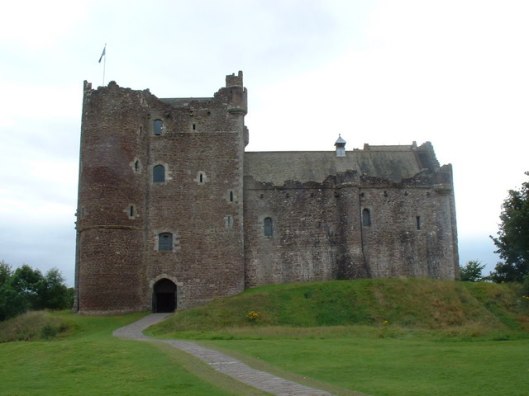
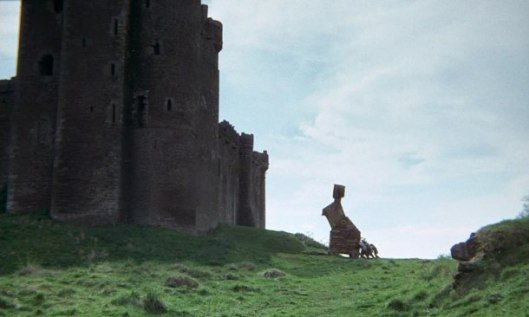
He had a wife or mistress and we see something about where he lived: in a castle. If you just heard this ballad, rather than reading it, and you came to the next word, “Doune”, you might be confused, since you can hear “doune”, meaning “down” in Lallans. This gives you a picture of a lady standing on the castle wall, waiting for Stewart to return, which is fine, but Doune is also the name of a castle owned by James Stewart.

Castle_Doune.jpg

If you’ve seen Monty Python and the Holy Grail, you will recognize this place.

monty_python.jpg

Or, if you watch Outlander.

Outlander1.jpg

As for the last line, we imagine that the Earl has a trumpeter ride in front of him, to clear the way.

mountedtrumpeter.jpg

Will we learn more about Boromir from the second stanza, which Legolas sings?

“From the mouths of the Sea the South Wind flies, from the sandhills and the stones;

The wailing of the gulls it bears, and at the gate it moans.

‘What news from the South, O sighing wind, do you bring to me at eve?

Where now is Boromir the Fair? He tarries and I grieve.’ “

With the idea that the speaker is appealing to nature for answers, we see Legolas address a second wind, but, so far, all we have added to our store of knowledge is that Boromir was good-looking (“the Fair”—and, in English, this can also mean “light-skinned/light-haired”)—and the anxiety at his absence continues.

In the ballad, we move farther into the crime, the actual murderer being spoken to.

“Now wae be to ye, Huntly,

And wherefore did ye sae?

I bade ye bring him wi’ ye,

And forbade ye him to slay.”

A little glossing first.

Wae be to ye= “may you be sad/sorrowful” (wae is Lallans for “woe”)

Bade= “ordered”

Forbade= “forbid/prohibited” (and should be pronounced “for-BAHD”)

Here we are presented—a bit obliquely—with the identity of the speaker of the ballad. He is one who gives order to lords—hence, he’s the king, meaning, historically, James VI of Scotland (soon—1603—to be James I of England, as well).

James_VI_of_Scotland_aged_20,_1586..jpg

If we only go by the verse, he has ordered “Huntly” (historically, the Earl of Huntly, ordered by James VI to arrest Stewart) to bring the Earl of Moray to the king’s court. In real life, he murdered Stewart when Stewart tried to escape, and here we see that, literarily, the same thing is suggested.

At this point, we have three characters: king, Huntly, Moray, and a murder, supposedly against the king’s orders. What more does Legolas’ lament have to tell us?

“ ‘Ask not of me where he doth dwell—so many bones there lie

On the white shores and the dark shores under the stormy sky;

So many have passed down Anduin to find the flowing Sea.

Ask of the North Wind news of them the North Wind sends to me!’

‘O Boromir! Beyond the gate the seaward road runs south,

But you came not with the wailing gulls from the grey sea’s mouth.’ ”

Nothing is said directly here, but that first line’s mention of “so many bones” might be seen to reveal what has happened to Boromir. The South Wind tells the speaker to ask the North Wind, but will that make a difference?

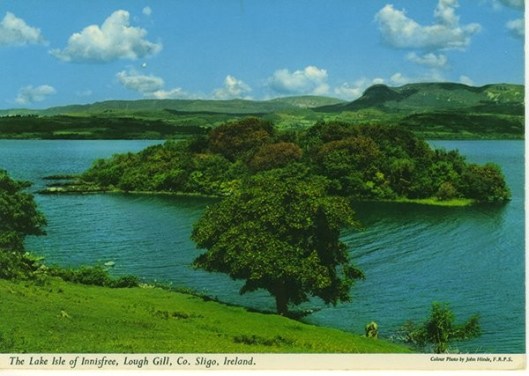
[Another footnote, this one about verse structure. Did JRRT have W.B. Yeats’ early (1888) “The Lake Isle of Innisfree” in the back of his mind with that last line?

William_Butler_Yeats_1890.jpg

innisfree.jpg

Here’s the last stanza of Yeats’ poem:

“I will arise and go now, for always night and day

I hear lake water lapping with low sounds by the shore;

While I stand on the roadway, or on the pavements grey,

I hear it in the deep heart’s core.”

In this poem, Yeats weights the end of each stanza both by using a shorter line and by ending with a series of one-syllable words, which slow things to a stop: deep…heart’s…core. JRRT does the same thing with one-syllable words here:   grey…sea’s…mouth.]

The next part of the ballad stanza repeats, in a variation, the earlier motif: what a wonderful person the murdered earl was.

“He was a braw gallant,

And he played at the glove;

And the bonny Earl of Murray,

He was the Queen’s true love.”

A final piece of glossing. Elizabethans used gloves as a love-present,

elizabethanglovesc1600.jpg

suggesting that the last two lines have more than a rhetorical meaning. Historically, James VI’s queen was Anne of Denmark—

1610ca-anne-of-denmark-by-2.jpeg

was this the real reason why the historical James didn’t seem to be interested in punishing Huntly?

We then have a repetition of the earlier lines:

“O lang will his lady

Lok frae the Castle Doune

Ere she see the Earl o’ Moray

Come soundin’ through the toun.”

And, with these, the ballad ends, our last image being that of the lady on the castle wall, looking for someone who will never return. This same image, in the form of an inanimate object, waits for Boromir.

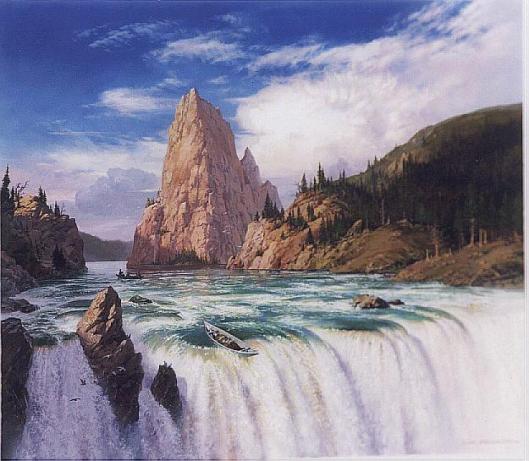
“From the Gate of Kings the North Wind rides, and past the roaring falls;

And clear and cold about the tower its loud horn calls.

‘What news from the North, O mighty wind, do you bring to me today?

What news of Boromir the Bold? For he is long away.’

‘Beneath Amon Hen I heard his cry. There many foes he fought,

His cloven shield, his broken sword, they to the water brought.

His head so proud, his face so fair, his limbs they laid to rest;

And Rauros, golden Rauros, bore him upon its breast.’

‘O Boromir! The Tower of Guard shall ever northward gaze

To Rauros, golden Rauros-falls, until the end of days.’ “

boromir_funerals.jpg

Putting the various elements together, we might see this kind of lament as going something like this:

  1. a speaker appeals to a mass audience of some sort (Scotland/Winds)
  2. that speaker reveals that something is wrong (Stewart is dead/Boromir is missing)
  3. he/she can then describe what that is in some way (Stewart was murdered/Boromir has died fighting)
  4. speaker may describe the fine qualities of the person lamented (Stewart as jouster, lover, kingly/Boromir as tall, fair, died fighting)
  5. those who lament cannot be consoled—or perhaps refuse to be (lady on wall of Doune/Tower of Guard=Minas Tirith)

Using this suggested model, can you think of other laments, both in Tolkien or otherwhere which match it?

Thanks, as always, for reading.

MTCIDC

CD

Beacons or Wills of the Wisp?

16 Wednesday Mar 2016

Posted by Ollamh in Imaginary History, J.R.R. Tolkien, Literary History, Military History, Military History of Middle-earth, Narrative Methods

≈ 2 Comments

Tags

Adventure, Agamemnon, Beacons, British Royal Government, Byzantines, film changes, Lays of Ancient Rome, Minas Tirith, Mulan, Peter Jackson, Spanish Armada, The Great Wall, The Lord of the Rings, Thomas Babington Macaulay, Tolkien

Dear Readers,

Welcome, as always. We begin this posting with something which puzzled us when we last read The Lord of the Rings.

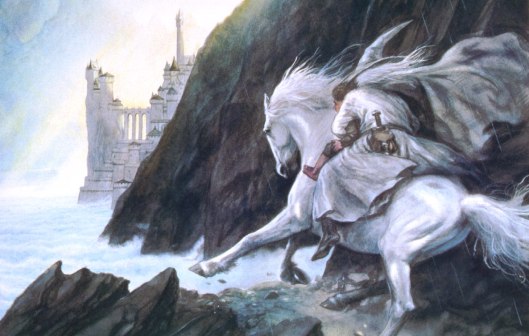
Gandalf and Pippin are on their nonstop ride to Minas Tirith.

gandalfpippin.jpg

Then—

“There was silence again for a while. Then, ‘What is that? Cried Pippin suddenly, clutching at Gandalf’s cloak. ‘Look! Fire, red fire! Are there dragons in this land? Look, there is another!’

For an answer Gandalf cried aloud to his horse. ‘On, Shadowfax! We must hasten. Time is short. See the beacons of Gondor are alight, called for aid. War is kindled. See, there is the fire on Amon Din, and flame on Eilenach; and there they go speeding west: Nardol, Erelas, Min-Rimmon, Calenhad, and the Halifirien on the borders of Rohan.’ ” (The Return of the King, Chapter 1, “Minas Tirith”)

beaconsofgondor.gif

Beacons as a means of rapid communication occurs often, both in western literature and in history.

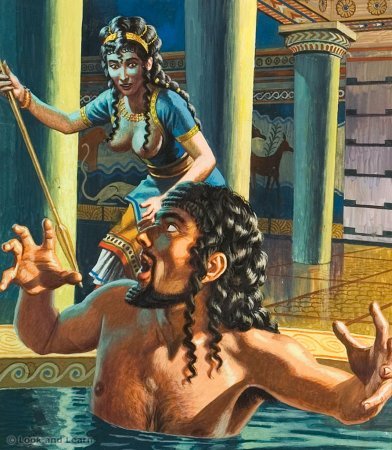
In Aeschylus’ Agamemnon (458BC), for example, Clytemnestra has a famous (and rather lengthy) speech in which she describes the beacons which alert Mycenae that Troy has been captured—alerting her to begin her plot to kill her husband and take over with her BF, Aegisthus.

clytaga.jpg

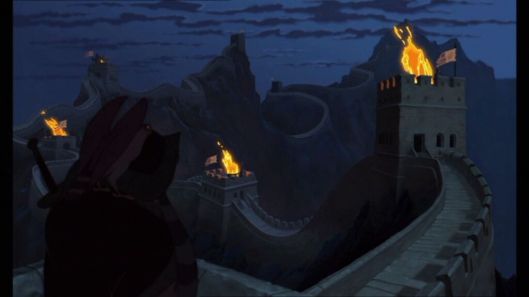
The towers along the Great Wall in China were used as beacon stations, as in Mulan.

mulan-wall-of-china


In the 9th century AD, the Byzantines had developed a system of beacons to warn them of invasion by their neighbors to the east.

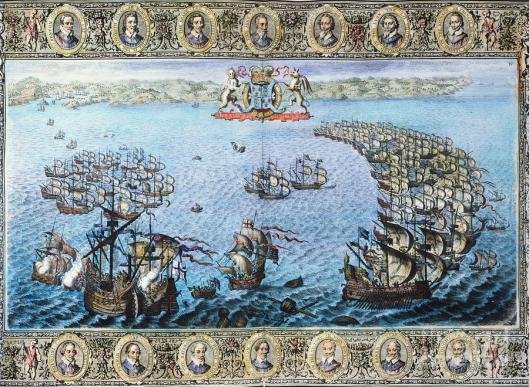
If you read the Tolkien sites, you see a fair amount more on beacons, in particular, those set up by the British royal government along the southern shore of England in the 1580s to act as an early warning system to alert the country to the Spanish armada.


spanisharmada.jpg

Tolkien would have known the story of these either from studying English history in his early schooling, or from reading “The Armada”, a well-known poem by Thomas Babington Macaulay first published in his Lays of Ancient Rome (1842).

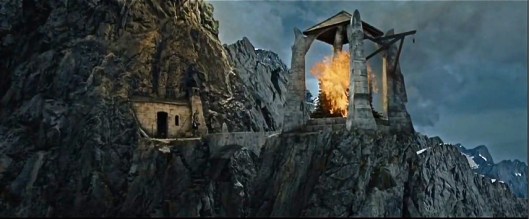
In Jackson’s The Return of the King, Denethor has been stubborn about not lighting the beacons to alert Rohan that Gondor has need of it. Pippin climbs up the outside of the rock face where the beacon is and, while the guards are distracted, he lights the beacon which, in turn, sets off the whole series.

mtbeacon.jpg

beaconsgondor.jpg

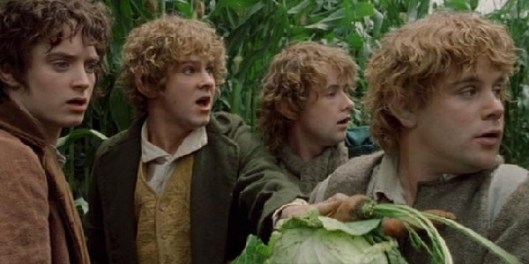
This is not the first or last time one sees changes made in the story—what, for example, are Merry and Pippin doing in a cornfield (that is, a field of maize—do we know that maize even grows in Middle Earth) when Pippin has actually been with Frodo and Sam from the time they left Hobbiton?

05_corn.jpg

In past postings, we have sometimes commented upon the changes made to the story by the scriptwriters—especially the changes to The Hobbit, which have done so much to take the story away from the author’s intent entirely, to the point where, in the third film, Bilbo, the main character, is reduced to something like Third Spear-Carrier from the Left, when the story becomes something like The Tragical Historie of Thorin, Sometime King Under the Mountain. When questioned about this, the scriptwriters, in general, have always made the same reply: “film is different from print” (although, in interviews, they sometimes become more aggressive, once even suggesting that those who disagree with their approach don’t understand the books).

In this posting, however, we intend to follow a different path, trying to understand why the change was made and how it might or might not benefit the narrative.

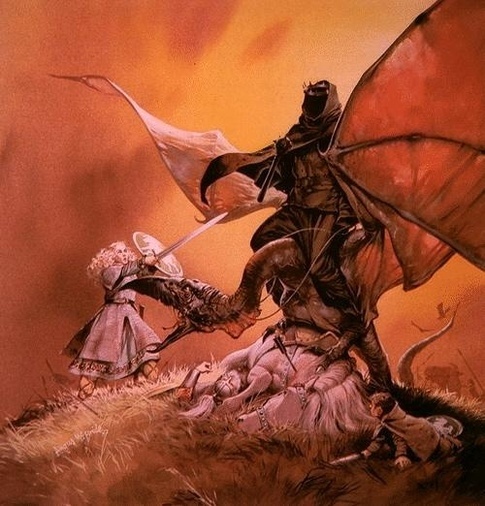
To a degree, the film has followed its source, in that Gandalf has taken Pippin with him on the ride to Minas Tirith, but Pippin’s role, from that point on in the book, becomes more that of observer than active participant. This is in contrast to Merry, who rides into the battle on the Pelennor and helps Eowyn destroy the Chief Nazgul.

eowynnazgul.jpg

We can imagine, then, that the scriptwriters, who have brought the two Hobbits so far, have decided to give Pippin another moment of action, as a kind of balance: if Merry fights a Nazgul, Pippin can do a little rock-climbing and alert the Rohirrim.

If you, readers, don’t know it, there is very useful area on the site www.theonering.com, called “Film Changes”. This particular change does not appear there, one presumes because, as the site says, their text was based upon a scripts still in the midst of production, but the structure of the area is very useful. It provides a summary title for each change, then there is this:

Film:

Book:

Pro:

Con:

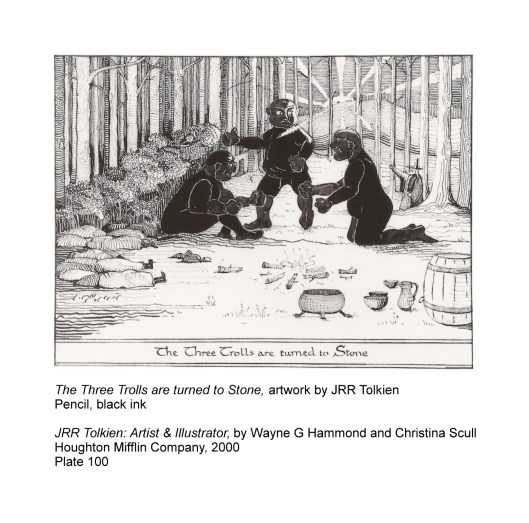
It’s interesting to see how more-or-less neutral in tone this is. The writer shows the contrasts, suggests why the change, and then explains why this is not necessarily a change for the better, but there is none of the hostility we sometimes see on-line, one way or the other, and, if you’re a regular reader of blogs and websites, we’re sure you’ve seen that hostility. It’s one of the least attractive, but widespread features of the internet and it’s a pity that certain of these commentators couldn’t be delayed till dawn would overtake them and send them the way of Tom, Bert, and William in The Hobbit!

img__Art-The_Three_Trolls_are_Turned_to_Stone,_by_JRRT.jpg

[Tolkien’s trees, by the way, always remind us of the work of the Danish illustrator, Kay Nielsen (1886-1957), which we presume JRRT had seen–at least his illustrations for East of the Sun, West of the Moon (1914).

kaynielsen.jpg

We have already provided you with the first two sections: the film has Pippin touch off a beacon after reaching Minas Tirith; in the book, Pippin sees the beacons alight, one after the other, as he and Gandalf ride towards Minas Tirith.

We presume that the Pro would be something like:

  1. provides a balance between the two Hobbits who are so closely linked throughout the story
  2. adds to the drama and underlines Denethor’s less-than-full-commitment—as depicted in the films—to defending Gondor to the end
  3. adds a bit of visual spectacle, seeing the beacons light up, one after another

And the Con?

  1. not in the original—and, as we always wonder, how far can you change things before you forfeit your claim that it’s “JRR Tolkien’s The Lord of the Rings” you’ve filmed?
  2. Denethor is actually much more active and aggressive in his stance in the original, not being willing to give up anything without a fight until the near-fatal wounding of Faramir (and a late-night séance with the palantir)—the beacons have already been lit because he’s attempting to gather all of the forces he can to defend Gondor
  3. in fact, the beacons are not on snowy mountain peaks in the original, but on reachable hilltops, just as are the sites for the beacons used to alert southern England of the approach of the Spanish armada in 1588, as in this fine photo by David Bellamy.

Thorncombe_Beacon_02.jpg

So, it might be a striking visual effect, but, as in #1, this isn’t quite what JRRT had in mind.

What do you think, dear readers? A justifiable change?

Thanks, as always, for reading.

MTCIDC

CD


The Fall of Two Cities?

09 Wednesday Mar 2016

Posted by Ollamh in Economics in Middle-earth, Imaginary History, J.R.R. Tolkien, Language, Maps, Military History, Military History of Middle-earth, Narrative Methods

≈ Leave a comment

Tags

Agincourt, Anadoluhisari, Anatolia, Asia Minor, Bayezid I, Bosphorus, Byzantium, Constantine I, Constantinople, Crecy, English Civil Wars, Eowyn, Gondor, map, Mehmet II, Minas Tirith, motte and bailey, Newark, Normans, Osgiliath, Ottoman Empire, Poitiers, Rumelihisari, siege, The Lord of the Rings, Tolkien, Witch-King of Angmar

Dear Readers,

Welcome, as always. A little while ago, we talked about the “siege of Gondor”, which really wasn’t a siege in the formal sense, at all, but rather an assault. (We suspect that JRRT liked the sound of “siege” and so used it, not caring if it were strictly accurate or not.) In this posting, we want to look at a real siege and examine what might be parallels with events in Middle Earth.

Before we do, we want to take a moment to talk about the word “siege”. It comes into English through Old French asegier, which comes from Latin ad + sedeo > adsideo, adsidere , literally, “to sit down at”. The northern French who passed the word on to England must have liked to say what’s called a y-glide when certain consonants came before e, so, though it was spelled asegier, it would have been said “ah-see-YED-jier”. And that’s why English today has what can be a confusing spelling. (In our experience, lots of native speakers have trouble distinguishing between the ie of “siege” and the ei of “seize”). The stress on the word in English would have been away from the initial a, and so that would have disappeared from the word as it moved from being a borrowing.

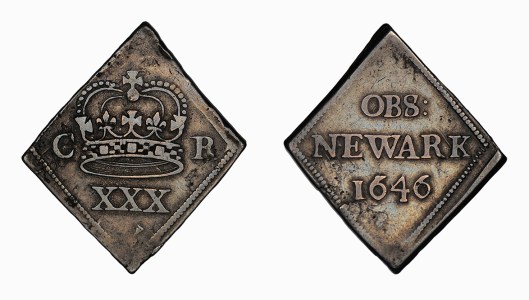
[As what we think is a cool footnote, Latin also has the verb obsideo “to sit down right before=to besiege” and we can see that used in English in the word “obsession”, with the idea that something bothers you so much that it’s like you’re being besieged by it. You can also see it on this wonderful bit of 17th-c. English history.

obsidionalmoney.jpg

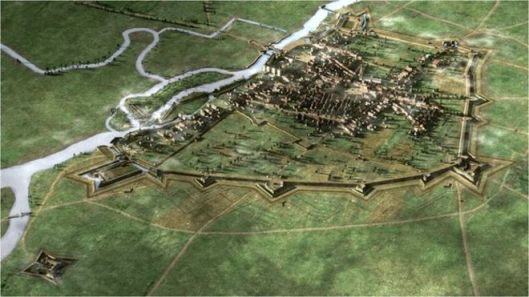
Although it doesn’t look like a modern coin, this is a form which used to be called “half-a-crown”—that is, 30 pennies (that’s what those three xses mean), or two shillings, sixpence.   This coin was struck in the town of Newark-upon-Trent, when it was besieged during the English Civil Wars (1642-1651).

_82601862_newark-1646map.jpg

And that’s where obsideo comes in. The back (the “reverse” in coin language—the front is called the “obverse”) says:

OBS: Newark (with a date, either 1645 or 1646, depending on when the coin was struck)

OBS = Obsessa Newark = “Newark Besieged”

There were a lot of coin-substitutes struck by various besieged towns, but, apparently, those from Newark are the most numerous.]

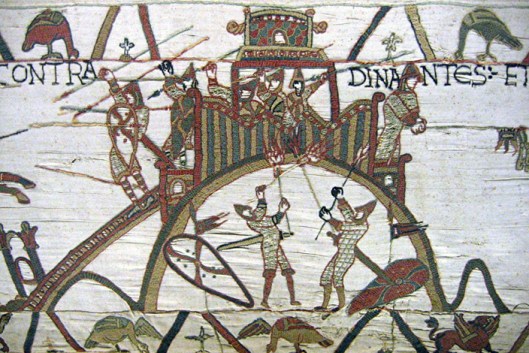
In the medieval western military world, sieges were more common, it seems, than pitched battles. As castles and towns were focal points for the possession and control of land—think of the hundreds of early castles, called “motte and bailey”, which the Normans built all across England in the first years after their conquest–it’s not surprising that they would have been a focus of attack.

motteandbailey.jpg Tapisserie_motte_dinan 704.jpg

As well, we can imagine that, ultimately, they would have been cheaper, in terms of the most irreplaceable manpower, sparing the highly-trained, hard-to-replace, knights and men-at-arms.

knights.jpg

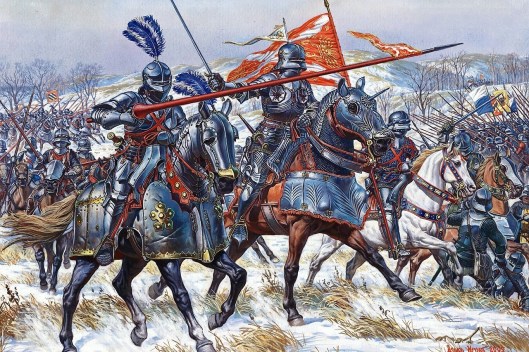
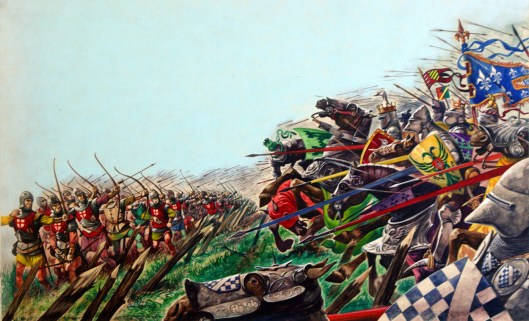
Battles like Crecy (1346), Poitiers (1356), and Agincourt (1415), cost the French dearly as their brave knights threw themselves at their English opponents, whose longbows shot them and their horses down.

agincourt.jpg

In a siege, although there was the occasional combat, including the exploitation of a break in the enemy’s defenses,

Edward-III-takes-Poix-Castle.jpg

most of a siege would be spent in using machinery of various sorts to aid you in breaking down the walls—and the resistance of the defenders, as well.

castles-and-knights-2-with-labels.jpg

This brings us to the real, historical siege we want to examine: Constantinople, 1453.

Bizansist_touchup.jpg

Constantinople had begun life as a Greek colony, called Byzantium, on the European side of the narrow passageway between the Black Sea and the northeastern Mediterranean.

byzempmap.gif

It had been refounded and greatly expanded by the Roman emperor, Constantine I, to be a new capital in the east.

Constantine-I-Face.jpg

Although it was supposed to be called “New Rome”, everyone in the east called it after its refounder, and so it was “Constantinople”, becoming the capital of an eastern empire which we call “Byzantine”. Even with setbacks and a number of unsuccessful attacks over the centuries, it was, for a long time, a very wealthy and powerful city.

1-reconstruccion-de-bizancio.jpg

But even the wealthiest and most powerful cities will fade—especially when faced with ambitious enemies. Constantinople had had a number of those, but, finally, in its last years, perhaps its most ambitious and most powerful arose in Asia Minor: that of the Ottoman Turks. As you can see from this map, its beginnings were modest: one Turkic-speaking group among many.

Anatolian_Beyliks_in_1300.png

This was a period of instability, however. The Ottoman leaders quickly took advantage of that instability to grab power and territory, so that, by 1400, they had spread beyond the shrinking Byzantine world, into the Balkans, and, soon, Constantinople was surrounded.

trebizond1400

This surrounding took place in an increasingly-methodical way. In 1393-4, the ruler of the Ottomans, the sultan Bayezid I

bayezit1.jpg


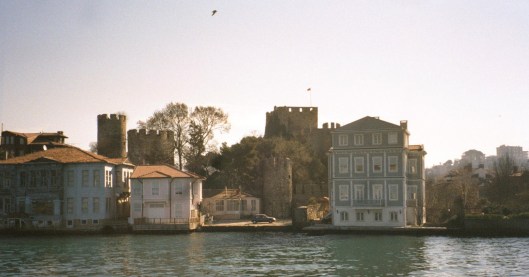
built a small fortress on the Asia Minor side of the Bosphorus, the name for the northern stretch of the passage which led from the Black Sea to the Mediterranean. It was called Anadoluhisari, “the Anatolian fort”.

Anadoluhisari.jpg


You can see from the map that this was the beginning of setting up a choke point upstream from Constantinople.

mapwithanadoluhisari.gif

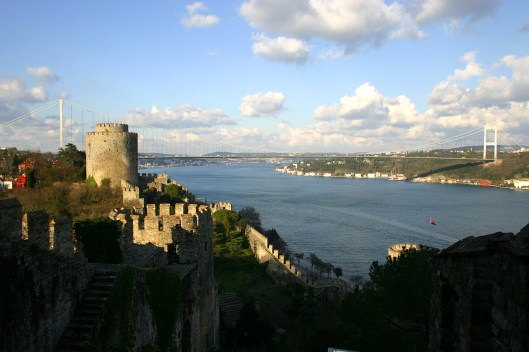
In 1451-2, the sultan Mehmet II finished the job with the Rumelihisari just opposite, on the European side (and that’s what its name means, “the Roman—that is, European—fort”).

Rumeli_hisari.jpg

Guns were mounted

muslim_rocket_technology_06.jpg

and any help which might have come from the Black Sea was blocked.

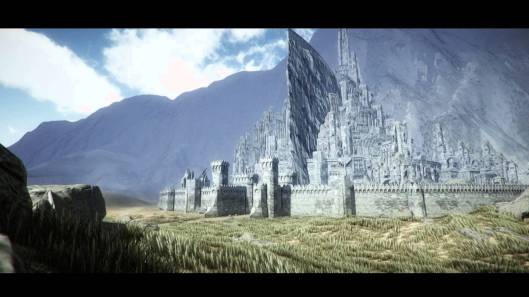
And here we want to take a minute to look at our imaginary city and its danger—because we see some easy parallels here. First, of course, the Ottoman empire was an eastern threat—so was Mordor. Mordor had taken the east bank of the Anduin, just as the Ottomans had taken the Asian side of the Bosphorus. And, in the capture of the European side and the building of Rumelihisari, we might see the taking of Osgiliath and the west bank of the Anduin. Then there is the massive city of Minas Tirith and the attack upon it.

mt.jpg 2381576-zmordorforcesk7.jpg

Constantinople was also a massive city.

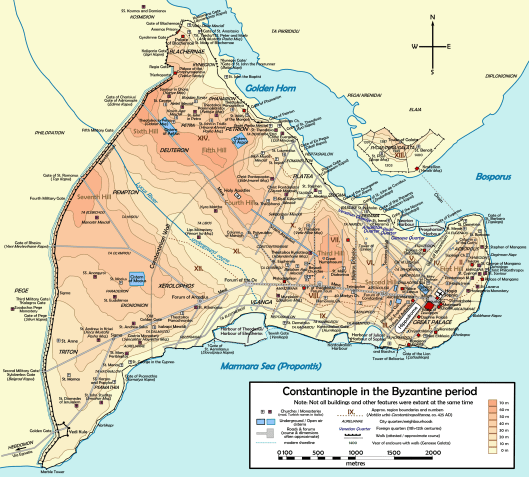
Byzantine_Constantinople-en.png

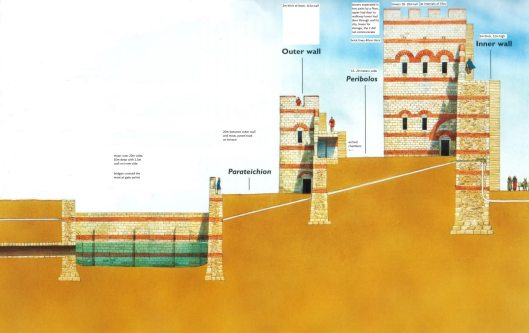
It was, basically, on a triangular piece of land, with two sides protected by water. The original Greek town had had a wall, but it was long gone and almost all of Constantine’s land wall had long disappeared, as well. The latest walls are called the Theodosian, after their originator, the emperor Theodosius II (408-450AD), but the walls included bits of the Constantinian walls and many repairs, over the centuries. The main land defenses included three lines of wall and a moat.

2rh67o0.jpg

This sounds very impressive until one considers two things: first, is there a garrison big enough to defend what are, in fact, a number of miles of wall? And, second, although the walls have withstood previous attacks, including one made by the Ottomans in 1422AD, how will they stand up to the threat of modern artillery?

At the height of its power and prosperity, it is estimated that Constantinople had had a population of anywhere from 500,000 to 750,000 (although scholars argue over this). At the time of the final siege, the population had fallen to as low as 40,000. Thus, large parts of the city were empty—just like Minas Tirith:

“Pippin gazed in growing wonder at the great stone city…Yet it was in truth falling year by year into decay; and already it lacked half the men that could have dwelt at ease there.” (The Return of the King, Book 5, Chapter 1, “Minas Tirith”)

The garrison of Constantinople was perhaps about 9,000, in all, which meant that they were very thinly stretched. We don’t know just how many troops were in Minas Tirith. Some reinforcements had come from South Gondor, as we noted in an earlier posting, but only a few thousand and the defenders were powerfully outnumbered, just as those of Constantinople were, when the forces of Mordor began to arrive. The Ottoman army is thought to have had between 50,000 and 80,000 men, but just how many Orcs and others marched down the causeway from Osgiliath isn’t known–they are just a horde—something which the Jackson film shows very well.

maxresdefault

Then the assault begins, the Orcs having giant stone throwers, siege towers, and, finally, a giant, fire-breathing ram, Grond.

Grond_arrives.png

If you’ve been following our postings (and we hope you have!), then you know that we’ve discussed the use of what appears to be gunpowder, both at Helm’s Deep and at the Rammas Echor. The Orcs who attack the walls of Minas Tirith don’t appear to have such a weapon, but, unfortunately for the defenders of Constantinople in 1453, the Turks do, in the form of plentiful modern artillery.

Illustration-of-angus-mcbride-showing-the-ottoman-cannon-basilica-during-the-siege-of-constantinople-in-1453-ad.jpg

Attacks wear down the small garrison and huge, stone-throwing weapons knock down the walls, so that, finally the city falls, on 29 May, 1453.

84087026.jpg

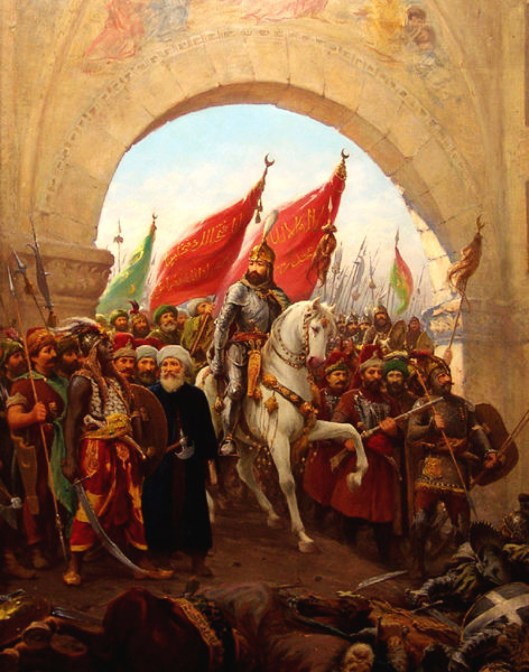
Its conqueror, Mehmet II, rides in—

mehmet2enteringconstantinople.jpg

which is something the witch king of Angmar never gets to do, perishing instead, at the hands of Eowyn and Merry.

Eowyn.jpg


And there the parallels end, as does our posting. Did JRRT have the fall of Constantinople somewhere in the back of his mind? What do you think?

Thanks, as always, for reading.

MTCIDC

CD

The Ring in Question

02 Wednesday Mar 2016

Posted by Ollamh in Artists and Illustrators, Fairy Tales and Myths, Imaginary History, J.R.R. Tolkien, Literary History, Narrative Methods

≈ Leave a comment

Tags

Alan Lee, Allen and Unwin, Angus McBride, casting, forging, Home Alone, literary belief, literary theory, The Lord of the Rings, The One Ring, Tolkien

Dear Readers,

Recently, one of us came up with an interesting question about our friend JRRT and the One Ring: how would such a small thing with such power have been made? In The Silmarillion, Tolkien, as he so often does, has an answer for this:

“And much of the strength and will of Sauron passed into that One Ring… and Sauron forged it in the Mountain of Fire in the Land of Shadow” (The Silmarillion, 287-288).

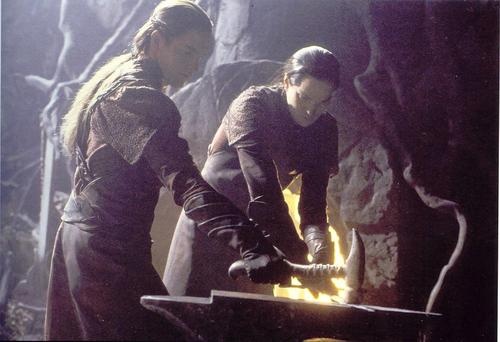
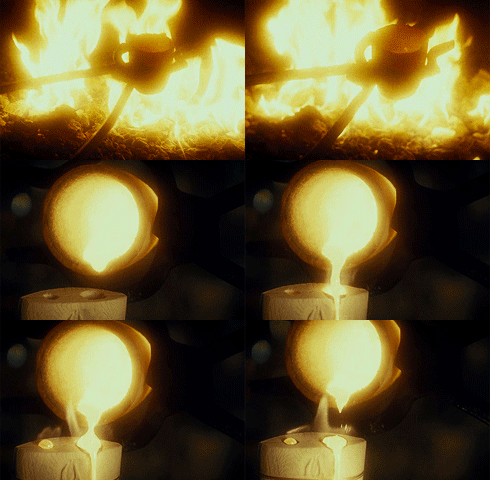
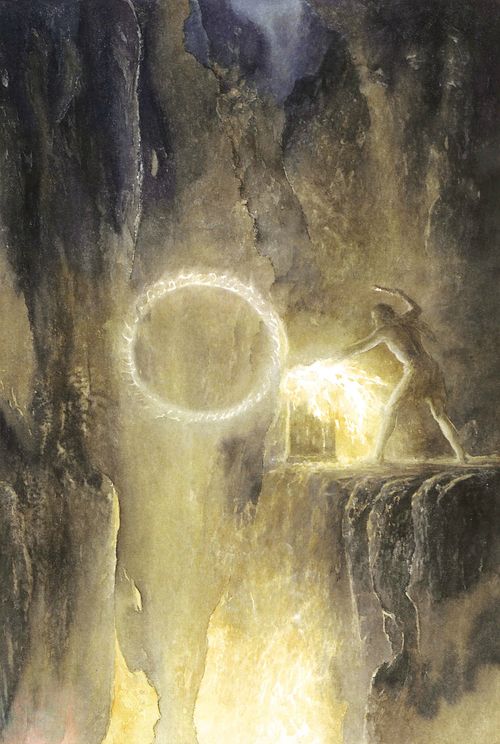
In the histories of Middle-earth, Sauron is said to have “made” and “forged” the One Ring—JRRT uses both words more than once in his letters, LOTR, and The Silmarillion, and this has led us to another question: how would the Ring have been forged? We did a little research, and found that the typical process of forging is (according to the ever-useful wiki page on the subject) a manufacturing process using compressive forces, such as a hammer, to shape metal in a particular way. If Sauron “forged” the One Ring in the fires of Mount Doom, it’s safe to assume that he used the process of “hot forging”, where the metal is heated in a forge (or in this case, very hot fires of a volcano). The last two items of wiki’s “commonly forged” list are weapons and jewelry—both on the list of Middle-earth’s most wanted Christmas gifts of 3018—and we’ve seen weapon-forging before:

6c735f9774332ccb9c7580b226a0f4fc

But rings are usually cast, using a mold and molten metal. Peter Jackson’s prologue to The Fellowship of the Ring acknowledges this, although the Ring is still said to have been “forged”:

tumblr_inline_nsok14xlI41sfc6si_500

But, in the illustrations of Tolkien illustrators Alan Lee

ea7f4b46a0e0f9fc7e00d1a5aca2eb30

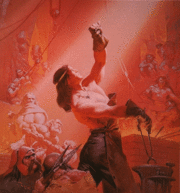
And Angus McBride

180px-Angus_McBride_-_Celebrimbor

This detail—perhaps even an error on Tolkien’s part—has been overlooked. Is it that the artists have made the same error, or are they simply letting it go in favor of the story?

From here, we can ask several questions: what material was the Ring made of? Where did he get the material? How did Sauron make it a magic ring? How did he get the Black Speech/Elvish inscription onto the Ring?

While there may be one or several answers to these questions, we wonder just how far into detail we’re meant to go—and how far JRRT means for us to go. He created a world so intricate that his work has been named a “legendarium”, and in several previous postings, we’ve discussed details of Middle-earth, such as trade and coinage. Could the man who took such care to design Middle-earth’s moon phases have answers to these questions—or should he?

(And here, for those who know the movie Home Alone, we hope not to sound like the little boy from across the street who asks the van driver endless, empty questions!)

The concept of the One Ring begins in Gollum’s cave in The Hobbit. At that point, it was only a magic ring, serving the purpose of a plot device: JRRT had not yet planned a sequel to The Hobbit. In fact, the magic ring was not yet the One Ring in Tolkien’s stories until after JRRT published the book.

Tolkien said himself of the matter in his Letters:

“The Hobbit… was quite independently conceived: I did not know as I began it that it belonged.”(Letters, 145)

And, of the Ring:

“Rayner has, of course, spotted a weakness (inevitable): the linking. … But I don’t feel worried by the discovery that the ring was more serious than appeared… the weakness is Gollum, and his action in offering the ring as a present.” (Letters, 121)

This was a response to publishers Allen and Unwin; Rayner (Unwin’s son) had read the story and commented to the author:

“…. Converting the original Ring into this new and powerful instrument takes some explaining away and Gandalf is hard put to it to find reasons for many of the original Hobbit’s actions…” (letters, 120)

Nowhere in his criticism does Rayner ask what the Ring was made of, how Sauron had made the Elvish script, or how it would have been either forged or cast, and neither does JRRT in his answer; their focus is placed upon converting the magic ring into the One Ring, and using the Ring as a crucial plot element in both The Hobbit and The Lord of the Rings. Tolkien writes in another letter:

“The magic ring was the one obvious thing in The Hobbit that could be connected with my mythology. To be the burden of a large story it had to be of supreme importance. I then linked it with the (originally) quite casual reference to the Necromancer…” (Letters, 346)

Although Tolkien’s work provides a great richness of material to discuss, question, and write about, we suppose that we can forgive JRRT for this small detail. Then again, when JRRT gives us so much, when should we stop asking questions or expecting answers? As we’ve found in writing these postings, JRRT seems to have an inexhaustible amount of material, although even he sets limits to the interpretation of his work; in fact, these “hidden meanings” annoyed him:

“I am honoured by the interest that many readers have taken in the nomenclature of The Lord of the Rings… But I remain puzzled, and indeed sometimes irritated, by many of the guesses at the ‘sources’ of the nomenclature, and theories or fancies concerning hidden meanings… many of them seem to show ignorance or disregard of the clues and information which are provided in notes, renderings, and in the Appendices” (Letters, 379-380).

We don’t believe that this was meant to be a discouragement. Instead, it is a pointing by the author towards the extra material meant to help his readers to understand and study what Tolkien says he wishes he’s achieved: “the ‘literary belief’ in the story as historical” (Letters, 279).

But this leaves us at another crossroads.

If the answers aren’t to be found there, however, should we stop?   We’ve said that we’re haunted by the image from Home Alone:   if we persist, should we be cast in Home Alone 4 as two kids, pestering the English academic with “So how was this Ring really made, mister? Is it really made of gold? Is it really powerful? How powerful? For how long?”

Or should we leave those details about the Ring as they are, accepting that it’s a magic ring forged in the fires of Mount Doom by Sauron—without interrupting JRRT to ask too many questions about details which aren’t essential to the story, believing that it is more important that he masterfully took a simple plot element—a magic ring—and focused on converting it into the crucial element of Frodo’s quest in The Lord of the Rings.

As always, we ask: what do you think, Dear Readers?

Thanks for reading,

MTCIDC,

CD


A Pirate’s Life

24 Wednesday Feb 2016

Posted by Ollamh in Artists and Illustrators, Imaginary History, J.R.R. Tolkien, Literary History, Military History, Military History of Middle-earth, Villains

≈ Leave a comment

Tags

Barbary Coast, Captain Blood, Captain Hook, Corsairs, Errol Flynn, Gilbert and Sullivan, Howard Pyle, Jack Sparrow, Jolly Roger, mariners, Napoleonic Wars, Narnia, Peter Jackson, Pirates, Scharb, shipbuilding, Tamora Pierce, The Black Pearl, The Lord of the Rings, Tolkien, Tortall, Treasure Island, Umbar, USS Philadelphia, xebec

“Oh, a pirate’s life is a wonderful life,

A-rovin’ over the sea,

Give me a career as a buccaneer

It’s the life of a pirate for me…”

Wallace/Penner, Peter Pan (1953)


Dear readers, welcome, as ever.

Being clever, you can tell immediately where this posting is going to go. Yep, the corsairs of Umbar.

A corsair is another word for pirate. And, when we think “pirate”, first there’s the late-19th-early-20th-century work of Howard Pyle.

Pyle_pirate_handsome.jpg


And the silly pirates from Gilbert and Sullivan’s The Pirates of Penzance.

piratesofpenzance.jpg


And Long John Silver, from Treasure Island.

longjohnsilver.jpg


And then there is Captain Hook and the Jolly Roger.

TigerLilyandHook.jpg


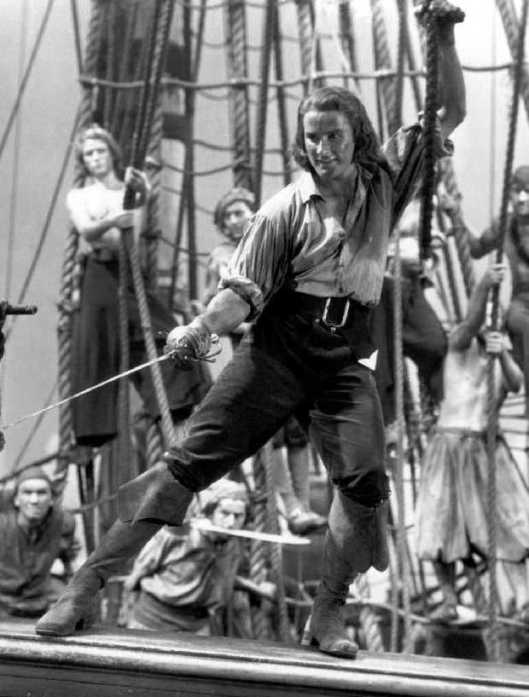
And Errol Flynn in the 1935 movie, Captain Blood.

1023_captblood.jpg


And who could forget Jack Sparrow and The Black Pearl?

Captain-Jack-captain-jack-sparrow-14117613-1242-900.jpg

blackpearl.jpg

We think that Tolkien has something rather different in mind, however. Let’s start with a little history.

Umbar’s past in relation to Gondor is summed up by Damrod in “Of Herbs and Stewed Rabbit”:

“ ‘Aye, curse the Southrons!’ said Damrod. ‘Tis said that there were dealing of old between Gondor and the kingdoms of the Harad to the Far South; though there was never friendship. In those days our bounds were away south beyond the mouths of Anduin, and Umbar, the nearest of their realms, acknowledged our sway. But that is long since. ‘Tis many lives of Men since any passed to and fro . Now of late we have learned that the Enemy has been among them, and they are gone over to Him, or back to Him—they were ever ready to his Will—“ (The Two Towers, Book 4, Chapter 4,“Of Herbs and Stewed Rabbit”)

Damrod’s mistrust is confirmed by what Beregond says to Pippin in “Minas Tirith”:

“…There is a great fleet drawing near to the mouths of Anduin, manned by the corsairs of Umbar in the South. They have long ceased to fear the might of Gondor, and they have allied them with the Enemy, and now make a heavy stroke in his cause. For this attack will draw off much of the help that we looked to have from Lebennin and Belfalas, where folk are hardy and numerous.” (The Return of the King, Chapter 1, “Minas Tirith”)

As Damrod has said, Umbar is to the far south.

map-of-gondor-and-neighbors2.jpg

Here is a view of it as imagined by the Czech artist, Scharb.

thecityofumbar.jpg

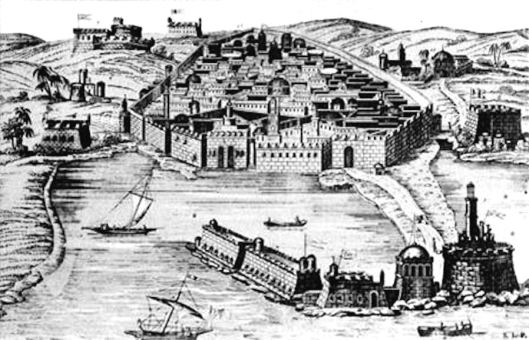
To us, this resembles cities along the southern Mediterranean coast, especially as seen in old engravings of the Barbary Coast.

Old_algiers_16th_century.jpg

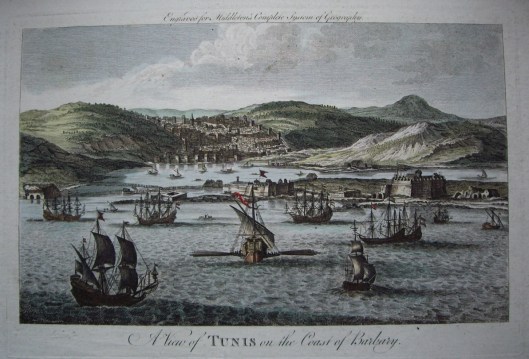
Take, for example, this copperplate of Tunis, from 1778.

tunisengraving.JPG


There are all kinds of ships depicted here, from three-masters to a galley, in the center, to a small xebec, to the far right.

The galley seemed once to be the characteristic ship of the pirates of the Barbary Coast, coming from earlier Turkish galleys.

Galley1500ca.jpg


What the Czech artist appears to have picked up upon, however, is something from P. Jackson’s third The Lord of the Rings film, in which the xebec

Xebec L80 - 01.jpg_0_1024x769.jpg


is the model for the corsairs’ vessels.

corsairMastSails.jpg


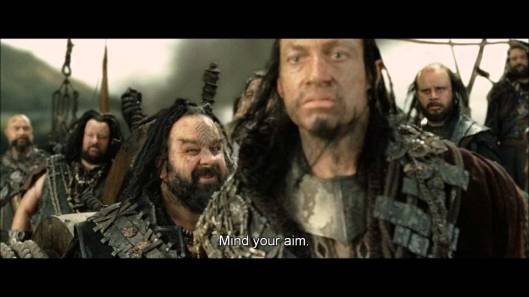
Jackson’s corsairs look like this (including Jackson himself, mugging to the left).

jacksonandcorsairs.jpg

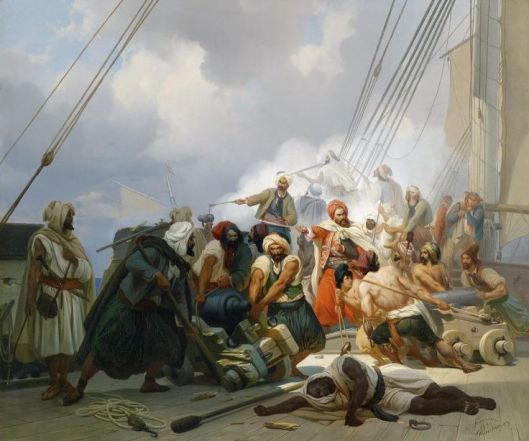
The crews of actual Barbary ships probably looked more like this:

21c27fb9a0a7cdf4d123d6e12bcbbd83.jpg

This makes perfect sense, as these are North Africans, and very tough people, as European mariners came to know. Their swift, daring ships attacked any vessel which might bring them profit.

barbary-pirate-galleon.jpg

The young United States first paid them tribute to keep them away from US ships.

tribute.jpg

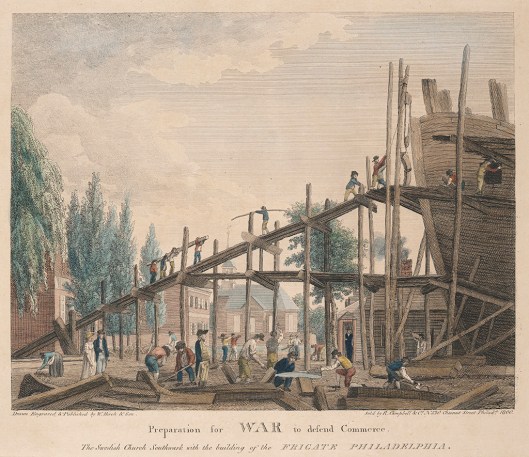
But, as the government somewhere found the money, it began a shipbuilding program to provide the country with its first national navy.

buildingthephiladelphia.jpg

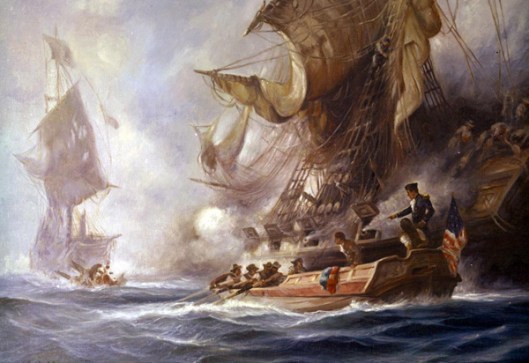
This particular ship was the ill-fated USS Philadelphia, which ran aground and was captured by the pirates.

philly.jpg

captureofthephiladelphia.jpg

It was destroyed, however,

destructionofthephiladelphia.jpg

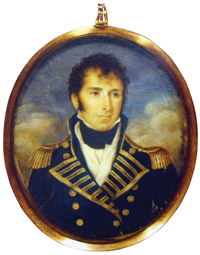
in a daring raid by Stephen Decatur, seen in this miniature.

stephendecatur.jpg

The United States fought two wars against the Barbary pirates, 1801-5 and 1815, doing a great deal of damage to the pirates.

USS-Enterprise-barbary-war.jpg

Ultimately, however, it was a combination of governments and navies, including the US, the British, and the Dutch, which put a stop to piracy in the southern Mediterranean after the end of the Napoleonic Wars in 1815.

Decatur_Boarding_the_Tripolitan_Gunboat.jpg

So, like Scharb, we took the idea from JRRT that Umbar was in the far south and, influenced by our experience, not only of the Barbary pirates, but of Narnia and the country called Calormen

Baynes-Map_of_Narnia.jpg

and of Tamora Pierce’s “Tortall” with its Carthaki southland,

Tortall_1.gif

we imagined the corsairs to look like this.

barbarypirates.jpg

So, dear readers, what do you think?

Thanks, as always, for reading.

MTCIDC

CD


Fourth Age—Big Bang Theory

17 Wednesday Feb 2016

Posted by Ollamh in Economics in Middle-earth, Heroes, Imaginary History, J.R.R. Tolkien, Literary History, Military History, Military History of Middle-earth, Narrative Methods

≈ Leave a comment

Tags

American Civil War, Battle of Crecy, Battle of the Somme, cannon, Siege Warfare, The Lord of the Rings, The War of the Ring, Tolkien, World War I

Welcome, dear readers, as always!

In this posting, we are going to do something a little different:  speculate.  It’s about a possible military development in the years after the War of the Ring and, if you have enjoyed our past postings on military issues in Middle Earth, we hope that you will enjoy this one.

Our inspiration for this posting came from two sources:  The Lord of the Rings and the history of the later western Middle Ages and it began like this–

The-Two-Towers-Explosion-helms-deep-2.jpg

“Even as they spoke there came a blare of trumpets.  Then there was a crash and a flash of flame and smoke. The waters of the Deeping-stream poured out hissing and foaming:  they were choked no longer, a gaping hole was blasted in the wall.  A host of dark shapes poured in.” (The Two Towers, Chapter 7, “Helm’s Deep”)

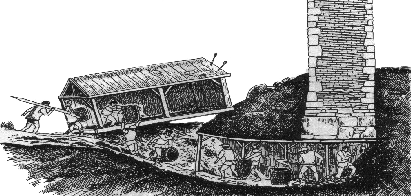
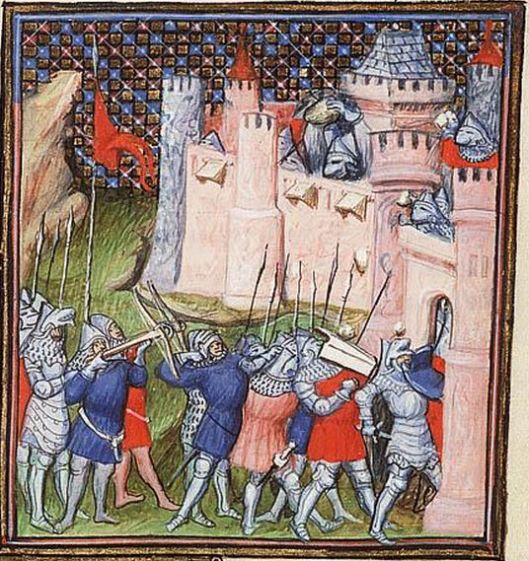
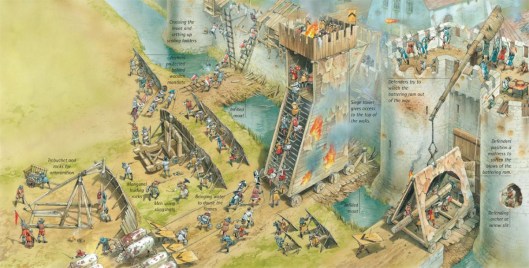
Aragorn calls this “the fire of Orthanc”, but I think that we can guess that it was an explosive device and our immediate thought was the use of mines over the centuries of siege warfare.  Originally, the idea was to undermine an enemy’s wall by digging a tunnel below it.   The next step was either to use the finished tunnel as a passageway into an inner courtyard or, alternatively, to prop up the wall, fill the area below with flammable materials, torch the materials, then clear out to watch the section of wall tumble down when the fire burn away the props before charging in.
mining1.gif

Once gunpowder was available, this technique could be improved upon by tunneling under a wall, planting a large stock of explosives, setting a very long fuse, clearing out, then watching it blow a large hole in the enemy’s fortification.
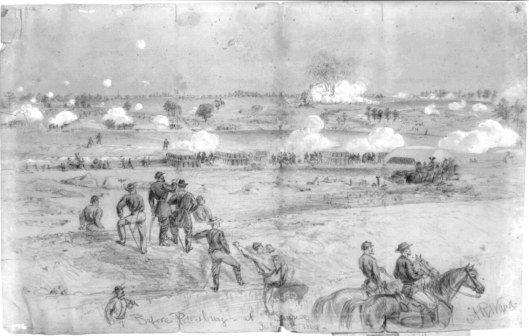
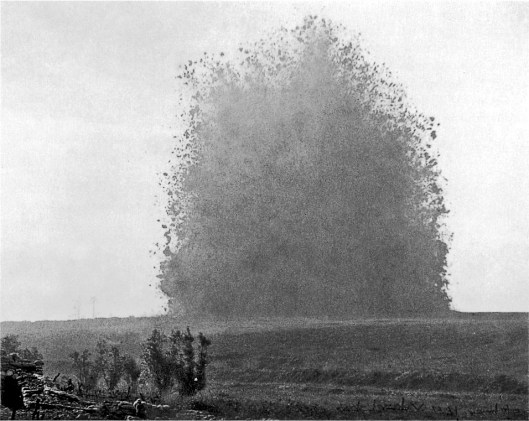
Two of the most spectacular such mines in our experience are during the American Civil War, at Petersburg, on 30 July, 1864—

Waud-Petersburg-Crater.jpeg

and the first day of the Somme, 1 July, 1916, in World War 1—

Hawthorn_Ridge_mine_1_July_1916.jpg

Sauron’s orcs appear to use the same technique when facing the protective wall around Gondor, the Rammas Echor:

“The bells of day had scarcely rung out again, a mockery of the unlightened dark, when far away he saw fires spring up, across the dim spaces where the walls of the Pelennor stood.  The watchmen cried aloud, and all men in the City stood to arms.  Now ever and anon there was a red flash, and slowly through the heavy air dull rumbles could be heard.” (The Return of the King, Chapter 4, “The Siege of Gondor”)

As we thought about the future, we considered what had happened in our Middle Ages.  Although gunpowder had been mentioned in the mid-13th century, our first illustration of a weapon based upon it dates from about 1327.

EarlyCannonDeNobilitatibusSapientiiEtPrudentiisRegumManuscriptWalterdeMilemete1326.jpg

By the mid-14th century, there appear to have been cannon of some sort used against the Scots in 1327 and at the Battle of Crecy (1346) against the French and, by the early 15th c. they are becoming a regular feature of battles and sieges.

medievalsiege.jpg

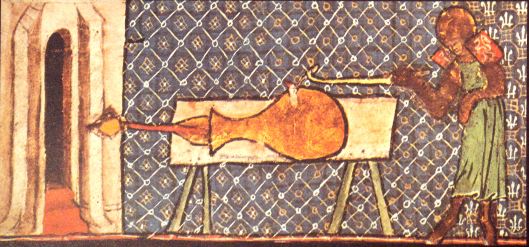
Very early cannon were very simple, being a tube of any length fastened to a wooden bed of some sort.

FortMedeival.jpg

The tubes were made of long bars of iron hammered together and then secured with a series of iron rings.

25_slash_57.JPG

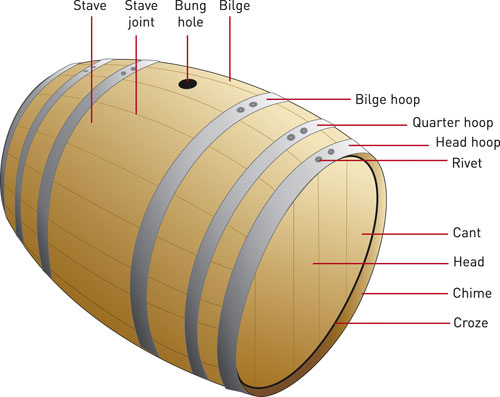
The technology for this looks like it came from barrel-making:  long staves of wood pressed together, then wrapped with iron bands

winebarrelanatomy.jpg

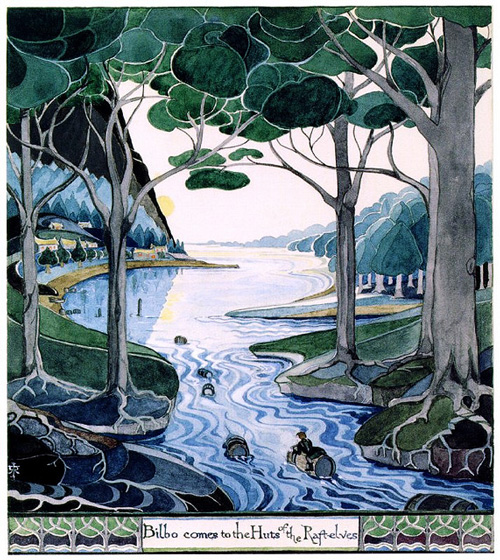
When we think of barrels in Middle Earth, what better evidence do we have than this, one of our favorite JRRT illustrations from The Hobbit?

barrel-riding.jpg

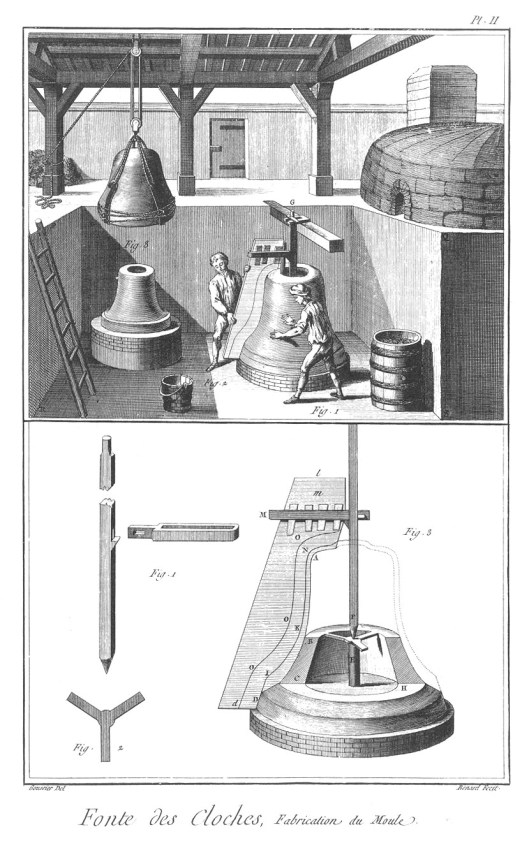
A well-known technical skill in the Middle Ages was that of casting church bells:  making molds, pouring in metal, letting it cool, and producing sometimes quite large ones.

bellfounding.jpeg

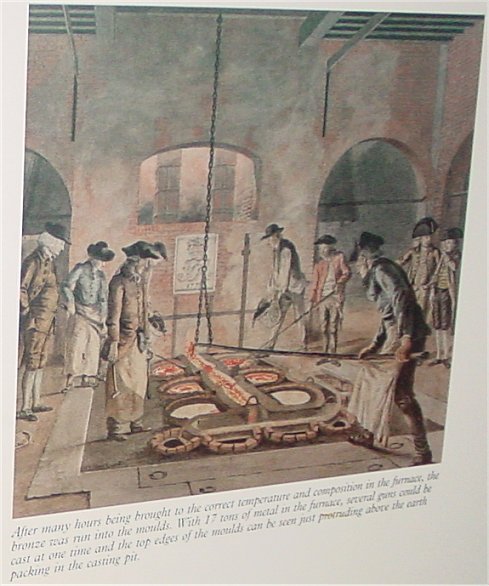
This led to making cannon the same way.

foundry-church-cannon-casting.jpg

Sometimes, early cannon were so large that they were cast at the site of their first use, as large bells occasionally were.  For the Ottoman siege of Constantinople in 1453, this was said to be true.

Illustration-of-angus-mcbride-showing-the-ottoman-cannon-basilica-during-the-siege-of-constantinople-in-1453-ad.jpg

You’ll notice here, by the way, that this isn’t an iron gun, but a bronze one.  After the first iron guns, gun-founders had begun experimenting with bronze and for several centuries, until all guns would be made out of steel, there was discussion among both gunners and military theoreticians over the value of each metal.
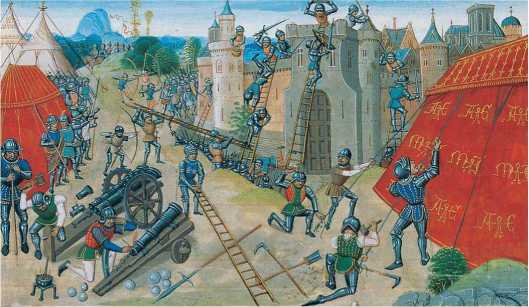
As for Middle Earth, well, we know that there were barrels and the ability to cast large (going by medieval bells) objects in metal.  Now the speculation begins.  Suppose, when Saruman was defeated and later left Orthanc, he had left behind his papers (he doesn’t appear to have anything like them when he is met on the road by Gandalf and the others in “Many Partings”).  In those papers would have been the recipe for gunpowder.  Sometime after Isengard had been taken over by the allies, those papers had come to Minas Tirith and someone, remembering what he had heard about the attack on Helm’s Deep, went through them, found that recipe, and, just as in medieval Europe, soon these began to appear—

medgun.jpg

What do you think, dear readers?

Thanks, as always, for reading.

MTCIDC

CD

Lingua Orca

10 Wednesday Feb 2016

Posted by Ollamh in Imaginary History, J.R.R. Tolkien, Language, Literary History, Narrative Methods

≈ Leave a comment

Tags

Adventure, Black Speech, Bree, Cirth, Fantasy, Gandalf, L. Frank Baum, Mordor, Orcs, Origin of Orcs, Ozma of Oz, Princess Langwidere, The Lord of the Rings, Thorin, Tolkien

Welcome, dear readers, as always.

In P. Jackson’s The Desolation of Smaug, there is a scene at the opening, cut from whole cloth as so much of the later Hobbit movies, in which Gandalf meets Thorin in The Prancing Pony in Bree.

gandalfandthorin.jpg

There Gandalf shows Thorin a “message”.

“Gandalf: It is Black Speech.

[Thorin looks at Gandalf with unease]

Gandalf: A promise of payment.

Thorin: For what?

Gandalf: Your head. Someone wants you dead.”

One can laugh at that last—is there the possibility that someone who promised payment for a head would not want the owner dead? (Here we thought, for a moment, of the Princess Langwidere in L. Frank Baum’s Ozma of Oz, who has a collection of 30 exchangeable heads which she keeps locked in a cabinet.)

princesslangwidere.jpg

After laughing, however, we began to wonder just who that message was supposed to be for.

Tolkien says of the Black Speech:

“It is said that the Black Speech was devised by Sauron in the Dark Years, and that he had desired to make it the language of all those that served him, but he failed in that purpose.”

We are never told why he failed: was it too complicated? Too impractical? Too limited? (In modern terms, we can imagine Sauron sending out memos, saying things like: “To All Departments: it has come to Our attention that there are those who are not using the Black Speech in all official documents. Please conform to standards as laid out in Mordor Bulletin #512. Immediate.”) If what Isildur has to say about the inscription inside the ring is true,

One_Ring_Inscription_In_Three_Languages.jpg

Sauron doesn’t appear to have devised a script in which to write it:

“Already the writing upon it, which at first was as clear as red flame, fadeth and is now only barely to be read. It is fashioned in an elven-script of Eregion, for they have no letters in Mordor for such subtle work…” (The Fellowship of the Ring, Book 2, Chapter 2, “The Council of Elrond”)

Tolkien continues:

From the Black Speech, however, were derived many of the words that were in the Third Age wide- spread among the Orcs, such as ghash ‘fire’, but after the first overthrow of Sauron this language in its ancient form was forgotten by all but the Nazgul. When Sauron arose again, it became once more the language of Barad-dur and of the captains of Mordor.”
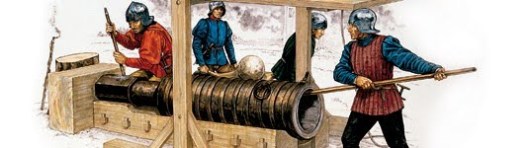
Could the “promise of payment” be meant for the Nazgul, then? That hardly seems likely—after all, they are the main servants of Sauron, bound to him by the rings they wear, Nazgul, after all, meaning “ring wraith”. Sauron’s success is their success—just as his failure seems to mean their end.

Because this scene exists only in the minds of the scriptwriters, we could have just shrugged it off right there as being a piece with the resurrected Azog and that ridiculous arm which he seems to have borrowed from a macho Frosty the Snowman, “Tauriel” and the embarrassing romance with a Dwarf, etc, etc, etc. Instead, we decided to play with the idea.

Using Tolkien’s actual texts as the basis of our thinking, we wondered: if the message wasn’t for the Nazgul and the Black Speech is specifically linked to Mordor, who else might be the recipient? Well, there are always the Orcs—but could they read it?

We know—sort of—what they are. Fangorn tells Merry and Pippin that they were made by Sauron as mockery of Elves. Tolkien himself seemed initially a bit puzzled about Orcish origins, calling them, in a letter to Milton Waldman (Letters no.131, 151, “probably in late 1951”) “…the Orcs (goblins) and other monsters bred by the First Enemy”. The same is said in Appendix F of The Lord of the Rings: “The Orcs were first bred by the Dark Power of the North in the Elder Days.” Then, in a letter to Naomi Mitchison (Letters, no.144, 177-8, 25 April, 1954), however, he writes: “Orcs…are nowhere clearly stated to be of any particular origin. But since they are servants of the Dark Power, and later of Sauron, neither of whom could, or would, produce living things, they must be ‘corruptions.’” And, again, in the draft of a letter to Peter Hastings, from later in the same year, he explains, quoting Frodo, speaking to Sam: “ ‘The Shadow that bred them can only mock, it cannot make real new things of its own. I don’t think it gave life to the Orcs, it only ruined them and twisted them.’” to which he adds, “In the legends of the Elder Days it is suggested that the Diabolus subjugated and corrupted some of the earliest Elves…” (Letters, no.153, 191). (This is continued later in the same letter, 195.)

Of their speech, JRRT wrote:

“It is said that they had no language of their own, but took what they could of other tongues and perverted it to their own liking; yet they made only brutal jargons, scarcely sufficient for their own needs, unless it were for curses and abuse. So it was in the Third Age Orcs used for communication between breed and breed the Westron tongue…” (The Lord of the Rings, Appendix F)

(Linguistically, we wonder if it would be possible for a people—especially a people who appear, in the later Third Age, to be extensive in number—could actually have had no language—or languages–of their own, particularly if they were a people who had existed before being corrupted by Morgoth. In The Lord of the Rings, for example, although they speak the Common Speech, they clearly have names out of some other language—what might that have been?)

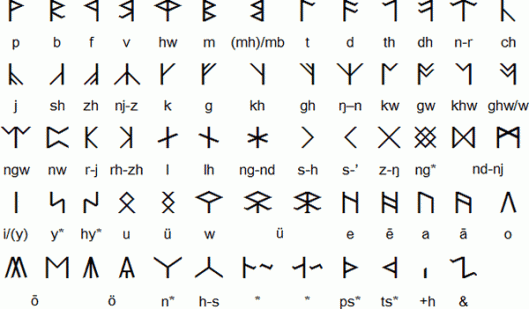
Taking the next step, in a previous posting, we had begun to probe the question of literacy versus orality in Middle Earth and here we might ask the question: were Orcs literate at all? The only possible clue we’d found is in Appendix E of The Lord of the Rings, where it is said of the form of writing called “Cirth”:

d5256b13ca277364da6f842a2744b63c.gif

“The Cirth in their older and simpler form spread eastward in the Second Age, and became known to many peoples, to Men and Dwarves, and even to Orcs…”

This would suggest that they were.

When we actually see the Orcs, however, do we find any evidence of the use of that writing?

There are only a couple of extended passages when we hear the Orcs as well as see them. The first is in the chapter entitled “The Uruk-hai”. In this chapter, the Orcs who have Merry and Pippin argue over their captives and we hear several talk about “orders” and “my orders”, but no documents appear or are mentioned: are these only oral orders? The second time we hear the Orcs is in “The Choices of Master Samwise.” Here, Sam overhears two Orc officers, Gorbag and Shagrat, talking. “The messages go through quicker than anything could fly, as a rule. But I don’t inquire how it’s done. Safest not to.” says Gorbag. And, a little later, Shagrat says, “A message came: Nazgul uneasy. Spies feared on Stairs. Double vigilance. Patrol to head of Stairs.” Unfortunately, there’s no further information here– although that second message almost sounds like it’s one step from being a tweet! (Or, in JRRT’s time, a Western Union telegram.) But then Shagrat says, “ I have my orders…Any trespasser found by the guard is to be held at the tower. Prisoner to be stripped. Full description of every article, garment, weapon, letter, ring, or trinket to be sent to Lugburz at once, and to Lugburz only…” Does such detail require writing? It does say “full description…to be sent”, which certainly suggests it.

We have a final glimpse and earful of the Orcs from “The Tower of Cirith Ungol” and into “The Land of Shadow”, but there are no more discussions of orders or messages or descriptions, just more of the brutality and treachery which seems the norm for such creatures.

So, we have two statements, in total, which are more suggestive than actual proof: Cirth was known to Orcs and the order for a “full description” to be sent to Barad-dur. Does that mean that, should Shagrat or Gorbag have written, he would have done so in Cirth? If so, this proves only literacy in that form and, when we look back to the one sample we have of any length (all of two lines) of the actual Black Speech, it is in Tengwar as we know, from Isildur, that Sauron—at least at the time of the making of the ring—had no Black Speech writing system to employ.

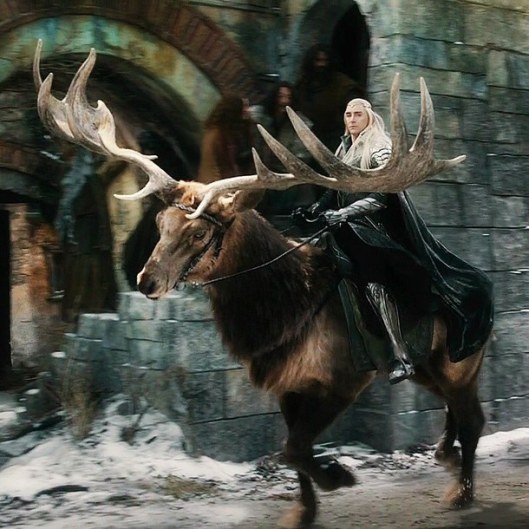
Conclusions? Although it was fun to do the research, at base, this was a fool’s errand—the whole thing, after all, was a creation of the same people who brought you Thranduil on an Irish elk (for more on that, google the extremely useful—and entertaining!– www.tolkien-treasures and see the entry on Thranduil and his mount).

elf-elk-lord-of-the-rings-the-hobbit-Favim.com-2609245.jpg

If we play along, as we have, there’s only a process of elimination. The only people who had anything to do with the (revived) Black Speech were in Mordor. If it wasn’t the Nazgul and it wasn’t the Orcs, who’s left? Only one possibility seems to remain: Sauron wrote it as a memo to himself, a kind of Barad-dur post-it, (“To Me: Thorin. Head. Reward? Do soonest.”), but, being very busy in contract negotiations with Benedict Cumberbatch’s agent on voice-overs, he absentmindedly sent it.

What do you think, dear readers?

As always, thanks for reading!

MTCIDC

CD

Strange as News from Bree

03 Wednesday Feb 2016

Posted by Ollamh in Fairy Tales and Myths, J.R.R. Tolkien, Language, Literary History, Narrative Methods

≈ Leave a comment

Tags

acta, Barad-Dur, Barliman Butterbur, Bree, Bronte, copyists, Dwarves, English coaching inn, Forum Romanum, Frodo Baggins, Gandalf, Gondor, Gutenberg, Haworth, Johann Carolus, Literacy, manuscripts, Medieval, Minas Tirith, Orality, Peter Jackson, pre-print, press, printing press, Romans, royal archives, Sauron, scriptoria, Story, The Lord of the Rings, The Prancing Pony, The Red Book of Westmarch, The Shire, Tolkien, War of the Ring, word-of-mouth, Yorkshire

Welcome, dear readers, as always.

After the last couple of postings, full of war, this is a rather peaceful one. We want to put forward a scheme for a larger project, all about orality versus literacy in Middle Earth, of which this is one small step, our initial question for the project being, “What is written and how and what is only spoken and remembered?”

Early in Chapter 9 of The Fellowship of the Ring (“At the Sign of the Prancing Pony”), we encounter this passage:

“For Bree stood at an old meeting of ways; another ancient road crossed the East Road just outside the dike at the western end of the village, and in former days Men and other folk of various sorts had travelled much on it. Strange as News from Bree was still a saying in the East Farthing, descending from those days, when news from North, South, and East could be heard in the inn, and when the Shire-hobbits used to go more often to hear it.”

Bree, of course, is the little town to which Frodo and his companions travel once they have gotten free of the Barrow Downs.

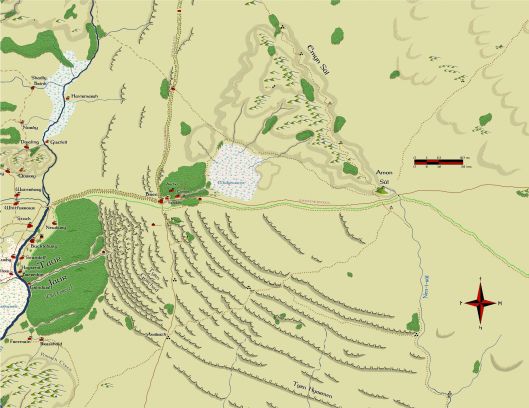
ICE Bree and the Barrow-downs (Late Third Age) v1.3.jpg

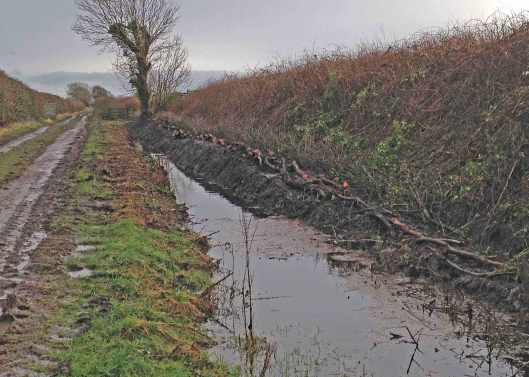
The little town is described as being surrounded by a dike—a wide ditch, the inner side topped with a thick hedge—perhaps something like this—

D21-15-2-14-More-hedging-activity_0670.jpg

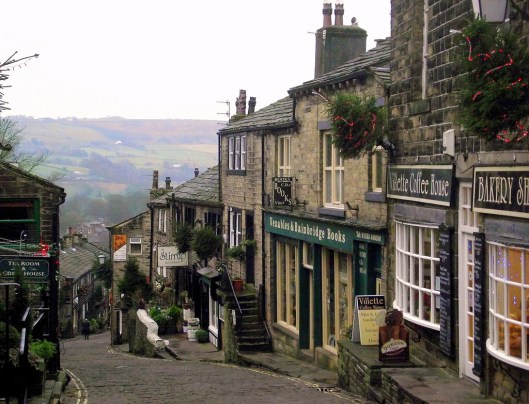
And consisting of “some hundred stone houses of the Big Folk, mostly above the Road…”. Without knowing the kind of stone, we have imagined it as looking rather like Haworth, in Yorkshire, the home of the Bronte family (without the modern touristy stuff, of course).

haworth.jpg

(And we note, by the way, that its depiction in the Jackson films doesn’t appear to reflect JRRT’s description that the houses were made of stone: rather, it appears to be filled with half-timbered, plaster and lath constructions.)

LOTR Bree.JPG


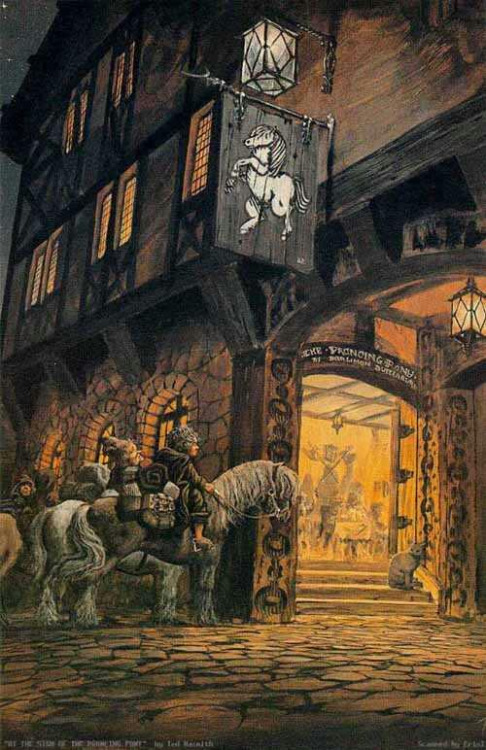
Here, the Hobbits stay at the Prancing Pony.

naismithprancingpony.jpg

Tolkien describes it as

“a meeting place for the idle, talkative, and inquisitive among the inhabitants, large and small…”

To our minds, it probably looked like one of those very old English coaching inns.

111-1000011im.jpg


And we begin our research inside.

Before we do, let’s spend a moment thinking about that word “news”, as in “Strange as news from Bree”.

In pre-print days, for most people in most places, information about events was circulated only by word-of-mouth. There were a few exceptions: the government in Rome produced hand-written circulars, called acta which were put up in the Forum Romanum from the middle of the last century BC through to the 3rd century AD. These would obviously have had a very limited circulation, however, and we can imagine that the contents would still have been passed on mouth-to-mouth for most people in Rome.

To gain greater circulation really demanded print. Although Gutenberg produced the first press and movable lead type by 1440,

gutenberg.jpg

the earliest surviving printed newspaper known at present dates from 1609, produced in Germany. (It appears that the publisher, Johann Carolus, had actually begun printing, rather than hand-copying, in 1605.)

Relation_Aller_Fuernemmen_und_gedenckwuerdigen_Historien_(1609).jpg

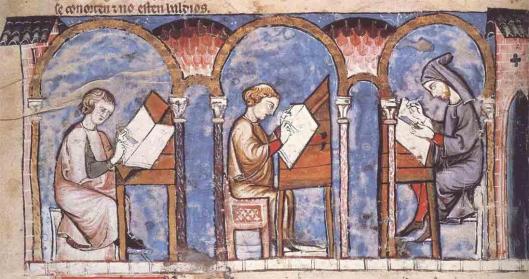
As far as we can tell, true to the general image of Middle Earth as a medieval world, printing presses have yet to appear (unless Sauron is producing very limited editions at the Barad-dur Press and circulation consists of exactly one copy). This means that we are still in the preprint world of hand-copying, when it comes to documents. In the western European world, on which places like Gondor are modeled, this means scriptoria—copy centers—mainly in monasteries and in royal courts where the copyists had probably been trained in monastic scriptoria.

scriptorium.jpg

Because there are no religious foundations or even schools of any sort mentioned in Middle Earth, we don’t know how or where documents were written or copied or even how and where anyone learned to read and write (except Sam, who was taught his letters by Frodo), but literacy turns up all over the place, from the Red Book of Westmarch to the runes of the dwarves to the writings Gandalf says he searched through in the archives of Minas Tirith.

All of this is, in a sense, commemorative—it’s history, really, whether a dwarvish map or tomb inscription, or an account of the War of the Ring. What about other things, however—word of daily events, or even entertainment forms, like songs and poems, things which may some day become part of history but, at the present, seem much more ephemeral? That’s what we’ve come to Bree to find out—and we’re quickly helped in our investigation by the host of the Prancing Pony, Barliman Butterbur, who says to Frodo and the others:

“ ‘I don’t know whether you would care to join the company…Perhaps you would rather go to your beds. Still the company would be very pleased to welcome you, if you had a mind. We don’t get Outsiders—travelers from the Shire, I should say, begging your pardon—often; and we like to hear a bit of news, or any story or song you may have in mind…’ “

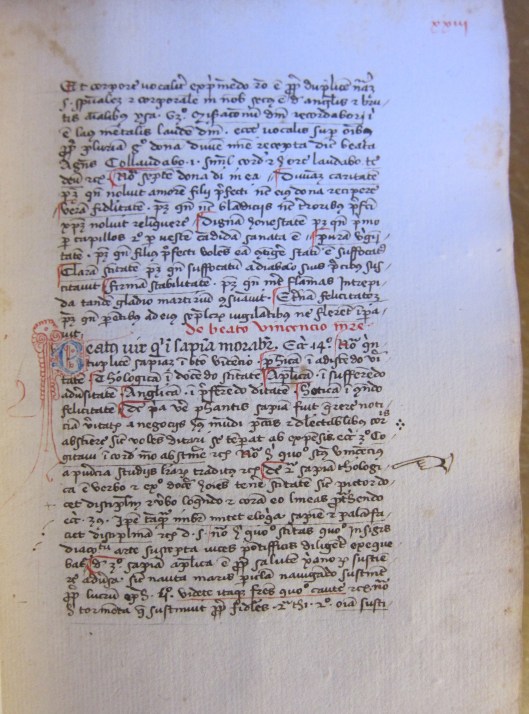
And there’s that emphasis on the oral: “we like to hear”. You, readers, have a world of electronic devices to turn to for “a bit of news, or any story or song”, as well as, in the case of news, actual newspapers, not to mention bookstores, libraries, and the wonderful resources of Gutenberg and the Internet Archive. None of that in any form is available to carry or preserve information in Middle Earth. What books there are—and they are manuscripts, remember, things which look like this—

MS-Italian.jpg

or, if you are rich, this—

frms.png

are either in royal archives, as in the case of those which Gandalf consults in Minas Tirith, or in the hands of families, as is the fate of The Red Book of Westmarch and other such items in the Shire. And so people are, on the one hand, eager for news and entertainment, but, on the other, forced either to make it for themselves or to wait for willing strangers to add to their meager store.

It’s natural, then, that “As soon as the Shire-hobbits entered, there was a chorus of welcome from the Bree-landers.” The first local reaction to Frodo’s attempts to create an explanation for why he and his companions are traveling is also natural:

“He gave out that he was interested in history and geography (at which there was much wagging of heads, although neither of these words were [sic] much used in the Bree-dialect). He said he was thinking of writing a book (at which there was silent astonishment), and that he and his friends wanted to collect information about hobbits living outside the Shire, especially in the eastern lands.”

In the nearly-oral world of Bree (there must be some literacy—the Prancing Pony has a sign with an inscription and Barliman seems to know what a letter is), the next reaction is also natural:

“At this a chorus of voices broke out. If Frodo had really wanted to write a book, and had had many ears, he would have learned enough for several chapters in a few minutes. And if that was not enough, he was given a whole list of names, beginning with ‘Old Barliman here’, to whom he could go for further information.”

These would all be so-called “oral informants”—not one mention of manuscripts or documents to suggest that information is conveyed and recorded in writing—and so the Breelanders’ third and final reaction is also natural:

“But after a time, as Frodo did not show any sign of writing a book on the spot, the hobbits returned to their questions about doings in the Shire.”

It’s obvious then, that books, like the words “history” and “geography”, are almost alien to these people and so their interest is in the spoken—or sung—word, which is why, when Frodo breaks into Bilbo’s “There is an inn…” to distract the audience from Pippin’s indiscreet recounting of the birthday party, his stratagem almost works—until he overdoes it and—

But even in the aftermath, although it leads to more trouble for Frodo and his companions, Butterbur can imagine that, in time, that surprising event, like all of the others in this near-oral world, will subside into word-of-mouth.

“He reckoned, very probably, that his house would be full again on many future nights, until the present mystery had been thoroughly discussed.”

And then it would become just another piece of strange news from Bree.

Thanks, as always, for reading.

MTCIDC

CD

Feudal Array 2

27 Wednesday Jan 2016

Posted by Ollamh in Economics in Middle-earth, Fairy Tales and Myths, Imaginary History, J.R.R. Tolkien, Literary History, Military History, Military History of Middle-earth

≈ Leave a comment

Tags

14th century, 15th century, Adventure, Agincourt, Anglo-Saxon, armor, Bayeux Tapestry, feudalism, Fyrd, Gerry Embleton, Huscarl, Luttrell Psalter, Middle-earth, N.C. Wyeth, tapestry, The Lord of the Rings, Tolkien

Welcome, as always.

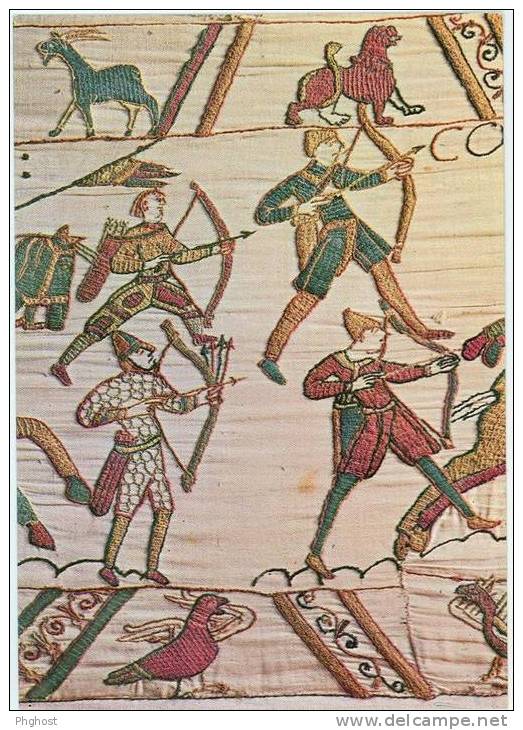
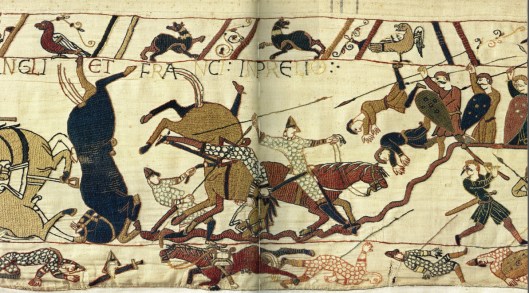
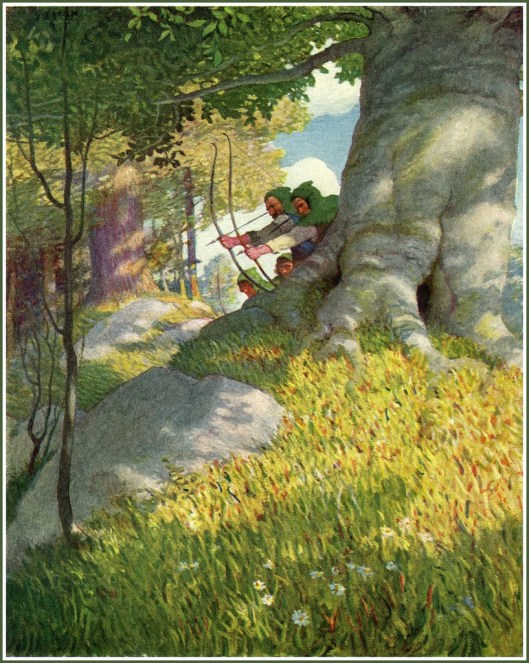
In this posting, we want to conclude what has turned out to be a kind of mini-series on Feudalism in Middle Earth. Two postings ago, we used the 14th-century Luttrell Psalter to illustrate what working the plowland behind the Rammas Echor might have looked like. In our last, we used the Bayeux Tapestry to offer another possible visual influence on Tolkien’s depiction of the Rohirrim: the conquering Normans. In this final posting, we will look at the forces of Rohan’s ally, Gondor and will use a number of sources, both medieval and modern.

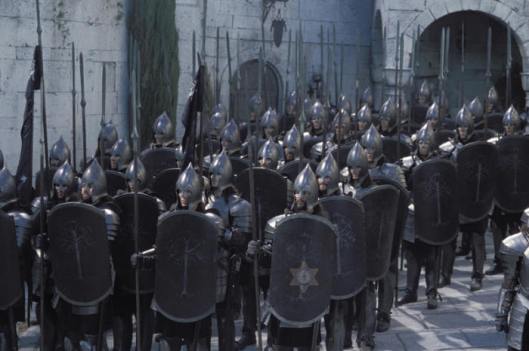
In the Jackson movies, there is a kind of regularity, from Osgiliath to Minas Tirith in what we are shown.

gondorians.jpg

This is not surprising if the cue for costuming has come primarily from one description:

“The Guards of the gate were robed in black, and their helms were of strange shape, high-crowned, with long cheek-guards close-fitting to the face, and above the cheek-guards were set the white wings of sea-birds; but the helms gleamed with a flame of silver, for they were indeed wrought of mithril, heirlooms from the glory of old days. Upon the black surcoats were embroidered in white a tree blossoming like snow beneath a silver crown and many-pointed stars. This was the livery of the heirs of Elendil, and none wore it now in all Gondor, save the Guards of the Citadel before the Court of the Fountain where the White Tree once had grown.” (The Return of the King, Chapter 1, “Minas Tirith”)

We have no wish to criticize—in this respect, at least—the creators of the films for taking what might appear to be an easy out: uniformity being cheaper than individuality, since it’s clear that, when it came to dramatic effects in the films in general, the old theatrical advertising line, “No Expense Was Spared To…” is really true. Instead, we want employ our former method of consulting medieval manuscripts, as well as another passage from the same chapter, to offer another possible view, one which might have influenced the author in his depiction of the defenders of Gondor.

We’ll begin with the passage:

“Leading the line there came walking a big thick-limbed horse, and on it sat a man of wide shoulders and huge girth, but old and grey-bearded, yet mail-clad and black-helmed and bearing a long heavy spear. Behind him marched proudly a dusty line of men, well-armed and bearing great battle-axes; grim-faced they were and shorter and somewhat swarthier than any men that Pippin had yet seen in Gondor…

And so the companies came…The men of Ringlo Vale…from the uplands of Morthond…five hundred bowmen…From the Anfalas…a long line of men of many sorts, hunters and herdsmen and men of little villages, scantily equipped save for the household of Golasgil their lord. From Lamedon, a few grim hillmen…Fisher-folk of the Ethir…Hirluin the Fair…with three hundreds of gallant green-clad men. Imrahil…with gilded banners bearing his token of the Ship and the Silver Swan, and a company of knights in full harness riding grey horses; and behind them seven hundreds of men at arms, tall as lords, grey-eyed, dark-haired, singing as they came.”

There is actually not a lot of detail here, but there are a few hints. First off, there are those “great battle-axes”.   Here are two images from the Bayeux Tapestry of the Anglo-Saxon king, Harold’s, bodyguards, his huscarl, armed with their characteristic long-handled axes.

axemen_bayeux.jpg

And here is a modern reconstruction.

huscarl4.jpg

Next, we have those five hundred bowmen from Morthond. The Tapestry can provide a useful image of those,

archers2.jpg

but perhaps what JRRT really was thinking of were the famous longbowmen of Crecy and Poitiers and Agincourt, whose skill and courage knocked down whole waves of equally brave French knights. Here are a pair of modern images by the brilliant historical illustrator, Gerry Embleton, himself a medieval reenactor.

EnglishLongbowman1330-15151
longbowman2

Besides the huscarl, King Harold’s army was made up of the fyrd, a kind of militia drawn from the freemen of the countryside, who had to provide their own weapons and equipment and were only required to serve for limited periods—they would have been farmers, most of them, after all, and couldn’t be off the farm for too long without threatening their own livelihoods. Perhaps these could suggest that “long line of men of many sorts”. Here’s an image from the Tapestry of what appears to be the fyrd fending off a mounted Norman attack. You’ll notice the lack of defensive armor.

fyrd3.jpg

“gallant, green-clad men” is rather vague, but, suddenly, all we could see is Robin Hood and his Merry Men. And so we can’t resist including some of our favorite N.C. Wyeth illustrations.

rhood1rhood2

And these could easily provide the model for the rangers in South Ithilien, couldn’t they?

faramir.jpg

Last, there is that “company of knights in full harness”. This presents a real problem. Knights from which period? The armor available at the time of the Bayeux Tapestry in the mid-11th century

fyrd3.jpg

and which, we suggested in our last, might be good for the Rohirrim, was very different from that of later times. Here’s the armor of the days of Sir Geoffrey Luttrell,

Sir_Geoffrey_from_LPsalter.jpg

in the early 14th century—

early14thcarmor.jpg

and here’s what the English archers would have faced as worn by their valiant French opponents at Agincourt, in 1415.

early15thcarmor.jpg

This handy chart can give you a diachronic (through-time) view of changes in medieval armor.

02e1c306489f565ee38b56e417ba5ff0.jpg

If we look at something produced through the workshop of William Morris, that strong influence upon JRRT, we find this group of knights from a set of tapestries produced in the 1890s.

Holy_Grail_Tapestry_-The_Arming_and_Departure_of_the_Kniights.jpg

The armor is pretty vague (the systematic study of the history of armor was still in its childhood then—if you’re interested in the early days, google Sir Samuel Rush Meyrick to learn about its first great scholar), but one of the helmets—the one to the far left in the background, looks like a visored sallet, which could date what we see in the tapestry to the later 15th century.

Sallet_helmet,_Southern_Germany,_1480-1490_-_Higgins_Armory_Museum_-_DSC05461.JPG

(Sharp-eyed readers who are Star Wars fans—we are—will recognize this general pattern from the technical people on the Death Star—

deathstarcrewmen.png

We might add that Morris and his friends were strongly influenced by pre-Renaissance and early Renaissance painters, so perhaps this picture, one of a set of 3 by Paolo Uccello from the middle of the 15th century, might also provide a possible model (and we’re glad to show you the whole set because we think that they’re just magical).

Öèôðîâàÿ ðåïðîäóêöèÿ íàõîäèòñÿ â èíòåðíåò-ìóçåå Gallerix.ru

Uccello_Battle_of_San_Romano_Uffizi


Taken all together, these produce a very different image from the films, don’t they? Much more individual, often much less well-equipped, more actual medieval, as we would imagine the author had had in mind. So—contrast this


with this:

ArmiesOfAgincourt.jpg

Which do you prefer, dear readers?

Thanks, as always, for reading.

MTCIDC

CD


← Older posts
Newer posts →

The Doubtful Sea Series Facebook Page

The Doubtful Sea Series Facebook Page

  • Ollamh

Categories

  • Artists and Illustrators
  • Economics in Middle-earth
  • Fairy Tales and Myths
  • Films and Music
  • Games
  • Heroes
  • Imaginary History
  • J.R.R. Tolkien
  • Language
  • Literary History
  • Maps
  • Medieval Russia
  • Military History
  • Military History of Middle-earth
  • Narnia
  • Narrative Methods
  • Poetry
  • Research
  • Star Wars
  • Terra Australis
  • The Rohirrim
  • Theatre and Performance
  • Tolkien
  • Uncategorized
  • Villains
  • Writing as Collaborators
Follow doubtfulsea on WordPress.com

Across the Doubtful Sea

Recent Postings

  • The Damage of Dragons March 11, 2026
  • Encouragement March 4, 2026
  • Eavesdropping February 25, 2026
  • Do You Speak Villain? (Part 3) February 18, 2026
  • Do You Speak Villain? (2) February 11, 2026
  • Do You Speak Villain? (Part 1) February 4, 2026
  • Towering January 28, 2026
  • Tolkien Among the Indians January 21, 2026
  • Thin and Stretched January 14, 2026

Blog Statistics

  • 108,907 Views

Posting Archive

  • March 2026 (2)
  • February 2026 (4)
  • January 2026 (4)
  • December 2025 (5)
  • November 2025 (4)
  • October 2025 (5)
  • September 2025 (4)
  • August 2025 (4)
  • July 2025 (5)
  • June 2025 (4)
  • May 2025 (4)
  • April 2025 (5)
  • March 2025 (4)
  • February 2025 (4)
  • January 2025 (5)
  • December 2024 (4)
  • November 2024 (4)
  • October 2024 (5)
  • September 2024 (4)
  • August 2024 (4)
  • July 2024 (5)
  • June 2024 (4)
  • May 2024 (5)
  • April 2024 (4)
  • March 2024 (4)
  • February 2024 (4)
  • January 2024 (5)
  • December 2023 (4)
  • November 2023 (5)
  • October 2023 (4)
  • September 2023 (4)
  • August 2023 (5)
  • July 2023 (4)
  • June 2023 (4)
  • May 2023 (5)
  • April 2023 (4)
  • March 2023 (5)
  • February 2023 (4)
  • January 2023 (4)
  • December 2022 (4)
  • November 2022 (5)
  • October 2022 (4)
  • September 2022 (4)
  • August 2022 (5)
  • July 2022 (4)
  • June 2022 (5)
  • May 2022 (4)
  • April 2022 (4)
  • March 2022 (5)
  • February 2022 (4)
  • January 2022 (4)
  • December 2021 (5)
  • November 2021 (4)
  • October 2021 (4)
  • September 2021 (5)
  • August 2021 (4)
  • July 2021 (4)
  • June 2021 (5)
  • May 2021 (4)
  • April 2021 (4)
  • March 2021 (5)
  • February 2021 (4)
  • January 2021 (4)
  • December 2020 (5)
  • November 2020 (4)
  • October 2020 (4)
  • September 2020 (5)
  • August 2020 (4)
  • July 2020 (5)
  • June 2020 (4)
  • May 2020 (4)
  • April 2020 (5)
  • March 2020 (4)
  • February 2020 (4)
  • January 2020 (6)
  • December 2019 (4)
  • November 2019 (4)
  • October 2019 (5)
  • September 2019 (4)
  • August 2019 (4)
  • July 2019 (5)
  • June 2019 (4)
  • May 2019 (5)
  • April 2019 (4)
  • March 2019 (4)
  • February 2019 (4)
  • January 2019 (5)
  • December 2018 (4)
  • November 2018 (4)
  • October 2018 (5)
  • September 2018 (4)
  • August 2018 (5)
  • July 2018 (4)
  • June 2018 (4)
  • May 2018 (5)
  • April 2018 (4)
  • March 2018 (4)
  • February 2018 (4)
  • January 2018 (5)
  • December 2017 (4)
  • November 2017 (4)
  • October 2017 (4)
  • September 2017 (4)
  • August 2017 (5)
  • July 2017 (4)
  • June 2017 (4)
  • May 2017 (5)
  • April 2017 (4)
  • March 2017 (5)
  • February 2017 (4)
  • January 2017 (4)
  • December 2016 (4)
  • November 2016 (5)
  • October 2016 (6)
  • September 2016 (5)
  • August 2016 (5)
  • July 2016 (5)
  • June 2016 (5)
  • May 2016 (4)
  • April 2016 (4)
  • March 2016 (5)
  • February 2016 (4)
  • January 2016 (4)
  • December 2015 (5)
  • November 2015 (5)
  • October 2015 (4)
  • September 2015 (5)
  • August 2015 (4)
  • July 2015 (5)
  • June 2015 (5)
  • May 2015 (4)
  • April 2015 (3)
  • March 2015 (4)
  • February 2015 (4)
  • January 2015 (4)
  • December 2014 (5)
  • November 2014 (4)
  • October 2014 (6)
  • September 2014 (1)

Blog at WordPress.com.

  • Subscribe Subscribed
    • doubtfulsea
    • Join 78 other subscribers
    • Already have a WordPress.com account? Log in now.
    • doubtfulsea
    • Subscribe Subscribed
    • Sign up
    • Log in
    • Report this content
    • View site in Reader
    • Manage subscriptions
    • Collapse this bar
 

Loading Comments...