• About

doubtfulsea

~ adventure fantasy

Category Archives: J.R.R. Tolkien

Into Those Woods

17 Wednesday May 2017

Posted by Ollamh in Fairy Tales and Myths, J.R.R. Tolkien, Literary History, Narrative Methods

≈ Leave a comment

Tags

A Midsummer Night's Dream, Athens, Burnham Wood, Caspar David Friedrich, Circe, Der Blonde Eckbert, Edmund Burke, Fangorn, forest, Gespensterwald, Grimm Brothers, Haensel and Gretel, Horace Walpole, Into the Woods, Ithilien, Jacob Grimm, John Bauer, John Walter Bratton, Lorien, Ludwig Tieck, Macbeth, Mirkwood, Misty Mountains, N.C. Wyeth, Nienhagen, Odysseus, Old Forest, Philosophical Inquiry Into the Origin of Our Ideas, Robert Frost, Robin Hood, Romanticism, Sir Walter Scott, Snow White, Steven Sondheim, Straparola, Teddy Bears' Picnic, The Castle of Otranto, The Fire Swamp, The Hobbit, The Lord of the Rings, The Princess Bride, Tolkien, Treebeard, Waldeinsamkeit, Waverly, Wilhelm Grimm, Woses

Welcome, dear readers, as always.

There is an early-twentieth-century American popular song called “Teddy Bears’ Picnic”, by John Walter Bratton. This was first published, in 1907, as “The Teddy Bears Picnic: A Characteristic Two-Step”,

image1tbears.jpeg

but in 1932, it acquired both its current title and lyrics, beginning,

“If you go down to the woods today,

You’re sure of a big surprise…”

Here’s a link, if you’d like to read more. And here’s a link to the first recording of the version with its lyrics, from 1932. WARNING: it has a catchy little tune!

This song came to us because we’ve been thinking about forests and their frequency and importance in The Hobbit and The Lord of the Rings.

Woods have always been spooky places in folktales. Think of Haensel and Gretel, for example,
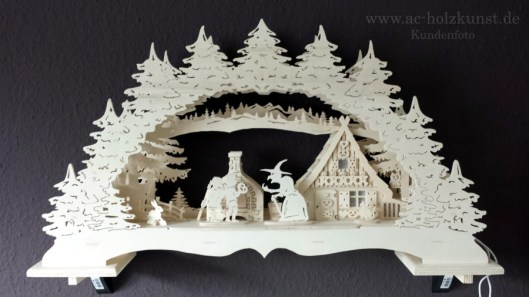
image2handg.jpg

or Snow White,

image3snowwhite.jpg

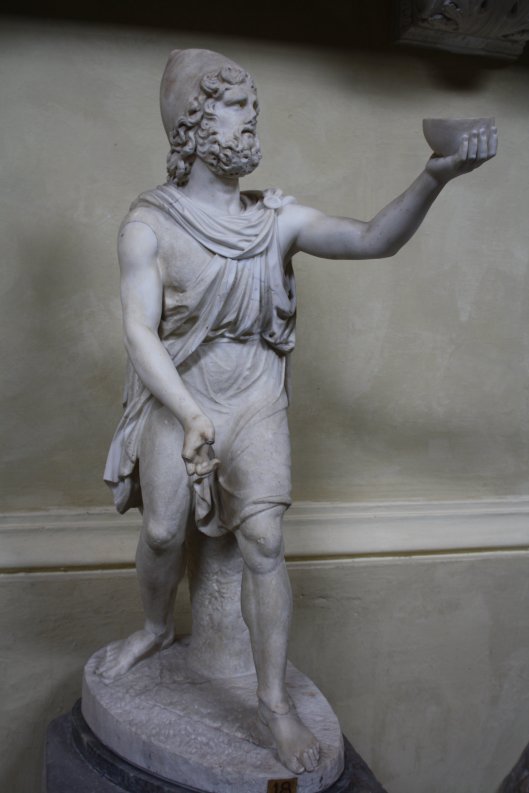
or even the story of Odysseus and Circe, as Circe’s house is set deep in a forest.

image3acirce.jpg

Among our interests is Romanticism–both in itself because it’s in Romanticism that modern adventure stories really take off (for the supernatural, think Horace Walpole, The Castle of Otranto, 1764; for historical, Sir Walter Scott, Waverly, 1814). The early Romantics were fascinated by the forest, both as a place of beauty and of fear. This is not surprising, for several reasons. First, they were influenced by the writings of Edmund Burke (1729-1797),

image4burke.jpg

who published a famous essay, “Philosophical Inquiry Into the Origin of Our Ideas of the Sublime and Beautiful” in 1757 (this is a 1770s reprint).

image5inquiry.jpg

Burke was interested in human reactions to things which, basically, are either awe-inspiring (how about this?)

image6eismeer.jpg

or beautiful

image7beautiful.jpg

Awe-inspiring (to which may even be added a little terror– you, sharp-eyed readers have probably already noticed that there are the remains of a crushed ship in the ice in the first picture) is a sort of opposite of the beautiful– we say “sort of” because they can be related, which is why we chose two pictures by the same artist– our favorite early Romantic artist, in fact, Caspar David Friedrich (1774-1840).

image8cdf.jpg

This brings us to this Friedrich painting:

image9chass.jpg

There are lots of his paintings in which we are standing behind someone who is looking off into the distance– as in the one we chose for “the beautiful”. As you can see in the above, here we have a man contemplating a path into a snowy wood. (Which reminds us of a poem by the American poet Robert Frost, 1874-1963, and we can’t resist adding it here, just for the pleasure of it:)

Stopping by Woods on a Snowy Evening

Whose woods these are I think I know.
His house is in the village though;
He will not see me stopping here
To watch his woods fill up with snow.
My little horse must think it queer
To stop without a farmhouse near
Between the woods and frozen lake
The darkest evening of the year.
He gives his harness bells a shake
To ask if there is some mistake.
The only other sound’s the sweep
Of easy wind and downy flake.
The woods are lovely, dark and deep,
But I have promises to keep,
And miles to go before I sleep,
And miles to go before I sleep.

There is menace here (note the crow on the stump in the foreground…), and yet it’s beautiful. And tempting– and that’s part of the sublime, as well.

Besides their interest in Burke, the early Romantics were also deeply interested in folktales. People had been collecting and publishing such things in early modern Europe since at least Straparola in the 16th century, but, from the Romantics, we have the work of these two men, highly-intelligent brother-scholars, the Grimms, Jacob (1785-1863) and Wilhelm (1786-1859), whose work, either in itself on in adaptation, is known throughout the whole western world.
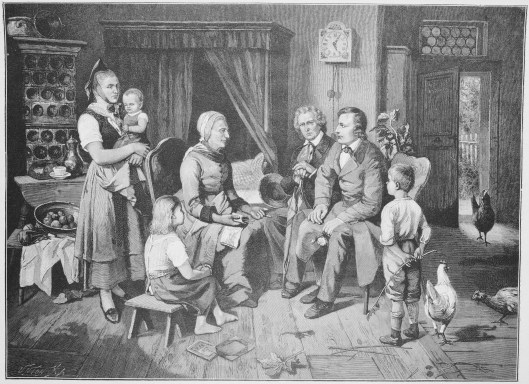
image10grimms.jpg

The story of Haensel and Gretel comes from them, in fact (as does Snow White). Because of a famous short story by Ludwig Tieck (1773-1853),
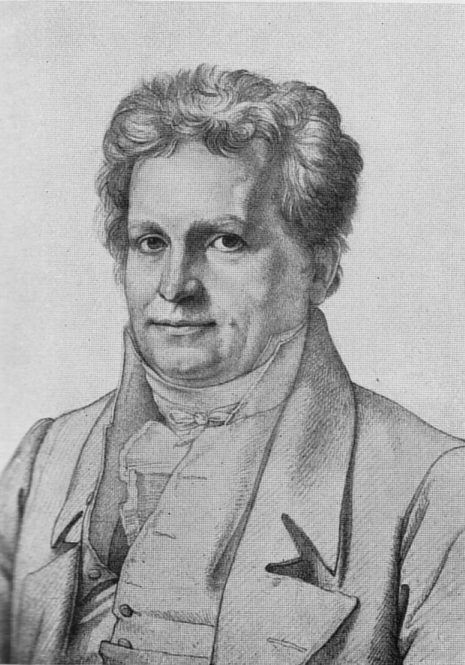
image11tieck.jpg

“Der Blonde Eckbert” (maybe “Fair-haired Eckbert” in English?), there is a word in German for this fascination for the woods, Waldeinsamkeit, meaning something like “The Sense of Being Alone in the Forest”. Like “sublime”, this word has a wide range of feeling to it, including that sense of aloneness/being alone/loneliness/ mixed with the pleasure of being alone in the forest. In the story, the word is contained in a little poem sung by a strange bird, which begins:

“Waldeinsamkeit

Die mich erfreut

So morgen wie heut

In ewger Zeit

O wie mich freut

Waldeinsamkeit.”

“Aloneness in the forest–

That delights me,

As today so tomorrow

In eternal time

Oh how it delights me

Aloneness in the forest!”

In the case of JRRT, however, although he was well known to be quite passionate in his love for trees, forests in his work do not always appear to be places for pleasure. (And how can we not be reminded of that moment in the film, The Princess Bride, when the hero and heroine are at the edge of the Fire Swamp, a kind of haunted wood,

image12fireswamp.jpg

and the hero, Westley, says, “It’s not that bad. I’m not saying that I’d like to build a summer home here, but the trees are actually quite lovely”– and only a moment later the heroine, Buttercup, is attacked by a spurt of flame from the ground itself?)

Out first wood in The Hobbit is the one into which several of the dwarves disappear, captured by three rather dimwitted trolls.

image12atrolls.jpg

When we look at this and at other JRRT illustrations, we are reminded of the world of the Swedish illustrator, John Bauer (1882-1918), some of whose fairy tale forests bear a certain strong similarity in their regularity.

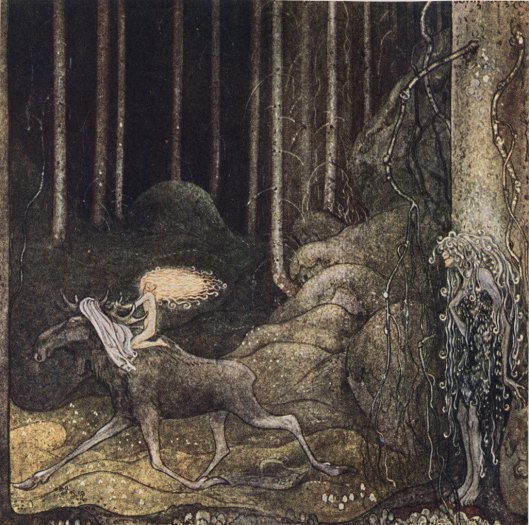
image12bbaueer.jpg

image13bauer.jpg

What’s surprising is that, in northern Europe, there actually appear to be stands of wood which actually look very like this. Here’s Nienhagen, in northern Germany.

image14nienhagen.jpg

It’s a beechwood (one of JRRT’s favorite trees and ours, too– remember this big beech from N.C. Wyeth’s Robin Hood illustrations?

image15robin.jpg

Nienhagen has another name, however, Gespensterwald, “Ghostwood”, and, seeing this next picture and comparing it to Bauer’s paintings, we imagine that you’d agree with us that this is an appropriate nickname.
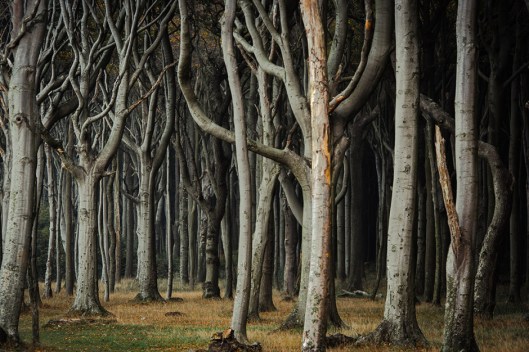
image16gespensterwald.jpg

Across the Misty Mountains, we come to Mirkwood, with its disappearing Elves, sleepy stream, and giant spiders– hardly an inviting place.
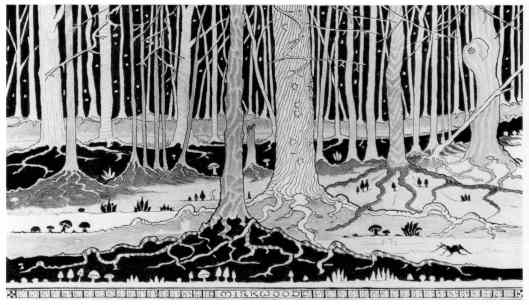
image17mirkwood.jpg

The forests of The Lord of the Rings are a bit mixed. There is the Old Forest, which is so hostile that is has to be kept off with cutting, burning, and a hedge and, in its depths, there is Old Man Willow, who almost swallows several unwary hobbits.
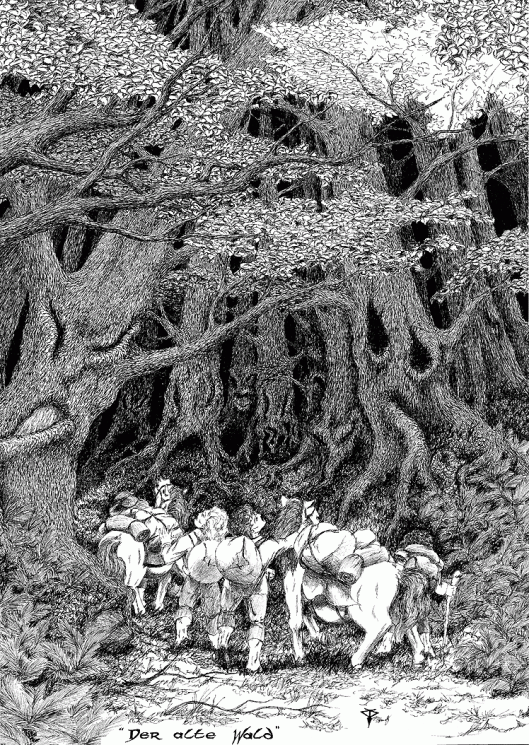
image18oldforest.gif

image19oldmanwillow.jpg

Then there is Lorien, a place of safety and healing for the Fellowship.
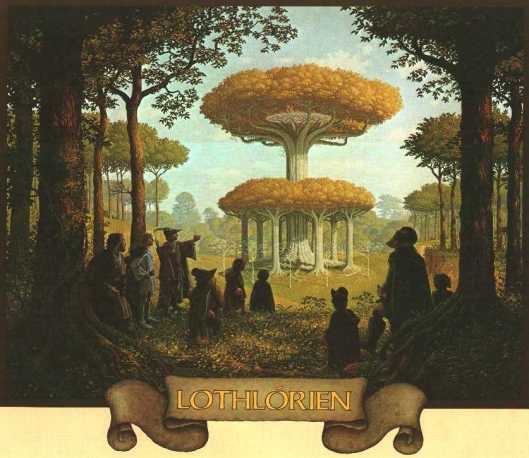
image20lorien.jpg

And, last, there is Fangorn, with its Ents, especially the thoughtful and ultimately sympathetic Treebeard.
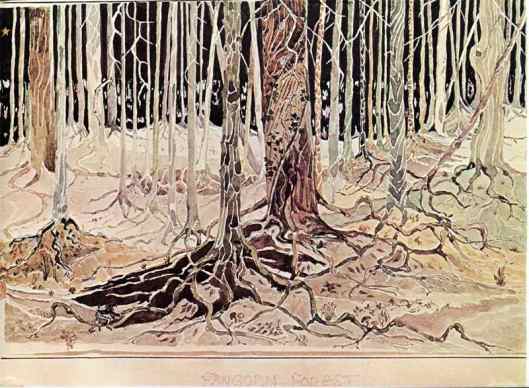
image21fangorn.jpg

image22treebeard.jpg

These are principal woods– there are also the woodlands of South Ithilien, there Faramir
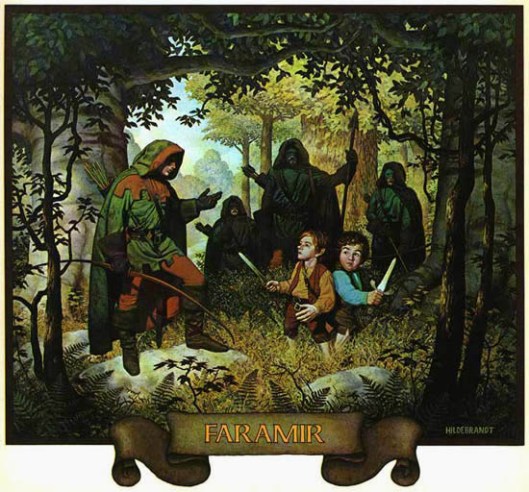
image23faramir.jpg

image23woses.jpg

and his rangers lurk, as well as the unnamed wood where the Woses live, but it’s the people there who are the focus of the story, not the forests.

This sense of a wood being dangerous goes far beyond fairy tales and even JRRT, of course. Shakespeare has several puzzling forests– as in the wood outside Athens in A Midsummer Night’s Dream
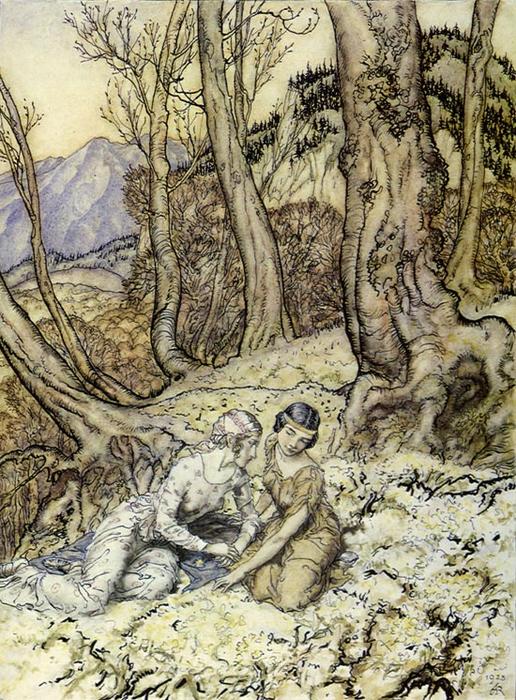
image25mnd.JPG

or the traveling Burnham Wood in Macbeth

image26burnham.jpg

And there is even the wonderful Steven Sondheim musical, Into the Woods (1986), in which going into the woods has a magical/metaphorical side.
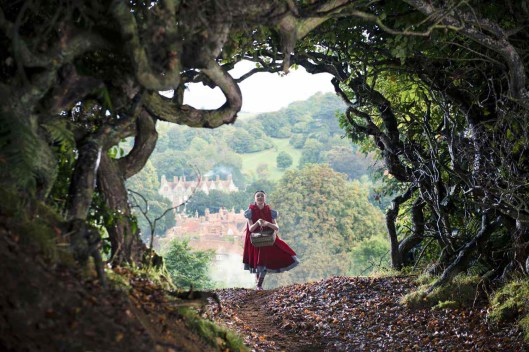
image27intothewoods.jpg

But we’ll leave you where we started– with JRRT– and a single tree…
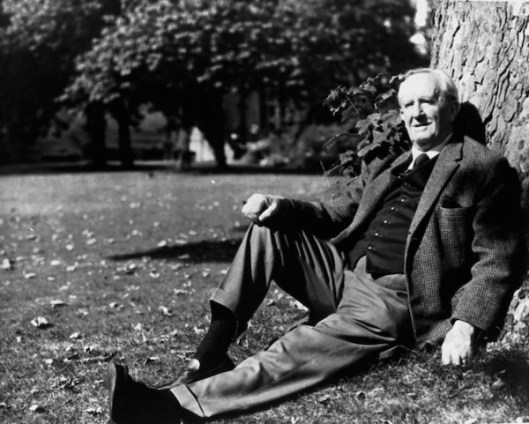
image28jrrt.jpg

Thanks, as always, for reading.

MTCIDC,

CD

Finding a Voice

10 Wednesday May 2017

Posted by Ollamh in Heroes, J.R.R. Tolkien, Literary History, Military History, Narrative Methods

≈ Leave a comment

Tags

Abraham Lincoln, Abraham Lincoln Vampire Slayer, American Civil War, Daniel Day Lewis, early photography, Edward Everett, Gettysburg, Gettysburg Address, National Cemetery, Saruman, Smaug, spell-casting, Steven Spielberg Lincoln, The Battle Cry of Peace, The Blue and the Gray, The Hobbit, The Lord of the Rings, The Voice of Saruman, Tolkien, voices

Welcome, dear readers, as always.

Recently, it has been thought that a new picture of Abraham Lincoln

Lincoln-CGerman-1861.jpg

at Gettysburg, on November 19, 1863 has been discovered. Lincoln had been invited as one of the speakers for the dedication of a new National Cemetery to honor the Union dead from the battle fought at Gettysburg on 1-3 July, 1863.

Battle of Gettysburg - Cyclorama - Paul Philippoteaux SAM_1322.JPG

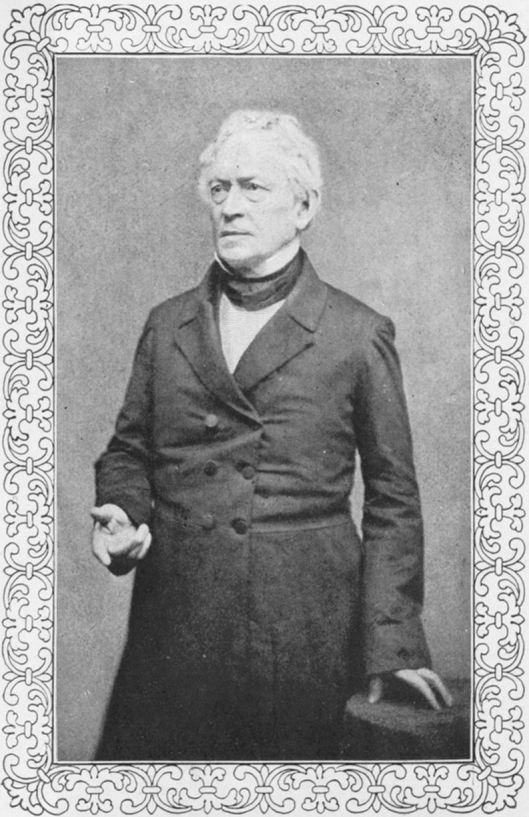
The main speaker, and the one everyone was waiting for, was the famous orator, Edward Everett,

Edward_Everett.jpg

whose speech is now totally forgotten (here’s a link to it—it’s worth reading as a specimen of mid-19th-century American oratory—something Everett was famous for), but, to say that Lincoln’s speech has survived is, for Americans—and for anyone who loves good rhetoric, for that matter–an understatement.

nicolaycopy.jpg

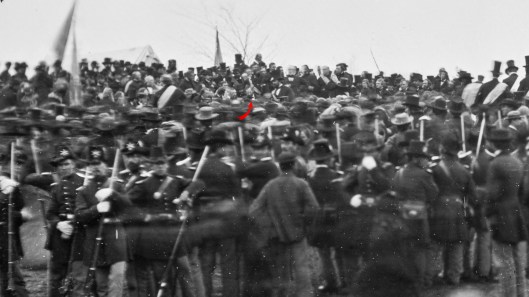
Up until recently, there was one definite photograph of Lincoln on the occasion.

Crowd_of_citizens,_soldiers,_and_etc._with_Lincoln_at_Gettysburg._-_NARA_-_529085_-crop.jpg

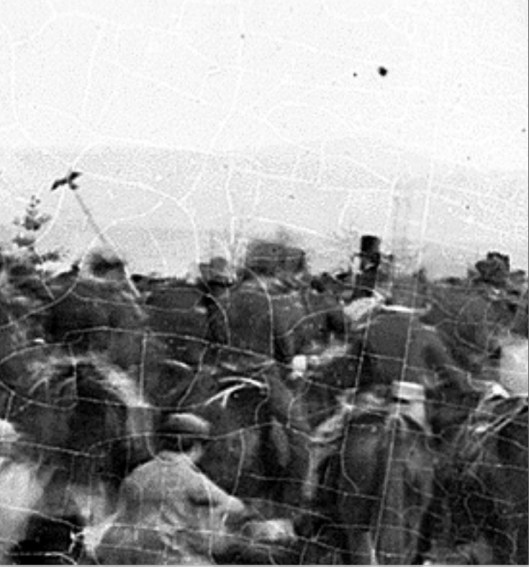
(There is a second picture, supposedly of Lincoln on horseback, but it’s been pointed out that the figure appears to be wearing epaulettes,

image5a1notabe.jpg

image5aepaulettes.jpg

And, if so, is therefore more likely to be one of the military dignitaries at the ceremony.)

This new photo, which seems pretty convincing to us, now gives us two illustrations of one of the most famous moments of Lincoln’s presidency.

o-LINCOLN-570.jpg

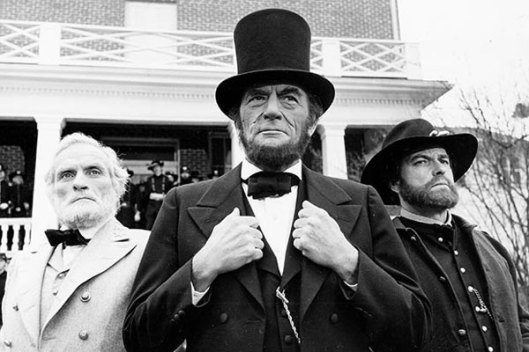
There are a number of films about Lincoln, at least since the 1915 The Battle Cry of Peace, with Lincoln portrayed by numerous American actors, some of them famous, such as Gregory Peck, from the television series The Blue and the Gray (1982)

Gregory-Peck-Lincoln.jpg

with the most recent being two films from 2012, the improbable Abraham Lincoln Vampire Hunter

abraham_lincoln_vampire_hunter_ver3.jpg

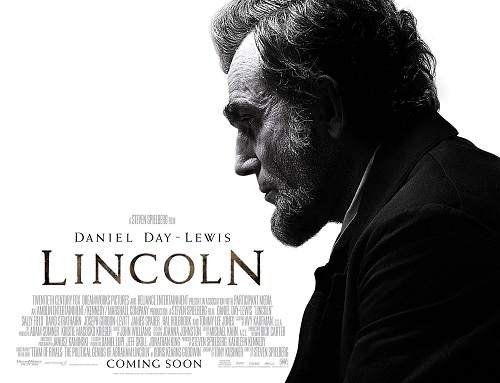
and Steven Spielberg’s Lincoln

LINCOLN-landscape-poster.jpg

starring Daniel Day Lewis.

Lewis, an actor famous for his strenuous preparations for every role he’s ever played, was sometimes criticized in reviews for his light voice, the impression being that such a deep, thoughtful man should have had a voice to match. In fact, contemporary accounts of Lincoln tell us that his voice was higher—a tenor rather than a baritone—and that his accent was a rural one, mirroring his boyhood years on the Indiana/Kentucky border (his sometimes somewhat phonetic spelling helps here to reconstruct this).

Thus, though his self-presentation—especially his voice–might have seemed to some (especially those who hated him—one of his main generals even referring to him as “the original gorilla”) less than impressive, his words, at least in written form, have endured.

This made us think of the opposite, from JRRT, characters whose words might not matter much, but the way in which they were delivered was persuasive—or almost.

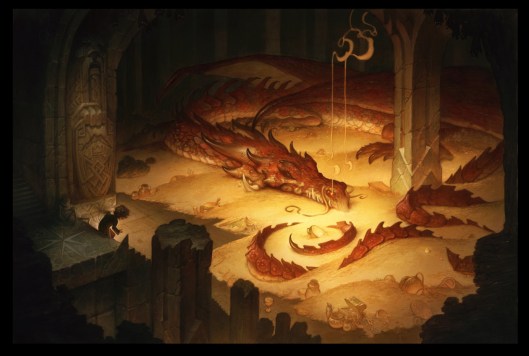
We began with Smaug.

bilbo and smaug.jpg

As we said in our last, Smaug’s voice has a danger for Bilbo in it:

“Whenever Smaug’s roving eye, seeking for him in the shadows, flashed across him, he trembled, and an unaccountable desire seized hold of him to rush out and reveal himself and tell all the truth to Smaug. In fact he was in grievous danger of coming under the dragon-spell.” (The Hobbit, Chapter 12, “Inside Information”)

This dragon-spell has a persuasive power to it.   It’s never explained, but it seems to embody the idea that the tone can bring out the worst in someone:

“Now a nasty suspicion began to grow in his mind—had the dwarves forgotten this important point too, or were they laughing in their sleeves at him all the time? That is the effect that dragon-talk has on the inexperienced. Bilbo of course ought to have been on his guard; but Smaug had rather an overwhelming personality.”

Perhaps this is what gives the “dragon-spell” its power: that it somehow embodies the personality of the spell-caster. As Smaug is evil and corrupt and suspicious, so his spell can cause others to have corrupt and suspicious thoughts, as Bilbo does.

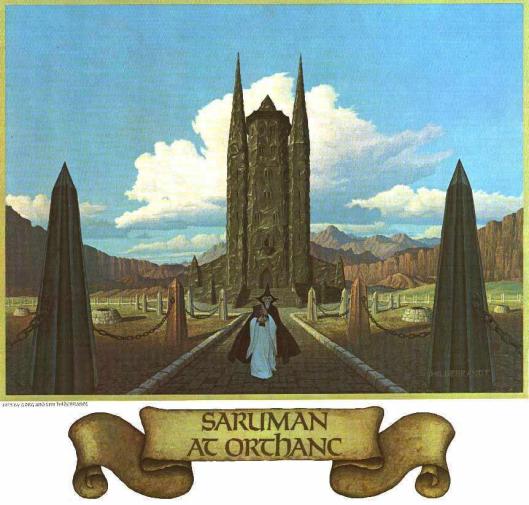
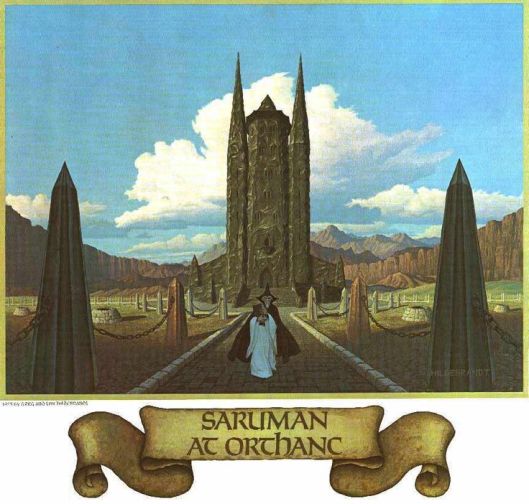
We see this same effect on the inexperienced when Gandalf, the companions, and Theoden visit the defeated Saruman at Orthanc

obra-tolkien-mano-hildebrandt-ilustradores-fa-L-q4g6J8.jpeg

in the chapter named, appropriately, “The Voice of Saruman”:

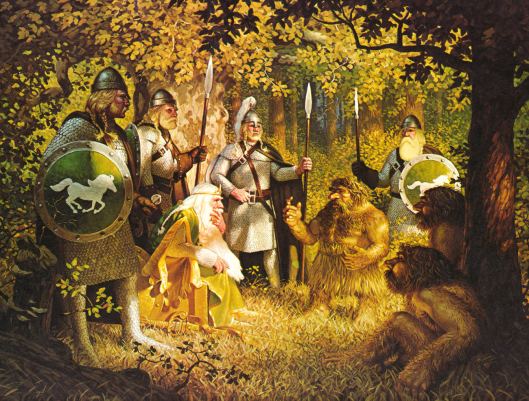
“Suddenly another voice spoke, low and melodious, its very sound an enchantment. Those who listened unwarily to that voice could seldom report the words that they heard; and if they did, they wondered, for little power remained in them. Mostly they remembered only that it was a delight to hear the voice speaking, all that it said seemed wise and reasonable, and desire awoke in them by swift agreement to seem wise themselves. When others spoke they seemed harsh and uncouth by contrast; and if they gainsaid the voice, anger was kindled in the hearts of those under the spell.” (The Two Towers, Book Three, Chapter 10, “The Voice of Saruman”)

When Gandalf first meets Saruman in Orthanc, Saruman’s “robes, which had seemed white, were not so, but were woven of all colours, and if he moved they shimmered and changed hue so that the eye was bewildered.” (The Fellowship of the Ring, Book Two, Chapter 2, “The Council of Elrond”)

It may be, then, that the power of Saruman’s voice is in the same shimmer—he appears to be not just one, but many and therefore both momentarily persuasive, as well as ultimately insubstantial, since “those who listened unwarily to that voice could seldom report the words that they heard”. It’s clear, however, that, like the voice of Smaug, the spell within the voice was, potentially, horribly persuasive:

“For some the spell lasted only while the voice spoke to them, and when it spoke to another they smiled, as men do who see through a juggler’s trick while others gape at it. For many the sound of the voice alone was enough to hold them enthralled; but for those whom it conquered the spell endured when they were far away, and ever they heard that soft voice whispering and urging them.”

And yet—although

“..none were unmoved; none rejected its pleas and its commands without an effort of mind and will, so long as its master had control of it.”

There are those of the party on this visit to Orthanc who are not taken in at all. Gimli appears to be unaffected, saying, “The words of this wizard stand on their heads”, and Eomer calls Saruman “an old liar with honey on his forked tongue”. Theoden even breaks the spell, although he is said to speak “thickly and with effort.” At such resistance, Saruman shows both a degree of control and a losing of it, cajoling and calling names alternately, until “Gandalf laughed.” And “The fantasy vanished like a puff of smoke.”

Knowing Saruman’s eventual end, murdered by another whose tongue was persuasive enough to keep Theoden a prisoner once upon a time,

leegrima.jpg

can we see the beginning of that end here? Once the “fantasy” created by Saruman’s voice is broken by Gandalf’s gentle mockery, what is left for him after his grand plans to be (at least) Sauron’s ally but “some mischief still in a small mean way”? (The Return of the King, Book Six, Chapter 6, “Many Partings”)

And, at the end of that mischief, Grima only escapes Saruman and his voice through murder—and his own quick death, following.

Gandalf’s laughter suggests that the source of escape from Saruman’s voice may be detachment: if one can step away from the sound, that sound loses its (literal) charm. It may take effort—as it does for Theoden—but, once away, whatever magic was in the voice vanishes into the smoke it really was.   As well, obvious resistance seems always to shake Saruman’s control and that flattering tongue, which can say, on the one hand,

“Theoden Lord of the Mark of Rohan..declared by your noble devices, and still more by the fair countenance of the House of Eorl. O worthy son of Thengel the Thrice-renowned!”

But, when thwarted, can cry:

“Dotard! What is the house of Eorl but a thatched barn where brigands drink in the reek, and their brats roll on the floor among the dogs?” (The Two Towers, Book Three, Chapter 10, “The Voice of Saruman”)

It is striking that, in neither case, are his words to be trusted, any more than his voice—and here we can return to Abraham Lincoln, whose voice may not have impressed, but whose words continue to be remembered.

z235445.jpg

Thanks, as always, for reading.

MTCIDC

CD

Just a Nobuddy

03 Wednesday May 2017

Posted by Ollamh in Artists and Illustrators, Fairy Tales and Myths, Heroes, Imaginary History, J.R.R. Tolkien, Literary History, Narrative Methods

≈ Leave a comment

Tags

akaletes, Athena, Bilbo, Circe, cyclops, face culture, Greek, Homer, kleos, Odysseus, Outis, Polyphemus, Poseidon, Riddles in the Dark, Smaug, Telemachus, The Hobbit, The Lord of the Rings, The Odyssey, Tolkien, true name

Welcome once more, dear readers.

“Who are you and where do you come from, may I ask?”

inquires Smaug. (The Hobbit, Chapter 12, “Inside Information”)

image1smaug.jpg

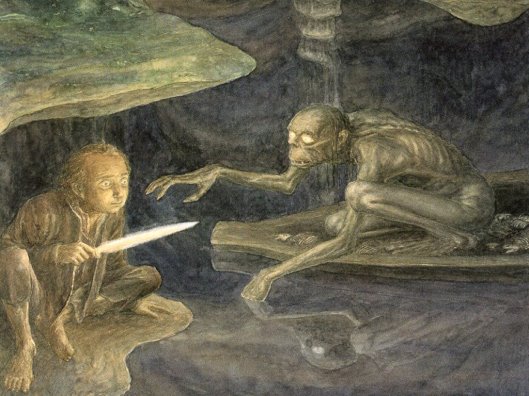
Earlier in The Hobbit, when asked this indirectly by Gollum, Bilbo had replied directly: “I am Mr.

image2bilbogollumlee.jpg

Bilbo Baggins…” (The Hobbit, Chapter 5, “Riddles in the Dark”)

This had led him into a deadly game of riddles, but now Bilbo seems more wary—which is just as well, as the narrator tells us when Bilbo answers Smaug’s question indirectly:

“This of course is the way to talk to dragons, if you don’t want to reveal your proper name (which is wise), and don’t want to infuriate them by a flat refusal (which is also very wise).” (The Hobbit, Chapter 12, “Inside Information”)

Bilbo’s answer to Smaug’s question about his identity is a series of what we might call “What Have I Got In My Pocket?” names—riddling titles which, just like that absent-minded remark, only Bilbo can understand:

“I am the clue-finder, the web-cutter, the stinging fly. I was chosen for the lucky number…I am he that buries his friends alive and drowns them and draws them alive again from the water. ..I am the friend of bears and the guest of eagles. I am Ringwinner and Luckwearer; and I am Barrel-rider.” (The Hobbit, Chapter 12, “Inside Information”)

All of these titles are references to events earlier in the story, of course, although a number of them, like “Ringwinner”, also sound like Norse or Old English kennings—that is, poetic names for often ordinary things, like “whale road” for “sea” and “wave’s horse” for “ship” or “sky candle” for “sun”. One which is close to Bilbo’s “Ringwinner“ is “ring-giver”, a kenning for a “lord”. Because they refer to personal experiences, Bilbo—and we readers—must assume that they would mean nothing to Smaug—or almost—

“Ha! Ha! You admit the ‘us’?” laughed Smaug. “Why not say ‘us fourteen’ and be done with it, Mr. Lucky Number?”

A lucky guess? (And interesting that, in Middle-earth, there are such things as “lucky numbers”—we wonder how many more examples of “lucky” vs “unlucky” things we might find?)

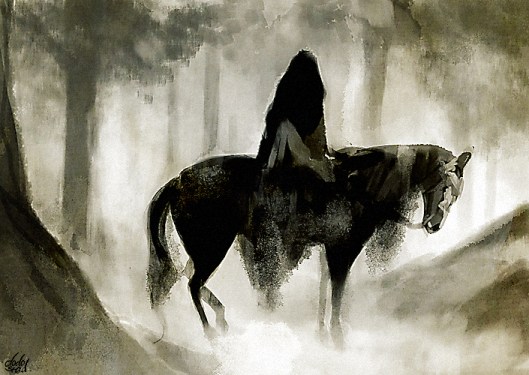
The narrator had said that not revealing your proper name is wise and the consequence of Bilbo’s mistake in telling Gollum that he is “Mr. Bilbo Baggins” will appear many years later, in the form of sinister visitors to the Shire, offering money for the location of “Baggins”.

image3nazgul.jpg

There can be physical danger, then, in properly identifying yourself.

There may be another reason for not doing so and it could entail physical danger not for the protagonist in the story, but a surprise threat for the antagonist.

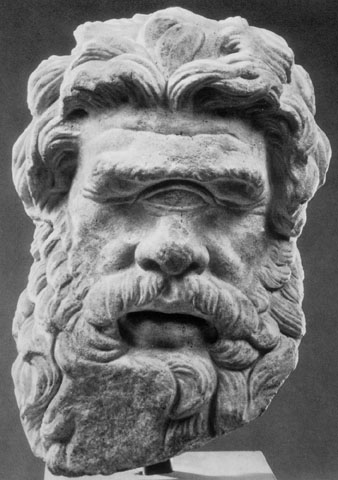
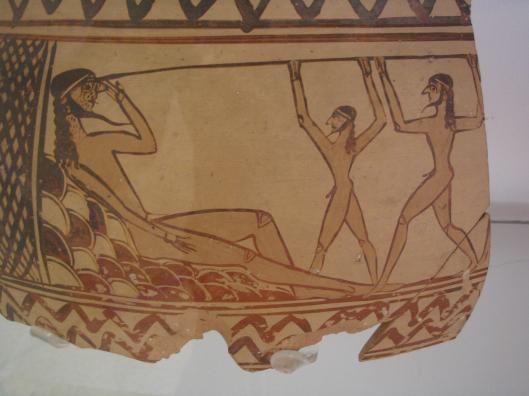
When Odysseus and his men visit the cave of the Cyclops, Polyphemus,

image4cyclops.jpg

and are trapped there, Odysseus, when asked by Polyphemus, gives a false name: Outis (OO-tis), meaning “No one/nobody” in Greek. His subsequent action would suggest that the reason why he does so is that—as he says himself—he has a reputation (for cleverness) which reaches to the heavens. By providing a false name, he intends to put the Cyclops off his guard before defeating him, which he does by:

  1. getting him drunk

image5cydrink.jpg

  1. blinding him

image6blinding.jpg

  1. slipping himself and his men out of Polyphemus’ cave under the bellies of the Cyclops’ sheep.

image7sheepslip.jpg

Having succeeded, however, Odysseus seems to change his plan—and mind—completely, shouting, as his ship takes him away, his name and address, even as the Cyclops hurls huge rocks at the ship and his men beg him to stop.

image8cyrocking.jpg

In the mind of an Homeric hero, however, Odysseus has no choice.

A major element in the life of such heroes is something called “kleos” (KLAY-oss)—which is somewhat difficult to translate. In the heroic world it means something like “personal name within the larger framework of a family and its reputation”—and that’s only the beginning. Kleos is almost a kind of inheritable object and includes such elements as:

  1. divine/semi-divine parents/ancestors
  2. divine patrons
  3. father’s reputation
  4. own reputation, which includes
  5. famous battles/campaigns participated in
  6. famous enemies killed (and spoils taken)
  7. plunder from cities sacked (includes not only goods, but women)

And #4 could be something to be said for parent or ancestor, as well. Your father or grandfather might have been known as “Sacker of Cities” and this adds to the general kleos.

It’s also possible to lose kleos—divinities pick and choose whom they will help, for example, and, just because your father was the client of a god, doesn’t mean that you will be. It is a definitely positive sign for Odysseus’ family’s continued kleos, for example, when, in Odyssey Books 2 and 3, Athena, disguised as the human Mentor, appears and offers Odysseus’ son, Telemachus, advice.

The Homeric world is a so-called “face” culture. In such a culture, everything is public. In fact, the word kleos comes from the verb kalo (kah-LO), meaning to “to summon/call by name”, that name being, in the case of a warrior, not only your name but where you stand in your family’s reputation, its kleos.

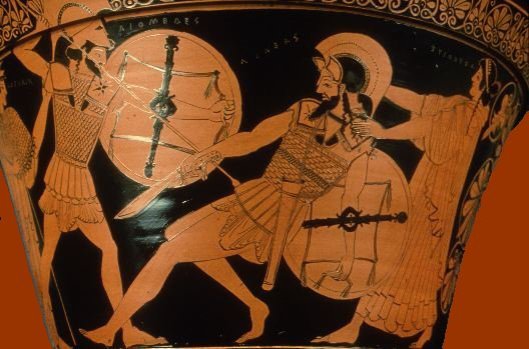
Thus, it’s important, when a warrior defeats a powerful enemy, not only should the enemy warrior know who beat him, but all the bystanders, should there be any, as well.

image9warrior.jpg

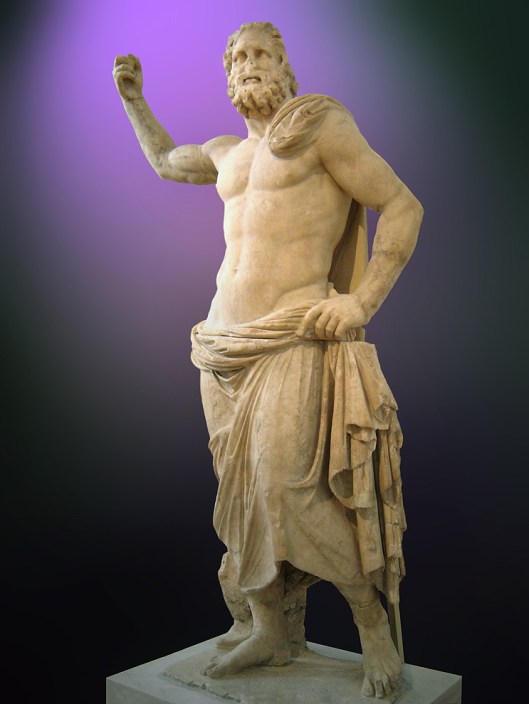
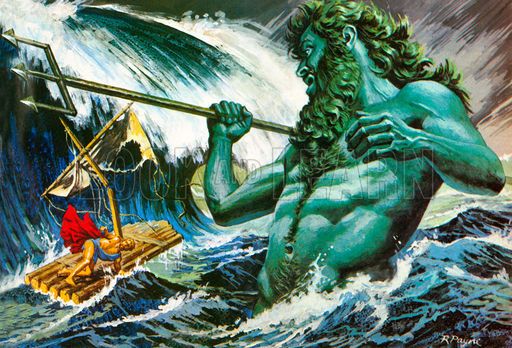
For Odysseus, then, using a false name might give him an initial advantage over Polyphemus, but his victory is only complete and he can only claim kleos when he reveals to the Cyclops who has defeated him. This will lead to terrible subsequent consequences for Odysseus. Polyphemus’ father is Poseidon, god of the seas

image10pos.jpg

and he will make things very difficult for Odysseus later in the Odyssey,

image11pos.jpg

but, in the world of kleos, Odysseus has no choice but to reveal himself to gain the credit necessary for maintaining it.

Another reason for concealing your name has to do with magic. In many of the world’s older traditional cultures, people might have several names, either in succession, or public versus private. Behind the public versus private stands the idea that you are your name—that is, all that is you is embodied in your name. If someone knows that name, that person can use that name against you, either to curse you—and, using your real name, that curse might stick to it—or to summon you for magical purposes. Once your true name is called, a sorcerer can make you obey, even against your will.

In Odyssey 10, Odysseus and his men land on an island which is the home of the enchantress, Circe.

image12circe.jpg

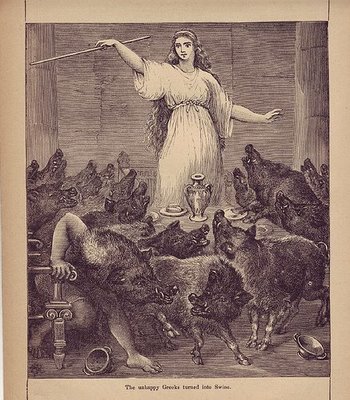
She has the power to shift the shapes of men into those of animals and vice versa, as a scouting party from Odysseus’ ship soon finds out. She gives them a drink with some sort of magic drugs mixed in and, with a wave of her staff, turns them into pigs (although they retain their human minds).

image13enchant.jpg

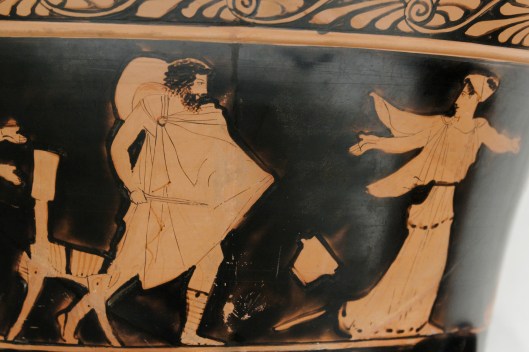
She then tries this on Odysseus, but, in his case, it doesn’t work, much to her surprise, and he, drawing his sword, quickly forces her surrender.

image14defeat.jpg

There is no direct explanation for the failure of her magic in Book 10, but there is, in fact, a clue in the word she uses for Odysseus in her frustration. She calls him “akaletes” (ah-KAH-leh-tehs)—which means “unsummonable/uncallable by name” and is from the same root as kleos and kalo. The implication here is that, for her magic to work, she needs a name—something we might presume Odysseus’ piggy companions must have foolishly given her. That he is unsummonable suggests that he has given her a false name and therefore her magic hasn’t worked.

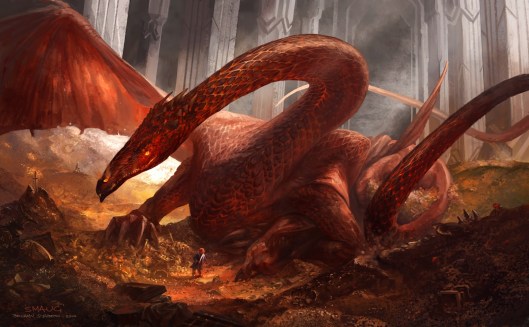
And is this perhaps the real reason why it was wise that Bilbo didn’t identify himself directly to Smaug?

image15smaug

After all, Smaug, unlike the agents of Sauron, wasn’t likely to roam the countryside, offering gold in return for information about the whereabouts of a certain “Baggins”. He does, however, appear to have a certain persuasive magic:

“Bilbo was now beginning to feel really uncomfortable. Whenever Smaug’s roving eye, seeking for him in the shadows, flashed across him, he trembled, and an unaccountable desire seized hold of him to rush out and reveal himself and tell all the truth to Smaug. In fact he was in grievous danger of coming under the dragon-spell.” (The Hobbit, Chapter 12, “Inside Information”)

That magic seems to lie in his words and tone—Bilbo, listening, is said to be in peril of “dragon-talk”—and we want to talk more about such magical persuasion in our next posting…

Thanks, as ever, for reading!

MTCIDC

CD

Hoarders

26 Wednesday Apr 2017

Posted by Ollamh in J.R.R. Tolkien, Literary History, Narrative Methods

≈ Leave a comment

Tags

Anglo-Saxon, Barliman Butterbur, Beowulf, Bill Ferny, cartwheel penny, Celts, detectorist, Fafnir, Hoard, hord, Horrible Histories, Lenborough, monetary systems, pence, Pennies, pound, pre-Roman British coin, Regia Anglorum, shilling, Smaug, Staffordshire Hoard, Terry Herbert, The Hobbit, The Lord of the Rings, The Treasure Act, Time Team, Tolkien

Welcome, dear readers, as always.

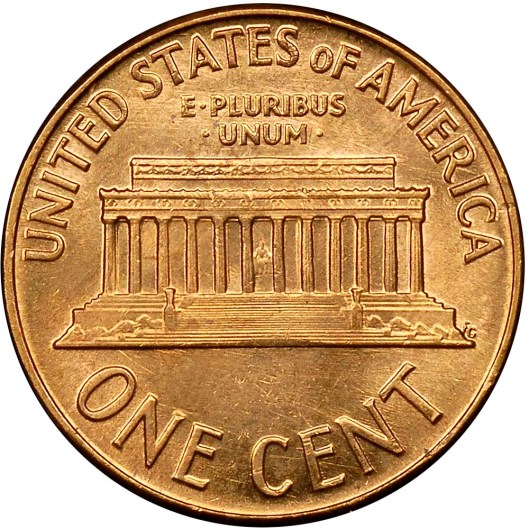
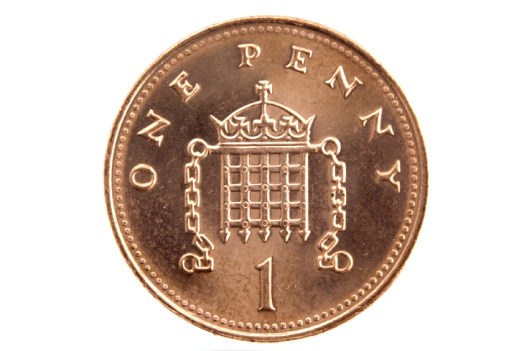
In this posting, we’re continuing with the theme suggested by our dear friend, EMH, about Middle-earth coinage. If you read our last post, you’ll remember that we cited the price of “Bill”, Sam’s pony, which was “12 silver pennies”. Our pennies here in the US—and modern British ones—are made of copper.

1auspenny.jpg


imag1aabrpenny.jpg(As usual with so many old and established things, there is argument over where the word “penny” comes from. Personally, we’ve always imagined that it’s an English diminutive of a Brythonic word—as it exists today in Welsh—“pen” = “head”, the idea being that coins had portrait heads on them. Certainly some pre-Roman British coins had them
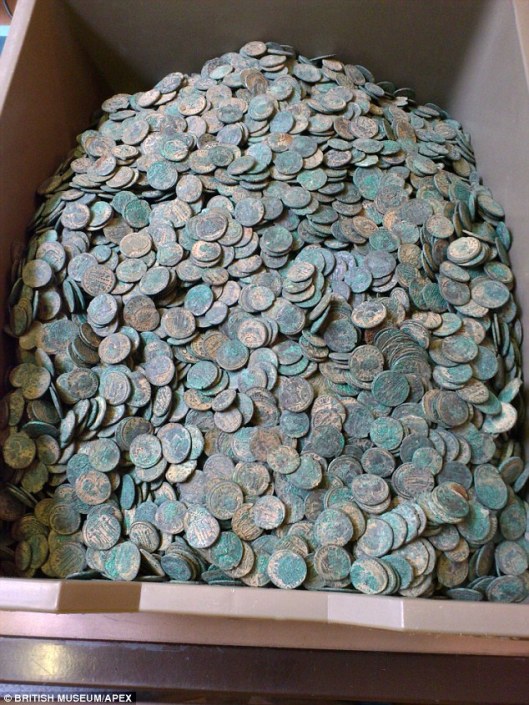
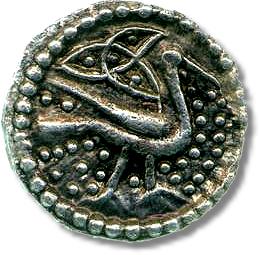
image2aancientbritcoins.jpg

and they were the norm for the Roman coins the Celts would have seen.)

image2aromancoinhoard.jpg

Originally—from the 8th century to 1797, all English pennies were silver. Here’s an 8th-century penny.

image3aaasilverpenny.jpg

In 1797, this was replaced by the so-called “cartwheel penny”, made of copper:

imag3cartwheel.jpg

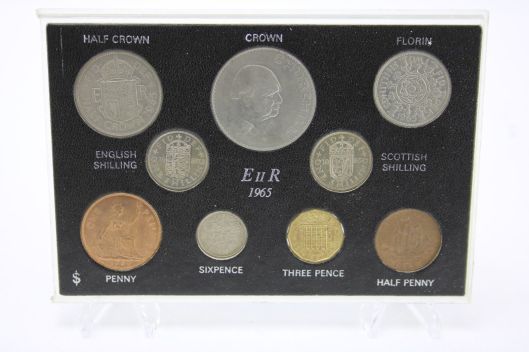
For all that the material changed, the same monetary system of 1 pound = 20 shillings, each shilling = 12 pence (pennies), which had been in place since Anglo-Saxon times, remained in place in the UK till decimalization appeared in 1971. (There is evidence that the number of pence per shilling varied early on, however, with a shilling worth anywhere from 4 to 6.)

image4aaacoinset.jpg

(For a wonderful but totally perplexing view of this money system in Tudor times, see the Horrible Histories segment here.)

So many of these early coins have all come from “hoards”—that is, from groups of valuable objects which were hidden, presumably with the idea that the one hiding them would return someday to collect them, but, for unknown reasons, never did. (The word, as “hord”, is an Old English/Anglo-Saxon word meaning “treasure/thing of value”.)

As a cache (from French “cacher” = “to hide”—“cache-cache” = the children’s game “hide and seek”) of things someone thought valuable, hoards have been discovered world-wide (just google “hoard”), but some of the most spectacular hoards have come from the UK.

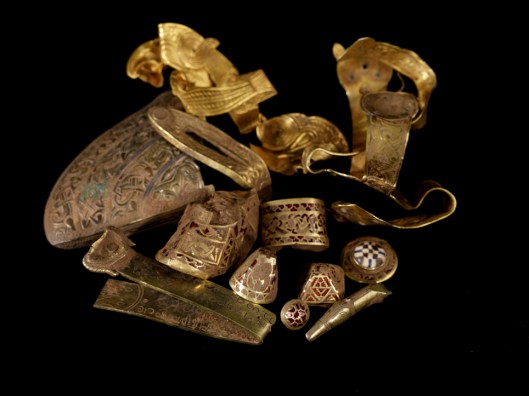
A particularly striking hoard was found by a metal detectorist, Terry Herbert, in 2009. This is the “Staffordshire Hoard”, with over 3500 objects dating from the 7th century AD.

image5staffhoard.jpg

In case “metal detectorist” is new to you, this is a person who spends time using a metal detector

image6ametaldetectors.jpg

to search what he hopes is a promising area in hopes of finding historical objects. The negative side—and we’ve seen it in the US—is that some slip into historical sites, make finds, never report them, and sell them, thereby destroying them as evidence of moments in history. The positive side—and we’ve seen this in England, particularly after the enlightened “The Treasure Act” of 1996—is that responsible detectorists cover much more ground than archaeological services can and both report finds on their own and work on sites with trained professionals. (If you have discovered the wonderful British series, “Time Team”, you can almost always see some working in the background.) In fact, in 2014, BBC4 released a comedy/drama series, The Detectorists, based upon two rather hapless members of the community, Andy and Lance,

image6thedetectorists.jpg

with a second series released in 2015 and a third promised for 2017. As an example of that special brand of quiet, quirky English humor, we very much recommend these.

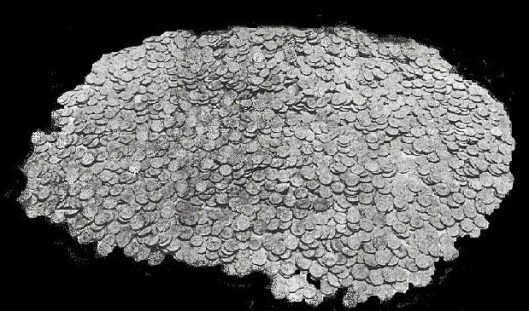
The Staffordshire Hoard contained a large selection of worked gold and silver pieces and fragments, but, as far as we can read, no coins. A major coin hoard was found at Lenborough in 2014. This was a carefully-buried lead box containing over 5,000 late Anglo-Saxon coins.

image7lenboroughhoard.JPG

And a heap like that immediately makes us think of hoards from myth—the hoard from which a slave steals a cup in Beowulf (just as Bilbo does, in The Hobbit)

image8beowulf.gif

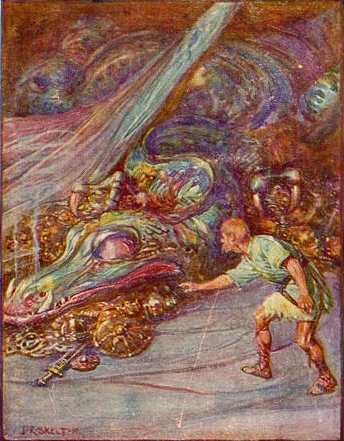
to the hoard of the dragon Fafnir

image9fafnir.jpg

to the hoard of Smaug.

image10smaug.jpg

JRRT paints a broad picture of Smaug’s hoard:

“Beneath him…lay countless piles of precious things, gold wrought and unwrought, gems and jewels, and silver red-stained in the ruddy light…Behind him where the walls were nearest could dimly be seen coats of mail, helms and axes, swords and spears hanging; and there in rows stood great jars and vessels filled with a wealth that could not be guessed.” (The Hobbit, Chapter 12, “Inside Information”)

No coins are mentioned—although ponies, unfortunately, are: Smaug says that he’s eaten six of them.

And this brings us back to our original quotation and the price of Sam’s pony:

“Bill Ferny’s price was twelve silver pennies; and that was at least three times the pony’s value in those parts.” (The Fellowship of the Ring, Book One, Chapter 11, “A Knife in the Dark”)

Butterbur the innkeeper at Bree paid for the pony and “offered Merry another eighteen pence as some compensation for the lost animals” (the others driven off by the Nazgul during their night raid on Bree). We have some sense of just how much that meant when the story goes on to say of Butterbur that, “He was an honest man, and well-off as things were reckoned in Bree; but thirty silver pennies was a sore blow to him…”

We had assumed that JRRT, as a scholar of the medieval English world, had based his coinage on the system of the Anglo-Saxon world (which was still, more or less, the system in Britain nearly to JRRT’s death in 1973). A comparison with a very useful chart of period prices, based primarily upon surviving law texts, to be found on the website of the reenactment consortium Regia Anglorum, however, suggests that, although JRRT has silver pennies, just as the AS system does, his price for the pony doesn’t appear to match at all.   If 4 silver pennies would have been a good price in the late Third Age, what would Butterbur have said to the 193.5 pence for a horse on the actual AS list?

Thanks, as ever, for reading!

MTCIDC

CD

Spare Change?

19 Wednesday Apr 2017

Posted by Ollamh in Economics in Middle-earth, J.R.R. Tolkien, Literary History, Narrative Methods

≈ Leave a comment

Tags

1909 penny, Abraham Lincoln, Alexander the Great, Aragorn, Asia Minor, Augustus, bartering, Bilbo's birthday, British Royal Government, Brutus, Charlemagne, Classical Greek coins, Cleopatra VII, Coinage, daggers, Denethor, Domitian, Egypt, federal law, Frankish king, freedman, George Washington, Gondor, Greek Kings, Hanoverian kings, Hellenistic Greeks, Holy Roman Emperor, Ides of March, Julio-Claudian dynasty, Julius Caesar, libertus, Lucius Plaetorius Cestianus, Lydia, manumission, Middle-earth, Pennies, pilleum, Plebeians, portrait, Prince Charles, Ptolemy I, Queen Elizabeth II, Roman Empire, Romans, Seleucus, Senatus Consulto, The Lord of the Rings, Tolkien

Welcome, dear readers, as always.

We are veering a little to the left in this posting inspired by a comment on “Shire Portrait (2)” from our good friend, EMH. It was about currency and coins in Middle-earth and we were a little vague, but E pointed out:

  1. Bilbo giving “a few pennies away” before the party
  2. the price of Bill, the pony: “twelve silver pennies”
  3. Gandalf praising Barliman and saying his news was “worth a gold piece at the least.”

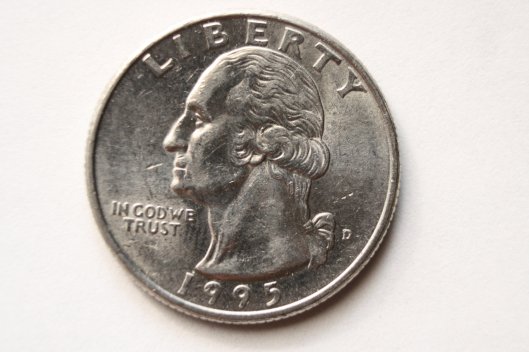
With E in mind, we decided to do another posting on M-e money. Long ago, we did a posting on imagined currency in Middle-earth, but, since then, we’ve thought a bit more about the subject, and, right now, dear readers, we ask you to produce a coin, any coin. As we live in the US, here’s a US coin, a fourth of a dollar, hence, a “quarter”.

image1quarterobverse.jpg

This is the front, or “obverse” in coin speech, and we’re going to focus on that and not on the back (the “reverse”).  We use coins all day long every day, so we probably don’t look at them more than to note value when we pay for something or receive change, but let’s look at this one a bit more closely.

It seems pretty simple:

  1. at the top a single word, “Liberty”
  2. then a low relief (that is, cut very shallowly) portrait of the first president, General George Washington
  3. then, to the left, a slogan, “In God We Trust”
  4. at the bottom, the date, 1993

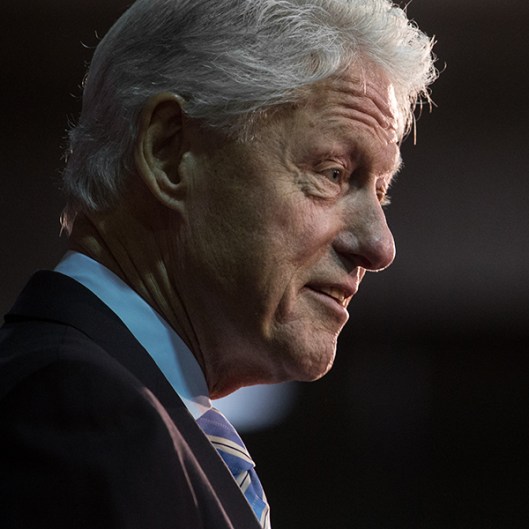
Let’s start with that date—1993. In 1993, the president was Bill Clinton.

image2clinton.jpg

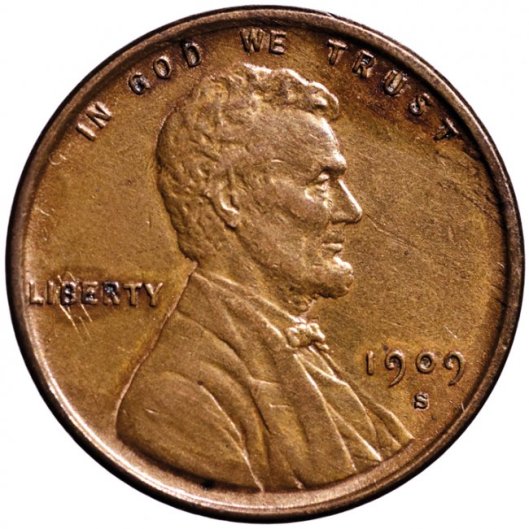
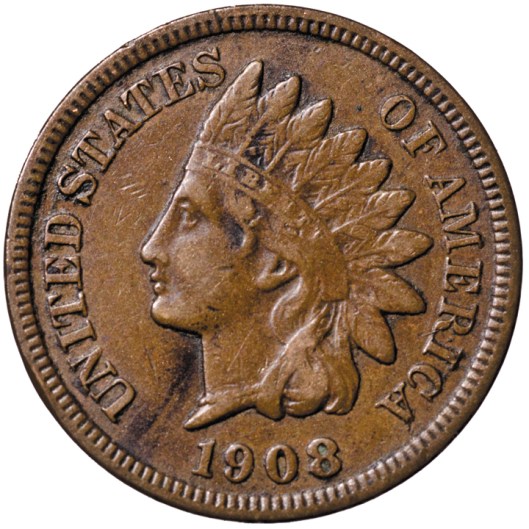
Federal law, however, prevents coins—with very special and rare exceptions—to bear the portraits of living people. The first president on a coin was Abraham Lincoln, on a penny first minted to commemorate his 100th birthday, in 1909.

image31909penny.jpg

The previous coin, up to 1909, had the idealized head of a Native American,

image41908indianhead.JPG

the pattern for which was first introduced in 1859.

image51859indianhead.jpg

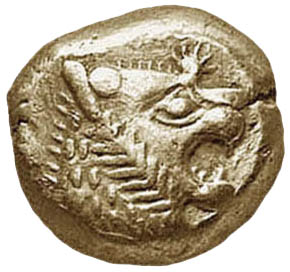
The first coin in western European history is from the late 8th century BC, and comes from Lydia, in Asia Minor.

image6lydiancoin.jpg

Classical Greek coins seem to model themselves on Lydian coins like this, having badges–city emblems and religious tokens, like the famous Athenian owl, rather than portraits of humans, like that quarter with George Washington on it.

image7owlcoin.jpg

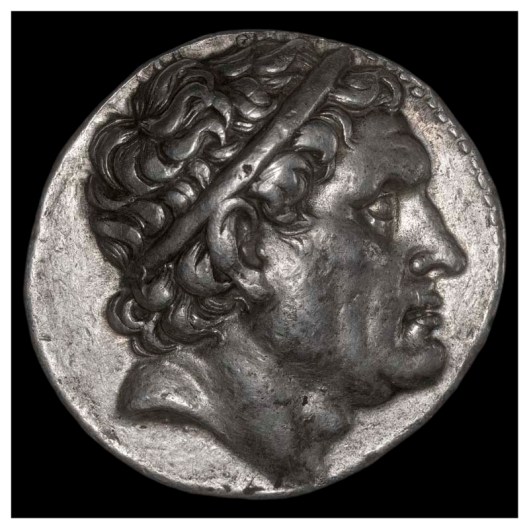
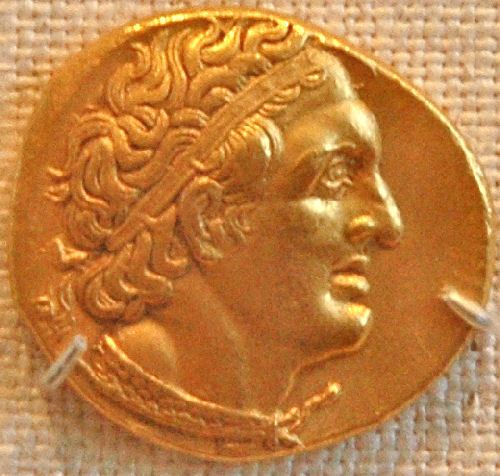
During the Hellenistic Period (post about 300bc and on), however, the Greek kings, from Greece to Asia Minor to Egypt, all began to issue coins with portraits of themselves. These were, initially, the generals of Alexander the Great, who, at Alexander’s death, had grabbed portions of his empire for themselves. We think of Seleucus, who controlled much of Asia Minor

image8seleucus.jpg

Or of Ptolemy I,

image9ptolemy1.JPG

the founder of a dynasty which ruled Egypt for nearly 300 years until their final descendant, Cleopatra VII, was defeated by the Romans.

image10cleopatravii.jpg

Those Romans, we imagine inspired by the Hellenistic Greeks, produced coins by the bushel .(this is an obsolete dry measurement, based upon what you can put into a basket like this:

image11bushelbasket.jpg

which was, in fact, made up of four pecks

image12peck.jpg

which could also be divided into two kennings of two pecks apiece.)

Considering that Rome produced coins from the late 4th century bc to late in the 5th century ad, it’s not surprising that there would be so many—and considering the size of the Roman empire, as well.

image13coins.jpg

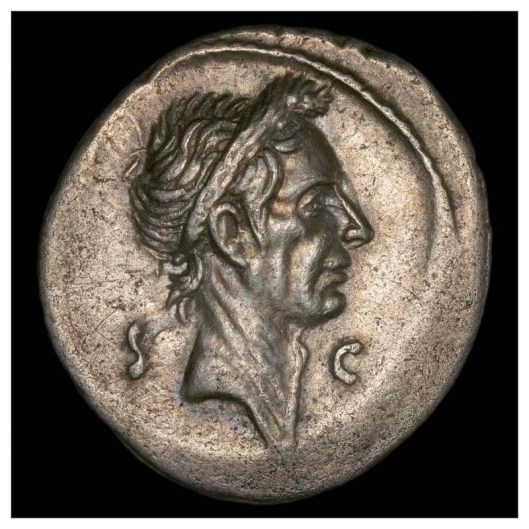
Earlier Roman coins had been unlike Hellenistic coins, however, in not depicting living people—that is, until Julius Caesar gained power.

image14jc.jpg

This opened the floodgates and it’s easy to see why.

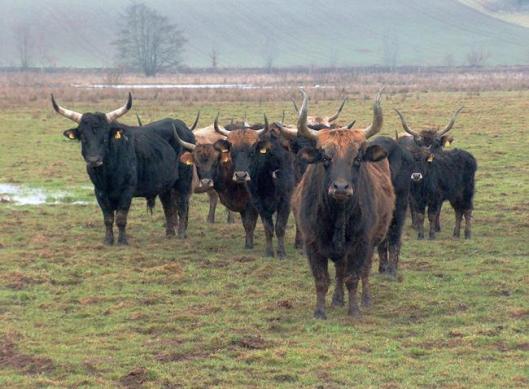
Coins are short-hand wealth, originally standing in for earlier barter items, like flocks and herds.

image15cattle.jpg

As Romans spread out beyond farms and local markets, the wealth in animals and agricultural produce, as well as raw materials, was simply not portable enough, as this cartoon shows.

image16barter.jpg

By making tokens which were accepted as a stand- in for that wealth, the agency which did so was asserting its claim to have a strong hand in, if not control of, the economy.

Julius Caesar, who had already forced the Senate to make him “Dictator for Life” (that “S…C” on both sides of his profile stands for “Senatus Consulto”—“by a decree of the Senate”), by putting his face on the currency is implying that he now is the state—and therefore possesses a power which extends to regulating the money economy by which people live and survive or prosper. (There may be a quiet joke here, as well. “SC” was stamped on bronze coins to guarantee their worth—on the back side—to have those letters surrounding Caesar on the front side, the obverse, may suggest a double meaning: he is dictator by Senatorial decree, but his worth is also being guaranteed by that decree.)

It is no surprise, then, that Brutus, one of those who murdered Caesar, would, in turn, issue his own coins—and these are even more heavily symbolic.

image17brutuscoin.png

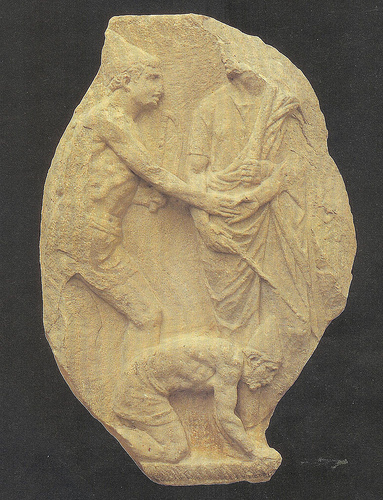
On the obverse, there is Brutus, his name above, to our right his title “imp[erator]”—a title given to a general by his soldiers with the implication “You rule!” To our left is an abbreviated form of the name of the moneyer, the man who directed the mint, L[ucius] Plaet[orius] Cest[ianus]. Although we said that we would only examine obverses, we can’t resist the reverse here. At the bottom is the inscription, “eid mar”, standing for “eides Martis”, the “Ides of March”, the 15th of March, the day Caesar was murdered. Above that is a “pilleum”, the kind of cap worn by a slave during the ceremony called “manumission”, in which a he was turned into a “libertus”, or “freedman”.

image18manumission.jpg

To both sides of the cap are daggers.

image19pugio.jpg

Put all of this together and we see Brutus’ claim: on the 15th of March, we murdered Caesar and, as a consequence, we freed Rome from its slavery.

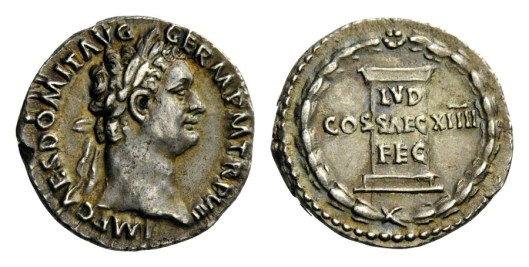
Coins like Caesar’s and Brutus’ are simple in their claims. Later emperors were less so. Look at this coin of Domitian (81-96ad).

image20domitian.jpg

On the rim of the obverse is a pile of information:

Imp[erator] Caes[ar] Domit[ianus] Aug[ustus] Germ[anicus] P[ontifex] M[aximus] Tr[ibunicia P[otestas] VIII

“Emperor Caesar Domitianus Augustus Germanicus, Chief Priest of Rome, Holding the Power of the Representative of the People 8 Times”

In fact, Domitian was sailing under false colors—Caesar, Augustus, and Germanicus all belong to the earlier Julio-Claudian dynasty, of which his family was not a part. As for “Holding the Power of the Representative of the People”, this was an ancient elective office, which allowed a member of the lower class, the Plebeians, special powers in the legislative process. As emperor and son of an emperor most of a century after elections had been abolished, this looked like an honor, but was just an empty title. “Chief Priest” had once been an extremely important position in the state, but, from the time of the first emperor, Augustus, it had simply become another title emperors claimed.

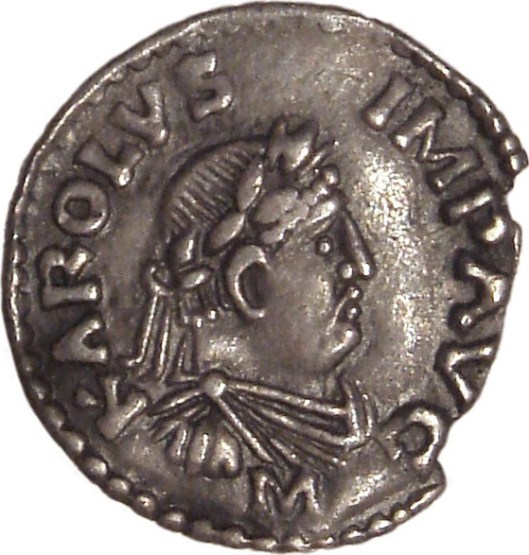
Later European rulers, eager to suggest that they were as powerful as the ancient Romans, used Roman coins as a model. Here’s one from Charlemagne, Frankish king and first Holy Roman Emperor (768-814).

image21charlemagne.jpg

Returning to our George Washington quarter,

image22gw.jpg

let’s look at the comparatively meager inscriptional material. If the coin of Domitian had so much to tell us about how important he was, the inscription on the quarter has a very different message, its focus being upon cultural values: 1.freedom; 2. religion. In our culture, probably everyone would agree with 1, but our ancestor/founders were very adamant on the subject of keeping church and state completely apart, with no influence of either upon the either, so that that 2, “In God We Trust”, shows that there is some confusion about those values. In any case, the plainness might remind us of Caesar’s coin more than Domitian’s, but, in both cases, the point of the artwork and labeling is to put the government’s stamp, whether republic or empire, upon the everyday life of everyone who buys and sells.

There is another message to be read here, as well. The George Washington quarter was first issued on Washington’s 200th birthday, in 1932, and is still on the obverse of the quarter, suggesting the continuity of what he stood for. In the case of monarchs, however, each new emperor/king/queen demands the issuing of new coinage, with the new ruler’s portrait, suggesting not only royal government continuity, but also, in some cases royal family continuity. Here are the first four Hanoverian kings of England, for example, all sons or grandsons, from 1714 to 1830.

image23geo1.jpg

image24geo2.jpg


image25geo3.jpg

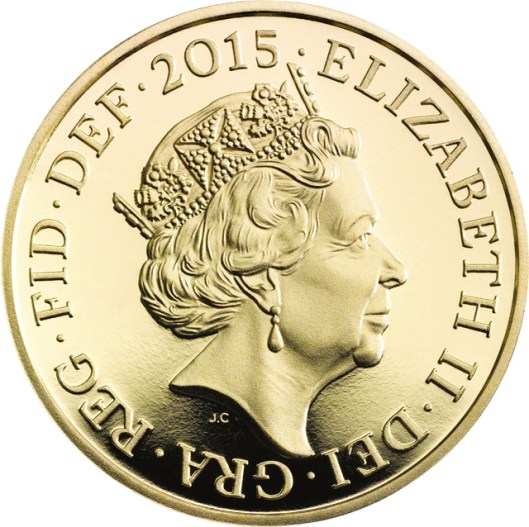
image26geo4.jpgSo, When Prince Charles succeeds his mother, Elizabeth II,

image27liz2.jpg

new coins will have to be minted.

And this brings us back to Middle-earth and to a puzzle about Gondor. There are certainly coins, as our good friend has thoughtfully pointed out. There has been no king on the throne of Gondor for many centuries, however. If Denethor’s behavior is anything to go by, the Stewards have become kings in everything but title, even though Denethor avoids the royal throne. If everyone from the Hellenistic kings to Elizabeth II has his/her portrait on the coinage, are the Stewards on Gondor’s? And what happens when Aragorn becomes King Aragorn II Elessar?

MTCIDC

CD

Bordering (.1: The Landscape)

29 Wednesday Mar 2017

Posted by Ollamh in Economics in Middle-earth, J.R.R. Tolkien, Literary History, Maps, Military History, Military History of Middle-earth, Narrative Methods

≈ 2 Comments

Tags

Anglo-Scots border, Black Middens Bastle, blackmail, Border Marches, Border Reivers, Border Wardens, Charlemagne, Debatable Lands, Emyn Beraid, Fairbairns, Hadrian's Wall, Hermitage Castle, hot trod, John Philip Sousa, Marca Hispanica, Marches, Monty Python, Offa's Dyke, Robert Carey, Scots Dike, Smailholm Tower, Ted Nasmith, The Liberty Bell, The Lord of the Rings, The Shire, Tolkien, Tower Hills, West March

Welcome once more, dear readers.

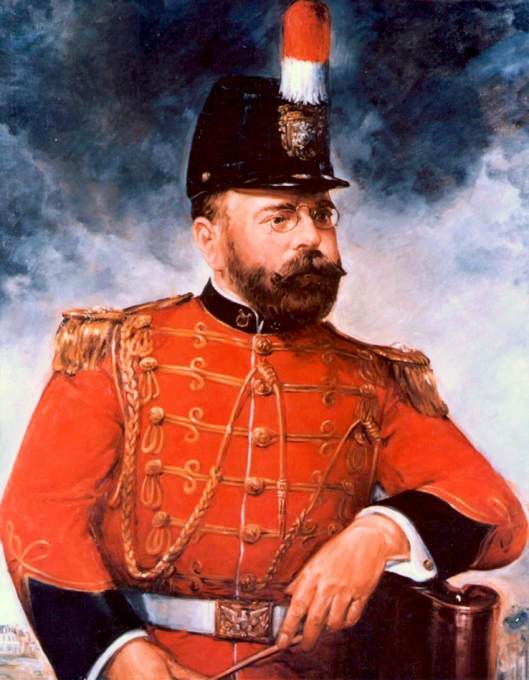
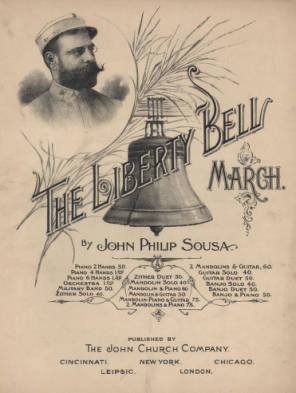
In this posting, we want to return to a recent one about “marches”—that is, not pieces for military bands (although we are partial to those of John Philip Sousa—1854-1932–

image1jpsousa.jpg

especially “The Liberty Bell”—1893—

digital.gonzaga.edu.jpeg

mostly because it was used by Monty Python. We provide a link here for what might have been its first recording, by the “Edison Grand Concert Band” in 1896. Watch out for the big foot!)

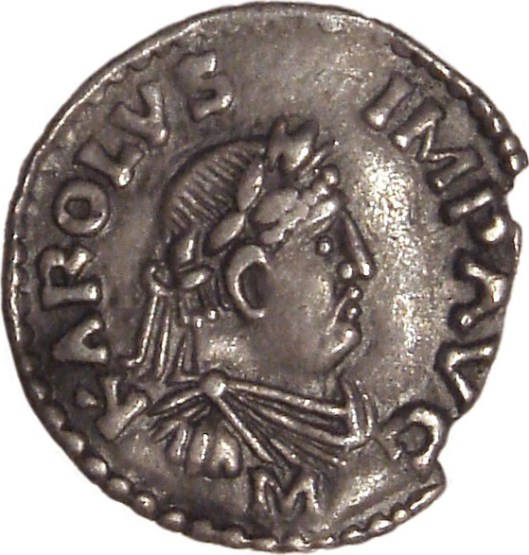
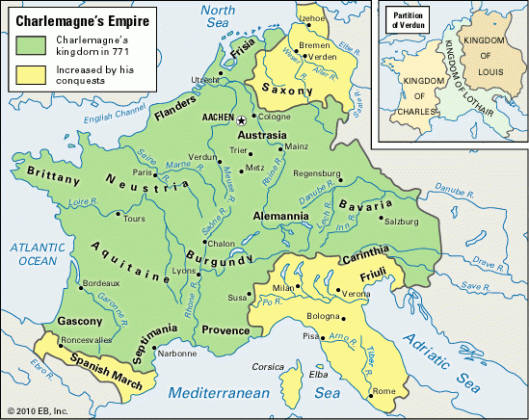
but border areas, usually sensitive ones, which might have been militarized, like that at the southern edge of Charlemagne’s empire.

Charlemagne_denier_Mayence_812_814.jpg

charlemagnesempire.gif

This, the Marca Hispanica, existed as a buffer state between the Moorish Caliphate to its south and the Holy Roman Empire to the north.

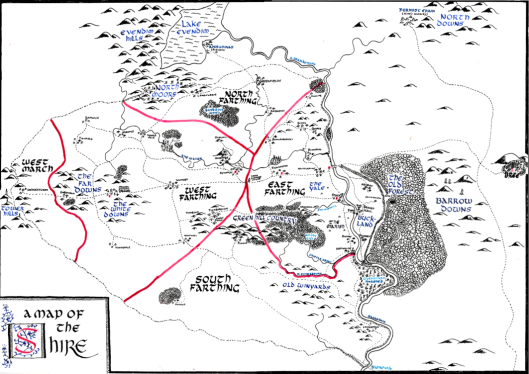
In contrast, we have the West March, to the west of the Shire, as we’ve discussed before.

map_of_the_shire_by_astrogator87-d8h3y1k.png

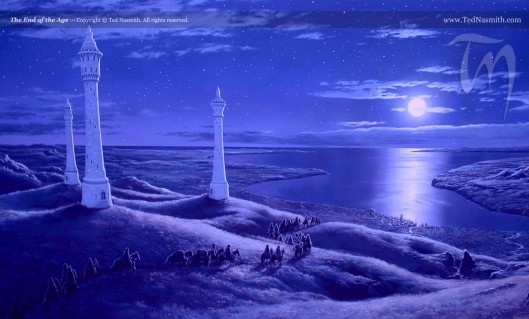
At its far western edge are the Tower Hills (here illustrated by one of our favorite Tolkien artists, Ted Nasmith)

nasmith_elben-meer.jpg

on which are perched three white towers, described in the Prologue to The Lord of the Rings:

“Three Elf-towers of immemorial age were still to be seen on the Tower Hills beyond the western marches. They shone far off in the moonlight. The tallest was furthest away, standing alone upon a green mound. The Hobbits of the Westfarthing said that one could see the Sea from the top of that tower; but no Hobbit had ever been known to climb it.” (Gandalf adds to this that there was a palantir, Elendil’s Stone, located there—The Two Towers, Book Three, Chapter 11, “The Palantir”.)

The difference is, those towers don’t seem defensive and the West March is not a military zone—although it is the site of Hobbit-expansion, as Appendix B tells us:

“1452 The Westmarch, from the Far Downs to the Tower Hills (Emyn Beraid) is added to the Shire by the gift of the King. Many hobbits remove to it.

1462 …the Thain makes Fastred Warden of Westmarch. Fastred and Elanor make their dwelling at Undertowers on the Tower Hills, where their descendants, the Fairbairns of the Towers, dwelt for many generations.”

Talk of marches and wardens and towers, however, immediately brought to mind for us something from our world (doesn’t it always?).

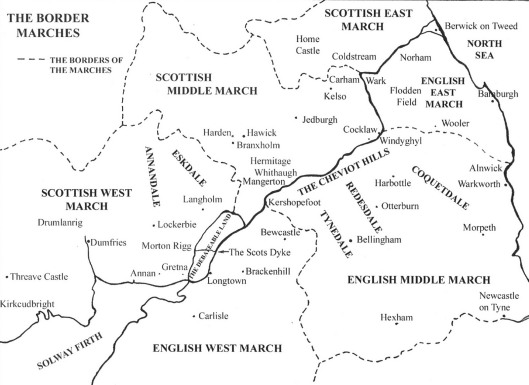
This is the border area between England and Scotland, an area of conflict for several centuries, but culminating in the struggles of the 16th century.

BorderMarches9.jpg

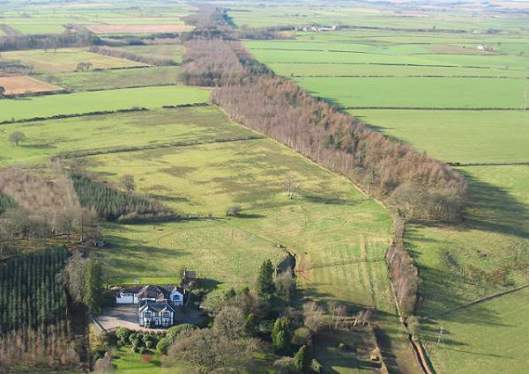
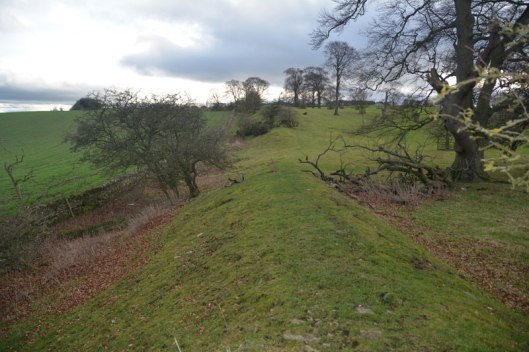
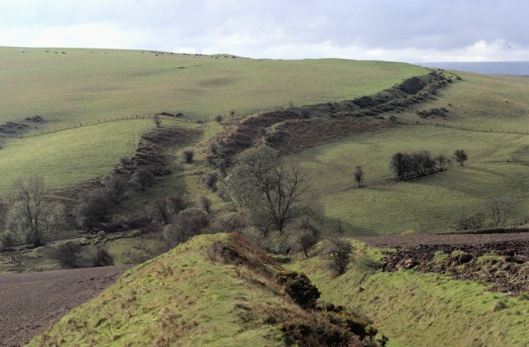
The border area had been divided, on both sides, into three marches, with a subset for that area on the southwest side called the “Debatable Lands”, because both England and Scotland claimed it. In 1552, the decision was mutually made to put up an earthen barrier, the so-called “Scots Dike”, to split it.

scotsdike.jpg

19thFebruary2017ScotsDykeOlliverBankDSC_1238.jpg

Unlike Hadrian’s Wall, farther to the south, with its system of walls and towers and gates and little forts and big army camps, this was never an elaborate military structure, or even like Offa’s Dike between England and Wales,

as_offas_dyke.jpg

but simply a boundary marker in low-lying land (and only 3.5 miles long– 5.6km).

When it came to the border towards the east, and the center of the region and beyond, however, the land rises into the characteristic twisty hills with long, narrow valleys.

14.PennineWay-CNN2NJ-1680x1050

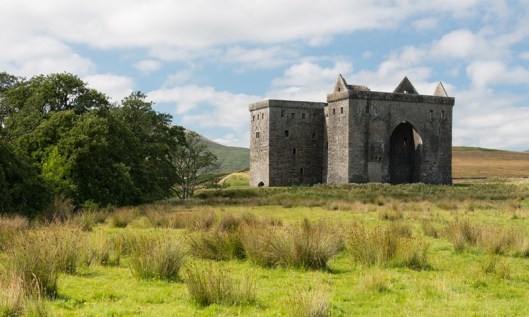
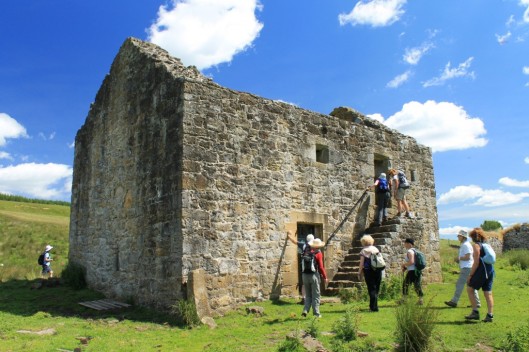
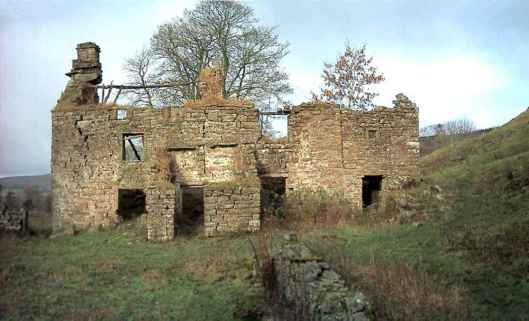
In this wild world, there are no long walls, of stone, wood, or earth to protect anyone, but castles, towers, and fortified farmhouses called bastles (possibly from the same root as “Bastille”?). Here we see Hermitage Castle, Smailholm Tower, and Black Middens Bastle.

dp_hc270814014

Smailholm-tower1

Black-Middens-Bastle-1024x683.jpg

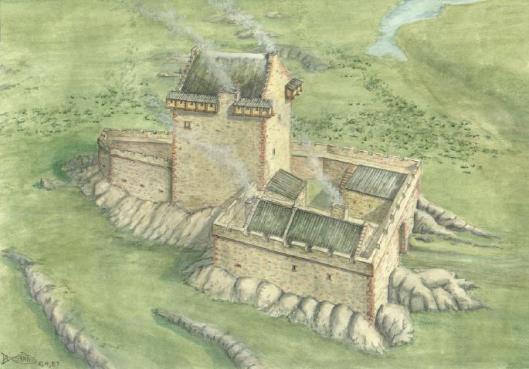
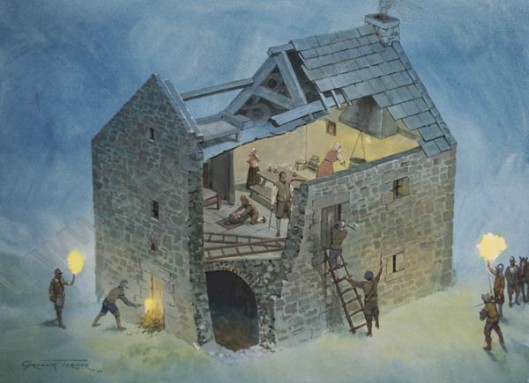
Although we see these now as gaunt ruins, we should always imagine them—as in this reconstruction of Smailholm—as living spaces, as well as refuges in an often lawless land.

smailholm.jpg

One has only to see the thick walls of a bastle and, originally, no door at ground level (stairs appear to be a later convenience for a more peaceable time), to imagine the danger from reivers, raiders from either side of the Anglo-Scots border and sometimes, as there was a certain amount of intermarriage, from both.

reiversatwork.gif

loveladybastle2.jpg

As can be seen in this reconstruction, these walls might be all that would stand between the inhabitants and destitution or even death, should the reivers come raiding.

large_orig_reivers_g_bastle_attack.jpg

There was also the possibility of buying them off, by paying them blackmail, a word whose origin is contested, but whose purpose is clear: protection money. If you paid them, in coin or cattle, you were safe—at least until the price went up.

Curbing such behavior was the job of the Border Wardens, there being six, one for each March on each side of the border. Theirs was a difficult job: too much territory, too few men, and too few resources to back them up. Wonderfully, one of these Wardens, Robert Carey, has left us a memoir, which is available on-line: memoirsrobertca00orregoog.

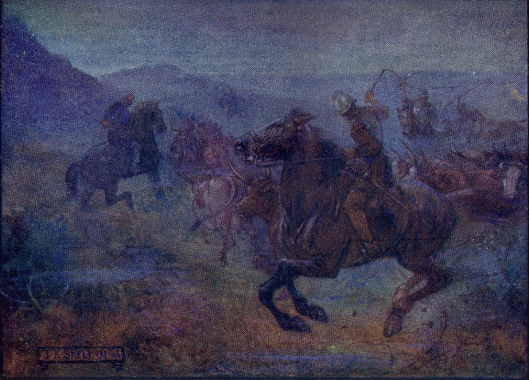
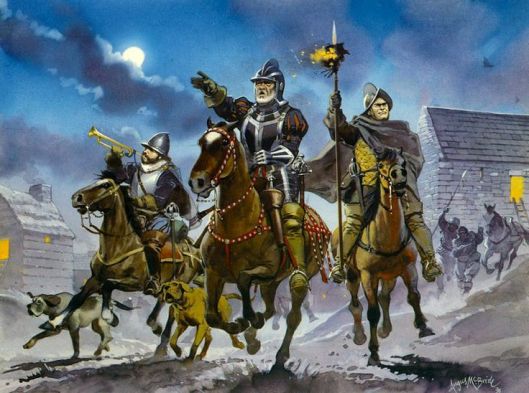
If you were attacked and you survived, you might send word to the Warden or one of his officers, who could organize a posse to pursue the raiders. By law, all able-bodied locals were supposed to turn out to help when the organizer—Warden or officer—rode by with trumpeter and a rider who carried a flaming bit of peat on his “staff” (local word for “lance”).

e7c88732c6aa3165565c64cf094a182c.jpg

This was called the “hot trod” and, under its conditions, the pursuers were allowed to cross the border. Such occasions could be very dangerous, however, as those raiders would be chased back across their own territory, giving them the chance to delay or destroy those in pursuit in an ambush on familiar ground.

We were originally drawn to this part of the world and of Anglo-Scottish history because of our interest in the musical literature of the region, the so-called “border ballads”, and, in our next, “Bordering (.2 Blackmail, Battle, and Song”) we’ll talk a bit about them—and perhaps a bit more about borders and heroic behavior, as well.

Thanks as ever, for reading!

MTCIDC

CD

Smoke (No Mirrors)

22 Wednesday Mar 2017

Posted by Ollamh in Economics in Middle-earth, J.R.R. Tolkien, Literary History, Narrative Methods

≈ Leave a comment

Tags

Algonquian, Aragorn, Bag End, Baggins, Daemonologie, domestic, Gandalf, Gimli, Hernandez de Boncalo, hogsheads, Isengard, James I, Jamestown, John Rolfe, Longbottom Leaf, Matoaka, Merry and Pippin, Native Americans, Nictotiana, Philip II of Spain, pipe, plantations, Pocahontas, Popeye the Sailor, Saruman, Scouring of the Shire, Sharkey, Sherlock Holmes, Shire, smoking, Southfarthing, The First Part of Ayres of the Musicall Humours, The Hobbit, The Illiad, The Lord of the Rings, The Odyssey, Tobacco, Tobias Hume, Tolkien

As always, welcome, dear readers.

This posting takes us away from the Shire and back to it, all in a couple of pages, as well as linking itself with a recent one on Sharkey and his attempt at revenge on the Hobbits who have helped in his downfall.

We begin just after Helm’s Deep, at the moment when Gandalf and all of the major characters involved have followed the invasion route back to Isengard, only to find it in ruins and:

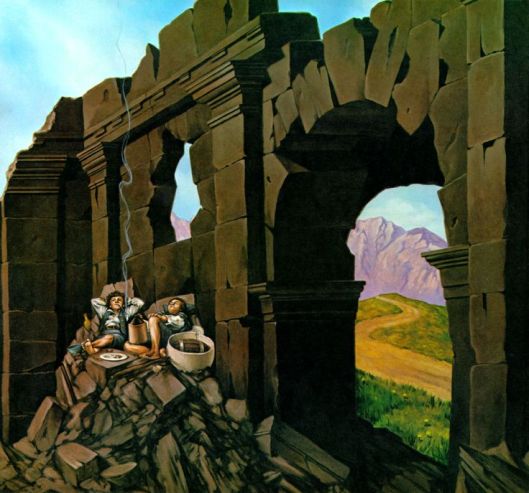
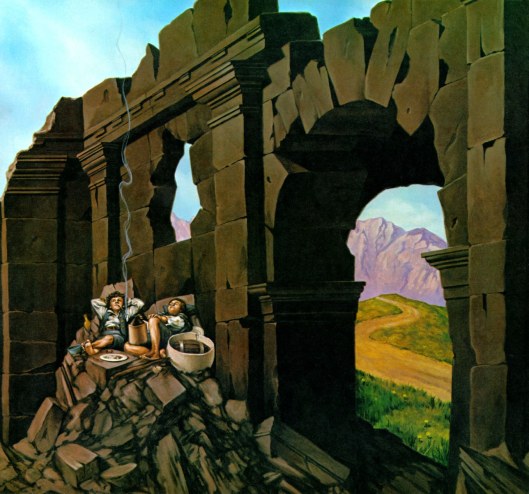
“And now they turned their eyes towards the archway and the ruined gates. There they saw close beside them a great rubble-heap; and suddenly they were aware of two small figures lying on it at their ease…One seemed asleep; the other, with crossed legs and arms behind his head, leaned back against a broken rock and sent from his mouth long whisps and little rings of thin blue smoke.” The Two Towers, Book Three, Chapter 8, “The Road to Isengard”

image1ruins.jpg

For Gimli, himself a smoker, that latter sight is not a surprising. For Theoden, however, not only are the Hobbits a surprise, but: “I had not heard that they spouted smoke from their mouths.”

Merry’s reply then leads us into today’s posting.

“That is not surprising…for it is an art which we have not practised for more than a few generations. It was Tobold Hornblower, of Longbottom in the Southfarthing, who first grew the true pipe-weed in his gardens, about the year 1070 according to our reckoning. How old Toby came by the plant…”

Gandalf interrupts Merry here, concluding with “Some other time would be more fitting for the history of smoking.”

But not for us.

For us, smoking, in the The Lord of the Rings, as in The Hobbit, belongs to a whole category of what we call the “domestication of the heroic”, a distinctive and important feature of JRRT’s narrative style. Earlier epics, like the Iliad and the Odyssey, certainly have their moments where combat and travel and dealing with monsters and enchantresses are not the only features of the stories. People sometimes pause to eat and drink and even sleep. JRRT goes beyond this, however, to provide what he himself might call the “homely” in his texts. By this term, we mean the ordinary and familiar, including such things as a brief inventory of the contents of Bag End, food more detailed than the “endless meat and sweet dark wine” of Homer–such as the mushrooms and bacon which Farmer Maggot offers–and Bilbo reading his letters and forgetting his pocket handkerchief. Such seemingly-trivial things give the stories—and certain of the characters within them—an extra depth and thus a deeper believability, as well as anchoring the story in something more ordinary than kings and wizards.

In fact, the center of this domestication are the Hobbits: think of Sam wanting a bit of rope or explaining taters to Gollum or that heart-breaking moment when Sam discards his pots and pans and “The clatter of his precious pans as they fell down into the dark was like a death-knell to his heart.” (The Return of the King, Book Six, Chapter 3, “Mount Doom”) And, along with things like rope and conies, there is what once was called “the pleasures of the pipe”.

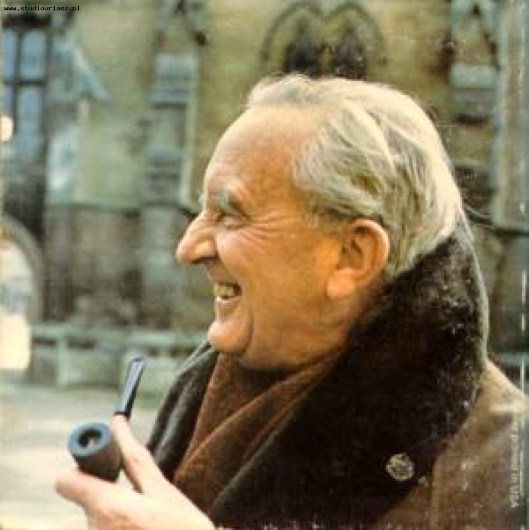
We live in a different world from JRRT. When he took up the pipe, in the early 20th century, no one knew the dangers of smoking.

image2jrrt.jpg

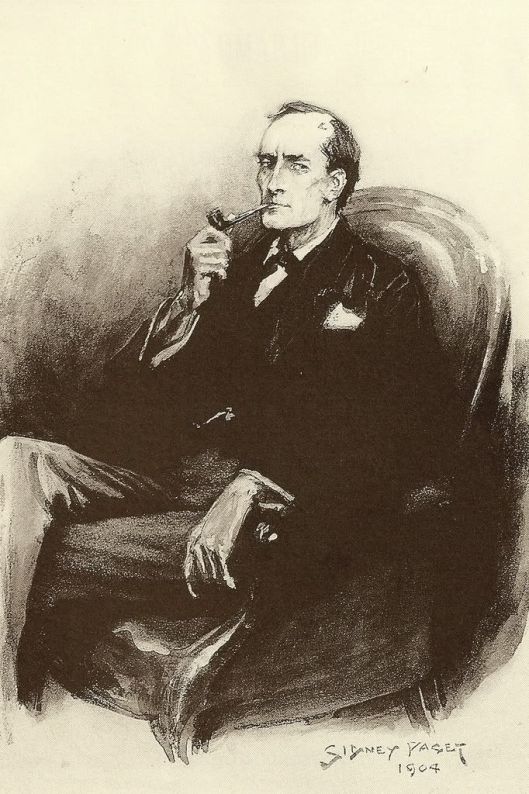
It was simply something men, in particular, did. After all, there was Sherlock Holmes, with his famous “three-pipe problem” (“The Red-Headed League”, The Strand Magazine, August, 1891) as a perfect model.

image3holmessmoking.jpg

Thus, smoking was acceptable and, potentially, domestic: after all, although the ancient comic book and cartoon character, Popeye the Sailor (1929-1957), may hold a pipe in his mouth while battling,

image3apopeye.jpg

it is generally something done in quiet and contemplation. Perhaps, then, for the times in which JRRT was writing, a perfect symbol of the domestic. (Hence the old expression for household comfort that someone—typically his wife–brings the owner “his pipe and slippers” when he comes home from work?)

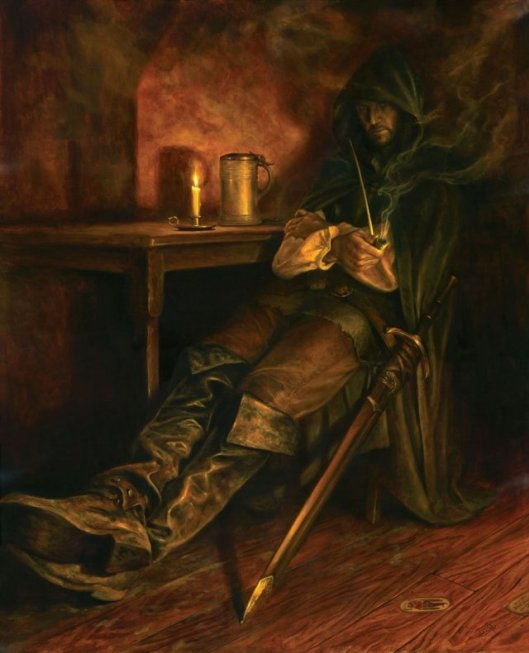
And it appears very early in our experience of Hobbits. After all, the first time we see Bilbo, he is “standing at his door after breakfast smoking an enormous long wooden pipe that reached nearly down to his woolly toes”. (The Hobbit, Chapter 1, “An Unexpected Party”)

image4bilbo.jpg

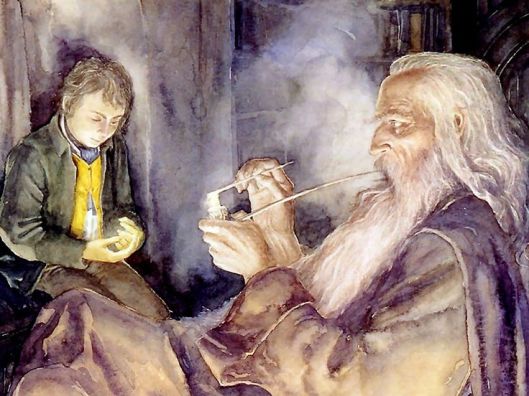
In time, we’ll see Gandalf smoking

image5gandalfsmoking.jpg

and Strider/Aragorn, too.

image6strider.jpg

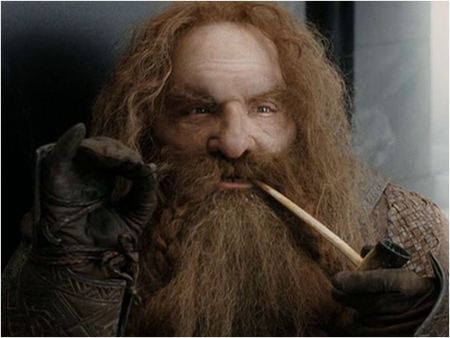
In fact, we wonder if it isn’t a kind of unconscious sign that someone is a positive character—after all, as we said, Gimli smokes, too.

image7gimli.jpg

There is one exception, of course—and we’ll come back to that!

It should be no surprise, then, that one more positive character, Merry, is a smoker. Knowing, from the Prologue to The Lord of the Rings, that he is also the author of Herblore of the Shire, among other works, it is also not surprising that he appears to be the main authority on “pipe-weed”, claiming that the Hobbits were the inventors of its consumption:   “Hobbits first put it into pipes. Not even the Wizards first thought of that before we did.”

This, of course, made us think about who invented tobacco-smoking in our world—or, at least, in the English-speaking Western Hemisphere. (Although we are glad to point out that, as early as 1559, Philip II of Spain ordered Hernandez de Boncalo to bring back tobacco seeds from the New World to plant in Spain.)

Merry says of the plant (which he correctly identifies with our genus Nicotiana):

“…observations that I have made on my own many journeys south have convinced me that the weed itself is not native to our parts of the world, but came northward from the lower Anduin, whither it was, I suspect, originally brought over Sea by the Men of Westernesse. It grows abundantly in Gondor, and there is richer and larger than in the North, where it is never found wild, and flourishes only in warm sheltered places like Longbottom.”

In our world—that is, in the Americas– Native Americans first cultivated tobacco—as can be seen in this engraved version of John White’s 1580s drawing of the Algonquian village of Secoton by Theodor de Bry for the 1590 second edition of Thomas Harriot’s A Briefe and True Report of the New Found Land of Virginia.

image8secoton.jpg

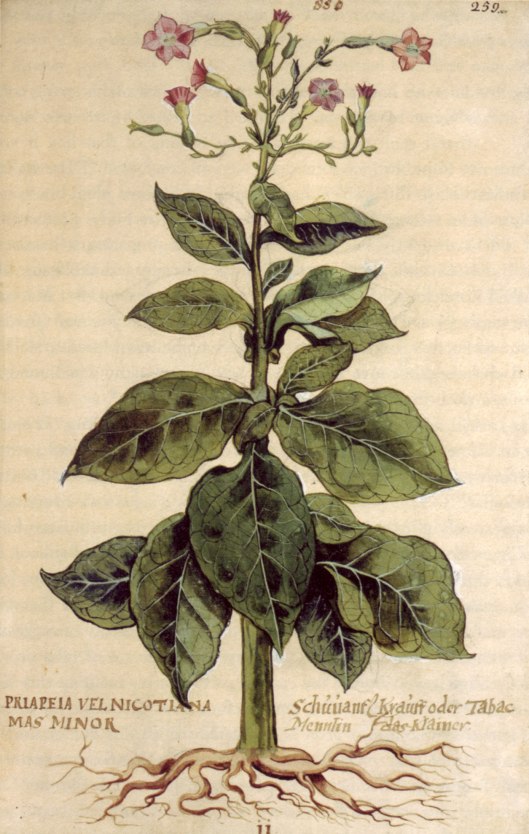
At the top, center, is a tobacco field, with stylized plants, which, up close, might look like this:

image9tobacco.jpg

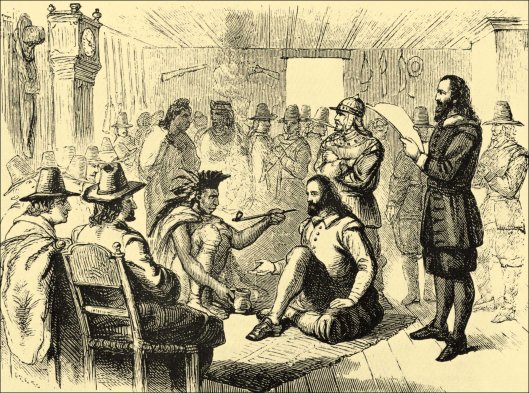
Native Americans appear to have used tobacco—and its smoke—primarily for religious and political ceremonies, rather than for recreation.

image10pipeceremony.jpg

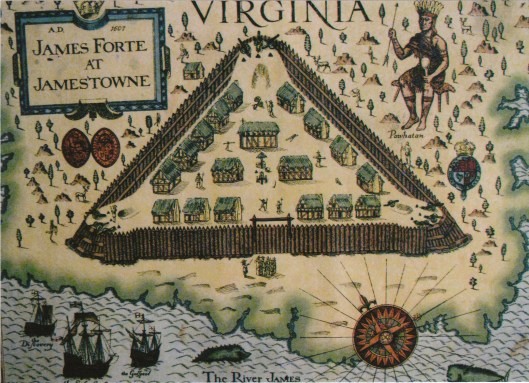
This soon changed, however, when a member of the newly-established (1607) colony of Jamestown, John Rolfe, in what would become the US state of Virginia,

image11jamestown.jpg

saw the commercial possibilities and began to cultivate tobacco for export.

image12growingtobacco.jpg

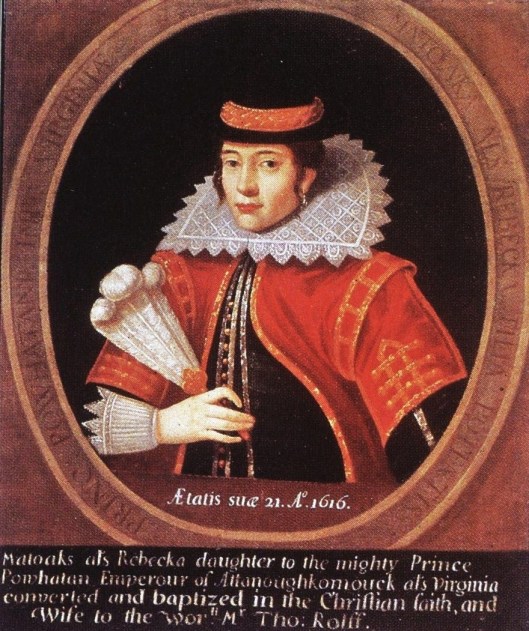
Although John Rolfe is known to those interested in early English colonization, his wife is much more famous. She was Matoaka, called Pocahontas as a nickname (it means something like “playful/lively”), the 400th anniversary of whose funeral is the day of this writing, 21 March (although it will be posted tomorrow, the 22nd).

image13pocahontas.jpg

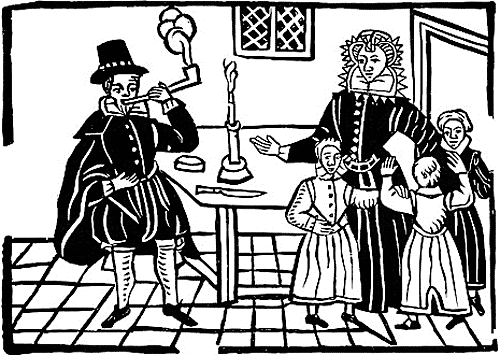
Tobacco was already known in England,

image14drinker.jpg

had become a sort of craze,

image15tobaccosmoking.gif

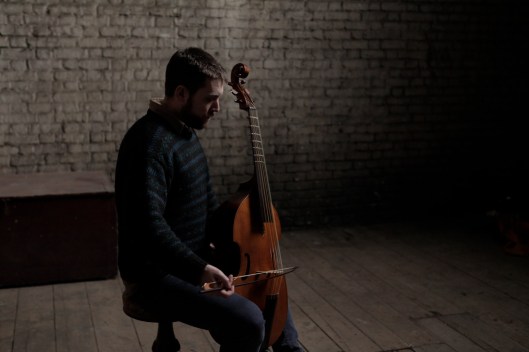
and even inspired at least one pop song, Tobias Hume’s “Tobacco”, from his The First Part of Ayres of the Musicall Humours (1605). Hume was a big fan of the lyra viol (a member of the string bass family).

image16lyraviol

(We include here a link so that you can hear the song sung and accompanied by his favorite instrument.  Oh—and it’s sung in the pronunciation of the early 17th century, so be prepared for some differences in sound.)

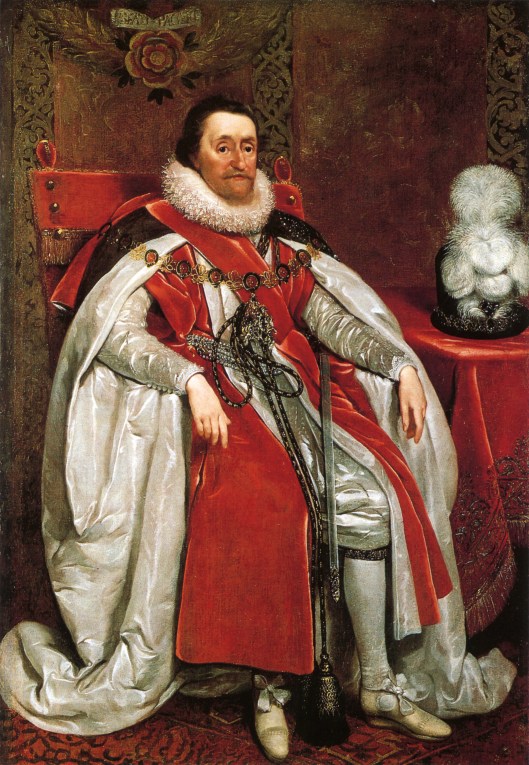
Thus, Rolfe’s exploitation was a good business investment, even though tobacco quickly ran afoul of the British government, in the form of the new king, James I,

image17james1

who had already published an attack on smoking in 1604.

image18counterblast

James I had opinions on numerous subjects, including witches, about whom he had published a book, Daemonologie, in 1597.

M0014280 James I: Daemonologie, in forme of a dialogue. Title page.

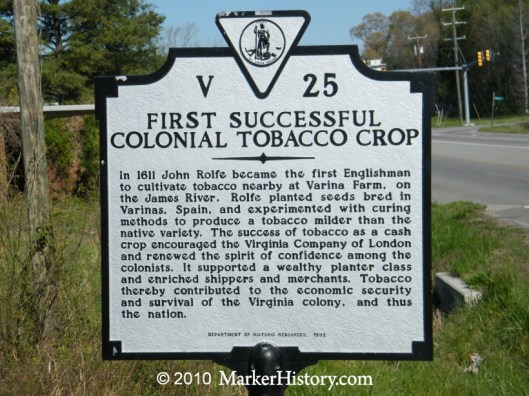
His attack on tobacco—although more sensible than believing in witches—didn’t stop it from becoming the major Virginia crop, however—as this roadside sign points out.

image20sign.jpg

Virginia farmers planted huge fields of tobacco,

image21tobaccofield.jpg

cultivated it (a major use of slave labor, like the sugar plantations of the Caribbean),

image22cultivation.jpg

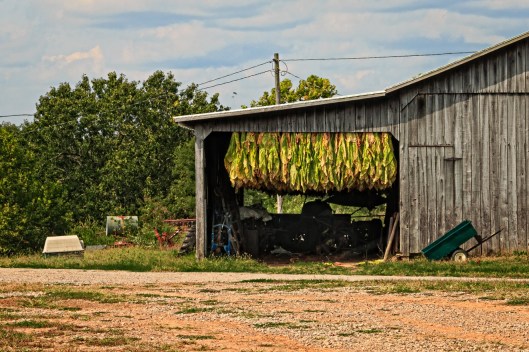
cut and dried it,

image23drying.jpg

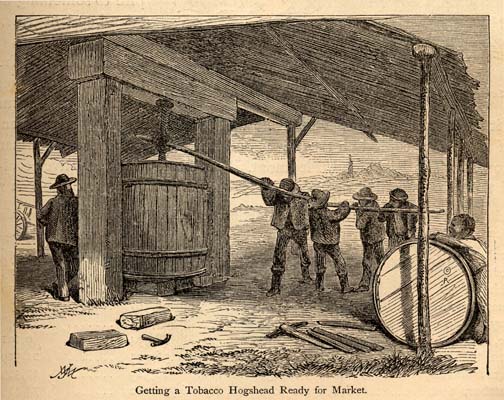
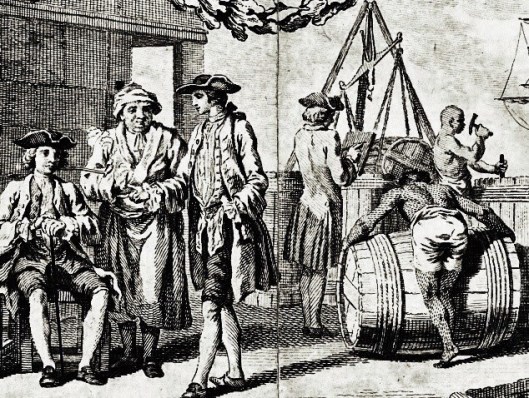
packed it into huge barrels, called hogsheads,

image24hogsheadpacking.jpg

dragged those hogsheads to a port,

image25dragging.jpg

and shipped those hogsheads to England

image26shipping.jpg

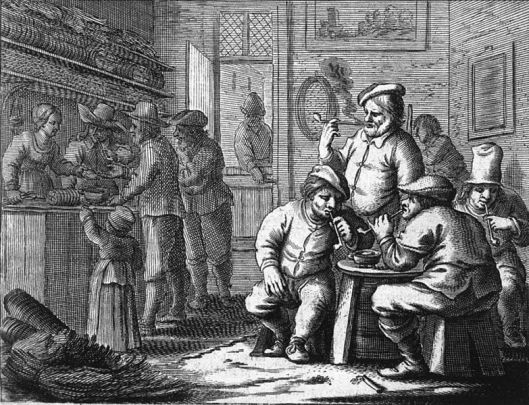
where smokers enjoyed it.

image27smoking.jpg

We don’t know the methods used in the Southfarthing, but, looking at tobacco around the world in our world, the main difference seems to be in the curing (drying) technique used. We can imagine, then, that, when Merry talks about “pipe-weed” and its cultivation, if we visited the southern part of the Shire, we would see familiar sights—except, perhaps, for those hogheads. The stuff which Merry is smoking came from “two small barrels, washed up out of some cellar or store-house…When we opened them, we found they were filled with this: as fine a pipe-weed as you could wish for, and quite unspoilt.” (The Two Towers, Chapter Nine, “Flotsam and Jetsam”)

Gimli admires the quality and Merry says, “My dear Gimli, it is Longbottom Leaf! There were the Hornblower brandmarks on the barrels, as plain as plain. How it came here, I can’t imagine. For Saruman’s private use, I fancy.”

This brings us back to the final smoker and one exception to our fanciful rule that, in Tolkien, if you smoke, you’re a positive character: Saruman.

image28saruman.jpg

It’s hard to think of Saruman as indulging in the domestic. As Treebeard says of him: “He has a mind of metal and wheels” (The Two Towers, Book Three, Chapter 4, “Treebeard”). And yet, although he has lost his position as head of the White Council, and has lost Isengard, as well, as Gandalf says of him, “I fancy he could do some mischief still in a small mean way.” (The Return of the King, Book Six, Chapter 6, “Many Partings”). Thus, what better small, mean way than to attack that very domesticity which is embodied in the Hobbits and their Shire? As Sharkey, he does so, destroying the Shire by cutting down trees, knocking or burning down houses, replacing water mills with steam, and turning a nearly a-political place into a little fascist state. And, perhaps, as a last straw, he attacks one last small comfort, saying to Merry, as he keeps his tobacco pouch:

“Well, it will serve you right when you come home, if you find things less good in the Southfarthing than you would like. Long may your land be short of leaf!” (The Return of the King, Book Six, Chapter 6, “Many Partings”)

If so, perhaps there is a certain horrible irony, then, that, when Saruman is murdered, he is last seen as “a grey mist…rising slowly to a great height like smoke from a fire”. (The Return of the King, Book Six, Chapter 8, “The Scouring of the Shire”)

Thanks, as always, for reading.

MTCIDC

CD

Shire Portrait (5b): Hostile Takeover

15 Wednesday Mar 2017

Posted by Ollamh in Economics in Middle-earth, Imaginary History, J.R.R. Tolkien, Military History, Military History of Middle-earth, Narrative Methods, Villains

≈ Leave a comment

Tags

Baggins, Chief, Der Fuehrer, Gestapo, Hitler, Lotho, SA, Sackville-Bagginses, Saruman, Sharkey, Shire, Shirriffs, Southfarthing, The Hobbit, The Lord of the Rings, The Scouring of the Shire, Tolkien

Welcome, dear readers, to the second part of our last (for the moment?) posting on the Shire. This is actually a two-part posting and is devoted to the takeover of the Shire by “Sharkey” and his followers and how it might have happened, based upon evidence from the texts of The Hobbit and The Lord of the Rings.

We decided upon a two-part posting because we saw the takeover as a two-step process. Initially, we believe that Saruman looked for someone within the Shire to act as his agent there and, as a local agent, both to foment the kind of discontent which would provoke a demand for change, and to act as the leader of that change.

Because the Shire had so little government and most problems were dealt with within families, we wondered if that discontent wouldn’t begin as something Shire-wide, but be found within one or more families, instead.

With this in mind, we immediately thought of the Sackville-Bagginses. From the final chapter of The Hobbit, it was clear that the S-Bs (as they’re called) had grievances against their cousins, the Bagginses, mostly because they wanted Bag End and its contents.

How this led to leaguing with Saruman is not explained, but merely suggested, by Pippin, who says, of reported disturbance in the Southfarthing:

“ ‘Whatever it is…Lotho will be at the bottom of it:   you can be sure of that.” The Return of the King, Book Six, Chapter 7, “Homeward Bound”

This is then confirmed when the hobbits reach the bridge over the Brandywine and one of the hobbit guards (Hob Hayward), mentions “the Chief…up at Bag End.”

Frodo, who has sold his house at Bag End (see The Fellowship of the Ring, Book One, Chapter 3, “Three is Company”) to the S-Bs, immediately asks Hob, “ ‘Chief? Chief? Do you mean Mr. Lotho?’ said Frodo.” The Return of the King, Book Six, Chapter 8, “The Scouring of the Shire”

Otho and Lobelia had been Bilbo’s enemies long ago, but, whereas Lobelia is still alive, Otho is long dead and Lotho (and yes, the word “loathe” must lie just below the surface here, though this is probably not his name in the Common Tongue, just as Pippin’s name isn’t Pippin), his son, has somehow become not the Mayor of the Shire (who is actually Will Whitfoot), but the much vaguer (and more menacing) “the Chief”. (We also note that “Mr. Lotho” is a courtesy title and one for established land-owners, really, and not for Lotho.)

The family theme is underlined when Hob replies that “we have to say ‘the Chief’ nowadays” and Frodo says, in turn:

“ ‘Do you indeed!’ said Frodo. ‘Well, I am glad he has dropped the Baggins at any rate. But it is evidently high time that the family dealt with him and put him in his place.’ ”

If Frodo’s remark suggests the familial aspect of justice in the Shire, the reply of an anonymous hobbit to it suggests the second or external step of the takeover:

“A hush fell on the hobbits beyond the gate. ‘It won’t do no good talking that way,’ said one. ‘He’ll get to hear of it. And if you make so much noise, you’ll wake the Chief’s Big Man.’ ”

As JRRT began The Lord of the Rings in 1937, just four years after the Nazis took control of Germany, “The Chief” surely has echoes of “Der Fuehrer”, which simply means “The Leader”.

adolf-hitler-34.jpg

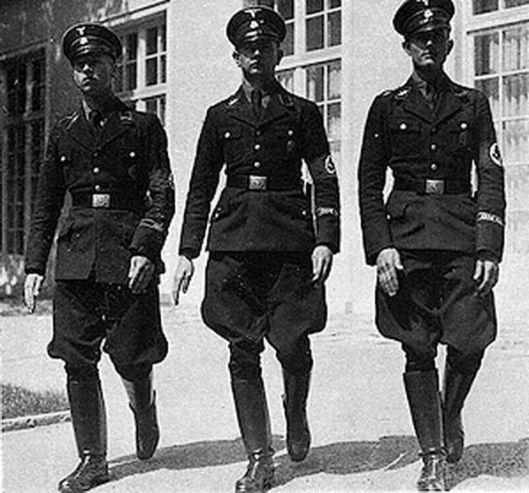
In which case, should we associate the threat of “the Chief’s Big Man” with everything from the SA

0001.jpg

to the Gestapo?

0e24494b5019c1007e9214e03d77c2d8.jpg

Merry, at least, certainly makes a connection with something which Butterbur had said earlier:

“It all comes of those newcomers and gangrels that began coming up the Greenway last year, as you may remember; but more came later. Some were just poor bodies running away from trouble; but most were bad men, full o’ thievery and mischief.” The Return of the King, Book Six, Chapter 7, “Homeward Bound”

Answering the anonymous voice, Merry says:

“If you mean that your precious Chief has been hiring ruffians out of the wild, then we’ve not come back too soon!”

When the Big Man appears, Merry’s conclusion is confirmed: it’s Bill Ferny, who, Butterbur believes, who had been involved in a minor battle in Bree, in which five hobbits had been killed:

“ ‘And Harry Goatleaf that used to be on the West-gate, and that Bill Ferny, they came in on the strangers’ side, and they’ve gone off with them; and it’s my belief they let them in. On the night of the fight I mean.’ “

If some of these “Big Men” were criminal drifters from the east, almost randomly recruited, there were others who were sent.

“ ‘It all began with Pimple, as we call him,’ said Farmer Cotton; ‘and it began as soon as you’d gone off, Mr. Frodo.   He’d funny ideas, had Pimple. Seems he wanted to own everything himself, and then order other folk about. It soon came out that he already did own a sight more than was good for him; and he was always grabbing more, though where he got the money was a mystery: mills and malt-houses and inns, and farms, and leaf-plantations. He’d already bought Sandyman’s mill before he came to Bag End, seemingly.

Of course he started with a lot of property in the Southfarthing which he had from his dad; and it seems he’d been selling a lot o’ the best leaf, and sending it away quietly for a year or two. But at the end o’ last year he began sending away loads of stuff, not only leaf. Things began to get short, and winter coming on, too.   Folk got angry, but he had an answer. A lot of Men, ruffians mostly, came with great wagons, some to carry off the goods south-away, and others to stay. And more came. And before we knew where we were they were planted here and there all over the Shire, and were felling trees and digging and building themselves sheds and houses just as they liked…”

There is a bit more to add to this. The “Big Men” were not alone. As in our own historical world of Nazi occupiers, there were those willing to collaborate, as Robin Smallburrow tells Sam:

“There’s hundreds of Shirriffs all told, and they want more, with all these new rules. Most of them are in it against their will, but not all. Even in the Shire there are some as like minding other folk’s business and talking big. And there’s worse than that: there’s a few as do spy-work for the Chief and his Men.”

With Farmer Cotton’s narrative, however, the two steps come together: the local was, indeed, as Pippin has suspected, Lotho. The external was a combination of opportunists, like Bill Ferny, and agents dispatched from an unnamed southern source, but we know that it was “Sharkey” who sent them, just as we know that “Sharkey” was Saruman, who was still capable of mischief—but not “in a small mean way”.

Thanks, as always, for reading.

MTCIDC

CD

Shire Portrait (5a): Hostile Takeover

08 Wednesday Mar 2017

Posted by Ollamh in Economics in Middle-earth, Imaginary History, J.R.R. Tolkien, Literary History, Narrative Methods

≈ Leave a comment

Tags

A Long-Expected Party, auction, Bag End, Baggins, Barliman Butterbur, Galadriel, Government, Isengard, Longbottom Leaf, Luke Skywalker, Merry and Pippin, Mirror of Galadriel, Pipeweed, Sackville-Bagginses, Sam Gamgee, Saruman, Star Wars, The Empire Strikes Back, The Lord of the Rings, The Return of the King, The Scouring of the Shire, The Shire, Tolkien, Yoda

As always, dear readers, welcome!

This is, we think, the last in our Shire Portrait series (although a 2-parter)—at least for the moment. In it, we intend to consider just how the Shire fell into the hands of “Sharkey” and his “boys”.

The Ring destroyed and the King returned, Gandalf, the Hobbits, and a party of Elves are traveling back toward Rivendell and beyond when they come upon Saruman and Grima, now no more than Saruman’s slave.

Ted_Nasmith_-_Saruman_is_Overtaken.jpg

It is not a happy meeting, as can be imagined. When offered help, Saruman replies:

“All my hopes are ruined, but I would not share yours. If you have any…You have doomed yourselves, and you know it. And it will afford me some comfort as I wander to think that you pulled down your own house when you destroyed mine.” The Return of the King, Book 6, Chapter 6, “Many Partings”

In such a mood, it can be imagined how he treats the Hobbits—even when Merry offers him pipe-weed, which he does while commenting, less than tactfully, on its origin:

“ ‘You are welcome to it; it came from the flotsam of Isengard.’

‘Mine, mine, yes and dearly bought!’ cried Saruman, clutching at the pouch. ‘This is only a repayment in token; for you took more, I’ll be bound. Still, a beggar must be grateful, if a thief returns him even a morsel of his own. Well, it will serve you right when you come home, if you find things less good in the Southfarthing than you would like. Long may your land be short of leaf!’”

Saruman’s remark—a curse, really—resonates especially with Sam.

“’Ah!’ said Sam. ‘And bought he said. How, I wonder? And I didn’t like the sound of what he said about the Southfarthing. It’s time we got back.’” The Return of the King, Book 6, Chapter 6, “Many Partings”

This is a natural reaction on Sam’s part because of what he had seen in Galadriel’s mirror, we presume.

1gmirror.jpg

“’Hi!’ cried Sam in an outraged voice. ‘There’s that Ted Sandyman a-cutting down trees as he shouldn’t. They didn’t ought to be felled: it’s that avenue beyond the Mill that shades the road to Bywater…

But now Sam noticed that the Old Mill had vanished, and a large red-brick building was being put up where it stood. Lots of folk were busily at work. There was a tall red chimney nearby. Black smoke seemed to cloud the surface of the Mirror…

‘I can’t stay here,’ he said wildly. ‘I must go home. They’ve dug up Bagshot Row, and there’s the poor old Gaffer going down the Hill with his bits of things on a barrow…” The Fellowship of the Ring, Book 2, Chapter VII, “The Mirror of Galadriel”

At the time, Galadriel had told him

“’You cannot go home alone,’ said the Lady. ‘You did not wish to go home without your master before you looked in the Mirror, and yet you knew that evil things might well be happening in the Shire. Remember that the Mirror shows many things, and not all have yet come to pass. Some never come to be, unless those that behold the visions turn aside from their path to prevent them. The Mirror is dangerous as a guide to deeds.” The Fellowship of the Ring, Book 2, Chapter VII, “The Mirror of Galadriel”

[A footnote: suddenly, we are reminded of that scene on Dagobah in Star Wars V, when Luke has had a vision and immediately wants to rush off to Bespin.

2lukedagobah.jpeg

“Luke: I saw—I saw a city in the clouds.

Yoda: [nods] Friends you have there.

Luke: They were in pain…

Yoda: It is the future you see.

Luke: The future?

[pause]

Luke: Will they die?

Yoda: [closes his eyes for a moment] Difficult to see. Always in motion is the future.

Luke: I’ve got to go to them.

Yoda: Decide you must, how to serve them best. If you leave now, help them you could; but you would destroy all for which they have fought, and suffered.” The Empire Strikes Back (1980)

As—using various websites—we provide links here—we can see that an imitation of the opening of the Hobbit—Bilbo and Gandalf meeting—appears in an early script of Star Wars IV, I think that the scene at Galadriel’s Mirror was somewhere back in G. Lucas’ wonderfully fertile brain—and, yes, we are big fans.]

“Secrets of the ‘Star Wars’ Drafts”

Was George Lucas Inspired by Tolkien?

Star Wars Origins: The Lord of the Rings

At this point, we know from two sources that Saruman has had commercial dealings with the Southfarthing.

First, of course, we’ve just seen it confirmed by Saruman’s response to Merry. Second is that scene at Isengard, where Gandalf, Theoden, Eomer, and Aragorn, travel with an escort and find there Merry and Pippin, who tell them of their discovery of two small casks:

“ ‘My dear Gimli, it is Longbottom Leaf! There were the Hornblower brandmarks on the barrels, as plain as plain. How it came here, I can’t imagine.” The Two Towers, Book Three, Chapter 9, “Flotsam and Jetsam”

Michael-Herring-Restos-y-despojos-Calendario-Tolkien-1980

Knowing, however, of Saruman’s increasing interest in the Shire, we can imagine that one of his agents, active in the Southfarthing, had acquired it for him. As the Appendix B, “The Tale of Years” tells us, under TA2953:

[Saruman] notes his [Gandalf’s] interest in the Shire. He soon begins to keep agents in Bree and the Southfarthing.” (page 1089 in Appendix B)

Spying was clearly only the beginning for Saruman, however. The actual evidence for his eventual take-over is scattered throughout The Lord of the Rings, but we believe that it can be pieced together to provide a picture of how it must have been done. It was a two-step process.

First, he appears to have gained knowledge of internal dissatisfaction within the Shire. Because there is really nothing political in the Shire–as readers will know from the first posting in this series, there is virtually no government—this unrest was domestic—as is said in the Prologue, “Families for the most part managed their own affairs.”

In the case of Bilbo and Frodo, the dissatisfied were the Sackville-Bagginses. We first met them in the last chapter of The Hobbit, where they were described as “Bilbo’s cousins” and were shown as being actively involved in the auction of the “effects of the late Bilbo Baggins Esquire”—as well as in the disappearance of some merchandise not auctioned off:

“Many of his silver spoons mysteriously disappeared and were never accounted for. Personally he suspected the Sackville-Bagginses. On their side they never admitted that the returned Baggins was genuine and they were not on friendly terms with Bilbo ever after.” The Hobbit, Chapter 19, “The Last Stage”

It was one more blow to the Sackville-Bagginses when Bilbo rescued the now-orphaned Frodo from “those queer Bucklanders” and brought him to live at Bag End, as Gaffer Gamgee related in The Ivy Bush:

“ ‘But I reckon it was a nasty knock for those Sackville-Bagginses. They thought they were going to get Bag End, that time he went off and was thought to be dead. And then he comes back and orders them off; and he goes on living and living, and never looking a day older, bless him! And suddenly he produces an heir, and has all the papers made out proper. The Sackville-Bagginses won’t never see the inside of Bag End now, or it is to be hoped not.’ “ The Fellowship of the Ring, Book One, Chapter 1, “A Long-Expected Party”

Bad blood, then, on several counts—and, for Saruman, looking for a way in, a great opportunity.

Bilbo might have suspected them of spoon-pilfering, but his was a more generous nature, however, and he even invited them to his and Frodo’s joint birthday party.
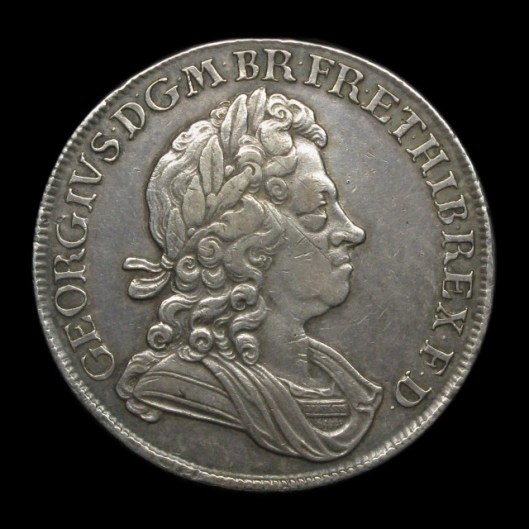
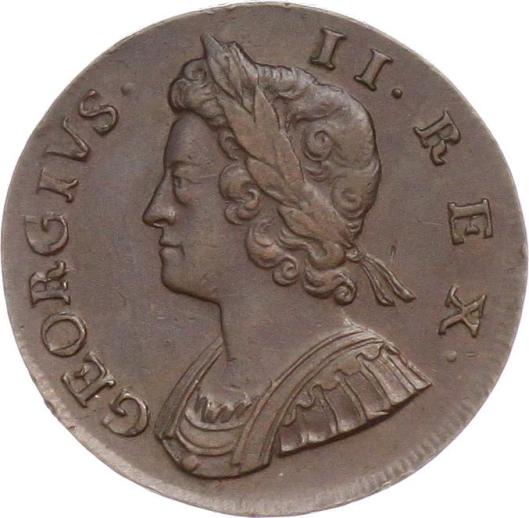
“The Sackville-Bagginses were not forgotten. Otho and his wife Lobelia were present. They disliked Bilbo and detested Frodo, but so magnificent was the invitation card, written in golden ink, that they had felt it impossible to refuse…” The Fellowship of the Ring, Book One, Chapter 1, “A Long-Expected Party”

On the other hand, Bilbo does not please them when he announces that Frodo is coming into “his inheritance”—
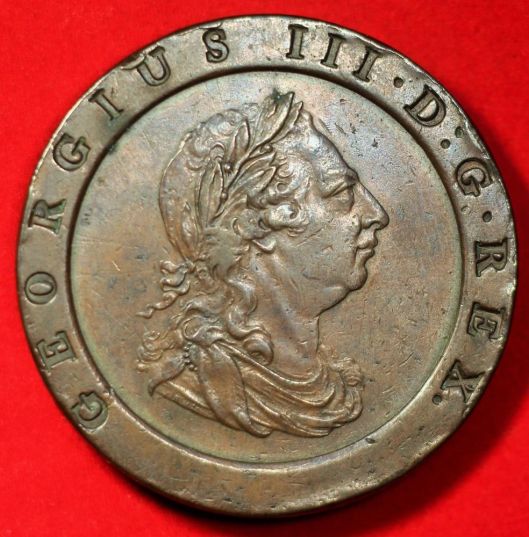
“The Sackville-Bagginses scowled, and wondered what was meant by ‘coming into his inheritance’ “ and, when Bilbo makes his startling disappearance, they “departed in wrath”. (quotations from Chapter One).

And yet they didn’t quite depart. It seems they have only stepped away from the party, only to return to cause trouble, demanding to see Bilbo’s will.

“Otho would have been Bilbo’s heir, but for the adoption of Frodo. He read the will carefully and snorted. It was, unfortunately, very clear and correct…” The Fellowship of the Ring, Book One, Chapter 1, “A Long-Expected Party”

Otho “snapped his fingers under Frodo’s nose and stumped off”, but Lobelia, his wife, remained, and Frodo later found her “still about the place, investigating nooks and corners, and tapping the floors. He escorted her firmly off the premises, after he had relieved her of several small (but rather valuable) articles that had somehow fallen inside her umbrella.” And she leaves with a kind of threat and what she believes is an insult:

“ ‘You’ll live to regret it, young fellow! Why didn’t you go too? You don’t belong here; you’re no Baggins—you—you’re a Brandybuck!’ ”

It’s never said why there is such an animus held by the Sackville-Bagginses against the Bagginses, but there is clearly something wrong with the S-Bs, from their covetousness to Lobelia’s open theft, and whatever is wrong is just what Saruman will find and exploit. Our next mention of them is oblique and it has to do with that pipe-weed. Merry and Pippin have been explaining how they had come to discover it at Isengard and all seems clear—
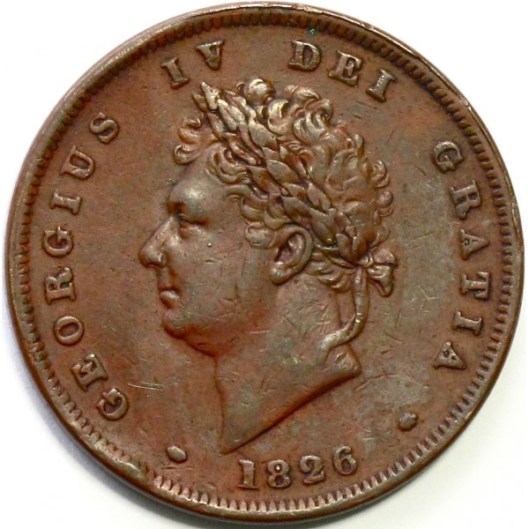
“ ‘All except one thing,’ said Aragorn: ‘leaf from the Southfarthing in Isengard. The more I consider it, the more curious I find it. I have never been in Isengard, but I have journeyed in this land, and I know well the empty countries that lie between Rohan and the Shire. Neither goods nor folk have passed that way for many a long year, not openly. Saruman had secret dealings with someone in the Shire, I guess. Wormtongues may be found in other houses than King Theoden’s…” The Two Towers, Book Three, Chapter 9, “Flotsam and Jetsam
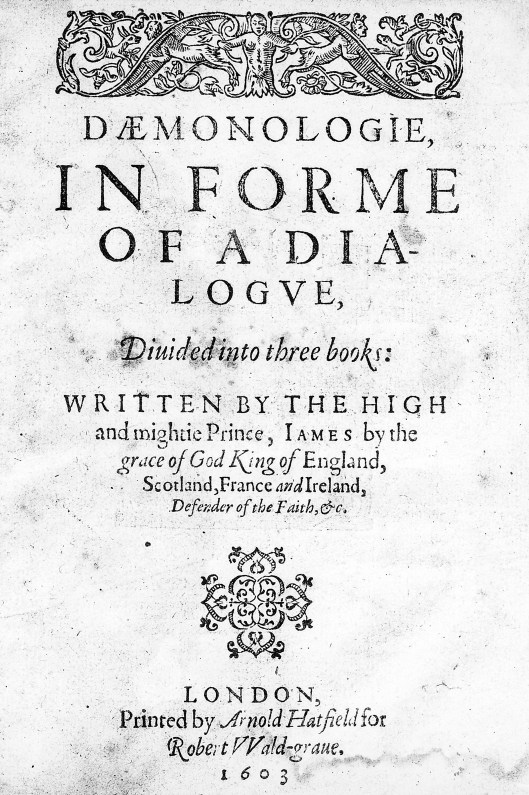
With that faint foreboding, we hear no more until Gandalf and the Hobbits are once more leaving Bree and Butterbur says, almost in passing:

“ ‘I should have warned you before that all’s not well in the Shire neither, if what we hear is true. Funny goings on, they say.’ “ The Return of the King, Book Six, Chapter 7, “Homeward Bound”

With Butterbur’s words in their ears, the Hobbits ride out and conversation begins:

“ ‘I wonder what old Barliman was hinting at,’ said Frodo.

‘I can guess some of it,’ said Sam gloomily. ‘What I saw in the Mirror: trees cut down and all, and my old gaffer turned out of the Row. I ought to have hurried back quicker.’

‘And something’s wrong with the Southfarthing evidently,’ said Merry. ‘There’s a general shortage of pipe-weed.’

‘Whatever it is,’ said Pippin, ‘Lotho will be at the bottom of it: you can be sure of that.’”

Here again, after Aragorn’s remark long before, we see that pipe-weed turn up—and associated somehow with a Sackville-Baggins. Butterbur has already replied to Gandalf’s request for it that “That’s the one thing that we’re short of, seeing how we’ve only got what we grow ourselves, and that’s not enough. There’s none to be had from the Shire these days.”

It’s never explained why Pippin makes the connection with Lotho at this point—was the bad blood between the Bagginses and the Sackville-Bagginses part of a darker picture of the S-Bs? This seems more than possible when Gandalf adds to Pippin’s remark:

“ ‘Deep in, but not at the bottom,’ said Gandalf. ‘You have forgotten Saruman. He began to take an interest in the Shire before Mordor did.’”

And now we begin to see a potential bigger pattern: Saruman-an S-B-Shire and, with it, the second step in the take-over of the Shire, that from outside. But that’s for Shire Portrait 5b: “Hostile Take-Over.2”, next time.

Until then, thanks, as ever, for reading!

MTCIDC

CD

Shire Portrait (4): On the March

01 Wednesday Mar 2017

Posted by Ollamh in Economics in Middle-earth, Imaginary History, J.R.R. Tolkien, Narrative Methods

≈ Leave a comment

Tags

ancient Chinese, borders, Buckland, Germanic tribes, Great Wall, Hadrian's Wall, hawthorns, High Hay, Hobbits, Marches, Offa's Dyke, Picts, Pyrenees, Rio Grande, Roman Empire, Shire, The Lord of the Rings, Tolkien, US-Canada Border, Westmarch

Welcome once more, dear readers.

Today’s posting continues our writing on the Shire, being the last in the geographic series, as we might call it, of which the earlier are:

Shire Portrait (I)

Shire Portrait (2)

Shire Portrait (3a)

Shire Portrait (3b)

In this posting, we want to look at the East March and the West March of the Shire.

1mapofshire.jpg

JRRT doesn’t give us much to go on, there being only a single reference in the Prologue to The Lord of the Rings to these:

“Outside the Farthings were the East and West Marches: the Buckland…and the Westmarch added to the Shire in S.R. 1452.”

“March” or “mark”, is related, in English, to margin, “the edge of something” and means a borderland. A border can be a natural feature, like the Pyrenees which (now) separate France and Spain.

2pyrenees.jpg

Or a river, such as the Rio Grande, between much of the US and Mexico.

3riogrande.JPG

It can be simply a concept, such as much of the border between the US and Canada.

4uscanada.jpg

The ancient Chinese marked the border between their world and that of the pastoral nomads to the north

5mongols.jpg

with the Great Wall.

6greatwall.jpg

The Romans set up two walls in Britain, both (in part?—there’s always scholarly argument over such things) to block the northern tribes of Picts from central and southern Britain.

7antonwallcallendar8hadwall9picts

And this was only part of a much bigger defensive system: the Romans also had an extensive network of ditches, walls, watch towers, and forts from the mouth of the Rhine southeast across western Germany and beyond to keep out the Germanic tribes who lived, often, just beyond.

10map11watchtower12fort

In the centuries after the decay of Roman control, the locals in Britain built several ditch and wall barriers, most notably at Offa’s Dyke, which seems to mark a section of the border between England and Wales.

13offasdyke.jpg

In the case of Tolkien’s marches, however, there are neither walls nor works, except, we suppose, if we include the High Hay, a dense hedge which separates the Old Forest from Buckland:

“Their land was originally unprotected from the East; but on that side they had built a hedge: the High Hay. It had been planted many generations ago, and was now thick and tall, for it was constantly tended. It ran all the way from Brandywine Bridge, in a big loop curving away from the river, to Haysend…well over twenty miles from end to end.” (The Fellowship of the Ring, Book 1, Chapter 5, “A Conspiracy Unmasked”)

So far, we have been unable to discover an illustration of this, but we guess that the Hay may have been a hawthorn hedge, as:

  1. hawthorns—as you might guess—have thorns and can be trained to grow densely
  2. they can grow up to about 50 feet (15 metres) tall

14hawspine15hawhedge

As the old word “hay” means a hedge– as does the “haw” in hawthorn–we offer this to our readers as a possibility.

A hawthorn hedge might keep out marauding beasts, but it’s hardly the equivalent of Hadrian’s Wall or the Great Wall, and the West March doesn’t appear to have any fortification at all, underscoring the nearly-complete defenselessness of the Shire, as well as the generally-peaceable nature of the Hobbits. As JRRT writes in the prologue:

“At no time had Hobbits of any kind been warlike, and they had never fought among themselves…So, though there was some store of weapons in the Shire, these were used mostly as trophies, hanging above hearths or on walls, or gathered into the museum at Michel Delving.”

As a consequence:

“…they heeded less and less the world outside where dark things moved, until they came to think that peace and plenty were the rule in Middle-earth and the right of all sensible folk.”

We shall see in our next posting what happens when some of those “dark things” move—into the Shire.

Thanks, as always, for reading.

MTCIDC

CD

← Older posts
Newer posts →

The Doubtful Sea Series Facebook Page

The Doubtful Sea Series Facebook Page

  • Ollamh

Categories

  • Artists and Illustrators
  • Economics in Middle-earth
  • Fairy Tales and Myths
  • Films and Music
  • Games
  • Heroes
  • Imaginary History
  • J.R.R. Tolkien
  • Language
  • Literary History
  • Maps
  • Medieval Russia
  • Military History
  • Military History of Middle-earth
  • Narnia
  • Narrative Methods
  • Poetry
  • Research
  • Star Wars
  • Terra Australis
  • The Rohirrim
  • Theatre and Performance
  • Tolkien
  • Uncategorized
  • Villains
  • Writing as Collaborators
Follow doubtfulsea on WordPress.com

Across the Doubtful Sea

Recent Postings

  • Do You Speak Villain? (Part 3) February 18, 2026
  • Do You Speak Villain? (2) February 11, 2026
  • Do You Speak Villain? (Part 1) February 4, 2026
  • Towering January 28, 2026
  • Tolkien Among the Indians January 21, 2026
  • Thin and Stretched January 14, 2026
  • Through a glass… January 7, 2026
  • Heffalumps? December 31, 2025
  • We Three Kings December 24, 2025

Blog Statistics

  • 107,660 Views

Posting Archive

  • February 2026 (3)
  • January 2026 (4)
  • December 2025 (5)
  • November 2025 (4)
  • October 2025 (5)
  • September 2025 (4)
  • August 2025 (4)
  • July 2025 (5)
  • June 2025 (4)
  • May 2025 (4)
  • April 2025 (5)
  • March 2025 (4)
  • February 2025 (4)
  • January 2025 (5)
  • December 2024 (4)
  • November 2024 (4)
  • October 2024 (5)
  • September 2024 (4)
  • August 2024 (4)
  • July 2024 (5)
  • June 2024 (4)
  • May 2024 (5)
  • April 2024 (4)
  • March 2024 (4)
  • February 2024 (4)
  • January 2024 (5)
  • December 2023 (4)
  • November 2023 (5)
  • October 2023 (4)
  • September 2023 (4)
  • August 2023 (5)
  • July 2023 (4)
  • June 2023 (4)
  • May 2023 (5)
  • April 2023 (4)
  • March 2023 (5)
  • February 2023 (4)
  • January 2023 (4)
  • December 2022 (4)
  • November 2022 (5)
  • October 2022 (4)
  • September 2022 (4)
  • August 2022 (5)
  • July 2022 (4)
  • June 2022 (5)
  • May 2022 (4)
  • April 2022 (4)
  • March 2022 (5)
  • February 2022 (4)
  • January 2022 (4)
  • December 2021 (5)
  • November 2021 (4)
  • October 2021 (4)
  • September 2021 (5)
  • August 2021 (4)
  • July 2021 (4)
  • June 2021 (5)
  • May 2021 (4)
  • April 2021 (4)
  • March 2021 (5)
  • February 2021 (4)
  • January 2021 (4)
  • December 2020 (5)
  • November 2020 (4)
  • October 2020 (4)
  • September 2020 (5)
  • August 2020 (4)
  • July 2020 (5)
  • June 2020 (4)
  • May 2020 (4)
  • April 2020 (5)
  • March 2020 (4)
  • February 2020 (4)
  • January 2020 (6)
  • December 2019 (4)
  • November 2019 (4)
  • October 2019 (5)
  • September 2019 (4)
  • August 2019 (4)
  • July 2019 (5)
  • June 2019 (4)
  • May 2019 (5)
  • April 2019 (4)
  • March 2019 (4)
  • February 2019 (4)
  • January 2019 (5)
  • December 2018 (4)
  • November 2018 (4)
  • October 2018 (5)
  • September 2018 (4)
  • August 2018 (5)
  • July 2018 (4)
  • June 2018 (4)
  • May 2018 (5)
  • April 2018 (4)
  • March 2018 (4)
  • February 2018 (4)
  • January 2018 (5)
  • December 2017 (4)
  • November 2017 (4)
  • October 2017 (4)
  • September 2017 (4)
  • August 2017 (5)
  • July 2017 (4)
  • June 2017 (4)
  • May 2017 (5)
  • April 2017 (4)
  • March 2017 (5)
  • February 2017 (4)
  • January 2017 (4)
  • December 2016 (4)
  • November 2016 (5)
  • October 2016 (6)
  • September 2016 (5)
  • August 2016 (5)
  • July 2016 (5)
  • June 2016 (5)
  • May 2016 (4)
  • April 2016 (4)
  • March 2016 (5)
  • February 2016 (4)
  • January 2016 (4)
  • December 2015 (5)
  • November 2015 (5)
  • October 2015 (4)
  • September 2015 (5)
  • August 2015 (4)
  • July 2015 (5)
  • June 2015 (5)
  • May 2015 (4)
  • April 2015 (3)
  • March 2015 (4)
  • February 2015 (4)
  • January 2015 (4)
  • December 2014 (5)
  • November 2014 (4)
  • October 2014 (6)
  • September 2014 (1)

Blog at WordPress.com.

  • Subscribe Subscribed
    • doubtfulsea
    • Join 78 other subscribers
    • Already have a WordPress.com account? Log in now.
    • doubtfulsea
    • Subscribe Subscribed
    • Sign up
    • Log in
    • Report this content
    • View site in Reader
    • Manage subscriptions
    • Collapse this bar
 

Loading Comments...