• About

doubtfulsea

~ adventure fantasy

Tag Archives: kleos

An Homeric PS

16 Wednesday Sep 2026

Posted by Ollamh in Uncategorized

≈ Leave a comment

Tags

agriculture, Christopher Nolan, christopher-nolan, cyclops, Film, Homer, kleos, movies, Polyphemus, Poseidon, review, The Odyssey, Tireisias

As always, dear readers, welcome.

I earlier posted a review of Christopher Nolan’s Odyssey (see “Out of Work Athena”, 12 August, 2026),
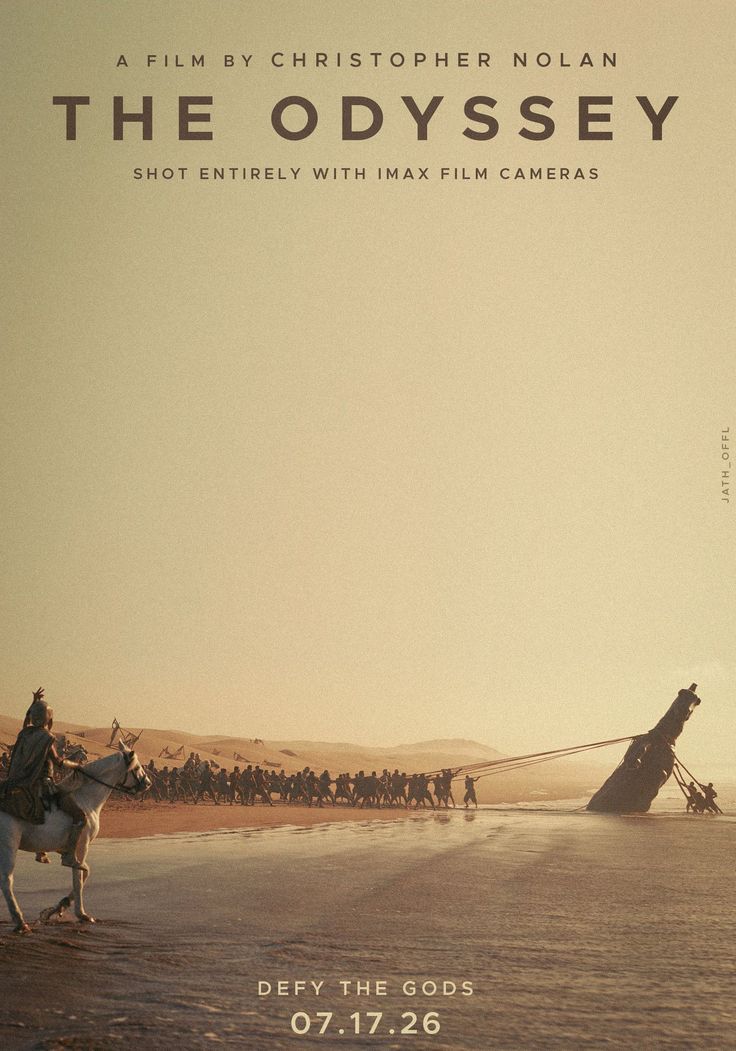
but I’ve thought a lot about the film since and I felt that it might be helpful to add a second note on the subject–about the film’s ending, in particular.

Here’s what the Wiki article has to say:

“After the meal, Odysseus, still disguised, confesses to Penelope his guilt for violating Zeus’ law during the sacking of Troy, desecrating Athena‘s statue after killing her priestess (whose form Athena assumed in visions), and initiating the collapse of the Bronze Age… After the remaining suitors surrender, Odysseus cedes his throne to Telemachus and leaves with Penelope to seek peace in exile. Sailing west to honor his fallen soldiers, the couple expect civilization’s renewal and muse that time will forget Odysseus’ mistakes.”

I was surprised when I read this and even more surprised when I saw it acted out on the screen.  This may be “Christopher Nolan’s Odyssey”, but it’s not “Homer’s”.  And that subtitle on the poster, “Defy the Gods” shows the major difference, as I began to demonstrate in my earlier posting.  Athena is Odysseus’ patron and therefore the last god he would “defy”, but it’s because of another god that Odysseus will perform the action which is first laid out for him in the Otherworld by the seer Tireisias.
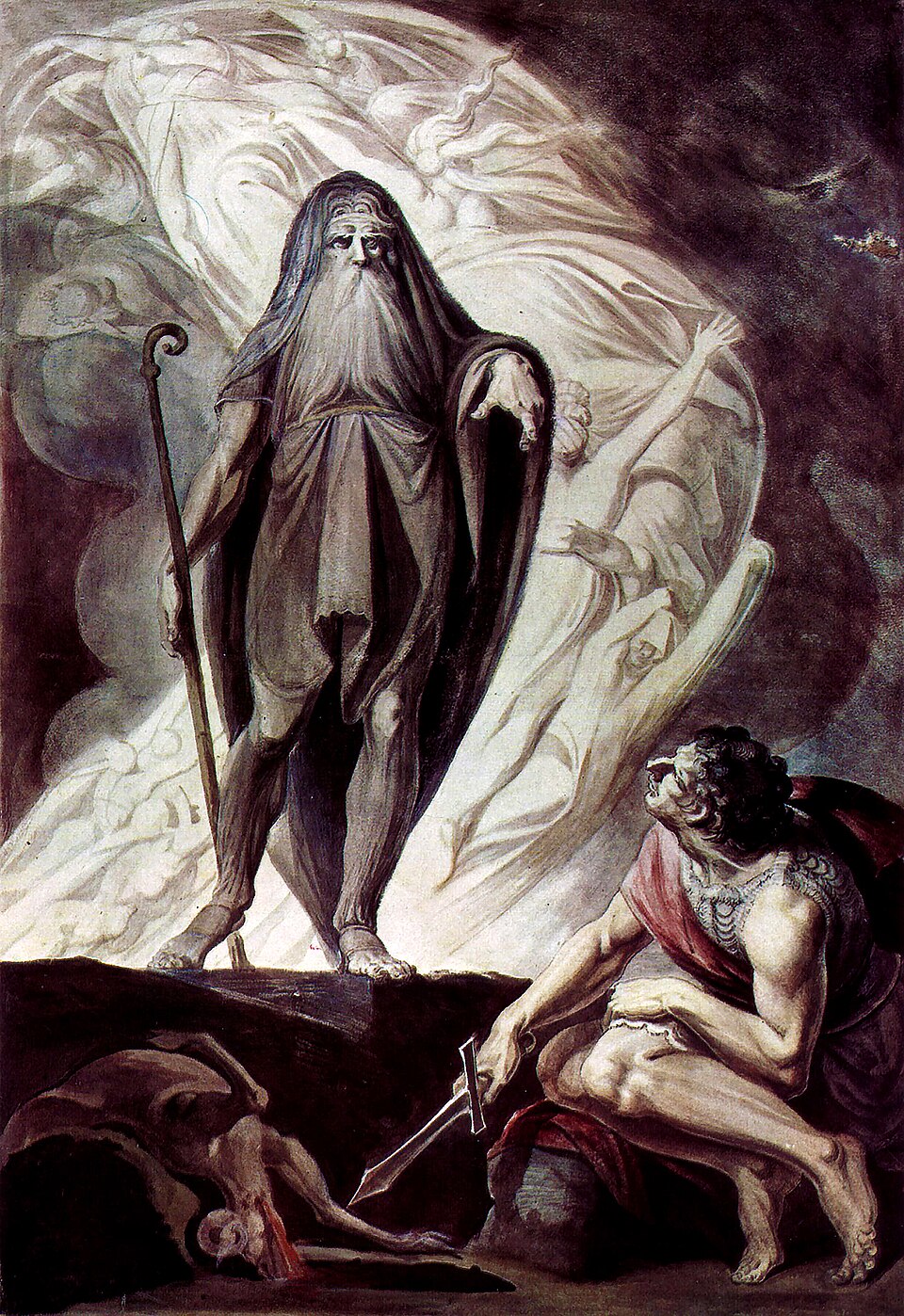
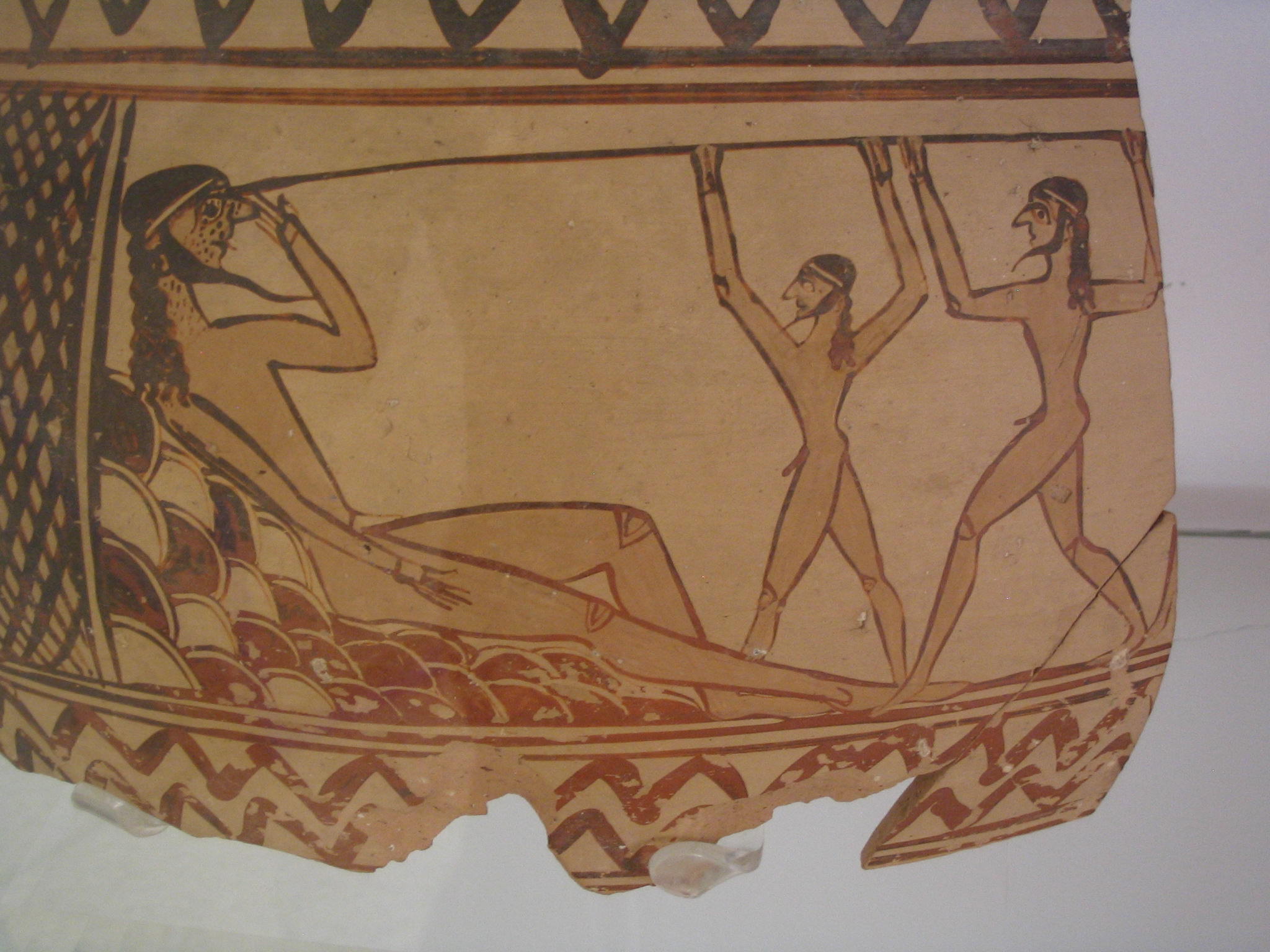
Odysseus’ trouble began in Book Nine, where Odysseus tells his Phaeacian audience (an important part of the story left out of the film) that, previously trapped by Polyphemus, the Cyclops, in the Cyclops’ cave, he has escaped after blinding him.
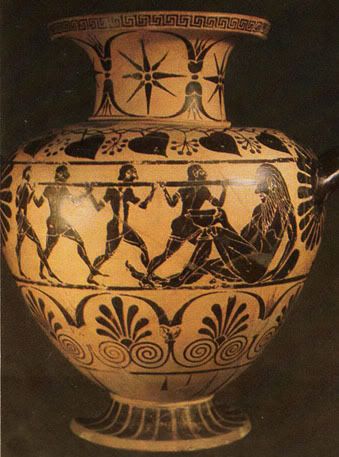
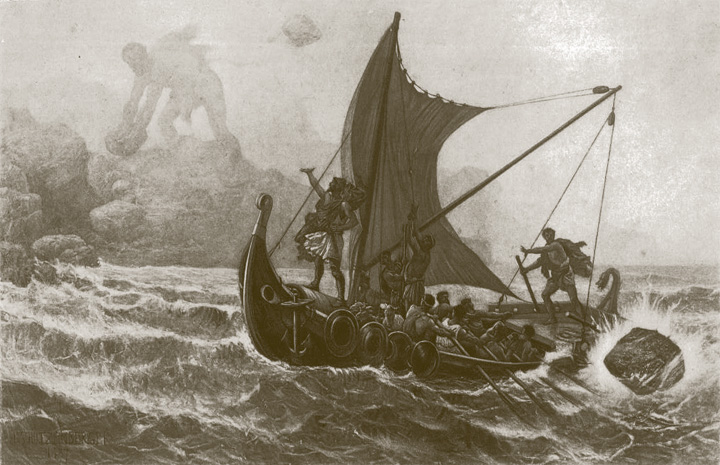
Groping his way to the shore in pursuit of the fleeing Odysseus, Polyphemus attempts to destroy him and his men by heaving the equivalent of a mountain top at them.
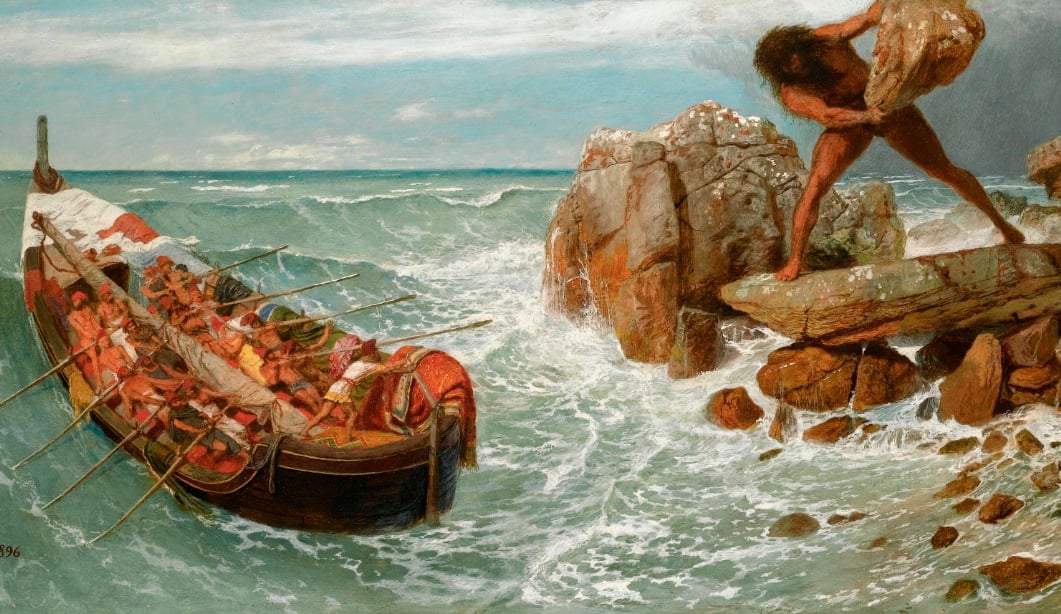
In the process of escaping, Odysseus does something which may seem rash, if not downright crazy, to us (and Odysseus’ crew would agree).  He shouts to the Cyclops:

“Κύκλωψ, αἴ κέν τίς σε καταθνητῶν ἀνθρώπων

ὀφθαλμοῦ εἴρηται ἀεικελίην ἀλαωτύν,

φάσθαι Ὀδυσσῆα πτολιπόρθιον ἐξαλαῶσαι,

υἱὸν Λαέρτεω, Ἰθάκῃ ἔνι οἰκίʼ ἔχοντα.”

(Od. 9.502–9.505—my translation)

“Cyclops, if any one of mortal men

Should ask [you] about the shameful blinding of [your] eye,

Say that city-destroying Odysseus blinded [it],

The son of Laertes, having his home on Ithaka.”

Doing so, Odysseus seems to have just handed over his name and address to his victim, even though the story makes it clear that Polyphemus’, by killing and eating a number of Odysseus’ men, deserved what he got.  (Polyphemus also violated the Greek custom of xenia, hospitality/guest-friendship, which, as Odysseus earlier had pointed out to him, was overseen by Zeus—unlike the completely imaginary “Zeus’ law”, which is mentioned more than once in the film.  Odysseus, by the way, when speaking to Polyphemus, is obeying another actual early Greek custom, if not “law”:  that of kleos.  This is a hard word to translate, meaning something like “reputation/fame”, and Odysseus, to add the escape of the Cyclops to it, must let his enemy know who tricked him, even though, in this case, it brings him and his men into mortal danger.)

Polyphemus, thwarted in destroying Odysseus there and then, prays to his father, Poseidon,
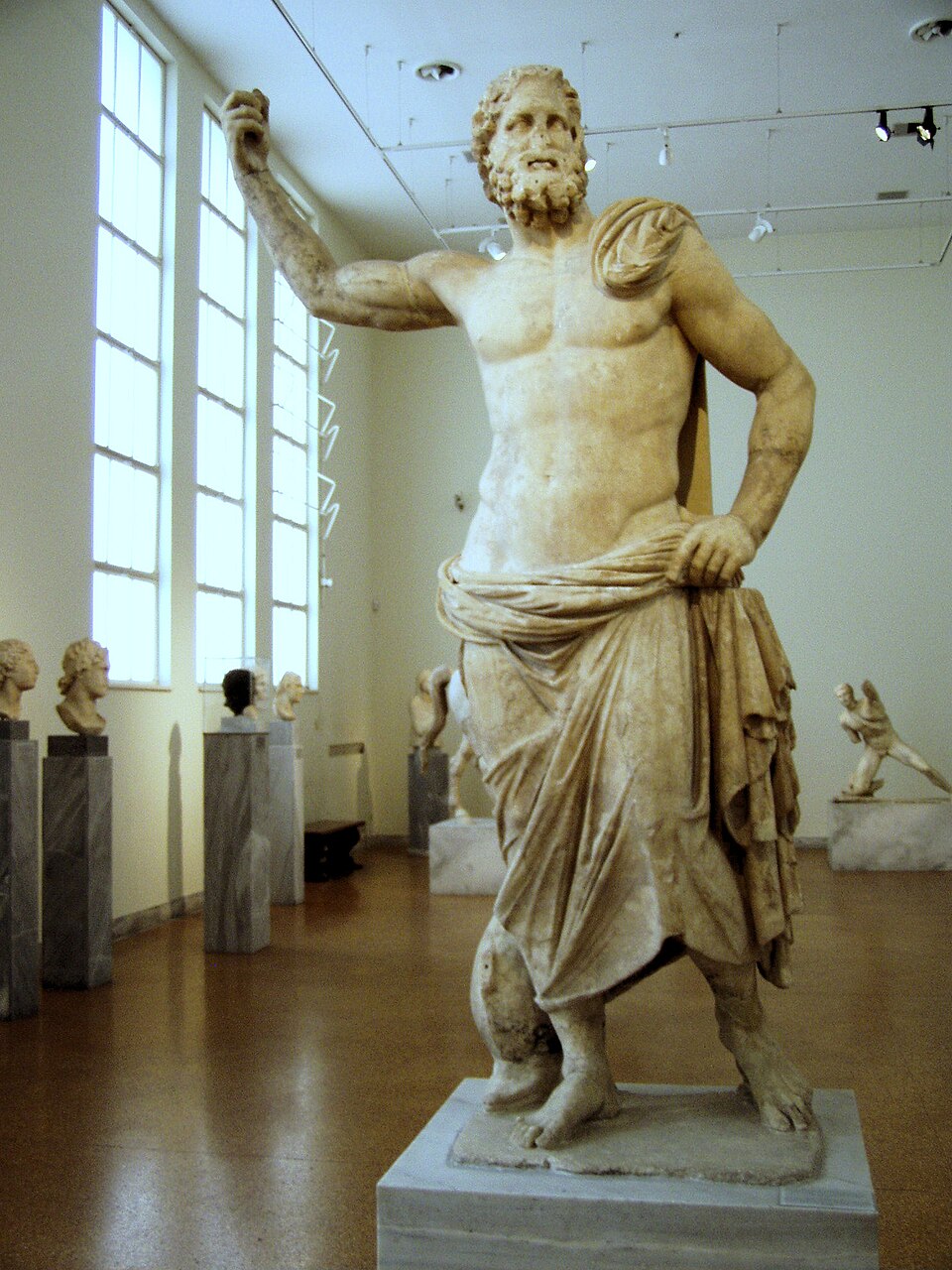
for revenge, something which is mentioned by Zeus at the beginning of Book One of the Odyssey (lines 68-75) when Athena approaches him for help in getting Odysseus out of the clutches of Calypso on the island of Ogygia and sent on his way home.  (Odysseus, by the way, hasn’t, as in the film, forgotten about home, stoked up on lotos, but, instead, grieves for it every day—see Book One, lines 55-59.) 

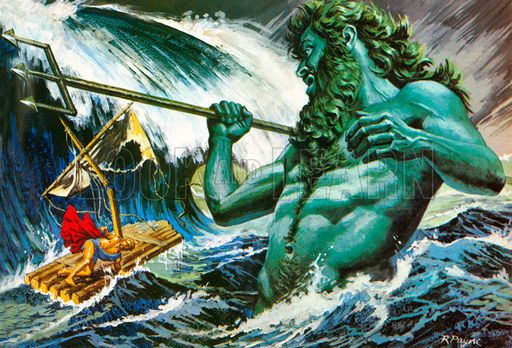
We then see Poseidon’s revenge told by Odysseus in Book Five, as Odysseus, aided by Calypso (through Zeus’ prompting via his messenger, Hermes), is attempting to get home via a homemade raft.  Poseidon spots the raft, with Odysseus on it, and works up a violent storm which partially destroys the raft and drops Odysseus into the sea before he can regain the wreckage, now at the mercy of the waves. (see Book Five, lines 282-332)

Odysseus survives, saved by the mysterious Phaeacians (whom I’ve mentioned earlier) and sent home by them, although Poseidon, annoyed by their helping Odysseus, turns the ship which carried Odysseus to stone as a punishment (see Book Thirteen, lines 125-165)

Odysseus is left with a very serious problem, however:  he lives on an island, among sea-faring people:  how will he ever be safe from Poseidon?  The answer lies in the directions which Tireisias gave him in their Otherworld meeting.  Once Odysseus has killed the suitors (all the suitors—unlike the film, Odysseus shows no mercy in the poem), Tireisias says:

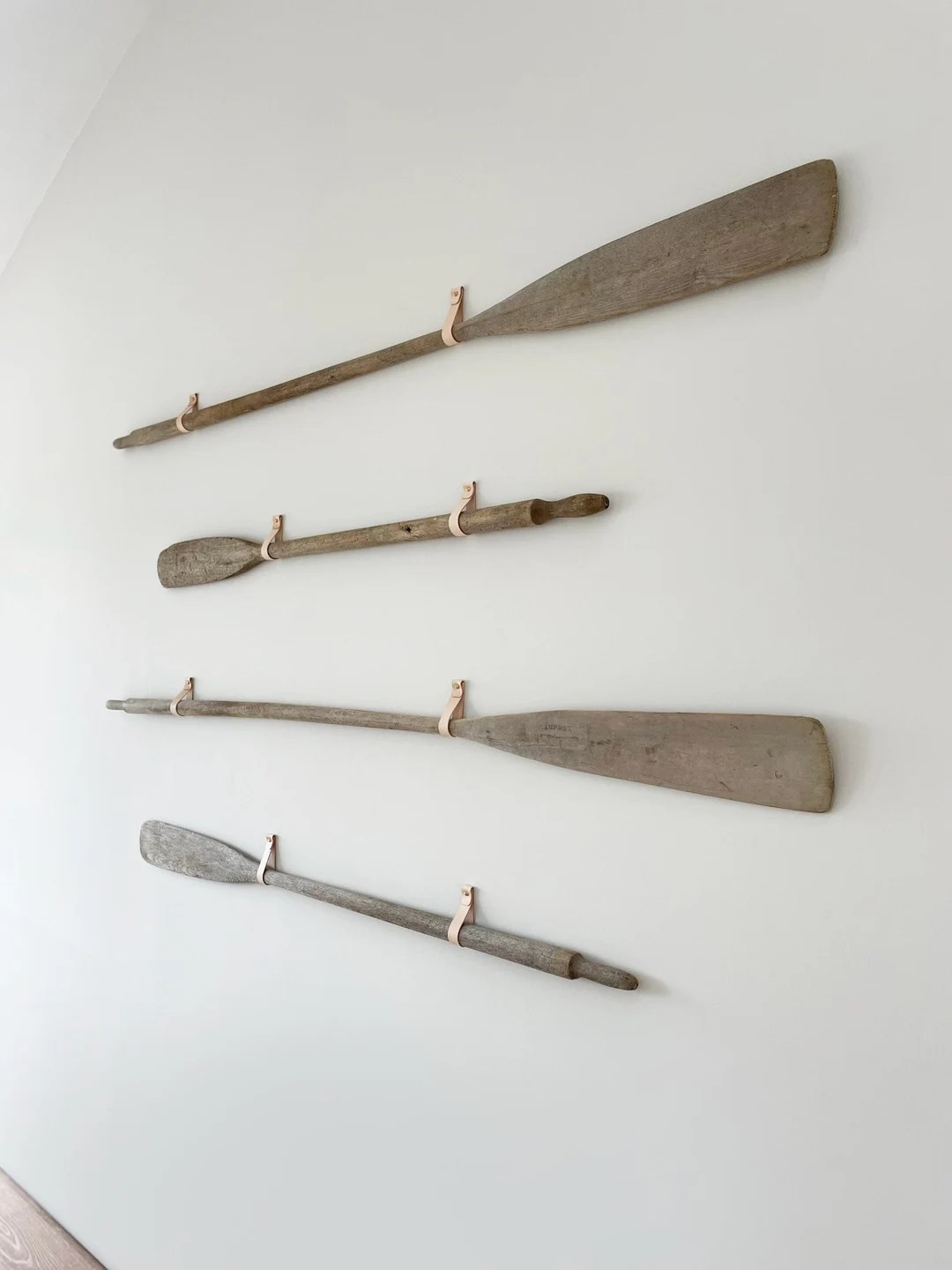
“ἔρχεσθαι δὴ ἔπειτα λαβὼν ἐυῆρες ἐρετμόν,

εἰς ὅ κε τοὺς ἀφίκηαι οἳ οὐκ ἴσασι θάλασσαν

ἀνέρες, οὐδέ θʼ ἅλεσσι μεμιγμένον εἶδαρ ἔδουσιν·

οὐδʼ ἄρα τοί γʼ ἴσασι νέας φοινικοπαρῄους

οὐδʼ ἐυήρεʼ ἐρετμά, τά τε πτερὰ νηυσὶ πέλονται.

σῆμα δέ τοι ἐρέω μάλʼ ἀριφραδές, οὐδέ σε λήσει·

ὁππότε κεν δή τοι συμβλήμενος ἄλλος ὁδίτης

φήῃ ἀθηρηλοιγὸν ἔχειν ἀνὰ φαιδίμῳ ὤμῳ,

καὶ τότε δὴ γαίῃ πήξας ἐυῆρες ἐρετμόν,

ῥέξας ἱερὰ καλὰ Ποσειδάωνι ἄνακτι…”

(Od. 11.115–11.130—my translation)

“Go, then, having taken a broad[bladed] oar,

Until you reach those men who don’t know the sea,

[and] neither do they eat food mixed with salt

Nor yet do they know ships with painted bows [literally “purple cheeks”],

Nor broad[bladed] oars, [which] are the wings of ships.

And I will tell you a very clear sign [which] you won’t miss:

Whenever some traveler, meeting you,

Should say that you have a winnowing fan on your splendid shoulder,

Then, having stuck the broad[bladed] oar in the earth,

Having made fine sacrifices to the lord Poseidon…”

go home and continue making sacrifices to the gods.  And, having done so, Odysseus will have an easy death in old age and his people will be blessed.  Although Odysseus later relates this to Penelope (see Book Twenty-three, lines 248-284), we don’t see him do it in the poem, but he certainly doesn’t “sail west to honor his fallen soldiers” (why west?  And how does that “honor his fallen soldiers”?)

It’s clear, from Tireisias’ directions, that what Odysseus is meant to do to placate Poseidon includes getting as far away from the sea as he can—but what’s this business with the oar and a “winnowing fan”?
In earlier times, the process of producing flour was complex.  One had to:

1. harvest the grain,
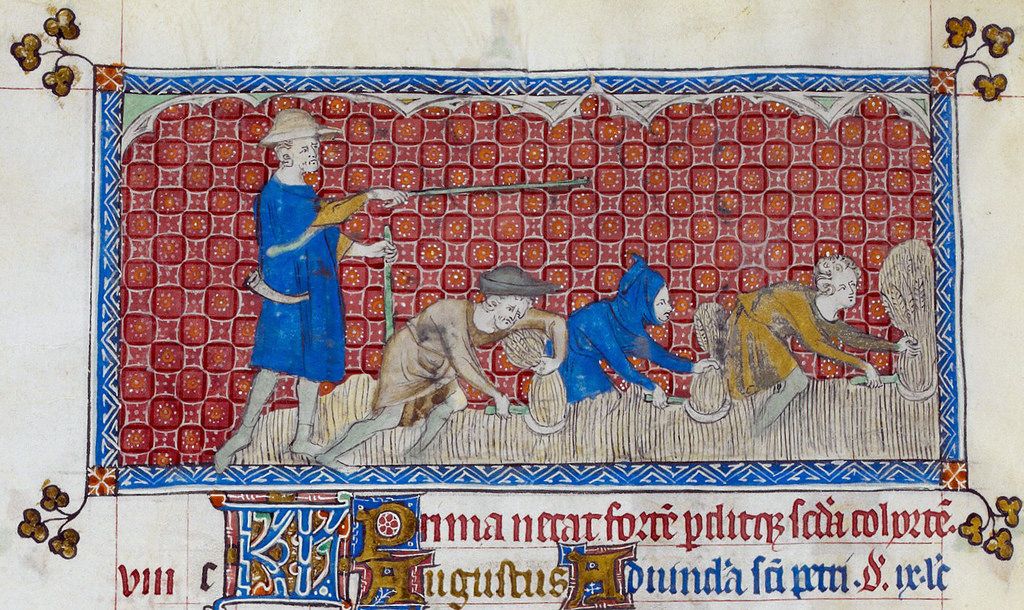
2. break the beards of grain off the stalks, called “threshing”,
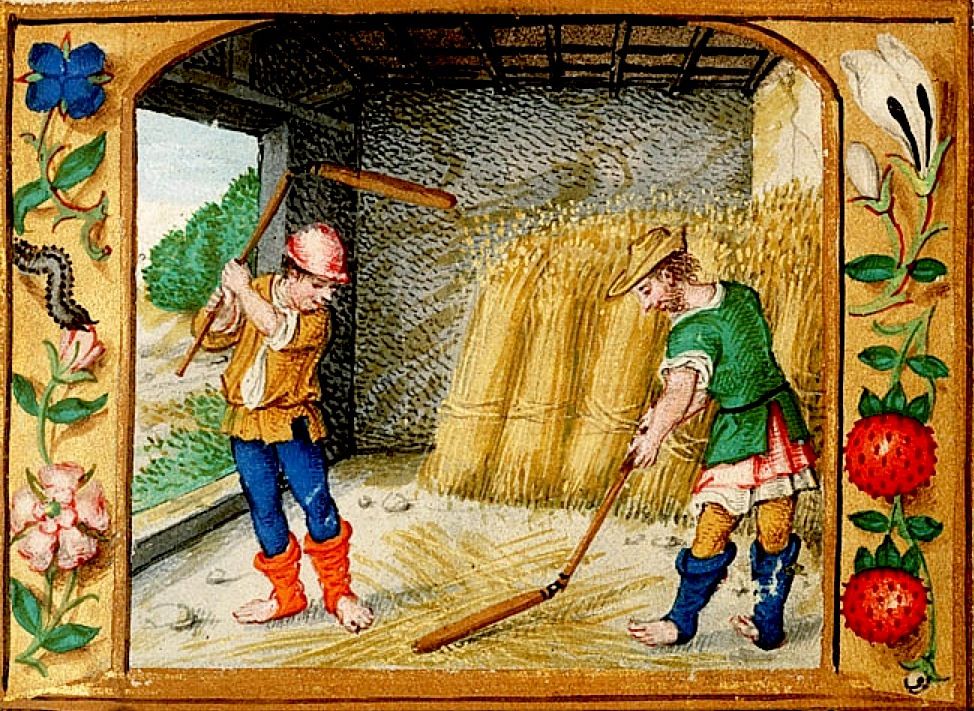
3. then, often by tossing it up, using the air to free the grain from the husks which cover it, called “winnowing”,
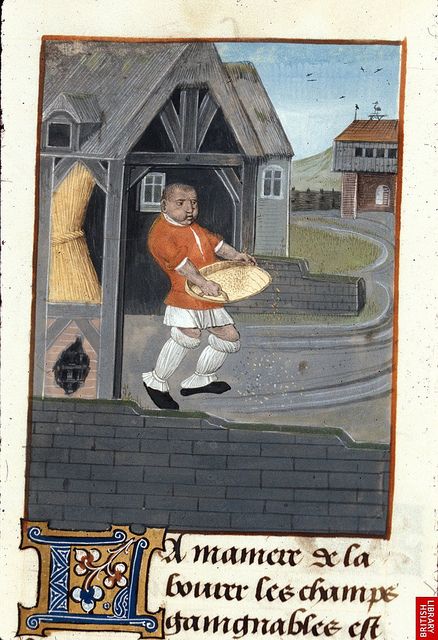
before grinding the final product into powder—flour.
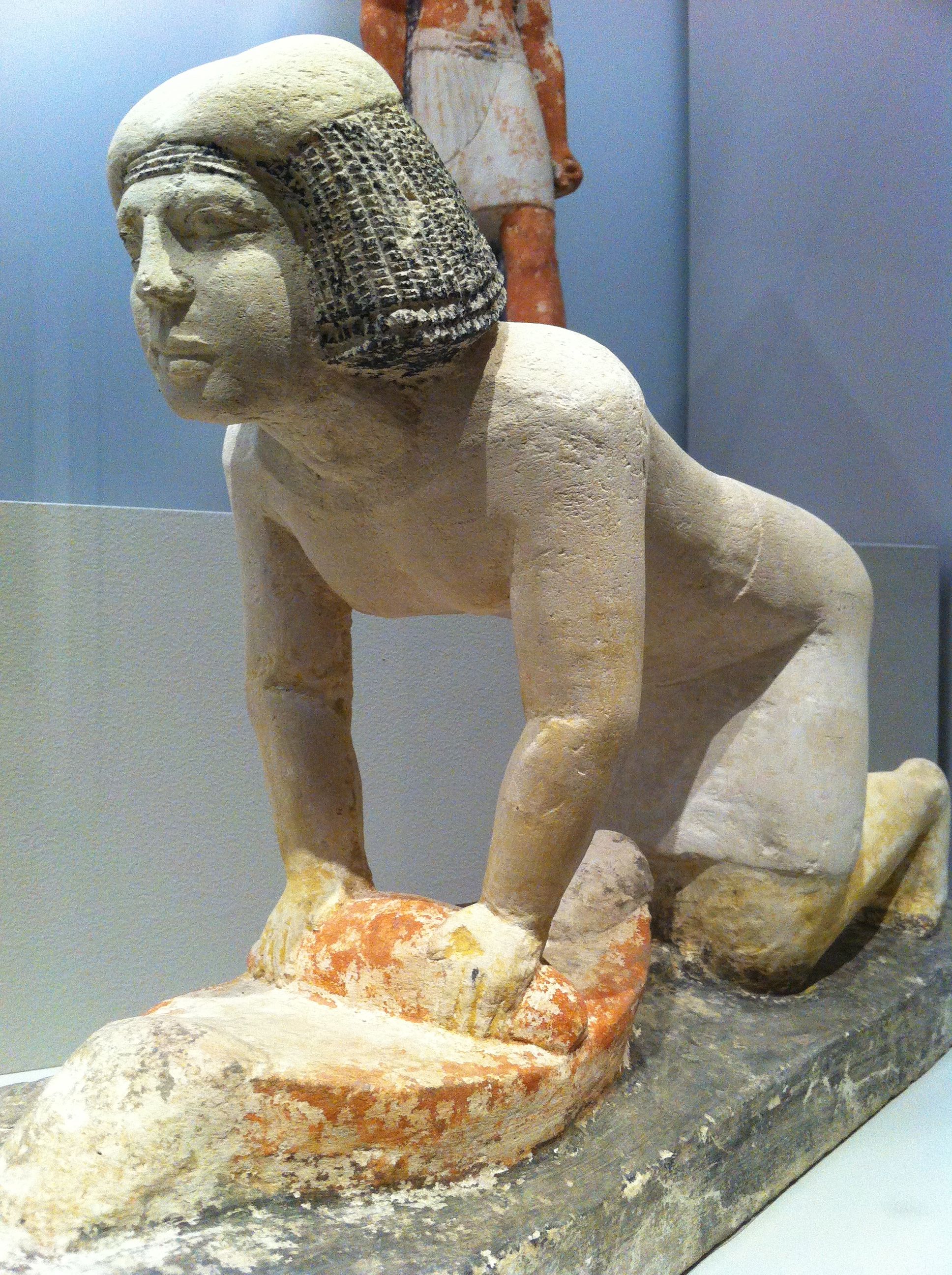
Winnowing could be done by tossing the grain in its husks into the air from a basket,
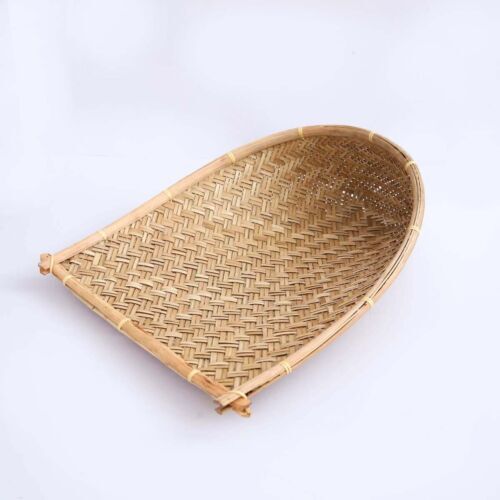
or by forking it into the air by a “winnowing fan”.

Probably because the fork had a long shaft, like an oar, Tireisias was suggesting that, meeting someone so far inland as to be ignorant of boats that he would confuse an oar with an agricultural tool, Odysseus would be safe from Poseidon’s natural element and could make his sacrifice to placate the god.

So—no abdication, no sailing west, nor restoration of civilization, but a godly man, so long protected by a goddess, now seeking peace by appeasing a god he has angered:  a very different and reverent story—and ending of the story–from Christopher Nolan’s, with its totally manufactured “defiance”.

Thanks for reading, as always,

Stay well,

Always check before assaulting someone—he might be related to a vengeful god,

And remember, as well, that there’s always

MTCIDC

O
Just a Nobuddy

03 Wednesday May 2017

Posted by Ollamh in Artists and Illustrators, Fairy Tales and Myths, Heroes, Imaginary History, J.R.R. Tolkien, Literary History, Narrative Methods

≈ Leave a comment

Tags

akaletes, Athena, Bilbo, Circe, cyclops, face culture, Greek, Homer, kleos, Odysseus, Outis, Polyphemus, Poseidon, Riddles in the Dark, Smaug, Telemachus, The Hobbit, The Lord of the Rings, The Odyssey, Tolkien, true name

Welcome once more, dear readers.

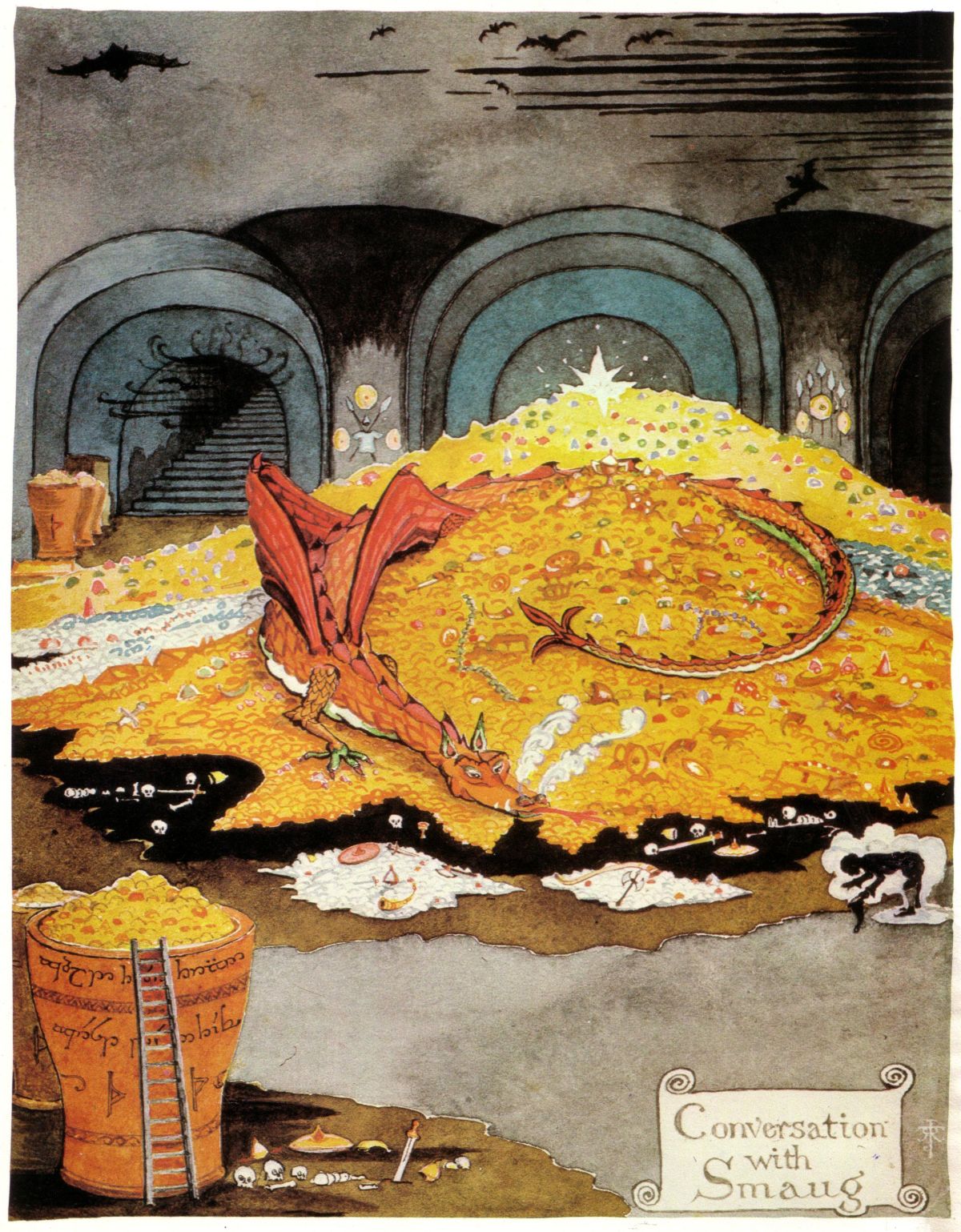
“Who are you and where do you come from, may I ask?”

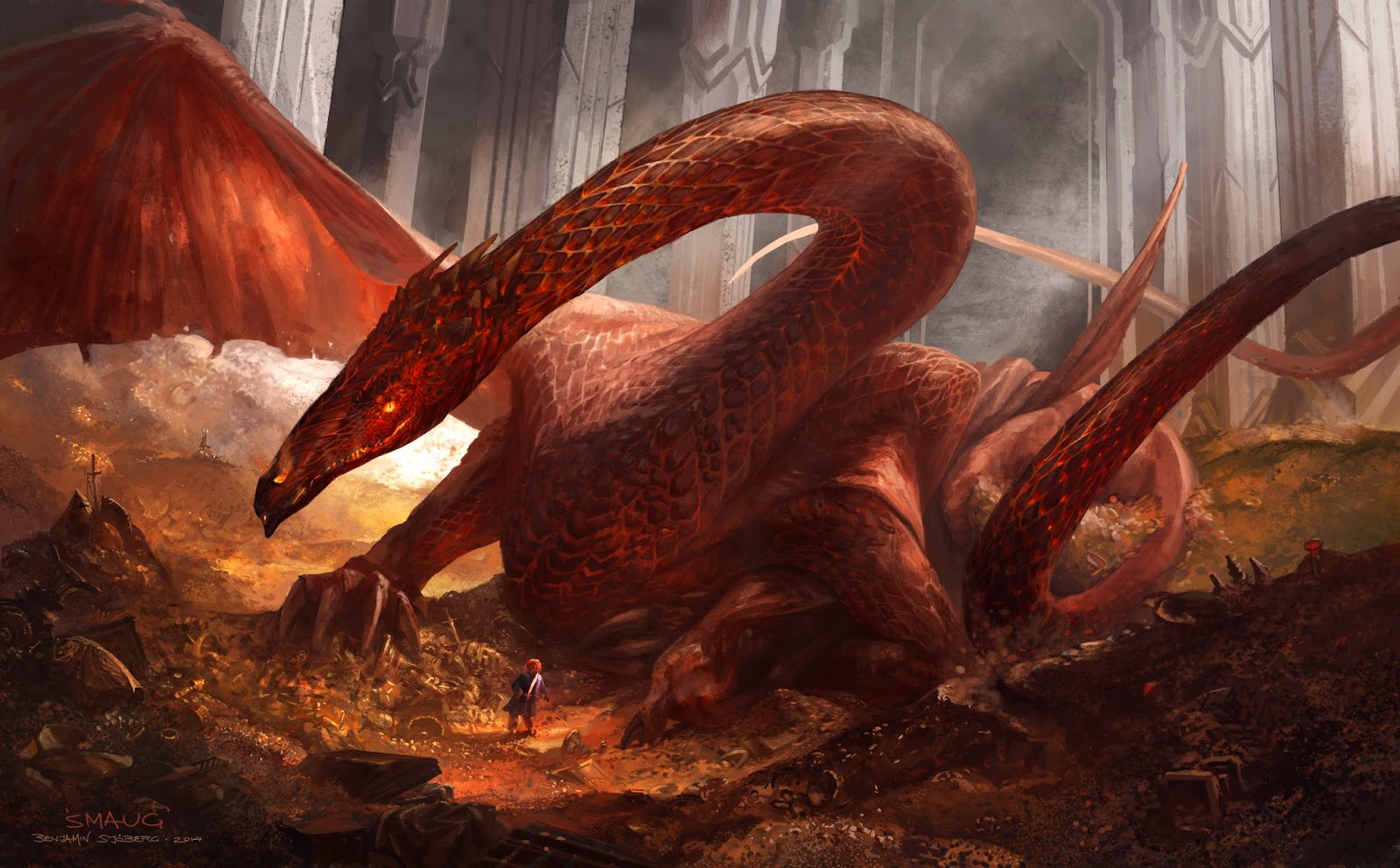
inquires Smaug. (The Hobbit, Chapter 12, “Inside Information”)

image1smaug.jpg

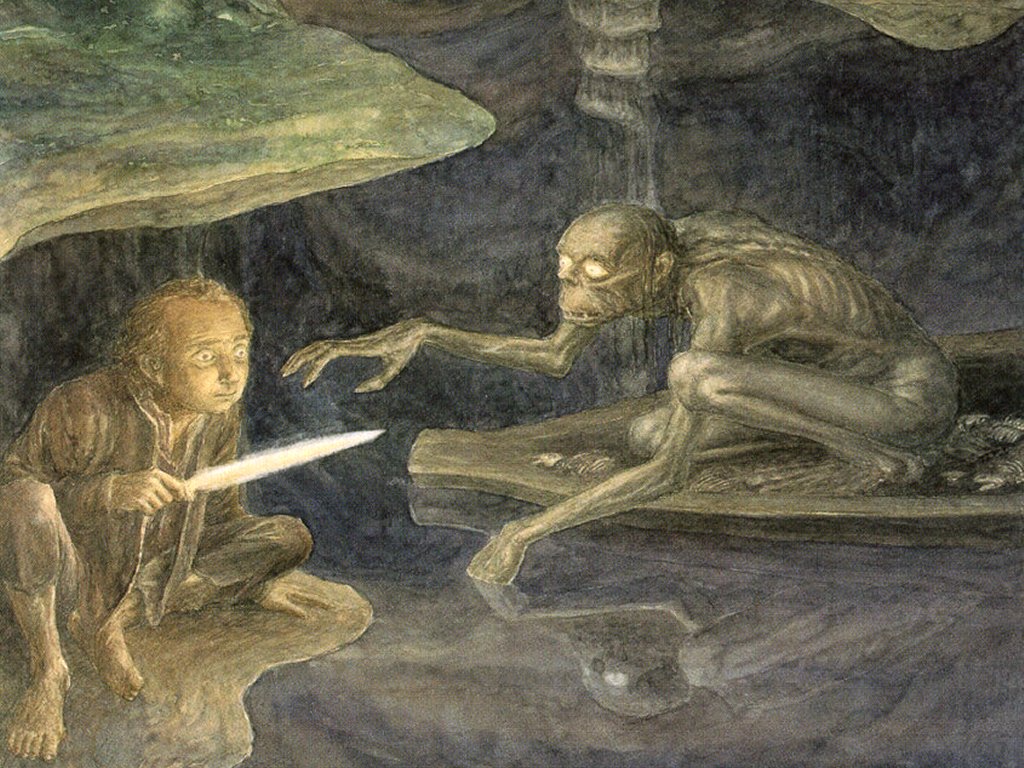
Earlier in The Hobbit, when asked this indirectly by Gollum, Bilbo had replied directly: “I am Mr.

image2bilbogollumlee.jpg

Bilbo Baggins…” (The Hobbit, Chapter 5, “Riddles in the Dark”)

This had led him into a deadly game of riddles, but now Bilbo seems more wary—which is just as well, as the narrator tells us when Bilbo answers Smaug’s question indirectly:

“This of course is the way to talk to dragons, if you don’t want to reveal your proper name (which is wise), and don’t want to infuriate them by a flat refusal (which is also very wise).” (The Hobbit, Chapter 12, “Inside Information”)

Bilbo’s answer to Smaug’s question about his identity is a series of what we might call “What Have I Got In My Pocket?” names—riddling titles which, just like that absent-minded remark, only Bilbo can understand:

“I am the clue-finder, the web-cutter, the stinging fly. I was chosen for the lucky number…I am he that buries his friends alive and drowns them and draws them alive again from the water. ..I am the friend of bears and the guest of eagles. I am Ringwinner and Luckwearer; and I am Barrel-rider.” (The Hobbit, Chapter 12, “Inside Information”)

All of these titles are references to events earlier in the story, of course, although a number of them, like “Ringwinner”, also sound like Norse or Old English kennings—that is, poetic names for often ordinary things, like “whale road” for “sea” and “wave’s horse” for “ship” or “sky candle” for “sun”. One which is close to Bilbo’s “Ringwinner“ is “ring-giver”, a kenning for a “lord”. Because they refer to personal experiences, Bilbo—and we readers—must assume that they would mean nothing to Smaug—or almost—

“Ha! Ha! You admit the ‘us’?” laughed Smaug. “Why not say ‘us fourteen’ and be done with it, Mr. Lucky Number?”

A lucky guess? (And interesting that, in Middle-earth, there are such things as “lucky numbers”—we wonder how many more examples of “lucky” vs “unlucky” things we might find?)

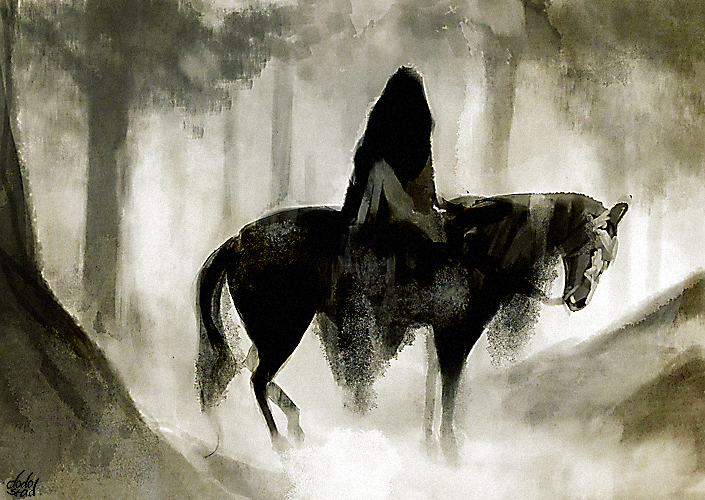
The narrator had said that not revealing your proper name is wise and the consequence of Bilbo’s mistake in telling Gollum that he is “Mr. Bilbo Baggins” will appear many years later, in the form of sinister visitors to the Shire, offering money for the location of “Baggins”.

image3nazgul.jpg

There can be physical danger, then, in properly identifying yourself.

There may be another reason for not doing so and it could entail physical danger not for the protagonist in the story, but a surprise threat for the antagonist.

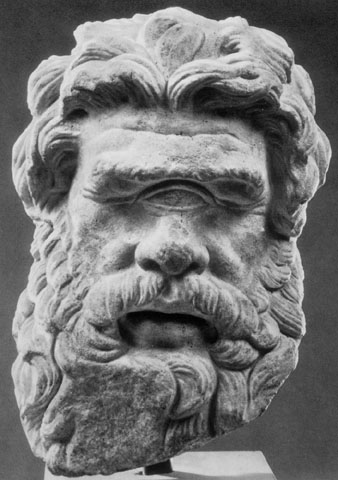
When Odysseus and his men visit the cave of the Cyclops, Polyphemus,

image4cyclops.jpg

and are trapped there, Odysseus, when asked by Polyphemus, gives a false name: Outis (OO-tis), meaning “No one/nobody” in Greek. His subsequent action would suggest that the reason why he does so is that—as he says himself—he has a reputation (for cleverness) which reaches to the heavens. By providing a false name, he intends to put the Cyclops off his guard before defeating him, which he does by:

  1. getting him drunk

image5cydrink.jpg

  1. blinding him

image6blinding.jpg

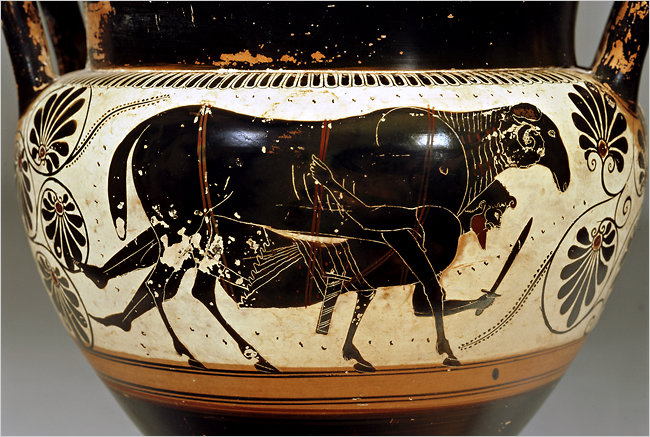
  1. slipping himself and his men out of Polyphemus’ cave under the bellies of the Cyclops’ sheep.

image7sheepslip.jpg

Having succeeded, however, Odysseus seems to change his plan—and mind—completely, shouting, as his ship takes him away, his name and address, even as the Cyclops hurls huge rocks at the ship and his men beg him to stop.

image8cyrocking.jpg

In the mind of an Homeric hero, however, Odysseus has no choice.

A major element in the life of such heroes is something called “kleos” (KLAY-oss)—which is somewhat difficult to translate. In the heroic world it means something like “personal name within the larger framework of a family and its reputation”—and that’s only the beginning. Kleos is almost a kind of inheritable object and includes such elements as:

  1. divine/semi-divine parents/ancestors
  2. divine patrons
  3. father’s reputation
  4. own reputation, which includes
  5. famous battles/campaigns participated in
  6. famous enemies killed (and spoils taken)
  7. plunder from cities sacked (includes not only goods, but women)

And #4 could be something to be said for parent or ancestor, as well. Your father or grandfather might have been known as “Sacker of Cities” and this adds to the general kleos.

It’s also possible to lose kleos—divinities pick and choose whom they will help, for example, and, just because your father was the client of a god, doesn’t mean that you will be. It is a definitely positive sign for Odysseus’ family’s continued kleos, for example, when, in Odyssey Books 2 and 3, Athena, disguised as the human Mentor, appears and offers Odysseus’ son, Telemachus, advice.

The Homeric world is a so-called “face” culture. In such a culture, everything is public. In fact, the word kleos comes from the verb kalo (kah-LO), meaning to “to summon/call by name”, that name being, in the case of a warrior, not only your name but where you stand in your family’s reputation, its kleos.

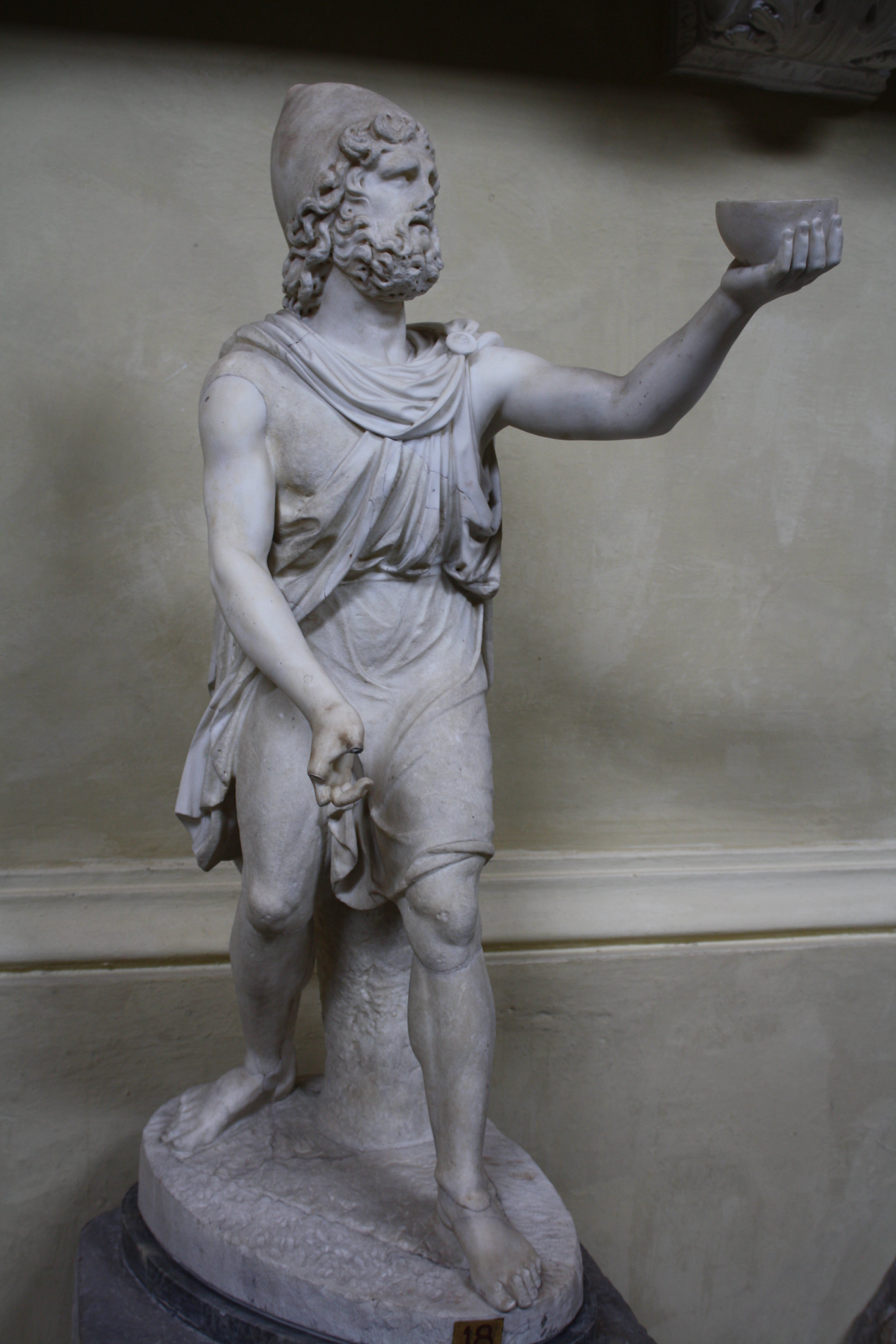
Thus, it’s important, when a warrior defeats a powerful enemy, not only should the enemy warrior know who beat him, but all the bystanders, should there be any, as well.

image9warrior.jpg

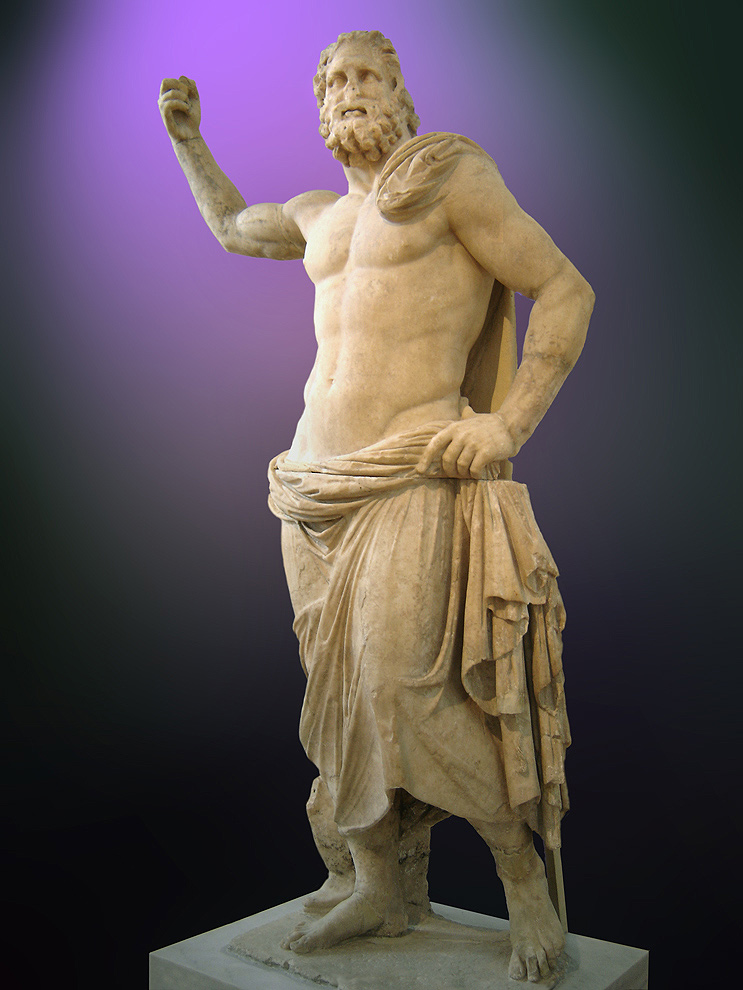
For Odysseus, then, using a false name might give him an initial advantage over Polyphemus, but his victory is only complete and he can only claim kleos when he reveals to the Cyclops who has defeated him. This will lead to terrible subsequent consequences for Odysseus. Polyphemus’ father is Poseidon, god of the seas

image10pos.jpg

and he will make things very difficult for Odysseus later in the Odyssey,

image11pos.jpg

but, in the world of kleos, Odysseus has no choice but to reveal himself to gain the credit necessary for maintaining it.

Another reason for concealing your name has to do with magic. In many of the world’s older traditional cultures, people might have several names, either in succession, or public versus private. Behind the public versus private stands the idea that you are your name—that is, all that is you is embodied in your name. If someone knows that name, that person can use that name against you, either to curse you—and, using your real name, that curse might stick to it—or to summon you for magical purposes. Once your true name is called, a sorcerer can make you obey, even against your will.

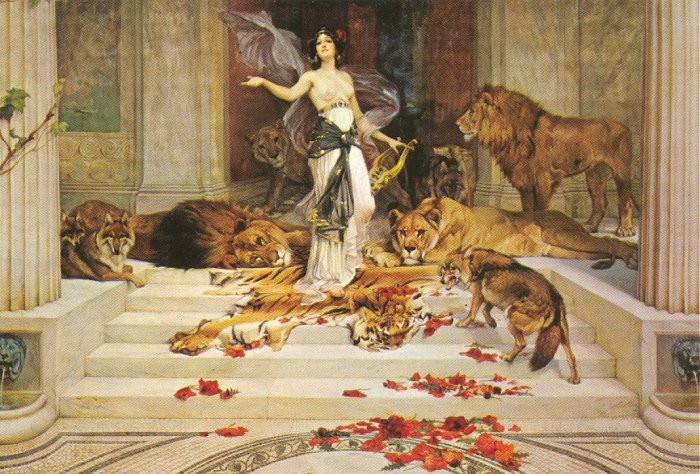
In Odyssey 10, Odysseus and his men land on an island which is the home of the enchantress, Circe.

image12circe.jpg

She has the power to shift the shapes of men into those of animals and vice versa, as a scouting party from Odysseus’ ship soon finds out. She gives them a drink with some sort of magic drugs mixed in and, with a wave of her staff, turns them into pigs (although they retain their human minds).

image13enchant.jpg

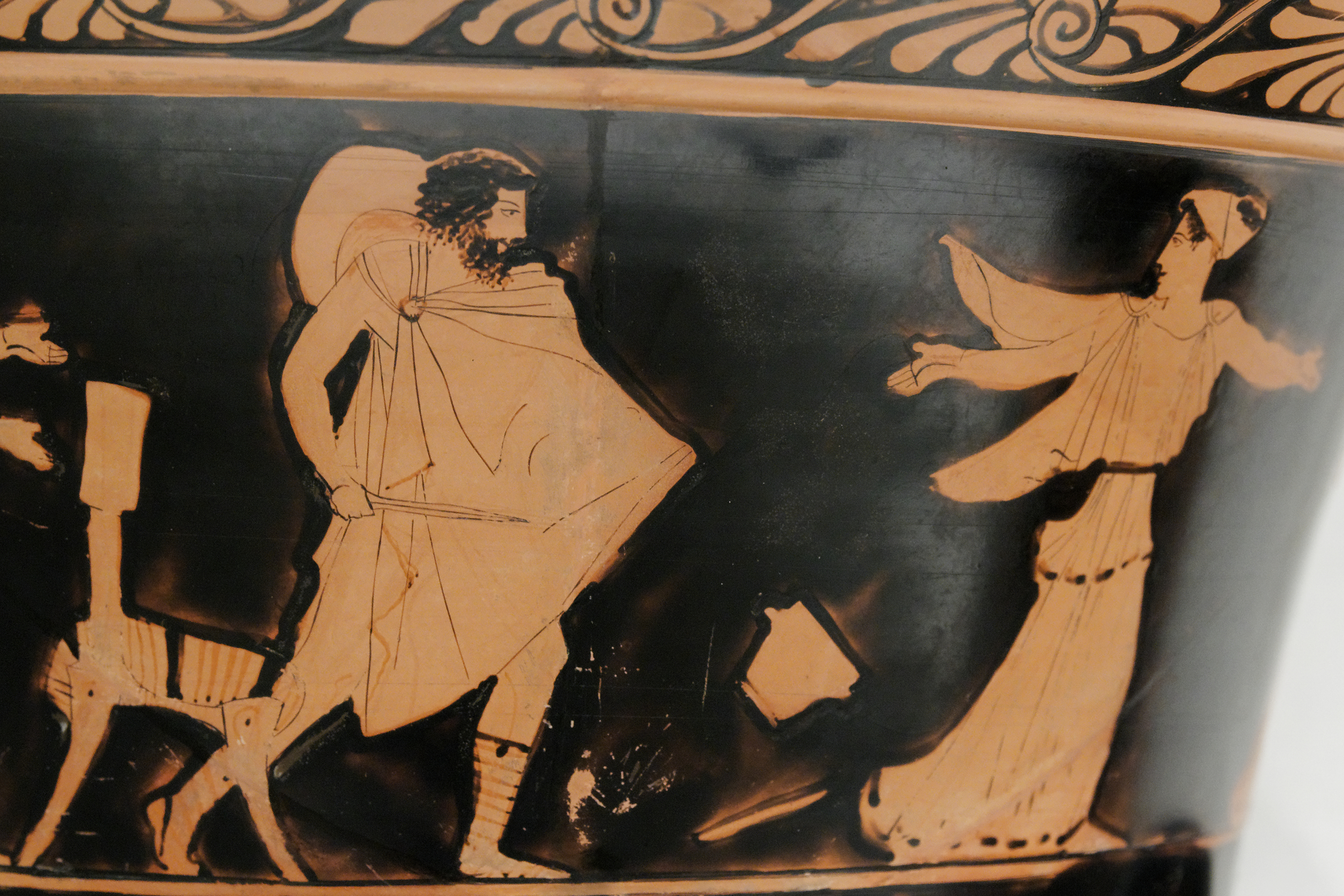
She then tries this on Odysseus, but, in his case, it doesn’t work, much to her surprise, and he, drawing his sword, quickly forces her surrender.

image14defeat.jpg

There is no direct explanation for the failure of her magic in Book 10, but there is, in fact, a clue in the word she uses for Odysseus in her frustration. She calls him “akaletes” (ah-KAH-leh-tehs)—which means “unsummonable/uncallable by name” and is from the same root as kleos and kalo. The implication here is that, for her magic to work, she needs a name—something we might presume Odysseus’ piggy companions must have foolishly given her. That he is unsummonable suggests that he has given her a false name and therefore her magic hasn’t worked.

And is this perhaps the real reason why it was wise that Bilbo didn’t identify himself directly to Smaug?

image15smaug

After all, Smaug, unlike the agents of Sauron, wasn’t likely to roam the countryside, offering gold in return for information about the whereabouts of a certain “Baggins”. He does, however, appear to have a certain persuasive magic:

“Bilbo was now beginning to feel really uncomfortable. Whenever Smaug’s roving eye, seeking for him in the shadows, flashed across him, he trembled, and an unaccountable desire seized hold of him to rush out and reveal himself and tell all the truth to Smaug. In fact he was in grievous danger of coming under the dragon-spell.” (The Hobbit, Chapter 12, “Inside Information”)

That magic seems to lie in his words and tone—Bilbo, listening, is said to be in peril of “dragon-talk”—and we want to talk more about such magical persuasion in our next posting…

Thanks, as ever, for reading!

MTCIDC

CD

The Doubtful Sea Series Facebook Page

The Doubtful Sea Series Facebook Page

  • Ollamh

Categories

  • Artists and Illustrators
  • Economics in Middle-earth
  • Fairy Tales and Myths
  • Films and Music
  • Games
  • Heroes
  • Imaginary History
  • J.R.R. Tolkien
  • Language
  • Literary History
  • Maps
  • Medieval Russia
  • Military History
  • Military History of Middle-earth
  • Narnia
  • Narrative Methods
  • Poetry
  • Research
  • Star Wars
  • Terra Australis
  • The Rohirrim
  • Theatre and Performance
  • Tolkien
  • Uncategorized
  • Villains
  • Writing as Collaborators
Follow doubtfulsea on WordPress.com

Across the Doubtful Sea

Recent Postings

  • Death and the Rohirrim September 30, 2026
  • Minor? September 23, 2026
  • An Homeric PS September 16, 2026
  • December in September September 9, 2026
  • Fan/Finn Fiction September 2, 2026
  • Demons on the Big Screen August 26, 2026
  • Solution (2) August 19, 2026
  • Out of Work Athena August 12, 2026
  • Solution (1) August 5, 2026

Blog Statistics

  • 122,747 Views

Posting Archive

  • September 2026 (5)
  • August 2026 (4)
  • July 2026 (5)
  • June 2026 (4)
  • May 2026 (4)
  • April 2026 (5)
  • March 2026 (4)
  • February 2026 (4)
  • January 2026 (4)
  • December 2025 (5)
  • November 2025 (4)
  • October 2025 (5)
  • September 2025 (4)
  • August 2025 (4)
  • July 2025 (5)
  • June 2025 (4)
  • May 2025 (4)
  • April 2025 (5)
  • March 2025 (4)
  • February 2025 (4)
  • January 2025 (5)
  • December 2024 (4)
  • November 2024 (4)
  • October 2024 (5)
  • September 2024 (4)
  • August 2024 (4)
  • July 2024 (5)
  • June 2024 (4)
  • May 2024 (5)
  • April 2024 (4)
  • March 2024 (4)
  • February 2024 (4)
  • January 2024 (5)
  • December 2023 (4)
  • November 2023 (5)
  • October 2023 (4)
  • September 2023 (4)
  • August 2023 (5)
  • July 2023 (4)
  • June 2023 (4)
  • May 2023 (5)
  • April 2023 (4)
  • March 2023 (5)
  • February 2023 (4)
  • January 2023 (4)
  • December 2022 (4)
  • November 2022 (5)
  • October 2022 (4)
  • September 2022 (4)
  • August 2022 (5)
  • July 2022 (4)
  • June 2022 (5)
  • May 2022 (4)
  • April 2022 (4)
  • March 2022 (5)
  • February 2022 (4)
  • January 2022 (4)
  • December 2021 (5)
  • November 2021 (4)
  • October 2021 (4)
  • September 2021 (5)
  • August 2021 (4)
  • July 2021 (4)
  • June 2021 (5)
  • May 2021 (4)
  • April 2021 (4)
  • March 2021 (5)
  • February 2021 (4)
  • January 2021 (4)
  • December 2020 (5)
  • November 2020 (4)
  • October 2020 (4)
  • September 2020 (5)
  • August 2020 (4)
  • July 2020 (5)
  • June 2020 (4)
  • May 2020 (4)
  • April 2020 (5)
  • March 2020 (4)
  • February 2020 (4)
  • January 2020 (6)
  • December 2019 (4)
  • November 2019 (4)
  • October 2019 (5)
  • September 2019 (4)
  • August 2019 (4)
  • July 2019 (5)
  • June 2019 (4)
  • May 2019 (5)
  • April 2019 (4)
  • March 2019 (4)
  • February 2019 (4)
  • January 2019 (5)
  • December 2018 (4)
  • November 2018 (4)
  • October 2018 (5)
  • September 2018 (4)
  • August 2018 (5)
  • July 2018 (4)
  • June 2018 (4)
  • May 2018 (5)
  • April 2018 (4)
  • March 2018 (4)
  • February 2018 (4)
  • January 2018 (5)
  • December 2017 (4)
  • November 2017 (4)
  • October 2017 (4)
  • September 2017 (4)
  • August 2017 (5)
  • July 2017 (4)
  • June 2017 (4)
  • May 2017 (5)
  • April 2017 (4)
  • March 2017 (5)
  • February 2017 (4)
  • January 2017 (4)
  • December 2016 (4)
  • November 2016 (5)
  • October 2016 (6)
  • September 2016 (5)
  • August 2016 (5)
  • July 2016 (5)
  • June 2016 (5)
  • May 2016 (4)
  • April 2016 (4)
  • March 2016 (5)
  • February 2016 (4)
  • January 2016 (4)
  • December 2015 (5)
  • November 2015 (5)
  • October 2015 (4)
  • September 2015 (5)
  • August 2015 (4)
  • July 2015 (5)
  • June 2015 (5)
  • May 2015 (4)
  • April 2015 (3)
  • March 2015 (4)
  • February 2015 (4)
  • January 2015 (4)
  • December 2014 (5)
  • November 2014 (4)
  • October 2014 (6)
  • September 2014 (1)

Blog at WordPress.com.

  • Subscribe Subscribed
    doubtfulsea
    Join 75 other subscribers

    Have a WordPress.com account? Log in now.

  • doubtfulsea
    View site in Reader
    Manage subscriptionsSign upLog in
    Report this content
    Collapse this bar
Loading Comments...