• About

doubtfulsea

~ adventure fantasy

Tag Archives: Athena

Out of Work Athena

12 Wednesday Aug 2026

Posted by Ollamh in Uncategorized

≈ Leave a comment

Tags

Adventure, Athena, Christopher Nolan, christopher-nolan, classical films, Helen, movies, Peleus, review, the gods, the judgment of Paris, The Odyssey, the Trojan war, the-greek-gods, Thetis

As always, dear readers, welcome.

The second part of “Solution” will appear next week.

In the meantime, as promised, I’ve been to see Christopher Nolan’s The Odyssey,

but I’m going to break my usual rule of seeing it twice before writing about it—having just seen it yesterday, it’s all very vivid in my mind.  I will certainly keep to my constant rule of avoiding destructive criticism, however, which often seems to crowd the internet and which is not only depressing, but, worse, unhelpful.

I would begin by saying that the film is well-acted and the effects are large-scale and, on that scale, impressive.  It’s clear that an enormous amount of work on the part of everyone involved went to making the film.  And yet, for me—and for the poem—something important—even vital—is lacking and you can see it in my title. 

I’ve written earlier that I was disappointed with Troy (2006),

not only for the changes to the story but perhaps more important for the removal of the gods.  Both The Iliad and The Odyssey are, at base, deeply religious works.  The Trojan War itself was said to take place because (and be prepared for complications):

1. Zeus, head of the gods, lusts after Thetis, a sea goddess

2. but, when told that a prophecy predicts that their child will be more powerful than his father, marries her off to a mortal, Peleus, instead.

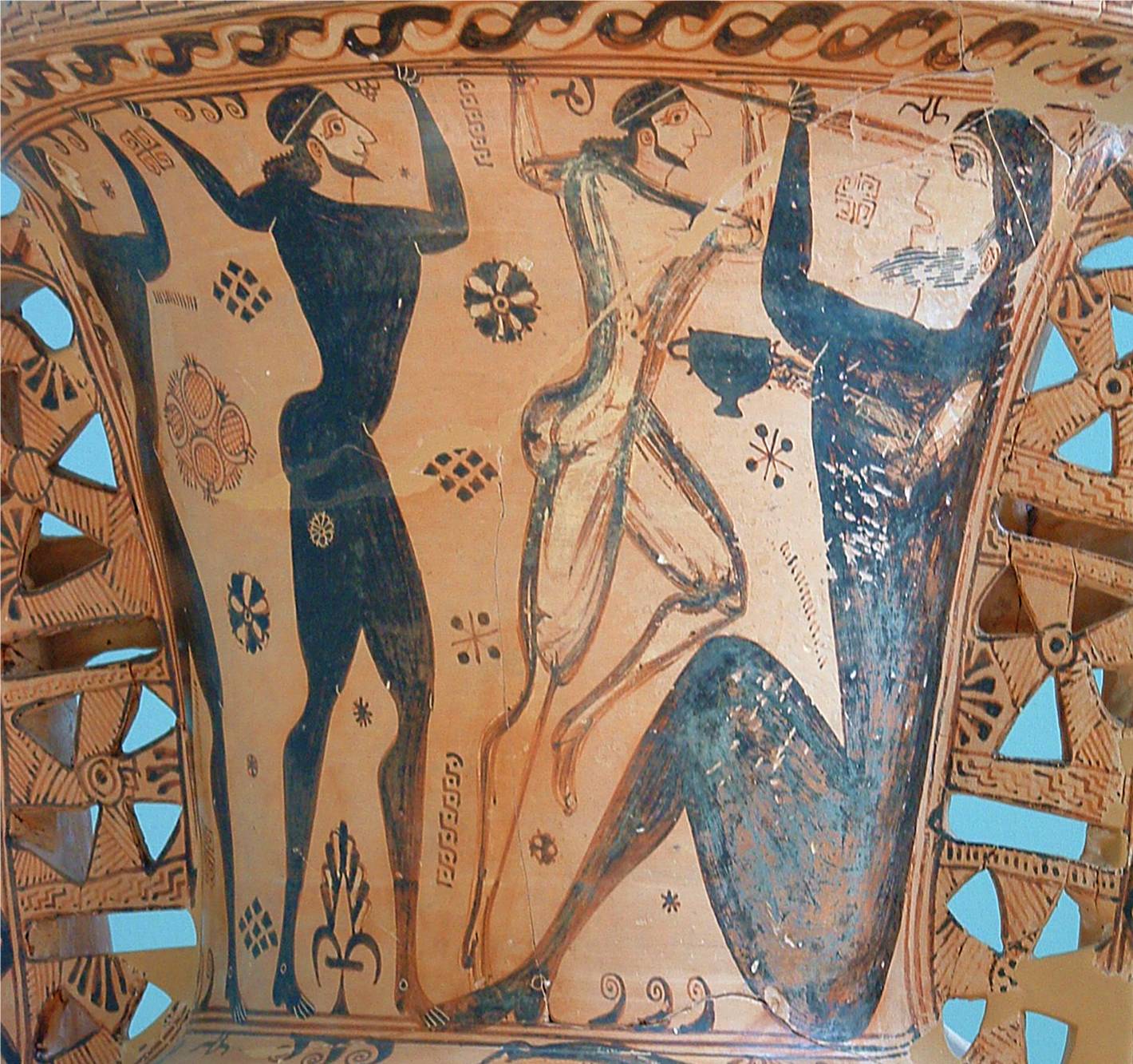
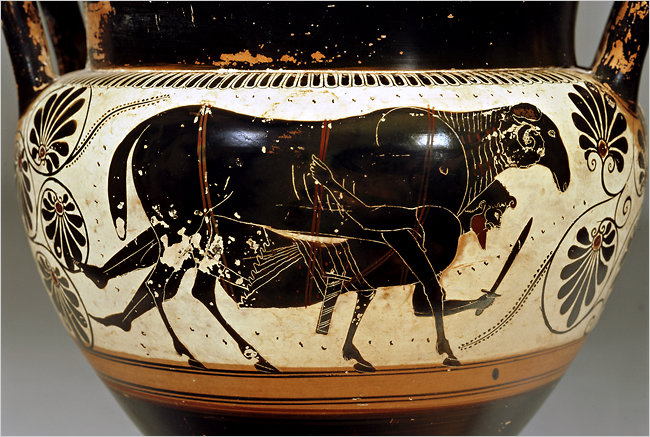
(Thetis isn’t easy to catch—Peleus is shown here wrestling with a shape-shifting goddess)

3.  to the wedding, it happens that another goddess, Eris (“Strife/Discord”), isn’t invited (not a surprise—and you probably know this motif from “Sleeping Beauty”) and, in revenge, she bowls in a golden ball or apple with the words “For the Most Beautiful” on it into the feast.

4. Three goddess, Hera, Athena, and Aphrodite then argue over who deserves it and, when Zeus refuses to choose, they find a mortal shepherd, Paris—presumably neutral—to judge.

5. Aphrodite wins by offering Paris the most beautiful woman in the world, who just happens:

a. to be Helen, a demigoddess (father Zeus)

b. to be already married to Menelaus, the younger brother of the high king of Greece, Agamemnon

6. Paris, however, isn’t really a shepherd, but the long-lost prince of Troy and, when that’s revealed, he goes on a diplomatic mission to Greece and either persuades Helen to leave with him, or steals her, carrying her back to Troy.

7. the major kings of Greece were once Helen’s suitors but, as she could pick only one, the rest took an oath to protect her.

8. and so big brother Agamemnon, when Menelaus complained that his wife was gone, called on those kings to join an expedition to bring her back—and the Trojan War began.

9. the gods—except for Zeus—then took sides and aggressively backed either the Greeks or the Trojans through the ten years of the war.

As you can see, at every step of the war, one or more divinities was involved—and sometimes very actively.

Although fewer gods are involved in The Odyssey, one goddess, Athena, is a major player throughout.

In fact, the poem begins with her on Olympus, appealing to Zeus to free Odysseus from the clutches of Calypso, with whom he’s been marooned for seven years.

She then (sorry for a second list, but, again, it’s complicated)–

1.  goes to Ithaka to help Telemachos, Odysseus’ son, to grow up, appearing both as Mentes, a guest friend of Odysseus, and then as Mentor, an Ithakan elder, as whom she travels with Telemachos to mainland Greece, first to the most senior of all Greek heroes, Nestor, and then on to Sparta, to see Menelaus and Helen, now brought back from fallen Troy. 

2. continuing in her disguises, pops up when Odysseus, on his way home from Calypso (it takes a second try for Athena to get Zeus to send Hermes to order Kalypso to help him to go home), lands on the island of the Phaeacians (left out of the film entirely) where she appears first, as a little girl who directs him to the house of Alcinous, the king of the Phaeacians, and then as a spectator at the athletic event in which Odysseus participates. 

3. appears to Odysseus, disguised as a shepherd boy, after the Phaeacians take Odysseus home, and he awakes on a beach on his home island of Ithaka.

4. is more present from then on, giving Odysseus his beggar disguise and appearing to Odysseus as herself when she pushes him to reveal himself to Telemachos at the hut of Eumaeus, the swineherd (who is not blind in the poem, by the way).

5.  in Odysseus’ home, first encourages him to believe that, with her help he can beat the suitors, and then appearing for a final time to put the suitors into a panic when Odysseus, Telemachos, and their two servants destroy all of them and their attendants.  (No one surrenders in the poem.)

6.  makes a final appearance in the poem appealing once more to Zeus, this time as to how to resolve the conflict between Odysseus and the vengeful families of the suitors. 

She is a busy character, in fact, helping both Odysseus and his son, but Nolan’s script has almost entirely erased her and certainly has removed all of her help and, as you can see from 1-6 above, she is actually an active participant throughout the poem, even being the reason why—through her pushing Zeus to send Hermes to Calypso—Odysseus actually goes home.  To allow her to be nothing more than an occasional visitor and a passive one, at that, is to misrepresent not only the story, but the character of Odysseus.  (Who, by the way, unlike in the film, has no guilt or regret over his actions and certainly doesn’t sail off into the sunset with Penelope on a mission to commemorate his dead crewmen.)

That poster I’ve used as the first image in this posting has a subtitle:  “defy the gods”, something Odysseus, with a goddess for a patron, would never think of doing, is actually more like the motto of the film.  In the poem which is the basis of the film, Odysseus survives and even wins because he has a goddess for a patron.  Without her, would he have ever returned and, having returned, would he have survived the suitors and their angry families?

So, is this a film which I would recommend?  In fact, with rare exceptions, I would recommend that everyone see/listen to any and all art and decide for her/himself as to its value, entertainment or otherwise.  In this case, I would say certainly, go and see it, but I would also encourage you to read the poem first—preferably in Richmond Lattimore’s translation

Version 1.0.0

which, although now some 60 years old (original publication 1965), is still the closest of modern translations to the original Greek and the one I’ve used in classes for many years.  Of necessity, although 3 hours long, the film leaves out many details, but, at the same time, as I hope I make clear, it also changes the text significantly, and, for me, those changes turn it from the ancient story to Christopher Nolan’s story and it is up to you, as readers and viewers, to decide which you would prefer–or perhaps you would keep both, even though being aware that the two differ significantly.  As a student once said to me about Jackson’s The Hobbit trilogy, “If you haven’t read the book, they are fun adventure movies”.

Thanks, as always, for reading.

Stay well,

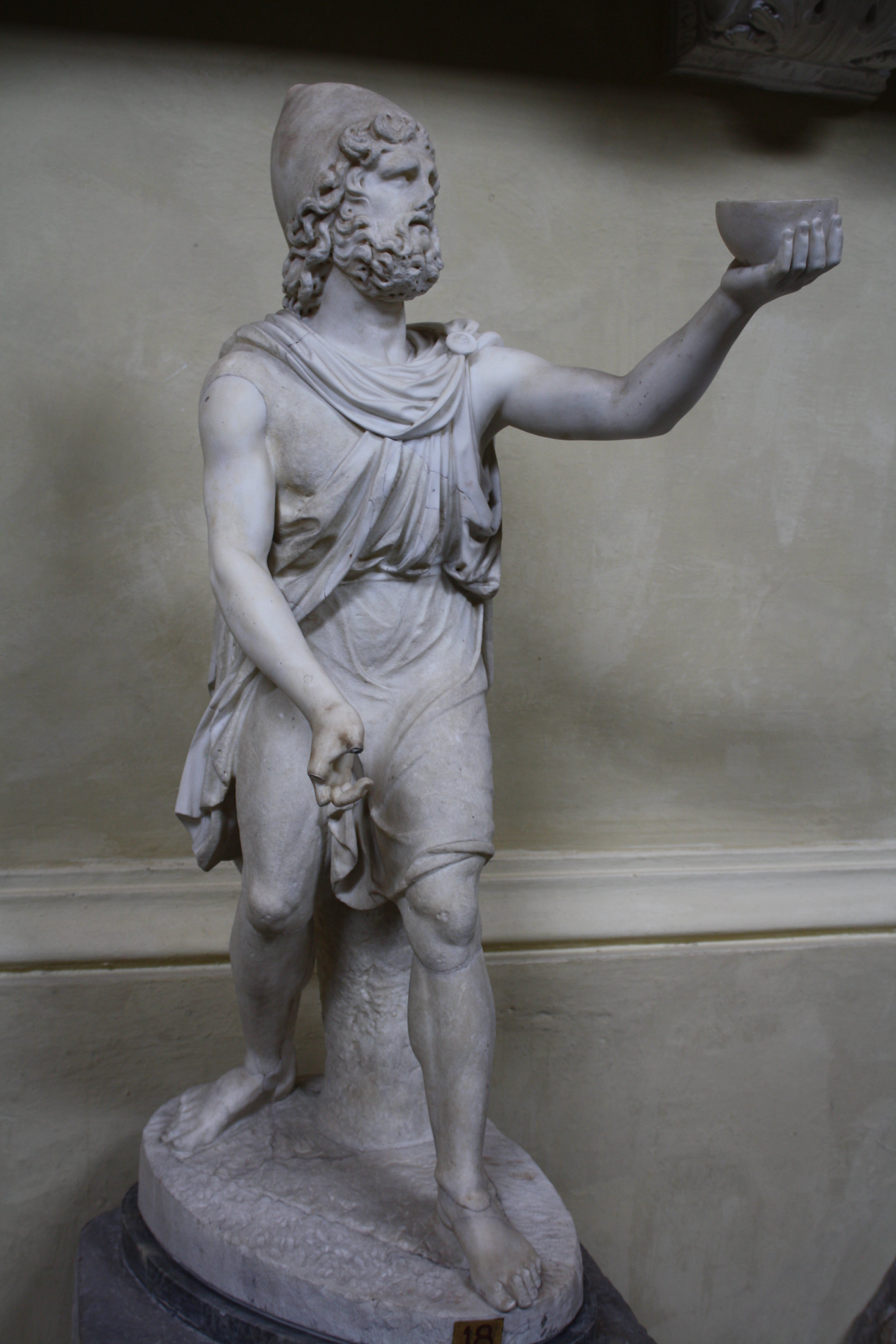
If you make a surprise visit to a very large man in a cave, plan ahead what to do if you’re not welcome,

And remember that, as always, there’s

MTCIDC

O

A Longer Stretch

19 Wednesday Jul 2017

Posted by Ollamh in Fairy Tales and Myths, Heroes, Imaginary History, J.R.R. Tolkien, Literary History, Narrative Methods

≈ Leave a comment

Tags

Achilles, Angelica Kauffmann, Athena, Bard the Bowman, Circe, cyclops, Dora Wheeler, English Longbowmen, Errol Flynn, Greek, Henry VIII, Heracles, His Dark Materials, John William Waterhouse, Laertes, Lord Asriel, N.C. Wyeth, Odysseus, Paris, Patroclus, Penelope, Philip Pullman, Philoctetes, Portsmouth, Priam, Robin Hood, Sparta, Stelmaria, Telemachus, The Amber Spyglass, The Golden Compass, The Illiad, The Mary Rose, The Odyssey, The Subtle Knife, Tolkien, Troy

Welcome, dear readers, as always.
In our last posting, our central focus was upon Bard the Bowman and what he might have looked like.
image1bardjeffchang.jpg
As we do so often, we tried to use something from the history of our world to help us to flesh out JRRT’s description. In this case, we looked at Henry VIII’s battleship (a carrack, in the vocabulary of the period), the Mary Rose, which sank during a naval battle with the French on 19 July, 1545.
image2amrsinks.jpg
The ship was raised in 1982 (you can see the large surviving section of the hull in the Mary Rose museum, in Portsmouth, England).
image3amr.jpg
It was full of artifacts—and of crew.
Because she sank so suddenly—and in the middle of a battle—almost none of the crew of 400 and more escaped. One of those trapped was this man.
image3mrarcher.jpg
His was among the roughly 90 skeletons well-enough preserved to allow for forensic exploration. That exploration, and the subsequent brilliant reconstruction, brought back to life a man about 6 feet (182cm) tall, with a powerfully-developed upper body. His build, certain characteristic marks of stress, and the fact that over 130 longbows and several thousand arrows were found in the wreck, led the archaeologists to see this man as an archer. We, in turn, then used him as the body-model for Bard.
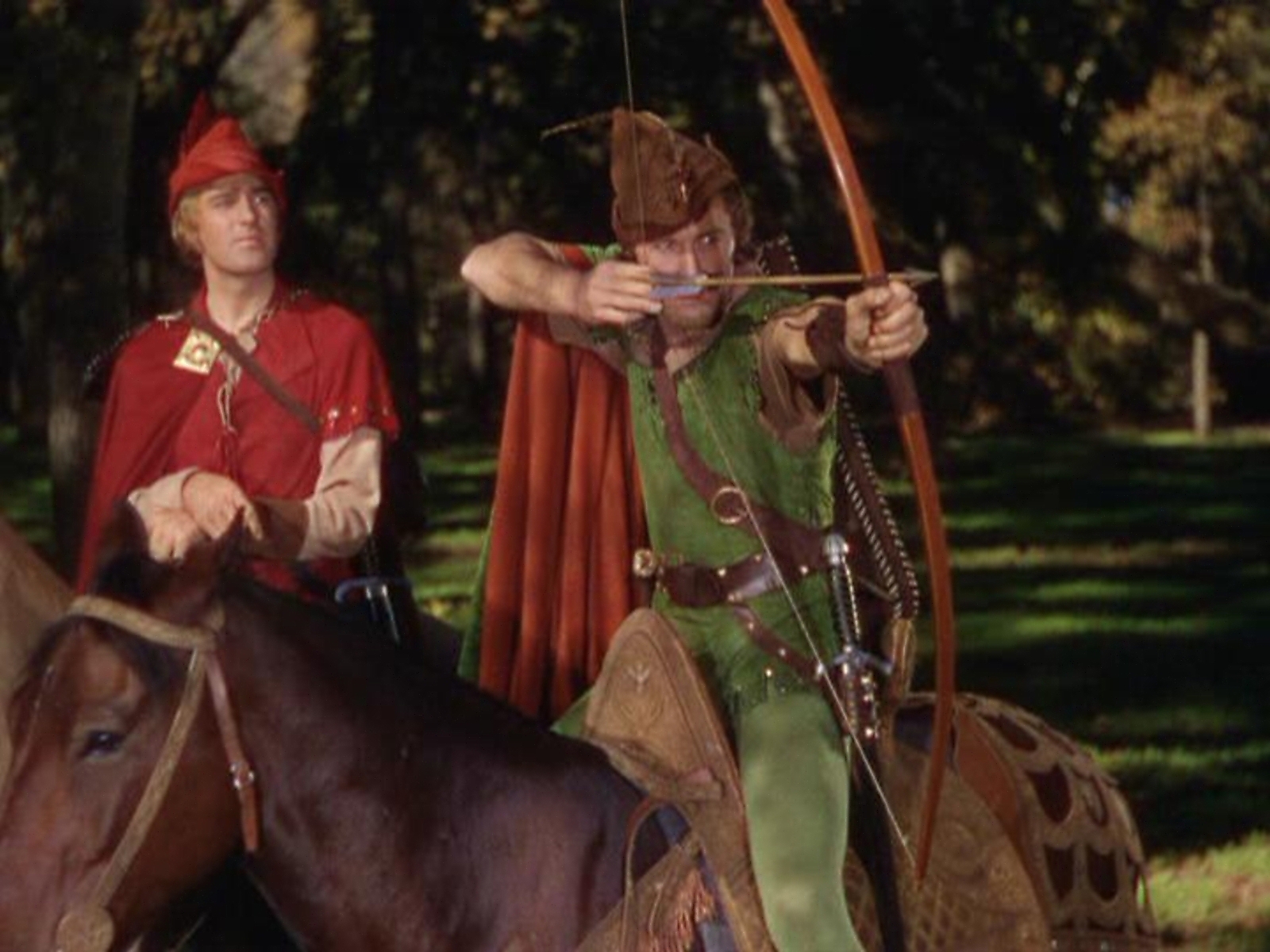
But “bowman/archer” to us, who are crazy for adventure, immediately brought back Robin Hood, first in what we believe to be his best 20th-century incarnation, Erroll Flynn,
image3eflynrhood.jpg
in the classic 1938 film.
image4poster.jpg
To which we would add N.C. Wyeth’s illustrations
image5wyeth.jpg
for the 1917 Robin Hood.
image6bookcover.jpg
Thinking about bowmen in adventure stories then took us back to the first big adventure story in western literature, the Odyssey, and its hero, Odysseus, who has two associations with bows, but who, oddly enough, is never depicted as an archer, but rather as a trickster, who uses his brains to escape everything from a one-eyed giant
image7.jpg
to an enchantress, Circe, who has already turned a good number of his crewmen into ham-on-the-hoof.
image8herccirce.jpg
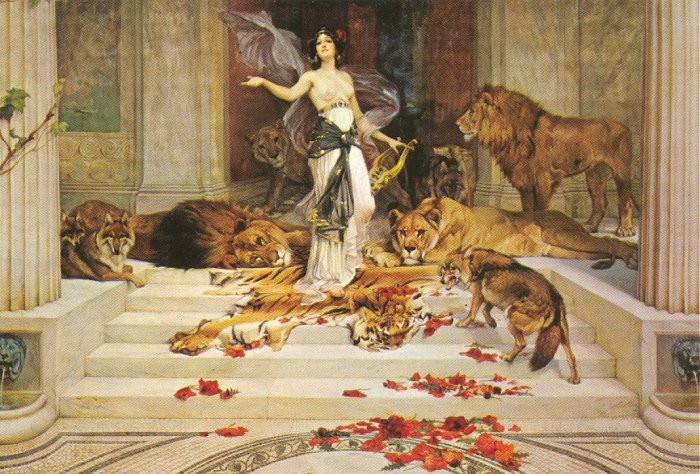
One of our favorite illustrations of Circe is by John William Waterhouse, which he worked on from 1911 to 1915.

image9jwwaterhousecirce.jpg

The leopards in this version of the painting (in another, apparently, they are bears) reminded us of the snow leopard which is Lord Asriel’s demon, Stelmaria,
image10goldcomposter.jpg
in Philip Pullman’s trilogy
image13pullman.jpg
His Dark Materials, the three books being The Golden Compass (in the British edition, Northern Lights), 1995, The Subtle Knife, 1997, and The Amber Spyglass, 2000.
image12hisdarkmaterials.jpg
These are remarkable books—full of vivid characters and places-other-than-here-and-now, and we have read and reread them since they first appeared. If you haven’t read them, we would add only one proviso: there is a strong anti-religious theme throughout and some devout readers might have difficulty with Pullman’s views. If you are willing to imagine that this is a critique of beliefs in other worlds than our own, however, we would unqualifiably recommend them. (Our favorite characters are Lyra, the fierce and fearless heroine, and Iorek Byrnison, a panserbjorn, or armored bear. There is a film version, released in 2007, based upon The Golden Compass, which we enjoy, although it has simplified and changed certain elements in the original story.)
image14aposter.jpg
But back to Odysseus the archer…
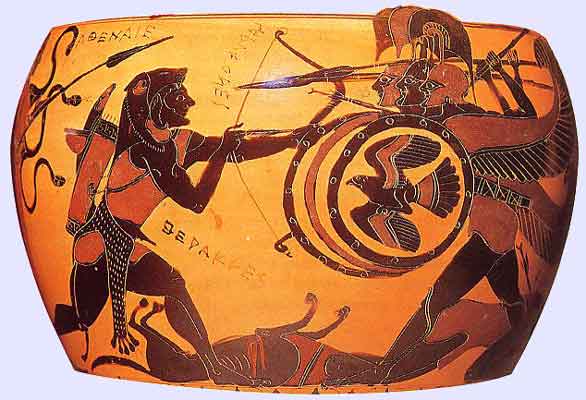
In the story of Troy, the famous archer is Paris, the son of Priam, the king of Troy, who uses his skill to kill Achilles, the most famous and powerful hero on the Greek side (in this pot illustration, almost by accident!).
image14parisshootsachilles.jpg
Paris, according to some accounts (there are a number of them and they can differ in all sorts of details), is then killed by Philoctetes, who has inherited Heracles’ bow. A prophecy lies behind that bow: it seems that it is a necessary element in the conquest of Troy.
image15hercger.jpg
When Heracles is suffering from a poisoned shirt, and builds a pyre to cremate himself
image16herconpyre.jpg
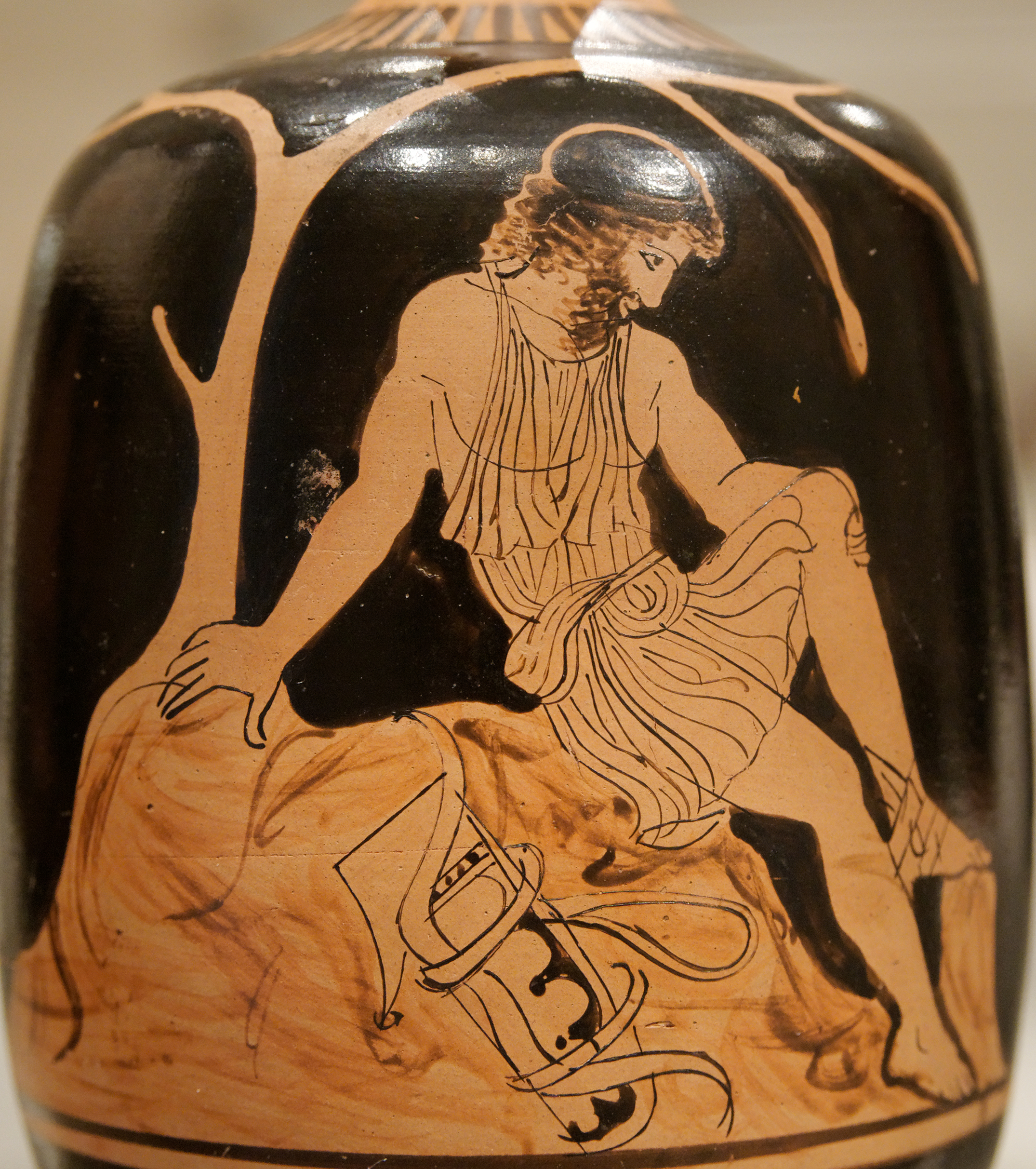
it is Philoctetes who is willing to light it and, in return, he receives Heracles’ bow. On the way to Troy, however, Philoctetes is bitten by a snake and left behind on an island.
image17philoct.jpg
In some versions of the story (including Sophocles’ play), Odysseus acts as the main agent for, initially, bringing the bow to Troy, and then for bringing Philoctetes himself. So far, that is Odysseus’ only connection with archery. He is depicted as clever—being part of a successful scouting expedition in which a Trojan ally is killed and possibly the creator of the wooden horse—but, otherwise, his main accomplishments lie in beating up a trouble-maker at a public meeting and, at the funeral games which Achilles holds at the end of the Iliad for his companion, Patroclus, winning a footrace.
This footrace, however, leads us from Troy westward, as well as backward in time.
For all that there are these two huge things called the Iliad and the Odyssey, they are not all of the Troy story. They themselves are just collections of smaller stories stitched onto a plot outline. In the case of the Iliad, that outline is very basic: a. Achilles leaves war; b. Greeks substitute other warriors for Achilles; c. Achilles returns to war. The Odyssey is actually even more basic: man tries to find a way to sail home from Troy. Along with these, there are fragments from other parts of the tradition and lots of separate tales which often act as back-stories, probably invented when the popularity of the Troy tale in general caused a demand for singers to supply more material—the ancient equivalent of fan fiction!
One of these back-stories explains why Odysseus wins at the funeral games: he must already have been a famous foot racer, as he wins his bride, Penelope, from her father, the king of Sparta, in a footrace.
image20footrace.jpg
Not long after that, having gotten Penelope pregnant, he is off to Troy and won’t return for twenty years.
In the meantime, Penelope gives birth to a son, Telemachus, who grows up fatherless and in a household increasingly besieged by young men who claim that Odysseus must be dead and demand that Penelope must marry again.
image19jwwpenelope.jpg
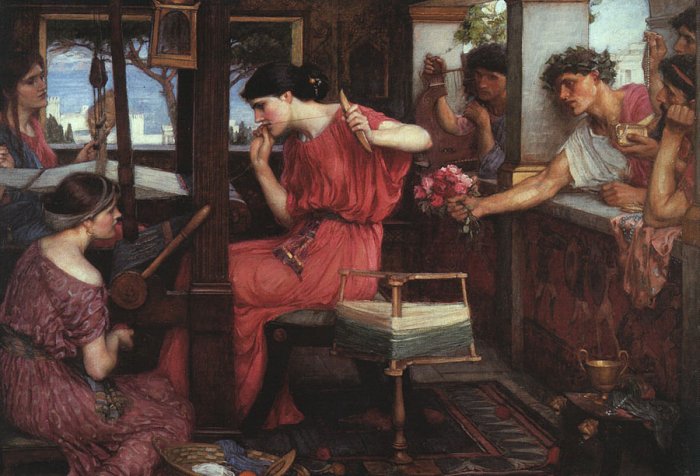
To delay being forced to accept one of these obnoxious toads, Penelope (our favorite in the story, along with Athena) claims that, before she can choose, she has to finish a shroud she is weaving for Odysseus’ father, Laertes. (That’s Telemachus, on the left.)
image20aapenandtel.jpg
In fact, although she weaves by day, she un-weaves by night and continues to do so for three years before one of her maids tells the suitors what’s going on.
image20penrav.jpg
(This is a remarkable piece of work designed by the painter/designer, Dora Wheeler, 1856-1940.
image21dorawheeler.jpg
It is not a painting, but, in fact, an embroidery—silk stitched into silk cloth—and a remarkable artifact—and, unfortunately, the only surviving one of its kind.)
In year 19, Odysseus comes home—disguised by Athena as an old beggar, to keep him safe until he can plot his revenge and gather allies. In the meantime, Penelope (who, to us, is as quick-witted as her wandering husband) announces an archery contest, the winner to—win her. Besides the trickiness of the target (having something to do with shooting through axes—scholars have argued over just how that works for years), there is the bow: it has such a pull that only her husband, she says, has ever been able to string it.
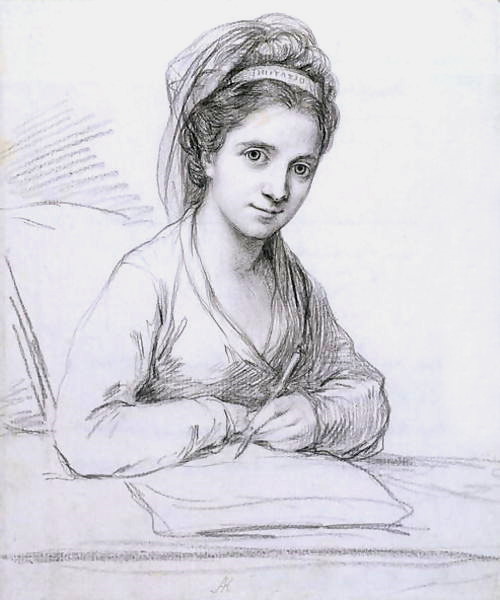
image22penelopebowangelicakauffmann.jpg
(This illustration is by another wonderful woman artist, Angelica Kauffmann, 1741-1807. Here’s a self-portrait.)
image23.jpg
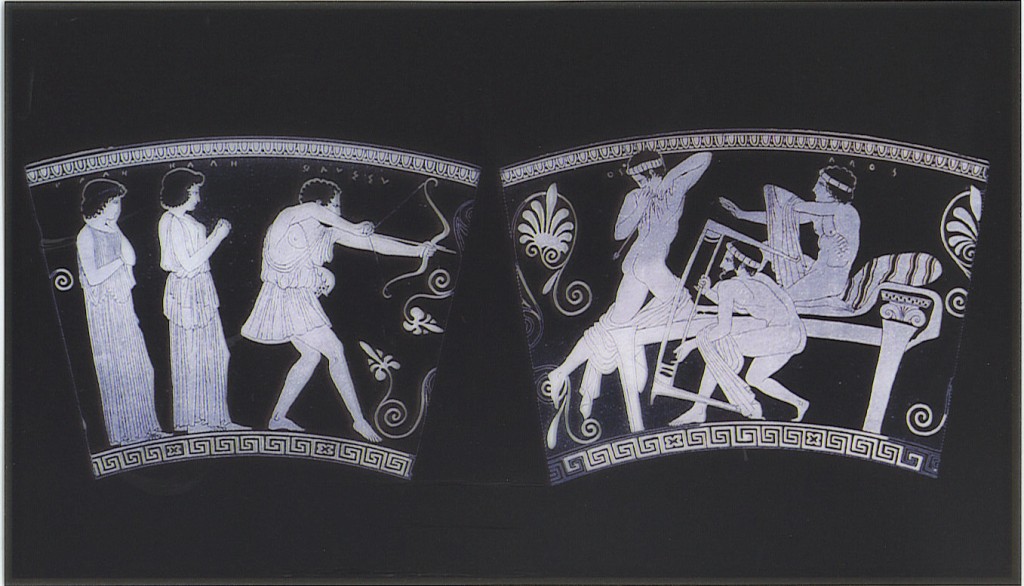
Needless to say, the suitors are unable to do it, but that dirty old beggarman can—and does—and then, with a little help from Telemachus and a servant or two—not to mention Athena—proceeds to slaughter the suitors and clean house.
image25connolly.jpg
image26deathofsuitors.jpg
So, remembering the Mary Rose archer (as well as Bard), can we now imagine Odysseus’ build? And, for that matter, Robin Hood’s?
image27rharchcontest.jpg
Thanks, as ever, for reading!
MTCIDC
CD

Just a Nobuddy

03 Wednesday May 2017

Posted by Ollamh in Artists and Illustrators, Fairy Tales and Myths, Heroes, Imaginary History, J.R.R. Tolkien, Literary History, Narrative Methods

≈ Leave a comment

Tags

akaletes, Athena, Bilbo, Circe, cyclops, face culture, Greek, Homer, kleos, Odysseus, Outis, Polyphemus, Poseidon, Riddles in the Dark, Smaug, Telemachus, The Hobbit, The Lord of the Rings, The Odyssey, Tolkien, true name

Welcome once more, dear readers.

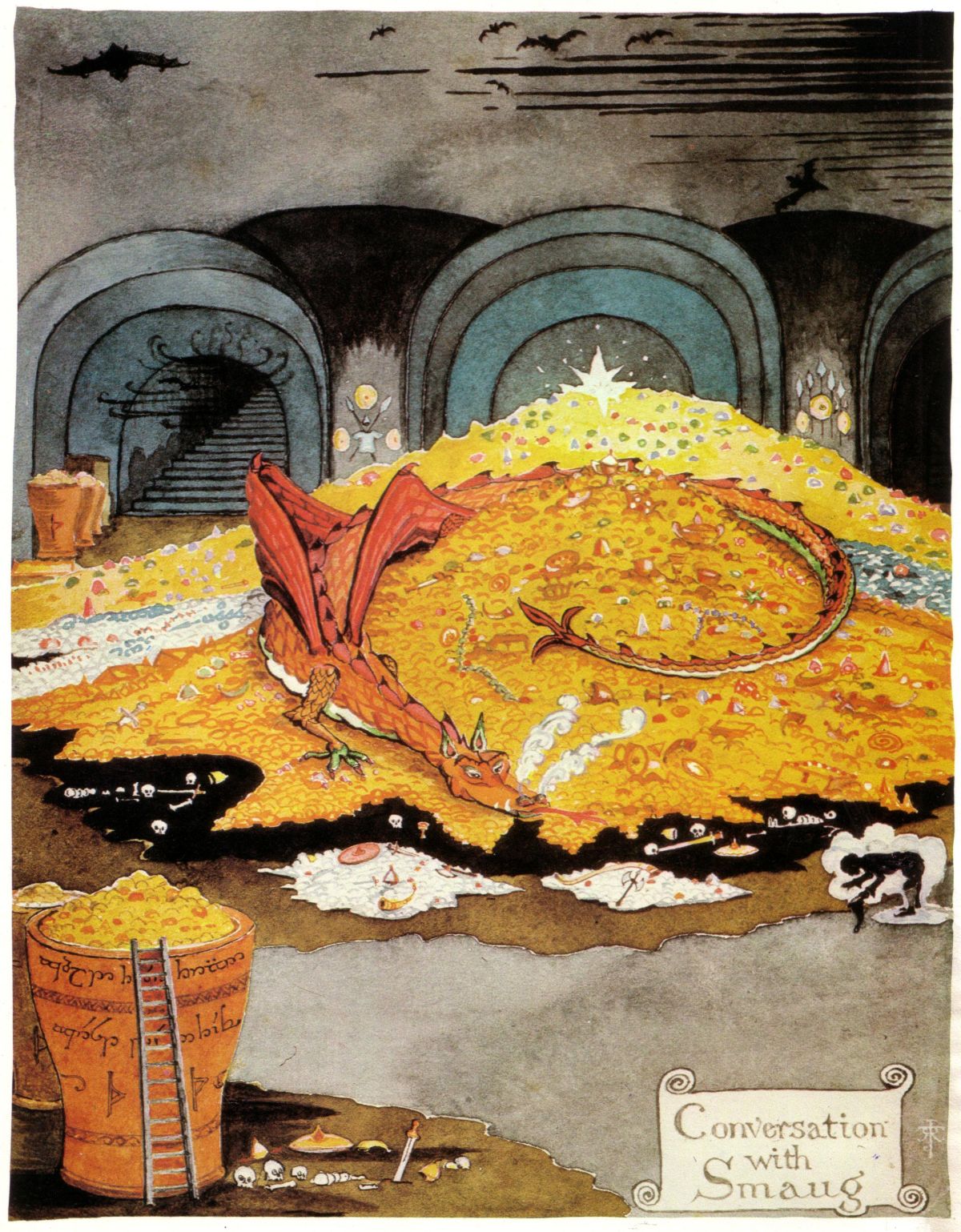
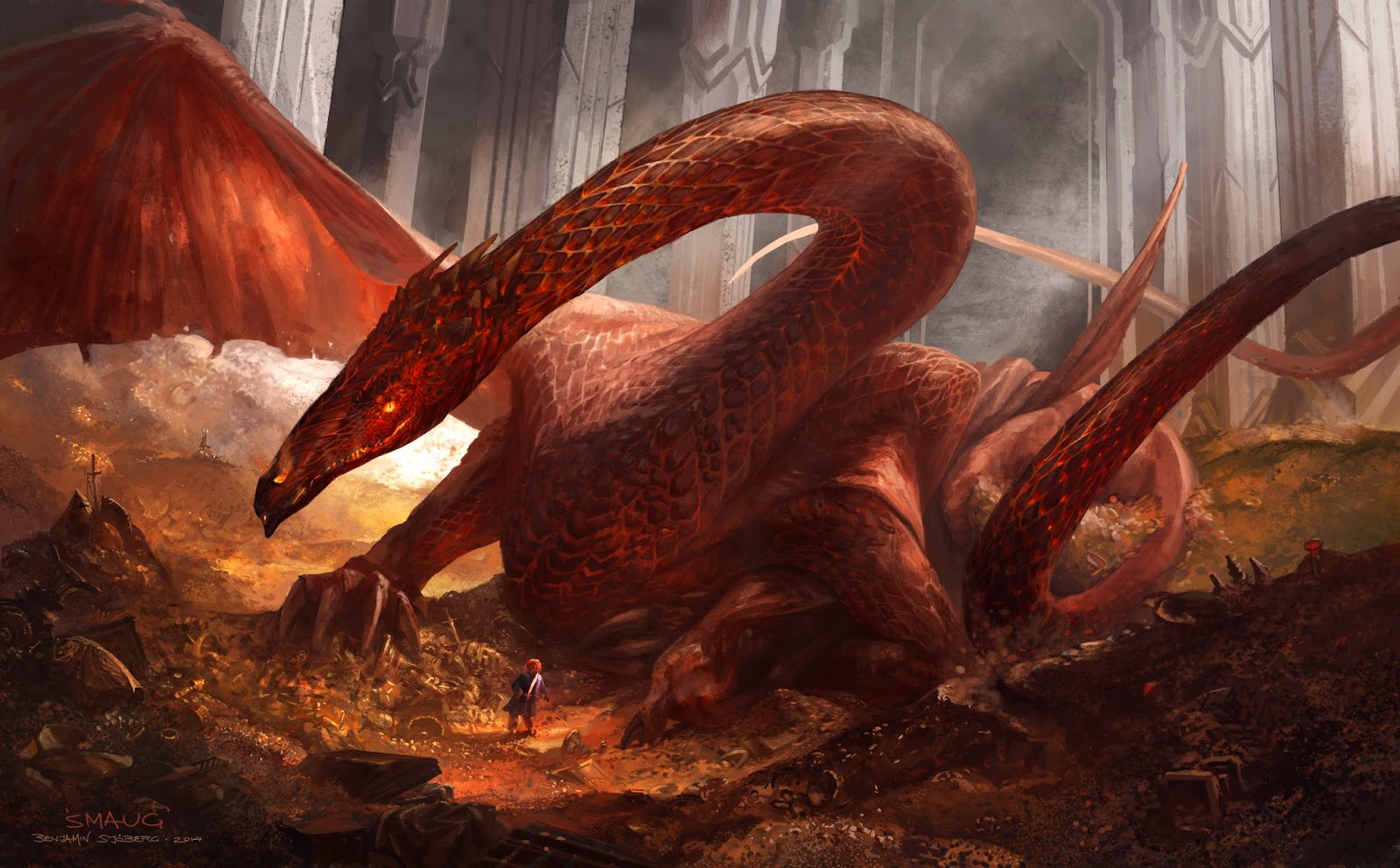
“Who are you and where do you come from, may I ask?”

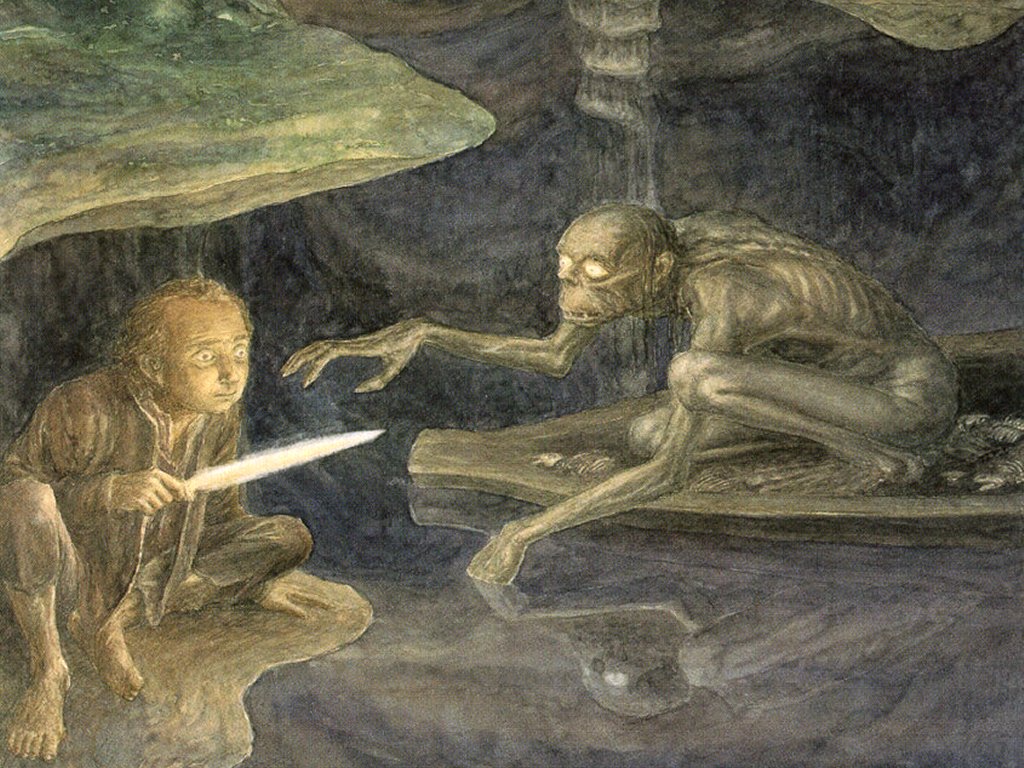
inquires Smaug. (The Hobbit, Chapter 12, “Inside Information”)

image1smaug.jpg

Earlier in The Hobbit, when asked this indirectly by Gollum, Bilbo had replied directly: “I am Mr.

image2bilbogollumlee.jpg

Bilbo Baggins…” (The Hobbit, Chapter 5, “Riddles in the Dark”)

This had led him into a deadly game of riddles, but now Bilbo seems more wary—which is just as well, as the narrator tells us when Bilbo answers Smaug’s question indirectly:

“This of course is the way to talk to dragons, if you don’t want to reveal your proper name (which is wise), and don’t want to infuriate them by a flat refusal (which is also very wise).” (The Hobbit, Chapter 12, “Inside Information”)

Bilbo’s answer to Smaug’s question about his identity is a series of what we might call “What Have I Got In My Pocket?” names—riddling titles which, just like that absent-minded remark, only Bilbo can understand:

“I am the clue-finder, the web-cutter, the stinging fly. I was chosen for the lucky number…I am he that buries his friends alive and drowns them and draws them alive again from the water. ..I am the friend of bears and the guest of eagles. I am Ringwinner and Luckwearer; and I am Barrel-rider.” (The Hobbit, Chapter 12, “Inside Information”)

All of these titles are references to events earlier in the story, of course, although a number of them, like “Ringwinner”, also sound like Norse or Old English kennings—that is, poetic names for often ordinary things, like “whale road” for “sea” and “wave’s horse” for “ship” or “sky candle” for “sun”. One which is close to Bilbo’s “Ringwinner“ is “ring-giver”, a kenning for a “lord”. Because they refer to personal experiences, Bilbo—and we readers—must assume that they would mean nothing to Smaug—or almost—

“Ha! Ha! You admit the ‘us’?” laughed Smaug. “Why not say ‘us fourteen’ and be done with it, Mr. Lucky Number?”

A lucky guess? (And interesting that, in Middle-earth, there are such things as “lucky numbers”—we wonder how many more examples of “lucky” vs “unlucky” things we might find?)

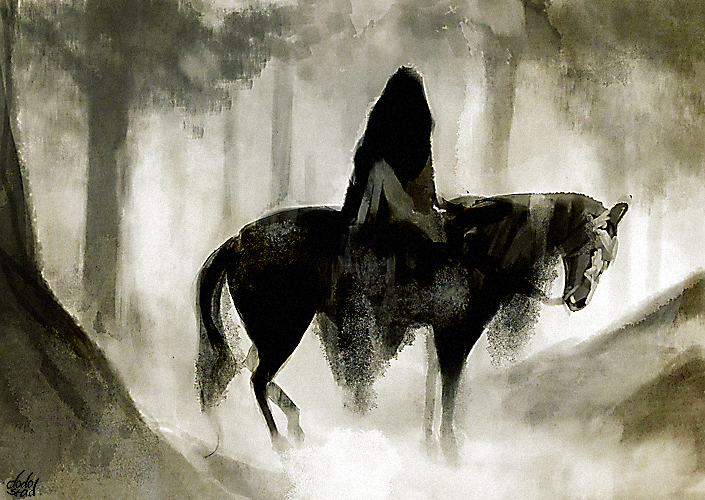
The narrator had said that not revealing your proper name is wise and the consequence of Bilbo’s mistake in telling Gollum that he is “Mr. Bilbo Baggins” will appear many years later, in the form of sinister visitors to the Shire, offering money for the location of “Baggins”.

image3nazgul.jpg

There can be physical danger, then, in properly identifying yourself.

There may be another reason for not doing so and it could entail physical danger not for the protagonist in the story, but a surprise threat for the antagonist.

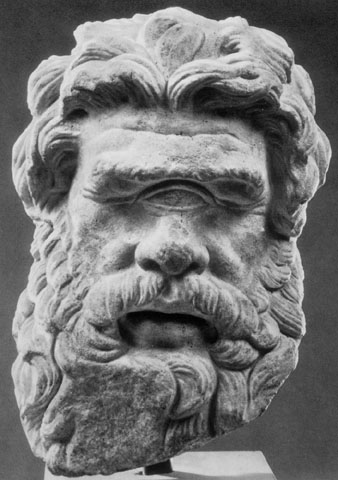
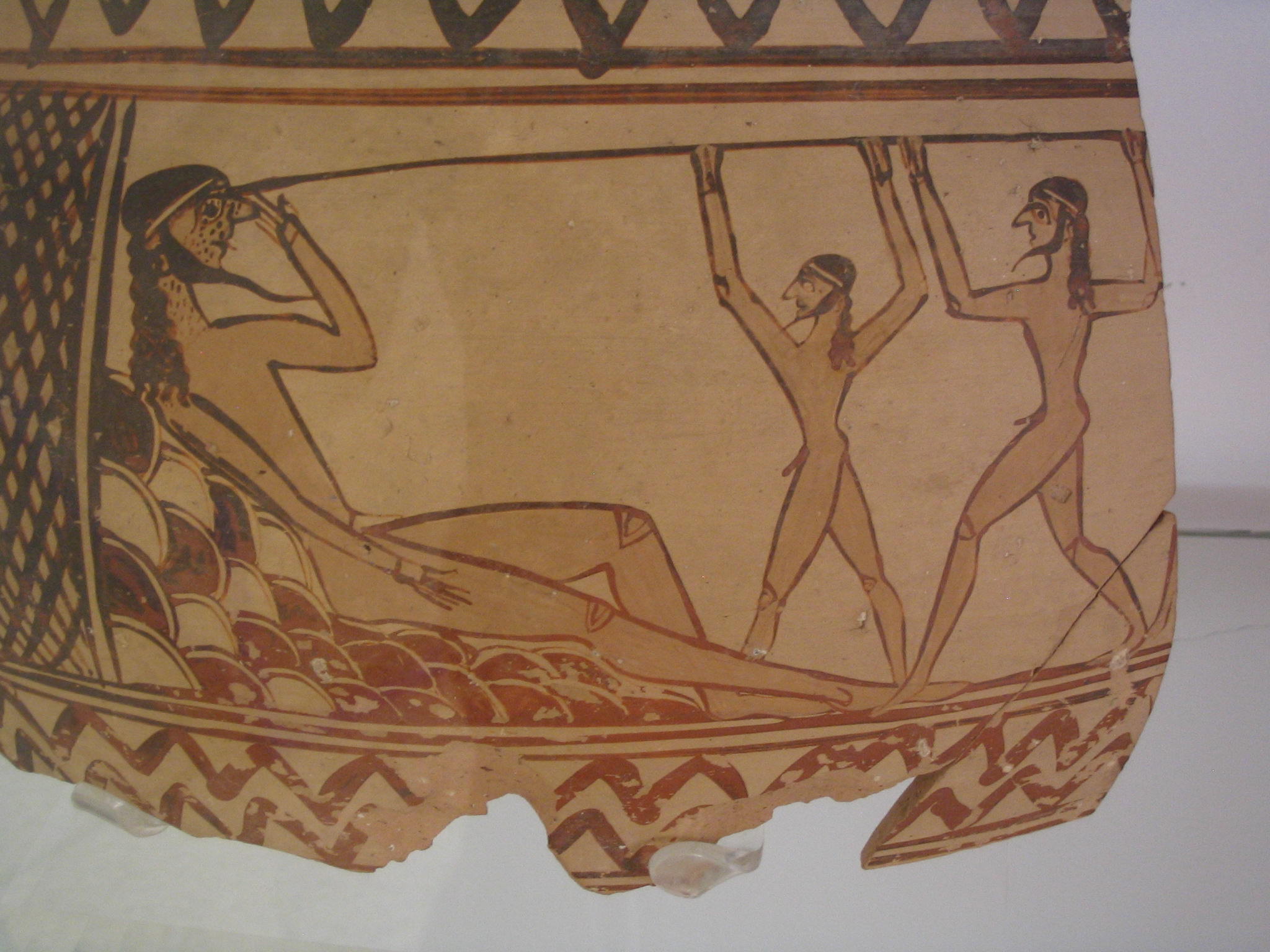
When Odysseus and his men visit the cave of the Cyclops, Polyphemus,

image4cyclops.jpg

and are trapped there, Odysseus, when asked by Polyphemus, gives a false name: Outis (OO-tis), meaning “No one/nobody” in Greek. His subsequent action would suggest that the reason why he does so is that—as he says himself—he has a reputation (for cleverness) which reaches to the heavens. By providing a false name, he intends to put the Cyclops off his guard before defeating him, which he does by:

  1. getting him drunk

image5cydrink.jpg

  1. blinding him

image6blinding.jpg

  1. slipping himself and his men out of Polyphemus’ cave under the bellies of the Cyclops’ sheep.

image7sheepslip.jpg

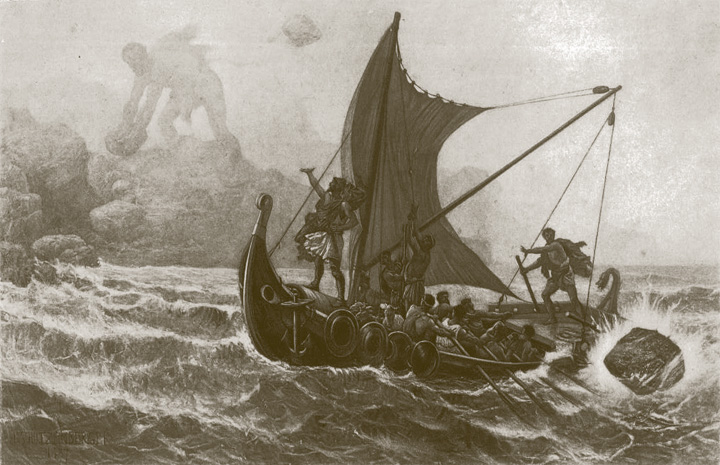
Having succeeded, however, Odysseus seems to change his plan—and mind—completely, shouting, as his ship takes him away, his name and address, even as the Cyclops hurls huge rocks at the ship and his men beg him to stop.

image8cyrocking.jpg

In the mind of an Homeric hero, however, Odysseus has no choice.

A major element in the life of such heroes is something called “kleos” (KLAY-oss)—which is somewhat difficult to translate. In the heroic world it means something like “personal name within the larger framework of a family and its reputation”—and that’s only the beginning. Kleos is almost a kind of inheritable object and includes such elements as:

  1. divine/semi-divine parents/ancestors
  2. divine patrons
  3. father’s reputation
  4. own reputation, which includes
  5. famous battles/campaigns participated in
  6. famous enemies killed (and spoils taken)
  7. plunder from cities sacked (includes not only goods, but women)

And #4 could be something to be said for parent or ancestor, as well. Your father or grandfather might have been known as “Sacker of Cities” and this adds to the general kleos.

It’s also possible to lose kleos—divinities pick and choose whom they will help, for example, and, just because your father was the client of a god, doesn’t mean that you will be. It is a definitely positive sign for Odysseus’ family’s continued kleos, for example, when, in Odyssey Books 2 and 3, Athena, disguised as the human Mentor, appears and offers Odysseus’ son, Telemachus, advice.

The Homeric world is a so-called “face” culture. In such a culture, everything is public. In fact, the word kleos comes from the verb kalo (kah-LO), meaning to “to summon/call by name”, that name being, in the case of a warrior, not only your name but where you stand in your family’s reputation, its kleos.

Thus, it’s important, when a warrior defeats a powerful enemy, not only should the enemy warrior know who beat him, but all the bystanders, should there be any, as well.

image9warrior.jpg

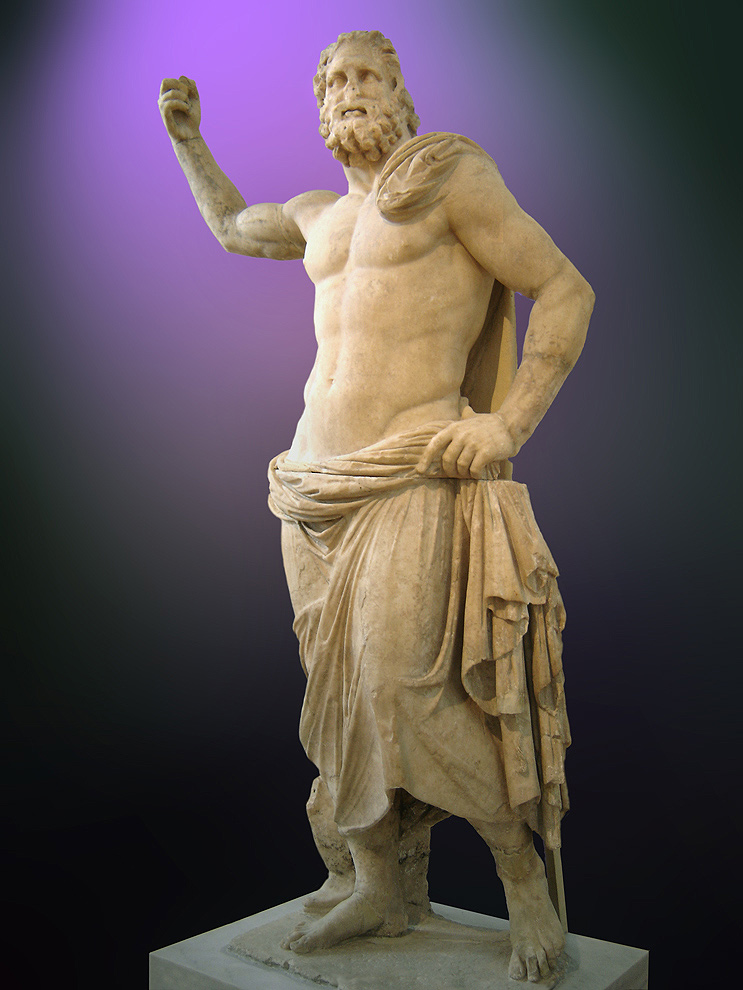
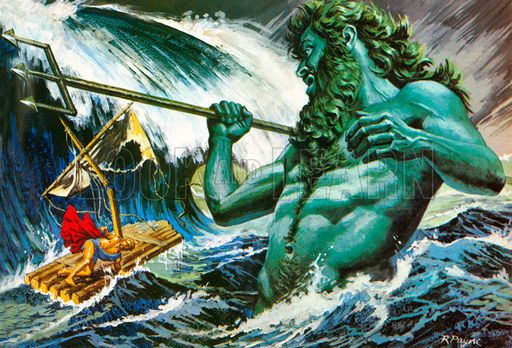
For Odysseus, then, using a false name might give him an initial advantage over Polyphemus, but his victory is only complete and he can only claim kleos when he reveals to the Cyclops who has defeated him. This will lead to terrible subsequent consequences for Odysseus. Polyphemus’ father is Poseidon, god of the seas

image10pos.jpg

and he will make things very difficult for Odysseus later in the Odyssey,

image11pos.jpg

but, in the world of kleos, Odysseus has no choice but to reveal himself to gain the credit necessary for maintaining it.

Another reason for concealing your name has to do with magic. In many of the world’s older traditional cultures, people might have several names, either in succession, or public versus private. Behind the public versus private stands the idea that you are your name—that is, all that is you is embodied in your name. If someone knows that name, that person can use that name against you, either to curse you—and, using your real name, that curse might stick to it—or to summon you for magical purposes. Once your true name is called, a sorcerer can make you obey, even against your will.

In Odyssey 10, Odysseus and his men land on an island which is the home of the enchantress, Circe.

image12circe.jpg

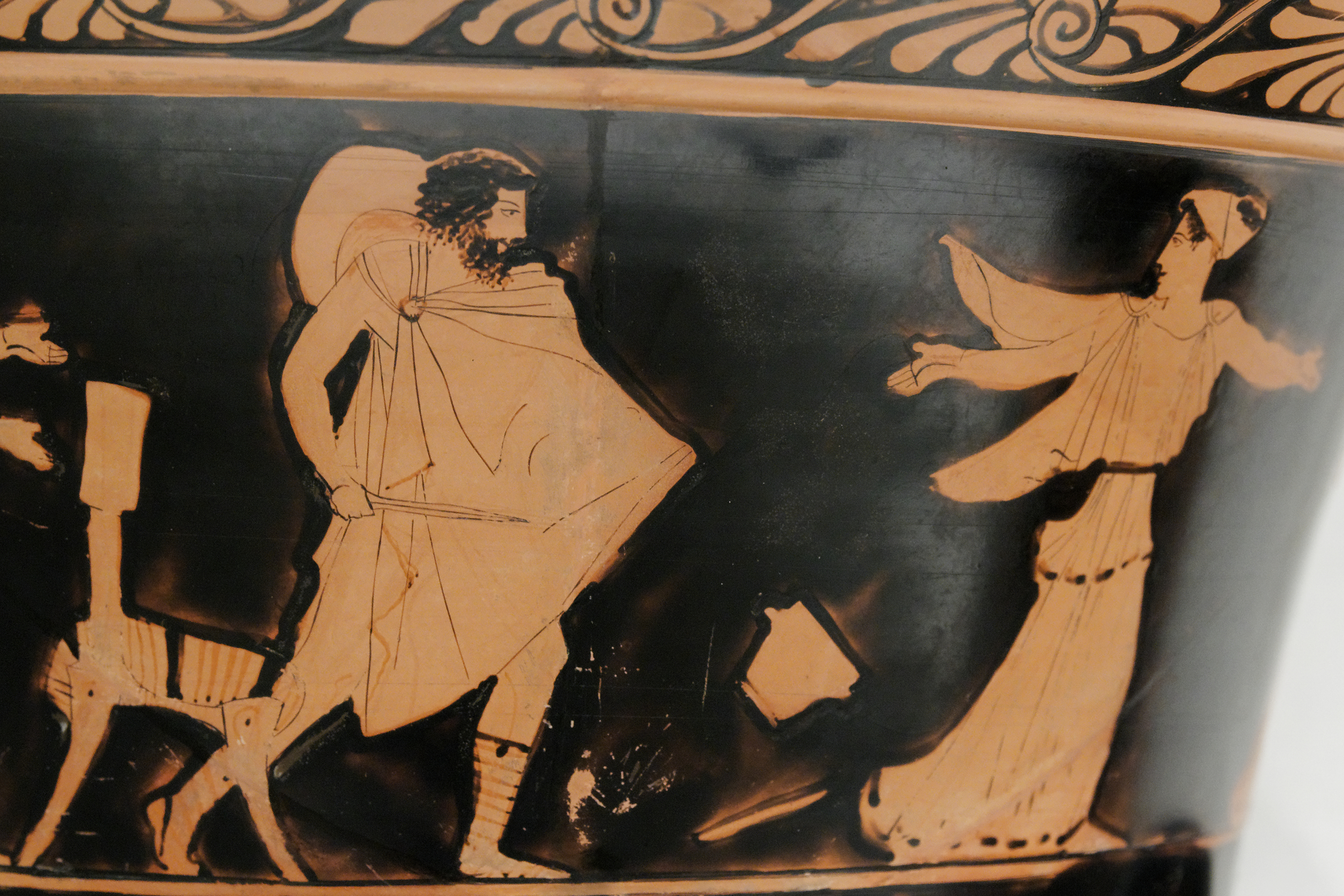
She has the power to shift the shapes of men into those of animals and vice versa, as a scouting party from Odysseus’ ship soon finds out. She gives them a drink with some sort of magic drugs mixed in and, with a wave of her staff, turns them into pigs (although they retain their human minds).

image13enchant.jpg

She then tries this on Odysseus, but, in his case, it doesn’t work, much to her surprise, and he, drawing his sword, quickly forces her surrender.

image14defeat.jpg

There is no direct explanation for the failure of her magic in Book 10, but there is, in fact, a clue in the word she uses for Odysseus in her frustration. She calls him “akaletes” (ah-KAH-leh-tehs)—which means “unsummonable/uncallable by name” and is from the same root as kleos and kalo. The implication here is that, for her magic to work, she needs a name—something we might presume Odysseus’ piggy companions must have foolishly given her. That he is unsummonable suggests that he has given her a false name and therefore her magic hasn’t worked.

And is this perhaps the real reason why it was wise that Bilbo didn’t identify himself directly to Smaug?

image15smaug

After all, Smaug, unlike the agents of Sauron, wasn’t likely to roam the countryside, offering gold in return for information about the whereabouts of a certain “Baggins”. He does, however, appear to have a certain persuasive magic:

“Bilbo was now beginning to feel really uncomfortable. Whenever Smaug’s roving eye, seeking for him in the shadows, flashed across him, he trembled, and an unaccountable desire seized hold of him to rush out and reveal himself and tell all the truth to Smaug. In fact he was in grievous danger of coming under the dragon-spell.” (The Hobbit, Chapter 12, “Inside Information”)

That magic seems to lie in his words and tone—Bilbo, listening, is said to be in peril of “dragon-talk”—and we want to talk more about such magical persuasion in our next posting…

Thanks, as ever, for reading!

MTCIDC

CD

The Doubtful Sea Series Facebook Page

The Doubtful Sea Series Facebook Page

  • Ollamh

Categories

  • Artists and Illustrators
  • Economics in Middle-earth
  • Fairy Tales and Myths
  • Films and Music
  • Games
  • Heroes
  • Imaginary History
  • J.R.R. Tolkien
  • Language
  • Literary History
  • Maps
  • Medieval Russia
  • Military History
  • Military History of Middle-earth
  • Narnia
  • Narrative Methods
  • Poetry
  • Research
  • Star Wars
  • Terra Australis
  • The Rohirrim
  • Theatre and Performance
  • Tolkien
  • Uncategorized
  • Villains
  • Writing as Collaborators
Follow doubtfulsea on WordPress.com

Across the Doubtful Sea

Recent Postings

  • Demons on the Big Screen August 26, 2026
  • Solution (2) August 19, 2026
  • Out of Work Athena August 12, 2026
  • Solution (1) August 5, 2026
  • More Troy? July 29, 2026
  • Prismatic July 20, 2026
  • Arboricidal July 15, 2026
  • Towering.3 July 8, 2026
  • Towering.2 July 1, 2026

Blog Statistics

  • 119,832 Views

Posting Archive

  • August 2026 (4)
  • July 2026 (5)
  • June 2026 (4)
  • May 2026 (4)
  • April 2026 (5)
  • March 2026 (4)
  • February 2026 (4)
  • January 2026 (4)
  • December 2025 (5)
  • November 2025 (4)
  • October 2025 (5)
  • September 2025 (4)
  • August 2025 (4)
  • July 2025 (5)
  • June 2025 (4)
  • May 2025 (4)
  • April 2025 (5)
  • March 2025 (4)
  • February 2025 (4)
  • January 2025 (5)
  • December 2024 (4)
  • November 2024 (4)
  • October 2024 (5)
  • September 2024 (4)
  • August 2024 (4)
  • July 2024 (5)
  • June 2024 (4)
  • May 2024 (5)
  • April 2024 (4)
  • March 2024 (4)
  • February 2024 (4)
  • January 2024 (5)
  • December 2023 (4)
  • November 2023 (5)
  • October 2023 (4)
  • September 2023 (4)
  • August 2023 (5)
  • July 2023 (4)
  • June 2023 (4)
  • May 2023 (5)
  • April 2023 (4)
  • March 2023 (5)
  • February 2023 (4)
  • January 2023 (4)
  • December 2022 (4)
  • November 2022 (5)
  • October 2022 (4)
  • September 2022 (4)
  • August 2022 (5)
  • July 2022 (4)
  • June 2022 (5)
  • May 2022 (4)
  • April 2022 (4)
  • March 2022 (5)
  • February 2022 (4)
  • January 2022 (4)
  • December 2021 (5)
  • November 2021 (4)
  • October 2021 (4)
  • September 2021 (5)
  • August 2021 (4)
  • July 2021 (4)
  • June 2021 (5)
  • May 2021 (4)
  • April 2021 (4)
  • March 2021 (5)
  • February 2021 (4)
  • January 2021 (4)
  • December 2020 (5)
  • November 2020 (4)
  • October 2020 (4)
  • September 2020 (5)
  • August 2020 (4)
  • July 2020 (5)
  • June 2020 (4)
  • May 2020 (4)
  • April 2020 (5)
  • March 2020 (4)
  • February 2020 (4)
  • January 2020 (6)
  • December 2019 (4)
  • November 2019 (4)
  • October 2019 (5)
  • September 2019 (4)
  • August 2019 (4)
  • July 2019 (5)
  • June 2019 (4)
  • May 2019 (5)
  • April 2019 (4)
  • March 2019 (4)
  • February 2019 (4)
  • January 2019 (5)
  • December 2018 (4)
  • November 2018 (4)
  • October 2018 (5)
  • September 2018 (4)
  • August 2018 (5)
  • July 2018 (4)
  • June 2018 (4)
  • May 2018 (5)
  • April 2018 (4)
  • March 2018 (4)
  • February 2018 (4)
  • January 2018 (5)
  • December 2017 (4)
  • November 2017 (4)
  • October 2017 (4)
  • September 2017 (4)
  • August 2017 (5)
  • July 2017 (4)
  • June 2017 (4)
  • May 2017 (5)
  • April 2017 (4)
  • March 2017 (5)
  • February 2017 (4)
  • January 2017 (4)
  • December 2016 (4)
  • November 2016 (5)
  • October 2016 (6)
  • September 2016 (5)
  • August 2016 (5)
  • July 2016 (5)
  • June 2016 (5)
  • May 2016 (4)
  • April 2016 (4)
  • March 2016 (5)
  • February 2016 (4)
  • January 2016 (4)
  • December 2015 (5)
  • November 2015 (5)
  • October 2015 (4)
  • September 2015 (5)
  • August 2015 (4)
  • July 2015 (5)
  • June 2015 (5)
  • May 2015 (4)
  • April 2015 (3)
  • March 2015 (4)
  • February 2015 (4)
  • January 2015 (4)
  • December 2014 (5)
  • November 2014 (4)
  • October 2014 (6)
  • September 2014 (1)

Blog at WordPress.com.

  • Subscribe Subscribed
    • doubtfulsea
    • Join 75 other subscribers
    • Already have a WordPress.com account? Log in now.
    • doubtfulsea
    • Subscribe Subscribed
    • Sign up
    • Log in
    • Report this content
    • View site in Reader
    • Manage subscriptions
    • Collapse this bar
Loading Comments...