• About

doubtfulsea

~ adventure fantasy

Category Archives: Imaginary History

Re: Tree

23 Wednesday Aug 2017

Posted by Ollamh in Imaginary History, J.R.R. Tolkien, Literary History, Narrative Methods, Poetry

≈ Leave a comment

Tags

Alfred Tennyson, Dreamflower, Fangorn Forest, Galadriel, Gondor, Helm's Deep, Isengard, Laurelindorenan, Lothlorien, Lotus-eaters, mallorn, Minas Tirith, Mirkwood, Old Forest, Old Man Willow, Palantir, Rath Dinen, Samwise Gamgee, Saruman, The Lord of the Rings, The Odyssey, Tolkien, Treebeard, trees, White Tree of Gondor

Welcome, as always, dear readers.
image1ajrrttree
The inspirations for our postings come from many places: from something we’re reading or have just watched/seen, from a connection between two texts, or between Tolkien’s world—the real or Middle-earth—and something from the history of this world. Sometimes ideas come from the Sortes Tolkienses—our take on an ancient fortune-telling method, in which one posed a question, then opened a copy of an important text like The Bible or Vergil’s Aeneid, closed one’s eyes, and pointed and the text where the finger landed was believed, through interpretation, to contain an answer to that question. In our case, should we require inspiration, we sometimes use our 50th Anniversary hardbound of The Lord of the Rings to do this and, surprisingly often, what we find gives us an idea about what to write.
In the case of this posting, however, it was more of a “we were working on something else entirely and then there it was.” The “it” here is the White Tree of Gondor.
image1treeofgondor
(We confess, by the way, that we have iphone cases with the image—and we are often complimented on them.)
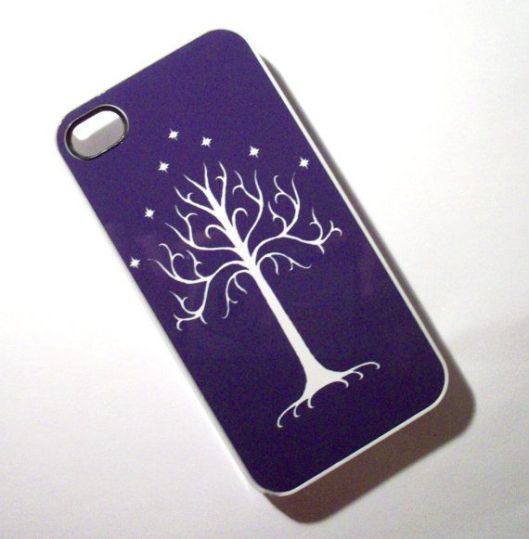
image2phonecase
We had, in fact, been thinking about another post, this one about corruption through technology, as represented by the palantiri, and had been reading references to Denethor. This had led us to his fiery death in Rath Dinen, “Silent Street”, which led to the tombs of the kings and stewards of Gondor. Besides the rulers of Gondor, however, the street had another occupant, the old White Tree, long dead,
image3deadwhitetree.png
but which, when a new sapling
imag4blossom.jpg
was found in the mountains by Gandalf and Aragorn, was still treated with ceremony:
“Then the withered tree was uprooted, but with reverence; and they did not burn it, but laid it to rest in the silence of Rath Dinen.” (The Return of the King, Book Six, Chapter 5, “The Steward and the King”)
This seemed a rather odd thing to do to a tree and this led us, finally, to consider one function of trees in The Lord of the Rings: just as the White Tree is buried, as human rulers were, could trees act as a mirror for the condition of the human world at what would be the end of the Third Age? And can they also act as a mirror of change for the better?
Consider, for example, the dead White Tree as a symbol for the withering of Gondor itself, as Minas Tirith is described:
Pippin gazed in growing wonder “at the great stone city, vaster and more splendid than anything that he had dreamed of; greater and stronger than Isengard, and far more beautiful. Yet it was in truth falling year by year into decay; and already it lacked half the men that could have dwelt at ease there…(The Return of the King, Book Five, Chapter 1, “Minas Tirith”)
And this decay of city and tree appears to be echoed in the natural world of Middle-earth in general, as Treebeard says of Lothlorien:
image5alorien.jpg
“Do not risk getting entangled in the woods of Laurelindorenan! That is what the Elves used to call it, but now they make the name shorter: Lothlorien they call it. Perhaps they are right: maybe it is fading, not growing. Land of the Valley of Singing Gold, that was it, once upon a time. Now it is the Dreamflower.”
[Just a quick footnote here. “Dreamflower” immediately takes us to Odyssey, Book 9, 82-105, where a small party of Odysseus’ men, set ashore to explore, meet up with the Lotus-eaters, who give them the mysterious lotus to eat and that “whoever might eat of the sweet fruit of the lotus, no longer wished to bring word back or to return home/but wanted, feeding on lotus, to remain in the very same place with the lotus-eating men and to forget about home-going.” (94-97, our translation). This certainly could describe at least some of the Fellowship’s reaction to Lothlorien. Here’s an illustration from a cartoon-version:
image5blotuseaters.jpg
Alfred Tennyson wrote a poem on the same subject—here’s a LINK, in case you would like to read his 1832 (revised 1842) interpretation.]
Beyond Lothlorien, other parts of the tree-covered natural world seem more menacing–there’s the Old Forest,
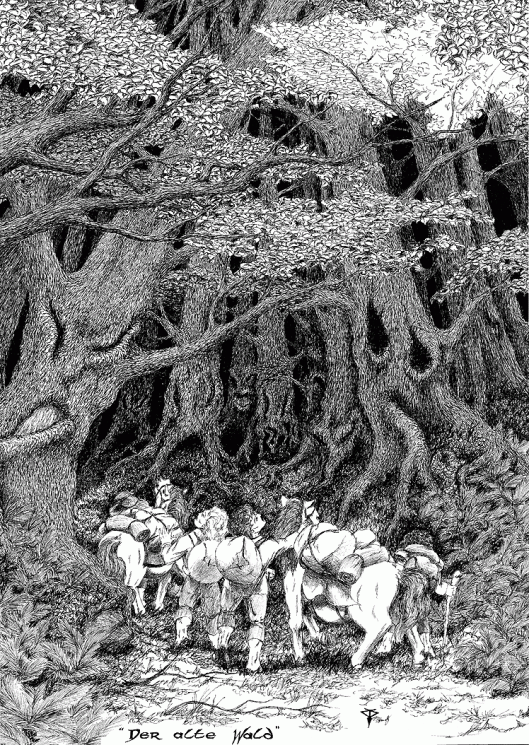
image5oldforest.gif
and Mirkwood,
image6mirkwood.jpg
described by Haldir:
“ ‘There lies the fastness of Southern Mirkwood…It is clad in a forest of dark fir, where the trees strive against one another and their branches rot and wither.’ “ (The Fellowship of the Ring, Book Two, Chapter 6, “Lothlorien”)
It wouldn’t take much imagination to replace “where the trees strive” with “where the humans strive against one another and their kind rots and withers”!
There is the sentient, malevolent Old Man Willow,
image7omw.jpg
and even Treebeard and his forest do not at first offer the kind of invitation one hears in the first verse of this song, from Shakespeare’s As You Like It:
Under the greenwood tree
Who loves to lie with me
And tune his merry note,
Unto the sweet bird’s throat,
Come hither, come hither, come hither:
Here shall he see
No enemy
Than winter and rough weather.

Instead, when Treebeard
image8fangorn.jpg
overhears Pippin say:
“This shaggy old forest looked so different in the sunlight. I almost felt I liked the place.” (The Two Towers, Book Three, Chapter 4, “Treebeard”)
he says, “ ‘Almost felt you liked the Forest!’ That’s good! That’s uncommonly kind of you…Turn round and let me have a look at your faces. I almost feel that I dislike you both…”
Treebeard’s hostility towards Pippin and Merry actually springs from another source—Saruman:
“He and his foul folk are making havoc now. Down on the borders they are felling trees—good trees. Some of the trees they just cut down and leave to rot—orc-mischief that; but most are hewn up and carried off to feed the fires of Orthanc.”
Treebeard’s growing anger, however, then marks a turn in the behavior of the natural world: somehow the appearance of Pippin and Merry acts as a catalyst:
“Curse him, root and branch! Many of those trees were my friends, creatures I had known from nut and acorn; many had voices of their own that are lost for ever now. And there are wastes of stump and bramble where once there were singing groves. I have been idle. I have let things slip. It must stop!”
And it’s not simply the Revenge of the Ents. Treebeard has a larger strategy, saying to the two hobbits:
“You may be able to help me. You will be helping your own friends that way, too; for if Saruman is not checked Rohan and Gondor will have an enemy behind as well as in front.”
As we know, Treebeard convinces the other Ents to help and, in a short time, they not only destroy Isengard
image8trbdisen.jpg
but also the orcs at Helm’s Deep,
image9helmsdeep.jpg
effectively removing Saruman from the story except as an empty threat—and a final, petty Sauron, ruining the Shire, which included cutting down numbers of trees—among them the famous Party Tree. And here we see one more symbol, perhaps. Long before, Galadriel had given Sam a gift which, in her wisdom (and perhaps in her foresight?) seemed almost perfect for a gardener:
“She put into his hand a little box of plain grey wood, unadorned save for a single silver rune on the lid….’In this box there is earth from my orchard, and such blessing as Galadriel has still to bestow is upon it…Though you should find all barren and laid waste, there will be few gardens in Middle-earth that will bloom like your garden, if you sprinkle this earth there.’ “ (The Fellowship of the Ring, Book Two, Chapter 8, “Farewell to Lorien”)
Once the Shire has been scoured of Saruman’s final evil, Sam remembers this present and uses it, spreading the earth across the Shire:
“So Sam planted saplings in all the places where specially beautiful or beloved trees had been destroyed, and he put a grain of the precious dust in the soil at the root of each.” (The Return of the King, Book Six, Chapter 9, “The Grey Havens”)
And his plan succeeds:
“His trees began to sprout and grow, as if time was in a hurry and wished to make one year do for twenty.”
In midst of such fertility, there is an extra favor. Sam had found within Galadriel’s box “a seed, like a small nut with a silver shale [shell or husk].”
Sam planted this in the Party Field, where the tree had once stood, and, in the spring:
“In the Party Field a beautiful young sapling leaped up: it had silver bark and long leaves and burst into golden flowers in April. It was indeed a mallorn [the golden tree specific only to Lothlorien], and it was the wonder of the neighborhood.”
Just as the human world of Middle-earth, stunted by Sauron and his minions, is now free, so is the natural world free once more—no more orcs to abuse its forests, no malevolent will to taint its woods, and the reflowering of the Shire and, at its center, the mallorn, may stand as a symbol for that rebirth—and even be twinned with the new White Tree of Gondor, far to the south.
image10mallorns.jpg
[With thanks to Britta Siemen’s blog, where we found this image—LINK here]
Thanks, as ever, for reading!
MTCIDC
CD

Dancing with the Elves

09 Wednesday Aug 2017

Posted by Ollamh in Fairy Tales and Myths, Imaginary History, J.R.R. Tolkien, Literary History, Narrative Methods

≈ Leave a comment

Tags

19th Century, A Midsummer Night's Dream, Anglo-Saxon, Arthur Rackham, Beren and Luthien, dance, Dicky Doyle, Elbereth Gilthoniel, elf ring, Elves, Fairy, fairy ring, Fairy Tale, Folklore, In Fairyland, Kenneth Grahame, Peter Pan in Kensington Gardens, Song, The Hobbit, The Lord of the Rings, Tolkien, Victorian, William Shakespeare

Dear readers,

Welcome, as always.

In The Lord of the Rings, Elves are powerful, human-like figures– immortal, skilled, and revered as counselors. In Tolkien’s work, however, they have not always been this way– early drafts suggest a sort of Victorian confusion, as if Tolkien’s elves have ancestral ties to both the tall, beautiful elves of the Anglo-Saxons, and to the jovial, delicate elves and fay of the mid- to late- 19th century.

In the beginning of June this year, Christopher Tolkien published an edited version of his father JRRT’s story, “Beren and Luthien”, which was originally published as a part of The Silmarillion, a history of the Elves.

beren-e-luthien-alan-lee.jpg

Within this book are previously unpublished earlier drafts and versions of the story, and in the introduction to them, Christopher Tolkien comments upon them: Beren was originally a gnome (which he was quick to explain meant an immortal figure– not what we would find in gardens),

il_fullxfull.1076091410_mapj.jpg

and then an elf, before his final incarnation as a mortal man. Luthien, the immortal Elven princess, is referred to by Tevildo, Prince of Cats, as “Princess of Fairies”. After being ordered to dance before him by the dark lord Melkor, Luthien began

“Such a dance as neither she nor any other sprite or fay or elf danced every before or has done since… magically beautiful as only Tinuviel ever was… and Ainu Melko for all his power and majesty succumbed to the magic of that Elf-maid, and indeed even the eyelids of Lorien had grown heavy had he been there to see” (76).

BL-back.jpg

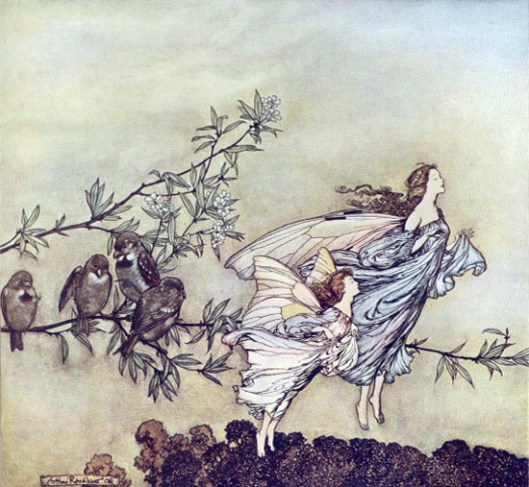
What we found curious here was JRRT’s uses of “Elf” and “Fairy” as seemingly synonymous with each other, when, depending on to which story an Elf or Fairy belongs, they may be quite different. Being people who spend a good deal of time in the Victorian world, when we think of dancing fairies, what is more likely to come to mind are the tiny winged figures who appear in Kenneth Grahame’s Peter Pan in Kensington Gardens (1906), with illustrations by Arthur Rackham.

fairy_tiff.jpg

20245801 Fairies never say we feel happy....jpg

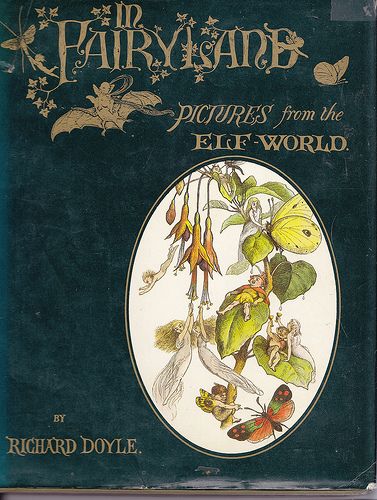
We might also be reminded of the little people who inhabit Dicky Doyle’s In Fairyland (1869)

7c11afdbc1cc79ed7cf88e64e80b8528--richard-doyle-conan.jpg

115cbac12c146d78a0f2753bfae597b9--antique-books-old-books.jpg

What we see in the Victorian sense of fairies and elves in images and stories is a revival of Elizabethan fairy-stories, which focus on little people: much like the fairies of William Shakespeare’s A Midsummer Night’s Dream, for example, the fairies in Kensington are light-footed, winged beings who wear flowing garments, and they fancy calling themselves “dancey” rather than “happy”.

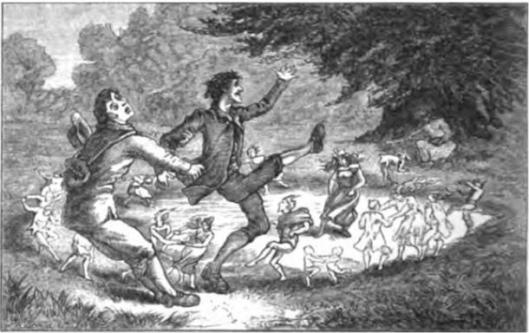
Dicky Doyle’s In Fairyland finds Elves in the “Elf World” to be the same sort of creatures. The picture below gives us an idea of the jovial nature of Victorian Elves, and is captioned, “The little Elves would cross over the border, and come into the King’s fields and gardens.”:

356d133220f9a2875cd80f0ad16cab6c.jpg


J.R.R. Tolkien was born in 1896, at the end of the Victorian period. It would be understood if the Victorian sense was residual in his work– after all, he was a child when Arthur Rackham’s illustrations met the height of their popularity, at the beginning of the 20th century, and he mentions in his letters having seen them.

In his Middle-earth, however, we see a very different kind of Elf.  Tolkien describes how he imagined them in a letter to Naomi Richardson on 25 April 1954:

” ‘Elves’ is a translation, not perhaps now very suitable, but originally good enough, of Quendi. They are represented as a race similar in appearance (and more so further back) to Men, and in former days of the same stature… [they] are in fact in these histories very little akin to the Elves and Fairies of Europe; and if I were pressed to rationalize, I should say that they represent really Men with greatly enhanced aethetic and creative features, greater beauty and longer life, and nobility…” (Letters, 176).

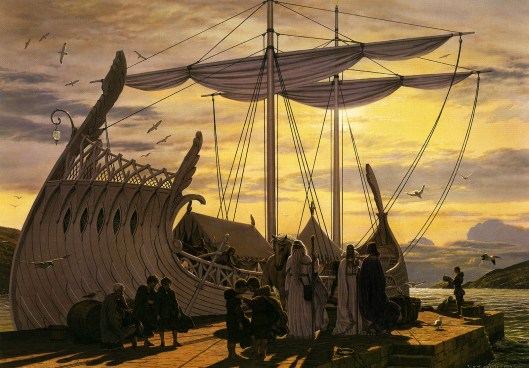
Below are a few artists’ renditions of what these Elves might look like, and they’re very different from the imaginations of Arthur Rackham and Dicky Doyle.

61954a630522d2bbce39220223dc89ef.jpg

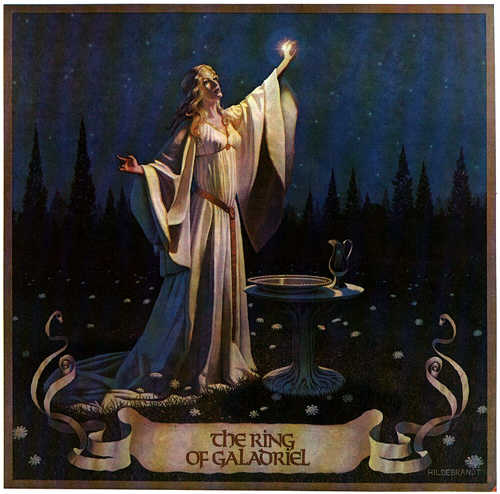
galadriel-hildebrant.jpg

aab7b11adf539086efc6762490bc7417.jpg

ted nasmith_the complete guide to middle-earth_departure at the grey havens.jpg

tumblr_n2gwteLx4b1tnpw9xo1_500.jpg

And some images from Peter Jackson’s films, as well:

Haldir_w_elves.jpg

Gli-Galad_y_Elrond.jpg

When JRRT refers to “the former days”, we can assume that he means two things:

  1. The former days of Middle-earth, such as in The Silmarillion
  2. The former days of our world–specifically, Anglo-Saxon Elves, which resemble the Elves of Middle-earth in their stature and beauty. Thus, the “former days” refer to a former rendition of Elves– one which, belonging to the Anglo-Saxons, would be familiar to JRRT.

(Attached here is a very useful book on this subject by Alaric Hall, which provides an in-depth look at pre-Elizabethan and pre-Victorian Elves.)

These Elves are almost the polar opposite of the Elfin and Fay creatures of the Victorians, and we found it curious that they would have anything in common. As demonstrated by Rackham’s “dancey” fairies and Luthien in Beren and Luthien, however, we found one thing: a love for song and dance.

While looking through Jack Zipes’ collected anthology of Victorian Fairy Tales, The Revolt of Fairies and Elves, we came across an example of this in “Charlie Among the Elves”, in which the protagonist, a young boy who finds himself, by some sort of magic or dream, in the world of fairies and elves. The elves invite him in and greet him with a song:

“…they struck up a melody which Charlie thought was the very sweetest music which he had ever heard in the whole course of his life, and thus ran the song of the Elves:

In the waning summer light

Which the hearts of mortals love

’Tis the hour for elfin sprite

Through the flow’ry mead to rove.


Mortal eyes the spot may scan,

Yet our forms they ne’er descry;

Though so near the haunts of man,

Merrily our trade we ply.”

In some folklore, there is also the danger of dance. Fairy rings, also called elf rings, are supernatural places created by the dancing of either fairies, elves, or witches. They have been considered hazardous by much of Western folklore to those outside of the fairy world; in these stories, mortals who have stepped inside have been cursed, trapped, or simply disappear.

fairy-ring.jpg

Plucked-from-the-Fairy-Circle.jpg

Rackham-Come-Now-a-Roundal-L.jpg

Charlie was lucky that he had come across benevolent creatures, and this reminded us of another instance when an adventurer was greeted by Elves through song: in The Hobbit, which is where Tolkien first introduced Elves, before he later understood them. Before The Lord of the Rings and The Silmarillion, Bilbo, Thorin, and Company are greeted by Elf-song in Rivendell:

” ‘Hmmm! it smells like elves!’ thought Bilbo, and he looked up at the stars. They were burning bright and blue. Just then there came a burst of song like laughter in the trees:

‘O! What are you doing,

And where are you going?

Your ponies need shoeing!

The river is flowing!

O! tra-la-la-lally,

here down in the valley!’ ”

As the Elves in both “Charlie Among the Elves” and The Hobbit are jovial and playful in their music, we might think that Tolkien had not completely abandoned the Victorian Elfin world, after all; of course, in The Lord of the Rings and in The Silmarillion, the Elves, just as much as the stories, take a more serious turn. Playful tunes are replaced with much more serious poetry, and in their native tongue, such as the Hymn to Elbereth Gilthoniel:

“A Elbereth Gilthoniel
Silivren penna miriel
A menel aglar elennath
Na chaered palandiriel.
O Galadhremmin ennorath
Fanuilos, le linnathon
Nef aer, si nef aeron!
A Elbereth Gilthoniel!
We still remember,
We who dwell
In the lands beneath the trees
Thy starlight on the western seas.”

pl_elbereth.jpg

When trying to reconcile these sorts of Elves and Fairies, rather than assessing them through their physical and behavioral qualities, we may look at them through something just as important in understanding them: music. The Silmarillion explains that the Elves, as well as the world and everything in it, including good and evil, originated from song.

But just as Elven music changes from The Hobbit to The Lord of the Rings, so the Elves have changed– they are human-sized, but also perhaps more serious and melancholy, as a parallel to the world Tolkien had created, which was much more complex than he originally realized.

The songs in The Lord of the Rings, and the later versions of Luthien, which present her as an Elf princess– a beautiful being which Beren falls in love with as soon as he sees her dance– express that melancholy. As the tale of Beren and Luthien reflects the way Tolkien wishes us to see Elven folklore– romantic, adventurous, and, ultimately, sorrowful– perhaps we can conclude that JRRT’s Elves are really fairies grown up.

And what do you think, dear readers?

MTCIDC,

CD

Prizes

26 Wednesday Jul 2017

Posted by Ollamh in Fairy Tales and Myths, Heroes, Imaginary History, Literary History, Narrative Methods

≈ Leave a comment

Tags

A Tale of Two Cities, Achilles, Admetus, Alcestis, Ancient Greece, Aphrodite, Archery, Atalanta, Baroness Orczy, chariots, Charles Dickens, Constantinople, contests, footrace, French Revolution, Greek, Heracles, Hippomenes, Icarius, Jacques-Louis David, King Oenomaus, King of Pherae, Lord Leighton Frederick, Odysseus, Olympia, Pelops, Penelope, The Death of Marat, The Odyssey, The Scarlet Pimpernel, Trojan War, Zeus

Welcome, as always, dear readers.
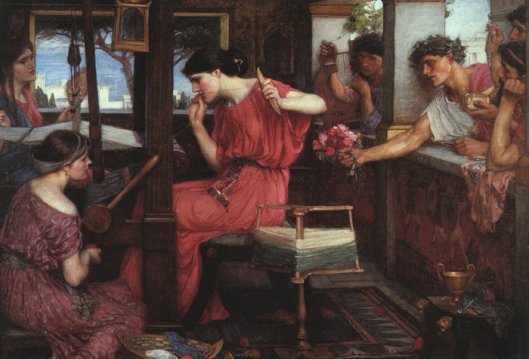
In our last posting, our second about archers, we talked about the archery contest which Penelope
image1penelope.jpg
arranged, as a way of finally ridding her house of a gang of mooching suitors. It was, in reality, a two-part contest:
1. the contestants were required to string Odysseus’ bow
2. then fire an arrow through—but the story as told in the Odyssey is a little confusing here—through a series of axe heads? Through the rings on the axe heads? Through rings on the shafts of the axes? The following illustrations will show you that there are all sorts of possibilities!
image2contest.jpg

image3contest.jpg

image4contest.jpg

image5contest.JPG
Odysseus, disguised as an old beggar, is the only one who can string the bow and fire it,
image6wyethody.jpg
and then goes on to begin picking off Penelope’s obnoxious suitors with it.
image7suitors.jpg
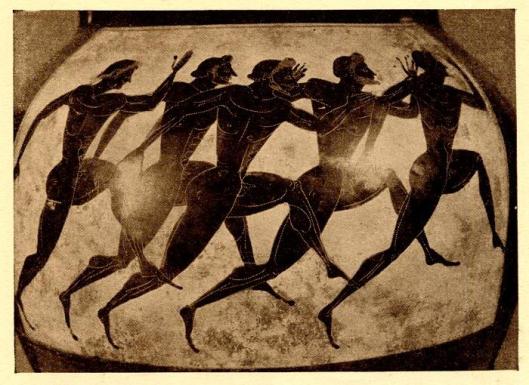
Prizes and women seem to be a not-uncommon theme in Greek mythology. When we were discussing Penelope and the archery contest, we also mentioned that there was an ancient story that Odysseus had actually won Penelope from her father, Icarius, in a footrace.
In general, Odysseus was regarded in Greece as neither a bowman nor a runner, but as the supreme trickster (he even has his own adjective, in fact polumetis, which we might translate “multiplotter”) but he is recorded in Book 23 of the Iliad as a runner, when he competes (and wins) in a footrace as part of the funeral games for Achilles’ beloved companion, Patroclus.
image9jldavid.jpg
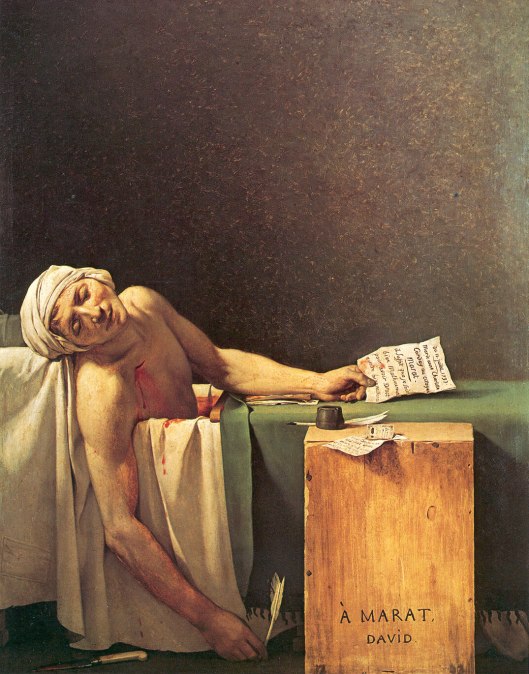
(This amazing piece, from 1778, is by the “painter of the French Revolution”, Jacques-Louis David, 1748-1825. In his earlier career, David had painted grand, florid things like this, often with a classical theme. When the Revolution came, David became an enthusiast, as well as one of its visual recorders, his most dramatic painting being “The Death of Marat”, commemorating the assassination of Jean-Paul Marat, a major revolutionary, killed in his bath in 1793.
10amarat.jpg
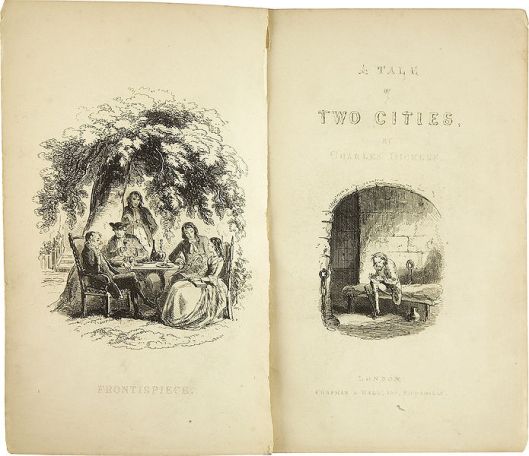
The era of the French Revolution has been a favorite of ours for years, probably originally because we grew up with Charles Dickens’ A Tale of Two Cities, 1859,
image10tale.jpg
and the Baroness Orczy’s The Scarlet Pimpernel, 1903-05.
image11spimp1908.jpg
We plan to write about the Pimpernel in a later posting—he’s a very important figure for 20th-century images of heroes with double-identities, being, it would seem, the original.)
It is worth wondering whether, in the choice of the bow and the archery contest, Penelope was actually indicating that she already knew the identity of the beggar. Certainly it put a deadly weapon into the hands of someone who immediately used it to rid her of the suitors. If that’s true, then offering herself as a prize was not a kind of passive surrender, but the beginning of an attack on the occupiers. This would give us a Penelope who was the very opposite of the girl offered as a prize in her father’s footrace. But that footrace reminded us of an earlier one, in which the prize stated the terms—and then enforced them.
Several generations before the Trojan War, Atalanta was a princess and huntress,
image12atalanta.jpg
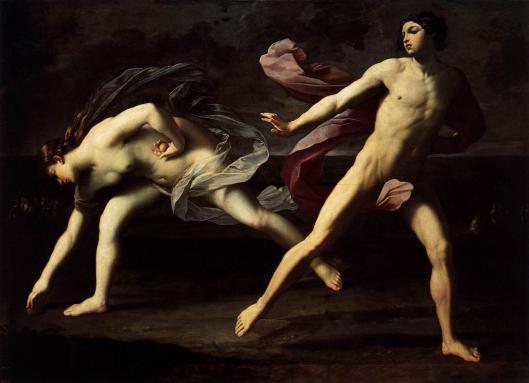
who was pressed by her father to marry. She agreed—but only on the condition that a suitor would have to join in a footrace with her and, if she beat him, she would kill him. A number of suitors tried and failed and paid the price before Hippomenes, brighter than the rest, knowing that he couldn’t outrace her, outthought her, praying to Aphrodite for help. The goddess gave him three golden apples and, as the two raced and Hippomenes was being outrun, he tossed one of the apples to the side. Atalanta was distracted and thus slowed until, after the third apple, Hippomenes won the race—and Atalanta.
image13renirace.jpg
The pattern of winning brides by races is repeated not only on foot, however. In another pre-Trojan-War story, King Oenomaus took fright from a prophecy that he would be killed by his son-in-law. When suitors came for his daughter, Hippodamia, he demanded that they join him in a chariot contest: they would race, but it was more a race for life than a sport, as, if Oenomaus caught up with the suitor, he would kill him.
So far, Oenomaus had managed to polish off eighteen suitors before Pelops, son of King Tantalus, appeared. Like Hippomenes, he was not the most scrupulous of competitors. (In one version of the story, Oenomaus displayed the heads of the unsuccessful suitors on the pillars of his palace—this might have proved a strong incentive to cheat!) In Pelops’ case, he persuaded Oenomaus’ charioteer to replace the bronze lynchpins (the pins which hold the chariot wheels on the axles) with ones made of wax and, in the (literal) heat of the contest, they melted and Oenomaus was dragged to his death. (And so the death-by-son-in-law prophecy came true!) Pelops then betrayed and murdered the charioteer, who, dying, put a curse upon Pelops and his descendants.
image14oenomaus.png
Supposedly, the chariot race which formed a central part of the Olympic games in later centuries
image15chariotrace.jpg
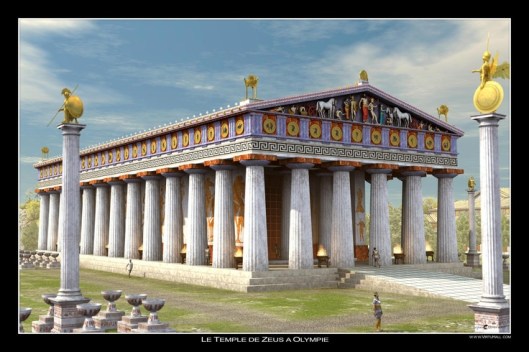
was either in commemoration of the death of Oenomaus or a celebration of the victory of Pelops. In fact, we have, on the eastern pediment (that’s the big triangular bit just below the roof) of the temple of Zeus at Olympia
image16templezeus.jpg
the main characters in the story depicted.
image17pediment.jpg
This was a very grand temple and contained one of the Seven Wonders of the Ancient World, a giant seated statue of Zeus, made of ivory and gold.
image18zeus.jpg
The statue didn’t survive the eastern Roman government’s attacks on pre-Christian culture, however, either being destroyed in a fire in the temple in 426AD, or in a fire at the eastern capital of Constantinople in 475AD.
In fact, the temple at Olympia itself was badly damaged in that fire of 426 and its whole structure was tumbled in earthquakes in 551 and 552AD, its columns collapsing onto the ground into lines of column drums like piles of stacked coins.
image19astackedcoins.jpg
image20tempzeus.jpg
Seeing that fallen building, we wonder whether Oenomaus’ charioteer’s curse extended to the site of the famous (and deadly) race!
To all of this mayhem around women as prizes at athletic events, we would add one happy occasion. Among the stories about Heracles, there was that of his wrestling match with death. This was not done to win a prize for himself, but to rescue Alcestis, the heroic wife of Admetus, King of Pherae, who had given her life to save her husband. (In fact, Admetus had won Alcestis in a challenge—but that’s a story for another posting!) Having brought her back, Heracles, to tease Admetus, says, truthfully, that Alcestis was a woman he had won in a contest—but neglects to say with whom he’d wrestled!
image21heraclesanddeath.jpg
(This, by the way, is a painting by Frederick, Lord Leighton, 1830-1896, who built much of his reputation on his reconstructions of the Greek classical and mythological world. We plan a future posting on him and on other classical myth-painters—among whom, in fact, was David, whom we mentioned above.)
Thanks, as ever, for reading.
MTCIDC
CD

A Longer Stretch

19 Wednesday Jul 2017

Posted by Ollamh in Fairy Tales and Myths, Heroes, Imaginary History, J.R.R. Tolkien, Literary History, Narrative Methods

≈ Leave a comment

Tags

Achilles, Angelica Kauffmann, Athena, Bard the Bowman, Circe, cyclops, Dora Wheeler, English Longbowmen, Errol Flynn, Greek, Henry VIII, Heracles, His Dark Materials, John William Waterhouse, Laertes, Lord Asriel, N.C. Wyeth, Odysseus, Paris, Patroclus, Penelope, Philip Pullman, Philoctetes, Portsmouth, Priam, Robin Hood, Sparta, Stelmaria, Telemachus, The Amber Spyglass, The Golden Compass, The Illiad, The Mary Rose, The Odyssey, The Subtle Knife, Tolkien, Troy

Welcome, dear readers, as always.
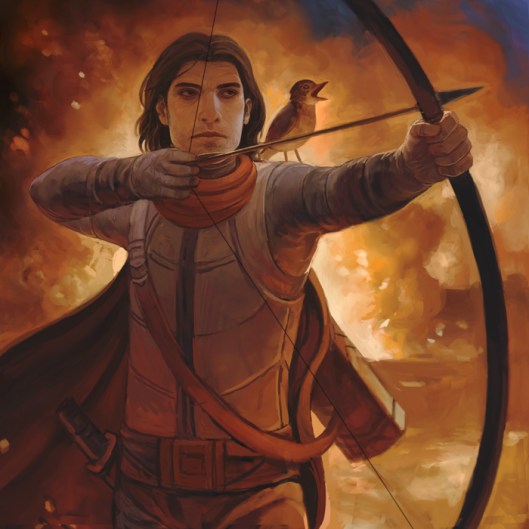
In our last posting, our central focus was upon Bard the Bowman and what he might have looked like.
image1bardjeffchang.jpg
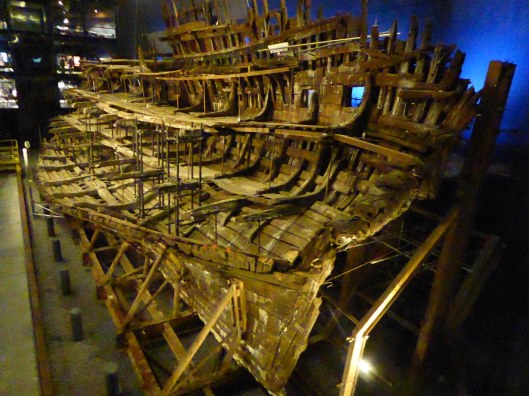
As we do so often, we tried to use something from the history of our world to help us to flesh out JRRT’s description. In this case, we looked at Henry VIII’s battleship (a carrack, in the vocabulary of the period), the Mary Rose, which sank during a naval battle with the French on 19 July, 1545.
image2amrsinks.jpg
The ship was raised in 1982 (you can see the large surviving section of the hull in the Mary Rose museum, in Portsmouth, England).
image3amr.jpg
It was full of artifacts—and of crew.
Because she sank so suddenly—and in the middle of a battle—almost none of the crew of 400 and more escaped. One of those trapped was this man.
image3mrarcher.jpg
His was among the roughly 90 skeletons well-enough preserved to allow for forensic exploration. That exploration, and the subsequent brilliant reconstruction, brought back to life a man about 6 feet (182cm) tall, with a powerfully-developed upper body. His build, certain characteristic marks of stress, and the fact that over 130 longbows and several thousand arrows were found in the wreck, led the archaeologists to see this man as an archer. We, in turn, then used him as the body-model for Bard.
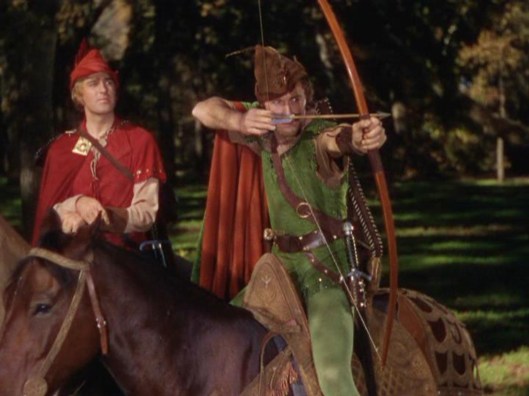
But “bowman/archer” to us, who are crazy for adventure, immediately brought back Robin Hood, first in what we believe to be his best 20th-century incarnation, Erroll Flynn,
image3eflynrhood.jpg
in the classic 1938 film.
image4poster.jpg
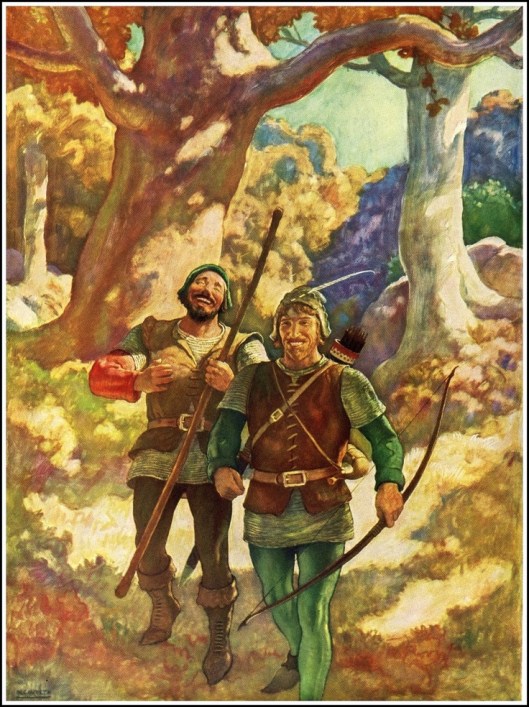
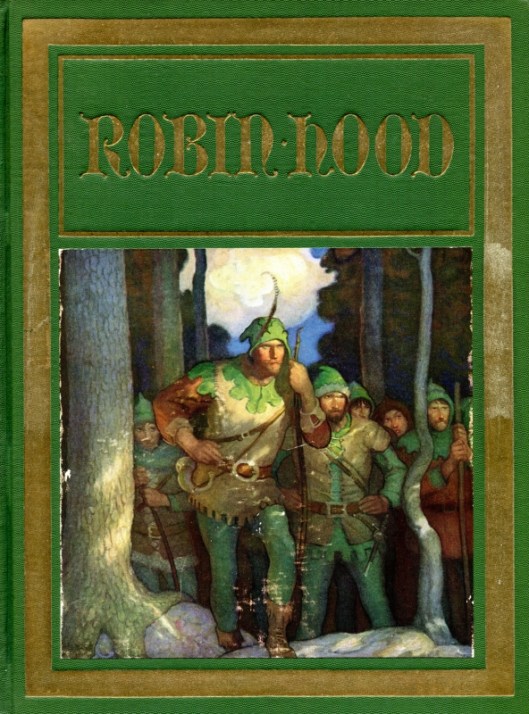
To which we would add N.C. Wyeth’s illustrations
image5wyeth.jpg
for the 1917 Robin Hood.
image6bookcover.jpg
Thinking about bowmen in adventure stories then took us back to the first big adventure story in western literature, the Odyssey, and its hero, Odysseus, who has two associations with bows, but who, oddly enough, is never depicted as an archer, but rather as a trickster, who uses his brains to escape everything from a one-eyed giant
image7.jpg
to an enchantress, Circe, who has already turned a good number of his crewmen into ham-on-the-hoof.
image8herccirce.jpg
One of our favorite illustrations of Circe is by John William Waterhouse, which he worked on from 1911 to 1915.

image9jwwaterhousecirce.jpg

The leopards in this version of the painting (in another, apparently, they are bears) reminded us of the snow leopard which is Lord Asriel’s demon, Stelmaria,
image10goldcomposter.jpg
in Philip Pullman’s trilogy
image13pullman.jpg
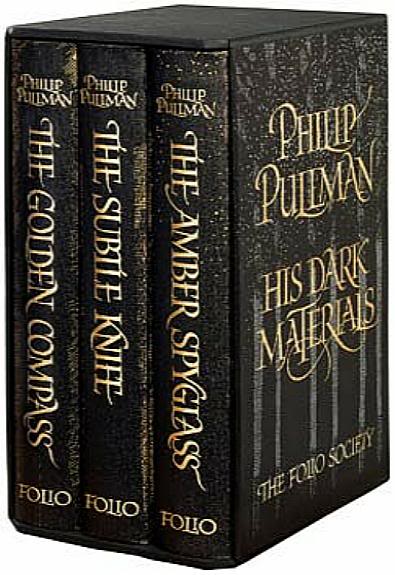
His Dark Materials, the three books being The Golden Compass (in the British edition, Northern Lights), 1995, The Subtle Knife, 1997, and The Amber Spyglass, 2000.
image12hisdarkmaterials.jpg
These are remarkable books—full of vivid characters and places-other-than-here-and-now, and we have read and reread them since they first appeared. If you haven’t read them, we would add only one proviso: there is a strong anti-religious theme throughout and some devout readers might have difficulty with Pullman’s views. If you are willing to imagine that this is a critique of beliefs in other worlds than our own, however, we would unqualifiably recommend them. (Our favorite characters are Lyra, the fierce and fearless heroine, and Iorek Byrnison, a panserbjorn, or armored bear. There is a film version, released in 2007, based upon The Golden Compass, which we enjoy, although it has simplified and changed certain elements in the original story.)
image14aposter.jpg
But back to Odysseus the archer…
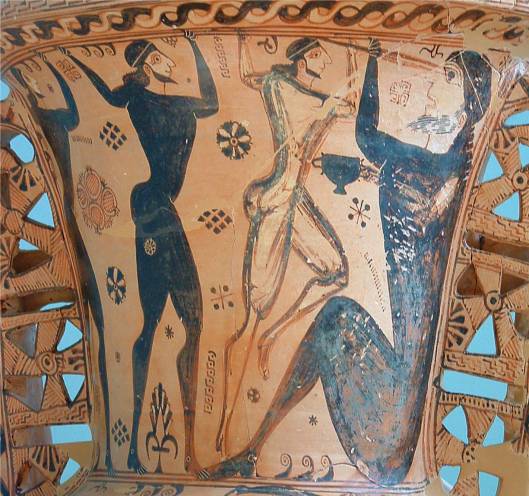
In the story of Troy, the famous archer is Paris, the son of Priam, the king of Troy, who uses his skill to kill Achilles, the most famous and powerful hero on the Greek side (in this pot illustration, almost by accident!).
image14parisshootsachilles.jpg
Paris, according to some accounts (there are a number of them and they can differ in all sorts of details), is then killed by Philoctetes, who has inherited Heracles’ bow. A prophecy lies behind that bow: it seems that it is a necessary element in the conquest of Troy.
image15hercger.jpg
When Heracles is suffering from a poisoned shirt, and builds a pyre to cremate himself
image16herconpyre.jpg
it is Philoctetes who is willing to light it and, in return, he receives Heracles’ bow. On the way to Troy, however, Philoctetes is bitten by a snake and left behind on an island.
image17philoct.jpg
In some versions of the story (including Sophocles’ play), Odysseus acts as the main agent for, initially, bringing the bow to Troy, and then for bringing Philoctetes himself. So far, that is Odysseus’ only connection with archery. He is depicted as clever—being part of a successful scouting expedition in which a Trojan ally is killed and possibly the creator of the wooden horse—but, otherwise, his main accomplishments lie in beating up a trouble-maker at a public meeting and, at the funeral games which Achilles holds at the end of the Iliad for his companion, Patroclus, winning a footrace.
This footrace, however, leads us from Troy westward, as well as backward in time.
For all that there are these two huge things called the Iliad and the Odyssey, they are not all of the Troy story. They themselves are just collections of smaller stories stitched onto a plot outline. In the case of the Iliad, that outline is very basic: a. Achilles leaves war; b. Greeks substitute other warriors for Achilles; c. Achilles returns to war. The Odyssey is actually even more basic: man tries to find a way to sail home from Troy. Along with these, there are fragments from other parts of the tradition and lots of separate tales which often act as back-stories, probably invented when the popularity of the Troy tale in general caused a demand for singers to supply more material—the ancient equivalent of fan fiction!
One of these back-stories explains why Odysseus wins at the funeral games: he must already have been a famous foot racer, as he wins his bride, Penelope, from her father, the king of Sparta, in a footrace.
image20footrace.jpg
Not long after that, having gotten Penelope pregnant, he is off to Troy and won’t return for twenty years.
In the meantime, Penelope gives birth to a son, Telemachus, who grows up fatherless and in a household increasingly besieged by young men who claim that Odysseus must be dead and demand that Penelope must marry again.
image19jwwpenelope.jpg
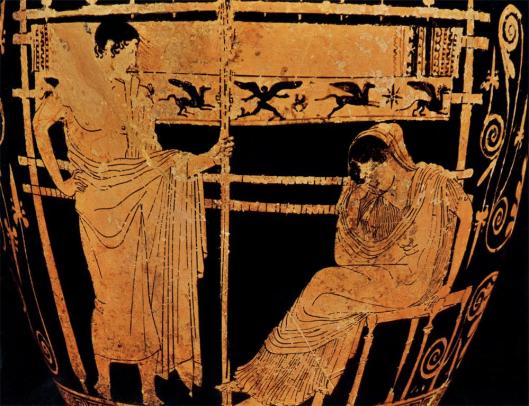
To delay being forced to accept one of these obnoxious toads, Penelope (our favorite in the story, along with Athena) claims that, before she can choose, she has to finish a shroud she is weaving for Odysseus’ father, Laertes. (That’s Telemachus, on the left.)
image20aapenandtel.jpg
In fact, although she weaves by day, she un-weaves by night and continues to do so for three years before one of her maids tells the suitors what’s going on.
image20penrav.jpg
(This is a remarkable piece of work designed by the painter/designer, Dora Wheeler, 1856-1940.
image21dorawheeler.jpg
It is not a painting, but, in fact, an embroidery—silk stitched into silk cloth—and a remarkable artifact—and, unfortunately, the only surviving one of its kind.)
In year 19, Odysseus comes home—disguised by Athena as an old beggar, to keep him safe until he can plot his revenge and gather allies. In the meantime, Penelope (who, to us, is as quick-witted as her wandering husband) announces an archery contest, the winner to—win her. Besides the trickiness of the target (having something to do with shooting through axes—scholars have argued over just how that works for years), there is the bow: it has such a pull that only her husband, she says, has ever been able to string it.
image22penelopebowangelicakauffmann.jpg
(This illustration is by another wonderful woman artist, Angelica Kauffmann, 1741-1807. Here’s a self-portrait.)
image23.jpg
Needless to say, the suitors are unable to do it, but that dirty old beggarman can—and does—and then, with a little help from Telemachus and a servant or two—not to mention Athena—proceeds to slaughter the suitors and clean house.
image25connolly.jpg
image26deathofsuitors.jpg
So, remembering the Mary Rose archer (as well as Bard), can we now imagine Odysseus’ build? And, for that matter, Robin Hood’s?
image27rharchcontest.jpg
Thanks, as ever, for reading!
MTCIDC
CD

Hoards of the Things

28 Wednesday Jun 2017

Posted by Ollamh in Fairy Tales and Myths, Imaginary History, J.R.R. Tolkien, Literary History, Narrative Methods

≈ Leave a comment

Tags

A Christmas Carol, A Visit to William Blake's Inn, Aeetes, Alexander Deruchenko, Alice and Martin Provensen, Argo, Barrow-downs, Barrow-wights, Beowulf, Bilbo, Charles Dickens, Cinderella's Dress, Colchis, Collyer Brothers, David Gwillim, dragon-sickness, Dragons, Dwarves, Ebenezer Scrooge, Eurystheus, Hera, Heracles, Hoard, hordweard, Jack Gwillim, Jane Dyer, Jason and the Argonauts, Jason and the Golden Fleece, Kinder und Hausmaerchen, Ladon, Lonely Mountain, magpie, Nancy Willard, Neolithic, Scrooge McDuck, Scythians, Ted Nasmith, The Hobbit, The Lord of the Rings, Tolkien, Treasure

Welcome, dear readers, as always.

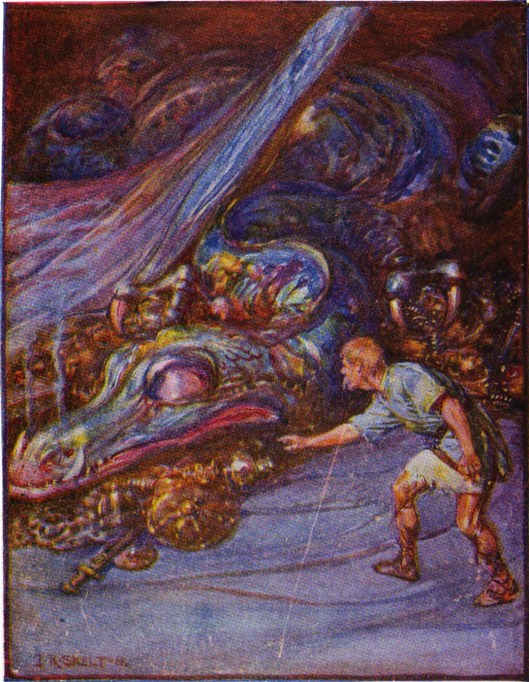
Recently, we’ve had a couple of posts on dragons and hoards, but, having done a certain amount of research and thinking and writing, we’ve come back once again to the subject, with the question: why would a dragon want a hoard to begin with?

The earliest Western European stories we know in which dragons (or serpents—the Greek word can apply to either) are associated with valuables are:

  1. the 11th labor of Heracles, in which his cousin, Eurystheus, demands that Heracles bring him the Golden Apples of the Hesperides (“children of the evening star”)—which are on an island guarded by a 100-headed (in some versions of the story) dragon/serpent called Ladon

image1hesperides.jpeg

  1. the story of Jason and the Argo, in which Jason must bring back to Greece the Golden Fleece, also guarded by a dragon/serpent (a sleepless one this time)

image2jason.png

In both of these stories, the dragon is the agent for someone else—Hera, in the case of the Golden Apples,

image3hera.jpg

and Aeetes, the king of Colchis, in that of the Golden Fleece.

image4aaetes.jpg

(We’ve always loved the curly beard of Jack Gwillim in Jason and the Argonauts—1963. His son, David, by the way, was a perfect Prince Hal and Henry V in BBC productions from 1979—if you can find them, we highly recommend them.)

image5dgwillim.png

After these, we see the dragon of Beowulf.

18lrnlrjcbonijpg.jpg

In his case, although he’s called hordweard, “hoard guardian/watchman”, we are told that he has come upon a treasure in a barrow, piled in for safe-keeping several hundred years before. Europeans in the Neolithic Period and long beyond buried high-status people in such places—like this, in Denmark.

image6barrow.jpg

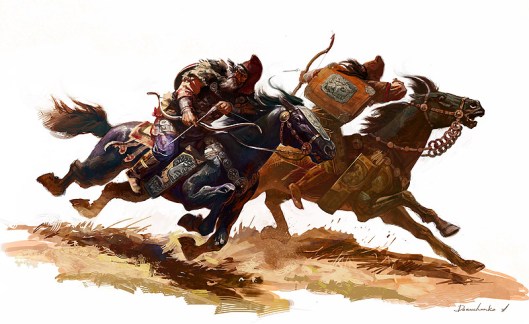
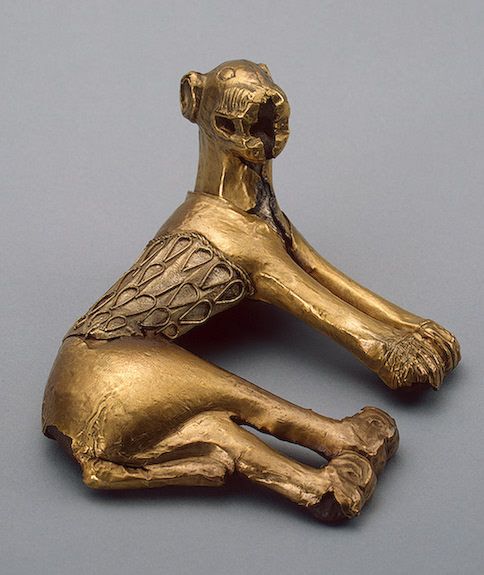
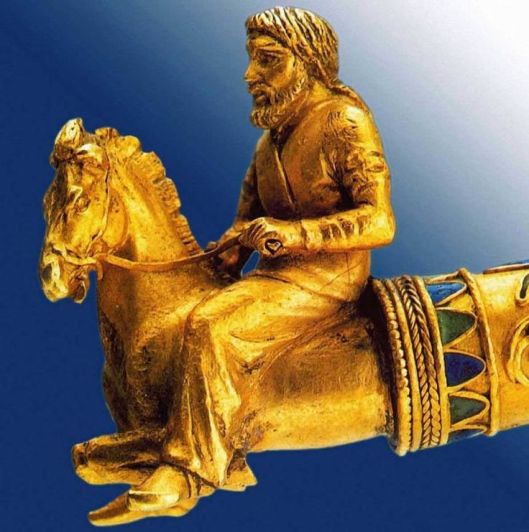
As it was the custom for high-status people to be buried with at least some of their riches, it’s easy to see how singers might be inspired to create a barrow like that of the Beowulf dragon. Some of our favorite grave goods come from the Scythians, a horse-people who once lived north of the Black Sea, and who had buried them in grave mounds with their dead.

image7ascyth.jpg

(A wonderfully atmospheric picture by Alexander Deruchenko.)

image7bscythia.jpg

image8scyth.jpg

image9scyth.jpg

image10scyth.jpg

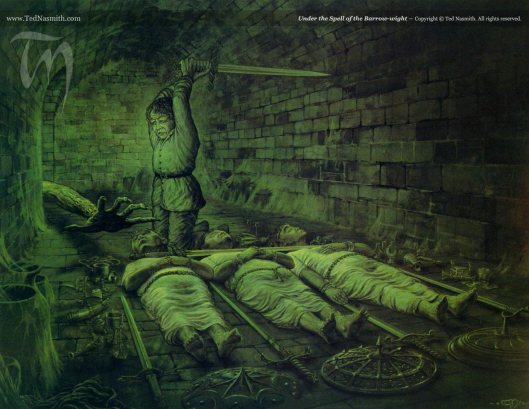
The Beowulf dragon is not the proper owner of the hoard: rather, he has taken possession (the poem may even be suggesting that dragons—or this dragon, at least– have a special affection for barrows (2270-2278), rather as the barrow wights have taken over the tumuli on the Barrow Downs, both places being much older and long-abandoned. You may remember this striking image by one of our favorite Tolkien artists, Ted Nasmith–

image11barrowwight.jpg

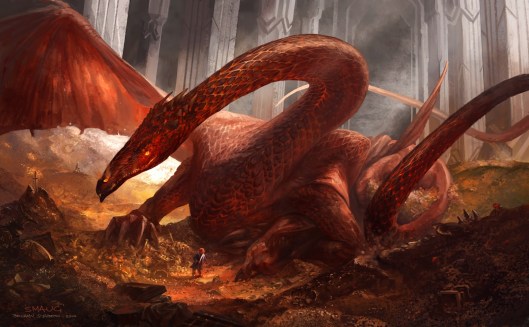
In contrast, Smaug has taken possession of the Lonely Mountain by force, burning out the rightful owners.

image12smaug.jpeg

In both cases, however, the latest owner is very sensitive about his new property: the removal of one object, as Beowulf and Bilbo find out.

image13cuptheft.jpg

(And we can’t resist this item—it’s copy of a cup used in the 2007 Beowulf film. We don’t see that it would be very useful for drinking from, but it’s certainly fun to look at!)

image14bewulfcup.jpg

It’s one thing if it’s your job to guard gold: you’re like a sheepdog with a flock. (Here’s a Maremma, in fact, with a flock.)

image15maremma.jpg

It’s another if you are occupying, seized or not, someone else’s gold. In the latter case, however, we are still left with our initial question: why is this important to a dragon?

Perhaps they just like the look of it. After all, Smaug seems quite proud of what he sees as a waistcoat of precious things. When Bilbo says: “What a magnificence to possess a waistcoat of fine diamonds!” Smaug replies “Yes, it is rare and wonderful, indeed.” (The Hobbit, Chapter 12, “Inside Information”) Yet there is the darker side:

“To say that Bilbo’s breath was taken away is no description at all. There are no words left to express his staggerment, since Men changed the language that they learned of elves in the days when all the world was wonderful. Bilbo had heard tell and sing of dragon-hoards before, but the splendor, the lust, the glory of such treasure had never yet come home to him. His heart was filled and pierced with enchantment and with the desire of dwarves; and he gazed motionless, almost forgetting the frightful guardian, at the gold beyond price and count.”   (The Hobbit, Chapter 12, “Inside Information”)

Just seeing such wealth brought on “lust” and “the desire of dwarves” and it’s clear that this is what infects Thorin after Smaug’s death and eventually brings on the “dragon-sickness” which leads to the end of the Master of Laketown (The Hobbit, Chapter 19, “The Last Stage”). As this “lust” for beautiful, valuable things seems inherent in the dwarves, it strikes us that we might imagine dragons as somehow enablers or carriers—like anopheles mosquitoes and malaria—

image16anopheles.jpg

rather than originators of the disease and that the name is derived from that combination of acquisitiveness and sensitivity we noted earlier and which so clearly disturbs Thorin’s judgement.

But perhaps there is something in the idea of hoarding itself. In our world, “hoarding” has come to have a different meaning, being a kind of psychological condition in which a person acquires and acquires and has lost the ability to discard anything for complex internal reasons. In literature, one might imagine that misers have something of this—think of Ebenezer Scrooge, in Charles Dickens’ A Christmas Carol (1843).

image17scrooge.jpg

Or, Uncle Scrooge McDuck, from Walt Disney comics. Who, as you can see, takes this to an extreme even Dickens’ Scrooge might find a bit excessive.

image18smcduck.jpg

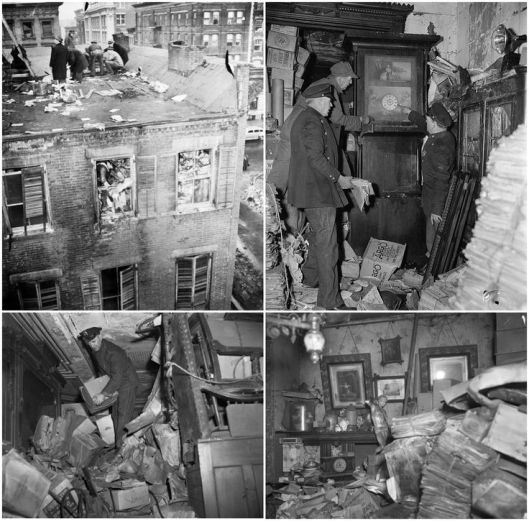
Underneath this, however, is the sad side: those who become imprisoned by their possessions, a famous case being that of the Collyer brothers in New York, whose apartment, after their joint deaths in 1947, was a subject both of curiosity and of mild horror in the New York newspapers of the time.

image19collyer.jpg

Is it possible that the Beowulf dragon and Smaug both suffer from this condition? Is that why the theft of a single piece from an uncountable hoard seems to mean so much?

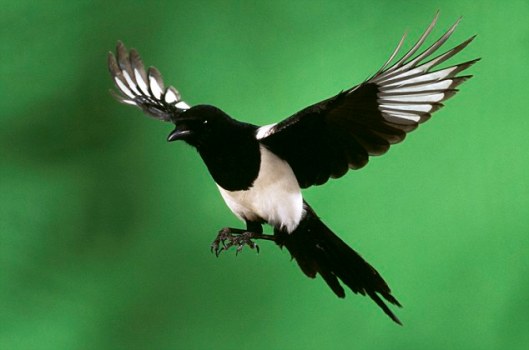
We never want to shy away from serious subjects—after all, all of the best fantasy/adventure writers never did—but it’s an early summer day where we live—just after Midsummer’s Day, in fact, and so we’d like to end with another kind of acquisitor—the magpie.

image20magpie.jpg

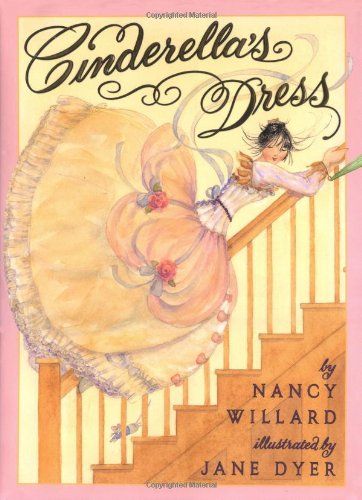
Traditionally, magpies are famous for being attracted to—and collecting—shiny objects. Our favorite magpie story, however, isn’t about obsession, but about generosity. It’s a beautiful children’s book by Nancy Willard and Jane Dyer, entitled Cinderella’s Dress.

image21cind'sdress.jpg

In this book, told in light, easy verse, we see a magpie couple as fairy godparents for Cinderella, using their cache of shiny things to—but we’ll leave that to you to discover (although the title is a bit of a give-away). Here’s another page to tease you…

image22csdresspage.jpg

Thanks, as ever, for reading.

MTCIDC


PS

Another Nancy Willard book you might enjoy is A Visit to William Blake’s Inn (1981), illustrated by Alice and Martin Provensen.

image23blakesinn.jpg

Oh, Come, Let Us Adore…

21 Wednesday Jun 2017

Posted by Ollamh in Imaginary History, J.R.R. Tolkien, Literary History, Military History, Military History of Middle-earth, Narrative Methods

≈ Leave a comment

Tags

1984, Adolf Hitler, altar, Ar-Pharazon, Armenelos, Artemis, Aulis, Avebury, Aztec, Benito Mussolini, Big Brother, France, Gallic Celts, George Orwell, Germany, Gondor, Greek temple, Hera, Herodotus, human sacrifice, Iphigenia, Melkor, Nazis, nemeton, Numenor, occupation, Olympia, Pantheon, Rome, sacrifice, Sauron, shrine, Soviet Union, Stalin, Stonehenge, Tenochtitlan, The Hobbit, The Lord of the Rings, The Silmarillion, The War of the Ring, Tolkien, Valar, World War II, worship

Welcome, as always, dear readers.

Some time ago, we posted a piece on what Sauron wanted out of the War of the Ring. Our evidence was this, spoken to Aragorn and Gandalf and the allied army which had marched to the Morannon as a distraction, by the Lieutenant of the Tower:

“The rabble of Gondor and its deluded allies shall withdraw at once beyond the Anduin, first taking oaths never again to assail Sauron the Great in arms, open or secret. All lands east of the Anduin shall be Sauron’s for ever, solely. West of the Anduin as far as the Misty Mountains and the Gap of Rohan shall be tributary to Mordor, and men there shall bear no weapons, but shall have leave to govern their own affairs. But they shall help to rebuild Isengard which they have wantonly destroyed, and that shall be Sauron’s, and there his lieutenant shall dwell: not Saruman, but one more worthy of trust.” (The Return of the King, Book Five, Chapter 10, “The Black Gate Opens”)

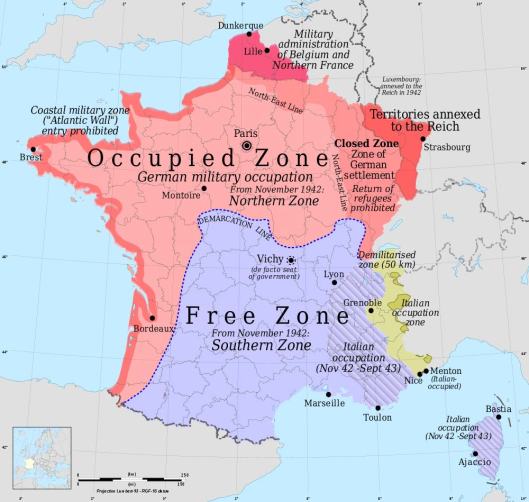
These are political conditions: Sauron is demanding territory, just as any conqueror in our world would. When France was occupied by the Nazis in 1940–something with which JRRT would have been quite familiar while writing The Lord of the Rings—here’s a map of what Hitler demanded—and got.

France-occupation

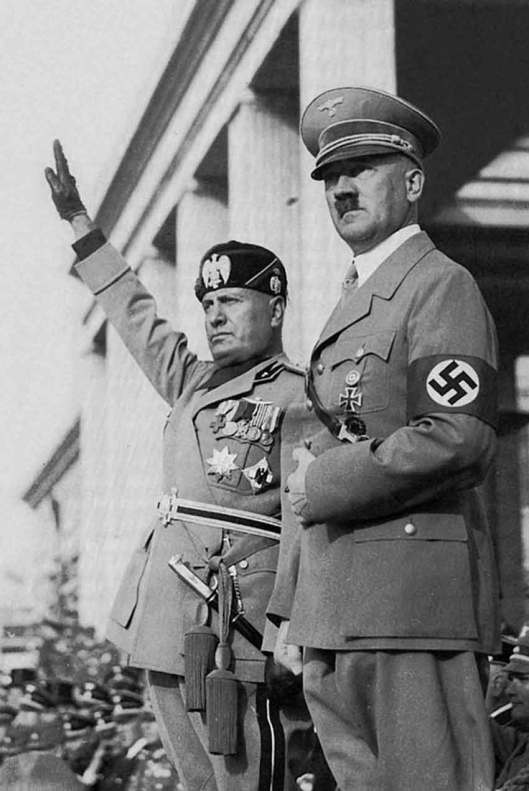
The last sentence of Sauron’s conditions even reminds us of the relationship between Hitler and Mussolini—although not how Mussolini would have viewed it.

Hitler-and-Mussolini

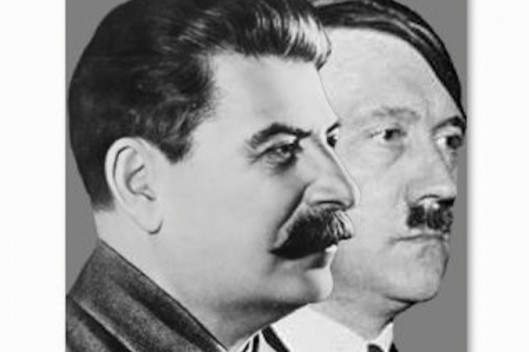
Hitler had another dictator-partner for a short time, however, Stalin, whom he distrusted even more than Mussolini.

STALIN-HITLER-2-676x450

And Stalin, unlike Sauron, won his war and swallowed all of central Europe, as well as eastern Germany.

post-war-soviet-influence

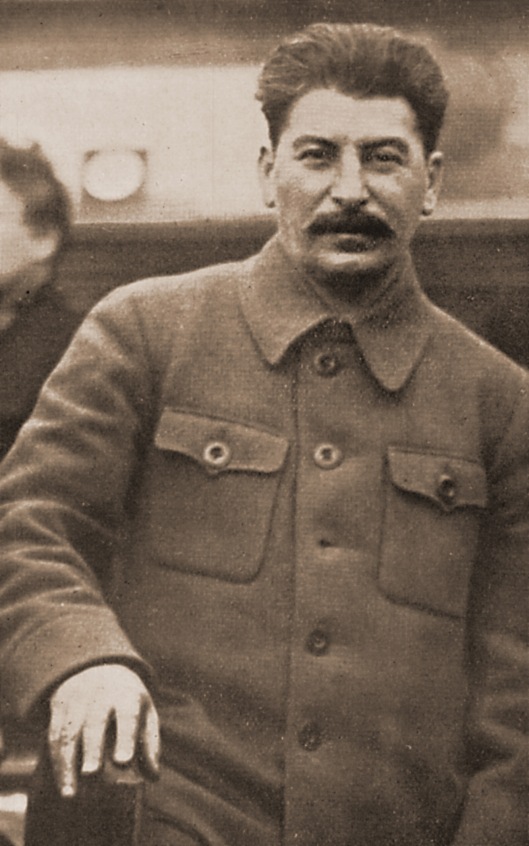
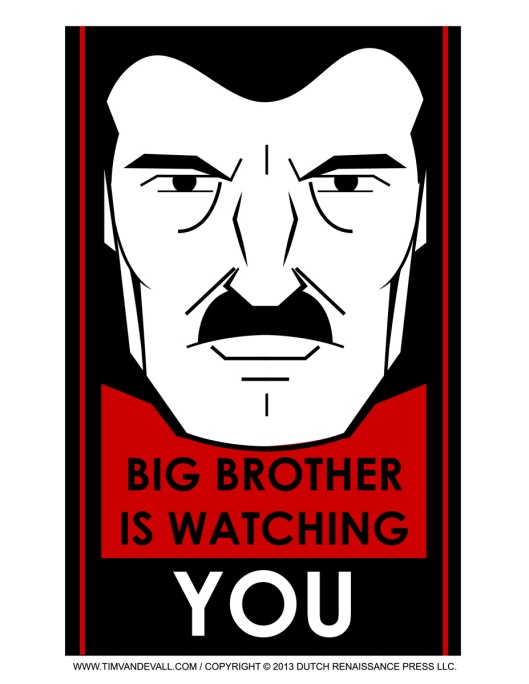
It’s clear that George Orwell had this dictator in mind when he was creating his “Big Brother”, in 1984, even to his physical description (from a poster—it appears that no one has actually seen Big Brother in the flesh): “an enormous face, more than a meter wide: the face of a man about forty-five, with a heavy black mustache and ruggedly handsome features…”

stalin

These posters were so constructed that, “It was one of those pictures…which are so contrived that the eyes follow you about when you move.”

Big-Brother-Is-Watching-You-Poster

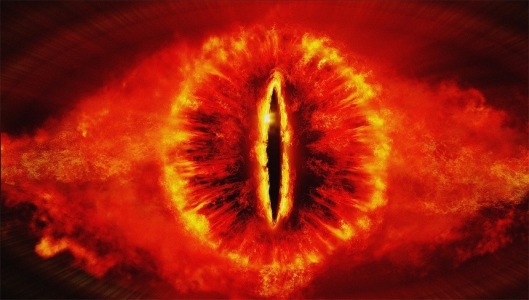
In fact, as we think about the image, its slogan, “Big Brother is Watching” might be applied to the All-Seeing Eye.

sauron-eye

That all-seeing eye, however, has another meaning, we believe, and it has to do with a goal which the Lieutenant doesn’t mention, but JRRT does:

“Sauron desired to be a God-King, and was held to be this by his servants.  If he had been victorious he would have demanded divine honour from all the rational creatures and absolute temporal power over the whole world.” (Letters, 244)

Thus, like various gods through the history of the world, by showing himself not a full physical form, but only as an eye, we can imagine that Sauron was claiming divine omniscience.

This set us to thinking: there is virtually no trace of religion in the latter part of the Third Age and certainly no religious structures. What might Sauron build as a shrine—to himself? And, as a corollary, what would he demand for worship?

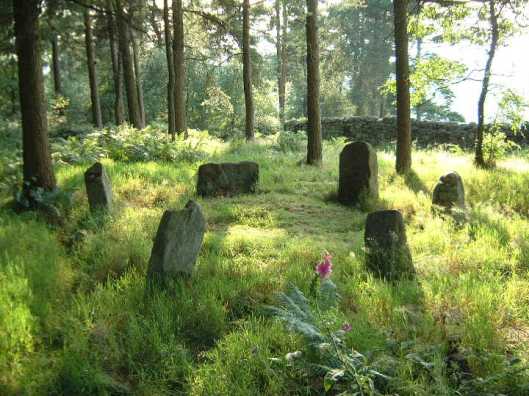
In Western Europe, some the earliest shrines were not actual buildings, but sites claimed to be somehow invested with divinity, such as groves of trees, something which the Gallic Celts called a nemeton, perhaps related to the Old Irish word nemed, meaning, according to the on-line OI/Middle Irish dictionary, “(small) sacred place”.

DollTorWest0801

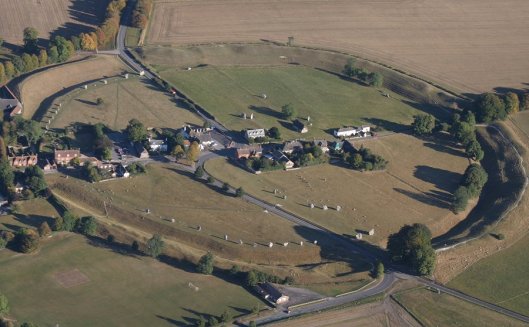
It’s easy to see how this could lead to the idea of a stone circle (perhaps beginning with a ditch of the sort which could ring settlements?), like that at Avebury.

Avebury

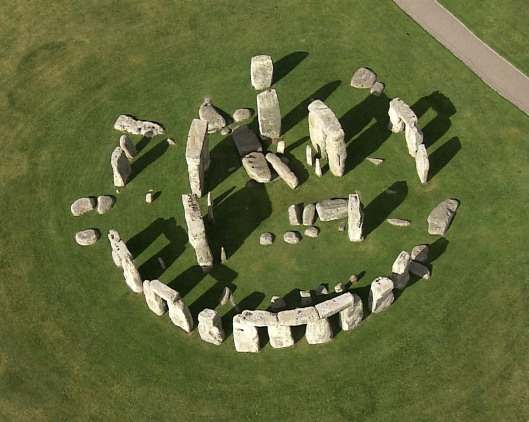
Or its more concentrated version, Stonehenge.

stonehenge-copy1

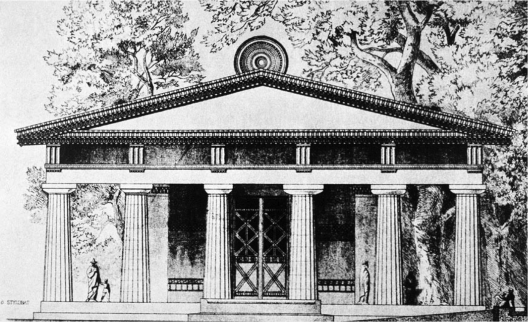
Another possibility might be to organize that grove into lines of pillars—using the trunks of the trees—and adding a roof—and you get a Greek temple.

templeofhera

Herodotus tells us that, in his time, this temple, devoted to Hera at Olympia, still had a couple of wooden columns, showing just how old it was. (There are also building elements, like pegs—all in stone in later time—which mirror earlier wooden construction.)

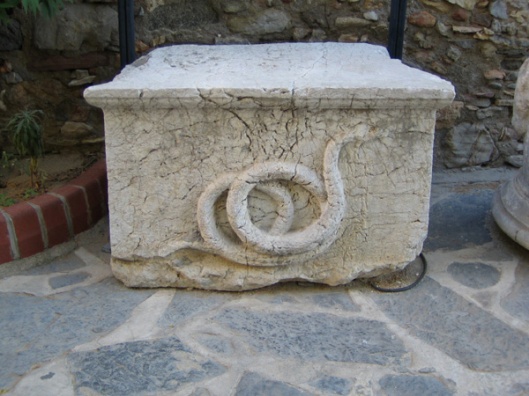
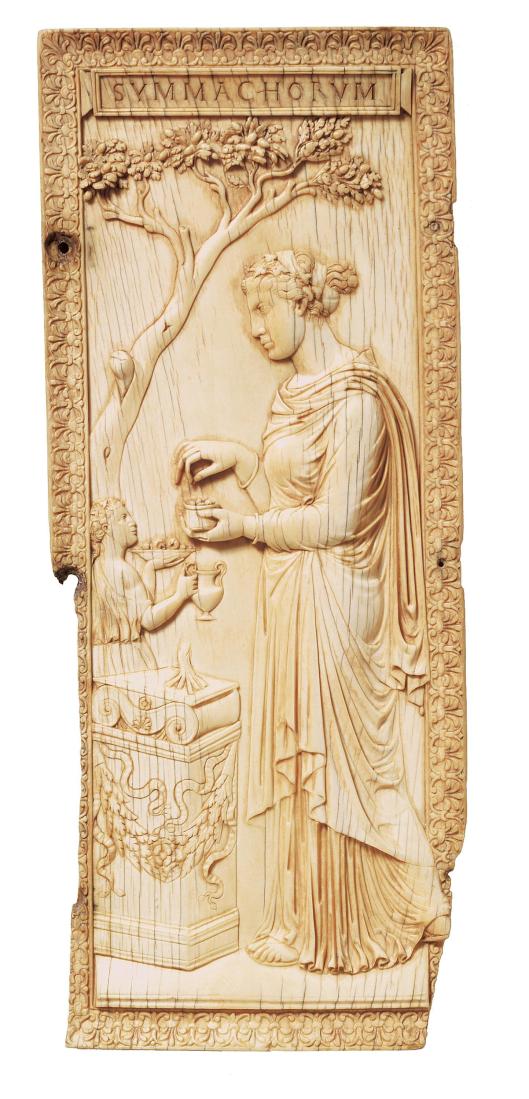
In the Greek world (and the Roman, as well), worship was done outside the building, at an altar in front.

snake-altar-from-mausoleum-of-halicarnassus-in-bodrum

That worship would consist of prayers and sacrifices. As the majority of the gods were believed to live in a place above humans (Olympus—an actual mountain, but also, seemingly, an imaginary location in the sky), sacrifices were conveyed in smoke. These could be as simple as incense

elt200810220812093544851-142058F954A638F8693

or as complicated as the barbecue after a multiple animal-slaughter, like the Roman suovetaurilia (“pigsheepbullactivity”). (Guess who got to consume the actual meat?)

multipleanimalsacrifice

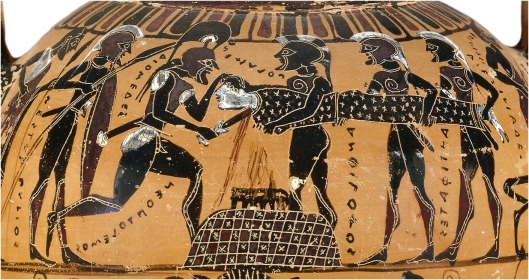
Classical people did not practice human sacrifice, considering it abominable, but it may have existed, at least in desperate circumstances in the far past, as has been preserved in the Greek story of Iphigenia, murdered at the altar of Artemis at Aulis to propitiate the goddess, who had blocked the Greeks from sailing to attack Troy.

Black-figured Tyrrhenian amphora (wine-jar) attributed to the Timiades Painter

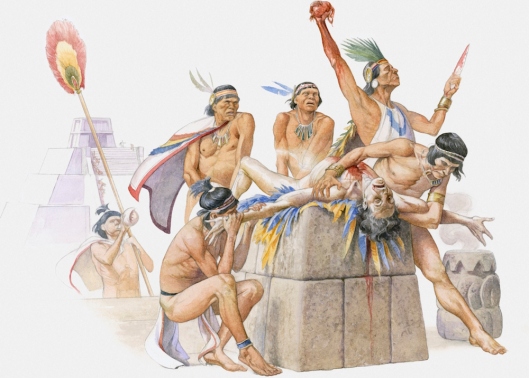
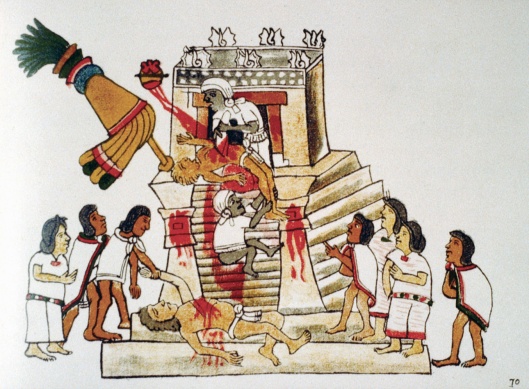
Of course, when it comes to wholesale, regular human sacrifice, we immediately think of Aztec devotion to their god, Huitzilopochtli, who was fed on the blood of human hearts at the top of his temple in the Aztec capital, Tenochtitlan.

huitzilopochtli

ThinkstockPhotos-98193978

sacrifice-2

And this brings us back to Sauron, his temple, his worship. Because there is so much wonderful material to work from in The Hobbit and The Lord of the Rings, in general, we confine ourselves to those and the Letters, but a little wider research gave us a clue—a horrible but not surprising clue—to answer our original question. In the Silmarillion, we found this:

“But Sauron caused to be built upon the hill in the midst of the city of the Numenoreans, Armenelos the Golden, a mighty temple; and it was in the form of a circle at the base, and there the walls were fifty feet in thickness, and the width of the base was five hundred feet across the center, and the walls rose from the ground five hundred feet, and they were crowned with a mighty dome. And that dome was roofed all with silver, and rose glittering in the sun, so that the light of it could be seen afar off; but soon the light was darkened and the silver became black.” (The Silmarillion, “Akallabeth”, 273)

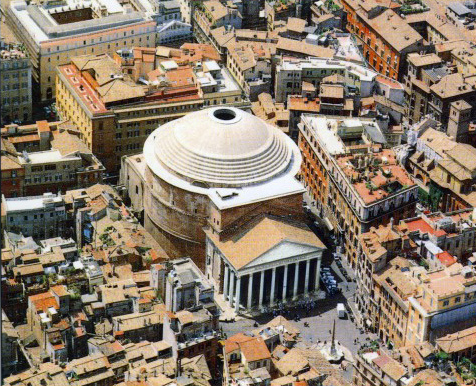
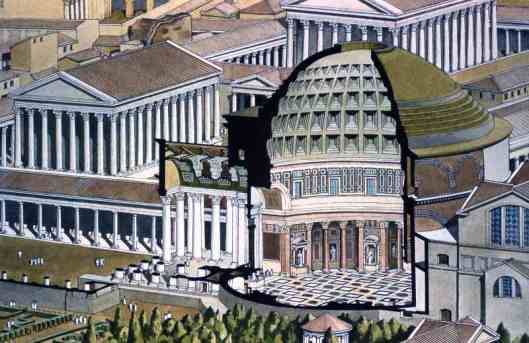
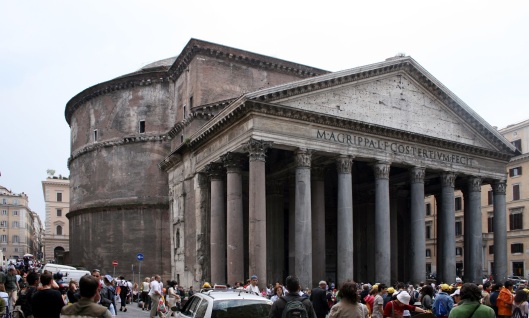
As people who are much involved with the Greco-Roman world, this description immediately brings to our minds the Pantheon, in Rome, whose dome was sheathed in copper, until that was stolen by the eastern emperor Constans II in 663AD, only to be stolen from him en route by Saracen pirates. It’s not 500 feet by 500 feet (152.4m.), of course, being only about 140 (42.67m.), but it’s certainly large and impressive—and circular, with a mighty dome.

aerial-view-pantheon

26.pantheon

Pantheon_Rome_(1)

But why did the “silver become black”? Do we have a bad feeling about this?

“For there was an altar of fire in the midst of the temple, and in the topmost of the dome there was a louver, whence there issued a great smoke…Thereafter the fire and smoke went up without ceasing; for the power of Sauron daily increased, and in that temple, with the spilling of blood and torment and great wickedness, men made sacrifice to Melkor that he should release them from Death. And most often from among the Faithful they chose their victims…”

Sauron, once Melkor’s servant, had gained great power over the Numenorean king, Ar-Pharazon, using it to persuade the king to attack the Valar—and thus bring about the destruction of Numenor. Sauron’s spirit survived that destruction, and perhaps his memory of Melkor’s temple and its worship would have, as well?

Thanks, as ever, for reading!

MTCIDC

CD
PS

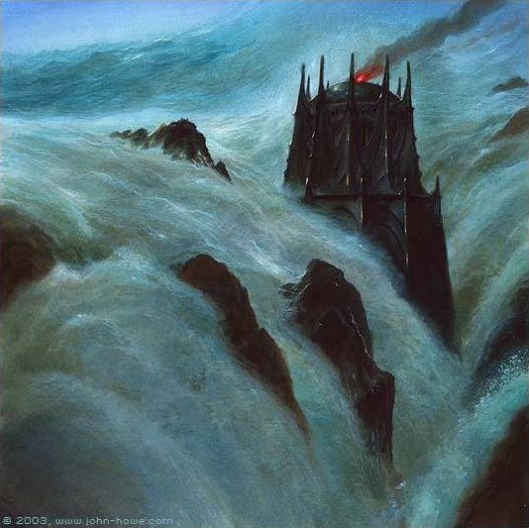
We can’t resist adding this wonderful John Howe impression of the drowning of the city of Armenelos…

John_Howe_-_The_Drowning_of_Numenor


And Then the Dragon Came

14 Wednesday Jun 2017

Posted by Ollamh in Artists and Illustrators, Fairy Tales and Myths, Heroes, Imaginary History, J.R.R. Tolkien, Literary History, Narrative Methods, Villains

≈ Leave a comment

Tags

A.A. Milne, Apollonius, Arthur Rackham, Beowulf, Chrysophylax, Cressida Cowell, Dragons, Drawn From Life, Drawn From Memory, Dream Days, E.H. Shepard, Edwardian, Farmer Giles of Ham, How to Train Your Dragon, Kenneth Grahame, Maxfield Parrish, Nine Dragons, Now We Are Six, Octavian, Prince Valiant, Renaissance, Sir Gawain, Smaug, St. George and the Dragon, The Argonautica, The Hobbit, The House at Pooh Corners, The Reluctant Dragon, The Wind in the Willows, Tolkien, Victorian, Walt Disney, Western Medieval, When We Were Very Young, Winnie the Pooh

Welcome, dear readers, as always.
One of us is in the midst of creating a course for the fall term. It’s called “Handling Monsters: A Handbook” and several of those monsters are dragons—the “Sleepless Serpent/Dragon” of the ancient Greek literary epic by Apollonius, The Argonautica,
image1sleepless.jpg
the dragon which Beowulf fights,
image2beowulf.jpg
(when small, we always imagined this as looking like the one which Sir Gawain, Prince Valiant’s master, fights)
image3sirgawaine.jpg
Smaug,
image4smaug.jpg
and Toothless, from How to Train Your Dragon (by Cressida Cowell—there’s also a movie by that name, which is fun—great flying scenes–but it’s so different from the book that it really should have another title!)
image5hiccup.jpg
We must confess that we’ve never been big saurian fans, either dinosaurs or dragons, but, as monsters go, they have their uses. Saying that, however, we do have to add that we’ve always loved the “Nine Dragons” scroll, a 13th-century Chinese painting…
image6nine.png
[And here’s a LINK to a site at the Center for the Art of East Asia which you can see the whole scroll—well worth the visit—and revisit, if you’re like us and love Chinese painting.]
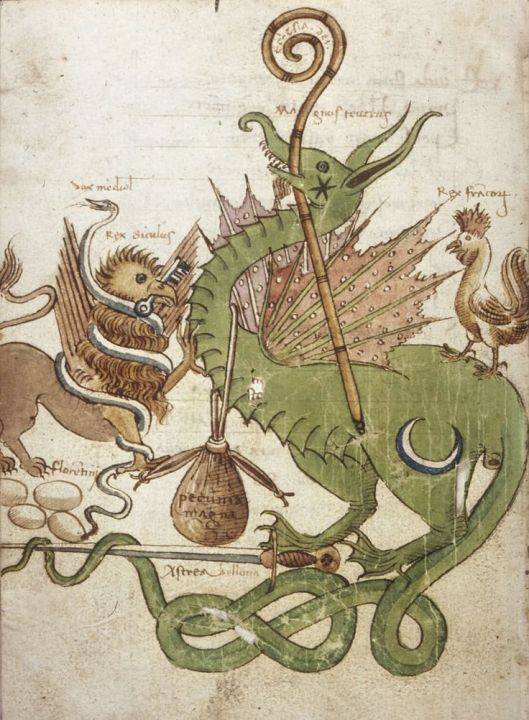
While putting together this course, we’ve been spending some time gathering dragon images. Sometimes, they seem pretty fantastic—painters with wild imaginations—
image7meddragon.jpg
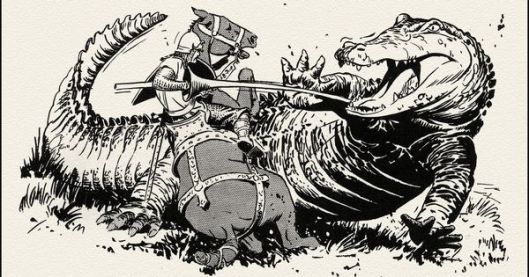
And sometimes they look like someone once saw a crocodile.
image8stg.jpg
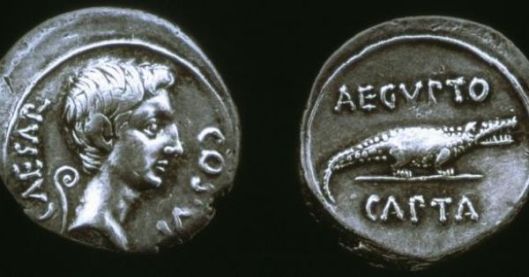
[Perhaps on an old coin? For example, Octavian—the Emperor Augustus-to-be—after the defeat of Antonius and Cleopatra, issued this coin, which reads “Egypt Taken”,

image9aegypta.jpg
suggesting that, when a Roman thought of Egypt, it wasn’t the pyramids which came to mind, but a scaly, many-toothed amphibian!]
And the image before the coin reminds us that, in Western medieval/early Renaissance art, a major source of dragon pictures is religious, being depictions of St. George and his dragon-slaying.
image10stg1.jpg

image11stgeo2.jpg
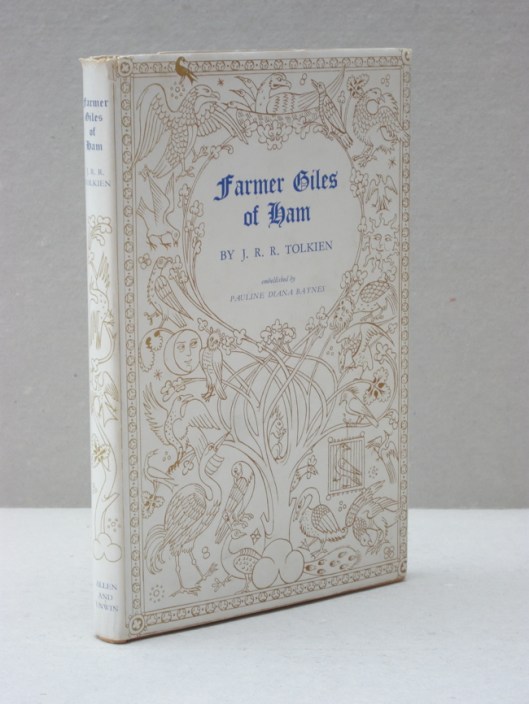
We’ve mentioned JRRT and Smaug, but that it only his first dragon story. There is another, Farmer Giles of Ham, written in 1937 and published in 1949.
image12farmergiles.jpg
If you haven’t read it, we recommend it as a look at JRRT at play, more Hobbit than Lord of the Rings. The story is about a very practical, but hardly adventurous farmer, Giles, who, after chasing off a giant from his village, is given the job of dealing with an invading dragon, Chrysophylax (maybe something like “Watchman of the Gold”).
image13xryso.jpg
Although the dragon is tricksy, Giles eventually overcomes him with a combination of shrewdness and a famous sword, Caudimordax (“Tailbiter”). In the process, he becomes not only wealthy, but also founds his own kingdom-within-a-kingdom. As well, though JRRT, more than once in his letters, lets us know that he is not an enthusiast for democracy, he provides a very critical view of monarchy and its pretensions. (This may also explain why, although those in the Shire may refer to “the king” and “the rules”, which presumably came with that monarch, their own local form of government is more familial than bureaucratic.)
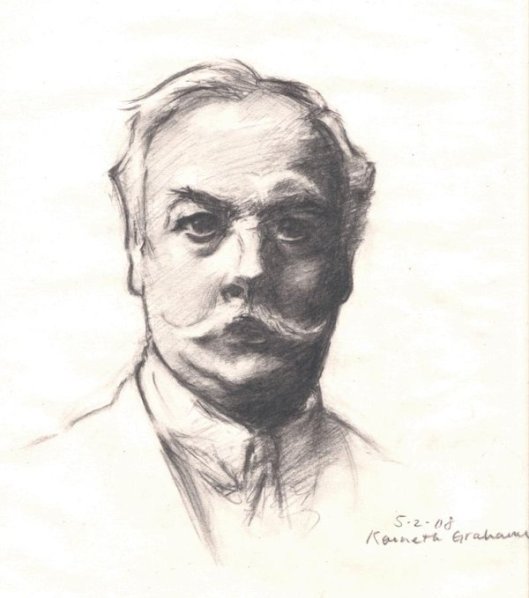
Chrysophylax is chatty, rather like Smaug, but there is a much lighter touch here, and Chrysophylax reminds us of our favorite dragon after Tolkien’s, the unnamed dragon in Kenneth Grahame’s
image14kgrahame.jpg
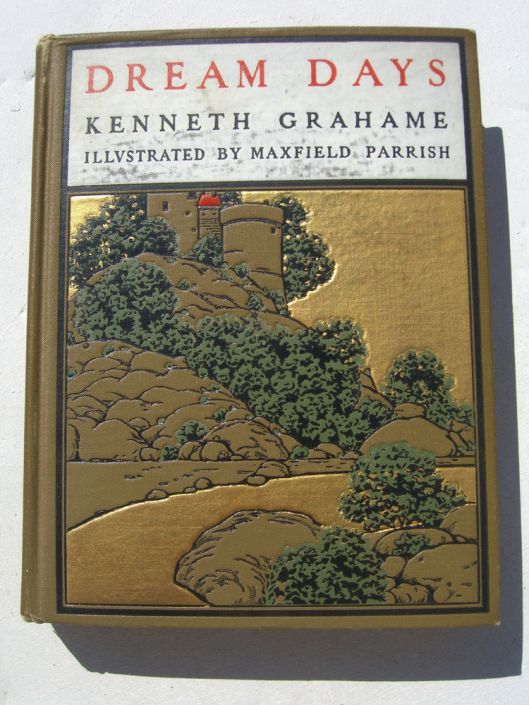
short story, “The Reluctant Dragon”, from his 1898 collection, Dream Days.
image15dreamdays.jpg
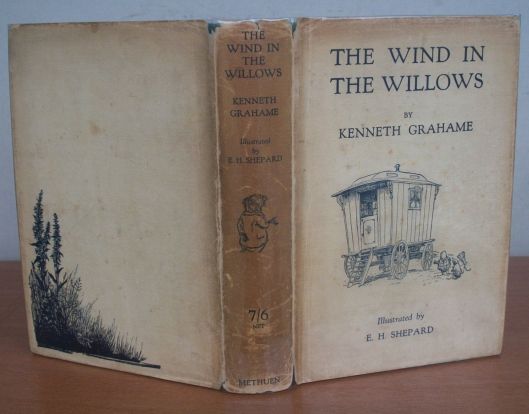
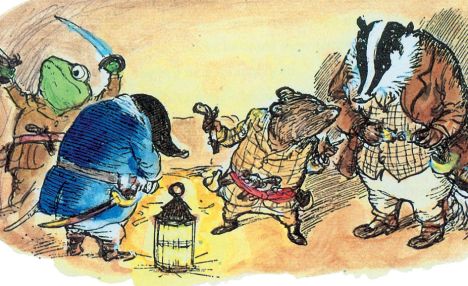
If you recognize Grahame’s name, you probably know it from his 1908 novel, The Wind in the Willows, with its well-known characters, Toad, Rat, Mole, and Badger—not to mention the wicked weasels!–
image16wiw1sted.jpg
image17wiwcharacters.jpg
first illustrated by E.H. Shepard
image18ehshepard.jpg
whom you may also know as the illustrator of A.A. Milne’s Winnie the Pooh, The House at Pooh Corners, When We Were Very Young, and Now We are Six.
image19wthepfirst.jpg
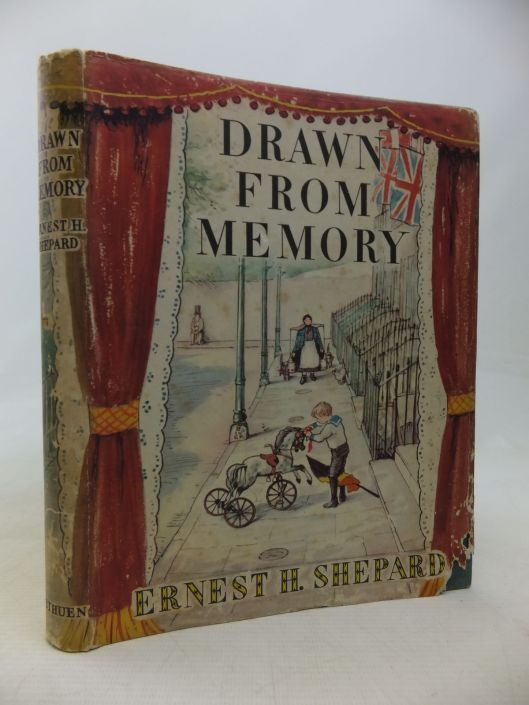
[Shepard also wrote two volumes of autobiography—which he illustrated, of course—Drawn from Memory (1957) and Drawn from Life (1961)
image19drawnfrommem.JPG

image20drawnfromlife.JPG
and, for a picture of a growing up in the later Victorian world, beautifully written and illustrated, we very much recommend both.]
[And a second footnote here: Arthur Rackham—one of our favorite late-19th-early-20th-century illustrators– also illustrated The Wind in the Willows,
image22rackham.jpg

image23wiwrack.jpg
his last project before his death in 1939. It was published a year later, in 1940.]
The title gives away a great deal of the plot of Grahame’s “The Reluctant Dragon”. Instead of being a murderous hoarder, like Beowulf’s dragon, or Smaug, this is dragon-as-pacifist, (as depicted by his original illustrator, Maxfield Parrish):
image24fearless.jpg
not in the least interested in plundering and burning, but rather in viewing sunsets and living a peaceful existence—until St. George appears. As to what happens next, we’re not going to issue a spoiler alert here, but rather provide links to three works by Grahame: two collections of stories and essays, The Golden Age (1895), Dream Days (1898), and The Wind in the Willows (1908), inviting you to read for yourself and to enjoy Grahame’s elegant Edwardian prose and gentle approach.
With thanks, dear readers, for…reading.
MTCIDC
CD

PS
Walt Disney studios made cartoons of “The Reluctant Dragon” (1941) and “The Wind in the Willows” (1949), which are currently available in Disney collections. They both stray rather far from the original stories, but are fun in themselves (and Eric Blore’s voice is perfect for “the handsome and popular Toad”).
PPS
One of us has written what we might immodestly call a very good short story based upon Arthur Rackham’s last days and his determination to finish his illustrations to The Wind in the Willows before his death and we plan to publish it here next week as a kind of “Summer Holidays Extra”. We hope you’ll enjoy it.


Just a Nobuddy

03 Wednesday May 2017

Posted by Ollamh in Artists and Illustrators, Fairy Tales and Myths, Heroes, Imaginary History, J.R.R. Tolkien, Literary History, Narrative Methods

≈ Leave a comment

Tags

akaletes, Athena, Bilbo, Circe, cyclops, face culture, Greek, Homer, kleos, Odysseus, Outis, Polyphemus, Poseidon, Riddles in the Dark, Smaug, Telemachus, The Hobbit, The Lord of the Rings, The Odyssey, Tolkien, true name

Welcome once more, dear readers.

“Who are you and where do you come from, may I ask?”

inquires Smaug. (The Hobbit, Chapter 12, “Inside Information”)

image1smaug.jpg

Earlier in The Hobbit, when asked this indirectly by Gollum, Bilbo had replied directly: “I am Mr.

image2bilbogollumlee.jpg

Bilbo Baggins…” (The Hobbit, Chapter 5, “Riddles in the Dark”)

This had led him into a deadly game of riddles, but now Bilbo seems more wary—which is just as well, as the narrator tells us when Bilbo answers Smaug’s question indirectly:

“This of course is the way to talk to dragons, if you don’t want to reveal your proper name (which is wise), and don’t want to infuriate them by a flat refusal (which is also very wise).” (The Hobbit, Chapter 12, “Inside Information”)

Bilbo’s answer to Smaug’s question about his identity is a series of what we might call “What Have I Got In My Pocket?” names—riddling titles which, just like that absent-minded remark, only Bilbo can understand:

“I am the clue-finder, the web-cutter, the stinging fly. I was chosen for the lucky number…I am he that buries his friends alive and drowns them and draws them alive again from the water. ..I am the friend of bears and the guest of eagles. I am Ringwinner and Luckwearer; and I am Barrel-rider.” (The Hobbit, Chapter 12, “Inside Information”)

All of these titles are references to events earlier in the story, of course, although a number of them, like “Ringwinner”, also sound like Norse or Old English kennings—that is, poetic names for often ordinary things, like “whale road” for “sea” and “wave’s horse” for “ship” or “sky candle” for “sun”. One which is close to Bilbo’s “Ringwinner“ is “ring-giver”, a kenning for a “lord”. Because they refer to personal experiences, Bilbo—and we readers—must assume that they would mean nothing to Smaug—or almost—

“Ha! Ha! You admit the ‘us’?” laughed Smaug. “Why not say ‘us fourteen’ and be done with it, Mr. Lucky Number?”

A lucky guess? (And interesting that, in Middle-earth, there are such things as “lucky numbers”—we wonder how many more examples of “lucky” vs “unlucky” things we might find?)

The narrator had said that not revealing your proper name is wise and the consequence of Bilbo’s mistake in telling Gollum that he is “Mr. Bilbo Baggins” will appear many years later, in the form of sinister visitors to the Shire, offering money for the location of “Baggins”.

image3nazgul.jpg

There can be physical danger, then, in properly identifying yourself.

There may be another reason for not doing so and it could entail physical danger not for the protagonist in the story, but a surprise threat for the antagonist.

When Odysseus and his men visit the cave of the Cyclops, Polyphemus,

image4cyclops.jpg

and are trapped there, Odysseus, when asked by Polyphemus, gives a false name: Outis (OO-tis), meaning “No one/nobody” in Greek. His subsequent action would suggest that the reason why he does so is that—as he says himself—he has a reputation (for cleverness) which reaches to the heavens. By providing a false name, he intends to put the Cyclops off his guard before defeating him, which he does by:

  1. getting him drunk

image5cydrink.jpg

  1. blinding him

image6blinding.jpg

  1. slipping himself and his men out of Polyphemus’ cave under the bellies of the Cyclops’ sheep.

image7sheepslip.jpg

Having succeeded, however, Odysseus seems to change his plan—and mind—completely, shouting, as his ship takes him away, his name and address, even as the Cyclops hurls huge rocks at the ship and his men beg him to stop.

image8cyrocking.jpg

In the mind of an Homeric hero, however, Odysseus has no choice.

A major element in the life of such heroes is something called “kleos” (KLAY-oss)—which is somewhat difficult to translate. In the heroic world it means something like “personal name within the larger framework of a family and its reputation”—and that’s only the beginning. Kleos is almost a kind of inheritable object and includes such elements as:

  1. divine/semi-divine parents/ancestors
  2. divine patrons
  3. father’s reputation
  4. own reputation, which includes
  5. famous battles/campaigns participated in
  6. famous enemies killed (and spoils taken)
  7. plunder from cities sacked (includes not only goods, but women)

And #4 could be something to be said for parent or ancestor, as well. Your father or grandfather might have been known as “Sacker of Cities” and this adds to the general kleos.

It’s also possible to lose kleos—divinities pick and choose whom they will help, for example, and, just because your father was the client of a god, doesn’t mean that you will be. It is a definitely positive sign for Odysseus’ family’s continued kleos, for example, when, in Odyssey Books 2 and 3, Athena, disguised as the human Mentor, appears and offers Odysseus’ son, Telemachus, advice.

The Homeric world is a so-called “face” culture. In such a culture, everything is public. In fact, the word kleos comes from the verb kalo (kah-LO), meaning to “to summon/call by name”, that name being, in the case of a warrior, not only your name but where you stand in your family’s reputation, its kleos.

Thus, it’s important, when a warrior defeats a powerful enemy, not only should the enemy warrior know who beat him, but all the bystanders, should there be any, as well.

image9warrior.jpg

For Odysseus, then, using a false name might give him an initial advantage over Polyphemus, but his victory is only complete and he can only claim kleos when he reveals to the Cyclops who has defeated him. This will lead to terrible subsequent consequences for Odysseus. Polyphemus’ father is Poseidon, god of the seas

image10pos.jpg

and he will make things very difficult for Odysseus later in the Odyssey,

image11pos.jpg

but, in the world of kleos, Odysseus has no choice but to reveal himself to gain the credit necessary for maintaining it.

Another reason for concealing your name has to do with magic. In many of the world’s older traditional cultures, people might have several names, either in succession, or public versus private. Behind the public versus private stands the idea that you are your name—that is, all that is you is embodied in your name. If someone knows that name, that person can use that name against you, either to curse you—and, using your real name, that curse might stick to it—or to summon you for magical purposes. Once your true name is called, a sorcerer can make you obey, even against your will.

In Odyssey 10, Odysseus and his men land on an island which is the home of the enchantress, Circe.

image12circe.jpg

She has the power to shift the shapes of men into those of animals and vice versa, as a scouting party from Odysseus’ ship soon finds out. She gives them a drink with some sort of magic drugs mixed in and, with a wave of her staff, turns them into pigs (although they retain their human minds).

image13enchant.jpg

She then tries this on Odysseus, but, in his case, it doesn’t work, much to her surprise, and he, drawing his sword, quickly forces her surrender.

image14defeat.jpg

There is no direct explanation for the failure of her magic in Book 10, but there is, in fact, a clue in the word she uses for Odysseus in her frustration. She calls him “akaletes” (ah-KAH-leh-tehs)—which means “unsummonable/uncallable by name” and is from the same root as kleos and kalo. The implication here is that, for her magic to work, she needs a name—something we might presume Odysseus’ piggy companions must have foolishly given her. That he is unsummonable suggests that he has given her a false name and therefore her magic hasn’t worked.

And is this perhaps the real reason why it was wise that Bilbo didn’t identify himself directly to Smaug?

image15smaug

After all, Smaug, unlike the agents of Sauron, wasn’t likely to roam the countryside, offering gold in return for information about the whereabouts of a certain “Baggins”. He does, however, appear to have a certain persuasive magic:

“Bilbo was now beginning to feel really uncomfortable. Whenever Smaug’s roving eye, seeking for him in the shadows, flashed across him, he trembled, and an unaccountable desire seized hold of him to rush out and reveal himself and tell all the truth to Smaug. In fact he was in grievous danger of coming under the dragon-spell.” (The Hobbit, Chapter 12, “Inside Information”)

That magic seems to lie in his words and tone—Bilbo, listening, is said to be in peril of “dragon-talk”—and we want to talk more about such magical persuasion in our next posting…

Thanks, as ever, for reading!

MTCIDC

CD

Shire Portrait (5b): Hostile Takeover

15 Wednesday Mar 2017

Posted by Ollamh in Economics in Middle-earth, Imaginary History, J.R.R. Tolkien, Military History, Military History of Middle-earth, Narrative Methods, Villains

≈ Leave a comment

Tags

Baggins, Chief, Der Fuehrer, Gestapo, Hitler, Lotho, SA, Sackville-Bagginses, Saruman, Sharkey, Shire, Shirriffs, Southfarthing, The Hobbit, The Lord of the Rings, The Scouring of the Shire, Tolkien

Welcome, dear readers, to the second part of our last (for the moment?) posting on the Shire. This is actually a two-part posting and is devoted to the takeover of the Shire by “Sharkey” and his followers and how it might have happened, based upon evidence from the texts of The Hobbit and The Lord of the Rings.

We decided upon a two-part posting because we saw the takeover as a two-step process. Initially, we believe that Saruman looked for someone within the Shire to act as his agent there and, as a local agent, both to foment the kind of discontent which would provoke a demand for change, and to act as the leader of that change.

Because the Shire had so little government and most problems were dealt with within families, we wondered if that discontent wouldn’t begin as something Shire-wide, but be found within one or more families, instead.

With this in mind, we immediately thought of the Sackville-Bagginses. From the final chapter of The Hobbit, it was clear that the S-Bs (as they’re called) had grievances against their cousins, the Bagginses, mostly because they wanted Bag End and its contents.

How this led to leaguing with Saruman is not explained, but merely suggested, by Pippin, who says, of reported disturbance in the Southfarthing:

“ ‘Whatever it is…Lotho will be at the bottom of it:   you can be sure of that.” The Return of the King, Book Six, Chapter 7, “Homeward Bound”

This is then confirmed when the hobbits reach the bridge over the Brandywine and one of the hobbit guards (Hob Hayward), mentions “the Chief…up at Bag End.”

Frodo, who has sold his house at Bag End (see The Fellowship of the Ring, Book One, Chapter 3, “Three is Company”) to the S-Bs, immediately asks Hob, “ ‘Chief? Chief? Do you mean Mr. Lotho?’ said Frodo.” The Return of the King, Book Six, Chapter 8, “The Scouring of the Shire”

Otho and Lobelia had been Bilbo’s enemies long ago, but, whereas Lobelia is still alive, Otho is long dead and Lotho (and yes, the word “loathe” must lie just below the surface here, though this is probably not his name in the Common Tongue, just as Pippin’s name isn’t Pippin), his son, has somehow become not the Mayor of the Shire (who is actually Will Whitfoot), but the much vaguer (and more menacing) “the Chief”. (We also note that “Mr. Lotho” is a courtesy title and one for established land-owners, really, and not for Lotho.)

The family theme is underlined when Hob replies that “we have to say ‘the Chief’ nowadays” and Frodo says, in turn:

“ ‘Do you indeed!’ said Frodo. ‘Well, I am glad he has dropped the Baggins at any rate. But it is evidently high time that the family dealt with him and put him in his place.’ ”

If Frodo’s remark suggests the familial aspect of justice in the Shire, the reply of an anonymous hobbit to it suggests the second or external step of the takeover:

“A hush fell on the hobbits beyond the gate. ‘It won’t do no good talking that way,’ said one. ‘He’ll get to hear of it. And if you make so much noise, you’ll wake the Chief’s Big Man.’ ”

As JRRT began The Lord of the Rings in 1937, just four years after the Nazis took control of Germany, “The Chief” surely has echoes of “Der Fuehrer”, which simply means “The Leader”.

adolf-hitler-34.jpg

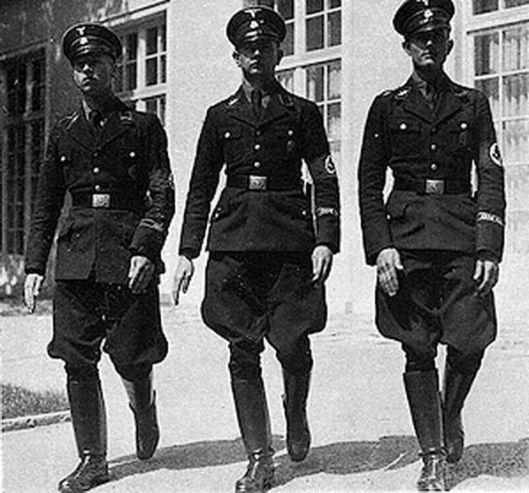
In which case, should we associate the threat of “the Chief’s Big Man” with everything from the SA

0001.jpg

to the Gestapo?

0e24494b5019c1007e9214e03d77c2d8.jpg

Merry, at least, certainly makes a connection with something which Butterbur had said earlier:

“It all comes of those newcomers and gangrels that began coming up the Greenway last year, as you may remember; but more came later. Some were just poor bodies running away from trouble; but most were bad men, full o’ thievery and mischief.” The Return of the King, Book Six, Chapter 7, “Homeward Bound”

Answering the anonymous voice, Merry says:

“If you mean that your precious Chief has been hiring ruffians out of the wild, then we’ve not come back too soon!”

When the Big Man appears, Merry’s conclusion is confirmed: it’s Bill Ferny, who, Butterbur believes, who had been involved in a minor battle in Bree, in which five hobbits had been killed:

“ ‘And Harry Goatleaf that used to be on the West-gate, and that Bill Ferny, they came in on the strangers’ side, and they’ve gone off with them; and it’s my belief they let them in. On the night of the fight I mean.’ “

If some of these “Big Men” were criminal drifters from the east, almost randomly recruited, there were others who were sent.

“ ‘It all began with Pimple, as we call him,’ said Farmer Cotton; ‘and it began as soon as you’d gone off, Mr. Frodo.   He’d funny ideas, had Pimple. Seems he wanted to own everything himself, and then order other folk about. It soon came out that he already did own a sight more than was good for him; and he was always grabbing more, though where he got the money was a mystery: mills and malt-houses and inns, and farms, and leaf-plantations. He’d already bought Sandyman’s mill before he came to Bag End, seemingly.

Of course he started with a lot of property in the Southfarthing which he had from his dad; and it seems he’d been selling a lot o’ the best leaf, and sending it away quietly for a year or two. But at the end o’ last year he began sending away loads of stuff, not only leaf. Things began to get short, and winter coming on, too.   Folk got angry, but he had an answer. A lot of Men, ruffians mostly, came with great wagons, some to carry off the goods south-away, and others to stay. And more came. And before we knew where we were they were planted here and there all over the Shire, and were felling trees and digging and building themselves sheds and houses just as they liked…”

There is a bit more to add to this. The “Big Men” were not alone. As in our own historical world of Nazi occupiers, there were those willing to collaborate, as Robin Smallburrow tells Sam:

“There’s hundreds of Shirriffs all told, and they want more, with all these new rules. Most of them are in it against their will, but not all. Even in the Shire there are some as like minding other folk’s business and talking big. And there’s worse than that: there’s a few as do spy-work for the Chief and his Men.”

With Farmer Cotton’s narrative, however, the two steps come together: the local was, indeed, as Pippin has suspected, Lotho. The external was a combination of opportunists, like Bill Ferny, and agents dispatched from an unnamed southern source, but we know that it was “Sharkey” who sent them, just as we know that “Sharkey” was Saruman, who was still capable of mischief—but not “in a small mean way”.

Thanks, as always, for reading.

MTCIDC

CD

Shire Portrait (5a): Hostile Takeover

08 Wednesday Mar 2017

Posted by Ollamh in Economics in Middle-earth, Imaginary History, J.R.R. Tolkien, Literary History, Narrative Methods

≈ Leave a comment

Tags

A Long-Expected Party, auction, Bag End, Baggins, Barliman Butterbur, Galadriel, Government, Isengard, Longbottom Leaf, Luke Skywalker, Merry and Pippin, Mirror of Galadriel, Pipeweed, Sackville-Bagginses, Sam Gamgee, Saruman, Star Wars, The Empire Strikes Back, The Lord of the Rings, The Return of the King, The Scouring of the Shire, The Shire, Tolkien, Yoda

As always, dear readers, welcome!

This is, we think, the last in our Shire Portrait series (although a 2-parter)—at least for the moment. In it, we intend to consider just how the Shire fell into the hands of “Sharkey” and his “boys”.

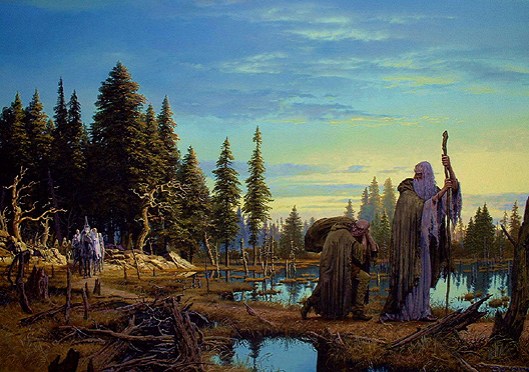
The Ring destroyed and the King returned, Gandalf, the Hobbits, and a party of Elves are traveling back toward Rivendell and beyond when they come upon Saruman and Grima, now no more than Saruman’s slave.

Ted_Nasmith_-_Saruman_is_Overtaken.jpg

It is not a happy meeting, as can be imagined. When offered help, Saruman replies:

“All my hopes are ruined, but I would not share yours. If you have any…You have doomed yourselves, and you know it. And it will afford me some comfort as I wander to think that you pulled down your own house when you destroyed mine.” The Return of the King, Book 6, Chapter 6, “Many Partings”

In such a mood, it can be imagined how he treats the Hobbits—even when Merry offers him pipe-weed, which he does while commenting, less than tactfully, on its origin:

“ ‘You are welcome to it; it came from the flotsam of Isengard.’

‘Mine, mine, yes and dearly bought!’ cried Saruman, clutching at the pouch. ‘This is only a repayment in token; for you took more, I’ll be bound. Still, a beggar must be grateful, if a thief returns him even a morsel of his own. Well, it will serve you right when you come home, if you find things less good in the Southfarthing than you would like. Long may your land be short of leaf!’”

Saruman’s remark—a curse, really—resonates especially with Sam.

“’Ah!’ said Sam. ‘And bought he said. How, I wonder? And I didn’t like the sound of what he said about the Southfarthing. It’s time we got back.’” The Return of the King, Book 6, Chapter 6, “Many Partings”

This is a natural reaction on Sam’s part because of what he had seen in Galadriel’s mirror, we presume.

1gmirror.jpg

“’Hi!’ cried Sam in an outraged voice. ‘There’s that Ted Sandyman a-cutting down trees as he shouldn’t. They didn’t ought to be felled: it’s that avenue beyond the Mill that shades the road to Bywater…

But now Sam noticed that the Old Mill had vanished, and a large red-brick building was being put up where it stood. Lots of folk were busily at work. There was a tall red chimney nearby. Black smoke seemed to cloud the surface of the Mirror…

‘I can’t stay here,’ he said wildly. ‘I must go home. They’ve dug up Bagshot Row, and there’s the poor old Gaffer going down the Hill with his bits of things on a barrow…” The Fellowship of the Ring, Book 2, Chapter VII, “The Mirror of Galadriel”

At the time, Galadriel had told him

“’You cannot go home alone,’ said the Lady. ‘You did not wish to go home without your master before you looked in the Mirror, and yet you knew that evil things might well be happening in the Shire. Remember that the Mirror shows many things, and not all have yet come to pass. Some never come to be, unless those that behold the visions turn aside from their path to prevent them. The Mirror is dangerous as a guide to deeds.” The Fellowship of the Ring, Book 2, Chapter VII, “The Mirror of Galadriel”

[A footnote: suddenly, we are reminded of that scene on Dagobah in Star Wars V, when Luke has had a vision and immediately wants to rush off to Bespin.

2lukedagobah.jpeg

“Luke: I saw—I saw a city in the clouds.

Yoda: [nods] Friends you have there.

Luke: They were in pain…

Yoda: It is the future you see.

Luke: The future?

[pause]

Luke: Will they die?

Yoda: [closes his eyes for a moment] Difficult to see. Always in motion is the future.

Luke: I’ve got to go to them.

Yoda: Decide you must, how to serve them best. If you leave now, help them you could; but you would destroy all for which they have fought, and suffered.” The Empire Strikes Back (1980)

As—using various websites—we provide links here—we can see that an imitation of the opening of the Hobbit—Bilbo and Gandalf meeting—appears in an early script of Star Wars IV, I think that the scene at Galadriel’s Mirror was somewhere back in G. Lucas’ wonderfully fertile brain—and, yes, we are big fans.]

“Secrets of the ‘Star Wars’ Drafts”

Was George Lucas Inspired by Tolkien?

Star Wars Origins: The Lord of the Rings

At this point, we know from two sources that Saruman has had commercial dealings with the Southfarthing.

First, of course, we’ve just seen it confirmed by Saruman’s response to Merry. Second is that scene at Isengard, where Gandalf, Theoden, Eomer, and Aragorn, travel with an escort and find there Merry and Pippin, who tell them of their discovery of two small casks:

“ ‘My dear Gimli, it is Longbottom Leaf! There were the Hornblower brandmarks on the barrels, as plain as plain. How it came here, I can’t imagine.” The Two Towers, Book Three, Chapter 9, “Flotsam and Jetsam”

Michael-Herring-Restos-y-despojos-Calendario-Tolkien-1980

Knowing, however, of Saruman’s increasing interest in the Shire, we can imagine that one of his agents, active in the Southfarthing, had acquired it for him. As the Appendix B, “The Tale of Years” tells us, under TA2953:

[Saruman] notes his [Gandalf’s] interest in the Shire. He soon begins to keep agents in Bree and the Southfarthing.” (page 1089 in Appendix B)

Spying was clearly only the beginning for Saruman, however. The actual evidence for his eventual take-over is scattered throughout The Lord of the Rings, but we believe that it can be pieced together to provide a picture of how it must have been done. It was a two-step process.

First, he appears to have gained knowledge of internal dissatisfaction within the Shire. Because there is really nothing political in the Shire–as readers will know from the first posting in this series, there is virtually no government—this unrest was domestic—as is said in the Prologue, “Families for the most part managed their own affairs.”

In the case of Bilbo and Frodo, the dissatisfied were the Sackville-Bagginses. We first met them in the last chapter of The Hobbit, where they were described as “Bilbo’s cousins” and were shown as being actively involved in the auction of the “effects of the late Bilbo Baggins Esquire”—as well as in the disappearance of some merchandise not auctioned off:

“Many of his silver spoons mysteriously disappeared and were never accounted for. Personally he suspected the Sackville-Bagginses. On their side they never admitted that the returned Baggins was genuine and they were not on friendly terms with Bilbo ever after.” The Hobbit, Chapter 19, “The Last Stage”

It was one more blow to the Sackville-Bagginses when Bilbo rescued the now-orphaned Frodo from “those queer Bucklanders” and brought him to live at Bag End, as Gaffer Gamgee related in The Ivy Bush:

“ ‘But I reckon it was a nasty knock for those Sackville-Bagginses. They thought they were going to get Bag End, that time he went off and was thought to be dead. And then he comes back and orders them off; and he goes on living and living, and never looking a day older, bless him! And suddenly he produces an heir, and has all the papers made out proper. The Sackville-Bagginses won’t never see the inside of Bag End now, or it is to be hoped not.’ “ The Fellowship of the Ring, Book One, Chapter 1, “A Long-Expected Party”

Bad blood, then, on several counts—and, for Saruman, looking for a way in, a great opportunity.

Bilbo might have suspected them of spoon-pilfering, but his was a more generous nature, however, and he even invited them to his and Frodo’s joint birthday party.

“The Sackville-Bagginses were not forgotten. Otho and his wife Lobelia were present. They disliked Bilbo and detested Frodo, but so magnificent was the invitation card, written in golden ink, that they had felt it impossible to refuse…” The Fellowship of the Ring, Book One, Chapter 1, “A Long-Expected Party”

On the other hand, Bilbo does not please them when he announces that Frodo is coming into “his inheritance”—

“The Sackville-Bagginses scowled, and wondered what was meant by ‘coming into his inheritance’ “ and, when Bilbo makes his startling disappearance, they “departed in wrath”. (quotations from Chapter One).

And yet they didn’t quite depart. It seems they have only stepped away from the party, only to return to cause trouble, demanding to see Bilbo’s will.

“Otho would have been Bilbo’s heir, but for the adoption of Frodo. He read the will carefully and snorted. It was, unfortunately, very clear and correct…” The Fellowship of the Ring, Book One, Chapter 1, “A Long-Expected Party”

Otho “snapped his fingers under Frodo’s nose and stumped off”, but Lobelia, his wife, remained, and Frodo later found her “still about the place, investigating nooks and corners, and tapping the floors. He escorted her firmly off the premises, after he had relieved her of several small (but rather valuable) articles that had somehow fallen inside her umbrella.” And she leaves with a kind of threat and what she believes is an insult:

“ ‘You’ll live to regret it, young fellow! Why didn’t you go too? You don’t belong here; you’re no Baggins—you—you’re a Brandybuck!’ ”

It’s never said why there is such an animus held by the Sackville-Bagginses against the Bagginses, but there is clearly something wrong with the S-Bs, from their covetousness to Lobelia’s open theft, and whatever is wrong is just what Saruman will find and exploit. Our next mention of them is oblique and it has to do with that pipe-weed. Merry and Pippin have been explaining how they had come to discover it at Isengard and all seems clear—

“ ‘All except one thing,’ said Aragorn: ‘leaf from the Southfarthing in Isengard. The more I consider it, the more curious I find it. I have never been in Isengard, but I have journeyed in this land, and I know well the empty countries that lie between Rohan and the Shire. Neither goods nor folk have passed that way for many a long year, not openly. Saruman had secret dealings with someone in the Shire, I guess. Wormtongues may be found in other houses than King Theoden’s…” The Two Towers, Book Three, Chapter 9, “Flotsam and Jetsam

With that faint foreboding, we hear no more until Gandalf and the Hobbits are once more leaving Bree and Butterbur says, almost in passing:

“ ‘I should have warned you before that all’s not well in the Shire neither, if what we hear is true. Funny goings on, they say.’ “ The Return of the King, Book Six, Chapter 7, “Homeward Bound”

With Butterbur’s words in their ears, the Hobbits ride out and conversation begins:

“ ‘I wonder what old Barliman was hinting at,’ said Frodo.

‘I can guess some of it,’ said Sam gloomily. ‘What I saw in the Mirror: trees cut down and all, and my old gaffer turned out of the Row. I ought to have hurried back quicker.’

‘And something’s wrong with the Southfarthing evidently,’ said Merry. ‘There’s a general shortage of pipe-weed.’

‘Whatever it is,’ said Pippin, ‘Lotho will be at the bottom of it: you can be sure of that.’”

Here again, after Aragorn’s remark long before, we see that pipe-weed turn up—and associated somehow with a Sackville-Baggins. Butterbur has already replied to Gandalf’s request for it that “That’s the one thing that we’re short of, seeing how we’ve only got what we grow ourselves, and that’s not enough. There’s none to be had from the Shire these days.”

It’s never explained why Pippin makes the connection with Lotho at this point—was the bad blood between the Bagginses and the Sackville-Bagginses part of a darker picture of the S-Bs? This seems more than possible when Gandalf adds to Pippin’s remark:

“ ‘Deep in, but not at the bottom,’ said Gandalf. ‘You have forgotten Saruman. He began to take an interest in the Shire before Mordor did.’”

And now we begin to see a potential bigger pattern: Saruman-an S-B-Shire and, with it, the second step in the take-over of the Shire, that from outside. But that’s for Shire Portrait 5b: “Hostile Take-Over.2”, next time.

Until then, thanks, as ever, for reading!

MTCIDC

CD

← Older posts
Newer posts →

The Doubtful Sea Series Facebook Page

The Doubtful Sea Series Facebook Page

  • Ollamh

Categories

  • Artists and Illustrators
  • Economics in Middle-earth
  • Fairy Tales and Myths
  • Films and Music
  • Games
  • Heroes
  • Imaginary History
  • J.R.R. Tolkien
  • Language
  • Literary History
  • Maps
  • Medieval Russia
  • Military History
  • Military History of Middle-earth
  • Narnia
  • Narrative Methods
  • Poetry
  • Research
  • Star Wars
  • Terra Australis
  • The Rohirrim
  • Theatre and Performance
  • Tolkien
  • Uncategorized
  • Villains
  • Writing as Collaborators
Follow doubtfulsea on WordPress.com

Across the Doubtful Sea

Recent Postings

  • Towering January 28, 2026
  • Tolkien Among the Indians January 21, 2026
  • Thin and Stretched January 14, 2026
  • Through a glass… January 7, 2026
  • Heffalumps? December 31, 2025
  • We Three Kings December 24, 2025
  • A Moon disfigured December 17, 2025
  • On the Roads Again—Once More December 10, 2025
  • (Not) Crossing Bridges December 3, 2025

Blog Statistics

  • 105,537 Views

Posting Archive

  • January 2026 (4)
  • December 2025 (5)
  • November 2025 (4)
  • October 2025 (5)
  • September 2025 (4)
  • August 2025 (4)
  • July 2025 (5)
  • June 2025 (4)
  • May 2025 (4)
  • April 2025 (5)
  • March 2025 (4)
  • February 2025 (4)
  • January 2025 (5)
  • December 2024 (4)
  • November 2024 (4)
  • October 2024 (5)
  • September 2024 (4)
  • August 2024 (4)
  • July 2024 (5)
  • June 2024 (4)
  • May 2024 (5)
  • April 2024 (4)
  • March 2024 (4)
  • February 2024 (4)
  • January 2024 (5)
  • December 2023 (4)
  • November 2023 (5)
  • October 2023 (4)
  • September 2023 (4)
  • August 2023 (5)
  • July 2023 (4)
  • June 2023 (4)
  • May 2023 (5)
  • April 2023 (4)
  • March 2023 (5)
  • February 2023 (4)
  • January 2023 (4)
  • December 2022 (4)
  • November 2022 (5)
  • October 2022 (4)
  • September 2022 (4)
  • August 2022 (5)
  • July 2022 (4)
  • June 2022 (5)
  • May 2022 (4)
  • April 2022 (4)
  • March 2022 (5)
  • February 2022 (4)
  • January 2022 (4)
  • December 2021 (5)
  • November 2021 (4)
  • October 2021 (4)
  • September 2021 (5)
  • August 2021 (4)
  • July 2021 (4)
  • June 2021 (5)
  • May 2021 (4)
  • April 2021 (4)
  • March 2021 (5)
  • February 2021 (4)
  • January 2021 (4)
  • December 2020 (5)
  • November 2020 (4)
  • October 2020 (4)
  • September 2020 (5)
  • August 2020 (4)
  • July 2020 (5)
  • June 2020 (4)
  • May 2020 (4)
  • April 2020 (5)
  • March 2020 (4)
  • February 2020 (4)
  • January 2020 (6)
  • December 2019 (4)
  • November 2019 (4)
  • October 2019 (5)
  • September 2019 (4)
  • August 2019 (4)
  • July 2019 (5)
  • June 2019 (4)
  • May 2019 (5)
  • April 2019 (4)
  • March 2019 (4)
  • February 2019 (4)
  • January 2019 (5)
  • December 2018 (4)
  • November 2018 (4)
  • October 2018 (5)
  • September 2018 (4)
  • August 2018 (5)
  • July 2018 (4)
  • June 2018 (4)
  • May 2018 (5)
  • April 2018 (4)
  • March 2018 (4)
  • February 2018 (4)
  • January 2018 (5)
  • December 2017 (4)
  • November 2017 (4)
  • October 2017 (4)
  • September 2017 (4)
  • August 2017 (5)
  • July 2017 (4)
  • June 2017 (4)
  • May 2017 (5)
  • April 2017 (4)
  • March 2017 (5)
  • February 2017 (4)
  • January 2017 (4)
  • December 2016 (4)
  • November 2016 (5)
  • October 2016 (6)
  • September 2016 (5)
  • August 2016 (5)
  • July 2016 (5)
  • June 2016 (5)
  • May 2016 (4)
  • April 2016 (4)
  • March 2016 (5)
  • February 2016 (4)
  • January 2016 (4)
  • December 2015 (5)
  • November 2015 (5)
  • October 2015 (4)
  • September 2015 (5)
  • August 2015 (4)
  • July 2015 (5)
  • June 2015 (5)
  • May 2015 (4)
  • April 2015 (3)
  • March 2015 (4)
  • February 2015 (4)
  • January 2015 (4)
  • December 2014 (5)
  • November 2014 (4)
  • October 2014 (6)
  • September 2014 (1)

Blog at WordPress.com.

  • Subscribe Subscribed
    • doubtfulsea
    • Join 78 other subscribers
    • Already have a WordPress.com account? Log in now.
    • doubtfulsea
    • Subscribe Subscribed
    • Sign up
    • Log in
    • Report this content
    • View site in Reader
    • Manage subscriptions
    • Collapse this bar
 

Loading Comments...