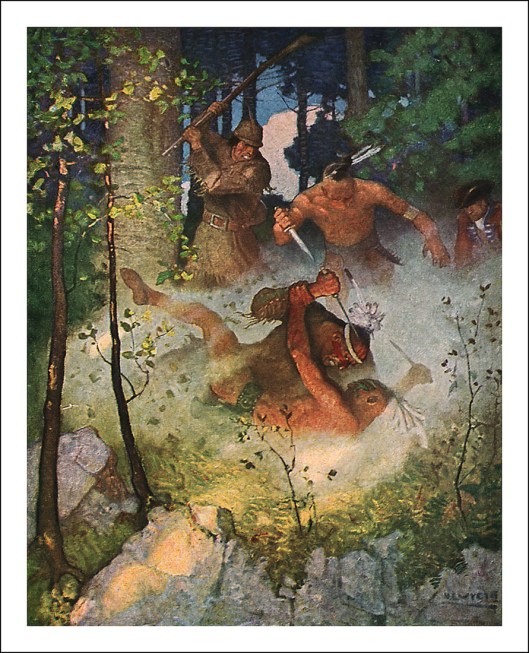
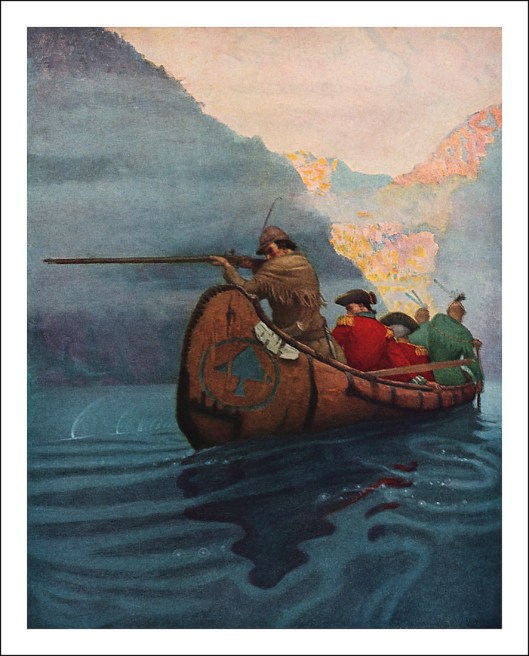
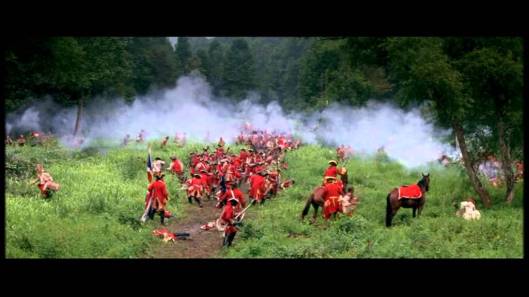
• About

doubtfulsea

~ adventure fantasy

Category Archives: Artists and Illustrators

Killer Monks (and Friars)

11 Wednesday Jan 2017

Posted by Ollamh in Artists and Illustrators, Fairy Tales and Myths, Heroes, Literary History, Narrative Methods

≈ Leave a comment

Tags

Baze Malbus, Bo staff, Canterbury Tales, Chirrut Imwe, Cluny, Dauntless, Friar Tuck, Friars, Geoffery Chaucer, Guardians of the Whills, Howard Pyle, Jahng Bong, Jedha, Little John, monastery, monks, N.C. Wyeth, Nijedha, quarter-staff, religion, Robin Hood, Rogue One, Scarif, Star Destroyer, Star Wars, stormtroopers, Tae Kwon-Do, Temple of the Kyber, the Force, The Force Awakens, The Merry Adventures of Robin Hood, Thomas Hughes, Tom Brown's Schooldays

Welcome, dear readers, as always.

Today, for the first time in some time, we are not visiting Middle-earth. Instead, we are visiting our earth, as well as another planet or two.

Recently, we saw Rogue One,
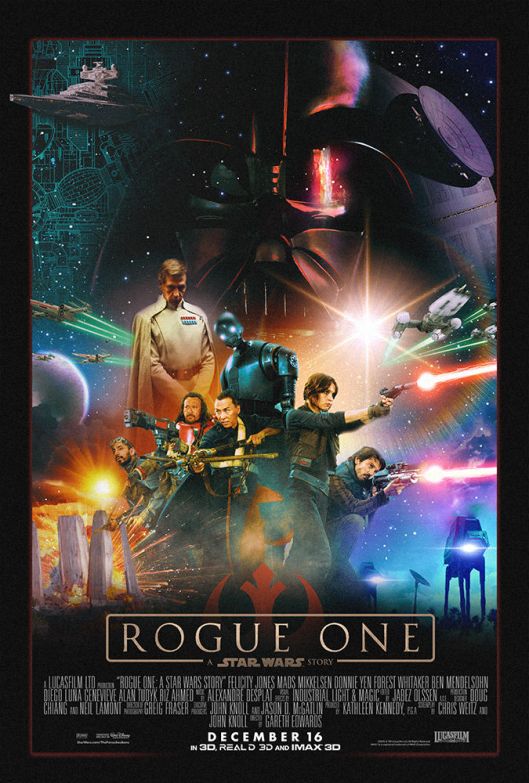
1rogueoneposter.jpg

which, in our opinion, was a bit more coherent than The Force Awakens, but which still—again, our opinion—like Force, had too many players and too many planets. For us, this has always been the danger of fantasy fiction, when plot overwhelms character, as—and aren’t we opinionated in this posting?—in the Harry Potter series.

2hp1.jpg

The first volume was a pleasant twist on the traditional school story, a genre which dates at least as far back as Tom Brown’s Schooldays (1857).

3tbsschooldays.png

by Thomas Hughes.

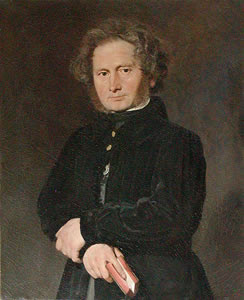
4thughes.jpg

We thought that that first book had a number of potentially interesting characters—Hermione, the Weasley twins, Snape, Hagrid—but, as the books piled up and the plot became more complex and more and more characters appeared, there was less and less, it seemed to us, of those interesting original figures. And many of the characters who were there, seemed much sketchier.

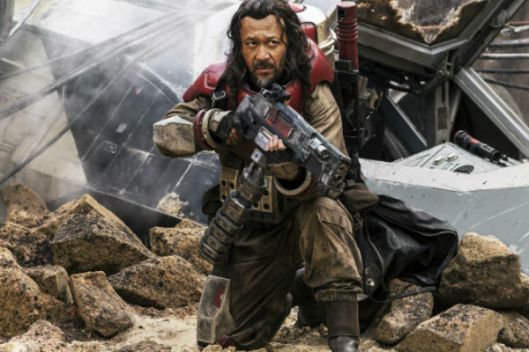
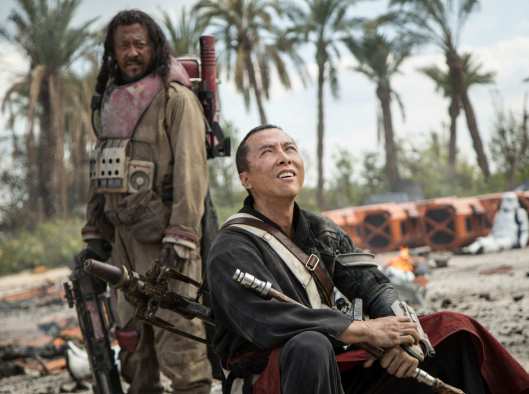
In the case of Rogue One, we thought that two of the most interesting were the two Guardians of the Whills, rather like monks
5romonks.jpg

Chirrut Imwe

6chirrut.jpg

and Baze Malbus.

7baze.jpg

These two had been attached to the Temple of the Kyber in the city of Nijedha on the desert moon Jedha.

8jedha.jpg

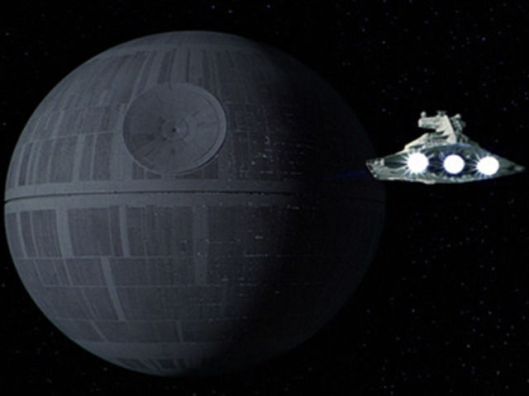
The Empire has arrived, however (hard to miss the Star Destroyer Dauntless in this picture, isn’t it?), to seize all of the kyber crystals on Jedha (used originally to power Jedi light sabers) to fuel the superlaser on the new terror weapon, the Death Star.
9deathstar.jpg

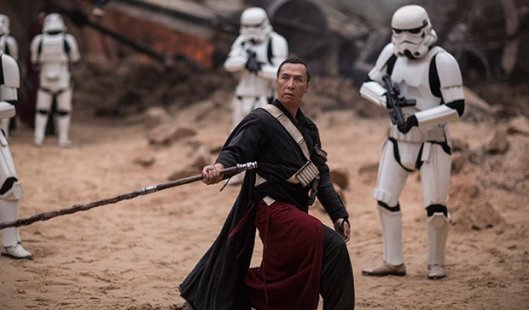
In the process, the two monks have been driven from the Temple, which has been pillaged, and now appear to be living on the street. Chirrut believes in the Force, while Baze seems to believe in his very large gun. Chirrut, who is blind, first shows his skills in an amazing scene where, surrounded by stormtroopers, he makes short work of them with his fighting staff, which resembles the Jahng Bong or Bo Staff used in Tae Kwon-do, among other Eastern weapons and martial arts.
10chirrutstorm.jpg

As everyone who has seen Rogue One (and, by now, many who haven’t, we’d guess) knows, the two don’t survive the attack on Scarif

11bazechirrut.jpg

and this made us wish we had seen more of them, not only in this movie (perhaps them ejected from the Temple—which wouldn’t have been easy!), but in another Star Wars story, in which they were the main characters. So many questions: how did they meet? Why does the one believe so fervently in the Force and the other does not? What did they do before Nijedha? Were they always monks? If not, how did they become so? How and where did they train?

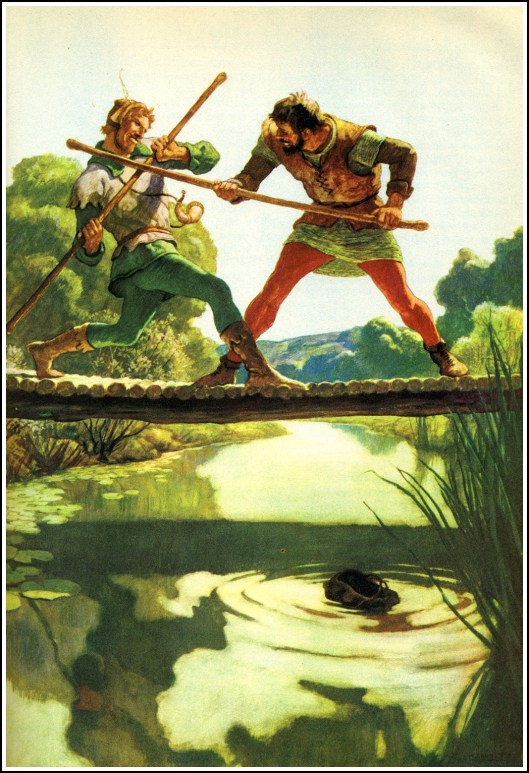
Seeing fighting with that Bo Staff immediately prompted us to think of much earlier figures with a similar weapon: Robin Hood, who fights, on a log over a stream, his soon-to-be-lieutenant, Little John, with quarter-staves.
12roblj.jpg

This is an illustration by N.C. Wyeth from the 1917 Robin Hood,

13robinhood1917.jpg

but there is an earlier edition of the stories of Robin Hood by Wyeth’s teacher, Howard Pyle, The Merry Adventures of Robin Hood (1883).
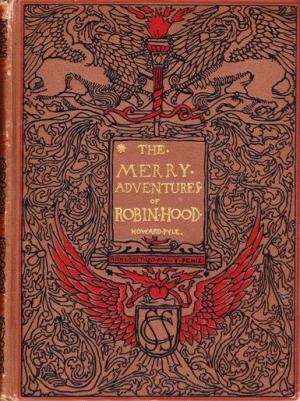
14pylemerryadventures.jpg

And here is a version of the aftermath of that scene on the log with Little John.
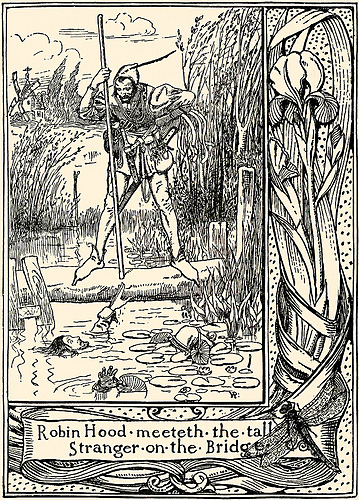
15pylerhlj.jpg

Robin has another encounter with water and a fighter when he meets a friar beside a stream. A monk is a man who enters a religious community called a monastery and spends his life working (and praying) within its walls.
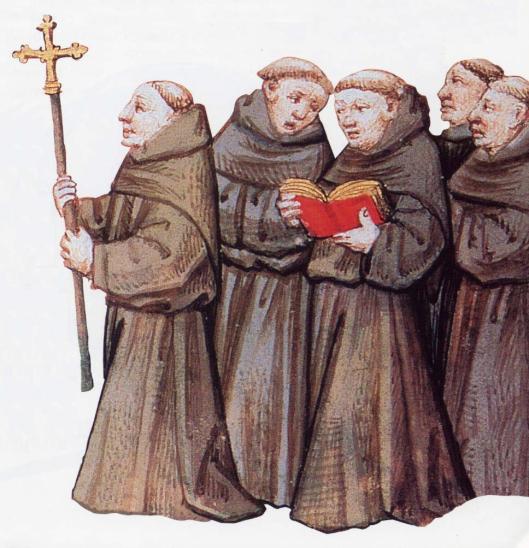
16amonks.jpg

Western medieval Europe was full of monasteries, like this, at Cluny, in France.
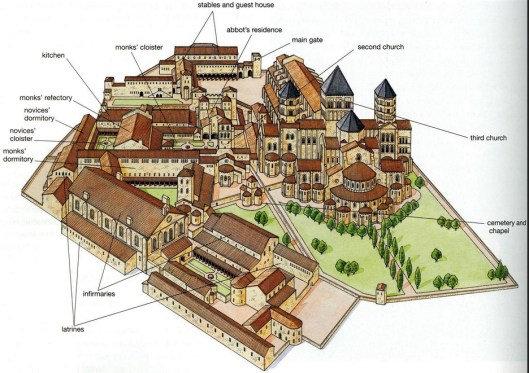
17cluny.jpg

Friars, on the other hand, traveled within their appointed district, called a “province”. Here is a friar from an early (beginning of the 15th century) illustrated version of Geoffrey Chaucer’s Canterbury Tales.
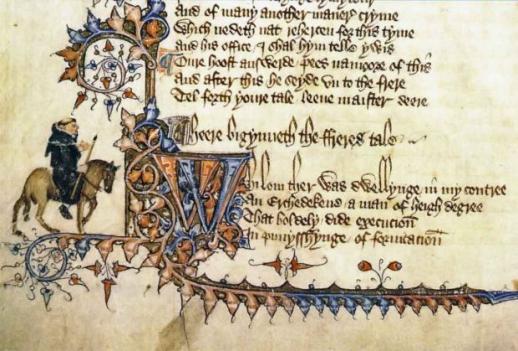
18friar.jpg

Because friars were much less strictly governed, they gained a folk reputation as tricksters and high-livers, and the trickster shows through when Robin Hood forces a friar (he will become Robin’s friend, Friar Tuck) to carry him across a stream—and the friar dumps him before proving that he’s also an expert swordsman. Here’s an illustration from the 1883 Pyle version.
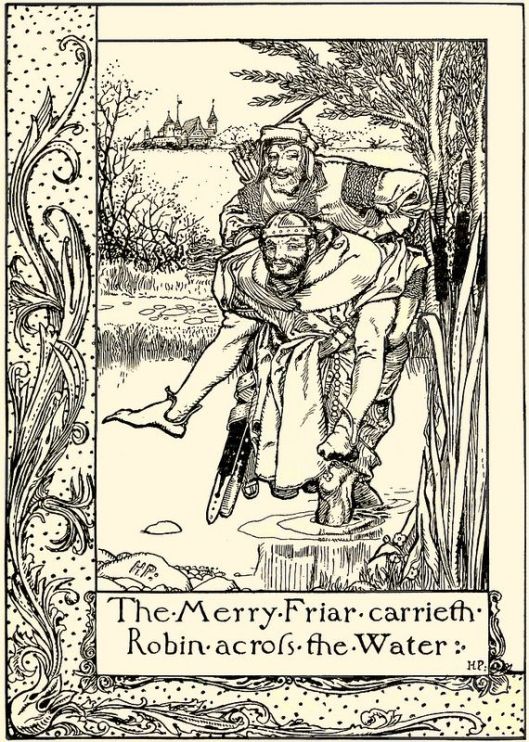
19pyletuck.jpg

As we thought about it, by combining Little John’s skill with the quarterstaff with Friar Tuck’s wits and courage and holy orders, we could see a possible inspiration for Chirrut Imwe.

20chirrut.png

If you know the old Robin Hood stories and you’re seen Rogue One, what do you think?

Thanks, as ever, for reading.

MTCIDC

CD
Bridges and Battles

04 Wednesday Jan 2017

Posted by Ollamh in Artists and Illustrators, Heroes, J.R.R. Tolkien, Literary History, Military History, Military History of Middle-earth, Narrative Methods

≈ Leave a comment

Tags

Anglo-Saxon, Arnhem, Belisarius, Boromir, bridges, Constantine I, Constantinople, David, Diocletian, Dionysius, Gros, Hal Foster, Harold Godwinson, Horace Vernet, Horatius, Horatius at the Bridge, Justinian, Livy, Marcus Aurelius, Maxentius, Maximianus, Milvian Bridge, Napoleon, Ostrogoths, Pass of Roncevalles, Pegasus Bridge, Pliny the Elder, Pons Sublicius, Prince Valiant, Ravenna, Remagen, River Adige, River Derwent, Roland, Salarian Bridge, San Vitale, Sherlock Holmes, Stamford Bridge, Tacitus, The Council of Elrond, The Lays of Ancient Rome, The Lord of the Rings, The Oath of the Horatii, Thomas Babington Macaulay, Tiber, Tolkien, vikings

Welcome, dear readers, to our first posting for 2017—and a Happy New Year.

In our last, we discussed water-crossings in The Lord of the Rings, but said that our next would be on a more specialized subject, something we thought to call “Battle Bridges”.

This was inspired by this quotation (it’s Boromir speaking, at the Council of Elrond):

“I was in the company that held the bridge, until it was cast down behind us. For only four were saved by swimming: my brother and myself and two others.” (The Fellowship of the Ring, Book 2, Chapter 2, “The Council of Elrond”)

Broken bridges and swimming soldiers made us think of a story told by a number of early historians, including Dionysius of Halicarnassus, Livy, Pliny the Elder, and Tacitus, in which three Roman officers stand as a rearguard at the first bridge over the river Tiber, the Pons Sublicius, and, when two are wounded, the third, Horatius, sends them off, telling them to have the bridge destroyed so that the enemy can’t pursue the defeated Roman army into Rome. When the bridge is gone, Horatius, in his armor and with his arms, leaps into the river and swims to the Roman shore to great acclaim.

1horatiusatbridge.jpg

In the nineteenth century, this story was turned into a poem (a very long ballad) by the historian Thomas Babington, Lord Macaulay (1800-1859),

2macaulay.jpg

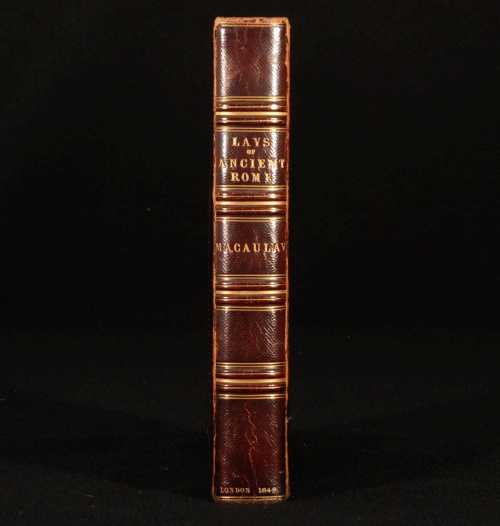
entitled “Horatius at the Bridge” (from his 1842 collection, The Lays of Ancient Rome).

3lays1849ed.jpeg

Once upon a time, it was a standard assignment for schoolboys to memorize its approximately 600 lines and we wonder if this might once have been Tolkien’s task, which is why we have Boromir’s remark.

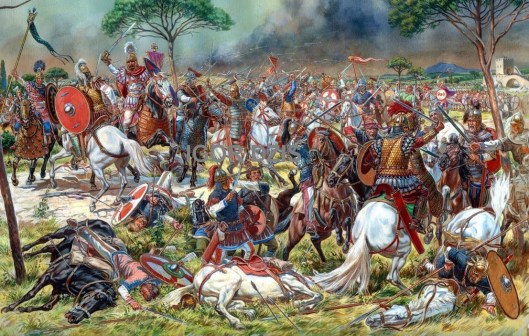
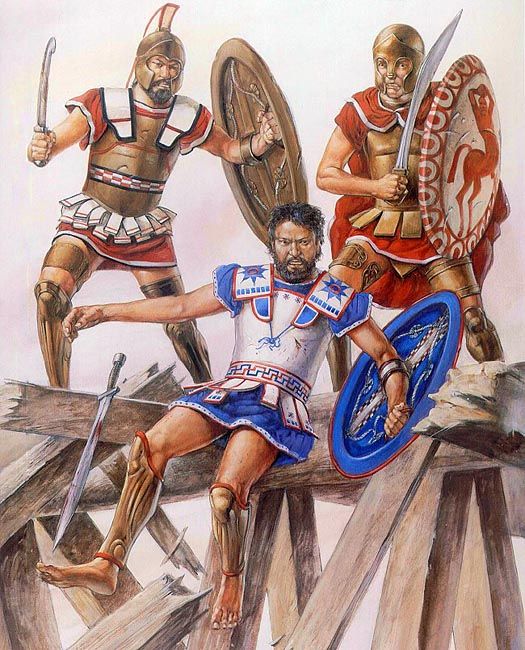
Once we embarked upon the subject of fights at bridges, we found, beginning with the late classical world, that there were lots more out there (our short mental list roared through time to take us as far as the seizing of Pegasus Bridge in the Normandy invasion and the subsequent bridges at Arnhem and Remagen). There was a difficulty, however: we began with an heroic action—one man or a handful against masses. What mostly came to mind was not Horatian one-man stands. Instead, they were only depicted as parts of larger military maneuvers to gain or block a crossing and individuals disappeared. Take, for example the famous battle at the Milvian Bridge, in 312AD, which led not only towards a reconstituted Roman world based upon the east, but also towards the eventual Christianization of the Roman world.

4milvian.jpg

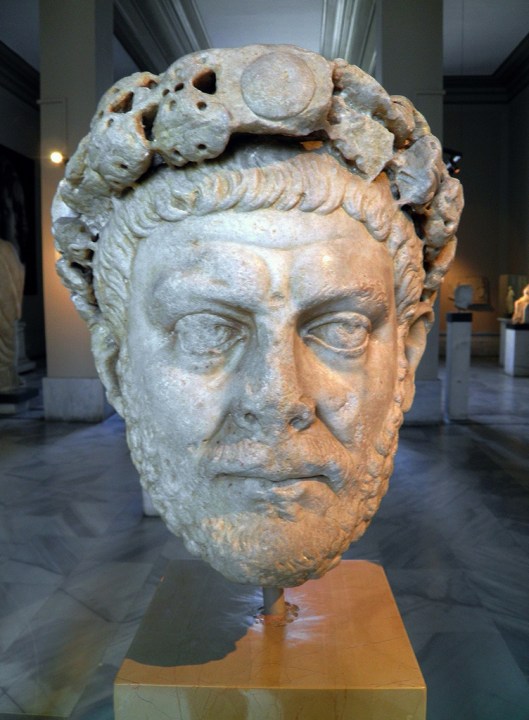
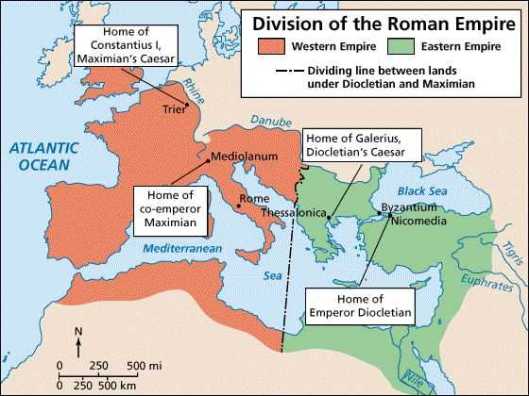
In the civil wars which wracked the late Roman empire, after its division post-284AD by Diocletian,

4adiocletian.jpg

4bdiocletiansdivision.jpg

Constantine, the western Augustus (senior emperor)

5Constantine-I-Face.jpg

defeated his rival, Maxentius (who was also his brother-in-law),

6maxentius.jpg

at a bridge outside Rome to become, in time, the sole emperor. Maxentius, who had control of Rome, had planned to block Constantine on the far side of the Tiber, keeping a pontoon bridge available for a retreat, if necessary, since it appears that the actual stone bridge was in the process of being dismantled.

(The Romans were extremely able at producing pontoon bridges—here’s a good illustration from the column of Marcus Aurelius—completed 193AD–)

When that retreat did become necessary, Maxentius was drowned in its midst, the bridge collapsed, and his troops who remained either died on the field or surrendered to Constantine.

4milvian.jpg

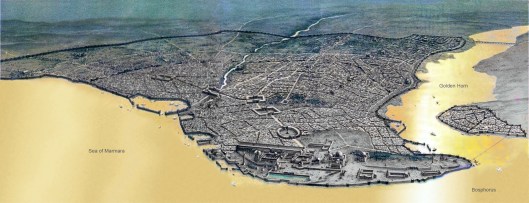
In time, Constantine, who believed that the empire’s main focus should actually be on the east, moved the capital to an old Greek colony, called Byzantium, but which he renamed “New Rome”—although it seems that everyone else called it Constantinople.

7constantinople.jpg

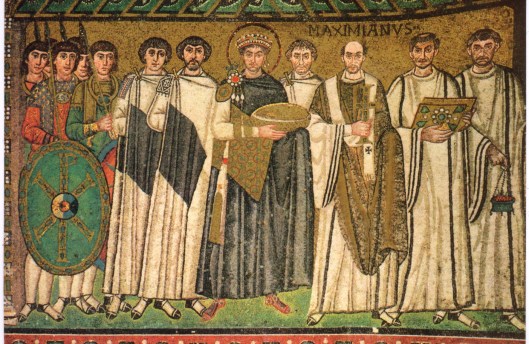
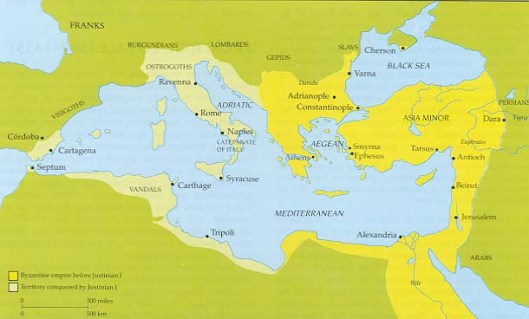
This would be the capital of the later Byzantine Empire, which, under the emperor Justinian,

8justinian.jpg

(He’s the one with the bowl of communion bread—the only labeled figure, Maximianus, was the bishop of Ravenna, where this mosaic stands in the church of San Vitale.)

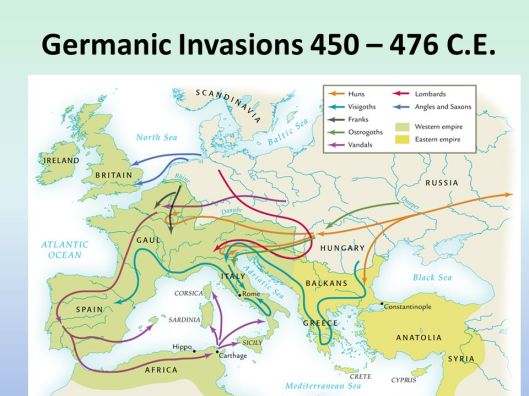
would attempt to reconquer the portions of the old western empire which had fallen into the hands of Germanic invaders.

9germanicinvasions.jpg

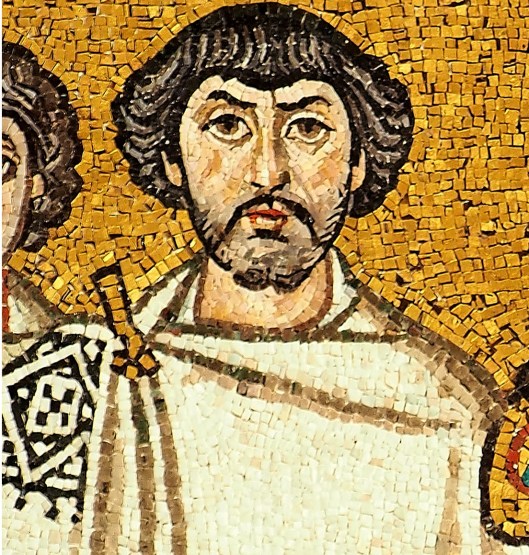
Under Justinian’s general, Belisarius,

10belisarius.jpg

(this may or may not be a portrait—it’s a scholarly guess),

the Byzantines struggled for control of Rome against the Ostrogoths.

11ostrogoth.jpg

This struggle included a fight outside of Rome for control of the Salarian Bridge (537AD),

12salarianbridge.jpg

a fight which Belisarius lost, although, for a short time, Justinian’s world was enlarged, if not to the full size of the old empire, at least to include much of the western Mediterranean—quite an accomplishment for the later world of antiquity.

12ajustempire.jpg

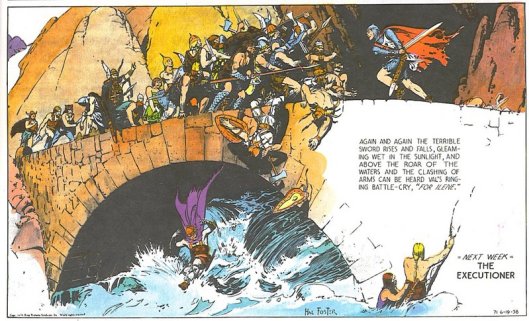
And, speaking of late antiquity, if you regularly read our blog, you know that we have a special affection for the work of Hal Foster, who created the late-antique, early-medieval world of Prince Valiant. The combination of bridge and heroic fighting reminded us of one of our favorite illustrations and so we have to include this scene (published 19 June, 1938), in which Val faces a band of Viking raiders.

13valatbridge.jpg

This image, of course, brings us back to Horatius, the single warrior against the mass. As we’ve said, in the intervening centuries there are battles at bridges, but only as one element in larger campaigns and the heroic individual disappears into the ranks. We could think of one, somewhat later, figure, however. He appears, unfortunately nameless, in the other battle of the short reign of Harold Godwinson, at Stamford Bridge, 25 September, 1066. The Anglo-Saxon army raced north from London to oppose a Viking invasion, and defeated the Vikings on the near side of the bridge over the River Derwent, but, to complete their victory, the Anglo-Saxons needed to destroy the surviving force on the far side. in the way stood, in the middle of Stamford Bridge, a single Viking warrior, blocking their advance.

14stamfordbridge.jpg

The Anglo-Saxon Chronicle says that he killed 40 of the enemy before an Anglo-Saxon floated underneath the bridge and stabbed him from beneath with his spear, but, well, as much as we believe in heroic tales…

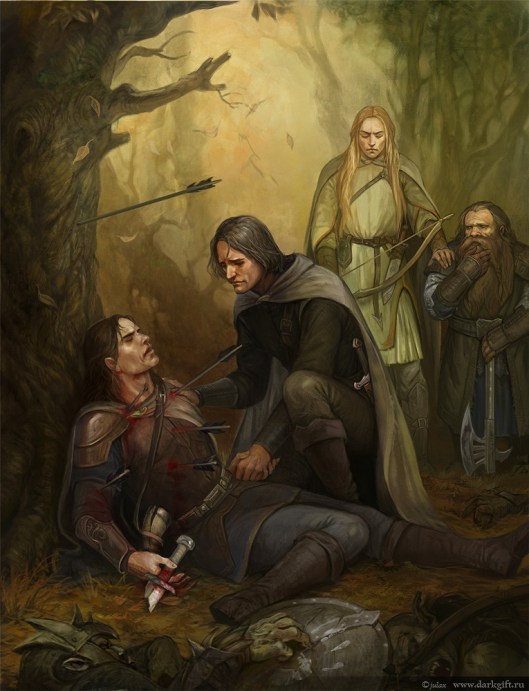
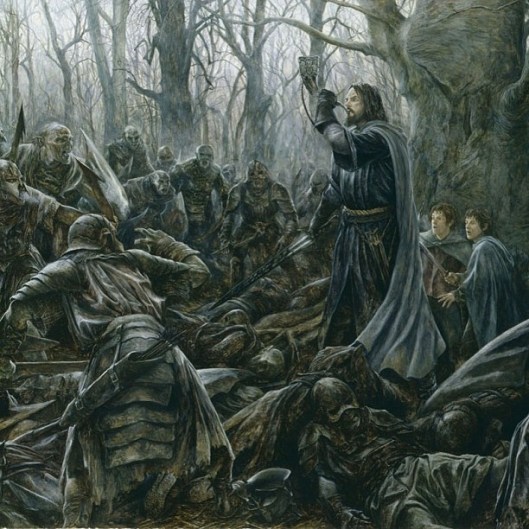
His stand, however, brings us back to Boromir and his final battle, in which he faces two waves of orcs before he is finally mortally wounded.

15boromirdeath.jpg

No bridge, but this still follows the theme of the brave man standing alone, with no possible help nearby.

16boromirhorn.jpg

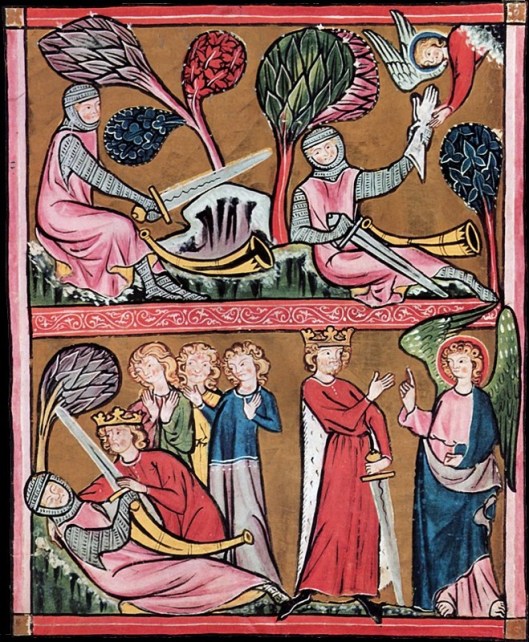
(And, of course, Boromir and his horn are meant to remind any good reader of heroic material—particularly medieval—of Roland at the Pass of Roncevalles…)

17roland.jpg

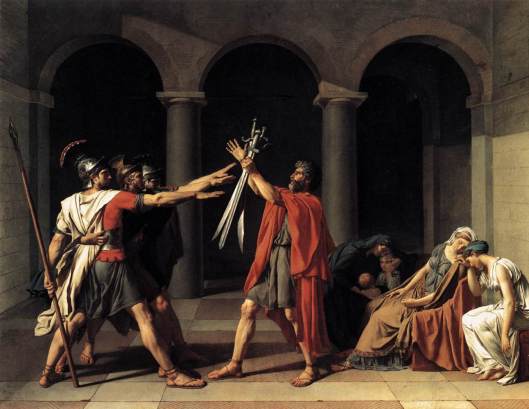
We would leave this theme here, back where it began, with Boromir, except we can’t resist (we’re afraid, when it comes to adventure and heroics, that we appear to have little or no willpower at all!) one final image and the idea behind it. There is no end of discussion about Napoleon, which, we’re sure, would please him no end. For us, however, there is a side of him which is endlessly interesting and that is as a Romantic Figure—a view of himself which he worked very hard, at least early in his life, to promote. The late 18th-century very much looked back to the classical world and, we believe, it did so in part because it loved the dramatic gestures it saw as part of that world. We only have to point out paintings like David’s “The Oath of the Horatii”(those Horatii being the direct ancestor of the one in our post), with its operatic ensemble look, to illustrate this. (To us, this looks so much like the set-up for a stirring quartet, right out of Bellini or Meyerbeer.)

18horatii.jpg

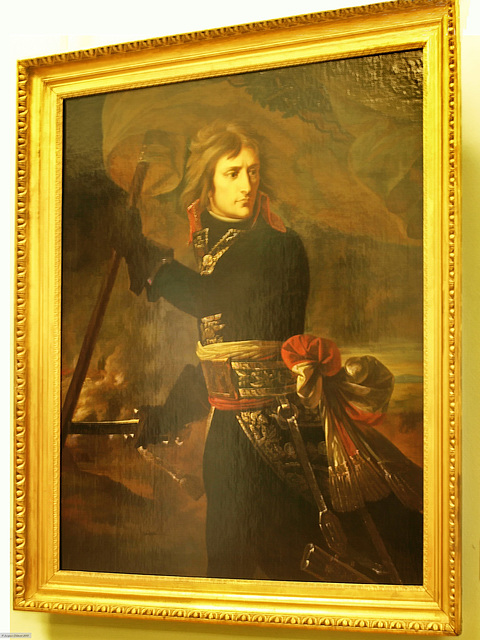
So, during Bonaparte’s brilliant 1796-7 campaign in Italy, there was clearly a classical/Romantic moment. When the French were stalled by their Austrian opponents in crossing the River Adige, Napoleon, to encourage his troops, seized a regimental color and raced alone to the bridge, as Gros (who was actually at the battle) depicted him in his 1797 painting.

19grosarcola.jpg

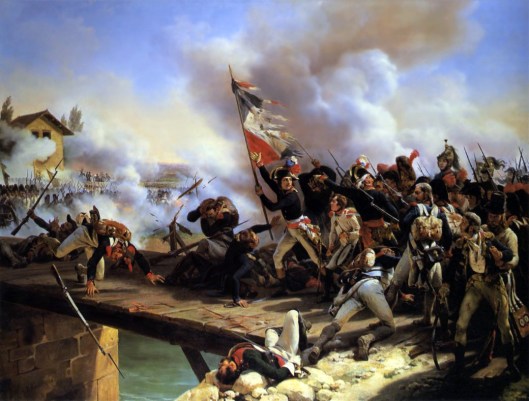
Vernet, in his 1826 version, continues the heroic theme, but changes the focus a bit—Napoleon now has followers. (And you know, from its dash—and that’s Horace Vernet in general—who, according to Sherlock Holmes, may be a distant relation–that this is a favorite painting of ours.)

20vernetarcola.jpg

In fact, although Bonaparte did seize a color, he never made it to the bridge, either alone or in a crowd. His illustrators, however, influenced, no doubt, by the potential drama—and perhaps by a faint memory of Horatius?—depict a scene which should have happened, in their view of Napoleon as a Romantic Figure. What is most striking, however, is that, unlike Horatius—or Boromir—Bonaparte is not defending a bridge—he is attacking and his heroism comes from that gesture. This certainly fits in with Revolutionary ideology—France had been at war with much of the world since 1792—but it occurs to us that it may also suggest a shift in the approach to heroism. Horatius, given a bridge, is heroic, but passive. Give a bridge to Bonaparte and stand back (at least in iconography)! Is this the image of heroes in the Romantic world which was just coming into being?

But, as ever, we leave this to you, dear readers, to ponder, even as we thank you, as always, for reading.

MTCIDC

CD

One More River (1)

21 Wednesday Dec 2016

Posted by Ollamh in Artists and Illustrators, Imaginary History, J.R.R. Tolkien, Maps, Narrative Methods

≈ Leave a comment

Tags

Alan Lee, Beorn, Bilbo, bog people, Bombur, Boromir, bridges, causeways, drowsiness, Dwarves, Esgaroth, Great East Road, Greyflood, Gwathlo, Hobbiton-across-the-water, Lethe, Middle-earth, Mirkwood, Rammas Echor, Rivendell, river-crossing puzzle, Roman Roads, Tharbad, The Atlas of Middle-Earth, The Hobbit, The Lord of the Rings, Tolkien, Tollund Man

Welcome, dear readers. Here we are again in Middle-earth, as so often we’ve been over the last couple of years, but, as we said in our last post, one reason why we revere JRRT and his work is that it’s so rich—it seems like one can open it to any page and there is something new to explore. In this post, we began with an odd little detail, just something said almost in passing by Boromir:

“A long and wearisome journey. Four hundred leagues I reckoned it, and it took me many months, for I lost my horse at Tharbad, at the fording of the Greyflood.” (The Fellowship of the Ring, Book 2, Chapter VIII, “Farewell to Lorien”)

Tharbad, we knew from the Companion, was once a river port on the Gwathlo, Boromir’s “Greyflood”. Here’s a description from the extremely helpful introductory section of the Companion called “The Maps of The Lord of the Rings”:

“…with long labour a port capable of receiving seagoing vessels had been made at Tharbad, and a fort raised there on great earthworks on both sides of the river, to guard the once famed Bridge of Tharbad” (lxv)

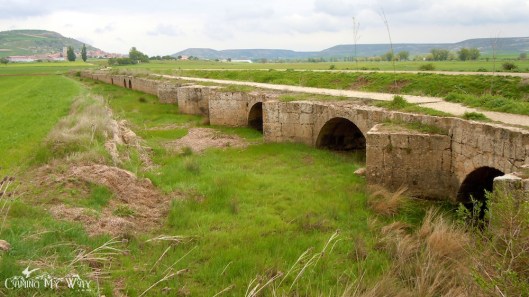
This “once-famed” bridge was clearly long-gone by the time, at the end of the Third Age, when Boromir reached the river it had once offered passage over, for all of the work done once upon a time, including long causeways—raised approach roads above boggy ground—here’s a Roman example from northern Spain with causeway and bridge—

1bridgewithcauseway.jpg

“But in the days of The Lord of the Rings the region had become ruinous and lapsed into its primitive state: a slow wide river running through a network of swamps, pools and eyots [little islands]: the haunt of hosts of swans and other water-birds.” (from a letter of 30 June, 1969, to Paul Bibire, quoted in Companion, 650)

JRRT appears to have left no description of the bridge itself, but we imagine it as looking rather like a Roman one (as JRRT could have seen pictures of surviving ones like this in Portugal

2ponte.jpg

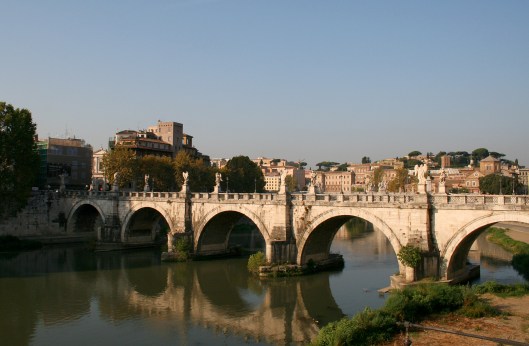
or this in Rome.

3ponteadriano.JPG

Unlike much of the rest of the Roman world, no Roman bridge survives in Britain—only the remains of piers, ramps, and approaches–so we’re assuming that, if he were at all influenced by Roman architecture—and that’s an absolute assumption on our part, we admit, but certainly things like Hadrian’s Wall seem to have been an inspiration—see our earlier posting on the Rammas Echor—it was through photographs.)

This mention, however, sparked us to think about the crossing of bodies of water, both in The Hobbit and in The Lord of the Rings, just how many there were, and the kinds of events which happened at them.

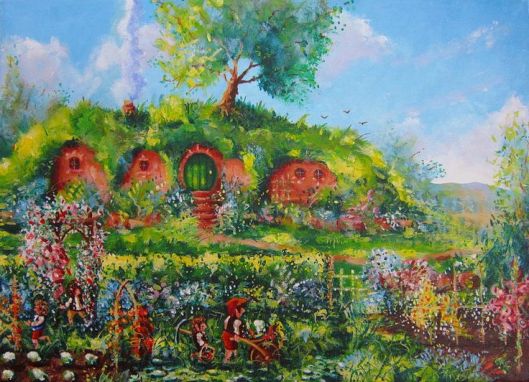
Bilbo’s Bag End, of course, is just down the road from The Water and its mill, as depicted by Tolkien himself.

4imghillandmill.jpg

When he sets off with the dwarves, however, there is little incident involved in running water at first. The party has to cross a river, “swollen with the rains, [which] came rushing down from the hills and mountains in the north.” (The Hobbit, Chapter 2, “Roast Mutton”) They cross this by “an ancient stone bridge” (perhaps like this one at Carrbridge, in Scotland?)

5imagecarbridge.jpeg

but, somehow, they can’t escape the river, as, during the night, “…one of the ponies took fright at nothing and bolted. He got into the river before they could catch him; and before they could get him out again, Fili and Kili were nearly drowned, and all the baggage that he carried was washed away off him.” (The Hobbit, Chapter 2, “Roast Mutton”). So far, when it comes to running water, for all that there was a bridge, it seems difficult for the dwarves to stay out of it.

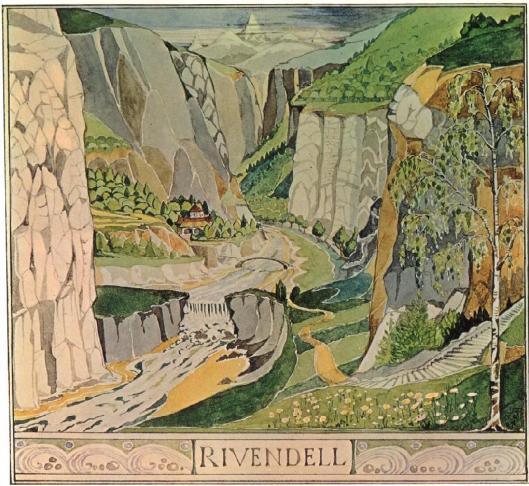
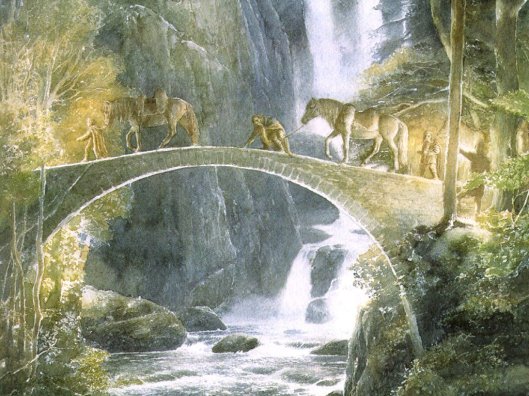
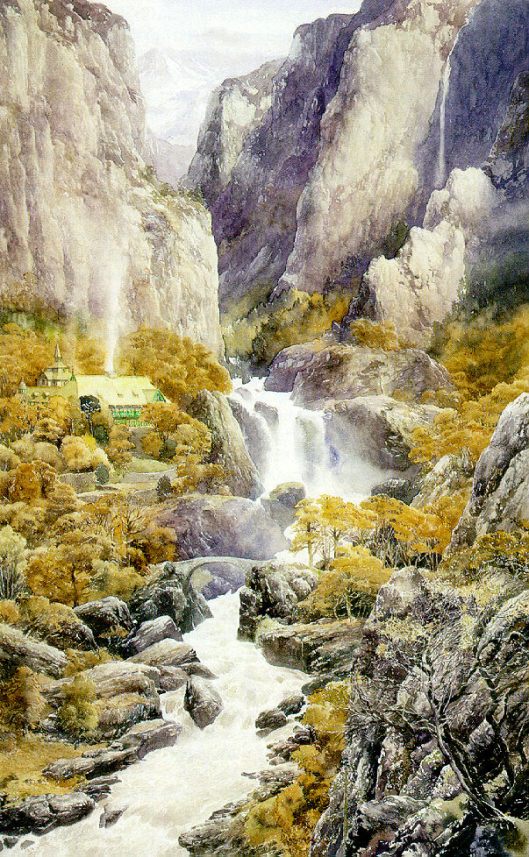
Their second adventure with water is more successful, when they cross the bridge at Rivendell, which we have discussed in a posting on Rivendell architecture, so, for this one, we’ll simply add Tolkien’s illustration of Rivendell, plus a real favorite, Alan Lee’s of the bridge.

6imagerivendelljrrt.jpg

7imagerivendellbridgealanlee.jpg

Beyond Rivendell, it’s into the mountains (literally, when they are pulled into the world of the goblins by a secret door) and, when they come out, their next water barrier is surmounted for them when they’re rescued by eagles and flown to the other side of the northern Anduin.

8eaglerescue.jpg

If they had simply taken the Great East Road (as we presume Bilbo and Gandalf did on the way back), they would have found a ford where the road runs eastward into the Old Forest Road. (see Karen Wynn Fonstad, The Atlas of Middle-earth, 80-81, for a larger view).

9mistymtnsmap.gif

The real problem with a crossing comes at the next water course. They had plunged into Mirkwood

9ajrrtmirkwood.png

and come up across a stream (in fact, the Enchanted River, although they didn’t know it). During their leave-taking at Beorn’s, he had warned them about it:

“There is one stream there, I know, black and strong which crosses the path. That you should neither drink of, nor bathe in; for I have heard that it carries enchantment and a great drowsiness and forgetfulness.” (The Hobbit, Chapter 7, “Queer Lodgings”)

As people with a background in Greek and Roman mythology, we immediately thought of Lethe, the name of which comes from a Greek verb which means “to escape notice/be hidden—therefore, to forget”.

It was one of the rivers of the Underworld and, if you drank from it, you lost all memory of your past. In that part of classical religion which believed in reincarnation, it was one step on the way to returning to earth.

10imagelethe.jpg

Here in Mirkwood, however, the point is to avoid drinking, or even touching, it. The difficulty, of course, is that, if you can’t touch it, how do you get across it, especially when:

“There had been a bridge of wood across, but it had rotted and fallen leaving only the broken posts near the bank.” (The Hobbit, Chapter 8, “Flies and Spiders”)

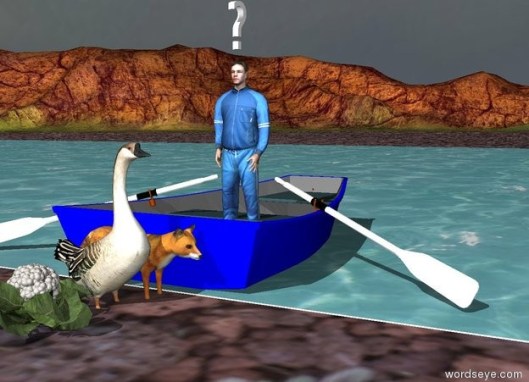
Providentially, there is a boat drawn up on the opposite shore and we’ve always been reminded here of what is called a “river-crossing puzzle”. There are many variations, but the earliest currently known dates from the 9th century AD, and is found in Propositiones ad Acuendos Juvenes (maybe something like “Puzzles for Sharpening [the Minds of] Young Folk”—which makes it sound rather Victorian). We provide links here for: River crossing puzzle, Fox, goose and bag of beans puzzle, and Propositiones ad Acuendos Juvenes, for anyone interested to learn more.

11imagefoxgoose.jpg

In the case of the dwarves, the math goes awry when the largest of them, Bombur, accidentally falls into the water and becomes comatose.

12imageleebombur.jpg

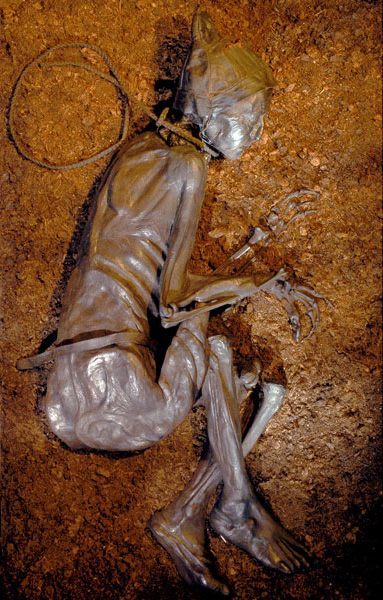
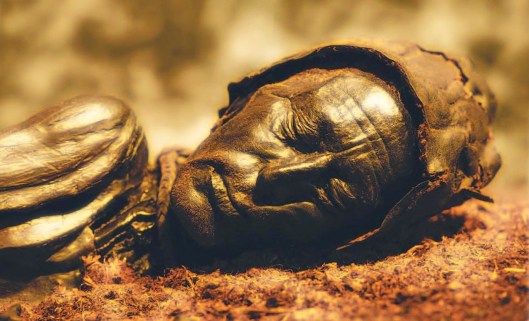
(And this Alan Lee drawing oddly reminds us of “bog people”—that is, the bodies of people, the earliest being from 8000BC, a majority being Iron Age, found in peat bogs throughout northern Europe. Because of the conditions in bogs, some have been amazingly preserved, such as “Tollund Man”—here

13imagetollund.jpg

14imagetollund.jpg)

He eventually awakes, long before the party’s next river, which acts as a moat to the caves of the Elf king of Mirkwood.

15imagethranduilsgate.jpg

This has a bridge, across which, at various times, Thorin, the dwarves, and Bilbo (wearing the Ring) go.

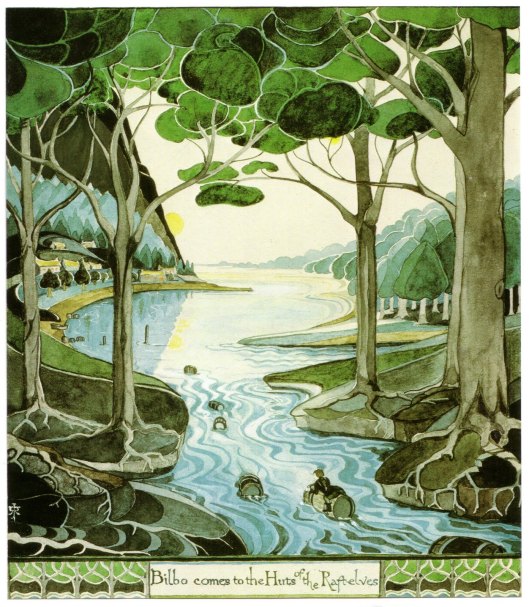
It is the next bit of water, however, which bears the greater interest. This is the underground stream which comes up in the cave where the elves store empty wine barrels to return to the men of Esgaroth. And this, the dwarves and Bilbo don’t cross, but ride down, packed in (or perched on) those empty barrels.

16imagebarrelriding.jpg

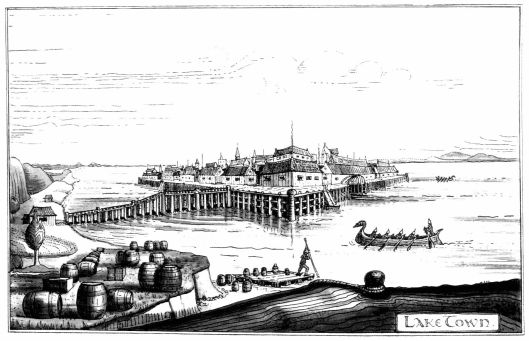
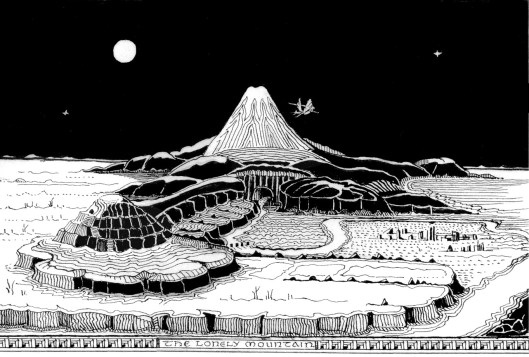
This leads us to the last body of water: the Long Lake, on which Esgaroth stands. From here, the people of Lake Town convey them back north to a landing place from which they will start out for the Lonely Mountain and the climax of their quest.17imageesgaroth.jpg

18lonelymountain.jpg

And here we’ll end our quest for water-crossings for this posting, to be continued with one on The Lord of the Rings in our next—along with all of those extras which we can’t help adding, from medieval puzzles to peat bog people.

Thanks, as always, for reading!

MTCIDC

CD

ps

If you celebrate this time of year for any reason, may your celebration be a happy one! We mostly dream of toys…

19imagetoytownsoldiers.JPG

Ugluk Was Here

14 Wednesday Dec 2016

Posted by Ollamh in Artists and Illustrators, J.R.R. Tolkien, Language, Literary History, Military History

≈ Leave a comment

Tags

Alan Lee, Alfred Waud, American Civil War, Angus McBride, Argonath, Belgium, Black Speech, cemeteries, Confederate, Egyptian monuments, First Virginia Cavalry, graffiti, Great War, Greek mercenaries, Greeks, Hildebrandt, John Howe, Journey to the Cross-roads, Kilroy, Kilroy was here, Literacy, Napoleon I, Orcs, Pompeii, quarry at Naours, Sauron, The Lord of the Rings, Tolkien, Union, Virginia, World War I, World War II

Welcome, dear readers, as always.

One of our reasons for holding Tolkien’s work in such high esteem is that it’s so rich: practicing Sortes Tolkienses (see our earlier posting on this), we find innumerable subjects to write about.

In this posting, our eye was caught by this:

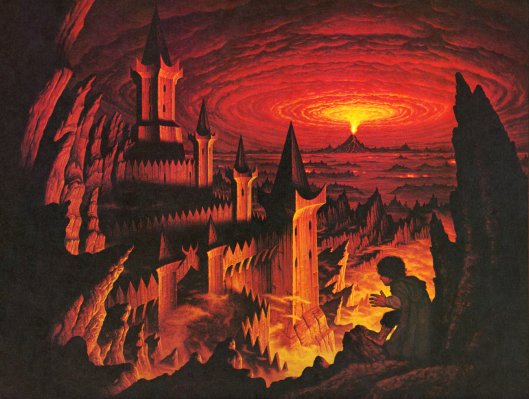
“The brief glow feel upon a huge sitting figure, still and solemn as the great stone kings of Argonath. The years had gnawed it, and violent hands had maimed it. Its head was gone, and in its place was set in mockery a round rough-hewn stone, rudely painted by savage hands in the likeness of a grinning face with one large red eye in the midst of its forehead. Upon its knees and mighty chair, and all about the pedestal, were idle scrawls mixed with the foul symbols that the maggot-folk of Mordor used.” (The Two Towers, Book 4, Chapter 7, “Journey to the Cross-roads”)

crossroads.jpg

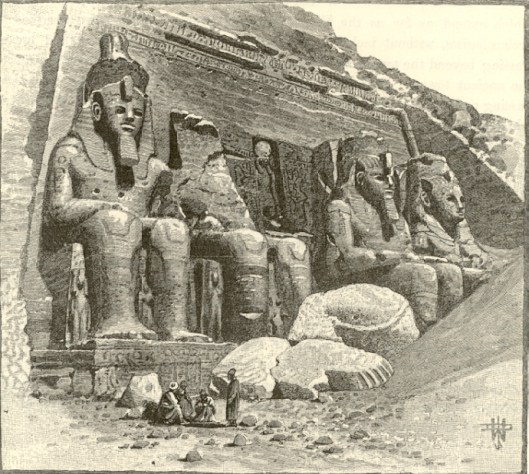
We had the feeling that we’d seen a statue something like this before—and we were curious whether JRRT had, too, and with a little mental rooting-around, we found this:

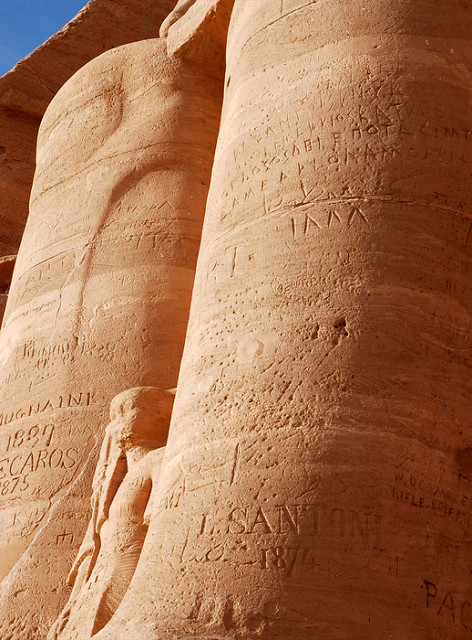
abusimbelengraving.jpg

It’s Egyptian (13th century BC), and has a head, but, not only is it monumental, and seated, but it has lots of “idle scrawls” on the bases and lower parts of its legs.

abusimbelgraffiti.jpg

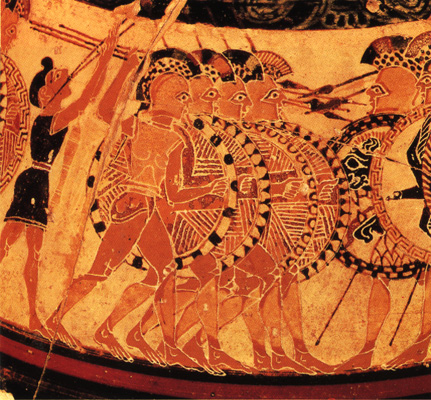
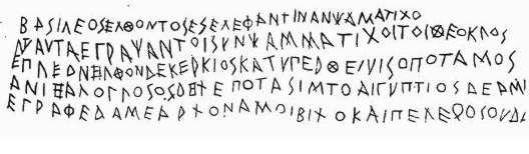
What’s particularly interesting to us is that one piece of the graffiti is actually from some Greek mercenaries c. 600bc

hoplite1.jpg

main-qimg-9eddef3641e25892afa016888b808aa5-c.jpeg

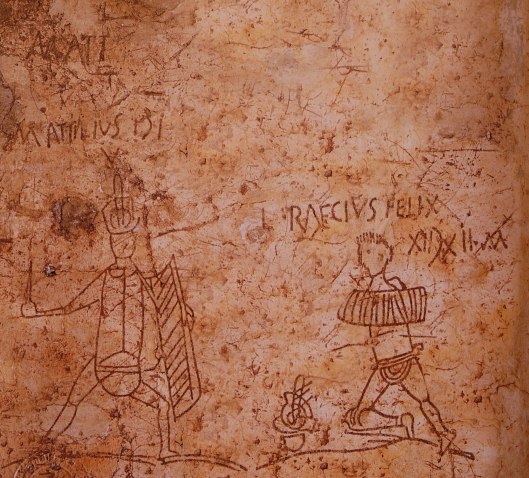
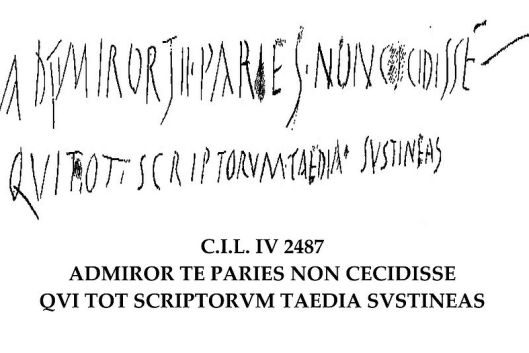
As long as there has been a certain level of literacy, of course, there has been graffiti. The walls of ancient Pompeii (sealed in by the eruption of 79AD) are loaded with everything from election posters to the admiration of gladiators to personal insults.

gladiatorialstats.JPG

There’s so much, in fact, that this is our favorite:

antigraffiti.jpg

A translation of this might be: “I wonder/am in awe, wall, that, you, who are holding up so much boring writing, haven’t fallen down!”

Soldiers, in particular, seem prone to leaving messages behind—beginning with those 7th-c Greeks, but continuing throughout the centuries. When Napoleon I led an expedition to Egypt in 1798,

napegypt.jpg

his soldiers left their mark in more ways than one upon the landscape.

frenchinegyptgraf2.jpg

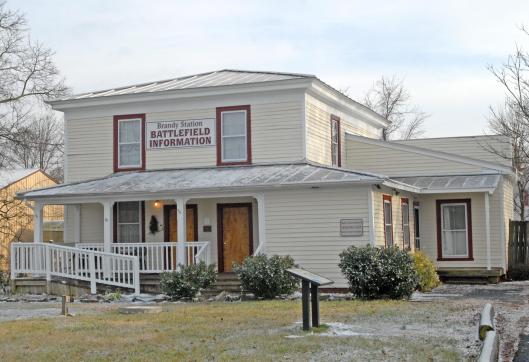
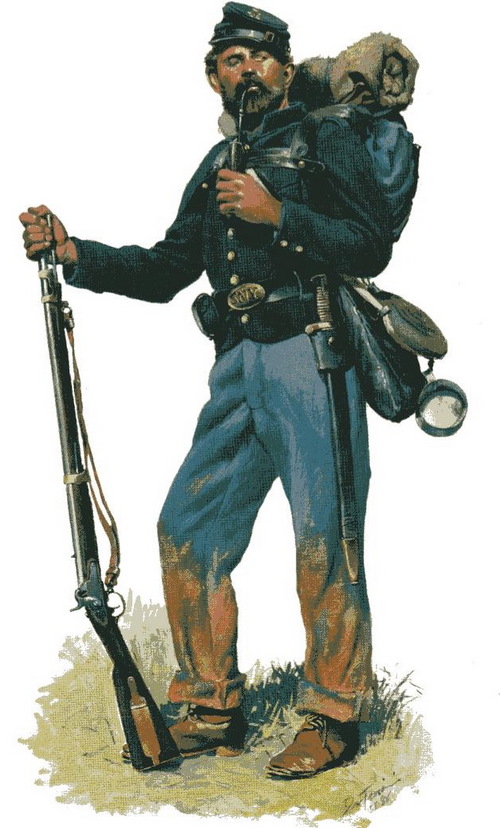
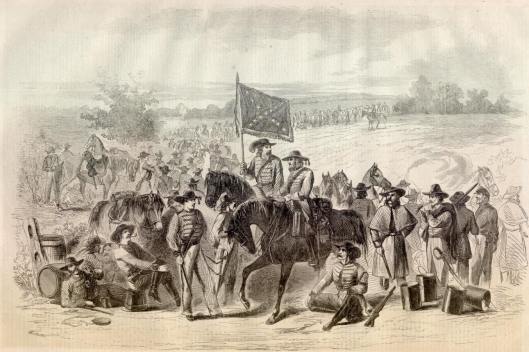
Recently discovered in a house in Virginia was a large collection of inscriptions from the soldiers, Union and Confederate, of the American Civil War.

Graffiti-House.jpg Graffiti House Wall and Chair.jpg unionsoldier.jpgAlfred R. Waudfirstva.jpg

(An irresistible footnote: the picture you see of the Confederate cavalry—actually the 1st Virginia—was made by one of the greatest Civil War artists, Alfred Waud (pronounced “woad”). He had been briefly detained by this unit and took the opportunity to sketch them from life. His sketch—with his notes—then went to his publisher in New York, who had a group of engravers ready to turn his sketch into a finished—and publishable—picture.1st-virginia-cavalry-halted-based-on-sketch-by-waud-harpers-sept-27-1862.jpg

For more on the process by which a sketch becomes a magazine illustration, see this link.)

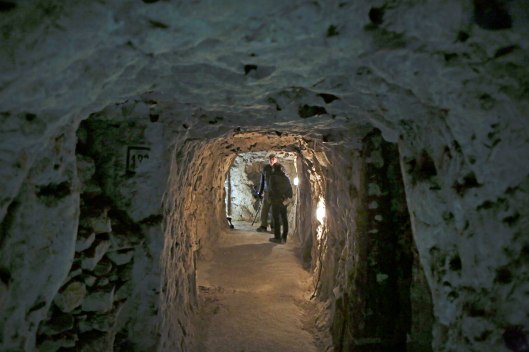
Another recent discovery was a mass of inscriptions (something like 2000 of them) in an abandoned quarry at Naours, in northern France.

quarrynaours.jpg

6XYh68h5xHSK2-3026250-In_this_image_made_on_Feb_20_2015_showing_names_engraved_on_the_-a-32_1428320205858.jpg

These date from the Great War (World War I) and, in a sad way, parallel the epitaphs on the seemingly-endless graves in the seemingly endless military cemeteries in the same region and in southern Belgium.

greatwargraves1.jpg

Tyne Cot 3.jpg

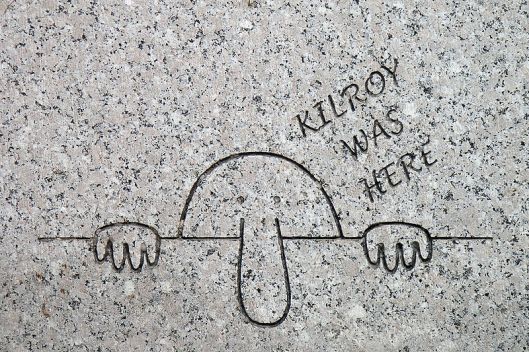
And World War II brought us Kilroy, of the famous (and ubiquitous) “Kilroy was here”.

Engraving-of-Kilroy-on-the-WWII-Memorial-in-Washington-DC.jpg

American prankster soldiers doodled this everywhere they went.

kilroy-was-here-photo.jpg

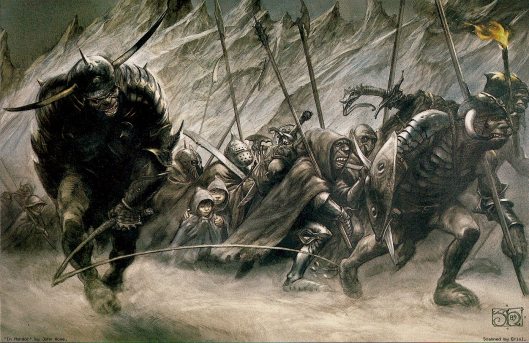
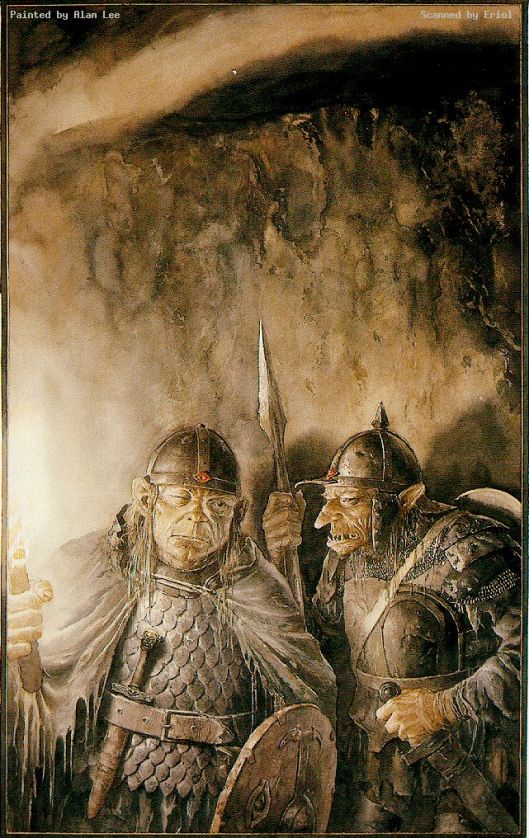
We have written previously about literacy in Middle-earth: not uncommon among hobbits, it would seem, but much less so among the other peoples. As for orcs, be they Hildebrandt

captured_by_orcs.jpg

Mcbride,

mcba_orc.jpg

Howe

John Howe - Merry et Pippin prisonniers des orcs.jpg

Or Lee,

Alan Lee - Orcs (1).jpg

although the Black Speech was created for them and Sauron’s other creatures, we have no evidence (except for the Ring inscription) of any use of it as a writing tool by any of them.

Which leaves us free to imagine just what those “idle scrawls” might read like. How about:

LUGDUSH SMELLS LIKE MAN FLESH!

LAGDUF + MUZGASH = CLUELESS AND SHIRTLESS!

GORBAG LOVES SHELOB

SHAGRAT IS A SNAGA!

And, of course:

UGLUK WAS HERE

Thanks for reading! (And why not submit your own graffiti? We’d be glad to add them to our list!)

MTCIDC

CD

Which Witch

31 Monday Oct 2016

Posted by Ollamh in Artists and Illustrators, Fairy Tales and Myths, Films and Music, Literary History, Villains

≈ Leave a comment

Tags

Goya, Halloween, Holinshed's Chronicles, Istari, L. Frank Baum, Macbeth, Mother Goose, The Wizard of Oz, Theodore Chasseriau, W. W. Denslow, Welsh traditional clothing, Wicked Witch, William Shakespeare, Witch-King of Angmar, witches, Witches' Sabbath, wizards

Welcome, dear readers.

This is our annual Guy Fawkes’ Day/Halloween/Samain posting. Last year, we looked at GFD. This year, it’s Halloween—and a little puzzle from JRRT (how not?).

Magic and mystery—centered on witches—is a central theme for Halloween celebrations.   Just look at the variety of commercially-made costumes available.

deluxe-child-witch-costume.jpgwitch-costumes-blue-white-storybook-witch-costume-013639.jpg

1867366.jpg

For many of us, our introduction to witches was probably in the person of the Wicked Witch of the West in the 1939 The Wizard of Oz.

The_Wicked_Witch_of_the_West.jpg

This is not quite what the witch in L. Frank Baum’s original book, The Wonderful Wizard of Oz (1900)

(illustrated by W.W. Denslow) looked like,

wicked_witch_of_the_west

but you can see, in her hat and dress, things which were already symbolic of witchery in popular culture: black cats, crescent moons, toads, some of it echoes from the words of the three Weird Sisters in Shakepeare’s Macbeth (1606), who meet the protagonist on the road after his victory over the enemies of Duncan the king of Scotland. (Theodore Chasseriau)

MacbethAndBanquo-Witches.jpg

A dark Cave. In the middle, a Caldron boiling. Thunder.

Enter the three Witches.

1 WITCH.  Thrice the brinded cat hath mew’d.
2 WITCH.  Thrice and once, the hedge-pig whin’d.
3 WITCH.  Harpier cries:—’tis time! ’tis time!
1 WITCH.  Round about the caldron go;
In the poison’d entrails throw.—
Toad, that under cold stone,
Days and nights has thirty-one;
Swelter’d venom sleeping got,
Boil thou first i’ the charmed pot!
ALL.  Double, double toil and trouble;
Fire burn, and caldron bubble.
2 WITCH.  Fillet of a fenny snake,
In the caldron boil and bake;
Eye of newt, and toe of frog,
Wool of bat, and tongue of dog,
Adder’s fork, and blind-worm’s sting,
Lizard’s leg, and owlet’s wing,—
For a charm of powerful trouble,
Like a hell-broth boil and bubble.
ALL.  Double, double toil and trouble;
Fire burn, and caldron bubble.

Somehow, somewhere, witches acquired those distinctive clothes and hat—especially the hat. The story of Macbeth and the witches comes from Holinshed’s Chronicles (1577/1587) and here is that scene illustrated from that first edition of 1577.

holinshed1575.jpg

As you can see, to the modern eye, there’s nothing “witchy” about these ladies. So where do those clothes and hat come from? We have no firm answer for this, just a guess—and from another literary tradition, Mother Goose.

RealMotherGoose1916.jpg

The first published version of stories (and, in time, rhymes) under that name dates from 1695. Here’s the frontispiece from the first English translation (1729).

Houghton_FC6.P4262.Eg729s_-_Perrault,_frontispiece.jpg

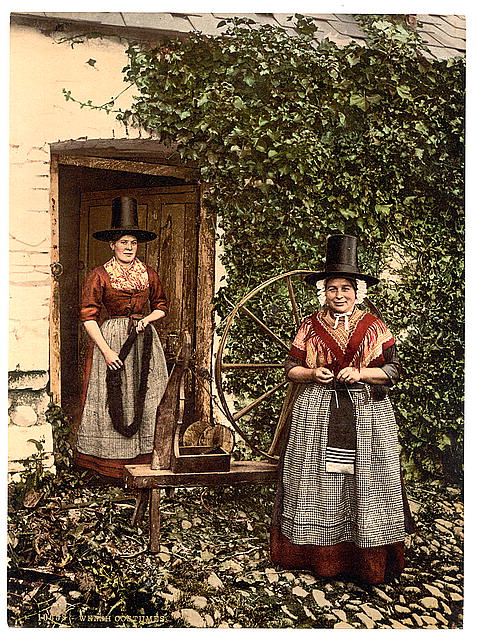
Mother Goose was supposed to be a country woman and, by the latter part of the 19th century, was dressed as one—but we think with a particular look, that of Welsh women in distinctive traditional clothing.

mother-goose.jpg

Welsh_spinnersc1900.jpeg

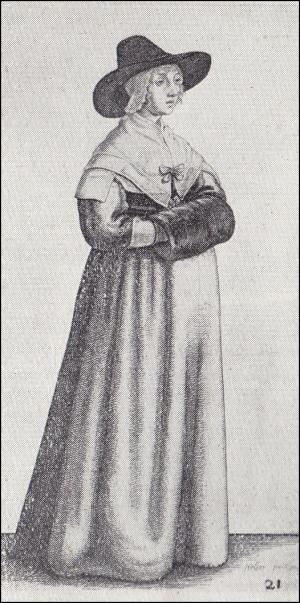
The style of hat is much older—here we have, in succession, three earlier versions from the 17th century—1610, 1640, 1676.

rubens_isabella_brant_c1610

woman21x300hollar1640.jpg

Mrs_Salesbury_-_wright.jpg

Country people tend to be conservative, so something worn in much of the UK in the 17th century appears to have existed, at least in modified form, in the depths of Wales long after then.

copy1-554-78-welsh-national-costume-1911-660x440.jpg

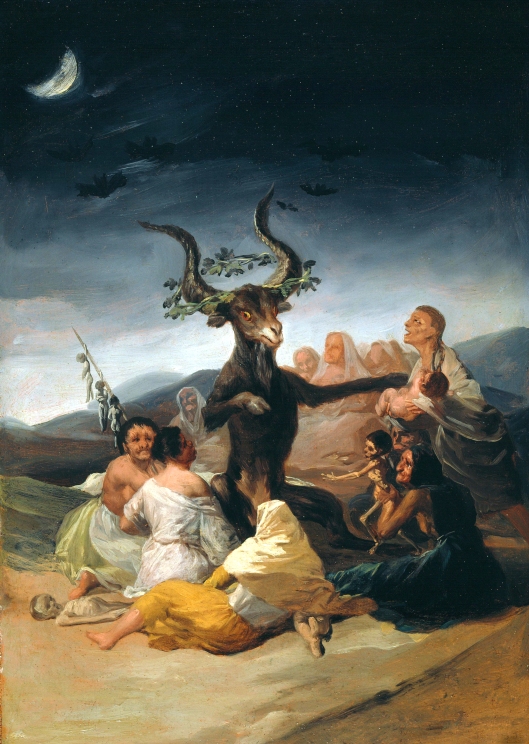
We wonder whether there hasn’t been a kind of cross-over effect: country women to Mother Goose to witches—all conservative dressers. There is also a long tradition in Wales of “wise women”—often mistaken in England for dealers-with-the-devil—those appear in this rather creepy painting by Goya of a witches’ Sabbath (1797-1798). (We note that there are no pointy hats here.) Perhaps the Welsh wise woman was consulted about wardrobe by Mother Goose?

GOYA_-_El_aquelarre_(Museo_Lázaro_Galdiano,_Madrid,_1797-98).jpg

Witches (as the “Harry Potter” books point out) aren’t and weren’t always just women.

hpetal.jpg

Men, too, could take part, sometimes called witches, sometimes warlocks or wizards. When we think wizard, of course, we immediately think of the 5 Istari—

310993_121176884650130_120725101361975_85832_1441609629_n.jpg

When we think of witch, however, in the context of LOTR, we can see that:

  1. In this respect, this is a different kind of culture—for instance, the only equivalent of a “wise woman” is Ioreth, in the “Houses of Healing”
  2. But there is a witch-king, that of Angmar, who is also the head of the Nazgul

eowynvswitchking.jpg

There is a puzzle here, however. In western tradition, witches are the servants of Satan, who spend their time, it seems, troubling humans at the daily level—making cows sick, tormenting babies, holding sabbbaths, casting spells.

witch_john_william_waterhouse_magic_circle_painting_casting_spells.jpg

In that tradition, the only ruler is Satan himself, as depicted in this second Goya painting of a sabbath (and we note here that most of the witches appear to be something between human and other—a great—but horrible—touch—and who is that girl sitting off to the right? This comes from a series of paintings done by Goya in the last years of his life and there is a certain mystery about why he painted them—they’re murals, in fact—and what they might mean.)

francisco_de_goya_y_lucientes_-_witches_sabbath_the_great_he-goat


As there are no other witches in Middle-earth, then, where are the witches for the witch-king to be monarch of?

And that, perhaps, is another mystery for Halloween…

Oh—and Happy Halloween, by the way!


Thanks, as ever, for reading.

MTCIDC

CD

ps

While gathering images for this posting, we happened upon this photograph. Is this a picture from Professor McGonagall’s 50th Hogwarts  reunion?

tumblr_nwrfedgPaR1sdzmuoo1_500.jpg

From Tobago to Lothlorien 1

26 Wednesday Oct 2016

Posted by Ollamh in Artists and Illustrators, Literary History, Maps, Narrative Methods

≈ Leave a comment

Tags

Alexander Selkirk, Daniel Defoe, Der Schweizerische Robinson, Johann David Wyss, Juan Fernandez, Lothlorien, N.C. Wyeth, Robinson Crusoe, shipwreck, Swiss Family Robinson, Tobago, treehouse

Dear Readers,

Welcome, as always. This posting began years ago for one of us with this comic book.

1071869.jpg

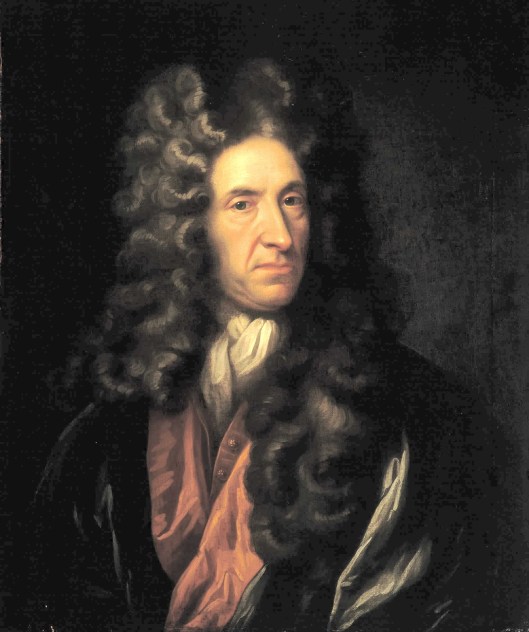
As the cover states, this is a version of a novel, Robinson Crusoe, by Daniel Defoe (1660-1731),

Daniel_Defoe_Kneller_Style.jpg

first published in London in 1719.

Robinson_Crusoe_1719_1st_edition.jpg

In the story, Crusoe is shipwrecked,

news-ship-17th-century.jpg

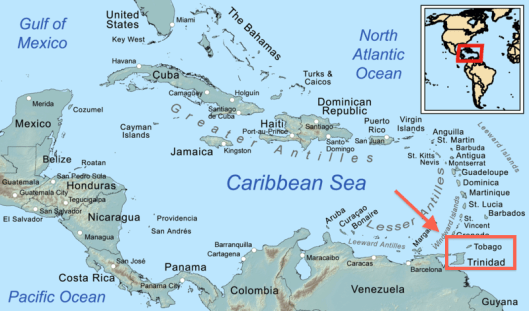
off the Orinoco River, in northeast South America (probably the island of Tobago, which is joined with the island of Trinidad).

location-of-trinidad-and-tobago.png

Fortunately, for Crusoe, although there are no survivors, the ship remains afloat for some days

1863rc.jpg

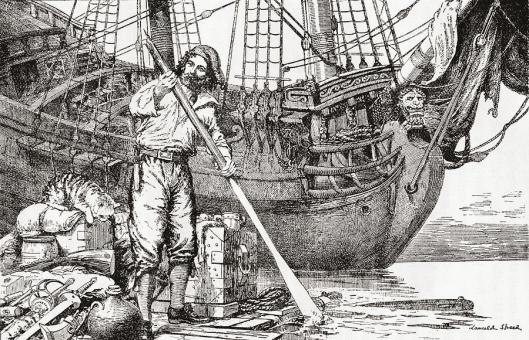
And he is able to ferry ashore a large supply of important items, including weapons and ammunition and even some animals.

robinson-crusoe-rowing-to-safety-on-a-raft-after-being-shipwrecked-from-adventures-of-robinson-bridgeman-images.jpg

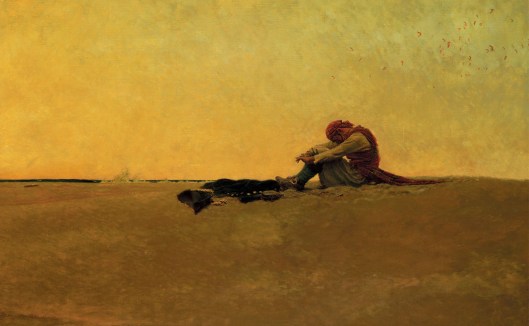
He spends years on this island and has all sorts of adventures, but what interested one of us when we first read it was the absolute coolness of how Crusoe built up a rudimentarily comfortable world from being marooned and, potentially, without hope.   (In fact, tradition says that, when pirates marooned—meaning intentionally abandoned– a member of their band, it was with only two things: a bottle of rum and a loaded pistol, as in this N.C. Wyeth—)

marooned_close_up.jpg

Mentioning Wyeth, you, if you are a regular reader, will know that our favorite version of the story is Wyeth’s own, from 1920.

5617152124_52d7c4ae3c_b.jpg

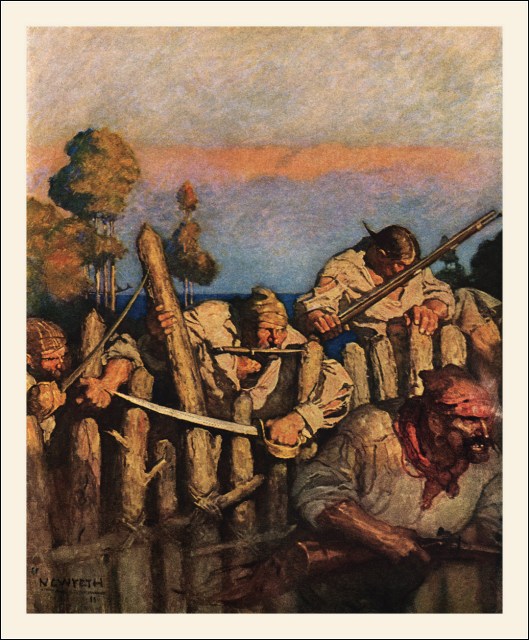
Defoe tells us that Crusoe lived in a cave and built huts, but, for us, what was really interesting was, after thinking seriously about pirates and cannibals, he built a stockade—like this real one, Fort Necessity, built under the orders of George Washington, in 1754.

ftnecessity.JPG

or this imaginary one, used in Stevenson’s Treasure Island (first published in book form in 1883).

0_8a62b_11562dfa_orig

It is understood that a major source for Robinson Crusoe was the story of a real man, Alexander Selkirk,

Alexander_Selkirk_Statue.jpg

who had had to make a life for himself on Juan Fernandez, a Pacific island, in 1704-09.

juanfernandez.jpg

Selkirk and Robinson Crusoe are then sources for Treasure Island.

A book upon which Robinson Crusoe had an even stronger influence (the title alone tells you all) was Der Schweizerische Robinson (usually, in English, Swiss Family Robinson) by Johann David Wyss, published in 1812.

Johann David Wyss.jpg

Instead of a lone Englishman, Wyss’ story is about a sturdy Swiss family of father, mother, and four boys, who, just like their namesake, Robinson, endure shipwreck, but are granted the same advantages of a ship which stays afloat long enough to provide weapons and supplies and livestock and an empty island in a tropical climate.

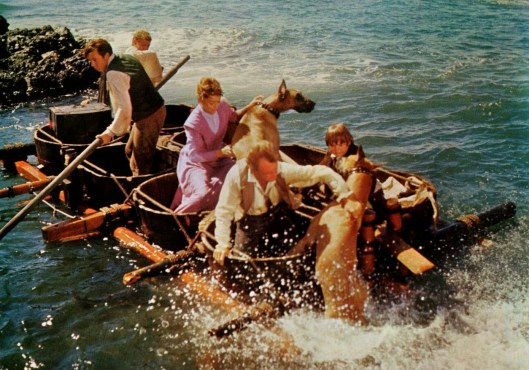
We grew up on the Disney version of this (1960), which is, as is so often the case with Disney movies made from novels, wonderfully memorable visually, but with many changes to the original plot, not all of them, in our opinion, either justified or even necessary. What has stuck with us, however, is the wonderful scenes of the family stripping the ship

SwissRaft.jpg

and, what we remember most (and wanted most) was the treehouse in which the family lived.

swiss-family-robinson.jpg

In the Wyss book, they had originally lived there, but had moved to a cave, after the mother had had an accident. So many rooms on so many levels had made us long for something like it (we still do!), but it also made us wonder about Tolkien’s Lothlorien, some of which is also perched in trees. But more on Lothlorien and its look in our next posting.

Thanks, as always, for reading.

MTCIDC

CD
The Woods for the Trees…

05 Wednesday Oct 2016

Posted by Ollamh in Artists and Illustrators, Fairy Tales and Myths, J.R.R. Tolkien, Literary History

≈ 2 Comments

Tags

A Wonder Book, Arthur Rackham, Enid Blyton, Ent, Fairy Tale, Fairytale Illustrators, Fangorn, Farmer Giles of Ham, Harmsen Van Der Beek, Hawthorne, John Bauer, Middle-earth, Mirkwood, Old Man Willow, Pauline Baynes, Rackham Tree, The Lord of the Rings, The Old Forest, The Wind in the Willows, Tolkien, Treebeard, trees

Dear Readers,

Welcome.

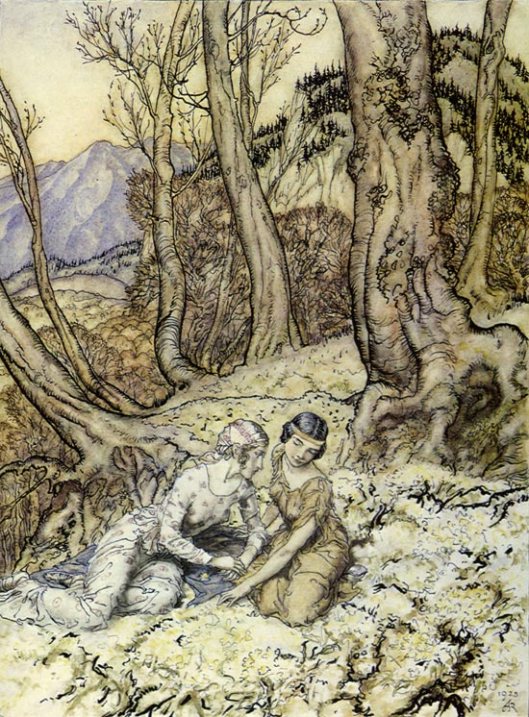
We’ve recently been admiring the illustrations of one of our favorite artists, Arthur Rackham (1867-1939). As a book illustrator, Rackham’s main focus was fairy tales, and for them, he developed a style which was described by E. V. Lucas in a letter to Rackham as his “grace and grotesque”. For us, what may be most striking about his work is the way he depicts landscapes and trees, with their distinctive “Rackhamesque” character.

11a9ca7244bf2060db41e7a5862344ab

From Nathaniel Hawthorne’s A Wonder Book, 1922

39e2b3c42d2341dfc53844a95a32e89d

“Come Now, a Roundel” from William Shakespeare’s A Midsummer Night’s Dream, 1908

429027

From Kenneth Grahame’s The Wind in the Willows, 1940

hermia_and_helena

From William Shakespeare’s A Midsummer Night’s Dream, 1908


As a tree admirer,

12930764_f520

He was certainly not alone.

553fada6b6a1f_

Being Tolkien people, this reminded us, of course, of JRRT’s own admiration of trees, of which he wrote in a sort of letter of introduction to Houghton Mifflin Co.: “I am (obviously) much in love with plants and above all trees, and always have been…” (Letters, 220).

JRRT himself was an illustrator of his own stories, and although he never cited Rackham as a direct influence, we know from Tolkien’s letters that he had seen Rackham’s work. He advised his illustrator Pauline Baynes to “avoid the Scylla of Blyton and the Charybdis of Rackham” (L 312).

Here is Pauline Baynes frontispiece for the first book which she illustrated for JRRT in 1949.

000901-3

Enid Blyton was an author of popular children’s books, but she was not an illustrator. We don’t know to what illustrations Tolkien might have been referring, but here is a Blyton book published in the same year, illustrated by the Dutch artist, Harmsen Van Der Beek. (The cover illustration reminds us of various illustrations for early translations of The Hobbit, illustrations which Tolkien hated.)

520wide+8030070

When we look at Tolkien’s forests

4d77f5a589fa1169c84c4fb29b56715b

we are often reminded of the work of the Swedish artist, John Bauer

John-Bauer-Elk-Cotton3

but for all of Tolkien’s warning to Baynes about Rackham’s style, there is a strong influence there, still.  After all, Tolkien did find Rackham’s illustrations “really astonishingly good pictures” (261). Sharing a passion for fairy tales with Rackham, which JRRT called “one of the highest forms of literature”, it’s no wonder to us that he would have found some inspiration in an artist who had similar tastes.

The influence seems strongest when it comes to animate trees.  As we were looking at the same Rackham illustrations which Tolkien would have seen, we found pictures which immediately reminded us, for example, of JRRT’s illustration of Old Man Willow.

ar_rvw2

7a81198748f0619bf839140c5cd4f60b

Just as Rackham’s work seems to have influenced JRRT as an illustrator, he seems to have inspired JRRT’s writing, as well. Being visual people, we can certainly say that, when writing Across the Doubtful Sea, we looked at several images which helped us to imagine the events, places, and characters in our south seas adventure. If you look at Rackham’s The Hawthorne Tree, dear readers, does it remind you of something—or someone?

b84eb67383d938d33e93ae7cfc9c82bd

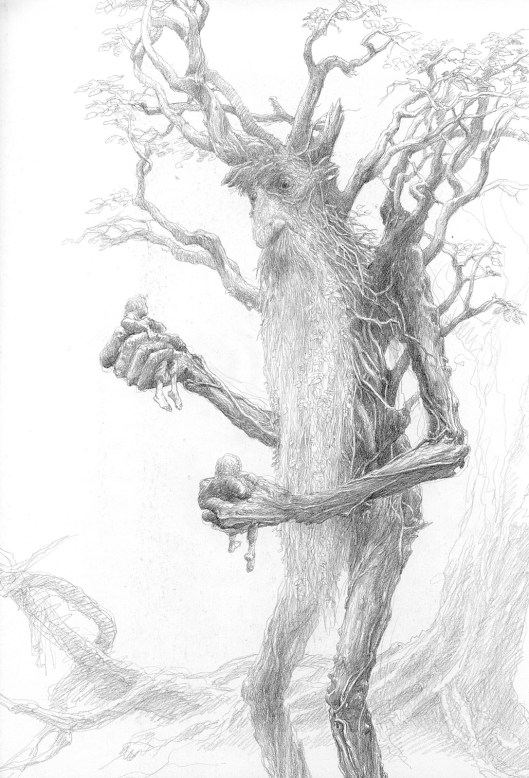
It’s the wizened, knotted old face of Rackham’s Hawthorne Tree which made us think of this passage:

“They found that they were looking at a most extraordinary face. It belonged to a Man-like, almost troll-like, figure, at least fourteen foot high, very sturdy, with a tall head, and hardly any neck. Whether it was clad in stuff like green and grey bark, or whether that was its hide, was difficult to say. At any rate the arms, at a short distance from the trunk, were not wrinkled, but covered with a brown smooth skin… But at the moment, the Hobbits noted little but the eyes. These deep eyes were now surveying them, slow and solemn, but very penetrating.” (The Two Towers, “Treebeard”, 452)

treebeard

Treebeard is, in fact, not a tree, but an Ent. He is an ancient tree-like figure, however, and almost a description of Rackham’s illustration. Looking at Rackham’s paintings and drawings, it’s clear to us that they call out for story, and we wonder– is this how JRRT, with a passion for trees and an eye for illustration, felt about them, too?

Thank you, as always, for reading.

MTCIDC,

CD


Infrastructure and Architecture in Rivendell

28 Wednesday Sep 2016

Posted by Ollamh in Artists and Illustrators, Films and Music, Imaginary History, J.R.R. Tolkien, Literary History, Narrative Methods

≈ 2 Comments

Tags

Alan Lee, architecture, bridge, Bruinen, footbridge, Illustration, Lauterbrunnental, Middle-earth, Ottoman, packhorse bridge, Peter Jackson, Ring of Silvianus, Rivendell, Roman Britain, Roman villa, Sir Mortimer Wheeler, Stari Most, Ted Nasmith, The Lord of the Rings, Tolkien, Wasdale

Welcome, dear readers, as ever. In our last posting, we looked at the Greenway from a comparative perspective. In this one, we’ve got an idea or two from having looked as closely as we could at one of JRRT’s illustrations of Rivendell, comparing it with various modern conceptions, including that in the films of P. Jackson.

Rivendell, Sindarin, Imladris, “deep valley in a cleft”, is located on the eastern edge of Eriador, at the foot of the Misty Mountains. Set in that deep valley, which was formed by the action of the river Bruinen (“Loudwater”), it was besieged on several occasions throughout its lifetime, but had survived to be the last refuge of the Elves on that side of the mountains.

mapofmewithrivendellpointedout

It is understood that Tolkien based it upon a Swiss valley, Lauterbrunnental, which he had visited on a hiking trip in 1911.

1_lauterbrunnen_valley_2012

(And maybe there’s an echo in the name—which is sometimes translated “Louder Springs”—in Bruinen, “Loudwater”?)

Here is the Tolkien illustration

rivjrrt2

We want to look at two features here. First, in the middle ground, there is that bridge. Here is Alan Lee’s very beautiful version—although you will note that it’s been moved and shortened.The-Hobbit-and-dwarfts-on-the-bridge-alan-lee-18907573-1024-768

As we examined this bridge as closely as we could, we wondered, where had the idea come from for its shape? And two possibilities came to mind. First, because we’re very much World History people, we thought of those beautiful bridges from the Ottoman world. There are a number of surviving bridges which are more elaborate, but there are also single-arch bridges like these, which bear a strong resemblance to the bridge in Tolkien’s illustration.

otoman_era_bridge_gumushane_province_turkey_photo (1)

hemshin-bridge

1024px-ArchBridgeOverFirtinaDeresi@Rize-Turkey-1

4051359e3eb1f3e0a066f059868152c1

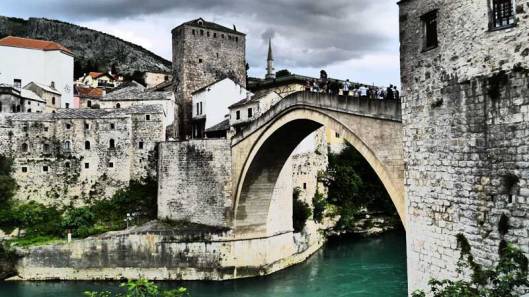
To us, one of the most beautiful is the Stari Most (Bosnian, “Old Bridge”), in Mostar (Bosnian, “Bridge Keeper”), which was built in the 16th century, destroyed in 1993, and rebuilt, and reopened in 2004.

Bosna-Mostar-Stari-Most-800

003

mostar_bg_1

Moving a little closer to home (England, that is, in the case of JRRT), another possibility for a model might be something mentioned in our last posting, when we talked about medieval English roads as mostly packhorse trails. Here’s a perfect example, from Wasdale in the Lake District of northern England, a packhorse bridge.

(n) The pack horse bridge behind the Wasdale Head Inn

Moving upstream from the bridge in Tolkien’s picture, we see a house depicted.

rivjrrt2

It’s hard to make it out, even under magnification, but, when we compare it with:

  1. the buildings in the Jackson films

12887381._SX540_.png

  1. Alan Lee’s Rivendell

leerivendell

  1. or even Ted Nasmith’s,

rivendellTN-Fair_Valley_of_Rivendell

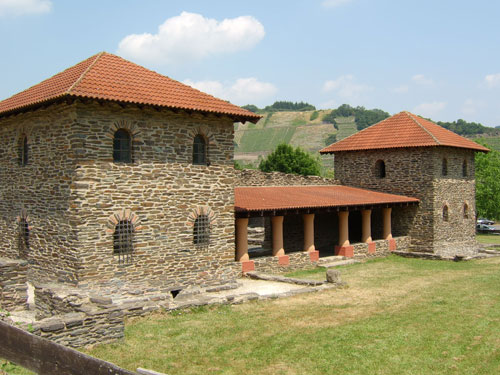
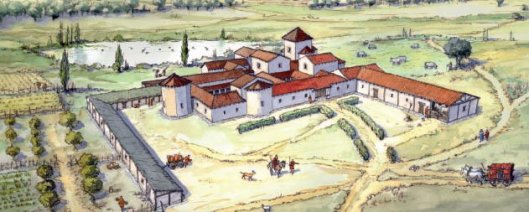
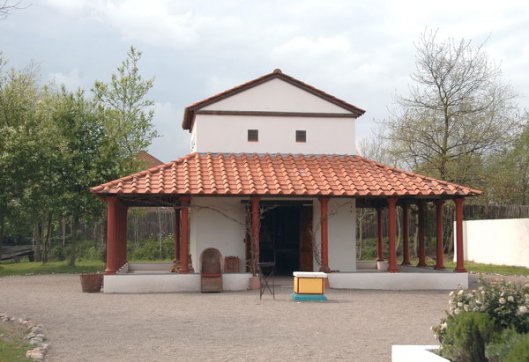
we personally don’t think anyone quite captures what Tolkien drew. To us, there appears to be, as we said before, something closer to home–in the reconstructions of Roman villas and their outbuildings. And, as we said in our last, so much of Roman Britain was still available, either above or below ground, that we can imagine JRRT  being aware of it.  (In fact, in 1929, the archaeologist, Sir Mortimer Wheeler actually consulted him on an ancient curse and the inscription on a Roman-British ring.  See the Ring of Silvianus wiki page).  Possible examples, some from reconstructed sites:

villa_mehring_01villaarcheon_temple_cuijk2delaguiaGayton-Villa-Colour-web

Blow up the Tolkien illustration for yourself, dear readers, and what do you think?

Thanks, as always, for reading.

MTCIDC

CD


Song in Darkness

14 Wednesday Sep 2016

Posted by Ollamh in Artists and Illustrators, Films and Music, Imaginary History, J.R.R. Tolkien, Narrative Methods

≈ Leave a comment

Tags

Ainur, Arda, Frodo, Iluvatar, In western lands beneath the Sun, Middle-earth, Morgoth, Music, Sam Gamgee, Song, The Lord of the Rings, The Silmarillion, The Tower of Cirith Ungol, Tolkien

Dear Readers,

Welcome, as always.

For this posting, we consulted the Sortes Tolkienses, and landed upon a particular passage which had us thinking about song in Middle-earth:

“It was quiet, horribly quiet. The torch, that was already burning low when he arrived, sputtered and went out; and he felt the darkness cover him like a tide. And then softly, to his own surprise, there at the vain end of his long journey and his grief, moved by what thought in his heart he could not tell, Sam began to sing. “

At this moment, Frodo has been taken by the enemy after the two Hobbits had been led into and escaped Shelob’s lair, and Sam, though only a simple gardener from the Shire, has resolved to carry Frodo’s burden and rescue him from the tower.

cirithungol

Along with carrying the Ring, which would have otherwise been taken from Frodo in the tower, Sam has also brought with him Sting, Frodo’s sword, and Galadriel’s phial, which she gave to Frodo as a gift upon their leave-taking from Lothlorien.

shelob Sam

The phial is used when the two Hobbits are pursued by Shelob, as a means both of light and of defense. Faced with a darkness he has never encountered before, however, but set on finding and rescuing Frodo, even if he’s not sure how, Sam has the option of pulling out the phial straight away when the lights in the tower of Cirith Ungol go out.

Instead, Sam sings—although he’s not quite sure why—and, in the shadow of Mordor, recalls home in the Shire:

“His voice sounded thin and quavering in the cold dark tower: the voice of a forlorn and weary hobbit that no listening orc could mistake for the clear song of an Elven-lord.  He murmured old tunes out of the Shire, and snatches of Mr. Bilbo’s rhymes that came into his mind like fleeting glimpses of the country of his home. And then suddenly new strength rose in him, and his voice rang out, while words of his own came unbidden to fit the simple tune.

            In western lands beneath the Sun

                        the flowers may rise in Spring,

            the trees may bud, the waters run,

                        the merry finches sing.

            Or there maybe ‘tis a cloudless night

                        and swaying beeches bear

            the Elven-stars as jewels white

                        amid their branching hair.


            Though here at journey’s end I lie

                        in darkness buried deep,

            beyond all towers strong and high,

                        beyond all mountains steep,

            above all shadows rides the Sun

                        and stars forever dwell:

            I will not say the Day is done,

                        nor bid the Stars farewell.”

(The talented Tolkien artist, Joe Gilronan, has illustrated what Sam would have imagined singing this song–  a clear contrast to the darkness surrounding him:)

b4d306be0fef7b0b9fdbc7daf47c4d35samwise-the-gardner-joe-gilronan

Why is this, which seems like a last, desperate gesture, successful?  After all, it not only revives Sam’s spirits, but it reaches Frodo who, badly injured as he has been, responds with the same song, enabling Sam to find him.

In Middle-earth, and in Arda more generally, song is both enjoyed and revered on a deeper level. The music of the creator Iluvatar is, as recounted in The Silmarillion, what brought the world into being, and it is such a strong force that Morgoth, the first dark lord, sought to challenge Iluvatar’s song and power with his own. Even here, however, music as a dark force failed.

“Then Iluvatar spoke, and he said: ‘Mighty are the Ainur, and mightiest among them is Melkor; but that he may know, and all the Ainur, that I am Iluvatar, those things that ye have sung, I will show them forth, that ye may see what ye have done. And thou, Melkor, shall see that no theme may be played that hath not its uttermost source in me, nor can any alter the music in my despite.’ ” (The Silmarillion)

180px-Ted_Nasmith_-_Melkor_Weaves_Opposing_Music

Thus in The Lord of the Rings, we never hear an orc song, nor do we see singing, marching uruk-hai. They are beings created by Sauron, who has not the spiritual authority of Iluvatar, and, as Iluvatar is the ultimate creator of all life, so is he the creator of all music in Arda.  In Middle-earth, besides the odd scene in The Hobbit in which the goblins sing in Goblin-town, we see only Elves singing (such as the Hymn to Elbereth), Hobbits (both snatches of Bilbo’s literary songs and drinking-songs), and Dwarves (it was their music which persuaded Bilbo to leave the Shire and join their journey).

Sam’s song, then, holds power in its own right—although it’s simply an old tune from home, its uttermost source is in Iluvatar and the first music, and it becomes clear why even a hobbit’s hum in the darkest of places can bring him comfort—it cannot be contested by darkness.

Thank you, as always, for  reading.

MTCIDC,

CD

Last Mohican, First Novelist

07 Wednesday Sep 2016

Posted by Ollamh in Artists and Illustrators, Films and Music, Heroes, Literary History, Military History, Narrative Methods

≈ Leave a comment

Tags

Baron Dieskau, British, Carillon, Daguerre, Deerfield, Fenimore Cooper's Literary Offenses, Fort Duquesne, Fort Edward, Fort Niagara, Fort St. Frederic, Fort William Henry, French, French and Indian War, General Webb, James Fenimore Cooper, Lake Champlain, Lake George, Lake Ontario, Lt. Col. Munro, Mark Twain, Marquis de Montcalm, Matthew Brady, N.C. Wyeth, Native Americans, Oswego, St. Frederic, The Last of the Mohicans, Ticonderoga

Welcome, dear readers, as always.

This is our 104th posting, making exactly 2 years of maintaining our blog, Doubtfulsea.com. When we began it, we had visited lots of other blogs, but we had no clear idea of what we wanted for ourselves. Our name came from our first novel, Across the Doubtful Sea, available from Amazon and Kindle, but we planned, from the beginning, to cover much more than the subject matter of our novel (among other things, French and English exploration of the Pacific in the 18th century, as well as Polynesian settlement). In consequence, during our two years, we have had postings on a variety of subjects, mostly about adventure/fantasy, often with an historical element, often with a focus upon the work of one of our favorite fantasy authors, JRR Tolkien.

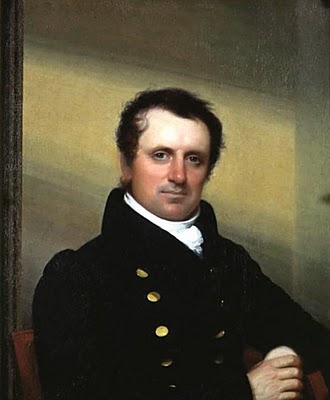
Now, in this last of our second year, we want to look at a person often viewed as the first important American novelist of the early 19th century, James Fenimore Cooper (1789-1851), and his most famous book, The Last of the Mohicans (1826).James-Fenimore-Cooper

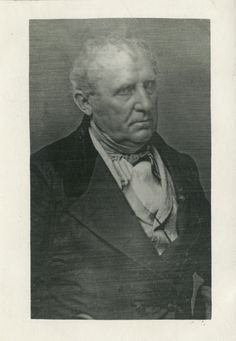
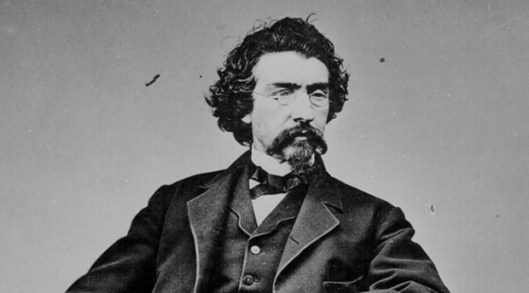
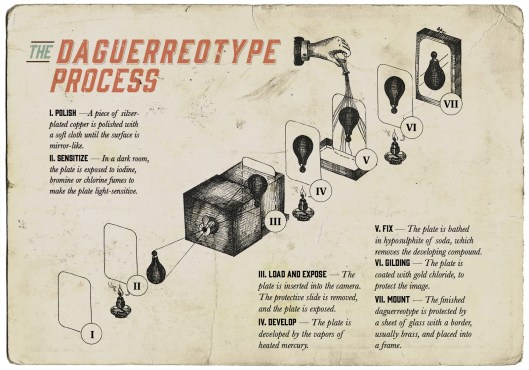
(A footnote: Cooper lived long enough that, the year before his death, he was the subject of an early photograph, using the Daguerre process, by Matthew Brady, 1822-1896, who, in a decade, would become the most famous photographer in the US because of his work documenting the American Civil War, 1861-1865.)

daguerreotypejfc

mathewbrady

DaguerreProcess4

Cooper had a long and very successful career as a novelist, beginning with a social novel, Precaution (1820), but his greatest fame came from his long series based upon US historical subjects and perhaps the most famous of all, that set in the world of the French and Indian War (1754-1763), and the book we want to focus upon,

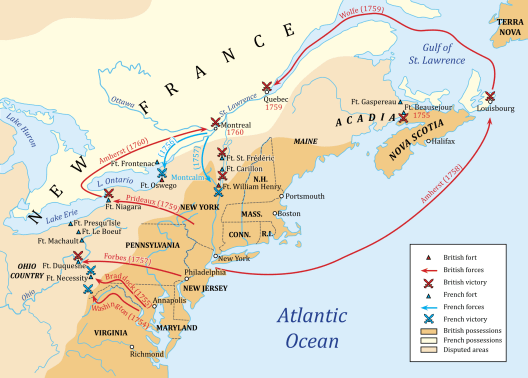
French_and_indian_war_map_svg

The Last of the Mohicans.

lastofmofirsted

The subtitle, A Narrative of 1757, immediately suggests a specific event of the war, the siege and fall of the British Fort William Henry in August, 1757.

The fort had been built at the head of Lake George as a counterbalance to two French forts, Ticonderoga (called by the French, “Carillon”) and St. Frederic, on Lake Champlain, the lake to the north.

French_and_indian_war_map_svg

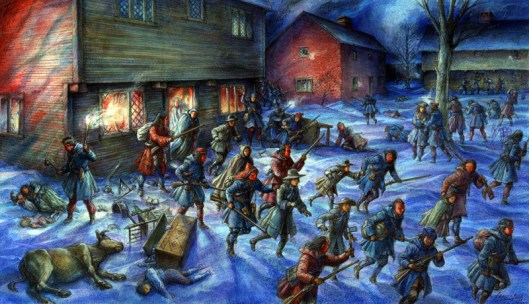
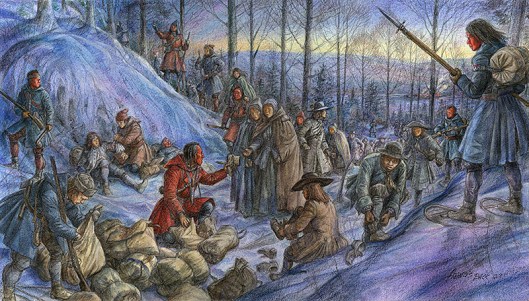
All of these forts—and more—were part of the competition between the British and French to control the northeastern part of North America. This struggle had begun in the later 17th century and had long been a proxy war in which colonial settlers and Native Americans had struggled across many miles of wilderness, raiding each other throughout the years. Here is one of the most famous raids, that of Deerfield in 1704.

deerfield1deerfield2deerfield3

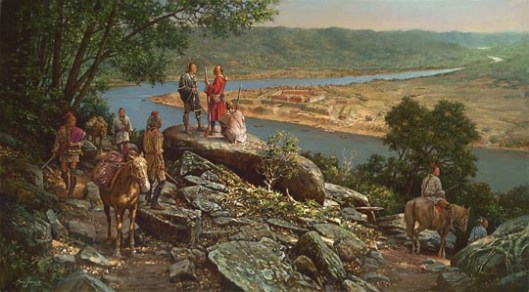
In the early 1750s, the French had increased the potential tension by building a new series of forts in what is now western Pennsylvania and eastern Ohio, soon to be countered by British forts.

French_British_Forts_1753_1758

In 1755, as the war heated up, the English planned a three-pronged attack against Ft. Duquesne, Ft. Niagara, and Ft. St. Frederic (called “Crown Point” by the English).

French_and_indian_war_map_svg

duquesne

ftniagaraftstfrederic

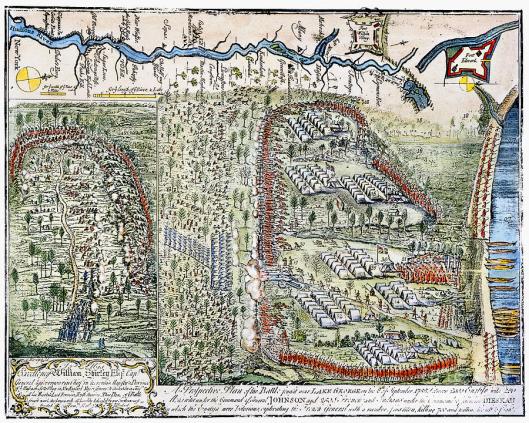
The advance against Ft. Duquesne was defeated, that against Niagara never took off, and that on St. Frederic was blocked by a French attack on the English (actually New England colonial) army at the head of Lake George.

1-battle-of-lake-george-1755-granger

This then became the site of Ft. William Henry.

Fort-William-Henry-Museum

Because the European population of New France was so small in contrast to that of the English colonies—about 70,000 versus more than a million—and because the royal government in Paris had little money to spend (or chose to spend) on the colony, the first two French military commanders, the Baron Dieskau (1701-1767) and the Marquis de Montcalm (1712-1759)

montcalm

chose an aggressive strategy, aiming to keep the British as far from the center of New France as possible. Although his men were eventually driven off and he was wounded and captured, Dieskau did halt the expedition against Ft. St. Frederic. The next year, 1756, Montcalm destroyed the English forts at Oswego, on the south shore of Lake Ontario, which could have served as staging areas for attacks east and west.

Lake_Ontario_map

Then, in 1757, he mounted the attack on Ft. William Henry which forms the background story for Cooper’s novel.

To do so, he stripped central New France of its regular troops and militia

Historex Card 862 French Infantry 1750 - 1760

and augmented them with Native Americans, for whom he felt no sympathy.

montcalmnatams

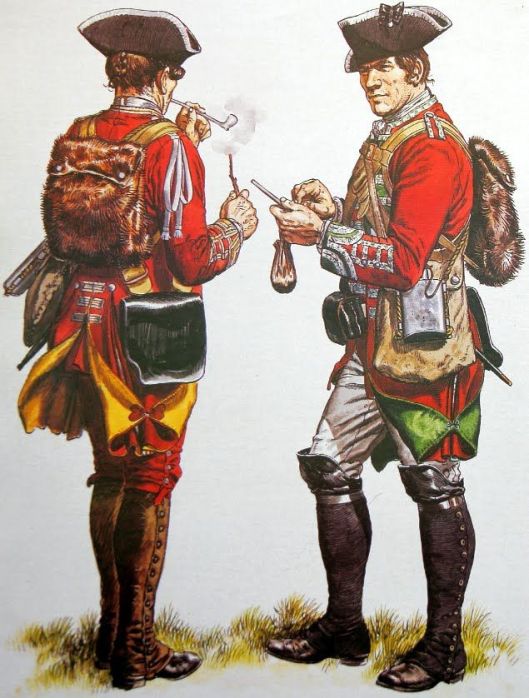
Against such a force, the English commander, Lt. Col. Munro, had a much smaller number of British regulars

brituniformsfiw

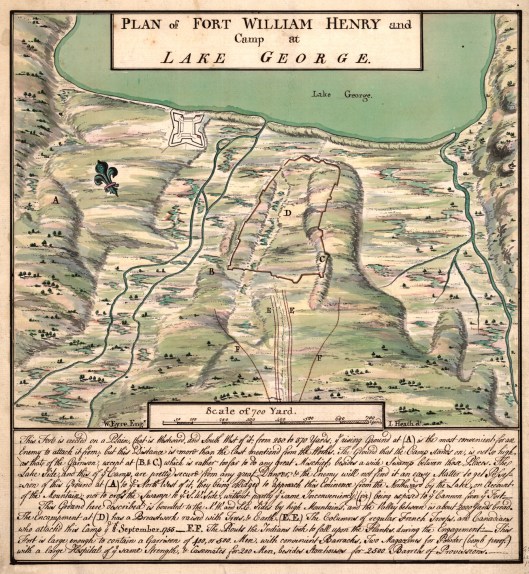
and colonial troops, based in the fort itself and in a nearby camp.

Plan_of_Fort_William_Henry_on_Lake_George

In the 18th century, besieging a town or a fort was a very formal endeavor. Forts and towns were constructed to resist attack, often having multiple walls, ditches, and outer forts, the walls being covered in earth to resist the destructive power of an enemy’s artillery.

fortress-cross-section

Before an attack, the attacker was required to send a messenger in, demanding surrender. In some cases, seeing overwhelming forces and having no promise of relief, a garrison surrendered.

surrender of detroit

To attack meant beginning with a series of trenches just outside the artillery range of the defenders, then, through zigzagging,06 Vauban's Siege Technique.pngto approach closer and closer until:

  1. the attacker’s artillery had knocked a big enough hole in the enemy’s walls that they were rapidly becoming defenseless

siege_image6

  1. there was the immediate danger of an assault

redoubt10

In the case of Ft. William Henry, there was only a dry ditch, then exposed timber walls.

Fort-William-Henry-Museum

The French summoned Munro to surrender, he refused, and the French began the siege.

frenchsiegeline

When the French guns had badly damaged the fort and there was no chance of help from General Webb, at Ft. Edward, to the south, Munro surrendered.

surrender of Ft. William Henry

Trouble then began when Montcalm’s Native Americans felt cheated of the plunder which they had expected and, when the paroled column of soldiers began to move southward, it was attacked by them. Montcalm and some of his officers intervened, but they were unable to do more than slow the plundering and killing before some 200 fell. (There has been a great deal of argument as to numbers—it appears, for example, that others had been carried away, either to be ransomed later, adopted into tribes, or ritually murdered, as was the custom among some Native American groups. For the best modern account, see Ian Steele, Betrayals, OUP, 1990.)

01french_lg

Cooper’s novel, an adventure/romance, uses the fort and siege as its center. Main characters move towards the fort, are in it at the time of the surrender, and are involved in the disaster after it. As might seem inevitable by now, our favorite edition is that illustrated by N. C. Wyeth in 1919.

51504

And here is a selection of the illustrations.

0_8f6d0_9b893fc5_orig0_8f6d2_797c6459_orig0_8f6d4_4ef48676_orig

the-last-of-the-mohicans-9781442481305.in02the-last-of-the-mohicans-9781442481305.in03titlepage

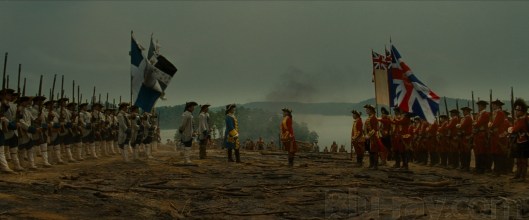
There have been numerous films made of the book, the earliest (at least US one) being a silent, dating from 1912. For us, the most colorful was the one which appeared in 1992, with Daniel Day Lewis as “Nathaniel Poe” (a slight change from the books’ Natty Bumpo). This version made many changes to the original story, including a love interest between Poe and one of Munro’s daughters, Cora, but, for us, it also had four rather spectacular scenes: the ambush of a company of redcoats in the forest by Native Americans,

ambushinforest

the French siege of Ft. William Henry,

frenchsiegeline

the British surrender,

surrender of Ft. William Henry

and the final “massacre”.

ambush2

And so we begin our third year of blogging with our next posting. We have, as always, lots of ideas for those postings, which we hope you will enjoy.

Thanks, as always, for reading!

MTCIDC

CD

PS

In 1895, Mark Twain published a comic critique of Cooper’s writing ticks. Entitled, “Fenimore Cooper’s Literary Offenses”, it can be read at http://twain.lib.virginia.edu/projects/rissetto/offense.html.

← Older posts
Newer posts →

The Doubtful Sea Series Facebook Page

The Doubtful Sea Series Facebook Page

  • Ollamh

Categories

  • Artists and Illustrators
  • Economics in Middle-earth
  • Fairy Tales and Myths
  • Films and Music
  • Games
  • Heroes
  • Imaginary History
  • J.R.R. Tolkien
  • Language
  • Literary History
  • Maps
  • Medieval Russia
  • Military History
  • Military History of Middle-earth
  • Narnia
  • Narrative Methods
  • Poetry
  • Research
  • Star Wars
  • Terra Australis
  • The Rohirrim
  • Theatre and Performance
  • Tolkien
  • Uncategorized
  • Villains
  • Writing as Collaborators
Follow doubtfulsea on WordPress.com

Across the Doubtful Sea

Recent Postings

  • The Damage of Dragons March 11, 2026
  • Encouragement March 4, 2026
  • Eavesdropping February 25, 2026
  • Do You Speak Villain? (Part 3) February 18, 2026
  • Do You Speak Villain? (2) February 11, 2026
  • Do You Speak Villain? (Part 1) February 4, 2026
  • Towering January 28, 2026
  • Tolkien Among the Indians January 21, 2026
  • Thin and Stretched January 14, 2026

Blog Statistics

  • 108,916 Views

Posting Archive

  • March 2026 (2)
  • February 2026 (4)
  • January 2026 (4)
  • December 2025 (5)
  • November 2025 (4)
  • October 2025 (5)
  • September 2025 (4)
  • August 2025 (4)
  • July 2025 (5)
  • June 2025 (4)
  • May 2025 (4)
  • April 2025 (5)
  • March 2025 (4)
  • February 2025 (4)
  • January 2025 (5)
  • December 2024 (4)
  • November 2024 (4)
  • October 2024 (5)
  • September 2024 (4)
  • August 2024 (4)
  • July 2024 (5)
  • June 2024 (4)
  • May 2024 (5)
  • April 2024 (4)
  • March 2024 (4)
  • February 2024 (4)
  • January 2024 (5)
  • December 2023 (4)
  • November 2023 (5)
  • October 2023 (4)
  • September 2023 (4)
  • August 2023 (5)
  • July 2023 (4)
  • June 2023 (4)
  • May 2023 (5)
  • April 2023 (4)
  • March 2023 (5)
  • February 2023 (4)
  • January 2023 (4)
  • December 2022 (4)
  • November 2022 (5)
  • October 2022 (4)
  • September 2022 (4)
  • August 2022 (5)
  • July 2022 (4)
  • June 2022 (5)
  • May 2022 (4)
  • April 2022 (4)
  • March 2022 (5)
  • February 2022 (4)
  • January 2022 (4)
  • December 2021 (5)
  • November 2021 (4)
  • October 2021 (4)
  • September 2021 (5)
  • August 2021 (4)
  • July 2021 (4)
  • June 2021 (5)
  • May 2021 (4)
  • April 2021 (4)
  • March 2021 (5)
  • February 2021 (4)
  • January 2021 (4)
  • December 2020 (5)
  • November 2020 (4)
  • October 2020 (4)
  • September 2020 (5)
  • August 2020 (4)
  • July 2020 (5)
  • June 2020 (4)
  • May 2020 (4)
  • April 2020 (5)
  • March 2020 (4)
  • February 2020 (4)
  • January 2020 (6)
  • December 2019 (4)
  • November 2019 (4)
  • October 2019 (5)
  • September 2019 (4)
  • August 2019 (4)
  • July 2019 (5)
  • June 2019 (4)
  • May 2019 (5)
  • April 2019 (4)
  • March 2019 (4)
  • February 2019 (4)
  • January 2019 (5)
  • December 2018 (4)
  • November 2018 (4)
  • October 2018 (5)
  • September 2018 (4)
  • August 2018 (5)
  • July 2018 (4)
  • June 2018 (4)
  • May 2018 (5)
  • April 2018 (4)
  • March 2018 (4)
  • February 2018 (4)
  • January 2018 (5)
  • December 2017 (4)
  • November 2017 (4)
  • October 2017 (4)
  • September 2017 (4)
  • August 2017 (5)
  • July 2017 (4)
  • June 2017 (4)
  • May 2017 (5)
  • April 2017 (4)
  • March 2017 (5)
  • February 2017 (4)
  • January 2017 (4)
  • December 2016 (4)
  • November 2016 (5)
  • October 2016 (6)
  • September 2016 (5)
  • August 2016 (5)
  • July 2016 (5)
  • June 2016 (5)
  • May 2016 (4)
  • April 2016 (4)
  • March 2016 (5)
  • February 2016 (4)
  • January 2016 (4)
  • December 2015 (5)
  • November 2015 (5)
  • October 2015 (4)
  • September 2015 (5)
  • August 2015 (4)
  • July 2015 (5)
  • June 2015 (5)
  • May 2015 (4)
  • April 2015 (3)
  • March 2015 (4)
  • February 2015 (4)
  • January 2015 (4)
  • December 2014 (5)
  • November 2014 (4)
  • October 2014 (6)
  • September 2014 (1)

Blog at WordPress.com.

  • Subscribe Subscribed
    • doubtfulsea
    • Join 78 other subscribers
    • Already have a WordPress.com account? Log in now.
    • doubtfulsea
    • Subscribe Subscribed
    • Sign up
    • Log in
    • Report this content
    • View site in Reader
    • Manage subscriptions
    • Collapse this bar
 

Loading Comments...