• About

doubtfulsea

~ adventure fantasy

Tag Archives: Tolkien

A Power

25 Wednesday Apr 2018

Posted by Ollamh in J.R.R. Tolkien, Narrative Methods, Villains

≈ Leave a comment

Tags

Gandalf, Grima, Harry Potter, Isengard, Istari, Mini-Me, Mirkwood, Necromancer, Ornthanc, Palantir, power, Rings of Power, Rohan, Saruman, Sauron, The Council of Elrond, The Hobbit, The Lord of the Rings, Theoden, Tolkien, Voldemort, White Council, Wormtongue

Welcome, dear readers, as ever.

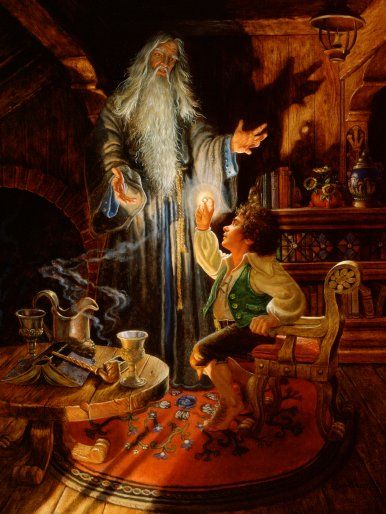
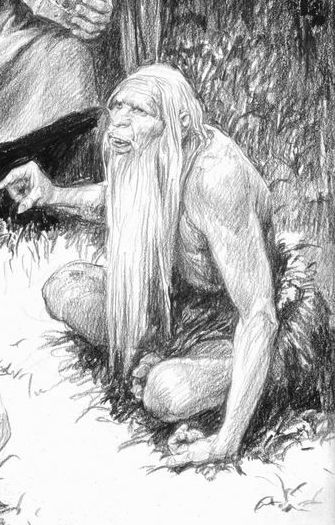
Some time ago, we did a post on Saruman as a “Mini-Me” version of Sauron

image1minime.jpg

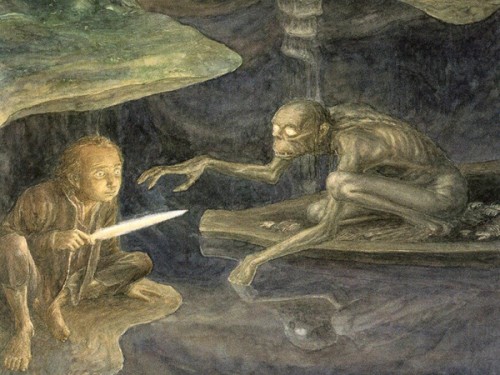
but, since that time, one of us has used The Hobbit in a class.  Mirkwood

image2mirkwood.jpg

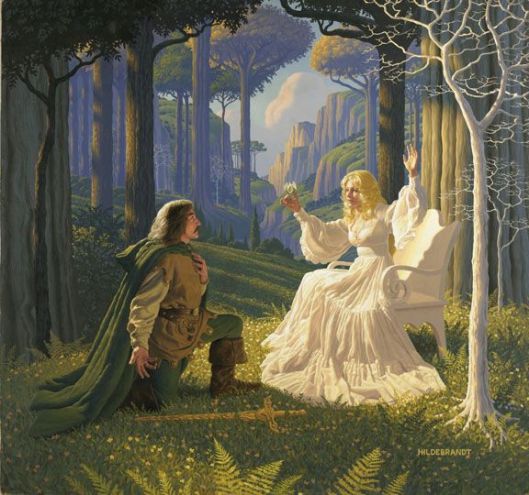
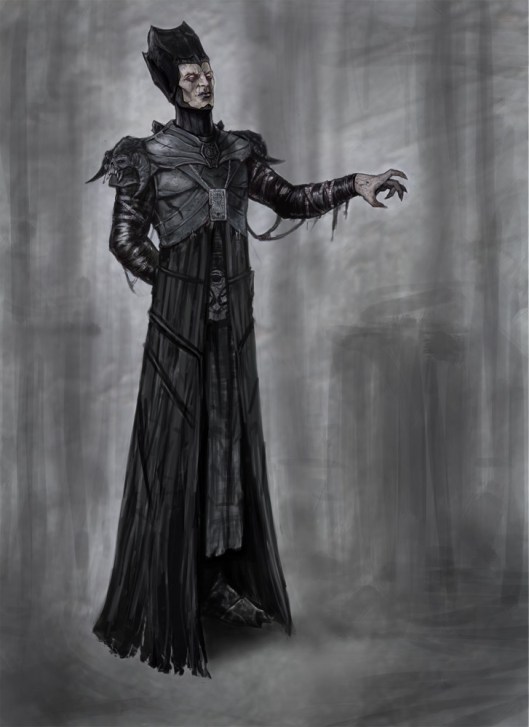
and the Necromancer

image3necromancer.jpg

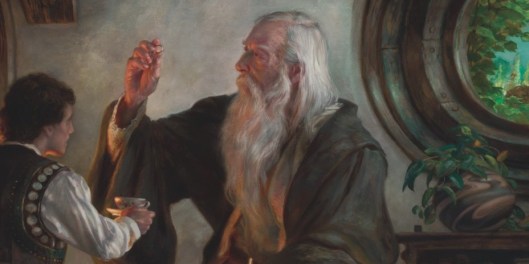
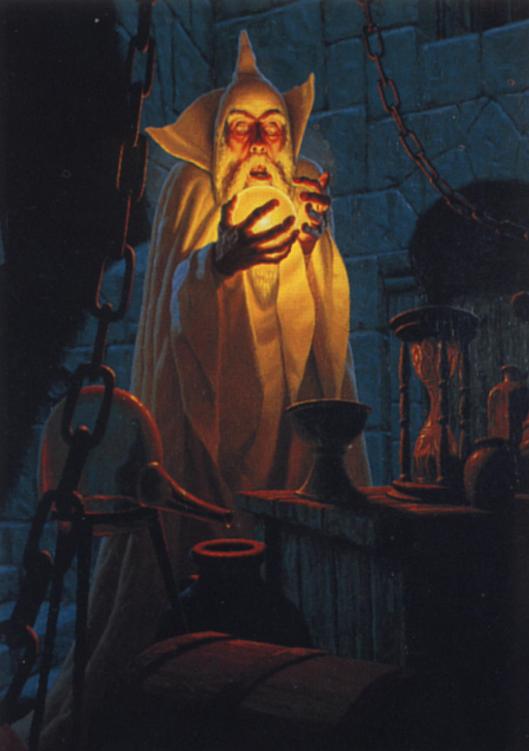
came up and we began to think about him again, this time to consider his strategy:  how long has he been planning something and what might be the elements within that plan?

image4saruman.jpg

Although there is no hard evidence for just how long Saruman has been at work, it seems like his scheme has been under construction for at least 80 years.  We base that upon Gandalf’s description of the White Council’s meeting on the subject of Sauron and what to do when it’s discovered that he is in Dol Guldur, calling himself the Necromancer:

“Some, too, will remember also that Saruman dissuaded us from open deeds against him, and for long we watched him only.  Yet at last, as his shadow grew, Saruman yielded and the Council put forth its strength and drove the evil out of Mirkwood and that was in the very year of finding this Ring…”

(The Fellowship of the Ring, Book One, Chapter 2, “The Council of Elrond”)

Almost 80 years before the story of Bilbo and the Ring, then, it appears that one element in Saruman’s plot was shielding Sauron—a fact clearly not lost on Treebeard:

“He was chosen to be the head of the White Council, they say; but that did not turn out too well.  I wonder now if even then Saruman was not turning to evil ways.”

(The Two Towers, Book Three, Chapter 4, “Treebeard”)

From something Saruman says to Gandalf we might guess the obvious reason for helping Sauron to escape action by the White Council:

“A new Power is rising.  Against it the old allies and policies will not avail us at all.  There is no hope left in Elves and dying Numenor.  This then is one choice before you, before us.  We may join with that Power.  It would be wise, Gandalf.  There is hope that way.  Its victory is at hand; and there will be rich reward for those that aided it.”

(The Fellowship of the Ring, Book One, Chapter 2, “The Council of Elrond”)

But being a lackey to that Power is not quite his ultimate design, as we see:

“As the Power grows, its proved friends will also grow; and the Wise, such as you and I, may with patience come at last to direct its courses, to control it.  We can bide our time, we can keep our thoughts in our hearts, deploring maybe evils done by the way, but approving the high and ultimate purpose:  Knowledge, Rule, Order; all the things that we have so far striven in vain to accomplish…”

As is well-known, Saruman, as one of the Istari, was sent into Middle-earth as a counter to Sauron, not as an ally, and their purpose was:

“…coming in shapes weak and humble were bidden to advise and persuade Men and Elves to good and to seek to unite in love and understanding all those whom Sauron, should he come again, would endeavor to dominate and corrupt.”

(Unfinished Tales, 406)

Knowledge, yes, but Rule and Order?  Emphatically not!  But if that Power (and we note that even Saruman won’t just come out and say “Sauron” at this point, rather like the use of “He Who Must Not Be Named” in the Harry Potter books)

image5voldemort


can be used as a tool in Saruman’s hands—which may show us one element in his grand design.

First, however, it would seem that he needed a base.  As Treebeard tells Merry and Pippin:

“He gave up wandering about and minding the affairs of Men and Elves, some time ago—you would call it a very long time ago; and he settled down at Angrenost, or Isengard as the Men of Rohan call it.”

(The Two Towers, Book Three, Chapter 4, “Treebeard”)

image6orthanc


Saruman even then was already thinking of something, though the purpose was intentionally shrouded:

“There was a time when he was always walking about in my woods.  He was polite in those days, always asking my leave…and always eager to listen.  I told him many things that he would never have found out by himself; but he never repaid me in like kind.  I cannot remember that he ever told me anything.  And he got more like that; his face, as I remember it…became like windows in a stone wall:  windows with shutters inside.”

Although he was powerful, Saruman needed allies—or, rather, servants—and he wasn’t too particular who or what they were:

“He has taken up with foul folk, with the Orcs…Worse than that:  he has been doing something to them; something dangerous.  For these Isengarders are more like wicked Men.  It is a mark of evil things that came in the Great Darkness that they cannot abide the Sun; but Saruman’s Orcs can endure it, even if they hate it.  I wonder what he has done?  Are they Men he has ruined, or has he blended the races of Orcs and Men?  That would be a black evil!”

With the help of these servants, Saruman has turned his base into a factory and storehouse for his scheme, as Gandalf says:

“…it had once been green and fair, it was now filled with pits and forges.  Wolves and orcs were housed in Isengard, for Saruman was mustering a great force on his own account, in rivalry of Sauron and not in his service, yet.”

(The Fellowship of the Ring, Book One, Chapter 2, “The Council of Elrond”)

In fact, it would appear from what Saruman has told Gandalf, that he actually never intends to offer his service to Sauron.

From his base, he has been extending his own power into Rohan, in the south.  In his encounter with Aragon and his companions, Eomer says:

“But at this time our chief concern is with Saruman.  He has claimed lordship over all this land, and there has been war between us for many months.  He has taken Orcs into his service, and Wolf-riders, and evil Men, and he has closed the Gap against us, so that we are likely to be beset both east and west.”

(The Two Towers, Book Three, Chapter 2, “The Riders of Rohan”)

His attacks aren’t always military and Eomer hints at another possibility:

“His spies slip through every net, and his birds of ill omen are abroad in the sky.  I do not know how it will all end, and my heart misgives me; for it seems to me that his friends do not all dwell in Isengard.  But if you come to the king’s house, you shall see for yourself.”

We know that this is “fifth-column” work—Grima Worm-tongue, who has been slowly poisoning King Theoden with defeatism.

image7grima.png

And now we can see, in broad outline, what Saruman is up to:

  1. establish a base
  2. recruit an army
  3. build up an intelligence network (birds, spies, even wandering himself to pick up information)
  4. use your strength to expand power into the next land, Rohan
  5. at the same time undercut the King of Rohan’s ability to resist by subversive methods

So far, so good, as long as all that Saruman wants is to be the ruler of the land south of the Gap of Rohan and north of Gondor, but we’ve already seen that he’s more ambitious yet, suggesting to Gandalf that they—really he, as Gandalf knows—can take over that unnamed Power and use it for their—his– purposes, Knowledge, Rule, Order.  When he sees that Gandalf is unconvinced, Saruman lets slip the capstone of his scheme:

“Well, I see that this wise course does not commend itself to you…Not yet?  Not if some better way can be contrived?…And why not, Gandalf?  Why not?  The Ruling Ring?  It we could command that, then the Power would pass to us.”

And here is the real heart of Saruman’s design:  to obtain the One Ring.

He has been searching for it for a long time, even traveling to Minas Tirith to examine ancient records.

“In former days the members of my order had been well received there,” says Gandalf to the Council of Elrond, “but Saruman most of all.  Often he had been for long the guest of the Lords of the City.”

His purpose is now easy to guess.

Gandalf had been aware that Saruman had seemed to know a great deal about the Ring, even to its appearance, as Saruman had said to the White Council:

“The Nine, the Seven, and the Three had each their proper gem.  Not so the One.  It was round and unadorned, as it were one of the lesser rings; but the maker set marks upon it that the skilled, maybe, could still see and read.”

How had Saruman known that since, as Gandalf says, “What those marks were he had not said.  Who now would know?  The maker.  And Saruman?  But great though his lore may be, it must have a source.  What hand save Sauron’s ever held this thing, ere it was lost?  The hand of Isildur alone.”

Gandalf discovers the truth of this in the dusty records of Gondor:

“…there lies in Minas Tirith still, unread, I guess, by any save Saruman and myself since the kings failed, a scroll that Isildur made himself.”

And, with the discovery and reading of that scroll, Gandalf knows not only about much more about the Ring, but how Saruman knew about its appearance and now, in Orthanc, pressed by Saruman to join him, he understands the last element in Saruman’s design—and also why Saruman has summoned him:

“That is in truth why I brought you here.  For I have many eyes in my service, and I believe you know where this precious thing now lies.  Is it not so?  Or why do the Nine ask for the Shire, and what is your business there?”

So here, lacking only one element, the real element under all, is Saruman’s long plan—but lacking “this precious thing” (a telling phrase!), we will see how successful the rest will be.  Treebeard has said of him,

“He has a mind of metal and wheels; and he does not care for growing things, except as far as they serve him for the moment.”

What will happen when, without the Ring, Saruman will find that growing things, instead of serving him for the moment, might unseat him forever?

image8destruction.jpg

As always, thanks for reading!

MTCIDC

CD

Boom

18 Wednesday Apr 2018

Posted by Ollamh in J.R.R. Tolkien

≈ Leave a comment

Tags

A Long-Expected Party, A Midsummer Night's Dream, Backarapper, Benwell Fireworks, cracker, Elizabethan entertainment, Fireworks, fountain, Gandalf, Kenilworth Castle, Pain's Imperial Fireworks, Queen Elizabeth, Robert Dudley, Robert Langham, Roman Candles, Shakespeare, Sparkler, squib, The Fellowship of the Ring, The Hobbit, The Lord of the Rings, thunderclap, Tolkien, torch

Welcome, dear readers, as always.

When Gandalf first arrives at Bilbo’s door “in the quiet of the world, when there was less noise and more green”, Bilbo’s memories of him are hardly those of someone aware who Gandalf really is:

“Gandalf, Gandalf!  Good gracious me!  Not the wandering wizard that gave Old Took a pair of magic diamond studs that fastened themselves and never came undone till ordered?  Not the fellow who used to tell such wonderful tales at parties, about dragons and goblins and giants and the rescue of princesses and the unexpected luck of widows’ sons?  Not the man that used to make such particularly excellent fireworks!”  (The Hobbit, Chapter 1, “An Unexpected Party”)

And it’s the fireworks in particular which made a strong impression:

“I remember those!  Old Took used to have them on Midsummer’s Eve.  Splendid!  They used to go up like great lilies and snapdragons and laburnums of fire and hang in the twilight all evening!”

[Here, by the way are the three flowers he mentions, in case, like us, you live in a climate where such things won’t appear for months yet!]

image1lily.jpg

image2snapdragons.JPG

image3laburnums.jpeg

And, although he alludes to an edgier side of Gandalf (“Not the Gandalf who was responsible for so many quiet lads and lasses going off into the Blue for mad adventures?”), he concludes as if Gandalf were merely some sort of superior tradesman:

“I beg your pardon, but I had no idea you were still in business!”

Gandalf is patient, however, only replying:

“Where else should I be?… All the same I am pleased to find that you remember something about me.  You seem to remember my fireworks kindly, at any rate, and that is not without hope…”

Perhaps the idea of linking Gandalf and fireworks is pardonable, however, when we see how, after being associated with them at the beginning of The Hobbit, he appears at the opening of The Lord of the Rings actually bringing fireworks to Hobbiton:

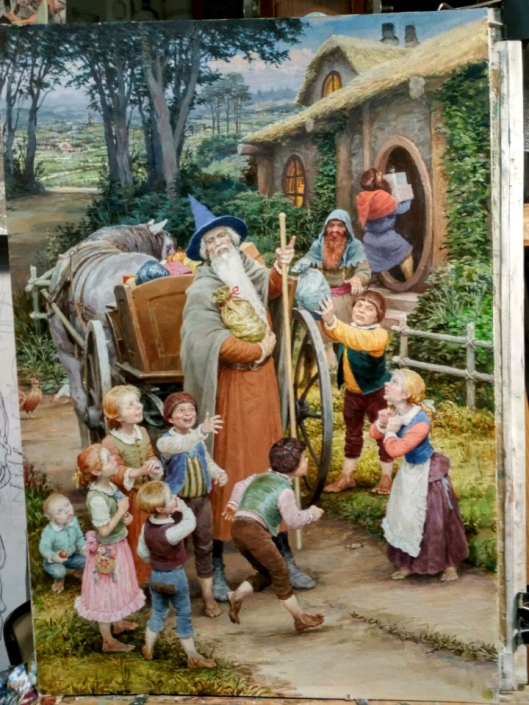
“At the end of the second week in September a cart came in through Bywater from the direction of Brandywine Bridge in broad daylight.  An old man was driving it all alone.  He wore a tall pointed blue hat, a long grey cloak, and a silver scarf.  He had a long white beard and bushy eyebrows that stuck out beyond the brim of his hat.  Small hobbit-children ran after the cart all through Hobbiton and right up the hill.  It had a cargo of fireworks, as they rightly guessed.  At Bilbo’s front door the old man began to unload:  there were great bundles of fireworks of all sorts and shapes, each labeled with a large red G…and the elf-rune…” (The Fellowship of the Ring, Book One, Chapter 1, “A Long-expected Party)

image4cart.jpg

(This is from a site called “Llama’s War of the Ring”, which has all sorts of interesting figures and conversions—here’s a LINK.)

Those great bundles turned into spectacular entertainment at the joint birthday party:

“The fireworks were by Gandalf:  they were not only brought by him, but designed and made by him; and the special effects, set pieces, and flights of rockets were let off by him.  But there was also a generous distribution of squibs, crackers, backarappers, sparklers, torches, dwarf-candles, elf-fountains, goblin-barkers and thunderclaps.  They were all superb.  The art of Gandalf improved with age.”

We ourselves enjoy fireworks, and, for the sake of our readers who might not be familiar with some of the types mentioned, we add here a few images—although some, like “dwarf-candles, elf-fountains, goblin-barkers” no longer seem to be available.

A squib is a small firecracker, like these.

image5squibs.jpg

Crackers seem to come in sets.

image6firecrackers.jpg

Backarappers—we don’t have an image, but here’s a definition (and it sounds like the previous image):

“A firework made from multiple firecrackers folded together so that they will explode one after another”.  (from G.F. Northall’s Warwickshire Word-book, 1896)

Sparklers are metal rods or bamboo sticks whose upper part has what is called “pyrotechnic composition”—which means something which shoots out sparks when it’s lit.

image7sparkler.jpeg

Torches may be these—which, when lighted, change color as they burn down (or so the manufacturer’s description says).

image8torch.png

Although there are no “dwarf-candles”, there are Roman Candles.  These are built in stages and, as the fire burns down, they shoot out star-patterns—as you can see.

image9romancandle.jpg

There are no “elf-fountains”, either, but there are fountains and they look like this—

image10fountain.jpeg

Finally, we can date a “thunderclap”, made by Benwell, back to this advertisement from about 1950,

image11benwell.jpg

but we wouldn’t be surprised if Pain’s (not the best name for fireworks, we would say!) carried them, as they have something called “Laburnum Blossoms” in this 1903 listing

image12pains.jpg

Gandalf’s productions were clearly quite spectacular—which was undoubtedly why Bilbo remembers them:

“There were rockets like a flight of scintillating birds singing with sweet voices.  There were green trees with trunks of dark smoke:  their leaves opened like a whole spring unfolding in a moment, and their shining branches dropped glowing flowers down upon the astonished hobbits, disappearing with a sweet scene just before they touched their upturned faces.  There were fountains of butterflies that flew glittering into the trees; there were pillars of coloured fires that rose and turned into eagles, or sailing ships, or a phalanx of flying swans; there was a red thunderstorm and a shower of yellow rain; there was a forest of silver spears that sprang suddenly into the air with a yell like an embattled army, and came down again into the Water with a hiss like a hundred hot snakes.”

And then there was the finale.  Pain’s, in that 1903 listing, could make claims to baskets of elaborate pyrotechnics, but this?

“And there was also one last surprise, in honour of Bilbo, and it startled the hobbits exceedingly, as Gandalf intended.  The lights went out.  A great smoke went up.  It shaped itself like a mountain seen in the distance, and began to glow at the summit.  It spouted green and scarlet flames.  Out flew a red-golden dragon—not life-size, but terribly life-like:  fire came from his jaws, his eyes glared down; there was a roar and he whizzed three times over the heads of the crowd.  They all ducked, and many fell flat on their faces.  The dragon passed like an express train, turned a somersault, and burst over Bywater with a deafening explosion.”

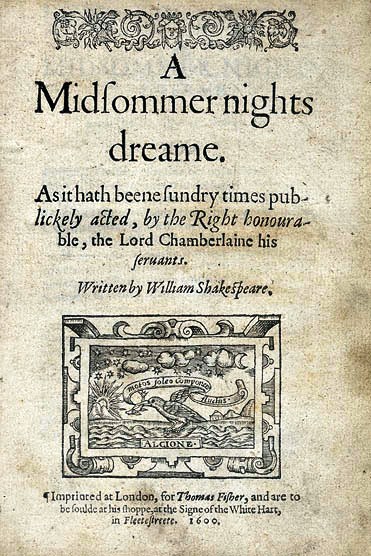
In Shakespeare’s A Midsummer Night’s Dream, the fairy king, Oberon, says to his spirit-servant, Puck, these rather mysterious lines:

“My gentle Puck, come hither.  Thou rememberest

Since once I sat upon a promontory

And heard a mermaid on a dolphin’s back

Uttering such dulcet and harmonious breath

That the rude sea grew civil at her song

And certain stars shot madly from their spheres

To hear the mermaid’s music?”

(Act 2, Scene 1)

In 1575, Queen Elizabeth I

image14queene1.jpg

visited Kenilworth Castle,image15kenilworth.jpg

the home of Robert Dudley, the Earl of Leicester,

image16dudley.jpg

and a close friend (and maybe more).  To entertain her, Dudley spent thousands of pounds.

image17sovereign.jpg

(This is actually a gold sovereign—worth 20 shillings—that is, a pound, but there were no actual pound coins till after 1583.)

Among the entertainments was a big fireworks display (as well as at least one mermaid—see the LINK here for Robert Langham/Laneham’s contemporary “letter” in which he describes these entertainments in detail) and some scholars have theorized that those falling stars mentioned by Oberon are, in fact, Shakespeare’s boyhood memory of having seen the fireworks display (and the mermaid).  Kenilworth is only 14 miles from Stratford and Shakespeare was 11 and living at home—we presume—at that time, so we can imagine that this is possibility.  We know that JRRT had seen fireworks shows as a boy—as he tells us in a letter to Donald Swann, 29 February, 1968 (Letters, 390)—but we wonder:  did he ever, in those early years, see Goblin-barkers, or a red-golden dragon?

Thanks, as ever, for reading.

MTCIDC

CD

ps

We almost forgot–in case you’d like to make your own fireworks (definitely not recommended–and definitely illegal in some places!), here’s an 1878 manual on the subject.


Psalters and Psalms

11 Wednesday Apr 2018

Posted by Ollamh in Artists and Illustrators, Heroes, Literary History, Military History

≈ Leave a comment

Tags

Easter Sepulchre, Irnham, King David, King John, Lincolnshire, Luttrell Psalter, Magna Carta, Medieval, Middle-earth, Nottingham, psalter, Robin Hood, Scriptorium, Sir Geoffrey Psalter, St Andrew's, Tolkien, Utrecht Psalter, Westminster Psalter

As always, dear readers, welcome.

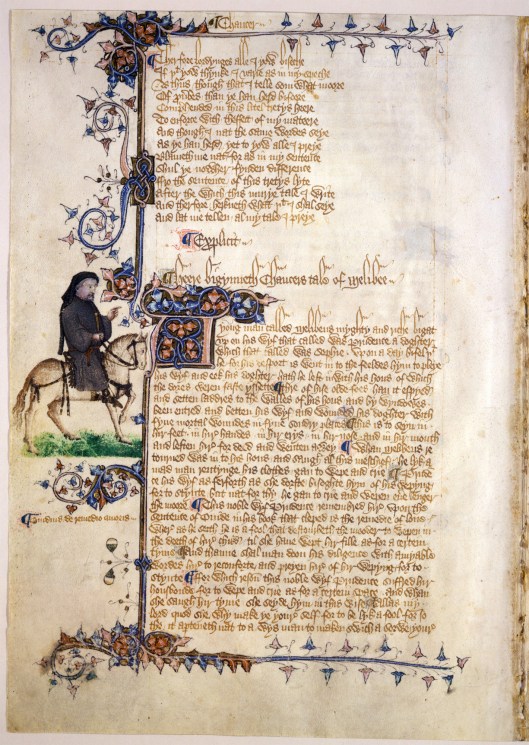
In past posts, we’ve occasionally used images from a very famous medieval manuscript, the Luttrell Psalter.  One fairly recent one, on carts and wagons in Middle-earth, included this, for example—

image1a.jpg

A medieval psalter is a collection of psalms—religious poems which were traditionally attributed to King David of Israel–

image1david.jpg

(This is, in fact, from the Westminster Psalter, c.1200)

plus other Christian religious material.  It was clearly a place which offered lots of opportunities for illustrations because a number of them have them, some of them very generous in just how many, like the Utrecht Psalter, from the 9th century, which has an illustration for every psalm.

image2utrecht.jpg

The Utrecht Psalter has been digitized—here’s a LINK so that you can see all of this wonderful book.

Such books were created in the medieval equivalent of copy-centers, called scriptoria (singular = scriptorium).  For many years, it was said that this was a specific room in a monastery in which teams of monks worked on writing/copying books.  More recently, this view has been challenged (see this LINK for discussion on the subject), but certainly monks made and copied books, as this manuscript illustration of the 12th-century English priest and Latin poet, Lawrence of Durham reminds us.  In fact, this illustration may be more accurate than other medieval illustrations as it shows Lawrence working on a single sheet, which was the standard method.  All sheets were then gathered up and bound into a book—a very different scene from this Spanish medieval illustration, in which at least the monk on the right seems to be writing in a book (the figure on the left looks to be a lay person and may be painting—hence, illustrating).

image3larryofd.jpg

scriptorium-2echternach.jpg

Illustrated books—especially heavily-illustrated books like the Luttrell Psalter—would have been very costly, and so only the wealthy would have commissioned such a work.  We know the name of the person who commissioned this book because that name and a suggestion of a portrait are at Psalm 109 of the manuscript.

image4sirgeoff.jpg

As it says just above the illustration:  “DNS Galfridus Louterrell me fieri fecit” = The Lord Geoffrey Luttrell had me made”.

Sir Geoffrey (1276-1345) was descended from an earlier Sir Geoffrey, who had been a supporter of King John (1166-1216), the dodgy character of the Magna Carta and from the Robin Hood story.

image5kingjohn.jpg

image6princej.jpg

Here’s King John forced to sign the Magna Carta, designed to lessen the king’s power and increase that of the nobles—

image7.jpg

which, of course, he didn’t do, since the sign of royal approval in 1215 wasn’t a name, but an official seal.

image8magnacarta.jpeg

Sir Geoffrey’s descendant, also Geoffrey, held land, among other places, around Irnham (probably from the Old English for “Georna’s settlement”, Geornaham) in Lincolnshire (yes, when it comes to England, we can never quite escape the Shire, can we?).  Here’s where Lincolnshire is on a map of England.  (It’s interesting that Nottingham, notorious for its sheriff and Prince John in the Robin Hood stories, is only about 40 miles west of Irnham.)

image9lincolnshire.png

This Sir Geoffrey’s manor house has long disappeared, but we imagine that the area called a manor might have looked something like this.

image10manor.jpg

Its church, St Andrew’s, survives, however, and, though rebuilt in 1858, dates from the 12th century.

image11stas.jpg

Inside, is a monumental brass for Sir Geoffrey’s son, Andrew, (died 1390).

image12sirgjr.jpg

There is no tomb for his father, Sir Geoffrey, but there is what’s called an “Easter Sepulchre”, which was commissioned by him and which may have been based upon such a tomb.

image13eastersepulchre.jpg

This piece of architecture was used in an elaborate ceremony connected with the celebration of the Christian Easter in the Middle Ages.

Beyond the church, our monument to Sir Geoffrey is the psalter, over whose date there has been lots of scholarly discussion, so we’ll go with the general area of dating, c.1320-1340.  The book is about 14.5 inches by 10.5 (368.3mm x 266.7mm) and contains 309 pages made of vellum (fine calfskin), with illustrations on more than 200 pages.  The text was written by a single scribe, it is thought, but at least five artists were involved in the illustrating—and what illustrations!

In fact, it seems a crazy variety, and, unlike the Utrecht Psalter, the illustrations don’t match the psalms.  Instead, the scenes depicted vary from the high religious—like the three Wise Men/Kings/Magi following the star to Bethlehem, from the New Testament

image14magi.jpg

to all sorts of grotesque creatures

image15grotesque.jpg

to what we love most, the agricultural and domestic scenes.

These can show a whole town

image16town.jpg

or mills, both water and wind-drivenimage18mill.jpg

image19windmill.jpgor how the grain is raised and processed to get to the mills

image20aplowing.jpg

image20harrrowing.jpg

image21reaping.jpg

or even controlling the pests who would eat the grain.  (Is this a screencap from the first cat video?)

image23catandmouse.jpg

Here’s a LINK to a selection of images from the British Library, but there are more if you google “Luttrell Psalter”.  See what your favorites might be.

And thanks, as always, for reading!

MTCIDC

CD


ps

Let’s add here a LINK to a short film based upon the psalter, which we think you might enjoy.

Middle-under-earth

04 Wednesday Apr 2018

Posted by Ollamh in Artists and Illustrators, Heroes, J.R.R. Tolkien, Literary History, Narrative Methods

≈ Leave a comment

Tags

Alan Lee, Andrew Lang, Barrow-downs, Beowulf, cyclops, Dragons, George Macdonald, Goblin Feet, Goblins, Great War, Grendel, Grendel's Mother, John Howe, monsters, Polyphemus, Sir Gawain and the Green Knight, Smaug, Storia Moria Castle, Tales of Troy and Greece, The Hobbit, The Lord of the Rings, The Princess and the Goblin, The Red Book of Animal Stories, The Red Fairy Book, Tolkien, trenches, tumulus

As always, dear readers, welcome!

One of us is currently teaching The Hobbit and, is always seems to be the case when we are teaching an old friend, we are struck by something new.  In this case, it’s the idea of “what lurks beneath” and where it might come from.

What occurred to us now was that, virtually every time there is trouble for Bilbo and the dwarves, it is strongly linked with caves and hollowed-out places:  trolls who came out of a cave (“Roast Mutton”), goblins who live in caves (“Over Hill and Under Hill”), Gollum (“Riddles in the Dark”), hostile elves (“Flies and Spiders” and “Barrels Out of Bond”), and, of course, Smaug (“On the Doorstep”, “Inside Information”, and “Not At Home”).  Only the wargs, the overgrown spiders, and the men of Lake-town in the Battle of the Five Armies have above-ground origins, as, after all, the other forces—goblins, elves, and even Iron Hills dwarves (we assume), have subterranean dwellings.

We knew that JRRT thought to become a classicist early in his academic career and we can imagine right away that one influence upon him for this underground menace would have been Polyphemus the Cyclops, who, after all, lives in a cave.

image1cyclops.jpg

Before he read that part of Odysseus’ story in Greek, he might have seen it in Andrew Lang’s 1907 Tales of Troy and Greece—

image2alang.jpg

image3lang.jpg

Tolkien tells us that, as a child, he had read other Lang works and a story in one, The Red Fairy Book (1890), might even have influenced some Middle-earth geography, from “Storia Moria Castle”.

image4redfairybook.jpeg

image5leemoria.jpg

Another childhood favorite (although he appears to have changed his mind later in life) were the fantasy novels of George Macdonald

image6gmacd.jpg

and his The Princess and the Goblin (1872),

image7princess.jpg

as its title suggests, is full of goblins and their underground world.  These goblins are powerful, but have one fatal flaw—tender feet—which JRRT said that he never believed (see Letters, 178)—although Tolkien’s first published poem was entitled “Goblin Feet” (Oxford Poetry 1915).

Beyond possible childhood reading, there is his career focus, which includes two other potential underground influences.

First, there is Beowulf.  Grendel, the monster in this poem,

image8grendel.jpg

lives in a cave at the bottom of a pool with his mother and, in the second part of his monster-slaying, Beowulf has to dive into that pool to deal with her.image9beowulfandmama.jpg

This illustration comes from another Andrew Lang book, The Red Book of Animal Stories (1899).

image10redbook.jpg

(The picture of Grendel is by Brian Froud.  We found it on the website of K.T.Katzmann, I Write Monsters.  Here’s a LINK.)

Then, of course, there’s that dragon, against whom Beowulf fights and dies—and which is the direct ancestor of another famous and familiar dragon…

image11dragonandhoard.jpg

We are told that it lives in an abandoned tumulus—that is, an ancient grave mound, like this one.

image12tumulus.png

(This is, in fact, a famous Neolithic burial at Gavrinis, in Brittany.)

JRRT worked in Middle English, as well as Old English, and here we find one more possible source in his own edition (with E.V. Gordon) of the 14th-century poem Sir Gawain and the Green Knight.

image13tolkgord.JPG

The Green Knight who challenges King Arthur’s court to a mutual head-chopping contest, is said, in the fourth part of the poem,  to inhabit a “green chapel” and to appear out of a hole when Sir Gawain, who has accepted the challenge and cut off the Green Knight’s head, makes his appearance there to fulfill his half of the contest.

image14sirg.jpg

This chapel has sounded like a tumulus to generations of scholars and here’s John Howe’s 2003 illustration, complete with chapel as tumulus (not to mention a very large green man).

image15johnhowe.png

Tumuli also make their appearance, of course, in The Lord of the Rings, when Frodo and his party go astray on the Barrow Downs.

image16barrowwight.jpg

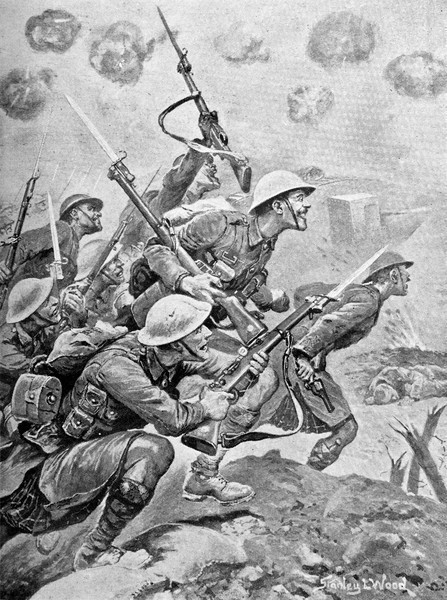
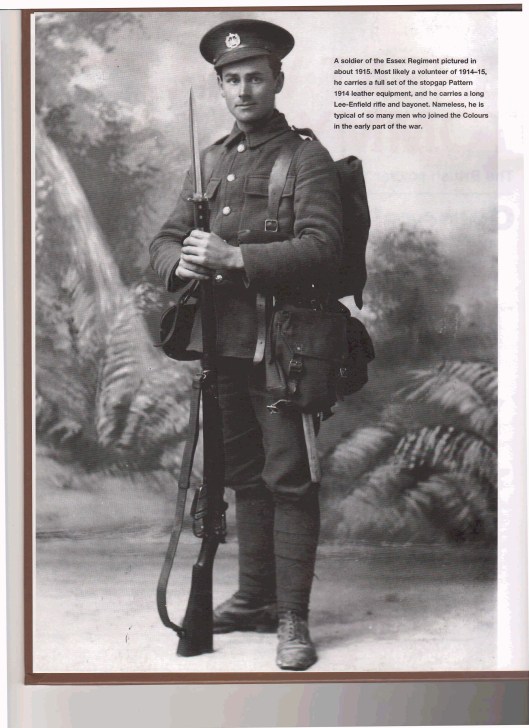
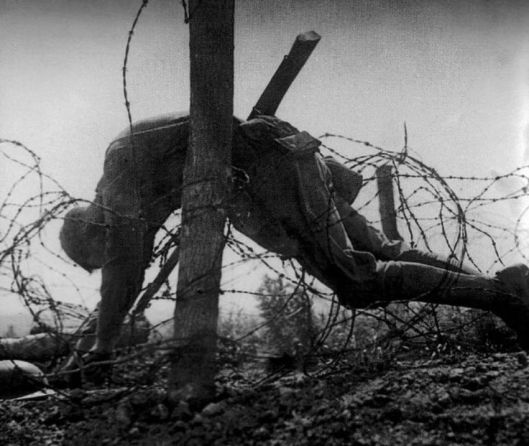
We can’t finish this posting without at least suggesting one more source, something even more personal than JRRT’s scholarly work:  his experiences in the Great War.

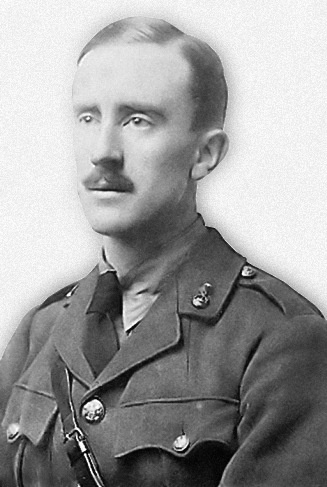
image17lt.jpg

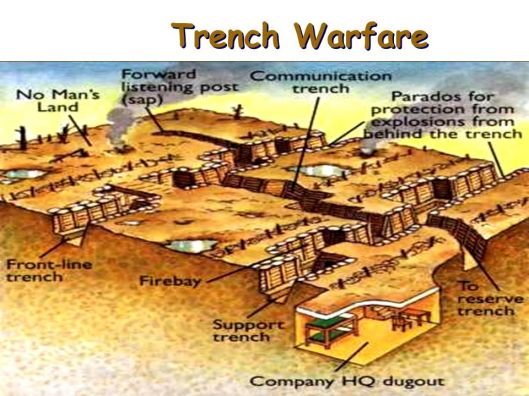
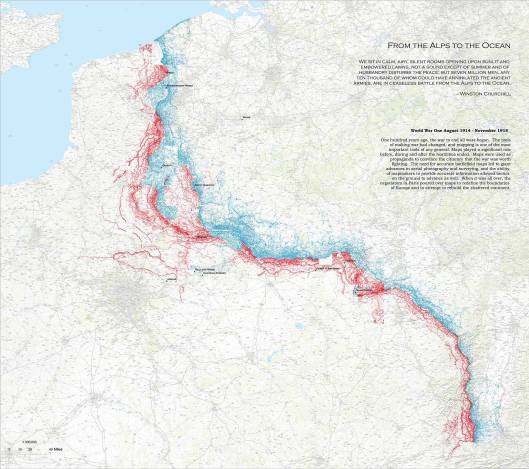
By the time Tolkien entered the service in France, the Western Front was, basically, a 500-mile trench, from Switzerland to the North Sea.

image18trenches.gif

Much of the entrenching was simply deep, reinforced ditching.

image19trenches.jpg

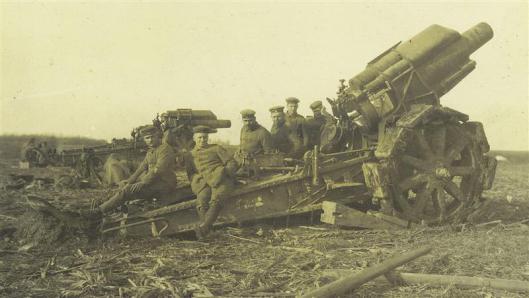
But some—particularly on the German side—could be elaborate, even built with stone or concrete, and set far enough into the ground as to be almost impervious to bombardment.

image21bunker.jpg

And we imagine that, with all of that earlier literary work in his mind, JRRT might have faced such defenses wondering whether what was inside them would be Germans

image22trenchclearing.jpg

or something much worse.

image23smaug.jpg

And did this haunt his later writing as much as the Great War haunted the minds of soldiers all over the world?

Thanks, as ever, for reading!

MTCIDC

CD

“Dragons, Other”

21 Wednesday Mar 2018

Posted by Ollamh in Artists and Illustrators, Fairy Tales and Myths, Heroes, J.R.R. Tolkien, Literary History, Maps

≈ Leave a comment

Tags

Arthur Rackham, Beowulf, C.S. Lewis, Chrysophylax, Custard the Dragon, Dragons, Dream Days, Esgaroth, Farmer Giles of Ham, Jabberwock, Jabberwock-slayer, Kenneth Grahame, Lewis Carroll, Lonely Mountain, Luttrell Psalter, map, Middle-earth, Narnia, Ogden Nash, Pauline Baynes, Rumer Godden, Smaug, St George, The Chronicles of Narnia, The Dragon of Og, The Hobbit, The Lion The Witch and the Wardrobe, The Lord of the Rings, The Reluctant Dragon, Through the Looking-Glass, Tolkien, Walt Disney

As always, readers, welcome.

One of us is currently teaching a class where our present focus is upon The Hobbit.

image1hob1st.jpg

At the center of the book is the Lonely Mountain and at the center of that is Smaug.

image2aerebor.jpg

image2smaug.jpg

This got us to thinking about other dragons in our experience, and some of those are not quite of the same breed as the hoard-sitter faced by Bilbo and the dwarves.  That dragon is closely related to the Beowulf variety

image3beowulfdragon.jpg

which, unlike Smaug, has neither a name nor (it seems) human speech, but it certainly has the same suspicious streak:  when an escaped slave steals a cup from its hoard, it’s almost immediately aware that it’s missing and suspects a human.

image4stealingcup.jpg

And they are both vengeful.  As Smaug devastates Esgaroth, even if he dies for it,

image5esgaroth.jpg

image6smaug.jpg

so Beowulf’s dragon scorches the countryside in revenge for the theft.

But what about those other dragons?

First, we thought of Kenneth Grahame’s Dream Days (1898),

image7kg.jpg

image8dreamdays.jpg

a collection of short stories, the next-to-last of which is “The Reluctant Dragon”.

image9reluct.jpg

This is the story of a beast the very opposite of Smaug—no hoard, no suspicion, no flaming violence, and, in fact, a poetry lover.  This story was then converted into a Disney cartoon of 1941.

image10reluct.jpg

Needless to say, although the core of the plot is the same, what makes the Grahame distinctive is the language.  All of the major characters:  the dragon, the little boy who finds him, and St. George, who is brought in as a dragon-slayer, are thoughtful and articulate late Victorians who would rather discuss literature than do battle—a far cry not only from Beowulf’s encounter, but also from every other earlier depiction we could think of.

image11ucellostgeo.jpg

image12stgeo.jpg

image13stgeo.jpg

The sword in this last one looks like it actually belongs in the hands of the jabberwock-slayer

image14jabberwocky.jpg

in Lewis Carroll’s Through the Looking-Glass (1872).

image15through.jpg

Here’s a LINK to Dream Days so that you can enjoy the story for yourselves.

Nearly sixty years later, the comic verse writer, Ogden Nash,

image16nash.jpg

produced not a literary dragon, but a timid one in “Custard the Dragon” (1959).

image17custard.jpg

This is a poem in 15 stanzas and is a story about Belinda and her pets, including a dragon, who is taunted by the other pets as being less than brave.  To underline this, the last line in a number of stanzas is a variation upon the first version of the line, “But Custard cried for a nice safe cage”.  (Here’s a LINK to the poem.)

The surprise is that, when a pirate climbs in through the window (this happens all the time here—possibly they escape from dreams?), Custard promptly eats him—and the cries of “Coward!” disappear immediately.

In contrast to the unnamed dragon in “The Reluctant Dragon” and in “Custard the Dragon”, our next dragon is a talker—like Smaug, but also like Smaug, potentially malevolent.  This is Chrysophylax in JRRT’s 1937/1949 Farmer Giles of Ham.  (JRRT is having a quiet joke here—“Chrysophylax” is Ancient Greek for “Goldguard”.)

image18chrysophylax.jpg

image19afgoh.jpg

The artwork is by Pauline Baynes (1922-2008).

image19pb.jpg

If, like us, you’ve loved the Narnia books, then you know her as their original illustrator.

image20lion.jpg

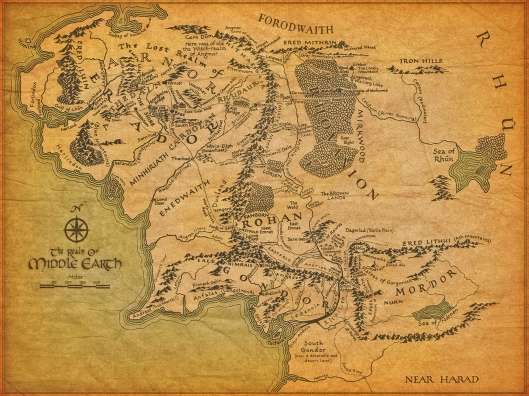
She was also the artist for an early Middle-earth map.

image21memap.gif

Her 2008 obituary in The Daily Telegraph tells of how they came to work together:

“In 1948 Tolkien was visiting his publishers, George Allen & Unwin, to discuss some disappointing artwork that they had commissioned for his novella Farmer Giles of Ham, when he spotted, lying on a desk, some witty reinterpretations of medieval marginalia from the Luttrell Psalter that greatly appealed to him.  These, it turned out, had been sent to the publishers “on spec”by the then unknown Pauline Baynes.”   (The Daily Telegraph, 8 August, 2008)

JRRT was then so impressed with her work that it appeared both in other later publications and his recommendation led to her being engaged by CS Lewis’ publisher for the Narnia books, as well.  (And here’s a LINK to that obituary, which has more on Tolkien and Baynes, as well as Lewis.)

And the Baynes connection leads us to one further dragon, that in Rumer Godden’s  (1902-1998) 1981 The Dragon of Og, for which Baynes provided the cover art.

image22rg.jpg

image23dragog.jpg

It’s not our practice to discuss work we haven’t read, but we’ve just discovered this novel and have already put it on our spring reading list.  The little we know about it comes from a blurb or two, but it looks promising:  this is more of the reluctant dragon, but one who is in danger of being provoked by a new local lord until his wife steps in and cleverly changes the situation.

Before we close, however, we want to look back for a second at the Tolkien/Baynes connection and add two further things.  First off, here’s the first page of JRRT’s graceful letter of thanks and praise to Baynes for her work in illustrating Farmer Giles.

image24letter.jpg

Second, as the Telegraph obituary says, Tolkien was impressed with her versions of the marginalia from the Luttrell Psalter, which is high on our list of favorite medieval manuscripts.

image25luttrellpsalter.jpg

In our next, we want to spend some time looking at that work, thinking about marginalia, and not only there, but also in the work of another favorite illustrator, Arthur Rackham (1867-1939).

Till then, thanks, as always, for reading.

MTCIDC

CD


Many Woven Cloths

14 Wednesday Mar 2018

Posted by Ollamh in Artists and Illustrators, Fairy Tales and Myths, J.R.R. Tolkien, Military History, Military History of Middle-earth, Narrative Methods

≈ Leave a comment

Tags

Alexander Mosaic, Ancient Egypt, Assyrians, Battle of Pavia, Battle of the Issus, Bayeux Tapestry, Cloisters, Darius III, Embroidery, Eorl, Hause of the Faun, Hunt of the Unicorn, Middle Ages, Museo Nazionale di Capodimonte, Nubians, Persian, Pompeii, Rameses II, reliefs, Renaissance, story-telling, tapestry, tesserae, The Lord of the Rings, Tolkien, triptych, Trojan War

Welcome, as ever, dear readers.

Not long ago, we visited Meduseld for a look at Grima, the fifth-columnist.  Today, we’re back, but, instead of scrutinizing the staff, we’re examining the décor—

“Many woven cloths were hung upon the walls, and over their wide spaces marched figures of ancient legend, some dim with years, some darkling in the shade.  But upon one form the sunlight fell:  a young man upon a white horse.  He was blowing a great horn, and his yellow hair was flying in the wind.  The horse’s head was lifted, and its nostrils were wide and red as it neighed, smelling battle afar.  Foaming water, green and white, rushed and curled about its knees.

‘Behold Eorl the Young!’ said Aragorn.  ‘Thus he rode out of the North to the Battle of the Field of Celebrant!’” (The Two Towers, Book Three, Chapter 6, “The King of the Golden Hall”)

By “woven cloth”, we presume that JRRT means a tapestry, a decorative wall-hanging, like these—

image1medtapwall.jpg

In the western Middle Ages and Renaissance, even wealthy walls—like those in castles—could simply be stone and such tapestries could act both to decorate and to act as a barrier between cold wall and (potentially) shivering inhabitants.

For those making such things, the possibilities for using them as story-telling spaces inspired such works as the famous “Hunt of the Unicorn” series of tapestries, now housed in the Cloisters, a museum in New York City.

image2hunt.jpg

image3cloisters.jpg

The description of Eorl makes us think of medieval stag hunt illustrations, where hunters may be seen blowing horns—like this one.

image4savernakehorn.jpg

image5dagobert.jpg

But the fact that he was riding to battle also made us think of wall decorations of a military/historical nature through the centuries, starting with ancient Egypt, where Rameses II (1303-1213BC) had himself depicted on walls in various military actions—

image6ramnubians.jpg

image7ramkadesh.jpg

Or the Assyrians, who were not only enthusiastic (gross understatement) about war, but also about depicting themselves engaged in it.

image8assyrians.jpg

As you can see, although these appear on walls, they are not hangings, but reliefs—that is, shallow carvings.  The Egyptian reliefs could be brightly painted, as is that reconstruction of Rameses and the Nubians, the first of the two Rameses illustrations.  It appears that some of the Assyrian reliefs were also colored—here’s a PDF: BMTRB 3 Verri et al, of an interesting article from the Technical Research Bulletin of the British Museum on the subject.

From colored reliefs, we can jump to colored tiles (called tesserae), with the famous Alexander Mosaic.

image9alexandermosaic.jpg

This depicts Alexander the Great nearly confronting the Persian king, Darius III, at the Battle of the Issus (333BC) and what amazes us is that this was originally not on a wall, but on a floor, in the so-called “House of the Faun” in Pompeii.


It is believed that this was based upon an early 3rd-century BC painting and, to our eye, it still looks very much like the painting it may have come from (which was, presumably, on a wall, not a floor).

For battle scenes on cloth, we return to the medieval world and something we’ve mentioned before, the so-called “Bayeux Tapestry”.

image11a.jpg

We say so-called because it’s not really a tapestry—which would have been woven on a loom—but, instead, a giant (230ft/70metres) embroidery.  Here’s a detail so that you can see how an embroidery is made up of stitching on a (in this case) plain linen strip.

image11closeup.jpg


This is really an astonishing piece of work—so far as we know, nothing else like it has survived from medieval western Europe:  a massive history of the invasion of England in 1066, including events leading up to it, in 50+ scenes.  We see everything from architecture

image12westminster.jpg


to ship-building

image13shipbuilding.jpg


to feasting

image14bayeux.jpg


to battle

image15battle.jpg

at its grainiest

image16deathofharold.jpg

and even includes Halley’s Comet.

image17hscomet.jpg

JRRT certainly knew about the Bayeux piece—he mentions it in his letters—but the richness of his description doesn’t really match the relative spareness (for all its detail) of that embroidery, so we wonder what he might have had in mind?   Late medieval tapestries would have had the lush look—

image18troy.jpg

This is one of a set of 15th-century tapestries illustrating the Trojan War.  You’ll notice that, like the Bayeux Tapestry 3 centuries earlier, there are labels (tituli, they’re called).  In the case of the Eorl tapestry, it’s Aragorn who provides the explanation, suggesting that there is no caption and Aragorn, being Aragorn, simply knows the story.

For an eye-popping battle scene, however, we would point to the set of 7 tapestries of the Battle of Pavia (1525) woven in Brussels between 1528 and 1531 and now in the Museo Nazionale di Capodimonte in Naples.  Here’s just one example—can you imagine the same having been woven for the assaults on Minas Tirith or Helm’s Deep?  (Here’s a LINK, by the way, to a very detailed article on the subject of these wonderful works.)

image19pavia.JPG

But such pieces as these are so elaborate that, for all of their great art, they don’t provide quite the parallel we’re looking for, perhaps because all of the larger ones seem to be filled with people and movement and what JRRT describes is a single figure—almost like a standard, rather than a tapestry—something like this one (although we imagine the original to be facing to the right and the field to be green—oh, and of course he has that horn, but you get the idea).


And we do have this example.  It comes from a site called “Elvenesse”.

image21eorl.jpg

It looks more like a religious triptych than a tapestry to us,

image22triptych.jpg

but it certainly is going in the right direction.  What do you think, dear readers?

And thanks, as always, for reading!

MTCIDC

CD

Lent to a Museum (Mathom.2)

07 Wednesday Mar 2018

Posted by Ollamh in Artists and Illustrators, Heroes, J.R.R. Tolkien, Literary History, Military History, Narrative Methods

≈ Leave a comment

Tags

Abbotsford, armor, Ashestiel, Cartley Hole, Castle, Craigievar, cuirassier, czapska, Edinburgh, Gothic, Henry Fox Talbot, Horace Walpole, Marquis de Montrose, Mathom-house, Melrose Abbey, Napoleon's Hair, Prince Albert, Queen Victoria, Rob Roy MacGregor, Scottish, Scottish Baronial, Sir Walter Scott, Strawberry Hill, The Lay of the Last Minstrel, The Lord of the Rings, Tolkien, Waterloo, Waverly

Welcome, as always, dear readers.

In a posting from January, 2017, we discussed the idea of a “mathom house” at Michel Delving in the Shire.  We know about this place from the Prologue to The Lord of the Rings:

“So, though there was still some store of weapons in the Shire, these were used mostly as trophies, hanging above hearths or on walls, or gathered into the museum at Michel Delving.  The Mathom-house it was called:  for anything that Hobbits had no immediate use for, but were unwilling to throw away, they called a mathom.  Their dwellings were apt to become rather crowded with mathoms, and many of the presents that passed from hand to hand were of that sort.”  (Prologue, The Lord of the Rings)

Rereading this passage this time, we were caught by two things:  “some store of weapons” and “Their dwellings were apt to become rather crowded with mathoms” because, put together, they sound like part of the description of the personal Mathom-house of the original inspirer (we would say) of adventure-writing in English, Sir Walter Scott.

image1raeburnscott.jpg

Trained to become a lawyer, Scott had lived for some years in several houses in Edinburgh, for much of his later life at Number 39, North Castle Street–

image2ncastlestreet.jpg

Although he began his rise to literary fame with the publication of The Lay of the Last Minstrel, a long poem, in 1805,

image3layfirstedition.jpg

money began to pour in with his first novel, Waverley, published anonymously, in 1814.

image4waverley.jpg

(What a great illustration, by the way—both the first edition and the manuscript.)

Because his legal work required him to have a residence outside Edinburgh, Scott had rented this, at Ashestiel, from 1804-1811.

image5ashestiel.jpg

When the lease was up, he then invested in this rather modest farm house at what was called “Cartley Hole”, which locals called “Clarty Hole”, “clarty” being a Scots word for “mucky”, suggesting that our illustration is prettier than the actual place.

image6cartleyholefarm.jpg

More commercially successful novels and an eventual baronetcy gave Scott grander ideas and he began to rebuild—and rebuild—the house, as well as changing its name to the more dignified “Abbotsford”, as it was near the ruins of the 12th-century Melrose Abbey.

image7melroseabbey.jpg

“Bigger” at this time might have meant something Georgian, like this—

image8nostellpriory.jpg

but Scott, no doubt influenced by the Gothic ideas of people like Horace Walpole

image9hw


and his Strawberry Hill

image10strawberryhill.JPG

fixed upon a design which, in time, was not only bigger, but Gothic—and Scottish, in the style called “Scottish Baronial”, like this castle at Craigievar, completed in 1626.

image11craigievar.jpg

In a way, such a choice makes sense:  many of his novels have Scots locations and they made him wealthy enough to build such a place.

image12hftabbotsford.jpg

This is perhaps the first photographic image of Abbotsford.  It dates from 1844 and is by the English inventor, as far as we currently know, of photography, Henry Fox Talbot.

image13talbot.jpg

And here is a modern image.

image14abbotsford.jpg

The outside of Abbotsford is striking enough, but it’s what’s inside which made us think of a Mathom-house.

There is seemingly an endless “store of weapons”.

image15armory.JPG

And then there are all of those other things.  A lock of Napoleon’s hair.

image16nappy.jpg

image17nappy'shair.jpg

The sword of a 17th-century Scottish hero, the Marquis of Montrose.

image18montrose.jpg

image19montrosesword.jpg

The sporran (purse) of that early-18th century Highland legend, Rob Roy MacGregor.

image20sporran.jpg

(Scot also believed he had Rob Roy’s musket.)image21rrsmusket.jpg

And even souvenirs he had picked up from the battlefield of Waterloo, which he had visited only a short time after the battle.

image22waterloo.jpg

image23cuirass.jpg

Note the hole in the breastplate—and also that the  headgear with it (a czapska) belongs not to the man who would have worn the breastplate, a cuirassier,

image24cuirassier.jpg

but to a French/Polish lancer

image25lancer.jpg

With all of these trophies tacked onto every possible surface—including full suits of armor–

image26armor.jpg

we wouldn’t be surprised to see a rather familiar object, ancient, famous, which we are told “was arranged on a stand in the hall (until he lent it to a Museum)”—would you?

image27mithril.jpg

Thanks, as ever, for reading.

MTCIDC

CD

PS

Abbotsford was opened to visitors within a few months of Scott’s death.  Among those tourists were Queen Victoria and Prince Albert.

image28avicandalbie.jpeg

They liked the place so much that, when they decided that they needed a little place in the country, Abbotsford would be one of their models.

image28balmoral.JPG

Long after Albert’s death in 1861, the Queen continued to pay a yearly visit to Balmoral.

image29vicatbalmoral.jpg

PPS

If you’d be interested in seeing Abbotsford as an early 20th-century tourist might have seen it, here’s a LINK to Beautiful Britain:  Abbotsford (1912).


I Love a Parade

28 Wednesday Feb 2018

Posted by Ollamh in Artists and Illustrators, J.R.R. Tolkien, Military History, Military History of Middle-earth, Terra Australis

≈ Leave a comment

Tags

Agincourt, Bayeux Tapestry, Dol Amroth, Forlong, Great Gate, Harold Godwinson, hauberk, Hirluin the Fair, Howard Pyle, huscarls, Imrahil, Langstrand, Lincoln Cathedral, livery, Lossarnach, Medieval, Minas Tirith, Morthond, N.C. Wyeth, Palermo, parade, Ringlo Vale, Robin Hood, spangenhelm, The Lord of the Rings, Tolkien, Tower of Gondor

“I love a parade, the tramping of feet,

I love every beat I hear of a drum.”

–Koehler/Arlen Rhythmania (1931)


Welcome, dear readers, as always.  In the past, we’ve spent a posting or two discussing military aspects of The Lord of the Rings, from the look of the Rohirrim to the attack on Minas Tirith.  In this posting, we would like to go back one step from that attack to consider what is a rather melancholy moment in the lead up to that assault.

Pippin and his newfound friend, Bergil, have come down to the Great Gate of Minas Tirith.

image1minastirith.jpg

Here’s the gate from the films.

image2mtgate.png

This immediately reminded us of places like the west door of Lincoln Cathedral.

image3linc.jpg

image4door.jpg

Or the main door of the cathedral of Palermo.

image5duomo.jpg

image6porta.JPG

Because he is now a member of the Guard of the Tower of Gondor, Pippin is allowed to pass through the Gate—and to take Bergil with him out to see and hear the following:

“Beyond the Gate there was a crowd of men along the verge of the road and of the great paved space into which all the ways to Minas Tirith ran.  All eyes were turned southwards, and soon a murmur rose:  ‘There is dust away there!  They are coming!’

Pippin and Bergil edged their way forward to the front of the crowd and waited.  Horns sounded at some distance, and the noise of cheering rolled towards them like a gathering wind.  There was a loud trumpet-blast, and all about them people were shouting.” (The Return of the King, Book Five, Chapter 1, “Minas Tirith”)

What happens then is a kind of parade.

When we see the defenders of Minas Tirith in the films, they are all uniformly clad.

image7gondorians.jpg


In our medieval world, this was highly unlikely, the best being that soldiers and servants might wear the colors/crest of the lord they served.  This was called “livery”.  Uniformity in clothing, weapons, and armor would be some time in the future.

image8livery.jpg

What is coming up the road from the south are reinforcements, marching in a long column of units, and those units differ greatly in look.  First are the men of Lossarnach, led by their lord, Forlong:

“Leading the line there came walking a big thick-limbed horse, and on it sat a man of wide shoulders and huge girth, but old and grey-bearded, yet mail-clad and black-helmed and bearing a long heavy spear.  Behind him marched proudly a dusty line of men, well-armed and bearing great battle-axes; grim-faced they were, and shorter and somewhat swarthier than any men Pippin had yet seen in Gondor.”

To us, those axes make the men of Lossarnach sound like the huscarls, the bodyguard of an Anglo-Saxon king, like Harold Godwinson, whom we see depicted on the “Bayeux Tapestry”.

image9huscarl.jpg

image10taphus.gif

Their leader, Forlong, might be similar in appearance, wearing a type of helmet called a spangenhelm,

norman-spangenhelm-2.gif

and protected by an early form of mail shirt called a hauberk.

image12hauberk.jpg

After these, we see more units, but with little description—the men of Ringlo Vale “striding on foot”, so infantry of some sort, five hundred bowmen from Morthond, from the Langstrand, “a long line of men of many sorts, hunters and herdsmen and men of little villages, scantily equipped save for the household of Golasgil their lord”.   After them, “a few grim hillmen without a captain”, and “fisher-folk of the Ethir”, all of which we imagine in their workaday clothes of hunters and shepherds and farmers and sailors, as depicted in medieval English and French manuscripts.

image13medhunter.jpg

image14shepherd.jpg

image15farmer.jpgimage16fishermen.jpg

Next comes a unit which is perhaps wearing livery:  “Hirluin the Fair of the Green Hills from Pinnath Gelin with three hundreds of gallant green-clad men.”  We aren’t told how they’re armed, but that they may be in livery suggests that they may be better armed than some of the earlier contingents.  (In fact, “gallant green-clad men” makes us think of Robin Hood—perhaps more archers?)

image17rhood.jpg

And, finally, folk we’ve discussed before:

“And last and proudest, Imrahil, Prince of Dol Amroth, kinsman of the Lord, with gilded banners bearing his token of the Ship and the Silver Swan, and a company of knights in full harness riding grey horses; and behind them seven hundreds of men at arms, tall as lords, grey-eyed, dark-haired, singing as they came.”

“knight in full harness”, as we talked about in an earlier post, probably meant, to JRRT, something from Howard Pyle or NC Wyeth, like this—

image18knight.JPG

As for those “men at arms”, if they appear to be “tall as lords”, we assume that they’re on foot, which puzzles us a bit.  “Men at arms” usually means “armored soldiers on horseback” in our world—perhaps with less armor than knights, but still cavalry (unless dismounted, to fight on foot, as the French did at Agincourt in 1415, for example).  We see them, then, as looking like those dismounted cavalry, like these—

image19menatarms.jpg

However they are armed and clothed, however, they are thought to be too few by those watching and, considering what Mordor eventually sends against them, they would not have been enough, if the brave Rohirrim and Aragorn’s reinforcement from the south hadn’t arrived in time.  What would have happened if they hadn’t?  A subject for very grim fan-fiction!

Thanks, as ever, for reading!

MTCIDC

CD

Wormy

21 Wednesday Feb 2018

Posted by Ollamh in J.R.R. Tolkien, Military History, Military History of Middle-earth, Villains

≈ Leave a comment

Tags

Adolf Hitler, Bilbo, Dragon, Fifth Column, Gandalf, Germany, Grima, Madrid, Middle-earth, Nazis, Norway, Norwegian facist party, Republican government, Rohan, Saruman, Second World War, Smaug, Spanish Civil War, The Hobbit, The Lord of the Rings, The Scouring of the Shire, Theoden, Tolkien, traitor, Vidkun Quisling, William Blake, worm, Wormtongue

Welcome, as always, dear readers.
In 1936, the Nationalist forces were marching to attack the Republican government in Madrid, during the Spanish Civil War.
image1nationalists.jpg
image2attackonmadrid.jpg
When interviewed, a Nationalist general is reported to have said that, as four military columns were about to assault the city,
image3natattack.jpeg
a fifth column of loyalists would join the attack from inside.
image4natattack.jpg
This phrase “fifth column”, then, was picked up and began to be used world-wide to mean “traitors/betrayers from within” and was popular during the Second World War era.
image5thcol.jpg

When the Nazis attacked Norway in 1940,
image6nazislandinginnorway.jpg
and the Allies failed to defend their positions there successfully and were forced to surrender or flee
image7capturedtroops.jpg
a member of the small Norwegian fascist party, Vidkun Quisling,
image8quisling.jpg
declared himself ruler as the Germans marched in.
image9conqueringgermans.jpg

In time, the Nazis recognized him as the head of Norway and he even had an audience with Hitler.
image10hitandquis.jpg

This time, a specific “fifth columnist” had not only betrayed his country, but also profited greatly from it and, when we looked at the dates—1936 and 1940—we wondered, as we so often do, if the current events of our world may have colored JRRT’s relation of the events in Middle-earth—even as we hasten to say, as we always do, that this is just a suggestion.
In his first meeting with Aragorn, Eomer is troubled and his veiled comments suggest just the same sort of fifth-columnist action:
“But at this time our chief concern is with Saruman. He has claimed lordship over all this land, and there has been war between us for many months…”
His concern, however, as we see, is for more than border security, as he says of Saruman:
“His spies slip through every net, and his birds of ill omen are abroad in the sky. I do not know how it will all end, and my heart misgives me; for it seems to me that his friends do not all dwell in Isengard. But if you come to the king’s house, you shall see for yourself.” (The Two Towers, Book Three, Chapter 2, “The Riders of Rohan”)
So, all is not well, not only in Rohan, but in Meduseld itself. When Gandalf and the other survivors of the Fellowship arrive at the gates of Edoras, they are stopped by guards and by a command from Theoden, king of Rohan—or is it? A guard says:
“It is but two nights ago that Wormtongue came to us and said that by the will of Theoden no stranger should pass these gates.” (The Two Towers, Book Three, Chapter 6, “The King of the Golden Hall”)
“Wormtongue” seems a very odd name—do worms actually have tongues?
image11worm.JPG
But this isn’t a worm, it’s a “worm”—an old term for “dragon”.
image12smaug.jpg
And, if Smaug’s speech and its effect upon Bilbo is anything to go by:
“Bilbo was now beginning to feel really uncomfortable. Whenever Smaug’s roving eye, seeking for him in the shadows, flashed across him, he trembled, and an unaccountable desire seized hold of him to rush out and reveal himself and tell all the truth to Smaug. In fact he was in grievous danger of coming under the dragon-spell.” (The Hobbit, Chapter 12, “Inside Information”)
then a person having a dragon tongue might be a real threat, as Wormtongue, seated at Theoden’s feet,
image13theodenandgrima.jpg
inserts himself between Gandalf and Theoden:
“Why indeed should we welcome you, Master Stormcrow? Lathspell I name you, Ill-news; and ill news is an ill guest they say.”
Gandalf immediately resists this and, in a burst of power, breaks the real “spell”—the dragon’s words which Grima Wormtongue has been pouring into Theoden’s ears, as Theoden says to him of Gandalf’s efforts: “If this is witchcraft…it seems to me more wholesome than your whisperings. Your leechcraft [that is, “medical skill”—obviously ironic here] ere long would have had me walking on all fours like a beast.”
[A footnote here—is JRRT making a quiet reference to the fate of Nebuchadnezzar, king of Babylon, mentioned in the book of Daniel in the Old Testament? In Chapter 4, the king is driven mad and spends seven years as a grazing animal to prove the power of the Hebrew divinity. Here is William Blake’s (1757-1827) striking depiction of the mad king.]
image14blake.jpg

Certainly something Grima has been doing has affected Theoden, as he is initially described as “a man so bent with age that he seemed almost a dwarf…” and this shrinking is suddenly reversed when Gandalf strikes Grima down:
“From the king’s hand the black staff fell clattering on the stones. He drew himself up, slowly, as a man that is stiff from long bending over some dull toil. Now tall and straight he stood, and his eyes were blue as he looked into the opening sky.”
For all that Grima has been blocked and Theoden restored, the fifth columnist tries once more. When he is told that he must ride with the king and his warriors to battle, he makes a countersuggestion:
“One who knows your mind and honours your commands should be left in Edoras. Appoint a faithful steward. Let your counsellor Grima keep all things till your return…”
But he gives himself away by finishing that sentence with “and I pray that we may see it, though no wise man will deem it hopeful.”
And Gandalf sees all too clearly what is behind Grima’s proposal—and who is behind it:
“Down, snake!…Down on your belly! How long is it since Saruman bought you? What was the promised price?…”
image15fallofgrima.jpg

Although it is said that Grima deserves death for his treachery, he is allowed to flee, and, when we next see him, he is with his true master, acting as his “footman” as Gandalf calls him (The Two Towers, Book Three, Chapter 10, “The Voice of Saruman). And here, as Bilbo’s pity has preserved Gollum for an unseen but vital part in the later story of the Ring, so Gandalf’s mercy to Grima preserves him for two final acts: first, his mistaken use of a palantir as a missile, which puts it into Gandalf’s hands and, ultimately into Aragorn’s, who shakes Sauron’s nerve with it; second, Saruman’s ultimate end:
“[Saruman] kicked Wormtongue in the face as he groveled, and turned and made off. But at that something snapped: suddenly Wormtongue rose up, drawing a hidden knife, and then with a snarl like a dog he sprang on Saruman’s back, jerked his head back, cut his throat, and with a yell ran off down the lane.” (The Return of the King, Book Six, Chapter 8, “The Scouring of the Shire”)
image16deathofsaruman.jpg
Grima doesn’t survive this attack, however: “Before Frodo could recover or speak a word, three hobbit-bows twanged and Wormtongue fell dead.”
Merry calls these final acts of violence “the very last end of the War”, but we would suggest a parallel with a specific event in our world: the end of Vidkun Quisling–executed by firing squad in October, 1945, for treason. Could we say that Grima’s death—deserved earlier, but deferred—was also a kind of execution for treason, against Rohan, finally carried out?
And a final thought: after World War 2, Quisling’s name became, for a time, an easy synonym for “fifth columnist/traitor”—could we imagine that, in the Common Speech of Middle-earth after the War of the Ring, the same might have happened to “Grima Wormtongue”?
Thanks, as ever, for reading.
MTCIDC
CD

Wains, Carts, and… (2)

14 Wednesday Feb 2018

Posted by Ollamh in Economics in Middle-earth, J.R.R. Tolkien

≈ Leave a comment

Tags

Boudica, Carts, Cassius Dio, Celts, chariots, Conestoga, Farmer Maggot, Gandalf, gur, Hobbiton, Iceni, Iron Age, Medieval, Mongols, Oregon Trail, Roman History, Romans, The Lord of the Rings, Tolkien, vikings, Wagons, Wainriders, Wains

Welcome, as always, to our blog, dear readers.

In our last, we began discussing wheeled transport in The Lord of the Rings.  We began with Gandalf’s cart, mentioned in Chapter 1.

im1gscart.jpg

The posting took us from the first traces of wheeled vehicles in western Europe, circa 3600BC (literally traces—just a pair of tracks in the clay)

im2tracks.jpg

through chariots

im3chariot.jpg

to Roman carts

im4romcart.jpg

to their descendants, medieval carts,

im5medcart.jpg

which led us back to Gandalf.

im6gcart.jpg

Continuing our discussion, we move from carts (2 wheels) to wagons (4 wheels) with the wagon Farmer Maggot uses to carry the hobbits to Bucklebury Ferry:

“I was going to say:  after a bit of supper, I’ll get out a small wagon, and I’ll drive you all to the Ferry.” (The Fellowship of the Ring, Book One, Chapter 4, “A Short Cut to Mushrooms”)

There is no description beyond that, really, but wagons are pretty generic things.  We have a few examples of early (600-500BC) Iron Age wagons—very fancy ones, too—from burials,

im7celtwag.jpg

im8celtwag.jpg

as well as this later Viking wagon.

im9oseberg.jpg

And, in between, we have Roman wagons

im10romwag.jpg

and their medieval descendants.

im11medwag.jpg

Farmer Maggott’s wagon, would probably have looked something like this (without the arms).

im12amedwag.jpg

Of course, those Roman wagons were meant for paved Roman roads.

im12romroad.jpg

Although some Roman roads remained on the surface and continued to be used, most medieval roads were merely dirt and stones—as JRRT illustrates in that picture of the Hill

im13hobbiton.jpg

and as we see in this picture.

im14medroad.jpg

In which case, medieval people relied upon pack horses to transport many of their goods.

im15sumpter.jpg

(Think of Bill the pony as a modest example.)

An old word for wagon is wain and we would like to end this brief exploration with something about wains and Wainriders.  In Appendix A, we find this:

“The third evil was the invasion of the Wainriders, which sapped the waning strength of Gondor in wars that lasted for almost a hundred years.  The Wainriders were a people, or a confederacy of many peoples, that came from the east; but they were stronger and better armed than any that had appeared before.  They journeyed in great wains, and their chieftains fought in chariots.”

We’ve been puzzled by that combination of “great wains” and “their chieftains fought in chariots”.  The only immediate reference we could think of was to the Iceni, a tribe of ancient Britain, who, led by a female chieftain named Boudica, revolted against Roman occupation in 60-61AD.  At the final battle, where they were defeated by Roman troops, they had parked wagons in a crescent formation to their rear, then advanced with their chariots and infantry against the Romans. (See Cassius Dio, Roman History, LXII.12 for a description of this battle—here’s an easy LINK to that portion of his extensive writing.)

im16boudica.jpg

There is a problem here, however.  The Britons were not migratory and their wagons were probably no more than farm wagons and carts, hardly the great wains of JRRT’s description.  If we removed the chariots, another candidate for the Wainriders might be the Mongols, however, who were migratory and traveled in something even more splendid than a wagon—a gur—like this one—

im17ger.jpg

The Mongols certainly came from the east and, in a short time, swallowed up territory from China all the way to eastern Europe.

im18mongolconquest.jpg

It is more likely, however, that JRRT combined things–it wouldn’t be the first time he synthesized—so much of his so-called legendarium is a mixture of this and that in brilliant profusion.  So, in the same spirit, we asked ourselves what we thought wains might look like and immediately saw the big wagon which was instrumental in colonizing the western part of the US, the Conestoga.

im19conestoga.jpg

Great, long lines of these and other wagons, packed with people and supplies, crossed the plains from the 1840s on.

im20wagtrain.gif

Could we then remove the 19th-century settlers and add Celts and their chariots, say?

im21celtchar.jpg

What do you think, dear readers?

Thanks, as ever, for reading.

MTCIDC

CD

← Older posts
Newer posts →

The Doubtful Sea Series Facebook Page

The Doubtful Sea Series Facebook Page

  • Ollamh

Categories

  • Artists and Illustrators
  • Economics in Middle-earth
  • Fairy Tales and Myths
  • Films and Music
  • Games
  • Heroes
  • Imaginary History
  • J.R.R. Tolkien
  • Language
  • Literary History
  • Maps
  • Medieval Russia
  • Military History
  • Military History of Middle-earth
  • Narnia
  • Narrative Methods
  • Poetry
  • Research
  • Star Wars
  • Terra Australis
  • The Rohirrim
  • Theatre and Performance
  • Tolkien
  • Uncategorized
  • Villains
  • Writing as Collaborators
Follow doubtfulsea on WordPress.com

Across the Doubtful Sea

Recent Postings

  • Towering January 28, 2026
  • Tolkien Among the Indians January 21, 2026
  • Thin and Stretched January 14, 2026
  • Through a glass… January 7, 2026
  • Heffalumps? December 31, 2025
  • We Three Kings December 24, 2025
  • A Moon disfigured December 17, 2025
  • On the Roads Again—Once More December 10, 2025
  • (Not) Crossing Bridges December 3, 2025

Blog Statistics

  • 105,608 Views

Posting Archive

  • January 2026 (4)
  • December 2025 (5)
  • November 2025 (4)
  • October 2025 (5)
  • September 2025 (4)
  • August 2025 (4)
  • July 2025 (5)
  • June 2025 (4)
  • May 2025 (4)
  • April 2025 (5)
  • March 2025 (4)
  • February 2025 (4)
  • January 2025 (5)
  • December 2024 (4)
  • November 2024 (4)
  • October 2024 (5)
  • September 2024 (4)
  • August 2024 (4)
  • July 2024 (5)
  • June 2024 (4)
  • May 2024 (5)
  • April 2024 (4)
  • March 2024 (4)
  • February 2024 (4)
  • January 2024 (5)
  • December 2023 (4)
  • November 2023 (5)
  • October 2023 (4)
  • September 2023 (4)
  • August 2023 (5)
  • July 2023 (4)
  • June 2023 (4)
  • May 2023 (5)
  • April 2023 (4)
  • March 2023 (5)
  • February 2023 (4)
  • January 2023 (4)
  • December 2022 (4)
  • November 2022 (5)
  • October 2022 (4)
  • September 2022 (4)
  • August 2022 (5)
  • July 2022 (4)
  • June 2022 (5)
  • May 2022 (4)
  • April 2022 (4)
  • March 2022 (5)
  • February 2022 (4)
  • January 2022 (4)
  • December 2021 (5)
  • November 2021 (4)
  • October 2021 (4)
  • September 2021 (5)
  • August 2021 (4)
  • July 2021 (4)
  • June 2021 (5)
  • May 2021 (4)
  • April 2021 (4)
  • March 2021 (5)
  • February 2021 (4)
  • January 2021 (4)
  • December 2020 (5)
  • November 2020 (4)
  • October 2020 (4)
  • September 2020 (5)
  • August 2020 (4)
  • July 2020 (5)
  • June 2020 (4)
  • May 2020 (4)
  • April 2020 (5)
  • March 2020 (4)
  • February 2020 (4)
  • January 2020 (6)
  • December 2019 (4)
  • November 2019 (4)
  • October 2019 (5)
  • September 2019 (4)
  • August 2019 (4)
  • July 2019 (5)
  • June 2019 (4)
  • May 2019 (5)
  • April 2019 (4)
  • March 2019 (4)
  • February 2019 (4)
  • January 2019 (5)
  • December 2018 (4)
  • November 2018 (4)
  • October 2018 (5)
  • September 2018 (4)
  • August 2018 (5)
  • July 2018 (4)
  • June 2018 (4)
  • May 2018 (5)
  • April 2018 (4)
  • March 2018 (4)
  • February 2018 (4)
  • January 2018 (5)
  • December 2017 (4)
  • November 2017 (4)
  • October 2017 (4)
  • September 2017 (4)
  • August 2017 (5)
  • July 2017 (4)
  • June 2017 (4)
  • May 2017 (5)
  • April 2017 (4)
  • March 2017 (5)
  • February 2017 (4)
  • January 2017 (4)
  • December 2016 (4)
  • November 2016 (5)
  • October 2016 (6)
  • September 2016 (5)
  • August 2016 (5)
  • July 2016 (5)
  • June 2016 (5)
  • May 2016 (4)
  • April 2016 (4)
  • March 2016 (5)
  • February 2016 (4)
  • January 2016 (4)
  • December 2015 (5)
  • November 2015 (5)
  • October 2015 (4)
  • September 2015 (5)
  • August 2015 (4)
  • July 2015 (5)
  • June 2015 (5)
  • May 2015 (4)
  • April 2015 (3)
  • March 2015 (4)
  • February 2015 (4)
  • January 2015 (4)
  • December 2014 (5)
  • November 2014 (4)
  • October 2014 (6)
  • September 2014 (1)

Blog at WordPress.com.

  • Subscribe Subscribed
    • doubtfulsea
    • Join 78 other subscribers
    • Already have a WordPress.com account? Log in now.
    • doubtfulsea
    • Subscribe Subscribed
    • Sign up
    • Log in
    • Report this content
    • View site in Reader
    • Manage subscriptions
    • Collapse this bar
 

Loading Comments...