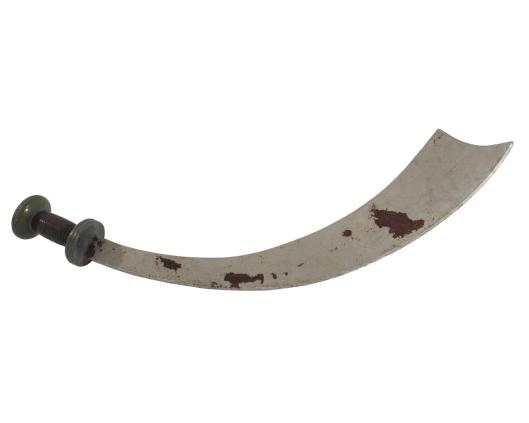
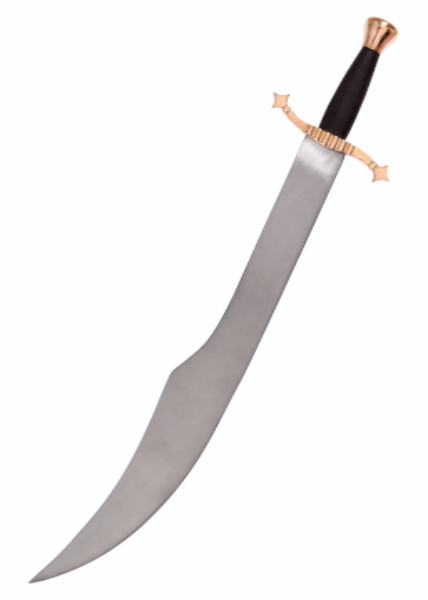
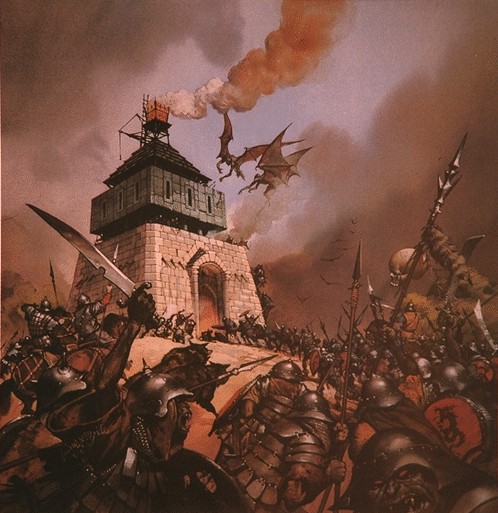
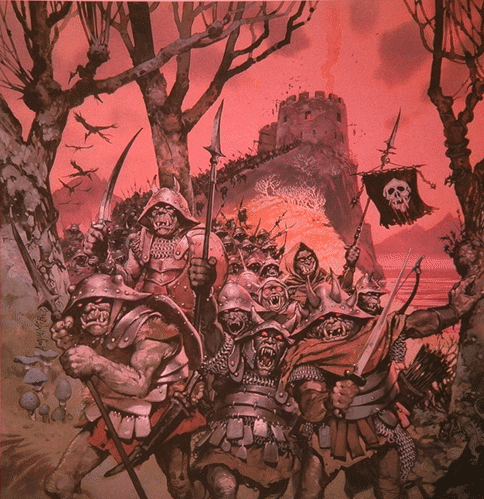
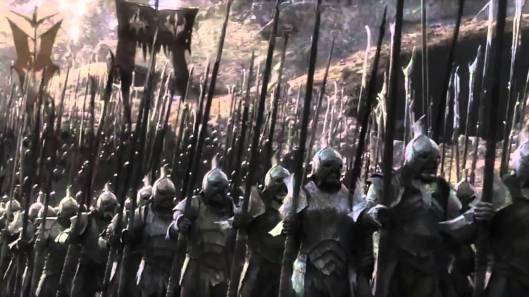
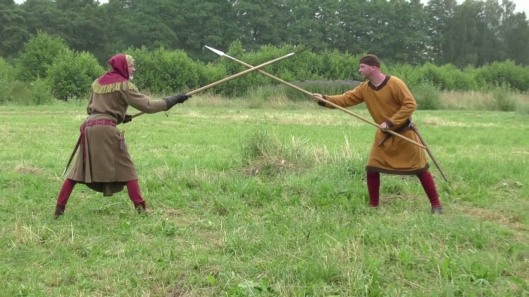
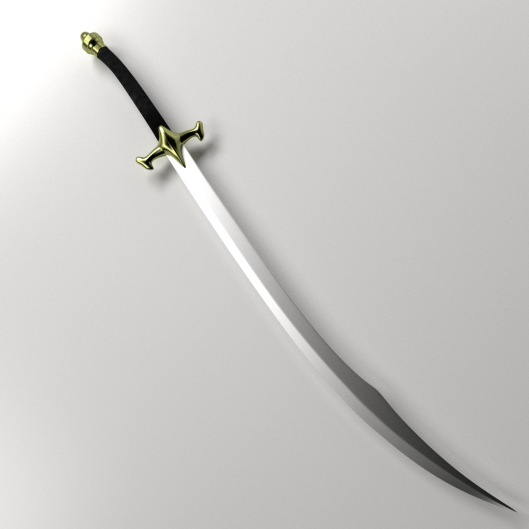
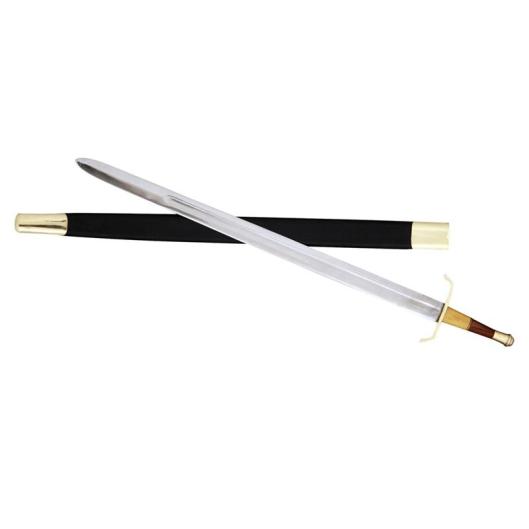
• About

doubtfulsea

~ adventure fantasy

Tag Archives: The Lord of the Rings

Name, Rank, and…

10 Wednesday Oct 2018

Posted by Ollamh in J.R.R. Tolkien, Military History, Military History of Middle-earth

≈ Leave a comment

Tags

1984, Alan Lee, Eye of Sauron, Flodden, George Orwell, Great War, Heraldic Device, Mordor, Oceania, Orcs, Sauron, serial numbers, Serialized, Swan of Dol Amroth, the Lancashire Fusiliers, The Lord of the Rings, Tolkien, White Hand of Saruman, White Horse of Rohan, White Tree of Gondor, Winston Smith

As always, dear readers, welcome.

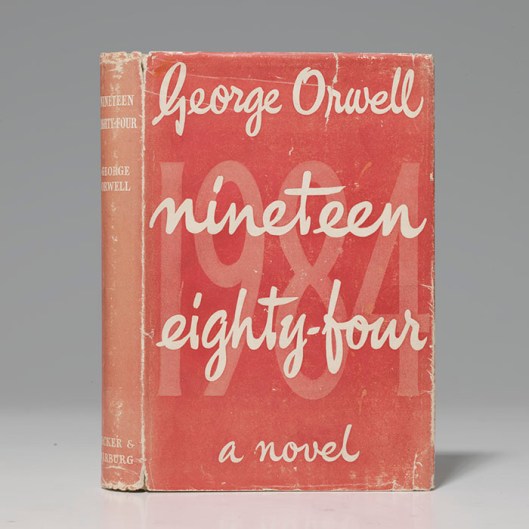
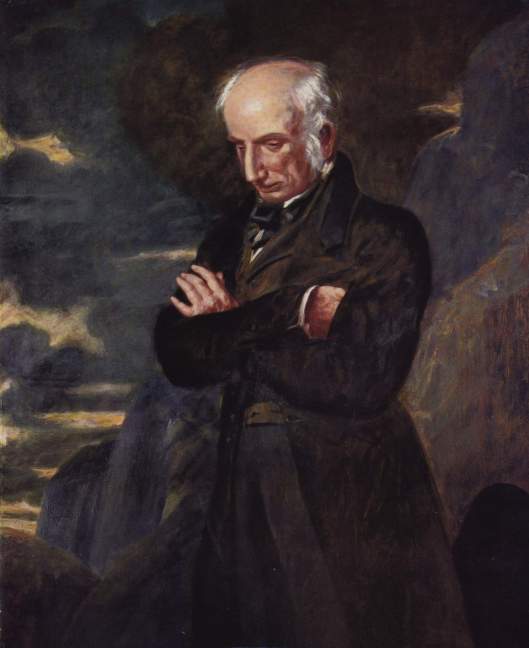
In George Orwell’s (1903-1950)

image1orwell

1949 horrific political novel 1984,

image2nineteen

the protagonist, Winston Smith, is attempting to do what are called “physical jerks”, meaning calisthenics, in front of a “telescreen”.  This is, in fact, a two-way device, but it’s impossible to know when, as you are watching it, it can be watching you, until:

‘Smith!’ screamed the shrewish voice from the telescreen. ‘6079 Smith W.!

Yes, YOU! Bend lower, please! You can do better than that. You’re not

trying. Lower, please! THAT’S better, comrade. Now stand at ease, the

whole squad, and watch me.’ (1984, Chapter 3)

And so we see just how militarized “Oceania”, Smith’s homeland, has become.  You are not a citizen, but a member of a “squad”, and your name has a serial number attached.

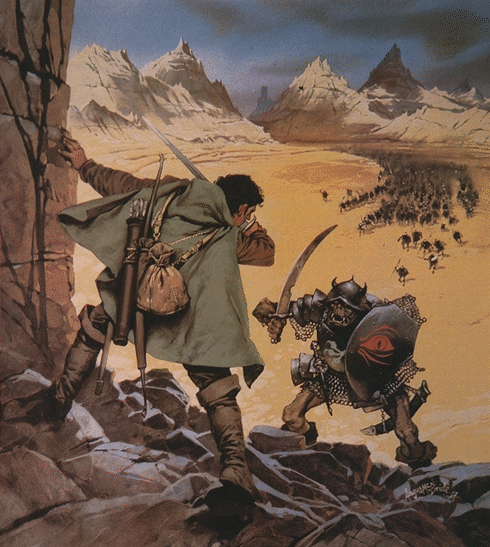
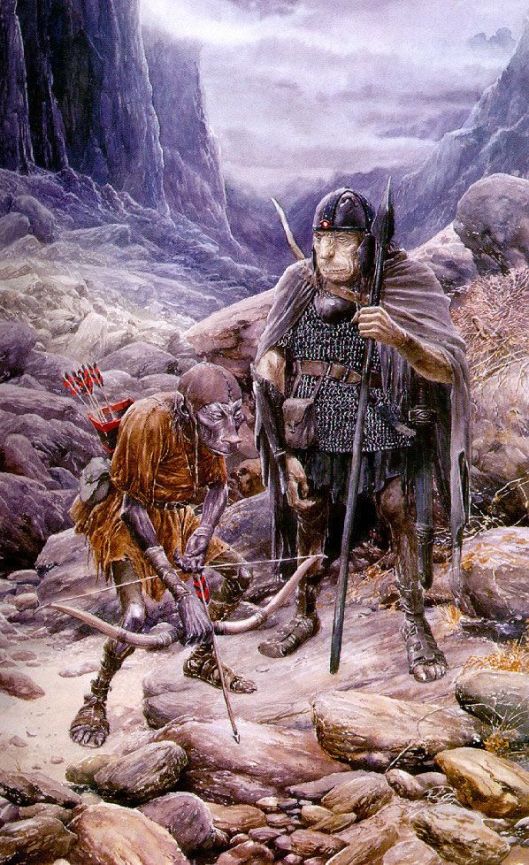
The same is true of Sauron’s Mordor, as Sam and Frodo overhear, desperately trying to conceal themselves behind a “brown and stunted bush”.  Two scouts appear:

“One was clad in ragged brown and was armed with a bow of horn; it was of a small breed, black-skinned, with wide and snuffling nostrils…The other was a big fighting-orc, like those of Shagrat’s company, bearing the token of the Eye.”

(Here’s Alan Lee’s illustration of the two, by the way.)


image3orcs

They are soon quarreling and, when the small one tries to escape, the larger fighting-orc shouts:

“You come back…or I’ll report you!”

To which the smaller replies:

“Who to?  Not to your precious Shagrat.  He won’t be captain any more.”

And the larger answers that with:

“I’ll give your name and number to the Nazgul.”  A threat which soon gets him killed.


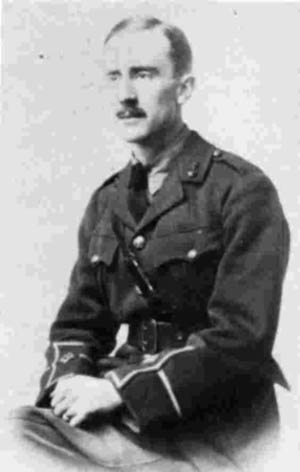
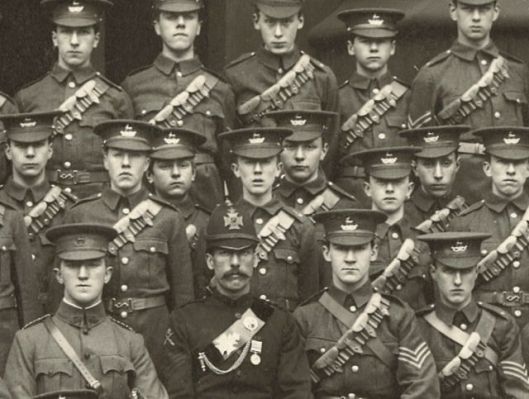
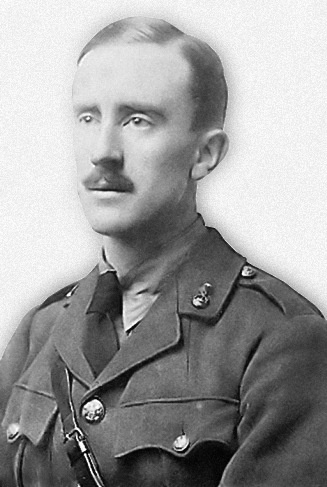
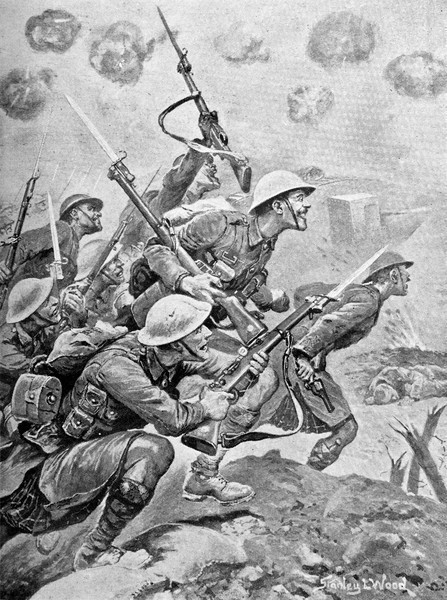
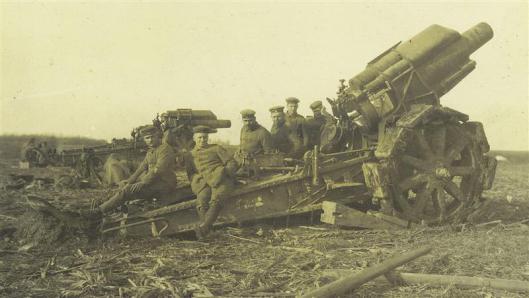
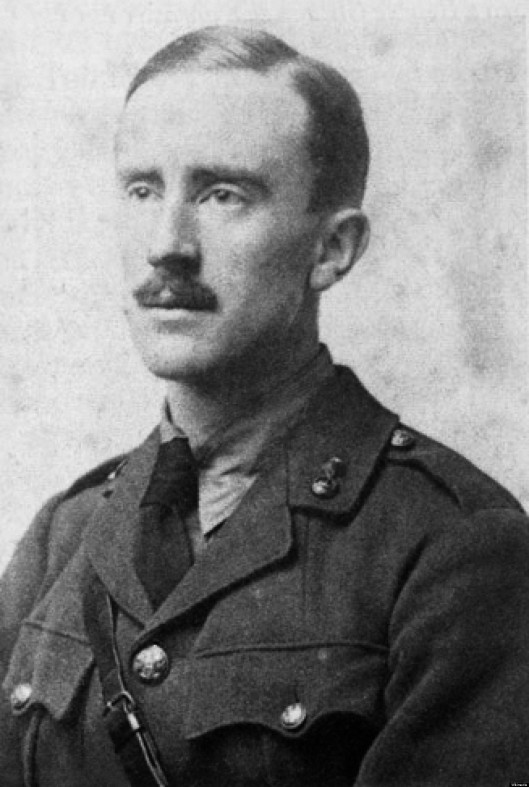
When we think about Tolkien in the Great War,

image4lt.jpg

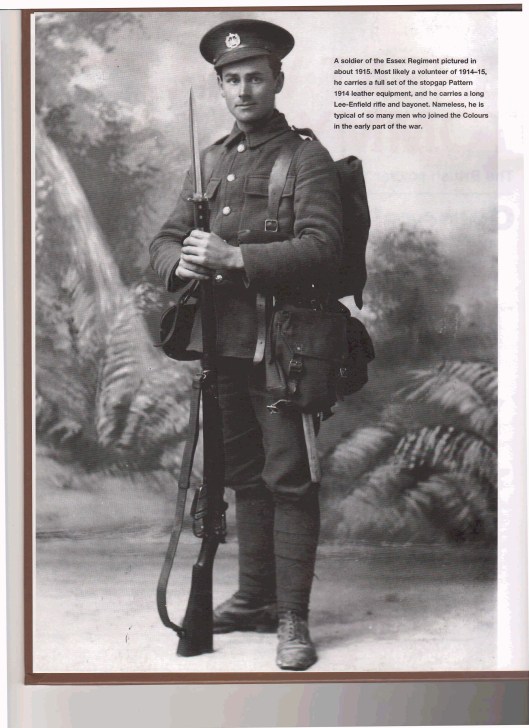
we can see at once where the idea of the “name and number” came from.  Although there had been attempts at serial numbers as far back as 1857,

image5eighteensixty

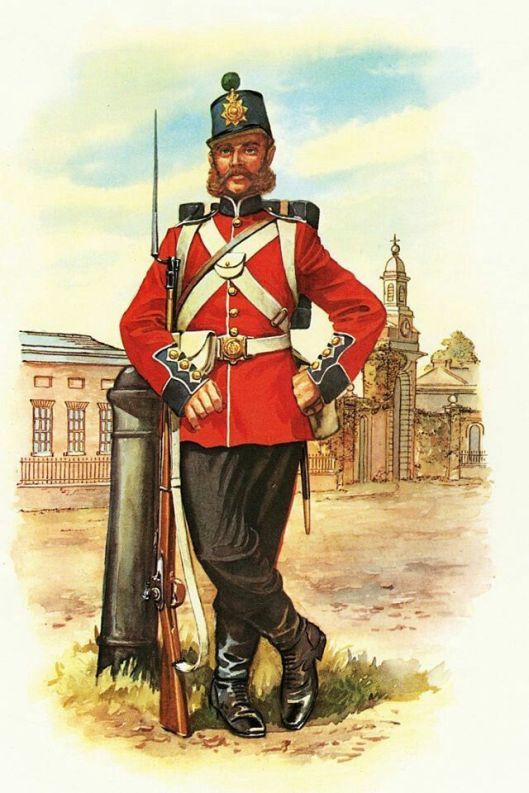
in 1881, units in the British Army adopted a regimental serial system.

image6eighteeneighties

Thus, in JRRT’s army, he would have seen a man in his battalion of his regiment (the Lancashire Fusiliers) identified as “189, Smith, W” (although officers like Tolkien were not issued such numbers).


image7nineteen


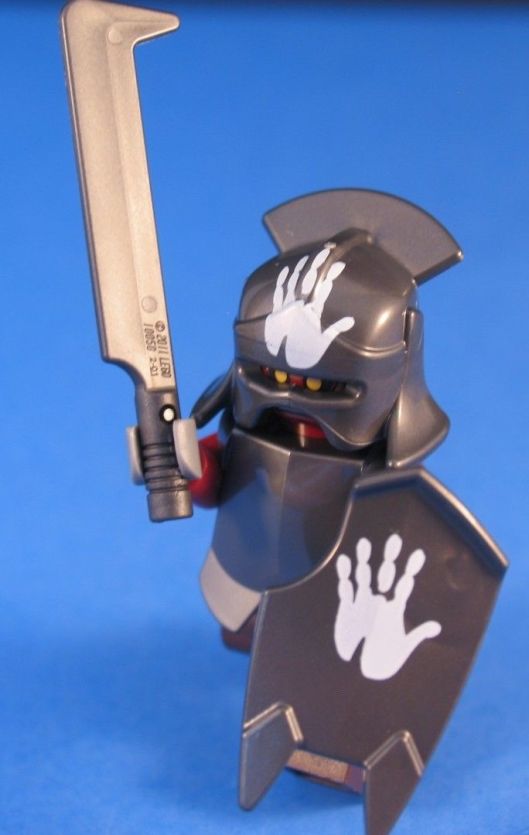
There is, of course, another identifying mark for the soldiers both of Sauron and Saruman, the heraldic device on helmets or shields, the red eye for Sauron, the white hand for Saruman

image8eye

image9hand

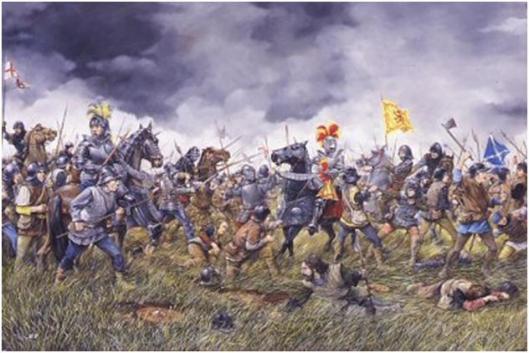
When we say “heraldic device”, we mean, as you can see, a decoration on cloth or metal, clothing, armor, and flags, which indicates, in some way, who the wearer is, or to whom he belongs.  On a medieval battlefield, before men wore uniforms, this would help those in charge to understand, at a glance, who was fighting whom.

image10flodden

In this painting of the large and confused battle between English and Scots soldiers at Flodden (1513), a late-medieval, early-Renaissance struggle, you can see how confusing things could be, but some order could be made out of the English standard to the left, and two Scottish flags to the right, the far one being generic Scots, but the near one being the banner of the Scottish king himself, James IV.

Up close, the one of the heraldic badges of the Stanley family (on the English side), the claw, marks this archer.

image11stanley

The science of heraldry is large and complicated, but may be seen at its simplest  in The Lord of the Rings, not only among orcs, but also among the forces of the West—

the white horse of Rohan,

image12rohan

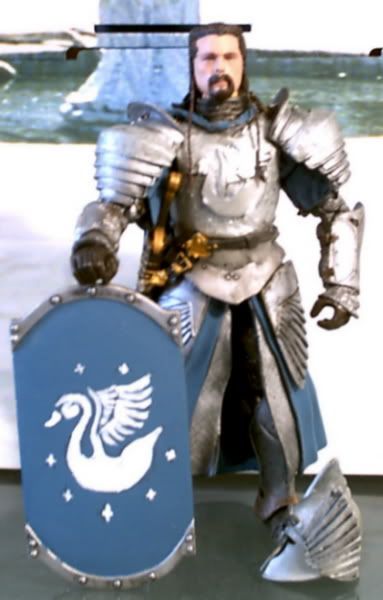
the swan and ship of Dol Amroth,

image13dolim

and the tree and seven stars of Gondor.

image14gondor


Where there is a strong contrast between the two sides, however, and we can only speculate as to JRRT’s intent, was the assignment of numbers to the orcs of Mordor  and not to the soldiers of the West a quiet comment on the facelessness of modern warfare, where a soldier is a number first, before he is ever a name and perhaps all men are reduced to orcs?

image15dead

Thanks, as ever, for reading.

MTCIDC

CD


Orc Arsenal.2

03 Wednesday Oct 2018

Posted by Ollamh in Artists and Illustrators, J.R.R. Tolkien, Military History, Military History of Middle-earth

≈ Leave a comment

Tags

Anglo-Saxon, Angus McBride, Bayeux Tapestry, Celts, chain-mail, hauberk, lamellae, lorica segmentata, medieval Russians, Mordor, Mycenaeans, Orcs, Renaissance irish, Republican Romans, Rohirrim, sallet, spangenhelm, Star Wars, The Lord of the Rings, Tolkien, Zulus

So, dear readers, welcome, as always.  In this posting, we want to finish our brief overview of orc weaponry which we began in our last.

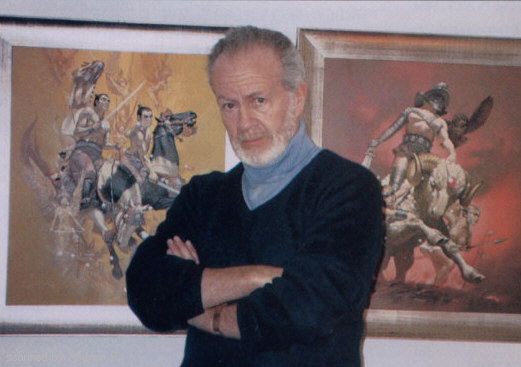
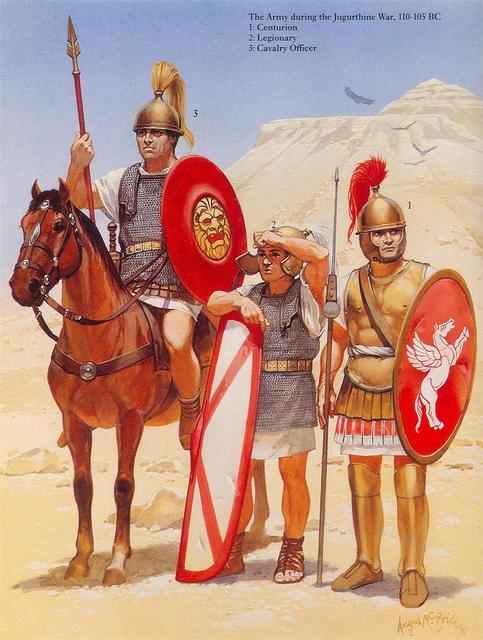
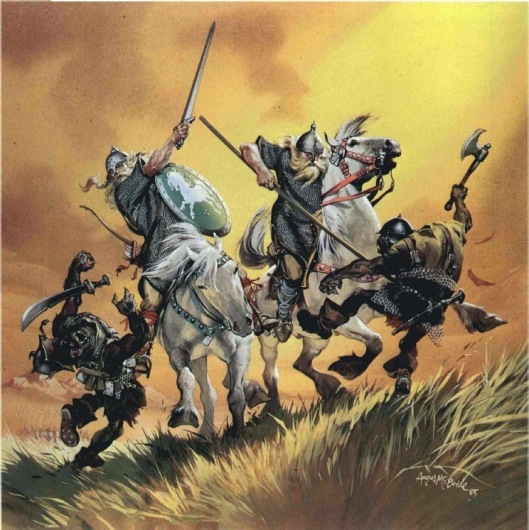
A famous military illustrator, Angus McBride, (1931-2007)

image1am.jpg

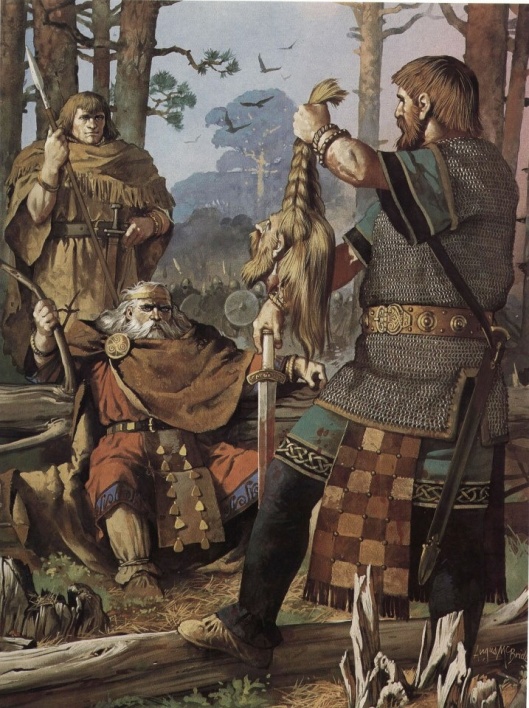
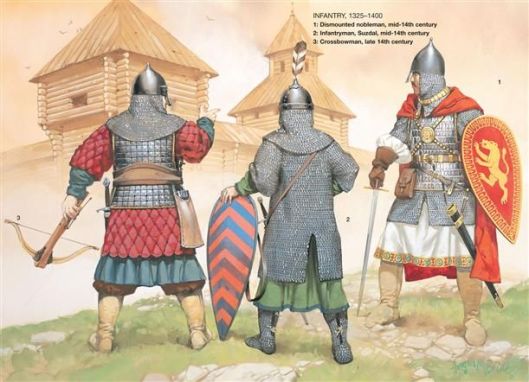
once said in an interview that there was one thing which he hated about doing such illustrations:  painting chain mail, which he said was the most tedious part of his work.  Considering that he painted it on early Celts

image2celts.jpg

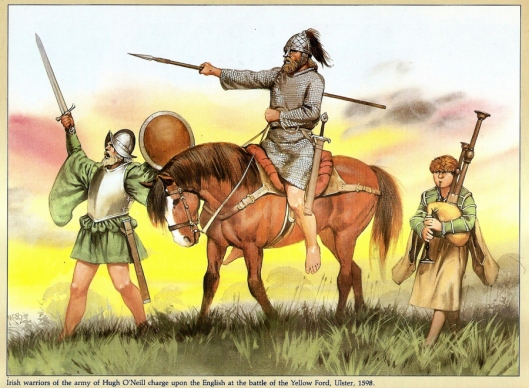
and Renaissance Irish,

image3irish.jpg

and Republican Romans

image4romans.jpg

and medieval Russians,

image5russians.jpg

McBride must have suffered many hours of boredom!  It didn’t stop him, however, as we see in these illustrations for The Lord of the Rings,

image6lotr.jpg

image7lotr.gif

image8lotr.jpg

from putting armor on Rohirrim and orcs alike.

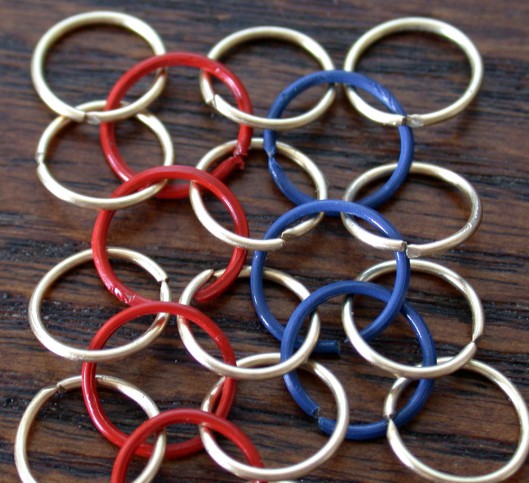
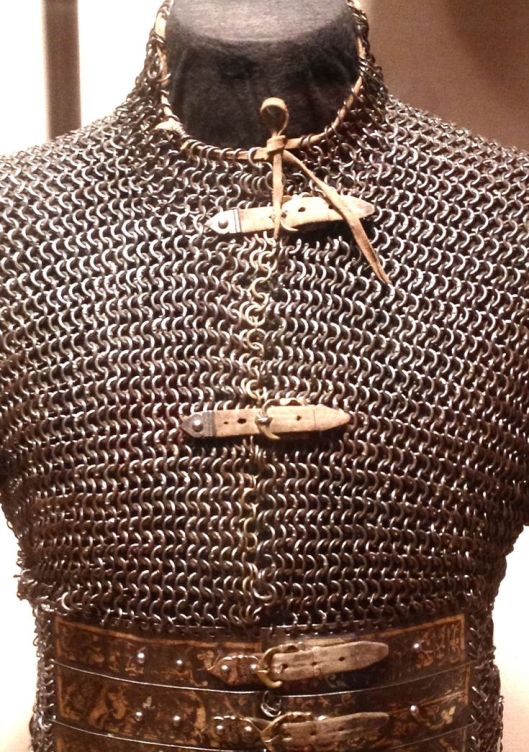
Chain mail—or simply mail—is made by linking together a series of metal rings.

image9amakingmail.jpg

image9bmail.jpg

This is, as you can imagine, a very time-consuming process, especially if you have to make the rings first.  (Here’s a LINK on mail manufacturing, in case you’d like to try it yourself.)

We have seen the number of rings used in a full mail hauberk to be over 20,000, so it’s also metal-consuming, as well as time-consuming.  It also appears to have been expensive.  We once heard an expert say something about the “same price as a two-bedroom house”, but that seems a little excessive.  The always-useful Regia Anglorum website gives the price of a mail shirt in Anglo-Saxon times at 529d (that’s 529 pence), or 10,580 pounds in modern UK money ($13,785.18 US at today’s current exchange rate).  Here’s a LINK to their web page to see the author’s reasoning for his equivalences.

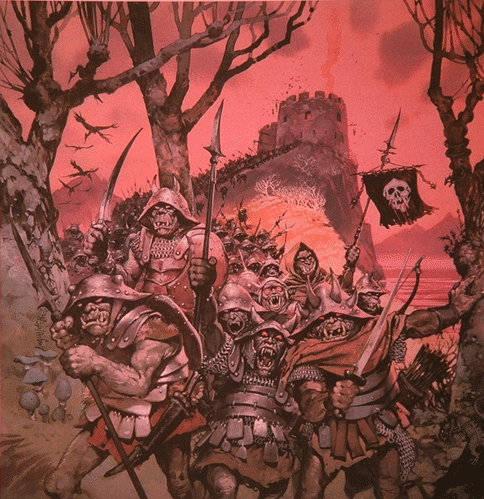
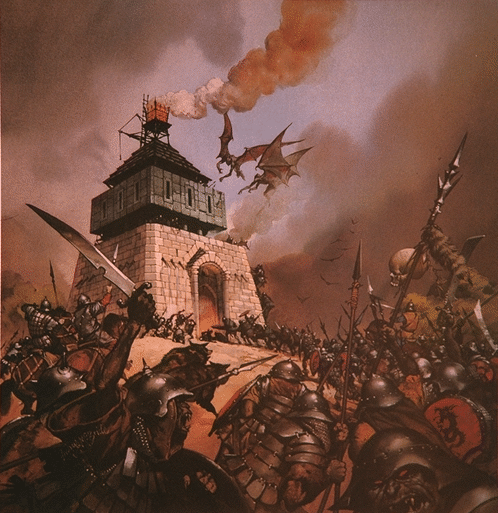
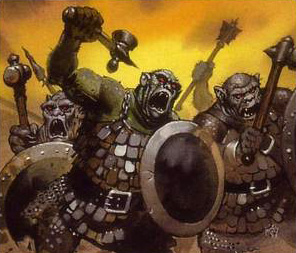
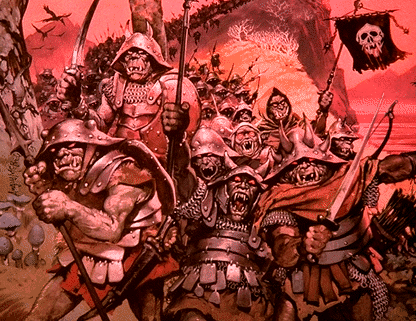
McBride shows orcs wearing mail—does JRRT?   In fact, in the first scene in which we see orcs, we read:

“…a huge orc-chieftain, almost man-high, clad in black mail from head to foot…” (The Fellowship of the Ring, Book Two, Chapter 5, “The Bridge of Khazad-dum”

And, late in the story, when Sam and Frodo are in Mordor and Sam provides clothes for Frodo:

“There were long hairy breeches of some unclean beast-fell, and a tunic of dirty leather.  He drew them on.  Over the tunic went a coat of stout ring-mail, short for a full-sized orc, too long for Frodo and heavy.” (The Return of the King, Book Six, Chapter 1, “The Tower of Cirith Ungol”)

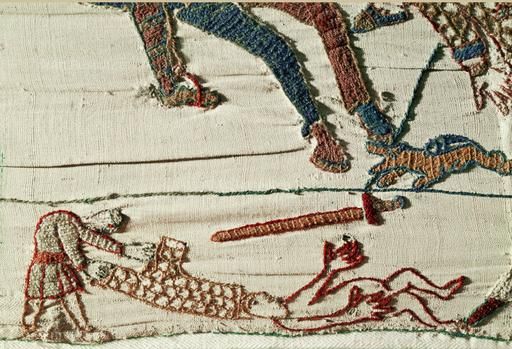
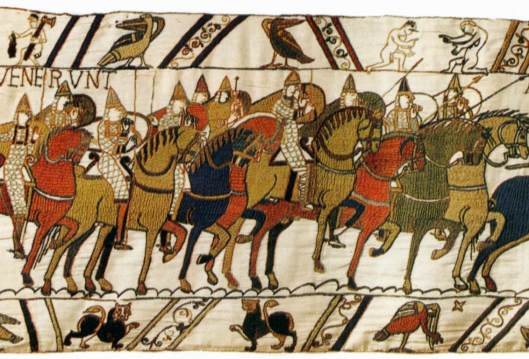
(We can attest to the weight of such a coat, by the way, having a modern reproduction ourselves.  It weighs 25 pounds or more—that’s 11.34 kilograms.  When it’s on your shoulders, the weight is displaced, so it doesn’t feel quite so heavy, but, if you have it piled in a box, you really feel the heft.  We would also add that, because of the cost, armor wasn’t commonly left on the battlefield.  This segment of the Bayeux Tapestry shows what must normally have happened.)

image9cstrip.jpg

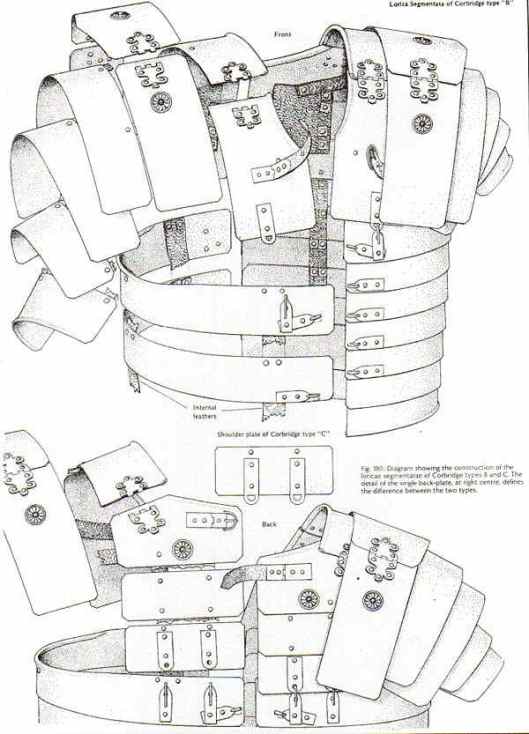
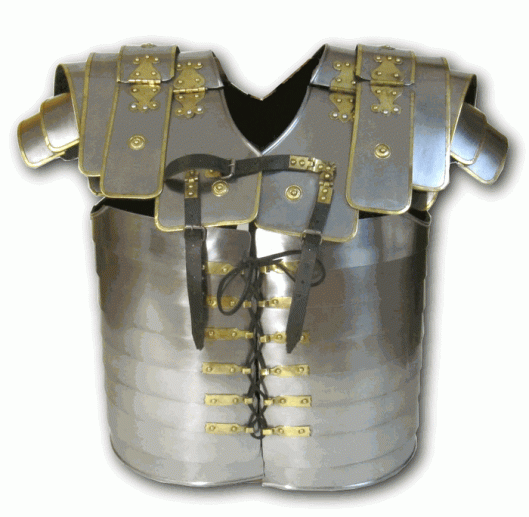
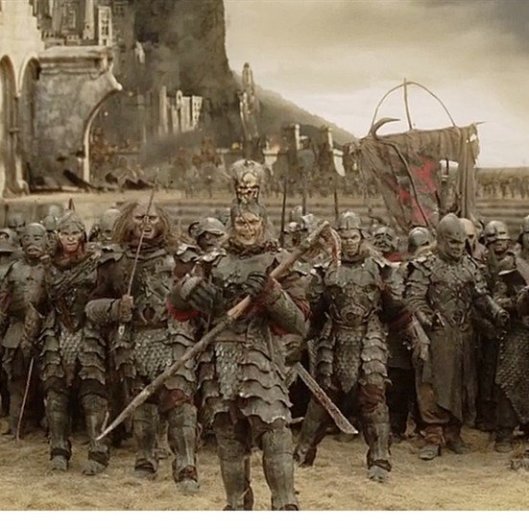
McBride, in his illustrations, depicts two other types of body armor.  In these first two depictions, we see the kind of armor the Romans called lorica segmentata.

image9lorica.gif

image10lorica.gif

This is a system based upon a series of broad, overlapping iron strips.

image11lorica.jpg

image12lorica.gif

As far as we can tell, this is never mentioned in the text. There may be one mention of our third type:

image13lam.jpg

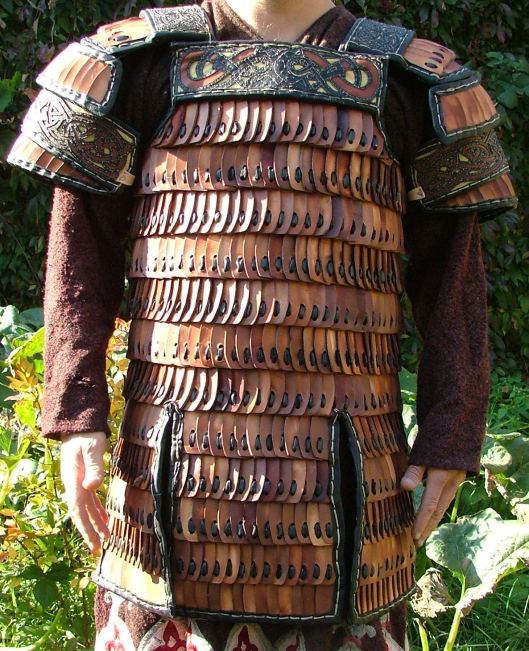
This is armor made up of a series of small plates, called lamellae, sewn in an overlapping fashion, rather like fish scales.

image14lam.jpg

There may be one mention of this:

“The orcs hindered by the mires that lay before the hills halted and poured their arrows into the defending ranks.  But through them came striding up, roaring like beasts, a great company of hill-trolls out of Gorgoroth.  Taller and broader than Men they were, and they were clad only in close-fitting mesh of horny scale, or maybe that was their hideous hide…” (The Return of the King, Book Five, Chapter 10, “The Black Gate Opens”)

But what about helmets?

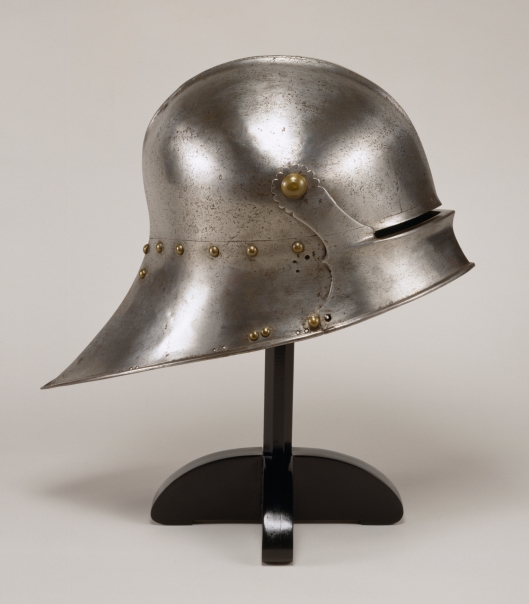
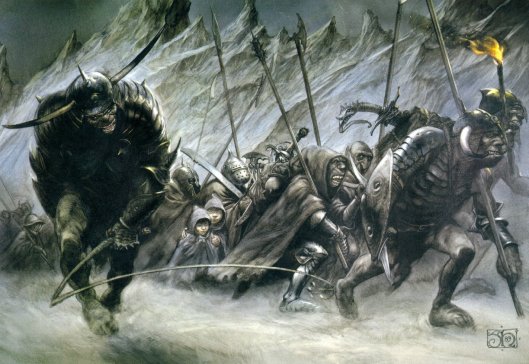
McBride depicts most of his orcs in something which might be described as wild variations on the later medieval helmet called a sallet.

image15aorcs.gif

image15bsallet.jpg

You can see John Mollo, a costume designer for Star Wars, having fun with this pattern, too.

image15cdarth.JPG

image15ddeathstar.jpg

In the text, in that first scene in which we see orcs, there is a mention of Aragorn’s sword, Anduril, which “came down upon [an orc’s] helm”, but nothing more specific—and that’s true for the second mention, when Aragorn examines the orcs killed by by Boromir:

“…on the front of their iron helms was set an S-rune, wrought of some white metal.” (The Two Towers, Book Three, Chapter 1, “The Departure of Boromir”)

There is a bit more detail in this description:

“Sam brought several orc-helmets.  One of them fitted Frodo well enough, a black cap with iron rim, and iron hoops covered with leather upon which the Evil Eye was painted in red above the beaklike nose-guard.” (The Return of the King, Book Six, Chapter 1, “The Tower of Cirith Ungol”)

To us, this sounds like a kind of spangenhelm, the sort of thing the Normans wear in the Bayeux Tapestry.

image15spangen.jpg

image16spangen.jpg

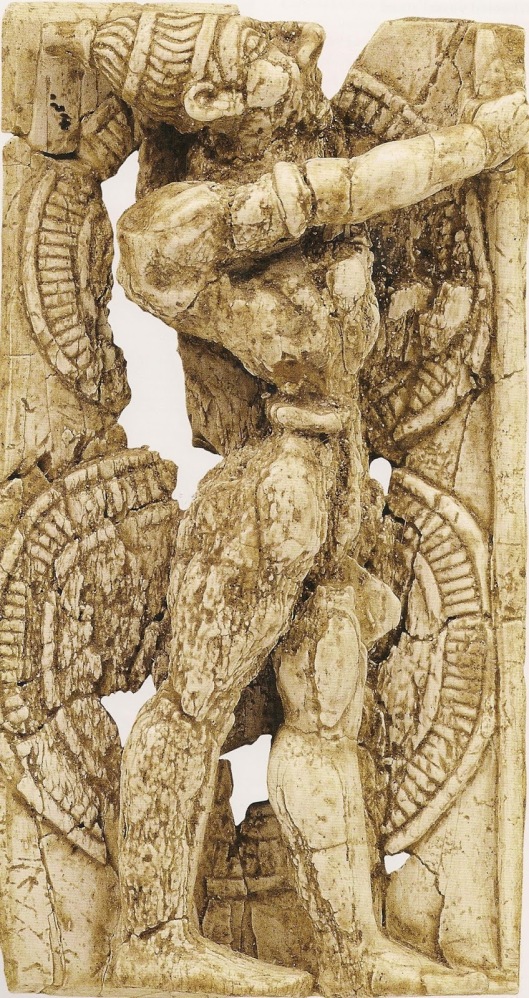
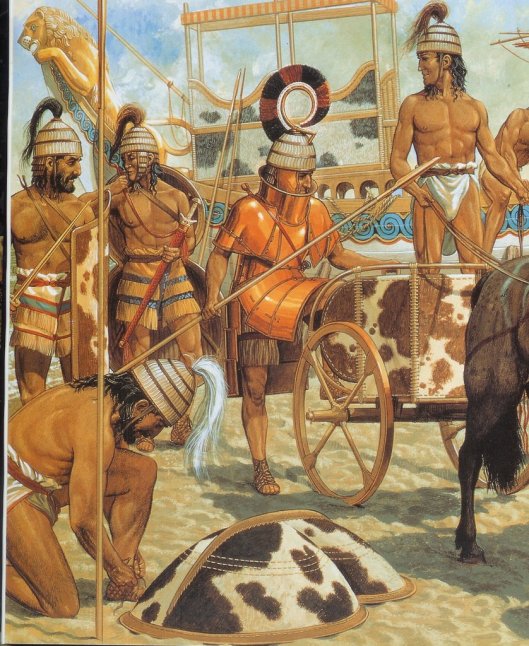
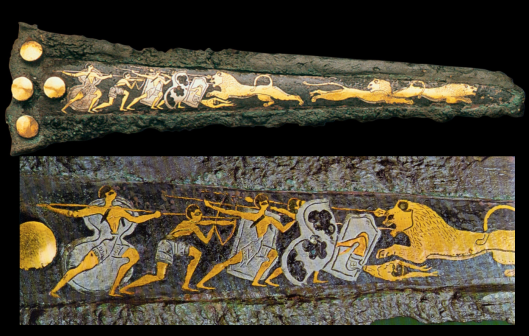
To which we can add a couple of types of shields.  The first we see—it’s that same “orc-chieftain”—carries “a huge hide shield” (The Fellowship of the Ring, Book Two, Chapter 5, “The Bridge of Khazad-dum”).  There is no further description.  If it’s only made of hide, this could resemble anything from a Mycenaean “figure-of-eight” shield

image17fig.jpeg

image18fig.jpg

to a Mycenaean “tower” shield

image19tower.png

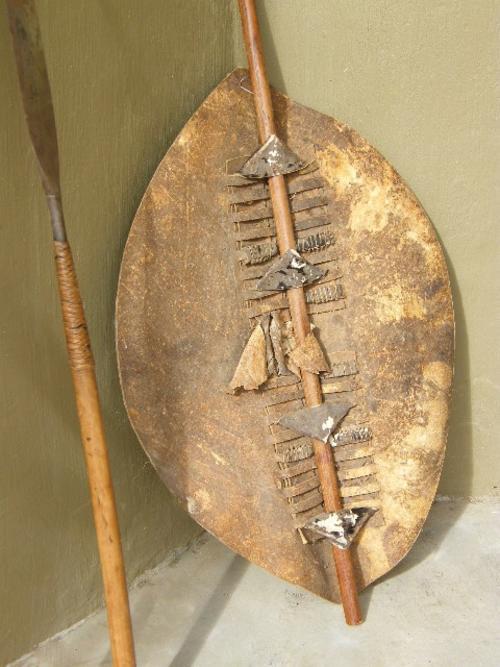
to a Zulu shield.

image20zulu.JPG

The hill-trolls of Gorgoroth, mentioned above for their possible lamellar armor, are said to carry “round bucklers huge and black” (The Return of the King, Book Five, Chapter 10, “The Black Gate Opens”).

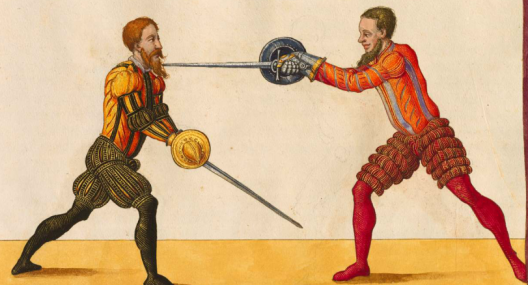
A huge buckler, however, is a contradiction in terms, as bucklers are, by definition, small—more a kind of one-on-one fencing defense, as we see in this illustration.

image21buckler.png

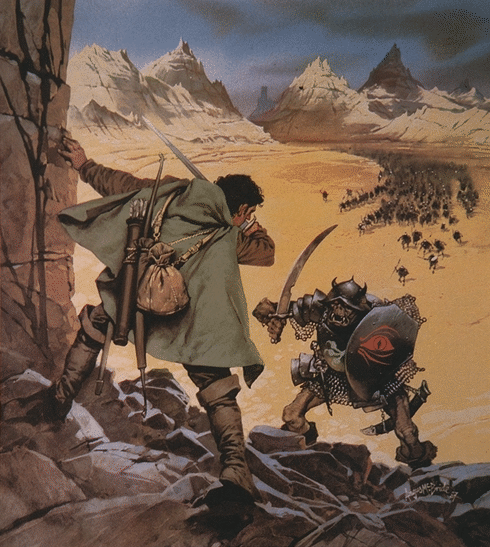
Like their helmets, orc shields commonly carry the sign of their master, Saruman or Sauron—“Upon their shields they bore a strange device” (The Two Towers, Book Three, Chapter 1, “The Departure of Boromir”).  (Some of Saruman’s followers, however, seem to have unmarked shields, as the attackers of Helm’s Deep are described as “some squat and broad, some tall and grim, with high helms and sable shields”—The Two Towers, Book Three, Chapter 7, “Helm’s Deep”)  This can also be useful if you’re the authorities and you want to catch deserters, as Sam and Frodo find out when they’re trapped by a column of orcs on the road in Mordor:

“Then suddenly one of the slave-drivers spied the two figures by the road-side…He took a step towards them, and even in the gloom he recognized the devices on their shields.  ‘Deserting, eh?’ he snarled.” ( The Return of the King, Book Six, Chapter 2, “The Land of Shadow”)

image21shield.gif

This i.d.-ing leads us towards our next posting:  Heraldry and Serial Numbers, where we’ll see more of orcs and others, too.

Thanks, as always, for reading.

MTCIDC

CD

Orc Arsenal.1

26 Wednesday Sep 2018

Posted by Ollamh in Artists and Illustrators, Fairy Tales and Myths, Heroes, J.R.R. Tolkien, Literary History, Military History, Military History of Middle-earth, The Rohirrim

≈ Leave a comment

Tags

Alan Lee, And Inquiry Into Ancient Armour, Angus McBride, arming sword, Battle Axe, English Longbowmen, Eowyn, Falchion, Gladius, Gondor, Hildebrandts, Howard Pyle, John Howe, King Arthur, Longbow, Mace, Medieval, Mongols, Morning Star, Orcs, Pelennor, Pitt-Rivers Museum, Robert Louis Stevenson, Rohirrim, Scimitar, Sir Arthur Conan Doyle, Sir Samuel Meyrick, Ted Nasmith, The Black Arrow, The Lord of the Rings, The White Company, Tolkien, Victorian, Wallace Collection, War Hammer, Weaponry, Witch-King of Angmar

Welcome, dear readers, as always.

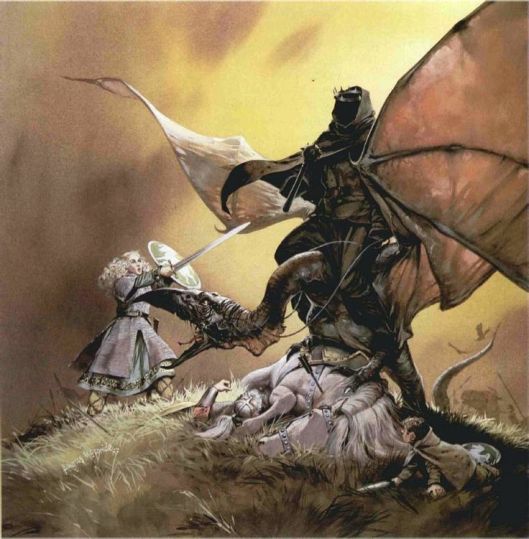
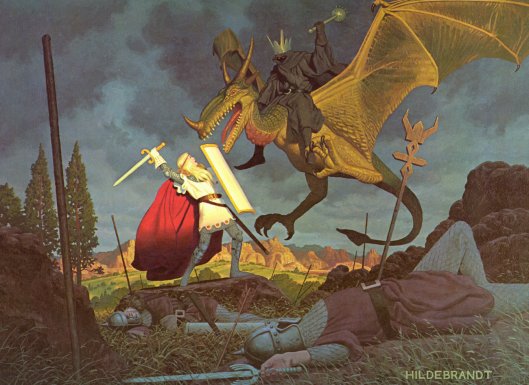
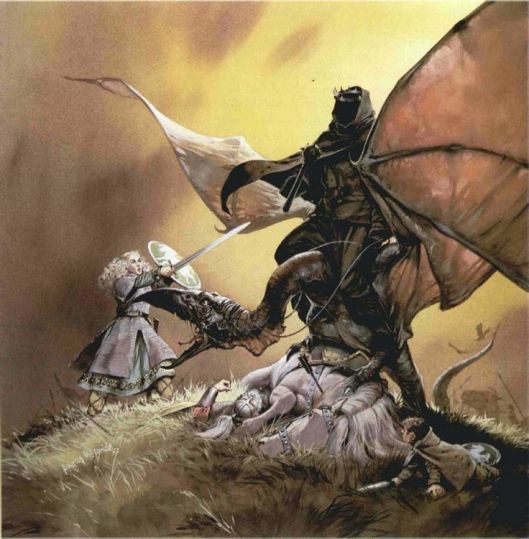
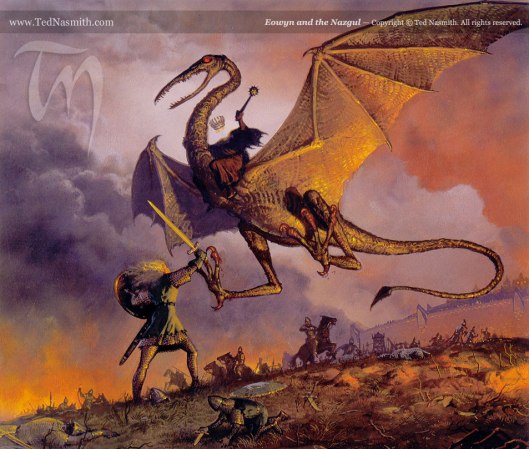
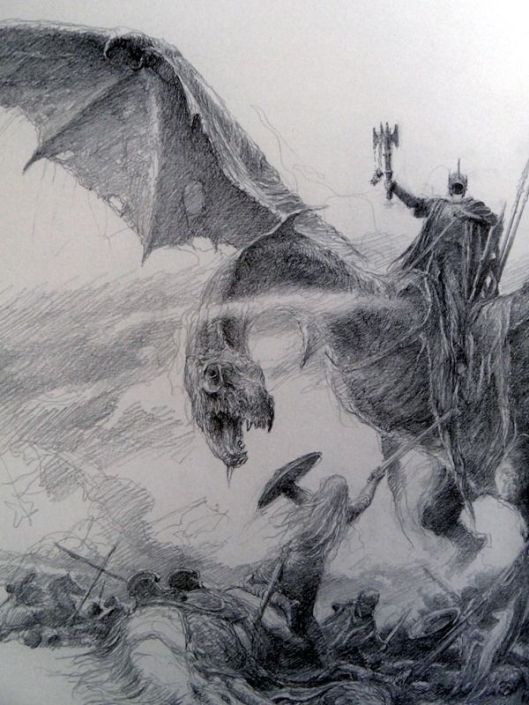
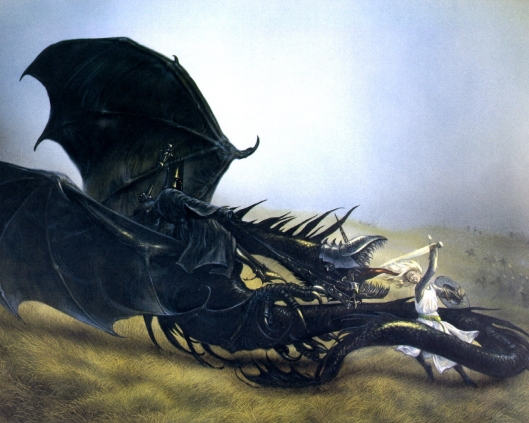
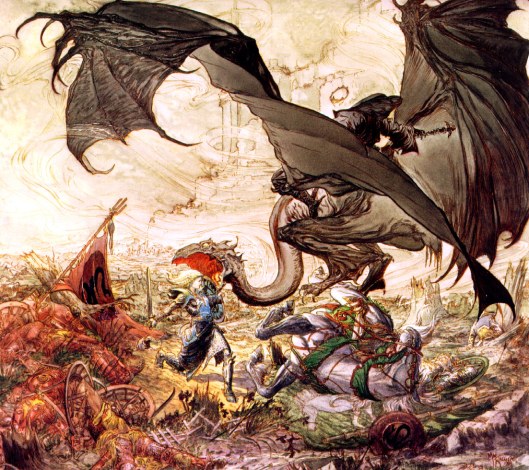
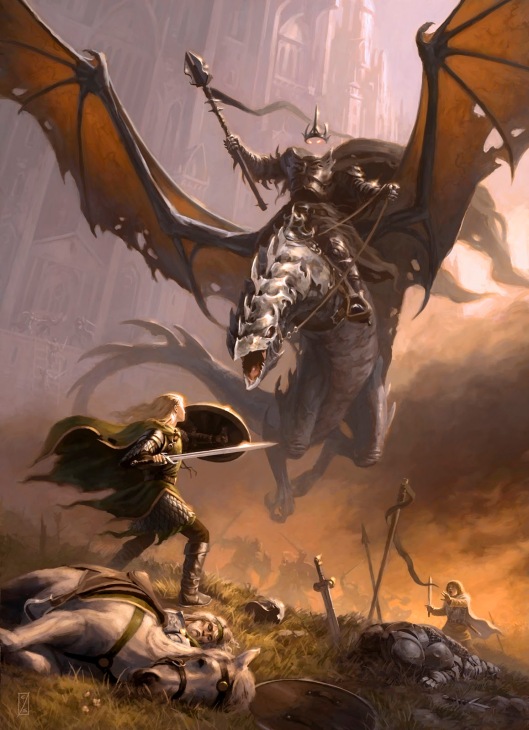
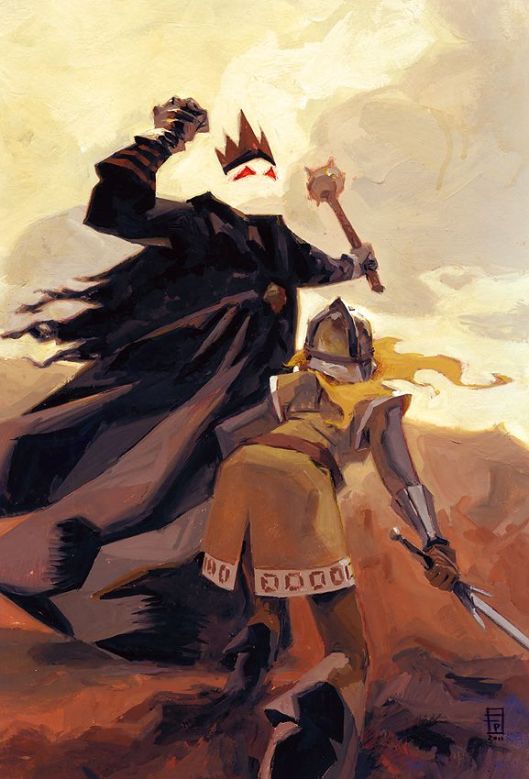
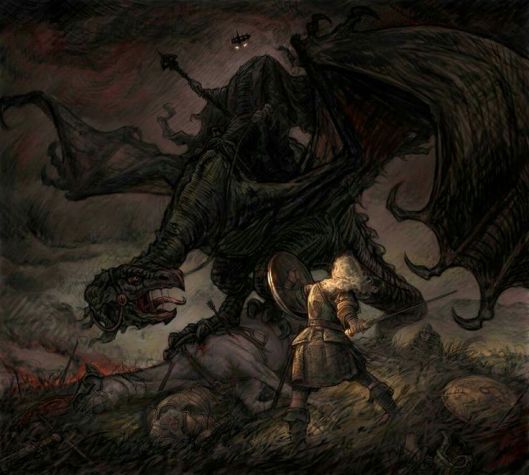
“The great shadow descended like a falling cloud.  And behold! It was a winged creature…

Upon it sat a shape, black-mantled, huge and threatening…A great black mace he wielded.”

(The Return of the King, Book Five, Chapter 6, “The Battle of the Pelennor Fields”)

This is clearly a scene which has caught the attention, over the years, of many artists, starting, we’d guess, with the Hildebrandts.

image1hild.jpg


Then others, like Angus McBride and Ted Nasmith,

image2am.jpg

image3nasmith.jpg

And Alan Lee and John Howe,


image4aleeimage4bhowe

as well as many very good artists whom we don’t know by name—

image4cimage5image6image7


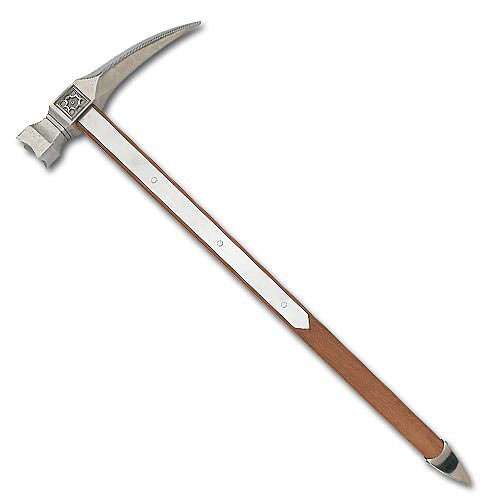
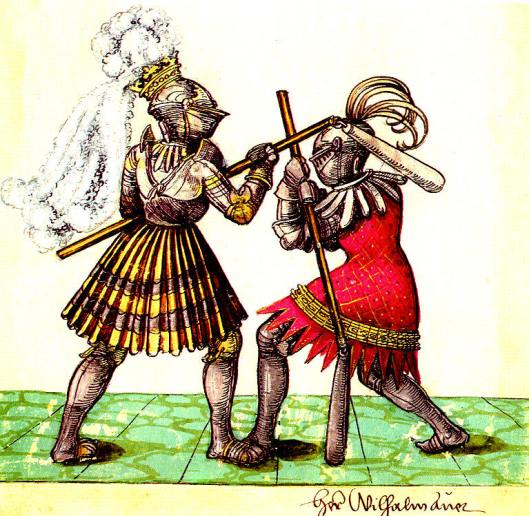
Of these, all but Lee and the unknown sixth artist follow JRRT’s description more or less closely.  Number 6—it’s a little unclear– but he might be carrying a war hammer of some sort,

image8warhammer.jpg

rather than a mace.

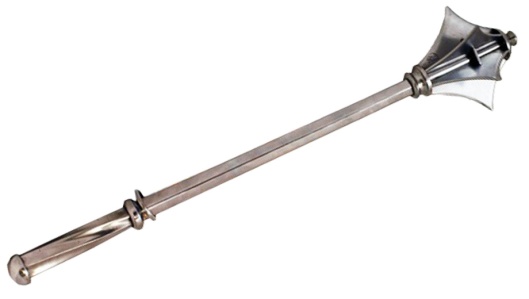
image9mace.jpg

image10mace.jpg

(These last two are basic patterns of a mace.)

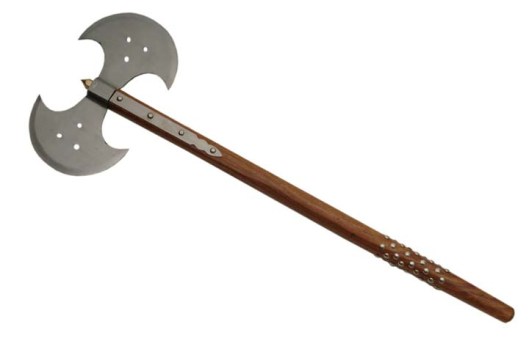
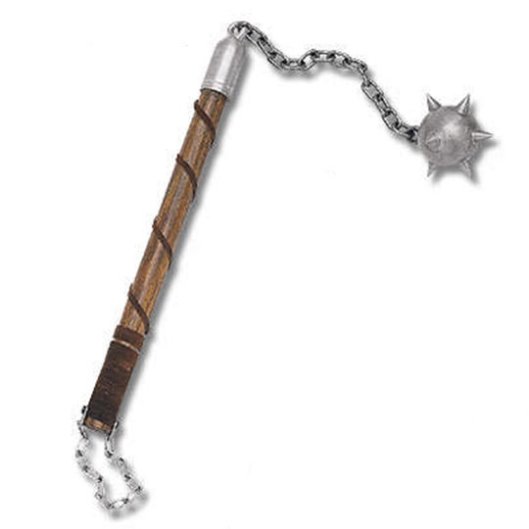
The Lee is, well, we’re not sure what it seems to be.  It sort of looks like a battle axe

image11battleaxe.jpg

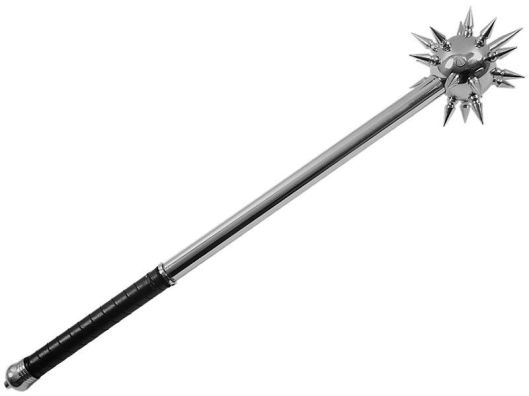
but also like what was called a “morning star”,

image12mornin.jpg

which should, we think, belong to the flail family.


image13flail

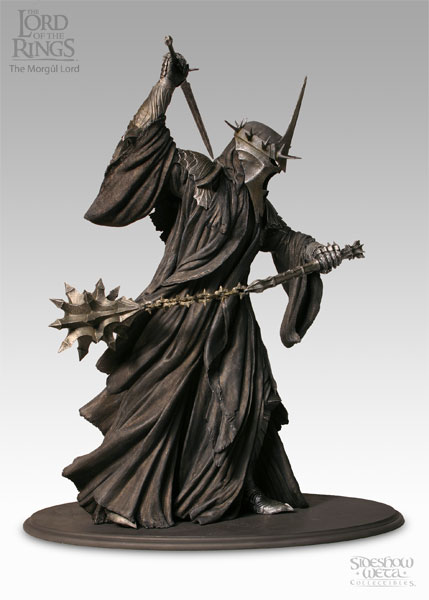
This rather fits in with the P Jackson image, shown in this model (and note that sword—definitely not in the original description—which is in his other hand).

image14mace.jpg

This difference made us curious about the weapons the Rohirrim—and the Gondorians—face and, in particular, those of the orcs.  The Hildebrandts

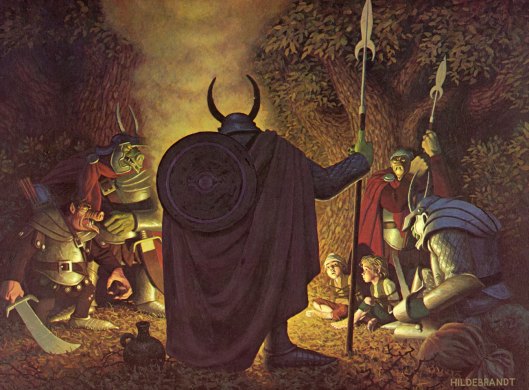
image15captured


provide us with odd-looking spears and what might appear to be scimitars


image16scim

but might be the suggestion of a medieval sword called a falchion.

image17falchion

McBride, who spent much of his artistic career illustrating military subjects, gives us weapons (mostly) less fanciful.

image18mcbimage19mcb

Lee

image19lee

and Howe

image20howe

veer between the practical and the fantastic and the films clearly follow them—

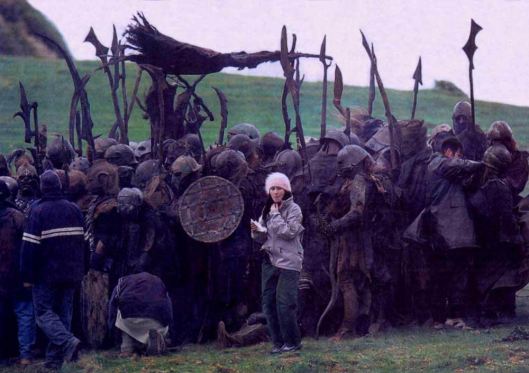
image21orcimage22orcimage23orc

How does JRRT describe the orc weaponry?

The first armed orc we see appears in Moria:

“His broad flat face was swart, his eyes were like coals, and his tongue was red; he wielded a great spear…Sam, with a cry, hacked at the spear-shaft, and it broke.  But even as the orc flung down the truncheon and swept out his scimitar…” (The Fellowship of the Ring, Book Two, Chapter 5, “The Bridge of Khazad-dum”)

The orcs who pursue the Fellowship through Moria have similar weapons:

“Beyond the fire he saw swarming black figures:  there seemed to be hundreds of orcs.  They brandished spears and scimitars which shone red as blood in the firelight.”

After the death of Boromir, however, Aragorn, Gimli, and Legolas find a different kind of orc:

“There were four goblin-soldiers of greater stature, swart, slant-eyed, with thick legs and large hands.  They were armed with short broad-bladed swords, not with the curved scimitars usual with Orcs: and they had bows of yew, in length and shape like the bows of Men.” (The Two Towers, Book Three, Chapter 1, “The Departure of Boromir”)

So far, we’ve seen spears

image24spears

and scimitars

image25scim

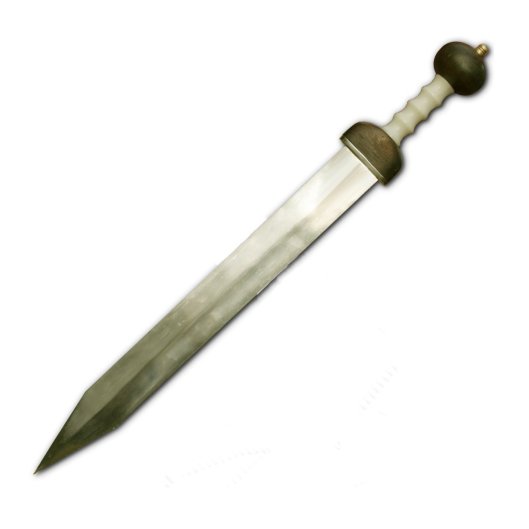
and now we can add to that “short broad-bladed swords”.  Perhaps Tolkien is thinking of the medieval “arming sword”

image26arming

or even the Roman gladius?

image27gladius.jpg

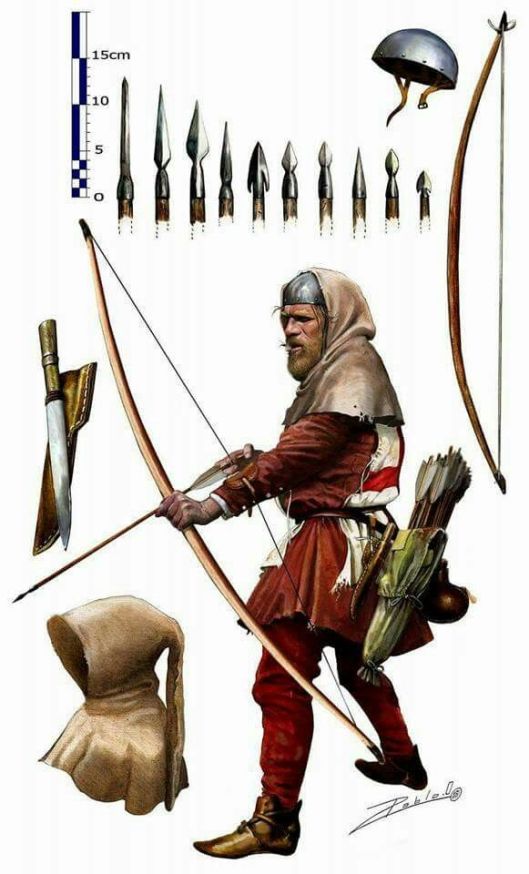
When we add “bows of yew, in length and shape like the bows of Men”, we immediately see the classic English longbow.

image28longbowman.jpg

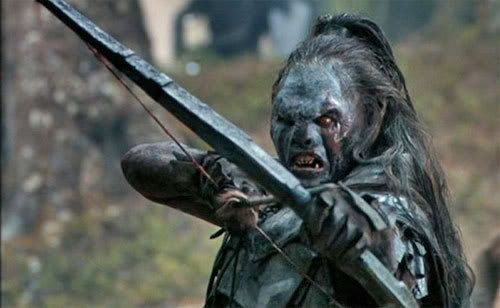
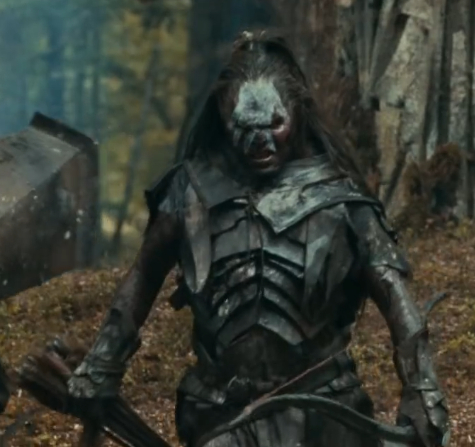
This doesn’t quite match with the first orc bowman we see in the films, however, “Lurtz”—

image29lurtz.jpg

image30lurtz.jpg

who appears to have some sort of recurved bow, possibly composite, of the sort the Mongols used

image31mongol

even though, from the white hand on his face, he is supposed to be one of those “goblin-soldiers” from Isengard.

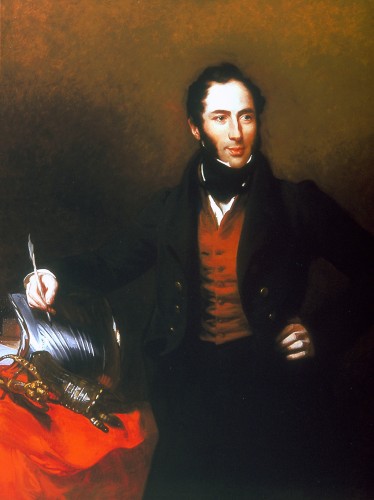
As we were looking through Tolkien’s text, we wondered where he would have gotten his ideas for weapons from.  If the basis, as we imagine it, would have been his background in medieval literature, then he might have gone to the library and found an old standard work, Sir Samuel Meyrick’s (1783-1848)

image32meyrick.jpg

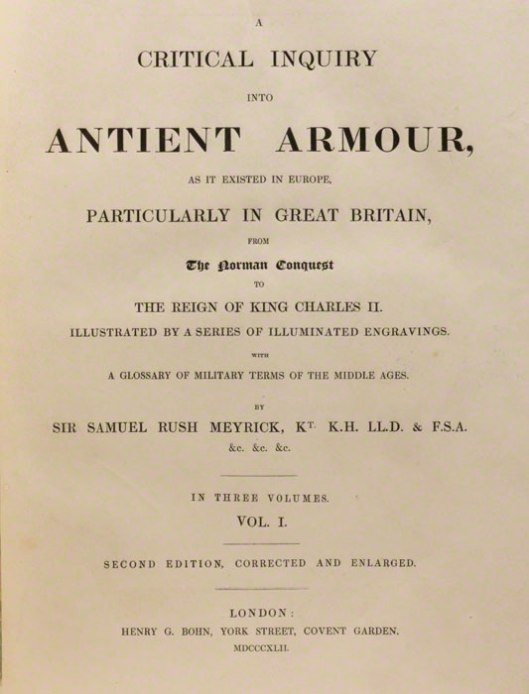
An Inquiry Into Ancient Armour, As It Existed in Europe, Particularly in Great Britain, From the Norman Conquest to the Reign of Charles the Second, first published in 1824.  (Here’s a LINK if you’d like to look at this text for yourself.)

image33mey

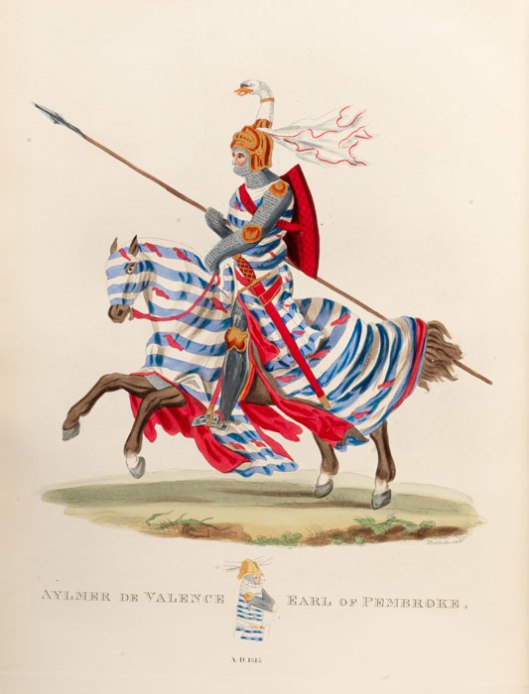
Meyrick was the first great English specialist in armor and the later editions of his work (in 3 volumes) have wonderful early hand-colored plates, all based upon surviving armor, tombs, manuscripts, and any other period materials he could gather.

image34meyill.jpg

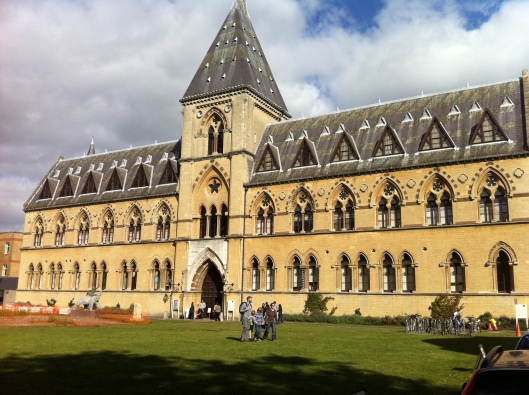
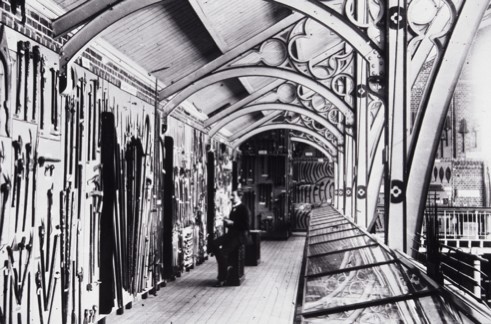
If JRRT wanted to see such things for himself, he would have found more exotic weapons in the Pitt-Rivers Museum in Oxford,

image35pittriversimage36pitt

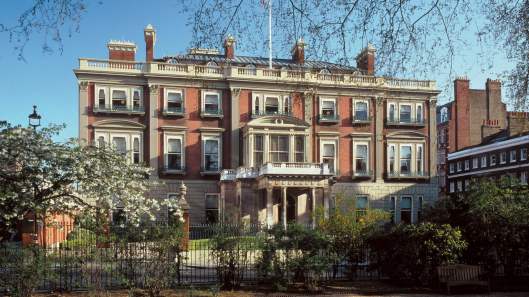
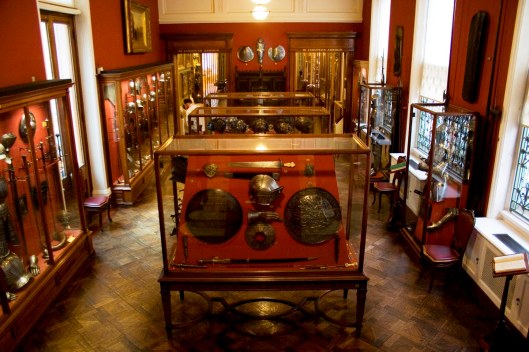
or he could have traveled up to London to see the Wallace Collection

image37wallaceimage38wallace

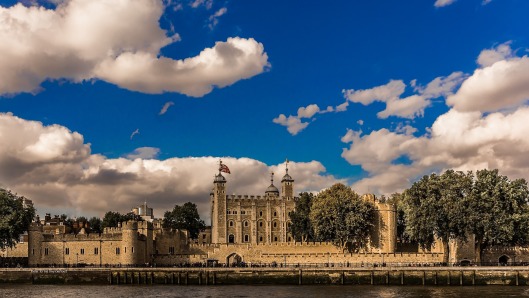
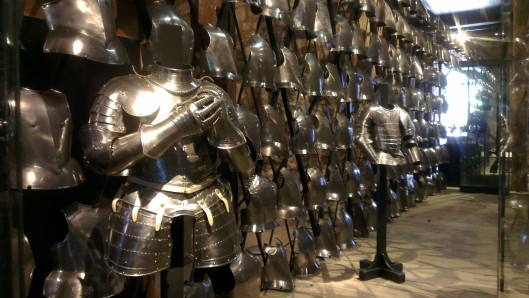
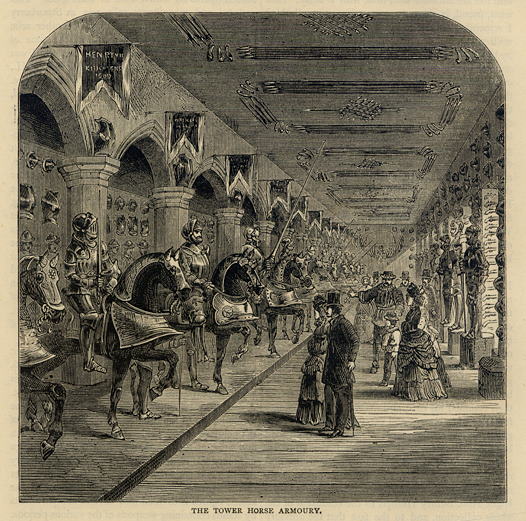
or, best of all, he could have visited the Tower of London, with its massive collection (the organizing of which had earned Meyrick his knighthood in 1832) of medieval arms and armor, which had been available to the public in some form even before Meyrick’s time—here’s a Victorian tour.

image39tower

image40towerimage41tower

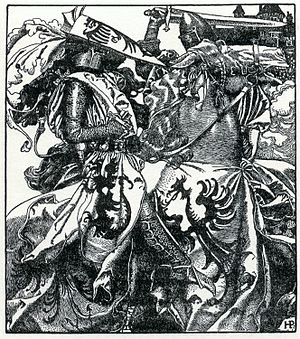
It could have been all of the above, of course, but it seems to us that the descriptions we’re reading are actually not really very specific—“mace”, “spear”, “scimitar”—only those short swords and bows suggest anything more detailed.  Perhaps, then, Tolkien was inspired by something else—perhaps he had read, perhaps even possessed, as a boy, books like Howard Pyle’s 1903 The Story of King Arthur and His Knights

image42pyle

and been inspired by its illustrations.

image43pyle

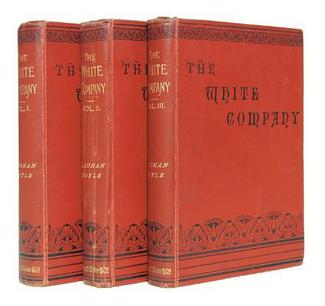
There were plenty of illustrated tales like this—Conan Doyle’s The White Company (first published in serial form in 1891),

image44whitecompany.jpg

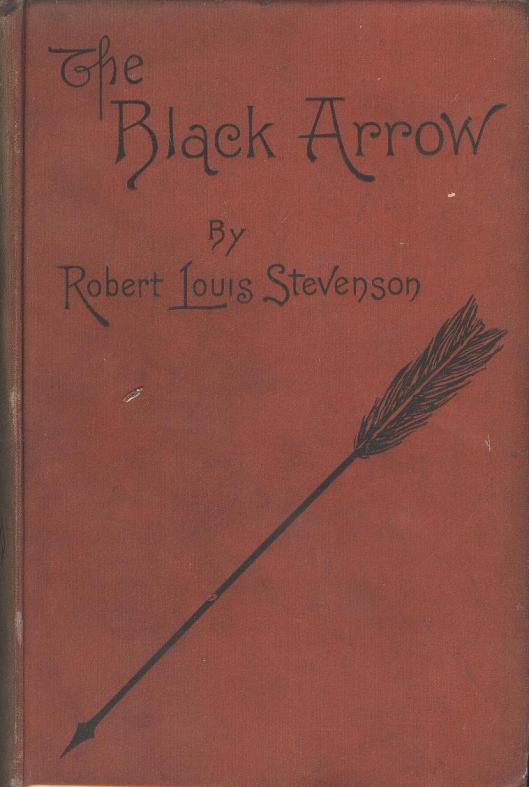
or Robert Louis Stevenson’s The Black Arrow (serial 1883, book 1888).

image45blackarrow.jpg

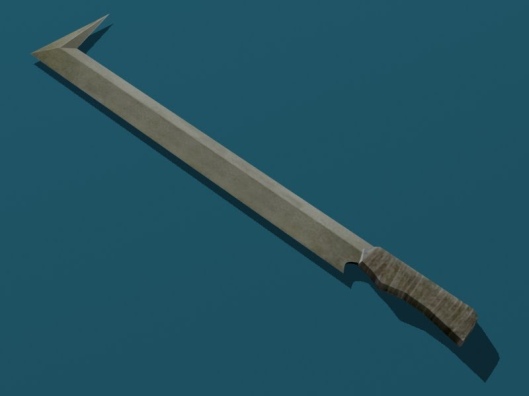
With any and all of that background, we wonder what he might have made of this, however, an orc sword from the films which looks more like something manufactured from a car part than the product of a medieval armorer…

image46sword.jpg

Thanks, as ever, for reading.

MTCIDC

CD

ps

If car part weapons don’t bother you, you might be interested in this LINK—it’s an early article on ideas for weapons and armor for the Jackson films.

Speaking Up

19 Wednesday Sep 2018

Posted by Ollamh in J.R.R. Tolkien, Literary History, Poetry

≈ Leave a comment

Tags

Against Idleness and Mischief, Alice in Wonderland, Children, Edwardian, Isaac Watts, Lewis Carroll, Oliphaunt, recitation, Tennyson, The Lord of the Rings, Tolkien, Victorian, William Wordsworth

Welcome, dear readers, as ever.

We are always interested in linking JRRT and Middle-earth with things of this earth, from Tolkien’s experience in the Great War to English geography vs that of Middle-earth.  In this posting, we begin with an elephant—or, rather, oliphaunt.  Which is an elephant—sort of, only bigger and menacing.

image1oliphant.jpg

“Big as a house, much bigger than a house, it looked to him, a grey-clad moving hill…his great legs like trees, enormous sail-like ears spread out, long snout upraised like a huge serpent about to strike, his small red eyes raging.  His upturned hornlike tusks were bound with bands of gold and dripped with blood.”  (The Two Towers, Book Four, Chapter 4, “Of Herbs and Stewed Rabbit”)

As big as the oliphaunt is, the real subject of our post is actually one small part of what might have been JRRT’s Victorian/Edwardian educational experience and its reflection in the form of Sam Gamgee, who, “stood up, putting his hands behind his back (as he always did when ‘speaking poetry’) and began:

Grey as a mouse

Big as a house

Nose like a snake

I make the earth shake

As I tramp through the grass

Trees crack as I pass

With horns in my mouth

I walk in the South

Flapping big ears

Beyond count of years

I stump round and round

Never lie on the ground

Not even to die

Oliphaunt am I

Biggest of all

Huge, old, and tall

If ever you’d met me

You wouldn’t forget me

If you never do

You won’t think I’m true

But old Oliphaunt am I

And I never lie.”


In the 1890s, when JRRT was a little boy, a mainstay of that education was the combination of memorization and repetition through recitation.

image2aaareciting.jpg

Children were expected to commit to memory—and to be able to perform—any number of poetic works whenever called upon.  In what was probably an extreme example, the poet Alfred Tennyson’s (1809-1892)

image2aatennyson.jpg

father is said to have required him to memorize and repeat to him over four mornings all four books of the Roman poet, Horace’s, ( 65-8BC)

image2abhorace.jpg

(This is a “traditional” portrait of the poet, but probably isn’t really he.)

odes—a hefty chore—that’s 103 poems—in Latin.

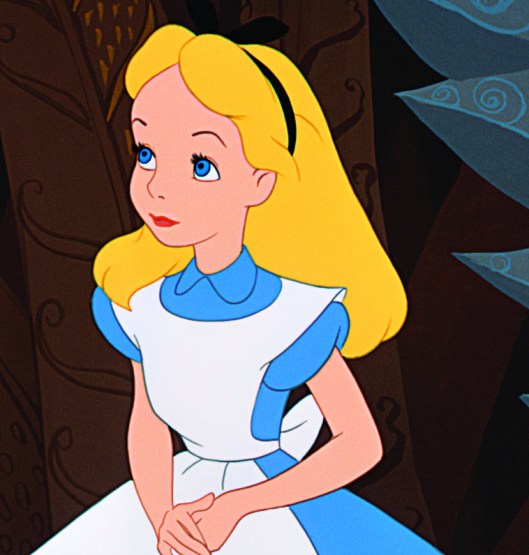
It’s not surprising, then, that one little Victorian girl, finding herself in a strange and distorted world, would try to provide herself with both comfort and stability by returning to the familiar:  reciting.

image2alice.jpg

“I’ll try and say ‘ How doth the little—'” and she

crossed her hands on her lap as if she were

saying lessons, and began to repeat it…”

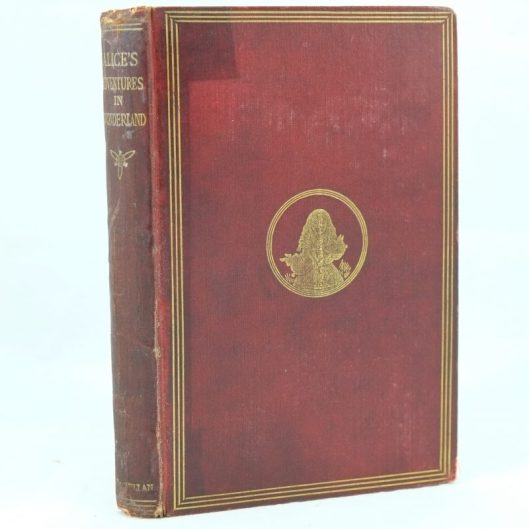
This is from Chapter 2, “The Pool of Tears”, of Lewis Carroll’s

image3carroll.jpg

Alice’s Adventures in Wonderland, 1865 (this is an 1866 printing).

image4alicefirsted.jpg

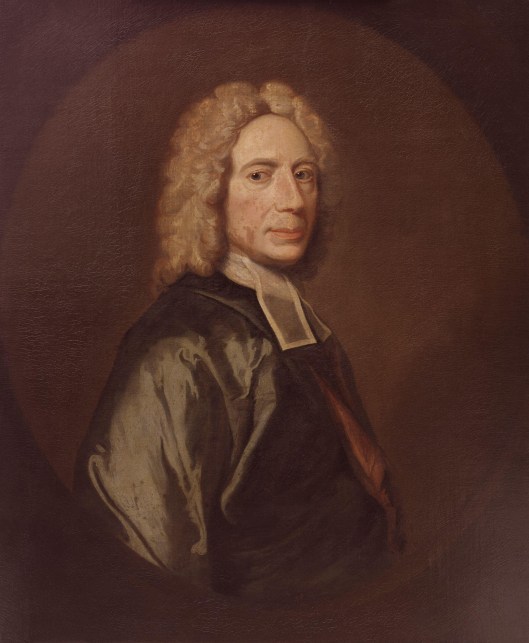
What Alice will try to repeat is a poem called “Against Idleness and Mischief”, by the clergyman Isaac Watts (1674-1748),

image5watts.jpg

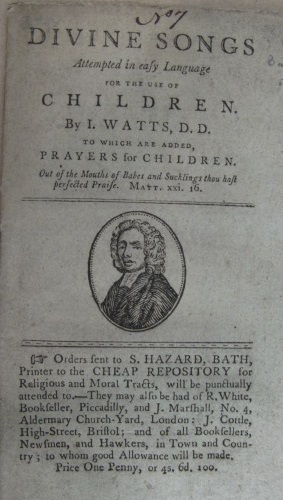
from his 1715 collection, Divine Songs Attempted in Easy Language for the Use of Children.

image6divine.jpg

This is what Alice thought that she was going to say:

1    How doth the little busy Bee

2    Improve each shining Hour,

3   And gather Honey all the day

4    From every opening Flower!


5    How skilfully she builds her Cell!

6    How neat she spreads the Wax!

7    And labours hard to store it well

8    With the sweet Food she makes.


9    In Works of Labour or of Skill

10   I would be busy too:

11   For Satan finds some Mischief still

12    For idle Hands to do.


13    In Books, or Work, or healthful Play

14    Let my first Years be past,

15   That I may give for every Day

16    Some good Account at last.


What Alice recited, however, was not quite that:

“but her voice sounded hoarse and strange, and the words did not come the same as they used to do :

” How doth the little crocodile

Improve his shining tail,

And pour the waters of the Nile

On every golden scale!


How cheerfully he seems to grin,

How neatly spreads his claws,

And welcomes little fishes in

With gently smiling jaws.”


which was hardly comforting!

Twice, Alice is called upon by others to recite—in Chapter 5, by a hookah-smoking caterpillar,

image7cater.jpg

who demands that she recite “You are old, Father William”—which is, in itself, topsy-turvy, as, instead of the kind of morally-inspiring poem Victorian children were clearly expected to produce, it’s a parody of William Wordsworth’s (1770-1850), “Resolution and Independence” (1802, published 1807), a poem about an elderly pauper who makes a living collecting leeches (and who perks up the previously-despondent Wordsworth with his sturdy view of life).

image8ww.jpg

Instead of that sturdy view, here is what Alice begins to recite on the subject of Father William’s behavior:

” You are old, Father William,” the young man said,

”And your hair has become very white;

And yet you incessantly stand on your head—

Do you think, at your age, it is right ?”


And in Chapter 10, a gryphon

image9gryphon.jpg

orders her to “Stand up and repeat ‘Tis the voice of the sluggard’, another moral poem by Watts.  It should begin:

‘Tis the voice of the sluggard, I heard him complain,

“You have waked me too soon, I must slumber again.”
As the door on its hinges, so he on his bed,
Turns his sides and his shoulders and his heavy head.

Instead, out comes:

”’Tis the voice of the lobster; I heard him declare,

‘ You have baked me too brown, I must sugar my hair!

As a duck with its eyelids, so he with his nose

Trims his belt and his buttons, and turns out his toes.””


In each case, what was meant to be comforting or at least dutiful, has turned out distorted and disturbing.  As the Caterpillar says—and Alice answers–

” That is not said right,” said the Caterpillar. ”Not quite right, I’m afraid,” said Alice,

timidly; “some of the words have got altered.”

” It is wrong from beginning to end,” said the

Caterpillar decidedly, and there was silence for

some minutes.


This was hardly the expected effect, either for Victorians in general or for Alice, in particular, but, if the Caterpillar is censorious and Alice apologetic, Sam’s master has a completely different reaction to the hobbit’s recitation:

“Frodo stood up.  He had laughed in the midst of all his cares when Sam trotted out the old fireside rhyme of Oliphaunt, and the laugh had released him from hesitation.”  (The Two Towers, Book Four, Chapter Three, “The Black Gate is Closed”)

We wonder what the Caterpillar’s reaction might have been if Alice had recited “Oliphaunt”.

Thanks, as always, for reading.

MTCIDC

CD

Gobs and Hobs.2

29 Wednesday Aug 2018

Posted by Ollamh in Artists and Illustrators, Fairy Tales and Myths, J.R.R. Tolkien, Language, Literary History

≈ Leave a comment

Tags

A Midsummer Night's Dream, Arthur Rackham, Christina Rossetti, Elf Child, Fairies, Fairy Tale, George Macdonald, Goblin Feet, Goblin Market, Goblins, Historia Ecclesiastica, Hobgoblin, James Whitcomb Riley, John Garth, John Singer Sargent, King Edward's Horse, Little Orphan Annie, Orderic Vitalis, Pat Walsh, Psalm 91, Robin Goodfellow, The Crowfield Curse, The Crowfield Demon, The Hob and the Deerman, The Hobbit, The Lord of the Rings, The Princess and the Goblin, Tolkien, Tolkien and the Great War, Tolkien at Exeter College

As always, dear Readers, welcome!

In our last, we were talking about JRRT’s 1915 poem, “Goblin Feet” its origins, original publication, and context.

In this, we want to think out loud a bit about the idea of goblins in general.

Although the poem was entitled “Goblin Feet”, Tolkien seemed not to focus so much on goblins—there are also other creatures from the Otherworld, including fairies and gnomes and even leprechauns (not to mention bats—called by their old country name “flitter-mice”—and beetles and coneys).

In this posting, however, we’re going to stick to goblins—well, and hobgoblins—but more about those later.

We first encountered goblins as very small children when a teacher read us a poem by the American poet, James Whitcomb Riley (1849-1916).
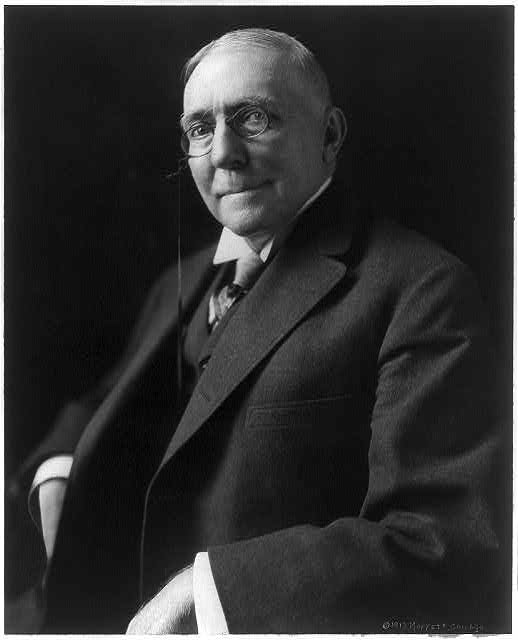
image1riley.jpg

(We can’t resist a second picture.  This is by one of our favorite late-19th-early-20th-c. American Painters, John Singer Sargent—1856-1925.)
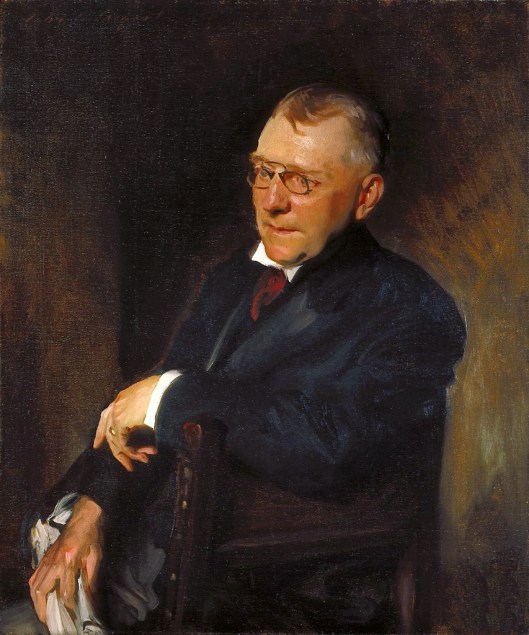
image2riley.jpg

This poem, first entitled “Elf Child”, originally appeared in a newspaper in 1885.  After that, it was meant to be “Little Orphan Allie”, but, owing to a typsetter’s error, it gained its present title, which it’s had ever since.

Little Orphant Annie – Poem by James Whitcomb Riley

To all the little children: — The happy ones; and sad ones;
The sober and the silent ones; the boisterous and glad ones;
The good ones — Yes, the good ones, too; and all the lovely bad ones.

Little Orphant Annie’s come to our house to stay,
An’ wash the cups an’ saucers up, an’ brush the crumbs away,
An’ shoo the chickens off the porch, an’ dust the hearth, an’ sweep,
An’ make the fire, an’ bake the bread, an’ earn her board-an’-keep;
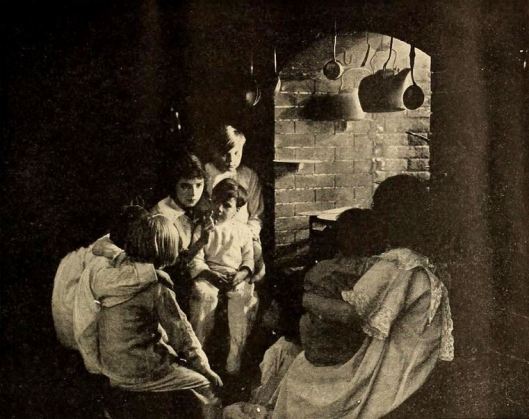
An’ all us other childern, when the supper-things is done,
We set around the kitchen fire an’ has the mostest fun
A-list’nin’ to the witch-tales ‘at Annie tells about,
An’ the Gobble-uns ‘ll git you
Ef you
Don’t
Watch
Out!

Wunst they wuz a little boy wouldn’t say his prayers,–
An’ when he went to bed at night, away up-stairs,
His Mammy heerd him holler, an’ his Daddy heerd him bawl,
An’ when they turn’t the kivvers down, he wuzn’t there at all!
An’ they seeked him in the rafter-room, an’ cubby-hole, an’ press,
An’ seeked him up the chimbly-flue, an’ ever’-wheres, I guess;
But all they ever found wuz jist his pants an’ roundabout:–
An’ the Gobble-uns ‘ll git you
Ef you
Don’t
Watch
Out!

An’ one time a little girl ‘ud allus laugh an’ grin,
An’ make fun of ever’ one, an’ all her blood-an’-kin;
An’ wunst, when they was ‘company,’ an’ ole folks wuz there,
She mocked ’em an’ shocked ’em, an’ said she didn’t care!
An’ jist as she kicked her heels, an’ turn’t to run an’ hide,
They wuz two great big Black Things a-standin’ by her side,
An’ they snatched her through the ceilin’ ‘fore she knowed what she’s about!
An’ the Gobble-uns ‘ll git you
Ef you
Don’t
Watch
Out!

An’ little Orphant Annie says, when the blaze is blue,
An’ the lamp-wick sputters, an’ the wind goes woo-oo!
An’ you hear the crickets quit, an’ the moon is gray,
An’ the lightnin’-bugs in dew is all squenched away,–
You better mind yer parunts, an’ yer teachurs fond an’ dear,
An’ churish them ‘as loves you, an’ dry the orphant’s tear,
An’ he’p the pore an’ needy ones ‘at clusters all about,
Er the Gobble-uns ‘ll git you
Ef you
Don’t
Watch
Out!

In some ways, this is a typical Victorian moral poem:  children better behave, or…  But, instead of being in “proper” English, it’s been told in the dialect of the US state of Indiana and this was something for which Riley was well-known, having written numbers of poems in the so-called “Hoosier” dialect.  (This includes what looks like a misprint for the proper spelling “orphan”.)

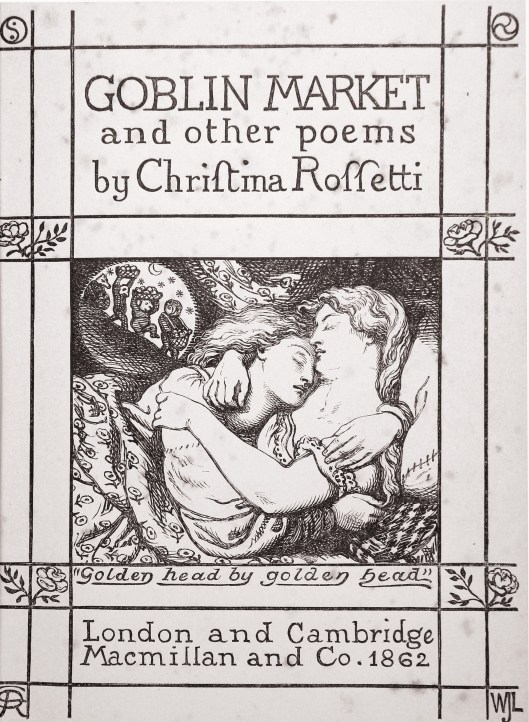
Our acquaintance with goblins has continued to be literary, from Christina Rossetti’s (1830-1894)
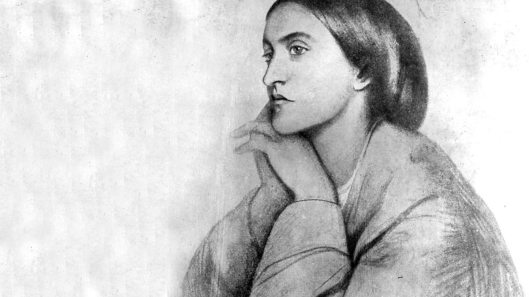
image3acr.jpg

Goblin Market (1862)

image3gobmark.jpg

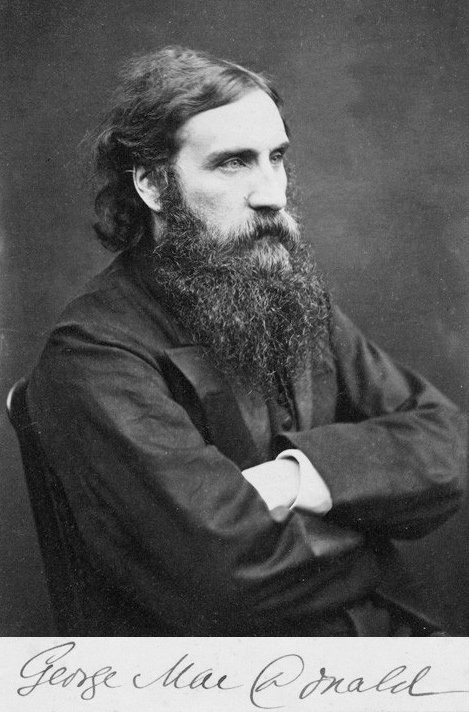
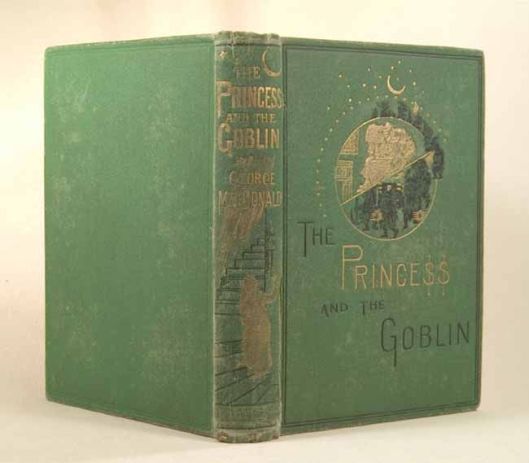
to George Macdonald’s (1824-1905)

image4gmacd.jpg

1872 fantasy novel, The Princess and the Goblin.
princessandgoblin1872.jpg

Our biggest—and longest—exposure, of course, was in The Hobbit (1937).
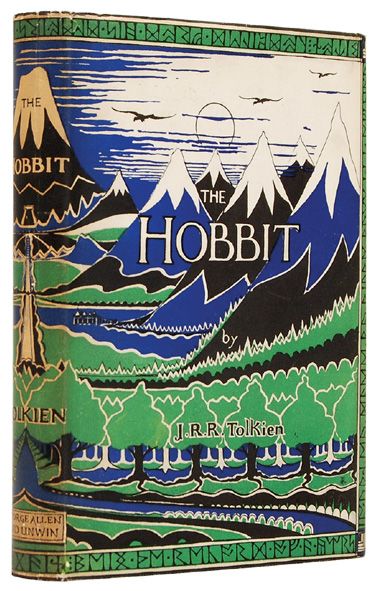
image6hob.jpg

Goblins turn up from the moment Bilbo and the dwarves fall into their hands in Chapter 4, “Over Hill and Under Hill” and we see them again in their pursuit of the party once they’ve escaped the goblin stronghold and finally at the Battle of the Five Armies.  At their first appearance, they are described as “great ugly-looking goblins” and, unlike the nimble-footed creatures of Tolkien’s 1915 poem, these have flat feet and flap them as they move.  They live in a monarchy, ruled (for the moment) by a king described as “a tremendous goblin with a huge head”.

So far, we might see that as traditional nightmarish beings, like the “great big Black Things” in stanza 3 of Riley’s poem, but JRRT does something further and very interesting with them.  This first novel was written in the 1930s, only twenty years after the Great War which had ruined much of western Europe and killed all but one of Tolkien’s oldest friends, and the emotional scar was still fresh, it seems.  He was too humane (and too wise) to blame Germany for what had happened, but it’s clear that he wouldn’t excuse the Industrial Revolution and the goblins become a stand-in for all the worse of it:

“Hammers, axes, swords, daggers, pickaxes, tongs, and also instruments of torture, they make very well, or get other people to make to their designs, prisoners and slaves that have to work till they die for want of air and light.  It is not unlikely that they invented some of the machines that have since troubled the world, especially the ingenious devices for killing large numbers of people at once, for wheels and engines and explosions always delighted them, and also not working with their own hands more than they could help; but in those days and those wild parts they had not advanced (so it is called) so far.”  (The Hobbit, Chapter 4, “Over Hill and Under Hill”)

The word “goblin” has a rather mysterious etymological history and, like so many early words, that history is a murky one, full of guesses and suggestions.  A little research produces the explanation that the word first seems to appear in Latin, in Orderic Vitalis’ (1075-c1142) Historia Ecclesiastica, Book 5, Chapter 7, in which, while reviewing the life of the early French saint, Taurinus, (lived c.400AD), Orderic mentions a demon whom the saint has vanquished, but which still haunted the area around the town of Evreux in Normandy, a demon the locals called “gobelinus”.

A century later, in the long Old French poem on the Third Crusade (1189-1192) of Ambroise of Normandy (who lived at the end of the 12th century), a noted figure in the actual history of the period, Balian d’ Ibelin, is referred to as being “more false than a gobelin” (L’Histoire de la Guerre Sainte, line 8710), with no explanation, suggesting that readers would be aware of what a gobelin was (and that he wasn’t trustworthy).

The word first appears in English in John Wycliffe’s translation of the Bible in the late 14th century, in Psalm 91, in which a God-fearing person will never be afraid of various things, including

“of a gobelyn goyng in derknisses”.

If 14th-century people knew what this creature was, we wonder whether it was still clear to people two centuries later—the older standard English translation (the so-called “King James Bible”, 1611) translates this as

“the pestilence that walks in darkness”

(which actually is close to the Hebrew original, as best as we can make out, as we don’t, unfortunately, read Hebrew—see this LINK to read for yourself.)

In the preface to the 1951 second edition of The Hobbit, Tolkien gives his own gloss, based upon the word he will employ almost entirely in The Lord of the Rings for such creatures:

“Orc is not an English word.  It occurs in one or two places but is usually translated goblin (or hobgoblin for the larger kinds).  Orc is the hobbits’ form of the name given at that time to these creatures…)

thus blending villains from 1937 with those readers would soon see in his new work, The Lord of the Rings (1954-1955).

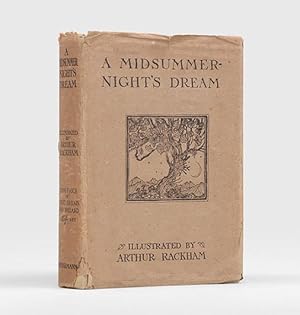
“Hobgoblin” brings us to our conclusion, however.  As in the case of “goblin”, things get murky here, too, with some stating that, as “Hob” is an old nickname for “Robert” (compare “Hodge” as an old nickname for “Roger”), so a hobgoblin is related to “Robin Goodfellow”, (“Robin” being another nickname for “Robert”) aka the Puck we see in A Midsummer Night’s Dream (1595-96?).

image7puck.jpg

(This image is from Arthur Rackham’s (1865-1939) 1933 version of the play.)
https://pictures.abebooks.com/BLAEU/md/md20625435733.jpg

Hobgoblins sometimes appear as prickly household helpers (rather like Dobby in the Harry Potter books), and those who want to associate the “hob” of “hobgoblin” with the “hob” (earlier “hubbe”), “the side of a fireplace” see that prefix as suggesting that “hobgoblins” might be a subset of “goblins” in general.

For us, however, a “hob” is a character in an on-going series we recommend to our readers.  These are novels set in and around a decaying medieval monastery in 1347 and the haunted world around it, written by Pat Walsh, an archaeologist/fantasy author.

image8pw.jpg

The first two in the series are The Crowfield Curse (2010) and The Crowfield Demon (2011)
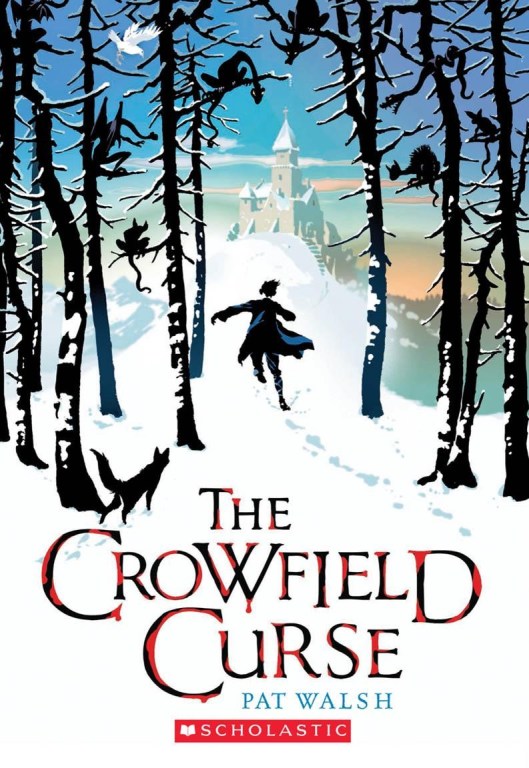
image9crowc.jpg

image10crowd.jpg

In this series, the hero, Will, an orphan, discovers a wounded creature and brings it back to the monastery.  It’s a hob—and will be a major character as the series develops.  In 2014, Walsh began a new series with The Hob and the Deerman.

image11thehob.jpg

Walsh has promised a third book in the Crowfield series, Crowfield Rising, but it has yet to appear—unlike our next posting, which will appear (provided that there is no space alien invasion or implementation of Order 66 or Sauron producing a new ring), next week.

Till then, thanks, as ever, for reading.

MTCIDC

CD

PS

In our last, we mistakenly identified a photo of JRRT in a uniform which we thought belonged to a unit at his alma mater, King Edward’s School, as the caption with it said “1907”.   It seemed odd to us, however, because it had the look of a cavalry unit (the bandoleer across the chest was common during the period for cavalry and for artillerymen) and, for all that he writes admiringly of horses, we had no sense that he himself was ever a horseman.  This nagged at us until we did a little research and realized our mistake:  the uniform was for King Edward’s Horse, the equivalent of a national guard/volunteer unit raised before the Great War.  Tolkien was a member of this at the beginning of his Oxford career in 1911, but later resigned.  John Garth’s two really useful books, Tolkien at Exeter College and Tolkien and the Great War, set us straight.

image12keh.jpg

PPS

If you read us regularly, you know that we have a special love for early, silent film  While researching this posting, we learned that, in 1918, a film was made based upon “Little Orphant Annie” and that a copy of it has survived for us to see.  Here’s a poster and a still.
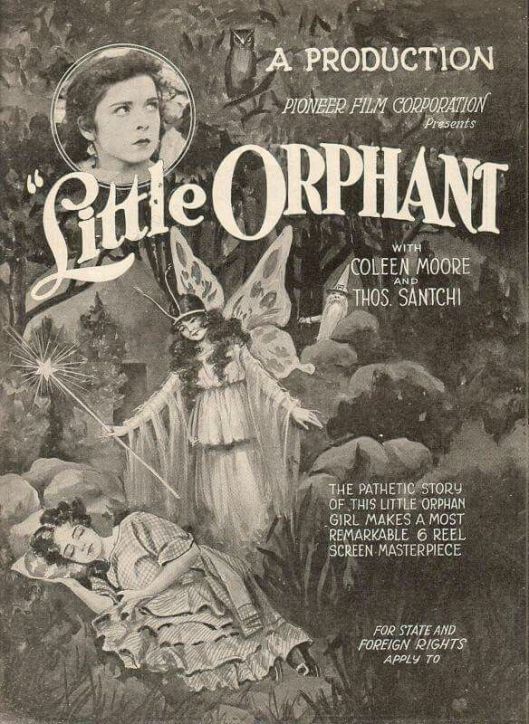
image13littleorphant.jpg

image14still.jpg


Gobs and Hobs (1)

22 Wednesday Aug 2018

Posted by Ollamh in Fairy Tales and Myths, J.R.R. Tolkien, Literary History, Military History

≈ 2 Comments

Tags

A E Mason, A Midsummer Night's Dream, Brunhilde, cadet, cockfighting, Edith Bratt, Exeter College, Faeries, Fairies, Gilbert and Sullivan, Goblin Feet, Iolanthe, Oxford Poetry, Richard Doyle, Richard Wagner, The Four Feathers, The Great War, The Lord of the Rings, Tolkien, white feather, William Shakespeare, World War I, Yeats

As always, dear readers, welcome.

In 1915, Tolkien was

image1jrrt.jpg

scrambling to finish his BA at Exeter College

image2aexeter.jpg

before he was swept up into the war which was gradually devouring the younger male populations of much of western Europe

image2bcasualties.jpg

and would soon swallow him, as well.

image2jrrt.jpg

Although he had been a cadet in his earlier days,

image3cadet.jpg

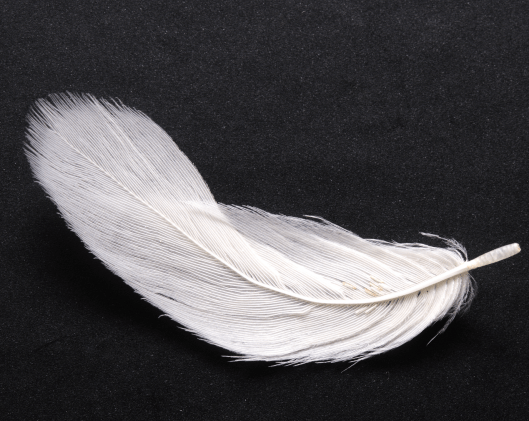
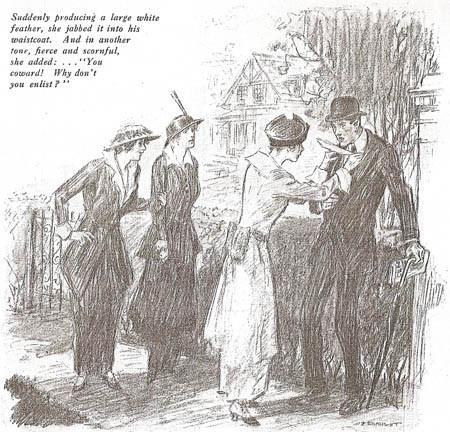
he resisted the societal pressure to join up and that must have been difficult, as it was not uncommon in 1915 for young men not in uniform to be stopped in the street by civilians, particularly women, and asked why they hadn’t enlisted yet before being presented with a white feather as a symbol of cowardice.

image4feather.png

image5feather.jpg

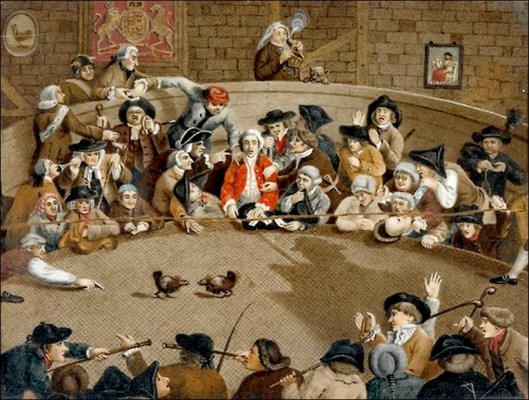
The use of a white feather appears to have been derived from the old sport of cockfighting, in which it was believed that a rooster with a white tail feather would be a poor combatant.

image6cockfighting.jpg

For us, the image is directly related to a famous 1902 adventure novel, The Four Feathers

image7fourfeathers.jpg

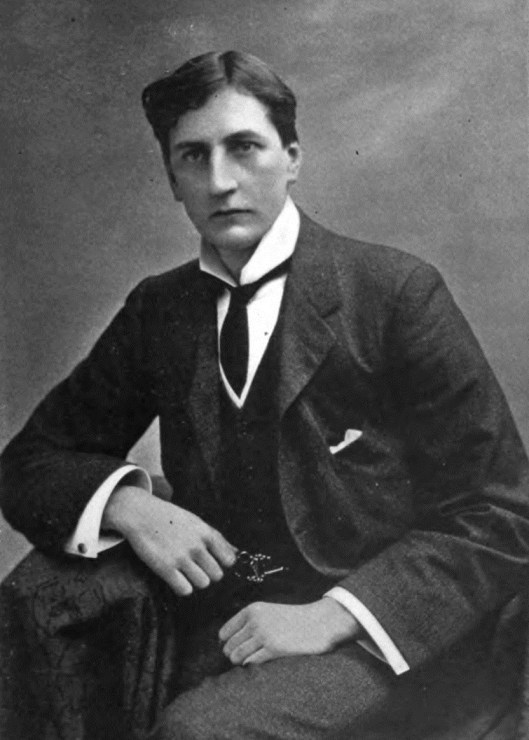
by A E Mason (1865-1948).

image8aemason


In this book, the main character, Harry Feversham, is thought to be a coward by his brother officers and by his fiancé and goes to heroic lengths to prove otherwise (here’s a LINK so that you can enjoy the book for yourself, if you would like).

As well as the book, there have been a number of films made from it, including the one which we believe to be the best, from 1939.

image9fourfeathers.jpg

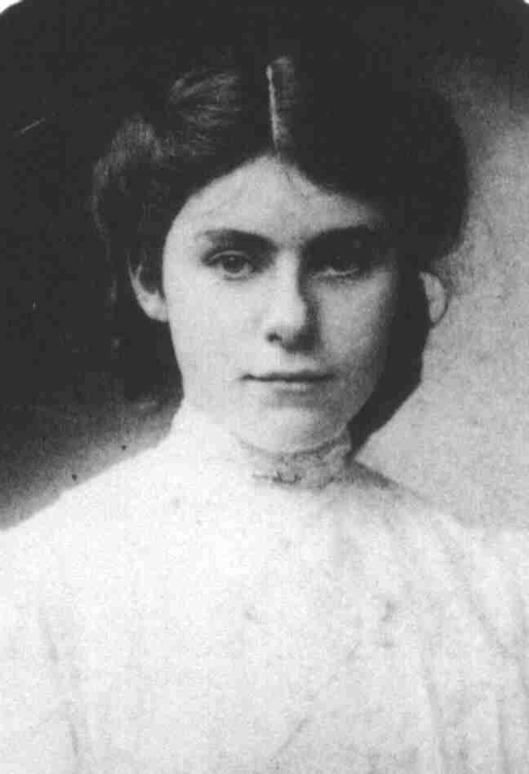
During this scramble to finish, Tolkien wrote a poem in late April for his wife-to-be, Edith Bratt (1889-1971).

image10edith.jpg

Called “Goblin Feet”, it was first published in Oxford Poetry 1915.  (Here’s a LINK so that you may have your own copy of the book.)

image11opo.jpg

Here’s the text:

I am off down the road
Where the fairy lanterns glowed
And the little pretty flitter-mice are flying;
A slender band of gray
It runs creepily away
And the hedges and the grasses are a-sighing.
The air is full of wings,
And of blundery beetle-things
That warn you with their whirring and their humming.
O! I hear the tiny horns
Of enchanted leprechauns
And the padded feet of many gnomes a-coming!
O! the lights! O! the gleams! O! the little twinkly sounds!
O! the rustle of their noiseless little robes!
O! the echo of their feet — of their happy little feet!
O! the swinging lamps in the starlit globes.

I must follow in their train
Down the crooked fairy lane
Where the coney-rabbits long ago have gone.
And where silvery they sing
In a moving moonlit ring
All a twinkle with the jewels they have on.
They are fading round the turn
Where the glow worms palely burn
And the echo of their padding feet is dying!
O! it’s knocking at my heart—

Let me go! let me start!
For the little magic hours are all a-flying.

O! the warmth! O! the hum! O! the colors in the dark!
O! the gauzy wings of golden honey-flies!
O! the music of their feet — of their dancing goblin feet!
O! the magic! O! the sorrow when it dies.

Two things strike us immediately about this text.  First, its tone of subdued longing for Otherness—“I must follow”, “O! it’s knocking at my heart”, “O! the sorrow when it dies”.  This reminded us of WB Yeats’  (1865-1939) “The Hosting of the Sidhe” (from the volume The Wind Among the Reeds, 1899)

The host is riding from Knocknarea
And over the grave of Clooth-na-Bare;
Caoilte tossing his burning hair,
And Niamh calling Away, come away:
Empty your heart of its mortal dream.
The winds awaken, the leaves whirl round,
Our cheeks are pale, our hair is unbound,
Our breasts are heaving, our eyes are agleam,
Our arms are waving, our lips are apart;
And if any gaze on our rushing band,
We come between him and the deed of his hand,
We come between him and the hope of his heart.
The host is rushing ‘twixt night and day,
And where is there hope or deed as fair?
Caoilte tossing his burning hair,
And Niamh calling Away, come away.

(Here, by the way, is the cover to the first edition of the volume, artwork by Yeats’ friend, Althea Giles.

image12windcover.jpg

And here’s a LINK to the earliest edition we can find on the internet—it’s the 4th, from 1903.)

Yeats, in this part of his creative life, was just leaving the late-Victorian era called the “Celtic Twilight”, in which Irish artists of all sorts were attempting to create a new art, independent of British art and literature and based upon what they conceived were “Old Irish models”.  To someone of late-Romantic temperament, like Tolkien, the attraction must have been very strong—note that leprechauns have somehow gotten mixed with the goblins!

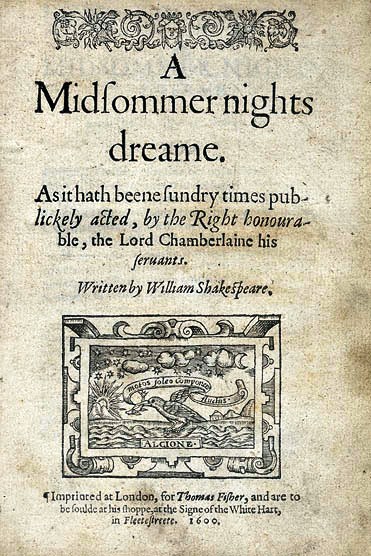
This mixing of all kinds of beings from Faerie—goblins, fairies, leprechauns, gnomes—and their diminutive size—note five uses of “little” and one “tiny” –is the second thing which strikes us. The shrinking of otherworld beings in English literature can be traced at least as far back as Shakespeare and A Midsummer Night’s Dream,

STC 22302, title page


but really catches hold in the 19th century, with the pictorial work of artists like Richard Doyle

image14doyle

image15fairyland

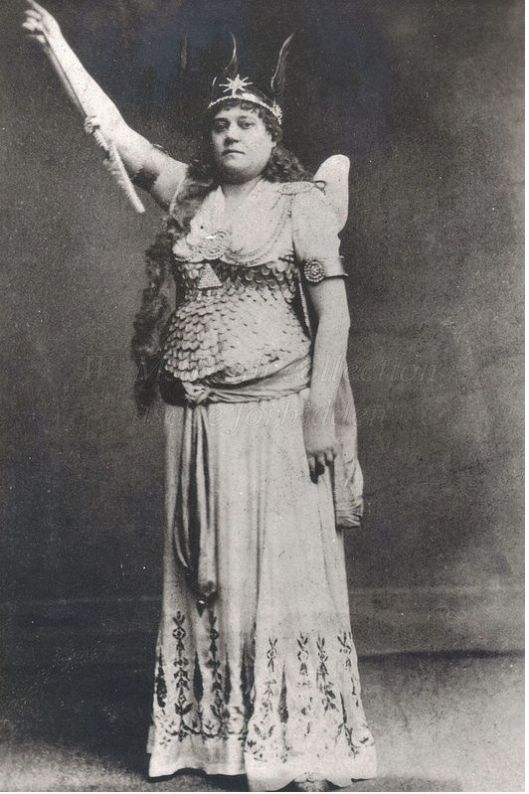
and which is parodied by WS Gilbert (1836-1911), in Iolanthe (1882), in which the human-sized (and often played by a stout woman) Queen of the Fairies talks all about curling “myself inside a buttercup”, all the while being costumed to look like a Valkyrie from Wagner’s operas—an extra visual joke (which is, in our Gilbert and Sullivan experience, no longer employed—a pity!).

image16queen

image17brunhilde

(Arthur Sullivan (1842-1900), who was the composer of Iolanthe, has left us a very beautiful overture for it.  Here’s a LINK so that you can hear it.)

JRRT seems, at the very beginning of his literary life, to have been caught up in this mixture of Shakespeare and Victoriana and Yeats’ “Celtic Twilight” mood and it’s perhaps for that reason that, later in life, looking back on it, he said of this early poem:

“I wish the unhappy little thing, representing all that I came (so soon after) to fervently dislike, could be buried forever.” (The Book of Lost Tales Part One, “The Cottage of Lost Play”, 32)

Was he embarrassed at his own youthful influences?  And there have certainly been later critics who have been hard upon the poem.

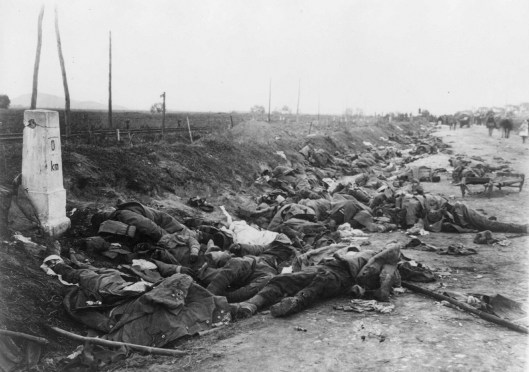
If we put it into the context of 1915, however, this longing to be anywhere but in wartime 1915 makes perfect sense, especially for a young, sensitive, highly-intelligent man deeply in love with a girl he’d worked so hard to be with. The real horrific violence of the Great War was kept hidden from the people of the UK by the Government.  Newspapers and magazines were censored, soldiers’ letters were censored (Tolkien and Edith developed a secret code in his letters to get around that censorship), soldiers were not allowed to keep diaries or have cameras (only official photographers were permitted to work at the Front—and their work was closely watched), but word still got back, mainly, we suspect, from those on leave, often wounded, who had experienced events which turned out like this—

image18casualties

Is it any wonder, with what he knew about and dreaded being part of, that JRRT would have wished to be on the road to Fairyland?

Thanks, as always, for reading.

MTCIDC

CD

ps

In our next, we want to think out loud a bit about the goblins whose feet JRRT wants so much to follow…

In Depth

15 Wednesday Aug 2018

Posted by Ollamh in J.R.R. Tolkien, Language, Literary History

≈ Leave a comment

Tags

Beowulf, Canterbury Tales, Chaucer, Christopher Tolkien, conlang, Danian, David J Peterson, Dothraki, Elvish, English, Game of Thrones, Hamlet, Ilkorin, James Joyce, Jane Austen, language, Noldorin, Pride and Prejudice, Qenya, Shakespeare, Star Wars, Telerin, The Art of Language Invention, The Lord of the Rings, Tolkien, Ulysses

Welcome, as always, dear readers.

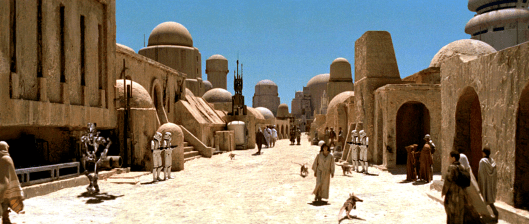
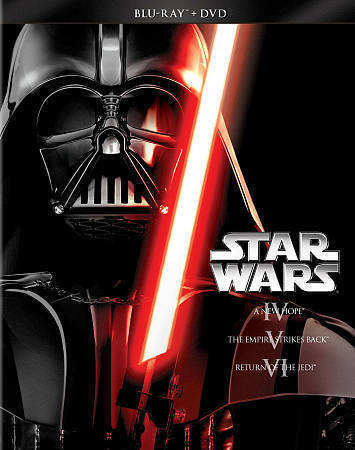
In 1977, the more observant viewers and critics commented upon the look and feel of a new film.  Instead of a world in which everything appeared newly-produced and sparkling, this was one in which it was clear that people had lived for a long time and many different peoples, at that.

image1moseisley.png

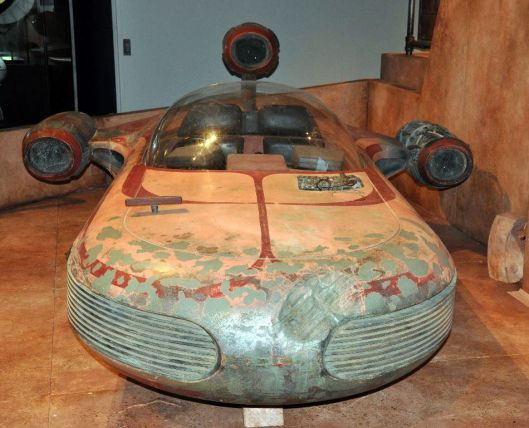
Even their vehicles had a scratched and dusty look.

image2speeder.jpg

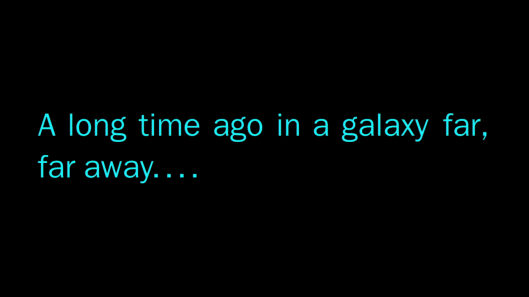
We had been told, of course, in the very opening sequence that this was an old place—

image3long.png

but actually seeing its used look was that much more convincing

image4crawler.jpg

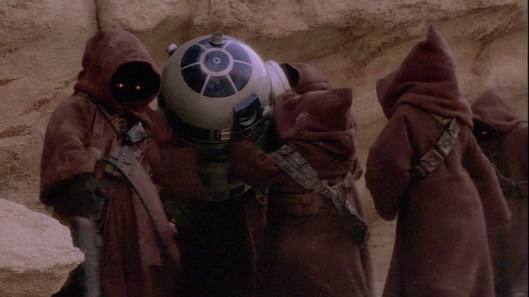
as was seeing—and hearing—its peoples,

image5jawas.jpeg

who sometimes even required subtitles, as if the audience were watching a foreign film.

image6greedo.png

In time, as the success of this film produced not only more films, but mountains of other material, from novels to graphic novels to spin-off series to toys and t-shirts and kitchen ware,

image7mugs.jpg

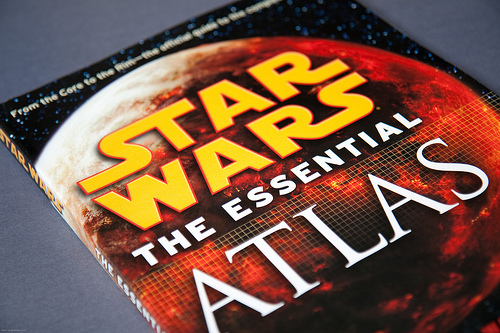
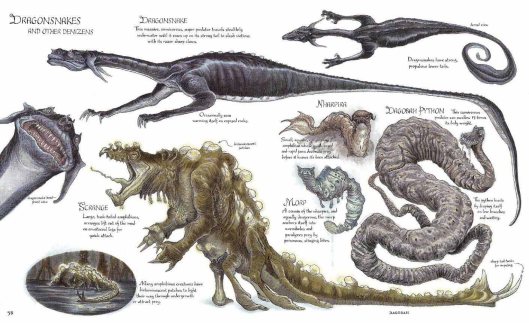
a whole literature appeared about this world—or, we should say, worlds. Its geography and even its extremely-varied animal life.

image8atlas.jpg

image9fauna.jpg

And, along with all of the other material, information about its languages began to appear.

image10aura.png

What prompted this posting, however, was something odd about one of those languages, that spoken by a character in what would, in time, become the sixth in the series.

image11boushh.jpg

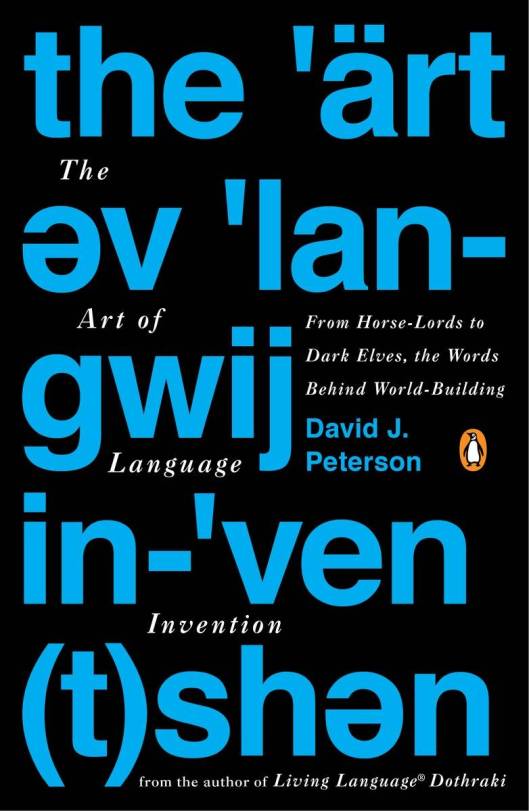
This was pointed out to us by David J. Peterson

image12peterson.jpg

in his 2015 book, The Art of Language Invention.

image13book.jpg

As a child, what had puzzled Peterson was that the character (who is subtitled), says only “Yate, yate, yoto, ei, yato, cha”—in total, only six different words, but they are translated as everything from “I have come for the bounty on this Wookiee” to “50,000, no less”.  (This is quoted and discussed on pages 3 to 5 of Peterson’s book—which is, by the way, one we would recommend, if you’re as interested in languages as we are.)

How could so few words mean so many different things?  As an adult, looking back, Peterson had his doubts and we would agree—especially when reading about the world in which Peterson lives, the world of “conlang”, which is short for “constructed languages”.  Peterson is the creator of Dothraki, the language of the nomadic Dothraki people,

image14dothraki.jpg

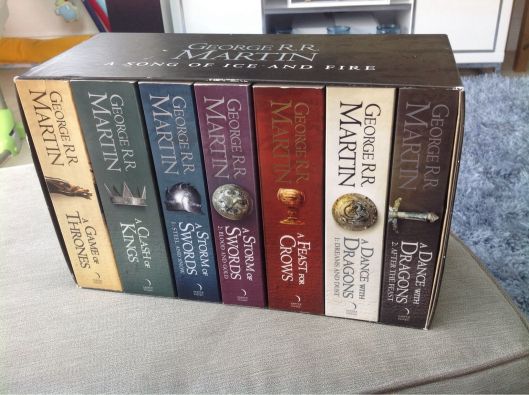
one of the numerous races which inhabit the landscape of George R R Martin’s Game of Thrones, first novels, then a huge, elaborate, and engrossing television series.

image15gamebooks.jpg

image16tv.jpeg

The difference between “yate”, etc and Dothraki is that those few words are there to suggest that someone is speaking in a language different from the language spoken by the majority of the characters—which is the method employed throughout not only this film, but its two immediate successors.

image17swset.jpg

What Peterson set out to do was to create the shape of an entire language (something he has done more than once).  Here’s a LINK to the Wiki site, which, as usual, leads to other sites, which lead to other sites, which lead… if you’d like to learn more.

As worn-looking buildings and vehicles, different peoples and flora and fauna, and at least the suggestion of other languages create a bigger, deeper picture of the setting of an adventure, so, too, does the suggestion of great age.  Over time, the huge pile of material for the film series we first mentioned showed, in detail, that what we were seeing was, in fact, only the latest phase in a whole galaxy of civilizations over many centuries—after all, “For over a thousand generations, the Jedi Knights were the guardians of peace and justice in the Old Republic”.

image18obiwan.jpg

Another way to suggest that great age is a much less dramatic one—perhaps even a nearly-invisible one–practiced by one of our favorite authors and the subject of innumerable postings, and here is one of his efforts.

image19chart.jpg

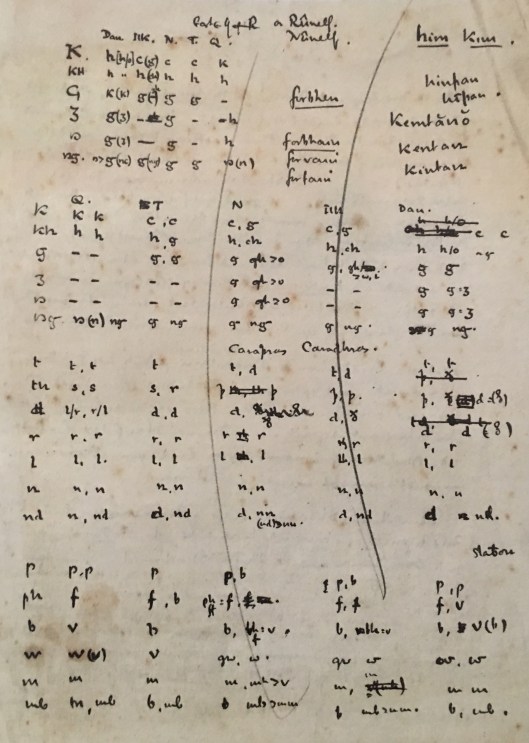
What we’re seeing here is JRRT working out the history of sounds throughout a series of Elf languages, Qenya, Telerin, Noldorin, Ilkorin, and Danian, part of his immense and immensely-detailed work on the tongues of Middle-earth.   All languages change through time, of course—here’s a rough version of the succession of periods of English—

Old English (the opening lines of Beowulf, 700-1000AD,

image20beo.jpg

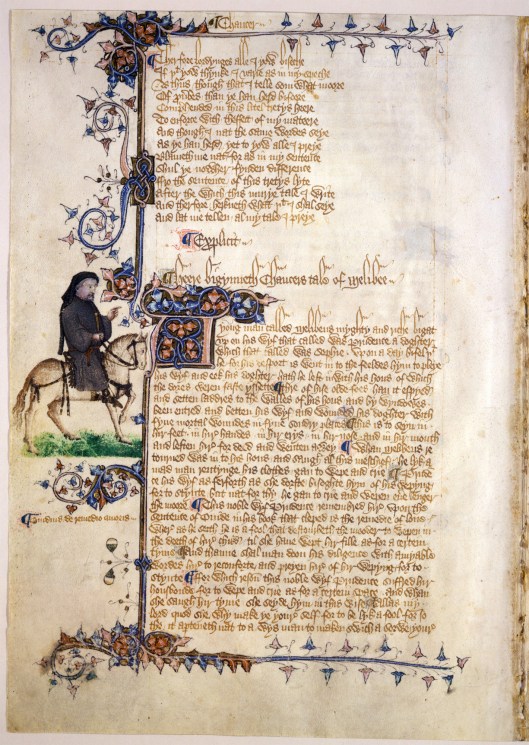
Middle English (the opening of Chaucer’s Canterbury Tales, c.1400AD),

image21chaucer.jpg

Early Modern English (the beginning of the first scene of Shakepeare’s Hamlet, 1603),

image22hamlet.jpg

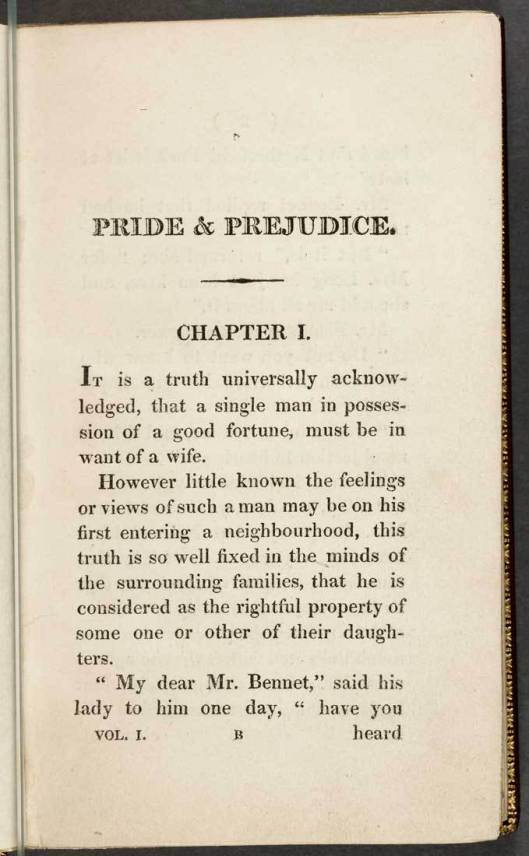
early 19th-century English (the first lines of Jane Austen’s Pride and Prejudice, 1813),

image23pp.jpg

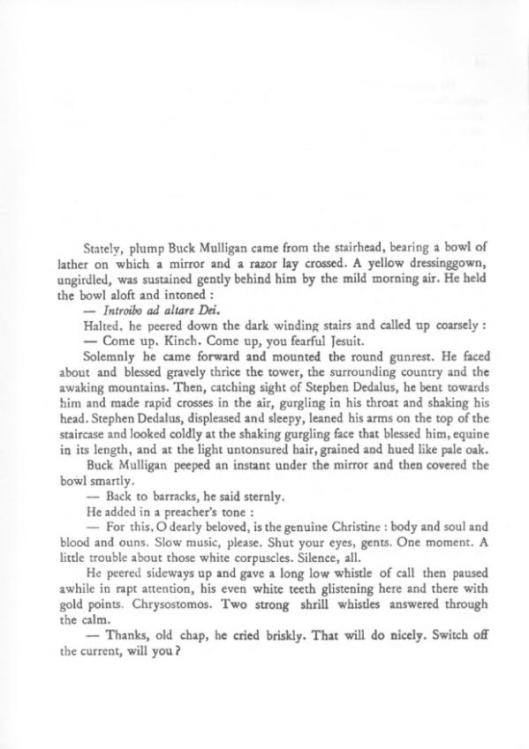
and early 20th-century English (the opening of James Joyce’s Ulysses, 1922).

image24ulysses.jpg

And Joyce even attempted to suggest the procession of those periods in Chapter 14 of Ulysses, “The Oxen of the Sun”, where the story is told through paragraphs which sound like earlier versions of the language gradually moving towards modern English.  (The novelist Nabokov, who played with language constantly, actually found this chapter boring, perhaps because it seemed to him like a one-off, not really in aid of the plot and its characters in general, but rather just a piece of private fun by and for the author?)

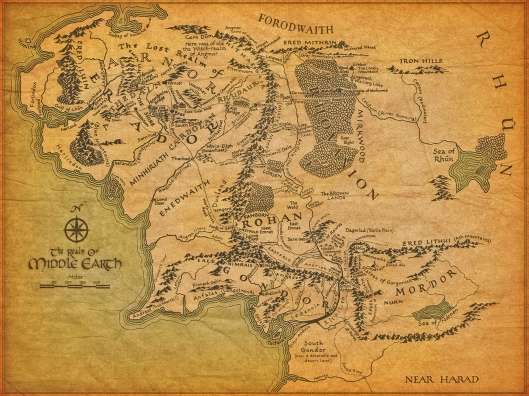
JRRT, however, goes one better.  Like other creators of big adventures, he used lots of means to deepen his story, from an extensive and detailed map

image25map.jpg

to describing the remains of earlier times still standing in the landscape of Middle-earth of the present,

image26argonath.jpg

to adding detailed historical appendices and chronologies (and his valiant son, Christopher, has added many volumes more),

image27ct.jpg

but using intricate sound changes and their logical development takes the idea of depth into new regions, especially because it would probably go unnoticed by most readers—there’s an awful lot of detail in those appendices—but whose meticulous creation is not in the least surprising for someone who once wrote, “The ‘stories’ were made rather to provide a world for the languages than the reverse.” (Letters, 219)

Thanks, as ever, for reading.

MTCIDC

CD


ps

Ah yes—the nearly-inevitable post scriptum—if the normal world/s of the films we first mentioned are “scruffy-looking” (to quote a character about another character), we notice that the world of the villains—the soldiers of the Empire and their surroundings—are hard and clean and shiny—which makes us feel a little better when we wonder when we may last have shined our shoes.

image28deathstar.jpg

Dayless Dawn

08 Wednesday Aug 2018

Posted by Ollamh in Artists and Illustrators, Heroes, J.R.R. Tolkien, Military History, Military History of Middle-earth

≈ Leave a comment

Tags

Battle of the Somme, British Expeditionary Force, chemical warfare, Fritz Haber, Gas warfare, Great War, John Singer Sargent, maxim gun, mustard gas, tear gas, The Lord of the Rings, The Siege of Gondor, Tolkien, trench warfare, trenches, Vale of Anduin, WWI, Young Indiana Jones

Welcome, as always, dear readers.

In this, the last year of the centennial of the Great War, we are often reminded not only of that conflict, but also that Second Lieutenant J R R Tolkien took part in it.

image1jrrt.jpg

By the time he had reached the Front, in July, 1916, the latest round of blood-letting, the infamous Somme, was already in progress.

image2over.jpeg

image3somme.jpg

“Blood-letting” is an understatement:  on the first day of the battle, 1 July, 1916, there had been nearly 60,000 British casualties and attacks would continue till November.  The problems faced were mainly those of 1914.  The well-equipped, well-trained professional soldier of the British Expeditionary Force

image4tommy.jpg

met the Maxim Gun

image5maxim.jpg

and took heavy casualties.  These casualties were multiplied by the number and range of German artillery.

image6haubitzer.jpg

To defend themselves against these modern weapons, soldiers went to ground as soon as they could.

image7frenchembankment.jpg

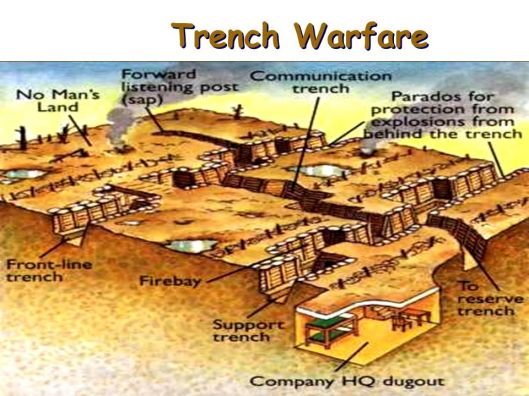
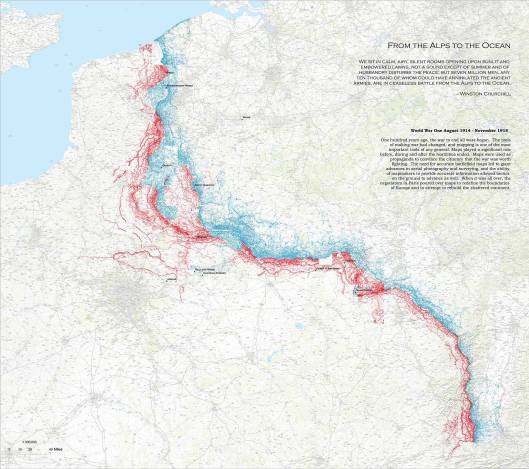
Digging in moved from a simple scrape of the earth into 500 miles (from Switzerland to the North Sea) of often very elaborate earthworks.

image8trench.jpgimage9system.jpeg

Equip these with machine guns

image10mg.jpg

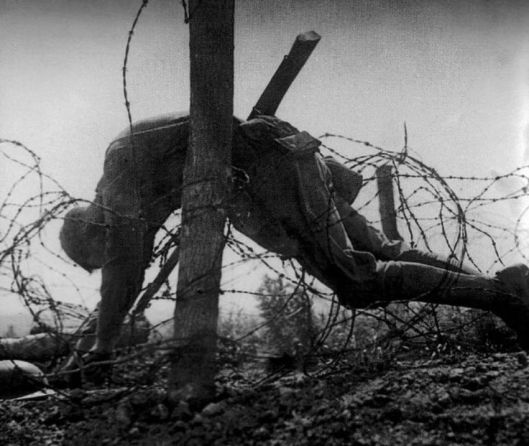
and spread acres of barbed wire in front

image11barbedwire.jpg

and you can think that you’re safe from attack.

image12trapped.jpg

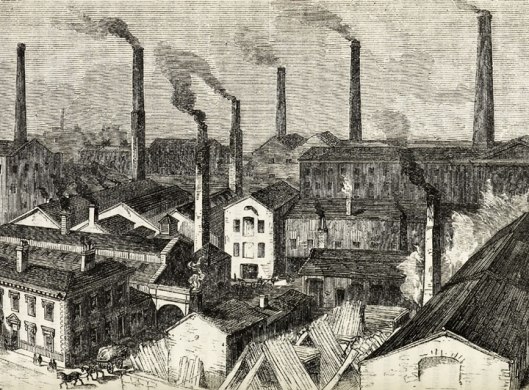
So, the problem then was:  how to break through?  And this is where the German chemical industry

image13factory.jpg

and its brilliant chemist, Fritz Haber,

image14haber.jpg

(who will share the Nobel Prize for chemistry in 1918) came in.

Haber, famous for creating artificial fertilizer—his positive side—was also a captain in the Kaiser’s army (hence the uniform in our illustration), intensely convinced that Germany was justified in waging war on Europe, and began to develop a reply to elaborate fortifications:  poison gases—Haber’s dark side.

Nearly twenty years before, in 1900, many of the world’s nations, including Germany, had signed an agreement at the Hague that, among other things, they wouldn’t employ such a weapon, but, clearly, the temptation was too great, and not only for Germany.  After the first major attack, 22 April, 1915, in which the Germans had killed or driven a large number of French troops from their trenches, the British and French began their own development programs.

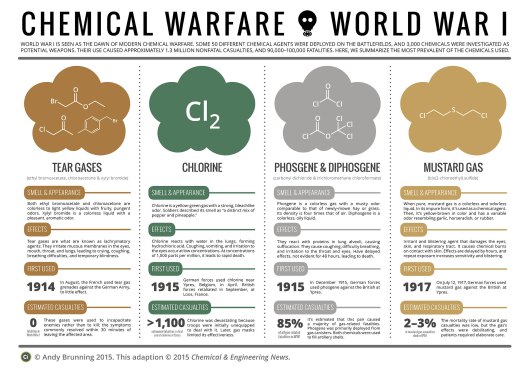
Over time, the gases varied as experiments showed scientists and military men what worked and what didn’t.  There were simple tear gases, which incapacitated soldiers by blinding them with their own tears and disturbed their breathing, to much deadlier blister agents—but here’s a chart to lay out the effects.

image15gaschart.jpg

Delivery systems varied.  Gas might be released from canisters, allowing the prevailing wind to carry it to the enemy.

image16gas.jpg

The difficulty here was the variability of winds—should the direction change, the releasers of gas might—and sometimes did—find themselves the victims.

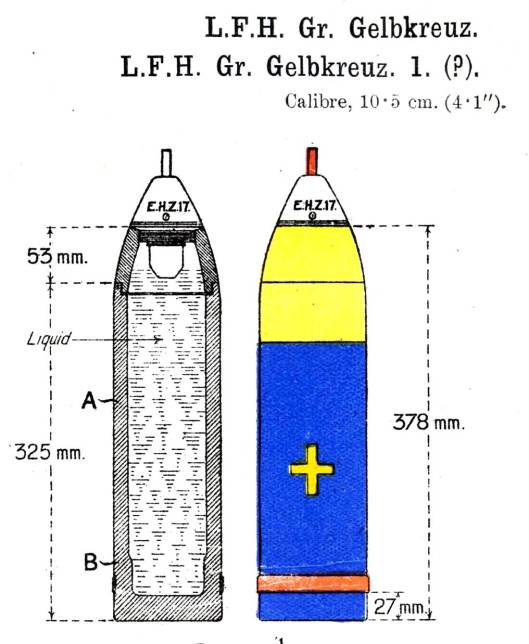
Gas packed into artillery shells was more dependable.

image17gas.jpg

Shells were marked to identify which gas was inside, as in this illustration.

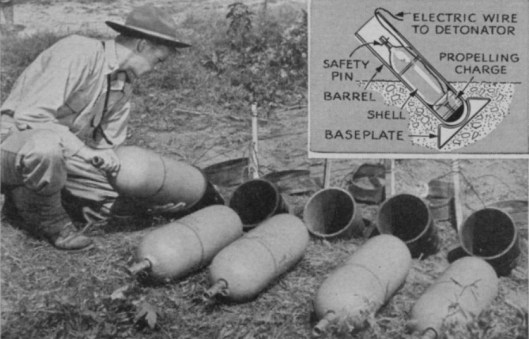
In time, the British developed a method of projecting gas bombs in large numbers with what were called “Livens projectors”.

image18gasbomb.jpg

image19livens.jpg

This simple mechanism could be used in banks to blanket the enemy line with poisonous air.

image20projectors.jpg

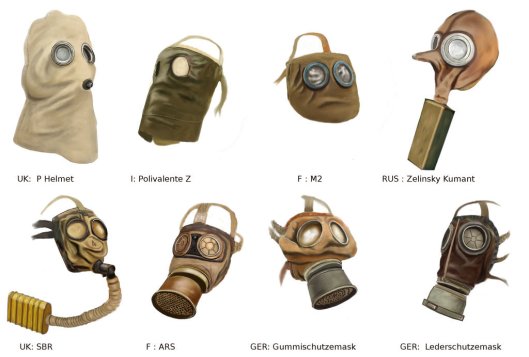
Initially, there had been no defense against this weapon, but, in time, both sides developed gas masks.

image21masks.jpg

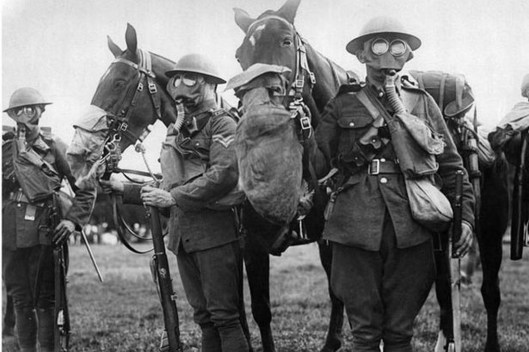
And, of course, something had to be done for the hundreds of thousands of horses both depended upon.

image22amask.jpeg

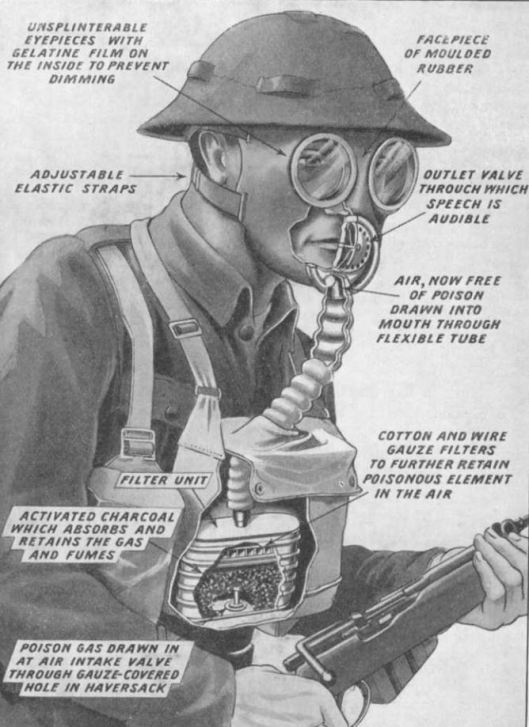
Here’s how the later, more efficient ones worked.

image22mask.jpg

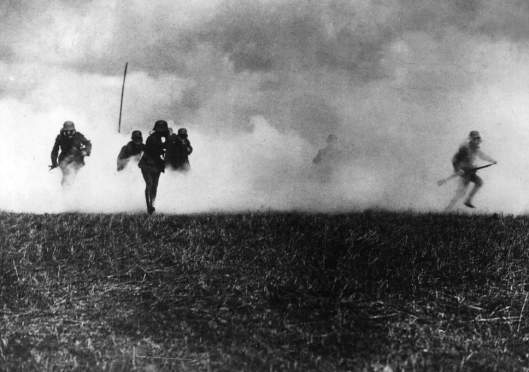
They might have prevented suffocation, but they were uncomfortable and, worse, the lenses soon fogged over, making it difficult to see the enemy in their masks advancing through the clouds of gas.

image23advance.jpg

image24combat.jpg

In the television series about young Indiana Jones of some years ago, there was a very graphic depiction of this—and here’s a LINK so that you can see for yourself.  (We very much recommend this series, by the way.  On the whole, it has many episodes which not only fill in Indie’s past, but are good adventure stories in themselves.)

We can imagine, then, what might have been going on in JRRT’s mind when he wrote:

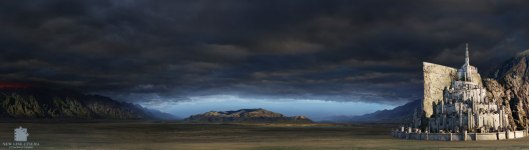
“It was dark and dim all day.  From the sunless dawn until evening the heavy shadow had deepened, and all hearts in the City were oppressed.  Far above a great cloud streamed slowly westward from the Black Land, devouring light, borne upon a wind of war; but below the air was still and breathless, as if all the Vale of Anduin waited for the onset of a ruinous storm.”  (The Return of the King, Book Five, Chapter 4, “The Siege of Gondor”)

image25gondor.jpg

Were those orcs approaching, or the Kaiser’s infantry?

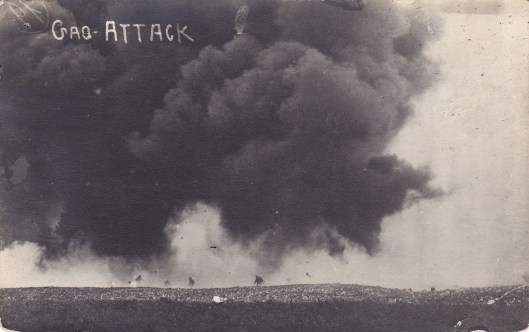
image26gas.jpg

Thanks, as ever, for reading.

MTCIDC

CD

ps

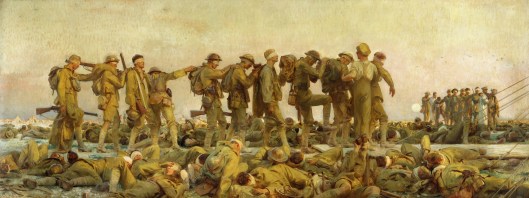
The horrific effects of chemical warfare have, to us, never been more powerfully depicted than in John Singer Sargent’s (1856-1925)  Gassed (1919), based upon Sargent’s visit to the Western Front in July, 1918.

image27gassed.jpg

pps

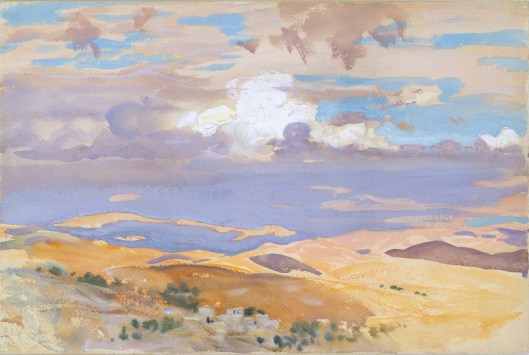
But, you know us—if we can add a little something more, we always will and, in this case, we want to end not with just this image, horrible and moving as it is, but with something from another of Sargent’s works.  Along with being a society painter, he was one of the greatest American watercolorists and has left us a collection of beautiful, atmospheric works from Europe, the US, and the Caribbean.  We want to end, then, with these very different clouds–

image28sargent.jpg

Charge!

01 Wednesday Aug 2018

Posted by Ollamh in Artists and Illustrators, Films and Music, J.R.R. Tolkien, Military History, Military History of Middle-earth, The Rohirrim

≈ Leave a comment

Tags

16th Lancers, Aliwal, Australian Light Horse, Australians, Balaclava, Beersheba, Cavalry, Charges, Great War, Light Brigade, Palestine, Rohirrim, Scots Greys, The Lighthorsemen, The Lord of the Rings, Tolkien, Turks, Warhorse, Waterloo

As always, dear readers, welcome.

In an addition to an entry in Letters, the main portion of which has rather a murky history (see 217-218), but which the editor dates as “presumably written circa 1966”, Tolkien says that several features of The Lord of the Rings “still move me very powerfully”.  These features include being “most stirred by the sound of the horses of the Rohirrim at cockcrow”.

As this is one of our favorite parts of the book,


image1

we would absolutely agree, but, as is so often the case, both with JRRT and with ourselves, we wondered why.

The easiest answer is that it’s a highly-dramatic moment:  the main gate of Minas Tirith is giving way under the blows of Grond, the orcs are about to pour in, and it looks like Aragorn and his companions won’t appear in time to save the situation.

image2grond.png

We have been following the Rohirrim, of course, from their muster to their march

image3roh.jpg

to their meeting with Ghan-buri-Ghan,

image4ghan.jpg

so the build is two-fold:  the attack, which is completely focused on breaking in, and the approach of the Rohirrim.  Thus, when it looks darkest, the charge is like sunlight breaking through heavy cloud.

image5charge.jpg

This is a beginning, we thought, to why, but could there have been another reason for JRRT?

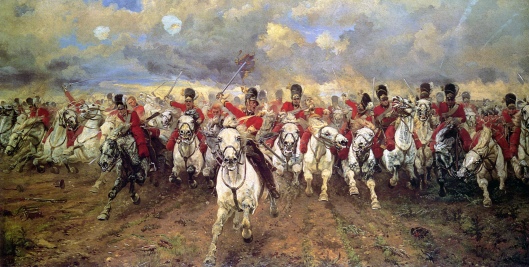
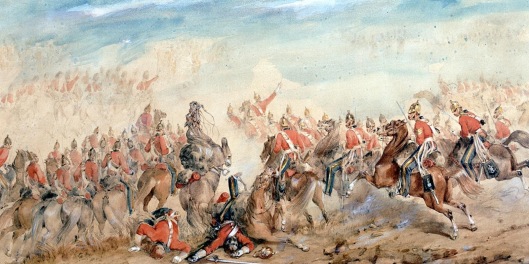
When Tolkien, growing up, thought of cavalry charges, he probably saw, in his mind’s eye, the glorious mounted attacks of Britain’s past, like the Scots Greys at Waterloo


image6scot

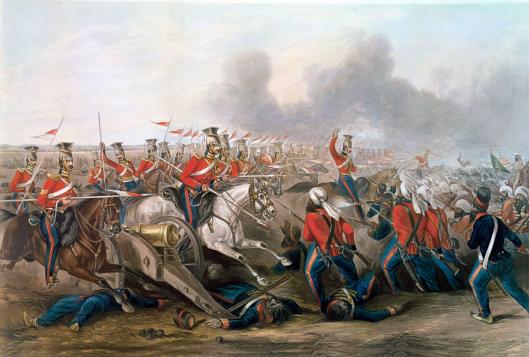
or the 16th Lancers at Aliwal

image7aliwal.jpg

or the Light Brigade at Balaclava.

image8balaclava.jpg

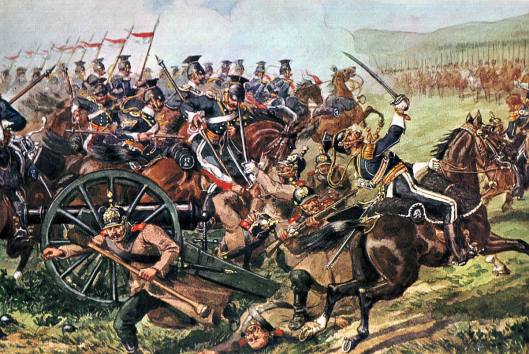
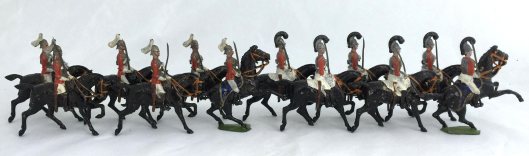
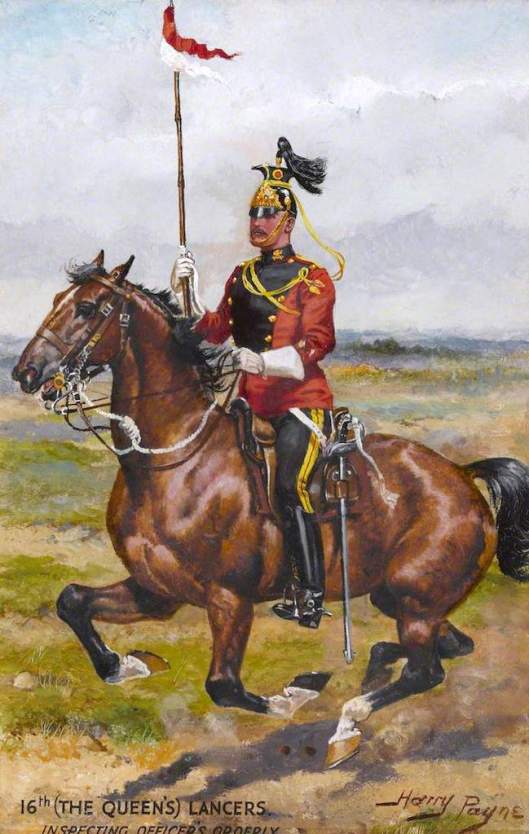
In all of these, soldiers in bright-colored coats waved swords and lancers and dashed fearlessly against the enemy.  Even his toy soldiers would have had that same devil-may-care look

image9britains.jpg

as did the real cavalry of his childhood,

image10aqueenslancers.jpg

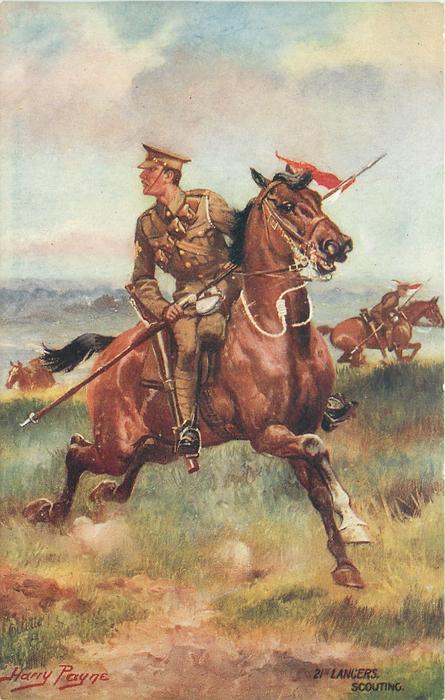
but, when 1914 and the Great War came, soldiers put away those bright colors and put on khaki.

image10twentyfirst.jpg

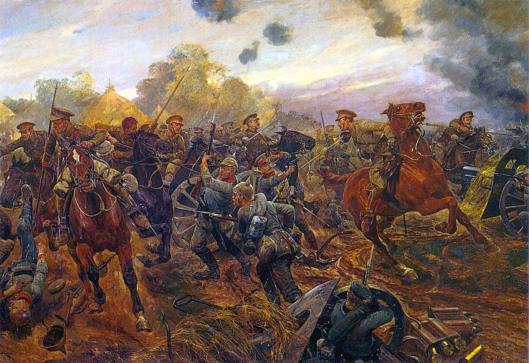
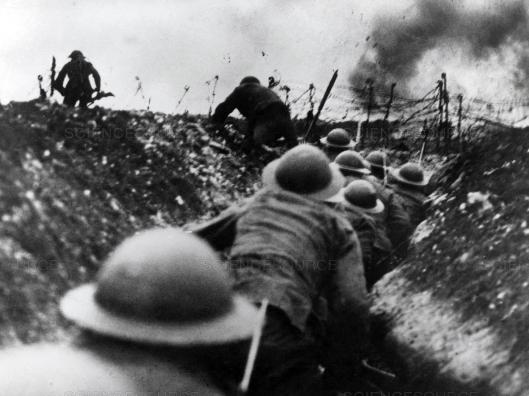
But did that wild courage have to be put away, as well?  In 1914, there were a few moments when even mud-colored mounted men had a moment of glory.

image11attack.jpg

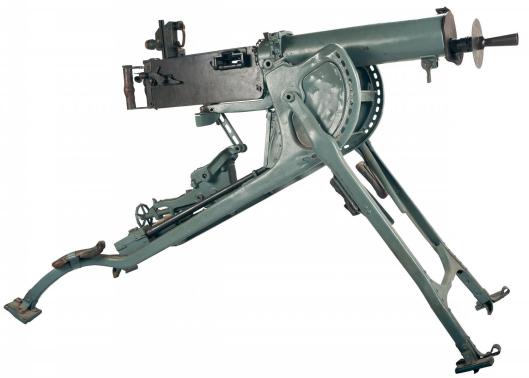
This wasn’t to last—at least on the Western Front and a major reason was this—

image12maxim.jpg

(Here’s a LINK to a clip from the film Warhorse, which shows the effect in rather a symbolic way, thank goodness!  We love horses and mourn their terrible losses through all of world history—they never asked to be part of human violence and, so often, their fate was to die because of it.  We also think that it’s just as well that the commander of this imaginary attack didn’t survive it—it’s absolutely inept, both in conception and its carrying-out and he would deserve to have been court-martialed.)

So, instead, those men dismounted and became infantry, fighting from hole in the ground to hole in the ground.

image13trench.jpg

This was the world which JRRT

image14ajrrt.jpg

knew:  heavy guns, gas, and the rattle of machine guns, no place for wide double ranks of sabre-wavers.

image14charge.jpg

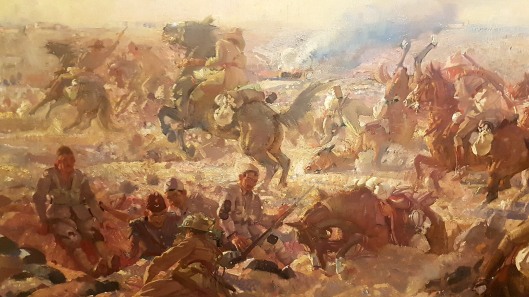
There was at least one bright moment, but not on the Western Front.  Instead, it was in far-off Palestine, where, on 31 October, 1917, Australians and their horses swept over a line of Turkish trenches  at Beersheba in a charge very reminiscent of the 19th -century world.

image15beersheba.jpg

Ironically, these were not cavalry at all, but Australian Light Horse—mounted infantry—who, lacking swords or sabres or lances, attacked using their long bayonets, instead.

image16alh.jpg

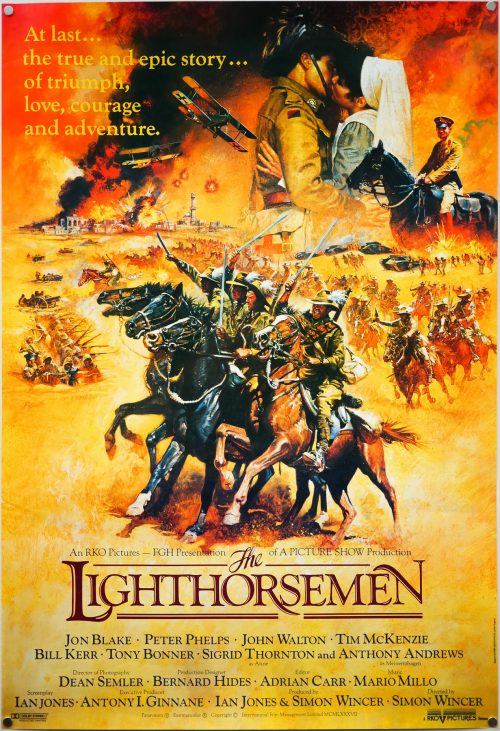
(You can see this charge reenacted wonderfully in the 1987 Australian movie, The Lighthorsemen, one of our very favorite films of the Great War.

image17poster.jpg

Here’s a LINK to the charge scene, before you see the whole film—but we recommend that you see that charge in context.)

On the whole, however, modern war had become one big, bloody ditch,

image18trench.jpg

and victory came in mud-color and mass industrial slaughter.  Perhaps it was a relief to imagine another world, where brave men in armor, mounted on flying horses, still had a place?

image19ro.jpg

As always, thanks for reading!

MTCIDC

CD

Do What I Say, Not What I Speak

13 Wednesday Jun 2018

Posted by Ollamh in Fairy Tales and Myths, Films and Music, J.R.R. Tolkien, Literary History, Narrative Methods

≈ Leave a comment

Tags

Ali Baba and the Forty Thieves, Captain Nemo, Door, Doors of Durin, Franklin Delano Roosevelt, Great War, Horse Feathers, Jules Verne, L. Frank Baum, Marx Brothers, Moria, Nautilus, passwords, Prohibition, Speak Friend and Enter, speakeasy, Swordfish, The Lord of the Rings, The Wizard of Oz, Tolkien, Twenty Thousand Leagues Under the Sea

Welcome, dear readers, as always.

Ever since we heard the story of “Ali Baba and the Forty Thieves” in childhood, we’ve been interested in doors and passwords.

Near the story’s beginning, Ali Baba, a poor woodcutter, happens to observe a group of bandits returning to their cave from a raid.  As he watches, the head of the bandits uses a secret phrase, “Open, sesame!” which opens the cave’s secret door.

[We include a LINK here to the whole story, if you don’t know it.]

Since then, we believe that we’ve had three major examples of the pattern:  door as barrier passed with difficulty.

The first was on a very different level altogether from “Ali Baba”.

After the US passed a law against alcohol just after the Great War, the tumultuous era called Prohibition began.

(The date is 1919 on the newspaper, but the law came into force in 1920.)

For all that the legislatures of various states approved it (“ratified” is the formal word), there were many who did not approve of it.

Because it was national law, however, police everywhere were required to enforce it.

To get around the law, secret bars began to appear.  These received the nickname “speakeasy” because it was a place to relax and drink in (what was hoped would be) safety and privacy.

Such places were made anonymous as possible:  a blank door—with a peephole.

To get in, a potential drinker had to be known—or know the secret password.

This went on until 1933, when the new president, Franklin Delano Roosevelt, worked to have the law repealed.

In 1932, the comedy team of the Marx Brothers

included a speakeasy scene in their latest film, Horse Feathers.

This is an almost indescribable scene in which one of the Marx Brothers (Chico—said “CHIK-o”) is on the inside and another (Groucho) is on the outside and then the fun begins—here’s a LINK so you can watch it for yourself.

The upshot (sorry for the spoiler!)—as you’ll see—is that both end up on the outside.  (We told you that this was on a different level!)

Our next example had no secret password, but, instead, it had a door guard and a very silly one, too!

In 1939, MGM released The Wizard of Oz,

based upon L. Frank Baum’s 1900 The Wonderful Wizard of Oz.

We doubt that we have to explain the plot to anyone who would read our blog, so we’ll just remind you of the moment when Dorothy and her friends—Scarecrow, Tin Woodsman, Lion—and Toto, too—have reached the Emerald City and have come to the door of the Wizard.

The guard (who bears a suspicious resemblance to certain other characters in the film) at first refuses them entry, saying the now-famous line that the Wizard won’t see:  “Not nobody!  Not nohow!” but eventually crumbles when Dorothy explains her quest and he begins to sympathize with her, finally allowing her and her friends to enter—although what they learn there is not the best news.

Finally, there is this door.

And, with this door, we are back to “Ali Baba”, it seems (if not to Horse Feathers).  When Gandalf and the Fellowship arrive, however, there appears to be no door there at all, just a pair of immense holly trees (probably English holly, ilex aquifolium), overshadowing a blank wall.
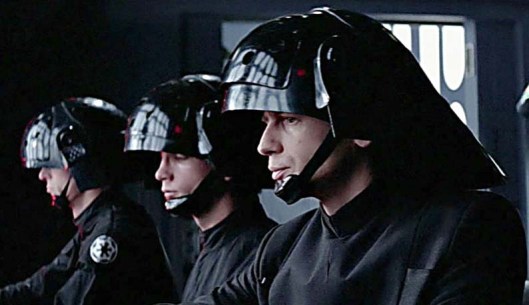
As the narrator describes them:

“But close under the cliff there stood, still strong and living, two tall trees, larger than any trees of hilly that Frodo had ever seen or imagined.  Their great roots spread from the wall to the water.  Under the looming cliffs they had looked like mere bushes, when seen far off from the top of the Stair; but now they towered overhead, stiff, dark, and silent, throwing deep night-shadows about their feet, standing like sentinel pillars at the end of the road.”  (The Fellowship of the Ring, Book One, Chapter 4, “A Journey in the Dark”)
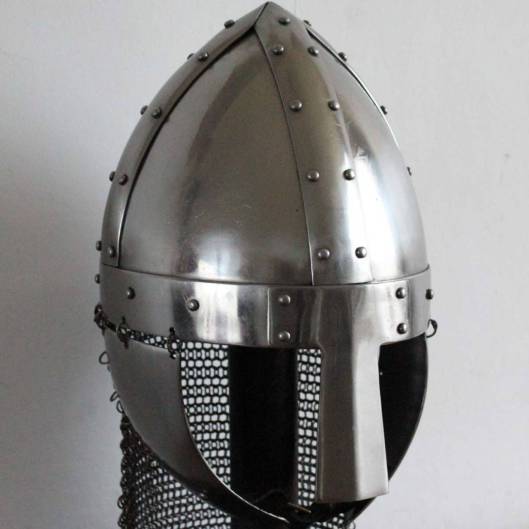
It is only when Gandalf puts his hands on the rock face and murmurs what appears to be some sort of summoning spell that the doors appear:

“The Moon now shone upon the grey face of the rock; but they could see nothing else for a while.  Then slowly on the surface, where the wizard’s hands had passed, faint lines appeared, like slender veins of silver running in the stone.  At first, they were no more than pale gossamer-threads, so fine that they only twinkled fitfully where the Moon caught them, but steadily they grew broader and clearer, until their design could be guessed.”

As the pattern becomes more visible, so, too, becomes an inscription which reads, in part:

“The Doors of Durin, Lord of Moria.  Speak, friend, and enter.”

And trying to make sense of what it means now turns into a very awkward scene in which Gandalf struggles to find the password he believes is requested in that inscription, while the rest of the company gradually becomes more and more impatient (and it doesn’t help that wolves begin to howl in the distance and that there is something about a pool standing opposite the gate which makes them increasingly uneasy).

Finally, Gandalf realizes that what has stopped him depends upon his understanding of a single word in Elvish, a word which clearly has two meanings—and a little more punctuation might have helped!

As it’s inscribed, the vital part of the wording is:

Pedo Mellon a Minno.

As Gandalf originally translated this, it was “Speak, friend, and enter.”  After a good deal of frustration, Gandalf realizes that he has not only mistranslated—slightly—but mispunctuated—or, rather, overpunctuated– as well.  “Speak” and “say” in English are closely related, but there is a difference—for instance, one can “speak English”, but, idiomatically, one would never “say English”.  Thus, no one would ever give the command to someone else, “Say English”, but, rather would say to someone “Speak English”.  The same must be true in Elvish, where, in fact, it appears that “speak/say” is potentially one verb, whose singular imperative (command) is pedo. At first, Gandalf thought that he was being directed to “speak”—but what he was being told to speak he thought was somehow lost or forgotten.  This caused him to overpunctuate:  “Speak, friend, and enter”, where what he was actually being told was “Say [the word] ‘friend’ and enter”.  He finally does so, and the gates open.

In the case of Ali Baba, inside the thieves’ cave are riches, with some of which he quietly makes off.  Groucho and Chico eventually get into the speakeasy and Dorothy and her friends see the Wizard, all of them leaving the problematic entryway behind.  In the case of the doors to Moria, however, what is left behind refuses to stay that way:

“Frodo felt something seize him by the ankle, and he fell with a cry…Out from the water a long, sinuous tentacle had crawled; it was pale-green and luminous and wet…Twenty other arms came rippling out.  The dark water boiled, and there was a hideous stench.”

And this reminded us of something and made us wonder if JRRT had once read the same book we had (there’s nothing in the Letters, unfortunately).  In 1873, the first English translation of a novel by the French science fiction author, Jules Verne (1828-1905),

appeared, slightly mistitled Twenty Thousand Leagues Under the Sea.

Like the title, the rest of the book was filled with mistranslations (it should be Seas) and big cuts.  We hope, in fact, that, if Tolkien read the book (and we would be surprised if he hadn’t, it being the typical Victorian “boys’ adventure tale” of the period), we hope that he read the 1892 version, which cleaned up the errors.

If you haven’t read it, it’s the story of a French scientist who is invited by the US government to investigate a sea monster who is attacking world shipping in the later 1860s.  As the professor discovers, this isn’t a monster at all, but an early submarine, the Nautilus, invented and piloted by a man who calls himself “Captain Nemo” (nemo being Latin for “no one”) and who has a grudge against the imperialist nations of the world, against which he uses his submarine.  The professor, his assistant, and a third man, a harpooner, Ned Land, are taken aboard the Nautilus and, at one point, are involved in a combat against a pack of giant squid—each with 8 arms and two longer tentacles, one of which almost drags Nemo to his death until he’s saved by Ned.  Sounds a little familiar, doesn’t it?

Our favorite version of the story is that done by Disney in 1954.

There is only one squid here, but, as the poster shows, that seems plenty!  It’s a well-told version (simplified, but not too much so) and has a really splendid Nautilus in a high-Victorian design (steampunk long before steampunk?).

As we began this post with an opening, it seems appropriate to end with a closing:

“Gandalf turned and paused.  If he was considering what word would close the gate again from within, there was no need.  Many coiling arms seized the doors on either side, and with horrible strength, swung them round.  With a shattering echo they slammed, and all light was lost.  A noise of rending and crashing came dully through the ponderous stone.”

Thanks, as ever, for reading.

MTCIDC

CD

ps

Can you, our readers, think of other doors and passwords?  We’ve intentionally left one out here, although, when the thrush knocks…

← Older posts
Newer posts →

The Doubtful Sea Series Facebook Page

The Doubtful Sea Series Facebook Page

  • Ollamh

Categories

  • Artists and Illustrators
  • Economics in Middle-earth
  • Fairy Tales and Myths
  • Films and Music
  • Games
  • Heroes
  • Imaginary History
  • J.R.R. Tolkien
  • Language
  • Literary History
  • Maps
  • Medieval Russia
  • Military History
  • Military History of Middle-earth
  • Narnia
  • Narrative Methods
  • Poetry
  • Research
  • Star Wars
  • Terra Australis
  • The Rohirrim
  • Theatre and Performance
  • Tolkien
  • Uncategorized
  • Villains
  • Writing as Collaborators
Follow doubtfulsea on WordPress.com

Across the Doubtful Sea

Recent Postings

  • Do You Speak Villain? (Part 3) February 18, 2026
  • Do You Speak Villain? (2) February 11, 2026
  • Do You Speak Villain? (Part 1) February 4, 2026
  • Towering January 28, 2026
  • Tolkien Among the Indians January 21, 2026
  • Thin and Stretched January 14, 2026
  • Through a glass… January 7, 2026
  • Heffalumps? December 31, 2025
  • We Three Kings December 24, 2025

Blog Statistics

  • 107,653 Views

Posting Archive

  • February 2026 (3)
  • January 2026 (4)
  • December 2025 (5)
  • November 2025 (4)
  • October 2025 (5)
  • September 2025 (4)
  • August 2025 (4)
  • July 2025 (5)
  • June 2025 (4)
  • May 2025 (4)
  • April 2025 (5)
  • March 2025 (4)
  • February 2025 (4)
  • January 2025 (5)
  • December 2024 (4)
  • November 2024 (4)
  • October 2024 (5)
  • September 2024 (4)
  • August 2024 (4)
  • July 2024 (5)
  • June 2024 (4)
  • May 2024 (5)
  • April 2024 (4)
  • March 2024 (4)
  • February 2024 (4)
  • January 2024 (5)
  • December 2023 (4)
  • November 2023 (5)
  • October 2023 (4)
  • September 2023 (4)
  • August 2023 (5)
  • July 2023 (4)
  • June 2023 (4)
  • May 2023 (5)
  • April 2023 (4)
  • March 2023 (5)
  • February 2023 (4)
  • January 2023 (4)
  • December 2022 (4)
  • November 2022 (5)
  • October 2022 (4)
  • September 2022 (4)
  • August 2022 (5)
  • July 2022 (4)
  • June 2022 (5)
  • May 2022 (4)
  • April 2022 (4)
  • March 2022 (5)
  • February 2022 (4)
  • January 2022 (4)
  • December 2021 (5)
  • November 2021 (4)
  • October 2021 (4)
  • September 2021 (5)
  • August 2021 (4)
  • July 2021 (4)
  • June 2021 (5)
  • May 2021 (4)
  • April 2021 (4)
  • March 2021 (5)
  • February 2021 (4)
  • January 2021 (4)
  • December 2020 (5)
  • November 2020 (4)
  • October 2020 (4)
  • September 2020 (5)
  • August 2020 (4)
  • July 2020 (5)
  • June 2020 (4)
  • May 2020 (4)
  • April 2020 (5)
  • March 2020 (4)
  • February 2020 (4)
  • January 2020 (6)
  • December 2019 (4)
  • November 2019 (4)
  • October 2019 (5)
  • September 2019 (4)
  • August 2019 (4)
  • July 2019 (5)
  • June 2019 (4)
  • May 2019 (5)
  • April 2019 (4)
  • March 2019 (4)
  • February 2019 (4)
  • January 2019 (5)
  • December 2018 (4)
  • November 2018 (4)
  • October 2018 (5)
  • September 2018 (4)
  • August 2018 (5)
  • July 2018 (4)
  • June 2018 (4)
  • May 2018 (5)
  • April 2018 (4)
  • March 2018 (4)
  • February 2018 (4)
  • January 2018 (5)
  • December 2017 (4)
  • November 2017 (4)
  • October 2017 (4)
  • September 2017 (4)
  • August 2017 (5)
  • July 2017 (4)
  • June 2017 (4)
  • May 2017 (5)
  • April 2017 (4)
  • March 2017 (5)
  • February 2017 (4)
  • January 2017 (4)
  • December 2016 (4)
  • November 2016 (5)
  • October 2016 (6)
  • September 2016 (5)
  • August 2016 (5)
  • July 2016 (5)
  • June 2016 (5)
  • May 2016 (4)
  • April 2016 (4)
  • March 2016 (5)
  • February 2016 (4)
  • January 2016 (4)
  • December 2015 (5)
  • November 2015 (5)
  • October 2015 (4)
  • September 2015 (5)
  • August 2015 (4)
  • July 2015 (5)
  • June 2015 (5)
  • May 2015 (4)
  • April 2015 (3)
  • March 2015 (4)
  • February 2015 (4)
  • January 2015 (4)
  • December 2014 (5)
  • November 2014 (4)
  • October 2014 (6)
  • September 2014 (1)

Blog at WordPress.com.

  • Subscribe Subscribed
    • doubtfulsea
    • Join 78 other subscribers
    • Already have a WordPress.com account? Log in now.
    • doubtfulsea
    • Subscribe Subscribed
    • Sign up
    • Log in
    • Report this content
    • View site in Reader
    • Manage subscriptions
    • Collapse this bar
 

Loading Comments...