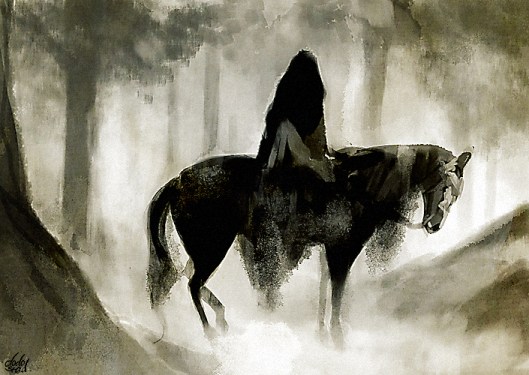
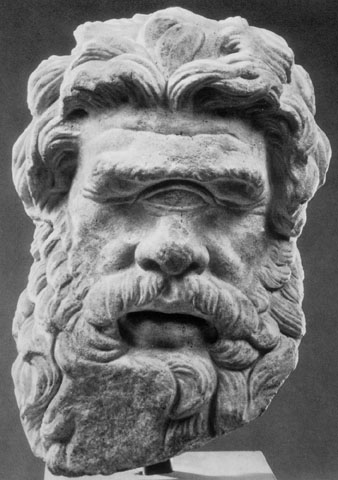
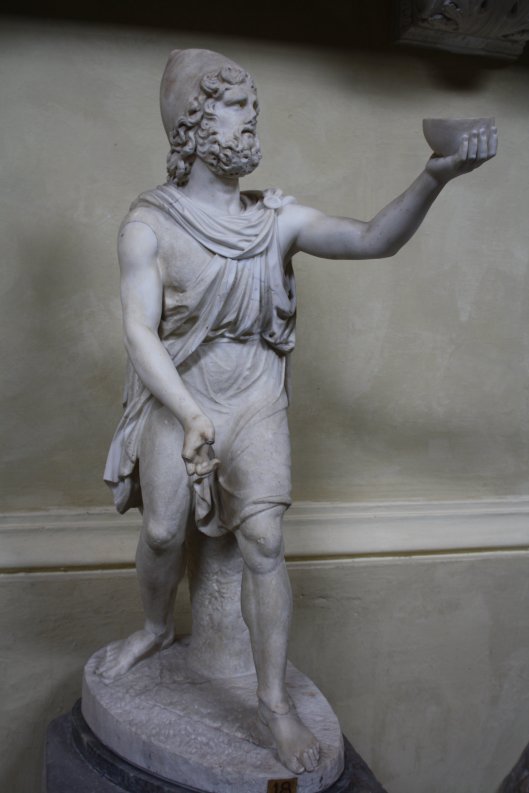
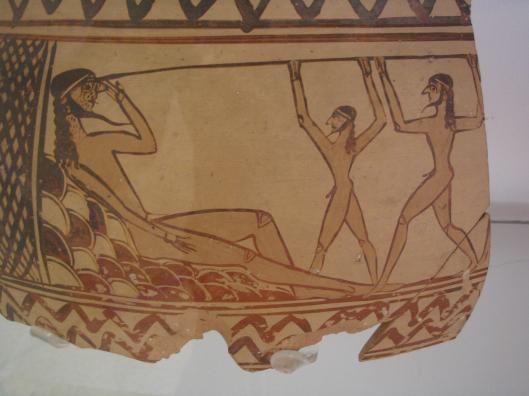
• About

doubtfulsea

~ adventure fantasy

Tag Archives: Smaug

Wormy

21 Wednesday Feb 2018

Posted by Ollamh in J.R.R. Tolkien, Military History, Military History of Middle-earth, Villains

≈ Leave a comment

Tags

Adolf Hitler, Bilbo, Dragon, Fifth Column, Gandalf, Germany, Grima, Madrid, Middle-earth, Nazis, Norway, Norwegian facist party, Republican government, Rohan, Saruman, Second World War, Smaug, Spanish Civil War, The Hobbit, The Lord of the Rings, The Scouring of the Shire, Theoden, Tolkien, traitor, Vidkun Quisling, William Blake, worm, Wormtongue

Welcome, as always, dear readers.
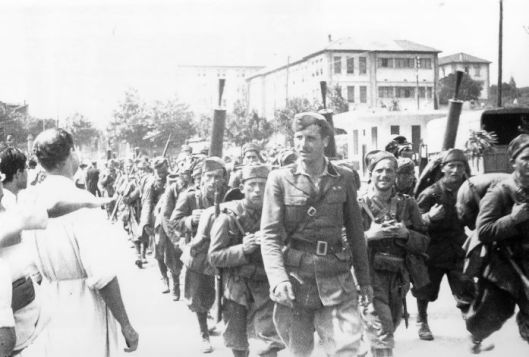
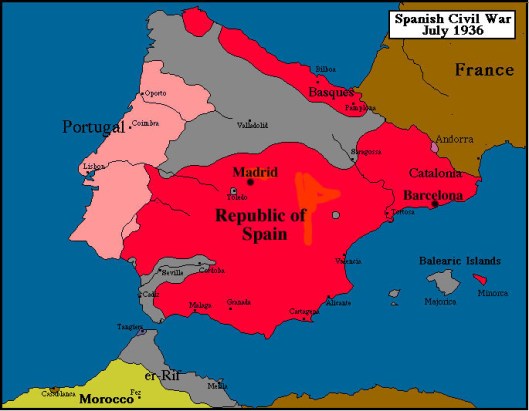
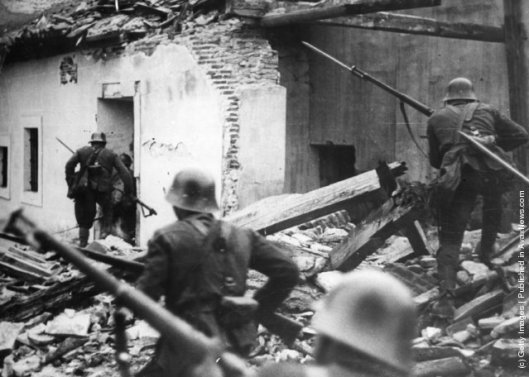
In 1936, the Nationalist forces were marching to attack the Republican government in Madrid, during the Spanish Civil War.
image1nationalists.jpg
image2attackonmadrid.jpg
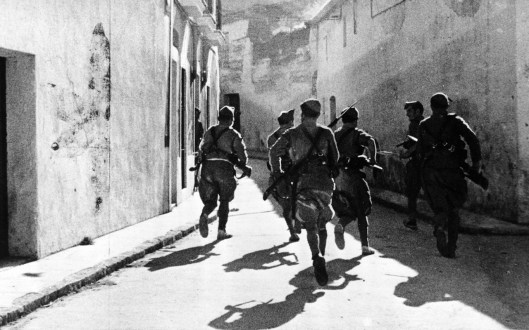
When interviewed, a Nationalist general is reported to have said that, as four military columns were about to assault the city,
image3natattack.jpeg
a fifth column of loyalists would join the attack from inside.
image4natattack.jpg
This phrase “fifth column”, then, was picked up and began to be used world-wide to mean “traitors/betrayers from within” and was popular during the Second World War era.
image5thcol.jpg

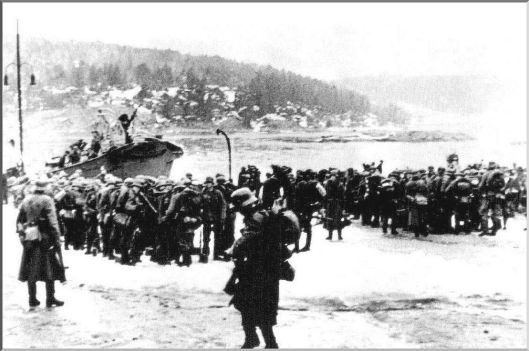
When the Nazis attacked Norway in 1940,
image6nazislandinginnorway.jpg
and the Allies failed to defend their positions there successfully and were forced to surrender or flee
image7capturedtroops.jpg
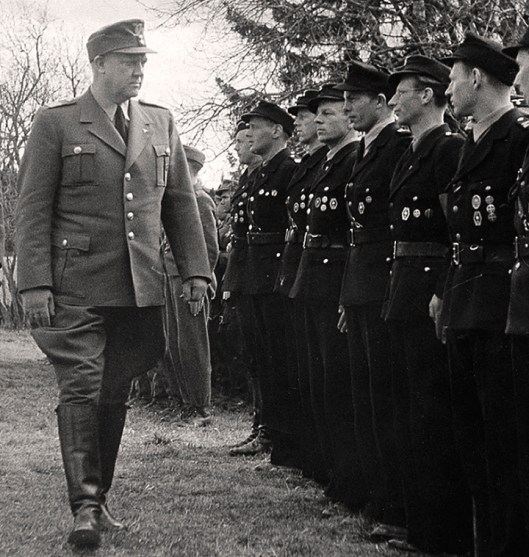
a member of the small Norwegian fascist party, Vidkun Quisling,
image8quisling.jpg
declared himself ruler as the Germans marched in.
image9conqueringgermans.jpg

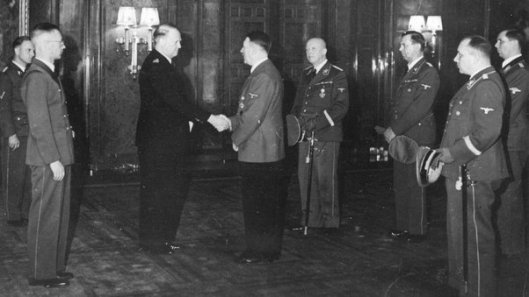
In time, the Nazis recognized him as the head of Norway and he even had an audience with Hitler.
image10hitandquis.jpg

This time, a specific “fifth columnist” had not only betrayed his country, but also profited greatly from it and, when we looked at the dates—1936 and 1940—we wondered, as we so often do, if the current events of our world may have colored JRRT’s relation of the events in Middle-earth—even as we hasten to say, as we always do, that this is just a suggestion.
In his first meeting with Aragorn, Eomer is troubled and his veiled comments suggest just the same sort of fifth-columnist action:
“But at this time our chief concern is with Saruman. He has claimed lordship over all this land, and there has been war between us for many months…”
His concern, however, as we see, is for more than border security, as he says of Saruman:
“His spies slip through every net, and his birds of ill omen are abroad in the sky. I do not know how it will all end, and my heart misgives me; for it seems to me that his friends do not all dwell in Isengard. But if you come to the king’s house, you shall see for yourself.” (The Two Towers, Book Three, Chapter 2, “The Riders of Rohan”)
So, all is not well, not only in Rohan, but in Meduseld itself. When Gandalf and the other survivors of the Fellowship arrive at the gates of Edoras, they are stopped by guards and by a command from Theoden, king of Rohan—or is it? A guard says:
“It is but two nights ago that Wormtongue came to us and said that by the will of Theoden no stranger should pass these gates.” (The Two Towers, Book Three, Chapter 6, “The King of the Golden Hall”)
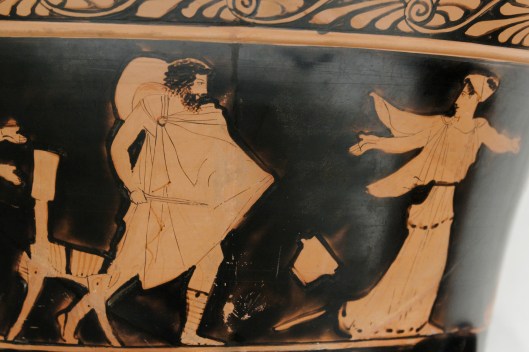
“Wormtongue” seems a very odd name—do worms actually have tongues?
image11worm.JPG
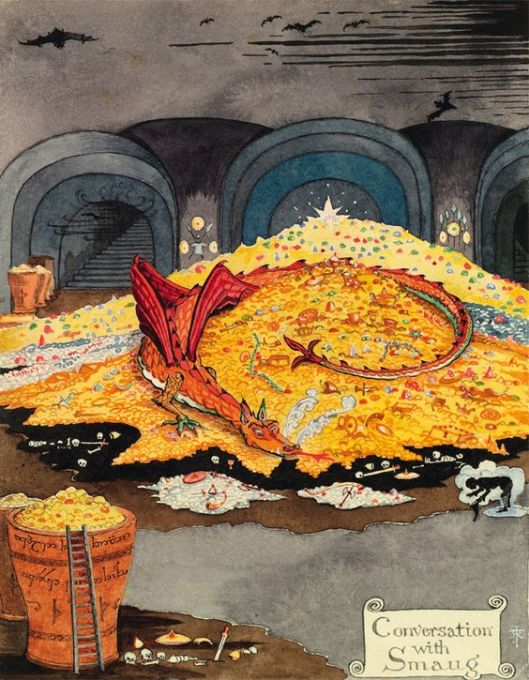
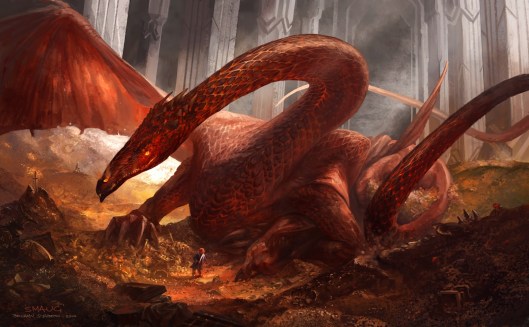
But this isn’t a worm, it’s a “worm”—an old term for “dragon”.
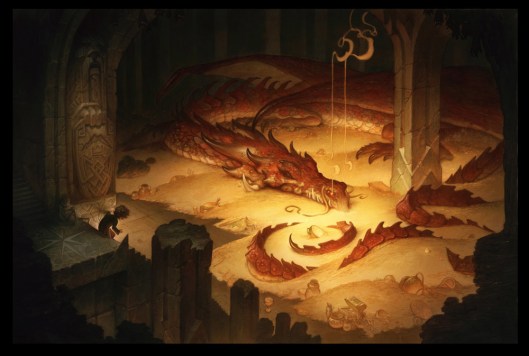
image12smaug.jpg
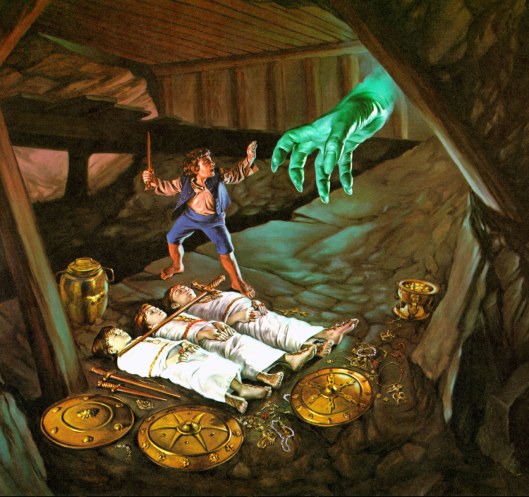
And, if Smaug’s speech and its effect upon Bilbo is anything to go by:
“Bilbo was now beginning to feel really uncomfortable. Whenever Smaug’s roving eye, seeking for him in the shadows, flashed across him, he trembled, and an unaccountable desire seized hold of him to rush out and reveal himself and tell all the truth to Smaug. In fact he was in grievous danger of coming under the dragon-spell.” (The Hobbit, Chapter 12, “Inside Information”)
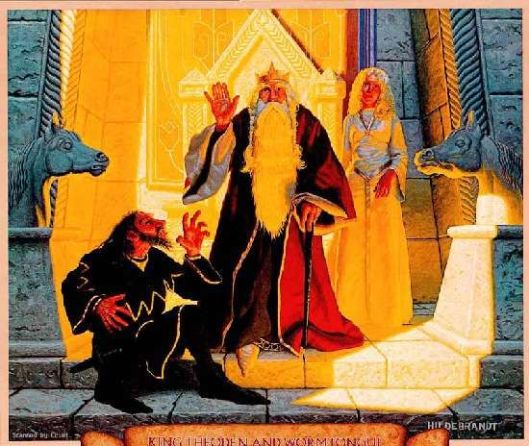
then a person having a dragon tongue might be a real threat, as Wormtongue, seated at Theoden’s feet,
image13theodenandgrima.jpg
inserts himself between Gandalf and Theoden:
“Why indeed should we welcome you, Master Stormcrow? Lathspell I name you, Ill-news; and ill news is an ill guest they say.”
Gandalf immediately resists this and, in a burst of power, breaks the real “spell”—the dragon’s words which Grima Wormtongue has been pouring into Theoden’s ears, as Theoden says to him of Gandalf’s efforts: “If this is witchcraft…it seems to me more wholesome than your whisperings. Your leechcraft [that is, “medical skill”—obviously ironic here] ere long would have had me walking on all fours like a beast.”
[A footnote here—is JRRT making a quiet reference to the fate of Nebuchadnezzar, king of Babylon, mentioned in the book of Daniel in the Old Testament? In Chapter 4, the king is driven mad and spends seven years as a grazing animal to prove the power of the Hebrew divinity. Here is William Blake’s (1757-1827) striking depiction of the mad king.]
image14blake.jpg

Certainly something Grima has been doing has affected Theoden, as he is initially described as “a man so bent with age that he seemed almost a dwarf…” and this shrinking is suddenly reversed when Gandalf strikes Grima down:
“From the king’s hand the black staff fell clattering on the stones. He drew himself up, slowly, as a man that is stiff from long bending over some dull toil. Now tall and straight he stood, and his eyes were blue as he looked into the opening sky.”
For all that Grima has been blocked and Theoden restored, the fifth columnist tries once more. When he is told that he must ride with the king and his warriors to battle, he makes a countersuggestion:
“One who knows your mind and honours your commands should be left in Edoras. Appoint a faithful steward. Let your counsellor Grima keep all things till your return…”
But he gives himself away by finishing that sentence with “and I pray that we may see it, though no wise man will deem it hopeful.”
And Gandalf sees all too clearly what is behind Grima’s proposal—and who is behind it:
“Down, snake!…Down on your belly! How long is it since Saruman bought you? What was the promised price?…”
image15fallofgrima.jpg

Although it is said that Grima deserves death for his treachery, he is allowed to flee, and, when we next see him, he is with his true master, acting as his “footman” as Gandalf calls him (The Two Towers, Book Three, Chapter 10, “The Voice of Saruman). And here, as Bilbo’s pity has preserved Gollum for an unseen but vital part in the later story of the Ring, so Gandalf’s mercy to Grima preserves him for two final acts: first, his mistaken use of a palantir as a missile, which puts it into Gandalf’s hands and, ultimately into Aragorn’s, who shakes Sauron’s nerve with it; second, Saruman’s ultimate end:
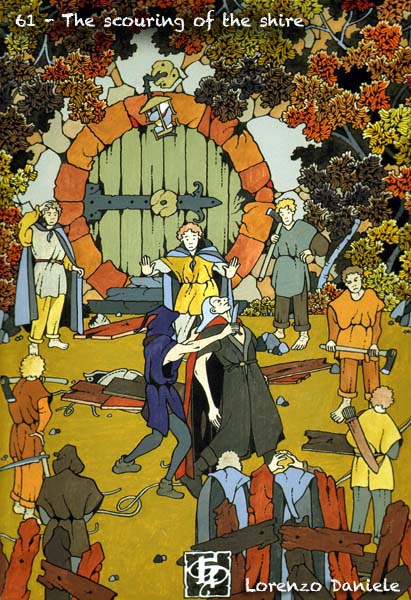
“[Saruman] kicked Wormtongue in the face as he groveled, and turned and made off. But at that something snapped: suddenly Wormtongue rose up, drawing a hidden knife, and then with a snarl like a dog he sprang on Saruman’s back, jerked his head back, cut his throat, and with a yell ran off down the lane.” (The Return of the King, Book Six, Chapter 8, “The Scouring of the Shire”)
image16deathofsaruman.jpg
Grima doesn’t survive this attack, however: “Before Frodo could recover or speak a word, three hobbit-bows twanged and Wormtongue fell dead.”
Merry calls these final acts of violence “the very last end of the War”, but we would suggest a parallel with a specific event in our world: the end of Vidkun Quisling–executed by firing squad in October, 1945, for treason. Could we say that Grima’s death—deserved earlier, but deferred—was also a kind of execution for treason, against Rohan, finally carried out?
And a final thought: after World War 2, Quisling’s name became, for a time, an easy synonym for “fifth columnist/traitor”—could we imagine that, in the Common Speech of Middle-earth after the War of the Ring, the same might have happened to “Grima Wormtongue”?
Thanks, as ever, for reading.
MTCIDC
CD

A Long Stretch

12 Wednesday Jul 2017

Posted by Ollamh in Heroes, J.R.R. Tolkien, Literary History, Military History, Military History of Middle-earth

≈ Leave a comment

Tags

Agincourt, Archery, arrow bag, arrows, Bard the Bowman, Battle of Poitiers, Casula Mellita, Crecy, Edinburgh, English Longbowmen, Esgaroth, Greco-Roman, gunpowder, harpoon, Hundred Years War, Laketown, longbows, Medieval-Renaissance, Napoleonic Wars, Naval Warfare, Pinkie Cleugh, Roman, sailing, Smaug, The Hobbit, The Mary Rose, Tolkien

Welcome, as always, dear readers.

In the past, we had a posting on Bard the bowman

image1jeffchanbard.jpg

who rescued Esgaroth (Laketown)

image2esgaroth.jpg

from the attack by Smaug.

image3smaug.jpg

(We especially like this Jeff Chan Bard not only because Bard is depicted as he is in the book, as an archer, but also because it includes the thrush who tells him where he is to strike.)

In that previous posting, we suggested that JRRT pictured Bard as looking and acting like one of the English longbowmen of the Hundred Years War

image4longbowman.jpg

rather than as a harpooner, as in the film.

image5bard.jpg

image6aharpoongun.jpg

Since that posting, we did a second which included bowmen, just a few weeks ago, about Mogul-knife and arrow wound, and now we would like to add a third.

As we’ve mentioned before, one of us is preparing a new university course to be taught in the autumn on the history of warfare.  As you can imagine, this is a big subject, but, in the process of shaping it, we want to include a week on developments in naval warfare over the centuries.  So far, we’ve divided it into several parts:

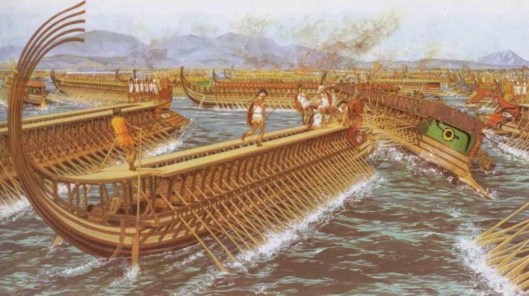
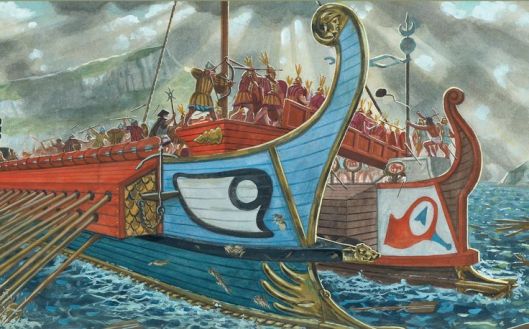
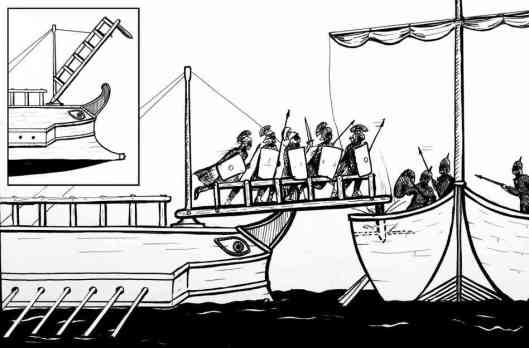
a. Greco-Roman

image6agrknavbat.jpg

image6romannavbat.jpg

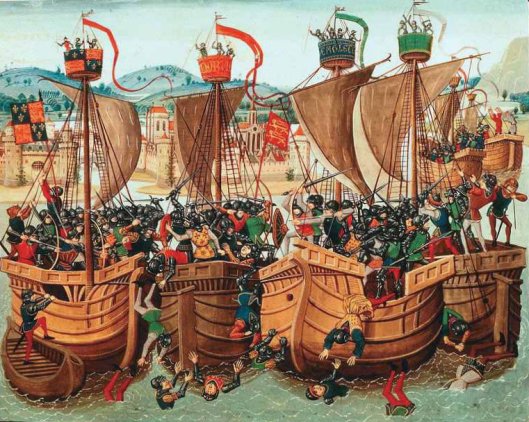
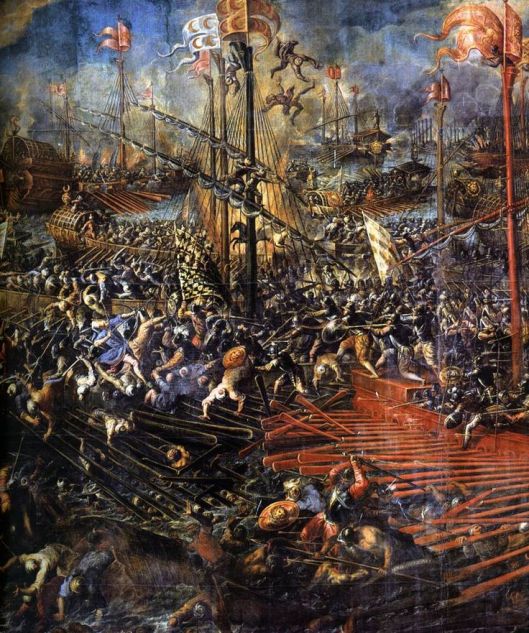
b. medieval-renaissance

image7sluys.jpg

image8lepanto.jpg

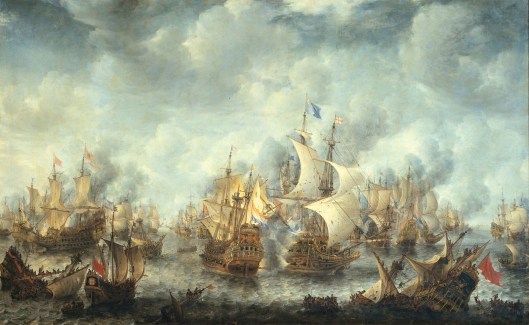
c. the age of sail

image9glorious.jpg

d. ironclads

image10monitor.jpg

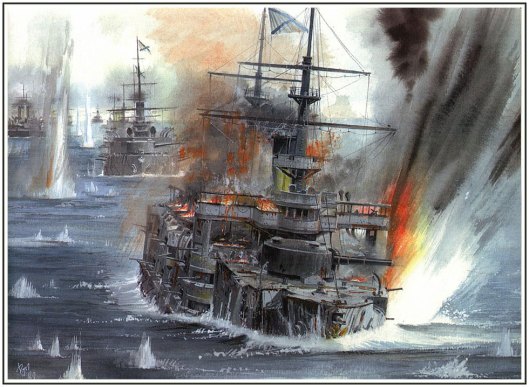
e. dreadnoughts

image11tsushima.jpg

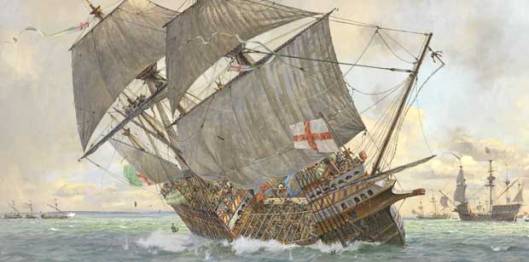
While working on the Medieval/Renaissance section, we were reminded of what might be the most famous Renaissance shipwreck:  the sinking of The Mary Rose, 19 July, 1545.

image12mrsinks.jpg

Medieval naval battles had been primarily infantry battles transferred to the sea, as had been Roman practice.  That practice was a story in itself—the traditional Roman explanation was that they were land-fighters and so had invented a device, called a “corvus”–that’s “crow” in English—probably because the point at the enemy’s end was a bit like a pecking beak.  This was a kind of gangplank which, dropped onto the enemy’s ship, stuck in place and allowed Roman marines to rush across and deal with their opposite numbers.

image13corvus.jpg

image14medbat.jpg

Things began to change with the invention of cannon in western Europe.  (The history of gunpowder in the Far East is its own subject—and one we urge those interested to have a look at.  Here’s a LINK to get you started.)  Used first on land perhaps by the 13th century, the first recorded use of cannon on a ship dates from 1338 (and here’s a LINK to naval artillery, in case you want to know more).

With cannon, you could stand off from an enemy ship and—your choice—cripple it by destroying its sails and rigging—or sink it with holes below the waterline.

image15renbat.jpg

Boarding, as the Romans had, was still a possibility, of course, and provided the extra benefit, if the boarding was successful, of allowing for the acquisition of an extra ship.  This could be added to your fleet or sold and the profits shared among the sailors—or, actually, if we go by Napoleonic British standards, the profits went to everybody at the top, including admirals who weren’t even present at the capture, with a teeny amount remaining for the seamen who’d actually taken the prize.

image16renbat1.jpg

To do that boarding, Romans—and medievals—had loaded their ships with soldiers, and the Mary Rose was no exception, its surviving records suggesting that there were about 200 soldiers in a crew of approximately 400-450.

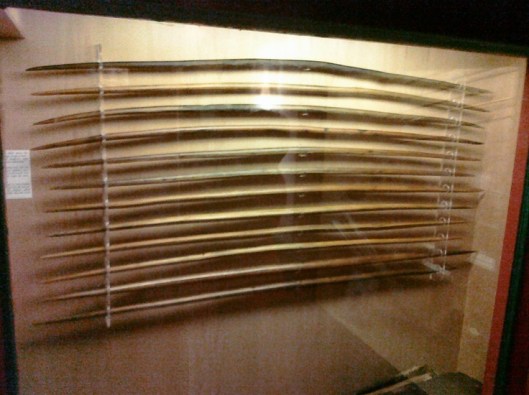
As a number of longbows have been recovered from the wreck,

image17mrlongbows.jpg

this would suggest that many of those soldiers were archers.

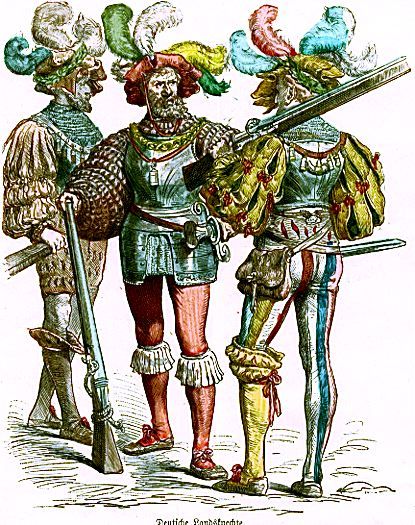
These, along with the artillery (and perhaps a small number of arquebuses?  To our current knowledge, none has been recovered from the ship, but, certainly, by 1545, they were in common use—at the battle of Pinkie Cleugh, east of Edinburgh, in 1547, the English army had several hundred German mercenary arquebusiers),

image18grmarq.jpg

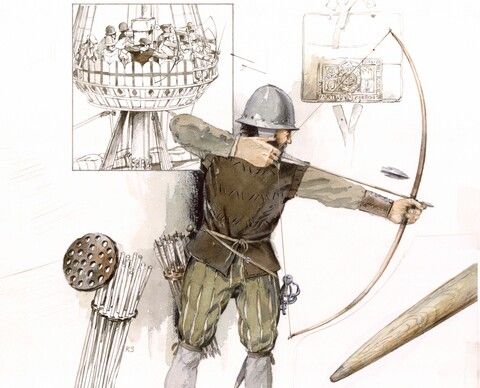
would have supplied the missile weapons of the ship.

image19mrbowman.jpg

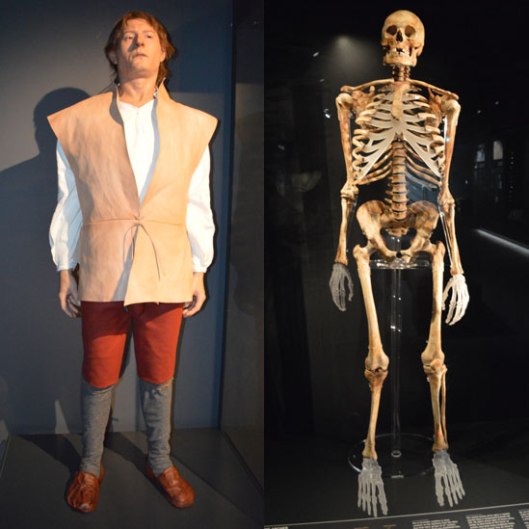
Not only were large numbers of artifacts discovered in the Mary Rose, but the skeletons of perhaps half its crew and about 90 of those were intact enough to warrant further study.  For our purpose, one, in particular is very interesting.

image20mrarcher.jpg

Discovered in the hold, he was a large man for his time, about 6 feet (about 183cm).  As well as revealing that he would have had a powerful build, his skeleton displayed repetitive stress injuries to his upper body.  There is discussion as to the pull-weight (how much muscle power it takes) of the longbow of the medieval/Renaissance period, estimates ranging from 90 to about 150 pounds (we’re sorry that we can’t readily convert this, as it isn’t pounds of weight, but pounds of force—the general idea is that it would have taken huge muscle power in either case), but, for a bow as tall as a bowman, this would have demanded great muscular strength—which would then have, over time, put huge stress upon an archer’s body.  This has then led archaeologists to suggest that he was a bowman.

And this brings us back to Bard, the actual archer, and a suggestion as to what he might have looked like.

JRRT only says:

“But there was still a company of archers that held their ground among the burning houses.  Their captain was Bard, grim-voiced and grim-faced…Now he shot with a great yew bow, till all his arrows but one were spent.”  (The Hobbit, Chapter 14, “Fire and Water”)

“a great yew bow” makes us think of the English bowmen we’ve mentioned before, and those we believe were in Tolkien’s mind, the victors at the battles of Crecy (1346), Poitiers (1356), and Agincourt (1415).

image21agincourt.jpg

To produce archers who could pull such powerful bows (and fire up to 10 arrows a minute, as we’ve mentioned in a previous posting), English archers began training as boys and continued throughout the years—as athletes of the bow, they had to keep in shape.  Such training and exercise would then have produced men like that discovered on the Mary Rose—big-shouldered, strong-armed—and given to the subsequent damage inflicted on the body by archery wear-and-tear.

So, might we then see Bard as not only “grim-voiced and grim-faced”, but “broad-shouldered and imposing”?  To which we can add this from The Hobbit:

“In the very midst of their talk, a tall figure stepped from the shadows.  He was drenched with water, his black hair hung wet over his face and shoulders, and a fierce light was in his eyes.”  (Chapter 14, “Fire and Water”)

All of which gives us:  “tall, black-haired, fierce, grim-voiced and grim-faced”—and, at our suggestion, “broad-shouldered and imposing”—a worthy portrait of Bard the Dragon-slayer.

Thanks, as ever, for reading!

MTCIDC

CD
PS

It’s not known what our Mary Rose archer was doing in the hold at the time the ship went down, but perhaps he was seeking to transfer extra ammunition to the main deck?  That ammunition would probably have been in the form of coarse linen bags carrying 24 arrows each—here’s a modern reconstruction

image22arrowbag.jpg

and here’s the LINK to the site from which it comes.  This belongs to an amazing woman whose website is full of her life on the edge of the Great Plains, in Kansas, USA—home of Dorothy of the OZ books, of course– as well as her photos of things like the reconstructed bag in the photo above.  Below is a picture of the Kansas tall grass prairie.

image23kansas.jpg

And Then the Dragon Came

14 Wednesday Jun 2017

Posted by Ollamh in Artists and Illustrators, Fairy Tales and Myths, Heroes, Imaginary History, J.R.R. Tolkien, Literary History, Narrative Methods, Villains

≈ Leave a comment

Tags

A.A. Milne, Apollonius, Arthur Rackham, Beowulf, Chrysophylax, Cressida Cowell, Dragons, Drawn From Life, Drawn From Memory, Dream Days, E.H. Shepard, Edwardian, Farmer Giles of Ham, How to Train Your Dragon, Kenneth Grahame, Maxfield Parrish, Nine Dragons, Now We Are Six, Octavian, Prince Valiant, Renaissance, Sir Gawain, Smaug, St. George and the Dragon, The Argonautica, The Hobbit, The House at Pooh Corners, The Reluctant Dragon, The Wind in the Willows, Tolkien, Victorian, Walt Disney, Western Medieval, When We Were Very Young, Winnie the Pooh

Welcome, dear readers, as always.
One of us is in the midst of creating a course for the fall term. It’s called “Handling Monsters: A Handbook” and several of those monsters are dragons—the “Sleepless Serpent/Dragon” of the ancient Greek literary epic by Apollonius, The Argonautica,
image1sleepless.jpg
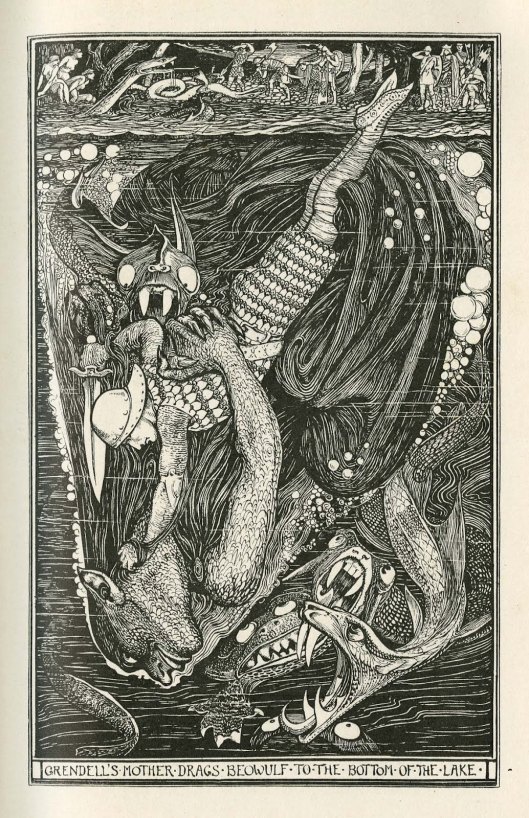
the dragon which Beowulf fights,
image2beowulf.jpg
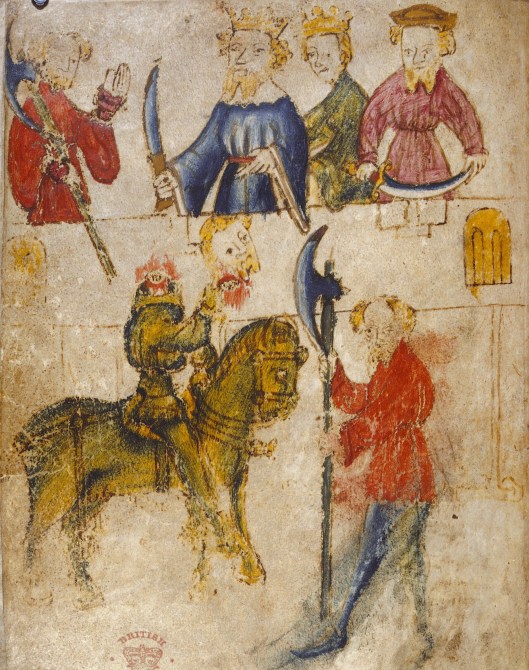
(when small, we always imagined this as looking like the one which Sir Gawain, Prince Valiant’s master, fights)
image3sirgawaine.jpg
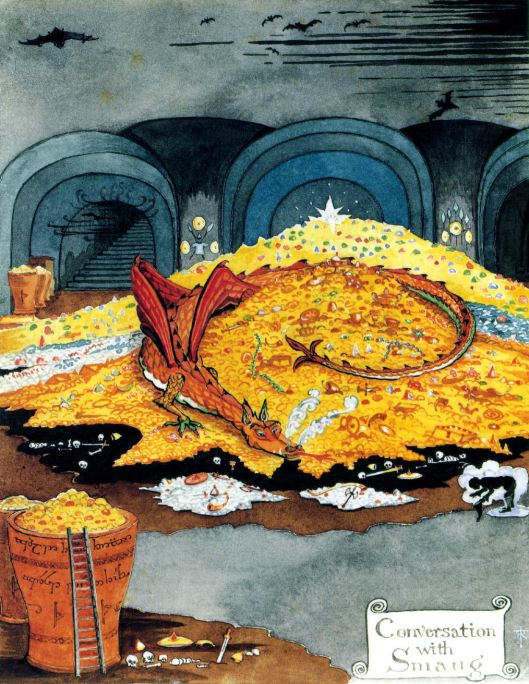
Smaug,
image4smaug.jpg
and Toothless, from How to Train Your Dragon (by Cressida Cowell—there’s also a movie by that name, which is fun—great flying scenes–but it’s so different from the book that it really should have another title!)
image5hiccup.jpg
We must confess that we’ve never been big saurian fans, either dinosaurs or dragons, but, as monsters go, they have their uses. Saying that, however, we do have to add that we’ve always loved the “Nine Dragons” scroll, a 13th-century Chinese painting…
image6nine.png
[And here’s a LINK to a site at the Center for the Art of East Asia which you can see the whole scroll—well worth the visit—and revisit, if you’re like us and love Chinese painting.]
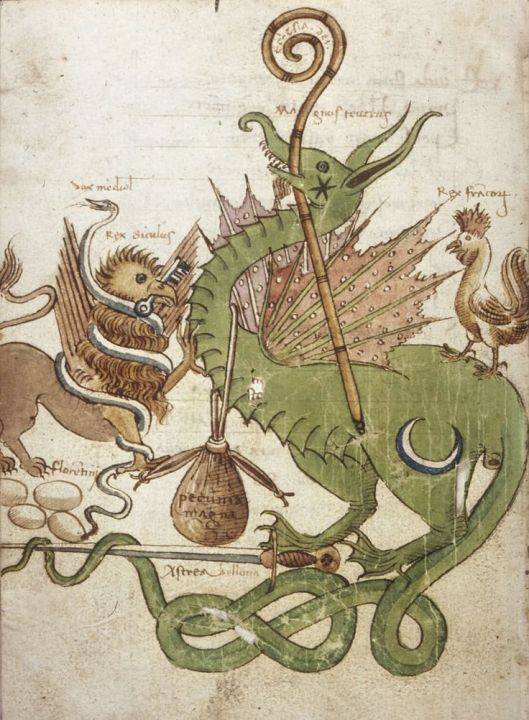
While putting together this course, we’ve been spending some time gathering dragon images. Sometimes, they seem pretty fantastic—painters with wild imaginations—
image7meddragon.jpg
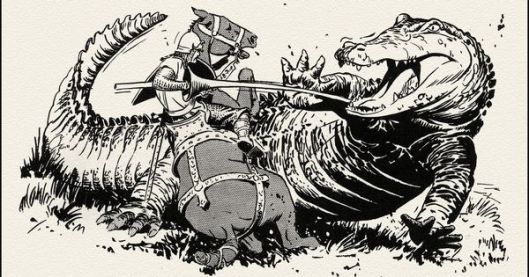
And sometimes they look like someone once saw a crocodile.
image8stg.jpg
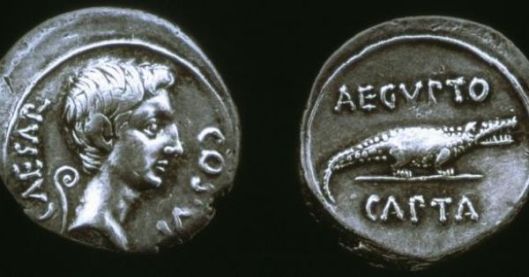
[Perhaps on an old coin? For example, Octavian—the Emperor Augustus-to-be—after the defeat of Antonius and Cleopatra, issued this coin, which reads “Egypt Taken”,

image9aegypta.jpg
suggesting that, when a Roman thought of Egypt, it wasn’t the pyramids which came to mind, but a scaly, many-toothed amphibian!]
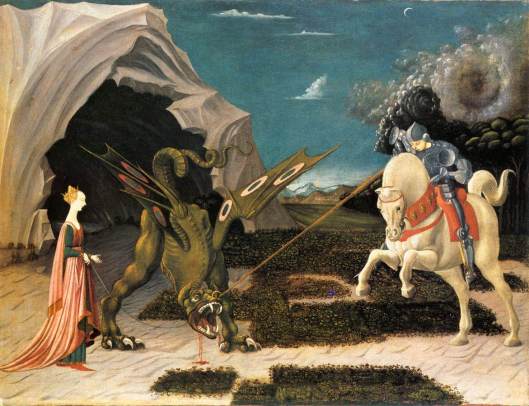
And the image before the coin reminds us that, in Western medieval/early Renaissance art, a major source of dragon pictures is religious, being depictions of St. George and his dragon-slaying.
image10stg1.jpg

image11stgeo2.jpg
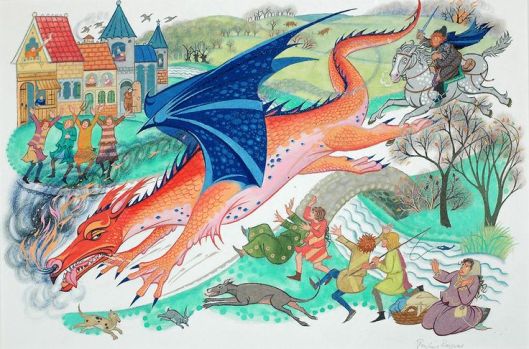
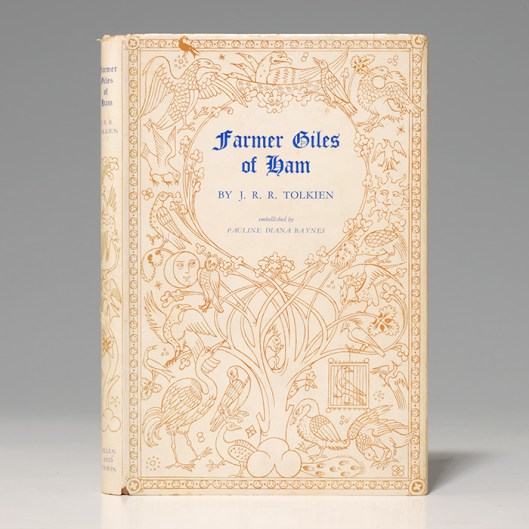
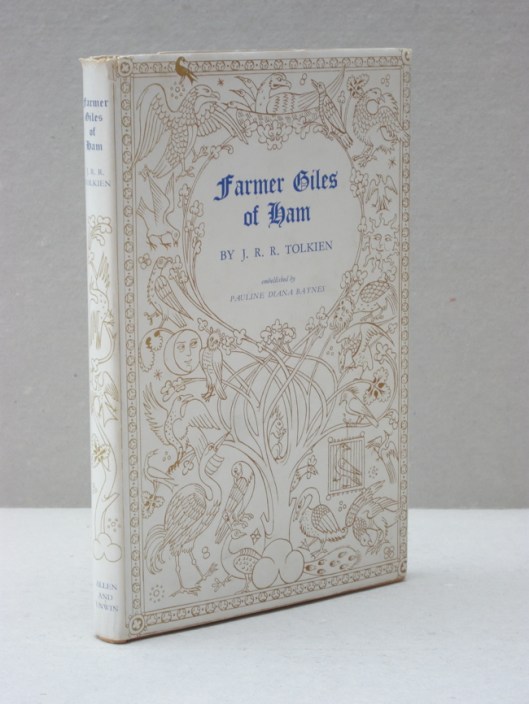
We’ve mentioned JRRT and Smaug, but that it only his first dragon story. There is another, Farmer Giles of Ham, written in 1937 and published in 1949.
image12farmergiles.jpg
If you haven’t read it, we recommend it as a look at JRRT at play, more Hobbit than Lord of the Rings. The story is about a very practical, but hardly adventurous farmer, Giles, who, after chasing off a giant from his village, is given the job of dealing with an invading dragon, Chrysophylax (maybe something like “Watchman of the Gold”).
image13xryso.jpg
Although the dragon is tricksy, Giles eventually overcomes him with a combination of shrewdness and a famous sword, Caudimordax (“Tailbiter”). In the process, he becomes not only wealthy, but also founds his own kingdom-within-a-kingdom. As well, though JRRT, more than once in his letters, lets us know that he is not an enthusiast for democracy, he provides a very critical view of monarchy and its pretensions. (This may also explain why, although those in the Shire may refer to “the king” and “the rules”, which presumably came with that monarch, their own local form of government is more familial than bureaucratic.)
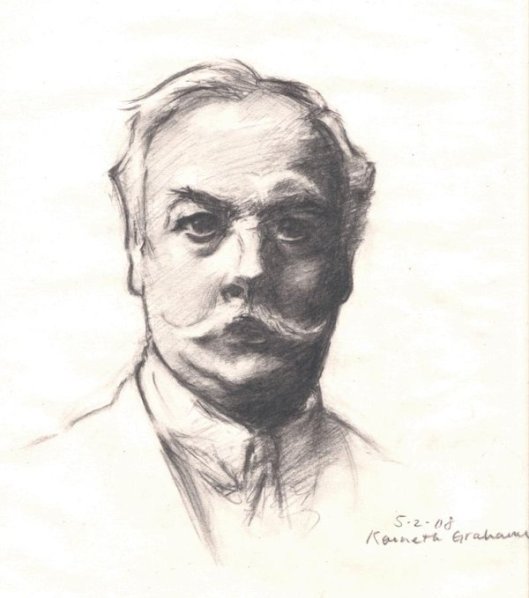
Chrysophylax is chatty, rather like Smaug, but there is a much lighter touch here, and Chrysophylax reminds us of our favorite dragon after Tolkien’s, the unnamed dragon in Kenneth Grahame’s
image14kgrahame.jpg
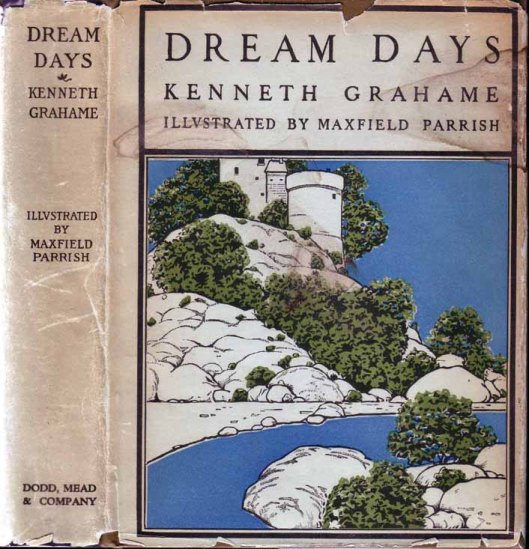
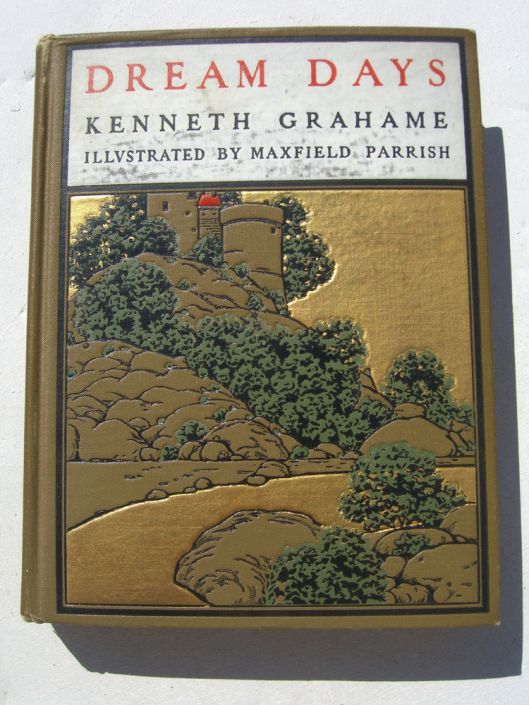
short story, “The Reluctant Dragon”, from his 1898 collection, Dream Days.
image15dreamdays.jpg
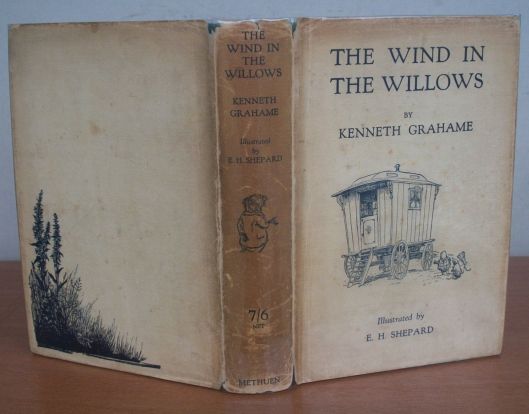
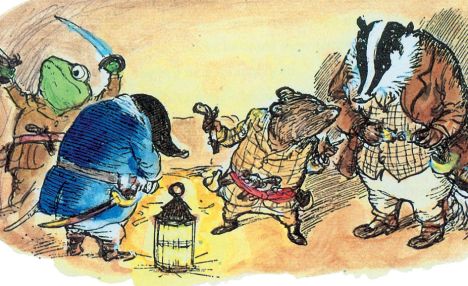
If you recognize Grahame’s name, you probably know it from his 1908 novel, The Wind in the Willows, with its well-known characters, Toad, Rat, Mole, and Badger—not to mention the wicked weasels!–
image16wiw1sted.jpg
image17wiwcharacters.jpg
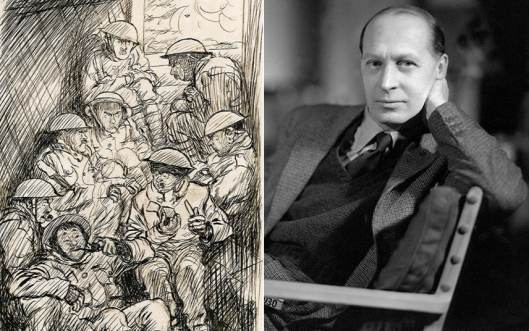
first illustrated by E.H. Shepard
image18ehshepard.jpg
whom you may also know as the illustrator of A.A. Milne’s Winnie the Pooh, The House at Pooh Corners, When We Were Very Young, and Now We are Six.
image19wthepfirst.jpg
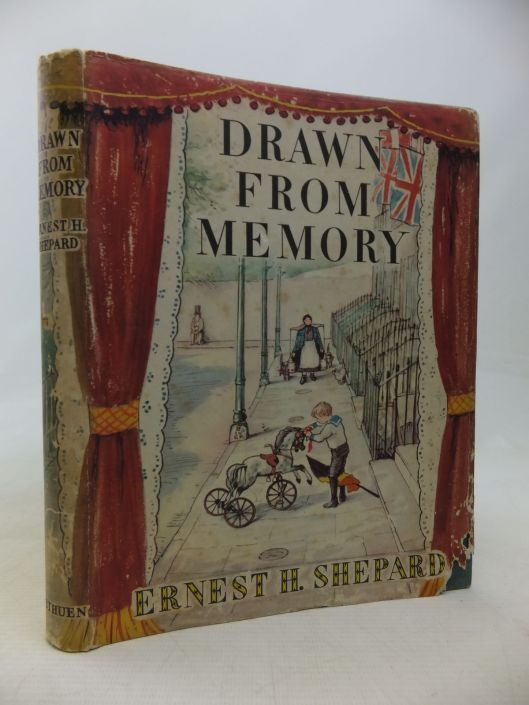
[Shepard also wrote two volumes of autobiography—which he illustrated, of course—Drawn from Memory (1957) and Drawn from Life (1961)
image19drawnfrommem.JPG

image20drawnfromlife.JPG
and, for a picture of a growing up in the later Victorian world, beautifully written and illustrated, we very much recommend both.]
[And a second footnote here: Arthur Rackham—one of our favorite late-19th-early-20th-century illustrators– also illustrated The Wind in the Willows,
image22rackham.jpg

image23wiwrack.jpg
his last project before his death in 1939. It was published a year later, in 1940.]
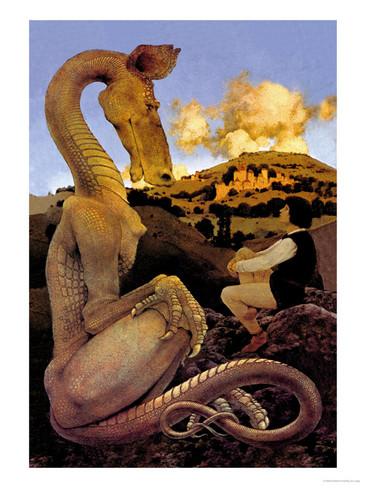
The title gives away a great deal of the plot of Grahame’s “The Reluctant Dragon”. Instead of being a murderous hoarder, like Beowulf’s dragon, or Smaug, this is dragon-as-pacifist, (as depicted by his original illustrator, Maxfield Parrish):
image24fearless.jpg
not in the least interested in plundering and burning, but rather in viewing sunsets and living a peaceful existence—until St. George appears. As to what happens next, we’re not going to issue a spoiler alert here, but rather provide links to three works by Grahame: two collections of stories and essays, The Golden Age (1895), Dream Days (1898), and The Wind in the Willows (1908), inviting you to read for yourself and to enjoy Grahame’s elegant Edwardian prose and gentle approach.
With thanks, dear readers, for…reading.
MTCIDC
CD

PS
Walt Disney studios made cartoons of “The Reluctant Dragon” (1941) and “The Wind in the Willows” (1949), which are currently available in Disney collections. They both stray rather far from the original stories, but are fun in themselves (and Eric Blore’s voice is perfect for “the handsome and popular Toad”).
PPS
One of us has written what we might immodestly call a very good short story based upon Arthur Rackham’s last days and his determination to finish his illustrations to The Wind in the Willows before his death and we plan to publish it here next week as a kind of “Summer Holidays Extra”. We hope you’ll enjoy it.


Finding a Voice

10 Wednesday May 2017

Posted by Ollamh in Heroes, J.R.R. Tolkien, Literary History, Military History, Narrative Methods

≈ Leave a comment

Tags

Abraham Lincoln, Abraham Lincoln Vampire Slayer, American Civil War, Daniel Day Lewis, early photography, Edward Everett, Gettysburg, Gettysburg Address, National Cemetery, Saruman, Smaug, spell-casting, Steven Spielberg Lincoln, The Battle Cry of Peace, The Blue and the Gray, The Hobbit, The Lord of the Rings, The Voice of Saruman, Tolkien, voices

Welcome, dear readers, as always.

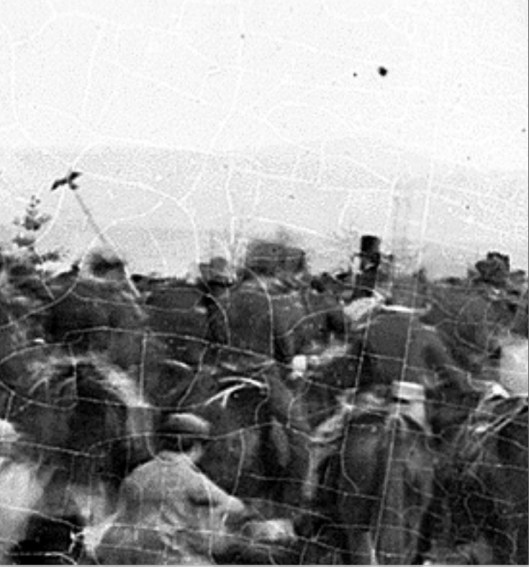
Recently, it has been thought that a new picture of Abraham Lincoln

Lincoln-CGerman-1861.jpg

at Gettysburg, on November 19, 1863 has been discovered. Lincoln had been invited as one of the speakers for the dedication of a new National Cemetery to honor the Union dead from the battle fought at Gettysburg on 1-3 July, 1863.

Battle of Gettysburg - Cyclorama - Paul Philippoteaux SAM_1322.JPG

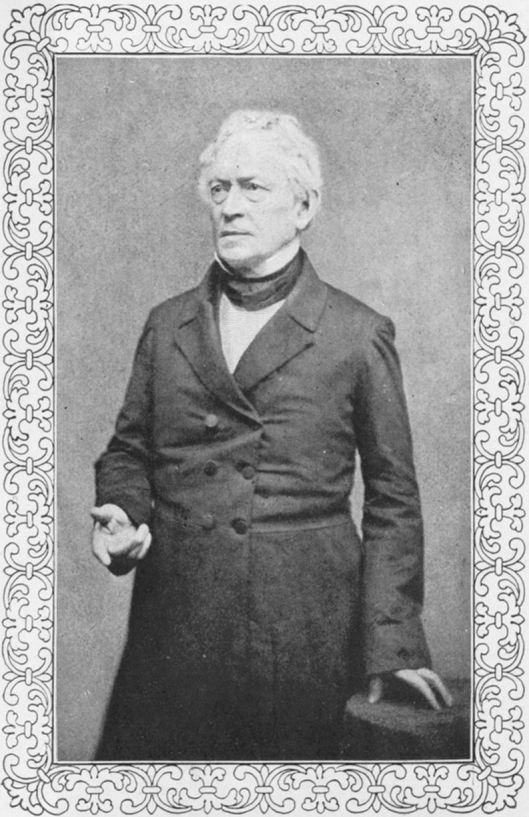
The main speaker, and the one everyone was waiting for, was the famous orator, Edward Everett,

Edward_Everett.jpg

whose speech is now totally forgotten (here’s a link to it—it’s worth reading as a specimen of mid-19th-century American oratory—something Everett was famous for), but, to say that Lincoln’s speech has survived is, for Americans—and for anyone who loves good rhetoric, for that matter–an understatement.

nicolaycopy.jpg

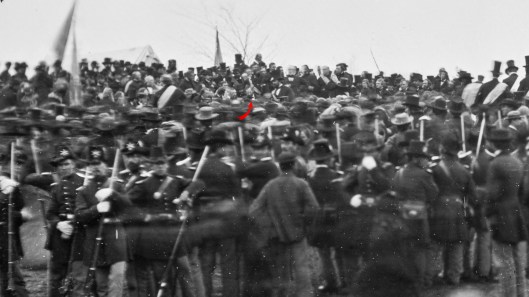
Up until recently, there was one definite photograph of Lincoln on the occasion.

Crowd_of_citizens,_soldiers,_and_etc._with_Lincoln_at_Gettysburg._-_NARA_-_529085_-crop.jpg

(There is a second picture, supposedly of Lincoln on horseback, but it’s been pointed out that the figure appears to be wearing epaulettes,

image5a1notabe.jpg

image5aepaulettes.jpg

And, if so, is therefore more likely to be one of the military dignitaries at the ceremony.)

This new photo, which seems pretty convincing to us, now gives us two illustrations of one of the most famous moments of Lincoln’s presidency.

o-LINCOLN-570.jpg

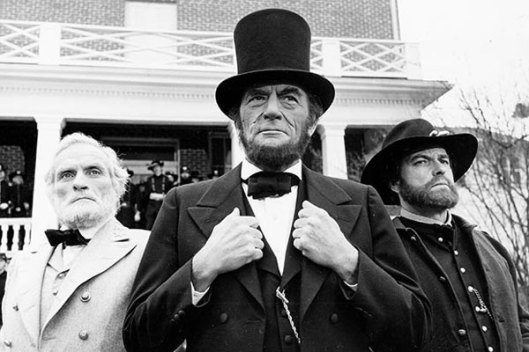
There are a number of films about Lincoln, at least since the 1915 The Battle Cry of Peace, with Lincoln portrayed by numerous American actors, some of them famous, such as Gregory Peck, from the television series The Blue and the Gray (1982)

Gregory-Peck-Lincoln.jpg

with the most recent being two films from 2012, the improbable Abraham Lincoln Vampire Hunter

abraham_lincoln_vampire_hunter_ver3.jpg

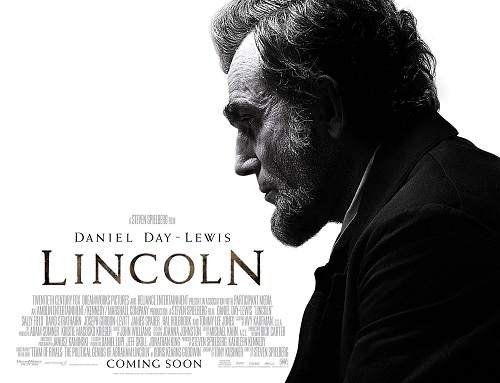
and Steven Spielberg’s Lincoln

LINCOLN-landscape-poster.jpg

starring Daniel Day Lewis.

Lewis, an actor famous for his strenuous preparations for every role he’s ever played, was sometimes criticized in reviews for his light voice, the impression being that such a deep, thoughtful man should have had a voice to match. In fact, contemporary accounts of Lincoln tell us that his voice was higher—a tenor rather than a baritone—and that his accent was a rural one, mirroring his boyhood years on the Indiana/Kentucky border (his sometimes somewhat phonetic spelling helps here to reconstruct this).

Thus, though his self-presentation—especially his voice–might have seemed to some (especially those who hated him—one of his main generals even referring to him as “the original gorilla”) less than impressive, his words, at least in written form, have endured.

This made us think of the opposite, from JRRT, characters whose words might not matter much, but the way in which they were delivered was persuasive—or almost.

We began with Smaug.

bilbo and smaug.jpg

As we said in our last, Smaug’s voice has a danger for Bilbo in it:

“Whenever Smaug’s roving eye, seeking for him in the shadows, flashed across him, he trembled, and an unaccountable desire seized hold of him to rush out and reveal himself and tell all the truth to Smaug. In fact he was in grievous danger of coming under the dragon-spell.” (The Hobbit, Chapter 12, “Inside Information”)

This dragon-spell has a persuasive power to it.   It’s never explained, but it seems to embody the idea that the tone can bring out the worst in someone:

“Now a nasty suspicion began to grow in his mind—had the dwarves forgotten this important point too, or were they laughing in their sleeves at him all the time? That is the effect that dragon-talk has on the inexperienced. Bilbo of course ought to have been on his guard; but Smaug had rather an overwhelming personality.”

Perhaps this is what gives the “dragon-spell” its power: that it somehow embodies the personality of the spell-caster. As Smaug is evil and corrupt and suspicious, so his spell can cause others to have corrupt and suspicious thoughts, as Bilbo does.

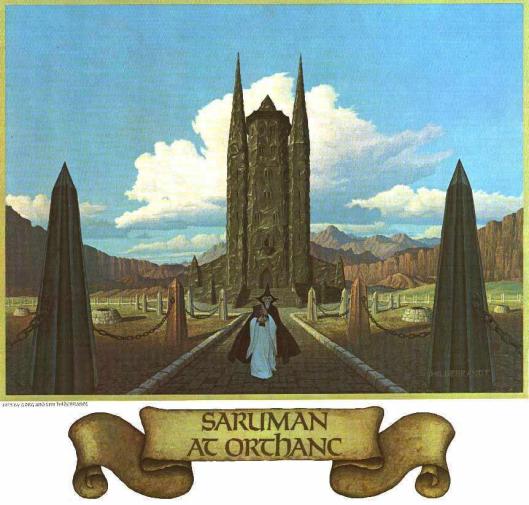
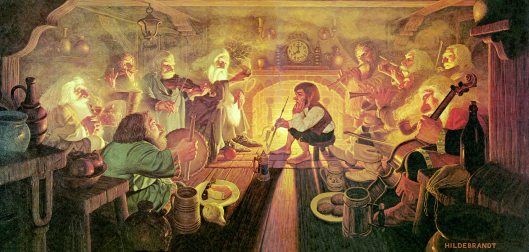
We see this same effect on the inexperienced when Gandalf, the companions, and Theoden visit the defeated Saruman at Orthanc

obra-tolkien-mano-hildebrandt-ilustradores-fa-L-q4g6J8.jpeg

in the chapter named, appropriately, “The Voice of Saruman”:

“Suddenly another voice spoke, low and melodious, its very sound an enchantment. Those who listened unwarily to that voice could seldom report the words that they heard; and if they did, they wondered, for little power remained in them. Mostly they remembered only that it was a delight to hear the voice speaking, all that it said seemed wise and reasonable, and desire awoke in them by swift agreement to seem wise themselves. When others spoke they seemed harsh and uncouth by contrast; and if they gainsaid the voice, anger was kindled in the hearts of those under the spell.” (The Two Towers, Book Three, Chapter 10, “The Voice of Saruman”)

When Gandalf first meets Saruman in Orthanc, Saruman’s “robes, which had seemed white, were not so, but were woven of all colours, and if he moved they shimmered and changed hue so that the eye was bewildered.” (The Fellowship of the Ring, Book Two, Chapter 2, “The Council of Elrond”)

It may be, then, that the power of Saruman’s voice is in the same shimmer—he appears to be not just one, but many and therefore both momentarily persuasive, as well as ultimately insubstantial, since “those who listened unwarily to that voice could seldom report the words that they heard”. It’s clear, however, that, like the voice of Smaug, the spell within the voice was, potentially, horribly persuasive:

“For some the spell lasted only while the voice spoke to them, and when it spoke to another they smiled, as men do who see through a juggler’s trick while others gape at it. For many the sound of the voice alone was enough to hold them enthralled; but for those whom it conquered the spell endured when they were far away, and ever they heard that soft voice whispering and urging them.”

And yet—although

“..none were unmoved; none rejected its pleas and its commands without an effort of mind and will, so long as its master had control of it.”

There are those of the party on this visit to Orthanc who are not taken in at all. Gimli appears to be unaffected, saying, “The words of this wizard stand on their heads”, and Eomer calls Saruman “an old liar with honey on his forked tongue”. Theoden even breaks the spell, although he is said to speak “thickly and with effort.” At such resistance, Saruman shows both a degree of control and a losing of it, cajoling and calling names alternately, until “Gandalf laughed.” And “The fantasy vanished like a puff of smoke.”

Knowing Saruman’s eventual end, murdered by another whose tongue was persuasive enough to keep Theoden a prisoner once upon a time,

leegrima.jpg

can we see the beginning of that end here? Once the “fantasy” created by Saruman’s voice is broken by Gandalf’s gentle mockery, what is left for him after his grand plans to be (at least) Sauron’s ally but “some mischief still in a small mean way”? (The Return of the King, Book Six, Chapter 6, “Many Partings”)

And, at the end of that mischief, Grima only escapes Saruman and his voice through murder—and his own quick death, following.

Gandalf’s laughter suggests that the source of escape from Saruman’s voice may be detachment: if one can step away from the sound, that sound loses its (literal) charm. It may take effort—as it does for Theoden—but, once away, whatever magic was in the voice vanishes into the smoke it really was.   As well, obvious resistance seems always to shake Saruman’s control and that flattering tongue, which can say, on the one hand,

“Theoden Lord of the Mark of Rohan..declared by your noble devices, and still more by the fair countenance of the House of Eorl. O worthy son of Thengel the Thrice-renowned!”

But, when thwarted, can cry:

“Dotard! What is the house of Eorl but a thatched barn where brigands drink in the reek, and their brats roll on the floor among the dogs?” (The Two Towers, Book Three, Chapter 10, “The Voice of Saruman”)

It is striking that, in neither case, are his words to be trusted, any more than his voice—and here we can return to Abraham Lincoln, whose voice may not have impressed, but whose words continue to be remembered.

z235445.jpg

Thanks, as always, for reading.

MTCIDC

CD

Just a Nobuddy

03 Wednesday May 2017

Posted by Ollamh in Artists and Illustrators, Fairy Tales and Myths, Heroes, Imaginary History, J.R.R. Tolkien, Literary History, Narrative Methods

≈ Leave a comment

Tags

akaletes, Athena, Bilbo, Circe, cyclops, face culture, Greek, Homer, kleos, Odysseus, Outis, Polyphemus, Poseidon, Riddles in the Dark, Smaug, Telemachus, The Hobbit, The Lord of the Rings, The Odyssey, Tolkien, true name

Welcome once more, dear readers.

“Who are you and where do you come from, may I ask?”

inquires Smaug. (The Hobbit, Chapter 12, “Inside Information”)

image1smaug.jpg

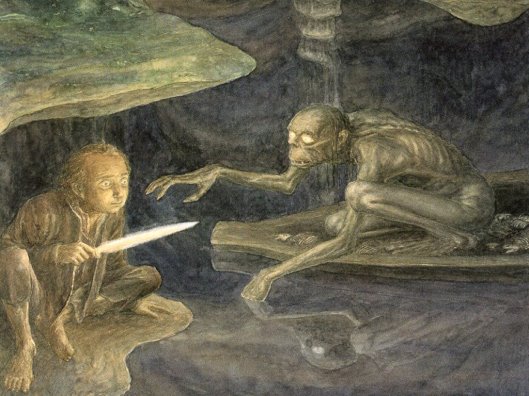
Earlier in The Hobbit, when asked this indirectly by Gollum, Bilbo had replied directly: “I am Mr.

image2bilbogollumlee.jpg

Bilbo Baggins…” (The Hobbit, Chapter 5, “Riddles in the Dark”)

This had led him into a deadly game of riddles, but now Bilbo seems more wary—which is just as well, as the narrator tells us when Bilbo answers Smaug’s question indirectly:

“This of course is the way to talk to dragons, if you don’t want to reveal your proper name (which is wise), and don’t want to infuriate them by a flat refusal (which is also very wise).” (The Hobbit, Chapter 12, “Inside Information”)

Bilbo’s answer to Smaug’s question about his identity is a series of what we might call “What Have I Got In My Pocket?” names—riddling titles which, just like that absent-minded remark, only Bilbo can understand:

“I am the clue-finder, the web-cutter, the stinging fly. I was chosen for the lucky number…I am he that buries his friends alive and drowns them and draws them alive again from the water. ..I am the friend of bears and the guest of eagles. I am Ringwinner and Luckwearer; and I am Barrel-rider.” (The Hobbit, Chapter 12, “Inside Information”)

All of these titles are references to events earlier in the story, of course, although a number of them, like “Ringwinner”, also sound like Norse or Old English kennings—that is, poetic names for often ordinary things, like “whale road” for “sea” and “wave’s horse” for “ship” or “sky candle” for “sun”. One which is close to Bilbo’s “Ringwinner“ is “ring-giver”, a kenning for a “lord”. Because they refer to personal experiences, Bilbo—and we readers—must assume that they would mean nothing to Smaug—or almost—

“Ha! Ha! You admit the ‘us’?” laughed Smaug. “Why not say ‘us fourteen’ and be done with it, Mr. Lucky Number?”

A lucky guess? (And interesting that, in Middle-earth, there are such things as “lucky numbers”—we wonder how many more examples of “lucky” vs “unlucky” things we might find?)

The narrator had said that not revealing your proper name is wise and the consequence of Bilbo’s mistake in telling Gollum that he is “Mr. Bilbo Baggins” will appear many years later, in the form of sinister visitors to the Shire, offering money for the location of “Baggins”.

image3nazgul.jpg

There can be physical danger, then, in properly identifying yourself.

There may be another reason for not doing so and it could entail physical danger not for the protagonist in the story, but a surprise threat for the antagonist.

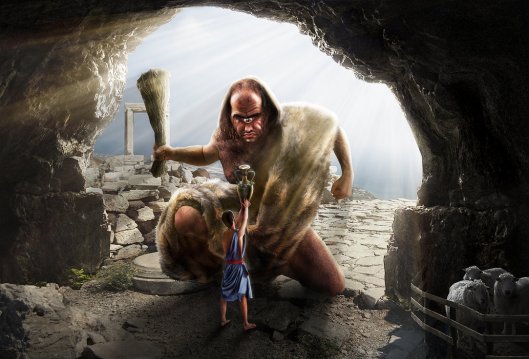
When Odysseus and his men visit the cave of the Cyclops, Polyphemus,

image4cyclops.jpg

and are trapped there, Odysseus, when asked by Polyphemus, gives a false name: Outis (OO-tis), meaning “No one/nobody” in Greek. His subsequent action would suggest that the reason why he does so is that—as he says himself—he has a reputation (for cleverness) which reaches to the heavens. By providing a false name, he intends to put the Cyclops off his guard before defeating him, which he does by:

  1. getting him drunk

image5cydrink.jpg

  1. blinding him

image6blinding.jpg

  1. slipping himself and his men out of Polyphemus’ cave under the bellies of the Cyclops’ sheep.

image7sheepslip.jpg

Having succeeded, however, Odysseus seems to change his plan—and mind—completely, shouting, as his ship takes him away, his name and address, even as the Cyclops hurls huge rocks at the ship and his men beg him to stop.

image8cyrocking.jpg

In the mind of an Homeric hero, however, Odysseus has no choice.

A major element in the life of such heroes is something called “kleos” (KLAY-oss)—which is somewhat difficult to translate. In the heroic world it means something like “personal name within the larger framework of a family and its reputation”—and that’s only the beginning. Kleos is almost a kind of inheritable object and includes such elements as:

  1. divine/semi-divine parents/ancestors
  2. divine patrons
  3. father’s reputation
  4. own reputation, which includes
  5. famous battles/campaigns participated in
  6. famous enemies killed (and spoils taken)
  7. plunder from cities sacked (includes not only goods, but women)

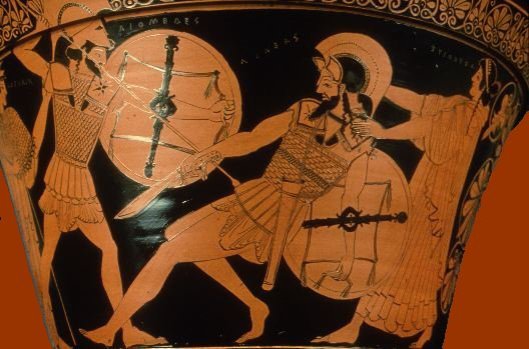
And #4 could be something to be said for parent or ancestor, as well. Your father or grandfather might have been known as “Sacker of Cities” and this adds to the general kleos.

It’s also possible to lose kleos—divinities pick and choose whom they will help, for example, and, just because your father was the client of a god, doesn’t mean that you will be. It is a definitely positive sign for Odysseus’ family’s continued kleos, for example, when, in Odyssey Books 2 and 3, Athena, disguised as the human Mentor, appears and offers Odysseus’ son, Telemachus, advice.

The Homeric world is a so-called “face” culture. In such a culture, everything is public. In fact, the word kleos comes from the verb kalo (kah-LO), meaning to “to summon/call by name”, that name being, in the case of a warrior, not only your name but where you stand in your family’s reputation, its kleos.

Thus, it’s important, when a warrior defeats a powerful enemy, not only should the enemy warrior know who beat him, but all the bystanders, should there be any, as well.

image9warrior.jpg

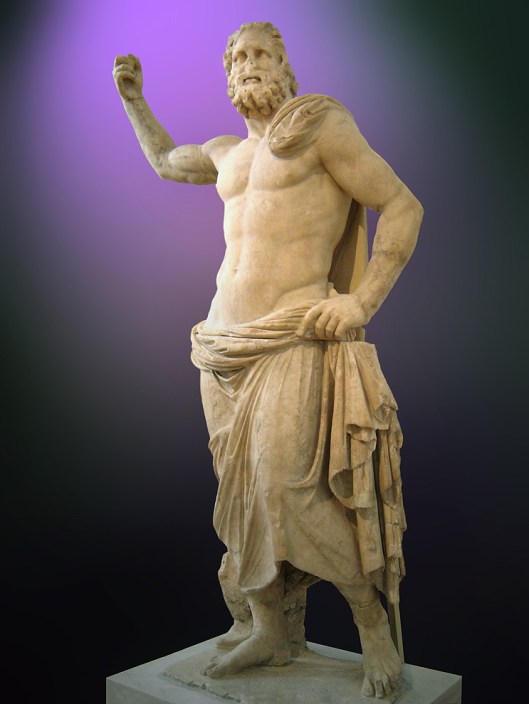
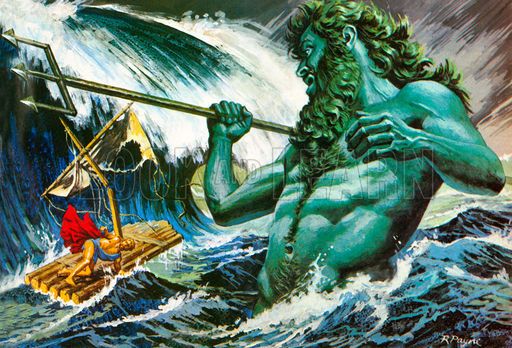
For Odysseus, then, using a false name might give him an initial advantage over Polyphemus, but his victory is only complete and he can only claim kleos when he reveals to the Cyclops who has defeated him. This will lead to terrible subsequent consequences for Odysseus. Polyphemus’ father is Poseidon, god of the seas

image10pos.jpg

and he will make things very difficult for Odysseus later in the Odyssey,

image11pos.jpg

but, in the world of kleos, Odysseus has no choice but to reveal himself to gain the credit necessary for maintaining it.

Another reason for concealing your name has to do with magic. In many of the world’s older traditional cultures, people might have several names, either in succession, or public versus private. Behind the public versus private stands the idea that you are your name—that is, all that is you is embodied in your name. If someone knows that name, that person can use that name against you, either to curse you—and, using your real name, that curse might stick to it—or to summon you for magical purposes. Once your true name is called, a sorcerer can make you obey, even against your will.

In Odyssey 10, Odysseus and his men land on an island which is the home of the enchantress, Circe.

image12circe.jpg

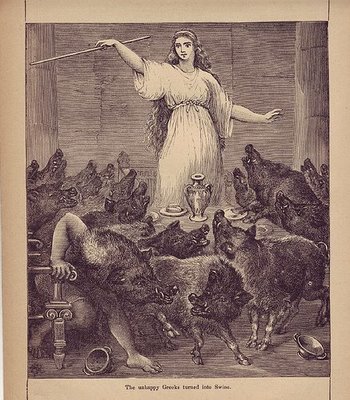
She has the power to shift the shapes of men into those of animals and vice versa, as a scouting party from Odysseus’ ship soon finds out. She gives them a drink with some sort of magic drugs mixed in and, with a wave of her staff, turns them into pigs (although they retain their human minds).

image13enchant.jpg

She then tries this on Odysseus, but, in his case, it doesn’t work, much to her surprise, and he, drawing his sword, quickly forces her surrender.

image14defeat.jpg

There is no direct explanation for the failure of her magic in Book 10, but there is, in fact, a clue in the word she uses for Odysseus in her frustration. She calls him “akaletes” (ah-KAH-leh-tehs)—which means “unsummonable/uncallable by name” and is from the same root as kleos and kalo. The implication here is that, for her magic to work, she needs a name—something we might presume Odysseus’ piggy companions must have foolishly given her. That he is unsummonable suggests that he has given her a false name and therefore her magic hasn’t worked.

And is this perhaps the real reason why it was wise that Bilbo didn’t identify himself directly to Smaug?

image15smaug

After all, Smaug, unlike the agents of Sauron, wasn’t likely to roam the countryside, offering gold in return for information about the whereabouts of a certain “Baggins”. He does, however, appear to have a certain persuasive magic:

“Bilbo was now beginning to feel really uncomfortable. Whenever Smaug’s roving eye, seeking for him in the shadows, flashed across him, he trembled, and an unaccountable desire seized hold of him to rush out and reveal himself and tell all the truth to Smaug. In fact he was in grievous danger of coming under the dragon-spell.” (The Hobbit, Chapter 12, “Inside Information”)

That magic seems to lie in his words and tone—Bilbo, listening, is said to be in peril of “dragon-talk”—and we want to talk more about such magical persuasion in our next posting…

Thanks, as ever, for reading!

MTCIDC

CD

Hoarders

26 Wednesday Apr 2017

Posted by Ollamh in J.R.R. Tolkien, Literary History, Narrative Methods

≈ Leave a comment

Tags

Anglo-Saxon, Barliman Butterbur, Beowulf, Bill Ferny, cartwheel penny, Celts, detectorist, Fafnir, Hoard, hord, Horrible Histories, Lenborough, monetary systems, pence, Pennies, pound, pre-Roman British coin, Regia Anglorum, shilling, Smaug, Staffordshire Hoard, Terry Herbert, The Hobbit, The Lord of the Rings, The Treasure Act, Time Team, Tolkien

Welcome, dear readers, as always.

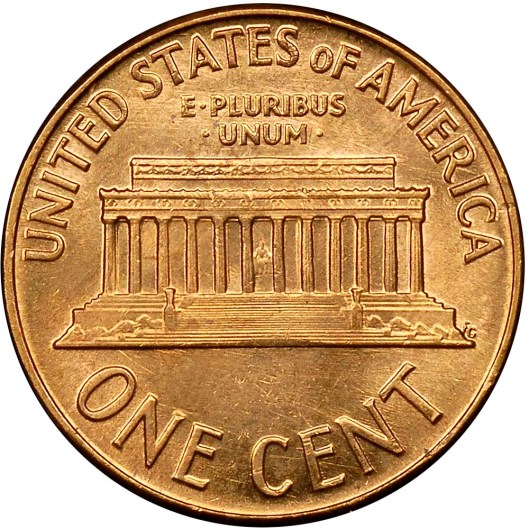
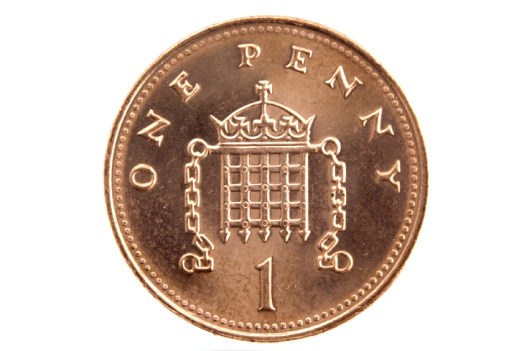
In this posting, we’re continuing with the theme suggested by our dear friend, EMH, about Middle-earth coinage. If you read our last post, you’ll remember that we cited the price of “Bill”, Sam’s pony, which was “12 silver pennies”. Our pennies here in the US—and modern British ones—are made of copper.

1auspenny.jpg


imag1aabrpenny.jpg(As usual with so many old and established things, there is argument over where the word “penny” comes from. Personally, we’ve always imagined that it’s an English diminutive of a Brythonic word—as it exists today in Welsh—“pen” = “head”, the idea being that coins had portrait heads on them. Certainly some pre-Roman British coins had them

image2aancientbritcoins.jpg

and they were the norm for the Roman coins the Celts would have seen.)

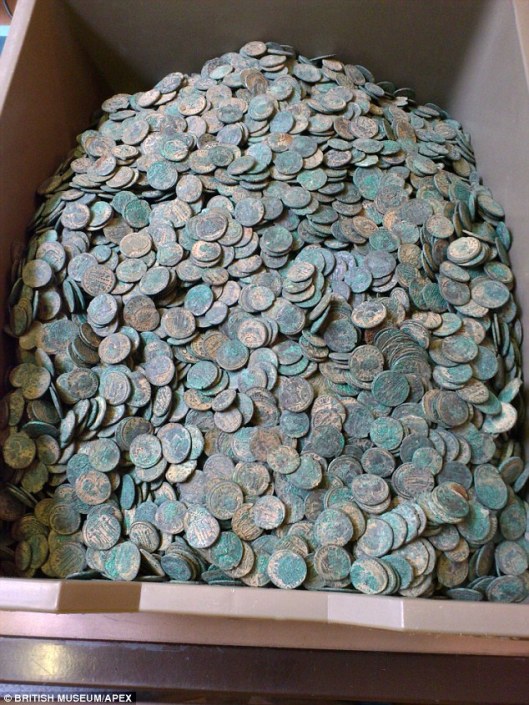
image2aromancoinhoard.jpg

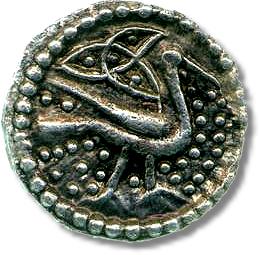
Originally—from the 8th century to 1797, all English pennies were silver. Here’s an 8th-century penny.

image3aaasilverpenny.jpg

In 1797, this was replaced by the so-called “cartwheel penny”, made of copper:

imag3cartwheel.jpg

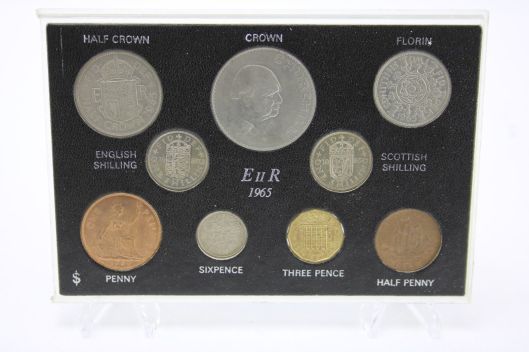
For all that the material changed, the same monetary system of 1 pound = 20 shillings, each shilling = 12 pence (pennies), which had been in place since Anglo-Saxon times, remained in place in the UK till decimalization appeared in 1971. (There is evidence that the number of pence per shilling varied early on, however, with a shilling worth anywhere from 4 to 6.)

image4aaacoinset.jpg

(For a wonderful but totally perplexing view of this money system in Tudor times, see the Horrible Histories segment here.)

So many of these early coins have all come from “hoards”—that is, from groups of valuable objects which were hidden, presumably with the idea that the one hiding them would return someday to collect them, but, for unknown reasons, never did. (The word, as “hord”, is an Old English/Anglo-Saxon word meaning “treasure/thing of value”.)

As a cache (from French “cacher” = “to hide”—“cache-cache” = the children’s game “hide and seek”) of things someone thought valuable, hoards have been discovered world-wide (just google “hoard”), but some of the most spectacular hoards have come from the UK.

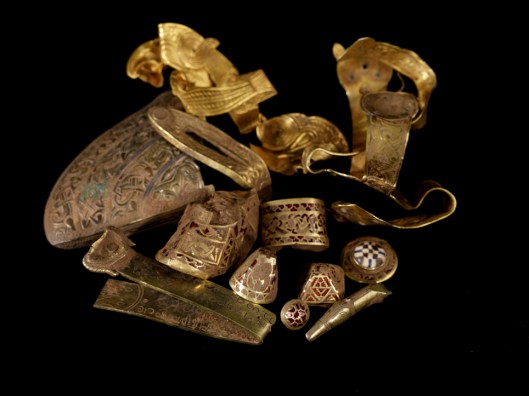
A particularly striking hoard was found by a metal detectorist, Terry Herbert, in 2009. This is the “Staffordshire Hoard”, with over 3500 objects dating from the 7th century AD.

image5staffhoard.jpg

In case “metal detectorist” is new to you, this is a person who spends time using a metal detector

image6ametaldetectors.jpg

to search what he hopes is a promising area in hopes of finding historical objects. The negative side—and we’ve seen it in the US—is that some slip into historical sites, make finds, never report them, and sell them, thereby destroying them as evidence of moments in history. The positive side—and we’ve seen this in England, particularly after the enlightened “The Treasure Act” of 1996—is that responsible detectorists cover much more ground than archaeological services can and both report finds on their own and work on sites with trained professionals. (If you have discovered the wonderful British series, “Time Team”, you can almost always see some working in the background.) In fact, in 2014, BBC4 released a comedy/drama series, The Detectorists, based upon two rather hapless members of the community, Andy and Lance,

image6thedetectorists.jpg

with a second series released in 2015 and a third promised for 2017. As an example of that special brand of quiet, quirky English humor, we very much recommend these.

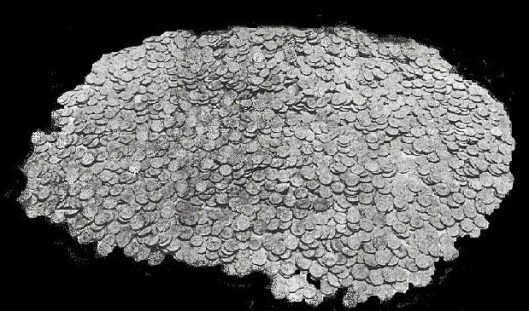
The Staffordshire Hoard contained a large selection of worked gold and silver pieces and fragments, but, as far as we can read, no coins. A major coin hoard was found at Lenborough in 2014. This was a carefully-buried lead box containing over 5,000 late Anglo-Saxon coins.

image7lenboroughhoard.JPG

And a heap like that immediately makes us think of hoards from myth—the hoard from which a slave steals a cup in Beowulf (just as Bilbo does, in The Hobbit)

image8beowulf.gif

to the hoard of the dragon Fafnir

image9fafnir.jpg

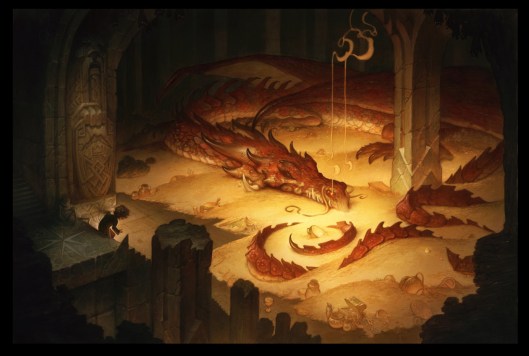
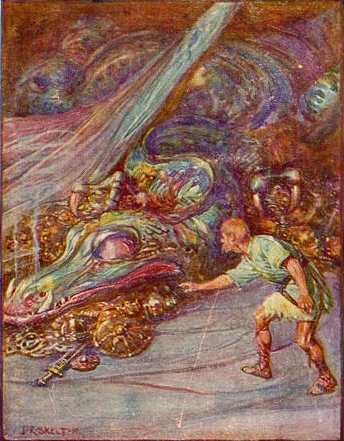
to the hoard of Smaug.

image10smaug.jpg

JRRT paints a broad picture of Smaug’s hoard:

“Beneath him…lay countless piles of precious things, gold wrought and unwrought, gems and jewels, and silver red-stained in the ruddy light…Behind him where the walls were nearest could dimly be seen coats of mail, helms and axes, swords and spears hanging; and there in rows stood great jars and vessels filled with a wealth that could not be guessed.” (The Hobbit, Chapter 12, “Inside Information”)

No coins are mentioned—although ponies, unfortunately, are: Smaug says that he’s eaten six of them.

And this brings us back to our original quotation and the price of Sam’s pony:

“Bill Ferny’s price was twelve silver pennies; and that was at least three times the pony’s value in those parts.” (The Fellowship of the Ring, Book One, Chapter 11, “A Knife in the Dark”)

Butterbur the innkeeper at Bree paid for the pony and “offered Merry another eighteen pence as some compensation for the lost animals” (the others driven off by the Nazgul during their night raid on Bree). We have some sense of just how much that meant when the story goes on to say of Butterbur that, “He was an honest man, and well-off as things were reckoned in Bree; but thirty silver pennies was a sore blow to him…”

We had assumed that JRRT, as a scholar of the medieval English world, had based his coinage on the system of the Anglo-Saxon world (which was still, more or less, the system in Britain nearly to JRRT’s death in 1973). A comparison with a very useful chart of period prices, based primarily upon surviving law texts, to be found on the website of the reenactment consortium Regia Anglorum, however, suggests that, although JRRT has silver pennies, just as the AS system does, his price for the pony doesn’t appear to match at all.   If 4 silver pennies would have been a good price in the late Third Age, what would Butterbur have said to the 193.5 pence for a horse on the actual AS list?

Thanks, as ever, for reading!

MTCIDC

CD

When One Door Closes (I)

09 Wednesday Nov 2016

Posted by Ollamh in J.R.R. Tolkien, Literary History, Narrative Methods

≈ Leave a comment

Tags

And Unexpected Party, Baggins, Beorn, Bilbo, Bilbo and Gollum, Chico Marx, doors, Dwarves, Gandalf, Goblins, Groucho Marx, hidden door, Hobbit door, Horse Feathers, Into the Fire, Lake Town, Lonely Mountain, Mirkwood, Out of the Frying-Pan, password, Smaug, speakeasy, Swordfish, The Hobbit, The Lord of the Rings, The Marx Brothers, Thranduil, Tolkien, Took, wargs

Welcome, dear readers, as always.

Recently, we’ve been thinking about Bilbo’s remark to Frodo:

“It’s a dangerous business, Frodo, going out your door.” (The Fellowship of the Ring, Book 1, Chapter 3, “Three is Company”)

What makes this true in Tolkien, we wondered? As an experiment, we began to list all of the significant doors in The Hobbit and The Lord of the Rings and what happened at each of them and we believed that we could see that they fell, roughly, into two categories: doors (and we include gates here) which are the approach to danger, as Bilbo says, and doors which at least seem to offer safety. There are so many, in fact, that we have decided to break them down (no pun intended) and, in this posting, we’ll examine those we found in The Hobbit.

Our first door is Bilbo’s own, in front of which he is sitting when Gandalf first appears

bilbogandalf.jpg

and which he dodges behind, to escape Gandalf—or so he thinks:

“With that the hobbit turned and scuttled inside his round green door, and shut it as quickly as he dared, not to seem rude.” (The Hobbit, Chapter 1, “An Unexpected Party”)

This door, of course, is hardly a barrier to Gandalf, who scratches a rune on it, turning it from what Bilbo hopes is a “no trespassing” sign to a “welcome” mat.

bilbosdoor.jpg

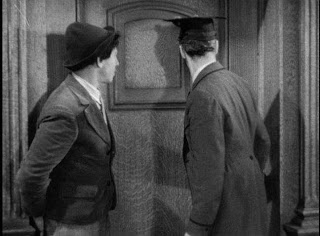
We then get a scene which reminds us of one in the Marx Brothers’ movie, Horsefeathers (1932)

horsefeatherposter.jpg

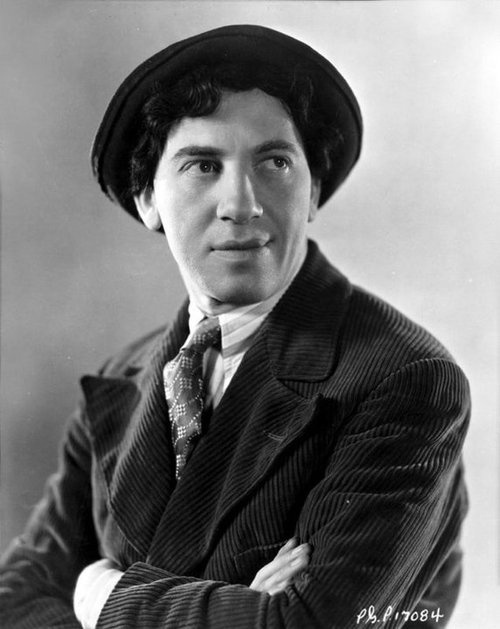
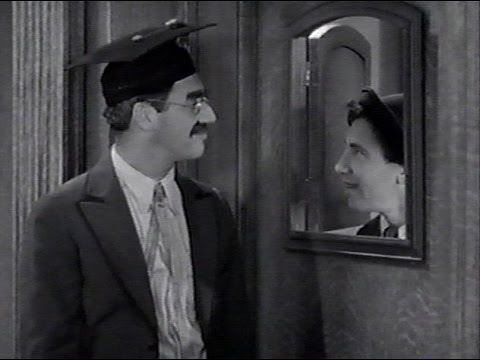
—or maybe it’s just an excuse on our part to bring up the Marx Brothers, who, in our opinion, are never brought up often enough. It’s a scene from the days of Prohibition, when hard liquor had been outlawed in the U.S. by an amendment to the Constitution (1920-1933). It was clearly a batty idea and, very soon, many people (some of whom must even have voted for the amendment), were looking for ways to skirt the federal law. One way to do so was to visit an illegal bar, called a “Speakeasy”, presumably because you could say what you wanted there, including criticizing a stupid law. These were secret places, with guards at the door and a need for passwords, so that people on the inside could detect attempts by the police to raid them. In the movie, Chico (pronounced “chick-o’’—as he was said to be an avid pursuer of girls)

chico.jpg

is the guard on the inside and Groucho

groucho_marx_in_duck_soup.jpg

is a potential customer.

speakeasy.jpg

As is typical with the Marx Brothers, the scheme collapses and they both end up on the outside of the door, but, before that happens, there is a lot of knocking and attempts (full of bad puns) to guess the proper password.

horsefeathersbothshutout.jpg

The door, then, is really only a prop, a site where Chico and Groucho can practice one-liners on each other and not much else (as if that matters with the Marx Brothers!). In the next door scene from The Hobbit, however, JRRT uses Bilbo’s door for larger purposes: to show Gandalf’s subtle understanding of Bilbo’s psychological make-up, as well as the beginning of his plan to turn Bilbo from a staid Baggins to a much freer Took, as Bilbo is forced to confront a gang of dwarves and their mission.

unexpected.jpg

Gandalf’s method, as readers will remember, was to send the dwarves to Bilbo’s door one or two at a time. Gandalf repeats this trick when he and the dwarves (and Bilbo, of course) take refuge at Beorn’s,

beorn.jpg

after their escape from the pursuing wargs and goblins.

warg_rest.jpg

Whereas we might say that the second door scene at Bilbo’s led to danger, this scene leads to safety, although only temporary security, as Bilbo and the dwarves must set out again, even if refreshed and refitted.

(Readers note: this second time has been replaced in the second Hobbit film with a scene which misses both the quiet comedy of the original and its use in the story as a way to provide us with a more rounded picture of Beorn, as well as JRRT’s use of a repeated folk motif perhaps to reinforce the fairy tale-like structure of what was originally an oral tale turned children’s book.)

The dwarves had encountered the goblins through a hidden door (clearly a “danger door”), outside of which they had taken shelter. They are made prisoner

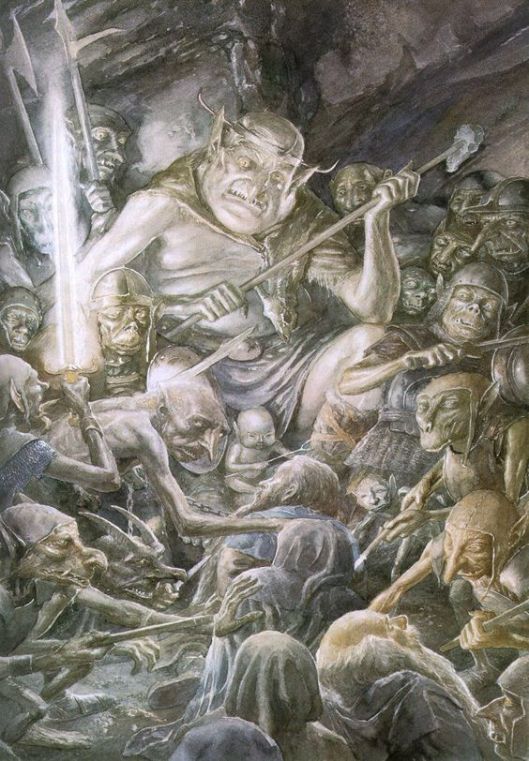
goblinking.jpg

but Bilbo, being lost, finds the Ring, meets Gollum,

Bilbo and Gollum.JPG

and escapes by a door which certainly offers safety. (Although, as the title of the next chapter puts it, not for long, being “Out of the Frying-Pan, Into the Fire”.)

goblinsbackdoor.jpg

This, of course, not only leads us back to Beorn, but also on to Mirkwood and our next door, that of the Mirkwood Elves and their king, Thranduil (who does not ride an elk, as the movies would have it—and really silly-looking that is, in our opinion). This is one of a number of versions by JRRT himself.

palazzo di thranduil 2.jpg

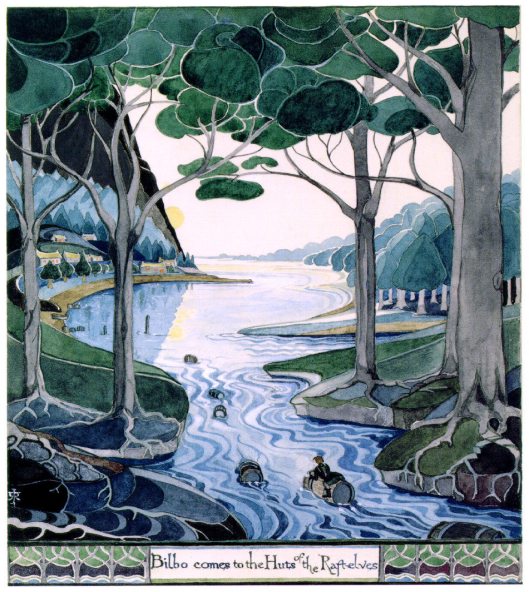
Although this door leads to the dwarves’ imprisonment, the danger appears to be minimal. Thranduil threatens them, but, except for locking them up and putting them on short rations, he does them no harm. (And there is another backdoor escape—this time in barrels—one of JRRT’s own favorite illustrations—and ours, too).

barrel-riding.jpg

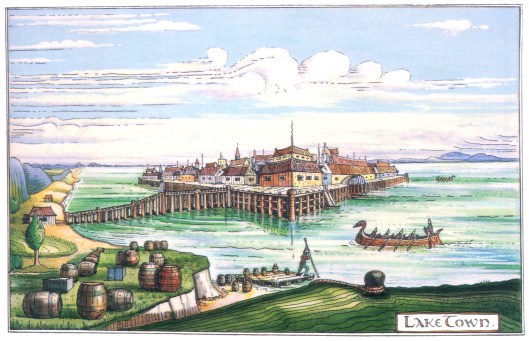
The barrels led us to the lake and to Lake Town (a colored version of another JRRT illustration),

Laketown4.jpg

through the gate of which the dwarves had to pass. A strong theme in so many of these entryways is that they are a form of challenge: those who would get in (or out) must deal with a guardian—Bilbo, goblins, elves–and Lake Town is no different. Here, there is a squad of lax gate guards, who are rather easily impressed when Thorin announces who he is and that he wants to see the Master. As the dwarves persuade the Lake Town people to supply their expedition, we would label this one of the doors to safety—the last thing we would say for the final two: the back door and the front gate of the Lonely Mountain.

136TheLonelyMountain.jpg

So far, we have had two front doors (Bilbo’s and Beorn’s), one hidden door (goblins), two sets of gates (elves, Lake Town), and two back doors (goblins and elves). Now we have a door with a spell cast upon it and the riddle of the spell acts as the guardian. It is, of course, the door most desired by the dwarves, but it’s hardly a door to safety as, at its bottom lies the reason they abandoned the mountain to begin with: Smaug.

bilbowithsmaug.jpg

The front gate is hardly better, as it soon becomes a defensive work for the dwarves as they prepare to fend off those who either try to seek recompense or are simply goblin attackers.

the-hobbit-the-battle-of-the-five-armies3.jpg

But wait—we’ve left out a final door, haven’t we? “the door where it began”—and, in front of it, Bilbo experiences one more trial:   finding that he’s been declared dead and his property is up for auction—and just when he believes he is “back again”. But there is a happy ending and The Hobbit itself ends with Bilbo, some years later, answering that same door

tolkien_drawing1.jpg

and entertaining Gandalf and Balin. (Although in the drawing above, Bilbo bears a certain resemblance to someone else…)

j_r_r_tolkien_-_smoking_pipe-700x1049.jpg

In our next post, we’ll continue by looking at doors and gates in The Lord of the Rings.

Thanks, as always, for reading!

MTCIDC

CD
Bolts and Arrows

06 Wednesday Apr 2016

Posted by Ollamh in Films and Music, Heroes, J.R.R. Tolkien, Military History, Military History of Middle-earth, Narrative Methods, Uncategorized

≈ Leave a comment

Tags

Agincourt, anti-aircraft gun, ballista, Bard the Bowman, Battle of Crecy, Battle of Poitiers, Border Reivers, Boromir, crossbow, Crossbow Bunnies, English Longbowmen, harpoon, Hundred Years War, John Singer Sargent, latch, Maximus, N.C. Wyeth, Peter Jackson, Richard the Lionheart, Robert Louis Stevenson, Robin Hood, Roman d'Alexandre, Siege of Chalus, Smaug, Tangled, The Black Arrow, The Hobbit, The Lord of the Rings, The Mary Rose, Tolkien, Towton

In our review of the third Hobbit film, we questioned the use by Bard of something a little larger in the way of a missile than Tolkien had intended:

“Then Bard drew his bow-string to his ear. The dragon was circling back, flying low, and as he came the moon rose above the eastern shore and silvered his great wings.

‘Arrow!’ said the bowman. ‘Black Arrow! I have saved you to the last. You have never failed me and always I have recovered you. I had you from my father and he from of old. If ever you come from the forges of the true king under the Mountain, go now and speed well!’ ” (TH 307).

As Bard was firing this himself, we always envisioned him as an English longbowman.

englishlongbowman1330-15151.jpg

And this led us to think a bit about Tolkien’s possible sources, not only for Bard and his bow, but for that arrow–the real one, not the monster dart used in the film.

From any children’s history of England, Tolkien would have learned that longbowmen like the one shown above destroyed three brave French armies in the Hundred Years War, at Crecy (1346), Poitiers (1356), and Agincourt (1415).

hf54d67201.jpg

In the film, however, although Bard was depicted as an archer,

Bard-the-Bowman-bard-the-bowman-37670604-1920-1200.jpg

his weapon of choice looks like this.

bardwithharpoon.jpeg

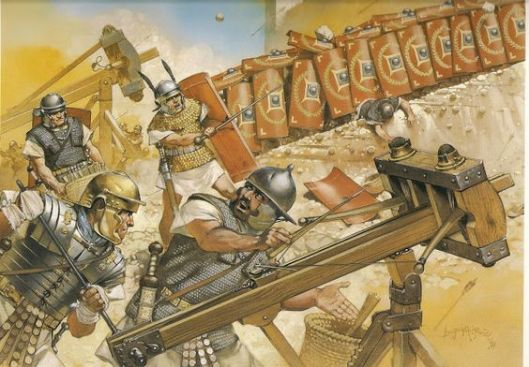
This reminds us of either a Roman ballista

b0370394e429c42631f520182c155a34.jpg

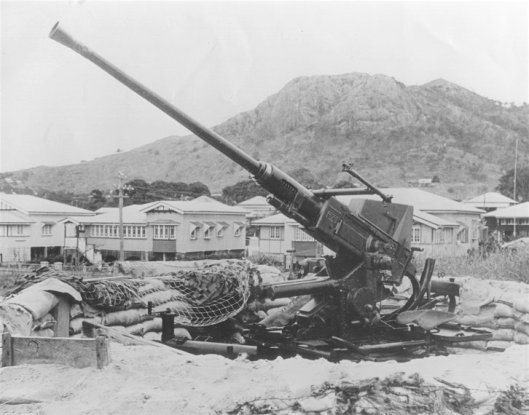
or an anti-aircraft gun

strandgun01.jpg

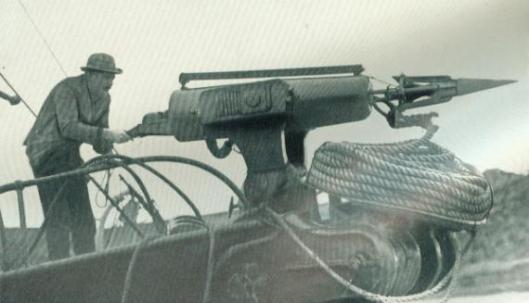
or, most especially,  a harpoon gun.

WhaleHarpGun1.jpg

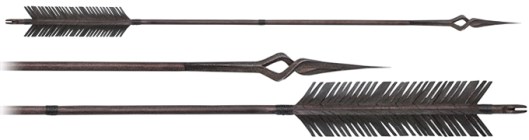
Especially when you look at this Bard’s arrow.

bard.jpg

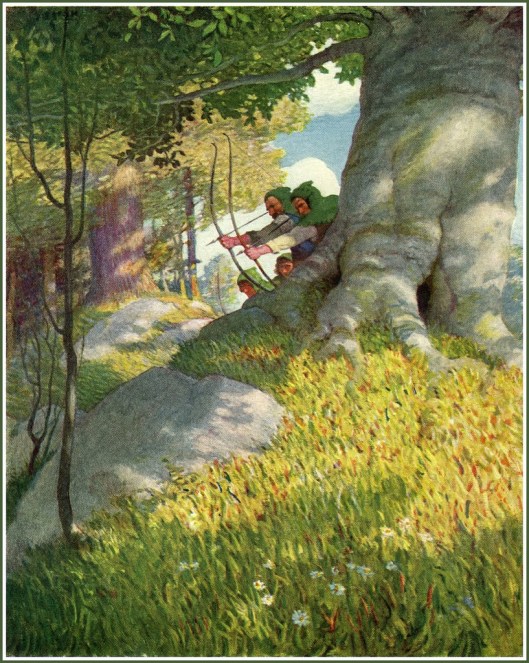
Although we currently have no evidence for Tolkien’s sources, we can imagine that they might have included, among others, Robin Hood,

5616567327_fc899be2f1_b.jpg

the actions of actual Medieval archers like those at Agincourt or Towton (1461),

towton3.jpg

and a book, perhaps from boyhood, Robert Louis Stevenson’s The Black Arrow (1883/1888).  Stevenson (here in an 1880s portrait by John Singer Sargent)

rlsjss2.jpg

had originally published the story serially in a children’s magazine in 1883

ba1.jpg

before its publication in book form in 1888.

Blackarrowcoverscribners1888.jpg

The classic illustrations are by one of our all-time favorite illustrators, NC Wyeth, from 1917.

309642.jpg

We can’t resist showing you a few:

tumblr_l4istbR1JZ1qamjklo1_1280.jpgillus08.jpg09_blackarrow_alittlebeforedawn_wyeth.jpg

Although the bow is the weapon of choice of those who use the black arrow of the title (it’s employed for revenge), the hero  in fact, has a crossbow.

5616566731_49d251a1fc_b.jpg

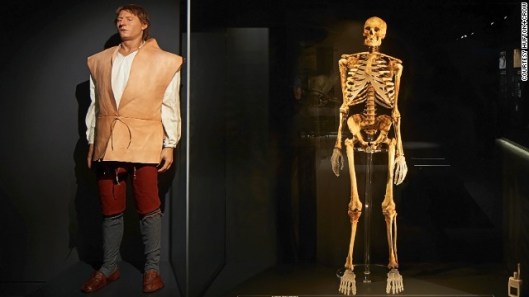
The longbow requires years of training and great upper-body strength, leaving its mark on bowmen, as can be seen from this skeleton (and its reconstruction) brought up from the English warship, the Mary Rose,

sinking_3.jpg

which sank with most of its crew in 1545 and was brought up from the mud of the ocean floor in 1982.

130530121104-mary-rose-skeleton-horizontal-gallery.jpg

The crossbow is a mechanical weapon, which uses much less strength to draw

the_old_crossbow_archer_by_renum63-d8aaovo.jpg

and, in the more developed versions, even uses a crank to produce the necessary string tension.

8f106fadbe86ed34e5567bc7a90b89e2.jpg

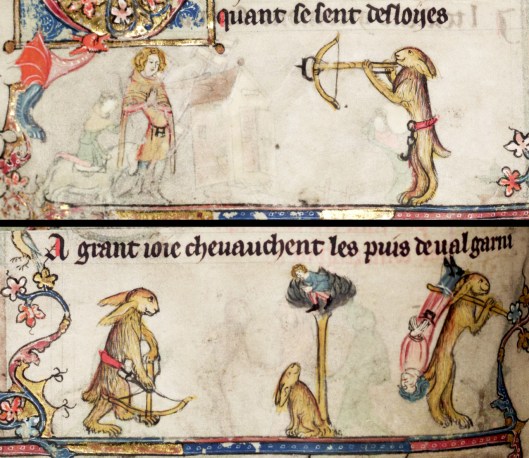
(And, just as in the case of NC Wyeth illustrations, we can’t resist medieval manuscript illustrations. Look at this pair of crossbow… bunnies from a copy of the Roman d’ Alexandre, circa 1340.)

romandalexandrec1340.jpg

This makes it a less romantic weapon, but equally deadly:  Richard the Lionheart was killed with a bolt/quarrel (what one calls a crossbow arrow) at the siege of Chalus in 1199.

Richard1TombFntrvd.jpg

(This creates another aside–about the hand weapon used as late as the 16th century by the Border Reivers of the land between northern England and southern Scotland–called a “latch”, it was the weapon of choice for those who couldn’t afford early hand guns but wanted to fire easily from the saddle.

Reiver-on-Horse.jpg

The soldiers in Disney’s wonderful movie, Tangled, carry them–notice the off-hand side pouch with a handful of bolts  for one on Maximus’ saddle–)

maxtangled.jpg

But we would  like to conclude with one more use of that black arrow.  A flight of them kills Boromir in The Lord of the Rings.

boromirarrows1.jpg

boromirearrows.png

Just as we began by pointing to the text and the actual bow and arrow which kill Smaug, and not the harpoon of the film, so we would criticize this scene.  In our opinion, it is stretched beyond believability, as well as beyond the text, taking away something of Boromir’s valor in combat with dozens of the enemy, in which he is gradually overcome.

boromir_by_deligaris-d5po92u.jpg

This is just as true for the brief scene of Aragorn at Boromir’s death.  What was simple in the text, thus making it more moving–just Boromir’s confession and Aragorn’s comforting him–becomes a soppy scene in which Boromir swears loyalty and calls Aragorn “my brother”, a liberty Aragorn-the-king-t0-be, would hardly have welcomed.  In the theatrical world, this is called “milking the scene” and here, we think it curdled.

Thanks, as always, for reading.

MTCIDC,

CD

Knowledge, Rule, Order

06 Wednesday Jan 2016

Posted by Ollamh in Fairy Tales and Myths, Imaginary History, J.R.R. Tolkien, Military History, Military History of Middle-earth, Narrative Methods

≈ 2 Comments

Tags

Adolf Hitler, Anduin, Benedict Cumberbatch, Benito Mussolini, British Government, Charlie Chaplin, dictatorships, England, Gandalf, George V, Germany, Gondor, gothic script, Government, History, India, Isengard, Kaiser Willhelm II, Lenin, Mehmed VI, Middle-earth, monarchs, Mordor, Nazis, newsreel, Numenor, Ottoman Empire, Oz, Peter Jackson, Queen Mary, Queen Victoria, Rohan, Saruman, Sauron, Scott, Smaug, Stalin, Stock Market Crash of 1929, Sultan, The Great Dictator, The Lord of the Rings, Tolkien, Treaty of Versailles, Valar, Victoria Louise, Weimar Republic, William Morris, Writing

Dear Readers,

Welcome, as always.

Have you ever wondered what Middle Earth would have been like if the Fourth Age had begun on a calendar written by Sauron?

That of the Third Age was hardly a democratic paradise: a king rules Rohan, a stand-in for king rules Gondor. Elrond and Celeborn/Galadriel behave and are treated like royalty and Thranduil, as we learn from The Hobbit, is the king of Mirkwood. The dwarves have hereditary rulers.   Only the outliers—communities like Bree and the Shire and the earlier inhabitants like Tom Bombadil and Fangorn—appear to be completely independent. (The Shire even has elections and a mayor, although the actual government, except for the shire reeves, appears to bemostly token—you wonder who’s running their seemingly-efficient postal service.)

This is not surprising, not only for an author born during the later years of Victoria,

queenvic.jpg

but also for someone powerfully influenced by the medievalist interests of everyone from Scott

Sir_William_Allan_-_Sir_Walter_Scott,_1771_-_1832._Novelist_and_poet_-_Google_Art_Project.jpg

to William Morris.

William_Morris_age_53.jpg

(We might add that the world of fairy tales, full of princes and princesses, queens and kings, was also a powerful influence at the time—and not only on story-tellers born in monarchies—after all, even Oz is ruled by a queen—

OzmaOz.jpg

Yet, after Smaug—who could better be a medieval fantasy villain (especially with the voice of the incomparable Benedict Cumberbatch attached)?

p8204516_n279079_cc_v4_aa.jpg

—something changed in Tolkien’s world. In fact, something changed in the whole outside world. With the end of World War One, monarchs toppled all over Europe and beyond, from:

Kaiser Wilhelm II of Germany

KAISER-WILHELM_2994889b.jpg

to Mehmed VI, last Sultan of the Ottoman Empire.

mehmed6.jpg

In place of the former, there appeared the always-troubled Weimar Republic, full of good intentions, but badly crippled, not only by the war which had sapped its manpower and resources, but by all kinds of social unrest and then by the Crash of 1929, which notoriously destroyed the value of its currency.

weimar currency.jpg

As early as 1919, there had been clashes among the forces of different ideologies—

CombatesEnBerlín19190903.jpg

And, amidst all of the unrest, there was a failed coup attempt in 1923 by the man in the overcoat in this picture.

Bundesarchiv_Bild_102-00344A,_München,_nach_Hitler-Ludendorff_Prozess.jpg

He, of course, was only following the footsteps of this man, who had pushed his way into power the year before—

March_on_Rome.jpg

to be followed, in turn, by the man on the left, from the mid-1920s.

stalinandfriends.jpg

That first man, having failed at obvious violence, tried again through more complicated means (although still employing violence, if it suited his purposes) and succeeded in 1933.

Hitler-Papen-First-Reichstag-1933.jpg

He was, so we are told, a riveting public speaker, but, if the newsreels we’ve seen are evidence, we guess you would have had to have been there.

hitlerspeaking.jpg

Some people thought the style exaggerated in the 1930s and caricatured it even then.

chaplin2.jpg

He had a definite social agenda, which he outlined at length and often, although concealing certain of the most horrible aspects. And he liked big words and big concepts, like:

einfolk.jpg

It would have been impossible for someone as intelligent and generally well-informed as Tolkien not to have been very much aware of this man and all of the other like men, busy oppressing as much of the world as they could. And this would have been especially true in a time when radio and film were changing how people received news—and how those interested in influencing others might shape what people saw. As early as 1911, the British government was using newsreel film to show the might and reach of its empire (2/5 of the globe was in their hands) when the king, George V, and his wife, Queen Mary, visited India.

Delhi_Durbar,_1911.jpg

Not to be outdone, Kaiser Wilhelm II encouraged a grand—and filmed–event in 1913, for the wedding of his daughter, Victoria Louise—and some of the film was even in color.

vlouisekaiser.jpg

The Marriage of Victoria Louise Color Film

It would be easy to imagine, then, that the weight of such public figures might have influenced Tolkien in his depiction of late-3rd-Age villains. We can see it in Saruman’s unsuccessful attempt to persuade Gandalf to join him:

“ ‘He drew himself up then and began to declaim, as if he were making a speech long rehearsed. ‘The Elder Days are gone. The Middle Days are passing. The Younger Days are beginning. The time of the Elves is over, but our time is at hand: the world of Men, which we must rule. But we must have power, power to order all things as we will, for that good which only the Wise can see.” (The Fellowship of the Ring, Chapter 2, “The Council of Elrond”)

Thus, unlike the script of Jackson’s version, there is no plan to wipe out men and replace them with orcs. Instead, men are to survive: to be ruled—perhaps under what definitely sounds like it should be a translation from something written in Fraktur—the fake Gothic script favored by the Nazis–

die-schöne-deutsche-Schrift-detail1.jpg

“ ‘We can bide our time,’” says Saruman, “ ‘we can keep our thoughts in our hearts, deploring maybe evils done by the way, but approving the high and ultimate purpose: Knowledge, Rule, Order; all the things that we have so far striven in vain to accomplish…’ ”

Such abstract, but somehow menacing, words sound like a translation of something from Hitler’s Germany: Kenntnisse, Herrschaft, Ordnung. They do not sound in the least like Gandalf’s goals, ever, and he, in fact, replies by implying that not only are they not really Saruman’s words, but that Saruman is foolish for believing them:

“ ‘Saruman,’ I said, ‘I have heard speeches of this kind before, but only in the mouths of emissaries sent from Mordor to deceive the ignorant.’ “

As really the words of Sauron, however, they give us an idea of what to expect in a world under his control. Knowledge would be for Sauron alone, we suppose, perhaps after regaining his lost ring? Certainly he wouldn’t share it with Saruman, whom, it will become clear, he never trusted. As for Rule and Order, the world would be a place full of rules and those watching that they be obeyed. And here we can remember Sharkey’s Shire, with its “by order of the Chief” signs—and its gangs of human enforcers. As well, we can think of its grey, industrial character, as we’ve discussed in a previous post, a universal Mordor, devoted to production. To this, we can add the Mouth of Sauron’s recitation of surrender conditions, delivered to the allies before the Morannon:

“ ‘These are the terms…The rabble of Gondor and its deluded allies shall withdraw at once beyond the Anduin, first taking oaths never again to assail Sauron the Great in arms, open or secret. All lands east of the Anduin shall be Sauron’s for ever, solely. West of the Anduin as far as the Gap of Rohan shall be tributary to Mordor, and men there shall bear no weapons, but shall have leave to govern their own affairs. But they shall help to rebuild Isengard which they have wantonly destroyed, and that shall be Sauron’s, and there his lieutenant shall dwell: not Saruman, but one more worthy of trust.’ “ (The Return of the King, Chapter 10, “The Black Gate Opens”)

In keeping with the influence of current events in this world, we might see this as being a parallel with the 1919 Versailles Treaty, in which Germany was to be forced to make huge territorial concessions, to disarm almost entirely, and to pay massive amounts in reparation to the victorious allies.

Treaty_of_Versailles,_English_version.jpg

The Treaty of Versailles– Wiki Article

Such terms as Sauron offers would also destroy Rohan as an ally and set up a permanent garrison between it and the north. We might also expect the restored Isengard to be a staging area for an assault upon Fangorn and the ents, to their ultimate destruction. As well, “west of the Anduin” is a very vague expression—does it include Gondor, as well as Rohan?

Religion in The Lord of the Rings has always been the subject of debate: how much or how little? Of what kind? Tolkien is quoted as saying that it was monotheistic, although, when attacked by the Mumak, Faramir’s men called on the (plural) Valar. There is no mention, in what is often extremely detailed landscape description, of any kind of temple or shrine, however. Nevertheless, we would like to conclude with an eerie thought about religion in this alternative Fourth Age. The Mouth of Sauron, aka, The Lieutenant of the Tower of Barad-dur, is described as:

“…a renegade, who came of the race of those that are named the Black Numenoreans; for they established their dwellings in Middle-earth during the years of Sauron’s domination, and they worshipped him, being enamoured of evil knowledge.”

Could we imagine that, in this other Fourth Age, a new and horrible religion might have appeared, one dedicated to the worship of Sauron—and to that Knowledge which Saruman finds so important? What do you think, dear readers?

As always, thanks for reading.

MTCIDC

CD
Fairy Tale to Bill of Sale

19 Wednesday Aug 2015

Posted by Ollamh in Economics in Middle-earth, Fairy Tales and Myths, J.R.R. Tolkien

≈ Leave a comment

Tags

Alice in Wonderland, Baggins, Bilbo, Contract, Dragon, Dwarves, Economics, Elves, Fairy Tale, Fantasy, Goblins, Hoard, Laketown, Middle-earth, Mirkwood, Odysseus, On Fairy Stories, Smaug, The Hobbit, The Odyssey, Tolkien

Dear Readers,

Welcome, as always!

Recently, when we discussed the economics of Middle-earth, Tolkien told us that he was not entirely ignorant about such matters, saying “…the situations are so devised that economic likelihood is there and could be worked out”. LT, 296

So that’s what we’ve set out to do in this posting, working out something of those economics in a modest way.

The Hobbit, as everyone knows, began as a story for his children, set in a fairytale world of elves, goblins, dwarves, and a dragon—the sorts of things which, in Tolkien’s essay “On Fairy Stories”, are derived from fantasy, which is “a natural human activity. It certainly does not destroy or even insult Reason,” but enhances it, lest fantasy become mere “Morbid Delusion” (which, later in the essay, Tolkien links with a work like Alice in Wonderland).

But something begins to happen, even early on, when Bilbo signs a contract before setting out for his adventure—an odd start for a fairytale hero who, traditionally, has to prove himself.  The story proceeds for some time in fairy tale mode, but then, when the party loses everything in Mirkwood, it’s necessary for Bilbo and Company to resupply and here the story moves seriously from a fairytale world to capitalism, as the fairy tale quest evolves into a commercial venture.

To replace lost materiel, the company turns to the people of Laketown,

Laketown

who provide it–and clearly do so on speculation, since the Dwarves have nothing to offer but promises.

The fairytale then seems to resume.  The party reaches the mountain, gets in, the dragon wakes–but then things go very wrong, at least for the investors, as Smaug, easily putting together that two and two equal Laketown, sets off to destroy it and is destroyed himself, in the process.  And then the fairy tale comes apart completely in a potential war over economic resources and compensation for damage caused during the investment:  Laketowners versus Dwarves, which escalates when Elves stake a claim and then Dwarves come to reenforce Dwarves and then, just to keep things in flux, a goblin army arrives. One almost wonders whether the Eagles, when they arrived, have invested in Laketown bonds and are expecting to cash them in, with interest!

When all of this is resolved, we might think that we’ve returned to the fairy tale world once more:  Bilbo, with his share of the hoard, sets off for home, where happily ever after lies–or does it?

OdysseusSuitors

In The Odyssey, Odysseus comes home to find his house in the hands of suitors, and must deal with them with the help of a goddess—very much a folktale. Bilbo comes home to find that his house and goods have just been auctioned off, and has to retrieve his happy ending by buying back his own things. That initial contract seems to have haunted the story, even to this moment.

Fantasy for Tolkien was, “founded on the harsh recognition that things are so in the world as they appear under the sun”—one of those things was economics, something which Bilbo may have found almost as unavoidable as a vengeful dragon.

What do you think, dear readers?

As always, thank you for reading,

MTCIDC,

CD
← Older posts
Newer posts →

The Doubtful Sea Series Facebook Page

The Doubtful Sea Series Facebook Page

  • Ollamh

Categories

  • Artists and Illustrators
  • Economics in Middle-earth
  • Fairy Tales and Myths
  • Films and Music
  • Games
  • Heroes
  • Imaginary History
  • J.R.R. Tolkien
  • Language
  • Literary History
  • Maps
  • Medieval Russia
  • Military History
  • Military History of Middle-earth
  • Narnia
  • Narrative Methods
  • Poetry
  • Research
  • Star Wars
  • Terra Australis
  • The Rohirrim
  • Theatre and Performance
  • Tolkien
  • Uncategorized
  • Villains
  • Writing as Collaborators
Follow doubtfulsea on WordPress.com

Across the Doubtful Sea

Recent Postings

  • Through a glass… January 7, 2026
  • Heffalumps? December 31, 2025
  • We Three Kings December 24, 2025
  • A Moon disfigured December 17, 2025
  • On the Roads Again—Once More December 10, 2025
  • (Not) Crossing Bridges December 3, 2025
  • On the Road(s) Again—Again November 26, 2025
  • On the Road(s) Again November 19, 2025
  • To Bree (Part 2) November 12, 2025

Blog Statistics

  • 104,128 Views

Posting Archive

  • January 2026 (1)
  • December 2025 (5)
  • November 2025 (4)
  • October 2025 (5)
  • September 2025 (4)
  • August 2025 (4)
  • July 2025 (5)
  • June 2025 (4)
  • May 2025 (4)
  • April 2025 (5)
  • March 2025 (4)
  • February 2025 (4)
  • January 2025 (5)
  • December 2024 (4)
  • November 2024 (4)
  • October 2024 (5)
  • September 2024 (4)
  • August 2024 (4)
  • July 2024 (5)
  • June 2024 (4)
  • May 2024 (5)
  • April 2024 (4)
  • March 2024 (4)
  • February 2024 (4)
  • January 2024 (5)
  • December 2023 (4)
  • November 2023 (5)
  • October 2023 (4)
  • September 2023 (4)
  • August 2023 (5)
  • July 2023 (4)
  • June 2023 (4)
  • May 2023 (5)
  • April 2023 (4)
  • March 2023 (5)
  • February 2023 (4)
  • January 2023 (4)
  • December 2022 (4)
  • November 2022 (5)
  • October 2022 (4)
  • September 2022 (4)
  • August 2022 (5)
  • July 2022 (4)
  • June 2022 (5)
  • May 2022 (4)
  • April 2022 (4)
  • March 2022 (5)
  • February 2022 (4)
  • January 2022 (4)
  • December 2021 (5)
  • November 2021 (4)
  • October 2021 (4)
  • September 2021 (5)
  • August 2021 (4)
  • July 2021 (4)
  • June 2021 (5)
  • May 2021 (4)
  • April 2021 (4)
  • March 2021 (5)
  • February 2021 (4)
  • January 2021 (4)
  • December 2020 (5)
  • November 2020 (4)
  • October 2020 (4)
  • September 2020 (5)
  • August 2020 (4)
  • July 2020 (5)
  • June 2020 (4)
  • May 2020 (4)
  • April 2020 (5)
  • March 2020 (4)
  • February 2020 (4)
  • January 2020 (6)
  • December 2019 (4)
  • November 2019 (4)
  • October 2019 (5)
  • September 2019 (4)
  • August 2019 (4)
  • July 2019 (5)
  • June 2019 (4)
  • May 2019 (5)
  • April 2019 (4)
  • March 2019 (4)
  • February 2019 (4)
  • January 2019 (5)
  • December 2018 (4)
  • November 2018 (4)
  • October 2018 (5)
  • September 2018 (4)
  • August 2018 (5)
  • July 2018 (4)
  • June 2018 (4)
  • May 2018 (5)
  • April 2018 (4)
  • March 2018 (4)
  • February 2018 (4)
  • January 2018 (5)
  • December 2017 (4)
  • November 2017 (4)
  • October 2017 (4)
  • September 2017 (4)
  • August 2017 (5)
  • July 2017 (4)
  • June 2017 (4)
  • May 2017 (5)
  • April 2017 (4)
  • March 2017 (5)
  • February 2017 (4)
  • January 2017 (4)
  • December 2016 (4)
  • November 2016 (5)
  • October 2016 (6)
  • September 2016 (5)
  • August 2016 (5)
  • July 2016 (5)
  • June 2016 (5)
  • May 2016 (4)
  • April 2016 (4)
  • March 2016 (5)
  • February 2016 (4)
  • January 2016 (4)
  • December 2015 (5)
  • November 2015 (5)
  • October 2015 (4)
  • September 2015 (5)
  • August 2015 (4)
  • July 2015 (5)
  • June 2015 (5)
  • May 2015 (4)
  • April 2015 (3)
  • March 2015 (4)
  • February 2015 (4)
  • January 2015 (4)
  • December 2014 (5)
  • November 2014 (4)
  • October 2014 (6)
  • September 2014 (1)

Blog at WordPress.com.

  • Subscribe Subscribed
    • doubtfulsea
    • Join 78 other subscribers
    • Already have a WordPress.com account? Log in now.
    • doubtfulsea
    • Subscribe Subscribed
    • Sign up
    • Log in
    • Report this content
    • View site in Reader
    • Manage subscriptions
    • Collapse this bar
 

Loading Comments...