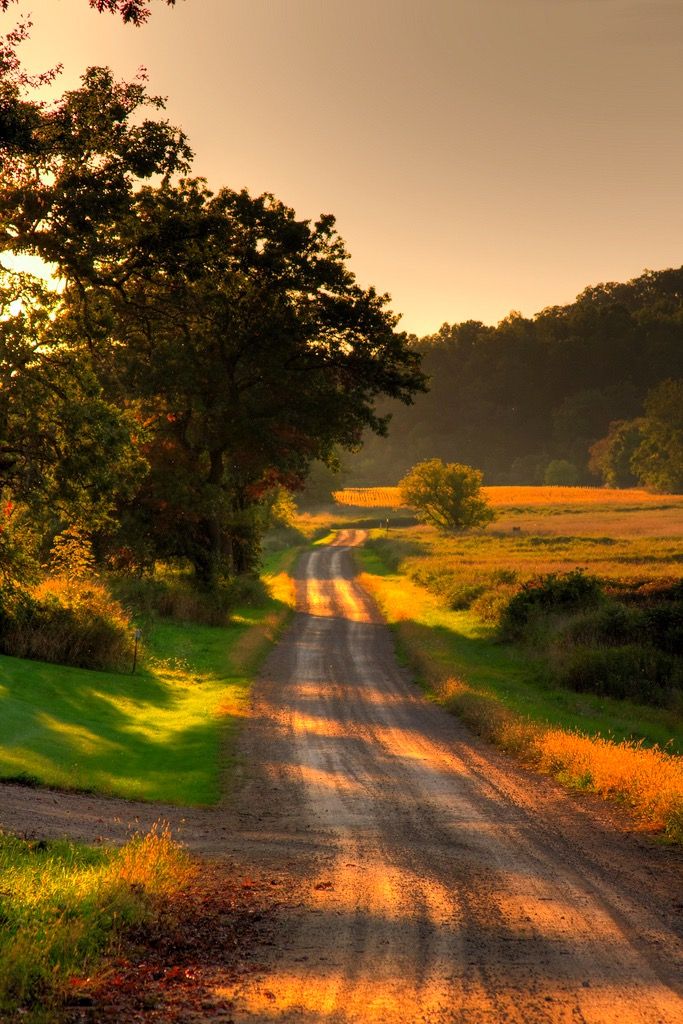
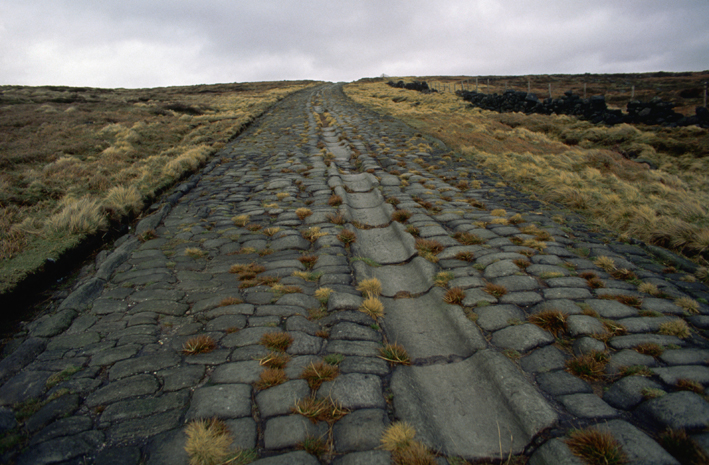
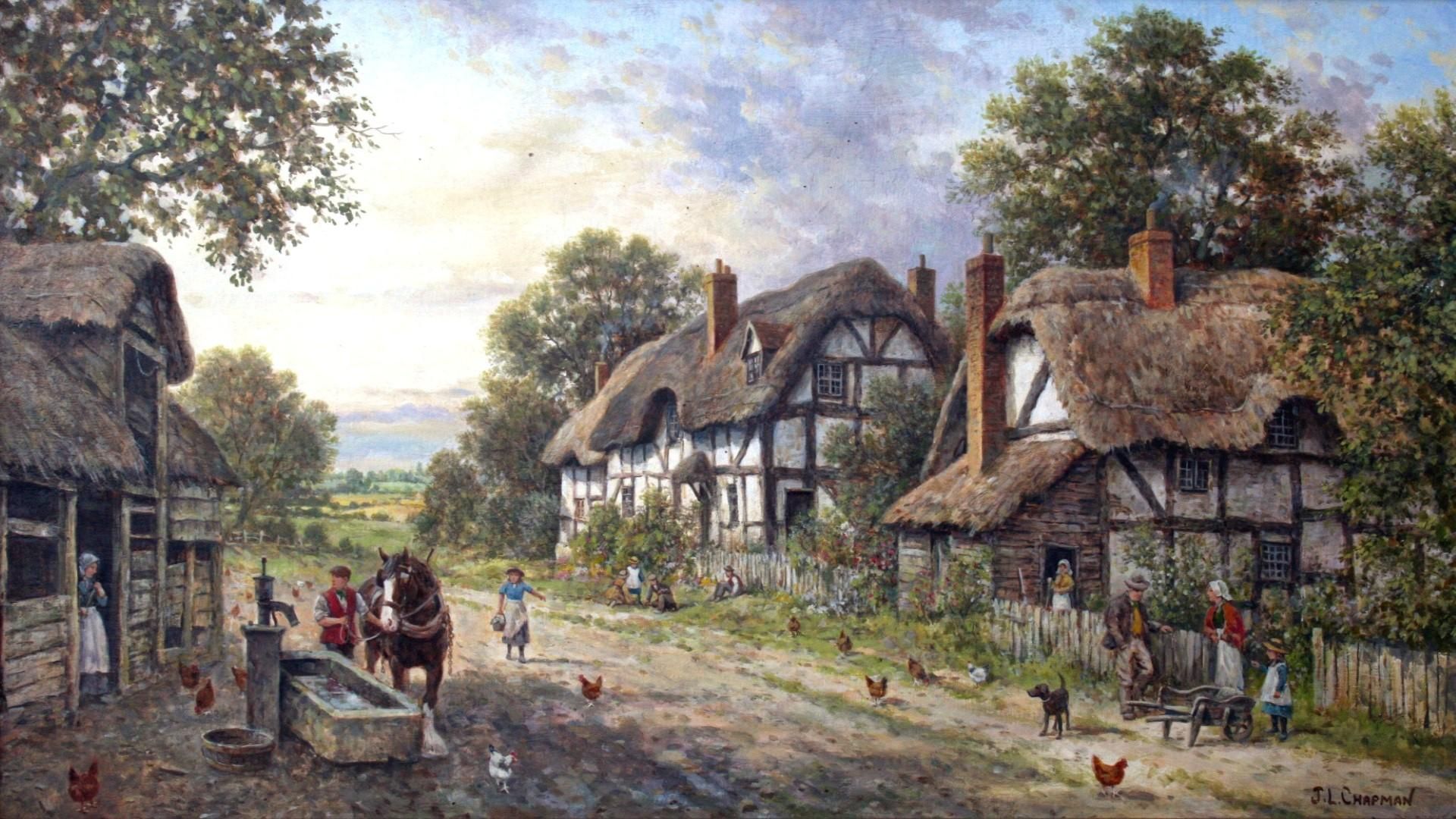
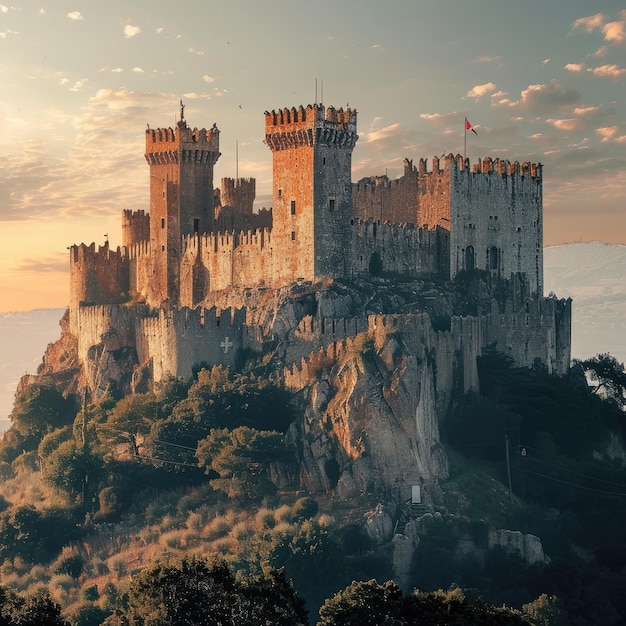
• About

doubtfulsea

~ adventure fantasy

Tag Archives: Bree

On the Road(s) Again

19 Wednesday Nov 2025

Posted by Ollamh in Uncategorized

≈ Leave a comment

Tags

Argonautica, Bilbo, Bree, Fantasy, Frodo, Gondor, Great East Road, Jason, Journey to the West, lotr, Tharbad, The Argonautica, The Bridge of Strongbows, the Greenway, The Hobbit, The Lord of the Rings, The Odyssey, the-great-east-road, Tolkien, Willie Nelson

“Just can’t wait to get on the road again
The life I love is makin’ music with my friends
And I can’t wait to get on the road again
And I can’t wait to get on the road again”

As always, welcome, dear readers.  This is from a Willie Nelson, a US country and western singer’s,

virtual theme song, and it seemed to fit where this posting wanted to go.

Having just written two postings about traveling to Bree, it struck me just how many Western adventure stories, as a main element of the plot, require the characters to travel, often long distances.  (I’m sure that there are lots of Eastern stories which do this, too—see, for example, Wu Cheng’en’s (attributed) Journey to the West, which appeared in the 16th century—see, for more:  https://en.wikipedia.org/wiki/Journey_to_the_West  You can read an abridged translation  of this at:  https://www.fadedpage.com/books/20230303/html.php ) 

Such adventures are commonly quests—that is, journeys with a particular goal and are commonly round- trip adventures.  (For more on quests, see:  https://en.wikipedia.org/wiki/Quest )

There are lots of folktales with this pattern, but the literary begins for us with the story of Jason, and his task of finding the Golden Fleece and bringing it back to Greece.  (You can read a summary of the story here:  https://en.wikipedia.org/wiki/Golden_Fleece  The full Greek version we have of the story is from a 3rd century BC poem, the Argonautica of Apollonius of Rhodes, which you can read in a translation here:  https://archive.org/details/apolloniusrhodiu00apol   And you can read about the poem itself here:  https://en.wikipedia.org/wiki/Argonautica  )
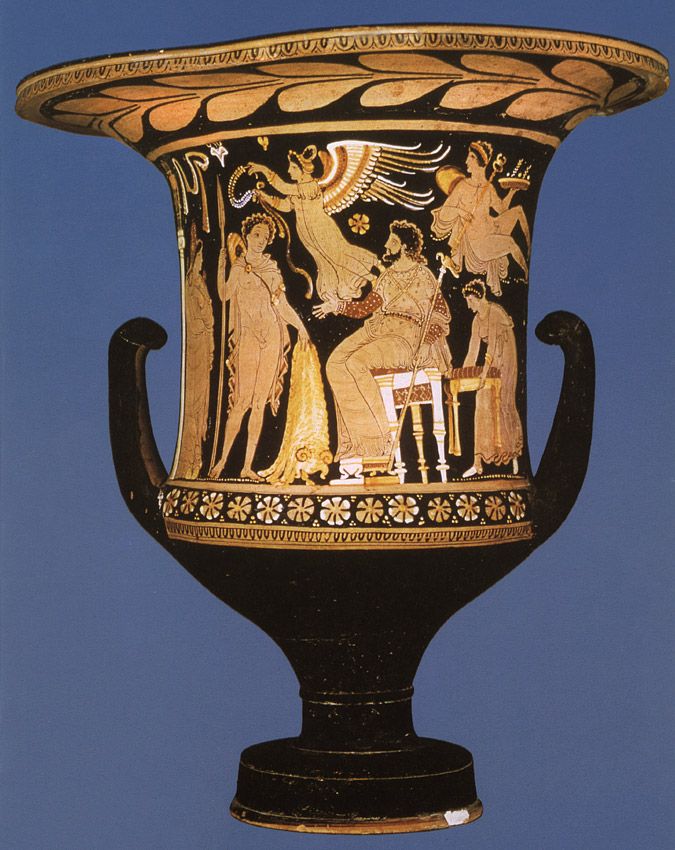
(Jason delivering the fleece to King Pelias—for more on Pelias, who is actually Jason’s uncle, see:  https://en.wikipedia.org/wiki/Pelias )

Then there’s the Odyssey, a later story, in mythological time, in which the main plot is that of Odysseus, a Greek and ruler of the island of Ithaka, who, having participated in the war against Troy, spends 9+ years of many adventures getting home to his island once more.

It’s no wonder, then, that Tolkien, originally destined to be a classicist, in telling a long story to his children, would make it a quest.

This quest would take the protagonist, Bilbo Baggins, from his home in the Shire hundreds of miles east, to the Lonely Mountain (Erebor) and back.

(Pauline Baynes—probably JRRT’s favorite illustrator—and whom he recommended to CS Lewis, for whom she illustrated all the Narnia books.  You can read about her here:  https://en.wikipedia.org/wiki/Pauline_Baynes )

In the last two postings, we first followed Bilbo eastwards to Bree—only to find that, in The Hobbit, there is no Bree.  We then retraced our steps and followed Frodo and his friends as they journeyed in the same direction, although this time with more success.

(Ted Nasmith)

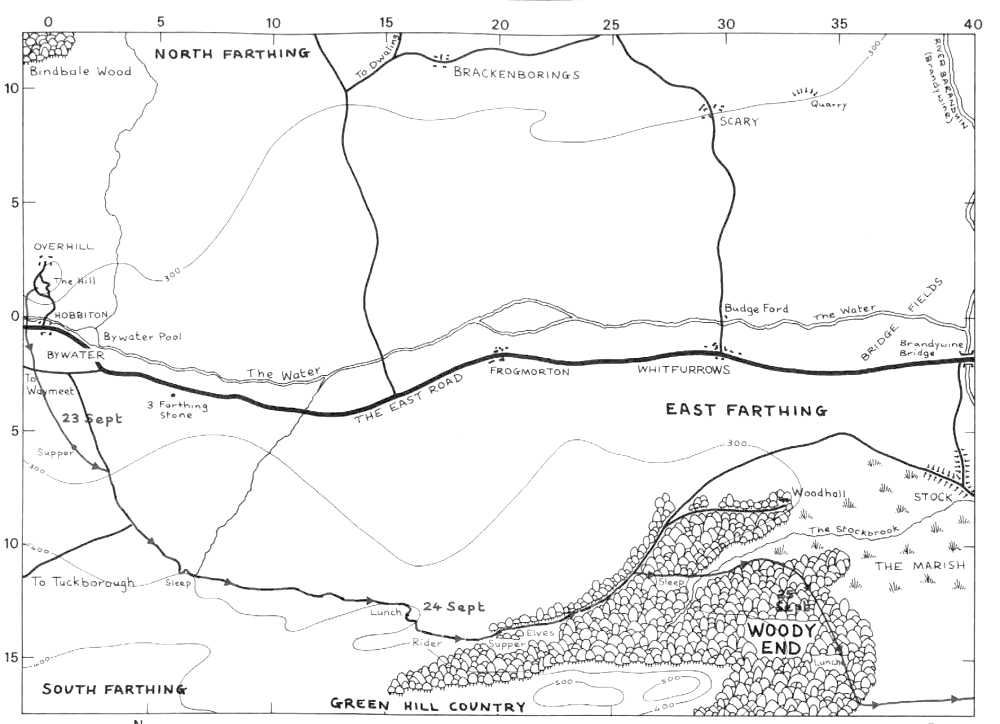
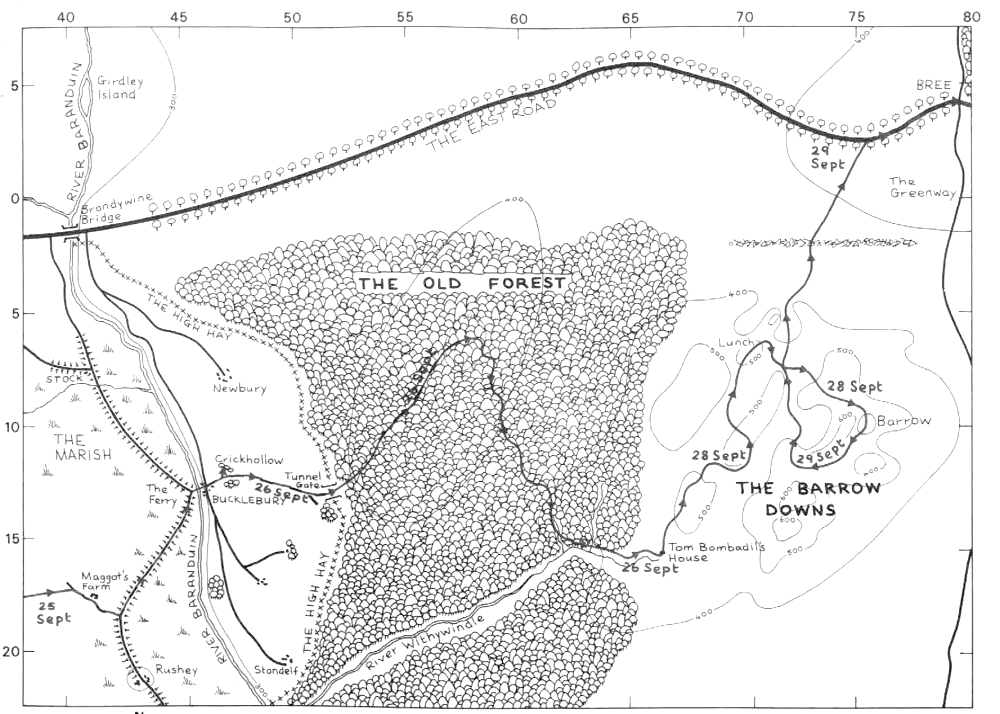
Part of Frodo’s trip (with some detours), took him along the Great East Road, which ran through the Shire,

(Christopher Tolkien)

crossing the Greenway ( the old north/south road—more about this in a moment) at Bree and proceeding eastwards from there–
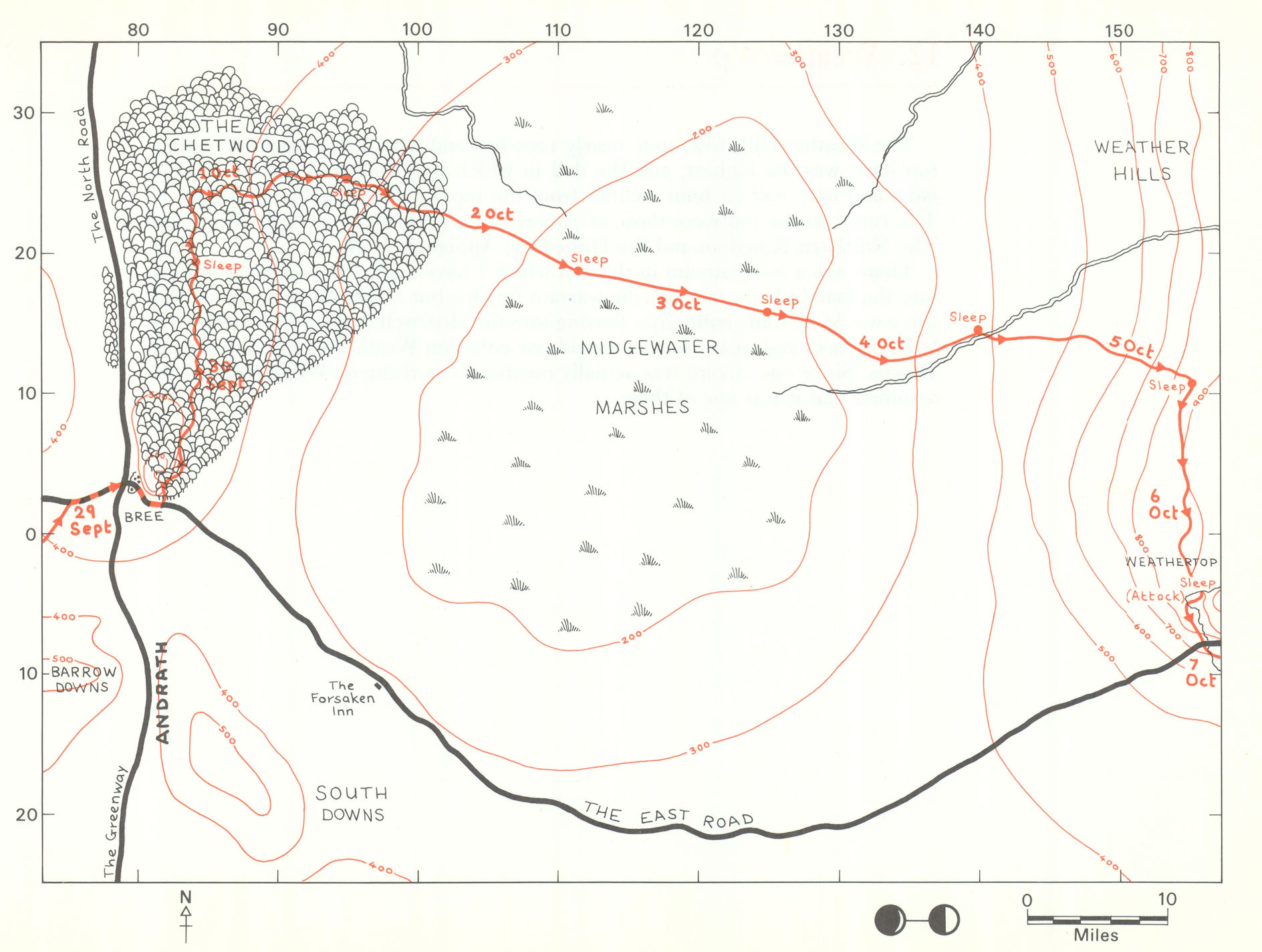
(Barbara Strachey, The Journeys of Frodo, 1981)

although Frodo and his friends, led by Strider,

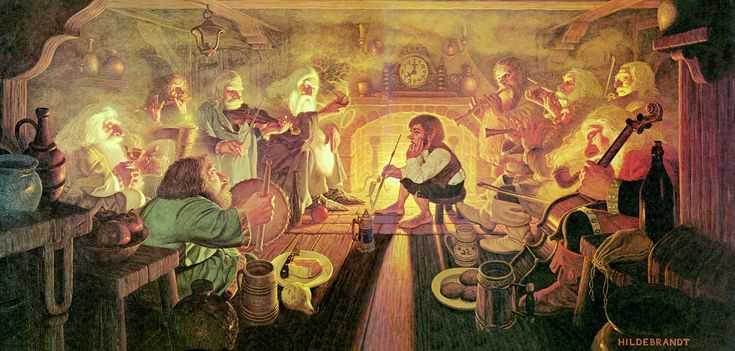
(the Hildebrandts)

took an alternate route from there to Weathertop.

Because I’m always interested in the physical world of Middle-earth, I try to imagine what, in our Middle-earth, either suggested things to JRRT, or at least what we can use to try to reconstruct something comparable. 

For the Great East Road, because it was constructed by the kings of Arnor, and had a major bridge (the Bridge of Strongbows—that is, strong arches), across the Brandywine,

(actually a 16thcentury Ottoman bridge near the village of Balgarene in Bulgaria.  For more on Bulgarian bridges, some of which are quite spectacular, see:  https://vagabond.bg/bulgarias-wondrous-bridges-3120 )

I had imagined something like a Roman road, wide, paved, with perhaps drainage on both sides.
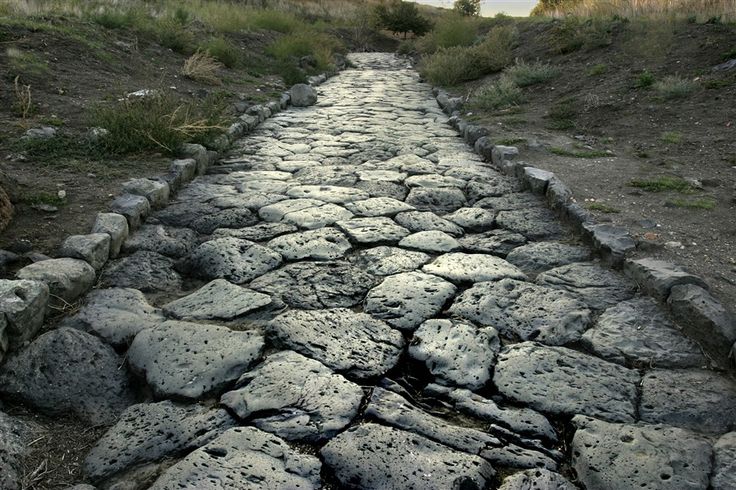
The Romans were serious engineers and roads could be very methodically laid out and built.

Latest research suggests that they may have constructed as many as almost 200,000 miles of roads (299,171km)—not all so elaborate, and some were doubtless improved local roads, but a vast number (see for more:  https://www.sciencealert.com/massive-new-map-reveals-300000-km-of-ancient-roman-roads ) were of the standard construction.

This may have been true once, but the road Frodo and his friends eventually reach doesn’t sound much like surviving Roman work—

“…the Road, now dim as evening drew on, wound away below them.  At this point it ran nearly from South-west to North-east, and on their right it fell quickly down into a wide hollow.  It was rutted and bore many signs of the recent heavy rain; there were pools and pot-holes full of water.”  (The Fellowship of the Ring, Book One, Chapter 8, “Fog on the Barrow-downs”)

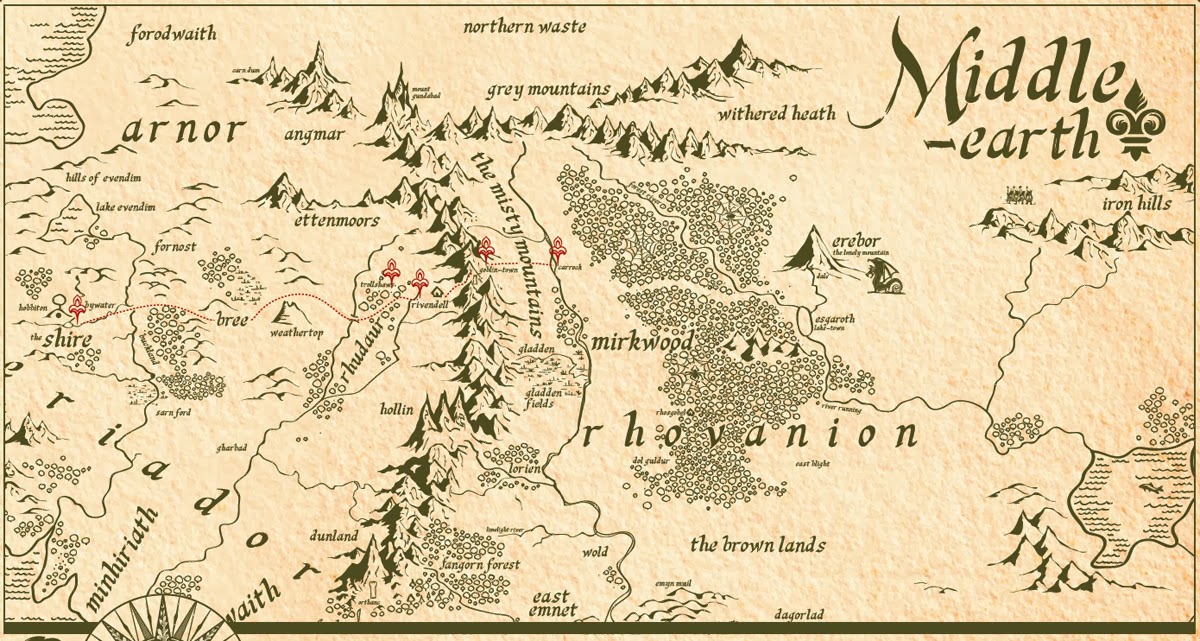
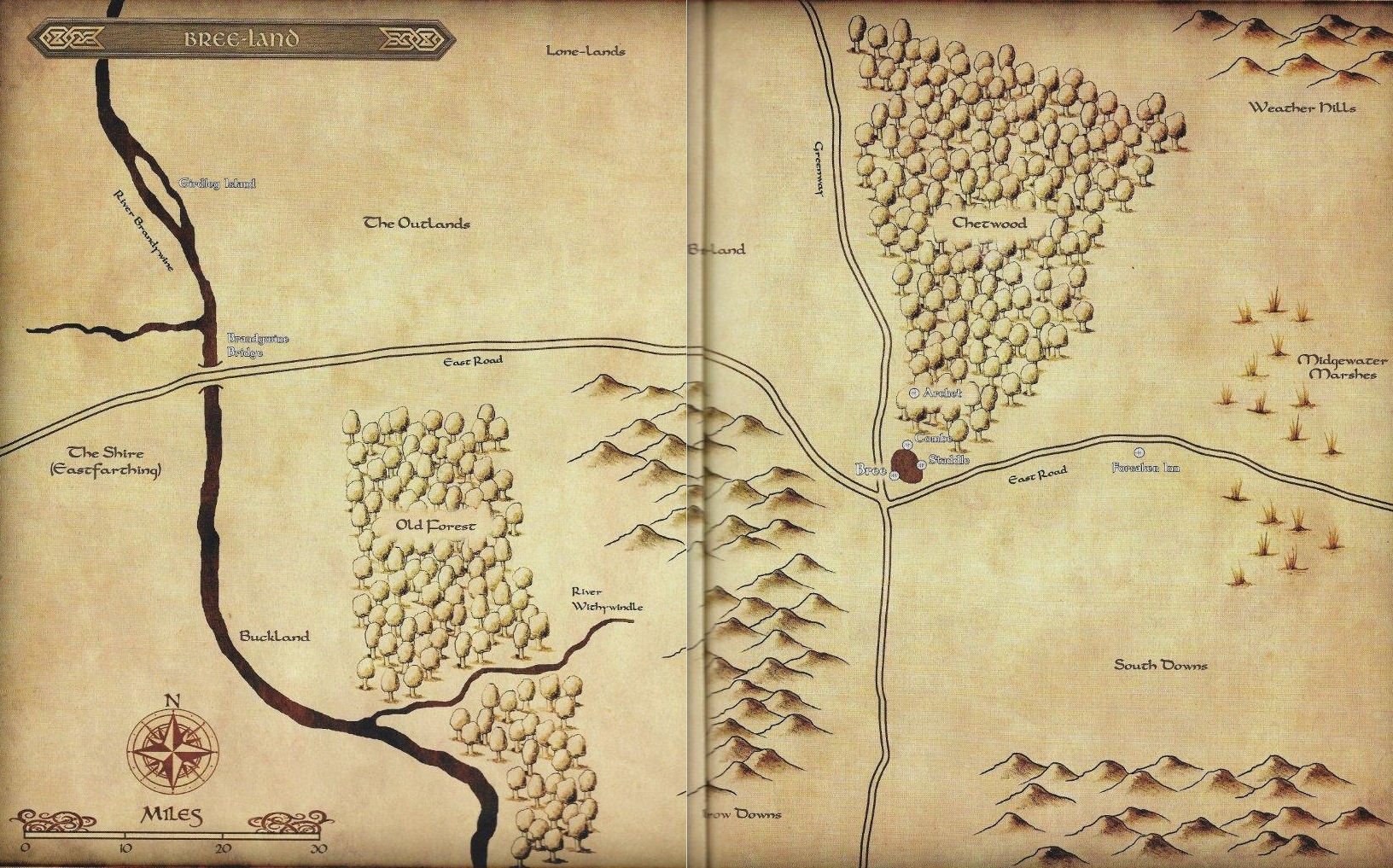
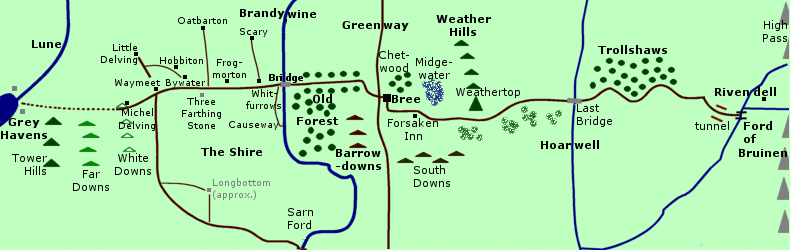
Following the road, however, has made me consider just how many miles of roads we actually see in Middle-earth and over which various characters travel and how they might appear.  Just look at a map—

(cartographer? clearly based on JRRT and Christopher Tolkien’s map)

The Great East Road (named “East-West Road” there) is drawn and identified, and we can see the North Road (as “North-South Road”), but these are hardly the only roads in Middle-earth and certainly not in the story, and, as we’re following Frodo & Co. on their journeys, I thought that it would be interesting to examine some of the others—the main ones, and one nearly-lost one.

So, when Frodo and his friends eventually reach the edge of Bree, they’re actually at a crossroads—

“For Bree stood at the old meeting of ways:  another ancient road crossed the East Road just outside the dike at the western end of the village, and in former days Men and other folk of various sorts had traveled much on it.  ‘Strange as News from Bree’ was still a saying in the Eastfarthing, descending from those days, when news from North, South, and East could be heard in the inn, and when the Shire-hobbits used to go more to hear it.”

With the fall of the northern realm of Arnor about TA1974, however, things had changed:

“But the Northern Lands had long been desolate, and the North Road was now seldom used:  it was grass-grown, and the Bree-folk called it the Greenway.”  (The Fellowship of the Ring, Book One, Chapter 9, “At the Sign of the Prancing Pony”)

We’re not given a detailed description of this road—was it like what I had imagined the Great East Road might have looked like, Roman and paved, but overgown?

If so, it led back to the city of Tharbad to the south, which had had its own elaborate bridge at the River Greyflood—

“…where the old North Road crossed the river by a ruined town.”

Of this bridge we know:

“…both kingdoms [Arnor and Gondor] together built and maintained the Bridge of Tharbad and the long causeways that carried the road to it on either of the Gwathlo [Greyflood]…”  (JRRT Unfinished Tales, 277)

It must have been massive—could it have looked something like this?
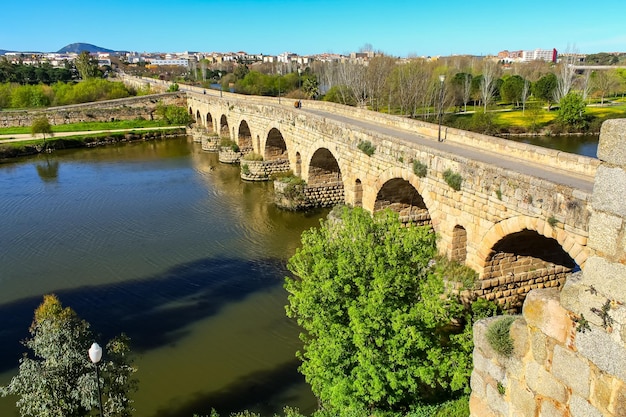
(the 1ST century Roman bridge at Merida, Spain—you can read about it here:  https://en.wikipedia.org/wiki/Puente_Romano,_M%C3%A9rida )

As we also know, it had fallen into ruin, becoming only a dangerous ford, as Boromir found out, losing his horse there on the way north (The Fellowship of the Ring, Book Two, Chapter 8, “Farewell to Lorien”)
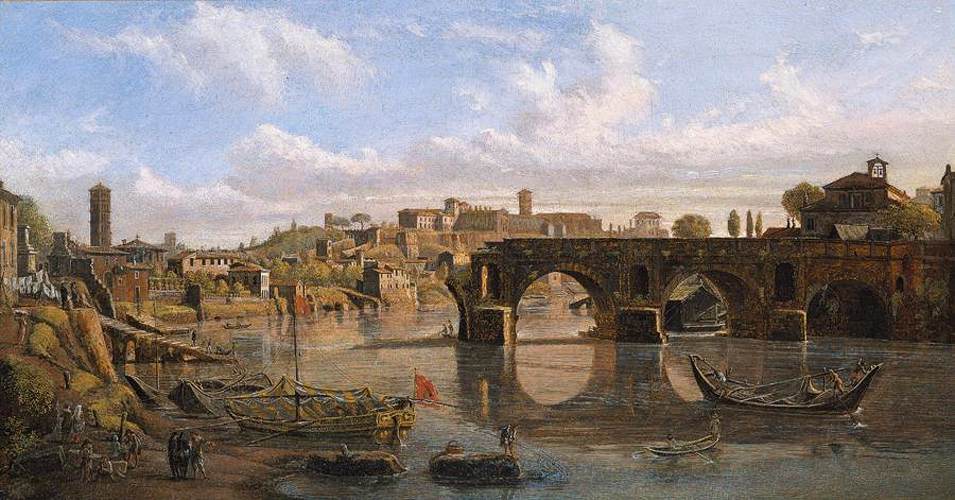
(the “Ponte Rotto” (“ruined bridge”) actually the 2nd century BC Pons Aemilius.  You can read about it here:  https://en.wikipedia.org/wiki/Pons_Aemilius  This is a 1690 painting by Caspar van Wittel, a very interesting and talented man, and you can read about him here:  https://en.wikipedia.org/wiki/Caspar_van_Wittel   )

We’ll pause here, however, waiting, perhaps, for a drought,

before we continue down the road towards Gondor…

Thanks for reading, as always.

Stay well,

Don’t cross any bridge till you come to it,

And remember that there’s always

MTCIDC

O
To Bree (Part 2)

12 Wednesday Nov 2025

Posted by Ollamh in Uncategorized

≈ Leave a comment

Tags

Barrow-downs, Barrow-wight, Bilbo, Bree, bridge-of-strongbows, Fantasy, Frodo, Great East Road, Nazgul, Shire, The Bridge of Stonebows, The Lord of the Rings, The Prancing Pony, Tolkien, Tom Bombadil, travel

As always, welcome, dear readers.

In “To Bree (Part 1)”, we had followed Bilbo & Co.

(Hildebrandts)

(Hildebrandts)

eastwards,

but only as far as Bree, echoing the remark in The Lord of the Rings:

“It was not yet forgotten that there had been a time when there was much coming and going between the Shire and Bree.” (The Fellowship of the Ring, Book One, Chapter 9, “At the Sign of the Prancing Pony”)

Oddly, however, although I supposed that we were traveling through the East Farthing

(Christopher Tolkien)

through Frogmorton and Whitfurrows,

to the Bridge of Strongbows,

(Stirling Bridge, actually—for more see:  https://www.historicenvironment.scot/visit-a-place/places/stirling-old-bridge/ )

the description in The Hobbit was wildly different:

“Then they came to lands where people spoke strangely, and sang songs Bilbo had never heard before.  Now they had gone on far into the Lone-lands, where there were no people left, no inns, and the roads grew steadily worse.  Not far ahead were dreary hills, rising higher and higher, dark with trees.  On some of them were old castles with an evil look, as if they had been built by wicked people.”  (The Hobbit, Chapter 2, “Roast Mutton”) 

with, eventually, a surprise for us Bree-bound folk:  no Bree.

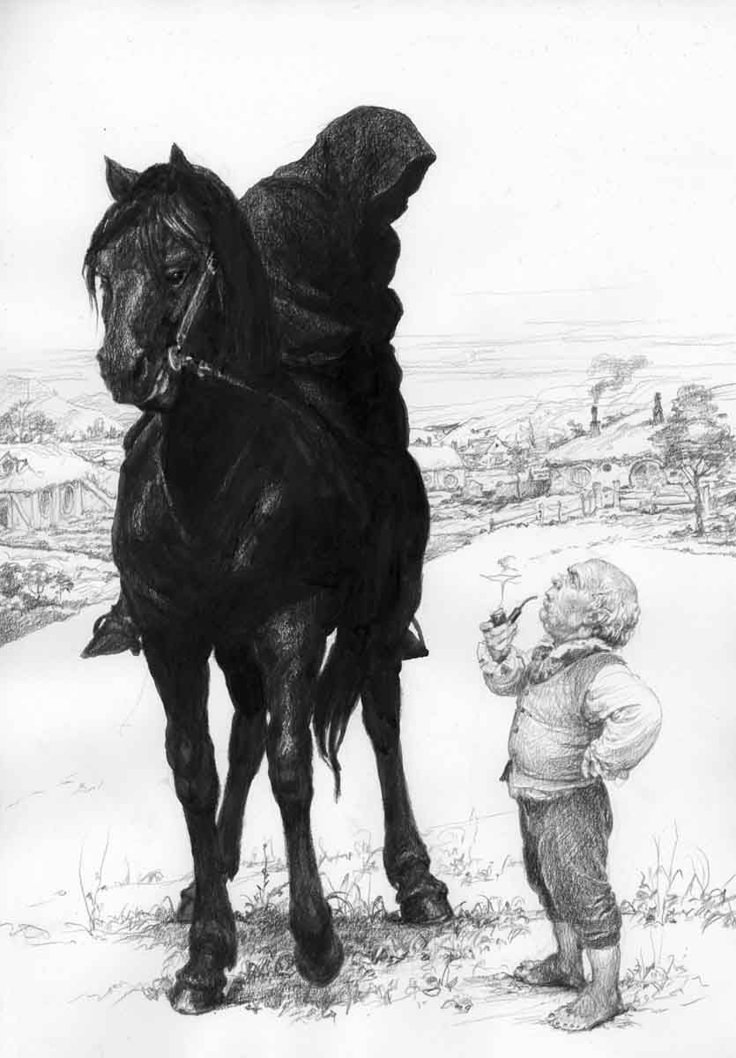
So, back we went to the Green Dragon, in Bywater, where Bilbo started and now we begin again, with Frodo.  Times have changed, however, and unlike the innocent Bilbo, we are in a different world, where Mordor isn’t just a distant place name and its servants are looking for Baggins.

(Denis Gordeev)

Frodo doesn’t take the Great East Road,

(Christopher Tolkien)

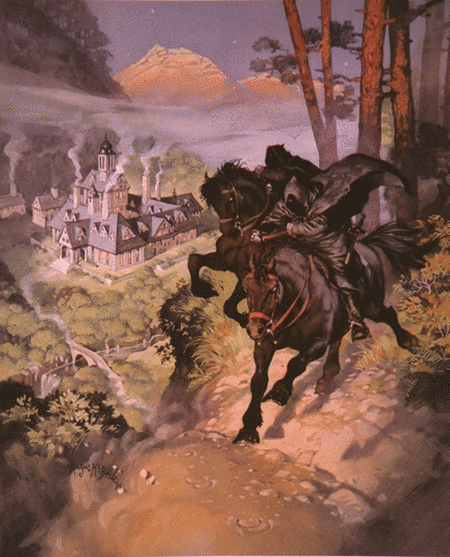
but cuts across country, narrowly avoiding one of the searchers,

(Angus McBride)

taking shelter with a local farmer, and finally reaching the ferry across the Brandywine just ahead of his pursuers.

Although this is a very indirect route, Frodo and his companions eventually reach Bree, but even though I would love to meet Tom Bombadil,

(the Hildebrandts)

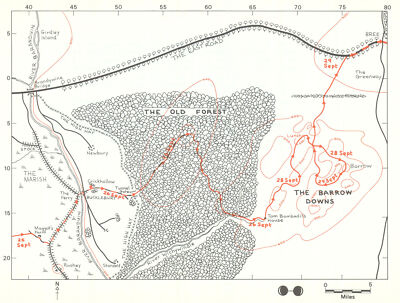
I prefer a direct route, so we’ll continue on the Great East Road, cross the Bridge of Strongbows, and head eastwards. 

(from Barbara Strachey, The Journeys of Frodo, a much-recommended book, if you don’t have a copy)

So what do we see?  

Over the bridge—and here’s another possibility for it, the Clopton Bridge at Stratford-upon-Avon—

(you can see more of Stratford and the shire—Warwickshire, that is—here:  https://www.ourwarwickshire.org.uk/content/catalogue_wow/stratford-upon-avon-clopton-bridge-2 )

the road runs, not surprisingly, due eastwards and here, consulting our map,

 is the Old Forest to our right,

described, by our narrator, as Frodo and his friends see it on their detour away from the Great East Road:

“Looking ahead they could see only tree-trunks of innumerable sizes and shapes:  straight or bent, twisted, leaning, squat or slender, smooth or gnarled and branched; and all the stems were green or grey with moss and slimy, shaggy growths.” (The Fellowship of the Ring, Book One, Chapter 6, “The Old Forest”)

Keep in mind, however, that we’re seeing it through a long line of trees planted alongside the road, probably as a windbreak.

We know that they’re there because Merry says:

“ ‘That is a line of trees,’ said Merry, ‘and that must mark the Road.  All along it for many leagues east of the Bridge there are trees growing.  Some say they were planted in the old days.’ “ (The Fellowship of the Ring, Book One, Chapter 8, “Fog on the Barrow-downs”)

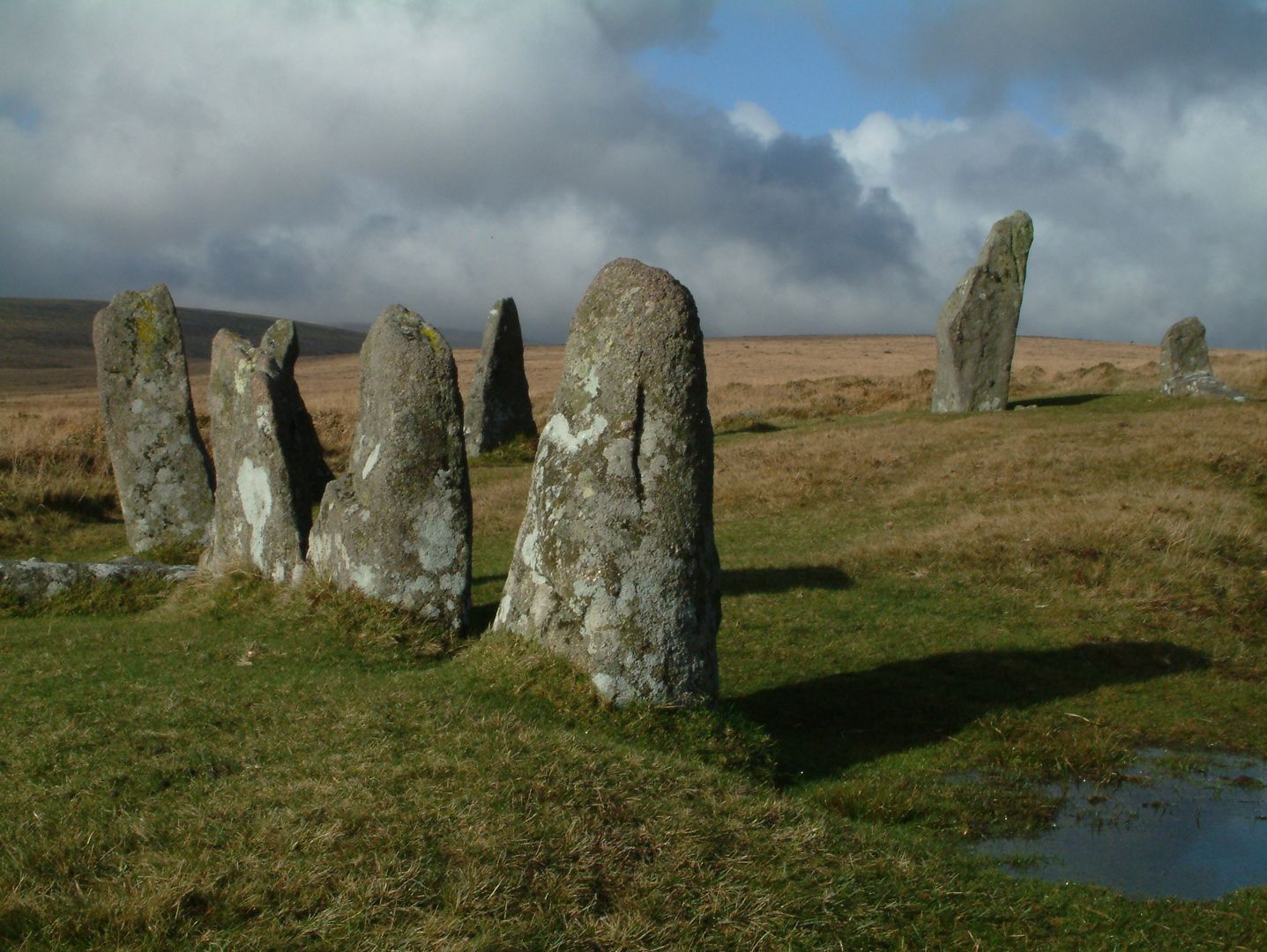
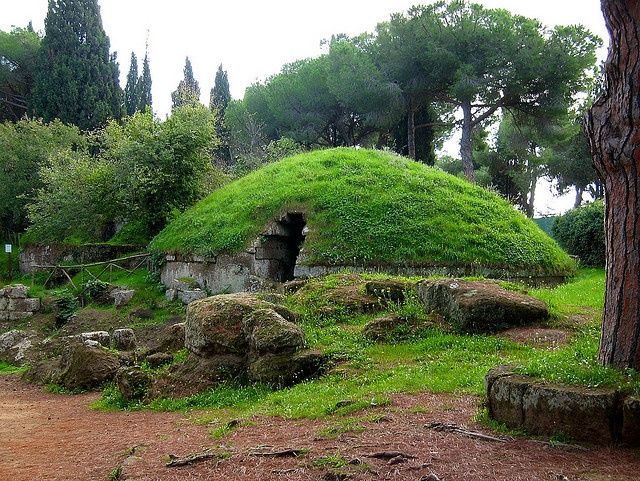
As we travel farther along the road, if we look to our right, through the trees, we then come to the edge of the Barrow-downs,

with their ancient standing stones

and tumuli—

where Frodo and his friends almost end their trip.

(Matthew Stewart)

But we haven’t strayed, as they did, and, passing the Downs, we see, again on our right:

“The dark line they had seen was not a line of trees but a line of bushes growing on the edge of a deep dike, with a steep wall on the further side.”

A dike is a ditch, usually with an earthen embankment made from the spoil of the ditch.  There are several of these in England, like Offa’s Dyke—

The narrator adds:

“…with a steep wall on the further side”

and I’m presuming that that is the earthen embankment, with:

“…a gap in the wall” through which Frodo and friends rode and

…when at last they saw a line of tall trees ahead…they knew that they had come back to the Road.”

If you’re read the first part of this posting, you will know that I’ve been assuming that that Road, laid in ancient times to a stone bridge and beyond, would be like a Roman road, and be paved,

if a bit weedy, but now we find:

“…the Road, now dim as evening drew on, wound away below them.  At this point it ran nearly from South-west to North-east, and on their right it fell quickly down into a wide hollow.  It was rutted and bore many signs of the recent heavy rain; there were pools and pot-holes full of water.”

Does this suggest that it was, at best and in the past, simply a dirt road, through well-kept?  Or is it a very run-down road, worn and covered over with leaves and dirt, the ancient blocks gradually becoming separated under the weight of centuries, allowing for pot-holes?

In any event, we now continue our journey with Frodo and his compantions until–

“…they saw lights twinkling some distance ahead.

Before them rose Bree-hill barring the way, a dark mass against misty stars; and under its western flank nestled a large village.  Towards it they [and we] now hurried desiring only to find a fire, and a door between them and the night.”

We’re not in Bree yet, however, as:

“The village of Bree had some hundred stone houses of the Big Folk, mostly above the Road, nestling on the hillside with windows looking west.  On that side, running in more than half a circle from the hill and back to it, there was a deep dike with a thick hedge on the inner side.  Over this the Road crossed by a causeway; but where it pierced the hedge it was barred by a great gate.  There was another gate in the southern corner where the Road ran out of the village.  The gates were closed at nightfall; but just inside them were small lodges for the gatekeepers.”  (The Fellowship of the Ring, Book One, Chapter 9, “At the Sign of the Prancing Pony”)

We’ve seen a dike just now, at the Great East Road, but now we have to add a hedge

and a gate.

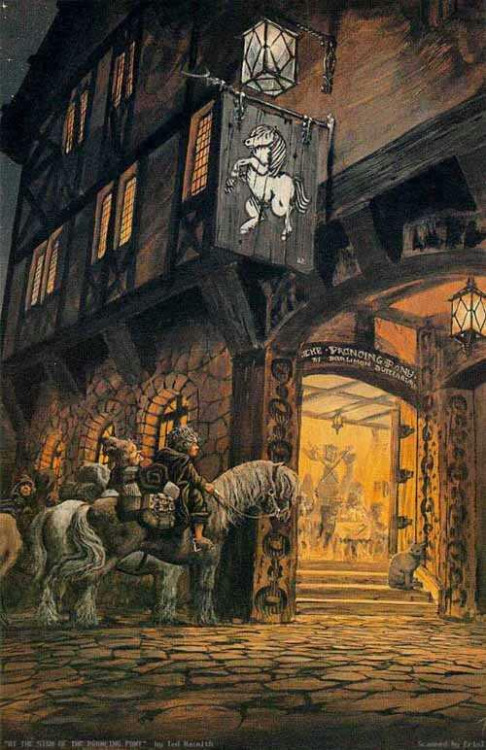
Once inside, however, lies the Prancing Pony

(Ted Nasmith)

and one more pint before bed.

As always, thanks for reading.

Stay well,

Read road signs carefully,

And remember that, as always, there’s

MTCIDC

O

To Bree (Part 1)

05 Wednesday Nov 2025

Posted by Ollamh in Uncategorized

≈ Leave a comment

Tags

Bilbo, Bree, Fantasy, The Bridge of Strongbows, The Green Dragon, The Hobbit, The Lord of the Rings, the Sphinx, the Three Farthing Stone, the-great-east-road, Tolkien, travel-in-middle-earth, trolls

Welcome, as always, dear readers.

For me, one of the great pleasures of The Hobbit and The Lord of the Rings is that they are both so wonderfully imagined.  Consider the beginning of The Hobbit, for example, where the opening could just have been the bare line “In a hole in the ground there lived a hobbit.” Instead, it continues:

“Not a nasty, dirty, wet hole, filled with the ends of worms and an oozy smell, nor yet a dry, bare, sandy hole with nothing in it to sit down on or to eat:  it was a hobbit-hole, and that means comfort.”

(JRRT)

And even this is not enough, as it continues:

“It had a perfectly round door like a porthole, painted green, with a shiny yellow brass knob in the exact middle.”

And it will go on for an entire paragraph beyond that sentence, listing rooms and even explaining why some are preferred.

Even with so much detail, I sometimes find myself wanting more—often more of the outside world.  In this posting, then, I thought that we might take a trip to Bree and spend some time sightseeing as we go.  Via the Great East Road, this is about 100 of our miles (160 km), according to the very useful website of Becky Burkheart (which you can visit here:  https://www.beckyburkheart.com/traveltimesinmiddleearth ).

Why Bree?  To quote The Lord of the Rings:

“It was not yet forgotten that there had been a time when there was much coming and going between the Shire and Bree.” (The Fellowship of the Ring, Book One, Chapter 9, “At the Sign of the Prancing Pony”)

If we use both The Hobbit and The Lord of the Rings together, however, we’ll soon encounter some difficulties, as we shall see.

Our starting point for Bilbo is the Green Dragon Inn, in Bywater. 

(Christopher Tolkien)

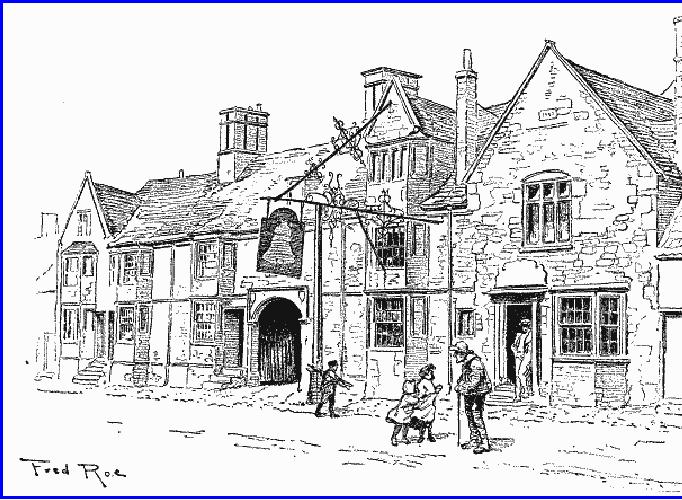
Tolkien doesn’t describe the inn, but, using a real inn, we might imagine the Green Dragon as looking something like this–

(This is the White Lion in Barthomley, in Cheshire, built in 1614.  You can read more about it and about Barthomley here:   https://drive.google.com/file/d/1oeQEpGsXlN1A_4T8nOhUwpggDA_pEFTM/view )

Just to the south of Bywater is the spot where the Hobbiton road meets the Great East Road.  Again, Tolkien gives us no description, but there may be a hint as to this road in the original grant of the Shire by Argeleb II in TA1601:

“For it was in the one thousand six hundred and first year of the Third Age that the Fallohide brothers, Marcho and Blanco, set out from Bree; and having obtained permission from the high king at Fornost, they crossed the brown river Baranduin with a great following of Hobbits.  They passed over the Bridge of Strongbows, that had been built in the days of the power of the North Kingdom, and they took all the land beyond to dwell in, between the river and the Far Downs.  All that was demanded of them was that they should keep the Great Bridge in repair, and all other bridges and roads, speed the king’s messengers, and acknowledge his lordship.”   (The Lord of the Rings, Prologue I, “Concerning Hobbits”)

We’ll cross the bridge a little later in our journey, but we might start with the road.  That it’s sometimes called “the Great East Road” suggests that it’s more than a dirt path.

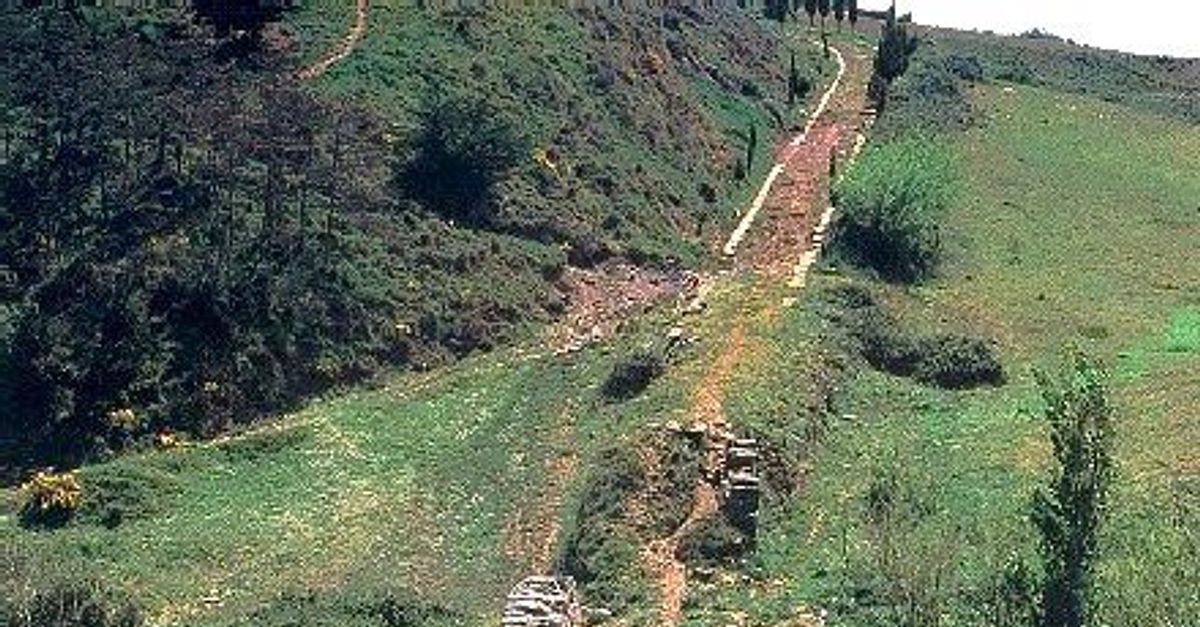
Could Tolkien have been thinking of the bits of surviving Roman road which crisscross England?  Most are now buried under modern roads, but, here and there some are still available on the surface, as here—

and perhaps we can use this as a model. As an ancient stone road, it would certainly fit in with the ancient stone Bridge, as we’ll see.

Just beyond the spot where the lesser road meets the greater, we see marked on our map, the “Three Farthing Stone”.  A “farthing” is a “four-thing”—that is, a quarter, and it marks the spot where three of the quarters, the four farthings, of the Shire meet.  This appears to be modeled on the “Four Shire Stone” in our Middle-earth

which you can read about here:  https://thirdeyetraveller.com/four-shire-stone-tolkien/ )

And, from here, we head eastwards—and meet our first difficulty.  Here’s the description in The Hobbit—

“At first they had passed through hobbit-lands, a wide respectable country inhabited by decent folk, with good roads, an inn or two, and now and then a dwarf or a farmer ambling by on business.”

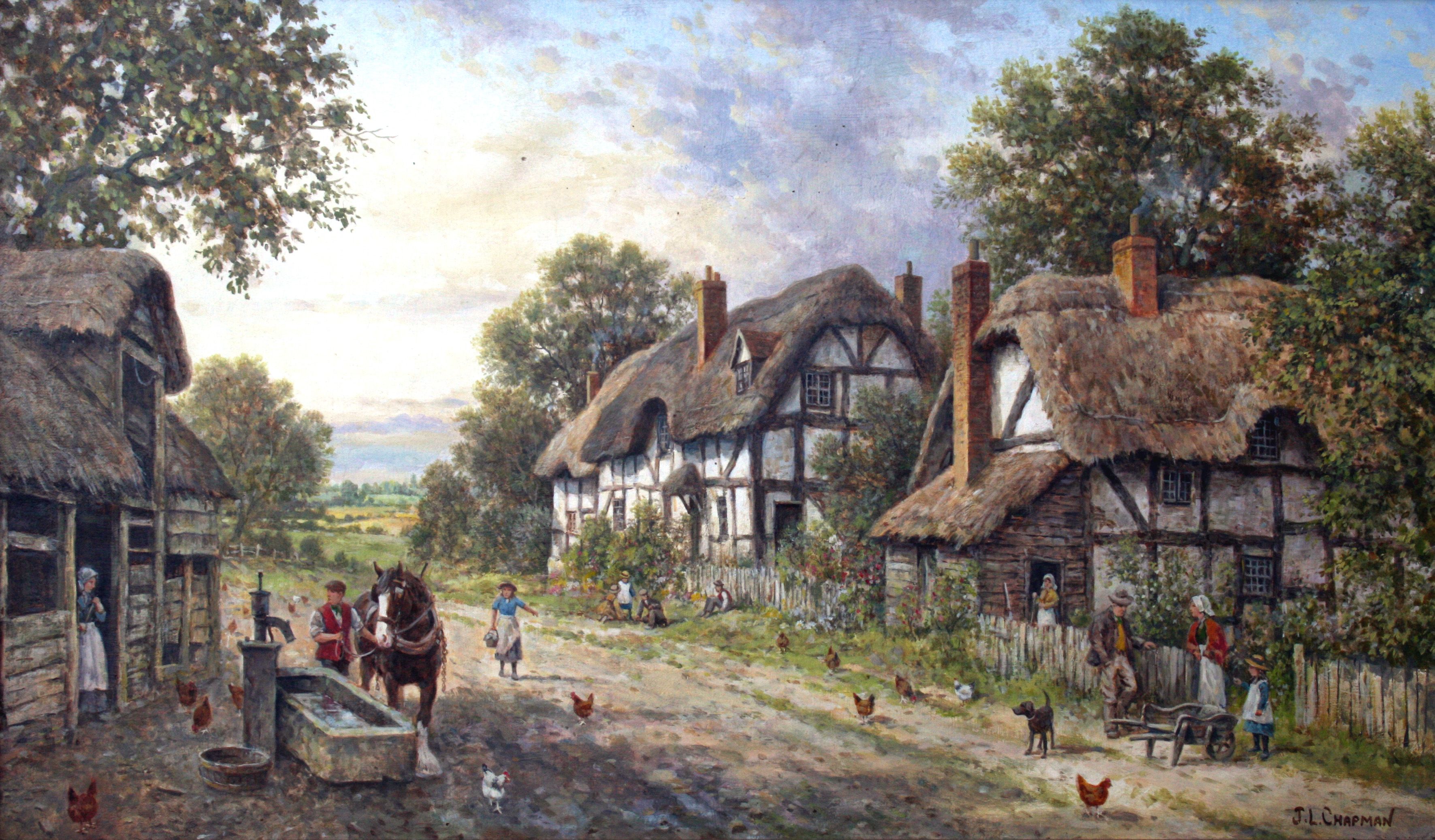
That fits our Shire map:  we might be traveling through Frogmorton and Whitfurrows, villages which might look like this—

but then there’s—

“Then they came to lands where people spoke strangely, and sang songs Bilbo had never heard before.  Now they had gone on far into the Lone-lands, where there were no people left, no inns, and the roads grew steadily worse.  Not far ahead were dreary hills, rising higher and higher, dark with trees.  On some of them were old castles with an evil look, as if they had been built by wicked people.”  (The Hobbit, Chapter 2, “Roast Mutton”) 

The bridge is just ahead, but “dreary hills”?  “old castles”? 

And you can really see the difference here between the two books.  Tolkien had yet to discover much of the East Farthing and was simply penciling in something which we might think of as “travel filler”, to indicate that the expedition was riding eastwards, but the trip was already becoming more difficult.

And then we come to the (here unnamed) bridge:

“Fortunately the road went over an ancient stone bridge, for the river, swollen with the rains, came rushing down from the hills and mountains in the north.”

As this is the first bridge mentioned, I’m going to assume that this is the “Bridge of Strongbows/Great Bridge” mentioned in Argeleb II’s grant to the original hobbit settlers.

(This is the Roman Pont Julien in southeastern France—over a bit drier patch than described in the book.  For more on this ancient bridge, see:  https://en.wikipedia.org/wiki/Pont_Julien )

Once over this bridge, we’re in a different world.  We reach another river:

“Then one of the ponies took fright at nothing and bolted.  He got into the river before they could catch him…” 

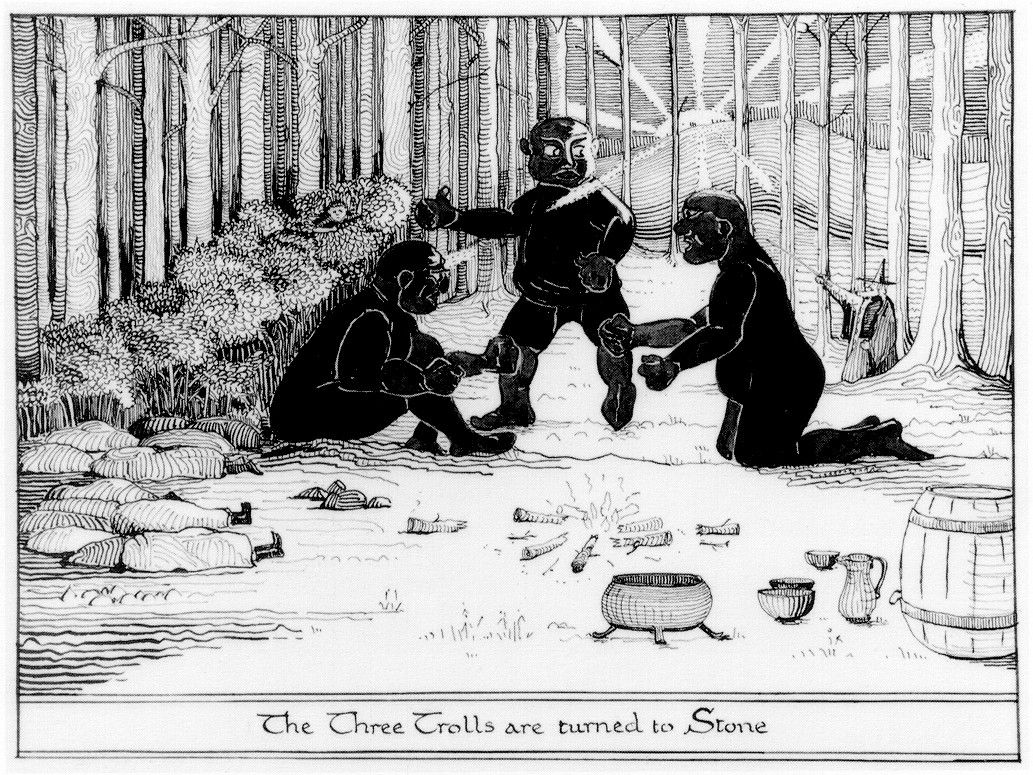
Then, attempting to camp in the rain, Bilbo and the dwarves spot a fire, go to it, and find trolls.

(JRRT)

With the trolls dealt with by Gandalf, we move on to Rivendell–

(JRRT)

and suddenly we realize that:   there’s no Bree!

It’s at the crossroads of the Great East Road and what the locals call “the Greenway”, the old north/south road, now long overgrown,

but, somehow, Bilbo and the dwarves have not encountered it.  The reason is clear, of course:  just as the Tolkien of The Hobbit had yet to discover the East Farthing, so, too, he had yet to discover Breeland.

So, it looks like we have to turn around, back to the Green Dragon, stop for a pint, as any hobbit would,

and try again—in “To Bree (Part 2”).

As always, thanks for reading.

Stay well,

When approaching a crossroads, be prepared for anything—especially monsters with questions–

And remember that, as always, there’s

MTCIDC

O

Are You Sitting Down?.2 (Some Thrones, but No Games)

11 Wednesday Oct 2017

Posted by Ollamh in Economics in Middle-earth, J.R.R. Tolkien, Literary History, Narrative Methods

≈ Leave a comment

Tags

A Game of Thrones, Bag End, basins, Bree, British monarchs, Buckland, canopy, cart, Cirith Ungol, Coronation Chair, Coronation Throne, Crick Hollow, Edoras, Edward I, Edward VII, Edward VIII, Edwardian, Elizabeth II, Elrond's house, Furniture, George V, George VI, Gondor, high table, Iron Throne of Westros, Lia Fail, Lothlorien, Medieval, Middle-earth, Minas Tirith, monopodium, Moot Hill, parlor, pubs, Rivendell, Rohan, Shire, Stone of Scone, Tara Ireland, The Hobbit, The Lord of the Rings, The Prancing Pony, the Stone of Destiny, throne, Tolkien, Tom Bombadil, UK pubs, Victorian Bedroom, Victorians, washstand

Welcome, dear readers, as always.

In our last, we were talking about furniture in Middle-earth—in that post our subject was The Hobbit.  We continue with The Lord of the Rings and conclude with one specialized piece of furniture.

We begin where we began last time, with Bag End.

image1bagend.jpg

With all of its rooms and the stuff in them, we suggested then that what JRRT was really doing was depicting the kind of overcrowded place later Victorians and Edwardians—the people with whom he, born 1893, would have grown up around—would have preferred.

image2vicparlor.jpg

[Note, by the way, the table in the middle of the entryway in Tolkien’s picture of Bag end, and compare it with this “monopodium” table with claw feet, which could be seen in such a parlor.]

image3monopodium.png

Once the three Hobbits leave Bag End for their journey to Crick Hollow,

image4shiremap.jpg

having sent “two covered carts…to Buckland, conveying the goods and furniture…” (and the next day sending off another) (The Fellowship of the Ring, Book One, Chapter 3, “Three is Company), they will spend a great deal of time walking (and paddling and riding), but will enter few buildings.  Here, by the way, is a cart—we imagine “covered” simply means that a blanket of some tough coarse fabric, like canvas, (called a “tilt”) would have been pulled over the load.

image5cart.jpg

Our chances of getting much furniture detail are not high, then, but let’s see what we find.

Beyond Buckland, the first indoors for the hobbits is Tom Bombadil’s house.  As the hobbits enter, they are in:

“…a long low room, filled with the light of lamps swinging from the beams in the roof; and on the table of dark polished wood stood many candles, tall and yellow, burning brightly.

In a chair, at the far side of the room facing the outer door, sat a woman…” (The Fellowship of the Ring, Book One, Chapter 7, “In the House of Tom Bombadil”)

image6agoldberry.jpg

The hobbits are given “low rush-seated chairs”.

image6rushseatchair.jpg

And, shortly, are shown their bedroom:

“They came to a low room with a sloping roof…There were four deep mattresses…laid on the floor along one side.  Against the opposite wall was a long bench laden with wide earthenware basins, and beside it stood brown ewers filled with water…”

Not much to go on here.  We’ll presume that the bench is wooden and plain, and the basins and ewers (a big pitcher—ultimately from Latin aquarius, “having to do with water”) are of the kind one would have seen in a Victorian bedroom, when indoor bathrooms were still only a wish—or were only in the homes of the extremely wealthy.

image7ewer.jpg

[Victorians, by the way, could have specialized places for such pitcher/basin combinations.  They’re called “washstands” and here’s a simple but functional one.]

image8awashstand.jpg

Next on their journey (we won’t count the barrow—although the Wight does mention a “stony bed”) is the Prancing Pony.

image8prancingponey.jpg

Again—what we have is functional.  The hobbits are initially led to what the landlord, Barliman Butterbur, calls “a nice little parlour” where “There was a bit of bright fire burning on the hearth, and in front of it were some low and comfortable chairs” and “a round table, already spread with a white cloth”. (The Fellowship of the Ring, Book One, Chapter 9, “At the Sign of the Prancing Pony”)

This sounds like a small, private room, found in some UK pubs, and called a “snug” (etymology unclear—but used to mean “comfy” as early as the 1620s).  Here’s one, in fact, from an Irish pub.  (We don’t advertise—this was simply the image which fit best with both our impression and the book.  And “fit best” does a double duty here, as “snug” can also mean “fitting tightly”.)

image9snug.jpg

The same will be true of the bedroom the hobbits don’t use—and just as well!—plain and nondescript.

So when, if ever, are we given something with more detail?  If not in Bree, perhaps in Rivendell?

image10rivendell.jpg

Frodo comes to in a generic bed, but the “hall of Elrond’s house” is a bit more promising:

“Elrond, as was his custom, sat in a great chair at the end of a long table upon a dais…In the middle of the table there was a chair under a canopy…” The Fellowship of the Ring, Book Two, Chapter 1, “Many Meetings”)

A “dais” is a raised platform.  If you’re a Harry Potter fan, you’ll remember it at “High Table” (as it’s called in English schools), where the students of the four different colleges meet to dine and the faculty sit on such a platform.

image11hightable.jpg

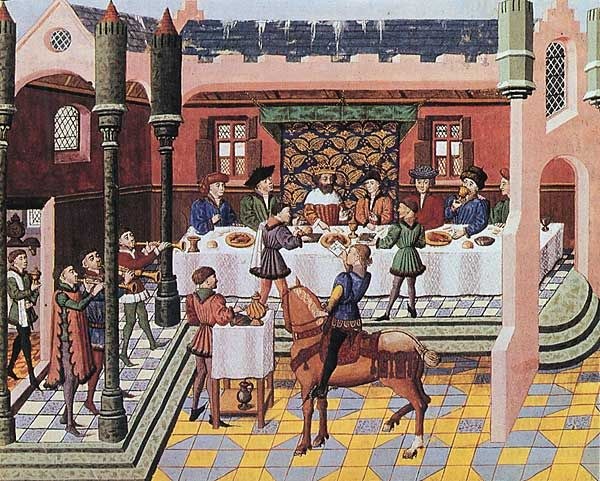
This is a left-over medieval custom, when royalty/nobles sat on a kind of stage, above the lesser folk, for formal meals.

image12feast.jpg

(Oh—and don’t ask about the horse—but it wasn’t required.  Horse and rider do appear at a banquet, of course, in the 14th-century poem “Sir Gawain and the Green Knight”—which JRRT once edited.)

image13agawaingreen.jpg

And that “chair under a canopy” reminds us of thrones with canopies, like this at the Palace of St. James, in London.

image13thronecanopy.jpg

Which brings us to the subject of thrones, in general.  After Rivendell, indoors will consist of Lothlorien

image14lorien.jpg

for the fellowship, then nothing for Sam and Frodo till Faramir’s cave hide-out and, beyond, the Tower of Cirith Ungol

image15towercirithungol.jpg

Hardly places to find any furniture beyond the functional!

For the others, we have Edoras

image16edoras.jpg

and Minas Tirith.

image17minastirith.jpg

And here we want to conclude by discussing a similar piece of furnishing in each—those thrones.

These days, when we say or write “thrones”, well, what comes immediately?  A Game of Thrones and the Iron Throne of Westeros.

image18ironthrone.jpg

The thrones of Rohan and Gondor are a bit less complicated.

Theoden’s is described simply as “a great gilded chair” on a “dais with three steps”.  (The Two Towers, Book Three, Chapter 6, “The King of the Golden Hall”).

Here’s Allen Lee’s interpretation

image19alee.jpeg

and here is the Hildebrandts’.

image19bhild.jpg

The throne of Gondor is just a tiny bit more elaborate:

“At the far end upon a dais of many steps was set a high throne under a canopy of marble shaped like a crowned helm…” (The Return of the King, Book Five, Chapter 1, “Minas Tirith”)

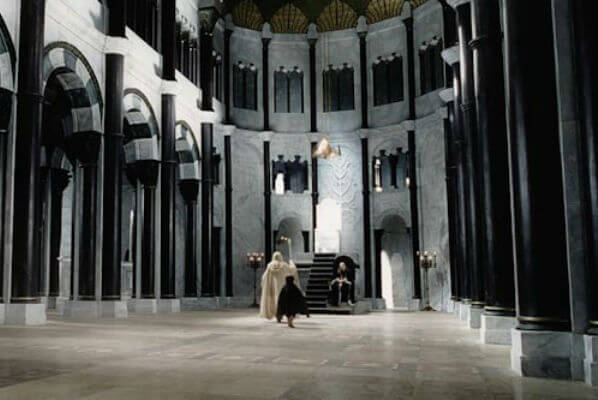
Here’s an image from the film.

image19cthroneroom.jpg

But wait—there’s no one on it.  Let’s look lower:

“At the foot of the dais, upon the lowest step which was broad and deep, there was a stone chair, black and unadorned, and on it sat an old man gazing at his lap.”image19ddenethor.jpg

During his lifetime, JRRT would have seen the coronation of five British monarchs:

Edward VII

image19ed7.jpeg

George V

image20geo5.jpg

Edward VIII

image21ed8.jpg

George VI

image22ageo6.jpg

and the current monarch, Elizabeth II.

image22liz2.jpg

You’ll notice that, in every case, the throne is the same.

image23throne.jpg

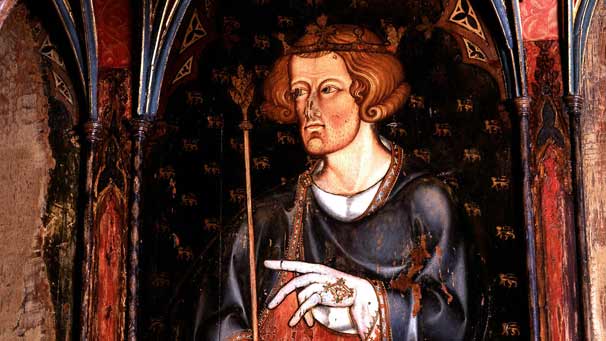
This is the so-called “Coronation Chair”, built between 1297 and 1300 and used since for crowning English monarchs.  It was especially commissioned so that it could hold the “Stone of Scone” (pronounced “skoon”—not like the pastry).  This was an ancient piece of Scottish royal history which Edward I,

image24ed1.jpg

in an effort to control Scotland, had stolen from its place on Moot Hill, near the Abbey of Scone.

image25sconeabbey.jpg

Supposedly, it was a stone used in the crowning of Scottish kings back to the time of the first one, or that it was even older, having been lugged from Tara, in Ireland, where, under the name “Lia Fail”, “the Stone of Destiny” it was used in coronation ceremonies there.  Its purpose was confirmation:  tradition had it that, when the true king bestrode it (a great old verb form), it gave a great shout.

image26liafail.jpg

As far as we know, no shouting has been reported, over the centuries—perhaps because it’s being used for English kings and therefore the stone is holding its tongue till it’s taken back to wear it belongs?

What do you think, dear readers?

Thanks, as ever, for reading.

MTCIDC

CD

PS

And did you notice something(s) out of place in JRRT’s drawing of Bag End?  We’ll talk about it in our next…

image1bagend


When One Door Closes (2)

16 Wednesday Nov 2016

Posted by Ollamh in J.R.R. Tolkien, Literary History, Narrative Methods

≈ Leave a comment

Tags

Balin, Barrows, Bree, Bridge of Khazad-Dum, Chamber of Mazarbul, Crickhollow, doors, Dwarves, Elven-way, Farmer Maggot, Gandalf, Greenway, Hobbit door, Hollin, Lothlorien, Moria, Nazgul, picaresque, Rivendell, Robert Burns, Tam O'Shanter, The Fellowship of the Ring, The Ford of Bruinen, The Hobbit, The Legend of Sleepy Hollow, The Lord of the Rings, The Prancing Pony, Tolkien, Washington Irving, Watcher in the Water, Weathertop, West-door, West-gate

Welcome, dear reader, as always. It’s a rather gloomy late autumn day here as we write this, fitting, perhaps, for the gloomier The Lord of the Rings after the cheerier (well, sometimes) The Hobbit, as we continue our look at the functions of doors and their equivalents in JRRT.

If you’ve read our previous posting, you’ll know that, in it, we examined doors and gates in The Hobbit, dividing them into two basic categories: doors which might lead to safety and doors which led to danger, all based upon Bilbo’s remark about how dangerous it can be, just stepping outside your door.

Bilbo’s door adventures had begun with his own.

gandalfvisitsbilbo.jpg

doorwithrune.jpg

When comparing the two books, we get a strong sense of the episodic nature of The Hobbit:  we can almost break it down into movement between doors, from the arrival of the dwarves to the knock of Gandalf and Balin, giving it more the feel of a picaresque novel: that is, a novel with an goal, but with much of its focus upon the adventures along the way, adventures which don’t always necessarily lead to that goal.   This gives it a lighter tone, as well—after all, it was meant as a children’s book in a time (1937) when such books were understood in general never to be too solemn. The Lord of the Rings, in contrast, develops an almost grimly-focused forward motion, which impels it even when the Fellowship breaks into two after the death of Boromir, and much of the action spreads from Frodo and Sam on the way to Mordor to the separate adventures of Merry and Pippin in Rohan and Gondor.

So what might we see as the first door—in either sense—in The Lord of the Rings? we asked ourselves. And we supposed that we might see minor doors of safety at Farmer Maggot’s and Frodo’s new home in Crickhollow, in both cases brief refuges from the Nazgul, but, as we said in our last posting, doors commonly have some sort of challenge to them—and challenger—and the first one of those appears briefly at the hedge in Bree:

“They came to the West-gate and found it shut; but at the door of the lodge beyond it, there was a man sitting. He jumped up and fetched a lantern and looked over the gate at them in surprise.”   (The Fellowship of the Ring, Book 1, Chapter 9, “At the Sign of the Prancing Pony”)

bree.jpg

The watchman, when his challenges (and maybe a little too-inquisitive challenges) are turned aside, lets them in and they reach The Prancing Pony, only to escape murder in their beds and the loss of their ponies.

prancingpony.jpg

The first gateway which leads to real safety, however, isn’t a door or gate at all, but a natural barrier (with some magical help): the Ford of Bruinen. Here, the role of traveler and challenger is reversed, as the challenged are the Wraiths and the challenger is Frodo, but it is the power of the Elves which closes the door.

At the Ford, by Ted Nasmith

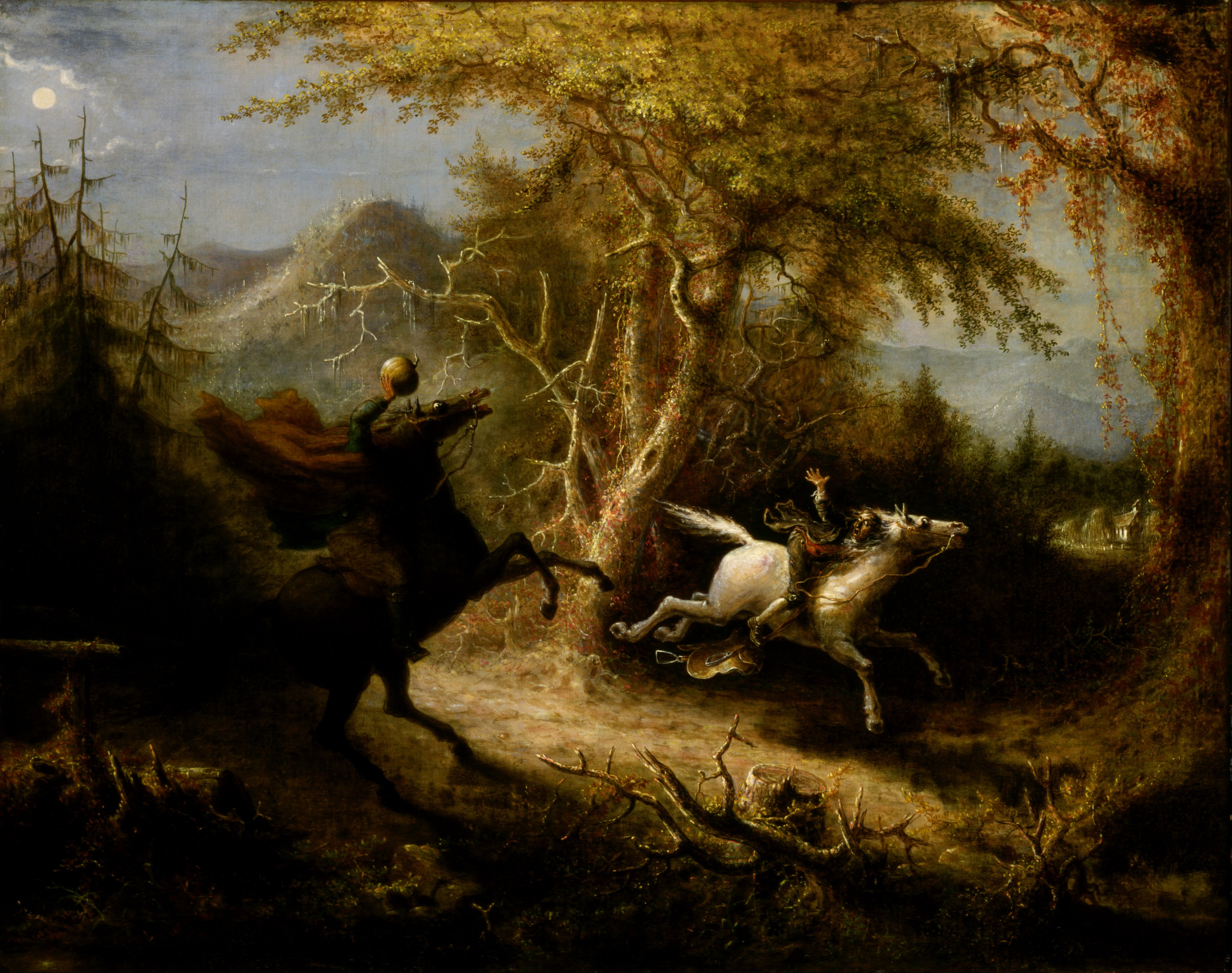
(It is interesting here that Tolkien has chosen not to take advantage of the folk belief—if you know “The Legend of Sleepy Hollow” by Washington Irving, or its inspiration, the poet Robert Burn’s “Tam O’Shanter”, this will be readily familiar to you—that evil spirits are unable to cross running water, even at a bridge.

John_Quidor_-_The_Headless_Horseman_Pursuing_Ichabod_Crane_-_Google_Art_Project.jpg

tamoshanter.jpg

To reach the Shire, the Wraiths have had to cross several bodies of water and now their hesitation to traverse another appears to be derived from their confidence that they can now control Frodo—either by the influence of the Ring, or perhaps from his wound—and call him back across the stream to them.)

From Rivendell, the next such door is that at the western side of Moria.

moriagate.jpg

Here, there is no living challenger. Rather, it is a kind of riddle—or, at least, it is initially understood as such—which bars the way. Its answer is simple, which led us to wonder, what is the purpose of this door scene in the story? As the creature in the pool

watcher.jpg

barricades the door behind them, it adds to the tension: the Fellowship has been watched and, from the hostile mountains to the wolves to the tentacle thing, it has been forced into darker and narrower ways, those ways seemingly chosen by the malevolent force observing their journey. As well, it suggests the gradual decay of what was once a vibrant, active culture, as Gandalf explains:

“Here the Elven-way from Hollin ended. Holly was the token of the people of that land, and they planted it here to mark the end of their domain; for the West-door was made chiefly for their use in their traffic with the Lords of Moria. Those were happier days, when there was still close friendship at times between folk of different race, even between Dwarves and Elves.” (The Fellowship of the Ring, Book 2, Chapter 4, “A Journey in the Dark”)

This is a theme throughout The Lord of the Rings and one which, we believe, adds to its power: the events of the close of the Third Age are set against a background of other times and other events and the landscape still bears traces of those times, from the Barrows to the Greenway and Weathertop and far beyond. As well, so many of those traces suggest that violence and the dark spirit of Sauron, sometimes through his agents, sometimes in person, have had much to do with their end.

Now that the Fellowship is within Moria, it encounters its next door: that of the Chamber of Mazarbul.

marzabul.jpg

Here, they are the challengers, when forced to defend themselves from a horde of “Orcs, very many of them…And some are large and evil: black Uruks of Mordor.” (The Fellowship of the Ring, Book 2, Chapter 5, “The Bridge of Khazad-Dum”). There is a second door, however, and, when they have beaten back their attackers, they escape by it—but only so that Gandalf may be the challenger at a crossing—as Frodo was at the ford—at the Bridge of Khazad-Dum, although here magic apparently cannot save him, as it had Frodo.

balrog.jpg

With Gandalf gone, we see the repetition of a scene from The Hobbit—the escape through a crowd to the outside world:

“…and suddenly before them the Great Gates opened, an arch of blazing light.

There was a guard of orcs crouching in the shadows behind the great door-posts towering on either side, but the gates were shattered and cast down. Aragorn smote to the ground the captain that stood in his path, and the rest fled in terror at his wrath.” (The Fellowship of the Ring, Book 2, Chapter 5, “The Bridge of Khazad-Dum”)

At this moment in The Hobbit, Bilbo had used his newly-discovered ring to escape (albeit with the loss of a few buttons), but Aragorn’s sword clearly does just as well.

It is easy to see just how prevalent the pattern is: even after that harrowing moment of being chased through the mines and losing Gandalf, where there is a door, there is someone at it to make a challenge, and this holds true even without an actual door, as the remaining members of the Fellowship seek to enter Lothlorien and are stopped by Elven sentries in a tree. (The Fellowship of the Ring, Book 2, Chapter 6, “Lothlorien”)

And the pattern continues, even as the Fellowship breaks up, but let’s take a moment to see what we’ve found so far. On the side of doors to safety, we have: Bree (although it’s not so safe as it looks), the Ford of Bruinen, the main door of Moria, and the entrance to Lorien. As for doors to danger, there are: the western doors of Moria and the door to the Chamber of Mazarbul.

In the third installment, we shall see just how many more doors/gates/entryways we find which continue to fit the pattern—and there are a fair number of them.

Thanks, as ever, for reading.

MTCIDC

CD

Tobago to Lothlorien 2

26 Wednesday Oct 2016

Posted by Ollamh in Heroes, J.R.R. Tolkien, Uncategorized

≈ Leave a comment

Tags

Anduin, Barad-Dur, Bree, Caras Galadhon, Cirith Ungol, defense, Edoras, fortification, Galadriel, Helm's Deep, Hildebrandts, John Howe, Lothlorien, Minas Tirith, Morannon, Nenya, Offa's Dyke, Rhodes, Robinson Crusoe, stockades, Swiss Family Robinson, The Lord of the Rings, Tolkien, tree house

Welcome, dear readers, as always. As you can see from the title, this is a continuation of our previous post.

In that previous posting, we began with the novel, Robinson Crusoe (1719),

Robinson_Crusoe_1719_1st_edition.jpg

crusoewyeth.jpg

then on to Swiss Family Robinson (1812),

52062_swiss_rob_md.gif

being especially interested in the stockade of the former

0_8a62b_11562dfa_orig

and the tree house of the latter.

swiss-family-robinson

The connection here was the tree house and Lothlorien, where the elves lived high up in the trees.

lothlorien.jpg

At least, that’s where we began. As we looked more seriously at the architecture of Lothlorien, however, we began to wonder, in a world in which darkness had gradually spread, how it protected itself. After all, Robinson Crusoe, afraid of the cannibals he had seen, had walled himself in. Part of it was the power of Galadriel herself, as she implies to Frodo:

“But do not think that only by singing amid the trees, nor even by the slender arrows of elven-bows, is this land of Lothlorien maintained and defended against its Enemy.” (The Fellowship of the Ring, Book 2, Chapter 7, “The Mirror of Galadriel”)

But was there anything more besides singing, arrows, and Nenya, the Ring of Adamant?

5d7d8ba33f058c6756ab6feed6ca5033.jpg

Far to the south, Minas Tirith had seven concentric (more or less) walls,

minastirithjhowe.jpg

and its opponents across the Anduin had the Morannon

morannonhildebrandt.jpg

and Cirith Ungol

cirithungolhildebrandt.jpg

sam_at_cirith_ungol.jpg

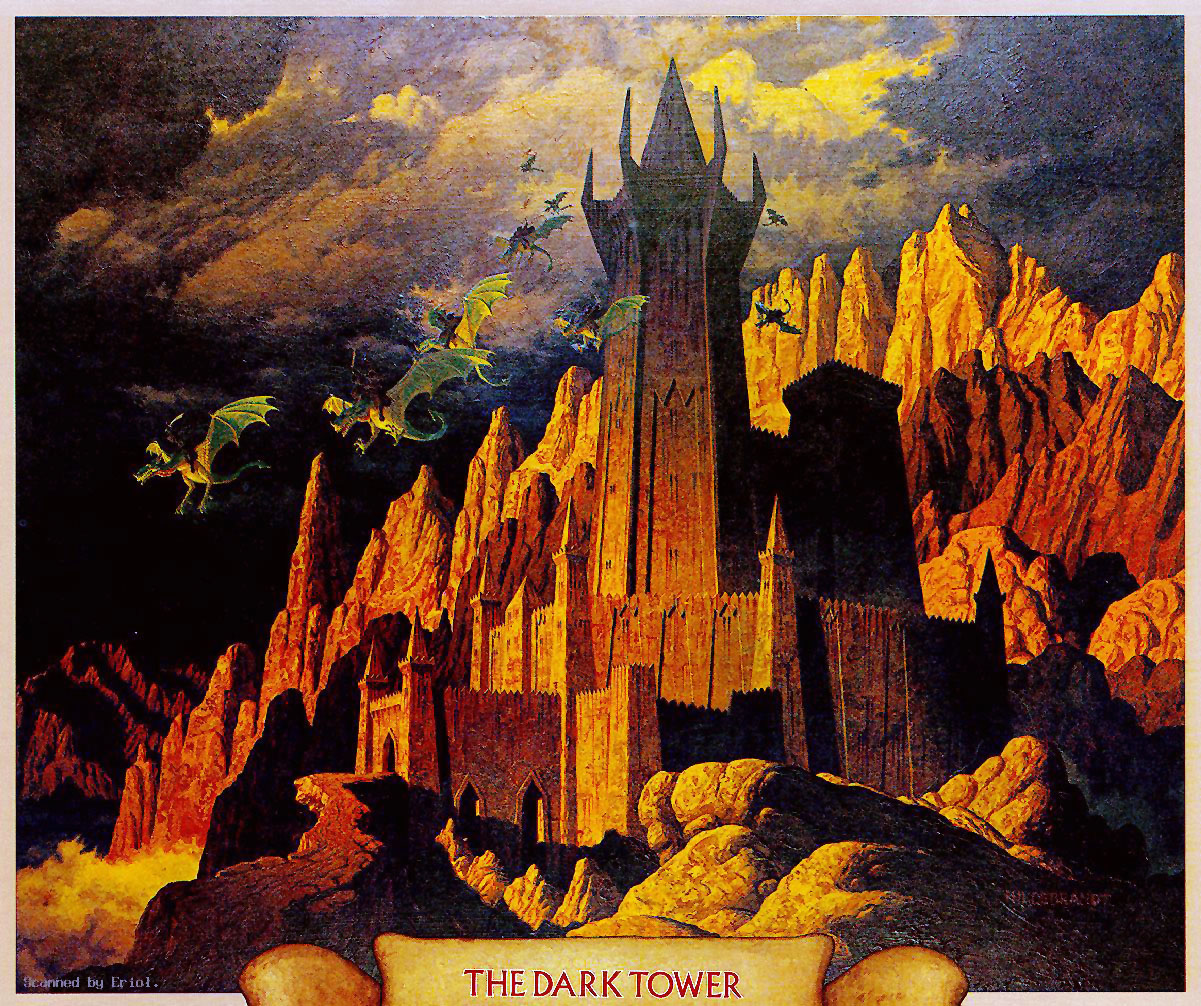
and even the Barad Dur.

HidebrandtTolkienDarkTower.jpg

It is not so clear about Edoras. There is mention that “A dike [that is, a ditch/moat] and mighty wall and thorny fence encircle it”, along with the phrase “wide wind-swept walls and gates” (The Two Towers, Book 3, Chapter 6, “The King of the Golden Hall”), but little else. And you can see that lack of information reflected in the rather scanty look in the Jackson films—

LOTR_twoTowers_edoras_03_940.jpg

Helm’s Deep, is, of course, a different matter—we show you versions by the Hildebrandts and by John Howe

helmsdeephildebrandt.jpg

33171_the_lord_of_the_rings.jpg

Lothlorien is, in fact, not a single site, like any of the above. This map

LothlorienMap.jpg

gives you an idea of its complexity. There is the outer forest, with its camouflaged guard flets in trees, seemingly along its borders, and then the actual center, the city of Caras Galadhon. Here’s JRRT’s description of that center:

“There was a wide treeless space before them, running in a great circle and bending away on either hand. Beyond it was a deep fosse lost in soft shadow, but the grass upon its brink was green, as if it glowed still in memory of the sun that had gone. Upon the further side there rose to a great height a green wall encircling a green hill thronged with mallorn-trees taller than any they had yet seen in all the land.” (The Fellowship of the Ring, Book 2, Chapter 7, “The Mirror of Galadriel”)

We are then told that there is a bridge, on the southern side, which crosses to “the great gates of the city; they faced south-west, set between the ends of the encircling wall that here overlapped, and they were tall and strong, and hung with many lamps.”

A fosse (from the Latin verb, fodio, fodere, fodi, fossum, “to dig”) means that there was a moat—in this case, it would appear to be a dry moat, like this one at the city of Rhodes.

moatrhodes.jpg

(Those stone balls, by the way, are left over from the Turkish artillery and stone-throwers which pounded the walls of Rhodes in 1522–when we have another posting–soon–on the attack on Minas Tirith, we’ll say more about that.)

That “green wall”, however, is a bit of a puzzle. Is it a wall of green stone of some sort? Or is it a “thorny fence”, like that which surrounds Edoras? There are two similar defenses, or at least boundaries, in LOTR. First, there is the border between Buckland and the Old Forest:

“Their land was originally unprotected from the East; but on that side they had built a hedge: the High Hay. It had been planted many generations ago, and it was now thick and tall…” (The Fellowship of the Ring, Book 1, Chapter 5, “A Conspiracy Unmasked”)

The second such construction appears at Bree (which sounds much like Edoras):

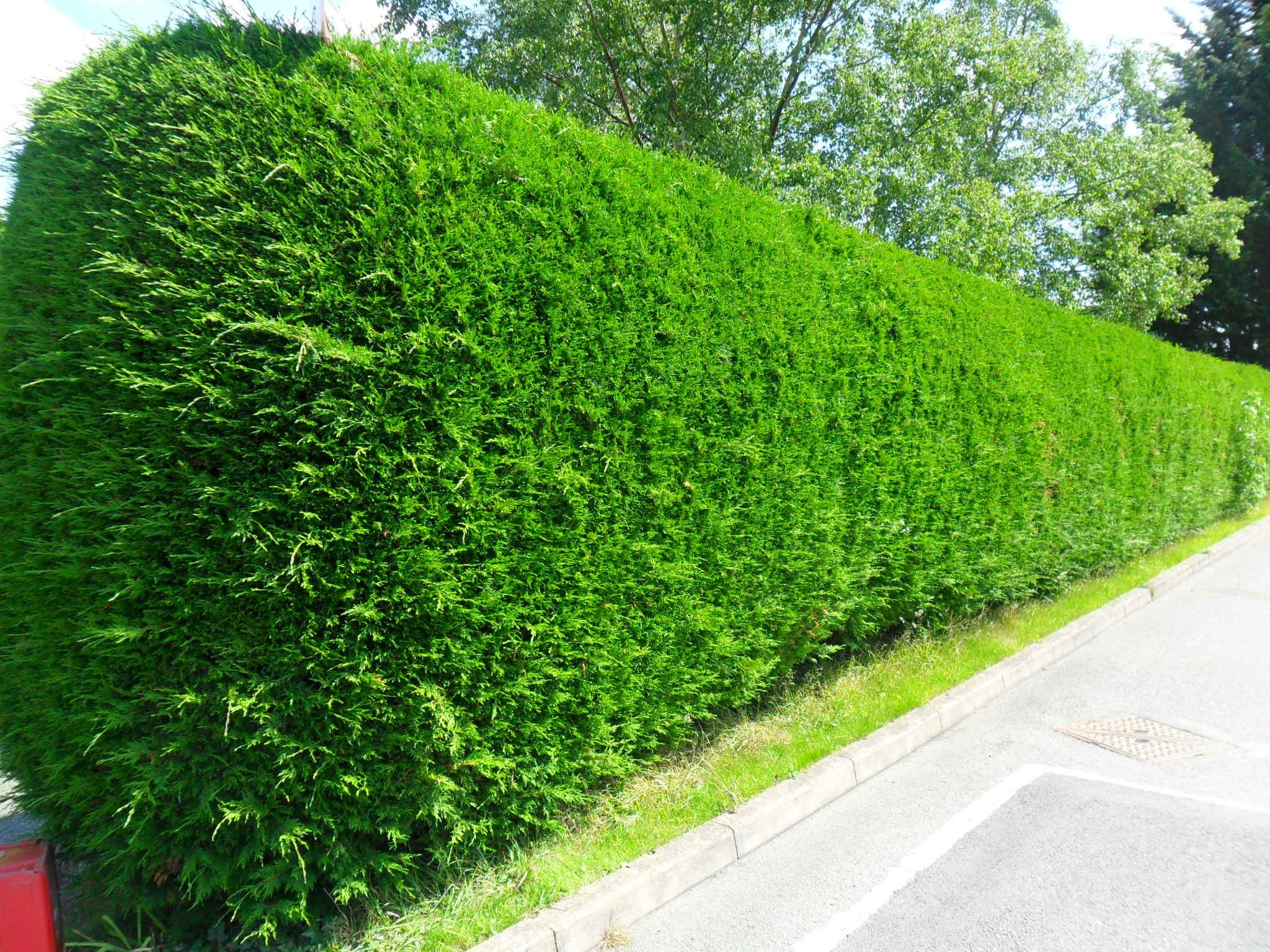
“On that side, running in more than half a circle from the hill and back to it, there was a deep dike with a thick hedge on the inner side.” (The Fellowship of the Ring, Book 1, Chapter 9, “At the Sign of the Prancing Pony”)

So what is the green wall?  English hedges can be very dense things, often to mark off fields, as in this photo of Offa’s Dyke–and you can see the fosse/ditch/moat here, as well.

offasdyke2.png

In at least one previous entry, we discussed Offa’s Dike, a (possibly) 8th-century-AD ditch and earthen wall between England and Wales.

664p.jpg

Can we imagine the palisading of this reconstruction replaced with a thorny hedge? Here’s a long shot of Offa’s Dike with a bit of hedging visible.

as_offas_dyke.jpg

When we consider the general look of Caras Galadhon, it is of something organic: the elves loved the trees and, instead of cutting them down, as the hobbits had done outside the High Hay, they climbed up into them. Might we then see that their physical barrier against their enemies was of the same green and growing material as were their dwellings?

What do you think, dear readers?

Thanks, as ever, for reading,

MTCIDC

CD

Lingua Orca

10 Wednesday Feb 2016

Posted by Ollamh in Imaginary History, J.R.R. Tolkien, Language, Literary History, Narrative Methods

≈ Leave a comment

Tags

Adventure, Black Speech, Bree, Cirth, Fantasy, Gandalf, L. Frank Baum, Mordor, Orcs, Origin of Orcs, Ozma of Oz, Princess Langwidere, The Lord of the Rings, Thorin, Tolkien

Welcome, dear readers, as always.

In P. Jackson’s The Desolation of Smaug, there is a scene at the opening, cut from whole cloth as so much of the later Hobbit movies, in which Gandalf meets Thorin in The Prancing Pony in Bree.

gandalfandthorin.jpg

There Gandalf shows Thorin a “message”.

“Gandalf: It is Black Speech.

[Thorin looks at Gandalf with unease]

Gandalf: A promise of payment.

Thorin: For what?

Gandalf: Your head. Someone wants you dead.”

One can laugh at that last—is there the possibility that someone who promised payment for a head would not want the owner dead? (Here we thought, for a moment, of the Princess Langwidere in L. Frank Baum’s Ozma of Oz, who has a collection of 30 exchangeable heads which she keeps locked in a cabinet.)

princesslangwidere.jpg

After laughing, however, we began to wonder just who that message was supposed to be for.

Tolkien says of the Black Speech:

“It is said that the Black Speech was devised by Sauron in the Dark Years, and that he had desired to make it the language of all those that served him, but he failed in that purpose.”

We are never told why he failed: was it too complicated? Too impractical? Too limited? (In modern terms, we can imagine Sauron sending out memos, saying things like: “To All Departments: it has come to Our attention that there are those who are not using the Black Speech in all official documents. Please conform to standards as laid out in Mordor Bulletin #512. Immediate.”) If what Isildur has to say about the inscription inside the ring is true,

One_Ring_Inscription_In_Three_Languages.jpg

Sauron doesn’t appear to have devised a script in which to write it:

“Already the writing upon it, which at first was as clear as red flame, fadeth and is now only barely to be read. It is fashioned in an elven-script of Eregion, for they have no letters in Mordor for such subtle work…” (The Fellowship of the Ring, Book 2, Chapter 2, “The Council of Elrond”)

Tolkien continues:

From the Black Speech, however, were derived many of the words that were in the Third Age wide- spread among the Orcs, such as ghash ‘fire’, but after the first overthrow of Sauron this language in its ancient form was forgotten by all but the Nazgul. When Sauron arose again, it became once more the language of Barad-dur and of the captains of Mordor.”

Could the “promise of payment” be meant for the Nazgul, then? That hardly seems likely—after all, they are the main servants of Sauron, bound to him by the rings they wear, Nazgul, after all, meaning “ring wraith”. Sauron’s success is their success—just as his failure seems to mean their end.

Because this scene exists only in the minds of the scriptwriters, we could have just shrugged it off right there as being a piece with the resurrected Azog and that ridiculous arm which he seems to have borrowed from a macho Frosty the Snowman, “Tauriel” and the embarrassing romance with a Dwarf, etc, etc, etc. Instead, we decided to play with the idea.

Using Tolkien’s actual texts as the basis of our thinking, we wondered: if the message wasn’t for the Nazgul and the Black Speech is specifically linked to Mordor, who else might be the recipient? Well, there are always the Orcs—but could they read it?

We know—sort of—what they are. Fangorn tells Merry and Pippin that they were made by Sauron as mockery of Elves. Tolkien himself seemed initially a bit puzzled about Orcish origins, calling them, in a letter to Milton Waldman (Letters no.131, 151, “probably in late 1951”) “…the Orcs (goblins) and other monsters bred by the First Enemy”. The same is said in Appendix F of The Lord of the Rings: “The Orcs were first bred by the Dark Power of the North in the Elder Days.” Then, in a letter to Naomi Mitchison (Letters, no.144, 177-8, 25 April, 1954), however, he writes: “Orcs…are nowhere clearly stated to be of any particular origin. But since they are servants of the Dark Power, and later of Sauron, neither of whom could, or would, produce living things, they must be ‘corruptions.’” And, again, in the draft of a letter to Peter Hastings, from later in the same year, he explains, quoting Frodo, speaking to Sam: “ ‘The Shadow that bred them can only mock, it cannot make real new things of its own. I don’t think it gave life to the Orcs, it only ruined them and twisted them.’” to which he adds, “In the legends of the Elder Days it is suggested that the Diabolus subjugated and corrupted some of the earliest Elves…” (Letters, no.153, 191). (This is continued later in the same letter, 195.)

Of their speech, JRRT wrote:

“It is said that they had no language of their own, but took what they could of other tongues and perverted it to their own liking; yet they made only brutal jargons, scarcely sufficient for their own needs, unless it were for curses and abuse. So it was in the Third Age Orcs used for communication between breed and breed the Westron tongue…” (The Lord of the Rings, Appendix F)

(Linguistically, we wonder if it would be possible for a people—especially a people who appear, in the later Third Age, to be extensive in number—could actually have had no language—or languages–of their own, particularly if they were a people who had existed before being corrupted by Morgoth. In The Lord of the Rings, for example, although they speak the Common Speech, they clearly have names out of some other language—what might that have been?)

Taking the next step, in a previous posting, we had begun to probe the question of literacy versus orality in Middle Earth and here we might ask the question: were Orcs literate at all? The only possible clue we’d found is in Appendix E of The Lord of the Rings, where it is said of the form of writing called “Cirth”:

d5256b13ca277364da6f842a2744b63c.gif

“The Cirth in their older and simpler form spread eastward in the Second Age, and became known to many peoples, to Men and Dwarves, and even to Orcs…”

This would suggest that they were.

When we actually see the Orcs, however, do we find any evidence of the use of that writing?

There are only a couple of extended passages when we hear the Orcs as well as see them. The first is in the chapter entitled “The Uruk-hai”. In this chapter, the Orcs who have Merry and Pippin argue over their captives and we hear several talk about “orders” and “my orders”, but no documents appear or are mentioned: are these only oral orders? The second time we hear the Orcs is in “The Choices of Master Samwise.” Here, Sam overhears two Orc officers, Gorbag and Shagrat, talking. “The messages go through quicker than anything could fly, as a rule. But I don’t inquire how it’s done. Safest not to.” says Gorbag. And, a little later, Shagrat says, “A message came: Nazgul uneasy. Spies feared on Stairs. Double vigilance. Patrol to head of Stairs.” Unfortunately, there’s no further information here– although that second message almost sounds like it’s one step from being a tweet! (Or, in JRRT’s time, a Western Union telegram.) But then Shagrat says, “ I have my orders…Any trespasser found by the guard is to be held at the tower. Prisoner to be stripped. Full description of every article, garment, weapon, letter, ring, or trinket to be sent to Lugburz at once, and to Lugburz only…” Does such detail require writing? It does say “full description…to be sent”, which certainly suggests it.

We have a final glimpse and earful of the Orcs from “The Tower of Cirith Ungol” and into “The Land of Shadow”, but there are no more discussions of orders or messages or descriptions, just more of the brutality and treachery which seems the norm for such creatures.

So, we have two statements, in total, which are more suggestive than actual proof: Cirth was known to Orcs and the order for a “full description” to be sent to Barad-dur. Does that mean that, should Shagrat or Gorbag have written, he would have done so in Cirth? If so, this proves only literacy in that form and, when we look back to the one sample we have of any length (all of two lines) of the actual Black Speech, it is in Tengwar as we know, from Isildur, that Sauron—at least at the time of the making of the ring—had no Black Speech writing system to employ.

Conclusions? Although it was fun to do the research, at base, this was a fool’s errand—the whole thing, after all, was a creation of the same people who brought you Thranduil on an Irish elk (for more on that, google the extremely useful—and entertaining!– www.tolkien-treasures and see the entry on Thranduil and his mount).

elf-elk-lord-of-the-rings-the-hobbit-Favim.com-2609245.jpg

If we play along, as we have, there’s only a process of elimination. The only people who had anything to do with the (revived) Black Speech were in Mordor. If it wasn’t the Nazgul and it wasn’t the Orcs, who’s left? Only one possibility seems to remain: Sauron wrote it as a memo to himself, a kind of Barad-dur post-it, (“To Me: Thorin. Head. Reward? Do soonest.”), but, being very busy in contract negotiations with Benedict Cumberbatch’s agent on voice-overs, he absentmindedly sent it.

What do you think, dear readers?

As always, thanks for reading!

MTCIDC

CD

Strange as News from Bree

03 Wednesday Feb 2016

Posted by Ollamh in Fairy Tales and Myths, J.R.R. Tolkien, Language, Literary History, Narrative Methods

≈ Leave a comment

Tags

acta, Barad-Dur, Barliman Butterbur, Bree, Bronte, copyists, Dwarves, English coaching inn, Forum Romanum, Frodo Baggins, Gandalf, Gondor, Gutenberg, Haworth, Johann Carolus, Literacy, manuscripts, Medieval, Minas Tirith, Orality, Peter Jackson, pre-print, press, printing press, Romans, royal archives, Sauron, scriptoria, Story, The Lord of the Rings, The Prancing Pony, The Red Book of Westmarch, The Shire, Tolkien, War of the Ring, word-of-mouth, Yorkshire

Welcome, dear readers, as always.

After the last couple of postings, full of war, this is a rather peaceful one. We want to put forward a scheme for a larger project, all about orality versus literacy in Middle Earth, of which this is one small step, our initial question for the project being, “What is written and how and what is only spoken and remembered?”

Early in Chapter 9 of The Fellowship of the Ring (“At the Sign of the Prancing Pony”), we encounter this passage:

“For Bree stood at an old meeting of ways; another ancient road crossed the East Road just outside the dike at the western end of the village, and in former days Men and other folk of various sorts had travelled much on it. Strange as News from Bree was still a saying in the East Farthing, descending from those days, when news from North, South, and East could be heard in the inn, and when the Shire-hobbits used to go more often to hear it.”

Bree, of course, is the little town to which Frodo and his companions travel once they have gotten free of the Barrow Downs.

ICE Bree and the Barrow-downs (Late Third Age) v1.3.jpg

The little town is described as being surrounded by a dike—a wide ditch, the inner side topped with a thick hedge—perhaps something like this—

D21-15-2-14-More-hedging-activity_0670.jpg

And consisting of “some hundred stone houses of the Big Folk, mostly above the Road…”. Without knowing the kind of stone, we have imagined it as looking rather like Haworth, in Yorkshire, the home of the Bronte family (without the modern touristy stuff, of course).

haworth.jpg

(And we note, by the way, that its depiction in the Jackson films doesn’t appear to reflect JRRT’s description that the houses were made of stone: rather, it appears to be filled with half-timbered, plaster and lath constructions.)

LOTR Bree.JPG


Here, the Hobbits stay at the Prancing Pony.

naismithprancingpony.jpg

Tolkien describes it as

“a meeting place for the idle, talkative, and inquisitive among the inhabitants, large and small…”

To our minds, it probably looked like one of those very old English coaching inns.

111-1000011im.jpg


And we begin our research inside.

Before we do, let’s spend a moment thinking about that word “news”, as in “Strange as news from Bree”.

In pre-print days, for most people in most places, information about events was circulated only by word-of-mouth. There were a few exceptions: the government in Rome produced hand-written circulars, called acta which were put up in the Forum Romanum from the middle of the last century BC through to the 3rd century AD. These would obviously have had a very limited circulation, however, and we can imagine that the contents would still have been passed on mouth-to-mouth for most people in Rome.

To gain greater circulation really demanded print. Although Gutenberg produced the first press and movable lead type by 1440,

gutenberg.jpg

the earliest surviving printed newspaper known at present dates from 1609, produced in Germany. (It appears that the publisher, Johann Carolus, had actually begun printing, rather than hand-copying, in 1605.)

Relation_Aller_Fuernemmen_und_gedenckwuerdigen_Historien_(1609).jpg

As far as we can tell, true to the general image of Middle Earth as a medieval world, printing presses have yet to appear (unless Sauron is producing very limited editions at the Barad-dur Press and circulation consists of exactly one copy). This means that we are still in the preprint world of hand-copying, when it comes to documents. In the western European world, on which places like Gondor are modeled, this means scriptoria—copy centers—mainly in monasteries and in royal courts where the copyists had probably been trained in monastic scriptoria.

scriptorium.jpg

Because there are no religious foundations or even schools of any sort mentioned in Middle Earth, we don’t know how or where documents were written or copied or even how and where anyone learned to read and write (except Sam, who was taught his letters by Frodo), but literacy turns up all over the place, from the Red Book of Westmarch to the runes of the dwarves to the writings Gandalf says he searched through in the archives of Minas Tirith.

All of this is, in a sense, commemorative—it’s history, really, whether a dwarvish map or tomb inscription, or an account of the War of the Ring. What about other things, however—word of daily events, or even entertainment forms, like songs and poems, things which may some day become part of history but, at the present, seem much more ephemeral? That’s what we’ve come to Bree to find out—and we’re quickly helped in our investigation by the host of the Prancing Pony, Barliman Butterbur, who says to Frodo and the others:

“ ‘I don’t know whether you would care to join the company…Perhaps you would rather go to your beds. Still the company would be very pleased to welcome you, if you had a mind. We don’t get Outsiders—travelers from the Shire, I should say, begging your pardon—often; and we like to hear a bit of news, or any story or song you may have in mind…’ “

And there’s that emphasis on the oral: “we like to hear”. You, readers, have a world of electronic devices to turn to for “a bit of news, or any story or song”, as well as, in the case of news, actual newspapers, not to mention bookstores, libraries, and the wonderful resources of Gutenberg and the Internet Archive. None of that in any form is available to carry or preserve information in Middle Earth. What books there are—and they are manuscripts, remember, things which look like this—

MS-Italian.jpg

or, if you are rich, this—

frms.png

are either in royal archives, as in the case of those which Gandalf consults in Minas Tirith, or in the hands of families, as is the fate of The Red Book of Westmarch and other such items in the Shire. And so people are, on the one hand, eager for news and entertainment, but, on the other, forced either to make it for themselves or to wait for willing strangers to add to their meager store.

It’s natural, then, that “As soon as the Shire-hobbits entered, there was a chorus of welcome from the Bree-landers.” The first local reaction to Frodo’s attempts to create an explanation for why he and his companions are traveling is also natural:

“He gave out that he was interested in history and geography (at which there was much wagging of heads, although neither of these words were [sic] much used in the Bree-dialect). He said he was thinking of writing a book (at which there was silent astonishment), and that he and his friends wanted to collect information about hobbits living outside the Shire, especially in the eastern lands.”

In the nearly-oral world of Bree (there must be some literacy—the Prancing Pony has a sign with an inscription and Barliman seems to know what a letter is), the next reaction is also natural:

“At this a chorus of voices broke out. If Frodo had really wanted to write a book, and had had many ears, he would have learned enough for several chapters in a few minutes. And if that was not enough, he was given a whole list of names, beginning with ‘Old Barliman here’, to whom he could go for further information.”

These would all be so-called “oral informants”—not one mention of manuscripts or documents to suggest that information is conveyed and recorded in writing—and so the Breelanders’ third and final reaction is also natural:

“But after a time, as Frodo did not show any sign of writing a book on the spot, the hobbits returned to their questions about doings in the Shire.”

It’s obvious then, that books, like the words “history” and “geography”, are almost alien to these people and so their interest is in the spoken—or sung—word, which is why, when Frodo breaks into Bilbo’s “There is an inn…” to distract the audience from Pippin’s indiscreet recounting of the birthday party, his stratagem almost works—until he overdoes it and—

But even in the aftermath, although it leads to more trouble for Frodo and his companions, Butterbur can imagine that, in time, that surprising event, like all of the others in this near-oral world, will subside into word-of-mouth.

“He reckoned, very probably, that his house would be full again on many future nights, until the present mystery had been thoroughly discussed.”

And then it would become just another piece of strange news from Bree.

Thanks, as always, for reading.

MTCIDC

CD

Jolly Tom.2

16 Wednesday Sep 2015

Posted by Ollamh in Fairy Tales and Myths, Imaginary History, J.R.R. Tolkien, Narrative Methods

≈ Leave a comment

Tags

Barrow-downs, Barrow-wights, Bree, Dagger, Dorset, Eowyn, Fangorn, Frodo, Gandalf, Middle-earth, Nazgul, Neolithic, Old Forest, Old Man Willow, Peter Jackson, Sauron, The Hobbit, The Lord of the Rings, The Ring, Tolkien, Tom Bombadil, Weaponry, Westernesse, Witch-King of Angmar

Dear Readers,

Welcome, as always!

As you can see from the title, this is a continuation of the previous posting, in which we began a discussion of a two-part question: 1. What would be the advantage of keeping Tom Bombadil in a recorded (audio or film) version of The Lord of the Rings? 2. What would you need to keep?

To summarize the previous posting, we suggested that:

  1. he, along with Fangorn/Treebeard, represents the great age of Middle Earth—something very important to the author–and a continuity of living things, which leads us to
  2. he might also be seen as a form of hope: the Ring has no effect upon him and he remembers a time before the arrival of Sauron, suggesting that there might be a time after him, as well, and that the Ring has limits
  3. as it seems out of place even in the current text, the bulk of Tom’s verse and the sometimes rhythmicized prose could be removed, leaving only the character himself and his part in the plot

We believe, however, that there is a more pressing reason for keeping him in the text, and it has to do with something Gandalf says to Frodo when Frodo, panicked at the prospect of having to deal with the Ring, demands, “Why did it come to me? Why was I chosen?” LotR 61.

“’Such questions cannot be answered,’ said Gandalf, ‘You may be sure that it was not for any merit that others do not possess: not for power or wisdom, at any rate. But you have been chosen, and you must therefore use such strength and heart and wits as you have.’” LotR 61.

This is a continuation of Gandalf’s earlier statement that:

“Behind that there was something else at work, beyond any design of the Ring-maker. I can put it no plainer than by saying that Bilbo was meant to find the Ring, and not by its maker. In which case you also were meant to have it.” LotR 56.

Thus, there is a level of intentionality at work in Middle-earth, something beyond Sauron. And, when we see Bombadil next, he will prove to be an instrument of the intention.

The Hobbits have left his house and, following his directions, have passed onto the Barrow-downs.

Breeland_breetobarrowdowns

A down is a piece of rolling countryside, often bare at the top, with trees in its folds—as here in Dorset.

dorset_3287278k

The Dorset Downs have lots of Neolithic remains, including numbers of barrows or tumuli, grave mounds commonly covering an interior structure, not uncommonly made of stone—

OLYMPUS DIGITAL CAMERA

image4

Wakeman_Newgrange_tumulus_chamber_cross_section

Such tumuli once contained the body or bodies usually of high-status persons

Unknown

and all sorts of grave goods, either as a display of wealth or perhaps for some sort of afterlife use.

gordion1957

Bombadil has been careful, however, to say “more than once” (LotR 134) that the Hobbits are to avoid the barrows themselves, telling them not to meddle with them or “cold Wights” (LotR 133). (He also says that they should pass them “on the west-side”—there have been lots of guesses about this—we would add our guess that it might have to do with the orientation—literally—of the entry. If entries faced east and the rising sun, it would be wise of the Hobbits to skirt the barrows’ potential blind side, on the west. And there is also the rather obvious point, once you’ve looked at a map of the area, that, if they kept the barrows to the right and the Old Forest to the left, they would be heading north towards the road to Bree, as they intended.)

il_570xN.743473219_bxv9

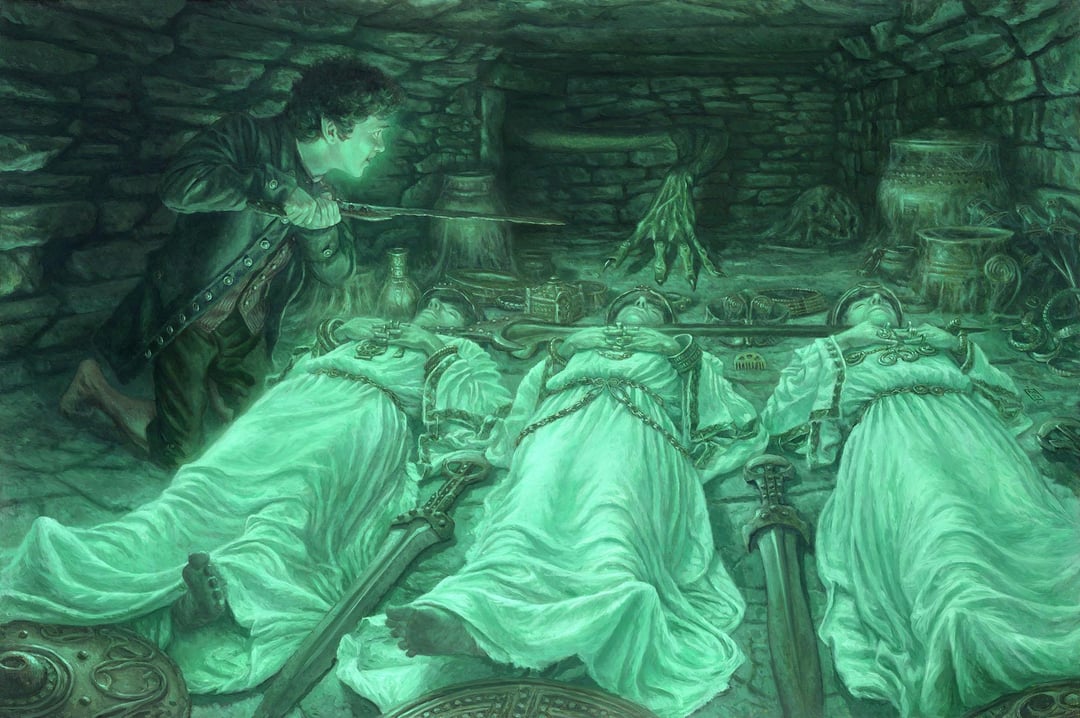
Those Barrow-wights are not the original inhabitants of the mounds, but agents of the Witch-king of Angmar, who sends them to take possession (The Lord of the Rings Companion, 144-145), long after their original occupation—but, what’s interesting is that, at least one of these tumuli appears not to have been plundered and this leads us to our next point about Tom Bombadil. After he rescues the Hobbits (showing again his mastery over at least the minor forces of evil), he does a little plundering of his own, including:

“For each of the hobbits he chose a dagger, long, leaf-shaped, and keen, of marvellous workmanship, damasked in serpent forms in red and gold…Then he told them that these blades were forged many long years ago by Men of Westernesse: they were foes of the Dark Lord, but they were overcome by the evil king of Carn Dum in the Land of Angmar.” LotR 146.

damascene-sword

Here are a few ideas of what, at least, the leaf shape might have looked like:

leaf.2bronzeageblades leaf.1

And we include this third one just because it looks so cool—

leaf.3

Bombadil, of course, has actually seen all of this happen, and here we see that theme of great age appear again. And there’s the pedigree of those blades. Unlike the sack ‘o swords slung without any more explanation than “These are for you. Keep them close.” to the Hobbits in the film, these were weapons made by heroic men of the past, doomed men, but who fought evil until they were overcome (a strong theme throughout the history of Middle-earth).

Late in the story, one of those blades seems to be the instrument of intentionality once more. When Eowyn faces the Witch-king of Angmar, now the chief of the Nazgul—

lord_of_the_nazgul_2

and he is about to kill her with his mace, Merry strikes him from behind, stabbing him in what, on a living man, would have been a vulnerable spot, the back of the knee. (LotR 842.)

eowyn_vs_the_nazgul_by_arteche-d3ggm8g

Distracted and, surprisingly, in pain, the Nazgul stumbles and Eowyn destroys him and here, once more, we may see intentionality, and all because of Tom Bombadil. Merry’s sword, from its contact with the undead flesh of the Nazgul, withers away, but—

“So passed the sword of the Barrow-downs, work of Westernesse. But glad would he have been to know its fate who wrought it slowly long ago in the North-kingdom when the Dunedain were young, and chief among their foes was the dread realm of Angmar and its sorcerer king. No other blade, not though mightier hands had wielded it, would have dealt that foe a wound so bitter, cleaving the undead flesh, breaking the spell that knit his unseen sinews together.” LotR 844.

So, for everything from Old Man Willow (whom the script writers couldn’t resist completely, transposing him to an improbable scene with Fangorn/Treebeard) to showing the great age of Middle-earth to suggesting other powers untouched by the Ring to offering possible hope to showing something of the intentionality behind certain actions in the story to providing the ancient and magical weapon which could finally bring down the Witch-king of Angmar and save Eowyn at the same time, might we suggest that, next production—audio or visual—of The Lord of the Rings, Jolly Tom might have a place in the cast?

Thanks, as always, for reading.

MTCIDC

CD

PS

If you would like to read more about Tom, see, for example, Dorathea Thomas, “He Is: Tom Bombadil and His Function in The Lord of the Rings” at Academia.edu.

Trading with the Enemy

15 Wednesday Jul 2015

Posted by Ollamh in Economics in Middle-earth, J.R.R. Tolkien, Maps

≈ 2 Comments

Tags

Bree, Cross-Roads, Gandalf, Gimli, Great East Road, Greenway, Isengard, Laketown, Legolas, Marxist Critics, Merry and Pippin, Middle-earth, Mirkwood, North-South Road, Peter Jackson, Pipeweed, Roads, Roman Roads, Rome, Saruman, Sauron, South Farthing, Swanfleet, The Lord of the Rings, The Shire, Theoden, Tolkien, Trade, Transport

Dear Readers,

In a recent posting, we opened with the image of Merry and Pippin happily feasting among the ruins of Isengard as Gandalf, Theoden, and company ride up to meet them.

“…suddenly they were aware of two small figures lying…at their ease…there were bottles and bowls and platters laid beside them, as if they had just eaten well, and now rested from their labour. One seemed asleep; the other, with crossed legs and arms behind his head, and little rings of thin blue smoke.” L543

MandPIsengard

We, as the readers, may be just as taken aback as the company; we’re joining the Hobbits again for the first time since Isengard’s demise, and it’s natural to ask: where, in the midst of all of this ruin, did they find this stuff? Gimli doesn’t hesitate to ask for us.

“’Where did you come by the weed, you villains?’” L544

Of course, he’s talking about pipeweed, something common, yet treasured, in the Shire. It is not native to a place like Isengard, so far south, but here we have the Hobbits smoking it and even enjoying a surplus. Legolas is just as impressed,

“’You speak for me, Gimli,’ laughed Legolas, ‘though I would sooner learn how they came by the wine.’” L544

Pippin only teases, answering that

“’Here you find us sitting on a field of victory…and you wonder how we came by a few well earned comforts.” L544

And so we’re left with this mystery of supplies, but we can be sure that, in Tolkien’s mind, there was an answer. He was, after all, diligent about even minute details concerning Middle-earth, and was also the same man who once said that

“I am not incapable or unaware of economic thought; and I think as far as the ‘mortals’ go, Men, Hobbits, and Dwarfs, that the situations are so devised that economic likelihood is there and can be worked out…” LT, L.154 P.196.

In this quotation, Tolkien can almost be echoing, in an ironic way, the argument of Marxist critics that economic systems, even those appearing in literature, hide their true nature. Tolkien seems to be telling us that he was well aware of trade systems, and, we would suggest, this would include a basic foundation: transport. And, using what we are given in the texts, we can see that there were two main methods. One is by water–as in the flourishing wine trade between Mirkwood and Laketown.

hobbit-raft-elves

This pair of places is naturally connected by river and lake. Such is not the case with the South Farthing and Isengard, of course. Instead, water bodies like the Swanfleet lie between them. And yet there is that pipeweed. The Hobbits are smoking it and, in the extended edition of the film version, Peter Jackson even shows us two large barrels of pipeweed labeled “South Farthing”.

This brings us to our second method of transport, by road.

ShireRoads

Like all educated men of his time, Tolkien had been raised on the world of the Greeks and Romans and, among the longest-lasting monuments of the Roman world was the extensive system of roads, some of which are still in existence in our own time and are even (asphalted over) the basis of certain modern English roads. In Middle-earth, there appear to be a number of such ancient roads, such as the Cross-Roads:

CrossRoads

The Great East road:

greateastrd-map

The North-South road:

north-south-road

Other possibilities would include once-active, but now abandoned routes, like the Greenway, running north from Bree and the Stone Road which the Woodwoses know and point out to Theoden.

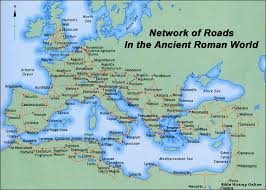
As you can see, we can easily imagine Tolkien thinking out the economics of Middle Earth through a road network similar to that of the Roman Empire, with its own intricate road systems

RomanRoadNetwork


Along these roads came much of Rome’s wealth and the case would have been the same for Middle-earth, so here’s a clue to Saruman’s pipeweed trade with the Shire. Looking at a map, we see that The Great East Road, which, traveling east from the Shire, would lead to Bree, and to the Cross-Roads, reaching The North-South Road.

fonstad01 fonstad02

Such trade would seem natural, not only to the Romans, but to us. In the wreckage of Isengard, however, for all that Merry and Pippin are so casual about it, there is another implication: Saruman, who wants to be another Sauron, must know much more about the Shire than anyone, even Gandalf has understood, and, thinking of the “Scouring of the Shire”, that could easily bode ill for the future of that place which the Hobbits think so safe and removed…

Thanks, as ever, for reading.

MTCIDC,

CD

The Doubtful Sea Series Facebook Page

The Doubtful Sea Series Facebook Page

  • Ollamh

Categories

  • Artists and Illustrators
  • Economics in Middle-earth
  • Fairy Tales and Myths
  • Films and Music
  • Games
  • Heroes
  • Imaginary History
  • J.R.R. Tolkien
  • Language
  • Literary History
  • Maps
  • Medieval Russia
  • Military History
  • Military History of Middle-earth
  • Narnia
  • Narrative Methods
  • Poetry
  • Research
  • Star Wars
  • Terra Australis
  • The Rohirrim
  • Theatre and Performance
  • Tolkien
  • Uncategorized
  • Villains
  • Writing as Collaborators
Follow doubtfulsea on WordPress.com

Across the Doubtful Sea

Recent Postings

  • A Moon disfigured December 17, 2025
  • On the Roads Again—Once More December 10, 2025
  • (Not) Crossing Bridges December 3, 2025
  • On the Road(s) Again—Again November 26, 2025
  • On the Road(s) Again November 19, 2025
  • To Bree (Part 2) November 12, 2025
  • To Bree (Part 1) November 5, 2025
  • A Plague o’ Both—No, o’ All Your Houses! October 29, 2025
  • It’s in Writing (2:  I’st a Prologue, or a Poesie for a Ring?) October 22, 2025

Blog Statistics

  • 103,213 Views

Posting Archive

  • December 2025 (3)
  • November 2025 (4)
  • October 2025 (5)
  • September 2025 (4)
  • August 2025 (4)
  • July 2025 (5)
  • June 2025 (4)
  • May 2025 (4)
  • April 2025 (5)
  • March 2025 (4)
  • February 2025 (4)
  • January 2025 (5)
  • December 2024 (4)
  • November 2024 (4)
  • October 2024 (5)
  • September 2024 (4)
  • August 2024 (4)
  • July 2024 (5)
  • June 2024 (4)
  • May 2024 (5)
  • April 2024 (4)
  • March 2024 (4)
  • February 2024 (4)
  • January 2024 (5)
  • December 2023 (4)
  • November 2023 (5)
  • October 2023 (4)
  • September 2023 (4)
  • August 2023 (5)
  • July 2023 (4)
  • June 2023 (4)
  • May 2023 (5)
  • April 2023 (4)
  • March 2023 (5)
  • February 2023 (4)
  • January 2023 (4)
  • December 2022 (4)
  • November 2022 (5)
  • October 2022 (4)
  • September 2022 (4)
  • August 2022 (5)
  • July 2022 (4)
  • June 2022 (5)
  • May 2022 (4)
  • April 2022 (4)
  • March 2022 (5)
  • February 2022 (4)
  • January 2022 (4)
  • December 2021 (5)
  • November 2021 (4)
  • October 2021 (4)
  • September 2021 (5)
  • August 2021 (4)
  • July 2021 (4)
  • June 2021 (5)
  • May 2021 (4)
  • April 2021 (4)
  • March 2021 (5)
  • February 2021 (4)
  • January 2021 (4)
  • December 2020 (5)
  • November 2020 (4)
  • October 2020 (4)
  • September 2020 (5)
  • August 2020 (4)
  • July 2020 (5)
  • June 2020 (4)
  • May 2020 (4)
  • April 2020 (5)
  • March 2020 (4)
  • February 2020 (4)
  • January 2020 (6)
  • December 2019 (4)
  • November 2019 (4)
  • October 2019 (5)
  • September 2019 (4)
  • August 2019 (4)
  • July 2019 (5)
  • June 2019 (4)
  • May 2019 (5)
  • April 2019 (4)
  • March 2019 (4)
  • February 2019 (4)
  • January 2019 (5)
  • December 2018 (4)
  • November 2018 (4)
  • October 2018 (5)
  • September 2018 (4)
  • August 2018 (5)
  • July 2018 (4)
  • June 2018 (4)
  • May 2018 (5)
  • April 2018 (4)
  • March 2018 (4)
  • February 2018 (4)
  • January 2018 (5)
  • December 2017 (4)
  • November 2017 (4)
  • October 2017 (4)
  • September 2017 (4)
  • August 2017 (5)
  • July 2017 (4)
  • June 2017 (4)
  • May 2017 (5)
  • April 2017 (4)
  • March 2017 (5)
  • February 2017 (4)
  • January 2017 (4)
  • December 2016 (4)
  • November 2016 (5)
  • October 2016 (6)
  • September 2016 (5)
  • August 2016 (5)
  • July 2016 (5)
  • June 2016 (5)
  • May 2016 (4)
  • April 2016 (4)
  • March 2016 (5)
  • February 2016 (4)
  • January 2016 (4)
  • December 2015 (5)
  • November 2015 (5)
  • October 2015 (4)
  • September 2015 (5)
  • August 2015 (4)
  • July 2015 (5)
  • June 2015 (5)
  • May 2015 (4)
  • April 2015 (3)
  • March 2015 (4)
  • February 2015 (4)
  • January 2015 (4)
  • December 2014 (5)
  • November 2014 (4)
  • October 2014 (6)
  • September 2014 (1)

Blog at WordPress.com.

  • Subscribe Subscribed
    • doubtfulsea
    • Join 78 other subscribers
    • Already have a WordPress.com account? Log in now.
    • doubtfulsea
    • Subscribe Subscribed
    • Sign up
    • Log in
    • Report this content
    • View site in Reader
    • Manage subscriptions
    • Collapse this bar
 

Loading Comments...