• About

doubtfulsea

~ adventure fantasy

Author Archives: Ollamh

Shire Portrait (3a)

15 Wednesday Feb 2017

Posted by Ollamh in Economics in Middle-earth, Imaginary History, J.R.R. Tolkien, Literary History, Maps, Narrative Methods

≈ Leave a comment

Tags

Argeleb, Baraduin, Beleriand, Blanco, Bridge of Stonebows, Bronze Age Horse, cable ferry, coins, Dartmoor, Doriath, Dwarves, English South Downs, Fallowhide, Far Downs, Farthings, Fornost Erain, Frodo, Gloucestershire, Government, Great East Road, Green Hill Country, Greenway, Jeremy Brett, Little Delving, Longbottom Leaf, Maps, Marcho, Michel Delving, Middle-earth, Minas Tirith, Misty Mountains, Old Dee Bridge, Oxfordshire, River Baranduin, Roads, Roman Roads, Sherlock Holmes, Sidney Paget, Sir Arthur Conan Doyle, Steven Spielberg, Tharbad, The Hobbit, The Hound of the Baskervilles, The Lord of the Rings, The Shire, Three Farthing Stone, Tobacco, Tolkien, Warwickshire, White Downs, Worcestershire

Welcome, dear readers, to the third installment of our rough portrait of the Shire. We call it a “rough portrait” because, so far, we’ve relied upon only three sources: The Hobbit, The Lord of the Rings, and The Letters of J.R.R. Tolkien. We’ll continue to do so in this installment, but we will add two works of geography, K. W. Fonstad’s The Atlas of Middle-earth and Barbara Strachey’s Journeys of Frodo (although we may take a hint of two from other works).

So far, we’ve discussed the government of the Shire (Shire Portrait 1) and the economy (Shire Portrait 2). In this, we want to move on to the geography of the Shire. We begin with Fonstad’s map.

1mapoftheshire.jpg

Except for Buckland, all of the Shire lies west of the River Baranduin (the “Brandywine”). This river can be broad enough to require a cable ferry

2ferryoncable.jpg

and it is navigable, at least by small boats—after all, it was in such a boat that Frodo’s parents were drowned.

As well, there is the Bridge of Stonebows on the Great East Road. Since it’s wide enough for gates and is reported to have had houses on the far side of it, we might imagine it to look like the Old Dee Bridge, at Chester, in England.

3olddeebridgechester

This bridge dates from Norman times (although there was a bridge there from the days of the Roman occupation—“Chester”, after all, is only a corruption of castra, Latin for “military camp”—founded as Deva Victrix in 79AD), with the present version being more-or-less 14th-century. In the Prologue to The Lord of the Rings, the Bridge of Stonebows is said to have been “built in the days of the power of the North Kingdom”, making us wonder whether the Dwarves, who had cut the Great East Road long before, had only had a ford at that place.

To the west of the river stretches the Shire, most of it to the north and south of the Great East Road, which acts as a kind of spine, there being subsidiary roads leading off it towards the various villages. Originally built by the Dwarves in the First Age, it led from Doriath in Beleriand eastward beyond the Baraduin towards the Misty Mountains. After the destruction of Beleriand, the remaining section ran only from the Grey Havens eastward. When Marcho and Blanco, the Fallowhide brothers, gained permission to colonize the area in TA1601 from Argeleb II, the only payment required was “that they should keep the Great Bridge in repair, and all other bridges and roads, speed the king’s messengers, and acknowledge his lordship”, which would have included the Great East Road.

In a previous posting, we talked about the North-South Road (later, the “Greenway”, which once ran from Fornost Erain, in the north, to Minas Tirith, in the south. Because of its ancient importance and places like the causeway and bridge at Tharbad, we imagined it to be like a Roman road—carefully laid out by engineers and paved but, no longer maintained, gone to seed.

4buildingromanroad.jpg

5romanroad.jpg

6overgrownromanroad.JPG

Because of its great age and one-time importance, we’ve always pictured the Great East Road to be similar, especially when it is clear that the kings of Arnor considered its maintenance to be the equivalent of tribute or taxes from the new Shire. Subsidiary roads which split off from the East Road, however, we might see as the usual rutted country roads.

7ruttedroad.jpg

The Shire, besides being bisected by the Great East Road, is also divided into four parts—hence the name “Farthings”—like the pre-decimal English coin, which was a fourth part of a penny (when a penny obviously was worth a lot more!).

8farthingcoin.jpg

We wonder what these divisions were intended to be used for—perhaps for the election of the Mayor? In our previous posting on the government of the Shire, we quoted JRRT as saying in the Prologue to The Lord of the Rings, “The Shire at this time had hardly any ‘government’”, so, for the moment, that’s our best guess.

(We should note here the “Three Farthing Stone”, which marks more or less where the North, East, and South Farthings meet. It has been suggested that it has been based upon the actual English “Four Shires Stone”—

9fourfarthingstone.jpg

which sits at the place where, pre-1931, four shires—Worcestershire, Warwickshire, Oxfordshire, and Gloucestershire — touched. Not only is there a similarity in the names and what the stone may function as, but the Three Farthing Stone is just to the west of Frogmorton, whereas the Four Shire Stone is just east of Moreton-in-Marsh. And is JRRT having a quiet joke in that, after a boundary adjustment in 1931, the Four Shire Stone should really be called the Three Shire Stone?)

Just south of the Great East Road is the Green Hill Country, which appears to be heavily forested.

11gribskov

This is mirrored by a smaller wood north of the road, Bindbole.

Other than these (and, of course, the Old Forest in Buckland), the land seems to be open. To the north are the North Moors. These are windy uplands, mostly grass, with little in the way of trees.

13adartmore

Dartmoor (which is the image above), in southwest England, seems so bare (although it has the fallen remains of earlier cultures on it), that it can seem a little spooky—the perfect setting for Sir Arthur Conan Doyle’s Sherlock Holmes novel The Hound of the Baskervilles (first published in book form in 1902).

13bbaskervilles.jpg

(We love the original Sidney Paget illustrations in The Strand Magazine, but our favorite film version is the one starring Jeremy Brett as Holmes. For pure fun, by the way, we recommend Steven Spielberg’s Young Sherlock Holmes—not for the purist, we hasten to add.)

13cpaget.jpg

13dartmore.jpg

13dbrett.jpg

13eyoungsherlock.jpg

To the west are two lines of downs, the White and the Far (or Fox) Downs. When we think of downs, we think of the chalky rolling hills southeast of the Thames in England. Here’s what the English South Downs look like

14southdowns.jpg

and it’s easy to imagine that the Shire version would look very similar and the chalk would easily be cut into to make Michel Delving (“Big Dig”) and Little Delving (“Little Dig”). The chalk just below the surface is exposed on the south English coast

15chalkcliffs.jpg

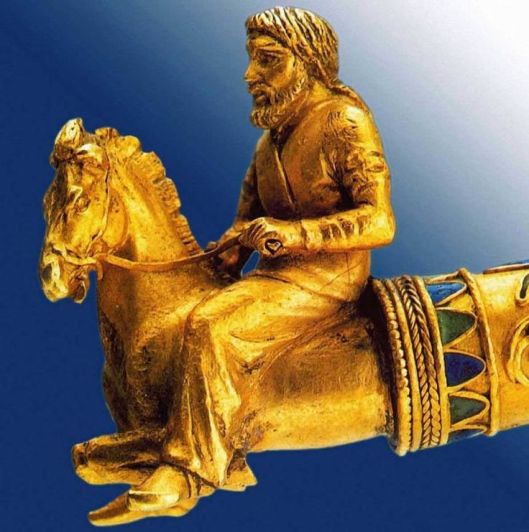
making that name “the White Downs” clear. And we can’t resist adding another chalk artifact. In Oxfordshire (but once Berkshire), on the edge of the Berkshire Downs, is a Late Bronze Age horse, cut into the chalk. We wonder why there isn’t one in Rohan…

16uffingtonhorse.jpg

Last of all, there’s the South Farthing, stretching south of The Green Hill Country. As it is a tobacco-growing area, but in a temperate climate (at least, we understand that the Shire is in a temperate zone—they appear to have—or to have had—snowy winters), we visualize it as looking like the Connecticut Valley, which runs south down from Vermont, through western Massachusetts and through central Connecticut, in the US.

17connecticutrvalley.jpg

In the central part of the valley are tobacco plantations.

18tobaccofields.jpg

These always include drying barns for the tobacco—which would become the Longbottom Leaf Merry and Pippin discover two casks of in Saruman’s pantry.

19tobaccobarn.jpg

The one farthing we haven’t studied directly is the East Farthing, but, as it contains a continuation of the Green Hill Country, abuts the Brandywine, and has the already-mentioned bridge of Stone Bows, and thus has no main features we haven’t mentioned, we’ll conclude here for the moment. In our next, we want to examine Shire architecture, from hobbit holes to mills.

Thanks, as ever, for reading.

MTCIDC

CD
Shire Portrait (2)

08 Wednesday Feb 2017

Posted by Ollamh in Economics in Middle-earth, Imaginary History, J.R.R. Tolkien, Maps, Narrative Methods

≈ 2 Comments

Tags

An Unexpected Party, Bad End, Baggins, ceramics, clay bank, coal, coins, cork, crafts, cutlery, Dwarves, Esther Forbes, Gondorian money, Hobbits, Isengard, Johnny Tremain, lead, Lloyd Alexander, Longbottom Leaf, Mayor, Michel Delving, mines, Postal Service, pottery, realien, Renaissance, Robert II of Scotland, Saruman, Shirriffs, silica, Silver, Taran Wanderer, Thain, The Green Dragon, The Hobbit, The Lord of the Rings, The Shire, Tolkien

Welcome, dear readers, as always.

In our last post, we began a series responding to the question:   what makes the Shire the Shire?

1theshire

We began with the government, which turned out to be very rudimentary: a Thain (hereditary), a Mayor (elected), a postal service (not known how chosen), Shirriffs (a kind of border patrol—volunteer). Since the Thain and Mayor were principally honorary positions, there was perhaps no salary attached. As for the postal service (called “Messengers”) and the Shirriffs, we presume that there must have been some sort of payment, although we are not told so. Since, in our world, we pay for the police and the post office through taxes, we wondered how the same services in the Shire were paid. This led us to the question of the Shire economy in general.

In a letter of 25 September, 1954, JRRT wrote to Naomi Mitchison:

“I am more conscious of my sketchiness in the archaeology and realien [“physical facts/things of real life”] than in the economics: clothes, agricultural implements, metal-working, pottery, architecture and the like…I am not incapable of or unaware of economic thought; and I think as far as the ‘mortals’ go, Men, Hobbits, and Dwarfs, that the situations are so devised that economic likelihood is there and could be worked out…” (Letters, 196)

The Shire would appear to be an agriculturally-based economy:

“The Shire is placed in a water and mountain situation and a distance from the sea and a latitude that would give it a natural fertility, quite apart from the stated fact that it was a well-tended region when they [hobbits] took it over.” (Letters, 196)

He adds to this that, when the hobbits took control of the Shire, that included “a good deal of older arts and crafts”, suggesting that the solution to the problem of the production of “clothes, agricultural implements, metal-working, pottery”—all the Realien, as he calls them, is assumed. How and from whom such things were taken over is not explained and such production, in any community, is not a small matter: “things of real life” are many and complicated.

Consider, for example, just one moment at Bag End. The Baggins appear to have been well-to-do, even without the treasure Bilbo brought back from his trip. His house is extremely well-furnished and the Baggins certainly don’t want for provisions, as we know from descriptions both in The Hobbit and The Lord of the Rings, as well as Realien, as the Dwarves’ clean-up song reminds us:

Chip the glasses and crack the plates!

Blunt the knives and bend the forks!

That’s what Bilbo Baggins hates—

Smash the bottles and burn the corks!

(The Hobbit, Chapter 1, “An Unexpected Party”)

1bilbodwarves.jpg

If we take this line by line, we come up with the following: glasses, plates, knives, forks, bottles, corks.

Glasses and bottles (as well as the window panes at Bag End) require a glassblower and perhaps a glazier.

2latemedglass.jpg

Plates require a potter.

3potter.JPG

Knives and forks were once made by cutlers (and forks are very advanced for a Middle-earth which is mostly medieval—although classical people used them in food preparation, it was only during the Renaissance that they began to appear as an eating utensil—western Medieval people ate with knives, spoons, and fingers).

4feast.jpg

5renfork.jpg

(And next is a Renaissance fork, found in the foundations of the Rose Theatre)

Corks come from vintners and brewers (in our world, vintners only began using cork as a sealant in the 17th century, we have read).

6awinebottles.jpg

Take those objects a step farther back and you find:

  1. glasswear, bottles, and window panes require silica and something to make it more stable, like lime (from limestone) or lead, which leads us to the question of where the ingredients come from. Silica is sand and can be found in many places—perhaps it might come from the west coast of Middle-earth? If all of the Shire is like the White Downs, where Michel Delving is located, it may be situated upon a vast deposit of chalk (more about Shire geography in our next posting). Lime would then have to be imported. As we have no record of mines in the Shire, the same would be true for lead.

6medievalglass.jpeg

7silica.jpg

8chalk.jpg

9limestone.jpg

10leadmine.jpg

  1. ceramics, like plates, are made of clay and all sorts of clay are used to make pottery, but all need to be dug out, usually from beds found near streams, rivers, or places like canyons or ravines. The Shire seems fairly well-watered, so we presume that the clay used to make Bilbo’s dishes was local.

11claybank.jpg

  1. knives and forks would be made of iron, early steel, or silver (with silver, plus an alloy to make them stronger)—here, again, we would need mines, for the iron ore and silver

12ironmine.jpg

  1. cork in our world is actually tree bark from the cork trees which grow in hot, dry southwest Europe (Spain/Portugal) and northwest Africa

13corkharvest.jpg

1, 2, 4 (and possibly 3) require raw materials of which no mention is made in the Shire and 1, 2, and 3 all need especially hot fires to make them, possibly using charcoal (made locally?) or coal (again, no mines discussed). And this is just, basically, four items.

14coalmine.jpg

So many import possibilities: what about export? We have solid evidence for one, which Merry and Pippin have discovered at Isengard:

“My dear Gimli, it is Longbottom Leaf! There were the Hornblower brandmarks on the barrels, as plain as plain. How it came here, I can’t imagine. For Saruman’s private use, I fancy. I never knew that it went so far abroad.” (The Two Towers, Book 3, Chapter 9, “Flotsam and Jetsam”)

It should always be remembered that these are works of fantasy, of course, and, unless there is some novelistic purpose which employs a potter as a character (in Taran Wanderer,15taranwanderer.JPG

by Lloyd Alexander, book 4 of The Chronicles of Prydain, for example, the hero, Taran, spends a little time as an apprentice potter, among other trades) or the making of silverware (something one might read about in Esther Forbes’ Johnny Tremain,16johnnytremain.jpg

where Johnny is an apprentice to a silversmith), it would seem completely unnecessary to spend narrative time discussing raw materials, imports, exports, or the manufacture of day-to-day items. We have taken the time, however, because, where, sometimes, we write about the parallels between Middle-earth and something here in our world, here the complexity of ordinary things in our world is completely forgotten in Middle-earth, or simply taken for granted, as JRRT implies in the letter cited above. If we are to examine Shire economics, however, we must, at least, consider them. As well, although we may keep saying, “No evidence for”, we think that, even if there is no potter or tin mine in the text, prompting readers to remember that, in the real world, there would have been one is a useful exercise and, for us, at least, makes the story that much more real.

But now we come to the subject of paying for Realien, or for anything else in the Shire, be it for the Shirriffs or for a pint at The Green Dragon.

In a totally rural economy many things might be obtained through barter: in return, for payment, please take 10 chickens, or a sack of grain. (And perhaps we see something like this in “The Scouring of the Shire”, when Hob Hayward tells Merry that, “We grows a lot of food, but we don’t rightly know what becomes of it. It’s all these ‘gatherers’ and ‘sharers’, I reckon, going round counting and measuring and taking off to storage.”—this looks like taxes, “paid in kind”).  Such might work for, say, trading a hen for a bowl, but would certainly not do for that pint—or for the bill at The Prancing Pony. Coins and their values are not mentioned in Tolkien, but their effect is felt, all the same: when Frodo buys a house in Crickhollow, we doubt he does it with cows!

17aeastfarthingmap.png

(We discussed Middle-earth money in an earlier posting and it seems to us that it would be fun to create, say, Gondorian money—here’s one possibility

17robert21316-1390.jpg

It’s actually a coin of Robert II of Scotland—1316-1390—but, changing the crown, could you imagine this as something issued earlier in the Third Age, say?)

This has been perhaps a rather long-winded and prosy posting (perhaps not for nothing did Thomas Carlyle, in 1849, call economics “the dismal science”?), for which we ask our readers’ pardon, but, if it helps to flesh out our portrait of the Shire, it was worth it, we feel. Our next, we hope will be a bit lighter, being on the physical “look” of the Shire, from its geography to its geology to its architecture.

Thanks, as ever, for reading.

MTCIDC

CD

Shire Portrait (I)

01 Wednesday Feb 2017

Posted by Ollamh in Economics in Middle-earth, J.R.R. Tolkien, Literary History, Maps, Military History, Military History of Middle-earth, Narrative Methods

≈ 1 Comment

Tags

British Museum, culture, elections, farthing, feudalism, Government, Hobbitry-in-arms, Hobbits, Louvre, Maps, Mathom-house, Mayor, Michel Delving, Middle-earth, museums, police, Postmen, Sharkey, Shire, Shire-moot, Shire-muster, Shirriffs, Thain, The Hobbit, The Lord of the Rings, The Scouring of the Shire, thegn, Tolkien, vassal, Vatican, voting, White Downs, Witch-King of Angmar

Welcome, dear readers, as always.

In our last post (well, next-to-last–the last was on circuses), we talked about museums and Mathom-houses and, thinking that the Shire had a museum, made us wonder about what we might call “Shire culture” in general. What is it which makes the Shire the Shire?

1theshire.jpg

To go about answering that, we tried to think of a model. Could we imagine ourselves doing a tourist brochure? A wiki article? And where would we begin?

Suppose, we thought, we begin with the outermost shell, rather as in our world: the government.

The first ten pages of the Prologue to The Lord of the Rings contain a good deal of information about hobbits and their homeland, with many other details to be gleaned from the main body of the text and the appendices and some from The Hobbit. There is undoubtedly more yet to be found in several of the subsidiary volumes, but we decided that, to make this a series of readable posts and not a small encyclopedia, we would stick to the two main works.

With all of that material to help us, all we needed was an entry point—and, almost immediately, we decided that we could begin where we left off, with that very museum, which originally attracted us because it stood out as something one would expect from a much more organized state, rather than from what, on the whole, appears to be such a rural and decentralized place.

After all, museums, as we have discussed, are a relatively recent invention in the west and public museums are even newer (the first state-sponsored museum in Britain, for example, only dates from the 1750s). Since our last posting, we’ve done a bit more research and, with one or two possible exceptions, it seems that public museums only begin to appear at all from the second half of the 17th century. (A quick and useful reference may be found at: https://museu.ms) Even so, such places have a good deal to say about a culture:

  1. that it values elements of its past, both historical and artistic, enough that it is willing to collect and preserve them
  2. that it believes that such elements should then be put upon public display (the why of that might include: to use for educational purposes—which assumes that the past has things to teach the present; to provide aesthetic pleasure; even to show the wealth and power of a state which has such a history and such artists)
  3. that it is willing to provide space, at the public expense, to house and display such things

The Mathom-house is hardly, from JRRT’s description, the equivalent of the British Museum

1bm.jpg

or the Louvre

2louvre.jpg

or the Vatican

3vatican.jpg

or any of the other thousand wonderful museums around the world, big or small. And yet it is there and in the closest thing to a capital which the Shire has to offer, Michel Delving. It is only the closest thing because the Shire has almost no formal governing structure.

As the Prologue says:

“The Shire at this time had hardly any ‘government’. Families for the most part managed their own affairs…”

Originally, as the Prologue tells us, the Hobbits had moved into the land which would become the Shire with the permission of the high king of the North Kingdom, at Fornost. When the last king and his kingdom had fallen to the Witch King of Angmar, the Hobbits replaced him with a “Thain” (actually an Old English word for, among other things, a “vassal”—that is, one who acts as a subordinate—in a feudal system, this might imply that the person has received land from someone higher on the social scale in return for taxes and/or military service).  Here’s a thegn (Old English spelling) as a warrior.

5thegn.JPG

By the time of The Hobbit, this office had dwindled, but not quite disappeared:

“The Thain was the master of the Shire-moot, and captain of the Shire-muster and the Hobbitry-in-arms, but as muster and moot were only held in times of emergency, which no longer occurred, the Thainship had ceased to be more than a nominal dignity.”

In fact,

“The only real official in the Shire at this date was the Mayor of Michel Delving (or of the Shire), who was elected every seven years at the Free Fair on the White Downs at the Lithe, that is at Mid-summer. As mayor almost his only duty was to preside at banquets, given on the Shire-holidays, which occurred at frequent intervals. But the offices of Postmaster and First Shirriff were attached to the mayoralty, so that he managed both the Messenger Service and the Watch. These were the only Shire-services, and the Messengers were the most numerous, and much the busier of the two. By no means all Hobbits were lettered, but those who were wrote constantly to all their friends (and a selection of their relations) who lived further off than an afternoon’s walk.

The Shirriffs was the name that the Hobbits gave to their police, or the nearest equivalent that they possessed…they were in practice rather haywards than policemen, more concerned with the strayings of beasts than of people. There were in all the Shire only twelve of them, three in each Farthing, for Inside Work. A rather large body, varying at need, was employed to ‘beat the bounds’, and to see that Outsiders of any kind, great or small, did not make themselves a nuisance.”

This gives us the whole of the top level of Shire culture, the public face: a vestigial Thain (representative of the long-gone King), a figurehead Mayor, a postal service, and a tiny police force/border guard.

And how does any of these hold office?

The Thain, as we know, is hereditary.

The Mayor is, as quoted above, elected—although we have no idea of the process. Does one vote by town? By Farthing? Or is there simply a kind of country-wide method? We also have no idea of suffrage: who has the vote in the Shire? Is it general (England had general suffrage by the time JRRT was writing The Hobbit, all men over 21 by 1918, some women—householders over the age of 30—having been included in elections in 1918, women in general over 21 in 1928)? Or is it the older “only property-holders” method? Or are there “hereditary electors” who do the choosing? (As CD have just gone through an election here in the US, all of these questions, as you can imagine, are fresh in our minds!)

The “postmen” (our word) are, so far as we can tell, a mystery, both as to who they are or how they gain their employment.

Shirriffs appear to be volunteers, as we learn in “The Scouring of the Shire”, when Sam talks to Robin Smallburrow, who says “You know how I went for a Shirriff seven years ago, before any of this began.”

There being so little in the way of government, are there any public buildings except for the Mathom-house? If there are, we have yet to locate them. It’s striking that, when “Sharkey” takes over the Shire, he sets up a number of such places, but neither government buildings nor museums, instead, they are tokens of a police state: barracks and watch houses, dens reminding us of something which JRRT would have seen all too much of in newspapers and magazines, as well as newsreels as he worked on the early stages of The Lord of Rings:

4asentrybox.jpg

4schutzpo.jpg

(More on Sharkey and the takeover in a future posting!)

Considering that there is a small policing force, as well as a kind of postal institution, we looked for another government department: the Internal Revenue Service. After all, we pay for our police and used to pay for postage stamps, back in pre-internet days, and we pay for public museums, too: how does it work in the Shire? The simple answer is, we don’t know. In fact, we don’t really know much about how the economy works in general. And that will be the subject of our next posting.

Thanks, as always, for reading!

MTCIDC

CD

Circuses (But No Bread)

25 Wednesday Jan 2017

Posted by Ollamh in Theatre and Performance

≈ Leave a comment

Tags

A.J. Bailey, American Civil War, Amphitheatre, Barnum & Bailey, Ben Hur, bread and circuses, Charles Dickens, Circus, Circus Maximus, Claude Debussy, closing, clowns, Colosseum, Elephants, equestrian, gladiators, Hard Times, Jimbo's Lullaby, John Bill Ricketts, Jumbo, Juvenal, London Zoo, macadamized roadways, Museum, P.T. Barnum, panem et circenses, parade, Philip Astley, racing, railways, Ringling Bros, Rome, tents, travel, Valley Pike

Welcome, dear readers, as ever, to our latest posting.

We’re taking a slight detour from our usual work on adventure and fantasy because we’ve just read something on the BBC website. It was announced there (as on other news websites) that the famous Ringling Brothers/Barnum and Bailey Circus will close for good in May of this year.

rbbbdurbar.jpg

If you are clownophobic (and it seems that many people are), this may be a relief to you.

evil_clown_horror_fantasy_dark_abstract_hd-wallpaper-687546.jpg

If you love elephants (we do), you may be glad to see them freed from their slavery to humans (here—but not yet so in the rest of the world, perhaps).

2circuselephants1936.jpg

If you, like us, love popular entertainments and their traditions, you may feel more ambivalent—or even ambivalent about feeling ambivalent—as we do.

After all, the word “circus” brings back a very ancient past—Rome and the Circus Maximus: the center for the Roman passion for chariot racing.

Imperial Rome: Circus Maximus (pen & ink and pencil on paper)

6circusmaxtoday.jpg

If you know the 1959 movie Ben Hur, you’ll know the amazing chariot race scene (set in Antioch, rather than Rome), which gives you an idea why this was the favorite Roman competitive spectator sport.

6achariotrace.jpg

It’s also the basis of the remark by the Roman satirist, Juvenal (c.100AD), that the formerly independent people of Rome had gradually given up their rights and now anxiously awaited only two things: panem et circenses, “bread and circuses”, meaning a free grain dole and free public entertainment.

It’s a bit of climb from there to modern circuses, of course. There were animal shows in Roman arenas (places used for blood-sport spectacles, mostly), like the Colosseum in Rome.

7colosseumexterior

8gladiators

(You’ll notice, by the way that we’ll show gladiators, but not beast-fights.)

But, afterwards, with the exception of private menageries kept by monarchs and nobles over the centuries, there was nothing like the modern circus until 1768, in London, where an ex-cavalry sergeant, named Philip Astley,

9pastley.jpg

gave a demonstration of equestrian skill which soon brought him both fame and fortune. A competitor came up with the name “circus”, but it was Astley and his “Amphitheatre” who started it off.

10astleysamphi.jpg

And also inspired Charles Dickens (1812-1870)

11dickens.jpg

to portray a comic (and not so comic) traveling version in his 1854 novel, Hard Times.

12firstedhardtimes.jpg

The first American circus, founded by the English equestrian, John Bill Ricketts, appeared in 1792, in Philadelphia.

13rickettsposter.jpg

14rickettstheatre.jpg

By the early 19th century, these had become traveling tent shows, which brought a little something exotic to rural communities in the US before the Civil War.

15tent.jpg

But then enter P.T. Barnum (1810-1891).

15ptbarnum.jpg

(He’s the taller one on the left.)

Beginning in the 1830s, Barnum had a very long career in show business, including all sorts of hoaxes, a number of them displayed at his famous New York City museum—

16barnummuseum.jpg

After two disastrous fires, Barnum moved on, in 1870 founding his own circus, with a typically bombastic name: “P.T. Barnum’s Grand Traveling Museum, Menagerie, Caravan & Hippodrome”.

17barnumposter.jpg

Never one to stand still, Bailey was an early user of the railways to move his circus.

18acircustrain.jpg

In a world made up almost entirely of dirt roads for wheeled traffic, this was a very good idea. The most advanced roads were “macadamized”—meaning that they had layers of crushed stone, like the Valley Pike in the Shenandoah Valley of Virginia.

18valleypike.jpg

Otherwise, travel on anything other than a dry day could look like this—

19wagoninmud.jpg

In 1881, Barnum took on a partner, A.J. Bailey—

20barnumandbailey.jpg

and, in 1882, he bought, from the London Zoo, an elephant, Jumbo.

21jumbo1882.jpg

From Jumbo, we get “jumbo-sized” and, of course, Claude Debussy’s (1862-1918),

22debussy.jpg

“Jimbo’s Lullabye”, from his “Children’s Corner Suite”.

23jimboslullabye.gif

Meanwhile, the Ringling Brothers, of Baraboo, Wisconsin (now home of an impressive circus museum), put their own show on the road.

23ringlingbros.jpeg

Early in the 20th century, the Ringlings bought Barnum and Bailey and, after a short time running two separate circuses, they joined them to become Ringling Brothers, Barnum and Bailey, which is now about to fold its tents forever.

24aposter.jpeg

We have never been big circus-goers, but one of our grandmothers used to tell the most haunting story. When she was a little girl, she sat on the front porch of her house and watched the circus—probably in fact Ringling Brothers, Barnum and Bailey—all its wagons pulled entirely by horses—parade down her street and, when she told the story, she returned to that porch and took us with her. So, as a small tribute to an old tradition, we close with a few images of those circus parades of the now far past.

26barnum1883

24flotoscircusparade.png

25bandbparade.jpg

27toycircus.jpg

Thanks, as always, for reading.

MTCIDC

CD

Mathoms and Fathoms

18 Wednesday Jan 2017

Posted by Ollamh in Economics in Middle-earth, Imaginary History, J.R.R. Tolkien, Literary History, Research, Uncategorized

≈ Leave a comment

Tags

Across the Doubtful Sea, alternate history, anachronisms, Anglo-Saxon, Bertil Thorvaldsen, cabinet of curiosities, Cicero, Elias Ashmole, Gaius Verres, Greeks, Hellenistic, hobbit measurement system, John Tradescant the Younger, Marquette University, mathom, Mathom-house, mathum, Muses, Oxford, Renaissance, Rochester, Romans, sculptor, Shire, Strong Museum of Play, The Lord of the Rings, Tolkien, Victorian Museum

Welcome, dear readers, as always.

A year or two ago, we were visiting the Strong Museum of Play in Rochester, New York, a wonderful place, filled with memorabilia of childhood, as well as up-to-date exhibits and generally just fun things to see and do. (Strong Museum website)

1Strong-back-exterior.jpg

Museums, as public display areas, are rather recent in western history.

The name tells us that it was to be a place devoted to the inspirers of the arts, the ancient Greek Muses.

2a-thorvaldsonmuses.JPG

(This is not ancient, but a 19th-century imitation by Bertil Thorvaldsen, 1770-1844, one of the early Romantic period’s most famous sculptors.)

2bb-bertilthorvaldsen.JPG

Greeks—later ones (in the period called “Hellenistic”)—and the Romans collected artistic things, but they were private collections—although Cicero

2bbcicero.jpg

in his orations attacking the corrupt ex-governor of Sicily, Gaius Verres, mentions that a predecessor had nobly allowed his art to be loaned out to decorate the public streets on festive occasions. (It is a horrible irony that Verres, who had fled Rome when it was clear that Cicero had demolished him and his reputation in his first speech, was eventually murdered in Massilia—present-day Marseilles–over a piece of sculpture.)

The first actual “museums” in modern times were Renaissance collections—often hodgepodge assemblies called things like “cabinet of curiosities”, but in England, by the 17th century, John Tradescant the Younger (1608-1662)

2b-jtradescantjr.jpg

had built upon his father’s collection, which was held in the family house south of the Thames (called “The Ark”).

2ctradescanthouse.png

At his death, that collection passed to Elias Ashmole (1617-1692)

2dashmole.jpg

—and there’s a really strange story about how this happened and the consequences, including the very suspicious death of Tradescant’s second wife, Hester.

2ehestertrad.png

Ashmole bequeathed it to his alma mater, Oxford, on the condition that an appropriate building be constructed for it. That structure was built, in 1678-83, and may have been the first public museum in western Europe.

2eashmolean.JPG

There is, in fact, a museum in the Shire. In the Prologue to The Lord of the Rings, we are told of Bilbo that:

“…his coat of marvellous mail, the gift of the Dwarves from the Dragon-hoard, he lent to a museum, to the Michel Delving Mathom-house, in fact.”

(where Gandalf supposes it is “still gathering dust”—The Fellowship of the Ring, Book 2, Chapter 4, “A Journey in the Dark”).   Its name and function are described in the Prologue:

“The Mathom-house it was called; for anything that Hobbits had no immediate use for, but were unwilling to throw away, they called a mathom.”

Such a description suggests something more like an old-fashioned Victorian museum,

4pittrivers.jpg

or even a “cabinet of curiosities” like Ole Worm’s 17th-century one.

5oleworm.jpg

We suspect that the Mathom-house is JRRT’s quiet joke on such older museums, which, even in his day, could be filled with dusty glass cases in which were a wide variety of objects, from fossils to rusty weapons found in the fields, all described on yellowing, hand-labeled cards. In the Hammond and Scull Companion, they suggest that the joke is even more complex, first quoting Tolkien “mathom is meant to recall ancient English mathm”, to which they add:

“Bosworth and Toller’s Anglo-Saxon Dictionary (1898) notes mathum ‘a precious or valuable thing (often refers to gifts)’. Thus Tolkien uses mathom ironically for things which are not treasured, only for where there was ‘no immediate use’ or which the Hobbits ‘were unwilling to throw away’.”

The Strong Museum, in contrast, is bright-colored and inviting, and, in a section dedicated to children’s authors, there is an entire display case devoted to JRRT, which included this. It’s a beautiful replica from the Marquette University Tolkien archive of a menu (the label gives the date “1937-1955”) on which JRRT has carefully written out the hobbit linear measurement system.

2jjrtmeasure.JPG

You can see that, unlike the rather abstract mechanism of the metric system, with its linear basis being a segment of the distance from the North Pole to the equator, Tolkien has used the Anglo-Saxon tradition, where the “foot” was actually originally based upon body parts, being divided into 4 palms or 12 thumbs (although there is another system based upon barley corns).

3barleycornmeasure.jpg

And, just to confirm this, to the right of his bold numbers, there are fainter numbers which indicate the English equivalents.

This system, as ingenious and carefully-worked out as it is, is never used, either in The Hobbit or in The Lord of the Rings. The measurements we can remember—this was done off the top of our heads—any reader who would like to supply more, please feel free!– actually being used are:

  1. leagues (about 3 miles per league is pretty standard = 4.8km)
  2. ells—30 make the coil of elven rope Sam takes from the boat in The Fellowship of the Ring, Book 2, Chapter 8, “Farewell to Lorien” (one ell = about 45 inches = 114 cm; 30 ells = about 112 feet = about 34 metres)
  3. inches–Sam, in The Return of the King, Book 6, Chapter 4, “The Field of Cormallen”, comments that Merry and Pippin are “three inches taller than you ought to be” (3 inches = 7.6cm)

Why spend so much time and effort on something which never went anywhere farther than a menu card in an archive, then?

It’s possible, of course, that this was written in a moment of boredom: although we don’t actually know the occasion, we can imagine that the menu was for a formal dinner to which JRRT had been obliged to go and he improved upon a dull moment with a little Middle-earth fun. Then again, the dating of the card, “1937-1955” places it between the publication of The Hobbit and that of The Lord of the Rings: was this something worked up to be employed in the latter, but simply never needed—or was it, once produced, abandoned as too obscure and hence the use of the (potentially) more familiar leagues, ells, and inches? Or, again, was this simply a product of the almost-obsessive side of JRRT, where so much was so painstakingly created in fine detail? Here is another item from the Strong Museum which displays that side. It is a working-out of the phases of the moon for The Lord of the Rings (sorry it’s a little blurry—this was taken through plexiglass with an i-phone).

6phases.JPG

In an early posting, we once wrote about achieving authenticity in a fantasy novel. Our first, Across the Doubtful Sea, which was set in an alternate 18th century, in France, in London, in South America, and in the South Pacific, required a great deal of research.

51qpin-2XcL.jpg

To prepare for it, we spent some time reading books on everything from 18th-century navies to South Pacific exploration (and even posted a partial bibliography).   Much of our research went into the finished book, but much never did. What we hoped, however, was that, by having so much background in our heads, that background would be reflected in our text. That meant, even if it were an alternate 18th-century, there wouldn’t be glaring anachronisms, on the one hand, but, on the other, that we would give our work a “feel” for the period which would be convincing to our readers and so increase both their engagement and their enjoyment. We would like to think that JRRT, when scribbling hobbit measures on a menu card, had had the same goals.

Thanks, as always, for reading.

MTCIDC

CD

ps

We’ve had the crazy idea to build our own imaginary Mathom-house for the works of JRRT and we’re having fun thinking what visitors would see hung from the walls or lying in the cases. Readers: what would you like to see on display?

Killer Monks (and Friars)

11 Wednesday Jan 2017

Posted by Ollamh in Artists and Illustrators, Fairy Tales and Myths, Heroes, Literary History, Narrative Methods

≈ Leave a comment

Tags

Baze Malbus, Bo staff, Canterbury Tales, Chirrut Imwe, Cluny, Dauntless, Friar Tuck, Friars, Geoffery Chaucer, Guardians of the Whills, Howard Pyle, Jahng Bong, Jedha, Little John, monastery, monks, N.C. Wyeth, Nijedha, quarter-staff, religion, Robin Hood, Rogue One, Scarif, Star Destroyer, Star Wars, stormtroopers, Tae Kwon-Do, Temple of the Kyber, the Force, The Force Awakens, The Merry Adventures of Robin Hood, Thomas Hughes, Tom Brown's Schooldays

Welcome, dear readers, as always.

Today, for the first time in some time, we are not visiting Middle-earth. Instead, we are visiting our earth, as well as another planet or two.

Recently, we saw Rogue One,

1rogueoneposter.jpg

which, in our opinion, was a bit more coherent than The Force Awakens, but which still—again, our opinion—like Force, had too many players and too many planets. For us, this has always been the danger of fantasy fiction, when plot overwhelms character, as—and aren’t we opinionated in this posting?—in the Harry Potter series.

2hp1.jpg

The first volume was a pleasant twist on the traditional school story, a genre which dates at least as far back as Tom Brown’s Schooldays (1857).

3tbsschooldays.png

by Thomas Hughes.

4thughes.jpg

We thought that that first book had a number of potentially interesting characters—Hermione, the Weasley twins, Snape, Hagrid—but, as the books piled up and the plot became more complex and more and more characters appeared, there was less and less, it seemed to us, of those interesting original figures. And many of the characters who were there, seemed much sketchier.

In the case of Rogue One, we thought that two of the most interesting were the two Guardians of the Whills, rather like monks

5romonks.jpg

Chirrut Imwe

6chirrut.jpg

and Baze Malbus.

7baze.jpg

These two had been attached to the Temple of the Kyber in the city of Nijedha on the desert moon Jedha.

8jedha.jpg

The Empire has arrived, however (hard to miss the Star Destroyer Dauntless in this picture, isn’t it?), to seize all of the kyber crystals on Jedha (used originally to power Jedi light sabers) to fuel the superlaser on the new terror weapon, the Death Star.

9deathstar.jpg

In the process, the two monks have been driven from the Temple, which has been pillaged, and now appear to be living on the street. Chirrut believes in the Force, while Baze seems to believe in his very large gun. Chirrut, who is blind, first shows his skills in an amazing scene where, surrounded by stormtroopers, he makes short work of them with his fighting staff, which resembles the Jahng Bong or Bo Staff used in Tae Kwon-do, among other Eastern weapons and martial arts.

10chirrutstorm.jpg

As everyone who has seen Rogue One (and, by now, many who haven’t, we’d guess) knows, the two don’t survive the attack on Scarif

11bazechirrut.jpg

and this made us wish we had seen more of them, not only in this movie (perhaps them ejected from the Temple—which wouldn’t have been easy!), but in another Star Wars story, in which they were the main characters. So many questions: how did they meet? Why does the one believe so fervently in the Force and the other does not? What did they do before Nijedha? Were they always monks? If not, how did they become so? How and where did they train?

Seeing fighting with that Bo Staff immediately prompted us to think of much earlier figures with a similar weapon: Robin Hood, who fights, on a log over a stream, his soon-to-be-lieutenant, Little John, with quarter-staves.

12roblj.jpg

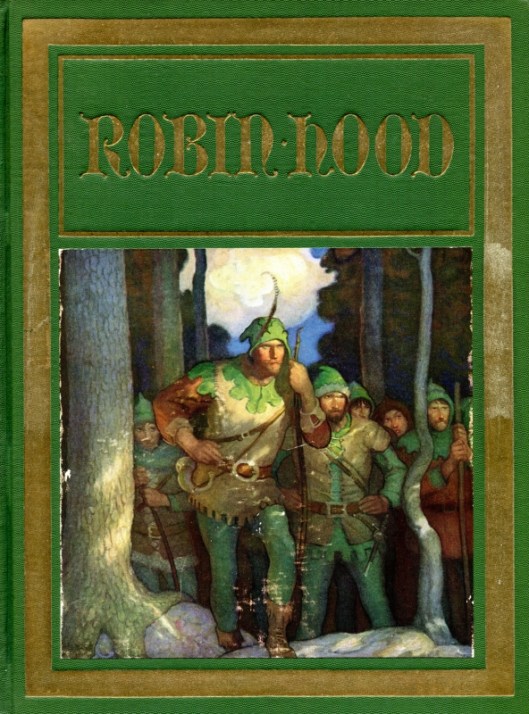
This is an illustration by N.C. Wyeth from the 1917 Robin Hood,

13robinhood1917.jpg

but there is an earlier edition of the stories of Robin Hood by Wyeth’s teacher, Howard Pyle, The Merry Adventures of Robin Hood (1883).

14pylemerryadventures.jpg

And here is a version of the aftermath of that scene on the log with Little John.

15pylerhlj.jpg

Robin has another encounter with water and a fighter when he meets a friar beside a stream. A monk is a man who enters a religious community called a monastery and spends his life working (and praying) within its walls.

16amonks.jpg

Western medieval Europe was full of monasteries, like this, at Cluny, in France.

17cluny.jpg

Friars, on the other hand, traveled within their appointed district, called a “province”. Here is a friar from an early (beginning of the 15th century) illustrated version of Geoffrey Chaucer’s Canterbury Tales.

18friar.jpg

Because friars were much less strictly governed, they gained a folk reputation as tricksters and high-livers, and the trickster shows through when Robin Hood forces a friar (he will become Robin’s friend, Friar Tuck) to carry him across a stream—and the friar dumps him before proving that he’s also an expert swordsman. Here’s an illustration from the 1883 Pyle version.

19pyletuck.jpg

As we thought about it, by combining Little John’s skill with the quarterstaff with Friar Tuck’s wits and courage and holy orders, we could see a possible inspiration for Chirrut Imwe.

20chirrut.png

If you know the old Robin Hood stories and you’re seen Rogue One, what do you think?

Thanks, as ever, for reading.

MTCIDC

CD
Bridges and Battles

04 Wednesday Jan 2017

Posted by Ollamh in Artists and Illustrators, Heroes, J.R.R. Tolkien, Literary History, Military History, Military History of Middle-earth, Narrative Methods

≈ Leave a comment

Tags

Anglo-Saxon, Arnhem, Belisarius, Boromir, bridges, Constantine I, Constantinople, David, Diocletian, Dionysius, Gros, Hal Foster, Harold Godwinson, Horace Vernet, Horatius, Horatius at the Bridge, Justinian, Livy, Marcus Aurelius, Maxentius, Maximianus, Milvian Bridge, Napoleon, Ostrogoths, Pass of Roncevalles, Pegasus Bridge, Pliny the Elder, Pons Sublicius, Prince Valiant, Ravenna, Remagen, River Adige, River Derwent, Roland, Salarian Bridge, San Vitale, Sherlock Holmes, Stamford Bridge, Tacitus, The Council of Elrond, The Lays of Ancient Rome, The Lord of the Rings, The Oath of the Horatii, Thomas Babington Macaulay, Tiber, Tolkien, vikings

Welcome, dear readers, to our first posting for 2017—and a Happy New Year.

In our last, we discussed water-crossings in The Lord of the Rings, but said that our next would be on a more specialized subject, something we thought to call “Battle Bridges”.

This was inspired by this quotation (it’s Boromir speaking, at the Council of Elrond):

“I was in the company that held the bridge, until it was cast down behind us. For only four were saved by swimming: my brother and myself and two others.” (The Fellowship of the Ring, Book 2, Chapter 2, “The Council of Elrond”)

Broken bridges and swimming soldiers made us think of a story told by a number of early historians, including Dionysius of Halicarnassus, Livy, Pliny the Elder, and Tacitus, in which three Roman officers stand as a rearguard at the first bridge over the river Tiber, the Pons Sublicius, and, when two are wounded, the third, Horatius, sends them off, telling them to have the bridge destroyed so that the enemy can’t pursue the defeated Roman army into Rome. When the bridge is gone, Horatius, in his armor and with his arms, leaps into the river and swims to the Roman shore to great acclaim.

1horatiusatbridge.jpg

In the nineteenth century, this story was turned into a poem (a very long ballad) by the historian Thomas Babington, Lord Macaulay (1800-1859),

2macaulay.jpg

entitled “Horatius at the Bridge” (from his 1842 collection, The Lays of Ancient Rome).

3lays1849ed.jpeg

Once upon a time, it was a standard assignment for schoolboys to memorize its approximately 600 lines and we wonder if this might once have been Tolkien’s task, which is why we have Boromir’s remark.

Once we embarked upon the subject of fights at bridges, we found, beginning with the late classical world, that there were lots more out there (our short mental list roared through time to take us as far as the seizing of Pegasus Bridge in the Normandy invasion and the subsequent bridges at Arnhem and Remagen). There was a difficulty, however: we began with an heroic action—one man or a handful against masses. What mostly came to mind was not Horatian one-man stands. Instead, they were only depicted as parts of larger military maneuvers to gain or block a crossing and individuals disappeared. Take, for example the famous battle at the Milvian Bridge, in 312AD, which led not only towards a reconstituted Roman world based upon the east, but also towards the eventual Christianization of the Roman world.

4milvian.jpg

In the civil wars which wracked the late Roman empire, after its division post-284AD by Diocletian,

4adiocletian.jpg

4bdiocletiansdivision.jpg

Constantine, the western Augustus (senior emperor)

5Constantine-I-Face.jpg

defeated his rival, Maxentius (who was also his brother-in-law),

6maxentius.jpg

at a bridge outside Rome to become, in time, the sole emperor. Maxentius, who had control of Rome, had planned to block Constantine on the far side of the Tiber, keeping a pontoon bridge available for a retreat, if necessary, since it appears that the actual stone bridge was in the process of being dismantled.

(The Romans were extremely able at producing pontoon bridges—here’s a good illustration from the column of Marcus Aurelius—completed 193AD–)

When that retreat did become necessary, Maxentius was drowned in its midst, the bridge collapsed, and his troops who remained either died on the field or surrendered to Constantine.

4milvian.jpg

In time, Constantine, who believed that the empire’s main focus should actually be on the east, moved the capital to an old Greek colony, called Byzantium, but which he renamed “New Rome”—although it seems that everyone else called it Constantinople.

7constantinople.jpg

This would be the capital of the later Byzantine Empire, which, under the emperor Justinian,

8justinian.jpg

(He’s the one with the bowl of communion bread—the only labeled figure, Maximianus, was the bishop of Ravenna, where this mosaic stands in the church of San Vitale.)

would attempt to reconquer the portions of the old western empire which had fallen into the hands of Germanic invaders.

9germanicinvasions.jpg

Under Justinian’s general, Belisarius,

10belisarius.jpg

(this may or may not be a portrait—it’s a scholarly guess),

the Byzantines struggled for control of Rome against the Ostrogoths.

11ostrogoth.jpg

This struggle included a fight outside of Rome for control of the Salarian Bridge (537AD),

12salarianbridge.jpg

a fight which Belisarius lost, although, for a short time, Justinian’s world was enlarged, if not to the full size of the old empire, at least to include much of the western Mediterranean—quite an accomplishment for the later world of antiquity.

12ajustempire.jpg

And, speaking of late antiquity, if you regularly read our blog, you know that we have a special affection for the work of Hal Foster, who created the late-antique, early-medieval world of Prince Valiant. The combination of bridge and heroic fighting reminded us of one of our favorite illustrations and so we have to include this scene (published 19 June, 1938), in which Val faces a band of Viking raiders.

13valatbridge.jpg

This image, of course, brings us back to Horatius, the single warrior against the mass. As we’ve said, in the intervening centuries there are battles at bridges, but only as one element in larger campaigns and the heroic individual disappears into the ranks. We could think of one, somewhat later, figure, however. He appears, unfortunately nameless, in the other battle of the short reign of Harold Godwinson, at Stamford Bridge, 25 September, 1066. The Anglo-Saxon army raced north from London to oppose a Viking invasion, and defeated the Vikings on the near side of the bridge over the River Derwent, but, to complete their victory, the Anglo-Saxons needed to destroy the surviving force on the far side. in the way stood, in the middle of Stamford Bridge, a single Viking warrior, blocking their advance.

14stamfordbridge.jpg

The Anglo-Saxon Chronicle says that he killed 40 of the enemy before an Anglo-Saxon floated underneath the bridge and stabbed him from beneath with his spear, but, well, as much as we believe in heroic tales…

His stand, however, brings us back to Boromir and his final battle, in which he faces two waves of orcs before he is finally mortally wounded.

15boromirdeath.jpg

No bridge, but this still follows the theme of the brave man standing alone, with no possible help nearby.

16boromirhorn.jpg

(And, of course, Boromir and his horn are meant to remind any good reader of heroic material—particularly medieval—of Roland at the Pass of Roncevalles…)

17roland.jpg

We would leave this theme here, back where it began, with Boromir, except we can’t resist (we’re afraid, when it comes to adventure and heroics, that we appear to have little or no willpower at all!) one final image and the idea behind it. There is no end of discussion about Napoleon, which, we’re sure, would please him no end. For us, however, there is a side of him which is endlessly interesting and that is as a Romantic Figure—a view of himself which he worked very hard, at least early in his life, to promote. The late 18th-century very much looked back to the classical world and, we believe, it did so in part because it loved the dramatic gestures it saw as part of that world. We only have to point out paintings like David’s “The Oath of the Horatii”(those Horatii being the direct ancestor of the one in our post), with its operatic ensemble look, to illustrate this. (To us, this looks so much like the set-up for a stirring quartet, right out of Bellini or Meyerbeer.)

18horatii.jpg

So, during Bonaparte’s brilliant 1796-7 campaign in Italy, there was clearly a classical/Romantic moment. When the French were stalled by their Austrian opponents in crossing the River Adige, Napoleon, to encourage his troops, seized a regimental color and raced alone to the bridge, as Gros (who was actually at the battle) depicted him in his 1797 painting.

19grosarcola.jpg

Vernet, in his 1826 version, continues the heroic theme, but changes the focus a bit—Napoleon now has followers. (And you know, from its dash—and that’s Horace Vernet in general—who, according to Sherlock Holmes, may be a distant relation–that this is a favorite painting of ours.)

20vernetarcola.jpg

In fact, although Bonaparte did seize a color, he never made it to the bridge, either alone or in a crowd. His illustrators, however, influenced, no doubt, by the potential drama—and perhaps by a faint memory of Horatius?—depict a scene which should have happened, in their view of Napoleon as a Romantic Figure. What is most striking, however, is that, unlike Horatius—or Boromir—Bonaparte is not defending a bridge—he is attacking and his heroism comes from that gesture. This certainly fits in with Revolutionary ideology—France had been at war with much of the world since 1792—but it occurs to us that it may also suggest a shift in the approach to heroism. Horatius, given a bridge, is heroic, but passive. Give a bridge to Bonaparte and stand back (at least in iconography)! Is this the image of heroes in the Romantic world which was just coming into being?

But, as ever, we leave this to you, dear readers, to ponder, even as we thank you, as always, for reading.

MTCIDC

CD

One More River (2)

28 Wednesday Dec 2016

Posted by Ollamh in Heroes, Imaginary History, J.R.R. Tolkien, Literary History, Maps, Military History of Middle-earth, Narrative Methods

≈ 2 Comments

Tags

Amon Hen, Anduin, Bilbo, Blondin, Bombur, Boromir, Brandywine, bridges, Bruinen, Bucklebury Ferry, Celebrant, Dwarves, Elrond, Elves, Enchanted river, Esgaroth, Fangorn, ferry, flight to the ford, Frodo, Gandalf, Gondorians, Hoarwell, Hobbiton, Isen, Khazad-dum, Niagara Falls, Nimrodel, Old Forest, Old Man Willow, Orcs, Prince Valiant, Rivendell, Rivers, Rohirrim, Sam, Tharbad, The Hobbit, The Long Lake, The Lord of the Rings, Theodred, Tolkien, Tom Bombadil, Weathertop, Withywindle, Wraiths

Welcome, dear readers, as always. In our last post, we had turned our attention to water-crossings in The Hobbit. In this, we want to continue our study with The Lord of the Rings.

We were first prompted to look at such crossings by something Boromir said, almost in passing:

“Four hundred leagues I reckoned it, and it took me many months, for I lost my horse at Tharbad, at the fording of the Greyflood.” (The Fellowship of the Ring, Book 2, Chapter 8, “Farewell to Lorien”)

Tharbad had once been famous for its elaborate defenses and bridge, but, symbolic of so much of Middle-earth at the end of the Third Age, it had fallen into decay and was abandoned, the water of the Gwathlo, the Greyflood, spreading wide—an easy place to lose a horse—or a man.

And perhaps Boromir’s loss is also symbolic of the higher level of stress involved in crossing water in the later work. The most Bilbo and the dwarves had to deal with was a water of forgetfulness, whose effect wore off in a relatively short time. There is much worse to come.

The first crossing (after The Water in Hobbiton)

1hobbiton.jpg

has danger attached, but it’s a danger which pursues the hobbits at the Bucklebury ferry. Here, pursued by one—or more—wraiths,

2wraithatferry.jpg

they cross over by what is a kind of do-it-yourself ferry, where the ferry runs on a cable, which keeps it available and on course, while the passengers pole to add propulsion.

3cableferry.jpg

4ferry.jpg

There is a puzzle at their next crossing—because the hobbits don’t appear to have crossed at all! This is the River Withywindle, on whose bank the hobbits meet up with Old Man Willow (not as in the film, where he’s been pulled violently out of context and replanted, for no good reason we can see, in Fangorn’s forest).

5oldmanwillow.jpg

Until we began to study water-crossings, we had never really thought about what happens then. The hobbits come to the river, having become lost in the Old Forest. Pippin and Merry are swallowed by the tree. Tom Bombadil comes to the rescue: but how do they cross the Withywindle? We just couldn’t remember! So we went back to the text, saw Tom lead the four hobbits through the forest, where they almost lose him, then they hear: “Hop along, my little friends, up the Withywindle!” (The Fellowship of the Ring, Book 1, Chapter 6, “The Old Forest”)

And so they never actually ford across or are ferried across. Instead, they walk up its course to Tom’s house, which seems to be near the source.

6withywindlemap.jpg

The next crossing is many miles away—over the Barrow Downs, through Bree, past Weathertop, to the Last Bridge, over the Hoarwell. Although Aragorn is anxious that the Wraiths will have gotten there before them, they pass safely and keep moving southwards, towards Rivendell, until, near the ford over the Bruinen, the Nazgul catch up with them at last.

7bruinen.jpg

There is a bridge, of course, at Khazad-Dum, although, as far as we can tell, there is no water even in the depths far below it.

8khazaddum.jpg

Escaping from Moria, the Fellowship reaches two streams in a row and, as far as we know, none of the prominent illustrators has given us pictures, either of the tributary Nimrodel or the main river, the Celebrant, so we provide a rather generic picture to offer a rather general idea.

9nimrodel.jpg

10nimrodel.jpg

The Nimrodel is shallow enough to wade across, but the Celebrant is wider and deeper and the Elves provide a rather iffy method of transport: a single line of rope to balance on, making us imagine something like the famous Blondin crossing Niagara Falls in 1859—well, a little!

11blondin.jpg

The next crossing is almost inadvertent, or, at least happens sooner than expected: the Fellowship has been paddling down the Anduin, but, putting in at Amon Hen, things go disastrously wrong. Boromir tries to take the Ring, the orcs appear, Boromir is mortally wounded, and Merry and Pippin are carried off (in our edition—the 50th Anniversary, One Volume Edition—this takes all of 12 pages—quite a narrative feat for JRRT!), before Frodo (and Sam) cross the river to the east and story begins its major split.

12samandfrodo.jpg

[We might insert here, although, in The Lord of the Rings, it’s only a footnote that at the crossing of the Isen, during this time, Theodred, son of Theoden, is killed.]

12aTTTIsenFord2.jpg

After this, there is only one more crossing of any significance, but it’s not by the main characters: rather, it’s by the orcs, who use boats to assault and capture west Osgiliath, which is the subject of one of our earlier postings.

13orcsosgiliath.png

To which we would add the return crossing, days later, of the Forlorn Hope of Gondor and Rohan, on their way to challenge Sauron (and to distract him from Frodo and Sam).

14marchonmordor.jpg

To finish up this posting, we provide a chart below (clearly now one of a series, after the earlier one on doorways and passages) of the water-crossings found in the two books.

Crossing Characters Outcome Source
Tharbad Boromir Loses horse The Lord of the Rings
The Water Bilbo Joins Dwarves The Hobbit
 An unnamed river Bilbo, Dwarves, and Gandalf Lose baggage The Hobbit
Rivendell Bilbo Dwarves, and Gandalf Helped by Elves The Hobbit
Anduin Bilbo, Dwarves, and Gandalf Transported by eagles The Hobbit
Enchanted River Bilbo and Dwarves Bombur drugged The Hobbit
Underground river Bilbo and Dwarves Using barrels, Bilbo and Dwarves escape The Hobbit
The Long Lake Bilbo and Dwarves Gain help from Esgaroth The Hobbit
The Brandywine (Bucklebury Ferry) Frodo, Sam, Merry, Pippin Escape Wraith The Lord of the Rings
Withywindle Frodo, Sam, Merry, Pippin Reach Tom Bombadil’s house (never actually cross river) The Lord of the Rings
The Bruinen Frodo and Wraiths Elrond causes river surge, Nazgul driven off The Lord of the Rings
Khazad-Dum Balrog and Gandalf Gandalf defeats Balrog, but falls down with him The Lord of the Rings
Nimrodel/

Celebrant

Fellowship and Elves Fellowship brought into Lorien The Lord of the Rings
Anduin Frodo and Sam Set out on journey to the east The Lord of the Rings
Isen Rohirrim and Orcs Rohirrim driven back, Theodred, son of Theoden, killed The Lord of the Rings
Anduin Gondorians vs Orcs Gondorians driven back from West Ogsiliath The Lord of the Rings


This is our last posting for the year 2016 and we close the year with thanks to all who follow our blog or simply stop in for a visit. In 2017, we plan to continue our Tolkien travels, sometimes employing the Sortes Tolkienses, as well as to use Tolkien’s world to visit others, beginning with a posting on “Famous Bridge Battles”, from Boromir and Faramir jumping off one to escape the orcs, to Napoleon at Arcola, and beyond. Here’s a taste…

15princeval.jpg

We also plan to explore other worlds and perhaps to add a review section for books and films we think you might enjoy.

In the meantime, thanks, as ever, for reading. Happy New Year!

MTCIDC

CD

ps

What sad and surprising news! Princess Leia is no more– but no– Princess Leia will always be with us, just like the Force.

_87060782_starwarsap3

One More River (1)

21 Wednesday Dec 2016

Posted by Ollamh in Artists and Illustrators, Imaginary History, J.R.R. Tolkien, Maps, Narrative Methods

≈ Leave a comment

Tags

Alan Lee, Beorn, Bilbo, bog people, Bombur, Boromir, bridges, causeways, drowsiness, Dwarves, Esgaroth, Great East Road, Greyflood, Gwathlo, Hobbiton-across-the-water, Lethe, Middle-earth, Mirkwood, Rammas Echor, Rivendell, river-crossing puzzle, Roman Roads, Tharbad, The Atlas of Middle-Earth, The Hobbit, The Lord of the Rings, Tolkien, Tollund Man

Welcome, dear readers. Here we are again in Middle-earth, as so often we’ve been over the last couple of years, but, as we said in our last post, one reason why we revere JRRT and his work is that it’s so rich—it seems like one can open it to any page and there is something new to explore. In this post, we began with an odd little detail, just something said almost in passing by Boromir:

“A long and wearisome journey. Four hundred leagues I reckoned it, and it took me many months, for I lost my horse at Tharbad, at the fording of the Greyflood.” (The Fellowship of the Ring, Book 2, Chapter VIII, “Farewell to Lorien”)

Tharbad, we knew from the Companion, was once a river port on the Gwathlo, Boromir’s “Greyflood”. Here’s a description from the extremely helpful introductory section of the Companion called “The Maps of The Lord of the Rings”:

“…with long labour a port capable of receiving seagoing vessels had been made at Tharbad, and a fort raised there on great earthworks on both sides of the river, to guard the once famed Bridge of Tharbad” (lxv)

This “once-famed” bridge was clearly long-gone by the time, at the end of the Third Age, when Boromir reached the river it had once offered passage over, for all of the work done once upon a time, including long causeways—raised approach roads above boggy ground—here’s a Roman example from northern Spain with causeway and bridge—

1bridgewithcauseway.jpg

“But in the days of The Lord of the Rings the region had become ruinous and lapsed into its primitive state: a slow wide river running through a network of swamps, pools and eyots [little islands]: the haunt of hosts of swans and other water-birds.” (from a letter of 30 June, 1969, to Paul Bibire, quoted in Companion, 650)

JRRT appears to have left no description of the bridge itself, but we imagine it as looking rather like a Roman one (as JRRT could have seen pictures of surviving ones like this in Portugal

2ponte.jpg

or this in Rome.

3ponteadriano.JPG

Unlike much of the rest of the Roman world, no Roman bridge survives in Britain—only the remains of piers, ramps, and approaches–so we’re assuming that, if he were at all influenced by Roman architecture—and that’s an absolute assumption on our part, we admit, but certainly things like Hadrian’s Wall seem to have been an inspiration—see our earlier posting on the Rammas Echor—it was through photographs.)

This mention, however, sparked us to think about the crossing of bodies of water, both in The Hobbit and in The Lord of the Rings, just how many there were, and the kinds of events which happened at them.

Bilbo’s Bag End, of course, is just down the road from The Water and its mill, as depicted by Tolkien himself.

4imghillandmill.jpg

When he sets off with the dwarves, however, there is little incident involved in running water at first. The party has to cross a river, “swollen with the rains, [which] came rushing down from the hills and mountains in the north.” (The Hobbit, Chapter 2, “Roast Mutton”) They cross this by “an ancient stone bridge” (perhaps like this one at Carrbridge, in Scotland?)

5imagecarbridge.jpeg

but, somehow, they can’t escape the river, as, during the night, “…one of the ponies took fright at nothing and bolted. He got into the river before they could catch him; and before they could get him out again, Fili and Kili were nearly drowned, and all the baggage that he carried was washed away off him.” (The Hobbit, Chapter 2, “Roast Mutton”). So far, when it comes to running water, for all that there was a bridge, it seems difficult for the dwarves to stay out of it.

Their second adventure with water is more successful, when they cross the bridge at Rivendell, which we have discussed in a posting on Rivendell architecture, so, for this one, we’ll simply add Tolkien’s illustration of Rivendell, plus a real favorite, Alan Lee’s of the bridge.

6imagerivendelljrrt.jpg

7imagerivendellbridgealanlee.jpg

Beyond Rivendell, it’s into the mountains (literally, when they are pulled into the world of the goblins by a secret door) and, when they come out, their next water barrier is surmounted for them when they’re rescued by eagles and flown to the other side of the northern Anduin.

8eaglerescue.jpg

If they had simply taken the Great East Road (as we presume Bilbo and Gandalf did on the way back), they would have found a ford where the road runs eastward into the Old Forest Road. (see Karen Wynn Fonstad, The Atlas of Middle-earth, 80-81, for a larger view).

9mistymtnsmap.gif

The real problem with a crossing comes at the next water course. They had plunged into Mirkwood

9ajrrtmirkwood.png

and come up across a stream (in fact, the Enchanted River, although they didn’t know it). During their leave-taking at Beorn’s, he had warned them about it:

“There is one stream there, I know, black and strong which crosses the path. That you should neither drink of, nor bathe in; for I have heard that it carries enchantment and a great drowsiness and forgetfulness.” (The Hobbit, Chapter 7, “Queer Lodgings”)

As people with a background in Greek and Roman mythology, we immediately thought of Lethe, the name of which comes from a Greek verb which means “to escape notice/be hidden—therefore, to forget”.

It was one of the rivers of the Underworld and, if you drank from it, you lost all memory of your past. In that part of classical religion which believed in reincarnation, it was one step on the way to returning to earth.

10imagelethe.jpg

Here in Mirkwood, however, the point is to avoid drinking, or even touching, it. The difficulty, of course, is that, if you can’t touch it, how do you get across it, especially when:

“There had been a bridge of wood across, but it had rotted and fallen leaving only the broken posts near the bank.” (The Hobbit, Chapter 8, “Flies and Spiders”)

Providentially, there is a boat drawn up on the opposite shore and we’ve always been reminded here of what is called a “river-crossing puzzle”. There are many variations, but the earliest currently known dates from the 9th century AD, and is found in Propositiones ad Acuendos Juvenes (maybe something like “Puzzles for Sharpening [the Minds of] Young Folk”—which makes it sound rather Victorian). We provide links here for: River crossing puzzle, Fox, goose and bag of beans puzzle, and Propositiones ad Acuendos Juvenes, for anyone interested to learn more.

11imagefoxgoose.jpg

In the case of the dwarves, the math goes awry when the largest of them, Bombur, accidentally falls into the water and becomes comatose.

12imageleebombur.jpg

(And this Alan Lee drawing oddly reminds us of “bog people”—that is, the bodies of people, the earliest being from 8000BC, a majority being Iron Age, found in peat bogs throughout northern Europe. Because of the conditions in bogs, some have been amazingly preserved, such as “Tollund Man”—here

13imagetollund.jpg

14imagetollund.jpg)

He eventually awakes, long before the party’s next river, which acts as a moat to the caves of the Elf king of Mirkwood.

15imagethranduilsgate.jpg

This has a bridge, across which, at various times, Thorin, the dwarves, and Bilbo (wearing the Ring) go.

It is the next bit of water, however, which bears the greater interest. This is the underground stream which comes up in the cave where the elves store empty wine barrels to return to the men of Esgaroth. And this, the dwarves and Bilbo don’t cross, but ride down, packed in (or perched on) those empty barrels.

16imagebarrelriding.jpg

This leads us to the last body of water: the Long Lake, on which Esgaroth stands. From here, the people of Lake Town convey them back north to a landing place from which they will start out for the Lonely Mountain and the climax of their quest.17imageesgaroth.jpg

18lonelymountain.jpg

And here we’ll end our quest for water-crossings for this posting, to be continued with one on The Lord of the Rings in our next—along with all of those extras which we can’t help adding, from medieval puzzles to peat bog people.

Thanks, as always, for reading!

MTCIDC

CD
ps

If you celebrate this time of year for any reason, may your celebration be a happy one! We mostly dream of toys…

19imagetoytownsoldiers.JPG

Ugluk Was Here

14 Wednesday Dec 2016

Posted by Ollamh in Artists and Illustrators, J.R.R. Tolkien, Language, Literary History, Military History

≈ Leave a comment

Tags

Alan Lee, Alfred Waud, American Civil War, Angus McBride, Argonath, Belgium, Black Speech, cemeteries, Confederate, Egyptian monuments, First Virginia Cavalry, graffiti, Great War, Greek mercenaries, Greeks, Hildebrandt, John Howe, Journey to the Cross-roads, Kilroy, Kilroy was here, Literacy, Napoleon I, Orcs, Pompeii, quarry at Naours, Sauron, The Lord of the Rings, Tolkien, Union, Virginia, World War I, World War II

Welcome, dear readers, as always.

One of our reasons for holding Tolkien’s work in such high esteem is that it’s so rich: practicing Sortes Tolkienses (see our earlier posting on this), we find innumerable subjects to write about.

In this posting, our eye was caught by this:

“The brief glow feel upon a huge sitting figure, still and solemn as the great stone kings of Argonath. The years had gnawed it, and violent hands had maimed it. Its head was gone, and in its place was set in mockery a round rough-hewn stone, rudely painted by savage hands in the likeness of a grinning face with one large red eye in the midst of its forehead. Upon its knees and mighty chair, and all about the pedestal, were idle scrawls mixed with the foul symbols that the maggot-folk of Mordor used.” (The Two Towers, Book 4, Chapter 7, “Journey to the Cross-roads”)

crossroads.jpg

We had the feeling that we’d seen a statue something like this before—and we were curious whether JRRT had, too, and with a little mental rooting-around, we found this:

abusimbelengraving.jpg

It’s Egyptian (13th century BC), and has a head, but, not only is it monumental, and seated, but it has lots of “idle scrawls” on the bases and lower parts of its legs.

abusimbelgraffiti.jpg

What’s particularly interesting to us is that one piece of the graffiti is actually from some Greek mercenaries c. 600bc

hoplite1.jpg

main-qimg-9eddef3641e25892afa016888b808aa5-c.jpeg

As long as there has been a certain level of literacy, of course, there has been graffiti. The walls of ancient Pompeii (sealed in by the eruption of 79AD) are loaded with everything from election posters to the admiration of gladiators to personal insults.

gladiatorialstats.JPG

There’s so much, in fact, that this is our favorite:

antigraffiti.jpg

A translation of this might be: “I wonder/am in awe, wall, that, you, who are holding up so much boring writing, haven’t fallen down!”

Soldiers, in particular, seem prone to leaving messages behind—beginning with those 7th-c Greeks, but continuing throughout the centuries. When Napoleon I led an expedition to Egypt in 1798,

napegypt.jpg

his soldiers left their mark in more ways than one upon the landscape.

frenchinegyptgraf2.jpg

Recently discovered in a house in Virginia was a large collection of inscriptions from the soldiers, Union and Confederate, of the American Civil War.

Graffiti-House.jpg Graffiti House Wall and Chair.jpg unionsoldier.jpgAlfred R. Waudfirstva.jpg

(An irresistible footnote: the picture you see of the Confederate cavalry—actually the 1st Virginia—was made by one of the greatest Civil War artists, Alfred Waud (pronounced “woad”). He had been briefly detained by this unit and took the opportunity to sketch them from life. His sketch—with his notes—then went to his publisher in New York, who had a group of engravers ready to turn his sketch into a finished—and publishable—picture.1st-virginia-cavalry-halted-based-on-sketch-by-waud-harpers-sept-27-1862.jpg

For more on the process by which a sketch becomes a magazine illustration, see this link.)

Another recent discovery was a mass of inscriptions (something like 2000 of them) in an abandoned quarry at Naours, in northern France.

quarrynaours.jpg

6XYh68h5xHSK2-3026250-In_this_image_made_on_Feb_20_2015_showing_names_engraved_on_the_-a-32_1428320205858.jpg

These date from the Great War (World War I) and, in a sad way, parallel the epitaphs on the seemingly-endless graves in the seemingly endless military cemeteries in the same region and in southern Belgium.

greatwargraves1.jpg

Tyne Cot 3.jpg

And World War II brought us Kilroy, of the famous (and ubiquitous) “Kilroy was here”.

Engraving-of-Kilroy-on-the-WWII-Memorial-in-Washington-DC.jpg

American prankster soldiers doodled this everywhere they went.

kilroy-was-here-photo.jpg

We have written previously about literacy in Middle-earth: not uncommon among hobbits, it would seem, but much less so among the other peoples. As for orcs, be they Hildebrandt

captured_by_orcs.jpg

Mcbride,

mcba_orc.jpg

Howe

John Howe - Merry et Pippin prisonniers des orcs.jpg

Or Lee,

Alan Lee - Orcs (1).jpg

although the Black Speech was created for them and Sauron’s other creatures, we have no evidence (except for the Ring inscription) of any use of it as a writing tool by any of them.

Which leaves us free to imagine just what those “idle scrawls” might read like. How about:

LUGDUSH SMELLS LIKE MAN FLESH!

LAGDUF + MUZGASH = CLUELESS AND SHIRTLESS!

GORBAG LOVES SHELOB

SHAGRAT IS A SNAGA!

And, of course:

UGLUK WAS HERE

Thanks for reading! (And why not submit your own graffiti? We’d be glad to add them to our list!)

MTCIDC

CD

← Older posts
Newer posts →

The Doubtful Sea Series Facebook Page

The Doubtful Sea Series Facebook Page

  • Ollamh

Categories

  • Artists and Illustrators
  • Economics in Middle-earth
  • Fairy Tales and Myths
  • Films and Music
  • Games
  • Heroes
  • Imaginary History
  • J.R.R. Tolkien
  • Language
  • Literary History
  • Maps
  • Medieval Russia
  • Military History
  • Military History of Middle-earth
  • Narnia
  • Narrative Methods
  • Poetry
  • Research
  • Star Wars
  • Terra Australis
  • The Rohirrim
  • Theatre and Performance
  • Tolkien
  • Uncategorized
  • Villains
  • Writing as Collaborators
Follow doubtfulsea on WordPress.com

Across the Doubtful Sea

Recent Postings

  • Planting April 29, 2026
  • Subterranean April 22, 2026
  • Serendipity? April 15, 2026
  • Serendipity April 8, 2026
  • Verisimilitude April 1, 2026
  • Goblins and Goblin March 25, 2026
  • Crowing and Raven March 18, 2026
  • The Damage of Dragons March 11, 2026
  • Encouragement March 4, 2026

Blog Statistics

  • 112,338 Views

Posting Archive

  • April 2026 (5)
  • March 2026 (4)
  • February 2026 (4)
  • January 2026 (4)
  • December 2025 (5)
  • November 2025 (4)
  • October 2025 (5)
  • September 2025 (4)
  • August 2025 (4)
  • July 2025 (5)
  • June 2025 (4)
  • May 2025 (4)
  • April 2025 (5)
  • March 2025 (4)
  • February 2025 (4)
  • January 2025 (5)
  • December 2024 (4)
  • November 2024 (4)
  • October 2024 (5)
  • September 2024 (4)
  • August 2024 (4)
  • July 2024 (5)
  • June 2024 (4)
  • May 2024 (5)
  • April 2024 (4)
  • March 2024 (4)
  • February 2024 (4)
  • January 2024 (5)
  • December 2023 (4)
  • November 2023 (5)
  • October 2023 (4)
  • September 2023 (4)
  • August 2023 (5)
  • July 2023 (4)
  • June 2023 (4)
  • May 2023 (5)
  • April 2023 (4)
  • March 2023 (5)
  • February 2023 (4)
  • January 2023 (4)
  • December 2022 (4)
  • November 2022 (5)
  • October 2022 (4)
  • September 2022 (4)
  • August 2022 (5)
  • July 2022 (4)
  • June 2022 (5)
  • May 2022 (4)
  • April 2022 (4)
  • March 2022 (5)
  • February 2022 (4)
  • January 2022 (4)
  • December 2021 (5)
  • November 2021 (4)
  • October 2021 (4)
  • September 2021 (5)
  • August 2021 (4)
  • July 2021 (4)
  • June 2021 (5)
  • May 2021 (4)
  • April 2021 (4)
  • March 2021 (5)
  • February 2021 (4)
  • January 2021 (4)
  • December 2020 (5)
  • November 2020 (4)
  • October 2020 (4)
  • September 2020 (5)
  • August 2020 (4)
  • July 2020 (5)
  • June 2020 (4)
  • May 2020 (4)
  • April 2020 (5)
  • March 2020 (4)
  • February 2020 (4)
  • January 2020 (6)
  • December 2019 (4)
  • November 2019 (4)
  • October 2019 (5)
  • September 2019 (4)
  • August 2019 (4)
  • July 2019 (5)
  • June 2019 (4)
  • May 2019 (5)
  • April 2019 (4)
  • March 2019 (4)
  • February 2019 (4)
  • January 2019 (5)
  • December 2018 (4)
  • November 2018 (4)
  • October 2018 (5)
  • September 2018 (4)
  • August 2018 (5)
  • July 2018 (4)
  • June 2018 (4)
  • May 2018 (5)
  • April 2018 (4)
  • March 2018 (4)
  • February 2018 (4)
  • January 2018 (5)
  • December 2017 (4)
  • November 2017 (4)
  • October 2017 (4)
  • September 2017 (4)
  • August 2017 (5)
  • July 2017 (4)
  • June 2017 (4)
  • May 2017 (5)
  • April 2017 (4)
  • March 2017 (5)
  • February 2017 (4)
  • January 2017 (4)
  • December 2016 (4)
  • November 2016 (5)
  • October 2016 (6)
  • September 2016 (5)
  • August 2016 (5)
  • July 2016 (5)
  • June 2016 (5)
  • May 2016 (4)
  • April 2016 (4)
  • March 2016 (5)
  • February 2016 (4)
  • January 2016 (4)
  • December 2015 (5)
  • November 2015 (5)
  • October 2015 (4)
  • September 2015 (5)
  • August 2015 (4)
  • July 2015 (5)
  • June 2015 (5)
  • May 2015 (4)
  • April 2015 (3)
  • March 2015 (4)
  • February 2015 (4)
  • January 2015 (4)
  • December 2014 (5)
  • November 2014 (4)
  • October 2014 (6)
  • September 2014 (1)

Blog at WordPress.com.

  • Subscribe Subscribed
    • doubtfulsea
    • Join 75 other subscribers
    • Already have a WordPress.com account? Log in now.
    • doubtfulsea
    • Subscribe Subscribed
    • Sign up
    • Log in
    • Report this content
    • View site in Reader
    • Manage subscriptions
    • Collapse this bar

Loading Comments...