• About

doubtfulsea

~ adventure fantasy

Tag Archives: The Odyssey

What’s In a Name?

27 Wednesday Jul 2016

Posted by Ollamh in Imaginary History, J.R.R. Tolkien, Literary History, Narrative Methods

≈ Leave a comment

Tags

Adventure, akaletes, Baggins, Bilbo, Chico, cyclops, Gollum, Groucho, Marx Brothers, Odysseus, Polyphemus, Riddles in the Dark, The Hobbit, The Lord of the Rings, The Odyssey, Tolkien, trolls, xenia

Welcome, as always, dear readers.

In this posting, we are interested in the use and danger of using names in the history of the Ring, as well as looking at a possible parallel from an earlier heroic story.  How dangerous can a name be?

In Chapter 5 of The Hobbit, Bilbo makes what is almost a fatal mistake—not for himself so much as for Frodo, and not at the time, so much as some 77 years later.

Confronted by the curious Gollum deep under the Misty Mountains, Bilbo has responded to Gollum’s, “What iss he, my preciouss?” with, “I am Mr. Bilbo Baggins.”

The Riddle Game

First, of course, he hasn’t answered the question. He was asked what, not who. And, from Gollum’s viewpoint, in which seemingly all animate things are potentially at least a snack, if not a full meal (“I guess it’s a choice feast; at least a tasty morsel it’d make us, gollum!” The Hobbit, Chapter 5, “Riddles in the Dark”), “What is it?” is the more appropriate question.

Second, depending on the culture, names can have a much greater significance than simply being social identifiers. If your culture has a strong belief in magic, then your personal name is a point of vulnerability: someone who wishes to control you can use it in summoning spells. This is probably why, for example, Circe, in Book 10 of the Odyssey, when she can’t turn Odysseus into a pig, as she had already done with part of his crew, says that he’s akaletes—literally, “uncallable by name”. Although the story as we have it doesn’t say so, we can presume that, as he does in another circumstance—which we’re about to discuss—he gives the enchantress a false name and therefore escapes her magic.

This is not the first time Bilbo has slipped, however. William, the troll, has already asked, “What are yer?” And Bilbo has replied, “Bilbo Baggins, a bur-a hobbit.” (The Hobbit, Chapter 2, “Roast Mutton”)

TN-Trolls_colour_sketch

(By one of our favorite Tolkien artists, Ted Nasmith)

Again, Bilbo has given the wrong answer (reminding us of a scene in the Marx Brothers movie, Horsefeathers, 1932, where Chico, as Baravelli, the doorkeeper of a speakeasy, demands of Groucho, “Who are you?” to which Groucho replies, “I’m fine, thanks. Who are you?”).

Password Scene

He has also complicated matters by almost saying “burglar” (he’s just tried to steal William’s purse, after all, which has, in fact, asked him “’Ere, ‘oo are you?”), but, by changing it at the last moment, he’s then created a new confusion, as the trolls simultaneously ask, “A burrahobbit?” and William adds, “What’s a burrahobbit got to do with my pocket, anyways?”

(We also ask, is there a very mild joke here—“burra” could easily sound like “burrow” and, since hobbits traditionally lived in tunnels…?)

Gandalf and daylight take care of the trolls,
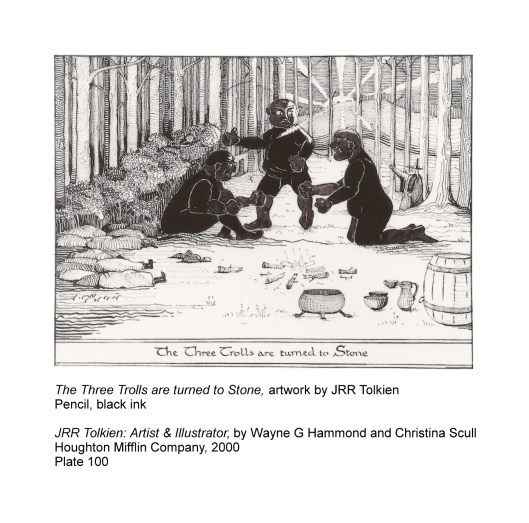
img__Art-The_Three_Trolls_are_Turned_to_Stone,_by_JRRT

but Gollum is another matter. Bilbo, caught off guard, gives him his name. This, in turn, under torture, is passed on to Sauron, now aware that the Ring has (literally) resurfaced on Middle-earth. And, somehow, the names “hobbits” and “Shire” have been added to Bilbo’s name, as Gandalf tells Frodo (The Fellowship of the Ring, Chapter 2, “The Shadow of the Past”). To find out more, Sauron sends out his search team, the Nazgul, and the danger begins…
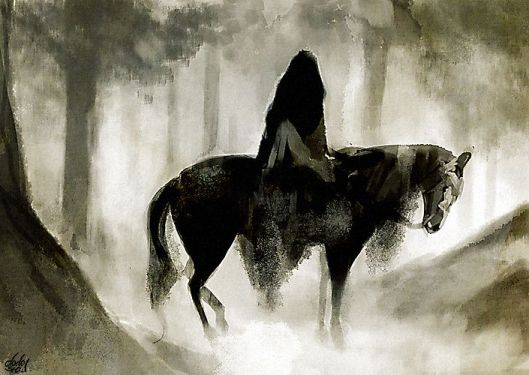
ellenkurkinazgul

(A wonderfully atmospheric watercolor by Ella Kurki)

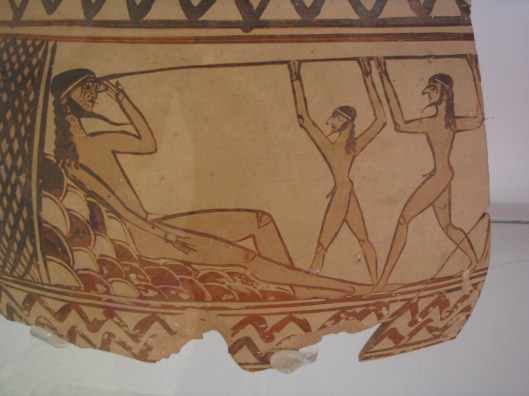
Odysseus, whom we mentioned earlier, has also been involved with a large and menacing creature, Polyphemus, the Cyclops, in Book 9 of the Odyssey.
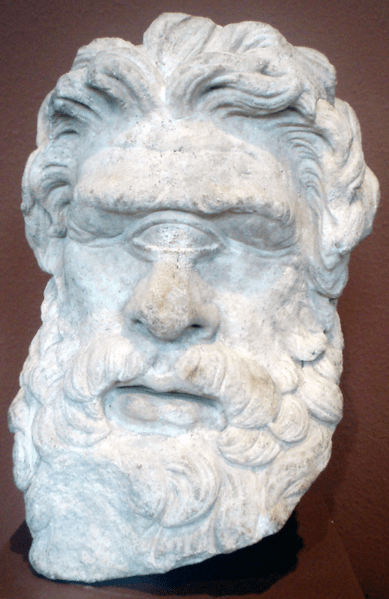
Head-of-Polyphemos-Captmondo-wikimedia-commons

Having a little more experience of danger and living in a world where magic may be anywhere, he is more wary, however, than Bilbo and, when asked his name, replies “Ootis”, which is Greek for “Nobody”.

Scholars have argued for a very long time as to why Polyphemus, who has a Greek name (“The Much-Spoken-Of”) and speaks perfectly good Greek, can be so easily taken in by such a transparent trick and there are lots of theories to explain it. Perhaps, however, the answer is simply to point to Bilbo’s trolls, whom Tolkien describes as “slow in the uptake”—that is, they are not very quick to assess a new situation. Is this the case with Polyphemus? Or, being as big as he is, and not fearing the gods (as he informs Odysseus), perhaps he ignores Odysseus’ reply as simply part of the guest ritual known as xenia, in which, it is clear from his behavior, he does not believe anyway?

Over and over again, in the Odyssey, we see this social pattern, called xenia, which means something like “guest-friendship”, enacted   In this pattern, a person comes to another’s house in need of food and shelter. There is then a ritual, in which:

  1. the potential guest appeals to the householder
  2. the householder fulfills that person’s wants
  3. in return the person tells his name and his story
  1. the host gives the person guest-gifts and sends him on his way
  2. should he—or anyone to whom he’s related—be in the guest’s territory in the future, he can claim the same hospitality from the guest—and this can be passed down through generations

In the case of Polyphemus, Odysseus and his men have come to Polyphemus’ cave and helped themselves to his food while he was absent, therefore immediately disturbing the pattern. When the Cyclops comes home, his response is to kill and eat two of Odysseus’ men, a grim parody of the custom, in which he should be feeding them, not feeding on them. The situation escalates, with more men eaten, until Odysseus formulates an escape plan which includes getting the Cyclops drunk
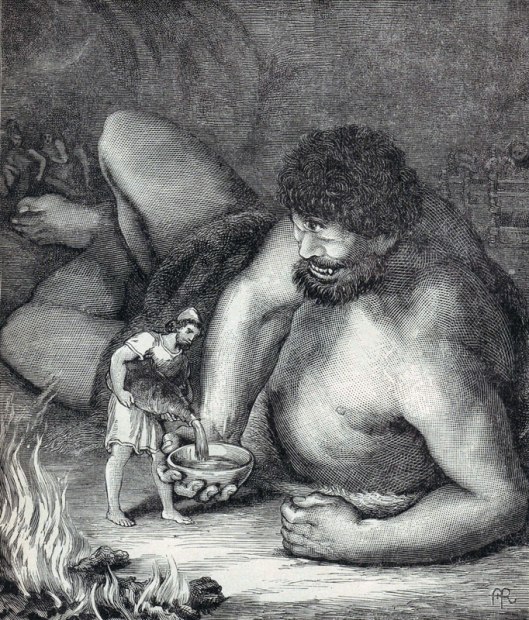
Cyclops-Homer

and putting out his eye,

cyclops2

then using a flock of sheep as an escape vehicle.

FrCyclopsEscape

In the meantime, however, Polyphemus has asked for Odysseus’ name, gotten the “Nobody” answer, and offered a guest-gift in return: the Cyclops will eat Odysseus last. The plan works, Odysseus and his surviving men escape (with the sheep), and get back to their ship, but then things go wrong again. Even blind, Polyphemus pursues them and, tossing mountain tops, almost brings them back to shore.
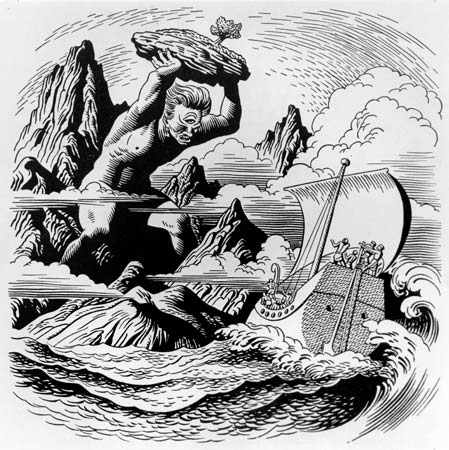
cyclops3

They do manage to row out of range, however, but then Odysseus, seeming to destroy completely his earlier “Nobody” trick, and much to his crew’s horror, shouts out to the Cyclops not only who he really is, but where he lives, as well. What’s going on here?
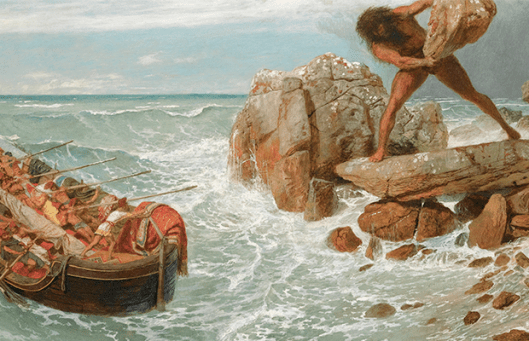
polyphemos

Bilbo has twice, inadvertently, provided others with his name, if not his address.  Although Odysseus may be more able when it comes to thinking quickly in a dangerous situation than Bilbo, he also belongs to what is called a “face culture”. This means that who you are is a public thing. You only gain credit if you do things publically and your name is attached to what you do. In Odysseus’ case, he has bested a monster and avenged the deaths of his crewmen and it is important that that monster knows who did it. Unfortunately, that monster is the son of the sea god, Poseidon, to whom he prays for revenge and, knowing Odysseus’ name and address, this is a bit more pinpointed than simply saying, “Get that guy who put out my eye, dad!”
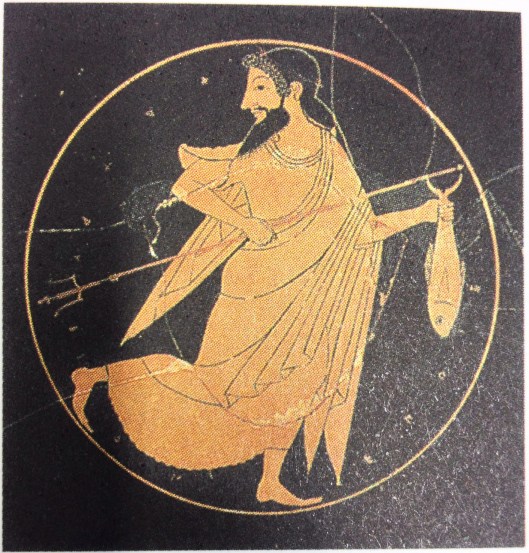
poseidon.jpg

Bilbo blundered into the territory of Gollum and, through inexperience and surprise, brought trouble, in time, to Frodo. Odysseus, having concealed his identity successfully, then exposed himself because his society and his position in that society required it. In turn, he returns home alone and on someone else’s ship, having brought trouble on himself and his crew.  In answer to our initial question, “How dangerous can a name be?”  The answer appears to be, “Very.”

Thanks, as always, for reading.

MTCIDC

CD
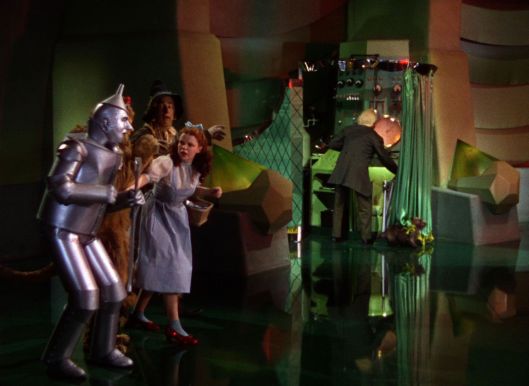
 

Paying No Attention to the Man Behind the Curtain

08 Wednesday Jun 2016

Posted by Ollamh in J.R.R. Tolkien, Literary History, Narrative Methods

≈ 1 Comment

Tags

Beowulf, Cloacina, Connacht, Grendel, Heorot, Horatius, King of Leinster, Lembas, Lord Chesterfield, Mac Da Tho, Mordor, Odysseus, Penelope, Tamora Pierce, The Lord of the Rings, The Odyssey, The Wizard of Oz, Tolkien, Ulster

Behind-the-Curtain.jpg

Dear Readers,

Welcome, as always, to our blog. In this posting, we want to consider something usually invisible, but, at the same time, for reader/listeners, always there in adventure stories.

Think for a moment about your day. And how filled it is with requirements of the body, from sleep to washing to eating to—yes, you see where we’re going.

PoplarForestPriviesRob.jpg

(And we can’t see this 18th century outhouse—sometimes called a “necessary” or a “privy” then—without thinking of part of a letter by the famous 18th-century essayist/letter-writer Lord Chesterfield (1694-1773).

Philip_Stanhope,_4th_Earl_of_Chesterfield.PNG

Who wrote a series of affectionate and very worldly-wise letters to his illegitimate son. In one of them he had the following advice—

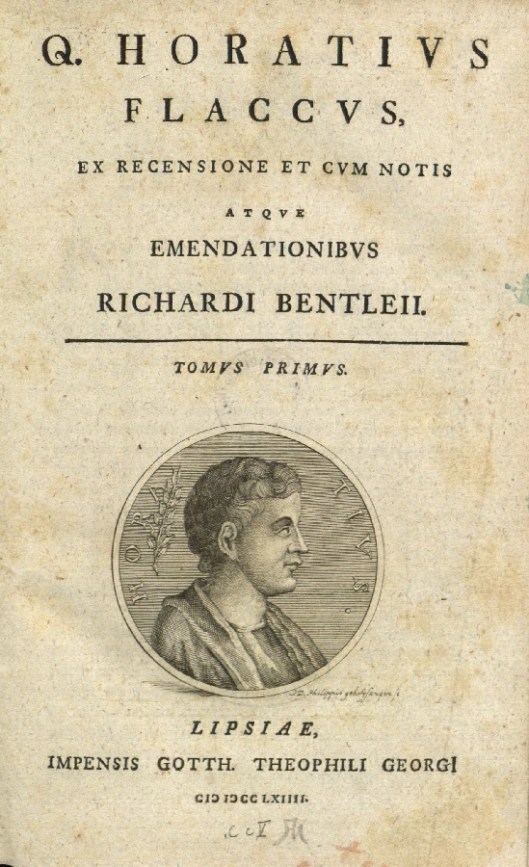
“I knew a gentleman who was so good a manager of his time that he would not even lose that small portion of it which the calls of nature obliged him to pass in the necessary-house; but gradually went through all the Latin poets in those moments. He bought, for example, a common edition of Horace, of which he tore off gradually a couple of pages, carried them with him to that necessary place, read them first, and then sent them down as a sacrifice to Cloacina: this was so much time fairly gained, and I recommend you to follow his example…. Books of science and of a grave sort must be read with continuity; but there are very many, and even very useful ones, which may be read with advantage by snatches and unconnectedly: such are all the good Latin poets, except Virgil in his Æneid, and such are most of the modern poets, in which you will find many pieces worth reading that will not take up above seven or eight minutes.”

earlyeditionofhorace.jpg

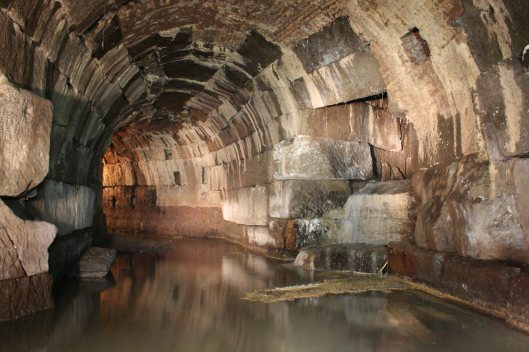
Cloacina was the patron goddess of the ancient main drain of Rome. Here’s an image of her shrine—

Coins-venus-cloacina.jpg

and here’s her drain

Domitian-Cloaca-Forum.jpg

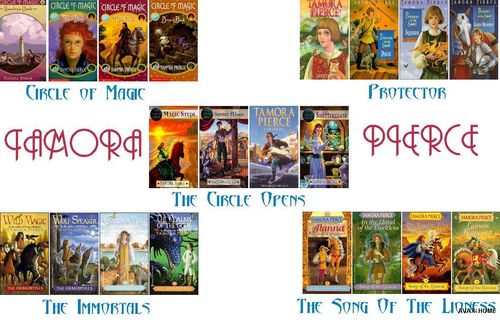
But, as we were starting to say, things of the body, ordinary things, are almost entirely ignored both in traditional adventure and in modern versions. In fact, it’s a bit of a shock to see, in some of Tamora Pierce’s YA novels (a big favorite of ours), that people actually use a latrine.

tpiercebooks.jpg

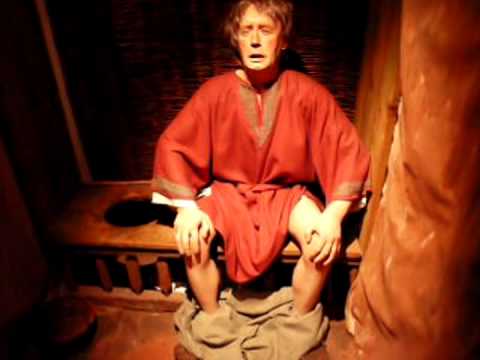
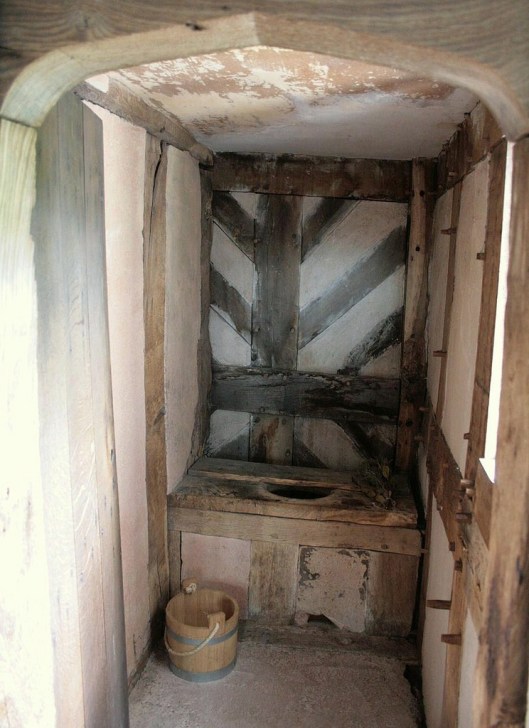
When we look at JRRT, for example, whose works we’ve often tried to set into a medieval context, we never see what one would have seen in such a context, whether behind a farmhouse

garderobe1.jpg

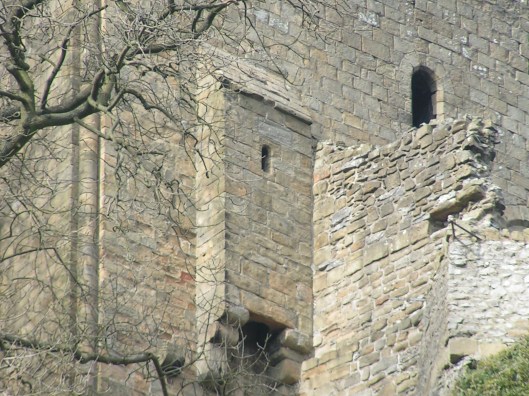
or in some place grand.

garderobe.jpgGarderobe,_Peveril_Castle,_Derbyshire.jpg

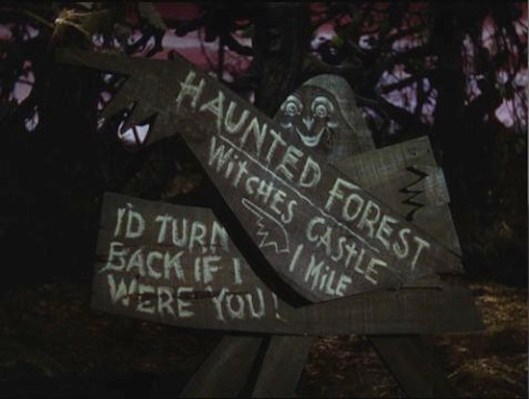
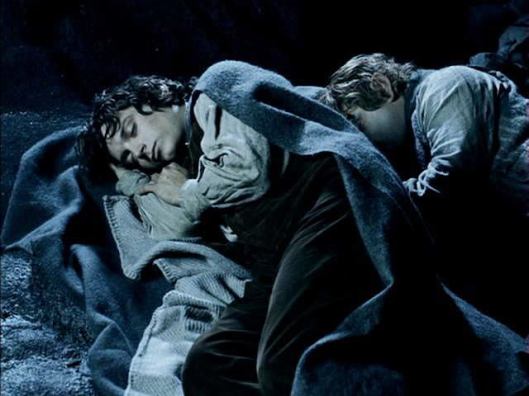
We began with the least common possibility, but this is as true for other functions—usually taken for granted, except for specific reasons. Sleep, for example, is very often employed simply as a way to show the passage of time during an adventure—and, in worlds without googlemaps, Siri, and perhaps even signposts

HauntedForest_sign.jpg

it’s a very natural and easy way to mark time and distance simultaneously.

samandfrodoasleep.jpg

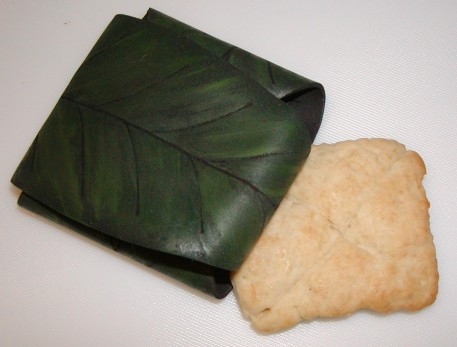
Eating can show the same—think of Sam hoarding lembas as he and Frodo trek towards Mordor—

leaf-lembas.JPG

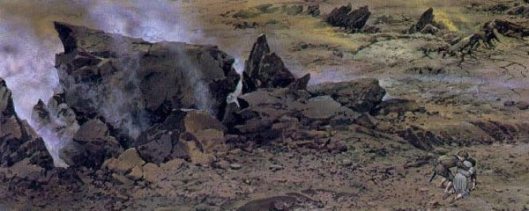
JRRT then uses it to show urgency, as well—what will they do in Mordor, when it runs out?

602_NASMITH_Across_Gorgoroth_02.jpg

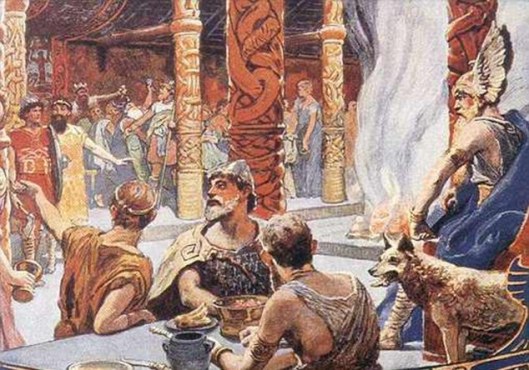
Of course, eating—in the form of feasting, in particular—can provide a major plot element.

Think of Heorot, the feasting hall, in Beowulf, for instance,

heorot.jpg

where feasts are ruined until Beowulf defeats their ruiner, Grendel.

Stories_of_beowulf_head_of_grendel.jpg

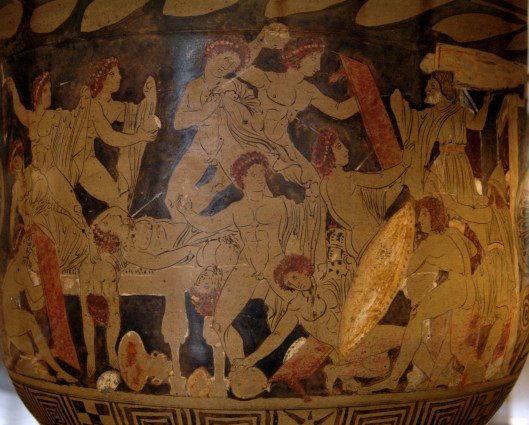
Or the endless feasting of the suitors in the Odyssey

greekfeastpaestumdivertomb.jpg

as they eat up everything which makes Odysseus the lord of his lands, besides trying to steal his wife, Penelope.

JohnWilliamWaterhouse-PenelopeandtheSuitors(1912).jpg

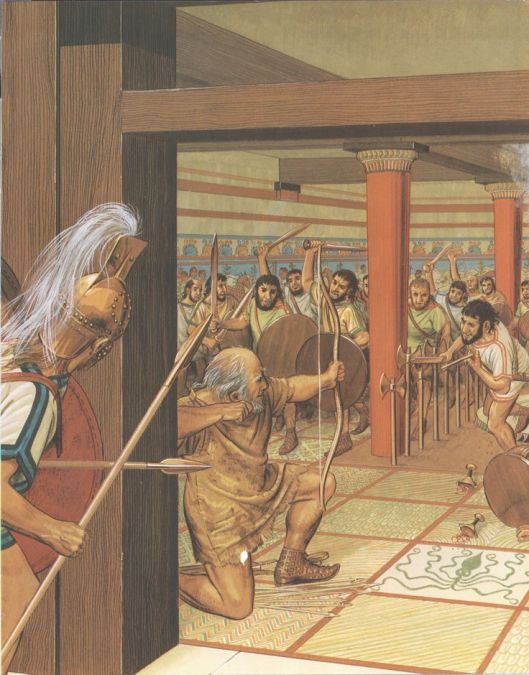
Here, eating and drinking take on a greater significance in that they are symbolic of the slow destruction of Odysseus’ household. They also provide a great setting for his reappearance and then, with the help of Athena, his massacre of the suitors in one of the wildest revenge scenes we know. It has quite a number of illustrators, from ancient

Mnesterophonia_Louvre_CA7124.jpg

to Victorian

odysseus-kills-the-suitors1.jpg

to modern—and our favorite, for the way it’s being shown from the angle of Odysseus’ patron, Athena

peterconnollysuitors.jpg

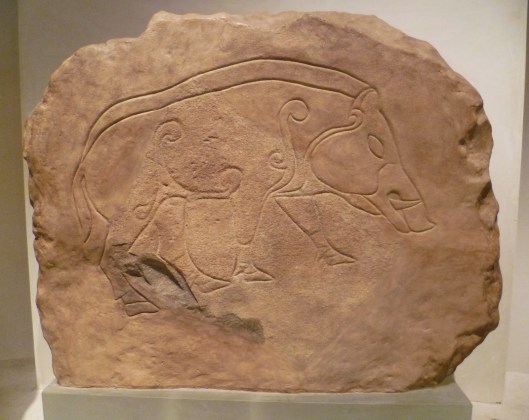
And then there is the feast, held in the rath of the king of Leinster, Mac Da Tho, which has to be one of the zaniest scela in Old Irish literature. Leinster’s most powerful neighbors, Ulster and Connacht, are at dinner, but there is a sudden difficulty over who will carve the pig.

Pictish_symbol_stone_from_Dores Wiki Commons.JPG

Like so many of the stories of the so-called “Ulster Cycle”, it is full of over-the-top violence and grim humor as both powers struggle to gain the honor of carving and therefore having the right to award the curadmir, the “hero’s portion”.

As you think about your favorite heroic or adventure story, consider the above—where can you see body care/body functions? Then, to take it a step farther: where does anyone ever sneeze? (We can think of one special one, but what can you come up with?—Hint: see Odyssey 17…)

Thanks, as ever, for reading.

MTCIDC

CD
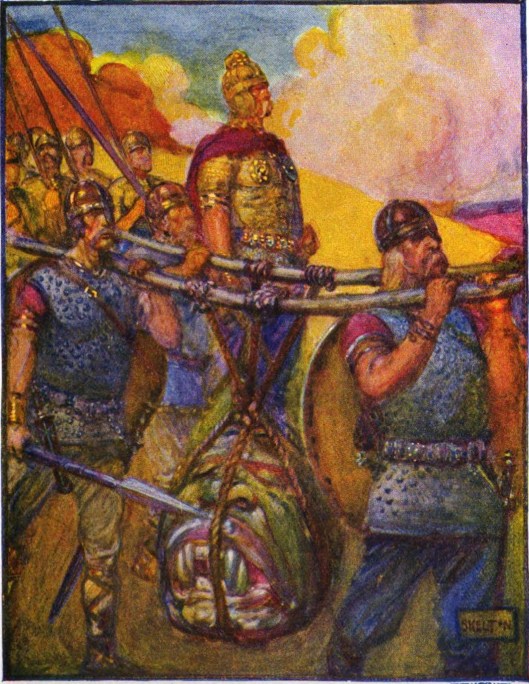
 

Fairy Tale to Bill of Sale

19 Wednesday Aug 2015

Posted by Ollamh in Economics in Middle-earth, Fairy Tales and Myths, J.R.R. Tolkien

≈ Leave a comment

Tags

Alice in Wonderland, Baggins, Bilbo, Contract, Dragon, Dwarves, Economics, Elves, Fairy Tale, Fantasy, Goblins, Hoard, Laketown, Middle-earth, Mirkwood, Odysseus, On Fairy Stories, Smaug, The Hobbit, The Odyssey, Tolkien

Dear Readers,

Welcome, as always!

Recently, when we discussed the economics of Middle-earth, Tolkien told us that he was not entirely ignorant about such matters, saying “…the situations are so devised that economic likelihood is there and could be worked out”. LT, 296

So that’s what we’ve set out to do in this posting, working out something of those economics in a modest way.

The Hobbit, as everyone knows, began as a story for his children, set in a fairytale world of elves, goblins, dwarves, and a dragon—the sorts of things which, in Tolkien’s essay “On Fairy Stories”, are derived from fantasy, which is “a natural human activity. It certainly does not destroy or even insult Reason,” but enhances it, lest fantasy become mere “Morbid Delusion” (which, later in the essay, Tolkien links with a work like Alice in Wonderland).

But something begins to happen, even early on, when Bilbo signs a contract before setting out for his adventure—an odd start for a fairytale hero who, traditionally, has to prove himself.  The story proceeds for some time in fairy tale mode, but then, when the party loses everything in Mirkwood, it’s necessary for Bilbo and Company to resupply and here the story moves seriously from a fairytale world to capitalism, as the fairy tale quest evolves into a commercial venture.

To replace lost materiel, the company turns to the people of Laketown,

Laketown

who provide it–and clearly do so on speculation, since the Dwarves have nothing to offer but promises.

The fairytale then seems to resume.  The party reaches the mountain, gets in, the dragon wakes–but then things go very wrong, at least for the investors, as Smaug, easily putting together that two and two equal Laketown, sets off to destroy it and is destroyed himself, in the process.  And then the fairy tale comes apart completely in a potential war over economic resources and compensation for damage caused during the investment:  Laketowners versus Dwarves, which escalates when Elves stake a claim and then Dwarves come to reenforce Dwarves and then, just to keep things in flux, a goblin army arrives. One almost wonders whether the Eagles, when they arrived, have invested in Laketown bonds and are expecting to cash them in, with interest!

When all of this is resolved, we might think that we’ve returned to the fairy tale world once more:  Bilbo, with his share of the hoard, sets off for home, where happily ever after lies–or does it?

OdysseusSuitors

In The Odyssey, Odysseus comes home to find his house in the hands of suitors, and must deal with them with the help of a goddess—very much a folktale. Bilbo comes home to find that his house and goods have just been auctioned off, and has to retrieve his happy ending by buying back his own things. That initial contract seems to have haunted the story, even to this moment.

Fantasy for Tolkien was, “founded on the harsh recognition that things are so in the world as they appear under the sun”—one of those things was economics, something which Bilbo may have found almost as unavoidable as a vengeful dragon.

What do you think, dear readers?

As always, thank you for reading,

MTCIDC,

CD

Newer posts →

The Doubtful Sea Series Facebook Page

The Doubtful Sea Series Facebook Page

  • Ollamh

Categories

  • Artists and Illustrators
  • Economics in Middle-earth
  • Fairy Tales and Myths
  • Films and Music
  • Games
  • Heroes
  • Imaginary History
  • J.R.R. Tolkien
  • Language
  • Literary History
  • Maps
  • Medieval Russia
  • Military History
  • Military History of Middle-earth
  • Narnia
  • Narrative Methods
  • Poetry
  • Research
  • Star Wars
  • Terra Australis
  • The Rohirrim
  • Theatre and Performance
  • Tolkien
  • Uncategorized
  • Villains
  • Writing as Collaborators
Follow doubtfulsea on WordPress.com

Across the Doubtful Sea

Recent Postings

  • Death and the Rohirrim September 30, 2026
  • Minor? September 23, 2026
  • An Homeric PS September 16, 2026
  • December in September September 9, 2026
  • Fan/Finn Fiction September 2, 2026
  • Demons on the Big Screen August 26, 2026
  • Solution (2) August 19, 2026
  • Out of Work Athena August 12, 2026
  • Solution (1) August 5, 2026

Blog Statistics

  • 122,892 Views

Posting Archive

  • September 2026 (5)
  • August 2026 (4)
  • July 2026 (5)
  • June 2026 (4)
  • May 2026 (4)
  • April 2026 (5)
  • March 2026 (4)
  • February 2026 (4)
  • January 2026 (4)
  • December 2025 (5)
  • November 2025 (4)
  • October 2025 (5)
  • September 2025 (4)
  • August 2025 (4)
  • July 2025 (5)
  • June 2025 (4)
  • May 2025 (4)
  • April 2025 (5)
  • March 2025 (4)
  • February 2025 (4)
  • January 2025 (5)
  • December 2024 (4)
  • November 2024 (4)
  • October 2024 (5)
  • September 2024 (4)
  • August 2024 (4)
  • July 2024 (5)
  • June 2024 (4)
  • May 2024 (5)
  • April 2024 (4)
  • March 2024 (4)
  • February 2024 (4)
  • January 2024 (5)
  • December 2023 (4)
  • November 2023 (5)
  • October 2023 (4)
  • September 2023 (4)
  • August 2023 (5)
  • July 2023 (4)
  • June 2023 (4)
  • May 2023 (5)
  • April 2023 (4)
  • March 2023 (5)
  • February 2023 (4)
  • January 2023 (4)
  • December 2022 (4)
  • November 2022 (5)
  • October 2022 (4)
  • September 2022 (4)
  • August 2022 (5)
  • July 2022 (4)
  • June 2022 (5)
  • May 2022 (4)
  • April 2022 (4)
  • March 2022 (5)
  • February 2022 (4)
  • January 2022 (4)
  • December 2021 (5)
  • November 2021 (4)
  • October 2021 (4)
  • September 2021 (5)
  • August 2021 (4)
  • July 2021 (4)
  • June 2021 (5)
  • May 2021 (4)
  • April 2021 (4)
  • March 2021 (5)
  • February 2021 (4)
  • January 2021 (4)
  • December 2020 (5)
  • November 2020 (4)
  • October 2020 (4)
  • September 2020 (5)
  • August 2020 (4)
  • July 2020 (5)
  • June 2020 (4)
  • May 2020 (4)
  • April 2020 (5)
  • March 2020 (4)
  • February 2020 (4)
  • January 2020 (6)
  • December 2019 (4)
  • November 2019 (4)
  • October 2019 (5)
  • September 2019 (4)
  • August 2019 (4)
  • July 2019 (5)
  • June 2019 (4)
  • May 2019 (5)
  • April 2019 (4)
  • March 2019 (4)
  • February 2019 (4)
  • January 2019 (5)
  • December 2018 (4)
  • November 2018 (4)
  • October 2018 (5)
  • September 2018 (4)
  • August 2018 (5)
  • July 2018 (4)
  • June 2018 (4)
  • May 2018 (5)
  • April 2018 (4)
  • March 2018 (4)
  • February 2018 (4)
  • January 2018 (5)
  • December 2017 (4)
  • November 2017 (4)
  • October 2017 (4)
  • September 2017 (4)
  • August 2017 (5)
  • July 2017 (4)
  • June 2017 (4)
  • May 2017 (5)
  • April 2017 (4)
  • March 2017 (5)
  • February 2017 (4)
  • January 2017 (4)
  • December 2016 (4)
  • November 2016 (5)
  • October 2016 (6)
  • September 2016 (5)
  • August 2016 (5)
  • July 2016 (5)
  • June 2016 (5)
  • May 2016 (4)
  • April 2016 (4)
  • March 2016 (5)
  • February 2016 (4)
  • January 2016 (4)
  • December 2015 (5)
  • November 2015 (5)
  • October 2015 (4)
  • September 2015 (5)
  • August 2015 (4)
  • July 2015 (5)
  • June 2015 (5)
  • May 2015 (4)
  • April 2015 (3)
  • March 2015 (4)
  • February 2015 (4)
  • January 2015 (4)
  • December 2014 (5)
  • November 2014 (4)
  • October 2014 (6)
  • September 2014 (1)

Blog at WordPress.com.

  • Subscribe Subscribed
    doubtfulsea
    Join 75 other subscribers

    Have a WordPress.com account? Log in now.

  • doubtfulsea
    View site in Reader
    Manage subscriptionsSign upLog in
    Report this content
    Collapse this bar
Loading Comments...