• About

doubtfulsea

~ adventure fantasy

Tag Archives: The Hobbit

Rare Good Ballast

15 Wednesday Jun 2016

Posted by Ollamh in J.R.R. Tolkien, Narrative Methods

≈ Leave a comment

Tags

Ballast, Chunu, Coney, Cuzco, Fish and Chips, Gollum, Green Eggs and Ham, Inca Empire, King James I, Machu Picchu, Potatoes, Sir Walter Raleigh, Smeagol, Spanish Explorers, Taters, Tea, The Hobbit, The Lord of the Rings, Tobacco, Tobias Hume, Tolkien

Welcome, dear readers, to our latest posting. This one is based upon a word, but that word leads us to an interesting question: when you make a new world, do you intend to include anything from your own? Or do things just sort of slip in?

The word is “taters”, as in “I’d give a lot for a half dozen taters.” (The Lord of the Rings, Book 4, Chapter 4, “Of Herbs and Stewed Rabbit”)

(And a footnote–if you’re an American, you say that “erbs”, but, if you’re from the UK, you say it “Herbs”.)

It’s Sam, of course, trying to create a little domesticity while he and Frodo live rough on the trek south from the Morannon.

Gollum+Frode+Sam.jpg

At Sam’s request, Gollum has gone hunting and has returned with a pair of wild (European) rabbits, or coneys. (“Coney” is a worn-down form of the Latin word cuniculus, “rabbit”, through Old French, the source of so many Latin-based English words.)

rabbit3.jpg

Gollum, who has long forgotten about cooking (although one presumes that, in his distant life among his fellow proto-Hobbits, he wore clothes, lived in a house—or a hobbit hole–and ate bread), is convinced that Sam is going to ruin his catch.

“ ‘Stew the rabbits!’ squealed Gollum in dismay. ‘Spoil beautiful meat Smeagol saved for you, poor hungry Smeagol! What for? What for, silly hobbit? They are young, they are tender, they are nice. Eat them, eat them!’ “

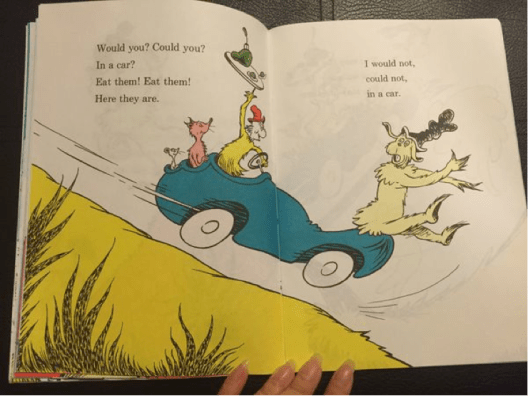
(And here we can hear Sam-I-am from Dr. Seuss’ Green Eggs and Ham, “Would you? Could you/In a car?/Eat them! Eat them!/Here they are.”)

GEH

Along with the coneys, Sam would like something more, “taters”, much to Gollum’s puzzlement:

“Smeagol won’t grub for roots and carrotses and—taters. What’s taters, precious, eh, what’s taters?”

And Sam spells it out:

“Po-ta-toes…The Gaffer’s delight, and rare good ballast for an empty belly. But you won’t find any, so you needn’t look.”

Most readers would know immediately what Sam meant when he said, “Po-ta-toes”, but how about “ballast?”

In a way, it may be odd that Sam would know this word, as it comes from the world of ocean-going ships and Sam has never been closer to bigger water than the Brandywine—and that only near the beginning of The Lord of the Rings.

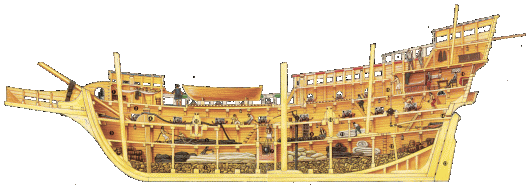
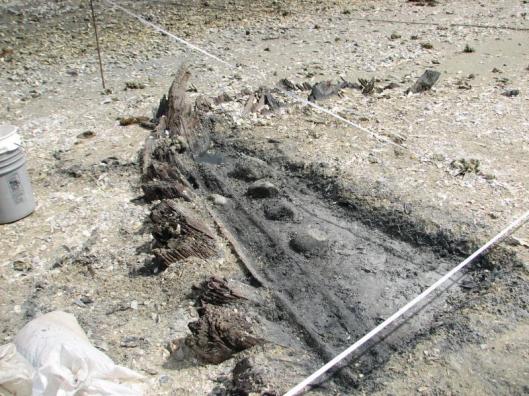
Ballast is the weight put into the deepest hold of a ship to keep it balanced in the water—especially when it’s empty of cargo. It’s commonly stone and it’s very useful now for underwater archaeologists, since the stone, if it remains in place after a ship sinks, can show the outline of a hull.

ships-stone-ballasts

ballastinsitu

So “rare good ballast for an empty belly” gives us the image of a Gaffer kept upright and balanced, moving with potatoes inside him.

Sam has also said, “But you won’t find any, so you needn’t look”: why not?

In our world, before the 16th century, potatoes were only available in South America, in particular in the Inca empire.

This was an elaborate patchwork of smaller peoples controlled by a military group with a capital at Cuzco.

Inca_MainMap3_sg

A Neolithic civilization, they were master architects, as may be seen in the remains of the Temple of the Sun, in the capital—

qoricancha

and in what is believed to be a summer palace, at Machu Picchu.

fondo-machu-picchu

With a king and an army

incanwarriors

they controlled much of the west coast of South America from 1438 to 1533, when Spanish invaders destroyed them and their world.

conquestofincas

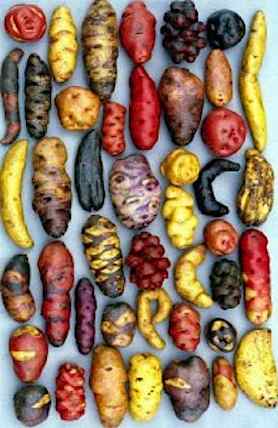
A major food source was potatoes and there were many varieties available—and there still are, more than 1000—

Potatoes_Peruvian_varieties

In fact, the Inca even learned how to freeze-dry them to preserve them, a method called chunu.

Chunu

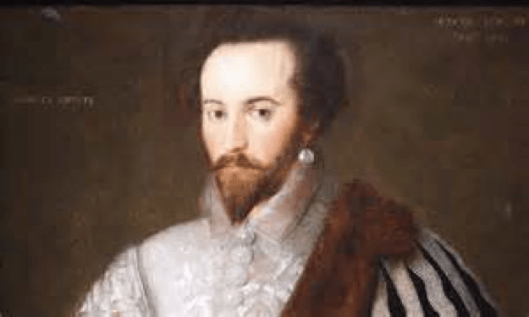
No one knows for sure when potatoes first came to Europe. It is imagined that Spaniards coming back from the New World would have brought them. In the English tradition, it was Sir Walter Raleigh who introduced them.

SirWalterRaleigh

They were then cultivated and rapidly became a major European food source, but they are not a native species and don’t grow wild—leading us to imagine that that’s what Sam is saying: Sam and Frodo and Gollum are in the wilderness and potatoes only grow where they’re planted—suggesting that, in Middle-earth, they are also an import—but from where?

(This reminds us of that moment in the Jackson film, where Sam and Frodo bump into Merry and Pippin in a corn—that is, maize–field. JRRT never mentions maize which, in European history, is also a New World import. This only makes us further wonder what the script writers thought they were doing in removing Pippin and Merry from their proper place in the story…)

There is more of this sort of thing, of course—Hobbits have teatime—we can suppose that it’s something herbal, but real teatime only appeared in England after the regular importation of tea to England from China in the mid-17th century. (For those familiar with it, there is a funny Horrible Histories episode which shows the introduction of tea in Stuart times when, according to the story, people had been refreshing themselves previously with cups of hot water.)

6a00d8341c84c753ef0147e02eab6c970b-300wi

And then there’s tobacco. It’s called that in The Hobbit, but it’s “pipe weed” in The Lord of the Rings. Tobacco is one more import in our world—brought to Europe in the 16th century. Here’s the first known image of someone actually smoking (from 1595).

Chute_tobacco.1595

It quickly became so popular that controversy over it, ranging from Tobias Hume’s ( 1579?-1645 ) love song to it, “Tobacco, Tobacco, sing sweetly for Tobacco” (from The First Part of Ayres or the Musicall Humours, No. 3, 1605—you can see the text and score if you Google “Tobias Hume” at IMSLP) to James the First’s condemnation of it, A Counterblaste to Tobacco (1604), which you can actually read if you Google “A Counterblaste to Tobacco”.

When JRRT was revising The Hobbit for its republication in 1966, he made a number of changes to the text, but some things remained, such as teatime, and even the image of a railroad train—“At may never return he began to feel a shriek coming up inside, and very soon it burst out like the whistle of an engine coming out of a tunnel.”

Douglas Anderson argues, in Note 35 of Chapter 1 of The Annotated Hobbit, that, in the case of the railroad, “This usage need not be viewed as an anachronism, for Tolkien as narrator was telling this story to his children in the early 1930s, and they lived in a world where railway trains were an important feature of life.” (The Annotated Hobbit, 47-48.) This is never really stated, in fact, in the Hobbit text, but the tone of the narration—which JRRT came to dislike—would suggest something of the sort. As for The Lord of the Rings, we have no explanation. Some items are never explained, they’re just there.

And, of course, there’s this:

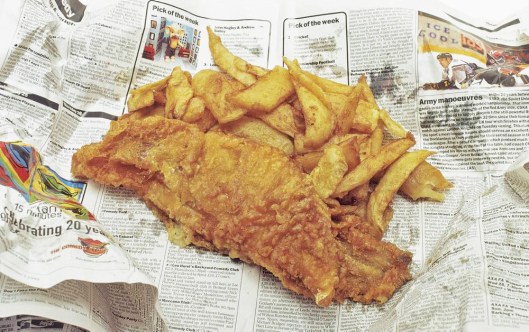
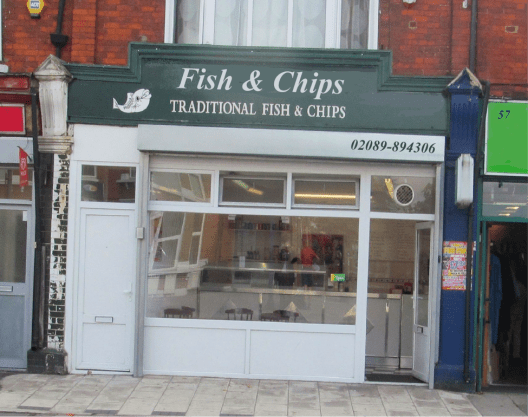
“I’ll cook you some taters one of these days. I will: fried fish and chips served by S. Gamgee.”

fish-and-chips

FishAndChips

Perhaps this is in Hobbiton? Bywater? Michel Delving?

Thanks, as always, for reading.

MTCIDC

CD

Bolts and Arrows

06 Wednesday Apr 2016

Posted by Ollamh in Films and Music, Heroes, J.R.R. Tolkien, Military History, Military History of Middle-earth, Narrative Methods, Uncategorized

≈ Leave a comment

Tags

Agincourt, anti-aircraft gun, ballista, Bard the Bowman, Battle of Crecy, Battle of Poitiers, Border Reivers, Boromir, crossbow, Crossbow Bunnies, English Longbowmen, harpoon, Hundred Years War, John Singer Sargent, latch, Maximus, N.C. Wyeth, Peter Jackson, Richard the Lionheart, Robert Louis Stevenson, Robin Hood, Roman d'Alexandre, Siege of Chalus, Smaug, Tangled, The Black Arrow, The Hobbit, The Lord of the Rings, The Mary Rose, Tolkien, Towton

In our review of the third Hobbit film, we questioned the use by Bard of something a little larger in the way of a missile than Tolkien had intended:

“Then Bard drew his bow-string to his ear. The dragon was circling back, flying low, and as he came the moon rose above the eastern shore and silvered his great wings.

‘Arrow!’ said the bowman. ‘Black Arrow! I have saved you to the last. You have never failed me and always I have recovered you. I had you from my father and he from of old. If ever you come from the forges of the true king under the Mountain, go now and speed well!’ ” (TH 307).

As Bard was firing this himself, we always envisioned him as an English longbowman.

englishlongbowman1330-15151.jpg

And this led us to think a bit about Tolkien’s possible sources, not only for Bard and his bow, but for that arrow–the real one, not the monster dart used in the film.

From any children’s history of England, Tolkien would have learned that longbowmen like the one shown above destroyed three brave French armies in the Hundred Years War, at Crecy (1346), Poitiers (1356), and Agincourt (1415).

hf54d67201.jpg

In the film, however, although Bard was depicted as an archer,

Bard-the-Bowman-bard-the-bowman-37670604-1920-1200.jpg

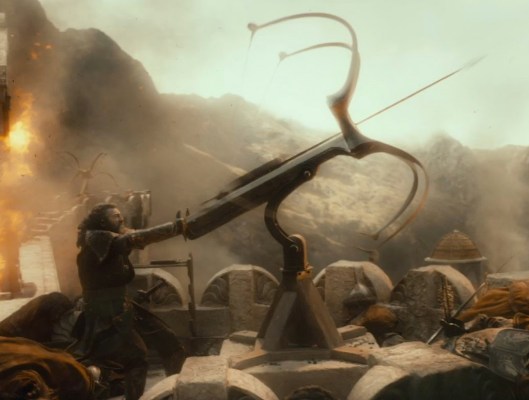
his weapon of choice looks like this.

bardwithharpoon.jpeg

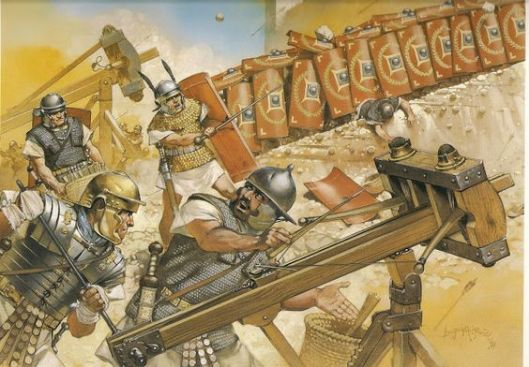
This reminds us of either a Roman ballista

b0370394e429c42631f520182c155a34.jpg

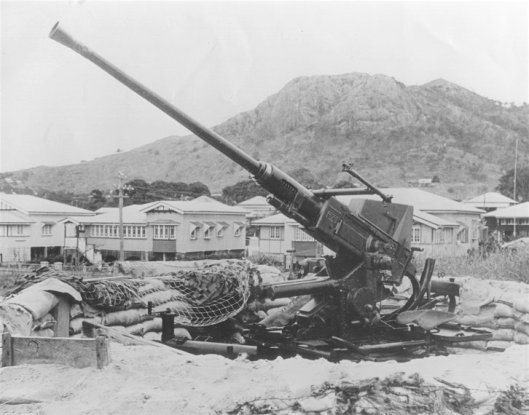
or an anti-aircraft gun

strandgun01.jpg

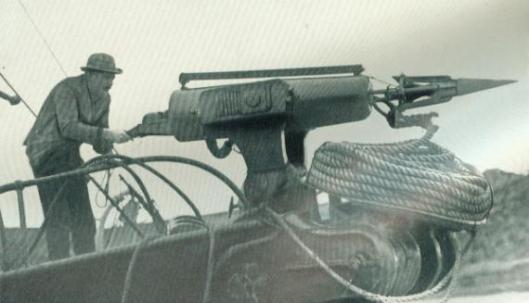
or, most especially,  a harpoon gun.

WhaleHarpGun1.jpg

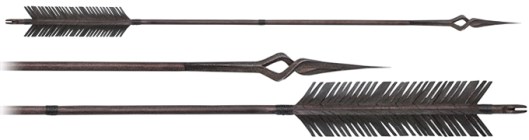
Especially when you look at this Bard’s arrow.

bard.jpg

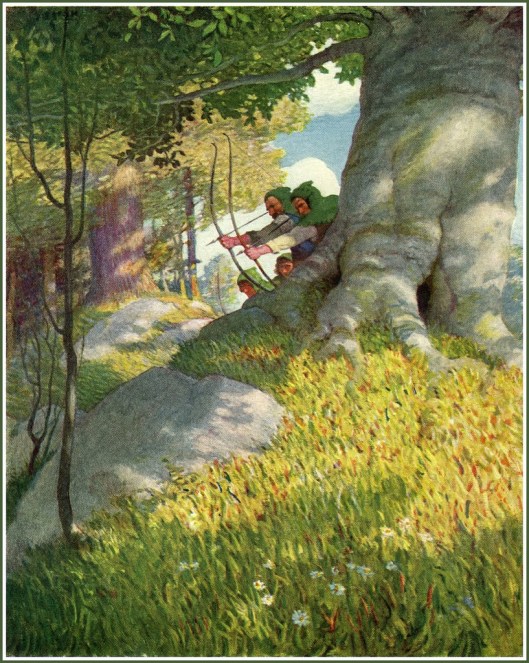
Although we currently have no evidence for Tolkien’s sources, we can imagine that they might have included, among others, Robin Hood,

5616567327_fc899be2f1_b.jpg

the actions of actual Medieval archers like those at Agincourt or Towton (1461),

towton3.jpg

and a book, perhaps from boyhood, Robert Louis Stevenson’s The Black Arrow (1883/1888).  Stevenson (here in an 1880s portrait by John Singer Sargent)

rlsjss2.jpg

had originally published the story serially in a children’s magazine in 1883

ba1.jpg

before its publication in book form in 1888.

Blackarrowcoverscribners1888.jpg

The classic illustrations are by one of our all-time favorite illustrators, NC Wyeth, from 1917.

309642.jpg

We can’t resist showing you a few:

tumblr_l4istbR1JZ1qamjklo1_1280.jpgillus08.jpg09_blackarrow_alittlebeforedawn_wyeth.jpg

Although the bow is the weapon of choice of those who use the black arrow of the title (it’s employed for revenge), the hero  in fact, has a crossbow.

5616566731_49d251a1fc_b.jpg

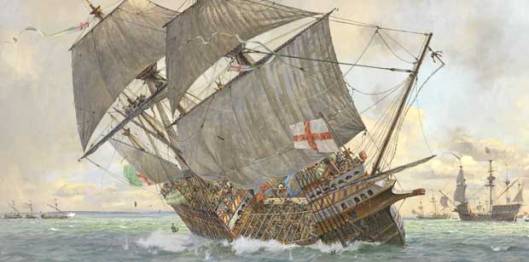
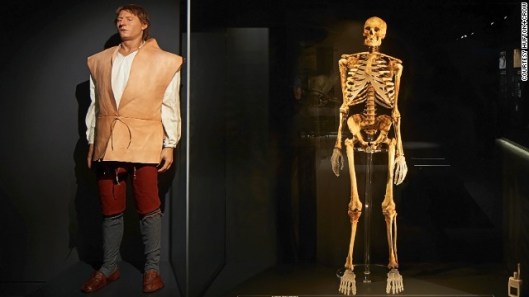
The longbow requires years of training and great upper-body strength, leaving its mark on bowmen, as can be seen from this skeleton (and its reconstruction) brought up from the English warship, the Mary Rose,

sinking_3.jpg

which sank with most of its crew in 1545 and was brought up from the mud of the ocean floor in 1982.

130530121104-mary-rose-skeleton-horizontal-gallery.jpg

The crossbow is a mechanical weapon, which uses much less strength to draw

the_old_crossbow_archer_by_renum63-d8aaovo.jpg

and, in the more developed versions, even uses a crank to produce the necessary string tension.

8f106fadbe86ed34e5567bc7a90b89e2.jpg

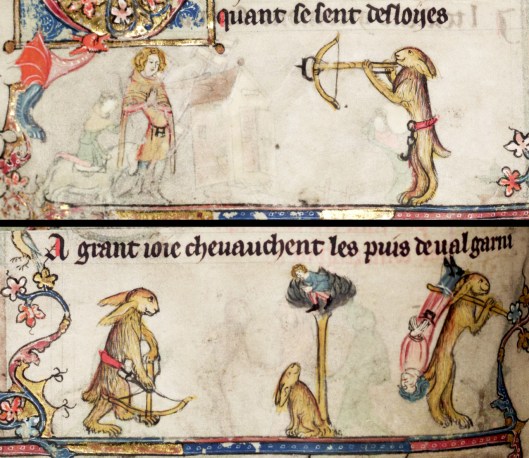
(And, just as in the case of NC Wyeth illustrations, we can’t resist medieval manuscript illustrations. Look at this pair of crossbow… bunnies from a copy of the Roman d’ Alexandre, circa 1340.)

romandalexandrec1340.jpg

This makes it a less romantic weapon, but equally deadly:  Richard the Lionheart was killed with a bolt/quarrel (what one calls a crossbow arrow) at the siege of Chalus in 1199.

Richard1TombFntrvd.jpg

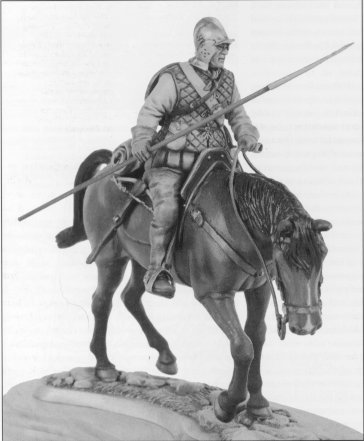
(This creates another aside–about the hand weapon used as late as the 16th century by the Border Reivers of the land between northern England and southern Scotland–called a “latch”, it was the weapon of choice for those who couldn’t afford early hand guns but wanted to fire easily from the saddle.

Reiver-on-Horse.jpg

The soldiers in Disney’s wonderful movie, Tangled, carry them–notice the off-hand side pouch with a handful of bolts  for one on Maximus’ saddle–)

maxtangled.jpg

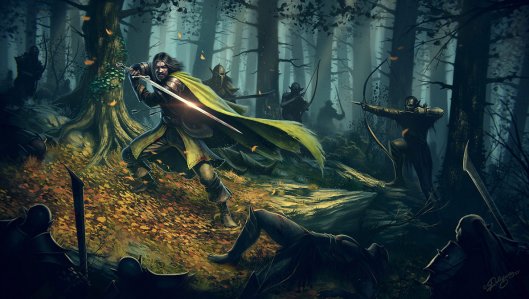
But we would  like to conclude with one more use of that black arrow.  A flight of them kills Boromir in The Lord of the Rings.

boromirarrows1.jpg

boromirearrows.png

Just as we began by pointing to the text and the actual bow and arrow which kill Smaug, and not the harpoon of the film, so we would criticize this scene.  In our opinion, it is stretched beyond believability, as well as beyond the text, taking away something of Boromir’s valor in combat with dozens of the enemy, in which he is gradually overcome.

boromir_by_deligaris-d5po92u.jpg

This is just as true for the brief scene of Aragorn at Boromir’s death.  What was simple in the text, thus making it more moving–just Boromir’s confession and Aragorn’s comforting him–becomes a soppy scene in which Boromir swears loyalty and calls Aragorn “my brother”, a liberty Aragorn-the-king-t0-be, would hardly have welcomed.  In the theatrical world, this is called “milking the scene” and here, we think it curdled.

Thanks, as always, for reading.

MTCIDC,

CD

Plot or Blot?

23 Wednesday Dec 2015

Posted by Ollamh in Fairy Tales and Myths, Films and Music, J.R.R. Tolkien, Narrative Methods, Uncategorized

≈ Leave a comment

Tags

Adventure, An Unexpected Journey, Eagles, Gandalf, Gwaihir, His Dark Materials, Iofur Rakinson, Isengard, Manwe, Middle-earth, Mirkwood, Moth, Ornthanc, Peter Jackson, Philip Pullman, Radagast, Rohirrim, Saruman, Svalbard, The Battle of the Five Armies, The Council of Elrond, The eagles are coming, The Fellowship of the Ring, The Golden Compass, The Hobbit, The Lord of the Rings, The Return of the King, Tolkien, Wizard

Dear Readers,

Welcome, as always.

This posting is about a puzzle. Recently, while visiting Orthanc to write about Saruman, we bumped into the problem of how Gandalf escaped from there. Our memory was a little unclear about this—we knew that Gwaihir swooped down to rescue him, but why was Gwaihir there in the first place?

Eagles had appeared twice before in our experience of Gandalf, first when they rescued him and his companions from the goblins and Wargs in Chapter 6 of The Hobbit, “Out of the Frying-Pan into the Fire”. Here, the Lord of the Eagles hears the commotion as the Wargs struggle to overcome Gandalf’s fire magic and, gathering up some of his people, flies down to investigate.

6a00d8341dd88553ef015436529d30970c-pi.jpg

Something similar happens at the Battle of the Five Armies, explained in Chapter 18, “The Return Journey”:

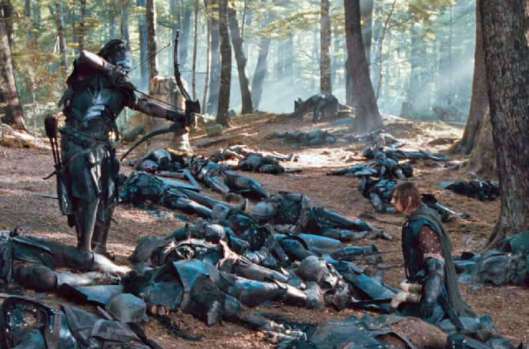
“The Eagles had long had suspicion of the goblins’ mustering; from their watchfulness the movements in the mountains could not be altogether hid.” Thus, they appear self-bid, but, as they are ancient creatures, first made by Manwe and given the role of watchers from the time of the First Age, it’s not surprising that they would act as they did.

Battle of the Five Armies_Final Complete.jpg

In Jackson’s An Unexpected Journey and, again, in his The Fellowship of the Ring, an eagle appears after Gandalf has had a heart-to-heart with a moth.

gandmothhob.pngGandalf+moth.png

With a moth? We asked ourselves. We scratched our heads and wondered: does JRRT use a moth? And, if so, where did the moth come from?

In fact, what really happens is a very neatly constructed piece of plotting on the part of the author, all of which is very nicely laid out in a couple of pages of “The Council of Elrond” during Gandalf’s long narrative.

  1. Gandalf meets Radagast—who is identified, among other talents, as one for whom “birds are especially his friends”—and who says that, if Gandalf needs help with the Black Riders, he needs to apply to Saruman immediately.
  2. In return, Gandalf says to Radagast, “We shall need your help, and the help of all things that will give it. Send out messages to all the beasts and birds that are your friends. Tell them to bring news of anything that bears on this matter to Saruman and Gandalf. Let messages be sent to Orthanc.”
  3. Gandalf goes to Orthanc and, rejecting Saruman’s offer, is imprisoned at its top.
  4. Then, that which was set up in 1 and 2 comes to fruition:

“That was the undoing of Saruman’s plot. For Radagast knew no reason why he should not do as I asked; and he rode away towards Mirkwood where he had many friends of old. And the Eagles of the Mountains went far and wide, and they saw many things…And they sent a messenger to bring these tidings to me.

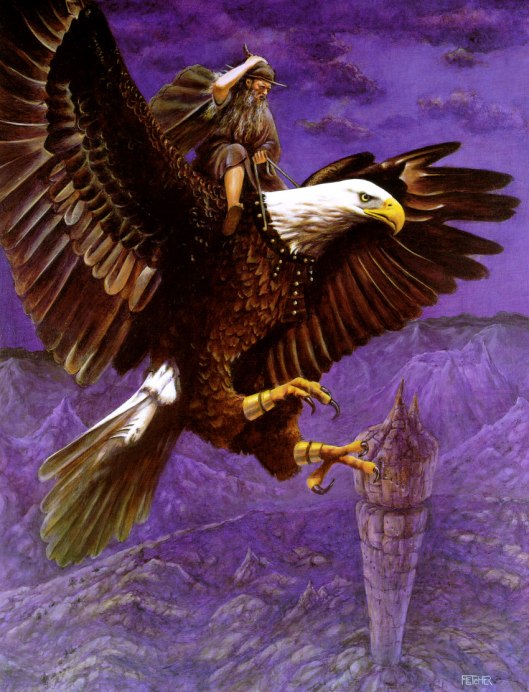
So it was that when summer waned, there came a night of moon, and Gwaihir the Windlord, swiftest of the Great Eagles, came unlooked-for to Orthanc; and he found me standing on the pinnacle. Then I spoke to him and he bore me away, before Saruman was aware.”

escape.jpg

Although we have solved the puzzle of Gandalf’s escape, we have no answer to why this natural and even elegant piece of plotting wasn’t used in the film any more than we understand why Radagast is turned into the horrible, clownish figure he is in the Hobbit films, having been described in “The Council of Elrond” simply as “a worthy Wizard, a master of shapes and changes of hue; and he has much lore of herbs and beasts, and birds are especially his friends.” And someone who could never be corrupted by Saruman, which is really, we think, why Saruman calls him a fool.

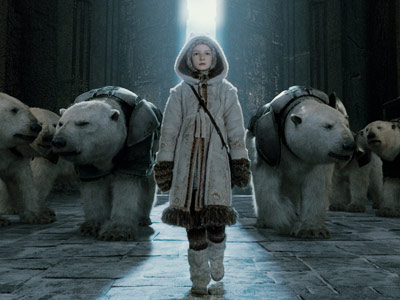
In an earlier posting, we suggested that Saruman, in his desire to ape Sauron, had created, in Isenguard, a mini-Mordor, just as Iofur Raknison, in Philip Pullman’s The Golden Compass, has turned Svalbard into a shabby ursine mockery of a human palace.

lyrasvalbard.jpg

We also suggested that the creators of the Tolkien-derived films, when they began to veer as far from the text as they appeared increasingly to do in the Hobbit films, had become a bit like Saruman themselves, and, like his master, “cannot make real new things of [their] own…” We hesitate to add this, but, could it be that, as in the case of the orcs, they “only ruined them and twisted them…”? (The Return of the King, “The Stairs of Cirith Ungol”). After all, instead of easy plot lines, we have moths, and, in place of worthy, incorruptible wizards, we have gross clowns.

We are reluctant to end on a negative note, however. After all, just as there are the Rohirrim in The Lord of the Rings films, there are those wonderful eagles at the end of An Unexpected Journey, so why not end with them?

taking-fan-theories-to-a-next-level-the-eagles-are-coming-434375.jpg

Thanks, as ever, for reading.

MTCIDC

CD

PS

If you don’t know Pullman’s His Dark Materials series, we very much recommend them—but with this proviso: in the first and second volumes (The Golden Compass, The Subtle Knife), Pullman’s antagonism towards organized religion is channeled into the “Magisterium”, a believable villainous organization in the world which he has so meticulously and powerfully created. In the third volume (The Amber Spyglass), we feel that that antagonism becomes all-too-apparent and it causes that volume—in our opinion—to lack the more human element and focus of the first two volumes. The first volume can certainly be read on its own and perhaps it says something about the trilogy as a whole that a planned project for filming all three books was eventually cut to a single film of the first book. We recommend this film, as well, but suggest that you read The Golden Compass before you see it.

The Return of the Who.2?

28 Wednesday Oct 2015

Posted by Ollamh in Fairy Tales and Myths, Heroes, Imaginary History, J.R.R. Tolkien, Narrative Methods, Villains

≈ Leave a comment

Tags

Aragorn, Aslan, C.S. Lewis, Catholicism, Gondor, Hobbits, Jadis, Medusa, Middle-earth, monotheism, Narnia, Oxford, religion, Sauron, secular, The Bird and the Baby, The Chronicles of Narnia, The Eagle and the Child, The Hobbit, The Inklings, The Lamb and Flag, The Lord of the Rings, the Pevensies, The Return of the Ring, The White Witch, Tolkien, White Tree

Dear Readers,

Welcome, as always.

This posting is a continuation of our last, in which we made a brief attempt to think about what the title “The Return of the King” might have meant for its author in his time.

In this posting, we want to expand that meaning from a secular king to one with more religious overtones.

We ourselves, as we’ve said before, are World Civ people, believing that all people in all times and places are and should be of interest and value to everyone. We are also pan-spiritual, thinking with Gandhi that, “I believe in the fundamental Truth of all great religions of the world.”

In the case of Tolkien, this meant Catholic Christianity, a form of monotheism. Of religion and The Lord of the Rings, he wrote in 1953:

“The Lord of the Rings is of course a fundamentally religious and Catholic work; unconsciously so at first, but consciously in the revision. That is why I have not put in, or have cut out, practically all references to anything like ‘religion’, to cults or practices, in the imaginary world. For the religious element is absorbed into the story and the symbolism.” Letters, 172.

He adds to this, in a letter to Houghton Mifflin, in 1955, that “It is a monotheistic world of ‘natural theology’. (Letters, 220). At the same time, however, he adds “I am in any case myself a Christian; but the ‘Third Age’ was not a Christian world. Letters, 220.

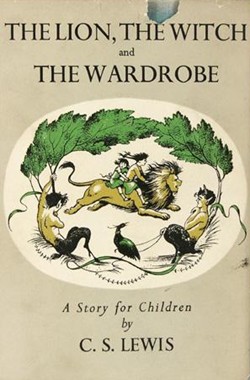
And yet we would suggest that there is not only more of a Christian theme, but also a Christian parallel with a book written at about the same time as the later stages of The Lord of the Rings and published slightly before it. This is C.S. Lewis’ The Lion, the Witch and the Wardrobe (1950).

TheLionWitchWardrobe(1stEd)

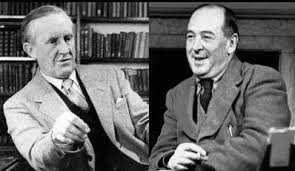
As is well known, both Lewis and Tolkien

jrrt and csl

were members of a literary group in Oxford, the Inklings.

draft_lens9242861module102711761photo_1274835984eagle_and_child_pub_inkli

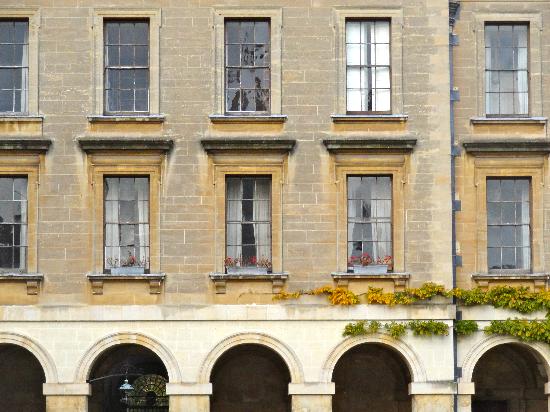
Lewis and Tolkien formed part of the permanent core, with other members coming and going over the years (1933-1949).   The meetings were held in Lewis’ rooms at Magdalen College,

magdalen room-used-by-cs-lewis

as well as at two local pubs, The Eagle and Child (called locally “Bird and Baby” or just “Bird”)

Birdandbaby

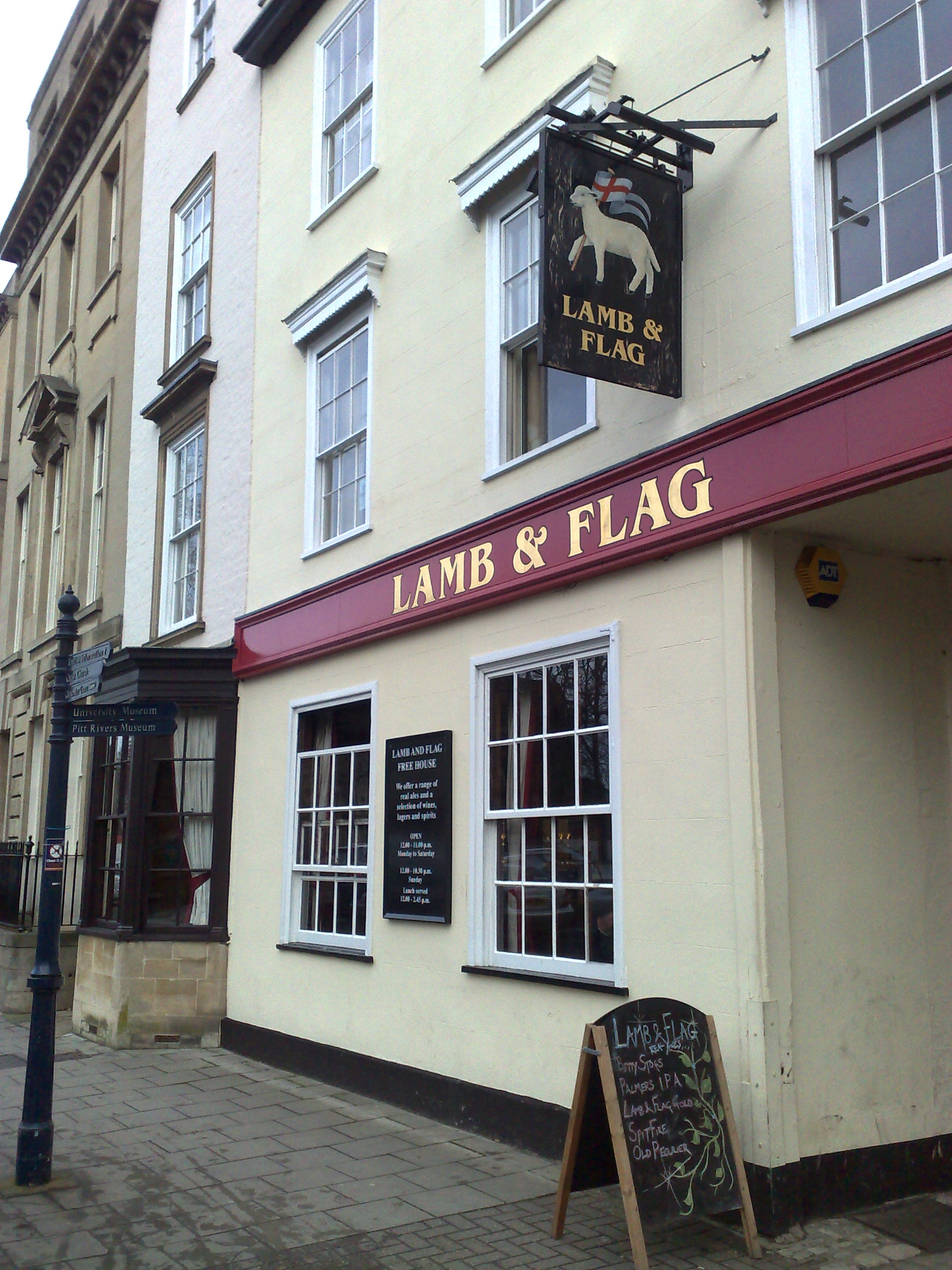
as well as The Lamb and Flag.

Lamb-and-flag-pub-oxford

The purpose (besides refreshments) was literary discussion, both of others’ works and of their own, and an important feature was the reading aloud of works in progress. Lewis had been very supportive, both of The Hobbit and The Lord of the Rings, but Tolkien had not been so enthusiastic in return. All the same, we would suggest that various elements of Lewis’ The Lion, the Witch and the Wardrobe and events around Gondor in Tolkien’s The Return of the King at times bear strong similarities.

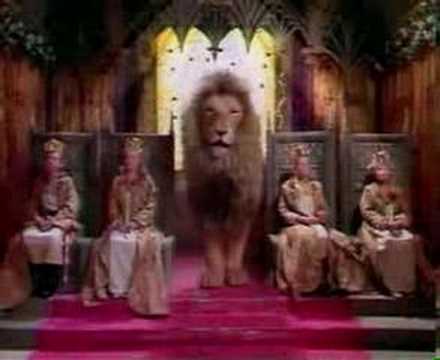
In Lewis’ book, the main protagonists are four children, the Pevensies.

childrenaslanbbc

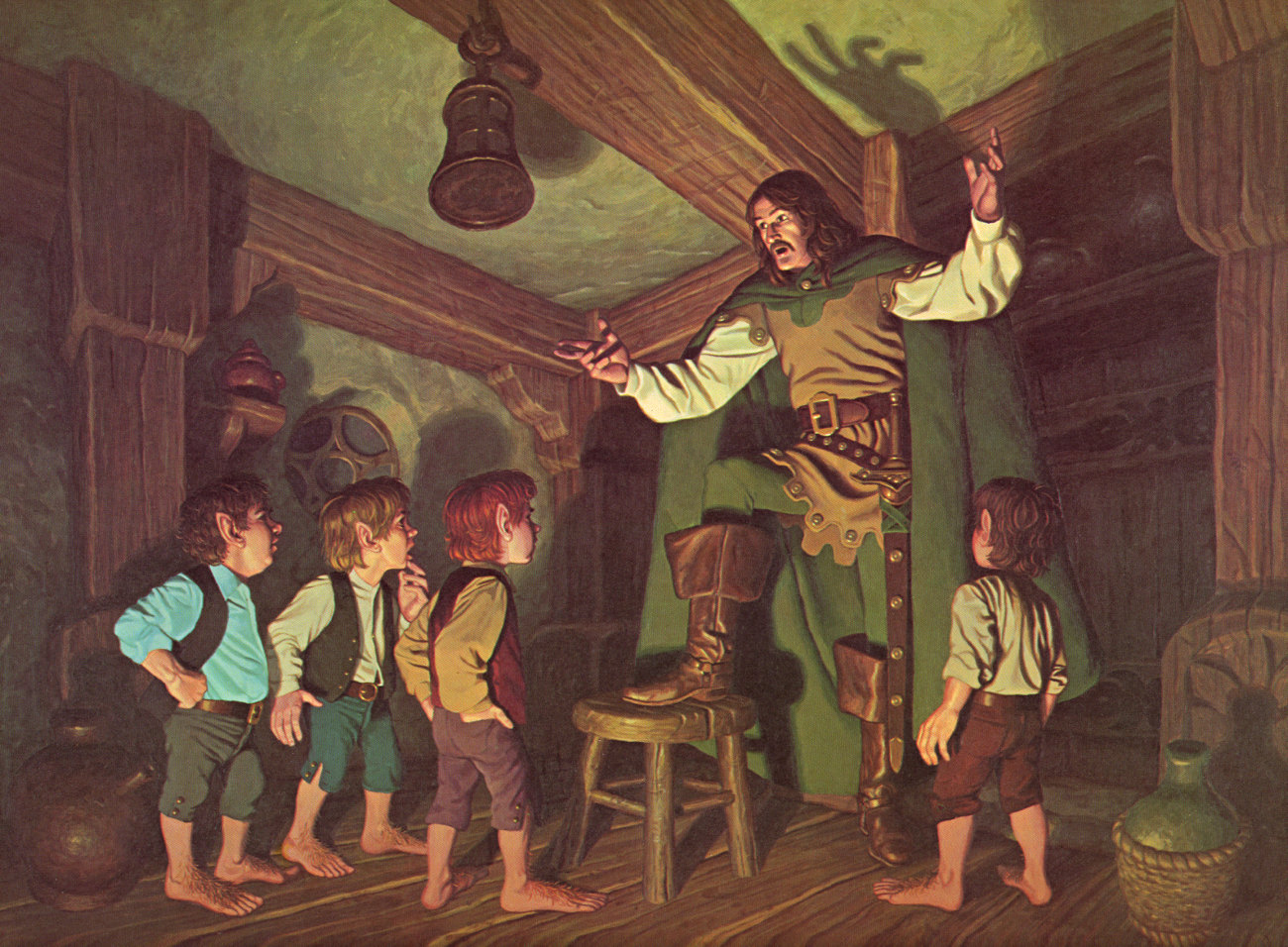
In Tolkien’s, there are four grown Hobbits, often mistaken, beyond the borders of the Shire, for children.

hildebrandthobbits

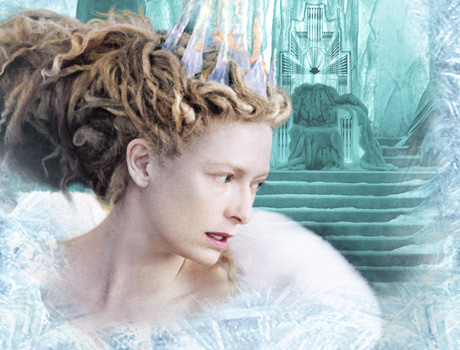
Both groups are on an errand which they barely understand and are faced with a supernatural enemy, the White Witch for the one, Sauron for the other. (There seems to be a lot of mirroring in all of this: the White Witch is already in Narnia and must be driven out. Sauron is outside Gondor and wants to get in, for example. The White Witch’s name is “Jadis”, by the way. Undoubtedly Lewis’ little linguistic joke: jadis in French means “formerly”, suggesting that even from the first time she appears, she’s already on her way out.)

wwbbc

main_1-Greg-Hildebrandt-Signed-Sauron-The-Dark-Lord-Limited-Edition-34x23-Giclee-PristineAuction.com

(Notice, in the movie version of Jadis, the strong similarity between her and the Medusa. In fact, Jadis turns her enemies, when she can, to ice.)

jadis1

bernini medusa

frozenmrtumnus

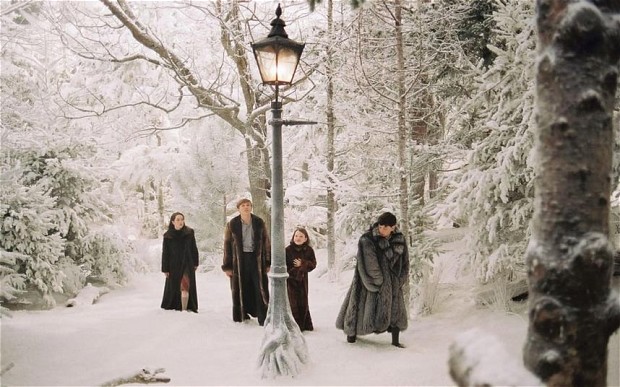
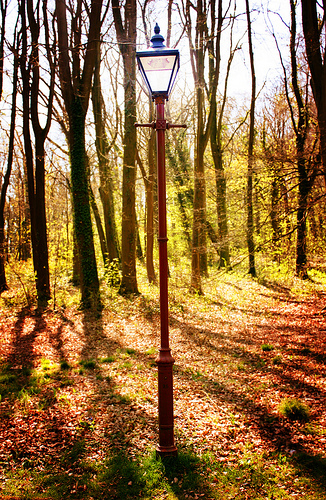
Before the current world of Narnia, to which the children come, there was a king who had been somehow ejected a century before. In Middle Earth, there has been no king in Gondor for ten times that. In Narnia, there has been winter for that century.

winteratthelamppost

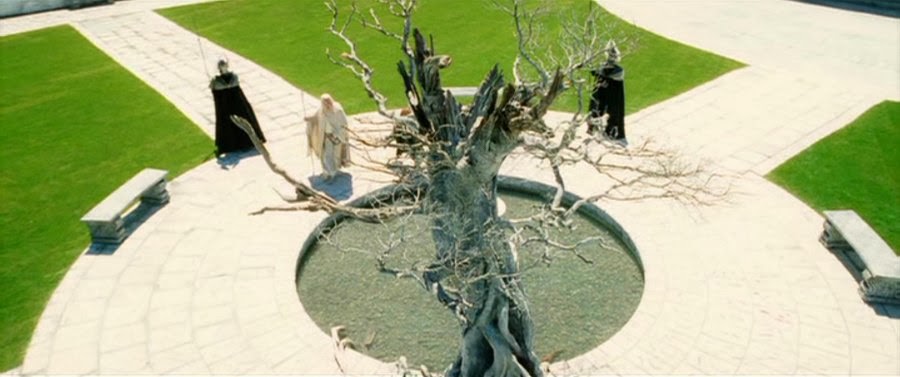
In Gondor, in Middle Earth, its symbol of growth and stability, the White Tree, has withered and died.

WhiteTreeGondor

When the Pevensie children have been involved in the defeat of the White Witch, they will rule Narnia in the place of the true king, the lion Aslan.

the-chronicles-of-narnia-the-lion-the-witch-and-the-wardrobe-wallpaper-the-chronicles-of-narnia-the-lion-the-witch-and-the-wardrobe-poster_590x384_23014

For about a thousand years, stewards ruled Gondor in place of the king. (Another example of mirroring.)

denethor

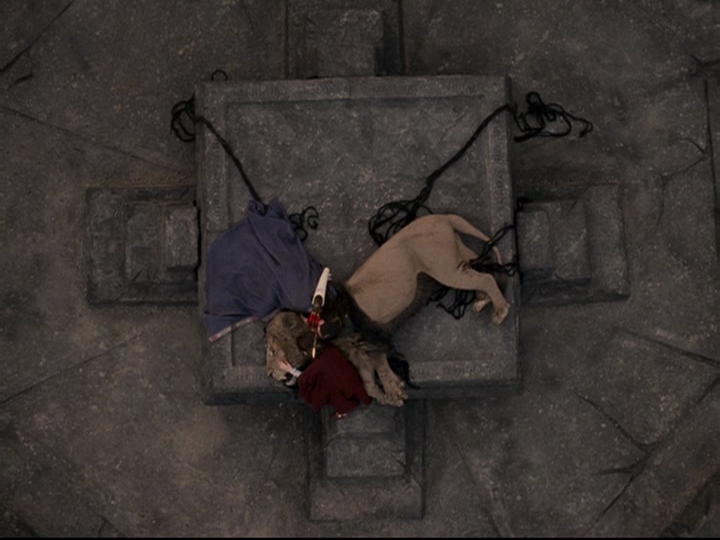
When Lewis’ Aslan returns, it is from death, having sacrificed himself to save one of the Pevensie children.

aslandead

Thus, Aslan, in effect, heals himself. When the king of Gondor, Aragon, appears, he heals others. (Tolkien would probably associate this with the old English custom of having the monarch touch people attacked with a disease called scrofula, or “the King’s evil”. We include a picture of Queen Mary—1516-1558—doing so.)

Queen_Mary_I_curing_scrofula_Levina_Teerlinc_16th_C

healingeowyn

When Aslan appears, spring returns to Narnia.

springinnarnia

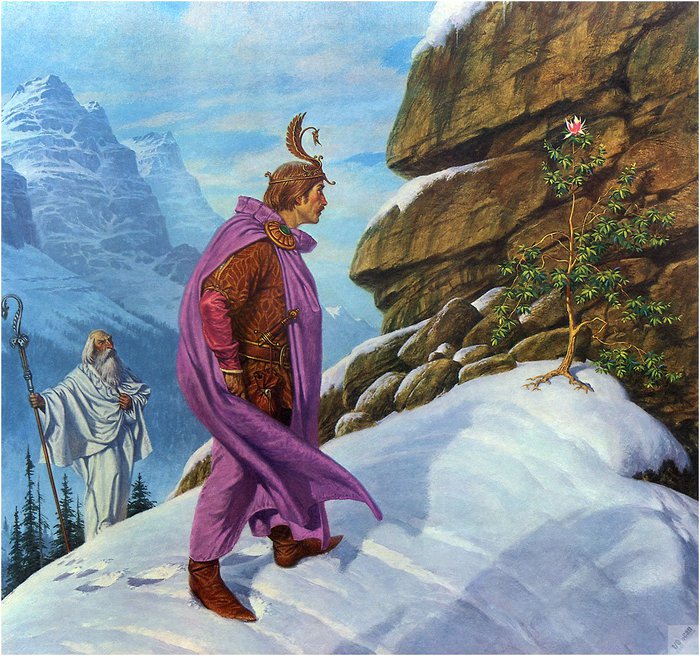
When Aragorn claims the throne, he and Gandalf discover a sapling of the old tree on Mindolluin, bring it down, and plant it and it soon flowers.

whitesapling whitetreebeginstoflower

We’re sure that there are other parallels, dear reader: can you think of any?

Thanks, as always, for reading this.

MTCIDC

CD

Jolly Tom.2

16 Wednesday Sep 2015

Posted by Ollamh in Fairy Tales and Myths, Imaginary History, J.R.R. Tolkien, Narrative Methods

≈ Leave a comment

Tags

Barrow-downs, Barrow-wights, Bree, Dagger, Dorset, Eowyn, Fangorn, Frodo, Gandalf, Middle-earth, Nazgul, Neolithic, Old Forest, Old Man Willow, Peter Jackson, Sauron, The Hobbit, The Lord of the Rings, The Ring, Tolkien, Tom Bombadil, Weaponry, Westernesse, Witch-King of Angmar

Dear Readers,

Welcome, as always!

As you can see from the title, this is a continuation of the previous posting, in which we began a discussion of a two-part question: 1. What would be the advantage of keeping Tom Bombadil in a recorded (audio or film) version of The Lord of the Rings? 2. What would you need to keep?

To summarize the previous posting, we suggested that:

  1. he, along with Fangorn/Treebeard, represents the great age of Middle Earth—something very important to the author–and a continuity of living things, which leads us to
  2. he might also be seen as a form of hope: the Ring has no effect upon him and he remembers a time before the arrival of Sauron, suggesting that there might be a time after him, as well, and that the Ring has limits
  3. as it seems out of place even in the current text, the bulk of Tom’s verse and the sometimes rhythmicized prose could be removed, leaving only the character himself and his part in the plot

We believe, however, that there is a more pressing reason for keeping him in the text, and it has to do with something Gandalf says to Frodo when Frodo, panicked at the prospect of having to deal with the Ring, demands, “Why did it come to me? Why was I chosen?” LotR 61.

“’Such questions cannot be answered,’ said Gandalf, ‘You may be sure that it was not for any merit that others do not possess: not for power or wisdom, at any rate. But you have been chosen, and you must therefore use such strength and heart and wits as you have.’” LotR 61.

This is a continuation of Gandalf’s earlier statement that:

“Behind that there was something else at work, beyond any design of the Ring-maker. I can put it no plainer than by saying that Bilbo was meant to find the Ring, and not by its maker. In which case you also were meant to have it.” LotR 56.

Thus, there is a level of intentionality at work in Middle-earth, something beyond Sauron. And, when we see Bombadil next, he will prove to be an instrument of the intention.

The Hobbits have left his house and, following his directions, have passed onto the Barrow-downs.

Breeland_breetobarrowdowns

A down is a piece of rolling countryside, often bare at the top, with trees in its folds—as here in Dorset.

dorset_3287278k

The Dorset Downs have lots of Neolithic remains, including numbers of barrows or tumuli, grave mounds commonly covering an interior structure, not uncommonly made of stone—

OLYMPUS DIGITAL CAMERA

image4

Wakeman_Newgrange_tumulus_chamber_cross_section

Such tumuli once contained the body or bodies usually of high-status persons

Unknown

and all sorts of grave goods, either as a display of wealth or perhaps for some sort of afterlife use.

gordion1957

Bombadil has been careful, however, to say “more than once” (LotR 134) that the Hobbits are to avoid the barrows themselves, telling them not to meddle with them or “cold Wights” (LotR 133). (He also says that they should pass them “on the west-side”—there have been lots of guesses about this—we would add our guess that it might have to do with the orientation—literally—of the entry. If entries faced east and the rising sun, it would be wise of the Hobbits to skirt the barrows’ potential blind side, on the west. And there is also the rather obvious point, once you’ve looked at a map of the area, that, if they kept the barrows to the right and the Old Forest to the left, they would be heading north towards the road to Bree, as they intended.)

il_570xN.743473219_bxv9

Those Barrow-wights are not the original inhabitants of the mounds, but agents of the Witch-king of Angmar, who sends them to take possession (The Lord of the Rings Companion, 144-145), long after their original occupation—but, what’s interesting is that, at least one of these tumuli appears not to have been plundered and this leads us to our next point about Tom Bombadil. After he rescues the Hobbits (showing again his mastery over at least the minor forces of evil), he does a little plundering of his own, including:

“For each of the hobbits he chose a dagger, long, leaf-shaped, and keen, of marvellous workmanship, damasked in serpent forms in red and gold…Then he told them that these blades were forged many long years ago by Men of Westernesse: they were foes of the Dark Lord, but they were overcome by the evil king of Carn Dum in the Land of Angmar.” LotR 146.

damascene-sword

Here are a few ideas of what, at least, the leaf shape might have looked like:

leaf.2bronzeageblades leaf.1

And we include this third one just because it looks so cool—

leaf.3

Bombadil, of course, has actually seen all of this happen, and here we see that theme of great age appear again. And there’s the pedigree of those blades. Unlike the sack ‘o swords slung without any more explanation than “These are for you. Keep them close.” to the Hobbits in the film, these were weapons made by heroic men of the past, doomed men, but who fought evil until they were overcome (a strong theme throughout the history of Middle-earth).

Late in the story, one of those blades seems to be the instrument of intentionality once more. When Eowyn faces the Witch-king of Angmar, now the chief of the Nazgul—

lord_of_the_nazgul_2

and he is about to kill her with his mace, Merry strikes him from behind, stabbing him in what, on a living man, would have been a vulnerable spot, the back of the knee. (LotR 842.)

eowyn_vs_the_nazgul_by_arteche-d3ggm8g

Distracted and, surprisingly, in pain, the Nazgul stumbles and Eowyn destroys him and here, once more, we may see intentionality, and all because of Tom Bombadil. Merry’s sword, from its contact with the undead flesh of the Nazgul, withers away, but—

“So passed the sword of the Barrow-downs, work of Westernesse. But glad would he have been to know its fate who wrought it slowly long ago in the North-kingdom when the Dunedain were young, and chief among their foes was the dread realm of Angmar and its sorcerer king. No other blade, not though mightier hands had wielded it, would have dealt that foe a wound so bitter, cleaving the undead flesh, breaking the spell that knit his unseen sinews together.” LotR 844.

So, for everything from Old Man Willow (whom the script writers couldn’t resist completely, transposing him to an improbable scene with Fangorn/Treebeard) to showing the great age of Middle-earth to suggesting other powers untouched by the Ring to offering possible hope to showing something of the intentionality behind certain actions in the story to providing the ancient and magical weapon which could finally bring down the Witch-king of Angmar and save Eowyn at the same time, might we suggest that, next production—audio or visual—of The Lord of the Rings, Jolly Tom might have a place in the cast?

Thanks, as always, for reading.

MTCIDC

CD

PS

If you would like to read more about Tom, see, for example, Dorathea Thomas, “He Is: Tom Bombadil and His Function in The Lord of the Rings” at Academia.edu.

Ever On?

02 Wednesday Sep 2015

Posted by Ollamh in J.R.R. Tolkien, Narrative Methods, Poetry

≈ Leave a comment

Tags

Bilbo, Frodo, Hobbits, The Hobbit, The Lord of the Rings, Tolkien, Walking Song

Dear Readers,

As always, welcome!

We’ve spent a good amount of postings talking about the narrative methods of The Lord of the Rings, and now we’d like to add to that, song.

Although Bilbo left his pocket-handkerchief behind, along with a good many other things he’d rather have had with him on the unexpected journey, he did bring something that seems to be inherently a part of Hobbits: song. As Mary Quella Kelly wrote in her essay “The Poetry of Fantasy, Verse in The Lord of the Rings”, “reciting or singing verse is for them the most natural way to express their emotions” (172), and we could heartily agree, as the Hobbits sing drinking songs, walking songs, and even bath songs. Kelly also points out that they “reuse old poems from the Shire, altering a word or phrase to fit the occasion” (172), one such strong example being Bilbo’s Walking Song, which, like the other Hobbit songs, accompanies the Hobbits throughout their journeys.

The Walking Song carries Bilbo and Frodo through their adventures, shifting in nature as the journey continues and eventually comes to an end. The first version appears in The Hobbit, when Bilbo is on the return journey home:

Roads go ever ever on,

Over rock and under tree,

By caves where never sun has shone,

By streams that never find the sea;

Over snow by winter sown,

And through the merry flowers of June,

Over grass and over stone,

And under mountains in the moon.

Roads go ever ever on

Under cloud and under star,

Yet feet that wandering have gone

Turn at last to home afar.

Eyes that fire and sword have seen

And horror in the halls of stone

Look at last on meadows green

And trees and hills they long have known.

The song seems to be reminiscing about the things he’s seen and the places he’s been, and appears only after the adventure has been completed. It’s a sort of poetic precursor to what will later become The Red Book of Westmarch.

­The Lord of the Rings, however, introduces a new version of the song, as Bilbo sings it softly in the dark after he’s been the first ring-bearer to willingly give up the Ring, and sets off to find new adventure.

The Road goes ever on and on

            Down from the door where it began.

Now far ahead the Road has gone,

            And I must follow, if I can,

Pursuing it eager feet

            Until it joins some larger way

Where many paths and errands meet.

            And whither then? I cannot say.

What has happened here? Tolkien’s anticipated sequel to The Hobbit has already taken a deeper, more complex turn than his original children’s story. Rather than standing and looking back at the road, Bilbo once again looks forward.

Just as Kelly suggests, he’s not the only one to anticipate the journey. Bilbo’s songs and the Ring being the only inheritance Frodo possesses on the road, Frodo sings his own version of the walking song:

The Road goes ever on and on

            Down from the door where it began.

Now far ahead the Road has gone,

            And I must follow, if I can,

Pursuing it weary feet

            Until it joins some larger way

Where many paths and errands meet.

            And whither then? I cannot say.

This version is identical in form, and the only word has changed—“eager” to “weary”, and this changes the tone entirely.

Bilbo sang cheerfully of the road behind him and of the road ahead, but Frodo’s version suggests that this new adventure in The Lord of the Rings is a much graver quest than Bilbo’s—and, potentially, more tiring. After Frodo sings the song to himself quietly, Pippin remarks,

“ ‘That sounds like a bit of old Bilbo’s writing’, said Pippin, ‘Or is it one of your imitations? It does not sound altogether encouraging.’ “ LOTR 72

And so Frodo’s reprise of the song, even with the variation of just one word, creates a reluctance to adventure, rather than continuing Bilbo’s eagerness. To Bilbo, the song ensures a story-worthy adventure with a return journey, but for Frodo, it’s just the opposite.

The song changes again, however, when there is a return journey for both Bilbo and Frodo, which hints at their voyage across the sea and into the west. Again, quietly to himself, Bilbo sings in Rivendell after Frodo has returned from his quest. Frodo has destroyed the Ring, but has retained the song, and seems to bring it back to Bilbo.

The Road goes ever on and on

Out from the door where it began.

Now far ahead the Road has gone,

Let others follow it who can!

Let them a journey new begin,

But I at last with weary feet

Will turn towards the lighted inn,

My evening-rest and sleep to meet.

And so, Bilbo’s “There and Back Again” journey and Frodo’s quest to destroy the Ring have both come to a conclusion. Bilbo sings this final version, which ends the adventures for both Hobbits, but passes on the adventure. Bilbo is ready to retire from traveling, and Frodo has completed his quest. As Frodo has left the last pages for Sam, however, it’s as if Bilbo has left the rest of the Red Book for those wishing to follow his footsteps down the road and begin anew, adding to or changing the songs to mirror their feelings as they go.

Thanks, as always, for reading,

MTCIDC,

CD

What’s In A Name?

26 Wednesday Aug 2015

Posted by Ollamh in Imaginary History, J.R.R. Tolkien, Narrative Methods

≈ 1 Comment

Tags

Anglo-Saxon, artefacts, Balin, Beaumaris, Bladorthin, Gandalf, Girion, Hadrian's Wall, Hoard, Middle-earth, Raedwald, Ship burial, Sigeberht, spears, Staffordshire Hoard, Stonehenge, Suffolk, Sutton Hoo, The Argonath, The Hobbit, Thorin, Thror, Tolkien, weapons

Dear Readers, welcome, as ever.

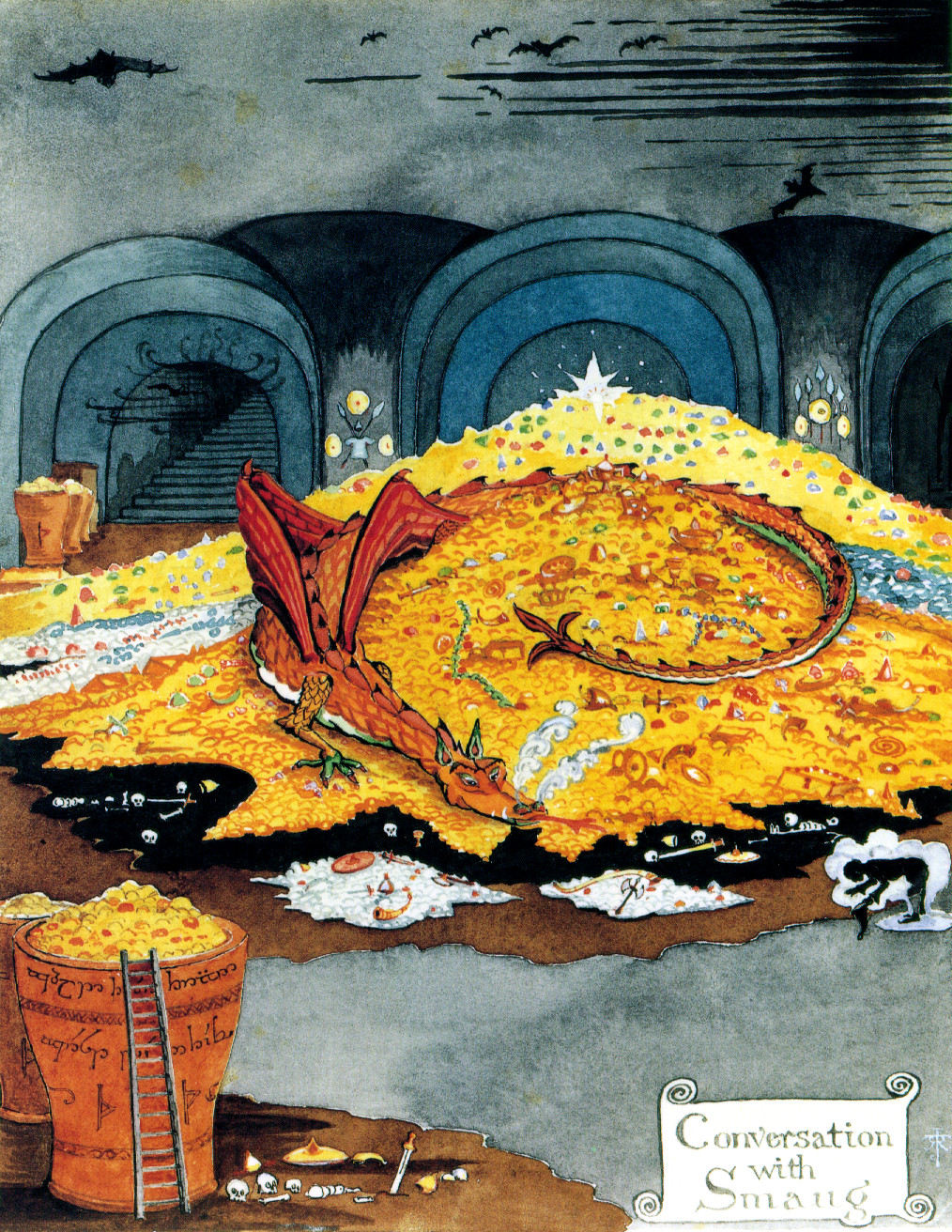
If you look for the name “Bladorthin” in The Annotated Hobbit (our standard source), you will find it only once, on page 287, where Thorin and Balin discuss what they can remember of the great hoard of the Lonely Mountain.

bilbowithsmaug

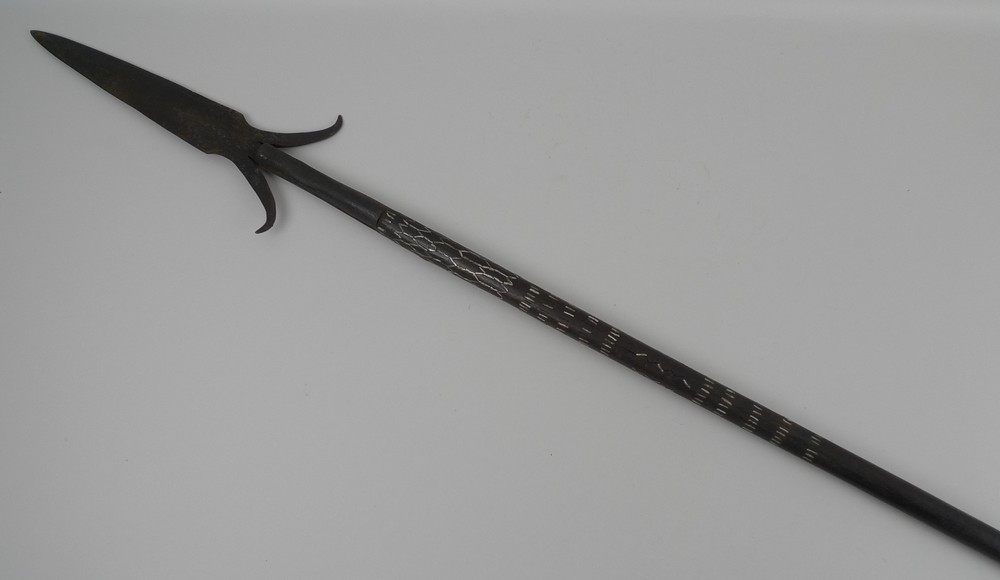
This includes not only the usual golden items and jewels, but also what appears to have been a military consignment, “the spears that were made for the armies of the great King Bladorthin (long since dead), each had a thrice-forged head and their shafts were inlaid with cunning gold, but they were never delivered or paid for.”

IMG_1566

thames spearhead1 img01

292_183

Who this king was and why he was arming his men with what appear to be deluxe weapons is a mystery and probably forever unsolved. This is likewise true for the original Bladorthin, who exchanges his name for that of the head dwarf in the first drafts, Gandalf, just as the head dwarf loses his name, Gandalf, to become Thorin. Why does Tolkien make the shift?

If neither of these can be answered, perhaps we can step back a little to wonder why Bladorthin, the king, is in The Hobbit at all?

A strongly-marked feature of The Lord of the Rings is the sense of age, of great time having passed. Part of this comes from Tolkien’s own sense of history, part from living in a place where things like stone circles

stonehenge

and Roman fortifications

hadrianswallL_tcm4-553745

let alone more recent things, like castles

Beaumaris_Castle

Beaumaris Aerial North Castles Historic Sites

are everywhere to be seen every day.

Part of it, too, comes from Tolkien’s seemingly-unquenchable desire to add to what he had created, providing more and more and more context practically per page.

What might be seen as obsessive, or nearly, however, adds what we might call convincing texture, and in two ways: on the one hand, it makes the story that much more vivid because it’s so much more detailed, and, on the other, it gives it weight: this is not a tale of yesterday, but of a long ago, even if not a long ago from the world of the Neolithic or Romans or Edward I.

This sense of age comes from a number of elements, including not only the idea that the text has been translated from a manuscript, a handwritten text from a pre-Gutenberg age, but also from the landscape which, like Tolkien’s own mid-20th-century Britain, is full of visible reminders of the past–

argonath+hildebrandt

In fact, not long after the publication of The Hobbit, in 1937, a major uncovering of the English Anglo-Saxon past took place near the coast, in Suffolk, at a place called Sutton Hoo. Here, a series of mounds

03 Sutton Hoo, several mounds, c_1983_jpg

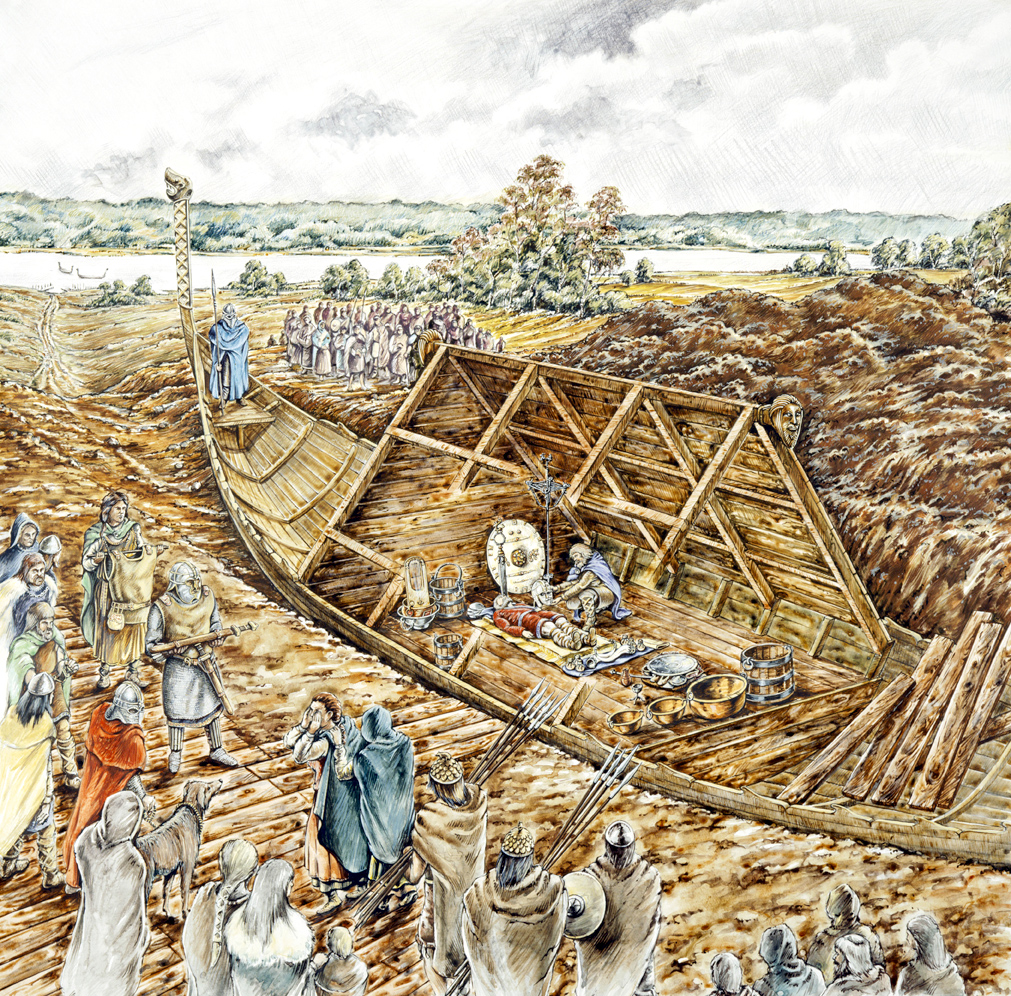
yielded a ship burial

sutton_h

Sutton Hoo, Woodbridge, Suffolk.  Reconstruction drawing of the Sutton Hoo ship burial in 620 or 630 - by Peter Dunn (English Heritage Graphics Team).     Date: circa 620

with nothing short of a hoard, including such items as these pieces from a purse

0523787e795fd30ca6116541512926f0

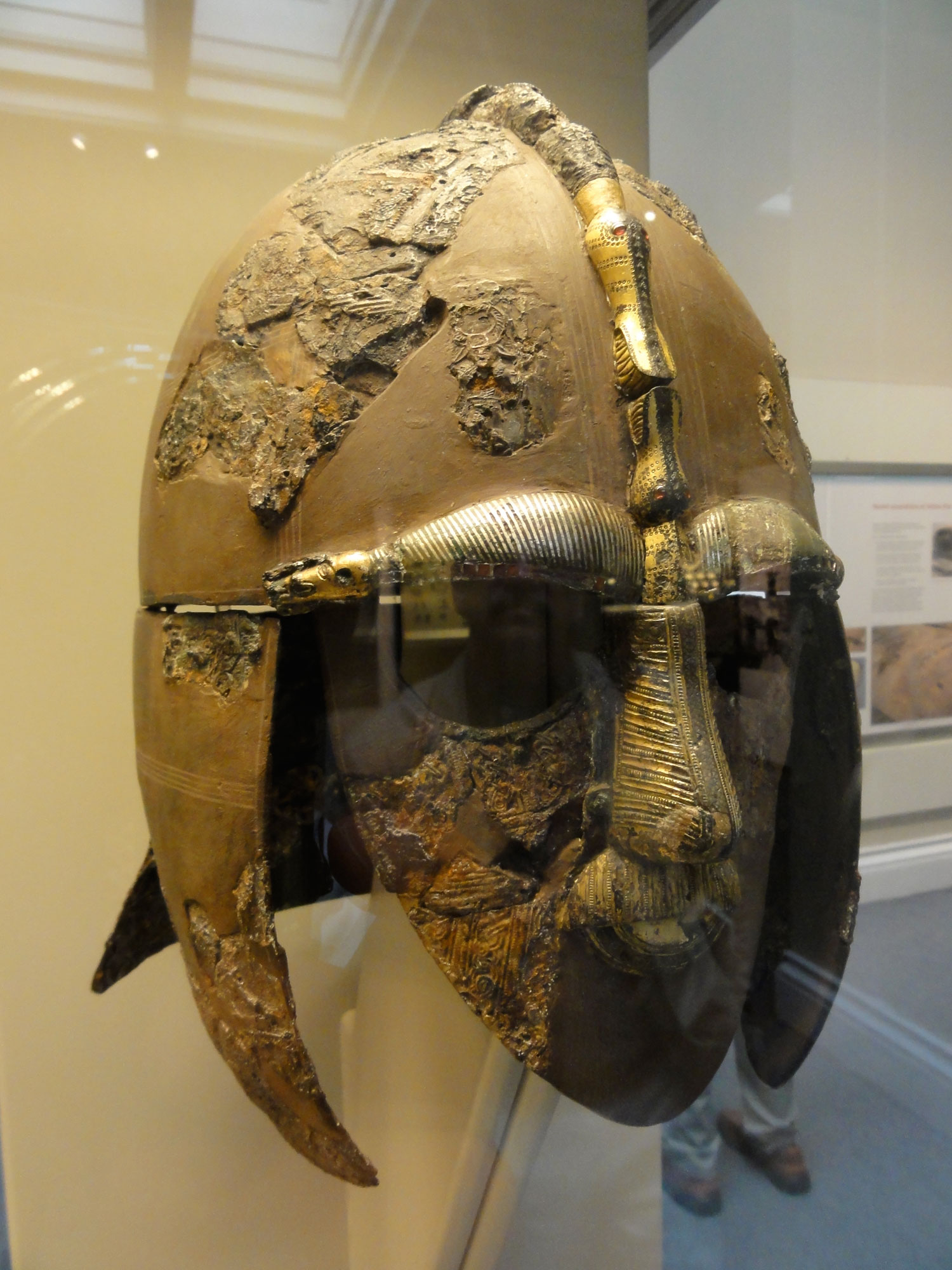
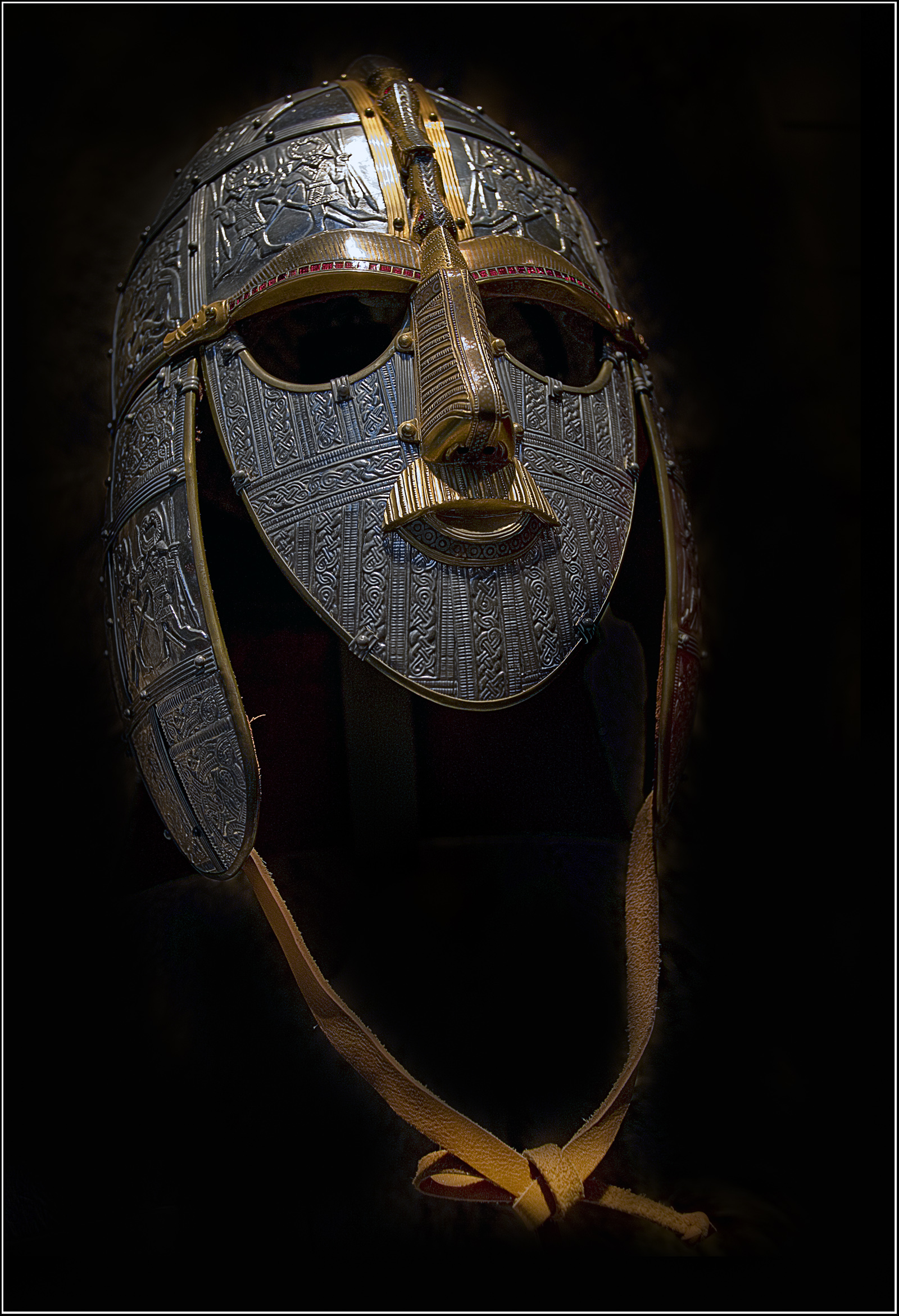
and a helmet.

sutton-hoo

2008-05-17-SuttonHoo.2

(And, since then, it turns out that the area is an extensive cemetery, which, though much plundered, has yielded many other finds.)

athelstan-albums-general-picture2865-sutton-hoo-1

Although Tolkien doesn’t mention this discovery in his selected letters, it would be difficult to imagine that he hadn’t seen something about it: it was even featured in the US National Geographic, in the year of discovery, 1939. Unfortunately, who the man buried there was appears impossible to say, leaving one aspect unknown, and all of the valuables simply generic Anglo-Saxon. (The theory now is that he is the early 7th-c AD ruler, Raedwald, or his son/step-son, Sigeberht.)

The Hobbit, written earlier in terms of years and even earlier, perhaps, in terms of literary sophistication, has, in comparison, much less depth. Much of the backdrop is, particularly in comparison, fairy-tale flat, without all of those levelsl of history.

But then there is Bladorthin.

That mound of wealth, extending beyond the sleeping Smaug is initially described as:

“…on all sides stretching away across the unseen floors, lay countless piles of precious things, gold wrought and unwrought, gems and jewels, and silver red-stained in the ruddy light.” TH 270

This is impressive enough to wake a kind of primal greed in Bilbo:

“His heart was filled and pierced with enchantment and with the desire of dwarves; and he gazed motionless, almost forgetting the frightful guardian, at the gold beyond price and count.” TH 271

Imagine, then, that such a hoard—like Sutton Hoo, or the more recent—and astonishing—Staffordshire Hoard (see the link here)

stafforshire hoard

could have names attached to some of its pieces, if not to the hoard in general. Thorin and Balin, in their reminiscing, combine general description with some specific detail, as well as identifying several one-time object owners:

“…shields made for warriors long dead; the great golden cup of Thror, two-handed, hammered and carven with birds and flowers whose eyes and petals were of jewels; coats of mail gilded and silvered and impenetrable; the necklace of Girion, Lord of Dale, made of five hundred emeralds green as grass, which he gave for the arming of his eldest son in a coat of dwarf-linked rings the like of which had never been made before, for it was wrought of pure silver to the power and strength of triple steel. But fairest of all was the great white gem, which the dwarves had found beneath the roots of the Mountain, the Heart of the Mountain, the Arkenstone of Thrain.” TH 287

Just as places in Middle-earth, by having history, are deepened, the same would be true for artefacts: not just a necklace, but Girion’s necklace, not just a golden cup, but Thror’s cup, and not just spears, but spears commissioned by Bladorthin, a king of long ago.

Thus, although Bladorthin’s history may remain a mystery outside The Hobbit, what history there is gives greater depth, narrative texture, to this early vision of Middle-earth and to the story of Bilbo, in particular.

Thanks, as ever, for reading.

MTCIDC

CD

Fairy Tale to Bill of Sale

19 Wednesday Aug 2015

Posted by Ollamh in Economics in Middle-earth, Fairy Tales and Myths, J.R.R. Tolkien

≈ Leave a comment

Tags

Alice in Wonderland, Baggins, Bilbo, Contract, Dragon, Dwarves, Economics, Elves, Fairy Tale, Fantasy, Goblins, Hoard, Laketown, Middle-earth, Mirkwood, Odysseus, On Fairy Stories, Smaug, The Hobbit, The Odyssey, Tolkien

Dear Readers,

Welcome, as always!

Recently, when we discussed the economics of Middle-earth, Tolkien told us that he was not entirely ignorant about such matters, saying “…the situations are so devised that economic likelihood is there and could be worked out”. LT, 296

So that’s what we’ve set out to do in this posting, working out something of those economics in a modest way.

The Hobbit, as everyone knows, began as a story for his children, set in a fairytale world of elves, goblins, dwarves, and a dragon—the sorts of things which, in Tolkien’s essay “On Fairy Stories”, are derived from fantasy, which is “a natural human activity. It certainly does not destroy or even insult Reason,” but enhances it, lest fantasy become mere “Morbid Delusion” (which, later in the essay, Tolkien links with a work like Alice in Wonderland).

But something begins to happen, even early on, when Bilbo signs a contract before setting out for his adventure—an odd start for a fairytale hero who, traditionally, has to prove himself.  The story proceeds for some time in fairy tale mode, but then, when the party loses everything in Mirkwood, it’s necessary for Bilbo and Company to resupply and here the story moves seriously from a fairytale world to capitalism, as the fairy tale quest evolves into a commercial venture.

To replace lost materiel, the company turns to the people of Laketown,

Laketown

who provide it–and clearly do so on speculation, since the Dwarves have nothing to offer but promises.

The fairytale then seems to resume.  The party reaches the mountain, gets in, the dragon wakes–but then things go very wrong, at least for the investors, as Smaug, easily putting together that two and two equal Laketown, sets off to destroy it and is destroyed himself, in the process.  And then the fairy tale comes apart completely in a potential war over economic resources and compensation for damage caused during the investment:  Laketowners versus Dwarves, which escalates when Elves stake a claim and then Dwarves come to reenforce Dwarves and then, just to keep things in flux, a goblin army arrives. One almost wonders whether the Eagles, when they arrived, have invested in Laketown bonds and are expecting to cash them in, with interest!

When all of this is resolved, we might think that we’ve returned to the fairy tale world once more:  Bilbo, with his share of the hoard, sets off for home, where happily ever after lies–or does it?

OdysseusSuitors

In The Odyssey, Odysseus comes home to find his house in the hands of suitors, and must deal with them with the help of a goddess—very much a folktale. Bilbo comes home to find that his house and goods have just been auctioned off, and has to retrieve his happy ending by buying back his own things. That initial contract seems to have haunted the story, even to this moment.

Fantasy for Tolkien was, “founded on the harsh recognition that things are so in the world as they appear under the sun”—one of those things was economics, something which Bilbo may have found almost as unavoidable as a vengeful dragon.

What do you think, dear readers?

As always, thank you for reading,

MTCIDC,

CD

Ringed In

05 Wednesday Aug 2015

Posted by Ollamh in J.R.R. Tolkien

≈ Leave a comment

Tags

Anglo-Saxon, Bilbo, Deagol, Dwarves, Elves, Faramir, Frodo, Gandalf, Gollum, Gondor, Isildur, Kenning, Lorien, Men, Nazgul, Ring, Ring-bearer, Roman senator, Romans, Sam, Sauron, Silmaril, The Hobbit, The Lord of the Rings, Tolkien, Tom Bombadil

Dear Readers, as always, welcome!

permcol5tn

Everyone at all interested in the works of Tolkien knows this passage (and many could recite it by heart, we’re sure):

“Three Rings for the Elven-kings under the sky,

     Seven for the Dwarf-lords in their halls of stone,

Nine for Mortal Men doomed to die,

     One for the Dark Lord on his dark throne

In the Land of Mordor where the Shadows lie.

     One Ring to rule them all, One Ring to find them,

     One Ring to bring them all and in the darkness bind them

In the Land of Mordor where the Shadows lie.” LoTR 50.

But why a ring? Since the Ring is about power, why not something which looks like power:

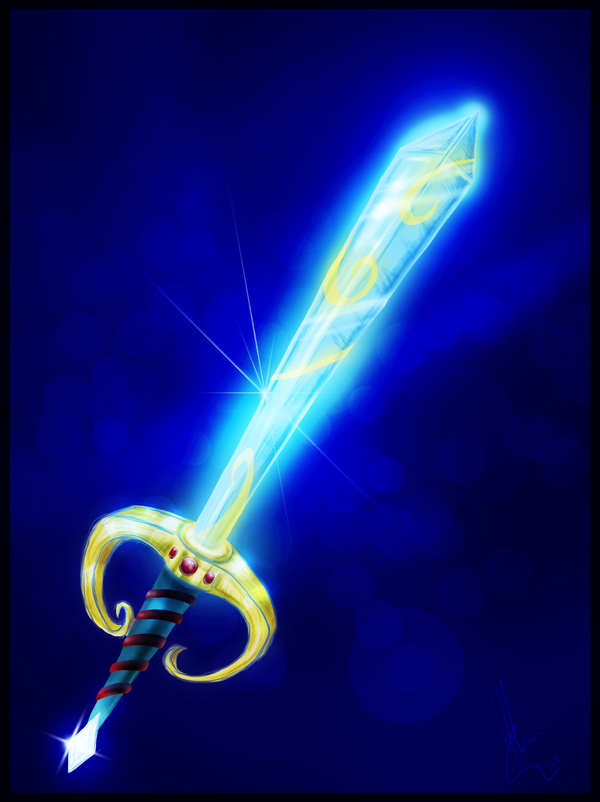
a sword, for example

ferb__s_magic_sword_by_kicsterash-d4clz45

or a crown

WingedAphroditeCrown_front

or even, considering Tolkien’s own mythology, a silmaril.

Beren_silmaril

In The Hobbit of 1937, the Ring was originally simply a magic ring right out of folk and fairy tales, with apparently one gift, invisibility, for which Gollum treasures it.

Alan%20Lee%20-%20The%20Hobbit%20-%2019%20-%20Riddles%20in%20the%20dark

As is well known, Tolkien reconsidered its powers and, as The Lord of the Rings grew, the ring became the Ring, and the central focus of the sequel to the earlier book. By the beginning of the 1950s, he states (in a letter to Milton Waldman dated by Carpenter/C. Tolkien as “probably written late in 1951” LTR 143):

“the primary symbolism of the Ring, as the will to mere power, seeking to make itself objective by physical force and mechanism, and so also inevitably by lies…” LTR 160.

(by “mere” we imagine that Tolkien is using the word here in its original Latin—merus –a –um— sense of “pure/unmixed”)

Although this tells us something about the force within the Ring, it doesn’t really explain why a ring.

Rings are an ancient status symbol, certainly. The Romans used them as one of the ways to show the class of a person: senators wore gold ones (although there is an old story that, originally, Roman senators wore rings made of iron)

RomeSenators2romanring

and the other free classes wore any metal they chose.   Tolkien would have had a vivid idea of the inherent status in a ring from Old English, as one of the kennings (poetic metaphorical phrases) for a great lord was “ring-giver”

asring

—just as Sauron gives rings to the ancient kings and so holds their allegiance long after their natural lives should have ended.    

bwnazgul

This is echoed in “and in the darkness bind them” , which brings us back to those verses with which we began.

In them, the Ring’s powers are clearly laid out (rather like Saruman’s claimed goals, “Knowledge, rule, order”): rule, find, bring, bind.

As Gandalf tells us, the primary reason for the creation of the Ring was, in fact, to rule, both the other rings and, through them, Middle-earth and its peoples: Elves, Dwarves, Men. To do so, Sauron endowed the Ring with much of his own power, a perfect example of his arrogance, depriving himself of power he might need, clearly convinced that he would suffer no harm from its lack.

As he endows the Ring, it seems that he—intentionally?—passed on to it a small bit of his self-will. Unlike inanimate objects in our world (and we presume in Middle-earth, too), the Ring not only shows purpose, but can act upon it.

As Gandalf tells Frodo:

“A Ring of Power looks after itself…It was not Gollum, Frodo, but the Ring itself decided things. The Ring left him…The Ring was trying to get back to its master.” LotR 55.

To do so, it uses another of its powers, it brings people to use as vehicles, discarding them when they have served its purpose.

“It had slipped from Isildur’s hand,” says Gandalf (a hand already under the Ring’s control, as it couldn’t force itself to destroy the Ring when it had the chance) and betrayed him; then when a chance came it caught poor Deagol, and he was murdered and after that Gollum, and it had devoured him. It could make no further use of him: he was too small and mean…So now, when its master was awake once more…it abandoned Gollum, only to be picked up by…Bilbo.” LotR 55-56.

To acquire such vehicles, the Ring uses a third power, finding. Gandalf’s list suggests that that power entails some innate ability to sense who will be most attracted to it. They appear to be rather a wide assortment, from the heir to the throne of Gondor to two proto-hobbits. And there are also those not on Gandalf’s list: Saruman and even, to some degree, Galadriel. As for Gandalf himself, he, like the Lady of Lorien, is wise enough to avoid the ultimate temptation, as is Faramir, perhaps because, as his father accuses him, he has been Gandalf’s pupil and has acquired some of his awareness both of events and of himself.

Our list would not be complete, however, without Frodo and Sam. It is hard to imagine that the Ring has picked them: Frodo, after all, has inherited it. This doesn’t mean that he is not influenced by it, even, at the end, sounding more like Isildur than himself in his refusing to destroy it, suggesting that, even by inheritance, someone can be found, brought, and ruled. And Sam? He holds it only briefly, but surrenders it so easily that it appears to have little ultimate power over him, something which he shares with Tom Bombadil, perhaps because both are grounded—quite literally—in Middle-earth. It is no surprise that Galadriel gives him a gift for growing things and that, in his consolation of Sam, Frodo says that he will be “the most famous gardener in history” (LoTR 1029). As for Bombadil, it would appear that the same sort of protection which keeps Sam from being found, brought, and ruled keeps him safe. When he holds up the Ring and looks through it, for a moment we might see that, for him, the symbolism of the “will to mere power” means nothing and, instead, he sees it only as an empty metal band.

For others, from the Nazgul to Frodo, who never feels whole again, the fourth power, binding, has done its job and also perhaps, in doing so, answers the question, why a ring?

Heavy-6mm-D-Shape-18k-Yellow-Gold-Wedding-Ring

What better binder than a perfect circle, seemingly blank, but with a hidden message, almost a spell, and which, when put on, pulls you from the daylight world and, which, worn too long, can keep you there forever?

Thanks, as ever, for reading.

MTCIDC

CD

Slings and Arrows

29 Wednesday Jul 2015

Posted by Ollamh in J.R.R. Tolkien, Military History of Middle-earth

≈ Leave a comment

Tags

Charles Goodyear, Civil War soldiers, Dwarves, Gandalf, Goliath, Industrial Revolution, Isengard, Mr. Baggins, Ori, Pipeweed, Potatoes, Sling, Slingshot, The Hobbit, Tolkien, Tomatoes, Vulcanized

Dear Readers,

“Cold chicken and tomatoes!” shouted Gandalf in 1937 to a flummoxed Mr. Baggins.

“Cold chicken and pickles!” shouted Gandalf in 1966 to a still-flummoxed Mr. Baggins.

Something has happened in those 30 years– and it isn’t just a change in the Hobbit menu.

It’s about anachronism– what is appropriate within a time period and its place– and how Tolkien, in retrospect, came to believe that tomatoes didn’t grow in Middle-earth.

This is odd, one might think, because potatoes and tobacco (only called such in The Hobbit and always “pipeweed” in The Lord of the Rings) do grow there. (Although perhaps only in the Shire? Gollum, a one-time resident of the banks of the Anduin, certainly doesn’t recognize potatoes.)

We’ll never know why the tomatoes disappeared, while the other two remained, they all, being products of New World exploration and importation. After all, all three are agricultural produce and, depending on climate and soil, equally possible.

But then, there’s that slingshot. 

It’s not in The Hobbit, but in P. Jackson’s The Hobbit. Ori the Dwarf is armed with it, we suppose in an attempt to differentiate him from the other Dwarves, and to suggest his age in relation to them (although he appears to be perhaps 150 years old, more or less– see the Tolkien Gateway citation for “Ori” for further information).

OriSlingshot

Consider, however, what gives a slingshot its zing: a big rubber band.

Slingshot_(weapon)

This rubber band is a strip of vulcanized rubber, the process for making such rubber only being patented in our world in 1844 by Charles Goodyear.

Goodyear

(A process which allowed Civil War soldiers to wear rain ponchos.)

Poncho

Unlike tomatoes, vulcanization represents a further idea in the ongoing Industrial Revolution– an event which did not take place in the Third Age of Middle-earth. (We might see events at Isengard as perhaps signaling pre-industrialization, of the sort one saw in the earlier 18th century in western Europe and particularly in Great Britain.)

Bell Making, from the 'Encyclopedia' by Denis Diderot (1713-84) 1751-72 (engraving) (b/w photo)

Instead of a comparatively recent slingshot, why not use a well-known missile weapon of the ancient world, the sling?

Slingweapon

Instead of the tension of vulcanized rubber, this uses arm muscle and physics to propel its deadly ammunition– just ask Goliath. 

David-and-Goliath-vba

(For any number of examples of the sling in action, just google ‘sling” on YouTube.)

For us, then, this seems to be a choice. And maybe a significant one. Either, like Tolkien, to consider and reconsider carefully each item and to decide for or against, or simply to grab something convenient and use it, apparently not caring if it were appropriate for Middle-earth or not.

It’s easy to see where we stand on this, so we leave it to you, dear readers: which would you choose?

Thanks, as ever, for reading,

MTCIDC,

CD

← Older posts
Newer posts →

The Doubtful Sea Series Facebook Page

The Doubtful Sea Series Facebook Page

  • Ollamh

Categories

  • Artists and Illustrators
  • Economics in Middle-earth
  • Fairy Tales and Myths
  • Films and Music
  • Games
  • Heroes
  • Imaginary History
  • J.R.R. Tolkien
  • Language
  • Literary History
  • Maps
  • Medieval Russia
  • Military History
  • Military History of Middle-earth
  • Narnia
  • Narrative Methods
  • Poetry
  • Research
  • Star Wars
  • Terra Australis
  • The Rohirrim
  • Theatre and Performance
  • Tolkien
  • Uncategorized
  • Villains
  • Writing as Collaborators
Follow doubtfulsea on WordPress.com

Across the Doubtful Sea

Recent Postings

  • Towering January 28, 2026
  • Tolkien Among the Indians January 21, 2026
  • Thin and Stretched January 14, 2026
  • Through a glass… January 7, 2026
  • Heffalumps? December 31, 2025
  • We Three Kings December 24, 2025
  • A Moon disfigured December 17, 2025
  • On the Roads Again—Once More December 10, 2025
  • (Not) Crossing Bridges December 3, 2025

Blog Statistics

  • 105,579 Views

Posting Archive

  • January 2026 (4)
  • December 2025 (5)
  • November 2025 (4)
  • October 2025 (5)
  • September 2025 (4)
  • August 2025 (4)
  • July 2025 (5)
  • June 2025 (4)
  • May 2025 (4)
  • April 2025 (5)
  • March 2025 (4)
  • February 2025 (4)
  • January 2025 (5)
  • December 2024 (4)
  • November 2024 (4)
  • October 2024 (5)
  • September 2024 (4)
  • August 2024 (4)
  • July 2024 (5)
  • June 2024 (4)
  • May 2024 (5)
  • April 2024 (4)
  • March 2024 (4)
  • February 2024 (4)
  • January 2024 (5)
  • December 2023 (4)
  • November 2023 (5)
  • October 2023 (4)
  • September 2023 (4)
  • August 2023 (5)
  • July 2023 (4)
  • June 2023 (4)
  • May 2023 (5)
  • April 2023 (4)
  • March 2023 (5)
  • February 2023 (4)
  • January 2023 (4)
  • December 2022 (4)
  • November 2022 (5)
  • October 2022 (4)
  • September 2022 (4)
  • August 2022 (5)
  • July 2022 (4)
  • June 2022 (5)
  • May 2022 (4)
  • April 2022 (4)
  • March 2022 (5)
  • February 2022 (4)
  • January 2022 (4)
  • December 2021 (5)
  • November 2021 (4)
  • October 2021 (4)
  • September 2021 (5)
  • August 2021 (4)
  • July 2021 (4)
  • June 2021 (5)
  • May 2021 (4)
  • April 2021 (4)
  • March 2021 (5)
  • February 2021 (4)
  • January 2021 (4)
  • December 2020 (5)
  • November 2020 (4)
  • October 2020 (4)
  • September 2020 (5)
  • August 2020 (4)
  • July 2020 (5)
  • June 2020 (4)
  • May 2020 (4)
  • April 2020 (5)
  • March 2020 (4)
  • February 2020 (4)
  • January 2020 (6)
  • December 2019 (4)
  • November 2019 (4)
  • October 2019 (5)
  • September 2019 (4)
  • August 2019 (4)
  • July 2019 (5)
  • June 2019 (4)
  • May 2019 (5)
  • April 2019 (4)
  • March 2019 (4)
  • February 2019 (4)
  • January 2019 (5)
  • December 2018 (4)
  • November 2018 (4)
  • October 2018 (5)
  • September 2018 (4)
  • August 2018 (5)
  • July 2018 (4)
  • June 2018 (4)
  • May 2018 (5)
  • April 2018 (4)
  • March 2018 (4)
  • February 2018 (4)
  • January 2018 (5)
  • December 2017 (4)
  • November 2017 (4)
  • October 2017 (4)
  • September 2017 (4)
  • August 2017 (5)
  • July 2017 (4)
  • June 2017 (4)
  • May 2017 (5)
  • April 2017 (4)
  • March 2017 (5)
  • February 2017 (4)
  • January 2017 (4)
  • December 2016 (4)
  • November 2016 (5)
  • October 2016 (6)
  • September 2016 (5)
  • August 2016 (5)
  • July 2016 (5)
  • June 2016 (5)
  • May 2016 (4)
  • April 2016 (4)
  • March 2016 (5)
  • February 2016 (4)
  • January 2016 (4)
  • December 2015 (5)
  • November 2015 (5)
  • October 2015 (4)
  • September 2015 (5)
  • August 2015 (4)
  • July 2015 (5)
  • June 2015 (5)
  • May 2015 (4)
  • April 2015 (3)
  • March 2015 (4)
  • February 2015 (4)
  • January 2015 (4)
  • December 2014 (5)
  • November 2014 (4)
  • October 2014 (6)
  • September 2014 (1)

Blog at WordPress.com.

  • Subscribe Subscribed
    • doubtfulsea
    • Join 78 other subscribers
    • Already have a WordPress.com account? Log in now.
    • doubtfulsea
    • Subscribe Subscribed
    • Sign up
    • Log in
    • Report this content
    • View site in Reader
    • Manage subscriptions
    • Collapse this bar
 

Loading Comments...