• About

doubtfulsea

~ adventure fantasy

Tag Archives: Christopher Nolan

An Homeric PS

16 Wednesday Sep 2026

Posted by Ollamh in Uncategorized

≈ Leave a comment

Tags

agriculture, Christopher Nolan, christopher-nolan, cyclops, Film, Homer, kleos, movies, Polyphemus, Poseidon, review, The Odyssey, Tireisias

As always, dear readers, welcome.

I earlier posted a review of Christopher Nolan’s Odyssey (see “Out of Work Athena”, 12 August, 2026),
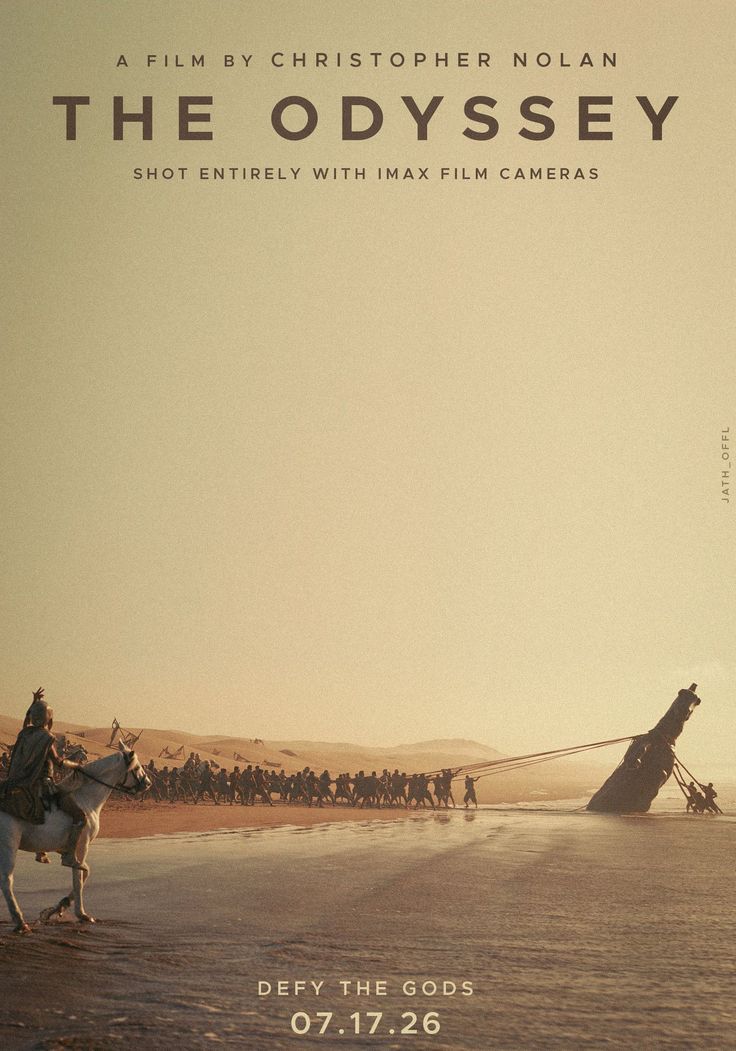
but I’ve thought a lot about the film since and I felt that it might be helpful to add a second note on the subject–about the film’s ending, in particular.

Here’s what the Wiki article has to say:

“After the meal, Odysseus, still disguised, confesses to Penelope his guilt for violating Zeus’ law during the sacking of Troy, desecrating Athena‘s statue after killing her priestess (whose form Athena assumed in visions), and initiating the collapse of the Bronze Age… After the remaining suitors surrender, Odysseus cedes his throne to Telemachus and leaves with Penelope to seek peace in exile. Sailing west to honor his fallen soldiers, the couple expect civilization’s renewal and muse that time will forget Odysseus’ mistakes.”

I was surprised when I read this and even more surprised when I saw it acted out on the screen.  This may be “Christopher Nolan’s Odyssey”, but it’s not “Homer’s”.  And that subtitle on the poster, “Defy the Gods” shows the major difference, as I began to demonstrate in my earlier posting.  Athena is Odysseus’ patron and therefore the last god he would “defy”, but it’s because of another god that Odysseus will perform the action which is first laid out for him in the Otherworld by the seer Tireisias.
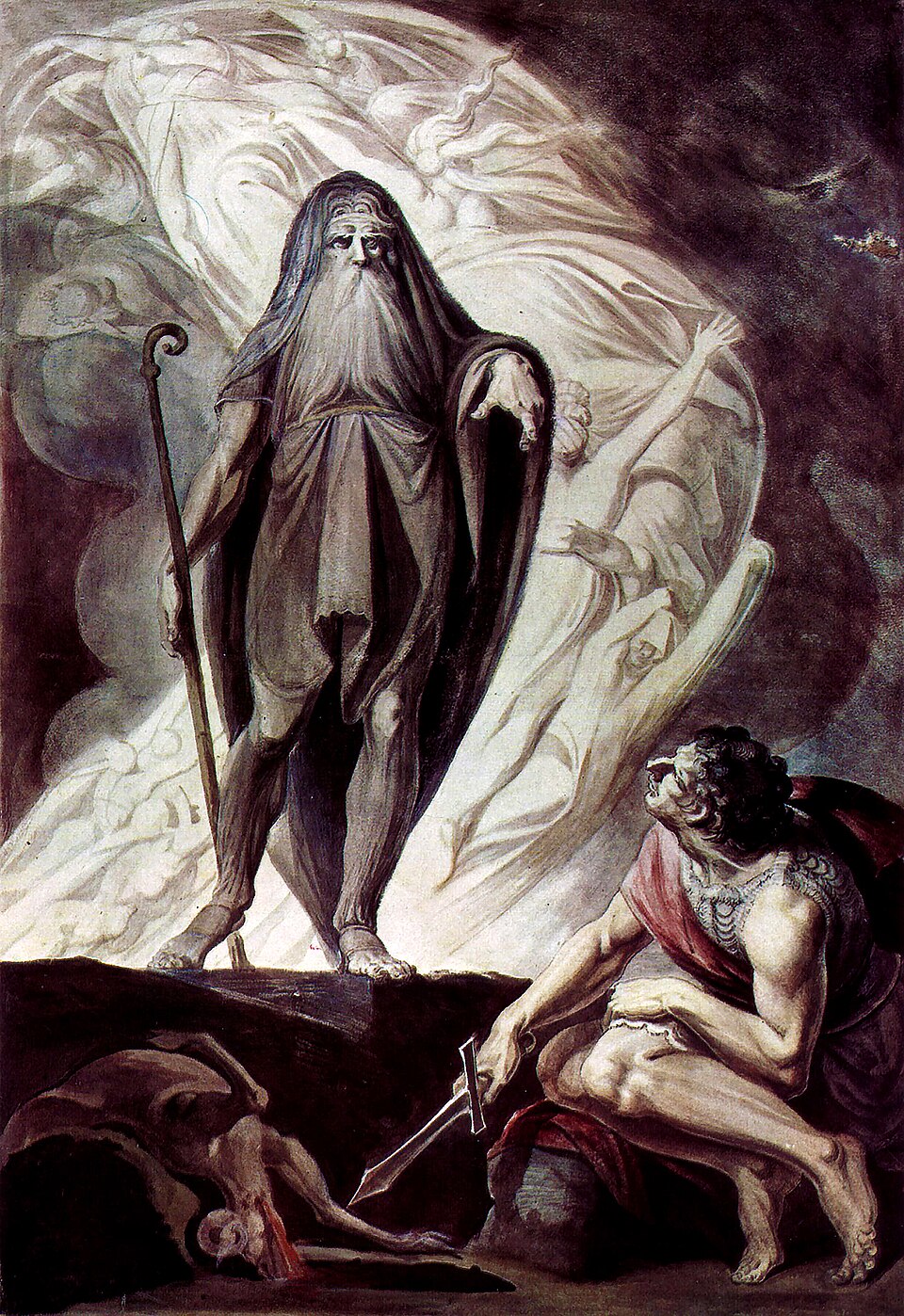
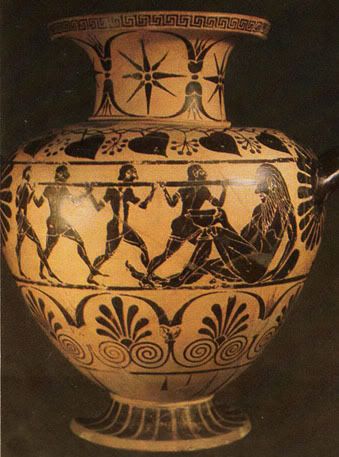
Odysseus’ trouble began in Book Nine, where Odysseus tells his Phaeacian audience (an important part of the story left out of the film) that, previously trapped by Polyphemus, the Cyclops, in the Cyclops’ cave, he has escaped after blinding him.
Groping his way to the shore in pursuit of the fleeing Odysseus, Polyphemus attempts to destroy him and his men by heaving the equivalent of a mountain top at them.
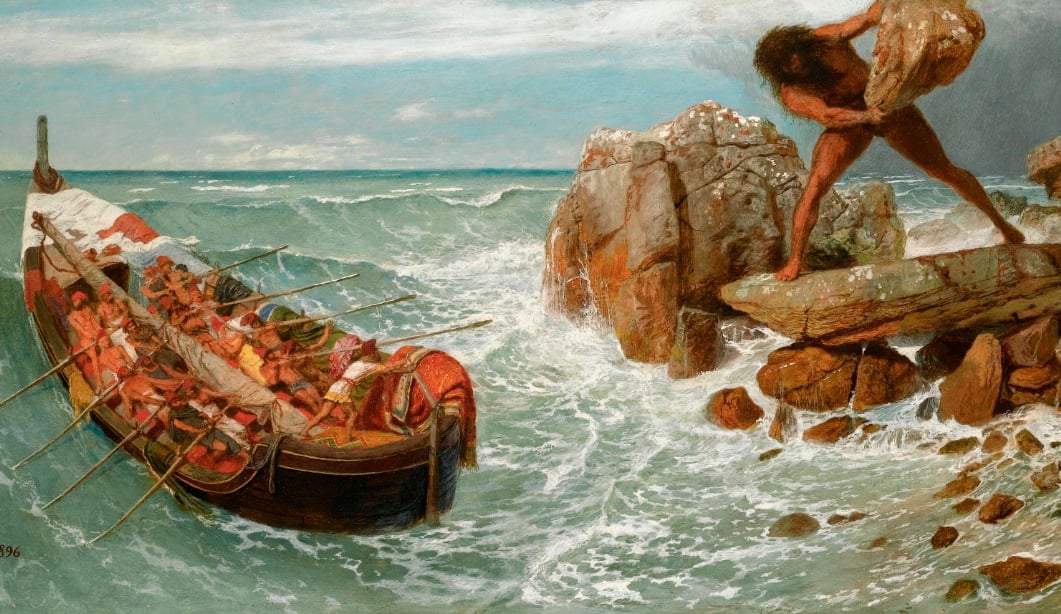
In the process of escaping, Odysseus does something which may seem rash, if not downright crazy, to us (and Odysseus’ crew would agree).  He shouts to the Cyclops:

“Κύκλωψ, αἴ κέν τίς σε καταθνητῶν ἀνθρώπων

ὀφθαλμοῦ εἴρηται ἀεικελίην ἀλαωτύν,

φάσθαι Ὀδυσσῆα πτολιπόρθιον ἐξαλαῶσαι,

υἱὸν Λαέρτεω, Ἰθάκῃ ἔνι οἰκίʼ ἔχοντα.”

(Od. 9.502–9.505—my translation)

“Cyclops, if any one of mortal men

Should ask [you] about the shameful blinding of [your] eye,

Say that city-destroying Odysseus blinded [it],

The son of Laertes, having his home on Ithaka.”

Doing so, Odysseus seems to have just handed over his name and address to his victim, even though the story makes it clear that Polyphemus’, by killing and eating a number of Odysseus’ men, deserved what he got.  (Polyphemus also violated the Greek custom of xenia, hospitality/guest-friendship, which, as Odysseus earlier had pointed out to him, was overseen by Zeus—unlike the completely imaginary “Zeus’ law”, which is mentioned more than once in the film.  Odysseus, by the way, when speaking to Polyphemus, is obeying another actual early Greek custom, if not “law”:  that of kleos.  This is a hard word to translate, meaning something like “reputation/fame”, and Odysseus, to add the escape of the Cyclops to it, must let his enemy know who tricked him, even though, in this case, it brings him and his men into mortal danger.)

Polyphemus, thwarted in destroying Odysseus there and then, prays to his father, Poseidon,
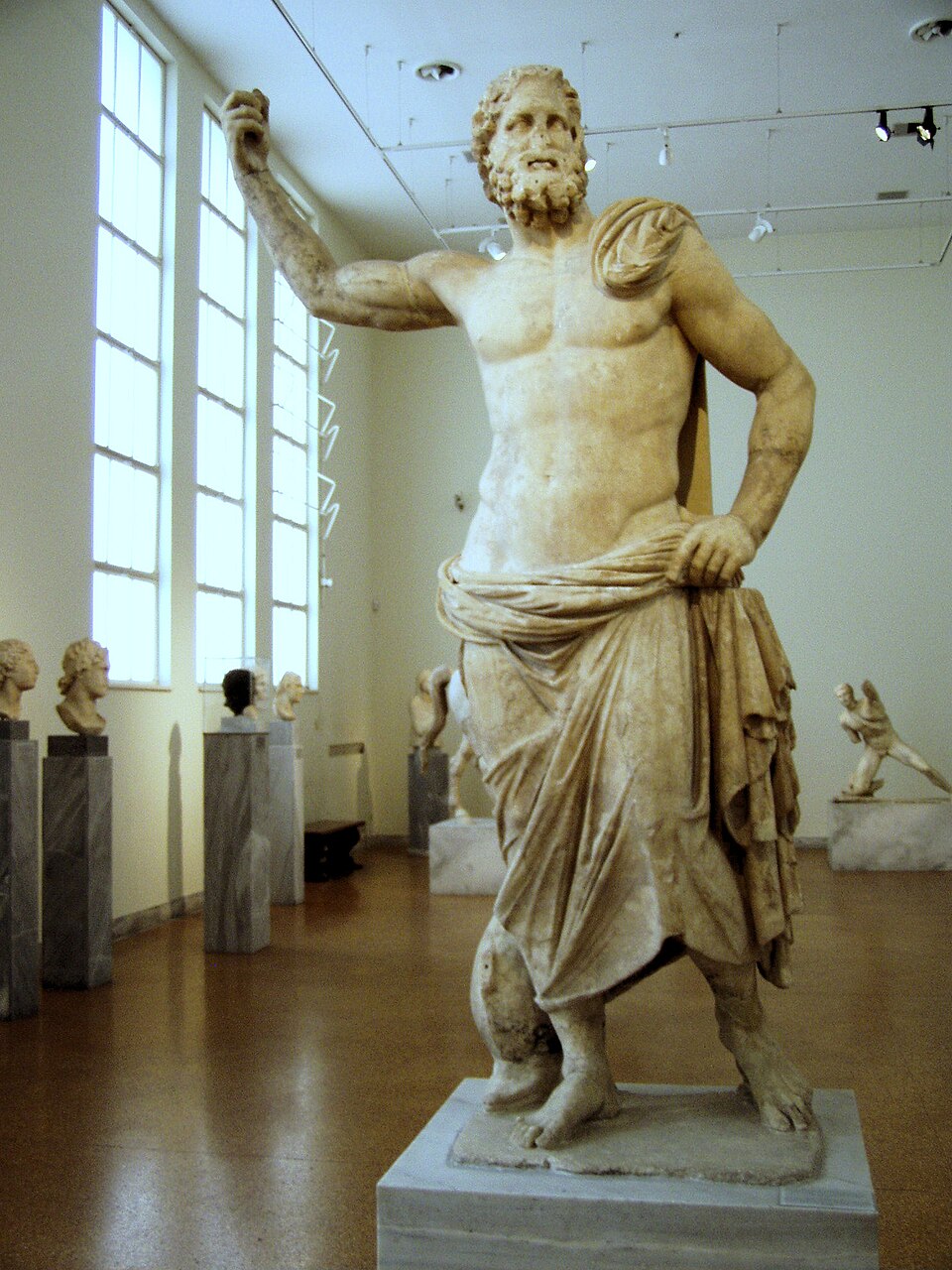
for revenge, something which is mentioned by Zeus at the beginning of Book One of the Odyssey (lines 68-75) when Athena approaches him for help in getting Odysseus out of the clutches of Calypso on the island of Ogygia and sent on his way home.  (Odysseus, by the way, hasn’t, as in the film, forgotten about home, stoked up on lotos, but, instead, grieves for it every day—see Book One, lines 55-59.) 

We then see Poseidon’s revenge told by Odysseus in Book Five, as Odysseus, aided by Calypso (through Zeus’ prompting via his messenger, Hermes), is attempting to get home via a homemade raft.  Poseidon spots the raft, with Odysseus on it, and works up a violent storm which partially destroys the raft and drops Odysseus into the sea before he can regain the wreckage, now at the mercy of the waves. (see Book Five, lines 282-332)

Odysseus survives, saved by the mysterious Phaeacians (whom I’ve mentioned earlier) and sent home by them, although Poseidon, annoyed by their helping Odysseus, turns the ship which carried Odysseus to stone as a punishment (see Book Thirteen, lines 125-165)

Odysseus is left with a very serious problem, however:  he lives on an island, among sea-faring people:  how will he ever be safe from Poseidon?  The answer lies in the directions which Tireisias gave him in their Otherworld meeting.  Once Odysseus has killed the suitors (all the suitors—unlike the film, Odysseus shows no mercy in the poem), Tireisias says:

“ἔρχεσθαι δὴ ἔπειτα λαβὼν ἐυῆρες ἐρετμόν,

εἰς ὅ κε τοὺς ἀφίκηαι οἳ οὐκ ἴσασι θάλασσαν

ἀνέρες, οὐδέ θʼ ἅλεσσι μεμιγμένον εἶδαρ ἔδουσιν·

οὐδʼ ἄρα τοί γʼ ἴσασι νέας φοινικοπαρῄους

οὐδʼ ἐυήρεʼ ἐρετμά, τά τε πτερὰ νηυσὶ πέλονται.

σῆμα δέ τοι ἐρέω μάλʼ ἀριφραδές, οὐδέ σε λήσει·

ὁππότε κεν δή τοι συμβλήμενος ἄλλος ὁδίτης

φήῃ ἀθηρηλοιγὸν ἔχειν ἀνὰ φαιδίμῳ ὤμῳ,

καὶ τότε δὴ γαίῃ πήξας ἐυῆρες ἐρετμόν,

ῥέξας ἱερὰ καλὰ Ποσειδάωνι ἄνακτι…”

(Od. 11.115–11.130—my translation)

“Go, then, having taken a broad[bladed] oar,

Until you reach those men who don’t know the sea,

[and] neither do they eat food mixed with salt

Nor yet do they know ships with painted bows [literally “purple cheeks”],

Nor broad[bladed] oars, [which] are the wings of ships.

And I will tell you a very clear sign [which] you won’t miss:

Whenever some traveler, meeting you,

Should say that you have a winnowing fan on your splendid shoulder,

Then, having stuck the broad[bladed] oar in the earth,

Having made fine sacrifices to the lord Poseidon…”

go home and continue making sacrifices to the gods.  And, having done so, Odysseus will have an easy death in old age and his people will be blessed.  Although Odysseus later relates this to Penelope (see Book Twenty-three, lines 248-284), we don’t see him do it in the poem, but he certainly doesn’t “sail west to honor his fallen soldiers” (why west?  And how does that “honor his fallen soldiers”?)

It’s clear, from Tireisias’ directions, that what Odysseus is meant to do to placate Poseidon includes getting as far away from the sea as he can—but what’s this business with the oar and a “winnowing fan”?
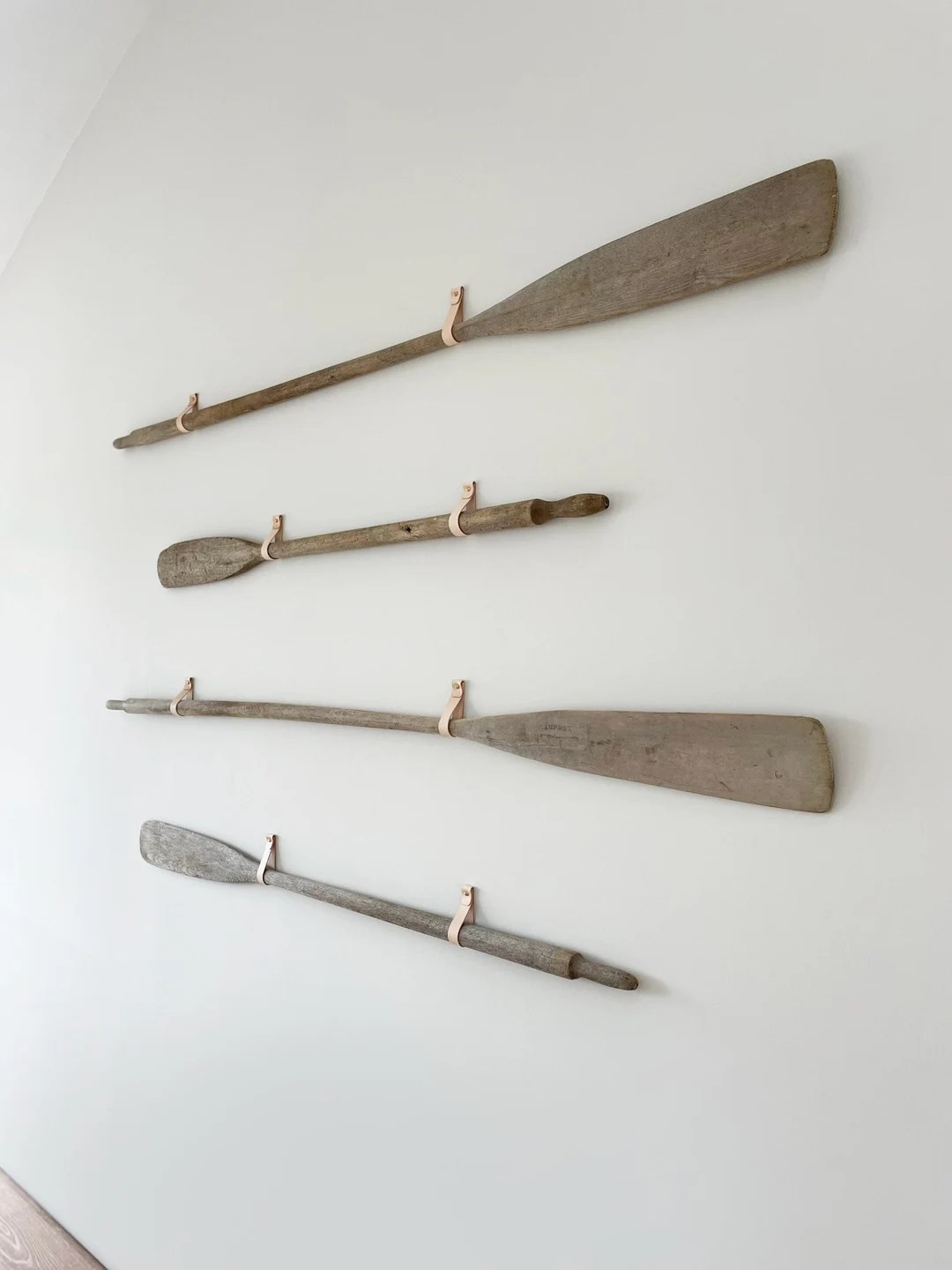
In earlier times, the process of producing flour was complex.  One had to:

1. harvest the grain,
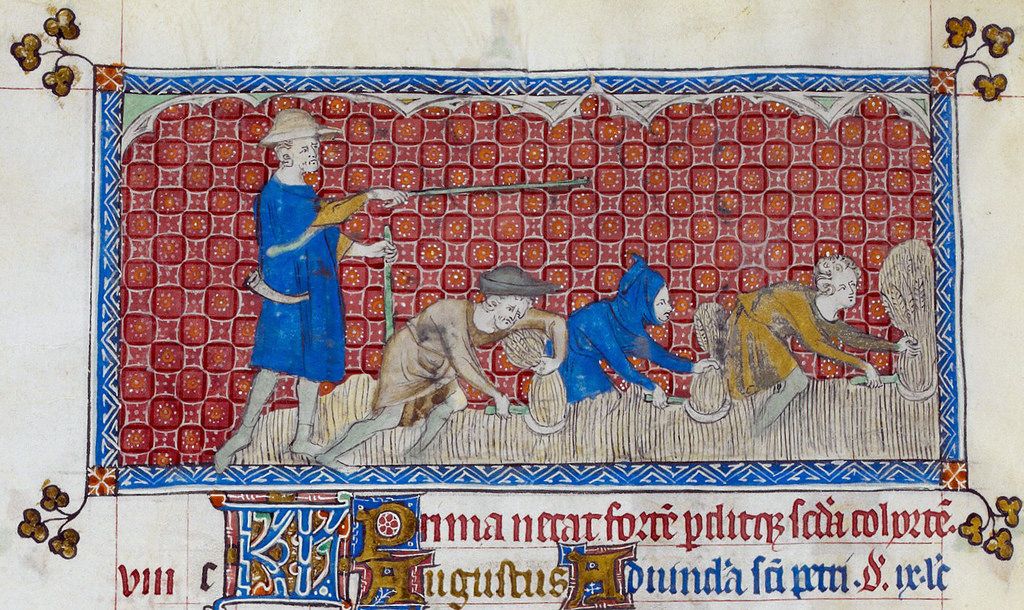
2. break the beards of grain off the stalks, called “threshing”,
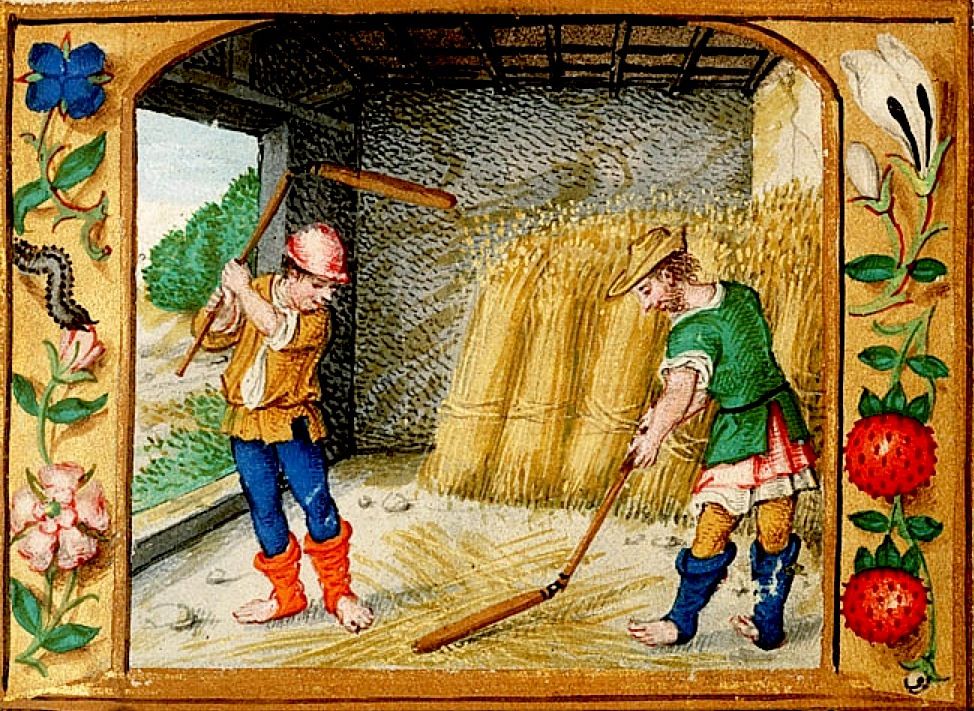
3. then, often by tossing it up, using the air to free the grain from the husks which cover it, called “winnowing”,
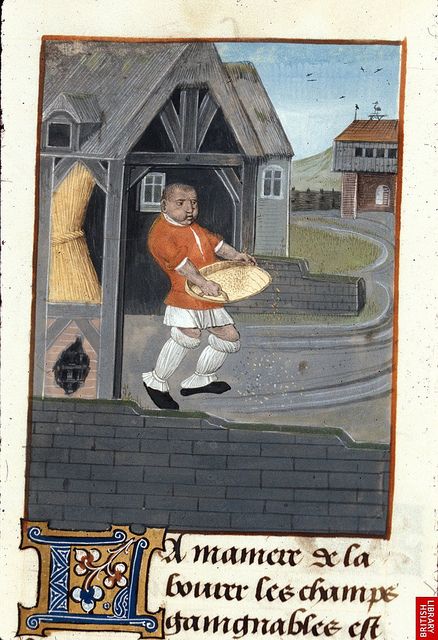
before grinding the final product into powder—flour.
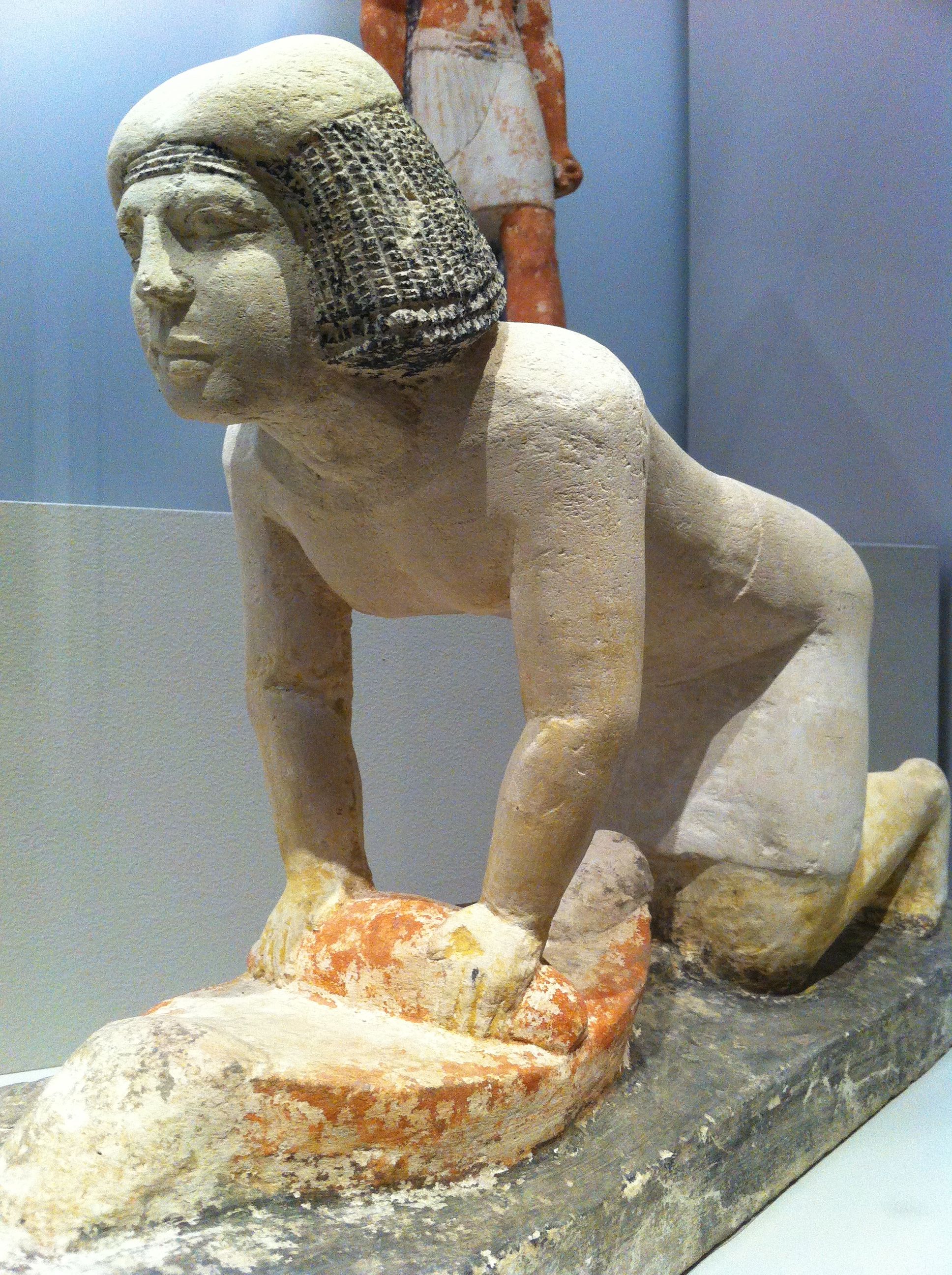
Winnowing could be done by tossing the grain in its husks into the air from a basket,
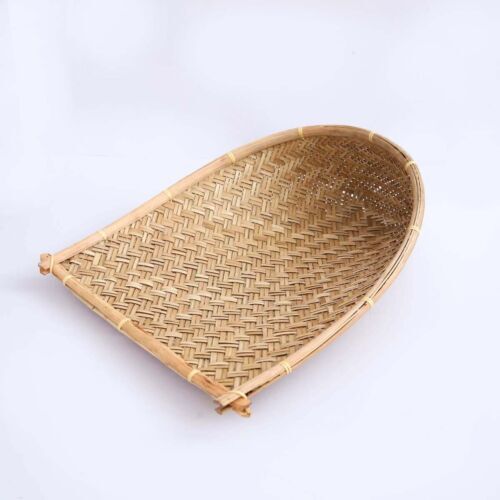
or by forking it into the air by a “winnowing fan”.

Probably because the fork had a long shaft, like an oar, Tireisias was suggesting that, meeting someone so far inland as to be ignorant of boats that he would confuse an oar with an agricultural tool, Odysseus would be safe from Poseidon’s natural element and could make his sacrifice to placate the god.

So—no abdication, no sailing west, nor restoration of civilization, but a godly man, so long protected by a goddess, now seeking peace by appeasing a god he has angered:  a very different and reverent story—and ending of the story–from Christopher Nolan’s, with its totally manufactured “defiance”.

Thanks for reading, as always,

Stay well,

Always check before assaulting someone—he might be related to a vengeful god,

And remember, as well, that there’s always

MTCIDC

O

Out of Work Athena

12 Wednesday Aug 2026

Posted by Ollamh in Uncategorized

≈ Leave a comment

Tags

Adventure, Athena, Christopher Nolan, christopher-nolan, classical films, Helen, movies, Peleus, review, the gods, the judgment of Paris, The Odyssey, the Trojan war, the-greek-gods, Thetis

As always, dear readers, welcome.

The second part of “Solution” will appear next week.

In the meantime, as promised, I’ve been to see Christopher Nolan’s The Odyssey,

but I’m going to break my usual rule of seeing it twice before writing about it—having just seen it yesterday, it’s all very vivid in my mind.  I will certainly keep to my constant rule of avoiding destructive criticism, however, which often seems to crowd the internet and which is not only depressing, but, worse, unhelpful.

I would begin by saying that the film is well-acted and the effects are large-scale and, on that scale, impressive.  It’s clear that an enormous amount of work on the part of everyone involved went to making the film.  And yet, for me—and for the poem—something important—even vital—is lacking and you can see it in my title. 

I’ve written earlier that I was disappointed with Troy (2006),

not only for the changes to the story but perhaps more important for the removal of the gods.  Both The Iliad and The Odyssey are, at base, deeply religious works.  The Trojan War itself was said to take place because (and be prepared for complications):

1. Zeus, head of the gods, lusts after Thetis, a sea goddess

2. but, when told that a prophecy predicts that their child will be more powerful than his father, marries her off to a mortal, Peleus, instead.

(Thetis isn’t easy to catch—Peleus is shown here wrestling with a shape-shifting goddess)

3.  to the wedding, it happens that another goddess, Eris (“Strife/Discord”), isn’t invited (not a surprise—and you probably know this motif from “Sleeping Beauty”) and, in revenge, she bowls in a golden ball or apple with the words “For the Most Beautiful” on it into the feast.

4. Three goddess, Hera, Athena, and Aphrodite then argue over who deserves it and, when Zeus refuses to choose, they find a mortal shepherd, Paris—presumably neutral—to judge.

5. Aphrodite wins by offering Paris the most beautiful woman in the world, who just happens:

a. to be Helen, a demigoddess (father Zeus)

b. to be already married to Menelaus, the younger brother of the high king of Greece, Agamemnon

6. Paris, however, isn’t really a shepherd, but the long-lost prince of Troy and, when that’s revealed, he goes on a diplomatic mission to Greece and either persuades Helen to leave with him, or steals her, carrying her back to Troy.

7. the major kings of Greece were once Helen’s suitors but, as she could pick only one, the rest took an oath to protect her.

8. and so big brother Agamemnon, when Menelaus complained that his wife was gone, called on those kings to join an expedition to bring her back—and the Trojan War began.

9. the gods—except for Zeus—then took sides and aggressively backed either the Greeks or the Trojans through the ten years of the war.

As you can see, at every step of the war, one or more divinities was involved—and sometimes very actively.

Although fewer gods are involved in The Odyssey, one goddess, Athena, is a major player throughout.

In fact, the poem begins with her on Olympus, appealing to Zeus to free Odysseus from the clutches of Calypso, with whom he’s been marooned for seven years.

She then (sorry for a second list, but, again, it’s complicated)–

1.  goes to Ithaka to help Telemachos, Odysseus’ son, to grow up, appearing both as Mentes, a guest friend of Odysseus, and then as Mentor, an Ithakan elder, as whom she travels with Telemachos to mainland Greece, first to the most senior of all Greek heroes, Nestor, and then on to Sparta, to see Menelaus and Helen, now brought back from fallen Troy. 

2. continuing in her disguises, pops up when Odysseus, on his way home from Calypso (it takes a second try for Athena to get Zeus to send Hermes to order Kalypso to help him to go home), lands on the island of the Phaeacians (left out of the film entirely) where she appears first, as a little girl who directs him to the house of Alcinous, the king of the Phaeacians, and then as a spectator at the athletic event in which Odysseus participates. 

3. appears to Odysseus, disguised as a shepherd boy, after the Phaeacians take Odysseus home, and he awakes on a beach on his home island of Ithaka.

4. is more present from then on, giving Odysseus his beggar disguise and appearing to Odysseus as herself when she pushes him to reveal himself to Telemachos at the hut of Eumaeus, the swineherd (who is not blind in the poem, by the way).

5.  in Odysseus’ home, first encourages him to believe that, with her help he can beat the suitors, and then appearing for a final time to put the suitors into a panic when Odysseus, Telemachos, and their two servants destroy all of them and their attendants.  (No one surrenders in the poem.)

6.  makes a final appearance in the poem appealing once more to Zeus, this time as to how to resolve the conflict between Odysseus and the vengeful families of the suitors. 

She is a busy character, in fact, helping both Odysseus and his son, but Nolan’s script has almost entirely erased her and certainly has removed all of her help and, as you can see from 1-6 above, she is actually an active participant throughout the poem, even being the reason why—through her pushing Zeus to send Hermes to Calypso—Odysseus actually goes home.  To allow her to be nothing more than an occasional visitor and a passive one, at that, is to misrepresent not only the story, but the character of Odysseus.  (Who, by the way, unlike in the film, has no guilt or regret over his actions and certainly doesn’t sail off into the sunset with Penelope on a mission to commemorate his dead crewmen.)

That poster I’ve used as the first image in this posting has a subtitle:  “defy the gods”, something Odysseus, with a goddess for a patron, would never think of doing, is actually more like the motto of the film.  In the poem which is the basis of the film, Odysseus survives and even wins because he has a goddess for a patron.  Without her, would he have ever returned and, having returned, would he have survived the suitors and their angry families?

So, is this a film which I would recommend?  In fact, with rare exceptions, I would recommend that everyone see/listen to any and all art and decide for her/himself as to its value, entertainment or otherwise.  In this case, I would say certainly, go and see it, but I would also encourage you to read the poem first—preferably in Richmond Lattimore’s translation

Version 1.0.0

which, although now some 60 years old (original publication 1965), is still the closest of modern translations to the original Greek and the one I’ve used in classes for many years.  Of necessity, although 3 hours long, the film leaves out many details, but, at the same time, as I hope I make clear, it also changes the text significantly, and, for me, those changes turn it from the ancient story to Christopher Nolan’s story and it is up to you, as readers and viewers, to decide which you would prefer–or perhaps you would keep both, even though being aware that the two differ significantly.  As a student once said to me about Jackson’s The Hobbit trilogy, “If you haven’t read the book, they are fun adventure movies”.

Thanks, as always, for reading.

Stay well,

If you make a surprise visit to a very large man in a cave, plan ahead what to do if you’re not welcome,

And remember that, as always, there’s

MTCIDC

O

The Doubtful Sea Series Facebook Page

The Doubtful Sea Series Facebook Page

  • Ollamh

Categories

  • Artists and Illustrators
  • Economics in Middle-earth
  • Fairy Tales and Myths
  • Films and Music
  • Games
  • Heroes
  • Imaginary History
  • J.R.R. Tolkien
  • Language
  • Literary History
  • Maps
  • Medieval Russia
  • Military History
  • Military History of Middle-earth
  • Narnia
  • Narrative Methods
  • Poetry
  • Research
  • Star Wars
  • Terra Australis
  • The Rohirrim
  • Theatre and Performance
  • Tolkien
  • Uncategorized
  • Villains
  • Writing as Collaborators
Follow doubtfulsea on WordPress.com

Across the Doubtful Sea

Recent Postings

  • Minor? September 23, 2026
  • An Homeric PS September 16, 2026
  • December in September September 9, 2026
  • Fan/Finn Fiction September 2, 2026
  • Demons on the Big Screen August 26, 2026
  • Solution (2) August 19, 2026
  • Out of Work Athena August 12, 2026
  • Solution (1) August 5, 2026
  • More Troy? July 29, 2026

Blog Statistics

  • 121,950 Views

Posting Archive

  • September 2026 (4)
  • August 2026 (4)
  • July 2026 (5)
  • June 2026 (4)
  • May 2026 (4)
  • April 2026 (5)
  • March 2026 (4)
  • February 2026 (4)
  • January 2026 (4)
  • December 2025 (5)
  • November 2025 (4)
  • October 2025 (5)
  • September 2025 (4)
  • August 2025 (4)
  • July 2025 (5)
  • June 2025 (4)
  • May 2025 (4)
  • April 2025 (5)
  • March 2025 (4)
  • February 2025 (4)
  • January 2025 (5)
  • December 2024 (4)
  • November 2024 (4)
  • October 2024 (5)
  • September 2024 (4)
  • August 2024 (4)
  • July 2024 (5)
  • June 2024 (4)
  • May 2024 (5)
  • April 2024 (4)
  • March 2024 (4)
  • February 2024 (4)
  • January 2024 (5)
  • December 2023 (4)
  • November 2023 (5)
  • October 2023 (4)
  • September 2023 (4)
  • August 2023 (5)
  • July 2023 (4)
  • June 2023 (4)
  • May 2023 (5)
  • April 2023 (4)
  • March 2023 (5)
  • February 2023 (4)
  • January 2023 (4)
  • December 2022 (4)
  • November 2022 (5)
  • October 2022 (4)
  • September 2022 (4)
  • August 2022 (5)
  • July 2022 (4)
  • June 2022 (5)
  • May 2022 (4)
  • April 2022 (4)
  • March 2022 (5)
  • February 2022 (4)
  • January 2022 (4)
  • December 2021 (5)
  • November 2021 (4)
  • October 2021 (4)
  • September 2021 (5)
  • August 2021 (4)
  • July 2021 (4)
  • June 2021 (5)
  • May 2021 (4)
  • April 2021 (4)
  • March 2021 (5)
  • February 2021 (4)
  • January 2021 (4)
  • December 2020 (5)
  • November 2020 (4)
  • October 2020 (4)
  • September 2020 (5)
  • August 2020 (4)
  • July 2020 (5)
  • June 2020 (4)
  • May 2020 (4)
  • April 2020 (5)
  • March 2020 (4)
  • February 2020 (4)
  • January 2020 (6)
  • December 2019 (4)
  • November 2019 (4)
  • October 2019 (5)
  • September 2019 (4)
  • August 2019 (4)
  • July 2019 (5)
  • June 2019 (4)
  • May 2019 (5)
  • April 2019 (4)
  • March 2019 (4)
  • February 2019 (4)
  • January 2019 (5)
  • December 2018 (4)
  • November 2018 (4)
  • October 2018 (5)
  • September 2018 (4)
  • August 2018 (5)
  • July 2018 (4)
  • June 2018 (4)
  • May 2018 (5)
  • April 2018 (4)
  • March 2018 (4)
  • February 2018 (4)
  • January 2018 (5)
  • December 2017 (4)
  • November 2017 (4)
  • October 2017 (4)
  • September 2017 (4)
  • August 2017 (5)
  • July 2017 (4)
  • June 2017 (4)
  • May 2017 (5)
  • April 2017 (4)
  • March 2017 (5)
  • February 2017 (4)
  • January 2017 (4)
  • December 2016 (4)
  • November 2016 (5)
  • October 2016 (6)
  • September 2016 (5)
  • August 2016 (5)
  • July 2016 (5)
  • June 2016 (5)
  • May 2016 (4)
  • April 2016 (4)
  • March 2016 (5)
  • February 2016 (4)
  • January 2016 (4)
  • December 2015 (5)
  • November 2015 (5)
  • October 2015 (4)
  • September 2015 (5)
  • August 2015 (4)
  • July 2015 (5)
  • June 2015 (5)
  • May 2015 (4)
  • April 2015 (3)
  • March 2015 (4)
  • February 2015 (4)
  • January 2015 (4)
  • December 2014 (5)
  • November 2014 (4)
  • October 2014 (6)
  • September 2014 (1)

Blog at WordPress.com.

  • Subscribe Subscribed
    doubtfulsea
    Join 75 other subscribers

    Have a WordPress.com account? Log in now.

  • doubtfulsea
    View site in Reader
    Manage subscriptionsSign upLog in
    Report this content
    Collapse this bar
Loading Comments...