Tags
agriculture, Christopher Nolan, christopher-nolan, cyclops, Film, Homer, kleos, movies, Polyphemus, Poseidon, review, The Odyssey, Tireisias
As always, dear readers, welcome.
I earlier posted a review of Christopher Nolan’s Odyssey (see “Out of Work Athena”, 12 August, 2026),
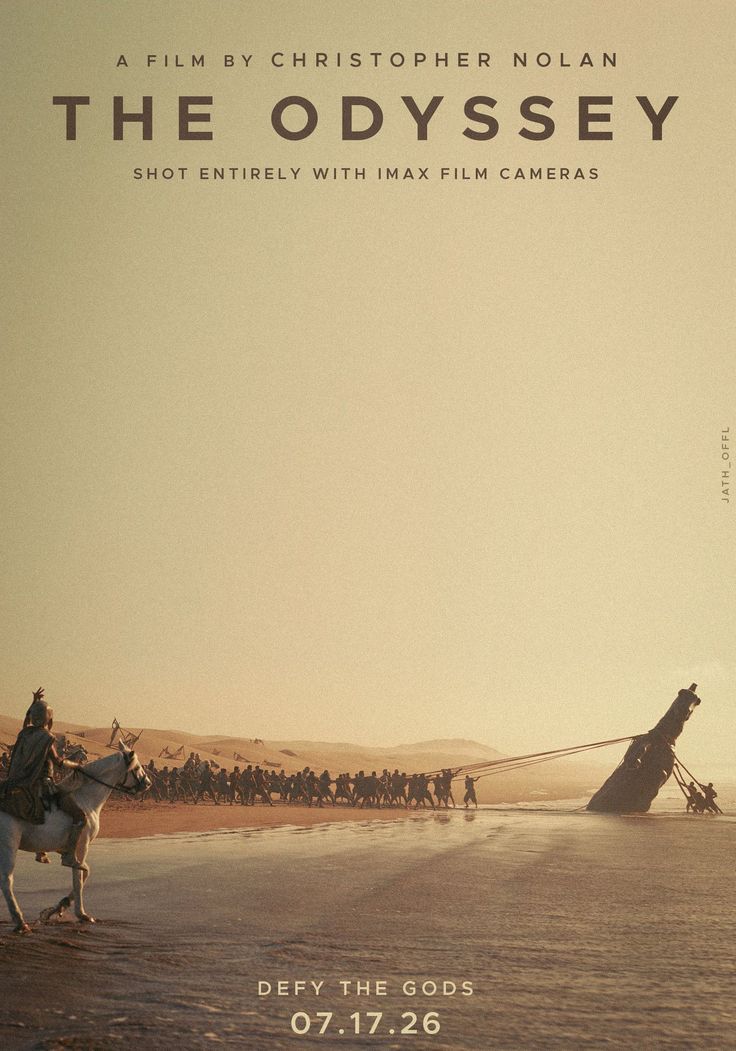
but I’ve thought a lot about the film since and I felt that it might be helpful to add a second note on the subject–about the film’s ending, in particular.
Here’s what the Wiki article has to say:
“After the meal, Odysseus, still disguised, confesses to Penelope his guilt for violating Zeus’ law during the sacking of Troy, desecrating Athena‘s statue after killing her priestess (whose form Athena assumed in visions), and initiating the collapse of the Bronze Age… After the remaining suitors surrender, Odysseus cedes his throne to Telemachus and leaves with Penelope to seek peace in exile. Sailing west to honor his fallen soldiers, the couple expect civilization’s renewal and muse that time will forget Odysseus’ mistakes.”
I was surprised when I read this and even more surprised when I saw it acted out on the screen. This may be “Christopher Nolan’s Odyssey”, but it’s not “Homer’s”. And that subtitle on the poster, “Defy the Gods” shows the major difference, as I began to demonstrate in my earlier posting. Athena is Odysseus’ patron and therefore the last god he would “defy”, but it’s because of another god that Odysseus will perform the action which is first laid out for him in the Otherworld by the seer Tireisias.
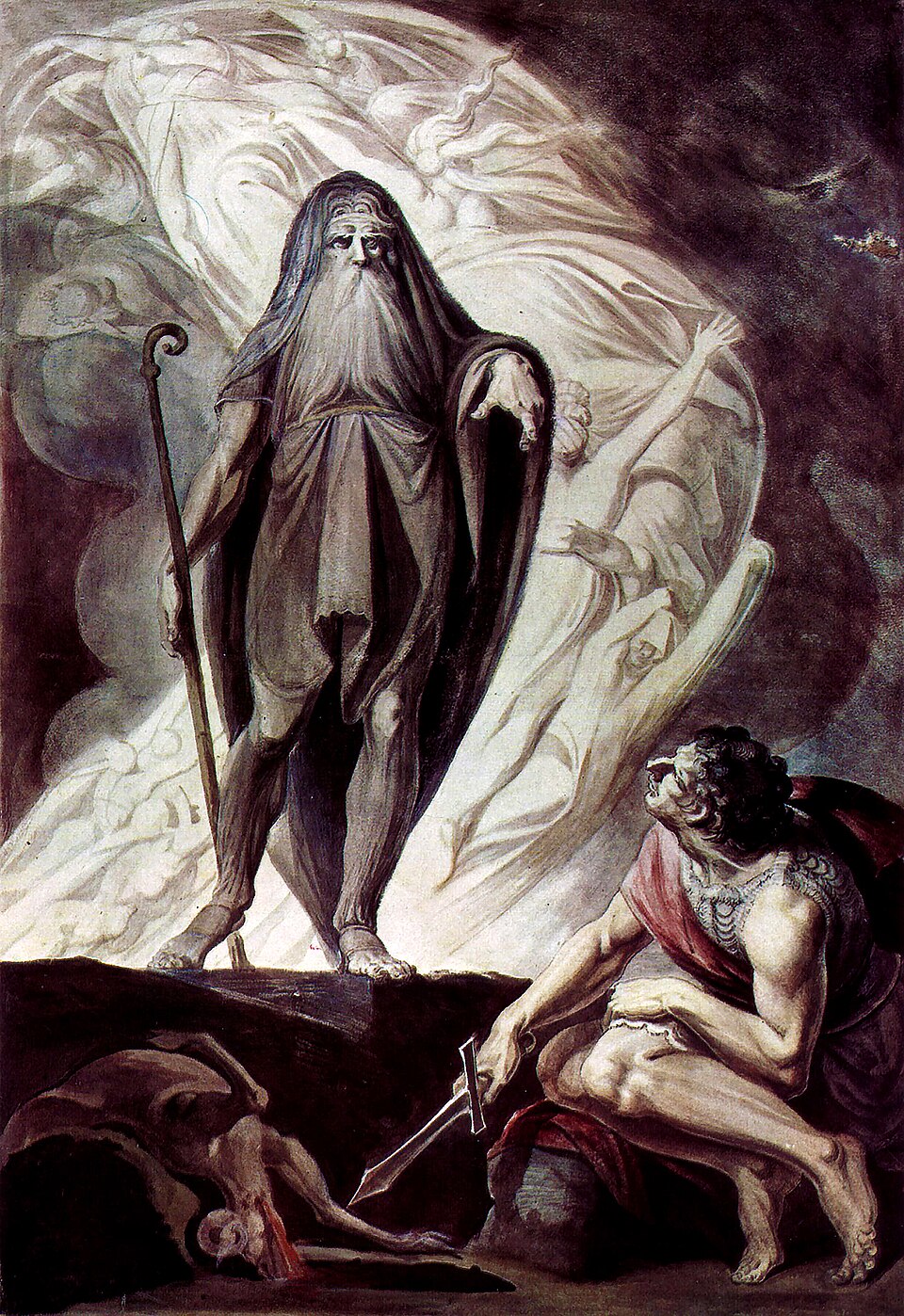
Odysseus’ trouble began in Book Nine, where Odysseus tells his Phaeacian audience (an important part of the story left out of the film) that, previously trapped by Polyphemus, the Cyclops, in the Cyclops’ cave, he has escaped after blinding him.
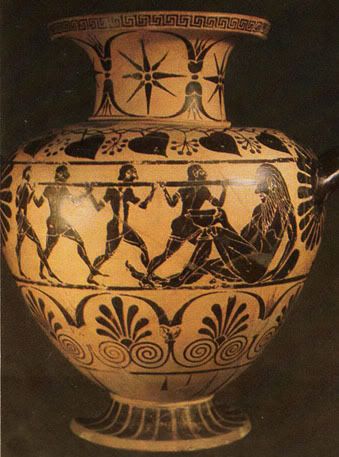
Groping his way to the shore in pursuit of the fleeing Odysseus, Polyphemus attempts to destroy him and his men by heaving the equivalent of a mountain top at them.
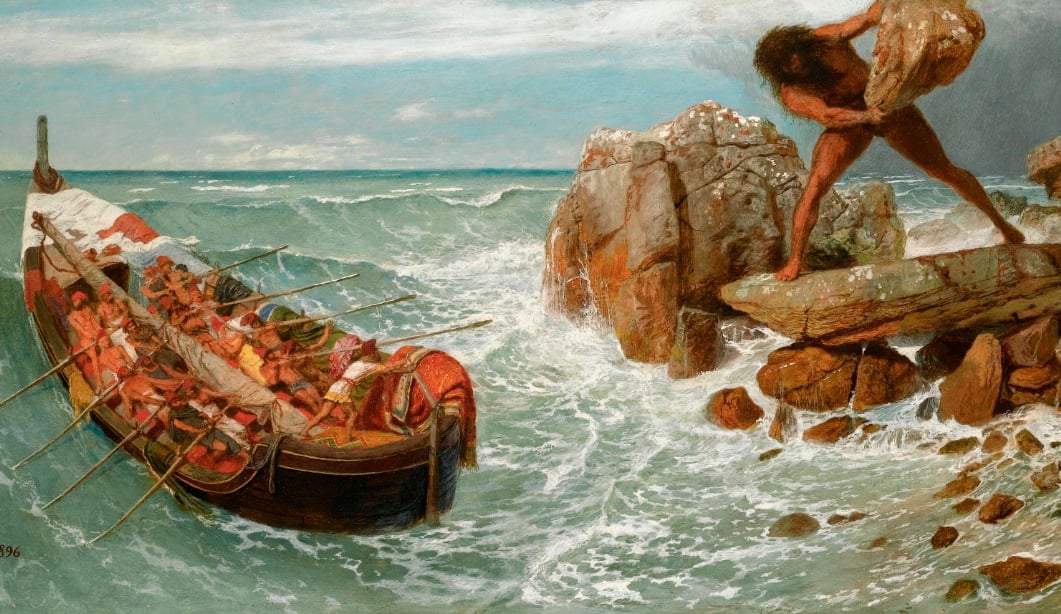
In the process of escaping, Odysseus does something which may seem rash, if not downright crazy, to us (and Odysseus’ crew would agree). He shouts to the Cyclops:
“Κύκλωψ, αἴ κέν τίς σε καταθνητῶν ἀνθρώπων
ὀφθαλμοῦ εἴρηται ἀεικελίην ἀλαωτύν,
φάσθαι Ὀδυσσῆα πτολιπόρθιον ἐξαλαῶσαι,
υἱὸν Λαέρτεω, Ἰθάκῃ ἔνι οἰκίʼ ἔχοντα.”
(Od. 9.502–9.505—my translation)
“Cyclops, if any one of mortal men
Should ask [you] about the shameful blinding of [your] eye,
Say that city-destroying Odysseus blinded [it],
The son of Laertes, having his home on Ithaka.”
Doing so, Odysseus seems to have just handed over his name and address to his victim, even though the story makes it clear that Polyphemus’, by killing and eating a number of Odysseus’ men, deserved what he got. (Polyphemus also violated the Greek custom of xenia, hospitality/guest-friendship, which, as Odysseus earlier had pointed out to him, was overseen by Zeus—unlike the completely imaginary “Zeus’ law”, which is mentioned more than once in the film. Odysseus, by the way, when speaking to Polyphemus, is obeying another actual early Greek custom, if not “law”: that of kleos. This is a hard word to translate, meaning something like “reputation/fame”, and Odysseus, to add the escape of the Cyclops to it, must let his enemy know who tricked him, even though, in this case, it brings him and his men into mortal danger.)
Polyphemus, thwarted in destroying Odysseus there and then, prays to his father, Poseidon,
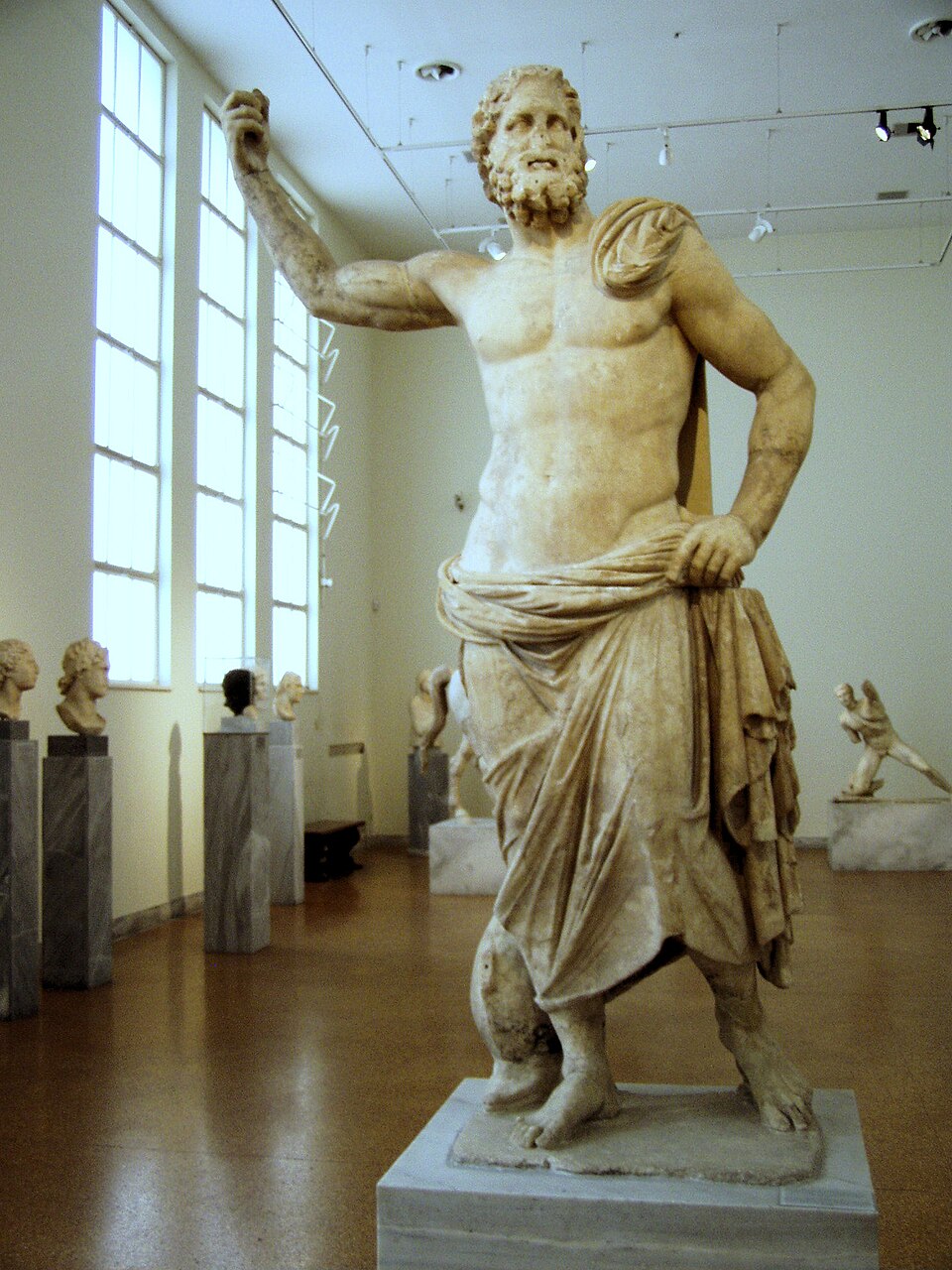
for revenge, something which is mentioned by Zeus at the beginning of Book One of the Odyssey (lines 68-75) when Athena approaches him for help in getting Odysseus out of the clutches of Calypso on the island of Ogygia and sent on his way home. (Odysseus, by the way, hasn’t, as in the film, forgotten about home, stoked up on lotos, but, instead, grieves for it every day—see Book One, lines 55-59.)
We then see Poseidon’s revenge told by Odysseus in Book Five, as Odysseus, aided by Calypso (through Zeus’ prompting via his messenger, Hermes), is attempting to get home via a homemade raft. Poseidon spots the raft, with Odysseus on it, and works up a violent storm which partially destroys the raft and drops Odysseus into the sea before he can regain the wreckage, now at the mercy of the waves. (see Book Five, lines 282-332)
Odysseus survives, saved by the mysterious Phaeacians (whom I’ve mentioned earlier) and sent home by them, although Poseidon, annoyed by their helping Odysseus, turns the ship which carried Odysseus to stone as a punishment (see Book Thirteen, lines 125-165)
Odysseus is left with a very serious problem, however: he lives on an island, among sea-faring people: how will he ever be safe from Poseidon? The answer lies in the directions which Tireisias gave him in their Otherworld meeting. Once Odysseus has killed the suitors (all the suitors—unlike the film, Odysseus shows no mercy in the poem), Tireisias says:
“ἔρχεσθαι δὴ ἔπειτα λαβὼν ἐυῆρες ἐρετμόν,
εἰς ὅ κε τοὺς ἀφίκηαι οἳ οὐκ ἴσασι θάλασσαν
ἀνέρες, οὐδέ θʼ ἅλεσσι μεμιγμένον εἶδαρ ἔδουσιν·
οὐδʼ ἄρα τοί γʼ ἴσασι νέας φοινικοπαρῄους
οὐδʼ ἐυήρεʼ ἐρετμά, τά τε πτερὰ νηυσὶ πέλονται.
σῆμα δέ τοι ἐρέω μάλʼ ἀριφραδές, οὐδέ σε λήσει·
ὁππότε κεν δή τοι συμβλήμενος ἄλλος ὁδίτης
φήῃ ἀθηρηλοιγὸν ἔχειν ἀνὰ φαιδίμῳ ὤμῳ,
καὶ τότε δὴ γαίῃ πήξας ἐυῆρες ἐρετμόν,
ῥέξας ἱερὰ καλὰ Ποσειδάωνι ἄνακτι…”
(Od. 11.115–11.130—my translation)
“Go, then, having taken a broad[bladed] oar,
Until you reach those men who don’t know the sea,
[and] neither do they eat food mixed with salt
Nor yet do they know ships with painted bows [literally “purple cheeks”],
Nor broad[bladed] oars, [which] are the wings of ships.
And I will tell you a very clear sign [which] you won’t miss:
Whenever some traveler, meeting you,
Should say that you have a winnowing fan on your splendid shoulder,
Then, having stuck the broad[bladed] oar in the earth,
Having made fine sacrifices to the lord Poseidon…”
go home and continue making sacrifices to the gods. And, having done so, Odysseus will have an easy death in old age and his people will be blessed. Although Odysseus later relates this to Penelope (see Book Twenty-three, lines 248-284), we don’t see him do it in the poem, but he certainly doesn’t “sail west to honor his fallen soldiers” (why west? And how does that “honor his fallen soldiers”?)
It’s clear, from Tireisias’ directions, that what Odysseus is meant to do to placate Poseidon includes getting as far away from the sea as he can—but what’s this business with the oar and a “winnowing fan”?
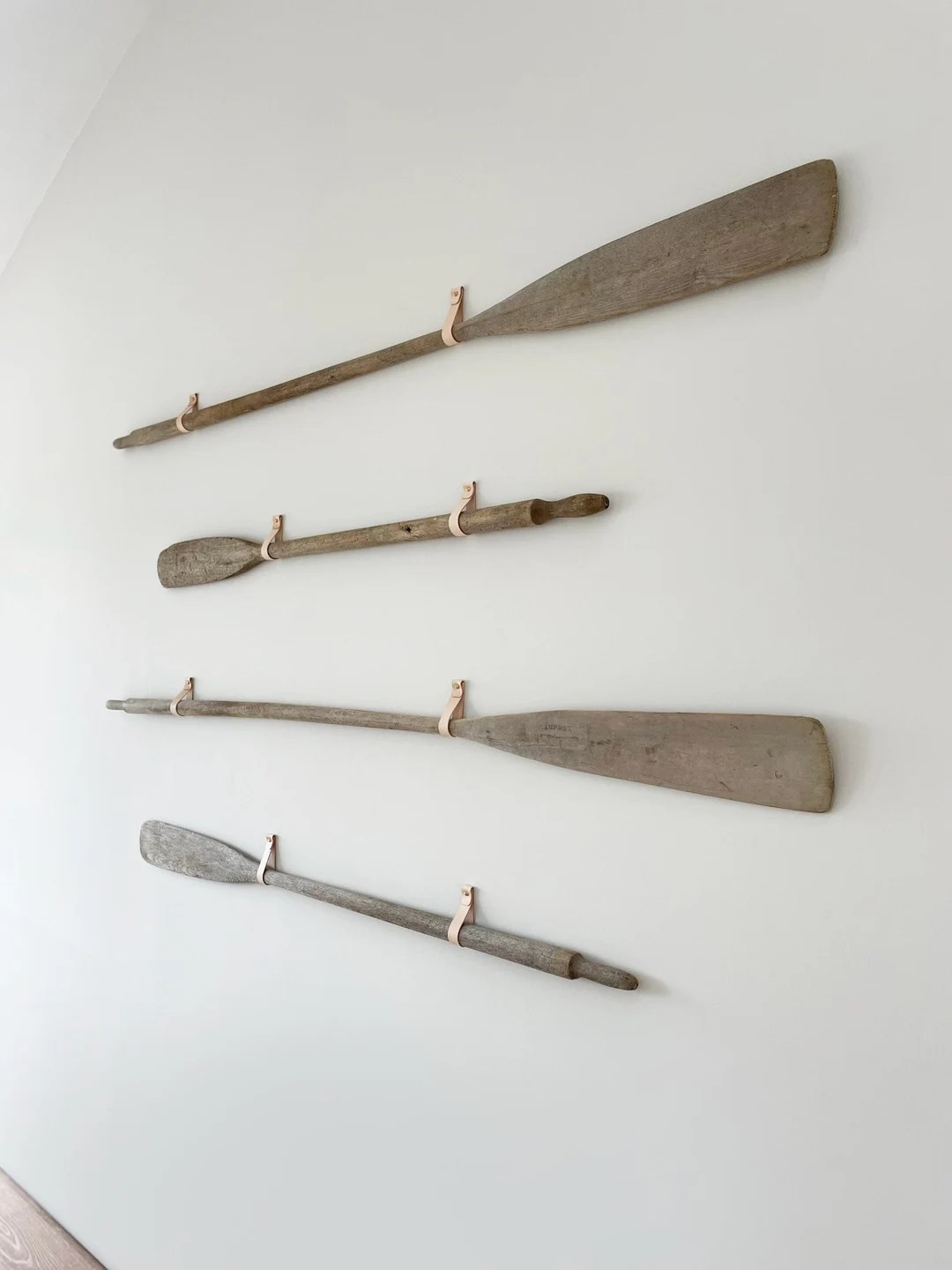
In earlier times, the process of producing flour was complex. One had to:
1. harvest the grain,
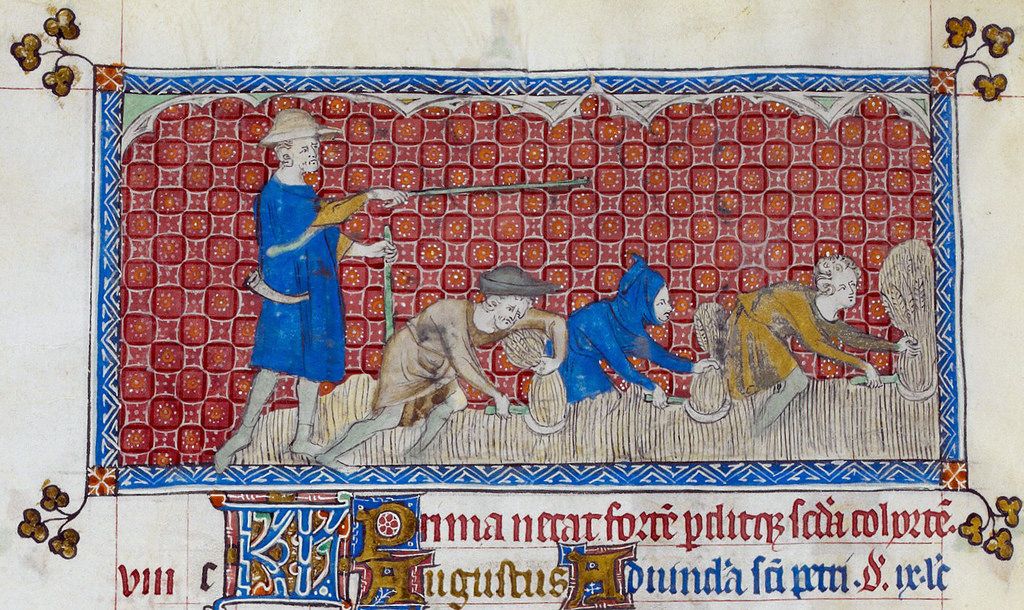
2. break the beards of grain off the stalks, called “threshing”,
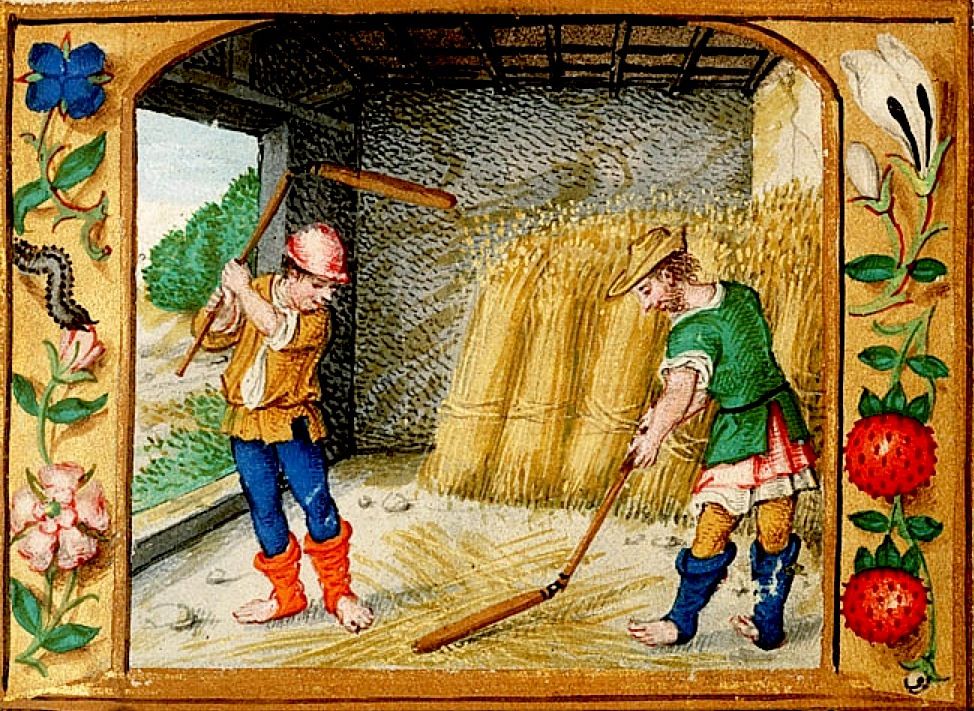
3. then, often by tossing it up, using the air to free the grain from the husks which cover it, called “winnowing”,
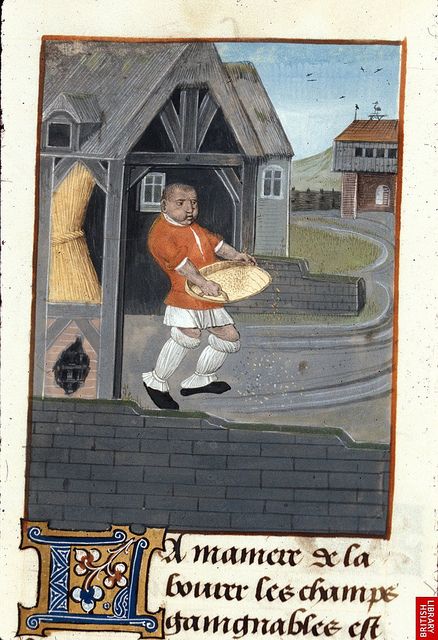
before grinding the final product into powder—flour.
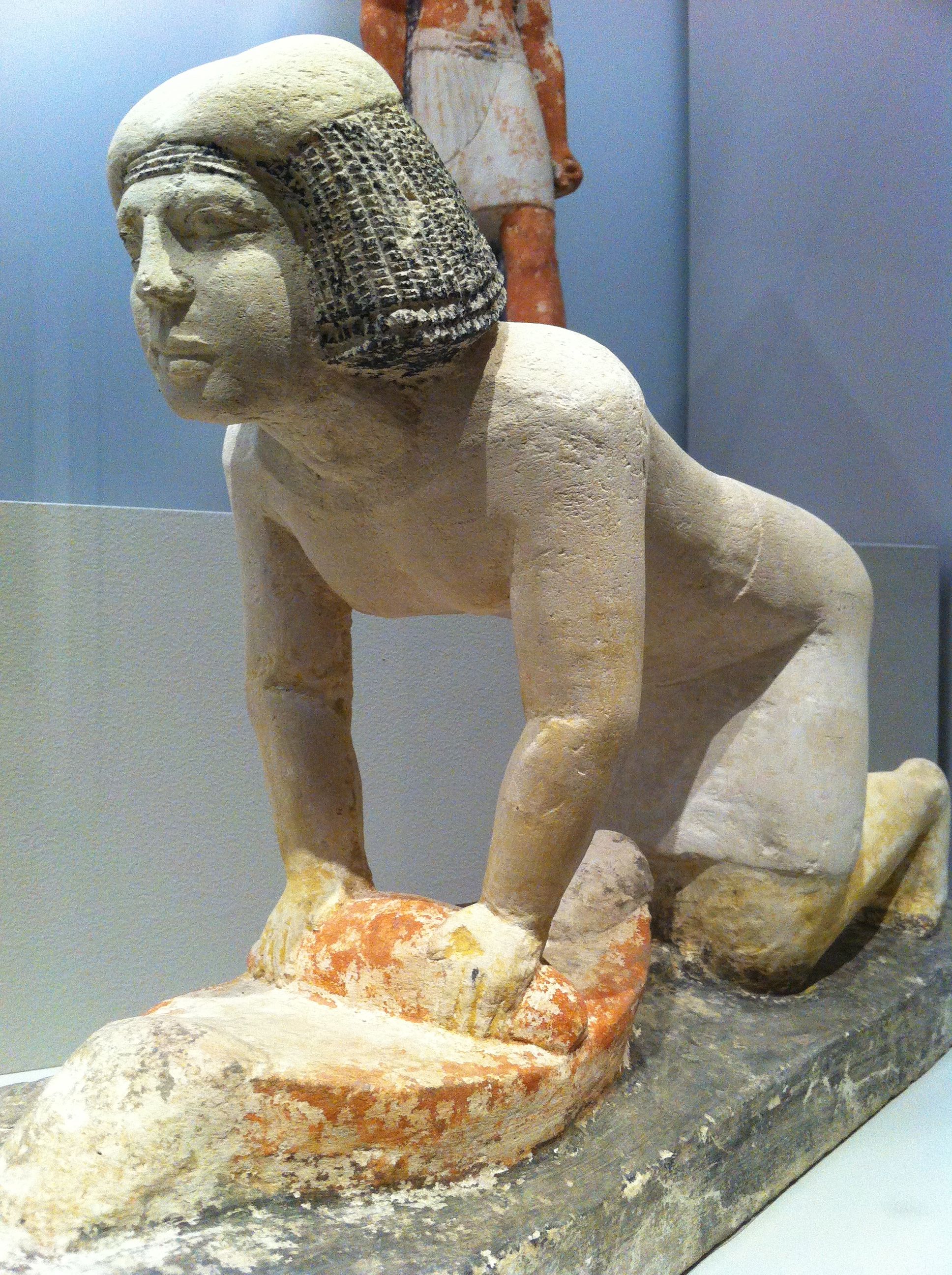
Winnowing could be done by tossing the grain in its husks into the air from a basket,
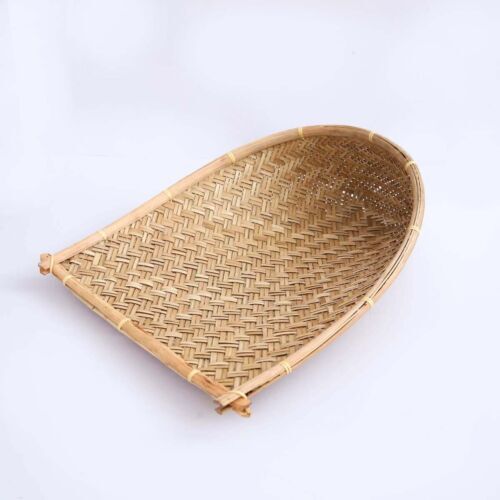
or by forking it into the air by a “winnowing fan”.

Probably because the fork had a long shaft, like an oar, Tireisias was suggesting that, meeting someone so far inland as to be ignorant of boats that he would confuse an oar with an agricultural tool, Odysseus would be safe from Poseidon’s natural element and could make his sacrifice to placate the god.
So—no abdication, no sailing west, nor restoration of civilization, but a godly man, so long protected by a goddess, now seeking peace by appeasing a god he has angered: a very different and reverent story—and ending of the story–from Christopher Nolan’s, with its totally manufactured “defiance”.
Thanks for reading, as always,
Stay well,
Always check before assaulting someone—he might be related to a vengeful god,
And remember, as well, that there’s always
MTCIDC
O

