• About

doubtfulsea

~ adventure fantasy

Category Archives: J.R.R. Tolkien

Many Woven Cloths

14 Wednesday Mar 2018

Posted by Ollamh in Artists and Illustrators, Fairy Tales and Myths, J.R.R. Tolkien, Military History, Military History of Middle-earth, Narrative Methods

≈ Leave a comment

Tags

Alexander Mosaic, Ancient Egypt, Assyrians, Battle of Pavia, Battle of the Issus, Bayeux Tapestry, Cloisters, Darius III, Embroidery, Eorl, Hause of the Faun, Hunt of the Unicorn, Middle Ages, Museo Nazionale di Capodimonte, Nubians, Persian, Pompeii, Rameses II, reliefs, Renaissance, story-telling, tapestry, tesserae, The Lord of the Rings, Tolkien, triptych, Trojan War

Welcome, as ever, dear readers.

Not long ago, we visited Meduseld for a look at Grima, the fifth-columnist.  Today, we’re back, but, instead of scrutinizing the staff, we’re examining the décor—

“Many woven cloths were hung upon the walls, and over their wide spaces marched figures of ancient legend, some dim with years, some darkling in the shade.  But upon one form the sunlight fell:  a young man upon a white horse.  He was blowing a great horn, and his yellow hair was flying in the wind.  The horse’s head was lifted, and its nostrils were wide and red as it neighed, smelling battle afar.  Foaming water, green and white, rushed and curled about its knees.

‘Behold Eorl the Young!’ said Aragorn.  ‘Thus he rode out of the North to the Battle of the Field of Celebrant!’” (The Two Towers, Book Three, Chapter 6, “The King of the Golden Hall”)

By “woven cloth”, we presume that JRRT means a tapestry, a decorative wall-hanging, like these—
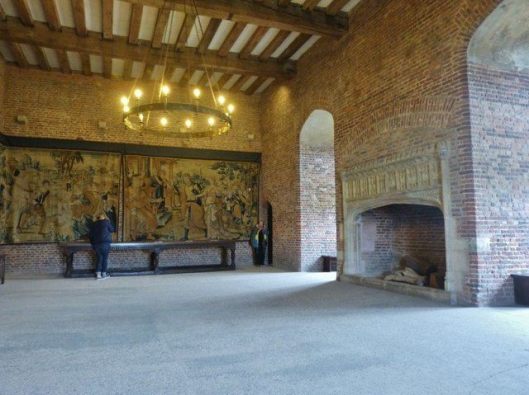
image1medtapwall.jpg

In the western Middle Ages and Renaissance, even wealthy walls—like those in castles—could simply be stone and such tapestries could act both to decorate and to act as a barrier between cold wall and (potentially) shivering inhabitants.

For those making such things, the possibilities for using them as story-telling spaces inspired such works as the famous “Hunt of the Unicorn” series of tapestries, now housed in the Cloisters, a museum in New York City.
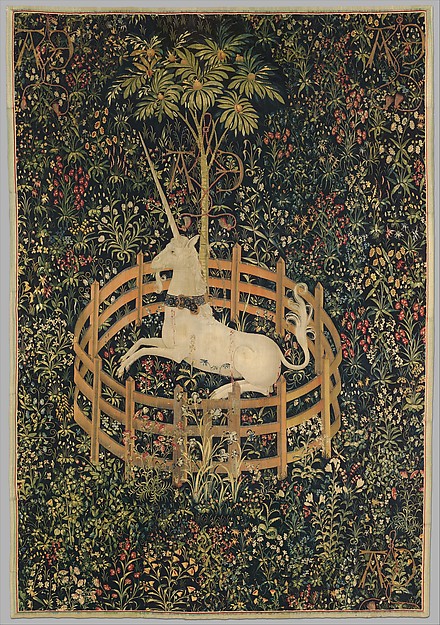
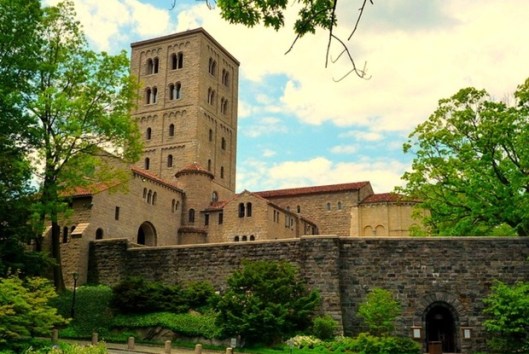
image2hunt.jpg

image3cloisters.jpg

The description of Eorl makes us think of medieval stag hunt illustrations, where hunters may be seen blowing horns—like this one.
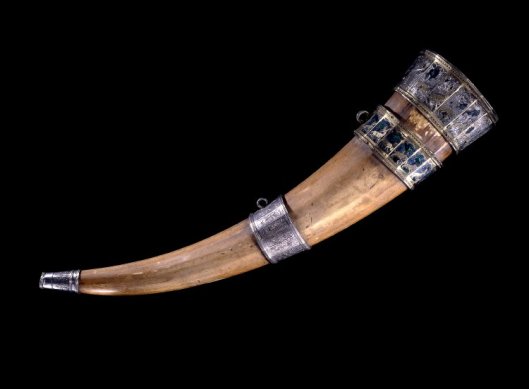
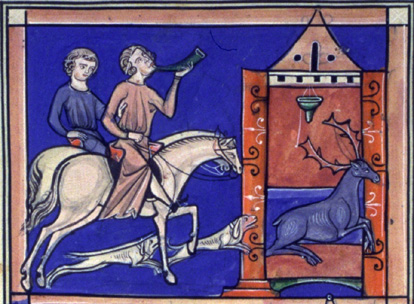
image4savernakehorn.jpg

image5dagobert.jpg

But the fact that he was riding to battle also made us think of wall decorations of a military/historical nature through the centuries, starting with ancient Egypt, where Rameses II (1303-1213BC) had himself depicted on walls in various military actions—
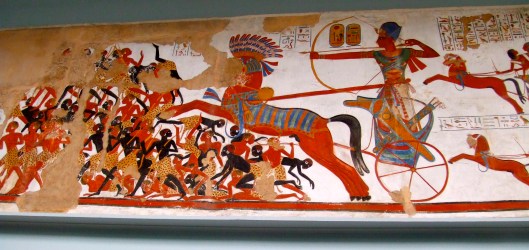
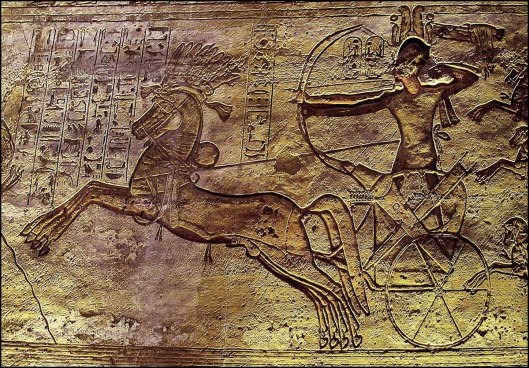
image6ramnubians.jpg

image7ramkadesh.jpg

Or the Assyrians, who were not only enthusiastic (gross understatement) about war, but also about depicting themselves engaged in it.
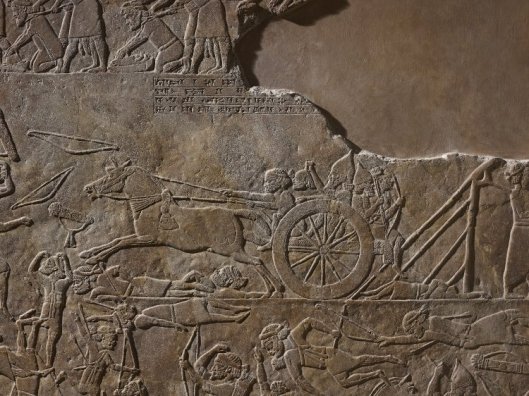
image8assyrians.jpg

As you can see, although these appear on walls, they are not hangings, but reliefs—that is, shallow carvings.  The Egyptian reliefs could be brightly painted, as is that reconstruction of Rameses and the Nubians, the first of the two Rameses illustrations.  It appears that some of the Assyrian reliefs were also colored—here’s a PDF: BMTRB 3 Verri et al, of an interesting article from the Technical Research Bulletin of the British Museum on the subject.

From colored reliefs, we can jump to colored tiles (called tesserae), with the famous Alexander Mosaic.

image9alexandermosaic.jpg

This depicts Alexander the Great nearly confronting the Persian king, Darius III, at the Battle of the Issus (333BC) and what amazes us is that this was originally not on a wall, but on a floor, in the so-called “House of the Faun” in Pompeii.


It is believed that this was based upon an early 3rd-century BC painting and, to our eye, it still looks very much like the painting it may have come from (which was, presumably, on a wall, not a floor).

For battle scenes on cloth, we return to the medieval world and something we’ve mentioned before, the so-called “Bayeux Tapestry”.

image11a.jpg

We say so-called because it’s not really a tapestry—which would have been woven on a loom—but, instead, a giant (230ft/70metres) embroidery.  Here’s a detail so that you can see how an embroidery is made up of stitching on a (in this case) plain linen strip.

image11closeup.jpg


This is really an astonishing piece of work—so far as we know, nothing else like it has survived from medieval western Europe:  a massive history of the invasion of England in 1066, including events leading up to it, in 50+ scenes.  We see everything from architecture
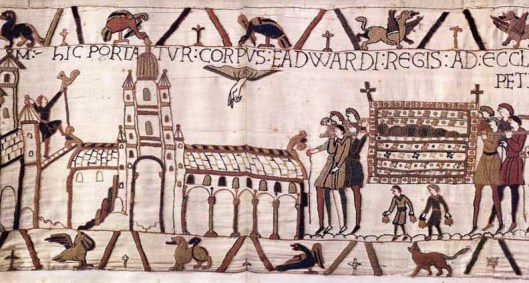
image12westminster.jpg


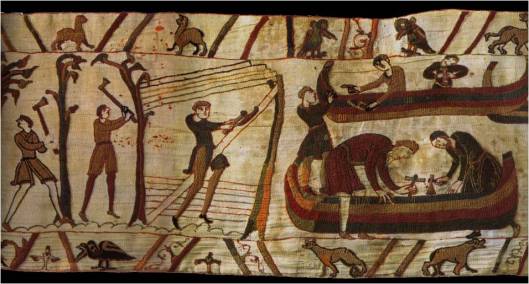
to ship-building

image13shipbuilding.jpg


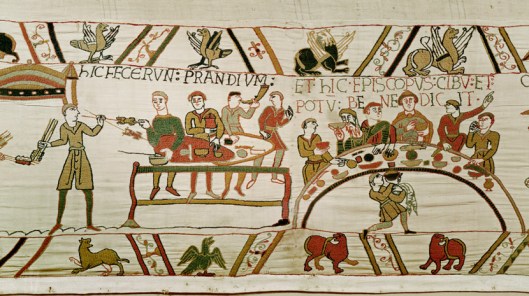
to feasting

image14bayeux.jpg


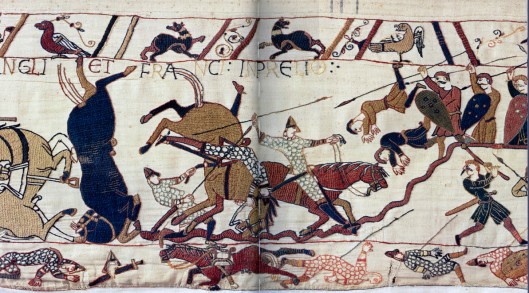
to battle

image15battle.jpg

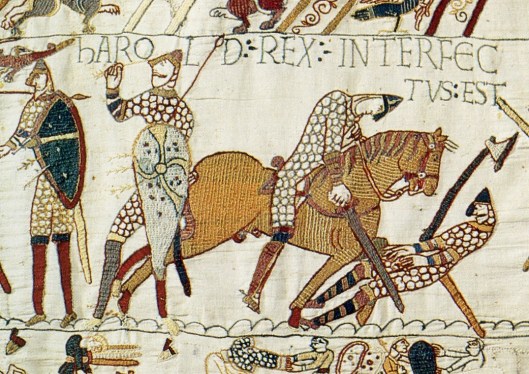
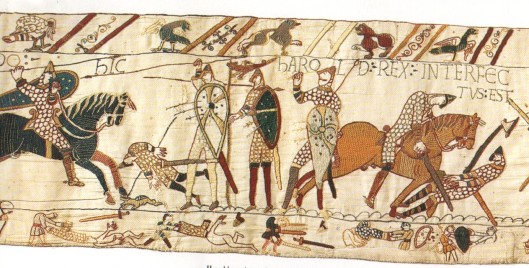
at its grainiest

image16deathofharold.jpg

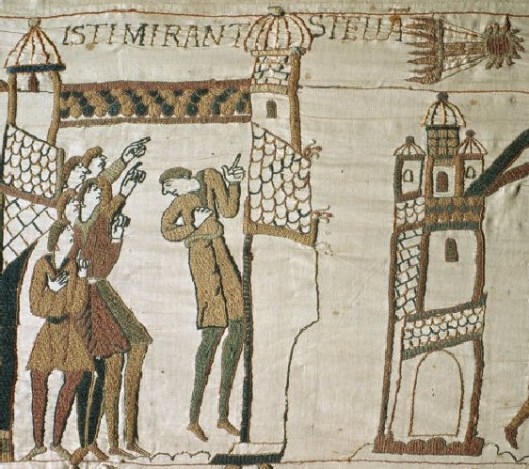
and even includes Halley’s Comet.

image17hscomet.jpg

JRRT certainly knew about the Bayeux piece—he mentions it in his letters—but the richness of his description doesn’t really match the relative spareness (for all its detail) of that embroidery, so we wonder what he might have had in mind?   Late medieval tapestries would have had the lush look—
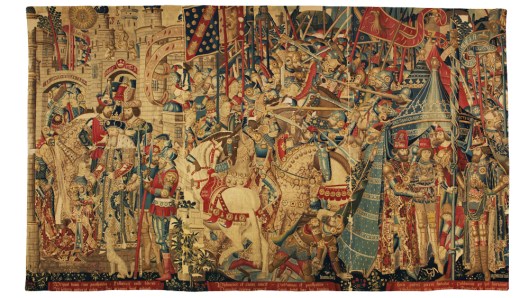
image18troy.jpg

This is one of a set of 15th-century tapestries illustrating the Trojan War.  You’ll notice that, like the Bayeux Tapestry 3 centuries earlier, there are labels (tituli, they’re called).  In the case of the Eorl tapestry, it’s Aragorn who provides the explanation, suggesting that there is no caption and Aragorn, being Aragorn, simply knows the story.

For an eye-popping battle scene, however, we would point to the set of 7 tapestries of the Battle of Pavia (1525) woven in Brussels between 1528 and 1531 and now in the Museo Nazionale di Capodimonte in Naples.  Here’s just one example—can you imagine the same having been woven for the assaults on Minas Tirith or Helm’s Deep?  (Here’s a LINK, by the way, to a very detailed article on the subject of these wonderful works.)
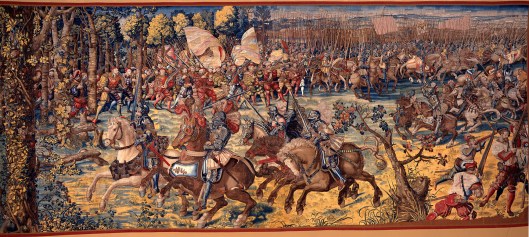
image19pavia.JPG

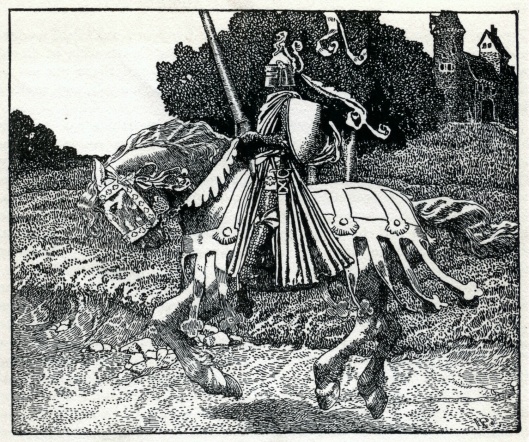
But such pieces as these are so elaborate that, for all of their great art, they don’t provide quite the parallel we’re looking for, perhaps because all of the larger ones seem to be filled with people and movement and what JRRT describes is a single figure—almost like a standard, rather than a tapestry—something like this one (although we imagine the original to be facing to the right and the field to be green—oh, and of course he has that horn, but you get the idea).


And we do have this example.  It comes from a site called “Elvenesse”.
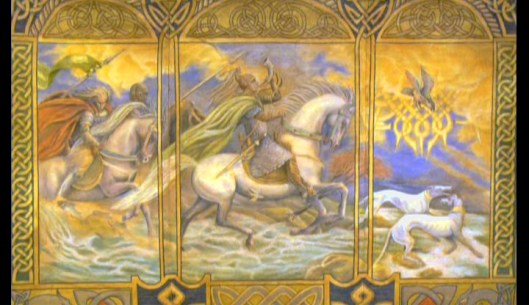
image21eorl.jpg

It looks more like a religious triptych than a tapestry to us,

image22triptych.jpg

but it certainly is going in the right direction.  What do you think, dear readers?

And thanks, as always, for reading!

MTCIDC

CD
Lent to a Museum (Mathom.2)

07 Wednesday Mar 2018

Posted by Ollamh in Artists and Illustrators, Heroes, J.R.R. Tolkien, Literary History, Military History, Narrative Methods

≈ Leave a comment

Tags

Abbotsford, armor, Ashestiel, Cartley Hole, Castle, Craigievar, cuirassier, czapska, Edinburgh, Gothic, Henry Fox Talbot, Horace Walpole, Marquis de Montrose, Mathom-house, Melrose Abbey, Napoleon's Hair, Prince Albert, Queen Victoria, Rob Roy MacGregor, Scottish, Scottish Baronial, Sir Walter Scott, Strawberry Hill, The Lay of the Last Minstrel, The Lord of the Rings, Tolkien, Waterloo, Waverly

Welcome, as always, dear readers.

In a posting from January, 2017, we discussed the idea of a “mathom house” at Michel Delving in the Shire.  We know about this place from the Prologue to The Lord of the Rings:

“So, though there was still some store of weapons in the Shire, these were used mostly as trophies, hanging above hearths or on walls, or gathered into the museum at Michel Delving.  The Mathom-house it was called:  for anything that Hobbits had no immediate use for, but were unwilling to throw away, they called a mathom.  Their dwellings were apt to become rather crowded with mathoms, and many of the presents that passed from hand to hand were of that sort.”  (Prologue, The Lord of the Rings)

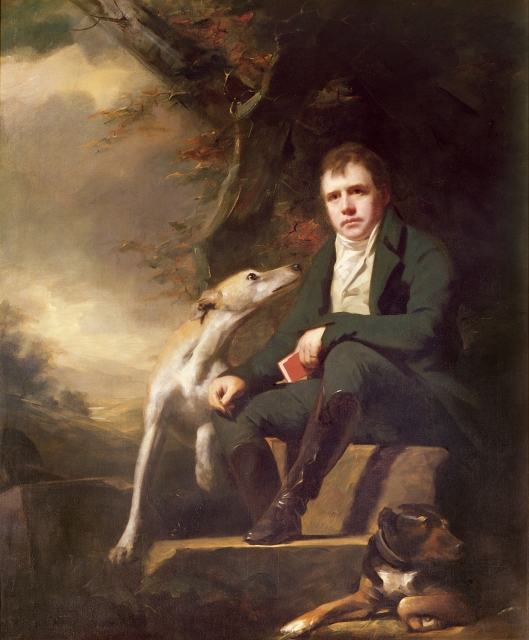
Rereading this passage this time, we were caught by two things:  “some store of weapons” and “Their dwellings were apt to become rather crowded with mathoms” because, put together, they sound like part of the description of the personal Mathom-house of the original inspirer (we would say) of adventure-writing in English, Sir Walter Scott.

image1raeburnscott.jpg

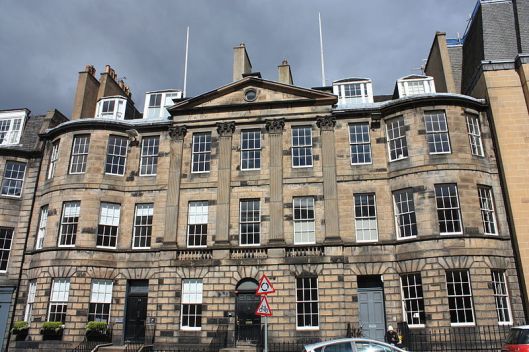
Trained to become a lawyer, Scott had lived for some years in several houses in Edinburgh, for much of his later life at Number 39, North Castle Street–

image2ncastlestreet.jpg

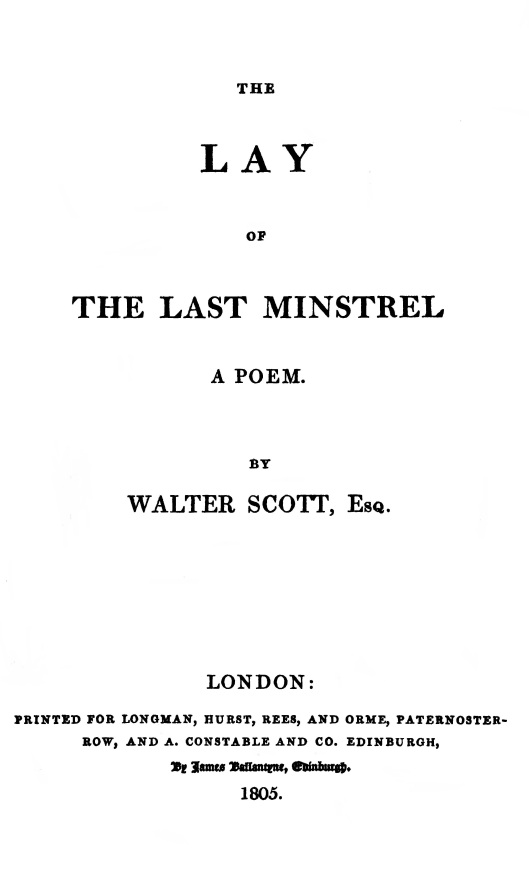
Although he began his rise to literary fame with the publication of The Lay of the Last Minstrel, a long poem, in 1805,

image3layfirstedition.jpg

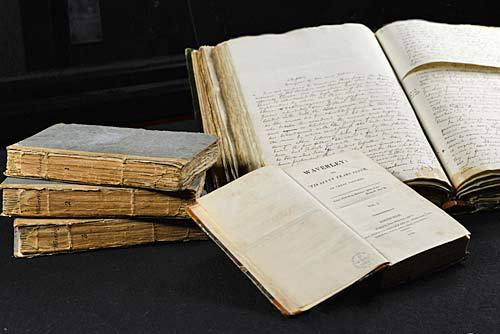
money began to pour in with his first novel, Waverley, published anonymously, in 1814.

image4waverley.jpg

(What a great illustration, by the way—both the first edition and the manuscript.)

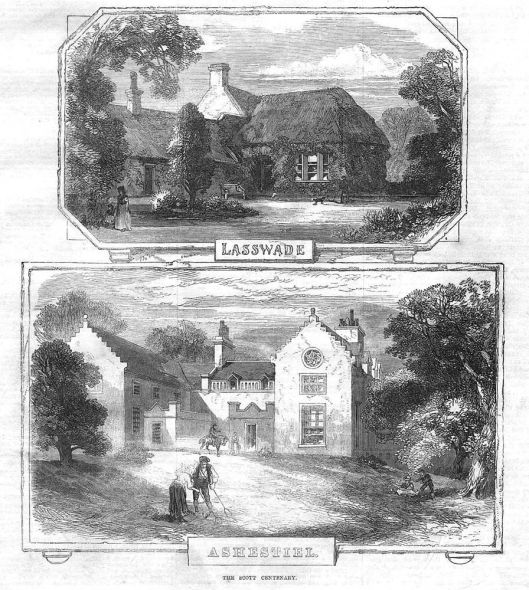
Because his legal work required him to have a residence outside Edinburgh, Scott had rented this, at Ashestiel, from 1804-1811.

image5ashestiel.jpg

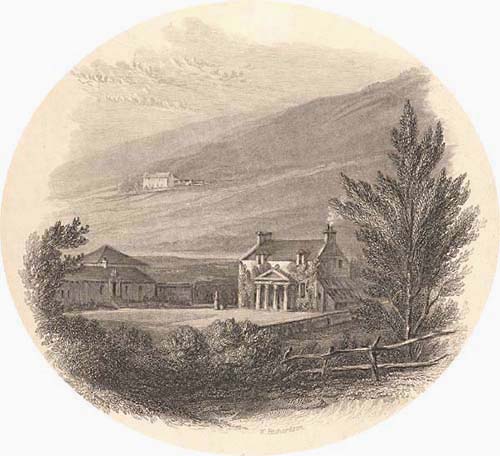
When the lease was up, he then invested in this rather modest farm house at what was called “Cartley Hole”, which locals called “Clarty Hole”, “clarty” being a Scots word for “mucky”, suggesting that our illustration is prettier than the actual place.

image6cartleyholefarm.jpg

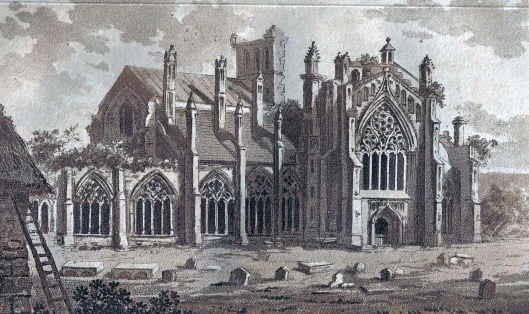
More commercially successful novels and an eventual baronetcy gave Scott grander ideas and he began to rebuild—and rebuild—the house, as well as changing its name to the more dignified “Abbotsford”, as it was near the ruins of the 12th-century Melrose Abbey.

image7melroseabbey.jpg

“Bigger” at this time might have meant something Georgian, like this—

image8nostellpriory.jpg

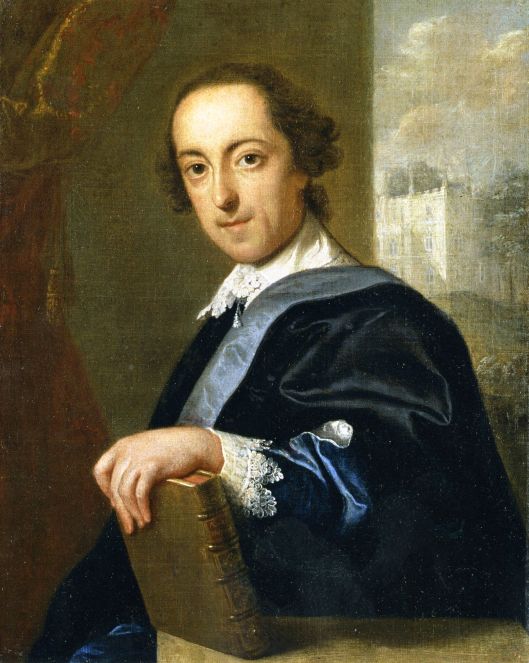
but Scott, no doubt influenced by the Gothic ideas of people like Horace Walpole

image9hw


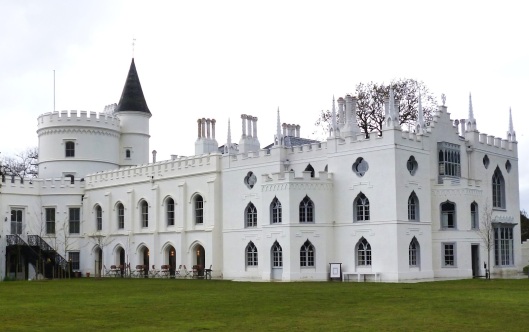
and his Strawberry Hill

image10strawberryhill.JPG

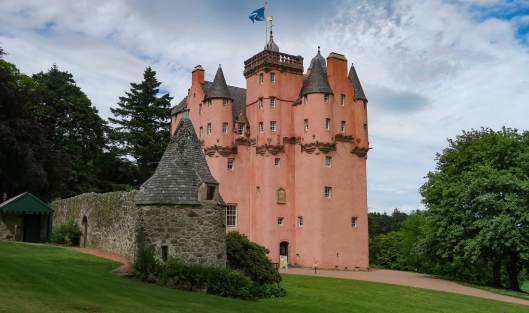
fixed upon a design which, in time, was not only bigger, but Gothic—and Scottish, in the style called “Scottish Baronial”, like this castle at Craigievar, completed in 1626.

image11craigievar.jpg

In a way, such a choice makes sense:  many of his novels have Scots locations and they made him wealthy enough to build such a place.

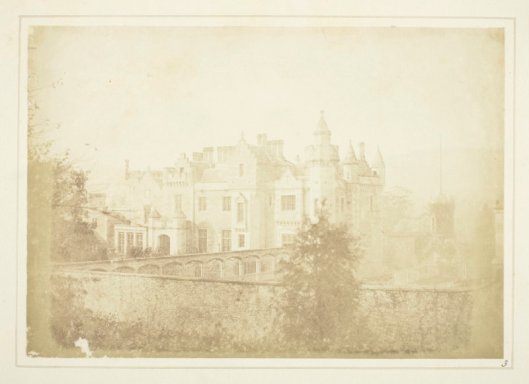
image12hftabbotsford.jpg

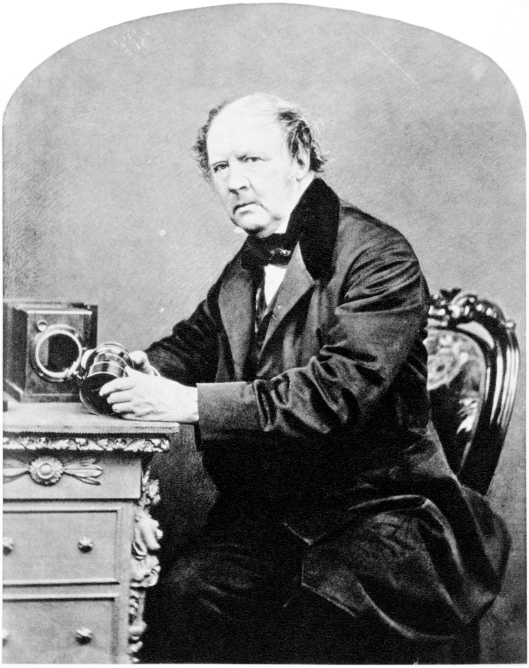
This is perhaps the first photographic image of Abbotsford.  It dates from 1844 and is by the English inventor, as far as we currently know, of photography, Henry Fox Talbot.

image13talbot.jpg

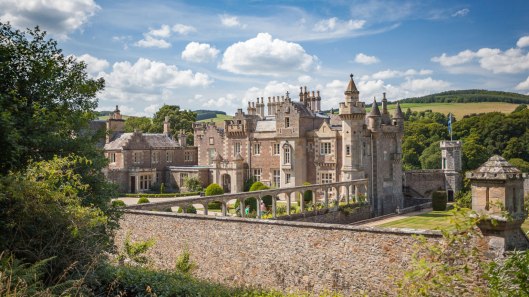
And here is a modern image.

image14abbotsford.jpg

The outside of Abbotsford is striking enough, but it’s what’s inside which made us think of a Mathom-house.

There is seemingly an endless “store of weapons”.

image15armory.JPG

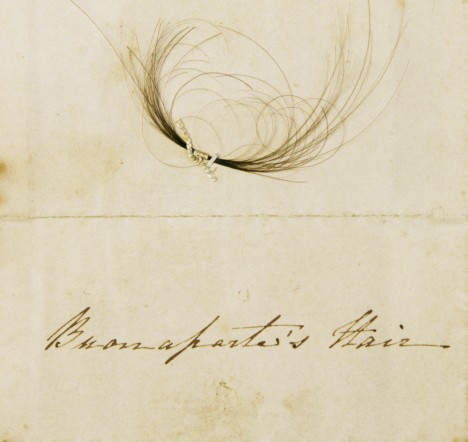
And then there are all of those other things.  A lock of Napoleon’s hair.

image16nappy.jpg

image17nappy'shair.jpg

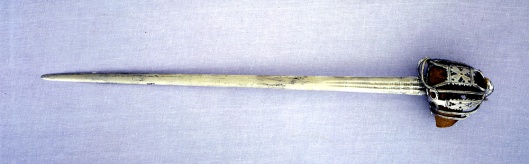
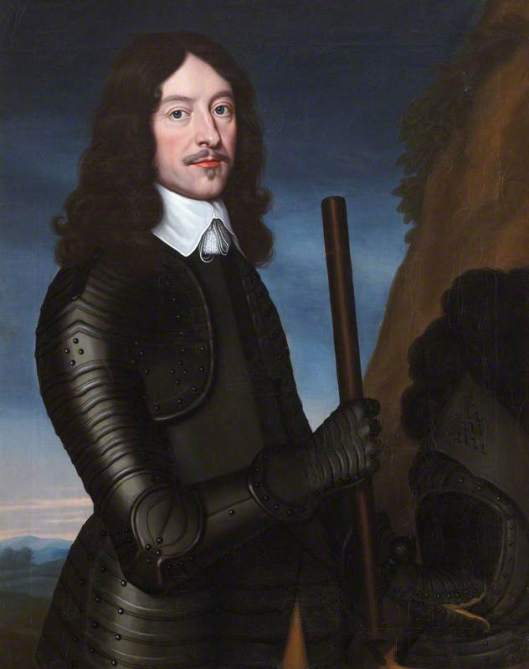
The sword of a 17th-century Scottish hero, the Marquis of Montrose.

image18montrose.jpg

image19montrosesword.jpg

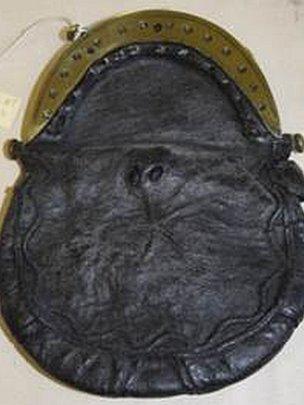
The sporran (purse) of that early-18th century Highland legend, Rob Roy MacGregor.

image20sporran.jpg

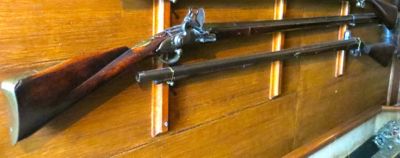
(Scot also believed he had Rob Roy’s musket.)image21rrsmusket.jpg

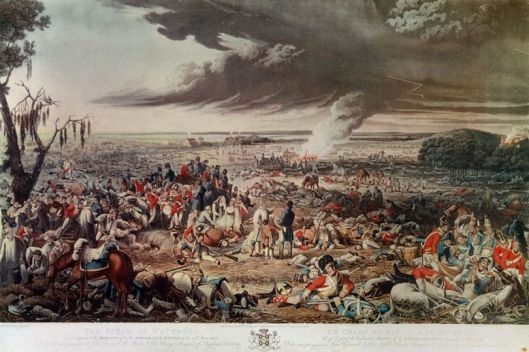
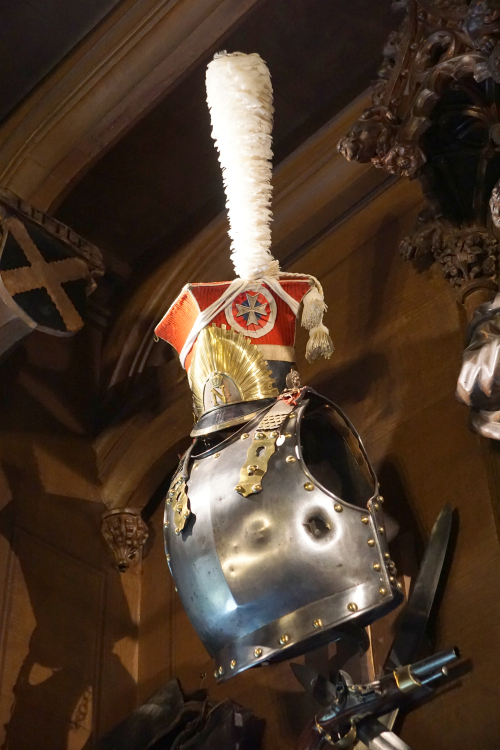
And even souvenirs he had picked up from the battlefield of Waterloo, which he had visited only a short time after the battle.

image22waterloo.jpg

image23cuirass.jpg

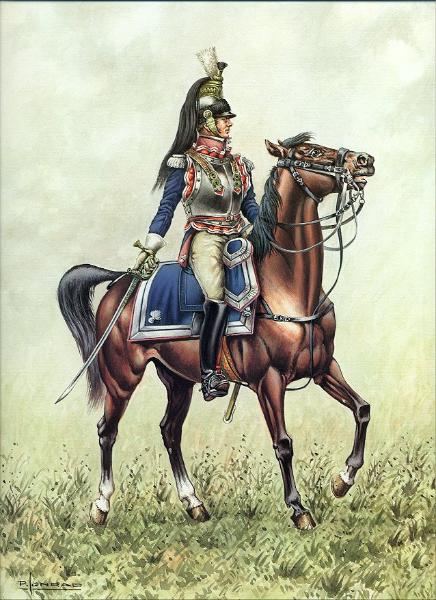
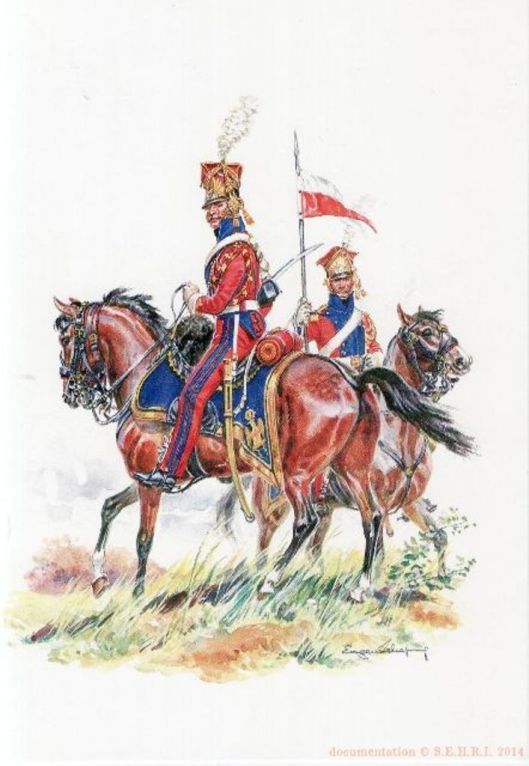
Note the hole in the breastplate—and also that the  headgear with it (a czapska) belongs not to the man who would have worn the breastplate, a cuirassier,

image24cuirassier.jpg

but to a French/Polish lancer

image25lancer.jpg

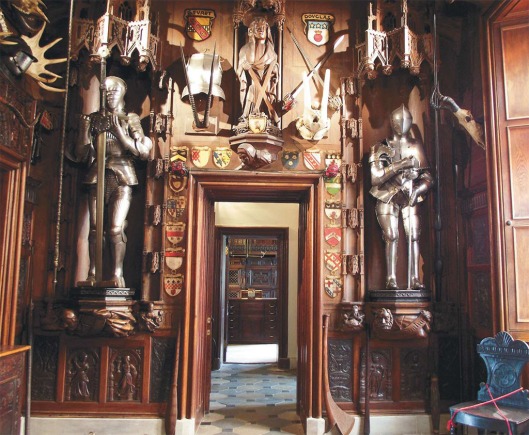
With all of these trophies tacked onto every possible surface—including full suits of armor–

image26armor.jpg

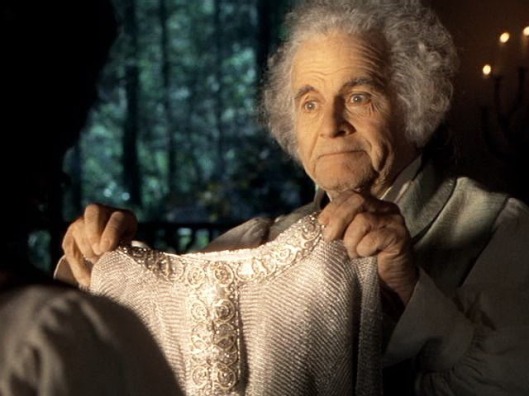
we wouldn’t be surprised to see a rather familiar object, ancient, famous, which we are told “was arranged on a stand in the hall (until he lent it to a Museum)”—would you?

image27mithril.jpg

Thanks, as ever, for reading.

MTCIDC

CD

PS

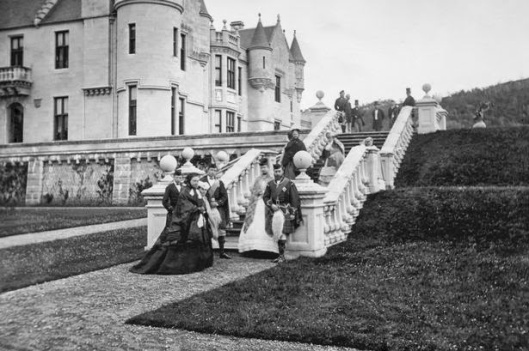
Abbotsford was opened to visitors within a few months of Scott’s death.  Among those tourists were Queen Victoria and Prince Albert.

image28avicandalbie.jpeg

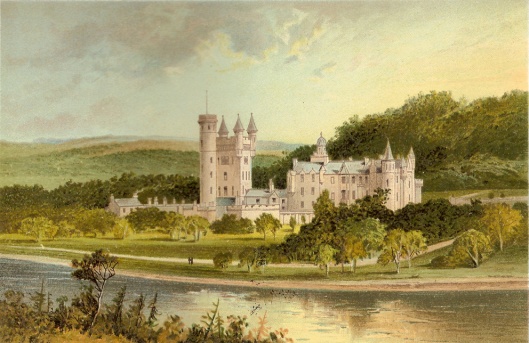
They liked the place so much that, when they decided that they needed a little place in the country, Abbotsford would be one of their models.

image28balmoral.JPG

Long after Albert’s death in 1861, the Queen continued to pay a yearly visit to Balmoral.

image29vicatbalmoral.jpg

PPS

If you’d be interested in seeing Abbotsford as an early 20th-century tourist might have seen it, here’s a LINK to Beautiful Britain:  Abbotsford (1912).


I Love a Parade

28 Wednesday Feb 2018

Posted by Ollamh in Artists and Illustrators, J.R.R. Tolkien, Military History, Military History of Middle-earth, Terra Australis

≈ Leave a comment

Tags

Agincourt, Bayeux Tapestry, Dol Amroth, Forlong, Great Gate, Harold Godwinson, hauberk, Hirluin the Fair, Howard Pyle, huscarls, Imrahil, Langstrand, Lincoln Cathedral, livery, Lossarnach, Medieval, Minas Tirith, Morthond, N.C. Wyeth, Palermo, parade, Ringlo Vale, Robin Hood, spangenhelm, The Lord of the Rings, Tolkien, Tower of Gondor

“I love a parade, the tramping of feet,

I love every beat I hear of a drum.”

–Koehler/Arlen Rhythmania (1931)


Welcome, dear readers, as always.  In the past, we’ve spent a posting or two discussing military aspects of The Lord of the Rings, from the look of the Rohirrim to the attack on Minas Tirith.  In this posting, we would like to go back one step from that attack to consider what is a rather melancholy moment in the lead up to that assault.

Pippin and his newfound friend, Bergil, have come down to the Great Gate of Minas Tirith.

image1minastirith.jpg

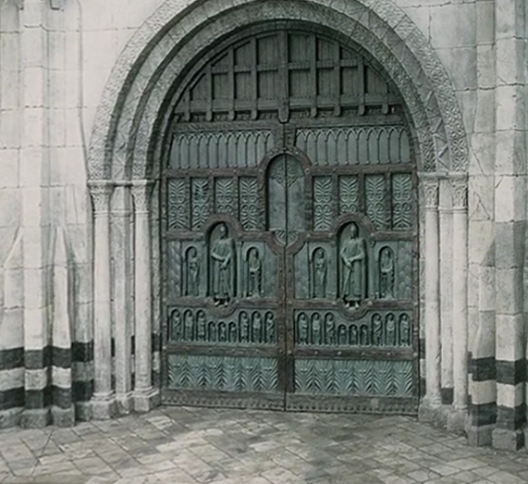
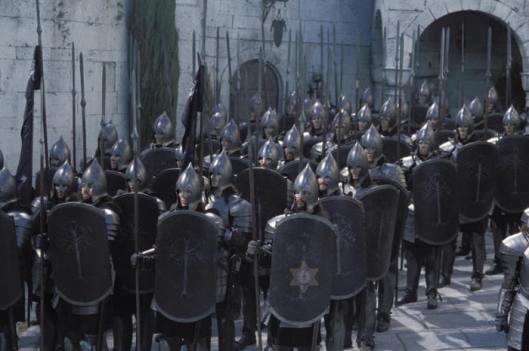
Here’s the gate from the films.

image2mtgate.png

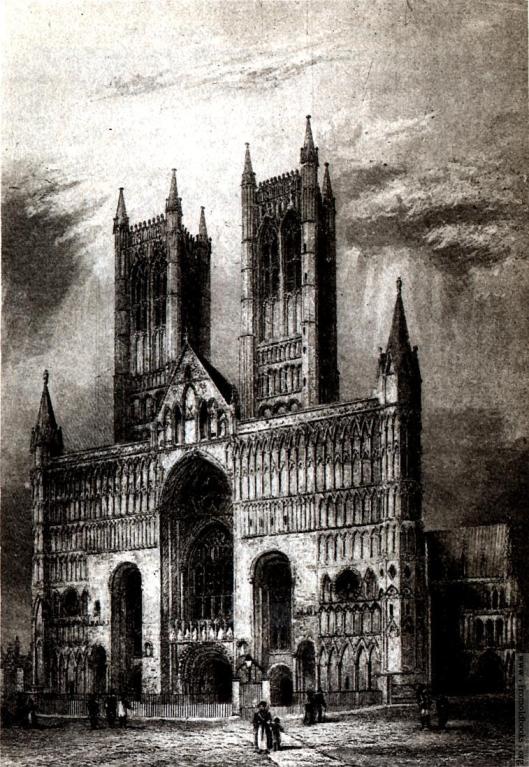
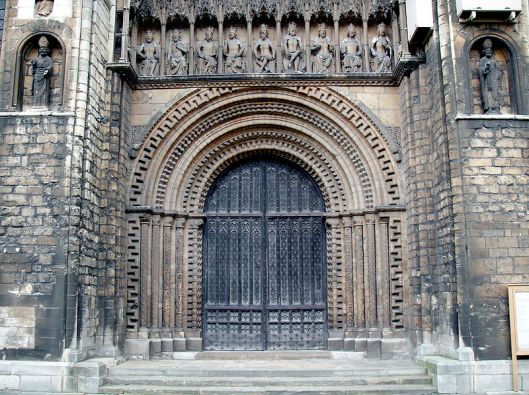
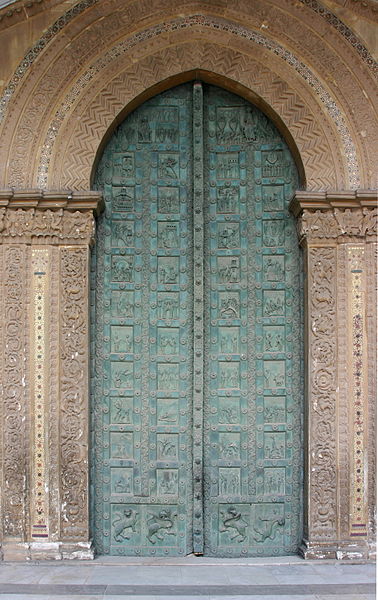
This immediately reminded us of places like the west door of Lincoln Cathedral.

image3linc.jpg

image4door.jpg

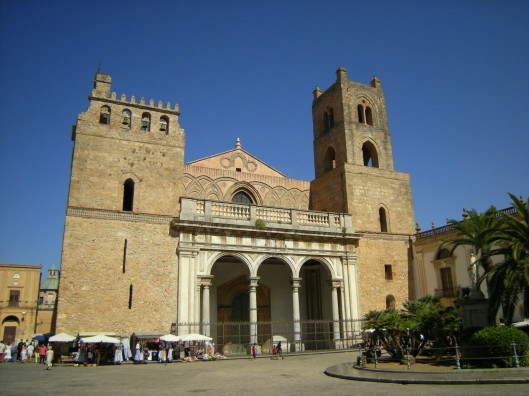
Or the main door of the cathedral of Palermo.

image5duomo.jpg

image6porta.JPG

Because he is now a member of the Guard of the Tower of Gondor, Pippin is allowed to pass through the Gate—and to take Bergil with him out to see and hear the following:

“Beyond the Gate there was a crowd of men along the verge of the road and of the great paved space into which all the ways to Minas Tirith ran.  All eyes were turned southwards, and soon a murmur rose:  ‘There is dust away there!  They are coming!’

Pippin and Bergil edged their way forward to the front of the crowd and waited.  Horns sounded at some distance, and the noise of cheering rolled towards them like a gathering wind.  There was a loud trumpet-blast, and all about them people were shouting.” (The Return of the King, Book Five, Chapter 1, “Minas Tirith”)

What happens then is a kind of parade.

When we see the defenders of Minas Tirith in the films, they are all uniformly clad.

image7gondorians.jpg


In our medieval world, this was highly unlikely, the best being that soldiers and servants might wear the colors/crest of the lord they served.  This was called “livery”.  Uniformity in clothing, weapons, and armor would be some time in the future.

image8livery.jpg

What is coming up the road from the south are reinforcements, marching in a long column of units, and those units differ greatly in look.  First are the men of Lossarnach, led by their lord, Forlong:

“Leading the line there came walking a big thick-limbed horse, and on it sat a man of wide shoulders and huge girth, but old and grey-bearded, yet mail-clad and black-helmed and bearing a long heavy spear.  Behind him marched proudly a dusty line of men, well-armed and bearing great battle-axes; grim-faced they were, and shorter and somewhat swarthier than any men Pippin had yet seen in Gondor.”

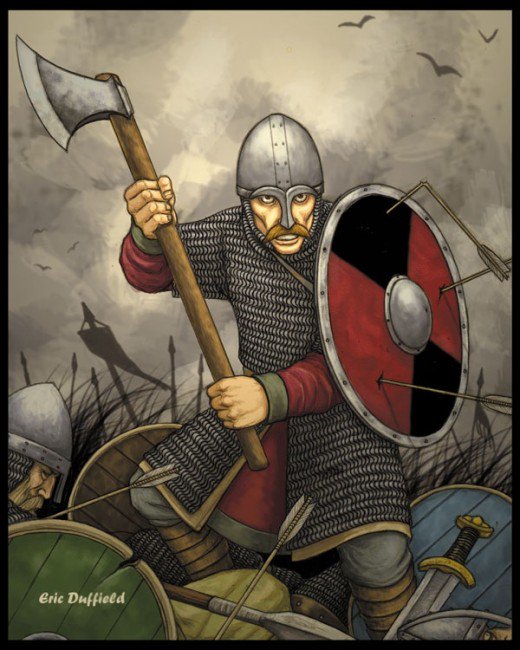
To us, those axes make the men of Lossarnach sound like the huscarls, the bodyguard of an Anglo-Saxon king, like Harold Godwinson, whom we see depicted on the “Bayeux Tapestry”.

image9huscarl.jpg

image10taphus.gif

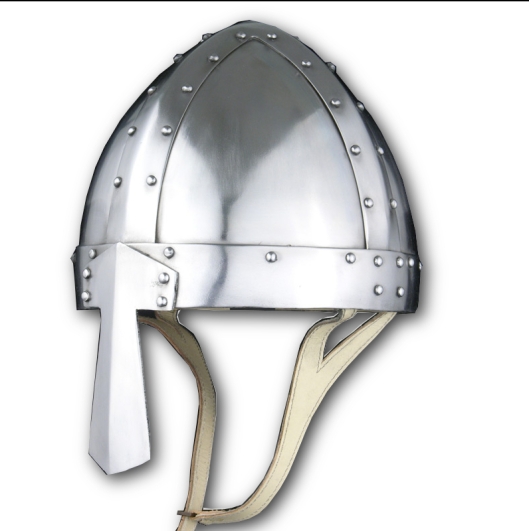
Their leader, Forlong, might be similar in appearance, wearing a type of helmet called a spangenhelm,

norman-spangenhelm-2.gif

and protected by an early form of mail shirt called a hauberk.

image12hauberk.jpg

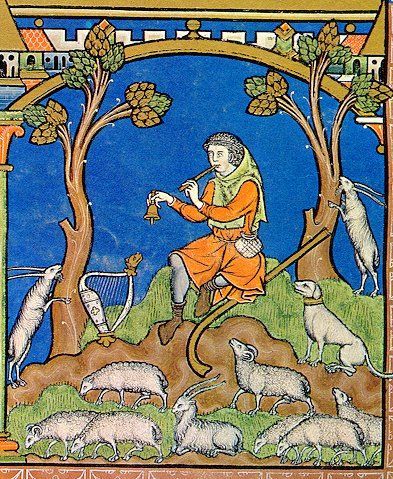
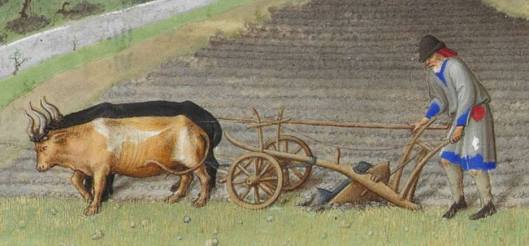
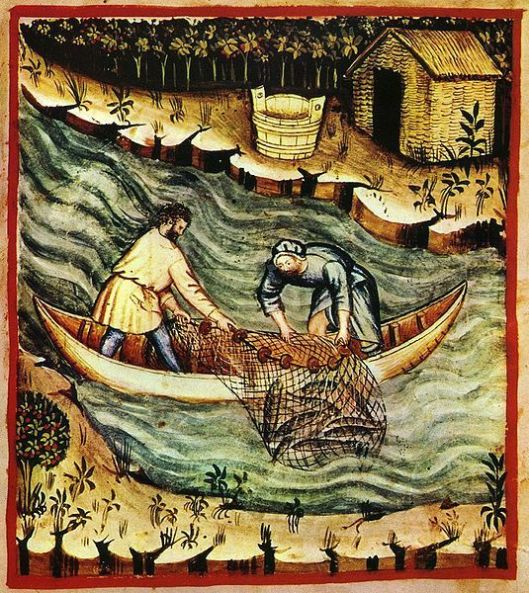
After these, we see more units, but with little description—the men of Ringlo Vale “striding on foot”, so infantry of some sort, five hundred bowmen from Morthond, from the Langstrand, “a long line of men of many sorts, hunters and herdsmen and men of little villages, scantily equipped save for the household of Golasgil their lord”.   After them, “a few grim hillmen without a captain”, and “fisher-folk of the Ethir”, all of which we imagine in their workaday clothes of hunters and shepherds and farmers and sailors, as depicted in medieval English and French manuscripts.

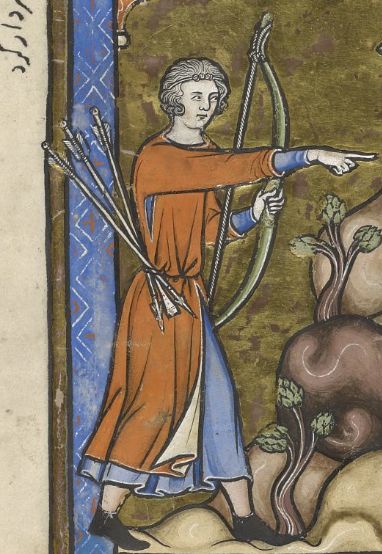
image13medhunter.jpg

image14shepherd.jpg

image15farmer.jpgimage16fishermen.jpg

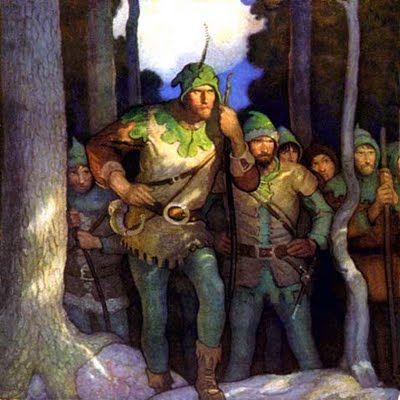
Next comes a unit which is perhaps wearing livery:  “Hirluin the Fair of the Green Hills from Pinnath Gelin with three hundreds of gallant green-clad men.”  We aren’t told how they’re armed, but that they may be in livery suggests that they may be better armed than some of the earlier contingents.  (In fact, “gallant green-clad men” makes us think of Robin Hood—perhaps more archers?)

image17rhood.jpg

And, finally, folk we’ve discussed before:

“And last and proudest, Imrahil, Prince of Dol Amroth, kinsman of the Lord, with gilded banners bearing his token of the Ship and the Silver Swan, and a company of knights in full harness riding grey horses; and behind them seven hundreds of men at arms, tall as lords, grey-eyed, dark-haired, singing as they came.”

“knight in full harness”, as we talked about in an earlier post, probably meant, to JRRT, something from Howard Pyle or NC Wyeth, like this—

image18knight.JPG

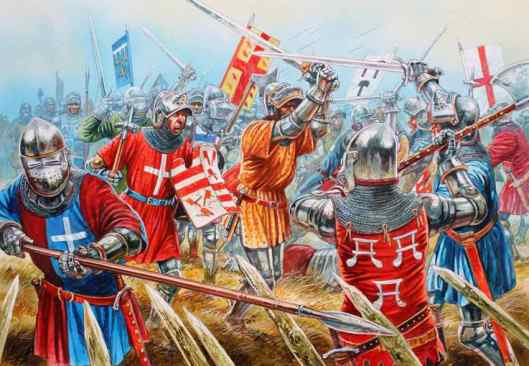
As for those “men at arms”, if they appear to be “tall as lords”, we assume that they’re on foot, which puzzles us a bit.  “Men at arms” usually means “armored soldiers on horseback” in our world—perhaps with less armor than knights, but still cavalry (unless dismounted, to fight on foot, as the French did at Agincourt in 1415, for example).  We see them, then, as looking like those dismounted cavalry, like these—

image19menatarms.jpg

However they are armed and clothed, however, they are thought to be too few by those watching and, considering what Mordor eventually sends against them, they would not have been enough, if the brave Rohirrim and Aragorn’s reinforcement from the south hadn’t arrived in time.  What would have happened if they hadn’t?  A subject for very grim fan-fiction!

Thanks, as ever, for reading!

MTCIDC

CD
Wormy

21 Wednesday Feb 2018

Posted by Ollamh in J.R.R. Tolkien, Military History, Military History of Middle-earth, Villains

≈ Leave a comment

Tags

Adolf Hitler, Bilbo, Dragon, Fifth Column, Gandalf, Germany, Grima, Madrid, Middle-earth, Nazis, Norway, Norwegian facist party, Republican government, Rohan, Saruman, Second World War, Smaug, Spanish Civil War, The Hobbit, The Lord of the Rings, The Scouring of the Shire, Theoden, Tolkien, traitor, Vidkun Quisling, William Blake, worm, Wormtongue

Welcome, as always, dear readers.
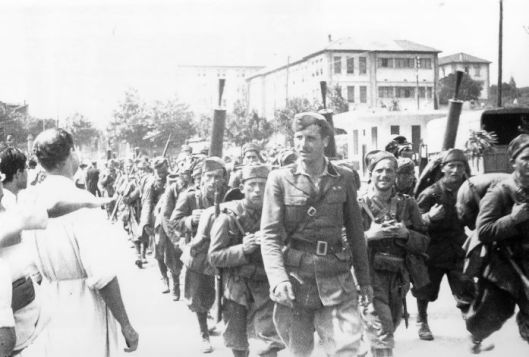
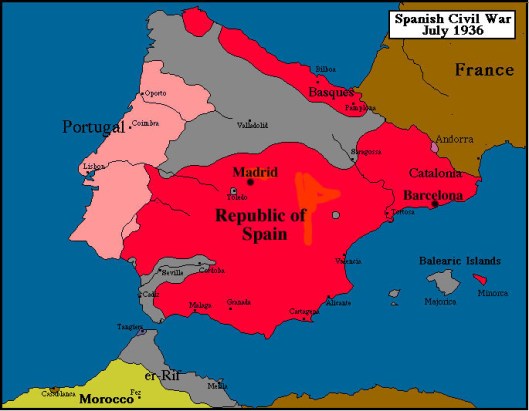
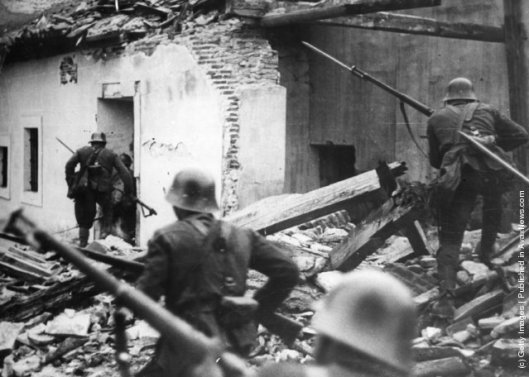
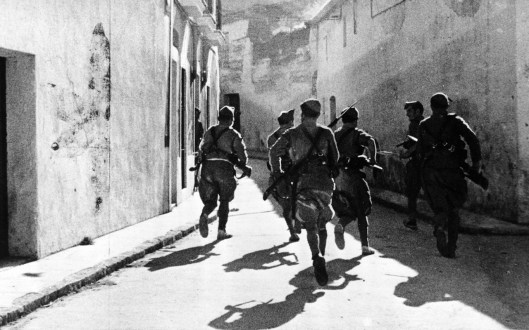
In 1936, the Nationalist forces were marching to attack the Republican government in Madrid, during the Spanish Civil War.
image1nationalists.jpg
image2attackonmadrid.jpg
When interviewed, a Nationalist general is reported to have said that, as four military columns were about to assault the city,
image3natattack.jpeg
a fifth column of loyalists would join the attack from inside.
image4natattack.jpg
This phrase “fifth column”, then, was picked up and began to be used world-wide to mean “traitors/betrayers from within” and was popular during the Second World War era.
image5thcol.jpg

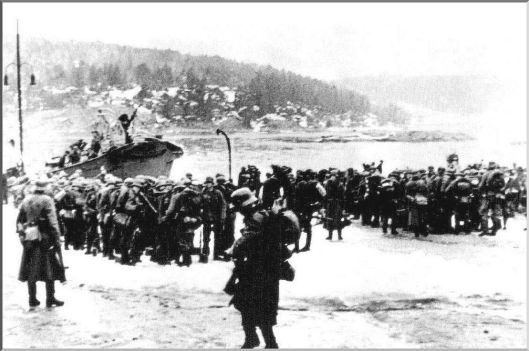
When the Nazis attacked Norway in 1940,
image6nazislandinginnorway.jpg
and the Allies failed to defend their positions there successfully and were forced to surrender or flee
image7capturedtroops.jpg
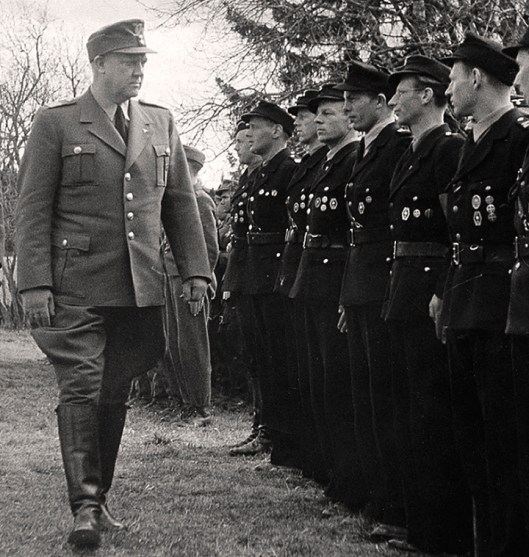
a member of the small Norwegian fascist party, Vidkun Quisling,
image8quisling.jpg
declared himself ruler as the Germans marched in.
image9conqueringgermans.jpg

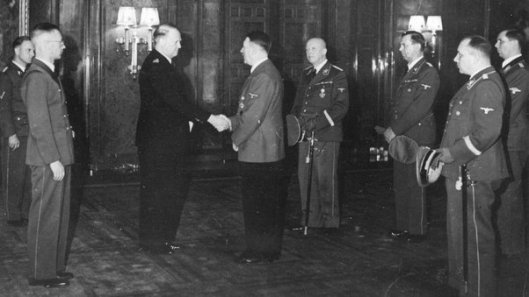
In time, the Nazis recognized him as the head of Norway and he even had an audience with Hitler.
image10hitandquis.jpg

This time, a specific “fifth columnist” had not only betrayed his country, but also profited greatly from it and, when we looked at the dates—1936 and 1940—we wondered, as we so often do, if the current events of our world may have colored JRRT’s relation of the events in Middle-earth—even as we hasten to say, as we always do, that this is just a suggestion.
In his first meeting with Aragorn, Eomer is troubled and his veiled comments suggest just the same sort of fifth-columnist action:
“But at this time our chief concern is with Saruman. He has claimed lordship over all this land, and there has been war between us for many months…”
His concern, however, as we see, is for more than border security, as he says of Saruman:
“His spies slip through every net, and his birds of ill omen are abroad in the sky. I do not know how it will all end, and my heart misgives me; for it seems to me that his friends do not all dwell in Isengard. But if you come to the king’s house, you shall see for yourself.” (The Two Towers, Book Three, Chapter 2, “The Riders of Rohan”)
So, all is not well, not only in Rohan, but in Meduseld itself. When Gandalf and the other survivors of the Fellowship arrive at the gates of Edoras, they are stopped by guards and by a command from Theoden, king of Rohan—or is it? A guard says:
“It is but two nights ago that Wormtongue came to us and said that by the will of Theoden no stranger should pass these gates.” (The Two Towers, Book Three, Chapter 6, “The King of the Golden Hall”)
“Wormtongue” seems a very odd name—do worms actually have tongues?
image11worm.JPG
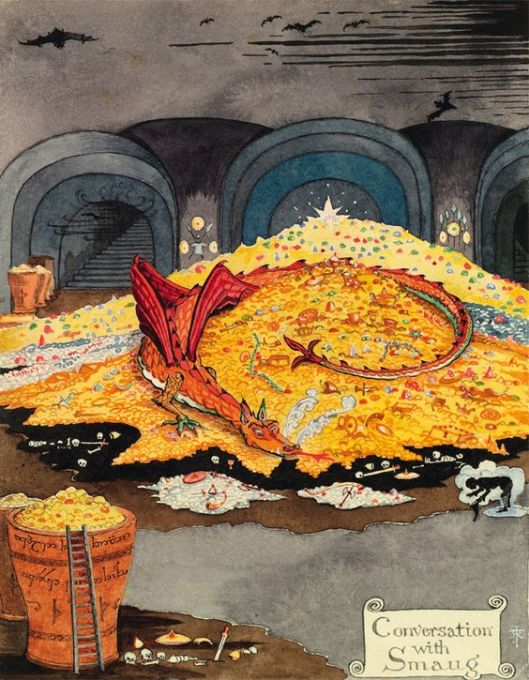
But this isn’t a worm, it’s a “worm”—an old term for “dragon”.
image12smaug.jpg
And, if Smaug’s speech and its effect upon Bilbo is anything to go by:
“Bilbo was now beginning to feel really uncomfortable. Whenever Smaug’s roving eye, seeking for him in the shadows, flashed across him, he trembled, and an unaccountable desire seized hold of him to rush out and reveal himself and tell all the truth to Smaug. In fact he was in grievous danger of coming under the dragon-spell.” (The Hobbit, Chapter 12, “Inside Information”)
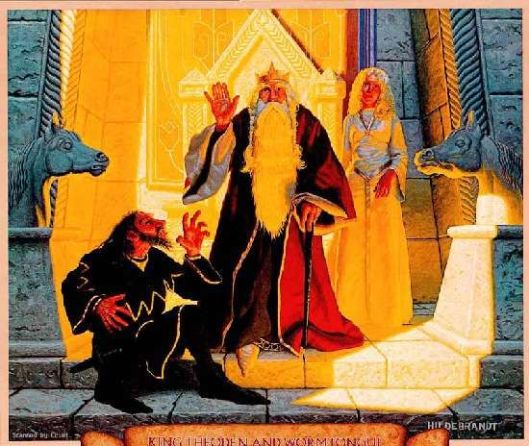
then a person having a dragon tongue might be a real threat, as Wormtongue, seated at Theoden’s feet,
image13theodenandgrima.jpg
inserts himself between Gandalf and Theoden:
“Why indeed should we welcome you, Master Stormcrow? Lathspell I name you, Ill-news; and ill news is an ill guest they say.”
Gandalf immediately resists this and, in a burst of power, breaks the real “spell”—the dragon’s words which Grima Wormtongue has been pouring into Theoden’s ears, as Theoden says to him of Gandalf’s efforts: “If this is witchcraft…it seems to me more wholesome than your whisperings. Your leechcraft [that is, “medical skill”—obviously ironic here] ere long would have had me walking on all fours like a beast.”
[A footnote here—is JRRT making a quiet reference to the fate of Nebuchadnezzar, king of Babylon, mentioned in the book of Daniel in the Old Testament? In Chapter 4, the king is driven mad and spends seven years as a grazing animal to prove the power of the Hebrew divinity. Here is William Blake’s (1757-1827) striking depiction of the mad king.]
image14blake.jpg

Certainly something Grima has been doing has affected Theoden, as he is initially described as “a man so bent with age that he seemed almost a dwarf…” and this shrinking is suddenly reversed when Gandalf strikes Grima down:
“From the king’s hand the black staff fell clattering on the stones. He drew himself up, slowly, as a man that is stiff from long bending over some dull toil. Now tall and straight he stood, and his eyes were blue as he looked into the opening sky.”
For all that Grima has been blocked and Theoden restored, the fifth columnist tries once more. When he is told that he must ride with the king and his warriors to battle, he makes a countersuggestion:
“One who knows your mind and honours your commands should be left in Edoras. Appoint a faithful steward. Let your counsellor Grima keep all things till your return…”
But he gives himself away by finishing that sentence with “and I pray that we may see it, though no wise man will deem it hopeful.”
And Gandalf sees all too clearly what is behind Grima’s proposal—and who is behind it:
“Down, snake!…Down on your belly! How long is it since Saruman bought you? What was the promised price?…”
image15fallofgrima.jpg

Although it is said that Grima deserves death for his treachery, he is allowed to flee, and, when we next see him, he is with his true master, acting as his “footman” as Gandalf calls him (The Two Towers, Book Three, Chapter 10, “The Voice of Saruman). And here, as Bilbo’s pity has preserved Gollum for an unseen but vital part in the later story of the Ring, so Gandalf’s mercy to Grima preserves him for two final acts: first, his mistaken use of a palantir as a missile, which puts it into Gandalf’s hands and, ultimately into Aragorn’s, who shakes Sauron’s nerve with it; second, Saruman’s ultimate end:
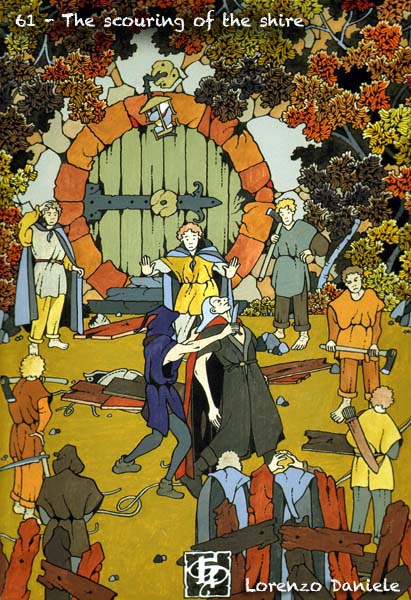
“[Saruman] kicked Wormtongue in the face as he groveled, and turned and made off. But at that something snapped: suddenly Wormtongue rose up, drawing a hidden knife, and then with a snarl like a dog he sprang on Saruman’s back, jerked his head back, cut his throat, and with a yell ran off down the lane.” (The Return of the King, Book Six, Chapter 8, “The Scouring of the Shire”)
image16deathofsaruman.jpg
Grima doesn’t survive this attack, however: “Before Frodo could recover or speak a word, three hobbit-bows twanged and Wormtongue fell dead.”
Merry calls these final acts of violence “the very last end of the War”, but we would suggest a parallel with a specific event in our world: the end of Vidkun Quisling–executed by firing squad in October, 1945, for treason. Could we say that Grima’s death—deserved earlier, but deferred—was also a kind of execution for treason, against Rohan, finally carried out?
And a final thought: after World War 2, Quisling’s name became, for a time, an easy synonym for “fifth columnist/traitor”—could we imagine that, in the Common Speech of Middle-earth after the War of the Ring, the same might have happened to “Grima Wormtongue”?
Thanks, as ever, for reading.
MTCIDC
CD

Wains, Carts, and… (2)

14 Wednesday Feb 2018

Posted by Ollamh in Economics in Middle-earth, J.R.R. Tolkien

≈ Leave a comment

Tags

Boudica, Carts, Cassius Dio, Celts, chariots, Conestoga, Farmer Maggot, Gandalf, gur, Hobbiton, Iceni, Iron Age, Medieval, Mongols, Oregon Trail, Roman History, Romans, The Lord of the Rings, Tolkien, vikings, Wagons, Wainriders, Wains

Welcome, as always, to our blog, dear readers.

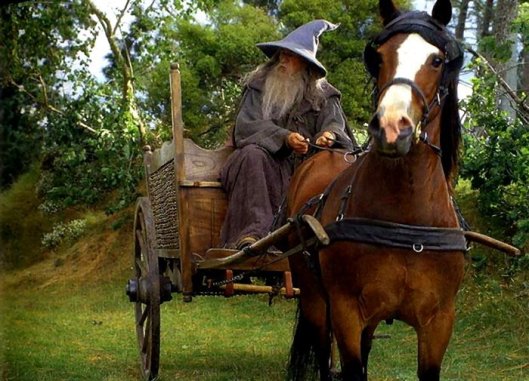
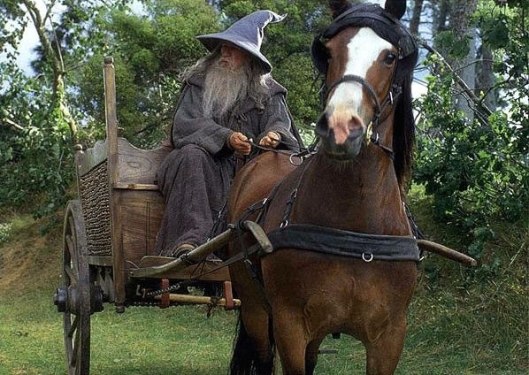
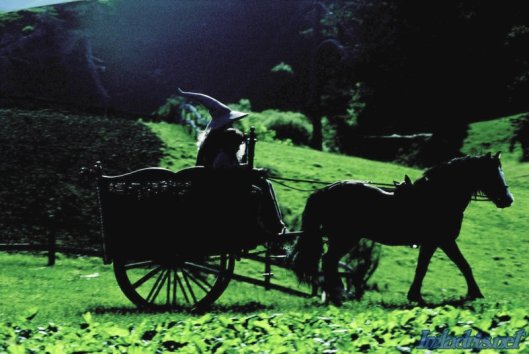
In our last, we began discussing wheeled transport in The Lord of the Rings.  We began with Gandalf’s cart, mentioned in Chapter 1.

im1gscart.jpg

The posting took us from the first traces of wheeled vehicles in western Europe, circa 3600BC (literally traces—just a pair of tracks in the clay)

im2tracks.jpg

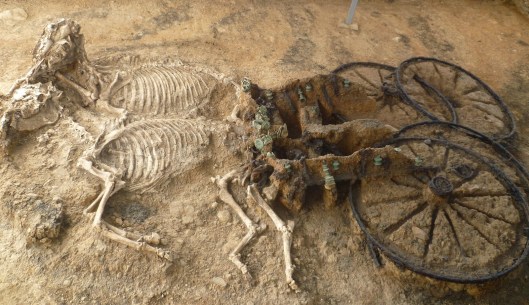
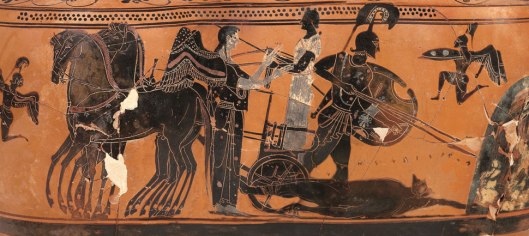
through chariots

im3chariot.jpg

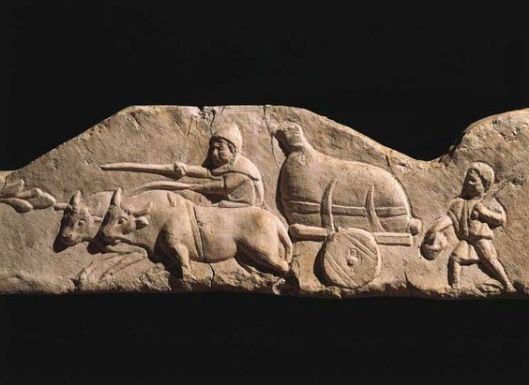
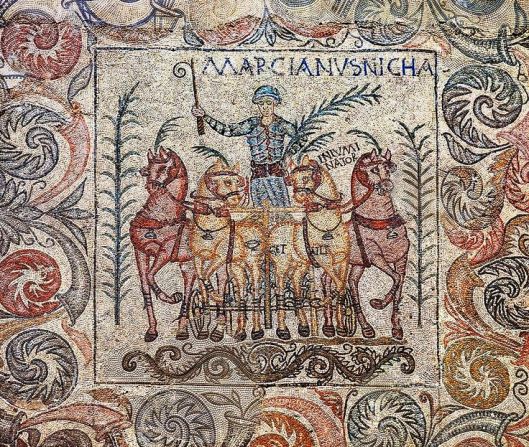
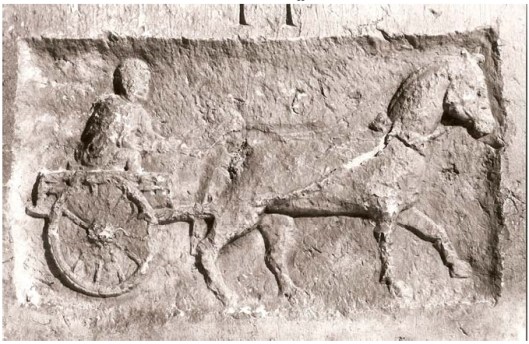
to Roman carts

im4romcart.jpg

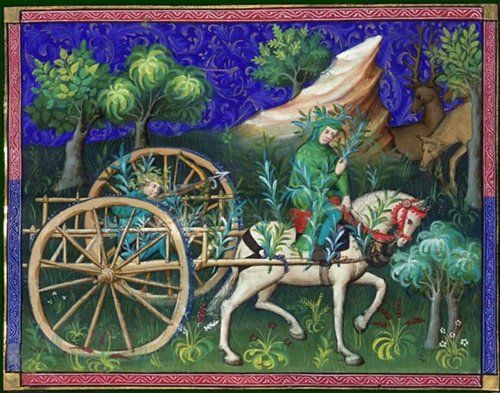
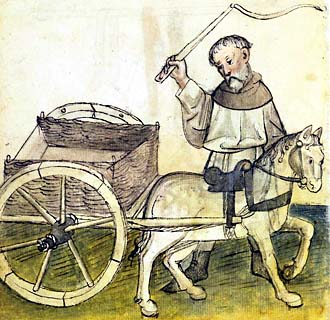
to their descendants, medieval carts,

im5medcart.jpg

which led us back to Gandalf.

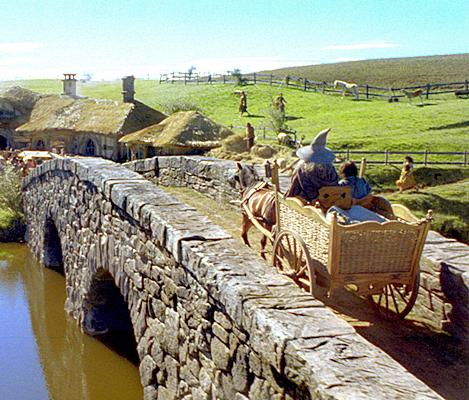
im6gcart.jpg

Continuing our discussion, we move from carts (2 wheels) to wagons (4 wheels) with the wagon Farmer Maggot uses to carry the hobbits to Bucklebury Ferry:

“I was going to say:  after a bit of supper, I’ll get out a small wagon, and I’ll drive you all to the Ferry.” (The Fellowship of the Ring, Book One, Chapter 4, “A Short Cut to Mushrooms”)

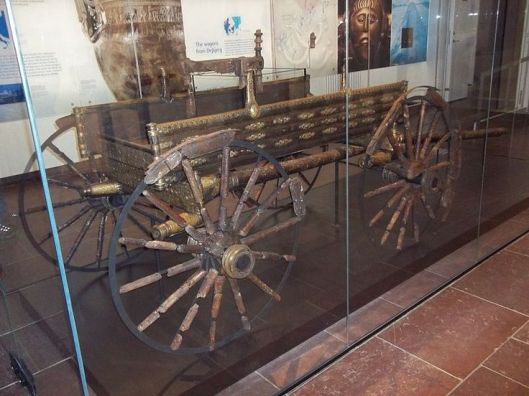
There is no description beyond that, really, but wagons are pretty generic things.  We have a few examples of early (600-500BC) Iron Age wagons—very fancy ones, too—from burials,

im7celtwag.jpg

im8celtwag.jpg

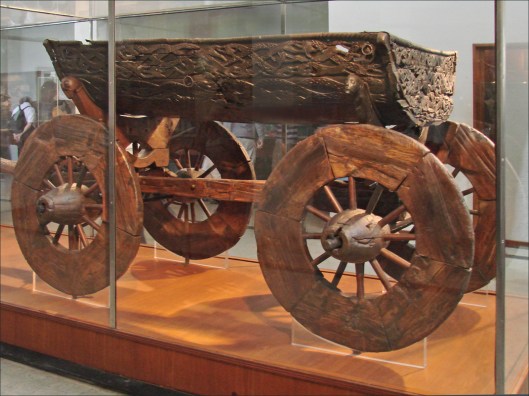
as well as this later Viking wagon.

im9oseberg.jpg

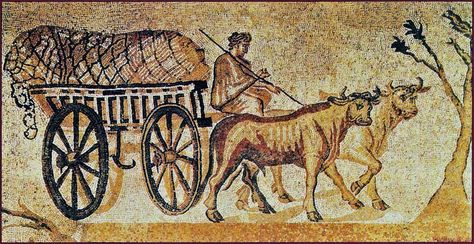
And, in between, we have Roman wagons

im10romwag.jpg

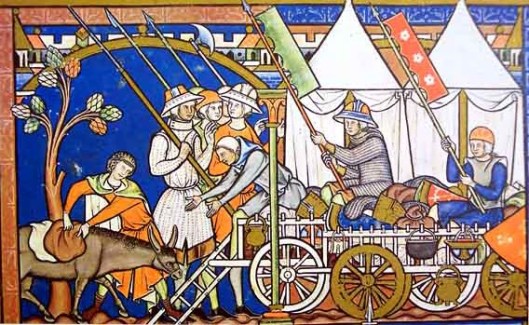
and their medieval descendants.

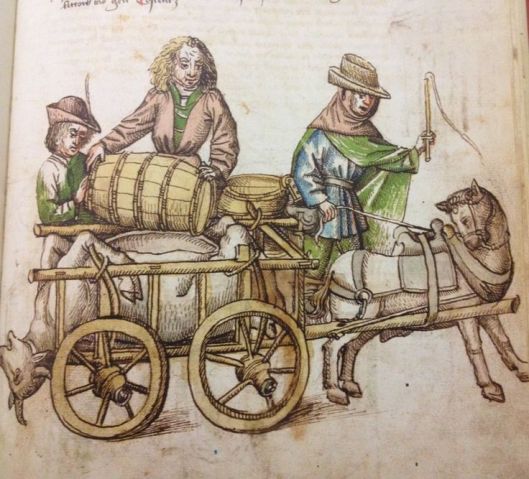
im11medwag.jpg

Farmer Maggott’s wagon, would probably have looked something like this (without the arms).

im12amedwag.jpg

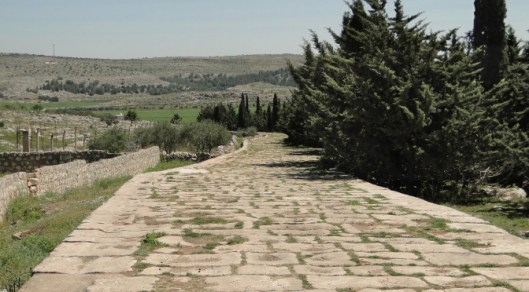
Of course, those Roman wagons were meant for paved Roman roads.

im12romroad.jpg

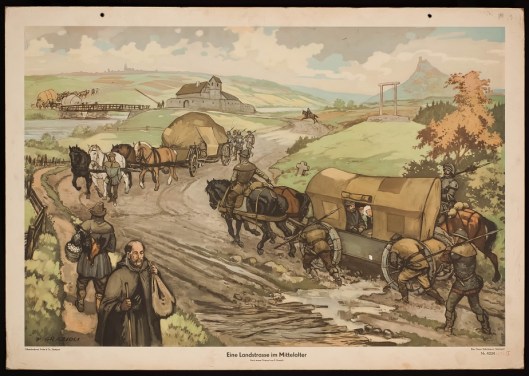
Although some Roman roads remained on the surface and continued to be used, most medieval roads were merely dirt and stones—as JRRT illustrates in that picture of the Hill

im13hobbiton.jpg

and as we see in this picture.

im14medroad.jpg

In which case, medieval people relied upon pack horses to transport many of their goods.

im15sumpter.jpg

(Think of Bill the pony as a modest example.)

An old word for wagon is wain and we would like to end this brief exploration with something about wains and Wainriders.  In Appendix A, we find this:

“The third evil was the invasion of the Wainriders, which sapped the waning strength of Gondor in wars that lasted for almost a hundred years.  The Wainriders were a people, or a confederacy of many peoples, that came from the east; but they were stronger and better armed than any that had appeared before.  They journeyed in great wains, and their chieftains fought in chariots.”

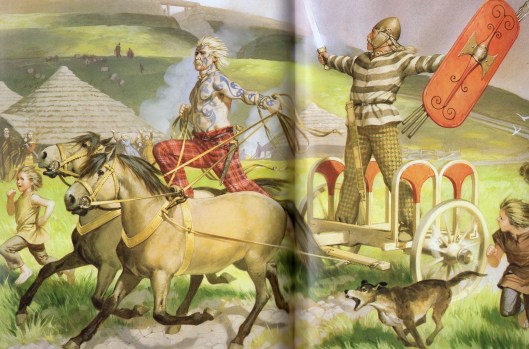
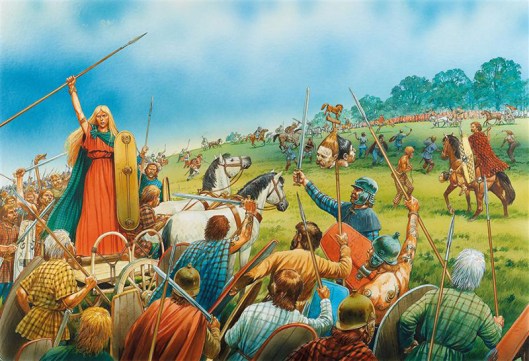
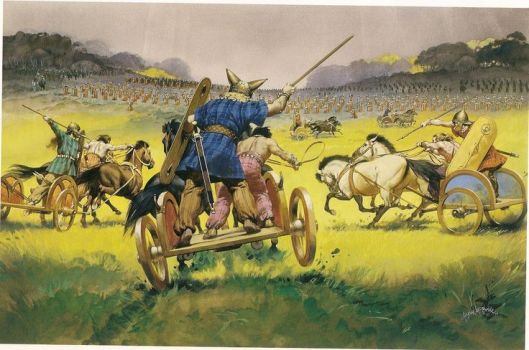
We’ve been puzzled by that combination of “great wains” and “their chieftains fought in chariots”.  The only immediate reference we could think of was to the Iceni, a tribe of ancient Britain, who, led by a female chieftain named Boudica, revolted against Roman occupation in 60-61AD.  At the final battle, where they were defeated by Roman troops, they had parked wagons in a crescent formation to their rear, then advanced with their chariots and infantry against the Romans. (See Cassius Dio, Roman History, LXII.12 for a description of this battle—here’s an easy LINK to that portion of his extensive writing.)

im16boudica.jpg

There is a problem here, however.  The Britons were not migratory and their wagons were probably no more than farm wagons and carts, hardly the great wains of JRRT’s description.  If we removed the chariots, another candidate for the Wainriders might be the Mongols, however, who were migratory and traveled in something even more splendid than a wagon—a gur—like this one—

im17ger.jpg

The Mongols certainly came from the east and, in a short time, swallowed up territory from China all the way to eastern Europe.

im18mongolconquest.jpg

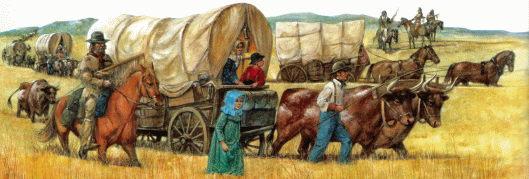
It is more likely, however, that JRRT combined things–it wouldn’t be the first time he synthesized—so much of his so-called legendarium is a mixture of this and that in brilliant profusion.  So, in the same spirit, we asked ourselves what we thought wains might look like and immediately saw the big wagon which was instrumental in colonizing the western part of the US, the Conestoga.

im19conestoga.jpg

Great, long lines of these and other wagons, packed with people and supplies, crossed the plains from the 1840s on.

im20wagtrain.gif

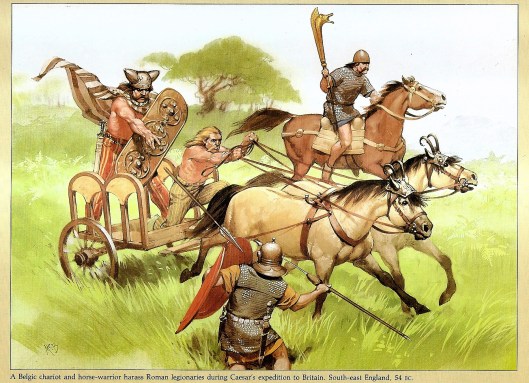
Could we then remove the 19th-century settlers and add Celts and their chariots, say?

im21celtchar.jpg

What do you think, dear readers?

Thanks, as ever, for reading.

MTCIDC

CD

Wains and Carts and… (Part I)

07 Wednesday Feb 2018

Posted by Ollamh in J.R.R. Tolkien, Literary History, Military History

≈ Leave a comment

Tags

Bronze Age, Byzantines, Carts, chariots, delivery carts, Flintbek, Gandalf, Great War, Greece, Iliad, Late-Victorian, Medieval, military, Mycenaean, Neolithic, Roman Roads, Romans, Schleswig-Holstein, The Lord of the Rings, Tolkien, Trundholm Sun Chariot, Wagons, wattle and daub

Welcome, dear readers, once more to our blog.
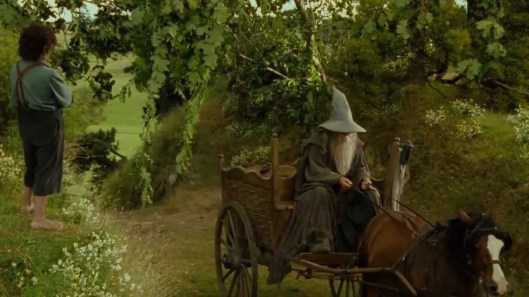
We’ve just been watching the extended version opening of The Fellowship of the Ring, in which Gandalf appears, driving a cart.
image1gandalfcart.jpg
(Sorry—we couldn’t resist! We love Legos and the older Playmobil—Vikings, pirates, Roman warship, too. Not to forget the Egyptian pyramid! )
Unlike ordinary medieval carts,
image2amedcart.jpg
it is quite elaborate.
image2gandalfcart.jpg
image3gandalfcart.jpg
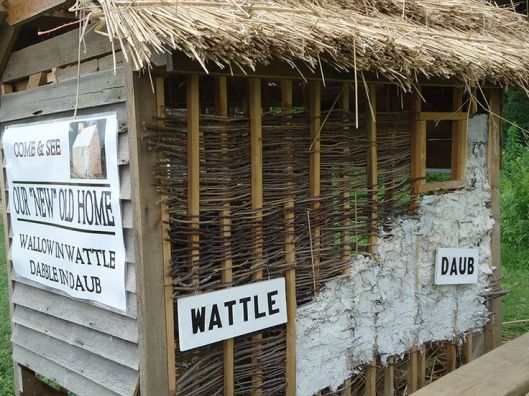
You can see from our second illustration that both the medieval example and Gandalf’s have wattled sides—that is, the upright spindles below the railing top have pliable sticks (perhaps willow or hazel?) woven between them to make the sides of the cart.
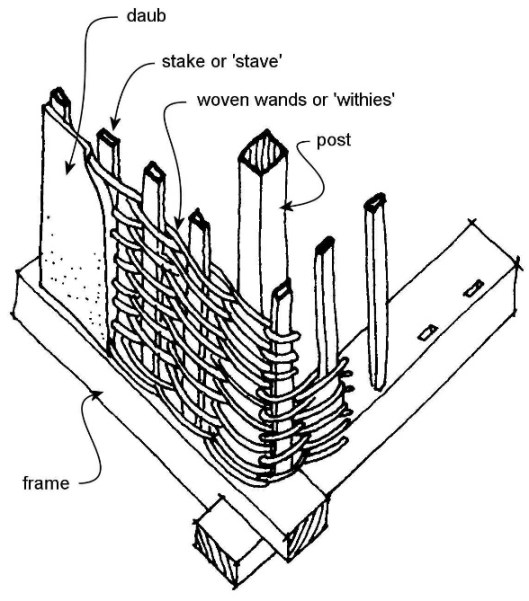
This is also a common method for producing traditional house walls: you just add daub, which is clay plus fibre, as a kind of plaster to fill in around the sticks.
image4wattleanddaub.jpg
Many buildings, from the Neolithic on, were constructed using the technique,
image5technique.jpg
image6house.jpg
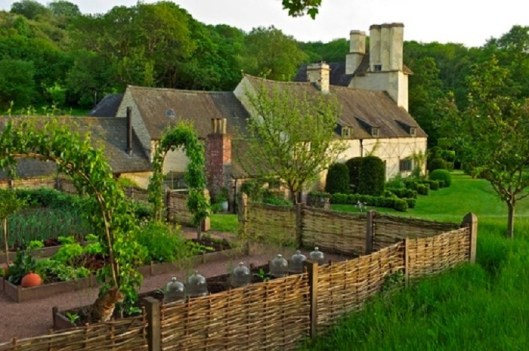
as well as, without the daub, miles and miles of useful fencing.
image7fence.jpg
What caught our attention, however, was the general look of the cart and the detailing of the wooden railing,
image8agscart.jpg
image8bgscart.jpg
image8cgscart.jpg
which very much reminded us of this—
image8chariot.jpg
a Celtic chariot of the sort one sees both in chariot burials
image9chariotburial.JPG
and in stirring reconstructions.
image10britchariots.jpg
But that’s not the direction we wanted to take in this post. Rather, we were, as so often, thinking about the medieval world and Middle-earth and, in this case, wheeled vehicles.
The earliest evidence in Europe currently known for such vehicles is not the remains of a vehicle itself, but rather its tracks, found under a burial mound at Flintbek, in Schleswig-Holstein, in northwest Germany.
image11flintbek.jpg
These have been dated to about 3600BC, during the late Neolithic Era. A bit later, we see this odd thing, the so-called “Trundholm Sun Chariot”, from about 1400BC
image12trundholm.jpg
which actually appears to be some sort of wagon, or at least its frame.

Perhaps 50 years later, there are Bronze Age Mycenaean chariots
image13mycen.jpg
but, at least as far as illustrations go, European domestic vehicle depictions are scarce, especially in contrast to those of military—or sport—vehicles. Here’s a 5th-century BC depiction of a wagon being used for a wedding,
image14grkwagon.jpg
but we could then show you heaps of illustrations of chariots, used in very early Greece for warfare. You see them all over the Iliad, for example,
image15achilles.jpg
but chariots in the later Greek world were abandoned for warfare, although retained for racing, which was true for the Romans and for their successors, the Byzantines.
image16byzchar.jpg
We have lots more depictions of domestic vehicles from the Roman world, both carts
image17romancart.jpg
and wagons.
image18romwag.jpg
This shouldn’t be surprising, we suppose, given that the Romans built more than 50,000 miles of roads.
image19romrd
Judging by these depictions, it appears that the medieval world simply continued using Roman vehicle patterns, just as, where available, they continued to use Roman roads.
image19romcrt.jpg
image20medwag.png
For us, then Gandalf’s cart—which is not really described:
“At the end of the second week in September a cart came in through Bywater from the direction of Brandywine Bridge in broad daylight. An old man was driving it all alone…It had a cargo of fireworks…”
(The Fellowship of the Ring, Book One, Chapter 1, “A Long-expected Party”)
would follow what we see in manuscript illustrations.
Tolkien might have been thinking of such illustrations, of course, but there is another possibility. In the late-Victorian world into which JRRT was born, horses still powered vehicles and delivery carts like this one
image21deliverycart.jpg
would have been a common site—even after the Great War. Perhaps he was thinking of something he might still have seen outside his window when he was young?
We’ll stop here for now, but will continue in Part II, where we’ll consider Farmer Maggot’s wagon and wains…

Thanks, as ever, for reading.
MTCIDC
CD

Weaving (Not Hugo)

31 Wednesday Jan 2018

Posted by Ollamh in Artists and Illustrators, Fairy Tales and Myths, J.R.R. Tolkien, Literary History, Military History, The Rohirrim

≈ Leave a comment

Tags

Anglo-Saxon, Battle of Hastings, Bayeux Cathedral, Bayeux Tapestry, Bishop of Bayeux, Edward the Confessor, Harold Godwinson, Lambert Leonard-Leforestier, Louvre, Musee Napoleon, Napoleon, Normans, Odo, Odo Earl of Kent, Old English Hexateuch, Rohan, Rohirrim, The Lord of the Rings, Tolkien, Tower of Babel, William Duke of Normandy, William the Conqueror

Welcome, dear readers, as ever.

In our last, we quoted JRRT on the subject of the Rohirrim:

“The styles of the Bayeux Tapestry (made in England) fit them well enough, if one remembers that the kind of tennis-nets [the] soldiers seem to have on are only a clumsy conventional sign for chain-mail of small rings.”  (Letters, 281)

We’ve mentioned the so-called Bayeux Tapestry before and even shown an illustration or two, but we thought that it would be fun to delve a little deeper into the subject—beginning with its name and why Tolkien added “(made in England)” to his sentence.

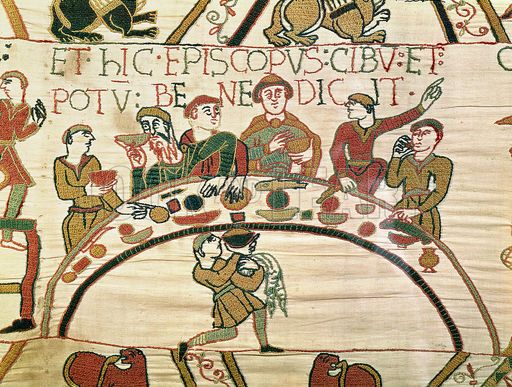
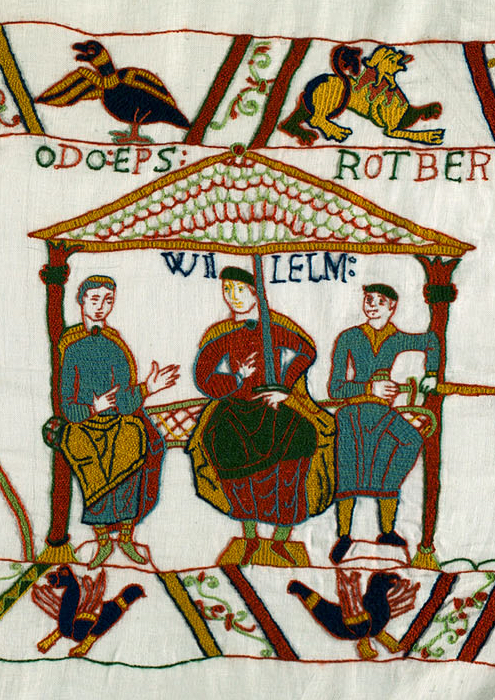
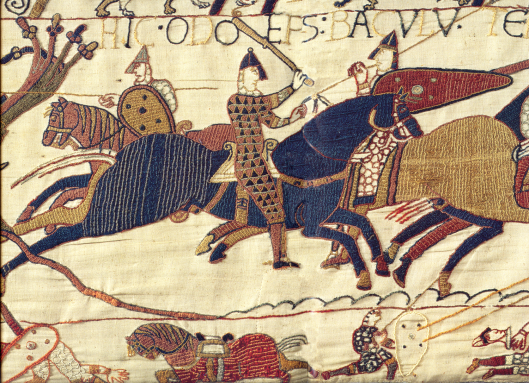
The first known reference to this approximately 230-foot-long (70.1 meters) by 20 inch high (.5m) piece of fabric dates from the latter part of the 15th century AD, from an inventory at Our Lady of Bayeux Cathedral—commonly known in English as Bayeux Cathedral—in 1476.  There has been much scholarly argument over its site of manufacture, but the evidence appears to us to identify the commissioner of the work as Odo, Bishop of Bayeux, and half-brother to William, Duke of Normandy (where Bayeux is situated), aka, “William the Conqueror”.  Odo is depicted and identified three times on the piece, twice in more peaceful settings—once blessing a meal,

image1odo.jpg

once sitting with William and his half-brother, Robert,

image2odo.jpeg

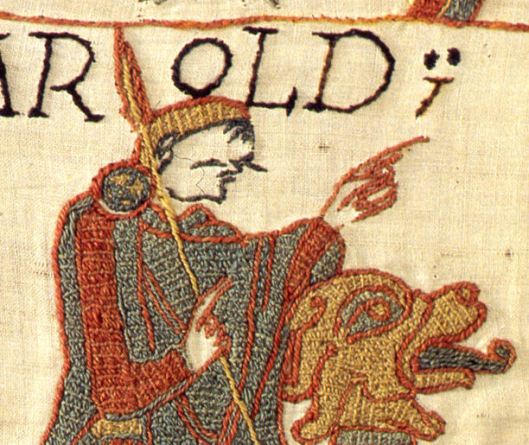
and once in a decidedly not peaceful setting, encouraging the troops at the Battle of Hastings, wearing a mail shirt and helmet and brandishing a club.  (The Latin inscription—called a titulus—says “Here Bishop Odo, holding a club, puts strength into the lads”.)

image3odo.png

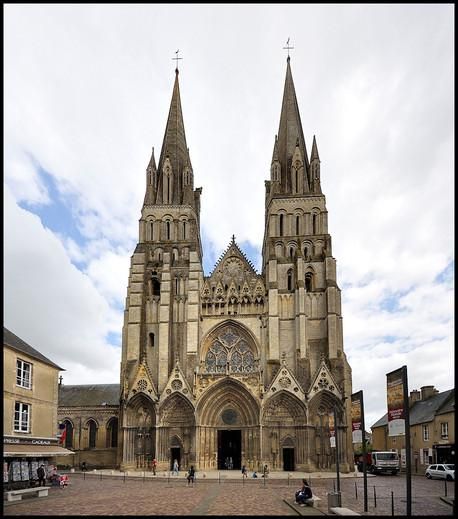
As well, several of the figures on the piece have been identified as vassals (feudal allies) of Odo.  Finally, Odo was not only the Bishop of Bayeux, but also instrumental in rebuilding the cathedral in which the artefact was first known to have been housed, Bayeux Cathedral (elements of which are buried inside this later Gothic version).

image4bayeux.jpg

It seems natural to us, then, that he, at one time William’s right-hand man, would have been responsible for the creation of the work.  (We might also add that the Norman victory made Odo Earl of Kent—one more reason for commissioning a work which shows that victory in detail.)

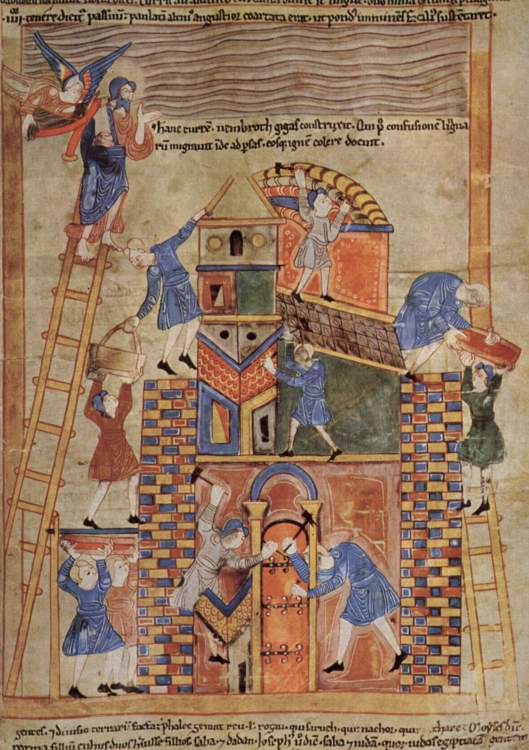
We said that there was argument as to where the work was made, but we, ourselves, would agree with JRRT and the idea that it was made in England for, among other reasons, the depiction of people and scenery on it remind us strongly of the Anglo-Saxon artistic tradition—especially embodied in the mid-11th-century manuscript of the “Old English Hexateuch”, with its 394 colored illustrations, which is to be found in the British Library (Cotton MS Claudius B. iv.).

image5babel.jpg

This is a depiction of the construction of the Tower of Babel.  Below is a picture of Normans building ships for their invasion of England from the Bayeux work.

image6ship.jpg

The Bayeux work is much sparer, but there’s that same interest in illustrating motion.

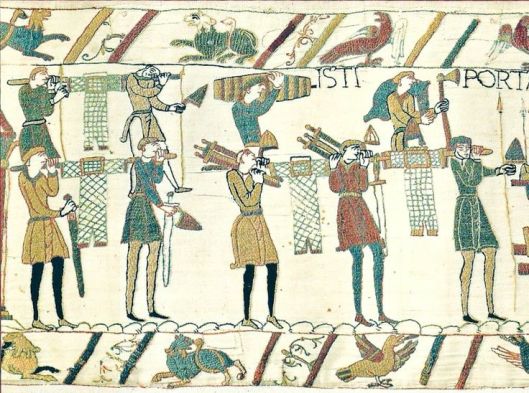
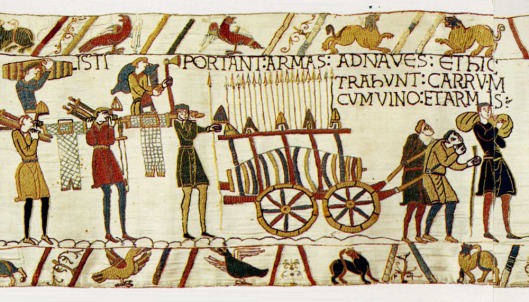
But, when we say that the Bayeux work is sparer, that is not to say that it lacks detail, as there are (at least) four visual levels throughout.  If we take just one scene at random

image7levels.jpg

and go from top to bottom we see:

  1. a narrow band of single figures—in this case, animals
  2. a broader band of action—in this case it’s Normans loading their equipment—and other things—for the attack on England (The titulus says: “These are carrying arms to the ships and here they are dragging a cart with wine and arms.”)
  3. the captions—tituli—for every scene
  4. a lower narrow band—again, here, animals, but there are other possibilities, as in this scene, where we see scavengers removing the arms and armor of the dead after the Battle of Hastings

image8scavengers.jpg

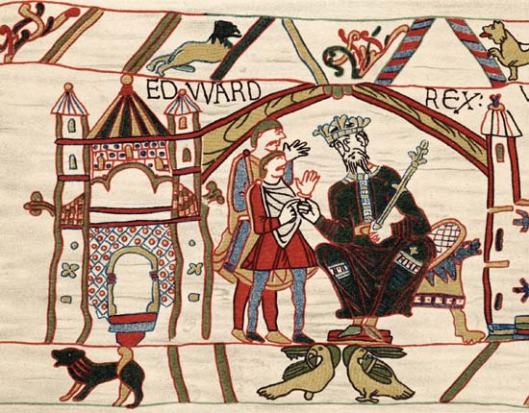
The images in the “Old English Hexateuch” illustrate individual Bible stories.  Those in the Bayeux work are scenes, all parts of a long historical narrative, which begins in 1064 (it is thought) with Edward the Confessor, the King of England,

image9eddie.jpg

sending the powerful nobleman, Harold Godwinson, on what appears (from subsequent panels) to be a mission to France.

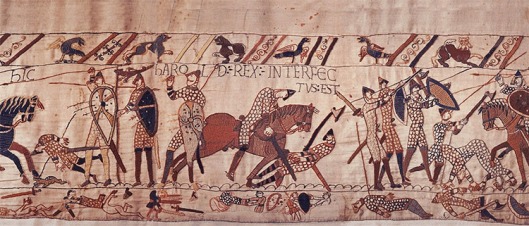
The last scenes, at the far end, include the death of Harold on the battlefield of Hastings

image10deathofharold.jpg

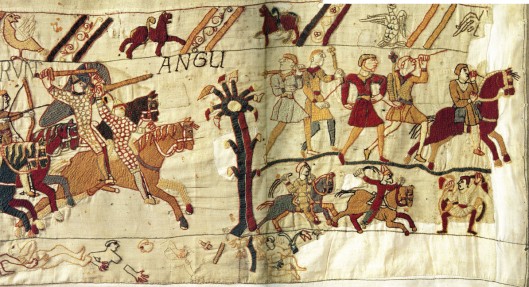
and the flight of the English from the field, with Normans in hot pursuit in October, 1066.

image11flight.jpg

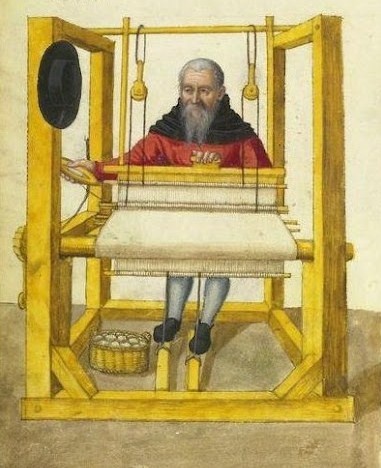
Throughout our discussion, we have avoided calling this work by its traditional name because, in fact, the “Bayeux Tapestry” is not a tapestry.  A tapestry is a solid piece of fabric, woven on a loom.

image12medloom.jpg

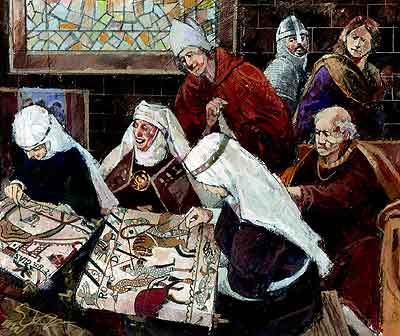
The Bayeux Tapestry is really the Bayeux Embroidery, in which various designs are stitched onto a cloth.

image13making.jpg

In this close-up, you can see how it’s done, with outlines giving the figures shape, as if they were drawn with a needle, then filled in.  (For more on this, and on the work in general, try this LINK.)

image14stitching.jpg

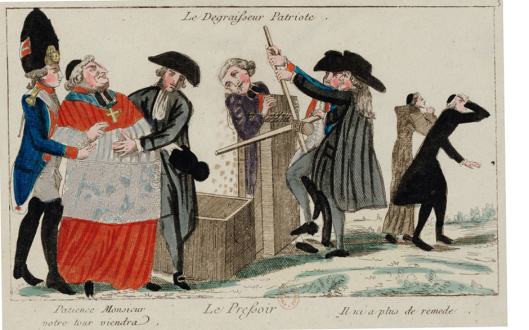
For its size and detail and historical importance, there’s no embroidery like it from early medieval England, and perhaps from Europe, but there was one moment when it almost disappeared for good.  During that period of the French Revolution when the Church (1% of the population which owned 10% of the land), was being nationalized (and plundered),

image15church.jpg

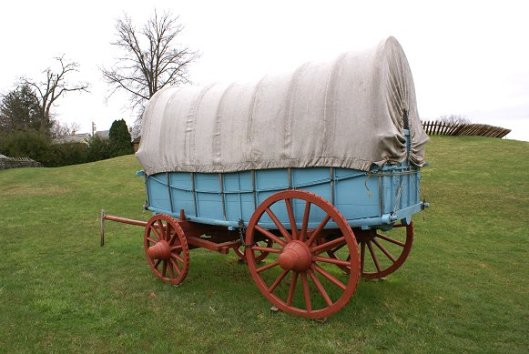
it was destined to be used for military wagon covers.

image16wagon.jpg

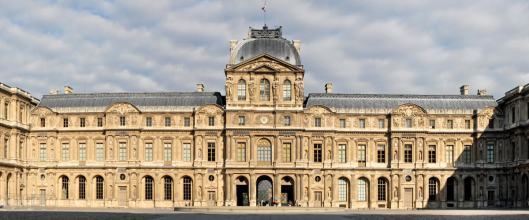
It was only saved at the last minute and shipped off to the Musee Napoleon (formerly—and subsequently—the Louvre).

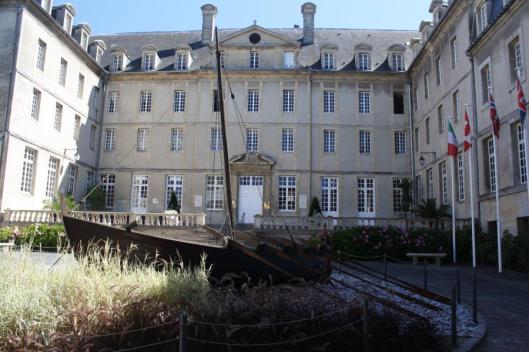
image17louvre.jpg

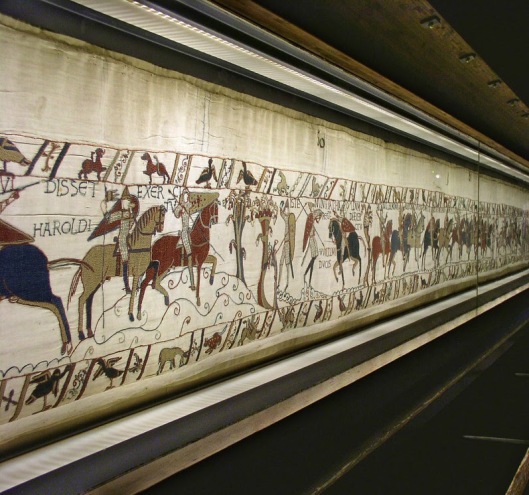
Eventually, it was returned to Bayeux where, today, it can be seen in a museum there, cleverly displayed in a way which allows the entire length to be viewed.

image18museum.jpg

image19display.jpg

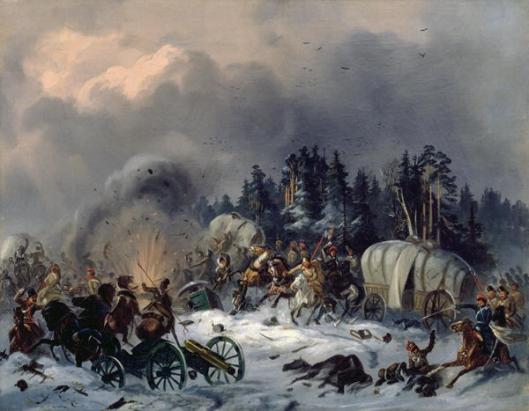
Without a member of Bayeux’ city council, Lambert Leonard-Leforestier, and his quick thinking, however, the last anyone might have seen of it would have been more like this—

image20wagon.jpg

destroyed on wagons lost in Napoleon’s disastrous retreat from Russia.

Thanks, as ever, for reading.

MTCIDC

CD

PS

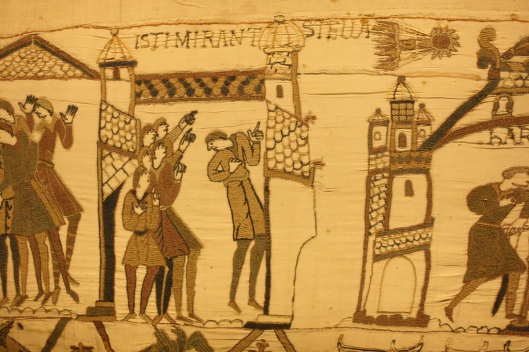
There is one more detail from the Bayeux Embroidery we’d like to mention.  If you’re a fan of Game of Thrones, you might remember a passing comet.  In fact, a passing comet—Halley’s Comet—appears on the Embroidery and, for people of the time, portended something big to come…

image21halleyscomet.jpg

For more on Halley’s comet, here’s a LINK.

In Shining Armo(u)r

17 Wednesday Jan 2018

Posted by Ollamh in Artists and Illustrators, Heroes, J.R.R. Tolkien, Literary History, Military History, Military History of Middle-earth, Narrative Methods, The Rohirrim, Tolkien

≈ Leave a comment

Tags

Agincourt, Anglo-Saxon, armor, Bayeux Tapestry, chain-mail, Crecy, Dark Ages, Embroidery, Howard Pyle, knights of Dol Amroth, Medieval books, medieval manuscript drawings, N.C. Wyeth, Norman knight, Pauline Baynes, Romans, sub-Roman period, Sutton Hoo, The Lord of the Rings, The Rohirrim, The Story of King Arthur and His Knights, Tolkien

Welcome, as always, dear readers.

In a letter to Miss [Rhona] Beare, of 14 October, 1958, JRRT wrote to answer what was clearly a question about dress in The Lord of the Rings:

“Question 4.  I do not know the detail of clothing.  I visualize with great clarity and detail scenery and ‘natural’ objects, but not artefacts.  Pauline Baynes drew her inspiration for F. Giles largely from medieval MS drawings—except for the knights (who are a bit ‘King-Arthurish’)* the style seems to fit well enough.” (Letters, 280)

To which he adds this footnote:

“*Sc. [= “Know/understand”] belong to our ‘mythological’ Middle-Ages which blends unhistorically styles and details ranging over 500 years, and most of which did not of course exist in the Dark Ages of c. 500 A.D.”

In the next paragraph he adds:

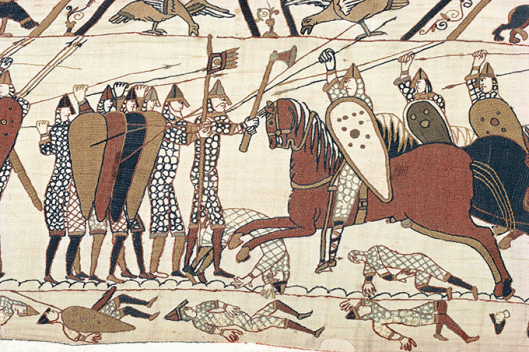
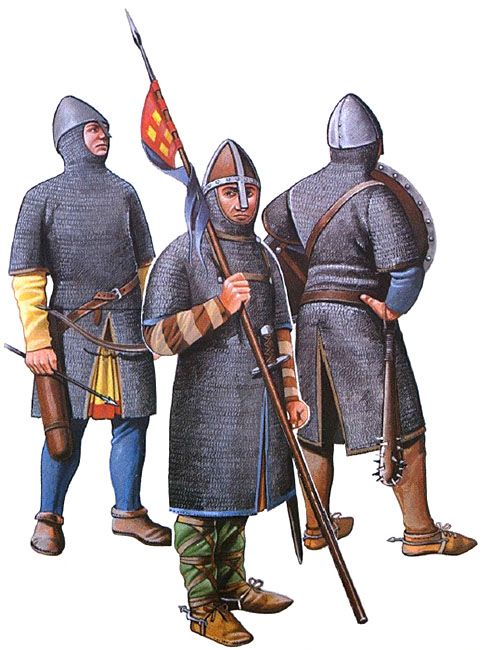
“The Rohirrim were not ‘mediaeval’, in our sense.  The styles of the Bayeux Tapestry (made in England) fit them well enough, if one remembers that the kind of tennis-nets [the] soldiers seem to have on are only a clumsy conventional sign for chain-mail of small rings.” (Letters, 280-281)

The Bayeux Tapestry (which should really be called the “Bayeux Embroidery”, since it’s actually a long piece of cloth with hundreds of figures and details stitched on to it, rather than woven into it) presents us with a detailed history of the invasion of England in 1066AD.  The soldiers Tolkien is talking about look like this:

image1knights.jpg

You can see what he means by “tennis-nets”—which should really look like this:

image2normans.jpg

That chain-mail, then, looks like this:

image3mailshirt.jpg

And, at the bottom of this next illustration, you can see how it’s made:

image4mailnorman.jpg

We know, then, how JRRT envisaged the Rohirrim in its eoreds, marching towards Minas Tirith, but how did he imagine other soldiers, we’ve asked ourselves, and, in particular, the knights of Dol Amroth—the only soldiers specifically described as such in The Lord of the Rings?

image5map.jpg

JRRT writes of them as they enter Minas Tirith:

“And last and proudest, Imrahil, Prince of Dol Amroth, kinsman of the Lord, with gilded banners bearing his token of the Ship and the Silver Swan, and a company of knights in full harness riding grey horses…”(The Return of the King, Book Five, Chapter 1, “Minas Tirith”)

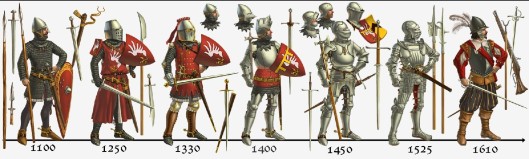
“Full harness” means “complete armor”.  When we think of the term, we think of something later than the Normans, who are, after all, just wearing a kind of very long ringed shirt.  Here’s a useful chart to give you of an idea of what we mean.

image6aarmorchart.jpg

So, since “full harness” doesn’t look like the Rohirrim, how might it look?

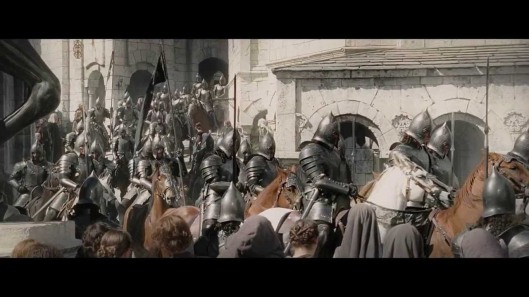
In Jackson’s films, we don’t believe that we ever see those knights singled out, as we see the Rohirrim.  The best we could find was this picture of Faramir’s men about to mount a cavalry charge against what appears to be Osgiliath.  (We’ve talked about this in a much earlier posting—one of the most unbelievable moments in the whole of Jackson’s work.)

image6knightsmt.jpg

This is a big picture, but the details, unfortunately, aren’t very clear.  There are a few things, however, which we found rather odd:

  1. although there appear to be a few lances with penons among them, most seem to be armed only with swords—a close-up weapon—which is why actual knights also carried lances—heavy cavalry came crashing down on infantry or slamming into enemy mounted men—or intended to—spearing right and left and then drawing swords (or using maces or battle axes)
  2. a minor detail, but everyone seems to be wearing his sword on the right-hand side, which would have made it very hard to draw, unless all were left-handed men!
  3. the helmets and armor seem very standardized, and we would believe that budgetary considerations probably influenced this uniformity—50 identical helmets were probably cheaper to make than 50 different ones—but such sameness reminds us more of Roman imperial troops than of any western medieval army we can think of.

image7romans.jpg

We assume, then, that this is the film’s view of soldiers at least like Imrahil’s men, but when Tolkien wrote “a company of knights in full harness”:  what might he have had in mind?  We think there is a clue in that adjective “King-Arthurish”, which he uses of Pauline Bayne’s illustrations and in his footnote, where he refers to “our ‘mythological Middle-Ages”. What does he mean?

JRRT would have been about ten when Howard Pyle published his The Story of King Arthur and His Knights in 1903.

image8pyle.png

Here is how Pyle saw Arthur’s knights.

image9aknightimage10asknights

Could this have inspired Tolkien’s view of Imrahil’s men?  (Judge for yourself by following this LINK.)

Tolkien would have been nearly 30 when The Boy’s King Arthur, illustrated by N.C. Wyeth, was published in 1922,

Image result for the boy's king arthur

but, if this were in among his children’s books, perhaps these illustrations might have given him ideas.  (And here’s a LINK to your own copy, from the Internet Archive.)

image12wyeth.jpgimage13wyeth.jpgimage14wyeth.jpg

These are two well-known sets of illustrations of Arthurian figures, both available in Tolkien’s early lifetime.  If Arthur was real, of course, he would have lived, as JRRT was well aware, in what is called the “sub-Roman period”, c.500AD—at the beginning of the so-called “Dark Ages”– and he and his men would actually have looked like this:

image15arthur.jpg

But this is where “our ‘mythological’ Middle-Ages” comes in—little would have been known, when JRRT was writing The Lord of the Rings, of what such warriors would have looked like, although the spectacular Sutton Hoo find of 1939, with its splendid helmet, would have given an inkling, once restored.

image16suttonhoo.jpg

image17suttonhoohelmet.jpg

image18mcbhelm.jpg

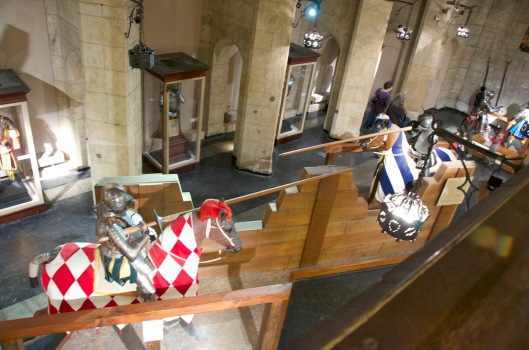
Because such knowledge was lacking, however, the historical Arthur (if there was one) had been moved to the Middle-Ages and re-equipped as a military figure of a much later era, and we believe that, when Tolkien wrote “Arthurish” and “knights”, this is what he meant—and how we’ve always seen Arthur, not only from books (and lots of films) but also from the armor galleries in a number of museums, from the Metropolitan Museum of Art in New York

image24.jpg

to the Higgins Armory in Massachusetts

image25.jpg

to the Philadelphia Museum of Fine Arts

image26.jpg

to the Tower of London.

image27tower.jpg

And, as we’ve discussed before, Prince Valiant, has been an influence from childhood (talk about ‘mythological’ Middle-Ages!).

image28val.jpg

And so, in turn, we imagine—and we think that JRRT did, too–the “company of knights in full harness” to have been individuals, brightly clothed in heraldic colors, their armor that, perhaps, of Crecy, in 1346—

image29crecy.jpg

or Agincourt, in 1415.

image30agincourt.jpg

And you, dear readers, what do you think?

Thanks, as ever, for reading!

MTCIDC

CD
I Think That I Shall Never See…

10 Wednesday Jan 2018

Posted by Ollamh in Artists and Illustrators, Economics in Middle-earth, Fairy Tales and Myths, J.R.R. Tolkien, Literary History, Military History, Military History of Middle-earth, Narrative Methods, Uncategorized

≈ Leave a comment

Tags

Alan Lee, Alexander Volkov, Battle of the Somme, C.S. Lewis, Caspar David Friedrich, deforestation, Fangorn, Fangorn Forest, German Romantics, Grimm Brothers, Haensel and Gretel, Industrial Revolution, Isengard, Kansas, L. Frank Baum, Leonid Vladimirsky, Mordor, pre-industrial, Saruman, The Lord of the Rings, The Scouring of the Shire, The Wizard of Emerald City, The Wizard of Oz, Tin Woodman, Tolkien, trees

Welcome, dear readers, as always.

In a letter to his aunt, Jane, dated 8-9 September, 1962, JRRT wrote:

“Every tree has its enemy, few have an advocate.” (Letters, 321)

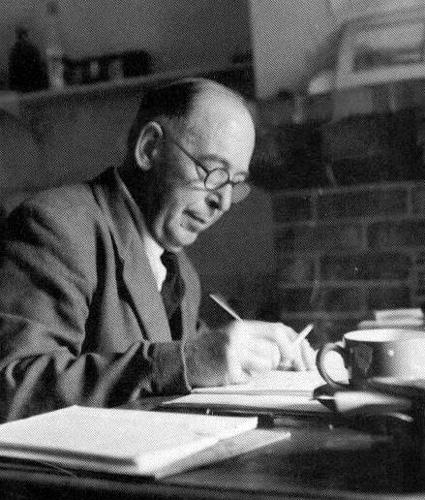
We know, from his letters and from interviews, just how passionate he was about trees,

image1jrrt.jpg

but we were immediately caught by just how very Treebeardish he sounded:

“I am not altogether on anybody’s side, because nobody is altogether on my side, if you understand me…” (The Two Towers, Book Three, Chapter 4, “Treebeard”)

image2tbd.jpg

Trees almost seemed to be people to Tolkien—in fact, we know that Treebeard was based in part upon a person—his friend, CS Lewis—at least his voice and manner of speaking.

image3csl.jpg

As near-people, then, to Tolkien, their destruction would have been a kind of murder.  With that in mind, we thought of our last posting, in which we quoted Farmer Cotton talking about Sharkey’s regime in the Shire, including “They cut down trees and leave ‘em lie.”  (The Return of the King, Book Six, Chapter 8, “The Scouring of the Shire”).  And we wondered whether, behind this, JRRT was talking not only about the orcs’ wanton devastation of trees,

image4treeruin.jpg

but also reliving the Battle of the Somme, in 1916, and seeing once more the acres of unburied dead (60,000 British casualties alone on the first day, 1 July, 1916).

image5dead.jpg

Certainly Treebeard saw this as murder, as he says to Merry and Pippin about Saruman

“He and his foul folk are making havoc now.  Down on the borders they are felling trees—good trees.  Some of the trees they just cut down and left to rot—orc-mischief that; but most are hewn up and carried off to feed the fires of Orthanc…Curse him root and branch!  Many of those trees were my friends, creatures I had known from nut and acorn; many had voices of their own that are lost for ever now.  And there are wastes of stump and bramble where once there were singing groves.”  (The Two Towers, Book Three, Chapter 4, “Treebeard”)

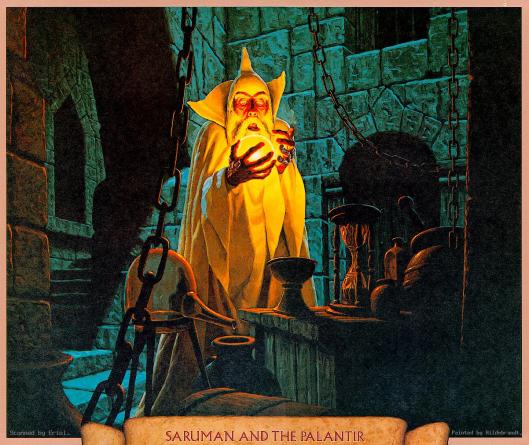
Saruman, a person with “a mind of metal and wheels”, who was “plotting to become a Power”,

image6saruman.jpg

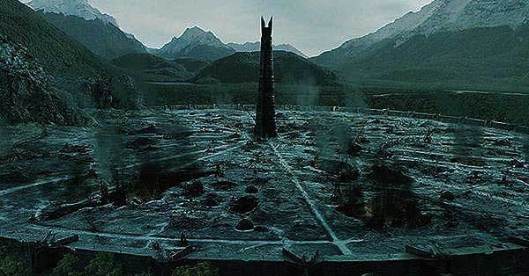
has turned Isengard into a vast factory, where “there is always a smoke rising”.

image7isengard.jpg

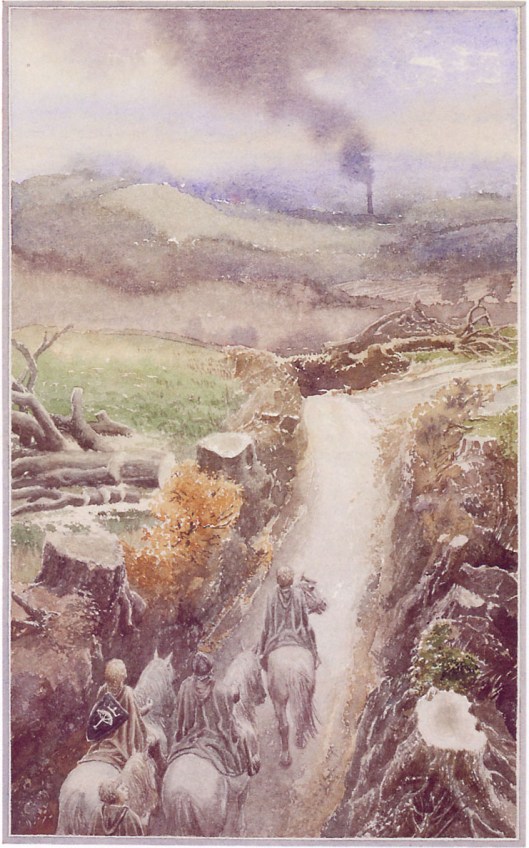
Thus, just as JRRT may have been recalling the Battle of the Somme, so perhaps he was also suggesting  the industrialization which had been in full swing when he was born and which he disliked intensely and which was reducing much of the part of England in which he grew up to the smoking wasteland Sharkey tried to make the Shire

image8.jpg

as we see in this Alan Lee depiction.

image9.jpg

Of course the deforestation went back long before the Industrial Revolution began.  Once upon a time, great forests covered much of the northern European world and humans lived in the midst of miles and miles of trees in clearings which they cut for themselves.

image10schwarz.jpg

image11farm.jpg

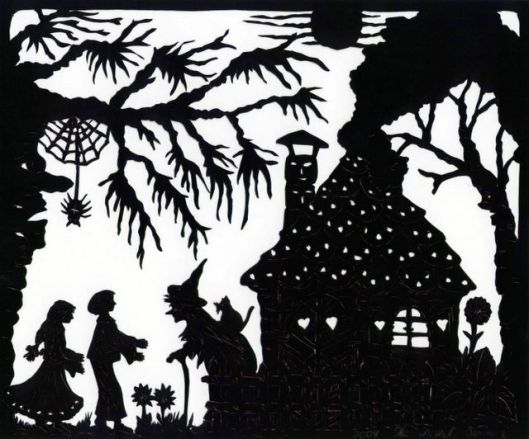
And we still have a distant memory of these, we would suggest, in some of our fairy tales.  If you think about the Brothers Grimm fairy tale of “Haensel and Gretel”, for example,

image12grimms.jpg

image13kinderund.jpg

image14schatten.jpg

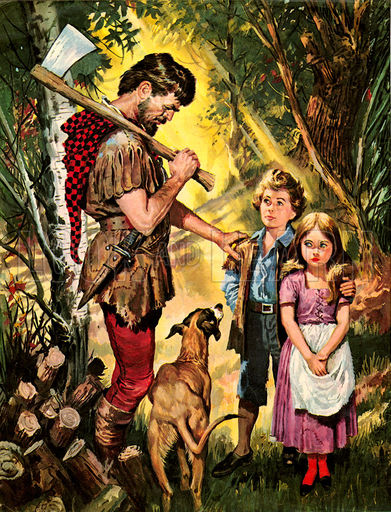
you’ll remember that, not only did the children live in the middle of such forest, as did the witch, but their father was a woodcutter, someone who would have been involved in that very deforestation, if in a very small way.

image15woodcutter.jpg

This memory, collected by the Grimms and others in folktale form in the early 19th century, also provided inspiration for the German Romantics—as you can see in this painting by one of their greatest painters, Caspar David Friedrich (1774-1840).

image16chasseur.jpg

To those Romantics, the forest was scary—but fascinating, as well—and disappearing, as the industrialism which JRRT disliked swallowed it.

image17blackcountry.jpg

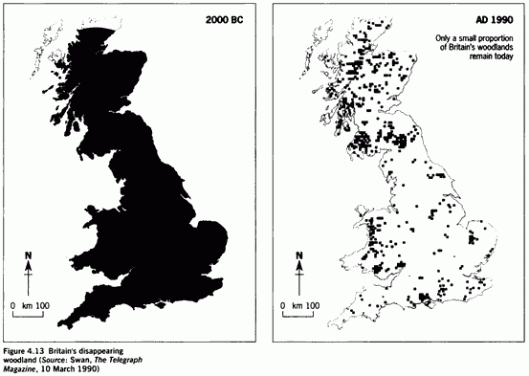
Wood was, however, the plastic of the world for many generations, with infinite uses, from home heating to ship-building, and, wherever humans settled, wood was eaten up.  Here is a telling chart for Britain of the contrast between 2000BC and 1990AD.

image18mapofgb.gif

It is no surprise, then, that, during the 17th century colonization of what is called New England in the US, a major attraction was the availability of wood and the colonists took full advantage of that availability, as this chart shows—

image19deforest.jpg

The forest which Treebeard shepherds is, in fact, rather like the forest depicted in that chart of Britain, as Aragorn says:

“Yes, it is old…as old as the forest by the Barrow-downs, and it is far greater.  Elrond says that the two are akin, the last strongholds of the mighty woods of the Elder Days, in which the Firstborn roamed while Men still slept.”  (The Two Towers, Book Three, Chapter 2, “The Riders of Rohan”)

But what would have happened to it had Saruman not lost Isengard to the very trees he was destroying?

image20destructionofisengard.jpg

In thinking about this, we were reminded of another woodcutter in a children’s story.

image21tinwoodsman.png

Or, if you prefer the film—

image22woodsman.jpg

He lives in the still-wooded land of Oz

image23oz.png

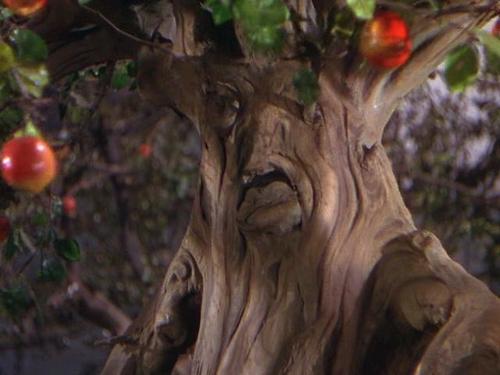
where there are even talking trees (although a lot less friendly than Treebeard).

image24talkingtree.jpg

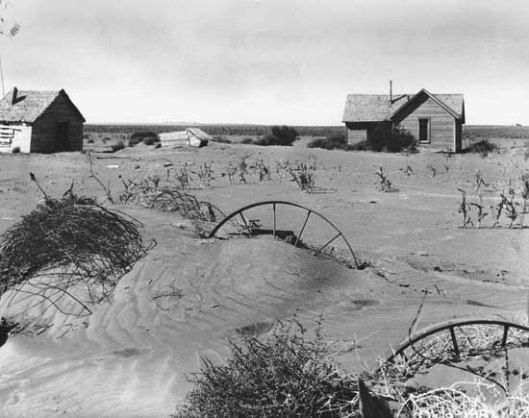
Dorothy, however, lives in a Kansas seemingly blighted by the so-called “Dust Bowl” of the 1930s.

image25kansas.jpg

image26dustbowl.jpg

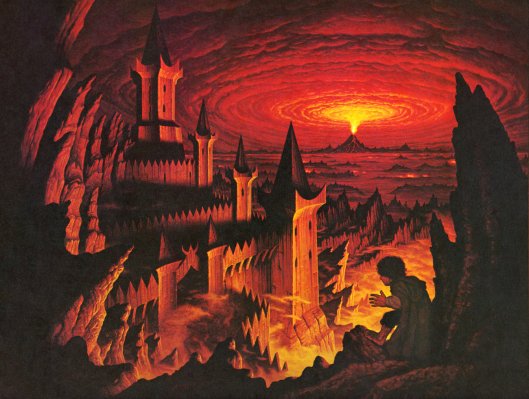
Would this have been Fangorn’s fate?  We have only to look at Mordor to believe it might have been, when all the trees fell silent.

image27mordor.jpg

As ever, thanks for reading.

MTCIDC

CD

PS

In 1939, a Russian children’s author, Alexander Volkov, published The Wizard of the Emerald City.  When one compares it with a certain American book of about 40 years before, striking similarities appear, starting with the title character.  And the illustrations, by Leonid Vladimirsky, also have something familiar about them…

image28vlad.jpg

There was one very practical change, however:  the Tin Woodman became the “Iron Lumberjack”, which rectifies a mistake in the original.  When Dorothy discovers the Woodman, he has rusted in place, but tin can’t rust!

Mirror Image

03 Wednesday Jan 2018

Posted by Ollamh in Imaginary History, J.R.R. Tolkien, Narrative Methods

≈ Leave a comment

Tags

ancient mirrors, Bag End, chiaroscuro, Claude Debussy, Egyptians, Etruscans, Georges de la Tour, Greeks, hall stand, Headington, Magic mirror, Maurice Ravel, Medieval, Miroirs, mirror, North Oxford, Parmigianino, Portrait of the Money-Lender and His Wife, Quentin Matsys, Reflections in the Water, Reflets dans L'eau, Renaissance, Romans, Snow White, The Lord of the Rings, Tolkien, Victorian

Welcome, as ever, dear readers.

In English, we have the expression “upon reflection”, meaning something like “I’ve looked back at something and have considered (or reconsidered)”.  When we look at the word “reflection”, we see its Latin origin, re “back/again” and flection, from the verb flecto, flectere, flexi, flexum “to bend/turn/bow” (we show all four of what are called the “principal parts” of the verb so that you can see where words like “flexible”—and, together with that re—“reflex” come from) and can imagine that, originally, it was almost a physical act—as if a person were believed literally to have turned back to a thought, event, action, to think about it again.

But that made us wonder about a reflection in a different sense—when an image is repeated, in water, say.

image1blockprint.jpg

(And here we provide a YouTube LINK for a beautiful piece of music “Reflets dans L’eau”—“Reflections in the Water” by Claude Debussy—1862-1918, from the set entitled, Images, Book One—1905.)

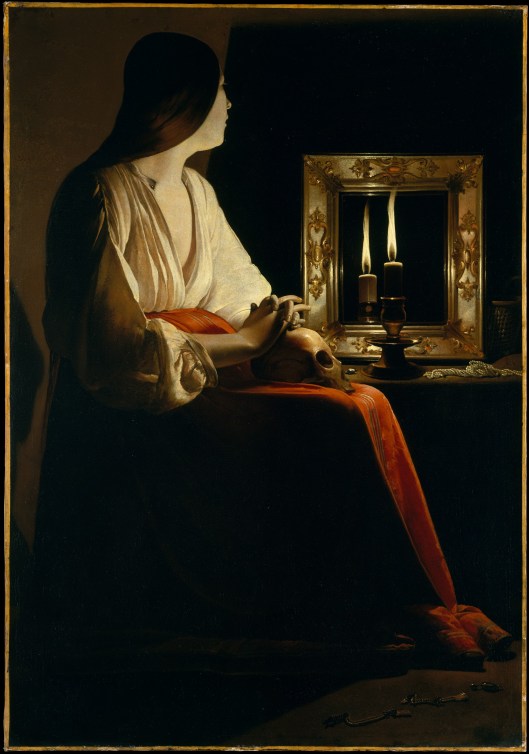
Or in a mirror.

image2gdelatour.jpg

(This haunting painting is by Georges de la Tour, 1593-1652—known for his chiaroscuro—shadow-versus-light effects—style.)

Fancifully, we might ask: does a “reflection” in this sense suggest that the image in the mirror was turning back to look at the viewer?  More realistically, we might say that the image is bent/turned back upon the viewer—but we also wonder if the Latin word from which our word mirror comes might give a certain flavor of the uncanny about it.  Miror, mirari, miratus sum in Latin means “to wonder/be amazed at something” (Put the Latin preposition ad– on the front of this and you’re looking at English “admire”—originally “to wonder at something”—our modern sense of this has lost something of the wide-eyed nature implied in the original, but that’s how language works—sharp things, like knives, become dull with use.  In Spanish, for example, mirar comes to mean “to look at/watch/observe”.)

Certainly, folktales and folk customs once preserved something eerie about mirrors.  Think of the wicked queen’s magic mirror in Snow White.

image3snowwhitemirror.png

If you know the Disney version of Snow White, you probably expected us to show this image.

image4mirror.jpg

But this so creeped us out as children that it was not our first choice!

In various western European countries, looking into a mirror on New Year’s Eve (lots of extra things to do:  while combing hair, eating an apple, taking a bath first so that the mirror is steamy) will show you the image of your intended spouse.  And breaking a mirror can mean seven years of bad luck.

image5brokenmirror.jpg

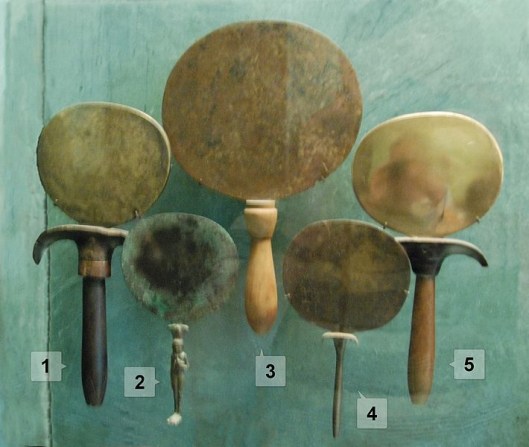
For Egyptians,

image6egyptianmirrors.jpg

Greeks,

image7greekmirror.jpg

Etruscans,

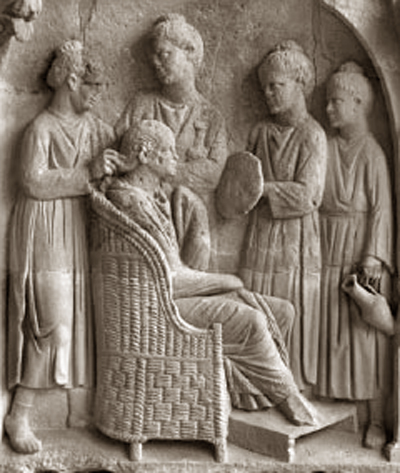
image8etruscan.jpg

Romans,

image9roman.jpg

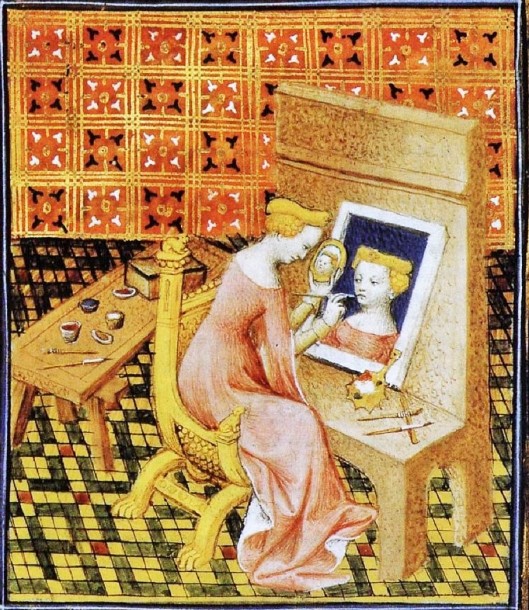
and western Medieval people, as well,

image10med.jpg

mirrors were not very breakable, however, being commonly made of a piece of polished bronze (although there were attempts, apparently, from late classical times on to do something with glass and a metal backing).  Artists in the classical world, rarely missing a chance to do something more, used the backs of mirrors as surfaces for decoration, as well.  Here’s a very interesting Etruscan mirror back, including an inscription (it’s the story of Icarus and Daedalus).

image11ic.jpg

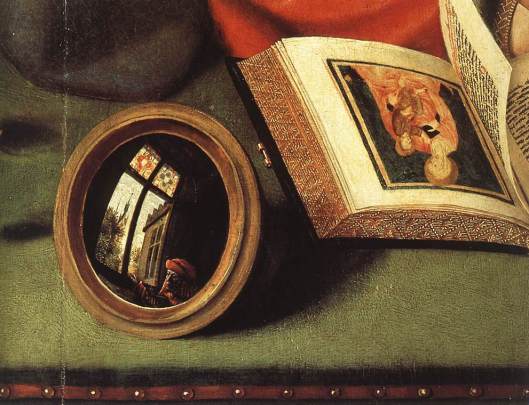
Mirrors with a silvered back and glass cover, the direct ancestors of modern mirrors, appeared during the Renaissance.

image12money.jpg

This is a little joke—a self-portrait of the painter—which has been included in Quentin Matsys’ (1466-1530) painting “Portrait of the Money-Lender and His Wife” (1514).

image13moneylender.jpg

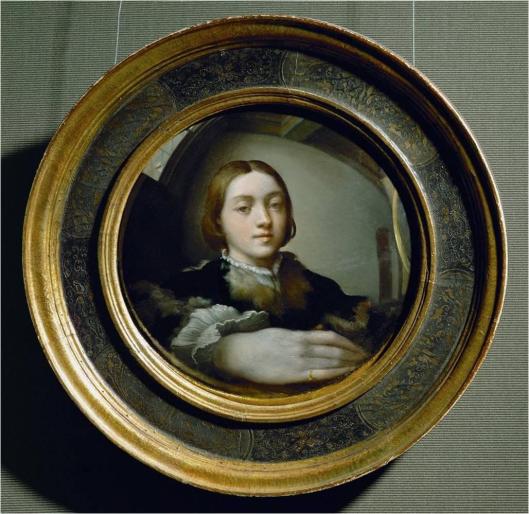
(And, speaking of Renaissance paintings with mirrors, we couldn’t resist including this famous little painting by Parmigianino (1503-1540), a self-portrait painted on a mirror-shaped convex panel.)

image14parma.jpg


If silver-backed, glass-covered mirrors only appeared in the Renaissance, however, what can we say about this object on the left house wall in this picture?

image15bilbo.png

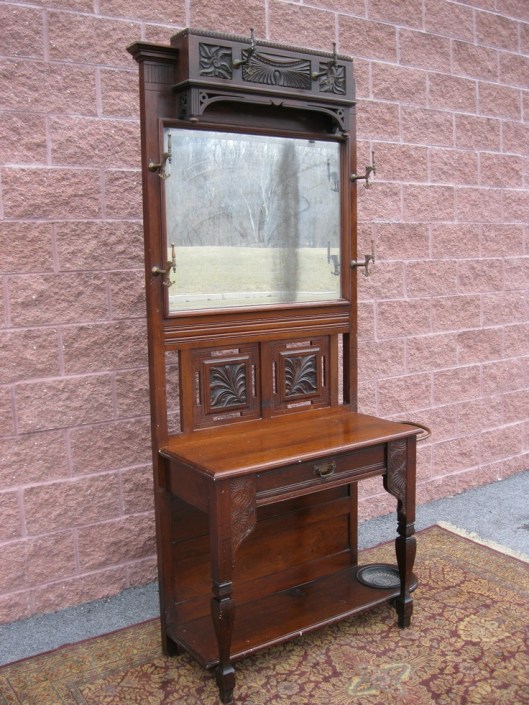
We can tell it’s meant to be a mirror as, looking closely, you can just make out the reflection of a tree which is outside to the right of the open door on its surface.  And is that another mirror, on the piece of furniture in the foreground on the left?  If so, it fits the kind of thing called a “hall stand” which one might see in a later-Victorian house—like this piece from the 1870s.

image16hallstand.jpg

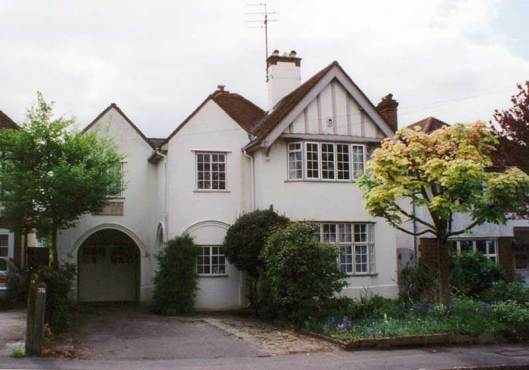
This makes us wonder once again:  how much of this entryway depicts a Middle-earth based not upon the Middle Ages, but upon the memory of houses JRRT grew up in or perhaps furnishings from his own homes in North Oxford or Headington as an adult?

image17northox.jpg

image18head.jpg

But we’ll save what appears to be a Gothic Revival chair there on the right for another day…

In the meantime, thanks, as ever, for reading!

MTCIDC

CD
PS

We would like to take a moment and turn to the west to thank the Valar for the full recovery of our dear friend and fellow Tolkien enthusiast, EMH, from a serious operation.  Get even well-er soon!

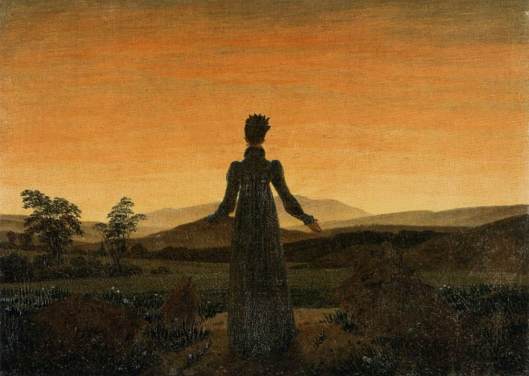
Caspar_David_Friedrich_-_Woman_before_the_Rising_Sun_(Woman_before_the_Setting_Sun)_-_WGA08253.jpg

PPS

If you enjoyed the Debussy in the link above, perhaps you might also enjoy Maurice Ravel’s (1875-1937) Miroirs (1906)—here’s a LINK.

← Older posts
Newer posts →

The Doubtful Sea Series Facebook Page

The Doubtful Sea Series Facebook Page

  • Ollamh

Categories

  • Artists and Illustrators
  • Economics in Middle-earth
  • Fairy Tales and Myths
  • Films and Music
  • Games
  • Heroes
  • Imaginary History
  • J.R.R. Tolkien
  • Language
  • Literary History
  • Maps
  • Medieval Russia
  • Military History
  • Military History of Middle-earth
  • Narnia
  • Narrative Methods
  • Poetry
  • Research
  • Star Wars
  • Terra Australis
  • The Rohirrim
  • Theatre and Performance
  • Tolkien
  • Uncategorized
  • Villains
  • Writing as Collaborators
Follow doubtfulsea on WordPress.com

Across the Doubtful Sea

Recent Postings

  • Do You Speak Villain? (Part 3) February 18, 2026
  • Do You Speak Villain? (2) February 11, 2026
  • Do You Speak Villain? (Part 1) February 4, 2026
  • Towering January 28, 2026
  • Tolkien Among the Indians January 21, 2026
  • Thin and Stretched January 14, 2026
  • Through a glass… January 7, 2026
  • Heffalumps? December 31, 2025
  • We Three Kings December 24, 2025

Blog Statistics

  • 107,650 Views

Posting Archive

  • February 2026 (3)
  • January 2026 (4)
  • December 2025 (5)
  • November 2025 (4)
  • October 2025 (5)
  • September 2025 (4)
  • August 2025 (4)
  • July 2025 (5)
  • June 2025 (4)
  • May 2025 (4)
  • April 2025 (5)
  • March 2025 (4)
  • February 2025 (4)
  • January 2025 (5)
  • December 2024 (4)
  • November 2024 (4)
  • October 2024 (5)
  • September 2024 (4)
  • August 2024 (4)
  • July 2024 (5)
  • June 2024 (4)
  • May 2024 (5)
  • April 2024 (4)
  • March 2024 (4)
  • February 2024 (4)
  • January 2024 (5)
  • December 2023 (4)
  • November 2023 (5)
  • October 2023 (4)
  • September 2023 (4)
  • August 2023 (5)
  • July 2023 (4)
  • June 2023 (4)
  • May 2023 (5)
  • April 2023 (4)
  • March 2023 (5)
  • February 2023 (4)
  • January 2023 (4)
  • December 2022 (4)
  • November 2022 (5)
  • October 2022 (4)
  • September 2022 (4)
  • August 2022 (5)
  • July 2022 (4)
  • June 2022 (5)
  • May 2022 (4)
  • April 2022 (4)
  • March 2022 (5)
  • February 2022 (4)
  • January 2022 (4)
  • December 2021 (5)
  • November 2021 (4)
  • October 2021 (4)
  • September 2021 (5)
  • August 2021 (4)
  • July 2021 (4)
  • June 2021 (5)
  • May 2021 (4)
  • April 2021 (4)
  • March 2021 (5)
  • February 2021 (4)
  • January 2021 (4)
  • December 2020 (5)
  • November 2020 (4)
  • October 2020 (4)
  • September 2020 (5)
  • August 2020 (4)
  • July 2020 (5)
  • June 2020 (4)
  • May 2020 (4)
  • April 2020 (5)
  • March 2020 (4)
  • February 2020 (4)
  • January 2020 (6)
  • December 2019 (4)
  • November 2019 (4)
  • October 2019 (5)
  • September 2019 (4)
  • August 2019 (4)
  • July 2019 (5)
  • June 2019 (4)
  • May 2019 (5)
  • April 2019 (4)
  • March 2019 (4)
  • February 2019 (4)
  • January 2019 (5)
  • December 2018 (4)
  • November 2018 (4)
  • October 2018 (5)
  • September 2018 (4)
  • August 2018 (5)
  • July 2018 (4)
  • June 2018 (4)
  • May 2018 (5)
  • April 2018 (4)
  • March 2018 (4)
  • February 2018 (4)
  • January 2018 (5)
  • December 2017 (4)
  • November 2017 (4)
  • October 2017 (4)
  • September 2017 (4)
  • August 2017 (5)
  • July 2017 (4)
  • June 2017 (4)
  • May 2017 (5)
  • April 2017 (4)
  • March 2017 (5)
  • February 2017 (4)
  • January 2017 (4)
  • December 2016 (4)
  • November 2016 (5)
  • October 2016 (6)
  • September 2016 (5)
  • August 2016 (5)
  • July 2016 (5)
  • June 2016 (5)
  • May 2016 (4)
  • April 2016 (4)
  • March 2016 (5)
  • February 2016 (4)
  • January 2016 (4)
  • December 2015 (5)
  • November 2015 (5)
  • October 2015 (4)
  • September 2015 (5)
  • August 2015 (4)
  • July 2015 (5)
  • June 2015 (5)
  • May 2015 (4)
  • April 2015 (3)
  • March 2015 (4)
  • February 2015 (4)
  • January 2015 (4)
  • December 2014 (5)
  • November 2014 (4)
  • October 2014 (6)
  • September 2014 (1)

Blog at WordPress.com.

  • Subscribe Subscribed
    • doubtfulsea
    • Join 78 other subscribers
    • Already have a WordPress.com account? Log in now.
    • doubtfulsea
    • Subscribe Subscribed
    • Sign up
    • Log in
    • Report this content
    • View site in Reader
    • Manage subscriptions
    • Collapse this bar
 

Loading Comments...