• About

doubtfulsea

~ adventure fantasy

Category Archives: Artists and Illustrators

I Think That I Shall Never See…

10 Wednesday Jan 2018

Posted by Ollamh in Artists and Illustrators, Economics in Middle-earth, Fairy Tales and Myths, J.R.R. Tolkien, Literary History, Military History, Military History of Middle-earth, Narrative Methods, Uncategorized

≈ Leave a comment

Tags

Alan Lee, Alexander Volkov, Battle of the Somme, C.S. Lewis, Caspar David Friedrich, deforestation, Fangorn, Fangorn Forest, German Romantics, Grimm Brothers, Haensel and Gretel, Industrial Revolution, Isengard, Kansas, L. Frank Baum, Leonid Vladimirsky, Mordor, pre-industrial, Saruman, The Lord of the Rings, The Scouring of the Shire, The Wizard of Emerald City, The Wizard of Oz, Tin Woodman, Tolkien, trees

Welcome, dear readers, as always.

In a letter to his aunt, Jane, dated 8-9 September, 1962, JRRT wrote:

“Every tree has its enemy, few have an advocate.” (Letters, 321)

We know, from his letters and from interviews, just how passionate he was about trees,

image1jrrt.jpg

but we were immediately caught by just how very Treebeardish he sounded:

“I am not altogether on anybody’s side, because nobody is altogether on my side, if you understand me…” (The Two Towers, Book Three, Chapter 4, “Treebeard”)

image2tbd.jpg

Trees almost seemed to be people to Tolkien—in fact, we know that Treebeard was based in part upon a person—his friend, CS Lewis—at least his voice and manner of speaking.
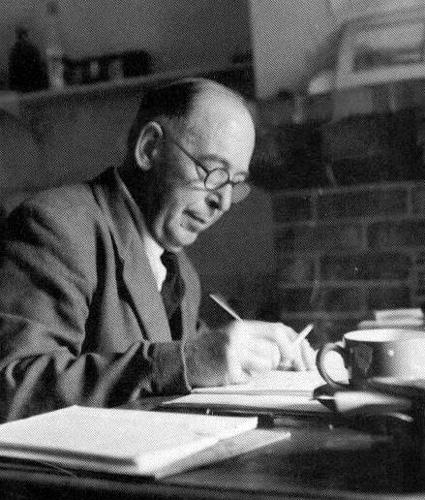
image3csl.jpg

As near-people, then, to Tolkien, their destruction would have been a kind of murder.  With that in mind, we thought of our last posting, in which we quoted Farmer Cotton talking about Sharkey’s regime in the Shire, including “They cut down trees and leave ‘em lie.”  (The Return of the King, Book Six, Chapter 8, “The Scouring of the Shire”).  And we wondered whether, behind this, JRRT was talking not only about the orcs’ wanton devastation of trees,

image4treeruin.jpg

but also reliving the Battle of the Somme, in 1916, and seeing once more the acres of unburied dead (60,000 British casualties alone on the first day, 1 July, 1916).

image5dead.jpg

Certainly Treebeard saw this as murder, as he says to Merry and Pippin about Saruman

“He and his foul folk are making havoc now.  Down on the borders they are felling trees—good trees.  Some of the trees they just cut down and left to rot—orc-mischief that; but most are hewn up and carried off to feed the fires of Orthanc…Curse him root and branch!  Many of those trees were my friends, creatures I had known from nut and acorn; many had voices of their own that are lost for ever now.  And there are wastes of stump and bramble where once there were singing groves.”  (The Two Towers, Book Three, Chapter 4, “Treebeard”)

Saruman, a person with “a mind of metal and wheels”, who was “plotting to become a Power”,
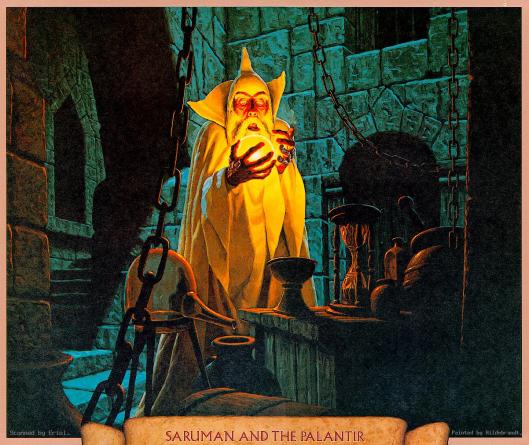
image6saruman.jpg

has turned Isengard into a vast factory, where “there is always a smoke rising”.
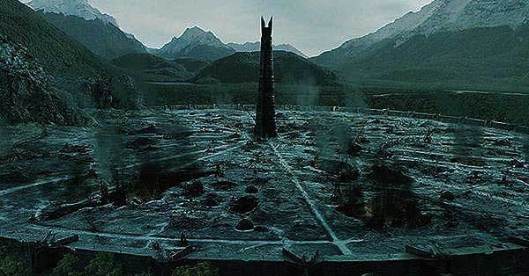
image7isengard.jpg

Thus, just as JRRT may have been recalling the Battle of the Somme, so perhaps he was also suggesting  the industrialization which had been in full swing when he was born and which he disliked intensely and which was reducing much of the part of England in which he grew up to the smoking wasteland Sharkey tried to make the Shire

image8.jpg

as we see in this Alan Lee depiction.
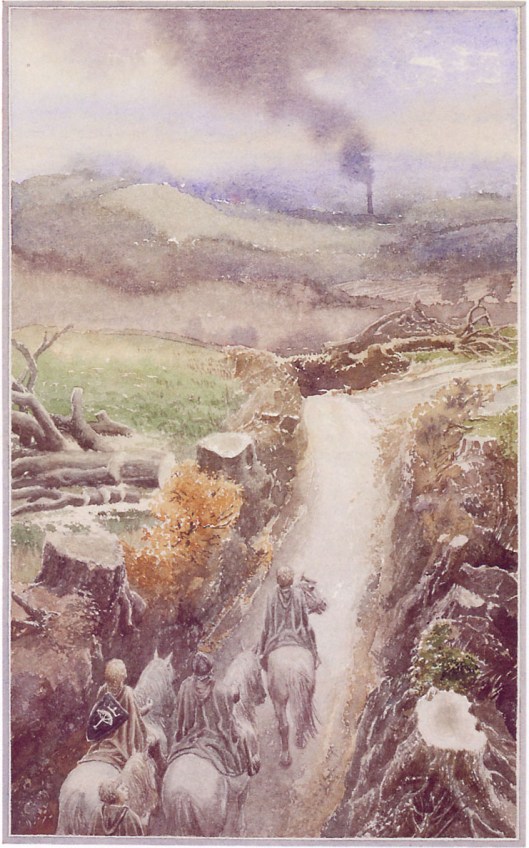
image9.jpg

Of course the deforestation went back long before the Industrial Revolution began.  Once upon a time, great forests covered much of the northern European world and humans lived in the midst of miles and miles of trees in clearings which they cut for themselves.

image10schwarz.jpg

image11farm.jpg

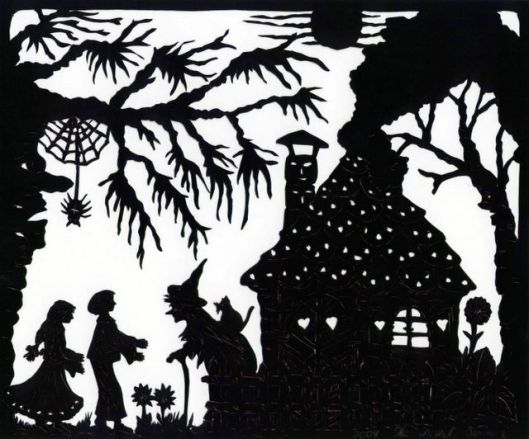
And we still have a distant memory of these, we would suggest, in some of our fairy tales.  If you think about the Brothers Grimm fairy tale of “Haensel and Gretel”, for example,

image12grimms.jpg

image13kinderund.jpg

image14schatten.jpg

you’ll remember that, not only did the children live in the middle of such forest, as did the witch, but their father was a woodcutter, someone who would have been involved in that very deforestation, if in a very small way.
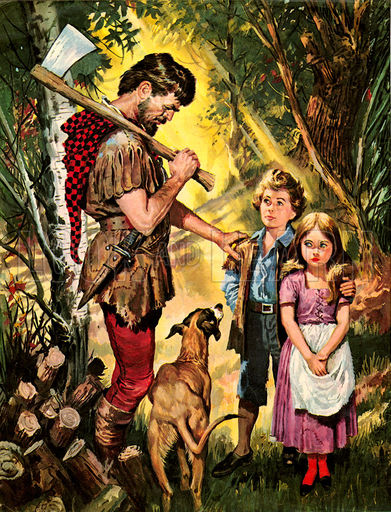
image15woodcutter.jpg

This memory, collected by the Grimms and others in folktale form in the early 19th century, also provided inspiration for the German Romantics—as you can see in this painting by one of their greatest painters, Caspar David Friedrich (1774-1840).

image16chasseur.jpg

To those Romantics, the forest was scary—but fascinating, as well—and disappearing, as the industrialism which JRRT disliked swallowed it.

image17blackcountry.jpg

Wood was, however, the plastic of the world for many generations, with infinite uses, from home heating to ship-building, and, wherever humans settled, wood was eaten up.  Here is a telling chart for Britain of the contrast between 2000BC and 1990AD.

image18mapofgb.gif

It is no surprise, then, that, during the 17th century colonization of what is called New England in the US, a major attraction was the availability of wood and the colonists took full advantage of that availability, as this chart shows—

image19deforest.jpg

The forest which Treebeard shepherds is, in fact, rather like the forest depicted in that chart of Britain, as Aragorn says:

“Yes, it is old…as old as the forest by the Barrow-downs, and it is far greater.  Elrond says that the two are akin, the last strongholds of the mighty woods of the Elder Days, in which the Firstborn roamed while Men still slept.”  (The Two Towers, Book Three, Chapter 2, “The Riders of Rohan”)

But what would have happened to it had Saruman not lost Isengard to the very trees he was destroying?

image20destructionofisengard.jpg

In thinking about this, we were reminded of another woodcutter in a children’s story.

image21tinwoodsman.png

Or, if you prefer the film—

image22woodsman.jpg

He lives in the still-wooded land of Oz

image23oz.png

where there are even talking trees (although a lot less friendly than Treebeard).
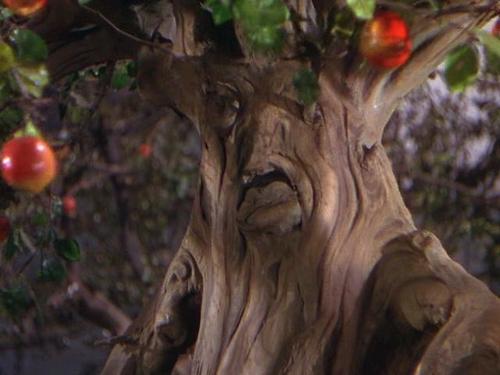
image24talkingtree.jpg

Dorothy, however, lives in a Kansas seemingly blighted by the so-called “Dust Bowl” of the 1930s.

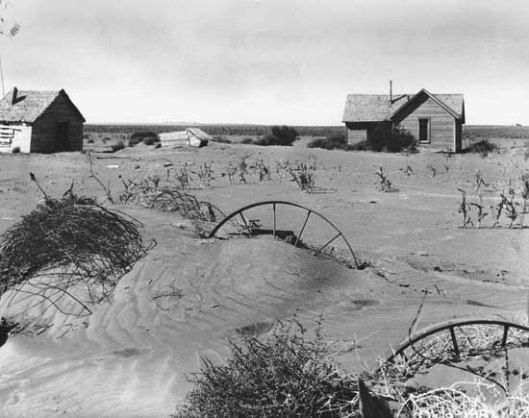
image25kansas.jpg

image26dustbowl.jpg

Would this have been Fangorn’s fate?  We have only to look at Mordor to believe it might have been, when all the trees fell silent.
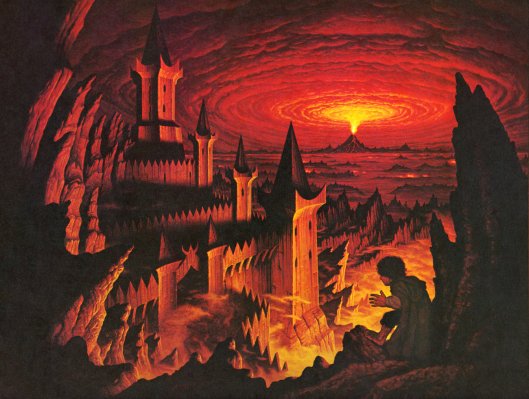
image27mordor.jpg

As ever, thanks for reading.

MTCIDC

CD

PS

In 1939, a Russian children’s author, Alexander Volkov, published The Wizard of the Emerald City.  When one compares it with a certain American book of about 40 years before, striking similarities appear, starting with the title character.  And the illustrations, by Leonid Vladimirsky, also have something familiar about them…

image28vlad.jpg

There was one very practical change, however:  the Tin Woodman became the “Iron Lumberjack”, which rectifies a mistake in the original.  When Dorothy discovers the Woodman, he has rusted in place, but tin can’t rust!

Throwing Shade

20 Wednesday Dec 2017

Posted by Ollamh in Artists and Illustrators, J.R.R. Tolkien, Narrative Methods

≈ Leave a comment

Tags

A Day: Paris In the Rain, Adelard Took, Assyrians, Bag End, Bilbo Baggins, bowler hat, ceramic chariot, China, city gent, CS Lewis, elephant, Emperor Ch'in Shihuang, Greeks, Gustave Caillebotte, Jean Marius, John Howe, Jonas Hanway, Lobelia Sackville-Baggins, Marchesa Elena Grimaldi, Mary Poppins, Monty Python, Palais Galleria, Persians, Romans, Sharkey, The Hobbit, The Lord of the Rings, The Ministry of Silly Walks, Tolkien, umbrella, umbrella stand, Un Jour: Paris sous la Pluie, van Dyck

Welcome, dear readers, as always and, if you’re in the US, we hope you’ve had a happy and not over-stuffed Thanksgiving.

Just when we think we’ve exhausted a topic, we return and, well, here we are.

image1entryway.png

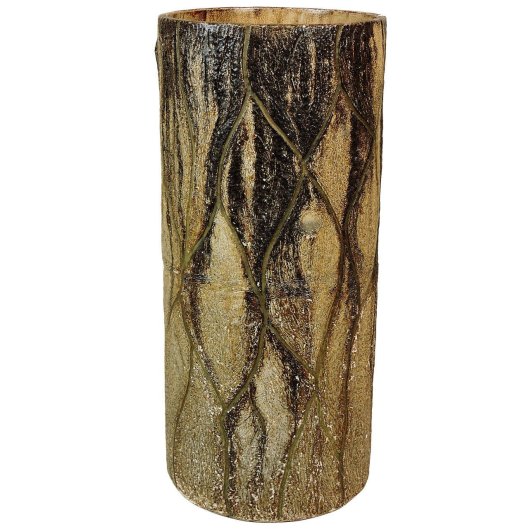
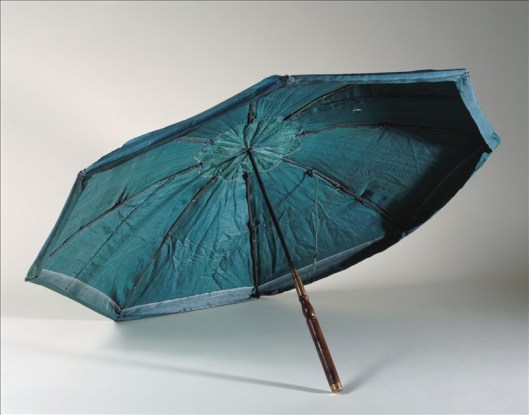
Just to the left of the door and below what we now see as a barometer, there’s a tall tube-like structure, something once common—we wouldn’t be surprised if there was one in every house in which JRRT ever lived:  an umbrella stand.image2aumbrellastand.jpeg

As a child, one of us was fascinated by having once seen an umbrella stand made out of an elephant’s lower leg and foot—or at least the skin.

image2belephant.jpg

The couple we’ve seen are all identified as “Victorian”, so, as we are very fond of pachyderms, we hope that such a use is now long in the past!

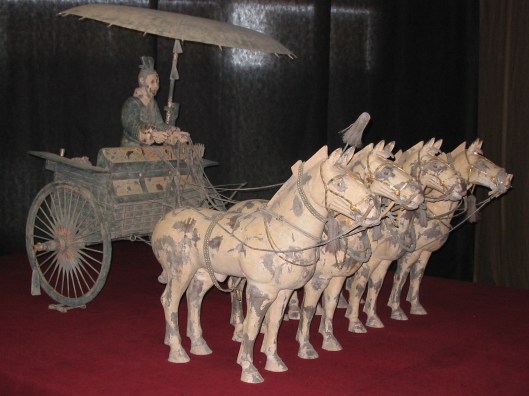
Umbrellas, at least as sunshades, appear to have been around since at least before 200BC in China, as this ceramic chariot—with large umbrella—from part of the tomb complex of the Emperor Ch’in Shihuang demonstrates.

image2chin.jpeg

The Assyrians had them.

image3ashurbanipal.jpg

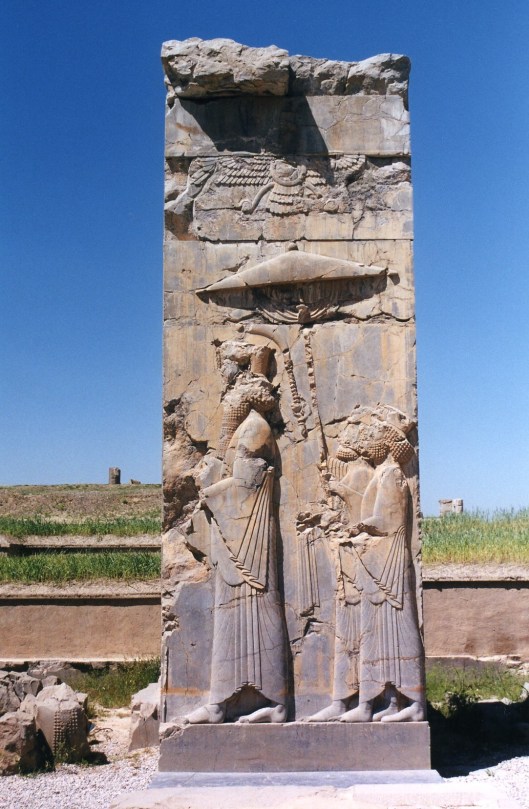
The Persians had them.

image4darius.jpg


The Greeks had them.

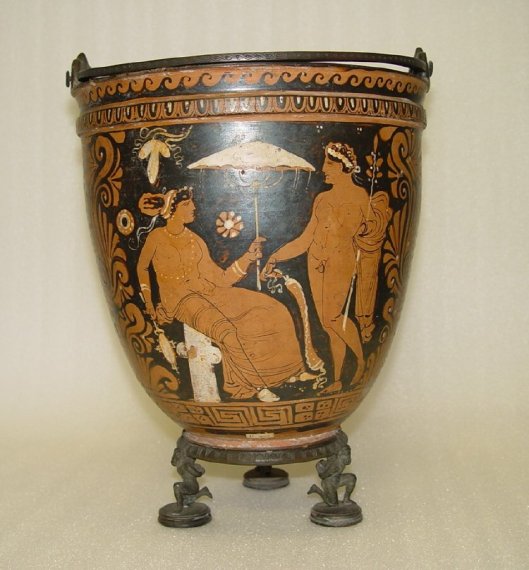
image5greek.jpg

As did the Romans.

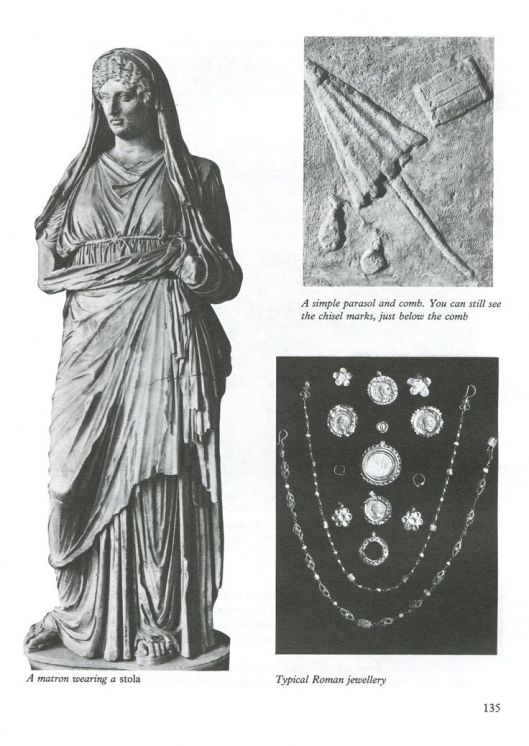
image6aroman.jpg

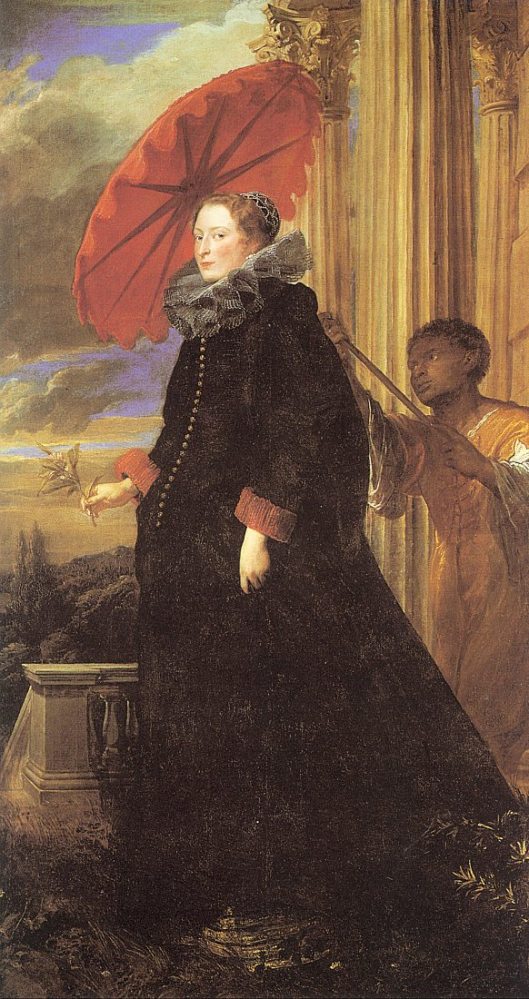
And so on for centuries, although it seems that the first modern references to them in England date from the early 17th century and appear, by the latter part of the century and into the 18th as part of “ladies’ apparel”, used as much for sun as rain as this 1623 portrait by van Dyck of the Marchesa Elena Grimaldi shows us.

image6elenagrimaldi.jpg

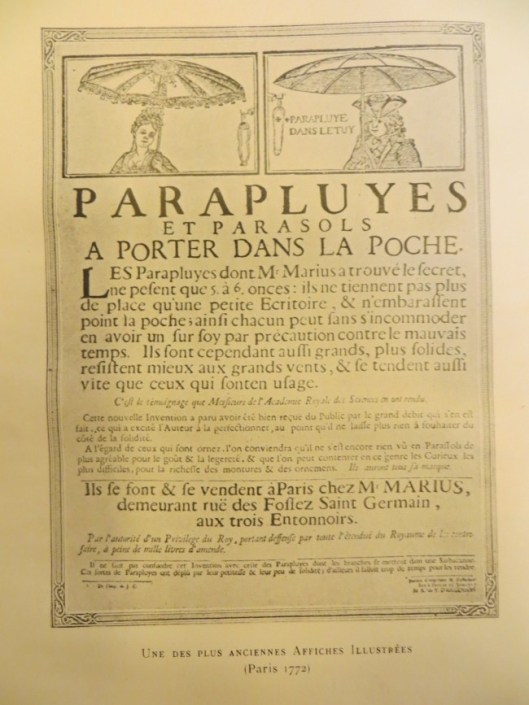
A center for the manufacture of umbrellas was Paris, and the inventor of the modern collapsible model may have been Jean Marius, who received a 5-year monopoly on his invention in 1710.  Here is a later (1772) advertisement for his business

image7mariusadvert.jpg

and here is a model, identified by the Palais Galleria in Paris as post-1715 because it has no Marius markings.

image8post1715.jpg

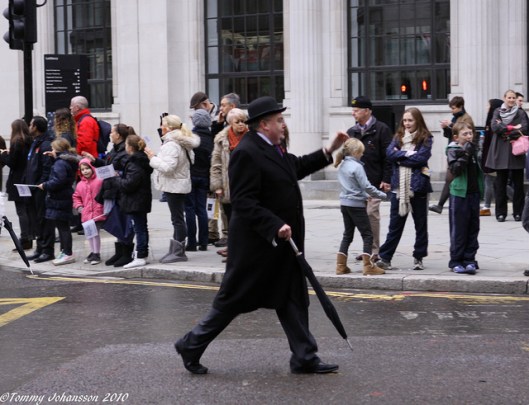
If there was a prejudice against men carrying them, being a combination of the association with “feminine things” and perhaps also a long-standing prejudice against the French, how did that so change that, by the 20th century, the umbrella, along with the bowler hat, became the marks of the “city gent” in London,

image9acitygent.jpg

caricatured in the 20th century by Monty Python in skits like “The Ministry of Silly Walks”?

image9minister.jpg

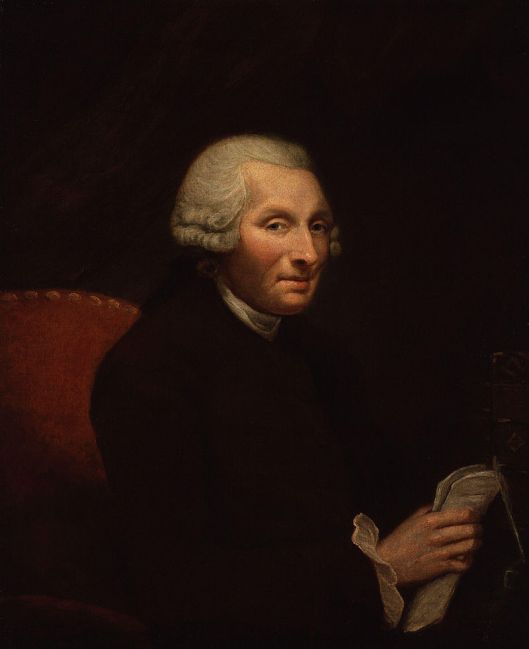
This change is said to stem from the behavior of one rather eccentric man, Jonas Hanway

image10jonashanway.jpg

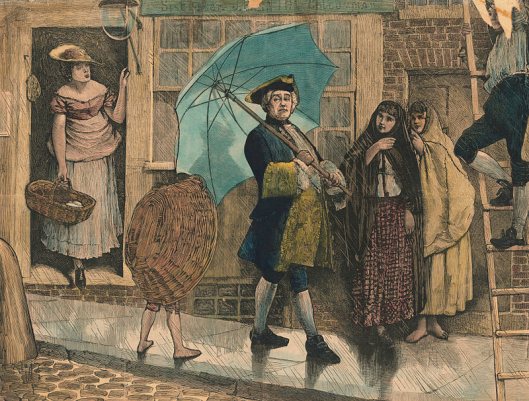
who, sometime in the 1750s, began to appear on London streets carrying an open umbrella.

image11hanwaywithbrolly.jpg

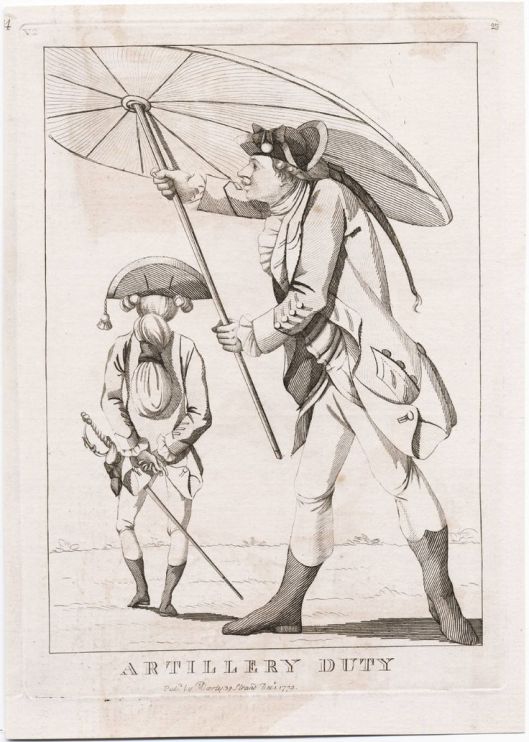
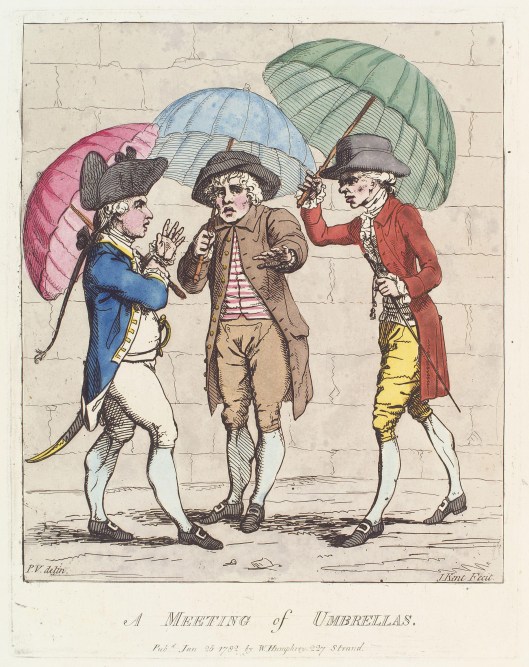
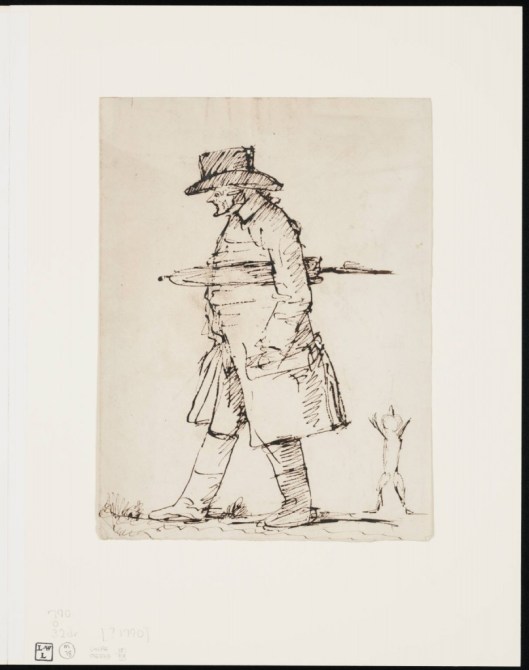
As you, sharp-eyed reader, can tell from our verbs and constructions like “seems”, “appears” and “is said to”, this, like other items of fashion and its changes, hasn’t the firmest of scholarly foundations, but, considering how many illustrations (often mocking cartoons) begin to appear by the 1770s, something happened to alter men’s behavior. Just look at these three, from 1772, 1782, and 1790.

image12seventeenseventrytwo.jpg

image13seventeeneightytwo.jpg

image14seventeenninety.jpg

All of this is very interesting, you may ask, but what does it have to do with Bilbo, or with JRRT?  There are, in fact, a couple of references in The Lord of the Rings to umbrellas.  First, there is one of Bilbo’s mocking gifts:

“For Adelard Took, for his very own, from Bilbo; on an umbrella.  Adelard had carried off many unlabeled ones”.  (The Fellowship of the Ring, Book One, Chapter 1, “A Long-Expected Party”)

Then there are two to Lobelia Sackville-Baggins.  The first is suggestive of her suspicious behavior at the near-auction of Bilbo’s property at the end of The Hobbit (you’ll remember that some spoons never reappeared):

“He [Bilbo] escorted her [Lobelia] firmly off the premises, after he had relieved her of several small (but rather valuable) articles that had somehow fallen inside her umbrella.” (The Fellowship of the Ring, Book One, Chapter 1, “A Long-Expected Party”)

The second reference is actually rather pathetic.  Once “Sharkey” and his thugs take over the Shire, they evict Lobelia from Bag End and, because she resists, they drag her off to the Lockholes, as young Tom Cotton tells Merry and the others:

“She comes down the lane with her old umbrella…”

When told that “Sharkey” gave the order for her eviction (and the building of sheds at Bag End):

“ ‘I’ll give you Sharkey, you dirty thieving ruffians!’ says she, and ups with her umbrella and goes for the leader, near twice her size.” (The Return of the King, Book Six, Chapter 8, “The Scouring of the Shire”)

Here’s a little illustration of a defiant Lobelia by John Howe.

image15lobelia.jpg

By the later 19th century, men with umbrellas seem quite common—even to the point of providing material for social commentary in the public press—

image16umbrellatypes.jpg

But, in the 20th century, we who love children’s literature see them in a completely different way, either as a mode of transportation

image17mpoppins.jpg

or as part of the origin of a favorite story, when CS Lewis, at 16, had a recurring image of “a Faun carrying an umbrella and parcels in a snowy wood” (from It All Began with/as a Picture). (We’ve seen the title cited both ways.)

image18tumnusandlucy.jpg

But we want to end this posting not with literature, but with pure art.  There are lots of paintings from the 18th and 19th centuries with umbrellas, but here is what may be our favorite, by Gustave Caillebotte (1848-1894).  Although he is grouped with the Impressionists, this painting in particular shows the artist’s interest in the hard-edged world of early photography (“Un Jour:  Paris sous la Pluie”—“A Day:  Paris In the Rain”)

image19caillebotte.jpg

Stay dry, dear readers, and thanks, as ever for reading!

MTCIDC

CD

Floored

06 Wednesday Dec 2017

Posted by Ollamh in Artists and Illustrators, J.R.R. Tolkien, Narrative Methods

≈ Leave a comment

Tags

Bag End, Baggins, carpet, classical altars, Cosmati, English Ham House, Erasmus, Felicity Irons, floors, Gamgee, John Howe, Lady Chapel, paneling, parquetry, rush door mat, Shire, social levels, stone block, swags, The Hobbit, The Lord of the Rings, tile, Tolkien, Took, Typha, Versailles, Westminster Abbey

Welcome, dear readers, once more to our blog.  In this installment, we are returning to our inspection of Bilbo’s entryway.

image1entryway.jpg

So far, we’ve examined the barometer, the clock, the umbrella stand, and that hat in the left foreground—intentionally misread as a sugar loaf.  Now we want to examine the floor, which looks to be a pretty complicated place, asking ourselves, as we always do, where does this come from and how much of the medieval—so often the foundation of Middle-earth—does it contain?

The Shire clearly has social levels.  Bilbo, Frodo, and Merry and Pippin (contrary to P Jackson—who violated JRRT’s wishes on the subject of the latter two), for example, all speak (in translation, of course)  what is called “Received Standard English”.  In contrast, Sam, the Gaffer, and the Cottons speak what would appear to be a rural dialect and Sam even thinks of Frodo as “Mister Frodo” and even “Master”.   We do not know where these class distinctions came from, but we know of Bilbo that:

  1. he is called “a very well-to-do hobbit “ at the very beginning of The Hobbit (The Hobbit, Chapter 1, “An Unexpected Party”)
  2. he has distinguished forebears in the Tooks—his mother was “the famous Belladonna Took, one of the three remarkable daughters of the Old Took” (The Hobbit, Chapter 1, “An Unexpected Party”)
  3. he lives in an extensive, rambling burrow: “a very comfortable tunnel without smoke, with panelled walls, and floors tiled and carpeted…The tunnel wound on and on, going fairly but not quite straight into the side of the hill…bedrooms, bathrooms, cellars, pantries (lots of these), wardrobes (he had whole rooms devoted to clothes), kitchens, dining-rooms, all were on the same floor, and indeed on the same passage.” (The Hobbit, Chapter 1, “An Unexpected Party”)

And the entryway certainly shows some elements of a wealthier lifestyle, with its paneled (US spelling) walls—but we intend to devote a later posting to the walls and support structure of Bag End, so let’s turn to what is said next:  “floors tiled and carpeted”.  Looking at JRRT’s drawing, we can see both—and more.

image1entryway

Before we had gone back to this passage, we were a little puzzled as to the basic floor.  As you can see in Tolkien’s illustration, it’s in a checkered pattern and, at first, we wondered if this might be an example of what’s called “parquetry”.  In this method of flooring, different strips or blocks of wood are laid into designs of all sorts.  Here are a couple of fancy examples from the 17th-century English Ham House.

image3hamhouse.jpg

image4hamhouse.jpg

image5parquetry.jpg

Parquetry appears to have been developed in France, as an alternative to marble floors (much less weight to support by the floor beams and equally pretty, we’d guess).  Here’s an example from Louis XIV’s Versailles.

image6versailles.jpg

But the description in The Hobbit says “floors tiled”– here’s an exterior tile pattern from Ham house.

image7exteriortile.jpg

and an indoor one.

image8interiortile.jpg

So, although Bilbo appears well enough off to afford parquetry, there is no mention of it in JRRT’s description and it is a decorative detail from the 17th century and beyond, which rather goes against our usual “Middle-earth is (more or less) medieval” idea.  The text of The Hobbit clinches the fact that it’s tile, of course, but the tile we then see in JRRT’s illustration strikes us as even plainer than the late-19th, early 20th century hallway tile we’ve seen, as in this restoration picture, and with which Tolkien would have been familiar on a daily basis.

image9edwardianrestoration.jpg

Medieval tiles, in fact, can be even more elaborate, first appearing in England in the 13th century, mainly in ecclesiastical buildings.  Here’s one from the Lady Chapel (completed in 1373) in York Minster.

York-Lady-ChapellIV.jpg

Much medieval tiling has disappeared over the centuries and here’s a useful link which explains why.  And to see an amazing example of such work, here’s a link to the restored Cosmati paving in Westminster Abbey.

image12cosmati floor.jpg

Over this tile, Tolkien has laid a carpet (as his description has said, the floors are “carpeted”).

image12hall.jpg

It’s faint, but what one can make out appears to be a solid-colored center with what appear to be wreaths and what are called “swags”—long chains made to imitate garlands of ribbons, fruit, and flowers used to decorate classical altars.

image13swag.jpg

image14romanaltar.jpg

So far, we haven’t located anything which closely resembles the carpet at Bag End, but here’s an 18th-century French example to provide a kind of general idea.image13french.jpg

There are two more items on the floor, both just below the door.

image17hall.jpg

The first looks to be perhaps a stone block, used as a sill. (Our illustration is actually of a mistake—the central block here has fallen out of position, but it gives you the idea of such a block in use.)

image18doorsill.jpg

The other item appears to us to be a rush door mat (dog—“Bo”–optional).

SONY DSC


Rushes (genus Typha) grow all over the world and can be used, it seems, for almost anything.  Here’s the English rush weaver, Felicity Irons, busy harvesting.

image20firons.jpg

Rushes, however, bring us back to the subject of English medieval flooring.  Our research suggests that the houses of farmers and lower-level townspeople would have been of natural substances, like clay pressed to make a hard surface.  Richer people would have had wooden or even, in a few cases, tile floors (more such floors after the commercial business took off in the 15th/16th centuries).  Carpets appear to be much later (most weaving was hung on walls, to keep down drafts, it seems).  Our sources for what people laid on top of their floors are very sketchy and some modern writers have depended upon a quotation from the Dutch scholar, Erasmus (1469-1536),

image21erasmus.jpg

who visited England and spent some years there around 1500.  He tells us that the English covered their floors with rushes, but that they only added more to the top, without cleaning out the lower levels, which became full of refuse and caused bad smells (which to a person of Erasmus’ time represented the danger of “miasma”—bad air which could cause disease—something believed as scientifically true even throughout the first half of the 19th century).  Some modern commentators have questioned this, proposing the difficulty of moving about on a weedy floor in a long gown, as women and, in time, men, wore during the later Middle Ages.  At least one of those questioners even suggests that rushes meant rush mats—see above.

Bilbo’s hall has only one of these, meant, from its position, to be used as a modern would, as a doormat.

Taken altogether, we would suggest that Bilbo’s floor, just like his clock and barometer and umbrella stand, would appear to belong not to the medieval world which lies underneath Middle-earth, but rather to the late 19th-20th century world of the author.  And we’re not alone in our opinion.  Here’s John Howe’s version of that hallway—compare it with JRRT’s and see what’s been erased.

image22howe.jpg

image23jrrthall.jpgAnd here’s the film version–

image24film.jpg

There are more differences, too–for fun, see how many you can find.

And thanks, as always, for reading!

MTCIDC

CD

Sugar Is Sweet, And…

01 Wednesday Nov 2017

Posted by Ollamh in Artists and Illustrators, J.R.R. Tolkien, Military History, Narrative Methods

≈ Leave a comment

Tags

15th-century hat, 15th-century sallet, Across the Doubtful Sea, Bag End, bevor, Bilbo, British Navy uniforms, Caribbean sugar mill, Christopher Columbus, clone helmet, costuming, Darth Vader, Death Star Gunners, French Navy uniforms, hogsheads, honey, John Mollo, Middle-earth, Samurai, science fiction, Star Wars, sugar, sugar cane, sugar loaf, Taters, Ten Views in the Island of Antigua, The Illiad, Tobacco

Welcome, dear readers, as always.

As we continue to explore Bilbo’s entryway, we feel a little like Bilbo himself watching as all of those dwarves gradually pile in until they almost overwhelm their surprised host.

Unlike our earlier postings on barometers and clocks, which are really on the walls, in this posting, we confess to what is called in literary criticism a “creative misread”.  Take a look at the far left of the illustration.

image1bilboshallway.jpg

There is a kind of entryway table, with a mirror and hooks—probably for hats—and those should have tipped us off—but a preconceived notion overwhelmed us, inspired (well, we suppose you could call it that) by how we initially interpreted the object on the right hand corner.

It’s a hat—you can just make out the brim.  It’s a kind of 15th-century hat called a “sugarloaf”, however, because of the crown.

image2sugarloafhat.jpg

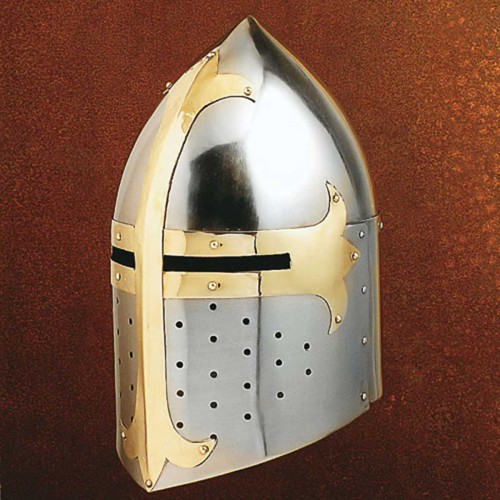
(There is a 13th-14th century helmet given that nickname, as well.

image3asugarloafhelm.jpg

In fact, perhaps there’s a certain similarity with the phase 1 clone helmet, if you add a sort of flange to the lower edge—and a ridge piece?

image3b.jpg

If so, it certainly wouldn’t be the only medieval-influenced helmet in Star Wars—just look at the Death Star gunners

image3cdeathstargunner.jpg

and compare it with a 15th-century sallet with its bevor

image3dsalletwbevor.jpg

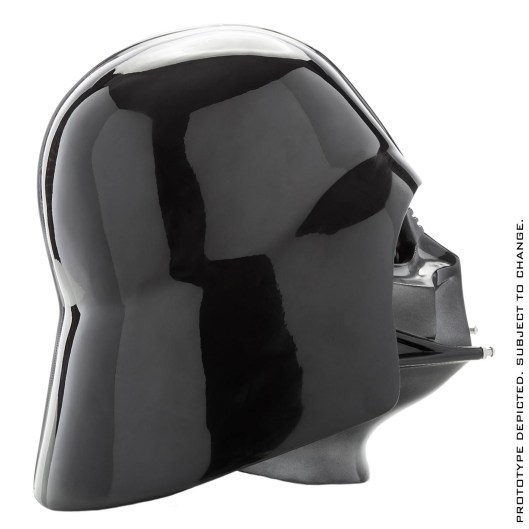
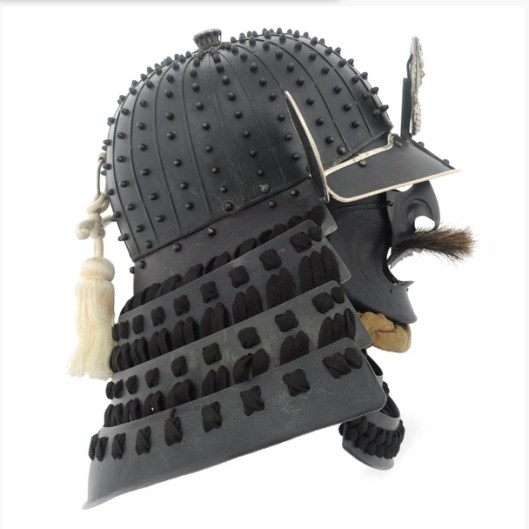
Although Darth Vader’s helmet is a bit more samurai-ish.

image3edv.jpg

image3fsam.jpeg

All of these came to the screen through the work of uniform historian and costume designer John Mollo,

image3gjohnmollo.jpg

who died on 25 October, 2017, at the age of 86.  His work included not only science fiction costuming

image3himps.png

image3irebs.png

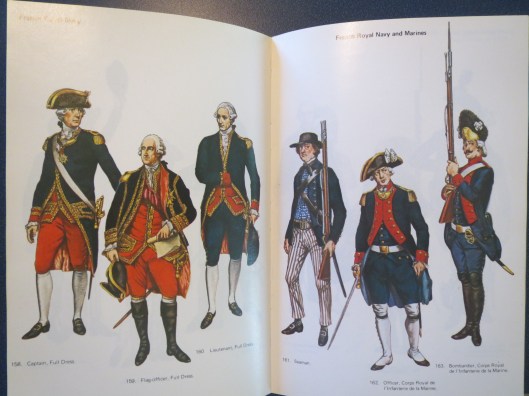
but also the text for works on the history of uniforms.  For our first novel, Across the Doubtful Sea, he and his illustrator for Uniforms of the American Revolution in Color (1975),

image3juniforms.jpg

provided us with an accurate view of the uniforms of the British and French navies of the period.

image3kbrit.jpg

image3lfrench.jpg


But—as we began to say—the crown of that hat bears that nickname because it looks like sugar as it used to be formed, shipped, and sold.

Today, we see sugar in bags

image4sugarbag.jpg

or in little packets in fast food restaurants

image5packet.jpg

or even in cubes.

image6sugarcubes.jpeg

In earlier centuries, sugar came in a very different form:

image7sugarloaf.jpg

and, to use it, you had special tools to snip off or scrape off pieces when you needed them.

image8tongues.jpg

image9sugarwork.jpg

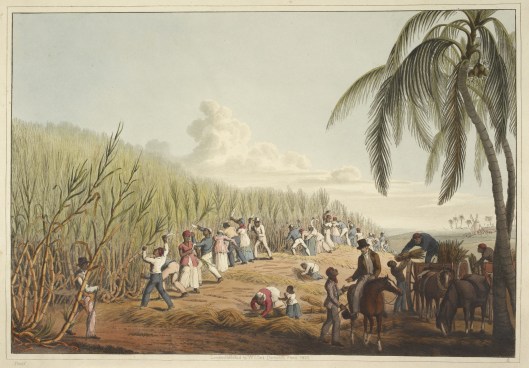
Sugar came like this because of the process by which sugar was extracted from a very tall plant,

image10sugarcanefield.jpg

the sugar being inside the plant.

image11sugarcane.jpg

The first step was to cut the plant down.

image12cutting.jpg

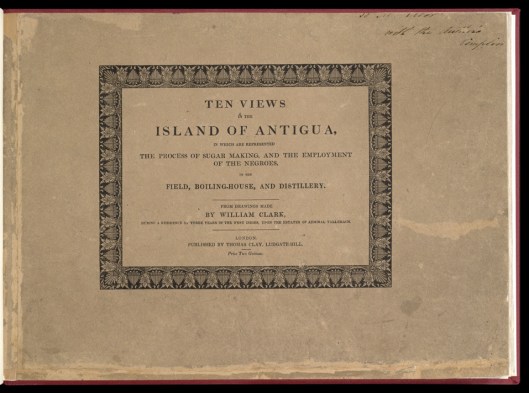
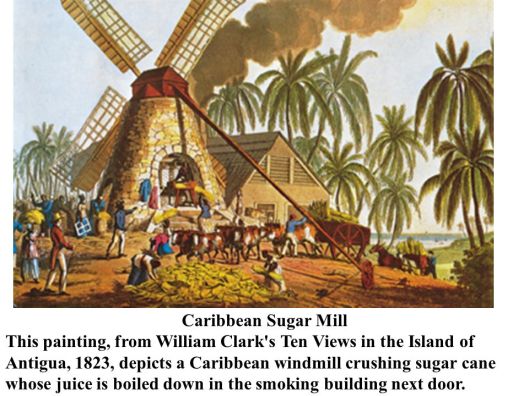
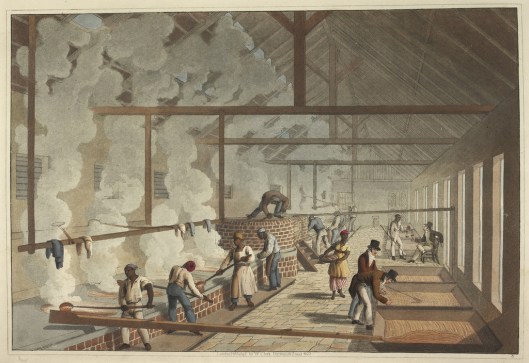
This and some of the following illustrations are drawn from a series of colored engravings published in 1823 and entitled Ten Views in the Island of Antigua.

image13tenviews.jpg

And, as you can see from the subtitle, the collection is devoted to the sugar-production industry, which was an extremely profitable one.  (And it should always be remembered that the great majority of the workers in these images are slaves.)

Cutting, however, is just the first stage in the process.  In the next step, the cane has to be crushed to get the pulp out.

image14crushing.jpg

(We note the mistake in the caption—this isn’t a painting, but a colored engraving.)

The pulp then has to be boiled and sieved until it’s a pure liquid.

image15boiling.jpg

Then—initially—it was dried, forming a coarse brown powder, as you can see on the right hand side of this illustration.

This was then packed into huge barrels, called “hogsheads”,

image16packing.jpg

and shipped.

image17shipping.jpg

When it reached its final destination, it was turned back into a liquid and further refined until poured into molds, which is how it was commonly sold, even into the 20th century, apparently.

image18mold.jpg

It is estimated that the average person consumes 53 pounds (24kg) of sugar a year, partly because sugar is mixed in with a huge variety of products where you would have to read the label before you realized that it was even an ingredient.

But what about Bilbo?  So far, as there is no concordance to the complete works of JRRT, as there is for something like the Iliad.

image19concordance.jpg

(A concordance is a complete collection of all the words, in their various forms, in a work, listed alphabetically, with reference to where they may be found.)

Our research, then, is completely casual—we paged through The Hobbit and, although we found no mention of the word “sugar” per se, we did find, particularly in Chapter One, a number of references to baked goods (“cake”, “seed cake”, and “tarts”).  We might suppose that, as in our medieval times, Bilbo employed honey in his recipes,

image20honeycomb.jpg

but, for the sake of our sugar loaf misread, we’re going to imagine that sugar is the ingredient.  (After all, there are “taters” and tobacco/pipeweed and, in the first edition of The Hobbit, even tomatoes mentioned, so why not?)

The next question, of course, is where this sugar came from.  Sugar is native to Southeast Asia, growing in tropical regions.  As far as we understand it, the Shire appears to be rather like southern England for climate, which means grains and things like hops, for beer, and perhaps even tobacco (in the United States, tobacco is grown as far north as Massachusetts), but nothing which requires a warmer, moister climate.

image21tobacco.jpg

Europe first began to receive its sugar (after tiny and very expensive exotic imports) in the 16th century from plants descended from cuttings from the Canary Islands and planted in the Caribbean by the agents of Christopher Columbus.  (The Portuguese did something similar in Brazil.)

Looking south on the map of Middle-earth, where would the climate allow for the growth of such plants?

image22map.jpg

Our best guess is to look as far south as we can—which is why, in our next posting, we want visit Harad and chat with those Corsairs of Umbar…

Thanks, as ever, for reading.

MTCIDC

CD

Crowning Achievement

20 Wednesday Sep 2017

Posted by Ollamh in Artists and Illustrators, J.R.R. Tolkien, Literary History, Narrative Methods

≈ Leave a comment

Tags

Alexander the Great, Alice in Wonderland, Barrow-downs, Barrow-wights, Bayeux Tapestry, Brunhilde, Charlemagne, Cheshire Cat, circlet, Cleopatra VII, diadem, Egypt, Egyptian crowns, Elightenment France, Eowyn, French Revolution, Gondor, Gondorian crown, Greek, Greek coins, Hildebrandts, Imperial Crown of the Holy Roman Empire, Julius Caesar, Lupercalia, Marcus Antonius, Medieval, Napoleon I, Nazgul, Octavian Augustus, Pharoahs, Philip II, Pontifex Maximus, Ptolemy I, Queen Elizabeth I, Queen Elizabeth II, Queen Victoria, Richard Wagner, Rohan, Romans, Tenniel, The Lord of the Rings, Theoden, Tolkien, William Shakespeare, Witch-King of Angmar, wreaths

Welcome, dear readers, as ever.

Recently, one of us was lecturing on ancient Egypt, a country of two lands, in fact, Upper and Lower, and each could be represented in the crown worn by the pharaoh.

image1crownsof-egypt.jpg

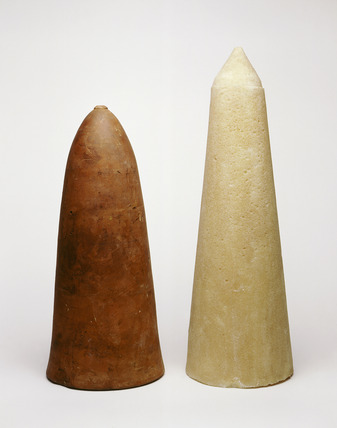
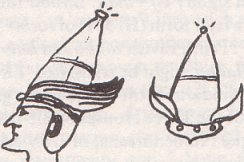
Within in blink, we began to think about JRRT’s illustration of the traditional crown of Gondor,

image2jrrtcrown.jpg

of which Tolkien says:

“I think that the crown of Gondor (the S. Kingdom) was very tall, like that of Egypt, but with wings attached, not set straight back but at an angle.

The N. Kingdom had only a diadem (III 323).  Cf. the difference between the N. and S. kingdoms of Egypt.”

(Letters, letter to Rhona Beare, 10/14/58, 281)

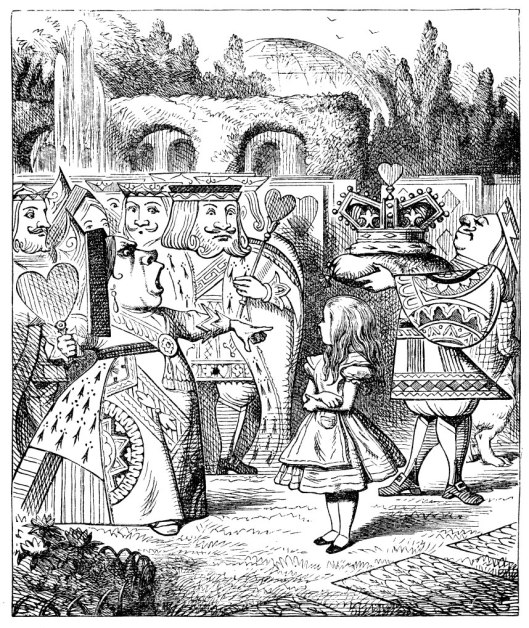
For us, the first crown we believe we ever saw as children was either one in an illustrated fairy tale (here’s a Tenniel illustration from Alice)

image3atenniel.jpg

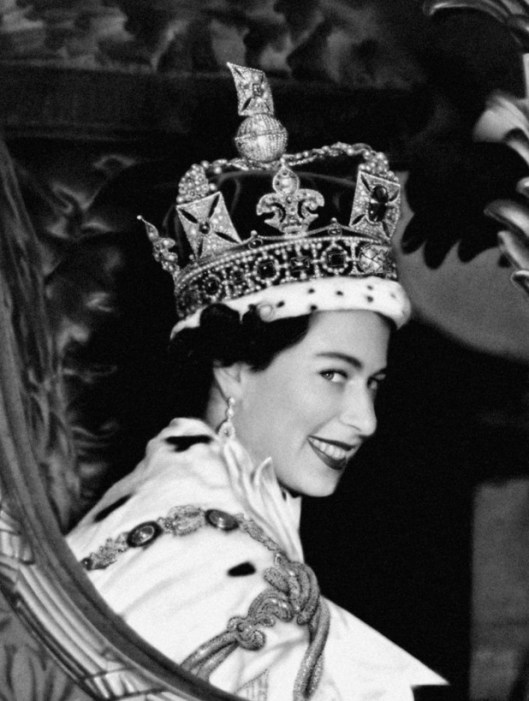
or the actual one of Queen Elizabeth II, and that hardly fits JRRT’s idea about the southern crown—or the northern one

image3er2.jpg

or that of her ancestor, Queen Victoria

imaage4vr.jpg

or that of their distant ancestor, Elizabeth I.

image5er1.jpg

When we think of a “diadem”, however, we are reminded of the earliest western European crowns, which, in contrast to Elizabeth’s, is barely there at all.

Here is the first type of crown we know of being depicted—it’s that “diadem” in a Greek form, being on a coin of Philip II, King of Macedon and father of Alexander the Great (the reverse—the back side—the front side is called the “obverse”—shows Philip’s Olympic victory horse and Philip’s name in the genitive—possessive—case, “of Philip”—showing not only possession of the horse, but of the victory, of the coin, and, by implication, the right to issue coins).


This became a regular pattern, both of coin and of crown for those who followed Philip, and, thinking about Philip’s victory, we can imagine that the original of the crown was based upon the wreath athletic game victors wore.


And coins like Philip’s set the pattern for classical coins—and crowns—for centuries.  Here’s the crown pattern on the head of Ptolemy I, one of Alexander’s generals.


At Alexander’s death, Ptolemy seized Egypt, making it a family possession for the next nearly three hundred years, all the way down to his greatgreatgreat etc granddaughter Cleopatra VII.

image9cleo.jpg

The pattern was not confined to Greece or Egypt, however—Julius Caesar wore something similar—

CaesarCoin_Wikipedia_960.jpg

although, unlike Ptolemy and other such rulers, Caesar might have hoped to muddy people’s perceptions of what such a thing symbolized and what position (dictator for life) he’d forced the Senate to give him.   Rome had hated monarchs, after all, since they’d kicked out their last king 450 years before.

(And see Act I, Sc.2 of Shakespeare’s Julius Caesar in which, at the festival of the Lupercalia, Marcus Antonius publically offers him a crown and Caesar rejects it, much to the loud delight of the mob.)

In the Greco-Roman world, wreaths had many purposes:  besides Greek kings and winners at games, people at parties and weddings and other festive occasions wore them, as well as celebrants at religious rites.

image12symposium.jpg

Perhaps Caesar hoped that, appearing in one, he might appear less like a Hellenistic king and more like anything from an Olympic victor or party-goer to a priest (he was Pontifex Maximus, head of religion in Rome, so there was a certain credibility to the latter).

image13pm.jpg

Malicious people in Rome also suggested another reason for the wreath:  Caesar was sensitive about his thinning hair.

image14jc.jpg

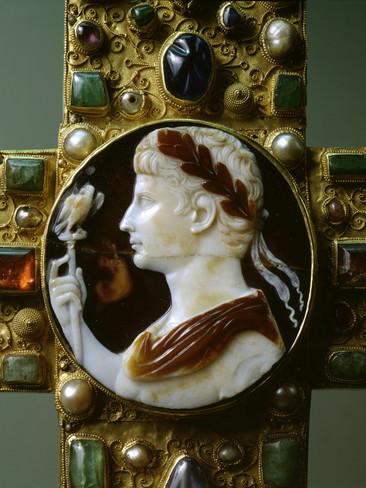
Caesar’s grandnephew and successor, Octavian/Augustus, continued the tradition,

Augusts-in-Ancient-Roman-Cameo.jpg

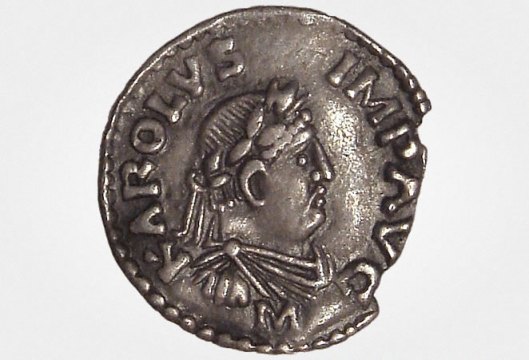
as did following emperors for several centuries—and even Charlemagne, hundreds of years after the last western emperor, revived it.

image16charlemagne.jpg

At some point, just after Charlemagne’s time or thereabout (c1000ad), a new pattern appeared, which you can see in the famous “Imperial Crown of the Holy Roman Empire”.

image17impcrown.jpg

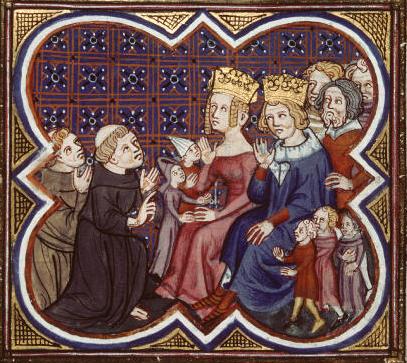
Instead of a wreath, this was a built-up circlet, with lots of “bits and bobs” on top.

This newer look persisted in various more or less complicated forms in the west for centuries

image18king.jpgimage19king.jpgimage20king.jpgimage21king.jpg

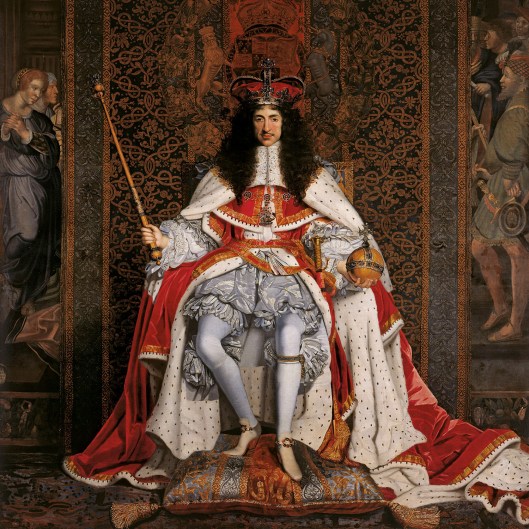
and seems to underlie the crowns seen in more recent times (often with what appears to be a red velvet balloon in the middle).

image22er1.jpgimage23chas2.jpgimage24geov.jpg

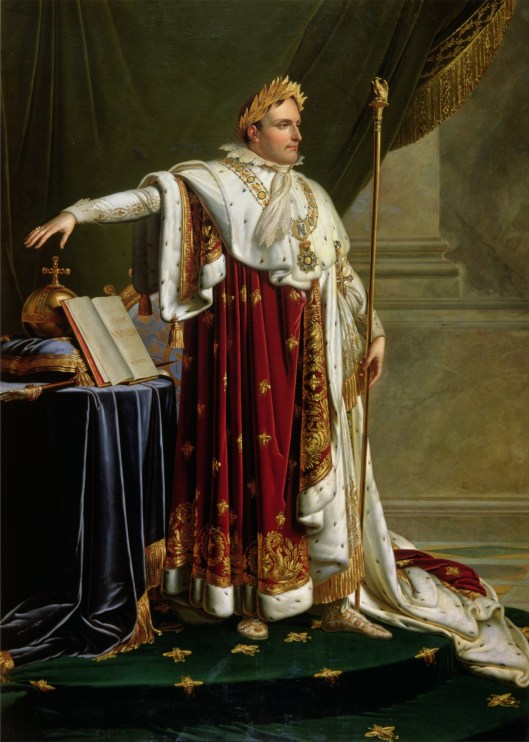
There is a throwback, however:  Napoleon I.  He had grown up in Enlightenment France, in a world which idealized classical learning and art, and so, when he made himself emperor in 1804, his model wasn’t medieval and Germanic, but Augustine.

image25agus.jpg

image25nappy.jpg

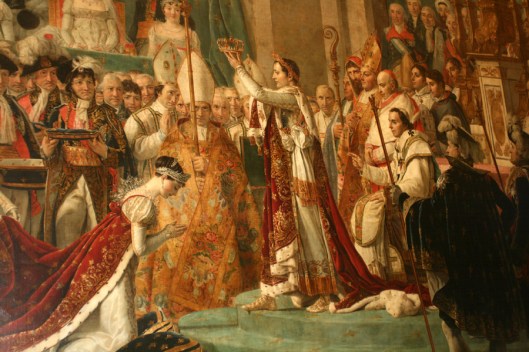
This doesn’t mean that he wasn’t aware of that other model and he would have used it—the so-called “crown of Charlemagne”–at his self-coronation

image26napcoron.jpg

had it not suffered the fate of many medieval treasures and been destroyed during the French Revolution (the famous Bayeux Tapestry was almost converted to wagon covers by revolutionaries).  In fact, a “crown of Charlemagne” did turn up for the ceremony—“recreated” by a clever Paris jeweler.

image27charlcrown.jpg

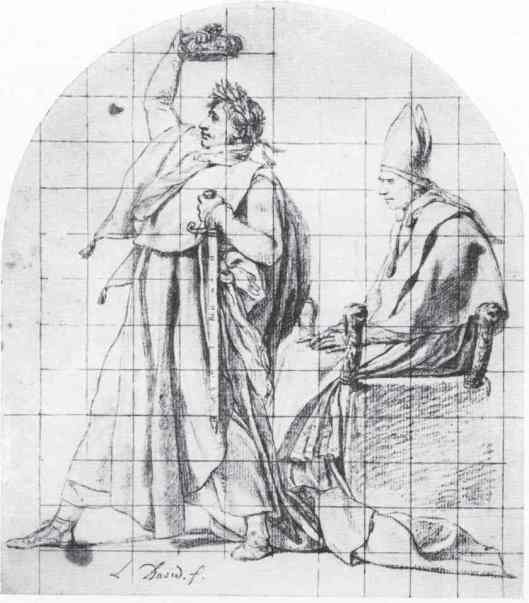
[A footnote about the coronation.  In the painter David’s sketches for it, he shows the pope (Pius VII) with his hands in his lap.

image28pope1.jpg

Napoleon saw the drawing and said to David that the pope should be blessing the occasion—after all, that’s why Napoleon had dragged him all the way from Rome.  David redid his sketch, of course!]

image29pope2.jpg

Beyond the Crowns of Gondor, most of the crowns seen in The Lord of the Rings are described as “circlets”—

  1. Sam, Merry, and Pippin, laid out in the barrow:

“About them lay many treasures of gold maybe, though in that light they looked cold and unlovely.  On their heads were circlets, gold chains were about their waists, and on their fingers were many rings.”(The Fellowship of the Ring, Book One, Chapter 8, “Fog on the Barrow-Downs”)

image30barrow.jpg

  1. Theoden:

“Upon it sat a man so bent with age that he seemed almost a dwarf; but his white hair was long and thick and fell in great braids from beneath a thin golden circlet set upon his brow.” (The Two Towers, Book Three, Chapter 6, “The King of the Golden Hall”)

image31theoden.jpeg

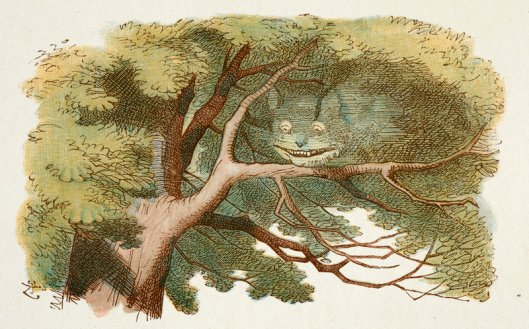
But there is one which, well, looking at the various illustrations of its wearer, reminds us of Alice’s comment upon the Cheshire Cat:

“Well! I’ve often seen a cat without a grin…but a grin without a cat!  It’s the most curious thing I ever saw in my life!” (Alice’s Adventures in Wonderland, Chapter 6, “Pig and Pepper”)
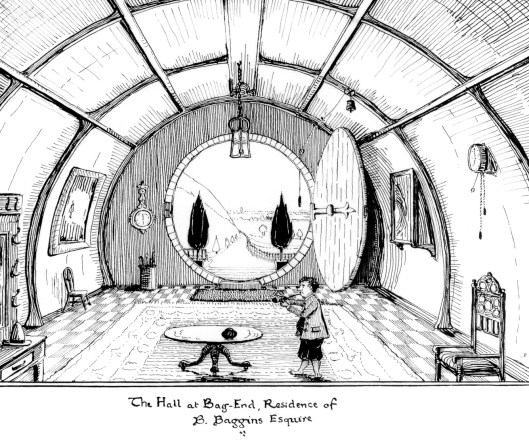
image32cheshirecat.jpg

On the Fields of the Pelennor, a “great shadow descended like a falling cloud.  And behold! It was a winged creature.”

This might be bad enough, but:

“Upon it sat a shape, black-mantled, huge and threatening.  A crown of steel he bore, but between rim and robe naught was there to see, save only a deadly gleam of eyes:  the Lord of the Nazgul.” (The Return of the King, Book Five, Chapter 6, “The Battle of the Pelennor Fields”)

image33eonaz.jpg

We are aware of at least half-a-dozen professional renderings of this scene (and we plan to discuss them all in a future post), but it seems to us that those eyes, seeming to float in space, make it extremely difficult to illustrate it, no matter what crown—simply described as “steel”—he’s wearing.  And that brings us back to our original crown.  As JRRT described it:

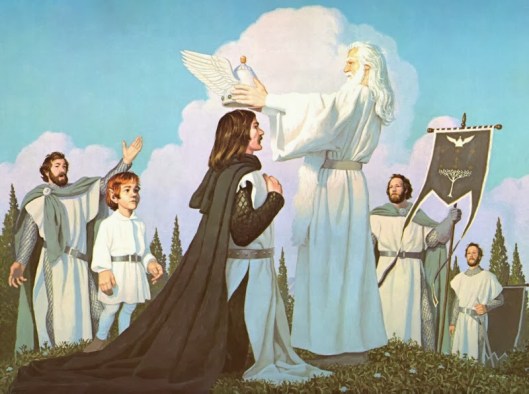
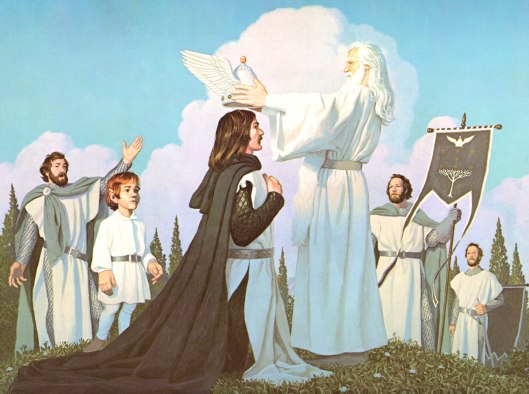
“It was shaped like the helms of the Guards of the Citadel, save that it was loftier, and it was all white, and the wings at either side were wrought of pearl and silver in the likeness of the wings of a sea-bird, for it was the emblem of kings who came over the Sea; and seven gems of adamant were set in the circlet, and upon its summit was set a single jewel the light of which went up like a flame.” (The Return of the King, Book Six, Chapter 5, “The Steward and the King”)

If his drawing (seen at the beginning of this post) is what he had in mind, then the only professional illustration we’ve seen of it, by the Hildebrandts, is only an approximation.

image34coronation.jpg

And, in fact, reminds us all-too-easily of Brunhilde, the Walkuere, from Wagner’s operas.

image35brunhilde.jpg

If illustrators as good as the Hildebrandts struggle, this must be a tough one.  The designers of the P. Jackson films are even farther away from the original, as so often.

image36aragorn.jpg

Here, however, we have some sympathy!  Somehow the medieval world of Middle-earth can not easily assimilate an Egyptian artifact.  And so, we suspect that they thought “circlet” and “wings” and left it there.  What do you think, readers?  How do you imagine the crown?

Thanks, as ever, for reading.

MTCIDC

CD

In the Future, Use the Past

13 Wednesday Sep 2017

Posted by Ollamh in Artists and Illustrators, Fairy Tales and Myths, Films and Music, Heroes, J.R.R. Tolkien, Literary History, Narrative Methods

≈ Leave a comment

Tags

A New Hope, A Princess of Mars, Ages of Middle-earth, Death Star, Edgar Rice Burroughs, Emperor Palpatine, Frank Schoonover, George Lucas, Hildebrandt, Mos Eisley, Oxford, Percival Lowell, Return of the Jedi, Sauron, science fiction, special effects, Star Wars, Stonehenge, Tatooine, The Empire Strikes Back, The History of Middle-earth, The Last Jedi, The Lord of the Rings, Tolkien, tower of St Michael

Welcome, as always, dear readers.

As The Last Jedi (Star Wars 8) approaches (and Star Wars Rebels, season 3 has appeared via the postman—season 4 premieres in mid-October—sadly the last season, as Disney has canceled season 5), we’ve been thinking about the original Star Wars of 1977.

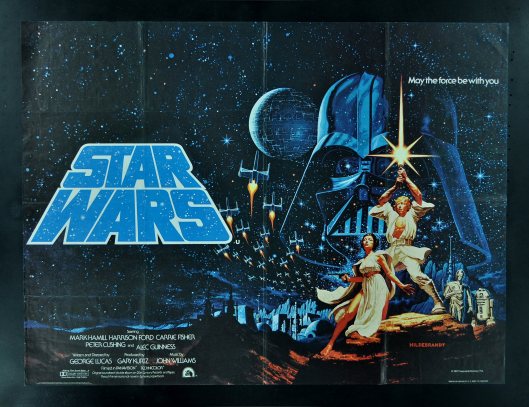
image1poster.jpg

This poster—the second ever Star Wars poster, in fact (used by 20th Century Fox in the UK)– is a great link to JRRT—as if we don’t seem to make such links every time we write!  It’s by two of our favorite Tolkien illustrators, the Hildebrandt brothers.  Here’s a picture of the surviving twin, Greg, with that very poster (his brother, Tim, died in 2006).
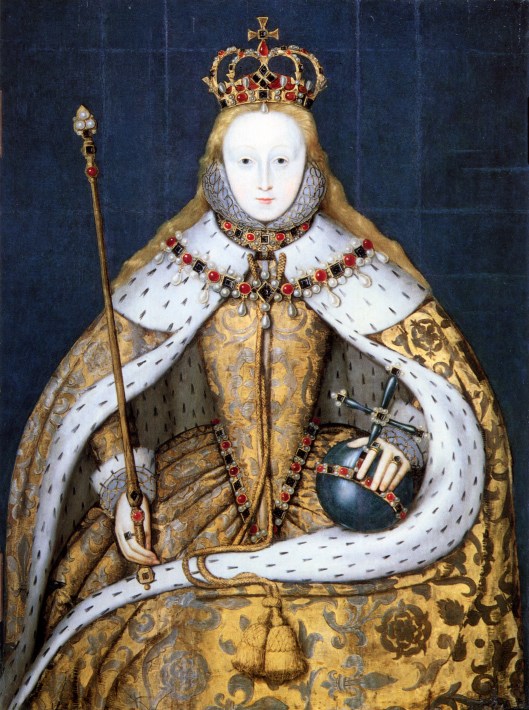
image2gh.png

(Clink here for a LINK to an interesting little piece from 2010 about the Hildebrandts and George Lucas.)

We believe, however that there may be a deeper link.

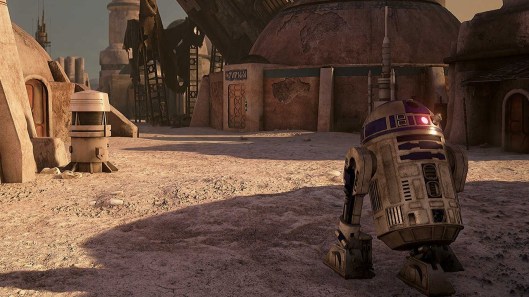
The original reviews (here’s a LINK to summaries of some of them) were a mixture, with some critics enthusiastic about what they saw and others (in our view the stodgier ones) calling the film things like “puerile”.  One element which was occasionally commented upon was the look of the picture—and not just the (for the time) dazzling special effects—but the fact that all the worlds depicted were lived-in, not shiny and new—well, almost.  Consider Mos Eisley, for example,

image3moseisley.jpg

which looks dusty and battered, suggesting the passage of time as well as the effects of the harsh desert climate of Tatooine.

Or the Jawa sandcrawler, old and clearly rusting–
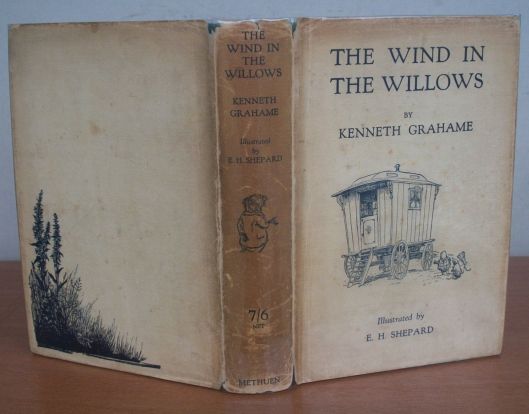
image4jawasandcrawler.jpg

We said “almost” shiny and new because there’s one part of this galaxy with a different look:  the Death Star.

image5insidedeathstar.jpg

It looks like it’s dusted and waxed hourly, doesn’t it?  And the outside appears to be just as neat.

image6falconenteringdeathstar.jpg

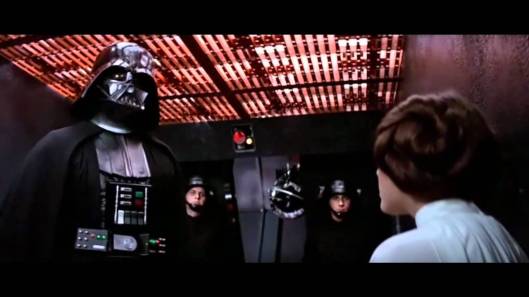
What does this say about the nature of those who inhabit it?  For us, thinking about the spotless Darth Vader,

image7vader.jpg

immediately suggests that the old proverb should be changed to “Cleanliness is next to Un-godliness”!  (Okay—we’re not the neatest and most organized people we know.)

It has been pointed out, more than once and beginning with the director himself, that George Lucas was influenced by Edgar Rice Burroughs’ John Carter series, beginning with A Princess of Mars (first published serially in The All-Story, February to July, 1912).

image8princess.jpg

(And here’s another connection—this cover and the illustrations for its first publication in book form, in 1917, were by Frank Schoonover, 1877-1972, who was the student of another of our favorite illustrators, Howard Pyle, whom we have occasionally mentioned in previous postings.  The convincing detail in this cover painting shows that, just like his teacher, Schoonover did his research—in his case, by very carefully going through the text and taking note of any technical information the author might have mentioned.)

In A Princess of Mars and subsequent books,  Mars has a civilization which is old and in decline (the inspiration for which, in turn, may have come from the work of the amateur astronomer, Percival Lowell, 1855-1916, whose telescopic observations of Mars had convinced him that the planet was—or had been—the home of a dying civilization which had constructed a vast network of canals to supply themselves with water from the polar ice caps—unfortunately, numerous NASA missions have found no evidence of the desperate Martians or their canals).   It would be easy, then, to say that Lucas was just following his source material, but we would suggest that there are two better explanations for showing wear.

The first comes from something Lucas is quoted as having said to his production designers:  “What is required for true credibility is a used future.” In Lucas’ view, then, the story’s believability comes in part from its look:  if things appeared not shiny, but worn, then viewers would be more likely to accept the narrative as somehow “true”, we presume because things in our world so often look used.

There is then, we think a further presumption:  if things look worn, then they have a past, which implies that the here-and-now of the story is a small part of bigger things and, certainly, just looking at the “crawl” at the beginning of the original Star Wars,

star-wars-crawl-163729.jpeg

which leads us to  our second explanation.  This one deals with something deeper, something which we would say might provide another possible link with JRRT and is, in fact, suggested by the titles of the first three Star Wars films made and even in their sequence:  A New Hope, The Empire Strikes Back, The Return of the Jedi.

In two earlier postings, we talked about the condition of Middle-earth at the beginning of The Lord of the Rings, in which everything, from the trees to the houses of Minas Tirith, has grown old and weary—and even potentially hostile, in the case of the trees.  Part of this comes from the fact that Middle-earth is old:  one has only to turn to Appendix B, subtitled “The Tale of Years”, in The Lord of the Rings to see that, in the Second and Third Ages alone, nearly 6000 years have passed.   (In terms of our earth, that’s moving from the late Neolithic Era to modern times, 4000bc to 2017ad.)  This also emphasizes the age and depth of evil, as well as its power to corrupt in the present:  Sauron began to build Barad-dur c. SA1000—5000 years before the main narrative of The Lord of the Rings opens and, in the present, the world is crumbling.

Of course, JRRT lived surrounded by the past.  The oldest surviving building in his daily Oxford is the tower of St Michael at the North Gate, dating from 1040ad, nearly a thousand years before his time,

image9stmichaels.jpg

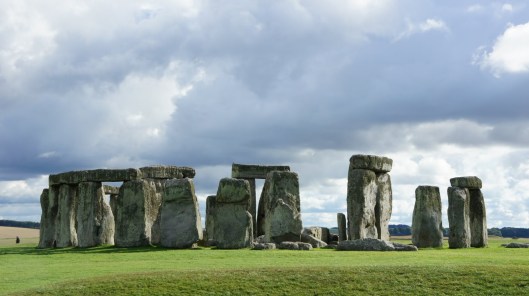
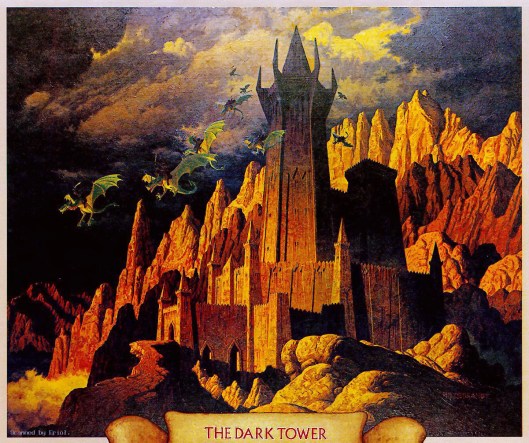
but Neolithic Stonehenge is only 58 miles (93km) southwest of the city and that’s 5000 years old, taking us back to the time when, in Middle-earth, Sauron had begun the Barad-dur.

image10stonehenge.JPG

image11baraddur.jpg

In contrast, Lucas was born in 1944 in Modesto, California, a town only founded in 1870, and grew up in a post-World War II world, where the key was “the future”.  It is a tribute, then, to his story-telling gift that he realized how useful in telling his story the past—even an imagined one—could be and it is interesting to see how he shares that understanding with JRRT and perhaps shares a goal, as well.

We’ve said that our second explanation may be seen in the titles of Lucas’ three films, so let’s consider them in comparison with the general shape of Tolkien’s work to see what that shared goal might be.   (In an interview, Lucas even described the three as being like a three-act play, suggesting the dramatic progress inherent in the movement from one to another.)

At the beginning of the first film, it is a dark time in the galaxy:  the repressive regime of the evil Emperor Palpatine dominates and resistance is confined to “The Rebel Alliance”, which has scraped together a fleet (and, presumably an army—we see elements in Rogue One, which takes place before this film) to resist, but seems to spend most of its time running and hiding.  The past is only implied, but the fact that there is an Empire and a resistance suggests much, just as the run-down condition of places like Tatooine might suggest both age and that the galaxy has become run-down because of that Empire.

image12palpatine.jpg

At the beginning of The Lord of the Rings, we find ourselves in a place with a long history, as we see from the many pages of the “Prologue”.  It has been a quiet place, but the world outside is becoming less so, with sinister forces growing, as Frodo hears from passing dwarves:

“They were troubled, and some spoke in whispers of the Enemy and of the Land of Mordor.” (The Fellowship of the Ring, Book One, Chapter 2, “The Shadow of the Past”)

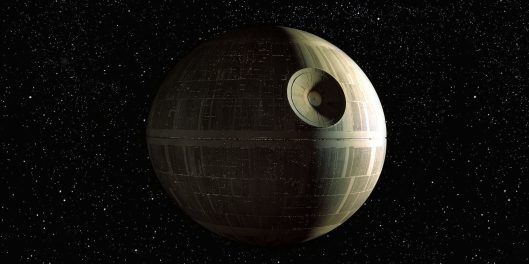
In time, readers are brought to see that the dwarves are grossly understating the case:  the Enemy is real, Sauron, and that he has not only huge armies, but the Nazgul and a would-be ally in his enemies’ camp, Saruman.  The same may be said for the Empire:  not only do they have huge fleets and armies, but they have the “ultimate weapon”, the Death Star.

image13deathstar.jpeg

We will learn, as well, that, for all his great age and might, Sauron has an Achilles’ heel:  to give the One Ring its power, he has had to pour most of his power into it.  Thus, if he regains the ring, he will be much more powerful than he is at present, but, should the ring be destroyed, Sauron will be virtually destroyed with it.  As this struggle has been going on in Middle-earth for thousands of years, the idea that Sauron is vulnerable could easily be termed “a new hope”, just as Luke, the son of the Enforcer of the Galaxy, Darth Vader/Anakin Skywalker, will provide a new hope for the Rebels (especially when we are told about “the Chosen One”—for whom he can be taken).

For a time, things do not go well for those opposed to Sauron:  he combines psychological/meteorological attacks with the march of huge armies, and even pirate raids on Gondor’s south coast. Gondor is overrun and Minas Tirith is assaulted.  This is clearly The Empire Strikes Back, just as the pursuit of the Rebel fleet to Hoth and the destruction of Echo Base disperses the Rebels and casts a shadow over the hope felt after the destruction of the Death Star.

This is not the end, however, for the Rebels or for the good people of Middle-earth.  Not only is the Ring destroyed and Sauron disembodied, but this paves the way for The Return of the King, with all of the reflowering-to-come, as we have suggested in a previous posting.

image14crowning.jpg

And there is a strong echo in the title of Lucas’ third film, The Return of the Jedi, in which the Emperor is destroyed and balance brought back to the Force—and the galaxy.  (Of course, with Star Wars 7, we see that the happy ending is only temporary, but we have hopes that, by the conclusion of 9, there will come a final rebalancing and peace at last.)

image15return.jpg

Lucas’ acknowledges many sources but, so far, we have yet to locate a quotation from an interview or anywhere else in which he says, “Yes, I’ve read Tolkien closely and, indeed, there is a strong affinity between my work and his”, but we believe that we can suggest, at least, that he, like JRRT, is following the same path in creating a world in turmoil, a visibly-aging world.  Into this world, he places his protagonist who provides a new hope, faces the might of a not-easily-defeated enemy, but, by his bravery and determination, finally brings about the destruction of that enemy (interesting in both cases he does not do so himself—Gollum inadvertently destroys the ring, just as Anakin, not his son, kills the Emperor) and the promise of renewal in the return of the Jedi—and the King.

And what do you think, dear readers?

Thanks, as ever, for reading!

MTCIDC

CD

And Then the Dragon Came

14 Wednesday Jun 2017

Posted by Ollamh in Artists and Illustrators, Fairy Tales and Myths, Heroes, Imaginary History, J.R.R. Tolkien, Literary History, Narrative Methods, Villains

≈ Leave a comment

Tags

A.A. Milne, Apollonius, Arthur Rackham, Beowulf, Chrysophylax, Cressida Cowell, Dragons, Drawn From Life, Drawn From Memory, Dream Days, E.H. Shepard, Edwardian, Farmer Giles of Ham, How to Train Your Dragon, Kenneth Grahame, Maxfield Parrish, Nine Dragons, Now We Are Six, Octavian, Prince Valiant, Renaissance, Sir Gawain, Smaug, St. George and the Dragon, The Argonautica, The Hobbit, The House at Pooh Corners, The Reluctant Dragon, The Wind in the Willows, Tolkien, Victorian, Walt Disney, Western Medieval, When We Were Very Young, Winnie the Pooh

Welcome, dear readers, as always.
One of us is in the midst of creating a course for the fall term. It’s called “Handling Monsters: A Handbook” and several of those monsters are dragons—the “Sleepless Serpent/Dragon” of the ancient Greek literary epic by Apollonius, The Argonautica,
image1sleepless.jpg
the dragon which Beowulf fights,
image2beowulf.jpg
(when small, we always imagined this as looking like the one which Sir Gawain, Prince Valiant’s master, fights)
image3sirgawaine.jpg
Smaug,
image4smaug.jpg
and Toothless, from How to Train Your Dragon (by Cressida Cowell—there’s also a movie by that name, which is fun—great flying scenes–but it’s so different from the book that it really should have another title!)
image5hiccup.jpg
We must confess that we’ve never been big saurian fans, either dinosaurs or dragons, but, as monsters go, they have their uses. Saying that, however, we do have to add that we’ve always loved the “Nine Dragons” scroll, a 13th-century Chinese painting…
image6nine.png
[And here’s a LINK to a site at the Center for the Art of East Asia which you can see the whole scroll—well worth the visit—and revisit, if you’re like us and love Chinese painting.]
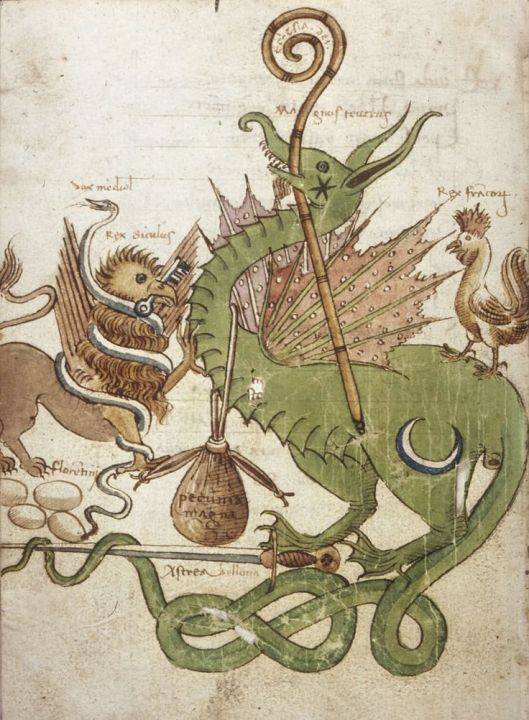
While putting together this course, we’ve been spending some time gathering dragon images. Sometimes, they seem pretty fantastic—painters with wild imaginations—
image7meddragon.jpg
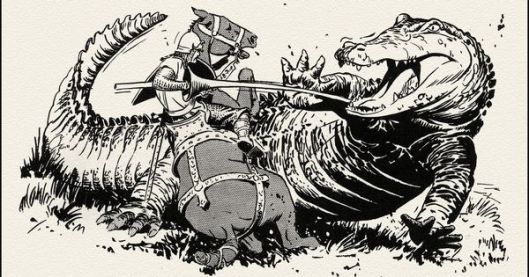
And sometimes they look like someone once saw a crocodile.
image8stg.jpg
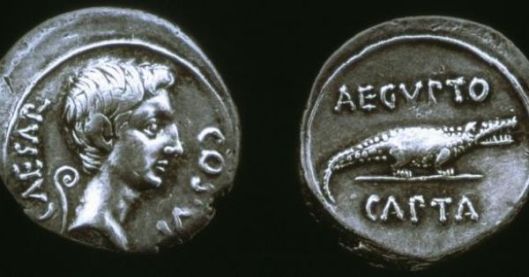
[Perhaps on an old coin? For example, Octavian—the Emperor Augustus-to-be—after the defeat of Antonius and Cleopatra, issued this coin, which reads “Egypt Taken”,

image9aegypta.jpg
suggesting that, when a Roman thought of Egypt, it wasn’t the pyramids which came to mind, but a scaly, many-toothed amphibian!]
And the image before the coin reminds us that, in Western medieval/early Renaissance art, a major source of dragon pictures is religious, being depictions of St. George and his dragon-slaying.
image10stg1.jpg

image11stgeo2.jpg
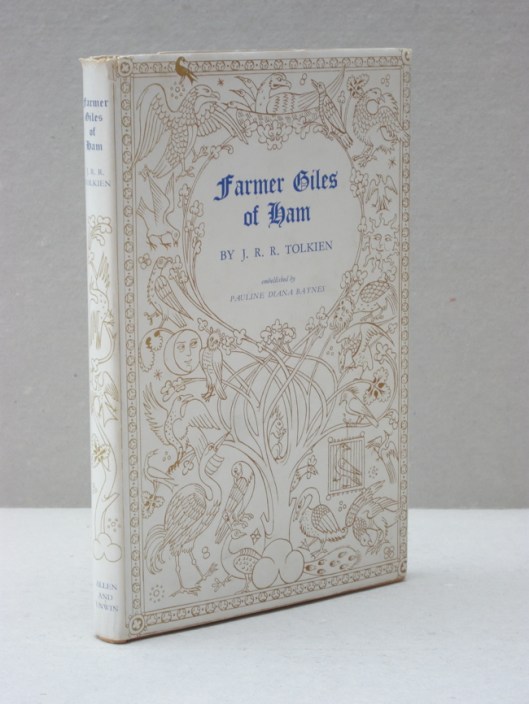
We’ve mentioned JRRT and Smaug, but that it only his first dragon story. There is another, Farmer Giles of Ham, written in 1937 and published in 1949.
image12farmergiles.jpg
If you haven’t read it, we recommend it as a look at JRRT at play, more Hobbit than Lord of the Rings. The story is about a very practical, but hardly adventurous farmer, Giles, who, after chasing off a giant from his village, is given the job of dealing with an invading dragon, Chrysophylax (maybe something like “Watchman of the Gold”).
image13xryso.jpg
Although the dragon is tricksy, Giles eventually overcomes him with a combination of shrewdness and a famous sword, Caudimordax (“Tailbiter”). In the process, he becomes not only wealthy, but also founds his own kingdom-within-a-kingdom. As well, though JRRT, more than once in his letters, lets us know that he is not an enthusiast for democracy, he provides a very critical view of monarchy and its pretensions. (This may also explain why, although those in the Shire may refer to “the king” and “the rules”, which presumably came with that monarch, their own local form of government is more familial than bureaucratic.)
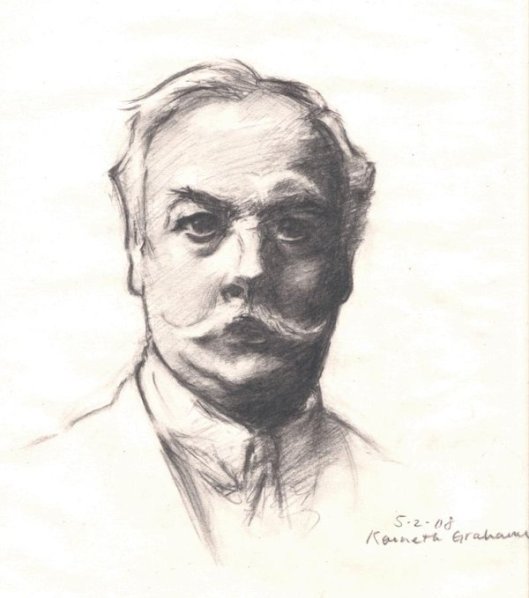
Chrysophylax is chatty, rather like Smaug, but there is a much lighter touch here, and Chrysophylax reminds us of our favorite dragon after Tolkien’s, the unnamed dragon in Kenneth Grahame’s
image14kgrahame.jpg
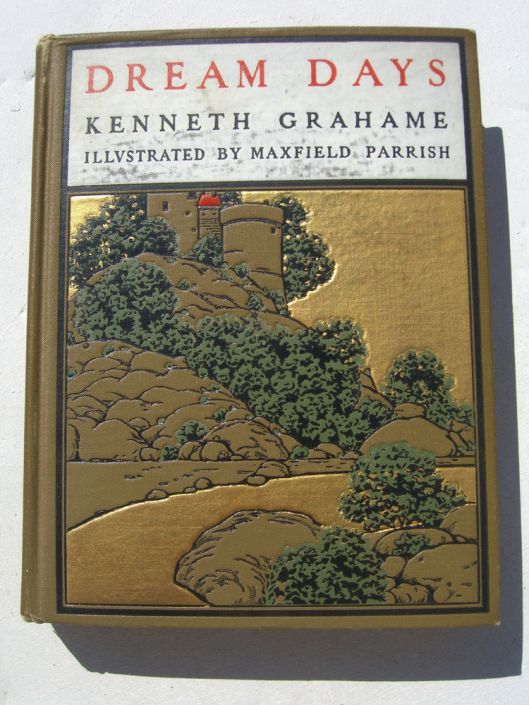
short story, “The Reluctant Dragon”, from his 1898 collection, Dream Days.
image15dreamdays.jpg
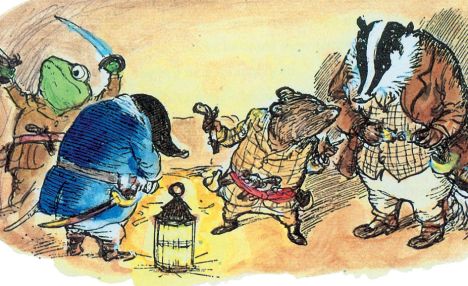
If you recognize Grahame’s name, you probably know it from his 1908 novel, The Wind in the Willows, with its well-known characters, Toad, Rat, Mole, and Badger—not to mention the wicked weasels!–
image16wiw1sted.jpg
image17wiwcharacters.jpg
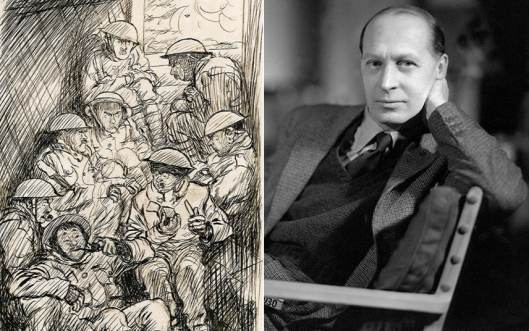
first illustrated by E.H. Shepard
image18ehshepard.jpg
whom you may also know as the illustrator of A.A. Milne’s Winnie the Pooh, The House at Pooh Corners, When We Were Very Young, and Now We are Six.
image19wthepfirst.jpg
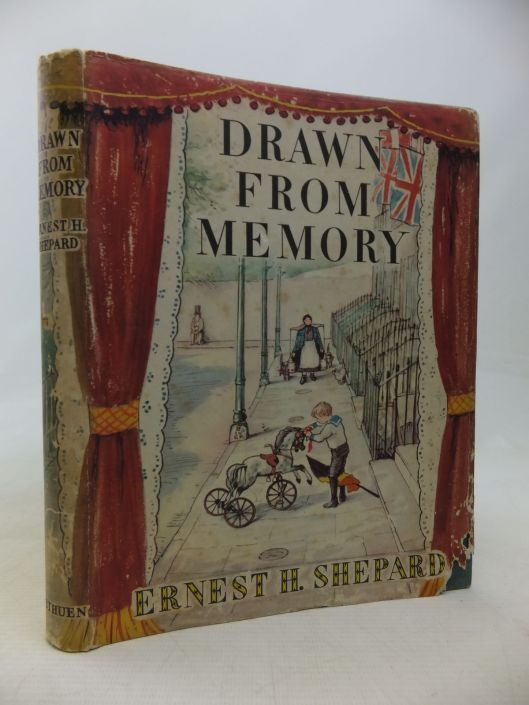
[Shepard also wrote two volumes of autobiography—which he illustrated, of course—Drawn from Memory (1957) and Drawn from Life (1961)
image19drawnfrommem.JPG

image20drawnfromlife.JPG
and, for a picture of a growing up in the later Victorian world, beautifully written and illustrated, we very much recommend both.]
[And a second footnote here: Arthur Rackham—one of our favorite late-19th-early-20th-century illustrators– also illustrated The Wind in the Willows,
image22rackham.jpg

image23wiwrack.jpg
his last project before his death in 1939. It was published a year later, in 1940.]
The title gives away a great deal of the plot of Grahame’s “The Reluctant Dragon”. Instead of being a murderous hoarder, like Beowulf’s dragon, or Smaug, this is dragon-as-pacifist, (as depicted by his original illustrator, Maxfield Parrish):
image24fearless.jpg
not in the least interested in plundering and burning, but rather in viewing sunsets and living a peaceful existence—until St. George appears. As to what happens next, we’re not going to issue a spoiler alert here, but rather provide links to three works by Grahame: two collections of stories and essays, The Golden Age (1895), Dream Days (1898), and The Wind in the Willows (1908), inviting you to read for yourself and to enjoy Grahame’s elegant Edwardian prose and gentle approach.
With thanks, dear readers, for…reading.
MTCIDC
CD

PS
Walt Disney studios made cartoons of “The Reluctant Dragon” (1941) and “The Wind in the Willows” (1949), which are currently available in Disney collections. They both stray rather far from the original stories, but are fun in themselves (and Eric Blore’s voice is perfect for “the handsome and popular Toad”).
PPS
One of us has written what we might immodestly call a very good short story based upon Arthur Rackham’s last days and his determination to finish his illustrations to The Wind in the Willows before his death and we plan to publish it here next week as a kind of “Summer Holidays Extra”. We hope you’ll enjoy it.


Accuracy? Well, Yes, But…

07 Wednesday Jun 2017

Posted by Ollamh in Artists and Illustrators, Heroes, J.R.R. Tolkien, Literary History, Military History, Narrative Methods, The Rohirrim

≈ Leave a comment

Tags

American Civil War, American Revolution, Concord, Don Troiani, Germantown, grenadiers, H. Charles McBarron, Harper's Monthly, Howard Pyle, Illustration, John Trumbull, Joseph Warren, King Arthur, Lexington, Pirates, Richard Simkin, The Battle of Bunker Hill, The Battle of Nashville, The Lord of the Rings, The Rohirrim, The Salem Wolf, Tolkien

Welcome, dear readers, as always.

Today’s post takes us to the question of what we like and why and how such likes may push us—who, we realize, are a little stiff on the subject of accuracy—to accept things which, if our feelings weren’t engaged, we would briskly reject.

We begin by looking at a painting by one of our favorite late Victorian/Edwardian illustrators, Howard Pyle (1853-1911).

image1hp.jpg

If you’re a regular reader (and we hope you are—or will be!), you’ll have seen his work on our pages any number of times, from his King Arthur illustrations (and here’s a LINK to a free 1922 reprint at the Internet Archive)

image2ka.jpg

to his pirates (and here’s a LINK to a later—c.1921—collection of Pyle’s pictures and writings on pirates at Internet Archive).

image3hppirates.jpg

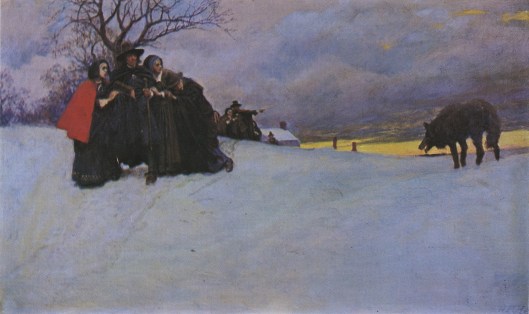
Pyle also wrote and illustrated original fiction—just look at this haunting picture from a short story, “The Salem Wolf”, which was published in the December, 1909, issue of Harper’s Monthly Magazine.

image4salemwolf.jpg

(And here’s a LINK to the story at Internet Archive)

Pyle also painted stand-alone historical pictures, such as this of “The Battle of Nashville” (1907).

MN 60

And we’re lucky to have a photograph of the artist at work on this very picture.

image6hppainting

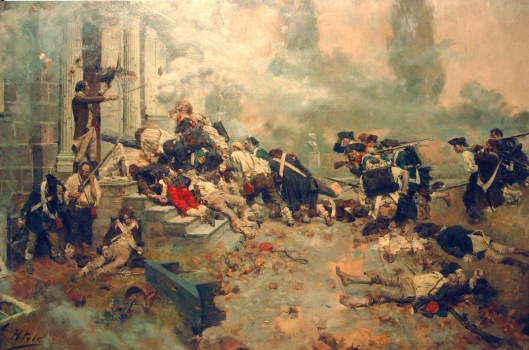
Besides American Civil War pictures, Pyle painted several based upon incidents of the American Revolution, such as this, of the assault on the Chew House, at the Battle of Germantown (4 October, 1777).

image7pylegermantown

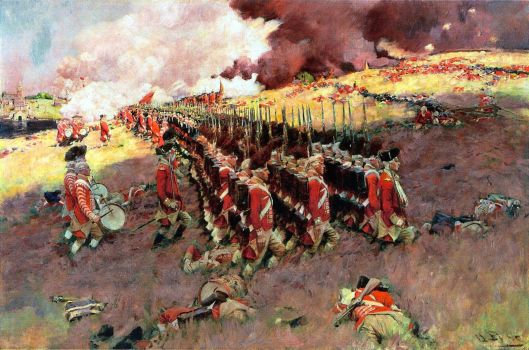
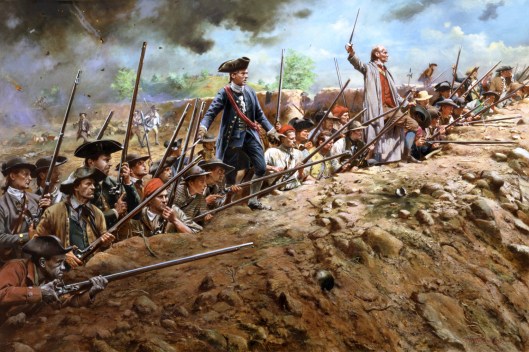
Another of his pictures of the Revolution is the subject of this post, “The Battle of Bunker Hill” (1897).

image8pylebunkerhill

We’re not sure when one of us first saw this picture—childhood, we’d guess—but we were immediately bowled over by it. It’s the adventure of it: those long ranks of redcoats stoically marching up the hill, drums beating behind. It’s not a sanitized picture—just look up the hill and all around you can see the wreck of the earlier British attacks—but its emphasis is upon the courage it must take to do what those soldiers did.

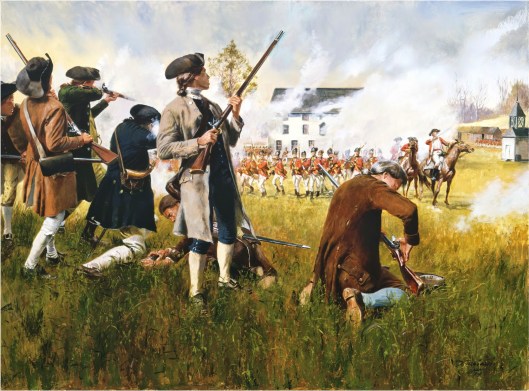
This was, in fact, the third battle of the American Revolution. The war had begun in mid-April, 1775, when a raiding party of British troops, ordered to disrupt local preparations for defense, fought two skirmishes with local militia, at Lexington

image9lexington.jpg

and Concord,

image10concord.jpg

two rural settlements some twenty miles or so west of Boston.

When the British withdrew into Boston itself, those locals, who had grown in numbers to about 15,000, drawn from all over New England, blockaded the town and there was a period of stalemate, while both sides were reinforced. When it was clear that the locals had seized a nearby hill and were planning to plant artillery there which would then be capable of bombarding Boston, the British were forced to move. Their choice was to attack that hill, which was named “Breed’s Hill” but, through an historical mix-up, the battle was named for the hill to its rear, “Bunker Hill”.

image11bunkerhill.jpg

Initially, the British plan was to have part of its force make a feint—a fake attack—against the main part of the hill, where the locals had built an open-backed fortification, called a redoubt, while the real attack was to push through the weaker local left and curve around to hit the locals from the rear.

By underestimating the defense, the British soon suffered over a thousand casualties to the local 450. As the assaults were driven back, the British plan changed and the main attack was to be uphill, straight at the redoubt and this is what is depicted in Pyle’s painting, specifically the advance of the 52nd Foot (“Foot” is 18th-century shorthand for “regiment of infantry”).

image12hpbunkerhill.jpg

This is not the first well-known painting of the battle, however. In the first third of the 19th century, John Trumbull (1756-1843), a prominent American artist, painted several versions of a work entitled, “The Death of General Warren at the Battle of Bunker’s Hill, June 17, 1775”.

image13trumbullbunkerhill.jpg

This picture belongs to what we might call both the “heroic school” and the “portrait school”, the former because of a certain flashy quality (look at the way the wind seems to be whipping everything—and where are those flames on the right coming from?), the latter because, not only is the local officer, Joseph Warren depicted, but so are a number of other figures—two of the British generals, two British majors, and a number of more minor participants.

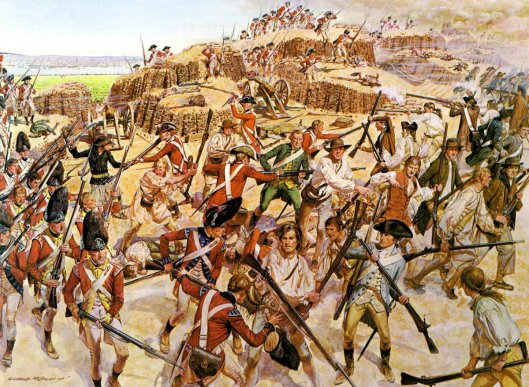
Bunker Hill remained—and remains—a popular subject for historical painters, most of them depicting events from the local side. Here is one version, by the distinguished 20th-century American military artist, H. Charles McBarron (1902-1992).

image14mcbarron.jpg

And here are two by one of our favorite contemporary American Civil War artists, Don Troiani (1949-).

image15troi.jpg

image16troi.jpg

All pictures are not from the viewpoint of the colonists, however. The late-Victorian/Edwardian British military artist, Richard Simkin (1850-1926), gave us this view.

image17simkin.jpg

Of all of these images, the Trumbull has drawn upon his memory and upon his sketchbooks, too, we bet, to give a general impression of the look of the soldiers, but, although he was part of the colonial force besieging Boston, he only saw the battle through a telescope. McBarron was a collector of uniforms and equipment, as is Troiani, and their works are painstakingly accurate. Simkin, although he, too, was a collector, came from an earlier time, just at the beginning of serious research on weapons and uniforms of the past, and, therefore, certain elements in his picture—the plumes and cords on his men’s bearskins and those packs (left behind in Boston, in reality), for instance—are not correct. Even so, his picture is far more accurate than Pyle’s, which is full of mistakes, in everything from the uniforms and equipment to those grenadiers (those guys in the fuzzy hats in the center), who shouldn’t be there at all, having been detached to form part of the right wing assault force.

And yet the Pyle is still our favorite depiction of the battle. Why? Because it feels right: it’s a 19th-century image of courage and discipline, and appeals to our romantic souls, even though there are casualties strewn about, which, to us, only serves to emphasize the bravery and stick-to-it-iveness of those solid infantry.

And this is where JRRT comes in. We’ve said before: our favorite part of P. Jackson’s films is anything to do with the Rohirrim.

image18rohirrim.jpg

The fact that, in the books, they live in wide, grassy plains (unavailable in New Zealand) and that their capital, Edoras, does not have “a dike and mighty wall and thorny fence” in the films, along with any other details it would be easy to extract from The Lord of the Rings, doesn’t matter to us in the least. The depiction in the films feels right and we’re content with that, even when there are other parts of the films where we have other reactions. Simple (and perhaps surprising to us) as that.

So, dear readers, do you have similar reactions? And to what? We’d love to hear!

And thanks, as always, for reading.

MTCIDC

CD

What If…

31 Wednesday May 2017

Posted by Ollamh in Artists and Illustrators, J.R.R. Tolkien, Literary History, Maps, Military History, Military History of Middle-earth, Narrative Methods, Tolkien

≈ Leave a comment

Tags

Alamo, Andelkrag, Anduin, Caernarfon, Carcassonne, Duc de Berry, fortresses, Hal Foster, Harry Turtledove, Howard Pyle, Huns, Minas Tirith, moat, Mont Saint Michel, Mordor, Numenor, Peter Jackson, Portchester, Prince Valiant, Rohirrim, S.M. Stirling, Santa Anna, Segontium, Siege Warfare, Texas War for Independence, The Lord of the Rings, The Return of the King, Tiryns, Tolkien, Tower of Orthanc, Tres Riches Heures

Welcome, readers, as always.

If you are among our excellent regulars, you know that we’re fascinated by history (one of us has taught it for years). One subset of our interest is “what ifs”, two of our favorite scifi/fantasy authors being Harry Turtledove and S.M. Stirling, who have written numerous books exploring all sorts of alternative places and times.

In this posting, we’d like to try a “what if” ourselves: what would happen to Minas Tirith if the Rohirrim and Aragorn had failed to arrive?

Walls collapsing under a rain of boulders, soldiers fleeing from the defenses, the main gate broken in by a giant battering ram—

image1anazgan.jpg

how was this the place of which its creator had written:

“A strong citadel it was indeed, and not to be taken by a host of enemies, if there were any within that could hold weapons…” (The Return of the King, Book Five, Chapter 1, “Minas Tirith”)

In an earlier posting, we talked about Sauron’s attack on Minas Tirith

image1battackonmt.jpg

and even suggested that one inspiration might have been an episode of the comic strip Prince Valiant and the siege of Andelkrag by the Huns (published in May, 1939). (Footnote: there is a rumor that the writer/illustrator, Hal Foster, intended the Huns to equal the Nazis and therefore annoyed Hitler—a would-be Sauron to Saruman’s Mussolini, as we once also suggested?)

image1andelkrag.jpg

That castle is splendid, but not quite what one would have seen in the 5th century AD, when Attila led the Huns to invade central and western Europe. Andelkrag appears to be a very elaborate late-medieval castle, c.1400 or so, rather like the ones you might see in the Duc de Berry’s Tres Riches Heures (c.1412-16; 1440s; 1485-1489).

image2tresrichesheures.jpg

More likely, if Andelkrag had been a real fortress, it would have been a repurposed Roman army installation, like this at Caernarfon, called by the Romans, Segontium.

image3caernarfonsegontium.jpg

Such forts might then be converted into castles, as at Portchester

62790_8d3686244501897

but that would hardly have provided the gallant medieval look which Foster gave his comic strip and which, in turn, came from the illustrations of people like Howard Pyle (1853-1911), in the previous generation (and which, we have previously argued, had a strong influence on what JRRT imagined his Middle-earth to look like).

image5ahowpylephoebe.jpg

image6pyleillustration.JPG

We are told in one of the extra features in the extended film version of The Lord of the Rings that an inspiration for P. Jackson’s Minas Tirith

image5mt.jpg

was the ancient island fort/religious site of Mont Saint Michel, on the western coast of France.

image6mtstmich.jpg

image7mtstmichmap.jpg

As you can see from the photo and the map, this isn’t just a fort, however, but a little fortified town, reminding us that Minas Tirith isn’t a castle, but a walled city, like the restored medieval town of Carcassonne, in southern France.

image8carcassonne.jpg

Like Mont St. Michel, Minas Tirith is built up a slope.

jrrtsfirstmtdrawing.jpeg

(This, by the way, is Tolkien’s first sketch.)

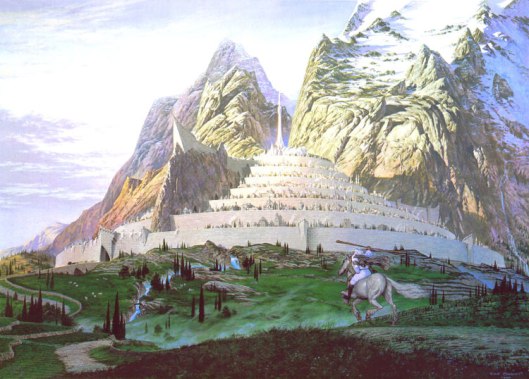
But, unlike Mont St. Michel and Carcassonne, it has not one wall, but many:

“For the fashion of Minas Tirith was such that it was built on seven levels, each delved into the hill, and about each was set a wall, and in each wall was a gate.”

image12leemt.jpg

Because the city was built on a series of levels, this would mean that each wall would overlook the next lower one, so that the defenders on the upper wall could rain down missiles on attackers below.

poi_img_town_defences_1

This is an ancient practice. The Bronze Age Greek city of Tiryns (yes, there is a bit of a similarity in the name, isn’t there?) is so constructed, for example, that its entryway forces attackers to move to the left, thereby potentially exposing an unshielded side, as well as undergoing a barrage of arrows and rocks from those on the wall above.

Tiryns Reconstruction

tiryns-walls

In the case of Minas Tirith, there is an added obstacle:

“But the gates were not set in a line: the Great Gate in the City Wall was at the east point of the circuit, but the next faced half south, and the third half north, and so to and fro upwards; so that the paved way that climbed towards the Citadel turned this way and then that across the face of the hill.”

image13mtzigzag

Attackers, then, would not only be at the mercy of those above them, but would, should they break through one gate, be forced to zigzag back and forth as they fought their way upwards, taking more and more casualties as they advanced.

minas-tirith3

Added to this, at the lowest level, was the main wall:

“…of great height and marvellous thickness, built ere the power and craft of Numenor waned in exile; and its outward face was like to the Tower of Orthanc, hard and dark and smooth, unconquerable by steel or fire, unbreakable except by some convulsion that would rend the very earth on which it stood.” (The Return of the King, Book Five, Chapter 4, “The Siege of Gondor”)

Unlike so many fortresses—going back at least to Neolithic times—Minas Tirith had no moat. Not only does such a watery ditch slow down attackers by giving them one more puzzle to solve, but it also makes a standard siege practice, undermining, much more difficult. Basically, what undermining does is to hollow out an area underneath a wall and replace the original foundation with a flammable wooden one. Then the miners fill the hollow with burnables, torch them, and wait to see if the new wooden foundation collapses, bringing down the wall on top of it. You can see miners at work in this medieval manuscript illustration.

villanip214bottom.jpg

A wet moat would have forced the miners to dig much deeper, to avoid being flooded out.

For Minas Tirith, the nearest water source for a wet moat would have been the Anduin, some miles away, but dry moats were useful as well. This diorama of the final attack by the British at the siege of Badajoz in 1812 shows how effective such a thing might be. Although the besiegers have managed, through prolonged bombardment, to create a breach in the main wall, they have to struggle through the deep dry moat to reach it—and took large numbers of casualties in doing so.

image18badajoz

Against all of these defenses, the head of the Nazgul, as Sauron’s general in the field, has the usual siege weapons: stone throwers, siege towers, even a massive battering ram. He also has a more subtle tool:

“But soon there were few left in Minas Tirith who had the heart to stand up and defy the hosts of Mordor. For yet another weapon, swifter than hunger, the Lord of the Dark Tower had: dread and despair.”

Even so, under the command of Gandalf, there was still resistance and we can imagine that that resistance would have persisted through all the circles, but the ultimate difficulty, which would have caused the fall of the city, had not the Rohirrim—and then Aragorn—come, was the lack of reserves.

Gondor was, at the time of the siege, in decline, as Pippin noticed when he and Gandalf arrived there:

“Yet it was in truth falling year by year into decay; and already it lacked half the men that could have dwelt at ease there.”

When reenforcements came from the south, they were “less than three thousands full told.”

When a city or castle is under siege, it needs not only a force to man its walls, but also a second force, to be sent quickly to any place where an enemy breakthrough is threatened. The force on the walls has two main jobs: 1. to keep the enemy at a distance with missile fire—or, failing that, to cut down the attacking force as it approaches the walls, trimming its numbers and thereby possibly demoralizing it; 2. to fend off the enemy if it actually manages to gain the walls. This illustration from the Prince Valiant Andelkrag siege provides a good image of this double job.

image19defenseofandelkrag

It might be possible, if the enemy made an assault upon a single point, to siphon off men from other parts of the defenses to act as a temporary second force, but, if the enemy attacks more than one place at the same time, this is not a safe thing to do. In the case of the assault on the first wall of Minas Tirith, the enemy commander seems to have had such numbers—and didn’t care in the least about his losses– that he could attack the entire wall:

“Ever since the middle night the great assault had gone on. The drums rolled. To the north and to the south company upon company of the enemy pressed to the walls. There came great beasts, like moving houses in the red and fitful light, the mumakil of the Harad dragging through the lanes amid the fires huge towers and engines. Yet their Captain cared not greatly what they did or how many might be slain: their purpose was only to test the strength of the defence and to keep the men of Gondor busy in many places.”

The weakest place in any strong wall is a gate and that knowledge has guided Sauron’s Captain:

“It was against the Gate that he would throw his heaviest weight. Very strong it might be, wrought of steel and iron, and guarded with towers and bastions of indomitable stone, yet it was the key, the weakest point in all that high and impenetrable wall.”

Thus, with everyone pinned in position by a general assault, and there being no other possible reserve, once the gate is down—but then a cock crows and there are horns and, well, you know what happens next.

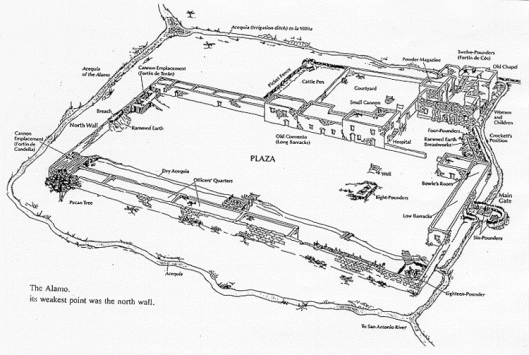
But, continuing our “what if”, we look to a different model, the Alamo, a ruined mission turned into a fortress in the so-called “Texas War for Independence” of 1835-36.

alamo-map-3

Within this mission, some 180plus defenders faced a Mexican army of several thousand, staving them off for a week-and-a-half before finally being overwhelmed by a series of nearly-simultaneous pre-dawn assaults from several directions at once.image21alamoassault

The survivors drew back, still fighting, and made a series of last stands in the rooms of the surviving mission buildings, dying almost to a man because the Mexican general, Santa Anna, had declared that there would be no mercy for any survivors. (There were a handful of prisoners, however, perhaps including the famous American frontiersman, Davy Crockett, but under Santa Anna’s direction, they were then murdered.)

In our grim “what if”, the survivors of the outer wall, led in retreat by Gandalf, are gradually driven back, like the Alamo defenders, until they reach the Citadel—and then—but, can we go on? Are the Rohirrim and Aragorn simply delayed and then appear? Are there eagle-rescues, as in The Hobbit?

image23eaglerescue.gif

What do you think, dear readers?

And thanks, as ever, for reading!

MTCIDC

CD

PS

We saw this Lego attack on Minas Tirith and it was just too wonderful not to include!

legominastirith.jpg

PPS

As we were finishing this, we happened upon a really great website–

https://middleeartharchitectures.wordpress.com/  –wonderful visuals!

Just a Nobuddy

03 Wednesday May 2017

Posted by Ollamh in Artists and Illustrators, Fairy Tales and Myths, Heroes, Imaginary History, J.R.R. Tolkien, Literary History, Narrative Methods

≈ Leave a comment

Tags

akaletes, Athena, Bilbo, Circe, cyclops, face culture, Greek, Homer, kleos, Odysseus, Outis, Polyphemus, Poseidon, Riddles in the Dark, Smaug, Telemachus, The Hobbit, The Lord of the Rings, The Odyssey, Tolkien, true name

Welcome once more, dear readers.

“Who are you and where do you come from, may I ask?”

inquires Smaug. (The Hobbit, Chapter 12, “Inside Information”)

image1smaug.jpg

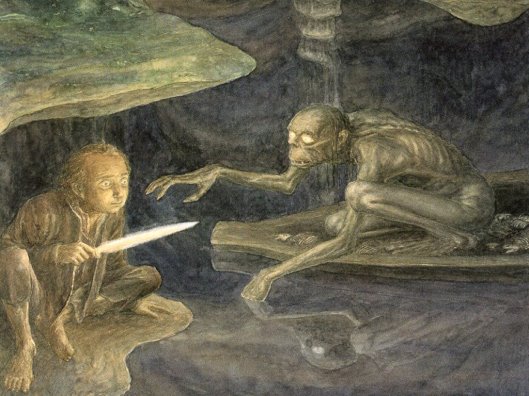
Earlier in The Hobbit, when asked this indirectly by Gollum, Bilbo had replied directly: “I am Mr.

image2bilbogollumlee.jpg

Bilbo Baggins…” (The Hobbit, Chapter 5, “Riddles in the Dark”)

This had led him into a deadly game of riddles, but now Bilbo seems more wary—which is just as well, as the narrator tells us when Bilbo answers Smaug’s question indirectly:

“This of course is the way to talk to dragons, if you don’t want to reveal your proper name (which is wise), and don’t want to infuriate them by a flat refusal (which is also very wise).” (The Hobbit, Chapter 12, “Inside Information”)

Bilbo’s answer to Smaug’s question about his identity is a series of what we might call “What Have I Got In My Pocket?” names—riddling titles which, just like that absent-minded remark, only Bilbo can understand:

“I am the clue-finder, the web-cutter, the stinging fly. I was chosen for the lucky number…I am he that buries his friends alive and drowns them and draws them alive again from the water. ..I am the friend of bears and the guest of eagles. I am Ringwinner and Luckwearer; and I am Barrel-rider.” (The Hobbit, Chapter 12, “Inside Information”)

All of these titles are references to events earlier in the story, of course, although a number of them, like “Ringwinner”, also sound like Norse or Old English kennings—that is, poetic names for often ordinary things, like “whale road” for “sea” and “wave’s horse” for “ship” or “sky candle” for “sun”. One which is close to Bilbo’s “Ringwinner“ is “ring-giver”, a kenning for a “lord”. Because they refer to personal experiences, Bilbo—and we readers—must assume that they would mean nothing to Smaug—or almost—

“Ha! Ha! You admit the ‘us’?” laughed Smaug. “Why not say ‘us fourteen’ and be done with it, Mr. Lucky Number?”

A lucky guess? (And interesting that, in Middle-earth, there are such things as “lucky numbers”—we wonder how many more examples of “lucky” vs “unlucky” things we might find?)

The narrator had said that not revealing your proper name is wise and the consequence of Bilbo’s mistake in telling Gollum that he is “Mr. Bilbo Baggins” will appear many years later, in the form of sinister visitors to the Shire, offering money for the location of “Baggins”.

image3nazgul.jpg

There can be physical danger, then, in properly identifying yourself.

There may be another reason for not doing so and it could entail physical danger not for the protagonist in the story, but a surprise threat for the antagonist.

When Odysseus and his men visit the cave of the Cyclops, Polyphemus,

image4cyclops.jpg

and are trapped there, Odysseus, when asked by Polyphemus, gives a false name: Outis (OO-tis), meaning “No one/nobody” in Greek. His subsequent action would suggest that the reason why he does so is that—as he says himself—he has a reputation (for cleverness) which reaches to the heavens. By providing a false name, he intends to put the Cyclops off his guard before defeating him, which he does by:

  1. getting him drunk

image5cydrink.jpg

  1. blinding him

image6blinding.jpg

  1. slipping himself and his men out of Polyphemus’ cave under the bellies of the Cyclops’ sheep.

image7sheepslip.jpg

Having succeeded, however, Odysseus seems to change his plan—and mind—completely, shouting, as his ship takes him away, his name and address, even as the Cyclops hurls huge rocks at the ship and his men beg him to stop.

image8cyrocking.jpg

In the mind of an Homeric hero, however, Odysseus has no choice.

A major element in the life of such heroes is something called “kleos” (KLAY-oss)—which is somewhat difficult to translate. In the heroic world it means something like “personal name within the larger framework of a family and its reputation”—and that’s only the beginning. Kleos is almost a kind of inheritable object and includes such elements as:

  1. divine/semi-divine parents/ancestors
  2. divine patrons
  3. father’s reputation
  4. own reputation, which includes
  5. famous battles/campaigns participated in
  6. famous enemies killed (and spoils taken)
  7. plunder from cities sacked (includes not only goods, but women)

And #4 could be something to be said for parent or ancestor, as well. Your father or grandfather might have been known as “Sacker of Cities” and this adds to the general kleos.

It’s also possible to lose kleos—divinities pick and choose whom they will help, for example, and, just because your father was the client of a god, doesn’t mean that you will be. It is a definitely positive sign for Odysseus’ family’s continued kleos, for example, when, in Odyssey Books 2 and 3, Athena, disguised as the human Mentor, appears and offers Odysseus’ son, Telemachus, advice.

The Homeric world is a so-called “face” culture. In such a culture, everything is public. In fact, the word kleos comes from the verb kalo (kah-LO), meaning to “to summon/call by name”, that name being, in the case of a warrior, not only your name but where you stand in your family’s reputation, its kleos.

Thus, it’s important, when a warrior defeats a powerful enemy, not only should the enemy warrior know who beat him, but all the bystanders, should there be any, as well.

image9warrior.jpg

For Odysseus, then, using a false name might give him an initial advantage over Polyphemus, but his victory is only complete and he can only claim kleos when he reveals to the Cyclops who has defeated him. This will lead to terrible subsequent consequences for Odysseus. Polyphemus’ father is Poseidon, god of the seas

image10pos.jpg

and he will make things very difficult for Odysseus later in the Odyssey,

image11pos.jpg

but, in the world of kleos, Odysseus has no choice but to reveal himself to gain the credit necessary for maintaining it.

Another reason for concealing your name has to do with magic. In many of the world’s older traditional cultures, people might have several names, either in succession, or public versus private. Behind the public versus private stands the idea that you are your name—that is, all that is you is embodied in your name. If someone knows that name, that person can use that name against you, either to curse you—and, using your real name, that curse might stick to it—or to summon you for magical purposes. Once your true name is called, a sorcerer can make you obey, even against your will.

In Odyssey 10, Odysseus and his men land on an island which is the home of the enchantress, Circe.

image12circe.jpg

She has the power to shift the shapes of men into those of animals and vice versa, as a scouting party from Odysseus’ ship soon finds out. She gives them a drink with some sort of magic drugs mixed in and, with a wave of her staff, turns them into pigs (although they retain their human minds).

image13enchant.jpg

She then tries this on Odysseus, but, in his case, it doesn’t work, much to her surprise, and he, drawing his sword, quickly forces her surrender.

image14defeat.jpg

There is no direct explanation for the failure of her magic in Book 10, but there is, in fact, a clue in the word she uses for Odysseus in her frustration. She calls him “akaletes” (ah-KAH-leh-tehs)—which means “unsummonable/uncallable by name” and is from the same root as kleos and kalo. The implication here is that, for her magic to work, she needs a name—something we might presume Odysseus’ piggy companions must have foolishly given her. That he is unsummonable suggests that he has given her a false name and therefore her magic hasn’t worked.

And is this perhaps the real reason why it was wise that Bilbo didn’t identify himself directly to Smaug?

image15smaug

After all, Smaug, unlike the agents of Sauron, wasn’t likely to roam the countryside, offering gold in return for information about the whereabouts of a certain “Baggins”. He does, however, appear to have a certain persuasive magic:

“Bilbo was now beginning to feel really uncomfortable. Whenever Smaug’s roving eye, seeking for him in the shadows, flashed across him, he trembled, and an unaccountable desire seized hold of him to rush out and reveal himself and tell all the truth to Smaug. In fact he was in grievous danger of coming under the dragon-spell.” (The Hobbit, Chapter 12, “Inside Information”)

That magic seems to lie in his words and tone—Bilbo, listening, is said to be in peril of “dragon-talk”—and we want to talk more about such magical persuasion in our next posting…

Thanks, as ever, for reading!

MTCIDC

CD

← Older posts
Newer posts →

The Doubtful Sea Series Facebook Page

The Doubtful Sea Series Facebook Page

  • Ollamh

Categories

  • Artists and Illustrators
  • Economics in Middle-earth
  • Fairy Tales and Myths
  • Films and Music
  • Games
  • Heroes
  • Imaginary History
  • J.R.R. Tolkien
  • Language
  • Literary History
  • Maps
  • Medieval Russia
  • Military History
  • Military History of Middle-earth
  • Narnia
  • Narrative Methods
  • Poetry
  • Research
  • Star Wars
  • Terra Australis
  • The Rohirrim
  • Theatre and Performance
  • Tolkien
  • Uncategorized
  • Villains
  • Writing as Collaborators
Follow doubtfulsea on WordPress.com

Across the Doubtful Sea

Recent Postings

  • Do You Speak Villain? (Part 3) February 18, 2026
  • Do You Speak Villain? (2) February 11, 2026
  • Do You Speak Villain? (Part 1) February 4, 2026
  • Towering January 28, 2026
  • Tolkien Among the Indians January 21, 2026
  • Thin and Stretched January 14, 2026
  • Through a glass… January 7, 2026
  • Heffalumps? December 31, 2025
  • We Three Kings December 24, 2025

Blog Statistics

  • 107,639 Views

Posting Archive

  • February 2026 (3)
  • January 2026 (4)
  • December 2025 (5)
  • November 2025 (4)
  • October 2025 (5)
  • September 2025 (4)
  • August 2025 (4)
  • July 2025 (5)
  • June 2025 (4)
  • May 2025 (4)
  • April 2025 (5)
  • March 2025 (4)
  • February 2025 (4)
  • January 2025 (5)
  • December 2024 (4)
  • November 2024 (4)
  • October 2024 (5)
  • September 2024 (4)
  • August 2024 (4)
  • July 2024 (5)
  • June 2024 (4)
  • May 2024 (5)
  • April 2024 (4)
  • March 2024 (4)
  • February 2024 (4)
  • January 2024 (5)
  • December 2023 (4)
  • November 2023 (5)
  • October 2023 (4)
  • September 2023 (4)
  • August 2023 (5)
  • July 2023 (4)
  • June 2023 (4)
  • May 2023 (5)
  • April 2023 (4)
  • March 2023 (5)
  • February 2023 (4)
  • January 2023 (4)
  • December 2022 (4)
  • November 2022 (5)
  • October 2022 (4)
  • September 2022 (4)
  • August 2022 (5)
  • July 2022 (4)
  • June 2022 (5)
  • May 2022 (4)
  • April 2022 (4)
  • March 2022 (5)
  • February 2022 (4)
  • January 2022 (4)
  • December 2021 (5)
  • November 2021 (4)
  • October 2021 (4)
  • September 2021 (5)
  • August 2021 (4)
  • July 2021 (4)
  • June 2021 (5)
  • May 2021 (4)
  • April 2021 (4)
  • March 2021 (5)
  • February 2021 (4)
  • January 2021 (4)
  • December 2020 (5)
  • November 2020 (4)
  • October 2020 (4)
  • September 2020 (5)
  • August 2020 (4)
  • July 2020 (5)
  • June 2020 (4)
  • May 2020 (4)
  • April 2020 (5)
  • March 2020 (4)
  • February 2020 (4)
  • January 2020 (6)
  • December 2019 (4)
  • November 2019 (4)
  • October 2019 (5)
  • September 2019 (4)
  • August 2019 (4)
  • July 2019 (5)
  • June 2019 (4)
  • May 2019 (5)
  • April 2019 (4)
  • March 2019 (4)
  • February 2019 (4)
  • January 2019 (5)
  • December 2018 (4)
  • November 2018 (4)
  • October 2018 (5)
  • September 2018 (4)
  • August 2018 (5)
  • July 2018 (4)
  • June 2018 (4)
  • May 2018 (5)
  • April 2018 (4)
  • March 2018 (4)
  • February 2018 (4)
  • January 2018 (5)
  • December 2017 (4)
  • November 2017 (4)
  • October 2017 (4)
  • September 2017 (4)
  • August 2017 (5)
  • July 2017 (4)
  • June 2017 (4)
  • May 2017 (5)
  • April 2017 (4)
  • March 2017 (5)
  • February 2017 (4)
  • January 2017 (4)
  • December 2016 (4)
  • November 2016 (5)
  • October 2016 (6)
  • September 2016 (5)
  • August 2016 (5)
  • July 2016 (5)
  • June 2016 (5)
  • May 2016 (4)
  • April 2016 (4)
  • March 2016 (5)
  • February 2016 (4)
  • January 2016 (4)
  • December 2015 (5)
  • November 2015 (5)
  • October 2015 (4)
  • September 2015 (5)
  • August 2015 (4)
  • July 2015 (5)
  • June 2015 (5)
  • May 2015 (4)
  • April 2015 (3)
  • March 2015 (4)
  • February 2015 (4)
  • January 2015 (4)
  • December 2014 (5)
  • November 2014 (4)
  • October 2014 (6)
  • September 2014 (1)

Blog at WordPress.com.

  • Subscribe Subscribed
    • doubtfulsea
    • Join 78 other subscribers
    • Already have a WordPress.com account? Log in now.
    • doubtfulsea
    • Subscribe Subscribed
    • Sign up
    • Log in
    • Report this content
    • View site in Reader
    • Manage subscriptions
    • Collapse this bar
 

Loading Comments...