• About

doubtfulsea

~ adventure fantasy

Tag Archives: Rohirrim

Charge! The End?

14 Wednesday Oct 2015

Posted by Ollamh in Films and Music, J.R.R. Tolkien, Military History, Military History of Middle-earth

≈ Leave a comment

Tags

Adventure, Bataclava, Bigelow, British, British Heavy Brigade, Cavalry, Cawnpore, Charges, Chasseurs d'Afrique, Crimean War, French, Funckens, Gandalf, Helm's Deep, John Ford, Minas Tirith, Oliphaunts, Prussian, Remington, Rohirrim, Rossbach, Russian, Schreyvogel, seige, Stagecoach, surreneder, The Charge of the Light Brigade, The Lord of the Rings, Tolkien, Trostle Farm, Warhorse, Waterloo, Western, William Simpson

Dear Readers,

Welcome, as always.

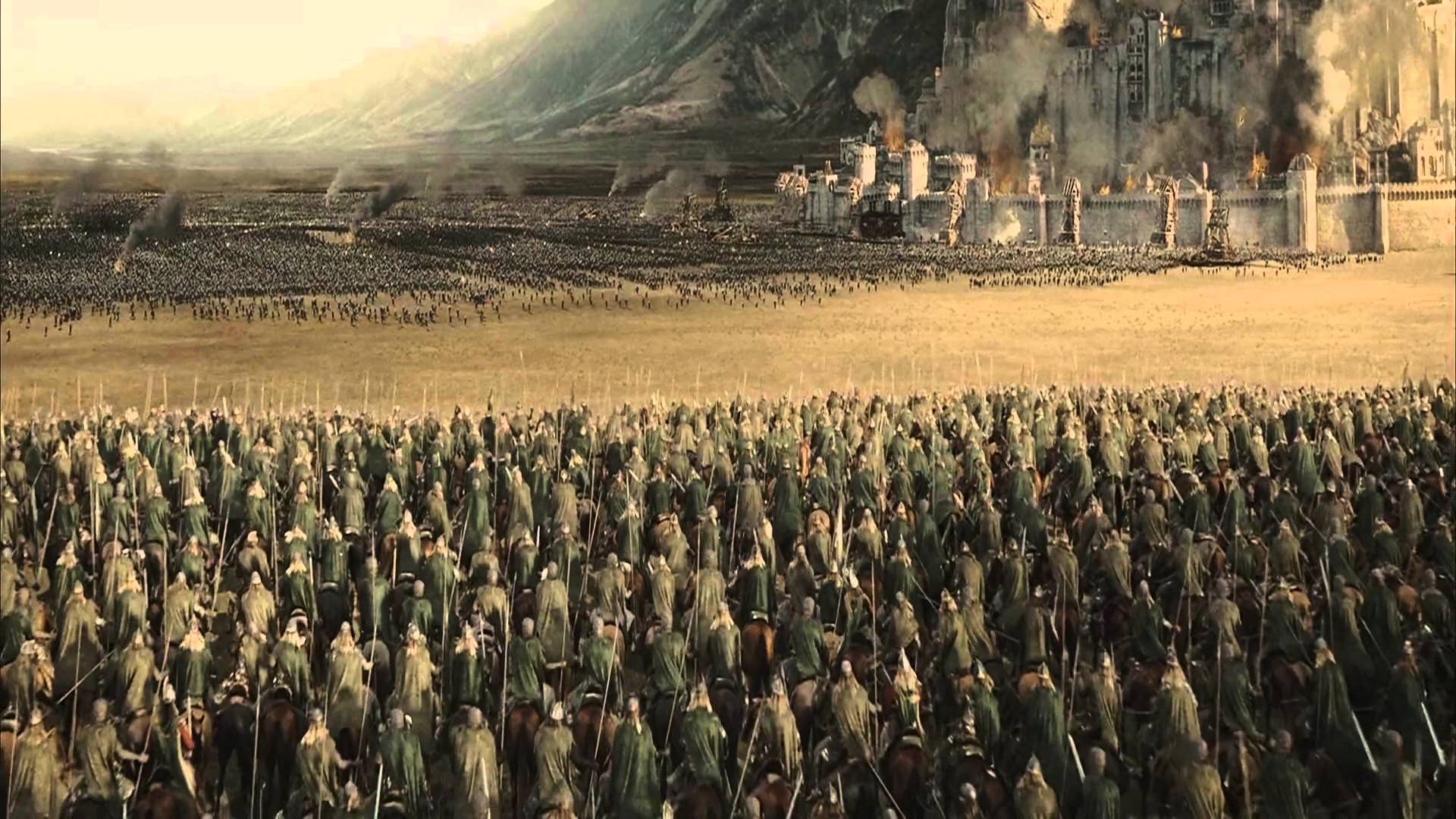
In our last, we were discussing film music, where it comes from and what it does. This brought us, as always, it seems, back to JRRT. In that post, we talked about the “Shire theme”. In this, we want to talk not about a theme, but about a scene, one we have mentioned before, the charge of the Rohirrim and the attempted raising of the siege of Minas Tirith.

gondorattacked rohirrimformup

Although, strictly speaking, what is happening to Minas Tirith is simply a frontal assault, not a siege in the classic sense. Although, seen in this illustration (by the wonderful husband and wife team of the Funckens), they may look the same—

funckenssiegeupclose

in a formal siege, you surround a town/fortress
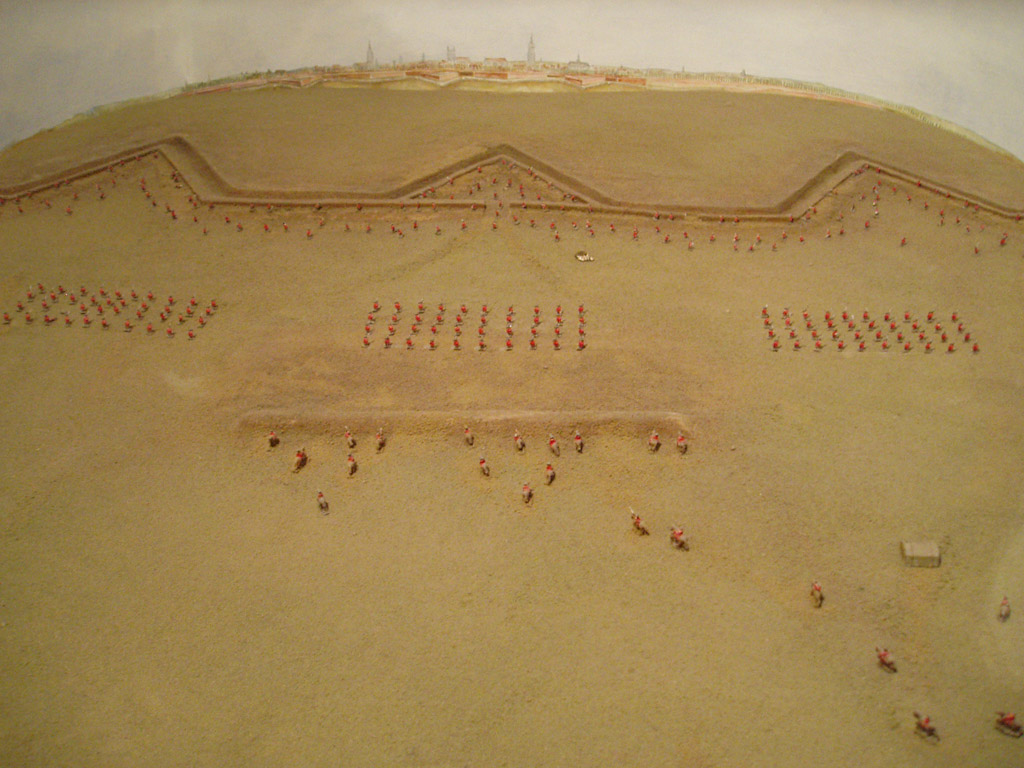
siegediggingin

call on the place to surrender

The-Entrance-Into-Belfort-Of-The-German-Commander-Bearing-The-Flag-Of-Truce-4th-November-1870-1884

use your heavy weapons to bombard the place

catapault42cm

Drive the defenders back from their outer works

William Simpson - The Attack on the Malakoff 1855

And then call upon the defenders to surrender—which, often they do (fewer Alamos than myth would tell you)

surrender4

But, if not, a final—usually costly—attackSiege_of_Badajoz,_by_Richard_Caton_Woodville_Jr
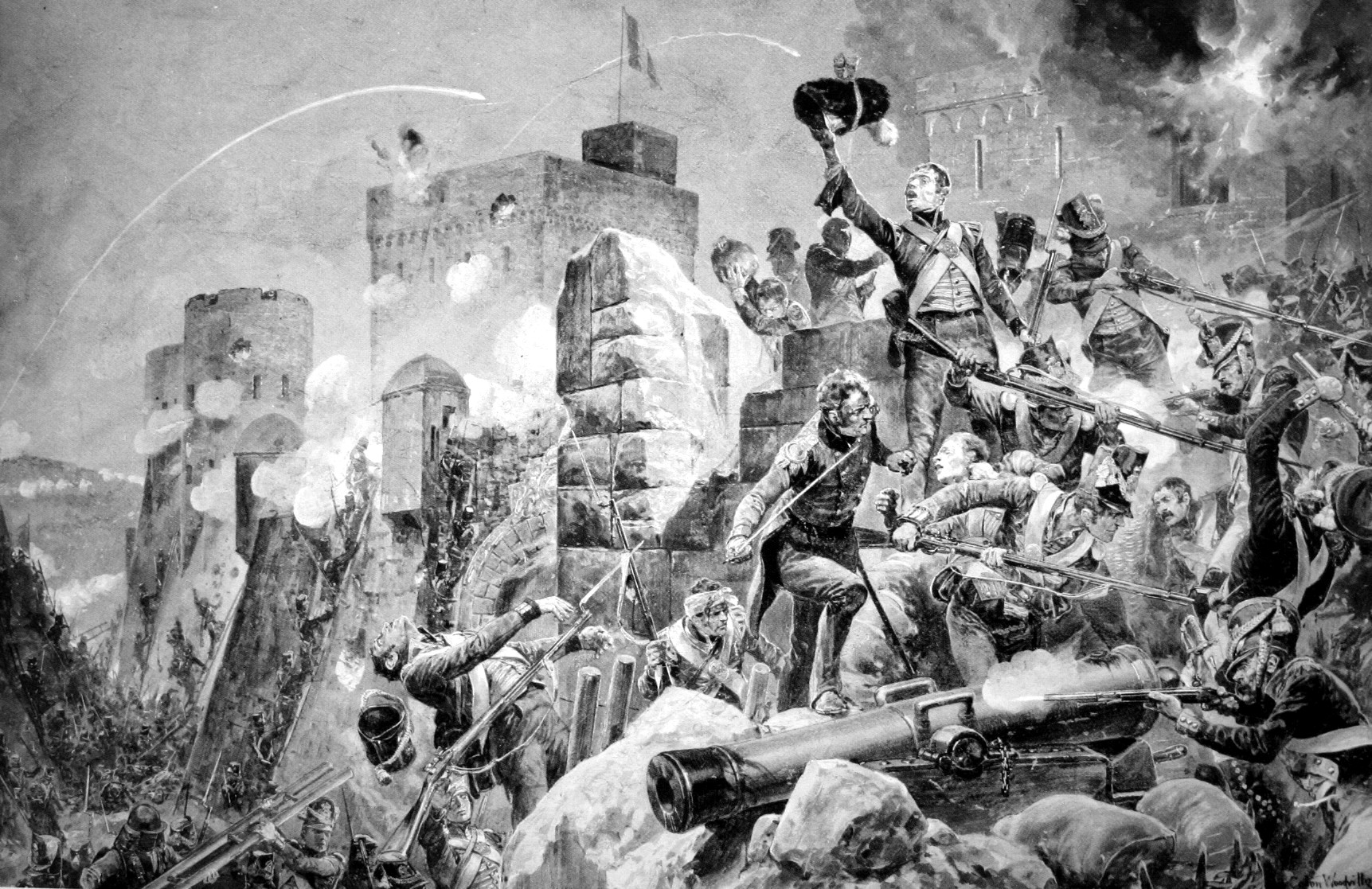
march6

and, potentially, the massacre of all—or at least all of the garrison–inside. (In Jackson’s LoTR, the Orcs are certainly not taking prisoners as they break into Minas Tirith).

The charge of the Rohirrim, though, brought to mind other charges, such as the charge of the Prussian cavalry against the French/Allied army at Rossbach, in 1757—

Schlacht_bei_Roßbach1

or the French and British cavalry charges at Waterloo, 1815—

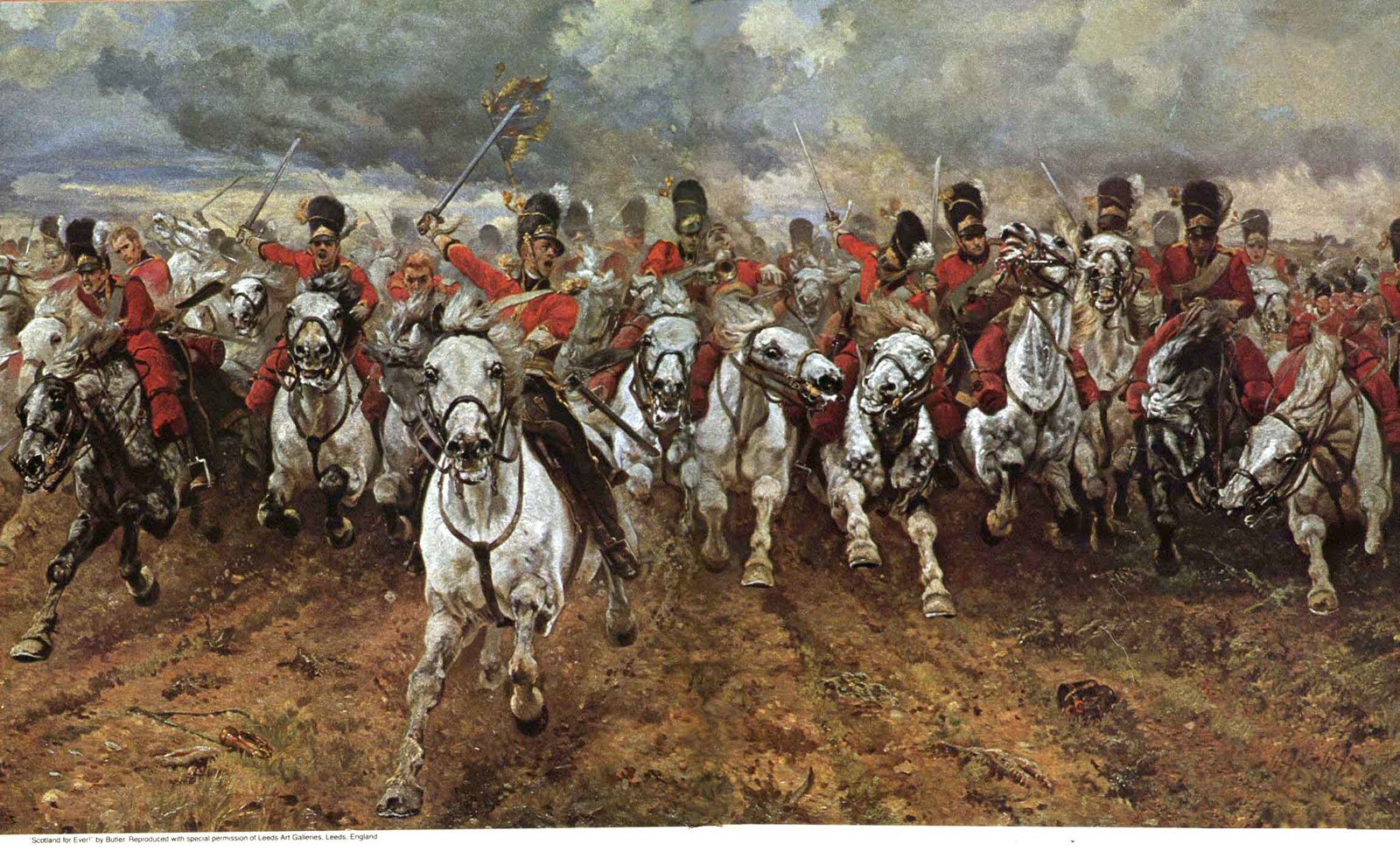
cavwaterloo1 ChargeofthelightBrigade

or those _other_ charges at the battle of Balaclava, 1854, that of the French 4th Chasseurs d’Afrique
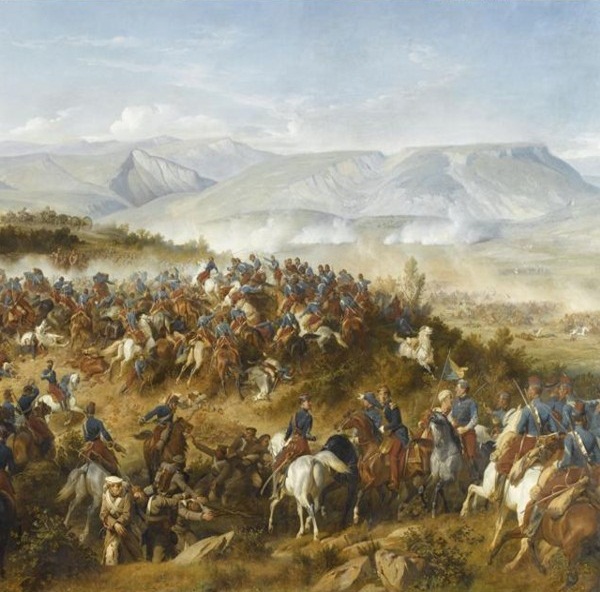
Chasseurs_d'Afrique_à_Balaclava

or of the British Heavy Brigade, which drove the Russian cavalry from the British camp.
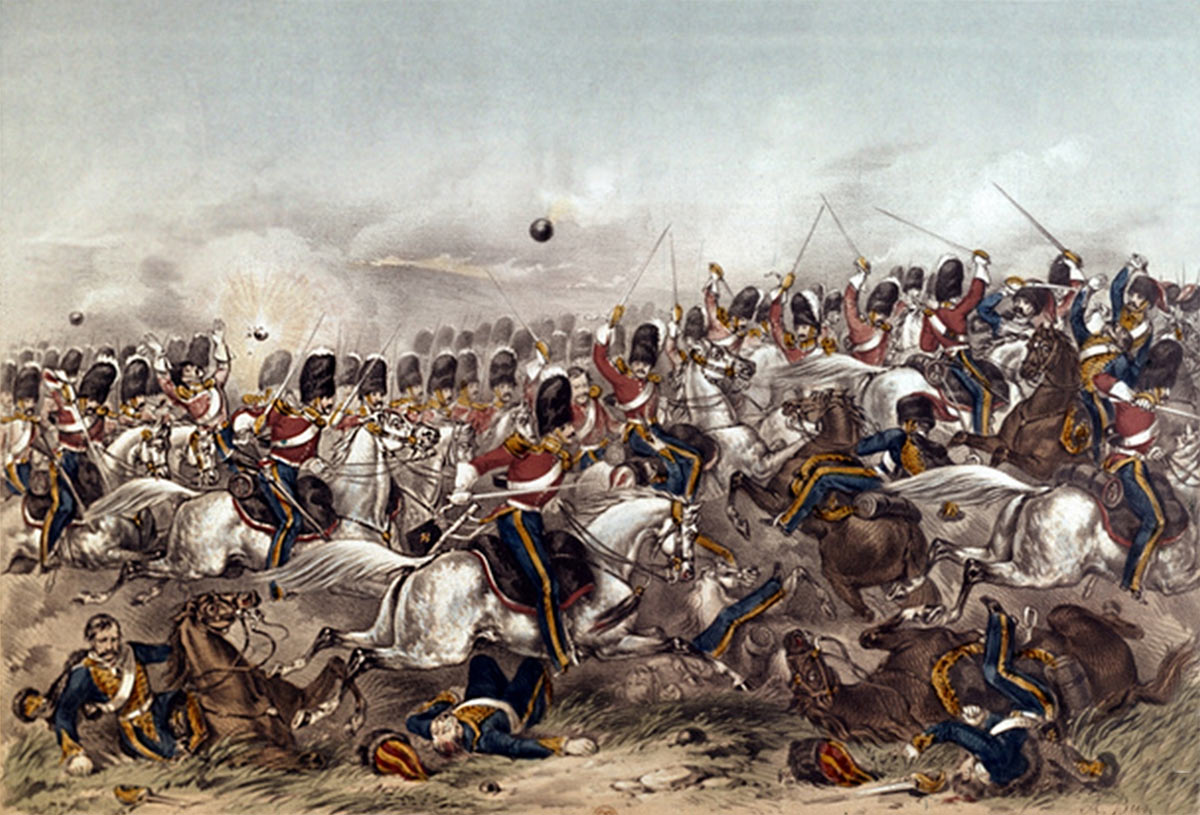
balaclava-scots-greys-1200

Those last two remind us, of course, of one of our favorite adventure movies, the 1936 The Charge of the Light Brigade
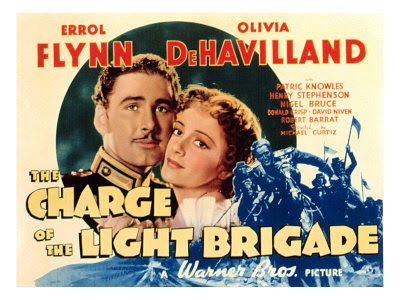
charge1

It is not so authentic in look as the 1968 movie of the same name,

Charge+of+the+Light+Brigade+movie+poster+2

and, in fact, the film states at its opening that it’s only loosely based on actual historical events (including not only the charge, but the 1857 massacre at Cawnpore—which, in reality, occurred some three years after the Crimean War battle). It also beefs up the Russian defense—adding non-existent earthworks, for instance. Here’s the movie’s view

1225664651_the-charge-of-the-light-brigade_00016

and here’s William Simpson’s near-contemporary illustration (Simpson arrived after the battle, but must have talked to survivors and certainly could have seen the terrain).

William_Simpson_-_Charge_of_the_light_cavalry_brigade,_25th_Oct._1854,_under_Major_General_the_Earl_of_Cardigan

All of these charges were directed at enemy forces on an open battlefield. The attack of the Rohirrim actually comes from a different scenario, one which is based upon a theme familiar to those who have seen American westerns: the arrival of the cavalry in the nick of time.

In this scenario, someone is trapped and surrounded—or at least persistently assaulted by a more numerous enemy—the classic is an attack upon circled wagons

frontier-wagon-circle

The crisis comes and it looks like those attacked are about to be overwhelmed

wagon-box-fight-1867-granger

but, at the last minute, help arrives—the cavalry, bugles sounding, guidons waving (although that illustrated in this vidcap is the 1885 pattern and the film from which this comes takes place in 1880—then again, the uniforms are a bit odd, too—here’s Remington’s and Schreyvogel’s more accurate views, as well) rides fearlessly to the rescue.

Stagecoach_216Pyxurz SCHREYVOGEL_Charles_Cavalry_Charge_1905_Wadsworth_Athenaeum_source_Sandstead_d2h_ remingtoncav

After sorting through more than 50 westerns, we believe that the movie from which our first image comes is probably the source of the modern idea of the arrival of the cavalry—see this clip from John Ford’s Stagecoach (1939)

CLIP

This happens twice, of course, in The Lord of the Rings, first at Helm’s deep, when Gandalf arrives—
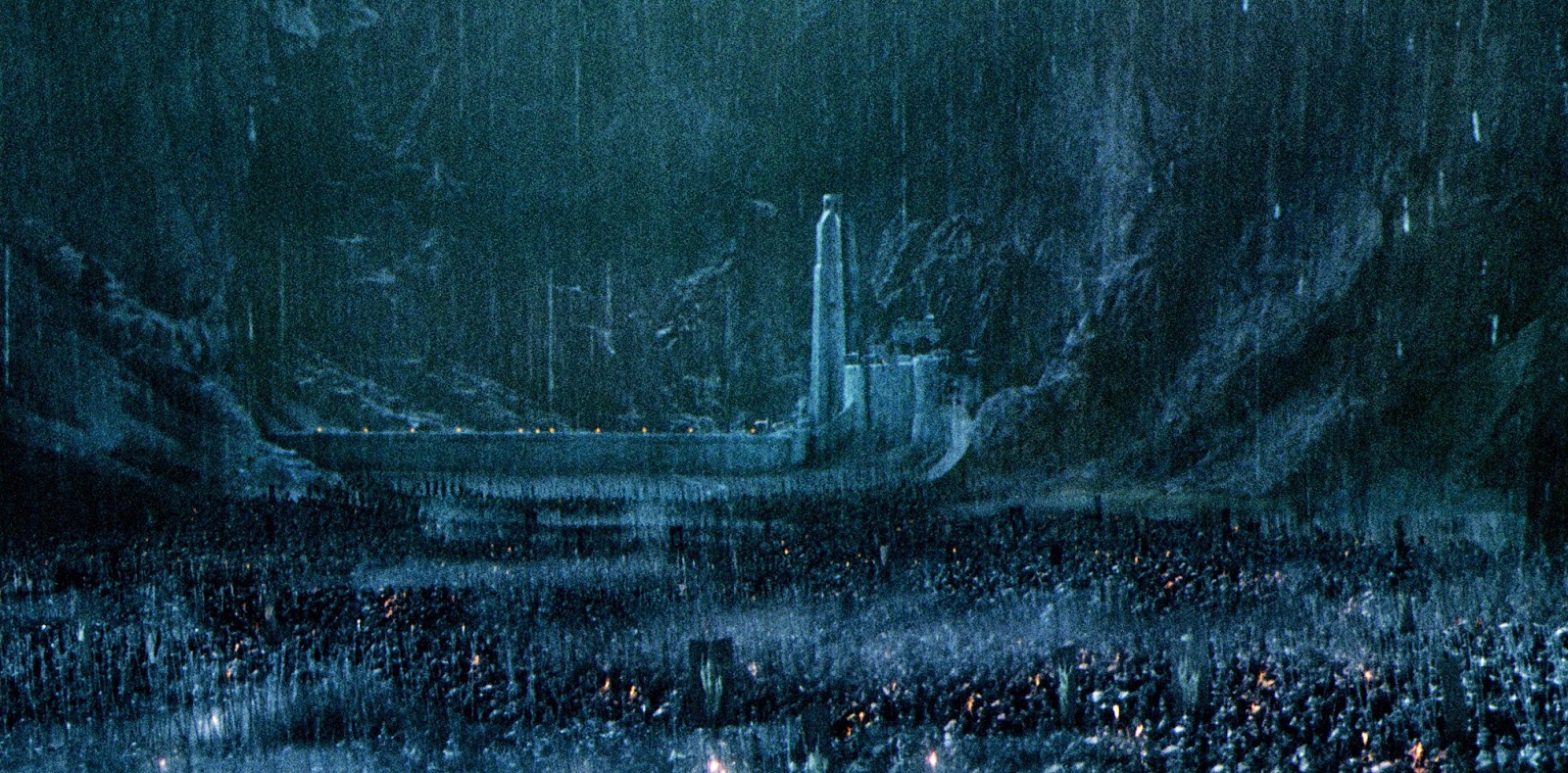
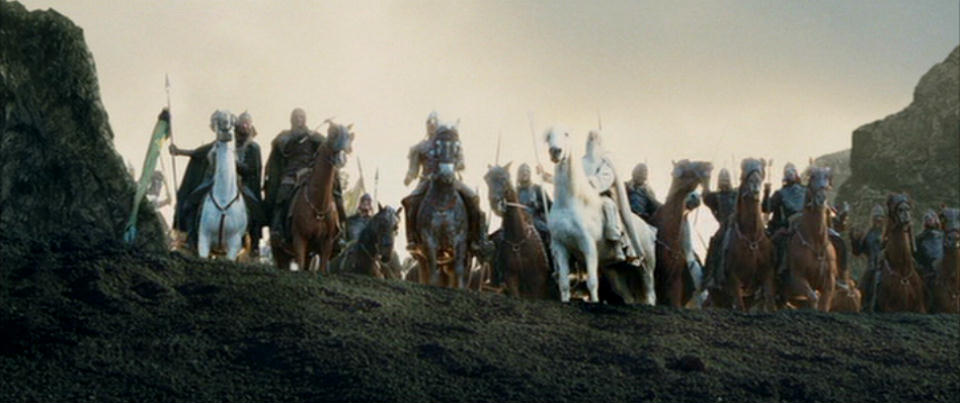
helms-deep gandalfarrives

and again, as we began, at Minas Tirith. It’s interesting, however, to see that, in this second example, the cavalry rescue is not so successful, since there are those oliphaunts we discussed in an earlier posting—

mumakil_by_cg_warrior-d4muefu

In our world, it wasn’t giant oliphaunts who eventually defeated cavalry and drove them to the edges of the battlefield, where they lasted a little longer, but this

maximwarhorse

as you can see in this clip from Warhorse.

CLIP

And it’s for the best, really. It’s bad enough that we humans engage in violent actions without dragging the rest of the animal kingdom into it…

trostle-farm

(A few of the 80 horses lost by Bigelow’s 9th MA Battery at the Trostle Farm, 2 July, 1863—and, as a sad ps, 25 horses were killed or so badly injured that they were put down at the filming of the 1936 The Charge of the Light Brigade—this so shocked those in Congress that a law for the protection of animals in films was passed to prevent future harm).

Thanks, as always, for reading.

MTCIDC

CD

The Two Sieges

22 Wednesday Jul 2015

Posted by Ollamh in Heroes, J.R.R. Tolkien, Military History

≈ Leave a comment

Tags

Agincourt, Aragorn, English Longbowmen, Faramir, French Knights, Gondor, Grond, Hoth, Jan Sobieski, Lithuania, Minas Tirith, Mumakil, Nazgul, Orcs, Ottoman, Peter Jackson, Poland, Rammas Echor, Rohan, Rohirrim, Siege Towers, Stone Throwers, The Lord of the Rings, Tolkien, Vienna, Winged Hussars

Welcome, as always, dear readers!

In this posting, we’re going to make another suggestion about a model for something in Tolkien’s work.

If you read us regularly, you know that our favorite part of P. Jackson’s The Lord of the Rings is anything to do with the Rohirrim. When we rewatch favorite scenes, the charge against the Orcs outside Minas Tirith is always first on our list (and high on our general list of cavalry charges—more on those in a future posting).

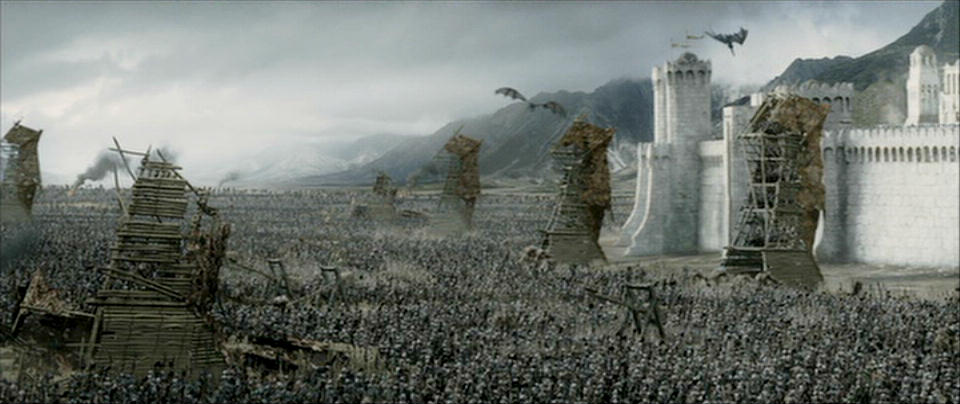
First, we see that massive Orc army marching up to the walls. (In the book, this is more dramatic: the Orcs blow two holes in the Rammas Echor, outflank the defenders, and drive them into retreat, which is where Faramir is badly wounded by an arrow.)

minas-tirith

Then they begin to attack with stone-throwers,

siege1

siege towers,

lotr-siege-towers

and, eventually a giant, flame-filled battering ram.

grond1

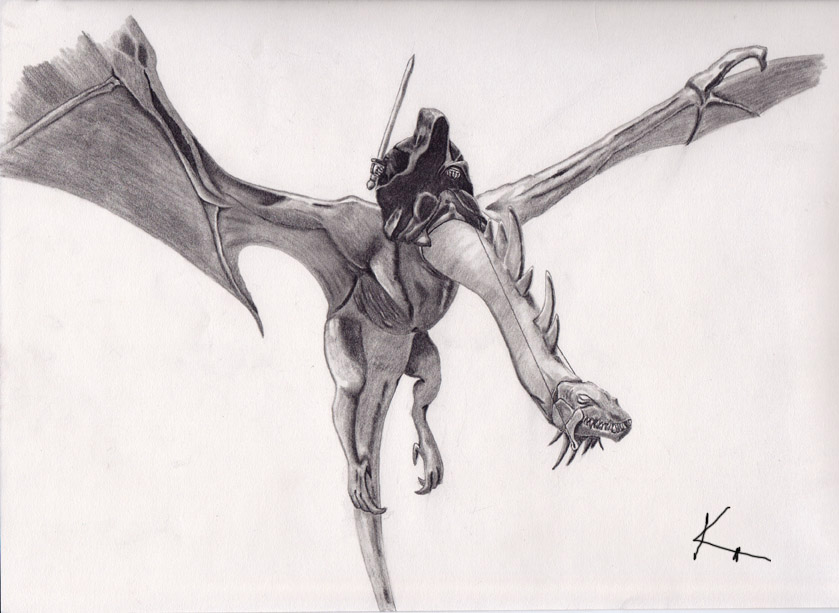
Things look increasingly desperate for Gondor as the Orcs press their attack, led by the Chief Nazgul.

witch_king_of_angmar_ii_by_dudeskindasketchy-d4d6uvd

And that’s when the Rohirrim appear.

rohirrimabouttocharge

And move to strike the Orcs from behind.

Charge_rohirrim

When the Orcs realize what’s happening, they try to stop the attack with bows.

archery

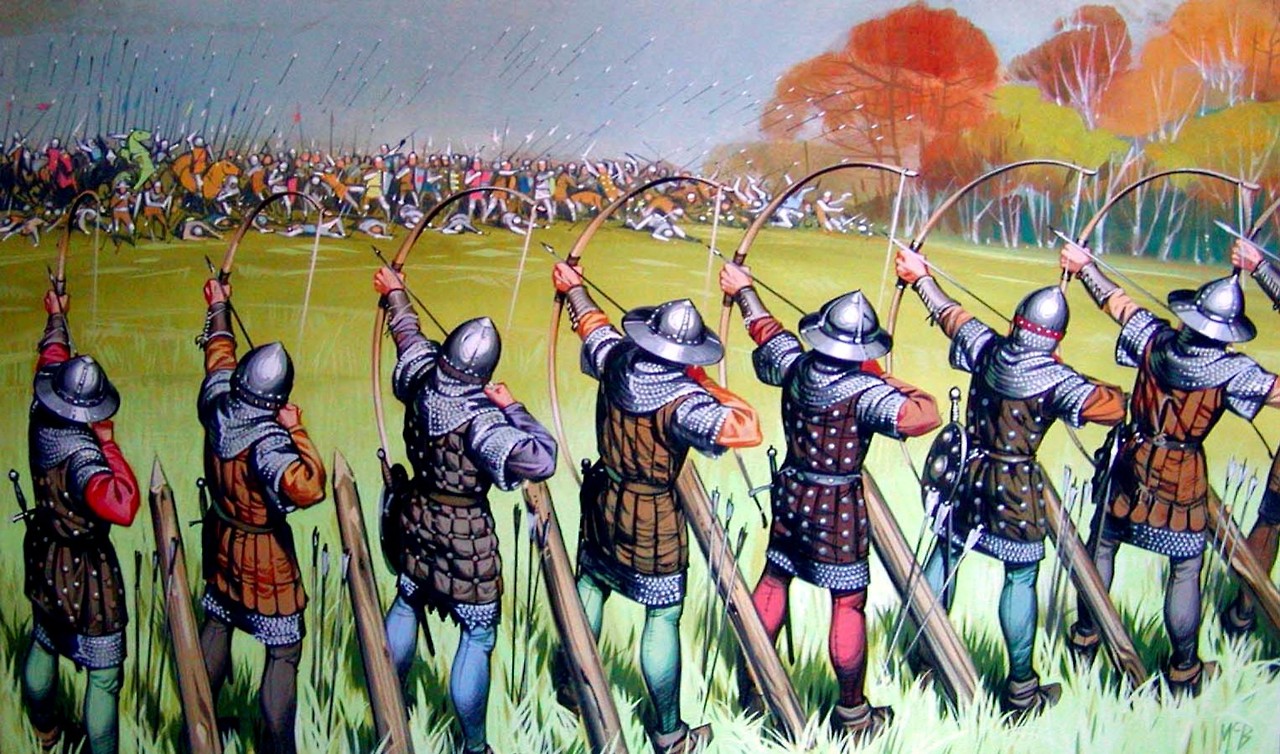
This immediately reminded us of the 1415 battle in which English longbowmen and their clever use defeated an army of brave French knights, Agincourt.

OLYMPUS DIGITAL CAMERA

Unlike Agincourt, however, arrows didn’t stop the Rohirrim, who sweep through the enemy—but are brought up short by the sight of a row of mumakil—giant war elephants—bearing down on them.

img-2845793-1-charge-1024x425

Seeing this scenario made us think of another attack by huge, lumbering things in a galaxy long ago and far away—

Battle_of_Hoth

The film goes on from there, including an attack by a ghost army, instead of by the actual forces brought from southern Gondor by Aragorn, but we want to back up a bit to the actual siege and another one which bears a strong resemblance to it.

For centuries, the Ottoman Turks had been expanding their dominions.

Ottoman_Empire_Map_1359-1856

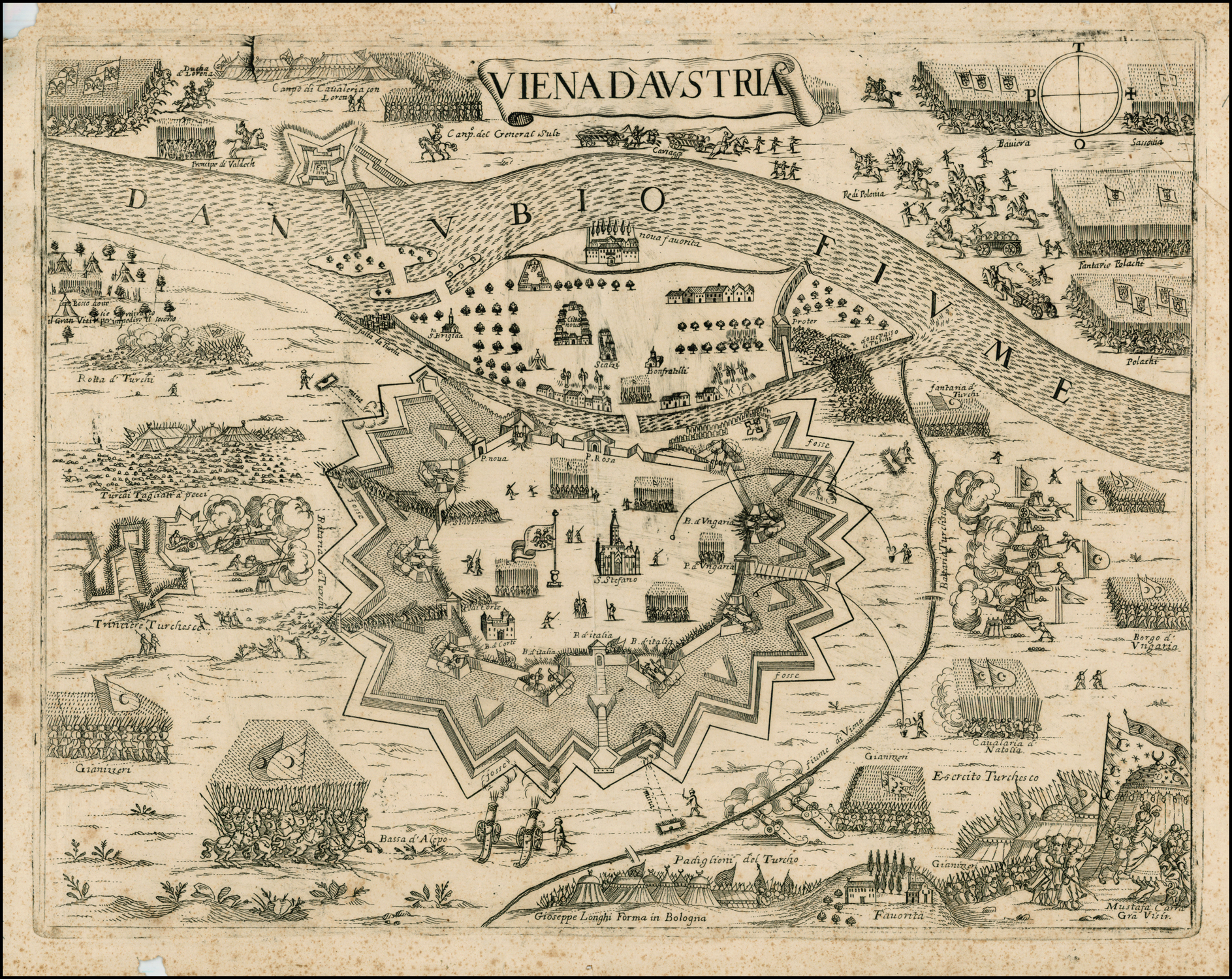
They had first reached Vienna in 1529,

Siegeofvienna1529

but had given up the siege. Now, however, in 1683, they were back.

Battle_of_Vienna_1683_map

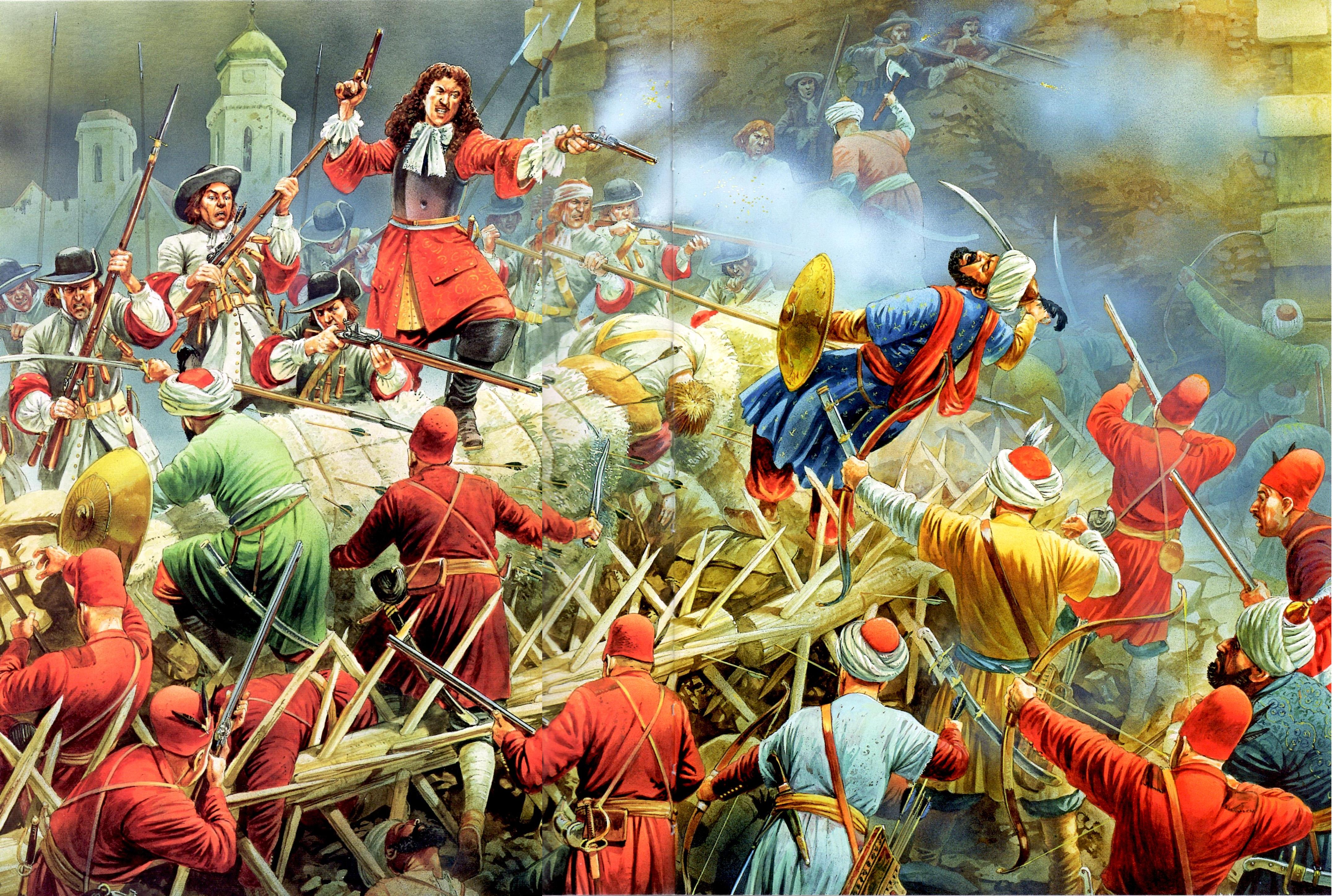
Their attacks against a dwindling number of defenders in a crumbling town

1-vienna-1683

had brought them to the edge of conquest when an army of reenforcements, including cavalry from the army of the combined state of Lithuania/Poland, had appeared. Some of the cavalry were the famous Polish winged hussars.

Battle_of_Vienna_1

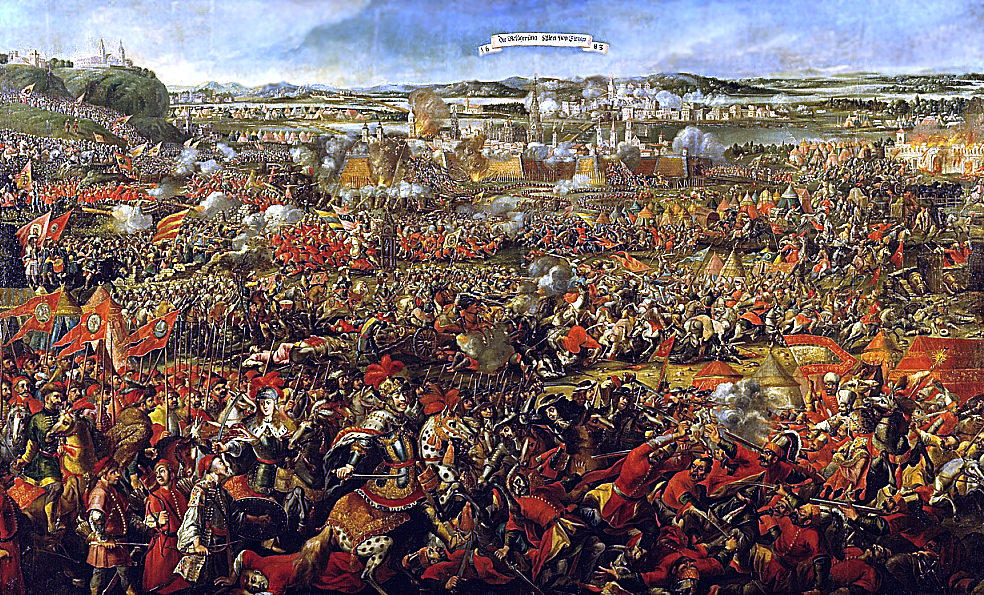
Just as the Rohirrim are led by their king, Theoden, so are the Poles led by their king Jan Sobieski—

bitwa-pod-wiedniem-obraz

The reenforcements, Poles in the lead, rush upon the Turks and drive them back through their camps and out of the siege entirely.

Atak_husarii

Battle_of_Vienna_1683_11

So similar, isn’t it? No giant war elephants, ghost armies, or Nazgul, but the basic elements of siege, relieving army with cavalry led by a king attacking an unprepared enemy, and chasing off the besiegers, is nearly identical.

Tolkien was an extremely well-read man, with a strong interest in history. Was the siege and relief of Vienna somewhere in the back of his mind when he began to plan the siege of Minas Tirith?

Thanks for reading!

MTCIDC

CD

Where From the Rohirrim?

10 Wednesday Jun 2015

Posted by Ollamh in Heroes, J.R.R. Tolkien, Military History, Military History of Middle-earth, Narrative Methods, The Rohirrim

≈ 1 Comment

Tags

Amazons, Anglo-Saxon, Bayeux Tapestry, Burial mounds, Cavalry, Charge of the Light Brigade, descendants, Edoras, Eotheod, Horse people, Indo-European, Kurgan, language, Middle-earth, Normans, Rohan, Rohirric, Rohirrim, Scythians, The Lord of the Rings, The Mark, Tolkien, Tom Shippey

Dear Readers, welcome!

In this post, we want to think out loud a bit about the Rohirrim.

ghan Rohirrim-by-Angus-McBride-kacik-rohanskiej-adoracji-36841491-473-477 maxresdefault

Everyone knows where their language is from, as Tolkien says in a letter to “one Mr. Rang”:

“…’Anglo-Saxon’…is the sole field in which to look for the origins and meaning of words and names belonging to the speech of the Mark.” LT 381

And yet they are horse people (their own name for themselves, in fact, is Eotheod, “horse people”), which the Angles and Saxons who went to make up the Anglo-Saxons, were not.   Tolkien was well aware of this difference, saying in Appendix F of The Lord of the Rings:

“…this linguistic procedure does not imply that the Rohirrim closely resembled the ancient English otherwise, in culture or art, in weapons or modes of warfare, except in a general way due to their circumstances…” L1136

Tom Shippey, in The Road to Middle Earth, suggests that

“The Rohirrim are nothing if not cavalry. By contrast the Anglo-Saxons’ reluctance to have anything militarily to do with horses is notorious…How then can Anglo-Saxons and Rohirrim ever, culturally, be equated? A part of the answer is that the Rohirrim are not to be equated with the Anglo-Saxons of history, but with those of poetry, or legend.” (112)

Or, could there have been other models?

Tolkien may have been suggesting one when, in a letter to Rhona Beare of 14 October, 1958:

“The Rohirrim were not ‘mediaeval’ in our sense. The styles of the Bayeux Taptestry (made in England) fit them well enough, if one remembers that the kind of tennis-nets [the] soldiers seem to have on are only a clumsy conventional sign for chain-mail of small rings.” Ltr 280-281.

The Bayeux Tapestry depicts both Normans and their allies, on the one hand, and the Anglo-Saxons, on the other, but Tolkien doesn’t appear to distinguish between them. The Normans themselves are mounted, the Anglo-Saxons on foot, as was their custom (they did use horses to move rapidly from place to place, as in the race north to Stamford Bridge and then back south to face the Normans).

5191623_orig

Here, to the left, we see those mounted Normans and, to the right, the Anglo-Saxons behind their shield wall. The “tennis-nets” are clearly visible and would actually have looked like this:

huscarl

In this further illustration, by the way, it’s easy to see the consequences of having the shield wall crumble: men on horseback can have a significant advantage when their opponents lose cohesion.

34small-1000

This, however, is only their look . What about those horses and an entire culture based around them?

For a clue, we look to another element in the culture of the Rohirrim, the use of burial mounds. Here they are at Edoras.

Simbelmyne_Mounds

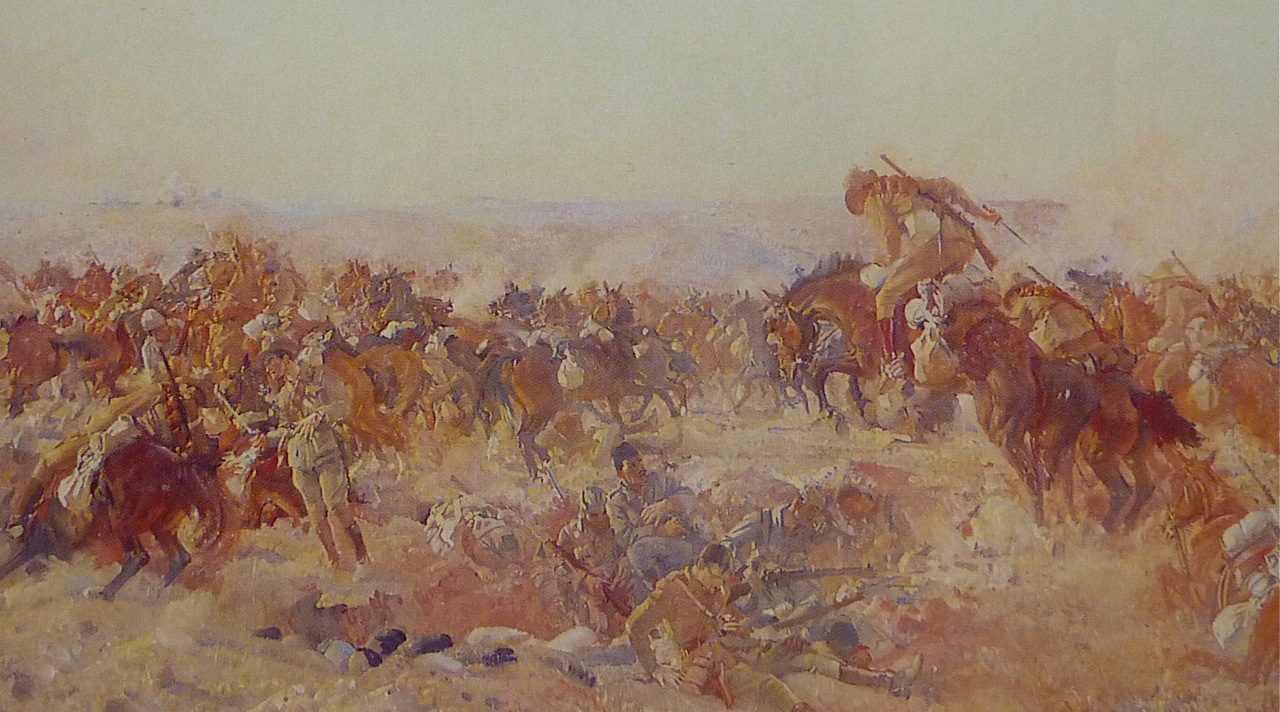
(We can’t resist, by the way, saying that our absolute favorite part of the Jackson movies is anything to do with the Rohirrim—to us, absolutely inspired and we see the depiction of the charge of the Rohirrim against the army besieging Minas Tirith as being right up there with the Charge of the Light Brigade at Balaclava in 1854 and the charge of the Australian Light Horse at Beersheba in 1917–

Rohancharge

(c) National Trust, Tredegar House; Supplied by The Public Catalogue Foundation

beersheba lambert

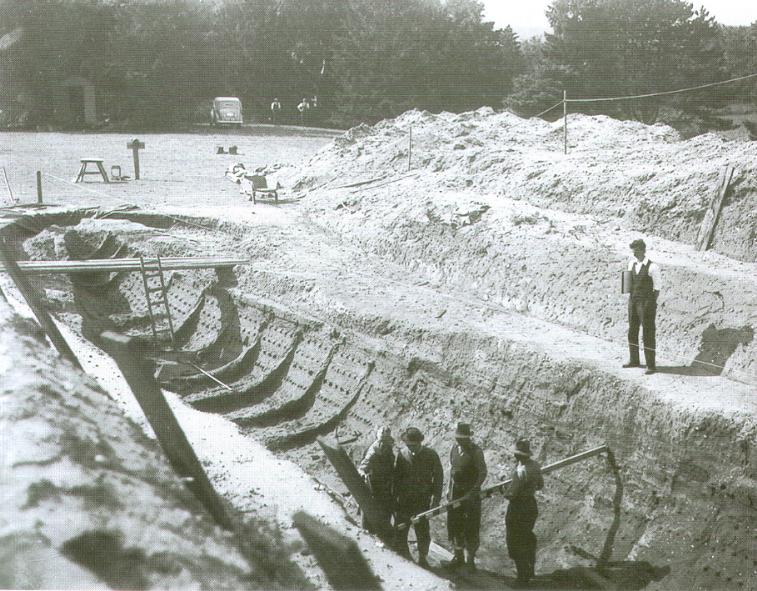
One might say, in reply, that there are Anglo-Saxon mounds—like the famous Sutton Hoo ship burial.

c52a1bf535

But that leaves us where we started, in the land of foot soldiers.

huscarl1

So, let’s go farther afield, to the north of the Black Sea.  

WRLH034-H

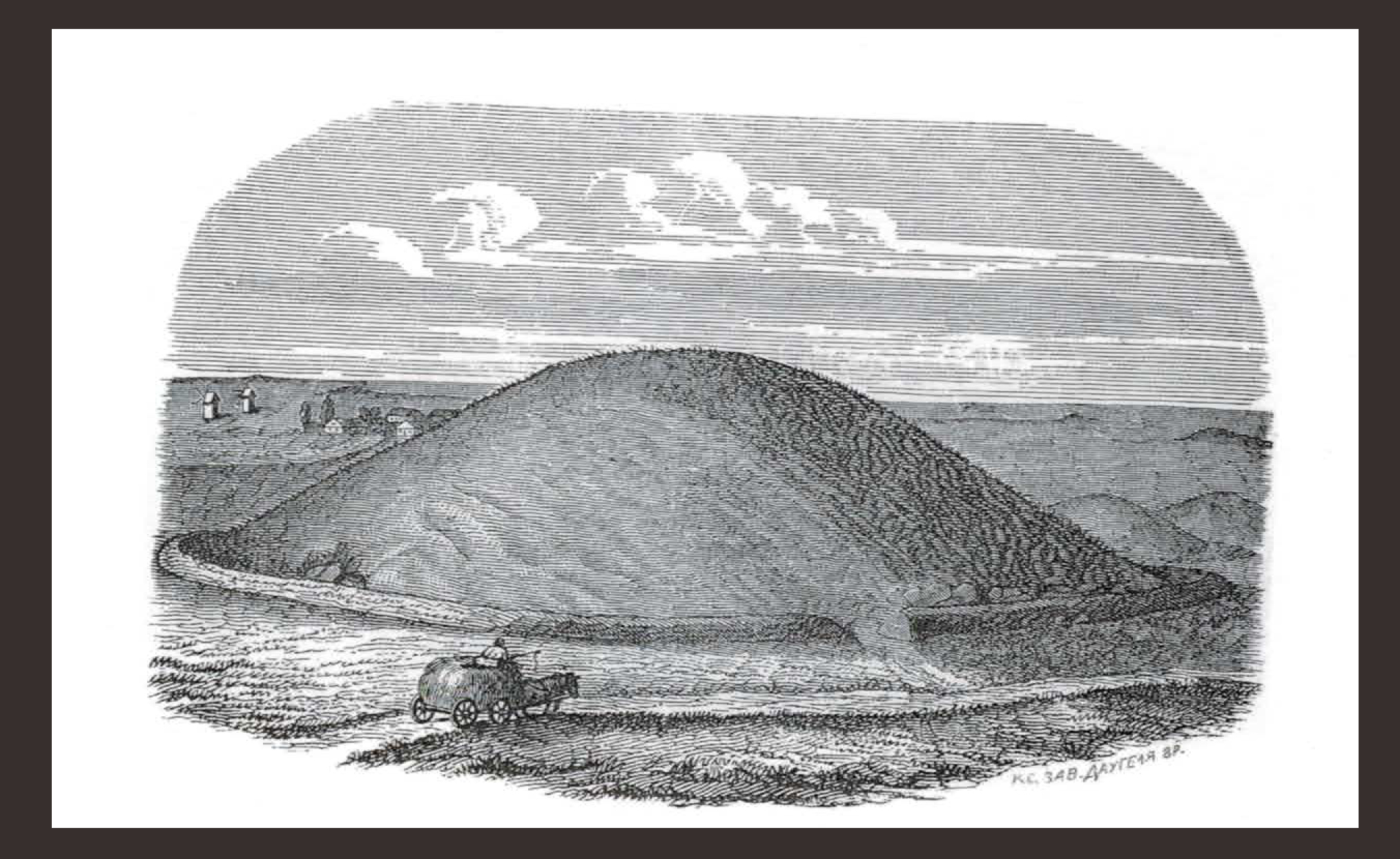
Here, we see the so-called “Kurgan Culture”, with its burial mounds

02161200-1 02161200

[This, by the way, is not to be confused with The Kurgan from the first Highlander movie

The Kurgan]

movie-villain-kurgan

These were a people who:

  1. are believed by many linguists (and some archeologists) to be the direct ancestors of the Indo-Europeans who gradually invaded Asia Minor and western Europe (including, eventually, the Anglo-Saxons) as well as moving east, to India and beyond
  2. buried their dead (at least what appear to be the high status ones) in mounds
  3. were a horse culture

And, in fact, were seemingly the forerunners of the Scythians, a later well-known Indo-European horse people

Scythia Rod-Scythian-Horseback

angus-mcbride-scythia-1

And the Scythians, in turn, may have been the model for those mythical horse folk, the Amazons.

72303amazon

In the 19th century, when the idea of Indo-Europeans began to circulate, there was a preference for a northern European origin (a theory no longer held), but the idea of an eastern home was also circulating and we would suggest that Tolkien would have known about this, as well as, from his early classical training, Scythians and Amazons, their actual and mythical descendants.

Imagine, then, that what we see in the Rohirrim is, in fact, an interesting mixture of people sprung from an earlier people (as Tolkien tells us, the Rohirrim were descended from the Edain of the First Age—see LOTR, Appendix F 1129), both in our world and in Middle Earth, who based their culture upon horses, and bury their dead in mounds, combined with people who may also bury their dead in mounds, who speak a version of Anglo-Saxon and who dress like the Normans and Anglo-Saxons of the 11th century AD.

What do you think, dear readers?

Thanks for reading, as always.

MTCIDC

CD
Newer posts →

The Doubtful Sea Series Facebook Page

The Doubtful Sea Series Facebook Page

  • Ollamh

Categories

  • Artists and Illustrators
  • Economics in Middle-earth
  • Fairy Tales and Myths
  • Films and Music
  • Games
  • Heroes
  • Imaginary History
  • J.R.R. Tolkien
  • Language
  • Literary History
  • Maps
  • Medieval Russia
  • Military History
  • Military History of Middle-earth
  • Narnia
  • Narrative Methods
  • Poetry
  • Research
  • Star Wars
  • Terra Australis
  • The Rohirrim
  • Theatre and Performance
  • Tolkien
  • Uncategorized
  • Villains
  • Writing as Collaborators
Follow doubtfulsea on WordPress.com

Across the Doubtful Sea

Recent Postings

  • Death and the Rohirrim September 30, 2026
  • Minor? September 23, 2026
  • An Homeric PS September 16, 2026
  • December in September September 9, 2026
  • Fan/Finn Fiction September 2, 2026
  • Demons on the Big Screen August 26, 2026
  • Solution (2) August 19, 2026
  • Out of Work Athena August 12, 2026
  • Solution (1) August 5, 2026

Blog Statistics

  • 122,755 Views

Posting Archive

  • September 2026 (5)
  • August 2026 (4)
  • July 2026 (5)
  • June 2026 (4)
  • May 2026 (4)
  • April 2026 (5)
  • March 2026 (4)
  • February 2026 (4)
  • January 2026 (4)
  • December 2025 (5)
  • November 2025 (4)
  • October 2025 (5)
  • September 2025 (4)
  • August 2025 (4)
  • July 2025 (5)
  • June 2025 (4)
  • May 2025 (4)
  • April 2025 (5)
  • March 2025 (4)
  • February 2025 (4)
  • January 2025 (5)
  • December 2024 (4)
  • November 2024 (4)
  • October 2024 (5)
  • September 2024 (4)
  • August 2024 (4)
  • July 2024 (5)
  • June 2024 (4)
  • May 2024 (5)
  • April 2024 (4)
  • March 2024 (4)
  • February 2024 (4)
  • January 2024 (5)
  • December 2023 (4)
  • November 2023 (5)
  • October 2023 (4)
  • September 2023 (4)
  • August 2023 (5)
  • July 2023 (4)
  • June 2023 (4)
  • May 2023 (5)
  • April 2023 (4)
  • March 2023 (5)
  • February 2023 (4)
  • January 2023 (4)
  • December 2022 (4)
  • November 2022 (5)
  • October 2022 (4)
  • September 2022 (4)
  • August 2022 (5)
  • July 2022 (4)
  • June 2022 (5)
  • May 2022 (4)
  • April 2022 (4)
  • March 2022 (5)
  • February 2022 (4)
  • January 2022 (4)
  • December 2021 (5)
  • November 2021 (4)
  • October 2021 (4)
  • September 2021 (5)
  • August 2021 (4)
  • July 2021 (4)
  • June 2021 (5)
  • May 2021 (4)
  • April 2021 (4)
  • March 2021 (5)
  • February 2021 (4)
  • January 2021 (4)
  • December 2020 (5)
  • November 2020 (4)
  • October 2020 (4)
  • September 2020 (5)
  • August 2020 (4)
  • July 2020 (5)
  • June 2020 (4)
  • May 2020 (4)
  • April 2020 (5)
  • March 2020 (4)
  • February 2020 (4)
  • January 2020 (6)
  • December 2019 (4)
  • November 2019 (4)
  • October 2019 (5)
  • September 2019 (4)
  • August 2019 (4)
  • July 2019 (5)
  • June 2019 (4)
  • May 2019 (5)
  • April 2019 (4)
  • March 2019 (4)
  • February 2019 (4)
  • January 2019 (5)
  • December 2018 (4)
  • November 2018 (4)
  • October 2018 (5)
  • September 2018 (4)
  • August 2018 (5)
  • July 2018 (4)
  • June 2018 (4)
  • May 2018 (5)
  • April 2018 (4)
  • March 2018 (4)
  • February 2018 (4)
  • January 2018 (5)
  • December 2017 (4)
  • November 2017 (4)
  • October 2017 (4)
  • September 2017 (4)
  • August 2017 (5)
  • July 2017 (4)
  • June 2017 (4)
  • May 2017 (5)
  • April 2017 (4)
  • March 2017 (5)
  • February 2017 (4)
  • January 2017 (4)
  • December 2016 (4)
  • November 2016 (5)
  • October 2016 (6)
  • September 2016 (5)
  • August 2016 (5)
  • July 2016 (5)
  • June 2016 (5)
  • May 2016 (4)
  • April 2016 (4)
  • March 2016 (5)
  • February 2016 (4)
  • January 2016 (4)
  • December 2015 (5)
  • November 2015 (5)
  • October 2015 (4)
  • September 2015 (5)
  • August 2015 (4)
  • July 2015 (5)
  • June 2015 (5)
  • May 2015 (4)
  • April 2015 (3)
  • March 2015 (4)
  • February 2015 (4)
  • January 2015 (4)
  • December 2014 (5)
  • November 2014 (4)
  • October 2014 (6)
  • September 2014 (1)

Blog at WordPress.com.

  • Subscribe Subscribed
    doubtfulsea
    Join 75 other subscribers

    Have a WordPress.com account? Log in now.

  • doubtfulsea
    View site in Reader
    Manage subscriptionsSign upLog in
    Report this content
    Collapse this bar
Loading Comments...