• About

doubtfulsea

~ adventure fantasy

Category Archives: Films and Music

Theme and Variations.5

18 Wednesday Jul 2018

Posted by Ollamh in Artists and Illustrators, Fairy Tales and Myths, Films and Music, Literary History, Theatre and Performance

≈ Leave a comment

Tags

Arthur Rackham, Aschenputtel, Brothers Grimm, Cendrillon, Charles Perrault, Cinderella, CS Evans, Disney, Histoires ou Contes du Temps Passe, Jardin des Tuileries, Julie Andrews, La Belle au Bois Dormant, Lotte Reiniger, My Fair Lady, Ombres Chinoises, Oscar Hammerstein, Richard Rodgers, Sergei Prokofiev, Shadow puppet plays, Sleeping Beauty, Tchaikovsky, wayang kulit, Zolushka

Welcome, as always, dear readers.

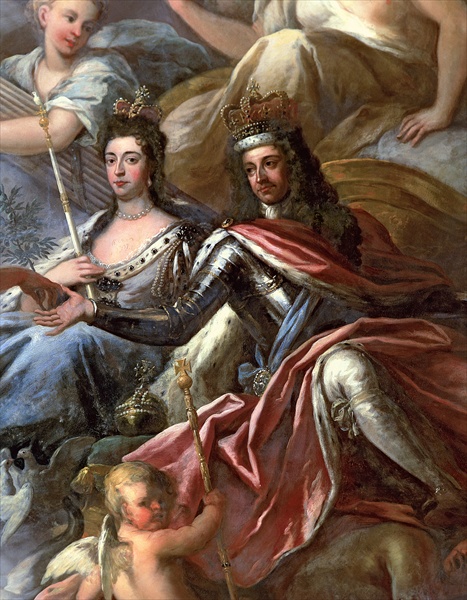
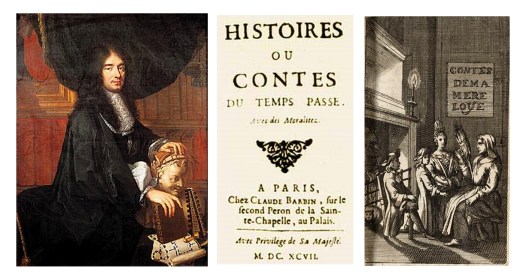
In this post, we come to the end of our series on other ways of presenting fairy tales, in which we have taken two by the author who is usually cited as beginning the modern Western tradition, Charles Perrault (1628-1703).

image1chasp.jpg

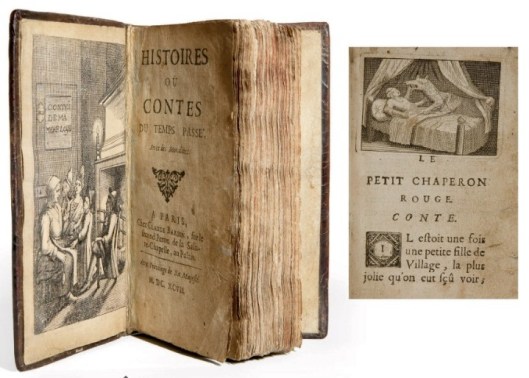
In 1697, Perrault had published this,

image2histoires.jpg

entitled Histoires ou Contes du Temps Passe (“Stories or Tales of/from Past Time”), with a kind of subtitle, Contes de Ma Mere L’Oye (“Tales of My Mother Goose”).

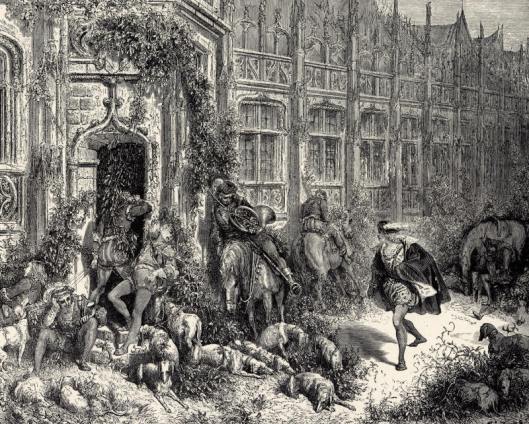
The volume contained only 8 stories, with two being “La Belle au Bois Dormant” (“The Beautiful Girl in the Sleeping Wood”)

image3sb.jpg

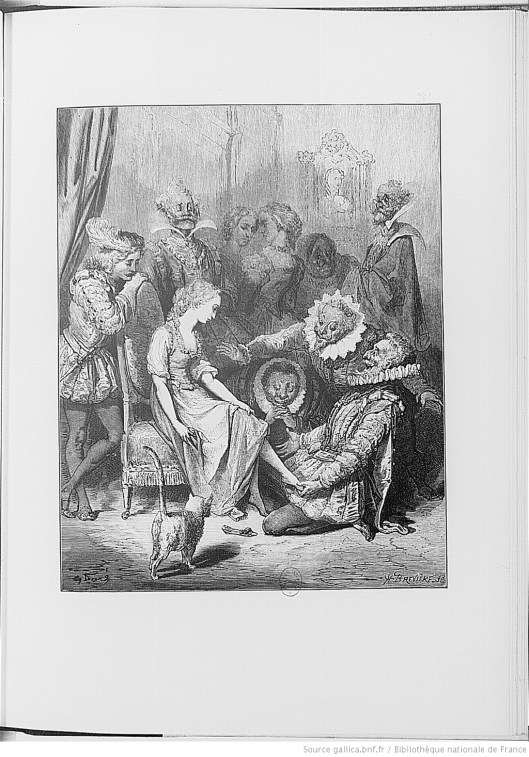
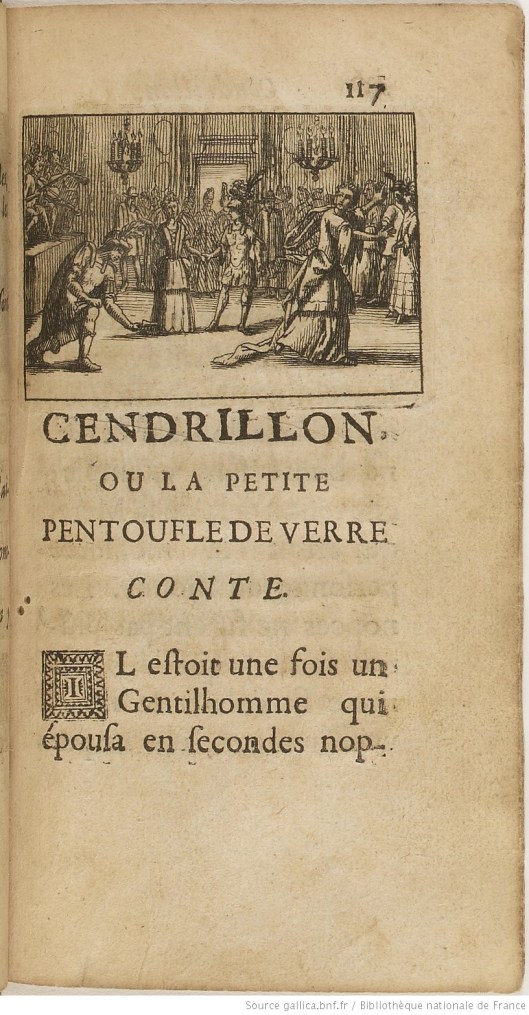
and “Cendrillon” (“Cinderella”), which we chose to be the basis of our posts.

image4cindy.JPEG

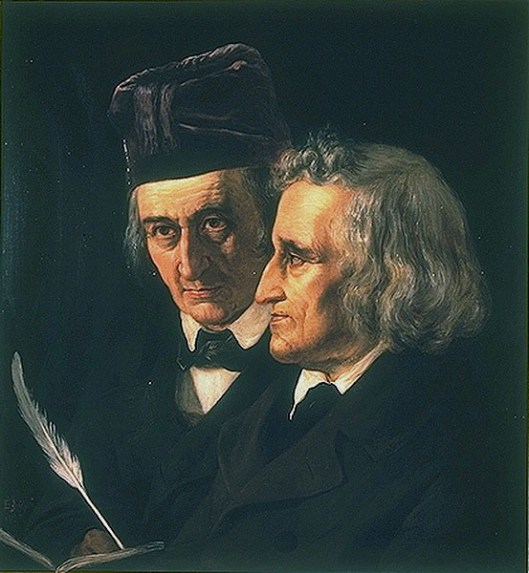
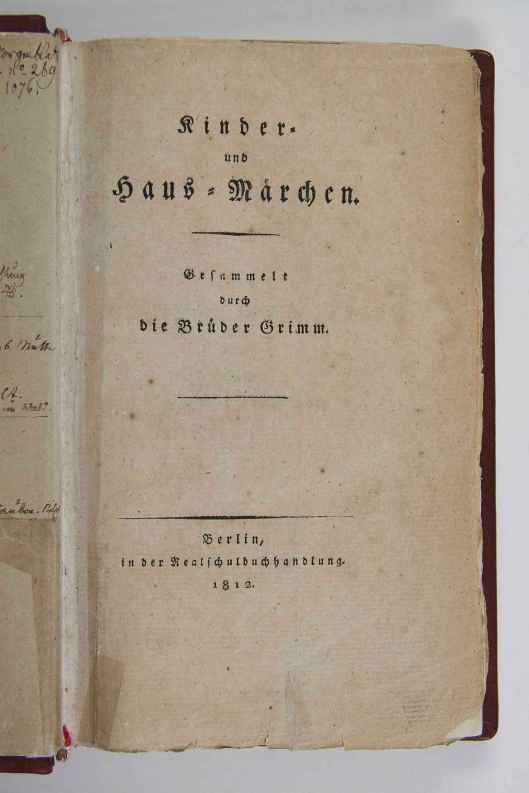
So far in these posts, we’ve looked at “Sleeping Beauty” in everything from ballet to Disney and “Cinderella” in early operas and silent films.  In this final post of the series, we want to begin by saying, as we did in our first post, that “Cinderella” exists in two basic forms, that of Perrault, from 1697, and that of the Brothers Grimm,

image5grimms.jpg

from 1812.

image6kinder.jpg

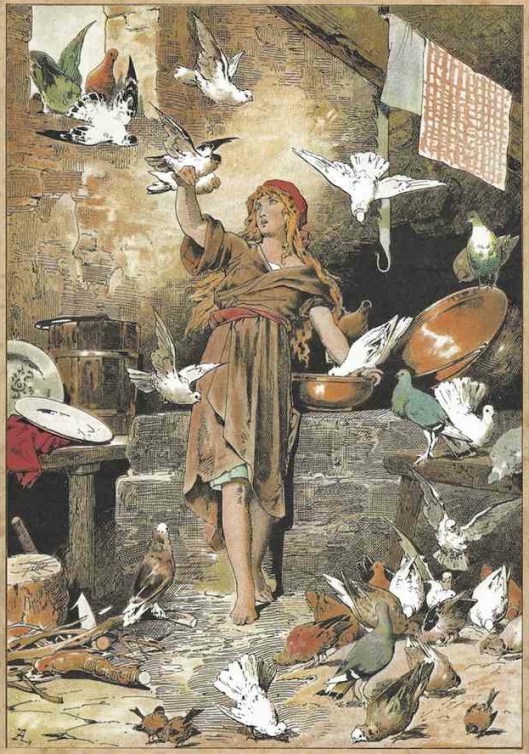
In this version of the story, the fairy godmother is removed and replaced by birds seemingly sent by Cinderella’s dead mother.

image7aschenp.jpeg

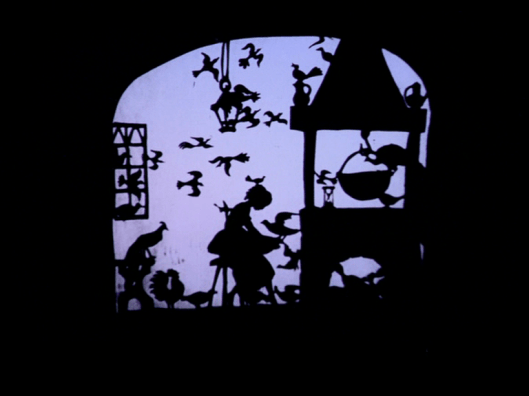
We mention this because this is the version followed by our next creator, Charlotte (Lotte) Reiniger (1899-1981)

image8lotte.png

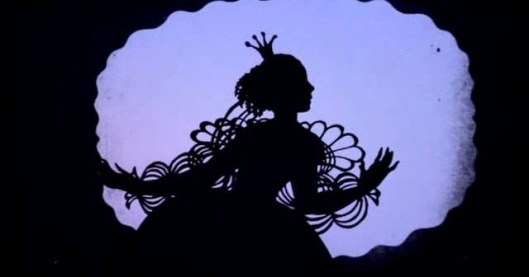
in her 1922 film, Aschenputtel (“Cinderella”)

image9aschen.jpg

This is a silent film in which delicately-cut paper figures through stop-motion photography are manipulated to tell the story.

image10aschen.png

Here’s a LINK so that you can enjoy the short (about 13 minutes) film.  And, if you enjoy that, there are more of Reiniger’s works on YouTube for you to see.

To us, her work very much resembles wayang kulit, the traditional shadow plays of Bali,

image11wayang.jpg


as well as the Ombres Chinoises, (“Chinese Shadows”—Chinese shadow puppets) brought to France in the 18th century.

image12ombres.jpg

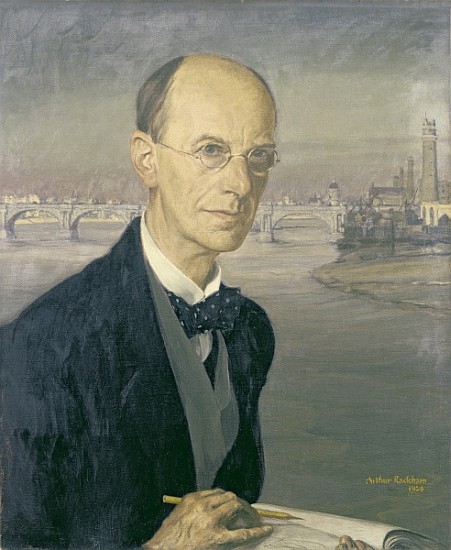
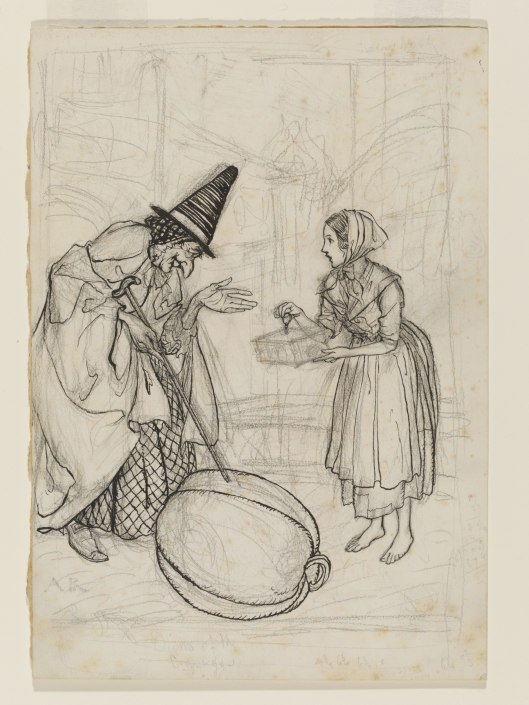
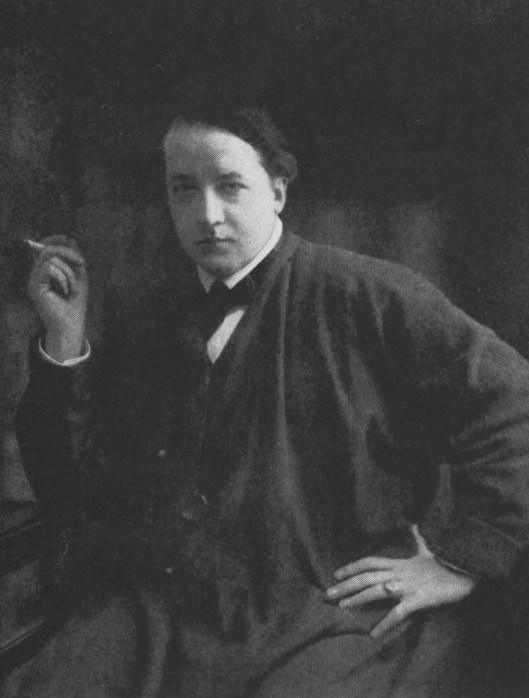
It also closely resembles two works illustrated by Arthur Rackham (1867-1939),

image13ar.jpg

his Cinderella (1919)

image14cindy.jpg

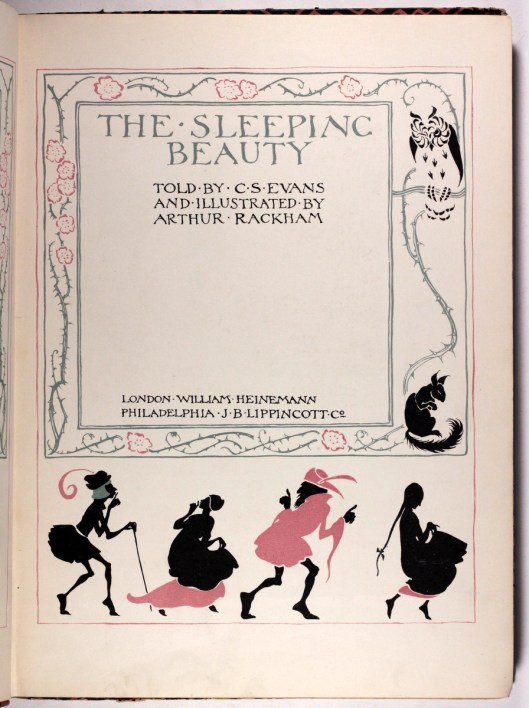
and The Sleeping Beauty (1920).

image15sleep.jpg

In each of these, Rackham employs silhouettes to tell the story (in versions by CS Evans), giving both the look of stories told by moonlight.

image16cindy.png

We could easily show you all of the illustrations, marveling at them right here, but, instead, we give you a LINK to an on-line version of The Sleeping Beauty (with apologies for not being able to locate an on-line Cinderella).

In one of our previous posts in the series, we discussed Tchaikovsky’s ballet, Sleeping Beauty, now we add to this Cinderella (Zolushka) by the Russian composer, Sergei Prokofiev (1891-1953),

image17sp.jpg

premiered in 1945.  Here’s a LINK to a suite of music from it, along with two sheets of costume designs from the original production, suggesting what a sumptuous spectacle it must have been.

image18costumes.jpg

image19costumes.jpg

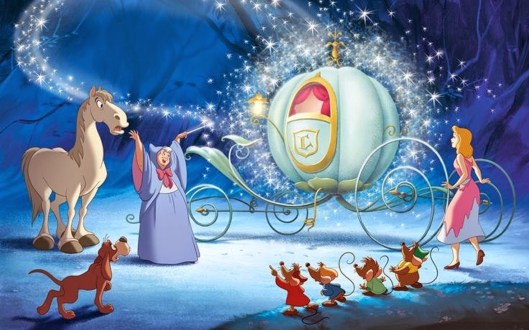
Prokofiev and his collaborators followed Perrault and the fairy godmother was back.  Here’s the pumpkin coach from a more modern—but still Russian—production.

image20pumpkin.jpg

And this coach brings us to our next and next-to-last item.

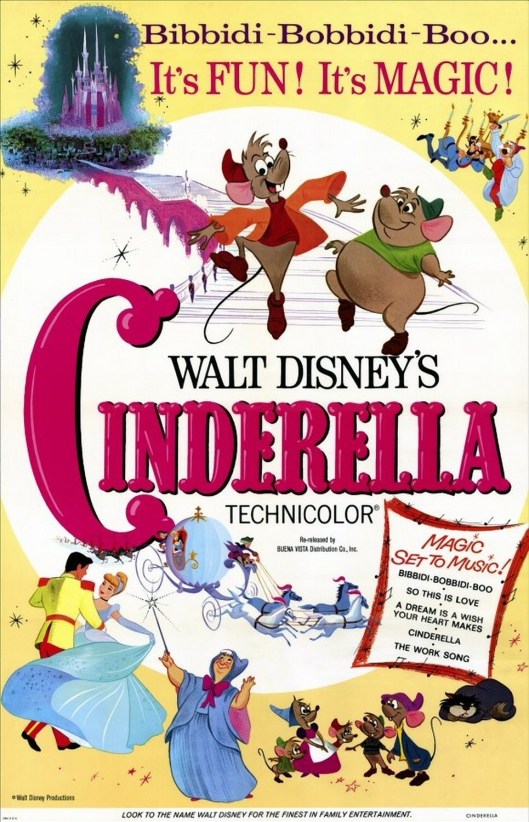
image21disney.jpg

We grew up with this image of the story in our heads, as well as its music.

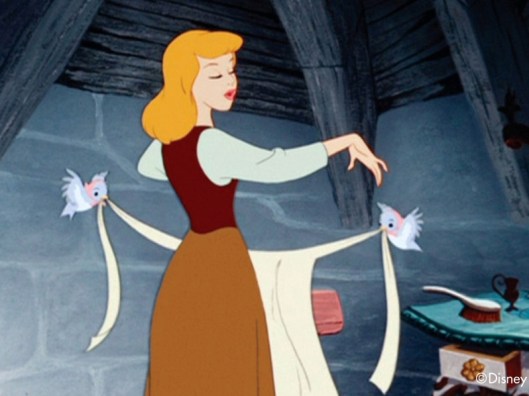
image22disney.jpeg

This is the 1950 Disney version, which stuck fairly closely to the Perrault, but, along with the fairy godmother, kept the helpful birds (changing their color)

image23abluebirds.jpg

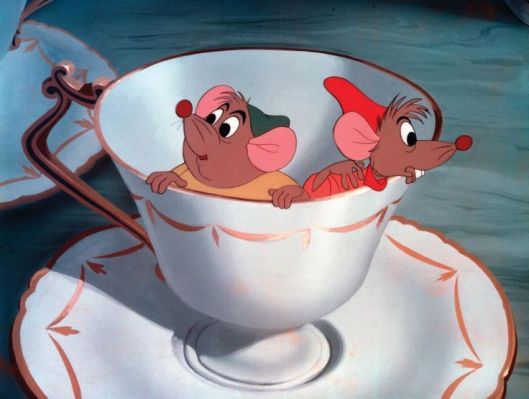
and added a gang of equally helpful mice.

image23disney.jpg

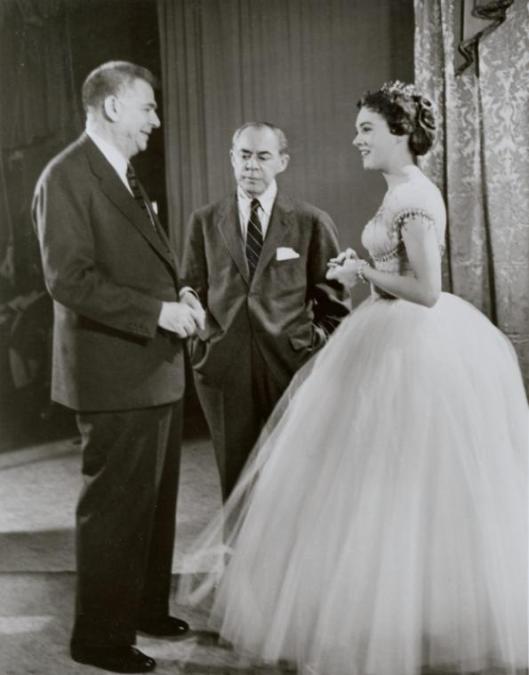
To which we add our final piece.  In 1957, the well-known composer/lyricist team of Rodgers and Hammerstein created a first, a made-for-television musical production of Perrault’s version, starring someone who was already becoming a star by appearing as Eliza Doolittle in Lerner and Lowe’s My Fair Lady, Julie Andrews.

image24rodgersham.jpg

image25andrews.jpg

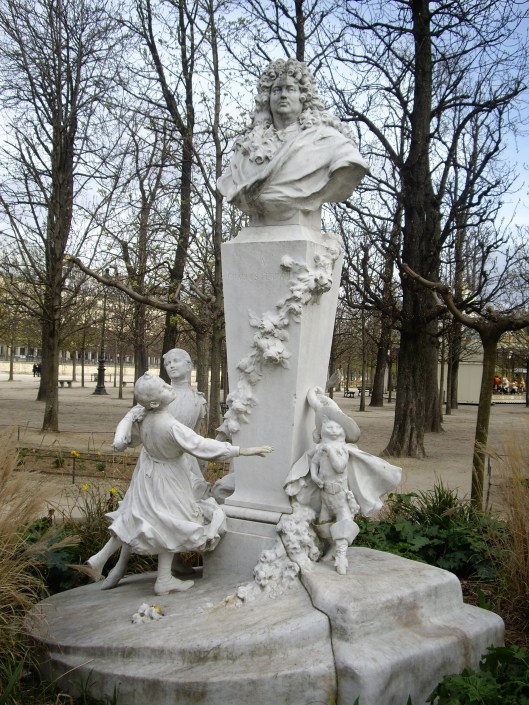
In five postings, we’ve traveled from 1697 to 1957 and visited a number of places in between, all of which was based upon two traditional stories recreated in new tellings by Charles Perrault.  Is it any wonder, then, that in 1910, this bust was erected to his memory in the Jardin des Tuileries in Paris?

image26chasp.jpg

Thanks, as always, for reading.

MTCIDC

CD

Theme and Variations.4

11 Wednesday Jul 2018

Posted by Ollamh in Artists and Illustrators, Fairy Tales and Myths, Films and Music, Literary History, Narrative Methods

≈ Leave a comment

Tags

A Trip to the Moon, Alexandre Dumas, Arthur Rackham, Cendrillon, Charles Perrault, Charles S Evans, Cinderella, Cinderella 1899, Cinderella 1911, Cinderella 1912, Cinderella 1914, Contes de Ma Mere L'Oye, Film, Florence La Badie, Georges Melies, Gustave Dore, Henri IV, Histoires ou Contes du Temps Passe, Hugo, Le Voyage dan la Lune, Louis XIII, Mary Pickford, silent film, Sleeping Beauty, The Invention of Hugo Cabret, The Three Musketeers

Welcome, dear readers, as ever.

This is the next-to-last in a little series on several of the fairy tales of Charles Perrault (1628-1703) from his 1697 collection, Histoires ou Contes du Temps Passe (“Stories or Tales of Past Time”), better known by a kind of subtitle, Contes de Ma Mere L’Oye (“Tales of My Mother Goose”).

image1chasp

So far, we’ve devoted two posts to “Sleeping Beauty” (actually called by Perrault “La Belle au Bois Dormant”—“The Beautiful Girl in the Sleeping Wood”), covering everything from 19th-century theatrical performances to book illustrations to Disney.

image2belle.jpg

In the third post, we began to look at “Cinderella”, more specifically in opera, from Isouard’s 1810 Cendrillon to Viardot’s 1904 Cendrillon.

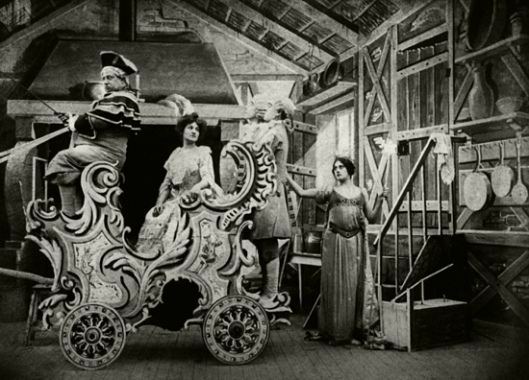
Now, in this post, we want to look at “Cinderella” in film, beginning with the 1899 work of Georges Melies (1861-1938)

image3melies.jpg

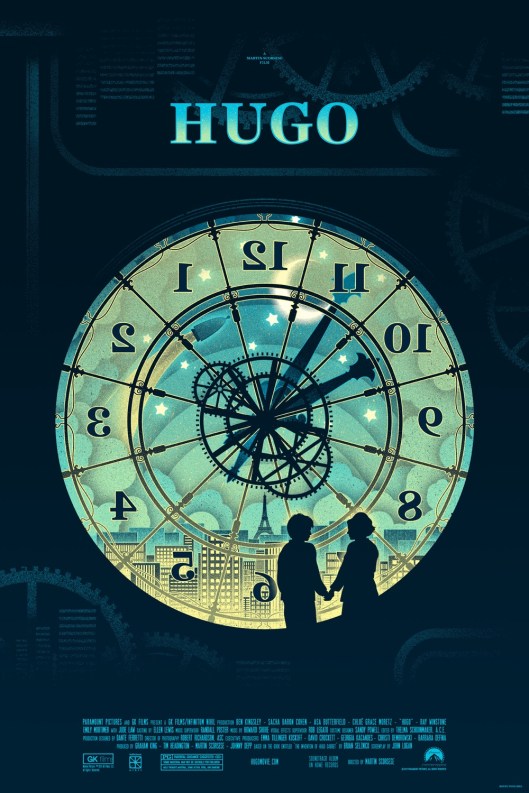
whom you may know from the 2011 film Hugo

image4hugoposter.jpg

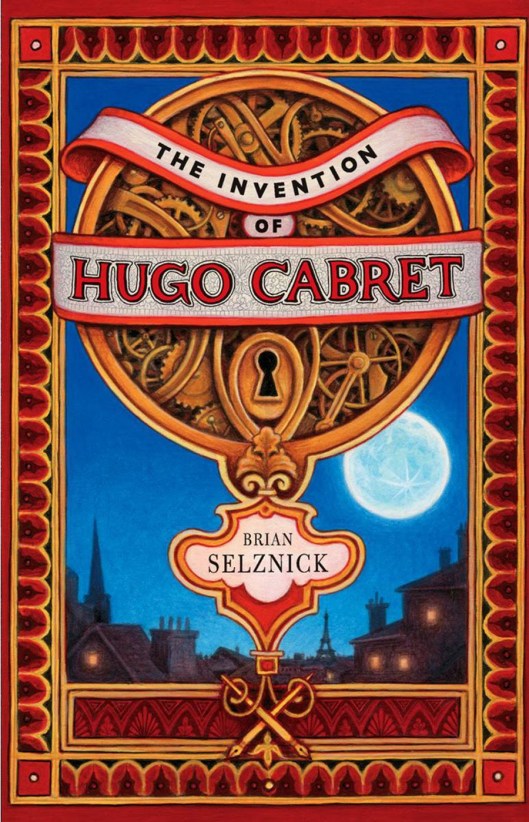
based upon Brian Selznick’s 2007 wonderfully inventive novel, The Invention of Hugo Cabret.

image5hcabret.jpg

Even if you aren’t familiar with Melies, you may recognize his work in this image

image6moon.jpg

from his 1902 science fiction film, Le Voyage dans La Lune (“The Trip to the Moon”), thought by scholars to be the first science fiction film (or at least first surviving such film.  Silent film historians estimate that only about 10% of all silent films made are still available to us.  Here’s a LINK to the film so that you can enjoy it for yourself).

Cendrillon was Melies’ most elaborate film to date and was a commercial success, even though only just under 6 minutes long—which says something for the expectations of the movie-going public of 1899.

image7cend.png

As it is so short, it has only a couple of scenes—the kitchen in Cinderella’s house, the palace ballroom, Cinderella’s room, and what appears to be the outside of the palace—and very much depends upon the viewer already knowing the basic story (it begins, for example, with a very fancily-dressed woman leaving the kitchen and the sudden appearance of the Fairy Godmother, with no introduction at all).  Its greatest strength, for us, is in its transformation scenes (a Melies’ specialty), particularly the change of rats/mice into coachmen and footmen. (And here’s a LINK to the film, see if you agree with the 1899 audience.)

image8trans.jpg

Our second film is from 1911 and is nearly 15 minutes long, meaning that it actually has time to tell the story, if not in a leisurely fashion, at least in a more complete one than the Melies.  This is a US version of the story, starring an early popular favorite, Florence La Badie (or Labadie).

image9aflo.jpg

Forgotten except by silent film enthusiasts, La Badie was a hardworking dare-devil, appearing in nearly 200 films between 1909 and her death in 1917, and doing most of her own stunts.  She was also someone who personified a new look for young women in the years leading up to the Great War—as this portrait (and there are more like it) shows.

image9flo


If you follow this LINK, you can see not only the actress, but a “Cinderella” which has almost everything we would expect from the Perrault original.

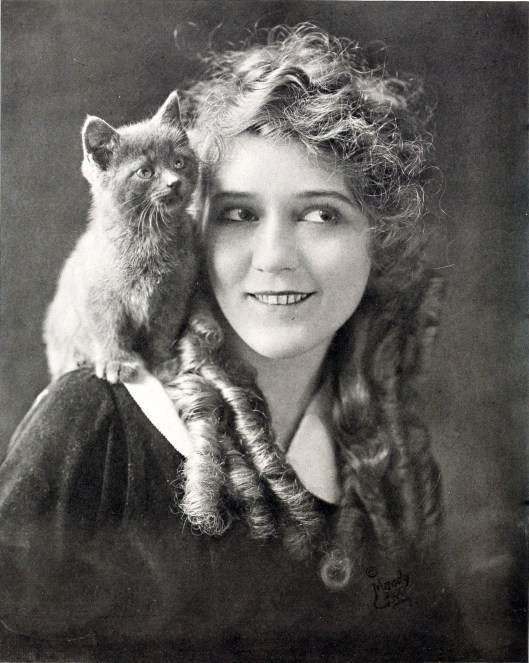
Florence La Badie had gotten into films through the suggestion of an acting friend, Mary Pickford,

image10pick


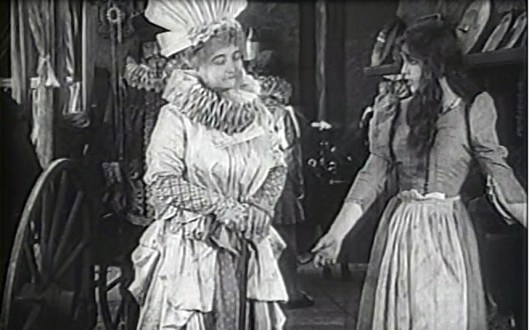
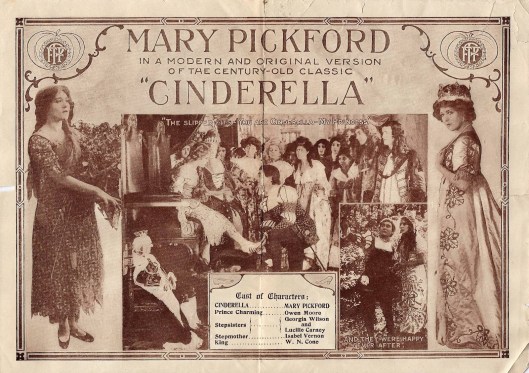
who starred in our next Cinderella, in 1914.

image11cind

Two things strike us about this:

  1. it’s over 50 minutes long—a great advance from the 1911 15 minutes
  2. the advertising seems to suggest that the audience of 1914 was expected to visit the theatre to see Mary Pickford in Cinderella, rather than Cinderella in which Mary Pickford plays the title role. For us, this foreshadows the obsession with film celebrities which is still with us today.

image12pick

This version, with its almost luxurious length, has plenty of time not only to tell the Perrault story, but to makes two additions to the plot:  Cinderella actually meets the prince before the ball, near her home and they fall in love—but are then separated; the stepsisters visit a fortune-teller, who informs them cryptically that one of their family will be successful at the ball.  (Here’s a LINK so that you can enjoy this more elaborate version.)

In the midst of these US versions, Georges Melies issued a second one himself.  At about 24 minutes long, it is much grander than his 1899 production, spending nearly a quarter of its length on the transformation of Cinderella from kitchen maid to grand lady alone.  The contrast between the 1899 pumpkin coach and the 1913 one illustrates this nicely.

image13acoach.jpg

image13melies2

It did not enjoy the success of the 1899 original, perhaps because, the weight of production values was simply too heavy for the little story inside, which was smothered by all of the plumed hats and sweeping bows.  We admit that we find this version a little slow, but the creation of the pumpkin coach is still as impressive to us as it must have been in 1913.  Here’s a LINK so that you can judge for yourself. It’s dated 1912, by the way, when the film was made, but it premiered in 1913, so we are sticking to the later date.

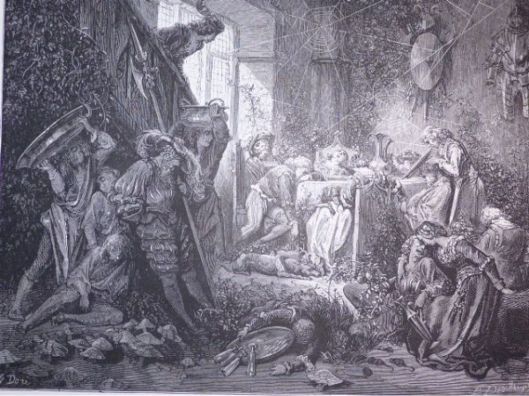
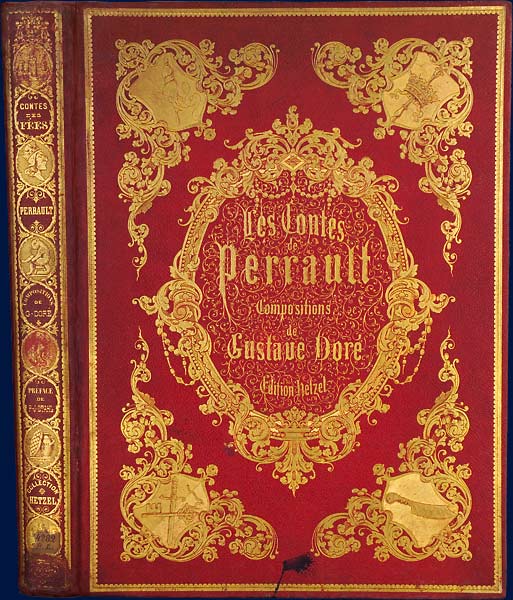
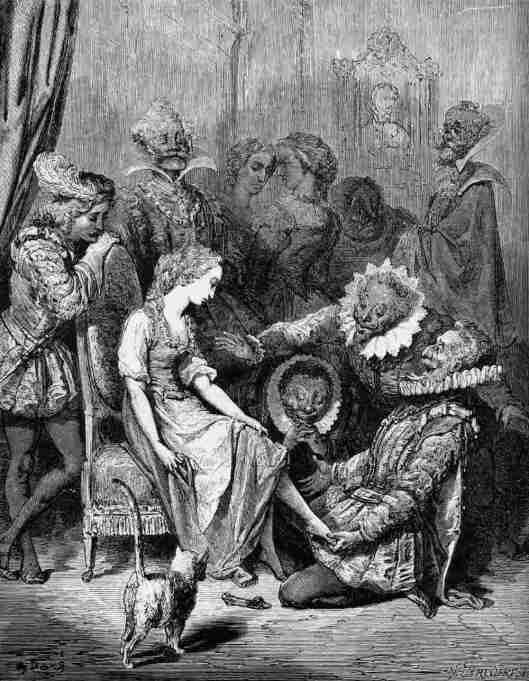
It has been suggested that Melies, in the look of this later take on the story, was influenced by the work of Gustave Dore (Do-RAY) (1832-1883).

image14dore.jpg

In 1867, Dore—a well-known illustrator–among other things–published Les Contes de Perrault, dessins par Gustave Dore. image15contes

Here’s one of the three illustrations done for the story.

image16cend

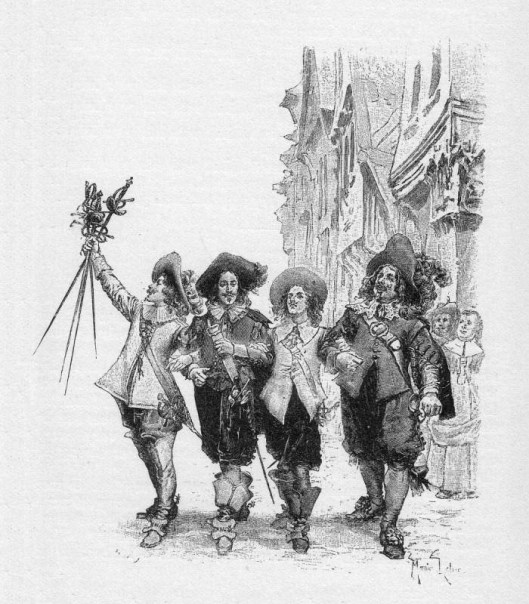
To us, however, Melies thinks of the story taking place in the time of Louis XIII (reigned 1610-1643), when Dumas’ “Musketeers” novels are set (with a little 18th-century addition here and there).

image17musk

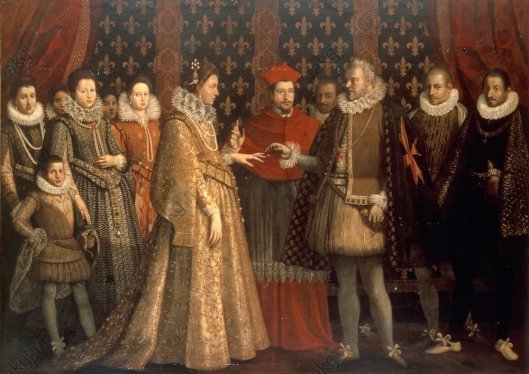
Dore would appear to be setting it earlier, in the time of Louis’ father, Henri IV (reigned 1589-1610).

image18henri4

One of our very favorite illustrators, Arthur Rackham (1867-1939),

image19ar

tackled both “Cinderella” in 1919 and “Sleeping Beauty” in 1920, with retellings by Charles S. Evans.  Always original and surprising in his approach, Rackham here has produced what we believe to be two of his most inspired works—we’ll talk about them, as well as more versions of “Cinderella”, in our next.

But we’ll finish this post with one more image—as a teaser…

image20sketch

And thank you, as ever, for reading.

MTCIDC

CD

Theme and Variations.3

04 Wednesday Jul 2018

Posted by Ollamh in Fairy Tales and Myths, Films and Music, Literary History, Narrative Methods

≈ Leave a comment

Tags

Cendrill, Charles Perrault, Cinderella, Edmund Dulac, Fairy Godmother, Four and Twenty Fairy Tales, Frederic Chopin, Georges Melies, Giacomo Rossini, Histoires ou Contes du Temps Passe, James Robinson Planche, Jules Massenet, La Cenerentola, Nicolo Isouard, Opera, Pauline Viardot, Sleeping Beauty, William Henry Margetson

As always, dear readers, welcome!

In this posting, we’re continuing the little series we began on the fairy tales of Charles Perrault and what other creators have done with those stories over the centuries.

In 1697, Perrault (1628-1703) published Histoires ou Contes du Temps Passe (“Stories or Tales of Past Time”).

image1perrault.jpg

This little collection (which also came to be known by a secondary title as Contes de Ma Mere L’Oye–“Tales of My Mother Goose”)–contained, among other stories, “Sleeping Beauty”—which we’ve discussed in the first two posts of this series—and “Cinderella”.  (The original 1697 version is available from the BnF—the Bibliotheque nationale de France—here’s a LINK.)

image2cend.JPEG

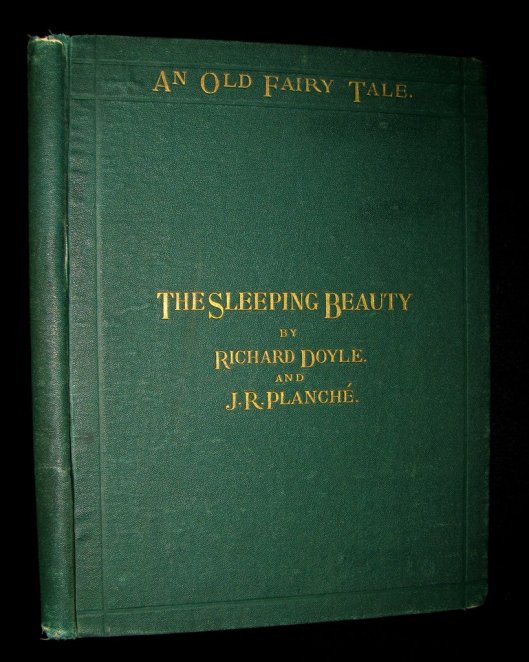
If you’d like to read the closest one might get to Perrault’s late-17th-century French, you might try the translation by James Robinson Planche, the dramatist/costume-designer/etcetc, whom we mentioned in the first post in this series.  He had conscientiously searched for a first edition of Perrault’s collection, but had to make do with a second, as he tells us, but he strove to recreate in his English the feel of the French original.  Here’s a LINK to Planche’s 1858 Four and Twenty Fairy Tales.  Selected from Those of Perrault, and Other Popular Artists.

image3afourandtwenty.jpg

image3cind.jpg

This is an illustration for that story by Edmund Dulac (1882-1953)

image4dulac

from Edmund Dulac’s Picture-Book for the French Red Cross (1916)—with a LINK to it here.  (It’s an especially interesting book, not only for the beautiful illustrations, but also for the wide range of stories, including a version of the famous Persian/Arabic story of “Majnun and Layla”.)

“Cinderella” has been a favorite subject for opera composers, at least back to 1810, when Nicolo Isouard’s (1773-1818)

image5isouard.jpg

version, Cendrillon, was a  hit in Paris—and then internationally.  Here’s a LINK to a recording of its overture so you can see what pleased Europe in the middle of the Napoleonic Wars.

Isouard’s opera’s popularity was quickly overtaken by Giacomo Rossini’s (1792-1868)

image6rossini.jpg

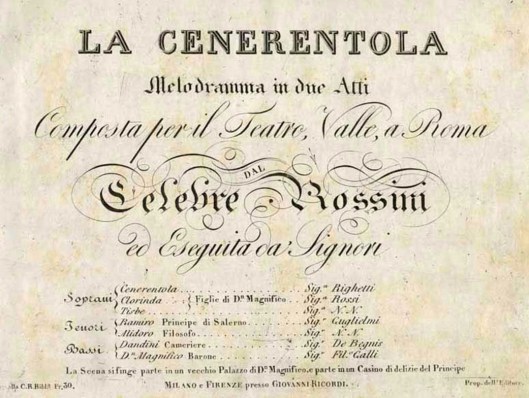
version in 1817, La Cenerentola.  Here’s an early Italian playbill for it.

image7playbill

And here’s a LINK to the overture. (If you like it, there is at least one complete performance available on YouTube—you can easily find it when you follow this link.)

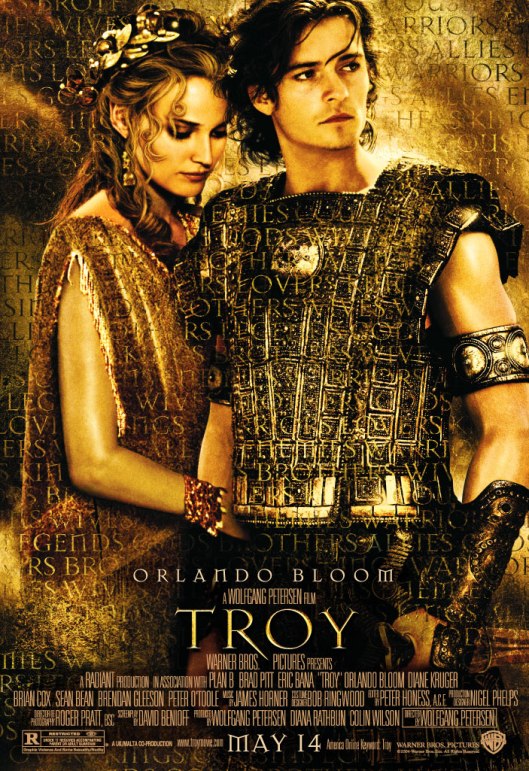
What’s interesting about these versions is that the Fairy Godmother of the original story has been replaced by a human—in Isouard’s version, with some magical powers, in Rossini’s, with native wit.  There’s no explanation for this—it’s simply the case and, for us, it somehow diminishes the story.  It’s like the Troy movie of 2004, from which the gods had been removed.

image8troy.jpg

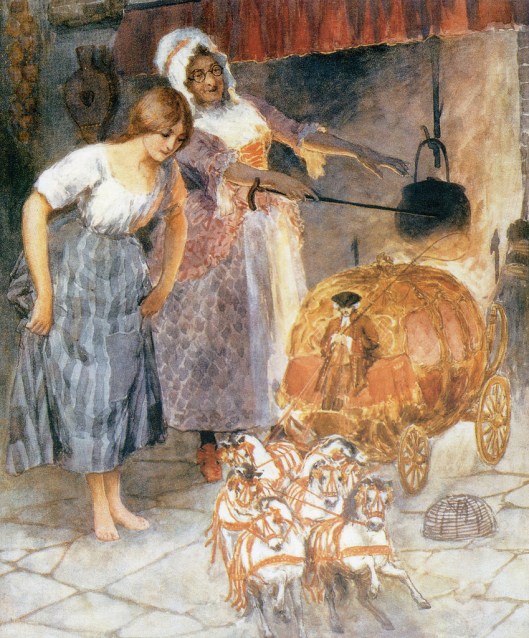
Perhaps we’ve always wanted a fairy godmother?

image9fg.jpg

(An image by William Henry Margetson, 1861-1940.)

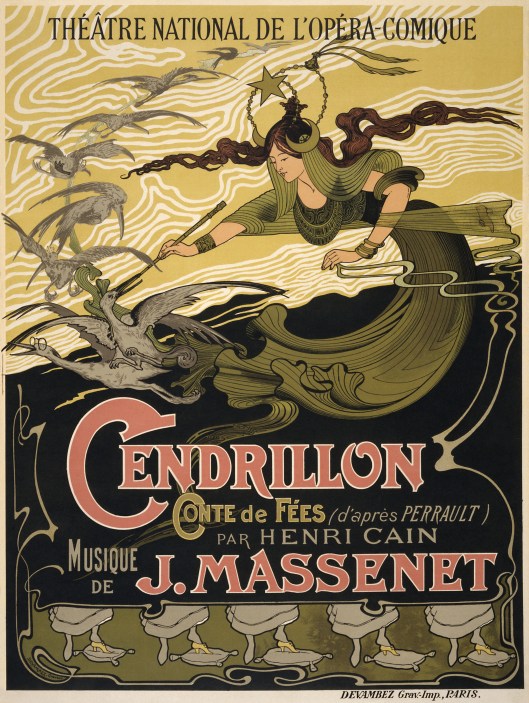
Our third opera comes from the very end of the 19th century:  Jules Massenet’s (1842-1912)

image10massenet

Cendrillon.

image11cendrillon

Unlike Isouard and Rossini, the fairy godmother, plus assorted fairies, are present and active in this very elaborate telling.  Here’s a LINK to some of the ballet music to give you an idea of the sound of the opera.

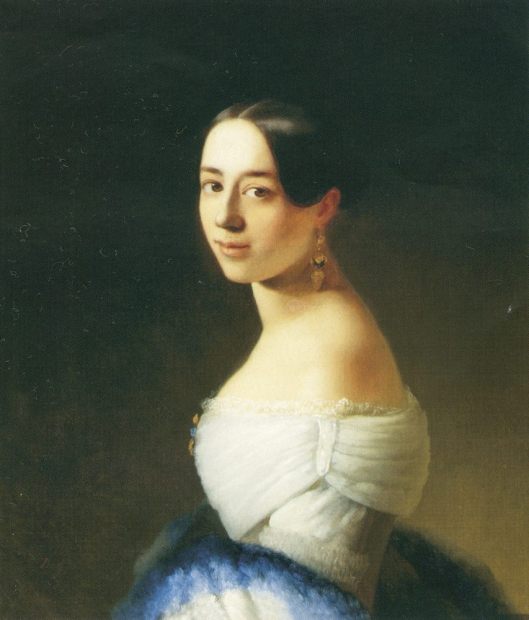
Our last opera is the very opposite of Massenet’s, being a chamber opera with only a piano for an orchestra.  It is by a woman composer who began her career as a famous mezzo-soprano, Pauline Viardot (1821-1910).

image12pv.jpg

Not only was she a brilliant singer, with an enormous range, but she was also a pianist so good that she regularly played duets with her friend, Frederic Chopin,

image13fc

as well as speaking half-a-dozen languages fluently.  When her voice began to fail her, she moved to teaching and composition, as well as keeping a salon in which many of the most famous and influential creators of the second half of the 19th century spent their evenings.

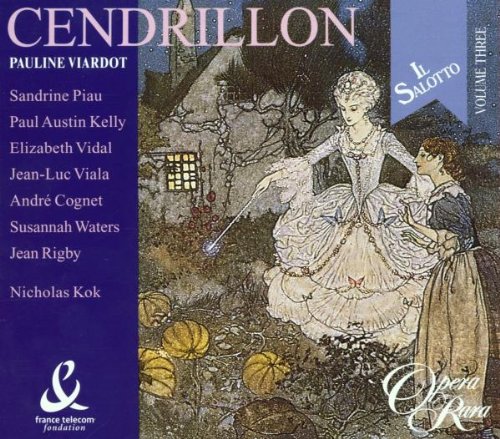
Her version of the Cinderella story, Cendrillon, was first performed in 1904.

image14score

As we suggested, it’s the very opposite of the very sumptuous Massenet opera:  7 singers, no chorus, piano for accompaniment, but it’s musically very rich—and includes the fairy godmother—and the pumpkin, etc., although these are all off-stage.  It is not often performed—there’s one recording—

image15pvcend

which we heartily recommend, as it’s beautifully sung.  And here’s a LINK to a production on YouTube, if you’d like to see it.

We’re going to close this posting, take a deep breath, and start writing the last in this little series:  Cinderella on film, beginning, in a surprisingly-early (if brief) version by Georges Melies—from 1899.

But thanks, as always, for reading and definitely

MTCIDC

CD

ps

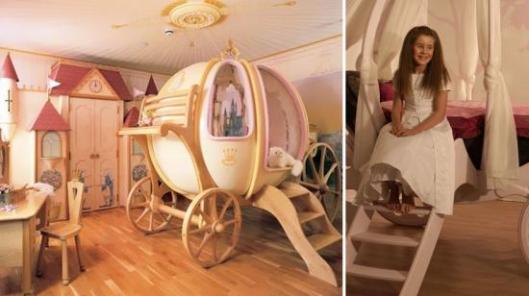
If you read us, you know us—we can never resist a PS—and this is just a visual.  In our survey of Cinderella images, we found this.  Need we say more?

image16bedroom.jpg

Theme and Variations.2

27 Wednesday Jun 2018

Posted by Ollamh in Artists and Illustrators, Fairy Tales and Myths, Films and Music, Literary History, Military History

≈ Leave a comment

Tags

Arthur Rackham, Baron Friedrich de la Motte Fouque, Brothers Grimm, Charles Dickens, Charles Perrault, Charles S Evans, Cinderella, Disney, Dornroeschen, Edgar Taylor, ETA Hoffman, French Revolution, George Cruikshank, German Popular Stories, Hans Christian Andersen, Histoires ou Contes du Temps Passe, Jacob and Wilhelm Grimm, James Robinson Planche, Kinder und Hausmaerchen, La Belle au Bois Dormant, Little Briar-Rose, Louis XIV, Louis XVIII, Mariinski Theatre, Napoleon, Robert Samber, Sleeping Beauty, St Petersburg, Tchaikovsky, The Little Mermaid, Undine

Welcome, as ever, dear readers.
In our last, we began talking about the fairy tales of Charles Perrault (1628-1703), originally published under the rather vague title, Histoires ou Contes du Temps Passe, (“Stories or Tales of the Past”) in 1697.
image1perrault.jpg
Among his stories was one entitled “La Belle au Bois Dormant”—literally “The Beautiful Girl in the Sleeping Woods”, which we English-speakers call “Sleeping Beauty”. We had said that we thought it would be interesting to look at various treatments of that story over time and, so far, we’ve discussed James Robinson Planche’s (plawn-SHAY) two works, an 1840 “extravaganza” (a kind of very early musical comedy) and his 1868 story-in-verse version (here’s the first edition).
image2planchesleep.JPG
Planche could read the French original, but those whose knowledge of French was confined to menus could find English translations dating all the way back to the first, that of Robert Samber, in 1729.
image3samber.jpg
(This image, by the way, explains not only why English-speakers call this story “Sleeping Beauty”, but also why we call the stories as a group “Mother Goose Tales/Stories”. Please see our previous posting for where Mother Goose came from in Perrault.)
In the early 19th-century, a competitor to Perrault appeared. In 1812, two German scholars, Jacob and Wilhelm Grimm (1785-1863, 1786-1859,)
image4grimms.jpg
began publication of a work which they would enlarge numerous times through the first half of the 19th century, Kinder und Hausmaerchen (something like “Children’s and Domestic Wondertales”), the first volume of which first appeared in 1812.
image5kinder.jpg
“Sleeping Beauty” appears as #50, under the title Dornroeschen, “Little Briar-Rose”. This is like the Perrault story, but not the same, providing an alternate version of the tale. For those without German, an English translation was published in 1823.
image6kinder.jpg
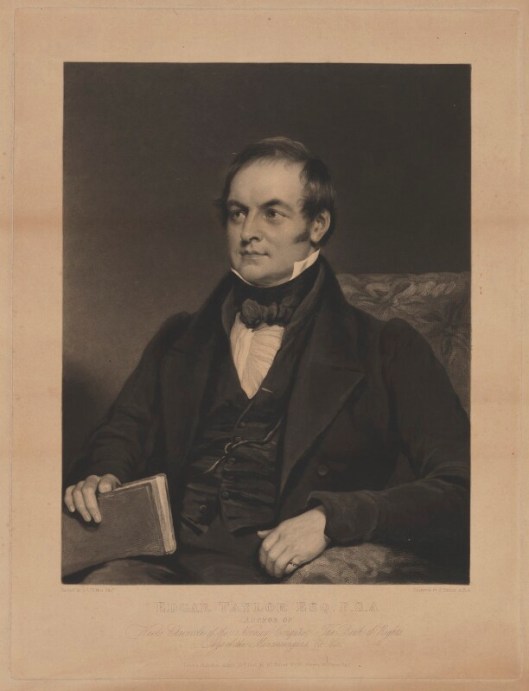
Although their names aren’t on the title page, this is a collaboration between Edgar Taylor (1793-1839), translator,
image7taylor.jpg
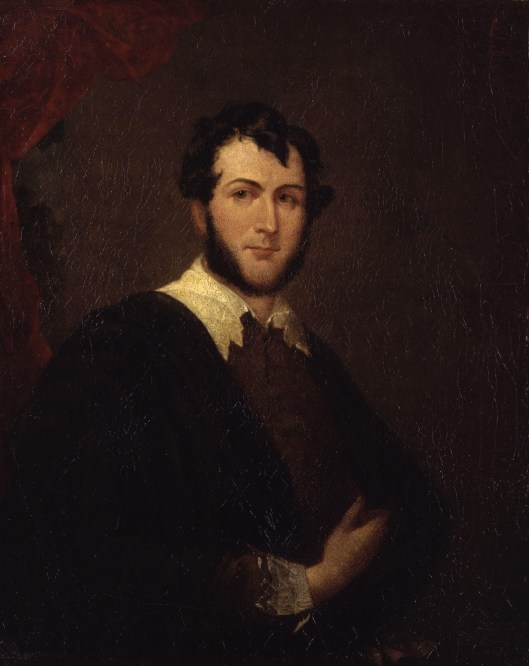
and George Cruikshank (1792-1878), illustrator.
image8cruick.jpg
Of the two, Cruikshank is the better-known. Originally, he was famous as what we now call an “editorial cartoonist”, creating images critical of politicians and political events of his time. Here is his 1823 caricature of Louis XVIII of France (reigned 1814-1824 with a little gap in 1815 when Napoleon came back briefly from exile on Elba).
image9louis18.png
His public relations people wanted Louis to look like this:
image10louis.jpg
to remind them that he was the direct descendant of Louis XIV, the famous “Sun King”, a grand and heroic figure in recent French history.
image11louis.jpg
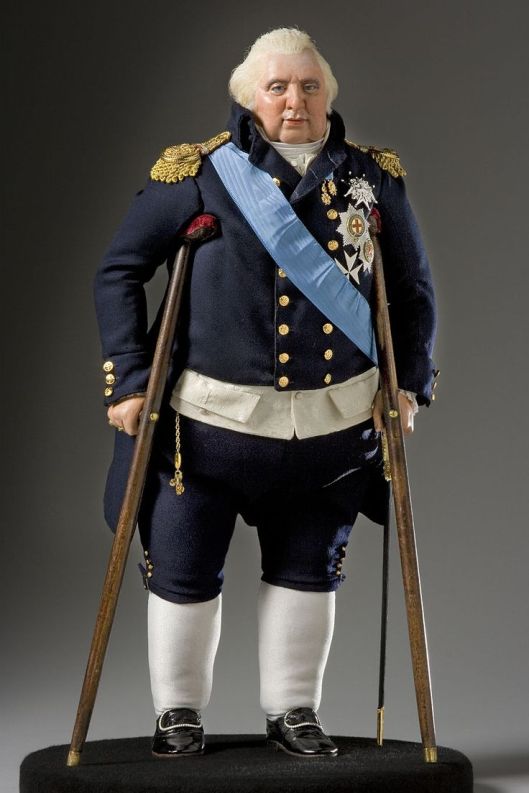
In reality, Louis was old and fat and looked more like this—
image12louis
It wasn’t about Louis per se, weak and temporary monarch though he was, so much as the long-standing English/French rivalry/hostility, which went back for centuries and which had intensified during the Revolutionary and Napoleonic wars, stretching almost without a break from 1792 to 1815. Napoleon, as representative of what the English of the time saw as revolution-which-led-to-chaos-and-worse, was a regular target from the later 1790s on and Cruikshank certainly aimed his pen and brush at him—as in this mocking depiction of the fate of Bonaparte after his first abdication in April, 1814.
image13bonaparte.jpg
Political commentary aside, Cruikshank, as we see in his illustrations for the Brothers Grimm (and isn’t it odd that we never say, in English “the Grimm Brothers”—which sounds either like a menacing secret society or perhaps an old, established firm of teakwood importers), was involved in all sorts of illustrating, including a second volume of the Grimms, in 1826. This is the 1868 reprint which the editor says duplicates in one volume the text and illustrations of the original two. (We include a LINK so that you can download your own copy.)
image14reprint1868.jpg
As well, he illustrated the original serialized version of Charles Dickens’ (1812-1870) Oliver Twist (1837-1839). This is a famous scene near the end of the novel, where the main villain, Fagin, is in the condemned cell, awaiting dawn and his execution. Dickens was famous for his performance of this.
image15fagin.jpg
On a more cheerful note, here’s Cruikshank’s sketch of Dickens himself from 1836.
image16sketch.jpg
The Grimms’ version of the “Sleeping Beauty” story is combined with that of Perrault in our next example. It’s the 1920 The Sleeping Beauty,
image17sb.jpg
text by Charles S. Evans (1883-1944), of whom we have found no picture, and Arthur Rackham (1867-1939) of whom this may be our favorite picture.
image18ar.jpg
The year before, Evans and Rackham had collaborated on a version of Perrault’s “Cinderella”—and we’ll talk about that in our next. The Sleeping Beauty is anything but sleepy—its illustrations practically dance off the page. (Here’s a LINK for your own copy.)
image19ar.jpg

image20ar.jpg

image21ar.jpg
And dance itself is the basis of our last example.
In 1888, Pyotr/Peter Tchaikovsky (1840-1893)

image22tchai

was offered a commission for a ballet. Originally, the subject was to be a famous early German Romantic novella, Undine (un-DEE-neh), written by the Baron Friedrich de la Motte Fouque (foo-KAY) (1777-1843),
image23baron.jpg
and published in 1811. It’s the story of a knight and a water spirit and shares the basic plot of HC Andersen’s later “The Little Mermaid”. Here’s an illustration from Rackham’s 1909 version.
image24undine.jpg
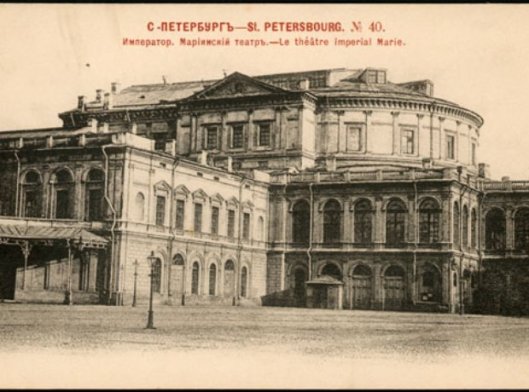
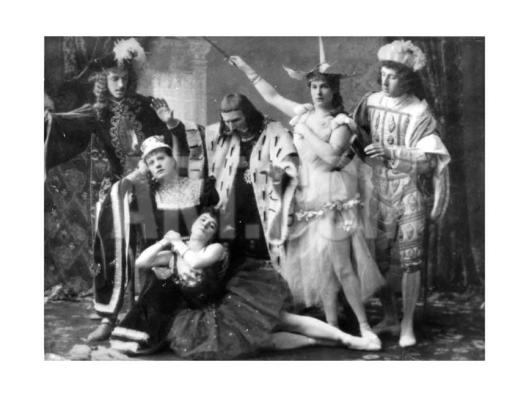
As things developed, however, this story was replaced by the Perrault/Grimms’ “The Sleeping Beauty”, which first appeared at the Mariinski Theatre
image25mariinski.jpg
in St Petersburg in January, 1890. We are lucky to have a number of photos of the original production and cast.
image26sleep.jpg

image27sleep.jpg

image28sleep.jpg
And here’s a LINK to a suite (selection) of music from the ballet—but the full ballet is available on YouTube and we hope that you like this suite so much that you’ll try the whole thing.
In our next, we’ll move on to a second Perrault story, “Cinderella”.
Thanks, as always, for reading.
MTCIDC
CD
ps
If you’re a regular reader, you’ll know that we can rarely resist adding something more. In fact, in this ps, we add two somethings more.
First, before Undine was proposed for a ballet, it was the subject of an opera by the strange and wonderful German Romantic author and composer ETA Hoffmann (1776-1822).
image29hoffmann.jpg
Here’s a LINK to the overture. In a future post, we’ll have more to say about Hoffmann…
Second, as people who grew up on Disney, we can’t close without mentioning Disney’s 1959 Sleeping Beauty, with its attempt at a new style of visual presentation—as well as its use of Tchaikovsky’s music as the basis of its score. If you haven’t seen it, we certainly recommend it, especially for its combination of elements of the older look of such films as Cinderella (1950) with a newer, simplified one.
image30disney

Do What I Say, Not What I Speak

13 Wednesday Jun 2018

Posted by Ollamh in Fairy Tales and Myths, Films and Music, J.R.R. Tolkien, Literary History, Narrative Methods

≈ Leave a comment

Tags

Ali Baba and the Forty Thieves, Captain Nemo, Door, Doors of Durin, Franklin Delano Roosevelt, Great War, Horse Feathers, Jules Verne, L. Frank Baum, Marx Brothers, Moria, Nautilus, passwords, Prohibition, Speak Friend and Enter, speakeasy, Swordfish, The Lord of the Rings, The Wizard of Oz, Tolkien, Twenty Thousand Leagues Under the Sea

Welcome, dear readers, as always.

Ever since we heard the story of “Ali Baba and the Forty Thieves” in childhood, we’ve been interested in doors and passwords.

Near the story’s beginning, Ali Baba, a poor woodcutter, happens to observe a group of bandits returning to their cave from a raid.  As he watches, the head of the bandits uses a secret phrase, “Open, sesame!” which opens the cave’s secret door.

[We include a LINK here to the whole story, if you don’t know it.]

Since then, we believe that we’ve had three major examples of the pattern:  door as barrier passed with difficulty.

The first was on a very different level altogether from “Ali Baba”.

After the US passed a law against alcohol just after the Great War, the tumultuous era called Prohibition began.

(The date is 1919 on the newspaper, but the law came into force in 1920.)

For all that the legislatures of various states approved it (“ratified” is the formal word), there were many who did not approve of it.

Because it was national law, however, police everywhere were required to enforce it.

To get around the law, secret bars began to appear.  These received the nickname “speakeasy” because it was a place to relax and drink in (what was hoped would be) safety and privacy.

Such places were made anonymous as possible:  a blank door—with a peephole.

To get in, a potential drinker had to be known—or know the secret password.

This went on until 1933, when the new president, Franklin Delano Roosevelt, worked to have the law repealed.

In 1932, the comedy team of the Marx Brothers

included a speakeasy scene in their latest film, Horse Feathers.

This is an almost indescribable scene in which one of the Marx Brothers (Chico—said “CHIK-o”) is on the inside and another (Groucho) is on the outside and then the fun begins—here’s a LINK so you can watch it for yourself.

The upshot (sorry for the spoiler!)—as you’ll see—is that both end up on the outside.  (We told you that this was on a different level!)

Our next example had no secret password, but, instead, it had a door guard and a very silly one, too!

In 1939, MGM released The Wizard of Oz,

based upon L. Frank Baum’s 1900 The Wonderful Wizard of Oz.

We doubt that we have to explain the plot to anyone who would read our blog, so we’ll just remind you of the moment when Dorothy and her friends—Scarecrow, Tin Woodsman, Lion—and Toto, too—have reached the Emerald City and have come to the door of the Wizard.

The guard (who bears a suspicious resemblance to certain other characters in the film) at first refuses them entry, saying the now-famous line that the Wizard won’t see:  “Not nobody!  Not nohow!” but eventually crumbles when Dorothy explains her quest and he begins to sympathize with her, finally allowing her and her friends to enter—although what they learn there is not the best news.

Finally, there is this door.

And, with this door, we are back to “Ali Baba”, it seems (if not to Horse Feathers).  When Gandalf and the Fellowship arrive, however, there appears to be no door there at all, just a pair of immense holly trees (probably English holly, ilex aquifolium), overshadowing a blank wall.

As the narrator describes them:

“But close under the cliff there stood, still strong and living, two tall trees, larger than any trees of hilly that Frodo had ever seen or imagined.  Their great roots spread from the wall to the water.  Under the looming cliffs they had looked like mere bushes, when seen far off from the top of the Stair; but now they towered overhead, stiff, dark, and silent, throwing deep night-shadows about their feet, standing like sentinel pillars at the end of the road.”  (The Fellowship of the Ring, Book One, Chapter 4, “A Journey in the Dark”)

It is only when Gandalf puts his hands on the rock face and murmurs what appears to be some sort of summoning spell that the doors appear:

“The Moon now shone upon the grey face of the rock; but they could see nothing else for a while.  Then slowly on the surface, where the wizard’s hands had passed, faint lines appeared, like slender veins of silver running in the stone.  At first, they were no more than pale gossamer-threads, so fine that they only twinkled fitfully where the Moon caught them, but steadily they grew broader and clearer, until their design could be guessed.”

As the pattern becomes more visible, so, too, becomes an inscription which reads, in part:

“The Doors of Durin, Lord of Moria.  Speak, friend, and enter.”

And trying to make sense of what it means now turns into a very awkward scene in which Gandalf struggles to find the password he believes is requested in that inscription, while the rest of the company gradually becomes more and more impatient (and it doesn’t help that wolves begin to howl in the distance and that there is something about a pool standing opposite the gate which makes them increasingly uneasy).

Finally, Gandalf realizes that what has stopped him depends upon his understanding of a single word in Elvish, a word which clearly has two meanings—and a little more punctuation might have helped!

As it’s inscribed, the vital part of the wording is:

Pedo Mellon a Minno.

As Gandalf originally translated this, it was “Speak, friend, and enter.”  After a good deal of frustration, Gandalf realizes that he has not only mistranslated—slightly—but mispunctuated—or, rather, overpunctuated– as well.  “Speak” and “say” in English are closely related, but there is a difference—for instance, one can “speak English”, but, idiomatically, one would never “say English”.  Thus, no one would ever give the command to someone else, “Say English”, but, rather would say to someone “Speak English”.  The same must be true in Elvish, where, in fact, it appears that “speak/say” is potentially one verb, whose singular imperative (command) is pedo. At first, Gandalf thought that he was being directed to “speak”—but what he was being told to speak he thought was somehow lost or forgotten.  This caused him to overpunctuate:  “Speak, friend, and enter”, where what he was actually being told was “Say [the word] ‘friend’ and enter”.  He finally does so, and the gates open.

In the case of Ali Baba, inside the thieves’ cave are riches, with some of which he quietly makes off.  Groucho and Chico eventually get into the speakeasy and Dorothy and her friends see the Wizard, all of them leaving the problematic entryway behind.  In the case of the doors to Moria, however, what is left behind refuses to stay that way:

“Frodo felt something seize him by the ankle, and he fell with a cry…Out from the water a long, sinuous tentacle had crawled; it was pale-green and luminous and wet…Twenty other arms came rippling out.  The dark water boiled, and there was a hideous stench.”

And this reminded us of something and made us wonder if JRRT had once read the same book we had (there’s nothing in the Letters, unfortunately).  In 1873, the first English translation of a novel by the French science fiction author, Jules Verne (1828-1905),

appeared, slightly mistitled Twenty Thousand Leagues Under the Sea.

Like the title, the rest of the book was filled with mistranslations (it should be Seas) and big cuts.  We hope, in fact, that, if Tolkien read the book (and we would be surprised if he hadn’t, it being the typical Victorian “boys’ adventure tale” of the period), we hope that he read the 1892 version, which cleaned up the errors.

If you haven’t read it, it’s the story of a French scientist who is invited by the US government to investigate a sea monster who is attacking world shipping in the later 1860s.  As the professor discovers, this isn’t a monster at all, but an early submarine, the Nautilus, invented and piloted by a man who calls himself “Captain Nemo” (nemo being Latin for “no one”) and who has a grudge against the imperialist nations of the world, against which he uses his submarine.  The professor, his assistant, and a third man, a harpooner, Ned Land, are taken aboard the Nautilus and, at one point, are involved in a combat against a pack of giant squid—each with 8 arms and two longer tentacles, one of which almost drags Nemo to his death until he’s saved by Ned.  Sounds a little familiar, doesn’t it?

Our favorite version of the story is that done by Disney in 1954.

There is only one squid here, but, as the poster shows, that seems plenty!  It’s a well-told version (simplified, but not too much so) and has a really splendid Nautilus in a high-Victorian design (steampunk long before steampunk?).

As we began this post with an opening, it seems appropriate to end with a closing:

“Gandalf turned and paused.  If he was considering what word would close the gate again from within, there was no need.  Many coiling arms seized the doors on either side, and with horrible strength, swung them round.  With a shattering echo they slammed, and all light was lost.  A noise of rending and crashing came dully through the ponderous stone.”

Thanks, as ever, for reading.

MTCIDC

CD

ps

Can you, our readers, think of other doors and passwords?  We’ve intentionally left one out here, although, when the thrush knocks…

Eternally Yours, or Do You Believe in Magic?

06 Wednesday Jun 2018

Posted by Ollamh in Artists and Illustrators, Fairy Tales and Myths, Films and Music, Literary History, Military History

≈ Leave a comment

Tags

17th Century fashion, AB Durand, American Revolution, Arthur Rackham, Battle of Kolin, Bram Stoker, Captain Hook, Charles II, Christopher Lee, Darling Family, Darlings, Disney, Dracula, Fenian Cycle, Frederick the Great, Gerald du Maurier, Half Moon ship, Hudson River, J.M. Barrie, N.C. Wyeth, Neverland, Nina Boucicault, Oscar Wilde, Peter and Wendy, Peter Pan, Peter Pan in Kensington Gardens, Rip Van Winkle, Saruman, Tepes, The Little White Bird, The Lord of the Rings, The Picture of Dorian Gray, The Wanderings of Oisin, Tinkerbell, Tir na nOg, Tolkien, vampire, Vlad, Washington Irving, WB Yeats

Welcome, as ever, dear readers.

In our last, we spent some time thinking about immortality and Middle-earth.  Our main focus was upon the puzzle of Saruman’s seeming dissolution after his murder by Grima.

image1deathofsaruman.jpg

As one of the Maiar, it would seem that Saruman was, at least potentially, immortal, but his melancholy disappearance would suggest otherwise—perhaps because of his gradual betrayal of the trust the Valar had put in him to be an opponent of Sauron?

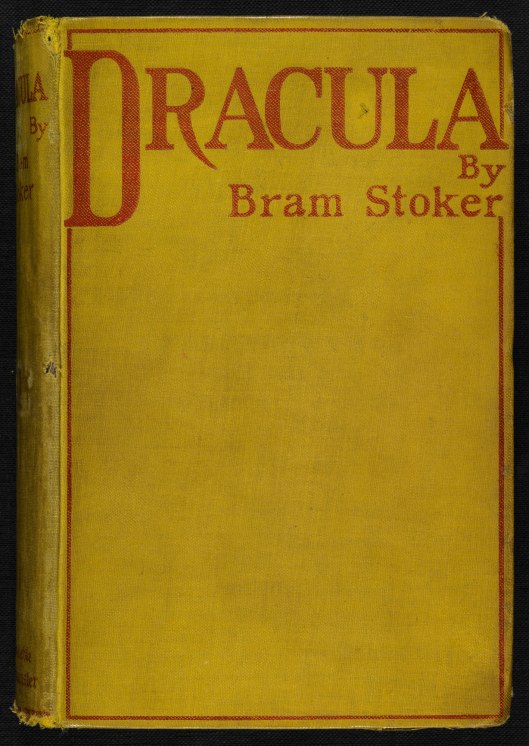
We had begun, however, with Bram Stoker’s (1847-1912)

image2bramstoker.jpg

1897 vampire classic, Dracula, and this has made us consider what appears to have been a popular theme in the late-Victorian-to-Edwardian literature we imagine JRRT read, growing up:  immortality (or at least lengthened life-span) through, for want of a better word, magic, and several instances immediately spring to mind.

image3dracfirst.jpg

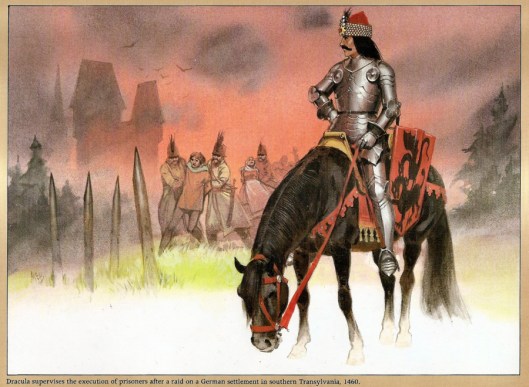
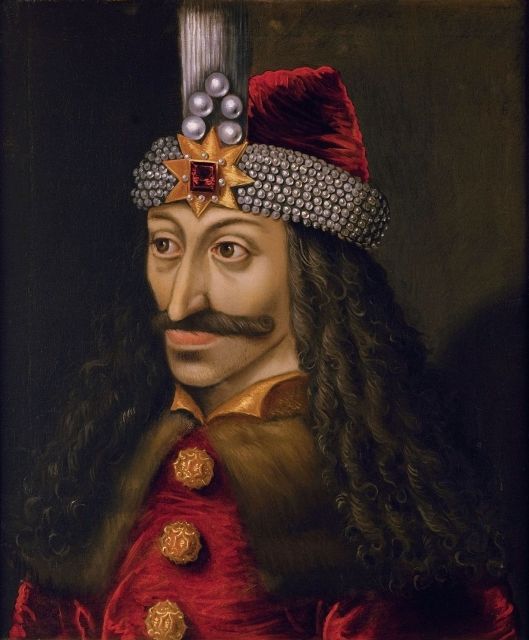
As for Dracula, we know that he was based upon a real late-15th-century eastern European border lord, Vlad, nicknamed “Tepes” (said TSE-pesh), “impaler”, who lived from about 1428 to 1477, when he was murdered.

image4drac.jpg

Stoker’s character has somehow avoided that death and has lived on for a further 500 years—how?  By being “un-dead”, a condition whose origin is never really explained, but in which a dead person continues to exist—and even flourish—if able to feed upon the blood of living people.  As this is not scientifically possible—dead is dead and actual vampire bats, after all, are alive, even if they drink blood.

image5avampirebat.jpg

All that we can say, then, is that, for all of one of the protagonists’, Dr. van Helsing’s, talk of science, we have no idea what gives Dracula his extended life–though here’s Christopher Lee, as Dracula,

image5clee.jpg

from the 1958 film, Dracula (in the US, Horror of Dracula), with the basis of his continued existence fresh on his lips.

image6poster.jpg

Considering our last post, by the way, it’s an odd coincidence that, in 1958, Lee could play Dracula and in 2001-2003, he would play Saruman.

image7leeassaruman.jpg

A few years before Stoker’s novel, in 1889, the young WB Yeats (1865-1939)

image8wby.jpg

had published The Wanderings of Oisin (AW-shin).

image9wander.jpg

This is the story in verse based upon material from the “Fenian Cycle”,  the third series of tales about early Ireland preserved by medieval monks.  Yeats’ poem deals with an ancient Irish hero who traveled to the Otherworld, spent years there without knowing that it’s a place where time works differently, and returned, only to find that he’d been gone for 300 years and, once he’d actually touched Irish soil, he immediately changed from a vigorous young man to someone 3 centuries old.  The place to which Oisin traveled, called Tir na nOg, “the Land of Youth”, is, unfortunately, not found on any ancient map, so, like Dracula’s vampirism, it is simply accepted.

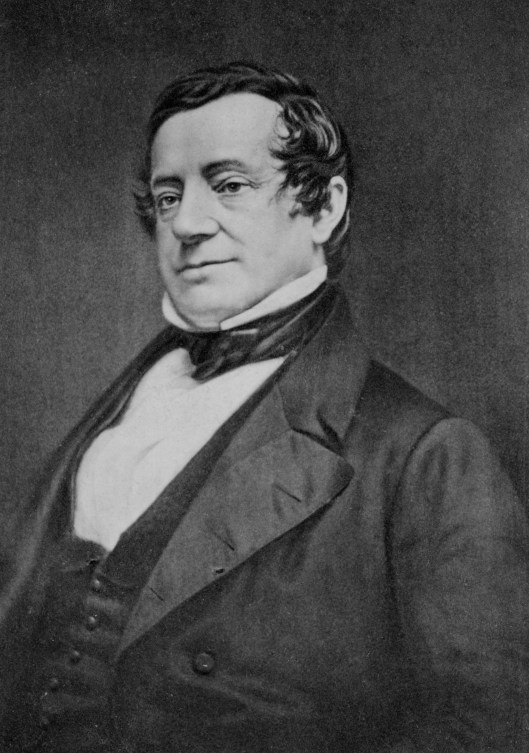
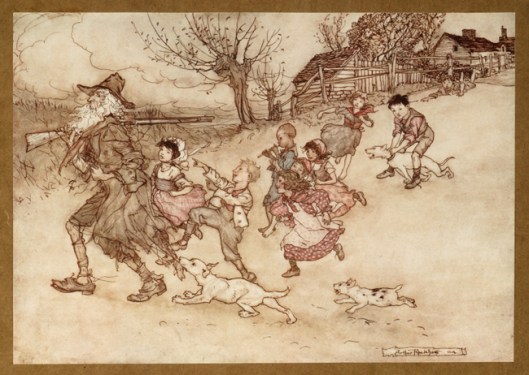
This time-warp also makes us think of the 1819 story of Rip Van Winkle, by Washington Irving (1783-1859).

image10washirv.jpg

Rip Van Winkle goes off to hunt in the mountains, the Catskills, to the west of the Hudson River before the American Revolution.

(Here’s an 1864 painting of those mountains by AB Durand (1796-1886), who belonged to the first great group of American landscape painters, called the “Hudson River School”.)

image11hudsonriverschool.jpg

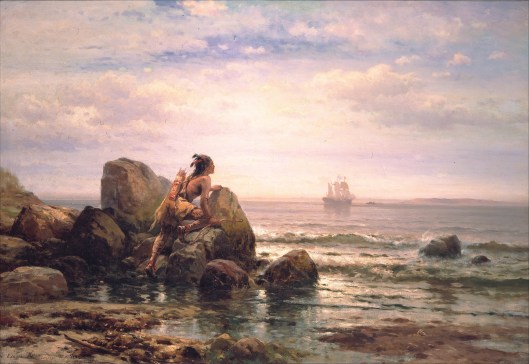
While out hunting, Rip bumps into a group of troll-like creatures, who turn out to be the enchanted members of Henry Hudson’s crew

image12huds.jpg

from his ship, the Half Moon—this is an image of the 1989 recreation of the ship—

image13haelvemaen.jpg

with which he explored the Hudson River in 1609.

image14hudson.jpg

(We see here Edward Moran’s 1892 painting of Hudson’s ship entering New York harbor.)

Rip drinks and bowls with them,

image15ripdrinks.jpg

image16ninepins.jpg

then falls asleep, only to awaken over twenty years later to find himself old and now a citizen of the new United States.

image17oldrip.jpg

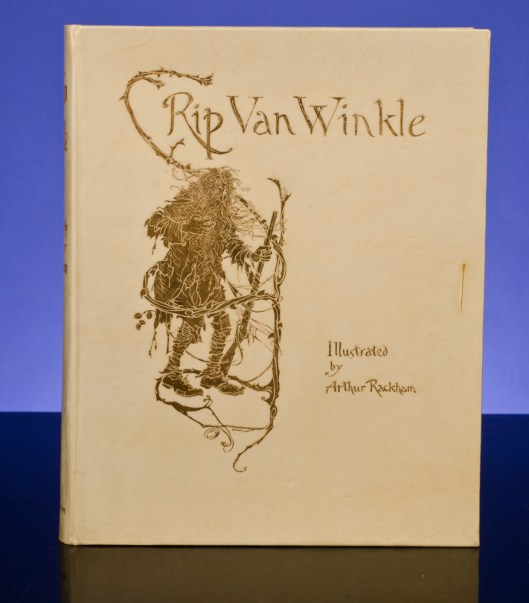
(If you follow us regularly—and we hope you do!—then you know of our great affection for late-19th-early-20th-century illustrators and, when it comes to this story, we’re very lucky in that Arthur Rackham illustrated it in 1905

image18rackham.jpg

and NC Wyeth in 1921.)

image19wyeth.jpg

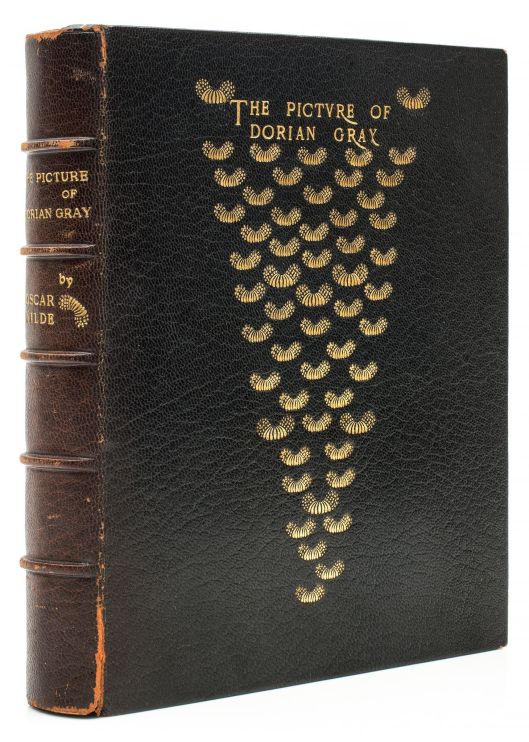
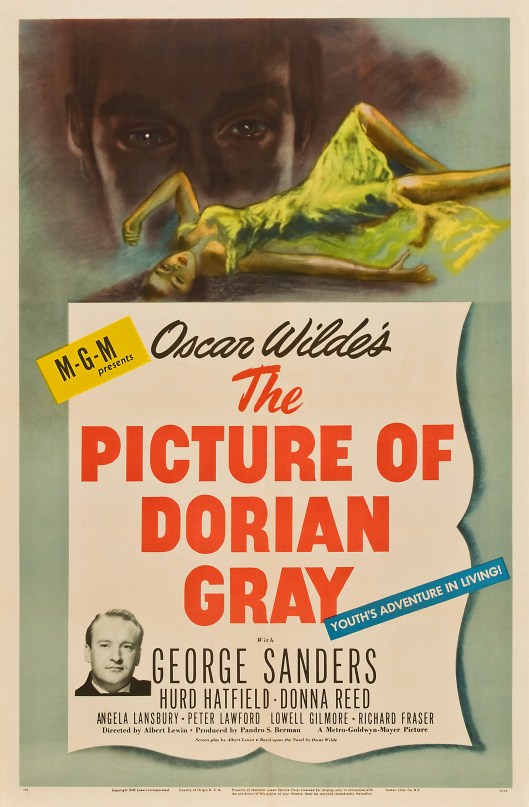
Another late-Victorian story with the theme of the supernatural and long life is Oscar Wilde’s (1854-1900)

image20wilde.jpg

The Picture of Dorian Gray, first published in book form in 1891.

image21picture.jpg

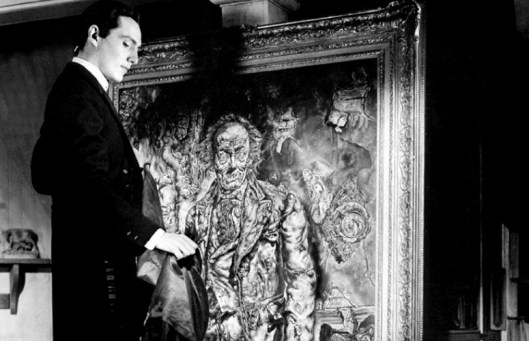
The picture here is a sinister one:  all of that which would age the protagonist, Dorian—who has an increasingly dark, secret life—is transferred to the image on canvas, so that the sitter for the portrait never seems to age.  We can see what that would look like from this image—as well as the tinted version, which is even worse,

image23picture.jpg

image24pic.jpg

from the 1945 film.

image25poster.jpg

How the picture acts as a sponge for all of the worst of Dorian is, like vampirism, never explained—Dorian promises his life if he will never age, but we never see, for example, a satanic figure, standing to one side, nod in agreement.

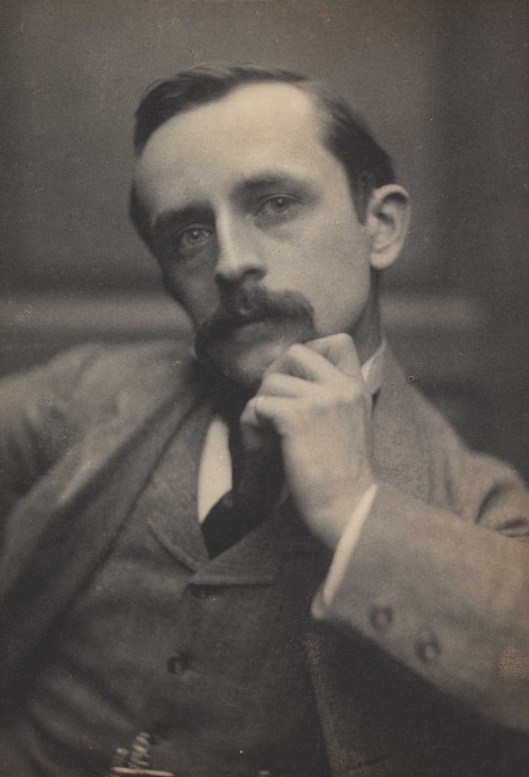
We want to end, however, with a happier story—well, sort of.  In 1902, the Scots novelist and dramatist, JM Barrie (1860-1937),

image26jmb.jpg

published a novel, The Little White Bird.

image27lwb.jpg

In it appeared for the first a seemingly-deathless character, Peter Pan.

image28ppstatue.jpg

Unlike Oisin, who has gone to a magical place, or Dorian Gray, who has his enchanted portrait, Peter just seems to be suspended in time—originally at the age of 7—days—old.

image29pp.jpg

When Barrie returned to the character, in 1904, however, he made Peter grow up–slightly.  His age isn’t exactly clear, but we know from the 1911 novelized version, Peter and Wendy,

image30pandw.png

that he still has his first set of teeth.  [Footnote:  not a very exact clue—children can begin shedding baby teeth beginning at 6 and continue till 12.]   This is the Peter of Barrie’s famous play, Peter Pan,

image31playbill.jpg

about a boy who lives on an island in Neverland

image32map.jpg

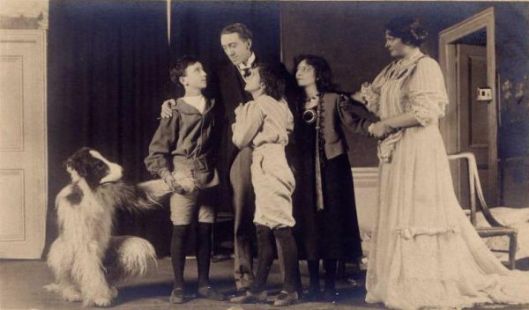
and, on a visit to London, loses his shadow while eavesdropping on the three Darling children, whose oldest sibling, Wendy, tells stories about him, which she had learned from her mother.

image33darlings.jpg

Peter is able to fly and, with the help of a fairy, Tinkerbell, he takes the Darling children back to Neverland with him, where they have all sorts of adventures.

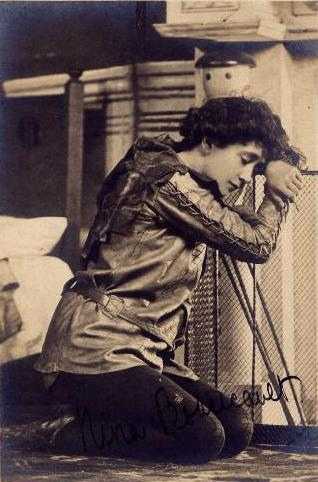
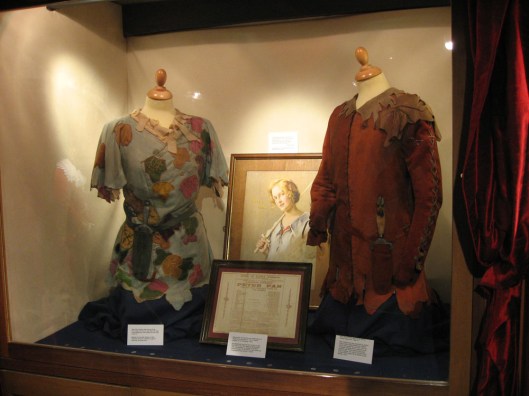
The original Peter—like so many Peters over a century to come—was a woman, Nina Boucicault.

image34nina.jpg

We are lucky to have her costume, which differs a good deal from the Peter Pan everyone knows now from the 1954 Disney film.

image35costume.jpg

image36disney.jpg

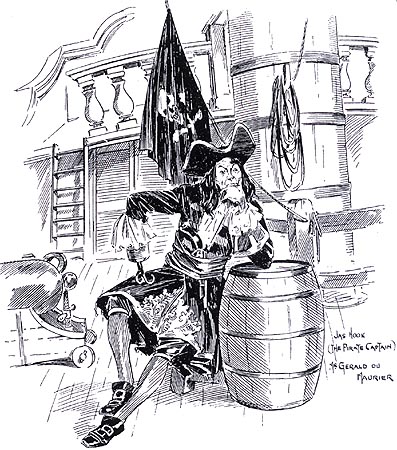
The villain of the piece, Captain Hook, however, has maintained his general outline from 1904.

image37capt.jpg

This is Gerald du Maurier, the original Captain.

image38hook.jpg

Although Barrie himself suggested that Hook should look like someone from the time of Charles II (1660-1685),

image39achas2.jpg

to us, he appears to be modeled on the fashions of the late 17th century—note the long coat with the big cuffs, not to mention the big wig.

image39costume.jpg

And here is Disney’s 1954 Hook.

image40disney.jpg

(A footnote:  in 1904, Barrie had planned to have different actors play Mr. Darling, the children’s father, and Captain Hook, but du Maurier persuaded him to allow du Maurier to play both roles, which is still the tradition.)

The subtitle of Peter Pan is Or, the Boy Who Wouldn’t Grow Up, and here we see, for the first time on our little tour, an explanation for the immortality in which the mortal is an active agent:  unlike Dracula or Oisin or Dorian Gray, Peter defies time simply by refusing to acknowledge its effects.  He won’t age because he doesn’t want to.

We said that we wanted to end on a “sort of” happy story and Peter’s stubborn immortality might fit that, but Barrie later added a kind of epilogue, a one-act play first performed in 1908.  In it, Wendy Darling, the oldest of the Darling children, has now grown up and gotten married, and had a daughter, Jane.  One night, while Wendy is putting Jane to bed in the same nursery from which the earlier adventures began, Peter appears.

Peter_and_Wendy_pg_243.jpg

At first, he simply refuses to believe that Wendy has grown up, and wants her to return to Neverland with him, although she has lost the ability to fly.  When she tries gently to explain that she can’t go with him because she has now become an adult, he collapses in tears and she runs from the room, leaving Jane asleep in her bed.  Jane wakes up and soon Peter invites her to fly to Neverland with him.  When Wendy reappears, she is quickly convinced and off the two go, leaving Wendy behind, but with the hope that Jane will have a daughter and she, in turn, will be taken to Neverland in an endless succession of daughters—perhaps immortality of a different sort?  (Here’s a LINK to the play, if you would like to read it for yourself.)

This has been a long posting, but we can’t resist a brief ps.  In 1757, Frederick the Great, the king of Prussia (1712-1786), was losing the battle of Kolin.  Desperate to win, he tried to rally his men for a counterattack, shouting, “You rascals!  Do you want to live forever?”

image41kolin.jpg

Virtually no one followed him, so we guess that most did.

Thanks, as always, for reading.

MTCIDC

CD

PS

And another ps—in 1924, the first film version of Peter Pan appeared.

image42film.jpg

It was much praised at the time and here’s a LINK so that you can see it for yourself.

All Thin, Sort of Stretched

30 Wednesday May 2018

Posted by Ollamh in Fairy Tales and Myths, Films and Music, J.R.R. Tolkien, Villains

≈ Leave a comment

Tags

Aragorn, Bilbo, Bram Stoker, Dracula, Dunedain, Gerontius, immortal, Nosferatu, Numenoreans, Professor Van Helsing, Saruman, The Lord of the Rings, The Scouring of the Shire, The Shadow of the Past, Tolkien, vampire, Voivode Dracula

As always, dear readers, welcome.

Once before, we wrote about the Scouring of the Shire and about the queer events after Saruman’s death, but, recently, we’ve come across something which might suggest an explanation.

This past term/semester, one of us taught Bram Stoker’s 1897 novel, Dracula, for the first time (and it seemed to be a big hit, we might add), as we’ve also mentioned before.

image1adrac.jpg

In the book, Professor Van Helsing tells the protagonists that Dracula:

“…must, indeed, have been that Voivode Dracula who won his name against the Turk, over the great river on the very frontier of Turkey-land.” (Dracula, Chapter XVIII)

Vlad_Tepes_002.jpg

If indeed true, this would mean that the Un-dead figure in the novel, who, historically, had been born about 1430, would, at the time of the novel, be about 467 years old.  Van Helsing explains this longevity:

“The vampire live on, and cannot die by mere passing of the time; he can flourish when that he can fatten on the blood of the living.”

Worse—

“Even more, we have seen amongst us that he can even grow younger; that his vital faculties grow strenuous, and seem as though they refresh themselves when his special pabulum is plenty.” [pabulum is a little odd here, to us, as it’s an early word for “baby food”—perhaps Van Helsing is being sarcastic?]

We were easily, as always, prompted back to JRRT here and something Bilbo says to Gandalf when he is about to leave Bag End in the first chapter of The Lord of the Rings:

“I am old, Gandalf.  I don’t look it, but I am beginning to feel it in my heart of hearts.  Well-preserved indeed!…Why, I feel all thin, sort of stretched, if you know what I mean:  like butter that has been scraped over too much bread. That can’t be right.”  (The Fellowship of the Ring, Book One, Chapter 1, “A Long-Expected Party”)

image1bandg.jpg

image2toast.jpg

Hobbits are, in comparison to humans in our current world and among non-Numenoreans in Middle-earth, a long-lived race, Bilbo’s family in particular being perhaps an extreme example, his grandfather, Gerontius (a small academic joke—geron in Greek means “old man”), living to be 130—and Bilbo will even surpass him, if only briefly.

“Stretched”, however, suggests something else—and we know, as Gandalf does, what that is–the Ring:

“A mortal, Frodo, who keeps one of the Great Rings, does not die, but he does not grow or obtain more life, he merely continues, until at last every minute is a weariness.  And if he often uses the Ring to make himself invisible, he fades:  he becomes in the end invisible permanently, and walks in the twilight under the eye of the Dark Power that rules the Rings.  Yes, sooner or later—later, if he is strong or well-meaning to begin with, but neither strength nor good purpose will last—sooner or later the Dark Power will devour him.”  (The Fellowship of the Ring, Book One, Chapter 2, “The Shadow of the Past”)

And so, Bilbo would have felt more and more “stretched”, had he not given it up, even as he continued to go on existing–Gollum, after all, is nearly 600 when he meets Bilbo for the riddling game.

image3gollum.jpg

As we’ve mentioned, the descendants of the Numenoreans had a naturally-extended life.  Aragorn, for instance, is 87 at the time of The Lord of the Rings, and 210 at his death in FA120.

image4arag.jpg

Others in Middle-earth, however, have simply been given what would seem to be life spans practically without limit.  The elves, like Galadriel, are, in effect, immortal.  Likewise are the Istari—the “wizards”, like Gandalf.

image5gandalf.jpg

This should extend to Saruman, as well.

image6saruman.jpg

And yet, something seems to have gone wrong here, as we wrote about some time ago.  Once Grima has cut his throat:

“To the dismay of those that stood by, about the body of Saruman a grey mist gathered, and rising slowly to a great height like smoke from a fire, as a pale shrouded figure it loomed over the Hill.  For a moment it wavered, looking to the West; but out of the West came a cold wind, and it bent away, and with a sigh dissolved into nothing.”

image7deathofsaruman.jpg

This isn’t the end, however.

“Frodo looked down at the body with pity and horror, for as he looked it seemed that long years of death were suddenly revealed in it, and it shrank, and the shriveled face became rags of skin upon a hideous skull.  Lifting up the skirt of the dirty cloak that sprawled beside it, he covered it over, and turned away.”  (The Return of the King, Book Six, Chapter 8, “The Scouring of the Shire”)

It’s never explained why the—for lack of a better word—spirit of Saruman disappears as it does.  The fact that it looks to the West—towards Valinor—and a cold wind blows from there suggests that, somehow, the Valar are punishing Saruman for betraying their trust and forbidding him from returning to them, as the living Gandalf will in the final chapter of the book (and for a second time, it seems, Gandalf having been “sent back” after his apparent death fighting the Balrog).

What Frodo sees in the sprawled body, however, suggests something more:  “long years of death were suddenly revealed in it”.  Here’s Stoker’s description of the end of Dracula:

“As I looked, the eyes saw the sinking sun, and the look of hate in them turned to triumph.

But, on the instant, came the sweep and flash of Jonathan’s great knife.  I shrieked as I saw it shear through the throat; whilst at the same moment Mr. Morris’ bowie knife plunged into the heart.

It was like a miracle; but before our very eyes, and almost in the drawing of a breath, the whole body crumble[d] into dust and passed from our sight.”  (Dracula, Chapter XXVII)

Bilbo and Gollum have continued to live because the Ring has given them the power to do so, but at a great cost, at least for Gollum, as Gandalf says.  Dracula has been given nearly 500 years because he has become a parasite on the living, but those years were his with the loss of his soul.  Could it be that Saruman, although given immortality because he is one of the Maiar, has, through his long years of plotting, either to work with Sauron or even to become Sauron, somehow become more like one of the Un-dead, gradually losing life even though immortal?

image8dracdeath.jpg

(This is the end of Count Orlok, the Dracula figure in our favorite vampire movie, FW Murnau’s 1922 Nosferatu.  If you’d like to see the film, here’s a LINK to it from the Internet Archive site.)

In which case, his end is much worse than that of Dracula, as one of the protagonists, Mina Harker, writes:

“I shall be glad as long as I live that even in that moment of final dissolution, there was in the face a look of peace, such as I never could have imagined might have rested there.”

MTCIDC

CD

A Celtic Chill Up the Spine

23 Wednesday May 2018

Posted by Ollamh in Fairy Tales and Myths, Films and Music, Heroes, Literary History, Military History, Narrative Methods

≈ Leave a comment

Tags

Banshee, Bean Nighe, Bloody Clavers, Bodbh, Bonnie Dundee, Coiste bodhar, Cuchulain, Darby O'Gill and the Little People, Dragoons, Dullahan, Gan Ceann, Greco-Roman, Hera, Highlanders, Hugh Herriot, Hugh Mackay, James II, Jason, Johm Graham, Morrigan, Old Mortality, Pass of Killecrankie, Picts, Pikemen, Rosemary Sutcliff, Sir Walter Scott, tumuli, William of Orange, Williamite, Woman of the Sidh

Welcome, as ever, dear readers.

As we just finished a novel, Bonnie Dundee (1983),

image1abonnie.jpg

by one of our favorite YA historical authors, Rosemary Sutcliff (1920-1992), we were snagged by what, at first, seems just an odd little detail—but we’ll come to that.  First, let’s talk about the book in general.

image1rs.jpg

The title refers to a 17th-century Scots nobleman, John Graham, 7th Laird of Claverhouse, 1st Viscount Dundee (1648-1689), also known as “Bloody Clavers” for his zeal in observing the law in a complicated religious situation (the subject of a Sir Walter Scott novel, Old Mortality, 1816),

image3oldmort.jpg

and “Bonnie Dundee” from his noble title (and, we presume, his good looks).
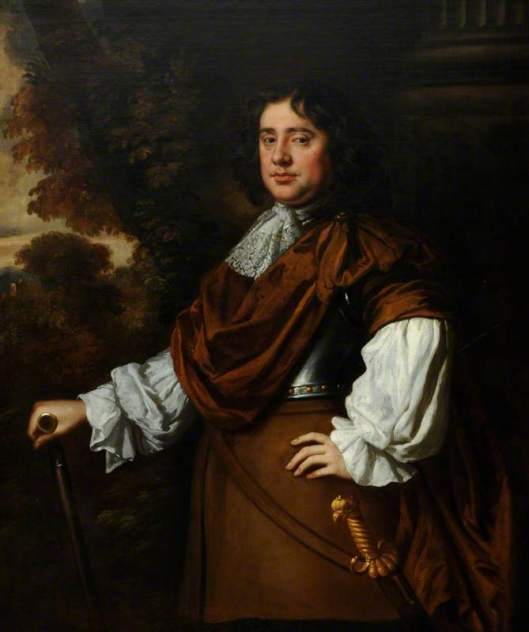
image3jasgraham.jpg

In 1689, Dundee was a royal cavalry officer, leading a regiment of mounted infantry, called, at that time, dragoons.

image5dragoon.jpg

In that same year, a combination of elements of Parliament, the army and navy, and the forces of William, Prince of Orange, Stadtholder of the other provinces of the Netherlands,
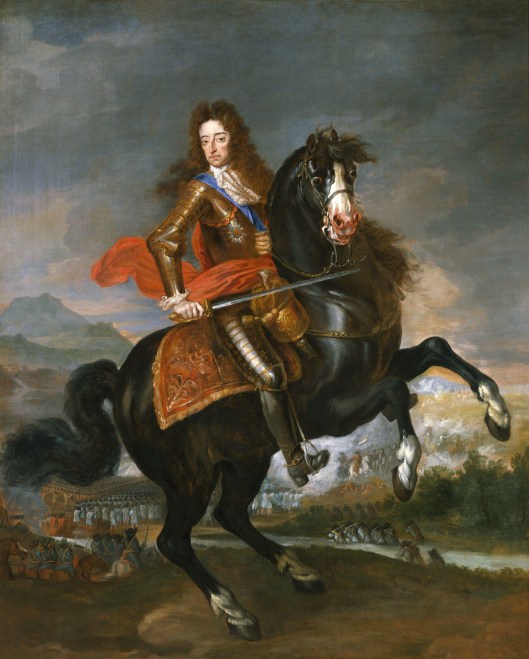
image6wmoforange.jpg

and husband of Mary,

image7wmandmary.jpg

the daughter of the King of England, James II, had overthrown James.
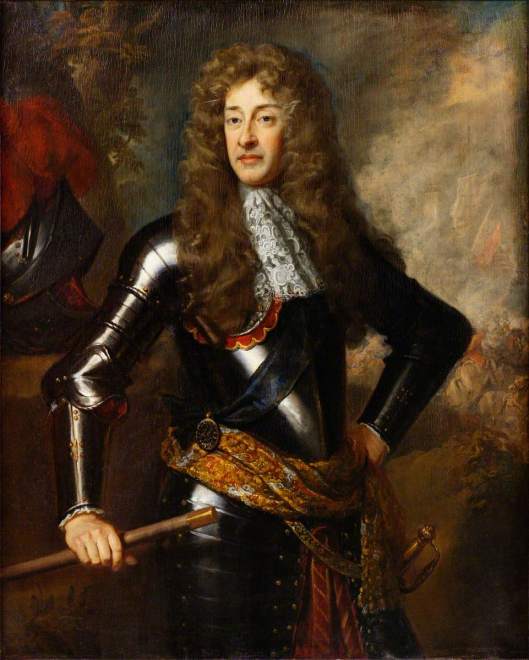
image8jas2.jpg

William was the son of James’ sister, and so James was both his uncle and his father-in-law—a very tricky situation!

Rather than fight, James had fled, but elements in Ireland and Scotland were still loyal.  One of the main leaders of resistance in Scotland was Bonnie Dundee.

image9bonniedundee.jpg

Against him was a Williamite army, led by Hugh Mackay.
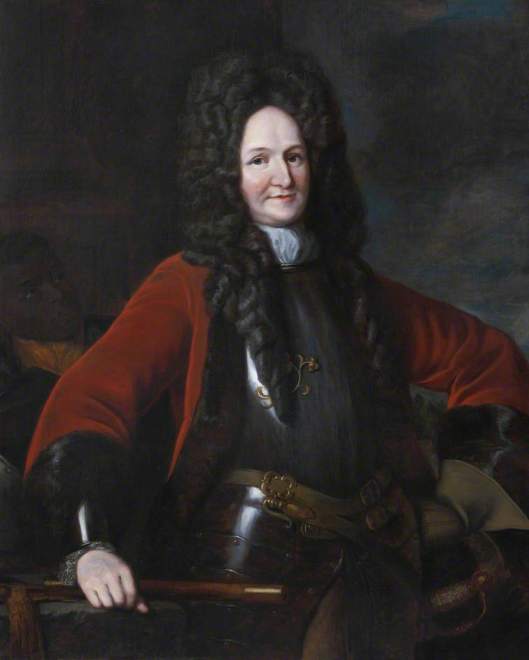
image10mackay.jpg

The major battle happened at the Pass of Killiecrankie, 27 July, 1689.

image11killiecrankie.jpg

The government’s side consisted almost entirely of regular infantry regiments, but a real mixture of raw and experienced soldiers, it seems.

image12redcoats.jpg

Dundee’s men were primarily Highlanders, untrained in modern battlefield discipline and tactics.
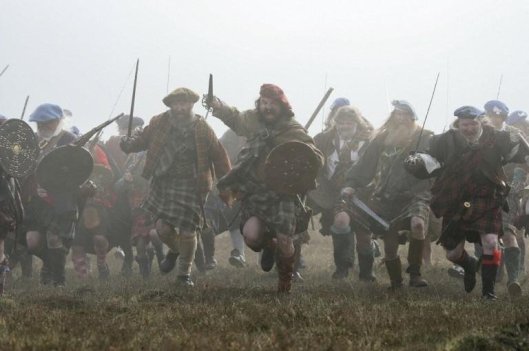
image13highlanders.jpg

The usual method in period battles was to begin by softening up the enemy with artillery fire in hopes that you could goad him into attacking you or at least you might shake his organization.
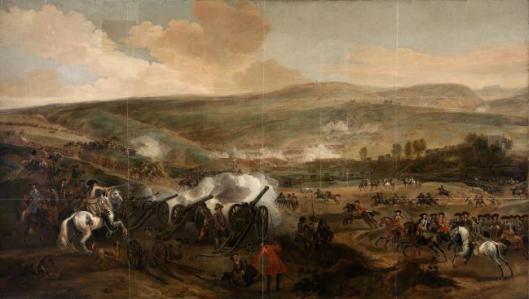
image14boyne.jpg

Then, if the enemy advanced, you used your firepower to break up his formations

image15musketry.jpg

and, if you were lucky, to drive him back, whereupon you might loose your cavalry to drive him off the battlefield.

image16cavalry.jpg

1689 was a time of transition in European armies, in which the Renaissance weapon, the pike,
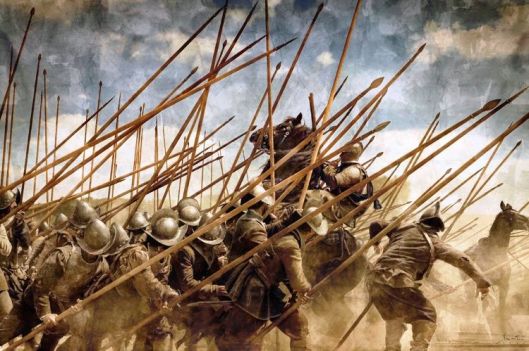
image17pikes.jpg

which had been increasingly flanked by men with firearms,
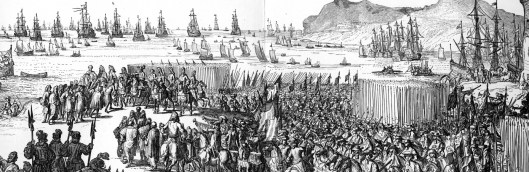
image18pikes.jpeg

was being replaced by the bayonet, turning a musket into a short pike and thus removing the need for pikemen.  The earliest bayonets, however, were simply knives stuck into the muzzle of the musket.
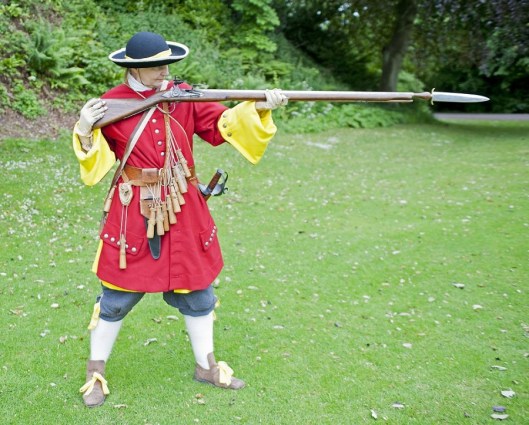
image19plug.jpg

Of course, if you stick a knife into the muzzle, it means that you lose the ability to keep up your volleys and this seems to have been part of the difficulty for MacKay, the Williamite general.  The Highlanders had, as their main weapon, the charge, the goal being to get close to the enemy before he could do much damage with firearms, and cut him to pieces with swords and axes.
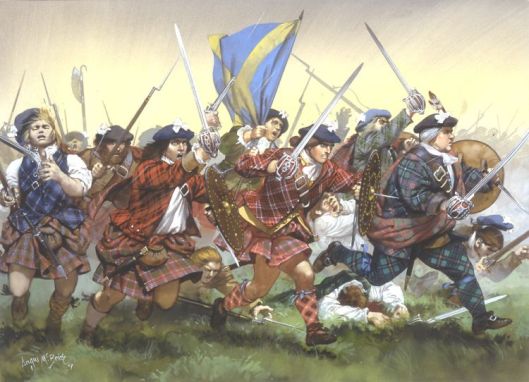
image20charge.jpg

Somehow, the Highlanders managed to break up the Williamite regiments—possibly because they were caught between firing and fixing bayonets?—and drive them off—although at the cost of losing Dundee, mortally wounded while attempting to direct the attack.
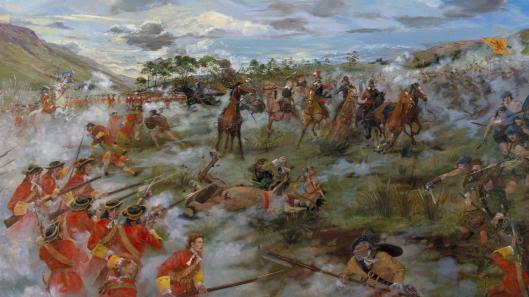
image21dundee.jpg

Sutcliff’s hero, a Scots Lowlander named Hugh Herriot, is first a groom in Dundee’s household and then a trooper in his dragoons, eventually following Dundee to Killiecrankie and his death.  (Dundee was buried nearby just after the battle.)
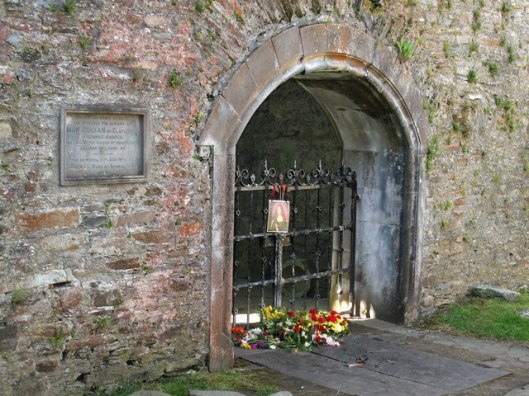
image22dundeegrave.jpg

It is on the march to the battlefield that Hugh sees something which briefly captures his attention at the time, but nothing more, and it was this description which has haunted us, ever since we put the book down:

“Once we came to the place where a cattle-track dipped down from the north, to cross the river by a made ford.  And on the far side, tucked in among the roots of overshadowing hazel and alder trees, looking as twisted and as rooted into the bank as themselves, an old woman in an earth-coloured gown knelt washing a pile of household clothes and linen.

I mind thinking it was late in the year for that; mostly the crofter women fling everything out-of-doors and deal with the bed-bugs and wash all things washable in May.  I mind also noticing that there was something of a dark brownish-red colour among the grey pallor of the unbleached linen; a shawl, maybe; you could not see, in the cave of shadows under the alder branches.

She took no more notice of our passing than if we had not been there at all.  And we marched on, and I thought no more of the thing, for the time being.”  (Bonnie Dundee, Chapter 21, “The Old Woman by the Ford”)

It’s only when later, in camp, Hugh senses that something appears to be worrying the Highlanders that it comes clear that they, too, saw the old woman—and something more, as his Highland friend, Alisdair, explains:

“Did ye see anything—any one, by the cattle ford an hour’s march up-river, as we came by?”

To which Hugh answers:

“An old woman doing her household wash…”

And Alisdair says in return:

“Aye, and you a Lowlander, ye would not be knowing.”

Continuing:

“The Woman of the Sidh—the Washer by the Ford.”

Although a Lowlander, Hugh does know:

“The Washer by the Ford, and she was washing the blood-stained linen, who comes before the death of chiefs and heroes…”

image23abean.jpg

For us, who grew up in the Greco-Roman world, an old woman at a ford has a completely different meaning:  in the story of Jason, his patron-to-be, Hera, disguises herself as an old woman and sits by a ford, testing men by asking to be carried across.  Jason agrees to and loses a sandal in the process, thus fulfilling a divine warning sent to the king of Iolcus about his eventual overthrow (by Jason):  beware the man with one sandal.

image23jasonandhera.jpg

This story in the Sutcliff—really, as we said, only a little detail in a much larger story—struck us as not only extremely well told (which we expect from Sutcliff, a very gifted story-teller—we’ll talk more about her in a future post), but well-told because, initially, it does just seem like nothing at all—something idly noticed and nothing more.  Its creepiness comes not from the description, which might be ordinary, but from its Celtic heritage—the Highlanders belong to a world made long before 1689, being a combination of the prehistoric settlers of the north, the Picts,
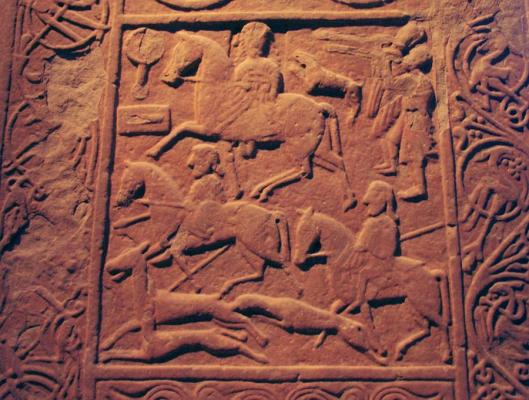
image24picts.jpg

and the Irish, who began arriving in Scotland in the 5th century AD.

image25irish.jpg

Although the Irish had converted to Christianity early, there were certain older beliefs which lasted throughout many centuries.  The Old Woman at the Ford is clearly one.  In Gaelic, the Irish-based language of Scotland, she is the Bean Nighe, (ben NEE-yeh, “the washer-woman”), or as Alisdair calls her, “the Woman of the Sidh” (sheethe).

“Sidh” has, in fact, several possible translations:  it can mean “peace”, but, as well, it signifies the Neolithic tumuli (like the barrows to the east of the Old Forest in Middle-earth), as well as the People of the Other World (who may either live in tumuli, or use them as doorways into that Other World).
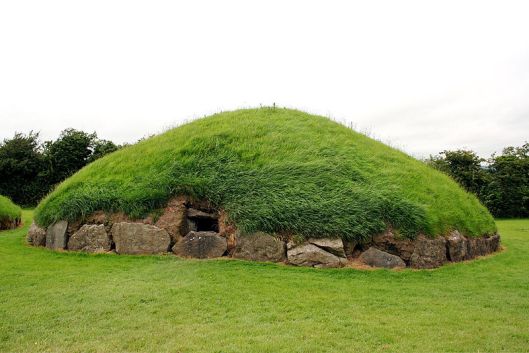
image26sidh.jpg

Our English word “banshee” is simply the Irish ben side (ben SHEE-thyeh), “woman of the Sidh” which, as we’ve seen, is just what Alisdair calls the Old Woman at the Ford.

Banshees—who do not necessarily always appear as old women, sometimes visit as young–are a kind of messenger from the Other World, sent to warn family members of an impending death.  Their manner of communicating this can vary—in some parts of tradition, they fulfil the task of old women at traditional funerals, wailing in grief, with a sound which has come into English as “keening”.

image27keening.jpg

To give you an idea of this, here’s a LINK to a clip from the 1959 Disney movie, Darby O’Gill and the Little People, in which we see not only a banshee, but also the next step, the coiste bodhar, [KOH-shte BOW-er] the “silent coach” with its headless coachman, the Dullahan, called in Irish, Gan Ceann,(gan KENN) “Headless”, who carries the dead person…somewhere… [Be warned, by the way:  one of us saw this only once, many years ago, on a Disney program, and has spent many further years trying not to remember it!]

In other parts of the tradition, the banshee stands outside the doomed person’s window and simply says her/his name (which impresses us as especially creepy), or calls out “My wife!” “My husband!” or “My child!”

In Ireland, the banshee is restricted to the pre-Norman-invasion population (pre-the-year 1169, more or less), suggesting that this is a purely Celtic belief, which would make sense of Hugh’s Highland friend, Alisdair’s, fear of the Washer.

It has been suggested that perhaps this figure is descended from a fearful Irish goddess, the Bodbh (BAH-thv),

image29bodbh.jpg

who has a possible three-part persona and appears before battles and on battlefields, with a raven as her totemic animal.
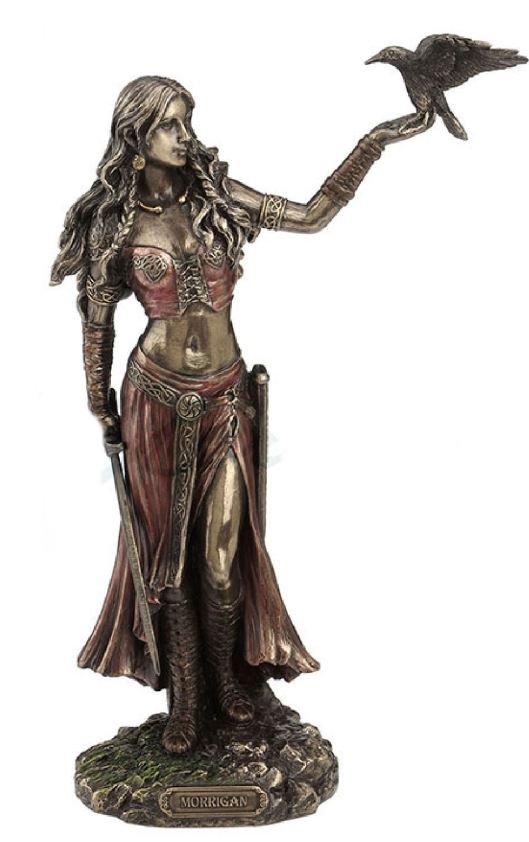
image30bodbh.jpg

She is also called Morrigan, meaning “great queen”, which sounds rather like a euphemism.  In Old Irish stories, she is the enemy of the boy hero Cuchulain (Koo HOO lun), and brings about his death through tricking him into destroying his own protective spells (he eats dog, his own totemic animal—his name means “hound of Culann”).  There’s a famous bronze statue of him, with her raven on his shoulder, in the old main Dublin post office.
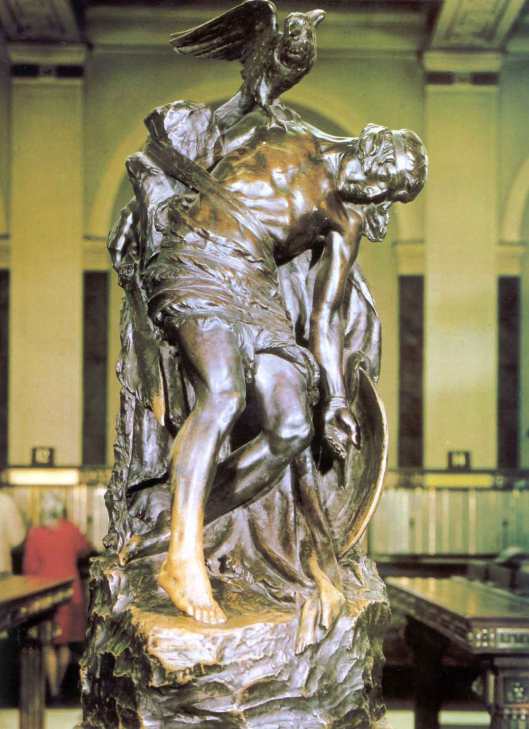
image31cu.jpg

And here Sutcliff now helps us to complete a kind of grim mythological circle.  Hugh Herriot not only knows who the Washer is, but this further fact:

“The Washer by the Ford, and she was washing the blood-stained linen, who comes before the death of chiefs and heroes—aye, before the death of Cuchulain himself.”

Who is the chief and hero of the novel—and is riding to battle the Williamites?  It’s clear, if one accepts this portent, what is to happen, and yet Hugh tries to deny what he knows to Alisdair—

“Och, away!  Dinna be sae daft!…She was real enough; just an old hen-wife, a wee thing late with her spring washing.  Aye, she was real enough.”

Alisdair’s reply still chills us—as it does Hugh—and explains why what was originally only a passing observation in this novel has stayed with us:

“ ‘She seemed real enough,’ he said, ‘she always does.’ “

Thanks, as always, for reading.

MTCIDC

CD
Small Talk

02 Wednesday May 2018

Posted by Ollamh in Fairy Tales and Myths, Films and Music, Heroes, J.R.R. Tolkien, Narrative Methods, Villains

≈ Leave a comment

Tags

Assyrians, Charles Goodyear, cyclops, David and Goliath, Death Star, Egypt, Ewoks, Greeks, Hetep Senworset, Hobbits, Jack and the Beanstalk, Kelandry of Mindelan, Lachish, Medieval, Odysseus, Polyphemus, Protector of the Small, Romans, Sling, slingers, Slingshot, Smaug, Star Wars, Tamora Pierce, thrush, Tortall, Vulcanized, Woses, Yoda

Welcome, dear readers, as always.

Sometimes, ideas for posts come from something we’ve seen in a movie theatre or something we’re reading or even from something we’re teaching or studying.  Sometimes we employ the Sortes Tolkienses.  And sometimes things just seem to fall into our hands.  And that’s where this post comes from.

We were moving a bookshelf and something literally dropped into our hands, a boxed set of books by one of our favorite YA authors, Tamora Pierce.

image1protector.jpg

As you can see from our image, the series is called “Protector of the Small” and is about the life of Keladry of Mindelan, who lives in Pierce’s imaginary Tortall, where it is possible—just possible—for a girl to become a knight.  Through the four volumes, Kel gradually works her way from pre-page to knighthood and, is always the case with TP’s books, there are both surprises and interesting and not always predictable difficulties along the way, as well as an ultimate humanity which makes her books such satisfying reading.

It wasn’t the actual books, however, which got us to thinking, but the word “small” in the series title.  How often, in our favorite adventure stories, it’s a case of small versus big

image2mouseelephant.jpg

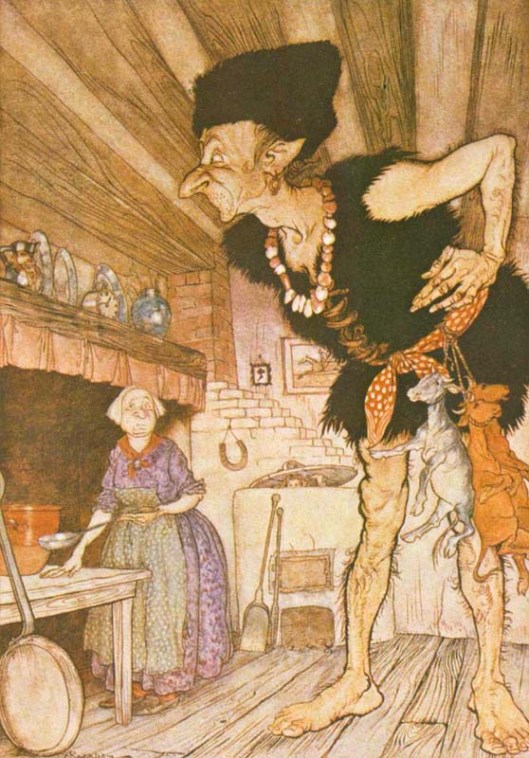
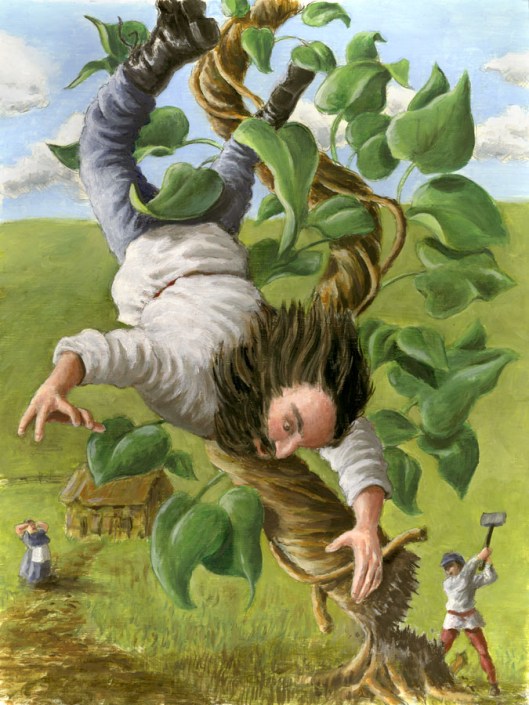
and, very often, the big thinks that that’s all which counts—think of the fairy tale “Jack and the Beanstalk” for example.image3ajackgiant.jpg

For all that the giant is huge and menacing in the story, he’s vulnerable as he climbs down the beanstalk and Jack’s quick thought–to cut down the stalk even as the giant descends–makes quick work of the oversized (but perhaps overconfident—and underbrained?) creature.

image3bdeathofgiant.jpg

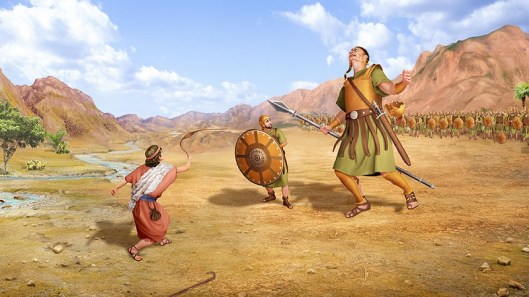
In the Judeo-Christian tradition, we have the Biblical story of David and Goliath.

image3dandg.jpg

Goliath is not only huge, but armored, and David is a boy who has only his shepherd’s staff, a sling, and five stones from a river bed, but it’s all he needs.

A sling is an ancient weapon

image4sling

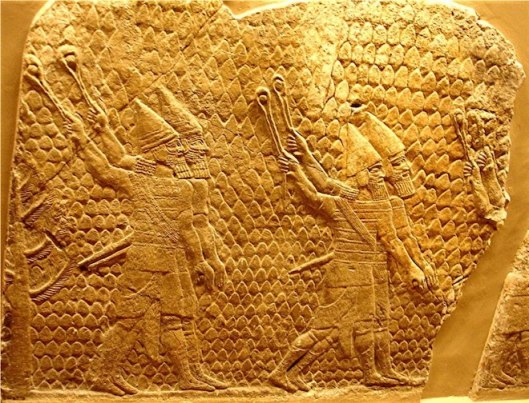
This is from the Egyptian Middle Kingdom town of Hetep Senwosret, c. 1895BC.  The Assyrians were still using the weapon more than a thousand years later, as this scene from one of the Lachish reliefs (c.700BC) shows.

image5assyrians.jpg

The Greeks had slingers

image6aspendosslinger.jpg

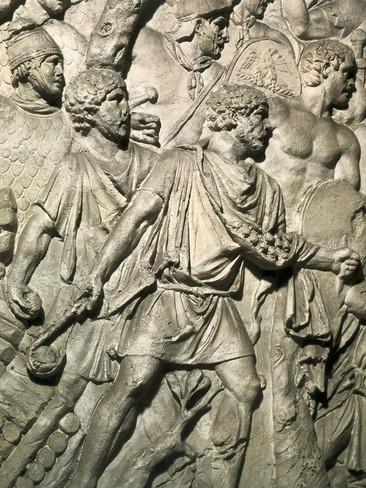
as did the Romans

image7roman.jpg

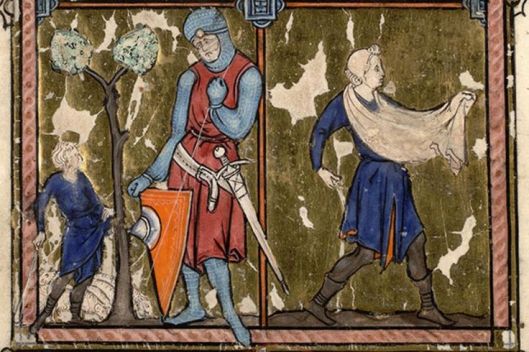
as did medieval westerners.

image8medieval.jpg

Slings shouldn’t be confused with slingshots, by the way.  (Or “catapult” if you’re one of our British friends.)

image9slingshot.jpg

This is the weapon of choice of the cartoon character, Dennis the Menace.

image10dmenace.jpg

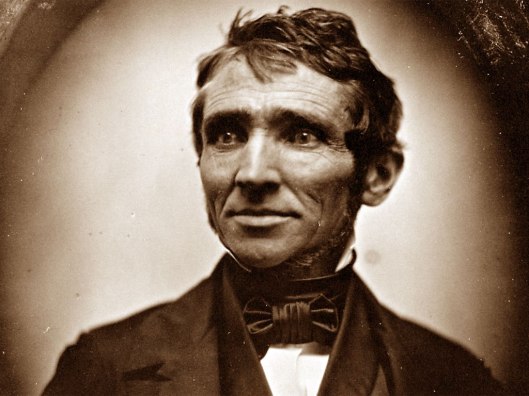
These are a modern invention which requires a large rubber band (an “elastic”) to propel the missile and such rubber bands can only come from the 1840s and beyond, when the process of heat-hardening rubber (“vulcanization”) was patented by Charles Goodyear.

image11chasgoodyear.jpg

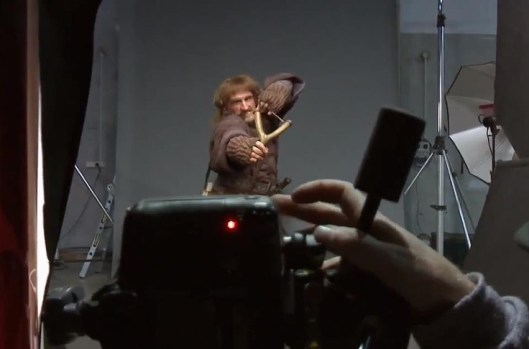
For us, then, the image of Ori in P Jackson’s film armed with a slingshot

image12oriwithslingshot.jpg

goes into our catalogue of anachronisms, like the steam engine whistle, the popgun, and the tomatoes in The Hobbit.

But, as we were saying, small David has no fear of big Goliath, as one of those stones from the riverbed stuns the giant warrior, allowing David to use Goliath’s own sword to cut off his head.

image13dandg.jpg

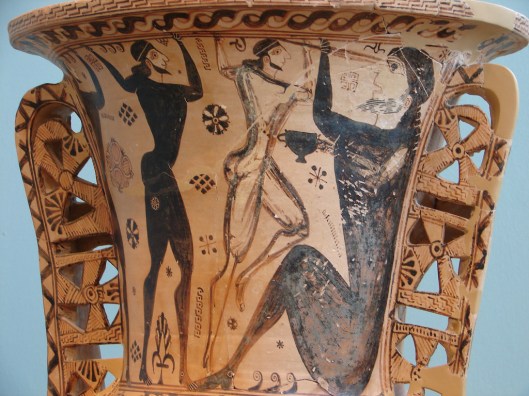
In ancient Greek tradition, Polyphemus the Cyclops obviously thinks his size will allow him to consume all of Odysseus’ men—and then Odysseus, too, saving him for last as a “guest gift”.

image14poly.jpg

Big body, however, doesn’t necessarily mean big brain as Odysseus gets the Cyclops drunk and then blinds him with his own staff.

image15blinding.jpg

Then, he uses the Cyclops’ own sheep as escape vehicles for himself and his men.

image16escaping.jpg

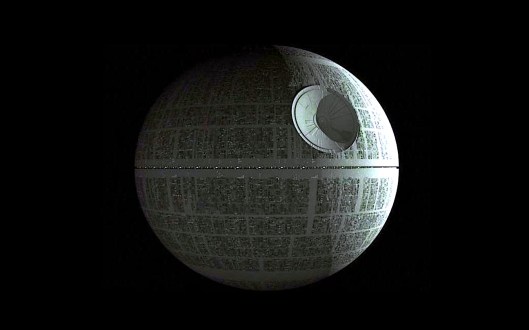
Small versus big is a major theme in Star Wars, from the fact that the gigantic Death Star has a single ventilator duct which makes it vulnerable

image17deathstar.jpeg

to attack by a single fighter,

image18xwing.jpg

to the ferocious Ewoks,

image19ewoks.jpg

and, of course, Yoda, with his famous question.

image20yoda.jpg

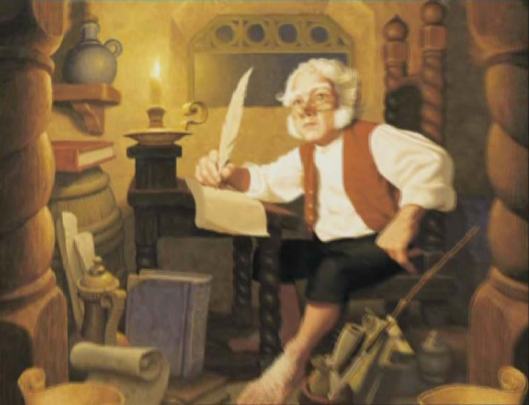
And then there are The Hobbit and The Lord of the Rings, where the world of the small and tough seems to be everywhere, from the hobbits

image21hobbit.jpg

to the dwarves

image22dwarves.jpg

and even to the Woses.

image23woses.jpg

Their opponents are suitably large—trolls,

image24trolls.jpg

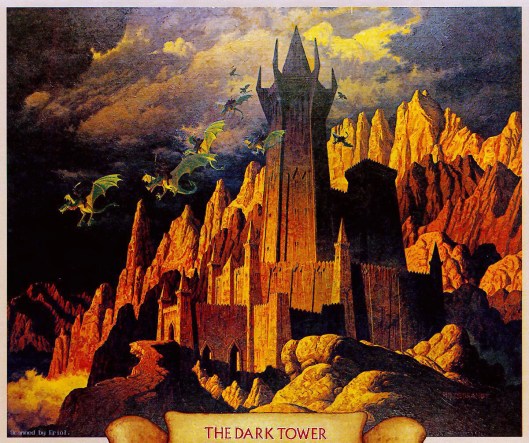
dragons

image25smaug.jpg

wizards

image26saruman.jpg

to the biggest evil in Middle-earth (although it’s not clear, really, how big he is, physically).

image27baraddur.jpg

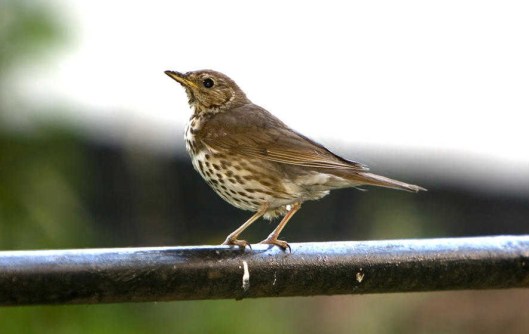
But there’s someone even smaller in The Hobbit who, because of that size, perhaps, is left behind, but is crucial to the story:  the elderly thrush

image28thrush.jpg

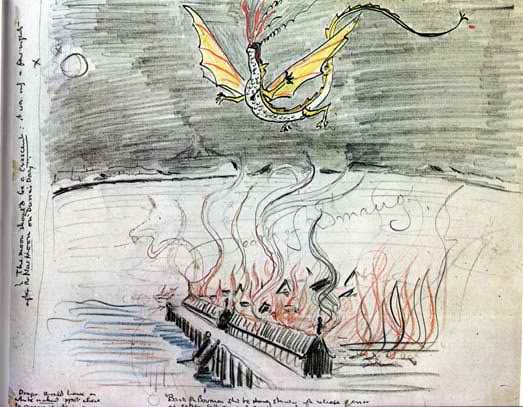
who informs Bard the Bowman just where to fire that black arrow which never fails him—and doesn’t this time, thanks to the bird.

image29deathofsmaug.jpg

We were sorry that his part was completely removed from The Battle of the Five Armies, but perhaps this was, in fact, one of the few times when the small hero lost to the big–studio.

Thanks, as ever, for reading.

MTCIDC

CD


PS

Here’s a LINK to an amazing demonstration of just how accurate the sling can be.

Legionnaire, But No Disease

28 Wednesday Mar 2018

Posted by Ollamh in Films and Music, Heroes, Military History

≈ Leave a comment

Tags

Africa, Alexandre Dumas, Algeria, Beau Geste, Beau Hunks, Camels, Chasseurs d'Afrique, Film, Flying Deuces, Follow that Camel, French Conquest of Algeria, French Foreign Legion, Garde Suisse, Genoese, Laurel and Hardy, Legions, Louisa de Ramee, military, Ouida, P.C. Wren, Sahara, The Last Remake of Beau Geste, The Three Musketeers, Under Two Flags, uniforms, Zouaves

As always, dear readers, welcome!

Although we do a lot of Tolkien, we set up this blog for adventure in general and, in this posting, we’ve gone to a completely different world—as you’ll see.

When we think of the Sahara, we immediately see:

a. a satellite map, which shows us just how huge it is

image1sahara.jpg

b. and camels—although they aren’t native, they’ve been there a long time, having been introduced from Arabia perhaps about 300Ad

image2camel.jpg

c. and, of course, desert warriors

image3desertwarrior.jpg

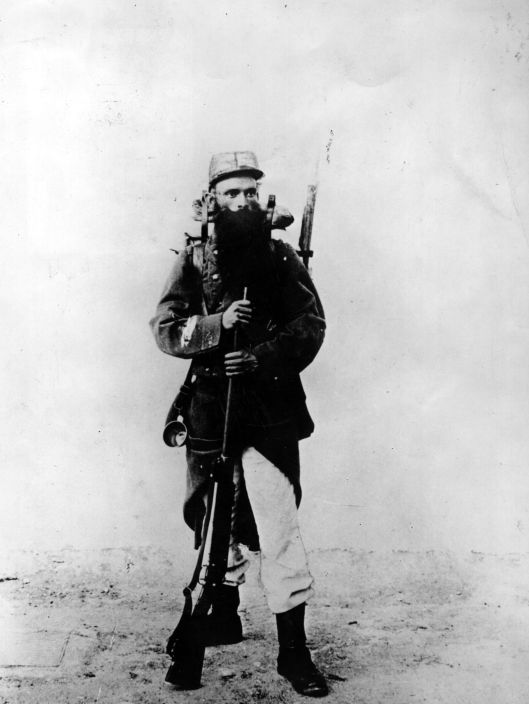
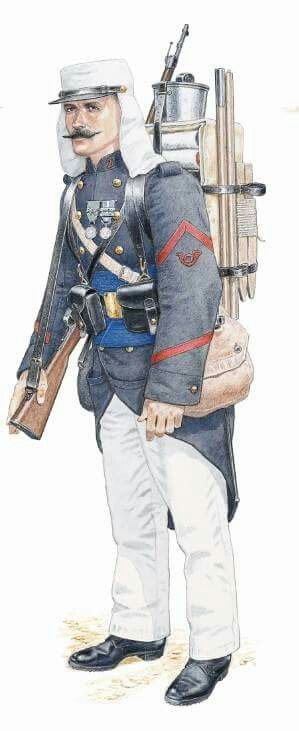
d. and, also, of course, their opponents, the French Foreign Legion

image4ffl.jpeg

e. or, with a bit of a trim—and in color—

image5fflcolor.jpg

The Foreign Legion were hardly the first foreigners in the service of France.  Medieval French kings had used Genoese crossbowmen.

image6genoesecrossbowmen.jpg

And the later kings of France had, as part of their household guards, the Garde Suisse.

image7gardesuisse.jpg

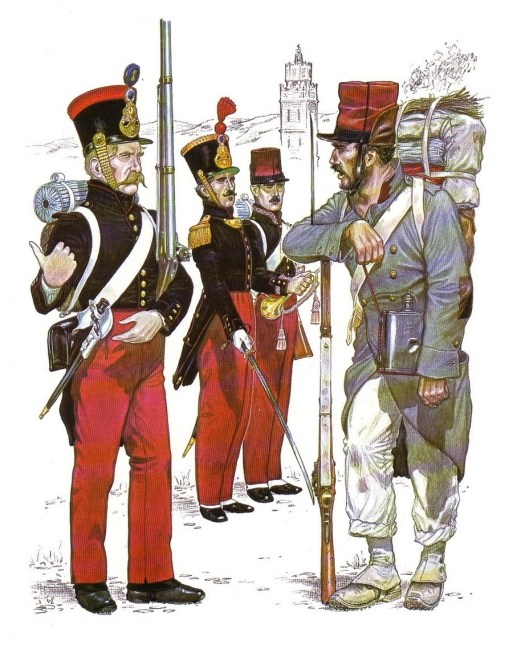
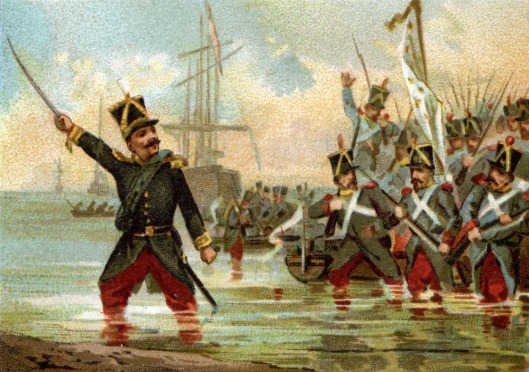
The Foreign Legion was raised in 1831 and used, at first, during the French conquest of Algeria.

image8firstuniform.jpg

image9frinvasionalgeria.jpg

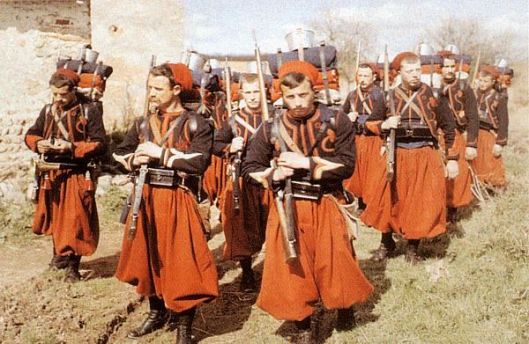
As Algeria was exotic, so were the soldiers there, beginning with the dashing Zouaves, originally locals, but gradually mostly French.

image10zouave.jpg

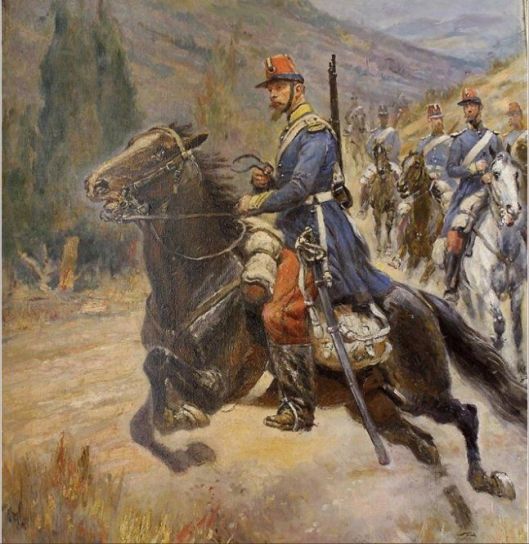
Along with these were the Chasseurs d’Afrique,

image11chass.jpg

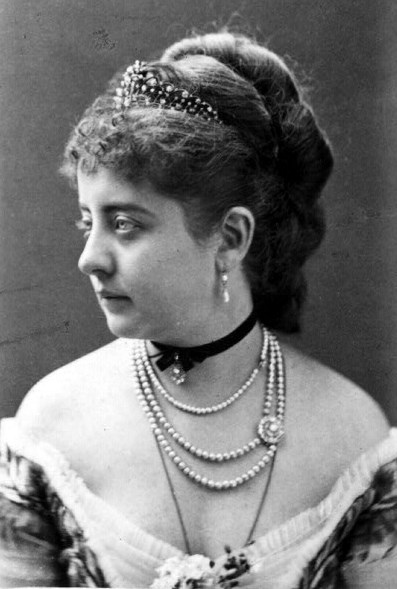
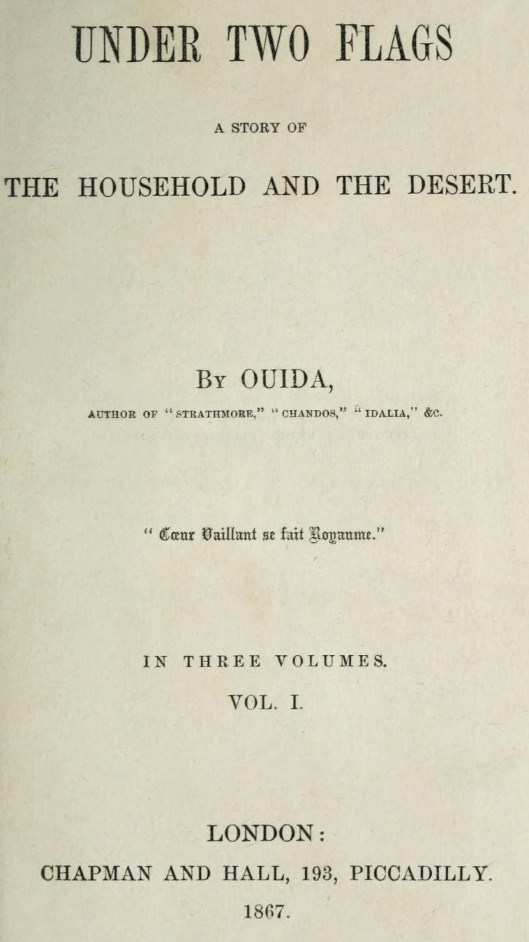
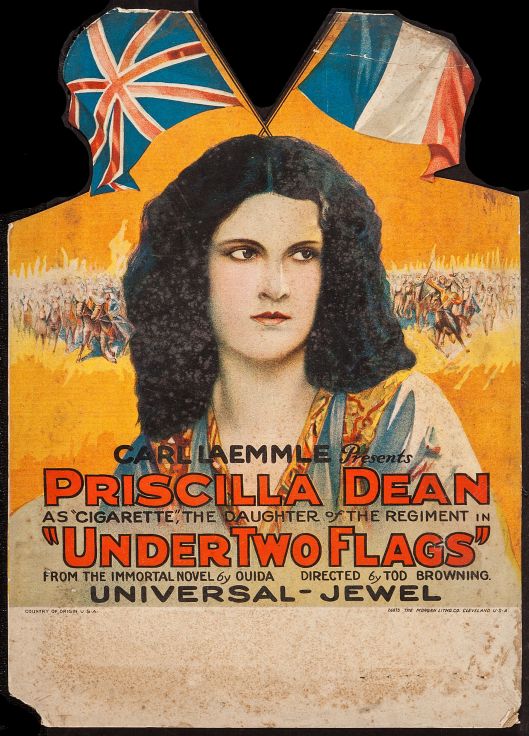
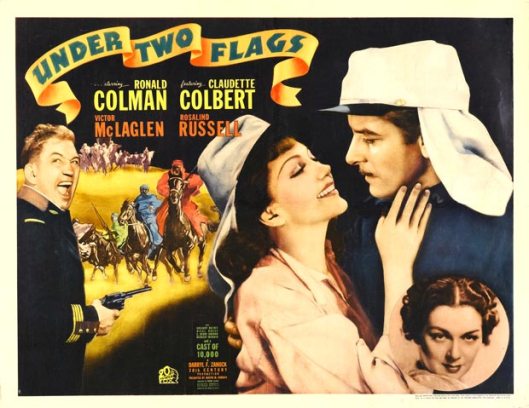
who formed the background for what we think is the first North African adventure novel in English, Ouida (Louisa de Ramee)’s Under Two Flags (1867)

image12louisa.jpg

image13book.jpg

which became a film twice, in 1922

image14nineteentwentytwo.jpg

And in 1936.

image15nineteenthirtysix.jpg

Oddly, the Chasseurs d’Afrique of the novel were replaced, in the 1936 film by the Foreign Legion—perhaps because the script writers thought that the Foreign Legion would have been a more familiar unit to their audience?

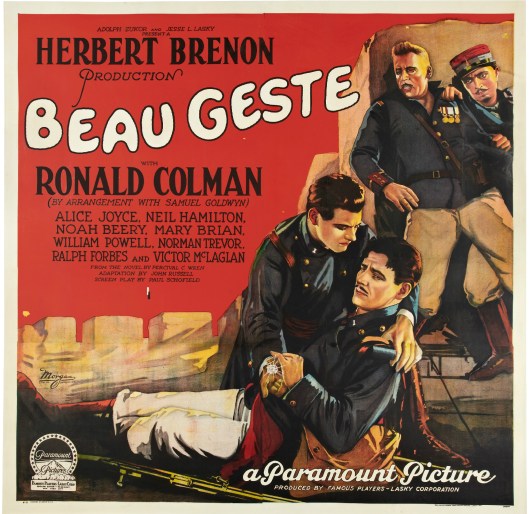
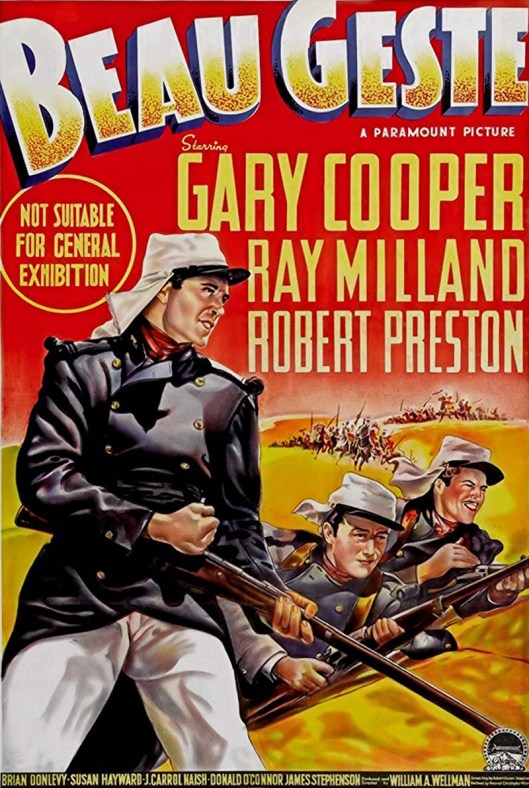
If so, it may have been because of P.C. Wren’s 1924 novel, Beau Geste,

image16bg1924.jpg

which has appeared a number of times on the screen, initially in silent form in 1926,

image17bg1926.jpg

and again as a “talkie” in 1939

image18bg1939.jpg

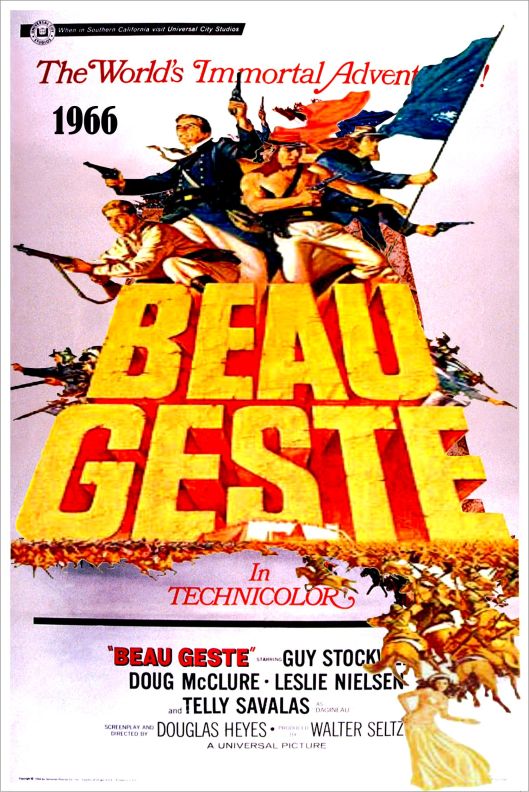
and again in full color in 1966.

image19bg1966.jpg

The book—and the film’s—popularity—the story was all about noble sacrifice—and exotic desert adventure—did not escape satire.  As early as 1931, two of our favorite early film comedy stars, Stan Laurel and Oliver Hardy,

image20laurelandhardy.jpg

appeared in their longest short (37 minutes—but it which sounds like a contradiction in terms), Beau Hunks.

image21hunks.jpg

This title is based upon what appears to be a double ethnic slur, Bo- from “Bohemian” + Hunk- from “Hungarian”, so a disparaging reference to a central European—a lower class one, at that.  (It makes us thankful that it appears to have disappeared entirely as a slang term:  in our current world, we don’t need any more ethnic attacks—we have plenty already.)

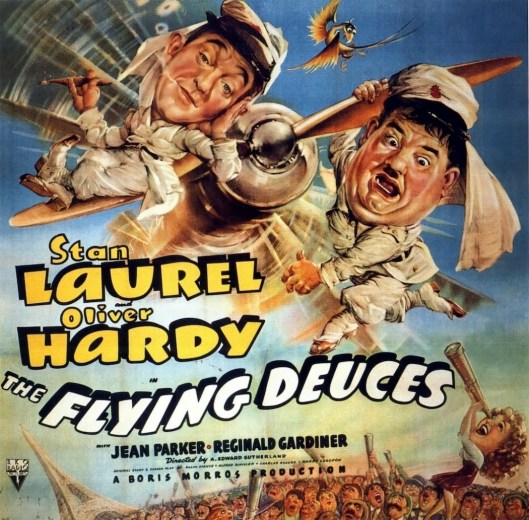
This was remade in 1939 as Flying Deuces.

image22flying.jpg

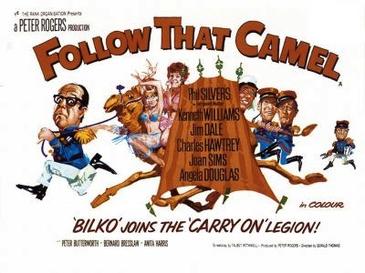
This wasn’t the end of such cheerful assaults, however.  In 1967, there was Follow That Camel (from the British comedy series “Carry On…)

image23follow.jpeg

and, appropriately, in 1977, came The Last Remake of Beau Geste.

image24lastremake.jpg

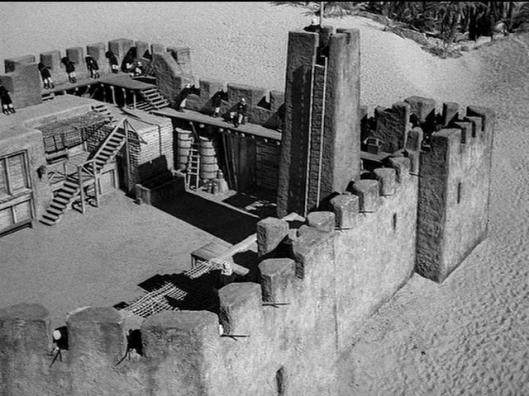
All the same, we still love the old movie, with its last-ditch defense of Fort Zinderneuf,

image25ftz.jpg

where, borrowing from Dumas’ The Three Musketeers,

image26three.jpg

image27dumas.jpg

in desperation, the defenders prop up dead legionnaires to make their numbers appear greater than they are.

How could people with a passion for adventure not find that appealing?

Thanks, as ever, for reading

and, as always,

MTCIDC

CD


← Older posts
Newer posts →

The Doubtful Sea Series Facebook Page

The Doubtful Sea Series Facebook Page

  • Ollamh

Categories

  • Artists and Illustrators
  • Economics in Middle-earth
  • Fairy Tales and Myths
  • Films and Music
  • Games
  • Heroes
  • Imaginary History
  • J.R.R. Tolkien
  • Language
  • Literary History
  • Maps
  • Medieval Russia
  • Military History
  • Military History of Middle-earth
  • Narnia
  • Narrative Methods
  • Poetry
  • Research
  • Star Wars
  • Terra Australis
  • The Rohirrim
  • Theatre and Performance
  • Tolkien
  • Uncategorized
  • Villains
  • Writing as Collaborators
Follow doubtfulsea on WordPress.com

Across the Doubtful Sea

Recent Postings

  • A Moon disfigured December 17, 2025
  • On the Roads Again—Once More December 10, 2025
  • (Not) Crossing Bridges December 3, 2025
  • On the Road(s) Again—Again November 26, 2025
  • On the Road(s) Again November 19, 2025
  • To Bree (Part 2) November 12, 2025
  • To Bree (Part 1) November 5, 2025
  • A Plague o’ Both—No, o’ All Your Houses! October 29, 2025
  • It’s in Writing (2:  I’st a Prologue, or a Poesie for a Ring?) October 22, 2025

Blog Statistics

  • 103,224 Views

Posting Archive

  • December 2025 (3)
  • November 2025 (4)
  • October 2025 (5)
  • September 2025 (4)
  • August 2025 (4)
  • July 2025 (5)
  • June 2025 (4)
  • May 2025 (4)
  • April 2025 (5)
  • March 2025 (4)
  • February 2025 (4)
  • January 2025 (5)
  • December 2024 (4)
  • November 2024 (4)
  • October 2024 (5)
  • September 2024 (4)
  • August 2024 (4)
  • July 2024 (5)
  • June 2024 (4)
  • May 2024 (5)
  • April 2024 (4)
  • March 2024 (4)
  • February 2024 (4)
  • January 2024 (5)
  • December 2023 (4)
  • November 2023 (5)
  • October 2023 (4)
  • September 2023 (4)
  • August 2023 (5)
  • July 2023 (4)
  • June 2023 (4)
  • May 2023 (5)
  • April 2023 (4)
  • March 2023 (5)
  • February 2023 (4)
  • January 2023 (4)
  • December 2022 (4)
  • November 2022 (5)
  • October 2022 (4)
  • September 2022 (4)
  • August 2022 (5)
  • July 2022 (4)
  • June 2022 (5)
  • May 2022 (4)
  • April 2022 (4)
  • March 2022 (5)
  • February 2022 (4)
  • January 2022 (4)
  • December 2021 (5)
  • November 2021 (4)
  • October 2021 (4)
  • September 2021 (5)
  • August 2021 (4)
  • July 2021 (4)
  • June 2021 (5)
  • May 2021 (4)
  • April 2021 (4)
  • March 2021 (5)
  • February 2021 (4)
  • January 2021 (4)
  • December 2020 (5)
  • November 2020 (4)
  • October 2020 (4)
  • September 2020 (5)
  • August 2020 (4)
  • July 2020 (5)
  • June 2020 (4)
  • May 2020 (4)
  • April 2020 (5)
  • March 2020 (4)
  • February 2020 (4)
  • January 2020 (6)
  • December 2019 (4)
  • November 2019 (4)
  • October 2019 (5)
  • September 2019 (4)
  • August 2019 (4)
  • July 2019 (5)
  • June 2019 (4)
  • May 2019 (5)
  • April 2019 (4)
  • March 2019 (4)
  • February 2019 (4)
  • January 2019 (5)
  • December 2018 (4)
  • November 2018 (4)
  • October 2018 (5)
  • September 2018 (4)
  • August 2018 (5)
  • July 2018 (4)
  • June 2018 (4)
  • May 2018 (5)
  • April 2018 (4)
  • March 2018 (4)
  • February 2018 (4)
  • January 2018 (5)
  • December 2017 (4)
  • November 2017 (4)
  • October 2017 (4)
  • September 2017 (4)
  • August 2017 (5)
  • July 2017 (4)
  • June 2017 (4)
  • May 2017 (5)
  • April 2017 (4)
  • March 2017 (5)
  • February 2017 (4)
  • January 2017 (4)
  • December 2016 (4)
  • November 2016 (5)
  • October 2016 (6)
  • September 2016 (5)
  • August 2016 (5)
  • July 2016 (5)
  • June 2016 (5)
  • May 2016 (4)
  • April 2016 (4)
  • March 2016 (5)
  • February 2016 (4)
  • January 2016 (4)
  • December 2015 (5)
  • November 2015 (5)
  • October 2015 (4)
  • September 2015 (5)
  • August 2015 (4)
  • July 2015 (5)
  • June 2015 (5)
  • May 2015 (4)
  • April 2015 (3)
  • March 2015 (4)
  • February 2015 (4)
  • January 2015 (4)
  • December 2014 (5)
  • November 2014 (4)
  • October 2014 (6)
  • September 2014 (1)

Blog at WordPress.com.

  • Subscribe Subscribed
    • doubtfulsea
    • Join 78 other subscribers
    • Already have a WordPress.com account? Log in now.
    • doubtfulsea
    • Subscribe Subscribed
    • Sign up
    • Log in
    • Report this content
    • View site in Reader
    • Manage subscriptions
    • Collapse this bar
 

Loading Comments...