• About

doubtfulsea

~ adventure fantasy

Tag Archives: The Lord of the Rings

Of Boats and Boromir

18 Wednesday Nov 2015

Posted by Ollamh in Fairy Tales and Myths, J.R.R. Tolkien, Narrative Methods, Poetry, Uncategorized

≈ Leave a comment

Tags

Abbotsford, Anduin, Aragorn, boat, Boromir, burial, Camelot, Edoras, Eglinton Tournament, Falls of Rauros, Gimli, Gondor, Gyeongju, Henryk Siemiradski, Hero-Worship and the Heroic in History, Horace Walpole, Ibn Fadlan, Ibn Fadlan and the Rusiyyah, Idylls of the King, Ivanhoe, Journal of Islamic and Arabic Studies, King Arthur, Korea, Legolas, medievalism, neo-medievalist, On Heroes, poetry, pre-Romantics, Prose Edda, Pugin, Rohan, Romanticism, Ship burial, Silla, Sir Frank Dicksee, Sir Lancelot, Sir Walter Scott, Snorri Sturluson, Snorro, St. George's chapel, Story, Strawberry Hill, Sutton Hoo, Tennyson, The Departure of Boromir, The Hero as Divinity. Odin. Paganism: Scandinavian Mythology, The Lady of Shalott, The Lord of the Rings, The Vikings (1958), Thomas Carlyle, Tolkien, vaults, Victorian, viking burial, vikings, Westminster, Windsor

Dear Reader,

Welcome, as always.

In this posting, we want to take something we mentioned in our last about Tolkien having read Tennyson. This is our guess—but in the late Victorian world into which JRRT was born, he must have been inescapable.

We _could_ say that medievalism was in the air then, brought in by Romanticism—and even before, by pre-Romantics, like Horace Walpole, with his mock-castle at Strawberry Hill (1749-76).

walpole2964-correctionS

Strawberry_Hill_House_from_garden_in_2012_after_restoration]

There were lots of early neo-medievalist things—some of Sir Walter Scott’s novels, like Ivanhoe (1820)—not to mention his mock-castle, at Abbotsford.

OLYMPUS DIGITAL CAMERA

Abbotsford_house

the absolutely wonderful and crazy Eglinton Tournament of 1839 (we may have to have a posting about this)

A_view_of_the_lists._Eglinton_Tournament1839

the medieval-revival architecture of Pugin

augustuspugin

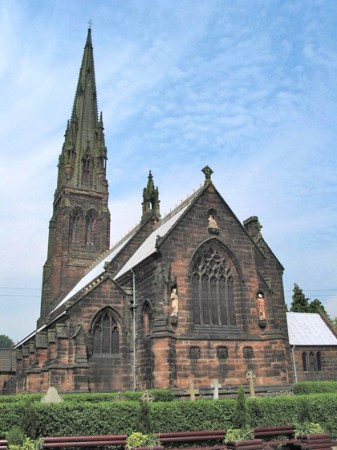
stgilescheadle184046

before Tennyson began publishing Idylls of the King in 1859, with its poems about King Arthur and his court.
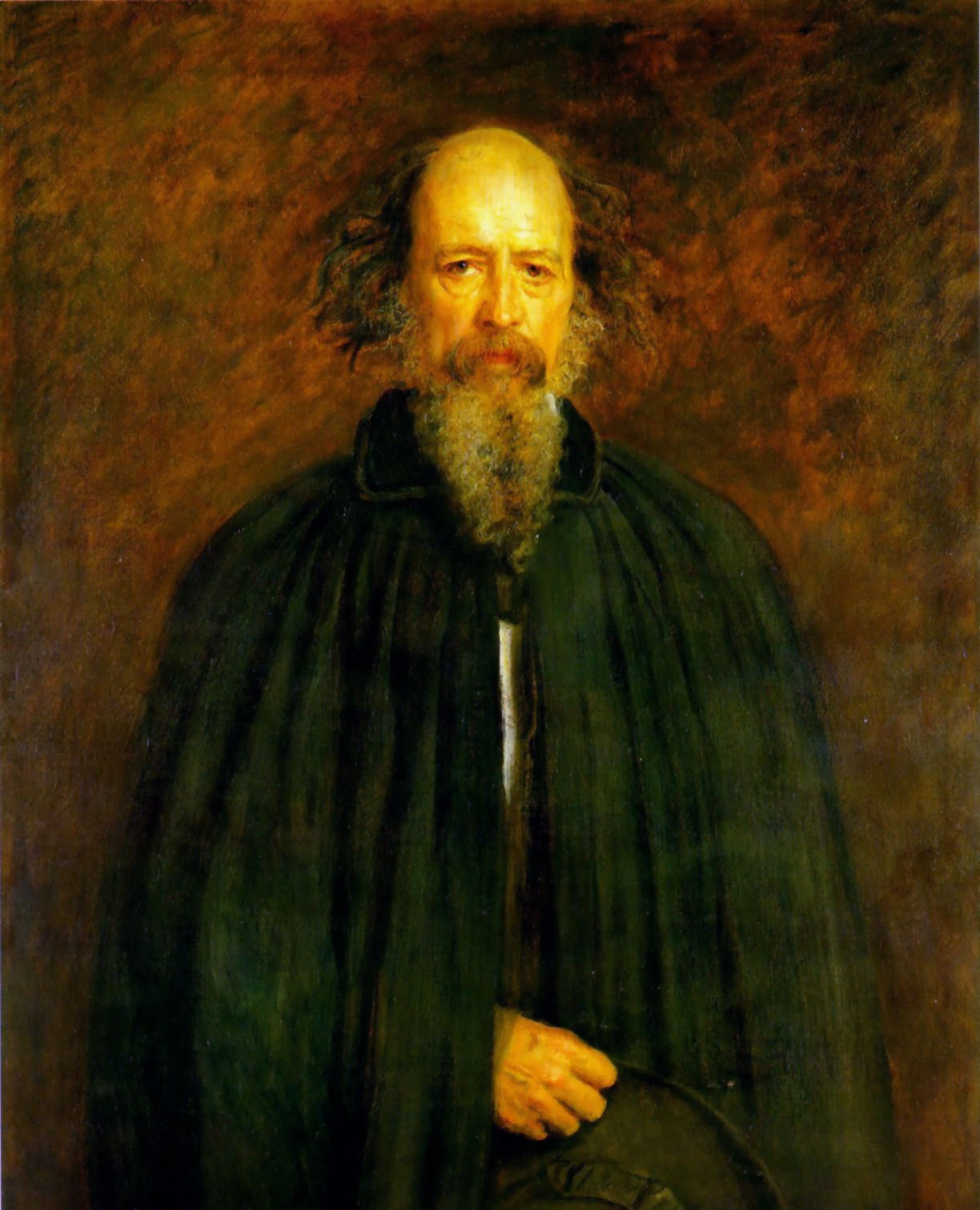
John_everett_millais_portrait_of_lord_alfred_tennyson

idylls1859

Even before Idylls, Tennyson had been interested in writing about King Arthur’s world, producing the poem “The Lady of Shalott” in his Poems (1833, revised version 1842), in this poem, a lady under a curse sees, from her tower, Sir Lancelot riding by, and falls in love with him without ever meeting him. What happens next was what brought us to write this posting.

Because it reminded us of Boromir.

At the beginning of The Two Towers, Aragorn finds the dying Gondorian sitting, with his back against a tree, and, scattered around him, and “Many Orcs lay slain, piled all about him and at his feet.” (The Two Towers, Chapter 1, “The Departure of Boromir”) When Legolas and Gimli join Aragorn, they decide upon a hasty, but they hope, appropriate burial.

“ ‘Then let us lay him in a boat with his weapons, and the weapons of his vanquished foes,’ said Aragorn. ‘We will send him to the Falls of Rauros and give him to the Anduin. The River of Gondor will take care at least that no evil creature dishonours his bones.’” (The Two Towers, Chapter 1, “The Departure of Boromir”)

In other burial scenes of important people in The Lord of the Rings, we see that the Kings and Stewards of Gondor are laid to rest in special vaults, rather like medieval and later English kings buried either in St. George’s chapel at Windsor or in Westminster Abbey.

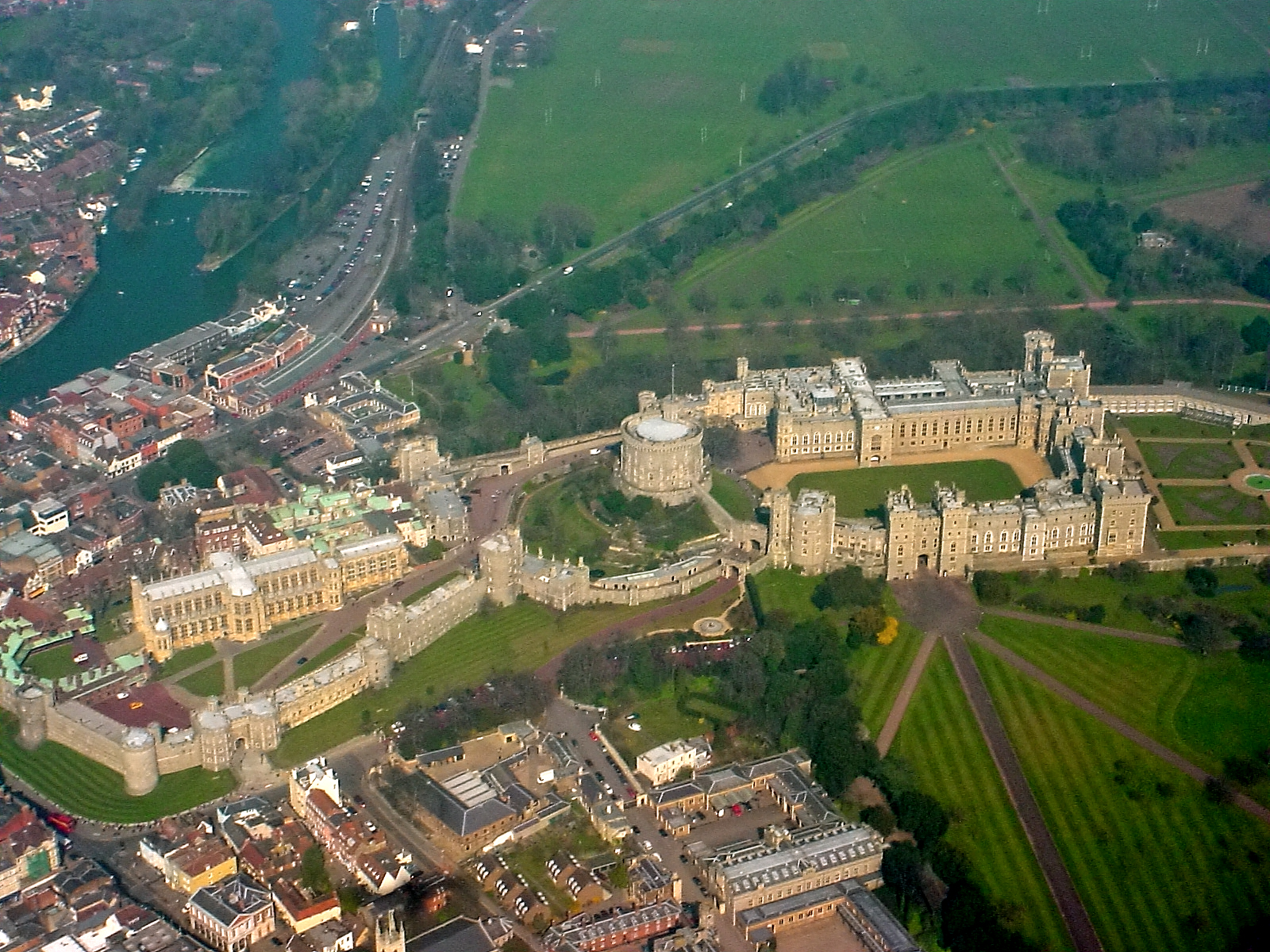
tombofthestewards

Windsor_Castle_from_the_air

Westminster_Abbey_-_Thomas_Hosmer_Shepherd

The Kings of Rohan lie beneath a series of mounds just before Edoras,

simbelmyne_mounds

like those of the Silla kings of Korea at Gyeongju (57BC-935AD).
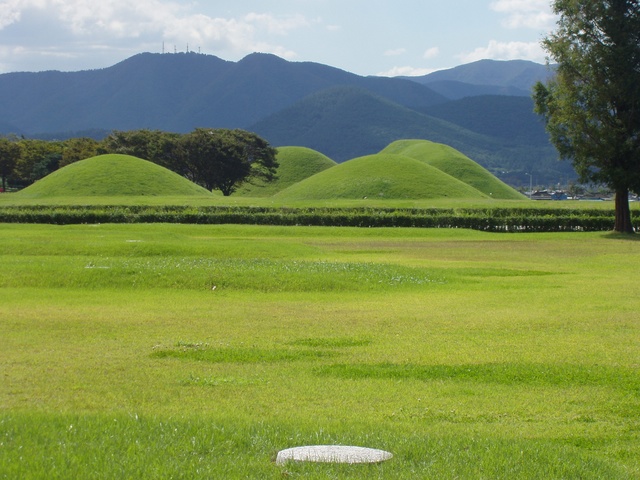
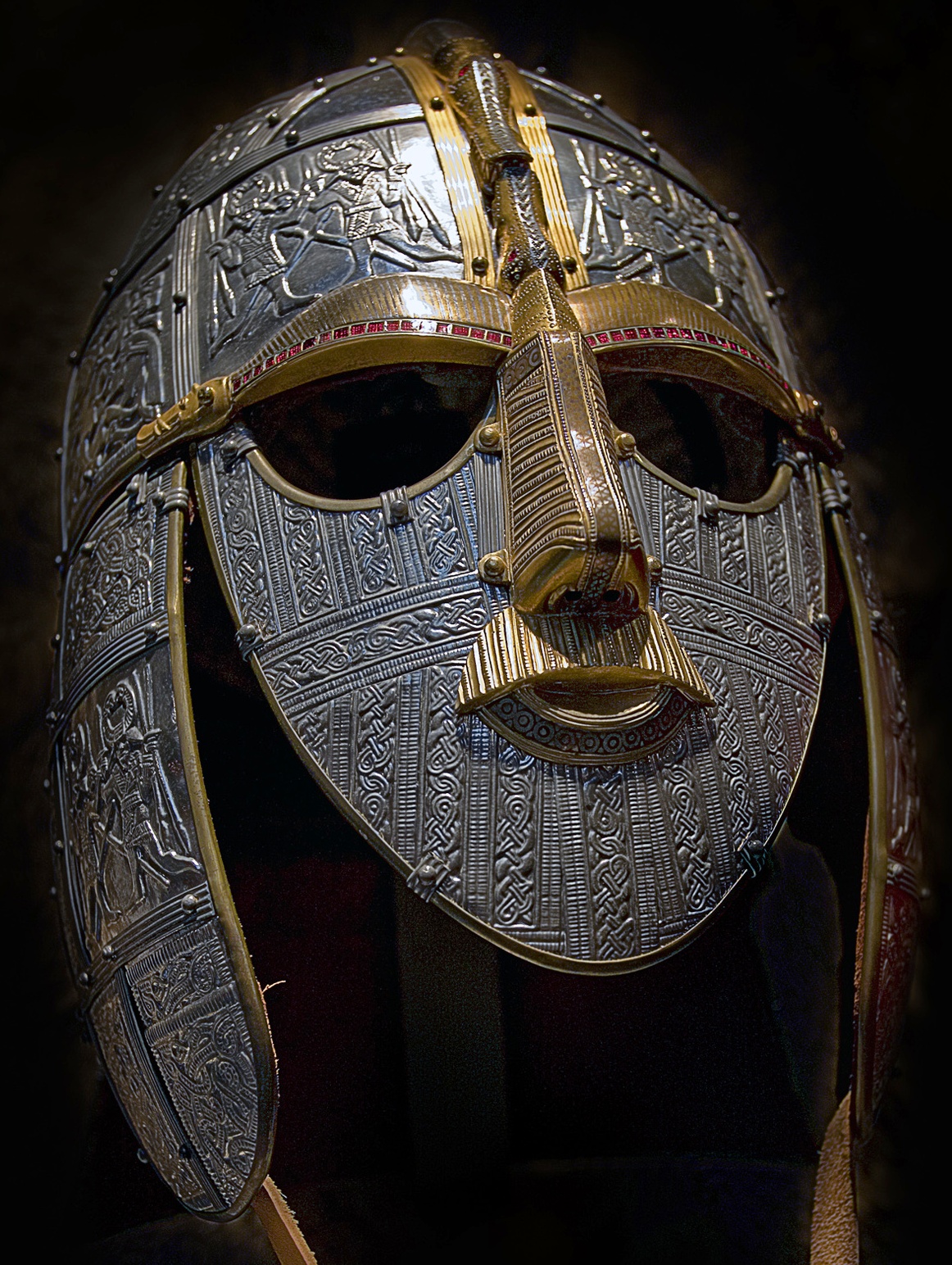
Or like the sort of ship burials of which Tolkien must have read in the newspapers of 1939, the famous Sutton Hoo grave.

ship

From which came treasures like this helmet (with its reconstruction).
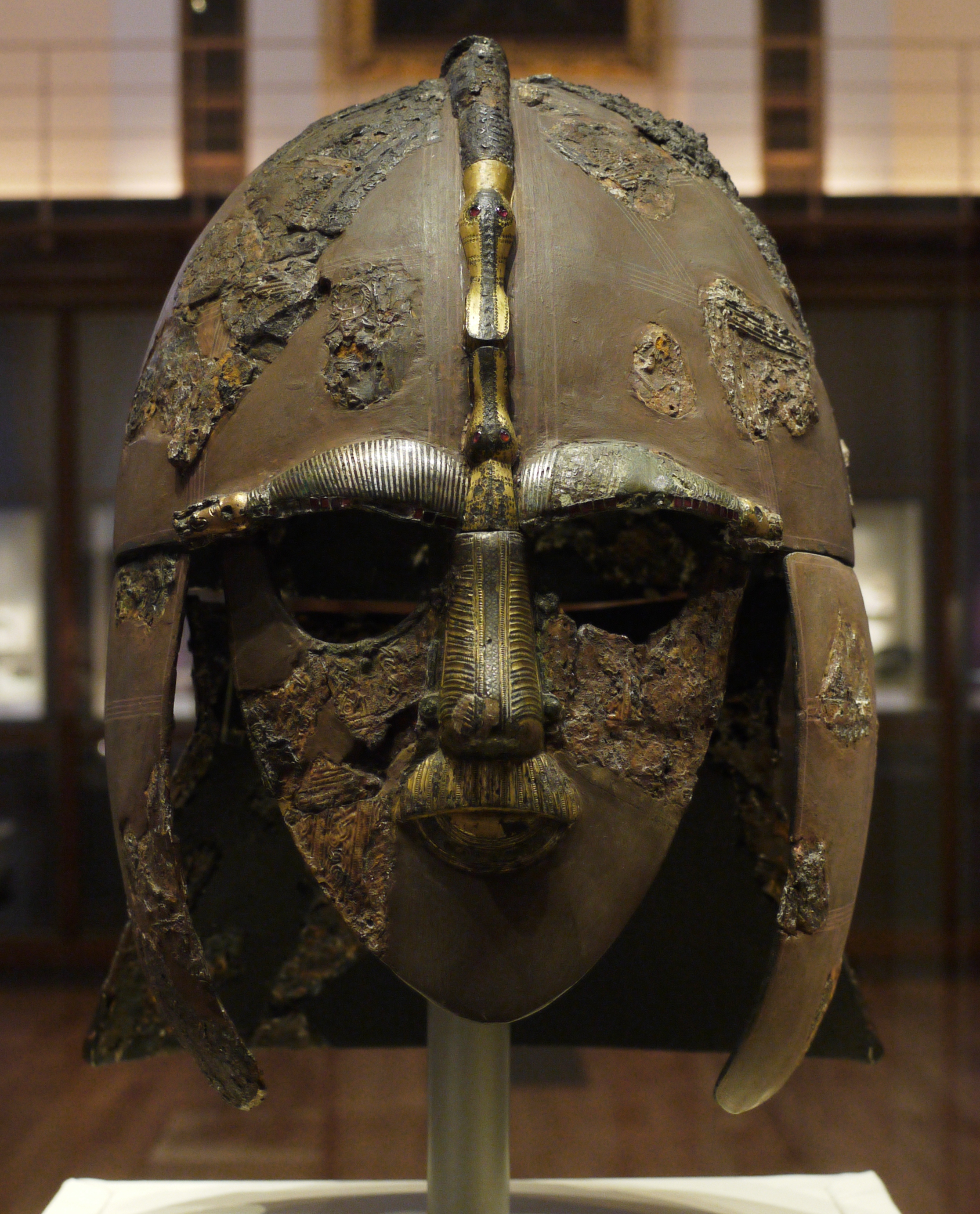
Sutton_hoo_helmet_room_1_no_flashbrightness_ajusted

Sutton_Hoo_helmet_reconstructed

A number of ship burials of northern European upper class people survive, all more or less in the same pattern: the ship is dragged to a spot where it is filled with the deceased, occasionally accompanied by others and even animals, and grave goods of a high quality, then a mound is built over it. The deceased may have been cremated beforehand, but not necessarily. There is a well-known description of this process by an Arab traveler, Ibn Fadlan. (for a translation of this with copious annotations, see James E. Montgomery, “Ibn Fadlan and the Rusiyyah”, Journal of Islamic and Arabic Studies 3, 2000—available on-line by googling “Ibn Fadlan and the Rusiyyah”)

Here’s an 1883 reconstruction of one part of that process by the Polish painter Henryk Siemiradski.

Funeral_of_ruthenian_noble_by_Siemiradzki

In contrast, the image of the deceased being placed in such a ship, the ship being launched, and then torched, would appear to be a Hollywood popularization, perhaps originating with the 1958 movie, The Vikings, of something rare (or at least difficult to document).

vikingsposter

At the conclusion of this film, a major character is given this treatment.

Vikiing Funeral - The Vikings burning ship

(That the Victorians were aware of this alternative can be seen in this 1893 painting by Sir Frank Dicksee.

dicksee1

Dicksee had based this painting not on a scholarly source, but upon a lecture by Thomas Carlyle, “The Hero as Divinity. Odin. Paganism: Scandinavian Mythology”, which he would have found in Carlyle’s On Heroes, Hero-Worship, and the Heroic in History. Carlyle very loosely cites “Snorro” for his description of such an event, by which he means Snorri Sturluson, author of the Prose Edda)

But this brings up back to “The Departure of Boromir”—and to Tennyson.

In “The Departure of Boromir”, as we have seen, Boromir is placed into one of the Elven boats.
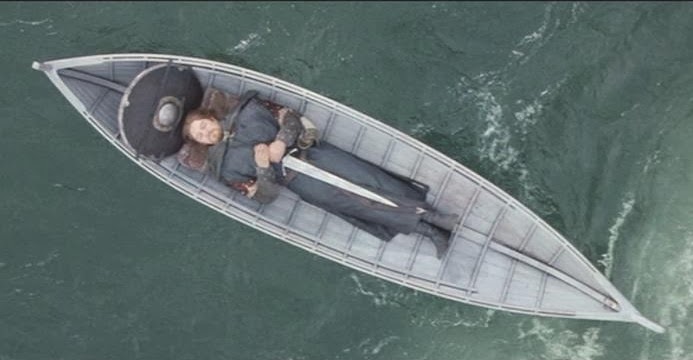
(FOTR) Boromir Dead in Boat

The three companions tow the boat as close to the Falls of Rauros as they can, then cast it loose to be carried over the Falls.
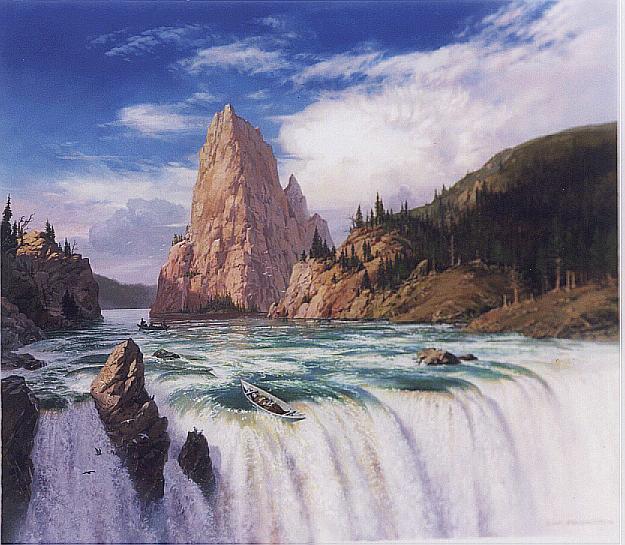
boromir_funerals

The companions, of course, are pressed for time: Frodo and Sam have gone one direction, Merry and Pippin have been carried off in another and there isn’t time, they feel, to bury Boromir or to build a cairn over him. As they have boats and there is the river below them, the method chosen seems a natural one, but we wondered if the author didn’t have Tennyson’s model in his mind, as well.

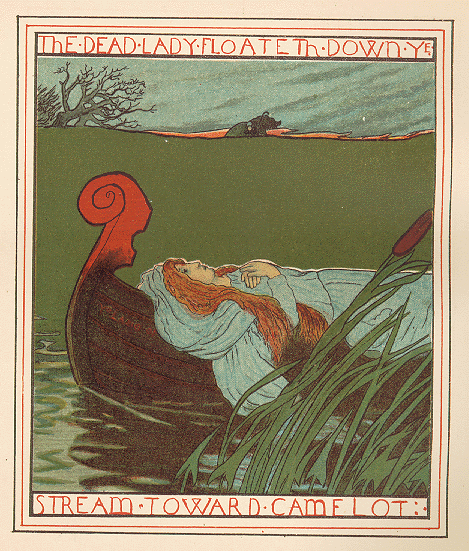
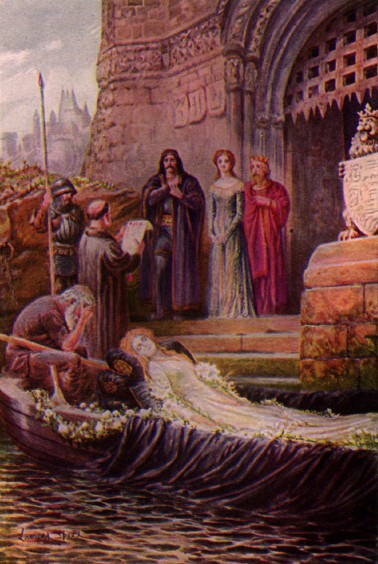
In “The Lady of Shalott”, after seeing Lancelot through her window (or in a reflection in the 1842 version of the poem), the Lady places herself in a small boat, with note in hand, and dies on her way down the river on the way to Camelot, apparently of a broken heart (as the backstory, appearing as early as the 13th century, tells us).
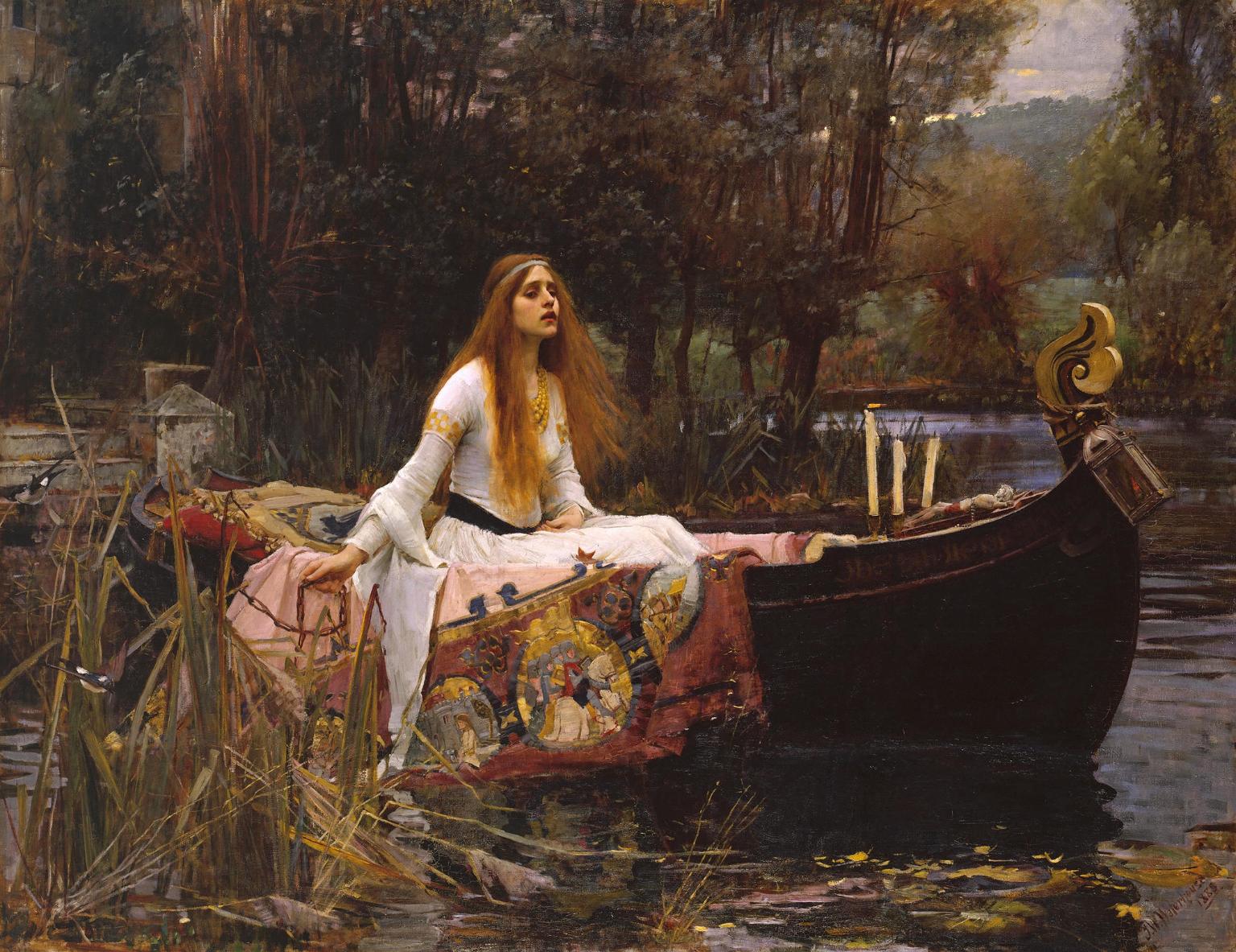
The Lady of Shalott 1888 by John William Waterhouse 1849-1917

robertson-the-lady-of-shalott

Not only would the poem (which has a rather catchy rhythm) have been readily available, but there were a number of paintings and engravings illustrating the story, practically from the time of the 1842 version.

Lady_of_Shalott_edmo lady1 lady2

lady9


lady10


lady13


lady14

lady15

This is not so dramatic as going over the falls and her death is pale in comparison to multiple arrow wounds, but there is that rhythm, the image of the body in the boat going downstream, and the popularity of the poet—plus the numerous illustrations. We’ll include a link to the poem so you can judge for yourself: was this a possible influence on JRRT?

Thanks, as always, for reading.

MTCIDC

CD

Armistice and Simbelmyne

11 Wednesday Nov 2015

Posted by Ollamh in J.R.R. Tolkien, Military History, Military History of Middle-earth

≈ Leave a comment

Tags

Allies, armistice, Armistice Day, barbed wire, Belgium, Christmas Truce of 1914, Eisenhower, Evermind, flamethrowers, France, German Government, Guy Fawkes Day, John McCrae, machine gun, maxim gun, military, military rifle, Paris, poisoned gas, poppies, Remembrance Day, Simbelmyne, tank, The Lord of the Rings, Theoden, Tolkien, truce, Veterans' Day, Western Front, Woodrow Wilson, Word War I, WWI Trenches

Dear Readers,

Welcome, as always.

“At the foot of the walled hill the way ran under the shadow of many mounds, high and green. Upon their western sides the grass was white as with drifted snow: small white flowers sprang there like countless stars amid the turf.

‘Look!’ said Gandalf. ‘How fair are the bright eyes in the grass! Evermind they are called, simbelmyne in this land of Men, for they blossom in all seasons of the year, and grow where dead men rest. Behold! we are come to the great barrows where the sires of Theoden sleep.’ “ (The Two Towers, Book 3, Chapter 6, “The King of the Golden Hall”)

simbelmynemounds

Like our bonus posting last week, for Guy Fawkes Day, this one is tied to a specific day, now called “Veterans’ Day” in the US, and “Remembrance Day” by our linguistic cousins around the world.

November 11th here was originally called “Armistice Day” when it was first declared by Woodrow Wilson in 1919. The change to “Veterans’ Day” came in 1954, but, to us, it would be good if it had remained as it was, both its name and what it commemorated, and President Eisenhower had chosen to add another holiday to the calendar, instead.

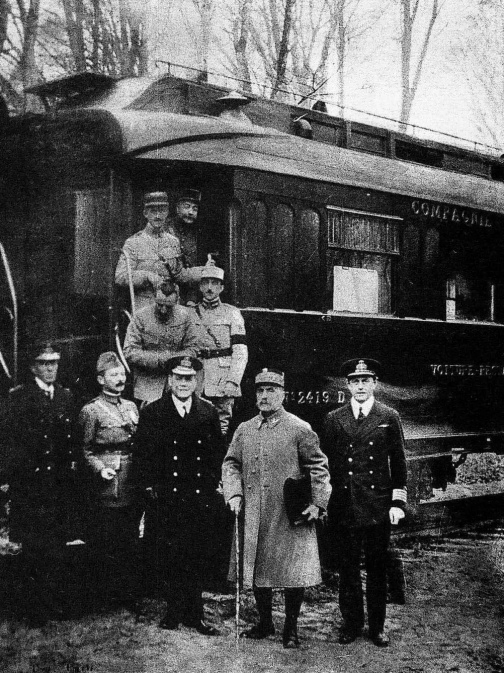
The armistice was, of course, the truce which marked the beginning of the end of World War I, the date and time—the 11th hour of the 11th day of 1918—agreed upon by commissions of the Allies and the Imperial German government who met in a railway car outside Paris in early November, after over a month of on-again-off-again negotiations. This was only a truce—the actual peace treaty was not agreed upon and didn’t come into effect until 10 January, 1920—but it did stop the fighting in the west almost immediately.

Armisticetrain_(slight_crop) Waffenstillstand_gr

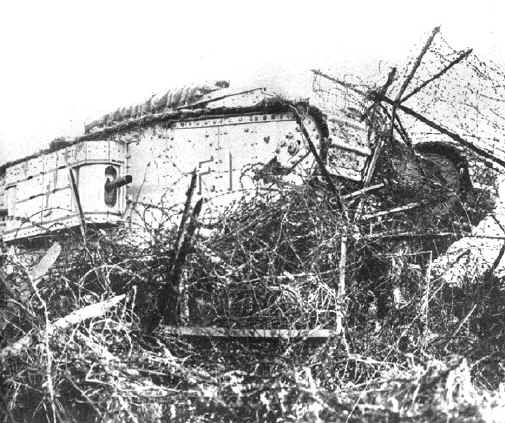
The war to which it gave a permanent pause had been appalling in its losses: over 17 million people had been killed and 20 million wounded and the weapons used to kill 11 million soldiers had gone from the ordinary military rifle to the machine gun to barbed wire to poisoned gas to flamethrowers to the tank—and that was just on land.

Short_Magazine_Lee-Enfield_Mk_1_(1903)_-_UK_-_cal_303_British_-_Armémuseum

gassed

barbedwire

1280px-Sargent,_John_Singer_(RA)_-_Gassed_-_Google_Art_Project

flamethrower-10215292

tank-wire

In the process, it had driven men to dig 500 miles of trenches on the Western Front, where they lived a life of perpetual misery.

_77694555_sommetrench

Thus, the news, even of a truce, was the best of news to soldiers and civilians on both sides.

armistice

The price for that truce and for the eventual peace was almost too much to bear: all over northern France and southern Belgium seemingly endless, but necessary, cemeteries had gradually sprung up and, with the coming of peace, had been rationalized and formalized so that they looked like militarized civilian graveyards. To visit that area today is to understand, in some small way, what a horror that war was for those caught in it. And this is just the Western Front: there are many more burial places to be.

zonnebeke.passendale.tynecot.air_.dkv_

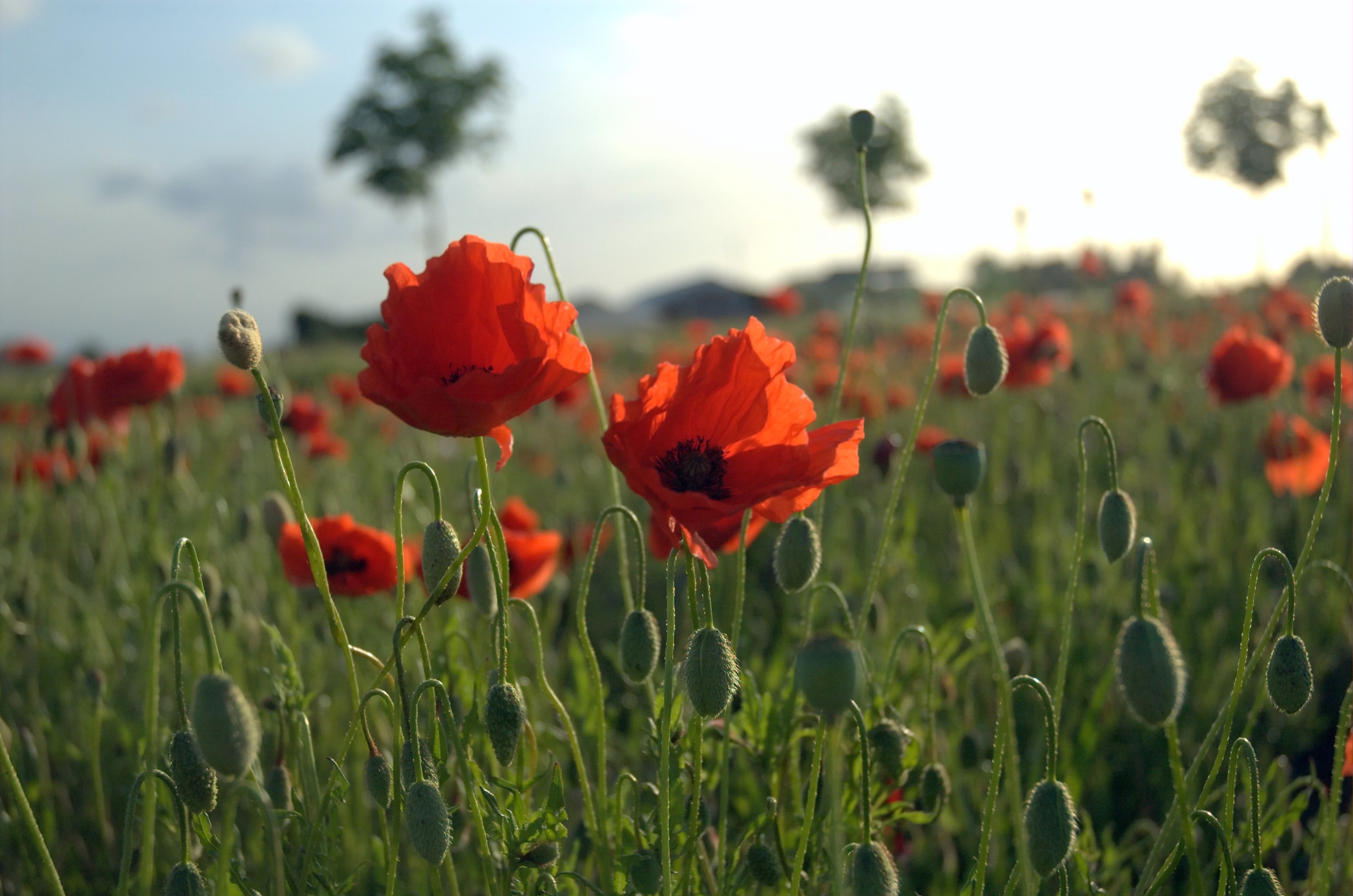
In 1921, people in the US began to wear little artificial poppies as a symbol of remembrance on 11 November and the custom was adopted abroad and still continues in Canada and Britain, at least. It is said that the custom was inspired by this poem, written by a Canadian soldier on the Western Front, John McCrae, in 1915. He had noted that poppies seemed to grow more quickly on ground which had been freshly turned—in the fighting and in the burials afterwards. And the image of the flowers, bright red as fresh blood, scattered across the fields was too powerful for a poet not to use, particularly a soldier-poet.

In_flanders_field_poppy_thumb

We here at Doubtful Sea want to commemorate all of the soldiers on both sides in this posting and wish that the famous Christmas Truce of 1914 had seen the end of the war, instead of four years and millions of deaths later.

Christmas-Day-Truce

And we offer, as Tolkien fans, not only the poppy, but the Evermind, the Simbelmyne, in remembrance.

Processed by: Helicon Filter; simbelmyneflower

Thanks, as always, for reading.

MTCIDC

CD
Like Smoke From a Fire: Sharkey’s End

04 Wednesday Nov 2015

Posted by Ollamh in Fairy Tales and Myths, Imaginary History, J.R.R. Tolkien, Maps, Narrative Methods, Research

≈ Leave a comment

Tags

Adventure, Birmingham, Branywine, Bywater, Coketown, Dickens, Dol Amroth, England, Ents, factory, Fangorn, feudalism, Galadriel, Gandalf, Grima, Hard Times, Hobbiton, Idylls, industrial, Industrial Revolution, Isengard, King Edward School, Medieval, Merry, Midlands, Mordor, Morris, Oxford, Palantir, Pippin, poetry, pre-industrial, Saruman, Sauron, Scouring of the Shire, Sharkey, Southfarthing, Tennyson, The Lord of the Rings, The Shire, Tolkien

Dear Readers,

Welcome, as always.

In a previous posting, we talked about Saruman as a kind of imitation Sauron and Isengard as a mini-Mordor.

sarum1

In this posting, we want to consider the implications of Gandalf’s remark about him in “Many Partings”, from The Return of the King: “I fancy he could do some mischief still in a small mean way.”

The mischief, when we see it, is definitely mean, but not small, even though confined to the limits of the Shire.

The world of The Lord of the Rings is a pre-industrial one. The most advanced technology, on the one hand, is the palantir (actually perhaps a magical, rather than mechanical, device)

palantir

and , on the other hand, a watermill.

j-r-r-_tolkien_-_the_hill_-_hobbiton-across-the-water_colored

Beyond that, it’s a medieval world, but without, it seems, feudalism, although there are, for example, castles and knights in the form of the Prince of Dol Amroth.

We can easily see why JRRT wanted this regression. On the one hand, like so many boys of his age, he had grown up reading Tennyson

John_everett_millais_portrait_of_lord_alfred_tennyson firstedition1859idylls

and William Morris

Morris-Portrait1

morris_tapestry

who had created a world of Victorian medievalism, Tennyson in poetry, Morris in many different art forms.

On the other, Tolkien had grown up in Birmingham, in the English Midlands, where there had been massive development throughout the era of the Industrial Revolution.

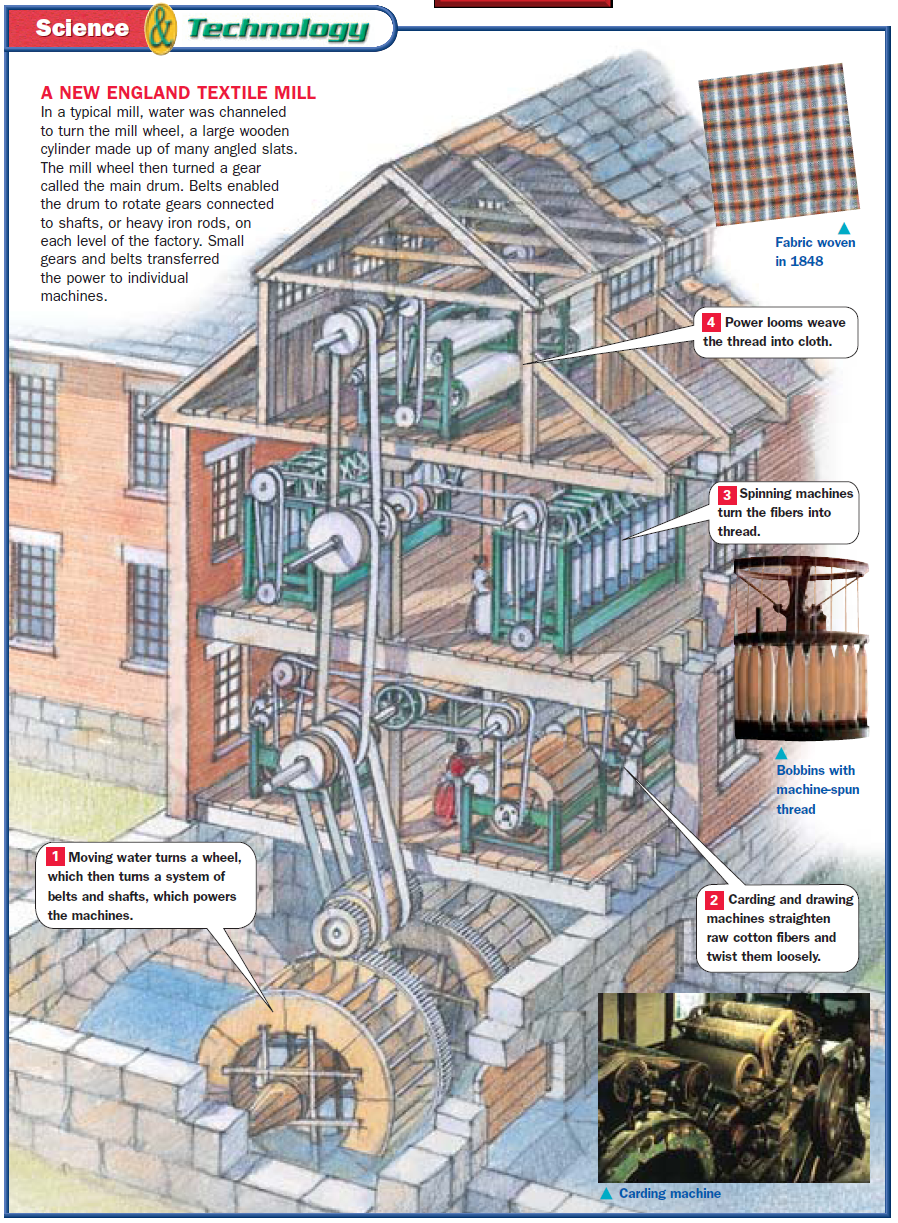
Textile Mill Diagram McConnel_&_Company_mills,_about_1820

Here’s Charles Dickens’ description of such a place from Hard Times (1856):

(Excerpt Describing Coketown)

Needless to say, although Tolkien kept a strong affection for King Edward School, where he was educated before Oxford,

KingEdwardsSchoolinBirmingham

he was less enthusiastic about the industrial world which surrounded it and this clearly colors his picture of Saruman. Look, for instance, at Fangorn’s description of him:

“He has a mind of metals and wheels; and he does not care for growing things, except as far as they serve him for the moment.” (The Two Towers, Book 1, Chapter 4, “Treebeard”) (It’s revealing, by the way that this is almost a quotation of something which Saruman later says of Gandalf, “When his tools have done their task he drops them.” The Return of the King, Book 2, Chapter 8, “The Scouring of the Shire”)

Saruman, then, with his metal mind, has turned the once-beautiful Isengardgreg-hildebrandt-isengard-orthanc-saruman-607429-1920x1080

into an arms factory

kruppworks

another Midlands,

isengardasfactory

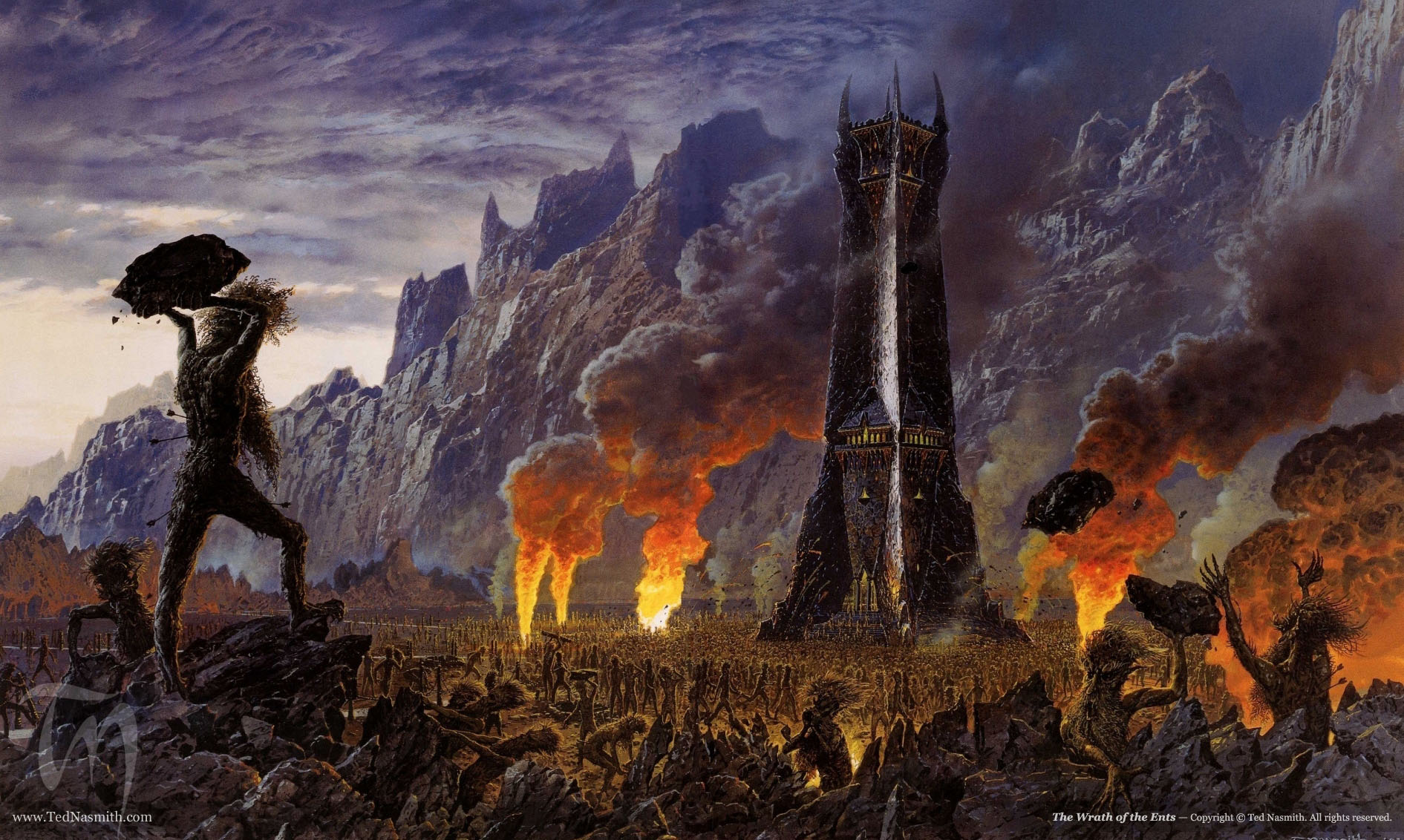
and has angered the Ents, as well, by the wanton destruction of trees, not just for fuel, it appears, but just out of sheer spitefulness.

The Wrath of the Ents, by Ted Nasmith

As we wrote earlier, all of this has remade Isengard into a mini-Mordor—as Frodo says: “Yes, this is Mordor…just one of its works. Saruman was doing its work all the time, even when he thought he was working for himself.” (The Return of the King, Book 2, Chapter 8, “The Scouring of the Shire”)

So, when Saruman, Grima in tow, leaves his ruined factory, one could almost imagine just what he might have in mind when he says to the hobbits:

“Well, it will serve you right when you come home, if you find things less good in the Southfarthing than you would like.” (The Return of the King, Book 2, Chapter 6, “Many Partings”)

We know from Merry and Pippin’s experience at the gate of Isengard that Saruman has been importing pipe-weed, a main export of the Southfarthing.

merrypippinisengard

But when the hobbits, having forced the gate at the Brandywine, are making their way towards Hobbiton, they begin to have a feeling that much more has been damaged than the South Farthing: “Still there seemed an unusual amount of burning going on, and smoke rose from many points round about. A great cloud of it was going up far away in the direction of the Woody End.” (The Return of the King, Book 2, Chapter 8, “The Scouring of the Shire”)

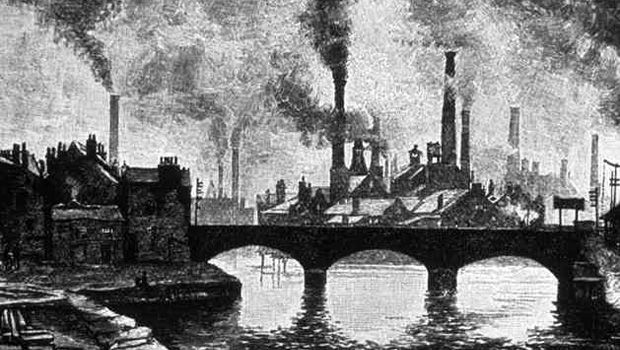
This smoke bears an ominous resemblance to the Midlands (and, in fact, to all of industrial England):

7ad841d6d5852b586a78fc03df7d64259715bddd.jpg__846x0_q80

There is worse to come, however: Bywater. “Many of the houses that they had known were missing. Some seemed to have been burned down. The pleasant row of old hobbit-holes in the bank on the north side of the Pool were deserted, and their little gardens that used to run down bright to the water’s edge were rank with weeds. Worse, there was a whole line of ugly new houses all along the Pool Side, where the Hobbiton Road ran close to the bank. An avenue of trees had stood there. They were all gone. And looking with dismay up the road towards Bag End they saw a tall chimney of brick in the distance. It was pouring out black smoke into the evening air.” (The Return of the King, Book 2, Chapter 8, “The Scouring of the Shire”)

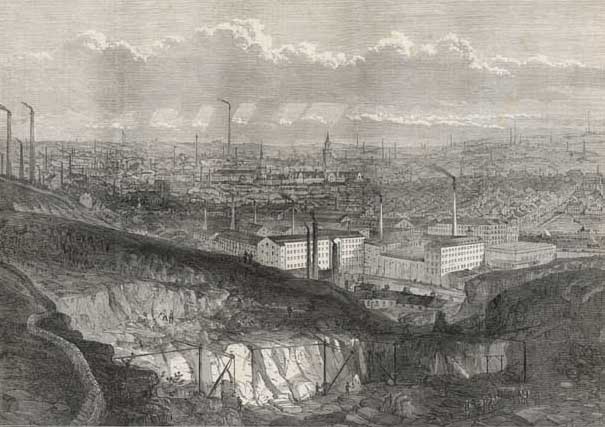
And here, we move from a single smoking mill to a smoking mill town.

BRADFORD/YORKSHIRE/1873

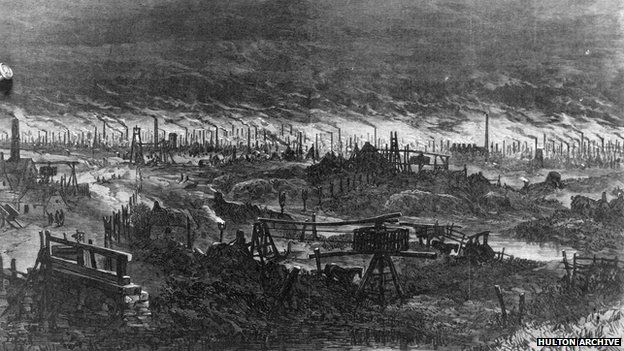
Saruman’s revenge has been more than small and mean, especially in terms of the industrial world which The Lord of the Rings rejects: the Shire is on its way to becoming another Midlands,

_77710962_3322454

even to the workers’ miserable housing.

preston

And the cutting down of trees (including, as we will find out, the Party Tree) insures the truth of Saruman’s sneering statement to the hobbits:

“…I have done much that you will find it hard to mend or undo in your lives.” (The Return of the King, Book 2, Chapter 8, “The Scouring of the Shire”)

But, as we know, Saruman, even in his moment of triumph, has no more than a moment to enjoy it. He is murdered by Grima and here we see the final irony. As Saruman has turned the medieval, bucolic Shire into a smoky horror, so he himself is turned to smoke:

“To the dismay of those that stood by, about the body of Saruman a grey mist gathered, and rising slowly to a great height like smoke from a fire, as a pale shrouded figure it loomed over the Hill. For a moment it wavered, looking to the West; but out of the West came a cold wind, and it bent away, and with a sigh dissolved into nothing.” (The Return of the King, Book 2, Chapter 8, “The Scouring of the Shire”)

61 - The scouring of the shire

A final thought, however. Might we see Saruman’s gesture towards the West, in which he clearly feels that he has been rejected by that which sent him to Middle Earth, as a mirror Galadriel’s gesture of rejection towards the East, when she refuses the Ring?

“She lifted up her hand and from the ring that she wore there issued a great light that illuminated her alone and left all else dark. She stood before Frodo seeming now tall beyond measurement, and beautiful beyond enduring, terrible and worshipful. Then she let her hand fall, and the light faded, and suddenly she laughed again, and lo! she was shrunken: a slender elf-woman, clad in simple white, whose gentle voice was soft and sad.” (The Fellowship of the Ring, Book 2, Chapter 7, “The Mirror of Galadriel”)

galadriel

Thanks, as always, for reading.

MTCIDC

CD

The Return of the Who.2?

28 Wednesday Oct 2015

Posted by Ollamh in Fairy Tales and Myths, Heroes, Imaginary History, J.R.R. Tolkien, Narrative Methods, Villains

≈ Leave a comment

Tags

Aragorn, Aslan, C.S. Lewis, Catholicism, Gondor, Hobbits, Jadis, Medusa, Middle-earth, monotheism, Narnia, Oxford, religion, Sauron, secular, The Bird and the Baby, The Chronicles of Narnia, The Eagle and the Child, The Hobbit, The Inklings, The Lamb and Flag, The Lord of the Rings, the Pevensies, The Return of the Ring, The White Witch, Tolkien, White Tree

Dear Readers,

Welcome, as always.

This posting is a continuation of our last, in which we made a brief attempt to think about what the title “The Return of the King” might have meant for its author in his time.

In this posting, we want to expand that meaning from a secular king to one with more religious overtones.

We ourselves, as we’ve said before, are World Civ people, believing that all people in all times and places are and should be of interest and value to everyone. We are also pan-spiritual, thinking with Gandhi that, “I believe in the fundamental Truth of all great religions of the world.”

In the case of Tolkien, this meant Catholic Christianity, a form of monotheism. Of religion and The Lord of the Rings, he wrote in 1953:

“The Lord of the Rings is of course a fundamentally religious and Catholic work; unconsciously so at first, but consciously in the revision. That is why I have not put in, or have cut out, practically all references to anything like ‘religion’, to cults or practices, in the imaginary world. For the religious element is absorbed into the story and the symbolism.” Letters, 172.

He adds to this, in a letter to Houghton Mifflin, in 1955, that “It is a monotheistic world of ‘natural theology’. (Letters, 220). At the same time, however, he adds “I am in any case myself a Christian; but the ‘Third Age’ was not a Christian world. Letters, 220.

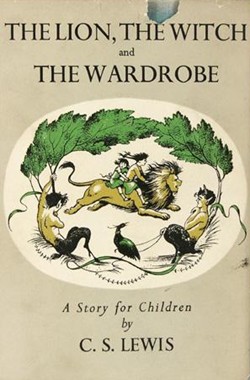
And yet we would suggest that there is not only more of a Christian theme, but also a Christian parallel with a book written at about the same time as the later stages of The Lord of the Rings and published slightly before it. This is C.S. Lewis’ The Lion, the Witch and the Wardrobe (1950).

TheLionWitchWardrobe(1stEd)

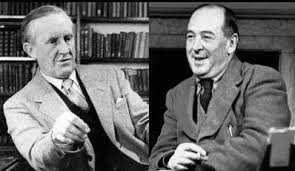
As is well known, both Lewis and Tolkien

jrrt and csl

were members of a literary group in Oxford, the Inklings.

draft_lens9242861module102711761photo_1274835984eagle_and_child_pub_inkli

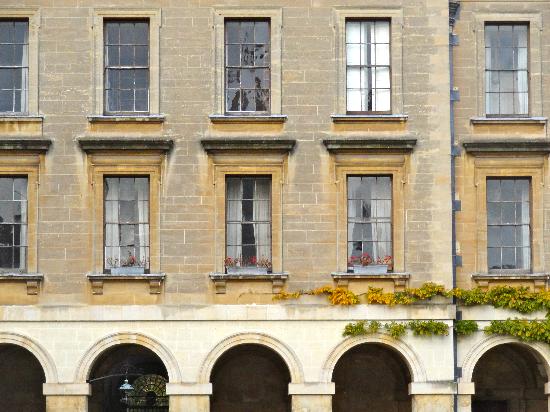
Lewis and Tolkien formed part of the permanent core, with other members coming and going over the years (1933-1949).   The meetings were held in Lewis’ rooms at Magdalen College,

magdalen room-used-by-cs-lewis

as well as at two local pubs, The Eagle and Child (called locally “Bird and Baby” or just “Bird”)

Birdandbaby

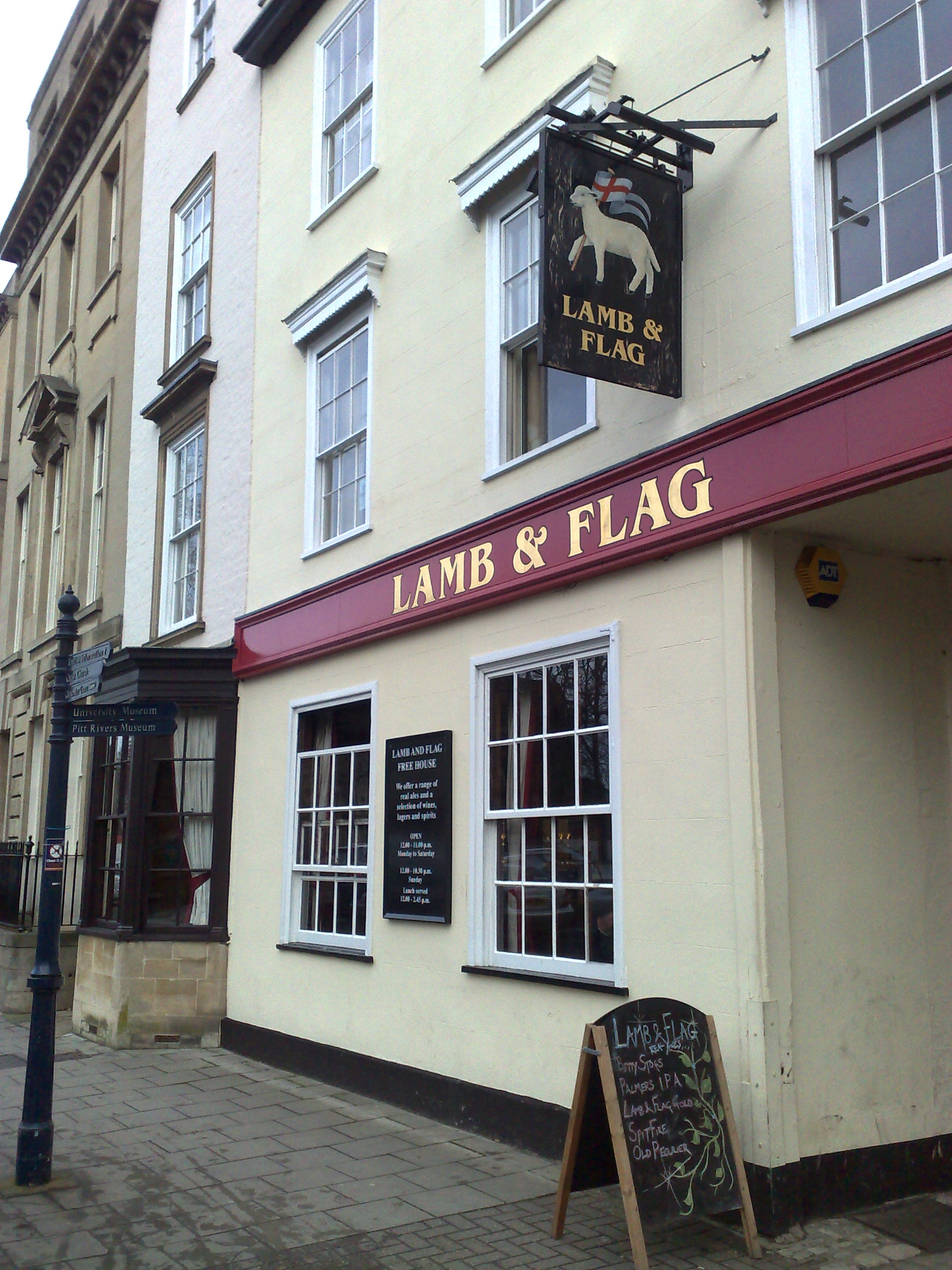
as well as The Lamb and Flag.

Lamb-and-flag-pub-oxford

The purpose (besides refreshments) was literary discussion, both of others’ works and of their own, and an important feature was the reading aloud of works in progress. Lewis had been very supportive, both of The Hobbit and The Lord of the Rings, but Tolkien had not been so enthusiastic in return. All the same, we would suggest that various elements of Lewis’ The Lion, the Witch and the Wardrobe and events around Gondor in Tolkien’s The Return of the King at times bear strong similarities.

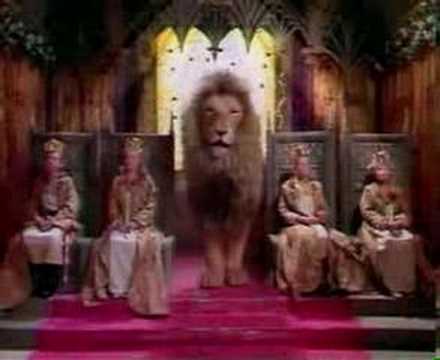
In Lewis’ book, the main protagonists are four children, the Pevensies.

childrenaslanbbc

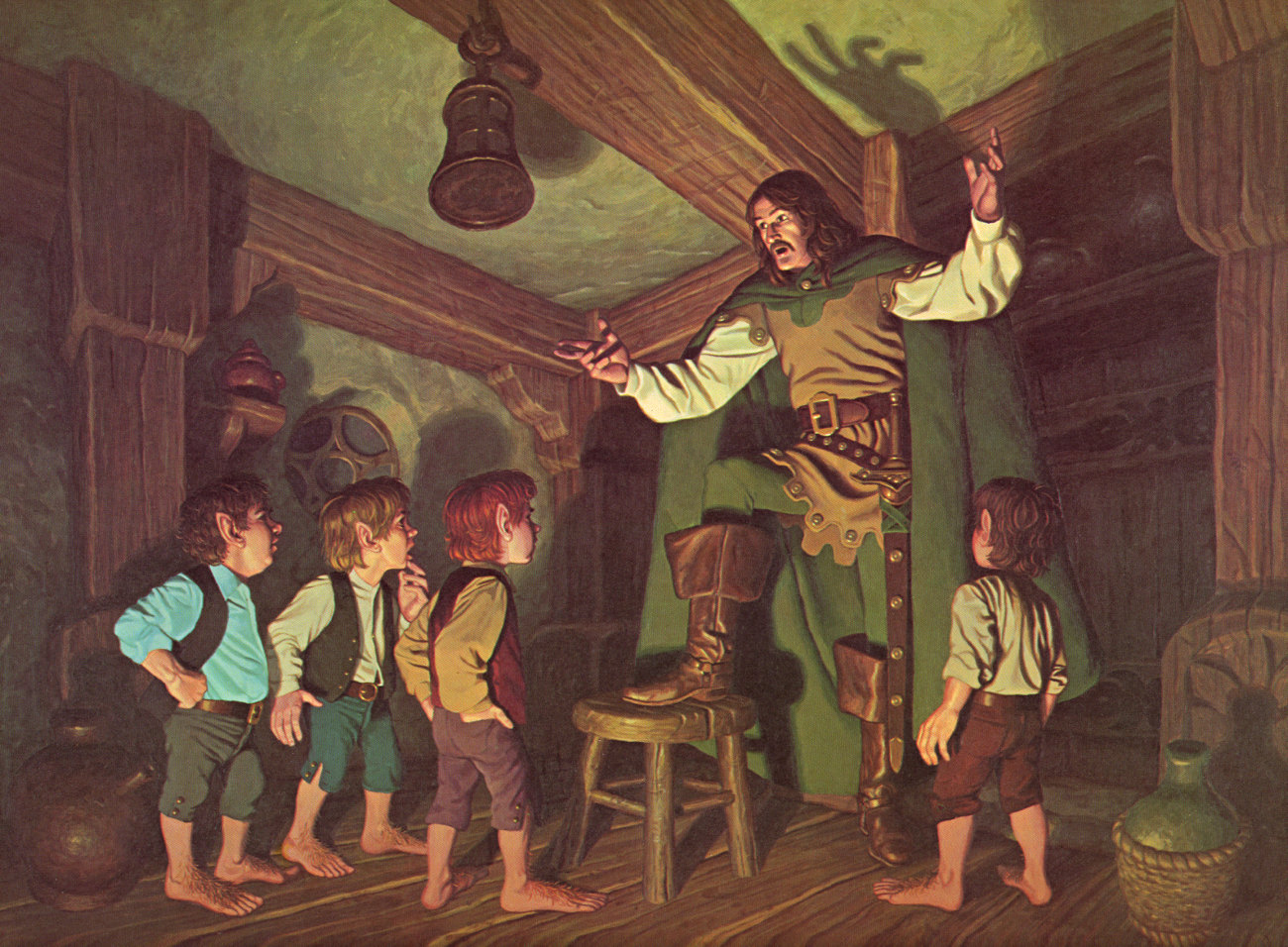
In Tolkien’s, there are four grown Hobbits, often mistaken, beyond the borders of the Shire, for children.

hildebrandthobbits

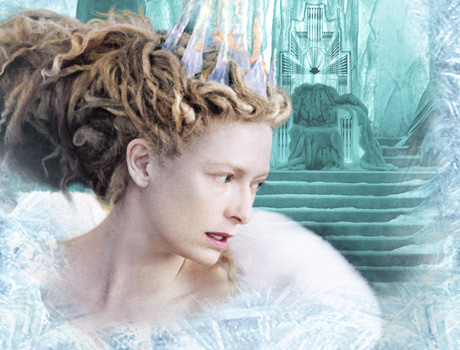
Both groups are on an errand which they barely understand and are faced with a supernatural enemy, the White Witch for the one, Sauron for the other. (There seems to be a lot of mirroring in all of this: the White Witch is already in Narnia and must be driven out. Sauron is outside Gondor and wants to get in, for example. The White Witch’s name is “Jadis”, by the way. Undoubtedly Lewis’ little linguistic joke: jadis in French means “formerly”, suggesting that even from the first time she appears, she’s already on her way out.)

wwbbc

main_1-Greg-Hildebrandt-Signed-Sauron-The-Dark-Lord-Limited-Edition-34x23-Giclee-PristineAuction.com

(Notice, in the movie version of Jadis, the strong similarity between her and the Medusa. In fact, Jadis turns her enemies, when she can, to ice.)

jadis1

bernini medusa

frozenmrtumnus

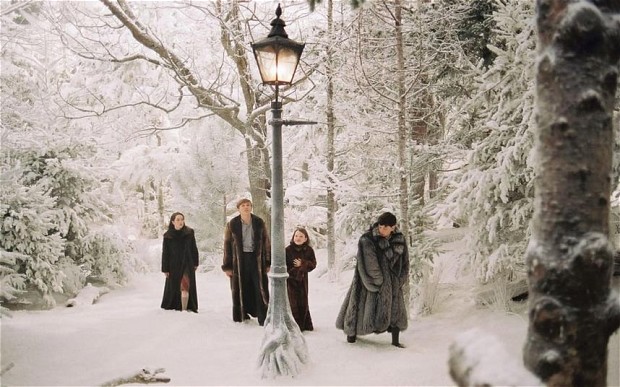
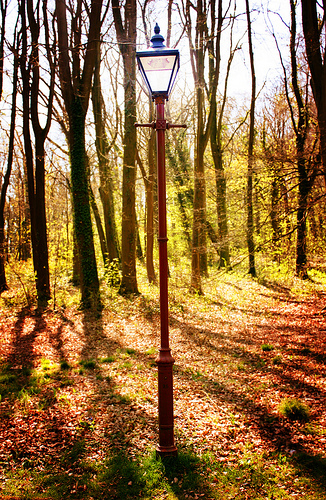
Before the current world of Narnia, to which the children come, there was a king who had been somehow ejected a century before. In Middle Earth, there has been no king in Gondor for ten times that. In Narnia, there has been winter for that century.

winteratthelamppost

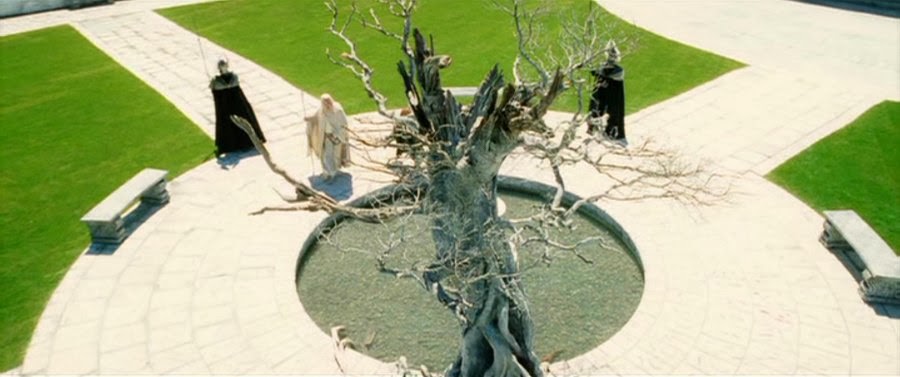
In Gondor, in Middle Earth, its symbol of growth and stability, the White Tree, has withered and died.

WhiteTreeGondor

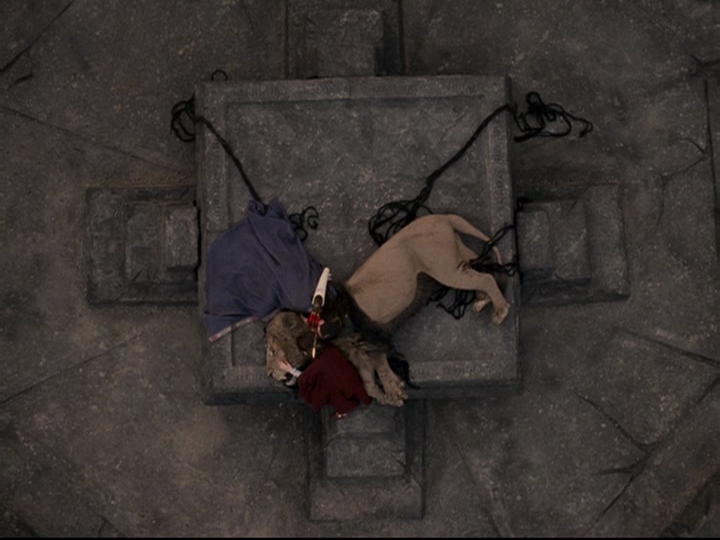
When the Pevensie children have been involved in the defeat of the White Witch, they will rule Narnia in the place of the true king, the lion Aslan.

the-chronicles-of-narnia-the-lion-the-witch-and-the-wardrobe-wallpaper-the-chronicles-of-narnia-the-lion-the-witch-and-the-wardrobe-poster_590x384_23014

For about a thousand years, stewards ruled Gondor in place of the king. (Another example of mirroring.)

denethor

When Lewis’ Aslan returns, it is from death, having sacrificed himself to save one of the Pevensie children.

aslandead

Thus, Aslan, in effect, heals himself. When the king of Gondor, Aragon, appears, he heals others. (Tolkien would probably associate this with the old English custom of having the monarch touch people attacked with a disease called scrofula, or “the King’s evil”. We include a picture of Queen Mary—1516-1558—doing so.)

Queen_Mary_I_curing_scrofula_Levina_Teerlinc_16th_C

healingeowyn

When Aslan appears, spring returns to Narnia.

springinnarnia

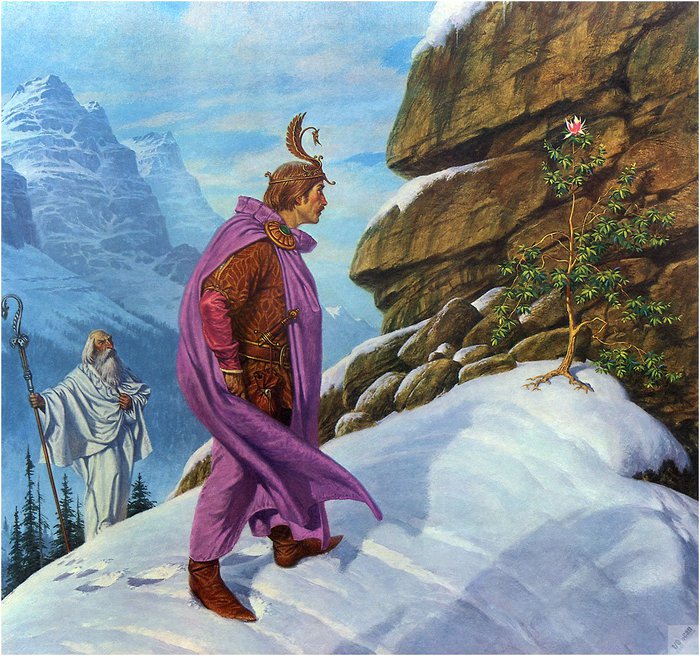
When Aragorn claims the throne, he and Gandalf discover a sapling of the old tree on Mindolluin, bring it down, and plant it and it soon flowers.

whitesapling whitetreebeginstoflower

We’re sure that there are other parallels, dear reader: can you think of any?

Thanks, as always, for reading this.

MTCIDC

CD

The Return of Who.1?

21 Wednesday Oct 2015

Posted by Ollamh in J.R.R. Tolkien, Military History, Military History of Middle-earth, Narrative Methods, Uncategorized

≈ Leave a comment

Tags

Alfred the Great, British history, Cold War, Edwatd VIII, Elizabeth II, Fairy Tale, George I, George III, George V, George VI, Great Britain, Ireland, James I, Kings, Monarchies, Queen Elizabeth, Queen Victoria, The Lord of the Rings, The Return of the King, Tolkien, Transvaal War

Dear Readers,

Welcome, as always!

In this posting, we want to talk about a larger issue than usual.

JRRT had always thought of The Lord of the Rings as a single work and had been forced to break it up into three parts by his publisher, Allen/Unwin, for financial reasons. The third part of this became “The Return of the King”. If you’ve read us for a while, you have probably decided that, although we are passionate Anglophiles (and Francophiles and Germanophiles and—well, we are World Civ folks—we love every country, young and old, and one of us has spent years very happily teaching World Civilizations, in fact), we are North Americans and, to narrow that, citizens of the USA. This means that we grew up in a democratic republic, the descendants of people who separated themselves from control by the 18th-century monarchical government of George III of Great Britain by violent means.

george iii

bunkerhill

Thus, the idea of “king” is rather an abstract one for us, rather fairy-talish, in fact, as distant as the traditional opening of Irish fairy tales which began “A king there was, over all of Ireland”.

MI+Celtic+high+king

So, what might the idea of that title, “The Return of the King” have meant to JRRT, when he chose it?

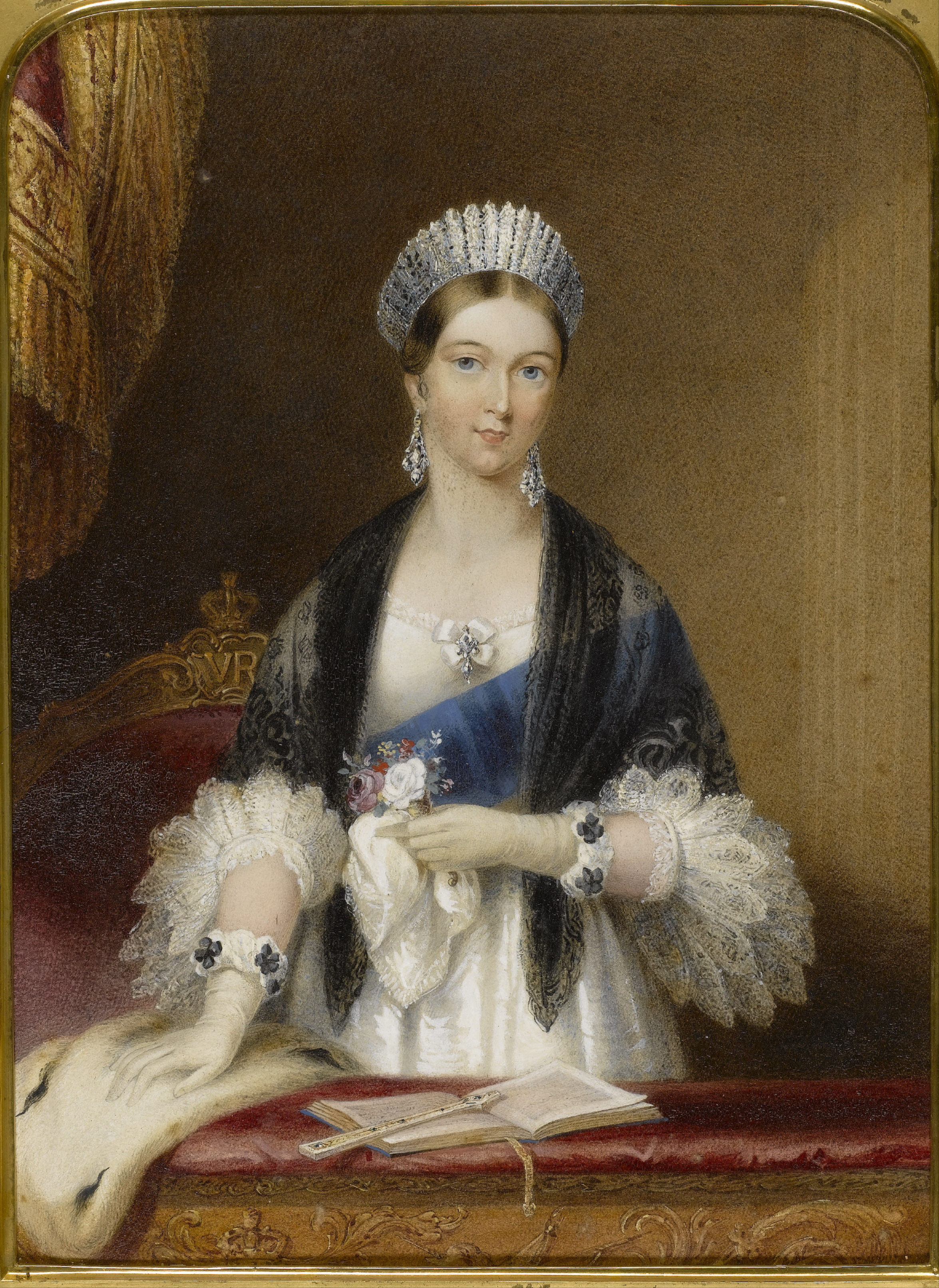
When JRRT was born, in 1892, Victoria had been the ruler of the UK since 1837.

32-Baby-Tolkien

Queen_Victoria_(after_E_T_Parris_1837)

She was a grandma in 1892.

(c) Royal Highland Fusiliers Museum; Supplied by The Public Catalogue Foundation

The Queen could easily trace her descent back to George I (1660-1727), and, through him, back all the way to the eldest daughter of James I, Elizabeth (1596-1662).

James_I_of_England_by_Daniel_Mytens

Royal_family_tree_charting_the_Jacobite_succession.svg

Because JRRT lived until 1973, in his lifetime, the English monarchs were:

victoria1

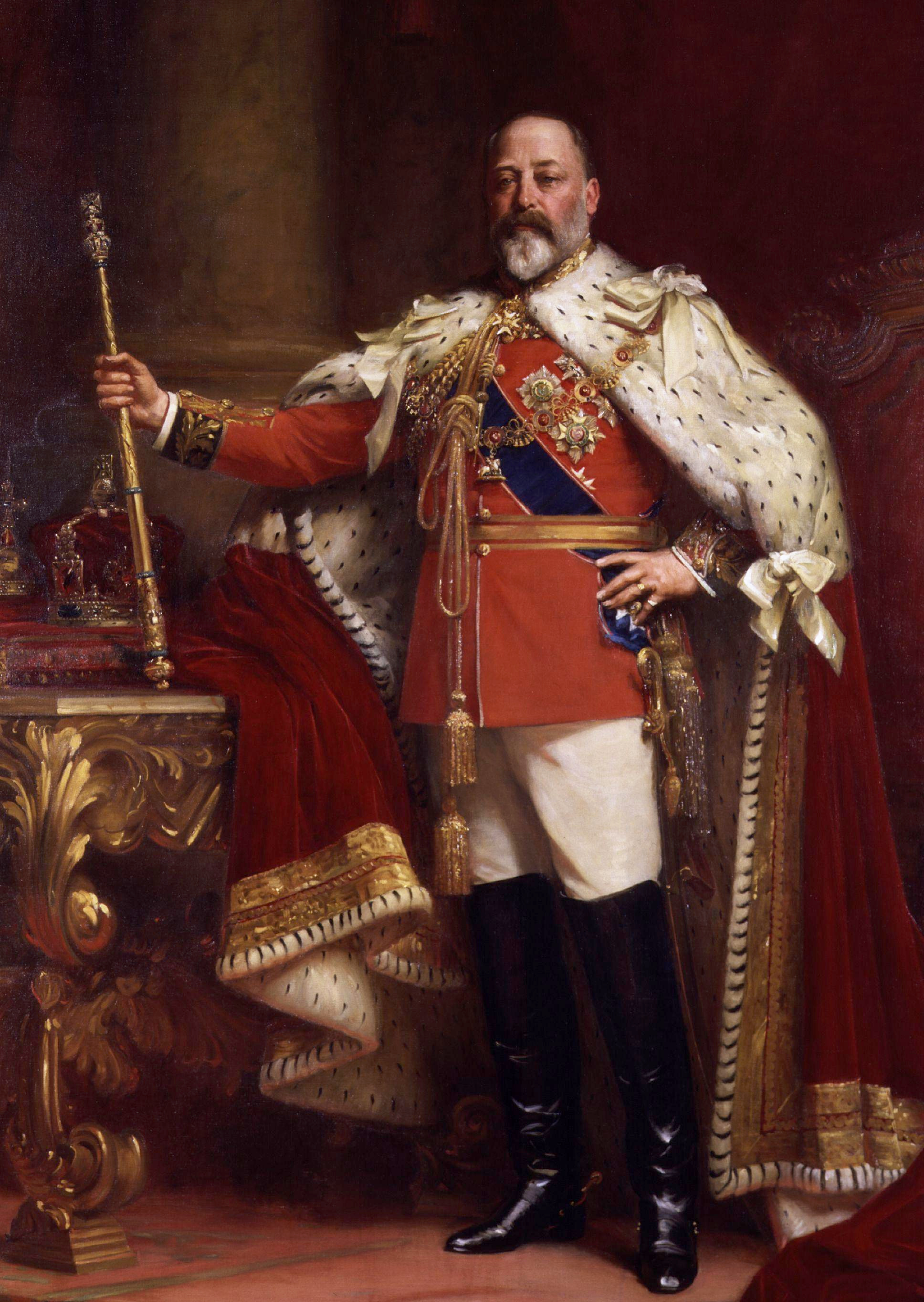
edward7

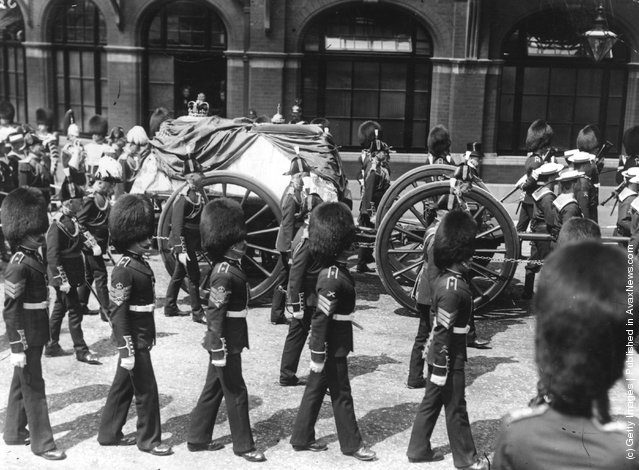
(whose death brought together all of Victoria’s grandsons, monarchs of various sorts—see the FILM CLIP)

funeraled7 funeraled7.1

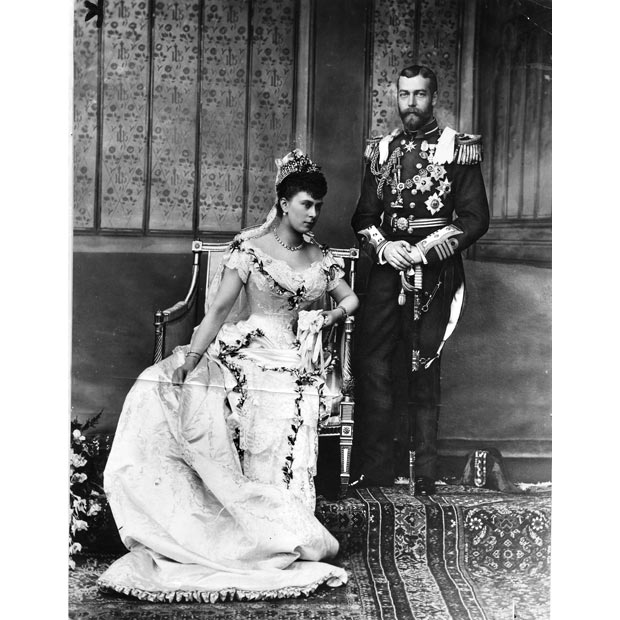
George V

george5queenmary

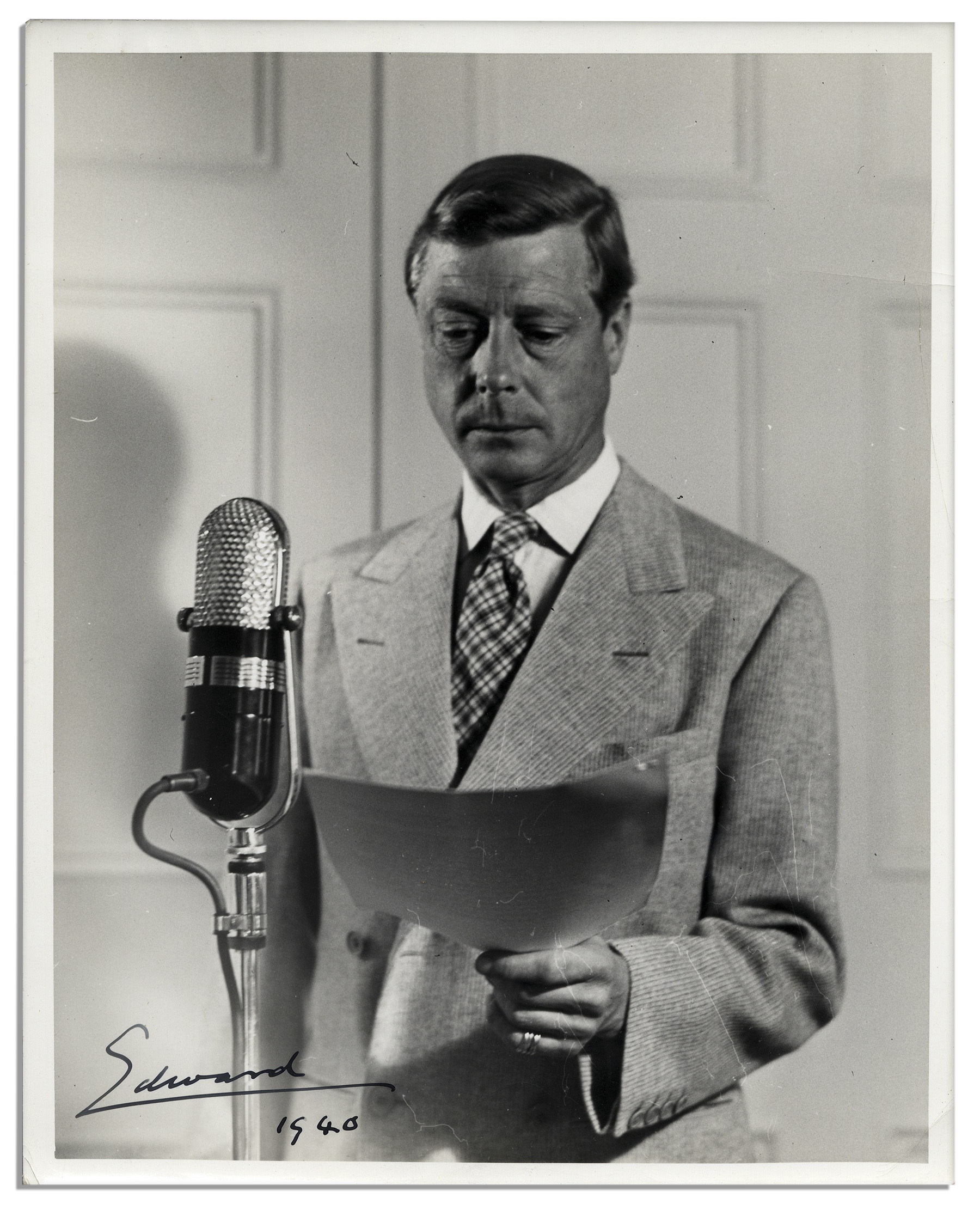
Edward VIII

edward8

George VI

george6queenmum

Elizabeth II

oversized file

During his lifetime, there had been a great colonial war (the Transvaal War, 1899-1902), two world wars, and the Cold War, and yet Britain survived them all under this succession of monarchs. “The King” in “The Return of…”, then, might be thought to have a very special meaning, one of unwavering stability. In the Shire in Middle Earth in the 3rd Age, for example:

     “There remained, of course, the ancient tradition concerning the high king at Fornost, or Norbury as they called it, away north of the Shire. But there had been no king for nearly a thousand years, and even the ruins of Kings’ Norbury were covered with grass. Yet the Hobbits still said of wild folk and wicked things (such as trolls) that they had not heard of the king. For they attributed to the king of old all their essential laws; and usually they kept the laws of free will, because they were The Rules (as they said), both ancient and just.” (The Lord of the Rings, 9)

And that “nearly a thousand years”, in terms of British history could easily be taken in reverse, with the foundations of the modern British monarchy—the one Tolkien spent his life being ruled by—appearing with Alfred the Great (849-899AD—and interesting to think that Alfred’s name may be spelled, in Old English, “Aelf-raed”, which means something like “elf counsel” or “wise elf”)—that is, about a thousand years before Tolkien’s birth in 1892.

Statue_of_King_Alfred_in_Wantage_Market_Square

This is, of course, a secular monarch. Tolkien being a devout Catholic (as well as one who wanted great depth in his Middle Earth), could there be another dimension? We’ll talk about that in our next posting…

Thanks, again, for reading.

MTCIDC

CD

Charge! The End?

14 Wednesday Oct 2015

Posted by Ollamh in Films and Music, J.R.R. Tolkien, Military History, Military History of Middle-earth

≈ Leave a comment

Tags

Adventure, Bataclava, Bigelow, British, British Heavy Brigade, Cavalry, Cawnpore, Charges, Chasseurs d'Afrique, Crimean War, French, Funckens, Gandalf, Helm's Deep, John Ford, Minas Tirith, Oliphaunts, Prussian, Remington, Rohirrim, Rossbach, Russian, Schreyvogel, seige, Stagecoach, surreneder, The Charge of the Light Brigade, The Lord of the Rings, Tolkien, Trostle Farm, Warhorse, Waterloo, Western, William Simpson

Dear Readers,

Welcome, as always.

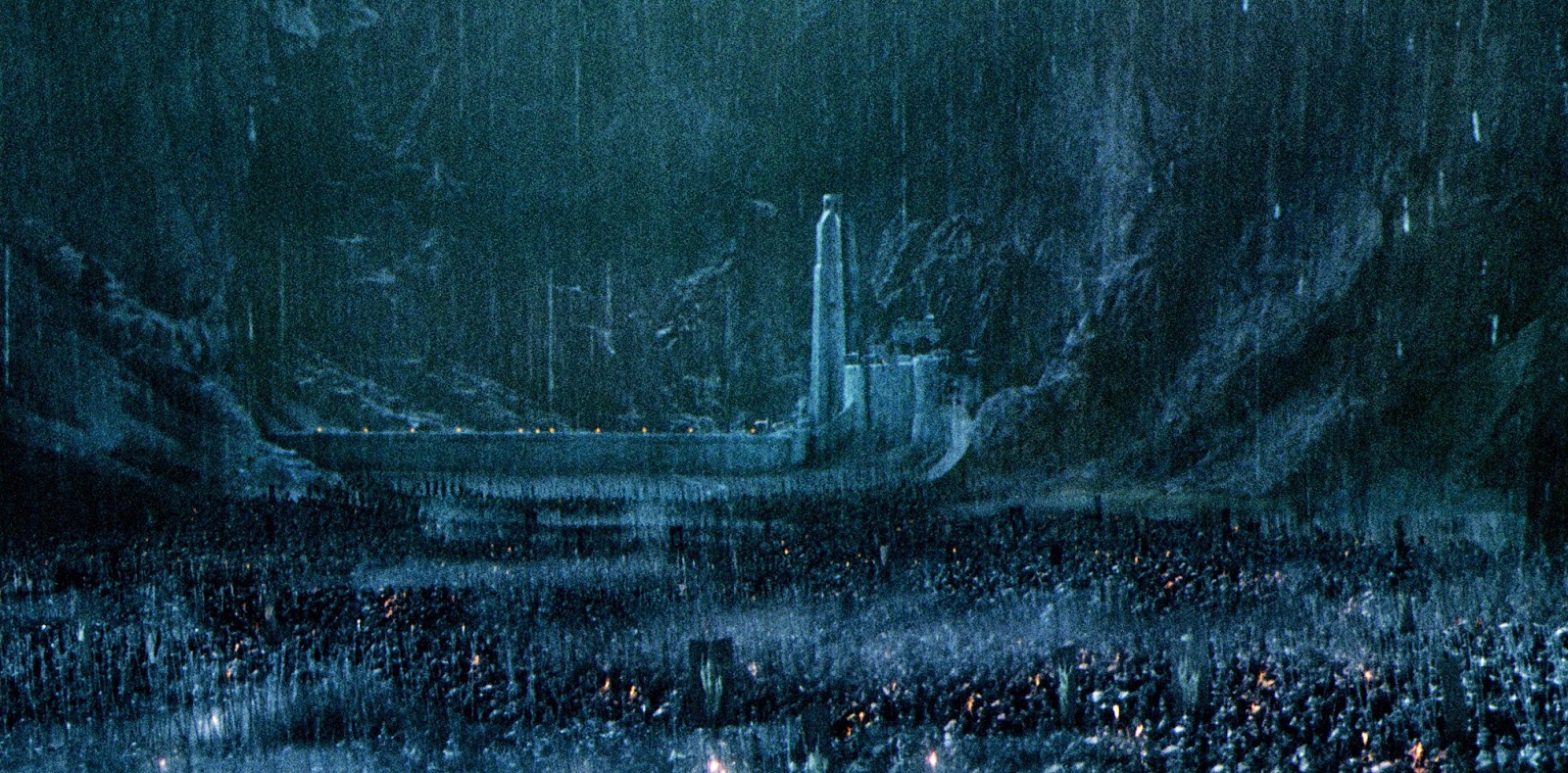
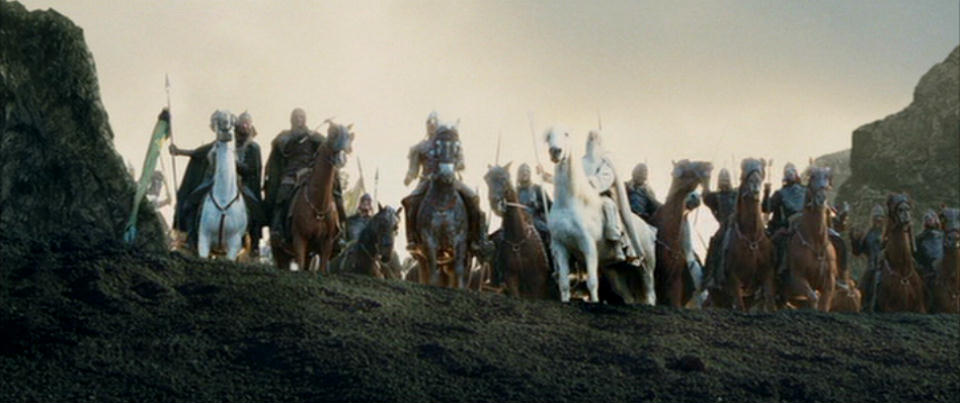
In our last, we were discussing film music, where it comes from and what it does. This brought us, as always, it seems, back to JRRT. In that post, we talked about the “Shire theme”. In this, we want to talk not about a theme, but about a scene, one we have mentioned before, the charge of the Rohirrim and the attempted raising of the siege of Minas Tirith.

gondorattacked rohirrimformup

Although, strictly speaking, what is happening to Minas Tirith is simply a frontal assault, not a siege in the classic sense. Although, seen in this illustration (by the wonderful husband and wife team of the Funckens), they may look the same—

funckenssiegeupclose

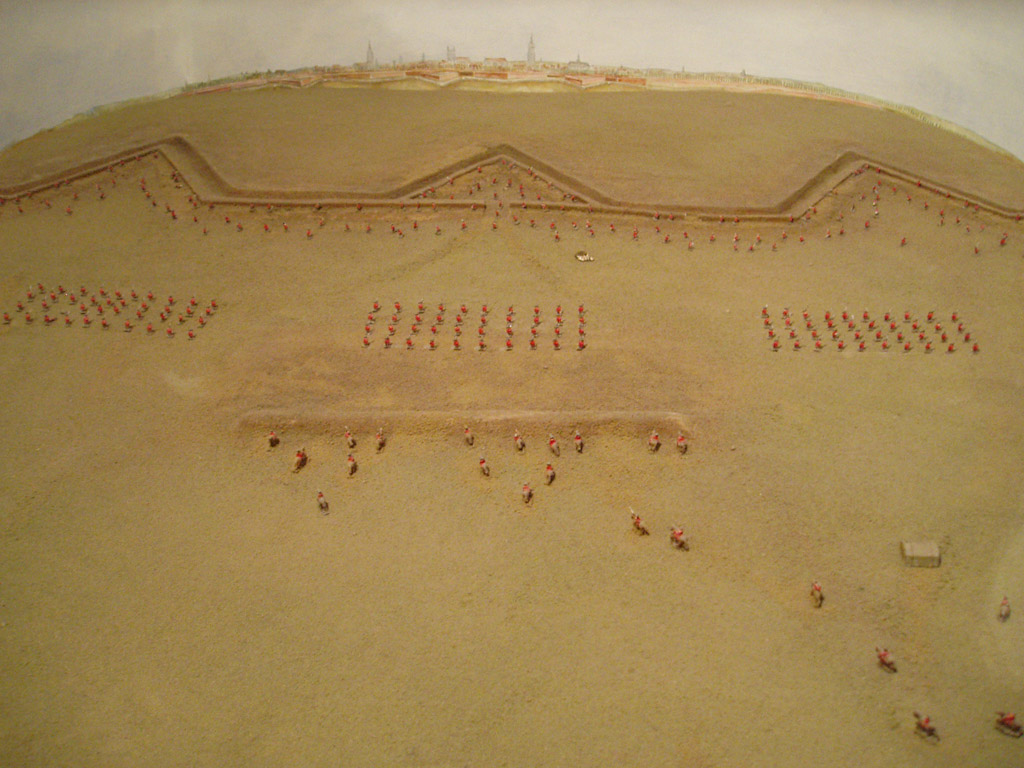
in a formal siege, you surround a town/fortress

siegediggingin

call on the place to surrender

The-Entrance-Into-Belfort-Of-The-German-Commander-Bearing-The-Flag-Of-Truce-4th-November-1870-1884

use your heavy weapons to bombard the place

catapault42cm

Drive the defenders back from their outer works

William Simpson - The Attack on the Malakoff 1855

And then call upon the defenders to surrender—which, often they do (fewer Alamos than myth would tell you)

surrender4

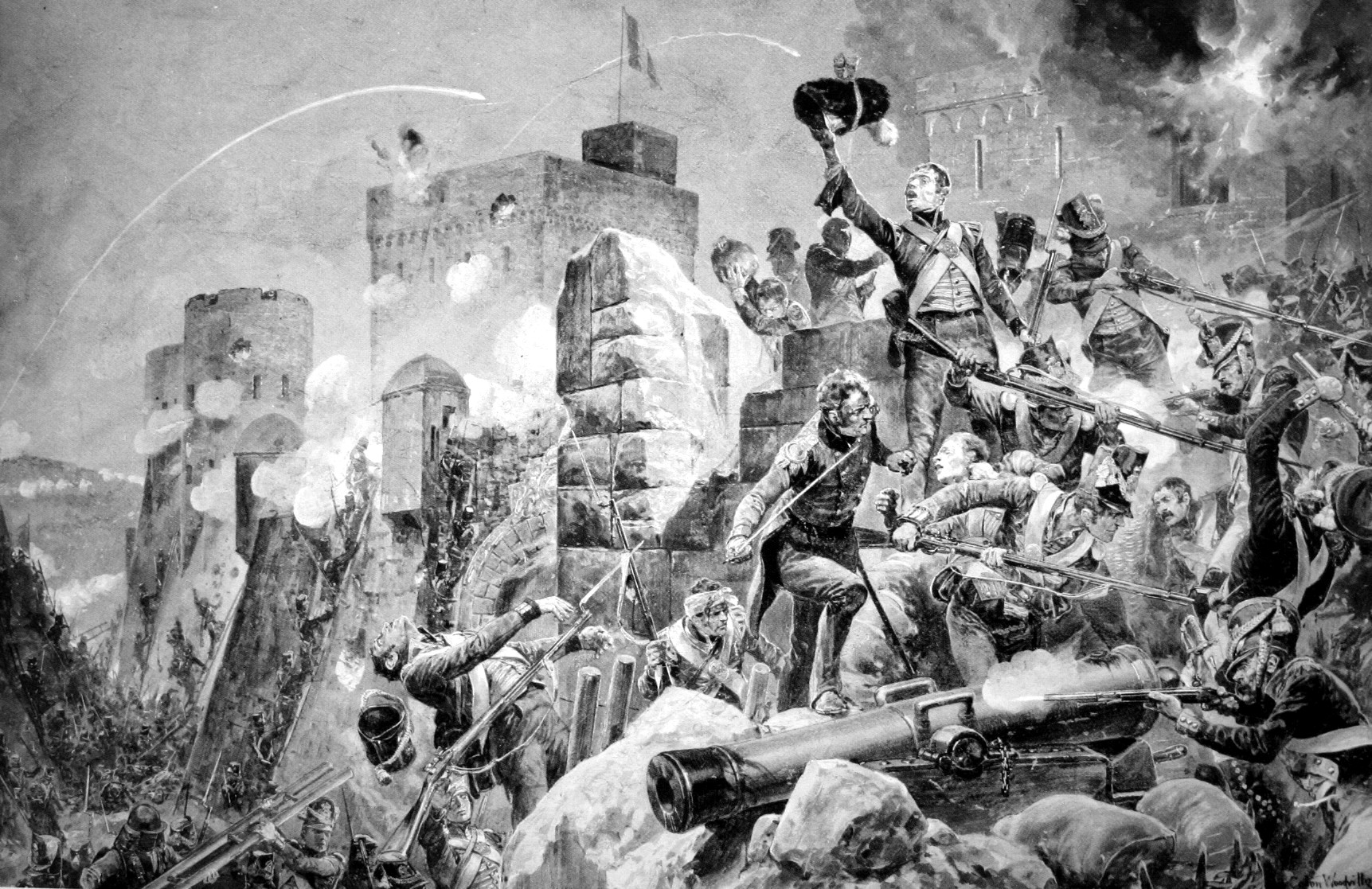
But, if not, a final—usually costly—attackSiege_of_Badajoz,_by_Richard_Caton_Woodville_Jr

march6

and, potentially, the massacre of all—or at least all of the garrison–inside. (In Jackson’s LoTR, the Orcs are certainly not taking prisoners as they break into Minas Tirith).

The charge of the Rohirrim, though, brought to mind other charges, such as the charge of the Prussian cavalry against the French/Allied army at Rossbach, in 1757—

Schlacht_bei_Roßbach1

or the French and British cavalry charges at Waterloo, 1815—

cavwaterloo1 ChargeofthelightBrigade

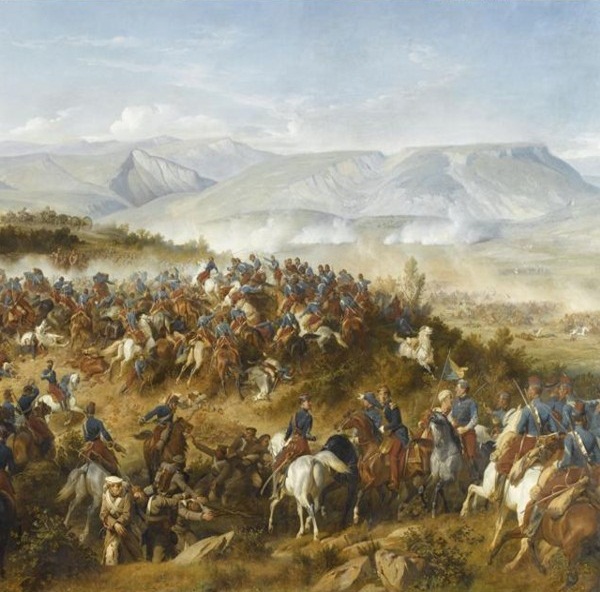
or those _other_ charges at the battle of Balaclava, 1854, that of the French 4th Chasseurs d’Afrique

Chasseurs_d'Afrique_à_Balaclava

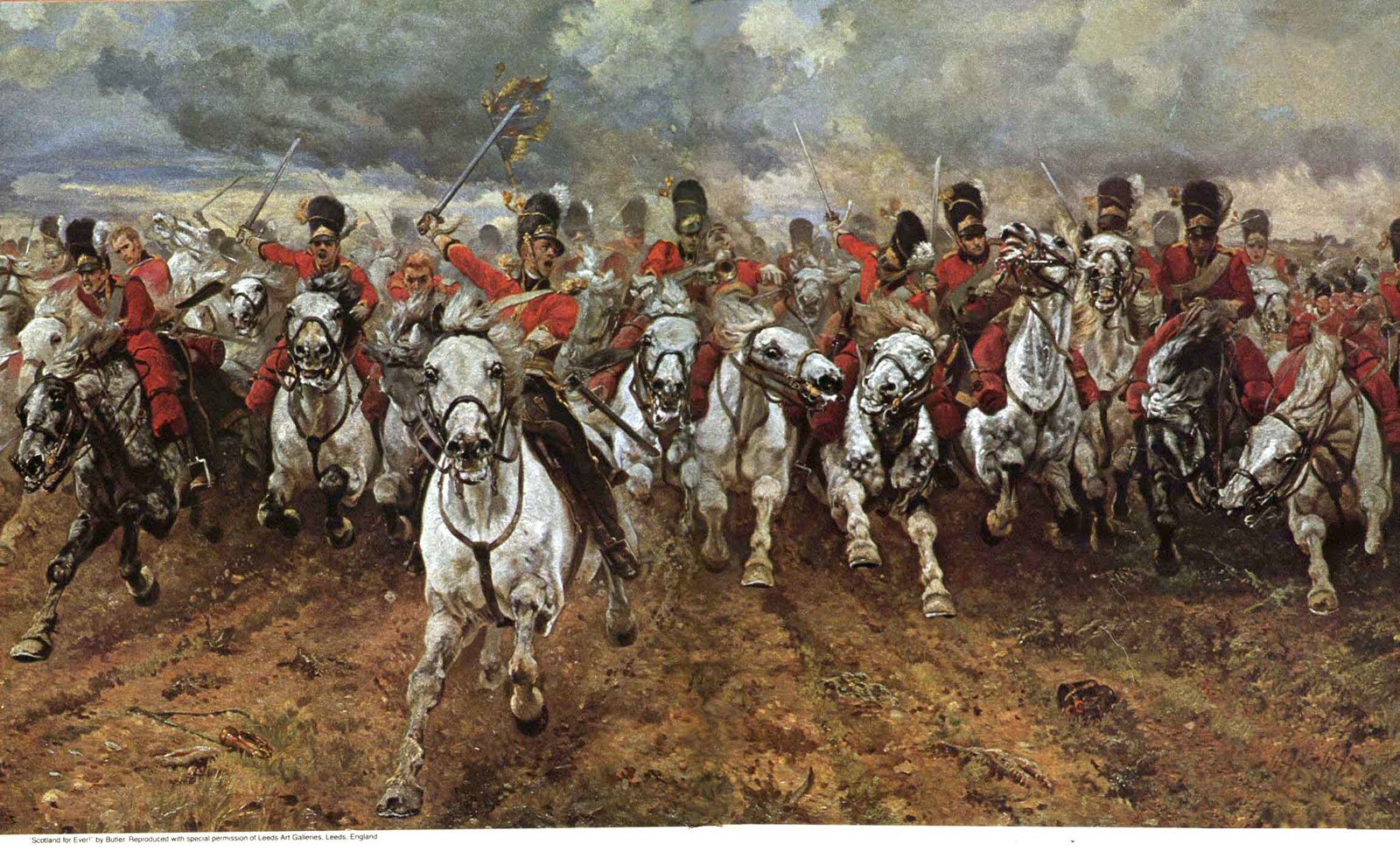
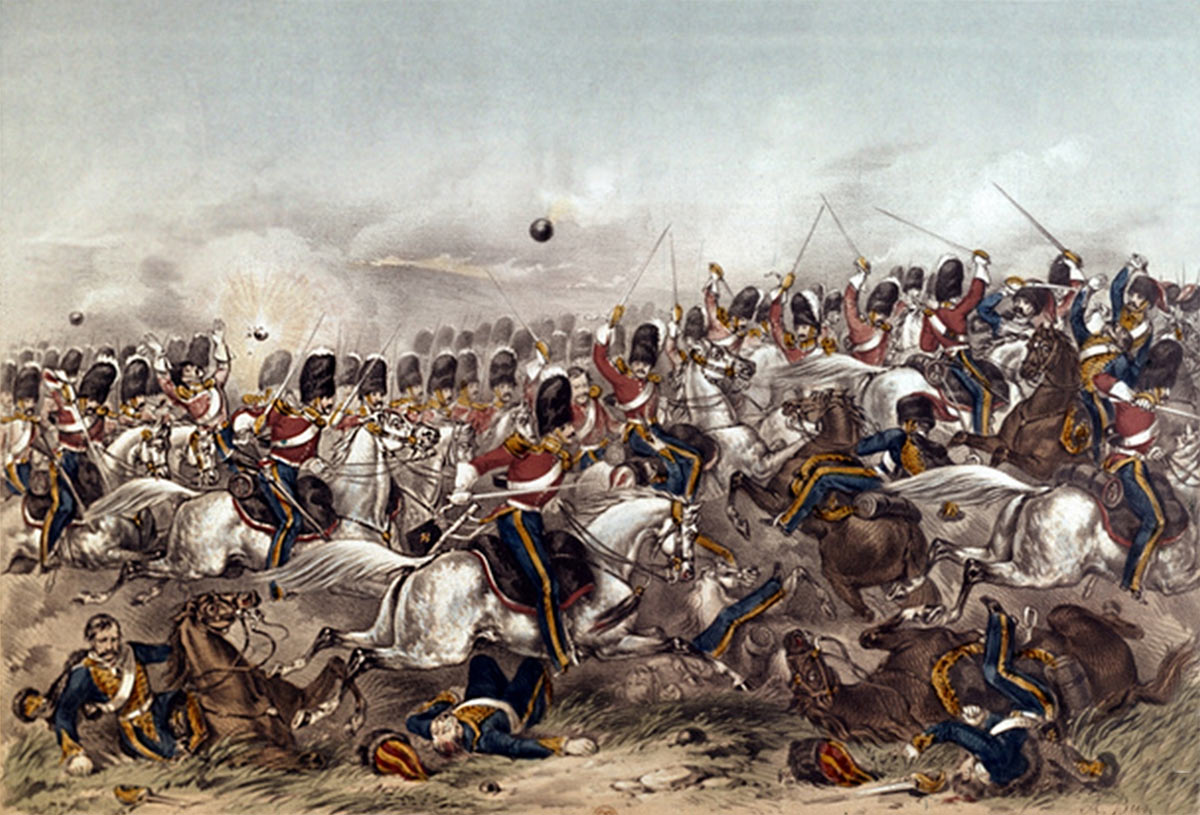
or of the British Heavy Brigade, which drove the Russian cavalry from the British camp.

balaclava-scots-greys-1200

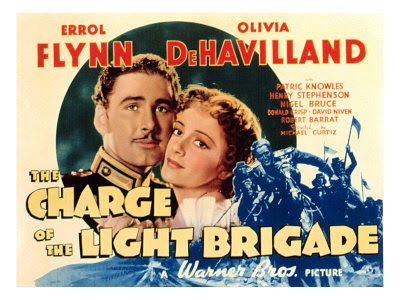
Those last two remind us, of course, of one of our favorite adventure movies, the 1936 The Charge of the Light Brigade

charge1

It is not so authentic in look as the 1968 movie of the same name,

Charge+of+the+Light+Brigade+movie+poster+2

and, in fact, the film states at its opening that it’s only loosely based on actual historical events (including not only the charge, but the 1857 massacre at Cawnpore—which, in reality, occurred some three years after the Crimean War battle). It also beefs up the Russian defense—adding non-existent earthworks, for instance. Here’s the movie’s view

1225664651_the-charge-of-the-light-brigade_00016

and here’s William Simpson’s near-contemporary illustration (Simpson arrived after the battle, but must have talked to survivors and certainly could have seen the terrain).

William_Simpson_-_Charge_of_the_light_cavalry_brigade,_25th_Oct._1854,_under_Major_General_the_Earl_of_Cardigan

All of these charges were directed at enemy forces on an open battlefield. The attack of the Rohirrim actually comes from a different scenario, one which is based upon a theme familiar to those who have seen American westerns: the arrival of the cavalry in the nick of time.

In this scenario, someone is trapped and surrounded—or at least persistently assaulted by a more numerous enemy—the classic is an attack upon circled wagons

frontier-wagon-circle

The crisis comes and it looks like those attacked are about to be overwhelmed

wagon-box-fight-1867-granger

but, at the last minute, help arrives—the cavalry, bugles sounding, guidons waving (although that illustrated in this vidcap is the 1885 pattern and the film from which this comes takes place in 1880—then again, the uniforms are a bit odd, too—here’s Remington’s and Schreyvogel’s more accurate views, as well) rides fearlessly to the rescue.

Stagecoach_216Pyxurz SCHREYVOGEL_Charles_Cavalry_Charge_1905_Wadsworth_Athenaeum_source_Sandstead_d2h_ remingtoncav

After sorting through more than 50 westerns, we believe that the movie from which our first image comes is probably the source of the modern idea of the arrival of the cavalry—see this clip from John Ford’s Stagecoach (1939)

CLIP

This happens twice, of course, in The Lord of the Rings, first at Helm’s deep, when Gandalf arrives—

helms-deep gandalfarrives

and again, as we began, at Minas Tirith. It’s interesting, however, to see that, in this second example, the cavalry rescue is not so successful, since there are those oliphaunts we discussed in an earlier posting—

mumakil_by_cg_warrior-d4muefu

In our world, it wasn’t giant oliphaunts who eventually defeated cavalry and drove them to the edges of the battlefield, where they lasted a little longer, but this

maximwarhorse

as you can see in this clip from Warhorse.

CLIP

And it’s for the best, really. It’s bad enough that we humans engage in violent actions without dragging the rest of the animal kingdom into it…

trostle-farm

(A few of the 80 horses lost by Bigelow’s 9th MA Battery at the Trostle Farm, 2 July, 1863—and, as a sad ps, 25 horses were killed or so badly injured that they were put down at the filming of the 1936 The Charge of the Light Brigade—this so shocked those in Congress that a law for the protection of animals in films was passed to prevent future harm).

Thanks, as always, for reading.

MTCIDC

CD

Music to Our Ears

07 Wednesday Oct 2015

Posted by Ollamh in Films and Music

≈ Leave a comment

Tags

Alexander Nevsky, Bag End, Birth of a Nation, Darth Vader, Film music, film score, Gilraen's Memorial, Howard Shore, Imperial March, Jaws, John Williams, Journey to the Grey Havens, melodrama, Mendelssohn, Midsumer Night's Dream, Prokofiev, Rivendell, Sergei Eisenstein, silent film, Star Wars, The Lord of the Rings, The Shire, The Tales That Really Matter, theme

Dear Readers,

Welcome, as always. In this posting, we’d like to talk a bit about film music.

We’re interested in all kinds—from classic 30s to more recent scores. We began by asking ourselves why is there film music? Where does it come from?

To begin, we looked back into the 19th century, where we found that music could be used underneath the action in plays—Mendelssohn’s Midsummer Night’s Dream being a good example. Mendelssohn wrote the overture as a teenager, and as a purely orchestral piece. The rest of the music was written for a performance of the play in Berlin in 1842. Some of it consists of settings for the songs from Shakespeare’s play, but other music is meant to be played during a scene to heighten tension or to release it. (This use of music was so common in the 19th century that we get the expression “melodrama” originally from plays with music. “Melos” is an ancient Greek word for “song”, which gets added to “drama”.)

Edwin_Landseer_-_Scene_from_A_Midsummer_Night's_Dream._Titania_and_Bottom_-_Google_Art_Project

When film began to take its place next to drama as a form of popular entertainment—sometimes in the same theatres—film was, of course, silent.

zorro-still

Without spoken dialogue or sound effects, as people were already used to the music played in dramas, it was natural to have music played under films, commonly using a piano or an organ.

3185_2

The music could be classical excerpts or popular music of the period, which would be improvised by the organist or pianist. For some films, music was even specially written. Birth of a Nation (1915) was one of these.

Sheet_music_for_'The_Perfect_Song'_from_The_Birth_of_a_Nation

Such music, as in plays, would underscore the action building or releasing the motion. This was true of early sound films—like Alexander Nevsky (1939).

PROKOFIEV , Sergei - with Sergei Eisenstein ( film director ) at film studios , 1943 working on film Alexander Nevsky . Russian composer , 27 April 1891 - 5 March 1953 .

PROKOFIEV , Sergei – with Sergei Eisenstein ( film director ) at film studios , 1943 working on film Alexander Nevsky . Russian composer , 27 April 1891 – 5 March 1953 .

And of more recent films. Think of the shark theme from Jaws

(Jaws theme)

2806004-jaws

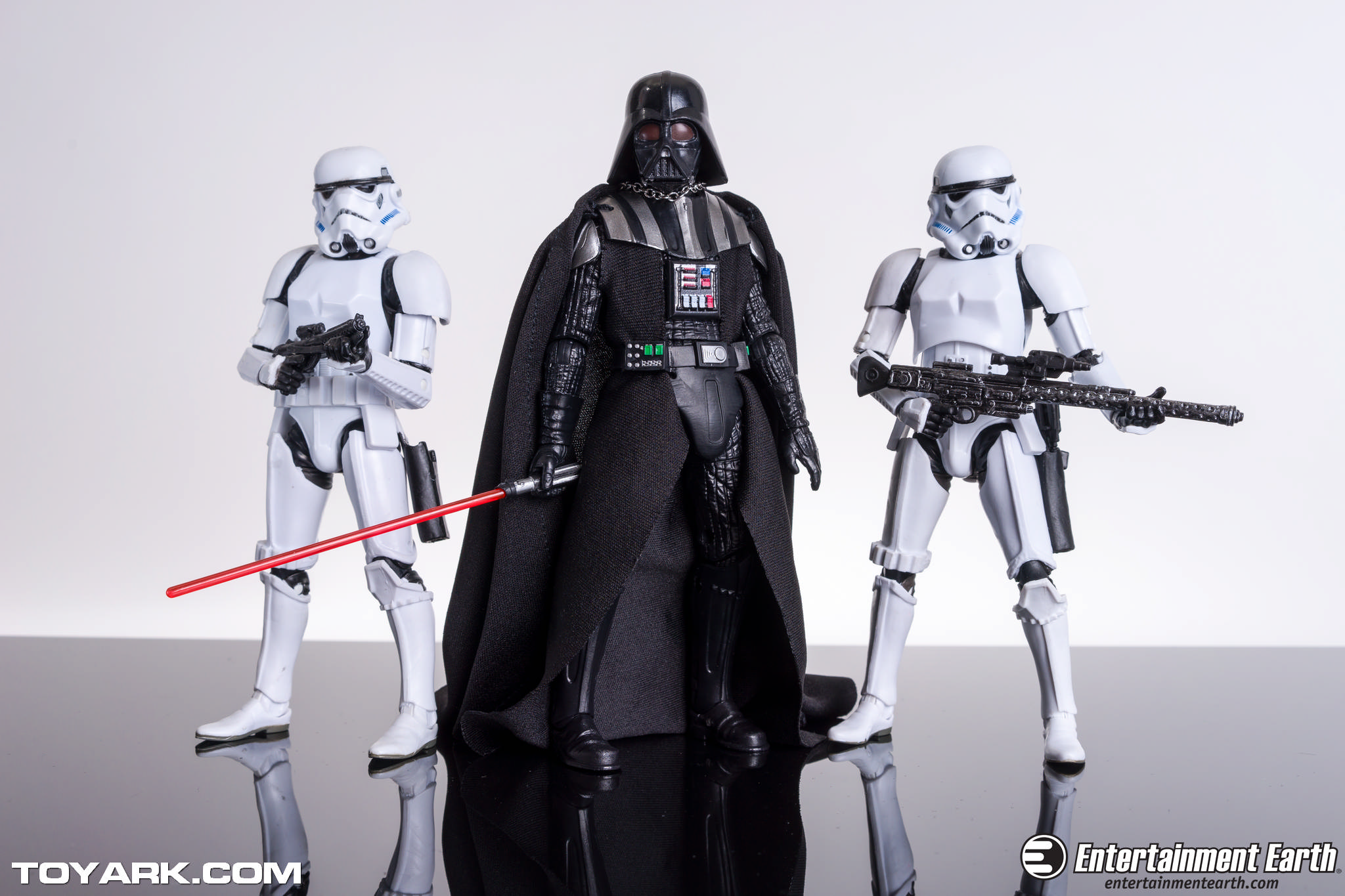
Or, Darth Vader

(Imperial March)

Black-Series-Darth-Vader-47

(And think of how the music change when Luke takes off his father’s helmet.)

(Imperial March– alternate version)

vader1983

A special favorite of ours is the Shire theme from The Lord of the Rings.

jrrt_12

In the theatrical version of the film, we hear this first when Gandalf visits Frodo.

(The Shire theme in “Bag End“, taken from the complete recordings)

gandalf-visiting-frodo

In this scene, we’re being told, just as in a silent movie, about a feeling—and only through music which accompanies the picture.

But when we hear the music return when Frodo and Sam have set out on their journey to Rivendell:

(“Rivendell”)

Leaving Rivendell, as a part of the Fellowship (and the theme here acts as a prelude to the Fellowship theme):

(“Gilraen’s Memorial“)

Sam’s speech, where the theme resides to accepting the journey but reminisces about home:

(“The Tales That Really Matter“)

And saying farewell before departing into the West:

(“Journey to the Grey Havens”)

And so we have an entirely different feeling each time we hear a variant of the theme– the Little People make their mark in the film not only by taking a part in the story, but also in the music, as it shifts through their adventure.

But try this for yourself, dear reader. Pick a favorite film, and try to focus less on the action and more on the music: are there recurring themes, for instance? And, if so, do they change? And if they do change, how does that affect the film and you?

Thanks, as ever, for reading,

MTCIDC,

CD

Seeing the Elephant– Oliphaunt

30 Wednesday Sep 2015

Posted by Ollamh in Films and Music, Heroes, J.R.R. Tolkien, Military History, Military History of Middle-earth

≈ 2 Comments

Tags

Adventure, Alps, ATAT, Elephants, Greeks, Hannibal, Hoth, Mammoth, Mumak of Harad, Napoleon, Oliphaunt, Peter Jackson, Pyrrhus of Epirus, Romans, Sam Gamgee, Star Wars, The Lord of the Rings, Tolkien, war

Grey as a mouse,
Big as a house,
Nose like a snake,
I make the earth shake,
As I tramp through the grass;
Trees crack as I pass.
With horns in my mouth
I walk in the South,
Flapping big ears.
Beyond count of years
I stump round and round,
Never lie on the ground,
Not even to die.
Oliphaunt am I,
Biggest of all,
Huge, old, and tall.
If ever you’d met me
You wouldn’t forget me.
If you never do,
You won’t think I’m true;
But old Oliphaunt am I,
And I never lie.

(“The Black Gate is Closed”, LOTR 646)

Dear Readers,

Welcome, as always.

Sam dearly wants to see an oliphaunt– and he will get his chance. Were he able to see the third part of Peter Jackson’s The Lord of the Rings, he would see many more than one.

Screen_Shot_2013-03-12_at_6.17.47_PM

Sam does see one, however:

To his astonishment and terror, and lasting delight, Sam saw a vast shape crash out of the trees and come careering down the slope. Big as a house, much bigger than a house, it looked to him, a grey-clad moving hill” (“Of Herbs and Stewed Rabbit”, LOTR 661).

Here’s how the film shows two of them:

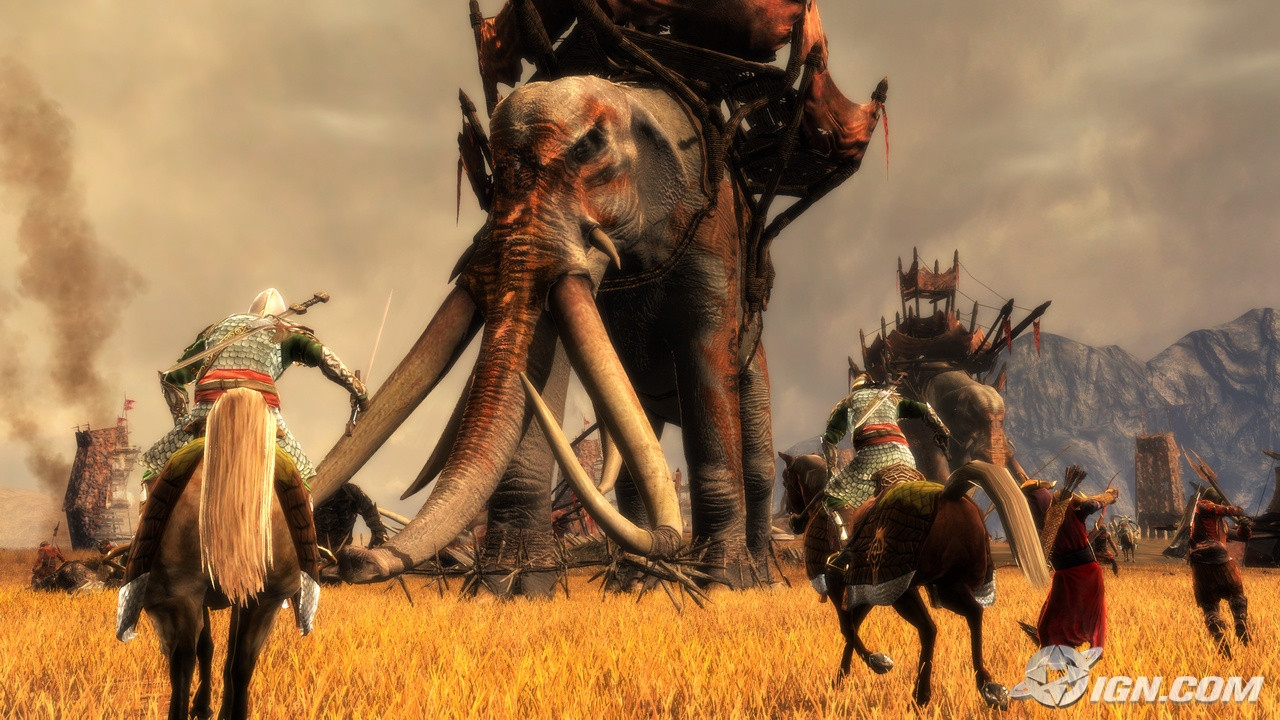
oliphaunts_small

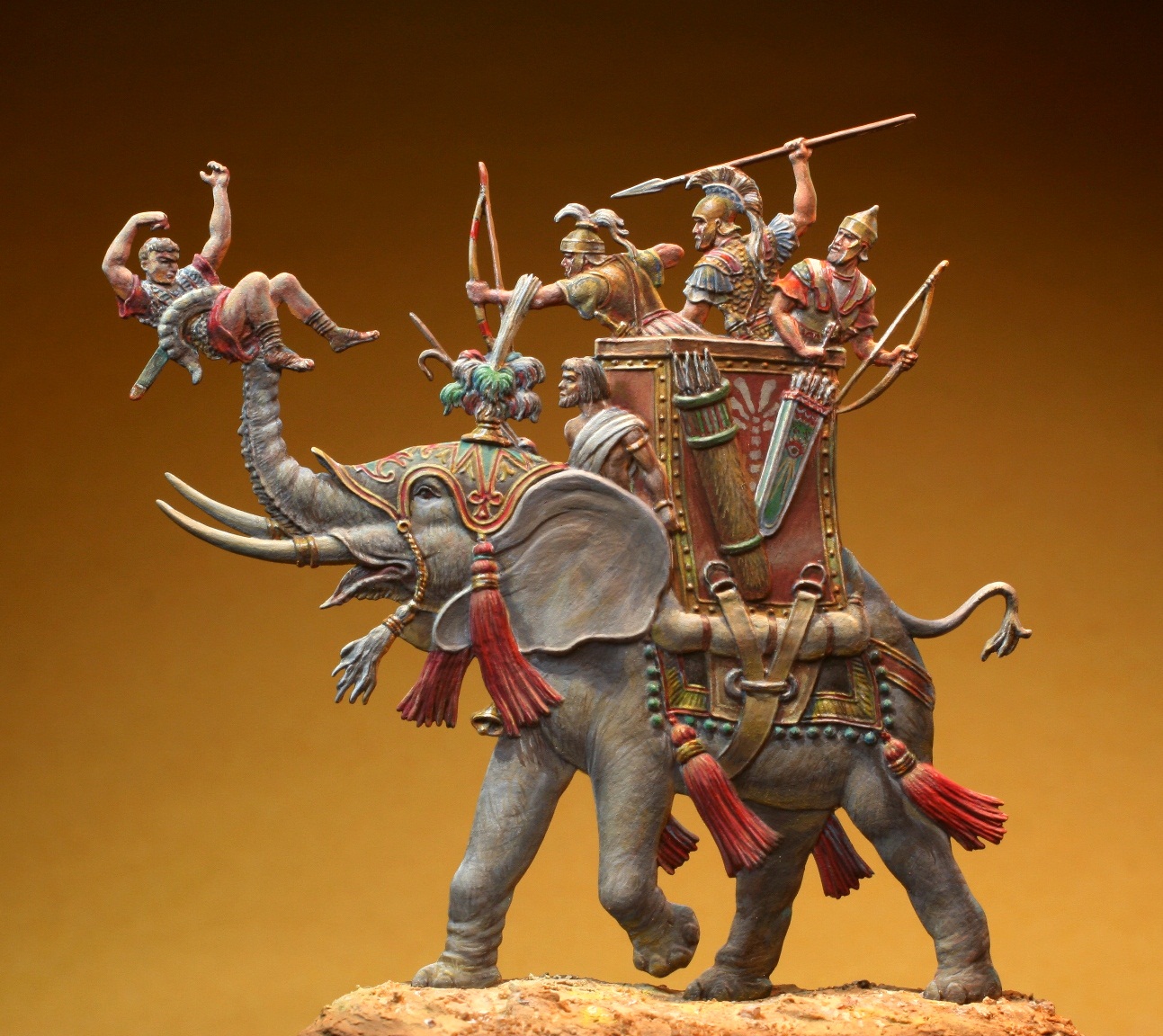
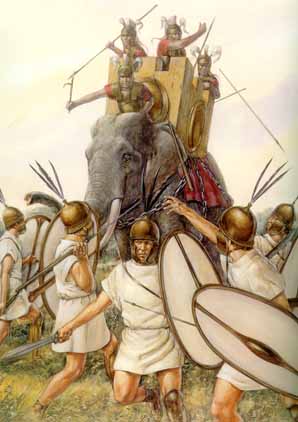
These are, of course, based upon real war elephants.

Carthaginian-War-Elephant-yellow-shrink

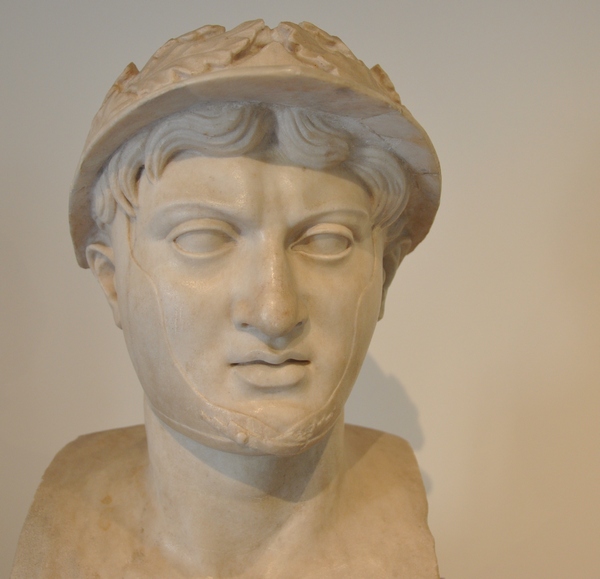
The west– our west– first saw such elephants in the 280s BC, in the army which Pyrrhus of Epirus brought from Greece to fight the Romans.

herculaneum_villa_papiri_pyrrhus_naples4elephant_dish

Such elephants were thought to be useful against great blocks of infantry.

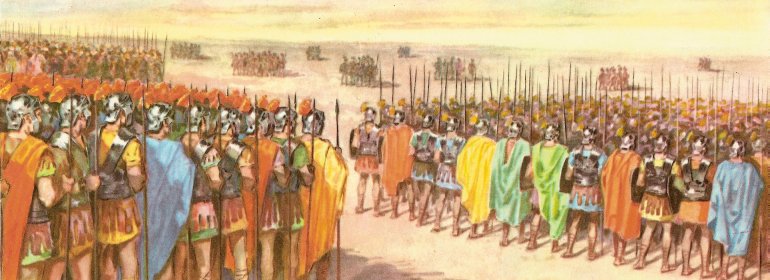
phalanx phalanx1legion_in_battle_formation

They could be used like tanks to knock holes in the formations.

Pyrhus_elephants2

To most people, the most familiar images, however, would be from Hannibal’s invasion of Italy in 218 BC.

Hannibal-2

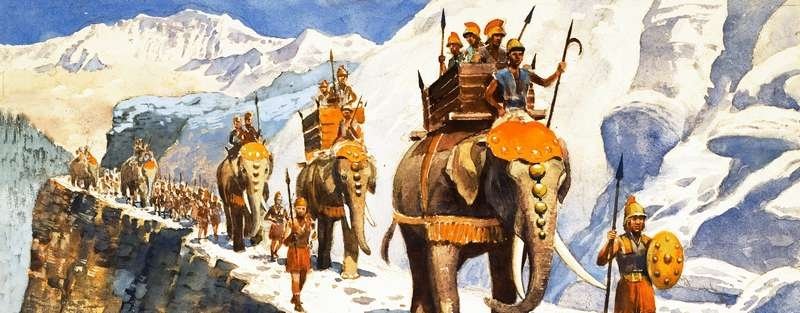
And, most famous of all, is his taking of the elephants across the Alps.

lal299613 lal319314

In fact, this did not end well for the elephants. Ancient accounts suggest that out of forty elephants, only one survived.

Crossing the Alps reminded us of Napoleon doing this in 1800. Here’s the heroic version:

Napoleon_at_the_Great_St._Bernard_-_Jacques-Louis_David_-_Google_Cultural_Institute

And this is what really happened (a little like Hannibal’s elephants):

Paul_Delaroche_-_Napoleon_Crossing_the_Alps_-_Google_Art_Project_2

JRRT says of the oliphaunt Sam saw that “…the Mûmak of Harad was indeed a beast of vast bulk, and the like of him does not walk now in Middle-earth” (“Of Herbs and Stewed Rabbit”, LOTR 661).

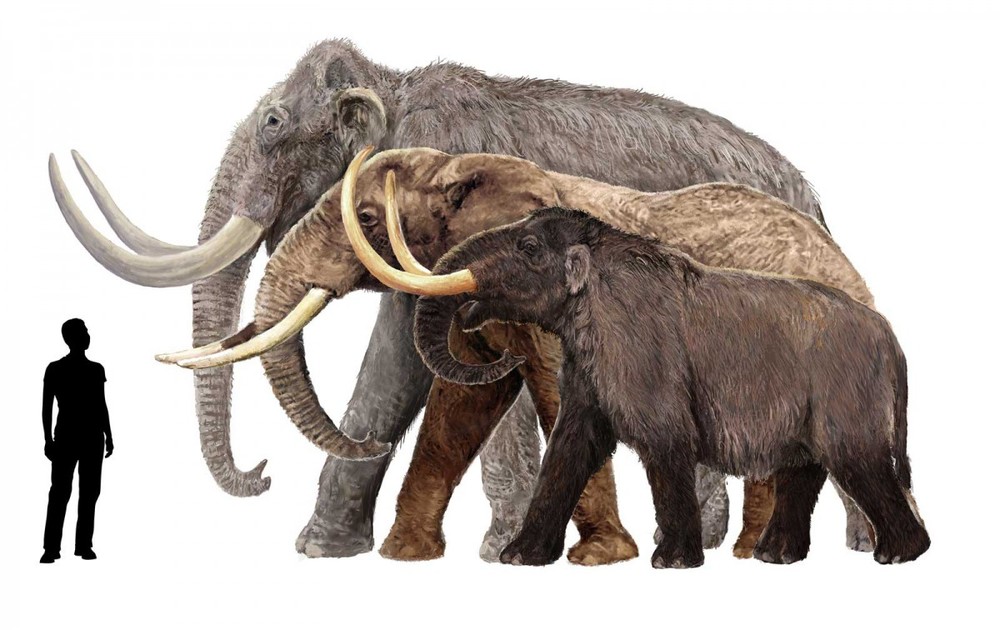
It’s unclear what he means by this, except perhaps that an oliphaunt was more like a mammoth

Mammoths_Man-1200x756.jpg format=1500w

Even so, we can only contrast an ancient war elephant (reconstructed)

dced00480c58b85786bee4bf212eb30d

with those in the film

01IYPfe

and which reminded us strongly of ATATs from the assault upon Hoth,

atat

and think how disappointed Sam would be in what he would see in our world versus his!

Thanks, as always, for reading!

MTCIDC

CD

Jolly Tom.2

16 Wednesday Sep 2015

Posted by Ollamh in Fairy Tales and Myths, Imaginary History, J.R.R. Tolkien, Narrative Methods

≈ Leave a comment

Tags

Barrow-downs, Barrow-wights, Bree, Dagger, Dorset, Eowyn, Fangorn, Frodo, Gandalf, Middle-earth, Nazgul, Neolithic, Old Forest, Old Man Willow, Peter Jackson, Sauron, The Hobbit, The Lord of the Rings, The Ring, Tolkien, Tom Bombadil, Weaponry, Westernesse, Witch-King of Angmar

Dear Readers,

Welcome, as always!

As you can see from the title, this is a continuation of the previous posting, in which we began a discussion of a two-part question: 1. What would be the advantage of keeping Tom Bombadil in a recorded (audio or film) version of The Lord of the Rings? 2. What would you need to keep?

To summarize the previous posting, we suggested that:

  1. he, along with Fangorn/Treebeard, represents the great age of Middle Earth—something very important to the author–and a continuity of living things, which leads us to
  2. he might also be seen as a form of hope: the Ring has no effect upon him and he remembers a time before the arrival of Sauron, suggesting that there might be a time after him, as well, and that the Ring has limits
  3. as it seems out of place even in the current text, the bulk of Tom’s verse and the sometimes rhythmicized prose could be removed, leaving only the character himself and his part in the plot

We believe, however, that there is a more pressing reason for keeping him in the text, and it has to do with something Gandalf says to Frodo when Frodo, panicked at the prospect of having to deal with the Ring, demands, “Why did it come to me? Why was I chosen?” LotR 61.

“’Such questions cannot be answered,’ said Gandalf, ‘You may be sure that it was not for any merit that others do not possess: not for power or wisdom, at any rate. But you have been chosen, and you must therefore use such strength and heart and wits as you have.’” LotR 61.

This is a continuation of Gandalf’s earlier statement that:

“Behind that there was something else at work, beyond any design of the Ring-maker. I can put it no plainer than by saying that Bilbo was meant to find the Ring, and not by its maker. In which case you also were meant to have it.” LotR 56.

Thus, there is a level of intentionality at work in Middle-earth, something beyond Sauron. And, when we see Bombadil next, he will prove to be an instrument of the intention.

The Hobbits have left his house and, following his directions, have passed onto the Barrow-downs.

Breeland_breetobarrowdowns

A down is a piece of rolling countryside, often bare at the top, with trees in its folds—as here in Dorset.

dorset_3287278k

The Dorset Downs have lots of Neolithic remains, including numbers of barrows or tumuli, grave mounds commonly covering an interior structure, not uncommonly made of stone—

OLYMPUS DIGITAL CAMERA

image4

Wakeman_Newgrange_tumulus_chamber_cross_section

Such tumuli once contained the body or bodies usually of high-status persons

Unknown

and all sorts of grave goods, either as a display of wealth or perhaps for some sort of afterlife use.

gordion1957

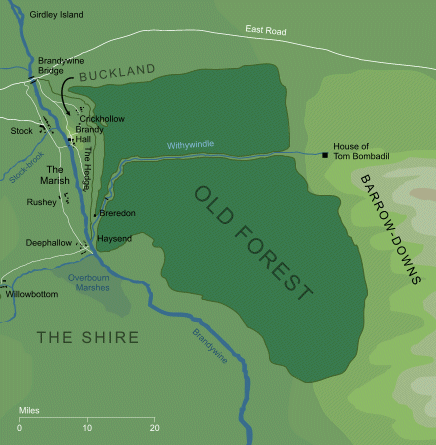
Bombadil has been careful, however, to say “more than once” (LotR 134) that the Hobbits are to avoid the barrows themselves, telling them not to meddle with them or “cold Wights” (LotR 133). (He also says that they should pass them “on the west-side”—there have been lots of guesses about this—we would add our guess that it might have to do with the orientation—literally—of the entry. If entries faced east and the rising sun, it would be wise of the Hobbits to skirt the barrows’ potential blind side, on the west. And there is also the rather obvious point, once you’ve looked at a map of the area, that, if they kept the barrows to the right and the Old Forest to the left, they would be heading north towards the road to Bree, as they intended.)

il_570xN.743473219_bxv9

Those Barrow-wights are not the original inhabitants of the mounds, but agents of the Witch-king of Angmar, who sends them to take possession (The Lord of the Rings Companion, 144-145), long after their original occupation—but, what’s interesting is that, at least one of these tumuli appears not to have been plundered and this leads us to our next point about Tom Bombadil. After he rescues the Hobbits (showing again his mastery over at least the minor forces of evil), he does a little plundering of his own, including:

“For each of the hobbits he chose a dagger, long, leaf-shaped, and keen, of marvellous workmanship, damasked in serpent forms in red and gold…Then he told them that these blades were forged many long years ago by Men of Westernesse: they were foes of the Dark Lord, but they were overcome by the evil king of Carn Dum in the Land of Angmar.” LotR 146.

damascene-sword

Here are a few ideas of what, at least, the leaf shape might have looked like:

leaf.2bronzeageblades leaf.1

And we include this third one just because it looks so cool—

leaf.3

Bombadil, of course, has actually seen all of this happen, and here we see that theme of great age appear again. And there’s the pedigree of those blades. Unlike the sack ‘o swords slung without any more explanation than “These are for you. Keep them close.” to the Hobbits in the film, these were weapons made by heroic men of the past, doomed men, but who fought evil until they were overcome (a strong theme throughout the history of Middle-earth).

Late in the story, one of those blades seems to be the instrument of intentionality once more. When Eowyn faces the Witch-king of Angmar, now the chief of the Nazgul—

lord_of_the_nazgul_2

and he is about to kill her with his mace, Merry strikes him from behind, stabbing him in what, on a living man, would have been a vulnerable spot, the back of the knee. (LotR 842.)

eowyn_vs_the_nazgul_by_arteche-d3ggm8g

Distracted and, surprisingly, in pain, the Nazgul stumbles and Eowyn destroys him and here, once more, we may see intentionality, and all because of Tom Bombadil. Merry’s sword, from its contact with the undead flesh of the Nazgul, withers away, but—

“So passed the sword of the Barrow-downs, work of Westernesse. But glad would he have been to know its fate who wrought it slowly long ago in the North-kingdom when the Dunedain were young, and chief among their foes was the dread realm of Angmar and its sorcerer king. No other blade, not though mightier hands had wielded it, would have dealt that foe a wound so bitter, cleaving the undead flesh, breaking the spell that knit his unseen sinews together.” LotR 844.

So, for everything from Old Man Willow (whom the script writers couldn’t resist completely, transposing him to an improbable scene with Fangorn/Treebeard) to showing the great age of Middle-earth to suggesting other powers untouched by the Ring to offering possible hope to showing something of the intentionality behind certain actions in the story to providing the ancient and magical weapon which could finally bring down the Witch-king of Angmar and save Eowyn at the same time, might we suggest that, next production—audio or visual—of The Lord of the Rings, Jolly Tom might have a place in the cast?

Thanks, as always, for reading.

MTCIDC

CD

PS

If you would like to read more about Tom, see, for example, Dorathea Thomas, “He Is: Tom Bombadil and His Function in The Lord of the Rings” at Academia.edu.

Jolly Tom.1

09 Wednesday Sep 2015

Posted by Ollamh in Narrative Methods, Poetry, Tolkien

≈ Leave a comment

Tags

Barrow-wights, Elrond, Gandalf, Hildebrandts, Nazgul, Old Man Willow, Peter Jackson, Ralph Bakshi, Sauron, Tales from the Perilous Realm, The Lord of the Rings, The Old Forest, Tolkien, Tom Bombadil

Dear Readers,

Welcome, as always!

There has been lots of discussion, if not downright argument, about Tom Bombadil and The Lord of the Rings. Although he appears in the first BBC radio adaptation in 1955 (which Tolkien disliked, saying in a letter of the period that “I thought Tom Bombadil dreadful”) and in the 1979 American radio drama, he was excised from Ralph Bakshi’s 1978 animated feature and from the 1981 BBC radio production, although reappearing in the radio adaptation of the relevant material from The Lord of the Rings in Tales from the Perilous Realm (BBC 1992).

Then we come to Peter Jackson’s The Fellowship of the Ring (2001). As anyone who has read our past postings knows, we have very mixed feelings about this and the subsequent films, but, in this posting, we want to take a completely different tack, not asking, as has always been the subject “why was Tom left out?” but, rather, “why might you keep him in?”

This is two questions, really, the first being “what would be his effect upon the story?” and, second, “just what of him would you keep?”

Lost in the Old Forest

oldforest

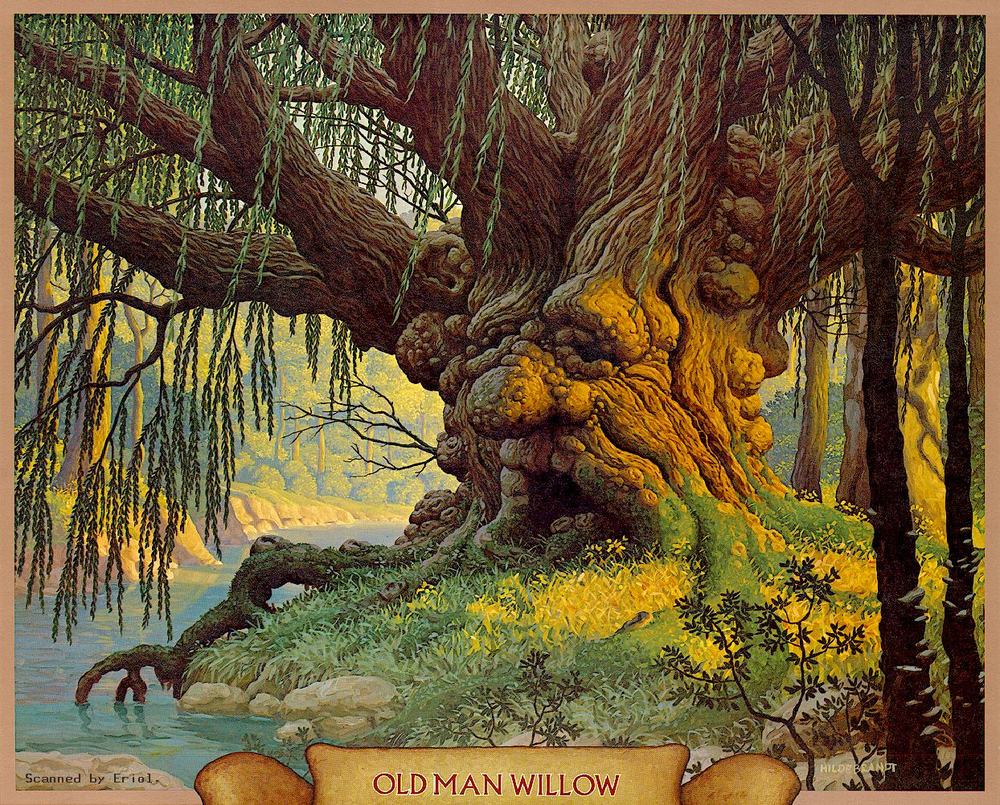
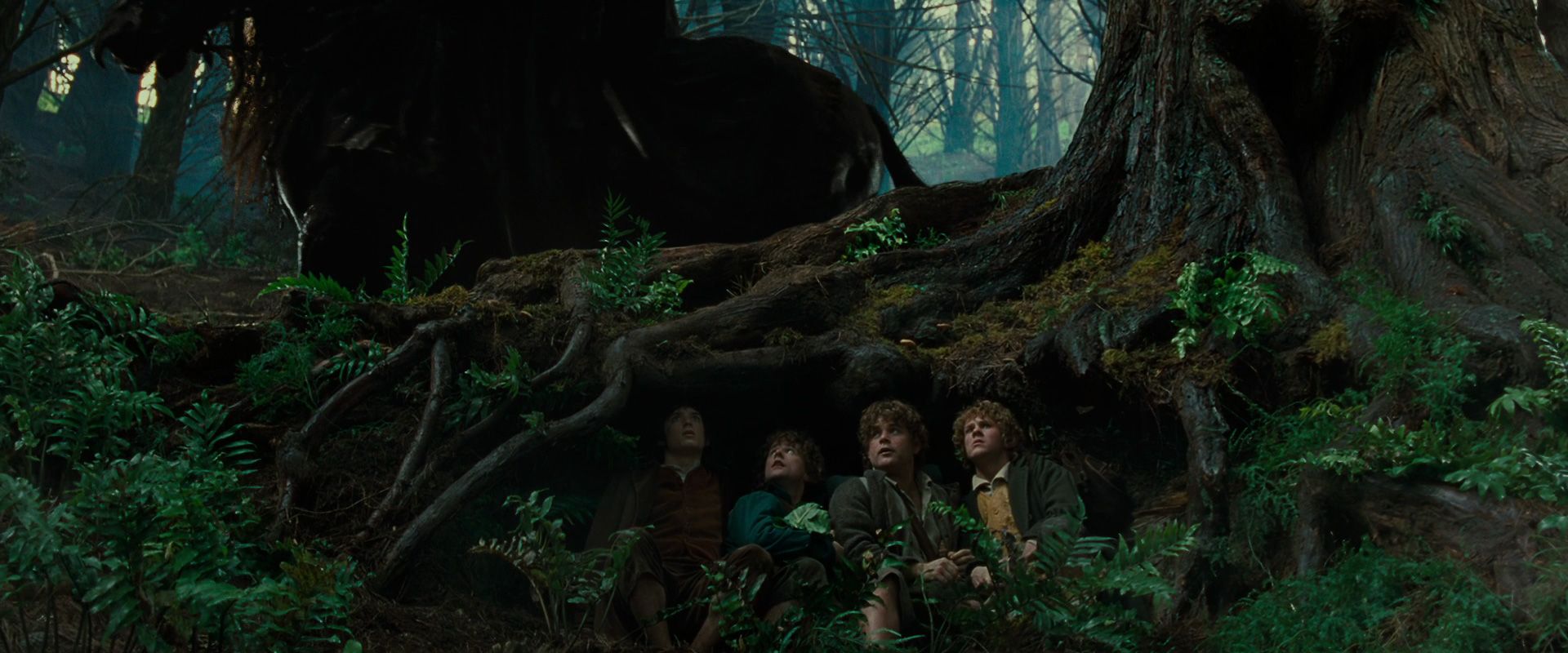
the Hobbits run afoul of Old Man Willow

TomOldManWillow

only to be rescued by Tom Bombadil

bombadil010607a

As much as we love the Hildebrandts’ work, this is not one of our favorites—this illustration really makes us wonder what kind of magic mushrooms Tom has been trading with Farmer Maggot and which Grateful Dead album is running in his head. As an antidote, here’s one of our favorites:

visite_inattendue_hildebrandt

One could say that this is part of the pattern of increasingly-dangerous encounters the Hobbits are having as they try to leave the Shire—

the first encounter was with the Nazgul

hobbits-hiding-from-nazgul

This doesn’t justify including him, though, if he’s thought to be just one more in a series—and this is clearly an opinion held by a Jackson scriptwriter, who once said:

“Tom Bombadil is part of several false starts to Frodo’s journey, and you cannot have things happening quite so episodically; that’s not what storytelling is all about.” (quoted from The One Ring, “complete list of film changes”—see the link here)

If he’s not just a “false start”, what is his function—and may he have more than one?

One of those elements of The Lord of the Rings which runs always just below the surface is the great age of Middle Earth. This is an ancient place and that fact was clearly very important, to the author, who spent years building up that narrative infrastructure, and to the story. This is clearly not a quick, little, one-time adventure, but, rather, one more part of a very old tale, of the “long defeat” as Galadriel calls the struggle with Sauron.

As a living token of that antiquity—and the first, but hardly the last, they meet—on their journey, there is Tom Bombadil. As Elrond says of him:

“But I had forgotten Bombadil, if indeed this is still the same that walked the woods and hills long ago, and even then was older than the old. That was not then his name. Iarwain Ben-adar we called him, [“Old-young, fatherless”? see The Lord of the Rings Companion, 128 for more on his names) oldest and fatherless.” LotR 265.

Thus, one of his functions is to represent a distant past, though now as shrunken as the Old Forest, “but an outlier of its northern march. Time was when a squirrel could go from tree to tree from what is now the Shire to Dunland west of Isengard.” (Elrond—LotR 265) In this, he is akin to Fangorn/Treebeard, described by Gandalf (himself so old that he was created by Iluvatar before the Music of the Ainur) as “the oldest living thing that still walks beneath the Sun upon this Middle-earth.” LotR 499.

He also, in a curious way, might be understood to represent one possible—perhaps hopeful—form of the future. When Frodo asks him, “Who are you, Master?” he replies (and it strikes us as sounding like both a Middle-earth riddle and its solution):

“Eldest, that’s what I am. Mark my words, my friends: Tom was here before the river and the trees; Tom remembers the first raindrop and the first acorn. He made paths before the Big People, and saw the little People arriving. He was here before the Kings and the graves and the Barrow-wights. When the Elves passed westward, Tom was here already, before the seas were bent. He knew the dark under the stars when it was fearless—before the Dark Lord came from Outside.” LotR 131.

Tom represents continuity, unchanging stability, then, although he is not all-powerful. As Glorfindel says:

“I think that in the end, if all else is conquered, Bombadil will fall, Last as he was First; and then Night will come.” LotR 266.

And yet he also, because of his immense age and ability to endure, might represent the unspoken possibility that, though Sauron is powerful, because he is not the creator nor rightful owner of Middle-earth, but rather an invader, he can be defeated: as there was a time before Sauron, could there not be a time after him?

(As an afterthought here, might we also add Tom’s complete immunity to the Ring? In a story full of people, from Gollum to Sauron, from Bilbo to Galadriel, so affected, in one way or another by it, is this another form of hope? That not everyone in the whole of Middle-earth wants the Ring or has to deny it strenuously lest the temptation overcome them?)

We want to continue this discussion in our next posting, but we want to end this one by considering the second part of this question, “Just what of him would you keep?”

Although the usual explanation for excising him has to do with his being a supposed “false start”, which has to do with the mechanics of plot, we believe that a real reason has to do with the large quantity of verse which appears when he appears. These verses signal that appearance:

“Hey dol! merry dol! ring a dong dillo!

Ring a dong! hop along! fal lal the willow!

Tom Bom, jolly Tom, Tom Bombadillo!” LotR 119

Although there has been verse earlier in the book, it has been scattered, not concentrated, and has seemed more apropos to what has been going on in the text. Much of this verse appears to come from nowhere, rather like Tom himself (and there’s more on 121, 122, 124, 126, and a final bit on 134—although, as a cry for help, it somehow fits better). In a story primarily in prose, with the occasional song, how would you present such a character believably on film or on tape? (Especially when one notices that even his speech is sometimes cadenced—“What be you a-thinking of? You should not be waking. Eat earth! Dig deep! Drink water! Go to sleep! Bombadil is talking!” LotR 120)

In fact, the character of Bombadil is not organic to the development of the plot of The Lord of the Rings. Tom Bombadil made his first appearance in The Oxford Magazine in 1934, when The Hobbit was being written, but three years before its initial publication. (See The Lord of the Rings Companion 124-129 for the poem and further information).

The basic plot of chapters 6 and 7 is simple: Tom frees the Hobbits from Old Man Willow, leads them to his house, the Hobbits eat and drink there and converse with Tom, but there’s little more to the two scenes. Thus, except for the distress call which Tom teaches the Hobbits on 134, does any of this verse do more than show us the poetic/almost manic side of Bombadil? If we wished to retain the character, might it be possible to cut away the verse (including a certain amount of rhythmicized prose), leaving only those elements which further the plot?

To us, this is a more pressing issue than it might at first appear—but see our next post, Jolly Tom.2, to understand our interest.

Thanks, as always, for reading.

MTCIDC

CD

← Older posts
Newer posts →

The Doubtful Sea Series Facebook Page

The Doubtful Sea Series Facebook Page

  • Ollamh

Categories

  • Artists and Illustrators
  • Economics in Middle-earth
  • Fairy Tales and Myths
  • Films and Music
  • Games
  • Heroes
  • Imaginary History
  • J.R.R. Tolkien
  • Language
  • Literary History
  • Maps
  • Medieval Russia
  • Military History
  • Military History of Middle-earth
  • Narnia
  • Narrative Methods
  • Poetry
  • Research
  • Star Wars
  • Terra Australis
  • The Rohirrim
  • Theatre and Performance
  • Tolkien
  • Uncategorized
  • Villains
  • Writing as Collaborators
Follow doubtfulsea on WordPress.com

Across the Doubtful Sea

Recent Postings

  • Crowing and Raven March 18, 2026
  • The Damage of Dragons March 11, 2026
  • Encouragement March 4, 2026
  • Eavesdropping February 25, 2026
  • Do You Speak Villain? (Part 3) February 18, 2026
  • Do You Speak Villain? (2) February 11, 2026
  • Do You Speak Villain? (Part 1) February 4, 2026
  • Towering January 28, 2026
  • Tolkien Among the Indians January 21, 2026

Blog Statistics

  • 109,354 Views

Posting Archive

  • March 2026 (3)
  • February 2026 (4)
  • January 2026 (4)
  • December 2025 (5)
  • November 2025 (4)
  • October 2025 (5)
  • September 2025 (4)
  • August 2025 (4)
  • July 2025 (5)
  • June 2025 (4)
  • May 2025 (4)
  • April 2025 (5)
  • March 2025 (4)
  • February 2025 (4)
  • January 2025 (5)
  • December 2024 (4)
  • November 2024 (4)
  • October 2024 (5)
  • September 2024 (4)
  • August 2024 (4)
  • July 2024 (5)
  • June 2024 (4)
  • May 2024 (5)
  • April 2024 (4)
  • March 2024 (4)
  • February 2024 (4)
  • January 2024 (5)
  • December 2023 (4)
  • November 2023 (5)
  • October 2023 (4)
  • September 2023 (4)
  • August 2023 (5)
  • July 2023 (4)
  • June 2023 (4)
  • May 2023 (5)
  • April 2023 (4)
  • March 2023 (5)
  • February 2023 (4)
  • January 2023 (4)
  • December 2022 (4)
  • November 2022 (5)
  • October 2022 (4)
  • September 2022 (4)
  • August 2022 (5)
  • July 2022 (4)
  • June 2022 (5)
  • May 2022 (4)
  • April 2022 (4)
  • March 2022 (5)
  • February 2022 (4)
  • January 2022 (4)
  • December 2021 (5)
  • November 2021 (4)
  • October 2021 (4)
  • September 2021 (5)
  • August 2021 (4)
  • July 2021 (4)
  • June 2021 (5)
  • May 2021 (4)
  • April 2021 (4)
  • March 2021 (5)
  • February 2021 (4)
  • January 2021 (4)
  • December 2020 (5)
  • November 2020 (4)
  • October 2020 (4)
  • September 2020 (5)
  • August 2020 (4)
  • July 2020 (5)
  • June 2020 (4)
  • May 2020 (4)
  • April 2020 (5)
  • March 2020 (4)
  • February 2020 (4)
  • January 2020 (6)
  • December 2019 (4)
  • November 2019 (4)
  • October 2019 (5)
  • September 2019 (4)
  • August 2019 (4)
  • July 2019 (5)
  • June 2019 (4)
  • May 2019 (5)
  • April 2019 (4)
  • March 2019 (4)
  • February 2019 (4)
  • January 2019 (5)
  • December 2018 (4)
  • November 2018 (4)
  • October 2018 (5)
  • September 2018 (4)
  • August 2018 (5)
  • July 2018 (4)
  • June 2018 (4)
  • May 2018 (5)
  • April 2018 (4)
  • March 2018 (4)
  • February 2018 (4)
  • January 2018 (5)
  • December 2017 (4)
  • November 2017 (4)
  • October 2017 (4)
  • September 2017 (4)
  • August 2017 (5)
  • July 2017 (4)
  • June 2017 (4)
  • May 2017 (5)
  • April 2017 (4)
  • March 2017 (5)
  • February 2017 (4)
  • January 2017 (4)
  • December 2016 (4)
  • November 2016 (5)
  • October 2016 (6)
  • September 2016 (5)
  • August 2016 (5)
  • July 2016 (5)
  • June 2016 (5)
  • May 2016 (4)
  • April 2016 (4)
  • March 2016 (5)
  • February 2016 (4)
  • January 2016 (4)
  • December 2015 (5)
  • November 2015 (5)
  • October 2015 (4)
  • September 2015 (5)
  • August 2015 (4)
  • July 2015 (5)
  • June 2015 (5)
  • May 2015 (4)
  • April 2015 (3)
  • March 2015 (4)
  • February 2015 (4)
  • January 2015 (4)
  • December 2014 (5)
  • November 2014 (4)
  • October 2014 (6)
  • September 2014 (1)

Blog at WordPress.com.

  • Subscribe Subscribed
    • doubtfulsea
    • Join 78 other subscribers
    • Already have a WordPress.com account? Log in now.
    • doubtfulsea
    • Subscribe Subscribed
    • Sign up
    • Log in
    • Report this content
    • View site in Reader
    • Manage subscriptions
    • Collapse this bar
 

Loading Comments...