Villains with ambitious plans for world conquest need armies.
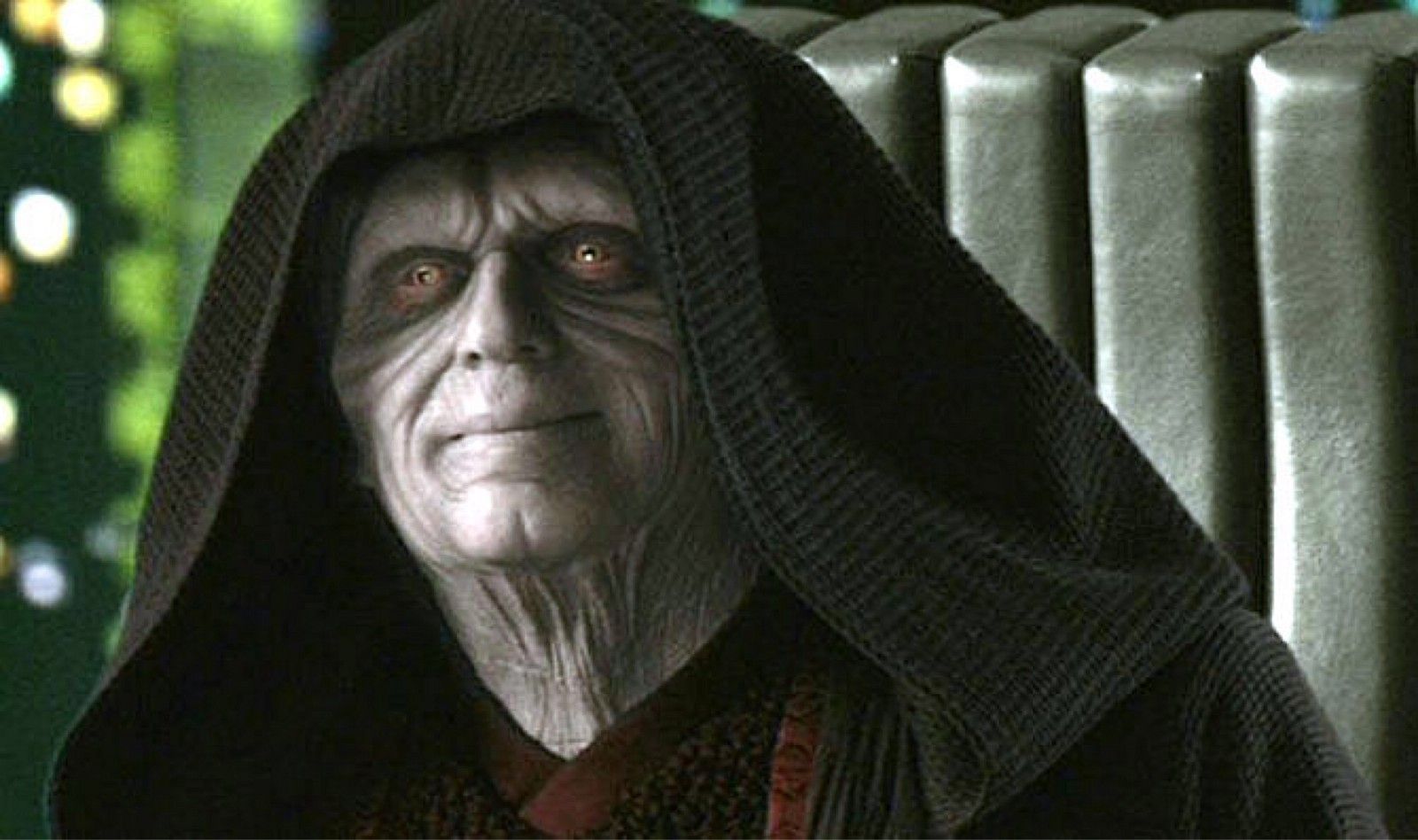
Emperor Palpatine
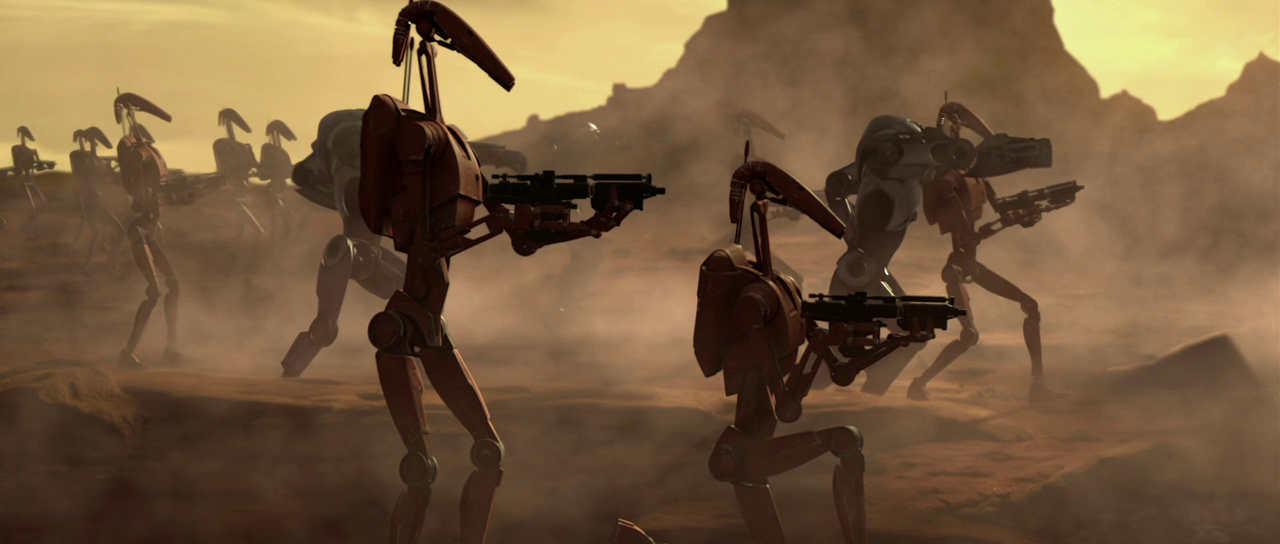
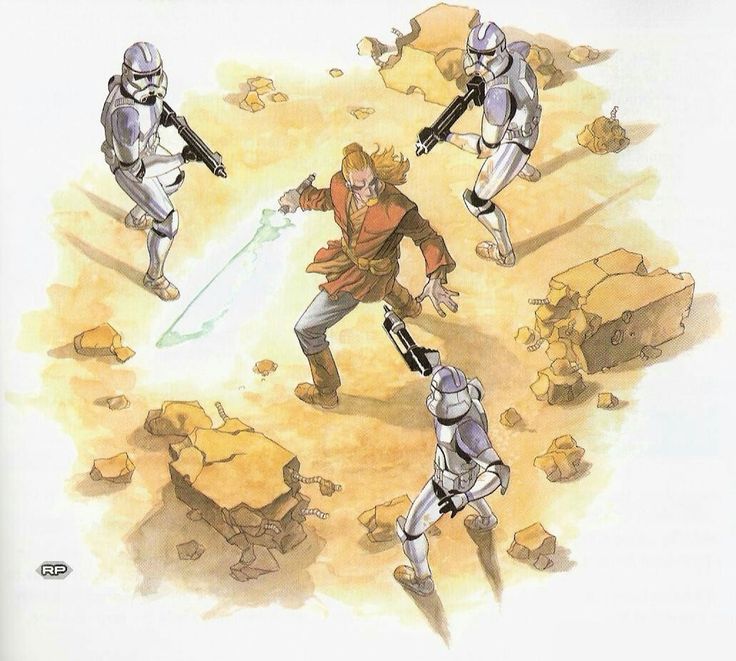
initially employs droids by the million to face the Republic’s clone armies, and not just ordinary foot soldier droids—
but super battle droids
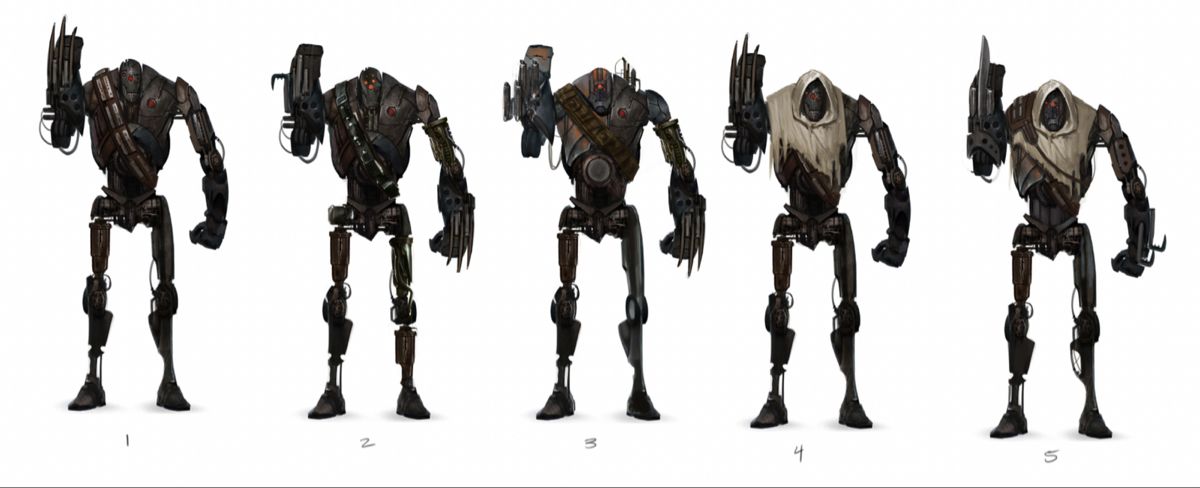
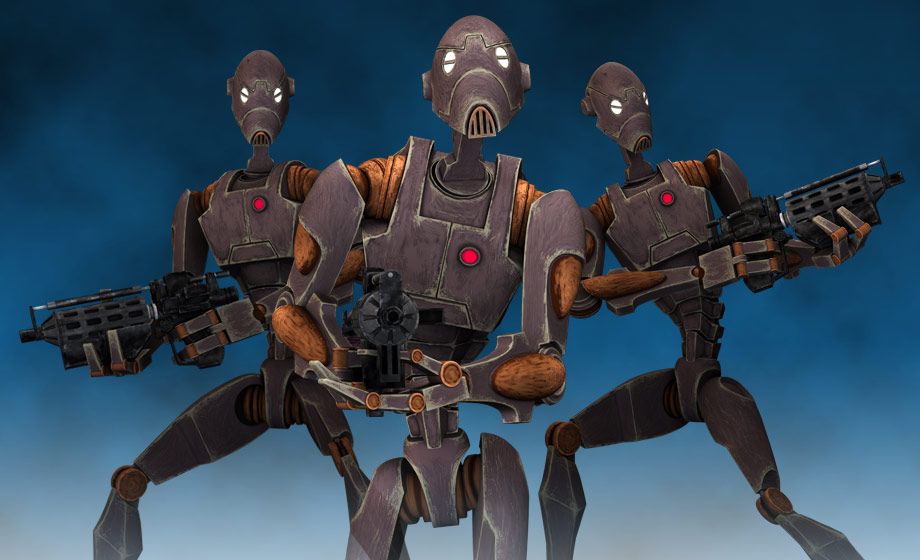
and even commando battle droids
before, in his complex plan, he turns the Republic’s clones against his real target, the Jedi, in Order 66.
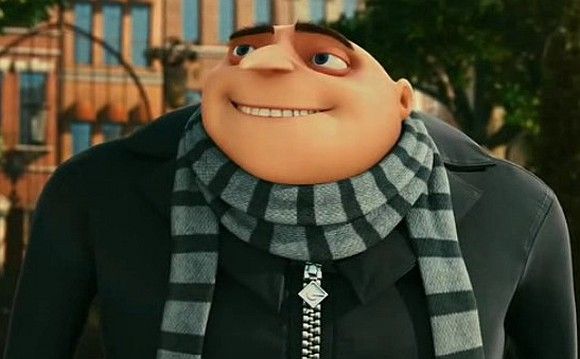
On a lighter level, Gru,
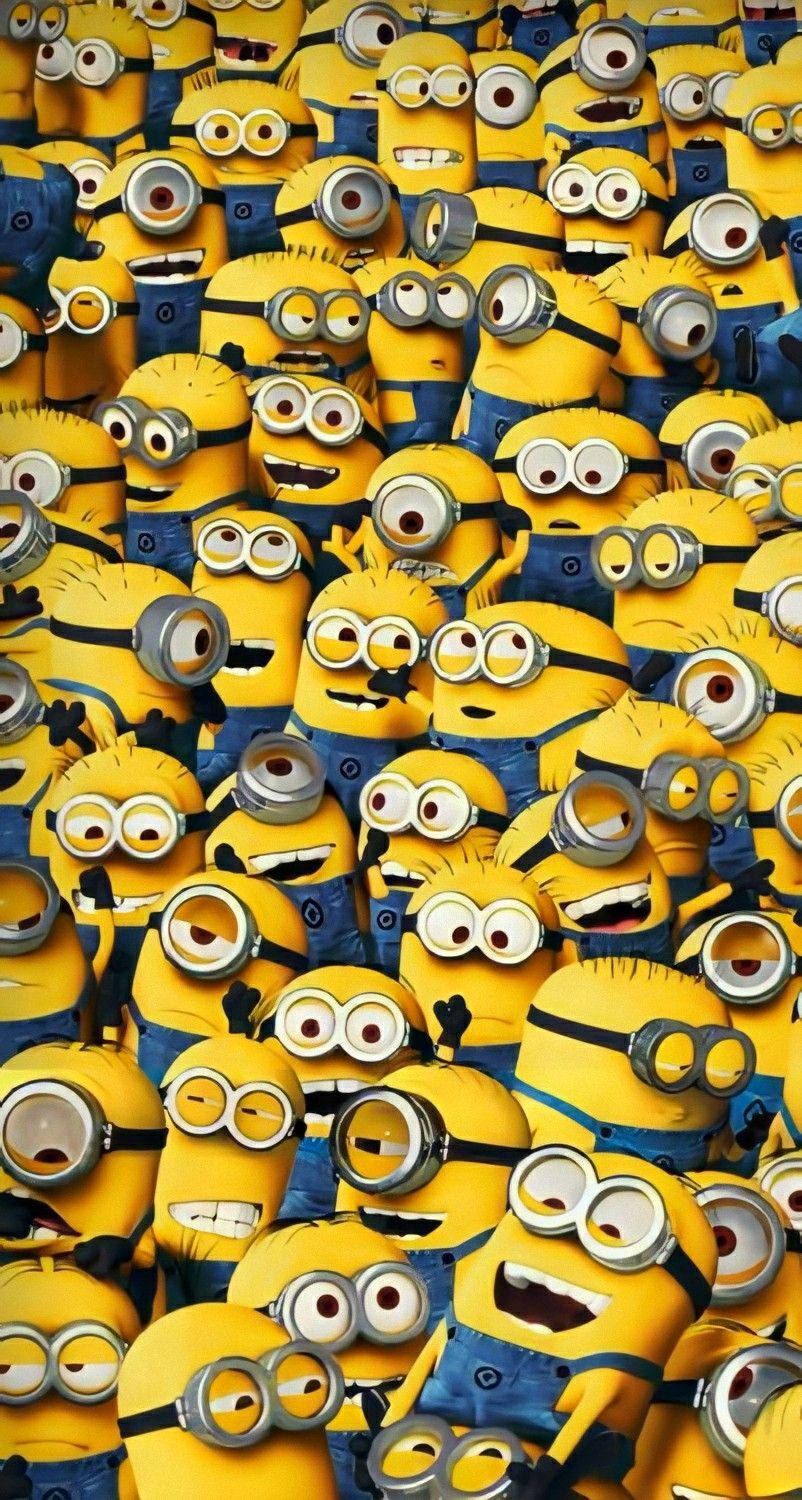
of Despicable Me, has masses of Minions to work his will (sort of)—
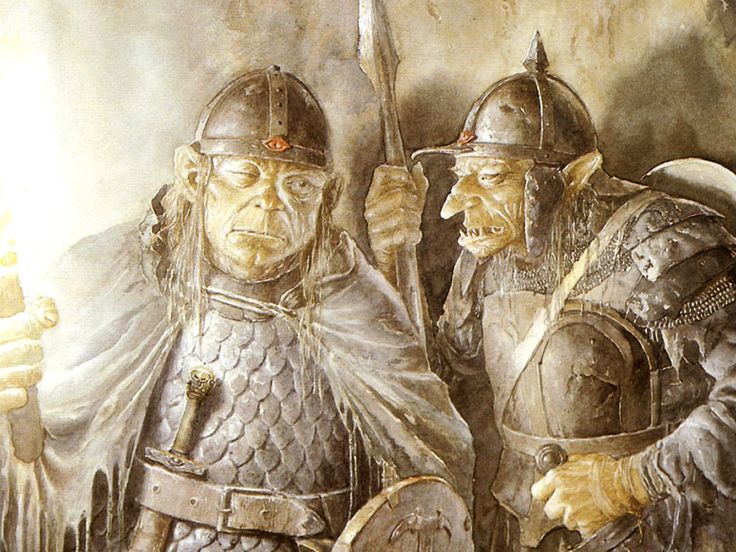
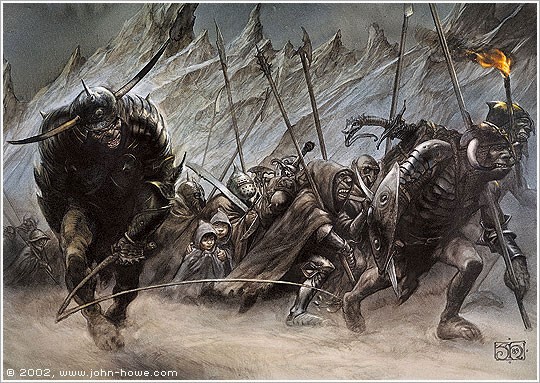
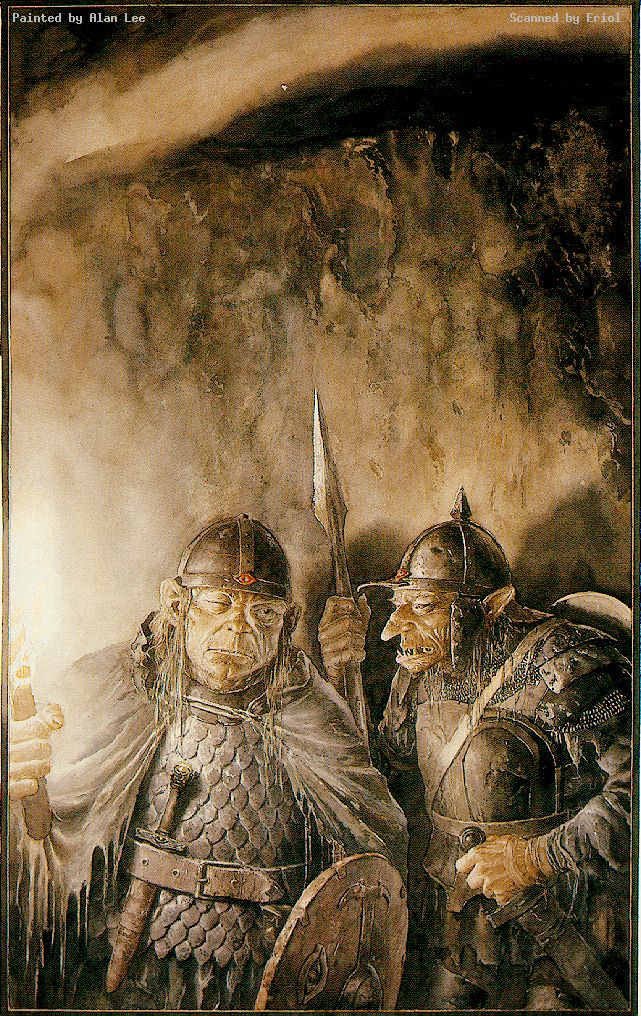
It’s clear that Sauron has similar plans—and similar armies—orcs—along with masses of humans.
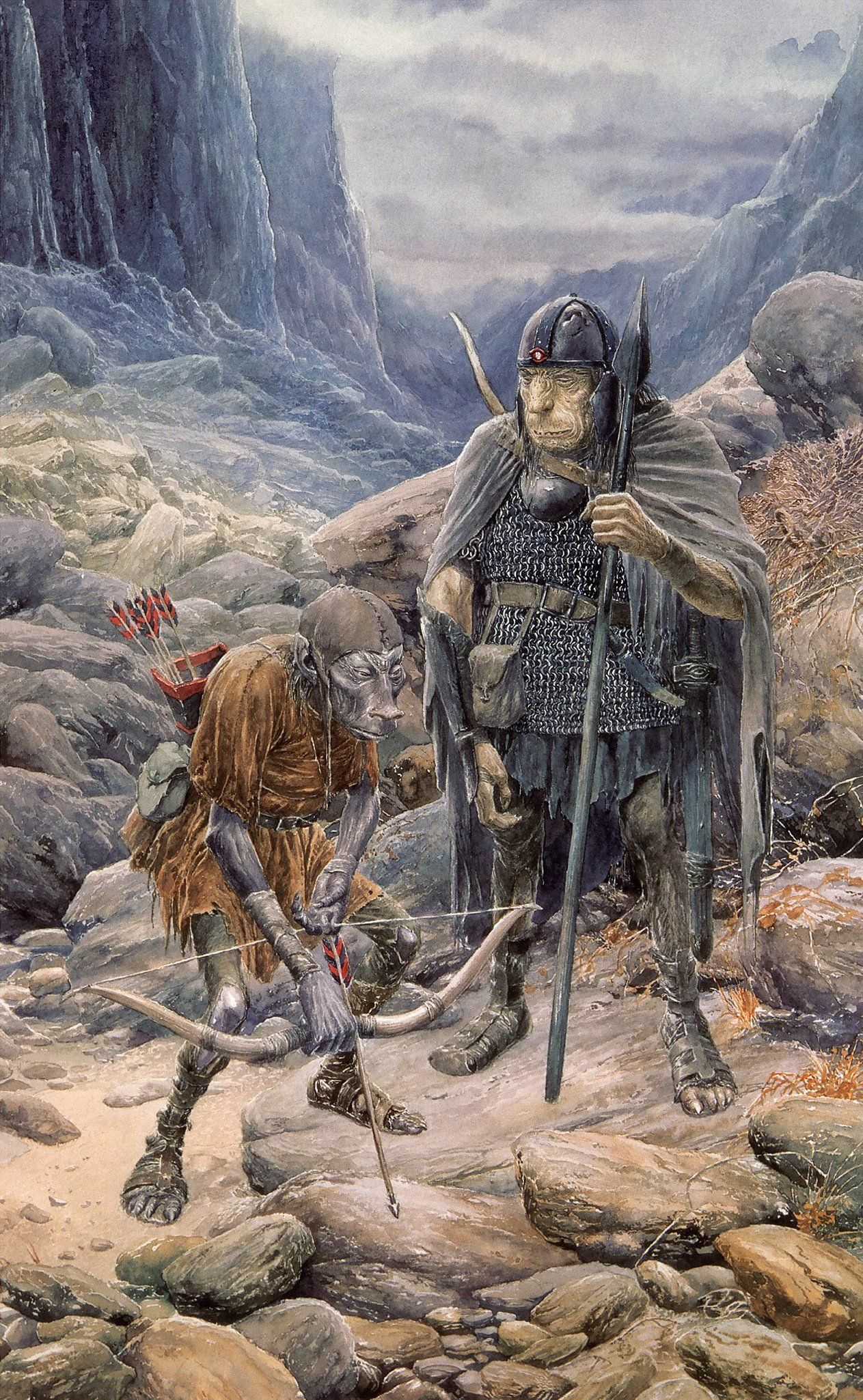
(Alan Lee)
Orcs, we’re told, are a kind of distortion of actual living creatures—
“But Trolls are only counterfeits, made by the Enemy in the Great Darkness, in mockery of Ents, as Orcs were of Elves.” (The Two Towers, Book Three, Chapter 4, “Treebeard”)
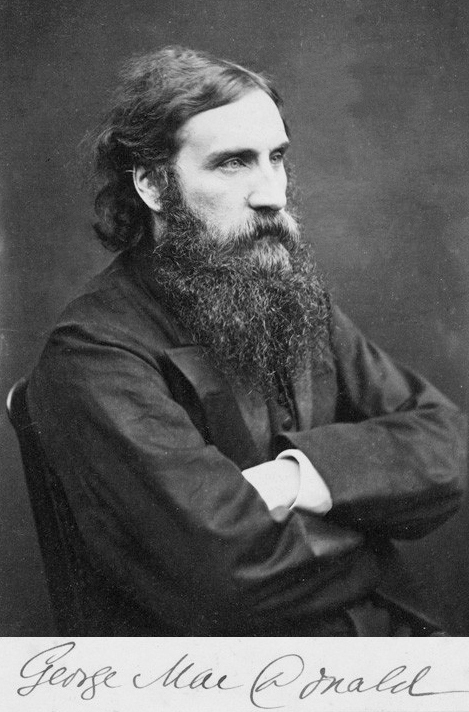
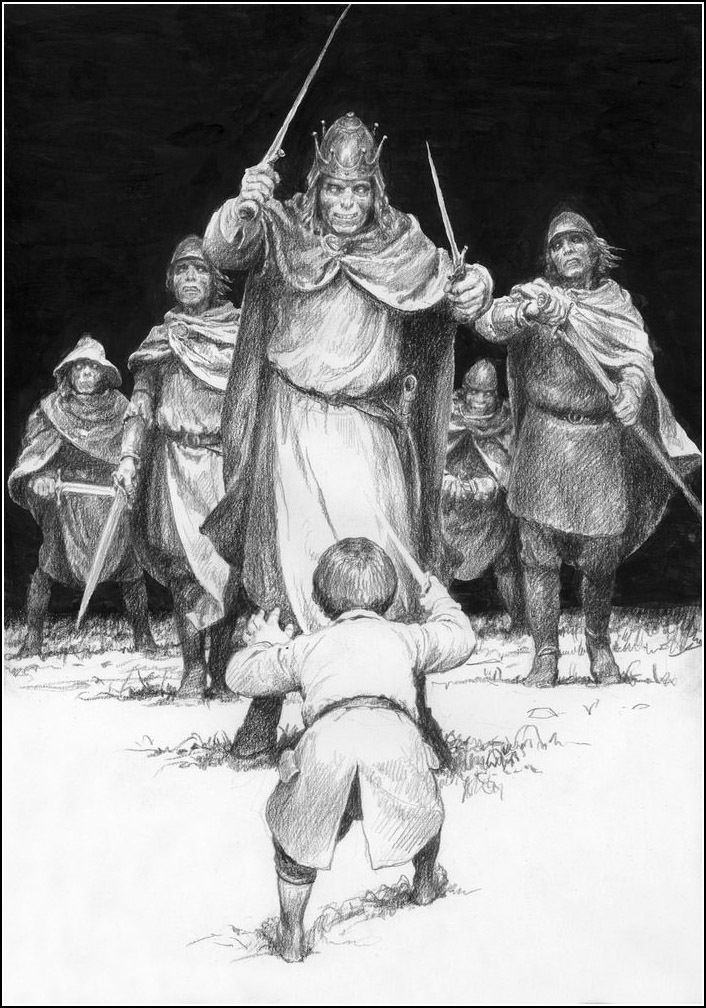
Orcs began, however, as something more traditional and, for Tolkien, begin with the works of George MacDonald (1824-1905),
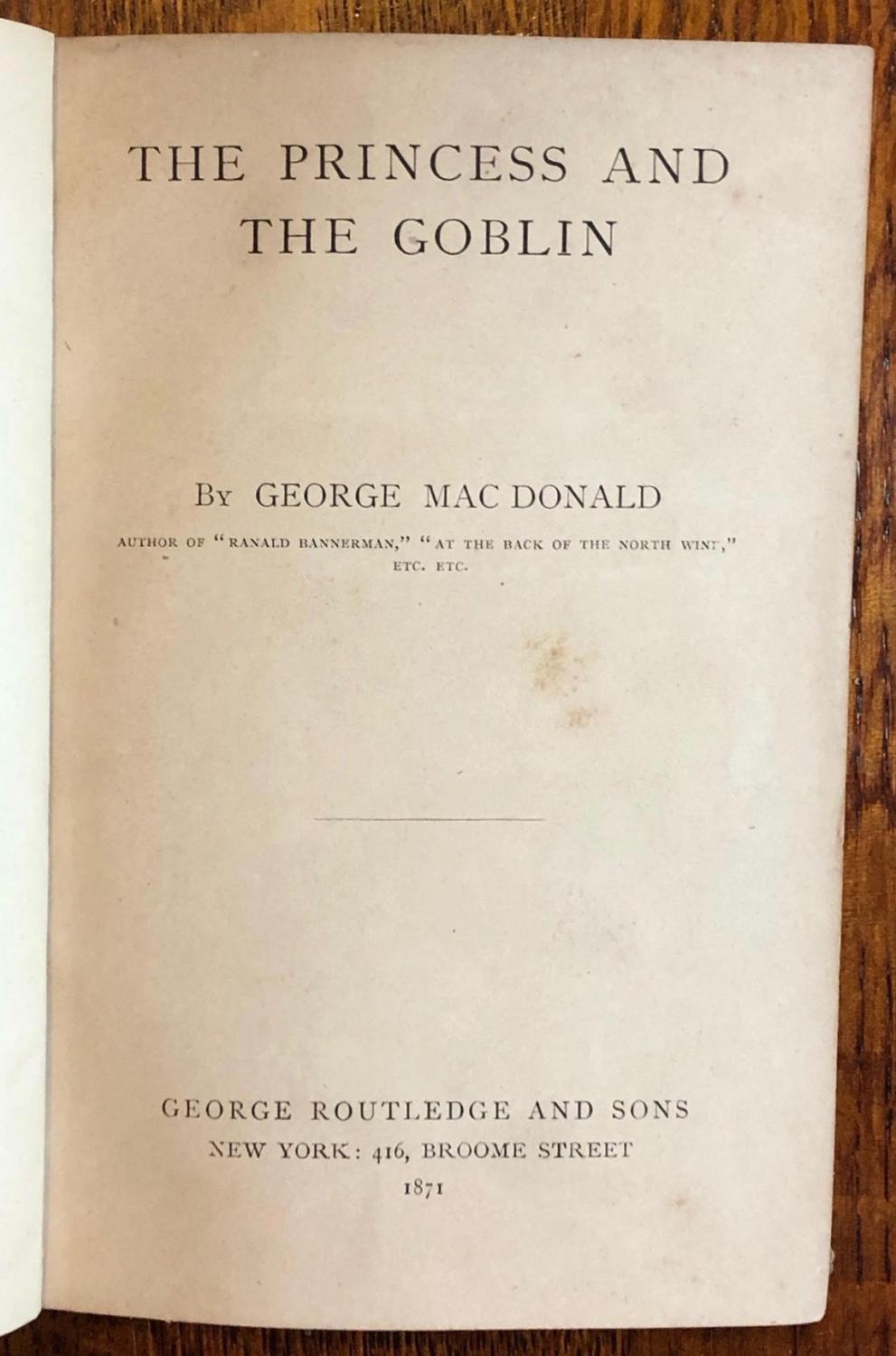
and, in particular, with one of his fantasy novels, The Princess and the Goblin, 1870-2.
(First US edition, 1871)
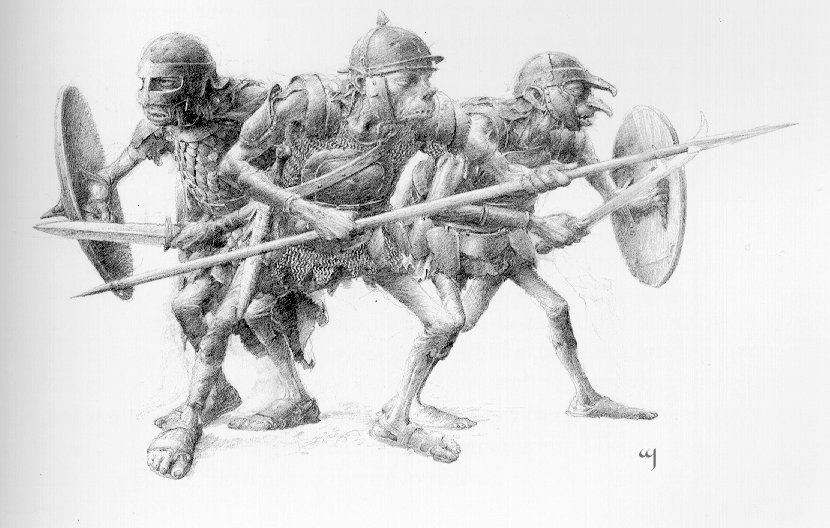
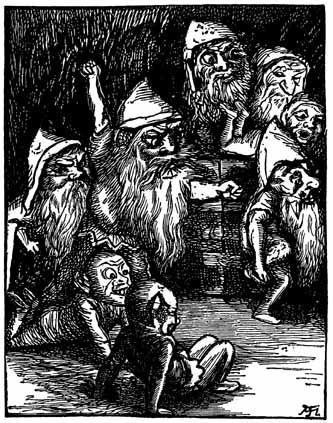
For our purposes, the princess, although an heroic figure, can be removed, as we’re interested in those goblins.
(Arthur Hughes)
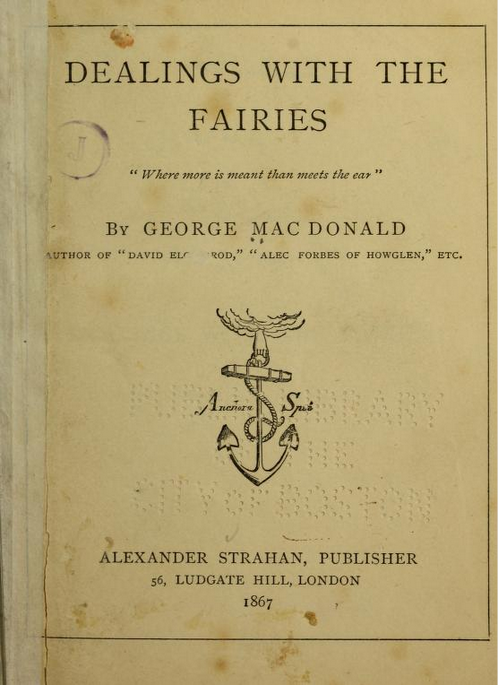
Later in life, Tolkien became disenchanted with MacDonald’s work, failing to complete a proposed preface for his The Golden Key, a short story from MacDonald’s Dealings with the Fairies, 1867—you can read it here: https://archive.org/details/dealingswithfair00macd_0/page/n5/mode/2up
and you can read about his disenchantment in Carpenter’s J.R.R. Tolkien, page 244.). Earlier, however, he had acknowledged MacDonald’s influence, writing to the editor of The Observer about The Hobbit:
“As for the rest of the tale it is, as the Habit [the pen name of a commentator on the book] suggests, derived from (previously digested) epic, mythology, and fairy-story—not, however, Victorian in authorship, as a rule to which George Macdonald [sic] is the chief exception.” (letter to the editior, February, 1938, Letters, 40-41)
Tolkien refers to this influence again in a much later letter to Hugh Brogan:
“Your preference of goblins to orcs involves a large question and a matter of taste, and perhaps historical pedantry on my part. I personally prefer Orcs (since these creatures are not ‘goblins’, not even the goblins of George MacDonald, which they do to some extent resemble).” (letter to Hugh Brogan, 18 September, 1954, Letters, 278)
And a little earlier, in a letter to Naomi Mitchison:
“They are not based on direct experience of mine [an interesting remark—did JRRT have supernatural experiences which he doesn’t discuss?]; but owe, I suppose, a good deal to the goblin tradition (goblin is used as a translation in The Hobbit, where orc only occurs once, I think), especially as it appears in George MacDonald, except for the soft feet which I never believed in.” (letter to Naomi Mitchison, 25 April, 1954, Letters, 267)
Those soft feet turn out to be the Achilles’ heel (sorry!) of the goblins as we overhear in a conversation between a goblin father and son:
” ‘You say so, dad. I think myself I’m all right. But I could carry ten times as much if it wasn’t for my feet.’
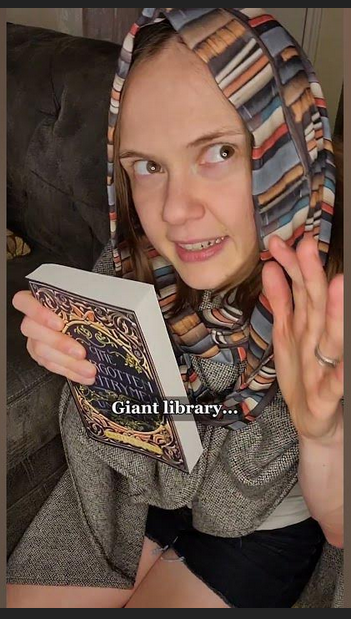
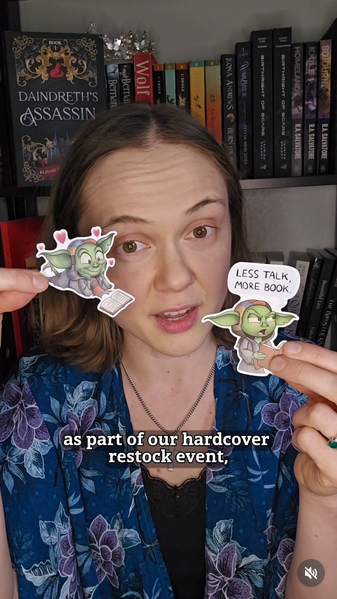
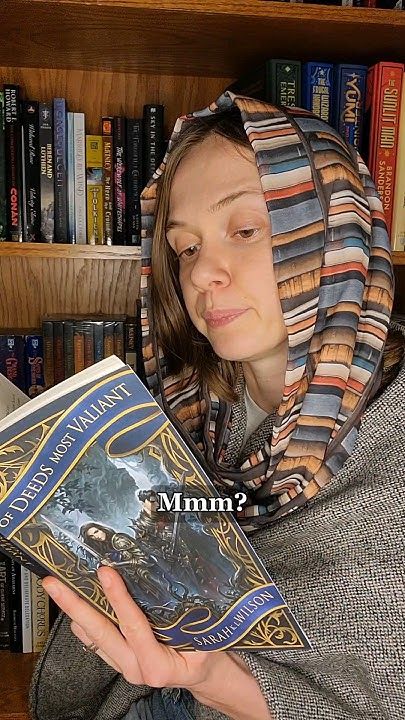
Recently, however, I’ve met another goblin, to whom I was introduced by a dear friend. This is Book Goblin.
Unlike the clones and droids and Minions and orcs, who only exist to do their master’s bidding, Book Goblin lives for books, stacking shelves full, longing for the mailman to bring more, even believing in “Bookhalla”, which is, basically, an immense library, where those who are gathered there read books all day and hold book clubs all night. You can see and hear Book Goblin describing it here: https://www.youtube.com/shorts/vkjErlwUA2A Only brave readers are allowed to go there, including those who read “without bookmarks”!
Book Goblin is, in fact, the creation of the fantasy author Elizabeth Wheatley
and you can read more about her and her work here: https://www.bookseriesinorder.com/elisabeth-wheatley/ And YouTube has many short features in which Book Goblin discusses likes and dislikes and often seems like the Id of all passionate readers, which is why I bring her to your attention. Unlike droids, clones, Minions, and orcs, however, she is one of kind and, as for world conquest—I suspect that it would interfere with her reading.
Thanks for your reading, as always,
Stay well,
If you’re like me, you probably aren’t brave enough to read without a bookmark, so I guess no Bookhalla, sadly,
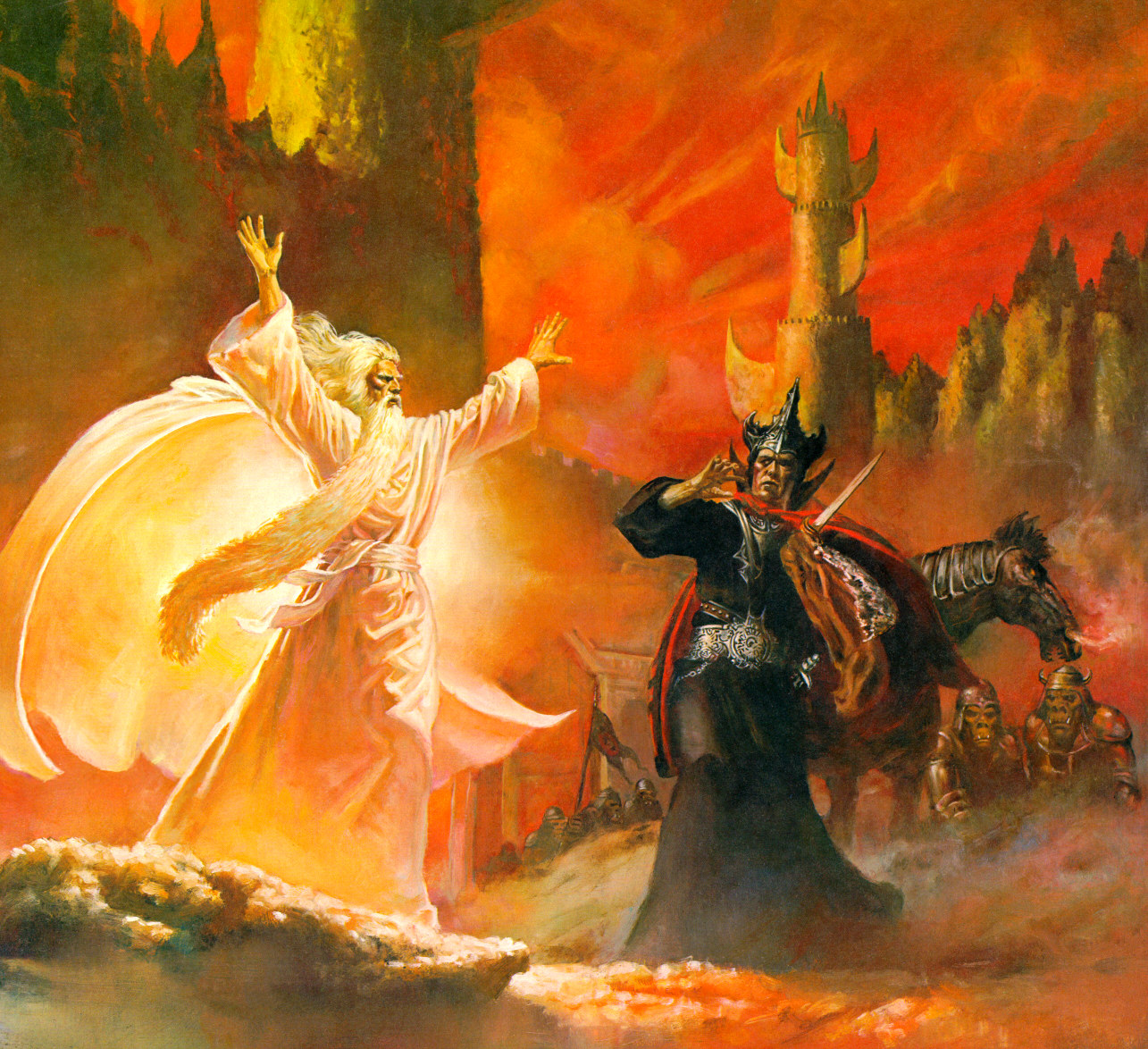
In Parts 1 and 2 of this short series, I’ve looked at Tolkien’s use of speech to characterize—and bring to life—the antagonists of The Lord of the Rings, leaving out Sauron, as having little to say for himself, but observing Saruman,
(the Hildebrandts)
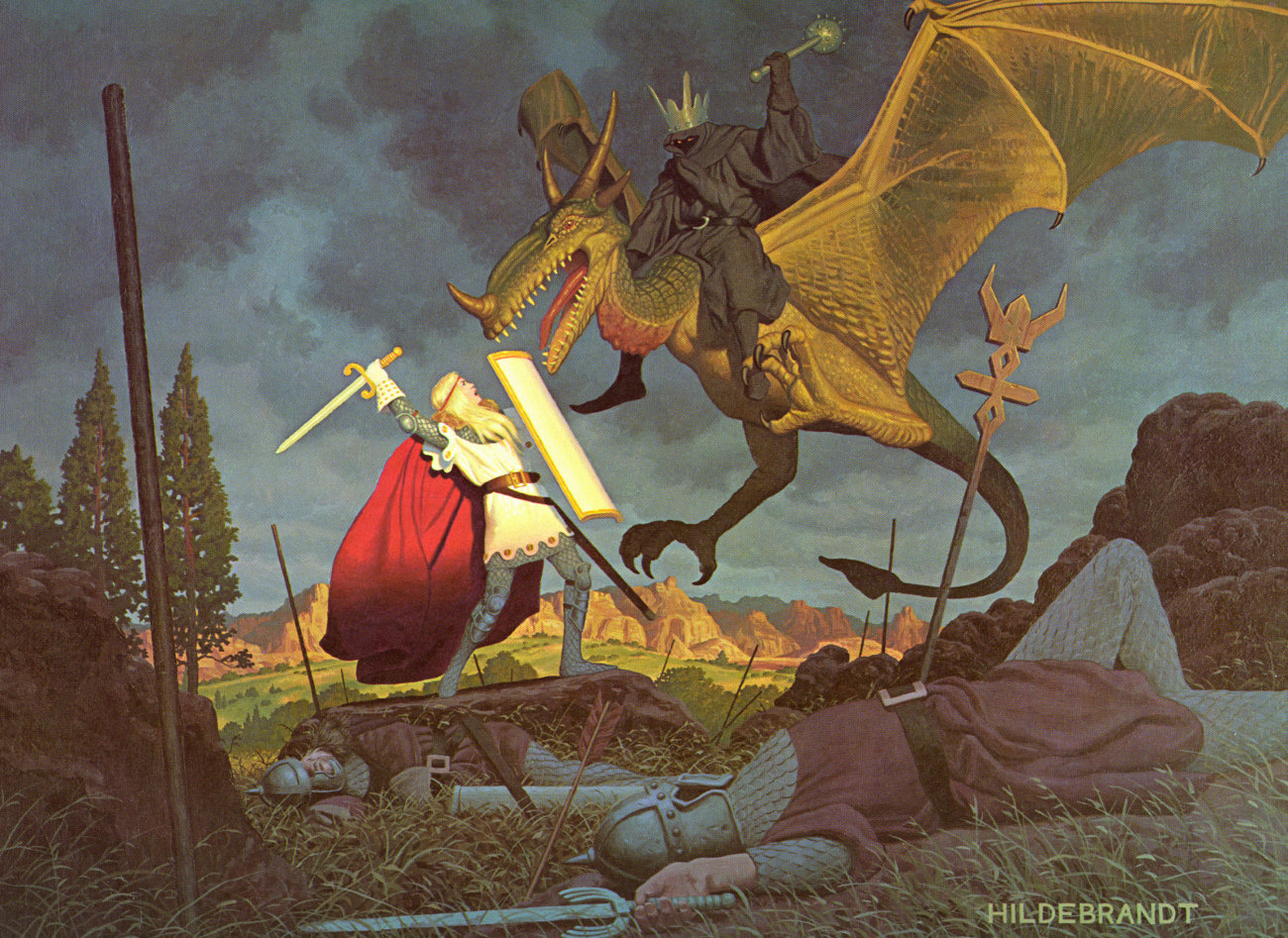
the chief of the Nazgul,
(the Hildebrandts)
and the Mouth of Sauron.
(Douglas Beekman)
I’ve been doing this as a descent down the social ladder and now we’ve reached the foot with the Orcs.
(Alan Lee)
JRRT had very complex thoughts and feelings about them, as his letters show us (see, for instance, some of his thoughts in his unfinished, unsent letter to Peter Hastings, September, 1954, Letters, 285 and 291) but then the Orcs themselves seem more complex than mere (in more modern terms) “cannon-fodder”—that is, a simple mass of undifferentiated infantry.
(Alan Lee)
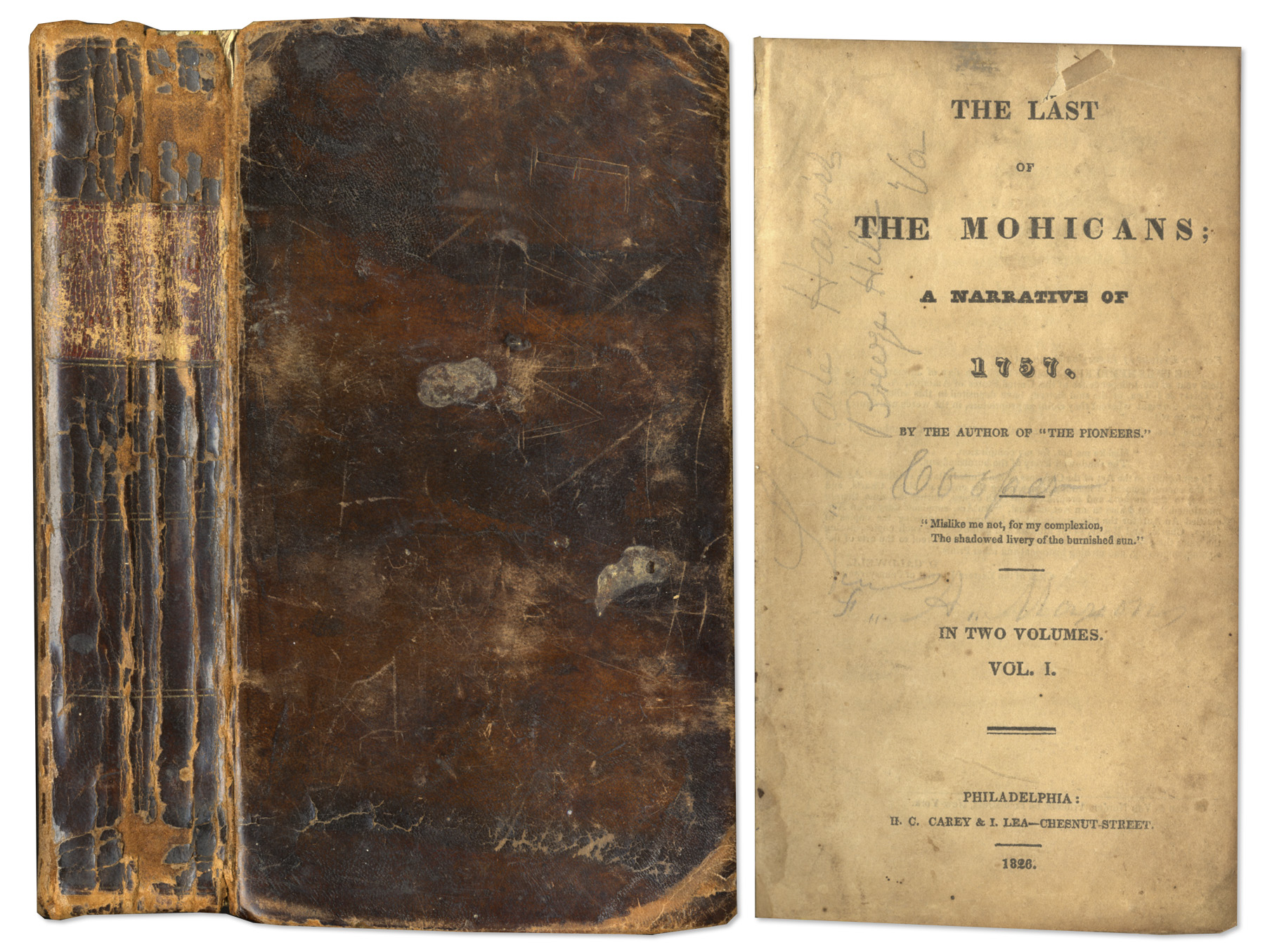
Something which has always struck me about them is Tolkien’s choices for their speech. At one level, as I pointed out in “Tolkien Among the Indians”, (21 January, 2026), one of their leaders, Ugluk, can sound like a figure out of James Fenimore Cooper’s The Last of the Mohicans—
“ ‘We are the fighting Uruk-hai! We slew the great warrior. We took the prisoners. We are the servants of Saruman the Wise, the White Hand: the Hand that gives us man’s-flesh to eat. We came out of Isengard, and led you here, and we shall lead you back by the way we choose. I am Ugluk. I have spoken.’ ”
On another level—but here I want to quote another of Tolkien’s letters, one often cited when referring to Sam Gamgee:
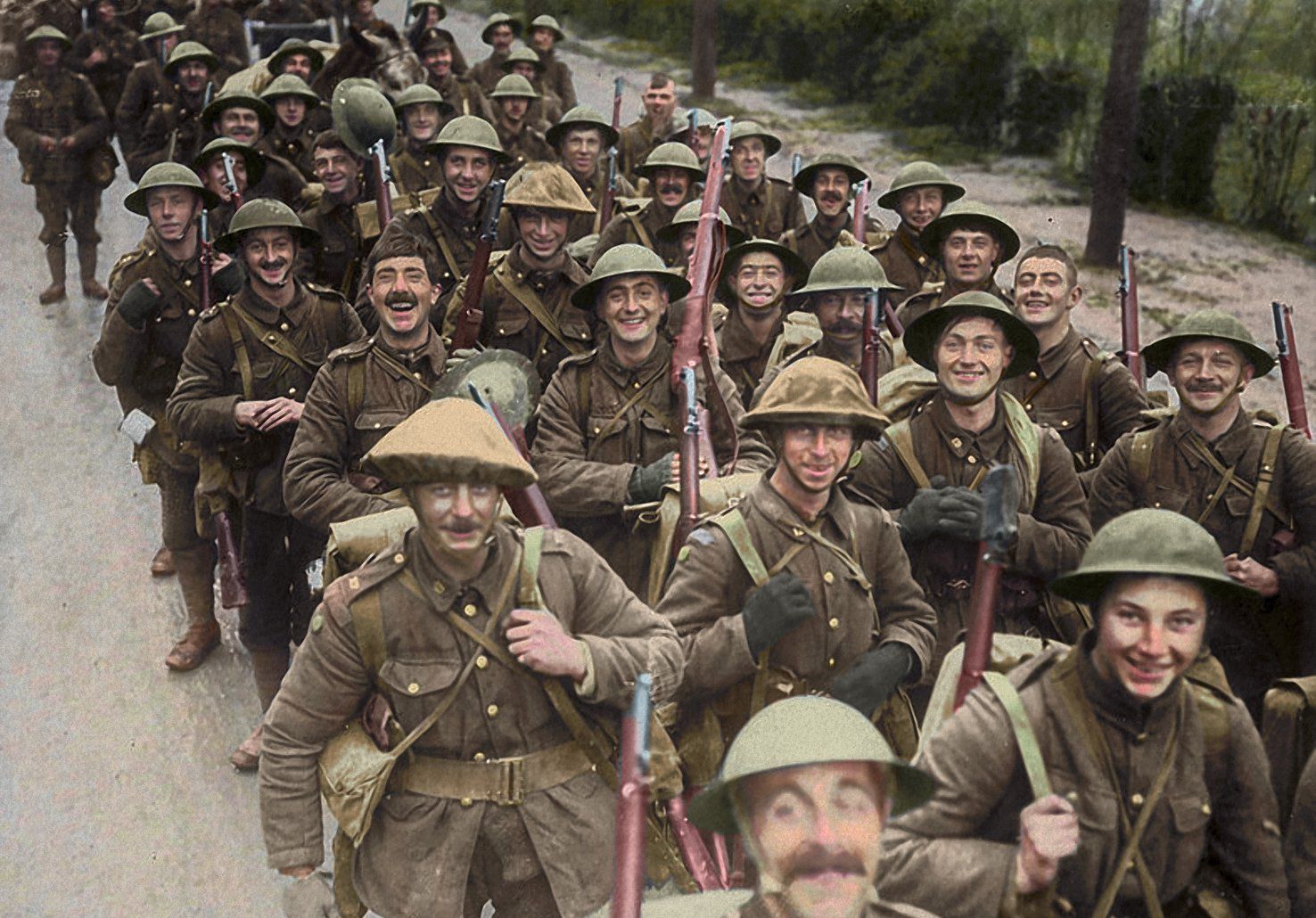
“My ‘Sam Gamgee’ is indeed, as you say, a reflexion of the English Soldier, of the privates and batmen [officers’ servants, not denizens of Gotham] I knew in the 1914 war, and recognized as so far superior to myself.” (draft of a letter to H. Cotton Minchin, April, 1956, Letters, 358)
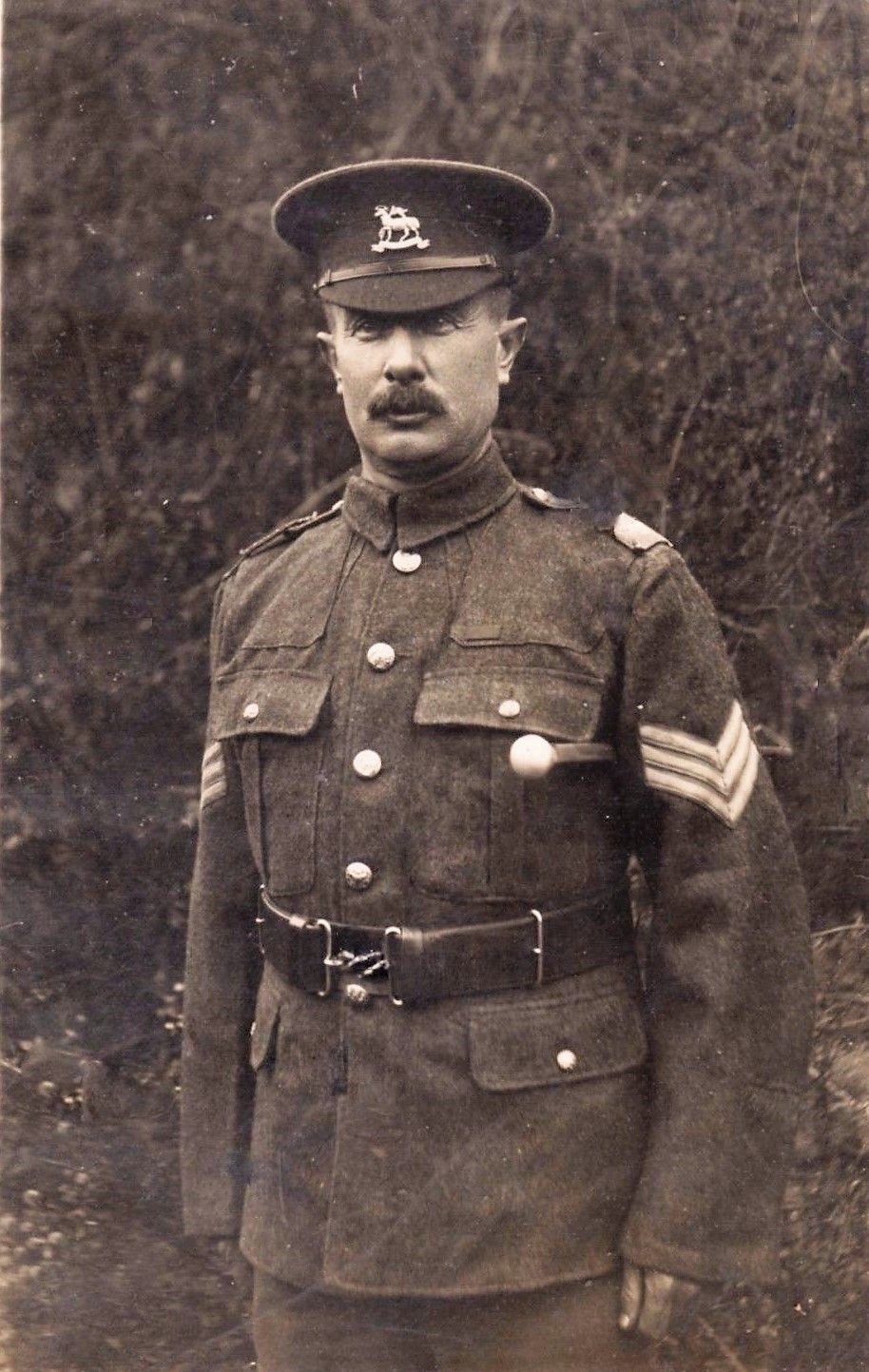
and obviously Tolkien knew what he intended, but I’ve always seen those “privates and batmen” as something more: as models for the Orcs—
and their commanders, Ugluk and Grishnakh—and later Shagrat and Gorbag—not as of the officer class, to which Tolkien belonged—
but as sergeants, the tough, experienced men who ran the infantry on a day-to-day basis.
Here they are, talking—
“ ‘Orders,’ said a third voice in a deep growl. ‘Kill all but NOT the Halflings; they are to be brought back ALIVE as quickly as possible. That’s my orders.’
“ ‘What are they wanted for?’ asked several voices. ‘Why alive? Do they give good sport?’
‘No! I heard that one of them has got something, something that’s wanted for the War, some Elvish plot or other. Anyway they’ll both be questioned.’
‘Is that all you know? Why don’t we search them and find out? We might find something that we could use ourselves.’
‘That is a very interesting remark,’ sneered a voice, softer than the others but more evil. ‘I may have to report that. The prisoners are NOT to be searched or plundered: those are my orders.’
‘And mine too,’ said the deep voice. ‘Alive and as captured, no spoiling. That’s my orders.’ “
So far, those two main voices—the “deep growl” and the “softer…but more evil”–are just that: voices. And we can tell immediately that they, being the ones given orders and threatening to make reports, are in charge. Shortly, we’ll find that the deep voice belongs to ”a large black Orc, probably Ugluk” and the softer to Grishnakh, “a short, crook-legged creature, very broad and with long arms that hung almost to the ground.”
Why sergeants, not officers? It’s the tone, I think. When Grishnakh proposes taking the prisoners to the east bank of the Anduin, where a Nazgul is waiting, Ugluk replies
“ ‘Maybe, maybe! Then you’ll fly off with our prisoners, and get the pay and praise in Lugburz, and leave us to foot it as best we can through the Horse-country.’ “
“pay and praise” and “footing it” sound to me more like the language of soldiers than those of higher ranks, but there’s something more to their talk. Ugluk sneers at the Nazgul and Grishnakh replies:
“ ‘Nazgul, Nazgul,’ said Grishnakh, shivering and licking his lips, as if the word had a foul taste that he savoured painfully. ‘You speak of what is deep beyond the reach of your muddy dreams, Ugluk.’ “
There is a fear in this that’s a little surprising: aren’t the Nazgul on the same side as Grishnakh, at least?
There is a rivalry between the two groups as well—and clearly even between their two masters, as Grishnakh reveals:
“ ‘You have spoken more than enough, Ugluk,’ sneered the evil voice. ‘I wonder how they would like it in Lugburz…They might ask where his strange ideas came from. Did they come from Saruman, perhaps? Who does he think he is, setting up on his own with his filthy white badges? They might agree with me, with Grishnakh their trusted messenger; and I Grishnakh say this: Saruman is a fool, and a dirty treacherous fool.’ “ (all of the text here is from The Two Towers, Book Three, Chapter 3, “The Uruk-hai”)
All of this shows a level of internal tension which would not bode well for an alliance between Sauron and Saruman and, when we reach Shagrat and Gorbag, later in the story, there’s even something more and we’ve already seen it in that “We might find something that we can use ourselves.”
So far, the speech of the two Orc leaders has suggested creatures who clearly don’t trust each other, and one is fearful of something on his own side, revealing, as well, that his master, Sauron, is less than impressed by Saruman and his efforts.
And now we find that such sergeants may not even trust their men, as when Shagrat says to Gorbag:
“ ‘…but they’ve got eyes and ears everywhere; some among my lot, as like as not.’ “
But why such wariness? First, because these Orcs are aware that knowledge of the progress of the war in which they’re a part is being kept from them, and it’s not good news:
“ ‘…they’re troubled about something. The Nazgul down below are, by your account; and Lugburz is too. Something nearly slipped…As I said, the Big Bosses, ay,’ his voice sank almost to a whisper, ‘ay, even the Biggest, can make mistakes. Something nearly slipped, you say. I say, something has slipped.’ “
And second because these Orcs, not trusting their masters and perhaps even fearful of them, may have plans of their own—
“ ‘What d’you say?—if we get a chance, you and me’ll slip off and set up somewhere on our own with a few trusty lads, somwhere where there’s good loot nice and handy, and no big bosses.’
‘Ah!’ said Shagrat. ‘Like old times!’ “ (The Two Towers, Book Four, Chapter 10, “The Choices of Master Samwise”)
As we’ll see, however, later in the story, Shagrat and Gorbag don’t even trust each other—
“Quick as a snake, Shagrat slipped aside, twisted round, and drove his knife into his enemy’s throat.
‘Got you, Gorbag!’ he cried. ‘Not quite dead, eh? Well, I’ll finish my job now.’ He sprang on to the fallen body, and stamped and trampled it in his fury, stooping now and again to stab and slash it with his knife.“ (The Return of the King, Book Six, Chapter 1, “The Tower of Cirith Ungol”)
So much for “old times”! But a fitting ending for this posting. Here, on the lowest rung of the social ladder, we see how JRRT shows both the threat of the enemies’ soldiers and, at the same time, undercuts that threat, as we hear the Orcs doing everything from threatening each other, dissing their own leaders and those of their own side, mistrusting each other and their own men, and even plotting to desert and set up their own little kingdoms before cheerfully knifing each other. We might wonder—even if Sauron had won, how long would his empire have lasted, with such allies and underlings?
Thanks, as ever, for reading.
Stay well,
I guess that I don’t have to tell you now: watch your back,
And remember that there’s
MTCIDC
O
PS
For more on Orcs and their language, see “Lingua Orca”, 16 April, 2025.
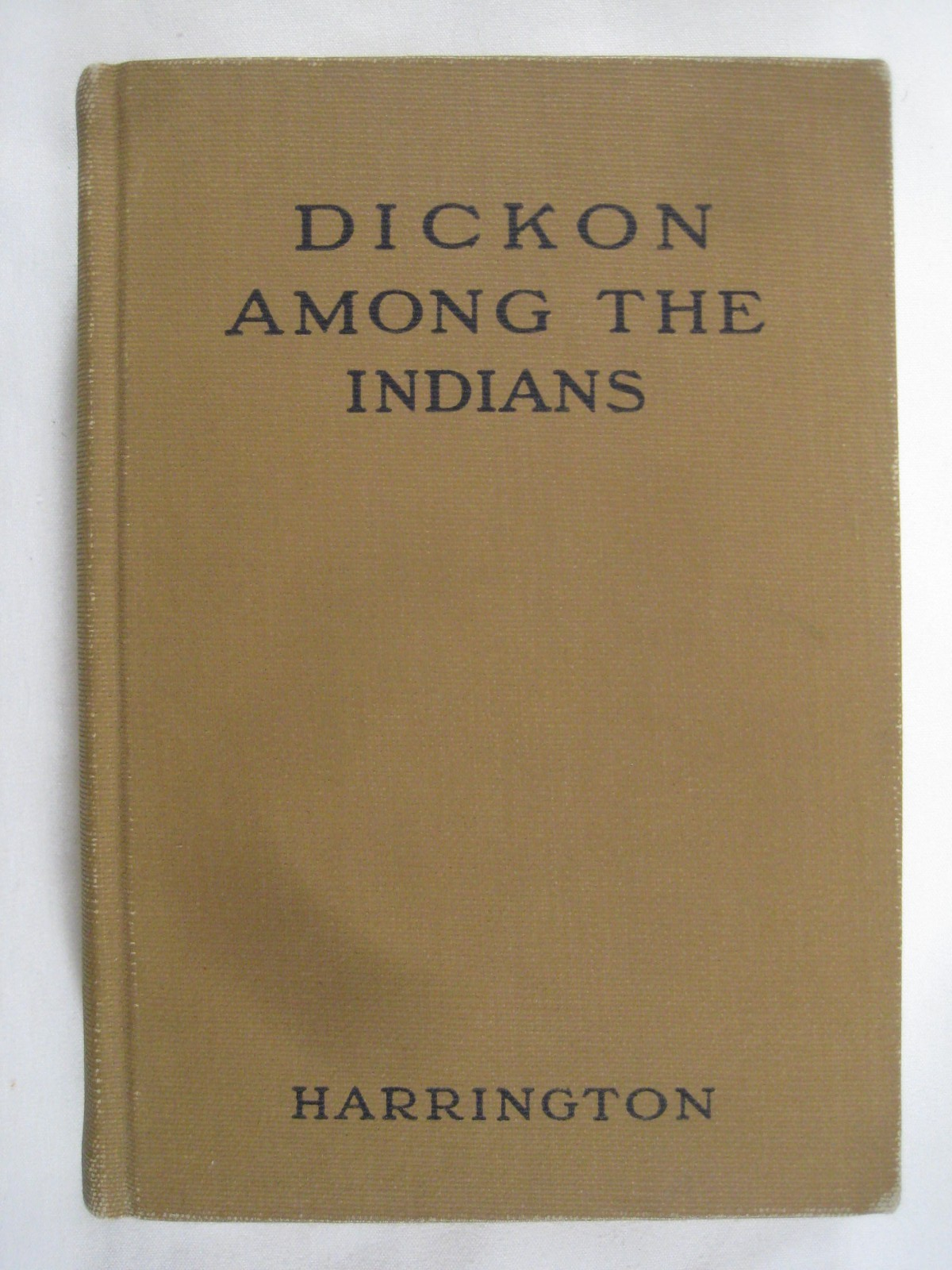
I’ve borrowed the title of this posting from a 1938 book by M.R. Harrington, Dickon Among the Lenape Indians (shortened for a reprint to Dickon Among the Indians),
a very interesting attempt to recreate the lives of Algonkian-speaking Native Americans in New Jersey and eastern Pennsylvania at the beginning of colonization. (Harrington was fortunate in having local Native Americans to help him in his research. For more on Harrington, see: https://en.wikipedia.org/wiki/Mark_Raymond_Harrington , himself a very interesting man. Please note, by the way, that, although I will use “Indians” occasionally in this piece, when appropriate, I commonly employ the now-standard “Native Americans”.)
The subject of early Native Americans is worth many postings in itself, but where does JRRT fit in?
Well, when you visualize Tolkien, what do you think of?
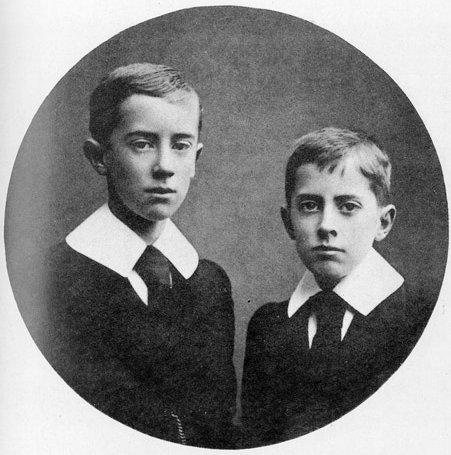
The schoolboy?
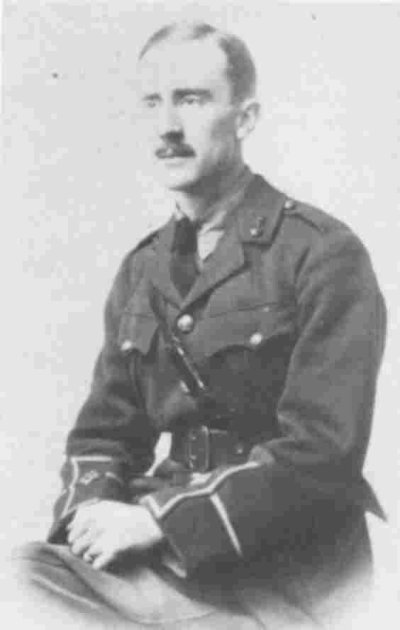
The 2nd lieutenant?
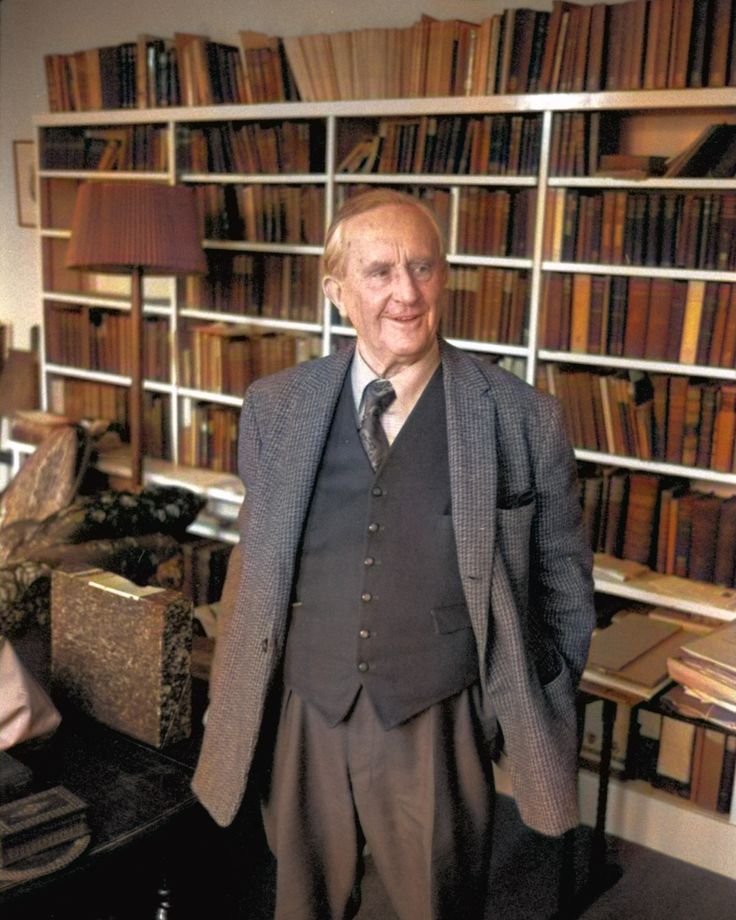
The serious professor?
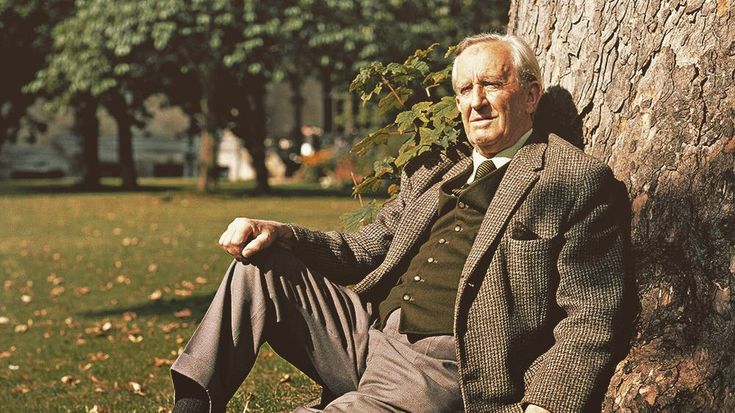
The man who loved trees?
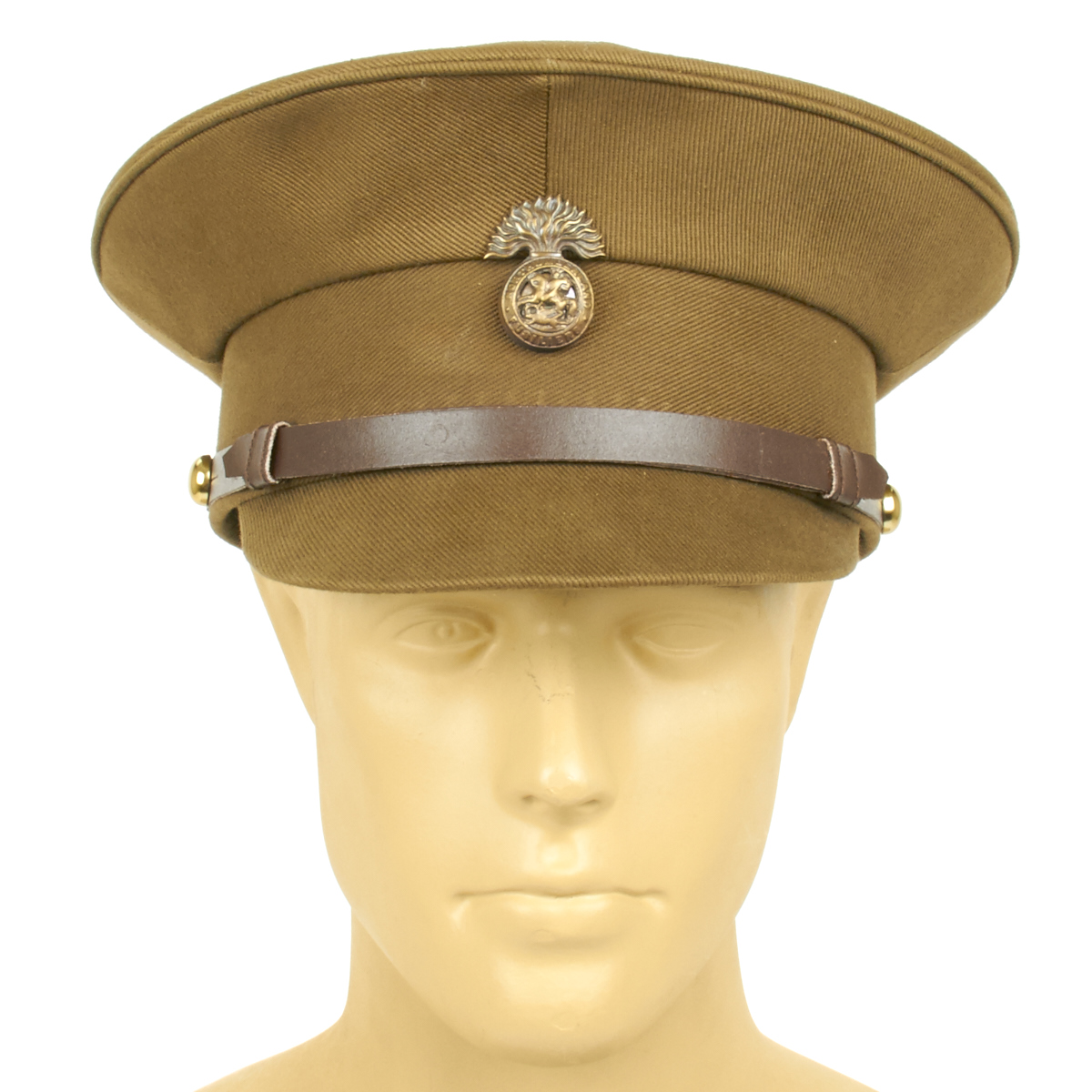
Suppose, however, instead of military caps
or the shapeless thing we see on his head in later pictures,
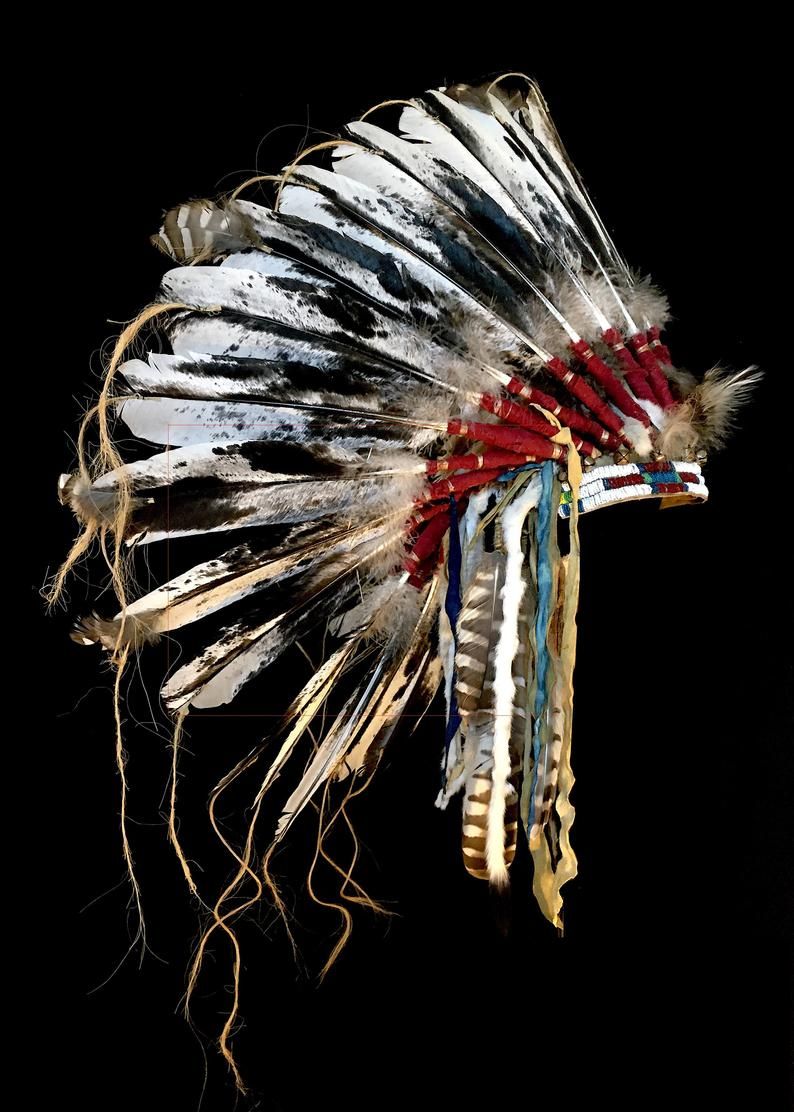
we provide him with something as splendid as this—
(A recreation of a Lakota war headdress)
As a man obsessed (a radical term, perhaps, but really accurate, I would say) with language and languages, Tolkien had set himself a problem, when it came to his approach to The Lord of the Rings. It was meant to be a translation, and he himself the editor/translator. Although he would mix in bits of several languages he had invented, the main body of the text would be in English—but English would, in fact, substitute for what he called the “Common Speech”. And yet, because of his passion for language, he wouldn’t allow for complete uniformity of speech, especially as not everyone in his Middle-earth spoke the Common Speech as their first language. One possibility would be to approximate the Common Speech with marks for different accents—the speech of the Rohirrim, for instance, as speakers of what was actually a Germanic language (Old English), might be depicted with the effects of English-speaking Germanic speakers in Tolkien’s day. There was definitely a danger in this, of course—the effect is easily overdone and Tolkien would have been well aware of things like what was—and is—called “stage Irish” with lots of “sure an begorras! and “top of the mornin’s”, caricaturing, in fact, Anglo-Irish. As far as I know, JRRT never considered this approach (although we notice that Sam speaks in a different dialect from Frodo—imitated in the Jackson films by having him speak what in the UK is called “Mummershire”, based upon the distinctive sound of West Country English). Were there other possible models? And, if so, what might be useful? Consider the Orcs, for instance. As Pippin notices, to his surprise, he can understand the Orcs who have captured him and Merry because the first who speaks to him speaks “in the Common Speech, which he made almost as hideous as his own language.” (The Two Towers, Book Three, Chapter 3, “The Uruk-hai”) The Orcs, then, although they use the Common Speech with outsiders, have their own distinctive language (actually languages, but use the Common Speech as their lingua franca—for more, see The Lord of the Rings, Appendix F, “Of Other Races”).
What, then, might Tolkien employ as a model for an Orc leader giving a speech, one which would be in the Common Speech, but yet distinctively Orcish—and yet not “stage Orchish”?
And here is where I suggest that Tolkien turned to his childhood reading and his interest in Native Americans—at least those he found in books.
If we go by something which he himself once remarked, perhaps this isn’t so far-fetched a theory as it might appear at first:
“I had very little desire to look for buried treasure or fight pirates, and Treasure Island left me cool. Red Indians were better: there were bows and arrows (I had and have wholly unsatisfied desire to shoot well with a bow), and strange languages, and glimpses of an archaic mode of life, and, above all, forests in such stories.” (On Fairy-Stories in The Monsters and the Critics, 134 For those who might like to see if they remain cool to Treasure Island, see https://archive.org/details/treasureisland00stev/mode/2up with its beautiful illustrations by N.C. Wyeth—and, if you do open it, be sure to read the epigraph: “To the Hesitating Purchaser” as a kind of response to JRRT, although Tolkien would have been a toddler when Stevenson died in 1894.)
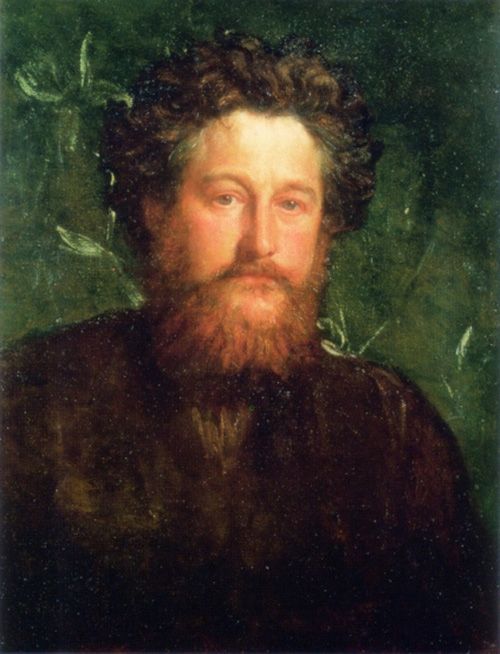
We know that William Morris (1834-1896)
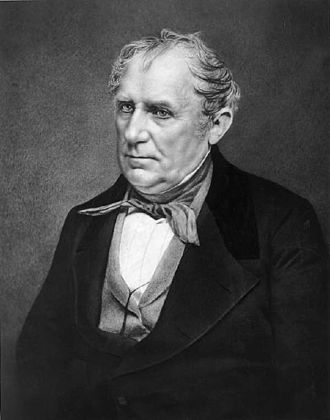
was a strong influence on Tolkien’s writing, inspiring medieval elements in JRRT’s work, but there may have been another influence we can detect, which provided a model, using Tolkien’s “strange languages, and glimpses of an archaic mode of life” as a clue—at least for speech: the work of James Fenimore Cooper (1789-1851), a once-famous author of historical fiction about the 18th-century US, and, probably, the first author to present Native Americans to Tolkien.
So, how does an Orc leader speak?—sometimes collectively in a highly rhetorical fashion :
“We are the fighting Uruk-hai! We slew the great warrior. We took the prisoners. We are the servants of Saruman the Wise, the White Hand: the Hand that gives us man’s-flesh to eat. We came out of Isengard and led you here, and we shall lead you back by the way we choose. I am Ugluk. I have spoken.” (The Two Towers, Book Three, Chapter 3, “The Uruk-hai”)
Compare it, then, with this:
“We came from the place where the sun is hid at night, over
great plains where the buffaloes live, until we reached the big
river. There we fought the Alligewi, till the ground was red with
their blood. From the banks of the big river to the shores of the
salt lake, there was none to meet us. The Maquas followed at a
distance. We said the country should be ours from the place
where the water runs up no longer on this stream, to a river
twenty suns’ journey toward the summer. The land we had
taken like warriors, we kept like men. We drove the Maquas
into the woods with the bears. They only tasted salt at
the licks; they drew no fish from the great lake; we threw them
the bones.”
This is Chingachgook, a Mohican (the last, in fact), speaking to another major character, Natty Bumpo, in James Fenimore Cooper’s The Last of the Mohicans, 1826 (Chapter III—you can read the novel—again illustrated by N.C. Wyeth—here: https://dn720005.ca.archive.org/0/items/lastofmohicansna00coop/lastofmohicansna00coop.pdf I should add a small warning: Cooper is a man of his time and therefore racism slips in here and there. As well, he is not the world’s best prose stylist, but he was once a best-selling author and the first famous US novelist, so worth your time—and his basic story is still, as far as I’m concerned, a good one. For comic criticism of him, however, see Mark Twain’s “Fenimore Cooper’s Literary Offences”,1895, here: https://www.gutenberg.org/files/3172/3172-h/3172-h.htm ).
And such a manner of speaking might be adapted to other “strange languages, and glimpses of an archaic mode of life”–
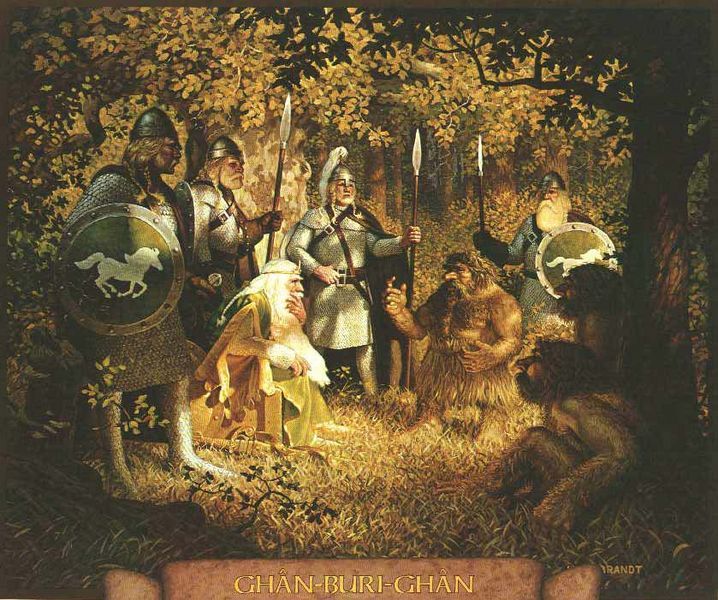
“ ‘Let Ghan-buri-Ghan finish!…More than one road he knows. He will lead you by road where no pits are, no gorgun walk, only Wild Men and beasts. Many paths were made when Stonehouse-folk were stronger. They carved hills as hunters carve beast-flesh. Wild Men think they ate stone for food. They went through Druadan to Rimmon with great wains. They go no longer. Road is forgotten, but not by Wild Men. Over hill and behind hill it lies still under grass and tree, there behind Rimmon and down to Din, and back at the end to Horse-men’s road. Wild Men will show you that road. Then you will kill gorgun and drive away bad dark with bright iron, and Wild Men can go back to sleep in the wild woods.” (The Return of the King, Book Five, Chapter 5, “The Ride of the Rohirrim”)
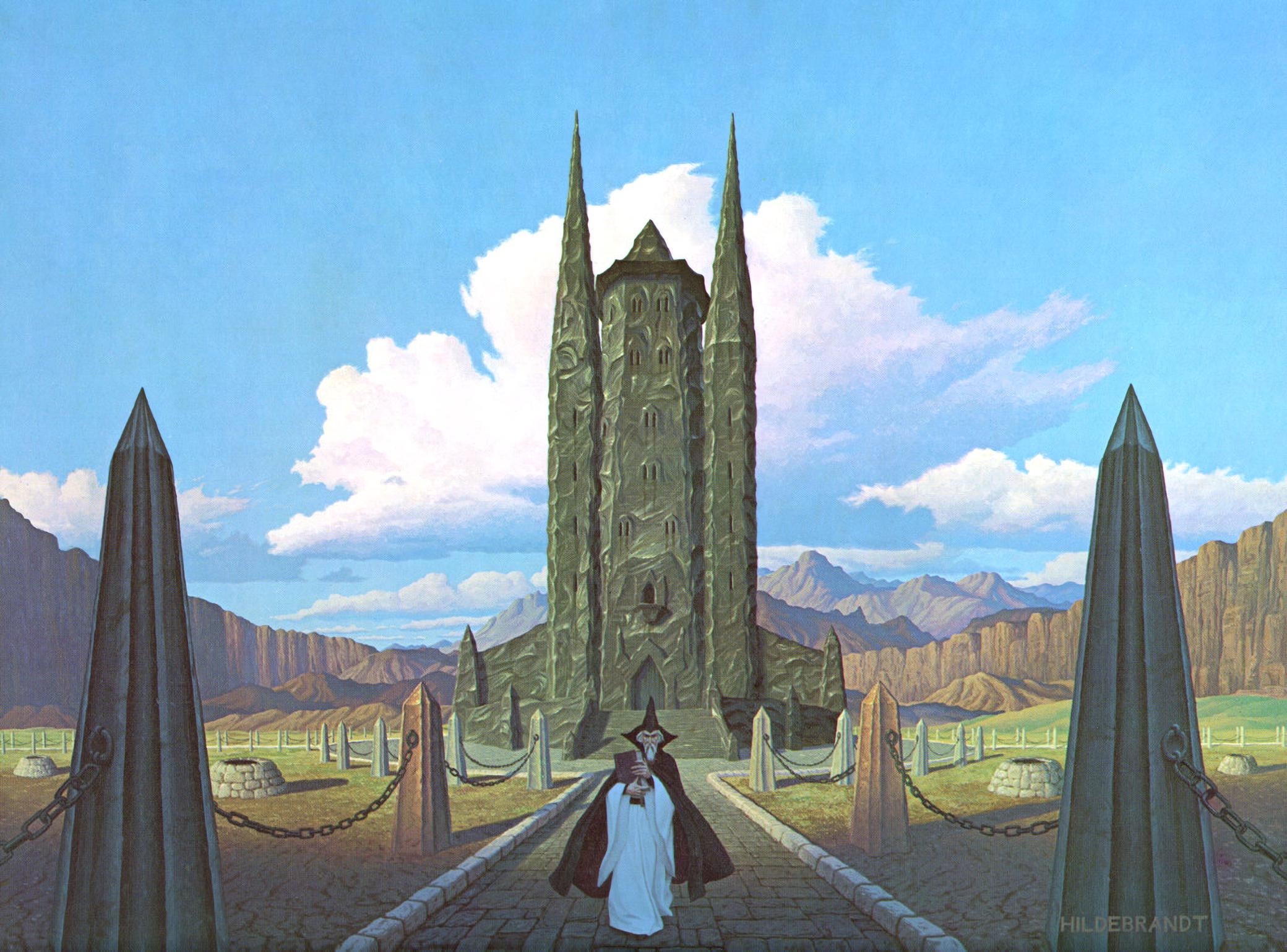
(the Hildebrandts)
This is, in fact, the chief of the Woses, an early people of Middle-earth now confined to a forest area not far from Minas Tirith. His home language (of which JRRT tells us very little) is clearly not the Common Speech and so his address to Theoden and his lieutenants follows that of Ugluk and, in fact, of Chingachgook, suggesting, once more by the use of the model provided long before by James Fenimore Cooper, that Tolkien has earned his own place “among the Indians”.
As ever, thanks for reading.
Stay well,
If someone from many centuries before the time of The Lord of the Rings, the chief Nazgul, speaks in what is meant to be an archaic dialect, what would Sauron, older yet, sound like?
As always, dear readers, welcome. And perhaps welcome to a little Tolkien puzzle.
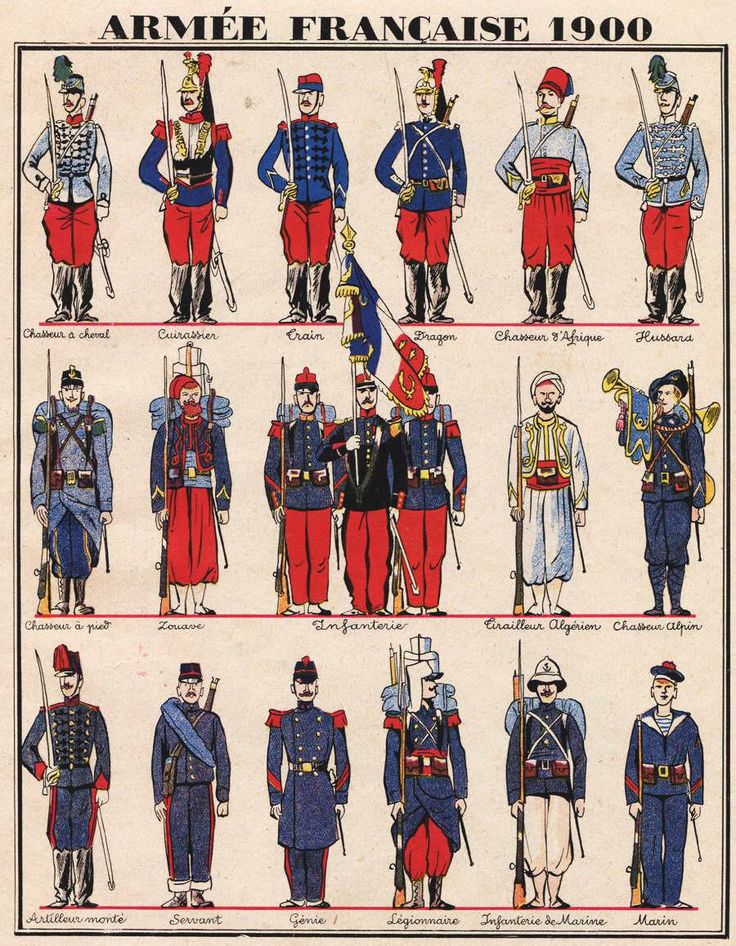
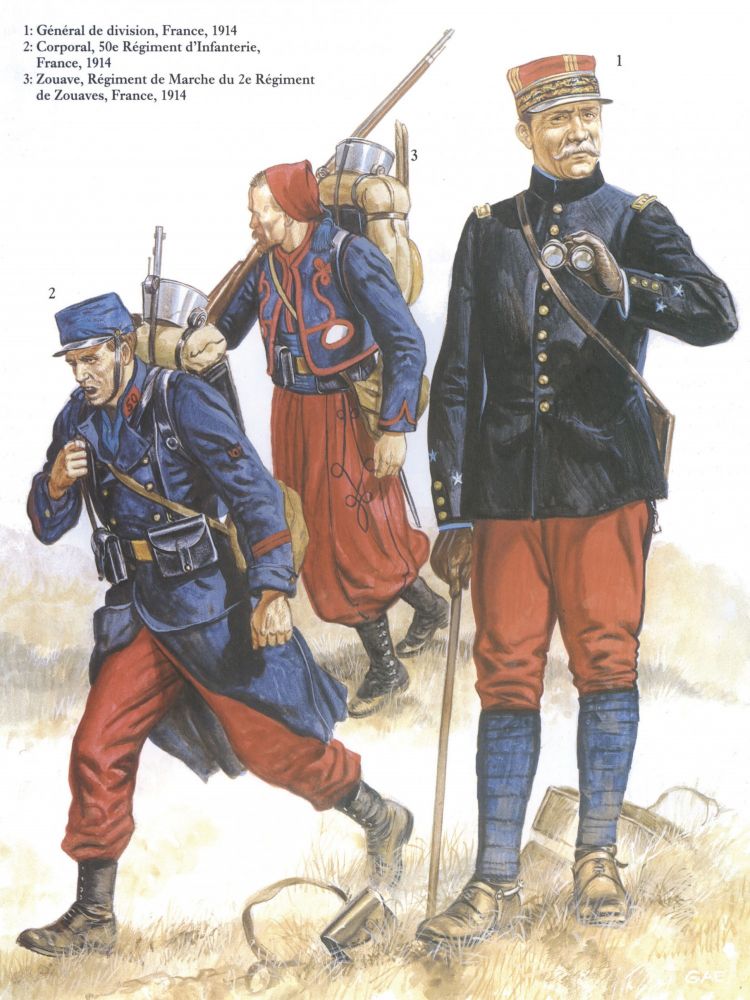
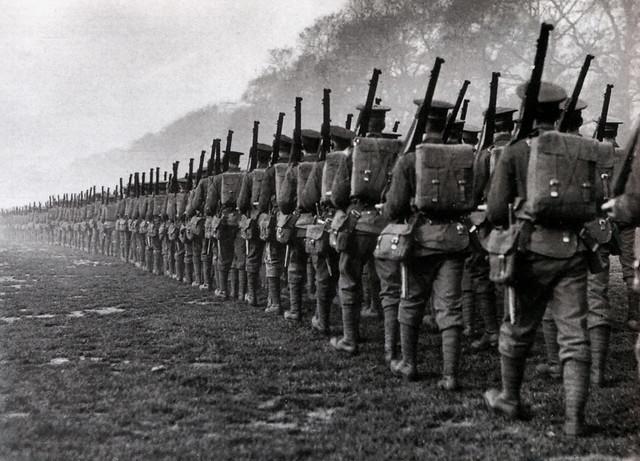
On parade, soldiers of the early 20th century could be peacocks for finery.
But then they met the new technological reality of heavy machine guns
and increasingly heavy artillery
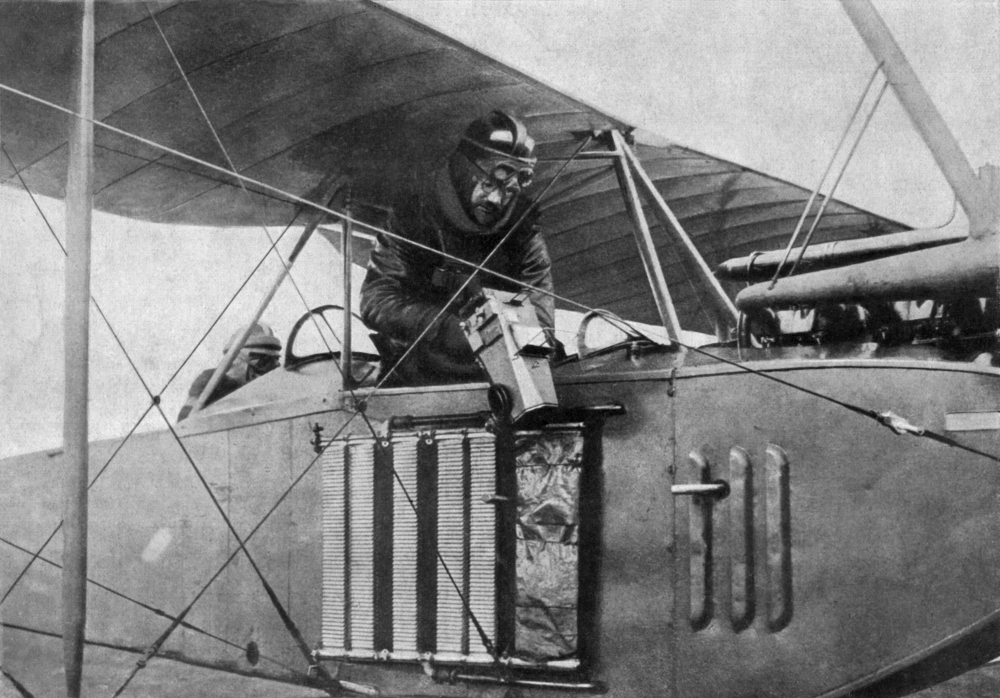
and, in time, even the danger of being spotted from the air,
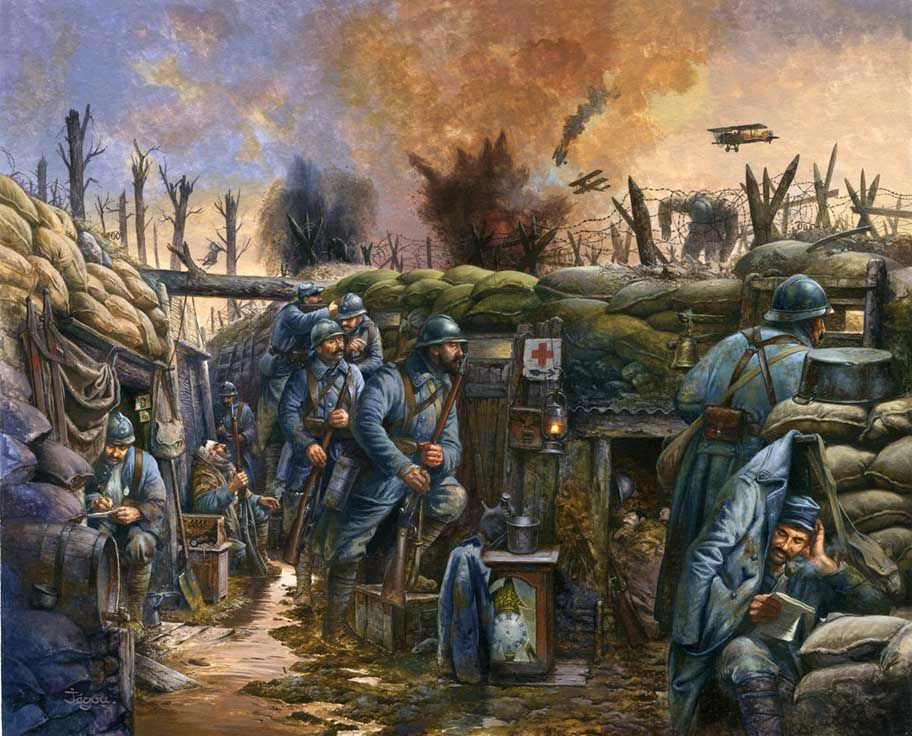
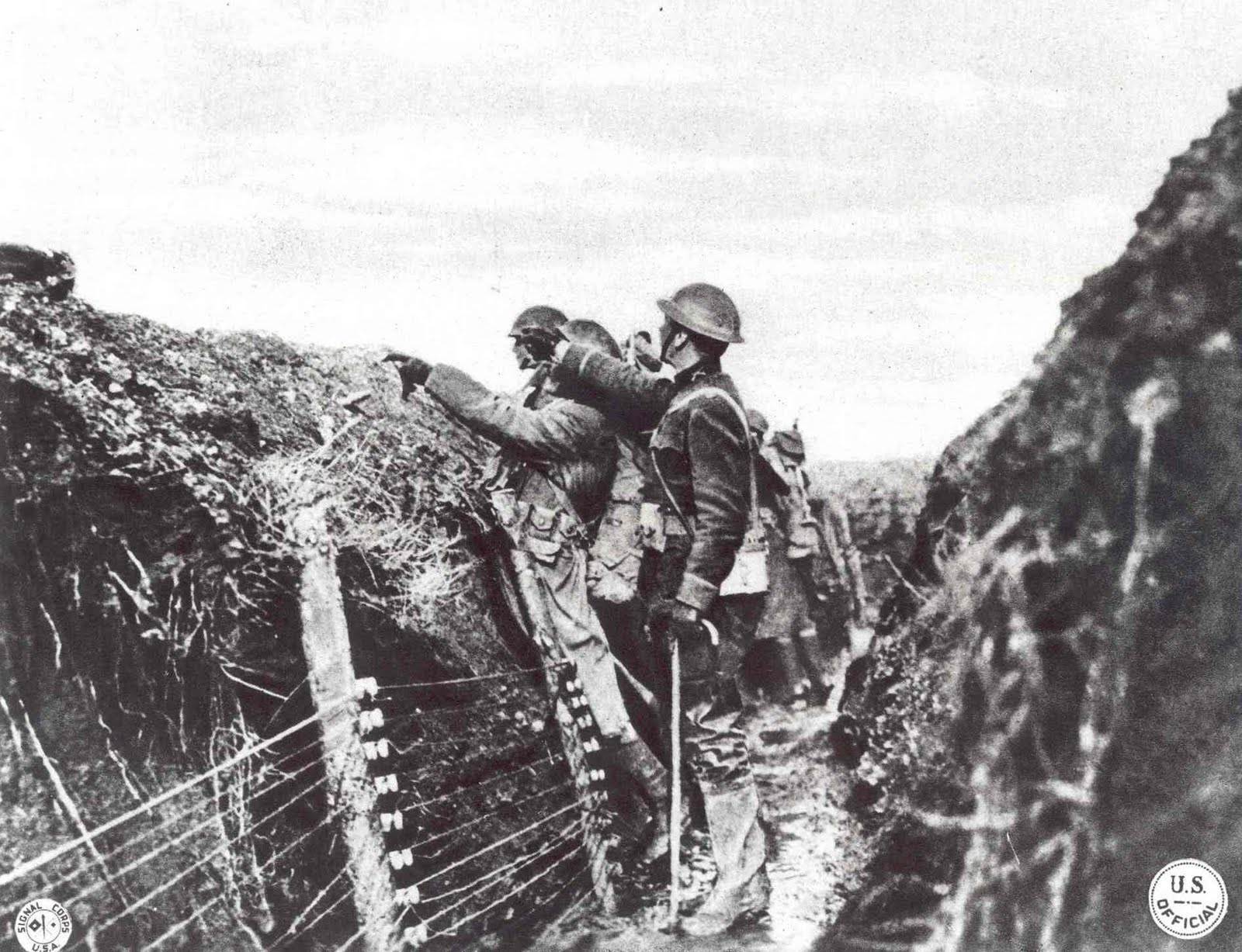
so soldiers not only dug in,
but modified their uniforms, making themselves less visible.
(Gerry Embleton)
After the war, most armies, except for special guard units,
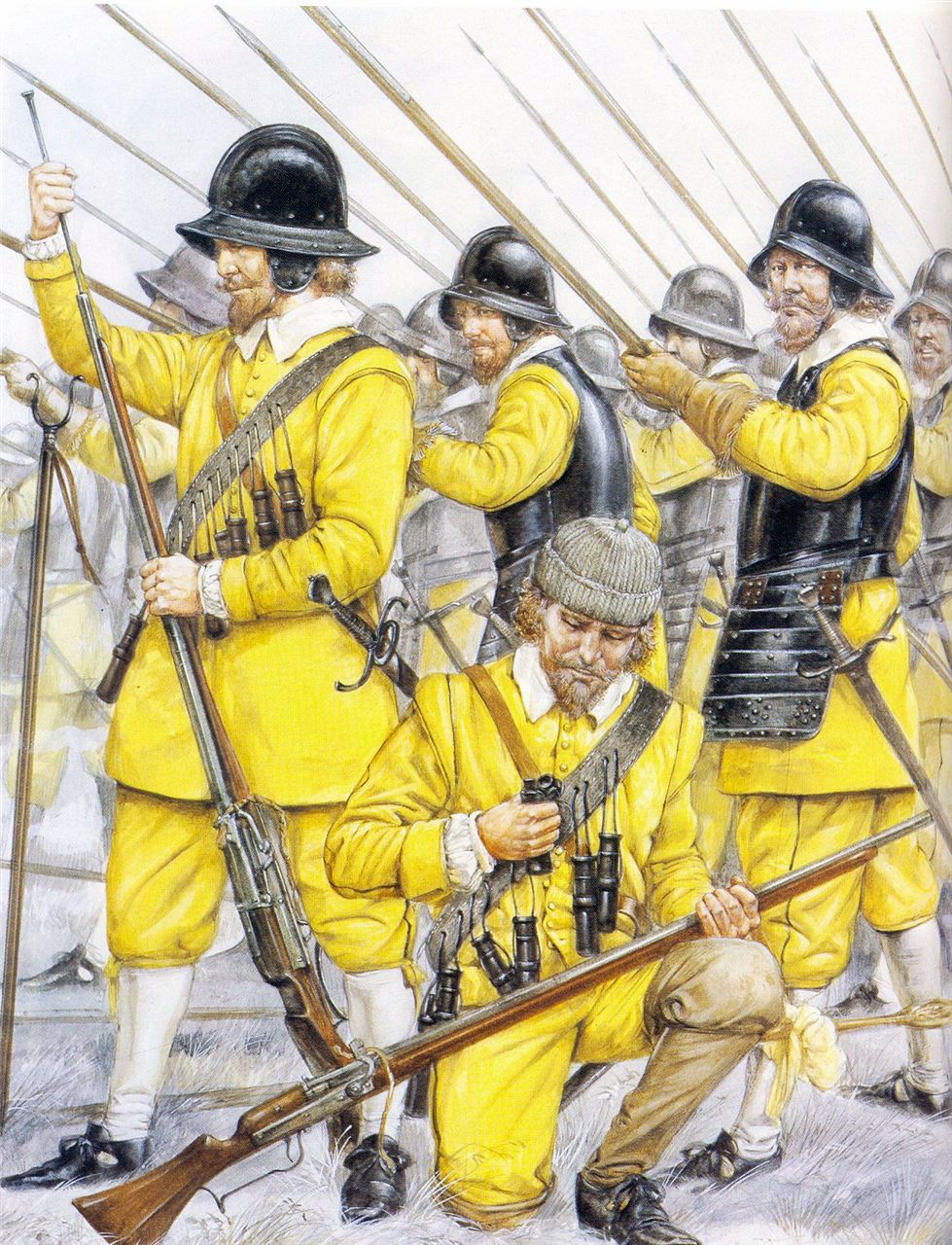
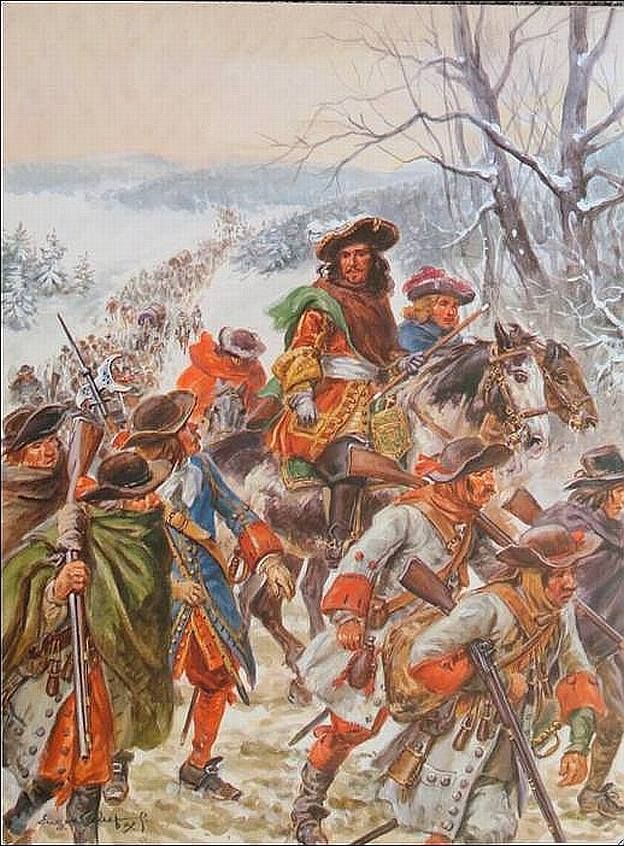
never went back to being peacocks, abandoning a bright tradition which went back to the 17th century.
(Richard Hook)
Even in the 17th century, soldiers not wearing the same-colored clothing might distinguish themselves from their enemies by what would be called “field signs”, like wearing a strip of cloth on one arm, or sticking a particular piece of a plant or even a scrap of paper in your hatband.
(Henri IV, 1553-1610, king of France, was famous for the white plume he always wore in his hat.)
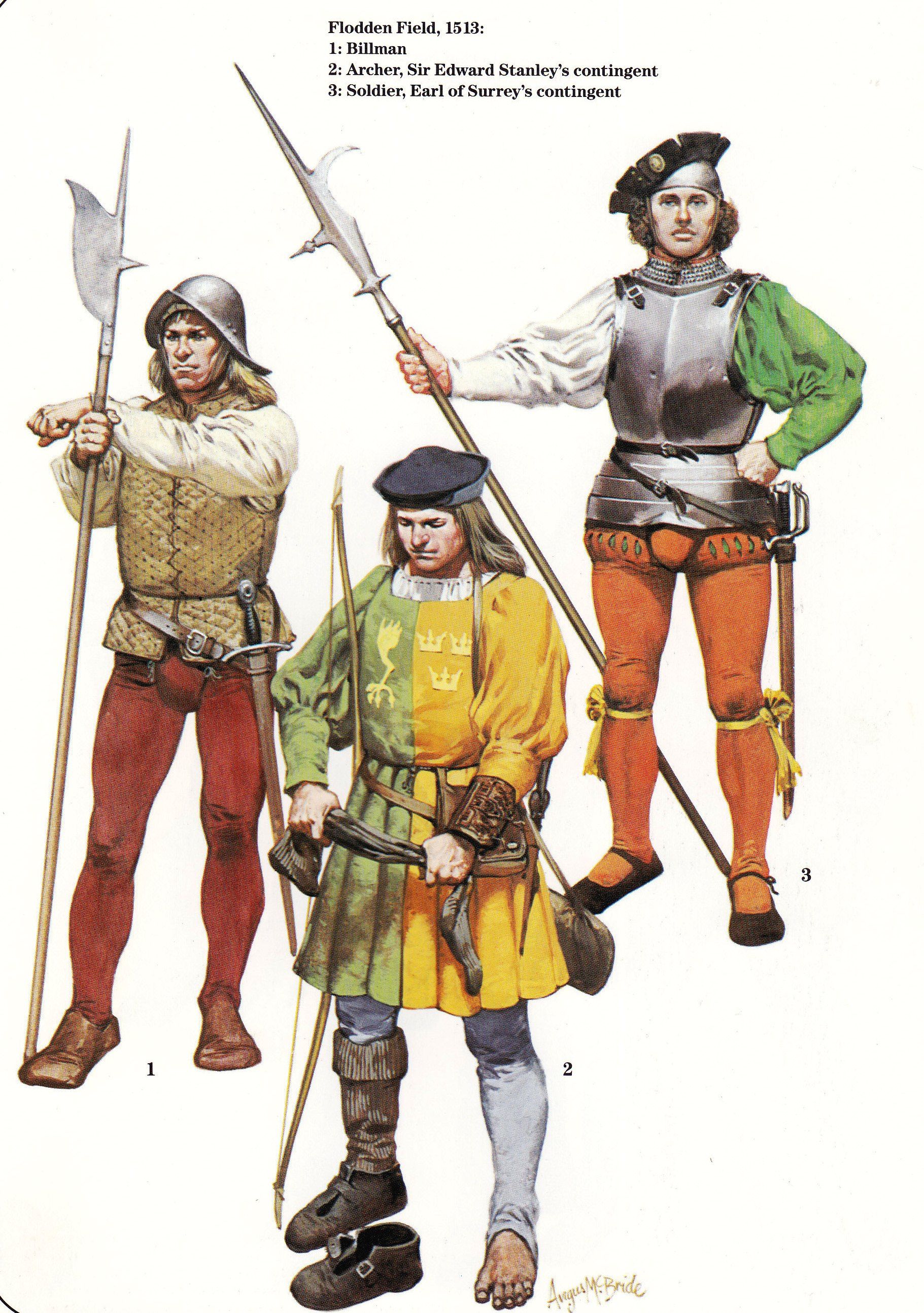
Before this, soldiers might wear the distinctive colors of their commanders (usually noblemen), called “livery”—
(Angus McBride)
Here we can see that Sir Edward Stanley has given this archer clothing in his colors of green and mustard-yellow, while the Earl of Surrey provided his soldiers with his colors of green and white. You’ll also notice that the archer has some distinctive badges on the front of his coat—an eagle’s claw and crowns. These are personal indicators of Sir Edward, heraldic markers to indicate to whom the archer belonged.
In the days before distinctive military dress, heraldry—the use of emblems to mark out one knight, and perhaps his followers, from another—had been developed to a high level. When everyone was covered in metal,
such emblems were a way to identify a knight—and if he had issued similar emblems to his soldiers, a way to identify the troops he had brought and commanded at a battle.
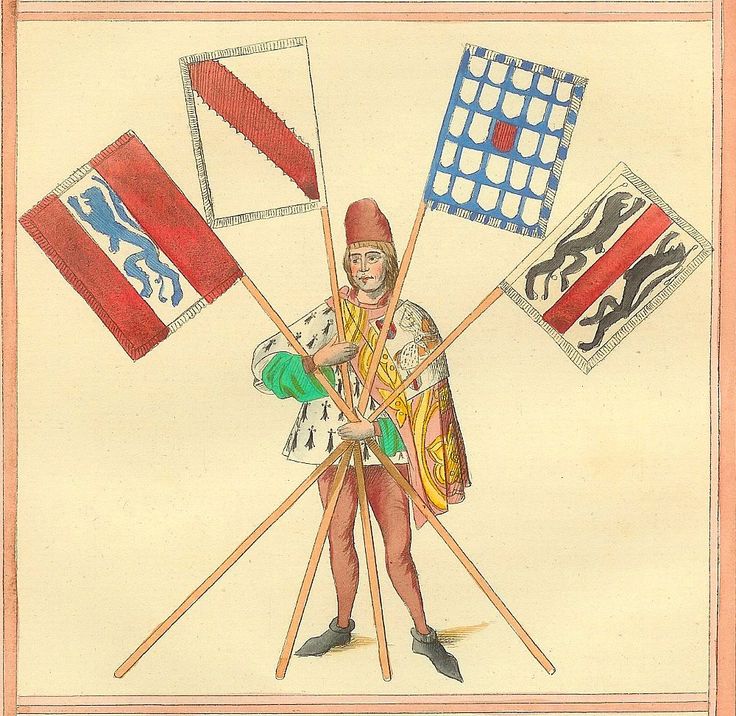
As emblems developed, there also developed a person with a specialized skill to identify them—a herald.
He himself, as you can see, wore distinctive clothing, which also helped him in his other role as messenger between military opponents—he was considered as a neutral and could therefore pass freely. (For more on heralds, see “Herald-ry in Middle-Earth”, 30 March, 2016 here: https://doubtfulsea.com//?s=herald&search=Go )
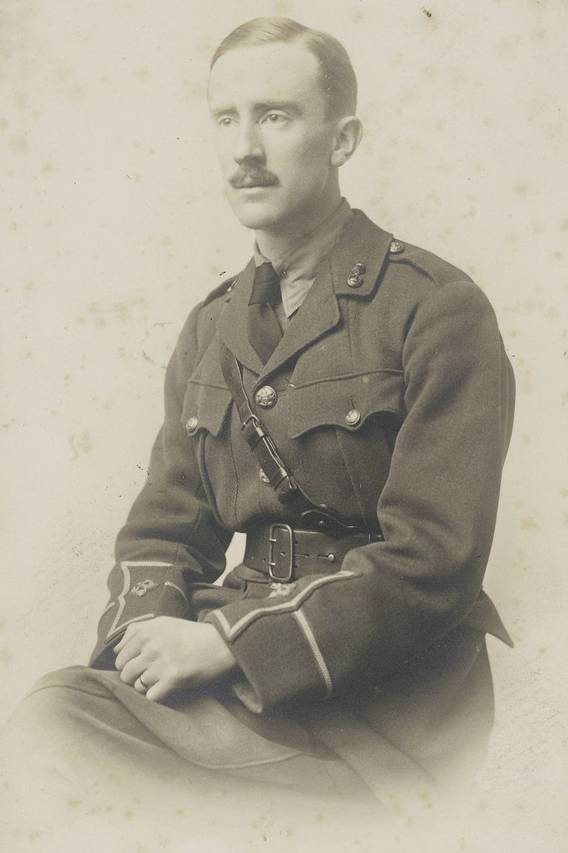
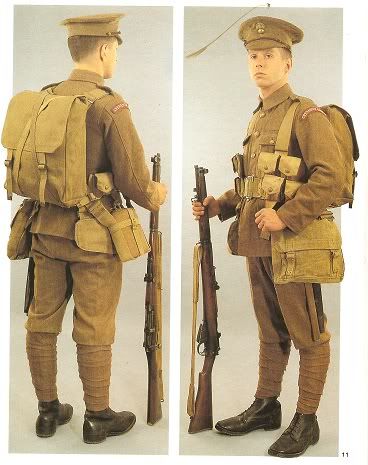
Tolkien himself belonged to the age of drab—
(Here’s what that uniform would have looked like in color—although this is a much higher level officer—looks to be a major—JRRT was commissioned as a second lieutenant and eventually promoted to first lieutenant )
but was well aware of earlier flashiness and we can see it in his description of the guards at Denethor’s gate—even though he sees their outfits as a throwback, just like British soldiers ever returning to bright red uniforms—except for the monarch’s guards:
“The Guards of the gate were robed in black, and their helmets were of strange shape, high-crowned, with long cheek-guards close-fitting to the face, and above the cheek-guards were set the white wings of sea-birds; but the helms gleamed with a flame of silver, for they were indeed wrought of mithril, heirlooms from the glory of old days. Upon the black surcoats were embroidered in white a tree blossoming like snow beneath a silver crown and many-pointed stars. This was the livery of the heirs of Elendil, and none wore it now in all Gondor, save the Guards of the Citadel before the Court of the Fountain where the White Tree had grown.” (The Return of the King, Book Five, Chapter 1, “Minas Tirith”)
(from the Jackson films—as you can see, the helmet fits the description, but the surcoat has disappeared and, instead, the Tree, stars, and crown have been shifted to the breastplate, removing the dramatic contrast between the black cloth and white embroidered emblems which JRRT intended)
As well, although the orcs wear no livery—no uniforms or even part-colored clothing—they do have badges—the white hand of Saruman
(perhaps suggesting that he has his hand over everything? I think of the “Armada Portrait” of Queen Elizabeth the First here—just look at the quiet statement in her hand)
and the red eye of Sauron,
(Angus McBride—perhaps implying that, like Big Brother, Sauron has his eye on you?)
but then there’s a new one, only mentioned once, which provided the title for this posting and the puzzle—
“Two liveries Sam noticed, one marked by the Red Eye, the other by a Moon disfigured with a ghastly face of death…” (The Return of the King, Book Six, Chapter 1, “The Tower of Cirith Ungol”)
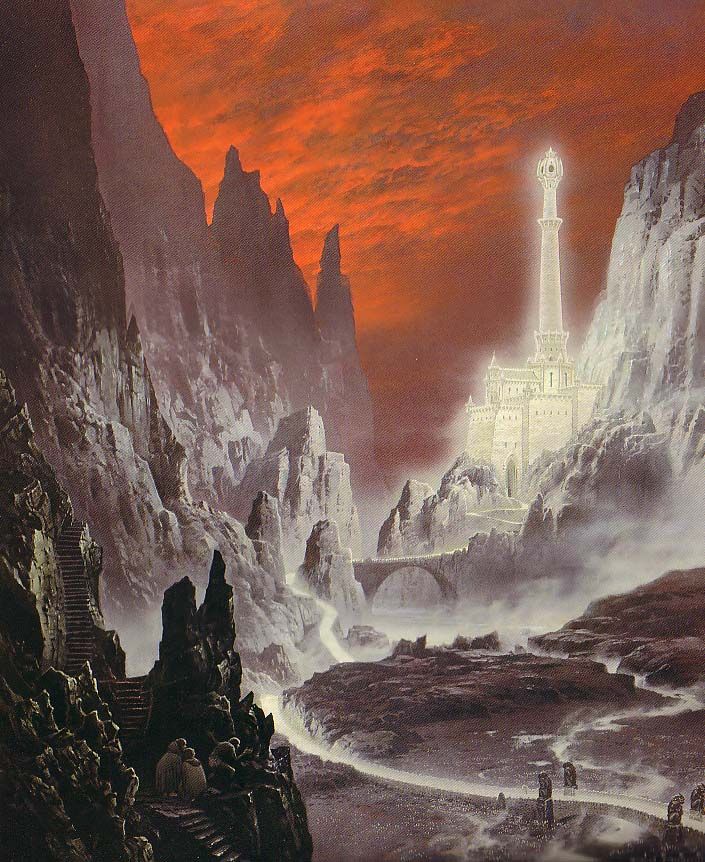
What is JRRT up to here? Minas Morgul, the “Tower of Black Sorcery”, the center of this gateway into Mordor,
(Ted Nasmith)
had been built as Minas Ithil, “the Tower of the Moon” and it’s clear that those having that badge must come specifically from that place, and a mockery of its previous Gondorian name, which is interesting because the rest of Sauron’s forces appear to wear only the Red Eye. Yet, if we can trust an orc, we may have the sense that Sauron doesn’t appreciate deviation, as Grishnakh asks rhetorically of Ugluk:
“They might ask where his strange ideas came from. Did they come from Saruman, perhaps? Who does he think he is, setting up on his own with his filthy white badges? They might agree with me, with Grishnakh their trusted messenger; and I Grishnakh say this: Saruman is a fool, and a dirty treacherous fool. But the Great Eye is on him.” (The Two Towers, Book Three, Chapter 3, “The Uruk-hai”)
So what’s going on here? Certainly there’s rivalry between Saruman’s orcs and Sauron’s, but just how deep does orc rivalry go? When Sam arrives at the Tower of Cirith Ungol, he finds it a battleground and, climbing into the tower itself he hears two orcs arguing, Shagrat, the captain of the Tower, and Snaga, one of his men. Snaga says:
“You won’t be a captain long when They hear about all these goings-on. I’ve fought for the Tower against those stinking Morgul-rats, but a nice mess you two precious captains have made of things, fighting over the swag.” (The Return of the King, Book Six, Chapter 1, “The Tower of Cirith Ungol”)
So, seeing that emblem on a shield, with “a Moon disfigured with a ghastly face of death”, just whose face is that? And whose death?
As ever, thanks for reading.
Stay well,
If you were to come up with your own livery, what would it be?—sometimes knights made visual puns—like Sir Roger de Trumpington—
Think about that, pencil in hand, and remember that there’s always
“The Road goes ever on and on Down from the door where it began. Now far ahead the Road has gone, And I must follow, if I can, Pursuing it with eager feet, Until it joins some larger way Where many paths and errands meet. And whither then? I cannot say.”
as Bilbo sings, on his way away from the Shire to Rivendell.
(JRRT)
We, however, are currently standing at the broken bridge
at Osgiliath,
(from The Encyclopedia of Arda)
but, through the magic of the internet, we’ll hop over the Anduin and continue our journey along the roads of Middle-earth, this time to the worst possible place (unless you’re an orc)—
(Alan Lee)
Mordor.
To get there, we walk the old road which, in the days before Sauron’s previous invasion attempt, ran from Minas Anor (the “ Tower of the Sun”—now Minas Tirith, “Tower of Guard”),
(Ted Nasmith)
to Minas Ithil (the “Tower of the Moon”)—now Minas Morgul (the “Tower of Black Sorcery”).
(another Ted Nasmith)
This will lead us eastwards to the crossing of the Ithilien north/south road, where there is a much- abused seated figure—
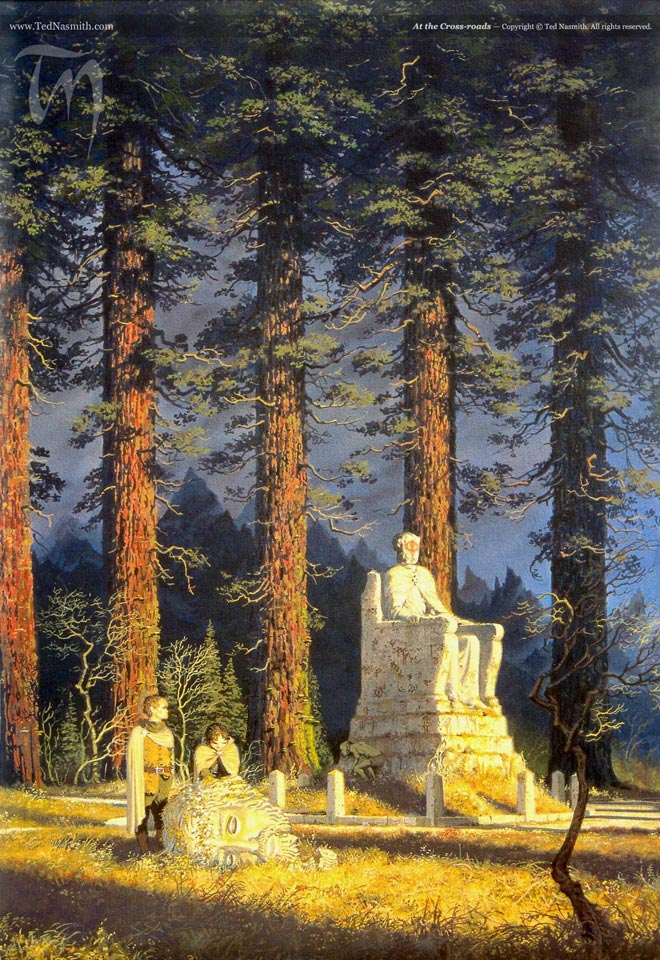
“The brief glow fell upon a huge sitting figure, still and solemn as the great stone kings of Argonath. The years had gnawed it, and violent hands had maimed it. Its head was gone, and in its place was set in mockery a round rough-hewn stone, rudely painted by savage hands in the likeness of a grinning face with one large red eye in the midst of its forehead. Upon its knees and mighty chair, and all about the pedestal, were idle scrawls mixed with the foul symbols that the maggot-folk of Mordor used.” (The Two Towers, Book Four, Chapter 7, “Journey to the Cross-roads”)
(and one more Ted Nasmith. Notice—except for the figure’s size, perhaps, which here wouldn’t be called “huge” nor its chair “mighty”—how carefully the artist has paid attention to the text—typical of Nasmith’s always fine work.)
Frodo and Sam pause here, but we’ll keep moving eastwards on the road towards Minas Morgul.
(the Hildebrandts, with a very different view of it and of Gollum)
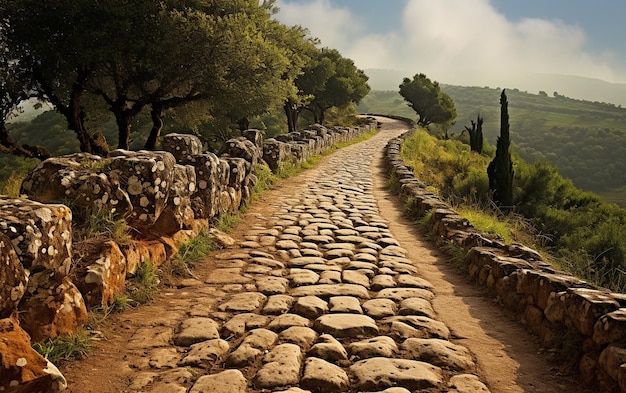
We don’t appear to have a description of this road, but, if you’ve read the previous postings on roads, you’ll know that I would like to imagine that it’s not just a worn dirt track,
but the sort of thing which the Romans built all over their empire,
but now grassgrown and abandoned, like the figure at the crossroads.
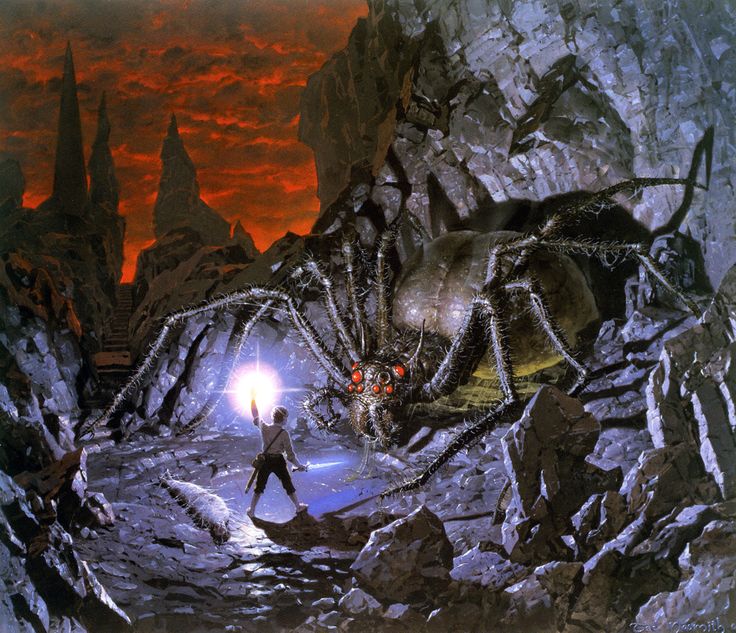
Frodo, Sam, and Gollum skirt Minas Morgul, climbing around it, and we’ll join them, although we’ll avoid the tunnel in which Shelob lives,
(and one more Ted Nasmith)
to come down into Mordor itself.
(Christopher Tolkien)
This is, to say the least, a very bleak place,
(in reality, this is Mt Haleakala National Park, on the island of Maui)
but it seems heavily populated with camps of orcs and Sauron’s allies.
“As far as their eyes could reach, along the skirts of the Morgai and away southward, there were camps, some of tents, some ordered like small towns. One of the largest of these was right below them. Barely a mile out into the plain it clustered like some huge nest of insects, with straight dreary streets of huts and long low drab buildings.” (The Return of the King, Book Six, Chapter 2, “The Land of Shadow”)
(Alan Lee)
There are clearly roads, at least in the northern area—
(from the Encyclopedia of Arda)
and when Frodo and Sam disguise themselves as orcs,
(Denis Gordeev)
they make their way along a major one, only to be taken for potential deserters and driven into an orc marching column.
(Denis Gordeev)
Before they reach such a road, however,
“…they saw a beaten path that wound its way under the feet of the westward cliffs. Had they known, they could have reached it quicker, for it was a track that left the main Morgul-road at the western bridge-end and went down by a long stair cut in the rock to the valley’s bottom.” (The Return of the King, Book Six, Chapter 2, “The Land of Shadow”)
We’ll follow them down this path and eventually reach a road:
“…at the point where it swung east towards the Isenmouthe twenty miles away. It was not a broad road, and it had no wall or parapet along the edge, and as it ran on the sheer drop from its brink became deeper and deeper.” (The Return of the King, Book Six, Chapter 2, “The Land of Shadow”)
When Frodo and Sam are picked up and driven along in the column,
(John Howe)
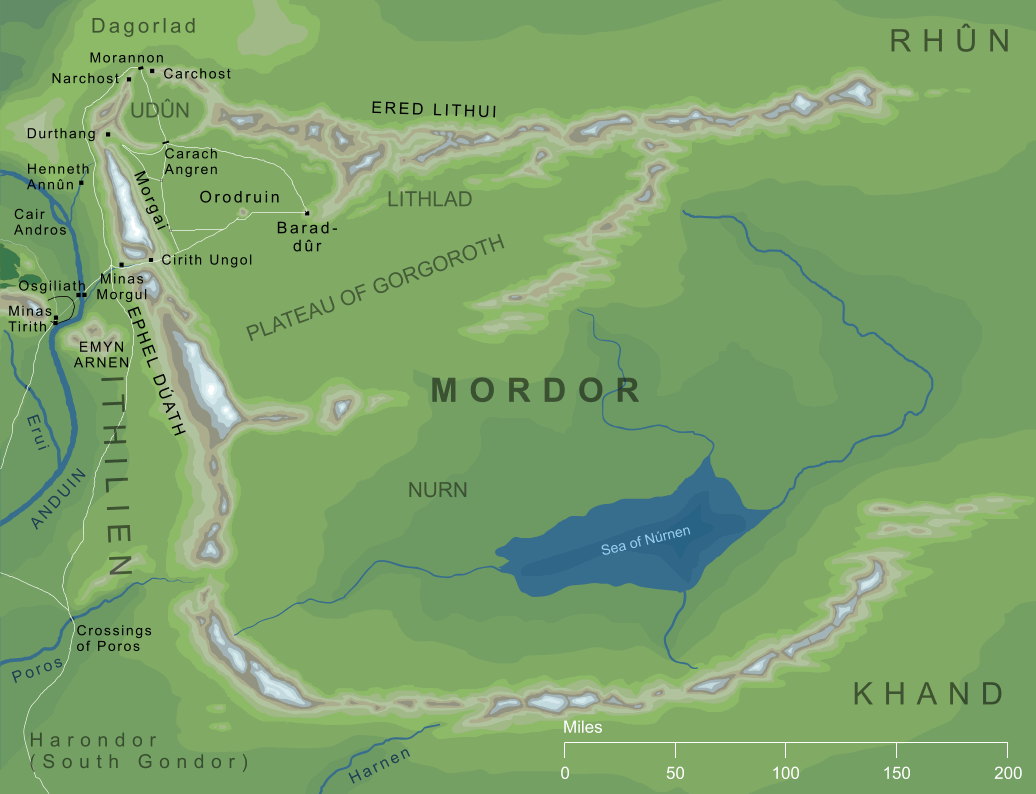
we can now see that the column is headed for Isenmouthe and the entrance to the northernmost part of Mordor, Udun,
(from Karen Wynn Fonstad, The Atlas of Middle-Earth)
but the two manage to escape just before the entrance, dropping
“…over the further edge of the road. It had a high kerb by which troop-leaders could guide themselves in black night or fog, and it was banked up some feet above the level of the open land.” (The Return of the King, Book Six, Chapter 2, “The Land of Shadow”)
(perhaps something like this on the right?)
Frodo and Sam now try cutting across open country, which, although full of places to hide, is hard going—
“As the light grew a little [Sam] saw to his surprise that what from a distance had seemed wide and featureless flats were in fact all broken and tumbled. “ (The Return of the King, Book Six, Chapter 3, “Mount Doom”)
The going, however, is simply too rough for them in their current condition, and they return to the road, as will we, approaching Orodruin (Mt. Doom), where, for the first time since finding a spring on the eastern slope of the Mountains of Shadow, they find water—
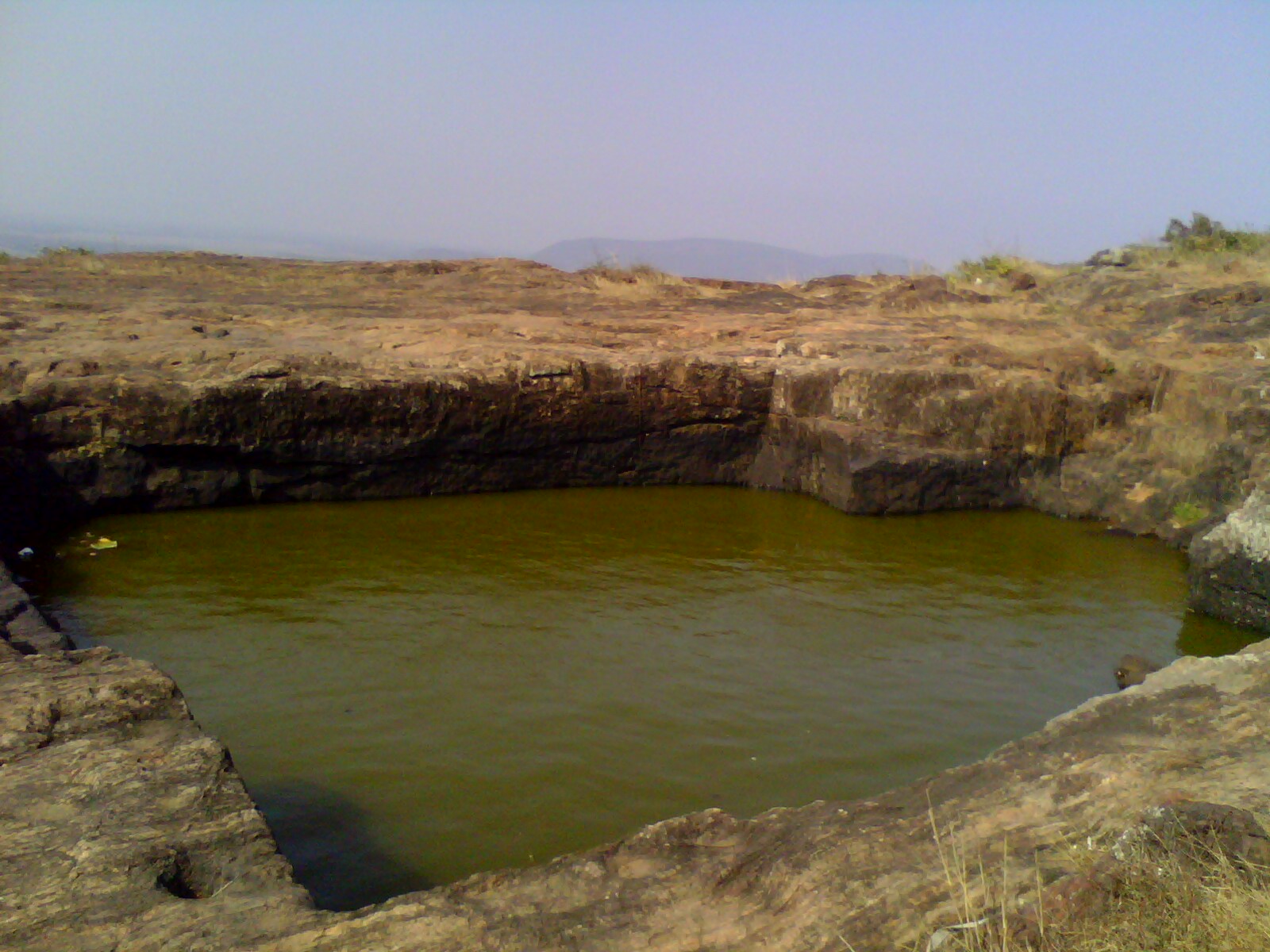
“All long ago would have been spent, if they had not dared to follow the orc-road. For at long intervals on that highway cisterns had been built for the use of troops sent in haste through the waterless regions.
In one Sam found some water left, stale, muddied by the orcs, but still sufficient for their desperate case.” (The Return of King, Book Six, Chapter 3, “Mount Doom”)
Struggling to the foot of Mt. Doom (Orodruin), Sam discovers a path—our last road in this series of postings—which is actually part of Sauron’s road from the Barad-dur to the volcano.
(from the Encyclopedia of Arda)
“…for amid the rugged humps and shoulders above him he saw plainly a path or road. It climbed like a rising girdle from the west and wound snakelike about the Mountain, until before it went round out of view it reached the foot of the cone on the eastern side.” (The Return of King, Book Six, Chapter 3, “Mount Doom”)
Finally coming to the path, they find
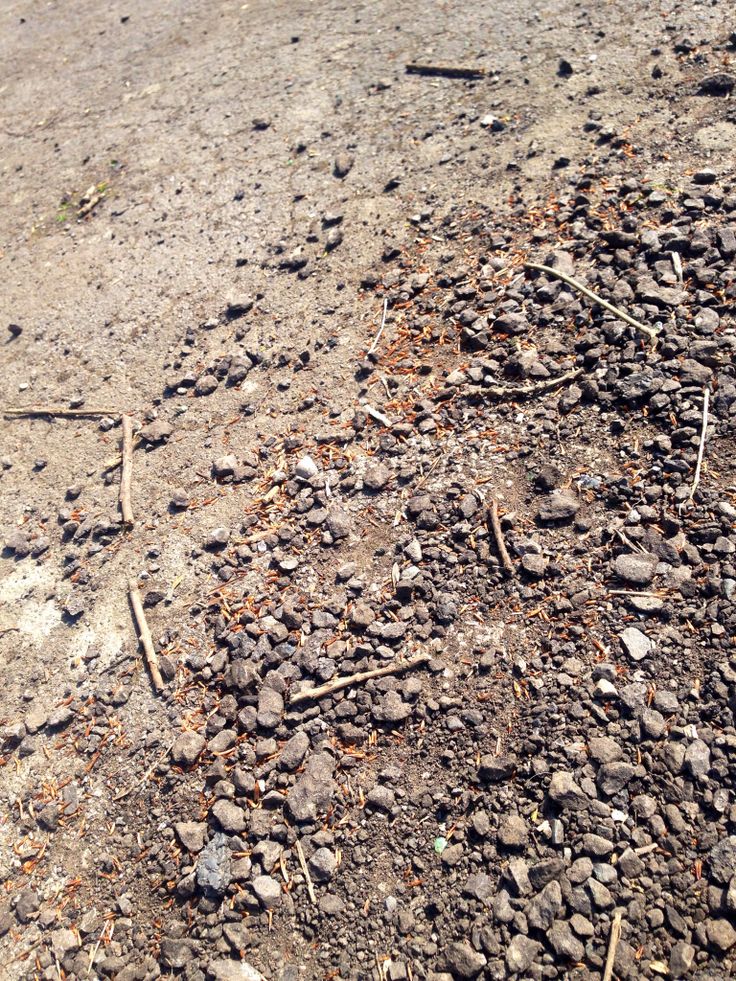
“…that it was broad, paved with broken rubble and beaten ash” The Return of King, Book Six, Chapter 3, “Mount Doom”)
But, before the eagles come to rescue Frodo and Sam, we’ll take our own eagle back to the door where our roads began.
(the Hildebrandts)
As always, thanks for reading.
Stay well,
Remember how perilous it may be to step out your front door,
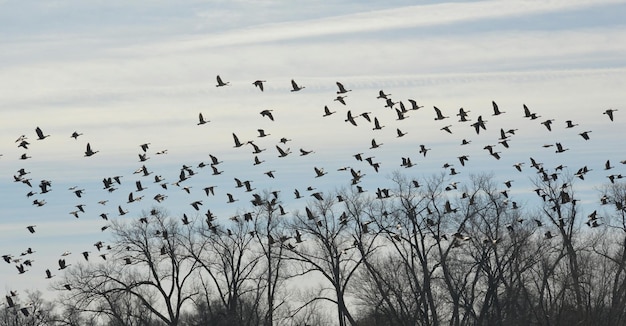
The first part of this posting began as far from Middle-earth and its history as possible: the Biblical lands of our Middle-earth and the story of the ancient prophet, Daniel and specifically the event which gained Daniel his position in the court first of Belshazzar, the Babylonian king, and then in that of his conqueror/successor, Darius the Persian. Uniquely for early prophecy, Belshazzar hadn’t been warned that he would be deposed by any of the accepted means—the reading of the flight of birds
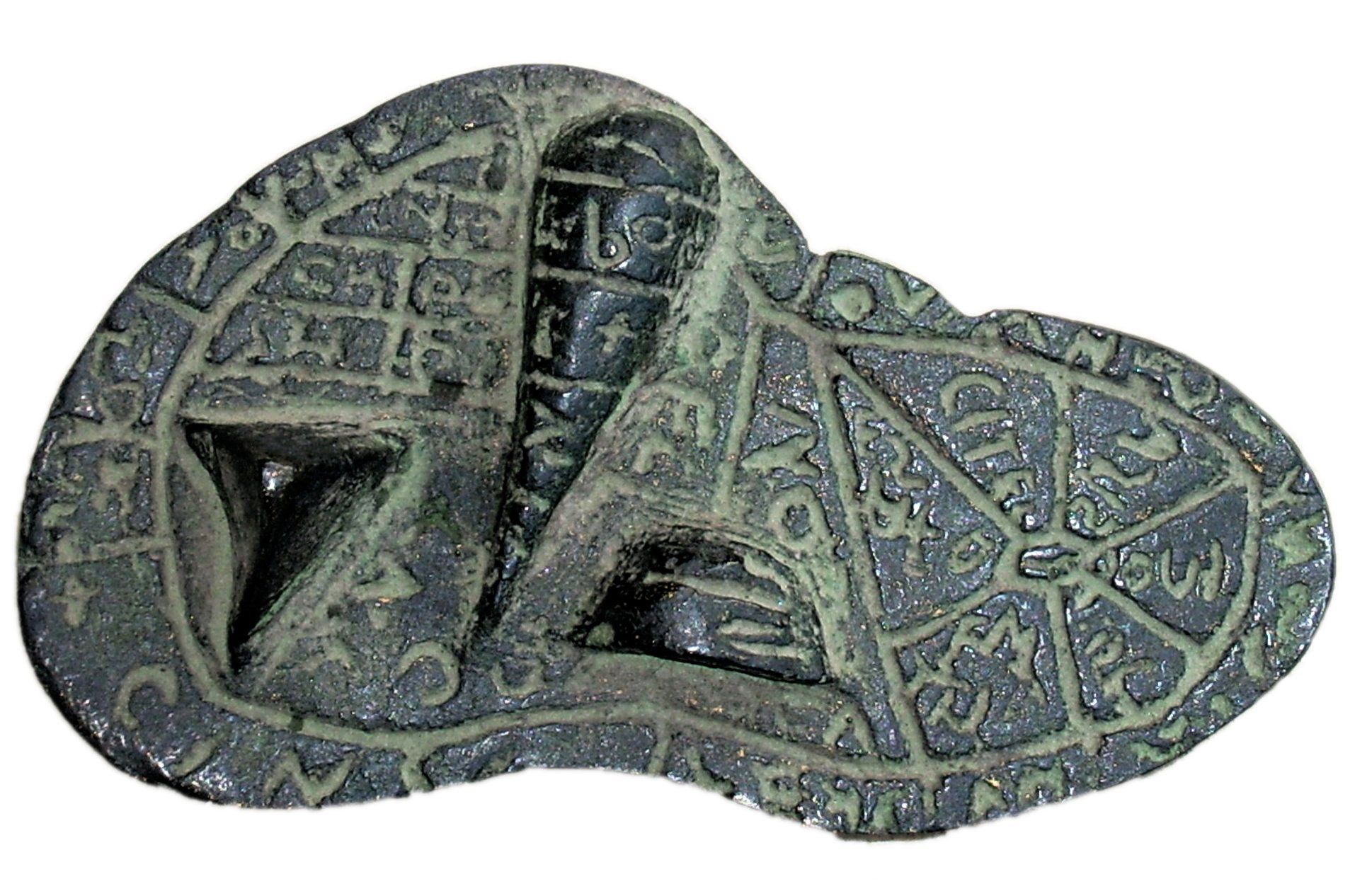
or the reading of animal intestines, for example,
(This is a bit of Etruscology, being a bronze model of a sheep’s liver believed to be used as a guide to interpreting what an Etruscan priest might find on an actual sheep’s liver. For more, see: https://en.wikipedia.org/wiki/Haruspex )
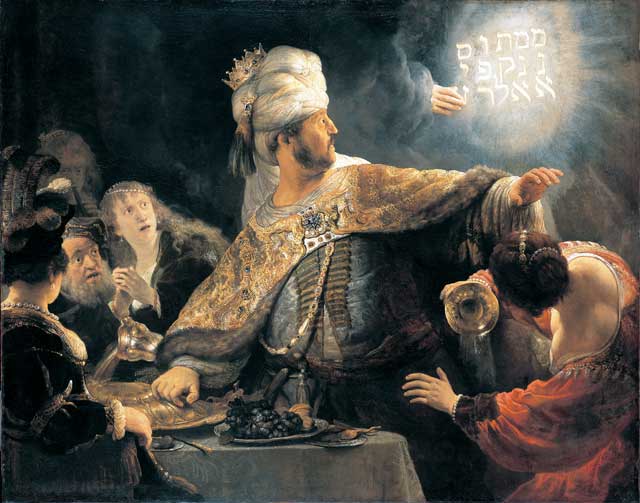
but by a message written by a detached hand on an interior wall of his palace.
(Rembrandt—as I said in the first part of this posting, having no idea of what real Babylonians looked like, the artist went for the Magi look)
In that posting, I suggested that Daniel’s story not only confirmed his role as prophet, but, for the posting, that he was literate, which would have marked him out in a world in which literacy was a specialized skill, like being a boatwright.
This, in turn, had led to considering literacy in Middle-earth, chiefly among hobbits, and, in particular, the literacy of one rather unlikely hobbit, Sam Gamgee.
(Robert Chronister)
For more on this, see that earlier posting, “It’s in Writing (1)” 15 October, 2025, but my conclusion, based upon the final chapter of The Lord of the Rings, “The Grey Havens”, was that, as the story of Daniel makes Daniel literate in order to elevate him to a level of prophetic importance, so JRRT makes Sam literate in order to allow him to be the author who will complete the story of the Ring.
That posting briefly examined hobbits and even suggested some evidence of literacy among dwarves, but it was never meant to be a full inventory of mentions of literacy in Middle-earth—although I think that that would be a very interesting project and well worth doing—and one thing it omitted entirely was any mention of literacy in Mordor.
Did Orcs read and write, for example?
(Alan Lee)
Considering the conversation of people like Ugluk and Grishnakh, it would seem that they were mainly oral, as much of their and other talk is based upon what they hear, rather than read. (“ ‘What are they wanted for?’ asked several voices. ‘Why alive? Do they give good sport?’ ‘No! I heard that one of them has got something, something that’s wanted for the war…” The Two Towers, Book Three, Chapter 3, “The Uruk-hai”—for more on Orcs and gossip, among other things, see “Scuttlebutt”, 27 October, 2021)
And yet there’s this:
“The brief glow fell upon a huge sitting figure, still and solemn like the great stone kings of Argonath. The years had gnawed it, and violent hands had maimed it..Upon its knees were idle scrawls mixed with the foul symbols that the maggot-folk of Mordor used.” (The Two Towers, Book Four, Chapter 7, Journey to the Cross-roads”)
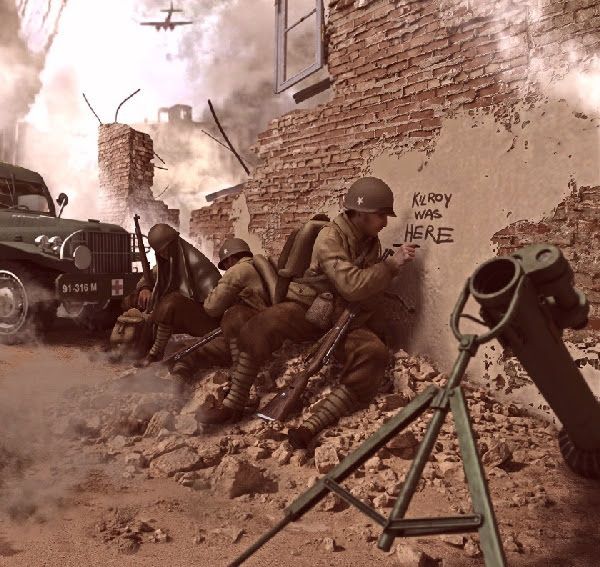
The “maggot-folk of Mordor” must certainly be the Orcs and “idle scrawls” suggests graffiti, like the World War 2-era favorite–
So what did they write in? Pippin, while a prisoner of the Orcs, notices that they seem to speak different languages—or at least dialects—but employ the Common Speech to understand each other:
“To Pippin’s surprise he found that much of the talk was intelligible; many of the Orcs were using ordinary language. Apparently the members of two or three quite different tribes were present, and they could not understand one another’s orc-speech.” (The Two Towers, Book Three, Chapter 3, “The Uruk-hai”)
Can we presume, then, that the “idle scrawls” were in the writing system called the Tengwar, as “[its letters] had spread over much of the same area as that in which the Common Speech was known” (The Lord of the Rings, Appendix E, II, “Writing”)? Or possibly the runic Cirith, as “[it] became known to many peoples, to Men and Dwarves, and even to Orcs, all of whom altered it to suit their purposes and according to their skill or lack of it.”
But what about the Black Speech?
“It is said that the Black Speech was devised by Sauron in the Dark Years, and that he had desired to make it the language of all those that served him…”
however—
“…after the first overthrow of Sauron this language in its ancient form was forgotten by all but the Nazgul. When Sauron arose again, it became once more the language of Barad-dur and of the captains of Mordor.”
It was the formal language of the top of the chain of command, then, but, as JRRT had written earlier of Sauron’s first attempt to make it the official language, “he failed in that purpose” and the Orcs picked and chose what they found useful and nothing more. (See The Lord of the Rings, Appendix F, “Of the Other Races”)
Save for what might be the Black Speech in a curse (“Ugluk u bagronk sha pushdug Saruman-glob bubhosh skai”, says one menacing Orc to Pippin– The Two Towers, Book Three, Chapter 3, “The Uruk-hai”), when we hear it, it’s Gandalf, reciting what he read when he “set the golden thing in the fire a while” (The Fellowship of the Ring, Book Two, Chapter 2, “The Council of Elrond”).
And this brings us back to reading and writing. Why was there writing on that particular ring?
Not being a party to its maker’s mind, this is only my guess, but I think that it may have had several possible purposes.
First—and this seems the most obvious—comes from something Gandalf says, repeating a remark made by Saruman:
“ ‘The Nine, the Seven, and the Three…had each their proper gem. Not so the One. It was round and unadorned, as it were one of the lesser rings; but its maker set marks upon it that the skilled, maybe, could still see and read.” (The Fellowship of the Ring, Book Two, Chapter 2, “The Council of Elrond”).
Thus, Sauron had written on it to distinguish it from the other rings—and this writing was seemingly to be seen only by Sauron, as Isildur suggests:
“It was hot when I first took it, hot as a glede [a hot coal], and my hand was scorched, so that I doubt if ever again I shall be free of the pain of it. Yet even as I write it is cooled, and it seemeth to shrink, though it loseth neither its beauty nor its shape. Already the writing upon it, which at first was as clear as red flames, fadeth and is only barely to be read.”
Isildur’s explanation for this fading was:
“The Ring misseth, maybe, the heat of Sauron’s hand, which was black and yet burned like fire.” (The Fellowship of the Ring, Book Two, Chapter 2, “The Council of Elrond”).
The second purpose, then, might be that The Ring mirrored, in a way, its master, the inscription legible to him because it took its heat from his hand and, with that removed, it cooled, eventually, into silence. Isildur had guessed that heat might revive it (“…maybe were the gold made hot again, the writing would be refreshed”) but it was Gandalf, having read Isildur’s suggestion, who did, by placing it into an environment like to its original. That it would lose that inscription if the Ring were removed from its owner’s hand might also suggest a third purpose, which lies in what the writing actually said:
“One Ring to rule them all, One Ring to find them,
One Ring to bring them all and in the darkness bind them.” (The Fellowship of the Ring, Book One, Chapter 2, “The Shadow of the Past”)
Although Gandalf says that this formed part of “a verse long known in Elven-lore”, the Ring itself was meant to be the master ring:
“He only needs the One; for he made that Ring himself, it is his, and he let a great part of his own former power pass into it, so that he could rule all the others.”
Thus, though it may have been part of a “verse long known in Elven-lore”, it sounds to me like a kind of spell Sauron would have chanted as he made the Ring, not only putting “a great part of his own former power” into it, but binding the lesser rings to it, as the words written on the Ring may have eventually been part of later tradition, but, logically, must have been his words long before they became part of that tradition.
These might have been Sauron’s purposes, but they also serve the narrative. As Bilbo’s ring, passed down traumatically to Frodo, is “round and unadorned”, Gandalf has to have some way to prove to himself and to Frodo that this ring is the Ring.
(Alan Lee)
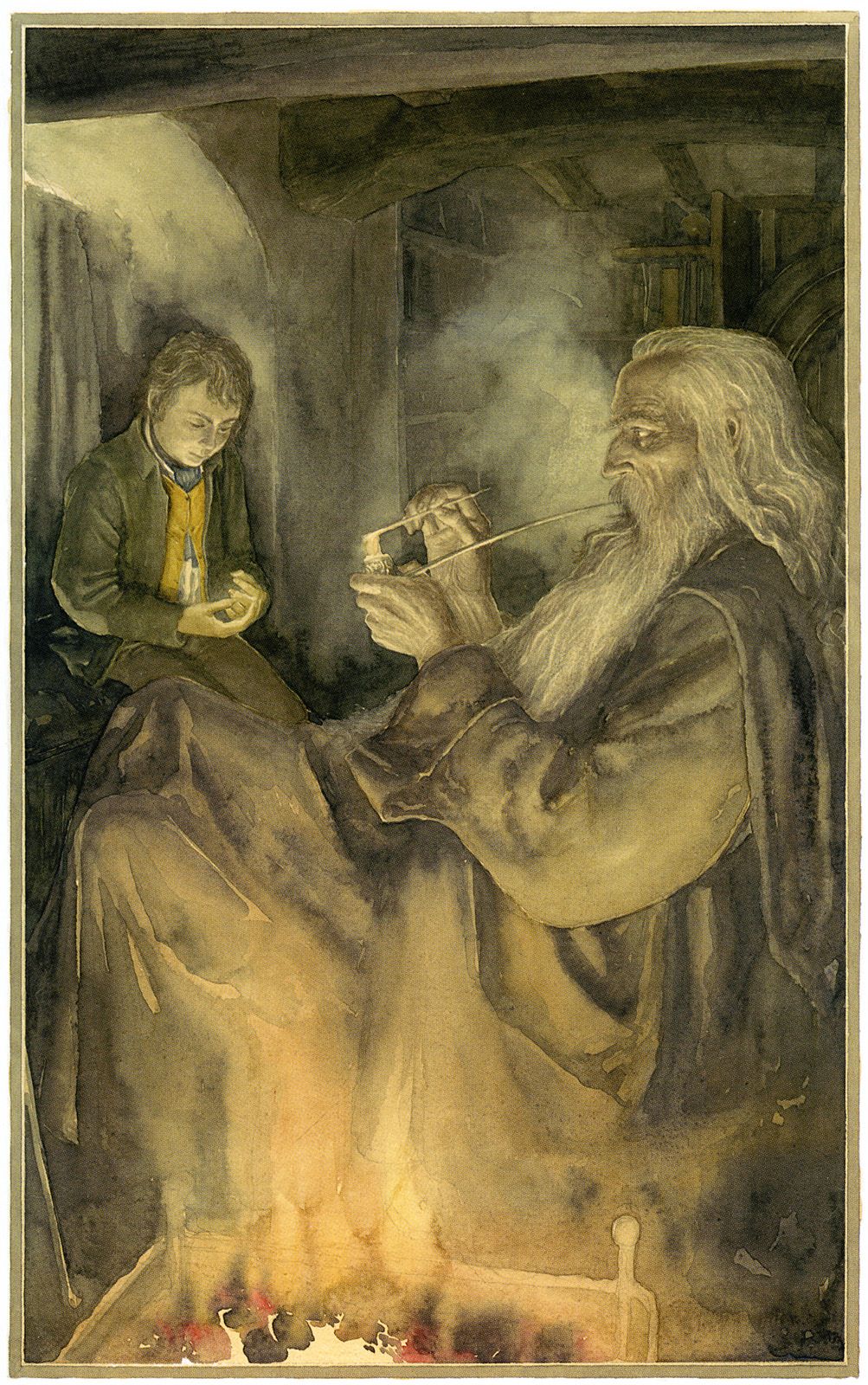
When Gandalf begins explaining to Frodo in detail about it and about Bilbo’s connection to it, he first mentions that
“A mortal…who keeps one of the Great Rings, does not die, but he does not grow or obtain more life, he merely continues, until at last every minute is a weariness.”
and Bilbo, says Gandalf, “…was getting restless and uneasy. Thin and Stretched, he said.”
He speaks further about his worries about Bilbo and then tells Frodo that “There is a last test to make”, meaning in his confirmation that this is the Ring.
That last test takes place when, reluctantly, Frodo hands the Ring to Gandalf, and Gandalf throws it into the fire on Frodo’s hearth, where, when Frodo picks it up, he spots “fine lines, finer than the finest pen-strokes, running along the ring, outside and inside: lines of fire that seemed to form the letters of a flowing script” and that script says:
“One Ring to rule them all, One Ring to find them, One Ring to bring them all and in the Darkness bind them.” (translation by Gandalf—earlier quotations from The Fellowship of the Ring, Book One, Chapter 2, “The Shadow of the Past”, the Black Speech from Book Two, Chapter 2, “The Council of Elrond” For more on the Black Speech, see: https://en.wikipedia.org/wiki/Black_Speech )
For Gandalf, that inscription is the final element in his understanding of just what, long ago, Bilbo picked up in the tunnels under the Misty Mountains. He explains that it’s “only two lines of a verse long known in Elven-lore”, but those two lines are apparently all that’s necessary.
But where might the idea for an inscription have come to JRRT from originally? I have no proof, but, as a medievalist, Tolkien might have been aware of what we find in medieval bling and is later picked up in Hamlet.
If you, like me, are a Shakespeare fan, you may recognize the subtitle of this posting as a sharp little remark by Hamlet in Act III, Scene 2 (you can read it here in the First Quarto of 1603: https://internetshakespeare.uvic.ca/doc/Ham_Q1/complete/index.html ). Hamlet is making fun of a very brief prologue before The Murder of Gonzago, the “play within a play” (renamed “The Mousetrap” by Hamlet) by which he hopes to force his uncle, Claudius, to reveal his guilt in the death of Hamlet’s father, but it’s the second half of that line, “a Poesie for a Ring” which provides an answer to my question.
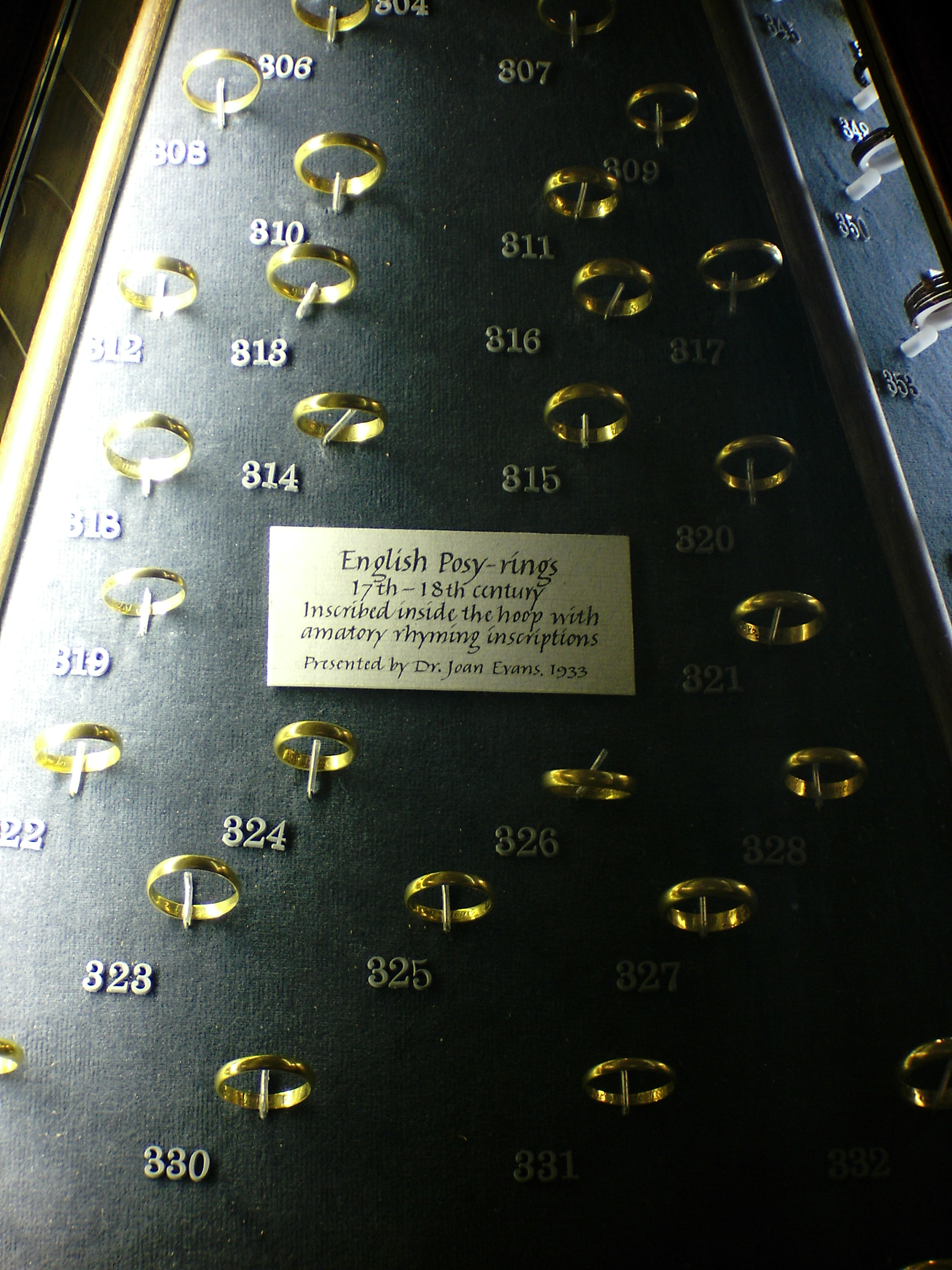
What Hamlet is suggesting is that the prologue is as clumsy as the poetry found within a ring (although occasionally on the outside) usually given by one lover to another in the late medieval era at least into the 18th century, like this one—
where inside is written “When this you see, remember me.”
Often called “posy rings” (a contracted form of “poesie”, as in the Shakespeare quotation), there are hundreds of surviving examples—here are only a small number from the Ashmolean Museum in Oxford—
The texts vary, from what appears confident–“In thee my choice I do rejoice”—to the less so: “I live in Hope”, but the general purpose of these little gifts is clear, if less sinister than Sauron’s. They are meant to remind someone that someone else is thinking of them. The difference, however, is that, if there’s one thing you wouldn’t want, it would be to have the Eye of Sauron looking in your direction.
I begin this posting with a riddle: how are Tolkien and Sauron alike?
But we’ll come back to that.
Before that, I want to talk about the title of this posting.
When Boromir is killed by the Orcs.
(Ted Nasmith)
Merry and Pippin are captured and carried off across country,
(Denis Gordeev)
Pippin waking eventually to this—
“He struggled a little, quite uselessly. One of the Orcs sitting near laughed and said something to a companion in their abominable language.. ‘Rest while you can, little fool!’ he then said to Pippin, in the Common Speech, which he made almost as hideous as his own language.”
But what does that “abominable language” sound like? Another Orc, equally gentle, gives us an example.
“ ‘If I had my way, you’d wish that you were dead now,’ said the other….’Don’t draw attention to yourself, or I may forget my orders,’ he hissed. Curse the Isengarders! Ugluku bagronk sha pushdug Saruman-glob bubhosh skai’: he passed into a long angry speech in his own tongue that slowly died away into muttering and snarling.”
One word is easy to pick out, of course—Saruman—but the rest calls for translating, something which Tolkien doesn’t provide in The Lord of the Rings, but there are, in fact, at least three translations:
1. “Ugluk to the cesspool, sha! the dungfilth; the great Saruman-fool, skai!” which comes from a draft of Appendix F of The Peoples of Middle-earth
2. “Ugluk to the dung-pit with stinking Saruman-filth—pig-guts, gah!” which is a translation by Carl Hostetter in Vinyar Tengwar 26
3. “Ugluk to torture(chamber) with stinking Saruman-filth. Dung-heap. Skai!” which is from Parma Eldalamberon XVII
“Terrified Pippin lay still, though the pain at his wrists and ankles was growing, and the stones beneath him were boring into his back. To take his mind off himself he listened intently to all that he could hear. There were many voices round about, and though orc-speech sounded at all times full of hate and anger, it seemed plain that something like a quarrel had begun, and was getting hotter.”
but still senses that there is strong emotion behind the Orcs’ words and part of how that “hate and anger” was conveyed to Pippin probably from the very sounds of the language—full of the hissing SH—sha, push-dug, bub-hosh—and words of only one or two syllables—Ug-luk, ba-gronk, sha, push-dug, bub-hosh, skai, making it sound abrupt. And you can then see that 3-syllable “Saruman” was clearly a foreign word, which was then turned into an Orkish compound with that final single-syllable “glob”.
And yet:
“To Pippin’s surprise he found that much of the talk was intelligible; many of the Orcs were using ordinary language.”
“ordinary language” here is Pippin’s tongue—the Common Speech of Middle-earth (“Westron”)—which is also the language in which The Lord of the Rings was supposed originally to have been written.
Dazed as he might be (“I suppose I was knocked on the head” he says to himself when he first wakes), Pippin, listening, comes to a clever conclusion as to why the Common Speech is employed by the Orcs who, after all, appear to have their own language:
“Apparently the members of two or three quite different tribes were present, and they could not understand one another’s orc-speech.” (all of the above quotations from The Fellowship of the Ring, Book Two, Chapter 3, “The Uruk-hai”)
It’s interesting to see what the Orcs are doing here: finding a way to converse because their own languages—or at least their dialects—are not mutually intelligible.
This has been a problem throughout history, wherever one people meets another with which it doesn’t share a language.
Several different approaches have been created.
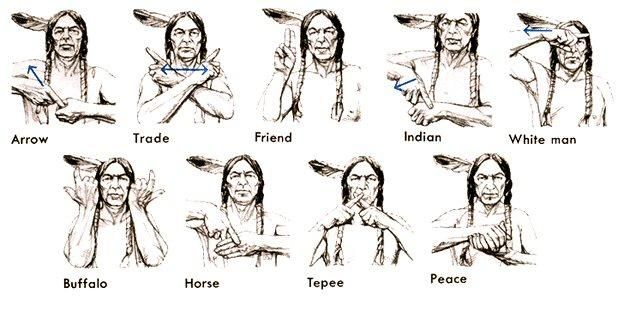
On the Great Plains of the US West, for example,
Native Americans produced a kind of universal sign language, which employed standardized gestures for common concepts and ideas. Here’s a chart of a few of those gestures—
and here’s a possible extension—although I must say that it strikes me that it would take two very linguistically talented people, with a wide gesture vocabulary, to convey all of this.
(You can read about it here, which includes a wonderful piece of film in which various Native Americans and a seemingly-fluent US Government representative converse in gesture: https://en.wikipedia.org/wiki/Plains_Indian_Sign_Language )
Besides gesture, people have constructed what’s called a “lingua franca”—literally “French tongue”—that is, a kind of trade tongue, which might have a base in one language, but which then borrows words from other regional languages to build its working vocabulary. The term comes from such a language employed from the early medieval period up into the 19th century in the Mediterranean, “franca” being used really to mean not “French” so much as “foreign”. (You can read more about it here: https://en.wikipedia.org/wiki/Lingua_franca )
In contemporary Papua/New Guinea,
there is the English-based Tok Pisin, which has become so useful that it has become the first language of some groups. (For more, see: https://en.wikipedia.org/wiki/Tok_Pisin , which includes a demonstration of TP as spoken, although the background noise makes it a little difficult to hear. Fortunately, there are a fair number of YouTube videos, should you want to hear more—and I hope you do. YouTube is full of languages, both living and now no longer in use—I won’t say “dead”, because, if any language is still comprehensible, even if the last speakers are gone, I wouldn’t write an epitaph for it, myself– and we’re so lucky to be given so much to learn and understand.)
The Orcs, however, have simply resorted to employing another language entirely—although it would be interesting to see whether, had we more of their speech, we might find elements from other languages—there’s a clue in that “Saruman-glob”, where the speaker takes a word from another language and simply attaches an Orc word to it.
What was that “orc-speech”, which Pippin couldn’t understand?
“The Orcs were first bred by the Dark Power of the North in the Elder Days. It is said that they had no language of their own, but took what they could of other languages and perverted it to their own liking, yet they made only brutal jargons, scarcely sufficient even for their own needs, unless it were for curses and abuse. And these creatures, being filled with malice, hating even their own kind, quickly developed as many barbarous dialects as there were groups or settlements of their race, so that their Orkish speech was of little use to them in intercourse between different tribes.”
And so what we’re seeing is that the Orcs were actually developing a series of languages rather like linguae francae—basing them on whatever other language was locally available, then adding the odd curse or form of abuse which appealed to them, all of which turned their speech, even if once based upon a common borrowed language, into something incomprehensible to others from the same race.
It’s clear that Sauron, from whom Saruman got his definition of what Saruman claimed was always the goal of the Istari: “Knowledge, Rule, Order”, wished Rule and Order to be at the heart of his dominion and therefore:
“It is said that the Black Speech was devised by Sauron in the Dark Years, and that he desired to make it the language of all those who served him…”
but the power of the Linguae Orcae, as we can call them, won out:
“…but [Sauron] failed in that purpose. From the Black Speech, however, were derived many of the words that were in the Third Age wide-spread among the Orcs, such as ghash, ‘fire’, but after the first overthrow of Sauron this language in its ancient form was forgotten by all but the Nazgul.”
And so even their master’s invention became nothing more than a vocab pool, from which to draw that which the Orcs fancied—and we know their preferences.
It’s no wonder, then, that
“So it was that in the Third Age Orcs used for communication between breed and breed the Westron tongue; and many indeed of the older tribes, such as those that still lingered in the North and in the Misty Mountains, had long used the Westron as their native language…”—just like those for whom Tok Pisin had moved from a trade tongue to a first tongue—but here’s an Orkish difference: “though in such a fashion as to make it hardly less lovely than Orkish.” (all quotations from “The Orcs were first bred…” on from The Lord of the Rings, Appendix F)
And the answer to the riddle—I think that you’ve guessed it already: “How are Tolkien and Sauron alike?” Both were creators of languages, the difference being that it seems that virtually everyone in Middle-earth, from Elves to Dwarves to Ents to Orcs, speaks Westron, while no one speaks the Black Speech but Sauron’s last and soon to be lost, enslaved kings, the Nazgul.
(Denis Gordeev)
Thanks, as always, for reading.
Stay well,
Consider the endless borrowings which English has made from world languages,
Two postings ago, we were discussing henchmen and, of course, orcs were among them.
While we were discussing, we began to wonder about orcs. They appear numerous times in The Lord of the Rings, from pursuing the Fellowship in the mines of Moria
to attacking Boromir and capturing Merry and Pippin
to forming the initial assault team on Minas Tirith.
But what do they really look like?
Here’s the first description we’re given, a second-hand one, spoken by Gandalf:
“There are Orcs, very many of them…And some are large and evil: black Uruks of Mordor.”
(The Fellowship of the Ring, Book Two, Chapter 5, “The Bridge of Khazad-Dum”)
Our first real view of them comes just paragraphs later:
“…a huge orc-chieftain, almost man-high, clad in black mail from head to foot, leaped into the chamber…His broad flat face was swart, his eyes were like coals, and his tongue was red.”
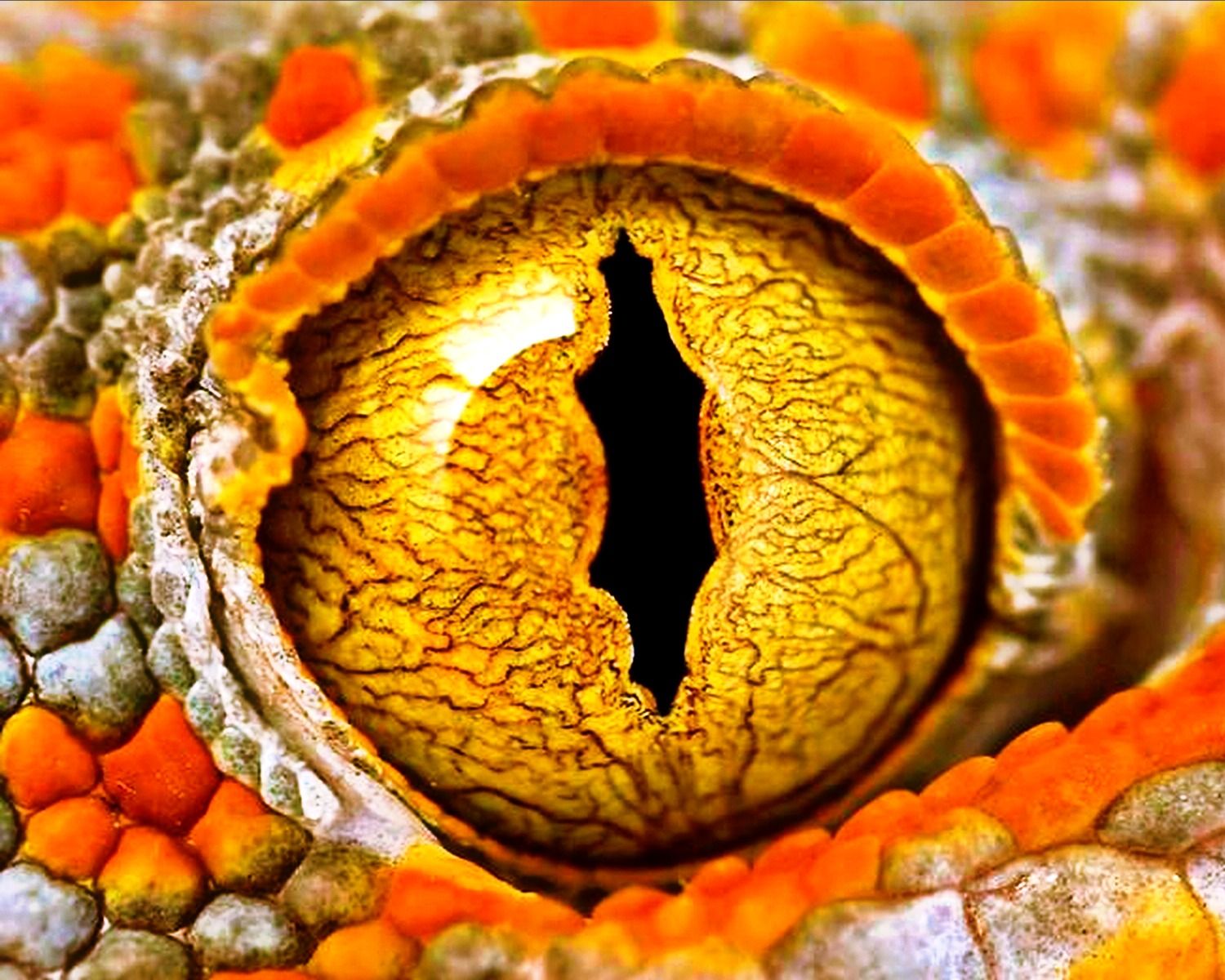
If this orc-chieftain is representative, then, orcs are smaller than men, with dark skin and broad flat faces. But is this a consistent description?
We next meet the orcs as casualties after the death of Boromir:
“There were four goblin-soldiers of greater stature, swart, slant-eyed, with thick legs and large hands.”
(The Two Towers, Book Three, Chapter 1, “The Departure of Boromir”)
As we know from other references to “goblins”, Tolkien came to blur the words “goblin” and “orc”, where the earlier Hobbit has only the former. Thus, that compound “goblin-soldiers” really means “orcs” and we see that word “swart”—“dark/black” (like German schwarz)—again. To which is added “slant-eyed” and the detail “of greater stature” (than the surrounding dead orcs), emphasizing a second time that many, if not most, orcs are apparently normally small creatures.
So far, then, orcs, in general, seem to be dark-skinned and little, with broad, flat faces. And their next appearance may add a little more:
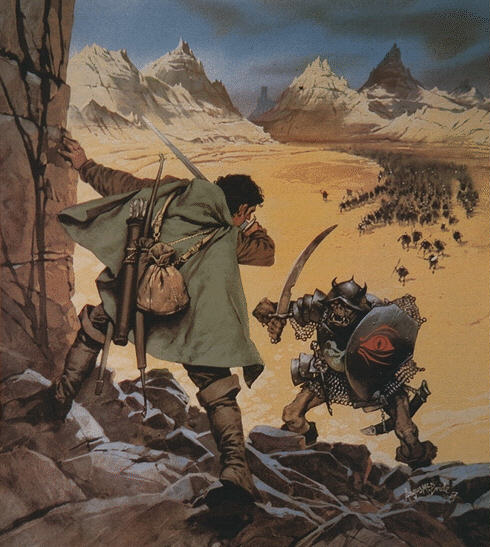
“In the twilight he saw a large black Orc, probably Ugluk, standing facing Grishnakh, a short crook-legged creature, very broad and with long arms that hung almost to the ground. Round them were many smaller goblins. Pippin supposed that these were ones from the North…
Ugluk shouted, and a number of other Orcs of nearly his own size ran up.”
(The Two Towers, Book Three, Chapter 3, “The Uruk-Hai”)
This suggests that there, in fact, at least two subspecies of orcs: smaller ones (possibly from the north) in the service of Sauron, and larger ones, who are the followers of Saruman.
(There are also large orcs in Sauron’s pay, however, as we saw above in Moria.)
And we might add one more detail—at least one has rather menacing teeth:
“He stooped over Pippin, bringing his yellow fangs close to his face.”
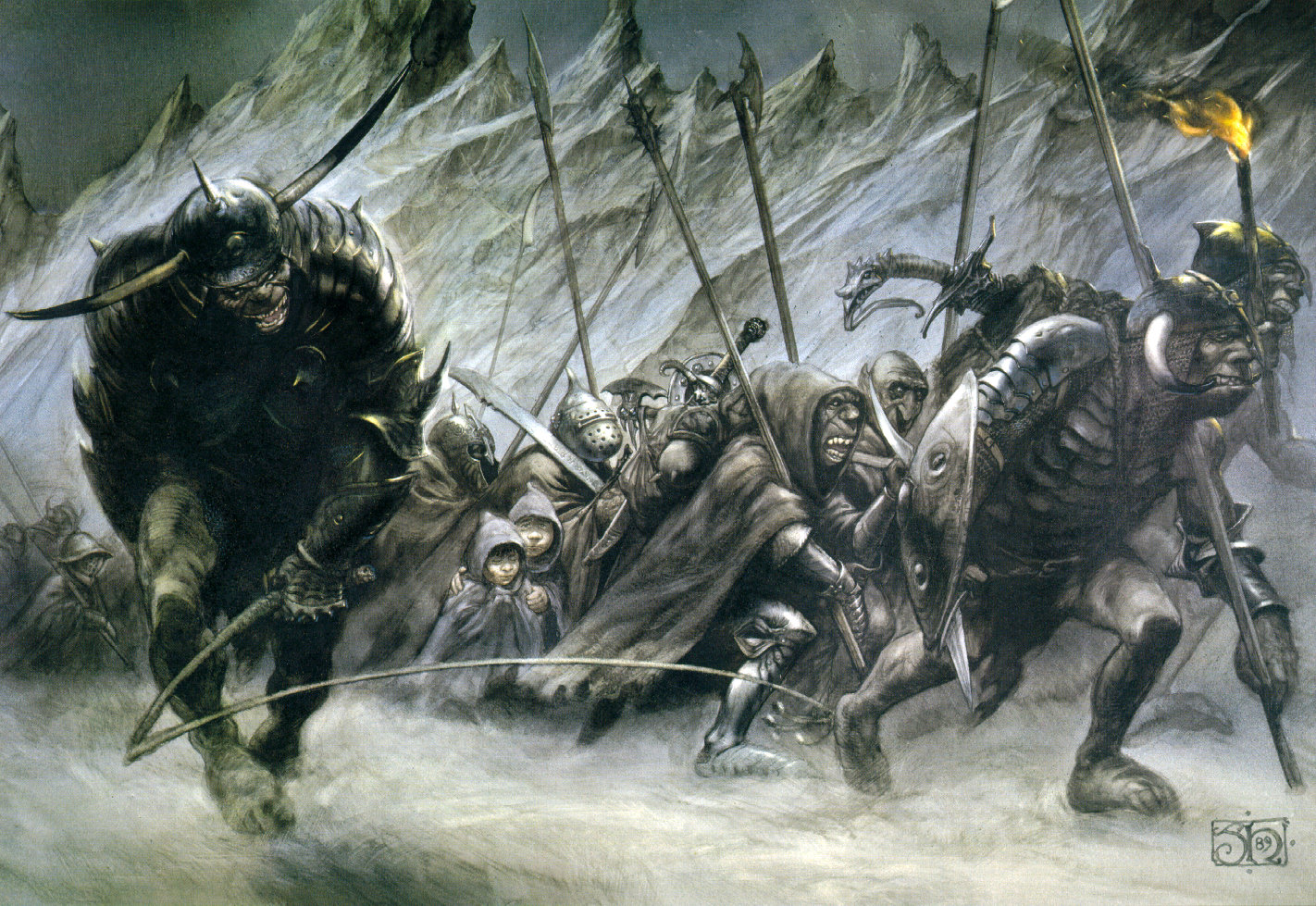
With this much information from the text, we turned to illustrations: how close are they to these bits of description? There are many images of orcs on the internet and we ourselves have used a certain number of those images over the years, beginning with this from the Hildebrandts, which we believe must be one of the earliest.
These are mostly very piglike, reminding us both of a wild boar (with a close shave)
and of a connection which we suggested some time ago with Jabba the Hutt’s Gammorean Guard—
That green skin color, both on the Hildebrandt orcs and the Gammorean Guard, will follow orcs through the work of many artists, like Angus McBride,
and Ted Nasmith–
although not in this image of the wounding of Boromir–
and sometimes in the work of Alan Lee,
as well as that of John Howe.
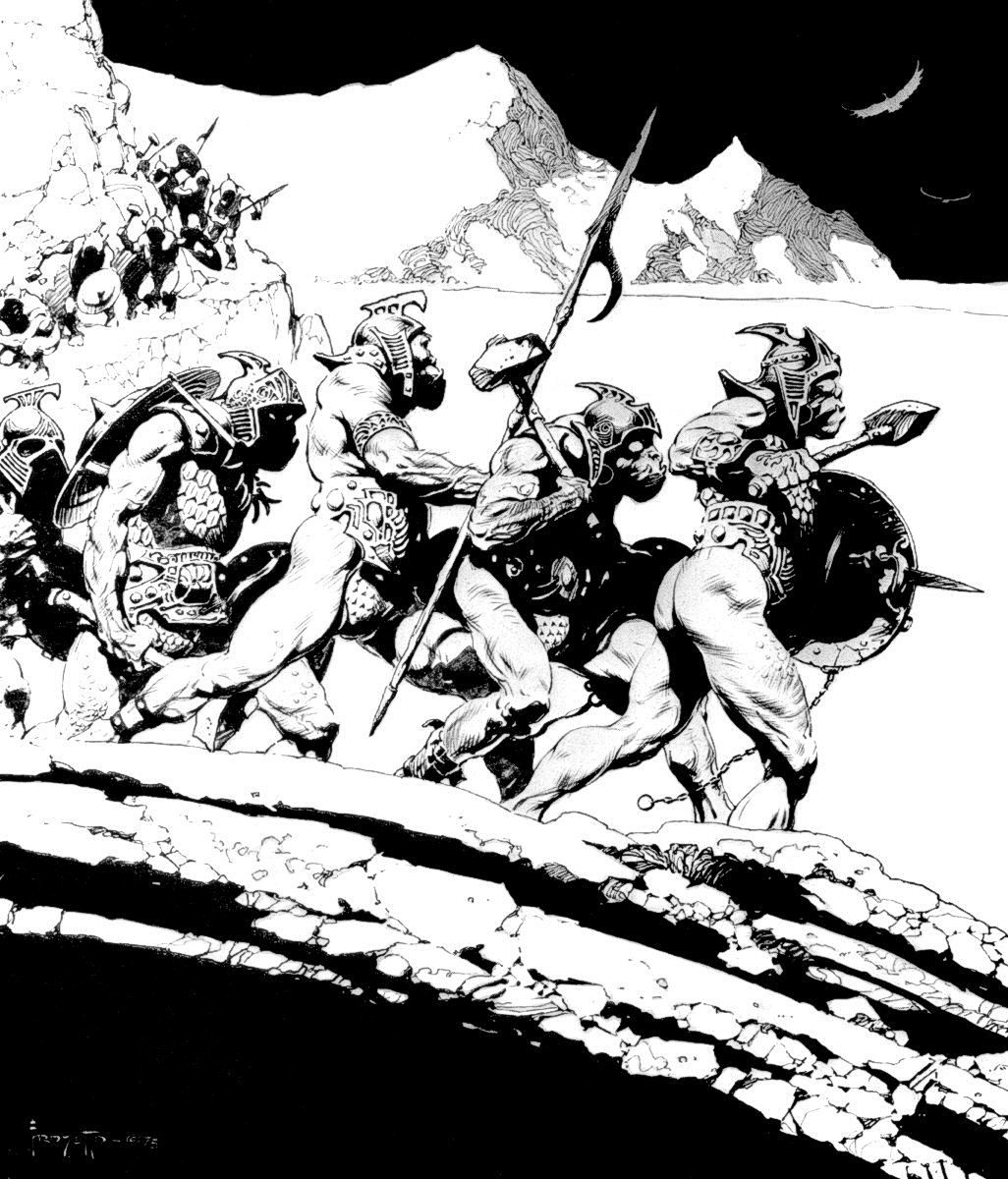
In place of the piggyness, we see a kind of apelike quality in this illustration by Frank Frazetta
or this, by Alan Lee.
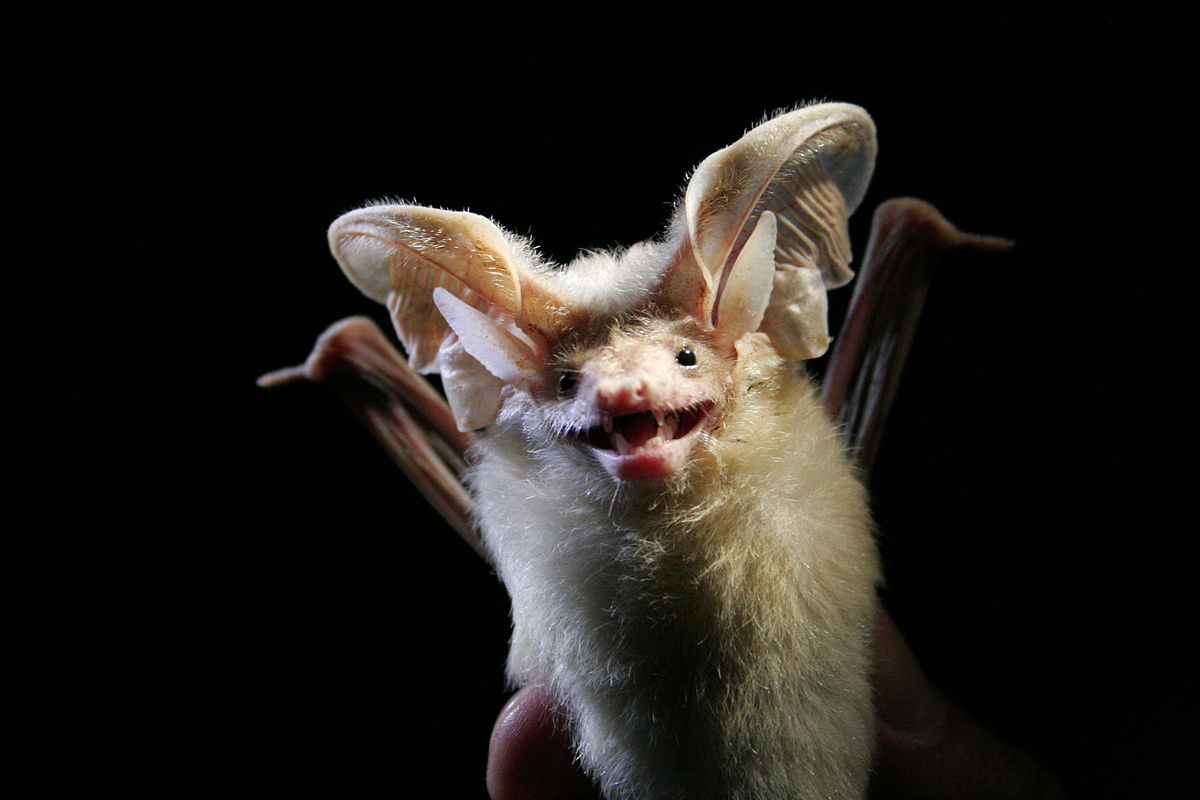
In the Jackson films, the orcs can range from what we think of as rather batlike
to resembling Count Orlok in Murnau’s 1922 film, Nosferatu,
to being grossly human.
And then there’s an outlier in the illustrations of Denis Gordeev, who seems to have read a different version of The Lord of the Rings, as his orcs, whose faces are in the ape category, but who appear to be as shaggy as bears, though definitely “swart”.
Thus, we mostly see images which don’t really match the descriptions in the books, the short (or almost man-height), black-skinned, flat-faced creatures of The Lord of the Rings, have mostly turned green, come in all sizes, and have faces which range from piglike to batlike.
But does JRRT have any more to say about the look of orcs? In an undated letter from 1958 to Forrest J. Ackerman, he says of them:
“The Orcs are definitely stated to be corruptions of the ‘human’ form seen in Elves and Men. They are (or were) squat, broad, flat-nosed, sallow-skinned with wide mouths and slant eyes: in fact degraded and repulsive versions of the (to Europeans) less lovely Mongol-types.” (Letters, 274)
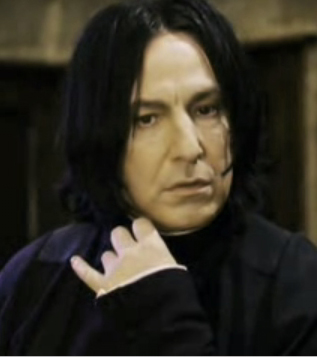
The skin color has changed from “swart” to “sallow”, often meaning a kind of yellowish tint, rather like this image of Snape from the Harry Potter films.
Much of this description, however, seems to match, at least roughly, the earlier ones—except for the potentially racist tone of “less lovely Mongol-types”. (We should always remember, though, that Tolkien was born in 1892, grew up in a world in which Britain controlled 2/5s of the earth’s land mass in colonies, and where a national poet like Kipling could refer to those colonized as “lesser breeds”. This might at least explain something of his approach to non-Caucasian people, if not excuse it.)
Putting aside that tone for the moment, to try to understand what he had in mind in this description, what we come up with is something like this, from illustrations done for Hal Foster’s Prince Valiant Fights Attila the Hun (1952)—
We admit that this is only a rough guess—Tolkien’s orcs, though supposedly derived from elves and therefore more humanoid than most illustrators make them, are probably smaller and perhaps more caricatured or exaggerated, but, at the same time, these figures suggest, to us, something of the barbaric look we believe that JRRT had in mind.
As we’ve seen, however, Tolkien himself seems to have changed his mind over time, turning his orcs from “swart” to “sallow”, although the general impression of smaller, broad creatures with flat faces remained pretty much the same throughout The Lord of the Rings. So many of his illustrators, however, appear to have had anything from a slightly different to a very different view, making us wish that we could read their letters to find out just where their ideas came from.
Thanks, as always, for reading and
MTCIDC
CD
ps
We do have an idea of where that green skin color came from—perhaps from a misreading of the text, in fact. In “The Bridge of Khazad-Dum”, Gandalf, in the brief initial description of orcs we quoted above, adds “…but there is something else there. A great cave-troll, I think, or more than one.”
Shortly after that, the Fellowship is attacked and:
“A huge arm and shoulder, with a dark skin of greenish scales, was thrust through the widening gap. Then a great, flat, toeless foot was forced through below.”
This appears to be one of those “great cave-troll[s]” and perhaps that “skin of greenish scales” has been accidentally transferred to the orcs?
A henchman was originally a hengestman, from hengest “horse/stallion” + man “man”—in other words, a groom, a servant who takes care of horses.
Although the word began with the meaning of “groom”, it has certainly changed over time and now it suggests something like “ thuggish follower”—like these gangster henchmen.
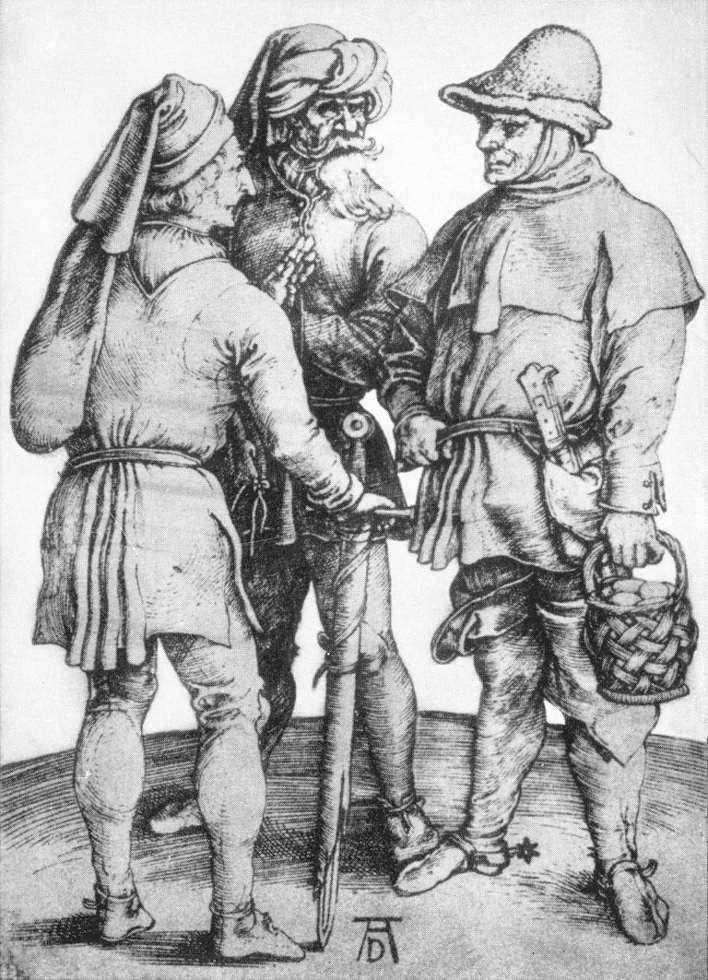
The word minion comes from the Old French word mignon, “a (little) darling”, but its meaning has also changed–even more than henchmen, now indicating a kind of low-level person who simply follows orders, which the peasants in this picture by Albrecht Duerer make us think of.
These words originally came to mind while we were watching the first episode of Neil Oliver’s excellent BBC series A History of Scotland. (Smart writing and wonderful photography.)
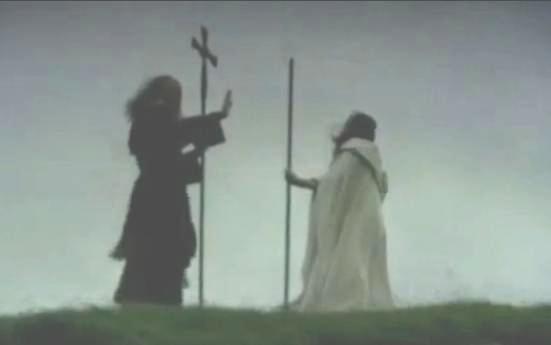
In the episode, a scene was reenacted, in which Saint Columba (521-597AD)
faces off against a Pictish druid.
(This is the closest we can come to an image of a druid. As far as we know, there are, in fact, no surviving images of the learned class of the Celtic world, just often very imaginative illustrations with little or no factual basis.)
In Adomnan’s (c.624-704AD) Life of Columba, Book II, Chapter XXXIV, Columba struggles to free a slave being held by the druid, Broichan.
The saint wins, of course, but what struck us about this story—and in this DVD depiction—was that it was a one-on-one contest: neither man called upon backup—something which one might especially expect from the antagonist of the story, as in so many. After all, we thought, just think of villains in all kinds of stories—
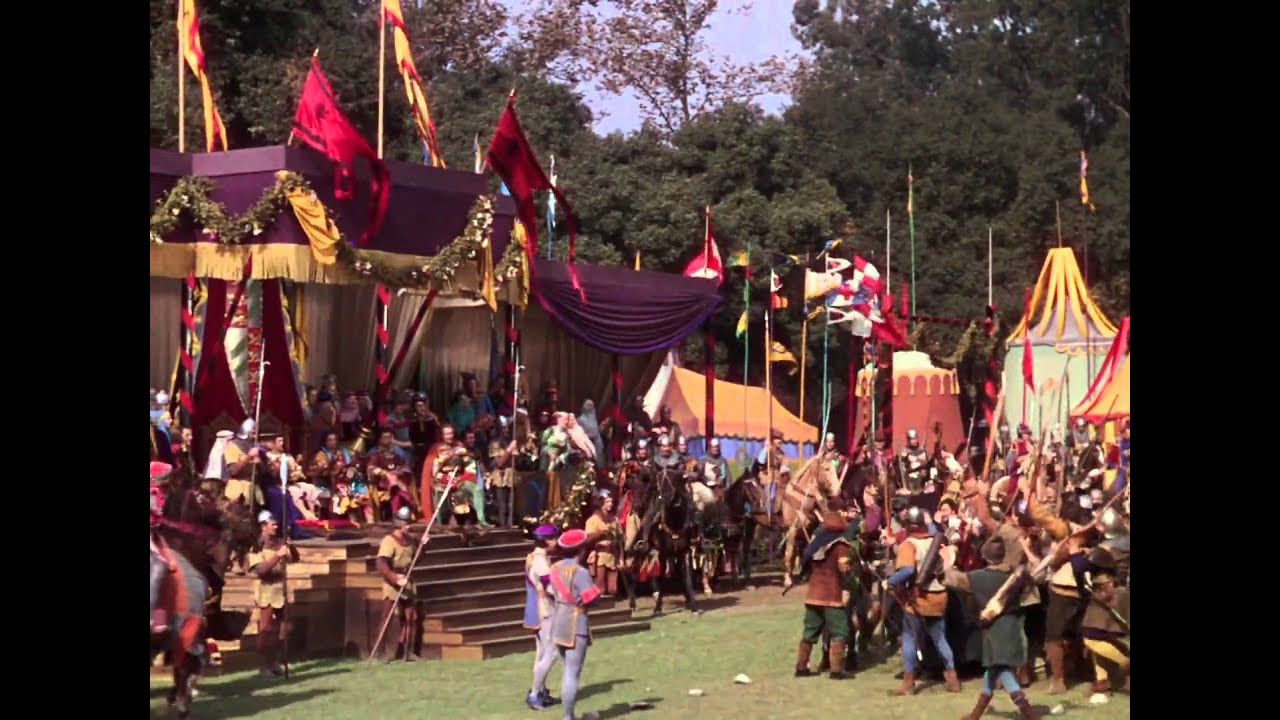
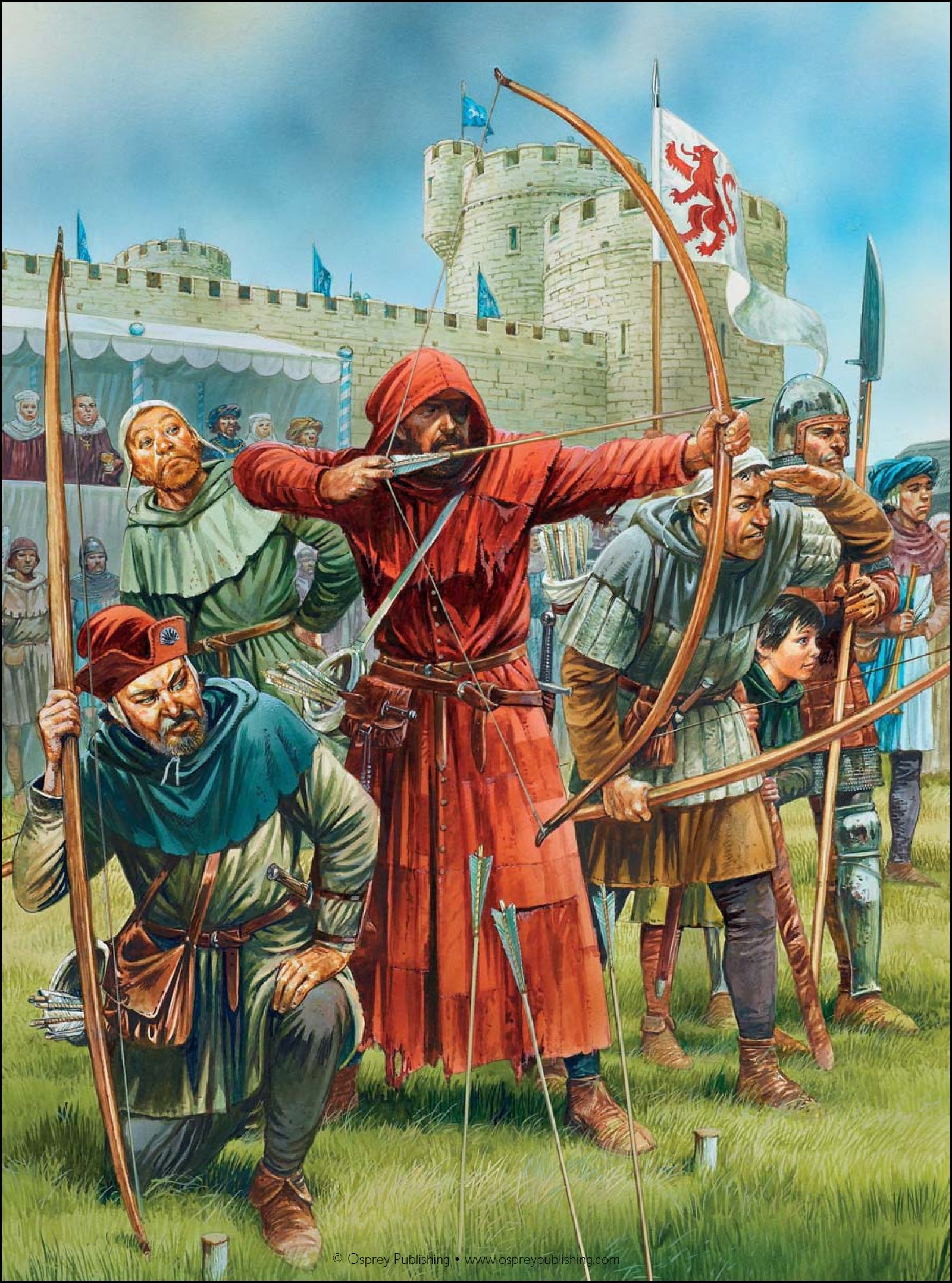
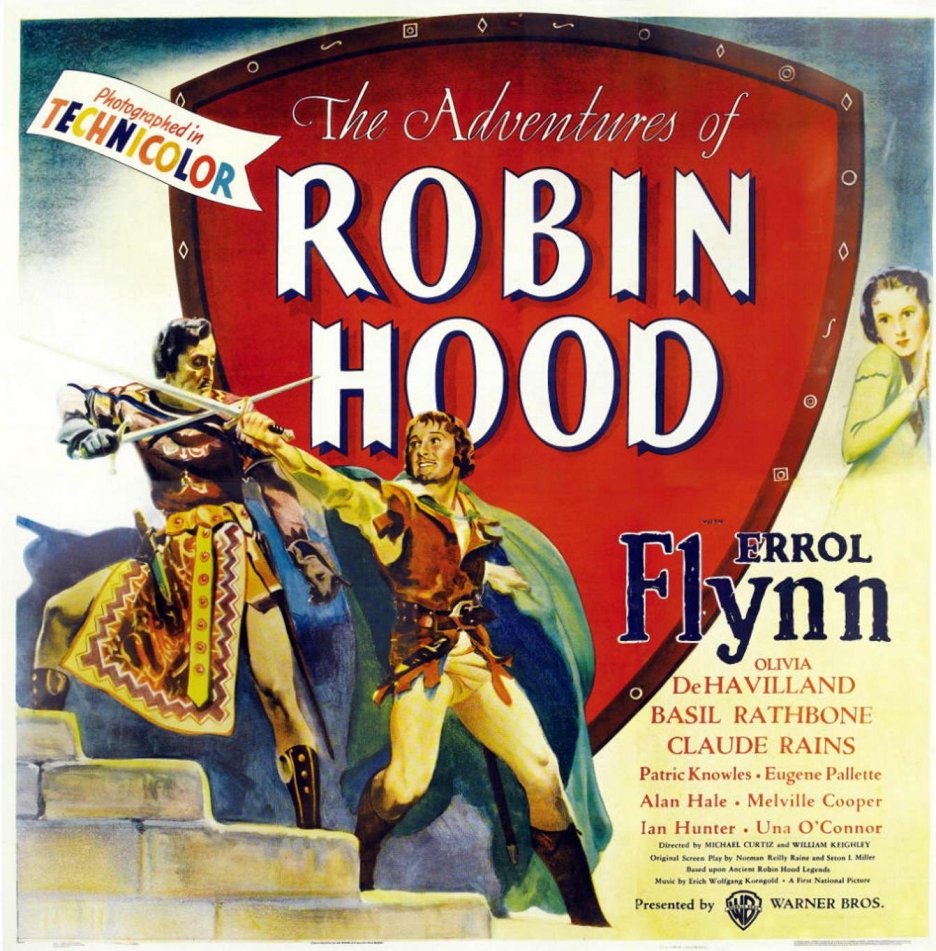
The Sheriff of Nottingham has his henchmen ready to try to capture Robin Hood at the famous archery contest.
Or, if you prefer—
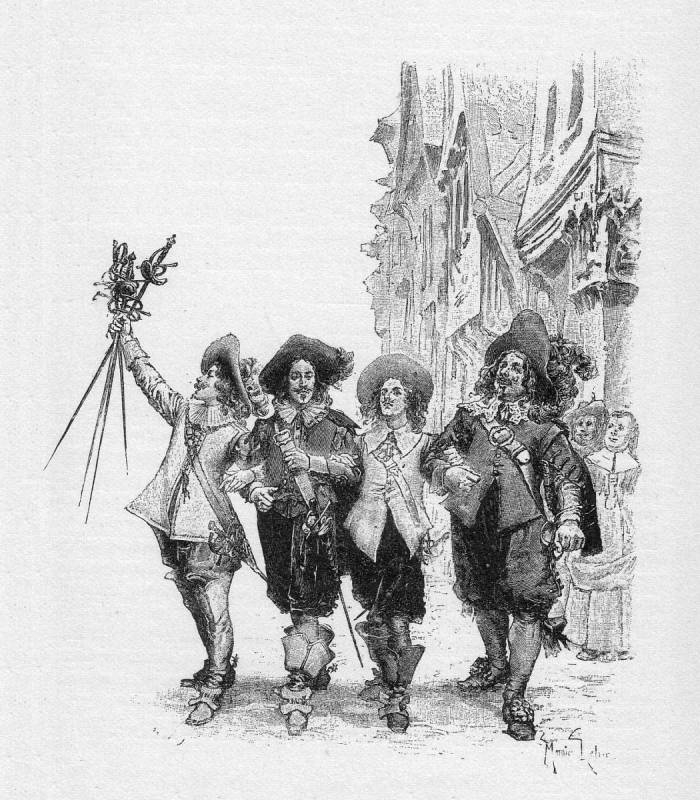
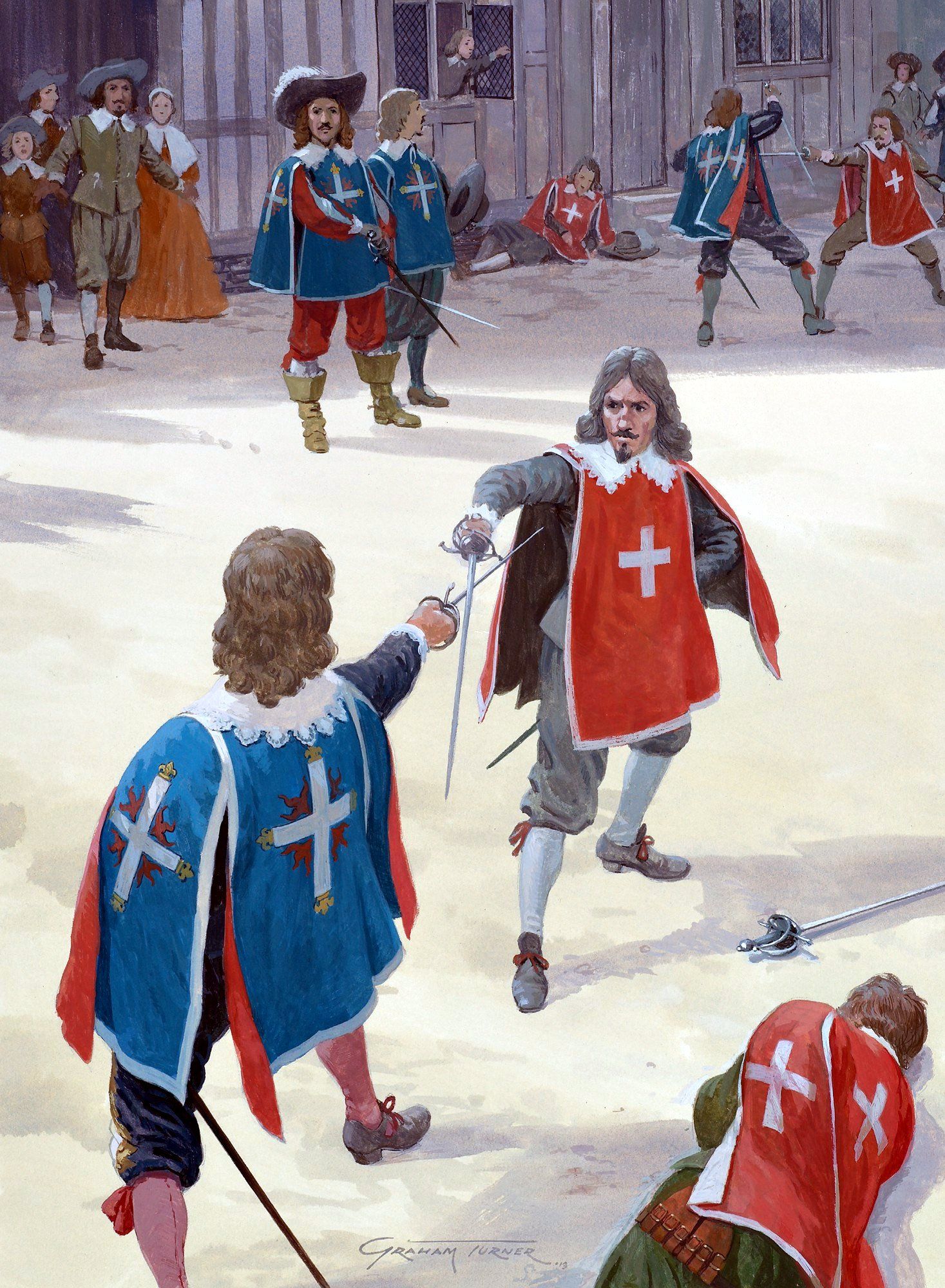
The evil Cardinal Richelieu
has his guards
to fight the musketeers
in Alexandre Dumas’ The Three Musketeers.
The Wicked Witch of the West
has two sets of henchmen: the flying monkeys
which have been the terror of many childhoods, in our experience, and the Winkie Guards,
whose drum beat and deep chant always made us a little nervous when we were little (not to mention their skin color and odd noses).
Here’s a LINK, in case you’ve forgotten what they were like.
In a more modern story, the Separatists have so many droids,
as Emperor Palpatine has so many stormtroopers.
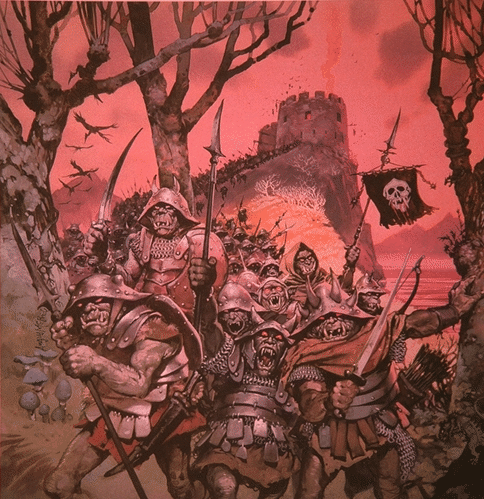
And, of course, Saruman
has so many orcs
as, along with all of his human minions, does Sauron.
We can imagine several reasons for such overwhelming force in these stories. For the protagonist/s, the more of the enemy there are, the more impressive their defeat, as when Odysseus faces so many suitors (over a hundred) with only his son, Telemachus, and a couple of servants to help him.
(And Athena, of course!)
For the antagonist/s, there is the sense that they are so powerful that they have only to command and vast numbers of henchmen will do their bidding.
At the same time, we wonder if, underneath all of that force, there is a basic insecurity, a feeling that “my power by itself is really not enough—I can’t do this alone”? After all, it’s not the Sheriff of Nottingham who faces Robin Hood in the 1938 film,
but the secondary character, Guy of Gisborne (played by Basil Rathbone, who was the first great film Sherlock Holmes).
The Wicked Witch of the West relies upon her monkeys and her guards and Saruman and Sauron upon their armies and none ever faces an opponent alone: for that matter, we never even see Sauron except as a shadow at his fall.
And perhaps that underlying insecurity has some roots in reality: the only antagonist who actually confronts the protagonist is a little too sure of himself and of his major henchman and we all know what happens next…
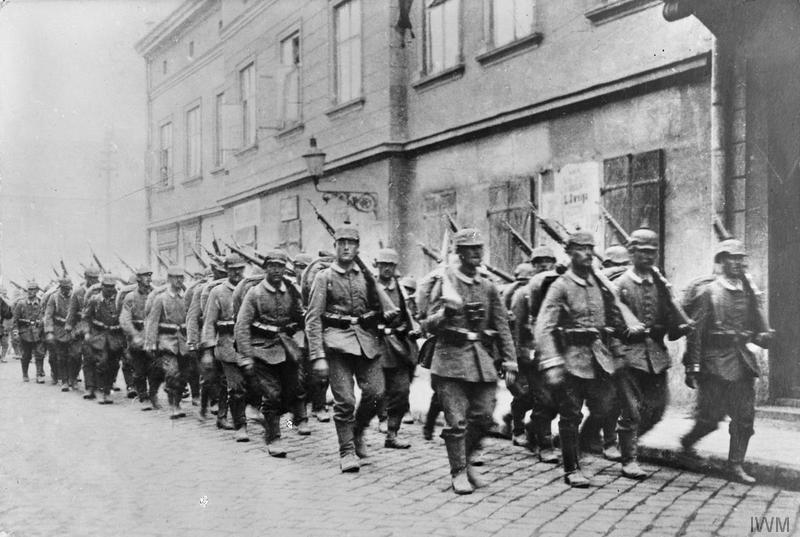
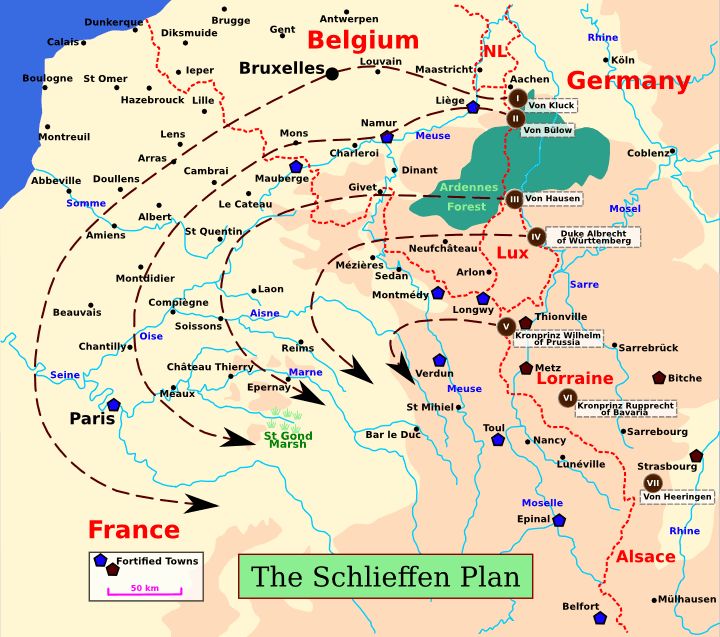
In August, 1914, as the German army was pushing through Belgium
in its attempt to sweep to the west of Paris and drive the French armies
eastwards towards the Germans waiting for them there (the so-called Schlieffen Plan),
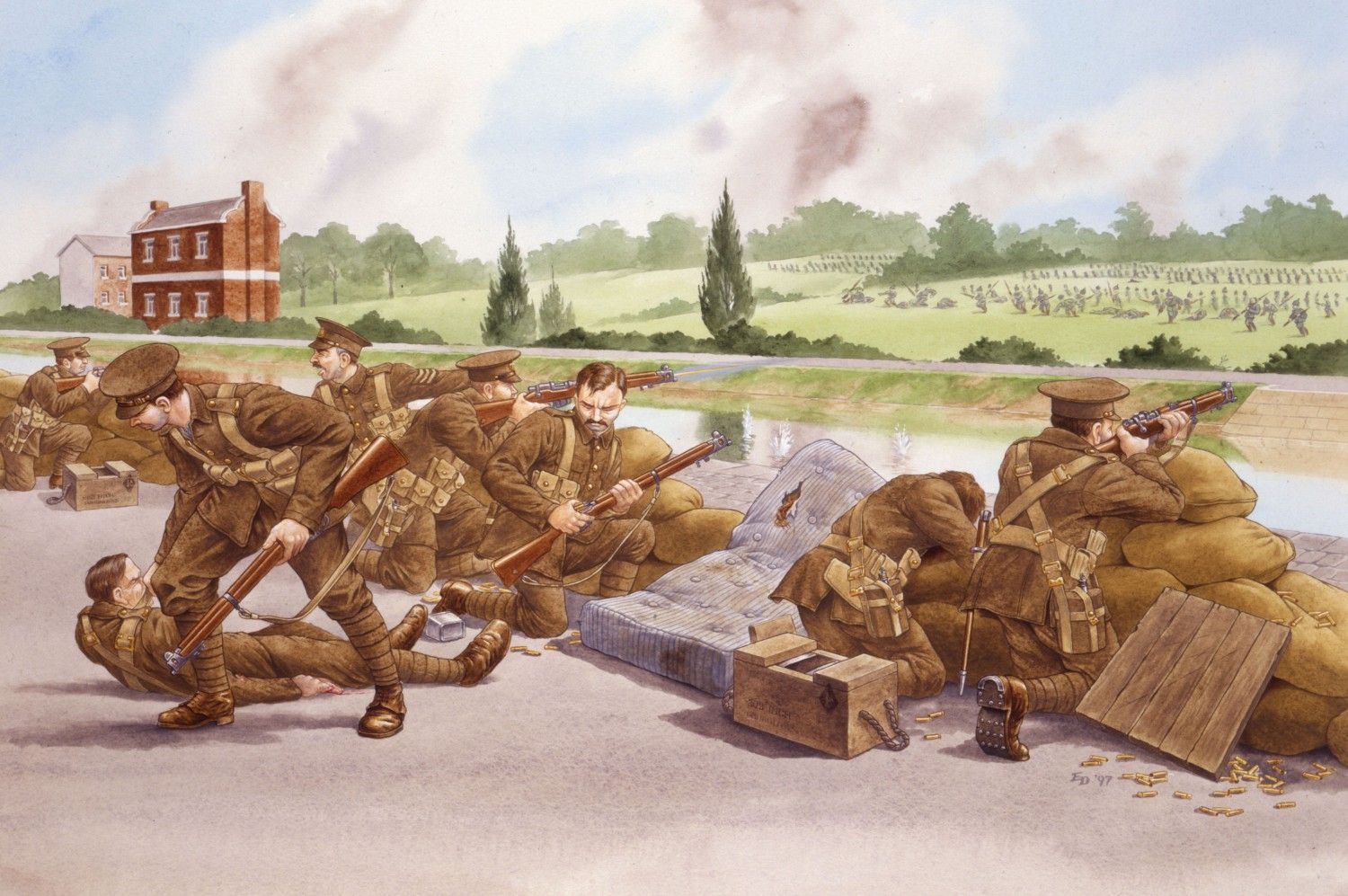
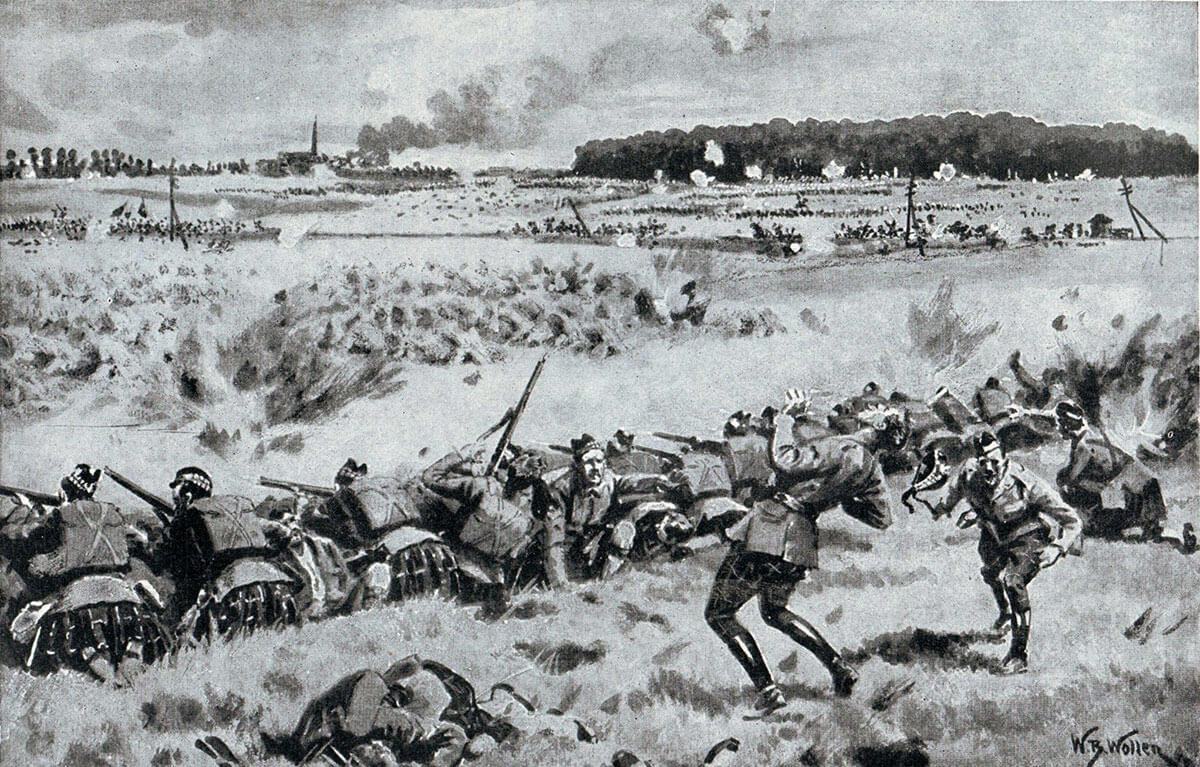
they were met by the small (70,000 man) BEF, British Expeditionary Force,
a few miles north of the Franco-Belgian border, near the town of Mons, where the British fought a delaying action.
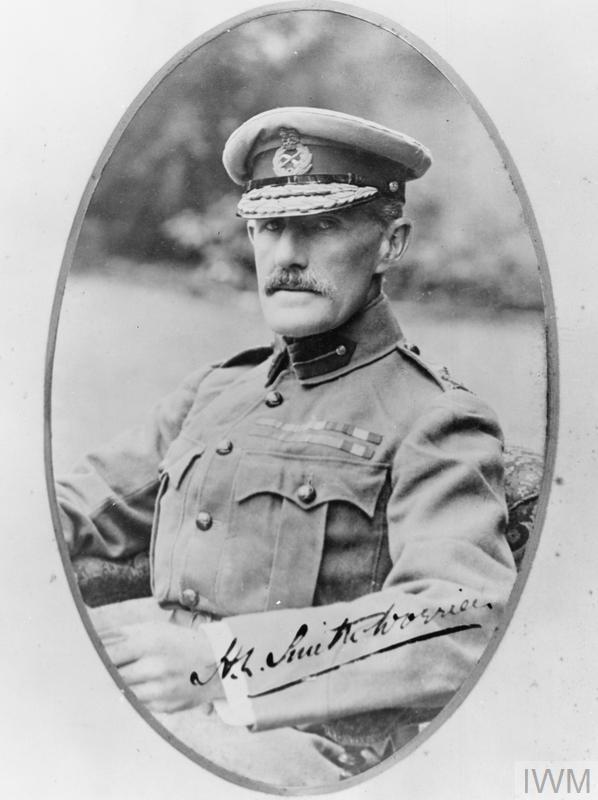
The Germans were in such strength that the British were forced to pull back, retreating southward with the Germans pursuing so closely that the commander of one half of the British army (2nd Corps), Horace Smith-Dorrien,
decided that it was necessary to fight a second delaying action, at Le Cateau.
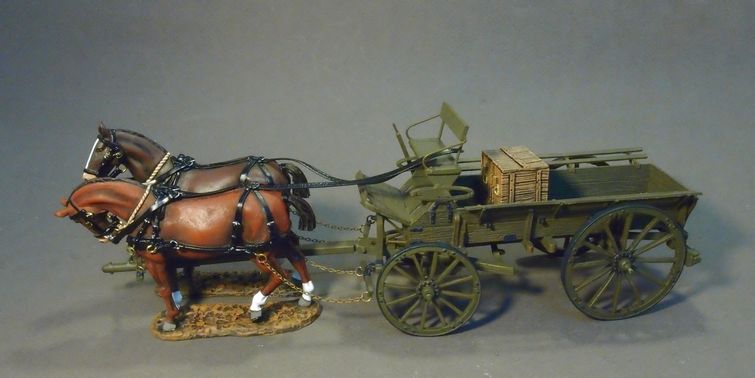
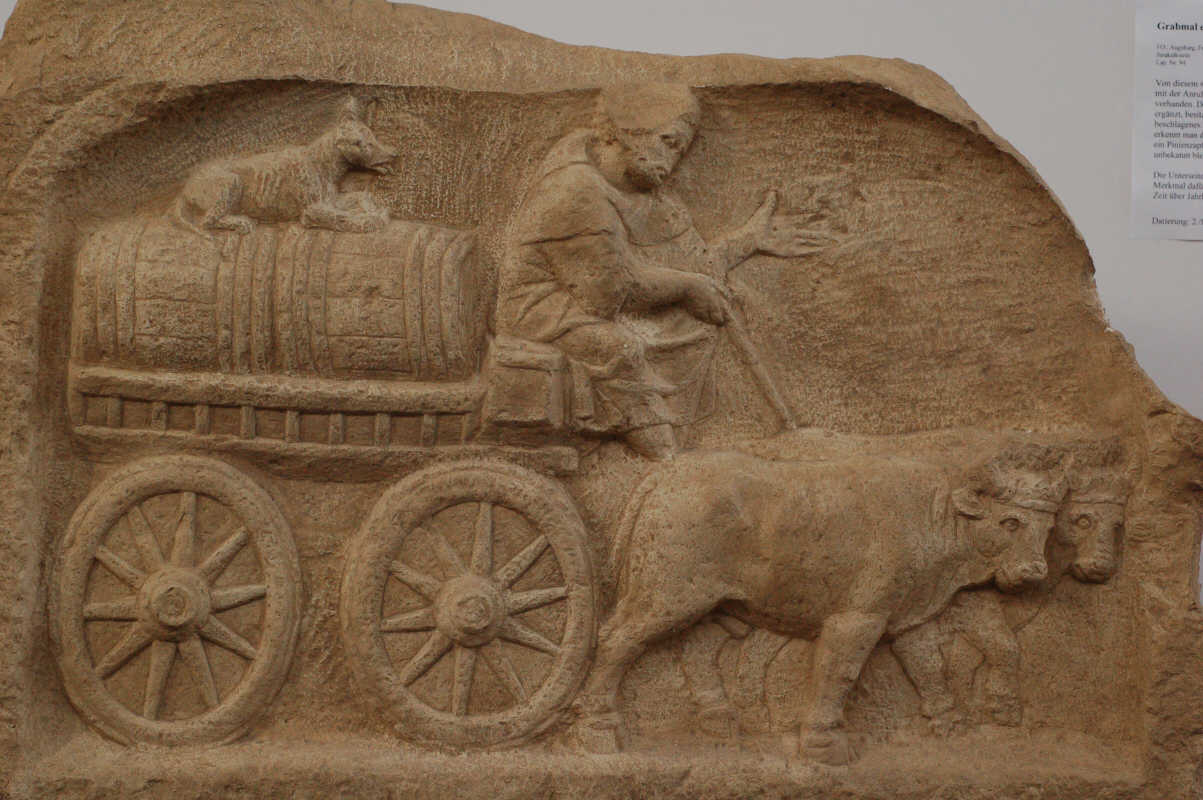
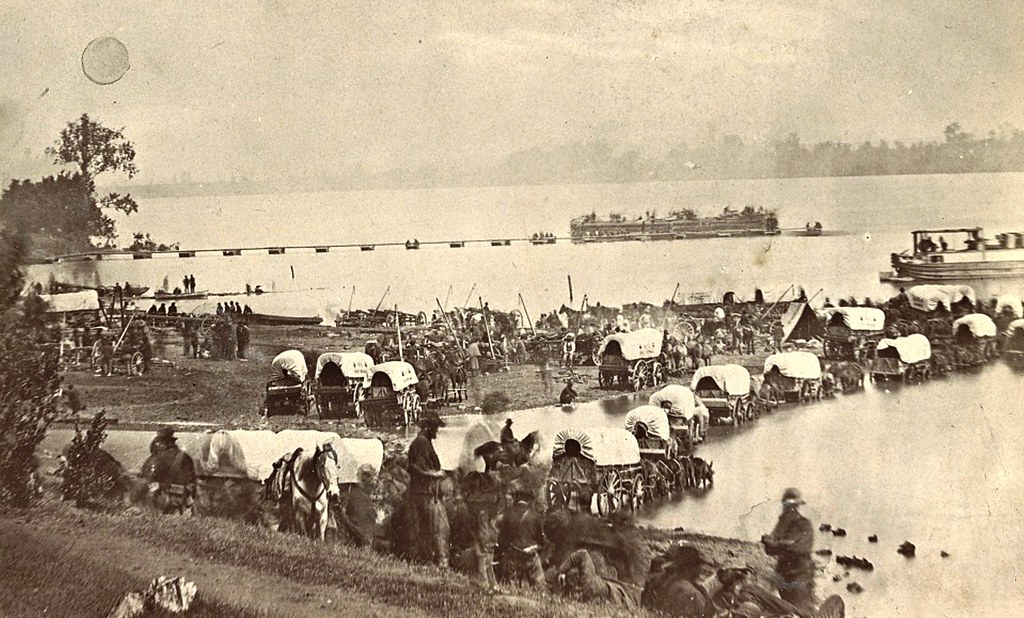
A major reason to do so was not just that the German pursuit was so close, but that it was necessary to protect the trains. This doesn’t mean the railways, but the endless lines of wagons
which carried all the food and ammunition for the soldiers and stretched for miles behind them..
It was also primarily horse-drawn and, on narrow roads, mostly unpaved, the trains moved very slowly, which was a major reason why armies in earlier centuries rarely ever campaigned during winter.
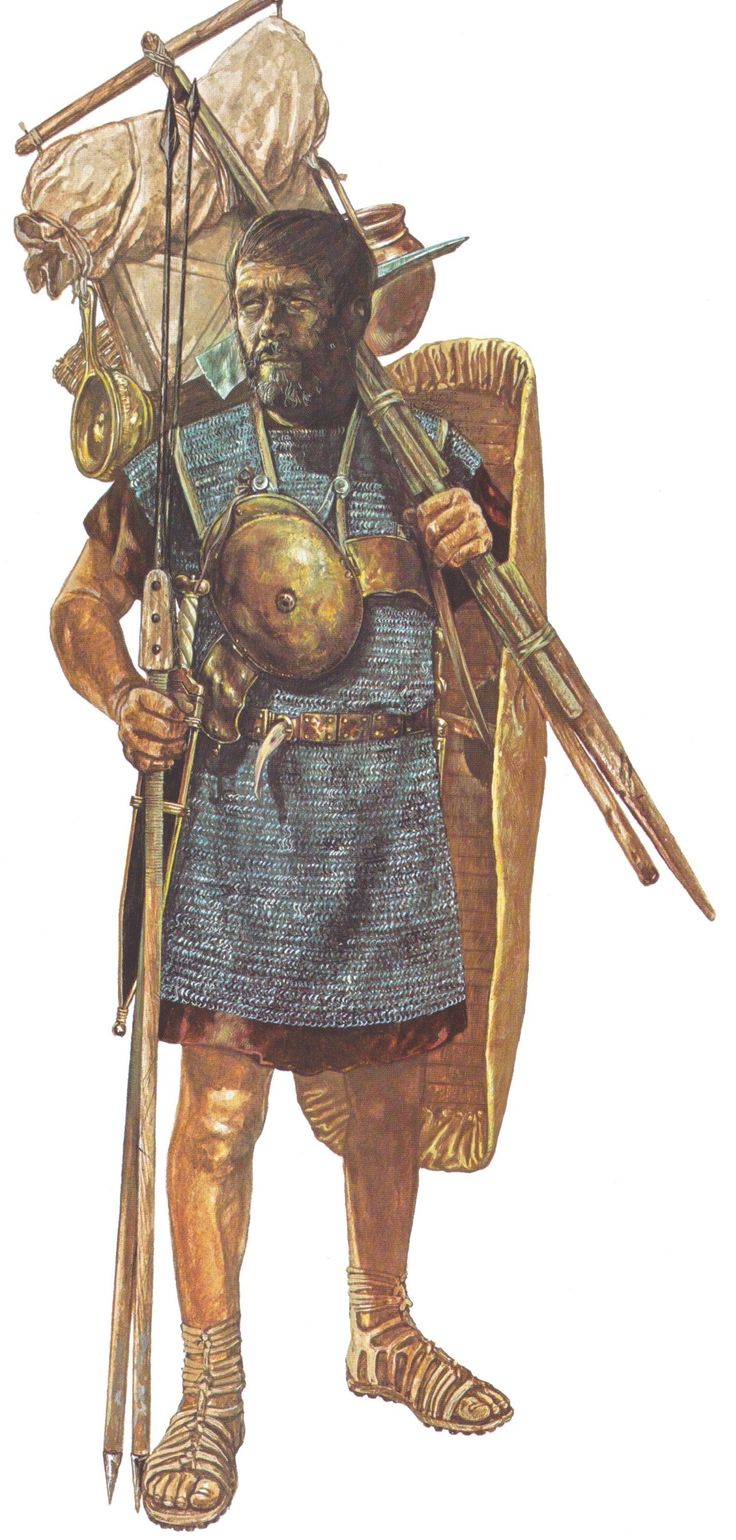
This was a problem, all the way back to the Romans. In the 2nd century BC, the Roman general, Marius, in an attempt to do away with as much of a baggage train as he could,
ordered his men to carry as much of their equipment as possible, thus cutting down on baggage wagons and pack animals. His men were less than pleased at being so loaded down and began to call themselves “Marius’ mules”.
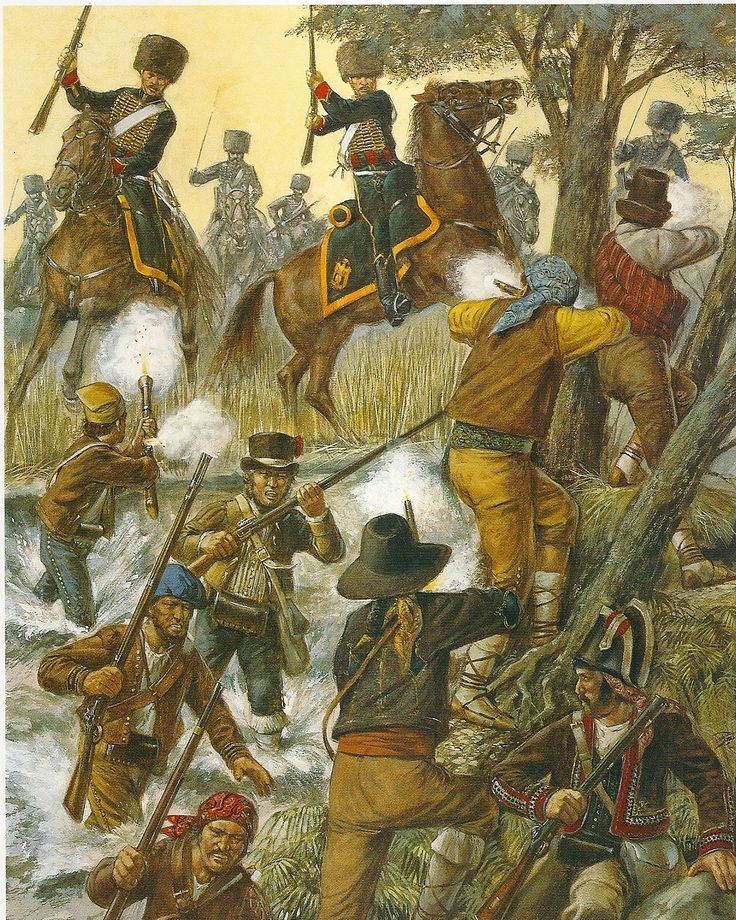
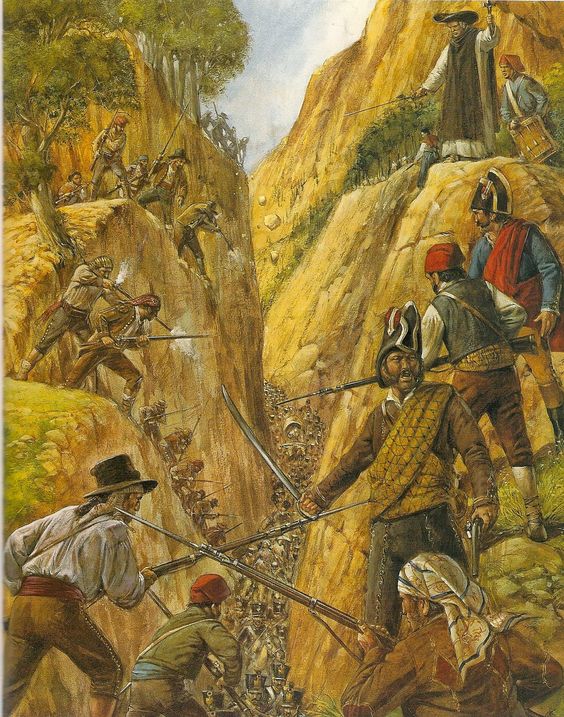
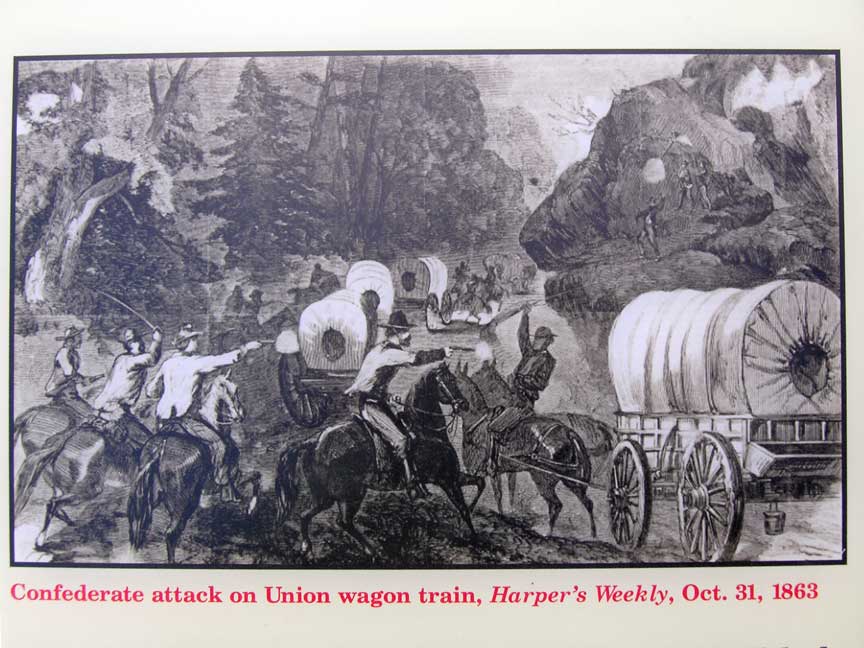
In the late 18th to early 19th century, when French revolutionary armies swelled beyond the ability to pay to supply them, the order was to travel lightly and to live off the land. This may have reduced baggage—and even, perhaps, speeded up movement—but it made local people very hostile to the French and, in Spain, the response was to ambush the French whenever possible, which is where the word “guerilla” (originally meaning “little war”) comes from.
This could happen, particularly to Union supply trains,
during the American Civil War.
So, such trains were utterly necessary—if a large army had to cross miles of territory and perhaps fight on the way, they would need everything a train could carry. At the same time, trains could be both vulnerable and thus draw off numbers of soldiers to protect them when such soldiers might be better employed on the battlefield, as well as cumbersome, because they were slow-moving, forcing armies to march at their speed (and in dry summer weather, the dust they raised could give away the direction of an army’s movements).
In The Lord of the Rings, we see two invasions: that which attacks Helm’s Deep
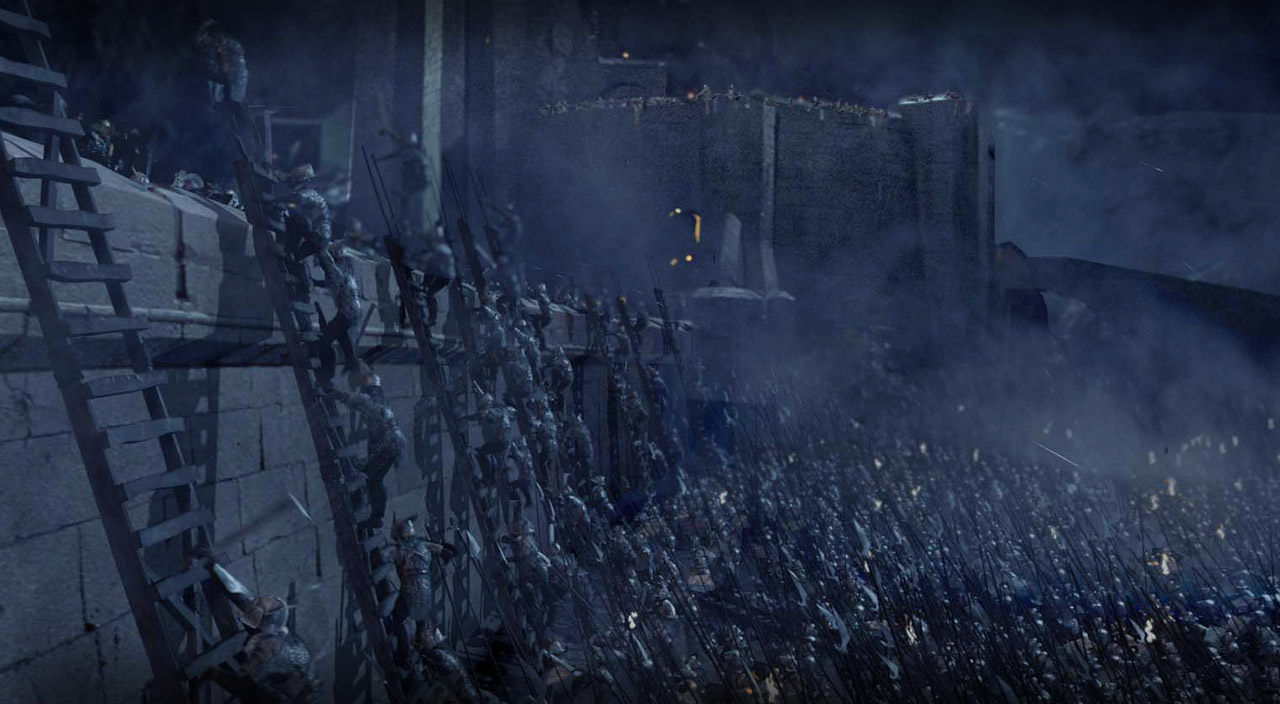
and that which attacks Minas Tirith.
The mass of invaders is vividly described:
“For a staring moment the watchers on the walls saw all the space between them and Dike lit with white light: it was boiling and crawling with black shapes, some squat and broad, some tall and grim, with high helms and sable shields. Hundreds and hundreds more were pouring over the Dike and through the breach.” (The Two Towers, Book Three, Chapter 7, “Helm’s Deep”)
“The numbers that had already passed over the River could not be guessed in the darkness, but when morning, or its dim shadow, stole over the plain, it was seen that even fear by night had scarcely over-counted them. The plain was dark with their marching companies, and as far as eyes could strain in the mirk there sprouted, like a foul fungus-growth, all about the beleaguered city great camps of tents, blac or somber red.” (The Return of the King, Book Five, Chapter 4, “The Siege of Gondor”)
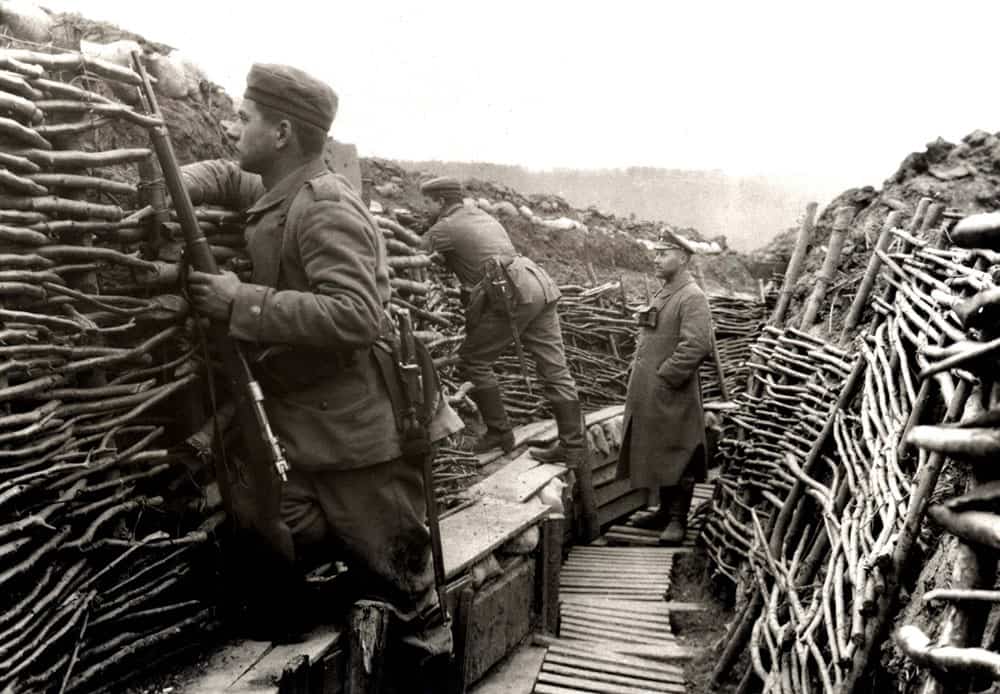
And yet there is no hint of what will supply them in their assaults and beyond. We could argue, of course, that, as in so many things, JRRT is interested in the movement of his narrative and its effects: masses of orcs are much more menacing than long lines of wagons, and we’re sure that this is actually the case, but there is another possibility. The Great War began in Belgium as a war of movement, huge armies attempting to outflank and block each other like chess players. For better or worse, those armies needed such baggage trains, as we’ve said. By the time Tolkien had arrived at the Western Front, in mid-1916, the war had become static, as if both sides had dug trenches and were besieging each other.
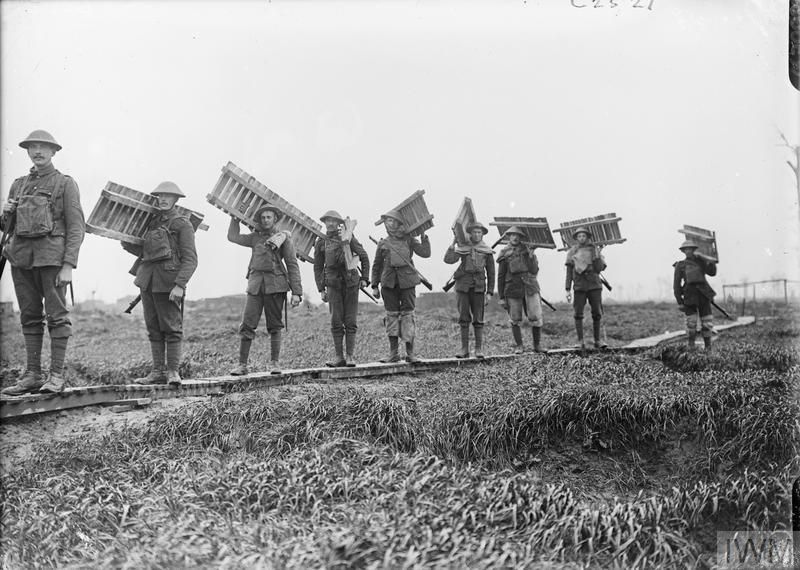
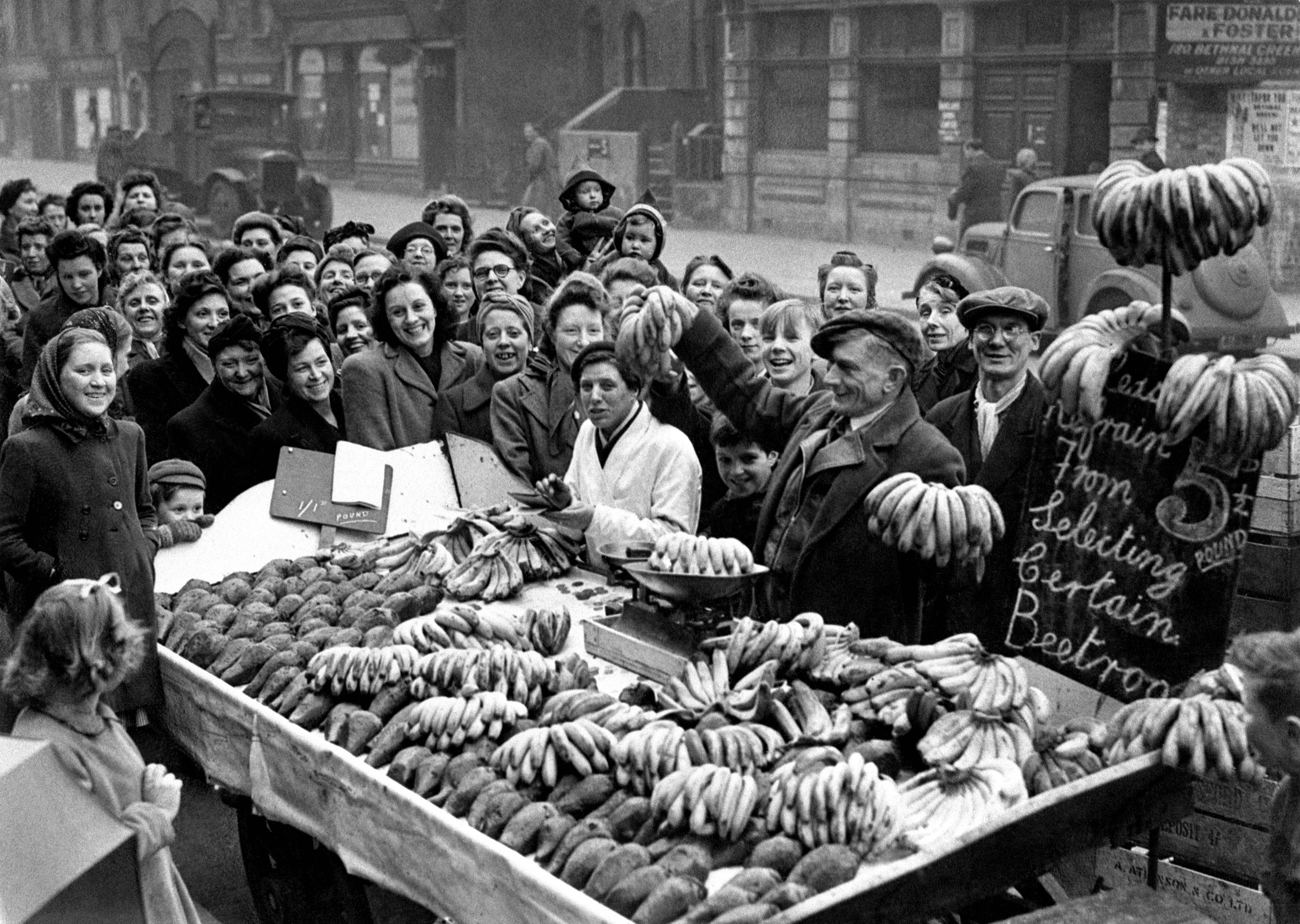
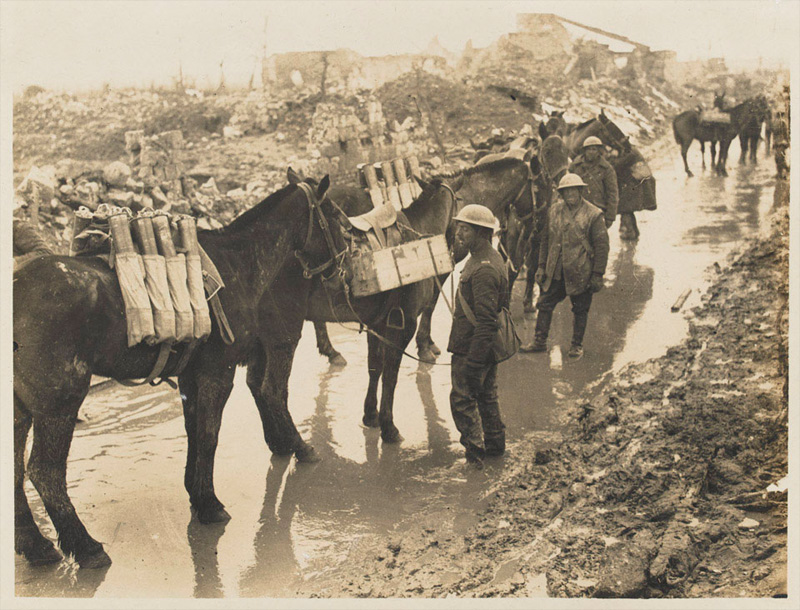
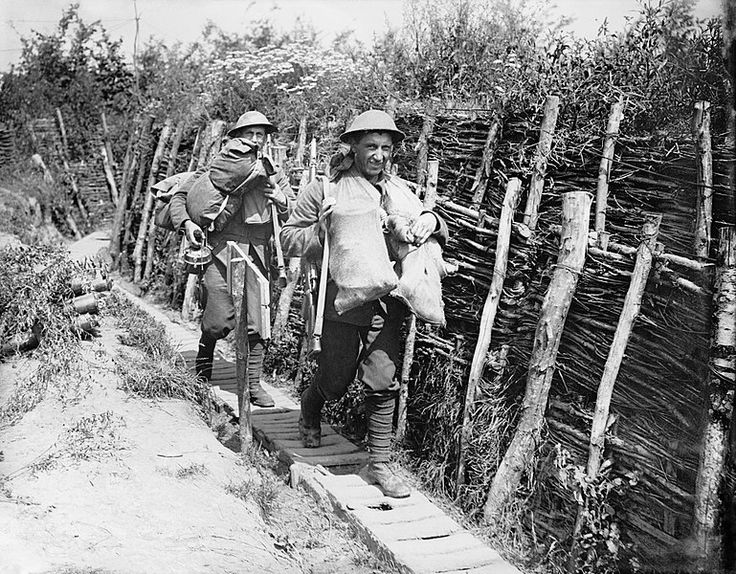
Supply was clearly still necessary, but it was a complex combination of ports and ships and railway lines and wagons and mules and even human mules, close to the front.
In a way, the whole business of supply had begun to look like just that: a business, like importing bananas from the Caribbean, having them arrive in London, then passing them on by train to cities and towns across Britain.
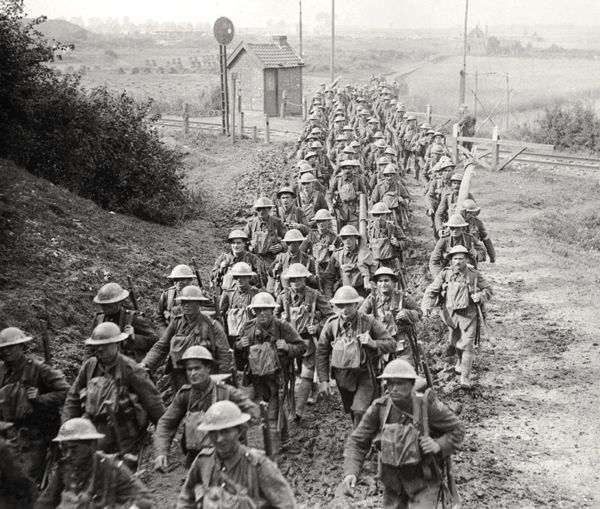
So, instead of being part of long marching columns,
their even longer lines of wagons lagging behind, Second Lieutenant Tolkien would have seen long lines of men and animals, lugging endless boxes and cans and bundles—
necessary for war, but hardly dramatic, and so best left to the imagination of certain readers, those who can never see a battle without wondering, “When it’s time for lunch, who feeds all of those soldiers—or orcs (and never mind what certain people might eat)?”































 and of a connection which we suggested some time ago with Jabba the Hutt’s Gammorean Guard—





















 doubtfulsea