Tags
1984, crop-circles, Fantasy, George Orwell, m-night-shyamalan, Saruman, Sauron, signs, The Lord of the Rings, the-eye, Tolkien
Welcome, dear readers, as always.
In M. Night’s Shyamalan’s 2002 film Signs,
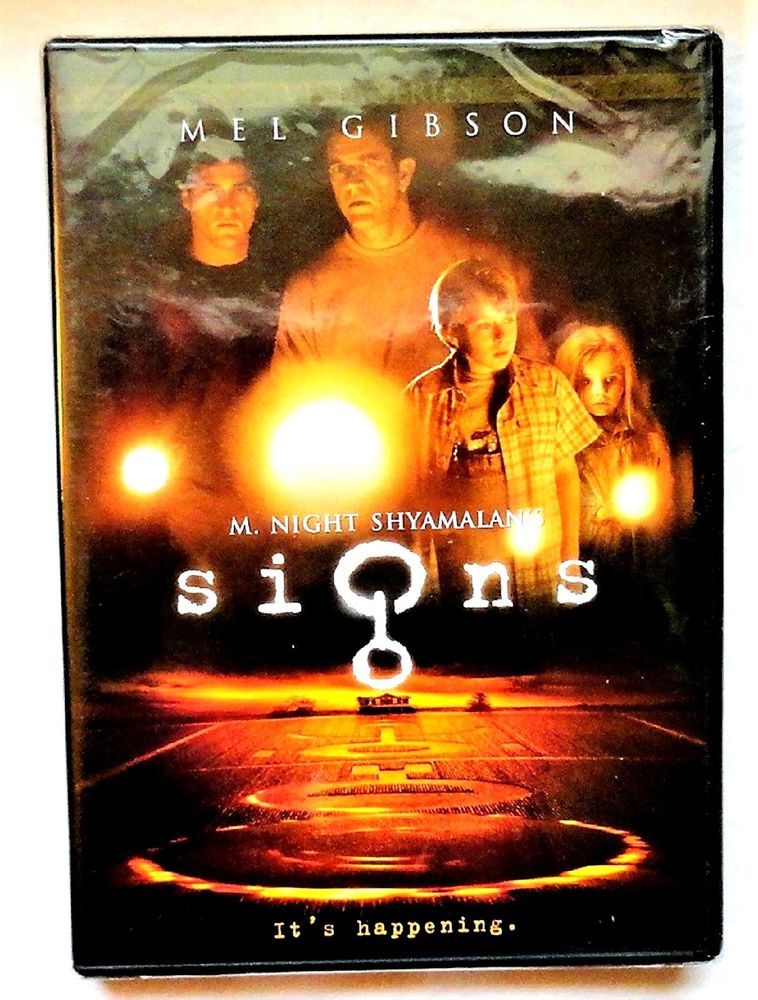
those signs, including crop circles—
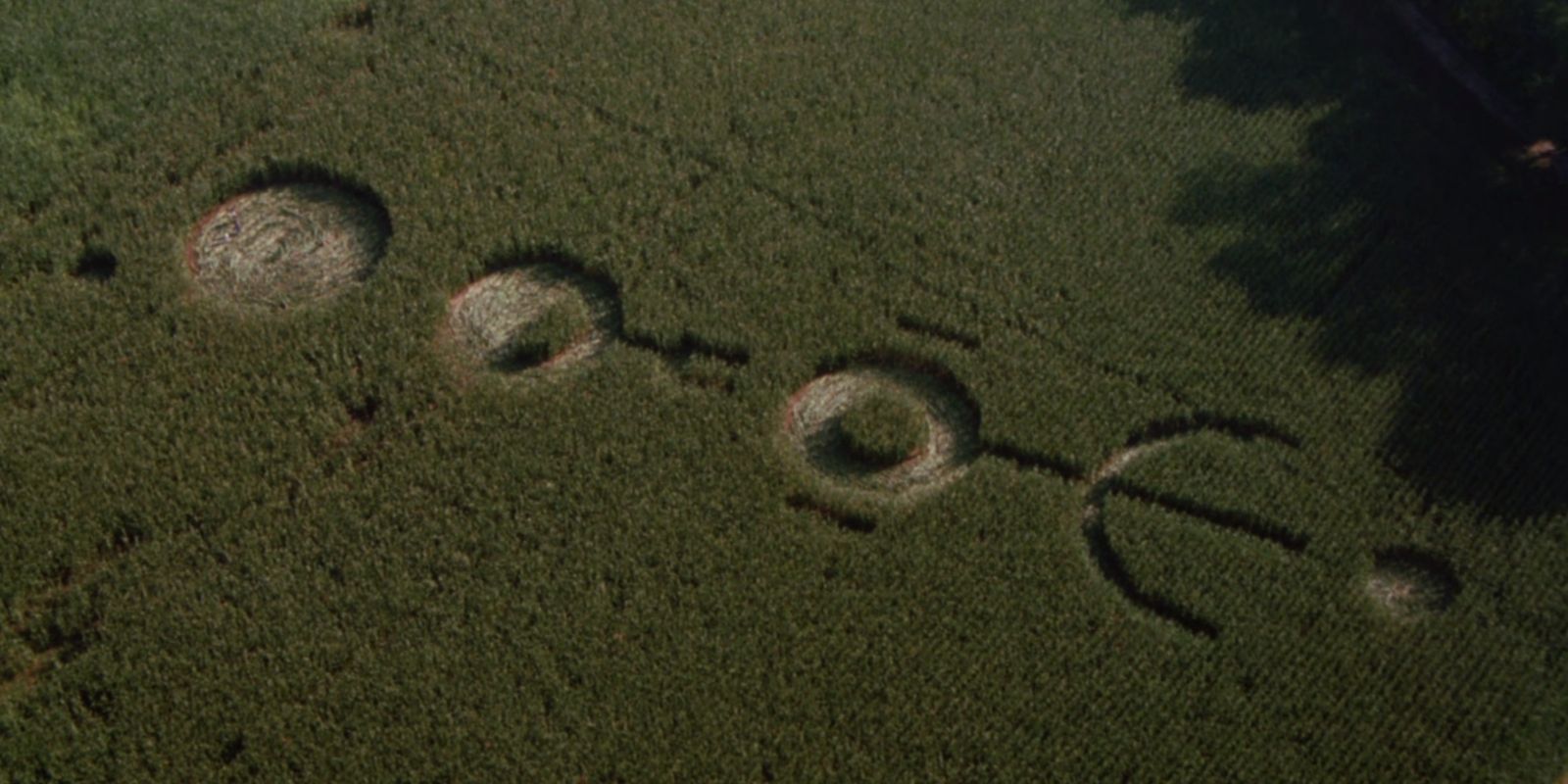
will come to mean that the earth is about to be invaded from outer space. Initially, all of this is eerie—we know that something is going to happen—and it does, but, until that moment, everything is oblique, suggested—but then we finally see one of those alien invaders and, for me, the magic of those first feelings of dread disappear.
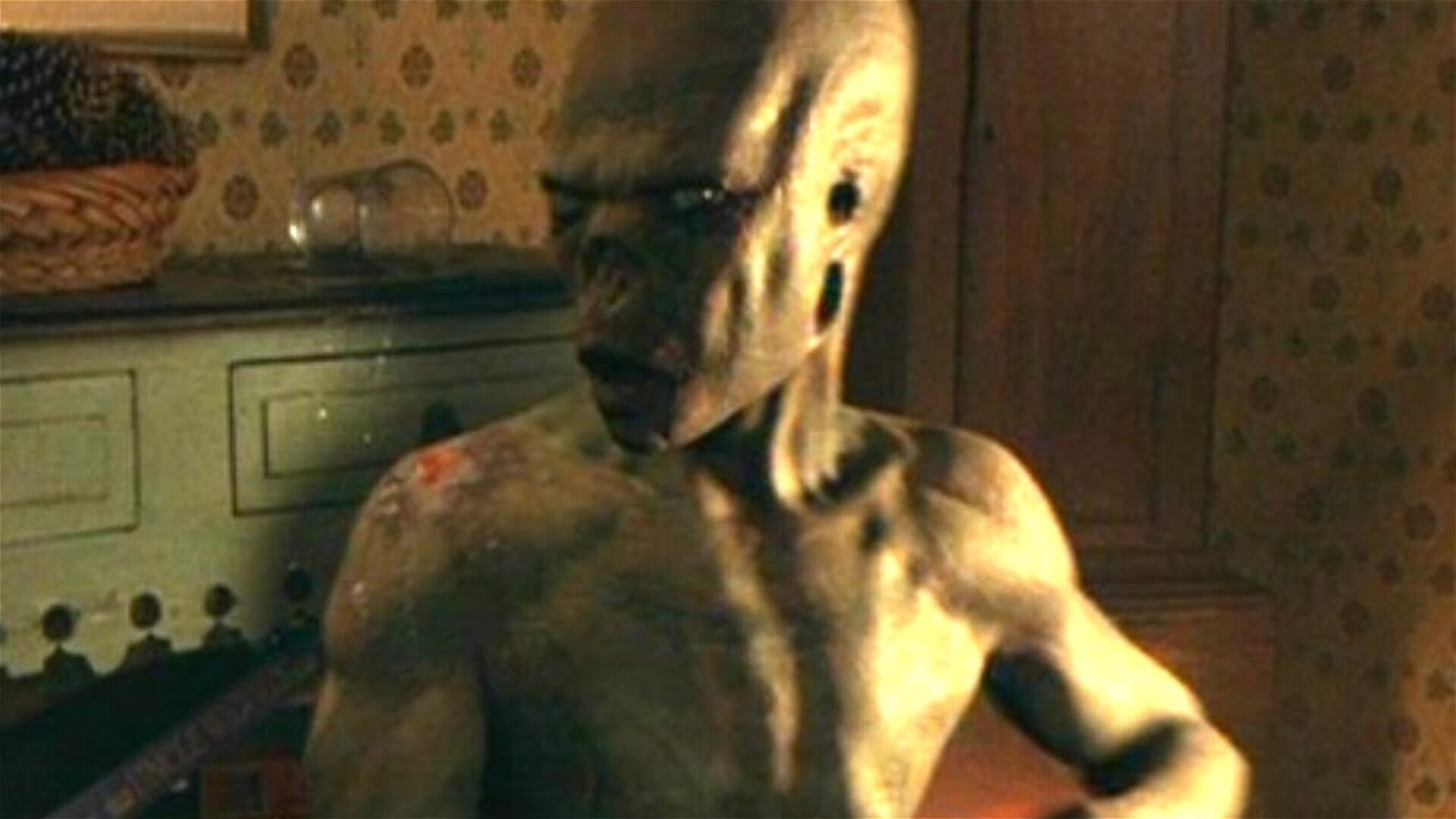
Considering how the plot then develops, it would have been impossible for the aliens to have remained as mysterious as they had originally been presented, but think, for a moment, about The Lord of the Rings and its antagonists, Saruman and Sauron.
Saruman we see
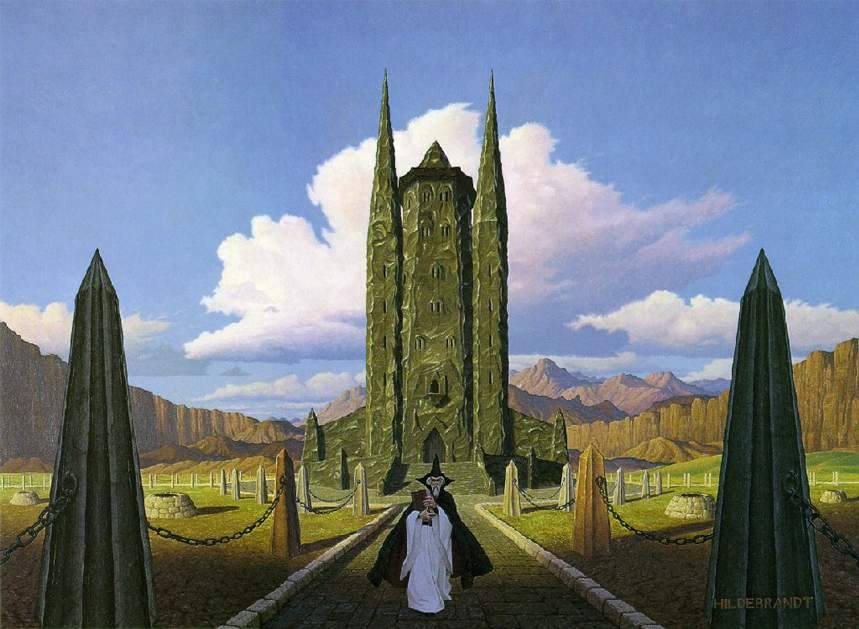
(the Hildebrandts)
and we see a lot of him, first as the senior Maia, leader of a tiny band of five sent as a counter to Sauron—two of whom having disappeared (the so-called “Blue Wizards”) early from the history of Middle-earth, one, Radagast, seemingly self-marginalized, and only seen briefly before himself disappearing.
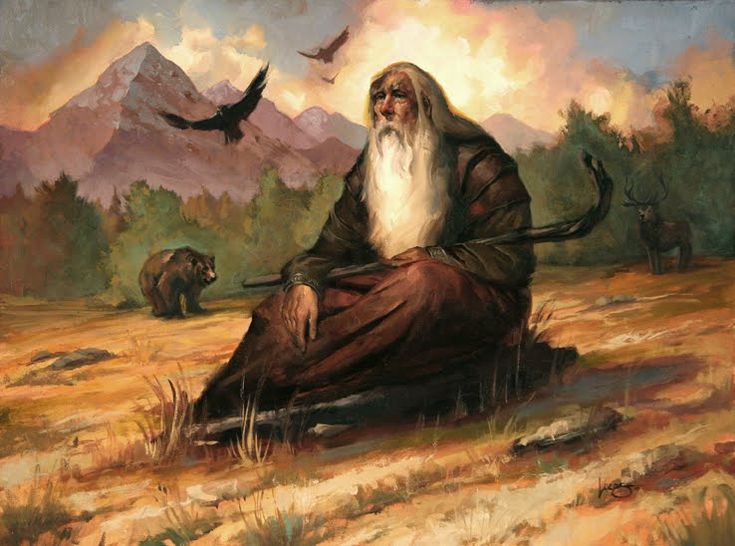
(Lucas Graciano)
Then, Saruman appears as the attempted seducer of Gandalf,
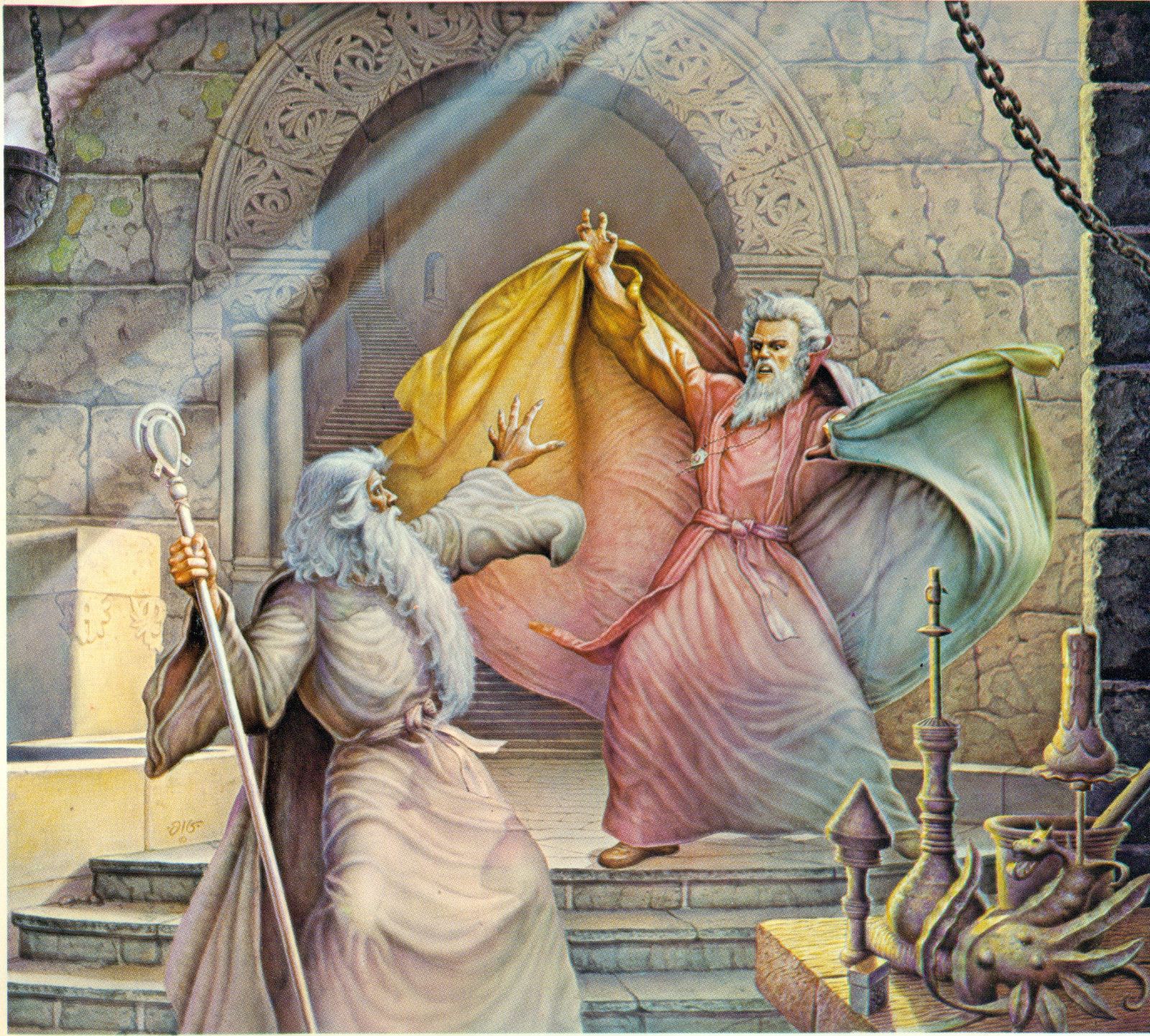
(Harold Jigg)
the would-be Sauron trapped in his tower,
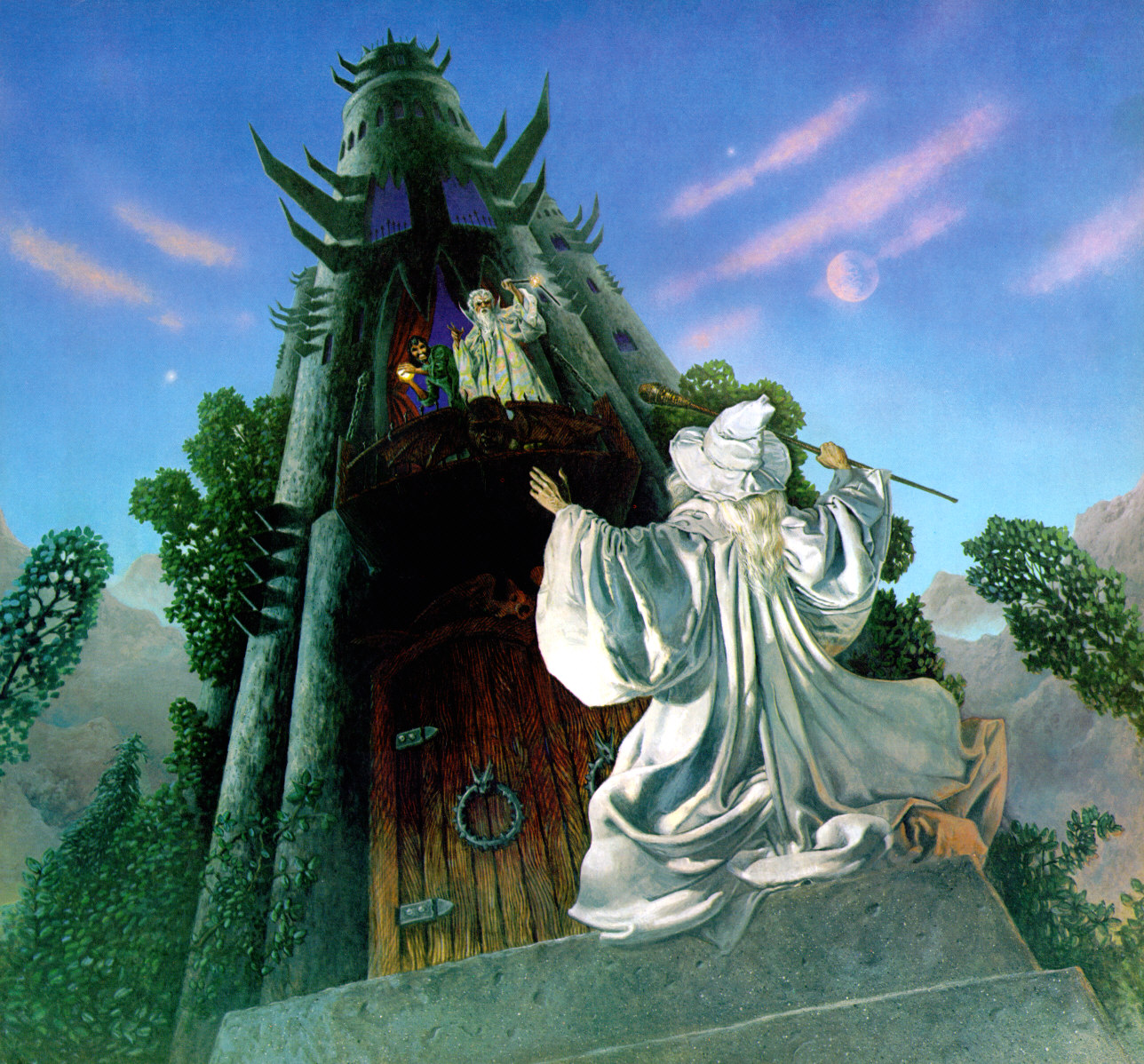
(Carl Lundgren)
as the outcast, followed by his lackey, Grima,
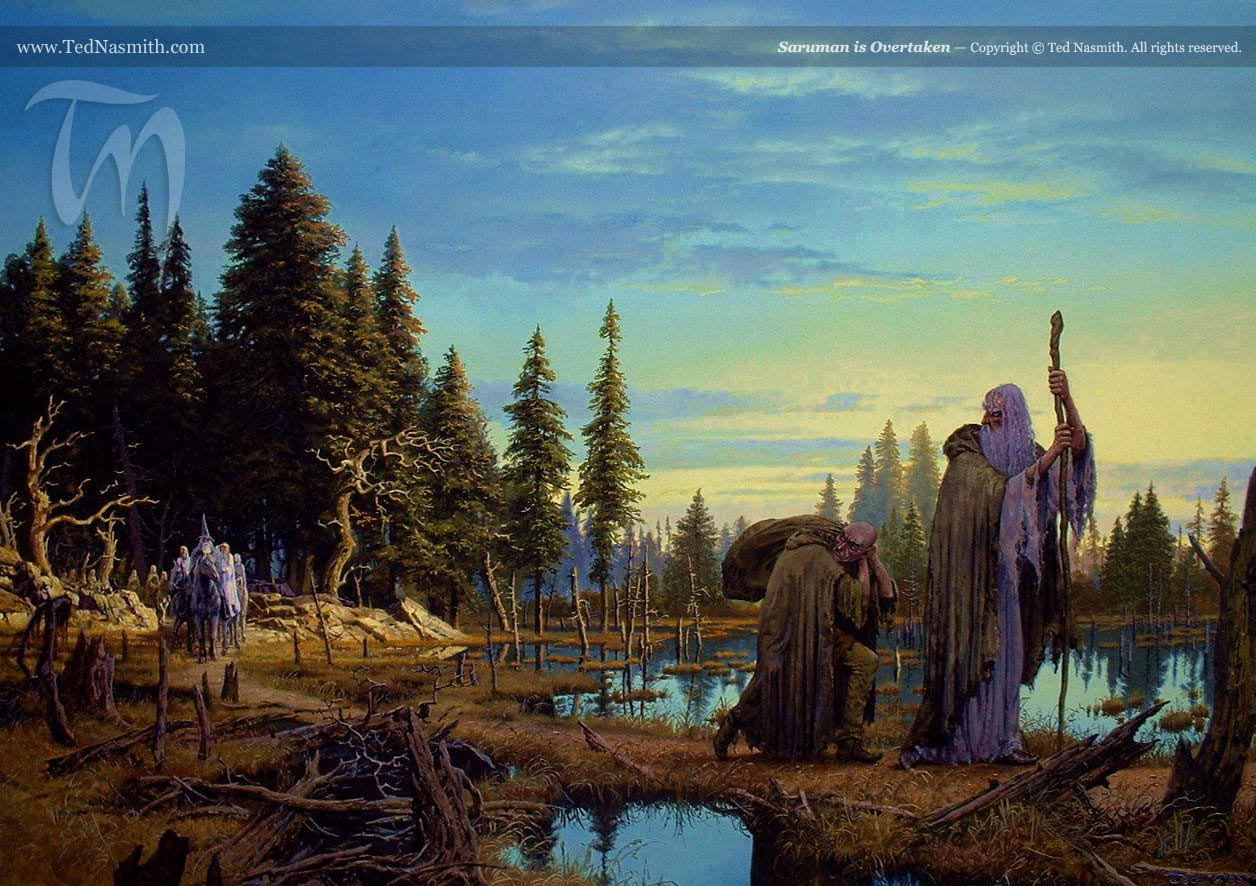
(Ted Nasmith)
as “Sharkey”, intent upon the destruction of the Shire,
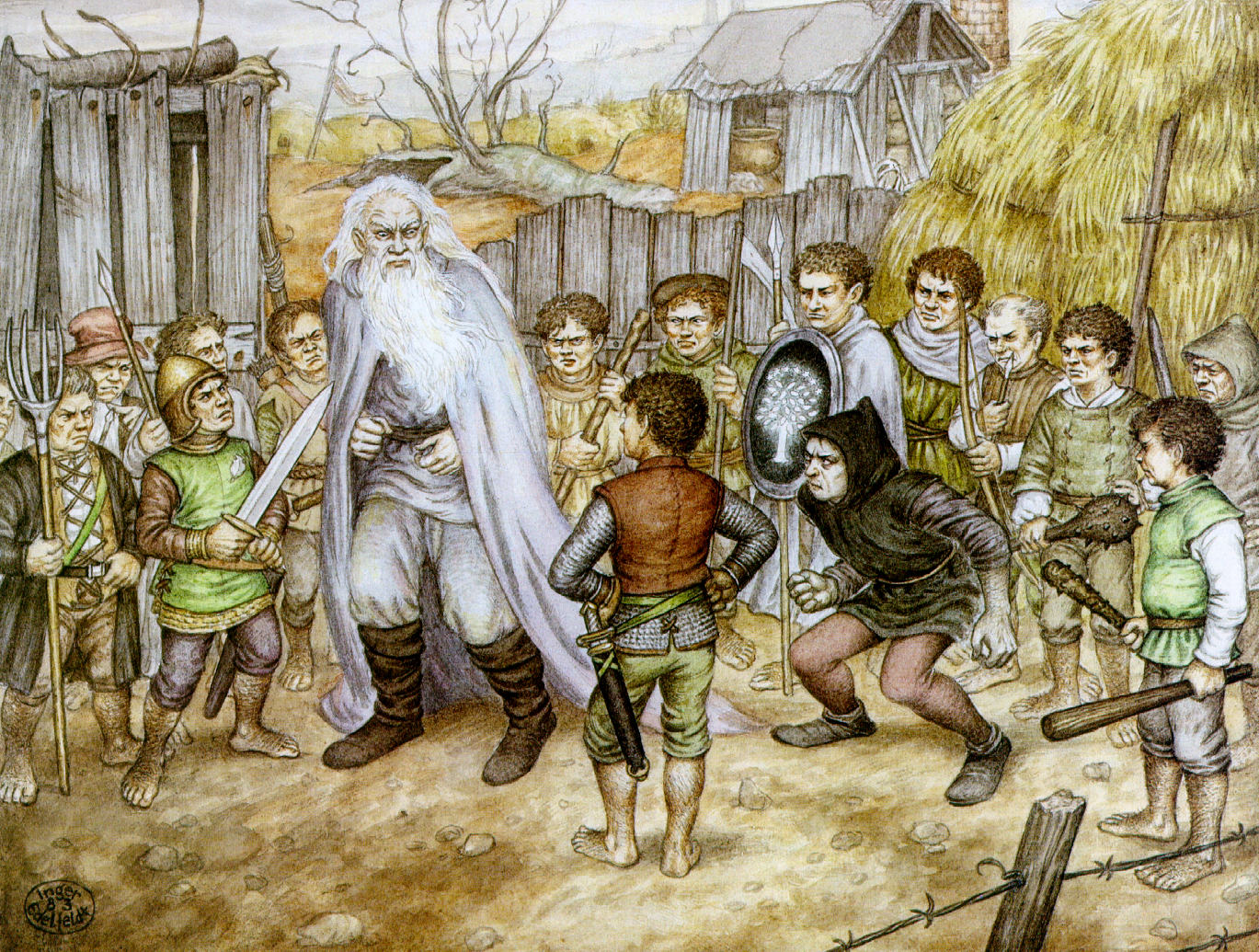
(Inger Edelfeldt)
and finally as the victim of his lackey, with his final rejection by the power which sent him to Middle-earth.
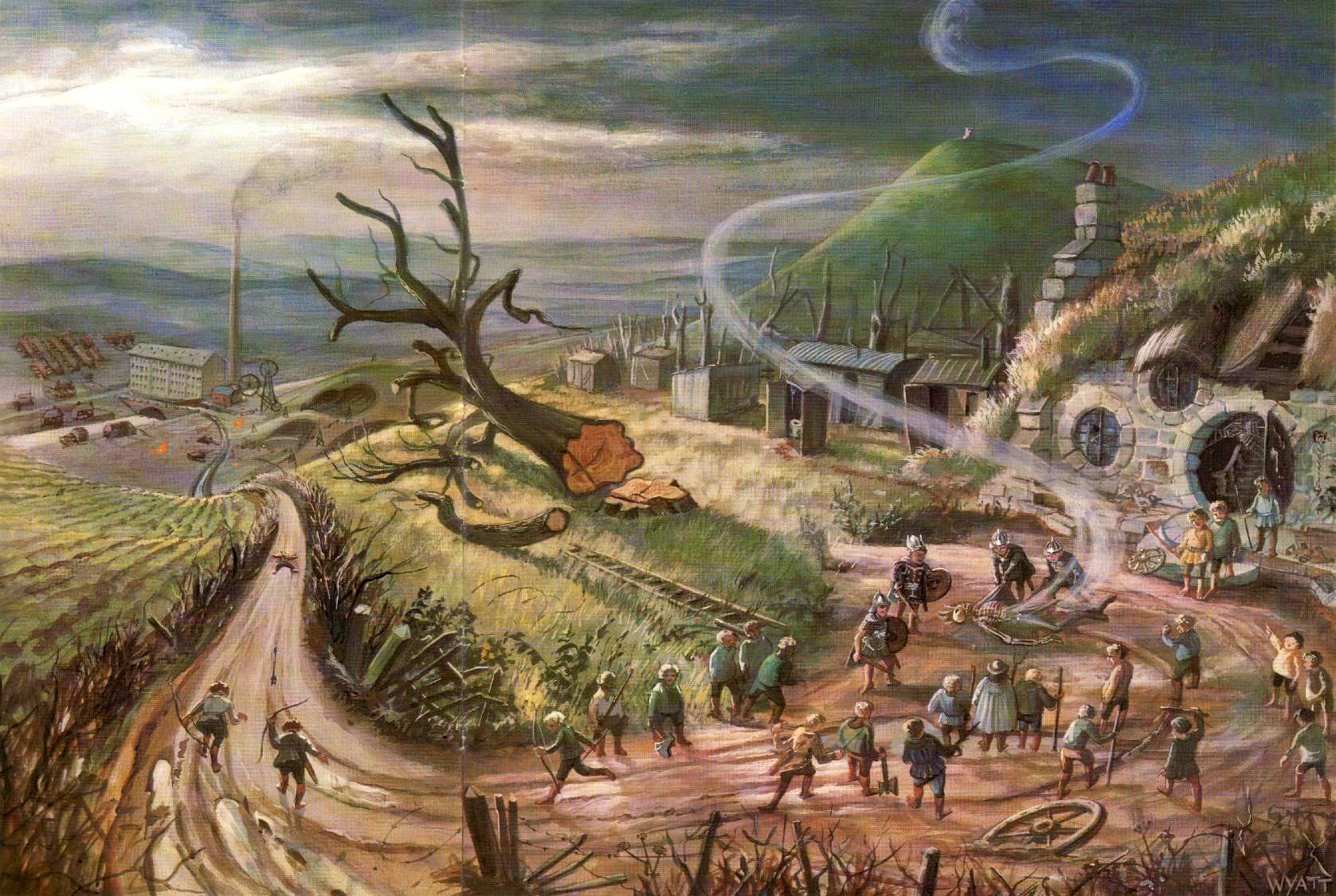
(Joan Wyatt)
Because we see him again and again, first as a potential ally, but then as a boastful but timid rival to Sauron, then as someone trapped by the Ents in his tower,
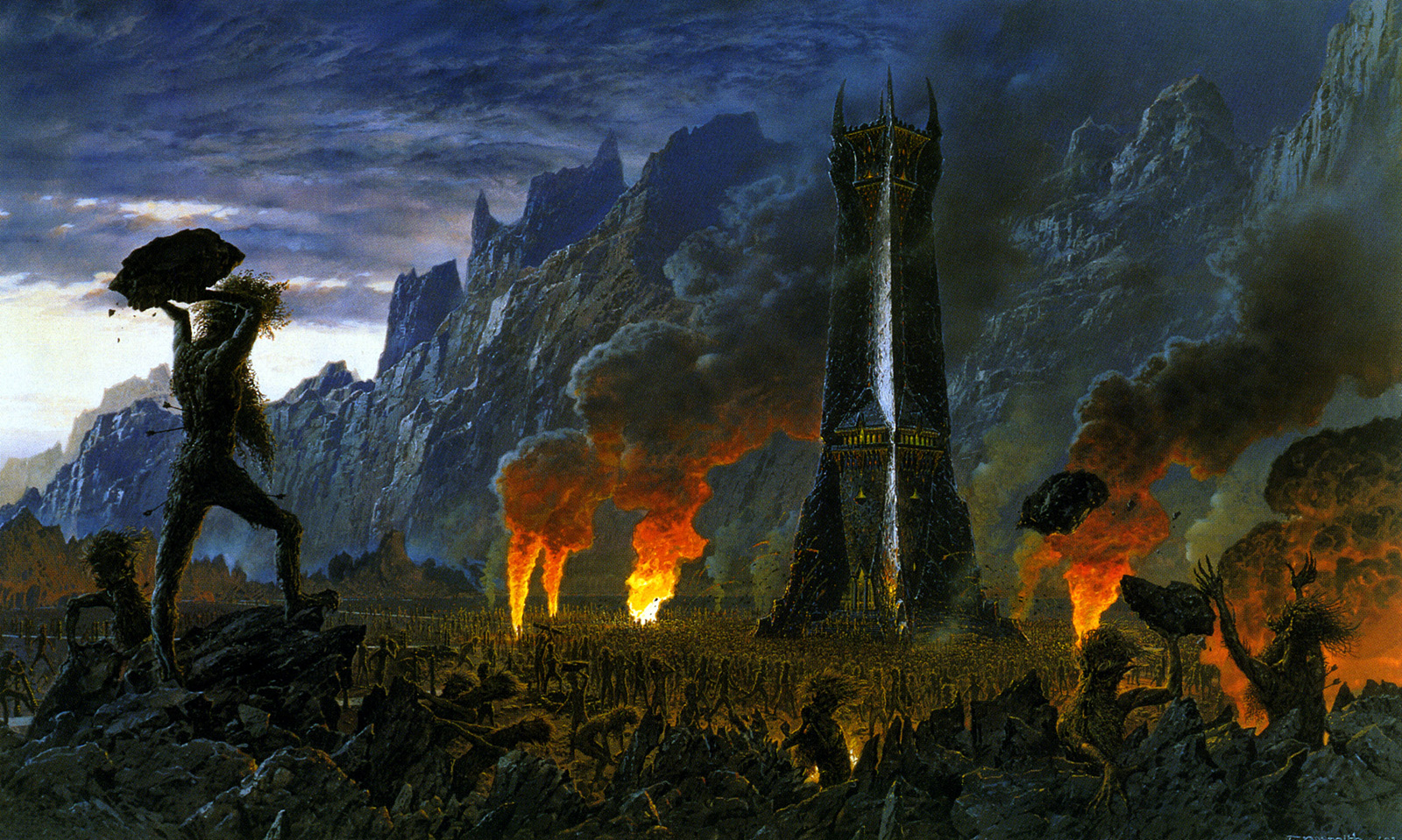
(Ted Nasmith)
there is no mystery to him, and, as he sinks lower and lower, to his miserable end, he loses whatever menace he might ever have had.
Sauron, on the other hand, remains only a dark presence, at the edge of the story, and it’s interesting that Tolkien’s one image of him is this—
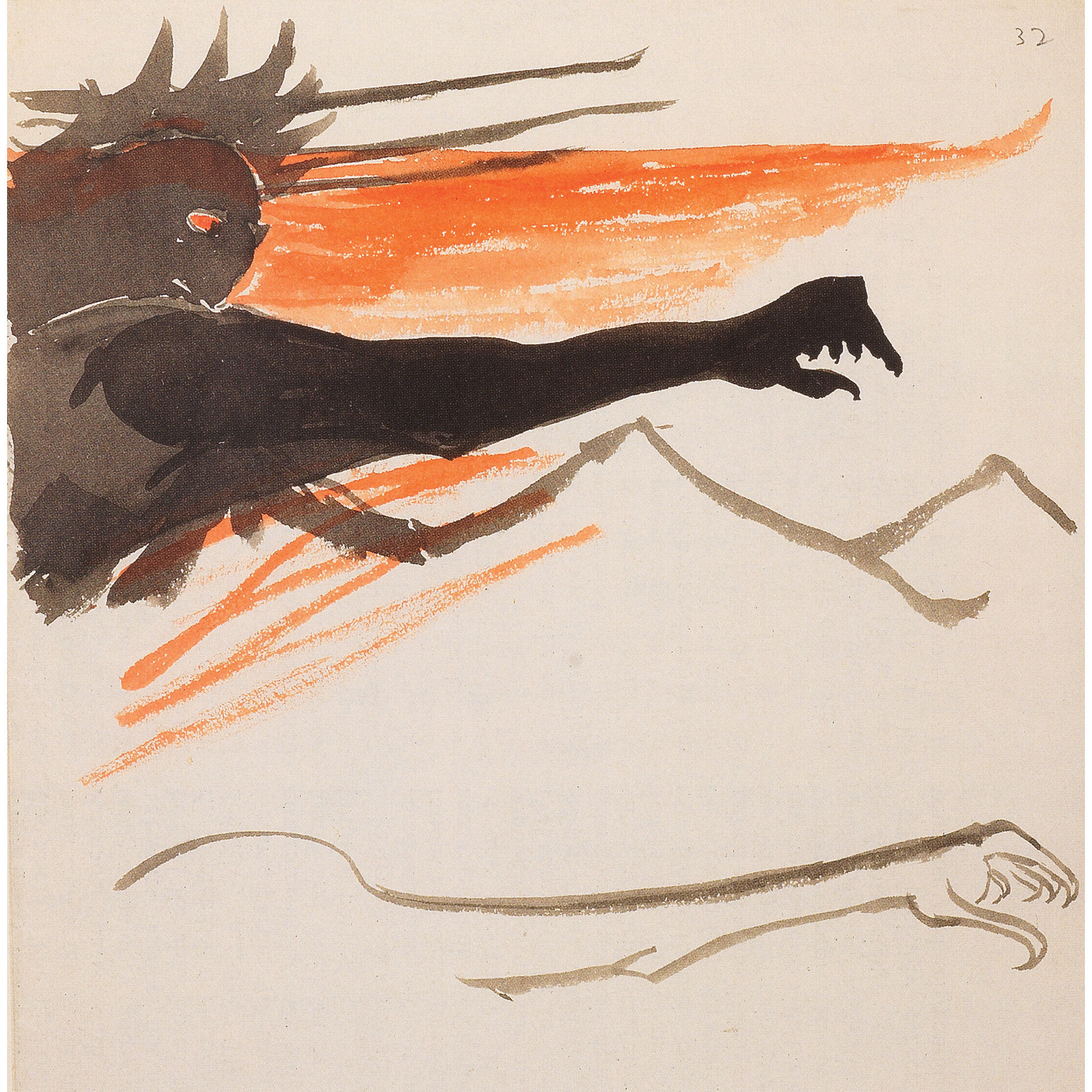
(JRRT)
in itself, shadowy—and, when we do actually see him, it’s only one element—
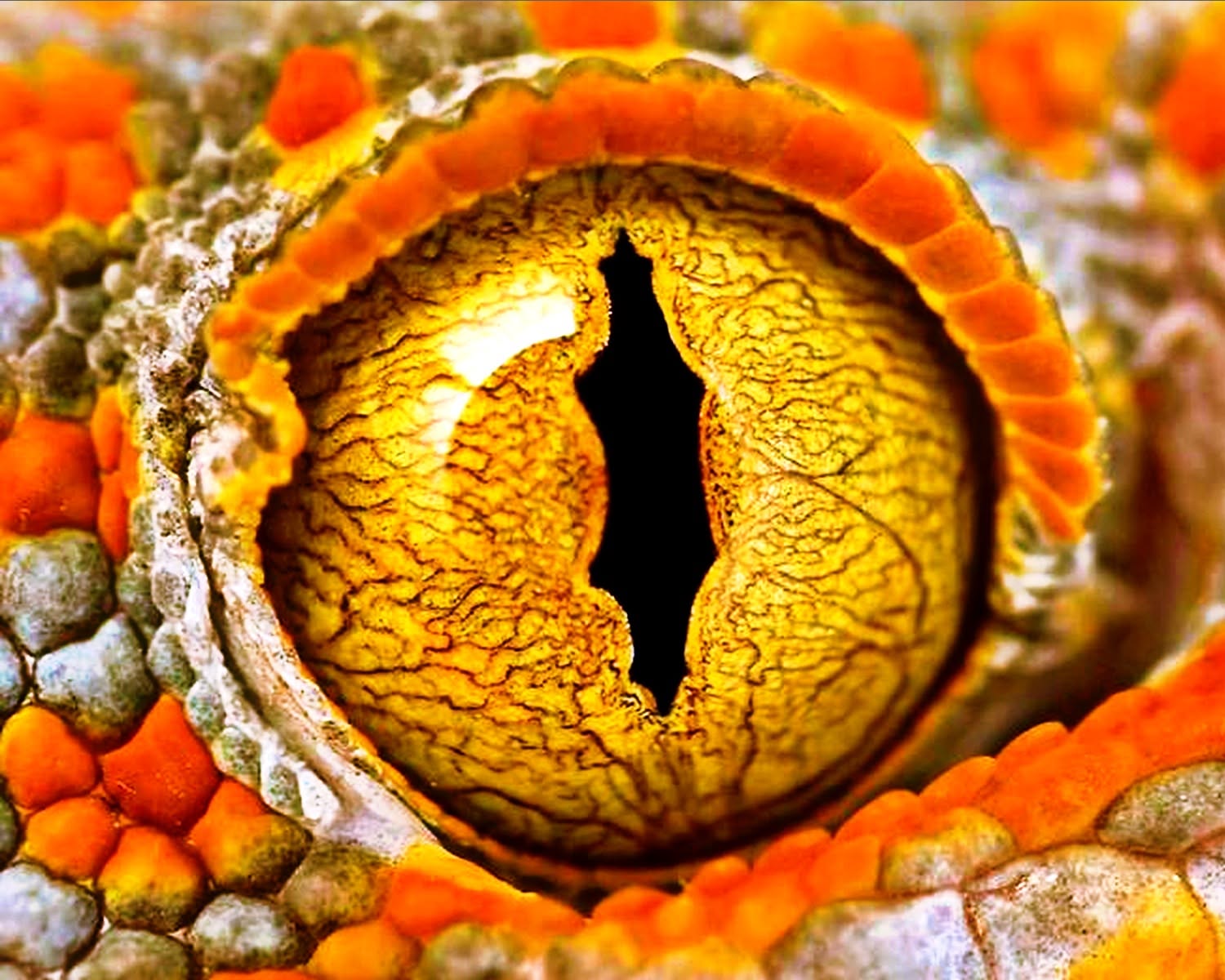
and this suggests to me a kind of intense watchfulness—like Big Brother, in Orwell’s 1984—
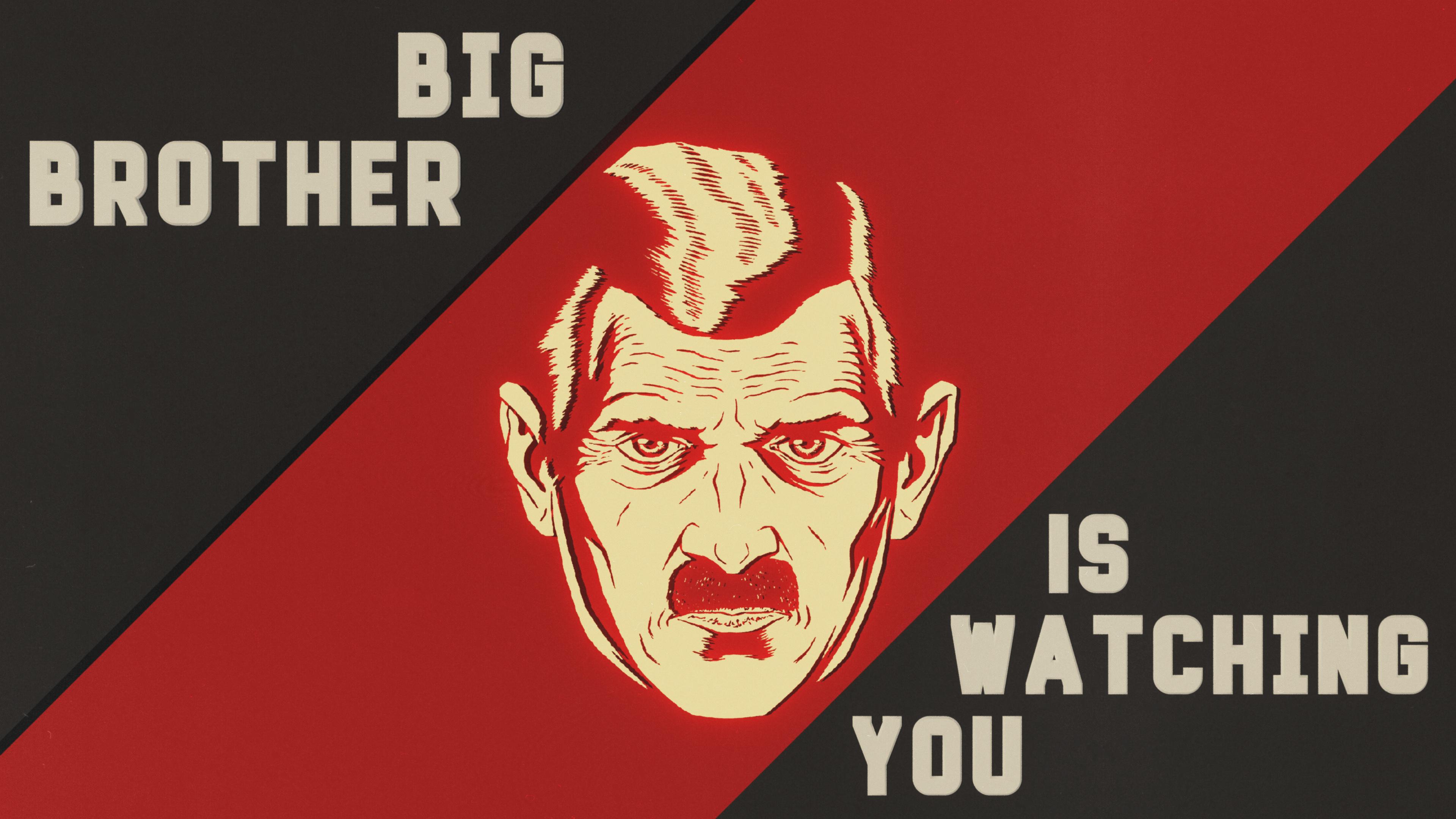
who is spoken of, but, like Sauron, never seen. Even his end—although spectacular—
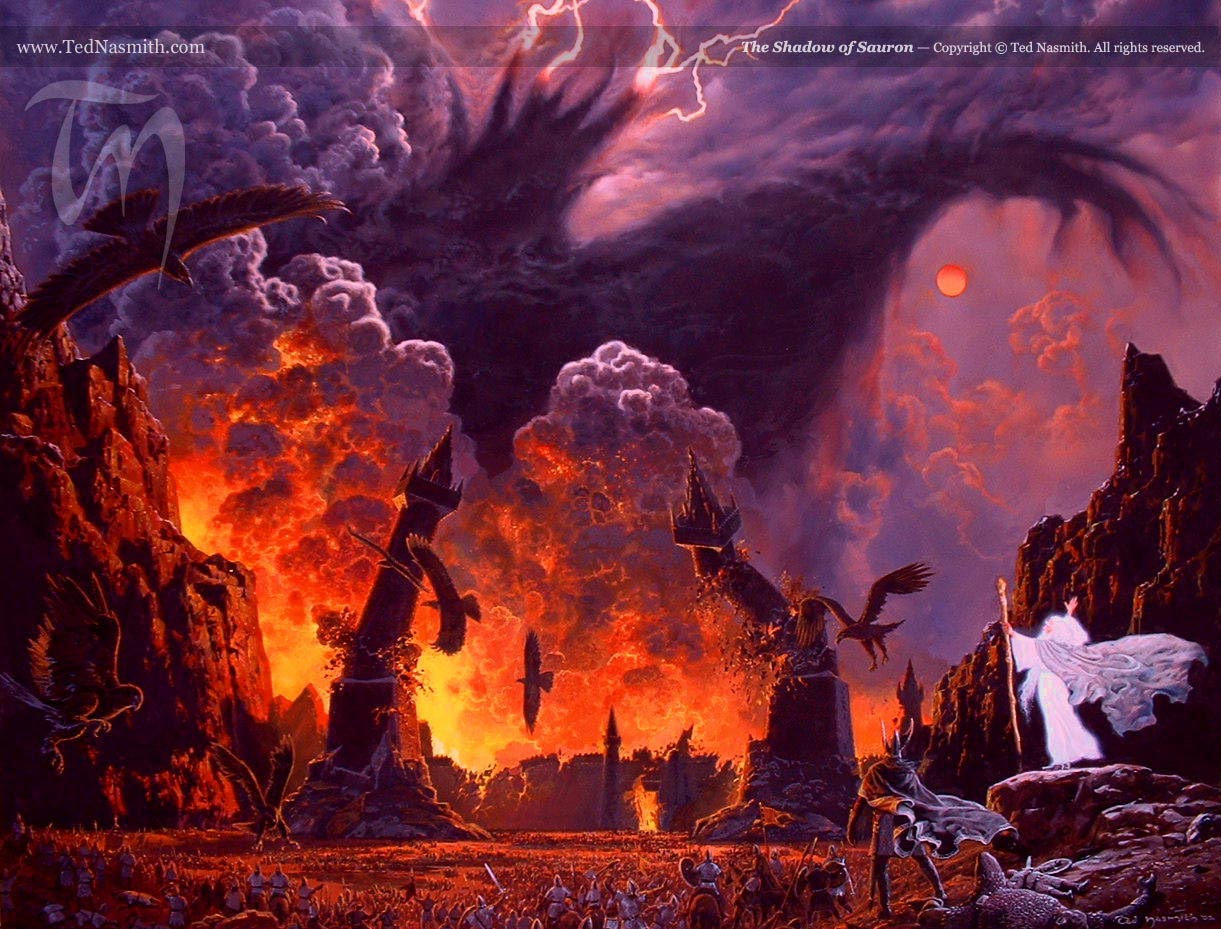
(Ted Nasmith)
gives us only a final image of—a hand, like JRRT’s depiction, leaving us with a picture of a powerful failure—but still powerful, although, like his non-appearance in The Lord of the Rings, more suggestive as menacing shadow than like Saruman’s all-too-visible presence–
“And as the Captains gazed south to the Land of Mordor, it seemed to them that, black against the pall of cloud, there rose a huge shape of shadow, impenetrable, lightning-crowned, filling all the sky. Enormous it reared above the world, and stretched out towards them a vast, threatening hand, terrible, but impotent: for even as it leaned over them, a great wind took it, and it was all blown away, and passed; and then a hush fell.” (The Return of the King, Book Six, Chapter 4, “The Field of Cormallen”)
I’m not disappointed that we see so much of Saruman—he’s a lesser character, a pale copy of his eventual greater master, and his end is, in its way, a sad one, someone sent to do good in Middle-earth, but whose arrogance corrupts him. As with Signs, however, much of Sauron’s power lies in the fact that he is unseen, but often spoken of, and usually in hushed tones, but, unlike Signs, he is kept in the shadows and that shadow enhances that feeling of brooding threat almost till the end.
Thanks for reading, as always.
Stay well,
If tempted to put on the Ring, think of Galadriel and starlight, lest you be seen by the Eye,
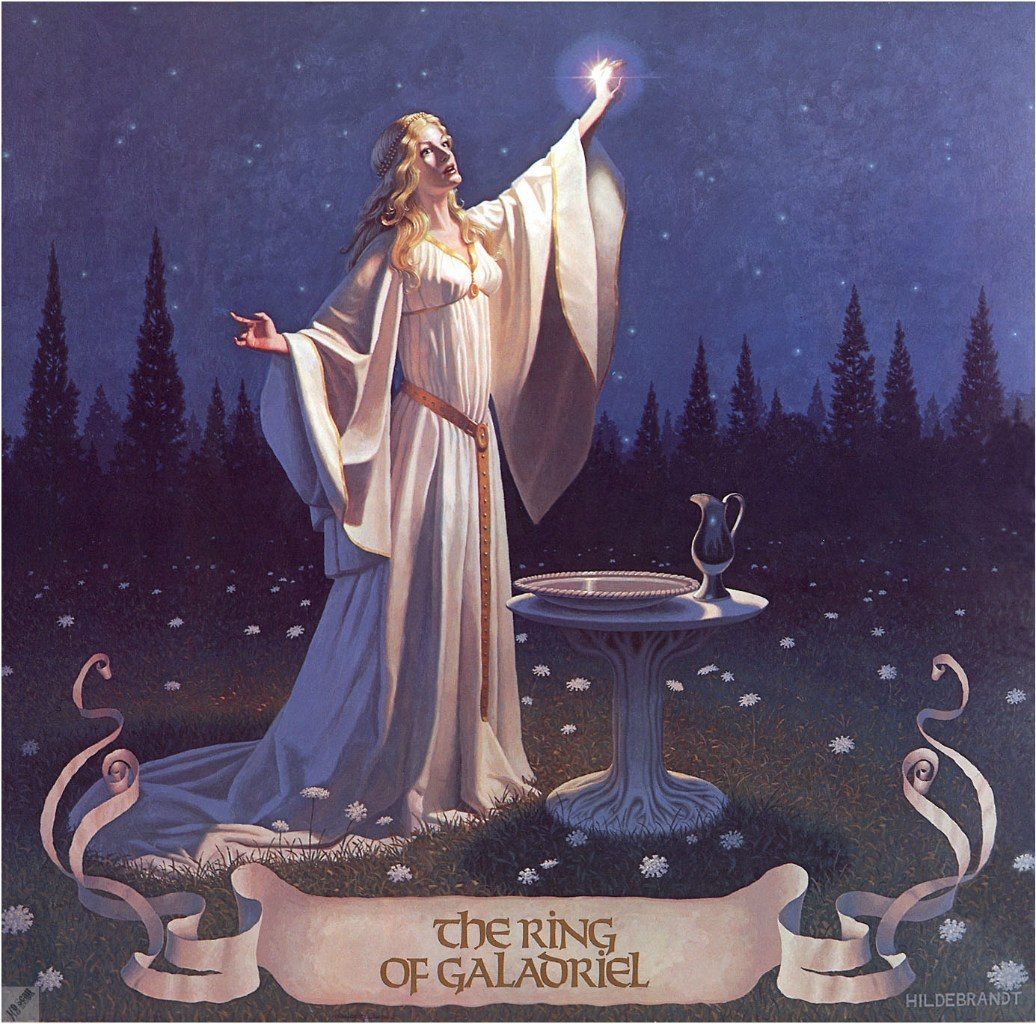
(the Hildebrandts)
And remember that, as always, there’s
MTCIDC
O

