• About

doubtfulsea

~ adventure fantasy

Category Archives: Military History

Baruk Khazad!

12 Wednesday Dec 2018

Posted by Ollamh in Artists and Illustrators, J.R.R. Tolkien, Military History, Military History of Middle-earth

≈ Leave a comment

Tags

Adze, Alan Lee, Axe, Bayeux Tapestry, Bilbo, Dane Axe, Dwarves, francisca, Gimli, Harold Godwinson, Helm's Deep, Huscarl, mithril, Skylitzis, The Hobbit, The Lord of the Rings, Thorin, Tolkien, Varangian Guard

As always, dear readers, welcome.

Ever since we saw the original Lord of the Rings films, we’ve been thinking about Gimli and his major weapon.

image1gimli.jpg

In The Hobbit, it would appear that the dwarves had not been armed until they used what was in the Lonely Mountain after Smaug had gone:

“Now the dwarves took down mail and weapons from the walls, and armed themselves.  Royal indeed did Thorin look, clad in a coat of gold-plated rings, with a silver-hafted axe in a belt crusted with scarlet stones.” (The Hobbit, Chapter 13, “Not at Home”)

This is where the mithril coat which eventually protects Frodo in Moria and turns up in the hands of the Mouth of Sauron comes from, when Thorin gives it to Bilbo.
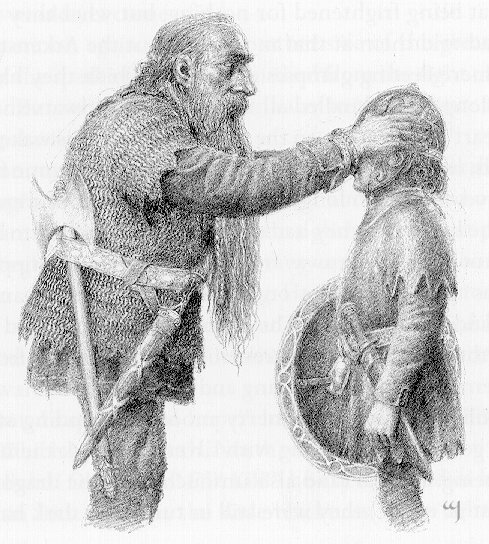
image2mithril.jpg

Not long after we first meet Gimli, at the Council of Elrond, however, we see Gimli already kitted out for war:

“Gimli the dwarf alone wore openly a short shirt of steel rings, for dwarves make light of burdens; and in his belt was a broad-bladed axe.” (The Fellowship of the Ring, Book Two, Chapter 3, “The Ring Goes South”)

Certainly, the axe in Gimli’s right hand in the photo wouldn’t fit through a belt and allow for comfort or freedom of movement and we note that, in that same photo, Gimli appears to have another—but that looks too long for comfort, as well.
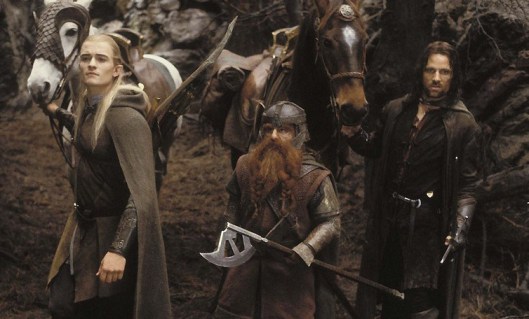
image3gimli.jpg

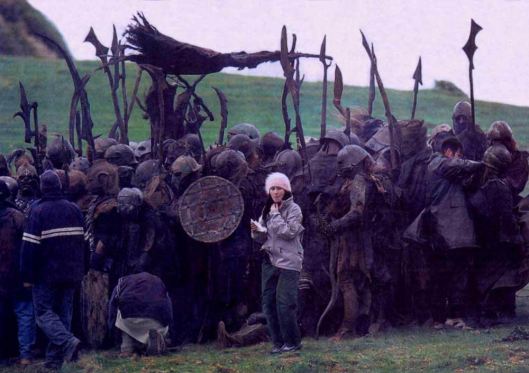
That the two axes fit in with the general persona of dwarves, however, seems to be true—after all, the translation of our title for this post is “Axes of the dwarves!”  (to be followed by Khazad ai-menu!  “the dwarves are upon you!”), which is the dwarves’ rallying cry.  What kind (or kinds) of axes these are doesn’t seem so clear, then.  Alan Lee, for example, shows us a dwarf with something which isn’t really an axe at all, but looks more like an adze, which is a tool used in woodworking to smooth and shape wood.

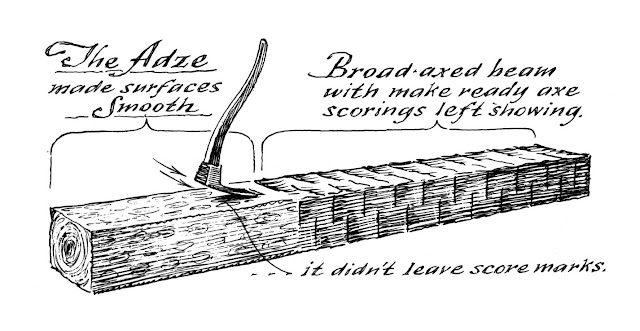
image4dwarf.jpg

the Broad Axe vs. the Adze - Handmade Houses... with Noah ...


Because JRRT describes Gimli’s axe as being tuckable, we wondered whether he was thinking of the kind of throwing axe, a francisca, used by Frankish warriors (and which gave them their name).

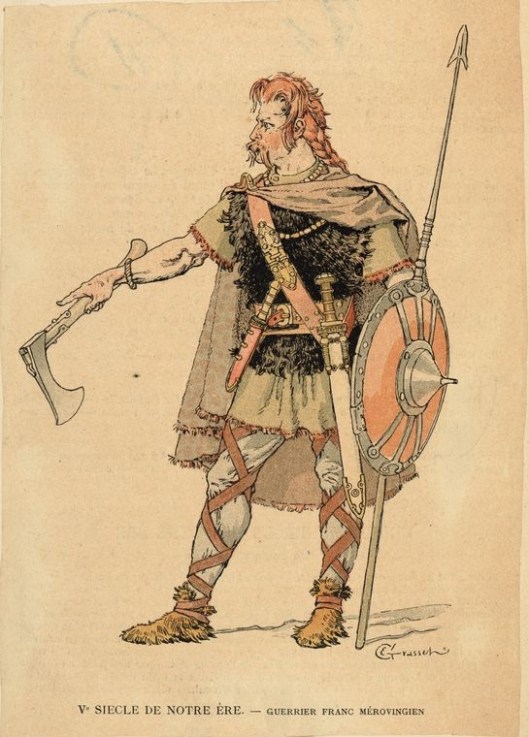
image6francisca.jpg

image7frank.jpg

When we actually see Gimli in battle, however, he isn’t throwing, but swinging his axe.  At Helm’s deep he says to Legolas, “Give me a row of orc-necks and room to swing and all weariness will fall from me!”  And then he swings that axe:  “An axe swung and swept back.  Two Orcs fell headless.” (The Two Towers, Book Three, Chapter 7, “Helm’s Deep”)

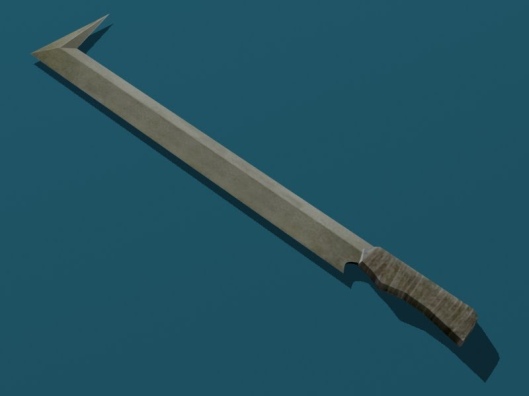
This leads us to ask if perhaps JRRT himself wasn’t clear about Gimli’s weapon.  He never throws it, using it always as a chopper, and, when we thinking of axes with a haft—that is, handle–long enough to do that, we don’t think of that odd item in the image above—which doesn’t look substantial enough to cut through cervical vertebrae—
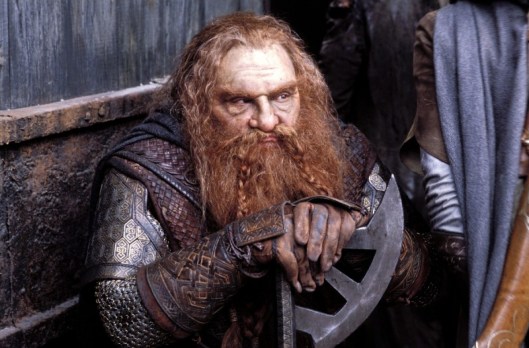
image8gimli.jpg

but rather of the long-hafted axe, or “Dane axe”  perhaps carried by the giant Viking who defended Stamford Bridge single-handedly against the Anglo-Saxons on 25 September, 1066,
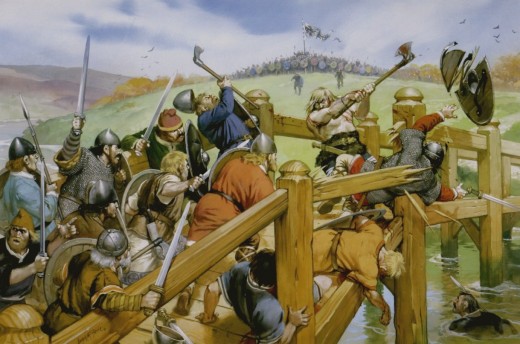
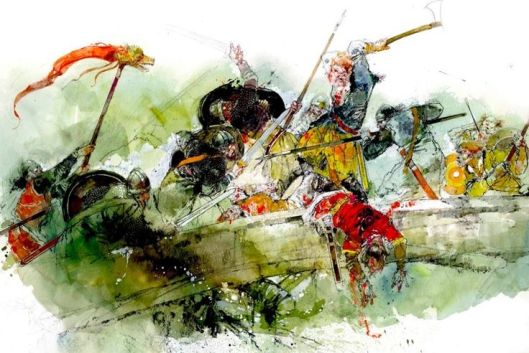
image9stam.jpg

image10stam.jpg

with its razor-sharp blade.

image11axe.jpg

This was the kind of axe that we see carried by the huscarl, the bodyguards, of the English king, Harold Godwinson, in the depiction of the Battle of Hastings, 14 October, 1066, on the so-called Bayeux Tapestry.
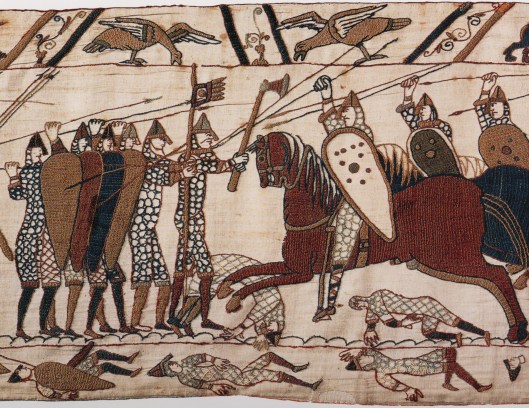
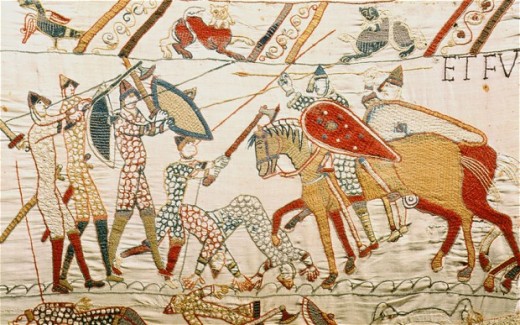
image12bay.jpg

image13bay.jpg

One of which Harold may himself been carrying when he was killed, if the caption on the cloth is referring to Harold being cut down by the mounted Norman in this part of the tapestry.
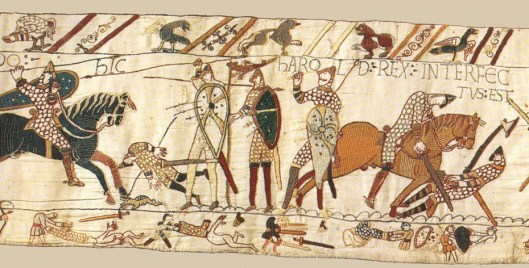
image14harold.jpg

These same axes also appear to turn up as part of the armament of the Varangian Guard, the bodyguard of a number of Byzantine emperors from the 10th to 14th centuries, as depicted in the 11th-century  Skylitzis Chronicle.
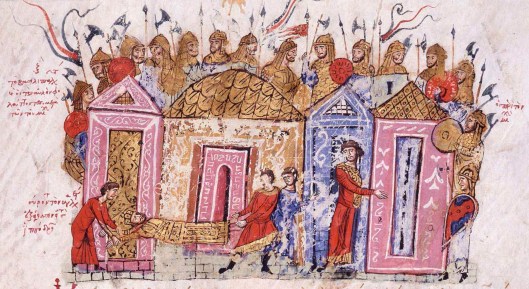
image15varang.jpg

Much of this guard was made up of Norsemen and Anglo-Saxons, so the pattern of axe, we imagine, was something which both groups brought with them from their original homes.

image16varang.jpg

This is clearly the sort of thing to whack off heads, even two at a time, and so, if we can quietly detach it from Gimli’s belt and have him stand, perhaps even leaning on it, we have the Gimli who competes with Legolas at Helm’s Deep in the number of orcs each has dispatched.
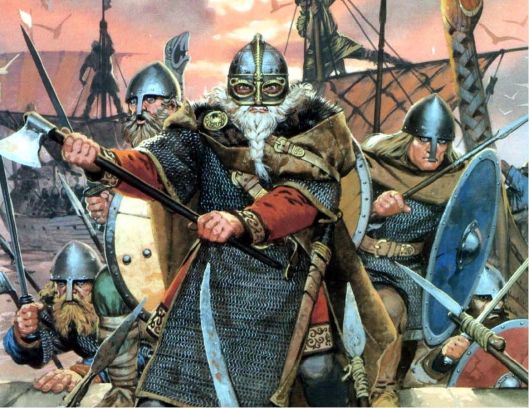
image17vik.jpg

Thanks, as ever, for reading.

MTCIDC

CD
Who Goes There? (3)

28 Wednesday Nov 2018

Posted by Ollamh in J.R.R. Tolkien, Military History, Military History of Middle-earth, The Rohirrim

≈ Leave a comment

Tags

Argonath, Common Tongue, Doorward Hama, Eomer, Ephraimites, Gileadites, Great War, language, Language of Rohan, patrol, Rohirrim, Shibboleth, The Lord of the Rings, Tolkien, Wulfgar

Welcome, as always, dear readers.

We’re in the third installment of a little series about sentries and patrols in Middle-earth.

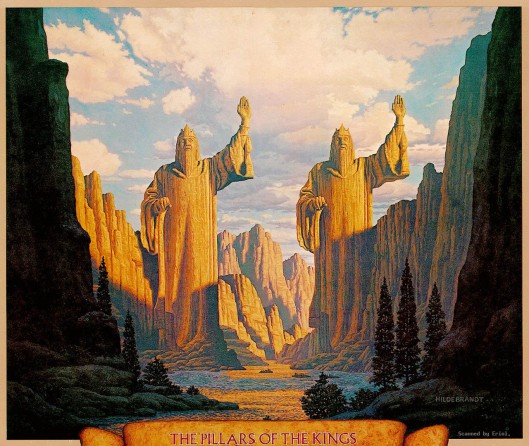
We had begun in the first installment in the Shire, with the shirriffs, then the watchman in Bree, then the watcher in the lake at the western gates of Moria, then the Elves of Lorien under Haldir, finishing with the Argonath, the biggest sentries of all.

image1argonath.jpg

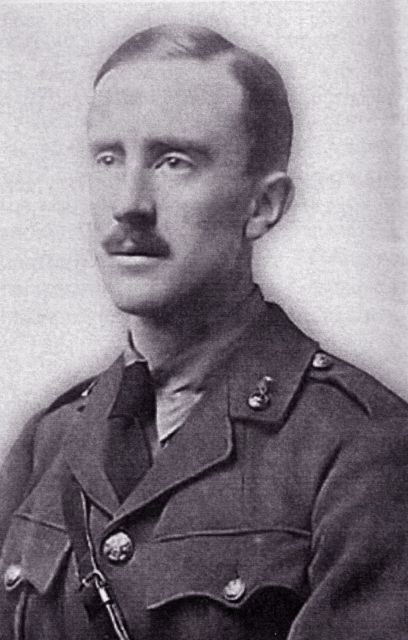
Now, as we move south, we encounter our first patrol.  From his experience in the Great War,

image2ltjrrt.jpg

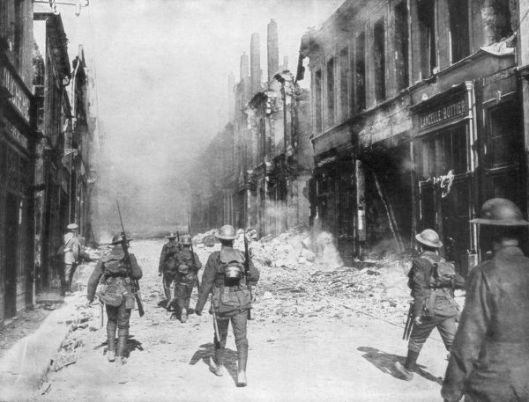
JRRT would have been very familiar with groups of armed men spreading out across the countryside, either slipping into enemy territory or simply guarding the edges of their own.

image3patrol.jpg

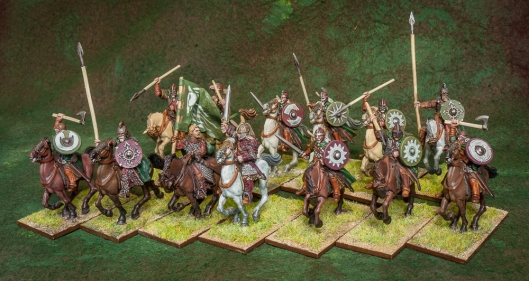
And patrols could be on horseback, as well as on foot—and not necessarily friendly, either.

image4gpat.jpg

As Aragorn, Legolas, and Gimli cross northern Rohan in their attempt to rescue Merry and Pippin, they run into one of these patrols:  Eomer and his Rohirrim.

image5rohirrim


As we mentioned in our second installment, when it comes to The Lord of the Rings, encounters with watchers of any sort often lead to developments in the plot and this is certainly true when the three meet with Eomer.  They have pursued the Orcs for days in hopes of rescuing Merry and Pippin, only to be told that the band in which the two hobbits were being kept prisoner has been destroyed completely:

“ ‘Did you search the slain?’” Aragorn asks, explaining, “ ‘Were there no bodies other than those of orc-kind?  They would be small, only children to your eyes, unshod but clad in grey.’

‘There were no dwarves nor children,’ said Eomer.  ‘We counted all the slain and despoiled them, and then we piled the carcasses and burned them, as is our custom.  The ashes are smoking still.’” (The Two Towers, Book Three, Chapter 2, “The Riders of Rohan”)

Aragorn is unshaken in his belief that the two may still be alive, however, and the three will continue their search, but now, as Eomer has loaned them horses, so he has lain an obligation upon Aragorn:

“ ‘You may go; and what is more, I will lend you horses.  This only I ask:  when your quest is achieved, or is proved vain, return with the horses over the Entwade to Meduseld, the high house in Edoras where Theoden now sits.  Thus you shall prove to him that I have not misjudged.  In this I place myself, and maybe my very life, in the keeping of your good faith.  Do not fail.’ “

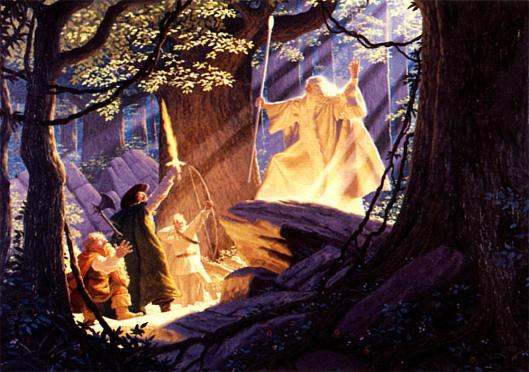
And so, rather than to continue to Minas Tirith, as Aragorn had planned, he and his two companions are to be diverted to the capital of Rohan, instead.  Meeting Gandalf in their search,

image6gandalf

they fulfill Aragorn’s promise and are met by two separate sets of watchmen.  First, at the gates of Edoras:

“There sat many men in bright mail, who sprang at once to their feet and barred the way with spears. ‘Stay, strangers here unknown!’ they cried in the tongue of the Riddermark, demanding the names and errand of the strangers.” (The Two Towers, Book Three, Chapter 6, “The King of the Golden Hall”)

In his reply, Gandalf speaks in the language of Rohan, but wonders “Why do you not speak in the Common Tongue, as is the custom in the West, if you wish to be answered?”

To which one of the guards replies:  “It is the will of Theoden King that none should enter his gates, save those who know our tongue and are our friends.”

[This use of language as a screening test, by the way, reminds us of a well-known story from the Hebrew Bible, in which, when the Ephraimites were defeated in battle and attempted to escape over the Jordan River, their opponents, the men of Gilead, stood at the crossings and, whenever a strange man tried to ford  the river, the Gileadites would demand that he pronounce the word “shibboleth” (which means “a stalk of grain”, among other things).  In the Ephraimite dialect of Hebrew, the consonant combination “sh” was said “s”, and so, at least as the story goes, every Ephraimite warrior who slipped and said “shibboleth” was immediately revealed to be an enemy soldier and was captured and killed.  (See The Book of Judges, Chapter 12)]

Aragorn has already been warned by Eomer that all is not well in Edoras, as he has said about Saruman, who has become an enemy of Rohan, “His spies slip through every net, and his birds of ill omen are abroad in the sky.  I do not know how it will all end, and my heart misgives me; for it seems to me that his friends do not all dwell in Isengard.”

This confrontation between guards and Gandalf immediately makes Gandalf wary, especially when he hears from one of the sentries that:

“It is but two nights ago that Wormtongue came to us and said that by the will of Theoden no stranger should pass these gates.”

Knowing from this that Wormtongue is inserting himself into Theoden’s actions prepares Gandalf to deal with the next sentry, the Doorward Hama.

“Then one of the guards stepped forward and spoke in the Common Speech.

‘I am the Doorward of Theoden…Hama is my name.  Here I must bid you lay aside your weapons before you enter.’ “

[If you read us regularly, you’ll recognize this figure from Beowulf.  There he is named Wulfgar, and he is the herald of King Hrothgar.  See Beowulf, 330-355.]

Although Legolas easily puts aside his weapons, Aragorn is a bit stiff-necked, refusing, at first, to put down Anduril until Gandalf offers his sword, Glamdring, followed by Gimli, who places his axe with the other weapons.  Hama hasn’t finished, however:

“The guard still hesitated.  ‘Your staff,’ he said to Gandalf.  ‘Forgive me, but that too must be left at the doors.’ “

Gandalf appears to object, on the grounds of his age:

“Foolishness!…Prudence is one thing, but discourtesy is another.  I am old.  If I may not lean on my stick as I go, then I will sit out here, until it pleases Theoden to hobble out himself to speak with me.”

Hama has a moment of proper doubt—“  ‘The staff in the hand of a wizard may be more than a prop for age.’ “—but he still allows Gandalf to carry his staff, which he then uses to disarm Grima Wormtongue and break the spell which has prematurely aged Theoden.

We have now added three more watchmen or groups to our growing list, all from Rohan and each meeting having had an effect upon those involved.  In the final installment of our series, we’ll leave the grassy plains of the Riddermark for Gondor, then cross the Anduin into a very different world.

Till then, thanks, as ever, for reading and

MTCIDC

CD

Thrones or Dominions (2)

07 Wednesday Nov 2018

Posted by Ollamh in Economics in Middle-earth, Imaginary History, J.R.R. Tolkien, Maps, Military History, Military History of Middle-earth

≈ Leave a comment

Tags

1984, Adolf Hitler, Barad-Dur, Benito Mussolini, Big Brother, Denethor, dictatorships, Elf Kingdom, Eye of Sauron, Gondor, Maiar, map, Middle-earth, Minas Tirith, Mouth of Sauron, Nazgul, Ornthanc, Rohan, Saruman, Sauron, Steward of Gondor, The Lord of the Rings, Theoden, Tolkien, Uruk-hai

As always, dear readers, welcome.

In our last, we began to discuss what we called the governments of Middle-earth at the time of the War of the Ring, making a kind of Grand Tour using the plot movement of The Lord of the Rings to loosely shape our itinerary.  (And here we’re borrowing from a witty idea, on a site called brilliantmaps.com, where we found “If Frodo and Sam had Google Maps of Middle-earth”.)

image1memap.png

Our first stop was the Shire, where we proposed that this was a “government by the few”:  that is, an oligarchy, a certain number of old and established families controlling the state.  From there, we moved on to Bree, where there was so little information that our best guess was that it, too, was probably an oligarchy, some sort of loose-knit one among—or perhaps uniting—the four villages which made up the general area.

Next, we grouped together what we suggested were two Elf kingdoms, Rivendell and Lorien, where Elrond and Galadriel (along with the nearly-invisible Celeborn), clearly were in charge, although neither would claim the title of monarch.

At our next stop, Isengard, Saruman,

image2orthanc.jpg

who had begun as one of the five Maiar sent to oppose the annoyingly-persistent Sauron, had moved from being what Gandalf called “the chief of my order” (The Fellowship of the Ring, Book One, Chapter 2, “The Shadow of the Past”), to being a kind of dictator—but one in the shadow of Sauron, just as Mussolini (1883-1945), who, from 1922, had been a model for such figures,

image3march.jpg

had fallen, by the later 1930s, into being the shadow of another, more powerful, dictator.

image4mushit.jpg

Like Elrond and Galadriel, he carries no title, but his captain, Ugluk, calls him “the Wise, the White Hand:  the Hand that gives us man’s-flesh to eat”, which probably tells us more than we want to know about his rule. (The Two Towers, Book Three, Chapter 3, “The Uruk-hai”)

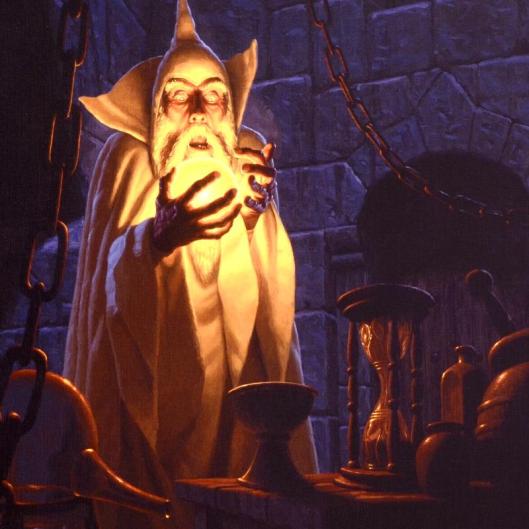
We believe that this shadow may have been created by Saruman’s growing arrogance (which Gandalf points out to Frodo in “The Shadow of the Past”) combined with his overconfidence in using a palantir he has found in Orthanc and which puts him into communication with Sauron—and Sauron’s ability to seduce.

image5palantir.jpg

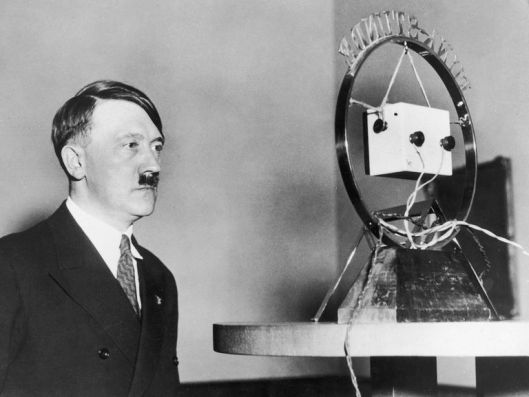
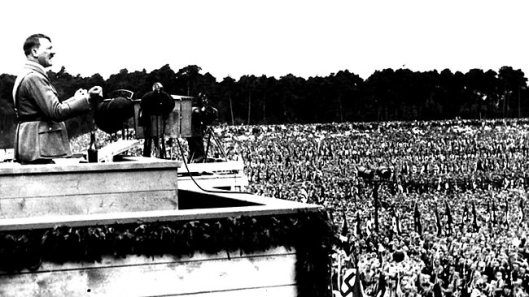
Sauron himself seems like the primal dictator, but a dictator before the 20th century, when dictators began to have a growing media world to employ to make themselves omnipresent in the lives of their citizens.

image6hitradio.jpg

image7hitmovie.jpg

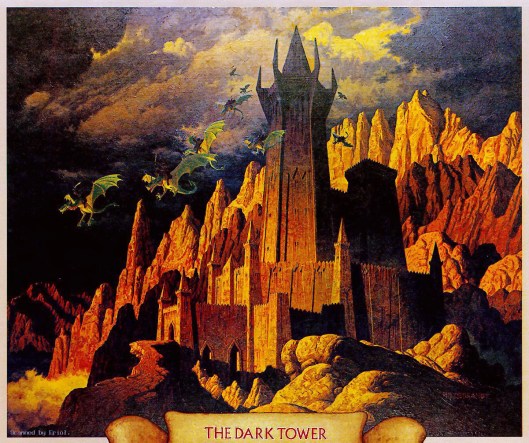
Instead, he’s  remote—sitting in the Barad dur, yet

image8baraddur.jpg

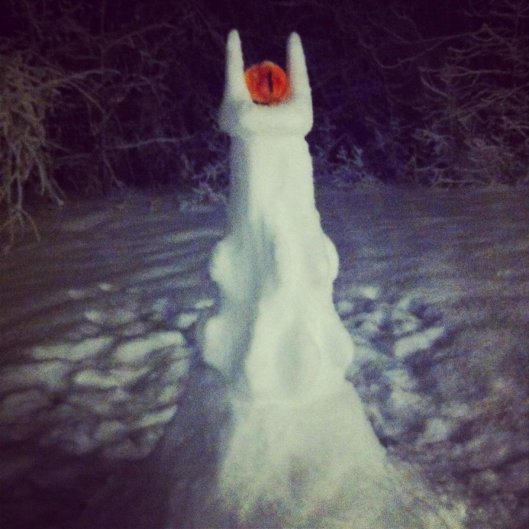
(and we can’t resist this image by “Rackthejipper”)

image9baradsnow.jpg

represented as being like 1984’s Big Brother, always watching.

image10bb.jpg

Or, as it is crudely represented in the Jackson films, literally a giant eye on a tower.

image11jack.jpg

When one thinks of modern dictators, however, one imagines them backed by huge bureaucracies, like the ministries in 1984:

“The Ministry of Truth–Minitrue, in Newspeak [Newspeak was the official

language of Oceania. For an account of its structure and etymology see

Appendix.]–was startlingly different from any other object in sight. It

was an enormous pyramidal structure of glittering white concrete, soaring

up, terrace after terrace, 300 metres into the air. From where Winston

stood it was just possible to read, picked out on its white face in

elegant lettering, the three slogans of the Party:


WAR IS PEACE

FREEDOM IS SLAVERY

IGNORANCE IS STRENGTH


The Ministry of Truth contained, it was said, three thousand rooms above

ground level, and corresponding ramifications below. Scattered about London

there were just three other buildings of similar appearance and size. So

completely did they dwarf the surrounding architecture that from the roof

of Victory Mansions you could see all four of them simultaneously. They

were the homes of the four Ministries between which the entire apparatus

of government was divided. The Ministry of Truth, which concerned itself

with news, entertainment, education, and the fine arts. The Ministry of

Peace, which concerned itself with war. The Ministry of Love, which

maintained law and order. And the Ministry of Plenty, which was responsible

for economic affairs. Their names, in Newspeak: Minitrue, Minipax, Miniluv,

and Miniplenty. (George Orwell, 1984, Chapter 1)


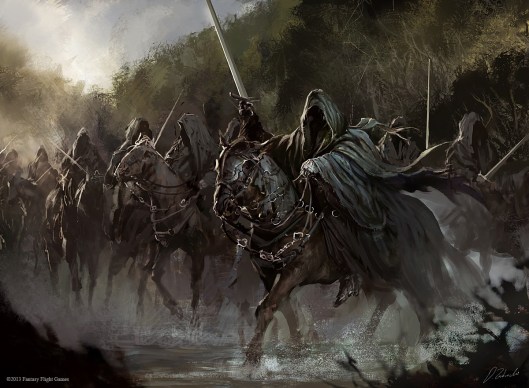
Instead, what we can see of Sauron’s government is much more medieval, beginning with the Nazgul, who were once human kings,

image12nazgul.jpg

who would be like the barons, the chief feudal deputies  of a king in a feudal world of the sort medieval England was and upon which much of Middle-earth, as we’ve suggested in many earlier postings, was based.  The chief of these was then the commander of Sauron’s main attack on Minas Tirith.

image13naz.jpg

To which we would add “the Voice of Sauron” (reminding us, of course, that he is only the spokesperson and Sauron would be presumed to have his eye on him, as well).  If you look for images of him, you will commonly find this:

image14jack.jpg

But, like certain other depictions in the Jackson films (that eye, for example), it is a very literal interpretation for someone JRRT described as:

“The rider was robed all in black, and black was his lofty helm; yet this was no Ringwraith but a living man…it is told that he was a renegade, who came of the race of those that are named the Black Numenoreans…” (The Return of the King, Book Five, Chapter 10, “The Black Gate Opens”)

Here’s an image possibility which comes a bit closer to the text, in our opinion.

image15lieutenant.jpg

From dictators, we make a final stop at two actual feudal  kings, the first, the ruler of Rohan, Theoden,

image16theoden.jpg

is clearly the descendant of earlier kings, as we are told in Appendix A, of The Lord of the Rings, “The Kings of the Mark”, where the line begins with Eorl the Young and continues for about five hundred years.

In the case of our other monarchy, Gondor, the kings who ruled for so many centuries (from SA3320 to TA 2050), have disappeared and, though the fiction is maintained that they will someday return, the actual ruler is their deputy, the Steward, and his role as lieutenant is symbolized literally by his position in the old throne room:

“At the far end, upon a dais [a kind of raised platform] of many steps was set a high throne under a canopy of marble shaped like a crowned helm; behind it was carved upon the wall and set with gems an image of a tree in flower.  But the throne was empty.  At the foot of the dais, upon the lowest step which was broad and deep, there was a stone chair, black and unadorned, and on it sat an old man gazing at his lap.”  (The Return of the King, Book Five, Chapter 1, “Minas Tirith)image17throne.jpg

At the same time, Denethor, and all of the previous Stewards, were kings in all but name, having ruled Gondor for twenty-five generations (see Appendix A, “The Stewards” for details).

So, in sum we have:

  1. 2 possible oligarchies (the Shire, Bree)
  2. 4 kingdoms (or at least sort of, in the case of the Elves—Rivendell, Lorien, plus Rohan and Gondor)
  3. 2 dictatorships (eastern Rohan, extending from Isengard, Mordor)

And, just when we were summarizing, the thought came to us:  what about the dwarves?  We can imagine that, considering Thorin’s family, there have been the equivalent of kings among the dwarves, but that’s a posting for another day!

Thanks, as ever, for reading.

MTCIDC

CD
Thrones or Dominions, Principalities or Powers (1)

31 Wednesday Oct 2018

Posted by Ollamh in J.R.R. Tolkien, Military History, Military History of Middle-earth

≈ Leave a comment

Tags

Al Capone, Christopher Tolkien, dictators, Edward VIII, Galadriel, gang, George V, George VI, King Edward VII, Monarchy, oligarchy, Queen Elizabeth II, Queen Victoria, Rivendell, Saruman, Sharkey, Shire government, The Lord of the Rings, Thranduil, Tolkien

Welcome, as ever, dear readers.

In a letter to his son, Christopher, of 29 November, 1943, Tolkien wrote:

“Give me a king whose chief interest in life is stamps, railways, or race-horses;  and who has the power to sack his Vizier (or whatever you care to call him) if he does not like the cut of his trousers.  And so on down the line.  But, of course, the fatal weakness of all that—after all only the fatal weakness of all good natural things in a bad corrupt unnatural world—is that it works and has worked only when all the world is messing along in the same good old inefficient human way.” (Letters, 64)

Monarchs, of course, are all that he had known, when it came to heads of state.  Born during the last years of Queen Victoria (ruled 1837-1901),

image1victoria

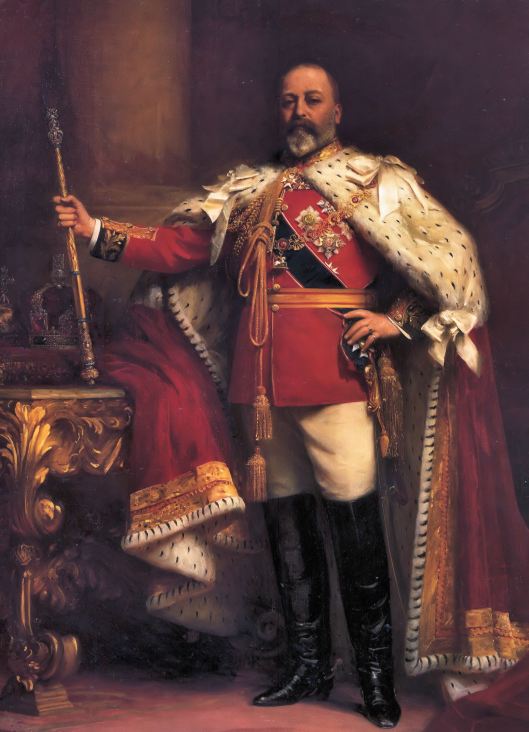
he lived under King Edward VII (reigned 1901-1910),

image2bertie

George V (ruled 1910-1936),

image3geo5.jpg

Edward VIII (ruled 1936—abdicated in favor of his younger brother),

image4ed8.jpg

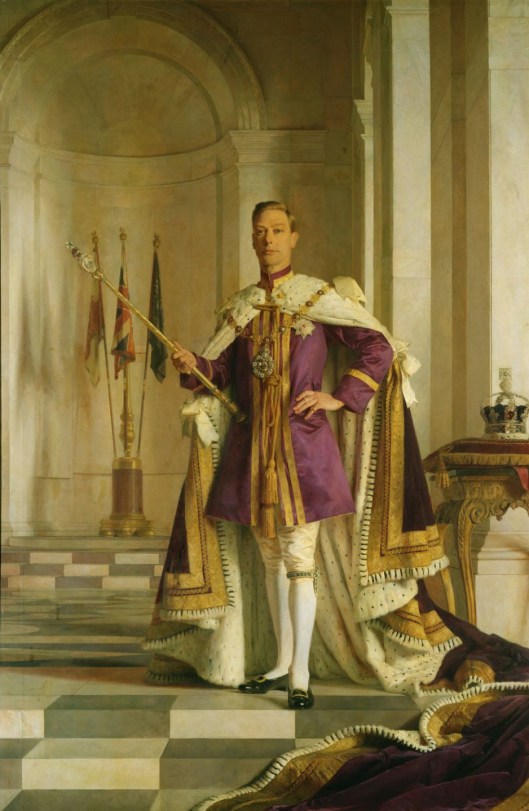
George VI (ruled 1936-1952),

image5geo6.jpg

and died in 1973 during the reign of Elizabeth II (1952—the present).

image6liz2.jpg

It’s not that he was very enthusiastic about monarchies—in the same letter he says “My political opinions lean more and more to Anarchy (philosophically understood, meaning abolition of control not whiskered men with bombs)…”

but even there he couldn’t escape the structure he was a subject of, adding “or to ‘unconstitutional’ Monarchy.”

This made us consider how this conditioning might be reflected in Middle-earth—after all, the title of the third volume of The Lord of the Rings is The Return of the King.  What were the governments of Middle-earth at, roughly, the time of the War of the Ring?  How many were monarchies and what other forms might there be?

Recently, we had looked at the governing structure of the Shire,

image7shire.jpg

about which, as JRRT has told us:

“The Shire at this time had hardly any ‘government’.  (The Lord of the Rings, Prologue, 3. “Of the Ordering of the Shire”)

This depends, of course, upon what is meant by “government”.  There is an elected Mayor, the “only real official in the Shire”, and whose job appears, at first, to be only ceremonial, until we are informed  that “the offices of Postmaster and First Shirriff were attached to the mayoralty.”  At the same time, there was an hereditary position of leader, the Thain, controlled by the Took family, and, the more Tolkien explains, the more it appears that what really governs the Shire is an oligarchy—that is, a small group of families who, together, quietly run things.   (There may also be tension just below the surface about which families this oligarchy includes.  When Saruman (aka “Sharkey”) takes over the Shire, he favors not the Tooks, but the Bagginses, suggesting that he is aware of this tension and may be exploiting it.)

As we move across Middle-earth with the Fellowship,

image8shiretobree.jpg

the next settlement we come to is Bree.  The government of this is completely unclear.  All that we’re told is that:

“The Big Folk and the Little Folk (as they called one another) were on friendly terms, minding their own affairs in their own ways, but both rightly regarding themselves as necessary parts of the Bree-folk…The Bree-folk, Big and Little, did not themselves travel much, and the affairs of the four villages were their chief concern.”  (The Fellowship of the Ring, Book One, Chapter 9, “At the Sign of the Prancing Pony”)

Their only defense appears to have been “a deep dike [ditch] with a thick hedge on the inner side”, but who maintains it is not mentioned, although there is a gate guard—the evil Bill Ferny, when the hobbits first approach the gate.  Unlike the Shirriffs of the Shire, however, we have no idea what structure might lie behind this position.

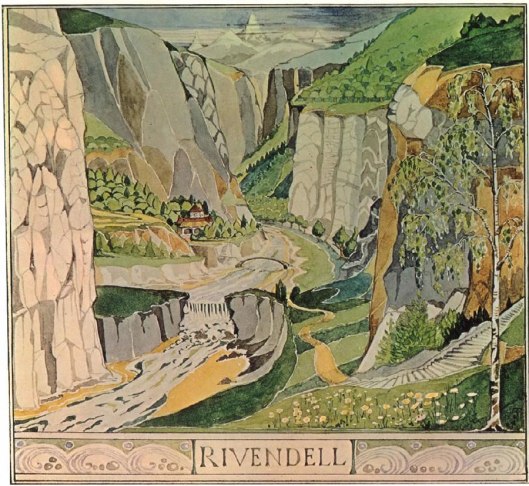
As we travel farther eastward, we come to Rivendell.

image9rivendell.jpg

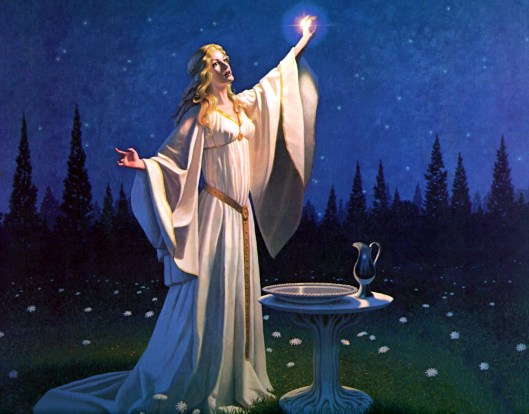
Here, Elrond is clearly in charge, but seems to have no distinct title—unlike Thranduil, who is called “the King of the Elves of Northern Mirkwood” (The Fellowship of the Ring, Book Two, Chapter 2, “The Council of Elrond”).   The same lack of title seems to be true of Galadriel.

image10galadriel.jpg

Although Gimli calls her “Queen Galadriel” (The Two Towers, Book Three, Chapter 8, “The Road to Isengard”), and she, along with Celeborn, rules Lorien, she does not bear that title—in fact she may be a little anxious about it, as seen when Frodo offers her the ring:

“You will give me the Ring freely?  In place of the Dark Lord you will set up a Queen.” (The Fellowship of the Ring, Book Two, Chapter 7, “The Mirror of Galadriel”)

Along with Frodo’s frightening vision of her, this seems more like a warning than a statement.

We’ve seen that monarchy seems to be linked with inheritance:  the thainship in the Shire is passed down through the Tooks.  Even Elrond and Galadriel appear to hold their positions through seniority.  In our next government, it is self-assumed, as Saruman, once referred to by Gandalf as “the chief of my order” (The Fellowship of the Ring, Book One, Chapter 2, “The Shadow of the Past”), begins to have grander plans.

image11saruman

In contrast to other monarchs in The Lord of the Rings, Saruman, we would suggest,  is not so much a medieval king, as others in Middle-earth  are, but an avatar for modern (1930s-1940s) dictators,

image12ahitand.jpg

with, as Treebeard says, “a mind of metal and wheels” (The Two Towers, Book Three, Chapter 4, “Treebeard”).  In fact, Saruman is a relative newcomer to the business, “setting up on his own with his filthy white badges”, as Grishnakh describes him (The Two Towers, Book Three, Chapter 3, “The Uruk-hai”), in contrast with Sauron, who, although intermittent in his attempts at control, has been involved in the process in Middle-earth for many centuries.

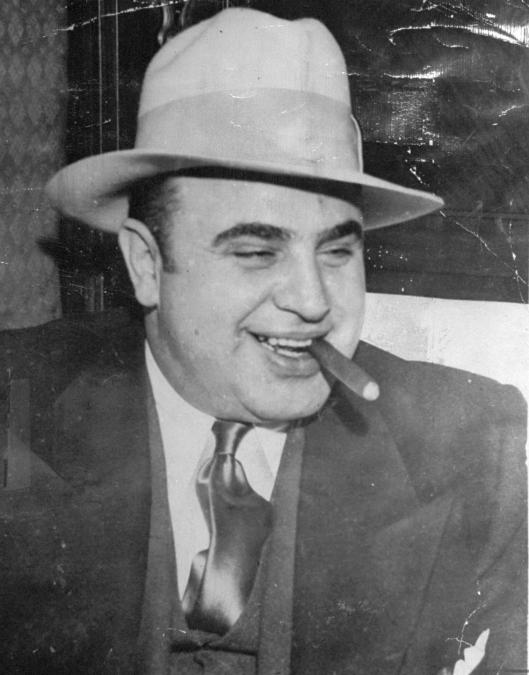
In his role of metal and wheels dictator, Saruman turns Isengard into a factory/fortress, manufacturing everything from orcs to swords within its precinct.  His orc captain, Ugluk, calls him “Saruman the Wise, the White Hand”, but we see him later in his real form, as he works to destroy the Shire, as “Sharkey”—a name he says “All my people used to call me that in Isengard, I believe.  A sign of affection, possibly.”  (The Return of the King, Book Six, Chapter 8, “The Scouring of the Shire”)  This is hardly “His Majesty”.  Rather, it’s more like the kind of nickname a gang-leader in the US in the 1920s-30s might have had, like “Scarface” Al Capone.

image12alcapone

“Sharkey” may be derived, as JRRT suggests, from “Orkish…sharku, ‘old man’,” but it also suggests a fishy predator—a very appropriate image for a would-be dictator.

In our next, we’ll answer Grishnakh’s question:  “Is Saruman the master or the Great Eye?” as we continue our exploration of government in Middle-earth.

Thanks, as always, for reading.

MTCIDC

CD

Class, Order, Family…(2)

24 Wednesday Oct 2018

Posted by Ollamh in J.R.R. Tolkien, Language, Military History, Military History of Middle-earth

≈ Leave a comment

Tags

Cheshire, class, dialect, Drill Sergeant, gentlehobbits, John Howe, Mayor of Michel Delving, Michael Palin, Monty Python, Mummershire, Rustic, Samwise Gamgee, Shire, speech, The Lord of the Rings, Tolkien

Welcome, as ever, dear readers.

In our last posting, we began with JRRT stipulating, when selling the rights to The Lord of the Rings, that Merry and Pippin were not to be “rustics”.  The word “rustics” caught our attention and, from its origin—an  adjective from Latin rus, ruris, n., “country” (as in “countryside”)—we began some exploration of how, in The Lord of the Rings, it was possible to distinguish between “gentlehobbits” and “rustics” by their grammar,  word choices,  and speech patterns.  We also talked about the speech of Saruman (don’t listen too long!) in contrast to his Uruk-hai.

In this posting, we want to do a little more exploring to see what else we might find, first in the speech of the  principal representative of “the rustics” in The Lord of the Rings, Sam Gamgee.  Then we’ll add a bit more on the speech of the orcs.

We begin this time with the home of Sam, the Shire.

image1theshire.jpg

Tolkien says of it that it “had hardly any ‘government’, but that “Families for the most part managed their own affairs.”  Thus, although there was an actual Shire official “the Mayor of Michel Delving (or of the Shire), who was elected every seven years…As mayor almost his only duty was to preside at banquets given on the Shire-holidays…”(The Lord of the Rings, Prologue, 3, “Of the Ordering of the Shire”),  at the same time, this was not a democracy (JRRT doesn’t appear very comfortable with them—see Letters, 64, among several other references), but, rather, an oligarchy, in which certain families appear to have held all the power—“The Shire was divided into four quarters…and these again into a number of folklands, which still bore the names of some of the old leading families…It is true that the Took family had long been pre-eminent; for the office of Thain had passed to them (from the Oldbucks) some centuries before, and the chief Took had borne that title ever since…The Took family was still, indeed, accorded a special respect, for it remained both numerous and exceedingly wealthy…”

In contrast to the Tooks, it would appear that the Gamgees were not accorded such respect and, from Sam’s speech, it’s clear that he is well aware of the fact.  The first time we meet Sam, he immediately shows both his “rusticity” and his social status.  Gandalf has caught him eavesdropping outside Frodo’s window and demands to know what he’s doing.  Sam replies:

“ Lor bless you, Mr. Gandalf, sir!…Nothing!  Leastways  I was just trimming the grass-border under the window, if you follow me.” (The Fellowship of the Ring, Book One, Chapter 2, “The Shadow of the Past”)

Here we see pronunciation—“Lor” for “Lord” in “Lor bless you” (which is a Christian exclamation and makes us wonder what it was doing in Sam’s speech to begin with), word choice—“leastways”—and method of expression—“if you follow me”, all of which suggest the nature of Sam’s social class (certainly neither Frodo nor Merry nor Pippin speaks in such a way).  A second marker of class is that both Gandalf and then Frodo are called “sir” along with “Mr.”—“Mr. Gandalf, sir”, and, soon after, “Mr. Frodo, sir”.  Such honorifics are never used when anyone addresses Sam.  He’s always just “Sam”.  And this social distinction is even more marked when Sam believes that Frodo has been killed by Shelob and he addresses Frodo as “Master, dear master” (The Two Towers, Book Four, Chapter 10, “The Choices of Master Samwise”—and we note here the irony of calling Sam “Master Samwise”—Sam may, briefly, be the master of the Ring, but it’s not a choice he really wants or relishes.  Sam is most comfortable “knowing his place”, even as he shows that he has a sticktoittiveness without which both he and Frodo would not only have not reached  Mount Doom, but would have died in its wilderness long before.)

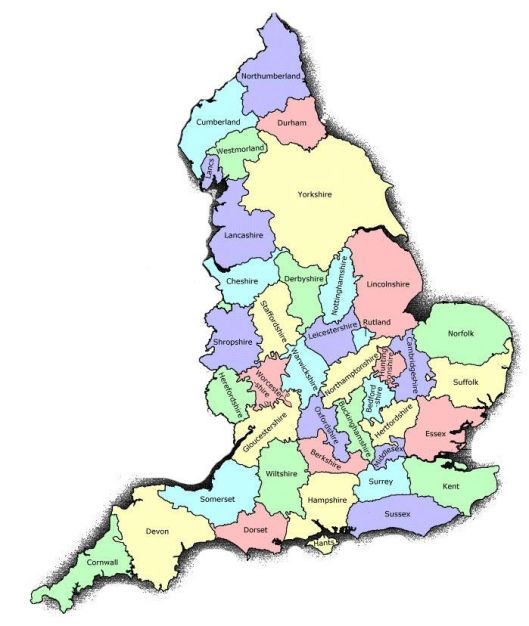
When you hear Sam in the P Jackson movies, the actor, Sean Astin, uses the standard “rural British accent” sometimes referred to as “Mummershire”.  This is based to a large extent on the distinctive accents of Southwest England.  We imagine that JRRT, who was himself from the Midlands however, would have heard Sam sound rather more like people from Cheshire.  Here’s Cheshire on a map of England’s shires.

image2shires.jpg

And here’s a brief YouTube LINK to an elderly native speaker (to provide something a little more like that which Tolkien would have heard—the accent, like all accents under the influence of radio, television, and the internet, seems to be changing pretty rapidly).  Notice those Rs—“shap” for “sharp”, for example.

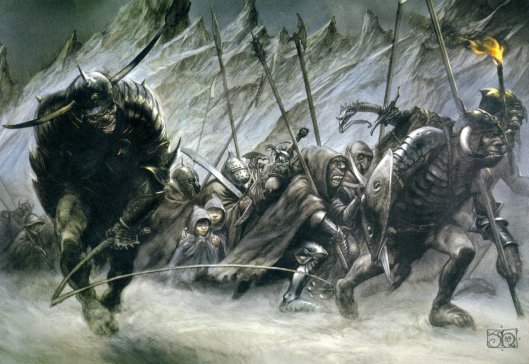
When we think of accents and orcs (a John Howe illustration),

image3orcs.jpg

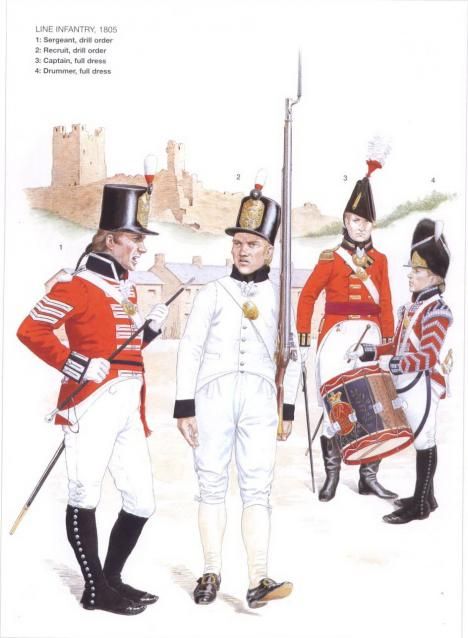
we always imagine their leaders as sounding like classic British drill sergeants—here’s an early nineteenth century example, but we believe that the breed hasn’t changed.  Here’s a LINK to a modern example—with a SILLY WARNING because it’s Michael Palin of Monty Python as the drill sergeant.

image4drillsgt.jpg

Put together the sound of that sergeant—who is speaking in a London-area accent—with this quotation and perhaps you’ll see—hear—what we mean:

“ ‘Put up your weapons!’ shouted Ugluk.  ‘And let’s have no more nonsense!  We go straight west from here, and down the stair.  From there straight to the downs, along the river to the forest.  And we march day and night.  That clear?’ “ (The Two Towers, Book Three, Chapter 3, “The Uruk-hai”)

Add that to the whips used by such folk in Mordor and our view, both of Merry and Pippin’s captivity, as well as Frodo and Sam’s being swept up in an orc column, becomes all that much grimmer!

Thanks, as ever, for reading (AT EASE!).

MTCIDC

CD

Name, Rank, and…

10 Wednesday Oct 2018

Posted by Ollamh in J.R.R. Tolkien, Military History, Military History of Middle-earth

≈ Leave a comment

Tags

1984, Alan Lee, Eye of Sauron, Flodden, George Orwell, Great War, Heraldic Device, Mordor, Oceania, Orcs, Sauron, serial numbers, Serialized, Swan of Dol Amroth, the Lancashire Fusiliers, The Lord of the Rings, Tolkien, White Hand of Saruman, White Horse of Rohan, White Tree of Gondor, Winston Smith

As always, dear readers, welcome.

In George Orwell’s (1903-1950)

image1orwell

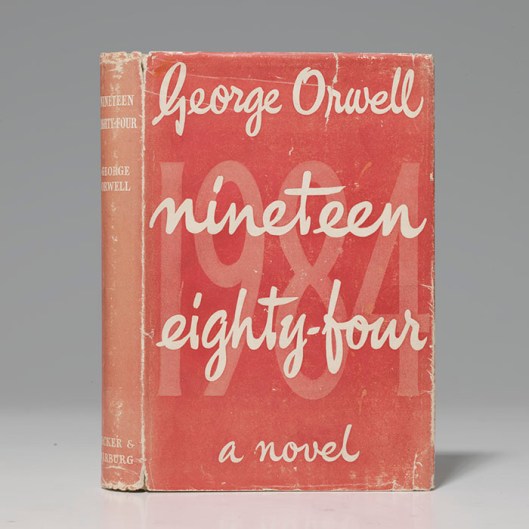
1949 horrific political novel 1984,

image2nineteen

the protagonist, Winston Smith, is attempting to do what are called “physical jerks”, meaning calisthenics, in front of a “telescreen”.  This is, in fact, a two-way device, but it’s impossible to know when, as you are watching it, it can be watching you, until:

‘Smith!’ screamed the shrewish voice from the telescreen. ‘6079 Smith W.!

Yes, YOU! Bend lower, please! You can do better than that. You’re not

trying. Lower, please! THAT’S better, comrade. Now stand at ease, the

whole squad, and watch me.’ (1984, Chapter 3)

And so we see just how militarized “Oceania”, Smith’s homeland, has become.  You are not a citizen, but a member of a “squad”, and your name has a serial number attached.

The same is true of Sauron’s Mordor, as Sam and Frodo overhear, desperately trying to conceal themselves behind a “brown and stunted bush”.  Two scouts appear:

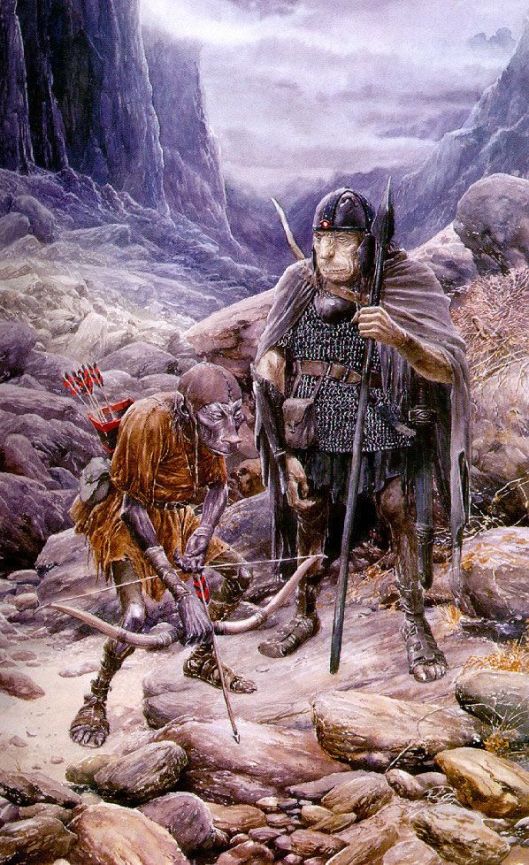
“One was clad in ragged brown and was armed with a bow of horn; it was of a small breed, black-skinned, with wide and snuffling nostrils…The other was a big fighting-orc, like those of Shagrat’s company, bearing the token of the Eye.”

(Here’s Alan Lee’s illustration of the two, by the way.)


image3orcs

They are soon quarreling and, when the small one tries to escape, the larger fighting-orc shouts:

“You come back…or I’ll report you!”

To which the smaller replies:

“Who to?  Not to your precious Shagrat.  He won’t be captain any more.”

And the larger answers that with:

“I’ll give your name and number to the Nazgul.”  A threat which soon gets him killed.


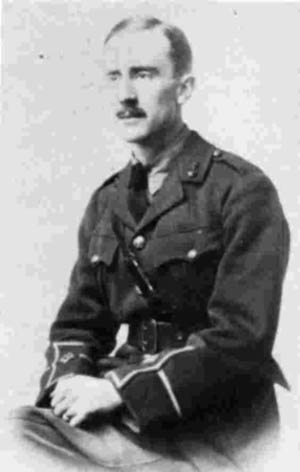
When we think about Tolkien in the Great War,

image4lt.jpg

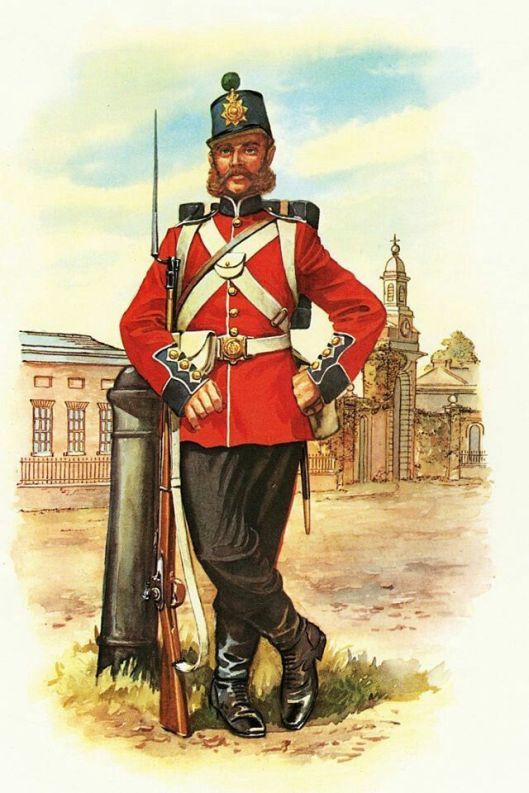
we can see at once where the idea of the “name and number” came from.  Although there had been attempts at serial numbers as far back as 1857,

image5eighteensixty

in 1881, units in the British Army adopted a regimental serial system.

image6eighteeneighties

Thus, in JRRT’s army, he would have seen a man in his battalion of his regiment (the Lancashire Fusiliers) identified as “189, Smith, W” (although officers like Tolkien were not issued such numbers).


image7nineteen


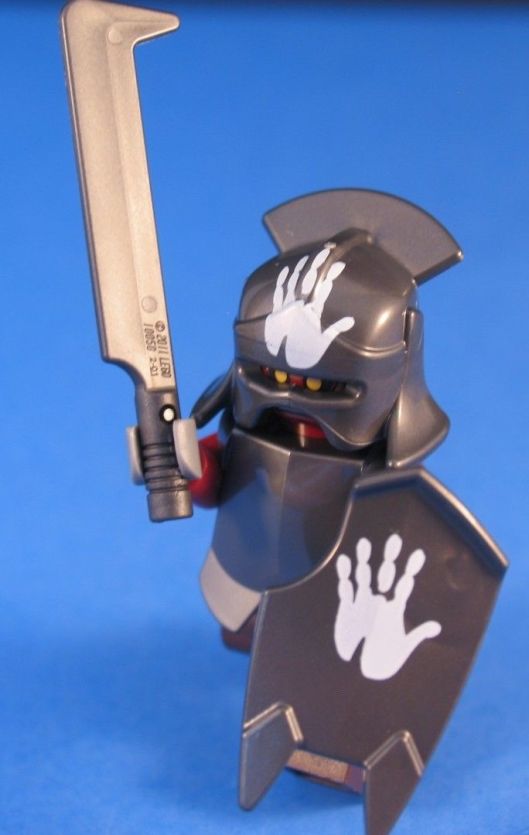
There is, of course, another identifying mark for the soldiers both of Sauron and Saruman, the heraldic device on helmets or shields, the red eye for Sauron, the white hand for Saruman

image8eye

image9hand

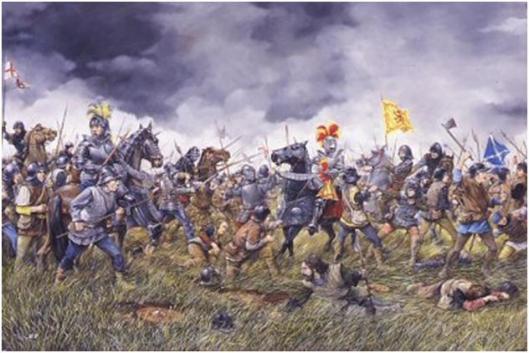
When we say “heraldic device”, we mean, as you can see, a decoration on cloth or metal, clothing, armor, and flags, which indicates, in some way, who the wearer is, or to whom he belongs.  On a medieval battlefield, before men wore uniforms, this would help those in charge to understand, at a glance, who was fighting whom.

image10flodden

In this painting of the large and confused battle between English and Scots soldiers at Flodden (1513), a late-medieval, early-Renaissance struggle, you can see how confusing things could be, but some order could be made out of the English standard to the left, and two Scottish flags to the right, the far one being generic Scots, but the near one being the banner of the Scottish king himself, James IV.

Up close, the one of the heraldic badges of the Stanley family (on the English side), the claw, marks this archer.

image11stanley

The science of heraldry is large and complicated, but may be seen at its simplest  in The Lord of the Rings, not only among orcs, but also among the forces of the West—

the white horse of Rohan,

image12rohan

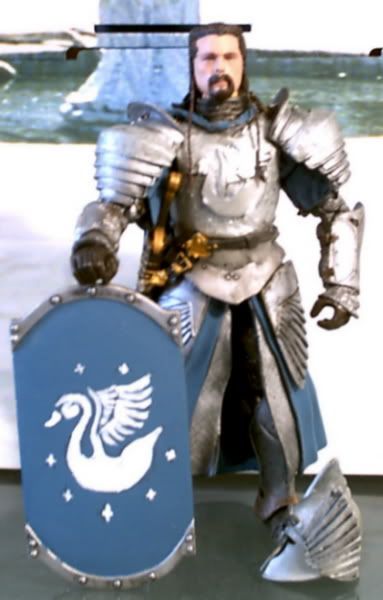
the swan and ship of Dol Amroth,

image13dolim

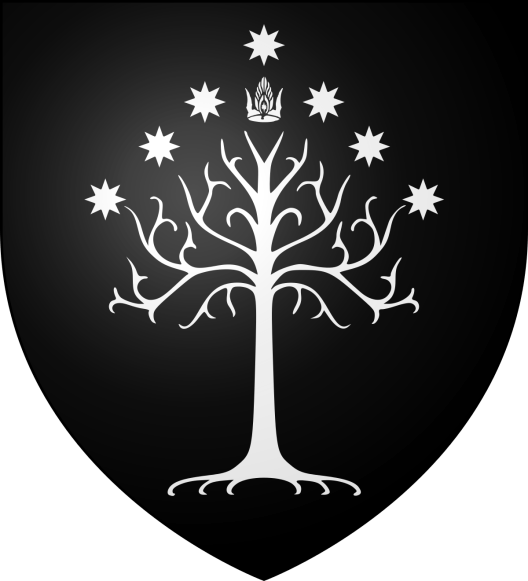
and the tree and seven stars of Gondor.

image14gondor


Where there is a strong contrast between the two sides, however, and we can only speculate as to JRRT’s intent, was the assignment of numbers to the orcs of Mordor  and not to the soldiers of the West a quiet comment on the facelessness of modern warfare, where a soldier is a number first, before he is ever a name and perhaps all men are reduced to orcs?

image15dead

Thanks, as ever, for reading.

MTCIDC

CD


Orc Arsenal.2

03 Wednesday Oct 2018

Posted by Ollamh in Artists and Illustrators, J.R.R. Tolkien, Military History, Military History of Middle-earth

≈ Leave a comment

Tags

Anglo-Saxon, Angus McBride, Bayeux Tapestry, Celts, chain-mail, hauberk, lamellae, lorica segmentata, medieval Russians, Mordor, Mycenaeans, Orcs, Renaissance irish, Republican Romans, Rohirrim, sallet, spangenhelm, Star Wars, The Lord of the Rings, Tolkien, Zulus

So, dear readers, welcome, as always.  In this posting, we want to finish our brief overview of orc weaponry which we began in our last.

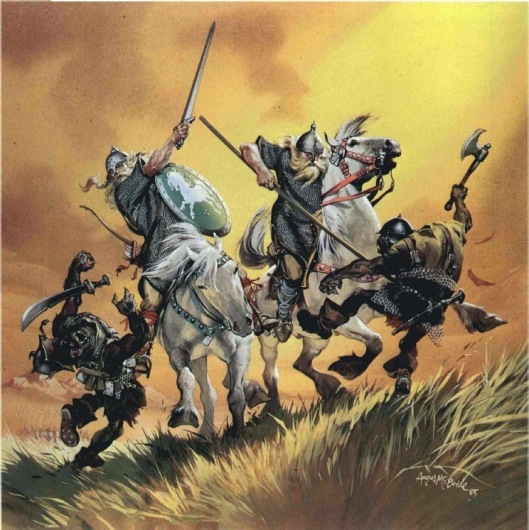
A famous military illustrator, Angus McBride, (1931-2007)

image1am.jpg

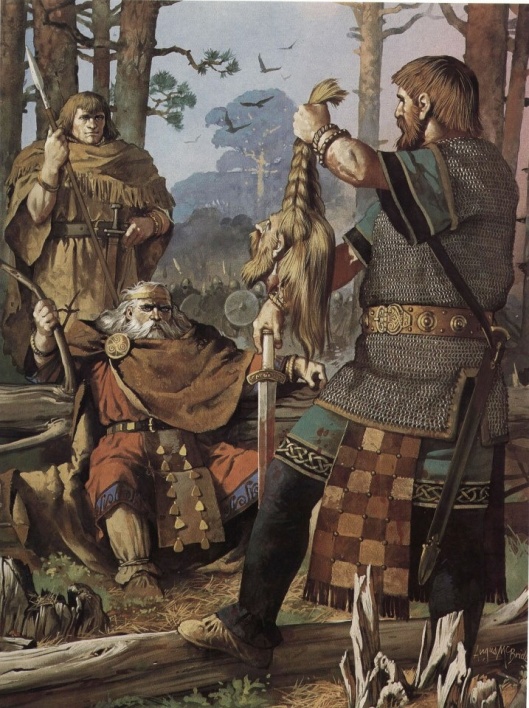
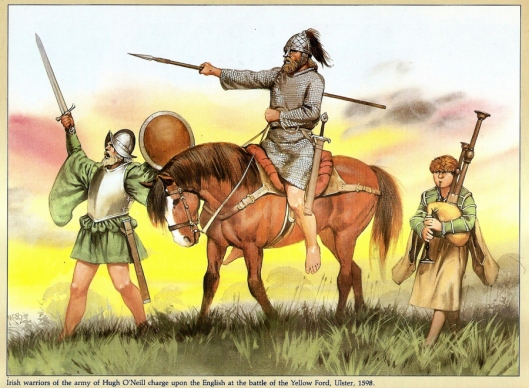
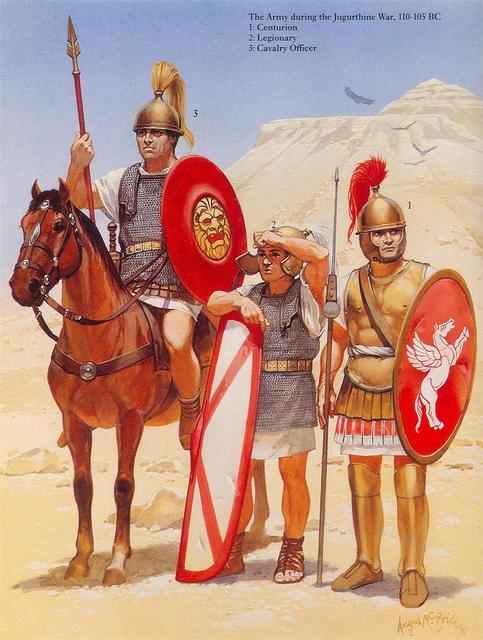
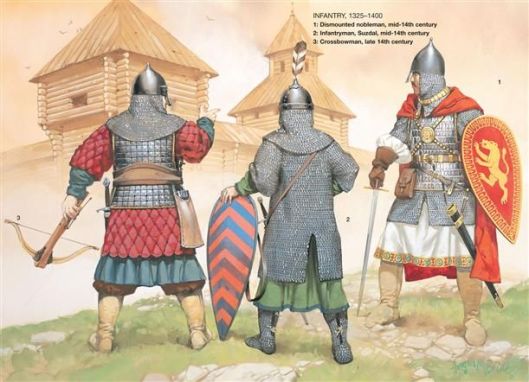
once said in an interview that there was one thing which he hated about doing such illustrations:  painting chain mail, which he said was the most tedious part of his work.  Considering that he painted it on early Celts

image2celts.jpg

and Renaissance Irish,

image3irish.jpg

and Republican Romans

image4romans.jpg

and medieval Russians,

image5russians.jpg

McBride must have suffered many hours of boredom!  It didn’t stop him, however, as we see in these illustrations for The Lord of the Rings,

image6lotr.jpg

image7lotr.gif

image8lotr.jpg

from putting armor on Rohirrim and orcs alike.

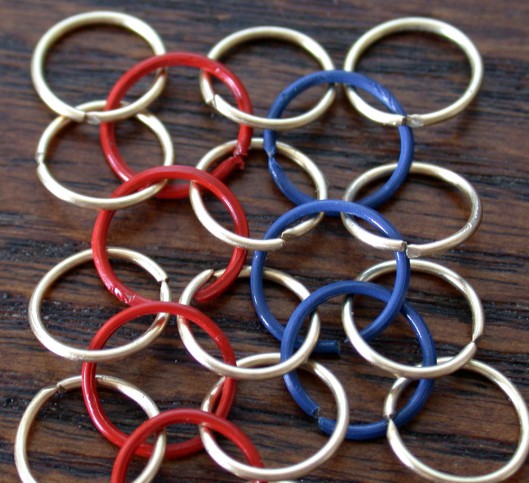
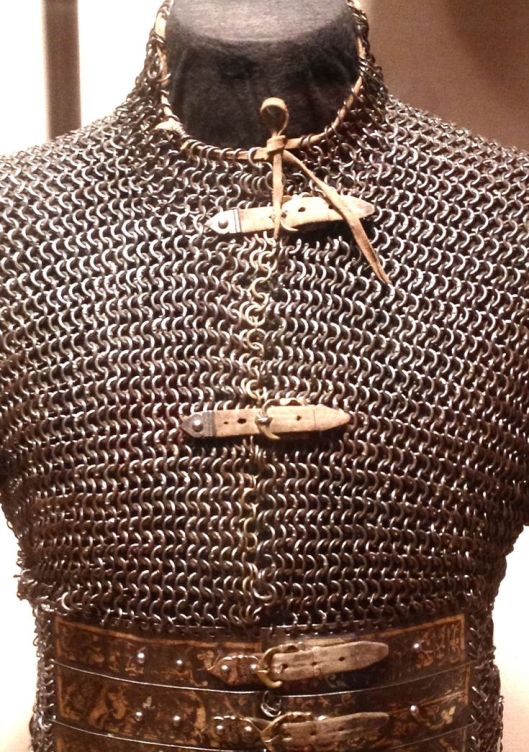
Chain mail—or simply mail—is made by linking together a series of metal rings.

image9amakingmail.jpg

image9bmail.jpg

This is, as you can imagine, a very time-consuming process, especially if you have to make the rings first.  (Here’s a LINK on mail manufacturing, in case you’d like to try it yourself.)

We have seen the number of rings used in a full mail hauberk to be over 20,000, so it’s also metal-consuming, as well as time-consuming.  It also appears to have been expensive.  We once heard an expert say something about the “same price as a two-bedroom house”, but that seems a little excessive.  The always-useful Regia Anglorum website gives the price of a mail shirt in Anglo-Saxon times at 529d (that’s 529 pence), or 10,580 pounds in modern UK money ($13,785.18 US at today’s current exchange rate).  Here’s a LINK to their web page to see the author’s reasoning for his equivalences.

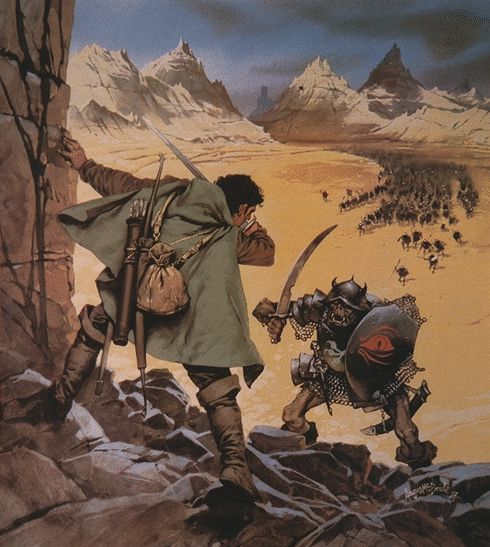
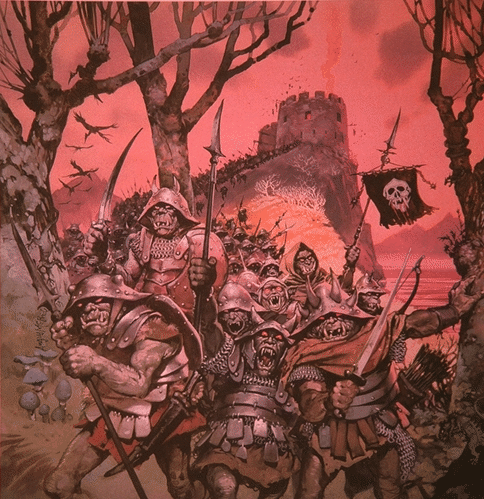
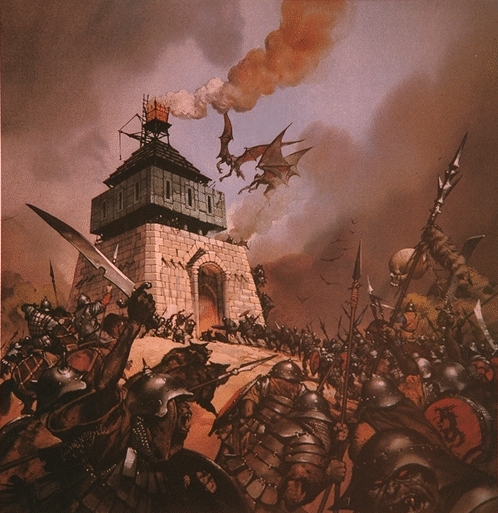
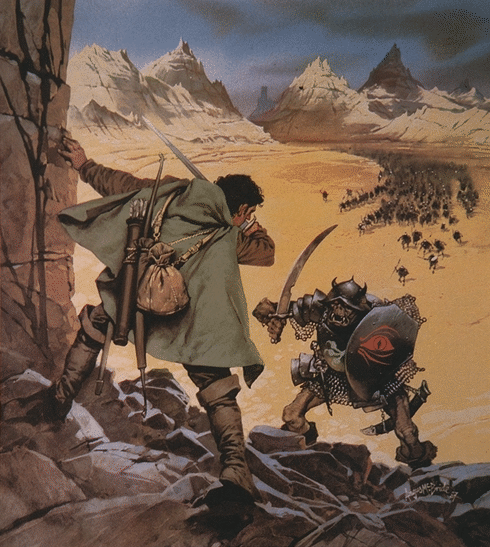
McBride shows orcs wearing mail—does JRRT?   In fact, in the first scene in which we see orcs, we read:

“…a huge orc-chieftain, almost man-high, clad in black mail from head to foot…” (The Fellowship of the Ring, Book Two, Chapter 5, “The Bridge of Khazad-dum”

And, late in the story, when Sam and Frodo are in Mordor and Sam provides clothes for Frodo:

“There were long hairy breeches of some unclean beast-fell, and a tunic of dirty leather.  He drew them on.  Over the tunic went a coat of stout ring-mail, short for a full-sized orc, too long for Frodo and heavy.” (The Return of the King, Book Six, Chapter 1, “The Tower of Cirith Ungol”)

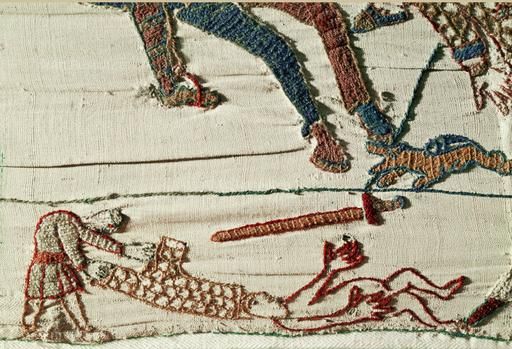
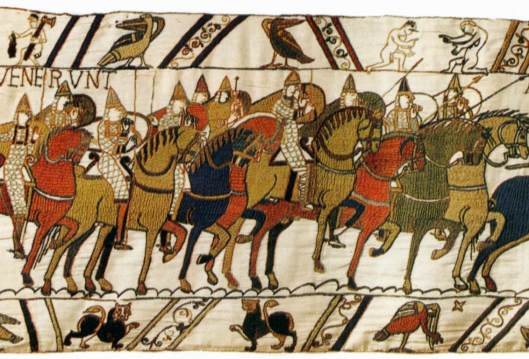
(We can attest to the weight of such a coat, by the way, having a modern reproduction ourselves.  It weighs 25 pounds or more—that’s 11.34 kilograms.  When it’s on your shoulders, the weight is displaced, so it doesn’t feel quite so heavy, but, if you have it piled in a box, you really feel the heft.  We would also add that, because of the cost, armor wasn’t commonly left on the battlefield.  This segment of the Bayeux Tapestry shows what must normally have happened.)

image9cstrip.jpg

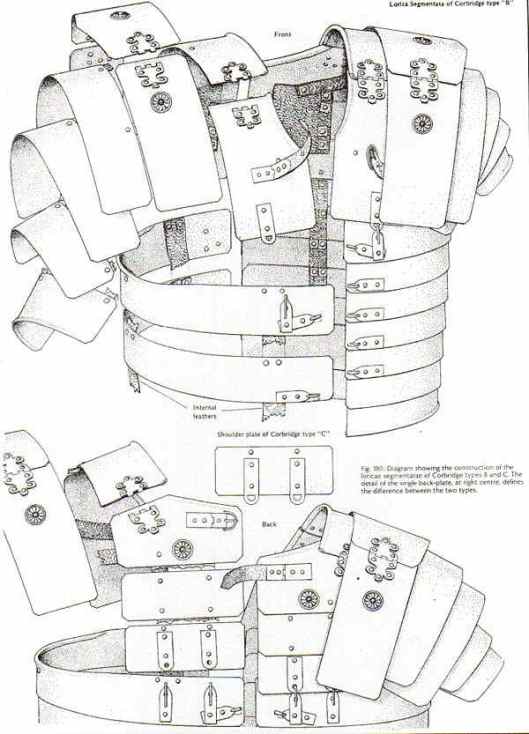
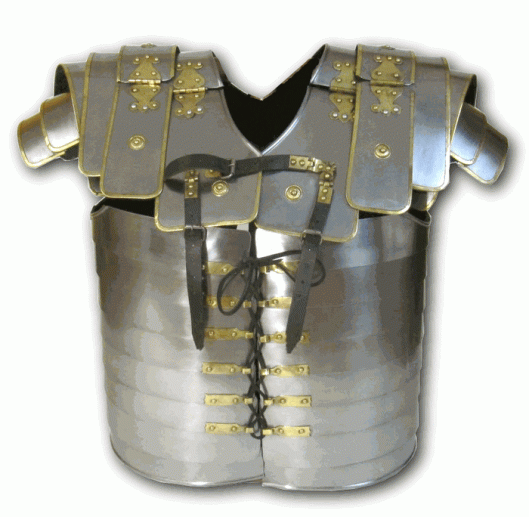
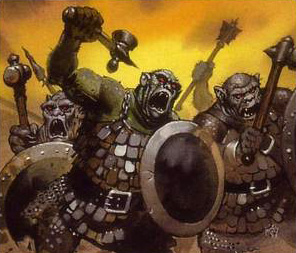
McBride, in his illustrations, depicts two other types of body armor.  In these first two depictions, we see the kind of armor the Romans called lorica segmentata.

image9lorica.gif

image10lorica.gif

This is a system based upon a series of broad, overlapping iron strips.

image11lorica.jpg

image12lorica.gif

As far as we can tell, this is never mentioned in the text. There may be one mention of our third type:

image13lam.jpg

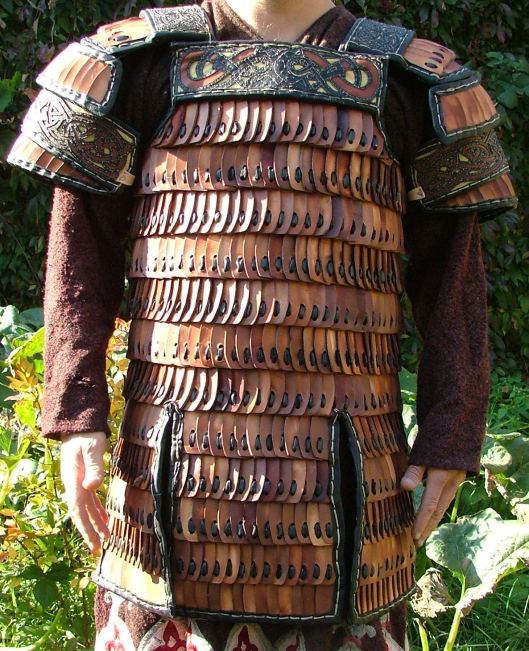
This is armor made up of a series of small plates, called lamellae, sewn in an overlapping fashion, rather like fish scales.

image14lam.jpg

There may be one mention of this:

“The orcs hindered by the mires that lay before the hills halted and poured their arrows into the defending ranks.  But through them came striding up, roaring like beasts, a great company of hill-trolls out of Gorgoroth.  Taller and broader than Men they were, and they were clad only in close-fitting mesh of horny scale, or maybe that was their hideous hide…” (The Return of the King, Book Five, Chapter 10, “The Black Gate Opens”)

But what about helmets?

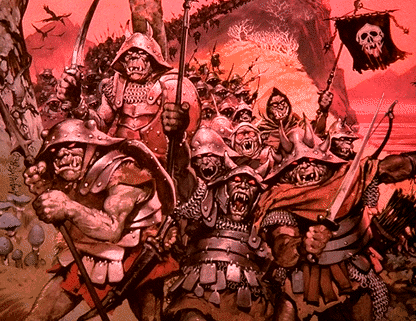
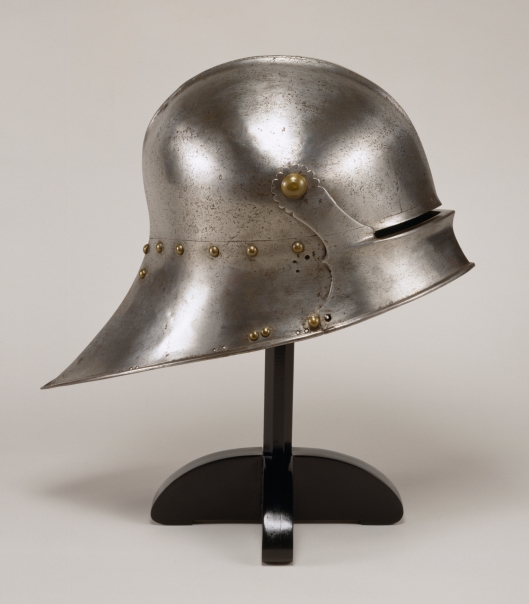
McBride depicts most of his orcs in something which might be described as wild variations on the later medieval helmet called a sallet.

image15aorcs.gif

image15bsallet.jpg

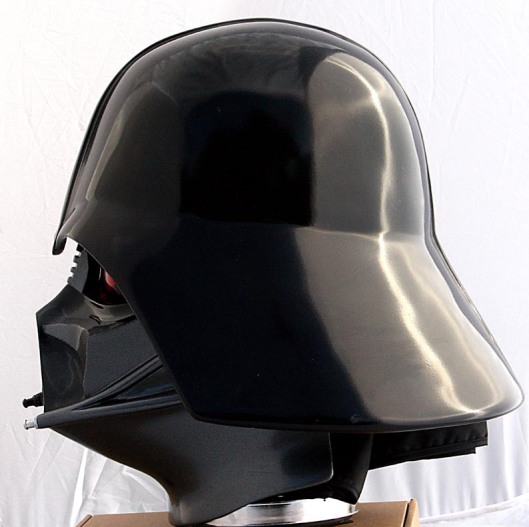
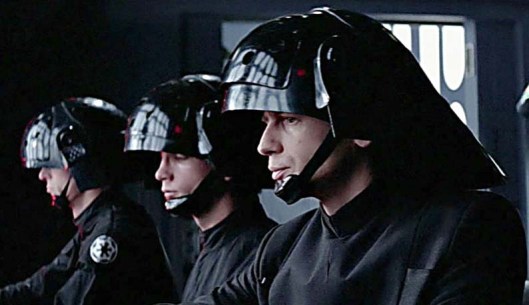
You can see John Mollo, a costume designer for Star Wars, having fun with this pattern, too.

image15cdarth.JPG

image15ddeathstar.jpg

In the text, in that first scene in which we see orcs, there is a mention of Aragorn’s sword, Anduril, which “came down upon [an orc’s] helm”, but nothing more specific—and that’s true for the second mention, when Aragorn examines the orcs killed by by Boromir:

“…on the front of their iron helms was set an S-rune, wrought of some white metal.” (The Two Towers, Book Three, Chapter 1, “The Departure of Boromir”)

There is a bit more detail in this description:

“Sam brought several orc-helmets.  One of them fitted Frodo well enough, a black cap with iron rim, and iron hoops covered with leather upon which the Evil Eye was painted in red above the beaklike nose-guard.” (The Return of the King, Book Six, Chapter 1, “The Tower of Cirith Ungol”)

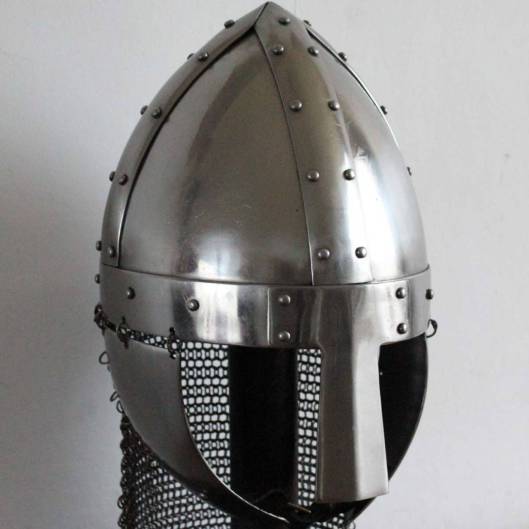
To us, this sounds like a kind of spangenhelm, the sort of thing the Normans wear in the Bayeux Tapestry.

image15spangen.jpg

image16spangen.jpg

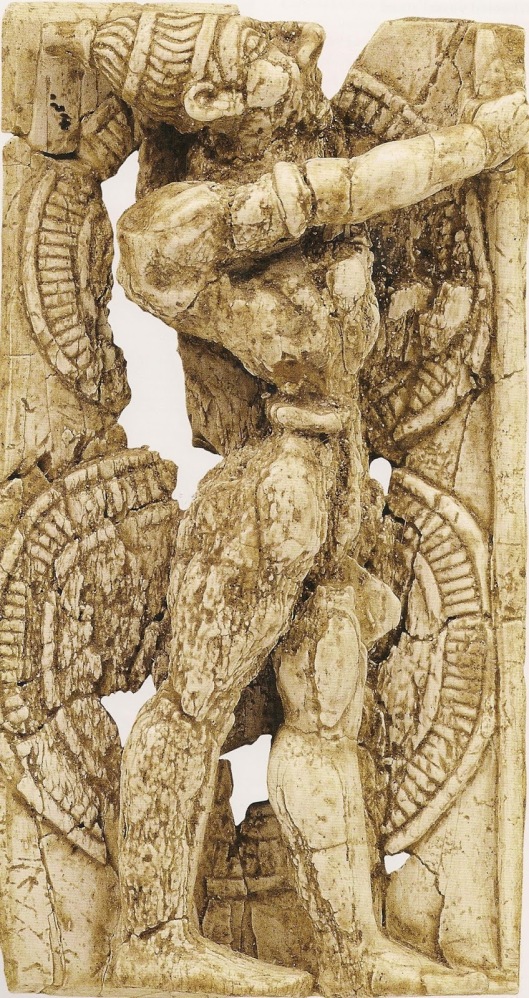
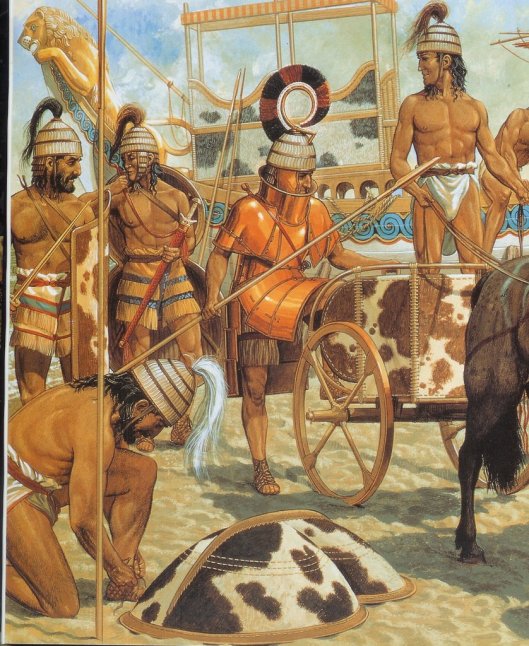
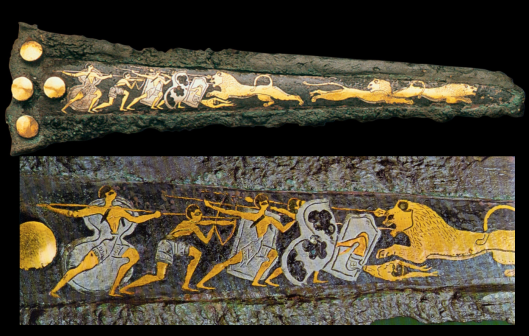
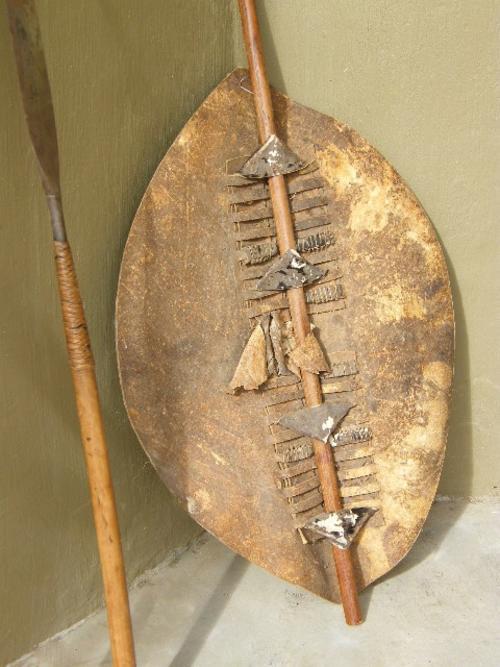
To which we can add a couple of types of shields.  The first we see—it’s that same “orc-chieftain”—carries “a huge hide shield” (The Fellowship of the Ring, Book Two, Chapter 5, “The Bridge of Khazad-dum”).  There is no further description.  If it’s only made of hide, this could resemble anything from a Mycenaean “figure-of-eight” shield

image17fig.jpeg

image18fig.jpg

to a Mycenaean “tower” shield

image19tower.png

to a Zulu shield.

image20zulu.JPG

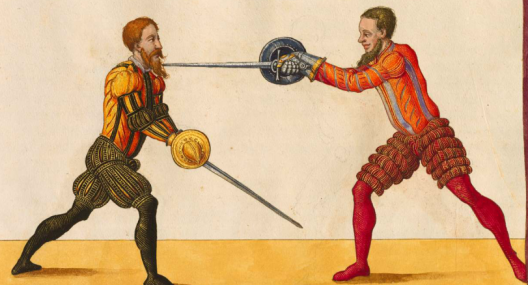
The hill-trolls of Gorgoroth, mentioned above for their possible lamellar armor, are said to carry “round bucklers huge and black” (The Return of the King, Book Five, Chapter 10, “The Black Gate Opens”).

A huge buckler, however, is a contradiction in terms, as bucklers are, by definition, small—more a kind of one-on-one fencing defense, as we see in this illustration.

image21buckler.png

Like their helmets, orc shields commonly carry the sign of their master, Saruman or Sauron—“Upon their shields they bore a strange device” (The Two Towers, Book Three, Chapter 1, “The Departure of Boromir”).  (Some of Saruman’s followers, however, seem to have unmarked shields, as the attackers of Helm’s Deep are described as “some squat and broad, some tall and grim, with high helms and sable shields”—The Two Towers, Book Three, Chapter 7, “Helm’s Deep”)  This can also be useful if you’re the authorities and you want to catch deserters, as Sam and Frodo find out when they’re trapped by a column of orcs on the road in Mordor:

“Then suddenly one of the slave-drivers spied the two figures by the road-side…He took a step towards them, and even in the gloom he recognized the devices on their shields.  ‘Deserting, eh?’ he snarled.” ( The Return of the King, Book Six, Chapter 2, “The Land of Shadow”)

image21shield.gif

This i.d.-ing leads us towards our next posting:  Heraldry and Serial Numbers, where we’ll see more of orcs and others, too.

Thanks, as always, for reading.

MTCIDC

CD

Orc Arsenal.1

26 Wednesday Sep 2018

Posted by Ollamh in Artists and Illustrators, Fairy Tales and Myths, Heroes, J.R.R. Tolkien, Literary History, Military History, Military History of Middle-earth, The Rohirrim

≈ Leave a comment

Tags

Alan Lee, And Inquiry Into Ancient Armour, Angus McBride, arming sword, Battle Axe, English Longbowmen, Eowyn, Falchion, Gladius, Gondor, Hildebrandts, Howard Pyle, John Howe, King Arthur, Longbow, Mace, Medieval, Mongols, Morning Star, Orcs, Pelennor, Pitt-Rivers Museum, Robert Louis Stevenson, Rohirrim, Scimitar, Sir Arthur Conan Doyle, Sir Samuel Meyrick, Ted Nasmith, The Black Arrow, The Lord of the Rings, The White Company, Tolkien, Victorian, Wallace Collection, War Hammer, Weaponry, Witch-King of Angmar

Welcome, dear readers, as always.

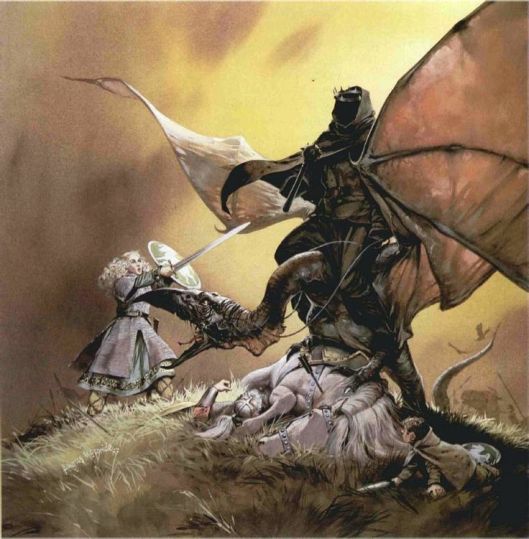
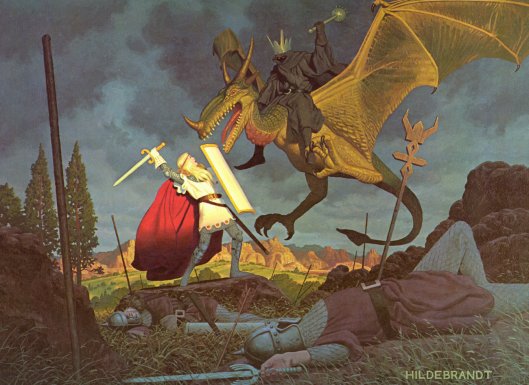
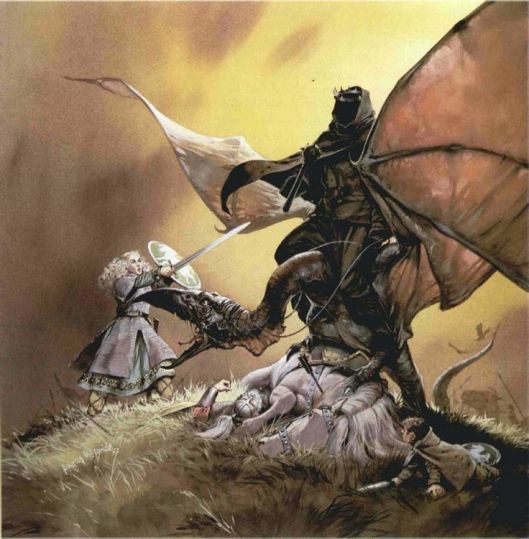
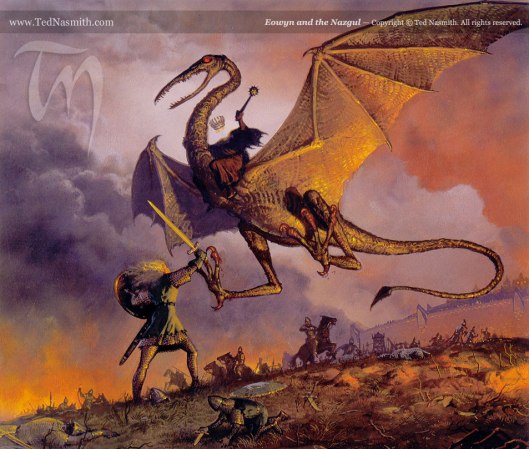
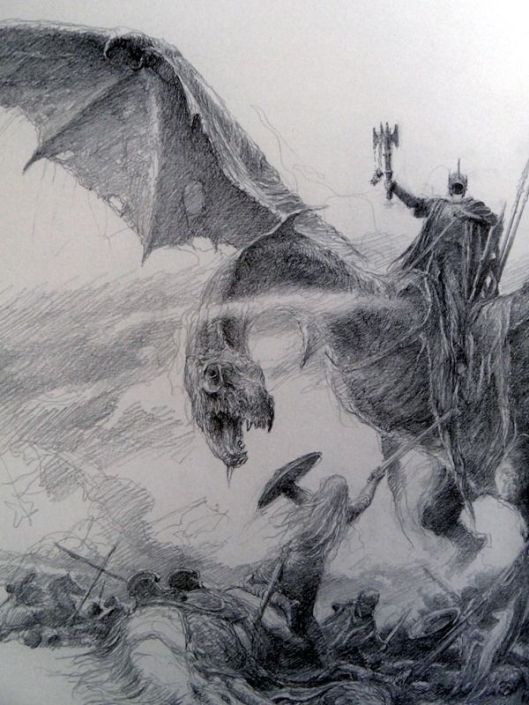
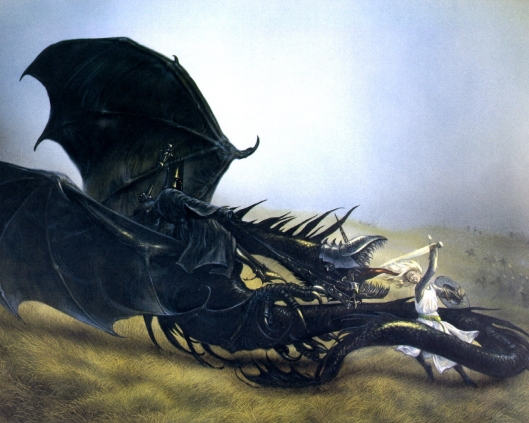
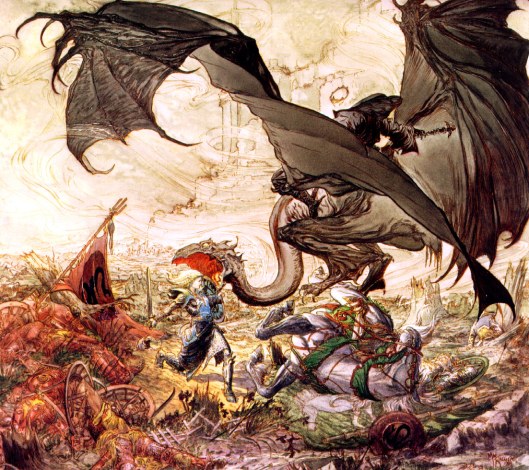
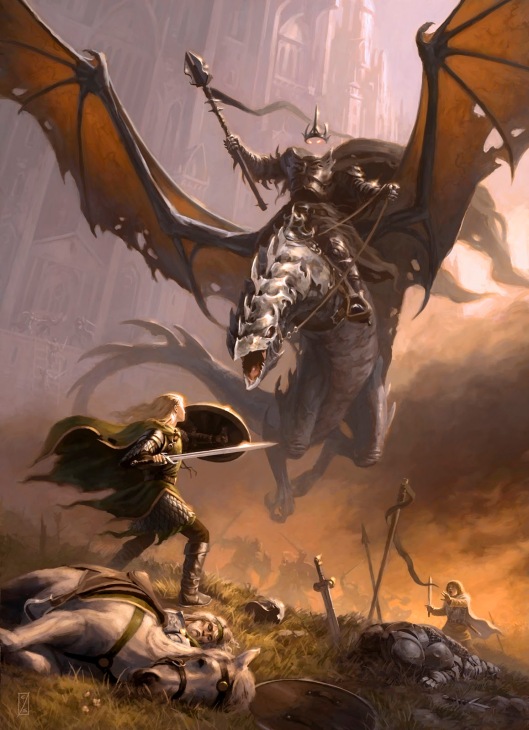
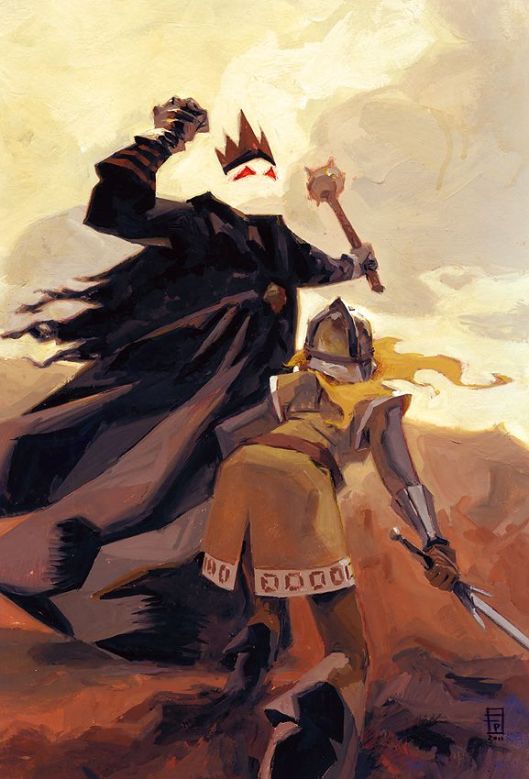
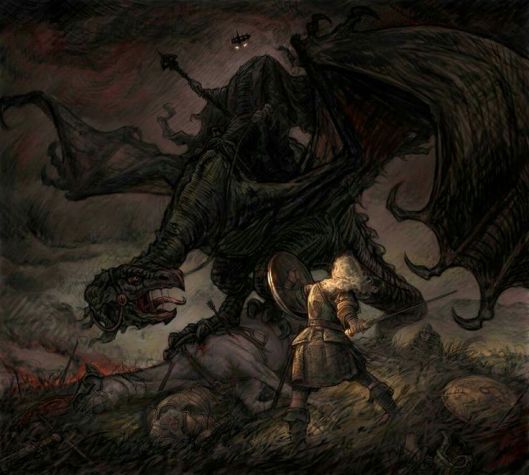
“The great shadow descended like a falling cloud.  And behold! It was a winged creature…

Upon it sat a shape, black-mantled, huge and threatening…A great black mace he wielded.”

(The Return of the King, Book Five, Chapter 6, “The Battle of the Pelennor Fields”)

This is clearly a scene which has caught the attention, over the years, of many artists, starting, we’d guess, with the Hildebrandts.

image1hild.jpg


Then others, like Angus McBride and Ted Nasmith,

image2am.jpg

image3nasmith.jpg

And Alan Lee and John Howe,


image4aleeimage4bhowe

as well as many very good artists whom we don’t know by name—

image4cimage5image6image7


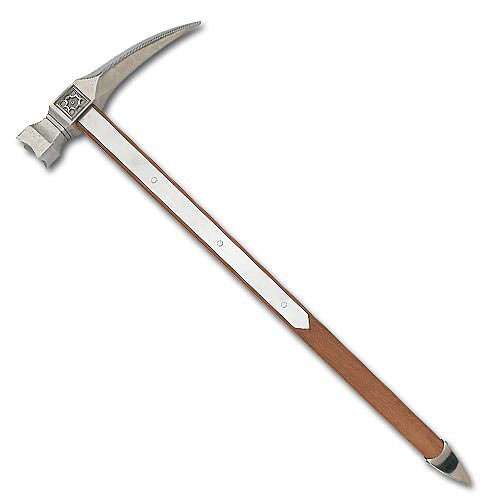
Of these, all but Lee and the unknown sixth artist follow JRRT’s description more or less closely.  Number 6—it’s a little unclear– but he might be carrying a war hammer of some sort,

image8warhammer.jpg

rather than a mace.

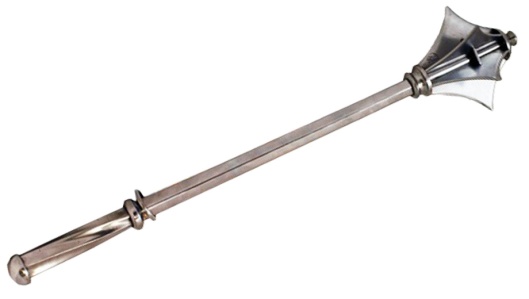
image9mace.jpg

image10mace.jpg

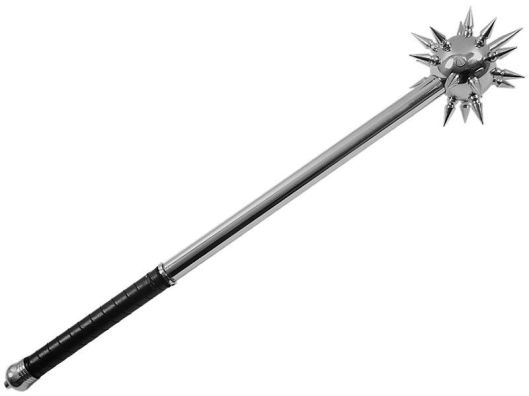
(These last two are basic patterns of a mace.)

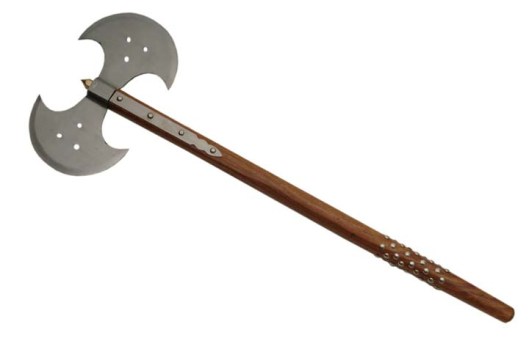
The Lee is, well, we’re not sure what it seems to be.  It sort of looks like a battle axe

image11battleaxe.jpg

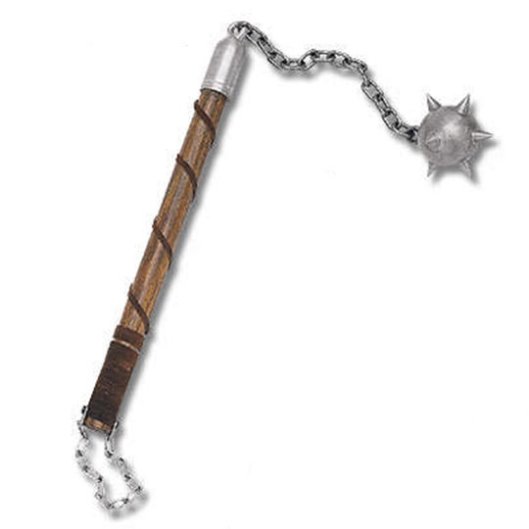
but also like what was called a “morning star”,

image12mornin.jpg

which should, we think, belong to the flail family.


image13flail

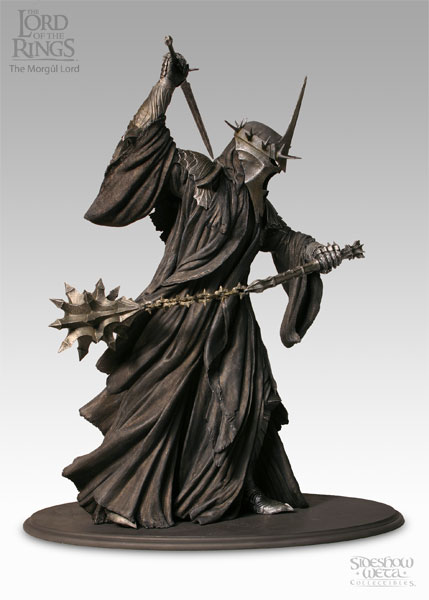
This rather fits in with the P Jackson image, shown in this model (and note that sword—definitely not in the original description—which is in his other hand).

image14mace.jpg

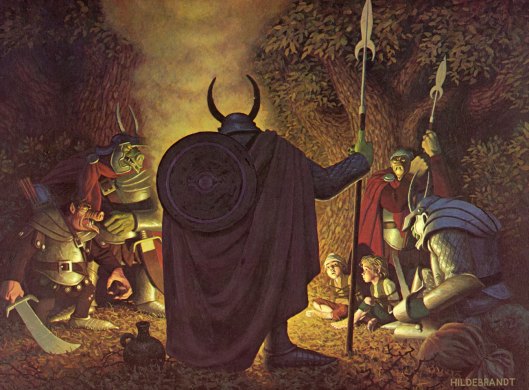
This difference made us curious about the weapons the Rohirrim—and the Gondorians—face and, in particular, those of the orcs.  The Hildebrandts

image15captured


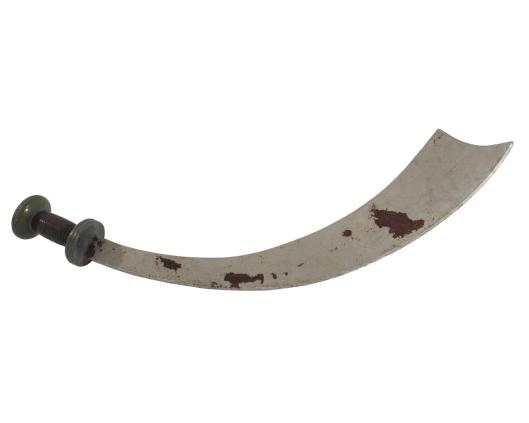
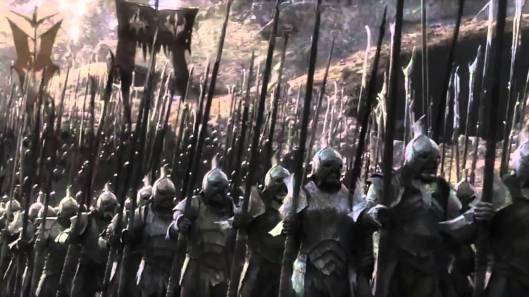
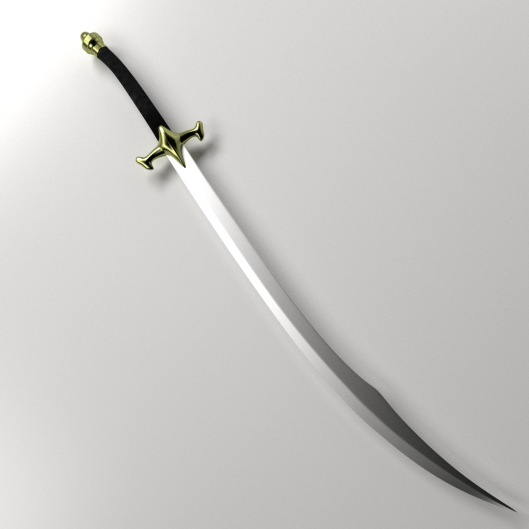
provide us with odd-looking spears and what might appear to be scimitars


image16scim

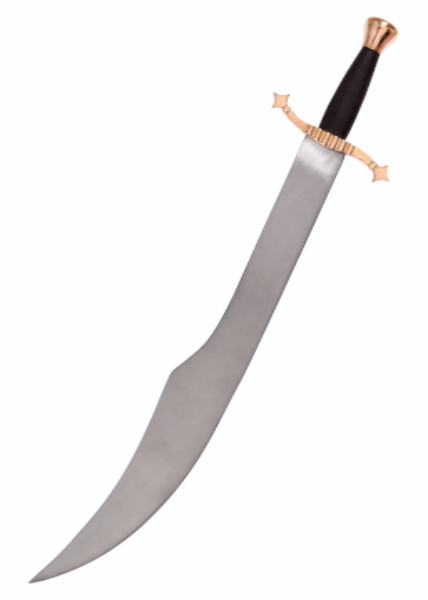
but might be the suggestion of a medieval sword called a falchion.

image17falchion

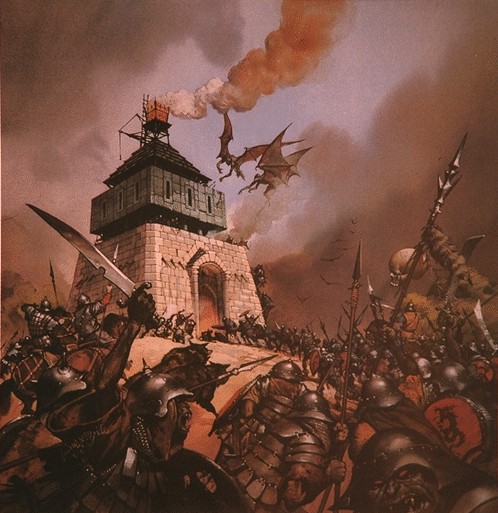
McBride, who spent much of his artistic career illustrating military subjects, gives us weapons (mostly) less fanciful.

image18mcbimage19mcb

Lee

image19lee

and Howe

image20howe

veer between the practical and the fantastic and the films clearly follow them—

image21orcimage22orcimage23orc

How does JRRT describe the orc weaponry?

The first armed orc we see appears in Moria:

“His broad flat face was swart, his eyes were like coals, and his tongue was red; he wielded a great spear…Sam, with a cry, hacked at the spear-shaft, and it broke.  But even as the orc flung down the truncheon and swept out his scimitar…” (The Fellowship of the Ring, Book Two, Chapter 5, “The Bridge of Khazad-dum”)

The orcs who pursue the Fellowship through Moria have similar weapons:

“Beyond the fire he saw swarming black figures:  there seemed to be hundreds of orcs.  They brandished spears and scimitars which shone red as blood in the firelight.”

After the death of Boromir, however, Aragorn, Gimli, and Legolas find a different kind of orc:

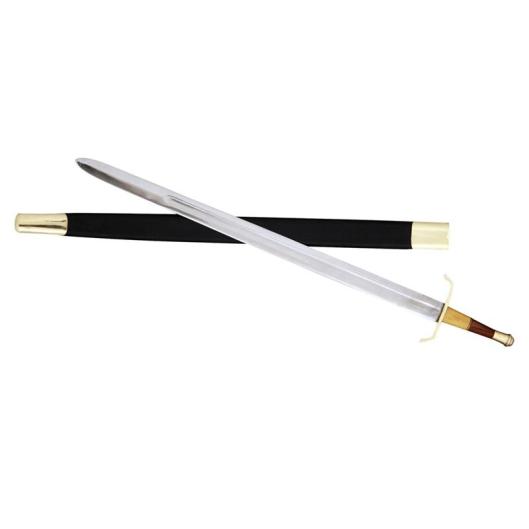
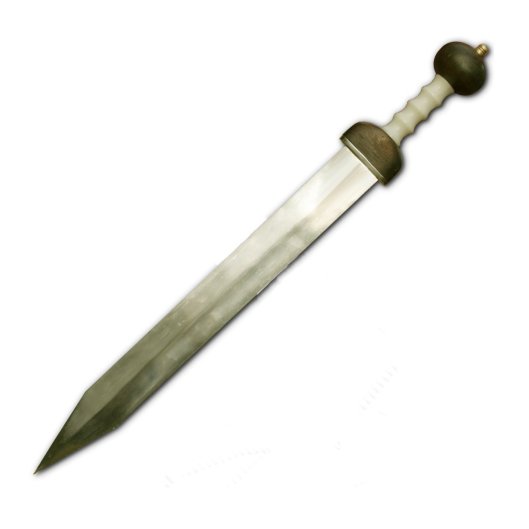
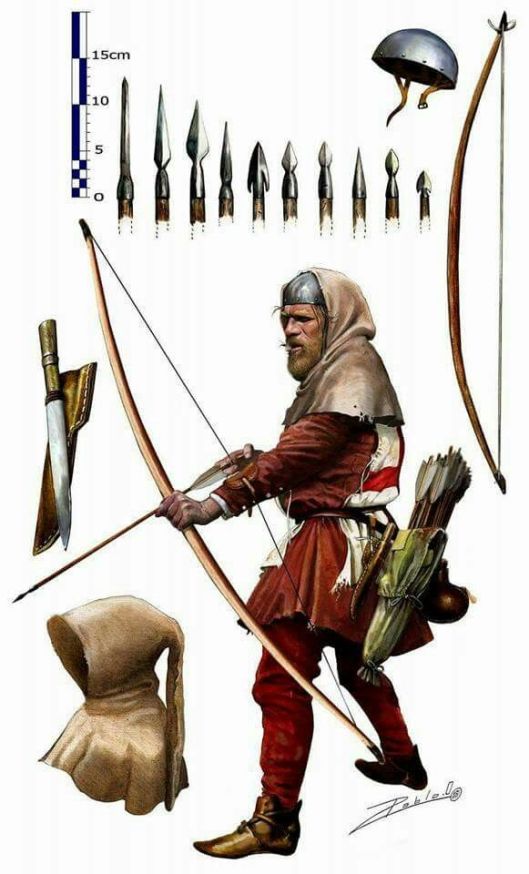
“There were four goblin-soldiers of greater stature, swart, slant-eyed, with thick legs and large hands.  They were armed with short broad-bladed swords, not with the curved scimitars usual with Orcs: and they had bows of yew, in length and shape like the bows of Men.” (The Two Towers, Book Three, Chapter 1, “The Departure of Boromir”)

So far, we’ve seen spears

image24spears

and scimitars

image25scim

and now we can add to that “short broad-bladed swords”.  Perhaps Tolkien is thinking of the medieval “arming sword”

image26arming

or even the Roman gladius?

image27gladius.jpg

When we add “bows of yew, in length and shape like the bows of Men”, we immediately see the classic English longbow.

image28longbowman.jpg

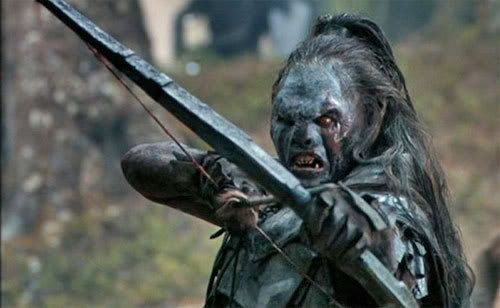
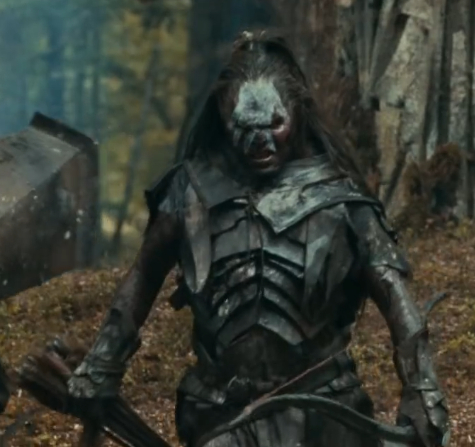
This doesn’t quite match with the first orc bowman we see in the films, however, “Lurtz”—

image29lurtz.jpg

image30lurtz.jpg

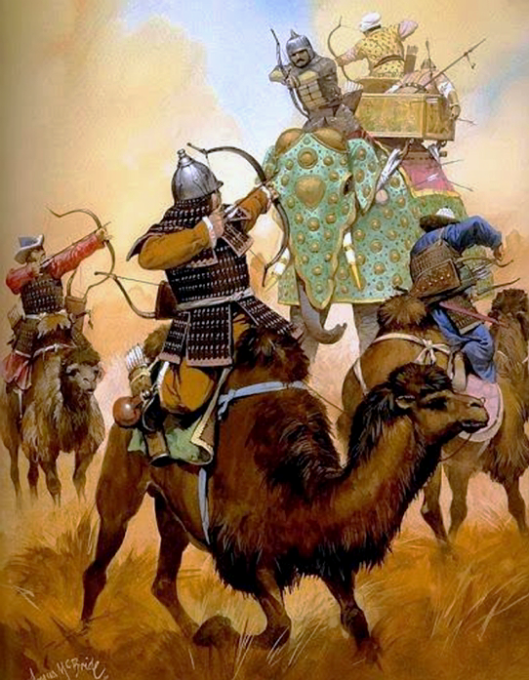
who appears to have some sort of recurved bow, possibly composite, of the sort the Mongols used

image31mongol

even though, from the white hand on his face, he is supposed to be one of those “goblin-soldiers” from Isengard.

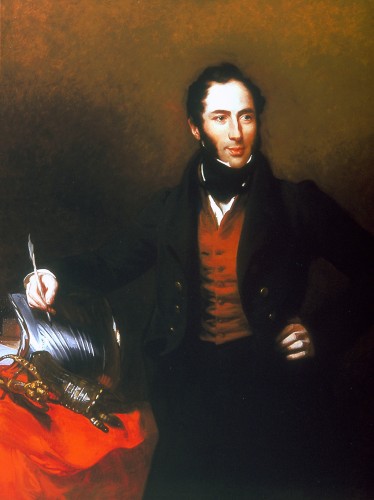
As we were looking through Tolkien’s text, we wondered where he would have gotten his ideas for weapons from.  If the basis, as we imagine it, would have been his background in medieval literature, then he might have gone to the library and found an old standard work, Sir Samuel Meyrick’s (1783-1848)

image32meyrick.jpg

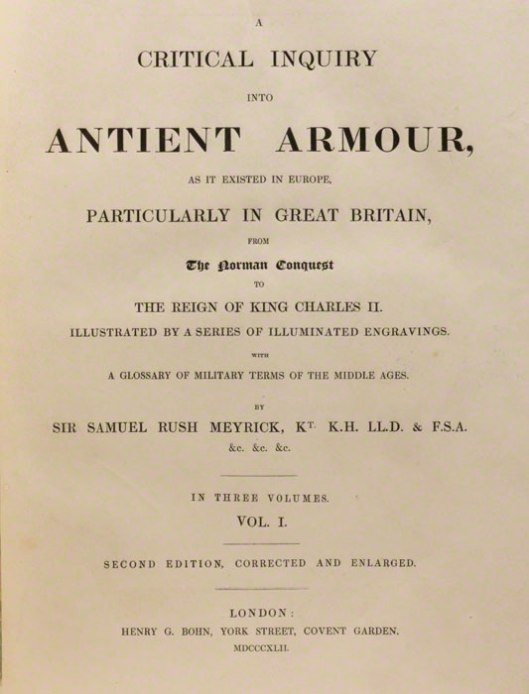
An Inquiry Into Ancient Armour, As It Existed in Europe, Particularly in Great Britain, From the Norman Conquest to the Reign of Charles the Second, first published in 1824.  (Here’s a LINK if you’d like to look at this text for yourself.)

image33mey

Meyrick was the first great English specialist in armor and the later editions of his work (in 3 volumes) have wonderful early hand-colored plates, all based upon surviving armor, tombs, manuscripts, and any other period materials he could gather.

image34meyill.jpg

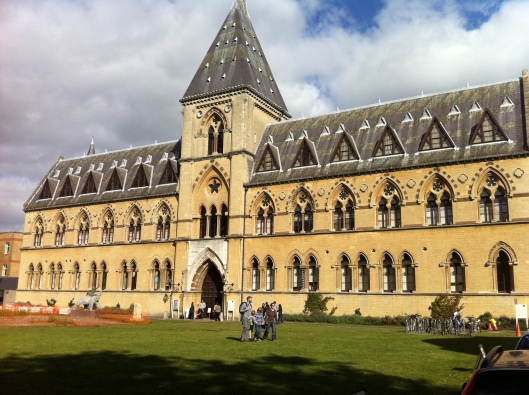
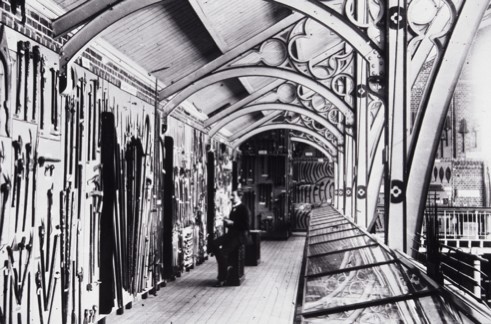
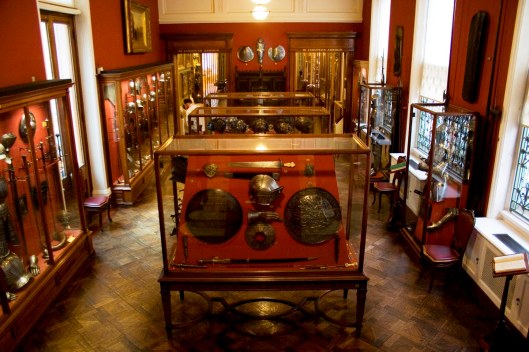
If JRRT wanted to see such things for himself, he would have found more exotic weapons in the Pitt-Rivers Museum in Oxford,

image35pittriversimage36pitt

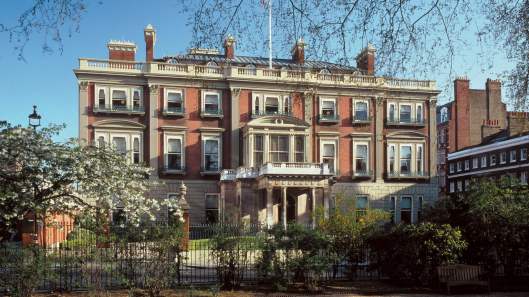
or he could have traveled up to London to see the Wallace Collection

image37wallaceimage38wallace

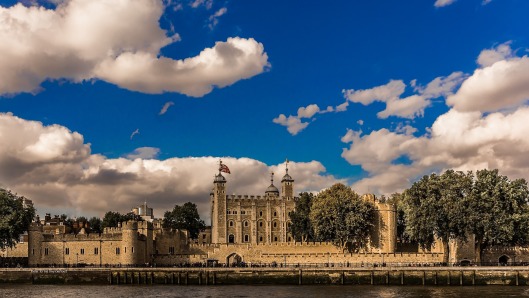
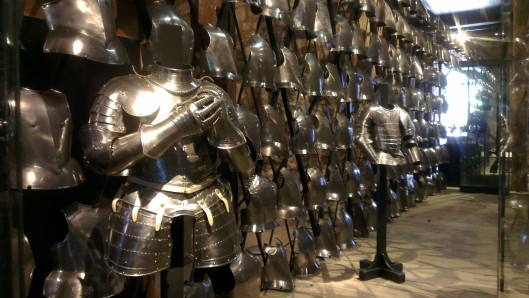
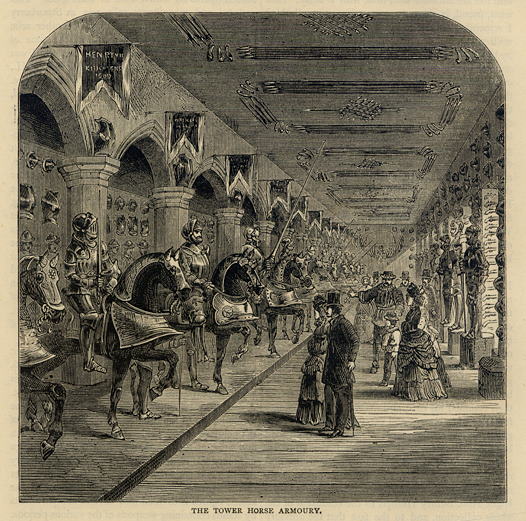
or, best of all, he could have visited the Tower of London, with its massive collection (the organizing of which had earned Meyrick his knighthood in 1832) of medieval arms and armor, which had been available to the public in some form even before Meyrick’s time—here’s a Victorian tour.

image39tower

image40towerimage41tower

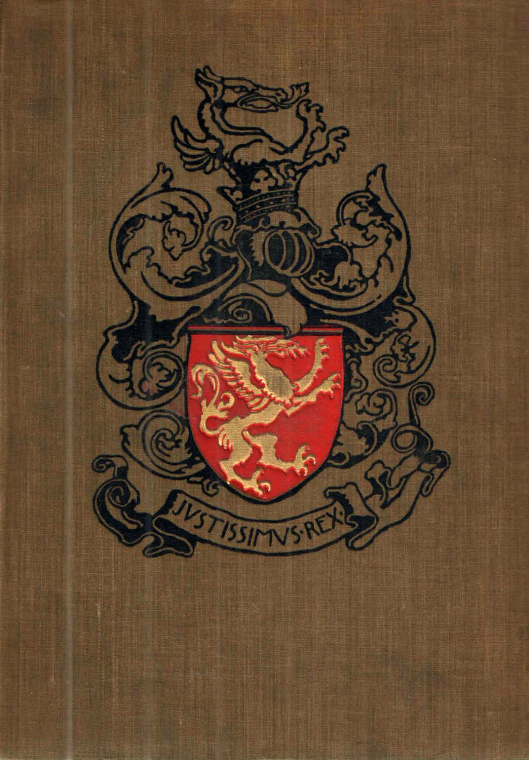
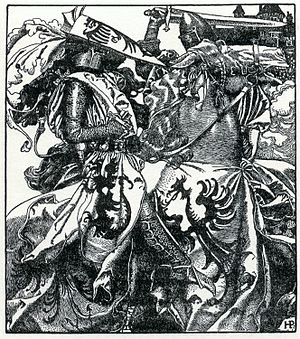
It could have been all of the above, of course, but it seems to us that the descriptions we’re reading are actually not really very specific—“mace”, “spear”, “scimitar”—only those short swords and bows suggest anything more detailed.  Perhaps, then, Tolkien was inspired by something else—perhaps he had read, perhaps even possessed, as a boy, books like Howard Pyle’s 1903 The Story of King Arthur and His Knights

image42pyle

and been inspired by its illustrations.

image43pyle

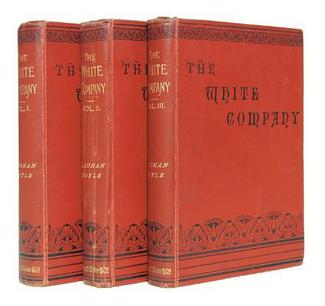
There were plenty of illustrated tales like this—Conan Doyle’s The White Company (first published in serial form in 1891),

image44whitecompany.jpg

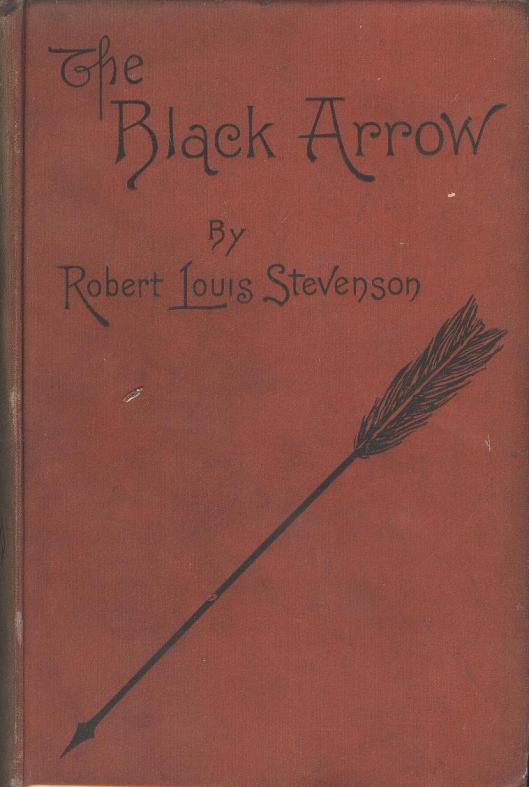
or Robert Louis Stevenson’s The Black Arrow (serial 1883, book 1888).

image45blackarrow.jpg

With any and all of that background, we wonder what he might have made of this, however, an orc sword from the films which looks more like something manufactured from a car part than the product of a medieval armorer…

image46sword.jpg

Thanks, as ever, for reading.

MTCIDC

CD
ps

If car part weapons don’t bother you, you might be interested in this LINK—it’s an early article on ideas for weapons and armor for the Jackson films.

Green and Quiet.2

12 Wednesday Sep 2018

Posted by Ollamh in Heroes, J.R.R. Tolkien, Military History

≈ Leave a comment

Tags

21st Lancers, Bataclava, Cavalry, Charge of the Light Brigade, Edwardian, Great War, horses, King Edward, Medieval, Omdurman, Oxford, Pelennor, railways, Rohirrim, Romans, Scots Greys, Tolkien, Victorian, Waterloo

Welcome, as ever, dear readers.

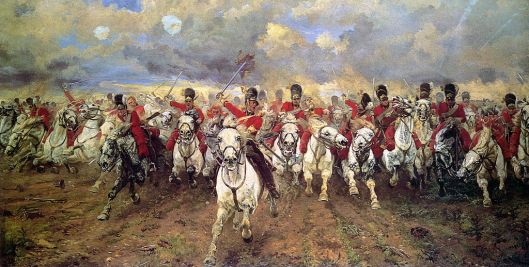
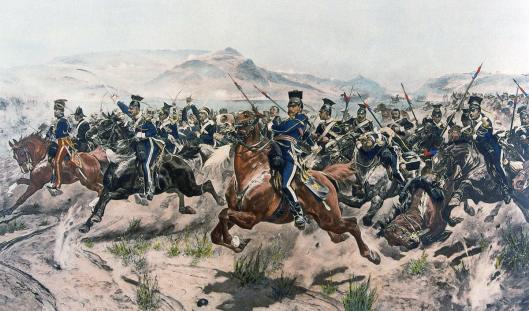
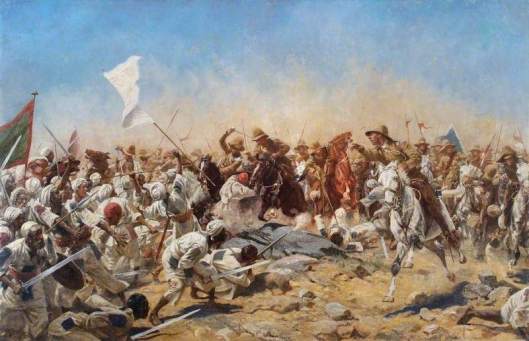
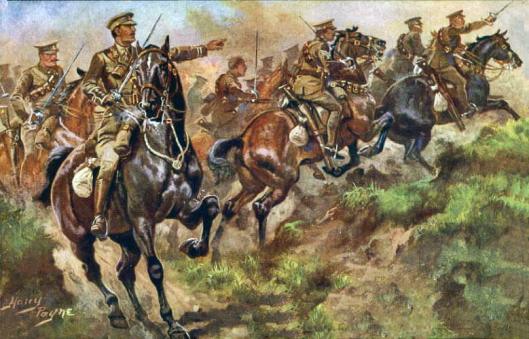
The late-Victorian/Edwardian world of JRRT’s childhood and youth was full of stirring stories and illustrations of military adventure, from the 1815 charge of the Scots Greys at Waterloo

image1scot.jpg

to the disastrous (but glorious) charge of the Light Brigade at Balaclava in 1854

image2.jpg

to the near-disastrous (but also glorious) charge of the 21st Lancers at Omdurman (1898)

image3omdurman.jpg

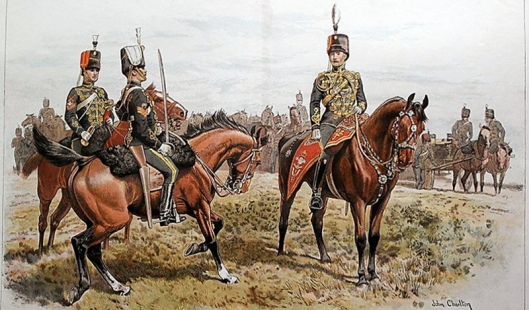
to the expectation of more glorious attacks in the event of a Great War on the continent.

image4eleventhhus.jpg

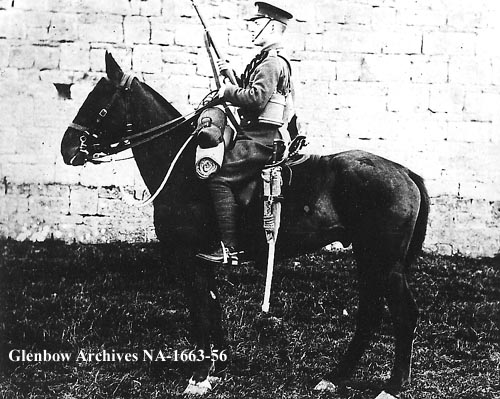
Such images may have inspired him to join a volunteer cavalry unit at Oxford, King Edward’s Horse,

image5keh.jpg

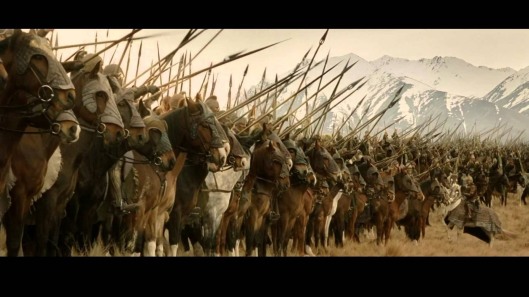
and may even lie behind the charge of the Rohirrim at the Battle of the Pelennor Fields.

image6pel.jpg

To us, however, it also symbolizes something else:  the role of the horse in Tolkien’s world.  Its military role was more than simply carrying the glamorous cavalry, however.

image7hussars.jpg

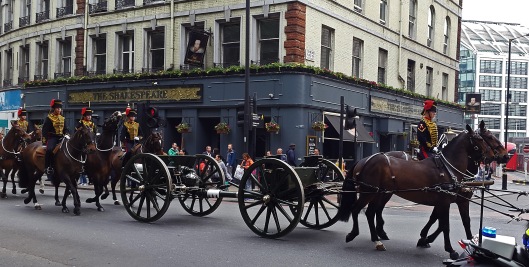
It also pulled the guns,

image8rha.jpg

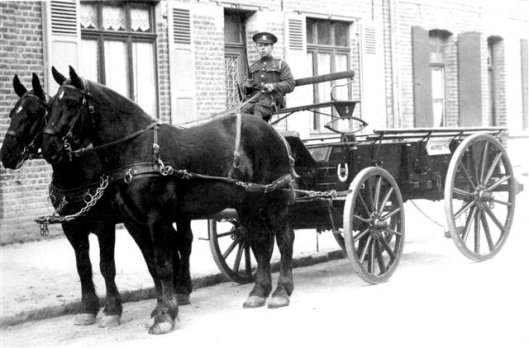
the supply wagons,

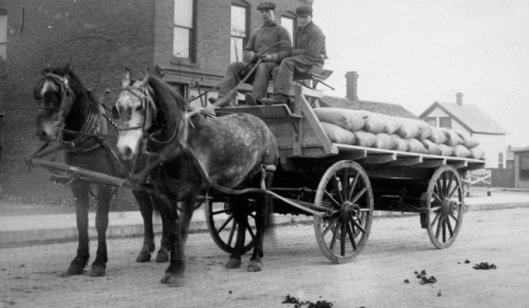
image9gsw.jpg

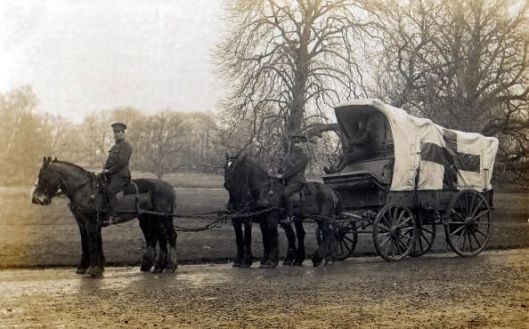
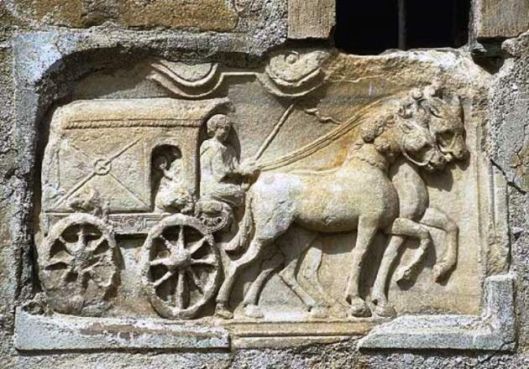
the ambulances,

image10ambulance.jpg

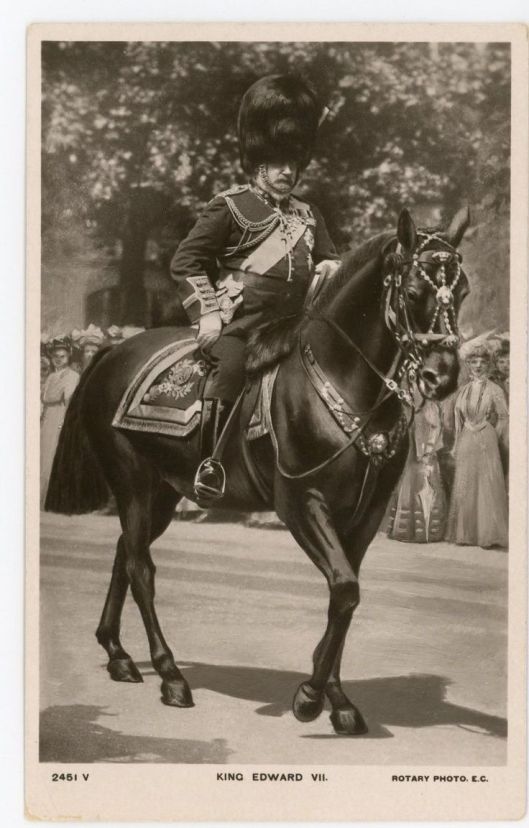
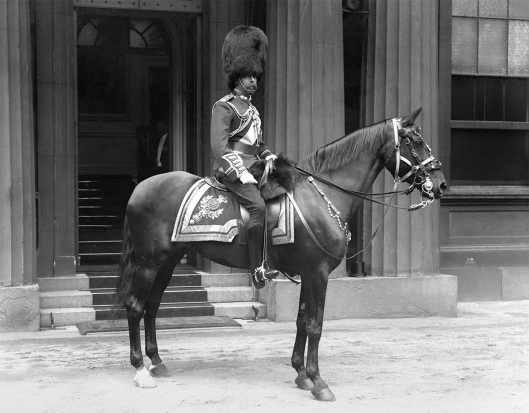
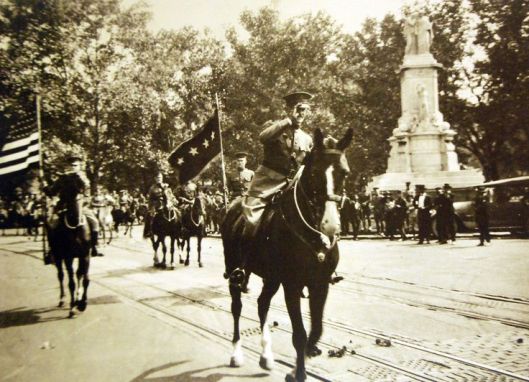
as well as carried those in control of it all, from the Kings (after 1901)

image11ed7.jpg

image12geo5.jpg

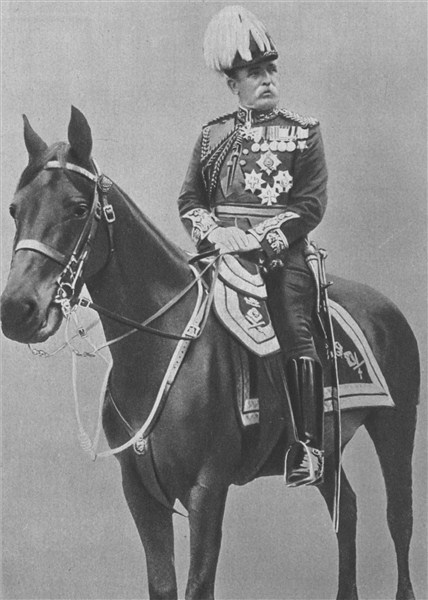
to the generals,

image13french.jpg

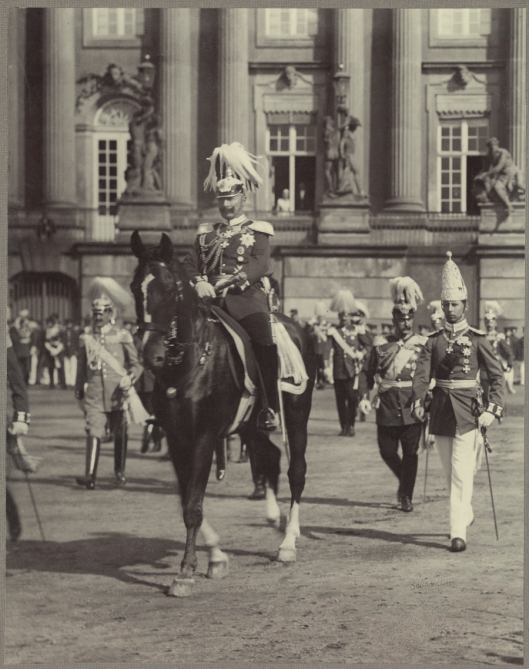
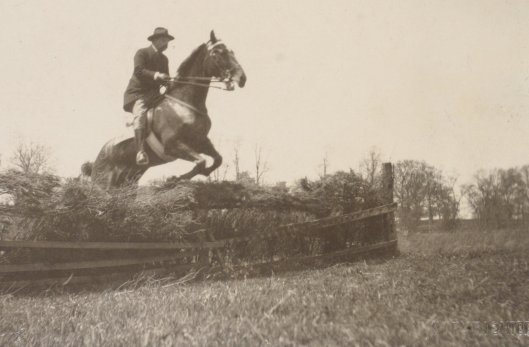
and it was the same for all of Europe and the US, as well.

image14kaiser.png

image15tr.jpg

image16pershing.jpg

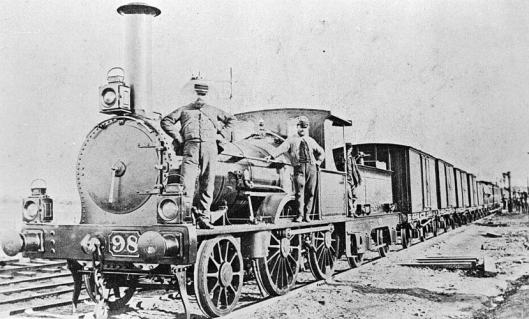
All of which simply reflected that, for all that there were railroads

image17railway.jpg

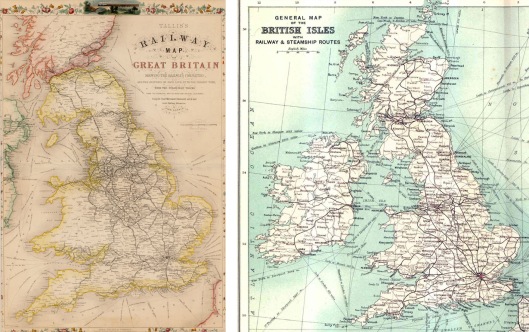
and the West was crisscrossed with railway tracks,

image18rrmaps.jpg

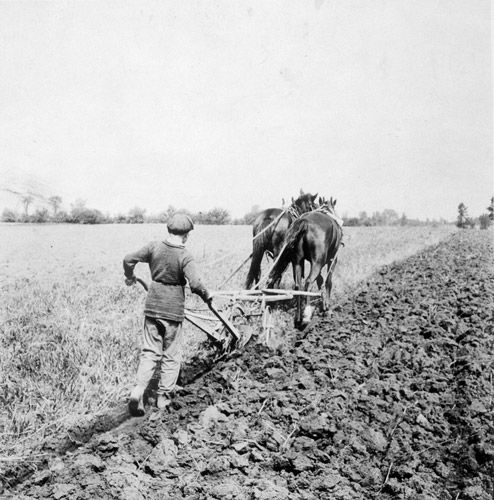
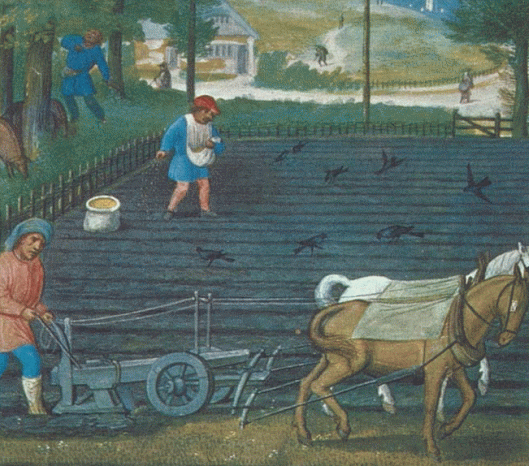
horses still pulled the world,

image19plowing.jpg

as they had from Roman times

image20roman.jpg

through medieval

image21medplow.gif

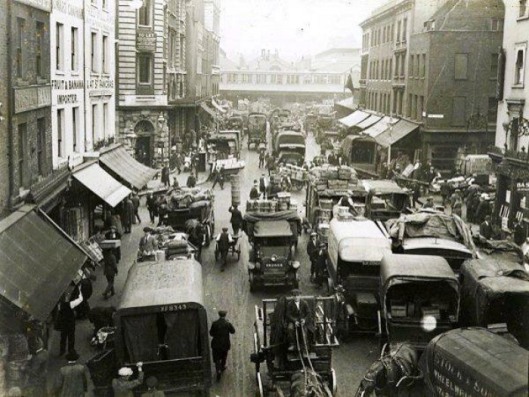
and still did, even beyond the Great War.

image22london.jpg

In our last posting, we discussed a line from The Hobbit :  “By some curious chance one morning long ago in the quiet of the world, when there was less noise and more green…”

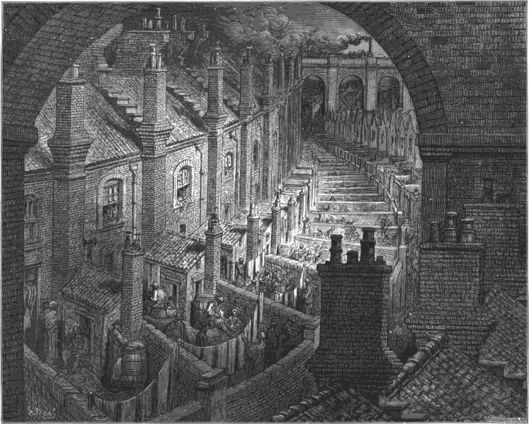
We suggested that, with that phrase “long ago” and that imperfect tense verb form, “was”, all was no longer so quiet or green and that goblins/orcs, or their modern equivalent in the Industrial Revolution, were eating up the green of the world, as well as the quiet, but we would like to add to that that a major change in transport, which removed the horse almost entirely from the picture, also contributed greatly.

First, of course, it was those railways which cut through everywhere, steaming and smoking and hooting.

image23rr.png

These greatly reduced the use of horses for carrying things—and people—over distances.

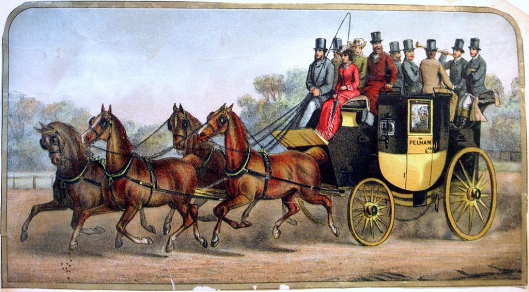
image24wagon.jpg

image25stage.jpg

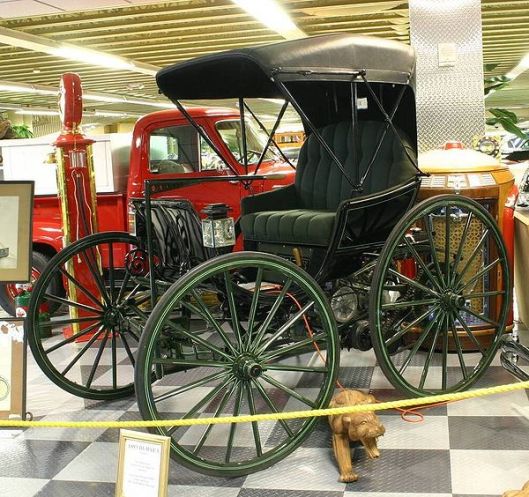
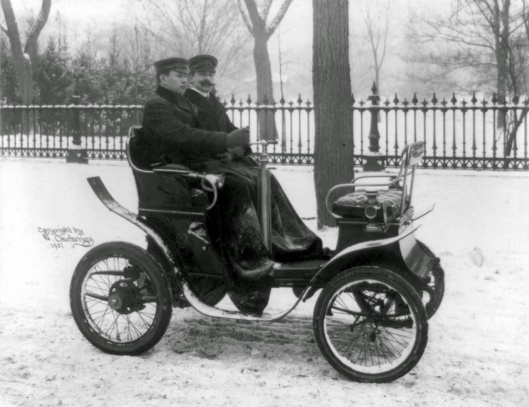
At the turn of the century, however, a new invention would come to so diminish the employment of horses eventually to the point where they would be thought obsolete.

image26duryea.JPG

At first, they were few and far between, available only to the rich for personal use.

image27richcar.jpg

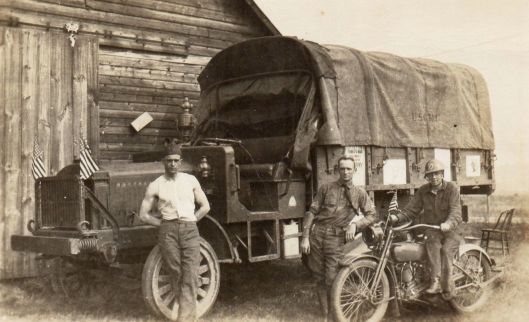
The massive production needed for the Great War (1914-1918),

image28atruck.jpg

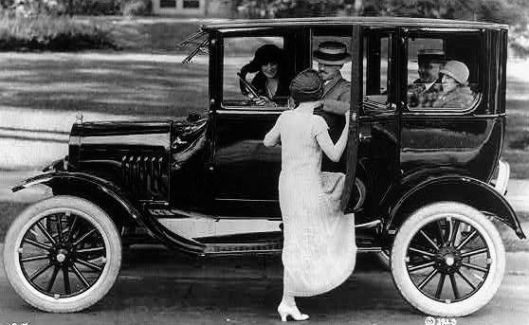
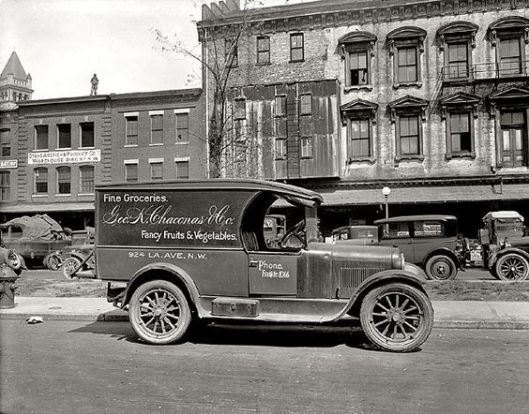
however, encouraged both post-war demand and supply.

image28car.jpg

image29van.jpg

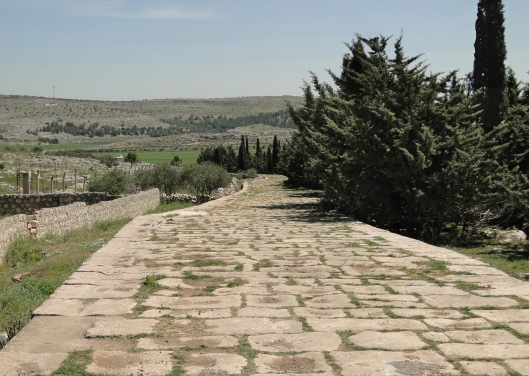
As we’ve discussed in previous postings, the Romans had been masters of the paved road.

image30romanroad


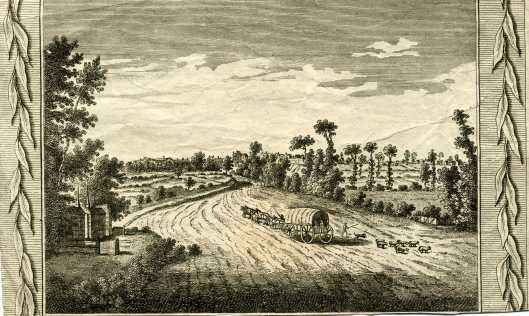
After the Romans, however, the secret (and the massive amounts of cash, as well as the numbers of workers) to such roads was lost and roads declined into, at best, wide paths—dust baths in summer, swamps in winter.

image31greatnorth.jpg

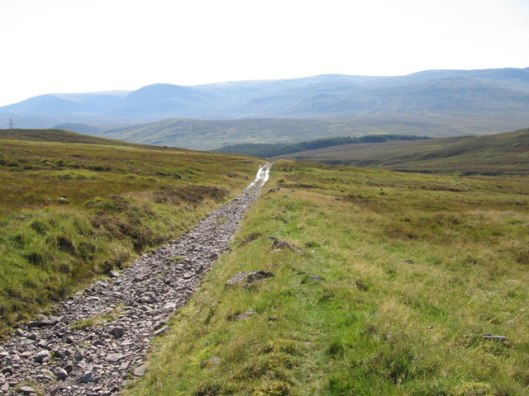
At best, a road might be “metalled”—that is, covered in loose stone (from Latin “metallum”—here, meaning “quarry”).

image32metalled.jpg

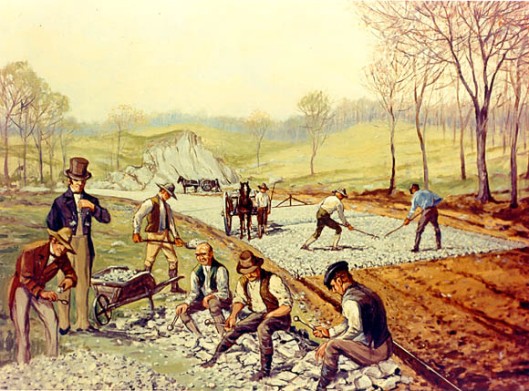
In the 1820s, the Scots engineer, JL McAdam, created roads with a crushed stone surface over larger inlaid stones.

image33mcadam


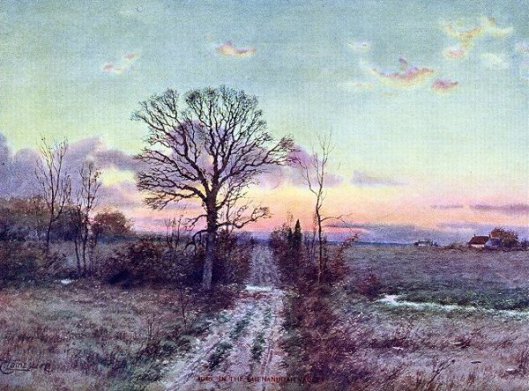
Each of these was an improvement over a dirt track,

image34track.jpg

but, about 1900, the next process arrived, with the use of bitumen and then various petroleum substances to cover the surface and, along with the use of concrete, these produced the roads we still drive on today.

image35highway.jpg

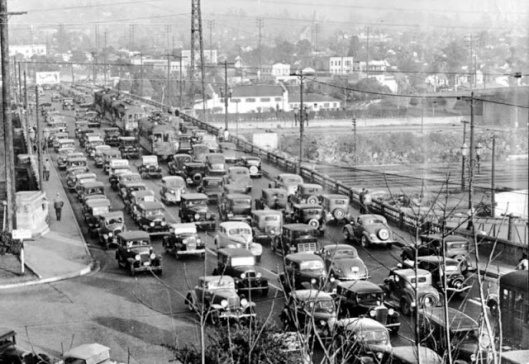
Unfortunately for green and quiet, this rapidly multiplied the decay of both, as cars and trucks and the roads they needed began to spread across the landscape.  Imagine, for a man who had been born into the greener and quieter and horsier world of 1892, what this 1930s traffic jam would have been like and you can easily see why he would have believed that goblins and orcs could so harm the peaceful world!

image36jam.jpg

Thanks, as ever, for reading.

MTCIDC

ps

Recently, we happened upon this very interesting story, which we had never seen before, from the online BBC New, 3 July, 2006.  The author mentions “Tolkien’s son” by whom he means JRRT’s second son, Michael.

Many years ago I corresponded with Tolkien’s son, a schoolmaster like myself. He said the Dark Riders in his novel were based on a real recurring nightmare from the Forst World War. Tolkien, riding a good cavlary horse, had somehow got lost behind the German lines,and, imagining he was behind his own trenches, rode towards a group of mounted cavalrymen standing in the shade of a coppice.

It was only when he drew nearer he realised his mistake for they German Ulhans, noted for their atrocities and taking no prisoners. When they saw him they set off in pursuit with their lances levelled at him. He swung his horse round and galloped off hotly pursued by the Germans. They had faster steeds but Tolkien’s horse was a big-boned hunter.

They got near enough for him to see their skull and crossbone helmet badges. Fortunately for Tolkien (and us, his readers)he raced towards some old trenches which his horse, used to hunting, took in its stride. The Uhlans’ horses weren’t up to it and they reined in leaving Tolkien to get away to his own side.

He was terrified and the cruel faces of those Uhlans and their badges haunted him in nightmares for a long time afterwards. Years later, when he was writing his novel, the Dark Riders were the result of that terrifying chase.
Revd John Waddington-Feather, Shrewsbury

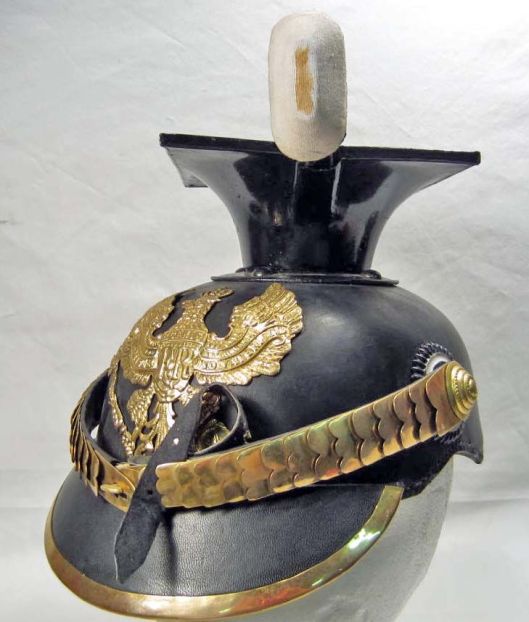
There are some odd typos, but we think that the basic story might be true except for the details about the German cavalry.  Uhlans are lancers, but lancer cap badges looked like this.

image37czapska.jpg

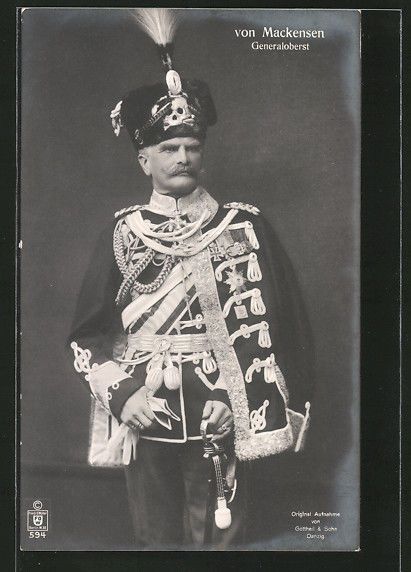
German hussar busbies, however, could have the famous “death’s head” badge.

image38vonm.jpg

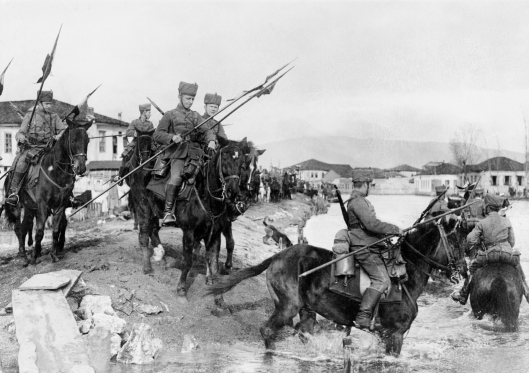
And German hussars also could carry lances as in this picture from 1915.

image39hussars.jpg

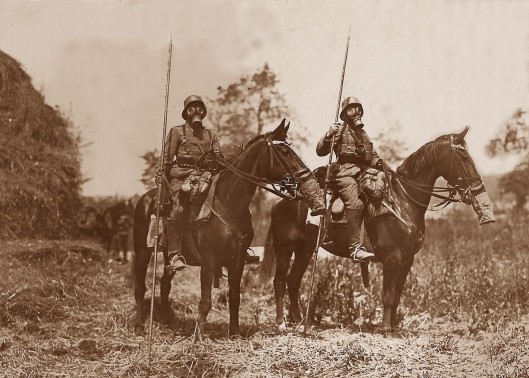
German cavalry went to war with covers over their headgear (as in the photo of the hussars), but, if the story is accurate, we might presume that the hussars, for some reason, have shed those covers.

Gobs and Hobs (1)

22 Wednesday Aug 2018

Posted by Ollamh in Fairy Tales and Myths, J.R.R. Tolkien, Literary History, Military History

≈ 2 Comments

Tags

A E Mason, A Midsummer Night's Dream, Brunhilde, cadet, cockfighting, Edith Bratt, Exeter College, Faeries, Fairies, Gilbert and Sullivan, Goblin Feet, Iolanthe, Oxford Poetry, Richard Doyle, Richard Wagner, The Four Feathers, The Great War, The Lord of the Rings, Tolkien, white feather, William Shakespeare, World War I, Yeats

As always, dear readers, welcome.

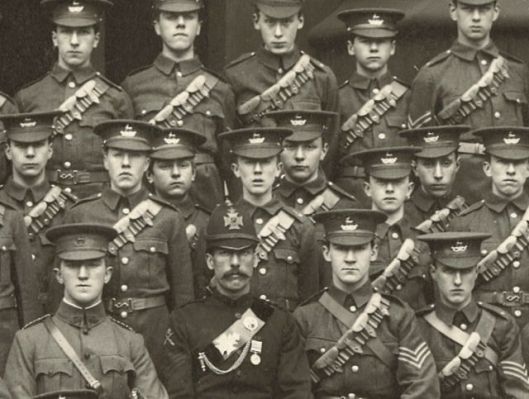
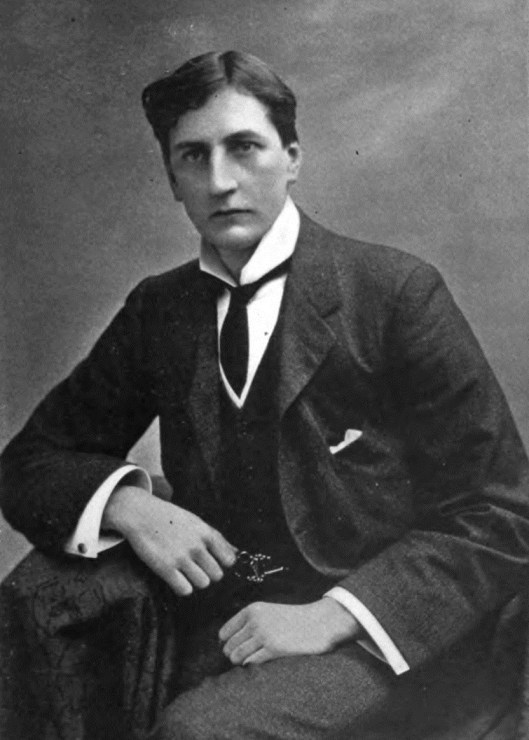
In 1915, Tolkien was

image1jrrt.jpg

scrambling to finish his BA at Exeter College

image2aexeter.jpg

before he was swept up into the war which was gradually devouring the younger male populations of much of western Europe

image2bcasualties.jpg

and would soon swallow him, as well.

image2jrrt.jpg

Although he had been a cadet in his earlier days,

image3cadet.jpg

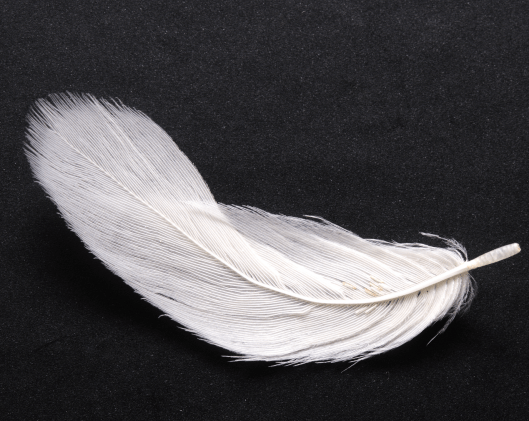
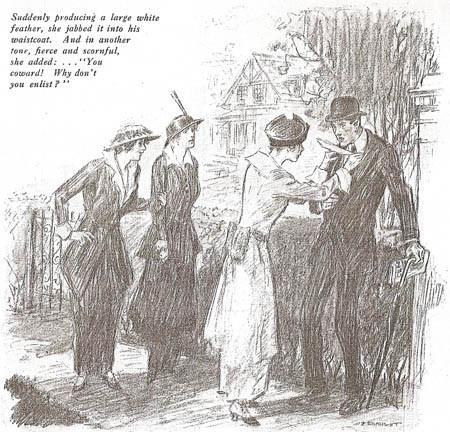
he resisted the societal pressure to join up and that must have been difficult, as it was not uncommon in 1915 for young men not in uniform to be stopped in the street by civilians, particularly women, and asked why they hadn’t enlisted yet before being presented with a white feather as a symbol of cowardice.

image4feather.png

image5feather.jpg

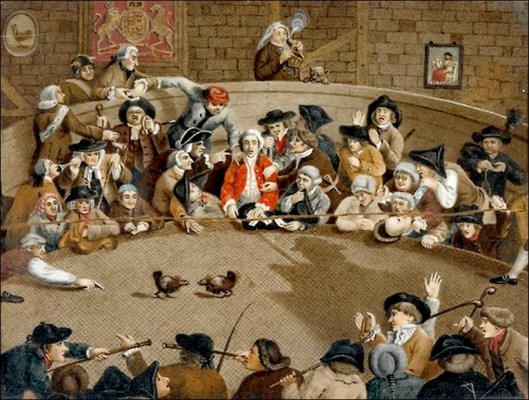
The use of a white feather appears to have been derived from the old sport of cockfighting, in which it was believed that a rooster with a white tail feather would be a poor combatant.

image6cockfighting.jpg

For us, the image is directly related to a famous 1902 adventure novel, The Four Feathers

image7fourfeathers.jpg

by A E Mason (1865-1948).

image8aemason


In this book, the main character, Harry Feversham, is thought to be a coward by his brother officers and by his fiancé and goes to heroic lengths to prove otherwise (here’s a LINK so that you can enjoy the book for yourself, if you would like).

As well as the book, there have been a number of films made from it, including the one which we believe to be the best, from 1939.

image9fourfeathers.jpg

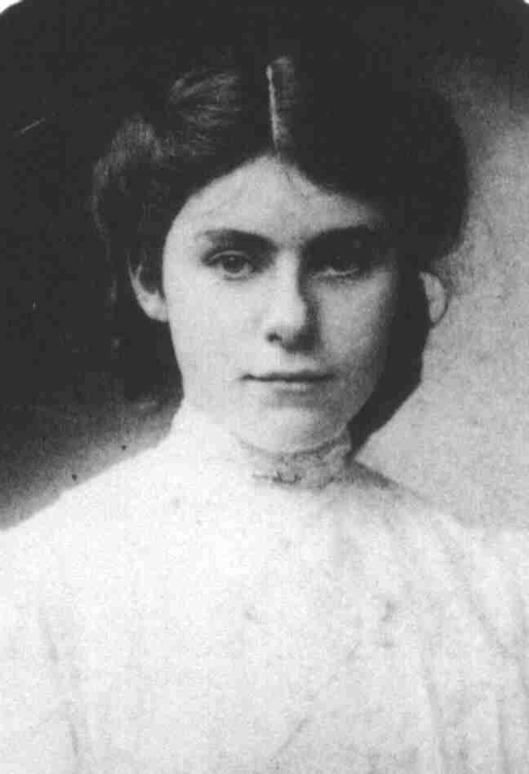
During this scramble to finish, Tolkien wrote a poem in late April for his wife-to-be, Edith Bratt (1889-1971).

image10edith.jpg

Called “Goblin Feet”, it was first published in Oxford Poetry 1915.  (Here’s a LINK so that you may have your own copy of the book.)

image11opo.jpg

Here’s the text:

I am off down the road
Where the fairy lanterns glowed
And the little pretty flitter-mice are flying;
A slender band of gray
It runs creepily away
And the hedges and the grasses are a-sighing.
The air is full of wings,
And of blundery beetle-things
That warn you with their whirring and their humming.
O! I hear the tiny horns
Of enchanted leprechauns
And the padded feet of many gnomes a-coming!
O! the lights! O! the gleams! O! the little twinkly sounds!
O! the rustle of their noiseless little robes!
O! the echo of their feet — of their happy little feet!
O! the swinging lamps in the starlit globes.

I must follow in their train
Down the crooked fairy lane
Where the coney-rabbits long ago have gone.
And where silvery they sing
In a moving moonlit ring
All a twinkle with the jewels they have on.
They are fading round the turn
Where the glow worms palely burn
And the echo of their padding feet is dying!
O! it’s knocking at my heart—

Let me go! let me start!
For the little magic hours are all a-flying.

O! the warmth! O! the hum! O! the colors in the dark!
O! the gauzy wings of golden honey-flies!
O! the music of their feet — of their dancing goblin feet!
O! the magic! O! the sorrow when it dies.

Two things strike us immediately about this text.  First, its tone of subdued longing for Otherness—“I must follow”, “O! it’s knocking at my heart”, “O! the sorrow when it dies”.  This reminded us of WB Yeats’  (1865-1939) “The Hosting of the Sidhe” (from the volume The Wind Among the Reeds, 1899)

The host is riding from Knocknarea
And over the grave of Clooth-na-Bare;
Caoilte tossing his burning hair,
And Niamh calling Away, come away:
Empty your heart of its mortal dream.
The winds awaken, the leaves whirl round,
Our cheeks are pale, our hair is unbound,
Our breasts are heaving, our eyes are agleam,
Our arms are waving, our lips are apart;
And if any gaze on our rushing band,
We come between him and the deed of his hand,
We come between him and the hope of his heart.
The host is rushing ‘twixt night and day,
And where is there hope or deed as fair?
Caoilte tossing his burning hair,
And Niamh calling Away, come away.

(Here, by the way, is the cover to the first edition of the volume, artwork by Yeats’ friend, Althea Giles.

image12windcover.jpg

And here’s a LINK to the earliest edition we can find on the internet—it’s the 4th, from 1903.)

Yeats, in this part of his creative life, was just leaving the late-Victorian era called the “Celtic Twilight”, in which Irish artists of all sorts were attempting to create a new art, independent of British art and literature and based upon what they conceived were “Old Irish models”.  To someone of late-Romantic temperament, like Tolkien, the attraction must have been very strong—note that leprechauns have somehow gotten mixed with the goblins!

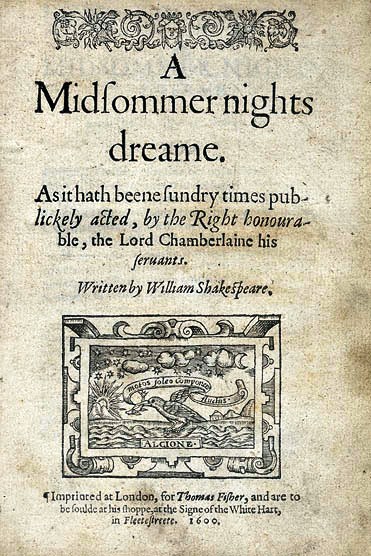
This mixing of all kinds of beings from Faerie—goblins, fairies, leprechauns, gnomes—and their diminutive size—note five uses of “little” and one “tiny” –is the second thing which strikes us. The shrinking of otherworld beings in English literature can be traced at least as far back as Shakespeare and A Midsummer Night’s Dream,

STC 22302, title page


but really catches hold in the 19th century, with the pictorial work of artists like Richard Doyle

image14doyle

image15fairyland

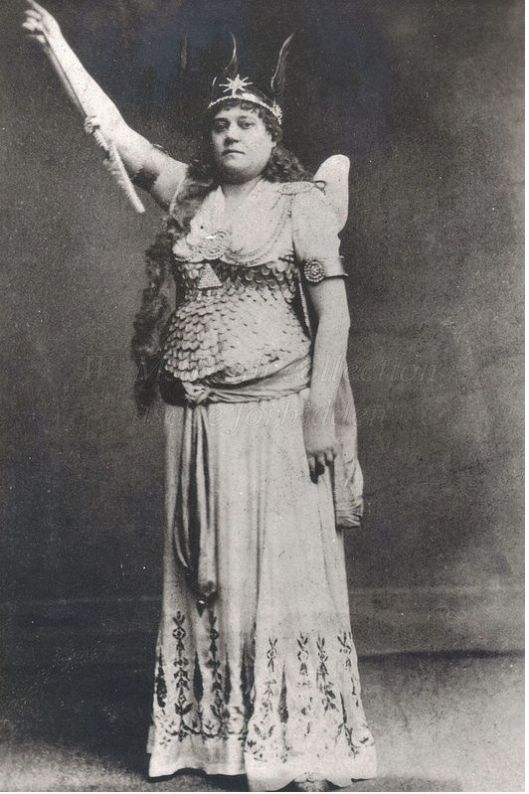
and which is parodied by WS Gilbert (1836-1911), in Iolanthe (1882), in which the human-sized (and often played by a stout woman) Queen of the Fairies talks all about curling “myself inside a buttercup”, all the while being costumed to look like a Valkyrie from Wagner’s operas—an extra visual joke (which is, in our Gilbert and Sullivan experience, no longer employed—a pity!).

image16queen

image17brunhilde

(Arthur Sullivan (1842-1900), who was the composer of Iolanthe, has left us a very beautiful overture for it.  Here’s a LINK so that you can hear it.)

JRRT seems, at the very beginning of his literary life, to have been caught up in this mixture of Shakespeare and Victoriana and Yeats’ “Celtic Twilight” mood and it’s perhaps for that reason that, later in life, looking back on it, he said of this early poem:

“I wish the unhappy little thing, representing all that I came (so soon after) to fervently dislike, could be buried forever.” (The Book of Lost Tales Part One, “The Cottage of Lost Play”, 32)

Was he embarrassed at his own youthful influences?  And there have certainly been later critics who have been hard upon the poem.

If we put it into the context of 1915, however, this longing to be anywhere but in wartime 1915 makes perfect sense, especially for a young, sensitive, highly-intelligent man deeply in love with a girl he’d worked so hard to be with. The real horrific violence of the Great War was kept hidden from the people of the UK by the Government.  Newspapers and magazines were censored, soldiers’ letters were censored (Tolkien and Edith developed a secret code in his letters to get around that censorship), soldiers were not allowed to keep diaries or have cameras (only official photographers were permitted to work at the Front—and their work was closely watched), but word still got back, mainly, we suspect, from those on leave, often wounded, who had experienced events which turned out like this—

image18casualties

Is it any wonder, with what he knew about and dreaded being part of, that JRRT would have wished to be on the road to Fairyland?

Thanks, as always, for reading.

MTCIDC

CD

ps

In our next, we want to think out loud a bit about the goblins whose feet JRRT wants so much to follow…

← Older posts
Newer posts →

The Doubtful Sea Series Facebook Page

The Doubtful Sea Series Facebook Page

  • Ollamh

Categories

  • Artists and Illustrators
  • Economics in Middle-earth
  • Fairy Tales and Myths
  • Films and Music
  • Games
  • Heroes
  • Imaginary History
  • J.R.R. Tolkien
  • Language
  • Literary History
  • Maps
  • Medieval Russia
  • Military History
  • Military History of Middle-earth
  • Narnia
  • Narrative Methods
  • Poetry
  • Research
  • Star Wars
  • Terra Australis
  • The Rohirrim
  • Theatre and Performance
  • Tolkien
  • Uncategorized
  • Villains
  • Writing as Collaborators
Follow doubtfulsea on WordPress.com

Across the Doubtful Sea

Recent Postings

  • Towering January 28, 2026
  • Tolkien Among the Indians January 21, 2026
  • Thin and Stretched January 14, 2026
  • Through a glass… January 7, 2026
  • Heffalumps? December 31, 2025
  • We Three Kings December 24, 2025
  • A Moon disfigured December 17, 2025
  • On the Roads Again—Once More December 10, 2025
  • (Not) Crossing Bridges December 3, 2025

Blog Statistics

  • 105,540 Views

Posting Archive

  • January 2026 (4)
  • December 2025 (5)
  • November 2025 (4)
  • October 2025 (5)
  • September 2025 (4)
  • August 2025 (4)
  • July 2025 (5)
  • June 2025 (4)
  • May 2025 (4)
  • April 2025 (5)
  • March 2025 (4)
  • February 2025 (4)
  • January 2025 (5)
  • December 2024 (4)
  • November 2024 (4)
  • October 2024 (5)
  • September 2024 (4)
  • August 2024 (4)
  • July 2024 (5)
  • June 2024 (4)
  • May 2024 (5)
  • April 2024 (4)
  • March 2024 (4)
  • February 2024 (4)
  • January 2024 (5)
  • December 2023 (4)
  • November 2023 (5)
  • October 2023 (4)
  • September 2023 (4)
  • August 2023 (5)
  • July 2023 (4)
  • June 2023 (4)
  • May 2023 (5)
  • April 2023 (4)
  • March 2023 (5)
  • February 2023 (4)
  • January 2023 (4)
  • December 2022 (4)
  • November 2022 (5)
  • October 2022 (4)
  • September 2022 (4)
  • August 2022 (5)
  • July 2022 (4)
  • June 2022 (5)
  • May 2022 (4)
  • April 2022 (4)
  • March 2022 (5)
  • February 2022 (4)
  • January 2022 (4)
  • December 2021 (5)
  • November 2021 (4)
  • October 2021 (4)
  • September 2021 (5)
  • August 2021 (4)
  • July 2021 (4)
  • June 2021 (5)
  • May 2021 (4)
  • April 2021 (4)
  • March 2021 (5)
  • February 2021 (4)
  • January 2021 (4)
  • December 2020 (5)
  • November 2020 (4)
  • October 2020 (4)
  • September 2020 (5)
  • August 2020 (4)
  • July 2020 (5)
  • June 2020 (4)
  • May 2020 (4)
  • April 2020 (5)
  • March 2020 (4)
  • February 2020 (4)
  • January 2020 (6)
  • December 2019 (4)
  • November 2019 (4)
  • October 2019 (5)
  • September 2019 (4)
  • August 2019 (4)
  • July 2019 (5)
  • June 2019 (4)
  • May 2019 (5)
  • April 2019 (4)
  • March 2019 (4)
  • February 2019 (4)
  • January 2019 (5)
  • December 2018 (4)
  • November 2018 (4)
  • October 2018 (5)
  • September 2018 (4)
  • August 2018 (5)
  • July 2018 (4)
  • June 2018 (4)
  • May 2018 (5)
  • April 2018 (4)
  • March 2018 (4)
  • February 2018 (4)
  • January 2018 (5)
  • December 2017 (4)
  • November 2017 (4)
  • October 2017 (4)
  • September 2017 (4)
  • August 2017 (5)
  • July 2017 (4)
  • June 2017 (4)
  • May 2017 (5)
  • April 2017 (4)
  • March 2017 (5)
  • February 2017 (4)
  • January 2017 (4)
  • December 2016 (4)
  • November 2016 (5)
  • October 2016 (6)
  • September 2016 (5)
  • August 2016 (5)
  • July 2016 (5)
  • June 2016 (5)
  • May 2016 (4)
  • April 2016 (4)
  • March 2016 (5)
  • February 2016 (4)
  • January 2016 (4)
  • December 2015 (5)
  • November 2015 (5)
  • October 2015 (4)
  • September 2015 (5)
  • August 2015 (4)
  • July 2015 (5)
  • June 2015 (5)
  • May 2015 (4)
  • April 2015 (3)
  • March 2015 (4)
  • February 2015 (4)
  • January 2015 (4)
  • December 2014 (5)
  • November 2014 (4)
  • October 2014 (6)
  • September 2014 (1)

Blog at WordPress.com.

  • Subscribe Subscribed
    • doubtfulsea
    • Join 78 other subscribers
    • Already have a WordPress.com account? Log in now.
    • doubtfulsea
    • Subscribe Subscribed
    • Sign up
    • Log in
    • Report this content
    • View site in Reader
    • Manage subscriptions
    • Collapse this bar
 

Loading Comments...