• About

doubtfulsea

~ adventure fantasy

Category Archives: Military History of Middle-earth

Charge!

01 Wednesday Aug 2018

Posted by Ollamh in Artists and Illustrators, Films and Music, J.R.R. Tolkien, Military History, Military History of Middle-earth, The Rohirrim

≈ Leave a comment

Tags

16th Lancers, Aliwal, Australian Light Horse, Australians, Balaclava, Beersheba, Cavalry, Charges, Great War, Light Brigade, Palestine, Rohirrim, Scots Greys, The Lighthorsemen, The Lord of the Rings, Tolkien, Turks, Warhorse, Waterloo

As always, dear readers, welcome.

In an addition to an entry in Letters, the main portion of which has rather a murky history (see 217-218), but which the editor dates as “presumably written circa 1966”, Tolkien says that several features of The Lord of the Rings “still move me very powerfully”.  These features include being “most stirred by the sound of the horses of the Rohirrim at cockcrow”.

As this is one of our favorite parts of the book,
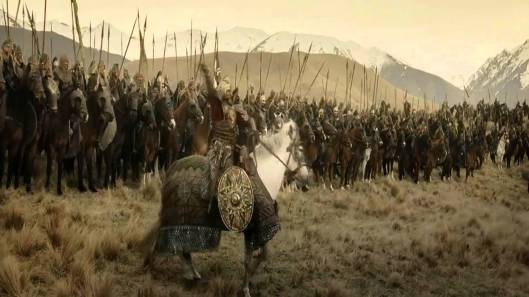
 

image1

we would absolutely agree, but, as is so often the case, both with JRRT and with ourselves, we wondered why.

The easiest answer is that it’s a highly-dramatic moment:  the main gate of Minas Tirith is giving way under the blows of Grond, the orcs are about to pour in, and it looks like Aragorn and his companions won’t appear in time to save the situation.
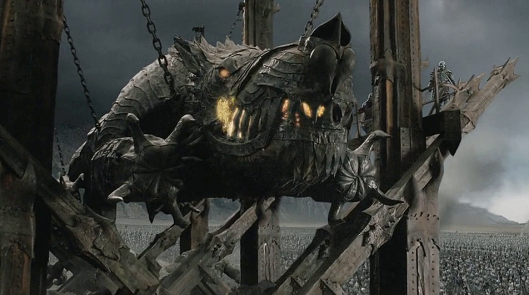
image2grond.png

We have been following the Rohirrim, of course, from their muster to their march
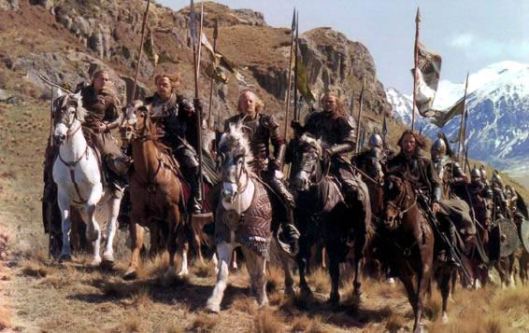
image3roh.jpg

to their meeting with Ghan-buri-Ghan,
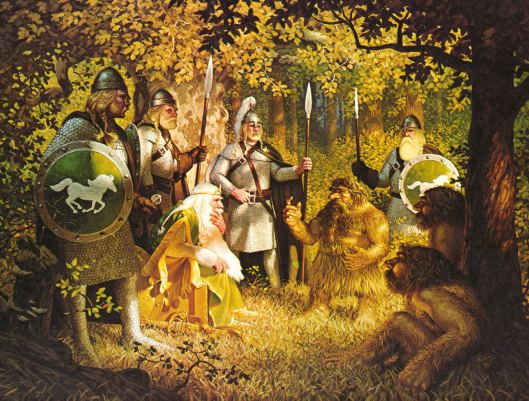
image4ghan.jpg

so the build is two-fold:  the attack, which is completely focused on breaking in, and the approach of the Rohirrim.  Thus, when it looks darkest, the charge is like sunlight breaking through heavy cloud.
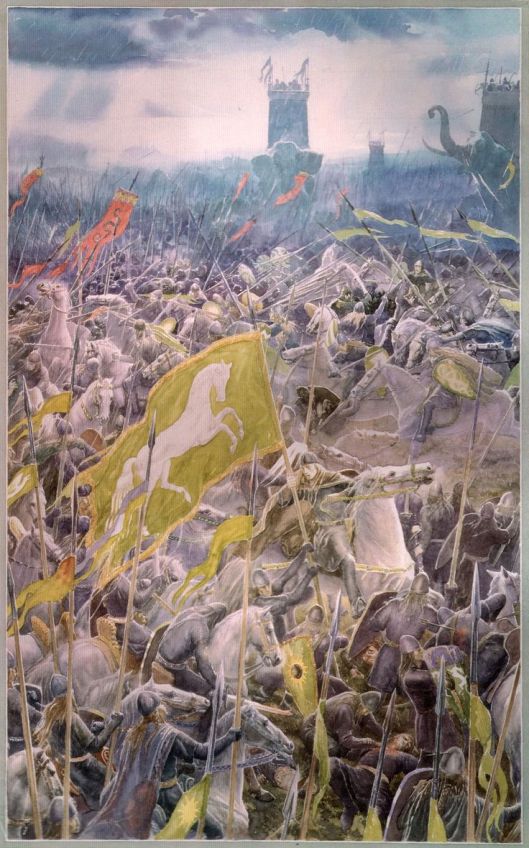
image5charge.jpg

This is a beginning, we thought, to why, but could there have been another reason for JRRT?

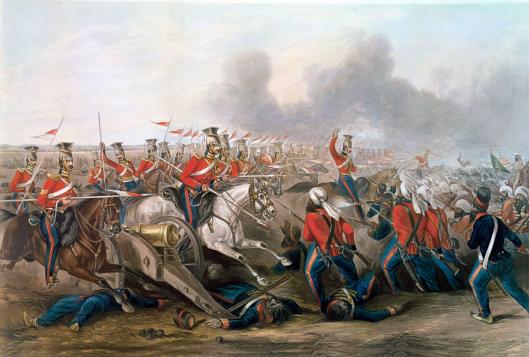
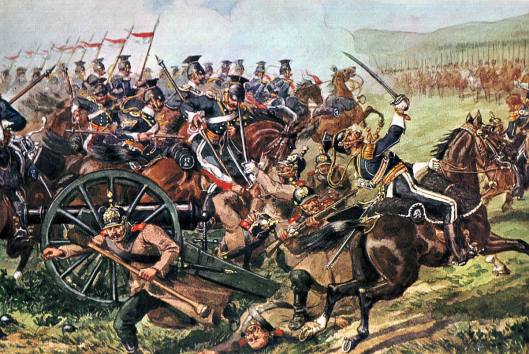
When Tolkien, growing up, thought of cavalry charges, he probably saw, in his mind’s eye, the glorious mounted attacks of Britain’s past, like the Scots Greys at Waterloo
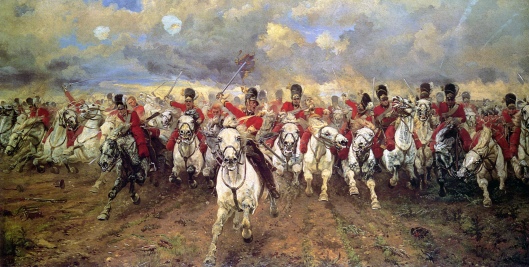
 

image6scot

or the 16th Lancers at Aliwal

image7aliwal.jpg

or the Light Brigade at Balaclava.

image8balaclava.jpg

In all of these, soldiers in bright-colored coats waved swords and lancers and dashed fearlessly against the enemy.  Even his toy soldiers would have had that same devil-may-care look
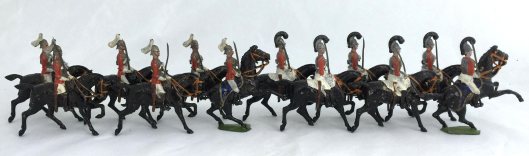
image9britains.jpg

as did the real cavalry of his childhood,
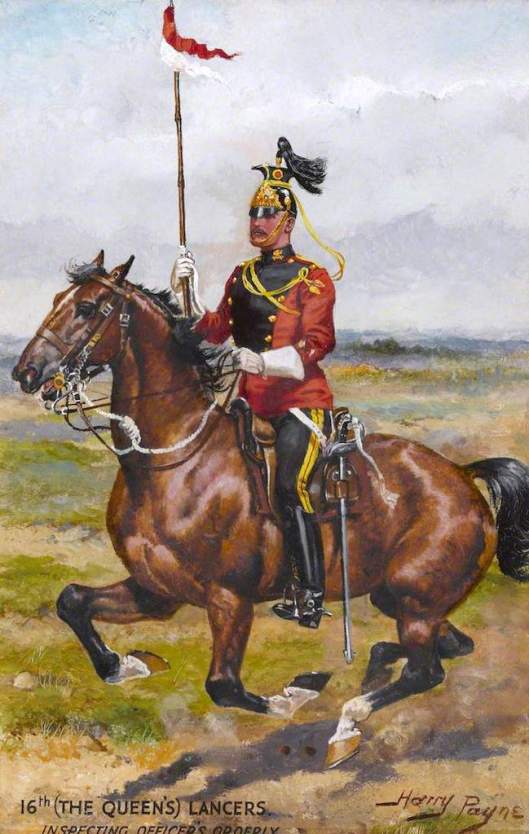
image10aqueenslancers.jpg

but, when 1914 and the Great War came, soldiers put away those bright colors and put on khaki.
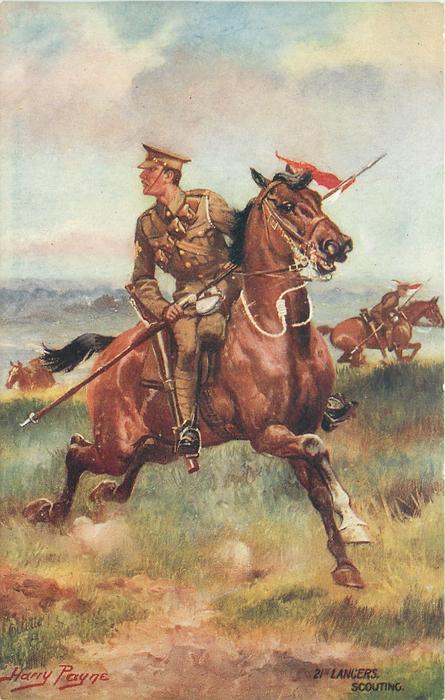
image10twentyfirst.jpg

But did that wild courage have to be put away, as well?  In 1914, there were a few moments when even mud-colored mounted men had a moment of glory.
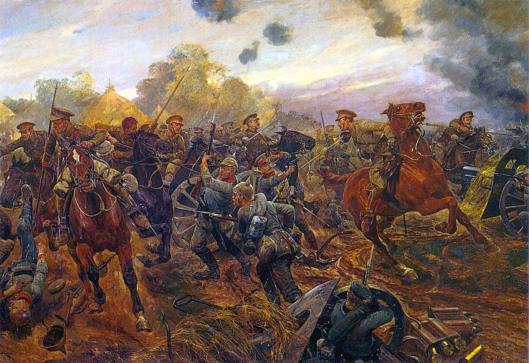
image11attack.jpg

This wasn’t to last—at least on the Western Front and a major reason was this—
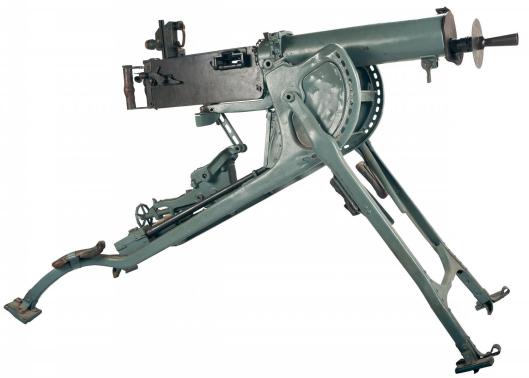
image12maxim.jpg

(Here’s a LINK to a clip from the film Warhorse, which shows the effect in rather a symbolic way, thank goodness!  We love horses and mourn their terrible losses through all of world history—they never asked to be part of human violence and, so often, their fate was to die because of it.  We also think that it’s just as well that the commander of this imaginary attack didn’t survive it—it’s absolutely inept, both in conception and its carrying-out and he would deserve to have been court-martialed.)

So, instead, those men dismounted and became infantry, fighting from hole in the ground to hole in the ground.
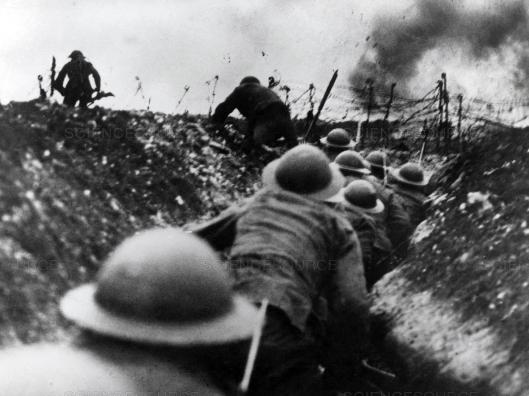
image13trench.jpg

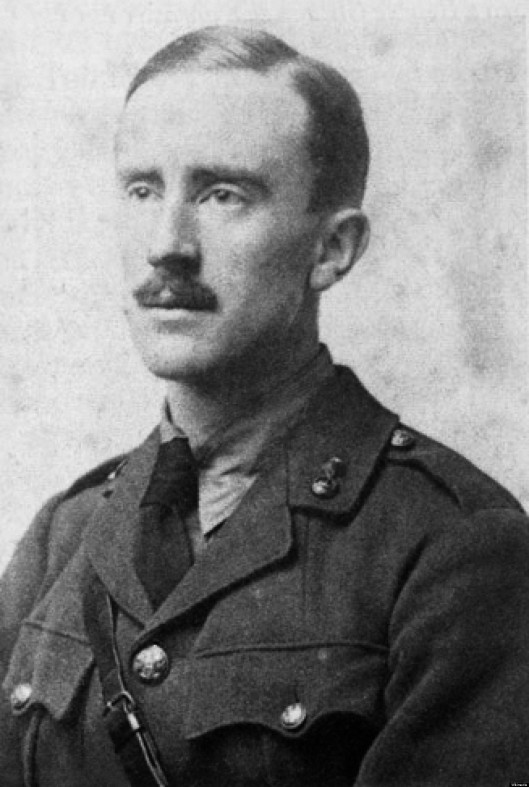
This was the world which JRRT

image14ajrrt.jpg

knew:  heavy guns, gas, and the rattle of machine guns, no place for wide double ranks of sabre-wavers.
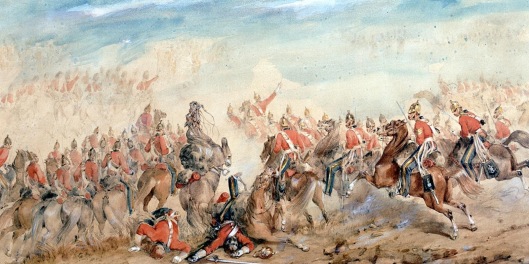
image14charge.jpg

There was at least one bright moment, but not on the Western Front.  Instead, it was in far-off Palestine, where, on 31 October, 1917, Australians and their horses swept over a line of Turkish trenches  at Beersheba in a charge very reminiscent of the 19th -century world.
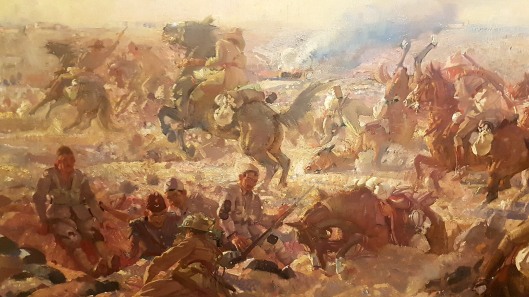
image15beersheba.jpg

Ironically, these were not cavalry at all, but Australian Light Horse—mounted infantry—who, lacking swords or sabres or lances, attacked using their long bayonets, instead.

image16alh.jpg

(You can see this charge reenacted wonderfully in the 1987 Australian movie, The Lighthorsemen, one of our very favorite films of the Great War.
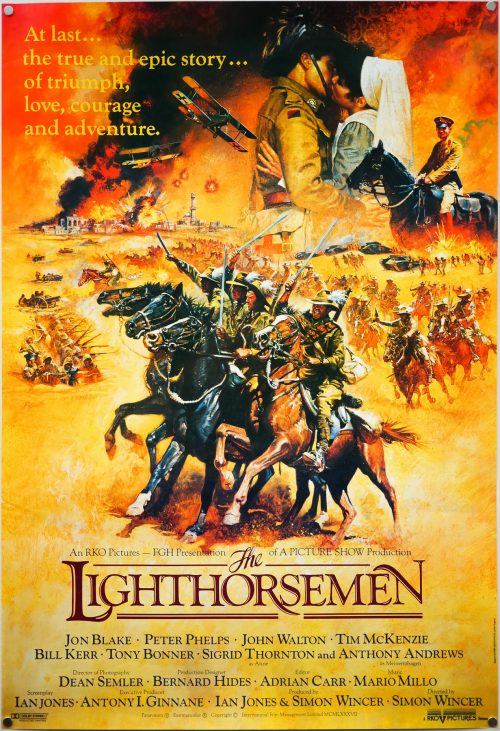
image17poster.jpg

Here’s a LINK to the charge scene, before you see the whole film—but we recommend that you see that charge in context.)

On the whole, however, modern war had become one big, bloody ditch,

image18trench.jpg

and victory came in mud-color and mass industrial slaughter.  Perhaps it was a relief to imagine another world, where brave men in armor, mounted on flying horses, still had a place?
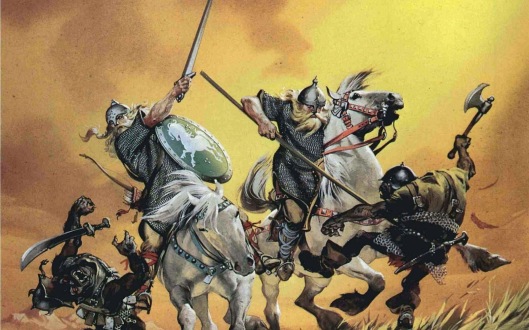
image19ro.jpg

As always, thanks for reading!

MTCIDC

CD
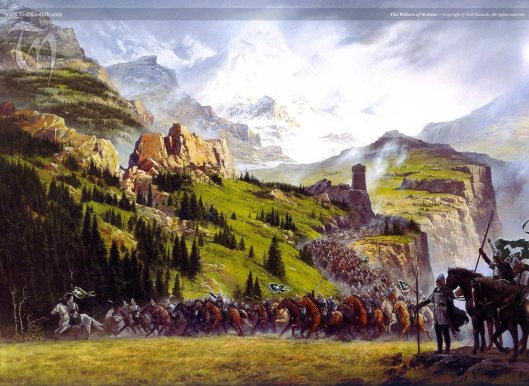
In a Pukel

09 Wednesday May 2018

Posted by Ollamh in Artists and Illustrators, Fairy Tales and Myths, J.R.R. Tolkien, Maps, Medieval Russia, Military History, Military History of Middle-earth, The Rohirrim

≈ Leave a comment

Tags

balbal, Carnac Stones, Cherna, Denis Gordeev, Druadan Forest, Dunharrow, Easter Island, Eored, Ghan-buri-Ghan, Gondor, menhirs, moai, Pukel-men, Rapa Nui, Rohan, Rohirrim, Stonewain Valley, Ted Nasmith, The Lord of the Rings, Tolkien, Unfinished Tales, Vsadniki, Woses

Welcome, dear readers, as ever.

After their mustering and rapid journey to the aid of Gondor, the Rohirrim

image1rohirrim.jpg

have been stopped:

“Scouts had been sent ahead.  Some had not returned.  Others hastening back had reported that the road was held in force against them.  A host of the enemy was encamped upon it, three [4.8km]] miles west of Amon Din, and some strength of men was already thrusting along the road and was not more than three leagues [about 9 miles/14.5km] away.”  (The Return of the King, Book Five, Chapter 5, “The Ride of the Rohirrim”)

image2map.jpg

And so they are camped temporarily in the murk which has fallen over the West—a sign of Sauron on the move.

As they remain there, Merry gradually hears a sound like distant drums and, when Elfhelm, the Marshal of the eored [Rohirrim unit of horsemen] in which Merry and his mysterious companion, Dernhelm, are riding, stumbles over him, Merry asks if it’s the enemy:

“Are those their drums?”

Elfhelm replies:

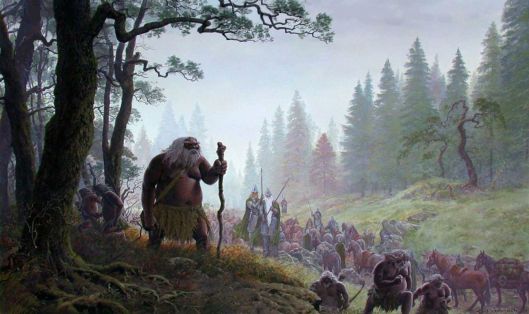
“You hear the Woses, the Wild Men of the Woods…They still haunt Druadan Foest, it is said…But they have offered their services to Theoden.  Even now one of their headmen is being taken to the king.”

Merry follows Elfhelm and soon sees:

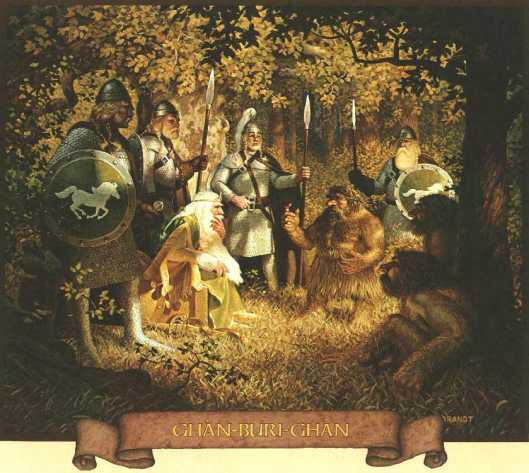
“A large lantern, covered above, was hanging from a bough and cast a pale circle of light below.  There sat Theoden and Eomer, and before them on the ground sat a strange squat shape of a man, gnarled as an old stone, and the hairs of his scanty beard straggled on his lumpy chin like dry moss.  He was short-legged and fat-armed, thick and stumpy, and clad only with grass about his waist.”

This, we find out, is Ghan-buri-Ghan, leader of the Wild Men, who, as Elfhelm has said, has come to offer his and his people’s aid to Theoden.

image3ghanburighan.jpg

(We note, by the way, that this Hildebrandt illustration has taken certain liberties with the scene as described in the book:  it appears to be daylight—no lantern—if Eomer is there, he isn’t seated, and there is more than one Wild Man–oh, and the Wild Man’s beard has suddenly sprouted.)

What Ghan-buri-Ghan offers Theoden is a long-forgotten road which would provide a way around the soldiers of Sauron who are blocking the direct route to Minas Tirith:   the path through the Stonewain Valley.

image4stonewainfalley.jpg

What caught our attention here was the connection Merry made between Ghan-buri-Ghan and something he’d encountered only recently:

“Merry felt that he had seen him before somewhere, and suddenly he remembered the Pukel-men of Dunharrow.  Here was one of those old images brought to life, or maybe a creature descended in true line through endless years from the models used by the forgotten craftsmen long ago.”

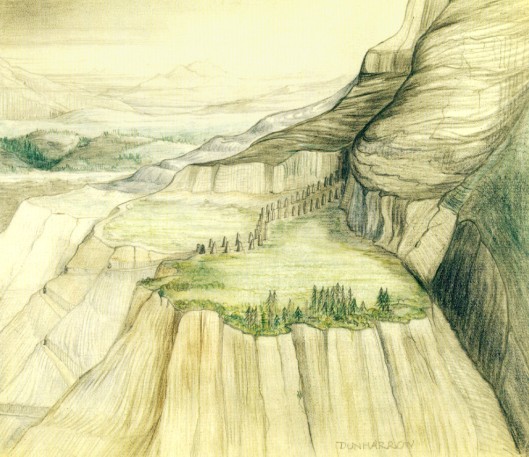
Dunharrow

image5dunharrowjrrt.jpg

was a mysterious place—

“…the work of long-forgotten men.  Their name was lost and no song or legend remembered it.  For what purpose they had made this place, as a town or secret temple or a tomb of kings, none in Rohan could say.  Here they labored in the Dark Years, before ever a ship came to the western shores, or Gondor of the Dunedain was built; and now they had vanished, and only the old Pukel-men were left, still sitting at the turnings of the road.

Merry stared at the lines of marching stones:  they were worn and black; some were leaning, some were fallen, some cracked or broken; they looked like rows of old and hungry teeth.” (The Return of the King, Book Five, Chapter 3, “The Muster of Rohan”)

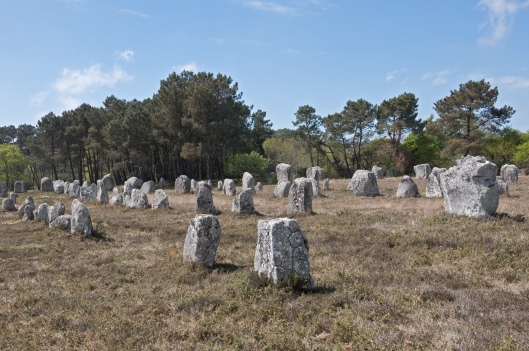
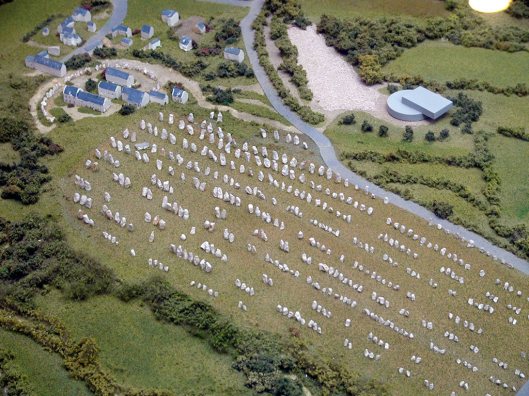
For a moment, this description reminded us of something one sees in Brittany, on the west coast of France, the so-called “Carnac Stones”, a vast field of Neolithic upright stones, now called menhirs (Breton for “long stone”) in long lines in and around the village of Carnac.

image6carnac1.jpg

image7carnacstones2.jpg

And, just as the use or meaning of Dunharrow is lost, so is that of the elaborate construction of the Carnac Stones.

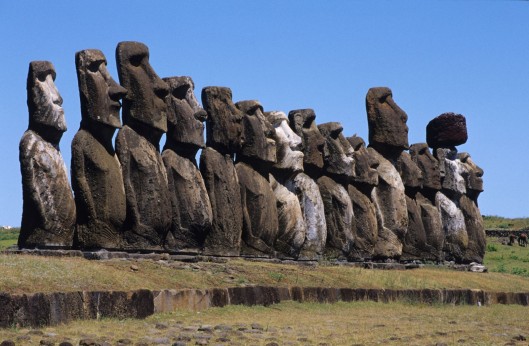
Once the Carnac Stones—and others like them, both in France and in Great Britain—came into our heads, we were whirled away to Rapa Nui (Easter Island) and all of those puzzling outsized heads on less-developed torsos, the moai.

image8moai.jpg

It was not the size or placement of those figures like “rows of old and hungry teeth” however, which made us think further about Ghan-buri-Ghan and his stony cousins, but how the figures were carved:

“At each turn of the road there were great standing stones that had been carved in the likeness of men, huge and clumsy-limbed, squatting cross-legged with their stumpy arms folded on fat bellies.  Some in the wearing of the years had lost all features save the dark holes of their eyes that still stared sadly at the passers-by.  The Riders hardly glanced at them.  The Pukel-men they called them, and heeded them little…”

As the Rohirrim are translated as speaking among themselves a sort of Tolkien-adapted Old English, so “pukel” appears to be derived from “pucel” = “goblin/demon”, which suggests perhaps a quasi-religious or magical use, but, if they once represented spirits, they are now spiritless, with no ability to frighten.  Rather, as the narrator tells us:

“…no power or terror was left in them; but Merry gazed at them with wonder and a feeling almost of pity, as they loomed up mournfully in the dusk.”

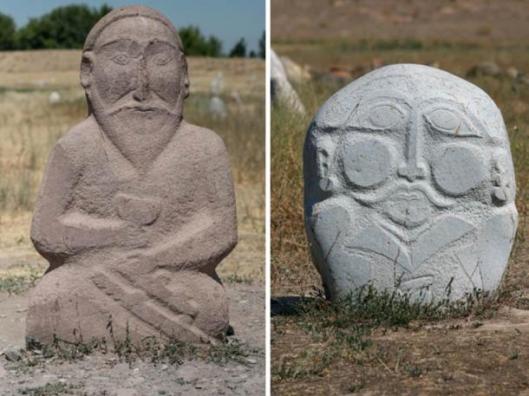
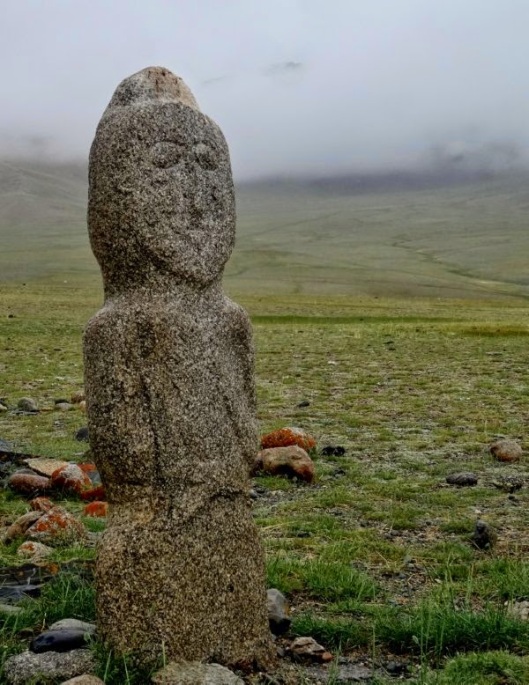
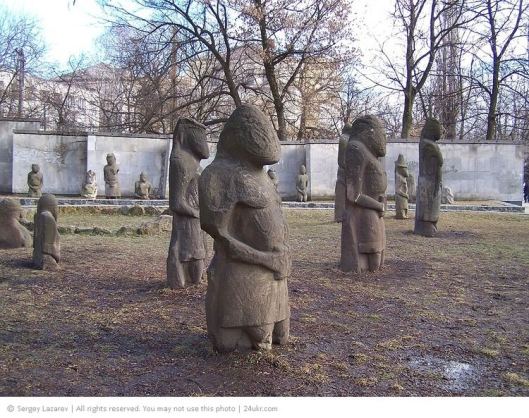
The narrator’s elaboration then reminded us of something else:  balbal.

image9balbal.jpg

image9bbalbal.jpg

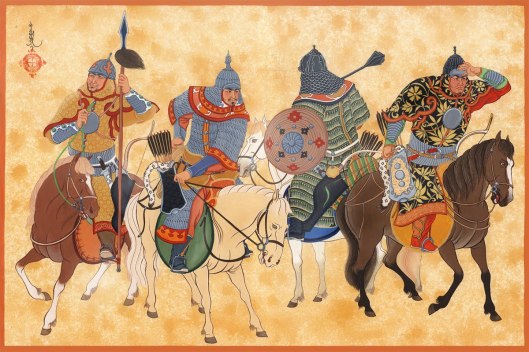
These are carved stone figures with a history probably as long as that of the Pukel-men.  They appear to be the product of Turkic peoples in Central Asia—with even older relatives, perhaps, to the west, as well.  Some may have been tomb guardians or monuments themselves—as with the Pukel-men, their origins and use/s are lost to us.  We ourselves have stolen them for use in our series of novels based in an imaginary medieval fairy tale Russia, called Cherna, “The Black Land”—but please don’t think “Mordor?”  In our case, the reason it’s named that is that it is steppe country with extremely fertile black soil.  So rich, especially as pasture-land, that it’s worth invading and fighting over, which is what the villains of our trilogy, the Vsadniki, modeled on the Mongols, do.

image10mongols.jpg

Unlike Pukel-men and menhirs and moai, however, there is no mystery about what the Vsadniki are up to with their stones:  every time they conquer a new land, they set such stones up at their new far-western border to say not only “what’s behind these is ours”, but also “and we’re looking at your lands next”.

image11balbal.jpeg

Thanks, as always, for reading.

MTCIDC

CD

ps

In the Tolkien volume Unfinished Tales, we find further connections between the Wild Men/Woses and carvings.  We use a paperback edition and this has somewhat different pagination from the hardbound, but, should you be interested, you can find it in either form in Part Four, I The Druedain.

pps

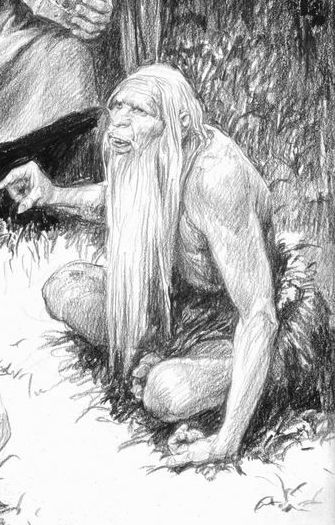
Here is a drawing of Ghan-buri-Ghan by Denis Gordeev, who has done a good deal of work illustrating a wide selection of JRRT’s fiction, rather as Ted Nasmith has, along with many other classics as well as modern fantasy fiction.

image11gbg.jpg

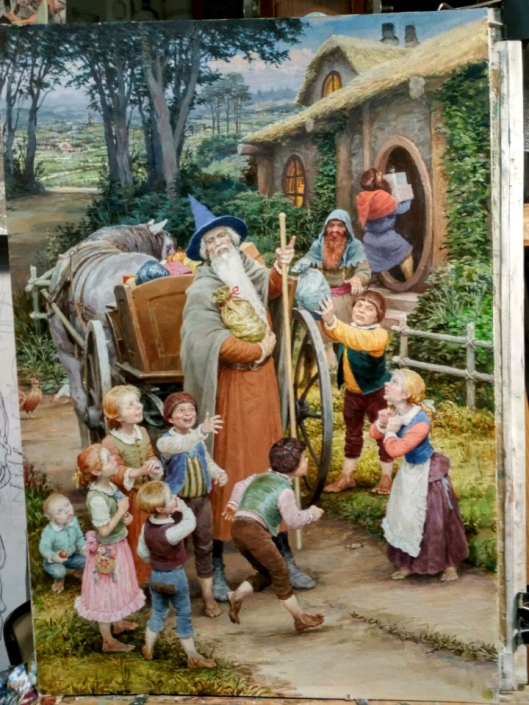
Gordeev has clearly been trained/trained himself in drawing as people did in that golden age of children’s writing and illustration, the 1880s to 1920s, and, once you get used to his very distinctive style, you may come to like it as we do.  Here’s Gandalf arriving in Hobbiton, fireworks and all, just to give you a taste.

image12gandalf.jpg

Many Woven Cloths

14 Wednesday Mar 2018

Posted by Ollamh in Artists and Illustrators, Fairy Tales and Myths, J.R.R. Tolkien, Military History, Military History of Middle-earth, Narrative Methods

≈ Leave a comment

Tags

Alexander Mosaic, Ancient Egypt, Assyrians, Battle of Pavia, Battle of the Issus, Bayeux Tapestry, Cloisters, Darius III, Embroidery, Eorl, Hause of the Faun, Hunt of the Unicorn, Middle Ages, Museo Nazionale di Capodimonte, Nubians, Persian, Pompeii, Rameses II, reliefs, Renaissance, story-telling, tapestry, tesserae, The Lord of the Rings, Tolkien, triptych, Trojan War

Welcome, as ever, dear readers.

Not long ago, we visited Meduseld for a look at Grima, the fifth-columnist.  Today, we’re back, but, instead of scrutinizing the staff, we’re examining the décor—

“Many woven cloths were hung upon the walls, and over their wide spaces marched figures of ancient legend, some dim with years, some darkling in the shade.  But upon one form the sunlight fell:  a young man upon a white horse.  He was blowing a great horn, and his yellow hair was flying in the wind.  The horse’s head was lifted, and its nostrils were wide and red as it neighed, smelling battle afar.  Foaming water, green and white, rushed and curled about its knees.

‘Behold Eorl the Young!’ said Aragorn.  ‘Thus he rode out of the North to the Battle of the Field of Celebrant!’” (The Two Towers, Book Three, Chapter 6, “The King of the Golden Hall”)

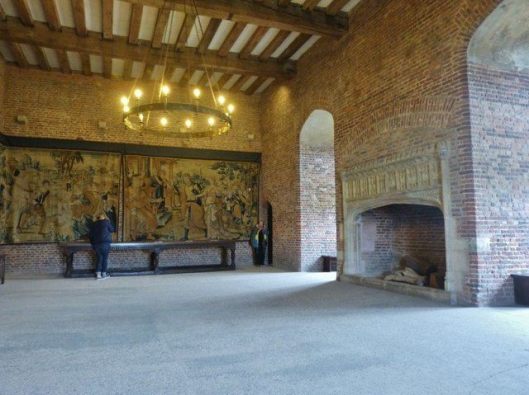
By “woven cloth”, we presume that JRRT means a tapestry, a decorative wall-hanging, like these—

image1medtapwall.jpg

In the western Middle Ages and Renaissance, even wealthy walls—like those in castles—could simply be stone and such tapestries could act both to decorate and to act as a barrier between cold wall and (potentially) shivering inhabitants.

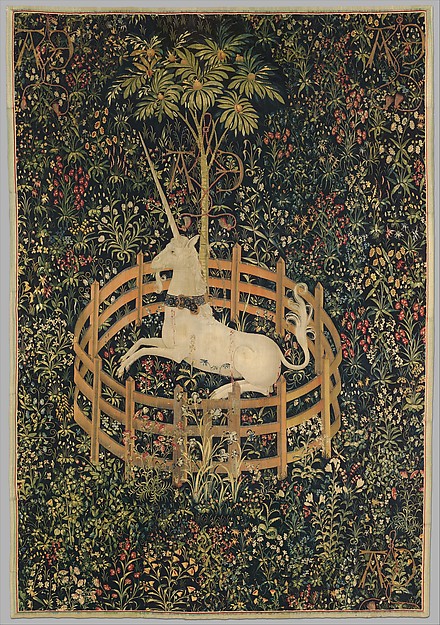
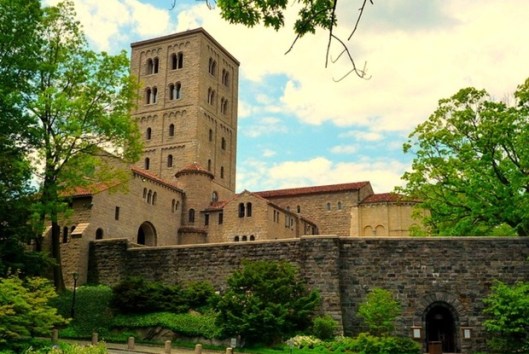
For those making such things, the possibilities for using them as story-telling spaces inspired such works as the famous “Hunt of the Unicorn” series of tapestries, now housed in the Cloisters, a museum in New York City.

image2hunt.jpg

image3cloisters.jpg

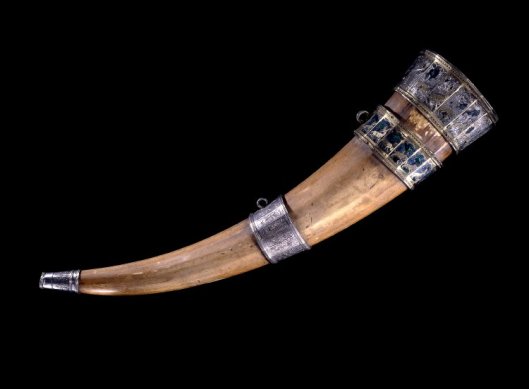
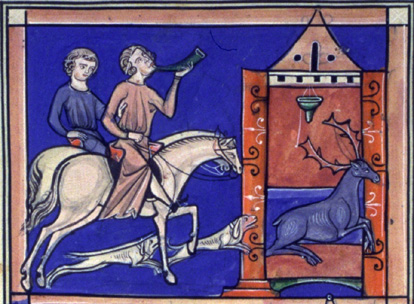
The description of Eorl makes us think of medieval stag hunt illustrations, where hunters may be seen blowing horns—like this one.

image4savernakehorn.jpg

image5dagobert.jpg

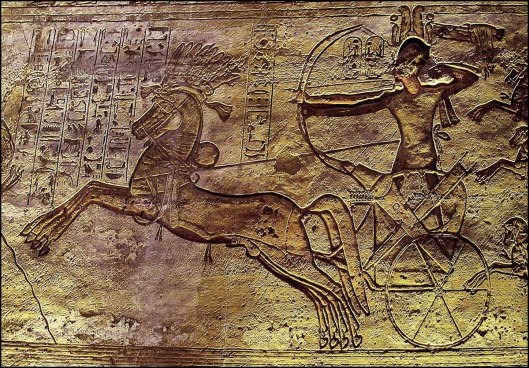
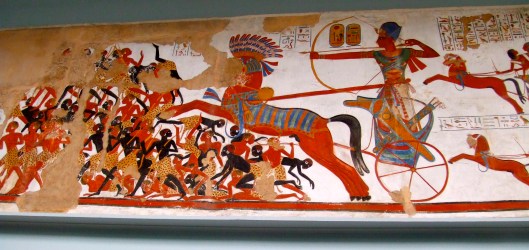
But the fact that he was riding to battle also made us think of wall decorations of a military/historical nature through the centuries, starting with ancient Egypt, where Rameses II (1303-1213BC) had himself depicted on walls in various military actions—

image6ramnubians.jpg

image7ramkadesh.jpg

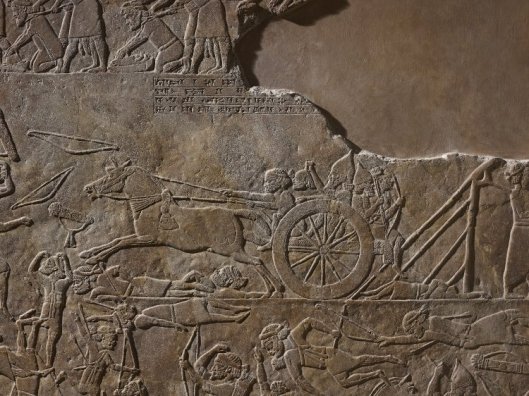
Or the Assyrians, who were not only enthusiastic (gross understatement) about war, but also about depicting themselves engaged in it.

image8assyrians.jpg

As you can see, although these appear on walls, they are not hangings, but reliefs—that is, shallow carvings.  The Egyptian reliefs could be brightly painted, as is that reconstruction of Rameses and the Nubians, the first of the two Rameses illustrations.  It appears that some of the Assyrian reliefs were also colored—here’s a PDF: BMTRB 3 Verri et al, of an interesting article from the Technical Research Bulletin of the British Museum on the subject.

From colored reliefs, we can jump to colored tiles (called tesserae), with the famous Alexander Mosaic.

image9alexandermosaic.jpg

This depicts Alexander the Great nearly confronting the Persian king, Darius III, at the Battle of the Issus (333BC) and what amazes us is that this was originally not on a wall, but on a floor, in the so-called “House of the Faun” in Pompeii.


It is believed that this was based upon an early 3rd-century BC painting and, to our eye, it still looks very much like the painting it may have come from (which was, presumably, on a wall, not a floor).

For battle scenes on cloth, we return to the medieval world and something we’ve mentioned before, the so-called “Bayeux Tapestry”.

image11a.jpg

We say so-called because it’s not really a tapestry—which would have been woven on a loom—but, instead, a giant (230ft/70metres) embroidery.  Here’s a detail so that you can see how an embroidery is made up of stitching on a (in this case) plain linen strip.

image11closeup.jpg


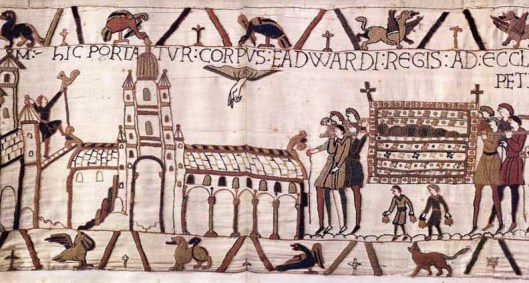
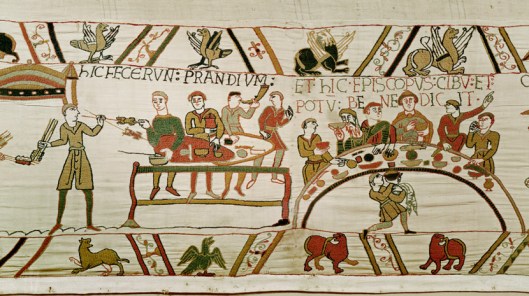
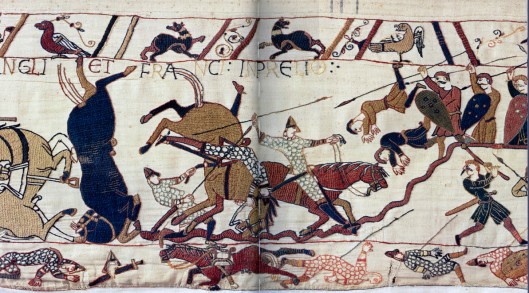
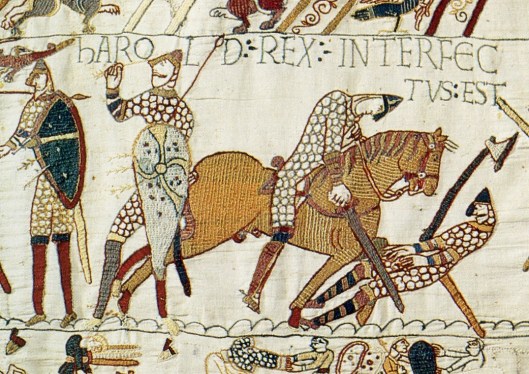
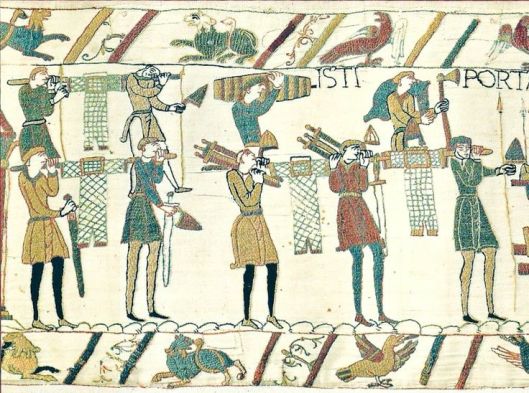
This is really an astonishing piece of work—so far as we know, nothing else like it has survived from medieval western Europe:  a massive history of the invasion of England in 1066, including events leading up to it, in 50+ scenes.  We see everything from architecture

image12westminster.jpg


to ship-building

image13shipbuilding.jpg


to feasting

image14bayeux.jpg


to battle

image15battle.jpg

at its grainiest

image16deathofharold.jpg

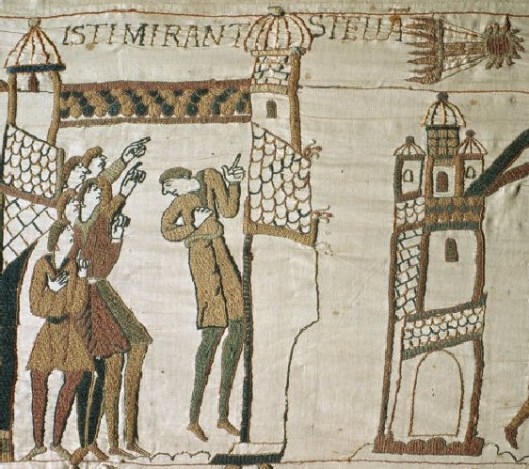
and even includes Halley’s Comet.

image17hscomet.jpg

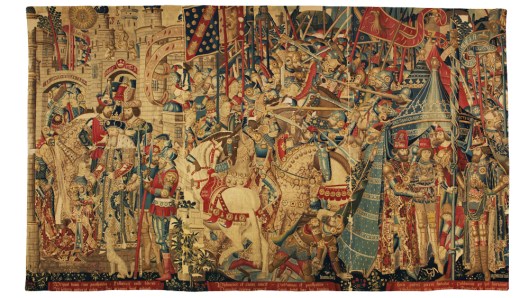
JRRT certainly knew about the Bayeux piece—he mentions it in his letters—but the richness of his description doesn’t really match the relative spareness (for all its detail) of that embroidery, so we wonder what he might have had in mind?   Late medieval tapestries would have had the lush look—

image18troy.jpg

This is one of a set of 15th-century tapestries illustrating the Trojan War.  You’ll notice that, like the Bayeux Tapestry 3 centuries earlier, there are labels (tituli, they’re called).  In the case of the Eorl tapestry, it’s Aragorn who provides the explanation, suggesting that there is no caption and Aragorn, being Aragorn, simply knows the story.

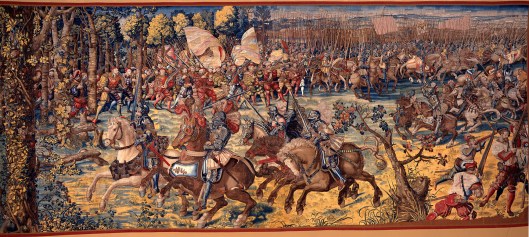
For an eye-popping battle scene, however, we would point to the set of 7 tapestries of the Battle of Pavia (1525) woven in Brussels between 1528 and 1531 and now in the Museo Nazionale di Capodimonte in Naples.  Here’s just one example—can you imagine the same having been woven for the assaults on Minas Tirith or Helm’s Deep?  (Here’s a LINK, by the way, to a very detailed article on the subject of these wonderful works.)

image19pavia.JPG

But such pieces as these are so elaborate that, for all of their great art, they don’t provide quite the parallel we’re looking for, perhaps because all of the larger ones seem to be filled with people and movement and what JRRT describes is a single figure—almost like a standard, rather than a tapestry—something like this one (although we imagine the original to be facing to the right and the field to be green—oh, and of course he has that horn, but you get the idea).


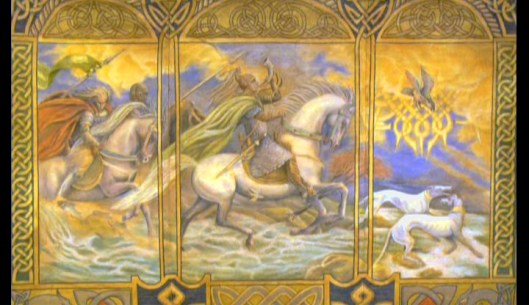
And we do have this example.  It comes from a site called “Elvenesse”.

image21eorl.jpg

It looks more like a religious triptych than a tapestry to us,

image22triptych.jpg

but it certainly is going in the right direction.  What do you think, dear readers?

And thanks, as always, for reading!

MTCIDC

CD
I Love a Parade

28 Wednesday Feb 2018

Posted by Ollamh in Artists and Illustrators, J.R.R. Tolkien, Military History, Military History of Middle-earth, Terra Australis

≈ Leave a comment

Tags

Agincourt, Bayeux Tapestry, Dol Amroth, Forlong, Great Gate, Harold Godwinson, hauberk, Hirluin the Fair, Howard Pyle, huscarls, Imrahil, Langstrand, Lincoln Cathedral, livery, Lossarnach, Medieval, Minas Tirith, Morthond, N.C. Wyeth, Palermo, parade, Ringlo Vale, Robin Hood, spangenhelm, The Lord of the Rings, Tolkien, Tower of Gondor

“I love a parade, the tramping of feet,

I love every beat I hear of a drum.”

–Koehler/Arlen Rhythmania (1931)


Welcome, dear readers, as always.  In the past, we’ve spent a posting or two discussing military aspects of The Lord of the Rings, from the look of the Rohirrim to the attack on Minas Tirith.  In this posting, we would like to go back one step from that attack to consider what is a rather melancholy moment in the lead up to that assault.

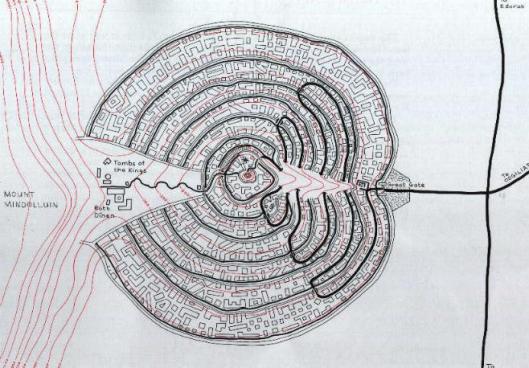
Pippin and his newfound friend, Bergil, have come down to the Great Gate of Minas Tirith.

image1minastirith.jpg

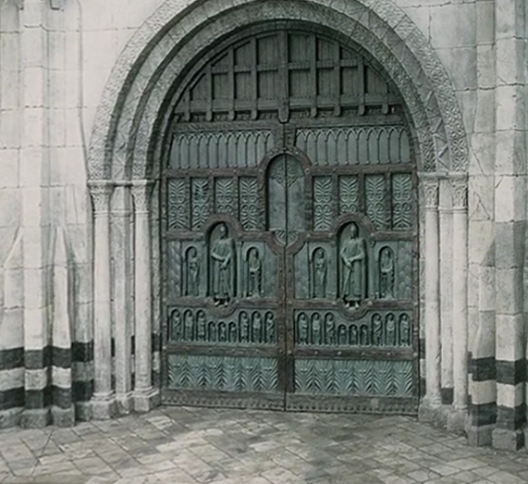
Here’s the gate from the films.

image2mtgate.png

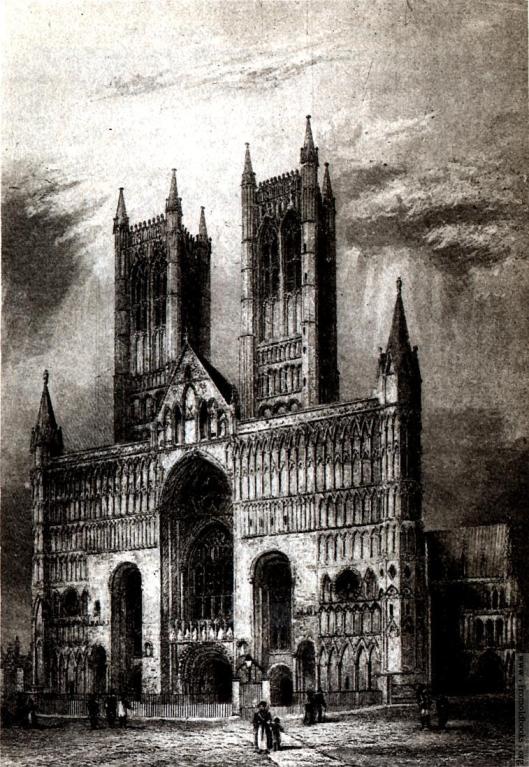
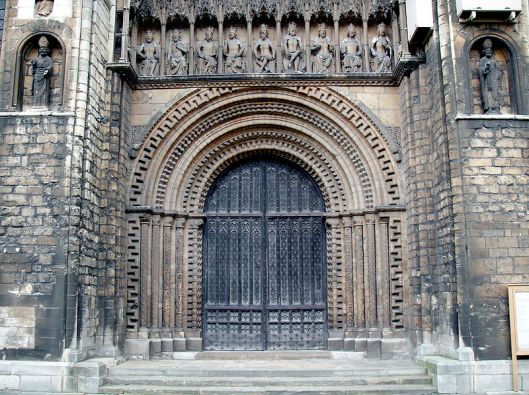
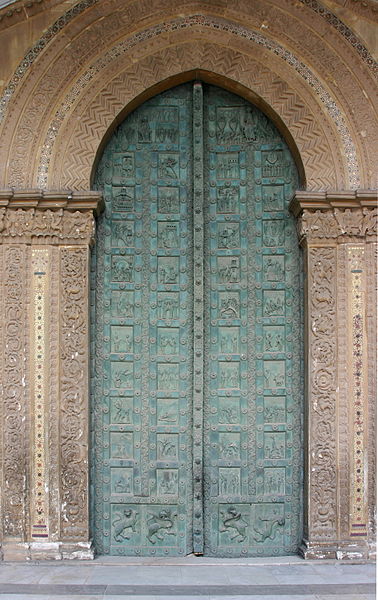
This immediately reminded us of places like the west door of Lincoln Cathedral.

image3linc.jpg

image4door.jpg

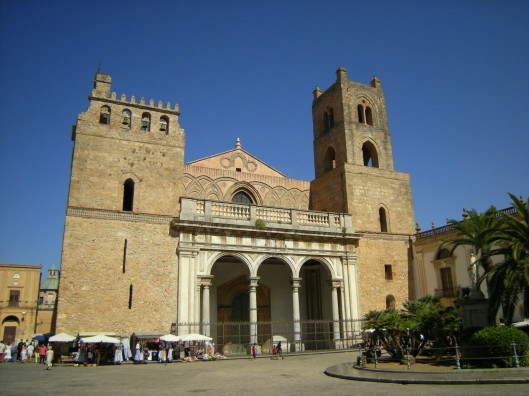
Or the main door of the cathedral of Palermo.

image5duomo.jpg

image6porta.JPG

Because he is now a member of the Guard of the Tower of Gondor, Pippin is allowed to pass through the Gate—and to take Bergil with him out to see and hear the following:

“Beyond the Gate there was a crowd of men along the verge of the road and of the great paved space into which all the ways to Minas Tirith ran.  All eyes were turned southwards, and soon a murmur rose:  ‘There is dust away there!  They are coming!’

Pippin and Bergil edged their way forward to the front of the crowd and waited.  Horns sounded at some distance, and the noise of cheering rolled towards them like a gathering wind.  There was a loud trumpet-blast, and all about them people were shouting.” (The Return of the King, Book Five, Chapter 1, “Minas Tirith”)

What happens then is a kind of parade.

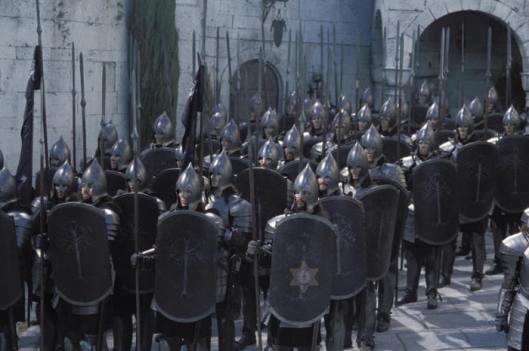
When we see the defenders of Minas Tirith in the films, they are all uniformly clad.

image7gondorians.jpg


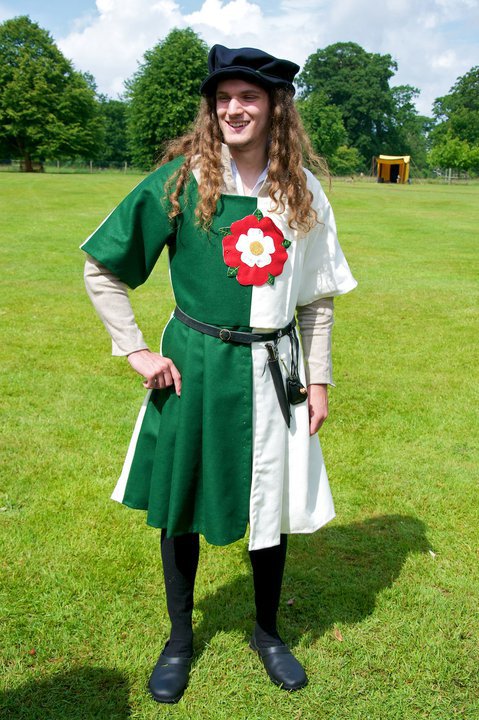
In our medieval world, this was highly unlikely, the best being that soldiers and servants might wear the colors/crest of the lord they served.  This was called “livery”.  Uniformity in clothing, weapons, and armor would be some time in the future.

image8livery.jpg

What is coming up the road from the south are reinforcements, marching in a long column of units, and those units differ greatly in look.  First are the men of Lossarnach, led by their lord, Forlong:

“Leading the line there came walking a big thick-limbed horse, and on it sat a man of wide shoulders and huge girth, but old and grey-bearded, yet mail-clad and black-helmed and bearing a long heavy spear.  Behind him marched proudly a dusty line of men, well-armed and bearing great battle-axes; grim-faced they were, and shorter and somewhat swarthier than any men Pippin had yet seen in Gondor.”

To us, those axes make the men of Lossarnach sound like the huscarls, the bodyguard of an Anglo-Saxon king, like Harold Godwinson, whom we see depicted on the “Bayeux Tapestry”.

image9huscarl.jpg

image10taphus.gif

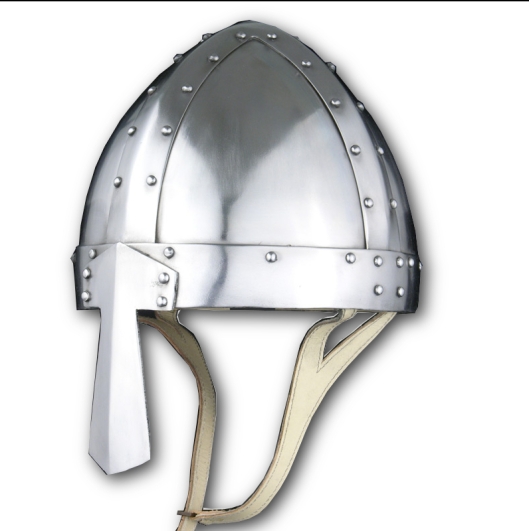
Their leader, Forlong, might be similar in appearance, wearing a type of helmet called a spangenhelm,

norman-spangenhelm-2.gif

and protected by an early form of mail shirt called a hauberk.

image12hauberk.jpg

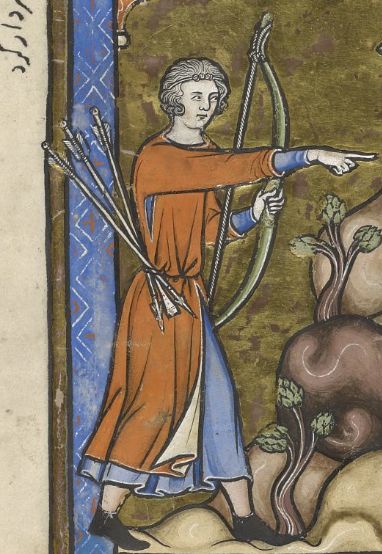
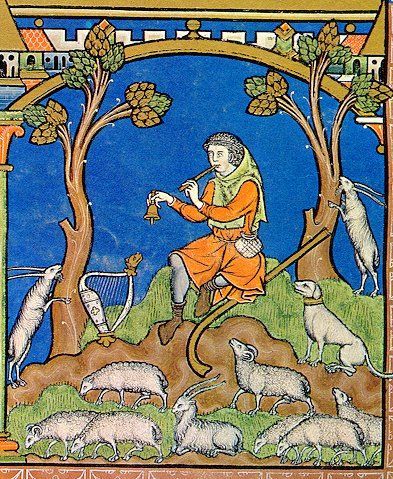
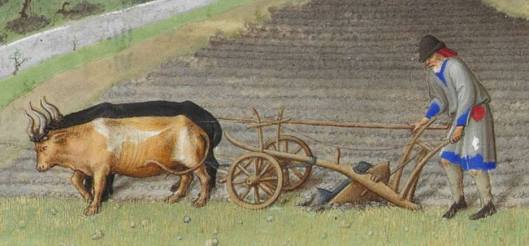
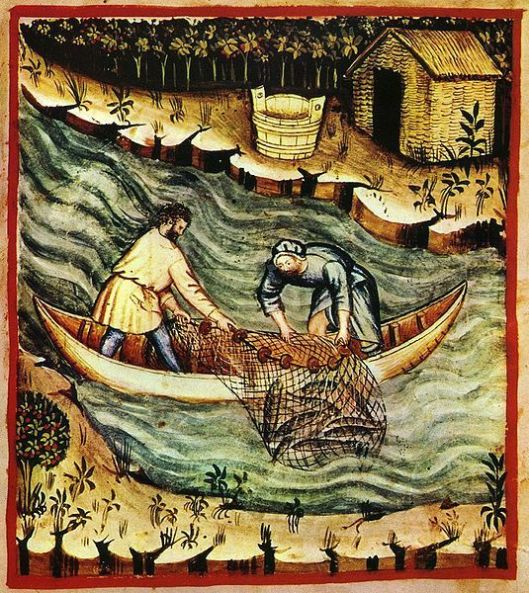
After these, we see more units, but with little description—the men of Ringlo Vale “striding on foot”, so infantry of some sort, five hundred bowmen from Morthond, from the Langstrand, “a long line of men of many sorts, hunters and herdsmen and men of little villages, scantily equipped save for the household of Golasgil their lord”.   After them, “a few grim hillmen without a captain”, and “fisher-folk of the Ethir”, all of which we imagine in their workaday clothes of hunters and shepherds and farmers and sailors, as depicted in medieval English and French manuscripts.

image13medhunter.jpg

image14shepherd.jpg

image15farmer.jpgimage16fishermen.jpg

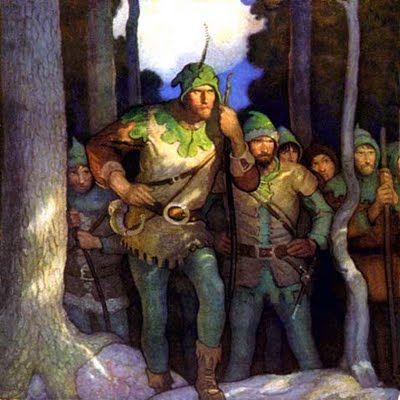
Next comes a unit which is perhaps wearing livery:  “Hirluin the Fair of the Green Hills from Pinnath Gelin with three hundreds of gallant green-clad men.”  We aren’t told how they’re armed, but that they may be in livery suggests that they may be better armed than some of the earlier contingents.  (In fact, “gallant green-clad men” makes us think of Robin Hood—perhaps more archers?)

image17rhood.jpg

And, finally, folk we’ve discussed before:

“And last and proudest, Imrahil, Prince of Dol Amroth, kinsman of the Lord, with gilded banners bearing his token of the Ship and the Silver Swan, and a company of knights in full harness riding grey horses; and behind them seven hundreds of men at arms, tall as lords, grey-eyed, dark-haired, singing as they came.”

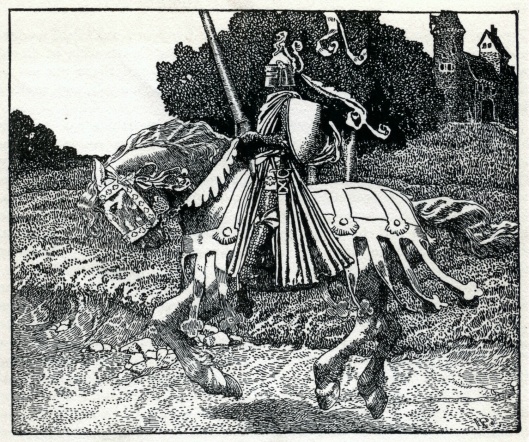
“knight in full harness”, as we talked about in an earlier post, probably meant, to JRRT, something from Howard Pyle or NC Wyeth, like this—

image18knight.JPG

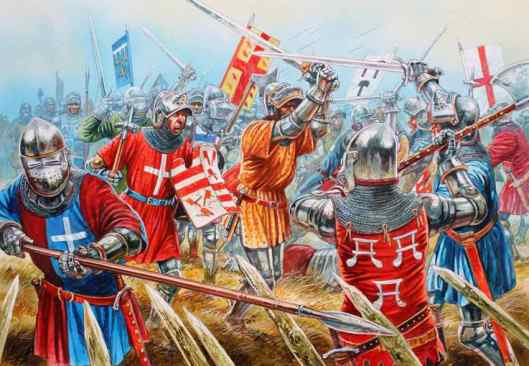
As for those “men at arms”, if they appear to be “tall as lords”, we assume that they’re on foot, which puzzles us a bit.  “Men at arms” usually means “armored soldiers on horseback” in our world—perhaps with less armor than knights, but still cavalry (unless dismounted, to fight on foot, as the French did at Agincourt in 1415, for example).  We see them, then, as looking like those dismounted cavalry, like these—

image19menatarms.jpg

However they are armed and clothed, however, they are thought to be too few by those watching and, considering what Mordor eventually sends against them, they would not have been enough, if the brave Rohirrim and Aragorn’s reinforcement from the south hadn’t arrived in time.  What would have happened if they hadn’t?  A subject for very grim fan-fiction!

Thanks, as ever, for reading!

MTCIDC

CD
Wormy

21 Wednesday Feb 2018

Posted by Ollamh in J.R.R. Tolkien, Military History, Military History of Middle-earth, Villains

≈ Leave a comment

Tags

Adolf Hitler, Bilbo, Dragon, Fifth Column, Gandalf, Germany, Grima, Madrid, Middle-earth, Nazis, Norway, Norwegian facist party, Republican government, Rohan, Saruman, Second World War, Smaug, Spanish Civil War, The Hobbit, The Lord of the Rings, The Scouring of the Shire, Theoden, Tolkien, traitor, Vidkun Quisling, William Blake, worm, Wormtongue

Welcome, as always, dear readers.
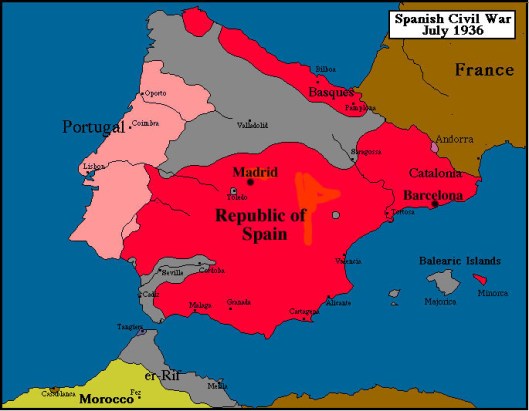
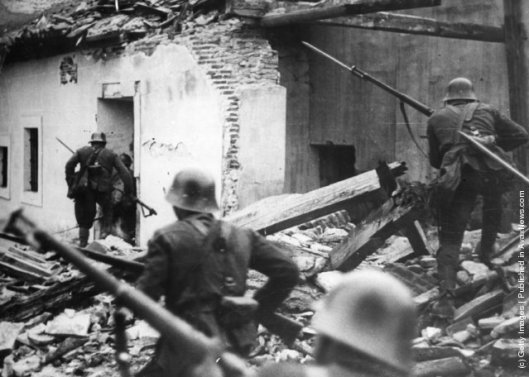
In 1936, the Nationalist forces were marching to attack the Republican government in Madrid, during the Spanish Civil War.
image1nationalists.jpg
image2attackonmadrid.jpg
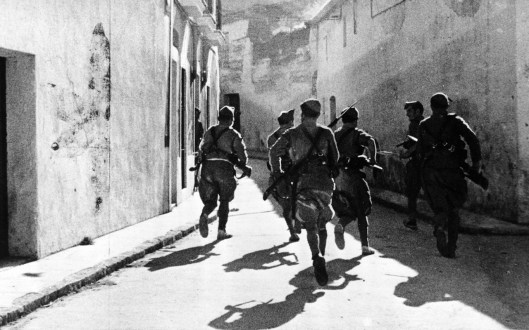
When interviewed, a Nationalist general is reported to have said that, as four military columns were about to assault the city,
image3natattack.jpeg
a fifth column of loyalists would join the attack from inside.
image4natattack.jpg
This phrase “fifth column”, then, was picked up and began to be used world-wide to mean “traitors/betrayers from within” and was popular during the Second World War era.
image5thcol.jpg

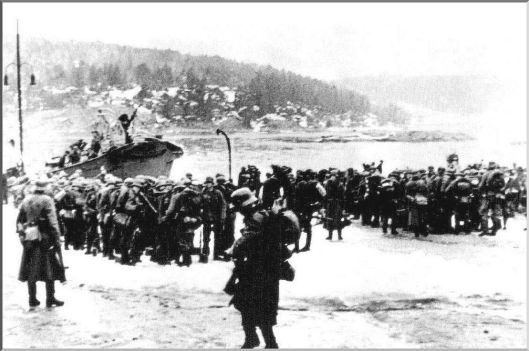
When the Nazis attacked Norway in 1940,
image6nazislandinginnorway.jpg
and the Allies failed to defend their positions there successfully and were forced to surrender or flee
image7capturedtroops.jpg
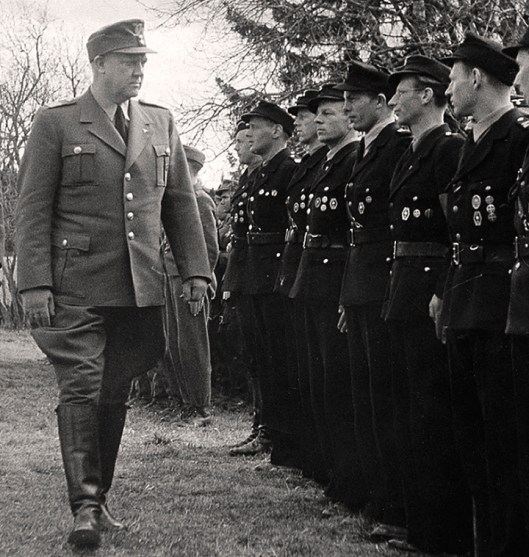
a member of the small Norwegian fascist party, Vidkun Quisling,
image8quisling.jpg
declared himself ruler as the Germans marched in.
image9conqueringgermans.jpg

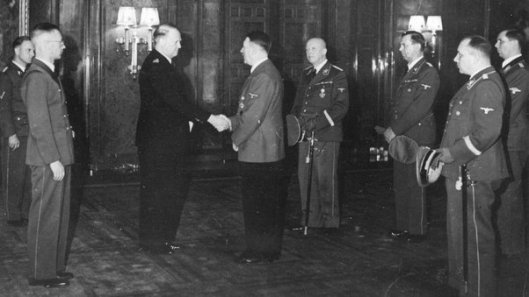
In time, the Nazis recognized him as the head of Norway and he even had an audience with Hitler.
image10hitandquis.jpg

This time, a specific “fifth columnist” had not only betrayed his country, but also profited greatly from it and, when we looked at the dates—1936 and 1940—we wondered, as we so often do, if the current events of our world may have colored JRRT’s relation of the events in Middle-earth—even as we hasten to say, as we always do, that this is just a suggestion.
In his first meeting with Aragorn, Eomer is troubled and his veiled comments suggest just the same sort of fifth-columnist action:
“But at this time our chief concern is with Saruman. He has claimed lordship over all this land, and there has been war between us for many months…”
His concern, however, as we see, is for more than border security, as he says of Saruman:
“His spies slip through every net, and his birds of ill omen are abroad in the sky. I do not know how it will all end, and my heart misgives me; for it seems to me that his friends do not all dwell in Isengard. But if you come to the king’s house, you shall see for yourself.” (The Two Towers, Book Three, Chapter 2, “The Riders of Rohan”)
So, all is not well, not only in Rohan, but in Meduseld itself. When Gandalf and the other survivors of the Fellowship arrive at the gates of Edoras, they are stopped by guards and by a command from Theoden, king of Rohan—or is it? A guard says:
“It is but two nights ago that Wormtongue came to us and said that by the will of Theoden no stranger should pass these gates.” (The Two Towers, Book Three, Chapter 6, “The King of the Golden Hall”)
“Wormtongue” seems a very odd name—do worms actually have tongues?
image11worm.JPG
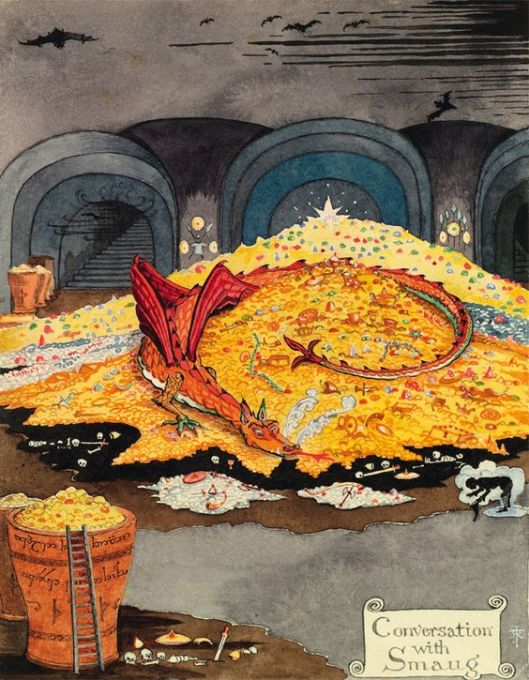
But this isn’t a worm, it’s a “worm”—an old term for “dragon”.
image12smaug.jpg
And, if Smaug’s speech and its effect upon Bilbo is anything to go by:
“Bilbo was now beginning to feel really uncomfortable. Whenever Smaug’s roving eye, seeking for him in the shadows, flashed across him, he trembled, and an unaccountable desire seized hold of him to rush out and reveal himself and tell all the truth to Smaug. In fact he was in grievous danger of coming under the dragon-spell.” (The Hobbit, Chapter 12, “Inside Information”)
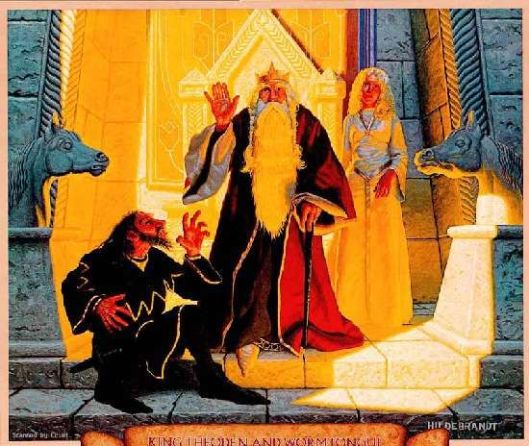
then a person having a dragon tongue might be a real threat, as Wormtongue, seated at Theoden’s feet,
image13theodenandgrima.jpg
inserts himself between Gandalf and Theoden:
“Why indeed should we welcome you, Master Stormcrow? Lathspell I name you, Ill-news; and ill news is an ill guest they say.”
Gandalf immediately resists this and, in a burst of power, breaks the real “spell”—the dragon’s words which Grima Wormtongue has been pouring into Theoden’s ears, as Theoden says to him of Gandalf’s efforts: “If this is witchcraft…it seems to me more wholesome than your whisperings. Your leechcraft [that is, “medical skill”—obviously ironic here] ere long would have had me walking on all fours like a beast.”
[A footnote here—is JRRT making a quiet reference to the fate of Nebuchadnezzar, king of Babylon, mentioned in the book of Daniel in the Old Testament? In Chapter 4, the king is driven mad and spends seven years as a grazing animal to prove the power of the Hebrew divinity. Here is William Blake’s (1757-1827) striking depiction of the mad king.]
image14blake.jpg

Certainly something Grima has been doing has affected Theoden, as he is initially described as “a man so bent with age that he seemed almost a dwarf…” and this shrinking is suddenly reversed when Gandalf strikes Grima down:
“From the king’s hand the black staff fell clattering on the stones. He drew himself up, slowly, as a man that is stiff from long bending over some dull toil. Now tall and straight he stood, and his eyes were blue as he looked into the opening sky.”
For all that Grima has been blocked and Theoden restored, the fifth columnist tries once more. When he is told that he must ride with the king and his warriors to battle, he makes a countersuggestion:
“One who knows your mind and honours your commands should be left in Edoras. Appoint a faithful steward. Let your counsellor Grima keep all things till your return…”
But he gives himself away by finishing that sentence with “and I pray that we may see it, though no wise man will deem it hopeful.”
And Gandalf sees all too clearly what is behind Grima’s proposal—and who is behind it:
“Down, snake!…Down on your belly! How long is it since Saruman bought you? What was the promised price?…”
image15fallofgrima.jpg

Although it is said that Grima deserves death for his treachery, he is allowed to flee, and, when we next see him, he is with his true master, acting as his “footman” as Gandalf calls him (The Two Towers, Book Three, Chapter 10, “The Voice of Saruman). And here, as Bilbo’s pity has preserved Gollum for an unseen but vital part in the later story of the Ring, so Gandalf’s mercy to Grima preserves him for two final acts: first, his mistaken use of a palantir as a missile, which puts it into Gandalf’s hands and, ultimately into Aragorn’s, who shakes Sauron’s nerve with it; second, Saruman’s ultimate end:
“[Saruman] kicked Wormtongue in the face as he groveled, and turned and made off. But at that something snapped: suddenly Wormtongue rose up, drawing a hidden knife, and then with a snarl like a dog he sprang on Saruman’s back, jerked his head back, cut his throat, and with a yell ran off down the lane.” (The Return of the King, Book Six, Chapter 8, “The Scouring of the Shire”)
image16deathofsaruman.jpg
Grima doesn’t survive this attack, however: “Before Frodo could recover or speak a word, three hobbit-bows twanged and Wormtongue fell dead.”
Merry calls these final acts of violence “the very last end of the War”, but we would suggest a parallel with a specific event in our world: the end of Vidkun Quisling–executed by firing squad in October, 1945, for treason. Could we say that Grima’s death—deserved earlier, but deferred—was also a kind of execution for treason, against Rohan, finally carried out?
And a final thought: after World War 2, Quisling’s name became, for a time, an easy synonym for “fifth columnist/traitor”—could we imagine that, in the Common Speech of Middle-earth after the War of the Ring, the same might have happened to “Grima Wormtongue”?
Thanks, as ever, for reading.
MTCIDC
CD

In Shining Armo(u)r

17 Wednesday Jan 2018

Posted by Ollamh in Artists and Illustrators, Heroes, J.R.R. Tolkien, Literary History, Military History, Military History of Middle-earth, Narrative Methods, The Rohirrim, Tolkien

≈ Leave a comment

Tags

Agincourt, Anglo-Saxon, armor, Bayeux Tapestry, chain-mail, Crecy, Dark Ages, Embroidery, Howard Pyle, knights of Dol Amroth, Medieval books, medieval manuscript drawings, N.C. Wyeth, Norman knight, Pauline Baynes, Romans, sub-Roman period, Sutton Hoo, The Lord of the Rings, The Rohirrim, The Story of King Arthur and His Knights, Tolkien

Welcome, as always, dear readers.

In a letter to Miss [Rhona] Beare, of 14 October, 1958, JRRT wrote to answer what was clearly a question about dress in The Lord of the Rings:

“Question 4.  I do not know the detail of clothing.  I visualize with great clarity and detail scenery and ‘natural’ objects, but not artefacts.  Pauline Baynes drew her inspiration for F. Giles largely from medieval MS drawings—except for the knights (who are a bit ‘King-Arthurish’)* the style seems to fit well enough.” (Letters, 280)

To which he adds this footnote:

“*Sc. [= “Know/understand”] belong to our ‘mythological’ Middle-Ages which blends unhistorically styles and details ranging over 500 years, and most of which did not of course exist in the Dark Ages of c. 500 A.D.”

In the next paragraph he adds:

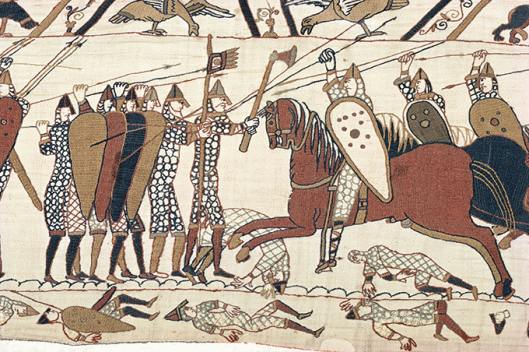
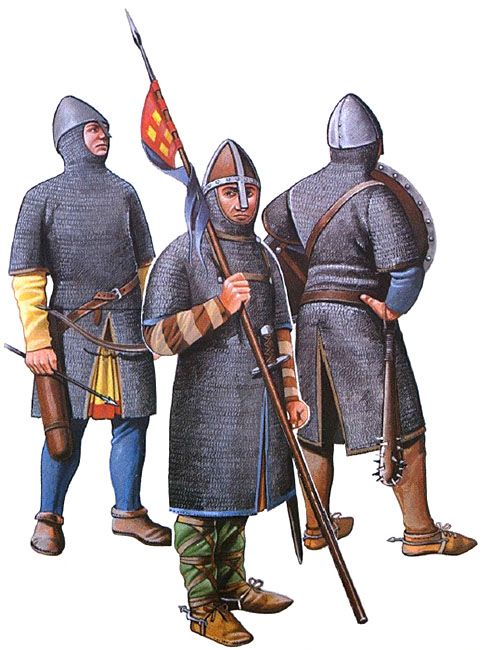
“The Rohirrim were not ‘mediaeval’, in our sense.  The styles of the Bayeux Tapestry (made in England) fit them well enough, if one remembers that the kind of tennis-nets [the] soldiers seem to have on are only a clumsy conventional sign for chain-mail of small rings.” (Letters, 280-281)

The Bayeux Tapestry (which should really be called the “Bayeux Embroidery”, since it’s actually a long piece of cloth with hundreds of figures and details stitched on to it, rather than woven into it) presents us with a detailed history of the invasion of England in 1066AD.  The soldiers Tolkien is talking about look like this:

image1knights.jpg

You can see what he means by “tennis-nets”—which should really look like this:

image2normans.jpg

That chain-mail, then, looks like this:

image3mailshirt.jpg

And, at the bottom of this next illustration, you can see how it’s made:

image4mailnorman.jpg

We know, then, how JRRT envisaged the Rohirrim in its eoreds, marching towards Minas Tirith, but how did he imagine other soldiers, we’ve asked ourselves, and, in particular, the knights of Dol Amroth—the only soldiers specifically described as such in The Lord of the Rings?

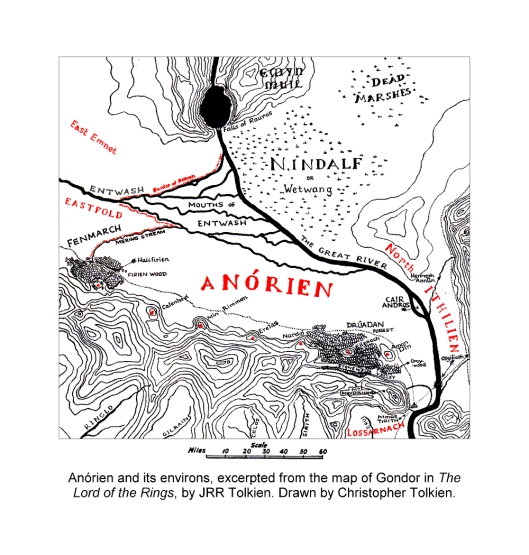
image5map.jpg

JRRT writes of them as they enter Minas Tirith:

“And last and proudest, Imrahil, Prince of Dol Amroth, kinsman of the Lord, with gilded banners bearing his token of the Ship and the Silver Swan, and a company of knights in full harness riding grey horses…”(The Return of the King, Book Five, Chapter 1, “Minas Tirith”)

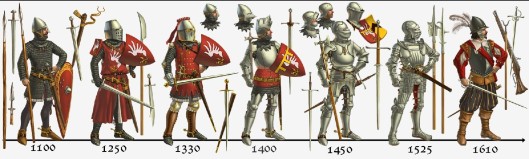
“Full harness” means “complete armor”.  When we think of the term, we think of something later than the Normans, who are, after all, just wearing a kind of very long ringed shirt.  Here’s a useful chart to give you of an idea of what we mean.

image6aarmorchart.jpg

So, since “full harness” doesn’t look like the Rohirrim, how might it look?

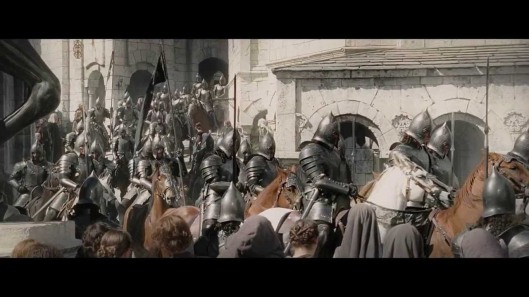
In Jackson’s films, we don’t believe that we ever see those knights singled out, as we see the Rohirrim.  The best we could find was this picture of Faramir’s men about to mount a cavalry charge against what appears to be Osgiliath.  (We’ve talked about this in a much earlier posting—one of the most unbelievable moments in the whole of Jackson’s work.)

image6knightsmt.jpg

This is a big picture, but the details, unfortunately, aren’t very clear.  There are a few things, however, which we found rather odd:

  1. although there appear to be a few lances with penons among them, most seem to be armed only with swords—a close-up weapon—which is why actual knights also carried lances—heavy cavalry came crashing down on infantry or slamming into enemy mounted men—or intended to—spearing right and left and then drawing swords (or using maces or battle axes)
  2. a minor detail, but everyone seems to be wearing his sword on the right-hand side, which would have made it very hard to draw, unless all were left-handed men!
  3. the helmets and armor seem very standardized, and we would believe that budgetary considerations probably influenced this uniformity—50 identical helmets were probably cheaper to make than 50 different ones—but such sameness reminds us more of Roman imperial troops than of any western medieval army we can think of.

image7romans.jpg

We assume, then, that this is the film’s view of soldiers at least like Imrahil’s men, but when Tolkien wrote “a company of knights in full harness”:  what might he have had in mind?  We think there is a clue in that adjective “King-Arthurish”, which he uses of Pauline Bayne’s illustrations and in his footnote, where he refers to “our ‘mythological Middle-Ages”. What does he mean?

JRRT would have been about ten when Howard Pyle published his The Story of King Arthur and His Knights in 1903.

image8pyle.png

Here is how Pyle saw Arthur’s knights.

image9aknightimage10asknights

Could this have inspired Tolkien’s view of Imrahil’s men?  (Judge for yourself by following this LINK.)

Tolkien would have been nearly 30 when The Boy’s King Arthur, illustrated by N.C. Wyeth, was published in 1922,

Image result for the boy's king arthur

but, if this were in among his children’s books, perhaps these illustrations might have given him ideas.  (And here’s a LINK to your own copy, from the Internet Archive.)

image12wyeth.jpgimage13wyeth.jpgimage14wyeth.jpg

These are two well-known sets of illustrations of Arthurian figures, both available in Tolkien’s early lifetime.  If Arthur was real, of course, he would have lived, as JRRT was well aware, in what is called the “sub-Roman period”, c.500AD—at the beginning of the so-called “Dark Ages”– and he and his men would actually have looked like this:

image15arthur.jpg

But this is where “our ‘mythological’ Middle-Ages” comes in—little would have been known, when JRRT was writing The Lord of the Rings, of what such warriors would have looked like, although the spectacular Sutton Hoo find of 1939, with its splendid helmet, would have given an inkling, once restored.

image16suttonhoo.jpg

image17suttonhoohelmet.jpg

image18mcbhelm.jpg

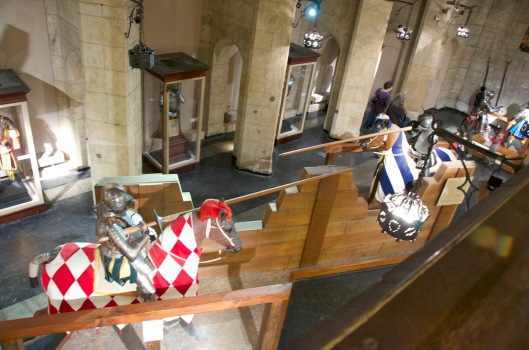
Because such knowledge was lacking, however, the historical Arthur (if there was one) had been moved to the Middle-Ages and re-equipped as a military figure of a much later era, and we believe that, when Tolkien wrote “Arthurish” and “knights”, this is what he meant—and how we’ve always seen Arthur, not only from books (and lots of films) but also from the armor galleries in a number of museums, from the Metropolitan Museum of Art in New York

image24.jpg

to the Higgins Armory in Massachusetts

image25.jpg

to the Philadelphia Museum of Fine Arts

image26.jpg

to the Tower of London.

image27tower.jpg

And, as we’ve discussed before, Prince Valiant, has been an influence from childhood (talk about ‘mythological’ Middle-Ages!).

image28val.jpg

And so, in turn, we imagine—and we think that JRRT did, too–the “company of knights in full harness” to have been individuals, brightly clothed in heraldic colors, their armor that, perhaps, of Crecy, in 1346—

image29crecy.jpg

or Agincourt, in 1415.

image30agincourt.jpg

And you, dear readers, what do you think?

Thanks, as ever, for reading!

MTCIDC

CD
I Think That I Shall Never See…

10 Wednesday Jan 2018

Posted by Ollamh in Artists and Illustrators, Economics in Middle-earth, Fairy Tales and Myths, J.R.R. Tolkien, Literary History, Military History, Military History of Middle-earth, Narrative Methods, Uncategorized

≈ Leave a comment

Tags

Alan Lee, Alexander Volkov, Battle of the Somme, C.S. Lewis, Caspar David Friedrich, deforestation, Fangorn, Fangorn Forest, German Romantics, Grimm Brothers, Haensel and Gretel, Industrial Revolution, Isengard, Kansas, L. Frank Baum, Leonid Vladimirsky, Mordor, pre-industrial, Saruman, The Lord of the Rings, The Scouring of the Shire, The Wizard of Emerald City, The Wizard of Oz, Tin Woodman, Tolkien, trees

Welcome, dear readers, as always.

In a letter to his aunt, Jane, dated 8-9 September, 1962, JRRT wrote:

“Every tree has its enemy, few have an advocate.” (Letters, 321)

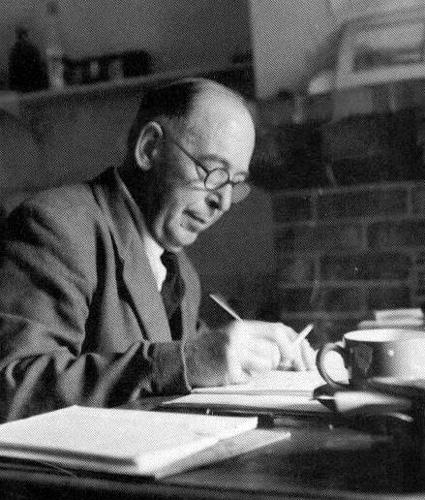
We know, from his letters and from interviews, just how passionate he was about trees,

image1jrrt.jpg

but we were immediately caught by just how very Treebeardish he sounded:

“I am not altogether on anybody’s side, because nobody is altogether on my side, if you understand me…” (The Two Towers, Book Three, Chapter 4, “Treebeard”)

image2tbd.jpg

Trees almost seemed to be people to Tolkien—in fact, we know that Treebeard was based in part upon a person—his friend, CS Lewis—at least his voice and manner of speaking.

image3csl.jpg

As near-people, then, to Tolkien, their destruction would have been a kind of murder.  With that in mind, we thought of our last posting, in which we quoted Farmer Cotton talking about Sharkey’s regime in the Shire, including “They cut down trees and leave ‘em lie.”  (The Return of the King, Book Six, Chapter 8, “The Scouring of the Shire”).  And we wondered whether, behind this, JRRT was talking not only about the orcs’ wanton devastation of trees,

image4treeruin.jpg

but also reliving the Battle of the Somme, in 1916, and seeing once more the acres of unburied dead (60,000 British casualties alone on the first day, 1 July, 1916).

image5dead.jpg

Certainly Treebeard saw this as murder, as he says to Merry and Pippin about Saruman

“He and his foul folk are making havoc now.  Down on the borders they are felling trees—good trees.  Some of the trees they just cut down and left to rot—orc-mischief that; but most are hewn up and carried off to feed the fires of Orthanc…Curse him root and branch!  Many of those trees were my friends, creatures I had known from nut and acorn; many had voices of their own that are lost for ever now.  And there are wastes of stump and bramble where once there were singing groves.”  (The Two Towers, Book Three, Chapter 4, “Treebeard”)

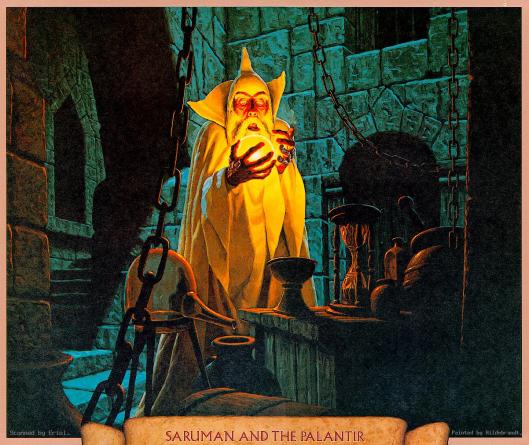
Saruman, a person with “a mind of metal and wheels”, who was “plotting to become a Power”,

image6saruman.jpg

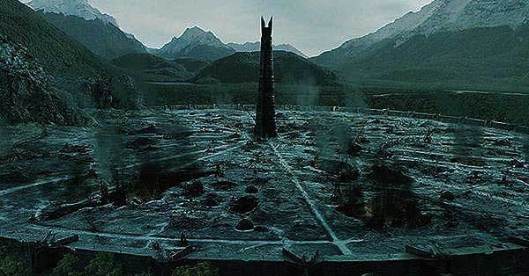
has turned Isengard into a vast factory, where “there is always a smoke rising”.

image7isengard.jpg

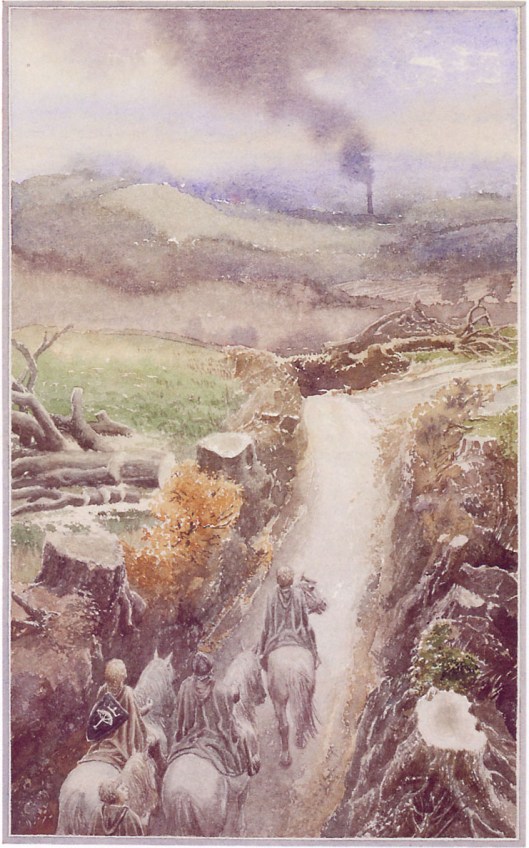
Thus, just as JRRT may have been recalling the Battle of the Somme, so perhaps he was also suggesting  the industrialization which had been in full swing when he was born and which he disliked intensely and which was reducing much of the part of England in which he grew up to the smoking wasteland Sharkey tried to make the Shire

image8.jpg

as we see in this Alan Lee depiction.

image9.jpg

Of course the deforestation went back long before the Industrial Revolution began.  Once upon a time, great forests covered much of the northern European world and humans lived in the midst of miles and miles of trees in clearings which they cut for themselves.

image10schwarz.jpg

image11farm.jpg

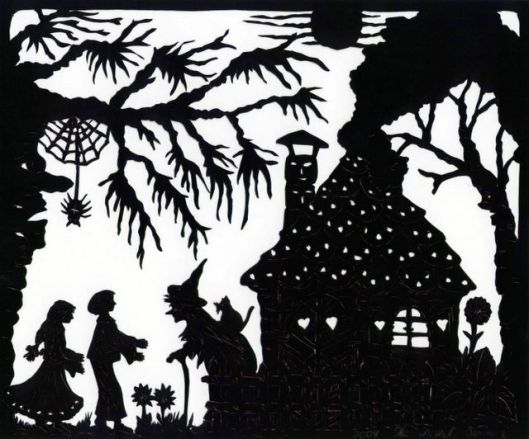
And we still have a distant memory of these, we would suggest, in some of our fairy tales.  If you think about the Brothers Grimm fairy tale of “Haensel and Gretel”, for example,

image12grimms.jpg

image13kinderund.jpg

image14schatten.jpg

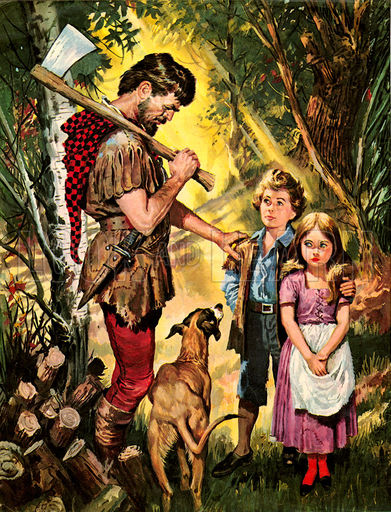
you’ll remember that, not only did the children live in the middle of such forest, as did the witch, but their father was a woodcutter, someone who would have been involved in that very deforestation, if in a very small way.

image15woodcutter.jpg

This memory, collected by the Grimms and others in folktale form in the early 19th century, also provided inspiration for the German Romantics—as you can see in this painting by one of their greatest painters, Caspar David Friedrich (1774-1840).

image16chasseur.jpg

To those Romantics, the forest was scary—but fascinating, as well—and disappearing, as the industrialism which JRRT disliked swallowed it.

image17blackcountry.jpg

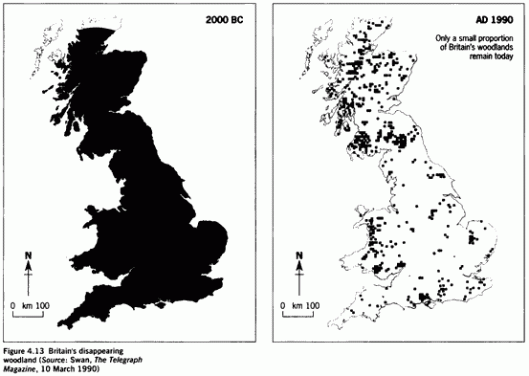
Wood was, however, the plastic of the world for many generations, with infinite uses, from home heating to ship-building, and, wherever humans settled, wood was eaten up.  Here is a telling chart for Britain of the contrast between 2000BC and 1990AD.

image18mapofgb.gif

It is no surprise, then, that, during the 17th century colonization of what is called New England in the US, a major attraction was the availability of wood and the colonists took full advantage of that availability, as this chart shows—

image19deforest.jpg

The forest which Treebeard shepherds is, in fact, rather like the forest depicted in that chart of Britain, as Aragorn says:

“Yes, it is old…as old as the forest by the Barrow-downs, and it is far greater.  Elrond says that the two are akin, the last strongholds of the mighty woods of the Elder Days, in which the Firstborn roamed while Men still slept.”  (The Two Towers, Book Three, Chapter 2, “The Riders of Rohan”)

But what would have happened to it had Saruman not lost Isengard to the very trees he was destroying?

image20destructionofisengard.jpg

In thinking about this, we were reminded of another woodcutter in a children’s story.

image21tinwoodsman.png

Or, if you prefer the film—

image22woodsman.jpg

He lives in the still-wooded land of Oz

image23oz.png

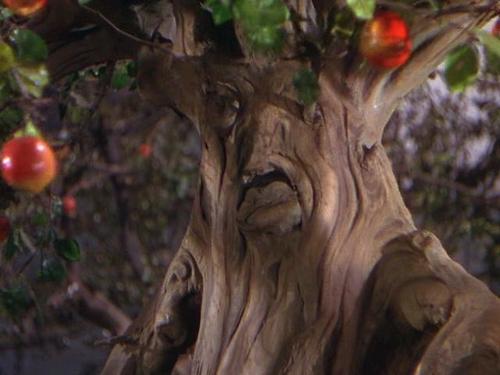
where there are even talking trees (although a lot less friendly than Treebeard).

image24talkingtree.jpg

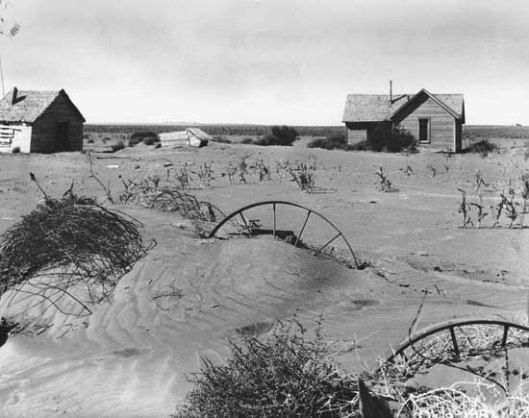
Dorothy, however, lives in a Kansas seemingly blighted by the so-called “Dust Bowl” of the 1930s.

image25kansas.jpg

image26dustbowl.jpg

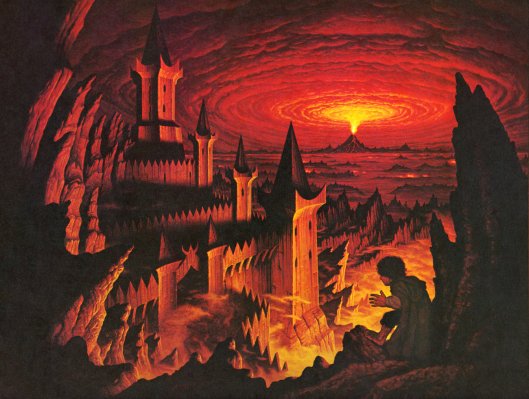
Would this have been Fangorn’s fate?  We have only to look at Mordor to believe it might have been, when all the trees fell silent.

image27mordor.jpg

As ever, thanks for reading.

MTCIDC

CD

PS

In 1939, a Russian children’s author, Alexander Volkov, published The Wizard of the Emerald City.  When one compares it with a certain American book of about 40 years before, striking similarities appear, starting with the title character.  And the illustrations, by Leonid Vladimirsky, also have something familiar about them…

image28vlad.jpg

There was one very practical change, however:  the Tin Woodman became the “Iron Lumberjack”, which rectifies a mistake in the original.  When Dorothy discovers the Woodman, he has rusted in place, but tin can’t rust!

Pop!

13 Wednesday Dec 2017

Posted by Ollamh in J.R.R. Tolkien, Military History, Military History of Middle-earth, Narrative Methods

≈ Leave a comment

Tags

anachronism, Bag End, gun, gunpowder, hand gonne, Helm's Deep, pop-gun, Professor Moriarity, Reichenbach Falls, Rosenbach Library, Sherlock Holmes, Sir Arthur Conan Doyle, The Adventure of the Empty House, The Hobbit, The Hound of the Baskervilles, The Lord of the Rings, Tolkien, Trev's Air Gun Scrapbook

Welcome, as always, dear reader.

The anachronisms in the 1937 Hobbit are well known:  “cold chicken and tomatoes”, “like the whistle of an engine coming out of a tunnel”, etc.  We ourselves have contributed to the commentary in several past postings and here we are again.

This time, we were caught by something Gandalf says to Bilbo in Chapter 1:

“It is not like you, Bilbo, to keep friends waiting on the mat, and then open the door like a pop-gun” (The Hobbit, Chapter 1, “An Unexpected Party”)

So, “pop-gun”?

Just previously, Bilbo was described as pulling open “the door with a jerk” (and in tumble 4 dwarves), which suggests what the pop-gun sounds like, as well as how sudden the motion.

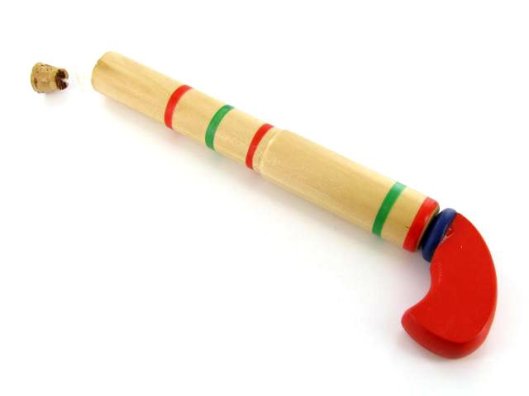
How is that sound made?  Here’s an example of such a gun.

image1popgun.jpg

As you can see, it’s just a tube.  Inside is a kind of plunger—a rod with a flattened end which faces towards the muzzle (the opening at the left).  You pull back the rod and it draws air into the barrel.  If you stick a cork in the muzzle, so that it makes a seal, when the rod is pushed up the barrel, the flattened rod end pushes the air in front of it, compressing it.  The compressed air then forces out the cork, which shoots out with a POP!

For all that it uses air to propel the cork, this is, as its name implies, a kind of gun.  Although there may be gunpowder in Middle-earth (see our earlier posting on the use of explosives at Helm’s Deep and the gate area of the Rammas Echor), it seems to be employed as the equivalent of dynamite,

image2helmsdeep.jpg

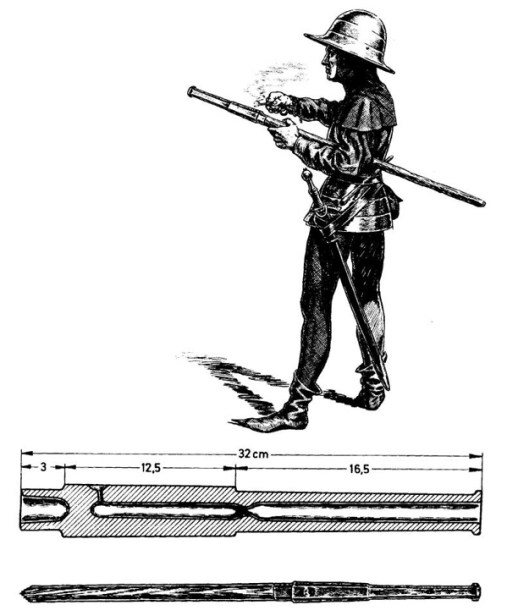
and never as the propulsive force in what medieval people in our world called a “hand gonne”.

image3handgonne.jpg

image4handgonne.jpg

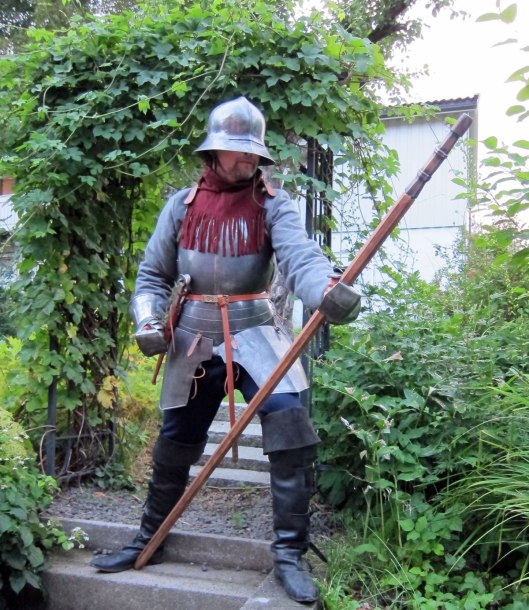
And thus it falls into that category of anachronisms.  The idea of air guns, however, makes us think of the Daisy Air Rifle one of us had as a child.

image5daisy.jpg

The air was pulled in when the lever underneath the trigger was pulled down and then pushed back, to make it ready to fire.  The illustration fires bbs, but ours was more peaceful, firing cork balls.

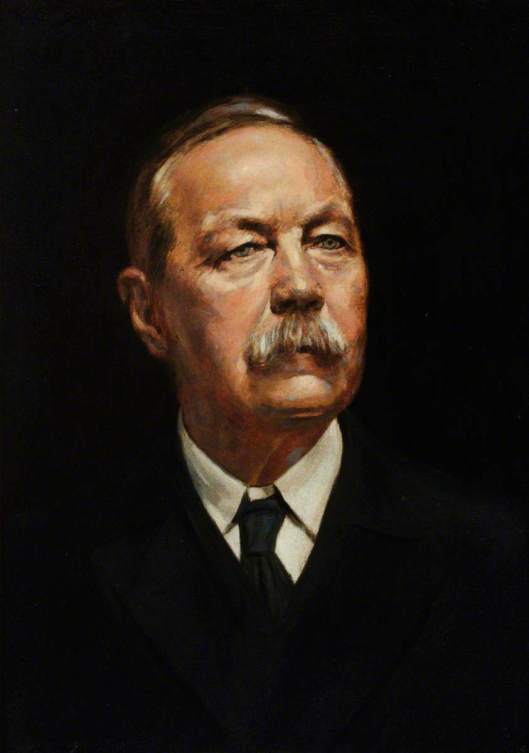
But a very unpeaceful version appears in Sir Arthur Conan Doyle’s

image6conandoyle.jpg

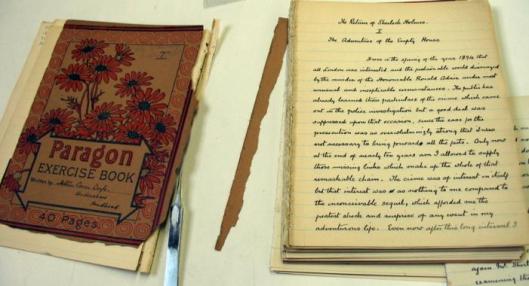
“The Adventure of the Empty House” (1903).  Here’s the first page of the manuscript, housed at the Rosenbach Library, in Philadelphia.  (And here’s a LINK to their excellent on-line magazine.)

image7ms.jpg

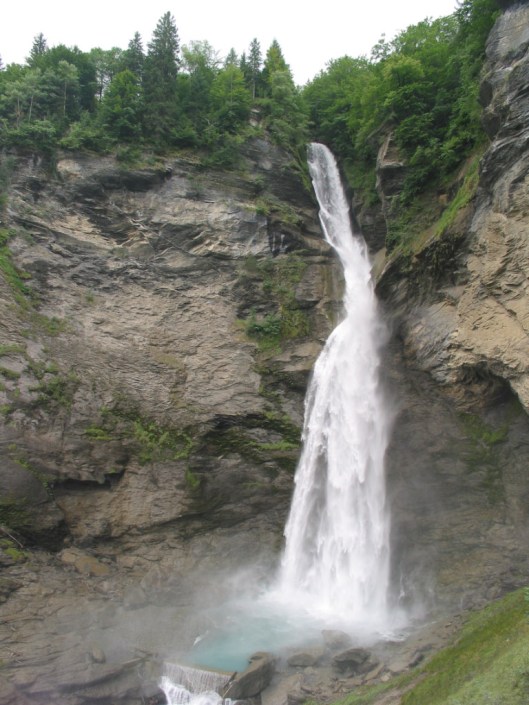
Sherlock Holmes had disappeared after his combat with Professor Moriarity at the Reichenbach Falls

image8reichenbach.jpeg

in Switzerland in 1891 (although the story in which this happens was published in The Strand Magazine in December, 1893).

image9moriarityholmes.jpg

For financial reasons, Conan Doyle brought Holmes back—first in the novel, The Hound of the Baskervilles in 1901,

image10hound.jpg

but this story was supposed to have taken place in 1889, two years before Holmes’ disappearance.  It was only with “The Adventure of the Empty House” that Holmes reappeared in contemporary London.  Here, it was revealed that Holmes had not fallen to his death with Moriarity, but had survived and had lived in disguise for some years, traveling the world and avoiding the vengeance of Moriarity’s men and, in particular, his chief lieutenant, Colonel Sebastian Moran, who had actually seen Holmes escape the clutches (literally) of Moriarity and had tried unsuccessfully to kill him with a fall of rock.

Back in London, Holmes appears to Watson and enlists his aid in trapping Moran, which Holmes does by placing a wax bust of himself in outline in the window of 221B Baker Street as a lure.  Holmes and Watson then wait across the street in an empty house (hence the title of the story), Holmes thinking that Moran will try to assassinate him from the street.  Instead, Moran climbs to the very room where the two are concealed and, opening a window, uses an air rifle to attempt to kill Holmes—before he’s tackled by the pair and subdued, with the aid of several policemen summoned from hiding nearby.

image11moranbroughtdown.jpg

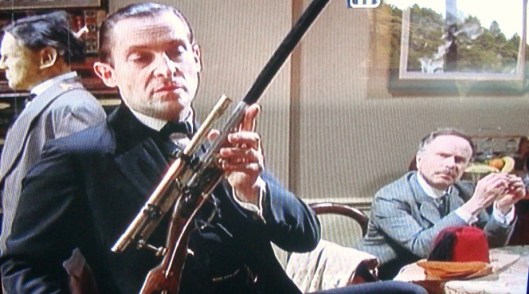
Moran, Holmes explains, was thought to be the best shot in India, where he had been stationed for some years, so it’s not surprising that he would attempt the long-distance murder of Holmes, but why an air gun?  (This is from the Granada television series of the 1980s, with the brilliant Jeremy Brett as Holmes.)

image12airgun.JPG

Air guns had first begun to appear in the 16th century, but, by the later 19th century could be either a toy, or a useful weapon for snipers, mainly because of its propulsion method.  Until the 1890s, the main propellant was gunpowder which, when fired, produced a loud bang and a cloud of white smoke.

image13martinihenry.jpg

Imagine, instead, a weapon which made much less noise—or a noise very unlike a gun’s BANG! (Conan Doyle has Watson describe the sound as “a strange loud whiz”)– and no smoke at all.  Perfect for a nighttime assassination, as Colonel Moran has planned it, never realizing that Holmes is well aware of his plan and foils it neatly (as Holmes almost always does).

In the 21st century, smokeless powder is the norm and air guns are now used for target shooting (including an Olympic event), and pop-guns?  Still for sale—just google “toy pop guns” at Amazon.com

image14popgun.jpg

or E-Bay and see what you find—something Bilbo never could!

Thanks, as ever, for reading.

MTCIDC

CD

Ps

If you’d like to know more about air guns, here’s a LINK for a great source, “Trev’s Air Gun Scrapbook”.

A Pirate’s Life…

15 Wednesday Nov 2017

Posted by Ollamh in Imaginary History, J.R.R. Tolkien, Literary History, Maps, Military History, Military History of Middle-earth, Narrative Methods, Villains

≈ 1 Comment

Tags

Abd el-Ouahed ben Messaoud ben Mohammed Anoun, Algiers, Anduin, Barbary Coast, buccaneer, corsair barbary, Corsairs, draught, dromon, dromunds, galley, Harad, Haradrim, Harlond, Helm's Deep, Legatus Regis Barbariae, Pelennor, Pirates, Ramas Echor, Southrons, The Lord of the Rings, Tolkien, Turkish galley, Umbar, US Navy WW2 fighter

Welcome, dear readers, as always.

In a previous posting, we mentioned the Corsairs of Umbar.

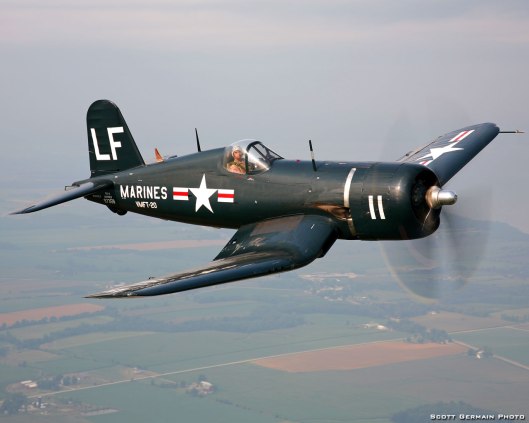
If you google “corsair” in images, the first thing which appears is this:

image1corsair.jpg

It’s a US Navy WW2 fighter—but hardly what was sweeping to attack the south coast of Gondor in Sauron’s massive campaign.

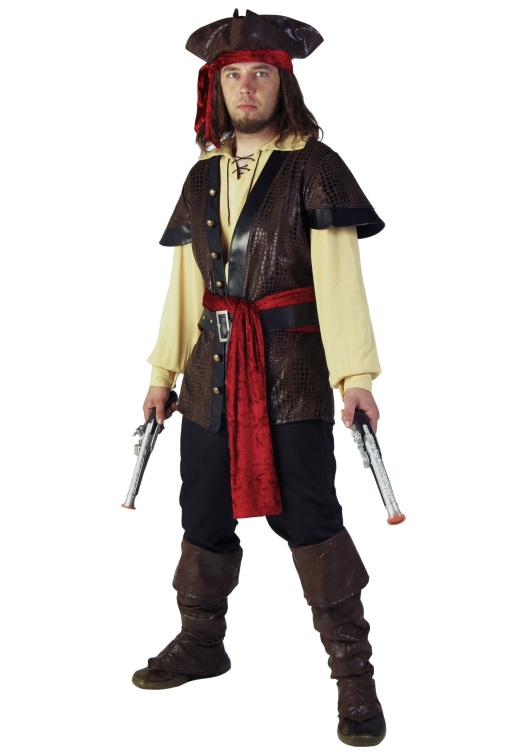
Change that to “corsair pirate” and you see things like

image2piratecostume

which is definitely a bit better, but he looks so 18th-century.  As we have discussed in many of our postings, Middle-earth is Middle Ages (more or less), even if it mixes High Medieval (things like the plate armor of the Prince of Dol Amroth) with Anglo-Saxon (the Rohirrim).  So “corsair pirate” is too late in time.  Another word (with a much-discussed origin) for “pirate” is “buccaneer”, so, how about “corsair buccaneer”?

image3trailer

Ooops!  Okay—clearly that doesn’t work!

So what will—and what are we really looking for?  Well, what do these corsairs look like according to JRRT?

They have black sails:

For Anduin, from the bend at the Harlond, so flowed that[,]from the City[,] men could look down it lengthwise for some leagues, and the far-sighted could see any ships that approached.  And looking thither they cried in dismay; for black against the glittering stream they beheld a fleet borne up on the wind:  dromunds, and ships of great draught with many oars, and with black sails bellying in the breeze.

‘The Corsairs of Umbar!’ men shouted.  (The Return of the King, Book Five, Chapter 6, “The Battle of the Pelennor Fields”)

Anything more?

In The Lord of the Rings, unfortunately not.

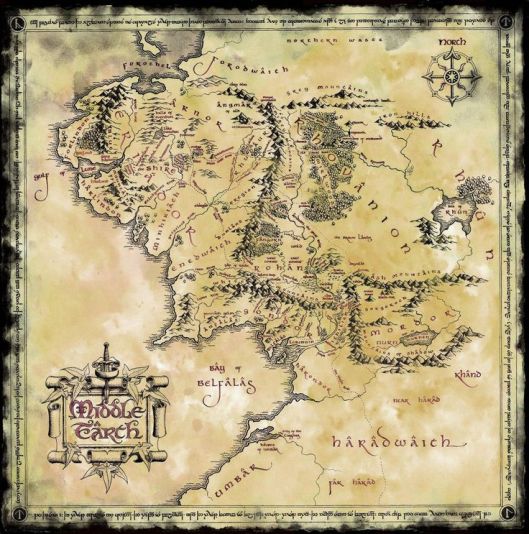
Umbar is in Harad,

image5.jpg

however, and there is a little about the Haradrim.  Our first view of them is Sam’s:

Then suddenly straight over the rim of their sheltering bank, a man fell, crashing through the slender trees, nearly on top of them.  He came to rest in the fern a few feet away, face downward, green arrow-feathers sticking from his neck below a golden collar.  His scarlet robes were tattered, his corselet of overlapping brazen plates was rent and hewn, his black plaits of hair braided with gold were drenched with blood.  His brown hand still clutched the hilt of a broken sword. (The Two Towers, Book Four, Chapter 4, “Of Herbs and Stewed Rabbit”)

Other details?

Just before Sam speaks, Gollum has reported seeing:

‘Dark faces.  We have not seen Men like these before, no, Smeagol has not.  They are fierce.  They have black eyes, and long black hair, and gold rings in their ears; yes, lots of beautiful gold.  And some have red paint on their cheeks, and red cloaks; and their flags are red, and the tips of their spears; and they have found shields, yellow and black with big spikes.  Not nice; very cruel wicked Men they look.  Almost as bad as Orcs, and much bigger.’ (The Two Towers, Book Four, Chapter 3, “The Black Gate is Closed.”)

“cruel and tall” (The Return of the King, Book Five, Chapter 4, “The Siege of Gondor”)

They have cavalry and they are armed with scimitars. (The Return of the King, Book Five, Chapter 6, “The Battle of the Pelennor Fields”)

These would seem to be people from Near Harad (that is, near to Gondor).  The men to the south of them differ:

“…Southrons [men from Near Harad] in scarlet and out of Far Harad black men like half-trolls with white eyes and red tongues.” (The Return of the King, Book Five, Chapter 6, “The Battle of the Pelennor Fields”)

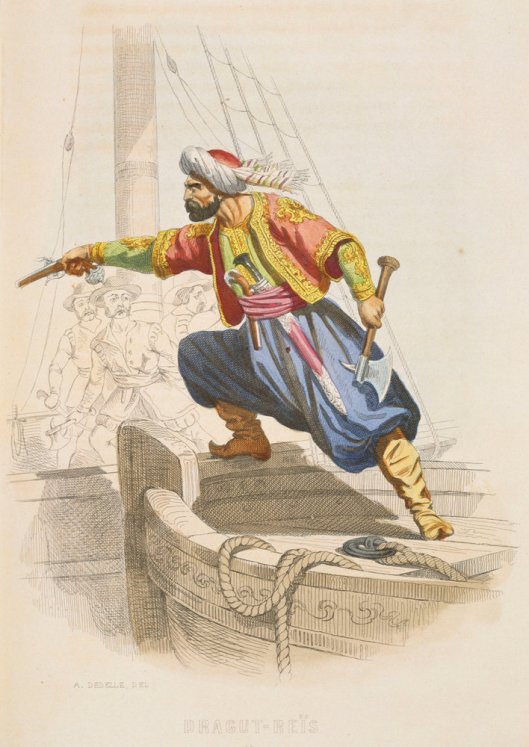
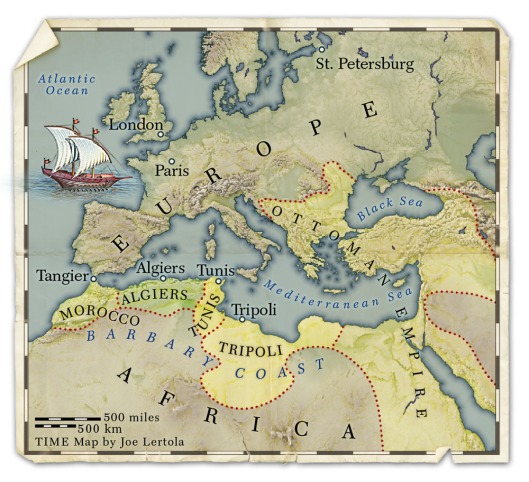
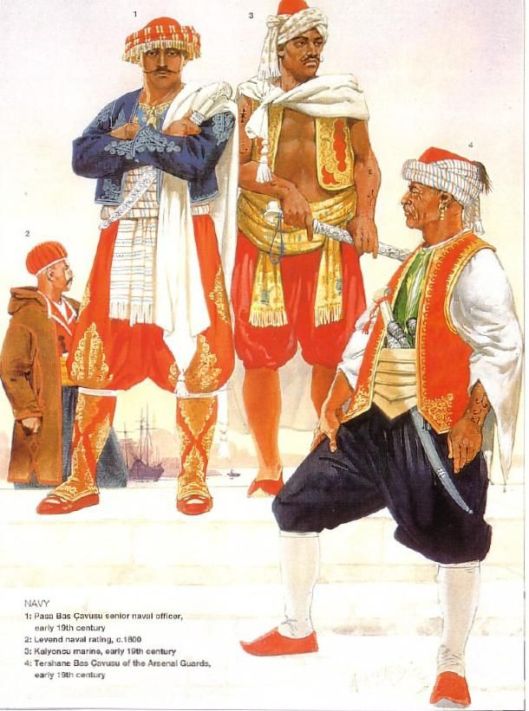
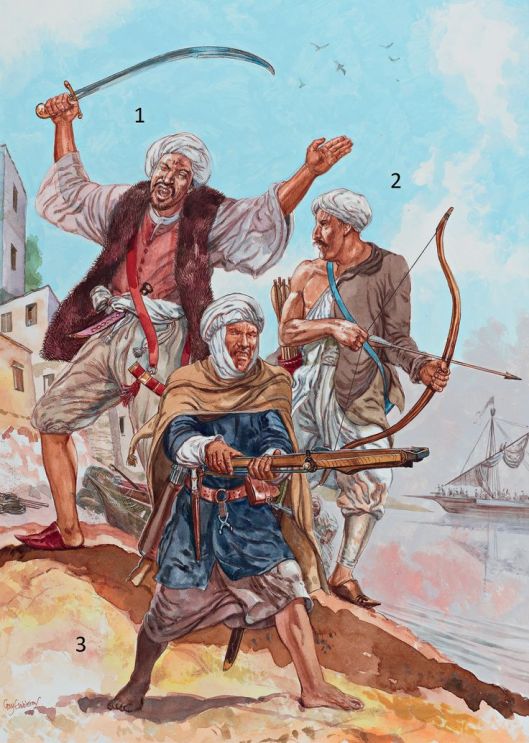
But all of this to us suggested a model from our own world (as always):  the Barbary Pirates.  So how about the search terms “corsair barbary”?

image4barbarycorsair.jpg

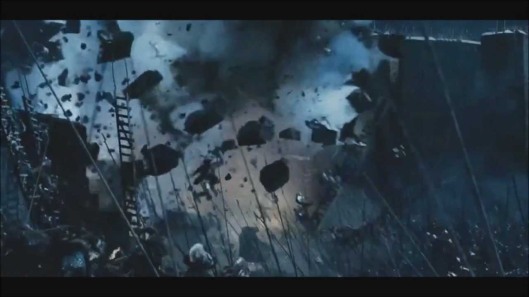
Ah.  That’s a bit more like it, we think.  He has to lose his gunpowder weapons, though—the only gunpowder in Middle-earth appears to be something in the hands of Saruman and Sauron’s orcs, as we see at Helm’s Deep

image6ahelmsdeep.jpg

and the wall of the Pelennor, the Ramas Echor.

We would imagine those corsairs, then, as looking like the infamous “Barbary Pirates”.

They certainly fill the bill geographically—they’re southern (at least in relation to JRRT’s England)–their hangouts being on the coast of North Africa

image6barbarycoast.jpg

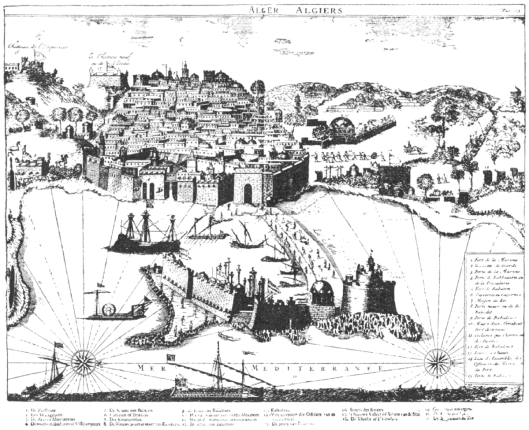
and, if you wanted a big port city, as Umbar was supposed to be, here’s Algiers.

image7algiers.png

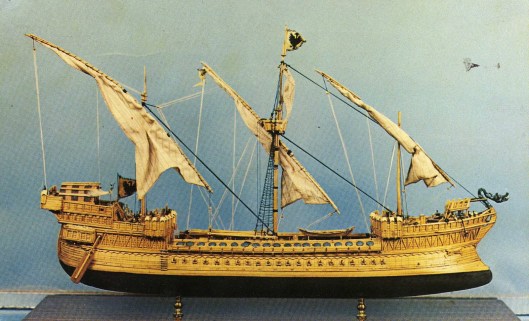
What about ships—that is, “dromunds and ships of great draught with many oars”?

“Dromund” is a medieval form of the Byzantine Greek dromon, literally a “runner”—a word you’d recognize from the English word “hippodrome”—the “place where horses run”.  This was the common larger Byzantine warship.

image8dromon.jpg

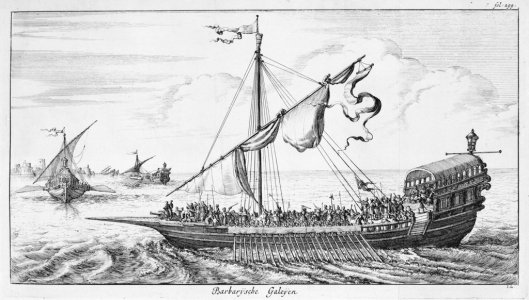
Here’s a Renaissance-era engraving of a Turkish galley.

image9barbarygalley.jpeg

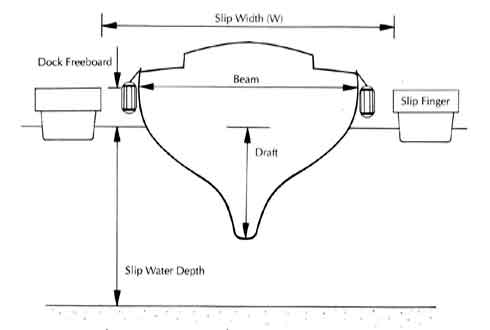
There’s a difficulty with “ships of great draft with many oars”, however.  Draught (also spelled “draft”) is the distance between the waterline and the bottom of the keel, as in this diagram.

image10draft.jpg

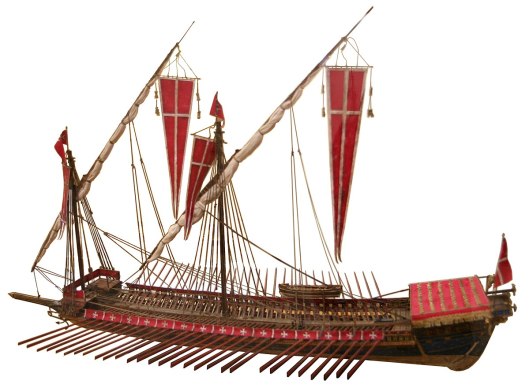
Ships with many oars are, commonly, galleys,

image11medgalley.jpg

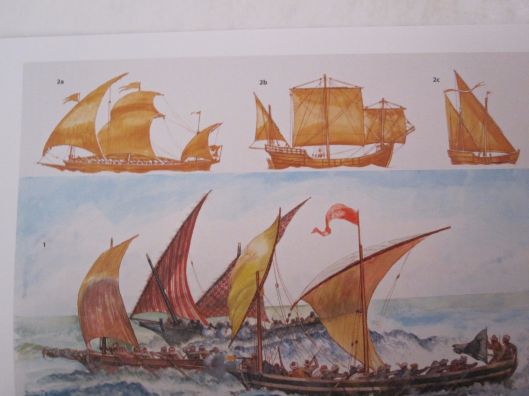
and galleys commonly have a shallow draft—both to allow for maneuver in shallow waters and to allow for the oars to do their job most efficiently.  So, we presume that all of the Corsairs’ vessels were actually galleys of various sizes.

image12galleys.jpg

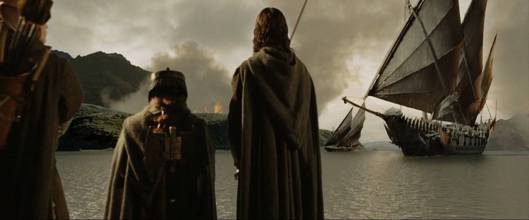
Jackson’s Corsair ships have something of the look of JRRT’s description, but his

image13ajacksonships.jpg

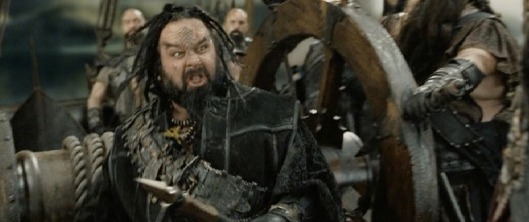
depiction of the Corsairs, unlike that of Rohan and the Rohirrim, is not even close to the little we have learned so far from the text.

image13jackson.jpg

The Barbary Pirates, to us, not only match point of origin and vessels, but are much more exotic and colorful, whereas those in the film look to us more like dingy Vikings.

image14pirates.jpg

image15pirates.jpg

And here’s a portrait

image16moroccanambassador.jpg

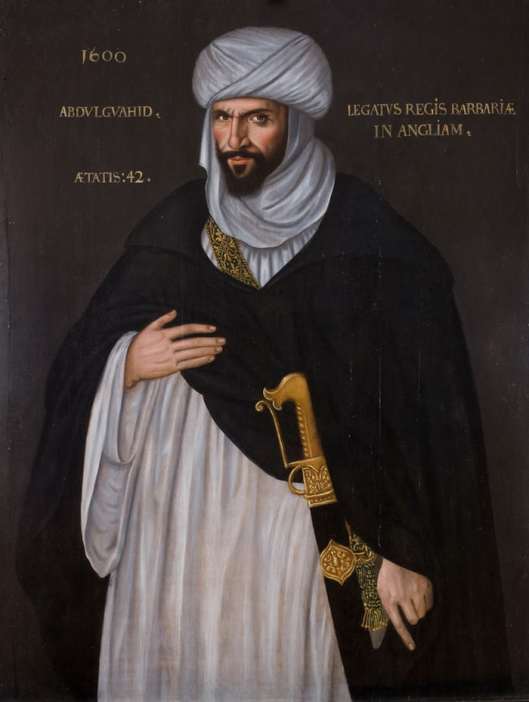
of the Moroccan ambassador to the court of Queen Elizabeth I (notice that, in the caption he’s called Legatus Regis Barbariae, “deputy of the King of Barbary”—a splendid figure with a splendid name:  Abd el-Ouahed ben Messaoud ben Mohammed Anoun—imagine him facing Aragorn from the deck of a galley—we think that the Oath-breakers would have had little fear for him, even as they overwhelmed him and his crew.

image17corsairs.jpg

So, as always, we ask you, readers, what do you think?

And thanks, as always, for reading.

MTCIDC

CD

PS

Just a thought, but, if Sauron, as one of the Maiar, was virtually immortal and had the kind of power which is displayed in the forging of the Ring, why did he need vast fortresses and armies and fleets?  Something to think about in a future posting!

The Nazgul Brothers?

27 Wednesday Sep 2017

Posted by Ollamh in J.R.R. Tolkien, Military History, Military History of Middle-earth, Narrative Methods

≈ Leave a comment

Tags

aircraft, anti-aircraft gun, Aviation, Bellerophon, bombers, British Army, dogfights, Dragons, early airships, flight, flying machines, Great War, harpies, Hermes, machine gun, manoeuvres, military intelligence, Nazgul, Paris, Pegasus, Schlieffen Plan of 1914, Sir Douglas Haig, Sir James Grierson, The Blitz, The Lord of the Rings, Tolkien, trench fever, trenches, Wraiths, Wright Brothers, WWI Trenches

Welcome, dear readers, as ever.

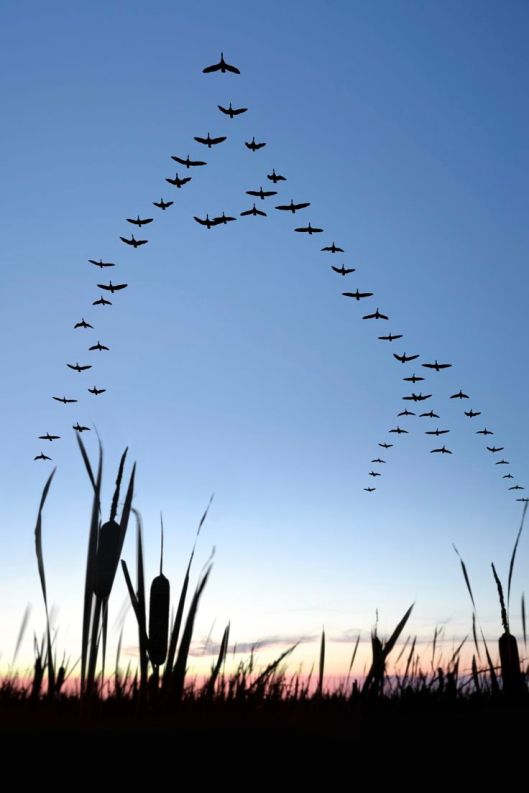
Imagine a world where there were no airports, no contrails, no roar of engines, no small silver objects crossing the skies, the sound of their flight trailed behind them.  The only flying things would be birds and those in different seasons, some permanent, some migratory (or used to be—where we live in North America the Canada Geese, whose great chevrons across our skies used to be powerful signs of winter to come or spring soon to appear, now squat here year round).

image1geese.jpg

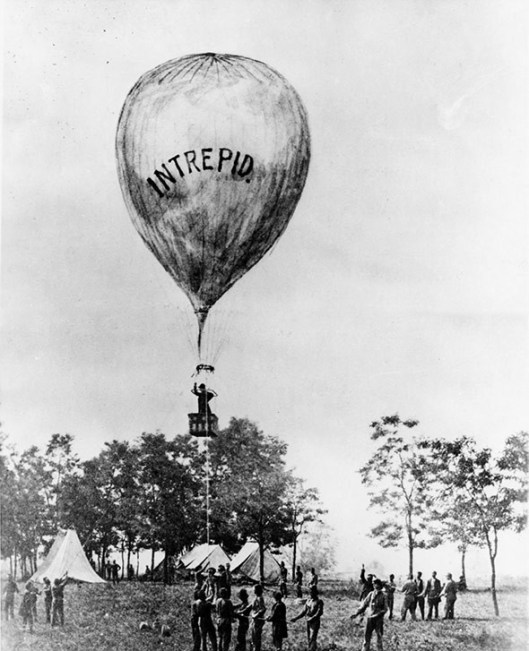
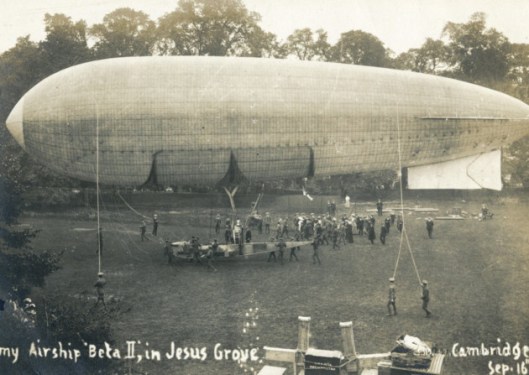
This would have been England in 1892, the year JRRT was born.  There were early airships—basically big balloons of various sorts, but they were primarily stationary and used for (limited) military intelligence.

image2intrepid.jpeg

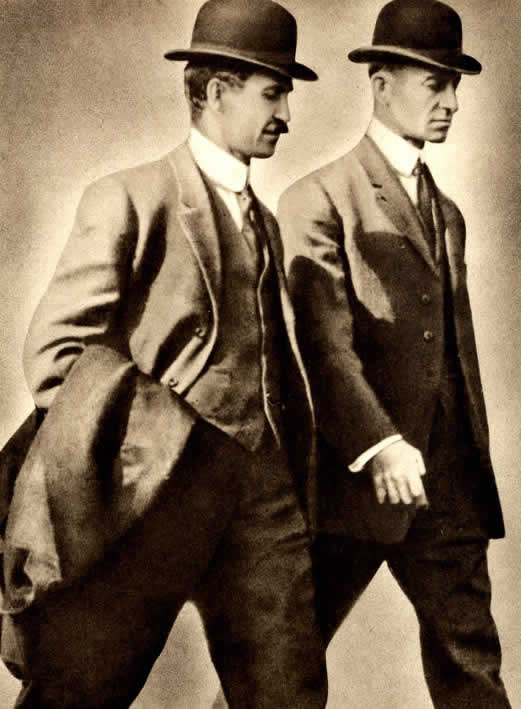
Then came the Wright brothers

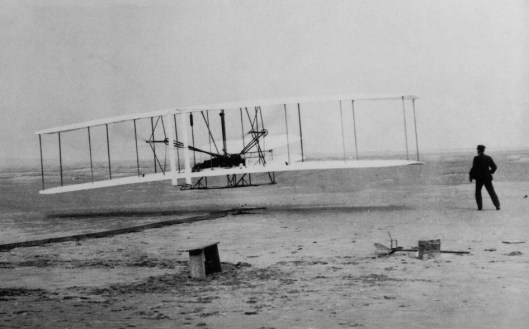
image3wrights.jpg

who, in December, 1903, produced the first engine-propelled, manned flight in their enlarged kite.

image4kittyhawk.jpg

Thereafter, flight would, literally, take off, but the Wrights, who were idealistically inclined, believed that such an invention would actually end war by making it too terrible.

The British army thought differently, however, and there were soon aerial observation units attached to military formations.  In fact, Sir James Grierson

image5grierson.jpg

tactically outfoxed his rival, Sir Douglas Haig,

image6haig.jpg

not only by his skillful use of aircraft for observation, but also by his keen understanding of how to conceal his own movements from Haig’s aircraft

image7airship.jpg

in the army manoeuvres of 1912.

image8manoeuvres.jpg


The Great War, when it came, two years later, would then be the proving ground for all sorts of aerial experimentation.

First, it was just observation.

image9be2.jpg

A British aviator, flying north of the army, first spotted the massive German columns which were designed to outflank the British and French armies and capture Paris in the Schlieffen Plan of 1914.

image10schlieffenplan.gif

Because observation was their task, the earliest aircraft were unarmed, but this changed and soon there was aerial combat, the so-called “dog fights”, the popular images being “knights of the sky” who jousted with manoeuvres and machine guns, rather than with lances, maces, and swords.

image11joust.jpeg

image12dogfight.jpg

Next came the use of aircraft to disrupt enemy formations and their movements, bombing and strafing, sometimes as part of major attacks, the whole idea being to dominate the sky over the enemy’s trenches, while protecting your own.

image13dogfightingovertrenches.jpg

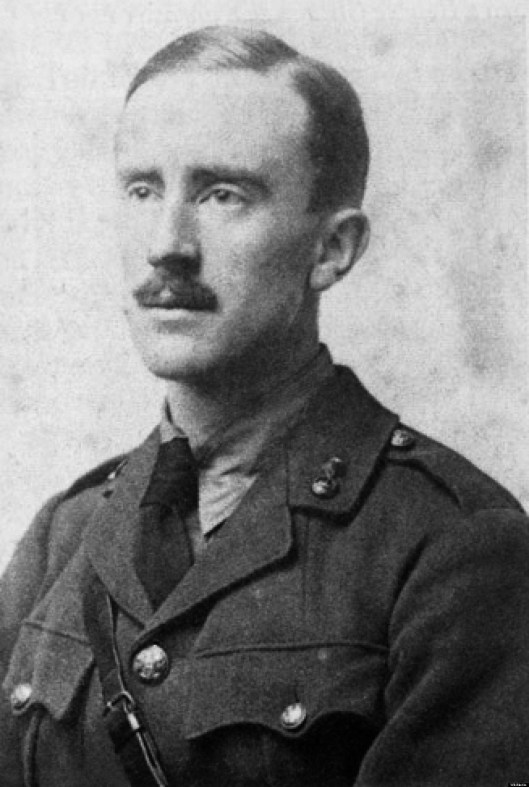
And this is where we imagine 2nd Lieutenant JRR Tolkien

image14jrrt.jpg

in the summer of 1916, standing in such a trench,

image15atrench.jpg

looking up, and thinking…

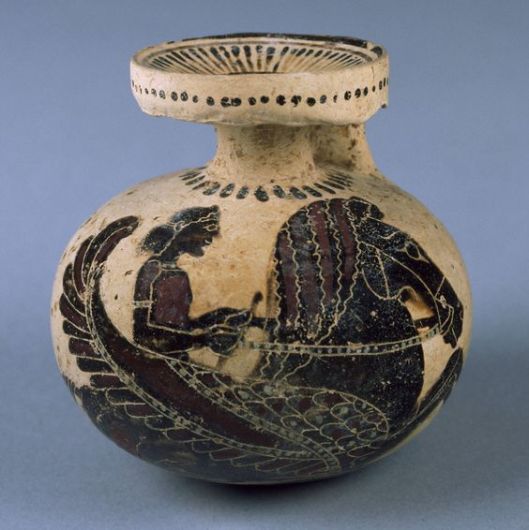
We can also imagine him imagining—not seeing flying machines, but something much earlier.  After all, with his education, background, and interests, it would have been difficult not to think of classical harpies

image15harpies.jpg

or Hermes

image16hermes.jpg

or Bellerophon, mounted on Pegasus.

image17bellerophon.jpg

And, with his Norse passion, there would also, of course, be dragons…

image18smaug.jpg

And, perhaps a combination:  a Bellerophon mounted on a miniature dragon?

image19nazgul.jpg

In the world of the trenches, there were two defences against aircraft:  friendly aircraft in the air

image20dogfight.jpg

and anti-aircraft guns on the ground.

image21aagun.jpg

But the war ended fairly quickly for the scholarly lieutenant, laid low by a more primitive enemy than Industrial Age Germans with bombs:  lice.

image22lice.jpg

JRRT became sick with what was then called “trench fever”, an illness conveyed, like typhus, by the bite of the tiny insects who colonized the clothing and bodies of soldiers in every dugout in Europe.  Wracked with recurring fevers, headaches, and complete exhaustion, among other complaints, men ill with trench fever were brought to base hospitals and, if sick enough, were sent home, as there was no cure, to recover as best they could.  Tolkien spent the rest of the war in the hospital or in garrison in England and thus escaped the last and perhaps worst years of the war in the trenches.

At home, he became Professor Tolkien, taught his classes, fathered four children, and then a second war came, one in which the primitive air war of the first war was intensified by more sophisticated aircraft, more powerful explosives, and plans to bomb Britain into ruin and submission in what was called “The Blitz”.

image23blitz.jpg


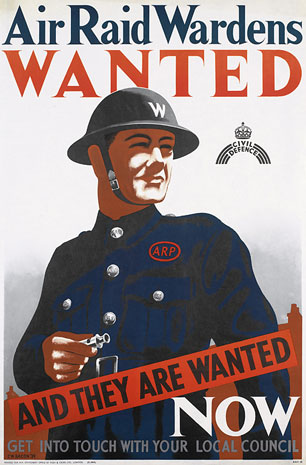
JRRT went back into service, this time as an air raid warden, even as two of his sons were more directly involved in the war.

image24airraidwarden.jpg

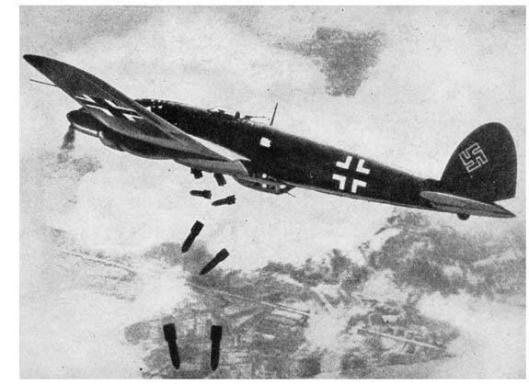
Night after night, the bombers came,

image25bomber.jpg

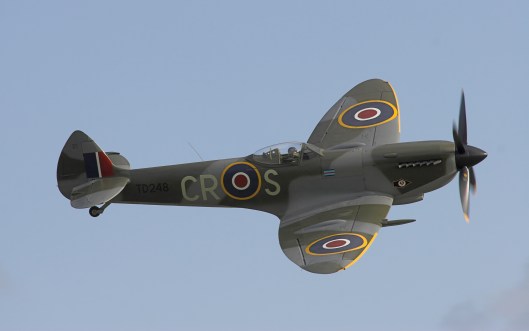
to be met with the same weapons as the previous war:  aircraft,

image26spit.jpg

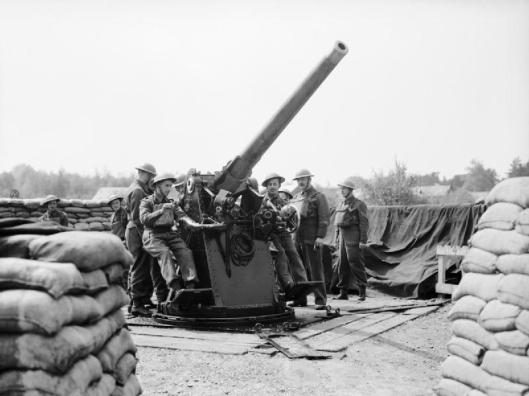
anti-aircraft guns

image27aagun.jpg

and, because the enemy began to attack at night,

searchlights.

image28searchlight.jpg

And this brings us back to our imaginings.  Working on The Lord of the Rings, staring into the night sky, listening for enemy bombers, would Tolkien have thought of danger to Middle-earth in the form of flying things, not machines but terrible figures mounted on even more loathsome creatures—and what could be done about them?  Magic, perhaps?

image29gandalf.jpg

Thanks, as always, for reading!

MTCIDC

CD
← Older posts
Newer posts →

The Doubtful Sea Series Facebook Page

The Doubtful Sea Series Facebook Page

  • Ollamh

Categories

  • Artists and Illustrators
  • Economics in Middle-earth
  • Fairy Tales and Myths
  • Films and Music
  • Games
  • Heroes
  • Imaginary History
  • J.R.R. Tolkien
  • Language
  • Literary History
  • Maps
  • Medieval Russia
  • Military History
  • Military History of Middle-earth
  • Narnia
  • Narrative Methods
  • Poetry
  • Research
  • Star Wars
  • Terra Australis
  • The Rohirrim
  • Theatre and Performance
  • Tolkien
  • Uncategorized
  • Villains
  • Writing as Collaborators
Follow doubtfulsea on WordPress.com

Across the Doubtful Sea

Recent Postings

  • Through a glass… January 7, 2026
  • Heffalumps? December 31, 2025
  • We Three Kings December 24, 2025
  • A Moon disfigured December 17, 2025
  • On the Roads Again—Once More December 10, 2025
  • (Not) Crossing Bridges December 3, 2025
  • On the Road(s) Again—Again November 26, 2025
  • On the Road(s) Again November 19, 2025
  • To Bree (Part 2) November 12, 2025

Blog Statistics

  • 104,136 Views

Posting Archive

  • January 2026 (1)
  • December 2025 (5)
  • November 2025 (4)
  • October 2025 (5)
  • September 2025 (4)
  • August 2025 (4)
  • July 2025 (5)
  • June 2025 (4)
  • May 2025 (4)
  • April 2025 (5)
  • March 2025 (4)
  • February 2025 (4)
  • January 2025 (5)
  • December 2024 (4)
  • November 2024 (4)
  • October 2024 (5)
  • September 2024 (4)
  • August 2024 (4)
  • July 2024 (5)
  • June 2024 (4)
  • May 2024 (5)
  • April 2024 (4)
  • March 2024 (4)
  • February 2024 (4)
  • January 2024 (5)
  • December 2023 (4)
  • November 2023 (5)
  • October 2023 (4)
  • September 2023 (4)
  • August 2023 (5)
  • July 2023 (4)
  • June 2023 (4)
  • May 2023 (5)
  • April 2023 (4)
  • March 2023 (5)
  • February 2023 (4)
  • January 2023 (4)
  • December 2022 (4)
  • November 2022 (5)
  • October 2022 (4)
  • September 2022 (4)
  • August 2022 (5)
  • July 2022 (4)
  • June 2022 (5)
  • May 2022 (4)
  • April 2022 (4)
  • March 2022 (5)
  • February 2022 (4)
  • January 2022 (4)
  • December 2021 (5)
  • November 2021 (4)
  • October 2021 (4)
  • September 2021 (5)
  • August 2021 (4)
  • July 2021 (4)
  • June 2021 (5)
  • May 2021 (4)
  • April 2021 (4)
  • March 2021 (5)
  • February 2021 (4)
  • January 2021 (4)
  • December 2020 (5)
  • November 2020 (4)
  • October 2020 (4)
  • September 2020 (5)
  • August 2020 (4)
  • July 2020 (5)
  • June 2020 (4)
  • May 2020 (4)
  • April 2020 (5)
  • March 2020 (4)
  • February 2020 (4)
  • January 2020 (6)
  • December 2019 (4)
  • November 2019 (4)
  • October 2019 (5)
  • September 2019 (4)
  • August 2019 (4)
  • July 2019 (5)
  • June 2019 (4)
  • May 2019 (5)
  • April 2019 (4)
  • March 2019 (4)
  • February 2019 (4)
  • January 2019 (5)
  • December 2018 (4)
  • November 2018 (4)
  • October 2018 (5)
  • September 2018 (4)
  • August 2018 (5)
  • July 2018 (4)
  • June 2018 (4)
  • May 2018 (5)
  • April 2018 (4)
  • March 2018 (4)
  • February 2018 (4)
  • January 2018 (5)
  • December 2017 (4)
  • November 2017 (4)
  • October 2017 (4)
  • September 2017 (4)
  • August 2017 (5)
  • July 2017 (4)
  • June 2017 (4)
  • May 2017 (5)
  • April 2017 (4)
  • March 2017 (5)
  • February 2017 (4)
  • January 2017 (4)
  • December 2016 (4)
  • November 2016 (5)
  • October 2016 (6)
  • September 2016 (5)
  • August 2016 (5)
  • July 2016 (5)
  • June 2016 (5)
  • May 2016 (4)
  • April 2016 (4)
  • March 2016 (5)
  • February 2016 (4)
  • January 2016 (4)
  • December 2015 (5)
  • November 2015 (5)
  • October 2015 (4)
  • September 2015 (5)
  • August 2015 (4)
  • July 2015 (5)
  • June 2015 (5)
  • May 2015 (4)
  • April 2015 (3)
  • March 2015 (4)
  • February 2015 (4)
  • January 2015 (4)
  • December 2014 (5)
  • November 2014 (4)
  • October 2014 (6)
  • September 2014 (1)

Blog at WordPress.com.

  • Subscribe Subscribed
    • doubtfulsea
    • Join 78 other subscribers
    • Already have a WordPress.com account? Log in now.
    • doubtfulsea
    • Subscribe Subscribed
    • Sign up
    • Log in
    • Report this content
    • View site in Reader
    • Manage subscriptions
    • Collapse this bar
 

Loading Comments...