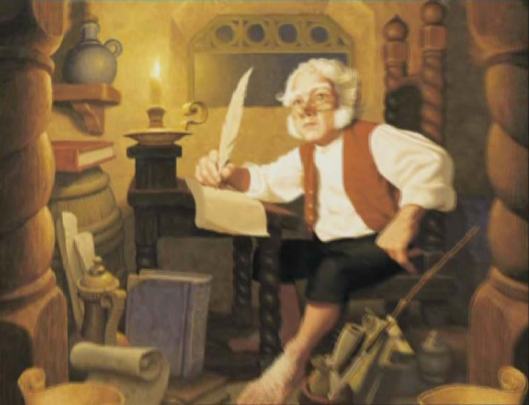
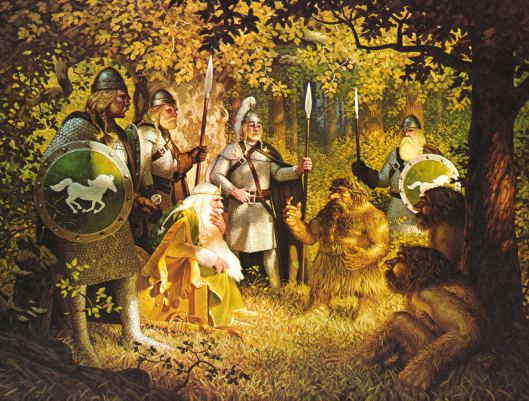
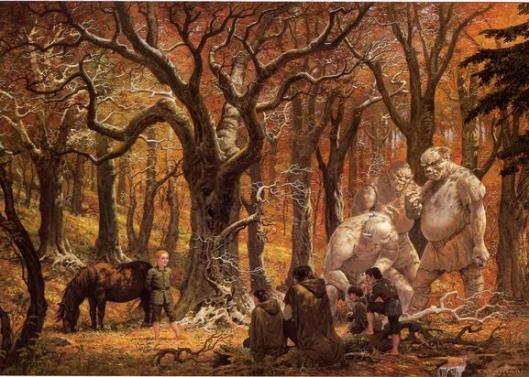
• About

doubtfulsea

~ adventure fantasy

Category Archives: Fairy Tales and Myths

All Thin, Sort of Stretched

30 Wednesday May 2018

Posted by Ollamh in Fairy Tales and Myths, Films and Music, J.R.R. Tolkien, Villains

≈ Leave a comment

Tags

Aragorn, Bilbo, Bram Stoker, Dracula, Dunedain, Gerontius, immortal, Nosferatu, Numenoreans, Professor Van Helsing, Saruman, The Lord of the Rings, The Scouring of the Shire, The Shadow of the Past, Tolkien, vampire, Voivode Dracula

As always, dear readers, welcome.

Once before, we wrote about the Scouring of the Shire and about the queer events after Saruman’s death, but, recently, we’ve come across something which might suggest an explanation.

This past term/semester, one of us taught Bram Stoker’s 1897 novel, Dracula, for the first time (and it seemed to be a big hit, we might add), as we’ve also mentioned before.
image1adrac.jpg

In the book, Professor Van Helsing tells the protagonists that Dracula:

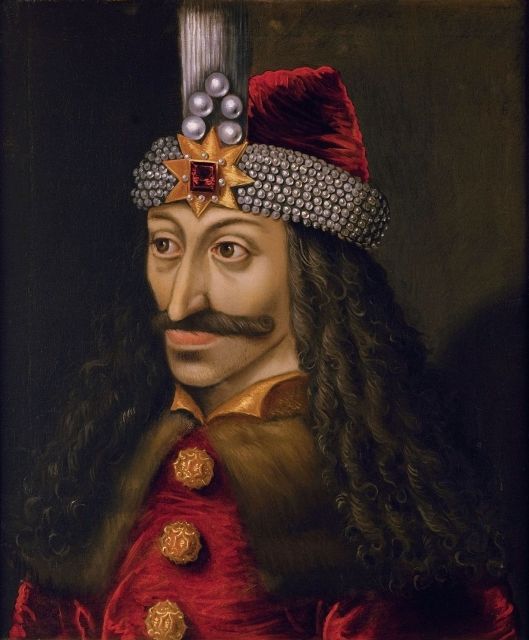
“…must, indeed, have been that Voivode Dracula who won his name against the Turk, over the great river on the very frontier of Turkey-land.” (Dracula, Chapter XVIII)
Vlad_Tepes_002.jpg

If indeed true, this would mean that the Un-dead figure in the novel, who, historically, had been born about 1430, would, at the time of the novel, be about 467 years old.  Van Helsing explains this longevity:

“The vampire live on, and cannot die by mere passing of the time; he can flourish when that he can fatten on the blood of the living.”

Worse—

“Even more, we have seen amongst us that he can even grow younger; that his vital faculties grow strenuous, and seem as though they refresh themselves when his special pabulum is plenty.” [pabulum is a little odd here, to us, as it’s an early word for “baby food”—perhaps Van Helsing is being sarcastic?]

We were easily, as always, prompted back to JRRT here and something Bilbo says to Gandalf when he is about to leave Bag End in the first chapter of The Lord of the Rings:

“I am old, Gandalf.  I don’t look it, but I am beginning to feel it in my heart of hearts.  Well-preserved indeed!…Why, I feel all thin, sort of stretched, if you know what I mean:  like butter that has been scraped over too much bread. That can’t be right.”  (The Fellowship of the Ring, Book One, Chapter 1, “A Long-Expected Party”)
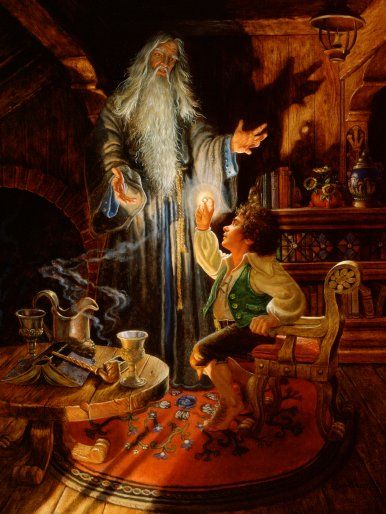
image1bandg.jpg

image2toast.jpg

Hobbits are, in comparison to humans in our current world and among non-Numenoreans in Middle-earth, a long-lived race, Bilbo’s family in particular being perhaps an extreme example, his grandfather, Gerontius (a small academic joke—geron in Greek means “old man”), living to be 130—and Bilbo will even surpass him, if only briefly.

“Stretched”, however, suggests something else—and we know, as Gandalf does, what that is–the Ring:

“A mortal, Frodo, who keeps one of the Great Rings, does not die, but he does not grow or obtain more life, he merely continues, until at last every minute is a weariness.  And if he often uses the Ring to make himself invisible, he fades:  he becomes in the end invisible permanently, and walks in the twilight under the eye of the Dark Power that rules the Rings.  Yes, sooner or later—later, if he is strong or well-meaning to begin with, but neither strength nor good purpose will last—sooner or later the Dark Power will devour him.”  (The Fellowship of the Ring, Book One, Chapter 2, “The Shadow of the Past”)

And so, Bilbo would have felt more and more “stretched”, had he not given it up, even as he continued to go on existing–Gollum, after all, is nearly 600 when he meets Bilbo for the riddling game.
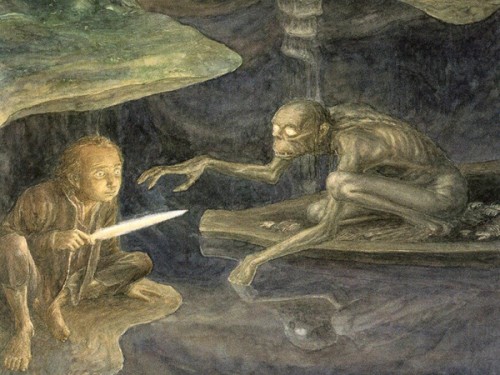
image3gollum.jpg

As we’ve mentioned, the descendants of the Numenoreans had a naturally-extended life.  Aragorn, for instance, is 87 at the time of The Lord of the Rings, and 210 at his death in FA120.
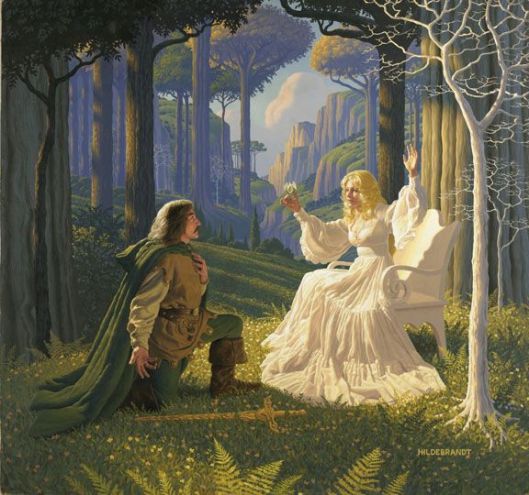
image4arag.jpg

Others in Middle-earth, however, have simply been given what would seem to be life spans practically without limit.  The elves, like Galadriel, are, in effect, immortal.  Likewise are the Istari—the “wizards”, like Gandalf.
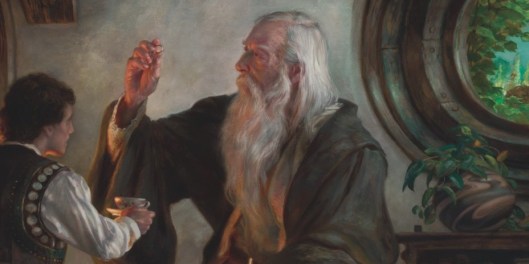
image5gandalf.jpg

This should extend to Saruman, as well.

image6saruman.jpg

And yet, something seems to have gone wrong here, as we wrote about some time ago.  Once Grima has cut his throat:

“To the dismay of those that stood by, about the body of Saruman a grey mist gathered, and rising slowly to a great height like smoke from a fire, as a pale shrouded figure it loomed over the Hill.  For a moment it wavered, looking to the West; but out of the West came a cold wind, and it bent away, and with a sigh dissolved into nothing.”
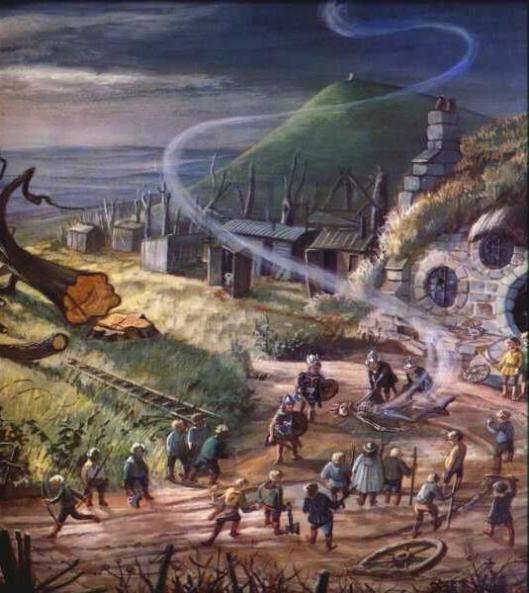
image7deathofsaruman.jpg

This isn’t the end, however.

“Frodo looked down at the body with pity and horror, for as he looked it seemed that long years of death were suddenly revealed in it, and it shrank, and the shriveled face became rags of skin upon a hideous skull.  Lifting up the skirt of the dirty cloak that sprawled beside it, he covered it over, and turned away.”  (The Return of the King, Book Six, Chapter 8, “The Scouring of the Shire”)

It’s never explained why the—for lack of a better word—spirit of Saruman disappears as it does.  The fact that it looks to the West—towards Valinor—and a cold wind blows from there suggests that, somehow, the Valar are punishing Saruman for betraying their trust and forbidding him from returning to them, as the living Gandalf will in the final chapter of the book (and for a second time, it seems, Gandalf having been “sent back” after his apparent death fighting the Balrog).

What Frodo sees in the sprawled body, however, suggests something more:  “long years of death were suddenly revealed in it”.  Here’s Stoker’s description of the end of Dracula:

“As I looked, the eyes saw the sinking sun, and the look of hate in them turned to triumph.

But, on the instant, came the sweep and flash of Jonathan’s great knife.  I shrieked as I saw it shear through the throat; whilst at the same moment Mr. Morris’ bowie knife plunged into the heart.

It was like a miracle; but before our very eyes, and almost in the drawing of a breath, the whole body crumble[d] into dust and passed from our sight.”  (Dracula, Chapter XXVII)

Bilbo and Gollum have continued to live because the Ring has given them the power to do so, but at a great cost, at least for Gollum, as Gandalf says.  Dracula has been given nearly 500 years because he has become a parasite on the living, but those years were his with the loss of his soul.  Could it be that Saruman, although given immortality because he is one of the Maiar, has, through his long years of plotting, either to work with Sauron or even to become Sauron, somehow become more like one of the Un-dead, gradually losing life even though immortal?

image8dracdeath.jpg

(This is the end of Count Orlok, the Dracula figure in our favorite vampire movie, FW Murnau’s 1922 Nosferatu.  If you’d like to see the film, here’s a LINK to it from the Internet Archive site.)

In which case, his end is much worse than that of Dracula, as one of the protagonists, Mina Harker, writes:

“I shall be glad as long as I live that even in that moment of final dissolution, there was in the face a look of peace, such as I never could have imagined might have rested there.”

MTCIDC

CD

A Celtic Chill Up the Spine

23 Wednesday May 2018

Posted by Ollamh in Fairy Tales and Myths, Films and Music, Heroes, Literary History, Military History, Narrative Methods

≈ Leave a comment

Tags

Banshee, Bean Nighe, Bloody Clavers, Bodbh, Bonnie Dundee, Coiste bodhar, Cuchulain, Darby O'Gill and the Little People, Dragoons, Dullahan, Gan Ceann, Greco-Roman, Hera, Highlanders, Hugh Herriot, Hugh Mackay, James II, Jason, Johm Graham, Morrigan, Old Mortality, Pass of Killecrankie, Picts, Pikemen, Rosemary Sutcliff, Sir Walter Scott, tumuli, William of Orange, Williamite, Woman of the Sidh

Welcome, as ever, dear readers.

As we just finished a novel, Bonnie Dundee (1983),

image1abonnie.jpg

by one of our favorite YA historical authors, Rosemary Sutcliff (1920-1992), we were snagged by what, at first, seems just an odd little detail—but we’ll come to that.  First, let’s talk about the book in general.

image1rs.jpg

The title refers to a 17th-century Scots nobleman, John Graham, 7th Laird of Claverhouse, 1st Viscount Dundee (1648-1689), also known as “Bloody Clavers” for his zeal in observing the law in a complicated religious situation (the subject of a Sir Walter Scott novel, Old Mortality, 1816),

image3oldmort.jpg

and “Bonnie Dundee” from his noble title (and, we presume, his good looks).

image3jasgraham.jpg

In 1689, Dundee was a royal cavalry officer, leading a regiment of mounted infantry, called, at that time, dragoons.

image5dragoon.jpg

In that same year, a combination of elements of Parliament, the army and navy, and the forces of William, Prince of Orange, Stadtholder of the other provinces of the Netherlands,

image6wmoforange.jpg

and husband of Mary,

image7wmandmary.jpg

the daughter of the King of England, James II, had overthrown James.

image8jas2.jpg

William was the son of James’ sister, and so James was both his uncle and his father-in-law—a very tricky situation!

Rather than fight, James had fled, but elements in Ireland and Scotland were still loyal.  One of the main leaders of resistance in Scotland was Bonnie Dundee.

image9bonniedundee.jpg

Against him was a Williamite army, led by Hugh Mackay.

image10mackay.jpg

The major battle happened at the Pass of Killiecrankie, 27 July, 1689.

image11killiecrankie.jpg

The government’s side consisted almost entirely of regular infantry regiments, but a real mixture of raw and experienced soldiers, it seems.

image12redcoats.jpg

Dundee’s men were primarily Highlanders, untrained in modern battlefield discipline and tactics.

image13highlanders.jpg

The usual method in period battles was to begin by softening up the enemy with artillery fire in hopes that you could goad him into attacking you or at least you might shake his organization.

image14boyne.jpg

Then, if the enemy advanced, you used your firepower to break up his formations

image15musketry.jpg

and, if you were lucky, to drive him back, whereupon you might loose your cavalry to drive him off the battlefield.

image16cavalry.jpg

1689 was a time of transition in European armies, in which the Renaissance weapon, the pike,

image17pikes.jpg

which had been increasingly flanked by men with firearms,

image18pikes.jpeg

was being replaced by the bayonet, turning a musket into a short pike and thus removing the need for pikemen.  The earliest bayonets, however, were simply knives stuck into the muzzle of the musket.

image19plug.jpg

Of course, if you stick a knife into the muzzle, it means that you lose the ability to keep up your volleys and this seems to have been part of the difficulty for MacKay, the Williamite general.  The Highlanders had, as their main weapon, the charge, the goal being to get close to the enemy before he could do much damage with firearms, and cut him to pieces with swords and axes.

image20charge.jpg

Somehow, the Highlanders managed to break up the Williamite regiments—possibly because they were caught between firing and fixing bayonets?—and drive them off—although at the cost of losing Dundee, mortally wounded while attempting to direct the attack.

image21dundee.jpg

Sutcliff’s hero, a Scots Lowlander named Hugh Herriot, is first a groom in Dundee’s household and then a trooper in his dragoons, eventually following Dundee to Killiecrankie and his death.  (Dundee was buried nearby just after the battle.)

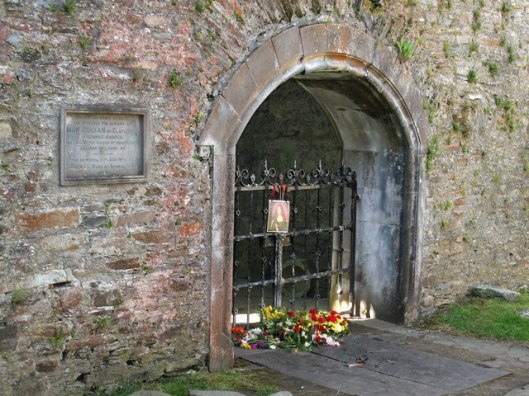
image22dundeegrave.jpg

It is on the march to the battlefield that Hugh sees something which briefly captures his attention at the time, but nothing more, and it was this description which has haunted us, ever since we put the book down:

“Once we came to the place where a cattle-track dipped down from the north, to cross the river by a made ford.  And on the far side, tucked in among the roots of overshadowing hazel and alder trees, looking as twisted and as rooted into the bank as themselves, an old woman in an earth-coloured gown knelt washing a pile of household clothes and linen.

I mind thinking it was late in the year for that; mostly the crofter women fling everything out-of-doors and deal with the bed-bugs and wash all things washable in May.  I mind also noticing that there was something of a dark brownish-red colour among the grey pallor of the unbleached linen; a shawl, maybe; you could not see, in the cave of shadows under the alder branches.

She took no more notice of our passing than if we had not been there at all.  And we marched on, and I thought no more of the thing, for the time being.”  (Bonnie Dundee, Chapter 21, “The Old Woman by the Ford”)

It’s only when later, in camp, Hugh senses that something appears to be worrying the Highlanders that it comes clear that they, too, saw the old woman—and something more, as his Highland friend, Alisdair, explains:

“Did ye see anything—any one, by the cattle ford an hour’s march up-river, as we came by?”

To which Hugh answers:

“An old woman doing her household wash…”

And Alisdair says in return:

“Aye, and you a Lowlander, ye would not be knowing.”

Continuing:

“The Woman of the Sidh—the Washer by the Ford.”

Although a Lowlander, Hugh does know:

“The Washer by the Ford, and she was washing the blood-stained linen, who comes before the death of chiefs and heroes…”

image23abean.jpg

For us, who grew up in the Greco-Roman world, an old woman at a ford has a completely different meaning:  in the story of Jason, his patron-to-be, Hera, disguises herself as an old woman and sits by a ford, testing men by asking to be carried across.  Jason agrees to and loses a sandal in the process, thus fulfilling a divine warning sent to the king of Iolcus about his eventual overthrow (by Jason):  beware the man with one sandal.

image23jasonandhera.jpg

This story in the Sutcliff—really, as we said, only a little detail in a much larger story—struck us as not only extremely well told (which we expect from Sutcliff, a very gifted story-teller—we’ll talk more about her in a future post), but well-told because, initially, it does just seem like nothing at all—something idly noticed and nothing more.  Its creepiness comes not from the description, which might be ordinary, but from its Celtic heritage—the Highlanders belong to a world made long before 1689, being a combination of the prehistoric settlers of the north, the Picts,

image24picts.jpg

and the Irish, who began arriving in Scotland in the 5th century AD.

image25irish.jpg

Although the Irish had converted to Christianity early, there were certain older beliefs which lasted throughout many centuries.  The Old Woman at the Ford is clearly one.  In Gaelic, the Irish-based language of Scotland, she is the Bean Nighe, (ben NEE-yeh, “the washer-woman”), or as Alisdair calls her, “the Woman of the Sidh” (sheethe).

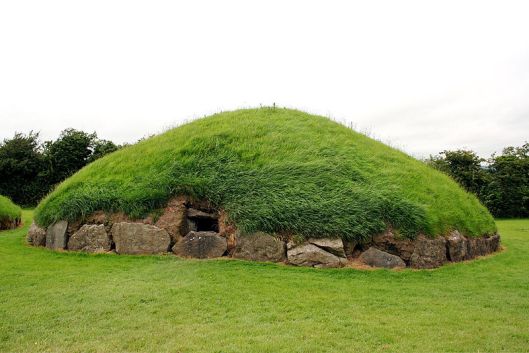
“Sidh” has, in fact, several possible translations:  it can mean “peace”, but, as well, it signifies the Neolithic tumuli (like the barrows to the east of the Old Forest in Middle-earth), as well as the People of the Other World (who may either live in tumuli, or use them as doorways into that Other World).

image26sidh.jpg

Our English word “banshee” is simply the Irish ben side (ben SHEE-thyeh), “woman of the Sidh” which, as we’ve seen, is just what Alisdair calls the Old Woman at the Ford.

Banshees—who do not necessarily always appear as old women, sometimes visit as young–are a kind of messenger from the Other World, sent to warn family members of an impending death.  Their manner of communicating this can vary—in some parts of tradition, they fulfil the task of old women at traditional funerals, wailing in grief, with a sound which has come into English as “keening”.

image27keening.jpg

To give you an idea of this, here’s a LINK to a clip from the 1959 Disney movie, Darby O’Gill and the Little People, in which we see not only a banshee, but also the next step, the coiste bodhar, [KOH-shte BOW-er] the “silent coach” with its headless coachman, the Dullahan, called in Irish, Gan Ceann,(gan KENN) “Headless”, who carries the dead person…somewhere… [Be warned, by the way:  one of us saw this only once, many years ago, on a Disney program, and has spent many further years trying not to remember it!]

In other parts of the tradition, the banshee stands outside the doomed person’s window and simply says her/his name (which impresses us as especially creepy), or calls out “My wife!” “My husband!” or “My child!”

In Ireland, the banshee is restricted to the pre-Norman-invasion population (pre-the-year 1169, more or less), suggesting that this is a purely Celtic belief, which would make sense of Hugh’s Highland friend, Alisdair’s, fear of the Washer.

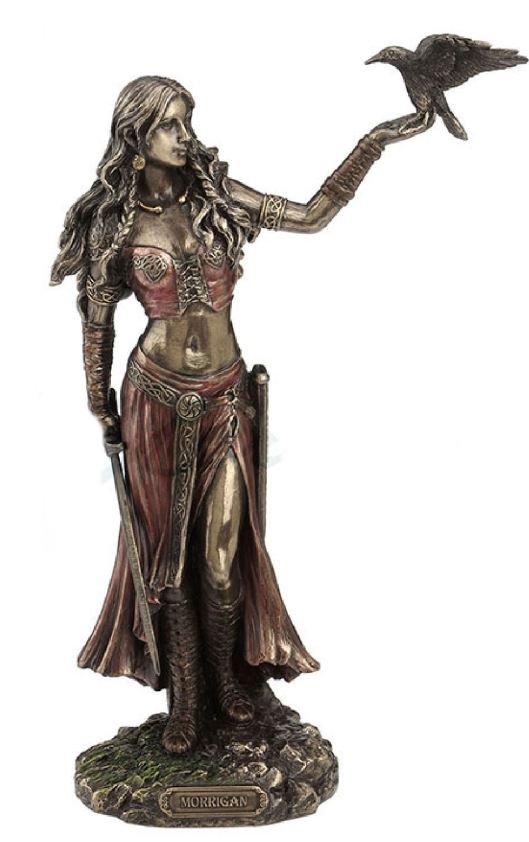
It has been suggested that perhaps this figure is descended from a fearful Irish goddess, the Bodbh (BAH-thv),

image29bodbh.jpg

who has a possible three-part persona and appears before battles and on battlefields, with a raven as her totemic animal.

image30bodbh.jpg

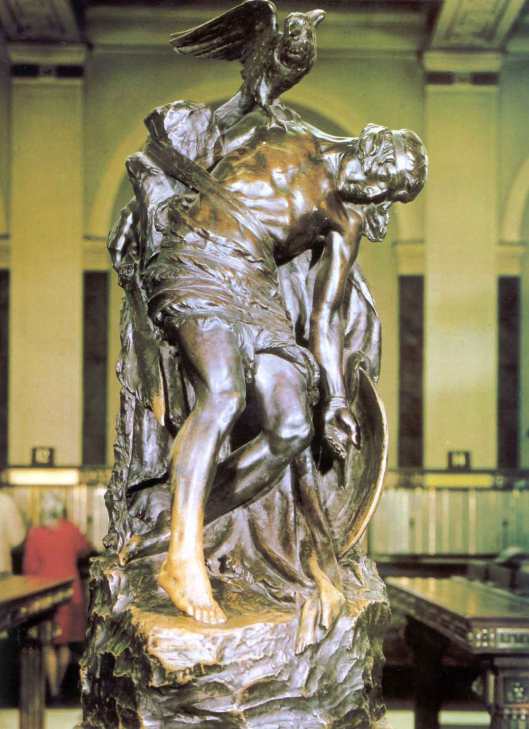
She is also called Morrigan, meaning “great queen”, which sounds rather like a euphemism.  In Old Irish stories, she is the enemy of the boy hero Cuchulain (Koo HOO lun), and brings about his death through tricking him into destroying his own protective spells (he eats dog, his own totemic animal—his name means “hound of Culann”).  There’s a famous bronze statue of him, with her raven on his shoulder, in the old main Dublin post office.

image31cu.jpg

And here Sutcliff now helps us to complete a kind of grim mythological circle.  Hugh Herriot not only knows who the Washer is, but this further fact:

“The Washer by the Ford, and she was washing the blood-stained linen, who comes before the death of chiefs and heroes—aye, before the death of Cuchulain himself.”

Who is the chief and hero of the novel—and is riding to battle the Williamites?  It’s clear, if one accepts this portent, what is to happen, and yet Hugh tries to deny what he knows to Alisdair—

“Och, away!  Dinna be sae daft!…She was real enough; just an old hen-wife, a wee thing late with her spring washing.  Aye, she was real enough.”

Alisdair’s reply still chills us—as it does Hugh—and explains why what was originally only a passing observation in this novel has stayed with us:

“ ‘She seemed real enough,’ he said, ‘she always does.’ “

Thanks, as always, for reading.

MTCIDC

CD
In a Pukel

09 Wednesday May 2018

Posted by Ollamh in Artists and Illustrators, Fairy Tales and Myths, J.R.R. Tolkien, Maps, Medieval Russia, Military History, Military History of Middle-earth, The Rohirrim

≈ Leave a comment

Tags

balbal, Carnac Stones, Cherna, Denis Gordeev, Druadan Forest, Dunharrow, Easter Island, Eored, Ghan-buri-Ghan, Gondor, menhirs, moai, Pukel-men, Rapa Nui, Rohan, Rohirrim, Stonewain Valley, Ted Nasmith, The Lord of the Rings, Tolkien, Unfinished Tales, Vsadniki, Woses

Welcome, dear readers, as ever.

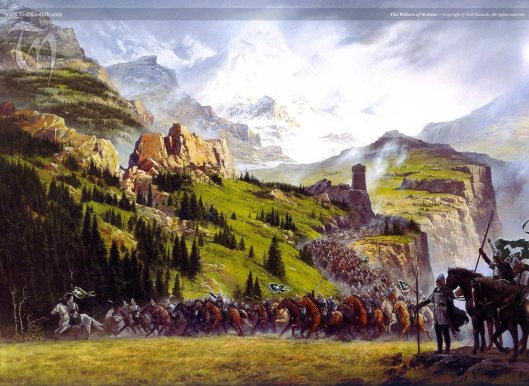
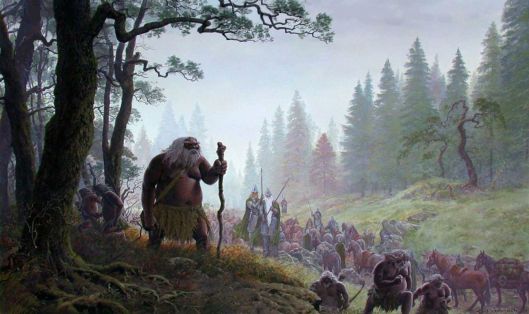
After their mustering and rapid journey to the aid of Gondor, the Rohirrim

image1rohirrim.jpg

have been stopped:

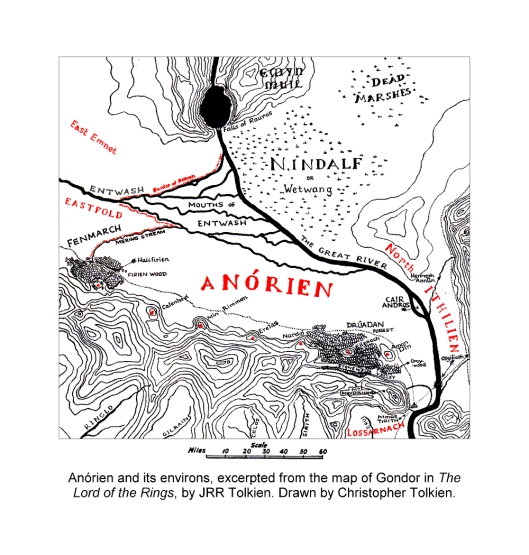
“Scouts had been sent ahead.  Some had not returned.  Others hastening back had reported that the road was held in force against them.  A host of the enemy was encamped upon it, three [4.8km]] miles west of Amon Din, and some strength of men was already thrusting along the road and was not more than three leagues [about 9 miles/14.5km] away.”  (The Return of the King, Book Five, Chapter 5, “The Ride of the Rohirrim”)

image2map.jpg

And so they are camped temporarily in the murk which has fallen over the West—a sign of Sauron on the move.

As they remain there, Merry gradually hears a sound like distant drums and, when Elfhelm, the Marshal of the eored [Rohirrim unit of horsemen] in which Merry and his mysterious companion, Dernhelm, are riding, stumbles over him, Merry asks if it’s the enemy:

“Are those their drums?”

Elfhelm replies:

“You hear the Woses, the Wild Men of the Woods…They still haunt Druadan Foest, it is said…But they have offered their services to Theoden.  Even now one of their headmen is being taken to the king.”

Merry follows Elfhelm and soon sees:

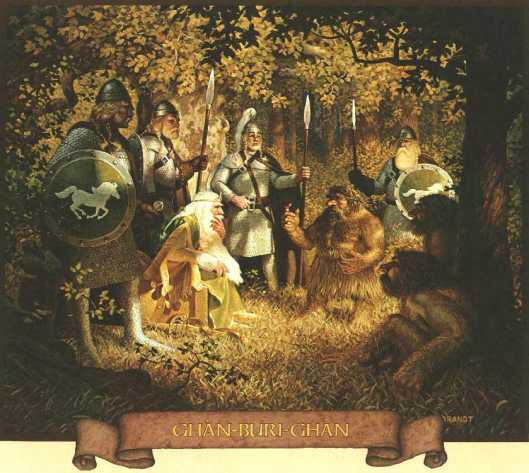
“A large lantern, covered above, was hanging from a bough and cast a pale circle of light below.  There sat Theoden and Eomer, and before them on the ground sat a strange squat shape of a man, gnarled as an old stone, and the hairs of his scanty beard straggled on his lumpy chin like dry moss.  He was short-legged and fat-armed, thick and stumpy, and clad only with grass about his waist.”

This, we find out, is Ghan-buri-Ghan, leader of the Wild Men, who, as Elfhelm has said, has come to offer his and his people’s aid to Theoden.

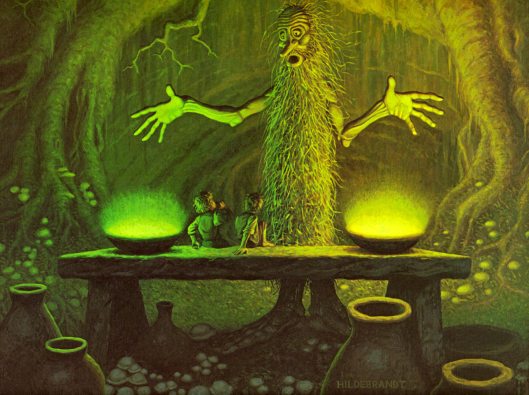
image3ghanburighan.jpg

(We note, by the way, that this Hildebrandt illustration has taken certain liberties with the scene as described in the book:  it appears to be daylight—no lantern—if Eomer is there, he isn’t seated, and there is more than one Wild Man–oh, and the Wild Man’s beard has suddenly sprouted.)

What Ghan-buri-Ghan offers Theoden is a long-forgotten road which would provide a way around the soldiers of Sauron who are blocking the direct route to Minas Tirith:   the path through the Stonewain Valley.

image4stonewainfalley.jpg

What caught our attention here was the connection Merry made between Ghan-buri-Ghan and something he’d encountered only recently:

“Merry felt that he had seen him before somewhere, and suddenly he remembered the Pukel-men of Dunharrow.  Here was one of those old images brought to life, or maybe a creature descended in true line through endless years from the models used by the forgotten craftsmen long ago.”

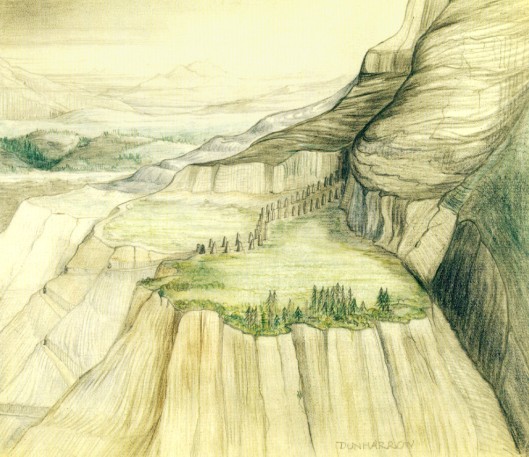
Dunharrow

image5dunharrowjrrt.jpg

was a mysterious place—

“…the work of long-forgotten men.  Their name was lost and no song or legend remembered it.  For what purpose they had made this place, as a town or secret temple or a tomb of kings, none in Rohan could say.  Here they labored in the Dark Years, before ever a ship came to the western shores, or Gondor of the Dunedain was built; and now they had vanished, and only the old Pukel-men were left, still sitting at the turnings of the road.

Merry stared at the lines of marching stones:  they were worn and black; some were leaning, some were fallen, some cracked or broken; they looked like rows of old and hungry teeth.” (The Return of the King, Book Five, Chapter 3, “The Muster of Rohan”)

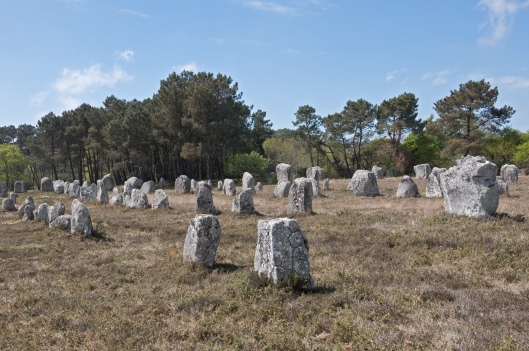
For a moment, this description reminded us of something one sees in Brittany, on the west coast of France, the so-called “Carnac Stones”, a vast field of Neolithic upright stones, now called menhirs (Breton for “long stone”) in long lines in and around the village of Carnac.

image6carnac1.jpg

image7carnacstones2.jpg

And, just as the use or meaning of Dunharrow is lost, so is that of the elaborate construction of the Carnac Stones.

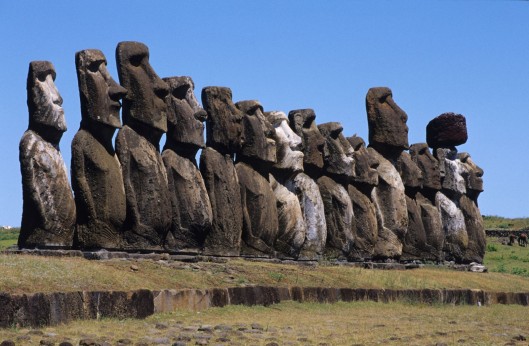
Once the Carnac Stones—and others like them, both in France and in Great Britain—came into our heads, we were whirled away to Rapa Nui (Easter Island) and all of those puzzling outsized heads on less-developed torsos, the moai.

image8moai.jpg

It was not the size or placement of those figures like “rows of old and hungry teeth” however, which made us think further about Ghan-buri-Ghan and his stony cousins, but how the figures were carved:

“At each turn of the road there were great standing stones that had been carved in the likeness of men, huge and clumsy-limbed, squatting cross-legged with their stumpy arms folded on fat bellies.  Some in the wearing of the years had lost all features save the dark holes of their eyes that still stared sadly at the passers-by.  The Riders hardly glanced at them.  The Pukel-men they called them, and heeded them little…”

As the Rohirrim are translated as speaking among themselves a sort of Tolkien-adapted Old English, so “pukel” appears to be derived from “pucel” = “goblin/demon”, which suggests perhaps a quasi-religious or magical use, but, if they once represented spirits, they are now spiritless, with no ability to frighten.  Rather, as the narrator tells us:

“…no power or terror was left in them; but Merry gazed at them with wonder and a feeling almost of pity, as they loomed up mournfully in the dusk.”

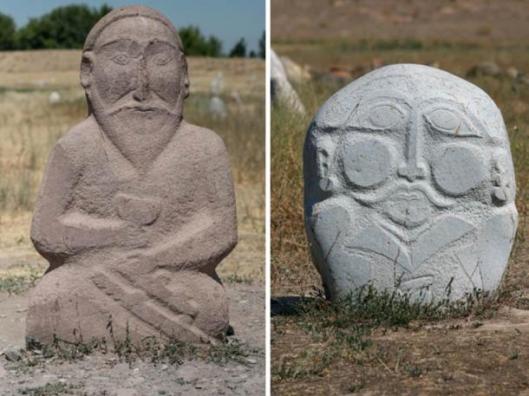
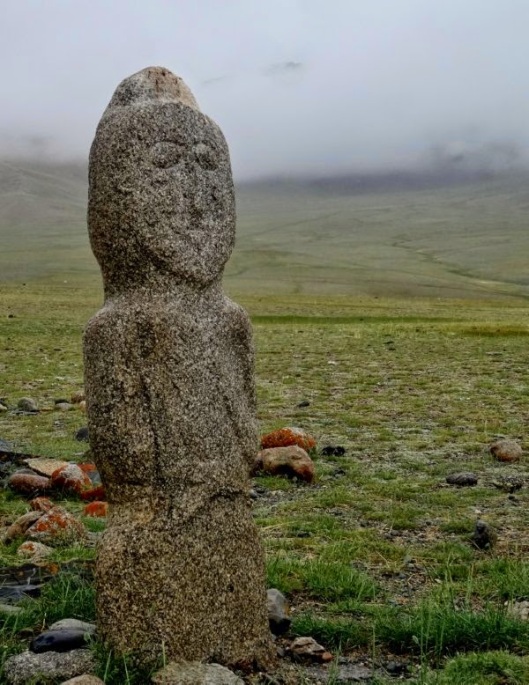
The narrator’s elaboration then reminded us of something else:  balbal.

image9balbal.jpg

image9bbalbal.jpg

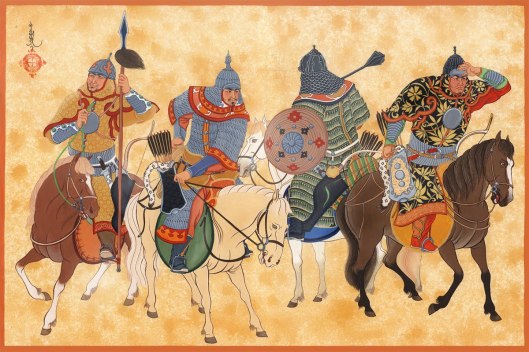
These are carved stone figures with a history probably as long as that of the Pukel-men.  They appear to be the product of Turkic peoples in Central Asia—with even older relatives, perhaps, to the west, as well.  Some may have been tomb guardians or monuments themselves—as with the Pukel-men, their origins and use/s are lost to us.  We ourselves have stolen them for use in our series of novels based in an imaginary medieval fairy tale Russia, called Cherna, “The Black Land”—but please don’t think “Mordor?”  In our case, the reason it’s named that is that it is steppe country with extremely fertile black soil.  So rich, especially as pasture-land, that it’s worth invading and fighting over, which is what the villains of our trilogy, the Vsadniki, modeled on the Mongols, do.

image10mongols.jpg

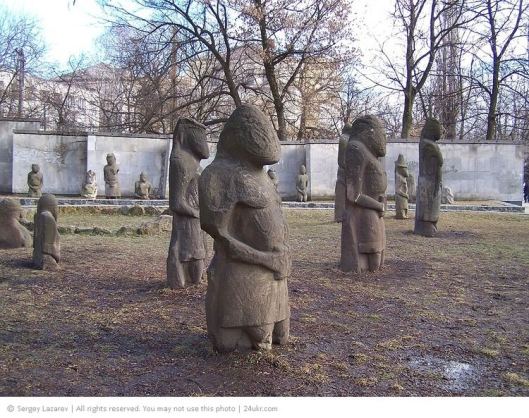
Unlike Pukel-men and menhirs and moai, however, there is no mystery about what the Vsadniki are up to with their stones:  every time they conquer a new land, they set such stones up at their new far-western border to say not only “what’s behind these is ours”, but also “and we’re looking at your lands next”.

image11balbal.jpeg

Thanks, as always, for reading.

MTCIDC

CD
ps

In the Tolkien volume Unfinished Tales, we find further connections between the Wild Men/Woses and carvings.  We use a paperback edition and this has somewhat different pagination from the hardbound, but, should you be interested, you can find it in either form in Part Four, I The Druedain.

pps

Here is a drawing of Ghan-buri-Ghan by Denis Gordeev, who has done a good deal of work illustrating a wide selection of JRRT’s fiction, rather as Ted Nasmith has, along with many other classics as well as modern fantasy fiction.

image11gbg.jpg

Gordeev has clearly been trained/trained himself in drawing as people did in that golden age of children’s writing and illustration, the 1880s to 1920s, and, once you get used to his very distinctive style, you may come to like it as we do.  Here’s Gandalf arriving in Hobbiton, fireworks and all, just to give you a taste.

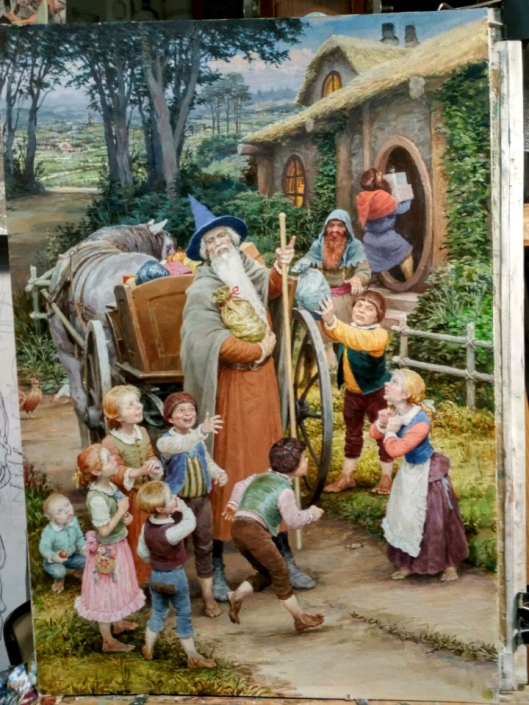
image12gandalf.jpg

Small Talk

02 Wednesday May 2018

Posted by Ollamh in Fairy Tales and Myths, Films and Music, Heroes, J.R.R. Tolkien, Narrative Methods, Villains

≈ Leave a comment

Tags

Assyrians, Charles Goodyear, cyclops, David and Goliath, Death Star, Egypt, Ewoks, Greeks, Hetep Senworset, Hobbits, Jack and the Beanstalk, Kelandry of Mindelan, Lachish, Medieval, Odysseus, Polyphemus, Protector of the Small, Romans, Sling, slingers, Slingshot, Smaug, Star Wars, Tamora Pierce, thrush, Tortall, Vulcanized, Woses, Yoda

Welcome, dear readers, as always.

Sometimes, ideas for posts come from something we’ve seen in a movie theatre or something we’re reading or even from something we’re teaching or studying.  Sometimes we employ the Sortes Tolkienses.  And sometimes things just seem to fall into our hands.  And that’s where this post comes from.

We were moving a bookshelf and something literally dropped into our hands, a boxed set of books by one of our favorite YA authors, Tamora Pierce.

image1protector.jpg

As you can see from our image, the series is called “Protector of the Small” and is about the life of Keladry of Mindelan, who lives in Pierce’s imaginary Tortall, where it is possible—just possible—for a girl to become a knight.  Through the four volumes, Kel gradually works her way from pre-page to knighthood and, is always the case with TP’s books, there are both surprises and interesting and not always predictable difficulties along the way, as well as an ultimate humanity which makes her books such satisfying reading.

It wasn’t the actual books, however, which got us to thinking, but the word “small” in the series title.  How often, in our favorite adventure stories, it’s a case of small versus big

image2mouseelephant.jpg

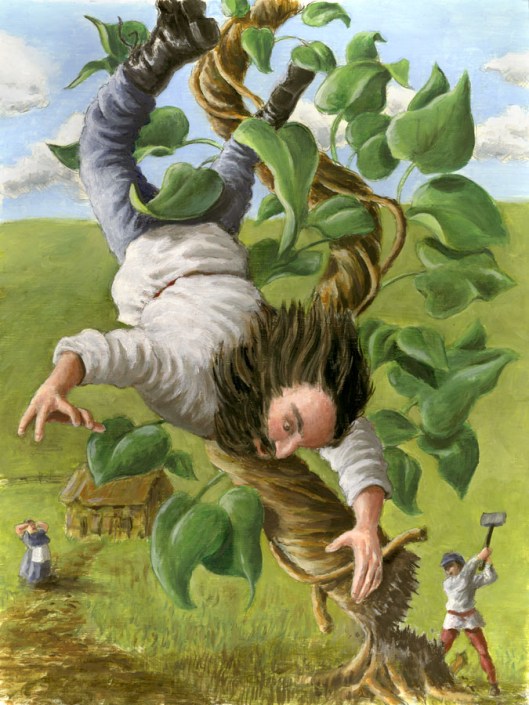
and, very often, the big thinks that that’s all which counts—think of the fairy tale “Jack and the Beanstalk” for example.image3ajackgiant.jpg

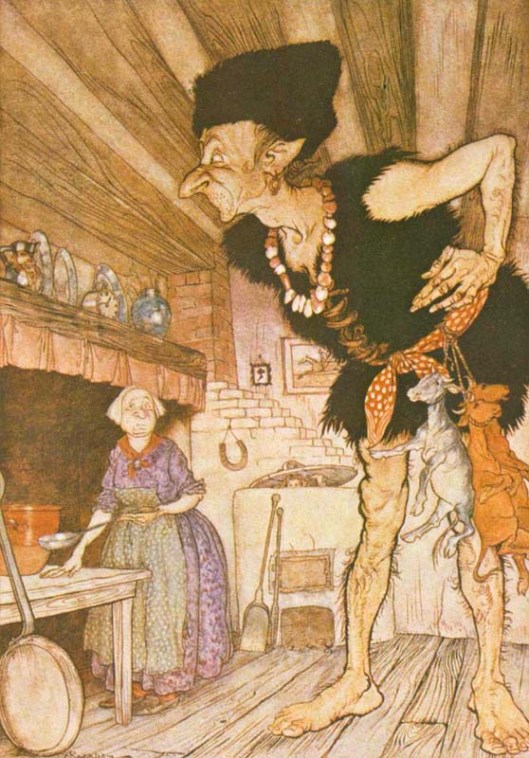
For all that the giant is huge and menacing in the story, he’s vulnerable as he climbs down the beanstalk and Jack’s quick thought–to cut down the stalk even as the giant descends–makes quick work of the oversized (but perhaps overconfident—and underbrained?) creature.

image3bdeathofgiant.jpg

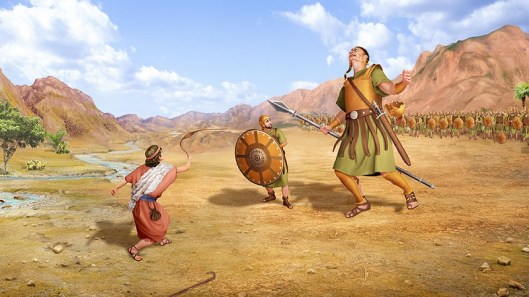
In the Judeo-Christian tradition, we have the Biblical story of David and Goliath.

image3dandg.jpg

Goliath is not only huge, but armored, and David is a boy who has only his shepherd’s staff, a sling, and five stones from a river bed, but it’s all he needs.

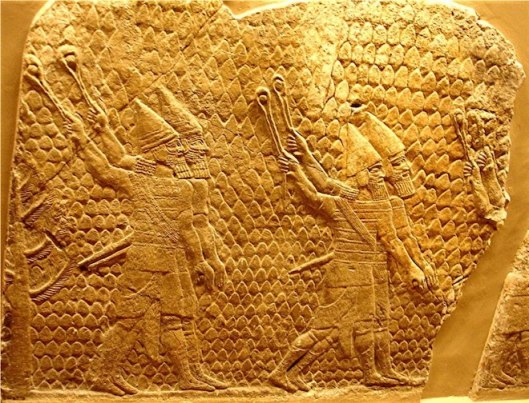
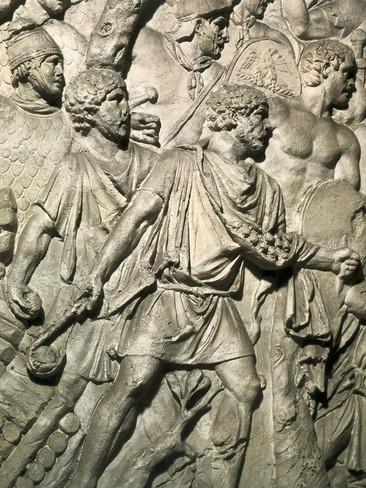
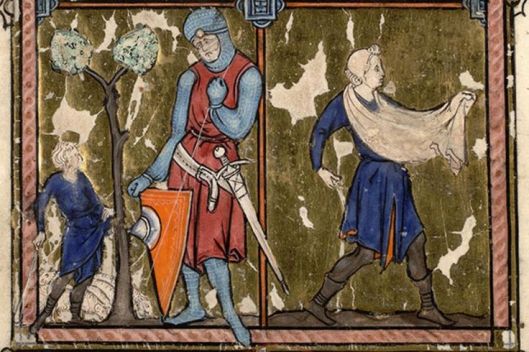
A sling is an ancient weapon

image4sling

This is from the Egyptian Middle Kingdom town of Hetep Senwosret, c. 1895BC.  The Assyrians were still using the weapon more than a thousand years later, as this scene from one of the Lachish reliefs (c.700BC) shows.

image5assyrians.jpg

The Greeks had slingers

image6aspendosslinger.jpg

as did the Romans

image7roman.jpg

as did medieval westerners.

image8medieval.jpg

Slings shouldn’t be confused with slingshots, by the way.  (Or “catapult” if you’re one of our British friends.)

image9slingshot.jpg

This is the weapon of choice of the cartoon character, Dennis the Menace.

image10dmenace.jpg

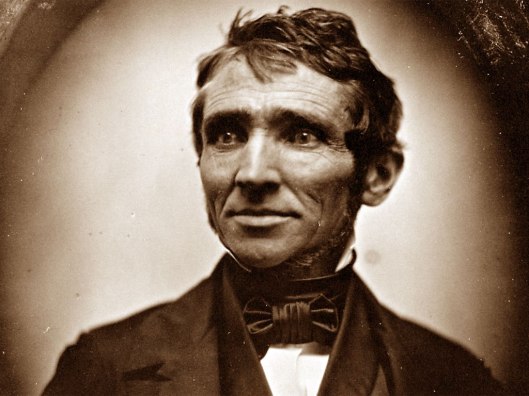
These are a modern invention which requires a large rubber band (an “elastic”) to propel the missile and such rubber bands can only come from the 1840s and beyond, when the process of heat-hardening rubber (“vulcanization”) was patented by Charles Goodyear.

image11chasgoodyear.jpg

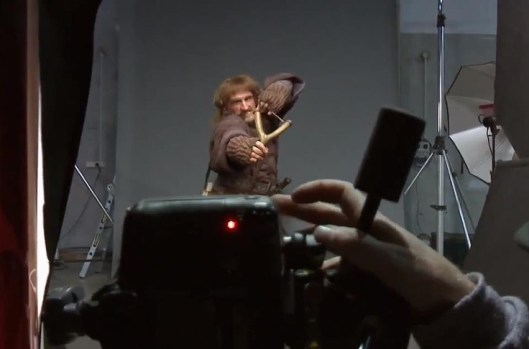
For us, then, the image of Ori in P Jackson’s film armed with a slingshot

image12oriwithslingshot.jpg

goes into our catalogue of anachronisms, like the steam engine whistle, the popgun, and the tomatoes in The Hobbit.

But, as we were saying, small David has no fear of big Goliath, as one of those stones from the riverbed stuns the giant warrior, allowing David to use Goliath’s own sword to cut off his head.

image13dandg.jpg

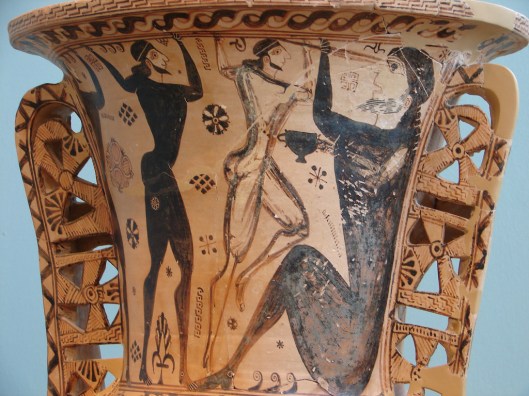
In ancient Greek tradition, Polyphemus the Cyclops obviously thinks his size will allow him to consume all of Odysseus’ men—and then Odysseus, too, saving him for last as a “guest gift”.

image14poly.jpg

Big body, however, doesn’t necessarily mean big brain as Odysseus gets the Cyclops drunk and then blinds him with his own staff.

image15blinding.jpg

Then, he uses the Cyclops’ own sheep as escape vehicles for himself and his men.

image16escaping.jpg

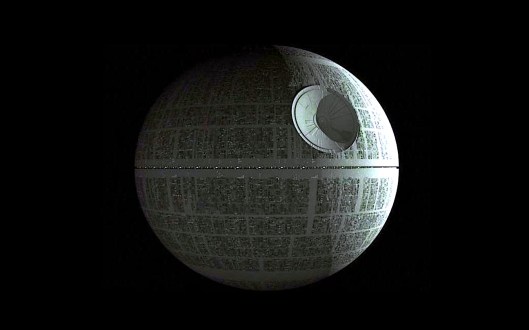
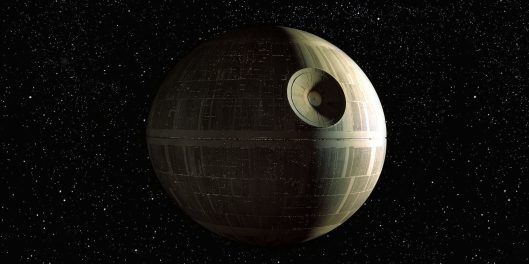
Small versus big is a major theme in Star Wars, from the fact that the gigantic Death Star has a single ventilator duct which makes it vulnerable

image17deathstar.jpeg

to attack by a single fighter,

image18xwing.jpg

to the ferocious Ewoks,

image19ewoks.jpg

and, of course, Yoda, with his famous question.

image20yoda.jpg

And then there are The Hobbit and The Lord of the Rings, where the world of the small and tough seems to be everywhere, from the hobbits

image21hobbit.jpg

to the dwarves

image22dwarves.jpg

and even to the Woses.

image23woses.jpg

Their opponents are suitably large—trolls,

image24trolls.jpg

dragons

image25smaug.jpg

wizards

image26saruman.jpg

to the biggest evil in Middle-earth (although it’s not clear, really, how big he is, physically).

image27baraddur.jpg

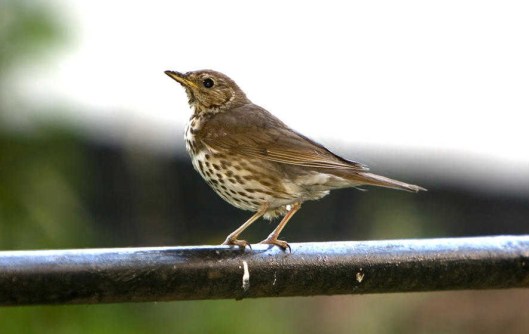
But there’s someone even smaller in The Hobbit who, because of that size, perhaps, is left behind, but is crucial to the story:  the elderly thrush

image28thrush.jpg

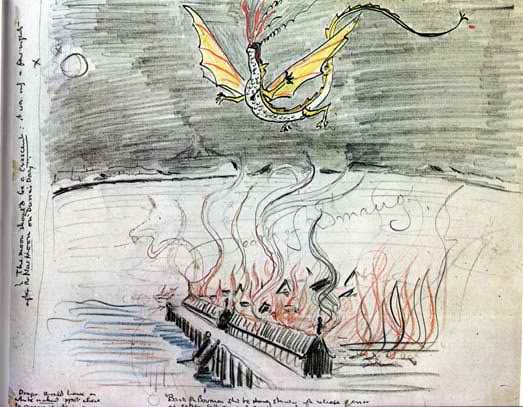
who informs Bard the Bowman just where to fire that black arrow which never fails him—and doesn’t this time, thanks to the bird.

image29deathofsmaug.jpg

We were sorry that his part was completely removed from The Battle of the Five Armies, but perhaps this was, in fact, one of the few times when the small hero lost to the big–studio.

Thanks, as ever, for reading.

MTCIDC

CD
 

PS

Here’s a LINK to an amazing demonstration of just how accurate the sling can be.

“Dragons, Other”

21 Wednesday Mar 2018

Posted by Ollamh in Artists and Illustrators, Fairy Tales and Myths, Heroes, J.R.R. Tolkien, Literary History, Maps

≈ Leave a comment

Tags

Arthur Rackham, Beowulf, C.S. Lewis, Chrysophylax, Custard the Dragon, Dragons, Dream Days, Esgaroth, Farmer Giles of Ham, Jabberwock, Jabberwock-slayer, Kenneth Grahame, Lewis Carroll, Lonely Mountain, Luttrell Psalter, map, Middle-earth, Narnia, Ogden Nash, Pauline Baynes, Rumer Godden, Smaug, St George, The Chronicles of Narnia, The Dragon of Og, The Hobbit, The Lion The Witch and the Wardrobe, The Lord of the Rings, The Reluctant Dragon, Through the Looking-Glass, Tolkien, Walt Disney

As always, readers, welcome.

One of us is currently teaching a class where our present focus is upon The Hobbit.

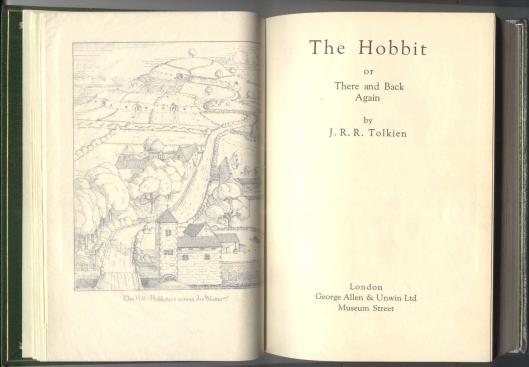
image1hob1st.jpg

At the center of the book is the Lonely Mountain and at the center of that is Smaug.

image2aerebor.jpg

image2smaug.jpg

This got us to thinking about other dragons in our experience, and some of those are not quite of the same breed as the hoard-sitter faced by Bilbo and the dwarves.  That dragon is closely related to the Beowulf variety

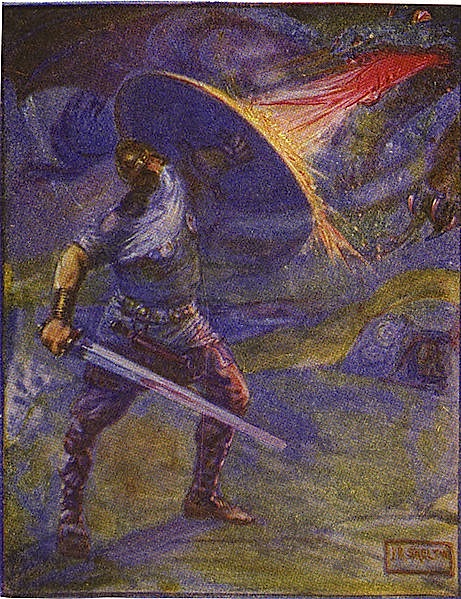
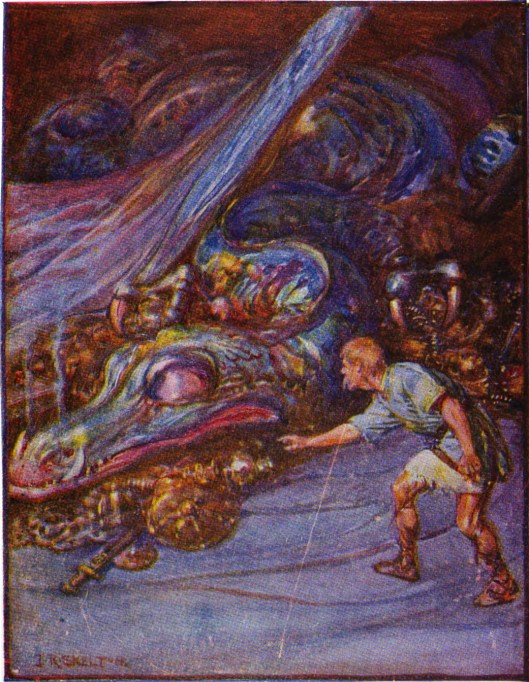
image3beowulfdragon.jpg

which, unlike Smaug, has neither a name nor (it seems) human speech, but it certainly has the same suspicious streak:  when an escaped slave steals a cup from its hoard, it’s almost immediately aware that it’s missing and suspects a human.

image4stealingcup.jpg

And they are both vengeful.  As Smaug devastates Esgaroth, even if he dies for it,

image5esgaroth.jpg

image6smaug.jpg

so Beowulf’s dragon scorches the countryside in revenge for the theft.

But what about those other dragons?

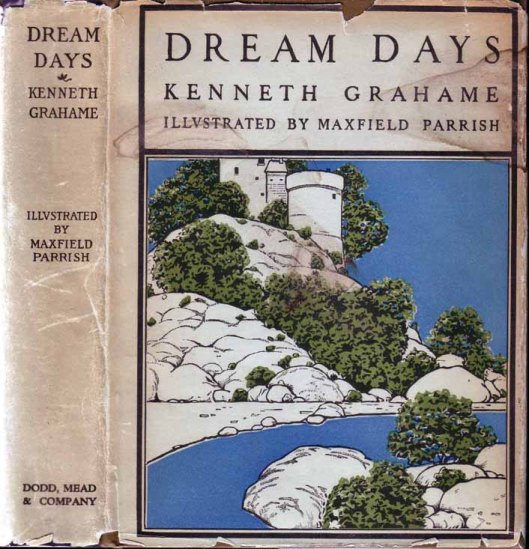
First, we thought of Kenneth Grahame’s Dream Days (1898),

image7kg.jpg

image8dreamdays.jpg

a collection of short stories, the next-to-last of which is “The Reluctant Dragon”.

image9reluct.jpg

This is the story of a beast the very opposite of Smaug—no hoard, no suspicion, no flaming violence, and, in fact, a poetry lover.  This story was then converted into a Disney cartoon of 1941.

image10reluct.jpg

Needless to say, although the core of the plot is the same, what makes the Grahame distinctive is the language.  All of the major characters:  the dragon, the little boy who finds him, and St. George, who is brought in as a dragon-slayer, are thoughtful and articulate late Victorians who would rather discuss literature than do battle—a far cry not only from Beowulf’s encounter, but also from every other earlier depiction we could think of.

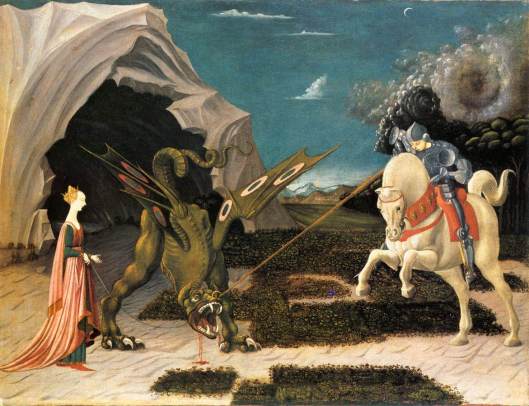
image11ucellostgeo.jpg

image12stgeo.jpg

image13stgeo.jpg

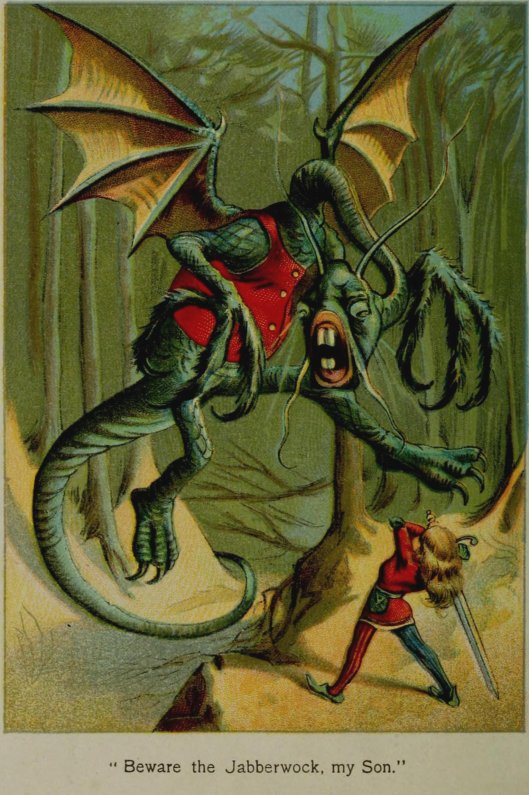
The sword in this last one looks like it actually belongs in the hands of the jabberwock-slayer

image14jabberwocky.jpg

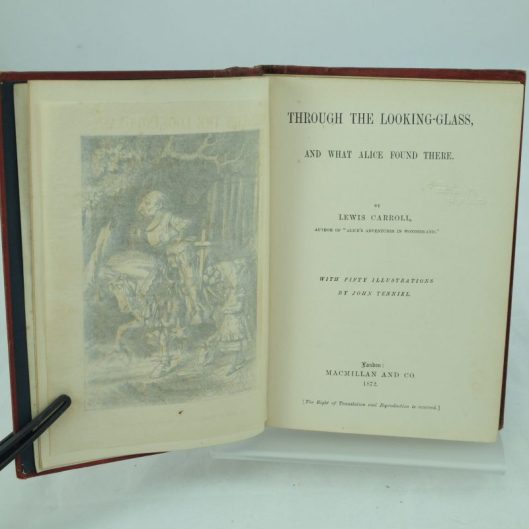
in Lewis Carroll’s Through the Looking-Glass (1872).

image15through.jpg

Here’s a LINK to Dream Days so that you can enjoy the story for yourselves.

Nearly sixty years later, the comic verse writer, Ogden Nash,

image16nash.jpg

produced not a literary dragon, but a timid one in “Custard the Dragon” (1959).

image17custard.jpg

This is a poem in 15 stanzas and is a story about Belinda and her pets, including a dragon, who is taunted by the other pets as being less than brave.  To underline this, the last line in a number of stanzas is a variation upon the first version of the line, “But Custard cried for a nice safe cage”.  (Here’s a LINK to the poem.)

The surprise is that, when a pirate climbs in through the window (this happens all the time here—possibly they escape from dreams?), Custard promptly eats him—and the cries of “Coward!” disappear immediately.

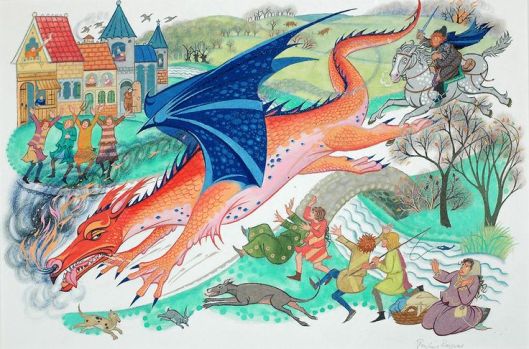
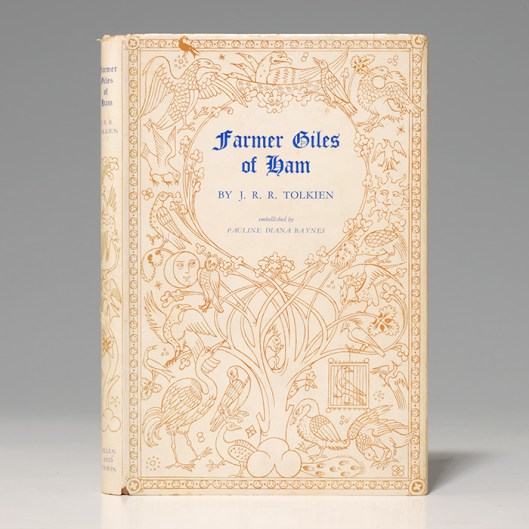
In contrast to the unnamed dragon in “The Reluctant Dragon” and in “Custard the Dragon”, our next dragon is a talker—like Smaug, but also like Smaug, potentially malevolent.  This is Chrysophylax in JRRT’s 1937/1949 Farmer Giles of Ham.  (JRRT is having a quiet joke here—“Chrysophylax” is Ancient Greek for “Goldguard”.)

image18chrysophylax.jpg

image19afgoh.jpg

The artwork is by Pauline Baynes (1922-2008).

image19pb.jpg

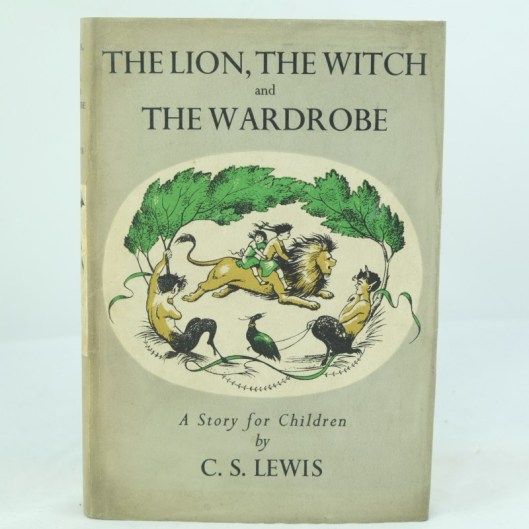
If, like us, you’ve loved the Narnia books, then you know her as their original illustrator.

image20lion.jpg

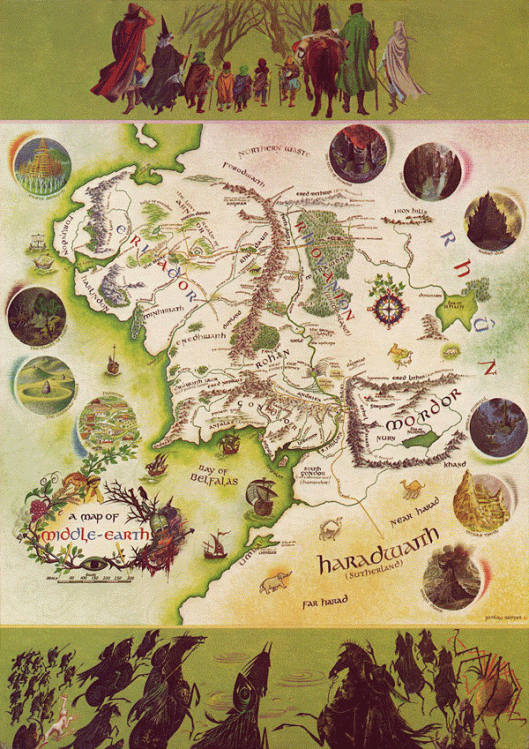
She was also the artist for an early Middle-earth map.

image21memap.gif

Her 2008 obituary in The Daily Telegraph tells of how they came to work together:

“In 1948 Tolkien was visiting his publishers, George Allen & Unwin, to discuss some disappointing artwork that they had commissioned for his novella Farmer Giles of Ham, when he spotted, lying on a desk, some witty reinterpretations of medieval marginalia from the Luttrell Psalter that greatly appealed to him.  These, it turned out, had been sent to the publishers “on spec”by the then unknown Pauline Baynes.”   (The Daily Telegraph, 8 August, 2008)

JRRT was then so impressed with her work that it appeared both in other later publications and his recommendation led to her being engaged by CS Lewis’ publisher for the Narnia books, as well.  (And here’s a LINK to that obituary, which has more on Tolkien and Baynes, as well as Lewis.)

And the Baynes connection leads us to one further dragon, that in Rumer Godden’s  (1902-1998) 1981 The Dragon of Og, for which Baynes provided the cover art.

image22rg.jpg

image23dragog.jpg

It’s not our practice to discuss work we haven’t read, but we’ve just discovered this novel and have already put it on our spring reading list.  The little we know about it comes from a blurb or two, but it looks promising:  this is more of the reluctant dragon, but one who is in danger of being provoked by a new local lord until his wife steps in and cleverly changes the situation.

Before we close, however, we want to look back for a second at the Tolkien/Baynes connection and add two further things.  First off, here’s the first page of JRRT’s graceful letter of thanks and praise to Baynes for her work in illustrating Farmer Giles.

image24letter.jpg

Second, as the Telegraph obituary says, Tolkien was impressed with her versions of the marginalia from the Luttrell Psalter, which is high on our list of favorite medieval manuscripts.

image25luttrellpsalter.jpg

In our next, we want to spend some time looking at that work, thinking about marginalia, and not only there, but also in the work of another favorite illustrator, Arthur Rackham (1867-1939).

Till then, thanks, as always, for reading.

MTCIDC

CD
 

Many Woven Cloths

14 Wednesday Mar 2018

Posted by Ollamh in Artists and Illustrators, Fairy Tales and Myths, J.R.R. Tolkien, Military History, Military History of Middle-earth, Narrative Methods

≈ Leave a comment

Tags

Alexander Mosaic, Ancient Egypt, Assyrians, Battle of Pavia, Battle of the Issus, Bayeux Tapestry, Cloisters, Darius III, Embroidery, Eorl, Hause of the Faun, Hunt of the Unicorn, Middle Ages, Museo Nazionale di Capodimonte, Nubians, Persian, Pompeii, Rameses II, reliefs, Renaissance, story-telling, tapestry, tesserae, The Lord of the Rings, Tolkien, triptych, Trojan War

Welcome, as ever, dear readers.

Not long ago, we visited Meduseld for a look at Grima, the fifth-columnist.  Today, we’re back, but, instead of scrutinizing the staff, we’re examining the décor—

“Many woven cloths were hung upon the walls, and over their wide spaces marched figures of ancient legend, some dim with years, some darkling in the shade.  But upon one form the sunlight fell:  a young man upon a white horse.  He was blowing a great horn, and his yellow hair was flying in the wind.  The horse’s head was lifted, and its nostrils were wide and red as it neighed, smelling battle afar.  Foaming water, green and white, rushed and curled about its knees.

‘Behold Eorl the Young!’ said Aragorn.  ‘Thus he rode out of the North to the Battle of the Field of Celebrant!’” (The Two Towers, Book Three, Chapter 6, “The King of the Golden Hall”)

By “woven cloth”, we presume that JRRT means a tapestry, a decorative wall-hanging, like these—

image1medtapwall.jpg

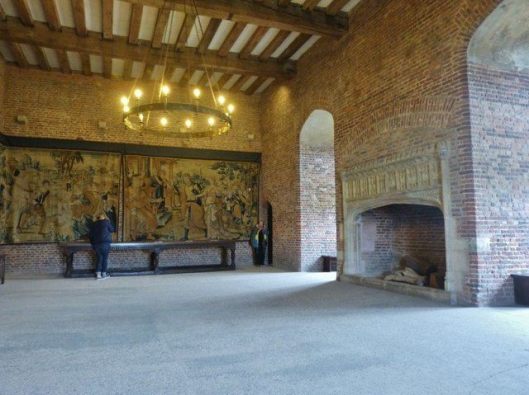
In the western Middle Ages and Renaissance, even wealthy walls—like those in castles—could simply be stone and such tapestries could act both to decorate and to act as a barrier between cold wall and (potentially) shivering inhabitants.

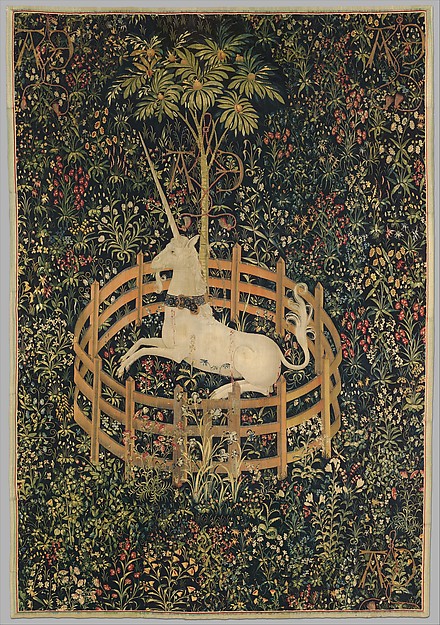
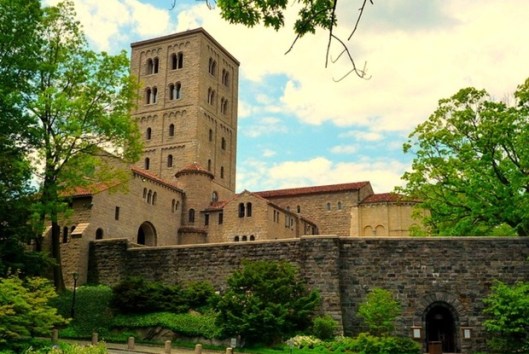
For those making such things, the possibilities for using them as story-telling spaces inspired such works as the famous “Hunt of the Unicorn” series of tapestries, now housed in the Cloisters, a museum in New York City.

image2hunt.jpg

image3cloisters.jpg

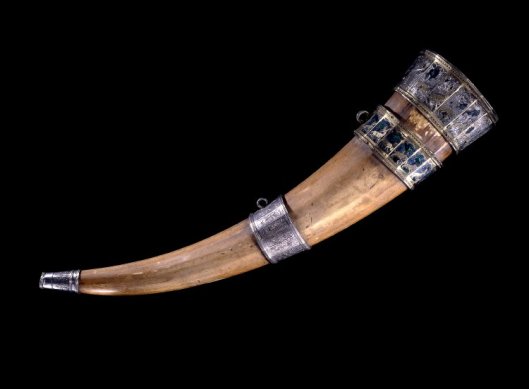
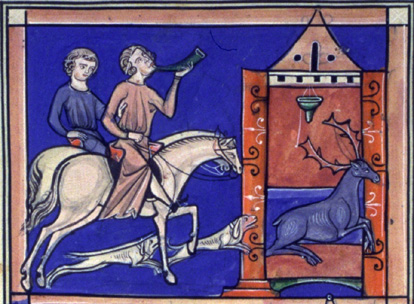
The description of Eorl makes us think of medieval stag hunt illustrations, where hunters may be seen blowing horns—like this one.

image4savernakehorn.jpg

image5dagobert.jpg

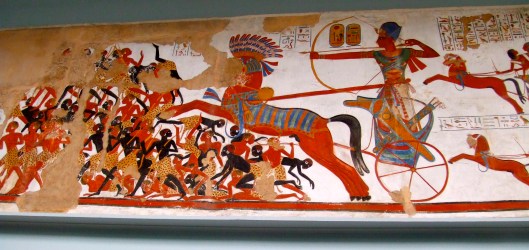
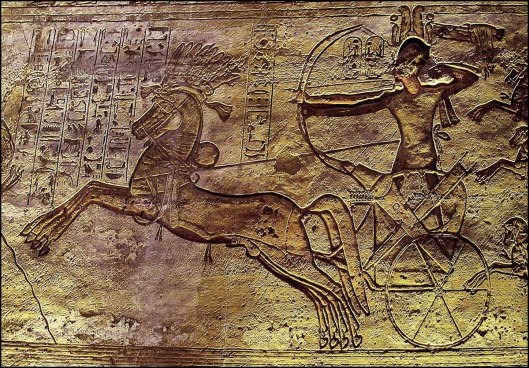
But the fact that he was riding to battle also made us think of wall decorations of a military/historical nature through the centuries, starting with ancient Egypt, where Rameses II (1303-1213BC) had himself depicted on walls in various military actions—

image6ramnubians.jpg

image7ramkadesh.jpg

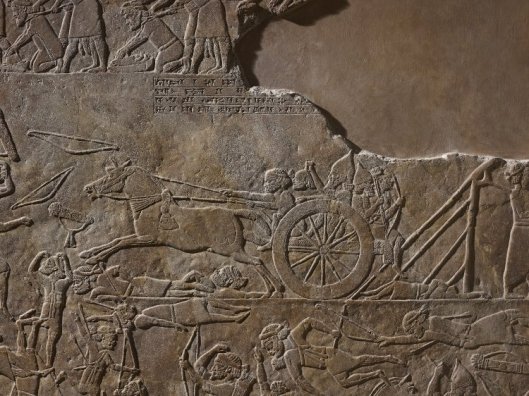
Or the Assyrians, who were not only enthusiastic (gross understatement) about war, but also about depicting themselves engaged in it.

image8assyrians.jpg

As you can see, although these appear on walls, they are not hangings, but reliefs—that is, shallow carvings.  The Egyptian reliefs could be brightly painted, as is that reconstruction of Rameses and the Nubians, the first of the two Rameses illustrations.  It appears that some of the Assyrian reliefs were also colored—here’s a PDF: BMTRB 3 Verri et al, of an interesting article from the Technical Research Bulletin of the British Museum on the subject.

From colored reliefs, we can jump to colored tiles (called tesserae), with the famous Alexander Mosaic.

image9alexandermosaic.jpg

This depicts Alexander the Great nearly confronting the Persian king, Darius III, at the Battle of the Issus (333BC) and what amazes us is that this was originally not on a wall, but on a floor, in the so-called “House of the Faun” in Pompeii.


It is believed that this was based upon an early 3rd-century BC painting and, to our eye, it still looks very much like the painting it may have come from (which was, presumably, on a wall, not a floor).

For battle scenes on cloth, we return to the medieval world and something we’ve mentioned before, the so-called “Bayeux Tapestry”.

image11a.jpg

We say so-called because it’s not really a tapestry—which would have been woven on a loom—but, instead, a giant (230ft/70metres) embroidery.  Here’s a detail so that you can see how an embroidery is made up of stitching on a (in this case) plain linen strip.

image11closeup.jpg


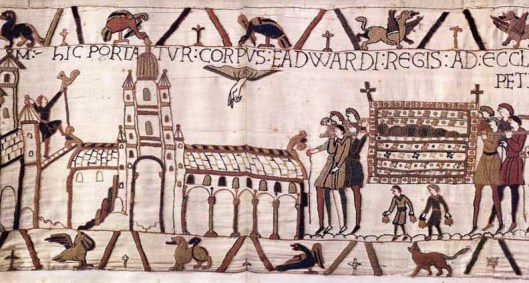
This is really an astonishing piece of work—so far as we know, nothing else like it has survived from medieval western Europe:  a massive history of the invasion of England in 1066, including events leading up to it, in 50+ scenes.  We see everything from architecture

image12westminster.jpg


to ship-building

image13shipbuilding.jpg


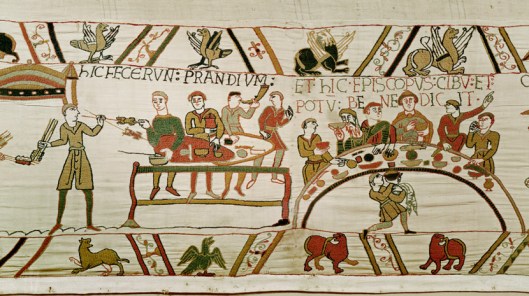
to feasting

image14bayeux.jpg


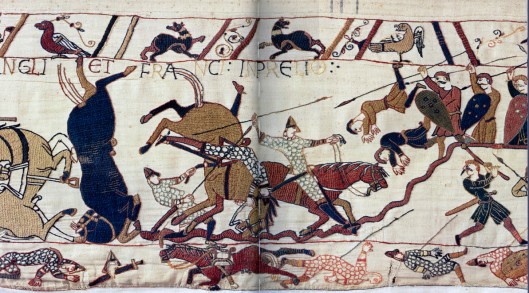
to battle

image15battle.jpg

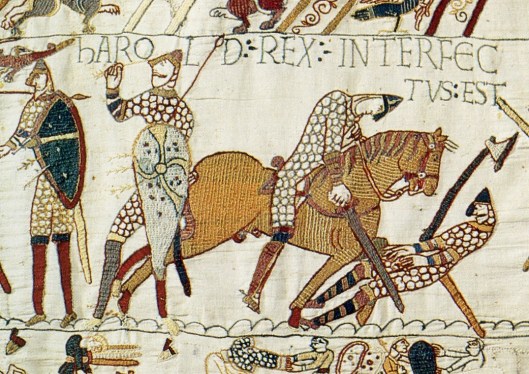
at its grainiest

image16deathofharold.jpg

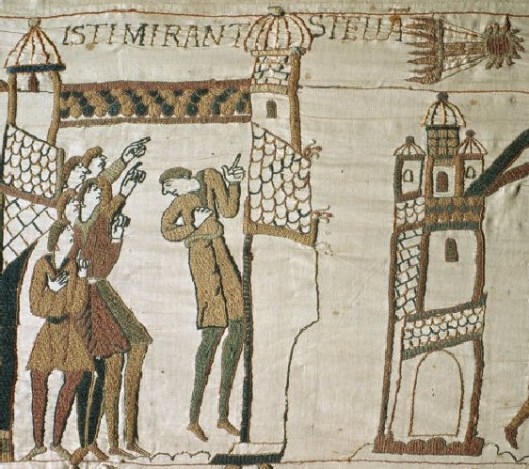
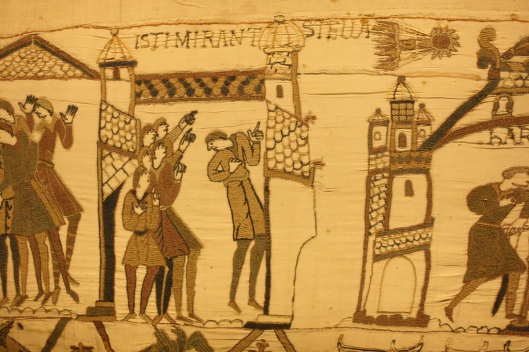
and even includes Halley’s Comet.

image17hscomet.jpg

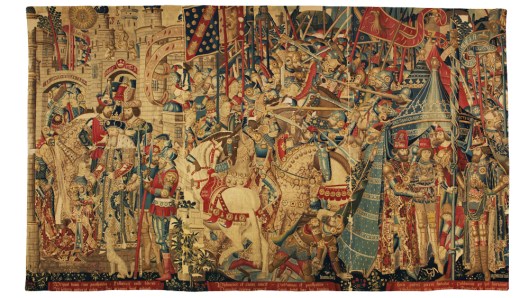
JRRT certainly knew about the Bayeux piece—he mentions it in his letters—but the richness of his description doesn’t really match the relative spareness (for all its detail) of that embroidery, so we wonder what he might have had in mind?   Late medieval tapestries would have had the lush look—

image18troy.jpg

This is one of a set of 15th-century tapestries illustrating the Trojan War.  You’ll notice that, like the Bayeux Tapestry 3 centuries earlier, there are labels (tituli, they’re called).  In the case of the Eorl tapestry, it’s Aragorn who provides the explanation, suggesting that there is no caption and Aragorn, being Aragorn, simply knows the story.

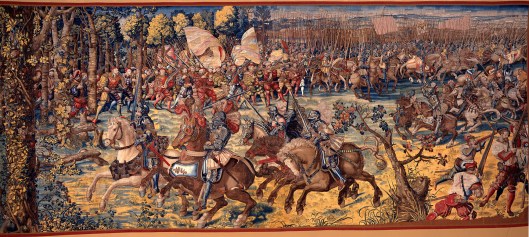
For an eye-popping battle scene, however, we would point to the set of 7 tapestries of the Battle of Pavia (1525) woven in Brussels between 1528 and 1531 and now in the Museo Nazionale di Capodimonte in Naples.  Here’s just one example—can you imagine the same having been woven for the assaults on Minas Tirith or Helm’s Deep?  (Here’s a LINK, by the way, to a very detailed article on the subject of these wonderful works.)

image19pavia.JPG

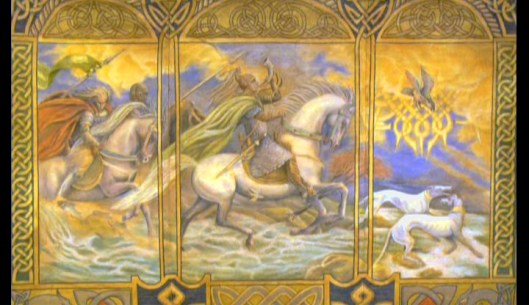
But such pieces as these are so elaborate that, for all of their great art, they don’t provide quite the parallel we’re looking for, perhaps because all of the larger ones seem to be filled with people and movement and what JRRT describes is a single figure—almost like a standard, rather than a tapestry—something like this one (although we imagine the original to be facing to the right and the field to be green—oh, and of course he has that horn, but you get the idea).


And we do have this example.  It comes from a site called “Elvenesse”.

image21eorl.jpg

It looks more like a religious triptych than a tapestry to us,

image22triptych.jpg

but it certainly is going in the right direction.  What do you think, dear readers?

And thanks, as always, for reading!

MTCIDC

CD
Weaving (Not Hugo)

31 Wednesday Jan 2018

Posted by Ollamh in Artists and Illustrators, Fairy Tales and Myths, J.R.R. Tolkien, Literary History, Military History, The Rohirrim

≈ Leave a comment

Tags

Anglo-Saxon, Battle of Hastings, Bayeux Cathedral, Bayeux Tapestry, Bishop of Bayeux, Edward the Confessor, Harold Godwinson, Lambert Leonard-Leforestier, Louvre, Musee Napoleon, Napoleon, Normans, Odo, Odo Earl of Kent, Old English Hexateuch, Rohan, Rohirrim, The Lord of the Rings, Tolkien, Tower of Babel, William Duke of Normandy, William the Conqueror

Welcome, dear readers, as ever.

In our last, we quoted JRRT on the subject of the Rohirrim:

“The styles of the Bayeux Tapestry (made in England) fit them well enough, if one remembers that the kind of tennis-nets [the] soldiers seem to have on are only a clumsy conventional sign for chain-mail of small rings.”  (Letters, 281)

We’ve mentioned the so-called Bayeux Tapestry before and even shown an illustration or two, but we thought that it would be fun to delve a little deeper into the subject—beginning with its name and why Tolkien added “(made in England)” to his sentence.

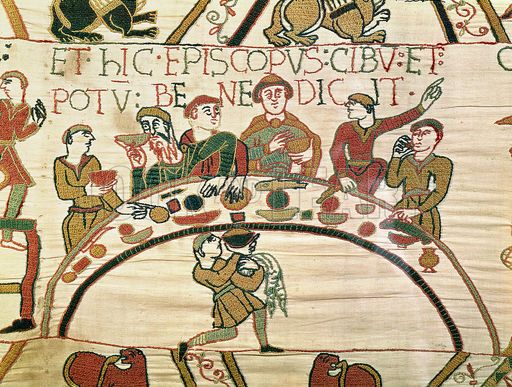
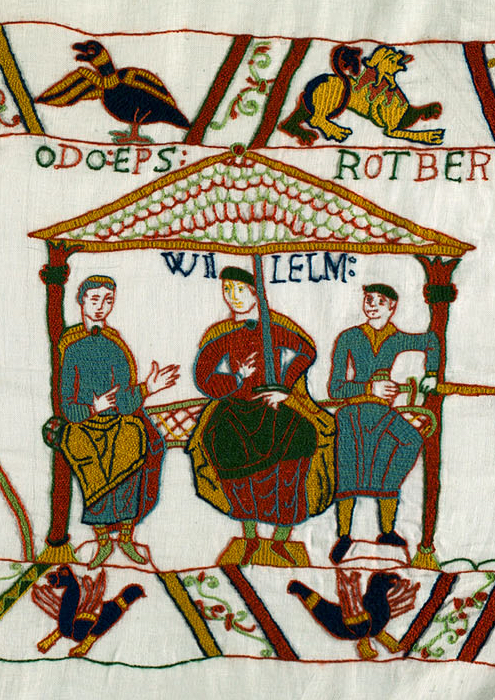
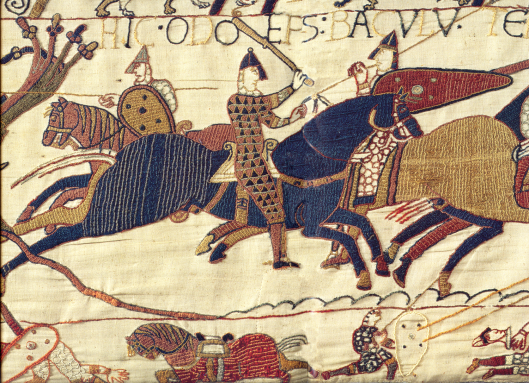
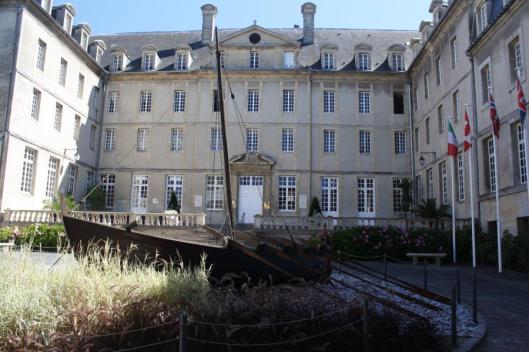
The first known reference to this approximately 230-foot-long (70.1 meters) by 20 inch high (.5m) piece of fabric dates from the latter part of the 15th century AD, from an inventory at Our Lady of Bayeux Cathedral—commonly known in English as Bayeux Cathedral—in 1476.  There has been much scholarly argument over its site of manufacture, but the evidence appears to us to identify the commissioner of the work as Odo, Bishop of Bayeux, and half-brother to William, Duke of Normandy (where Bayeux is situated), aka, “William the Conqueror”.  Odo is depicted and identified three times on the piece, twice in more peaceful settings—once blessing a meal,

image1odo.jpg

once sitting with William and his half-brother, Robert,

image2odo.jpeg

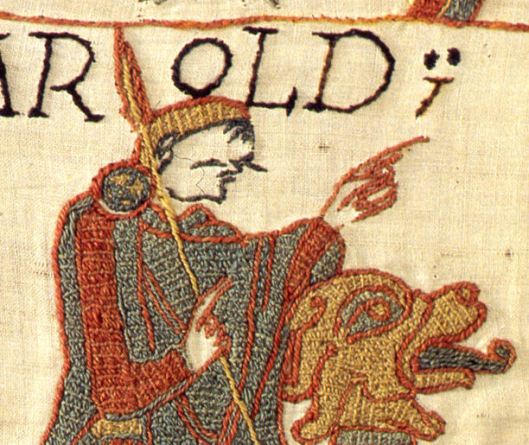
and once in a decidedly not peaceful setting, encouraging the troops at the Battle of Hastings, wearing a mail shirt and helmet and brandishing a club.  (The Latin inscription—called a titulus—says “Here Bishop Odo, holding a club, puts strength into the lads”.)

image3odo.png

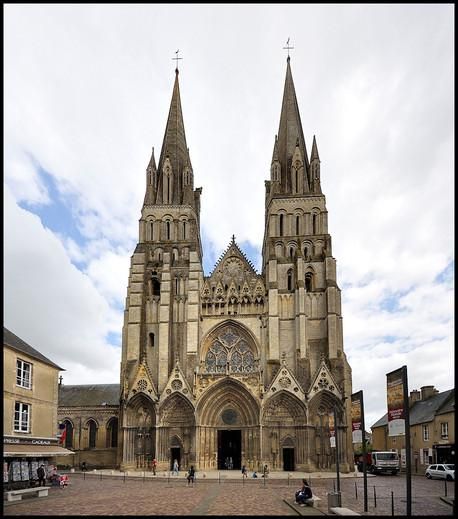
As well, several of the figures on the piece have been identified as vassals (feudal allies) of Odo.  Finally, Odo was not only the Bishop of Bayeux, but also instrumental in rebuilding the cathedral in which the artefact was first known to have been housed, Bayeux Cathedral (elements of which are buried inside this later Gothic version).

image4bayeux.jpg

It seems natural to us, then, that he, at one time William’s right-hand man, would have been responsible for the creation of the work.  (We might also add that the Norman victory made Odo Earl of Kent—one more reason for commissioning a work which shows that victory in detail.)

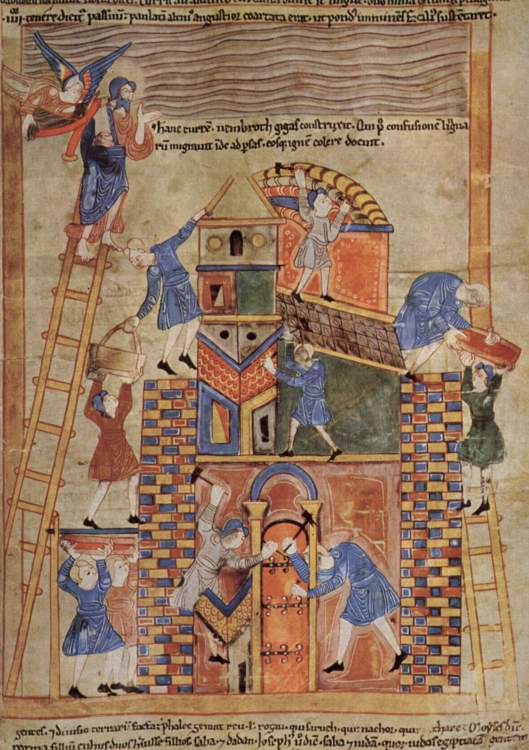
We said that there was argument as to where the work was made, but we, ourselves, would agree with JRRT and the idea that it was made in England for, among other reasons, the depiction of people and scenery on it remind us strongly of the Anglo-Saxon artistic tradition—especially embodied in the mid-11th-century manuscript of the “Old English Hexateuch”, with its 394 colored illustrations, which is to be found in the British Library (Cotton MS Claudius B. iv.).

image5babel.jpg

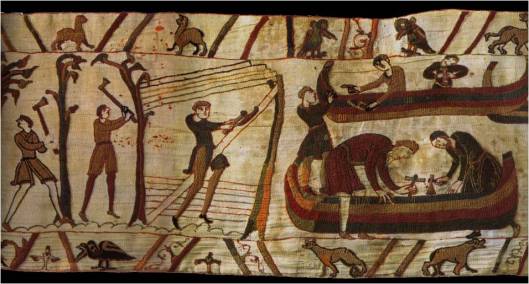
This is a depiction of the construction of the Tower of Babel.  Below is a picture of Normans building ships for their invasion of England from the Bayeux work.

image6ship.jpg

The Bayeux work is much sparer, but there’s that same interest in illustrating motion.

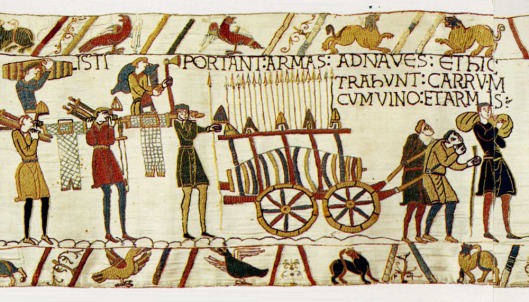
But, when we say that the Bayeux work is sparer, that is not to say that it lacks detail, as there are (at least) four visual levels throughout.  If we take just one scene at random

image7levels.jpg

and go from top to bottom we see:

  1. a narrow band of single figures—in this case, animals
  2. a broader band of action—in this case it’s Normans loading their equipment—and other things—for the attack on England (The titulus says: “These are carrying arms to the ships and here they are dragging a cart with wine and arms.”)
  3. the captions—tituli—for every scene
  4. a lower narrow band—again, here, animals, but there are other possibilities, as in this scene, where we see scavengers removing the arms and armor of the dead after the Battle of Hastings

image8scavengers.jpg

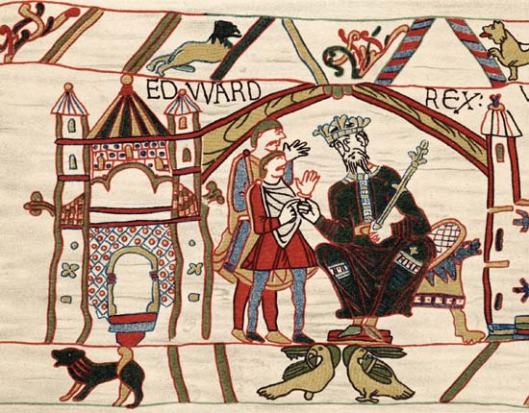
The images in the “Old English Hexateuch” illustrate individual Bible stories.  Those in the Bayeux work are scenes, all parts of a long historical narrative, which begins in 1064 (it is thought) with Edward the Confessor, the King of England,

image9eddie.jpg

sending the powerful nobleman, Harold Godwinson, on what appears (from subsequent panels) to be a mission to France.

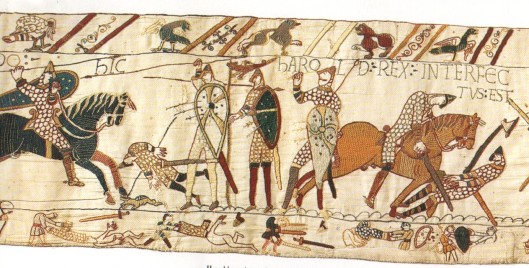
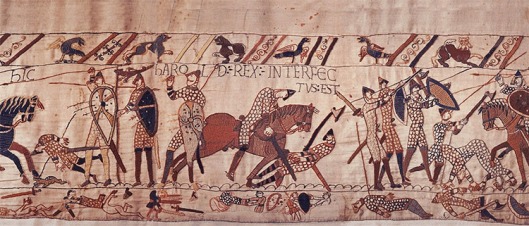
The last scenes, at the far end, include the death of Harold on the battlefield of Hastings

image10deathofharold.jpg

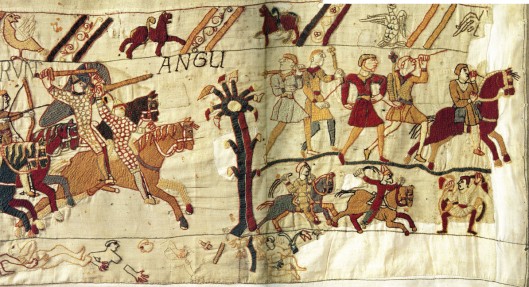
and the flight of the English from the field, with Normans in hot pursuit in October, 1066.

image11flight.jpg

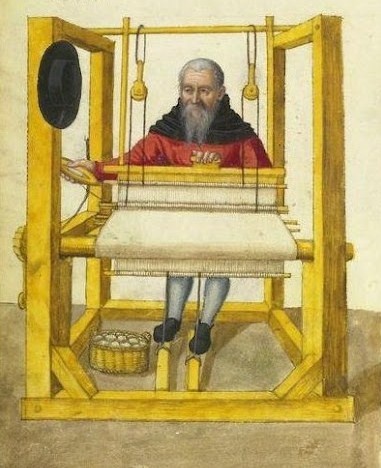
Throughout our discussion, we have avoided calling this work by its traditional name because, in fact, the “Bayeux Tapestry” is not a tapestry.  A tapestry is a solid piece of fabric, woven on a loom.

image12medloom.jpg

The Bayeux Tapestry is really the Bayeux Embroidery, in which various designs are stitched onto a cloth.

image13making.jpg

In this close-up, you can see how it’s done, with outlines giving the figures shape, as if they were drawn with a needle, then filled in.  (For more on this, and on the work in general, try this LINK.)

image14stitching.jpg

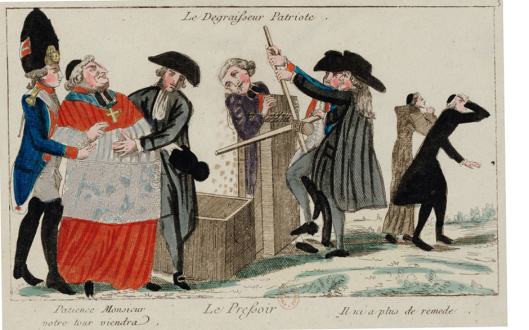
For its size and detail and historical importance, there’s no embroidery like it from early medieval England, and perhaps from Europe, but there was one moment when it almost disappeared for good.  During that period of the French Revolution when the Church (1% of the population which owned 10% of the land), was being nationalized (and plundered),

image15church.jpg

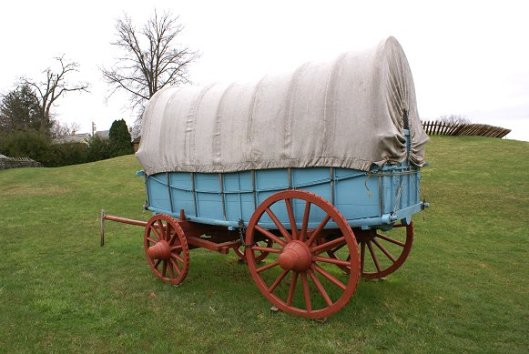
it was destined to be used for military wagon covers.

image16wagon.jpg

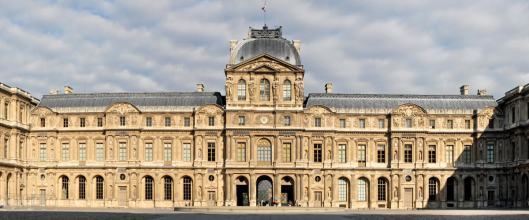
It was only saved at the last minute and shipped off to the Musee Napoleon (formerly—and subsequently—the Louvre).

image17louvre.jpg

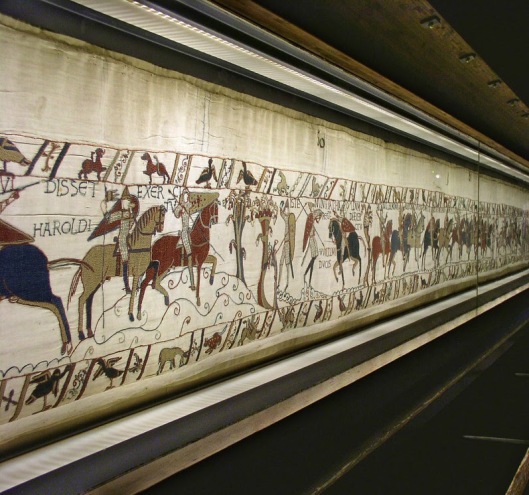
Eventually, it was returned to Bayeux where, today, it can be seen in a museum there, cleverly displayed in a way which allows the entire length to be viewed.

image18museum.jpg

image19display.jpg

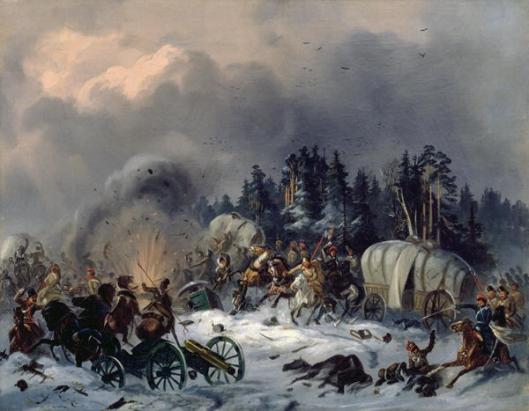
Without a member of Bayeux’ city council, Lambert Leonard-Leforestier, and his quick thinking, however, the last anyone might have seen of it would have been more like this—

image20wagon.jpg

destroyed on wagons lost in Napoleon’s disastrous retreat from Russia.

Thanks, as ever, for reading.

MTCIDC

CD
PS

There is one more detail from the Bayeux Embroidery we’d like to mention.  If you’re a fan of Game of Thrones, you might remember a passing comet.  In fact, a passing comet—Halley’s Comet—appears on the Embroidery and, for people of the time, portended something big to come…

image21halleyscomet.jpg

For more on Halley’s comet, here’s a LINK.

I Think That I Shall Never See…

10 Wednesday Jan 2018

Posted by Ollamh in Artists and Illustrators, Economics in Middle-earth, Fairy Tales and Myths, J.R.R. Tolkien, Literary History, Military History, Military History of Middle-earth, Narrative Methods, Uncategorized

≈ Leave a comment

Tags

Alan Lee, Alexander Volkov, Battle of the Somme, C.S. Lewis, Caspar David Friedrich, deforestation, Fangorn, Fangorn Forest, German Romantics, Grimm Brothers, Haensel and Gretel, Industrial Revolution, Isengard, Kansas, L. Frank Baum, Leonid Vladimirsky, Mordor, pre-industrial, Saruman, The Lord of the Rings, The Scouring of the Shire, The Wizard of Emerald City, The Wizard of Oz, Tin Woodman, Tolkien, trees

Welcome, dear readers, as always.

In a letter to his aunt, Jane, dated 8-9 September, 1962, JRRT wrote:

“Every tree has its enemy, few have an advocate.” (Letters, 321)

We know, from his letters and from interviews, just how passionate he was about trees,

image1jrrt.jpg

but we were immediately caught by just how very Treebeardish he sounded:

“I am not altogether on anybody’s side, because nobody is altogether on my side, if you understand me…” (The Two Towers, Book Three, Chapter 4, “Treebeard”)

image2tbd.jpg

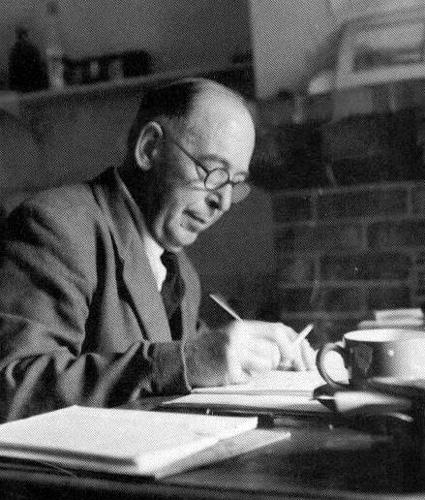
Trees almost seemed to be people to Tolkien—in fact, we know that Treebeard was based in part upon a person—his friend, CS Lewis—at least his voice and manner of speaking.

image3csl.jpg

As near-people, then, to Tolkien, their destruction would have been a kind of murder.  With that in mind, we thought of our last posting, in which we quoted Farmer Cotton talking about Sharkey’s regime in the Shire, including “They cut down trees and leave ‘em lie.”  (The Return of the King, Book Six, Chapter 8, “The Scouring of the Shire”).  And we wondered whether, behind this, JRRT was talking not only about the orcs’ wanton devastation of trees,

image4treeruin.jpg

but also reliving the Battle of the Somme, in 1916, and seeing once more the acres of unburied dead (60,000 British casualties alone on the first day, 1 July, 1916).

image5dead.jpg

Certainly Treebeard saw this as murder, as he says to Merry and Pippin about Saruman

“He and his foul folk are making havoc now.  Down on the borders they are felling trees—good trees.  Some of the trees they just cut down and left to rot—orc-mischief that; but most are hewn up and carried off to feed the fires of Orthanc…Curse him root and branch!  Many of those trees were my friends, creatures I had known from nut and acorn; many had voices of their own that are lost for ever now.  And there are wastes of stump and bramble where once there were singing groves.”  (The Two Towers, Book Three, Chapter 4, “Treebeard”)

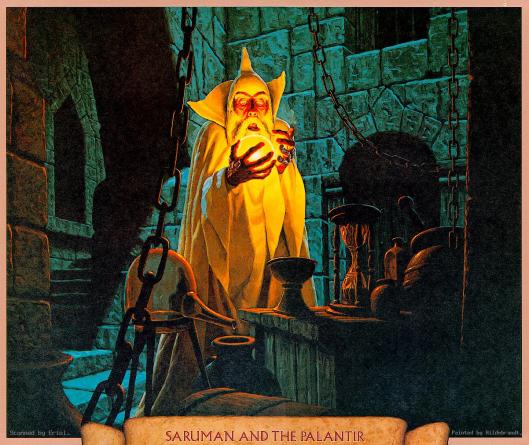
Saruman, a person with “a mind of metal and wheels”, who was “plotting to become a Power”,

image6saruman.jpg

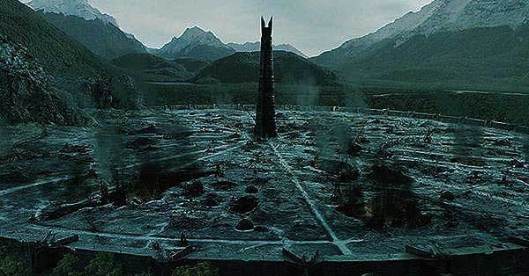
has turned Isengard into a vast factory, where “there is always a smoke rising”.

image7isengard.jpg

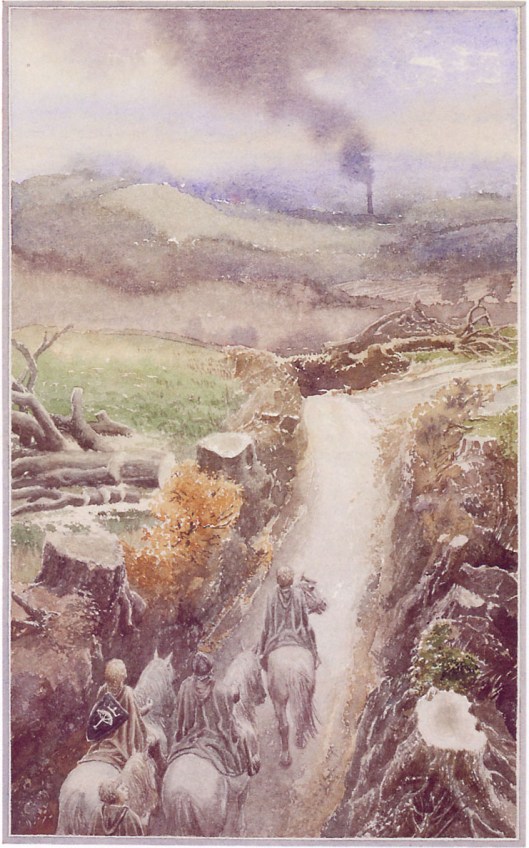
Thus, just as JRRT may have been recalling the Battle of the Somme, so perhaps he was also suggesting  the industrialization which had been in full swing when he was born and which he disliked intensely and which was reducing much of the part of England in which he grew up to the smoking wasteland Sharkey tried to make the Shire

image8.jpg

as we see in this Alan Lee depiction.

image9.jpg

Of course the deforestation went back long before the Industrial Revolution began.  Once upon a time, great forests covered much of the northern European world and humans lived in the midst of miles and miles of trees in clearings which they cut for themselves.

image10schwarz.jpg

image11farm.jpg

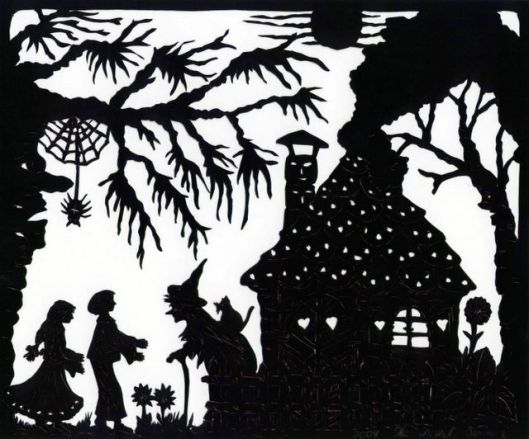
And we still have a distant memory of these, we would suggest, in some of our fairy tales.  If you think about the Brothers Grimm fairy tale of “Haensel and Gretel”, for example,

image12grimms.jpg

image13kinderund.jpg

image14schatten.jpg

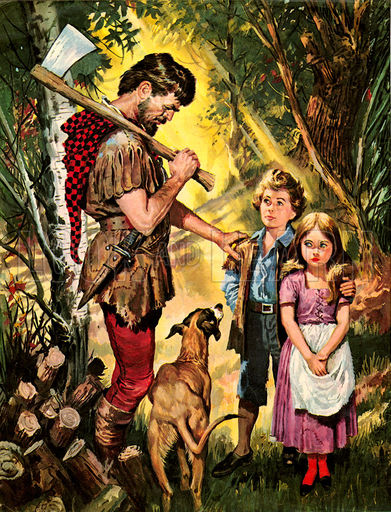
you’ll remember that, not only did the children live in the middle of such forest, as did the witch, but their father was a woodcutter, someone who would have been involved in that very deforestation, if in a very small way.

image15woodcutter.jpg

This memory, collected by the Grimms and others in folktale form in the early 19th century, also provided inspiration for the German Romantics—as you can see in this painting by one of their greatest painters, Caspar David Friedrich (1774-1840).

image16chasseur.jpg

To those Romantics, the forest was scary—but fascinating, as well—and disappearing, as the industrialism which JRRT disliked swallowed it.

image17blackcountry.jpg

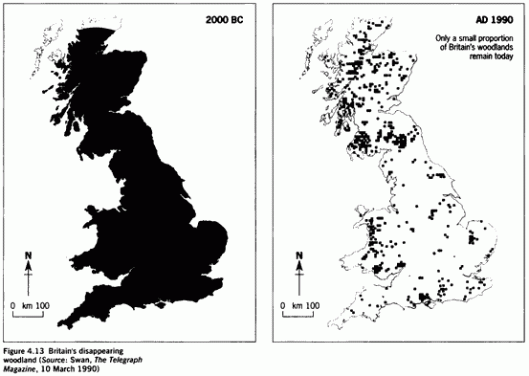
Wood was, however, the plastic of the world for many generations, with infinite uses, from home heating to ship-building, and, wherever humans settled, wood was eaten up.  Here is a telling chart for Britain of the contrast between 2000BC and 1990AD.

image18mapofgb.gif

It is no surprise, then, that, during the 17th century colonization of what is called New England in the US, a major attraction was the availability of wood and the colonists took full advantage of that availability, as this chart shows—

image19deforest.jpg

The forest which Treebeard shepherds is, in fact, rather like the forest depicted in that chart of Britain, as Aragorn says:

“Yes, it is old…as old as the forest by the Barrow-downs, and it is far greater.  Elrond says that the two are akin, the last strongholds of the mighty woods of the Elder Days, in which the Firstborn roamed while Men still slept.”  (The Two Towers, Book Three, Chapter 2, “The Riders of Rohan”)

But what would have happened to it had Saruman not lost Isengard to the very trees he was destroying?

image20destructionofisengard.jpg

In thinking about this, we were reminded of another woodcutter in a children’s story.

image21tinwoodsman.png

Or, if you prefer the film—

image22woodsman.jpg

He lives in the still-wooded land of Oz

image23oz.png

where there are even talking trees (although a lot less friendly than Treebeard).

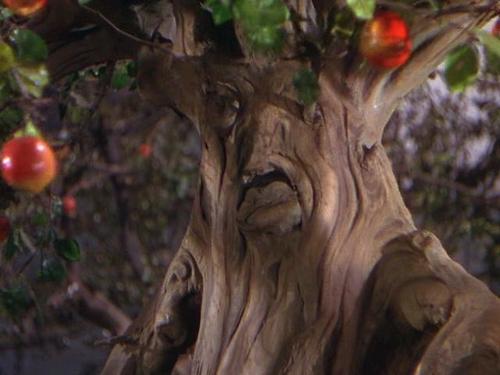
image24talkingtree.jpg

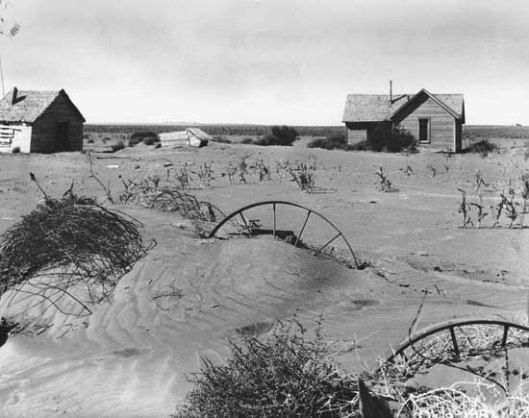
Dorothy, however, lives in a Kansas seemingly blighted by the so-called “Dust Bowl” of the 1930s.

image25kansas.jpg

image26dustbowl.jpg

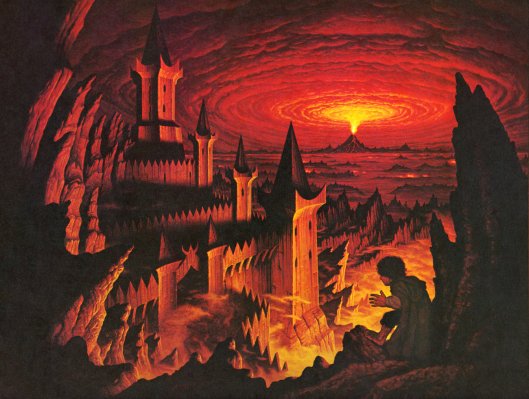
Would this have been Fangorn’s fate?  We have only to look at Mordor to believe it might have been, when all the trees fell silent.

image27mordor.jpg

As ever, thanks for reading.

MTCIDC

CD
PS

In 1939, a Russian children’s author, Alexander Volkov, published The Wizard of the Emerald City.  When one compares it with a certain American book of about 40 years before, striking similarities appear, starting with the title character.  And the illustrations, by Leonid Vladimirsky, also have something familiar about them…

image28vlad.jpg

There was one very practical change, however:  the Tin Woodman became the “Iron Lumberjack”, which rectifies a mistake in the original.  When Dorothy discovers the Woodman, he has rusted in place, but tin can’t rust!

In the Future, Use the Past

13 Wednesday Sep 2017

Posted by Ollamh in Artists and Illustrators, Fairy Tales and Myths, Films and Music, Heroes, J.R.R. Tolkien, Literary History, Narrative Methods

≈ Leave a comment

Tags

A New Hope, A Princess of Mars, Ages of Middle-earth, Death Star, Edgar Rice Burroughs, Emperor Palpatine, Frank Schoonover, George Lucas, Hildebrandt, Mos Eisley, Oxford, Percival Lowell, Return of the Jedi, Sauron, science fiction, special effects, Star Wars, Stonehenge, Tatooine, The Empire Strikes Back, The History of Middle-earth, The Last Jedi, The Lord of the Rings, Tolkien, tower of St Michael

Welcome, as always, dear readers.

As The Last Jedi (Star Wars 8) approaches (and Star Wars Rebels, season 3 has appeared via the postman—season 4 premieres in mid-October—sadly the last season, as Disney has canceled season 5), we’ve been thinking about the original Star Wars of 1977.

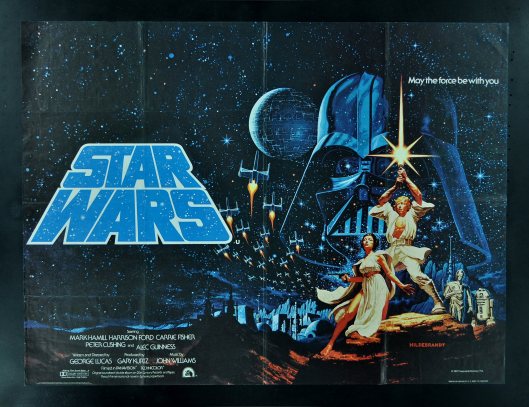
image1poster.jpg

This poster—the second ever Star Wars poster, in fact (used by 20th Century Fox in the UK)– is a great link to JRRT—as if we don’t seem to make such links every time we write!  It’s by two of our favorite Tolkien illustrators, the Hildebrandt brothers.  Here’s a picture of the surviving twin, Greg, with that very poster (his brother, Tim, died in 2006).

image2gh.png

(Clink here for a LINK to an interesting little piece from 2010 about the Hildebrandts and George Lucas.)

We believe, however that there may be a deeper link.

The original reviews (here’s a LINK to summaries of some of them) were a mixture, with some critics enthusiastic about what they saw and others (in our view the stodgier ones) calling the film things like “puerile”.  One element which was occasionally commented upon was the look of the picture—and not just the (for the time) dazzling special effects—but the fact that all the worlds depicted were lived-in, not shiny and new—well, almost.  Consider Mos Eisley, for example,

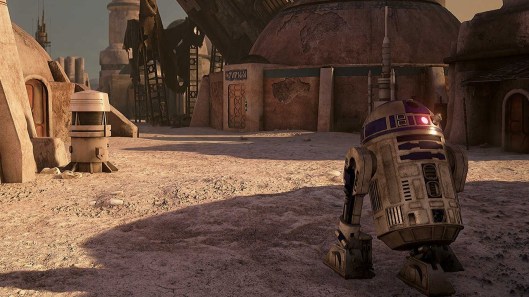
image3moseisley.jpg

which looks dusty and battered, suggesting the passage of time as well as the effects of the harsh desert climate of Tatooine.

Or the Jawa sandcrawler, old and clearly rusting–

image4jawasandcrawler.jpg

We said “almost” shiny and new because there’s one part of this galaxy with a different look:  the Death Star.

image5insidedeathstar.jpg

It looks like it’s dusted and waxed hourly, doesn’t it?  And the outside appears to be just as neat.

image6falconenteringdeathstar.jpg

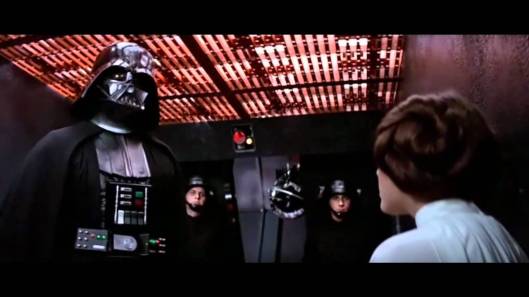
What does this say about the nature of those who inhabit it?  For us, thinking about the spotless Darth Vader,

image7vader.jpg

immediately suggests that the old proverb should be changed to “Cleanliness is next to Un-godliness”!  (Okay—we’re not the neatest and most organized people we know.)

It has been pointed out, more than once and beginning with the director himself, that George Lucas was influenced by Edgar Rice Burroughs’ John Carter series, beginning with A Princess of Mars (first published serially in The All-Story, February to July, 1912).

image8princess.jpg

(And here’s another connection—this cover and the illustrations for its first publication in book form, in 1917, were by Frank Schoonover, 1877-1972, who was the student of another of our favorite illustrators, Howard Pyle, whom we have occasionally mentioned in previous postings.  The convincing detail in this cover painting shows that, just like his teacher, Schoonover did his research—in his case, by very carefully going through the text and taking note of any technical information the author might have mentioned.)

In A Princess of Mars and subsequent books,  Mars has a civilization which is old and in decline (the inspiration for which, in turn, may have come from the work of the amateur astronomer, Percival Lowell, 1855-1916, whose telescopic observations of Mars had convinced him that the planet was—or had been—the home of a dying civilization which had constructed a vast network of canals to supply themselves with water from the polar ice caps—unfortunately, numerous NASA missions have found no evidence of the desperate Martians or their canals).   It would be easy, then, to say that Lucas was just following his source material, but we would suggest that there are two better explanations for showing wear.

The first comes from something Lucas is quoted as having said to his production designers:  “What is required for true credibility is a used future.” In Lucas’ view, then, the story’s believability comes in part from its look:  if things appeared not shiny, but worn, then viewers would be more likely to accept the narrative as somehow “true”, we presume because things in our world so often look used.

There is then, we think a further presumption:  if things look worn, then they have a past, which implies that the here-and-now of the story is a small part of bigger things and, certainly, just looking at the “crawl” at the beginning of the original Star Wars,

star-wars-crawl-163729.jpeg

which leads us to  our second explanation.  This one deals with something deeper, something which we would say might provide another possible link with JRRT and is, in fact, suggested by the titles of the first three Star Wars films made and even in their sequence:  A New Hope, The Empire Strikes Back, The Return of the Jedi.

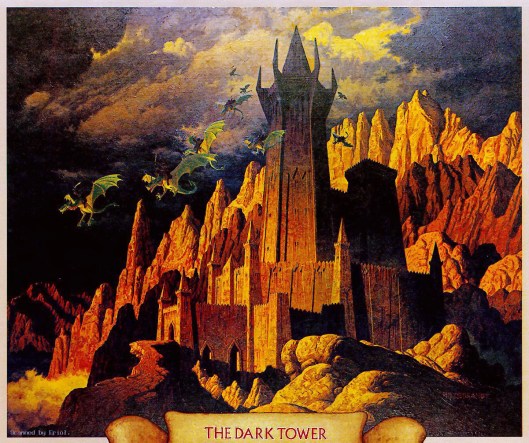
In two earlier postings, we talked about the condition of Middle-earth at the beginning of The Lord of the Rings, in which everything, from the trees to the houses of Minas Tirith, has grown old and weary—and even potentially hostile, in the case of the trees.  Part of this comes from the fact that Middle-earth is old:  one has only to turn to Appendix B, subtitled “The Tale of Years”, in The Lord of the Rings to see that, in the Second and Third Ages alone, nearly 6000 years have passed.   (In terms of our earth, that’s moving from the late Neolithic Era to modern times, 4000bc to 2017ad.)  This also emphasizes the age and depth of evil, as well as its power to corrupt in the present:  Sauron began to build Barad-dur c. SA1000—5000 years before the main narrative of The Lord of the Rings opens and, in the present, the world is crumbling.

Of course, JRRT lived surrounded by the past.  The oldest surviving building in his daily Oxford is the tower of St Michael at the North Gate, dating from 1040ad, nearly a thousand years before his time,

image9stmichaels.jpg

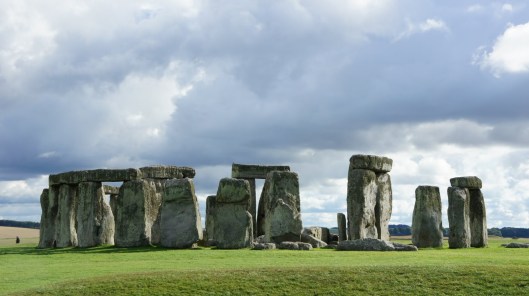
but Neolithic Stonehenge is only 58 miles (93km) southwest of the city and that’s 5000 years old, taking us back to the time when, in Middle-earth, Sauron had begun the Barad-dur.

image10stonehenge.JPG

image11baraddur.jpg

In contrast, Lucas was born in 1944 in Modesto, California, a town only founded in 1870, and grew up in a post-World War II world, where the key was “the future”.  It is a tribute, then, to his story-telling gift that he realized how useful in telling his story the past—even an imagined one—could be and it is interesting to see how he shares that understanding with JRRT and perhaps shares a goal, as well.

We’ve said that our second explanation may be seen in the titles of Lucas’ three films, so let’s consider them in comparison with the general shape of Tolkien’s work to see what that shared goal might be.   (In an interview, Lucas even described the three as being like a three-act play, suggesting the dramatic progress inherent in the movement from one to another.)

At the beginning of the first film, it is a dark time in the galaxy:  the repressive regime of the evil Emperor Palpatine dominates and resistance is confined to “The Rebel Alliance”, which has scraped together a fleet (and, presumably an army—we see elements in Rogue One, which takes place before this film) to resist, but seems to spend most of its time running and hiding.  The past is only implied, but the fact that there is an Empire and a resistance suggests much, just as the run-down condition of places like Tatooine might suggest both age and that the galaxy has become run-down because of that Empire.

image12palpatine.jpg

At the beginning of The Lord of the Rings, we find ourselves in a place with a long history, as we see from the many pages of the “Prologue”.  It has been a quiet place, but the world outside is becoming less so, with sinister forces growing, as Frodo hears from passing dwarves:

“They were troubled, and some spoke in whispers of the Enemy and of the Land of Mordor.” (The Fellowship of the Ring, Book One, Chapter 2, “The Shadow of the Past”)

In time, readers are brought to see that the dwarves are grossly understating the case:  the Enemy is real, Sauron, and that he has not only huge armies, but the Nazgul and a would-be ally in his enemies’ camp, Saruman.  The same may be said for the Empire:  not only do they have huge fleets and armies, but they have the “ultimate weapon”, the Death Star.

image13deathstar.jpeg

We will learn, as well, that, for all his great age and might, Sauron has an Achilles’ heel:  to give the One Ring its power, he has had to pour most of his power into it.  Thus, if he regains the ring, he will be much more powerful than he is at present, but, should the ring be destroyed, Sauron will be virtually destroyed with it.  As this struggle has been going on in Middle-earth for thousands of years, the idea that Sauron is vulnerable could easily be termed “a new hope”, just as Luke, the son of the Enforcer of the Galaxy, Darth Vader/Anakin Skywalker, will provide a new hope for the Rebels (especially when we are told about “the Chosen One”—for whom he can be taken).

For a time, things do not go well for those opposed to Sauron:  he combines psychological/meteorological attacks with the march of huge armies, and even pirate raids on Gondor’s south coast. Gondor is overrun and Minas Tirith is assaulted.  This is clearly The Empire Strikes Back, just as the pursuit of the Rebel fleet to Hoth and the destruction of Echo Base disperses the Rebels and casts a shadow over the hope felt after the destruction of the Death Star.

This is not the end, however, for the Rebels or for the good people of Middle-earth.  Not only is the Ring destroyed and Sauron disembodied, but this paves the way for The Return of the King, with all of the reflowering-to-come, as we have suggested in a previous posting.

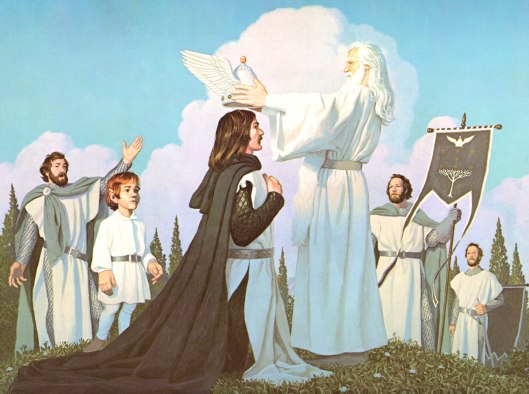
image14crowning.jpg

And there is a strong echo in the title of Lucas’ third film, The Return of the Jedi, in which the Emperor is destroyed and balance brought back to the Force—and the galaxy.  (Of course, with Star Wars 7, we see that the happy ending is only temporary, but we have hopes that, by the conclusion of 9, there will come a final rebalancing and peace at last.)

image15return.jpg

Lucas’ acknowledges many sources but, so far, we have yet to locate a quotation from an interview or anywhere else in which he says, “Yes, I’ve read Tolkien closely and, indeed, there is a strong affinity between my work and his”, but we believe that we can suggest, at least, that he, like JRRT, is following the same path in creating a world in turmoil, a visibly-aging world.  Into this world, he places his protagonist who provides a new hope, faces the might of a not-easily-defeated enemy, but, by his bravery and determination, finally brings about the destruction of that enemy (interesting in both cases he does not do so himself—Gollum inadvertently destroys the ring, just as Anakin, not his son, kills the Emperor) and the promise of renewal in the return of the Jedi—and the King.

And what do you think, dear readers?

Thanks, as ever, for reading!

MTCIDC

CD
Re: Tree Two

06 Wednesday Sep 2017

Posted by Ollamh in Fairy Tales and Myths, J.R.R. Tolkien, Narrative Methods

≈ Leave a comment

Tags

decay, Ents, Entwives, Fangorn, Fangorn Forest, Laurelindorenan, Lothlorien, Minas Tirith, Ronald Foerster, Samwise Gamgee, Ted Sandyman, The Green Dragon, The Lord of the Rings, Tolkien, trees

Welcome, dear readers, as ever.
A posting or two ago, we had been talking about the symbolic uses of trees in Middle-earth, mostly as symbols of decay and regeneration.
Without going into a lengthy essay, we thought we had said what we could. But we had forgotten something—or, rather, someone.
While gossiping in The Green Dragon, Sam, slowly becoming annoyed at Ted Sandyman’s skepticism about the out-of-the-ordinary, replied to Ted’s “There’s only one Dragon in Bywater, and that’s Green”, by asking:
“But what about these Tree-men, these giants, as you might call them? They do say that one bigger than a tree was seen up away beyond the North Moors not long back.”
Ted is not convinced, and Sam presses on: “But this one was as big as an elm tree, and walking—walking seven yards to a stride, if it was an inch.””
“Then I bet it wasn’t an inch. What he saw was an elm tree, as like as not.”
Undaunted, Sam continues: ‘But this one was walking, I tell you; and there ain’t no elm on the North Moors.’ “ (The Fellowship of the Ring, Book 1, Chapter 2, “The Shadow of the Past”)
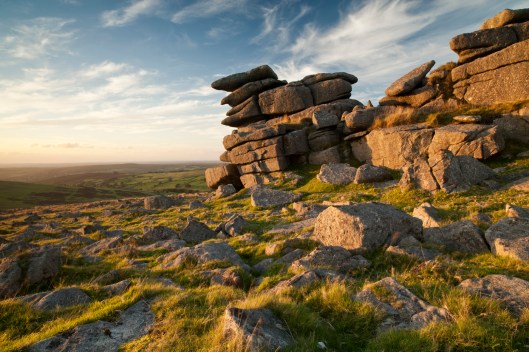
The topic shifts in another direction, with Ted still not persuaded, but we readers were struck by what Sam just said. As always with JRRT, the texts are so rich that one is always falling upon something read sometimes many times before, but somehow not seen, and this was one of them. (And, as always, we can hear Sherlock Holmes disdainfully commenting, “You see, but you do not observe.”) If the North Moors are like moors in our world, they are wild and windswept
image1dartmoor.jpg
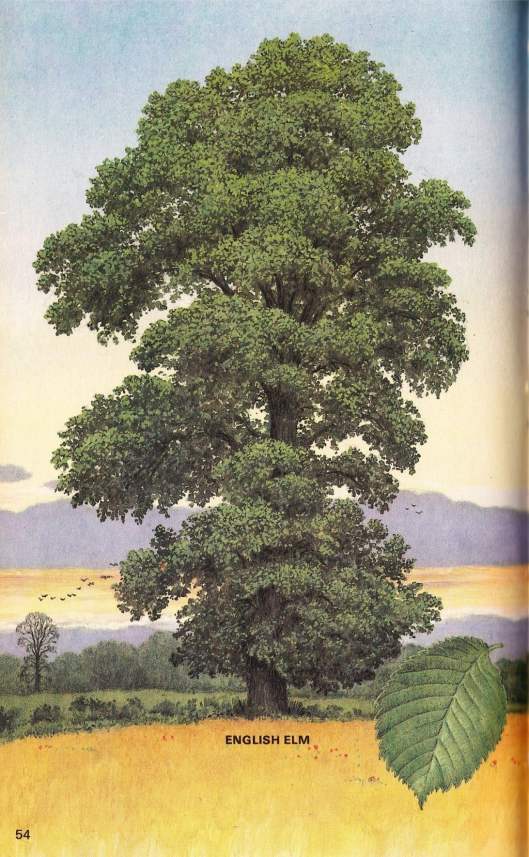
with virtually no trees, except in hollows and streambeds. And certainly no elms
image2engelm.jpg
as Sam says. Ted Sandyman dismisses Sam’s assertion, suggesting that it was an illusion or maybe an elm, but we know better: it was an Ent.
When Merry and Pippin meet their first, he is very vividly described:
“They found that they were looking at a most extraordinary face. It belonged to a large Man-like, almost Troll-like figure, at least fourteen feet high, very sturdy, with a tall head, and hardly any neck. Whether it was clad in stuff like green and grey bark, or whether that was its hide, was difficult to say. At any rate the arms, at a short distance from the trunk, were not wrinkled, but covered with a brown smooth skin. The large feet had seven toes each. The lower part of the long face was covered with a sweeping grey beard, busy, almost twiggy at the roots, thick and mossy at the ends. But at the moment the hobbits noted little but the eyes. These deep eyes were now surveying them, slow and solemn, but very penetrating. They were brown, shot with a green light.” (The Two Towers, Book Three, Chapter 4, “Treebeard”)
image3treebeard.jpg
We are not so mathematically sophisticated as to be able to determine, from those fourteen feet of height, the length of the Ent’s stride, unfortunately, but we are later told that this Ent, who is, of course, Treebeard, can move at quite a ground-eating speed, having, by the time he brings the two hobbits to Wellinghall, come “about seventy thousand ent-strides.”
(Actually, if, as Sam says above, an Ent’s stride was 7 yards, with 3 feet in a yard times 70,000, Treebeard has brought them about 280 miles (450 km) in a few hours!)
Treebeard formed part of our previous discussion, suggesting not only was his forest, Fangorn, in decline, but likewise Lothlorien:
“Do not risk getting entangled in the woods of Laurelindorenan! That is what the Elves used to call it, but now they make the name shorter: Lothlorien they call it. Perhaps they are right: maybe it is fading, not growing…They are falling rather behind the world in there, I guess…Neither this country, nor anything else outside the Golden Wood, is what it was when Celeborn was young.”
The decline of Treebeard’s world appears to come from two causes. First, there is an elderly and declining population of Ents:
“We are tree-herds, we old Ents. Few enough of us are left now…Some of my kind look just like trees now, and need something great to rouse them; and they speak only in whispers…
Hence, part of the Entish population is fading into the trees they herd. The other reason is more delicate. The Ents, although deeply attached to the trees, are, in fact, more like humans: they have two genders, suggesting that they reproduce the way mammals do. Unfortunately, something has gone wrong and the female half of the species has disappeared. As Treebeard explains:
“When the world was young…the Ents and the Entwives…walked together and they housed together…But our hearts did not go on growing in the same way: the Ents gave their love to things that they met in the world, and the Entwives gave their thought to other things…So the Entwives made gardens to live in. But we Ents went on wandering, and we only came to the gardens now and again…”
After ages pass, the Ents try to see the Entwives again, but:
“We crossed over Anduin and came to their land; but we found a desert: it was all burned and uprooted, for war had passed over it. But the Entwives were not there.”
And, from that time, the Ents have been without the Entwives and the implication must be that, although some of the trees, as Fangorn says, are “getting Entish”, unless the Entwives are found, there will be no young Ents to continue their line into the future. As Treebeard says, “…there were never many of us and we have not increased. There have been no Entings—no children, you would say, not for a terrible long count of years.”
All of this fits in with the theme we suggested in our previous posting: trees can symbolize the decline of Middle-earth, not only in their hostility, but, in the case of the Ents (who are almost trees), through what amounts to infertility, just like Minas Tirith, with half its buildings empty.
Treebeard holds little hope of the future, as well:
“We believe that we may meet [the Entwives] again in a time to come, and perhaps we shall find a land where we can live together and both be content. But it is foreboded that that will only be when we have both lost all that we now have…”
In that previous posting, we also suggested that the defeat of Sauron and the return of the rightful king brought about new growth and regeneration, something seen in the vegetation from the White Tree sapling in Minas Tirith to the phenomenal new fertility of the Shire. In the case of the Ents, however, there appears to be no happy ending, as, taking his farewell of Merry and Pippin, Treebeard says wistfully:
“Fare you well! But if you hear news up in your pleasant land, in the Shire, send me word! You know what I mean: word or sight of the Entwives.” (The Two Towers, Book Three, Chapter 10, “The Voice of Saruman”)
And yet—if we return to that conversation between Ted Sandyman and Sam, perhaps there is news for Treebeard. As far as we know, what Ents there are now in Middle-earth—including the three eldest, Fangorn, Finglas, and Fladrif—all seem to live in the forest of Fangorn—so who is that “Tree-man, giant, one bigger than a tree…big as an elm tree and walking—walking seven yards to a stride” which Sam’s cousin Hal saw “up away beyond the North Moor not long back”? The Lord of the Rings ends without our ever finding out, so we guess we can only hope that, one day, Merry and Pippin sent word.
Thanks, as always, for reading.
MTCIDC
CD
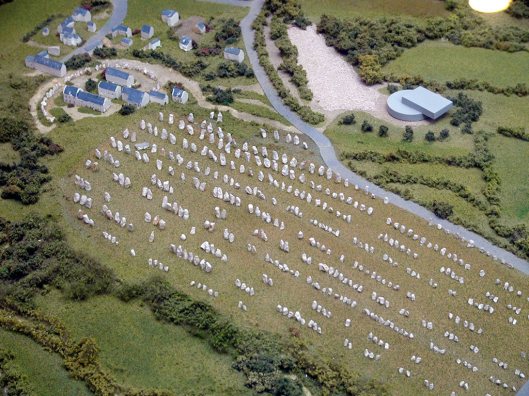
PS
We happened upon this illustration by Ronald Foerster of an Entwife—what do you think?
image4entwife.jpg

← Older posts
Newer posts →

The Doubtful Sea Series Facebook Page

The Doubtful Sea Series Facebook Page

  • Ollamh

Categories

  • Artists and Illustrators
  • Economics in Middle-earth
  • Fairy Tales and Myths
  • Films and Music
  • Games
  • Heroes
  • Imaginary History
  • J.R.R. Tolkien
  • Language
  • Literary History
  • Maps
  • Medieval Russia
  • Military History
  • Military History of Middle-earth
  • Narnia
  • Narrative Methods
  • Poetry
  • Research
  • Star Wars
  • Terra Australis
  • The Rohirrim
  • Theatre and Performance
  • Tolkien
  • Uncategorized
  • Villains
  • Writing as Collaborators
Follow doubtfulsea on WordPress.com

Across the Doubtful Sea

Recent Postings

  • Towering January 28, 2026
  • Tolkien Among the Indians January 21, 2026
  • Thin and Stretched January 14, 2026
  • Through a glass… January 7, 2026
  • Heffalumps? December 31, 2025
  • We Three Kings December 24, 2025
  • A Moon disfigured December 17, 2025
  • On the Roads Again—Once More December 10, 2025
  • (Not) Crossing Bridges December 3, 2025

Blog Statistics

  • 105,540 Views

Posting Archive

  • January 2026 (4)
  • December 2025 (5)
  • November 2025 (4)
  • October 2025 (5)
  • September 2025 (4)
  • August 2025 (4)
  • July 2025 (5)
  • June 2025 (4)
  • May 2025 (4)
  • April 2025 (5)
  • March 2025 (4)
  • February 2025 (4)
  • January 2025 (5)
  • December 2024 (4)
  • November 2024 (4)
  • October 2024 (5)
  • September 2024 (4)
  • August 2024 (4)
  • July 2024 (5)
  • June 2024 (4)
  • May 2024 (5)
  • April 2024 (4)
  • March 2024 (4)
  • February 2024 (4)
  • January 2024 (5)
  • December 2023 (4)
  • November 2023 (5)
  • October 2023 (4)
  • September 2023 (4)
  • August 2023 (5)
  • July 2023 (4)
  • June 2023 (4)
  • May 2023 (5)
  • April 2023 (4)
  • March 2023 (5)
  • February 2023 (4)
  • January 2023 (4)
  • December 2022 (4)
  • November 2022 (5)
  • October 2022 (4)
  • September 2022 (4)
  • August 2022 (5)
  • July 2022 (4)
  • June 2022 (5)
  • May 2022 (4)
  • April 2022 (4)
  • March 2022 (5)
  • February 2022 (4)
  • January 2022 (4)
  • December 2021 (5)
  • November 2021 (4)
  • October 2021 (4)
  • September 2021 (5)
  • August 2021 (4)
  • July 2021 (4)
  • June 2021 (5)
  • May 2021 (4)
  • April 2021 (4)
  • March 2021 (5)
  • February 2021 (4)
  • January 2021 (4)
  • December 2020 (5)
  • November 2020 (4)
  • October 2020 (4)
  • September 2020 (5)
  • August 2020 (4)
  • July 2020 (5)
  • June 2020 (4)
  • May 2020 (4)
  • April 2020 (5)
  • March 2020 (4)
  • February 2020 (4)
  • January 2020 (6)
  • December 2019 (4)
  • November 2019 (4)
  • October 2019 (5)
  • September 2019 (4)
  • August 2019 (4)
  • July 2019 (5)
  • June 2019 (4)
  • May 2019 (5)
  • April 2019 (4)
  • March 2019 (4)
  • February 2019 (4)
  • January 2019 (5)
  • December 2018 (4)
  • November 2018 (4)
  • October 2018 (5)
  • September 2018 (4)
  • August 2018 (5)
  • July 2018 (4)
  • June 2018 (4)
  • May 2018 (5)
  • April 2018 (4)
  • March 2018 (4)
  • February 2018 (4)
  • January 2018 (5)
  • December 2017 (4)
  • November 2017 (4)
  • October 2017 (4)
  • September 2017 (4)
  • August 2017 (5)
  • July 2017 (4)
  • June 2017 (4)
  • May 2017 (5)
  • April 2017 (4)
  • March 2017 (5)
  • February 2017 (4)
  • January 2017 (4)
  • December 2016 (4)
  • November 2016 (5)
  • October 2016 (6)
  • September 2016 (5)
  • August 2016 (5)
  • July 2016 (5)
  • June 2016 (5)
  • May 2016 (4)
  • April 2016 (4)
  • March 2016 (5)
  • February 2016 (4)
  • January 2016 (4)
  • December 2015 (5)
  • November 2015 (5)
  • October 2015 (4)
  • September 2015 (5)
  • August 2015 (4)
  • July 2015 (5)
  • June 2015 (5)
  • May 2015 (4)
  • April 2015 (3)
  • March 2015 (4)
  • February 2015 (4)
  • January 2015 (4)
  • December 2014 (5)
  • November 2014 (4)
  • October 2014 (6)
  • September 2014 (1)

Blog at WordPress.com.

  • Subscribe Subscribed
    • doubtfulsea
    • Join 78 other subscribers
    • Already have a WordPress.com account? Log in now.
    • doubtfulsea
    • Subscribe Subscribed
    • Sign up
    • Log in
    • Report this content
    • View site in Reader
    • Manage subscriptions
    • Collapse this bar
 

Loading Comments...