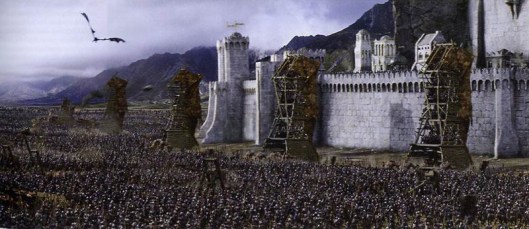
• About

doubtfulsea

~ adventure fantasy

Category Archives: Artists and Illustrators

STTL

06 Tuesday Sep 2016

Posted by Ollamh in Artists and Illustrators, Fairy Tales and Myths, Literary History

≈ Leave a comment

Tags

A Midsummer Night's Dream, Adventure, Alice's Adventures in Wonderland, Anthony Hope, Arthur Rackham, Cinderella, Fairies, N.C. Wyeth, Nathaniel Hawthorne's Wonder Book, Peter Pan in Kensington Gardens, Rip Van Winkle, Sleeping Beauty, The Dolly Dialogues, The Wind in the Willows, To the Other Side, trees

01573_art.jpg

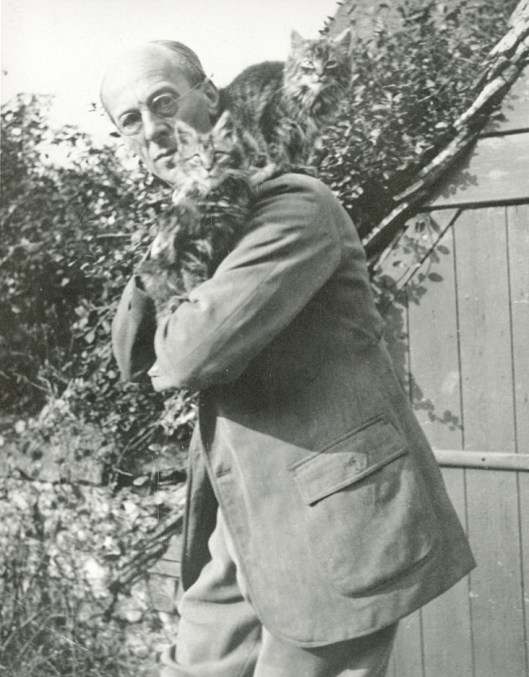
Welcome, as always, dear readers. This is a special day, so we have added an extra entry this week. 77 years ago today, on 6 September, 1939, 5 days after the beginning of World War 2, Arthur Rackham (1867-1939) died.

arthurrackhamwithcats.jpg

072038 Detail 2.JPG

Beginning as a clerk for the Westminster Fire Office (an insurance company, founded in 1717) who took art lessons,

Carlton-Hobbs-Westminster3.jpg

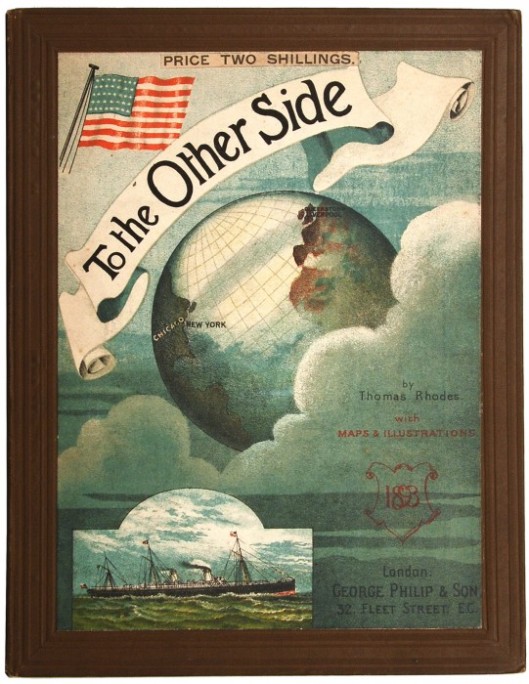
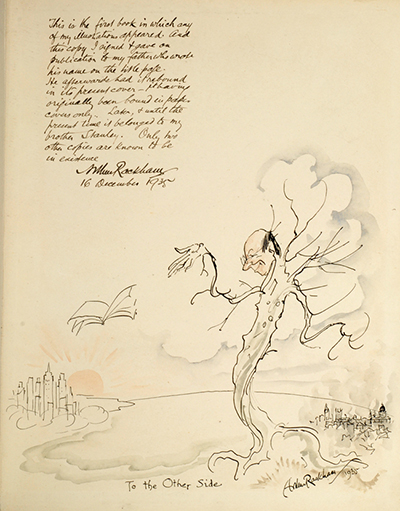
Rackham first shared illustrations with Alfred Bryant for the 1893 To the Other Side,

totheotherside1893.jpg

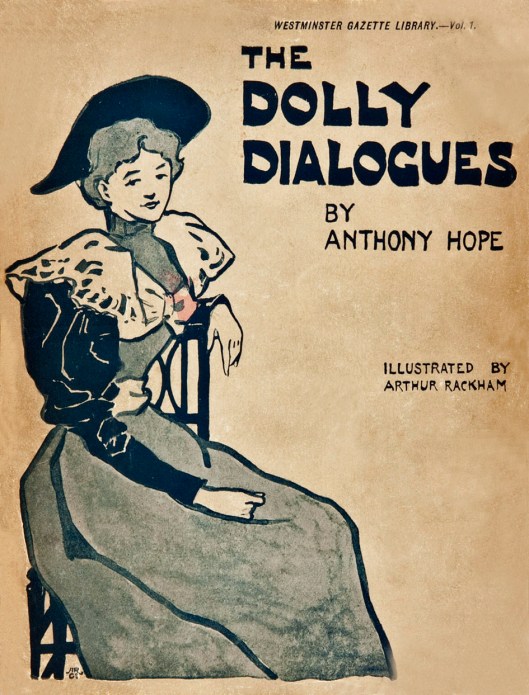
but his biographers tell us that it was his next book project, the illustrations for Anthony Hope’s The Dolly Dialogues,003 The Dolly Dialogues.jpg

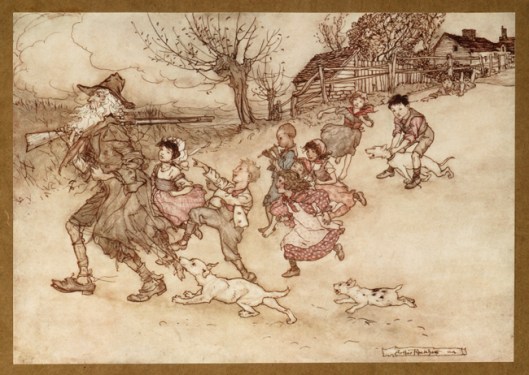
which convinced him to put all of his energy into book illustrations, his focus from then until his death, in 1939.

dollydialogues01hopegoog_0046.jpg

A man dedicated to his art, Rackham turned out multitudes of images for books as varied as Rip Van Winkle (1905—also illustrated by N.C. Wyeth, another favorite of ours, in 1921),

ripvanwinkle1905

Peter Pan in Kensington Gardens (1906),

peterpankensington1906

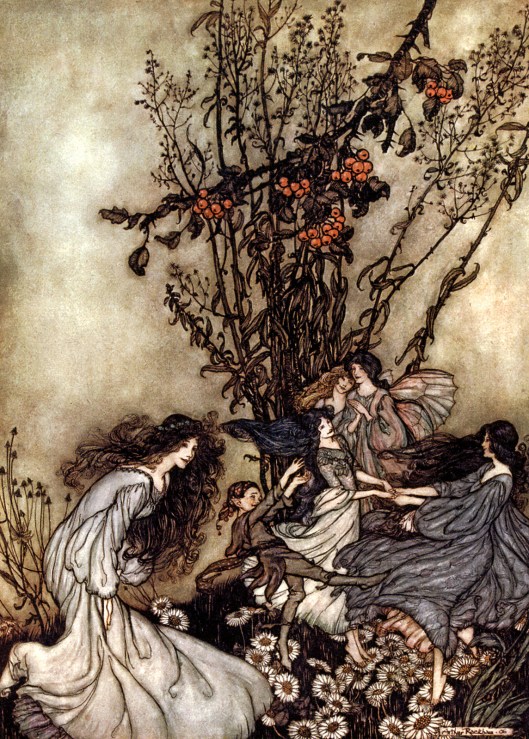
danceyfairies

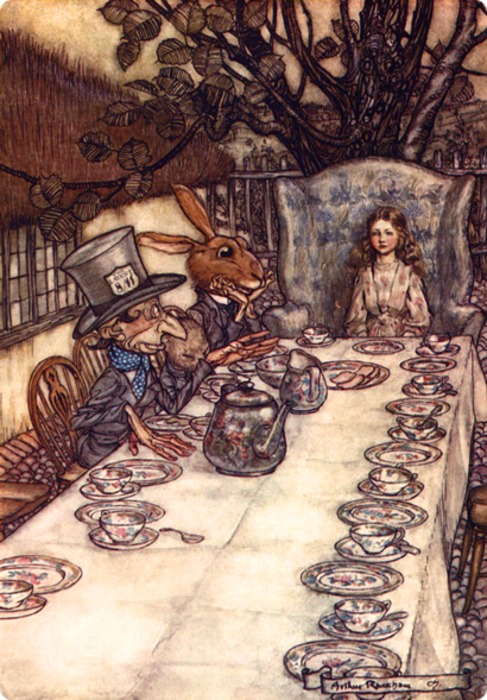
Alice’s Adventures in Wonderland (1907),

rackham5

A Midsummer Night’s Dream (1908),

arthur-rackham-midsummer-nights-dream-titania-sleeping

and The Wind in the Willows (published posthumously in 1940).

k900122-05

And his methods included the absolutely striking Cinderella (1919) and The Sleeping Beauty (1920), in which the illustrations are done almost completely in silhouette, as if the figures and scenes were designed for shadow plays.

Cinderellas-Pumpkin-Rackham-Silhouette.jpg

sleeping-beauty

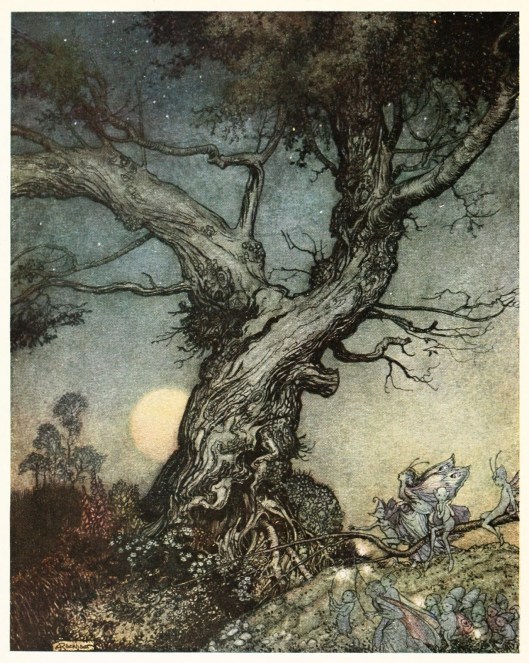
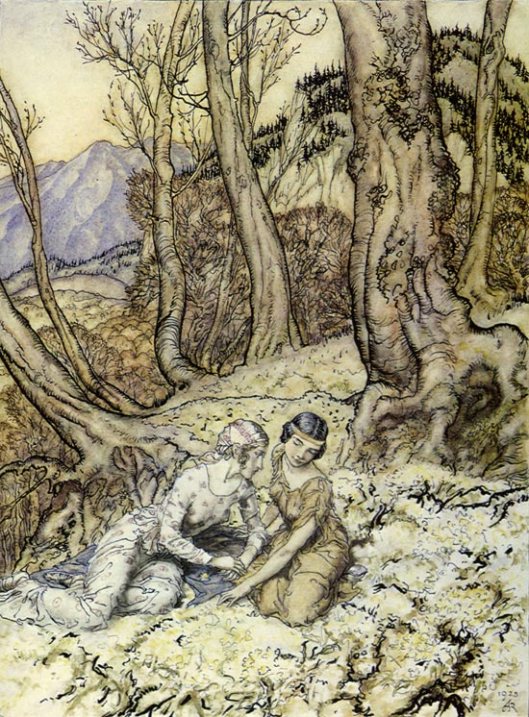
Throughout, the themes of wonder and the fantastic/grotesque interested him the most and, for us, a major feature is his trees, of many types, but often haunted things with eyes and mouths.

02-arthur-rackham-imagina-1914-frontispiece

From William Shakespeare’s A Midsummer Night’s Dream, 1908

b84eb67383d938d33e93ae7cfc9c82bd

From Nathaniel Hawthorne’s A Wonder Book, 1922

39e2b3c42d2341dfc53844a95a32e89d

“Come Now, a Roundel” from William Shakespeare’s A Midsummer Night’s Dream, 1908

429027

From Kenneth Grahame’s The Wind in the Willows, 1940

hermia_and_helena

From William Shakespeare’s A Midsummer Night’s Dream, 1908

11a9ca7244bf2060db41e7a5862344ab

From Nathaniel Hawthorne’s A Wonder Book, 1922

12930764_f520

Although he was cremated, we still want to offer him a typical Roman farewell, sometimes found inscribed on Roman tombs and the title of this posting: Sit Tibi Terra Levis—“May the earth lie light upon you”. (Literally, “May the earth be light to you”)

Thanks, as ever, for reading.

MTCIDC

CD

Jacobites

17 Wednesday Aug 2016

Posted by Ollamh in Artists and Illustrators, Literary History, Military History, Narrative Methods

≈ Leave a comment

Tags

Anne, Aughrim, Boyne, Catriona, Charles II, Culloden, Elizabeth II, Falkirk, George I, George II, Glenshiel, Highlanders, Jacobites, James II, James III, Kidnapped, Killiecrankie, Lowlanders, Mary and William, N.C. Wyeth, Prestonpans, Prince Charles, Requiem, Robert Louis Stevenson, Scotland, Sir Walter Scott, The Black Arrow, The Old Pretender, Treasure Island, Underwoods, War of Austrian Succession, Waverly, Young Folks

Dear Readers, welcome, as always.

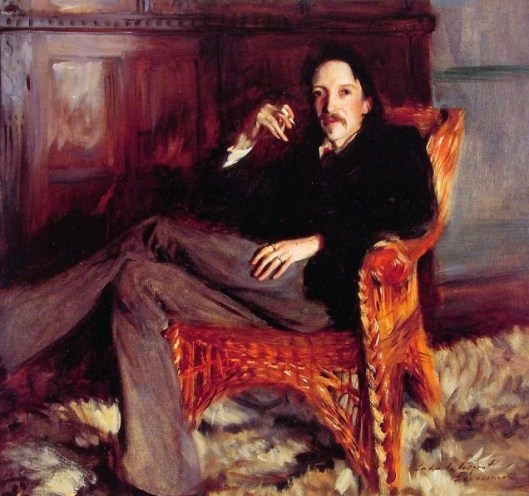
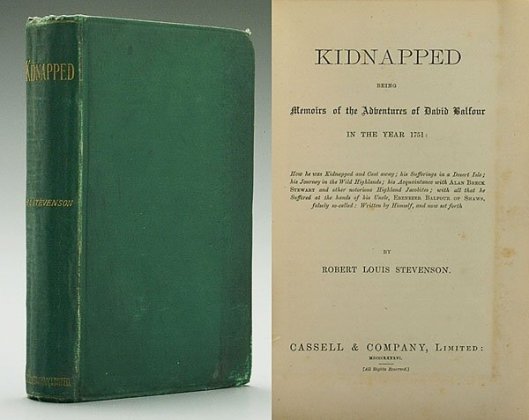
We’re taking a break from JRRT in this posting and looking at another favorite, Robert Louis Stevenson’s 1886 novel, Kidnapped,

rlsjss2kidnappedfirstedition

which was first serialized in what must have been a remarkable Victorian children’s magazine, Young Folks (1871-1897, with various titles), as it featured Stevenson’s Treasure Island (1881-1882) and The Black Arrow (1883), as well.

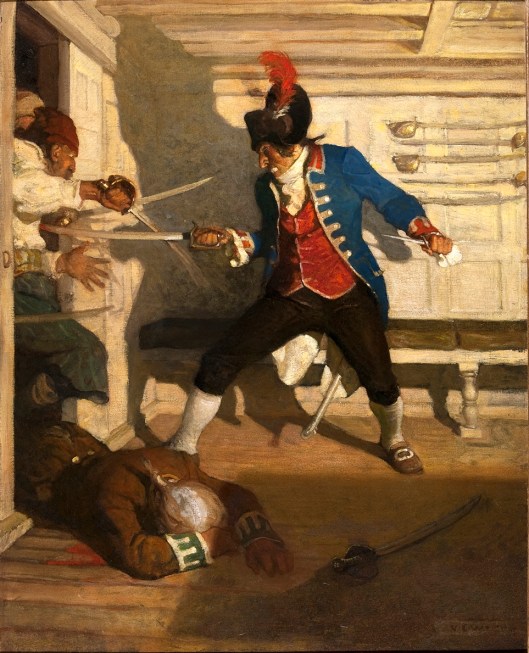
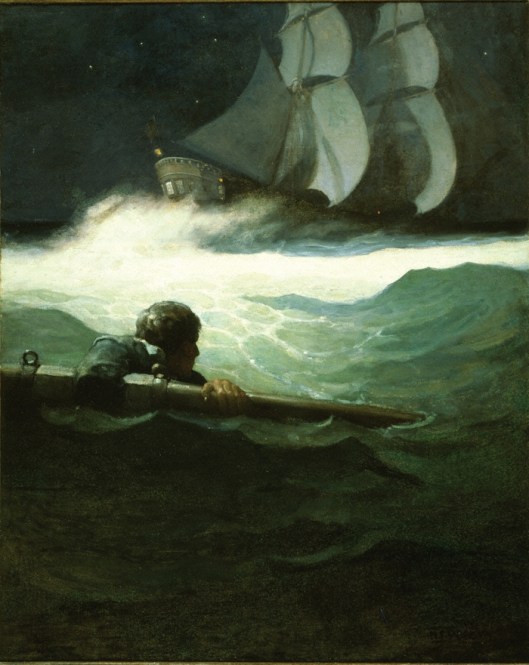
It has been published and republished numerous times since its original appearance (just google the title), but, if you read us regularly, you’ll already know our favorite edition is that published by Charles Scribner’s Sons in 1913 and illustrated by N. C. Wyeth (although we agree with the critics that his Treasure Island, 1911, is even better). Here are a few of the illustrations to give you an idea—these are much moodier than those for Treasure Island, we think.

Wyeth Kidnapped Siege of the Round-HouseWyeth Kidnapped Wreck of the CovenantOn_the_Island_of_Earraid_(N.C._Wyeth).kidnap212_kidnapped_wyeth_murderer

The actual title is based upon 18th-century models, where a great deal of the plot may be teasingly outlined beforehand. We won’t give it all to you, but it begins: Kidnapped Being the Memoirs of David Balfour in the Year 1751 How He Was Kidnapped and Cast Away; His Sufferings in a Desert Isle; His Journey in the Wild Highlands; His Acquaintance with Alan Breck Stewart and Other Notorious Highland Jacobites…

“Jacobites” if you are not acquainted with the term, means “followers of/those loyal to Jacob (that is, James)” and the Jacob/James story marks a turning point in the history of the British Isles.

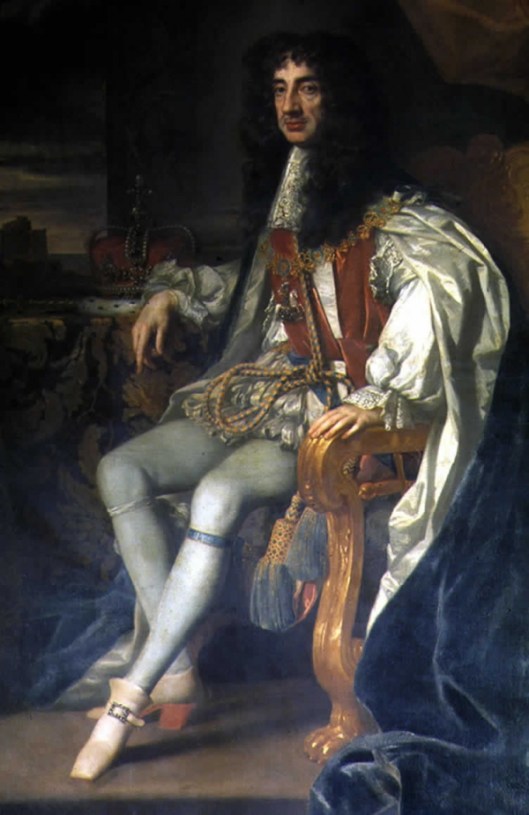
The story begins when Charles II of England dies in 1685 without leaving a legitimate heir.

charles-ii

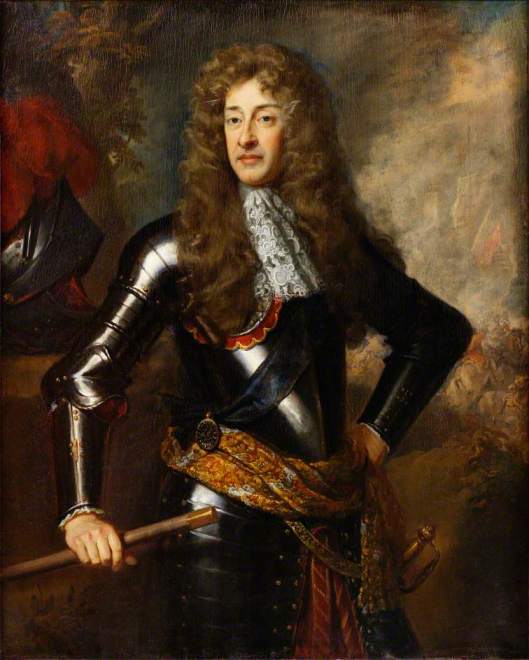
The throne then goes to his younger brother, James II.

(c) Government Art Collection; Supplied by The Public Catalogue Foundation

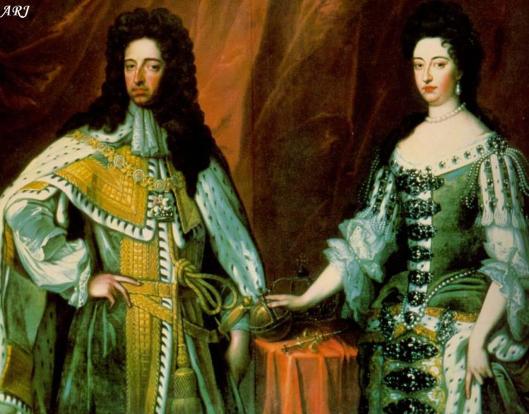
James was a very unpopular king, for some very complicated reasons, and he was driven from the throne in 1688 by a conspiracy which included members of Parliament, some of his army, and his daughter, Mary, as well as his son-in-law, William the Stadthoulder of the Netherlands.

1-william-mary

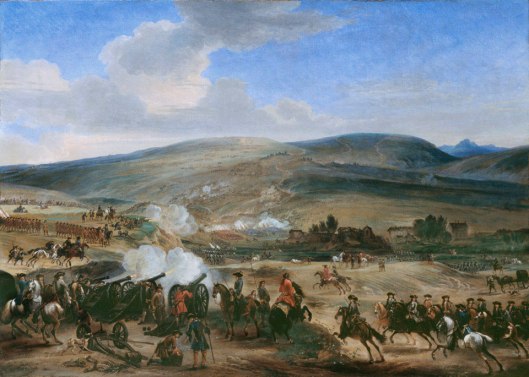
James didn’t go very easily and there was war in the British Isles from 1689 to 1692, with three major battles, Killiecrankie in Scotland (1689),

killie1

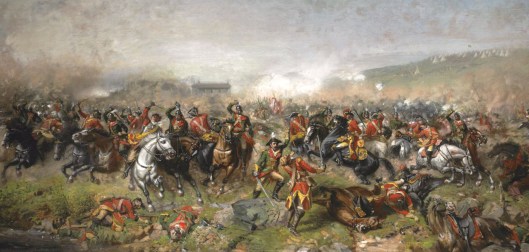
the Boyne, 1690,

boyne1690

and Aughrim, 1691, both in Ireland.

John_Mulvany_-_The_Battle_of_Aughrim.1691

Although James II’s forces lost, that did not end the matter, however. James II died in exile in 1701, but his son, the potential James III (called by his enemies “The Old Pretender”, meaning “claimant to the throne”), continued the struggle, being involved in three major attempts at taking back the monarchy.

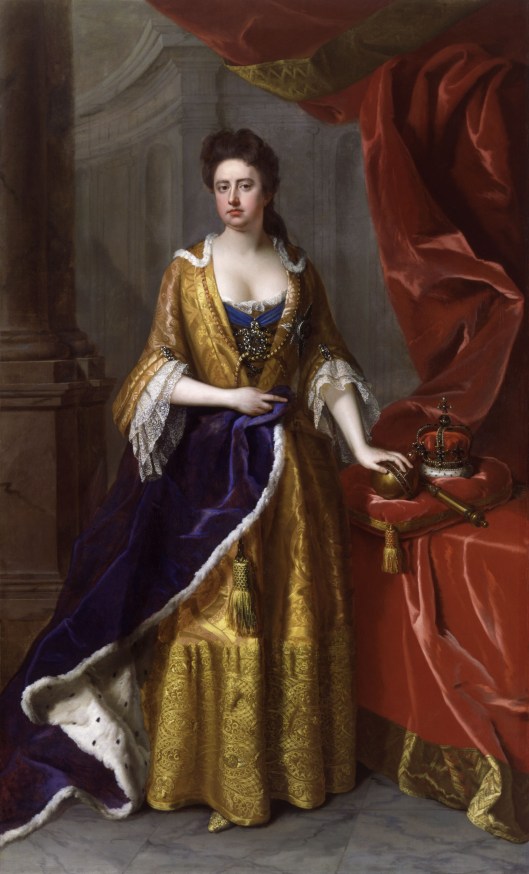
In the meantime, Mary and William had both died and Mary’s younger sister, Anne,

6187,Queen Anne,by Michael Dahl

who succeeded them, as well. To keep both religious and family continuity, it had been agreed that, since Anne had no surviving heirs, her second-cousin, George, the Elector of Hanover (a country in what is now western Germany) and his family would inherit the throne, which George did, in 1714, as George I of England.

King_George_I_by_Sir_Godfrey_Kneller,_Bt_(3)

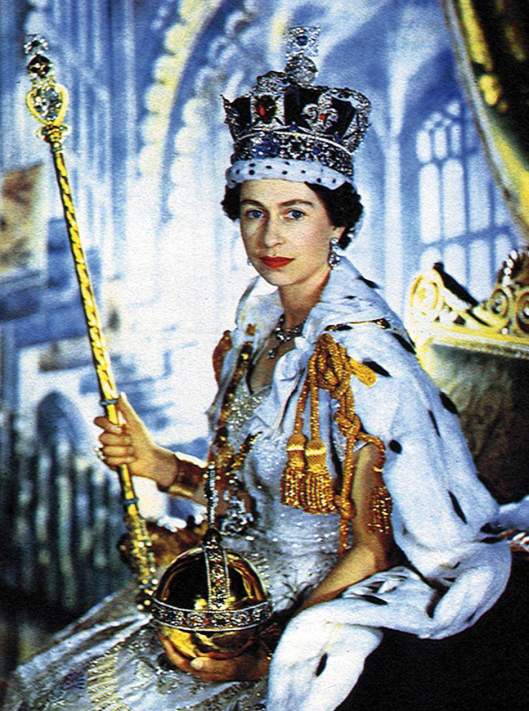
That continuity worked so well, in fact, that he is the direct ancestor of the present queen, Elizabeth II,

coronationpicofer2

article-2335617-1A1939BE000005DC-225_964x730

(We just couldn’t resist including this– even royalty don’t take reigning totally seriously, it seems!)

Not a year later, there was a plan to take the throne by invading Scotland, raising an army of Lowlanders and Highlanders alike, and marching on London. There was one inconclusive battle, at Sherriffmuir, in 1715,

Battle_of_Sheriffmuir

but, even with the arrival of James-the-possible-third,

Prince_James_Francis_Edward_Stuart_by_Anton_Raphael_Mengs

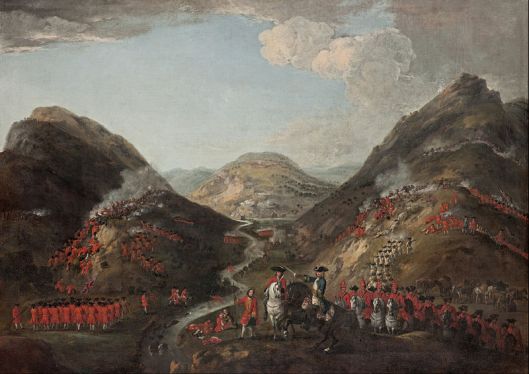
the whole thing fell apart. And something similar happened with the next attempt, in 1719. Modest Spanish support was not enough and the Jacobite army failed at Glenshiel

Glen_shiel

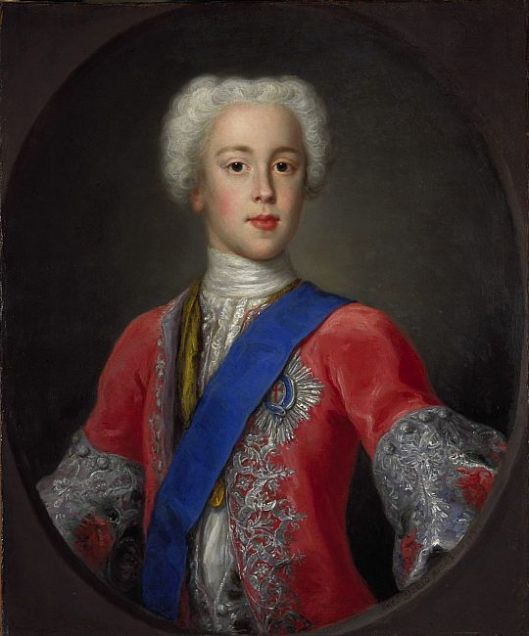
and things subsided into a cold war until 1745. During the intervening years, the struggle between Britain and France, begun in the days of Louis XIV (ruled 1661-1715) had intensified, with France supporting James II and his son as proxies. In 1745, the latest war, the so-called “War of the Austrian Succession”, had been going on since 1740. This was a much more complex pan-European war, but, with Britain and France backing different candidates for the throne, there was a good opportunity for a further attempt on the part of France to destabilize her old opponent. Thus, when it was proposed that the dashing young son of James, Prince Charles (1720-1788),

Young Charles Edward Stuart L_tcm4-563619

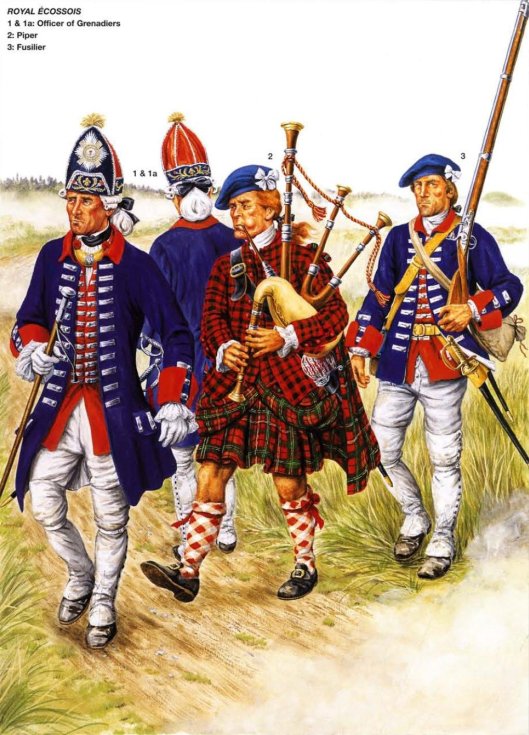
backed by a small French army

royalecossais

(with another waiting in the wings for an invasion of southern England), should land in Scotland and raise the country against the government of George II, the Old Pretender agreed.

King_George_II_by_Charles_Jervas

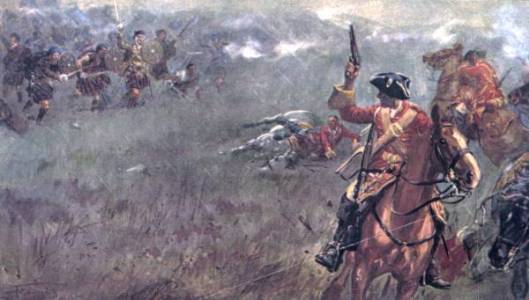
Unfortunately for their cause, this ended as the other attempts had, in failure—and this was the final failure. After one great victory, at Prestonpans in 1745,

prestonpansSurrender

and a smaller one at Falkirk, in early 1746,

falkirk1746

the plan failed at Culloden in April, 1746,

The_Battle_of_Culloden

and this was the last grand attempt. As the inspiration for literature in the romantic period, however, it was extremely successful, beginning with Sir Walter Scott’s

Sir_William_Allan_-_Sir_Walter_Scott,_1771_-_1832._Novelist_and_poet_-_Google_Art_Project

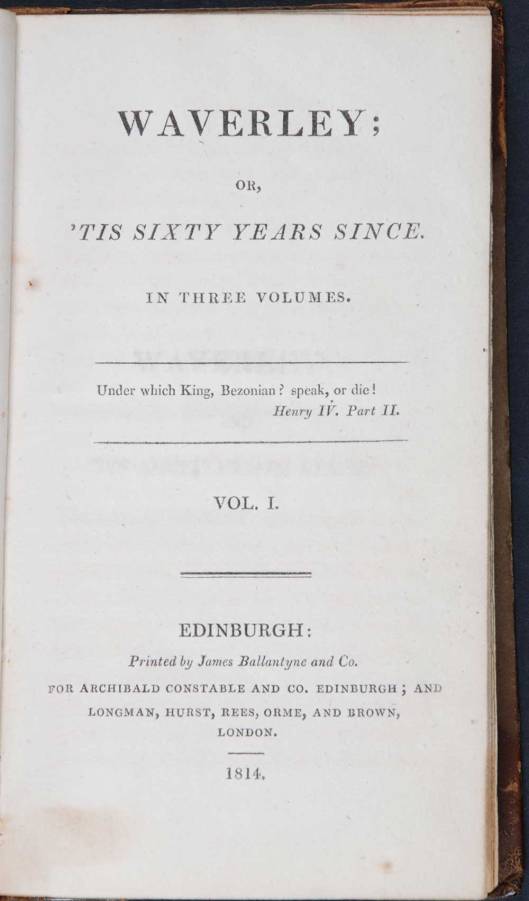
Waverley, published anonymously in 1814.

waverleyfirsted

Regularly regarded as the first great historical novel, it was the beginning of great commercial success for Scott, as well as the beginning of a process which turned Scotland’s past into the basis of an entire cultural industry, of which Kidnapped (1886) and its sequel, Catriona (1893) formed a small, but prominent part and is still with us today in the US (and elsewhere) in Scottish festivals and bumperstickers.

scottishfestivalThank-God-Scottish-Sticker

Thanks, as always, for reading.

MTCIDC

CD

ps

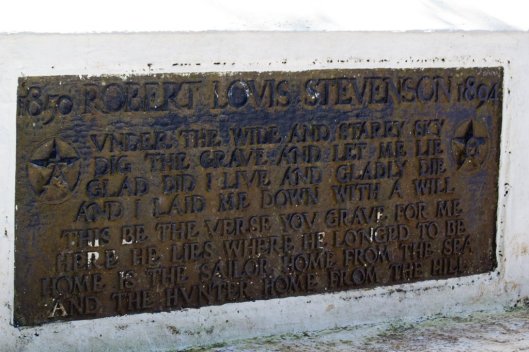
We can’t conclude without including Stevenson’s “Requiem” (from his collection Underwoods, 1887),

RLSrequiem1880

which we’ve always admired and which is on his tomb in Samoa, where he died of a cerebral hemorrhage in 1894.

rlstomb

Stepping Westward

10 Wednesday Aug 2016

Posted by Ollamh in Artists and Illustrators, Fairy Tales and Myths, Imaginary History, J.R.R. Tolkien, Literary History, Narnia, Narrative Methods

≈ Leave a comment

Tags

Aman, Beliefs, Bran, cult statues, heroa, immrama, Istari, Ithaka, Mael Duin, Middle-earth, monotheistic, N.C. Wyeth, Odysseus, religion, Rip Van Winkle, Saint Brendan, Saruman, shrines, Stone Table, temples, The Grey Havens, The Lord of the Rings, The Odyssey, Tireisias, Tolkien, Valar, Valinor, ziggurats

Dear readers, welcome as always.

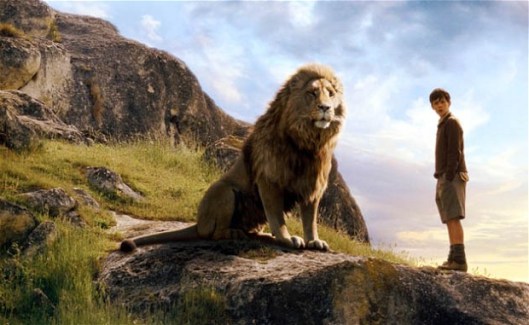
Although there are no temples or shrines to him (the closest thing is perhaps the Stone Table),

narnia stone table

Aslan

1653963a

is clearly someone with divine powers and his influence is felt directly and indirectly throughout all of the Narnia books.

JRRT once said that Middle-earth had a monotheistic religion, but the traces, as has been written about more than once, are almost invisible.

There are no ziggurats,

Ancient_ziggurat_at_Ali_Air_Base_Iraq_2005

no temples,

templeofheraselinus

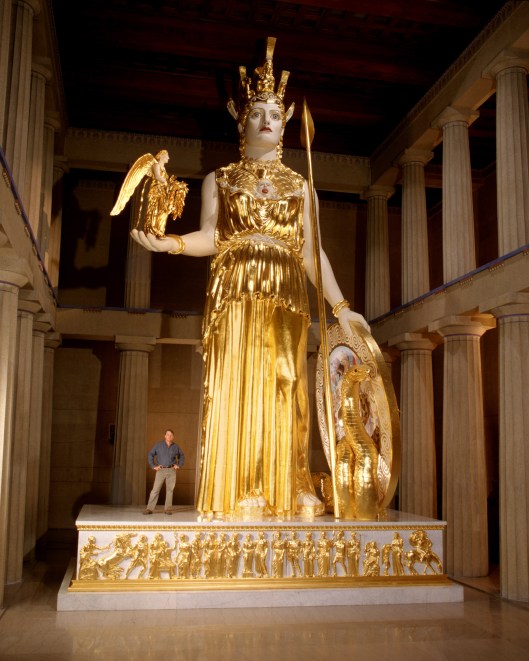
no cult statues

Athena_Parthenos_LeQuire

no shrines

97_full

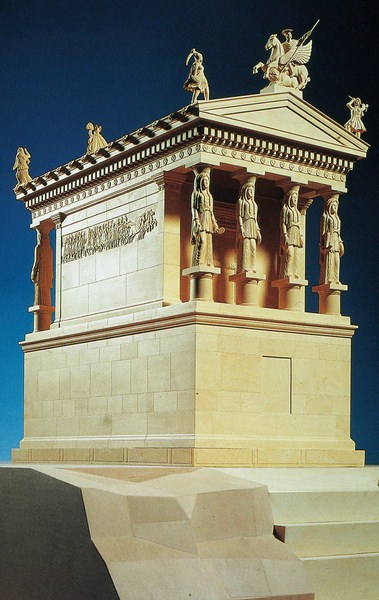
no heroa (shrines for demi-gods or heroes).

heroon

The Valar are mentioned once (some of Faramir’s men call on them to protect them from a mumak), of course, and there is that ceremony of standing and looking west before a meal.

That idea of looking west has long interested us, mainly because, in much of western tradition before the Age of Exploration, the west was looked upon as a place of uncertainty, if not outright fear.

Although Odysseus, in Odyssey 9, is careful to point out that his home island, Ithaka, lies farthest towards dusk in its island group, in Odyssey 11, in the far west lies the Land of the Dead,

lykaon-painter-odysseus-and-elpenor

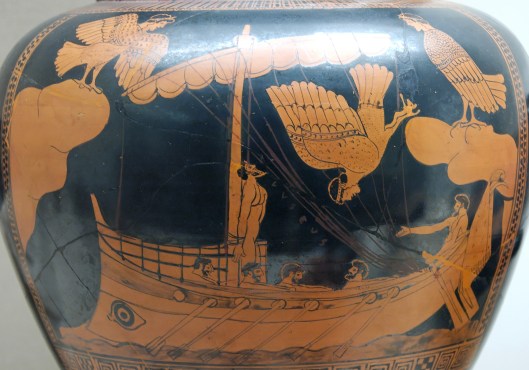
to which Odysseus sails

Odysseus_Sirens_BM_E440_n2

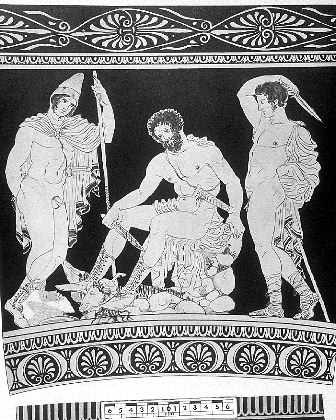
to consult the seer, Tireisias,

Teir.1993.01.0348

on the way to get home. This is, then, hardly a choice direction in which to sail, for all that Tireisias does provide some guidance.

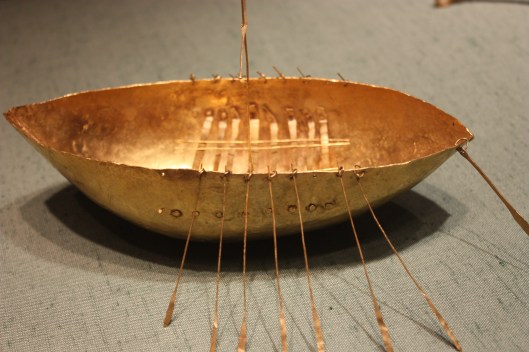
The same is true for a series of stories about immrama, “voyages” (literally “rowings around”) in Old Irish, not only secular stories, like those of Mael Duin

mailduin

and Bran,

Broighter_Gold,_Dublin,_October_2010_(03)

but a famous religious one about Saint Brendan.

brendan

In each of these stories, sailing westward commonly means sailing rather haphazardly among sea monsters and islands with strange people or creatures. There is also the possibility of time distortion: the voyager believes himself gone in terms of a few years, at most, when, instead, he may have been gone for much longer (as in Washington Irving’s short story, “Rip Van Winkle”, in which Rip, falling asleep in the Catskill Mountains after drinking with the ghosts of the crew of the explorer Henrik Hudson’s ship The Half Moon, thinks that he has been gone only overnight when, instead, he’s been gone for twenty years.)

rip-van-winkle.wyeth

(by one of our all-time favorite illustrators, N.C. Wyeth, from his Rip Van Winkle, 1921—the whole work is available, with all of its wonderful illustrations, to download for free at the Internet Archive, may their beards grow long!)

“To go west”, probably based upon the idea of the sinking sun, as an older English expression has the meaning of “to die/to fail catastrophically” (now people in the US seem to be replacing it with “to go south”, which has none of the older resonance, unfortunately), but it ties in very nicely with these older beliefs about what lies west of Europe, so full of danger and mystery.

But then we come back to that looking west.

In the belief system of Middle-earth, westward across the sea lies the continent of Aman, and on that continent is Valinor, home of the Valar, those powerful and immortal beings who are perhaps to be likened to the archangels of Christian belief—with a bit of patron saint and even Norse and Greco-Roman pantheons thrown in. (We admit to having a very shallow knowledge of Arda theology, being less interested in the finer points of belief than in the adventures and the cultures and the languages of Middle-earth.)

The Istari, the five wizards are from there and it’s for us one of the most melancholy moments when, after his murder by Grima, it is clear that Saruman is denied a return.

jwyatt-sarumande

Gandalf, however, is permitted to return, as are Bilbo and Frodo (and, in time, Sam, apparently), all part of the defeat and disembodiment of Sauron.

greyhavens

The elves are also allowed to make the voyage to Aman, although they have their own separate place there, and, when Gandalf leaves, so do Galadriel, Celeborn, and Elrond, part of a slow general leave-taking of the Elves.

No human is admitted however, to the Undying Lands, as they are called, and it occurred to us that perhaps, in that fact, the mortals of Middle-earth are closer to Saruman than to Gandalf or the Elves:

“To the dismay of those that stood by, about the body of Saruman a grey mist gathered, and rising slowly to a great height like smoke from a fire, as a pale, shrouded figure it loomed over the Hill. For a moment it wavered, looking to the West; but out of the West came a cold wind, and it bent away, and with a sigh dissolved into nothing.” (The Return of the King, Book 6, Chapter 8, “The Scouring of the Shire”)

Could that ceremony of looking westward also be done with a sigh, an acknowledgement that there are no undying lands for them?

What do you think, dear readers?

Thanks, as ever, for reading.

MTCIDC

CD

Ps

This, for us, is a rather historical posting, being our Number 100. By earlier September, we will have reached 104, making exactly two years since we began our blog. We thank you for reading, hope that you will continue to do so, that you will share our work among your friends and that, in the future, you will be willing to share your thoughts with us, as we always encourage you to do.


Terrifyingly Funny? (Part 1)

13 Wednesday Jul 2016

Posted by Ollamh in Artists and Illustrators, Fairy Tales and Myths, Imaginary History, J.R.R. Tolkien, Language, Literary History, Narrative Methods, Villains

≈ 2 Comments

Tags

Adventure, Among Gnomes and Trolls, Bilbo, comic, Gandalf, Gollum, humor, John Bauer, Middle-earth, Pēro & Pōdex, Roast Mutton, Stone Trolls, The Hobbit, The Lord of the Rings, Through the Looking-Glass, Tolkien, Tommies, trolls, Victorian Drawing Room

Dear Readers, welcome, as always.

This is going to be a two-part posting because– well, it began as one thing, and then became another. We were thinking about Gollum, not as the grim and tormented figure we know from The Lord of the Rings, but rather as the muttering, riddling cave-dweller of The Hobbit. We were wondering if we could see Gollum not only as menacing, but as comic, as well.

Gollum_Render.png

Then, however, we began to think about other such figures, and one of us said to the other, “What about the trolls in The Hobbit?”. The other replied, “we see them before we see Gollum. Maybe we should start with them.”

And so we shall.

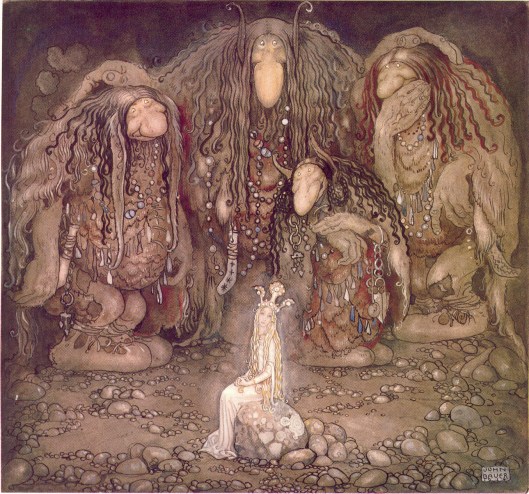
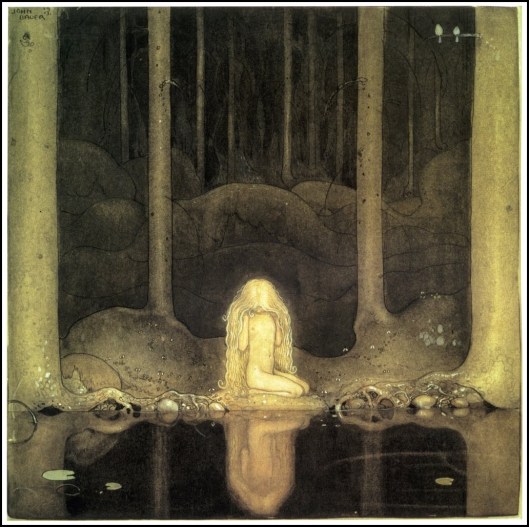
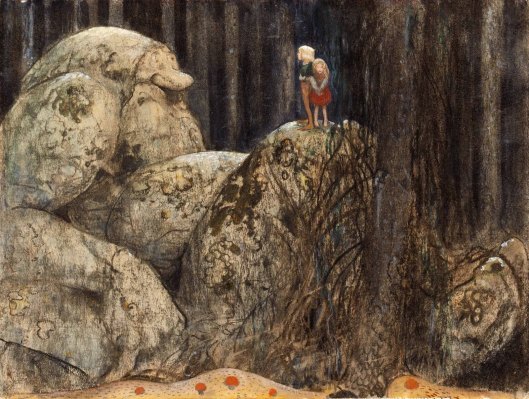
It’s clear where Tolkien got his trolls– they’re all over the fairy tales he had been reading since childhood, and they form a component of the traditional Scandinavian literature in which he had been interested for nearly as long. They are commonly large, and not terrifically bright, and often possess an anxiety about daylight. One of our favorite illustrators of such creatures is John Bauer (1882-1918), who, among other works, contributed illustrations to an ongoing series of volumes appropriately titled Among Gnomes and Trolls. Here, for example, is one of his depictions of the latter.

John_Bauer_1915.jpg

And, because we can’t resist– can we ever? Here are a couple more illustrations by Bauer.

bauer5.jpgJohn_Bauer07.jpg

Even before The Hobbit, however, Tolkien had produced a literary troll. In 1926, he wrote the first version of a poem to be sung to the folk song “The Fox Went Out”, called “Pēro & Pōdex”(“Boot and Bottom”). It survives  in a later version in chapter 12 of Book 1 of The Lord of the Rings, beginning “Troll sat alone on his seat of stone”.

In The Hobbit, the trolls are grouped around a fire, drinking and eating and immediately recognizable:

“But they were trolls.  Obviously trolls.  Even Bilbo, in spite of his sheltered life, could see that:  from the great heavy faces of them, and their size, and the shape of their legs, not to mention their language, which was not drawing-room fashion at all, at all.”  (The Hobbit, Chapter 2, “Roast Mutton”)

tumblr_m6wyygQDLc1ru50yro1_1280.jpg

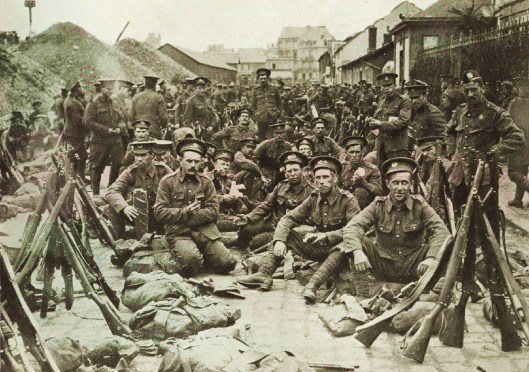
Douglas Anderson, in his invaluable The Annotated Hobbit, says that “Tolkien presents the Trolls’ speech in a comic, lower-class dialect” (70). In fact, we wonder whether, as in the case of the later orcs in The Lord of the Rings, we are not seeing a reflection of the speech of some of the Tommies whom Tolkien had commanded in the Great War.

roads_bef1914.jpg

” ‘Mutton yesterday, mutton today, and blimey, if it don’t look like mutton again tomorrer,’ said one of the trolls.

‘Never a blinking bit of manflesh have we had for long enough,’ said a second. ‘What the ‘ell William was a-thinkin; of to bring us into these parts at all, beats me – and the drink runnin’ short, what’s more,’ he said jogging the elbow of William, who was taking a pull at his jug” (The Hobbit, Chapter 2, “Roast Mutton”).

Besides what sounds like a reference to a line in Through the Looking-Glass (1871), “The rule is, jam to-morrow and jam yesterday – but never jam to-day,” with their “blimey” and “blinking”, the trolls are immediately labeled by their speech as lower-class, potentially thuggish, and certainly not people invited to a formal drawing room like this–

drawingroom1890ssmall.JPG

Of course, we might ask ourselves, why should trolls talk like that anyway? And we might then reply, because Tolkien is mixing language for comic effect. Bilbo, Gandalf, and the dwarves speak in non-dialect standard English. Therefore, there’s an especially strong contrast here. As well, what the trolls are saying can be funny in itself, as when William says to the discontented other trolls,

” ‘Yer can’t expect folk to stop here for ever just to be et by you and Bert. You’ve et a village and a half between yer, since we come down from the mountains. What more d’yer want?’ ” (The Hobbit, Chapter 2, “Roast Mutton”).

Here, we have comic exaggeration combined with the frustrated defensiveness of a leader whose tactics are being questioned by subordinates.

The tension grows as the scene progresses.  Bilbo appears, is nabbed by a purse which sounds like the Trolls, the Trolls fall to fisticuffs while arguing over Bilbo and then over the dwarves whom they capture, and Gandalf, imitating various Troll voices, so stirs the pot that the Trolls never notice when the first beam of sunlight cuts across their clearing and they are petrified.

jrrt_14.jpg

So, if we consider what the Trolls have been doing previously–“Never a blinking bit of manflesh have we had for long enough…” says one, as well as what they discuss doing not only to Bilbo, but to the whole of Thorin & Co., these could seem to be grim figures, indeed.  Then again, they sound like comic cockneys, they have ludicrously-large appetites, and they are dim enough to be taken in very easily by Gandalf’s ventriloquism.   So, grim and funny at the same time.

On the whole, humor is more an element in The Hobbit than in The Lord of the Rings, but we believe that perhaps because of his initial appearance in The Hobbit, Gollum may have both the menace and the humor, at times , of these gormless Trolls, as we hope to show in Part 2.

Thanks, as always, for reading,

MTCIDC,

CD

“A kind of proud, venerable, but increasingly impotent Byzantium”

01 Wednesday Jun 2016

Posted by Ollamh in Artists and Illustrators, J.R.R. Tolkien, Literary History, Maps, Military History, Military History of Middle-earth, Narrative Methods

≈ Leave a comment

Tags

Adventure, Byzantine Empire, Byzantium, Constantinople, Gondor, Justinian, Megara, Mehmet II, Milton Waldman, Minas Arnor, Minas Tirith, Mont Saint Michel, Ottoman Empire, Ted Nasmith, The Lord of the Rings, The Tower of Guard, Theodosian walls, Theodosius, Tolkien

Welcome, as always, dear readers.

The title of this posting is taken from a very long letter (10,000 words), written to Milton Waldman probably in 1951 (Letters No.131, 157). Waldman represented the English publisher, Collins, which had expressed an interest in The Lord of the Rings and The Silmarillion when Allen & Unwin had been hesitant. Determined to justify the simultaneous publication of both, Tolkien wrote in great detail about the general narrative, with an emphasis upon the religious aspects.

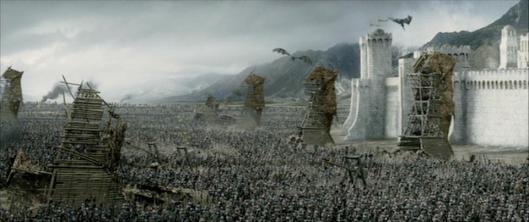
In the process, he likened Gondor to the Byzantine empire, a comparison which immediately attracted our attention. We ourselves had suggested in an earlier posting that the attack on its capital, Minas Tirith, had been like the siege of the Byzantine capital, Constantinople.

attackongondor.jpg

8da792d4aac58fe51f8ddf1aefa36048.jpg

What was JRRT thinking of when he likened the two?

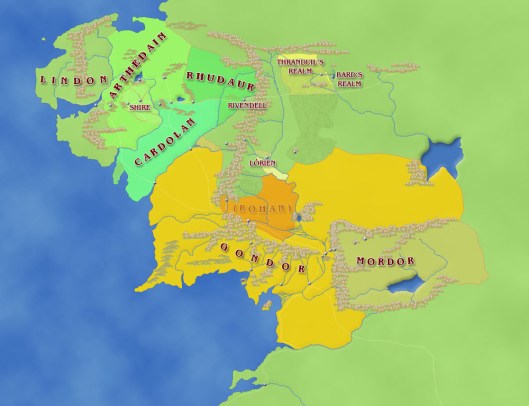
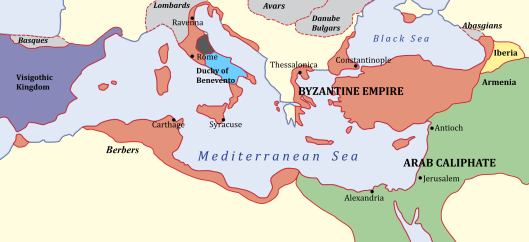
First, they both were—or had been—large kingdoms—in the case of Byzantium, an empire, really, as these maps demonstrate.

gondor1050height.jpg

2000px-Byzantiumby650AD.svg.png

Their capitals were both of great age. Minas Tirith, “The Tower of Guard”, had been built originally as Minas Anor, “Tower of the Sun” in SA 3320 by Anarion, the younger son of Elendil, but only became the capital of Gondor in TA1640, after Osgiliath had been devastated by a plague. If we add its time in the Second Age (121 years) to the whole of the Third Age (3021 years), we reach a total of 3142 years at the defeat of Sauron. (For comparison, we might look at Athens, whose continuous habitation began before 3000BC, giving it a more-than-5000-year history.)

Constantinople, is old, by anyone’s standards, having been founded in 667BC as a Greek colony (there’s a bit of argument over the dating of this, which is typical of such things), and is still inhabited (and an absolutely amazing place!), but a bit younger than Minas Tirith at the time of The Lord of the Rings by some 500 years or so.

Third, there is the matter of the elaborate construction of these capitals.

“For the fashion of Minas Tirith was such that it was built on seven levels, each delved into the hill, and about each was set a wall, and in each wall was a gate. But the gates were not set in a line: the Great Gate in the City Wall was at the east point of the circuit, but the next faced half south, and the third half north, and so to and fro upwards; so that the paved way that climbed towards the Citadel turned first this way and then that across the face of the hill. And each time that it passed the line of the Great Gate it went through an arched tunnel, piercing a vast pier of rock whose huge out-thrust bulk divided in two all of the circles of the City save the first. For partly in the primeval shaping of the hill, partly by the mighty craft and labour of old, there stood up from the rear of the wide court behind the Gate a towering bastion of stone, its edge sharp as a ship-keel facing east. Up it rose, even to the level of the topmost circle, and there was crowned with a battlement; so that those in the Citadel might, like mariners in a monstrous ship, look from its peak sheer down upon the Gate seven hundred feet below.”

The Lord of the Rings, Book 5, Chapter 1, “Minas Tirith”

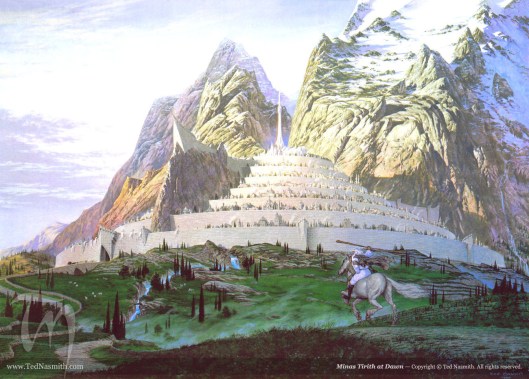
Here’s one of our favorite paintings (by Ted Nasmith—one of our favorite Tolkien artists).

TN-Minas_Tirith_at_Dawn.jpgnaismith.jpg

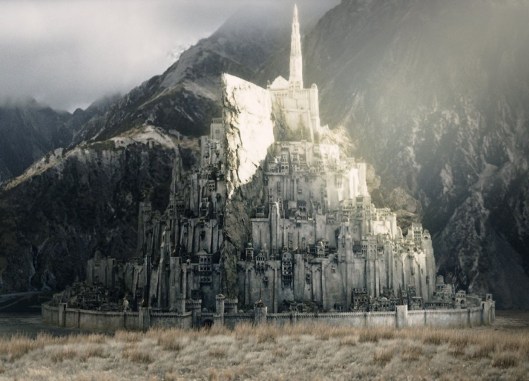
And here’s the film.

ROTK-Minas-Tirith.jpg

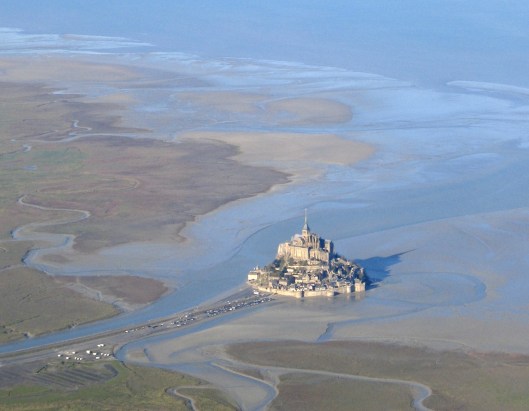
The designers have said that they were influenced by the look of Mont Saint Michel, a medieval monastery just off the coast of Normandy in France.

Mont_St_Michel_3,_Brittany,_France_-_July_2011.jpg

MtStMichel_avion.jpg

The complex nature of the place is captured in this diagram.

minas-tirith-diagram.0.jpg

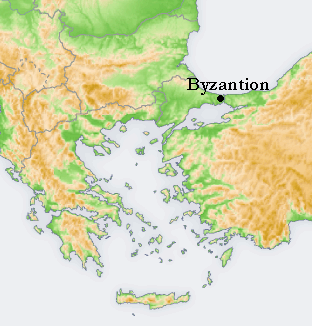
Byzantium (or, Constantinople, its later name) began its life, as we said, as a colony of the Greek mainland city of Megara. In the 4th century AD, the Roman emperor Constantine I, the last survivor in a long civil war, chose the site for his new capital. As much of the weight, both of commerce and defense, lay in the eastern part of the Roman world by this time, he chose very wisely: his new city was placed to control trade with the rich Black Sea region and to provide a strategic jumping-off point for dealing with invaders and emerging kingdoms in Asia Minor.

Locator_map_Byzantion.PNG

The position was also well-chosen for defense, being at the end of a peninsula—the main strategy then being its walling-off from the mainland.

constantin.jpg

There is, of course, a big difference here between the 7 levels and 7 gates of Minas Tirith and the two walls—the older inner 4th-century one of Constantine and the slightly-later (early 5th century) walls of Theodosius II. Nevertheless, those later walls were well-constructed, in two successive lines, with a moat on the outside.

Theodosian Walls.jpg

The Theodosian walls were about a mile-and-half from the older, Constantine wall, encompassing a population which, at its height, may have been over 400,000 in number. By the time of its fall to the Ottoman army in 1453, that number had dropped to perhaps only 50,000, which reflected the gradual shrinking of the empire from its greatest size, in the 6th century

Byzantine-empire.6thc.gif

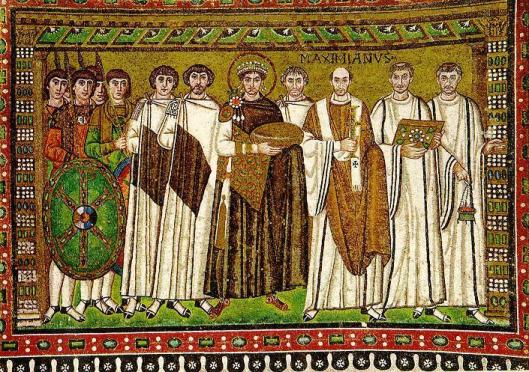
under the emperor Justinian

justinian.jpg

when it encompassed the majority of the Mediterranean basin, to its last, worn-out phase in the early 15th century, when it controlled a few scattered outposts, but mainly the area directly around the capital.

constantinople-world-map.jpg

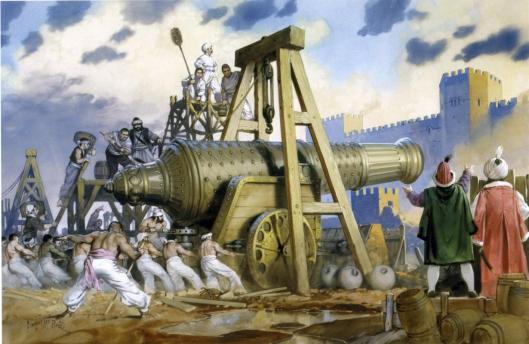
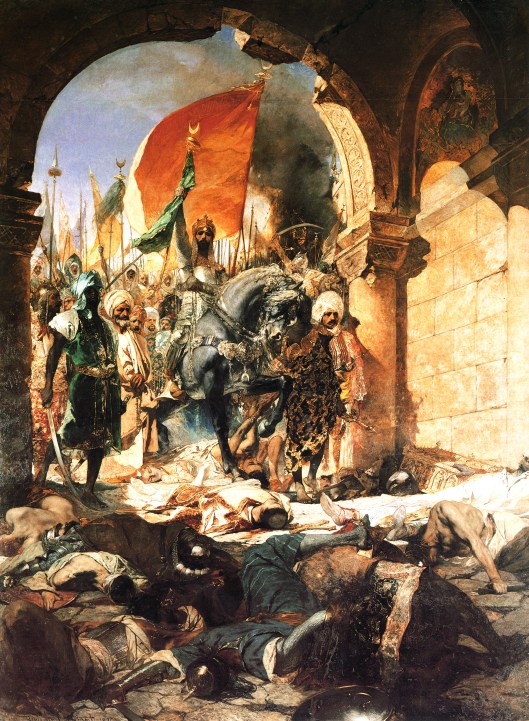
This shrinking of the empire and of its population proved disastrous for the capital. When the Ottoman army, under Mehmet II, arrived outside the walls in the spring of 1453, the imperial government could only provide 7000 defenders, 2000 of whom were foreigners, to defend about 3 and ½ miles of wall (that’s 5 ½ km). Against them were anywhere from 50 to 80,000 attackers, who brought with them (or cast on the spot), massive artillery pieces and, after a 53-day siege, broke into the city and put an end to an empire which had lasted for over 1100 years.

Illustration-of-angus-mcbride-showing-the-ottoman-cannon-basilica-during-the-siege-of-constantinople-in-1453-ad.jpg

Benjamin-Constant-The_Entry_of_Mahomet_II_into_Constantinople-1876.jpg

And this is the last sad similarity with Gondor and its capital, as we see through Pippin’s eyes:

“Pippin gazed in growing wonder at the great stone city, vaster and more splendid than anything that he had dreamed of, greater and stronger than Isengard, and far more beautiful. Yet is was in truth falling year by year into decay, and already it lacked half the men that could have dwelt at ease there. In every street they passed some great house or court over whose doors and arched gates were carved many fair letters of strange and ancient shapes: names Pippin guessed of great men and kindreds that had once dwelt there; and yet now they were silent, and no footsteps rang on their wide pavements, nor voice was heard in their halls, nor any face looked out from door or empty window.”

The Lord of the Rings, Book 5, Chapter 1, “Minas Tirith”

And, just as in the case of Constantinople, the capital of Gondor was hard-pressed to defend itself. Luckily for it, however, there was an uncrowned king with a ghostly army, a brave reinforcement of southern yeomen, a mass of wild horsemen from the north, a wizard, and the fulfillment of an ancient prophecy about a witch king to aid it in its hour of need…

Thanks, as always, for reading.

MTCIDC

CD

Beaux Gestes? (2)

27 Wednesday Apr 2016

Posted by Ollamh in Artists and Illustrators, Fairy Tales and Myths, J.R.R. Tolkien, Villains

≈ 1 Comment

Tags

19th-century tombs, Cicero, Galadriel, Gandalf, Grey Havens, Hildebrandts, Istari, Mourning, Queen Victoria, Quintilian, Saruman, Scouring of the Shire, The Lord of the Rings, The Mirror of Galadriel, Theatrical gesture, Tolkien, Valar

Welcome, as always, dear readers.

In our last, we commenced a small examination of gesture in The Lord of the Rings, relating specifically to Galadriel and Saruman. We began with Galadriel

galadriel.jpg

and her rejection of Sauron. JRRT describes it in this way: “She lifted up her white arms, and spread out her hands towards the East in a gesture of rejection and denial.” In that post, we said that her gesture seemed theatrical, almost melodramatic, and we suggested that JRRT had been influenced by what we imagined he had seen on stage and on screen late in the 19th and into the 20th centuries, a time when such broad gestures were still considered the best way to convey strong emotion. This mode was, we proposed, ultimately based upon the writings of two ancient Romans, Cicero and Quintilian, who lived between the years 100BC and 100AD. In their day and up to the 20th century, the only magnification available to allow speakers to be heard over crowds was the human voice. Thus, a range of gestures emphatic enough to be seen and clear enough to be understood at a distance was an important component of effective speaking and such gestures were adopted and adapted by actors and used and reused for many centuries to come.

Because none of the illustrations based upon “The Mirror of Galadriel” depicts this gesture, we used a photograph from an 1898 book on public speaking to provide the sense of what we believe we were meant to see.

Repulsion.jpg

In our last, we also suggested that Galadriel’s gesture was linked to one of Saruman’s—in fact, his last gesture on Middle Earth, as far as we know.

In sudden resentment at the contemptuous treatment consistently dealt him by Saruman, Grima Wormtongue has drawn a hidden knife and cut the wizard’s throat.

“To the dismay of those that stood by, about the body of Saruman a grey mist gathered, and rising slowly to a great height like smoke from a fire, as a pale shrouded figure it loomed over the Hill. For a moment it wavered, looking to the West; but out of the West came a cold wind, and it bent away, and with a sigh dissolved into nothing.” The Lord of the Rings, Book 6, Chapter viii.

jwyatt-sarumande.jpg

Saruman had been one of the Istari, as Tolkien describes them all in describing Gandalf:

“There are naturally no precise modern terms to say what he was. I wd. venture to say that he was an incarnate ‘angel’—strictly an angelos: that is, with the other Istari, wizards, ‘those who know’, an emissary from the Lords of the West, sent to Middle-earth, as the great crisis of Sauron loomed on the horizon. By ‘incarnate’ I mean they were embodied in physical bodies capable of pain, and weariness, and of afflicting the spirit with physical fear, and of being ‘killed’, though supported by the angelic spirit they might endure long, and only show slowly the wearing of care and labour.” Letter to Robert Murray, S.J. (draft), 4 November, 1954.

Saruman, then, as another of the Istari, can be killed—and is, but what then? In his battle with the Balrog, it appears that Gandalf has met his end. He returns, however, suggesting that his physical body might be capable of the repair which Galadriel administers in Lorien.  As JRRT says in the same letter, “He was sent by a mere prudent plan of the angelic Valar or governors; but Authority had taken up this plan and enlarged it, at the moment of its failure.”—that is, Gandalf’s apparent death.

As Gandalf puts it, “I was the enemy of Sauron”, and, with Sauron defeated, apparently conclusively, Gandalf is allowed to return to the West, to do or be what, is never explained.   It is a privilege, clearly, since it is granted only to High Elves and, with special dispensation, to Bilbo and Frodo.

This brings us back to Saruman’s gesture: “For a moment it wavered, looking to the West; but out of the West came a cold wind, and it bent away, and with a sigh dissolved into nothing.”

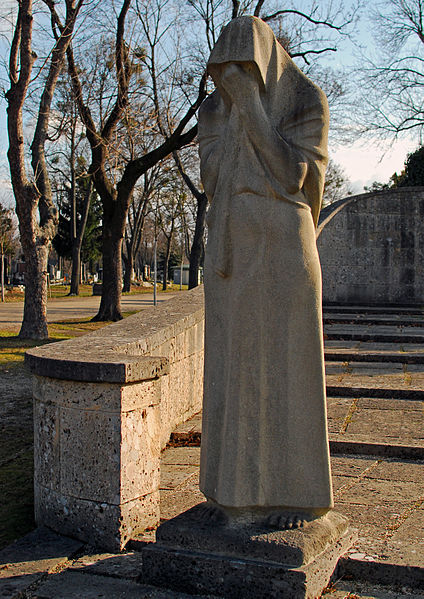
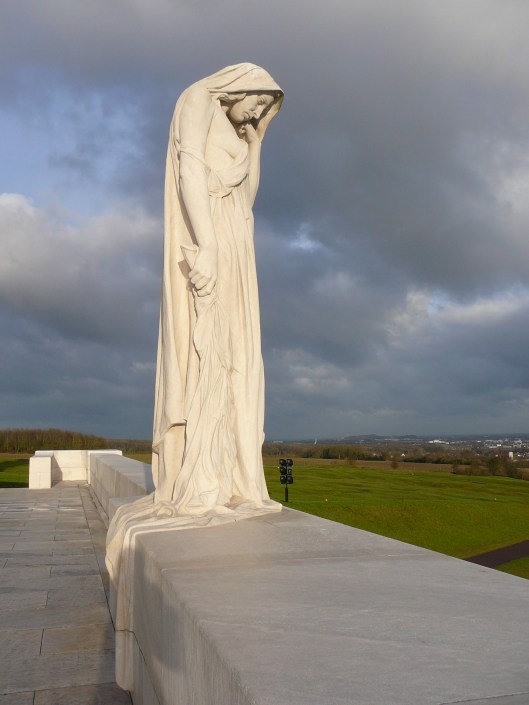
In a way, what we see here is actually a lack of gesture—it is a wavering, with a sense of hope, perhaps? Almost as if Saruman is appealing for pardon? As in the case, of Galadriel, we have no artist’s depiction of this, but we’ve used the clue of “a pale shrouded figure”, as well as that wavering, to imagine that this is someone in mourning and so we can offer several figures from later 19th-century tombs as a possible image.

d5717eeaa95186cd2e3d95447d215e2f.jpgp1140386.jpg

Statue-to-Mourning-Zentralfriedhof-Vienna.jpg

It’s interesting that these all are female, as if this is one of the expected jobs of 19th-century women, to be the Mourners in Chief. We suppose that, since Queen Victoria mourned for her husband Albert from his death in 1861 to her own death in 1901, this shouldn’t be surprising, but we are planning a later posting about mourning in The Lord of the Rings which will examine the subject within certain western traditions in more depth.

Queen-Victoria-Her-Latest-Portrait-1900_tr_4643_566.jpg

In the meantime, we return to Galadriel to match these two gestures. Saruman had failed because he had accepted the East and the deceptive words of Sauron. His fate, then, is to be met with a cold wind and to dissolve, with a sigh, into nothing, rejected by the West from which he had been sent, several thousand years before. Galadriel, on the other hand, by protecting her people and rejecting Sauron, had been accepted back into the West and the last we see of her is aboard a ship at the Grey Havens, bound for her reward.

ghavens.jpg

Thanks for reading, as always.

MTCIDC

CD

PS

We couldn’t resist this final image: the Hildebrandts with the painting.

haven-c.jpg

For all of the wonderful paintings he and his brother have given us, may Tim Hildebrandt (1939-2006) have been given a safe passage to the West, as well.


“My subject is War, and the pity of War.”

13 Wednesday Apr 2016

Posted by Ollamh in Artists and Illustrators, Heroes, J.R.R. Tolkien, Military History, Military History of Middle-earth, The Rohirrim

≈ Leave a comment

Tags

Adventure, Alexander Gardner, Alfred Waud, Alonzo Chappel, American Civil War, Antietam, Battle of the Somme, Charge of the Rohirrim, Confederate, early photography, Felice Beato, First Virginia Cavalry, Fort Geroge, Matthew Brady, Mexican-American War, Minas Tirith, Pelennor, Peter Jackson, Rohirrim, Second Opium War, The Lord of the Rings, Tolkien

Welcome, dear readers, as always.

In this posting, we want to talk a little about a subject so often left out of heroic stories: the aftermath of battle.

In Chapter 10 of The Return of the King, what we might call the GEF—the Gondorian Expeditionary Force—sets off from Minas Tirith for the Morannon. It begins with this little army mustered on the Pelennor and we see events through the eyes of one left behind, Merry:

“At last the trumpets rang and the army began to move. Troop by troop, and company by company, they wheeled and went off eastward. And long after they had passed away out of sight down the great road to the Causeway, Merry stood there. The last glint of the morning sun on spear and helm twinkled and was lost, and still he remained with bowed head and heavy heart, feeling friendless and alone.”

Considering what these folk had endured in the previous days, and what they dreaded might happen in those to come, it’s hardly surprising that it’s not described as a joyous event. What is not described, however, is the landscape in which they gather and which they initially march through.

The Minas Tirith to which Gandalf rides with Pippin

gandalfpippin.jpg

has been attacked by a massive army.

minas-tirith.jpg

In an attempt to lift the siege, the Rohirrim have charged across the Pelennor,
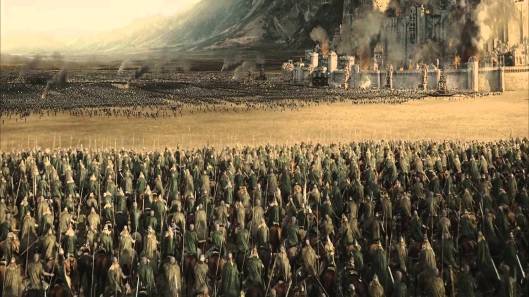
rohirrimcharge.jpg

only to encounter the fierce Southrons and their mumakil.
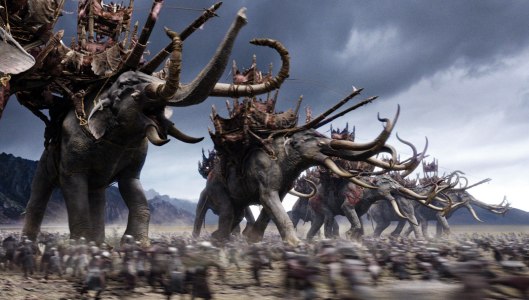
mumakil.jpg

These are defeated, in turn, by Aragorn, his companions, and troops from South Gondor, as well as the surviving Rohirrim and a party from Gondor itself.

When the carnage is over and the invaders killed or driven off, the story, while touching on the burial of Snowmane, quickly moves back to the city. In real life, such destruction would have left behind a ghastly memorial, something only touched upon in the film of The Return of the King. As you can see in this still, all which seems to remain is the wreckage of the war machines.
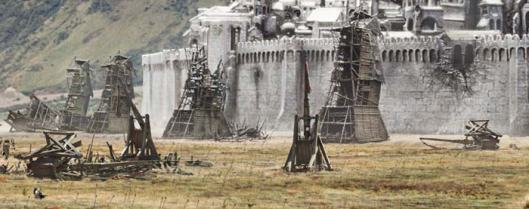
551_2_Minas_Tirith_MPdtl.jpg


In fact, there would have been thousands of bodies, not only of men and orcs, but of horses and mumakil as well.

Such an aftermath has not been a popular subject for art, except in scenes where fallen heroes are lamented when found among the slain. (Think here of Boromir, surrounded by dead orcs, for example.)
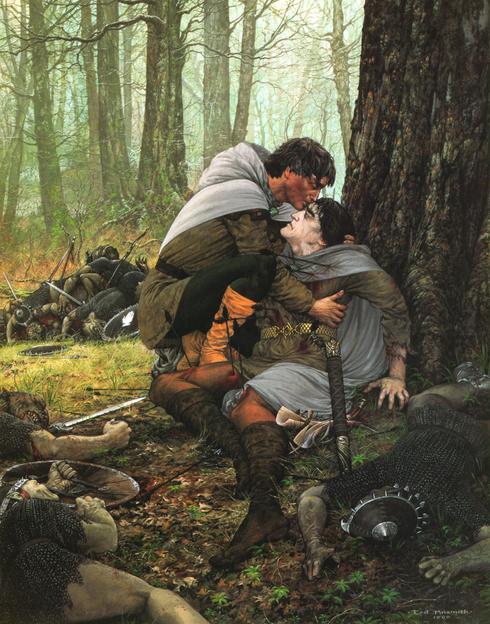
boromir.jpg

That sense of war was changed, in our world, by the introduction of the camera to the battlefield, first, briefly, by Felice Beato, during the Second Opium War (1860)

beatonorthtakufort1860.jpg

but in the US by Alexander Gardner, in the fall of 1862.
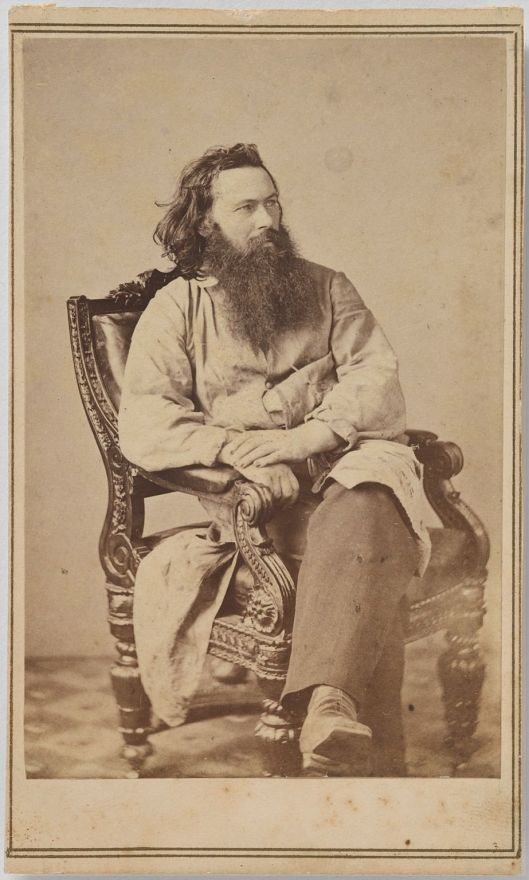
alexandergardner.jpg

Previous images of war had tended towards the glorious, full of bravery and flags, as in this engraving made from Alonzo Chappel’s painting of the taking of the Canadian Fort George in 1813—

alonzochappellftgeorge.jpg

Even if the depiction tended to be more realistic, it came heavily filtered. During the American Civil War, several northern newspapers and magazines sent artists into the field, who drew what they saw or at least heard about from those who had seen events. One of the best was the Englishman, Alfred Waud.
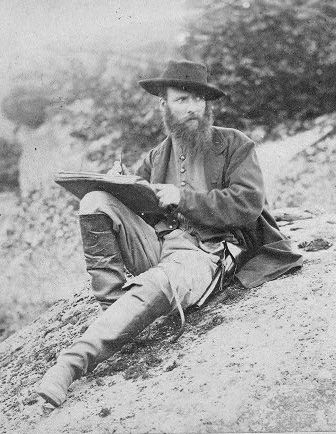
alfredwaud.jpg

He drew from life, as in the picture of the First Virginia Cavalry, with whom he spent a brief time in late September, 1862. Here’s his original drawing, which he would have sent to his publisher, in New York.

the-first-virginia-cavalry-at-a-halt-alfred-r-waud.jpg

In New York, the drawing would have been turned into a woodblock print for ease of conversion to a magazine page.
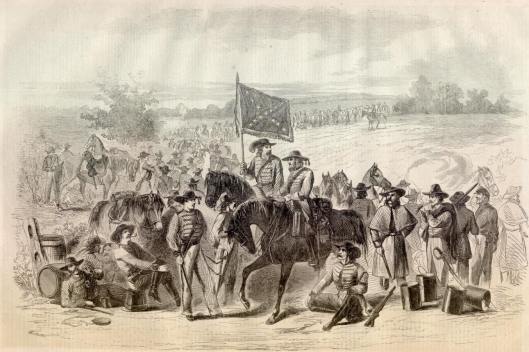
1st-virginia-cavalry-halted-based-on-sketch-by-waud-harpers-sept-27-1862.jpg

And, thus, the reading public would have lost immediacy practically at the first step.


Photographs had been made in the US since the 1840s, and even some during the Mexican-American War of 1846-8, but they had been static pictures of soldiers off the battlefield.

wool-in-saltillo.jpg

In September, 1862, however, Gardner had been sent by his boss, Matthew Brady

Mathew-Brady.jpg

from the studio in Washington, DC, to the field of the recent battle of Antietam, which had been fought only two days before. Gardner came with his photographic wagon

brady'swhatsit.jpg

and ranged the battlefield. The battle was over, but the dead were still in place, where they had fallen, and soon he had a collection of images. Because there was already a tradition of photographing the dead (and, no, we’re not going to continue this practice here—just do google.images “photos of dead victorians” or the like and you can see this for yourself), it was probably not quite so horrifying as one might imagine, but those who saw the exhibit in Brady’s New York gallery

brady'snygallery.jpg

might have agreed with the New York Times review of 20 October, 1862, that “Mr. Brady has done something to bring home to us the terrible reality and earnestness of war.”

Gardner didn’t take the pictures he did out of a morbid interest, but because the cameras of the day were large and cumbersome

banner-civil-war-photography.jpg

and the process necessary to make a picture took too long to capture motion (just look what happens when there is motion).
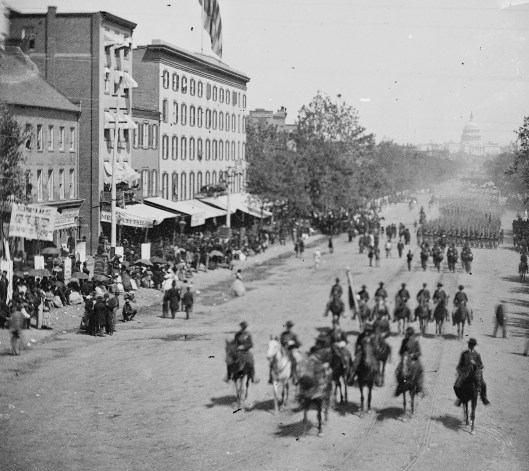
Grand Review of Army May 1865 02796u.jpg

Thus, what one might see in a painting, even if it had attempted to depict reality, as in this Keith Rocco painting of a moment in the battle of Antietam when Confederates were fighting behind a fence on the Hagerstown Road,
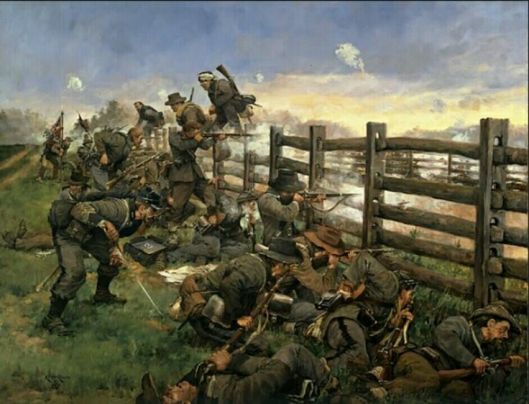
keithroccohagerstownroad.jpg

was impossible to capture. What Gardner could capture was the aftermath. And so he did.
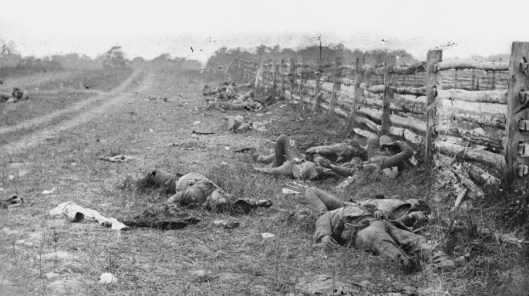
hith-battle-of-antietam-E.jpeg


For us, who are modern Rohirrim, as far as horses are concerned, it’s just as well that he confined himself to humans. After Gettysburg, several other photographers included them—only a few photos, but representing anywhere from 3 to 5000 horses and mules who died during the three days of battle. (And, no, again, we won’t show you those—google.images will, but we’re not sure what’s harder to look at.)

Lieutenant Tolkien
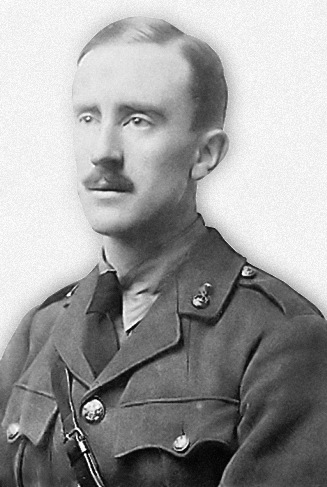
jrrtaslieut.jpg

would have seen such horrors every day during the battle of the Somme
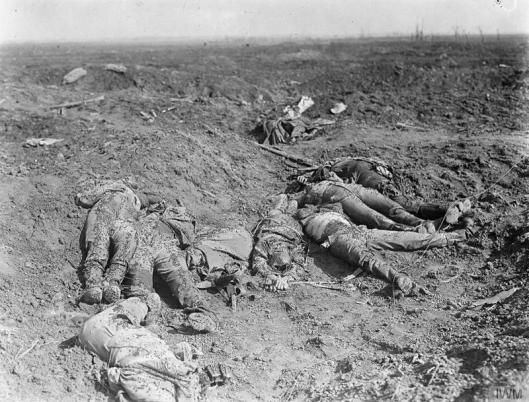
sommedead.jpg

and perhaps that’s why he moves so quickly from the battlefield to the city and healing. Perhaps it’s also why the view we are given of the GEF is through the eyes of a wounded survivor and, at this moment in the story, one full of foreboding at the thought of another battle. And it may be that Peter Jackson felt the same way.
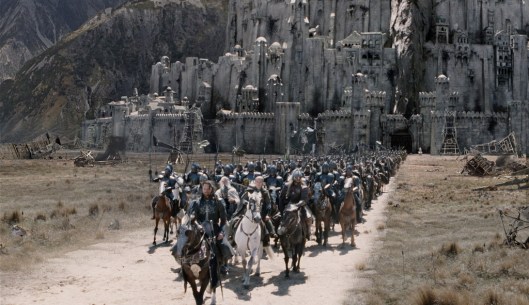
West_To_Mordor.jpg

What do you think, dear readers?

Thanks, as always, for reading.

MTCIDC

CD


PS

Our title is taken from the work one of our favorite Great War poets, Wilfred Owen (1893-1918), who, having survived the entire war, was killed just before the armistice which halted the fighting.
wilfredowenaschild
wilfredowen

The Ring in Question

02 Wednesday Mar 2016

Posted by Ollamh in Artists and Illustrators, Fairy Tales and Myths, Imaginary History, J.R.R. Tolkien, Literary History, Narrative Methods

≈ Leave a comment

Tags

Alan Lee, Allen and Unwin, Angus McBride, casting, forging, Home Alone, literary belief, literary theory, The Lord of the Rings, The One Ring, Tolkien

Dear Readers,

Recently, one of us came up with an interesting question about our friend JRRT and the One Ring: how would such a small thing with such power have been made? In The Silmarillion, Tolkien, as he so often does, has an answer for this:

“And much of the strength and will of Sauron passed into that One Ring… and Sauron forged it in the Mountain of Fire in the Land of Shadow” (The Silmarillion, 287-288).

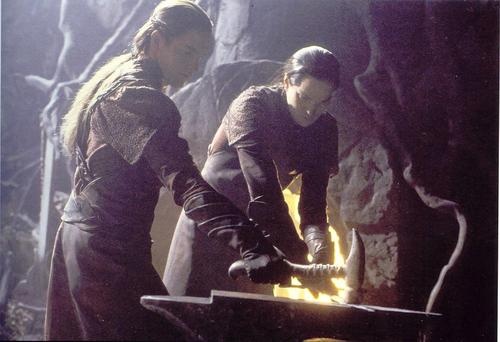
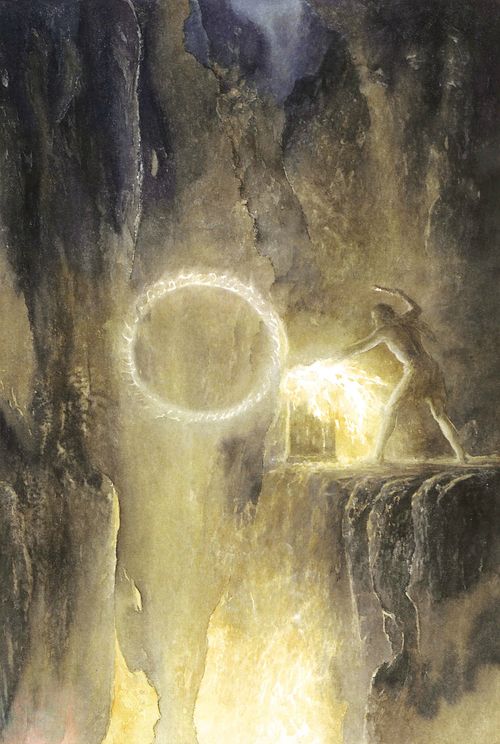
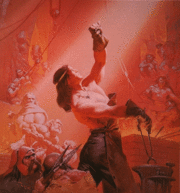
In the histories of Middle-earth, Sauron is said to have “made” and “forged” the One Ring—JRRT uses both words more than once in his letters, LOTR, and The Silmarillion, and this has led us to another question: how would the Ring have been forged? We did a little research, and found that the typical process of forging is (according to the ever-useful wiki page on the subject) a manufacturing process using compressive forces, such as a hammer, to shape metal in a particular way. If Sauron “forged” the One Ring in the fires of Mount Doom, it’s safe to assume that he used the process of “hot forging”, where the metal is heated in a forge (or in this case, very hot fires of a volcano). The last two items of wiki’s “commonly forged” list are weapons and jewelry—both on the list of Middle-earth’s most wanted Christmas gifts of 3018—and we’ve seen weapon-forging before:

6c735f9774332ccb9c7580b226a0f4fc

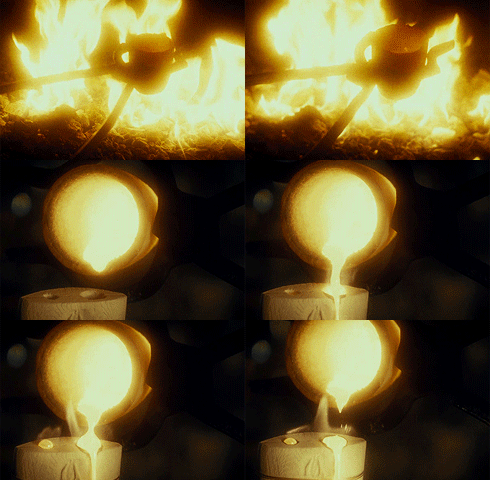
But rings are usually cast, using a mold and molten metal. Peter Jackson’s prologue to The Fellowship of the Ring acknowledges this, although the Ring is still said to have been “forged”:

tumblr_inline_nsok14xlI41sfc6si_500

But, in the illustrations of Tolkien illustrators Alan Lee

ea7f4b46a0e0f9fc7e00d1a5aca2eb30

And Angus McBride

180px-Angus_McBride_-_Celebrimbor

This detail—perhaps even an error on Tolkien’s part—has been overlooked. Is it that the artists have made the same error, or are they simply letting it go in favor of the story?

From here, we can ask several questions: what material was the Ring made of? Where did he get the material? How did Sauron make it a magic ring? How did he get the Black Speech/Elvish inscription onto the Ring?

While there may be one or several answers to these questions, we wonder just how far into detail we’re meant to go—and how far JRRT means for us to go. He created a world so intricate that his work has been named a “legendarium”, and in several previous postings, we’ve discussed details of Middle-earth, such as trade and coinage. Could the man who took such care to design Middle-earth’s moon phases have answers to these questions—or should he?

(And here, for those who know the movie Home Alone, we hope not to sound like the little boy from across the street who asks the van driver endless, empty questions!)

The concept of the One Ring begins in Gollum’s cave in The Hobbit. At that point, it was only a magic ring, serving the purpose of a plot device: JRRT had not yet planned a sequel to The Hobbit. In fact, the magic ring was not yet the One Ring in Tolkien’s stories until after JRRT published the book.

Tolkien said himself of the matter in his Letters:

“The Hobbit… was quite independently conceived: I did not know as I began it that it belonged.”(Letters, 145)

And, of the Ring:

“Rayner has, of course, spotted a weakness (inevitable): the linking. … But I don’t feel worried by the discovery that the ring was more serious than appeared… the weakness is Gollum, and his action in offering the ring as a present.” (Letters, 121)

This was a response to publishers Allen and Unwin; Rayner (Unwin’s son) had read the story and commented to the author:

“…. Converting the original Ring into this new and powerful instrument takes some explaining away and Gandalf is hard put to it to find reasons for many of the original Hobbit’s actions…” (letters, 120)

Nowhere in his criticism does Rayner ask what the Ring was made of, how Sauron had made the Elvish script, or how it would have been either forged or cast, and neither does JRRT in his answer; their focus is placed upon converting the magic ring into the One Ring, and using the Ring as a crucial plot element in both The Hobbit and The Lord of the Rings. Tolkien writes in another letter:

“The magic ring was the one obvious thing in The Hobbit that could be connected with my mythology. To be the burden of a large story it had to be of supreme importance. I then linked it with the (originally) quite casual reference to the Necromancer…” (Letters, 346)

Although Tolkien’s work provides a great richness of material to discuss, question, and write about, we suppose that we can forgive JRRT for this small detail. Then again, when JRRT gives us so much, when should we stop asking questions or expecting answers? As we’ve found in writing these postings, JRRT seems to have an inexhaustible amount of material, although even he sets limits to the interpretation of his work; in fact, these “hidden meanings” annoyed him:

“I am honoured by the interest that many readers have taken in the nomenclature of The Lord of the Rings… But I remain puzzled, and indeed sometimes irritated, by many of the guesses at the ‘sources’ of the nomenclature, and theories or fancies concerning hidden meanings… many of them seem to show ignorance or disregard of the clues and information which are provided in notes, renderings, and in the Appendices” (Letters, 379-380).

We don’t believe that this was meant to be a discouragement. Instead, it is a pointing by the author towards the extra material meant to help his readers to understand and study what Tolkien says he wishes he’s achieved: “the ‘literary belief’ in the story as historical” (Letters, 279).

But this leaves us at another crossroads.

If the answers aren’t to be found there, however, should we stop?   We’ve said that we’re haunted by the image from Home Alone:   if we persist, should we be cast in Home Alone 4 as two kids, pestering the English academic with “So how was this Ring really made, mister? Is it really made of gold? Is it really powerful? How powerful? For how long?”

Or should we leave those details about the Ring as they are, accepting that it’s a magic ring forged in the fires of Mount Doom by Sauron—without interrupting JRRT to ask too many questions about details which aren’t essential to the story, believing that it is more important that he masterfully took a simple plot element—a magic ring—and focused on converting it into the crucial element of Frodo’s quest in The Lord of the Rings.

As always, we ask: what do you think, Dear Readers?

Thanks for reading,

MTCIDC,

CD


A Pirate’s Life

24 Wednesday Feb 2016

Posted by Ollamh in Artists and Illustrators, Imaginary History, J.R.R. Tolkien, Literary History, Military History, Military History of Middle-earth, Villains

≈ Leave a comment

Tags

Barbary Coast, Captain Blood, Captain Hook, Corsairs, Errol Flynn, Gilbert and Sullivan, Howard Pyle, Jack Sparrow, Jolly Roger, mariners, Napoleonic Wars, Narnia, Peter Jackson, Pirates, Scharb, shipbuilding, Tamora Pierce, The Black Pearl, The Lord of the Rings, Tolkien, Tortall, Treasure Island, Umbar, USS Philadelphia, xebec

“Oh, a pirate’s life is a wonderful life,

A-rovin’ over the sea,

Give me a career as a buccaneer

It’s the life of a pirate for me…”

Wallace/Penner, Peter Pan (1953)


Dear readers, welcome, as ever.

Being clever, you can tell immediately where this posting is going to go. Yep, the corsairs of Umbar.

A corsair is another word for pirate. And, when we think “pirate”, first there’s the late-19th-early-20th-century work of Howard Pyle.

Pyle_pirate_handsome.jpg


And the silly pirates from Gilbert and Sullivan’s The Pirates of Penzance.

piratesofpenzance.jpg


And Long John Silver, from Treasure Island.

longjohnsilver.jpg


And then there is Captain Hook and the Jolly Roger.

TigerLilyandHook.jpg


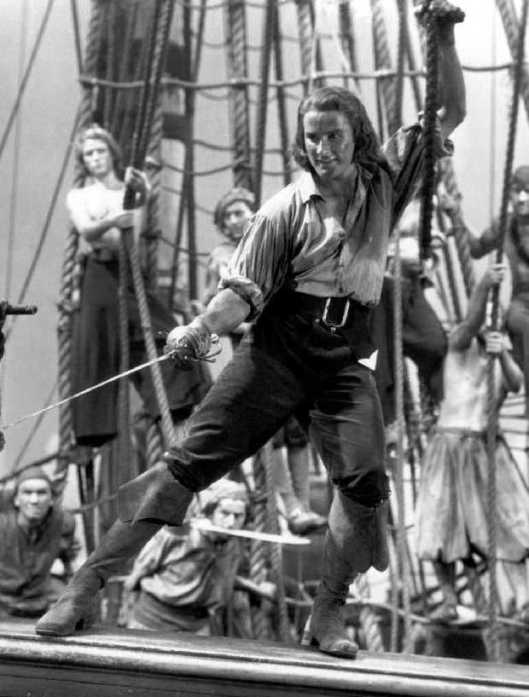
And Errol Flynn in the 1935 movie, Captain Blood.

1023_captblood.jpg


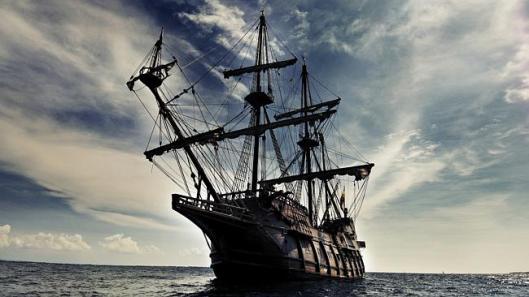
And who could forget Jack Sparrow and The Black Pearl?

Captain-Jack-captain-jack-sparrow-14117613-1242-900.jpg

blackpearl.jpg

We think that Tolkien has something rather different in mind, however. Let’s start with a little history.

Umbar’s past in relation to Gondor is summed up by Damrod in “Of Herbs and Stewed Rabbit”:

“ ‘Aye, curse the Southrons!’ said Damrod. ‘Tis said that there were dealing of old between Gondor and the kingdoms of the Harad to the Far South; though there was never friendship. In those days our bounds were away south beyond the mouths of Anduin, and Umbar, the nearest of their realms, acknowledged our sway. But that is long since. ‘Tis many lives of Men since any passed to and fro . Now of late we have learned that the Enemy has been among them, and they are gone over to Him, or back to Him—they were ever ready to his Will—“ (The Two Towers, Book 4, Chapter 4,“Of Herbs and Stewed Rabbit”)

Damrod’s mistrust is confirmed by what Beregond says to Pippin in “Minas Tirith”:

“…There is a great fleet drawing near to the mouths of Anduin, manned by the corsairs of Umbar in the South. They have long ceased to fear the might of Gondor, and they have allied them with the Enemy, and now make a heavy stroke in his cause. For this attack will draw off much of the help that we looked to have from Lebennin and Belfalas, where folk are hardy and numerous.” (The Return of the King, Chapter 1, “Minas Tirith”)

As Damrod has said, Umbar is to the far south.

map-of-gondor-and-neighbors2.jpg

Here is a view of it as imagined by the Czech artist, Scharb.

thecityofumbar.jpg

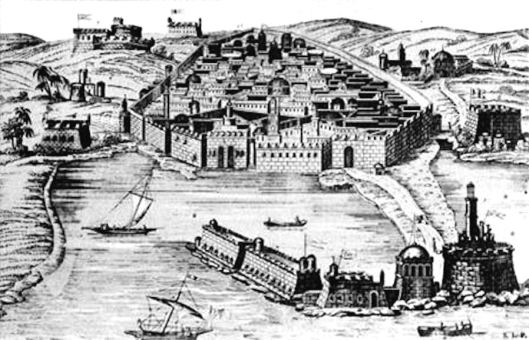
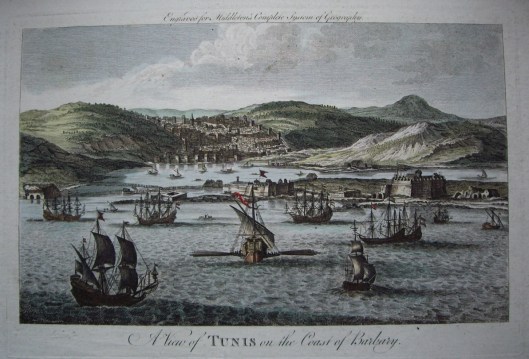
To us, this resembles cities along the southern Mediterranean coast, especially as seen in old engravings of the Barbary Coast.

Old_algiers_16th_century.jpg

Take, for example, this copperplate of Tunis, from 1778.

tunisengraving.JPG


There are all kinds of ships depicted here, from three-masters to a galley, in the center, to a small xebec, to the far right.

The galley seemed once to be the characteristic ship of the pirates of the Barbary Coast, coming from earlier Turkish galleys.

Galley1500ca.jpg


What the Czech artist appears to have picked up upon, however, is something from P. Jackson’s third The Lord of the Rings film, in which the xebec

Xebec L80 - 01.jpg_0_1024x769.jpg


is the model for the corsairs’ vessels.

corsairMastSails.jpg


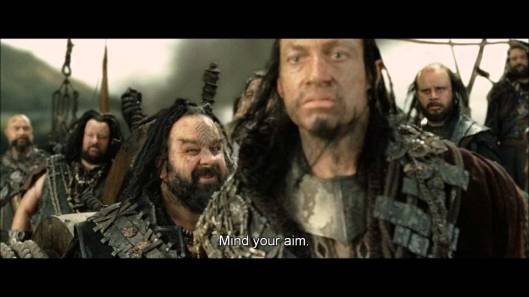
Jackson’s corsairs look like this (including Jackson himself, mugging to the left).

jacksonandcorsairs.jpg

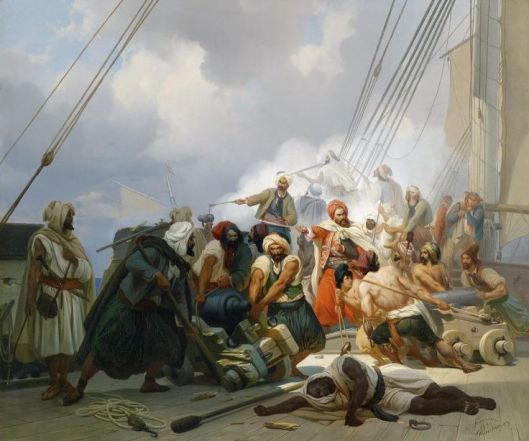
The crews of actual Barbary ships probably looked more like this:

21c27fb9a0a7cdf4d123d6e12bcbbd83.jpg

This makes perfect sense, as these are North Africans, and very tough people, as European mariners came to know. Their swift, daring ships attacked any vessel which might bring them profit.

barbary-pirate-galleon.jpg

The young United States first paid them tribute to keep them away from US ships.

tribute.jpg

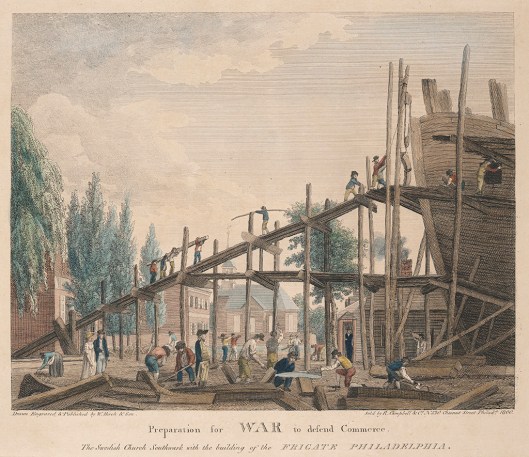
But, as the government somewhere found the money, it began a shipbuilding program to provide the country with its first national navy.

buildingthephiladelphia.jpg

This particular ship was the ill-fated USS Philadelphia, which ran aground and was captured by the pirates.

philly.jpg

captureofthephiladelphia.jpg

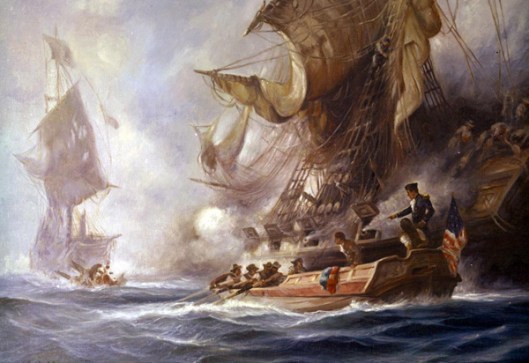
It was destroyed, however,

destructionofthephiladelphia.jpg

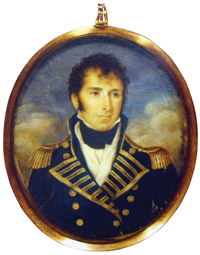
in a daring raid by Stephen Decatur, seen in this miniature.

stephendecatur.jpg

The United States fought two wars against the Barbary pirates, 1801-5 and 1815, doing a great deal of damage to the pirates.

USS-Enterprise-barbary-war.jpg

Ultimately, however, it was a combination of governments and navies, including the US, the British, and the Dutch, which put a stop to piracy in the southern Mediterranean after the end of the Napoleonic Wars in 1815.

Decatur_Boarding_the_Tripolitan_Gunboat.jpg

So, like Scharb, we took the idea from JRRT that Umbar was in the far south and, influenced by our experience, not only of the Barbary pirates, but of Narnia and the country called Calormen

Baynes-Map_of_Narnia.jpg

and of Tamora Pierce’s “Tortall” with its Carthaki southland,

Tortall_1.gif

we imagined the corsairs to look like this.

barbarypirates.jpg

So, dear readers, what do you think?

Thanks, as always, for reading.
MTCIDC

CD


Feudal Array 1

20 Wednesday Jan 2016

Posted by Ollamh in Artists and Illustrators, Economics in Middle-earth, Fairy Tales and Myths, Imaginary History, J.R.R. Tolkien, Literary History, Military History, Military History of Middle-earth, Narrative Methods

≈ Leave a comment

Tags

Anglo-Saxon, Bayeux Tapestry, Embroidery, feudalism, Medieval, Middle-earth, Normandy, Peter Jackson, Rohirrim, tapestry, The Lord of the Rings, Tolkien

Welcome, as always, dear readers.

In this posting, we would like to continue what we began in “Behind the Rammas Echor”. In that posting, we talked about using the illustrations from medieval English psalters (the wonderful 14th-century Luttrell Psalter in particular) to try to visualize the feudal world suggested by certain aspects of Tolkien’s The Lord of the Rings.

In that posting, we said that feudalism could be broken down into two big categories, land and troops, and there we spent time looking at basic agricultural life, to imagine the look of the feudal world of Middle Earth.

Now we move on to troops. And, as much as we can, we would like to continue to use medieval images to help us.

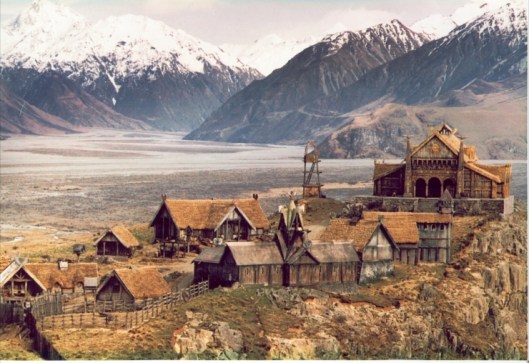
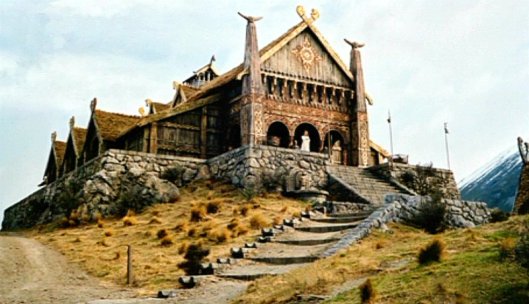
In previous posts, we’ve praised Jackson’s depiction of the Rohirrim, both the architecture and the people. Edoras and Meduseld within it just look right—and, when you watch the material on constructing them in the extended version box set, we can only be absolutely bowled over by the care taken there, for all that we have difficulties with certain other parts of the films, both in look and in the changes to the text.

Edoras-MtSunday.jpg

meduseld.jpg

rohirrimmassed.jpg

In one previous post, we suggested the kinds of models we both know and imagine Tolkien used to create the Rohirrim. These were primarily Anglo-Saxon, but combined with a horse people (which the Anglo-Saxons were not) of some sort, possibly Scythian (an Indo-European-speaking horse folk from north of the Black Sea).

ScythianCavalry.jpg

As we’ve thought more about it (one, for us, of the great pleasures of solid adventure literature, new and old—is that you not only want to think more about it, but, as you do, you find more in it), we began to imagine that Tolkien might have had another visual source, based upon another famous set of medieval illustrations, the Bayeux Tapestry.

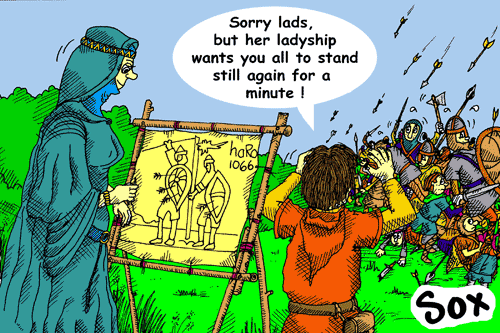
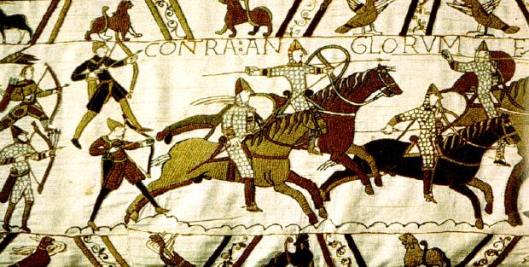
This is a roll of linen, some 230 feet (that’s about 70 metres) long and 20 inches (50 centimetres) high, into which are woven three bands of designs. The center is a long (very long!) series of adjoining panels covered in human figures, which have been stitched on with various colored woolen threads. Above and below the central band are two narrower ones which combine abstract figures (commonly on the upper panel) with human activities (on the lower one). Across the top of the central band are a series of captions in very simple Latin, describing what is happening below.

haroldkilled.jpg

The caption here reads: “Here Harold the king has been killed.”

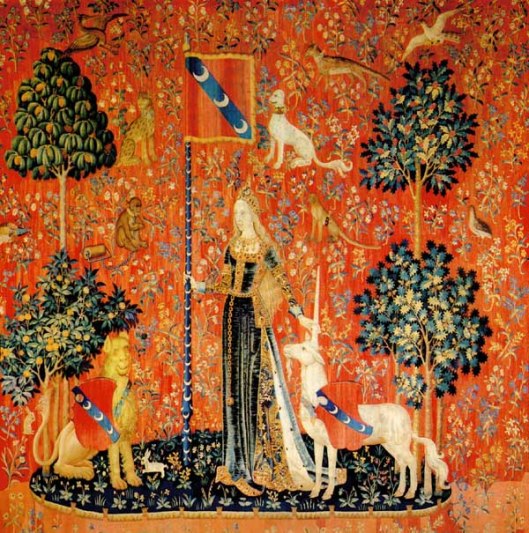
As it’s not through-woven, like this—

unicorn3.jpg

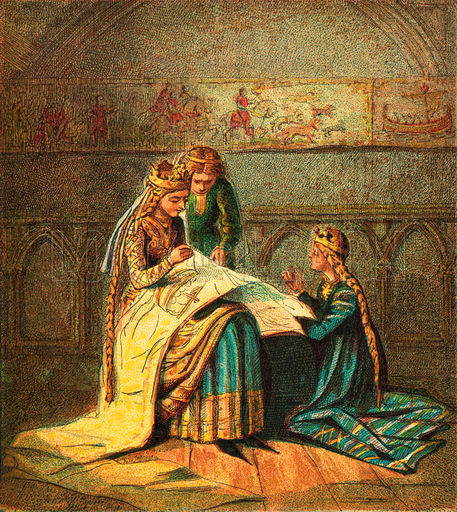
this isn’t really a tapestry, but an embroidery, in fact.

106604.gif

makingthebt.jpg

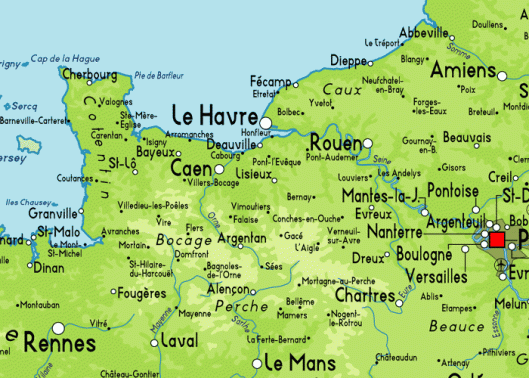
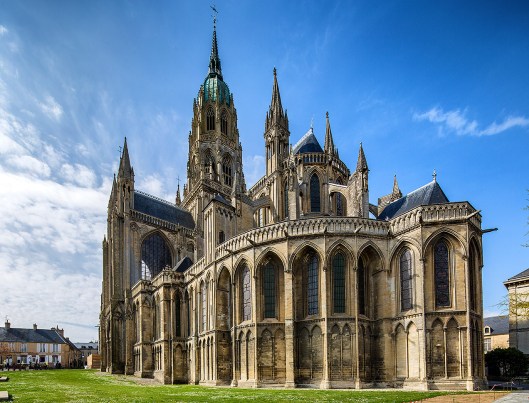
It’s linked to the cathedral at Bayeux, in Normandy, where it has been for at least 6 centuries. On the map, find Le Havre and look left and you’ll see Bayeux.

normandy_map_phys.gif

bayeux_cathedral.jpg

Where it really came from and who made it are two of those mysteries that it’s been fun to follow the scholarship of, but, as of 2015, there are lots of theories, some of them more convincing than others, but that’s all there are: theories. If you’d like to know more about them, go to: www.bayeux-tapestry.org.uk/whomadethetapestry.htm.

The tapestry is housed in an impressive museum in Bayeux, where its entire length is ingeniously displayed in a sort of wrap-around way.

The-Bayeux-Tapestry-Museum-1019.jpg

Bayeux-Tapestry-1_131941101594170.jpg

We’ve given you lots of facts, but the one thing we haven’t mentioned is the subject of such an immense work. It is, in fact, a lengthy piece of propaganda justifying the Norman invasion and conquest of England in 1066AD. We know, then, one definite thing about it: it certainly wasn’t embroidered for the Anglo-Saxons! (Although there is at least one theory that it was made by them.)

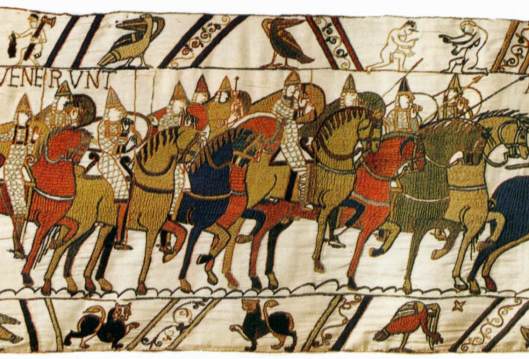
As much as we are interested in the subject, what has caught our attention now is the look—here are soldiers from the same period as the Anglo-Saxon model for the Rohirrim, after all, but, although archers are depicted on the Norman side, and a few infantry, the Normans are mainly shown as horsemen.

WebPage-ImageF.00070.jpeg

Here is our first sight of the Rohirrim in The Two Towers, Chapter 2, “The Riders of Rohan”:

“Their horses were of great stature, strong and clean-limbed; their grey coats glistened, their long tails flowed in the wind, their manes were braided on their proud necks. The Men that rode them matched them well: tall and long-limbed; their hair, flaxen-pale, flowed under their light helms, and streamed in long braids behind them; their faces were stern and keen. In their hands were tall spears of ash, painted shields were slung at their backs, long swords were at their belts, their burnished shirts of mail hung down upon their knees.”

05bayeux.jpg

Minus the grey horses and the braids, what do you think, dear readers?


As ever, thanks for reading.

CD

MTCIDC


PS

That MTC will be Feudal Array.2, in which we consider the other forces opposing Mordor…


← Older posts
Newer posts →

The Doubtful Sea Series Facebook Page

The Doubtful Sea Series Facebook Page

  • Ollamh

Categories

  • Artists and Illustrators
  • Economics in Middle-earth
  • Fairy Tales and Myths
  • Films and Music
  • Games
  • Heroes
  • Imaginary History
  • J.R.R. Tolkien
  • Language
  • Literary History
  • Maps
  • Medieval Russia
  • Military History
  • Military History of Middle-earth
  • Narnia
  • Narrative Methods
  • Poetry
  • Research
  • Star Wars
  • Terra Australis
  • The Rohirrim
  • Theatre and Performance
  • Tolkien
  • Uncategorized
  • Villains
  • Writing as Collaborators
Follow doubtfulsea on WordPress.com

Across the Doubtful Sea

Recent Postings

  • The Damage of Dragons March 11, 2026
  • Encouragement March 4, 2026
  • Eavesdropping February 25, 2026
  • Do You Speak Villain? (Part 3) February 18, 2026
  • Do You Speak Villain? (2) February 11, 2026
  • Do You Speak Villain? (Part 1) February 4, 2026
  • Towering January 28, 2026
  • Tolkien Among the Indians January 21, 2026
  • Thin and Stretched January 14, 2026

Blog Statistics

  • 108,922 Views

Posting Archive

  • March 2026 (2)
  • February 2026 (4)
  • January 2026 (4)
  • December 2025 (5)
  • November 2025 (4)
  • October 2025 (5)
  • September 2025 (4)
  • August 2025 (4)
  • July 2025 (5)
  • June 2025 (4)
  • May 2025 (4)
  • April 2025 (5)
  • March 2025 (4)
  • February 2025 (4)
  • January 2025 (5)
  • December 2024 (4)
  • November 2024 (4)
  • October 2024 (5)
  • September 2024 (4)
  • August 2024 (4)
  • July 2024 (5)
  • June 2024 (4)
  • May 2024 (5)
  • April 2024 (4)
  • March 2024 (4)
  • February 2024 (4)
  • January 2024 (5)
  • December 2023 (4)
  • November 2023 (5)
  • October 2023 (4)
  • September 2023 (4)
  • August 2023 (5)
  • July 2023 (4)
  • June 2023 (4)
  • May 2023 (5)
  • April 2023 (4)
  • March 2023 (5)
  • February 2023 (4)
  • January 2023 (4)
  • December 2022 (4)
  • November 2022 (5)
  • October 2022 (4)
  • September 2022 (4)
  • August 2022 (5)
  • July 2022 (4)
  • June 2022 (5)
  • May 2022 (4)
  • April 2022 (4)
  • March 2022 (5)
  • February 2022 (4)
  • January 2022 (4)
  • December 2021 (5)
  • November 2021 (4)
  • October 2021 (4)
  • September 2021 (5)
  • August 2021 (4)
  • July 2021 (4)
  • June 2021 (5)
  • May 2021 (4)
  • April 2021 (4)
  • March 2021 (5)
  • February 2021 (4)
  • January 2021 (4)
  • December 2020 (5)
  • November 2020 (4)
  • October 2020 (4)
  • September 2020 (5)
  • August 2020 (4)
  • July 2020 (5)
  • June 2020 (4)
  • May 2020 (4)
  • April 2020 (5)
  • March 2020 (4)
  • February 2020 (4)
  • January 2020 (6)
  • December 2019 (4)
  • November 2019 (4)
  • October 2019 (5)
  • September 2019 (4)
  • August 2019 (4)
  • July 2019 (5)
  • June 2019 (4)
  • May 2019 (5)
  • April 2019 (4)
  • March 2019 (4)
  • February 2019 (4)
  • January 2019 (5)
  • December 2018 (4)
  • November 2018 (4)
  • October 2018 (5)
  • September 2018 (4)
  • August 2018 (5)
  • July 2018 (4)
  • June 2018 (4)
  • May 2018 (5)
  • April 2018 (4)
  • March 2018 (4)
  • February 2018 (4)
  • January 2018 (5)
  • December 2017 (4)
  • November 2017 (4)
  • October 2017 (4)
  • September 2017 (4)
  • August 2017 (5)
  • July 2017 (4)
  • June 2017 (4)
  • May 2017 (5)
  • April 2017 (4)
  • March 2017 (5)
  • February 2017 (4)
  • January 2017 (4)
  • December 2016 (4)
  • November 2016 (5)
  • October 2016 (6)
  • September 2016 (5)
  • August 2016 (5)
  • July 2016 (5)
  • June 2016 (5)
  • May 2016 (4)
  • April 2016 (4)
  • March 2016 (5)
  • February 2016 (4)
  • January 2016 (4)
  • December 2015 (5)
  • November 2015 (5)
  • October 2015 (4)
  • September 2015 (5)
  • August 2015 (4)
  • July 2015 (5)
  • June 2015 (5)
  • May 2015 (4)
  • April 2015 (3)
  • March 2015 (4)
  • February 2015 (4)
  • January 2015 (4)
  • December 2014 (5)
  • November 2014 (4)
  • October 2014 (6)
  • September 2014 (1)

Blog at WordPress.com.
  • Subscribe Subscribed
    • doubtfulsea
    • Join 78 other subscribers
    • Already have a WordPress.com account? Log in now.
    • doubtfulsea
    • Subscribe Subscribed
    • Sign up
    • Log in
    • Report this content
    • View site in Reader
    • Manage subscriptions
    • Collapse this bar
 

Loading Comments...