• About

doubtfulsea

~ adventure fantasy

Tag Archives: The Lord of the Rings

Shadowy

11 Wednesday Sep 2019

Posted by Ollamh in Fairy Tales and Myths, J.R.R. Tolkien, Literary History

≈ Leave a comment

Tags

A Child's Garden of Verses, Adelbert von Chamisso, Andrew Lang, Ausgabe des Fortunatus, Charles Perrault, Fortunatus' fortune-bag, Histoires ou Contes du Temps Passe, J.M. Barrie, Le Petit Poucet, Lord Dunsany, Peter Pan, Peter Schlemihl, Peter Schlemihls Wundersame Geschichte, Robert Louis Stevenson, seven-league boots, Shadow, Siglo de Oro, Sortes Tolkienses, The Charwoman's Shadow, The Grey Fairy Book, The Lord of the Rings, Tolkien

Welcome, dear readers, as always.

We were practicing our sortes tolkienses (one way of finding a topic—by simply slipping a finger into The Lord of the Rings and opening it at that page—it’s not 100% useful, but sometimes…) and came upon the title of Chapter 2 of Book One of The Fellowship of the Ring:  “The Shadow of the Past”.

In the context of the chapter, we see that that shadow is cast by the history of the Ring itself and also by its maker, Sauron.  That, in turn, set us off on thinking about literary shadows…

In 1885, Robert Louis Stevenson (1850-1894)

image1rls.jpg

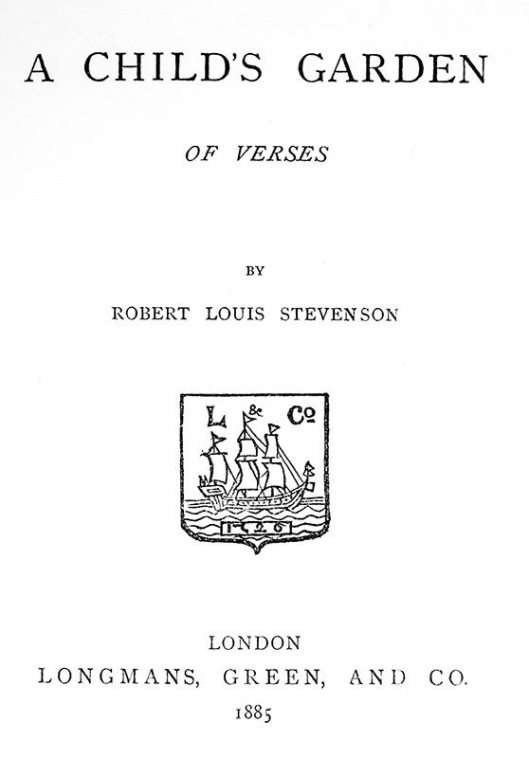
published a collection of poems.

image2achilds.jpg

Poem #19 (if you count the dedication, which is, in fact, a poem) begins:

“I have a little shadow that goes in and out with me,

And what can be the use of him is more than I can see.”

[If you would like your own copy of this volume, follow this LINK.]

In fact, in literature, its use is both visible—and invisible.

In psychology, the shadow is metaphorical, being used to symbolize an unconscious part of the personality.  [For more on this, see this LINK.]

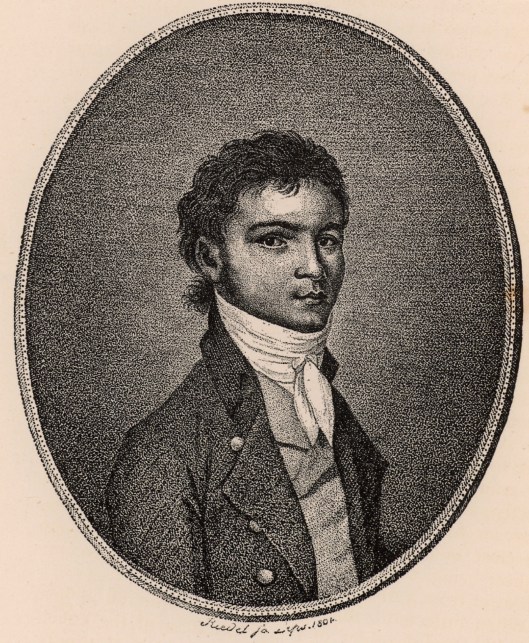
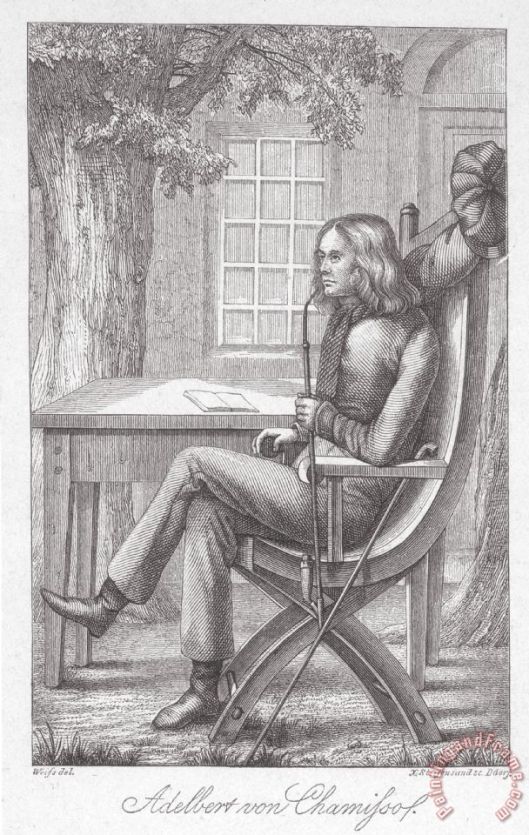
And, visibly—but also invisibly—the shadow as physical object can represent something more, as we find in perhaps the first modern literary use of the shadow in Adelbert von Chamisso’s (1781-1838)

image3avonc.jpg

novella (a short novel), Peter Schlemihls Wundersame Geschichte (1814), “Peter Schlemihl’s Amazing Story”.

image4ps.jpg

Here’s the first English translation, from 1824.

image5firsteng.jpg

In the story, the protagonist, Peter Schlemihl, meets a strange man, who can pull anything out of his pocket—and we mean anything.  As Schlemihl reports:

“If my mind was confused, nay terrified, with these proceedings, how was I overpowered when the next-breathed wish brought from his pocket three riding horses.  I tell you, three great and noble steeds, with saddles and appurtenances!  Imagine for a moment, I pray you, three saddled horses from the same pocket which had before produced a pocket-book, a telescope, an ornamented carpet twenty paces long and ten broad, a pleasure-tent of the same size, with bars and iron-work!”

(This is from the 3rd edition (1861) of that first English translation.)

Impressed, Schlemihl is quickly persuaded to make a trade.  The strange man offers him a magic purse, which he calls “Fortunatus’ fortune-bag”.  This object is based on an old story which seems to appear for the first time in 1509 as Ausgabe des Fortunatus (the “Edition/Issue of Fortunatus”?), in which Fortunatus (as you’ll probably guess, the name means “Lucky”) has both a wishing cap and this bag.  Here’s the title page of that first edition.

image6fort


[If you would like to read one version of the Fortunatus story, here is a link to it from Andrew Lang’s The Grey Fairy Book (1900).]

The purse will always produce ten gold coins when one puts a hand inside, guaranteeing a steady means of wealth for the owner.  In return for this, Schlemihl hands over–his shadow.

image7ps.jpg

This seems an odd trade, but having a magic bag which acts as an endless bank account is certainly no less strange.  Not to be too literal-minded, but beyond the idea that a shadow is a tradable item, it makes us wonder, however:  what could a shadow be made of that it can be removed and collected?

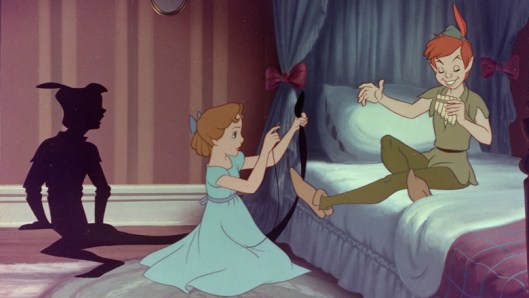
At the beginning of Peter Pan (1904), Peter has lost his shadow and Wendy reattaches it by sewing it on, as if it were simply mobile black cloth and perhaps this is how we might think about it as a physical object, at least for shadow stories.

image8asewing.jpg

Although he is pleased with the money, Schlemihl soon realizes the real price he has paid:  when people see that he has no shadow, they avoid him in anything from disgust to horror, which ruins his ability to live anywhere and even to marry the girl he wishes.  The shadow, then, is more than cloth:  it is part of a person’s identity.  If you cast no shadow, you are not quite human.  The real price of the shadow is even higher, however, as Schlemihl learns when the strange man (who is obviously Satan in human form) returns to offer a second bargain:  the Devil will return his shadow in return for his soul.

It’s clear that here Schlemihl has learned his lesson, refusing this offer several times and finally throwing away the “fortune-bag”.  Although he may believe that he is done with magic, magic is not yet done with him, however.  With some of the few coins remaining to him, by accident (or so it seems), he buys a pair of seven-league boots.  (A “league”, classically, is about three miles, so, when he puts them on, each step he takes is at least twenty-one miles.)

image8seven


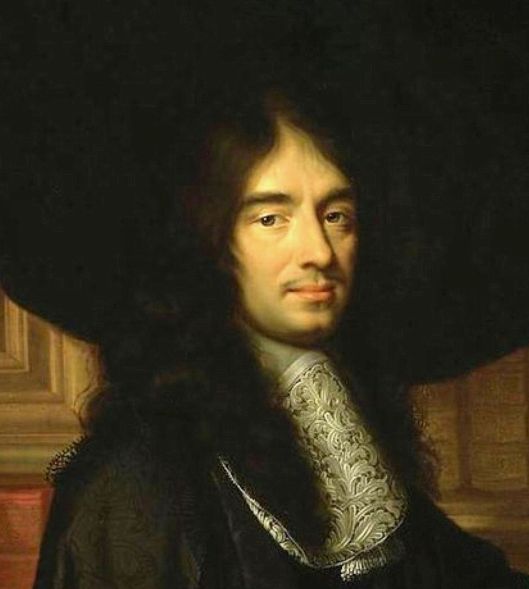
This element of the story, in turn, is also based on something in another older story, which appears in Charles Perrault’s (1628-1703)

image9perrault.jpg

1697 collection, Histoires ou Contes du Temps Passe,

image10histoires.jpg

“Le Petit Poucet” (maybe “Thumblet”?).  In this story, a character steals a pair of these boots from a pursuing ogre, allowing the thief to cover great distances with every stride.

[If you’d like to read this story, here’s a LINK from a 1901 translation.]

With these boots, Schlemihl never regains his shadow, but eventually gains a peaceful existence studying the natural world (which, in fact, von Chamisso did, as well, becoming a well-known naturalist later in life).

[Here’s a LINK to a translation of the story by Michael Haldane.]

More than a century later, the early modern fantasy writer, Lord Dunsany (1878-1957)

image11ld.jpg

reused the idea of buying or trading shadows in his 1926 novel, The Charwoman’s Shadow.

image12char.jpg

A charwoman, or, simply, “char” (“char” is the same as “chore”, meaning “a task”), in the UK means a kind of cleaning woman.

image13chars.jpg

When it comes to fantasies, the idea that this may be about the shadow not of a princess, or at least a lady in distress, but of an ordinary cleaning lady, is immediately intriguing, but the charwoman isn’t really the main character.  That’s Ramon, the son of an impoverished Spanish nobleman.

To earn money for his sister’s dowry, as well as to find a profession, Ramon apprentices himself to a wizard who deals, among other things, in shadows.  As payment for his learning, Ramon uses his shadow—but, just like Peter Schlemihl before him, quickly comes to regret it.  The charwoman works in the wizard’s house and, as Ramon slowly learns spells, he also learns her story and what has happened to her since she traded away her shadow long before.

In a moment of chivalry (the story takes place in Spain in what’s called the Siglo de Oro, the “Golden Century”—the early 16th to the later 17th centuries–when wealth from the New World made Spain a world power, as well as a leader in the arts), Ramon promises to rescue the Charwoman’s shadow for her.  In the house of a wizard, you can imagine that this won’t be easy, but, eventually, and through ingenuity, he does so, only to discover that—but you should really read the story for yourself.

[Unfortunately, as this book was published in 1926, it’s still under copyright here in the US, so we can’t offer our usual LINK, but we can offer you Peter and Wendy (1911), the novel version of Barrie’s 1904 play—LINK.]

In contrast to shadows which can be traded or lost, what’s interesting to us about Sauron’s shadow is that it’s no more than a suggestion of the appearance of its owner, who, although he casts that shadow over all of Middle-earth, never appears physically in the novel.  The Nazgul—shadowy figures themselves—represent him, but Sauron himself is never more than a shadow and, in fact, when he is eventually destroyed, it’s his shadow we see broken and swept away:

“And as the Captains gazed south to the Land of Mordor, it seemed to them that, black against the pall of cloud, there rose a huge shape of shadow, impenetrable, lightning-crowned, filling all the sky.  Enormous it reared above the world, and stretched out towards them a vast threatening hand, terrible but impotent:  for even as it leaned over them, a great wind took it, and it was all blown away, and passed; and then a hush fell.”  (The Return of the King, Book Six, Chapter 4, “The Field of Cormallen”)

That “little shadow”, then, certainly has more uses than the child in Stevenson’s poem will ever see.

Thanks, as ever, for reading.

MTCIDC

CD

Never That Willow

14 Wednesday Aug 2019

Posted by Ollamh in J.R.R. Tolkien, Literary History

≈ Leave a comment

Tags

Barrow-downs, Barrow-wights, Hamlet, humours, Melancholy, Old Man Willow, Ophelia, Othello, Robert Burton, The Lord of the Rings, The National Library of Scotland, Thomas D'Urfey, Timothy Bright, Tolkien, Tom Bombadil, William Shakespeare, Willow Tree

As always, dear readers, welcome.

In our last post, we had:

  1. begun with a willow tree

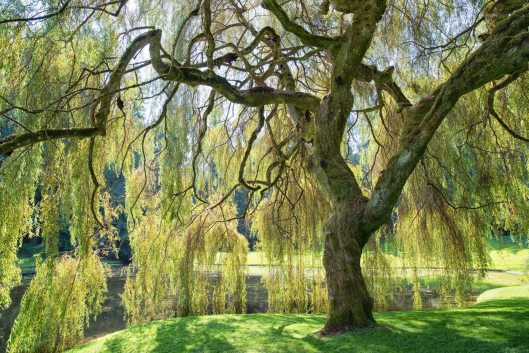
image1willow.jpg

  1. moved to the English Renaissance association between willows and melancholy

image2renmel.jpg

  1. and, in particular, the play Hamlet (1599-1601), in which a disturbed girl, Ophelia, falls from a willow into a stream and drowns

image3ophelia.jpg

  1. as well as Desdemona, in Shakespeare’s Othello (1604), who sings a song with “Willow” as a kind of lamenting chorus—just before she’s murdered by her jealous (and misled) husband.

image4desd.jpg

Melancholy comes from an imbalance of the humors, so medieval and Renaissance people thought, from those substances which control the body and its moods.

image5humors.png

Too much black bile and you might be plunged into a depression.

image6adepression.jpg

(Although his posture suggests that he’s grieving, this young man’s armor says that he’s involved in a medieval sport that certain Tudor noblemen still engaged in, jousting.  Perhaps he just lost?)

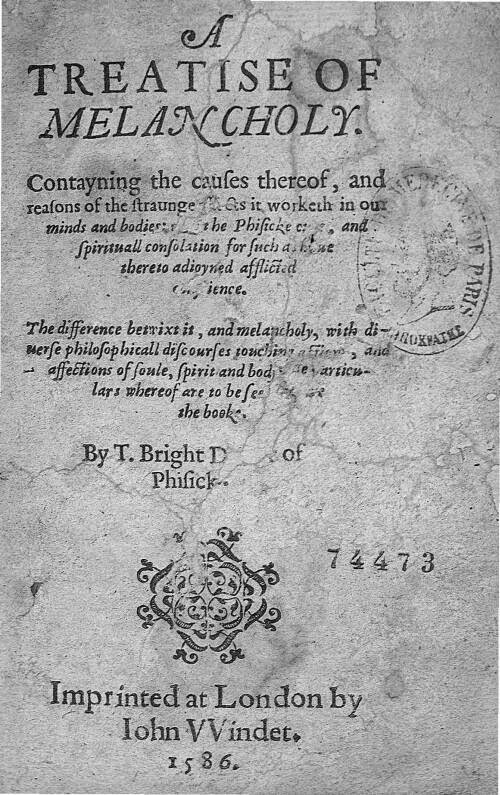
As this was considered a serious problem, English Renaissance authors created texts which analyzed the condition, like Timothy Bright, a physician, who published his treatise in 1586,

image6treatise.jpg

(if you’d like to see what was believed medically in 1586, here’s a LINK to the work.)

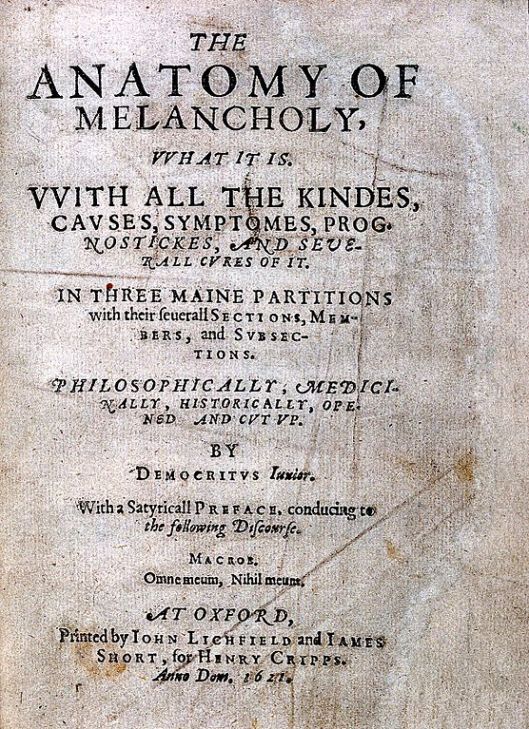
or Robert Burton, a philosopher, who published his in 1621.

image7burton.jpg

One way of dealing with that imbalance was by bleeding—the idea being that, since the humors influenced the blood, by opening up a blood vessel and letting some of the blood pour out it might act as a kind of safety valve.

image8bleeding.jpg

Another treatment was playing or listening to music.

image9lutenist.png

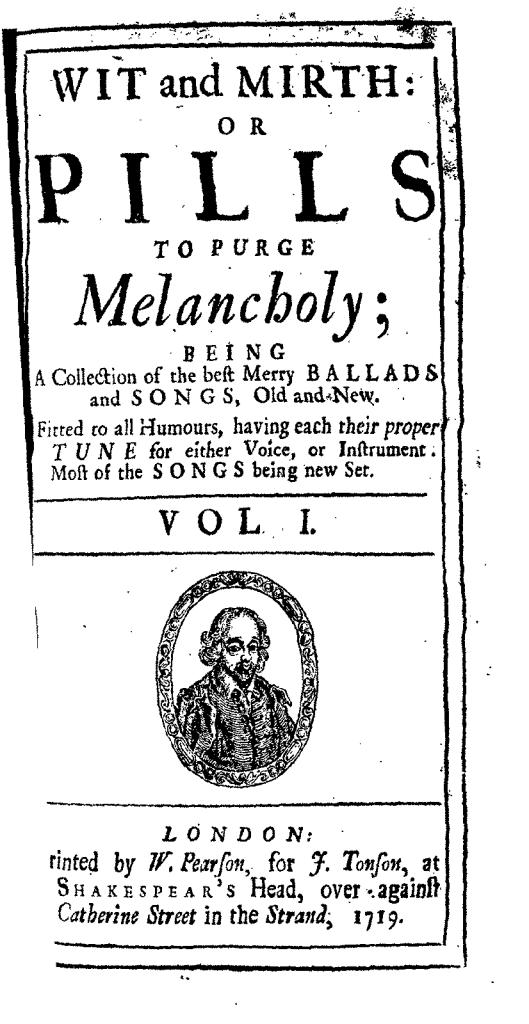
This therapeutic idea led to the title of one of the first great collections of Renaissance and post-Renaissance lyrics and tunes, Thomas D’Urfey’s, Wit and Mirthe, or Pills to Purge Melancholy (1698-1720).

image10wit.png

(The National Library of Scotland has a complete edition of all six volumes of this.  Here’s a LINK, so that you can download them for yourself.)

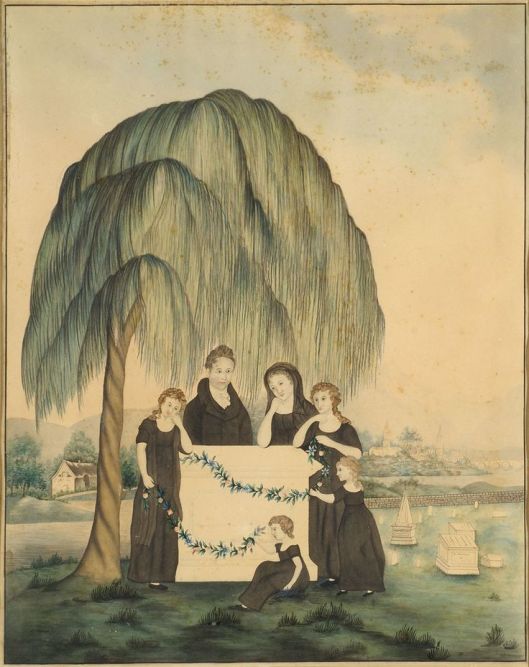
Melancholy and willows became even more bound together in the early 19th century, when the tree, along with other images, such as urns, was used as a symbol of mourning on tombstones.

image11tomb.jpg

Willows, then, have moved from being associated with an Elizabethan ailment to an expression of grief at the death of a loved one, which could certainly bring on melancholy.

image12awillow.jpg

For us, willows have another association, however, but one which includes death–and the Elizabethan use of music as a cure.  In The Lord of the Rings, when Frodo and his friends try to cut through the Old Forest to escape the pursuing Nazgul,

image12naz.jpg

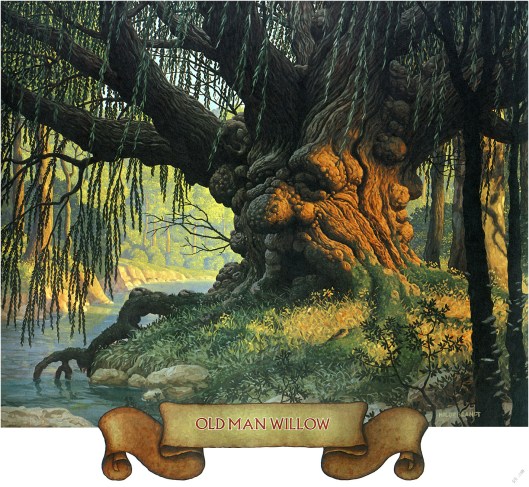
they are confused by the hostile wood and eventually brought to the bank of the Withywindle, where Old Man Willow

image13omw.png

sings a spell:

“They shut their eyes, and then it seemed that they could almost hear words, cool words, saying something about water and sleep.  They gave themselves up to the spell and fell fast asleep at the foot of the great grey willow.”  (The Fellowship of the Ring, Book One, Chapter 6, “The Old Forest”)

This was more than just a sleepy-spell, however, as the tree attempts to drown Frodo, swallows Pippin, and half-swallows Merry (his upper half).

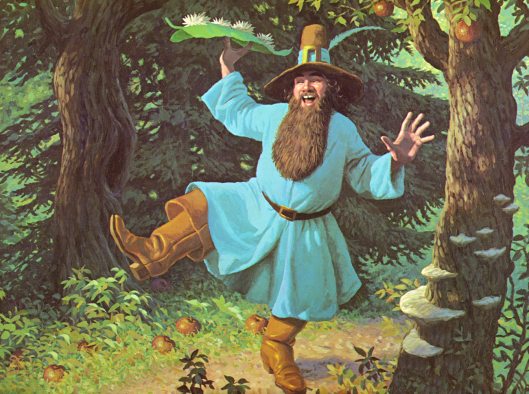
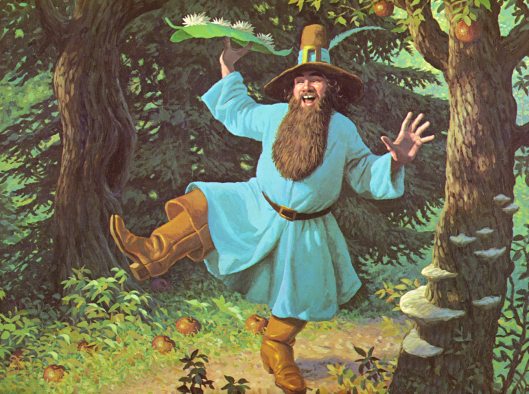
When Sam and Frodo (whom Sam has rescued) threaten the tree with fire, it threatens to kill Merry and Pippin and it looks like a standoff until Frodo simply runs off, shouting for help, and the very odd figure of Tom Bombadil appears.

image14tb.jpg

He has a very distinctive look—

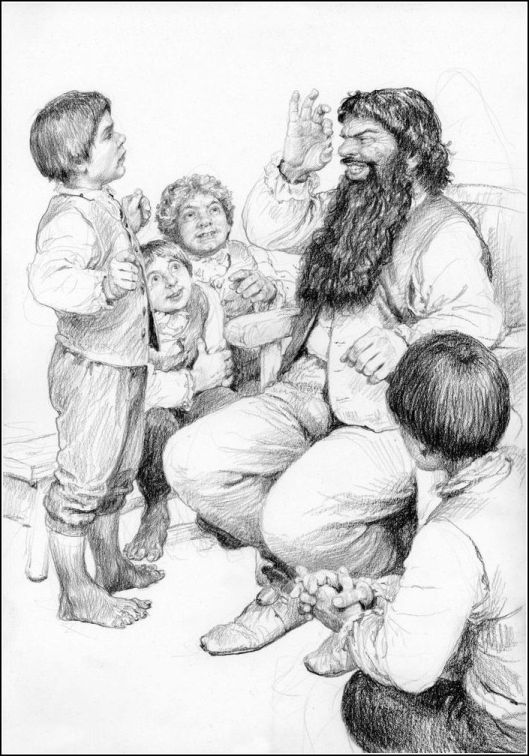
“there appeared above the reeds an old battered hat with a tall crown and a long blue feather stuck to the band…there came into view a man…stumping along with great yellow boots…He had a blue coat and a long brown beard; his eyes were blue and bright, and his face was red as a ripe apple, but creased into a hundred wrinkles of laughter.”

As well, he has distinctive speech and this is where music as cure reappears.  Commonly, Tom’s speech is either actual song or short declarative sentences, which fall into a metrical pattern reminiscent of song:

“What’s the matter here then?  Do you know who I am?  I’m Tom Bombadil.  Tell me what’s your trouble!”

DUM-tee-DUM-tee-DUM-DUM.  DUM-tee-DUM-tee-DUM-DUM.  DUM-DUM-DUM-tee-DUM.  DUM-tee-DUM-tee-DUM-DUM.

He shows no fear of the fearsome willow, breaking off one of its branches and smacking the tree with it while employing this characteristic chanting—
“You let them out again, Old Man Willow!…What be you a-thinking of?  You should not be waking.  Eat earth!  Dig deep!  Drink water!  Go to sleep!  Bombadil is talking!”

Who this figure is, is only ever explained in the vaguest way.  His companion, Goldberry,

image15goldberry.jpg

says of him simply, “Tom Bombadil is master.” (The Fellowship of the Ring, Book One, Chapter 7, “In the House of Tom Bombadil”)  And, when he receives the Ring from Frodo, even when he puts it on, it has no effect upon him.

image16ring.jpg

As a character in the book, he has proved awkward both for audio adapters and P Jackson and his writers, virtually all of whom have tended, over the years, simply to leave him out of their versions of the story.  This leaves a gap, of course, especially when it comes to Tom’s second rescue of the hobbits, from a barrow-wight (illustration by one of our favorite Tolkien artists, Ted Nasmith),

image17bw.jpg

not only because it’s a wonderfully spooky part of the story, but because Tom ransacks the barrow and gives the hobbits short swords “forged long years ago by Men of Westernesse:  they were foes of the Dark Lord, but they were overcome by the evil king of Carn Dum in the Land of Angmar”” (The Fellowship of the Ring, Book One, Chapter 8, “Fog on the Barrow-Downs”).   With one of these swords, because of where and when it’s from, Merry is able to wound the chief of the Nazgul who is, in fact, that evil king of Angmar mentioned by Tom Bombadil, allowing Eowyn to finish him off.

Tolkien himself was less than concrete in his explanation of Tom, writing to Naomi Mitchison in April, 1954:

“Tom Bombadil is not an important person—to the narrative.  I suppose he has some importance as a ‘comment’.  I mean, I do not really write like that:  he is just an invention (who first appeared in the Oxford Magazine about 1933 [1934]), and represents something that I feel important, though I would not be prepared to analyze the feeling precisely.” (Letters, 178)

Considering our theme of melancholy and, later, death, associated with willows, as well as the Elizabethan idea that music might cure or at least ameliorate that melancholy, our feeling is that Tom, in the first book of The Lord of the Rings, is a counterbalance, with his singing and chanting, to all of the darkness we’re gradually being shown.  As JRRT says in that same paragraph to Naomi Mitchison:

“I would not, however, have left him in, if he did not have some kind of function.  I might put it this way.  The story is cast in terms of a good side, and a bad side…”

Tom, then, in our view, is not only on the good side, but the antidote to the bad, twice, dealing not only with a living tree, but with a dead and murderous wight.  In both cases, he uses song, making him rather like an Elizabethan cure for the melancholy associated with willows—and, in the 19th-century, willows associated with death–brought to life.  It’s no wonder that, when Sauron is defeated and Middle-earth is beginning to heal, Gandalf tells the hobbits:

“…I am turning aside soon.  I am going to have a long talk with Bombadil:  such a talk as I have not had in all my time.” (The Return of the King, Book Six, Chapter 7, “Homeward Bound”)

For Gandalf, Tom is the humors back in balance.

As ever, thanks for reading and

MTCIDC

CD

ps

For another willow, you might try George Lucas’ fantasy film, Willow (1988).  It has a complicated plot, all about an abducted infant who will fulfill a prophecy, a valiant dwarf, white and black magic, and a rather ragged warrior.  Here’s the LINK for the first trailer (there’s a second, as well).

Although not quite, for us, of the same level as The Princess Bride, being perhaps more like Labyrinth or The Dark Crystal or Time Bandits, like all of those, it has its moments of fun.


Never a Willow

07 Wednesday Aug 2019

Posted by Ollamh in Fairy Tales and Myths, J.R.R. Tolkien, Literary History, Narrative Methods

≈ Leave a comment

Tags

Babylon, Baltimore Consort, Chludov Psaltery, Dennis Moore, Desdemona, Euphrates, Hamlet, Highwaymen, humours, Israelites, JE Millais, Melancholy, Monty Python, Old Man Willow, Ophelia, Othello, Robert Burton, The Anatomy of Melancholy, The Carman's Whistle, The Lord of the Rings, The Old Forest, Tigris, Tolkien, Tom Bombadil, William Shakespeare, Willow

As always, dear readers, welcome.

In our last posting, although we were talking about 18th-century highwaymen, somehow—we blame the “Dennis Moore” sketch—

image1dennismoore.jpg

we included mention of a willow.

image2willow.jpg


In Anglo-American culture, the willow has long suggested melancholy, perhaps being somehow linked with Psalm 137, which laments the fall of Jerusalem to the Babylonians in 586BC and the so-called “Babylonian captivity” of the Israelites?

“By the rivers of Babylon, there we sat down, yea, we wept, when we remembered Zion.

We hanged our harps upon the willows in the midst thereof.

For there they that carried us away captive required of us a song; and they that wasted us required of us mirth, saying, Sing us one of the songs of Zion.

How shall we sing the Lord’s song in a strange land?”

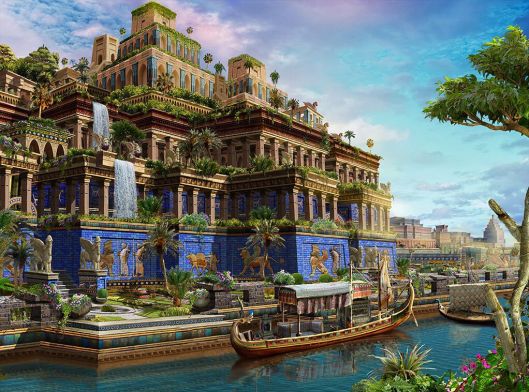
Under all of that heavy-handed Babylonian mockery is the simple fact that willows are water-lovers, so it would be natural that they would grow near the Euphrates and Tigris, the two major rivers of Babylon.

image3babylon.jpg

If the Israelites are no longer singing, we would guess that parking their harps on the willows would be as good a place as any.  Certainly medieval manuscript illustrators had no trouble envisioning it.  This is from the 9th-century Chludov Psaltery (a collection of psalms).

image4harps.jpg

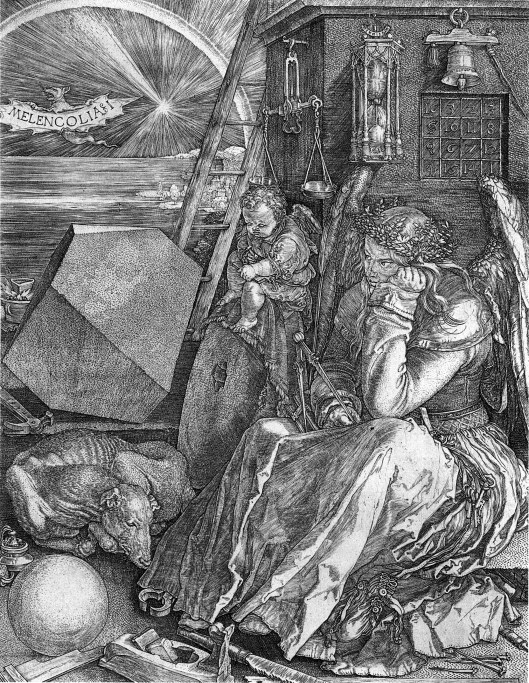
“Melancholy”, medieval/Renaissance people believed,

image5aaduerer.jpg

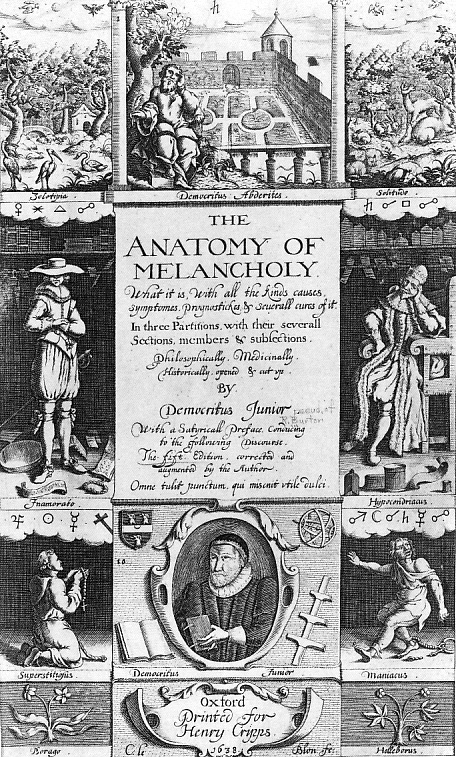
came from an imbalance of the four “humours” which ran the body and its emotions and people in Shakespeare’s day and beyond appear to have so suffered from it that they consulted a famous and popular text, Robert Burton’s The Anatomy of Melancholy, What it is: With all the Kinds, Causes, Symptomes, Prognostickes, and Several Cures of it. In Three Maine Partitions with their several Sections, Members, and Subsections. Philosophically, Medicinally, Historically, Opened and Cut Up.  That this was a pressing matter for the people of this age is clear from the length of the first edition of 1621—it’s nearly 900 pages—and later editions, which appeared within the next few years, were even longer.  This is the frontispiece of the 1638 edition–

image5amelancholy.jpg

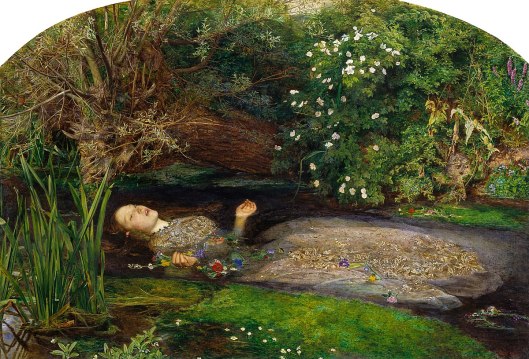
A common treatment for the problem (too much black bile in the system—the “melan-“ part is Greek for “black”—the “-choly” is the “choler”, or bile) was to listen to music, but clearly not all music was soothing, as we see in Shakespeare’s Hamlet (1599-1601) , where Hamlet’s girlfriend, Ophelia, goes mad and spends her time drifting around the castle singing bits of unhappy songs and handing out flowers with significant meanings.  As music can be involved with melancholy, so, as we said, can willows and the two come together when Ophelia trusts a willow–

“There is a willow grows aslant a brook,
That shows his hoar leaves in the glassy stream;
There with fantastic garlands did she come
Of crow-flowers, nettles, daisies, and long purples
That liberal shepherds give a grosser name,
But our cold maids do dead men’s fingers call them:
There, on the pendent boughs her coronet weeds
Clambering to hang, an envious sliver broke;
When down her weedy trophies and herself
Fell in the weeping brook. Her clothes spread wide;
And, mermaid-like, awhile they bore her up:
Which time she chanted snatches of old tunes;
As one incapable of her own distress,
Or like a creature native and indued
Unto that element: but long it could not be
Till that her garments, heavy with their drink,
Pull’d the poor wretch from her melodious lay
To muddy death.”  (Hamlet, Act IV, Sc 7)

image5ophelia.jpg

(This is a painting by JE Millais, 1851/2.  That “dead men’s fingers” should have been enough, we think!)

The melancholy continues in Shakspeare’s Othello (1604), Act IV, Scene 3, where the soon-to-be-murdered-by-the-title-character Desdemona sings a sad little song, beginning:

“The poor soul sat sighing by a sycamore tree,
Sing all a green willow;
Her hand on her bosom, her head on her knee,(45)
Sing willow, willow, willow.
The fresh streams ran by her, and murmur’d her moans;
Sing willow, willow, willow;
Her salt tears fell from her, and soften’d the stones”—

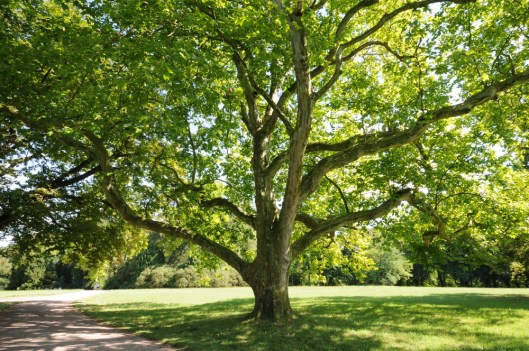
(It seems like this posting can’t escape including even more trees.  Sycamores are another water-loving tree,

image6sycamore.jpg

but the emphasis here is upon that willow and we’ll stick with it.)

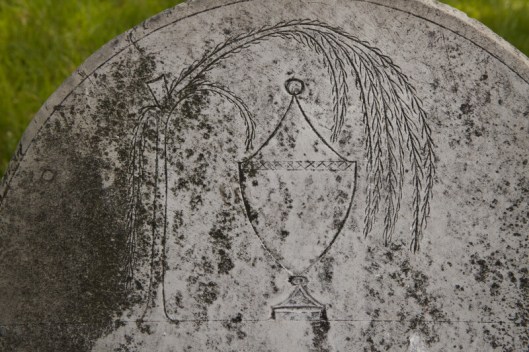
Perhaps it’s the slumping shape, which might suggest despair, or at least grief, but the willow began to appear on tombstones here in the US at the beginning of the 19th century, sometimes by itself,

image7willow.JPG

sometimes shading other symbols of mourning, like an urn.

image8willow.jpg

It could appear in other funerary art, as well—as in pictures

image9art.jpg

and even as part of another funerary—and life—custom of the time, the giving/exchanging of locks of hair.  In this mourning brooch, one can see a willow made from such a lock.

image10hair.jpg

With such a grim history, it shouldn’t be surprising, then, that a willow familiar to readers of The Lord of the Rings might have a sinister purpose.

image11oldmanwillow.jpg

He’s not alone in being hostile foliage.  As Merry tells Frodo, Sam, and Pippin:

“But the Forest is queer.  Everything in it is very much more alive, more aware of what is going on, so to speak, than things are in the Shire.  And the trees do not like strangers.  They watch you.  They are usually content merely to watch you, as long as daylight lasts, and don’t do much.  Occasionally the most unfriendly ones may drop a branch, or stick a root out, or grasp at you with a long trailer.  But at night things can be most alarming…  (The Fellowship of the Ring, Book One, Chapter 6, “The Old Forest”)

Their journey through the Forest, intended to put some space between them and the danger of the Nazgul, provides its own dangers, as the place seems to move about of its own accord, confusing travelers—or worse:

“Suddenly Frodo himself felt sleep overwhelming him.  His head swam.  There now seemed hardly a sound in the air.  The flies had stopped buzzing.  Only a gentle noise on the edge of hearing, a soft fluttering as of a song half whispered, seemed to stir in the boughs above.  He lifted his heavy eyes and saw leaning over him a huge willow-tree, old and hoary.  Enormous it looked, its sprawling branches going up like reaching arms with many long-fingered hands, its knotted and twisted trunk gaping in wide fissures that creaked faintly as the boughs moved…”

We are a far cry from Monty Python here.  The willow then tries to drown Frodo, swallows Pippin completely, and the upper half of Merry, and, were it not for the appearance of perhaps the oddest character in The Lord of the Rings, it is difficult to imagine what would have happened next.

image12tbombadil.jpg

What will happen in our next posting, however, you will see next week (hint:  the posting is entitled, “Never This Willow”).  In the meantime,

Thanks, as always, for reading and

MTCIDC

CD

ps

To treat any melancholy you might feel from reading this posting, please see below for a very merry Elizabethan song ably performed by the Baltimore Consort.


And here’s a LINK to a set of lyrics c. 1590 so that you can follow along.  You’ll notice that it includes melancholy, trees, and music, all in one.


Pub Crawl

17 Wednesday Jul 2019

Posted by Ollamh in Economics in Middle-earth, J.R.R. Tolkien, Literary History

≈ Leave a comment

Tags

CS Lewis, Dorothy Sayers, Eagles, Green Dragon Inn, Hutchinson Family Singers, inn, pub, Smaug, The Eagle and Child, The Green Dragon, The Hobbit, The Inklings, The Ivy Bush, The King's Arms, The Lord of the Rings, The Mitre, The Prancing Pony, The Vulture of the Alps, The White Horse, Tolkien

As ever, dear readers, welcome.

After a very disturbing evening with a group of vengeful and determined dwarves,

image1banddwarves.jpg

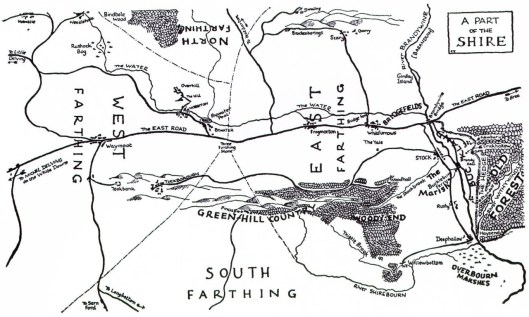
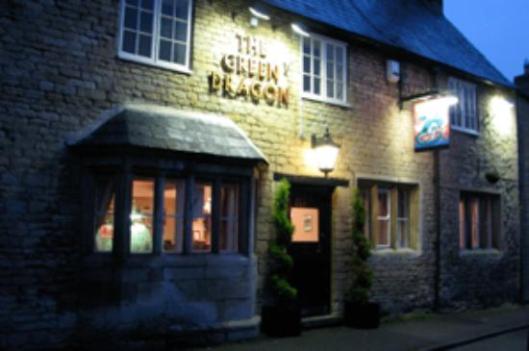
Bilbo wakes to a wreck of breakfast dishes and, soon after, the appearance of Gandalf, who prompts him to see that he has a note from Thorin (& Co.).  It makes an appointment for 11am that morning at the Green Dragon Inn, in Bywater.

image2bywatermap.jpg

With Gandalf harrying him, Bilbo barely makes it, but, a moment later, the journey eastward of The Hobbit begins.

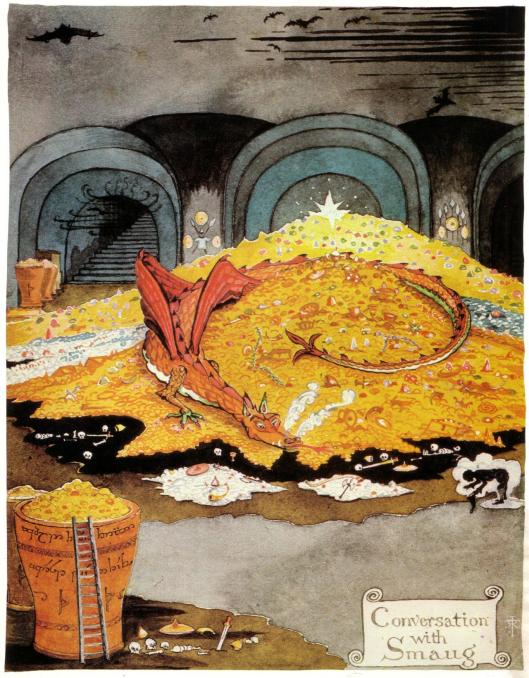
It is ironic, of course, that a trip which focuses upon removing a dragon

image3smaug.jpeg

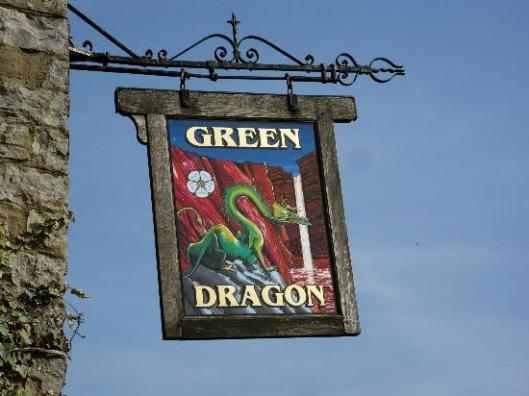
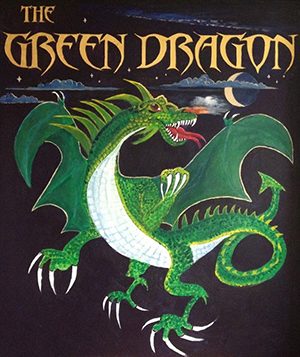
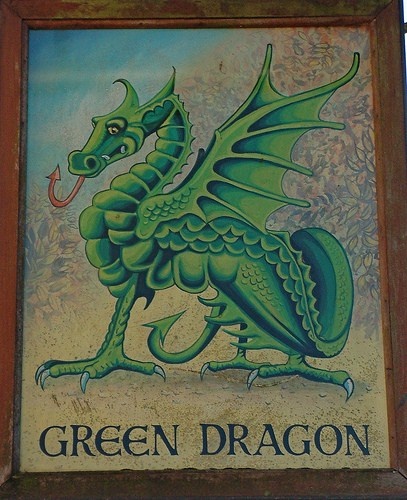
should commence with a place named after one, but, judging by the number of Green Dragon pubs in Britain one might find by googling right now, it may be nothing more than a common name—

image4pubsign.jpg

image5greendragsign.jpg

image6greendrag.jpg

image7greendrag.jpg

although, as Douglas Anderson points out in The Annotated Hobbit, 61, we know that JRRT had been interested in dragons, especially green ones, from childhood, as he wrote to WH Auden:

“I first tried to write a story when I was about seven.  It was about a dragon.  I remember nothing about it except a philological fact.  My mother said nothing about the dragon, but pointed out out one could not say ‘a green great dragon,’ but had to say, ‘a great green dragon.’  I wondered why, and still do.” (Letters, 214, 7 June, 1955)

The countryside east of the Shire and the story itself are empty of pubs (short for “public houses”, originally meaning simply a place open to the general public, but, in time, it came to mean a place licensed by the government to sell alcoholic beverages) after this, but, until we reach Bree, there are a certain number mentioned in The Lord of the Rings.  We meet the first, The Ivy Bush, in The Fellowship of the Ring, Book One, Chapter 1, “An Unexpected Party”, where we see a group of hobbits gossiping about Bilbo and Frodo.  In the next chapter,  “The Shadow of the Past”, The Green Dragon makes its second appearance in Tolkien when Sam Gamgee has a verbal tussle with Ted Sandyman on the subject of things seen and unseen, as well as on the sanity, or lack of it, of Bilbo and Frodo, there.

The Ivy Bush will only appear once more, linked with The Green Dragon, in the succeeding chapter, “Three Is Company”, but we will see The Green Dragon (mentioned by Sam in hopes that The Prancing Pony in Bree will measure up to it in Chapter 8, “Fog on the Barrow-Downs”) close to the end of The Lord of the Rings.  In The Return of the King, Book Six, Chapter 8, “The Scouring of the Shire”, it appears as an emblem of the endless ruin by Sharkey and gang of the old ways of the Shire:  “When they reached The Green Dragon, the last house on the Hobbiton side [of the Water], now lifeless and with broken windows…”

This is in great contrast to The Prancing Pony Sam worried about earlier

image8prancingpony.jpg

as we see it in The Fellowship of the Ring, Book One, Chapter 9, “At the Sign of the Prancing Pony”.  At first, the place seems menacing, especially to Sam, who:

“…stared up at the inn with its three storeys and many windows, and felt his heart sink.”

But then—

“As they [the hobbits] hesitated outside in the gloom, someone began singing a merry song inside, and many cheerful voices joined loudly in the chorus.  They listened to this encouraging sound for a moment and then got off their ponies.  The song ended and there was a burst of laughter and clapping.”

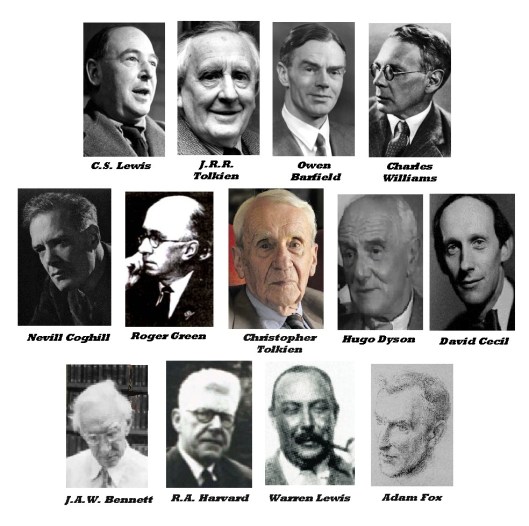
Pubs, and their upscale cousins, inns, would have been vital to people traveling before motels, hotels, and b&bs, as we can see in Book One of The Fellowship, and, for most of the rest of the novel, with the exceptions of Rivendell, Lorien, Edoras, and Minas Tirith, accommodation for the night would have meant a blanket on the ground.  For Tolkien and his friends in the writers’ group called The Inklings,

image9inklings.jpg

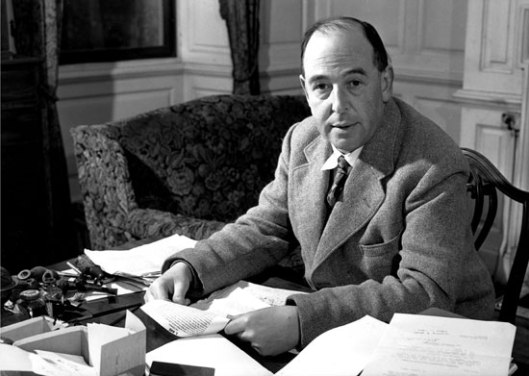
they were vital meeting points—not for the reading of new work, which appears to have been done in one member, C.S. Lewis’, rooms at Oxford,

image10csl.jpg

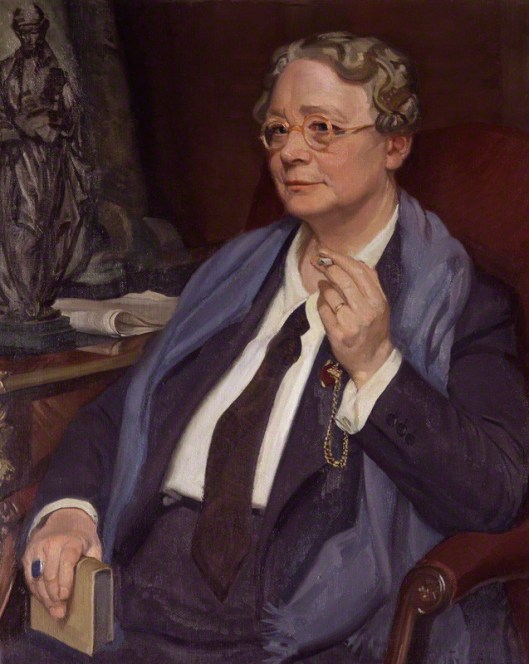
but for socializing and discussion, which was equally important for such a group of intelligent, educated, and highly-creative men.  (No women, alas!  One of our favorite mystery novelists and Dante-translator, Dorothy Sayers, 1893-1957, was friends with several members but, with the short-sightedness of the 1930s-50s, was never invited to join.)

image11dls.jpg

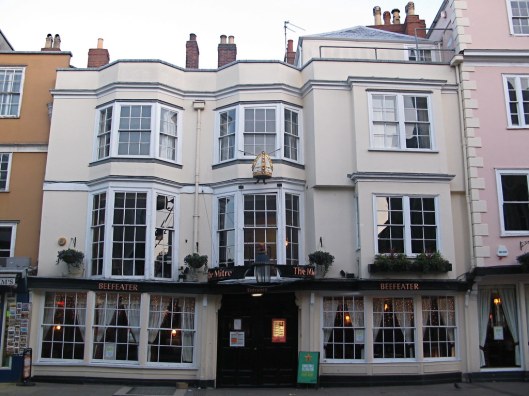
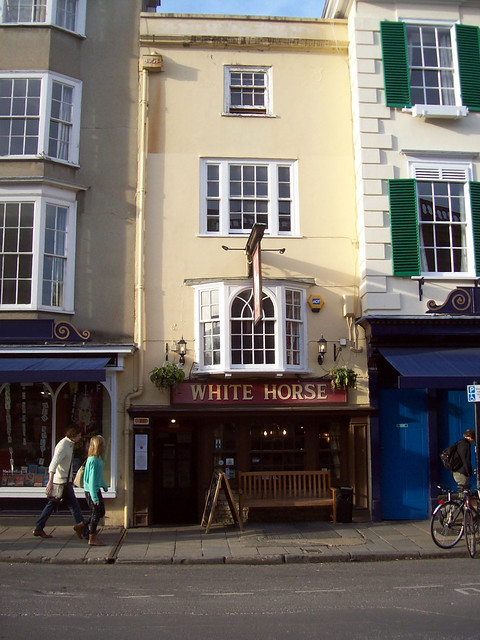
They met during the week not only at the best-known of their watering holes, the Eagle and Child,

image12bird.jpg

but at The Mitre,

image13mitre.jpg

The King’s Arms,

image14kingsarms.JPG

and at The White Horse.

image15whitehorse

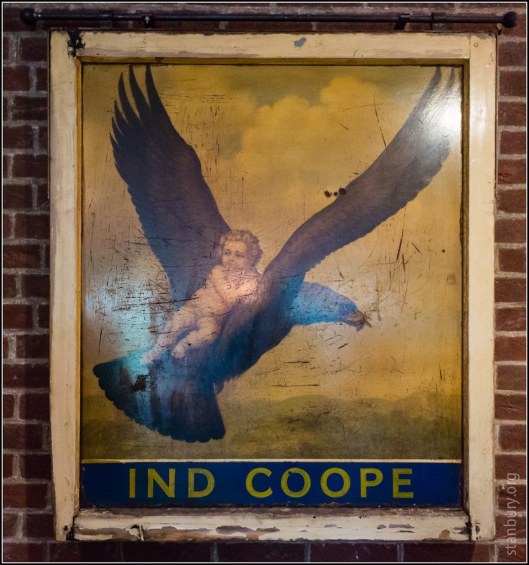
The one which caught our eye in particular is the first, which, as we said, is probably the one most closely associated with Tolkien and his friends.  Here’s its sign—

image16bird.jpg

The explanation of the pub’s name is, to us, a bit murky, supposedly coming from an element of the crest of the Stanley family which portrays an infant stolen by an eagle,

image17crest.jpg

but found alive and unharmed.  (Here’s a LINK so that you can judge for yourself.)

For ourselves, the idea of a child stolen by a raptor makes us think of a really awful 19th-century song, “The Vulture of the Alps”, a poem set to music about 1842 by a famous American vocal group of the 1840s-1870s, the Hutchinson Family Singers.  The title pretty much says it all.

image18hutch.jpg

If you’d like to know more, here’s a LINK.

When we think of eagles and Tolkien, however, we remember them as rescuers—of Gandalf, the dwarves, and Bilbo from the goblins and Wargs

image19rescue.jpg

and as providers of air assault in The Hobbit.

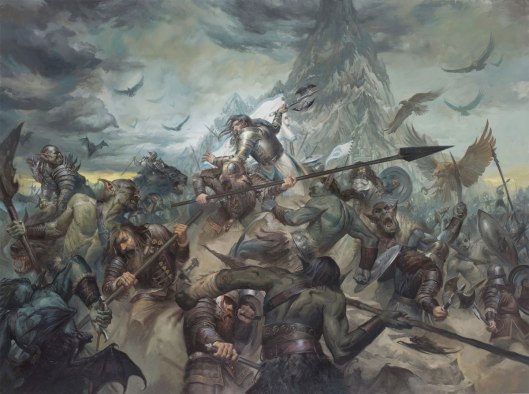
image20battle.jpg

And, in The Lord of the Rings, rescuer of Gandalf from Saruman,

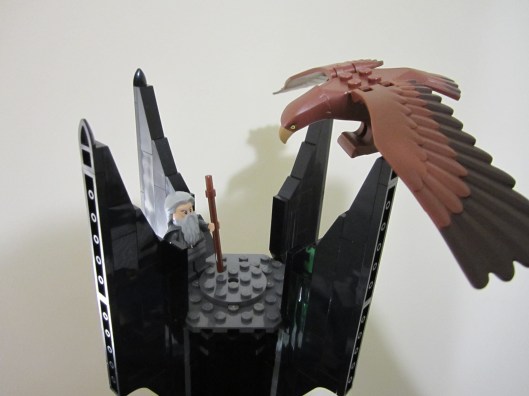
image21rescue


as allies of the West at the battle at the Morannon,

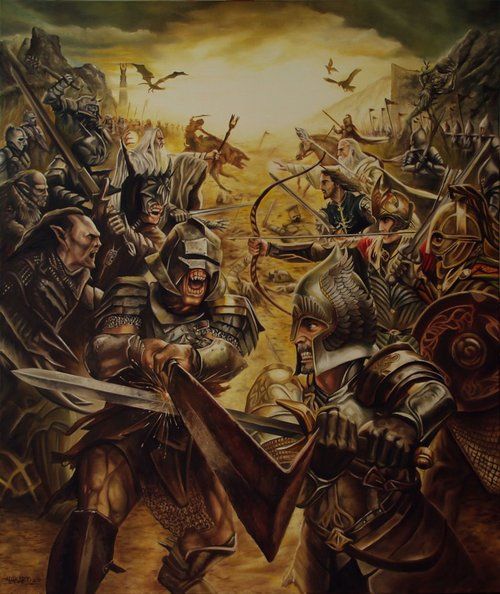
image22black.jpg

and as saviors of Frodo and Sam on Mt Doom.

image23savior.jpg

And it may be a crazy idea, but it makes us wonder—although Tolkien had abandoned The Hobbit unfinished in the early 1930s, he had picked it up again in 1936, just about the time the Inklings were meeting regularly (the first documented mention of them, apparently, is in a 1936 letter from CS Lewis to the novelist, Charles Williams, inviting him to join—see The Collected Letters of CS Lewis, Vol.2, 183—in a letter to William Luther White 9/11/67, JRRT dates the origins of the Inklings as “probably mid-thirties”—Letters, 387).  Could he have found his inspiration for these heroic birds and their habit of picking people up from the name of his pub?

As ever, thanks for reading.

MTCIDC

CD

ps

If you haven’t read CS Lewis’ wonderful essay, “On Three Ways of Writing for Children”, here’s a LINK.

pps

We have no illustration of Tolkien’s Green Dragon, but here’s a Tudor example from Wymondham in Norfolk which we think would do quite well.

image24green.jpg

Orc Logistics

10 Wednesday Jul 2019

Posted by Ollamh in Economics in Middle-earth, J.R.R. Tolkien, Military History, Military History of Middle-earth

≈ 1 Comment

Tags

American Civil War, BEF, Belgium, British Expeditionary Force, food and ammunition, French Army, German Army, Great War, guerilla, Helm's Deep, Horace Smith-Dorrien, Le Cateau, Marius, Marius' mules, Minas Tirith, Mons, Orcs, Paris, Romans, Schlieffen, Schlieffen Plan, The Lord of the Rings, Tolkien, Wagons, World War I

Welcome, as always, dear readers.

In August, 1914, as the German army was pushing through Belgium

image1germanarmy.jpg

in its attempt to sweep to the west of Paris and drive the French armies

image2french.jpg

eastwards towards the Germans waiting for them there (the so-called Schlieffen Plan),

image3schlieffen.jpg

they were met by the small (70,000 man) BEF, British Expeditionary Force,

image4tommy.jpg

a few miles north of the Franco-Belgian border, near the town of Mons, where the British fought a delaying action.

image5mons.jpg

The Germans were in such strength that the British were forced to pull back, retreating southward with the Germans pursuing so closely that the commander of one half of the British army (2nd Corps), Horace Smith-Dorrien,

image6hsd.jpg

decided that it was necessary to fight a second delaying action, at Le Cateau.

image7lecateau.jpg

A major reason to do so was not just that the German pursuit was so close, but that it was necessary to protect the trains.  This doesn’t mean the railways, but the endless lines of wagons

image8gswagon.jpg

which carried all the food and ammunition for the soldiers and stretched for miles behind them..

image9marching.jpg

It was also primarily horse-drawn and, on narrow roads, mostly unpaved, the trains moved very slowly, which was a major reason why armies in earlier centuries rarely ever campaigned during winter.

image10turenne.jpg

This was a problem, all the way back to the Romans.  In the 2nd century BC, the Roman general, Marius, in an attempt to do away with as much of a baggage train as he could,

image11romanwagon.JPG

ordered his men to carry as much of their equipment as possible, thus cutting down on baggage wagons and pack animals.  His men were less than pleased at being so loaded down and began to call themselves “Marius’ mules”.

image12mule.jpg

In the late 18th to early 19th century, when French revolutionary armies swelled beyond the ability to pay to supply them, the order was to travel lightly and to live off the land.  This may have reduced baggage—and even, perhaps, speeded up movement—but it made local people very hostile to the French and, in Spain, the response was to ambush the French whenever possible, which is where the word “guerilla” (originally meaning “little war”) comes from.

image13spguerillas.jpg

image14spguerillas.jpg

This could happen, particularly to Union supply trains,

image15wagons.jpg

during the American Civil War.

image16ambush.jpg

So, such trains were utterly necessary—if a large army had to cross miles of territory and perhaps fight on the way, they would need everything a train could carry.  At the same time, trains could be both vulnerable and thus draw off numbers of soldiers to protect them when such soldiers might be better employed on the battlefield, as well as cumbersome, because they were slow-moving, forcing armies to march at their speed (and in dry summer weather, the dust they raised could give away the direction of an army’s movements).

image17wagontrain.jpg

In The Lord of the Rings, we see two invasions:  that which attacks Helm’s Deep

image18helms.jpg

and that which attacks Minas Tirith.

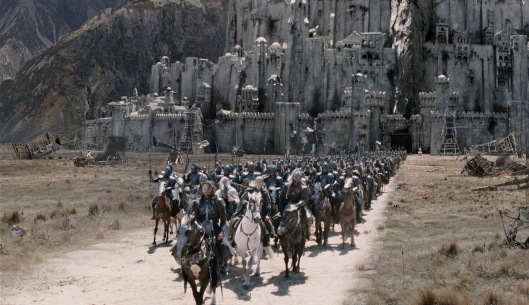
image19mt.jpg

The mass of invaders is vividly described:

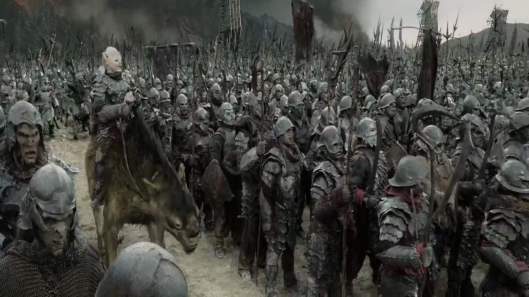
“For a staring moment the watchers on the walls saw all the space between them and Dike lit with white light:  it was boiling and crawling with black shapes, some squat and broad, some tall and grim, with high helms and sable shields.  Hundreds and hundreds more were pouring over the Dike and through the breach.”  (The Two Towers, Book Three, Chapter 7, “Helm’s Deep”)

“The numbers that had already passed over the River could not be guessed in the darkness, but when morning, or its dim shadow, stole over the plain, it was seen that even fear by night had scarcely over-counted them.  The plain was dark with their marching companies, and as far as eyes could strain in the mirk there sprouted, like a foul fungus-growth, all about the beleaguered city great camps of tents, blac or somber red.” (The Return of the King, Book Five, Chapter 4, “The Siege of Gondor”)

And yet there is no hint of what will supply them in their assaults and beyond.  We could argue, of course, that, as in so many things, JRRT is interested in the movement of his narrative and its effects:  masses of orcs are much more menacing than long lines of wagons, and we’re sure that this is actually the case, but there is another possibility.  The Great War began in Belgium as a war of movement, huge armies attempting to outflank and block each other like chess players.  For better or worse, those armies needed such baggage trains, as we’ve said.  By the time Tolkien had arrived at the Western Front, in mid-1916, the war had become static, as if both sides had dug trenches and were besieging each other.

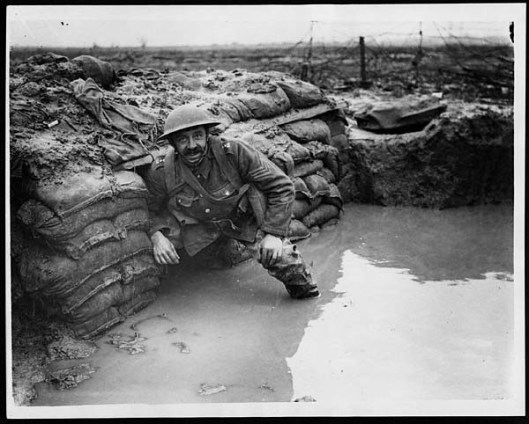
image20atrench.jpg

image20trench.jpg

Supply was clearly still necessary, but it was a complex combination of ports and ships and railway lines and wagons and mules and even human mules, close to the front.

image21.jpg

In a way, the whole business of supply had begun to look like just that:  a business, like importing bananas from the Caribbean, having them arrive in London, then passing them on by train to cities and towns across Britain.

image22bananas.jpg

So, instead of being part of long marching columns,image23marching.jpg

their even longer lines of wagons lagging behind, Second Lieutenant Tolkien would have seen long lines of men and animals, lugging endless boxes and cans and bundles—

image24carrying.jpg

image25carrying.jpg

necessary for war, but hardly dramatic, and so best left to the imagination of certain readers, those who can never see a battle without wondering, “When it’s time for lunch, who feeds all of those soldiers—or orcs (and never mind what certain people might eat)?”

image26lunch.jpg

As always, thanks for reading and

MTCIDC

CD

Dragon Economics 101

03 Wednesday Jul 2019

Posted by Ollamh in Economics in Middle-earth, J.R.R. Tolkien, Military History

≈ Leave a comment

Tags

Artillery, Belgium, Cathedral, Cloth Hall, Dale, Esgaroth, Great War, howitzers, Laketown, Lonely Mountain, No Man's Land, Smaug, The Hobbit, The Lord of the Rings, Tolkien, trenches, Ypres

Here is a postcard of the town of Ypres, in southern Belgium, in the years before the Great War, with its famous Cloth Hall and cathedral.

image1clothhallcath.jpg

The Cloth Hall was begun in 1200 and finished in 1304, being a center of the woolen trade in the region.

image2clothhall.jpg

The cathedral was begun in 1230 and finished in 1370.

image3cathedral.jpg

Then the Great War began and Ypres was just behind Allied lines.

image4map.jpg

Artillery had begun in the Middle Ages, as something which looks like a high school science experiment (plus armor).

image5millemete.jpg

By 1914, it was much bigger and much more efficient.

image6howitzer.jpg

(The German says, “Our Growlers!”—perhaps a soldier’s slang word for heavy howitzers like these?)

And, as the war progressed, bigger and more efficient yet.

image7biggergun.jpg

And even more so—to the point where some guns became so big and heavy that only railways could move them around.

image8railwaygun.jpg

Needless to say, when shells from such guns hit Ypres, the damage they caused was enormous.

image9ypres


image10ruins.jpg

And not only to Ypres, but to the whole region—entire villages disappeared, as did forests, landscapes became moonscapes.

image11nomansland.jpg

For some months in 1916, Second Lieutenant Tolkien walked through, lived through, this devastated world,

image12jrrt

which took many years to be repaired.

image13ypres.jpg

And, in the meantime, the economies of Europe suffered, with so much damaged or shifted to war work, and governments left with enormous debts, both the victors and the vanquished.

This devastation made us think about another devastation, first described by Thorin in Chapter One of The Hobbit, and, of course we wondered if JRRT thought of the damage caused by the endless, pitiless bombardments as he wrote about the ruin brought by a dragon.

Thorin begins, as we did at the opening of this posting, showing a peaceful, prosperous world:

“Altogether those were good days for us, and the poorest of us had money to spend and to lend, and leisure to make beautiful things just for the fun of it, not to speak of the most marvellous and magical toys, the like of which is not to be found in the world now-a-days.  So my grandfather’s halls became full of armour and jewels and carvings and cups, and the toy market of Dale was the wonder of the North.”

But, just as the Great War came to the ridges north of Ypres, so Smaug came down upon the town of Dale just below the Lonely Mountain and to the Mountain, as well:

“Then he came down the slopes and when he reached the woods they all went up in fire.  By that time all the bells were ringing in Dale and the warriors were arming.  The dwarves rushed out of their great gate; but there was the dragon waiting for them.  None escaped that way.  The river rushed up in steam and a fog fell on Dale, and in the fog the dragon came on them and destroyed most of the warriors…Then he went back and crept in through the Front Gate and routed out all the halls, and lanes, and tunnels, alleys, cellars, mansions and passages…Later he used to crawl out of the great gate and come by night to Dale, and carry away people, especially maidens, to eat, until Dale was ruined and all the people dead or gone.  What goes on there now I don’t know for certain, but I don’t suppose any one lives nearer the Mountain than the far edge of the Long Lake now-a-days.”

image14erebor.jpg

Thorin is correct about this:  Dale is ruined and abandoned (you can see the remains of the town on the right hand side of this illustration) and the Mountain has only one inhabitant.

image15smaug.jpg

When Bilbo disturbs him and steals a cup, Smaug goes on a second rampage, flying as far south as Lake-town:

“Fire leaped from the dragon’s jaws.  He circled for a while high in the air above them lighting all the lake…Fire leaped from the thatched roofs and wooden beam-ends as he hurtled down and past and round again…Flames unquenchable sprang high into the night. “  (The Hobbit, Chapter Fourteen, “Fire and Water”)

image16laketown.jpg

And, even when Bard’s arrow brings him down, Smaug causes a final wave of destruction:

“Full on the town he fell.  His last throes splintered it to sparks and gledes.  The lake roared in.  A vast steam leaped up, white in the sudden dark under the moon.  There was a hiss, a gushing whirl, and then silence.  And that was the end of Smaug and Esgaroth…”

Just as certain parts of Europe were destroyed and their economies stunted by the Great War, we can hear, in Thorin’s words, that the same has happened to Dale and the Lonely Mountain:  with no dwarves and no men to make the “armour and jewels and carvings and cups”, not to mention the “most marvellous and magical toys”, the whole economy of the area to the north of the Long Lake was completely destroyed.  Survivors built up Lake-town, but no one dared to revive the trade which had once enriched an entire region.

image17laketown.jpg

And, as for the few remaining dwarves:

“After that we went away, and we have had to earn our livings as best we could up and down the lands, often sinking as low as black-smith-work or even coal-mining.” says Thorin.

Although Thorin dies in the struggle to regain what was lost, there is a happy ending of sorts for the dwarves.  With Smaug dead, they can finally return, as can men, and rebuild, just as Europe began to rebuild—Ypres restored both Cloth Hall and cathedral in time.


image18ypres


But the dragon would return and all too soon…

Thanks, as always, for reading and

MTCIDC

CD

Out of Touch

26 Wednesday Jun 2019

Posted by Ollamh in Economics in Middle-earth, J.R.R. Tolkien

≈ 1 Comment

Tags

Barliman Butterbur, Bayeux Tapestry, Beacons, call box, Cell Phones, communication, Eagles, Gondor, Great War, messenger dog, messenger pigeon, military post, Moth, motorcycle messenger, Nazgul, Palantir, pay phone, Postal Service, Postmen, runner, semaphore, signal lamp, telegrams, telegraphy, The Lord of the Rings, The Prancing Pony, Tolkien, wireless telegraphy

Welcome, as always, dear readers.

Recently, we were charging our cell/mobile phone and completely forgot it when we walked out of the house.

image1cell


We were down the road when we realized it and the thought came to us:  how times have changed!  Before people could carry their little, flat phones in their pockets, away from home, if you had an emergency, you looked for a pay phone/call box.

image2payphone.jpg

image3callbox.jpg

When JRRT was born, in 1893, the main forms of long-distance communication were the post

image4post.jpg

and the telegram—brought to your house by a specially-uniformed messenger.

image5telegraph.jpg

The telephone had been invented in 1875, but was still far from common–

image6earlyphone.jpg

London’s first telephone directory, issued in 1880, listed about 300 customers in a city of 5,000,000 and, when the first actual phone book arrived, in 1896, it had 81,000 numbers for the whole of Britain, with a population of perhaps 30,000,000.  (To give you a literary example, Bram Stoker’s Dracula was published in 1896 and, although telegrams are common in the book, no one ever mentions or uses a telephone.)

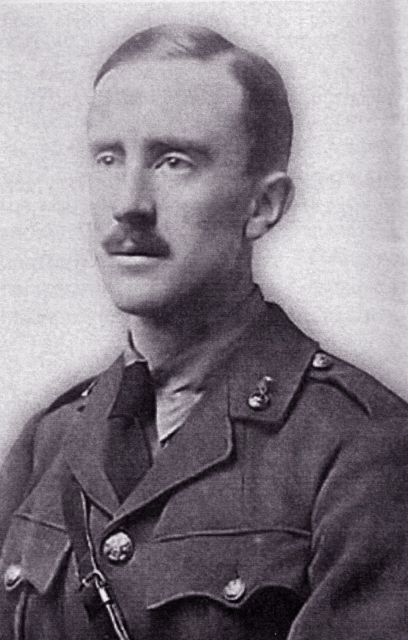
When Second Lieutenant Tolkien

image7ltjrrt.jpg

became his battalion’s signals officer in 1916, there were, in fact, a surprising number of forms of communication available, although most of them would not have ever appeared in civilian form.

There was the telephone, which, with its miles of wire, could be extremely vulnerable to enemy shellfire.


image8telephone

There was what would be called “wireless telegraphy”, an early form of radio, but not very dependable.

image9radio


There was actual telegraphy which, again, used miles of wire.

image10telegraph.jpg

There was the military post—mostly used not to transmit orders, but to maintain contact with home.

image11militarypost


And then there were the more specifically military methods.  At the most basic, there was the runner.

image12runner

Then there was the motorcycle messenger,

image13motorcycle

the signal lamp,

image14lamp

and even the semaphore.

image15semaphore

Beyond the human, there were the messenger dog,

image16dog.jpg

and the messenger pigeon.

image17pigeon.jpg

So, we asked ourselves, what were Tolkien’s Middle-earth equivalents?  First of all, we see Bilbo in Chapter One of The Hobbit, reading his morning’s mail when Gandalf appears.

image18bandg.jpg

This is expanded upon in the Prologue to The Lord of the Rings, where we hear about the post as being one of the few actual public services in the Shire.  (Here’s someone’s wonderful creation of a postal map of the Shire, complete with regional divisions.)

image19postalmap.jpg

This service clearly doesn’t extend beyond the Shire as Gandalf is forced to leave a letter for Frodo at The Prancing Pony

image20pony.jpg

in Bree, to be given to the first person going westwards.  The innkeeper, Butterbur, completely forgets it, with serious consequences.

Because this is a pre-industrial world, none of the electronic means would be available, of course.  Gondor used mounted messengers, as two are discovered ambushed by the Rohirrim on the road to the Rammas Echor (The Return of the King, Book Five, Chapter 5,“The Ride of the Rohirrim”).

image21nuntii.jpg

(This image is, of course, from the Bayeux Tapestry, the caption saying “Nuntii Wilielmi”, “William’s Messengers”, but the only illustrations of Gondorian mounted men we’ve found are all heavily-armored, something you wouldn’t expect a courier to be, so we’re suggesting this possibility, instead.)

A second method is by the chain of beacon fires along the mountains to the west of Gondor.

image22beacon.jpg

As for their opponents, we suppose that one might imagine the Nazgul as the airborne equivalent of mounted messengers, since they seem, when not pursuing Frodo and leading attacks on Gondor, to be couriers for Sauron.

image23naz.jpg

Sauron’s main communication device, however, appears to be the palantir, whereby he controls the actions of Saruman and, to a degree, of Denethor, the Steward.

image24sar.jpg

image25den.jpg

It’s rather surprising, we suppose, that Gandalf, who is powerful enough to deal with a palantir (although it’s Aragorn who is its rightful owner), can be so easily trapped by Saruman and left on top of Orthanc, completely isolated when he is so needed in the north.

image26orthanc.jpg

In P. Jackson’s film, he uses what looks like a fancy moth to call for help,

image27moth.jpg

which appears in the form of one of those eagles, so conveniently available when someone really gets into trouble (Bilbo, Gandalf, and the dwarves in The Hobbit, as well as dwarves, elves, and men vs goblins and Wargs, Frodo and Sam on the edge of Mt Doom in The Return of the King).  Suppose, instead, if Gandalf had reached into this robe and pulled out his cell phone–

image28cell.jpg

which he would never have left behind after charging it…

Thanks for reading and

MTCIDC

CD


It’s a Long Way…

22 Wednesday May 2019

Posted by Ollamh in Films and Music, J.R.R. Tolkien, Literary History, Military History, Military History of Middle-earth

≈ Leave a comment

Tags

American Civil War, Aulos, Crusaders, Great War, Greek, Hoplites, Julius Caesar, Macbeth, Marching song, May 4th, Palestine Song, Rohirrim, Roman songs, songs, Star Wars, Star Wars Day, The Hobbit, The Lord of the Rings, Tolkien, Walter von der Vogelweide

Welcome, dear readers, as always.

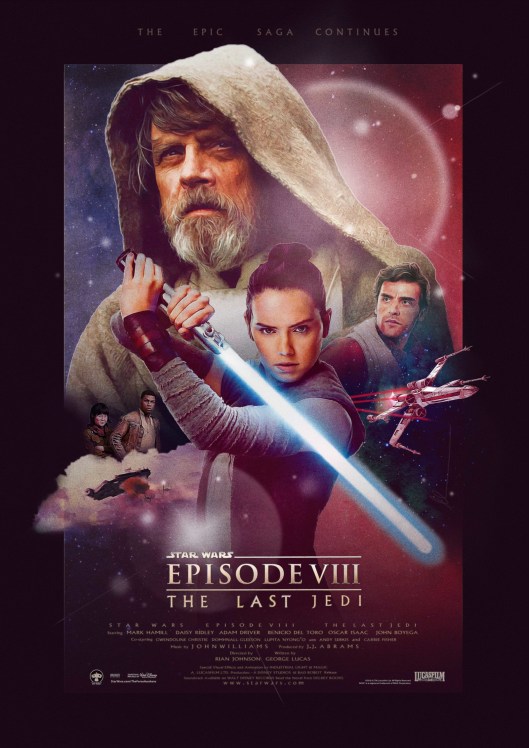
Perhaps because we’re writing this on May the 4th, we’ve been in a musical mood—after all, there’s such a catchy tune involved with it—

image1vader

And we wondered if there were words to it?  Certainly soldiers have been singing songs seemingly forever.  Greek hoplites sang a hymn to Apollo before battle.

image2chigi

(They are accompanied by an aulos player here.  “Aulos” is sometimes mistranslated “flute”, but it’s not a kind of recorder.  Instead, it’s a member of the oboe family.)

Julius Caesar’s (100-44bc)

image3jc

soldiers, marching behind his chariot when he celebrated his triumph (formal victory parade) in Rome

image4triumph

sang an unprintable song about his sex life.  There’s only a fragment surviving and we’ll print it here—but in Latin—a typical Victorian thing to do.

“Urbani, servate uxores: moechum calvom adducimus.
Aurum in Gallia effutuisti, hic sumpsisti mutuum.”

(Here’s a LINK which we would recommend about reconstructing Roman soldiers’ songs.)

There’s a stirring piece by Walter von der Vogelweide (c.1170-c.1230),

image5walt

called the “Palestine Song”, supposedly sung by a crusader after reaching the Holy Land.  We can imagine later Crusaders singing it as they marched

image6cru

As in the case of the Caesar fragment, however, we won’t print the text—we aren’t enthusiastic about crusades, especially the medieval ones, believing them to have been the drawn-out attempt at a massive landgrab of places already long-inhabited.

On long, monotonous marches, we imagine soldiers always sang.  The American Civil War was fought over hundreds of miles and, with the rare exception when trains could be used,

image7train

soldiers walked everywhere.

image8marching

That being the case, it’s no wonder that so many of their favorite songs had the word “marching” in the title.

image9marching

Marching Through Georgia Music and Lyrics

image11marchimage12

(And that last one’s chorus begins, “Tramp, tramp, tramp, the boys are marching…”)

Russian soldiers appear to have had designated regimental singers, who, when called, hurried up to the front of the column and broke into choruses to keep up the men’s spirits on long journeys.

image13rus

(We apologize that these Russians aren’t singing—but this is, in fact, a film of the last czar, Nicholas II, reviewing his guards just before the Great War, so, at least, they’re marching.)

Which brings us to the Great War and our own officer in it, JRRT.

image14jrrt.jpg

Certainly, the soldiers in his battalion (13th, Lancashire Fusiliers)

image15lancs

would have sung—here are two popular favorites—

image16smile

image17tip

There were other songs, too, but not cheery at all, and officers were instructed to discourage their singing.  The words of one, sung to the tune of “Auld Lang Syne”,  expressed the terrible monotonous nature of trench warfare, being only “We’re here because we’re here because we’re here because we’re here”.  A second, “Hangin’ On the Old Barbed Wire”, as it was called, had a mocking little tune, like something from a music hall, but described the whereabouts of soldiers who, for various reasons, were out of the firing line—until it came to the last verse:

“If you want the old battalion,

I know where they are, I know where they are, I know where they are

If you want to find the old battalion, I know where they are,

They’re hanging on the old barbed wire,

I’ve seen ’em, I’ve seen ’em, hanging on the old barbed wire.

I’ve seen ’em, I’ve seen ’em, hanging on the old barbed wire.“


image17awire

Here’s a LINK, if you’d like to hear an abbreviated version.  In this , the group, Chumbawamba, uses an alternative line, “If you want to find the private”, but both versions are grim—and we presume that Tolkien knew all of these songs and many more, some, like the song about Julius Caesar, completely unprintable!

(Our image, by the way, is of a wiring party from the 1st Battalion, Lancashire Fusiliers.  Those curly things, called “screw pickets”,  you see resting on the front man’s right shoulder are the stakes which were twisted into the ground and then barbed wire was run through them and wrapped around them.   Here’s  an early US WW2 picture of a soldier working with the upper loops of one.)

gloves_barbedwire_ww2_375

As we’ve often discussed before, things from JRRT’s real life sometimes have a way of seeping into his fiction, and we can certainly see it here.

Although they’ve been silent on the march, on their way to the attack, the Rohirrim, for example, are far from that:

image19rohirrim.jpg

“And then all of the host of Rohan burst into song, and they sang as they slew, for the joy of battle was on them, and the sound of their singing that was fair and terrible came even to the City.”  (The Return of the King, Book Five, Chapter 5, “The Ride of the Rohirrim”)

Unfortunately, we have no idea what their songs might have been like—perhaps they would have resembled Theoden’s cry to the Rohirrim:

“Arise, arise, Riders of Theoden!

Fell deeds awake:  fire and slaughter!

Spear shall be shaken, shield be splintered,

A sword-day, a red day, ere the sun rises!

Ride now, ride now!  Ride to Gondor!”

Oddly, we do have two of what might be called Goblin marching songs,

image20goblins.jpg

both from The Hobbit.  The first is sung right after the dwarves are captured in a cave in which they’ve taken shelter in the Misty Mountains.

“Clap! Snap! the black crack!
Grip, grab! Pinch, nab!
And down down to Goblin-town
You go, my lad!

Clash, crash! Crush, smash!
Hammer and tongs! Knocker and gongs!
Pound, pound, far underground!
Ho, ho! my lad!

Swish, smack! Whip crack!
Batter and beat! Yammer and bleat!
Work, work! Nor dare to shirk,
While Goblins quaff, and Goblins laugh,
Round and round far underground
Below, my lad!”

(Chapter Four, “Over Hill and Under Hill”)

The second appears two chapters later, when the company is trapped in the pines and the Goblins and Wargs are below:

“Burn, burn tree and fern!
Shrivel and scorch! A fizzling torch
To light the night for our delight
Ya hey!

Bake and toast ’em, fry and roast ’em!
till beards blaze, and eyes glaze;
till hair smells and skins crack,
fat melts, and bones black
in cinders lie
beneath the sky!
So dwarves shall die,
and light the night for our delight,
Ya hey!
Ya-harri-hey!
Ya hoy!”

(Chapter Six, “Out of the Frying-pan Into the Fire”)

We notice that the opening of the second bears a certain resemblance to another song sung in a wild location—by wild people:

“First Witch
Round about the cauldron go;
In the poison’d entrails throw.
Toad, that under cold stone
Days and nights has thirty-one
Swelter’d venom sleeping got,
Boil thou first i’ the charmed pot.

All
Double, double, toil and trouble; (10)
Fire burn, and cauldron bubble.

Second Witch
Fillet of a fenny snake,
In the cauldron boil and bake;
Eye of newt and toe of frog,
Wool of bat and tongue of dog,
Adder’s fork and blind-worm’s sting,
Lizard’s leg and howlet’s wing,
For a charm of powerful trouble,
Like a hell-broth boil and bubble.”

(Macbeth, Act 4, Scene 1)

image21cauldron.jpg

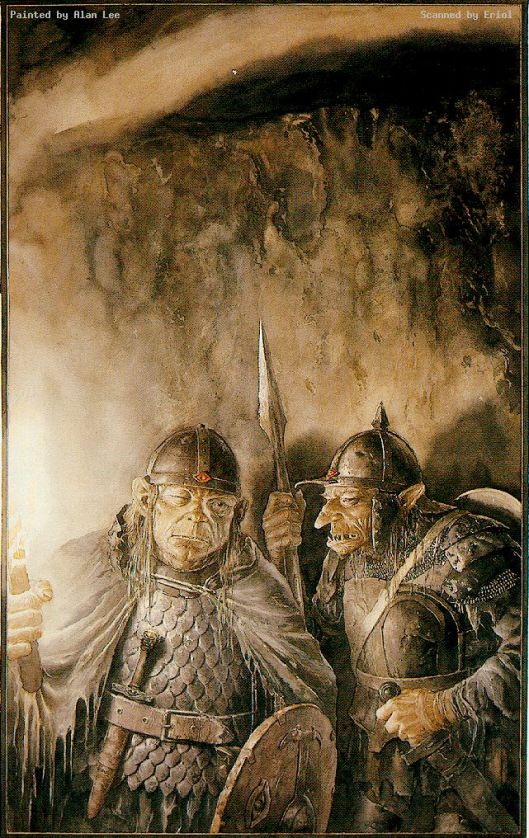
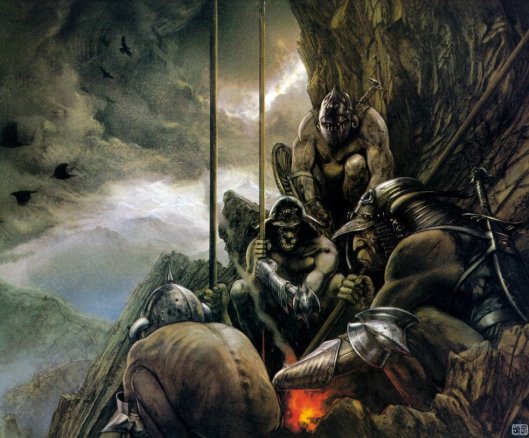
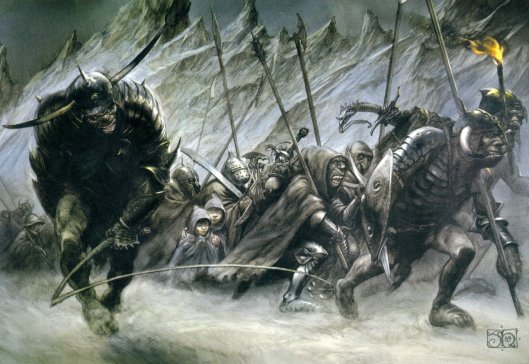
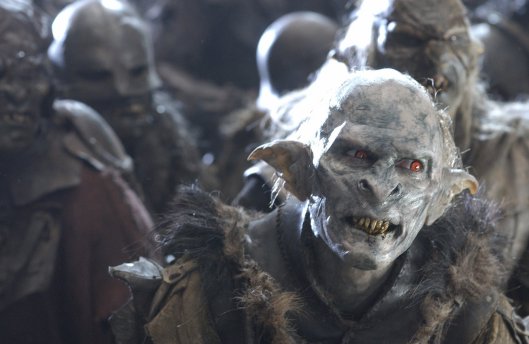
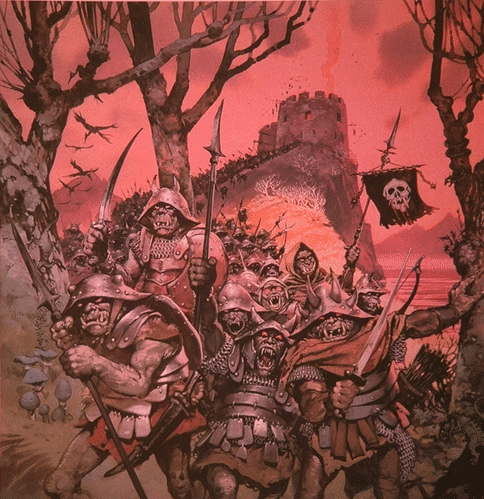
In  The Lord of the Rings, JRRT blurs Goblins and orcs and, considering that we almost always see orcs as moving in companies, we’ll see them that way, too, marching across Rohan or on the stone roads of Mordor, and we’d like to imagine that they, too, have songs to make the way shorter.  But what do they sing about?  And, judging by the Goblin’s songs, do we want to know?

image22orcs.jpg

Thanks, as always, for reading and

MTCIDC

CD


ps

Another Great War soldiers’ song was more melancholy than sarcastic, although it still suggested marching,

image23songsheet.jpg

and, when you read the chorus, you’ll see why.

image24lyrics.jpg

Here’s a LINK of it sung by a famous tenor of that time, John McCormack (1884-1945) and here are soldiers at a happier moment and we hope that Tolkien sometimes saw them this way, too.

image25cheer.jpg


Matchless

15 Wednesday May 2019

Posted by Ollamh in Fairy Tales and Myths, J.R.R. Tolkien, Literary History

≈ Leave a comment

Tags

anachronism, Hans Christian Andersen, matches, Swan Vestas, The Hobbit, The Little Match Girl, The Lord of the Rings, tinder, tinder box, Tolkien, Vesta, Vilhelm Pedersen

As always, dear readers, welcome.

Recently, we’ve been examining anachronisms in The Hobbit.  These are always such minor things that JRRT, before its initial publication in 1937,

image1hobbit.jpg

doesn’t appear even to have noticed them (see our recent postings for more on them) and only corrected some in succeeding editions.

In our last, it was “guns”, but, in this, our last, at least for the present, it’s this:

“After some time he felt for his pipe…Then he felt for his pouch…Then he felt for matches…”

(The Hobbit, Chapter Five, “Riddles in the Dark”)

Others have noticed this before—Anderson in his invaluable The Annotated Hobbit even has a footnote on it (page 116), adding the detail from Chapter Six that “…Oin and Gloin had lost their tinder-boxes.  (Dwarves have never taken to matches even yet.)”

Why are matches an anachronism?  Tolkien, a life-long pipe smoker,

image2jrrt.jpg

would have used them without thinking—perhaps these, “Swan Vestas”, long sold as “the smoker’s match”.

image3swan.JPG

(The name “Vesta” comes from the Roman goddess of the hearth,

image4vesta.jpg

a fragment of whose temple still stands in the Roman Forum in Rome.

image5temple.jpg

Inside was a hearth—a fire pit—which symbolized all of the hearths in Rome.)

image6temple.jpg

Matches, however, are a nineteenth-century invention, with a complicated history—and, at the beginning, a complicated ignition.  For example, these, from 1828, had a tip of sulphur which burst into flame when dipped into a container of phosphorus.

image7match.JPG

This was hardly a practical way to strike a light and soon matches were made by which friction could be used to light them.  After 1830, the tips of these were coated with white phosphorus, which was rather unstable and could be set off by everything from rubbing against each other to strong sunlight.  They were made by the millions in factories (many employing young women and girls)

image8phos.jpg

image9factory.jpg

and sold on street corners everywhere, commonly by children and the very poor.

image10match.jpg

Considering this made us think of a Hans Christian Andersen (1805-1875)

image11hca.jpg

story we can’t bear to read.  In English, it’s called “The Little Match Girl” and was first published in 1845.  Here’s an illustration for it by Vilhelm Pedersen (1820-1859), Andersen’s favorite illustrator.

image12match.jpg

(If you would like to read it—we’ve warned you!– here’s the LINK to a very rich site, which has all of Andersen’s fairy tales both in the original Danish and translated into English, along with all of the rest of Andersen’s extensive literary work.)

But, if Bilbo lives in a sort of medieval world, where, presumably, matches wouldn’t be available, then what can he use?  The answer, of course, is what Oin and Gloin have lost (and Sam will have in The Lord of the Rings–see The Fellowship of the Ring, Book One, Chapter 6, “The Old Forest”):  a tinder box.

image13tinder.jpeg

Such a box would contain three basic items:  a dry material in which to catch a spark (bark, dry moss, linen rags), a piece of steel and a piece of flint to make sparks.

image14tinder.jpg

And here’s how it works—

image15works.jpg

Long before the invention of matches, this was the common way in the western world to strike a light (literally) with “flint and steel”, as it was called—and it’s what the dwarves use in The Hobbit.

It’s also the title of another Hans Christian Andersen story, but a jollier one, called, in English, “The Tinder Box”, first published in 1835—and here’s another Pedersen illustration.

image16tinder.jpg

In this story, a soldier on the way home from war is stopped by an old lady on the side of the road.

image17tinder.jpg

She tells him that there’s treasure below a tree and, if he will climb in, he can take all that he wants and all that she wants in return is a little tinder box to be found there.

image18atinder.jpg

He climbs in and discovers rooms full of riches, as well as three dogs of increasingly enormous size.

image18tinder.jpg

The tinder box is, of course, not a little nothing, but the key to the dogs and to the magic beyond, although the soldier doesn’t know that at the time.  When he climbs out of the tree, and the old woman (a witch, of course), demands the box, however, he grows suspicious and, instead of handing her the box, the soldier hands her her head.

image19tinder.jpg

(We said that this was a jollier story—but clearly not if you’re a witch.)

We refer you to the LINK we mentioned earlier for the rest of the story—SPOILER ALERT:  it does have a happy ending.  As does The Hobbit, except for goblins and wargs, of course.  Oh, and Thorin.

image20thorin.jpg

And then there’s Smaug, whose fire goes out—dare we say it?—like a burnt match.

image21smaug.jpg

Thanks, as always, for reading and, as ever,

MTCIDC

CD

Gun Control?

08 Wednesday May 2019

Posted by Ollamh in J.R.R. Tolkien, Military History

≈ Leave a comment

Tags

anachronism, Dettingen, Fireworks, Gandalf, George Frederich Haendel, gunpowder, guns, Helm's Deep, kettle drums, King George II, Millemete Manuscript, petard, Rammas Echor, The Hobbit, The Lord of the Rings, The War of Austrian Succession, Tolkien

Welcome, dear readers, as always—and with our apology if you googled “gun control” and are a bit puzzled as to what has turned up (this often happens with us, making us wonder how googling images of “Saruman” suddenly produces a picture of sardines).

It’s our last posting which got us into this.  We had spotted another anachronism in The Hobbit (clarinets) and had written about it, but then, as a teaser, had concluded with another, referring to Beorn’s joining the Battle of the Five Armies:  “The roar of his voice was like drums and guns…” (Chapter 18, “The Return Journey”)

“Guns” had, of course, stood out.  Some time ago, we had written about Saruman’s use of some sort of explosive at Helm’s Deep

image1hd.jpg

as well as the destruction by a similar force of portions of the causeway forts of the Rammas Echor, of which no one has seemingly produced an illustration.

image2rammas.gif

Whatever this force was, it only seems to be used in siegework, suggesting things like a petard

image3petard.jpg

an explosive device used to blow holes in gates and doors.

Guns, however, do not appear in any form in Tolkien’s world—except here.  Of course, when one thinks about it, there isn’t much of a step from using a blast to destroy a door to funneling that force to propel a missile—as we first see in the Millemete Manuscript of 1326-1327.

image4millemete.jpg

This doesn’t appear to be portable, but the basic object is simply a tube on a stick, easy to make, easy to carry

image5handgonne


and certainly late medieval people had them and employed them,

image6handgonnes.jpg

so, presumably, they might have appeared in Middle-earth (we once wrote a “what-if” posting on the subject).  Why not?  As JRRT introduced explosives, that seems to provide an opening, but we wonder if he had seen all too often and all too clearly the effect of thousands upon thousands of gunpowder weapons on real people in 1916 and, somehow, the idea of lances and swords seemed more appealing—or, at least, more “heroic”.

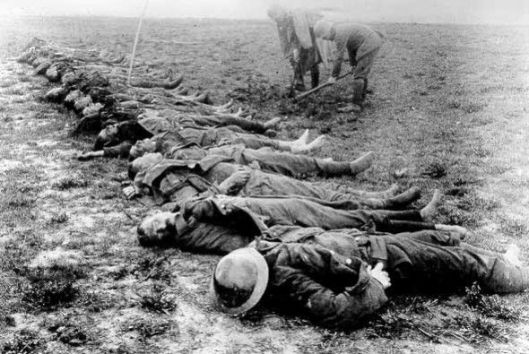
image7dead.jpg

image8knights.jpg

But the quotation was “like drums and guns”.

As we pointed out in our last, drums certainly appear in The Lord of the Rings—there is that disturbing reference to “drums, drums in the deep” in The Fellowship of the Ring, Book Two, Chapter 5, “The Bridge of Khazad-dum”, for example.  But what about “the roar of his voice was like drums and guns”?

When we thought about this, we asked ourselves, what would this actually sound like?  A possible answer appeared from 1749.

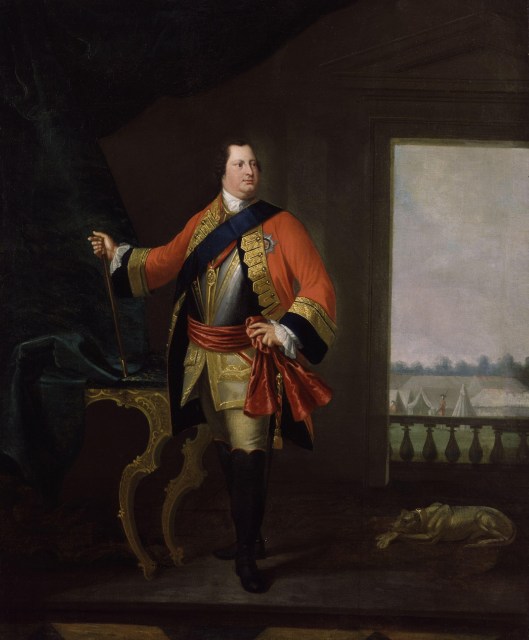
In 1749, George II of England

image9george2.jpg

had been one of the winners of what would become known as “The War of the Austrian Succession” (1740-1748).

image10geo2.jpg

He was definitely in a party mood, so he decided to throw a giant fireworks celebration in London.  To provide the soundtrack, he commissioned George Frederick Haendel (say that “HEN-del”, not as people commonly mispronounce it, “HAHN-del”) (1685-1759).

image11gfh.jpg

George was the last English king actually to see battle, at Dettingen, in 1743,

image12dettingen.jpgimage13dettingen.jpg

and wasn’t interested in anything sweet and soft, with lots of violins.

image14violinist.jpg

Instead, he wanted bangs and booms, starting with kettle drums.

image15kettledrums.jpg

Then he hired someone to design a giant framework for the fireworks,

image16frame.jpg

and threw in 101 cannon, just to make sure that it wasn’t too quiet.

image17guns.jpg

And, on the evening of 27 April, 1749, perhaps as many as 12,000 people (London had perhaps between 600,000 and 700,000 people in 1750) stood around the Green Park to watch.

image18fireworks.jpg

Here’s a LINK, if you’d like to hear the music (you’ll have to supply your own cannon and fireworks).

But fireworks brings us back to Tolkien, doesn’t it?  When Gandalf first appears to Bilbo in the first chapter of The Hobbit,

image19bilgan.jpg

it seems that almost all that Bilbo knows about Gandalf is his fireworks:

“Not the man that used to make such particularly excellent fireworks!  I remember those!  Old Took used to have them on Midsummer’s Eve.  Splendid!  They used to go up like great lilies and snapdragons and laburnums of fire and hang in the twilight all evening!”  (Chapter One, “An Unexpected Party”)

And, when Gandalf reappears in the Shire, to celebrate Bilbo and Frodo’s joint birthday, what does he bring?

image20gandalf.jpg

Thanks, as ever, for reading (and listening).

MTCIDC

CD

← Older posts
Newer posts →

The Doubtful Sea Series Facebook Page

The Doubtful Sea Series Facebook Page

  • Ollamh

Categories

  • Artists and Illustrators
  • Economics in Middle-earth
  • Fairy Tales and Myths
  • Films and Music
  • Games
  • Heroes
  • Imaginary History
  • J.R.R. Tolkien
  • Language
  • Literary History
  • Maps
  • Medieval Russia
  • Military History
  • Military History of Middle-earth
  • Narnia
  • Narrative Methods
  • Poetry
  • Research
  • Star Wars
  • Terra Australis
  • The Rohirrim
  • Theatre and Performance
  • Tolkien
  • Uncategorized
  • Villains
  • Writing as Collaborators
Follow doubtfulsea on WordPress.com

Across the Doubtful Sea

Recent Postings

  • Through a glass… January 7, 2026
  • Heffalumps? December 31, 2025
  • We Three Kings December 24, 2025
  • A Moon disfigured December 17, 2025
  • On the Roads Again—Once More December 10, 2025
  • (Not) Crossing Bridges December 3, 2025
  • On the Road(s) Again—Again November 26, 2025
  • On the Road(s) Again November 19, 2025
  • To Bree (Part 2) November 12, 2025

Blog Statistics

  • 104,200 Views

Posting Archive

  • January 2026 (1)
  • December 2025 (5)
  • November 2025 (4)
  • October 2025 (5)
  • September 2025 (4)
  • August 2025 (4)
  • July 2025 (5)
  • June 2025 (4)
  • May 2025 (4)
  • April 2025 (5)
  • March 2025 (4)
  • February 2025 (4)
  • January 2025 (5)
  • December 2024 (4)
  • November 2024 (4)
  • October 2024 (5)
  • September 2024 (4)
  • August 2024 (4)
  • July 2024 (5)
  • June 2024 (4)
  • May 2024 (5)
  • April 2024 (4)
  • March 2024 (4)
  • February 2024 (4)
  • January 2024 (5)
  • December 2023 (4)
  • November 2023 (5)
  • October 2023 (4)
  • September 2023 (4)
  • August 2023 (5)
  • July 2023 (4)
  • June 2023 (4)
  • May 2023 (5)
  • April 2023 (4)
  • March 2023 (5)
  • February 2023 (4)
  • January 2023 (4)
  • December 2022 (4)
  • November 2022 (5)
  • October 2022 (4)
  • September 2022 (4)
  • August 2022 (5)
  • July 2022 (4)
  • June 2022 (5)
  • May 2022 (4)
  • April 2022 (4)
  • March 2022 (5)
  • February 2022 (4)
  • January 2022 (4)
  • December 2021 (5)
  • November 2021 (4)
  • October 2021 (4)
  • September 2021 (5)
  • August 2021 (4)
  • July 2021 (4)
  • June 2021 (5)
  • May 2021 (4)
  • April 2021 (4)
  • March 2021 (5)
  • February 2021 (4)
  • January 2021 (4)
  • December 2020 (5)
  • November 2020 (4)
  • October 2020 (4)
  • September 2020 (5)
  • August 2020 (4)
  • July 2020 (5)
  • June 2020 (4)
  • May 2020 (4)
  • April 2020 (5)
  • March 2020 (4)
  • February 2020 (4)
  • January 2020 (6)
  • December 2019 (4)
  • November 2019 (4)
  • October 2019 (5)
  • September 2019 (4)
  • August 2019 (4)
  • July 2019 (5)
  • June 2019 (4)
  • May 2019 (5)
  • April 2019 (4)
  • March 2019 (4)
  • February 2019 (4)
  • January 2019 (5)
  • December 2018 (4)
  • November 2018 (4)
  • October 2018 (5)
  • September 2018 (4)
  • August 2018 (5)
  • July 2018 (4)
  • June 2018 (4)
  • May 2018 (5)
  • April 2018 (4)
  • March 2018 (4)
  • February 2018 (4)
  • January 2018 (5)
  • December 2017 (4)
  • November 2017 (4)
  • October 2017 (4)
  • September 2017 (4)
  • August 2017 (5)
  • July 2017 (4)
  • June 2017 (4)
  • May 2017 (5)
  • April 2017 (4)
  • March 2017 (5)
  • February 2017 (4)
  • January 2017 (4)
  • December 2016 (4)
  • November 2016 (5)
  • October 2016 (6)
  • September 2016 (5)
  • August 2016 (5)
  • July 2016 (5)
  • June 2016 (5)
  • May 2016 (4)
  • April 2016 (4)
  • March 2016 (5)
  • February 2016 (4)
  • January 2016 (4)
  • December 2015 (5)
  • November 2015 (5)
  • October 2015 (4)
  • September 2015 (5)
  • August 2015 (4)
  • July 2015 (5)
  • June 2015 (5)
  • May 2015 (4)
  • April 2015 (3)
  • March 2015 (4)
  • February 2015 (4)
  • January 2015 (4)
  • December 2014 (5)
  • November 2014 (4)
  • October 2014 (6)
  • September 2014 (1)

Blog at WordPress.com.

  • Subscribe Subscribed
    • doubtfulsea
    • Join 78 other subscribers
    • Already have a WordPress.com account? Log in now.
    • doubtfulsea
    • Subscribe Subscribed
    • Sign up
    • Log in
    • Report this content
    • View site in Reader
    • Manage subscriptions
    • Collapse this bar
 

Loading Comments...