• About

doubtfulsea

~ adventure fantasy

Tag Archives: reading

Serendipity

08 Wednesday Apr 2026

Posted by Ollamh in Uncategorized

≈ Leave a comment

Tags

book-review, books, Fiction, reading, The Goldsmith and the Master Thief, The Hobbit, The Letter for the King, The Lord of the Rings, The Robot from the Flea Market, The Secrets of the Wild Wood, The Song of Seven, Tolkien, Tonke Dragt.

 Welcome, as ever, dear readers.

I am always glad for recommendations—for films, YouTube videos, and books.  Usually, these come to me in the form of conversations and e-mails, but this recommendation didn’t come from a person—well, directly—but from an image on YouTube.
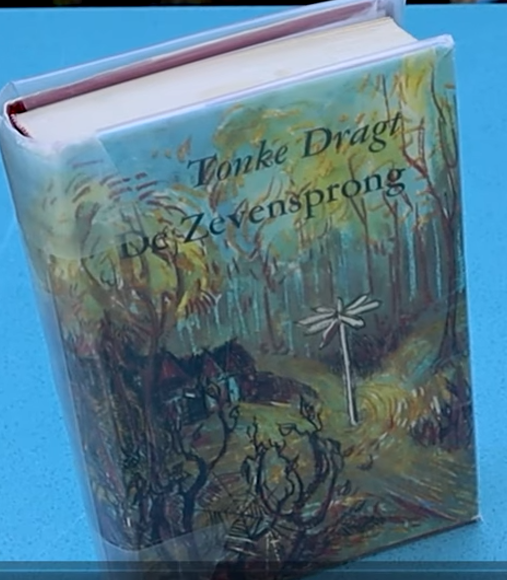
I daily follow a number of language videos, both to increase my knowledge of old friends and to add new friends, and I was watching Easy Dutch on verbs of position (you can see it here:  https://www.youtube.com/watch?v=f5xEkwOo5Go ) when a Dutch children’s classic was mentioned and shown and I was immediately interested.

Tonke Dragt (TAWN-keh Dracht—with the g/ch in the back of the throat, like “Bach”, plus a T after it) is Antonia Dragt, 1930-2024, the author of a number of YA books in Dutch.
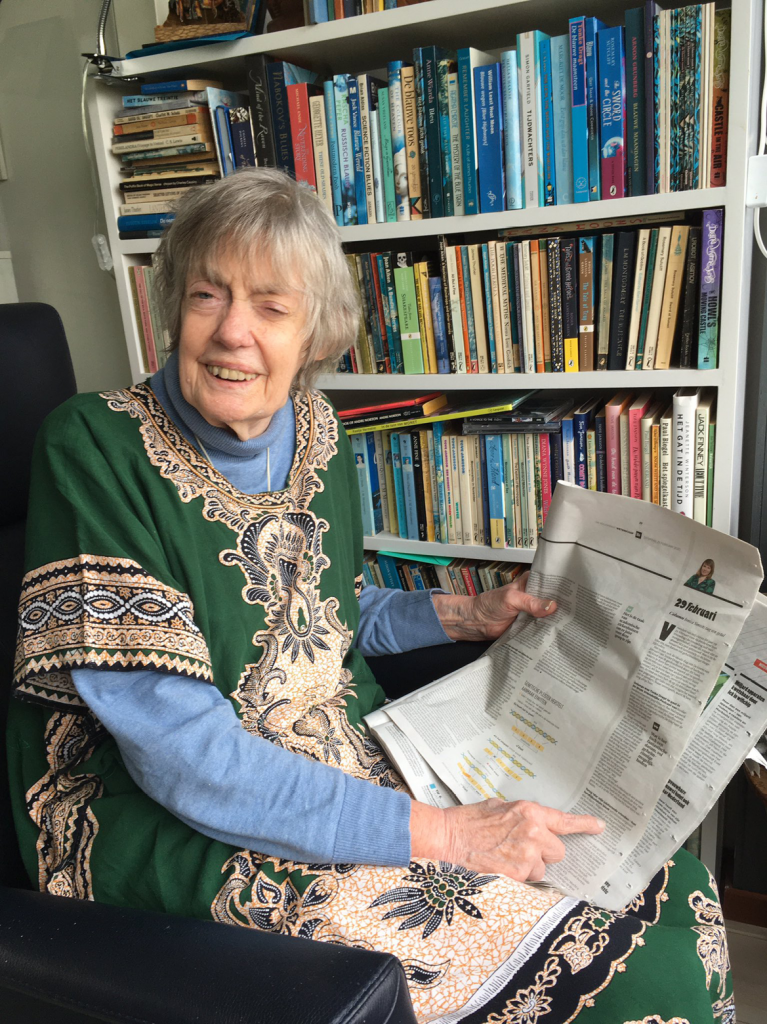
Her early life was a harrowing one:  born in 1930, she lived as a child in Indonesia and, along with her family, was held in a prisoner of war camp from 1942 to 1945, but, while a prisoner, she began a writing career which would continue till at least 2017, when she published Als de sterren zingen (“If/Supposing That/In the Event That/Whenever the Stars Sing”—as far as I know, this hasn’t been translated into English and my Dutch is limited, so, Dutch readers, please forgive the translation!)

It appears that, when she published her first novel, in 1961, Verhalen van der tweelingbroers “To Tell of the Twin Brothers”—published in English in 2021 as The Goldsmith and the Master Thief),
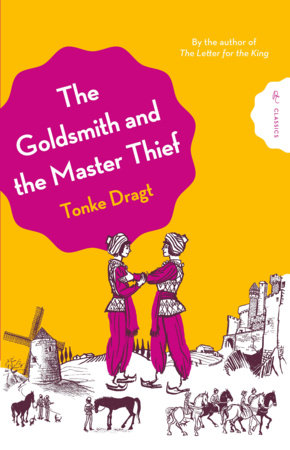
YA (that’s “Young Adult”) fantasy was not popular in the Netherlands, but she persisted, and her 1962 book, De brief voor de koning (“The Letter for the King”)
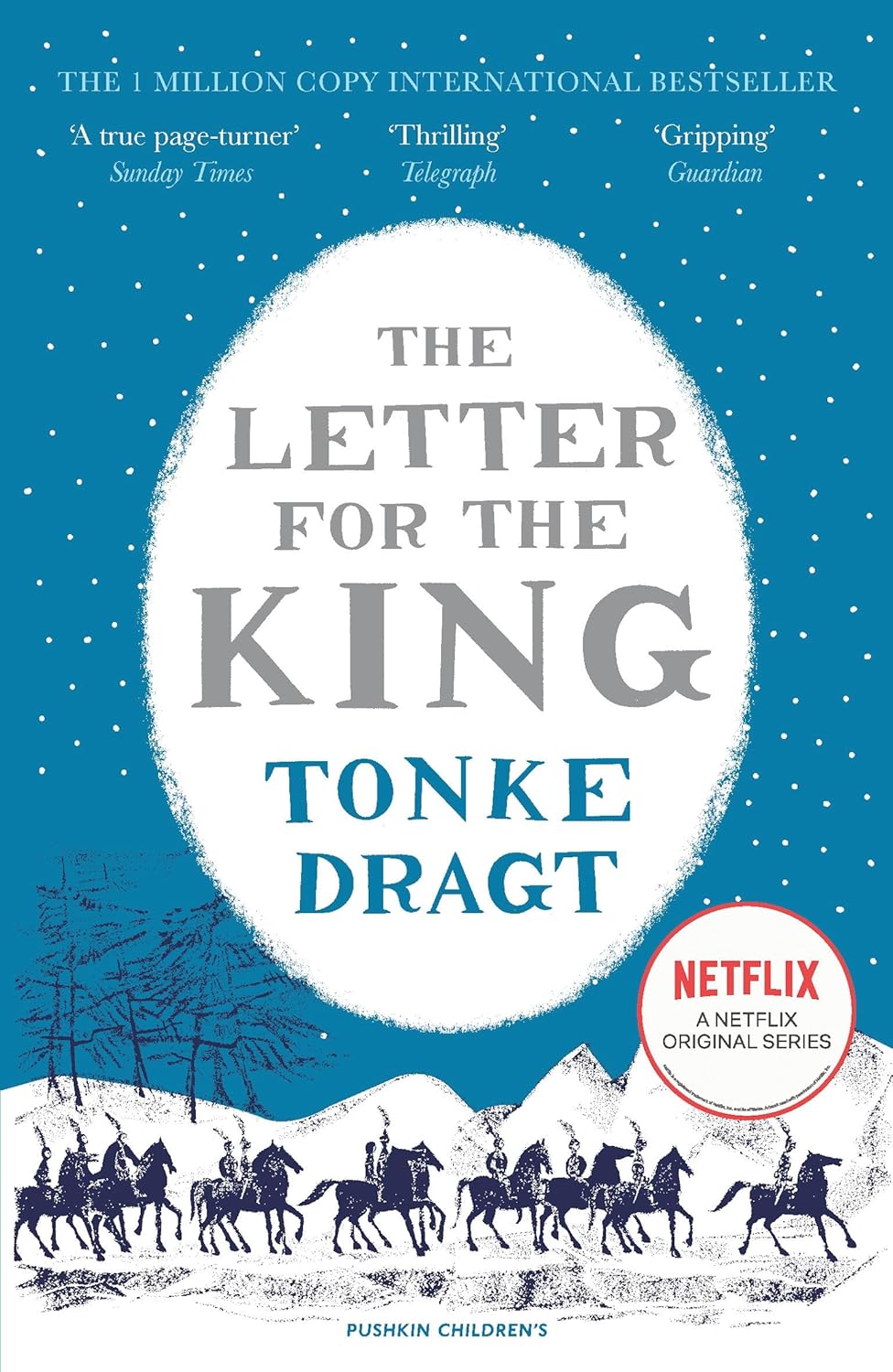
was a great success—and even became, in time, a Dutch film–
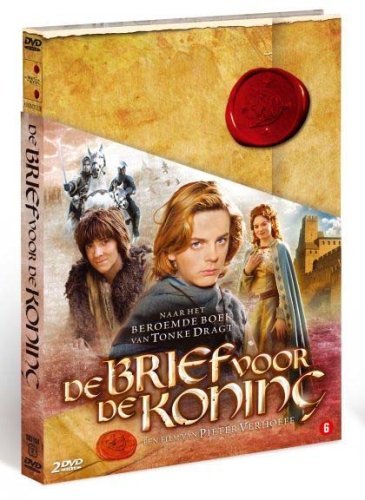
(It’s available on DVD in Dutch, but there are English subtitles.)

For more on the author, see:  https://www.theguardian.com/books/2015/sep/19/tonke-dragt-interview-i-was-born-a-fairytale-teller-letter-for-the-king as well as https://en.wikipedia.org/wiki/Tonke_Dragt, so I’ll let you read about her there—although I can’t resist one story from an interview done by the English Guardian some years before her death in 2024:

“I once tried to write a very realistic story, so I wrote about a class of children who went somewhere on a bus and within two chapters they were flying in the air—it’s the way my mind works!  I’m a fairytale teller…I was born like that and I cannot do anything else.” 

But now to her books—that is, to the ones currently available in English—of which I’ve read four, a fifth, De torens van februari (“The Towers of February”)—published in Dutch in 1973 and in English in 1975—
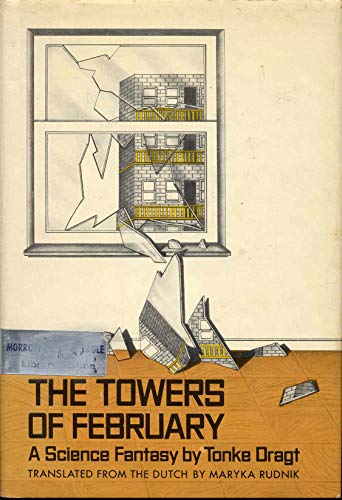
is available only at a price beyond my current book budget, alas. 

Because I was originally drawn to her work by that image on Easy Dutch, I didn’t begin with the first of her books, but De Seven Sprong, 1966,
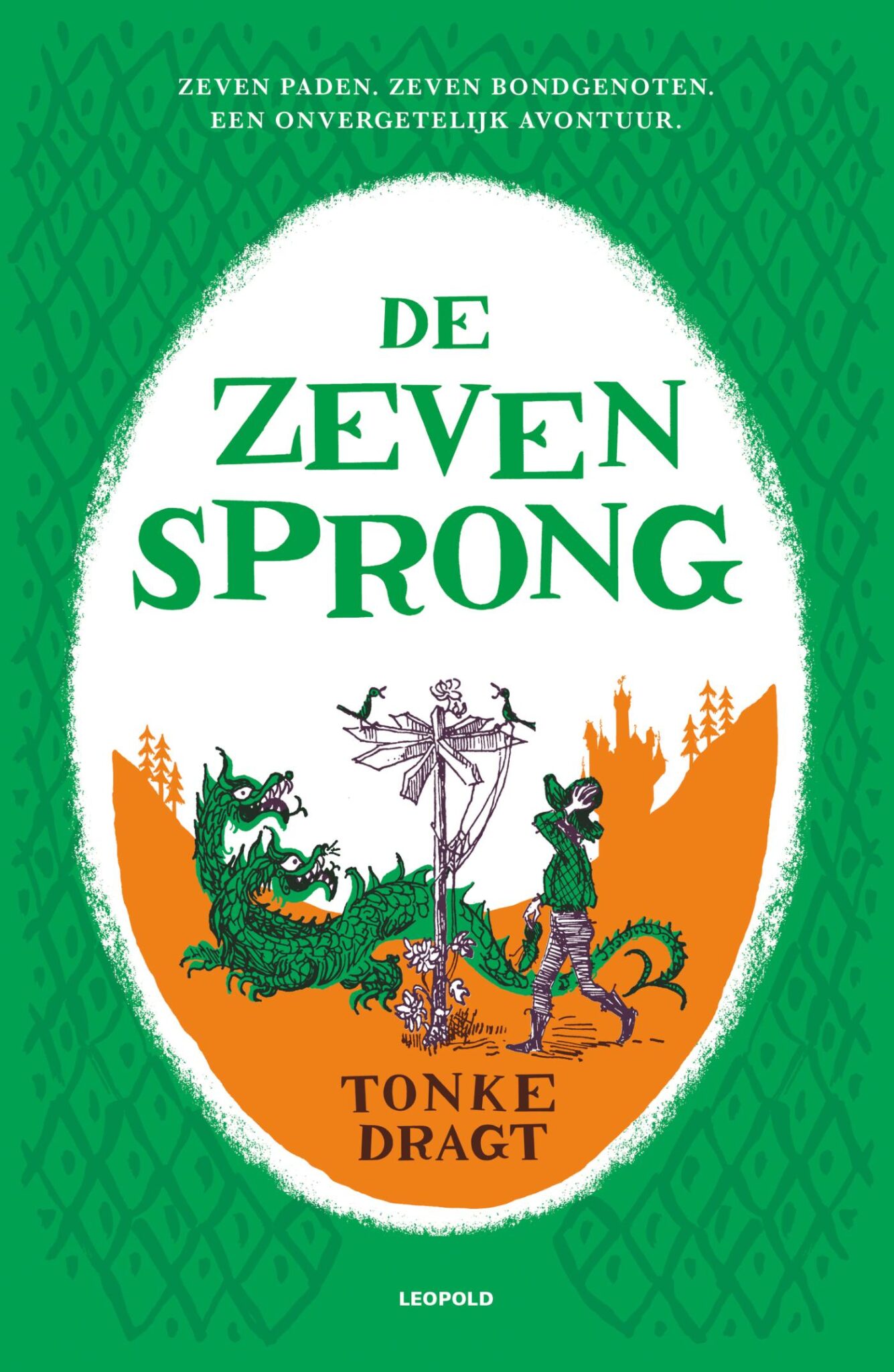
“The Seven Leap”, published in English in 2018 as The Song of Seven.
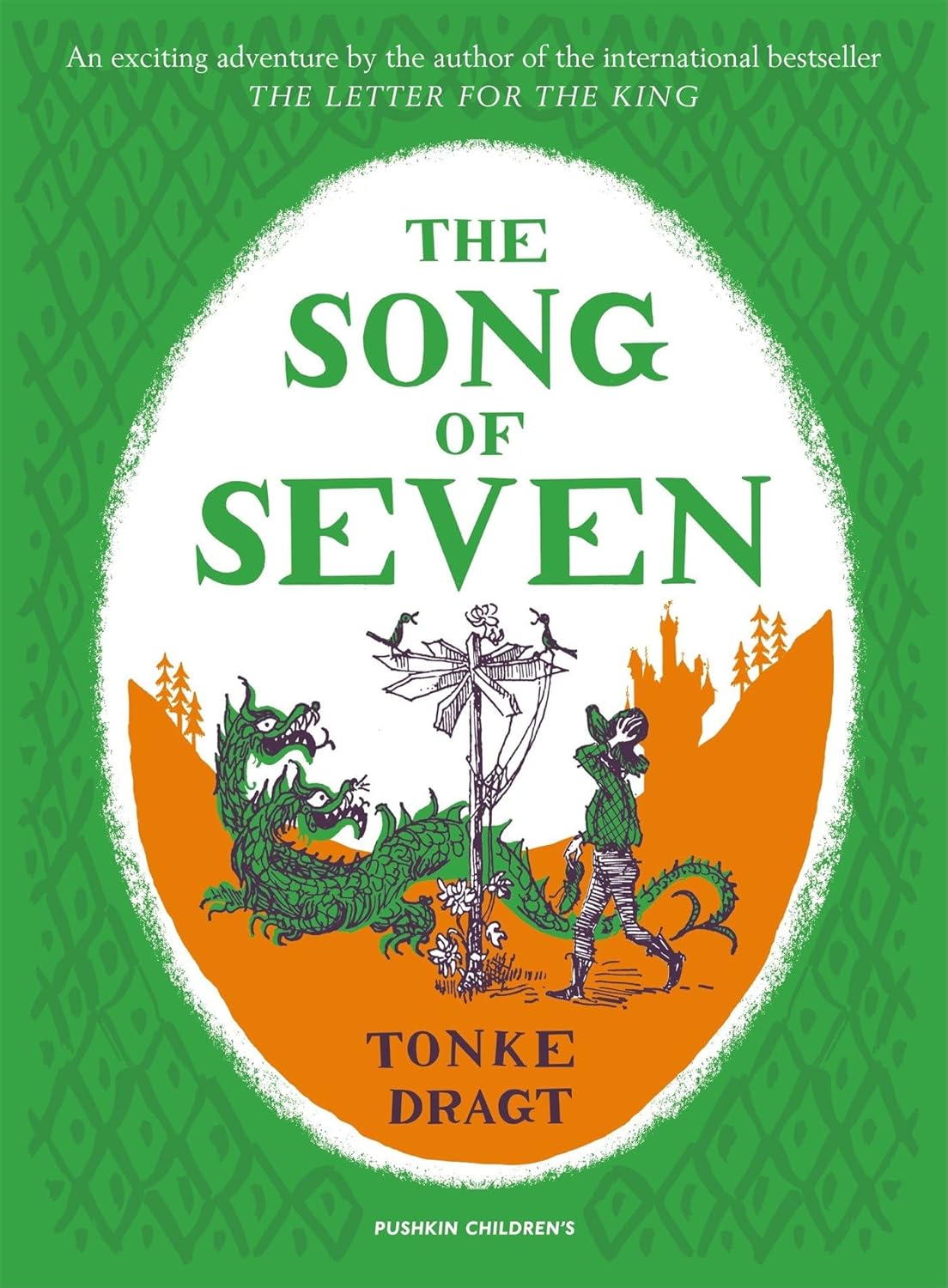
The fantasy element appears almost at the beginning, when we learn that a teacher, Frans Van der Steg, to keep an unruly class amused, has been telling outrageous adventure stories—about himself–and, in today’s episode, says that he’s expecting an important letter.  And, when he arrives at his landlady’s, that letter arrives, bringing the teacher into a complex adventure, including, among other things, a house so large and complicated as to be a kind of puzzle (which makes me wonder if Ms Dragt had read Mervyn Peake’s Titus Groan, 1946,
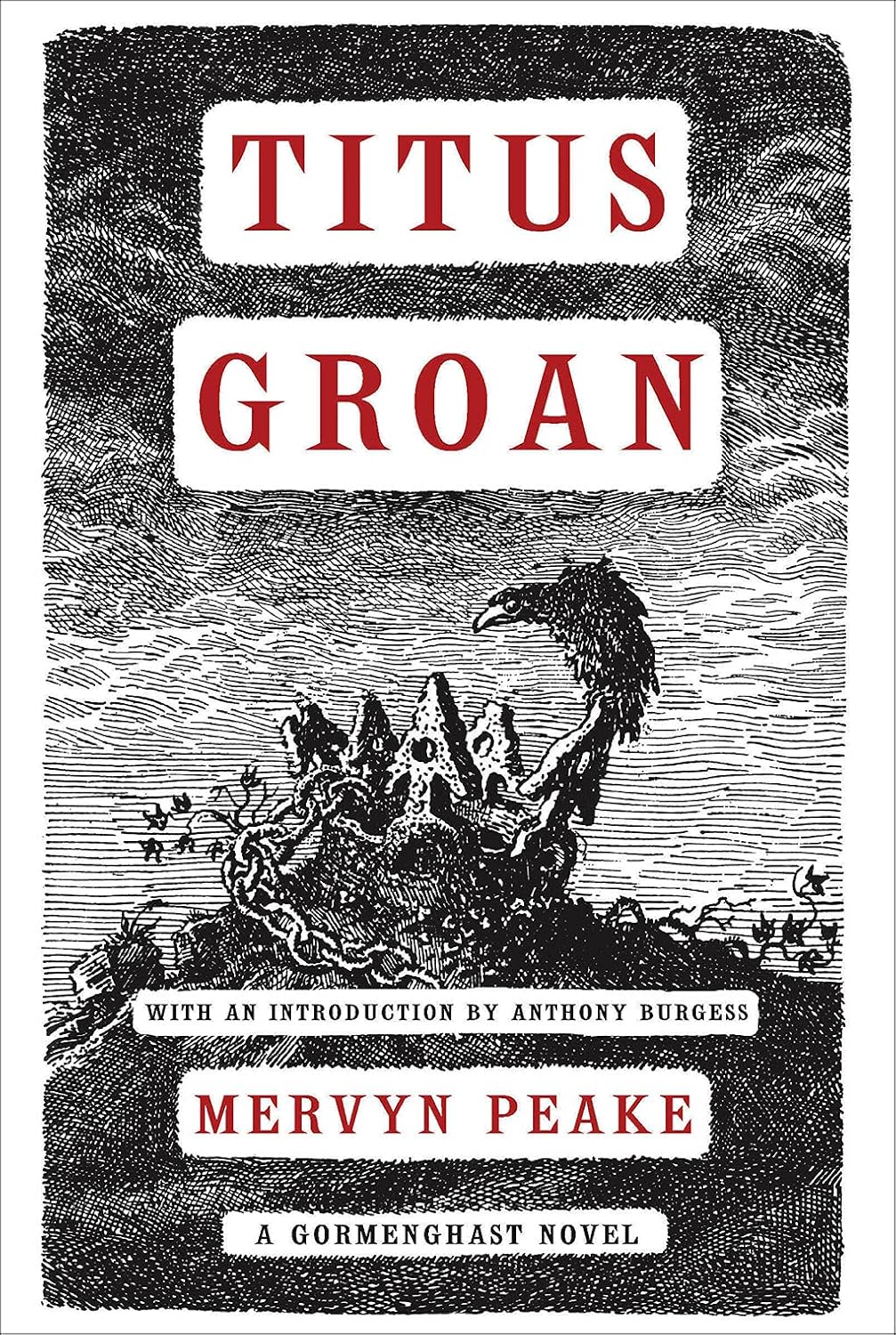
the scene of which is a gigantic, ruined castle, Gormenghast) a lost treasure, and—how not?—an evil uncle. 

It was set, surprisingly, knowing the author’s bent for fairytale-telling, in the present, but, even though there’s a motorbike, there’s also a carriage and coachman, a muzzle-loading cannon, a practicing magician, an orphan-heir, and that vast labyrinth of a house.  (The Dutch title, by the way, refers to a famous Dutch folkdance, which you can read about here:  ,https://www.lookandlearn.com/blog/26053/the-traditional-dutch-jumping-dance-may-come-from-a-pagan-crop-ritual/    Seven is also a magic number which keeps appearing and reappearing in the novel.)

Having read and enjoyed the book, I went backwards in time to Dragt’s first book, the one entitled, in English, The Goldsmith and the Master Thief.
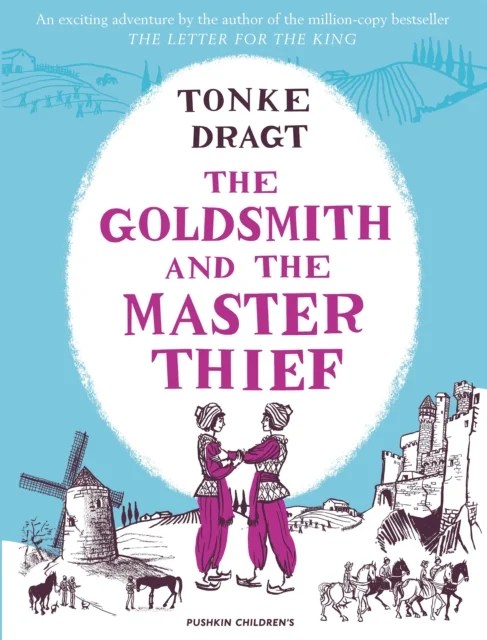
Unlike The Song of Seven, which was a novel, this was really a collection of short stories skillfully stitched together, being about twin brothers and their adventures, including, as seems almost inevitable, the use of identical twins to puzzle and confuse and even to pose a riddle, as well as to complicate a plot or two.

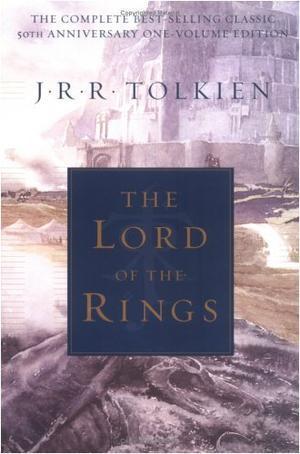
One thing I much enjoy, when I have the chance to work my way through an author’s writing, is to watch the author develop—just think, for example, of the difference between The Hobbit and The Lord of the Rings, completed about 20 years apart.  In reading The Letter for the King,
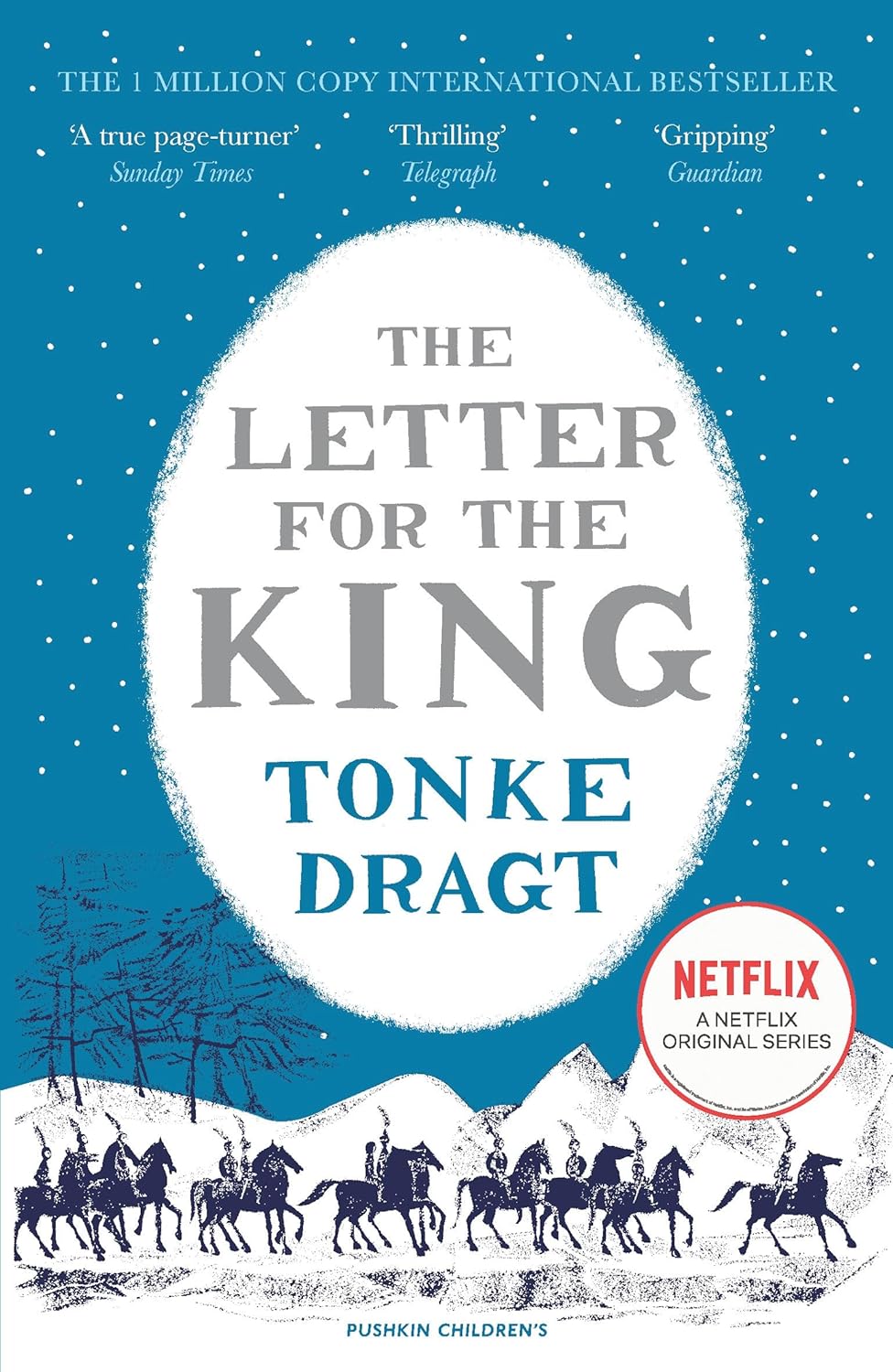
published only a year after The Goldsmith and the Master Thief, the author has made the leap (only 1, not 7), from what was, in a way, a short-story collection to a full-scale and long—506 pages, in the  English translation—adventure novel.  It’s the story of a squire, Tiuri, who, spending the night before the knighting service supposedly in prayer in a chapel, answers a knock at the door, is given the letter of the title, which he is supposed to deliver to a knight, only to discover the knight ambushed and dying, and then spends most of the rest of the book attempting to deliver it to the king of the kingdom to the west.
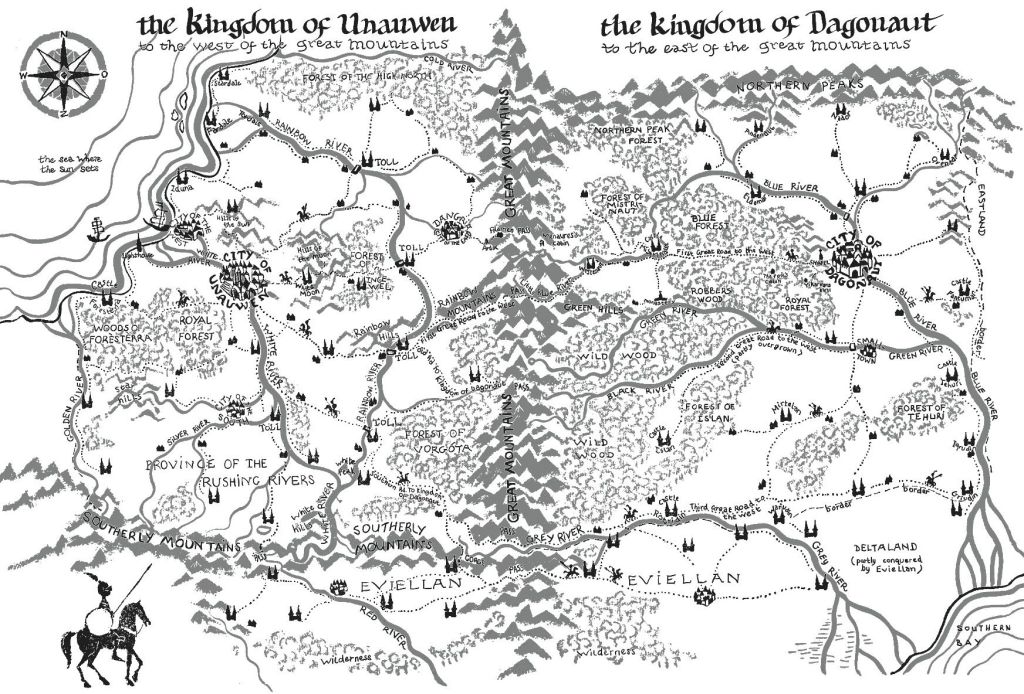
As one would expect, along the way he meets friends and enemies, acquires a squire of his own, as well as a potential sweetheart, and, because the book is a fairy tale, it has a happy ending—but with some things—like the sweetheart—in doubt.  (There’s a long plot summary here:  https://en.wikipedia.org/wiki/The_Letter_for_the_King  I would be wary, I might add, of the British NetFlix version, which has changed the story completely in the way in which The Hobbit was changed—as was Philip Pullman’s His Dark Materials, the latter also by NetFlix.  I’m reminded, as I always am, of Tolkien’s letter to Forrest J. Ackerman about a proposal in 1958, to make films of The Lord of the Rings, in which he says of the adapter and others interested in the project:  “But I would ask them to make an effort of imagination sufficient to understand the irritation (and on occasion the resentment) of an author who finds, increasingly as he proceeds, his work treated as it would seem carelessly in general, in places recklessly, and with no evident signs of any appreciation of what it is all about…”  “from a letter to Forrest J. Ackerman”, June, 1958, Letters, 389)

This then sets the scene for the sequel, Geheimen van het Wilde Woud, 1965, translated as The Secrets of the Wild Wood, published in 2015.
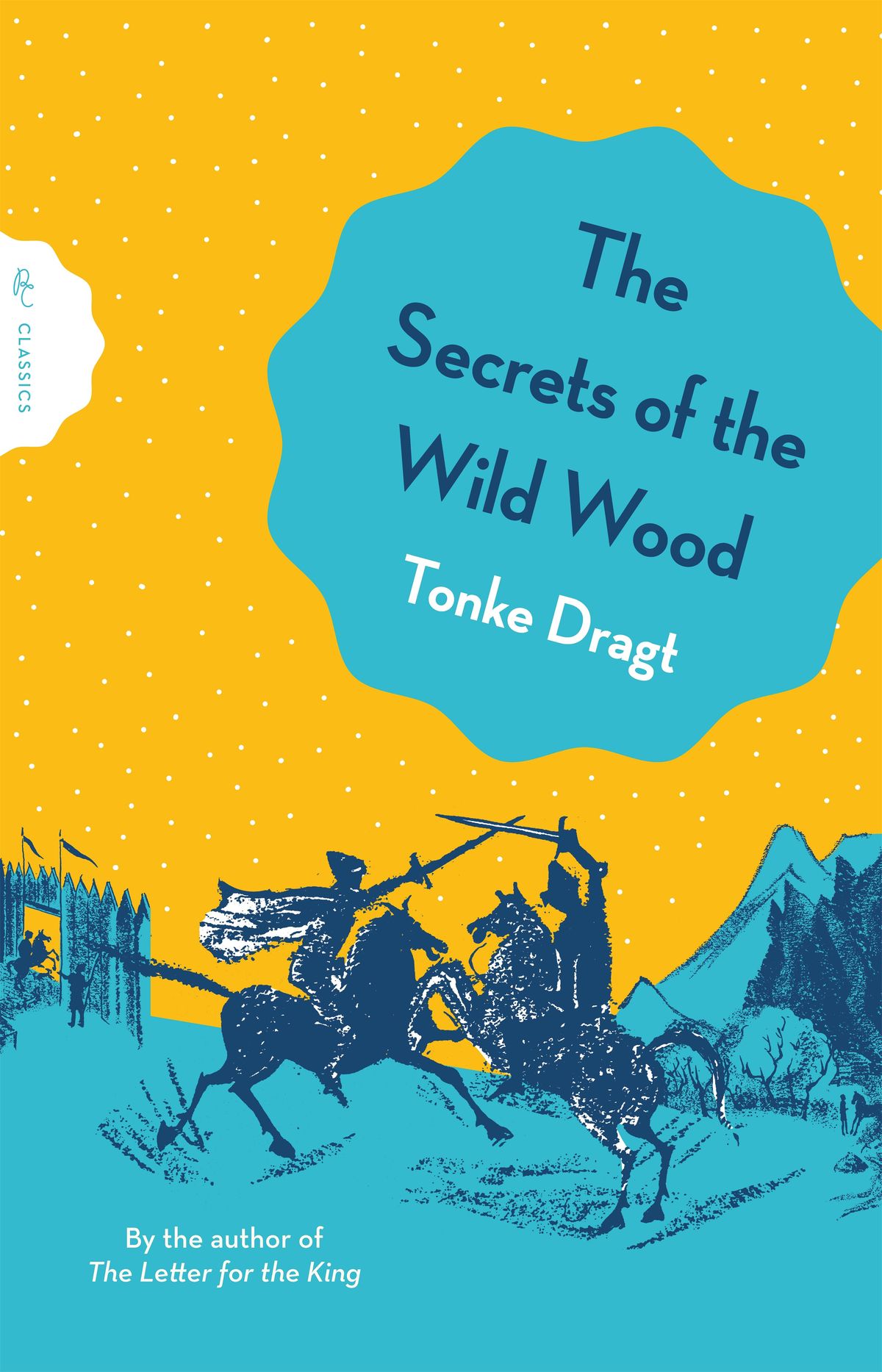
In this sequel, we see now Sir Tiuri, and his squire, Piak (his would-be squire of the previous book) on a quest first to find a missing knight, but then become tangled in a complex plot which includes two princely brothers, one the next king-to-be in his own land, the other now king of the land to the south and planning to invade his own land and overthrow his father, the king, and his brother.  As well, there are the mysterious forest folk and a potential new sweetheart who is not quite what she seems to be.  Here’s a longer summary:  https://en.wikipedia.org/wiki/The_Secrets_of_the_Wild_Wood  For me, this is the best book yet—not only for the twists and turns, but for the grownup feel to it:  so much is not neat, characters are more complex, and there is a sort of happy ending, but not for everyone (although Tiuri does return to his first sweetheart from the previous book). 

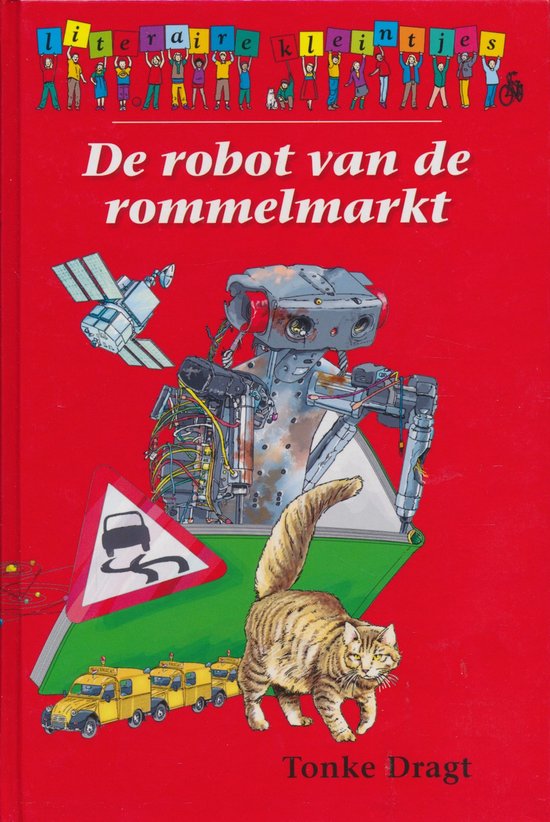
Sometimes one does something for a reason only to benefit in a way unexpected while doing it.  I had no idea that Tonke Dragt and her engaging novels existed until Easy Dutch handed her to me.  Now I only wish that someone would translate her other novels—what might De robot van de rommelmarkt (“The Robot from the Flea Market”) be about, I wonder?
As always, thanks for reading.

Stay well,

When purchasing robots in flea markets, consider previous owners,

And remember that, as always, there’s

MTCIDC

O
It’s in Writing (1)

15 Wednesday Oct 2025

Posted by Ollamh in Uncategorized

≈ Leave a comment

Tags

augury, Belshazzar, class in the Shire, Daniel, Dwarves, Fantasy, Jerome, literacy in Middle-earth, reading, Rohirrim, Sam Gamgee, scribes, the handwriting on the wall, Tolkien, Writing

As always, dear readers, welcome.

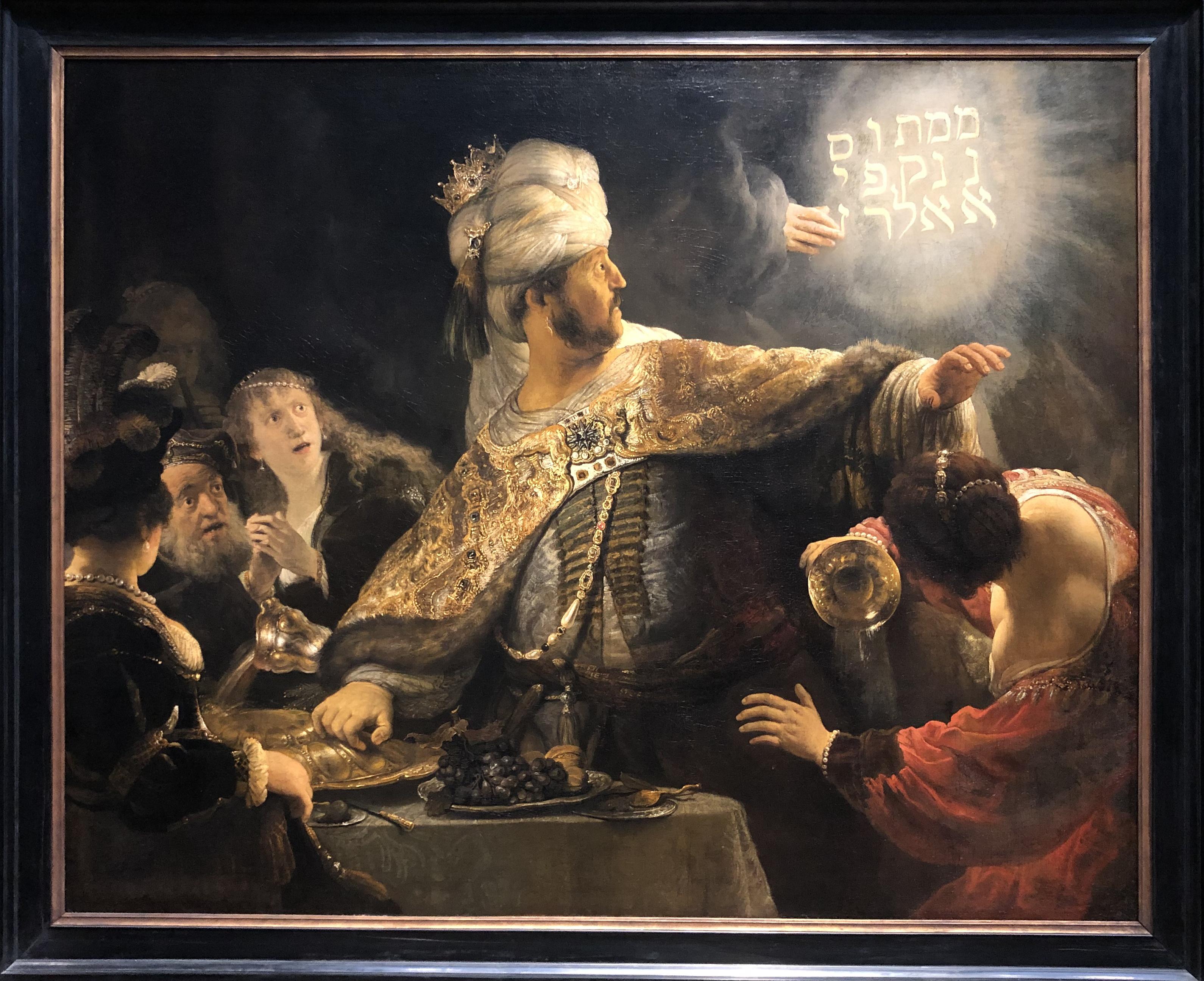
Belshazzar, the king of the Babylonians, was having a lovely party—

“Baltassar rex fecit grande convivium optimatibus suis mille: et unusquisque secundum suam bibebat aetatem.”

“Belshazzar held a great banquet for a thousand of his elite and each one was drinking according to his time of life.”
But, wishing to up the fun, he decided to make the party a bit more lavish—

Praecepit ergo jam temulentus ut afferrentur vasa aurea et argentea, quae asportaverat Nabuchodonosor pater ejus de templo, quod fuit in Ierusalem, ut biberent in eis rex, et optimates ejus, uxoresque ejus, et concubinae.

“And so now, being drunk, he ordered that the golden and silver vessels which Nebuchadnezzar, his father, had carried away from the temple which had been in Jerusalem be brought in so that the king and his nobles and his wives and concubines might drink in them.”

[“fuit” here is the perfect form and might be translated “has been”, but that form can suggest a permanent state, the pluperfect, suggesting that there would be no more Jerusalem.]

and then things go very wrong–

“In eadem hora apparuerunt digiti, quasi manus hominis scribentis contra candelabrum in superficie parietis aulae regiae: et rex aspiciebat articulos manus scribentis.”

“In the same hour, there appeared fingers, like a man’s hand, opposite the lampstand, writing on the surface of the wall of the royal hall, and the king was staring at the joints of the hand writing.”

(Rembrandt—who clearly had no idea what the real Babylonian king would have worn, but settled for something right out of the visit of the Magi, which was undoubtedly good enough for his audience, who would have had no more idea than he did)

Needless to say, this was a bad omen, but one his own counselors couldn’t interpret, as the message was not in Babylonian.  His queen, however, recommended that a Jewish interpreter, Daniel, be summoned, who arrived and interpreted the writing, which may have included some rather fancy word-play, but which meant:  “You are not long on the throne and your kingdom is about to become the property of the Persians.”

(All Latin translations are mine from Section 5 of “The Book of Daniel”.  The Latin text is from Jerome’s 4th-century translation, which you can read, with an English translation, here:     https://vulgate.org/ot/daniel_5.htm  For more on the message, see:   https://www.christianitytoday.com/2024/11/andrew-wilson-spirited-life-daniel-writing-on-wall-babylon/   For more on the historic Belshazzar—an ironic name as far as the ancient Hebrews must have been concerned, as it means “[the god] Bel [aka Baal] protect the king” which the Book of Daniel indicates that he certainly didn’t!—see:  https://en.wikipedia.org/wiki/Belshazzar )

Behind this story lies not only the status of Daniel as prophet and interpreter, and the idea that the Hebrew God is not to be messed with, even by kings, but also, for this posting, the importance of writing—the omen isn’t, like so many others, based on the flight of birds or the liver of a sheep or the behavior of chickens,

(for more on such practices see:  https://en.wikipedia.org/wiki/Augury )

all things which the ancient world would have thought significant–but on something handwritten (literally) on a palace wall.  This is clearly so unusual that its significance is immediately multiplied, and which, since Daniel can not only interpret it, but, to do so, he can read it, tells us something more about Daniel:   he is literate.

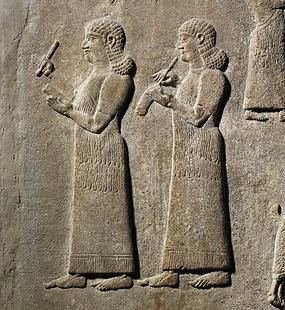
Because we in the modern West live in such a literate world ourselves, it’s sometimes hard to understand earlier worlds where literacy was not the norm.  Could Belshazzar read?  Probably not:  that was the job of technical people, scribes,

(These are actually Sumerians, but can stand in for Babylonian scribes, as the Babylonians used the writing system, cuneiform,

which the Sumerian scribes had invented.)

whom rulers could call upon when needed, as we see in ancient and medieval societies in general.  Literacy was a skill, like carpentry or masonry, and limited in the number of people who could practice it.  Could this have been true in Middle-earth, based as it is upon the medieval world of our Middle-earth, as well?

Gondor appears to have had a long tradition at least of extensive record-keeping, as we hear from Gandalf:

“And yet there lie in his hoards many records that few even of the lore-masters now can read, for their scripts and tongues have become dark to later men.” (The Fellowship of the Ring, Book Two, Chapter 2, “The Council of Elrond”)

As for the Rohirrim, I would guess that, although there may have been some literacy, much of their past—and possibly their present—was preserved in oral tradition, as Aragorn says of Meduseld:

“But to the Riders of the Mark it seems so long ago…that the raising of this house is but a memory of song.” (The Two Towers, Book Three, Chapter 6, “The King of the Golden Hall”)

And Theoden says to Aragorn:

“Will you ride with me then, son of Arathorn?  Maybe we shall cleave a road, or make an end as will be worth a song—if any be left to sing of us hereafter.”  (The Two Towers, Book Three, Chapter 7, “Helm’s Deep”)

In the Prologue to The Lord of the Rings, we are told that the Hobbits as a whole had had potential literacy for some time, in fact, from their days of moving westwards towards what would become the Shire:

“It was in these early days, doubtless, that the Hobbits learned their letters and began to write, after the manner of the Dunedain, who had in their turn long before learned the art from the Elves.”  (The Lord of the Rings, Prologue I, “Concerning Hobbits”)

As in the case of other medieval worlds, however, this was seemingly not general literacy, although rather than being the possession of a specialized class, as in Babylon or ancient Egypt,

it might, instead, have been a mark of class.

Consider Sam Gamgee.  His father is the gardener for Bilbo Baggins and Sam is his assistant.

(Robert Chronister)

From his position—and from the way he addresses his “betters” as “Mister”, while they address him by his first name—it’s clear that Sam and his father are not of the same social class as the Bagginses.   And so, when the Gaffer says:

“Mr. Bilbo has learned him his letters—meaning no harm, mark you, and I hope no harm will come of it.”  (The Fellowship of the Ring, Book One, Chapter 1, “A Long-Expected Party”)

This appears to be what we might call a mark of that class difference:  Bilbo, a ‘gentleman” can read, although, as we hear of no academies in the Shire, presumably through home-schooling, implying that there was at least one other person in his family’s household who could also read and who had taught him.  Considering the Gaffer’s potential uneasiness about it—why should there be harm in being able to read?—I think that we can imagine that the Gaffer himself could not—and himself was aware of the class distinction (Sam might get ideas “above his station”?).

And yet it’s to Sam that Frodo passes the book begun so long ago by Bilbo:

“ ‘Why, you have nearly finished it, Mr. Frodo!’ Sam exclaimed.  ‘Well, you have kept at it, I must say.’

‘I have quite finished, Sam,’ said Frodo.  ‘The last pages are for you.’ “ (The Return of the King, Book Six, Chapter 9, “The Grey Havens”)

Daniel’s literacy gives him the ability to read the Hebrew God’s warning to Belshazzar, establishing his importance in the story (which continues, as he becomes the confidant and friend of the new king, Darius.)

And here we see the real reason JRRT had given Sam literacy:  not that he might read Bilbo/Frodo’s efforts, but that he might write and therefore complete the story of The Lord of the Rings, and thus add one more element to his importance in the narrative.

In our next posting, however, we will examine another use of writing and reading—and a much less benign one.

Thanks, as always for reading.

Stay well,

Delight in the fact that you can read,

And remember that there’s always

MTCIDC

O

PS

As to evidence of general literacy in the Shire, we see, in “The Scouring of the Shire”, some public notices—a sign on the new gate on the bridge over the Brandywine (“No admittance between sundown and sunrise”) and an anonymous hobbit calls out “Can’t you read the notice?”  In the watch house just beyond we see:   “…on every wall there was a notice and list of Rules”. As far as I can tell, however, these are the only public signs we see in Middle-earth and seem to me more about Authority than literacy.   Just the fact that they’re there must have an effect upon cowed hobbits, even if they can’t read.

PPS

For completeness sake, although we have only bits and pieces of dwarvish, we can say that at least some dwarves were literate, evidence being the fragmentary account of the reworking of Moria which the Fellowship find in the Chamber of Records there,

as well as the inscription on Balin’s tomb. (for more on JRRT’s work on recreating that fragmentary record, the so-called Book of Mazarbul, see: “Aging Documents”, 31 July, 2024)

Yarrow

10 Wednesday Apr 2024

Posted by Ollamh in Uncategorized

≈ Leave a comment

Tags

books, english-literature, poetry, reading, Sir Walter Scott

As always, dear readers, welcome.

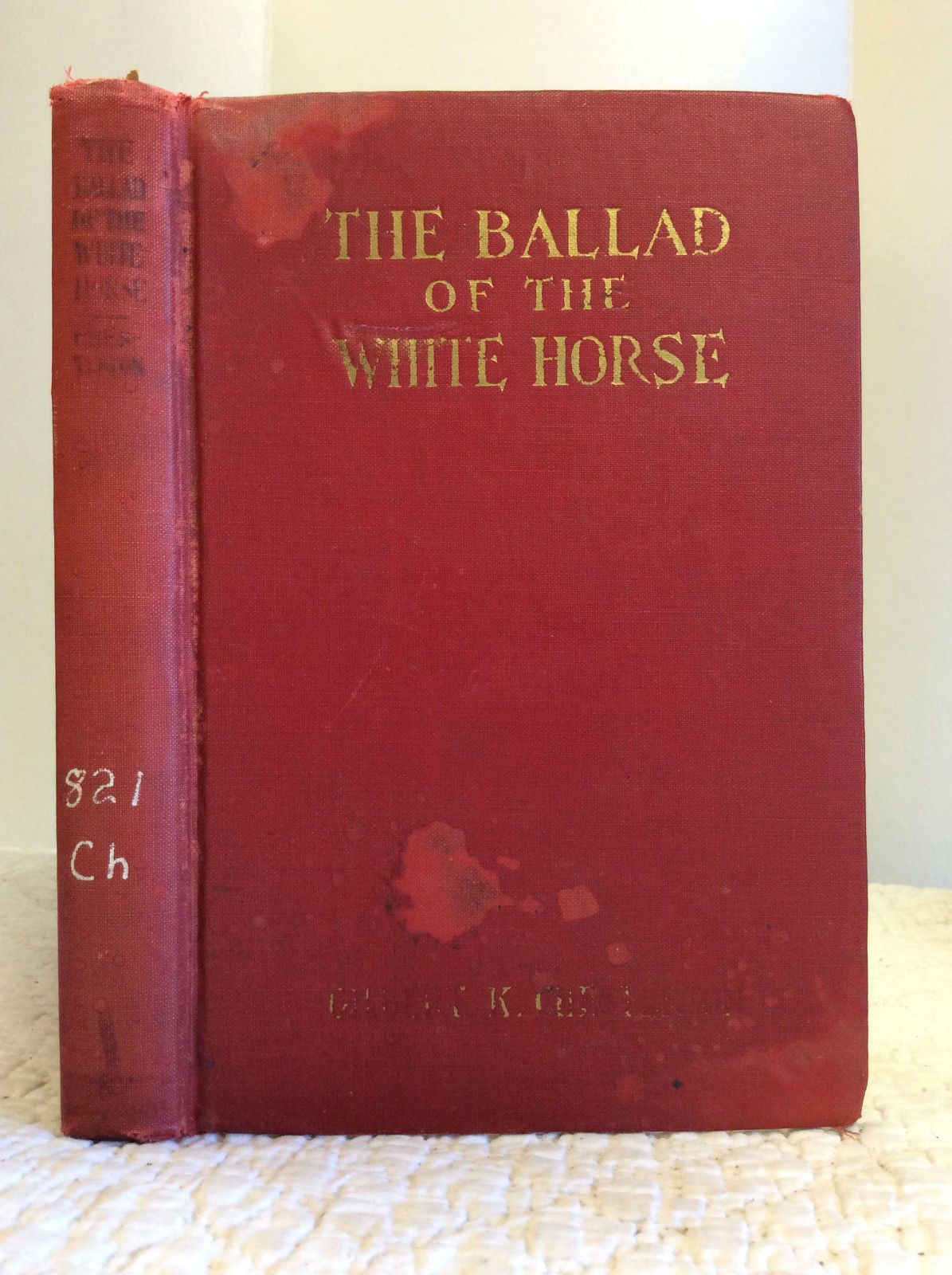
I don’t know how Tolkien thought about ballads in general, but, about what was termed a modern “ballad”, The Ballad of the White Horse, 1911,

by its author, G.K. Chesterton (1874-1936),

he had this to say:

“P[riscilla]…has been wading through The Ballad of the White Horse for the last many nights; and my efforts to explain the obscurer parts to her convince me that it is not as good as I thought.  The ending is absurd.  The brilliant smash and glitter of the words and phrases (when they come off, and not mere loud colours) cannot disguise the fact that G.K.C. knew nothing whatever about the ‘North’, heathen or Christian.”  (from an airgraph to Christopher Tolkien, 3 September, 1944, Letters, 131)

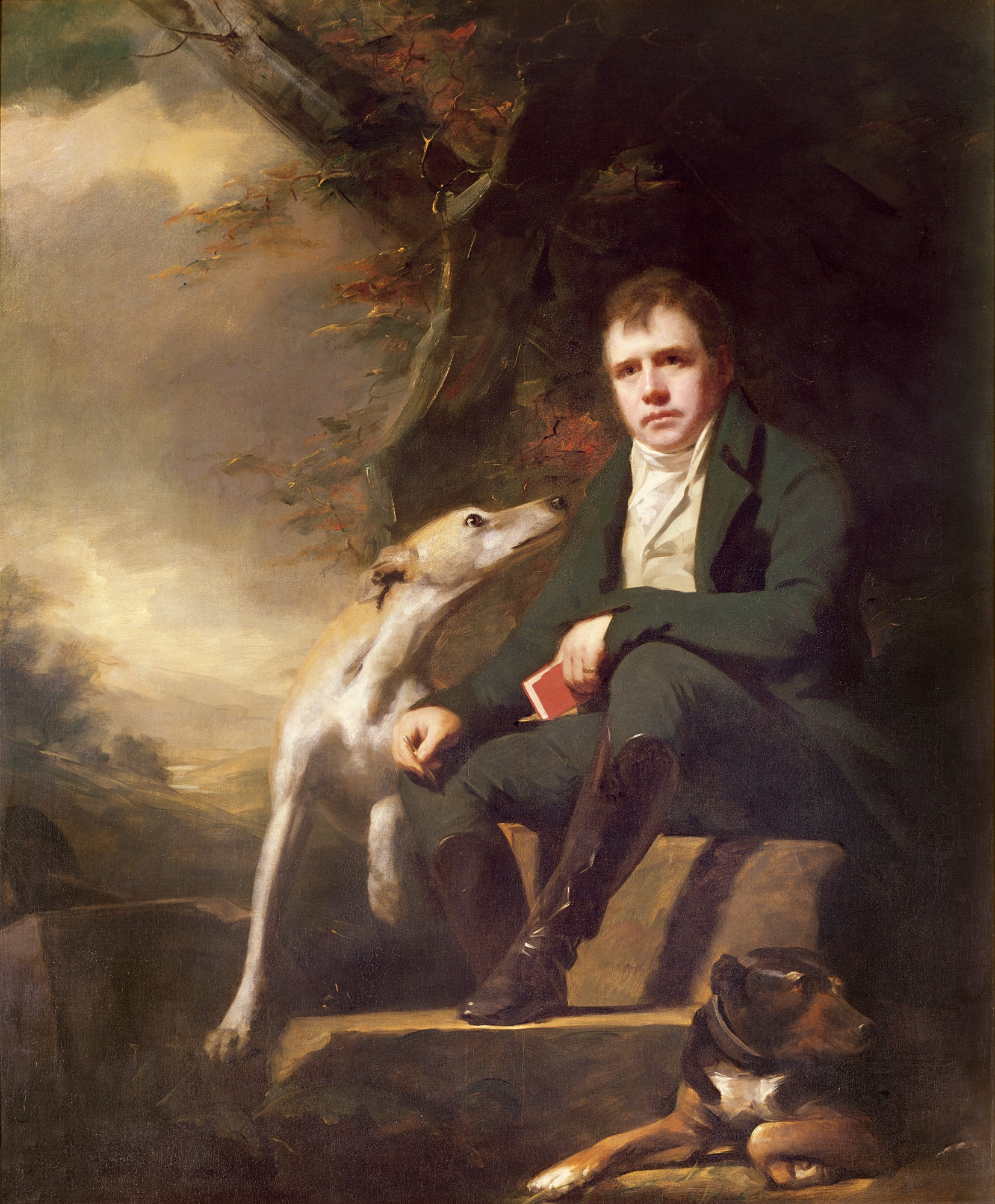
For myself, I would say that, although I’ve been reading (and singing) old ballads for a long time, I don’t think of them as having “smash and glitter”, but rather, at their best, being plain and, often, grim—and perhaps it’s in part why they have the lure they do—and have had, since at least early Romanticism.  I’m presuming that that’s a reason why, for example, following collectors who date back at least to the early 18th century, Sir Walter Scott (1770-1832),

XCF277642 Portrait of Sir Walter Scott and his dogs (oil on canvas) by Raeburn, Sir Henry (1756-1823); Private Collection; (add.info.: Walter Scott (1771-1832);); Scottish, out of copyright

(portrait by Sir Henry Raeburn—who clearly captured Scott as Scott wanted to be remembered—a reader in a romantic atmosphere—with his dogs)

published Minstrelsy of the Scottish Border (1802-1830—Scott kept revising and revising),

which included not only ballads he had personally collected or had from others, but also contemporary imitations of what he admired.  (There’s a very useful article here:  https://en.wikipedia.org/wiki/Minstrelsy_of_the_Scottish_Border on Scott and his working methods and even a site about a combined Scots/German project on the collection here:  http://walterscott.eu/ )

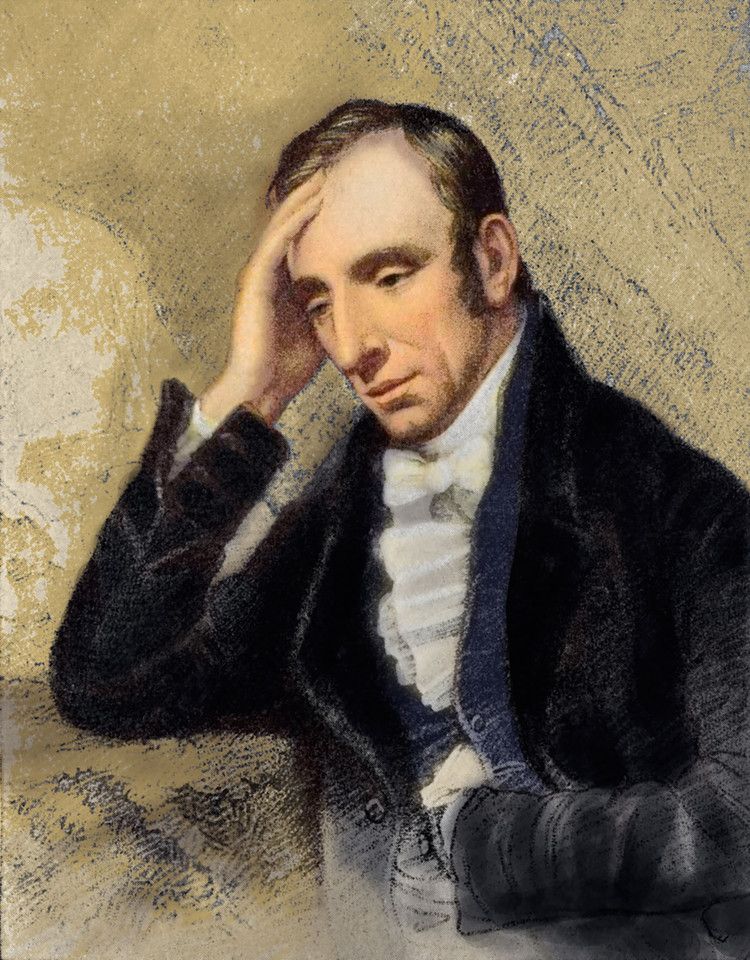
One of the ballads was clearly in the mind of another author, William Wordsworth (1770-1850),

“The Dowie Dens o Yarrow” (in modern English, perhaps something like “The Gloomy/Melancholy Dells of Yarrow”), when he wrote a very interesting poem in 1803, “Yarrow Unvisited”.

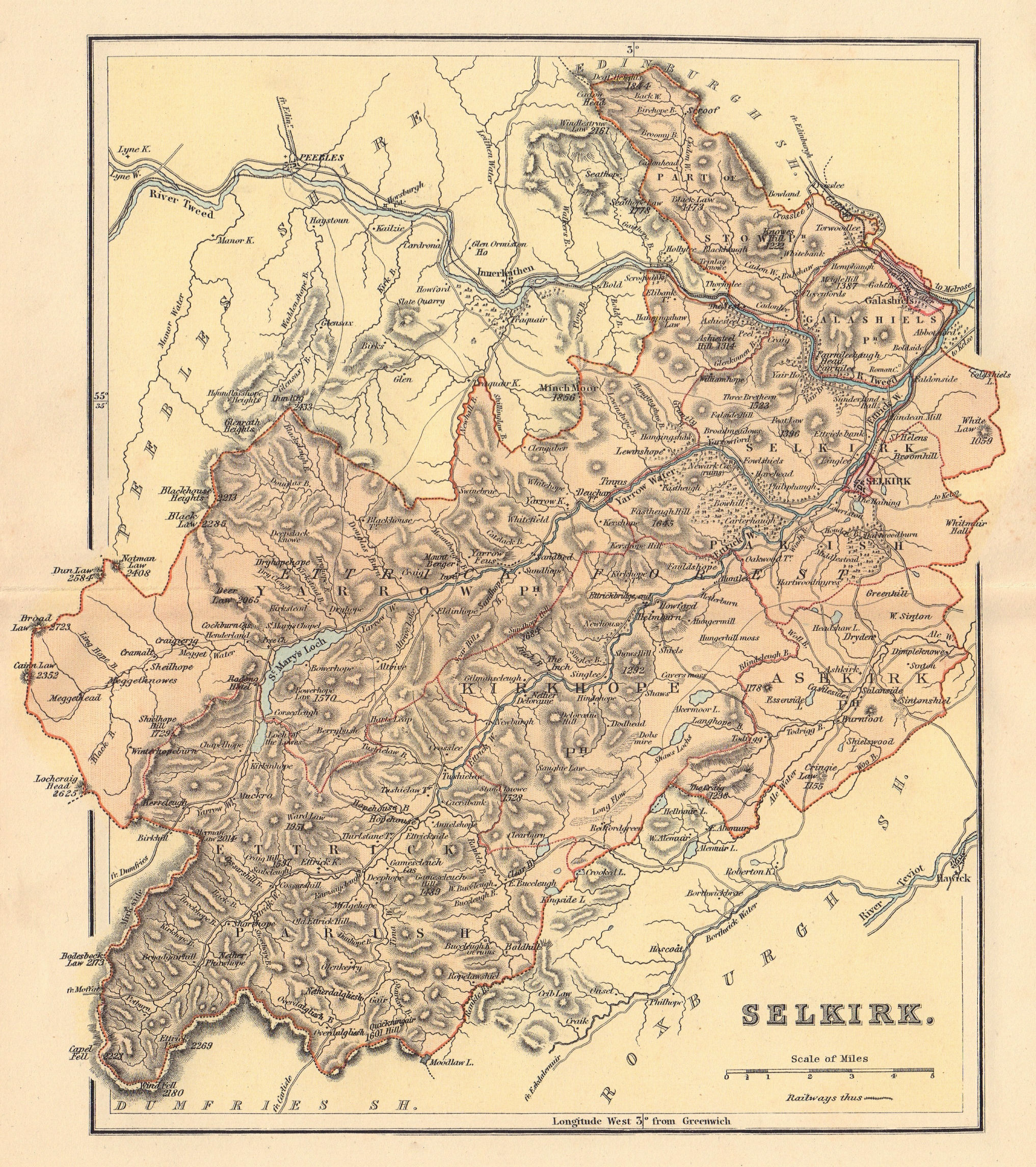
Yarrow itself is a narrow river which is a tributary of the River Tweed.  Here’s a late 19th-century map to help you to locate it—find St Mary’s Loch and follow the river line towards the Tweed.

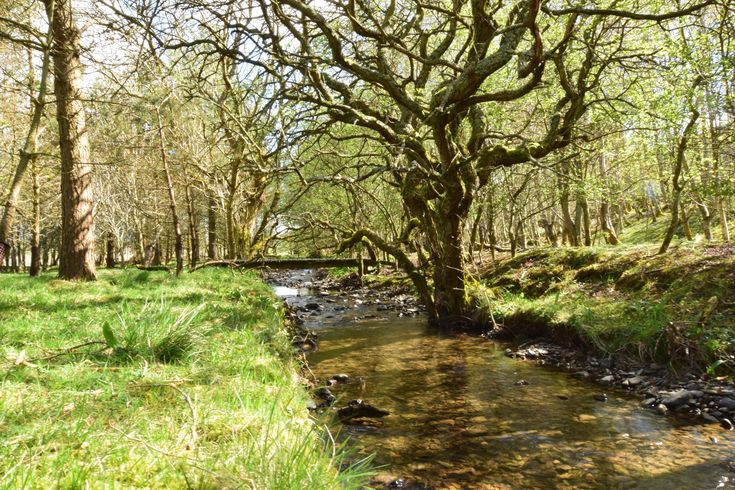
And here’s the Yarrow in full spate—appropriately in a rather stark early 20th-century photo—

The original ballad—and there are a lot of variant forms—tells the story of a lady to be fought over by a series of lords—and  their rival, in some versions, a “plough-boy lad of Yarrow” (to see variants, here are those published in FJ Child’s, 1825-1896, The English and Scottish Popular Ballads, 1882-1898, known as “Child 214” and by the title “The Braes of Yarrow” (that is, “The Hillsides of Yarrow”):   https://sacred-texts.com/neu/eng/child/ch214.htm  )  The rival defeats the lords, but is then treacherously stabbed from behind, often by the lady’s brother.  (You can hear the version I first heard and learned, sung by Ewan McColl, here:  https://www.youtube.com/watch?v=Vfsv8zUdqKM Be warned:  this performance is in line with older traditional performances, which I’ve always preferred, but might be rough, if you’re used to smoother folk singers.) 

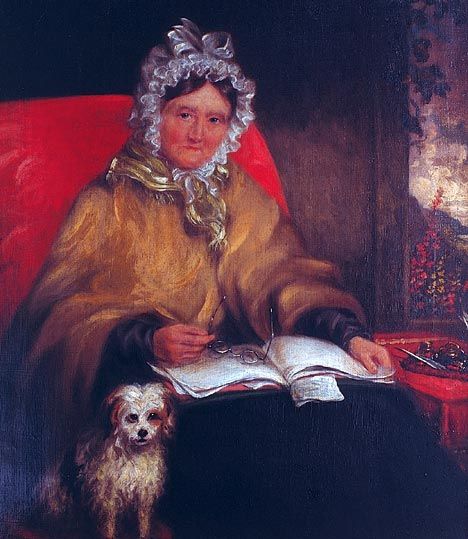
Wordsworth, and his sister, Dorothy, (1771-1855)

had made a brief tour of southern Scotland in the late summer of 1803 and had met Walter Scott there, fresh from publishing the first edition of Minstrelsy.  I suspect that the combination of their tour, that meeting, and Scott’s collection all came together in a poem which Wordsworth then wrote, probably in the early fall of 1803, “Yarrow Unvisited”.  I’ve always liked this poem because it’s not about what Wordsworth and Dorothy did see (this becomes the subject of the later “Yarrow Visited” of 1814—a good background article:  https://en.wikipedia.org/wiki/Yarrow_poems_(Wordsworth) ), but the fact that, because they didn’t see Yarrow, they could still imagine it—perhaps imagination, Wordsworth even suggests, is better, and seeing might spoil it—and because there was always the future possibility of actually seeing it.  (I am a big fan of Dorothy’s work—she had a wonderful eye for the natural world and a shrewd eye for people—and you can read her “Recollections of a Tour Made in Scotland” here:  https://www.gutenberg.org/files/42856/42856-h/42856-h.htm )

Here’s Wordsworth’s poem, the “winsome Marrow” is Dorothy, the word  “marrow” meanIng “equal/match”, being a description of the lady in the ballad:

“FROM Stirling Castle we had seen

The mazy Forth unravell’d,

Had trod the banks of Clyde and Tay

And with the Tweed had travell’d;

And when we came to Clovenford,

Then said my “winsome Marrow,”

“Whate’er betide, we’ll turn aside,

And see the Braes of Yarrow.”

“Let Yarrow folk, frae Selkirk town,

Who have been buying, selling,

Go back to Yarrow, ’tis their own,

Each maiden to her dwelling!

On Yarrow’s banks let herons feed,

Hares couch, and rabbits burrow;

But we will downward with the Tweed,

Nor turn aside to Yarrow.

“There’s Gala Water, Leader Haughs,

Both lying right before us;

And Dryburgh, where with chiming Tweed

The lintwhites sing in chorus;

There’s pleasant Tiviotdale, a land

Made blithe with plough and harrow:

Why throw away a needful day

To go in search of Yarrow?

“What’s Yarrow but a river bare

That glides the dark hills under?

There are a thousand such elsewhere

As worthy of your wonder.”—

Strange words they seem’d of slight and scorn;

My true-love sigh’d for sorrow,

And look’d me in the face, to think

I thus could speak of Yarrow!

“Oh, green,” said I, “are Yarrow’s holms,

And sweet is Yarrow flowing!

Fair hangs the apple frae the rock,

But we will leave it growing.

O’er hilly path and open strath

We’ll wander Scotland thorough;

But, though so near, we will not turn

Into the dale of Yarrow.

“Let beeves and home-bred kine partake

The sweets of Burn-mill meadow;

The swan on still Saint Mary’s Lake

Float double, swan and shadow!

We will not see them—will not go

To-day, nor yet to-morrow;

Enough if in our hearts we know

There’s such a place as Yarrow.

“Be Yarrow stream unseen, unknown!

It must, or we shall rue it:

We have a vision of our own,

Ah! why should we undo it?

The treasured dreams of times long past,

We’ll keep them, winsome Marrow!

For when we’re there, although ’tis fair

’Twill be another Yarrow!

“If Care with freezing years should come,

And wandering seem but folly,—

Should we be loth to stir from home,

And yet be melancholy;

Should life be dull, and spirits low,

’Twill soothe us in our sorrow

That earth has something yet to show,

The bonny holms of Yarrow!”

Although Wordsworth doesn’t use a ballad metre here, he cleverly echoes the sound of the 4-line stanzas in the older poem, keeping that word “Yarrow” at the end of each stanza, and rhyming or suggesting rhyme, in the second line to match it, following this Child version (214Q):

“There lived a lady in the West,

I ne’er could find her marrow;

She was courted by nine gentlemen,

And a plough-boy lad in Yarrow.”

No “smash and glitter” here, but, in the ballad, grimness and plainness and even fierceness, and, in Wordsworth’s poem, a quiet, playful thoughtfulness and, in neither, what Tolkien said of his daughter, Priscilla’s efforts with “The Ballad of the White Horse”, a need to “wade through”—although, one could always wade the Yarrow…

As ever, thanks for reading.

Stay well,

Watch your back,

And remember that there’s always

MTCIDC

O

PS

So that you can decide for yourself about that “smash and glitter”, here’s Chesterton’s poem for you:  https://www.gutenberg.org/files/1719/1719-h/1719-h.htm   It’s interesting that JRRT comments that he doesn’t think that Chesterton knew anything about the “North”—a subject upon which Tolkien himself was passionate—see his anger at the Nazis for their pirating of the subject, in his letter to Michael Tolkien, 9 June, 1941, Letters, 77)—as Chesterton boldly states, in his “Prefatory Note” he’s perfectly willing to admit that what he writes isn’t really historical and that he’s accepting myth even as he is making his own:

“This ballad needs no historical notes, for the simple reason that it does not profess to be historical. All of it that is not frankly fictitious, as in any prose romance about the past, is meant to emphasize tradition rather than history. King Alfred is not a legend in the sense that King Arthur may be a legend; that is, in the sense that he may possibly be a lie. But King Alfred is a legend in this broader and more human sense, that the legends are the most important things about him.”

PPS

If you would like to see Scott’s version of the ballad, it’s here:  https://www.gutenberg.org/ebooks/12882  All three volumes of the Scott are available here at Gutenberg.  They appear to be the 3rd edition of 1806.  For the various Child variants in Vol.3 of his collection, see:  https://archive.org/details/englishandscott07unkngoog/page/n8/mode/2up  This—and all 7 other volumes are available at the Internet Archive. 

PPPS

A “holm” in the Wordsworth is—I’m quoting “Etymonline” here:

“small island in a river; river meadow,” late Old English, from Old Norse holmr “small island,” especially in a river or bay, or cognate Old Danish hulm, from Proto-Germanic *hul-maz, from PIE root *kel- (2) “to be prominent; hill.” Obsolete, but preserved in place names, where it has various senses derived from the basic one of “island:” “‘raised ground in marsh, enclosure of marginal land, land in a river-bend, river meadow, promontory'” [“Cambridge Dictionary of English Place-Names”].”

Arabian Nights for Days

31 Wednesday Jan 2024

Posted by Ollamh in Uncategorized

≈ Leave a comment

Tags

book-review, book-reviews, books, Fantasy, reading

As always, dear readers, welcome.

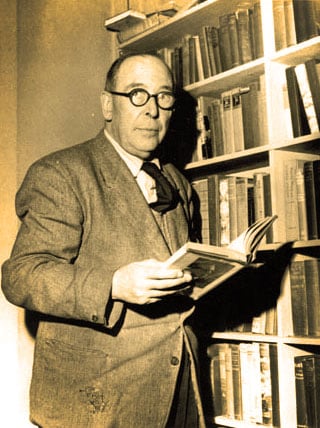
C.S. Lewis once remarked that, “You can’t get a cup of tea large enough or a book long enough to suit me.”  (from a transcript of a lecture given by Lewis’ sometime editor and biographer, Walter Hooper—here’s the whole piece:  https://www.historyspage.com/post/cs-lewis-inklings-memories-walter-hooper )

Considering my affection, not only for

but

and such works as these,

as well as a life-long love of

(but such a small cup!),

it’s clear that I’m in whole-hearted agreement with “Jack”, as his brother, “Warnie”, had named him in childhood.

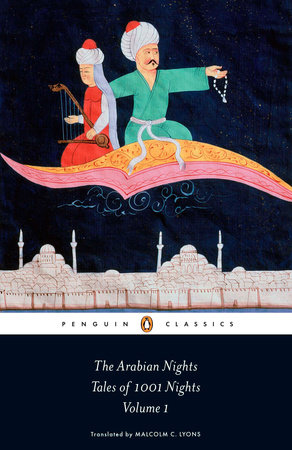
In this spirit, during the early fall, I embarked upon a project I’ve long told myself I would do:  read the whole of The Thousand Nights and One Night—in translation, unfortunately.

I began with this introduction—

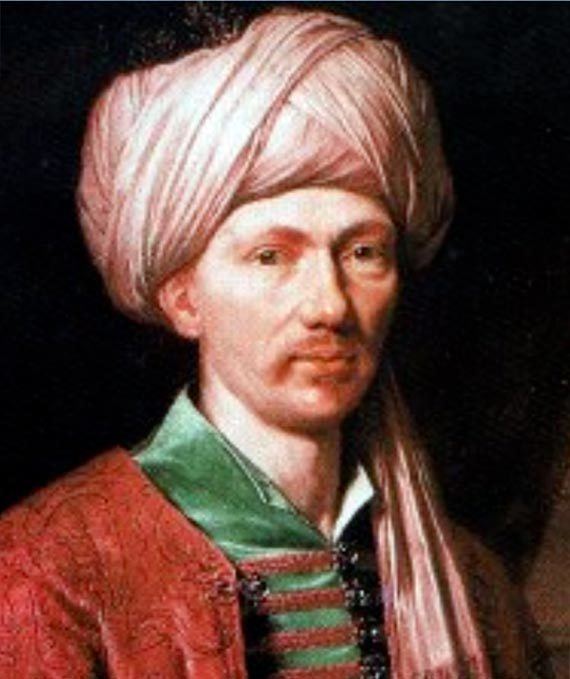
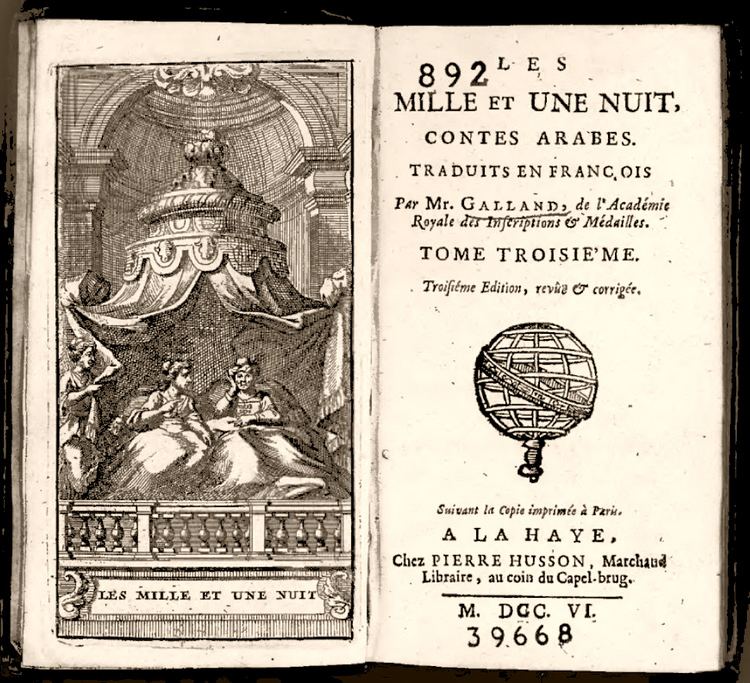
From earlier work (and postings) on the origins of “contes des fees”, as early French authors—the creators of our literary stories, like “La Belle et La Bete”, originally written by Gabrielle-Suzanne Barbot de Villeneuve in 1740, but better known by the revised 1756 version of Jeanne-Marie Leprince de Beaumont–called them—I knew something of the story of how English-speakers first encountered The Arabian Nights in the so-called “Grub Street” edition of 1706, itself an anonymous translation of Antoine Galland’s (1646-1715)

Les Mille et Une Nuits of 1704-1717.

I soon discovered, however, just how much more there was to know.  In chapters with intriguing titles like “Beautiful Infidels” and “Oceans of Story”, the author, Robert Irwin, laid out the complex history of this vast collection, which most of us know from tales which aren’t even in the main collection, “orphan stories” like “Aladdin”

(Albert Robida, 1848-1926)

and “Ali Baba and the Forty Thieves.” 

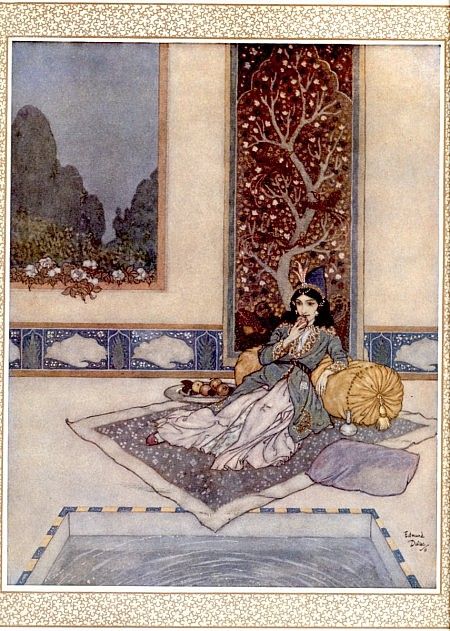
(Edmond Dulac, 1882-1953)

(For more on translations, see: https://en.wikipedia.org/wiki/Les_mille_et_une_nuits and https://en.wikipedia.org/wiki/Translations_of_One_Thousand_and_One_Nights )

Armed with the knowledge Irwin provided, it was time to begin reading.  I chose what seemed the best translation in English, by Malcolm C. Lyons, in a set of four Penguin volumes and launched into the first.

I imagine that you know the general frame:  King Shahryar learns that his wife is unfaithful.   To keep himself from being cuckolded again, he marries a new bride every night and has her beheaded the next morning.  His Vizier’s daughter Shahrazad, decides to stop this by marrying the Sultan but then, telling one story after another, to keep him so interested night after night by stopping a story at the night’s end without finishing, to force him to suspend his murderous habit to find out what happened next. 

(Another Dulac.  If you’d like to see more of his gorgeous illustrations, look here:  https://www.gutenberg.org/cache/epub/51432/pg51432-images.html )

Finally, after 1001 stories (or perhaps a few more), he decides not to continue murdering brides, Shahrazad is saved, and, presumably, lives happily ever after (really?  Could you ever trust this man not to change his mind?).

I’ve just finished Volume 1 and set off into Volume 2

and it’s been an extremely interesting experience.  Unlike a long novel, like War and Peace, where we follow the adventures of a few main characters—Natasha, Pierre, and Andrei—even when surrounded by a host of other characters (and Tolstoy’s book has a flood of them), in The Arabian Nights, except for the shell characters—the king, the story-teller, and the story-teller’s sister, who can act as a prompter–the main characters can change often, sometimes making it difficult to remember who is doing what with or to whom.  More than once, I had to turn back a page, scan paragraphs, asking myself, “Who is Ali ibn Ishaq again?” or “Is this the brother—or is it brother-in-law?  And is this the same slave who…?”  As well, this unexpurgated text is filled with poetry, some of which is reflective of something going on in the story, some—maybe more than some—is simply poetry which has been inserted into the text.  Because it might be part of the story, I continued to read it, but often it was just what it appeared to be:  poetry inserted for some reason I didn’t understand into the text. 

At the same time, as story spawned story, stories were interwoven, stories linked themselves here and there into complex narratives, there was a certain hypnotic quality to it which kept me reading, not so much because the characters had looped me in as that the method of telling itself had.  I might not care about why X was beheaded, but I was certainly interested to understand how the story had turned in that direction and he was.  In other words, just as Shahrazad had seduced the king with her telling into wanting more and more, so she had seduced me into reading on, always wondering, “Where is this going and how will it end?”  And—just as interesting—“How will we move to the next story?”

At over 950 pages on average for each of 4 volumes, each of these would surely have (at least temporarily) satisfied C.S. Lewis—but where would we ever find a tea cup large enough to keep him—and me—going?

Thanks, as ever, for reading.

Stay well,

Uncork no bottle unless you’ve already planned how to deal with the djinn inside,

And know that, as always, there’s

MTCIDC

O

The Doubtful Sea Series Facebook Page

The Doubtful Sea Series Facebook Page

  • Ollamh

Categories

  • Artists and Illustrators
  • Economics in Middle-earth
  • Fairy Tales and Myths
  • Films and Music
  • Games
  • Heroes
  • Imaginary History
  • J.R.R. Tolkien
  • Language
  • Literary History
  • Maps
  • Medieval Russia
  • Military History
  • Military History of Middle-earth
  • Narnia
  • Narrative Methods
  • Poetry
  • Research
  • Star Wars
  • Terra Australis
  • The Rohirrim
  • Theatre and Performance
  • Tolkien
  • Uncategorized
  • Villains
  • Writing as Collaborators
Follow doubtfulsea on WordPress.com

Across the Doubtful Sea

Recent Postings

  • Subterranean April 22, 2026
  • Serendipity? April 15, 2026
  • Serendipity April 8, 2026
  • Verisimilitude April 1, 2026
  • Goblins and Goblin March 25, 2026
  • Crowing and Raven March 18, 2026
  • The Damage of Dragons March 11, 2026
  • Encouragement March 4, 2026
  • Eavesdropping February 25, 2026

Blog Statistics

  • 112,102 Views

Posting Archive

  • April 2026 (4)
  • March 2026 (4)
  • February 2026 (4)
  • January 2026 (4)
  • December 2025 (5)
  • November 2025 (4)
  • October 2025 (5)
  • September 2025 (4)
  • August 2025 (4)
  • July 2025 (5)
  • June 2025 (4)
  • May 2025 (4)
  • April 2025 (5)
  • March 2025 (4)
  • February 2025 (4)
  • January 2025 (5)
  • December 2024 (4)
  • November 2024 (4)
  • October 2024 (5)
  • September 2024 (4)
  • August 2024 (4)
  • July 2024 (5)
  • June 2024 (4)
  • May 2024 (5)
  • April 2024 (4)
  • March 2024 (4)
  • February 2024 (4)
  • January 2024 (5)
  • December 2023 (4)
  • November 2023 (5)
  • October 2023 (4)
  • September 2023 (4)
  • August 2023 (5)
  • July 2023 (4)
  • June 2023 (4)
  • May 2023 (5)
  • April 2023 (4)
  • March 2023 (5)
  • February 2023 (4)
  • January 2023 (4)
  • December 2022 (4)
  • November 2022 (5)
  • October 2022 (4)
  • September 2022 (4)
  • August 2022 (5)
  • July 2022 (4)
  • June 2022 (5)
  • May 2022 (4)
  • April 2022 (4)
  • March 2022 (5)
  • February 2022 (4)
  • January 2022 (4)
  • December 2021 (5)
  • November 2021 (4)
  • October 2021 (4)
  • September 2021 (5)
  • August 2021 (4)
  • July 2021 (4)
  • June 2021 (5)
  • May 2021 (4)
  • April 2021 (4)
  • March 2021 (5)
  • February 2021 (4)
  • January 2021 (4)
  • December 2020 (5)
  • November 2020 (4)
  • October 2020 (4)
  • September 2020 (5)
  • August 2020 (4)
  • July 2020 (5)
  • June 2020 (4)
  • May 2020 (4)
  • April 2020 (5)
  • March 2020 (4)
  • February 2020 (4)
  • January 2020 (6)
  • December 2019 (4)
  • November 2019 (4)
  • October 2019 (5)
  • September 2019 (4)
  • August 2019 (4)
  • July 2019 (5)
  • June 2019 (4)
  • May 2019 (5)
  • April 2019 (4)
  • March 2019 (4)
  • February 2019 (4)
  • January 2019 (5)
  • December 2018 (4)
  • November 2018 (4)
  • October 2018 (5)
  • September 2018 (4)
  • August 2018 (5)
  • July 2018 (4)
  • June 2018 (4)
  • May 2018 (5)
  • April 2018 (4)
  • March 2018 (4)
  • February 2018 (4)
  • January 2018 (5)
  • December 2017 (4)
  • November 2017 (4)
  • October 2017 (4)
  • September 2017 (4)
  • August 2017 (5)
  • July 2017 (4)
  • June 2017 (4)
  • May 2017 (5)
  • April 2017 (4)
  • March 2017 (5)
  • February 2017 (4)
  • January 2017 (4)
  • December 2016 (4)
  • November 2016 (5)
  • October 2016 (6)
  • September 2016 (5)
  • August 2016 (5)
  • July 2016 (5)
  • June 2016 (5)
  • May 2016 (4)
  • April 2016 (4)
  • March 2016 (5)
  • February 2016 (4)
  • January 2016 (4)
  • December 2015 (5)
  • November 2015 (5)
  • October 2015 (4)
  • September 2015 (5)
  • August 2015 (4)
  • July 2015 (5)
  • June 2015 (5)
  • May 2015 (4)
  • April 2015 (3)
  • March 2015 (4)
  • February 2015 (4)
  • January 2015 (4)
  • December 2014 (5)
  • November 2014 (4)
  • October 2014 (6)
  • September 2014 (1)

Blog at WordPress.com.

  • Subscribe Subscribed
    • doubtfulsea
    • Join 75 other subscribers
    • Already have a WordPress.com account? Log in now.
    • doubtfulsea
    • Subscribe Subscribed
    • Sign up
    • Log in
    • Report this content
    • View site in Reader
    • Manage subscriptions
    • Collapse this bar
 

Loading Comments...