• About

doubtfulsea

~ adventure fantasy

Tag Archives: Medieval

Peace! Count the Clock!

25 Wednesday Oct 2017

Posted by Ollamh in J.R.R. Tolkien, Literary History, Narrative Methods

≈ Leave a comment

Tags

ABC Alphabetical Railway Giude, Agatha Christie, anachronism, Bag End, Bradshaw's Railway Companion, clocks, Egyptian, feudalism, Gros Horloge, hour glases, Liverpool and Manchester Railway, Macbeth, Medieval, Normandy, Pope Sylvester II, railways, Rouen, Salisbury Cathedral clock, Shakespeare, sundial, The Lord of the Rings, Tolkien, Wapping tunnel, water clocks, Wells Cathedral

Welcome, as always, dear readers.

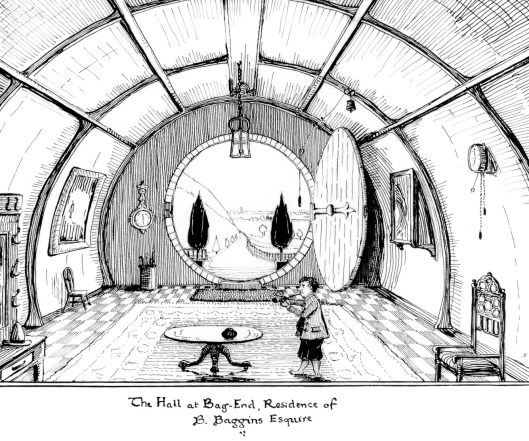
In our last, we puzzled over something in the entryway to Bag End.

image1bagend.png

It’s that thing to the left of the door.   It looks rather like a clock (which is what we thought before examining it more closely), but it is, in fact, a barometer—and a very puzzling thing for Bilbo to have, as we suggested.

On the right hand wall, however, there is another puzzling object:  an actual clock.

In our world, of course, this is no puzzle at all, clocks being so common.  In fact, our major way of indicating time in English is to say, “It’s 11 o’clock”, where “o’clock” is a contracted form of “of the clock”.  Even if, like many in our world, you get your time from your phone, you’ll still say this, won’t you?

image2cell.png

This has been the case since the 16th century, as we can see in Shakespeare’s plays—including moments when characters who live in times before clocks still talk about them, as in Macbeth, Act II, Scene 4, where Macbeth’s cousin, Ross, says to an Old Man, “By th’clock ‘tis day”, when the historical Macbeth lived in the 11th century AD, perhaps 200 and more years before clocks began to appear in western Europe.

Although we’ve seen it regularly cited that Pope Sylvester II
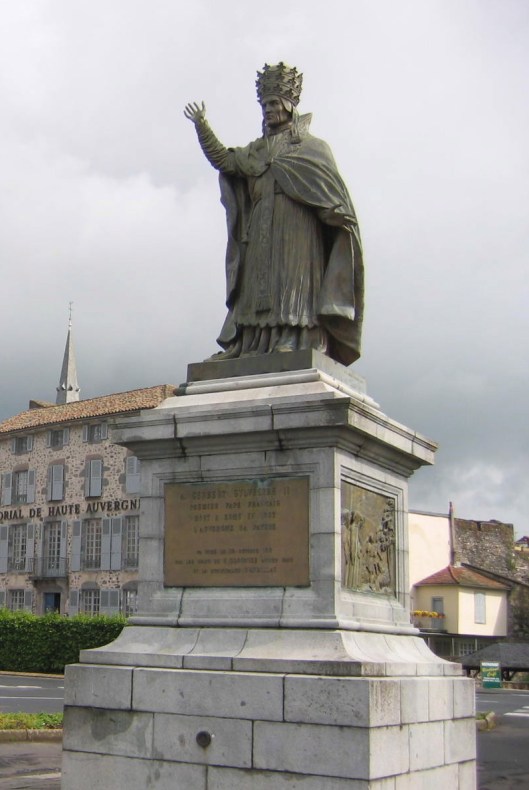
image3sylvester2.jpg

invented the first mechanical clock in the 990s AD, we have yet to see anything in the way of concrete evidence that this is so.  Rather, we see the first clocks to have appeared in the later 14th century, including the Salisbury Cathedral clock, which perhaps dates from 1386.
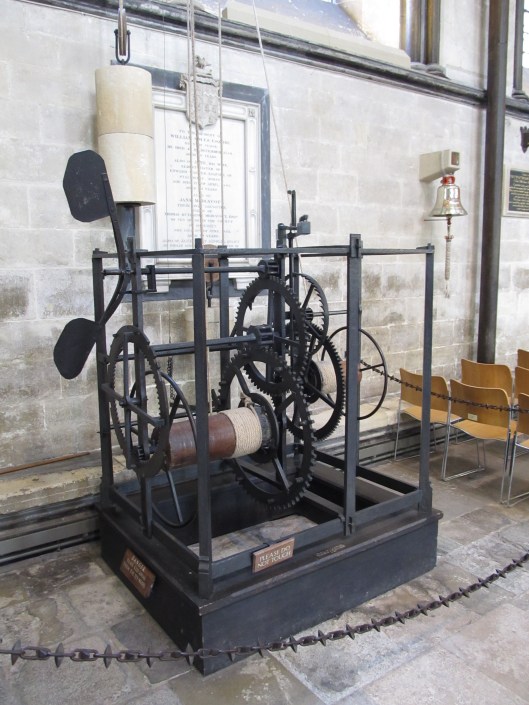
image4salisbury

Likewise there is the clock of Wells Cathedral, tentatively dated to about the same time
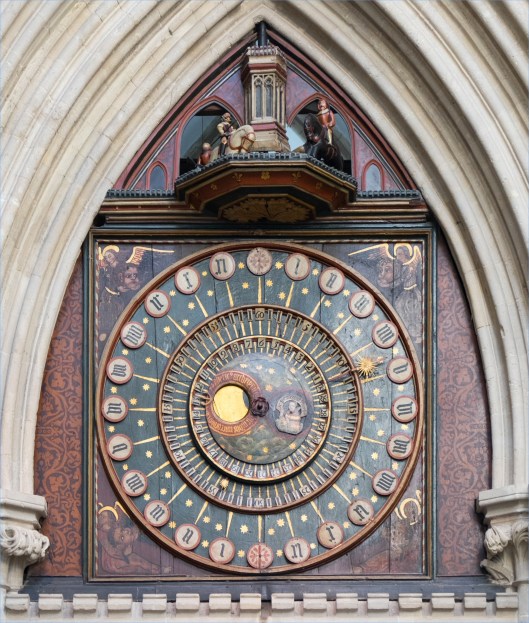
image5wells.jpg

or the Gros Horloge in Rouen, in Normandy, whose internal workings date from 1389.


And the pendulum clock—which is what is visible on the right hand wall of Bag End—is an even later invention, credited to the Dutch scientist of the mid-17th century, Christian Huygens.
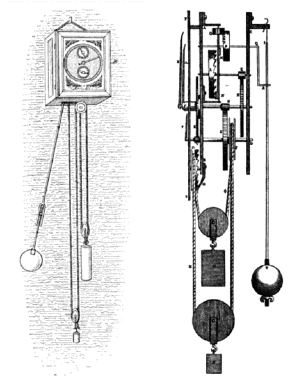
image7pendulumimage8huygens


Long before such devices, people marked time by such things as hour glasses (possibly medieval? Lots of discussion about this, but there is documentation that medieval ships’ captains began to use them)

image9hourglass.jpg

and water clocks (used in Athenian court rooms to control speeches—when citations of established law were read in court, the order was to “stop the clock”, as reading law as evidence clearly wasn’t considered to be part of a speech)
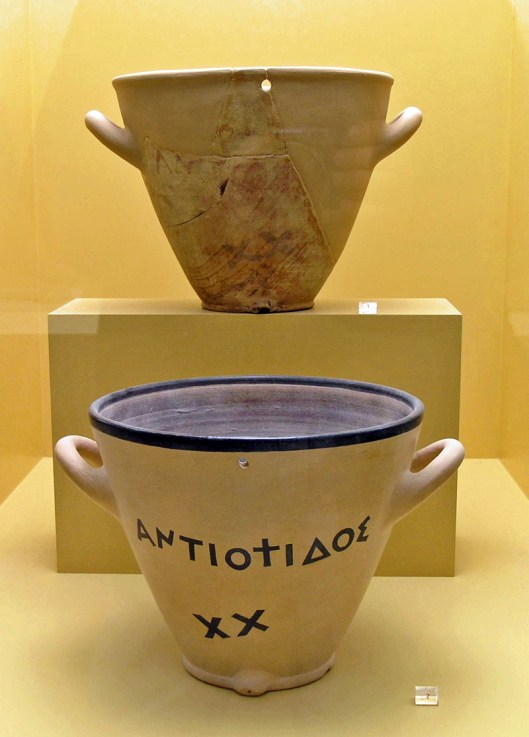
image10clepsydra.jpg

and even put the sun to work, using its moving shadow to tell the time.  (This is the earliest sundial we’ve seen—it’s Egyptian, from the 13th century BC)

image11egyptsundial.jpg

(And just a linguistic footnote on “telling time” as a sort of pun.  On the one hand, we read time off a device—and, if asked, aloud—so that we are “telling—that is reciting—the time”.  At the same time, an older usage of the verb “to tell” was “to count”.  This is preserved in the “teller” in a bank, by someone “telling” a rosary, and by “tolling” a bell.  It can also be seen in other Germanic languages, like Danish, which has the verb “taelle”, “to count”, and German, “zaehlen”.  So, when you “tell” time, you’re both deciphering the information from a device—possibly aloud—and doing so by counting.)

All of which leads us back to Bilbo’s clock, on a wall in the Shire.

As far as we can tell, at the end of the Third Age, the Shire was primarily a non-feudal medieval agricultural world.
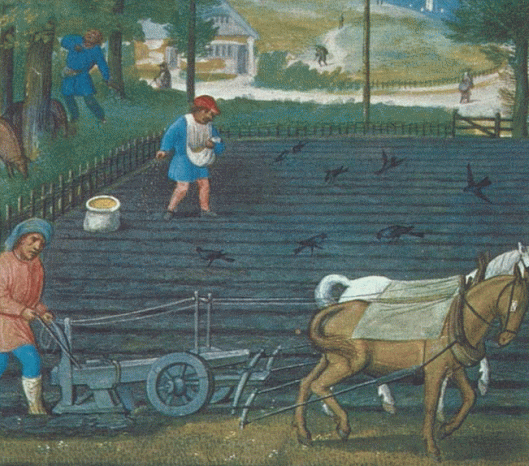
image12medievalplowing.gif

Such worlds are, considering how much the sun is involved in growing things like grain,

image13medreaping.jpg

governed by daylight, which is, on the whole, easy to mark and measure.  (A difficulty for sundials, of course, is that the sun changes position throughout the year and the hours of daylight can vary greatly.  Perhaps this is why there is a famous sundial motto:  “Horas non numero nisi serenas”—“I count only the fair—that is, sunny—hours”.)

image14sundial.jpg

So why is there a pendulum clock on that wall?

A partial answer might be the same as that for the barometer:  JRRT is recreating something from his own past, or even from his present—the big dial looks later to us than the 1890s.  Just as in the case of that reference to Bilbo shrieking “like the whistle of an engine coming out of a tunnel” (The Hobbit, Chapter One, “An Unexpected Party”), it mirrors Tolkien’s own world—a world in which railways in Britain were a major influence on changes in marking time.

Railways had begun to appear in 1830, with the Liverpool and Manchester Railway.

image15earliestrr.jpg

(And here, by the way, is an engineering marvel of the time—the 1.25-mile long Wapping tunnel, dug to allow the railway’s passage into Liverpool and the first such tunnel to be constructed under a city.  Seeing this 1831 illustration, it’s easy to imagine what kind of shriek Bilbo must have made!)
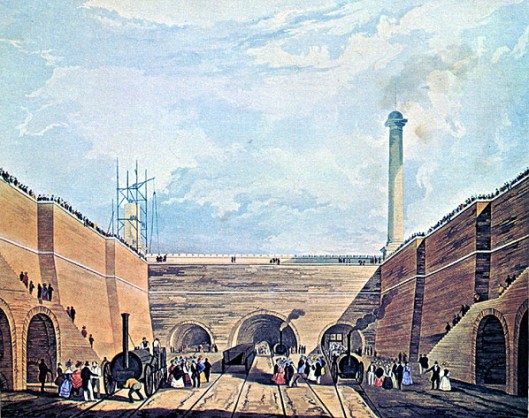
image16wappingtunnel.jpg

By 1840, building and traffic had increased dramatically and, as the rail lines stretched across England, an awkwardness appeared:  there was no uniform time standard.  Towns close to each other might share the same time, but those between London and Liverpool, say, had their own methods of marking time and so attempting to produce a dependable schedule for a train’s journey was nearly an impossibility along the 178 miles (287km) between the two cities.
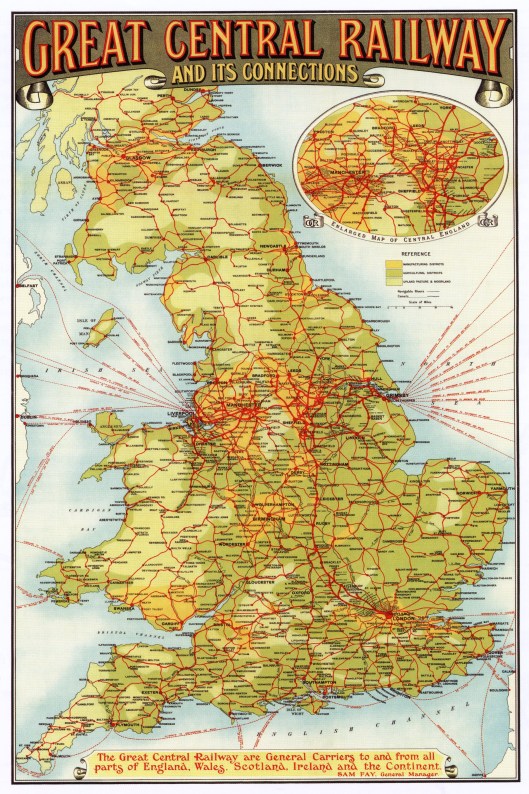
image17railwaymap.jpg

Those in charge of the early railways quickly saw the difficulty and began, as early as 1840, to standardize the measurement of time along their routes.  By the late 1850s, standardization had been mainly achieved—although it was only in the 1880s that the government stepped in to complete the progress.

This regularizing of time produced, on the one hand, standard railway timetable books, like Bradshaw’s Railway Companion
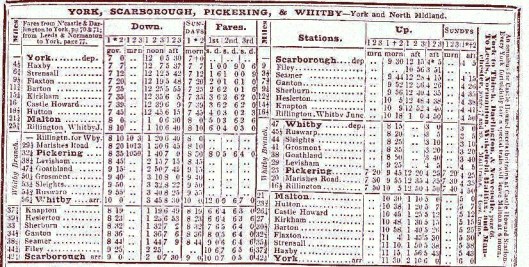
image18abradshaw.jpg


(first published in 1839 and often consulted by Watson and Holmes on their extra-London adventures) and The ABC Alphabetical Railway Guide
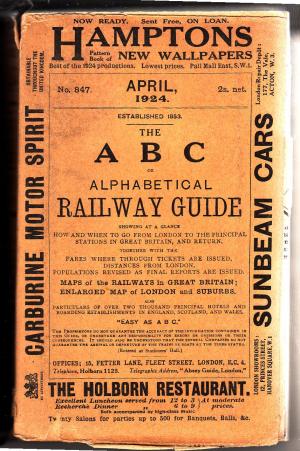
image18rrguide1924.jpg


(first published in 1853 and the basis of Agatha Christie’s 1936 novel, The ABC Murders).  On the other hand, it also produced standardized time in general, eventually going global, something which the industrial revolution increasingly demanded as part of its production cycle and now so deeply ingrained that virtually everything we do is influenced by it and we even incorporate it into our bodies, either tying it to our wrists

image19earlywatch.jpg

or wear it as part of our clothing.

image20cellinpocket.jpg

Work, school, even fun (movies begin on time schedules, television is one long schedule, as well as certain elements of the internet—although the internet does offer the subversive possibility of doing things “on your own time”), all of it moves to the measured tick of time.   In 1937, the year after Agatha Christie’s novel based upon railway timetables was published, JRRT would have felt it, from his lecture schedule to the evening radio broadcasts of the BBC.

Almost as if it were a gathering force of the MODERN WORLD, then, the measurement and standardization of time has crept up, from the later medieval world on.  We can see that Shakespeare was influenced by it—in Julius Caesar (1599?), Act II, the jumpy Brutus and Cassius listen to the sound of a clock striking three—in a world where there would be no clocks to strike for almost 1400 years (but providing us with the title of this post).  Is it any wonder, then, that clocks could have slipped into Middle-earth?  And, besides, they do have a use for Bilbo—how else could he shout to the dwarves as he left them, “If ever you are passing my way…don’t wait to knock!  Tea is at four…” (The Hobbit, Chapter Eighteen, “The Return Journey”)?

Thanks, as ever, for reading.

MTCIDC

CD
Are You Sitting Down?.2 (Some Thrones, but No Games)

11 Wednesday Oct 2017

Posted by Ollamh in Economics in Middle-earth, J.R.R. Tolkien, Literary History, Narrative Methods

≈ Leave a comment

Tags

A Game of Thrones, Bag End, basins, Bree, British monarchs, Buckland, canopy, cart, Cirith Ungol, Coronation Chair, Coronation Throne, Crick Hollow, Edoras, Edward I, Edward VII, Edward VIII, Edwardian, Elizabeth II, Elrond's house, Furniture, George V, George VI, Gondor, high table, Iron Throne of Westros, Lia Fail, Lothlorien, Medieval, Middle-earth, Minas Tirith, monopodium, Moot Hill, parlor, pubs, Rivendell, Rohan, Shire, Stone of Scone, Tara Ireland, The Hobbit, The Lord of the Rings, The Prancing Pony, the Stone of Destiny, throne, Tolkien, Tom Bombadil, UK pubs, Victorian Bedroom, Victorians, washstand

Welcome, dear readers, as always.

In our last, we were talking about furniture in Middle-earth—in that post our subject was The Hobbit.  We continue with The Lord of the Rings and conclude with one specialized piece of furniture.

We begin where we began last time, with Bag End.

image1bagend.jpg

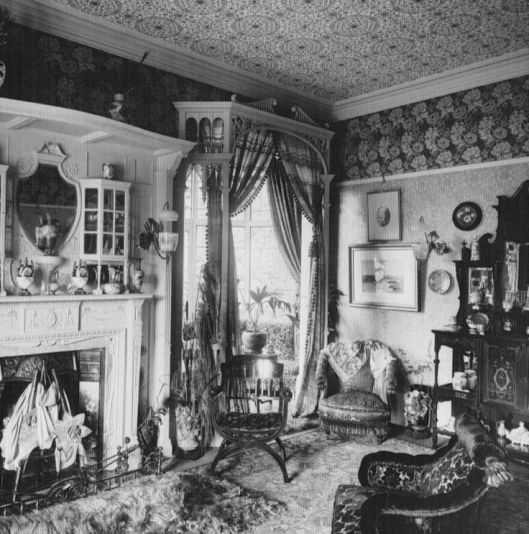
With all of its rooms and the stuff in them, we suggested then that what JRRT was really doing was depicting the kind of overcrowded place later Victorians and Edwardians—the people with whom he, born 1893, would have grown up around—would have preferred.

image2vicparlor.jpg

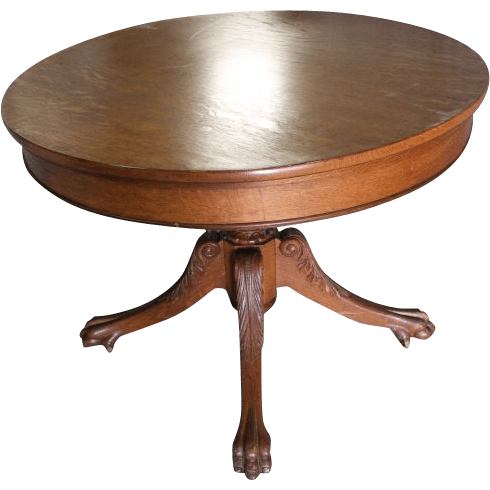
[Note, by the way, the table in the middle of the entryway in Tolkien’s picture of Bag end, and compare it with this “monopodium” table with claw feet, which could be seen in such a parlor.]

image3monopodium.png

Once the three Hobbits leave Bag End for their journey to Crick Hollow,

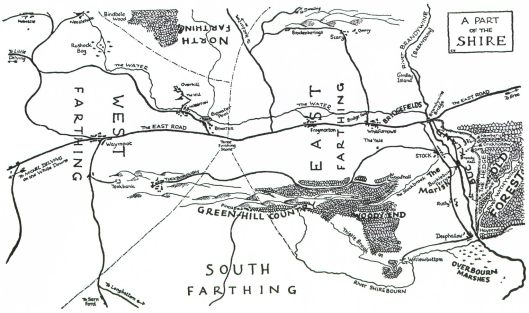
image4shiremap.jpg

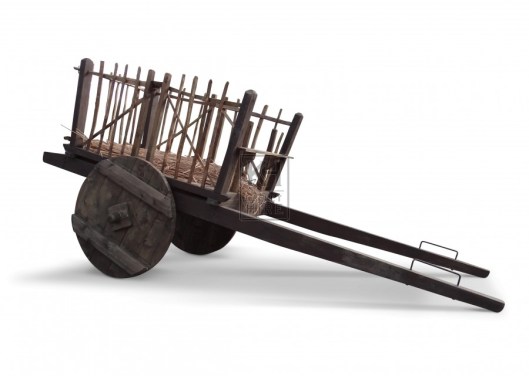
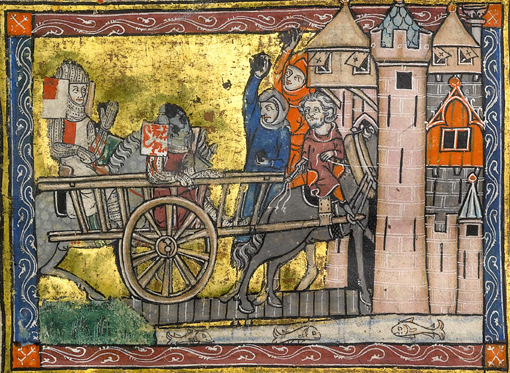
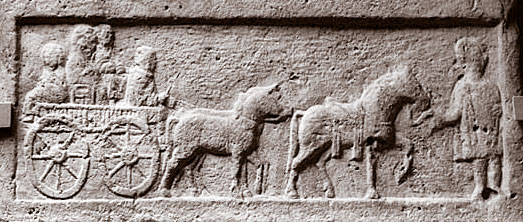
having sent “two covered carts…to Buckland, conveying the goods and furniture…” (and the next day sending off another) (The Fellowship of the Ring, Book One, Chapter 3, “Three is Company), they will spend a great deal of time walking (and paddling and riding), but will enter few buildings.  Here, by the way, is a cart—we imagine “covered” simply means that a blanket of some tough coarse fabric, like canvas, (called a “tilt”) would have been pulled over the load.

image5cart.jpg

Our chances of getting much furniture detail are not high, then, but let’s see what we find.

Beyond Buckland, the first indoors for the hobbits is Tom Bombadil’s house.  As the hobbits enter, they are in:

“…a long low room, filled with the light of lamps swinging from the beams in the roof; and on the table of dark polished wood stood many candles, tall and yellow, burning brightly.

In a chair, at the far side of the room facing the outer door, sat a woman…” (The Fellowship of the Ring, Book One, Chapter 7, “In the House of Tom Bombadil”)

image6agoldberry.jpg

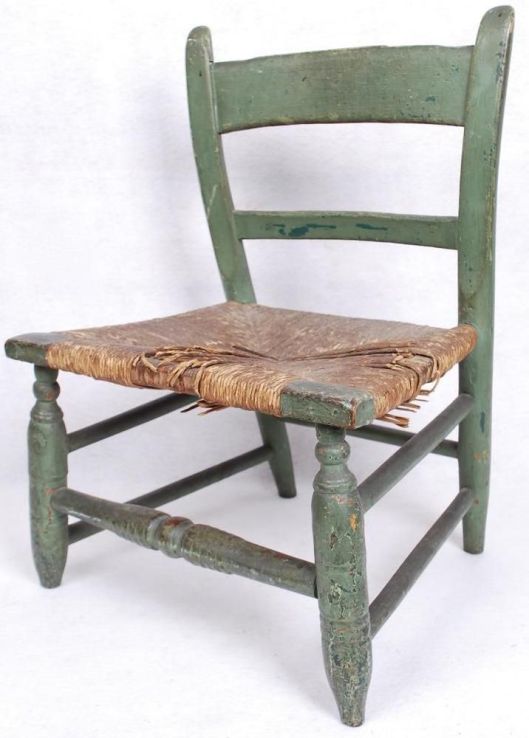
The hobbits are given “low rush-seated chairs”.

image6rushseatchair.jpg

And, shortly, are shown their bedroom:

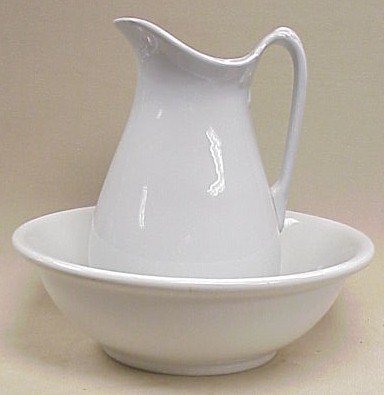
“They came to a low room with a sloping roof…There were four deep mattresses…laid on the floor along one side.  Against the opposite wall was a long bench laden with wide earthenware basins, and beside it stood brown ewers filled with water…”

Not much to go on here.  We’ll presume that the bench is wooden and plain, and the basins and ewers (a big pitcher—ultimately from Latin aquarius, “having to do with water”) are of the kind one would have seen in a Victorian bedroom, when indoor bathrooms were still only a wish—or were only in the homes of the extremely wealthy.

image7ewer.jpg

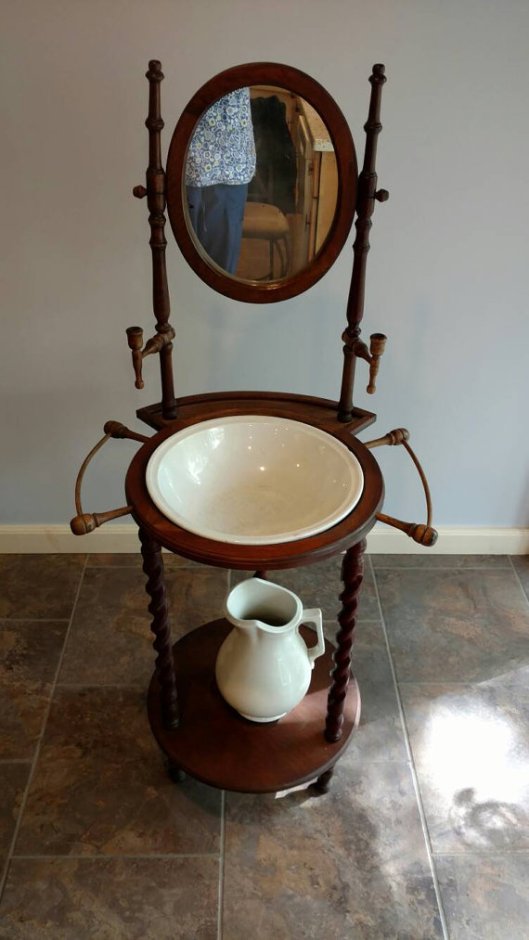
[Victorians, by the way, could have specialized places for such pitcher/basin combinations.  They’re called “washstands” and here’s a simple but functional one.]

image8awashstand.jpg

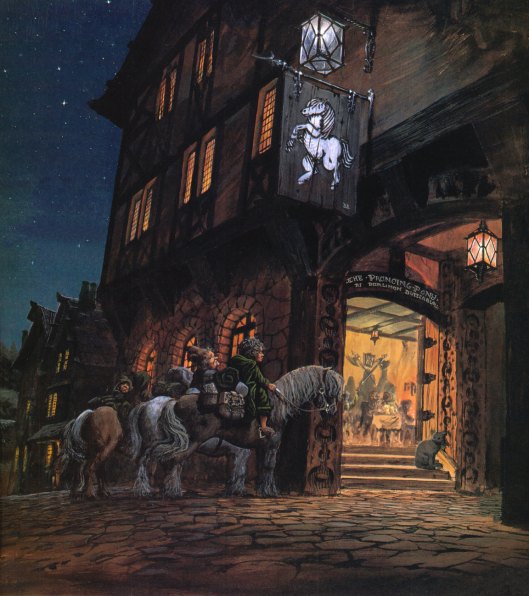
Next on their journey (we won’t count the barrow—although the Wight does mention a “stony bed”) is the Prancing Pony.

image8prancingponey.jpg

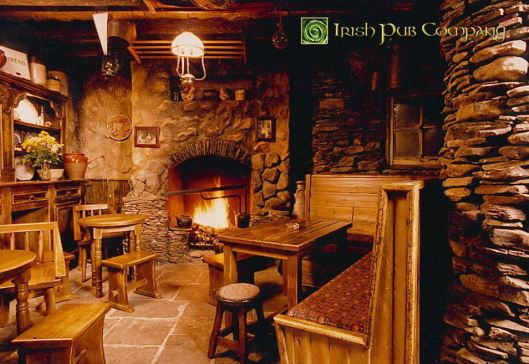
Again—what we have is functional.  The hobbits are initially led to what the landlord, Barliman Butterbur, calls “a nice little parlour” where “There was a bit of bright fire burning on the hearth, and in front of it were some low and comfortable chairs” and “a round table, already spread with a white cloth”. (The Fellowship of the Ring, Book One, Chapter 9, “At the Sign of the Prancing Pony”)

This sounds like a small, private room, found in some UK pubs, and called a “snug” (etymology unclear—but used to mean “comfy” as early as the 1620s).  Here’s one, in fact, from an Irish pub.  (We don’t advertise—this was simply the image which fit best with both our impression and the book.  And “fit best” does a double duty here, as “snug” can also mean “fitting tightly”.)

image9snug.jpg

The same will be true of the bedroom the hobbits don’t use—and just as well!—plain and nondescript.

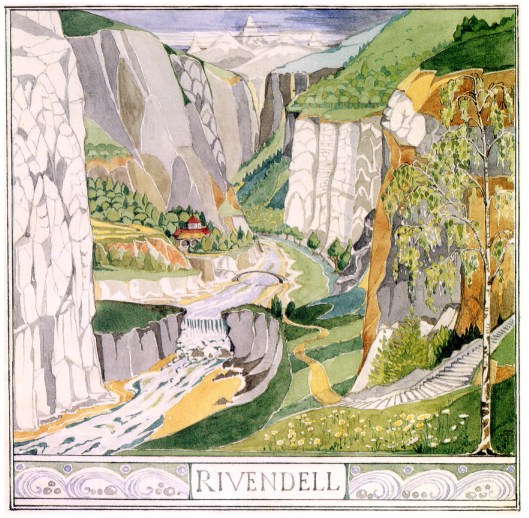
So when, if ever, are we given something with more detail?  If not in Bree, perhaps in Rivendell?

image10rivendell.jpg

Frodo comes to in a generic bed, but the “hall of Elrond’s house” is a bit more promising:

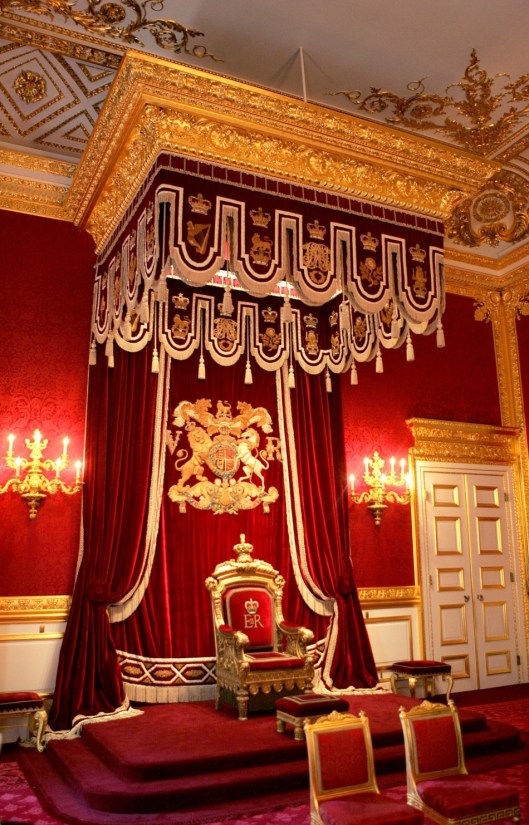
“Elrond, as was his custom, sat in a great chair at the end of a long table upon a dais…In the middle of the table there was a chair under a canopy…” The Fellowship of the Ring, Book Two, Chapter 1, “Many Meetings”)

A “dais” is a raised platform.  If you’re a Harry Potter fan, you’ll remember it at “High Table” (as it’s called in English schools), where the students of the four different colleges meet to dine and the faculty sit on such a platform.

image11hightable.jpg

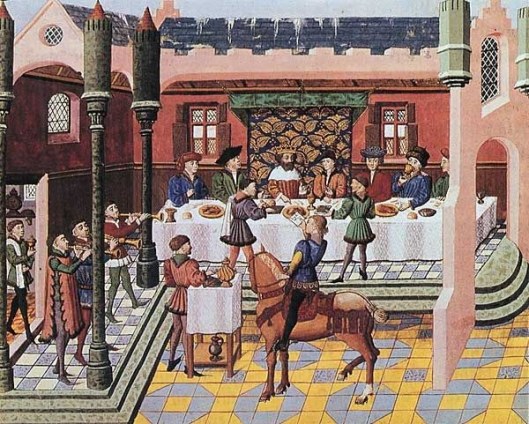
This is a left-over medieval custom, when royalty/nobles sat on a kind of stage, above the lesser folk, for formal meals.

image12feast.jpg

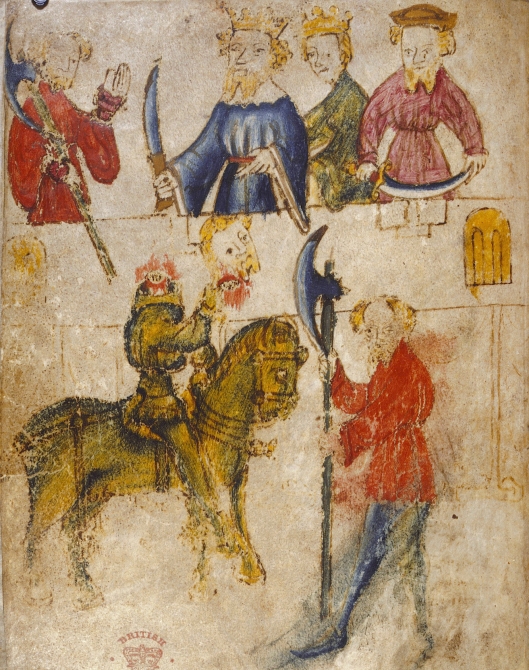
(Oh—and don’t ask about the horse—but it wasn’t required.  Horse and rider do appear at a banquet, of course, in the 14th-century poem “Sir Gawain and the Green Knight”—which JRRT once edited.)

image13agawaingreen.jpg

And that “chair under a canopy” reminds us of thrones with canopies, like this at the Palace of St. James, in London.

image13thronecanopy.jpg

Which brings us to the subject of thrones, in general.  After Rivendell, indoors will consist of Lothlorien

image14lorien.jpg

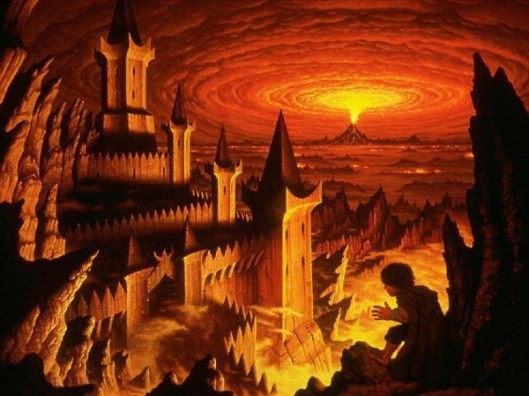
for the fellowship, then nothing for Sam and Frodo till Faramir’s cave hide-out and, beyond, the Tower of Cirith Ungol

image15towercirithungol.jpg

Hardly places to find any furniture beyond the functional!

For the others, we have Edoras

image16edoras.jpg

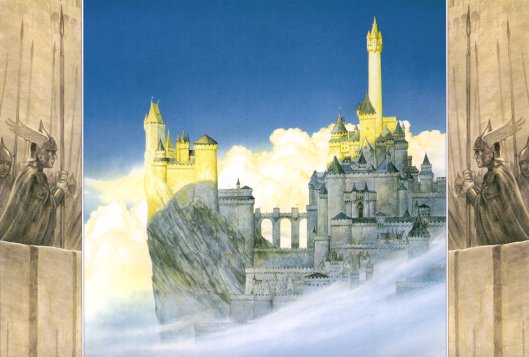
and Minas Tirith.

image17minastirith.jpg

And here we want to conclude by discussing a similar piece of furnishing in each—those thrones.

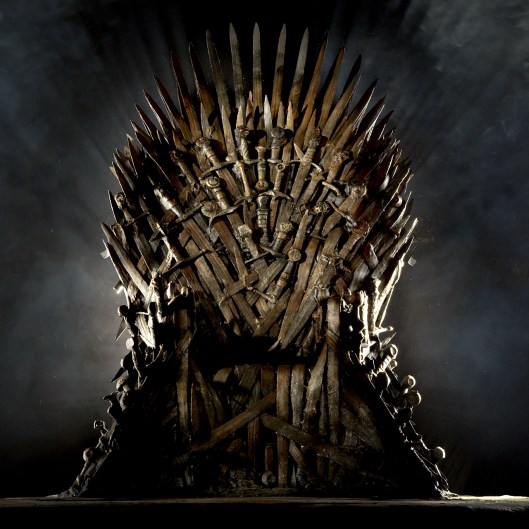
These days, when we say or write “thrones”, well, what comes immediately?  A Game of Thrones and the Iron Throne of Westeros.

image18ironthrone.jpg

The thrones of Rohan and Gondor are a bit less complicated.

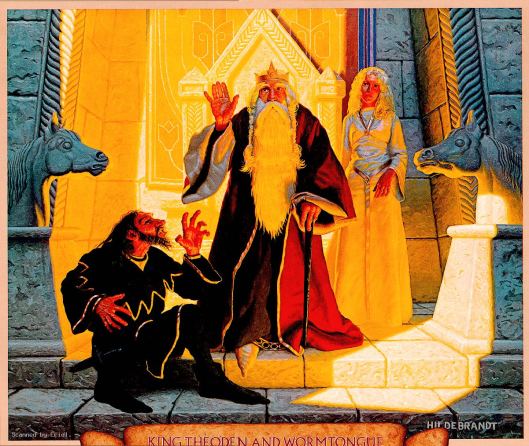
Theoden’s is described simply as “a great gilded chair” on a “dais with three steps”.  (The Two Towers, Book Three, Chapter 6, “The King of the Golden Hall”).

Here’s Allen Lee’s interpretation

image19alee.jpeg

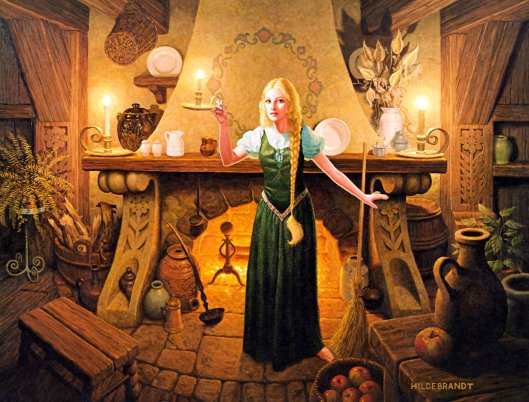
and here is the Hildebrandts’.

image19bhild.jpg

The throne of Gondor is just a tiny bit more elaborate:

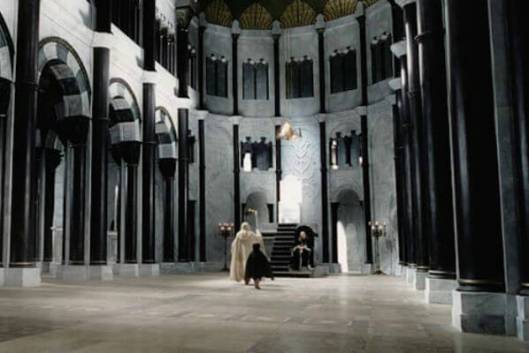
“At the far end upon a dais of many steps was set a high throne under a canopy of marble shaped like a crowned helm…” (The Return of the King, Book Five, Chapter 1, “Minas Tirith”)

Here’s an image from the film.

image19cthroneroom.jpg

But wait—there’s no one on it.  Let’s look lower:

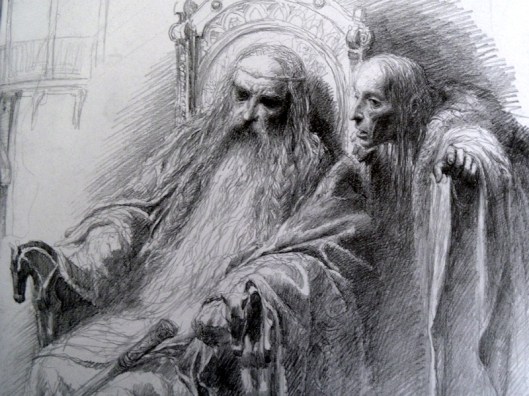
“At the foot of the dais, upon the lowest step which was broad and deep, there was a stone chair, black and unadorned, and on it sat an old man gazing at his lap.”image19ddenethor.jpg

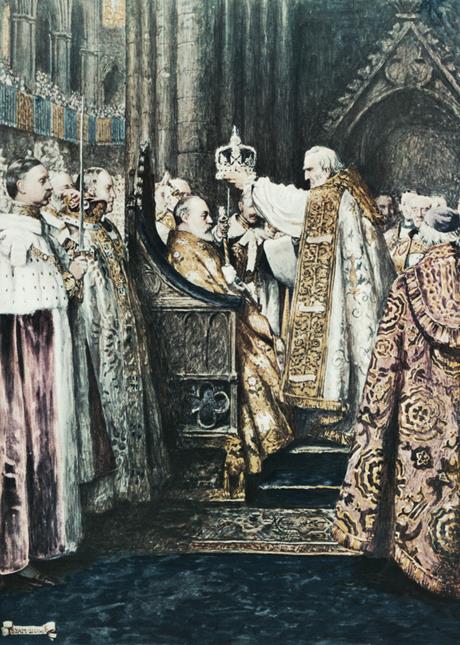
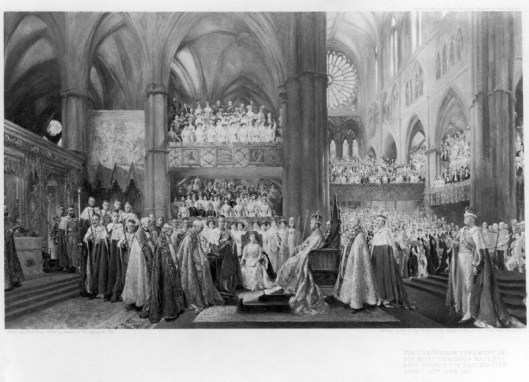
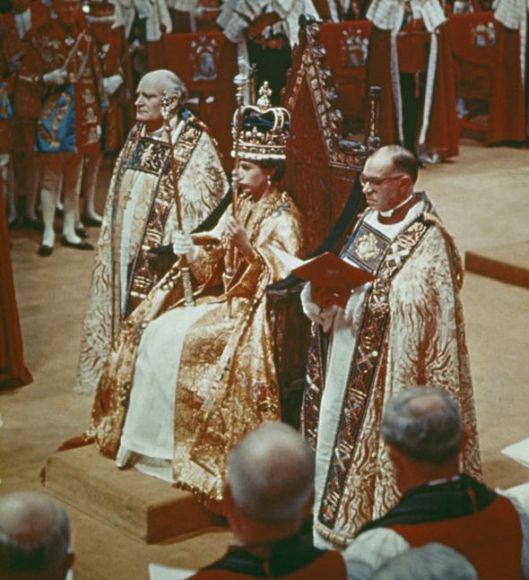
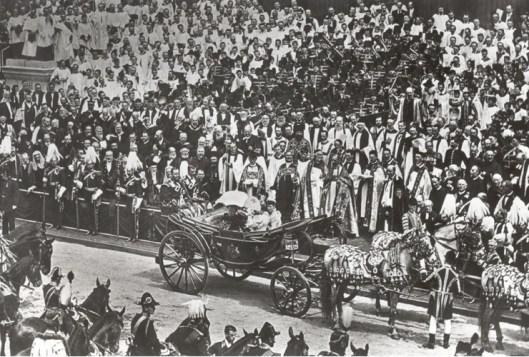
During his lifetime, JRRT would have seen the coronation of five British monarchs:

Edward VII

image19ed7.jpeg

George V

image20geo5.jpg

Edward VIII

image21ed8.jpg

George VI

image22ageo6.jpg

and the current monarch, Elizabeth II.

image22liz2.jpg

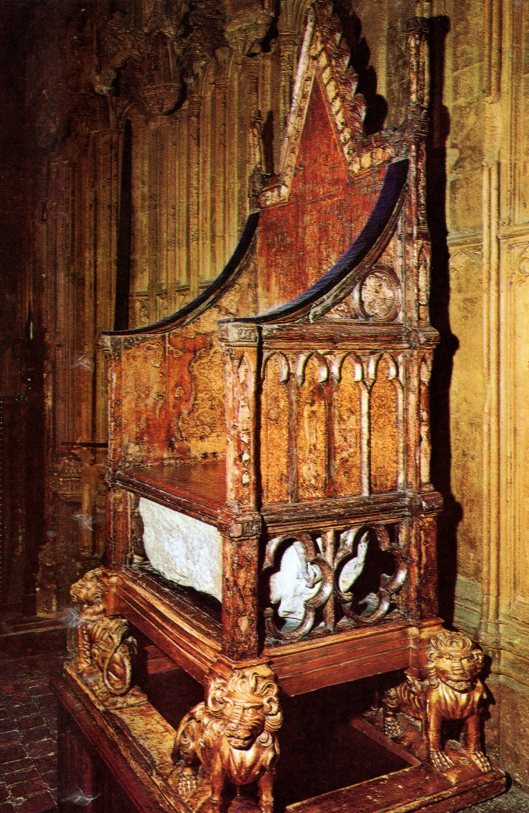
You’ll notice that, in every case, the throne is the same.

image23throne.jpg

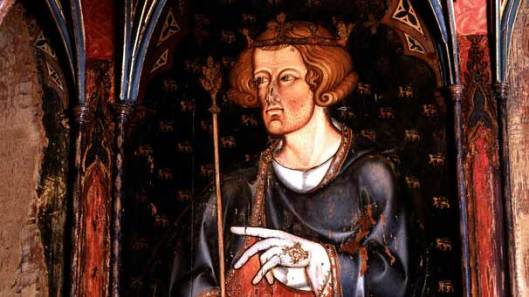
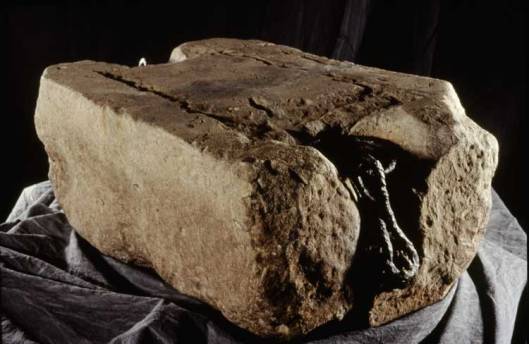
This is the so-called “Coronation Chair”, built between 1297 and 1300 and used since for crowning English monarchs.  It was especially commissioned so that it could hold the “Stone of Scone” (pronounced “skoon”—not like the pastry).  This was an ancient piece of Scottish royal history which Edward I,

image24ed1.jpg

in an effort to control Scotland, had stolen from its place on Moot Hill, near the Abbey of Scone.

image25sconeabbey.jpg

Supposedly, it was a stone used in the crowning of Scottish kings back to the time of the first one, or that it was even older, having been lugged from Tara, in Ireland, where, under the name “Lia Fail”, “the Stone of Destiny” it was used in coronation ceremonies there.  Its purpose was confirmation:  tradition had it that, when the true king bestrode it (a great old verb form), it gave a great shout.

image26liafail.jpg

As far as we know, no shouting has been reported, over the centuries—perhaps because it’s being used for English kings and therefore the stone is holding its tongue till it’s taken back to wear it belongs?

What do you think, dear readers?

Thanks, as ever, for reading.

MTCIDC

CD
PS

And did you notice something(s) out of place in JRRT’s drawing of Bag End?  We’ll talk about it in our next…

image1bagend


Crowning Achievement

20 Wednesday Sep 2017

Posted by Ollamh in Artists and Illustrators, J.R.R. Tolkien, Literary History, Narrative Methods

≈ Leave a comment

Tags

Alexander the Great, Alice in Wonderland, Barrow-downs, Barrow-wights, Bayeux Tapestry, Brunhilde, Charlemagne, Cheshire Cat, circlet, Cleopatra VII, diadem, Egypt, Egyptian crowns, Elightenment France, Eowyn, French Revolution, Gondor, Gondorian crown, Greek, Greek coins, Hildebrandts, Imperial Crown of the Holy Roman Empire, Julius Caesar, Lupercalia, Marcus Antonius, Medieval, Napoleon I, Nazgul, Octavian Augustus, Pharoahs, Philip II, Pontifex Maximus, Ptolemy I, Queen Elizabeth I, Queen Elizabeth II, Queen Victoria, Richard Wagner, Rohan, Romans, Tenniel, The Lord of the Rings, Theoden, Tolkien, William Shakespeare, Witch-King of Angmar, wreaths

Welcome, dear readers, as ever.

Recently, one of us was lecturing on ancient Egypt, a country of two lands, in fact, Upper and Lower, and each could be represented in the crown worn by the pharaoh.

image1crownsof-egypt.jpg

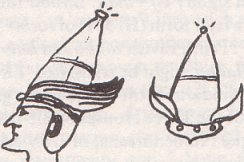
Within in blink, we began to think about JRRT’s illustration of the traditional crown of Gondor,

image2jrrtcrown.jpg

of which Tolkien says:

“I think that the crown of Gondor (the S. Kingdom) was very tall, like that of Egypt, but with wings attached, not set straight back but at an angle.

The N. Kingdom had only a diadem (III 323).  Cf. the difference between the N. and S. kingdoms of Egypt.”

(Letters, letter to Rhona Beare, 10/14/58, 281)

For us, the first crown we believe we ever saw as children was either one in an illustrated fairy tale (here’s a Tenniel illustration from Alice)

image3atenniel.jpg

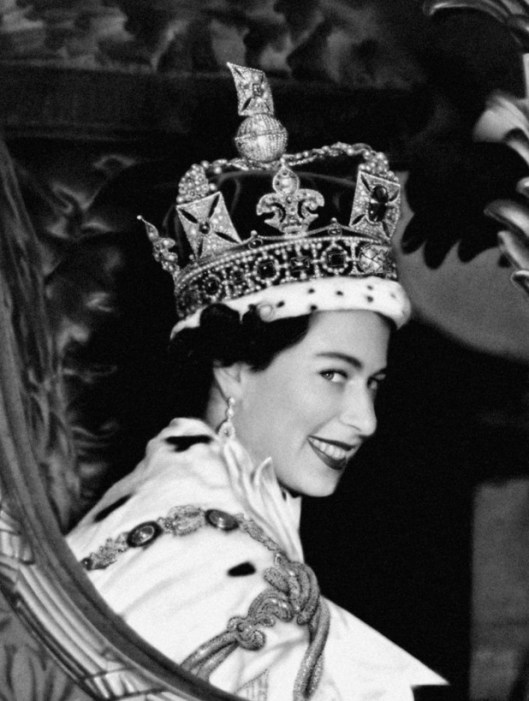
or the actual one of Queen Elizabeth II, and that hardly fits JRRT’s idea about the southern crown—or the northern one

image3er2.jpg

or that of her ancestor, Queen Victoria

imaage4vr.jpg

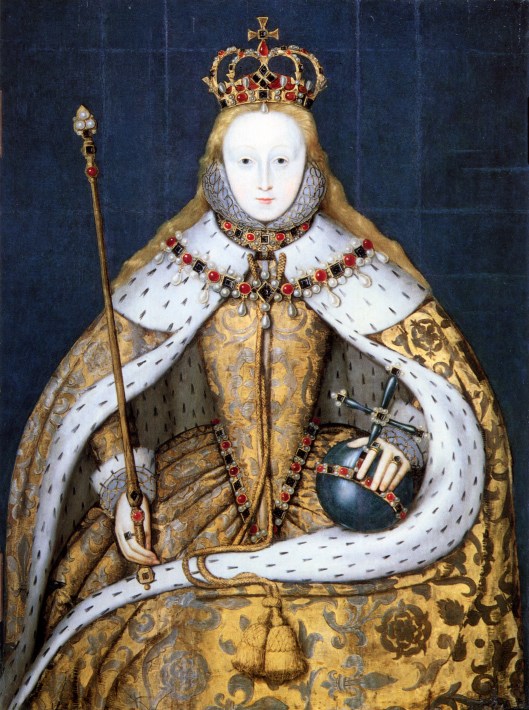
or that of their distant ancestor, Elizabeth I.

image5er1.jpg

When we think of a “diadem”, however, we are reminded of the earliest western European crowns, which, in contrast to Elizabeth’s, is barely there at all.

Here is the first type of crown we know of being depicted—it’s that “diadem” in a Greek form, being on a coin of Philip II, King of Macedon and father of Alexander the Great (the reverse—the back side—the front side is called the “obverse”—shows Philip’s Olympic victory horse and Philip’s name in the genitive—possessive—case, “of Philip”—showing not only possession of the horse, but of the victory, of the coin, and, by implication, the right to issue coins).


This became a regular pattern, both of coin and of crown for those who followed Philip, and, thinking about Philip’s victory, we can imagine that the original of the crown was based upon the wreath athletic game victors wore.


And coins like Philip’s set the pattern for classical coins—and crowns—for centuries.  Here’s the crown pattern on the head of Ptolemy I, one of Alexander’s generals.


At Alexander’s death, Ptolemy seized Egypt, making it a family possession for the next nearly three hundred years, all the way down to his greatgreatgreat etc granddaughter Cleopatra VII.

image9cleo.jpg

The pattern was not confined to Greece or Egypt, however—Julius Caesar wore something similar—

CaesarCoin_Wikipedia_960.jpg

although, unlike Ptolemy and other such rulers, Caesar might have hoped to muddy people’s perceptions of what such a thing symbolized and what position (dictator for life) he’d forced the Senate to give him.   Rome had hated monarchs, after all, since they’d kicked out their last king 450 years before.

(And see Act I, Sc.2 of Shakespeare’s Julius Caesar in which, at the festival of the Lupercalia, Marcus Antonius publically offers him a crown and Caesar rejects it, much to the loud delight of the mob.)

In the Greco-Roman world, wreaths had many purposes:  besides Greek kings and winners at games, people at parties and weddings and other festive occasions wore them, as well as celebrants at religious rites.

image12symposium.jpg

Perhaps Caesar hoped that, appearing in one, he might appear less like a Hellenistic king and more like anything from an Olympic victor or party-goer to a priest (he was Pontifex Maximus, head of religion in Rome, so there was a certain credibility to the latter).

image13pm.jpg

Malicious people in Rome also suggested another reason for the wreath:  Caesar was sensitive about his thinning hair.

image14jc.jpg

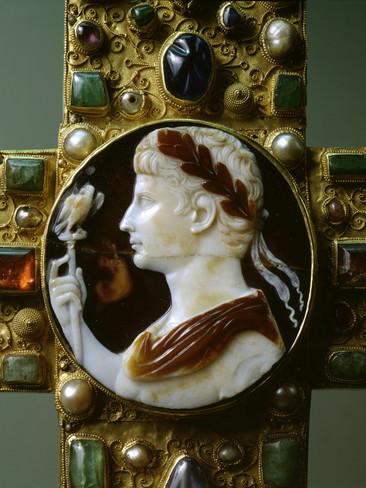
Caesar’s grandnephew and successor, Octavian/Augustus, continued the tradition,

Augusts-in-Ancient-Roman-Cameo.jpg

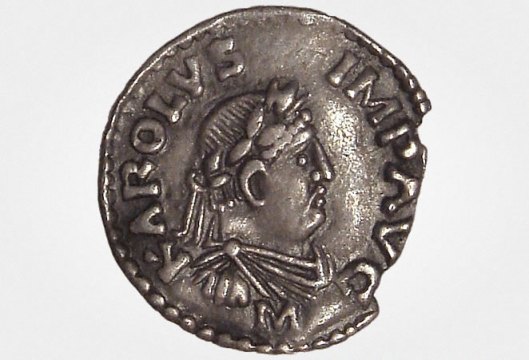
as did following emperors for several centuries—and even Charlemagne, hundreds of years after the last western emperor, revived it.

image16charlemagne.jpg

At some point, just after Charlemagne’s time or thereabout (c1000ad), a new pattern appeared, which you can see in the famous “Imperial Crown of the Holy Roman Empire”.

image17impcrown.jpg

Instead of a wreath, this was a built-up circlet, with lots of “bits and bobs” on top.

This newer look persisted in various more or less complicated forms in the west for centuries

image18king.jpgimage19king.jpgimage20king.jpgimage21king.jpg

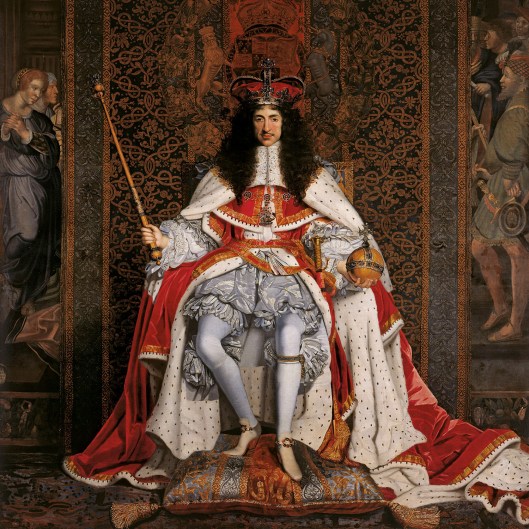
and seems to underlie the crowns seen in more recent times (often with what appears to be a red velvet balloon in the middle).

image22er1.jpgimage23chas2.jpgimage24geov.jpg

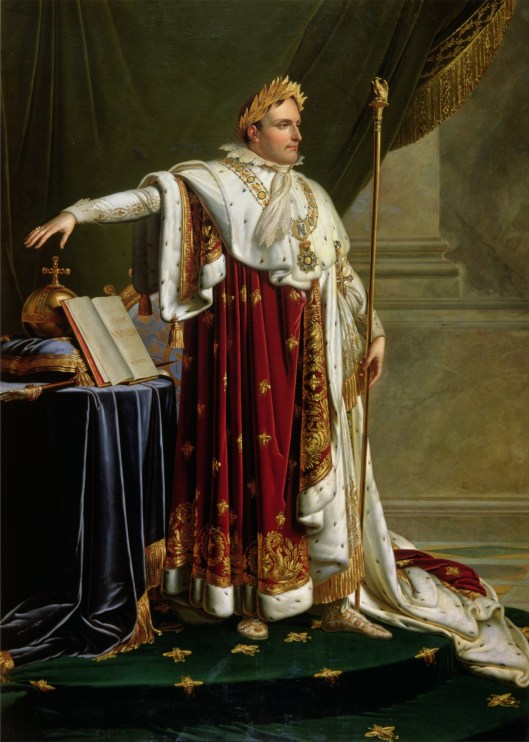
There is a throwback, however:  Napoleon I.  He had grown up in Enlightenment France, in a world which idealized classical learning and art, and so, when he made himself emperor in 1804, his model wasn’t medieval and Germanic, but Augustine.

image25agus.jpg

image25nappy.jpg

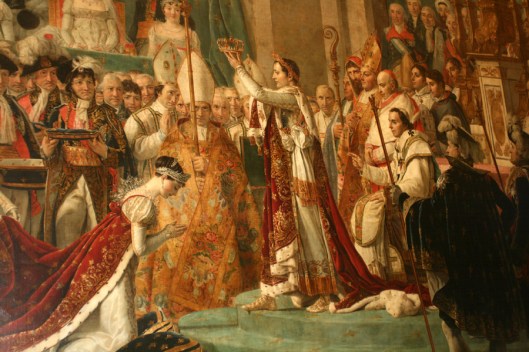
This doesn’t mean that he wasn’t aware of that other model and he would have used it—the so-called “crown of Charlemagne”–at his self-coronation

image26napcoron.jpg

had it not suffered the fate of many medieval treasures and been destroyed during the French Revolution (the famous Bayeux Tapestry was almost converted to wagon covers by revolutionaries).  In fact, a “crown of Charlemagne” did turn up for the ceremony—“recreated” by a clever Paris jeweler.

image27charlcrown.jpg

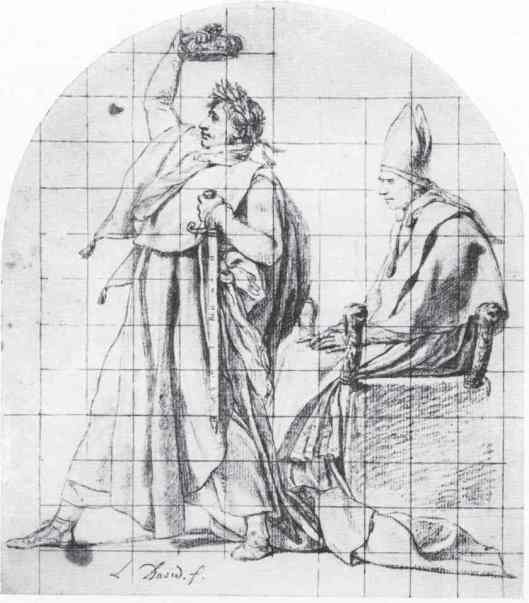
[A footnote about the coronation.  In the painter David’s sketches for it, he shows the pope (Pius VII) with his hands in his lap.

image28pope1.jpg

Napoleon saw the drawing and said to David that the pope should be blessing the occasion—after all, that’s why Napoleon had dragged him all the way from Rome.  David redid his sketch, of course!]

image29pope2.jpg

Beyond the Crowns of Gondor, most of the crowns seen in The Lord of the Rings are described as “circlets”—

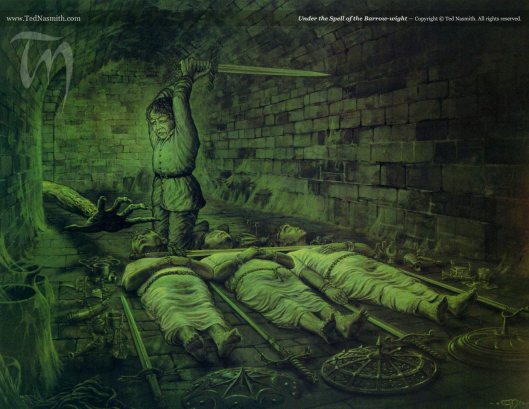
  1. Sam, Merry, and Pippin, laid out in the barrow:

“About them lay many treasures of gold maybe, though in that light they looked cold and unlovely.  On their heads were circlets, gold chains were about their waists, and on their fingers were many rings.”(The Fellowship of the Ring, Book One, Chapter 8, “Fog on the Barrow-Downs”)

image30barrow.jpg

  1. Theoden:

“Upon it sat a man so bent with age that he seemed almost a dwarf; but his white hair was long and thick and fell in great braids from beneath a thin golden circlet set upon his brow.” (The Two Towers, Book Three, Chapter 6, “The King of the Golden Hall”)

image31theoden.jpeg

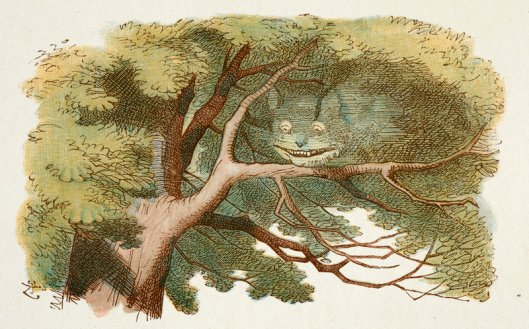
But there is one which, well, looking at the various illustrations of its wearer, reminds us of Alice’s comment upon the Cheshire Cat:

“Well! I’ve often seen a cat without a grin…but a grin without a cat!  It’s the most curious thing I ever saw in my life!” (Alice’s Adventures in Wonderland, Chapter 6, “Pig and Pepper”)

image32cheshirecat.jpg

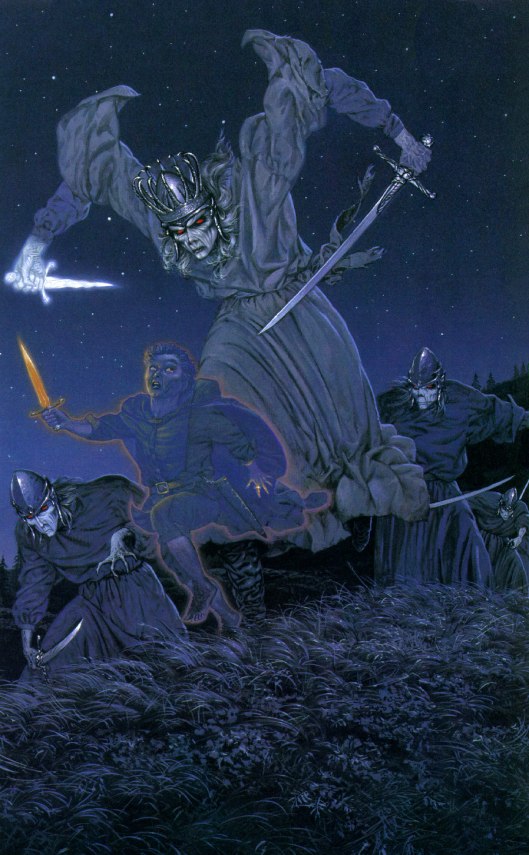
On the Fields of the Pelennor, a “great shadow descended like a falling cloud.  And behold! It was a winged creature.”

This might be bad enough, but:

“Upon it sat a shape, black-mantled, huge and threatening.  A crown of steel he bore, but between rim and robe naught was there to see, save only a deadly gleam of eyes:  the Lord of the Nazgul.” (The Return of the King, Book Five, Chapter 6, “The Battle of the Pelennor Fields”)

image33eonaz.jpg

We are aware of at least half-a-dozen professional renderings of this scene (and we plan to discuss them all in a future post), but it seems to us that those eyes, seeming to float in space, make it extremely difficult to illustrate it, no matter what crown—simply described as “steel”—he’s wearing.  And that brings us back to our original crown.  As JRRT described it:

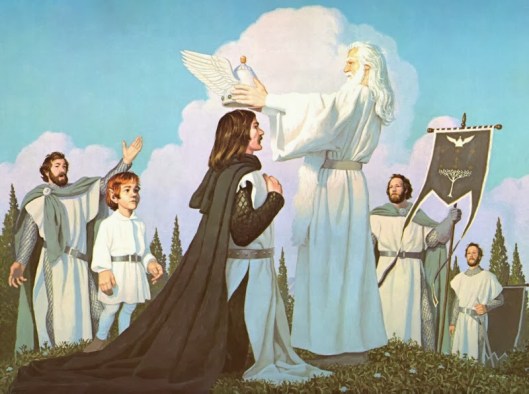
“It was shaped like the helms of the Guards of the Citadel, save that it was loftier, and it was all white, and the wings at either side were wrought of pearl and silver in the likeness of the wings of a sea-bird, for it was the emblem of kings who came over the Sea; and seven gems of adamant were set in the circlet, and upon its summit was set a single jewel the light of which went up like a flame.” (The Return of the King, Book Six, Chapter 5, “The Steward and the King”)

If his drawing (seen at the beginning of this post) is what he had in mind, then the only professional illustration we’ve seen of it, by the Hildebrandts, is only an approximation.

image34coronation.jpg

And, in fact, reminds us all-too-easily of Brunhilde, the Walkuere, from Wagner’s operas.

image35brunhilde.jpg

If illustrators as good as the Hildebrandts struggle, this must be a tough one.  The designers of the P. Jackson films are even farther away from the original, as so often.

image36aragorn.jpg

Here, however, we have some sympathy!  Somehow the medieval world of Middle-earth can not easily assimilate an Egyptian artifact.  And so, we suspect that they thought “circlet” and “wings” and left it there.  What do you think, readers?  How do you imagine the crown?

Thanks, as ever, for reading.

MTCIDC

CD
Too Narrow Escapes

05 Wednesday Jul 2017

Posted by Ollamh in Fairy Tales and Myths, J.R.R. Tolkien, Literary History, Narrative Methods

≈ Leave a comment

Tags

Abu al-Qasim Khalaf ibn al-Abbas al-Zahrawi, Agincourt, Albucasis, Anglo-Scots, arrow removal, arrows, bascinet, bodkin points, Dagger, David Gwillim, elf shot, Elverskud, English Longbowmen, healing, Henry V, John Bradmore, Kenneth Branagh, Laurence Olivier, Medieval, Morgul Knife, Nazgul, Neolithic, Niels W Gade, Otherworld, Philomena, poignard, Prince Henry, Renaissance, Shrewsbury, St Mary Magdalen, Tolkien, Two Men in a Trench, Weaponry, Weathertop, Wraiths

Welcome, dear readers, as ever.

We had what we thought was a very interesting idea for this posting—about the effect of a Morgul-knife and that of something from western European—perhaps specificially Germanic?—folk tradition, an “elf shot”.

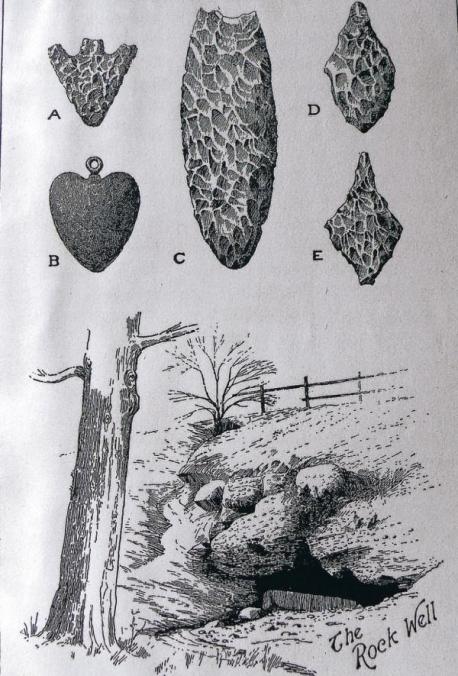
“Elf shot” was once thought to be a condition in humans and animals, caused by an arrow fired by someone from the Otherworld. There was a long tradition of methods of healing, which could be a difficult problem because the entry wound might be nearly—if not completely—invisible and it took special skills to find it and to remove the arrowhead, while, in the meantime, the victim slowly withered away.

When it was supposedly removed, by someone who was believed to have competence in such matters, the arrowhead was probably actually a Neolithic point, like one of these—

image1elfshot.jpg

picked up from somewhere and whatever had actually caused the withering was a disease brought on in the natural order of things, but all of the stories we’ve read about the belief and cures appear to end with the point removed—and the sufferer in recovery.

Hmm—we thought. Something familiar about this. On Weathertop, Frodo is attacked by Nazgul.

image2weathertop.jpg

“The third was taller than the others: his hair was long and gleaming and on his helm was a crown. In one hand he held a long sword, and in the other a knife; both the knife and the hand that held it glowed with a pale light. He sprang forward and bore down on Frodo.” (The Fellowship of the Ring, Book One, Chapter 11, “ A Knife in the Dark”)

The figure stabs Frodo, but the weapon which did it was no ordinary one, as Strider indicates, lifting

“…up a long thin knife. There was a cold gleam in it. As Strider raised it they saw that near the end its edge was notched and the point was broken off. But even as he held it up in the growing light, they gazed in astonishment, for the blade seemed to melt, and vanished like a smoke in the air, leaving only the hilt in Strider’s hand.” (The Fellowship of the Ring, Book One, Chapter 12, “Flight to the Ford”)

In the film, this is represented by something which looks like a medieval fighting dagger.

image3morgula.jpg

It seems that its purpose was not to act as a secondary weapon in combat, however, but to inflict a fatal stabbing wound. As Gandalf says,

“They tried to pierce your heart with a Morgul-knife which remains in the wound.” (The Fellowship of the Ring, Book Two, Chapter 1, “Many Meetings”)

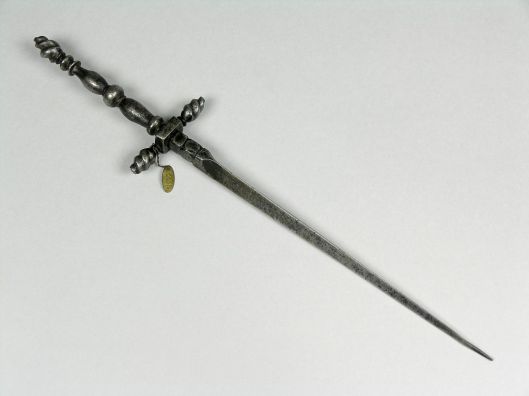
Thus, we could imagine it looking like a Renaissance poignard, like this one—

image4morgulb.jpg

Whatever its look, its point is embedded in Frodo’s shoulder and, like someone elf-shot, Frodo is fading and, also like the victim of elf-shot, the wound has changed.

“ ‘What is the matter with my master?’ asked Sam in a low voice, looking appealingly at Strider. ‘His wound was small, and it is already closed. There’s nothing to be seen but a cold white mark on his shoulder.; “ (The Fellowship of the Ring, Book One, Chapter 12, “The Flight to the Ford”)

Neither Strider nor, in turn, Glorfindel, can heal Frodo and even Gandalf was daunted:

“Elrond is a master of healing, but the weapons of our Enemy are deadly. To tell you the truth, I had very little hope; for I suspected that there was some fragment of the blade still in the closed wound. But it could not be found until last night. Then Elrond removed a splinter. It was deeply buried, and it was working inwards.” (The Fellowship of the Ring, Book Two, Chapter 1, “Many meetings”)

We thought, then, that we could write a very interesting post about the parallels between that knife and elf-shot—and then we found that it had already been done: see “Elf-shot” in Drout, Michael, ed., J.R.R. Tolkien Encyclopedia, London: RKP, 2006.

We are not given to despair, however, and something Gandalf said interested us: “Then Elrond removed the splinter.”

As our regular readers know, we take particular pleasure in linking things of Middle-earth with those of the medieval world in which JRRT spent his scholarly life. In this case, we were reminded of the removal of part of another weapon—the head of an arrow (just like elf-shot) from the head of a real person: Prince Henry of England—the future Henry V (1386-1422) of Shakespeare’s wonderful play. (We grew up on the 1944 Laurence Olivier version, which is full of color and action—the reconstruction of the Globe Theatre at the opening alone is worth watching—although, as we’ve gotten older, we’ve come to prefer both Kenneth Branagh’s 1989 filming and the 1979 David Gwillim version which we mentioned in our last posting.)

image5olivier.jpg

When he was fifteen, Prince Hal commanded the left wing of his father’s army at the battle of Shrewsbury, on 21 July, 1403.

image6shrewsmap.jpg

(Note: this is an old map, based upon the tradition that the church of St. Mary Magdalen was built on the site of the battle.

image7stmarymag.jpg

In 2006, the Anglo-Scots archaeologists, Tony Pollard and Neil Oliver, led a team to probe the churchyard, where it had long been held that there was a burial pit for some of the dead of the battle. After geophysical exploration and the digging of several test trenches, no trace of such a pit was found, leaving the tradition to remain, at least for the moment, just that. If you are interested to learn more, their visit to the site is from their 2-year series, Two Men in a Trench.  Here’s a LINK—you can watch the whole show—and we recommend the entire series for a combination of light-hearted looniness and serious archaeology.)

The battle began with a barrage of arrows from the longbowmen on each side.

image8longbowmen.jpg

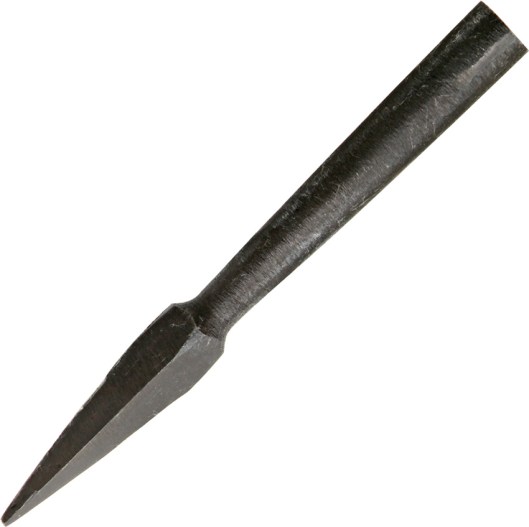
The arrows had what were called bodkin points—

image9bodkin.jpg

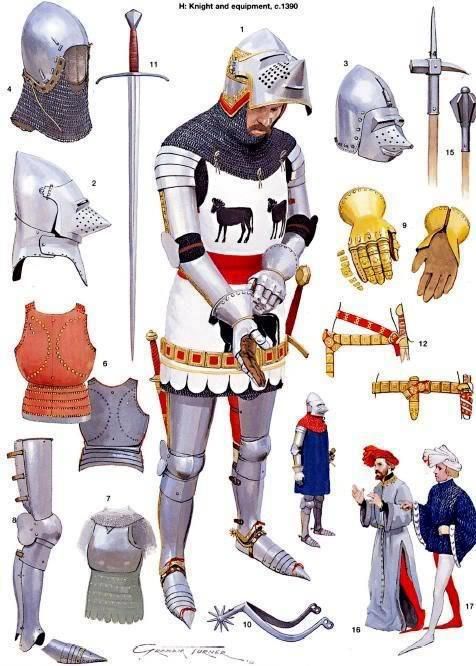
which were specifically designed to penetrate plate armor of the very sort which the prince was wearing.

image10armor.jpg

A practiced longbowman could fire ten arrows a minute and his original battlefield issue would have been two 24-arrow linen bundles. We don’t know how many archers both sides had, but even if each had no more than a thousand, at the end of in a single minute, that would have meant 20,000 arrows in the air.

image11arrowstorm.jpg

If Hal was wearing a bascinet—as you see on the knight above–because of the shape of the helmet, many of the arrows might have glanced off. Perhaps Hal was wearing an open-face bascinet

image12openfacebasc.jpg

or had raised his visor, to give a command, say, but, instead of bouncing off, an arrow hit him in the face, below his eye (there is argument as to which eye) and penetrated his head. Had it gone all the way through, it might have been possible to saw off the arrow head and remove both arrow and shaft, but the arrow head had sunk into the bone at the back of the skull, instead. (Remarkably, it is reported that Hal continued to direct his troops, even in this condition. Tough people, those medievals!) And the first attempt at extraction had broken off the shaft, leaving the arrowhead still embedded. And this, of course, is what made us think of Elrond and the Morgul-knife splinter.

image13halarrow.jpg

We aren’t told how Elrond found or removed it. A medieval tool for removing arrowheads had been invented by the brilliant Arab physician with the splendid name of Abu al-Qasim Khalaf ibn al-Abbas al-Zahrawi, reduced by westerners to “Albucasis” (936-1013). (Here’s a LINK—this is a man of science well worth knowing much more about!)

image14alzahrawispoon.jpg

This might have worked, had the arrow been in a less delicate place, as well as not barbed, but Hal’s wound was just below his brain stem and next to all sorts of delicate blood vessels and the arrowhead was a bodkin point.

At this point, John Bradmore appeared. Interestingly, he had been a goldsmith, as well as a practicing surgeon, and the two seem to have come together as he tackled the problem. First, while he considered the possibilities, he kept the wound open and cleaned. Then he invented this—

image15extractor.jpg

It’s a simple but cunning design: the two outer parts are gradually introduced into the wound and spread it gently open. In the middle is a screw mechanism which could insert itself into the socket of the arrowhead. When it is firmly in place, the outer parts are closed as far as possible and then the whole, with, Bradmore hoped, the arrowhead, could be extracted from the wound. And it was. And then Bradmore washed out the wound with wine and kept it clean during the healing process. A completely remarkable piece of work, from the use of antisepsis to the invention and manufacture of the necessary tool.

Hal not only survived the operation (he had reportedly been dosed with henbane, which would have stupefied him but, given the wrong dose, would have killed him within a couple of days), but lived another 19 years to beat the French at Agincourt, marry the daughter of the king of France, and, for a brief time, imagine seeing his son succeed him on the now-joint thrones.

As for Bradmore, he wrote a medical treatise, Philomena, the title being a learned joke– St. Philomena was an early Christian martyr, part of whose martyrdom included surviving arrow attacks—before dying, a very well-off man, in 1412.

(If you’d like to see a very well-done visual segment on Bradmore and Prince Hal, here’s a LINK for a NOVA program of some years ago.)

In both cases, the patient survived, although it would appear that Prince Hal had a better recovery than Frodo. Then again, Hal, for all that his wound was life-threatening, hadn’t been hit by an elf-shot, but only by a mortal arrow, while the hobbit was almost doomed to the Nazgul world by a Morgul-knife.

Thanks, as ever, for reading.

MTCIDC

CD
PS

One of our favorite Danish composers, Niels W. Gade (1817-1890), has left us a very beautiful dramatic cantata, Elverskud—“Elfshot” (1854). Based upon a Danish ballad, it’s the story of Sir Oluf, who prefers the Elf king’s daughter to his own human bride and the consequences of that preference. If you’d like to hear it—we recommend it and much other music by Gade, as well—here’s a LINK.

PPS

This posting is our 151st! Five more will make exactly three years of weekly postings. Thank you for reading, and we hope to keep you interested for another 150 postings at least.

Tintinnabulations

24 Wednesday May 2017

Posted by Ollamh in Fairy Tales and Myths, J.R.R. Tolkien, Literary History, Narrative Methods

≈ Leave a comment

Tags

Asfaloth, bells, Child Ballad, dance, Edgar Allan Poe, Glorfindel, Headless Horseman, Joan of Arc, John Howe, Medieval, Minas Tirith, Morris Dance, Nazgul, Sir Gawain and the Green Knight, Sortes Tolkienses, Sortes Vergilianae, sun-down bells, The Hobbit, The Legend of Sleepy Hollow, The Lord of the Rings, Thomas the Rymer, tocsin, Tower of Echthelion

Welcome, once more, dear readers.

The sources of our postings come from all sorts of places. Sometimes, we are reading something and we have an idea, or we spot an image or see a film. Sometimes, it’s from a friend’s e-mail, or reaction to an earlier posting. Sometimes they come from our sortes tolkienses. If you’ve missed our original posting where we invented this, it’s based upon an ancient fortune-telling method, where one closes one’s eyes, opens an important book, like the Aeneid or the Bible, puts one’s finger on a verse—and hopes that it tells you something about the day or the future. In our case, we use The Lord of the Rings or The Hobbit.

And what did we find today? This, from The Lord of the Rings—

“Hand in hand they went back into the City, the last to pass the Gate before it was shut; and as they reached the Lampwrights’ Street all the bells in the towers tolled solemnly.” (The Return of the King, Book Five, Chapter 1, “Minas Tirith”)

These are the “sun-down bells”, as Pippin learns from Bergil, son of Beregond. Bergil is a boy of Minas Tirith and has just given Pippin a tour of the city.

“Sun-down bells” made us think first about the bells of Minas Tirith, and then about bells in Middle-earth in general, and we could easily pick out three kinds.

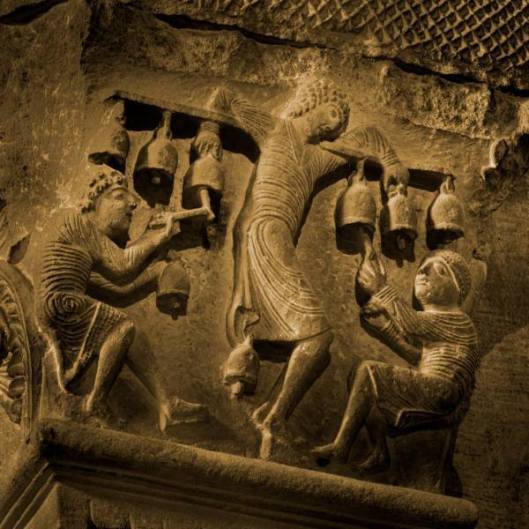
To begin with, there are the city bells. Or, rather, where are the city bells? The text says “in the towers”. In the medieval world in which we so often find illustrations and parallels to Middle-earth, those bells are commonly in church belfries.

image1medievalbell.png

image2ringing.jpg

image3belltower.jpg

Minas Tirith clearly has towers—and, in fact, is a towering place—literally:

“…the Tower of Echthelion, standing high within the topmost wall, shone out against the sky, glimmering like a spike of pearl and silver, tall and fair and shapely, and its pinnacle glittered as if it were wrought of crystals; and white banners broke and fluttered from the battlements in the morning breeze, and high and far he heard a clear ringing as of silver trumpets.” (The Return of the King, Book Five, Chapter 1, “Minas Tirith”)

Because there are no churches—or even temples—in Minas Tirith, by examining some images of the city, from John Howe’s painting to the model used in the films, we can pick out towers here and there and some of those, we might imagine, could hold bells.

image4howe

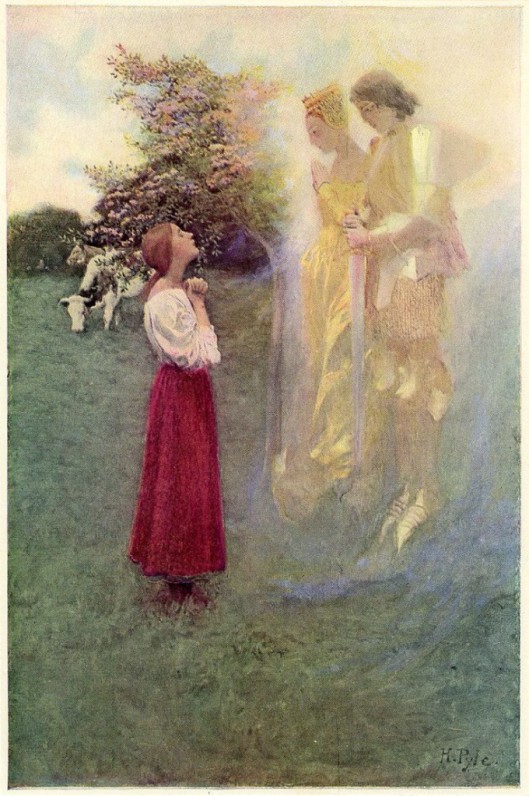
image5mtIn our medieval world, such bells had a number of functions. Not only did they ring the hours of the medieval Christian day, but they could also sound a warning, called the “tocsin”, and signal that the day was over and that fires should be covered for the night, the “curfew”—rather like the “sun-down” bells in Minas Tirith. Joan of Arc (c.1412-1431) said that she could sometimes hear the sound of angelic voices, inspiring her to drive the English out of France, in her village bell.

image6joan.jpg

There are other uses—and places—for bells in Middle-earth, however. In The Fellowship of the Ring, Book One, Chapter 1, “A Long-Expected Party”, they turn up at an impromptu dance:

“Master Everard Took and Miss Melilot Brandybuck got on a table and with bells in their hands began to dance the Springle-ring: a pretty dance, but rather vigorous.”

The wording of this sounds like it came from the “society section” of a newspaper, as not only are the hobbits’ names given, but given with their social titles—“Master” and “Miss”—to show that they are unmarried.

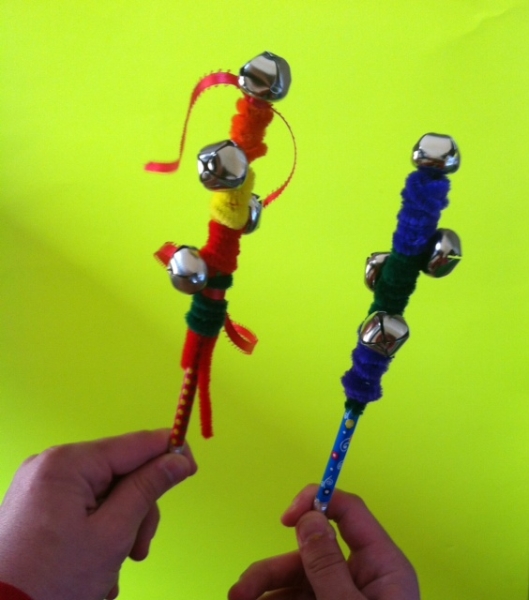
The boisterous dance, being energetic and accompanied by bells, makes us think of traditional English Morris dances, where the dancers not only strap bells to their arms and legs, but occasionally carry sticks with bells attached to them.

image7morrisOLYMPUS DIGITAL CAMERAimage9jinglestick

This also makes us think about medieval music bands, which could include a percussionist who played bells.

image10medbellersimage11bellplayers

A further use is as decoration—and perhaps as something more. When Aragorn is leading the hobbits, with the wounded Frodo, towards Rivendell, they heard “a sound that brought sudden fear back into their hearts: the noise of hoofs behind them.” The fear is, of course, of pursuing Nazgul, depicted here first in an Alan Lee sketch, and then in a painting which we believe is by the Hildebrandts, of one of the Ringwraiths almost riding down Farmer Cotton.

image12nazgulimage13nazgul

[We are always struck, by the way, how the Nazgul bear a certain resemblance to the “Headless Horseman” from Washington Irving’s (1783-1859) story, “The Legend of Sleepy Hollow” (1820). Walt Disney made a musical version of this in 1949, which was shown on Disney tv programs in later years, around Halloween, and the image of the Horseman could always give us nightmares.]

image14headlessh

What Aragorn and the hobbits are actually hearing is the horse of the Elf lord, Glorfindel, Asfaloth—

“The sound of the hoofs drew nearer. They were going fast, with a light clppety-clippety-clip. Then, faintly, as if it was blown away from them by the breeze, they seemed to catch a dim ringing, as of small bells tinkling.” (The Fellowship of the Ring, Book One, Chapter 12, “Flight to the Ford”)

image15glorf

Although Frodo never explains why he says this, he exclaims, “That does not sound like a Black Rider’s horse…” The only difference in sound clearly is coming from the bells, perhaps on Asfaloth’s halter or bridle—or perhaps on his mane, as in the case of what might be a source for those bells, Child ballad 37 (we’re quoting from Variant A). 37 is called “Thomas Rymer” and describes the meeting of the actual 13th-century Thomas of Earlston with the Queen of Elfland. [We include a LINK here to the useful Wiki entry.)

image16tther

In the ballad, her horse is described as having

“At ilke tett [“every tuft/lock”] of her horse’s mane

Hung fifty silver bells and nine.”

We are always careful never to say, without documentary evidence, that such-and-such is “definitely” the source for something in JRRT, but this particular detail seems to line up so well:

  1. Glorfindel is an Elf
  2. so is the unnamed Queen
  3. each has bells on his/her horse

And these bells suggest—at least to Frodo—something unworldly, but, unlike the Nazgul, something positive. We can add to this another—okay, undeniable—source, and our evidence for this is JRRT himself. In 1925, Tolkien (in collaboration with E.V. Gordon) published an edition of the 14th-century Middle English poem, Sir Gawain and the Green Knight.

image17greenknight

The Green Knight is an enchanted being and part of his magic lies in his greenness and in the elaborate decoration of himself and his horse, including

“Ther mony bellez ful bry3t of brende golde rungen” (line 195)

This is only a preliminary investigation—done out of our heads, rather than from a thorough scouring of the text—so, can you, dear readers, think of other bells in The Lord of the Rings? We could think of two references in The Hobbit—but we leave it to you to guess where they are (and to find more?).

And thanks, as always, for reading.

MTCIDC

CD
 

PS

We include a LINK here to an appropriate poem which uses our title, Edgar Allan Poe’s, “The Bells” (1849).

Shire Portrait (3b)

22 Wednesday Feb 2017

Posted by Ollamh in Economics in Middle-earth, Imaginary History, J.R.R. Tolkien, Literary History, Military History, Military History of Middle-earth, Narrative Methods

≈ Leave a comment

Tags

24Hr Trench, Andrew Robertshaw, architecture, Birmingham, Brandywine, crop rotation, Diamond Jubilee, dugouts, Dunedain, feudal system, German lawn chairs, Hornblotton, Inns, Laura Ingalls Wilder, Lavenham, manor, Marish, Medieval, Queen Elizabeth II, Queen Victoria, Sarehole, Sarehole's mill, Somerset, Suffolk, The Hobbit, The Lord of the Rings, The Shire, Tolkien, village, Western Front, WWI Trenches

Welcome, dear readers, as always.

In this post, we’re continuing our series on the Shire. So far, we’ve looked at its government and organization (1), its economy (2), and its geography (3a). Now we want to look at Shire architecture.

Our initial inspiration for this was from a line in a letter from JRRT to Allen & Unwin, 12/12/55. Speaking of the Shire, he says: “It is in fact more or less a Warwickshire village about the period of the Diamond Jubilee… (Letters, 230)

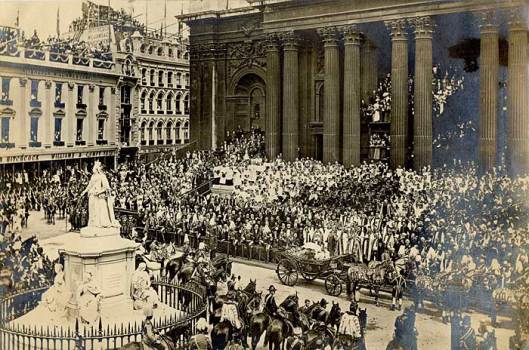
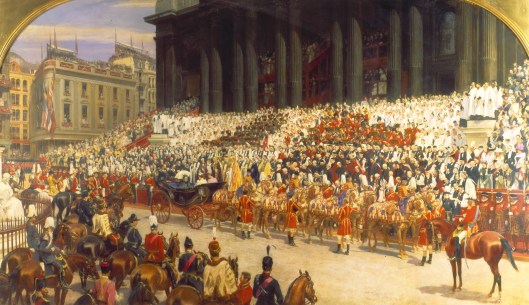
The “Diamond Jubilee” was the 60th anniversary of the reign of Queen Victoria (she came to the throne in 1837–Queen Elizabeth II celebrated her Diamond Jubilee just five years ago).

1vic.jpg

The Jubilee was a huge celebration, bringing in people from all over Britain’s empire, who converged on London in the summer of 1897.

2adiam2bdiam2cdiam

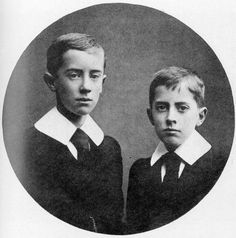
JRRT was born in 1892 and had been brought to England in 1895, for a visit which became permanent when his father died back in South Africa. He and his brother

3atolkandbro.jpg

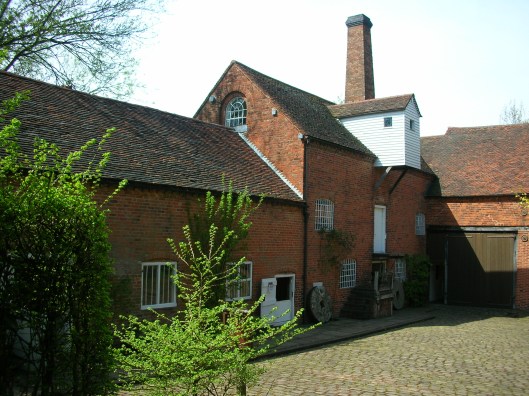
lived with their mother for a time in the village of Sarehole, just south of the huge industrial city of Birmingham. Sarehole’s mill

3sareholemill.jpg

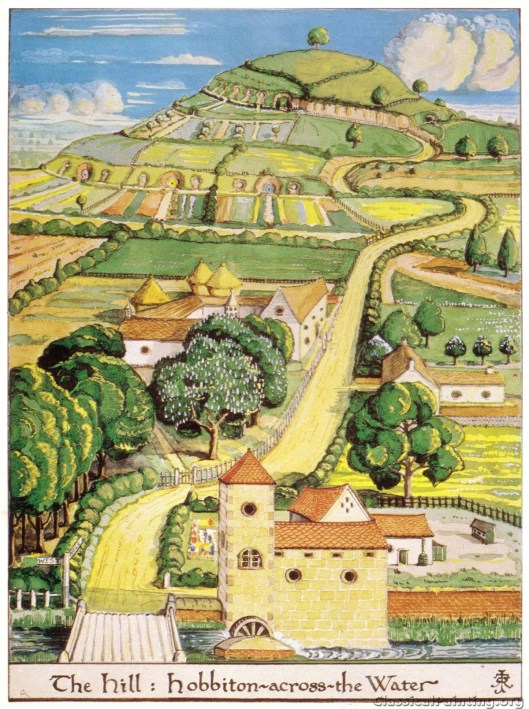
still stands. It has been said that this mill is the model for the one by The Water in The Hobbit, as drawn by JRRT.

4hob.jpg

Thus, when we think about Shire architecture, we can have a double picture:

  1. bits of description in JRRT’s works
  2. actual late Victorian rural villages of the sort in which Tolkien spent part of his childhood

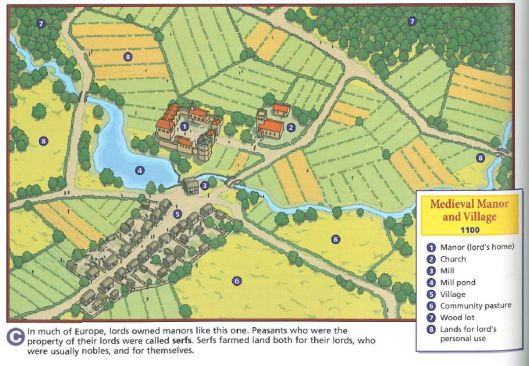
If we begin with historical villages, there isn’t anything to see in the actual Sarehole, except for the mill, which, though built upon the site of a mill which can be dated to 1542, is a building from 1771, just before the industrial revolution, an event with which Tolkien certainly had problems. If we look at other such villages, however, we can get a general picture. Basing our image upon a schematic medieval village plan, we find a double line of houses strung out along a single road.

5medvil.JPG

Spreading back from the houses are the fields, as villages in this world were self-sustaining. You can see these in JRRT’s illustration of the mill and the Hill. You’ll notice that these are in strips. In the feudal world, they illustrated both the use of crop rotation (different plants in different fields, with some fields allowed to rest), plus fields of the lord of the manor, which the tenants were obliged to tend. In Tolkien’s Shire, as there is no feudal system, we presume the stripping is for rotation.

4hob

Missing, however, from Hobbiton, would be two features you can see in the medieval illustration: a manor house and a church.

In the feudalism mentioned above, this ideal village is part of the social/governmental system in which it is attached to the smallest unit of that system, the manor.

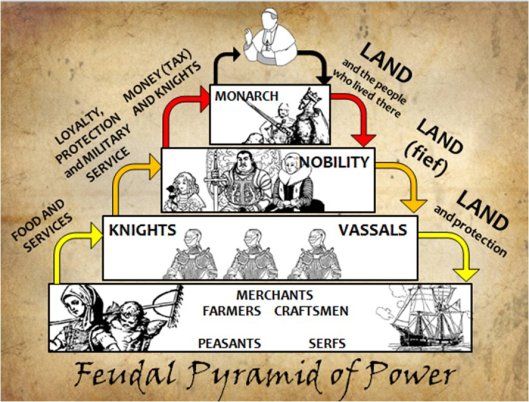
8feudal.jpg

As the chart explains, in the early medieval world, land was power and kings used their claim to control their lands (supposedly given to them by God) as a way to control the state in general.   They deeded certain sections of land to their nobles, in return for taxes and military service. Those nobles, in turn, deeded out land to lesser nobles, all the way down to individual knights, who might hold no more than one parcel, or manor, with its house, church, and village of freemen (literally, free men, who could own land but paid taxes to the lord for it), peasants (who were also free, but held no land), and serfs (who were landless as well as being the property of the local lord).

Although Tolkien once described the Shire as “granted as a fief” (Letters, 158) and “half republic half aristocracy” (Letters, 241), it is not a feudal property and therefore lacks those marks of that system, those manor houses.

As well, it is also missing churches, or, for that matter, any form of religious shrine. A real English medieval village, depending on its size and wealth, could have had a very modest building, such as this at Hornblotton, in Somerset.

9hornblotton.jpg

Or, if your village had become a prosperous town, like Lavenham, in Suffolk, you could even have a mini-cathedral. (Lavenham’s money had come from the international trade in woolen cloth.)

110lavenham.jpg

Although Tolkien insisted that there was a monotheistic underlay to Middle-earth in the Third Age, he also says of the folk of the Shire: “I do not think Hobbits practiced any form of worship or prayer (unless through exceptional contact with Elves).” (Letters, 193)

Without manors and churches, the Shire consists of private dwellings and inns. Inns seem to be like their parallels in our medieval world.

11medinn.jpg

And, of course, there are the inns of the Shire and the Prancing Pony in Bree.

12prancingpony.jpg

Private houses, including farms, however, fall into two categories: traditional hobbit (that is, built into hillsides) and what we might call outside-influence houses. As Tolkien says in the Prologue to The Lord of the Rings:

“All Hobbits had originally lived in holes in the ground, or so they believed…Actually in the Shire of Bilbo’s days it was, as a rule, only the richest and the poorest Hobbits that maintained the old custom. The poorest went on living in burrows of the most primitive kind…while the well-to-do still constructed more luxurious versions of the simple diggings of old…in the hilly regions and the older villages, such as Hobbiton and Tuckborough, or in the chief township of the Shire, Michel Delving on the White Downs, there were now many houses of wood, brick, or stone…Hobbits had long accustomed to build sheds and workshops…

The habit of building farmhouses and barns was said to have begun among the inhabitants of the Marish down by the Brandywine.

It is probable that the craft of building, as many other crafts beside, was derived from the Dunedain. But the Hobbits may have learned it direct from the Elves… “

Our Tolkien illustration of The Hill

12hob.jpg

shows us both styles. In the background, burrows; in the foreground, outside-influence houses. The traditional style reminds us of something from US western history: the use of “dugouts” as (at least temporary) dwellings as settlers moved west across the plains.

13sodhouse.jpg

As fans of the Laura Ingalls Wilder books will remember, her family lived in one of these along the banks of Plum Creek in the 1870s.

14sod.jpg

15littlehouse.jpg

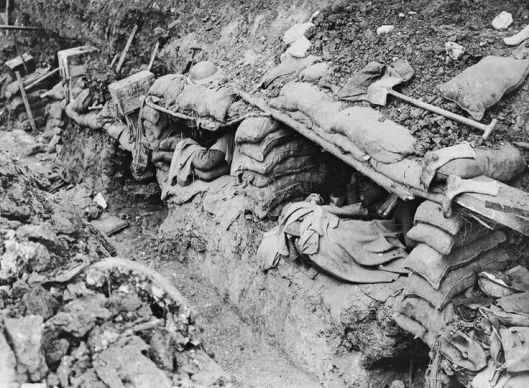
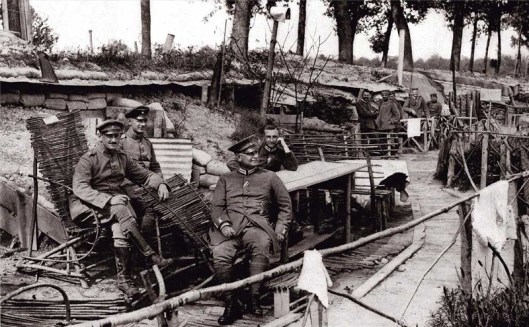
On a more sinister note, we’ve always wondered whether JRRT’s inspiration for hobbit holes may have come from his time on the Western Front, where, from late 1914, soldiers had burrowed into the earth to protect themselves from enemy attack and from the increasingly inclement weather. The shelters could be simply cutouts in the earth

15dugout.jpg

or very elaborate cottages. The Germans were especially admired for their creativity in building the more elaborate ones.

16gmandugout.jpg

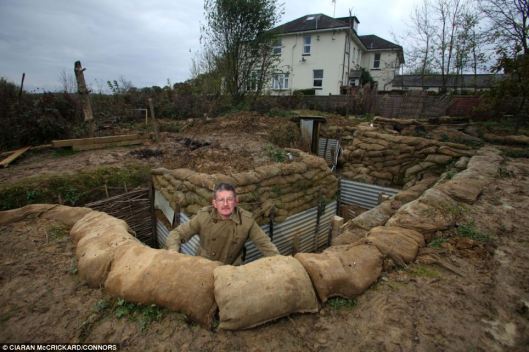
We can’t mention the Great War and trenches without also mentioning the brilliant Andrew Robertshaw, the English military historian, who actually reconstructed sixty feet of a trench line in his backyard.

17androb.jpg

He shares his experience in doing this in his book, 24Hr Trench.

511PnAeovzL._SX342_BO1,204,203,200_.jpg

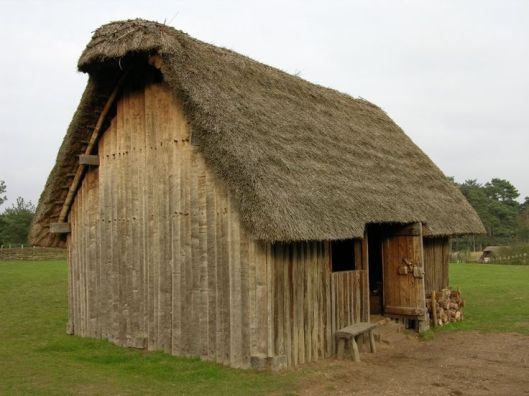
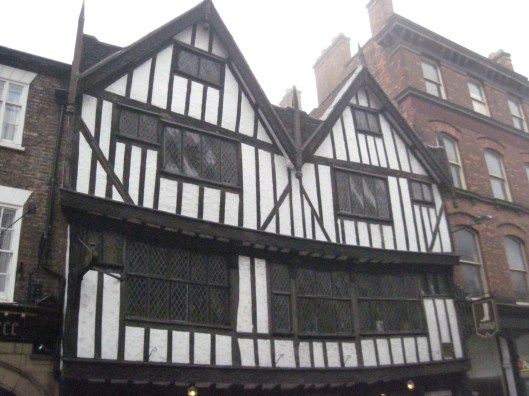
Continuing our medieval parallel, we imagine the outside-influence houses to look something like these:

medhouse1medhouse2

19medhousea.jpg

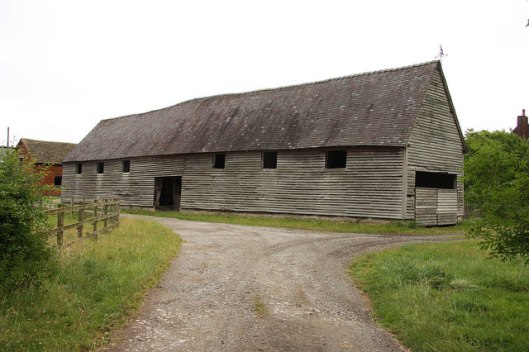
And, for outbuildings, there are a few surviving medieval barns, like this one:

19medbarn.jpg

whose roofs are often held up by the most beautiful woodwork, always reminding us of cathedrals, on the one hand, and sailing ships on the other.

20medbarn.JPG

Imagine that this is what Farmer Cotton’s farm might have looked like.

And, with this image, we conclude this posting. In our next, we’re going to move to the edge of the Shire, to discuss marches—geographical ones, that is.

Thanks, as ever, for reading!

MTCIDC

CD

The Road (No Longer) Taken

21 Wednesday Sep 2016

Posted by Ollamh in J.R.R. Tolkien, Literary History, Maps, Military History, Narrative Methods

≈ Leave a comment

Tags

Adventure, Fornost, History, Isengard, Medieval, Middle-earth, Numenorean road, pack horses, Ridgeway, Roman bridges, Roman occupation of England, Roman Roads, Stonewain Valley, the Greenway, The Lord of the Rings, the North Road, The Salt Road, Tiber River, Tolkien, Via Salaria

Dear Readers, welcome, as always. In this posting, we’ve been thinking about the subject of roads in Middle-earth and, in particular, the North Road, also called the Greenway.

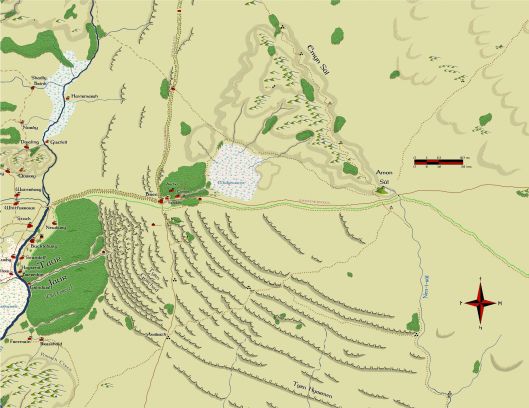
middle-earth-map.jpg

This was the North-South Road, which ran, once upon a time, from Isengard to Fornost, described by Christopher Tolkien as “the great Numenorean road linking the Two Kingdoms, crossing the Isen at the Fords of Isen and the Greyflood at Tharbad and then on northwards to Fornost”. (Unfinished Tales, 314, n.32)

Mostly, the roads of Middle-earth seem to be what you’d expect in a text which is based upon the actual medieval world: dirt tracks.

medievalroad.jpg

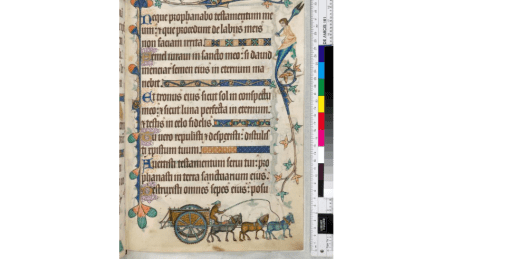
In the real English medieval world, most of these were not really for carts or carriages,

medievalcart.jpg

canvas.png

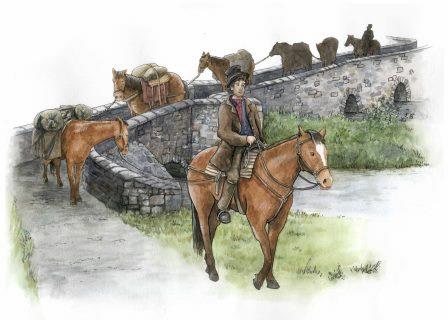
but rather for pack horses and their loads, which only required the narrowest of paths.

packhorsetrain1

The_Marsden_pack_horse_road,_Marsden_-_geograph.org.uk_-_826758

Bridge in Marsden, West Yorkshire

Bridge in Marsden, West Yorkshire

There had been simple pathways in Britain since earliest times, like the Ridgeway.

Ivinghoe Beacon seen looking north from The Ridgeway.

Ivinghoe Beacon seen looking north from The Ridgeway.

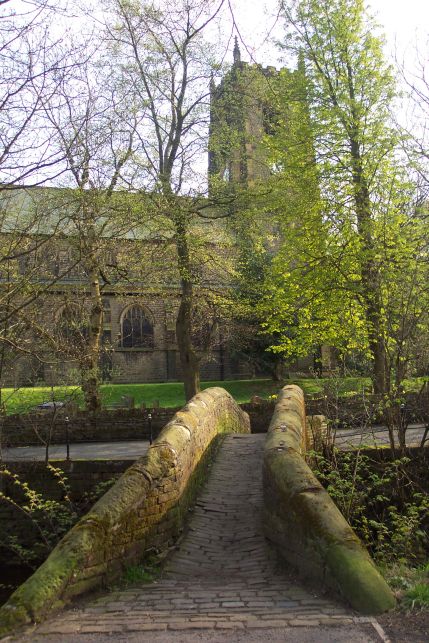
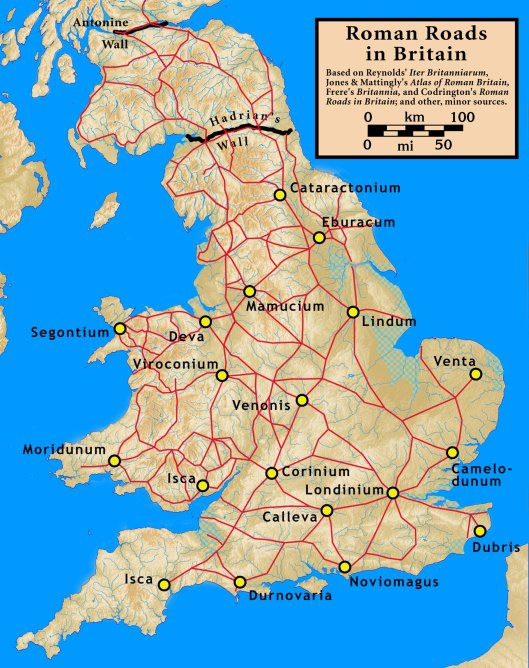
And yet there were still the remains of a different sort of road in Britain, those built under the Roman occupation of England, from 43 to 410AD.

Roman.Britain.roads

The Romans had begun their rise to power in Italy by controlling a road, the Via Salaria, which ran inland from the Mediterranean. A major purpose of this road (you can see it in its name, “The Salt Road”) was to further the salt trade.

The salt came from salt pans on the Mediterranean coast.

saltblocks

saltpans

The early Romans had been lucky (or wise) in founding their city at a major ford of the Tiber River, where the Via Salaria crossed it.

archaicrome

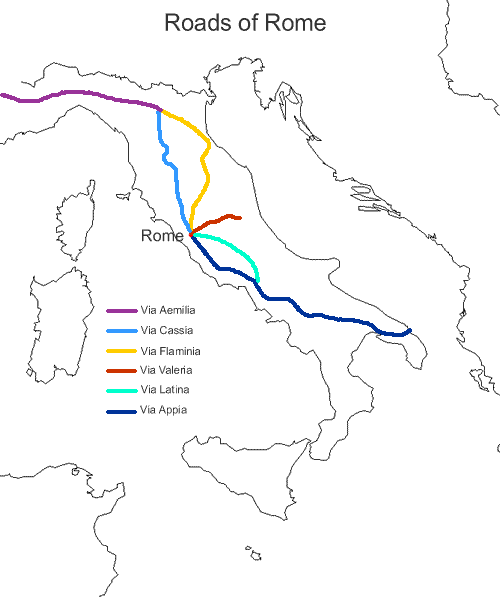
And out from Rome spread a network of roads.

roman-roads-italy-map

In time, the main roads were not simply dirt tracks, but very-carefully-constructed, well-laid-out stone-paved roadways.

Eli dis 2

These included sturdy bridges, as well, some of them still in place.

alcantara-bridge

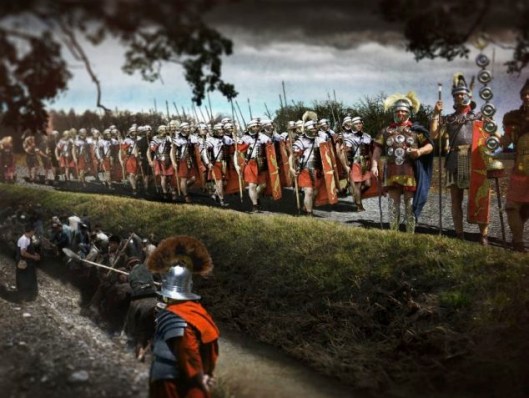
Over these roads marched Roman armies

romantroopsonroad

and Roman commerce, as well.

plaustrum2

Eventually, there were over 50,000 miles (80,500 km) of paved roads, as well as many miles more yet of unpaved.roman_empire_117_ad

As far as our current research goes, we have no actual proof that the Greenway was paved like Roman roads. One road for which there is a hint of evidence is that which runs through the Stonewain Valley:

“Through the gap the forgotten wain-road long ago had run down, back into the main horse-way from the City through Anorien; but now for many lives of men trees had had their way with it, and it had vanished, broken and buried under the leaves of uncounted years.” (The Return of the King, Book 5,   Chapter 5, “The Ride of the Rohirrim”)

A comparable illustration—with grass instead of trees and leaves—is this of a Roman road in Lancashire, in northeastern England.

Roman Road walk Lancashire

The idea of a road nearly abandoned and covered with grass—therefore “the Greenway”—seems to fit both this modern photo and JRRT’s idea, though, doesn’t it?

One of the spooky, but wonderful things about the ancient Roman world is that, for all that it’s been gone for 1500 years or more, there is so much of it still there for us, above ground and below—as it was for Tolkien. Thus, when we think about what was once one of the major thoroughfares of Middle-earth, we imagine that he, like us, saw a Roman road, decaying, but still useful.

Thanks, as always, for reading.

MTCIDC

CD

Herald-ry in Middle Earth

30 Wednesday Mar 2016

Posted by Ollamh in Fairy Tales and Myths, Imaginary History, J.R.R. Tolkien, Literary History, Military History, Military History of Middle-earth, Narrative Methods

≈ 2 Comments

Tags

Achilles, armour, Battle of Bannockburn, Eurybates, flailing and winnowing, Heraldry, Heralds, Hermes, kerykeion, Lakedaimonia, lambda, Medieval, Mouth of Sauron, Robert de Septvans, Robert the Bruce, Roger de Trumpington, Sir Henry de Bohun, Spartans, tabard, Talthybius, The Black Gate, The Illiad, The Lord of the Rings, Tolkien, White Tree of Gondor

Welcome, as always, dear readers.

There is a moment in the film of The Return of the King which has always puzzled us. The Lieutenant of the Tower of Barad-dur has appeared outside the Morannon with taunts and with what appears to be disconcerting news about Frodo.

mouth-of-sauron-1.jpg

In response, Aragorn kills him. Even if you had never seen a movie with knights in it so that you would know that this was a herald or messenger of some sort and that there are rules about such people, there are modern parallels—flags of truce, even the silent protection offered to diplomats—to make you think that this was hardly proper behavior for a king.

If we look at this scene in the chapter entitled “The Black Gate Opens”, we see that this is another of those disturbing—and seemingly arbitrary—changes made by the script writers, showing once more their disregard—or lack of proper understanding—of the author and his wishes.

“Aragorn said naught in answer, but he took the other’s eye and held it, and for a moment they strove thus; but soon, though Aragorn did not stir nor move hand to weapon, the other quailed and gave back as if menaced with a blow. ‘I am a herald and ambassador, and may not be assailed!’ he cried.”

There is a parallel in this, when we are told that Aragorn has used the Palantir and wrestled with Sauron.

“ ‘It was a bitter struggle, and the weariness is slow to pass. I spoke no word to him, and in the end I wrenched the Stone to my own will…Now in the very hour of his great designs the heir of Isildur and the Sword are revealed; for I showed the blade re-forged to him. He is not so mighty yet that he is above fear; nay, doubt ever gnaws him.’ ” (The Return of the King, Book 5, chapter 2, “The Passing of the Grey Company”)

(This is misportrayed in the extended version of the film. For some reason, in return for being shown Anduril, Sauron shows Aragorn a lifeless—perhaps just napping? “she looks like she’s only sleeping!”—Arwen—which, as is so often the case with the clumsy script writers, completely misses the real point of the scene in the book.)

In both of these scenes, what the author clearly meant to show was that Aragorn’s power, now that he has chosen to reveal it, comes from within and is so great that it needs neither words nor violence to assert itself—more signs that he is the true returning king.

Thus, harming a herald, in fact, shows him as the very opposite: not only violent, but, instead of restoring and preserving—his proper task as king—he violates custom.

We note, by the way, that, in the book, he looks to be following custom. Under the direction of Gandalf, the army which marches to challenge Sauron formally declares its ownership of Ithilien with trumpet blasts

Black Trumpeterearly16thc.jpg

and its own heralds.

What is a herald, anyway? The Mouth of Sauron claims to be one and even claims immunity because of it—why?

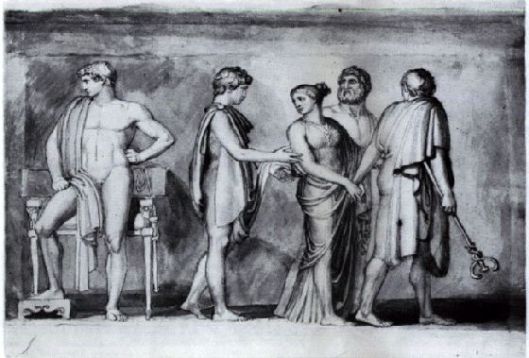
In fact, heralds, in the western world, have an ancient lineage, first appearing in literature in The Iliad, where they act both as messengers

flaxman_Briseis_achil.jpg

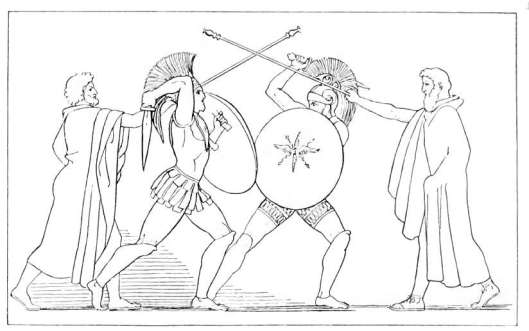
and as referees.

hector-and-ajax-fighting.jpg

You’ll notice, in the first of these two pictures, that the two heralds, Talthybius and Eurybates, have the badge of a herald: a special curved wand, called a kerykeion. Hermes carries one, to indicate that he is the patron god of heralds (and therefore their protector).

0408b5884a2ff2a3c2ad0b51ffde7a13.jpg

At some point in their early history, the convention appeared that heralds were considered, in their role as messengers, to be somehow neutral and therefore were not to be harmed. (It’s not clear, however, during their first appearance, in Iliad 1, that this was so then—or at least when dealing with Achilles–but perhaps that’s just Achilles, who is not necessarily always the most balanced individual.)

Heralds in the western medieval world continued with these functions, but added another.

We have a little evidence that some ancient Greek warriors and states may have used specific designs as badges. Spartan shields, for example, sometimes carried a lambda—a tentlike shape which stands for the sound of L in English and was short for “Lakedaimonia”, which is where Sparta was located.

spartanshield.png

A much more elaborate system of designs gradually developed during the Middle Ages, in part because of the increasingly-elaborate armor, which, from a long shirt of chain mail, came to cover the whole knight, making him, potentially unidentifiable.

normanhorseman.jpg

late12thcknight.jpgEnglish_Knight_13thc.jpg

So, both to make himself distinguishable on the battlefield and probably because it was macho, and therefore sexy, a knight would devise a distinctive design for his shield, possibly his clothing, and maybe even his horse, as well.

Knight14thcmid.png

This could be pretty spectacular—just look at Robert the Bruce, king of Scotland in the early 14th century.

heraldic-robert-the-bruce.jpg

[A footnote here– at the site of the Battle of Bannockburn, there is a famous equestrian statue of the Bruce in which the head and facial features have been reconstructed from the Bruce’s actual skull.

bruce-9.jpg

images.jpg

Just before this same battle, the Bruce had shown his knightly skills by splitting, with his battle axe, the helmet and head of the English knight, Sir Henry de Bohun.]

robert-de-bruce-kills-bohun-l.jpg

Sometimes these designs could include puns on their owners’ names. Here’s Roger de Trumpington, with trumpets.

sirrogerdetrumpington.jpg

And Robert de Septvans (Septvans = “seven (winnowing) fans”).

sirrbtde7.jpg

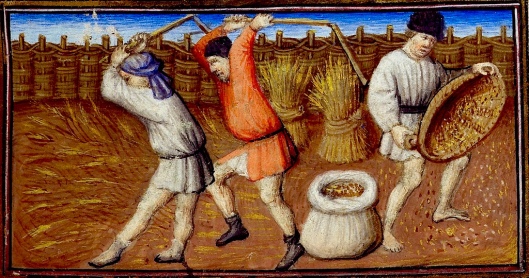
The fan here looks actually like a basket, but was used for helping the wind to carry off the outer husk of the grain ear, a process called winnowing. (To the left is the previous process, flailing, where the beard of grain is being broken off the stalk before it is winnowed.)

threshingwinnowing.jpg

As the number and complexity of patterns on armor developed, it appears that specialists took over the job of identifying them and keeping track of them, the heralds. And, from their name, we get our general name for the designs used on armor and clothing, heraldry. Because they worked in the world of heraldry, they decorated themselves, as well, and, in England, still do.

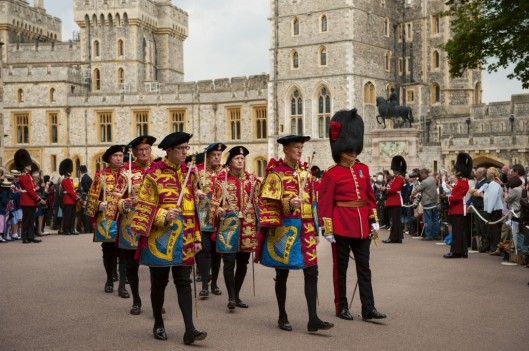
Heralds-at-the-Garter-Service-Julian-Calder-1024x681.jpg

Thus, we can imagine that, when Aragorn, Gandalf, and their companions reached the crossroads in Ithilien,

crossroads.jpg

after the trumpets sounded, heralds wearing a special coat, called a tabard,

Pursuivant_tabard.jpg

which would have been embroidered with the tree and seven stars,

Flag_of_the_Reunited_Kingdom_of_Arnor_and_Gondor.png

would have stepped forward and reclaimed the land for the king. Specially marked, they would have been very visible, and as the lieutenant of the tower tells us, protected by custom from harm. So why is Aragorn, the one man capable of returning order to Middle Earth, scripted to kill one? What do you think?

Thanks, as ever, for reading!

MTCIDC

CD

ps

And now you know what the White Rabbit is wearing and is supposed to be doing in Alice

De_Alice's_Abenteuer_im_Wunderland_Carroll_pic_37.jpg


Strange as News from Bree

03 Wednesday Feb 2016

Posted by Ollamh in Fairy Tales and Myths, J.R.R. Tolkien, Language, Literary History, Narrative Methods

≈ Leave a comment

Tags

acta, Barad-Dur, Barliman Butterbur, Bree, Bronte, copyists, Dwarves, English coaching inn, Forum Romanum, Frodo Baggins, Gandalf, Gondor, Gutenberg, Haworth, Johann Carolus, Literacy, manuscripts, Medieval, Minas Tirith, Orality, Peter Jackson, pre-print, press, printing press, Romans, royal archives, Sauron, scriptoria, Story, The Lord of the Rings, The Prancing Pony, The Red Book of Westmarch, The Shire, Tolkien, War of the Ring, word-of-mouth, Yorkshire

Welcome, dear readers, as always.

After the last couple of postings, full of war, this is a rather peaceful one. We want to put forward a scheme for a larger project, all about orality versus literacy in Middle Earth, of which this is one small step, our initial question for the project being, “What is written and how and what is only spoken and remembered?”

Early in Chapter 9 of The Fellowship of the Ring (“At the Sign of the Prancing Pony”), we encounter this passage:

“For Bree stood at an old meeting of ways; another ancient road crossed the East Road just outside the dike at the western end of the village, and in former days Men and other folk of various sorts had travelled much on it. Strange as News from Bree was still a saying in the East Farthing, descending from those days, when news from North, South, and East could be heard in the inn, and when the Shire-hobbits used to go more often to hear it.”

Bree, of course, is the little town to which Frodo and his companions travel once they have gotten free of the Barrow Downs.

ICE Bree and the Barrow-downs (Late Third Age) v1.3.jpg

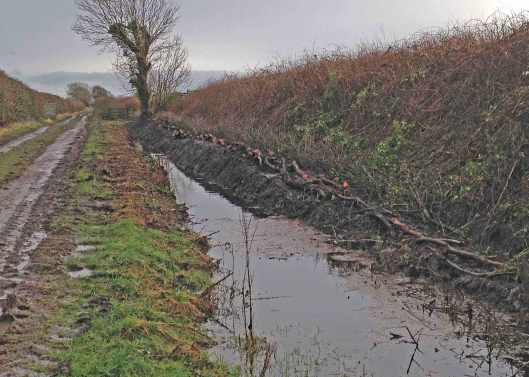
The little town is described as being surrounded by a dike—a wide ditch, the inner side topped with a thick hedge—perhaps something like this—

D21-15-2-14-More-hedging-activity_0670.jpg

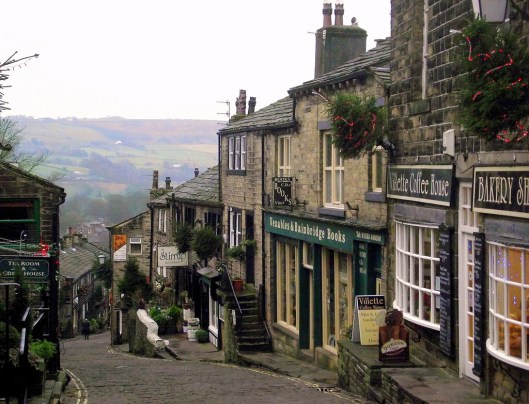
And consisting of “some hundred stone houses of the Big Folk, mostly above the Road…”. Without knowing the kind of stone, we have imagined it as looking rather like Haworth, in Yorkshire, the home of the Bronte family (without the modern touristy stuff, of course).

haworth.jpg

(And we note, by the way, that its depiction in the Jackson films doesn’t appear to reflect JRRT’s description that the houses were made of stone: rather, it appears to be filled with half-timbered, plaster and lath constructions.)

LOTR Bree.JPG


Here, the Hobbits stay at the Prancing Pony.

naismithprancingpony.jpg

Tolkien describes it as

“a meeting place for the idle, talkative, and inquisitive among the inhabitants, large and small…”

To our minds, it probably looked like one of those very old English coaching inns.

111-1000011im.jpg


And we begin our research inside.

Before we do, let’s spend a moment thinking about that word “news”, as in “Strange as news from Bree”.

In pre-print days, for most people in most places, information about events was circulated only by word-of-mouth. There were a few exceptions: the government in Rome produced hand-written circulars, called acta which were put up in the Forum Romanum from the middle of the last century BC through to the 3rd century AD. These would obviously have had a very limited circulation, however, and we can imagine that the contents would still have been passed on mouth-to-mouth for most people in Rome.

To gain greater circulation really demanded print. Although Gutenberg produced the first press and movable lead type by 1440,

gutenberg.jpg

the earliest surviving printed newspaper known at present dates from 1609, produced in Germany. (It appears that the publisher, Johann Carolus, had actually begun printing, rather than hand-copying, in 1605.)

Relation_Aller_Fuernemmen_und_gedenckwuerdigen_Historien_(1609).jpg

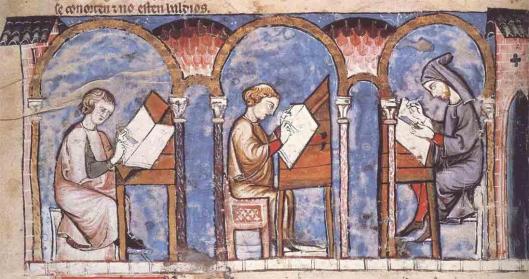
As far as we can tell, true to the general image of Middle Earth as a medieval world, printing presses have yet to appear (unless Sauron is producing very limited editions at the Barad-dur Press and circulation consists of exactly one copy). This means that we are still in the preprint world of hand-copying, when it comes to documents. In the western European world, on which places like Gondor are modeled, this means scriptoria—copy centers—mainly in monasteries and in royal courts where the copyists had probably been trained in monastic scriptoria.

scriptorium.jpg

Because there are no religious foundations or even schools of any sort mentioned in Middle Earth, we don’t know how or where documents were written or copied or even how and where anyone learned to read and write (except Sam, who was taught his letters by Frodo), but literacy turns up all over the place, from the Red Book of Westmarch to the runes of the dwarves to the writings Gandalf says he searched through in the archives of Minas Tirith.

All of this is, in a sense, commemorative—it’s history, really, whether a dwarvish map or tomb inscription, or an account of the War of the Ring. What about other things, however—word of daily events, or even entertainment forms, like songs and poems, things which may some day become part of history but, at the present, seem much more ephemeral? That’s what we’ve come to Bree to find out—and we’re quickly helped in our investigation by the host of the Prancing Pony, Barliman Butterbur, who says to Frodo and the others:

“ ‘I don’t know whether you would care to join the company…Perhaps you would rather go to your beds. Still the company would be very pleased to welcome you, if you had a mind. We don’t get Outsiders—travelers from the Shire, I should say, begging your pardon—often; and we like to hear a bit of news, or any story or song you may have in mind…’ “

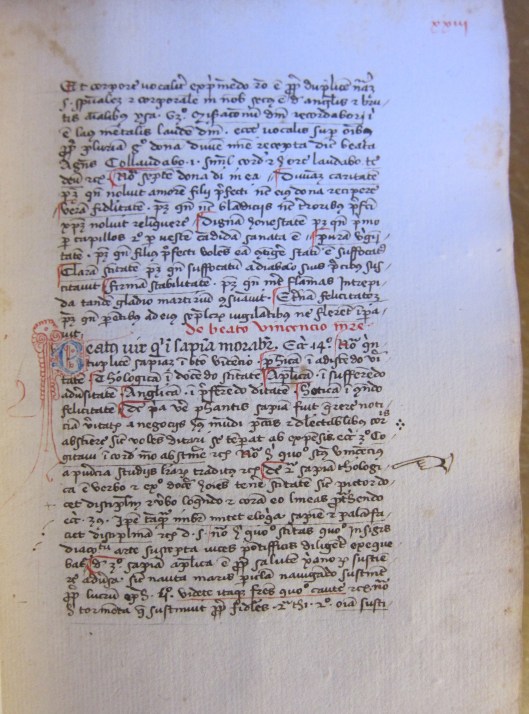
And there’s that emphasis on the oral: “we like to hear”. You, readers, have a world of electronic devices to turn to for “a bit of news, or any story or song”, as well as, in the case of news, actual newspapers, not to mention bookstores, libraries, and the wonderful resources of Gutenberg and the Internet Archive. None of that in any form is available to carry or preserve information in Middle Earth. What books there are—and they are manuscripts, remember, things which look like this—

MS-Italian.jpg

or, if you are rich, this—

frms.png

are either in royal archives, as in the case of those which Gandalf consults in Minas Tirith, or in the hands of families, as is the fate of The Red Book of Westmarch and other such items in the Shire. And so people are, on the one hand, eager for news and entertainment, but, on the other, forced either to make it for themselves or to wait for willing strangers to add to their meager store.

It’s natural, then, that “As soon as the Shire-hobbits entered, there was a chorus of welcome from the Bree-landers.” The first local reaction to Frodo’s attempts to create an explanation for why he and his companions are traveling is also natural:

“He gave out that he was interested in history and geography (at which there was much wagging of heads, although neither of these words were [sic] much used in the Bree-dialect). He said he was thinking of writing a book (at which there was silent astonishment), and that he and his friends wanted to collect information about hobbits living outside the Shire, especially in the eastern lands.”

In the nearly-oral world of Bree (there must be some literacy—the Prancing Pony has a sign with an inscription and Barliman seems to know what a letter is), the next reaction is also natural:

“At this a chorus of voices broke out. If Frodo had really wanted to write a book, and had had many ears, he would have learned enough for several chapters in a few minutes. And if that was not enough, he was given a whole list of names, beginning with ‘Old Barliman here’, to whom he could go for further information.”

These would all be so-called “oral informants”—not one mention of manuscripts or documents to suggest that information is conveyed and recorded in writing—and so the Breelanders’ third and final reaction is also natural:

“But after a time, as Frodo did not show any sign of writing a book on the spot, the hobbits returned to their questions about doings in the Shire.”

It’s obvious then, that books, like the words “history” and “geography”, are almost alien to these people and so their interest is in the spoken—or sung—word, which is why, when Frodo breaks into Bilbo’s “There is an inn…” to distract the audience from Pippin’s indiscreet recounting of the birthday party, his stratagem almost works—until he overdoes it and—

But even in the aftermath, although it leads to more trouble for Frodo and his companions, Butterbur can imagine that, in time, that surprising event, like all of the others in this near-oral world, will subside into word-of-mouth.

“He reckoned, very probably, that his house would be full again on many future nights, until the present mystery had been thoroughly discussed.”

And then it would become just another piece of strange news from Bree.

Thanks, as always, for reading.

MTCIDC

CD
Feudal Array 1

20 Wednesday Jan 2016

Posted by Ollamh in Artists and Illustrators, Economics in Middle-earth, Fairy Tales and Myths, Imaginary History, J.R.R. Tolkien, Literary History, Military History, Military History of Middle-earth, Narrative Methods

≈ Leave a comment

Tags

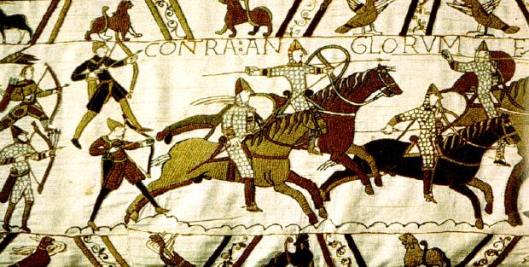
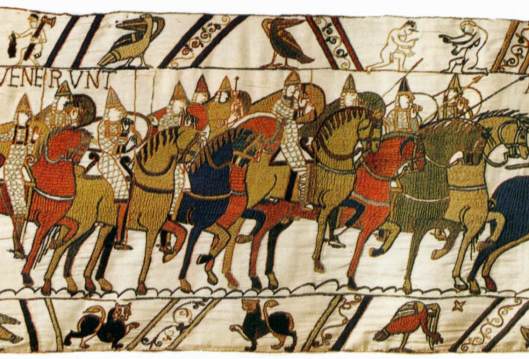
Anglo-Saxon, Bayeux Tapestry, Embroidery, feudalism, Medieval, Middle-earth, Normandy, Peter Jackson, Rohirrim, tapestry, The Lord of the Rings, Tolkien

Welcome, as always, dear readers.

In this posting, we would like to continue what we began in “Behind the Rammas Echor”. In that posting, we talked about using the illustrations from medieval English psalters (the wonderful 14th-century Luttrell Psalter in particular) to try to visualize the feudal world suggested by certain aspects of Tolkien’s The Lord of the Rings.

In that posting, we said that feudalism could be broken down into two big categories, land and troops, and there we spent time looking at basic agricultural life, to imagine the look of the feudal world of Middle Earth.

Now we move on to troops. And, as much as we can, we would like to continue to use medieval images to help us.

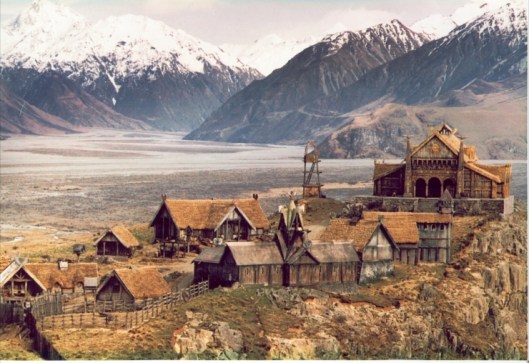
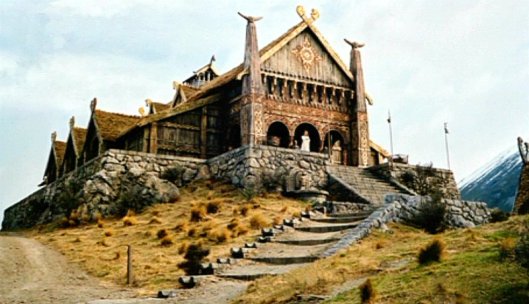
In previous posts, we’ve praised Jackson’s depiction of the Rohirrim, both the architecture and the people. Edoras and Meduseld within it just look right—and, when you watch the material on constructing them in the extended version box set, we can only be absolutely bowled over by the care taken there, for all that we have difficulties with certain other parts of the films, both in look and in the changes to the text.

Edoras-MtSunday.jpg

meduseld.jpg

rohirrimmassed.jpg

In one previous post, we suggested the kinds of models we both know and imagine Tolkien used to create the Rohirrim. These were primarily Anglo-Saxon, but combined with a horse people (which the Anglo-Saxons were not) of some sort, possibly Scythian (an Indo-European-speaking horse folk from north of the Black Sea).

ScythianCavalry.jpg

As we’ve thought more about it (one, for us, of the great pleasures of solid adventure literature, new and old—is that you not only want to think more about it, but, as you do, you find more in it), we began to imagine that Tolkien might have had another visual source, based upon another famous set of medieval illustrations, the Bayeux Tapestry.

This is a roll of linen, some 230 feet (that’s about 70 metres) long and 20 inches (50 centimetres) high, into which are woven three bands of designs. The center is a long (very long!) series of adjoining panels covered in human figures, which have been stitched on with various colored woolen threads. Above and below the central band are two narrower ones which combine abstract figures (commonly on the upper panel) with human activities (on the lower one). Across the top of the central band are a series of captions in very simple Latin, describing what is happening below.

haroldkilled.jpg

The caption here reads: “Here Harold the king has been killed.”

As it’s not through-woven, like this—

unicorn3.jpg

this isn’t really a tapestry, but an embroidery, in fact.

106604.gif

makingthebt.jpg

It’s linked to the cathedral at Bayeux, in Normandy, where it has been for at least 6 centuries. On the map, find Le Havre and look left and you’ll see Bayeux.

normandy_map_phys.gif

bayeux_cathedral.jpg

Where it really came from and who made it are two of those mysteries that it’s been fun to follow the scholarship of, but, as of 2015, there are lots of theories, some of them more convincing than others, but that’s all there are: theories. If you’d like to know more about them, go to: www.bayeux-tapestry.org.uk/whomadethetapestry.htm.

The tapestry is housed in an impressive museum in Bayeux, where its entire length is ingeniously displayed in a sort of wrap-around way.

The-Bayeux-Tapestry-Museum-1019.jpg

Bayeux-Tapestry-1_131941101594170.jpg

We’ve given you lots of facts, but the one thing we haven’t mentioned is the subject of such an immense work. It is, in fact, a lengthy piece of propaganda justifying the Norman invasion and conquest of England in 1066AD. We know, then, one definite thing about it: it certainly wasn’t embroidered for the Anglo-Saxons! (Although there is at least one theory that it was made by them.)

As much as we are interested in the subject, what has caught our attention now is the look—here are soldiers from the same period as the Anglo-Saxon model for the Rohirrim, after all, but, although archers are depicted on the Norman side, and a few infantry, the Normans are mainly shown as horsemen.

WebPage-ImageF.00070.jpeg

Here is our first sight of the Rohirrim in The Two Towers, Chapter 2, “The Riders of Rohan”:

“Their horses were of great stature, strong and clean-limbed; their grey coats glistened, their long tails flowed in the wind, their manes were braided on their proud necks. The Men that rode them matched them well: tall and long-limbed; their hair, flaxen-pale, flowed under their light helms, and streamed in long braids behind them; their faces were stern and keen. In their hands were tall spears of ash, painted shields were slung at their backs, long swords were at their belts, their burnished shirts of mail hung down upon their knees.”

05bayeux.jpg

Minus the grey horses and the braids, what do you think, dear readers?


As ever, thanks for reading.

CD
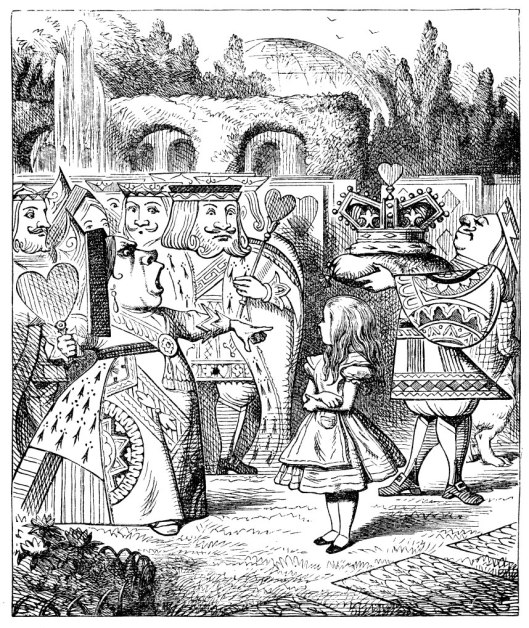
MTCIDC


PS

That MTC will be Feudal Array.2, in which we consider the other forces opposing Mordor…


← Older posts
Newer posts →

The Doubtful Sea Series Facebook Page

The Doubtful Sea Series Facebook Page

  • Ollamh

Categories

  • Artists and Illustrators
  • Economics in Middle-earth
  • Fairy Tales and Myths
  • Films and Music
  • Games
  • Heroes
  • Imaginary History
  • J.R.R. Tolkien
  • Language
  • Literary History
  • Maps
  • Medieval Russia
  • Military History
  • Military History of Middle-earth
  • Narnia
  • Narrative Methods
  • Poetry
  • Research
  • Star Wars
  • Terra Australis
  • The Rohirrim
  • Theatre and Performance
  • Tolkien
  • Uncategorized
  • Villains
  • Writing as Collaborators
Follow doubtfulsea on WordPress.com

Across the Doubtful Sea

Recent Postings

  • Through a glass… January 7, 2026
  • Heffalumps? December 31, 2025
  • We Three Kings December 24, 2025
  • A Moon disfigured December 17, 2025
  • On the Roads Again—Once More December 10, 2025
  • (Not) Crossing Bridges December 3, 2025
  • On the Road(s) Again—Again November 26, 2025
  • On the Road(s) Again November 19, 2025
  • To Bree (Part 2) November 12, 2025

Blog Statistics

  • 104,106 Views

Posting Archive

  • January 2026 (1)
  • December 2025 (5)
  • November 2025 (4)
  • October 2025 (5)
  • September 2025 (4)
  • August 2025 (4)
  • July 2025 (5)
  • June 2025 (4)
  • May 2025 (4)
  • April 2025 (5)
  • March 2025 (4)
  • February 2025 (4)
  • January 2025 (5)
  • December 2024 (4)
  • November 2024 (4)
  • October 2024 (5)
  • September 2024 (4)
  • August 2024 (4)
  • July 2024 (5)
  • June 2024 (4)
  • May 2024 (5)
  • April 2024 (4)
  • March 2024 (4)
  • February 2024 (4)
  • January 2024 (5)
  • December 2023 (4)
  • November 2023 (5)
  • October 2023 (4)
  • September 2023 (4)
  • August 2023 (5)
  • July 2023 (4)
  • June 2023 (4)
  • May 2023 (5)
  • April 2023 (4)
  • March 2023 (5)
  • February 2023 (4)
  • January 2023 (4)
  • December 2022 (4)
  • November 2022 (5)
  • October 2022 (4)
  • September 2022 (4)
  • August 2022 (5)
  • July 2022 (4)
  • June 2022 (5)
  • May 2022 (4)
  • April 2022 (4)
  • March 2022 (5)
  • February 2022 (4)
  • January 2022 (4)
  • December 2021 (5)
  • November 2021 (4)
  • October 2021 (4)
  • September 2021 (5)
  • August 2021 (4)
  • July 2021 (4)
  • June 2021 (5)
  • May 2021 (4)
  • April 2021 (4)
  • March 2021 (5)
  • February 2021 (4)
  • January 2021 (4)
  • December 2020 (5)
  • November 2020 (4)
  • October 2020 (4)
  • September 2020 (5)
  • August 2020 (4)
  • July 2020 (5)
  • June 2020 (4)
  • May 2020 (4)
  • April 2020 (5)
  • March 2020 (4)
  • February 2020 (4)
  • January 2020 (6)
  • December 2019 (4)
  • November 2019 (4)
  • October 2019 (5)
  • September 2019 (4)
  • August 2019 (4)
  • July 2019 (5)
  • June 2019 (4)
  • May 2019 (5)
  • April 2019 (4)
  • March 2019 (4)
  • February 2019 (4)
  • January 2019 (5)
  • December 2018 (4)
  • November 2018 (4)
  • October 2018 (5)
  • September 2018 (4)
  • August 2018 (5)
  • July 2018 (4)
  • June 2018 (4)
  • May 2018 (5)
  • April 2018 (4)
  • March 2018 (4)
  • February 2018 (4)
  • January 2018 (5)
  • December 2017 (4)
  • November 2017 (4)
  • October 2017 (4)
  • September 2017 (4)
  • August 2017 (5)
  • July 2017 (4)
  • June 2017 (4)
  • May 2017 (5)
  • April 2017 (4)
  • March 2017 (5)
  • February 2017 (4)
  • January 2017 (4)
  • December 2016 (4)
  • November 2016 (5)
  • October 2016 (6)
  • September 2016 (5)
  • August 2016 (5)
  • July 2016 (5)
  • June 2016 (5)
  • May 2016 (4)
  • April 2016 (4)
  • March 2016 (5)
  • February 2016 (4)
  • January 2016 (4)
  • December 2015 (5)
  • November 2015 (5)
  • October 2015 (4)
  • September 2015 (5)
  • August 2015 (4)
  • July 2015 (5)
  • June 2015 (5)
  • May 2015 (4)
  • April 2015 (3)
  • March 2015 (4)
  • February 2015 (4)
  • January 2015 (4)
  • December 2014 (5)
  • November 2014 (4)
  • October 2014 (6)
  • September 2014 (1)

Blog at WordPress.com.
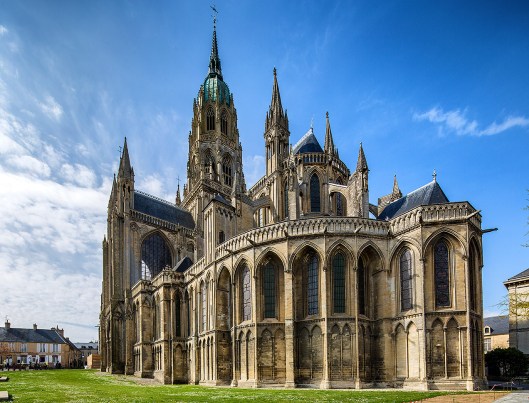
  • Subscribe Subscribed
    • doubtfulsea
    • Join 78 other subscribers
    • Already have a WordPress.com account? Log in now.
    • doubtfulsea
    • Subscribe Subscribed
    • Sign up
    • Log in
    • Report this content
    • View site in Reader
    • Manage subscriptions
    • Collapse this bar
 

Loading Comments...