• About

doubtfulsea

~ adventure fantasy

Category Archives: Narrative Methods

The Return of the Who.2?

28 Wednesday Oct 2015

Posted by Ollamh in Fairy Tales and Myths, Heroes, Imaginary History, J.R.R. Tolkien, Narrative Methods, Villains

≈ Leave a comment

Tags

Aragorn, Aslan, C.S. Lewis, Catholicism, Gondor, Hobbits, Jadis, Medusa, Middle-earth, monotheism, Narnia, Oxford, religion, Sauron, secular, The Bird and the Baby, The Chronicles of Narnia, The Eagle and the Child, The Hobbit, The Inklings, The Lamb and Flag, The Lord of the Rings, the Pevensies, The Return of the Ring, The White Witch, Tolkien, White Tree

Dear Readers,

Welcome, as always.

This posting is a continuation of our last, in which we made a brief attempt to think about what the title “The Return of the King” might have meant for its author in his time.

In this posting, we want to expand that meaning from a secular king to one with more religious overtones.

We ourselves, as we’ve said before, are World Civ people, believing that all people in all times and places are and should be of interest and value to everyone. We are also pan-spiritual, thinking with Gandhi that, “I believe in the fundamental Truth of all great religions of the world.”

In the case of Tolkien, this meant Catholic Christianity, a form of monotheism. Of religion and The Lord of the Rings, he wrote in 1953:

“The Lord of the Rings is of course a fundamentally religious and Catholic work; unconsciously so at first, but consciously in the revision. That is why I have not put in, or have cut out, practically all references to anything like ‘religion’, to cults or practices, in the imaginary world. For the religious element is absorbed into the story and the symbolism.” Letters, 172.

He adds to this, in a letter to Houghton Mifflin, in 1955, that “It is a monotheistic world of ‘natural theology’. (Letters, 220). At the same time, however, he adds “I am in any case myself a Christian; but the ‘Third Age’ was not a Christian world. Letters, 220.

And yet we would suggest that there is not only more of a Christian theme, but also a Christian parallel with a book written at about the same time as the later stages of The Lord of the Rings and published slightly before it. This is C.S. Lewis’ The Lion, the Witch and the Wardrobe (1950).
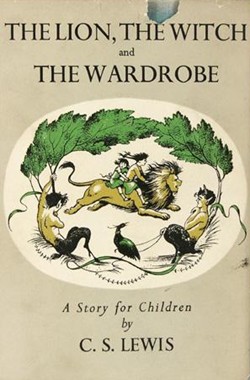
TheLionWitchWardrobe(1stEd)

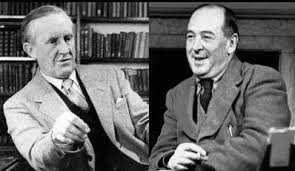
As is well known, both Lewis and Tolkien
jrrt and csl

were members of a literary group in Oxford, the Inklings.

draft_lens9242861module102711761photo_1274835984eagle_and_child_pub_inkli

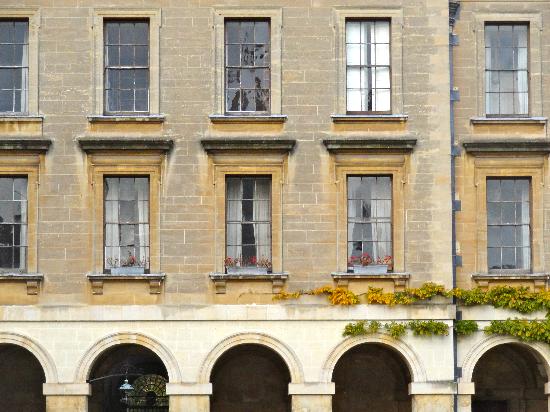
Lewis and Tolkien formed part of the permanent core, with other members coming and going over the years (1933-1949).   The meetings were held in Lewis’ rooms at Magdalen College,

magdalen room-used-by-cs-lewis

as well as at two local pubs, The Eagle and Child (called locally “Bird and Baby” or just “Bird”)

Birdandbaby

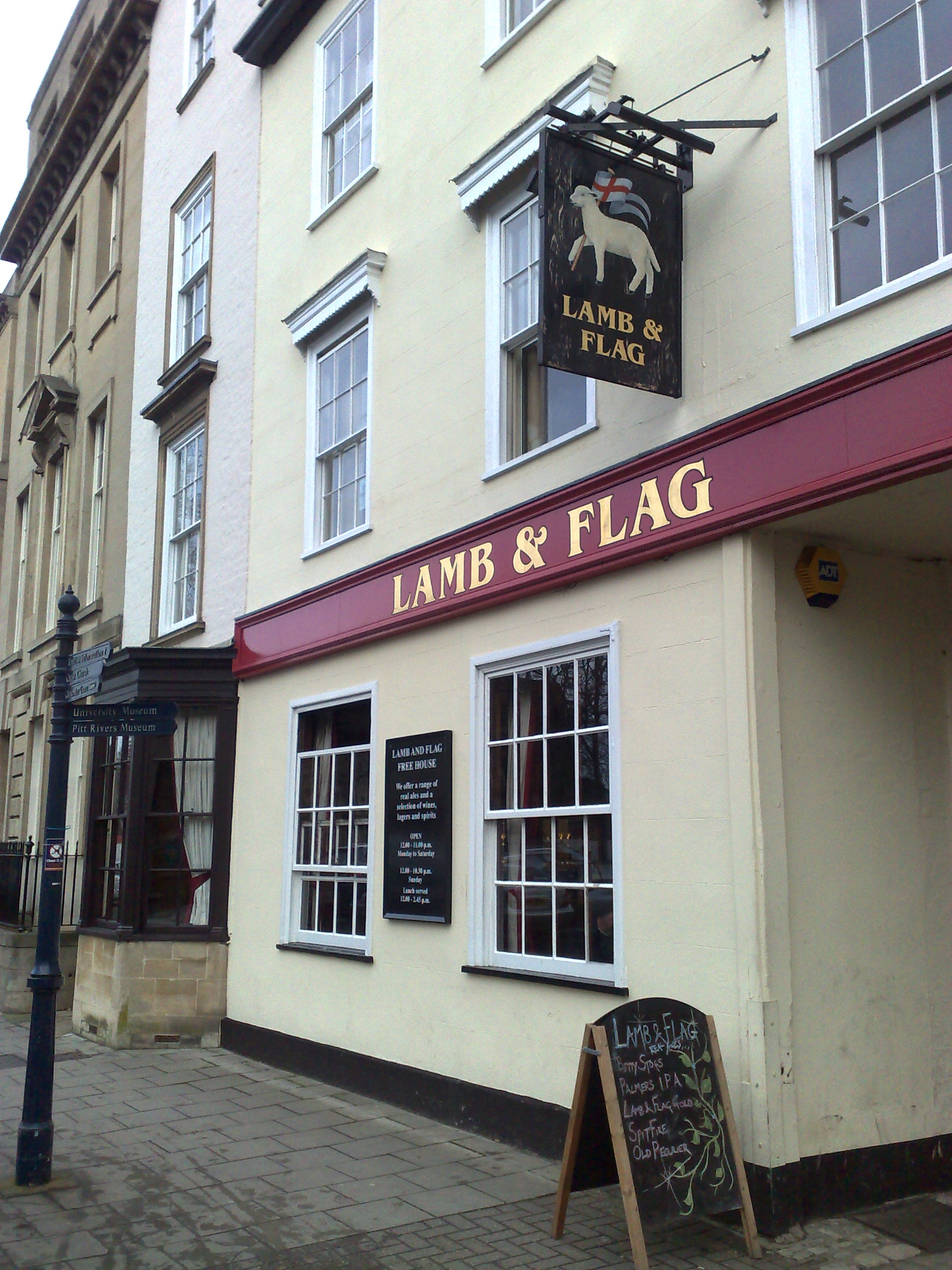
as well as The Lamb and Flag.

Lamb-and-flag-pub-oxford

The purpose (besides refreshments) was literary discussion, both of others’ works and of their own, and an important feature was the reading aloud of works in progress. Lewis had been very supportive, both of The Hobbit and The Lord of the Rings, but Tolkien had not been so enthusiastic in return. All the same, we would suggest that various elements of Lewis’ The Lion, the Witch and the Wardrobe and events around Gondor in Tolkien’s The Return of the King at times bear strong similarities.

In Lewis’ book, the main protagonists are four children, the Pevensies.
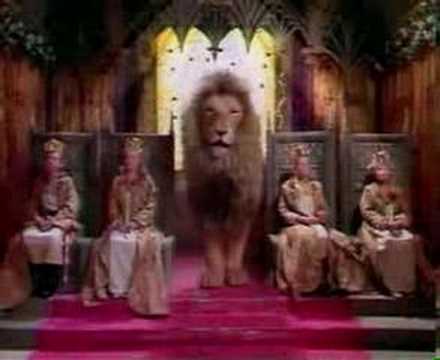
childrenaslanbbc

In Tolkien’s, there are four grown Hobbits, often mistaken, beyond the borders of the Shire, for children.
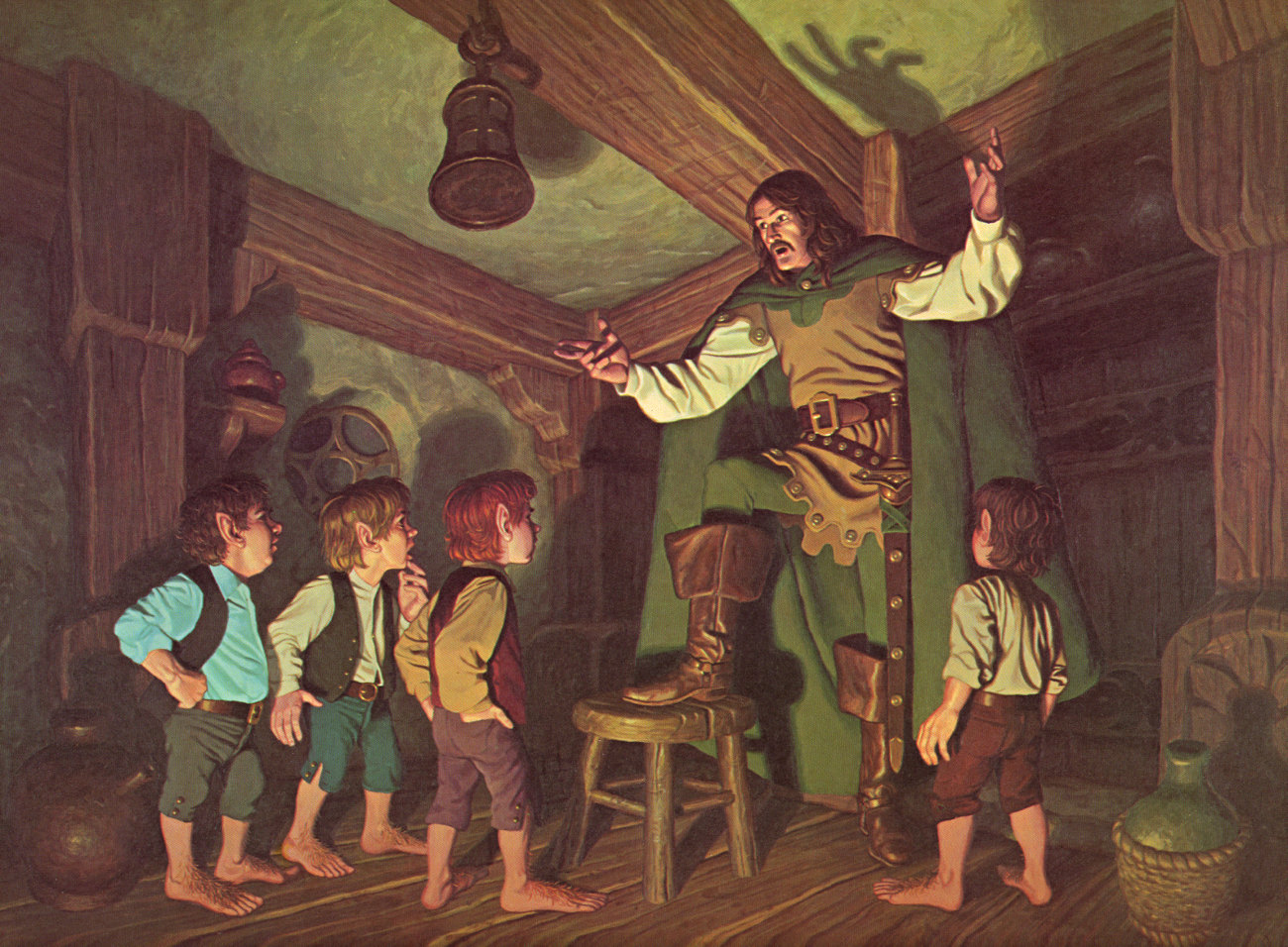
hildebrandthobbits

Both groups are on an errand which they barely understand and are faced with a supernatural enemy, the White Witch for the one, Sauron for the other. (There seems to be a lot of mirroring in all of this: the White Witch is already in Narnia and must be driven out. Sauron is outside Gondor and wants to get in, for example. The White Witch’s name is “Jadis”, by the way. Undoubtedly Lewis’ little linguistic joke: jadis in French means “formerly”, suggesting that even from the first time she appears, she’s already on her way out.)

wwbbc

main_1-Greg-Hildebrandt-Signed-Sauron-The-Dark-Lord-Limited-Edition-34x23-Giclee-PristineAuction.com

(Notice, in the movie version of Jadis, the strong similarity between her and the Medusa. In fact, Jadis turns her enemies, when she can, to ice.)
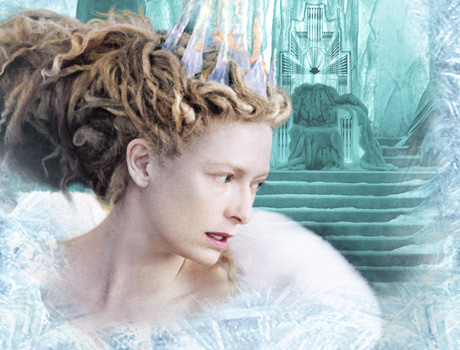
jadis1

bernini medusa

frozenmrtumnus

Before the current world of Narnia, to which the children come, there was a king who had been somehow ejected a century before. In Middle Earth, there has been no king in Gondor for ten times that. In Narnia, there has been winter for that century.
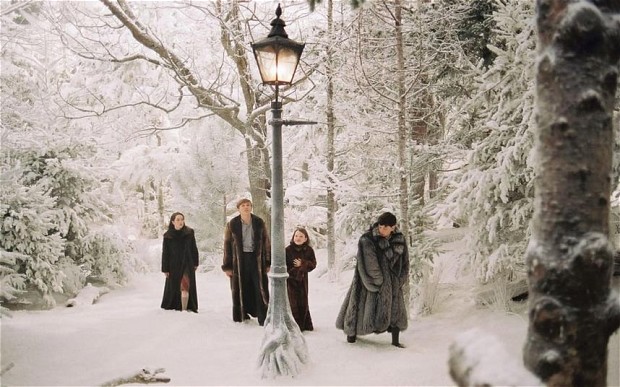
winteratthelamppost

In Gondor, in Middle Earth, its symbol of growth and stability, the White Tree, has withered and died.
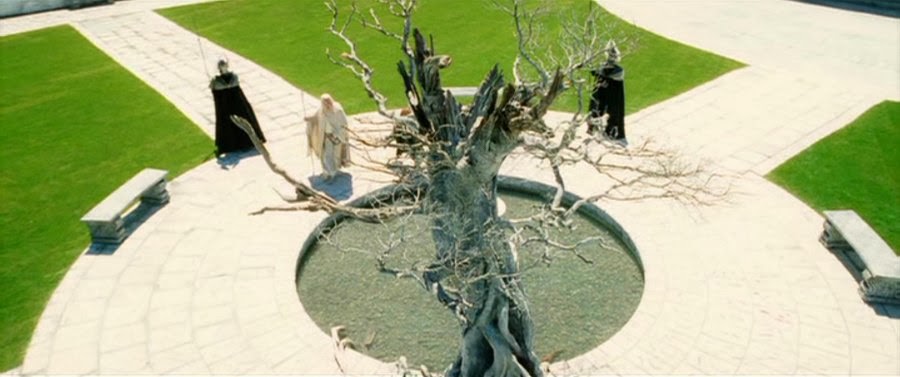
WhiteTreeGondor

When the Pevensie children have been involved in the defeat of the White Witch, they will rule Narnia in the place of the true king, the lion Aslan.

the-chronicles-of-narnia-the-lion-the-witch-and-the-wardrobe-wallpaper-the-chronicles-of-narnia-the-lion-the-witch-and-the-wardrobe-poster_590x384_23014

For about a thousand years, stewards ruled Gondor in place of the king. (Another example of mirroring.)

denethor

When Lewis’ Aslan returns, it is from death, having sacrificed himself to save one of the Pevensie children.
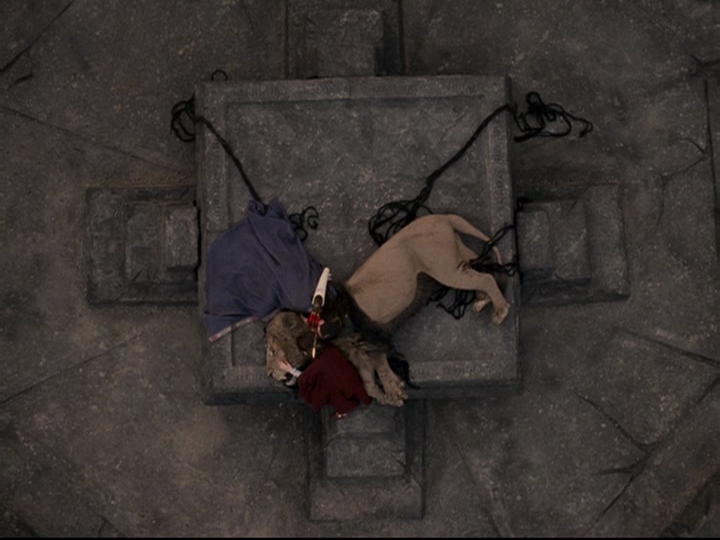
aslandead

Thus, Aslan, in effect, heals himself. When the king of Gondor, Aragon, appears, he heals others. (Tolkien would probably associate this with the old English custom of having the monarch touch people attacked with a disease called scrofula, or “the King’s evil”. We include a picture of Queen Mary—1516-1558—doing so.)

Queen_Mary_I_curing_scrofula_Levina_Teerlinc_16th_C

healingeowyn

When Aslan appears, spring returns to Narnia.
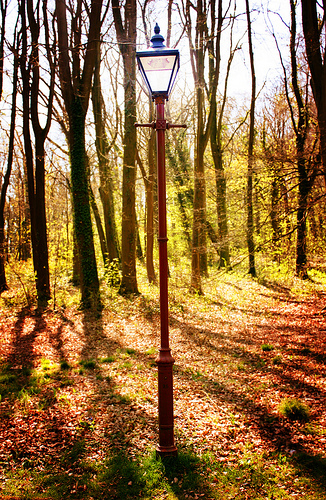
springinnarnia

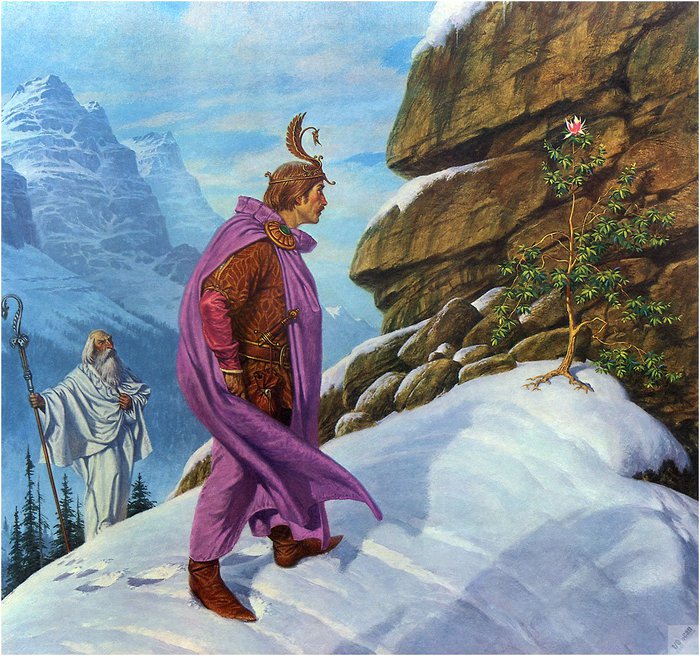
When Aragorn claims the throne, he and Gandalf discover a sapling of the old tree on Mindolluin, bring it down, and plant it and it soon flowers.
whitesapling whitetreebeginstoflower

We’re sure that there are other parallels, dear reader: can you think of any?

Thanks, as always, for reading this.

MTCIDC

CD

The Return of Who.1?

21 Wednesday Oct 2015

Posted by Ollamh in J.R.R. Tolkien, Military History, Military History of Middle-earth, Narrative Methods, Uncategorized

≈ Leave a comment

Tags

Alfred the Great, British history, Cold War, Edwatd VIII, Elizabeth II, Fairy Tale, George I, George III, George V, George VI, Great Britain, Ireland, James I, Kings, Monarchies, Queen Elizabeth, Queen Victoria, The Lord of the Rings, The Return of the King, Tolkien, Transvaal War

Dear Readers,

Welcome, as always!

In this posting, we want to talk about a larger issue than usual.

JRRT had always thought of The Lord of the Rings as a single work and had been forced to break it up into three parts by his publisher, Allen/Unwin, for financial reasons. The third part of this became “The Return of the King”. If you’ve read us for a while, you have probably decided that, although we are passionate Anglophiles (and Francophiles and Germanophiles and—well, we are World Civ folks—we love every country, young and old, and one of us has spent years very happily teaching World Civilizations, in fact), we are North Americans and, to narrow that, citizens of the USA. This means that we grew up in a democratic republic, the descendants of people who separated themselves from control by the 18th-century monarchical government of George III of Great Britain by violent means.

george iii

bunkerhill

Thus, the idea of “king” is rather an abstract one for us, rather fairy-talish, in fact, as distant as the traditional opening of Irish fairy tales which began “A king there was, over all of Ireland”.

MI+Celtic+high+king

So, what might the idea of that title, “The Return of the King” have meant to JRRT, when he chose it?

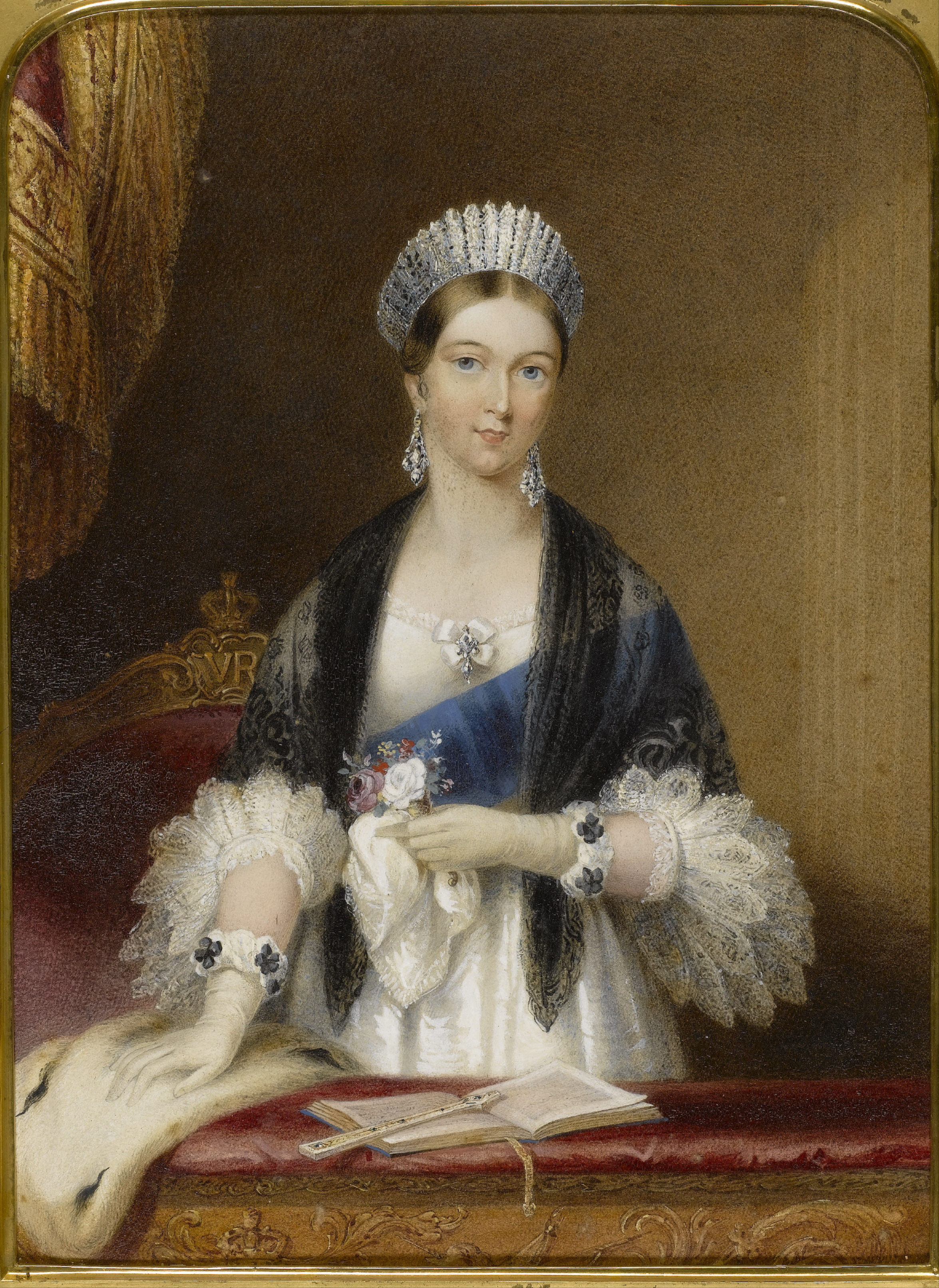
When JRRT was born, in 1892, Victoria had been the ruler of the UK since 1837.

32-Baby-Tolkien

Queen_Victoria_(after_E_T_Parris_1837)

She was a grandma in 1892.

(c) Royal Highland Fusiliers Museum; Supplied by The Public Catalogue Foundation

The Queen could easily trace her descent back to George I (1660-1727), and, through him, back all the way to the eldest daughter of James I, Elizabeth (1596-1662).

James_I_of_England_by_Daniel_Mytens

Royal_family_tree_charting_the_Jacobite_succession.svg

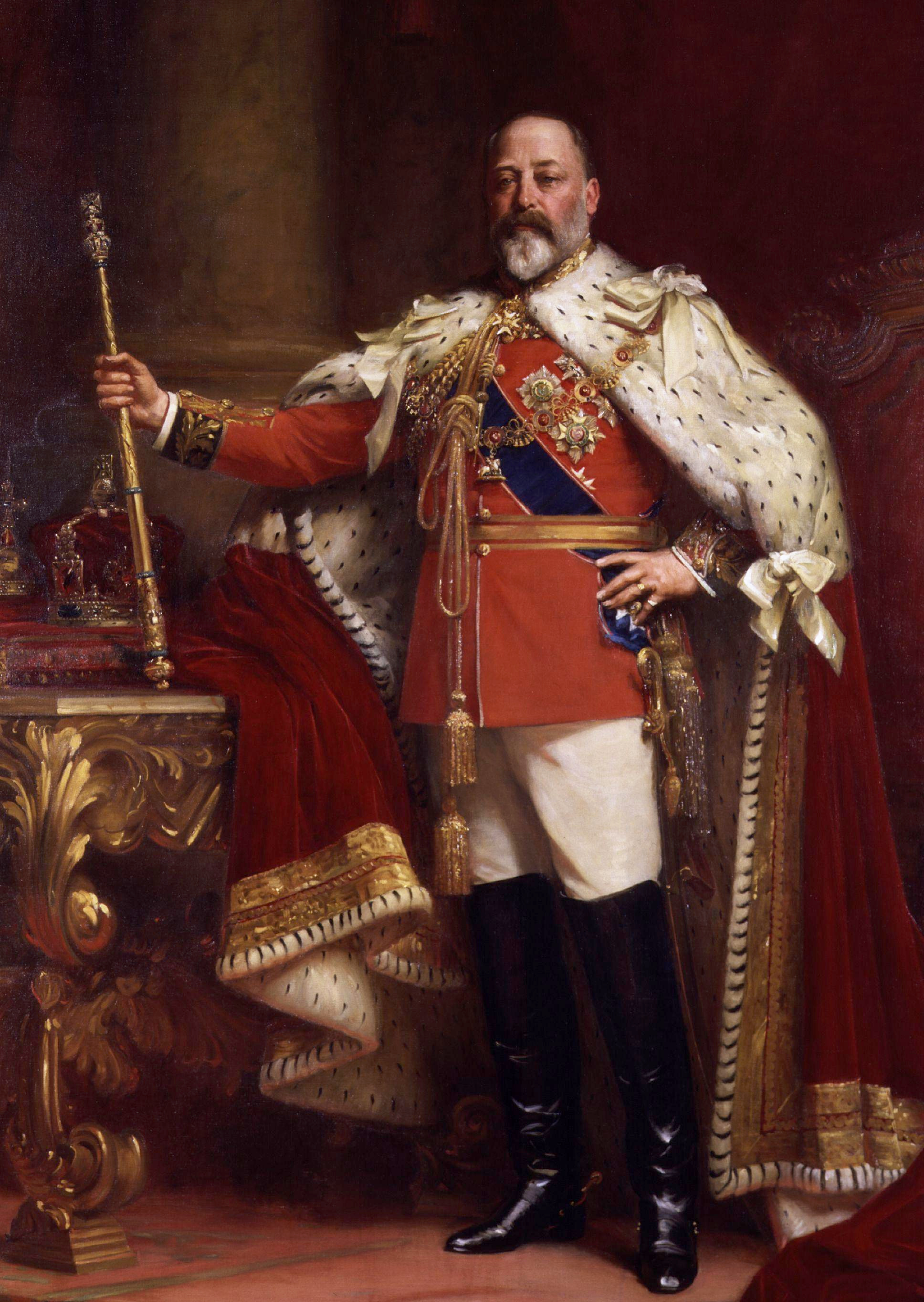
Because JRRT lived until 1973, in his lifetime, the English monarchs were:

victoria1

edward7

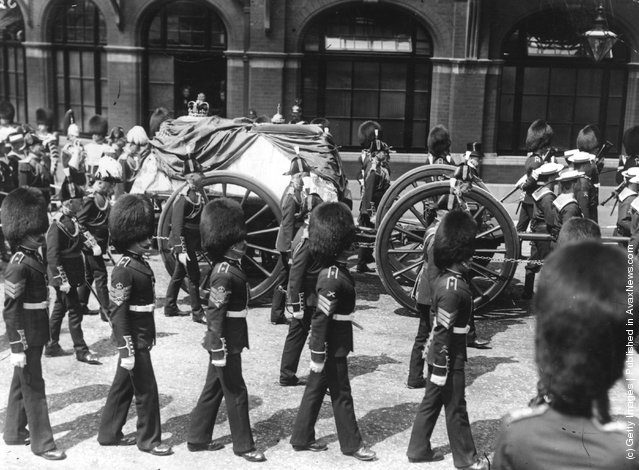
(whose death brought together all of Victoria’s grandsons, monarchs of various sorts—see the FILM CLIP)

funeraled7 funeraled7.1

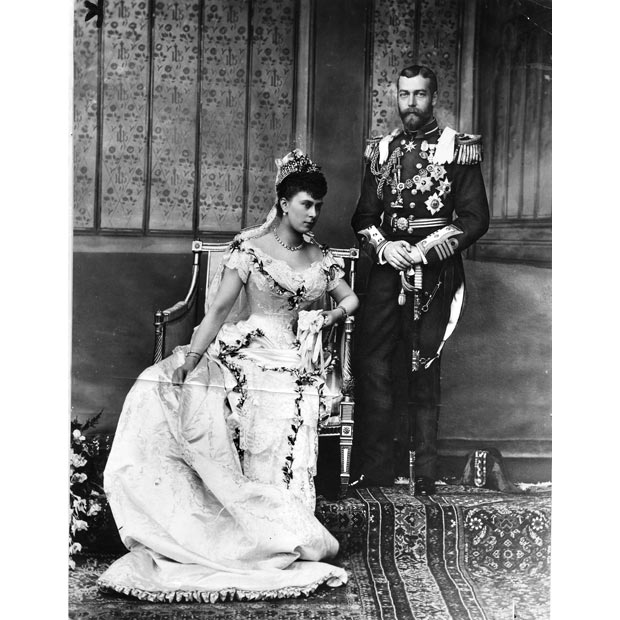
George V

george5queenmary

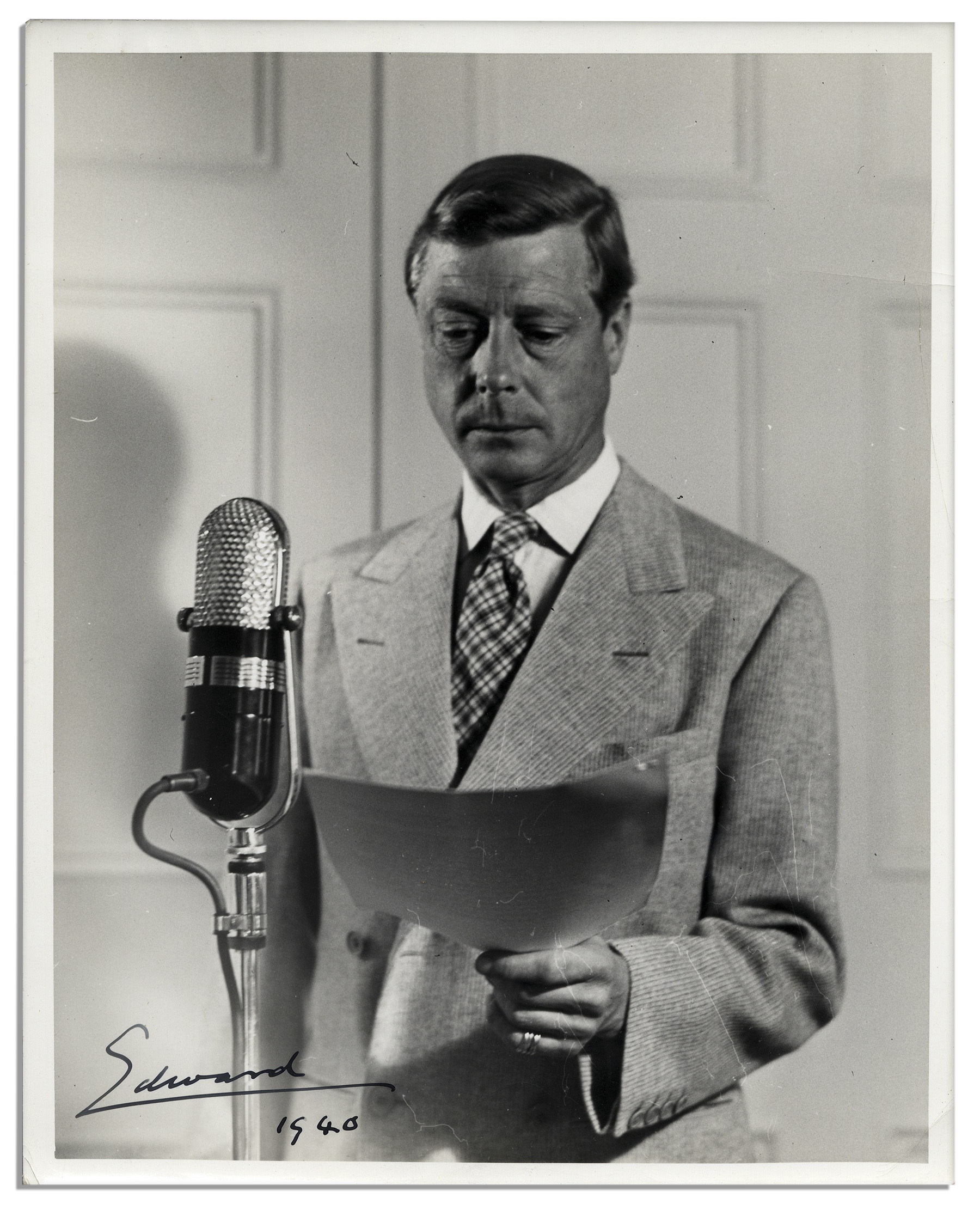
Edward VIII

edward8

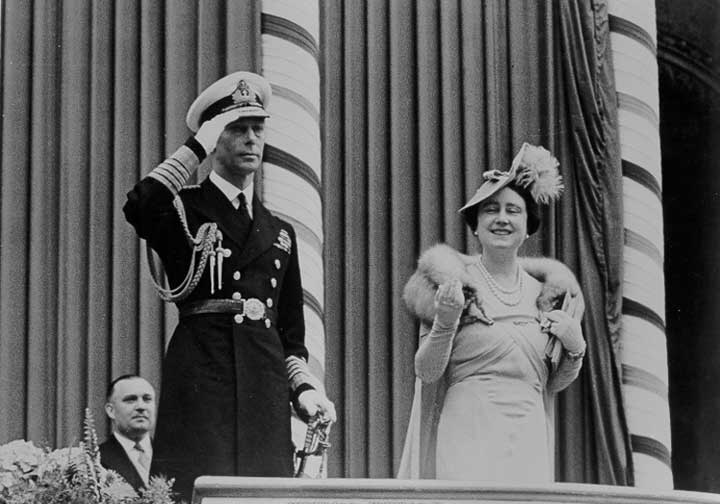
George VI

george6queenmum

Elizabeth II

oversized file

During his lifetime, there had been a great colonial war (the Transvaal War, 1899-1902), two world wars, and the Cold War, and yet Britain survived them all under this succession of monarchs. “The King” in “The Return of…”, then, might be thought to have a very special meaning, one of unwavering stability. In the Shire in Middle Earth in the 3rd Age, for example:

     “There remained, of course, the ancient tradition concerning the high king at Fornost, or Norbury as they called it, away north of the Shire. But there had been no king for nearly a thousand years, and even the ruins of Kings’ Norbury were covered with grass. Yet the Hobbits still said of wild folk and wicked things (such as trolls) that they had not heard of the king. For they attributed to the king of old all their essential laws; and usually they kept the laws of free will, because they were The Rules (as they said), both ancient and just.” (The Lord of the Rings, 9)

And that “nearly a thousand years”, in terms of British history could easily be taken in reverse, with the foundations of the modern British monarchy—the one Tolkien spent his life being ruled by—appearing with Alfred the Great (849-899AD—and interesting to think that Alfred’s name may be spelled, in Old English, “Aelf-raed”, which means something like “elf counsel” or “wise elf”)—that is, about a thousand years before Tolkien’s birth in 1892.

Statue_of_King_Alfred_in_Wantage_Market_Square

This is, of course, a secular monarch. Tolkien being a devout Catholic (as well as one who wanted great depth in his Middle Earth), could there be another dimension? We’ll talk about that in our next posting…

Thanks, again, for reading.

MTCIDC

CD

Jolly Tom.2

16 Wednesday Sep 2015

Posted by Ollamh in Fairy Tales and Myths, Imaginary History, J.R.R. Tolkien, Narrative Methods

≈ Leave a comment

Tags

Barrow-downs, Barrow-wights, Bree, Dagger, Dorset, Eowyn, Fangorn, Frodo, Gandalf, Middle-earth, Nazgul, Neolithic, Old Forest, Old Man Willow, Peter Jackson, Sauron, The Hobbit, The Lord of the Rings, The Ring, Tolkien, Tom Bombadil, Weaponry, Westernesse, Witch-King of Angmar

Dear Readers,

Welcome, as always!

As you can see from the title, this is a continuation of the previous posting, in which we began a discussion of a two-part question: 1. What would be the advantage of keeping Tom Bombadil in a recorded (audio or film) version of The Lord of the Rings? 2. What would you need to keep?

To summarize the previous posting, we suggested that:

  1. he, along with Fangorn/Treebeard, represents the great age of Middle Earth—something very important to the author–and a continuity of living things, which leads us to
  2. he might also be seen as a form of hope: the Ring has no effect upon him and he remembers a time before the arrival of Sauron, suggesting that there might be a time after him, as well, and that the Ring has limits
  3. as it seems out of place even in the current text, the bulk of Tom’s verse and the sometimes rhythmicized prose could be removed, leaving only the character himself and his part in the plot

We believe, however, that there is a more pressing reason for keeping him in the text, and it has to do with something Gandalf says to Frodo when Frodo, panicked at the prospect of having to deal with the Ring, demands, “Why did it come to me? Why was I chosen?” LotR 61.

“’Such questions cannot be answered,’ said Gandalf, ‘You may be sure that it was not for any merit that others do not possess: not for power or wisdom, at any rate. But you have been chosen, and you must therefore use such strength and heart and wits as you have.’” LotR 61.

This is a continuation of Gandalf’s earlier statement that:

“Behind that there was something else at work, beyond any design of the Ring-maker. I can put it no plainer than by saying that Bilbo was meant to find the Ring, and not by its maker. In which case you also were meant to have it.” LotR 56.

Thus, there is a level of intentionality at work in Middle-earth, something beyond Sauron. And, when we see Bombadil next, he will prove to be an instrument of the intention.

The Hobbits have left his house and, following his directions, have passed onto the Barrow-downs.

Breeland_breetobarrowdowns

A down is a piece of rolling countryside, often bare at the top, with trees in its folds—as here in Dorset.

dorset_3287278k

The Dorset Downs have lots of Neolithic remains, including numbers of barrows or tumuli, grave mounds commonly covering an interior structure, not uncommonly made of stone—

OLYMPUS DIGITAL CAMERA

image4

Wakeman_Newgrange_tumulus_chamber_cross_section

Such tumuli once contained the body or bodies usually of high-status persons

Unknown

and all sorts of grave goods, either as a display of wealth or perhaps for some sort of afterlife use.

gordion1957

Bombadil has been careful, however, to say “more than once” (LotR 134) that the Hobbits are to avoid the barrows themselves, telling them not to meddle with them or “cold Wights” (LotR 133). (He also says that they should pass them “on the west-side”—there have been lots of guesses about this—we would add our guess that it might have to do with the orientation—literally—of the entry. If entries faced east and the rising sun, it would be wise of the Hobbits to skirt the barrows’ potential blind side, on the west. And there is also the rather obvious point, once you’ve looked at a map of the area, that, if they kept the barrows to the right and the Old Forest to the left, they would be heading north towards the road to Bree, as they intended.)

il_570xN.743473219_bxv9

Those Barrow-wights are not the original inhabitants of the mounds, but agents of the Witch-king of Angmar, who sends them to take possession (The Lord of the Rings Companion, 144-145), long after their original occupation—but, what’s interesting is that, at least one of these tumuli appears not to have been plundered and this leads us to our next point about Tom Bombadil. After he rescues the Hobbits (showing again his mastery over at least the minor forces of evil), he does a little plundering of his own, including:

“For each of the hobbits he chose a dagger, long, leaf-shaped, and keen, of marvellous workmanship, damasked in serpent forms in red and gold…Then he told them that these blades were forged many long years ago by Men of Westernesse: they were foes of the Dark Lord, but they were overcome by the evil king of Carn Dum in the Land of Angmar.” LotR 146.

damascene-sword

Here are a few ideas of what, at least, the leaf shape might have looked like:

leaf.2bronzeageblades leaf.1

And we include this third one just because it looks so cool—

leaf.3

Bombadil, of course, has actually seen all of this happen, and here we see that theme of great age appear again. And there’s the pedigree of those blades. Unlike the sack ‘o swords slung without any more explanation than “These are for you. Keep them close.” to the Hobbits in the film, these were weapons made by heroic men of the past, doomed men, but who fought evil until they were overcome (a strong theme throughout the history of Middle-earth).

Late in the story, one of those blades seems to be the instrument of intentionality once more. When Eowyn faces the Witch-king of Angmar, now the chief of the Nazgul—

lord_of_the_nazgul_2

and he is about to kill her with his mace, Merry strikes him from behind, stabbing him in what, on a living man, would have been a vulnerable spot, the back of the knee. (LotR 842.)

eowyn_vs_the_nazgul_by_arteche-d3ggm8g

Distracted and, surprisingly, in pain, the Nazgul stumbles and Eowyn destroys him and here, once more, we may see intentionality, and all because of Tom Bombadil. Merry’s sword, from its contact with the undead flesh of the Nazgul, withers away, but—

“So passed the sword of the Barrow-downs, work of Westernesse. But glad would he have been to know its fate who wrought it slowly long ago in the North-kingdom when the Dunedain were young, and chief among their foes was the dread realm of Angmar and its sorcerer king. No other blade, not though mightier hands had wielded it, would have dealt that foe a wound so bitter, cleaving the undead flesh, breaking the spell that knit his unseen sinews together.” LotR 844.

So, for everything from Old Man Willow (whom the script writers couldn’t resist completely, transposing him to an improbable scene with Fangorn/Treebeard) to showing the great age of Middle-earth to suggesting other powers untouched by the Ring to offering possible hope to showing something of the intentionality behind certain actions in the story to providing the ancient and magical weapon which could finally bring down the Witch-king of Angmar and save Eowyn at the same time, might we suggest that, next production—audio or visual—of The Lord of the Rings, Jolly Tom might have a place in the cast?

Thanks, as always, for reading.

MTCIDC

CD

PS

If you would like to read more about Tom, see, for example, Dorathea Thomas, “He Is: Tom Bombadil and His Function in The Lord of the Rings” at Academia.edu.

Jolly Tom.1

09 Wednesday Sep 2015

Posted by Ollamh in Narrative Methods, Poetry, Tolkien

≈ Leave a comment

Tags

Barrow-wights, Elrond, Gandalf, Hildebrandts, Nazgul, Old Man Willow, Peter Jackson, Ralph Bakshi, Sauron, Tales from the Perilous Realm, The Lord of the Rings, The Old Forest, Tolkien, Tom Bombadil

Dear Readers,

Welcome, as always!

There has been lots of discussion, if not downright argument, about Tom Bombadil and The Lord of the Rings. Although he appears in the first BBC radio adaptation in 1955 (which Tolkien disliked, saying in a letter of the period that “I thought Tom Bombadil dreadful”) and in the 1979 American radio drama, he was excised from Ralph Bakshi’s 1978 animated feature and from the 1981 BBC radio production, although reappearing in the radio adaptation of the relevant material from The Lord of the Rings in Tales from the Perilous Realm (BBC 1992).

Then we come to Peter Jackson’s The Fellowship of the Ring (2001). As anyone who has read our past postings knows, we have very mixed feelings about this and the subsequent films, but, in this posting, we want to take a completely different tack, not asking, as has always been the subject “why was Tom left out?” but, rather, “why might you keep him in?”

This is two questions, really, the first being “what would be his effect upon the story?” and, second, “just what of him would you keep?”

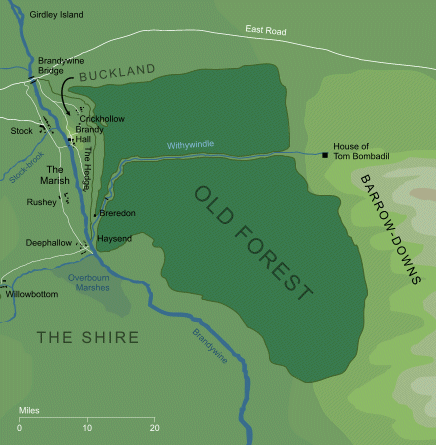
Lost in the Old Forest

oldforest

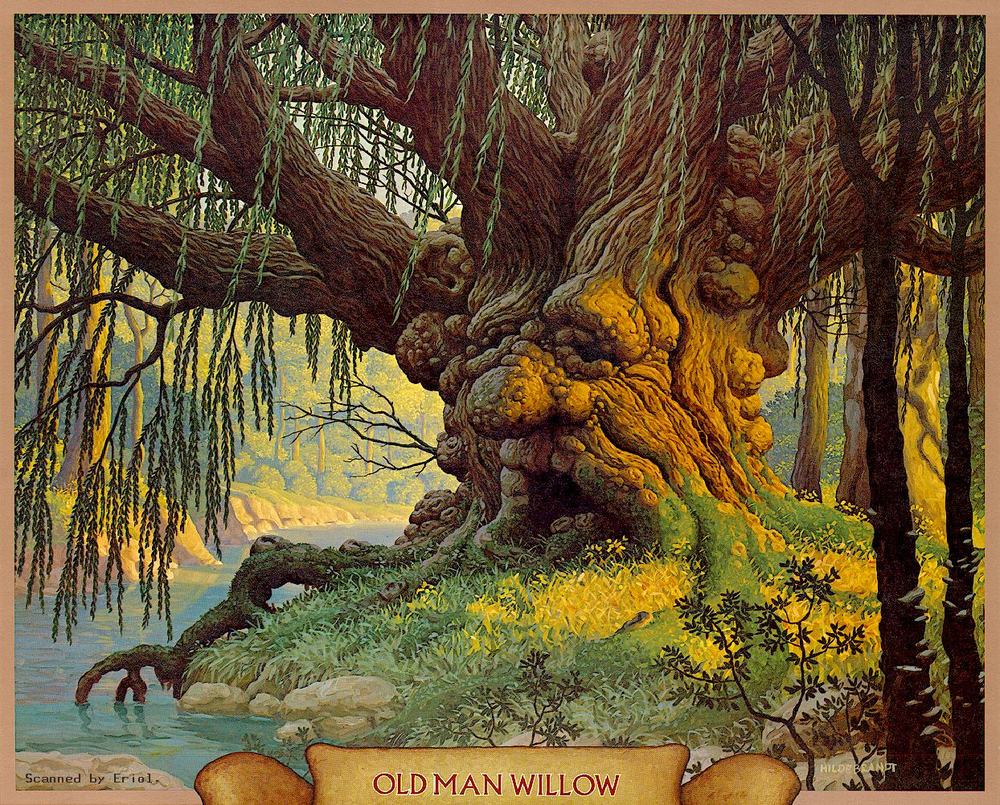
the Hobbits run afoul of Old Man Willow

TomOldManWillow

only to be rescued by Tom Bombadil

bombadil010607a

As much as we love the Hildebrandts’ work, this is not one of our favorites—this illustration really makes us wonder what kind of magic mushrooms Tom has been trading with Farmer Maggot and which Grateful Dead album is running in his head. As an antidote, here’s one of our favorites:

visite_inattendue_hildebrandt

One could say that this is part of the pattern of increasingly-dangerous encounters the Hobbits are having as they try to leave the Shire—

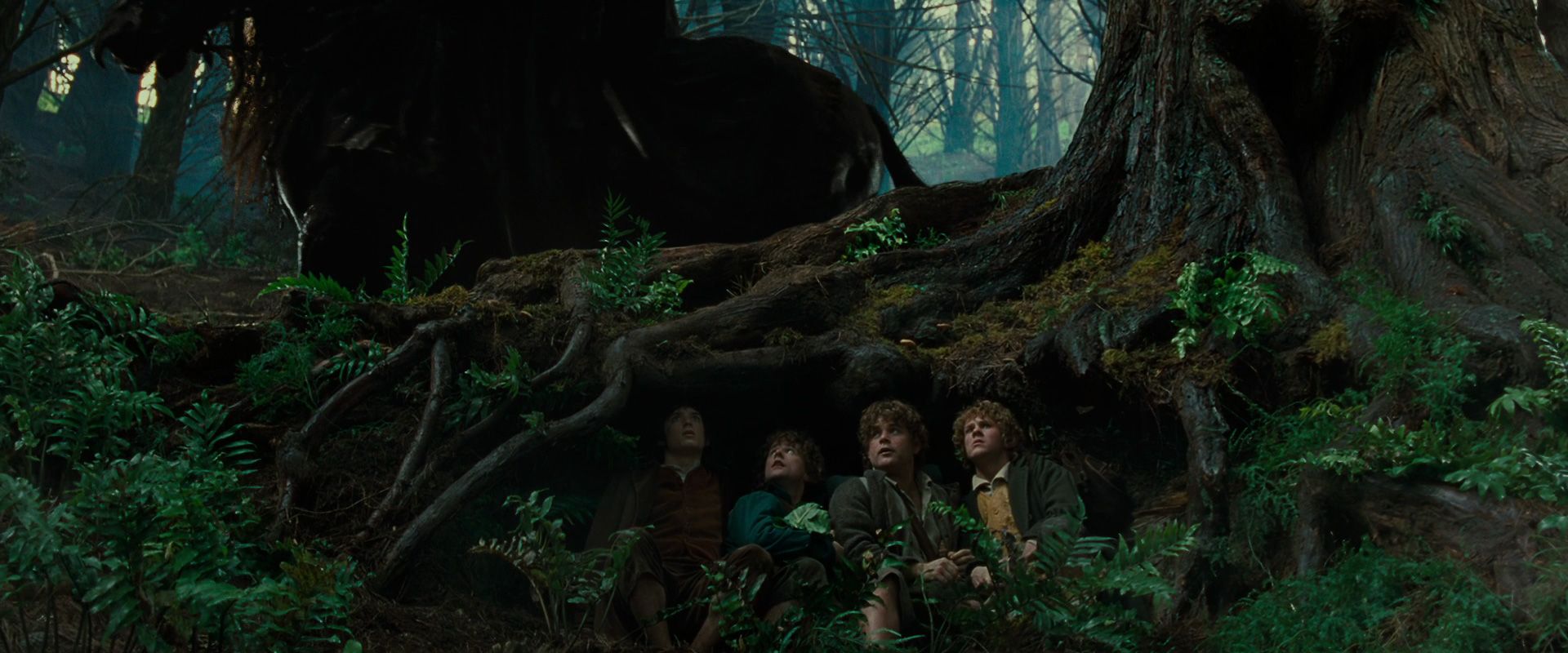
the first encounter was with the Nazgul

hobbits-hiding-from-nazgul

This doesn’t justify including him, though, if he’s thought to be just one more in a series—and this is clearly an opinion held by a Jackson scriptwriter, who once said:

“Tom Bombadil is part of several false starts to Frodo’s journey, and you cannot have things happening quite so episodically; that’s not what storytelling is all about.” (quoted from The One Ring, “complete list of film changes”—see the link here)

If he’s not just a “false start”, what is his function—and may he have more than one?

One of those elements of The Lord of the Rings which runs always just below the surface is the great age of Middle Earth. This is an ancient place and that fact was clearly very important, to the author, who spent years building up that narrative infrastructure, and to the story. This is clearly not a quick, little, one-time adventure, but, rather, one more part of a very old tale, of the “long defeat” as Galadriel calls the struggle with Sauron.

As a living token of that antiquity—and the first, but hardly the last, they meet—on their journey, there is Tom Bombadil. As Elrond says of him:

“But I had forgotten Bombadil, if indeed this is still the same that walked the woods and hills long ago, and even then was older than the old. That was not then his name. Iarwain Ben-adar we called him, [“Old-young, fatherless”? see The Lord of the Rings Companion, 128 for more on his names) oldest and fatherless.” LotR 265.

Thus, one of his functions is to represent a distant past, though now as shrunken as the Old Forest, “but an outlier of its northern march. Time was when a squirrel could go from tree to tree from what is now the Shire to Dunland west of Isengard.” (Elrond—LotR 265) In this, he is akin to Fangorn/Treebeard, described by Gandalf (himself so old that he was created by Iluvatar before the Music of the Ainur) as “the oldest living thing that still walks beneath the Sun upon this Middle-earth.” LotR 499.

He also, in a curious way, might be understood to represent one possible—perhaps hopeful—form of the future. When Frodo asks him, “Who are you, Master?” he replies (and it strikes us as sounding like both a Middle-earth riddle and its solution):

“Eldest, that’s what I am. Mark my words, my friends: Tom was here before the river and the trees; Tom remembers the first raindrop and the first acorn. He made paths before the Big People, and saw the little People arriving. He was here before the Kings and the graves and the Barrow-wights. When the Elves passed westward, Tom was here already, before the seas were bent. He knew the dark under the stars when it was fearless—before the Dark Lord came from Outside.” LotR 131.

Tom represents continuity, unchanging stability, then, although he is not all-powerful. As Glorfindel says:

“I think that in the end, if all else is conquered, Bombadil will fall, Last as he was First; and then Night will come.” LotR 266.

And yet he also, because of his immense age and ability to endure, might represent the unspoken possibility that, though Sauron is powerful, because he is not the creator nor rightful owner of Middle-earth, but rather an invader, he can be defeated: as there was a time before Sauron, could there not be a time after him?

(As an afterthought here, might we also add Tom’s complete immunity to the Ring? In a story full of people, from Gollum to Sauron, from Bilbo to Galadriel, so affected, in one way or another by it, is this another form of hope? That not everyone in the whole of Middle-earth wants the Ring or has to deny it strenuously lest the temptation overcome them?)

We want to continue this discussion in our next posting, but we want to end this one by considering the second part of this question, “Just what of him would you keep?”

Although the usual explanation for excising him has to do with his being a supposed “false start”, which has to do with the mechanics of plot, we believe that a real reason has to do with the large quantity of verse which appears when he appears. These verses signal that appearance:

“Hey dol! merry dol! ring a dong dillo!

Ring a dong! hop along! fal lal the willow!

Tom Bom, jolly Tom, Tom Bombadillo!” LotR 119

Although there has been verse earlier in the book, it has been scattered, not concentrated, and has seemed more apropos to what has been going on in the text. Much of this verse appears to come from nowhere, rather like Tom himself (and there’s more on 121, 122, 124, 126, and a final bit on 134—although, as a cry for help, it somehow fits better). In a story primarily in prose, with the occasional song, how would you present such a character believably on film or on tape? (Especially when one notices that even his speech is sometimes cadenced—“What be you a-thinking of? You should not be waking. Eat earth! Dig deep! Drink water! Go to sleep! Bombadil is talking!” LotR 120)

In fact, the character of Bombadil is not organic to the development of the plot of The Lord of the Rings. Tom Bombadil made his first appearance in The Oxford Magazine in 1934, when The Hobbit was being written, but three years before its initial publication. (See The Lord of the Rings Companion 124-129 for the poem and further information).

The basic plot of chapters 6 and 7 is simple: Tom frees the Hobbits from Old Man Willow, leads them to his house, the Hobbits eat and drink there and converse with Tom, but there’s little more to the two scenes. Thus, except for the distress call which Tom teaches the Hobbits on 134, does any of this verse do more than show us the poetic/almost manic side of Bombadil? If we wished to retain the character, might it be possible to cut away the verse (including a certain amount of rhythmicized prose), leaving only those elements which further the plot?

To us, this is a more pressing issue than it might at first appear—but see our next post, Jolly Tom.2, to understand our interest.

Thanks, as always, for reading.

MTCIDC

CD

Ever On?

02 Wednesday Sep 2015

Posted by Ollamh in J.R.R. Tolkien, Narrative Methods, Poetry

≈ Leave a comment

Tags

Bilbo, Frodo, Hobbits, The Hobbit, The Lord of the Rings, Tolkien, Walking Song

Dear Readers,

As always, welcome!

We’ve spent a good amount of postings talking about the narrative methods of The Lord of the Rings, and now we’d like to add to that, song.

Although Bilbo left his pocket-handkerchief behind, along with a good many other things he’d rather have had with him on the unexpected journey, he did bring something that seems to be inherently a part of Hobbits: song. As Mary Quella Kelly wrote in her essay “The Poetry of Fantasy, Verse in The Lord of the Rings”, “reciting or singing verse is for them the most natural way to express their emotions” (172), and we could heartily agree, as the Hobbits sing drinking songs, walking songs, and even bath songs. Kelly also points out that they “reuse old poems from the Shire, altering a word or phrase to fit the occasion” (172), one such strong example being Bilbo’s Walking Song, which, like the other Hobbit songs, accompanies the Hobbits throughout their journeys.

The Walking Song carries Bilbo and Frodo through their adventures, shifting in nature as the journey continues and eventually comes to an end. The first version appears in The Hobbit, when Bilbo is on the return journey home:

Roads go ever ever on,

Over rock and under tree,

By caves where never sun has shone,

By streams that never find the sea;

Over snow by winter sown,

And through the merry flowers of June,

Over grass and over stone,

And under mountains in the moon.

Roads go ever ever on

Under cloud and under star,

Yet feet that wandering have gone

Turn at last to home afar.

Eyes that fire and sword have seen

And horror in the halls of stone

Look at last on meadows green

And trees and hills they long have known.

The song seems to be reminiscing about the things he’s seen and the places he’s been, and appears only after the adventure has been completed. It’s a sort of poetic precursor to what will later become The Red Book of Westmarch.

­The Lord of the Rings, however, introduces a new version of the song, as Bilbo sings it softly in the dark after he’s been the first ring-bearer to willingly give up the Ring, and sets off to find new adventure.

The Road goes ever on and on

            Down from the door where it began.

Now far ahead the Road has gone,

            And I must follow, if I can,

Pursuing it eager feet

            Until it joins some larger way

Where many paths and errands meet.

            And whither then? I cannot say.

What has happened here? Tolkien’s anticipated sequel to The Hobbit has already taken a deeper, more complex turn than his original children’s story. Rather than standing and looking back at the road, Bilbo once again looks forward.

Just as Kelly suggests, he’s not the only one to anticipate the journey. Bilbo’s songs and the Ring being the only inheritance Frodo possesses on the road, Frodo sings his own version of the walking song:

The Road goes ever on and on

            Down from the door where it began.

Now far ahead the Road has gone,

            And I must follow, if I can,

Pursuing it weary feet

            Until it joins some larger way

Where many paths and errands meet.

            And whither then? I cannot say.

This version is identical in form, and the only word has changed—“eager” to “weary”, and this changes the tone entirely.

Bilbo sang cheerfully of the road behind him and of the road ahead, but Frodo’s version suggests that this new adventure in The Lord of the Rings is a much graver quest than Bilbo’s—and, potentially, more tiring. After Frodo sings the song to himself quietly, Pippin remarks,

“ ‘That sounds like a bit of old Bilbo’s writing’, said Pippin, ‘Or is it one of your imitations? It does not sound altogether encouraging.’ “ LOTR 72

And so Frodo’s reprise of the song, even with the variation of just one word, creates a reluctance to adventure, rather than continuing Bilbo’s eagerness. To Bilbo, the song ensures a story-worthy adventure with a return journey, but for Frodo, it’s just the opposite.

The song changes again, however, when there is a return journey for both Bilbo and Frodo, which hints at their voyage across the sea and into the west. Again, quietly to himself, Bilbo sings in Rivendell after Frodo has returned from his quest. Frodo has destroyed the Ring, but has retained the song, and seems to bring it back to Bilbo.

The Road goes ever on and on

Out from the door where it began.

Now far ahead the Road has gone,

Let others follow it who can!

Let them a journey new begin,

But I at last with weary feet

Will turn towards the lighted inn,

My evening-rest and sleep to meet.

And so, Bilbo’s “There and Back Again” journey and Frodo’s quest to destroy the Ring have both come to a conclusion. Bilbo sings this final version, which ends the adventures for both Hobbits, but passes on the adventure. Bilbo is ready to retire from traveling, and Frodo has completed his quest. As Frodo has left the last pages for Sam, however, it’s as if Bilbo has left the rest of the Red Book for those wishing to follow his footsteps down the road and begin anew, adding to or changing the songs to mirror their feelings as they go.

Thanks, as always, for reading,

MTCIDC,

CD

What’s In A Name?

26 Wednesday Aug 2015

Posted by Ollamh in Imaginary History, J.R.R. Tolkien, Narrative Methods

≈ 1 Comment

Tags

Anglo-Saxon, artefacts, Balin, Beaumaris, Bladorthin, Gandalf, Girion, Hadrian's Wall, Hoard, Middle-earth, Raedwald, Ship burial, Sigeberht, spears, Staffordshire Hoard, Stonehenge, Suffolk, Sutton Hoo, The Argonath, The Hobbit, Thorin, Thror, Tolkien, weapons

Dear Readers, welcome, as ever.

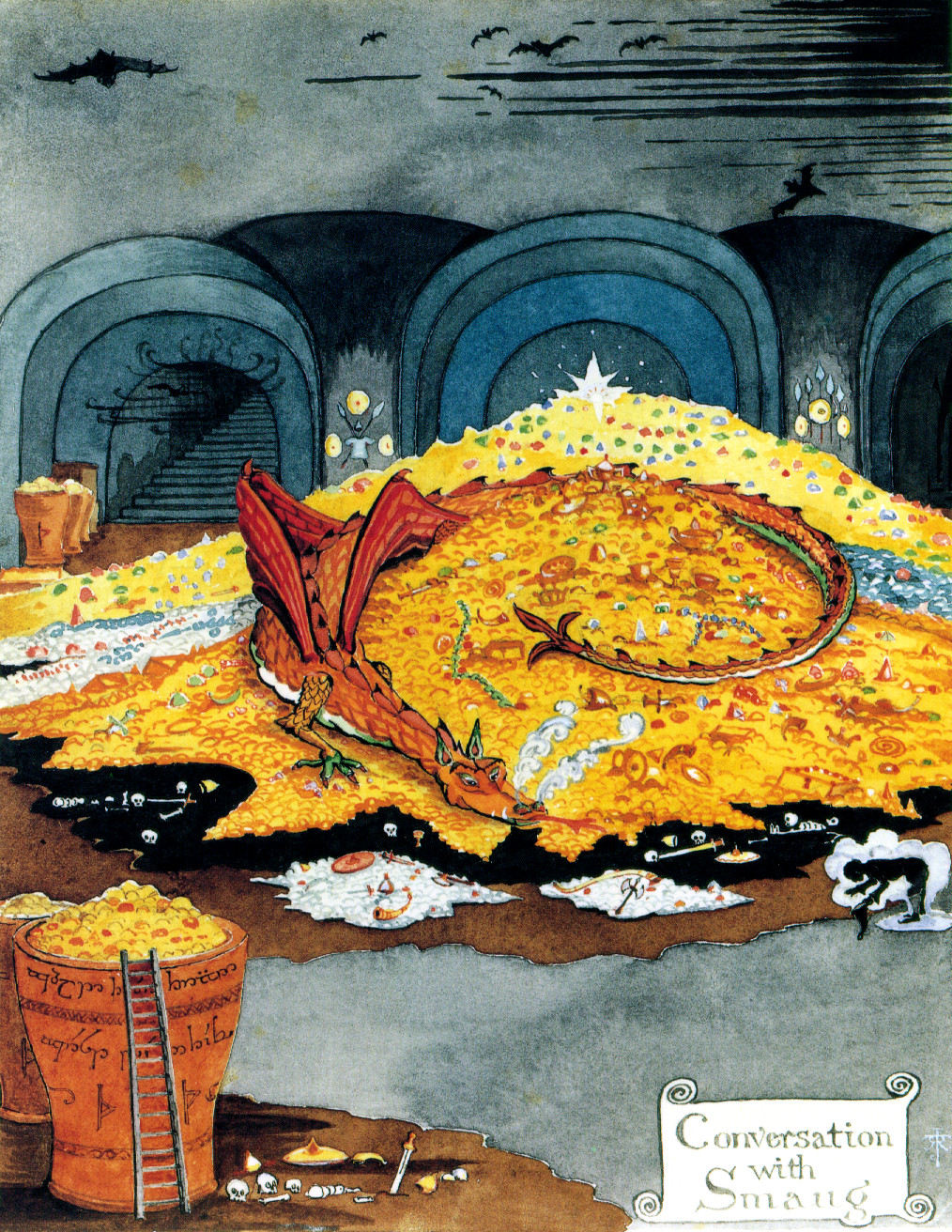
If you look for the name “Bladorthin” in The Annotated Hobbit (our standard source), you will find it only once, on page 287, where Thorin and Balin discuss what they can remember of the great hoard of the Lonely Mountain.

bilbowithsmaug

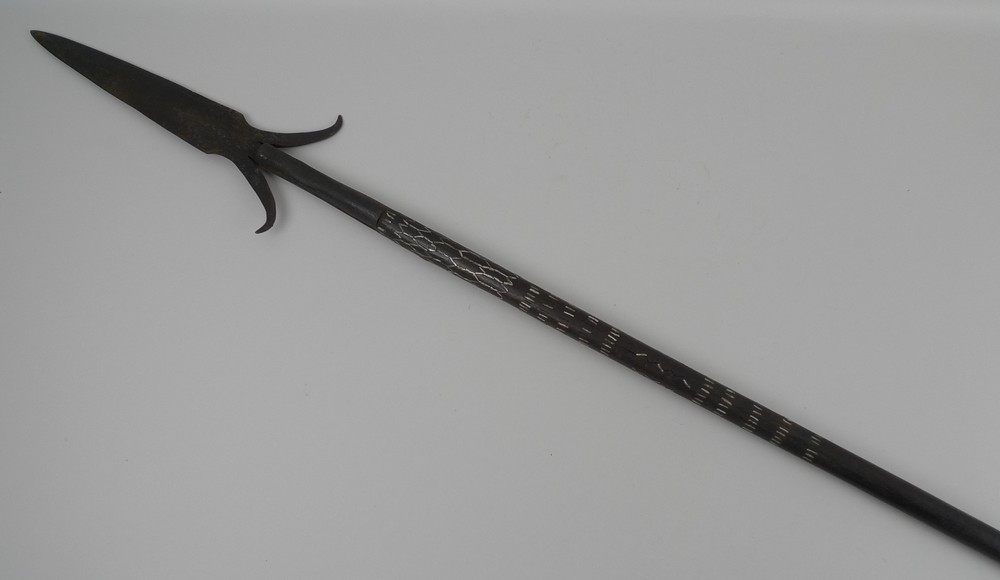
This includes not only the usual golden items and jewels, but also what appears to have been a military consignment, “the spears that were made for the armies of the great King Bladorthin (long since dead), each had a thrice-forged head and their shafts were inlaid with cunning gold, but they were never delivered or paid for.”

IMG_1566

thames spearhead1 img01

292_183

Who this king was and why he was arming his men with what appear to be deluxe weapons is a mystery and probably forever unsolved. This is likewise true for the original Bladorthin, who exchanges his name for that of the head dwarf in the first drafts, Gandalf, just as the head dwarf loses his name, Gandalf, to become Thorin. Why does Tolkien make the shift?

If neither of these can be answered, perhaps we can step back a little to wonder why Bladorthin, the king, is in The Hobbit at all?

A strongly-marked feature of The Lord of the Rings is the sense of age, of great time having passed. Part of this comes from Tolkien’s own sense of history, part from living in a place where things like stone circles

stonehenge

and Roman fortifications

hadrianswallL_tcm4-553745

let alone more recent things, like castles

Beaumaris_Castle

Beaumaris Aerial North Castles Historic Sites

are everywhere to be seen every day.

Part of it, too, comes from Tolkien’s seemingly-unquenchable desire to add to what he had created, providing more and more and more context practically per page.

What might be seen as obsessive, or nearly, however, adds what we might call convincing texture, and in two ways: on the one hand, it makes the story that much more vivid because it’s so much more detailed, and, on the other, it gives it weight: this is not a tale of yesterday, but of a long ago, even if not a long ago from the world of the Neolithic or Romans or Edward I.

This sense of age comes from a number of elements, including not only the idea that the text has been translated from a manuscript, a handwritten text from a pre-Gutenberg age, but also from the landscape which, like Tolkien’s own mid-20th-century Britain, is full of visible reminders of the past–

argonath+hildebrandt

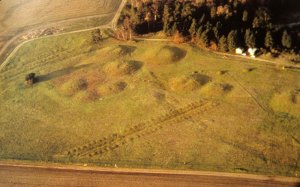
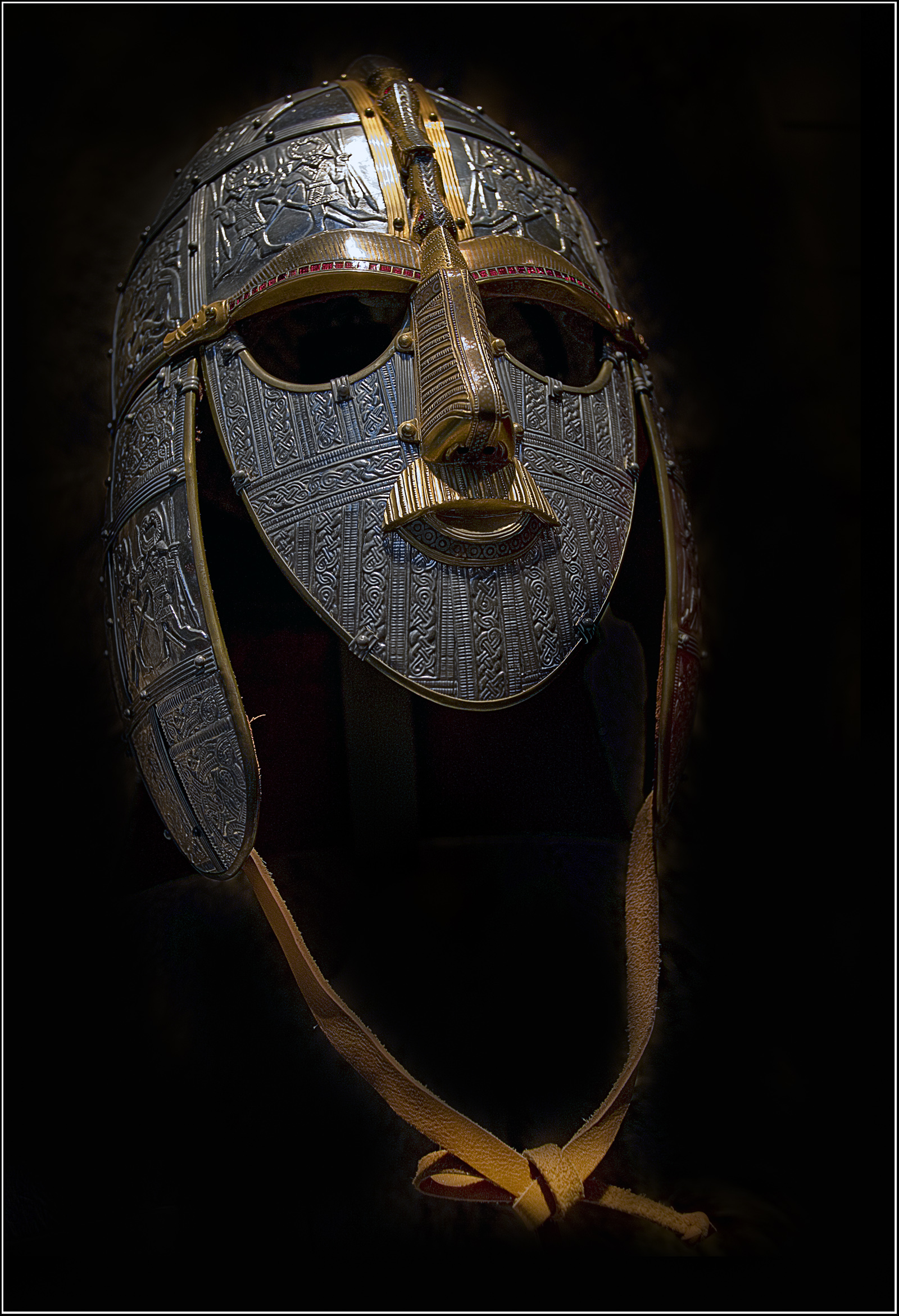
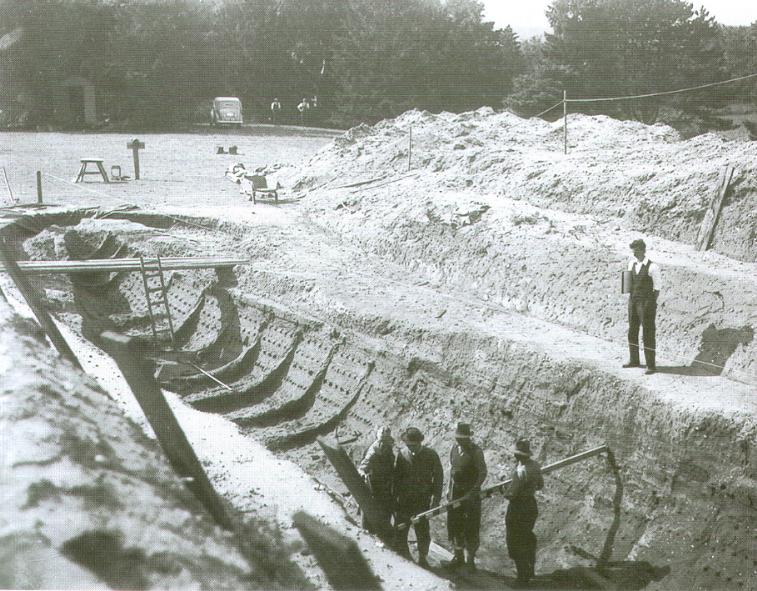
In fact, not long after the publication of The Hobbit, in 1937, a major uncovering of the English Anglo-Saxon past took place near the coast, in Suffolk, at a place called Sutton Hoo. Here, a series of mounds

03 Sutton Hoo, several mounds, c_1983_jpg

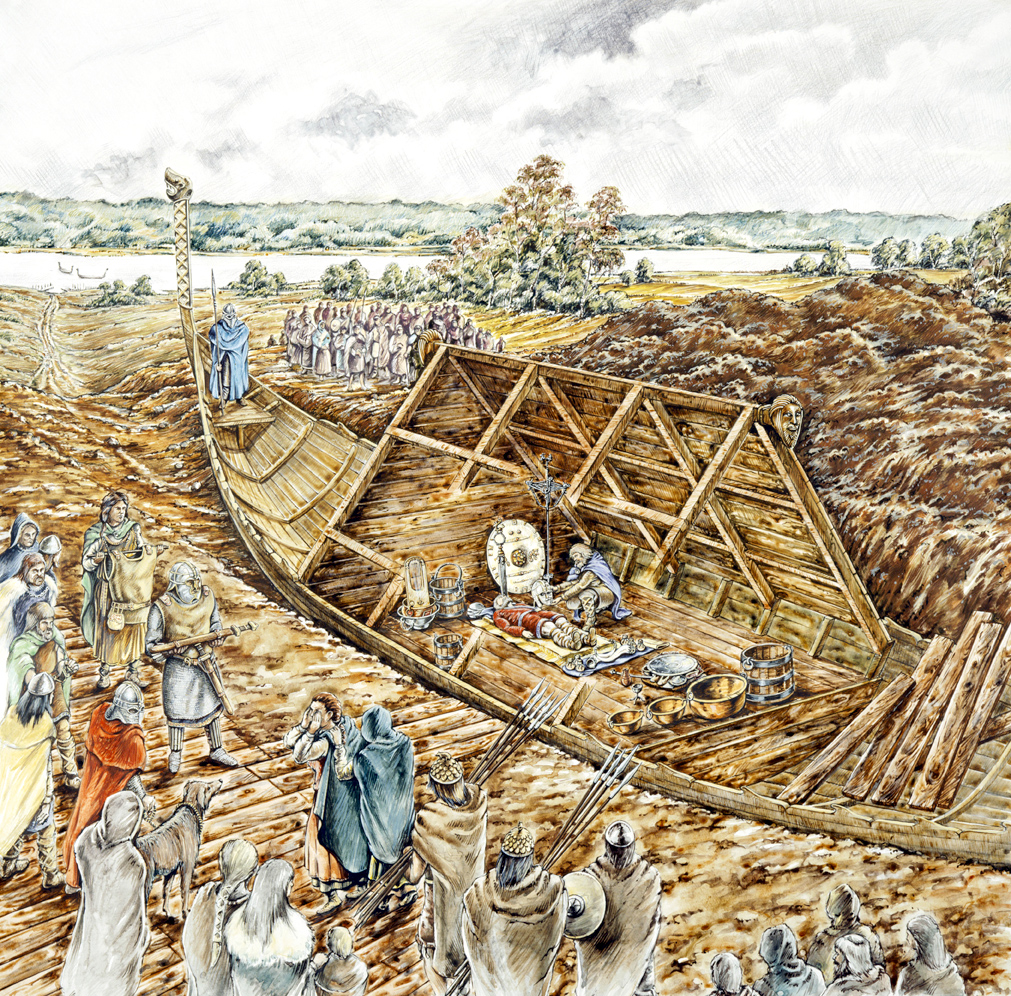
yielded a ship burial

sutton_h

Sutton Hoo, Woodbridge, Suffolk.  Reconstruction drawing of the Sutton Hoo ship burial in 620 or 630 - by Peter Dunn (English Heritage Graphics Team).     Date: circa 620

with nothing short of a hoard, including such items as these pieces from a purse

0523787e795fd30ca6116541512926f0

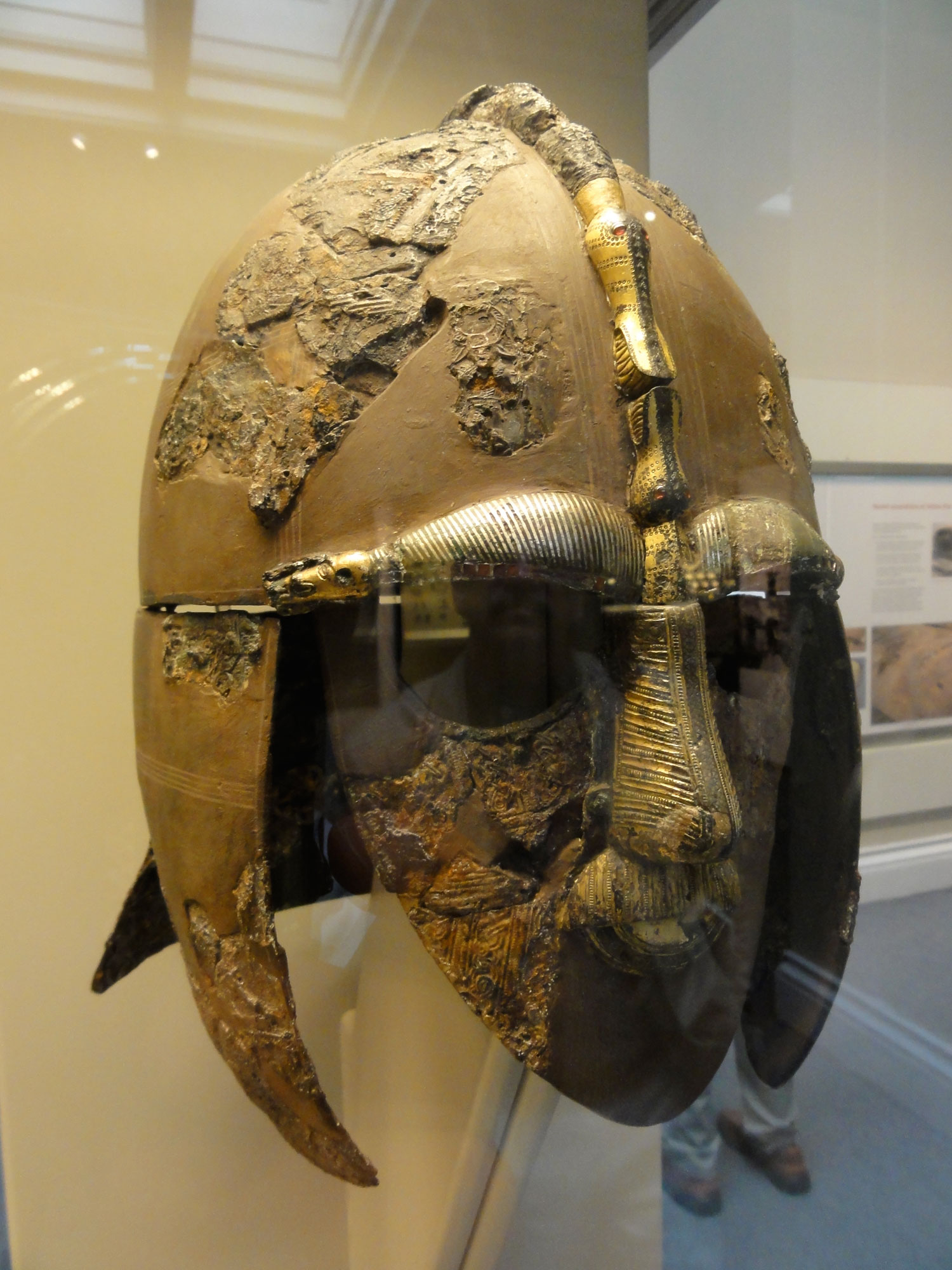
and a helmet.

sutton-hoo

2008-05-17-SuttonHoo.2

(And, since then, it turns out that the area is an extensive cemetery, which, though much plundered, has yielded many other finds.)

athelstan-albums-general-picture2865-sutton-hoo-1

Although Tolkien doesn’t mention this discovery in his selected letters, it would be difficult to imagine that he hadn’t seen something about it: it was even featured in the US National Geographic, in the year of discovery, 1939. Unfortunately, who the man buried there was appears impossible to say, leaving one aspect unknown, and all of the valuables simply generic Anglo-Saxon. (The theory now is that he is the early 7th-c AD ruler, Raedwald, or his son/step-son, Sigeberht.)

The Hobbit, written earlier in terms of years and even earlier, perhaps, in terms of literary sophistication, has, in comparison, much less depth. Much of the backdrop is, particularly in comparison, fairy-tale flat, without all of those levelsl of history.

But then there is Bladorthin.

That mound of wealth, extending beyond the sleeping Smaug is initially described as:

“…on all sides stretching away across the unseen floors, lay countless piles of precious things, gold wrought and unwrought, gems and jewels, and silver red-stained in the ruddy light.” TH 270

This is impressive enough to wake a kind of primal greed in Bilbo:

“His heart was filled and pierced with enchantment and with the desire of dwarves; and he gazed motionless, almost forgetting the frightful guardian, at the gold beyond price and count.” TH 271

Imagine, then, that such a hoard—like Sutton Hoo, or the more recent—and astonishing—Staffordshire Hoard (see the link here)

stafforshire hoard

could have names attached to some of its pieces, if not to the hoard in general. Thorin and Balin, in their reminiscing, combine general description with some specific detail, as well as identifying several one-time object owners:

“…shields made for warriors long dead; the great golden cup of Thror, two-handed, hammered and carven with birds and flowers whose eyes and petals were of jewels; coats of mail gilded and silvered and impenetrable; the necklace of Girion, Lord of Dale, made of five hundred emeralds green as grass, which he gave for the arming of his eldest son in a coat of dwarf-linked rings the like of which had never been made before, for it was wrought of pure silver to the power and strength of triple steel. But fairest of all was the great white gem, which the dwarves had found beneath the roots of the Mountain, the Heart of the Mountain, the Arkenstone of Thrain.” TH 287

Just as places in Middle-earth, by having history, are deepened, the same would be true for artefacts: not just a necklace, but Girion’s necklace, not just a golden cup, but Thror’s cup, and not just spears, but spears commissioned by Bladorthin, a king of long ago.

Thus, although Bladorthin’s history may remain a mystery outside The Hobbit, what history there is gives greater depth, narrative texture, to this early vision of Middle-earth and to the story of Bilbo, in particular.

Thanks, as ever, for reading.

MTCIDC

CD

Shall We Gather at the River?

08 Wednesday Jul 2015

Posted by Ollamh in J.R.R. Tolkien, Maps, Military History, Narrative Methods

≈ Leave a comment

Tags

Alexander, Anduin, Burnside, Cair Andros, Celeborn, Confederate, D-Day, Denethor, Douro, Faramir, Fredericksburg, French, Gandalf, Hydaspes, Inchon, Indiana Jones, Isola Tiberina, King Poros, Lee, Minas Tirith, Mordor, Napoleonic, Nazgul, Pelennor, Pontoon, Porto, Quebec, Rappahannock, Roechling, Sauron, Soult, The Lord of the Rings, Tolkien, Union, Wellington, West Osgiliath, Zouaves

Dear Readers,

Welcome, as always. In this posting, we thought we’d do a kind of follow-up to our “What Happened to the Rammas Echor” piece by looking at the Mordorian assault on West Osgiliath, which leads up to it. (Yes, we know—bassackwards, right? We can only claim as Indiana Jones does, that “I’m making this up as I go along.”)

We can begin with a map and a description by a participant.

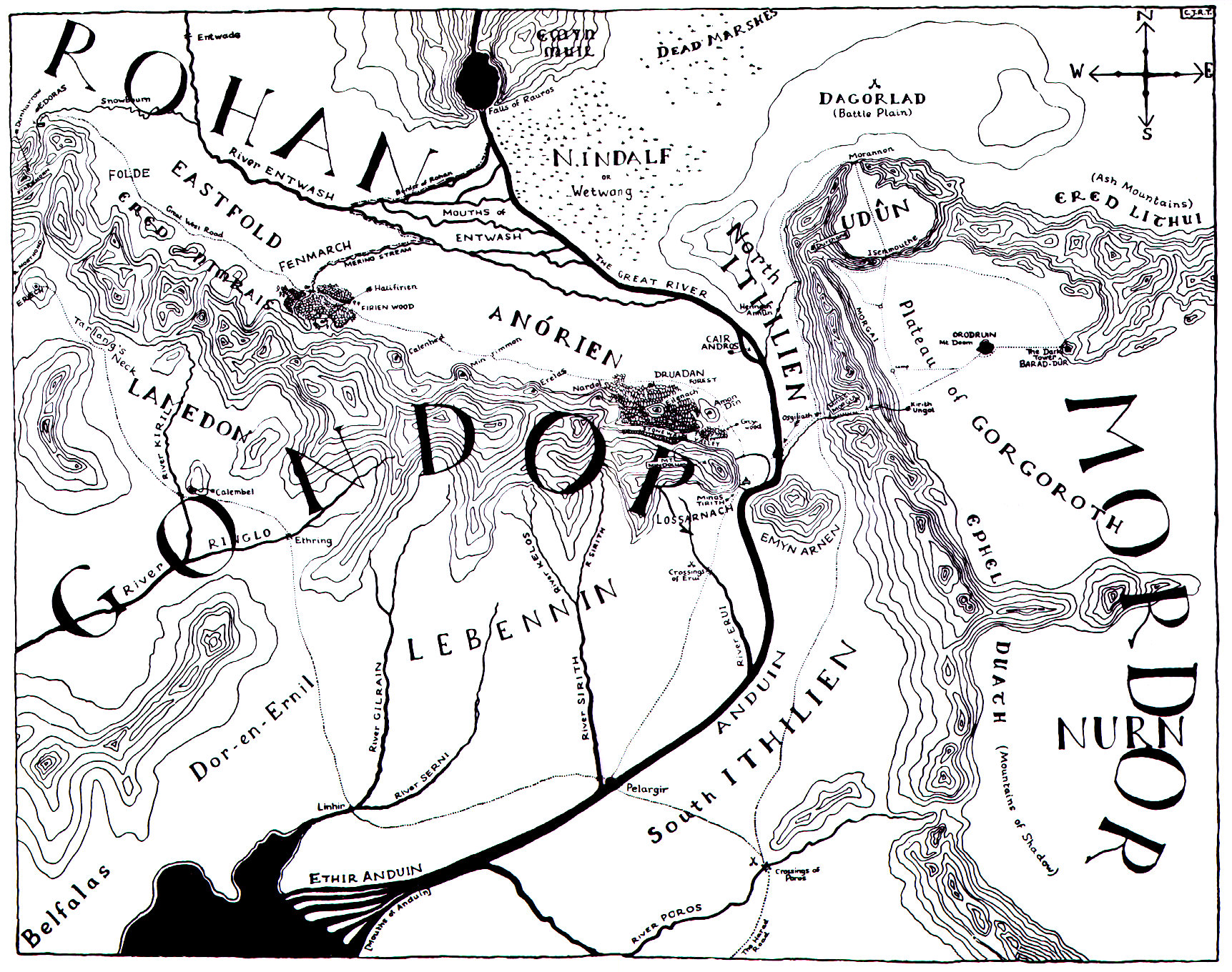
Here’s the Anduin, the major obstacle for Sauron’s forces to cross at a point in easy striking distance of Minas Tirith.

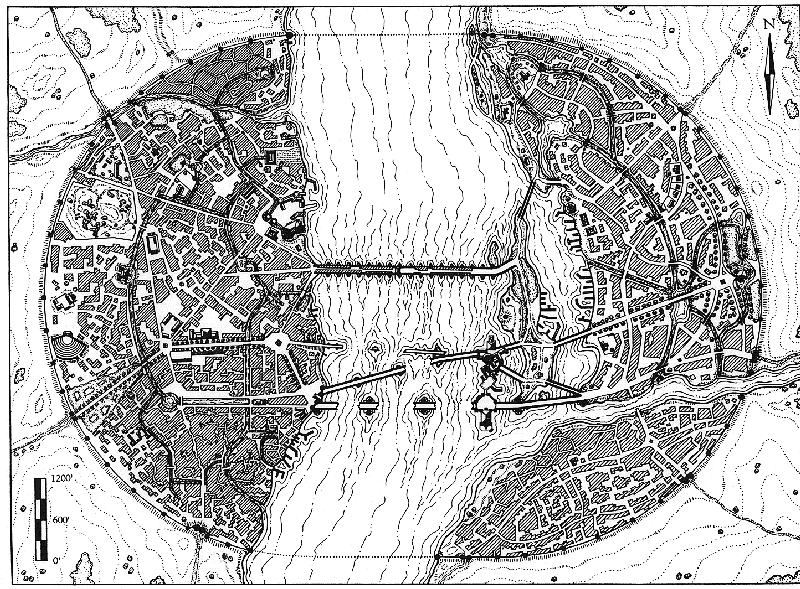
gondor_map

Here’s Denethor’s intelligent assessment of the defensive situation:

“…And the Enemy must pay dearly for the crossing of the River. That he cannot do, in force to assail the City, either north of Cair Andros because of the marshes, or southwards towards Lebennin because of the breadth of the River, that needs many boats. It is at Osgiliath that he will put his weight, as before when Boromir denied him the passage.” LotR 816

EphelDuath_10x10drape2

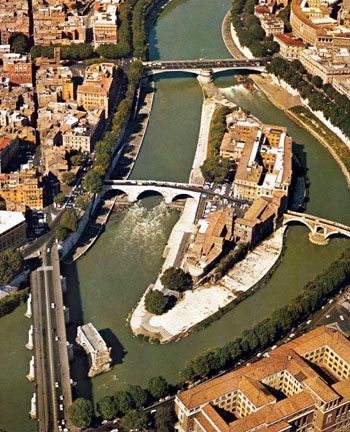
Although there have been very creative attempts to map or depict Cair Andros, for all of its importance in the defense of Gondor, we aren’t given much detail. Its name means “Ship of Long Foam” , called so because of its shape and its action in breaking up the flow of the Anduin. This brought to our minds the Isola Tiberina on the Tiber in Rome,

18-1

which so reminded the Romans of a ship that—well, this 1770s engraving makes their next step obvious—

Piranesi-16059

Cair Andros was fortified and had a garrison, although Denethor refuses to reinforce it, saying “Cair Andros is manned, and no more can be sent so far.” LOtR 816

We also know that the enemy will capture it during their two-proned general assault (Gandalf says to Denethor: “Fugitives from Cair Andros have reached us. The isle has fallen.” LotR 819)

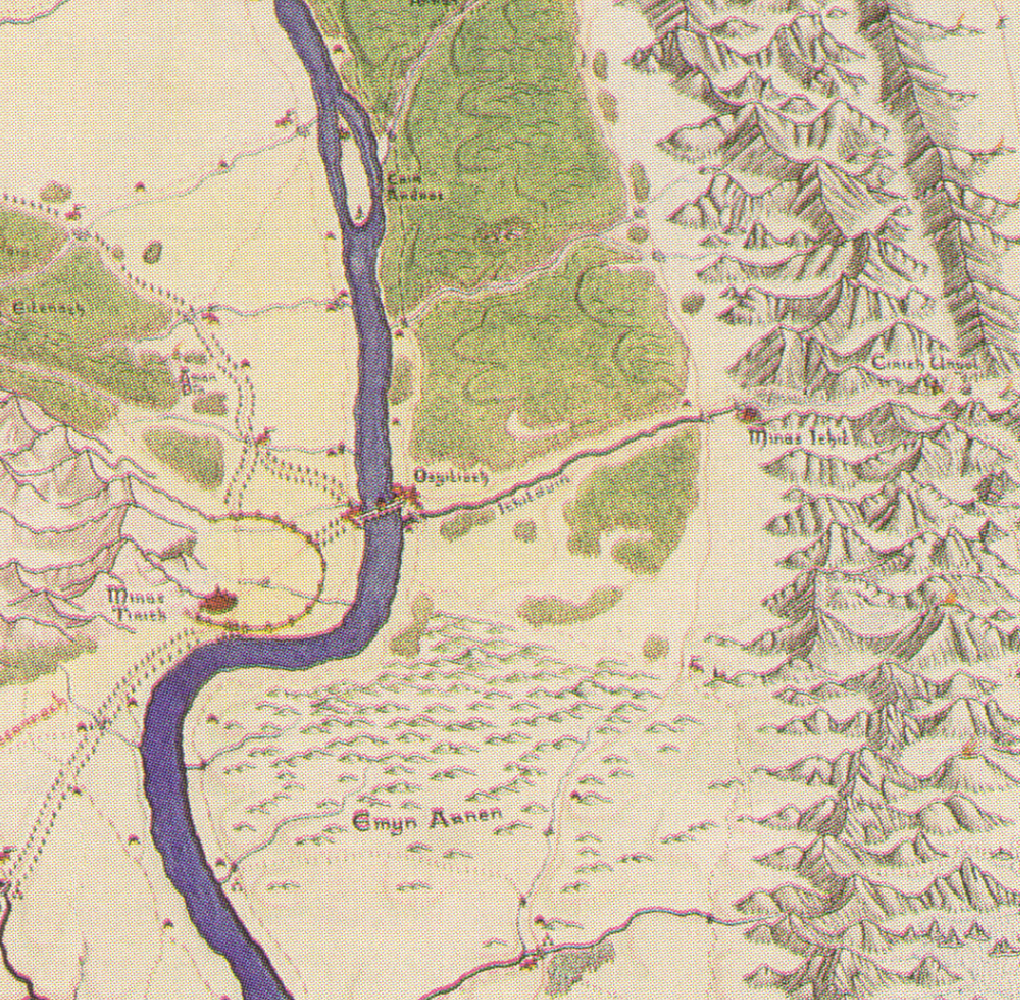
To the south, somewhere between forty and fifty miles, lies Osgiliath.

Anorien

Identified by Denethor as the other major crossing point, it was once a prosperous city, but now lies in ruins, with its bridges destroyed (Celeborn to Aragorn: “And are not the bridges of Osgiliath broken down and all the landings held now by the Enemy?” LotR 367).

The problem, then, for the Enemy is how to cross a river against opposition, a classic problem for generals since there were generals.

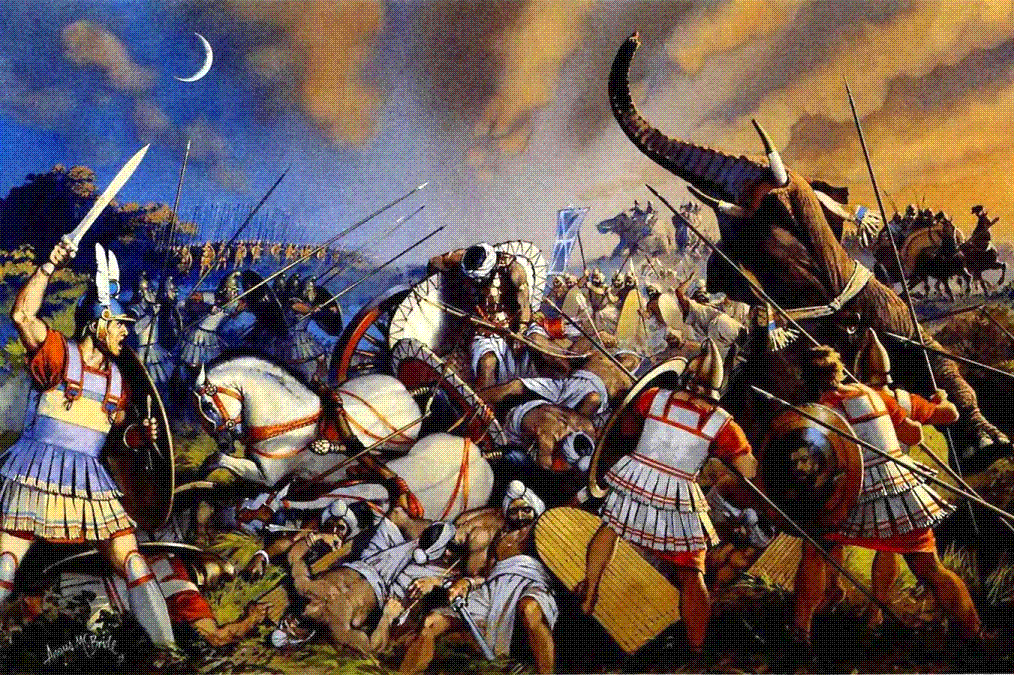
We think, for example, of Alexander at the Hydaspes River in 326BC, defended by King “Poros” (actually Porushattama—Greeks were determined to tame everything—including other cultures’ proper names).

1382499630_Hydaspes

(and we couldn’t resist this second image—Alexander in the center of his pikemen—in what looks like 25-28mm)

VendelMacedonians

As you can see from the map, Alexander crossed upstream, having distracted the king with a demonstration (military for “feint/decoy”).

Battle_hydaspes_crossing

This was through open country, however. In the case of Osgiliath

osgiliath

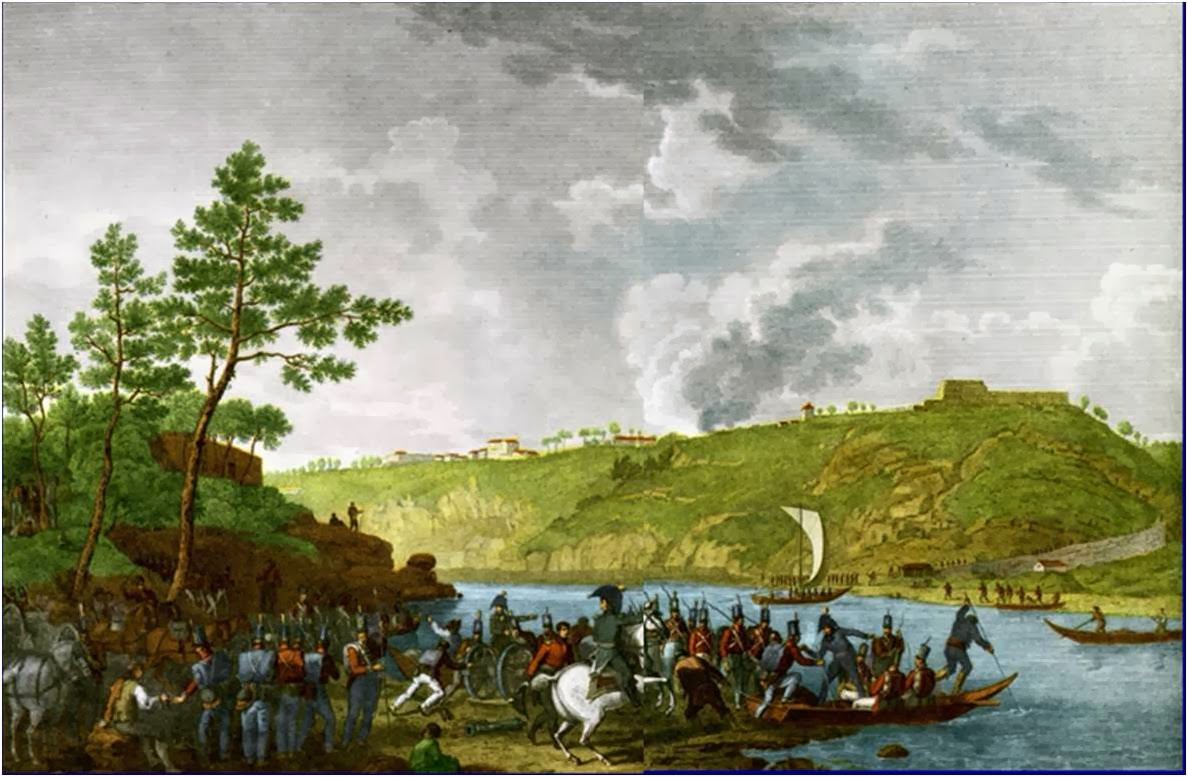
the Enemy would have to cross the river in the face of opposition within a town. Here, we thought of several possibilities: Wellington’s crossing of the river Douro against French resistance in 1809, for example. Here was not only the river, but its steep banks, as well.

Henry Smith Oporto, With The Bridge Of Boats 1809

(The pontoon bridge was set up after the attack.)

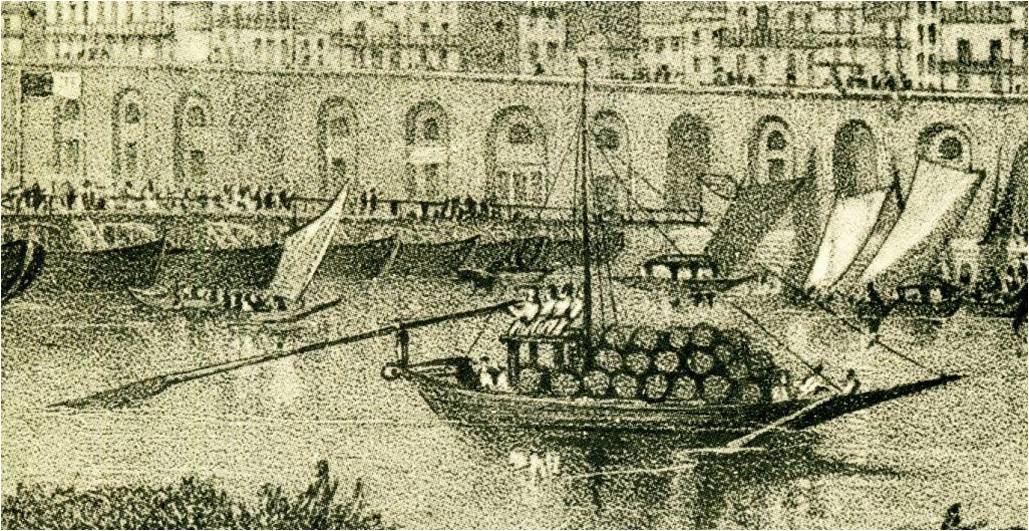
There were no bridges and the French had collected all of the available boats and had either destroyed them or were holding them on the north side of the river. As Porto (the name means what you think it does) was the center of the fortified wine trade (yes , “Pass the port, Wriothsley, will you?”), the major vessel on the river was this—

pb17

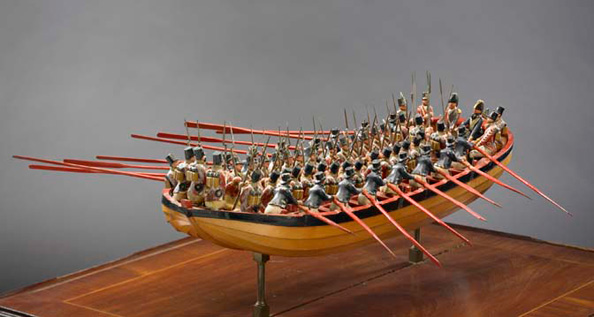
Wellington was always a clever and flexible commander and had to be when confronted by the able Marshal Soult across the river. Much of Wellington’s success came from his use of local sources: Portuguese who hated their French occupiers and supplied some of Wellington’s men with a rowboat and crew. On the north side were four wine boats, soon filled with British soldiers—

sec198

and the surprised, but always brave and sturdy, French soldiers were eventually pushed back north, out of the town.

oporto

As you can see, this was really a frontal assault, but, because of their former preparations and their sense of the geography, the French had been lulled into thinking that they were prepared.

A second battle with a river crossing against a defended town which occurred to us was from the US Civil War, Fredericksburg, fought in mid-December, 1862.

Fredericksburg-Overview

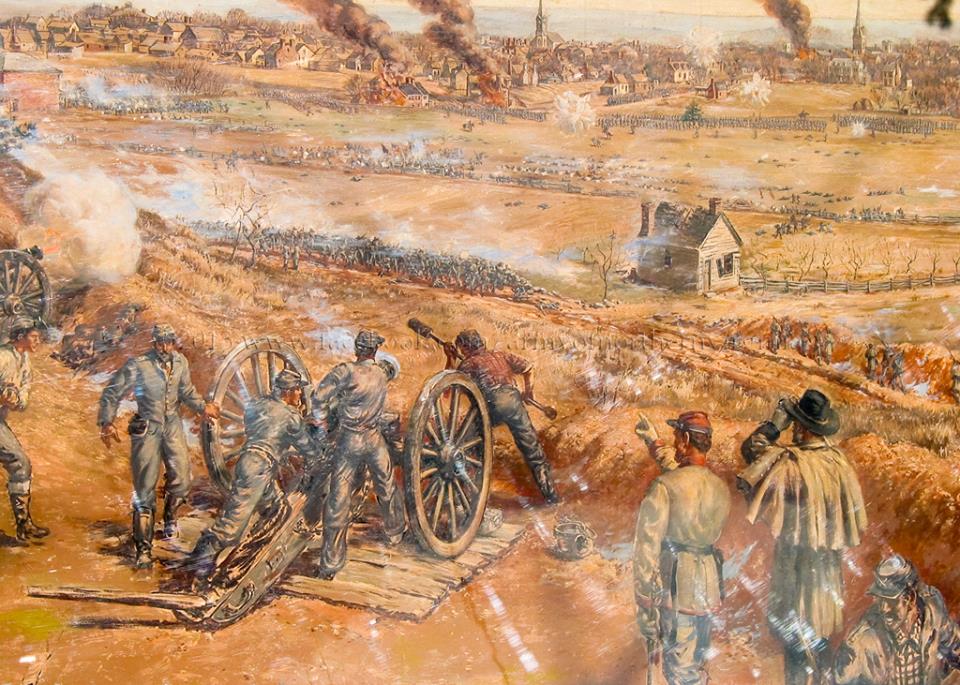
Here, as this extremely useful panorama shows, this was actually a two-step battle: first the Union troops had to cross the Rappahannock River, then they had to drive the Confederate Army from their positions on high ground beyond.

fburg_diorama1

The town of Fredericksburg itself was lightly held: mostly close to the river and relatively few in numbers.

barksdales-men

The main Confederate positions were spread a bit thinly for their numbers (not much in the way of reserves, had there been a breakthrough—Lee had had a similar problem at Antietam), but paid close attention to the ground, including taking advantage of a sunken road with a stone wall at its edge as a makeshift trench.

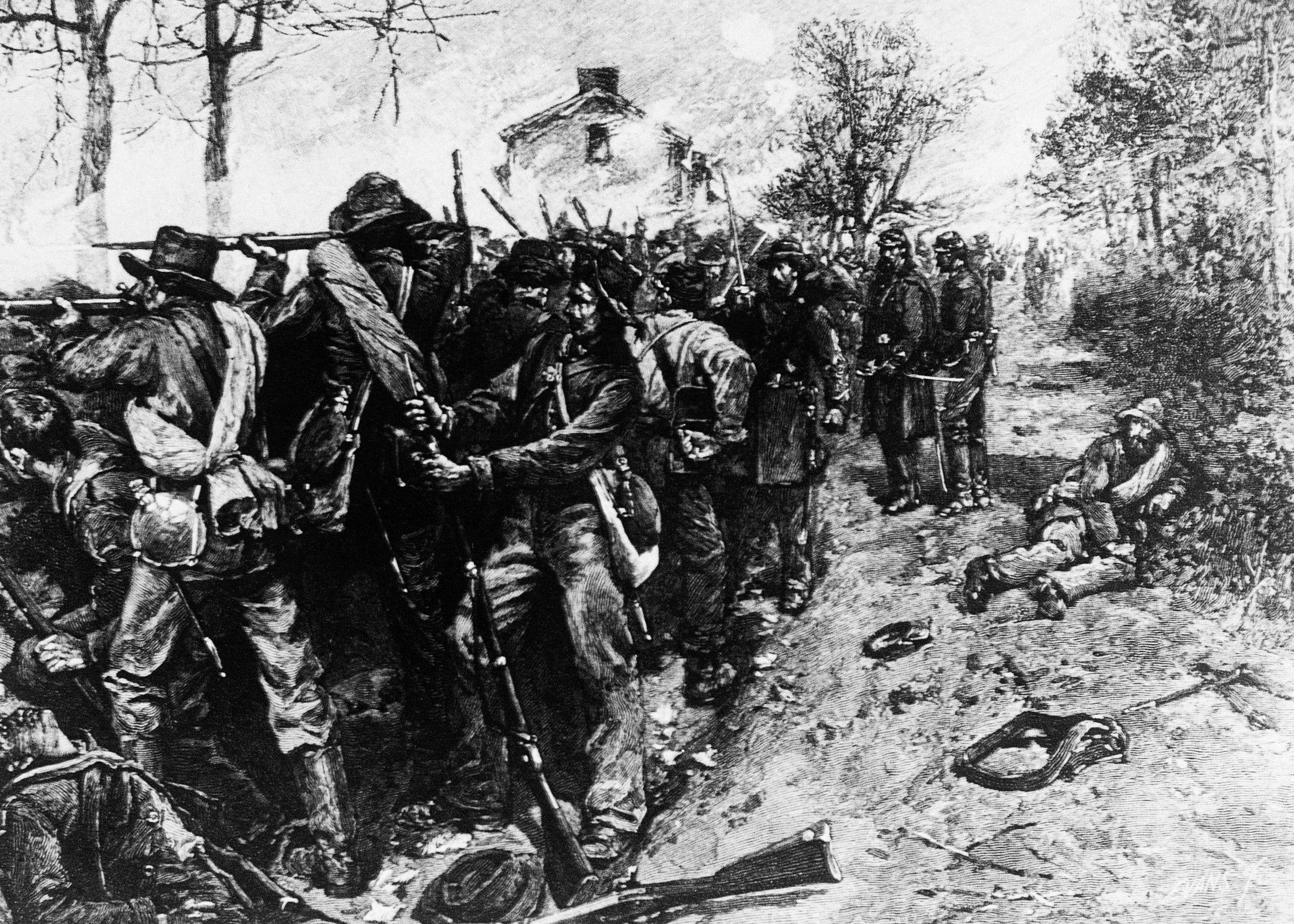
Confederate soldiers rake the field over which Union troops charged six times, from behind the stone walll at the Sunken Road, in  the blood Battle of Fredericksburg, Va., Dec. 1862.  Confederate Sgt. Richard Kirkland became known as the Angel of Marye's Heights when he brought water to wounded Union soldiers. (AP Photo)

To cross the river itself meant a two-stage process: first, to gain the opposite bank and set up a perimeter; second, to build several pontoon bridges to allow for the rapid deployment of troops and artillery.

19th-century armies commonly traveled with pontoons—boats built specifically to be used as the basis for floating bridges—

ACWpontoonsmobile1862

They were dragged along on wagons wherever and whenever armies went—

mud-march-waud-locgov

and, with the addition of planks and anchors and ropes, created complete roadways across bodies of water.

Fredericksburg_pontoon_model

The first stage was difficult,

Amphibious-assault_1376_2

but using pontoons for assault boats

laying-pontoons-fredericksburg

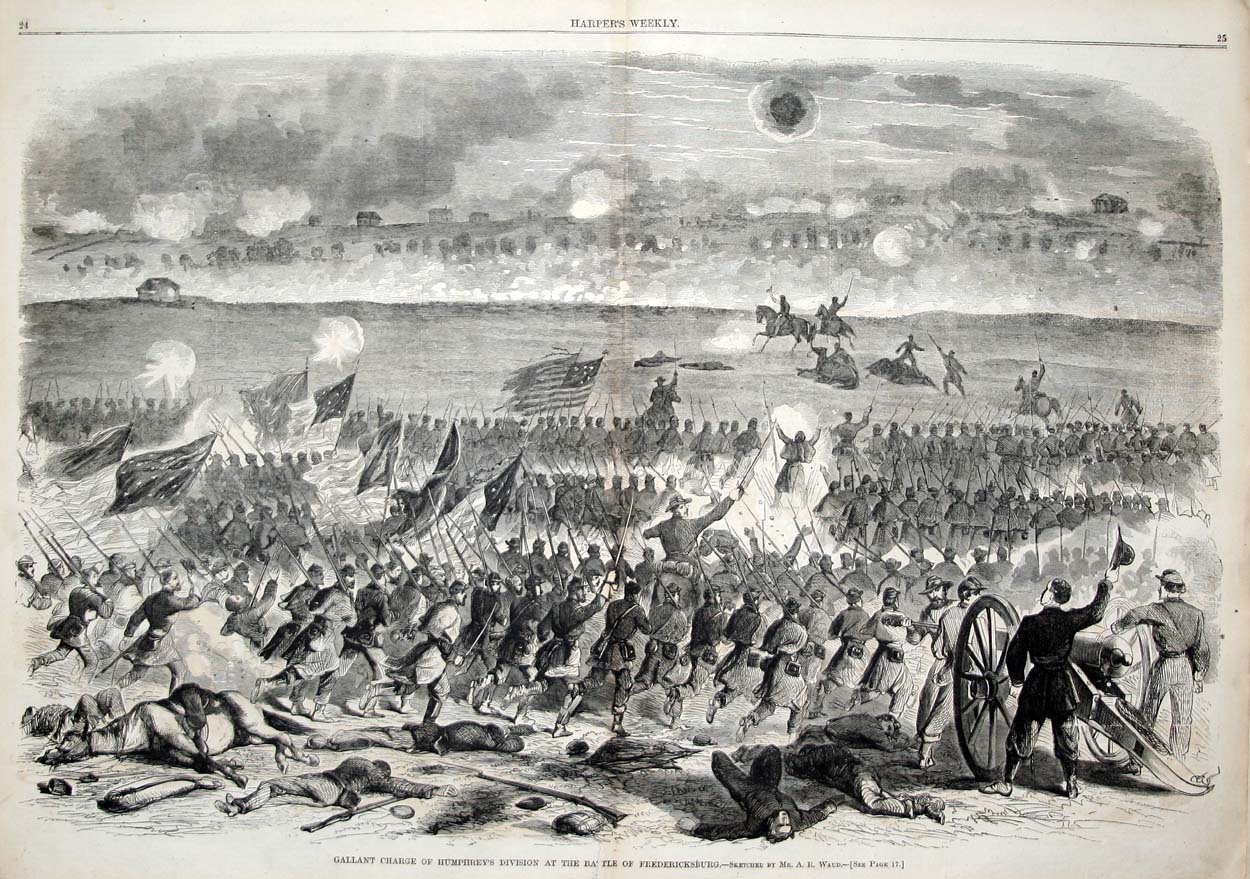
the Union troops managed to secure a foothold on the opposite bank. When bridges went up, stage one had been successful. But, when the Confederates had withdrawn from the town (which they had never intended to occupy in force), there was still that second stage.

dec13fredericksburgcharge

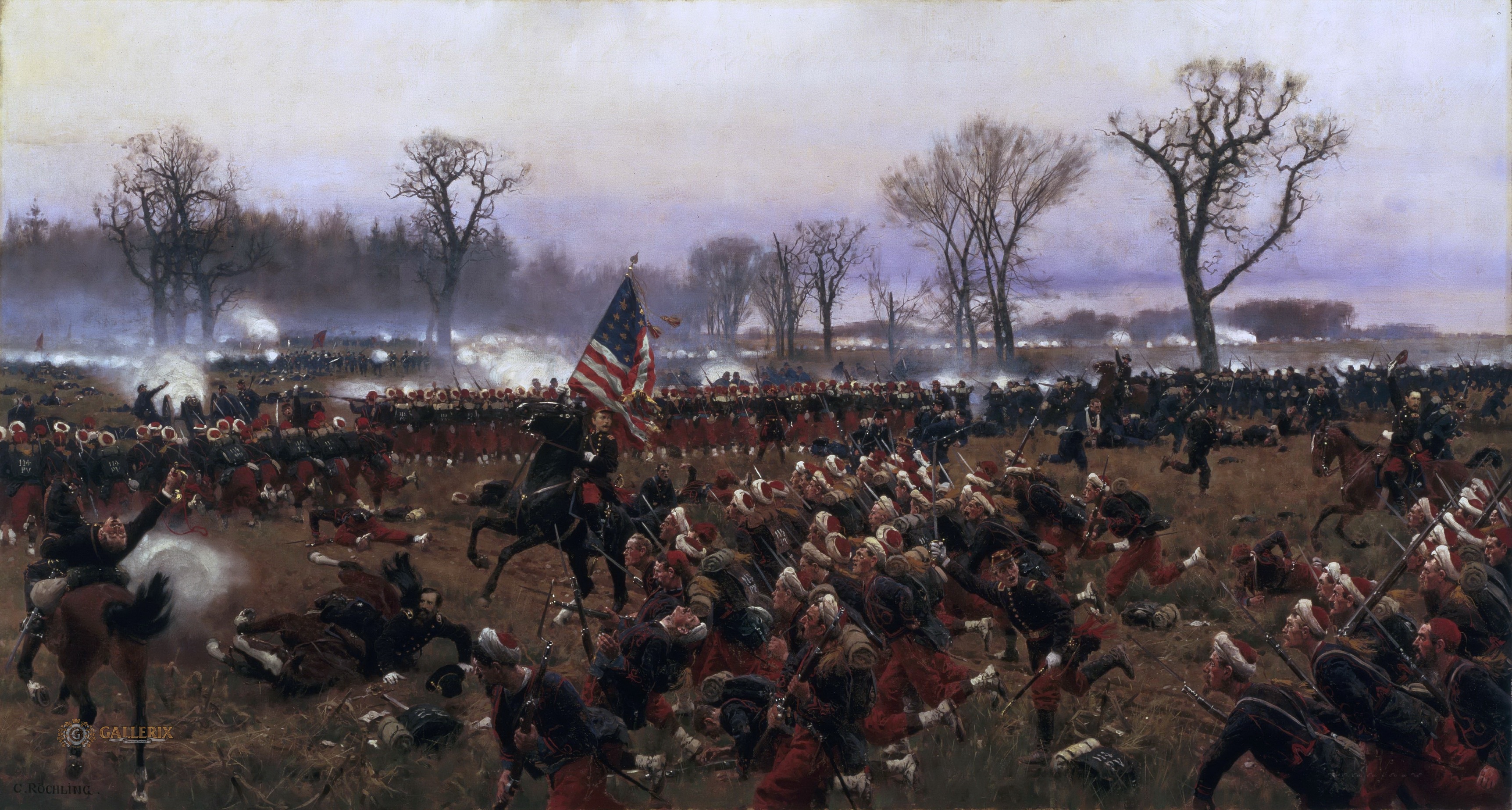
Great courage, but thrown away against resolute Confederate defenders,

1457692_641056089250250_1771492272_n

as you can see in this splendid painting by Carl Roechling, one of our favorite 19th-c. German military-historical painters of the attack of the 114th Pennsylvania (uniformed like French Zouaves, those most admired of French soldiers during this period).

Öèôðîâàÿ ðåïðîäóêöèÿ íàõîäèòñÿ â èíòåðíåò-ìóçåå Gallerix.ru

You can see the kinds of difficulties, then, for the Enemy in their attack on the west bank of the Anduin. How do they succeed? A messenger from Faramir, commanding the defense of West Osgiliath, describes the assault:

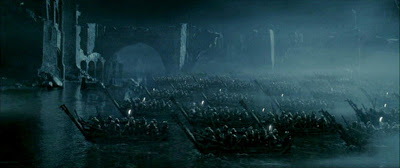
“The plan has been well laid. It is now seen that in secret they have long been building floats and barges in great number in East Osgiliath. They swarmed across like beetles.” LotR 817.

Here is the initial attack in Jackson’s film version—

800px-Orcs_crossing_anduin

When these craft land, they open at the bow and, of course, we immediately thought of D-Day and Pacific island battles and the Inchon landing, and Higgins Boats (LCVPs)

Darke_APA-159_-_LCVP_18 tumblr_n6pop14CrH1s57vgxo3_1280

Along with their advanced use of explosives in the attack on the Pelennor to come, these are very sophisticated creatures, especially when one thinks about the landing craft of earlier centuries—the boats designed for the British attack on Quebec in 1759

c-001078

102381

Or the sort of thing you see during the Napoleonic era—

agoid106297-594

These are for amphibious landings. Mostly, when it comes to the era of pontoons, it appears that, when it came to rivers, soldiers simply used them

Voltigeurs_of_a_French_Line_regiment_crossing_the_Danube_before_the_battle_of_Wagram

The “beetles” mentioned by Faramir’s messenger swarm over the men of Gondor, so heavily outnumbered that, as Faramir says, “Today we may make the Enemy pay ten times our loss at the passage and yet rue the exchange. For he can afford to lose a host better than we to lose a company.” LotR 816. And then there is their other weapon, the Chief Nazgul.

battle_of_osgiliath_by_shockbolt

“But it is the Black Captain that defeats us. Few will stand and abide even the rumor of his coming. His own folk quail at him, and they would slay themselves at his bidding.” As Faramir’s messenger adds. LotR 817.

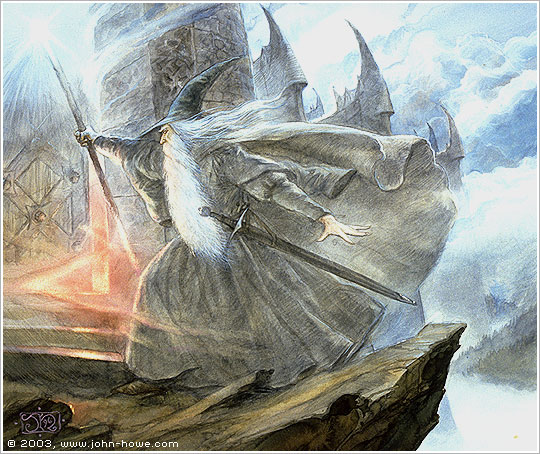
Gandalf goes out to face him

lotr-collectibe_PASSTHED

and we wonder if other commanders—Alexander, Wellington, the Union general Burnside, for example–when faced with the problem of a defended crossing, would wish to have him on their side—or the Black Captain?

As always, thanks for reading.

MTCIDC

CD

Dead Ringers?

01 Wednesday Jul 2015

Posted by Ollamh in Fairy Tales and Myths, J.R.R. Tolkien, Narrative Methods, Poetry

≈ 1 Comment

Tags

Daydreaming, Dragon, Eagles, Ford of Bruinen, Frigates, Frodo, Kites, Nazgul, Pterodactyl, Red-Tailed Hawk, Ring Wraiths, Robert Burns, Shire, Tam O'Shanter, The Legend of Sleepy Hollow, The Lord of the Rings, Tolkien, Washington Irving, Witches' Sabbath

Welcome! In this posting, we plan to talk about the Ring Wraiths (probably in hushed voices).

This entry was initially inspired by looking out the window (and no, we weren’t daydreaming—really!).

There was a harsh call from the sky.

Red-Tailed Hawk Scream (YouTube)

Peering out, we saw the local hawks, who are nesting on a tall building across the road, circling, balancing high on a thermal in that amazing way, something like a kite

Ancient-China-kites-2

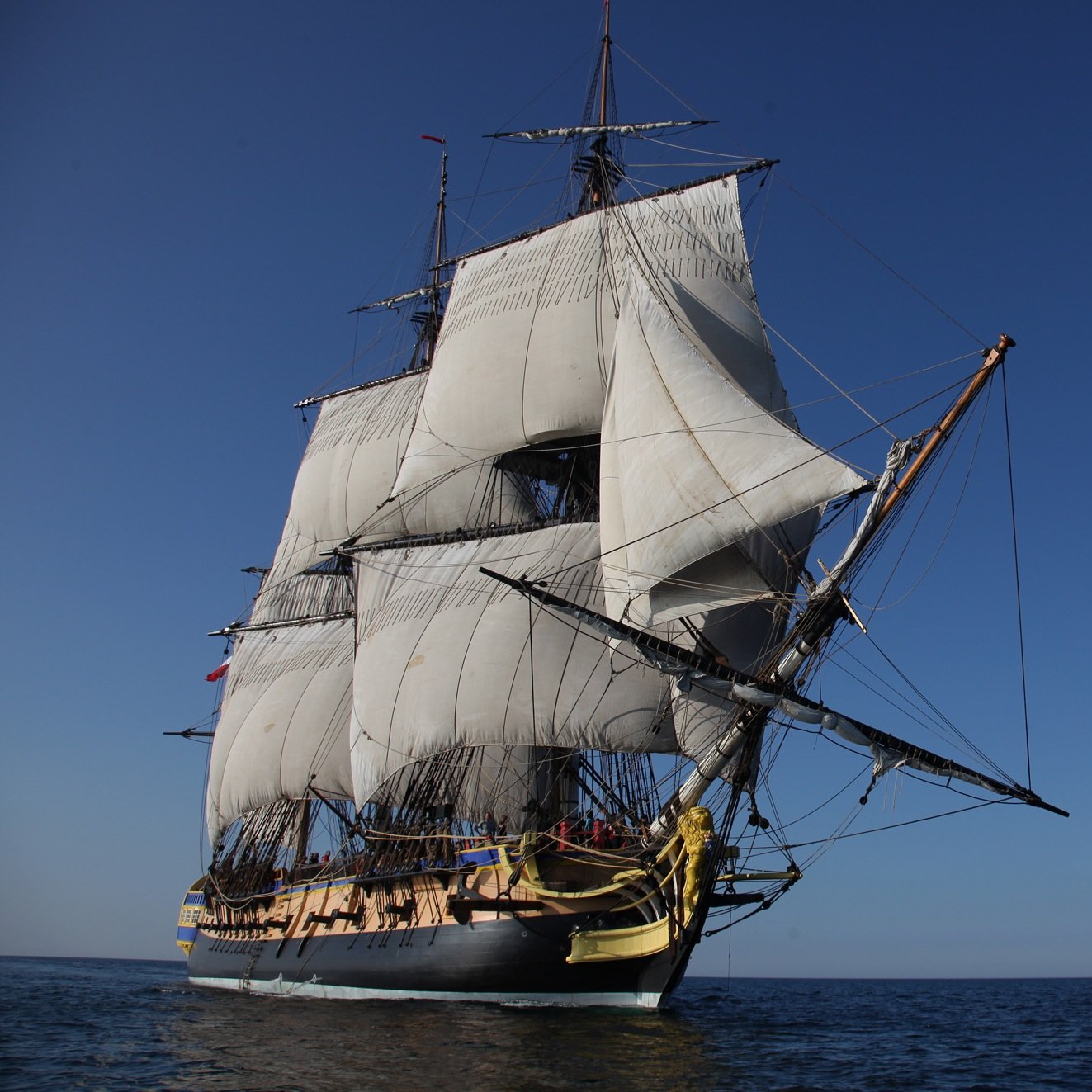
combined with the nimbleness of an 18th-c. frigate.

l'hermione

Red-Tailed Hawks Circling (YouTube)

And suddenly we were looking up at something completely different—

7affeea5ca3551eddd3ae8bc4abd7b47

Nazgul!

In contrast to those very convenient Tolkien eagles, traditionally admired as a fierce and noble bird

tumblr_inline_mvvy21Tf9e1rnrk68

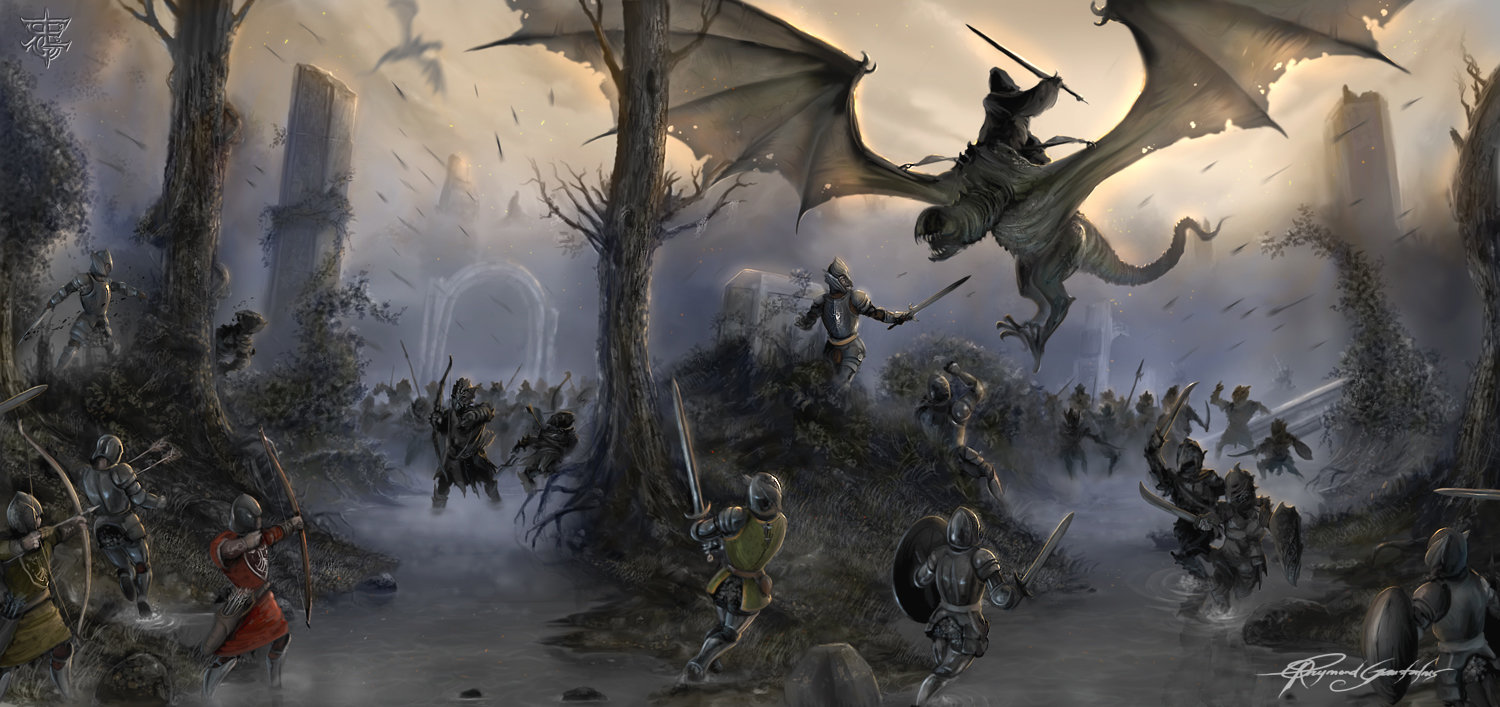
the Wraiths appear to be riding a cross between a flying dragon

Fantasy_In_the_clouds_flying_dragon_067388_

and a pterodactyl.

Pterodactyl_2_(PSF)

nazgul_by_daroz-d5hdnn9

Of course, we first encounter the Nazgul on the ground

nazgul_by_jarrettonions-d47wvdd

in their invasion of the Shire and their subsequent pursuit of Frodo.

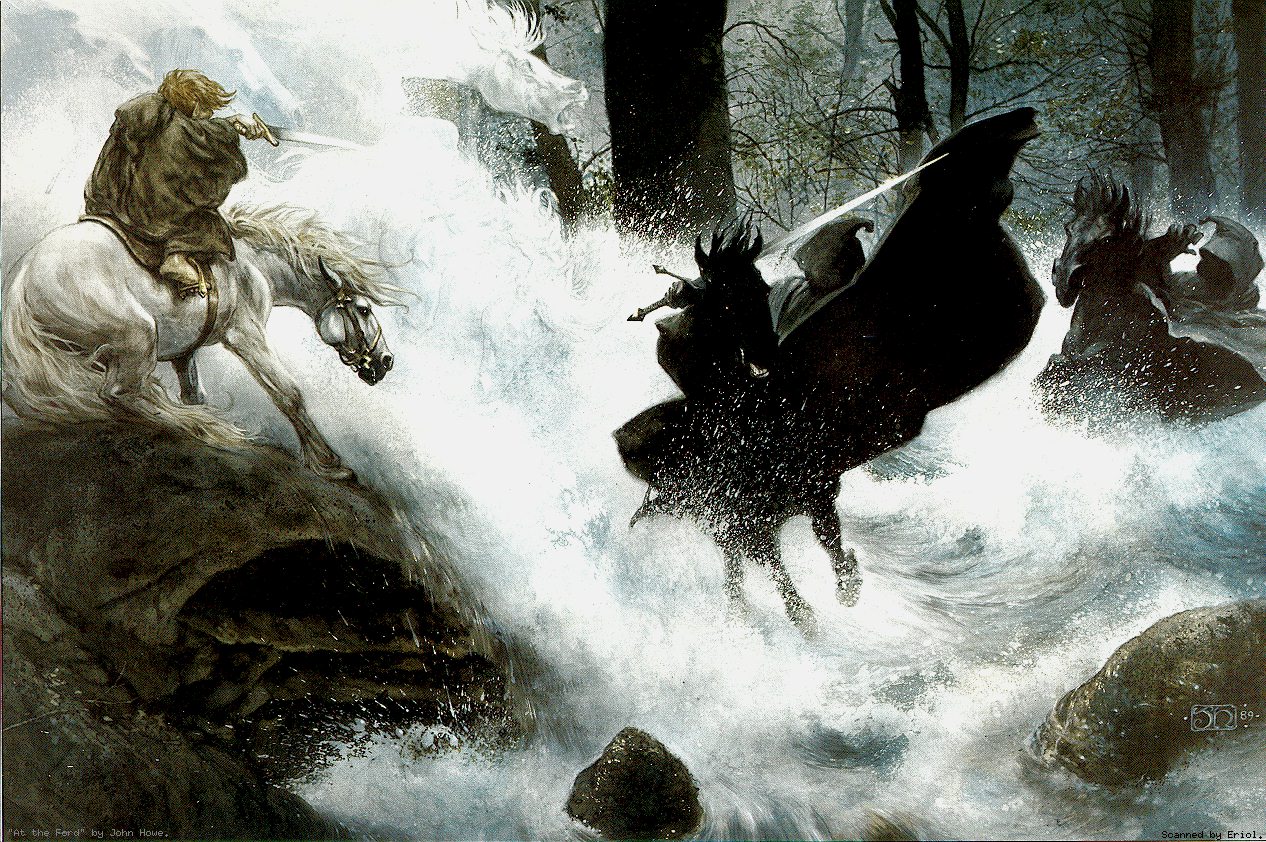
And here, at the final moment, at the Ford of Bruinen, where the Wraiths are swept away,

ford

perhaps we can catch a glimpse of one of the origins of a very dramatic scene.

The Scots poet, Robert Burns

burnshead1

wrote “Tam O’Shanter” in 1790 and published it the following year.

Tam O’Shanter Poem and Translation

It’s the story in verse of a farmer who stays too late at his local.

Tam_o'_Shanter_and_Souter_Johnny_at_Kirkton_Jean's

Then, on the way home, he is attracted by light in a local abandoned (and, of course, haunted) church

Alloway_Kirk

where a witches’ Sabbath is going on.

(c) City of Edinburgh Council; Supplied by The Public Catalogue Foundation

Still quite tipsy, he cheers it on and, of course, the witches and other otherworldly creatures are immediately in hot pursuit.

(c) Cutty Sark Trust; Supplied by The Public Catalogue Foundation

Tam can escape, but only if he can reach the nearby river Doon and cross its bridge.

bridgeofdoune

He just manages to do this, but his poor horse, Meg, loses her tail.

four

If this plot has a familiar ring, it’s because the American author, Washington Irving,

Portrait of Washington Irving

used the poem as a major source for his short story, “The Legend of Sleepy Hollow” (published in 1820). We begin with a very different story: in 1790, a poor schoolmaster with the poetic name of Ichabod Crane comes to the Hudson River valley town of Sleepy Hollow and, in the course of his stay, becomes such an annoyance to the local bravo, that he uses the local legend of a headless horseman to frighten Crane off.

keller_sleepyhollow

To do this, he convinces Crane that, should he be pursued by such a creature, he can only escape it by crossing running water. (And here we can see the strong influence of Burns.) In the subsequent narrative, as the horseman, the bravo chases Crane to a bridge, and there the story stops. Crane disappears, never to be seen in Sleepy Hollow again. Irving_Sleepy 

John_Quidor_-_The_Headless_Horseman_Pursuing_Ichabod_Crane_-_Google_Art_Project

Unfortunately, neither the Carpenter letters nor the Hammond/Scull volumes provides any reference to Burns or Irving, but the idea that crossing the ford might stop the unearthly has, to us, a definite suggestion that, somewhere in the leaf mould, there may have been a tiny acorn of memory…

Thanks, as ever, for reading!

MTCIDC

CD

ps

You might know “The Legend of Sleepy Hollow” from this–

legendofsleepyhollow-chase

Red Books, Black Books, Yellow Books

24 Wednesday Jun 2015

Posted by Ollamh in J.R.R. Tolkien, Language, Narrative Methods

≈ Leave a comment

Tags

Bilbo, Black Book of Carmarthen, Book of Ballymote, Book of Leinster, Book of Lismore, Book of Taliesin, Book of the Dun Cow, Dwarves, Geoffrey of Monmouth, Gollum, Mabinogion, Manuscript, Medieval books, Red Book of Hergest, Red Book of Westmarch, Scriptorium, The Hobbit, The Lord of the Rings, The Shire, Tolkien, White Book of Rhydderch, Yellow Book of Lecan

Dear Readers,

Welcome back! This posting is devoted to a look at what lies behind that famous imaginary document The Red Book of Westmarch.

     As Tolkien says of The Lord of the Rings in the section of the prologue entitled “Note on the Shire Records”:

“This account of the end of the Third Age is drawn mainly from the Red Book of Westmarch. That most important source for the history of the War of the Ring was so called because it was long preserved at Undertowers, the home of the Fairbairns, Wardens of the Westmarch. It was in origin Bilbo’s private diary, which he took with him to Rivendell. Frodo brought it back to the Shire, together with many loose leaves of notes, and during S.R. 1420-1 he nearly filled its pages with his account of the War. But annexed to it and preserved with it, probably in a single red case, were the three large volumes, bound in red leather, that Bilbo gave to him as a parting gift. To these four volumes there was added in Westmarch a fifth containing commentaries, genealogies, and various other matter concerning the hobbit members of the Fellowship.” 14

redbookfacsimile

     This is not the end of the material on the Red Book, of course,—that takes up another paragraph and then is continued in several more paragraphs about copies and about other pertinent written sources. This is JRRT having fun, of course: after all, for him, what is more satisfying after creating languages than building contexts for them?

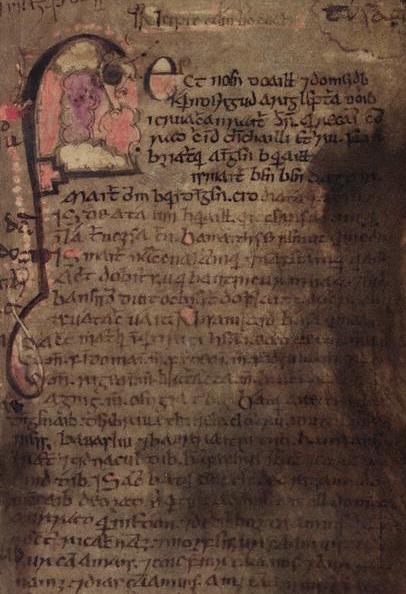
     This particular context is based upon material from his own specialty, medieval literature, and it’s always been said that The Red Book of Westmarch was inspired by the late 14th-century Welsh Red Book of Hergest. This famous manuscript contains one of the major texts of the cycle of legendary material called the Mabinogion, but for Tolkien its importance may have been simply that

  1. it’s a medieval manuscript familiar to him and a model-ready-to-hand for what he created in what he thought of as his own medieval world
  2. as the Wiki entry says, “The manuscript derives its name from the colour of its leather binding and from its association with Hergest Court between the late 15th and early 17th century.”

redbookofhergest

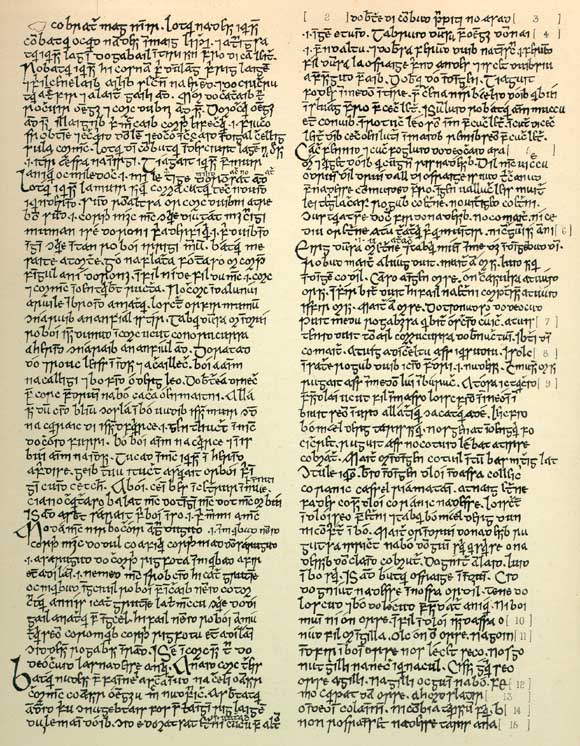
     This manuscript and others like it, both Welsh (Black Book of Carmarthen,White Book of Rhydderch, Book of Taliesin) and Irish (Book of the Dun Cow, Yellow Book of Lecan, Book of Leinster, Book of Ballymote, Book of Lismore)

blackbookofcarmarthen

Book_of_Taliesin_facsimile

whitebookof rhydderch

lebornauidre

Book_of_Lecan_p2

Book_of_Leinster,_folio_53

were created in the scriptoriums (Latin plural: scriptoria), the medieval equivalent of a copy center, in various monasteries. The following images will give you an idea of how they worked.

scriptorium

 BL_Royal_Vincent_of_Beauvais

gregory

In the world before Gutenberg

792px-Pressing-16th_century%20copy

everything was written—and then copied—by hand, a fact which Tolkien faithfully reproduces in his world when he writes that:

“The most important copy, however, has a different history. It was kept at Great Smials, but it was written in Gondor, probably at the request of the great-grandson of Peregrin, and completed in S.R. 1592 (F.A. 172). Its southern scribe appended this note: Findegil, King’s Writer, finished this work in IV 172.” 14

     There are, of course, no monasteries in Middle Earth, but, in our world, there were clerks, educated in monasteries, who worked as secretaries and copyists for kings and their nobility, so it’s quite logical that a copy of the Red Book in Middle Earth was the work of a so-called “King’s Writer”.

     Comparing an actual manuscript with the Red Book of Westmarch, we find several other differences. For one, the RBW’s four main volumes appear to contain nothing but material relating to the events surrounding Bilbo, Frodo, and the Ring. In contrast, the actual medieval manuscripts are more like compilations. The Red Book of Hergest, for example, has not only the Mabinogion, but also unrelated poetry, and a Welsh translation of Geoffrey of Monmouth’s History of the Kings of Britain, among other works. The Irish Book of the Dun Cow has religious texts and secular, all mixed together, and this appears to be common. The closest the RBW comes to this is volume 5, with its “commentaries, genealogies, and various other matter concerning the hobbit members of the Fellowship” and this is still material pertaining to the main subject, not something as removed as the method for determining the correct date for Easter to be found in the Book of Leinster.

     Another difference brings us to a puzzle and the conclusion of this posting.  Tolkien has told us that the core of the RBW is Bilbo’s diary. The Welsh and Irish manuscripts discussed above are collections of literary and religious texts, with nothing personal in them at all, as he would have been well aware.  As well, we might wonder when and where and how Bilbo kept that diary. There’s no mention of it in The Hobbit—after all, Bilbo ran out of his house to join the dwarves without even a pocket handkerchief. And, even if the dwarves had provided one (along with the handkerchief–although that does not seem terrifically likely–the dwarves who visit Bilbo seem more attuned to orality than literacy), surely it would have been lost with all of the other baggage when the company fell into the goblin world and Bilbo met Gollum.

Alan Lee - The Hobbit - 19 - Riddles in the dark

Other than assuming that Bilbo, although he had forgotten his handkerchief, had remembered his Blackberry and was constantly dictating to the Cloud for later transcription, what do we have here?  (And, while we’re wondering, if The Hobbit was based upon that mysterious diary, what do we know of the adapter/narrator who turned it from a diary into a continuous narrative–another “King’s Writer”?)

Obviously, MTCIDC!

Thanks, as always, for reading.

CD

Where From the Rohirrim?

10 Wednesday Jun 2015

Posted by Ollamh in Heroes, J.R.R. Tolkien, Military History, Military History of Middle-earth, Narrative Methods, The Rohirrim

≈ 1 Comment

Tags

Amazons, Anglo-Saxon, Bayeux Tapestry, Burial mounds, Cavalry, Charge of the Light Brigade, descendants, Edoras, Eotheod, Horse people, Indo-European, Kurgan, language, Middle-earth, Normans, Rohan, Rohirric, Rohirrim, Scythians, The Lord of the Rings, The Mark, Tolkien, Tom Shippey

Dear Readers, welcome!

In this post, we want to think out loud a bit about the Rohirrim.

ghan Rohirrim-by-Angus-McBride-kacik-rohanskiej-adoracji-36841491-473-477 maxresdefault

Everyone knows where their language is from, as Tolkien says in a letter to “one Mr. Rang”:

“…’Anglo-Saxon’…is the sole field in which to look for the origins and meaning of words and names belonging to the speech of the Mark.” LT 381

And yet they are horse people (their own name for themselves, in fact, is Eotheod, “horse people”), which the Angles and Saxons who went to make up the Anglo-Saxons, were not.   Tolkien was well aware of this difference, saying in Appendix F of The Lord of the Rings:

“…this linguistic procedure does not imply that the Rohirrim closely resembled the ancient English otherwise, in culture or art, in weapons or modes of warfare, except in a general way due to their circumstances…” L1136

Tom Shippey, in The Road to Middle Earth, suggests that

“The Rohirrim are nothing if not cavalry. By contrast the Anglo-Saxons’ reluctance to have anything militarily to do with horses is notorious…How then can Anglo-Saxons and Rohirrim ever, culturally, be equated? A part of the answer is that the Rohirrim are not to be equated with the Anglo-Saxons of history, but with those of poetry, or legend.” (112)

Or, could there have been other models?

Tolkien may have been suggesting one when, in a letter to Rhona Beare of 14 October, 1958:

“The Rohirrim were not ‘mediaeval’ in our sense. The styles of the Bayeux Taptestry (made in England) fit them well enough, if one remembers that the kind of tennis-nets [the] soldiers seem to have on are only a clumsy conventional sign for chain-mail of small rings.” Ltr 280-281.

The Bayeux Tapestry depicts both Normans and their allies, on the one hand, and the Anglo-Saxons, on the other, but Tolkien doesn’t appear to distinguish between them. The Normans themselves are mounted, the Anglo-Saxons on foot, as was their custom (they did use horses to move rapidly from place to place, as in the race north to Stamford Bridge and then back south to face the Normans).

5191623_orig

Here, to the left, we see those mounted Normans and, to the right, the Anglo-Saxons behind their shield wall. The “tennis-nets” are clearly visible and would actually have looked like this:

huscarl

In this further illustration, by the way, it’s easy to see the consequences of having the shield wall crumble: men on horseback can have a significant advantage when their opponents lose cohesion.

34small-1000

This, however, is only their look . What about those horses and an entire culture based around them?

For a clue, we look to another element in the culture of the Rohirrim, the use of burial mounds. Here they are at Edoras.

Simbelmyne_Mounds

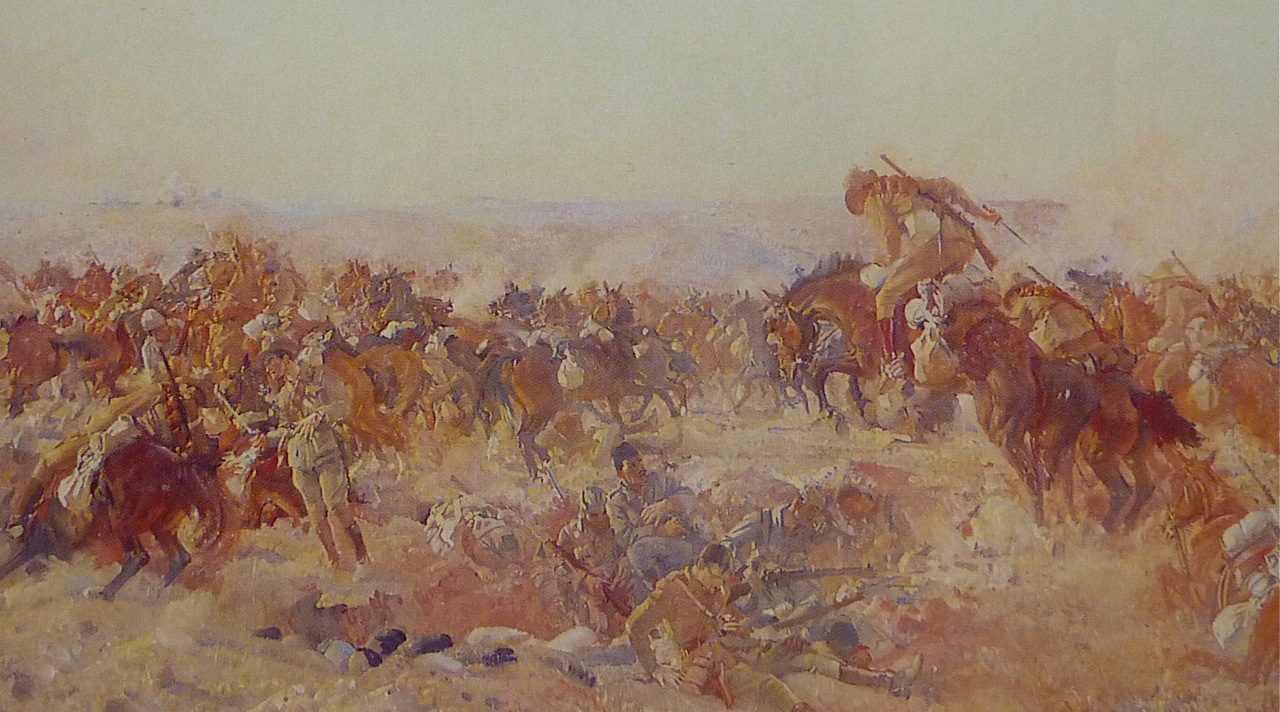
(We can’t resist, by the way, saying that our absolute favorite part of the Jackson movies is anything to do with the Rohirrim—to us, absolutely inspired and we see the depiction of the charge of the Rohirrim against the army besieging Minas Tirith as being right up there with the Charge of the Light Brigade at Balaclava in 1854 and the charge of the Australian Light Horse at Beersheba in 1917–

Rohancharge

(c) National Trust, Tredegar House; Supplied by The Public Catalogue Foundation

beersheba lambert

One might say, in reply, that there are Anglo-Saxon mounds—like the famous Sutton Hoo ship burial.

c52a1bf535

But that leaves us where we started, in the land of foot soldiers.

huscarl1

So, let’s go farther afield, to the north of the Black Sea.  

WRLH034-H

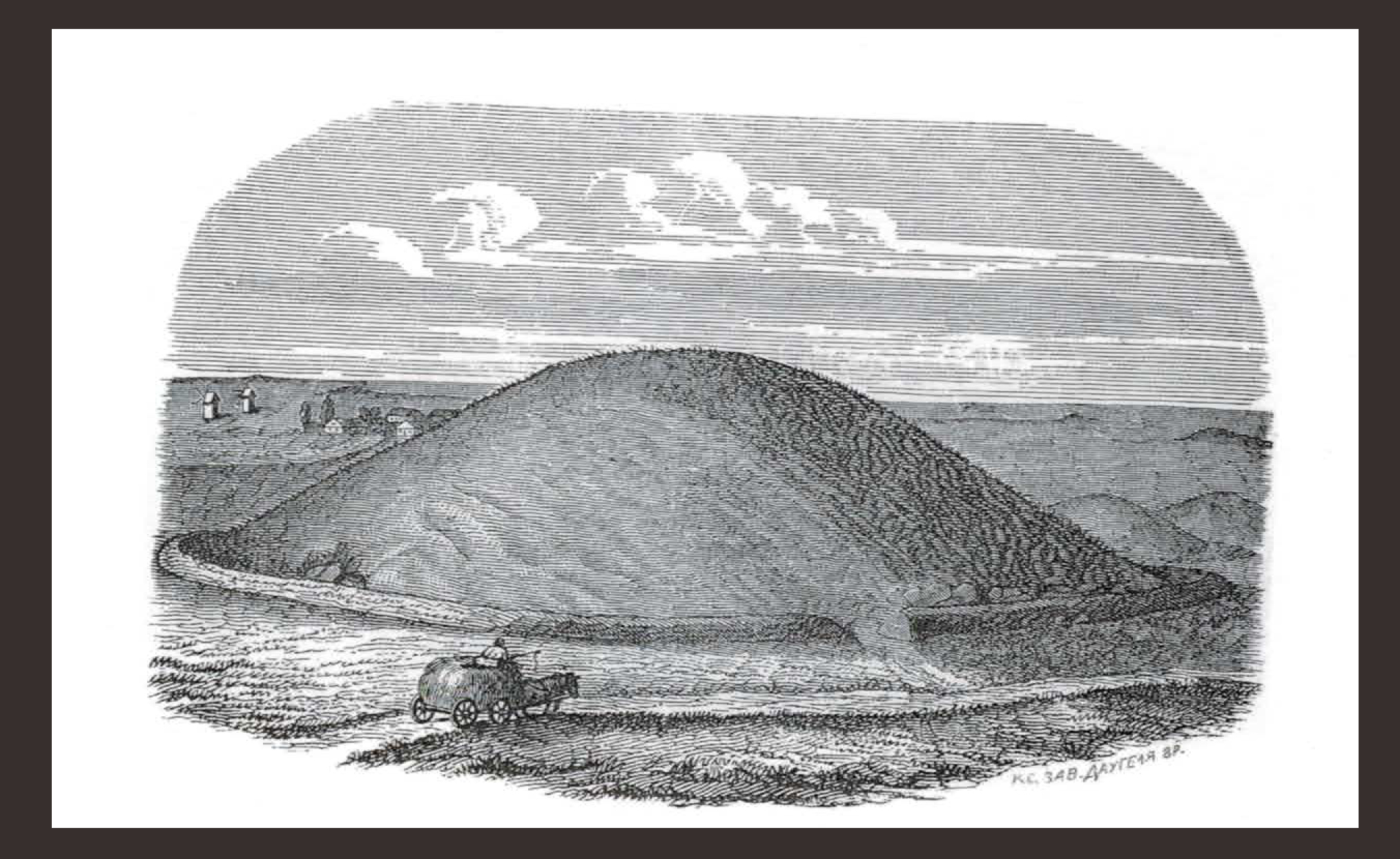
Here, we see the so-called “Kurgan Culture”, with its burial mounds

02161200-1 02161200

[This, by the way, is not to be confused with The Kurgan from the first Highlander movie

The Kurgan]

movie-villain-kurgan

These were a people who:

  1. are believed by many linguists (and some archeologists) to be the direct ancestors of the Indo-Europeans who gradually invaded Asia Minor and western Europe (including, eventually, the Anglo-Saxons) as well as moving east, to India and beyond
  2. buried their dead (at least what appear to be the high status ones) in mounds
  3. were a horse culture

And, in fact, were seemingly the forerunners of the Scythians, a later well-known Indo-European horse people

Scythia Rod-Scythian-Horseback

angus-mcbride-scythia-1

And the Scythians, in turn, may have been the model for those mythical horse folk, the Amazons.

72303amazon

In the 19th century, when the idea of Indo-Europeans began to circulate, there was a preference for a northern European origin (a theory no longer held), but the idea of an eastern home was also circulating and we would suggest that Tolkien would have known about this, as well as, from his early classical training, Scythians and Amazons, their actual and mythical descendants.

Imagine, then, that what we see in the Rohirrim is, in fact, an interesting mixture of people sprung from an earlier people (as Tolkien tells us, the Rohirrim were descended from the Edain of the First Age—see LOTR, Appendix F 1129), both in our world and in Middle Earth, who based their culture upon horses, and bury their dead in mounds, combined with people who may also bury their dead in mounds, who speak a version of Anglo-Saxon and who dress like the Normans and Anglo-Saxons of the 11th century AD.

What do you think, dear readers?

Thanks for reading, as always.

MTCIDC

CD

← Older posts
Newer posts →

The Doubtful Sea Series Facebook Page

The Doubtful Sea Series Facebook Page

  • Ollamh

Categories

  • Artists and Illustrators
  • Economics in Middle-earth
  • Fairy Tales and Myths
  • Films and Music
  • Games
  • Heroes
  • Imaginary History
  • J.R.R. Tolkien
  • Language
  • Literary History
  • Maps
  • Medieval Russia
  • Military History
  • Military History of Middle-earth
  • Narnia
  • Narrative Methods
  • Poetry
  • Research
  • Star Wars
  • Terra Australis
  • The Rohirrim
  • Theatre and Performance
  • Tolkien
  • Uncategorized
  • Villains
  • Writing as Collaborators
Follow doubtfulsea on WordPress.com

Across the Doubtful Sea

Recent Postings

  • Through a glass… January 7, 2026
  • Heffalumps? December 31, 2025
  • We Three Kings December 24, 2025
  • A Moon disfigured December 17, 2025
  • On the Roads Again—Once More December 10, 2025
  • (Not) Crossing Bridges December 3, 2025
  • On the Road(s) Again—Again November 26, 2025
  • On the Road(s) Again November 19, 2025
  • To Bree (Part 2) November 12, 2025

Blog Statistics

  • 104,495 Views

Posting Archive

  • January 2026 (1)
  • December 2025 (5)
  • November 2025 (4)
  • October 2025 (5)
  • September 2025 (4)
  • August 2025 (4)
  • July 2025 (5)
  • June 2025 (4)
  • May 2025 (4)
  • April 2025 (5)
  • March 2025 (4)
  • February 2025 (4)
  • January 2025 (5)
  • December 2024 (4)
  • November 2024 (4)
  • October 2024 (5)
  • September 2024 (4)
  • August 2024 (4)
  • July 2024 (5)
  • June 2024 (4)
  • May 2024 (5)
  • April 2024 (4)
  • March 2024 (4)
  • February 2024 (4)
  • January 2024 (5)
  • December 2023 (4)
  • November 2023 (5)
  • October 2023 (4)
  • September 2023 (4)
  • August 2023 (5)
  • July 2023 (4)
  • June 2023 (4)
  • May 2023 (5)
  • April 2023 (4)
  • March 2023 (5)
  • February 2023 (4)
  • January 2023 (4)
  • December 2022 (4)
  • November 2022 (5)
  • October 2022 (4)
  • September 2022 (4)
  • August 2022 (5)
  • July 2022 (4)
  • June 2022 (5)
  • May 2022 (4)
  • April 2022 (4)
  • March 2022 (5)
  • February 2022 (4)
  • January 2022 (4)
  • December 2021 (5)
  • November 2021 (4)
  • October 2021 (4)
  • September 2021 (5)
  • August 2021 (4)
  • July 2021 (4)
  • June 2021 (5)
  • May 2021 (4)
  • April 2021 (4)
  • March 2021 (5)
  • February 2021 (4)
  • January 2021 (4)
  • December 2020 (5)
  • November 2020 (4)
  • October 2020 (4)
  • September 2020 (5)
  • August 2020 (4)
  • July 2020 (5)
  • June 2020 (4)
  • May 2020 (4)
  • April 2020 (5)
  • March 2020 (4)
  • February 2020 (4)
  • January 2020 (6)
  • December 2019 (4)
  • November 2019 (4)
  • October 2019 (5)
  • September 2019 (4)
  • August 2019 (4)
  • July 2019 (5)
  • June 2019 (4)
  • May 2019 (5)
  • April 2019 (4)
  • March 2019 (4)
  • February 2019 (4)
  • January 2019 (5)
  • December 2018 (4)
  • November 2018 (4)
  • October 2018 (5)
  • September 2018 (4)
  • August 2018 (5)
  • July 2018 (4)
  • June 2018 (4)
  • May 2018 (5)
  • April 2018 (4)
  • March 2018 (4)
  • February 2018 (4)
  • January 2018 (5)
  • December 2017 (4)
  • November 2017 (4)
  • October 2017 (4)
  • September 2017 (4)
  • August 2017 (5)
  • July 2017 (4)
  • June 2017 (4)
  • May 2017 (5)
  • April 2017 (4)
  • March 2017 (5)
  • February 2017 (4)
  • January 2017 (4)
  • December 2016 (4)
  • November 2016 (5)
  • October 2016 (6)
  • September 2016 (5)
  • August 2016 (5)
  • July 2016 (5)
  • June 2016 (5)
  • May 2016 (4)
  • April 2016 (4)
  • March 2016 (5)
  • February 2016 (4)
  • January 2016 (4)
  • December 2015 (5)
  • November 2015 (5)
  • October 2015 (4)
  • September 2015 (5)
  • August 2015 (4)
  • July 2015 (5)
  • June 2015 (5)
  • May 2015 (4)
  • April 2015 (3)
  • March 2015 (4)
  • February 2015 (4)
  • January 2015 (4)
  • December 2014 (5)
  • November 2014 (4)
  • October 2014 (6)
  • September 2014 (1)

Blog at WordPress.com.

  • Subscribe Subscribed
    • doubtfulsea
    • Join 78 other subscribers
    • Already have a WordPress.com account? Log in now.
    • doubtfulsea
    • Subscribe Subscribed
    • Sign up
    • Log in
    • Report this content
    • View site in Reader
    • Manage subscriptions
    • Collapse this bar
 

Loading Comments...