• About

doubtfulsea

~ adventure fantasy

Tag Archives: Gondor

Of Boats and Boromir

18 Wednesday Nov 2015

Posted by Ollamh in Fairy Tales and Myths, J.R.R. Tolkien, Narrative Methods, Poetry, Uncategorized

≈ Leave a comment

Tags

Abbotsford, Anduin, Aragorn, boat, Boromir, burial, Camelot, Edoras, Eglinton Tournament, Falls of Rauros, Gimli, Gondor, Gyeongju, Henryk Siemiradski, Hero-Worship and the Heroic in History, Horace Walpole, Ibn Fadlan, Ibn Fadlan and the Rusiyyah, Idylls of the King, Ivanhoe, Journal of Islamic and Arabic Studies, King Arthur, Korea, Legolas, medievalism, neo-medievalist, On Heroes, poetry, pre-Romantics, Prose Edda, Pugin, Rohan, Romanticism, Ship burial, Silla, Sir Frank Dicksee, Sir Lancelot, Sir Walter Scott, Snorri Sturluson, Snorro, St. George's chapel, Story, Strawberry Hill, Sutton Hoo, Tennyson, The Departure of Boromir, The Hero as Divinity. Odin. Paganism: Scandinavian Mythology, The Lady of Shalott, The Lord of the Rings, The Vikings (1958), Thomas Carlyle, Tolkien, vaults, Victorian, viking burial, vikings, Westminster, Windsor

Dear Reader,

Welcome, as always.

In this posting, we want to take something we mentioned in our last about Tolkien having read Tennyson. This is our guess—but in the late Victorian world into which JRRT was born, he must have been inescapable.

We _could_ say that medievalism was in the air then, brought in by Romanticism—and even before, by pre-Romantics, like Horace Walpole, with his mock-castle at Strawberry Hill (1749-76).

walpole2964-correctionS

Strawberry_Hill_House_from_garden_in_2012_after_restoration]

There were lots of early neo-medievalist things—some of Sir Walter Scott’s novels, like Ivanhoe (1820)—not to mention his mock-castle, at Abbotsford.

OLYMPUS DIGITAL CAMERA

Abbotsford_house

the absolutely wonderful and crazy Eglinton Tournament of 1839 (we may have to have a posting about this)

A_view_of_the_lists._Eglinton_Tournament1839

the medieval-revival architecture of Pugin

augustuspugin

stgilescheadle184046

before Tennyson began publishing Idylls of the King in 1859, with its poems about King Arthur and his court.
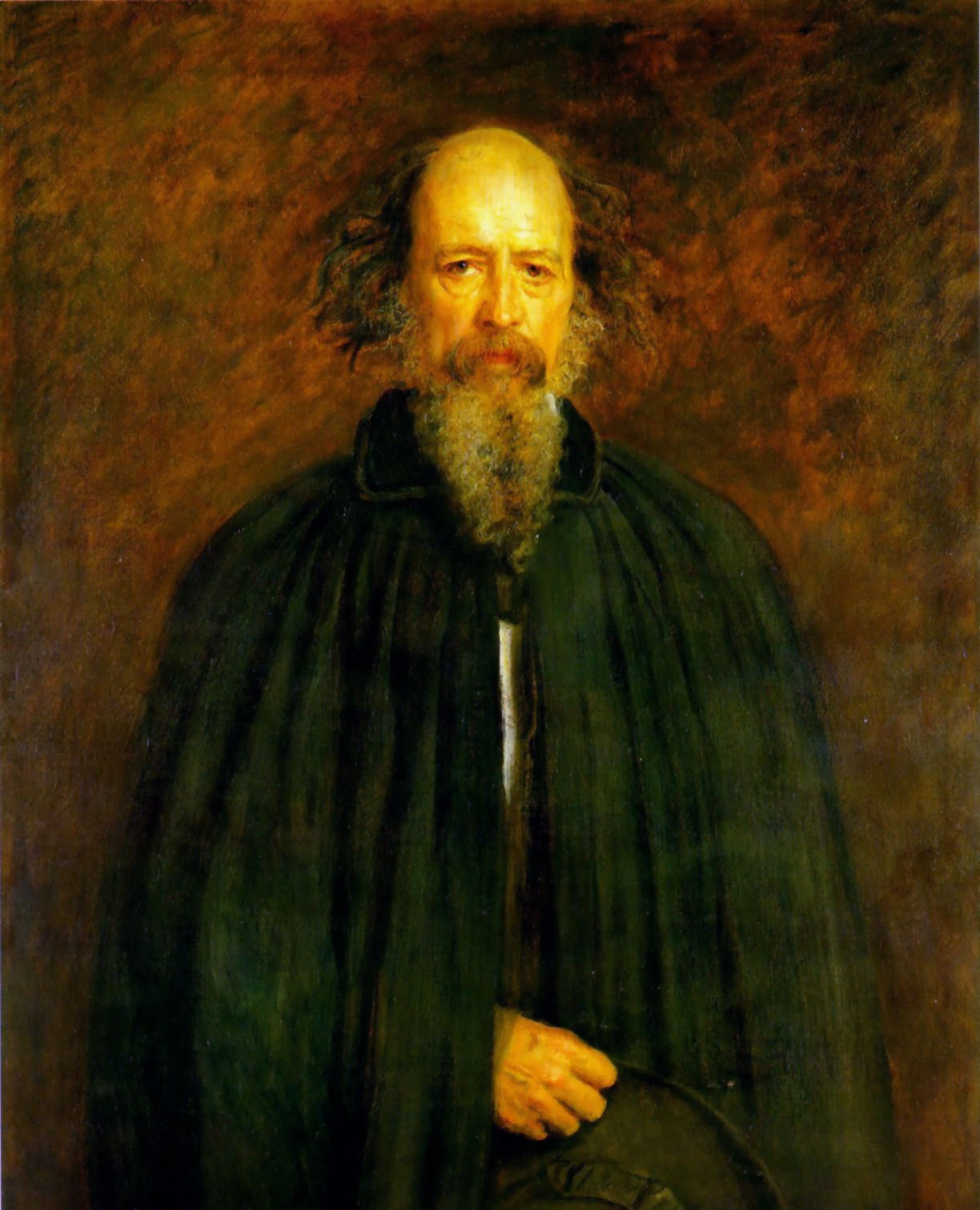
John_everett_millais_portrait_of_lord_alfred_tennyson

idylls1859

Even before Idylls, Tennyson had been interested in writing about King Arthur’s world, producing the poem “The Lady of Shalott” in his Poems (1833, revised version 1842), in this poem, a lady under a curse sees, from her tower, Sir Lancelot riding by, and falls in love with him without ever meeting him. What happens next was what brought us to write this posting.

Because it reminded us of Boromir.

At the beginning of The Two Towers, Aragorn finds the dying Gondorian sitting, with his back against a tree, and, scattered around him, and “Many Orcs lay slain, piled all about him and at his feet.” (The Two Towers, Chapter 1, “The Departure of Boromir”) When Legolas and Gimli join Aragorn, they decide upon a hasty, but they hope, appropriate burial.

“ ‘Then let us lay him in a boat with his weapons, and the weapons of his vanquished foes,’ said Aragorn. ‘We will send him to the Falls of Rauros and give him to the Anduin. The River of Gondor will take care at least that no evil creature dishonours his bones.’” (The Two Towers, Chapter 1, “The Departure of Boromir”)

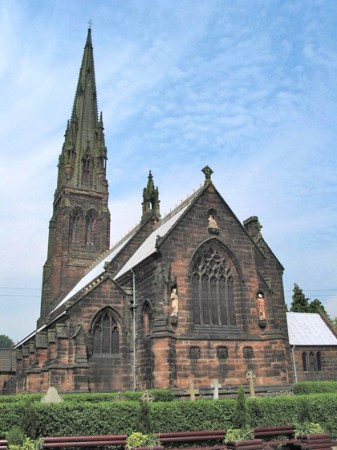
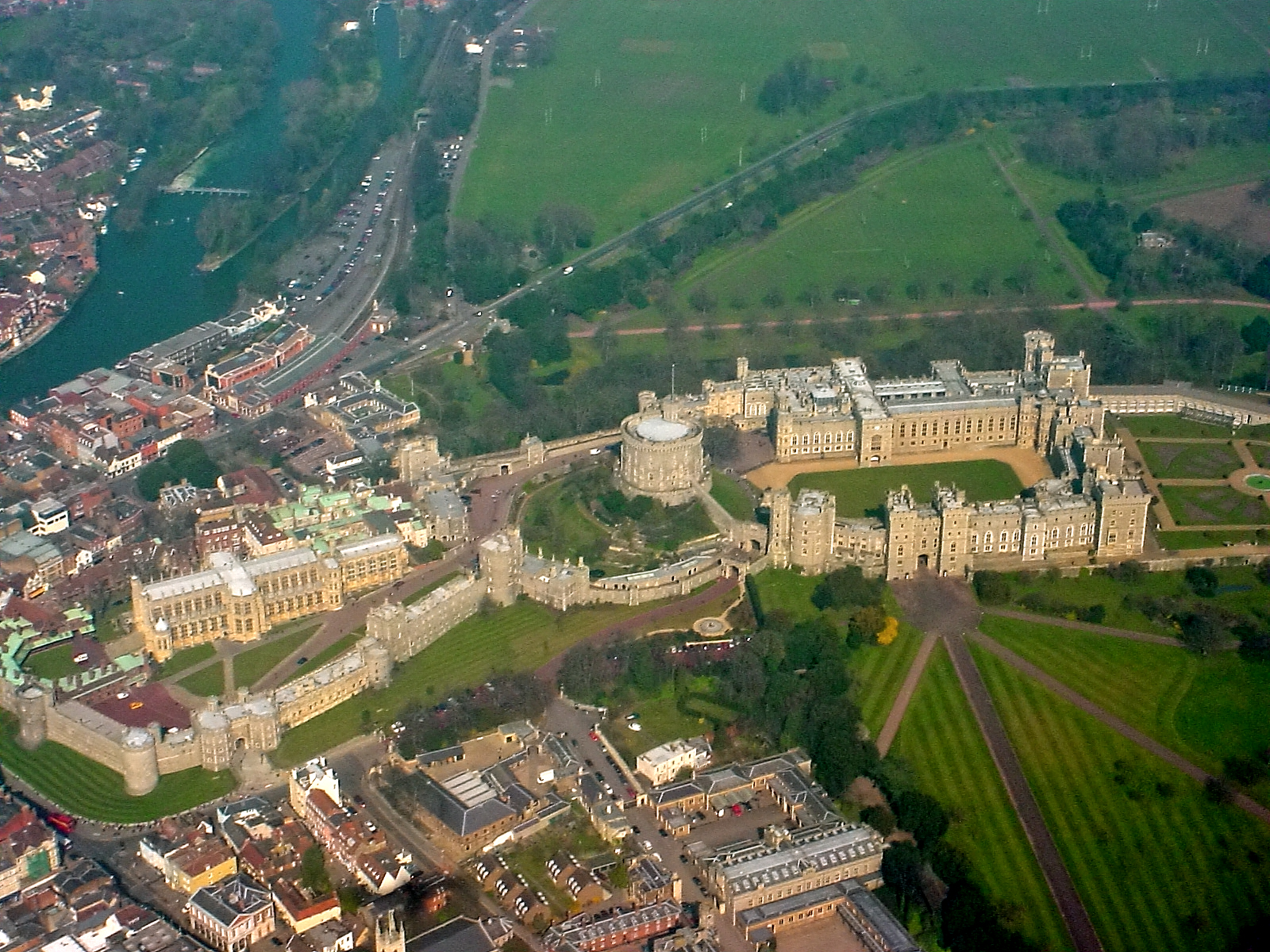
In other burial scenes of important people in The Lord of the Rings, we see that the Kings and Stewards of Gondor are laid to rest in special vaults, rather like medieval and later English kings buried either in St. George’s chapel at Windsor or in Westminster Abbey.

tombofthestewards

Windsor_Castle_from_the_air

Westminster_Abbey_-_Thomas_Hosmer_Shepherd

The Kings of Rohan lie beneath a series of mounds just before Edoras,

simbelmyne_mounds

like those of the Silla kings of Korea at Gyeongju (57BC-935AD).
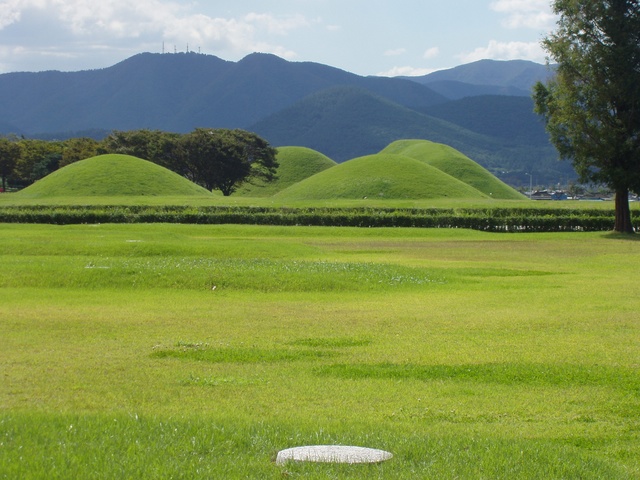
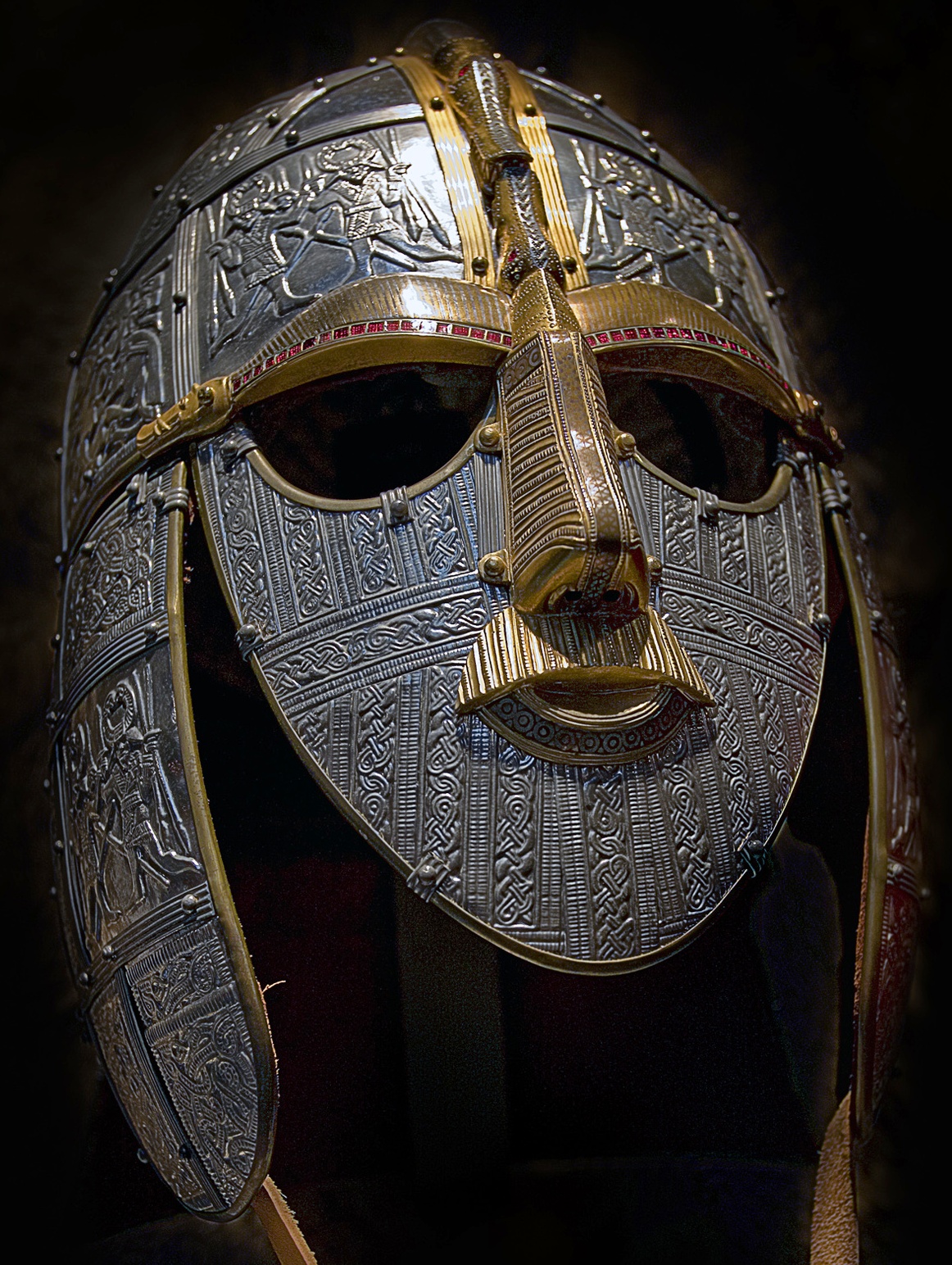
Or like the sort of ship burials of which Tolkien must have read in the newspapers of 1939, the famous Sutton Hoo grave.

ship

From which came treasures like this helmet (with its reconstruction).
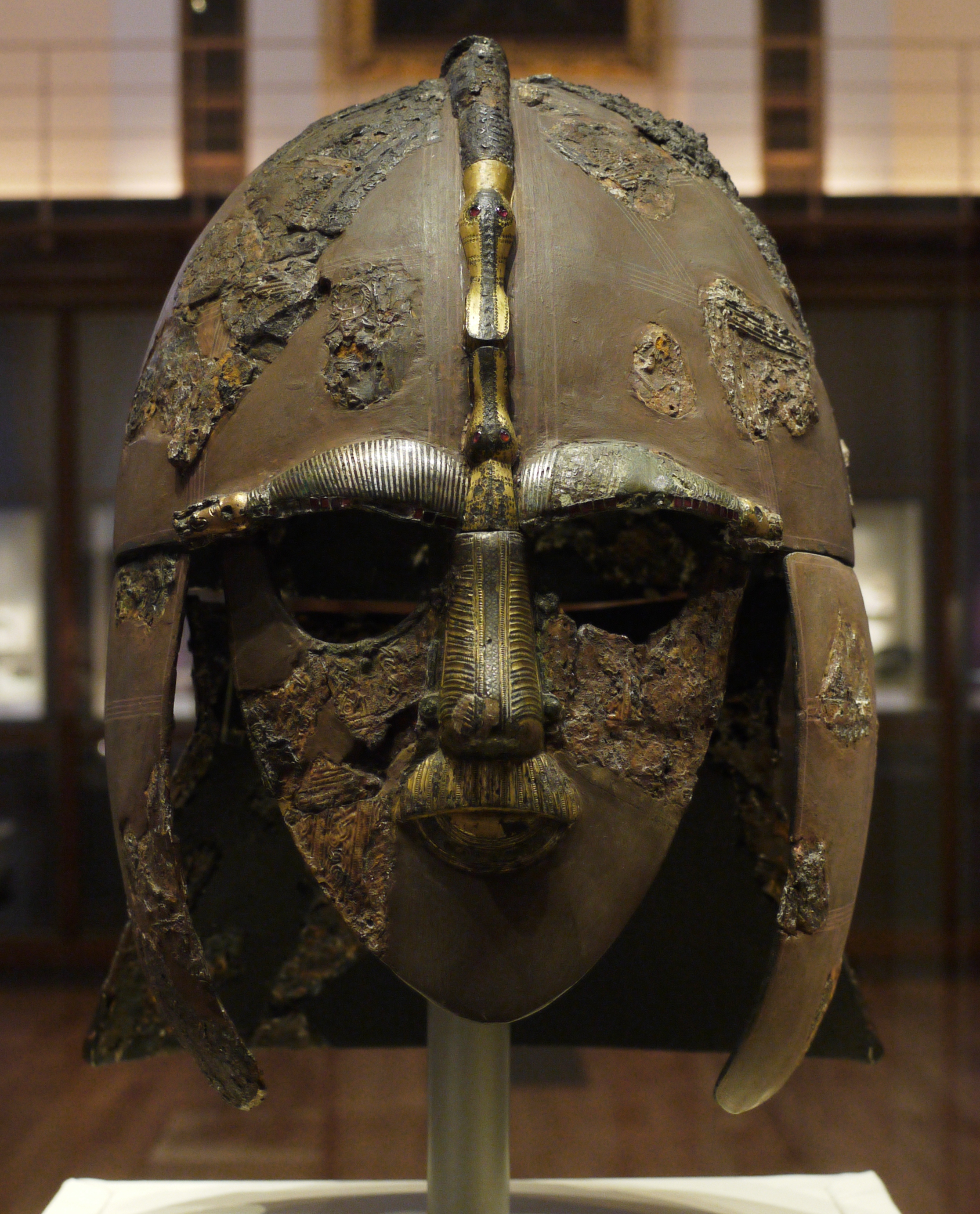
Sutton_hoo_helmet_room_1_no_flashbrightness_ajusted

Sutton_Hoo_helmet_reconstructed

A number of ship burials of northern European upper class people survive, all more or less in the same pattern: the ship is dragged to a spot where it is filled with the deceased, occasionally accompanied by others and even animals, and grave goods of a high quality, then a mound is built over it. The deceased may have been cremated beforehand, but not necessarily. There is a well-known description of this process by an Arab traveler, Ibn Fadlan. (for a translation of this with copious annotations, see James E. Montgomery, “Ibn Fadlan and the Rusiyyah”, Journal of Islamic and Arabic Studies 3, 2000—available on-line by googling “Ibn Fadlan and the Rusiyyah”)

Here’s an 1883 reconstruction of one part of that process by the Polish painter Henryk Siemiradski.

Funeral_of_ruthenian_noble_by_Siemiradzki

In contrast, the image of the deceased being placed in such a ship, the ship being launched, and then torched, would appear to be a Hollywood popularization, perhaps originating with the 1958 movie, The Vikings, of something rare (or at least difficult to document).

vikingsposter

At the conclusion of this film, a major character is given this treatment.

Vikiing Funeral - The Vikings burning ship

(That the Victorians were aware of this alternative can be seen in this 1893 painting by Sir Frank Dicksee.

dicksee1

Dicksee had based this painting not on a scholarly source, but upon a lecture by Thomas Carlyle, “The Hero as Divinity. Odin. Paganism: Scandinavian Mythology”, which he would have found in Carlyle’s On Heroes, Hero-Worship, and the Heroic in History. Carlyle very loosely cites “Snorro” for his description of such an event, by which he means Snorri Sturluson, author of the Prose Edda)

But this brings up back to “The Departure of Boromir”—and to Tennyson.

In “The Departure of Boromir”, as we have seen, Boromir is placed into one of the Elven boats.
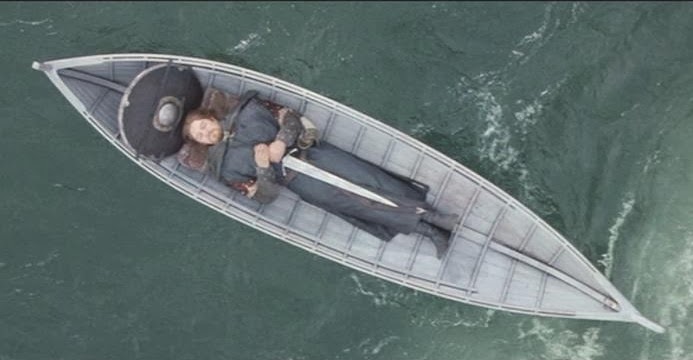
(FOTR) Boromir Dead in Boat

The three companions tow the boat as close to the Falls of Rauros as they can, then cast it loose to be carried over the Falls.
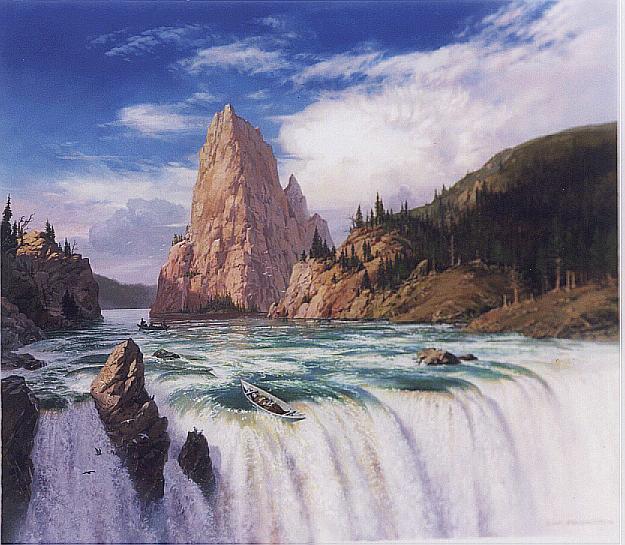
boromir_funerals

The companions, of course, are pressed for time: Frodo and Sam have gone one direction, Merry and Pippin have been carried off in another and there isn’t time, they feel, to bury Boromir or to build a cairn over him. As they have boats and there is the river below them, the method chosen seems a natural one, but we wondered if the author didn’t have Tennyson’s model in his mind, as well.

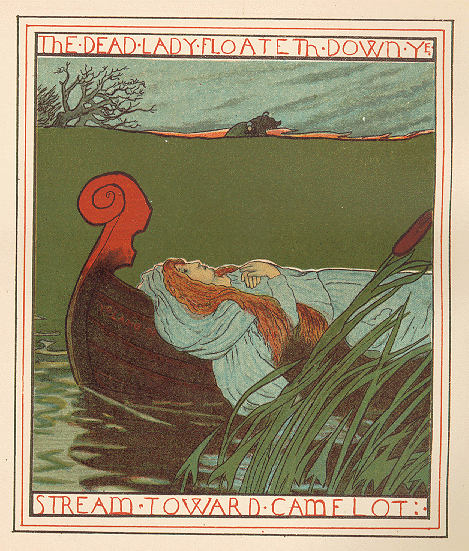
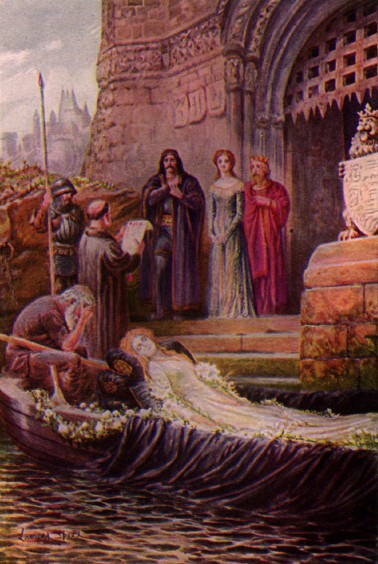
In “The Lady of Shalott”, after seeing Lancelot through her window (or in a reflection in the 1842 version of the poem), the Lady places herself in a small boat, with note in hand, and dies on her way down the river on the way to Camelot, apparently of a broken heart (as the backstory, appearing as early as the 13th century, tells us).
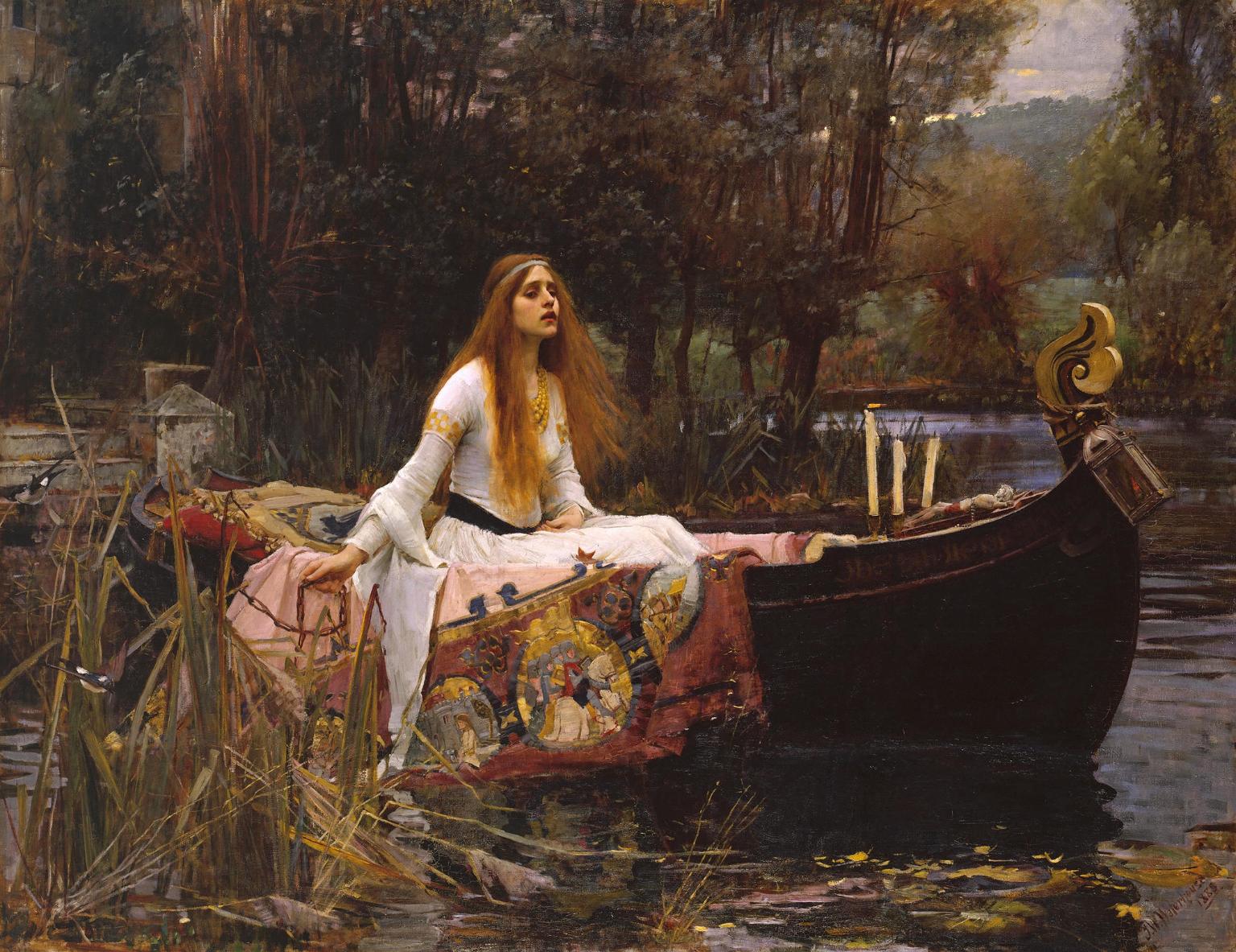
The Lady of Shalott 1888 by John William Waterhouse 1849-1917

robertson-the-lady-of-shalott

Not only would the poem (which has a rather catchy rhythm) have been readily available, but there were a number of paintings and engravings illustrating the story, practically from the time of the 1842 version.

Lady_of_Shalott_edmo lady1 lady2

lady9


lady10


lady13


lady14

lady15

This is not so dramatic as going over the falls and her death is pale in comparison to multiple arrow wounds, but there is that rhythm, the image of the body in the boat going downstream, and the popularity of the poet—plus the numerous illustrations. We’ll include a link to the poem so you can judge for yourself: was this a possible influence on JRRT?

Thanks, as always, for reading.

MTCIDC

CD
The Return of the Who.2?

28 Wednesday Oct 2015

Posted by Ollamh in Fairy Tales and Myths, Heroes, Imaginary History, J.R.R. Tolkien, Narrative Methods, Villains

≈ Leave a comment

Tags

Aragorn, Aslan, C.S. Lewis, Catholicism, Gondor, Hobbits, Jadis, Medusa, Middle-earth, monotheism, Narnia, Oxford, religion, Sauron, secular, The Bird and the Baby, The Chronicles of Narnia, The Eagle and the Child, The Hobbit, The Inklings, The Lamb and Flag, The Lord of the Rings, the Pevensies, The Return of the Ring, The White Witch, Tolkien, White Tree

Dear Readers,

Welcome, as always.

This posting is a continuation of our last, in which we made a brief attempt to think about what the title “The Return of the King” might have meant for its author in his time.

In this posting, we want to expand that meaning from a secular king to one with more religious overtones.

We ourselves, as we’ve said before, are World Civ people, believing that all people in all times and places are and should be of interest and value to everyone. We are also pan-spiritual, thinking with Gandhi that, “I believe in the fundamental Truth of all great religions of the world.”

In the case of Tolkien, this meant Catholic Christianity, a form of monotheism. Of religion and The Lord of the Rings, he wrote in 1953:

“The Lord of the Rings is of course a fundamentally religious and Catholic work; unconsciously so at first, but consciously in the revision. That is why I have not put in, or have cut out, practically all references to anything like ‘religion’, to cults or practices, in the imaginary world. For the religious element is absorbed into the story and the symbolism.” Letters, 172.

He adds to this, in a letter to Houghton Mifflin, in 1955, that “It is a monotheistic world of ‘natural theology’. (Letters, 220). At the same time, however, he adds “I am in any case myself a Christian; but the ‘Third Age’ was not a Christian world. Letters, 220.

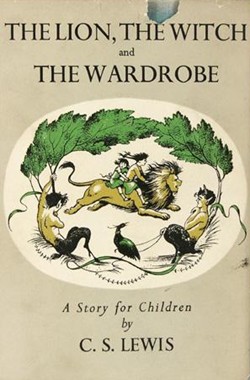
And yet we would suggest that there is not only more of a Christian theme, but also a Christian parallel with a book written at about the same time as the later stages of The Lord of the Rings and published slightly before it. This is C.S. Lewis’ The Lion, the Witch and the Wardrobe (1950).

TheLionWitchWardrobe(1stEd)

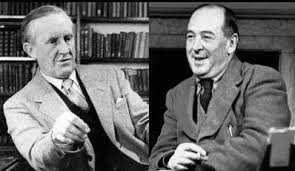
As is well known, both Lewis and Tolkien

jrrt and csl

were members of a literary group in Oxford, the Inklings.

draft_lens9242861module102711761photo_1274835984eagle_and_child_pub_inkli

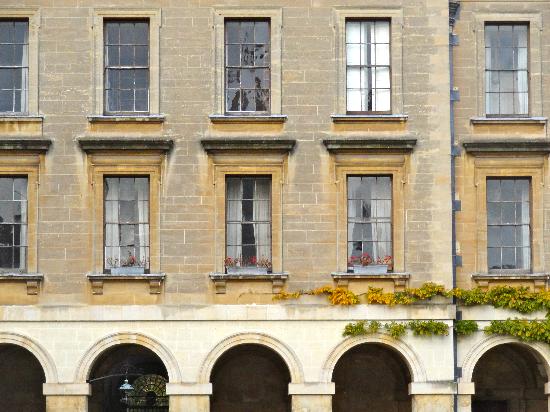
Lewis and Tolkien formed part of the permanent core, with other members coming and going over the years (1933-1949).   The meetings were held in Lewis’ rooms at Magdalen College,

magdalen room-used-by-cs-lewis

as well as at two local pubs, The Eagle and Child (called locally “Bird and Baby” or just “Bird”)

Birdandbaby

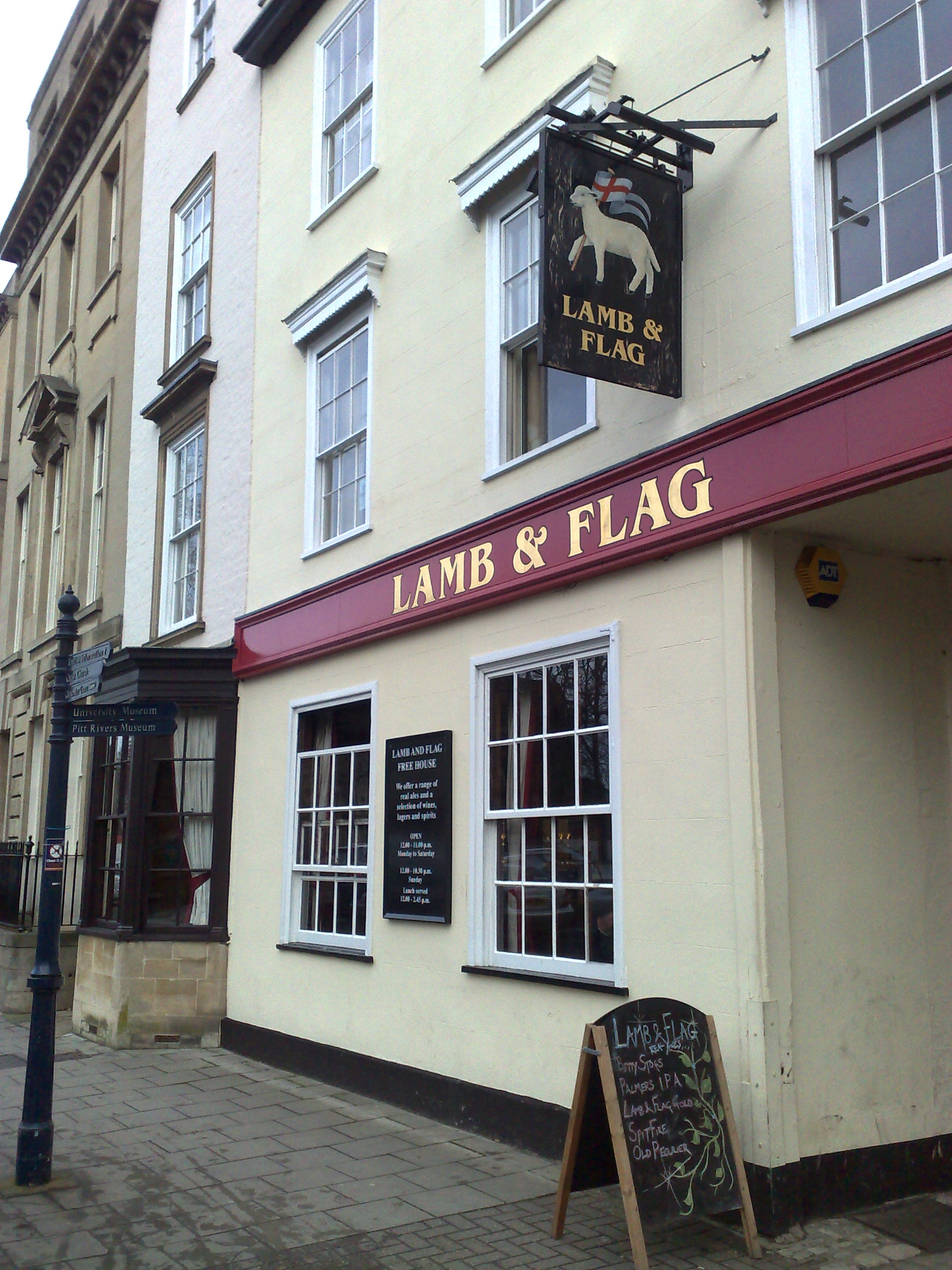
as well as The Lamb and Flag.

Lamb-and-flag-pub-oxford

The purpose (besides refreshments) was literary discussion, both of others’ works and of their own, and an important feature was the reading aloud of works in progress. Lewis had been very supportive, both of The Hobbit and The Lord of the Rings, but Tolkien had not been so enthusiastic in return. All the same, we would suggest that various elements of Lewis’ The Lion, the Witch and the Wardrobe and events around Gondor in Tolkien’s The Return of the King at times bear strong similarities.

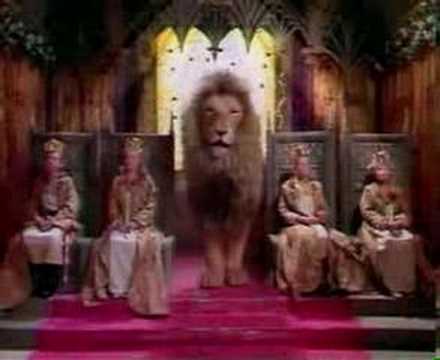
In Lewis’ book, the main protagonists are four children, the Pevensies.

childrenaslanbbc

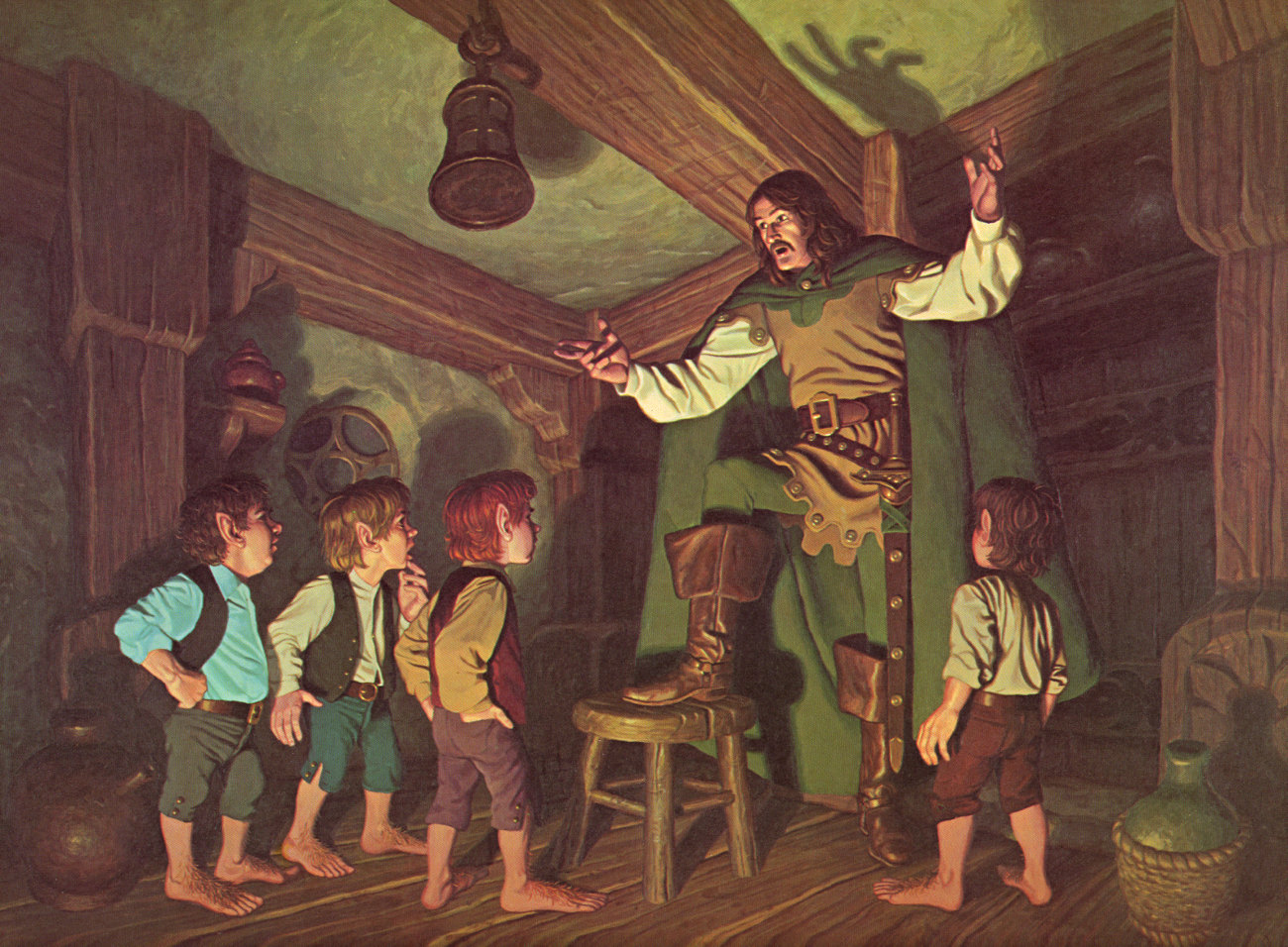
In Tolkien’s, there are four grown Hobbits, often mistaken, beyond the borders of the Shire, for children.

hildebrandthobbits

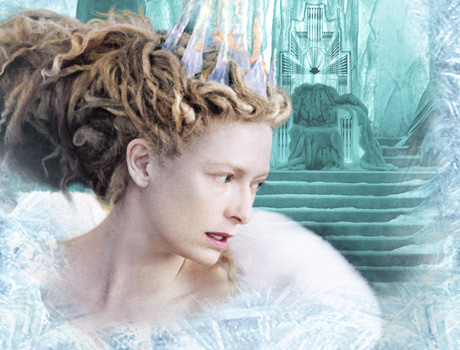
Both groups are on an errand which they barely understand and are faced with a supernatural enemy, the White Witch for the one, Sauron for the other. (There seems to be a lot of mirroring in all of this: the White Witch is already in Narnia and must be driven out. Sauron is outside Gondor and wants to get in, for example. The White Witch’s name is “Jadis”, by the way. Undoubtedly Lewis’ little linguistic joke: jadis in French means “formerly”, suggesting that even from the first time she appears, she’s already on her way out.)

wwbbc

main_1-Greg-Hildebrandt-Signed-Sauron-The-Dark-Lord-Limited-Edition-34x23-Giclee-PristineAuction.com

(Notice, in the movie version of Jadis, the strong similarity between her and the Medusa. In fact, Jadis turns her enemies, when she can, to ice.)

jadis1

bernini medusa

frozenmrtumnus

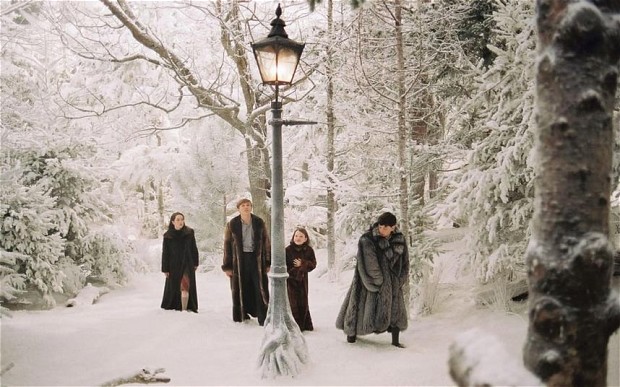
Before the current world of Narnia, to which the children come, there was a king who had been somehow ejected a century before. In Middle Earth, there has been no king in Gondor for ten times that. In Narnia, there has been winter for that century.

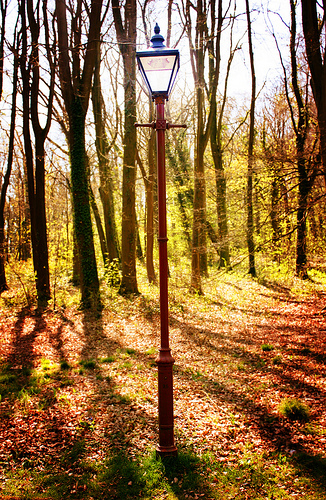
winteratthelamppost

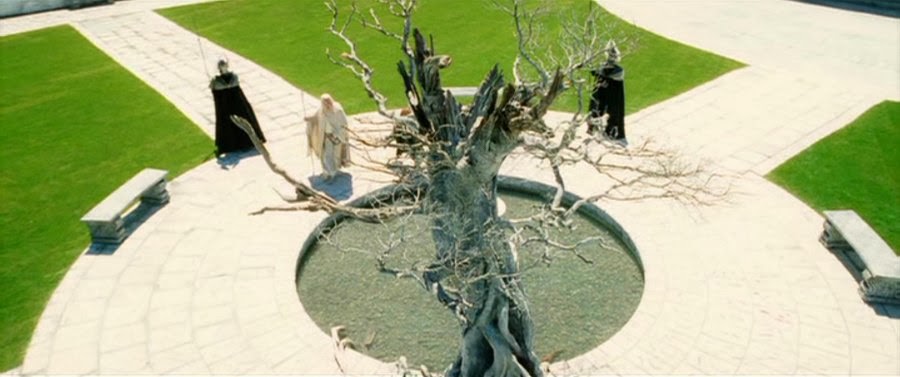
In Gondor, in Middle Earth, its symbol of growth and stability, the White Tree, has withered and died.

WhiteTreeGondor

When the Pevensie children have been involved in the defeat of the White Witch, they will rule Narnia in the place of the true king, the lion Aslan.

the-chronicles-of-narnia-the-lion-the-witch-and-the-wardrobe-wallpaper-the-chronicles-of-narnia-the-lion-the-witch-and-the-wardrobe-poster_590x384_23014

For about a thousand years, stewards ruled Gondor in place of the king. (Another example of mirroring.)

denethor

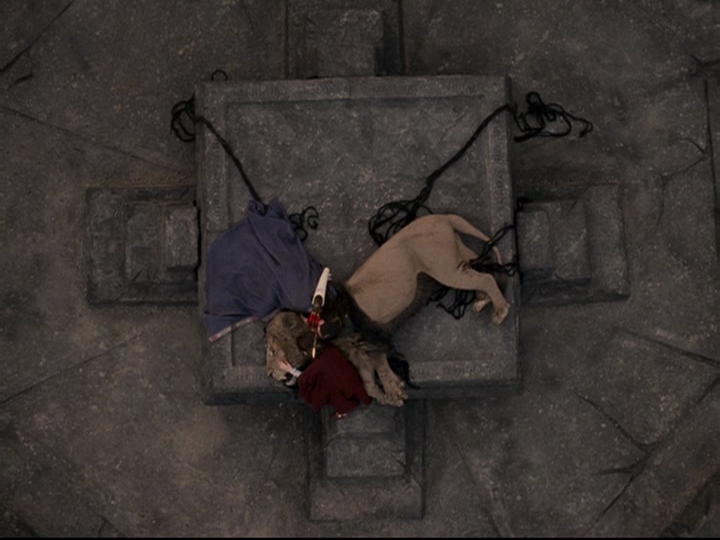
When Lewis’ Aslan returns, it is from death, having sacrificed himself to save one of the Pevensie children.

aslandead

Thus, Aslan, in effect, heals himself. When the king of Gondor, Aragon, appears, he heals others. (Tolkien would probably associate this with the old English custom of having the monarch touch people attacked with a disease called scrofula, or “the King’s evil”. We include a picture of Queen Mary—1516-1558—doing so.)

Queen_Mary_I_curing_scrofula_Levina_Teerlinc_16th_C

healingeowyn

When Aslan appears, spring returns to Narnia.

springinnarnia

When Aragorn claims the throne, he and Gandalf discover a sapling of the old tree on Mindolluin, bring it down, and plant it and it soon flowers.

whitesapling whitetreebeginstoflower

We’re sure that there are other parallels, dear reader: can you think of any?

Thanks, as always, for reading this.

MTCIDC

CD

It Will Have To Be Paid For!

12 Wednesday Aug 2015

Posted by Ollamh in Economics in Middle-earth, J.R.R. Tolkien, Maps

≈ Leave a comment

Tags

Asia Minor, Bilbo, Bronze, Chinese, Coinage, Currency, Deagol, Egyptians, Germanic, Gondor, Greeks, Isengard, Italy, Middle-earth, Moria, Pennies, Rohan, Roman Coins, Roman Roads, Romans, Saruman, Shire, Silver, Smeagol, Sumerians, Theodric, Tolkien, Trade, Treasure

Dear Readers,

Welcome, as always!

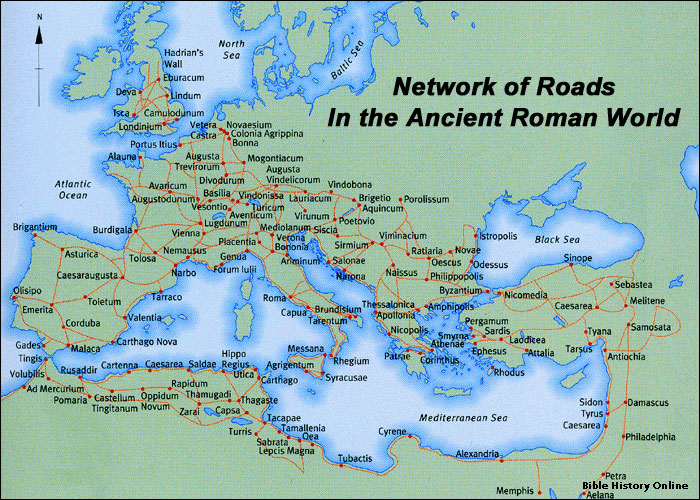
We recently wrote about Saruman and his pipeweed trade along the North-South and Great East Roads, and concluded that those roads reminded us of Roman Roads.  Looking at road networks from both Rome and Middle-earth, we see both as just that, networks, lines of communication which travel to and from central points.

roman-empire-roads-map9

middle-earth-map-roads

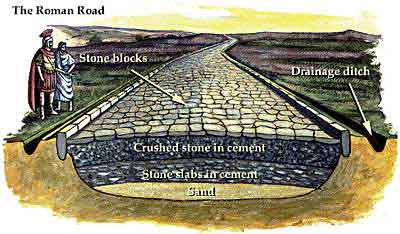
The roads of Middle-earth don’t appear to be so elaborately constructed and paved, of course, but then, at least for many centuries before The Lord of the Rings, there had been no central authority to maintain the system.

Roman Road

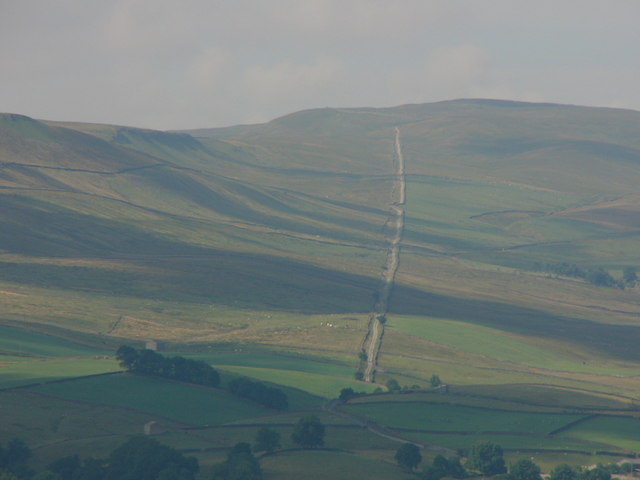
Although the idea of a Roman road—especially one that is incomplete or ruinous–

roman-road-bainbridge-geograph-e1400883247896

gives us a similar image.

But there’s still something missing—Saruman has roads and connections, but how would he have paid for the pipeweed? He could have used a barter system, although that would mean understanding what it would be that he might use—raw material from the mountains? Some sort of manufactured goods made at Isengard? This could certainly be so, if we’re thinking of Middle-earth as a place set in pre-currency times, such as the Sumerians and the Egyptians, who managed their extensive trade just fine without a single coin.

Grain-Goddess-small MonetaryEgyptian

And we could just leave it at that, but then there’s a clue in the first chapter of The Fellowship of the Ring which suggests that the actual commercial system is based upon currency.

“When the old man, helped by Bilbo and some dwarves, had finished unloading, Bilbo gave a few pennies away…” LOTR 25

Bilbo is rumored to have treasure hidden away in his hobbit-hole, with much speculation from all,

“’There’s a tidy bit of money tucked away up there, I hear tell,’ said a stranger… ‘All the top of your hill is full of tunnels packed with chests of gold and silver…’” LOTR 23

And the Shire isn’t the only place where pennies are used—when Sam wants to purchase Bill the pony in Bree,

“Bill Ferny’s price was twelve silver pennies; and that was indeed at least three times the pony’s value in those parts.” LOTR 175

This indicates a standard value based upon that currency, which one assumes was universal (with a tone in the text which implies that everyone might share that opinion), and old enough that it was the accepted modus for buying and selling. As Tolkien himself once wrote:

“I am not incapable or unaware of economic thought; and I think as far as the ‘mortals’ go, Men, Hobbits, and Dwarfs, that the situations are so devised that economic likelihood is there and can be worked out…” LT, L.154 P.196.

Thus, although he was clearly aware of such economic transactions, he didn’t need them for a plot and Merry and Pippin’s food and drink–and smoke–are simply there–with the implication that Saruman’s reach is longer than anyone has assumed.

In fact, there are very few scenes where money is needed at all—the Prancing Pony is the only inn they come across on the road, and the Fellowship otherwise camps out until they are taken in at Lorien, Edoras, and Gondor, and a guest/host relationship becomes a major part of the story. We’ve actually even seen this sort of thing near the very beginning of the story, when Frodo becomes Elf-friend to Gildor, and is awarded provisions (and a hearty breakfast) for their journey. 

We have only a little knowledge of the commercial world of Middle Earth, as you can see, and no description of “pennies”, except that some are silver.  What might they have looked like?  In our earlier essays, we’ve used parallels from the history of our earth, just as JRRT might used road systems which could easily have been influenced by the Roman roads which once connected so much of Britain, to build the roads in Middle-earth. Some of those Roman roads, even in his time, were still visible–some even still used (although usually paved over).

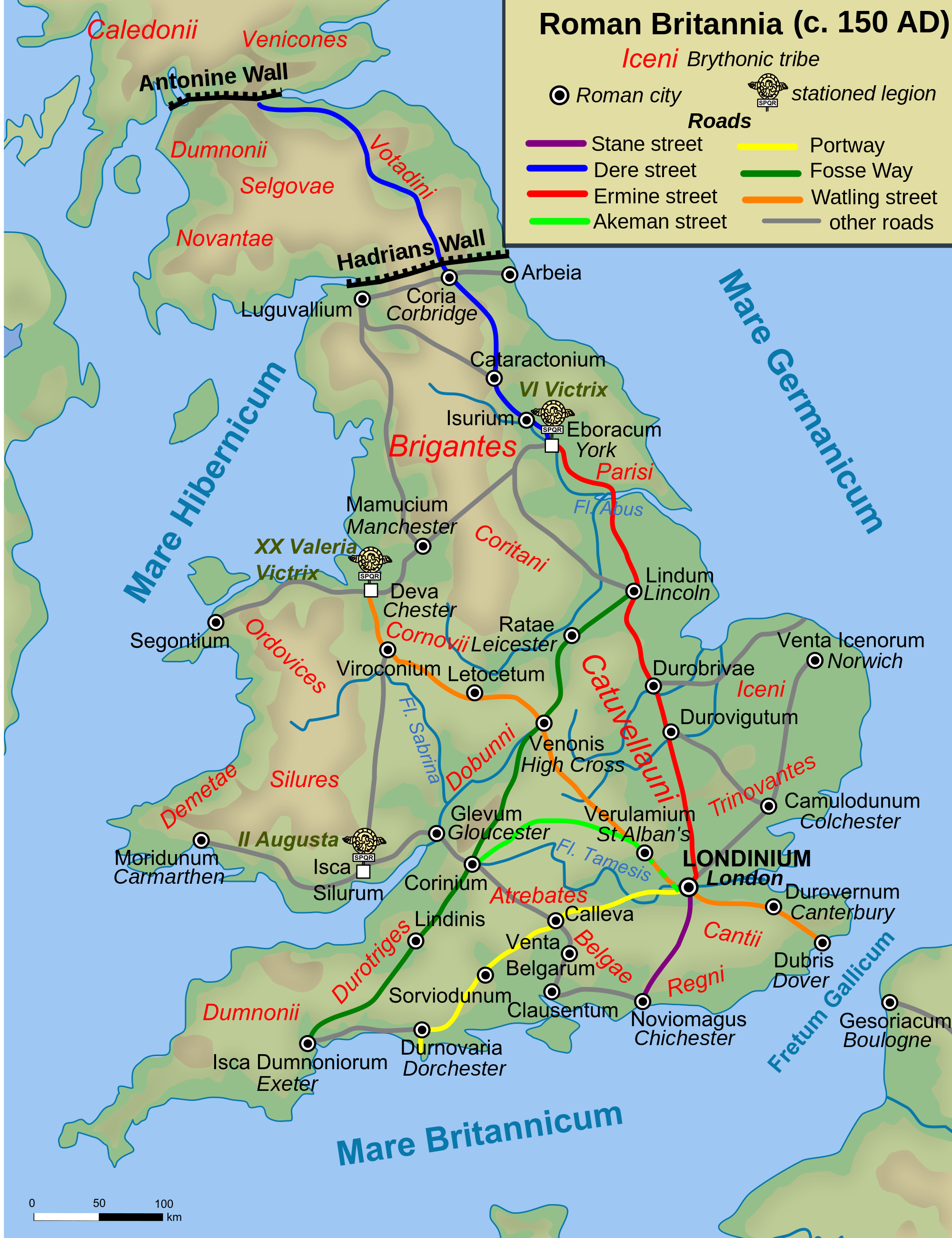
2000px-Roman_Roads_in_Britannia.svgRomanRoadBritain2

Using our parallel method, we turn to Roman coinage.

RomanSilverPenny

We’re dealing with silver coinage in northwest Middle-earth, where Saruman’s imports come from, and if we’re thinking about Rome, we’d be looking at a time where coinage had already existed. We have no idea when coins were first issued in Middle Earth–considering how complexly organized the North and South Kingdoms had been for many centuries, we would imagine that a thousand years before the events of The Lord of the Rings  probably wouldn’t be too soon.  We have a small piece of evidence from some five hundred years before, when Deagol says to Smeagol:

“’I don’t care,’ said Déagol, ‘I have given you a present already, more than I could afford.’” LOTR, 52

In Rome, silver coinage was introduced in 269 BC, courtesy of the Greeks, after the Romans had been using bronze.

RomanBronzeCoin

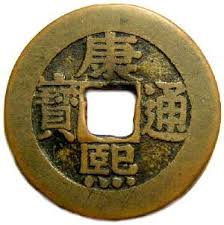
Coins originated in Asia Minor in the 6th c. BC and quickly caught on, being a convenient and highly portable way of transporting wealth—it was much easier to carry and design to designate between currencies, and the Chinese even began to manufacture coins which could be strung together.

ChineseCoin

In Middle-earth, this would make it easier to trade beyond the borders of a local market, or even the Shire–and would certainly have been accepted at The Prancing Pony.

All of this leads, however, to Questions for Further Study, as textbooks often say.  Currency needs backing—the Roman republic and then the empire backed Roman coins.  What backed those pennies in the Shire and beyond?Imagine that, in Middle-earth, the major legitimate government was Gondor—would these pennies have been originally Gondor-issued? If so, perhaps just what happened to Roman currency in late imperial times might have happened in Middle-earth—as Rome began to fall apart, semi-independent governments began to issue coins on their own, such as Theodric, the Germanic ruler of Northeastern Italy:

Theodorictriplesolidus_zps7dc7f768

Visually, they remind us–and they were certainly intended to–of imperial coins, with their images of Roman emperors.  Theodoric, even with his unusual hairstyle, meant to be seen as a new ruler for an old Rome.  Can we imagine dwarf coins, perhaps issued from the Moria mint?  And, when we remember that Mordor has tried to acquire horses from Rohan, what would Mordorian currency have looked like? And, returning to Saruman for a final time—if he paid for pipeweed in coins, did they bear a white hand?

Thanks, as ever, for reading,

MTCIDC,

CD

Ringed In

05 Wednesday Aug 2015

Posted by Ollamh in J.R.R. Tolkien

≈ Leave a comment

Tags

Anglo-Saxon, Bilbo, Deagol, Dwarves, Elves, Faramir, Frodo, Gandalf, Gollum, Gondor, Isildur, Kenning, Lorien, Men, Nazgul, Ring, Ring-bearer, Roman senator, Romans, Sam, Sauron, Silmaril, The Hobbit, The Lord of the Rings, Tolkien, Tom Bombadil

Dear Readers, as always, welcome!

permcol5tn

Everyone at all interested in the works of Tolkien knows this passage (and many could recite it by heart, we’re sure):

“Three Rings for the Elven-kings under the sky,

     Seven for the Dwarf-lords in their halls of stone,

Nine for Mortal Men doomed to die,

     One for the Dark Lord on his dark throne

In the Land of Mordor where the Shadows lie.

     One Ring to rule them all, One Ring to find them,

     One Ring to bring them all and in the darkness bind them

In the Land of Mordor where the Shadows lie.” LoTR 50.

But why a ring? Since the Ring is about power, why not something which looks like power:

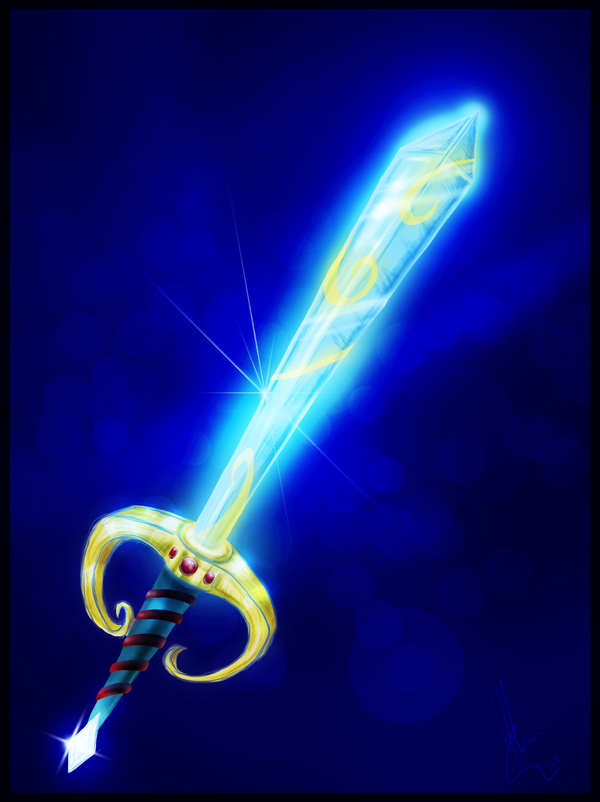
a sword, for example

ferb__s_magic_sword_by_kicsterash-d4clz45

or a crown

WingedAphroditeCrown_front

or even, considering Tolkien’s own mythology, a silmaril.

Beren_silmaril

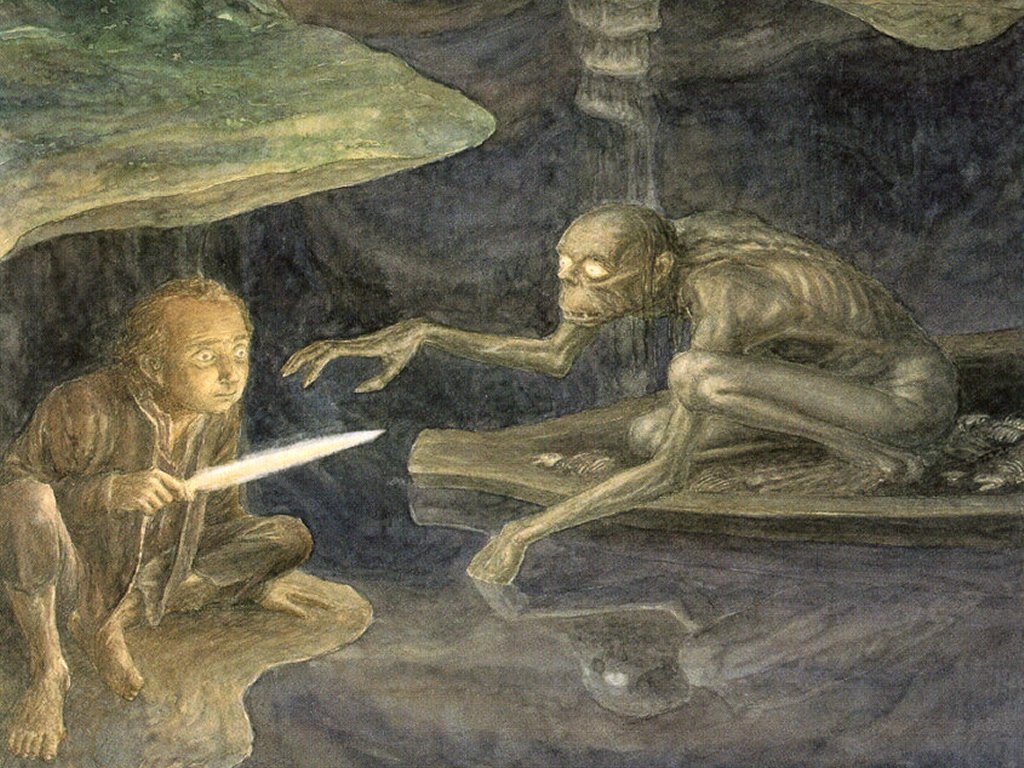
In The Hobbit of 1937, the Ring was originally simply a magic ring right out of folk and fairy tales, with apparently one gift, invisibility, for which Gollum treasures it.

Alan%20Lee%20-%20The%20Hobbit%20-%2019%20-%20Riddles%20in%20the%20dark

As is well known, Tolkien reconsidered its powers and, as The Lord of the Rings grew, the ring became the Ring, and the central focus of the sequel to the earlier book. By the beginning of the 1950s, he states (in a letter to Milton Waldman dated by Carpenter/C. Tolkien as “probably written late in 1951” LTR 143):

“the primary symbolism of the Ring, as the will to mere power, seeking to make itself objective by physical force and mechanism, and so also inevitably by lies…” LTR 160.

(by “mere” we imagine that Tolkien is using the word here in its original Latin—merus –a –um— sense of “pure/unmixed”)

Although this tells us something about the force within the Ring, it doesn’t really explain why a ring.

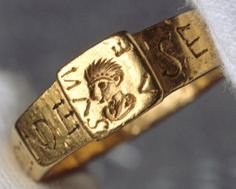
Rings are an ancient status symbol, certainly. The Romans used them as one of the ways to show the class of a person: senators wore gold ones (although there is an old story that, originally, Roman senators wore rings made of iron)

RomeSenators2romanring

and the other free classes wore any metal they chose.   Tolkien would have had a vivid idea of the inherent status in a ring from Old English, as one of the kennings (poetic metaphorical phrases) for a great lord was “ring-giver”

asring

—just as Sauron gives rings to the ancient kings and so holds their allegiance long after their natural lives should have ended.    

bwnazgul

This is echoed in “and in the darkness bind them” , which brings us back to those verses with which we began.

In them, the Ring’s powers are clearly laid out (rather like Saruman’s claimed goals, “Knowledge, rule, order”): rule, find, bring, bind.

As Gandalf tells us, the primary reason for the creation of the Ring was, in fact, to rule, both the other rings and, through them, Middle-earth and its peoples: Elves, Dwarves, Men. To do so, Sauron endowed the Ring with much of his own power, a perfect example of his arrogance, depriving himself of power he might need, clearly convinced that he would suffer no harm from its lack.

As he endows the Ring, it seems that he—intentionally?—passed on to it a small bit of his self-will. Unlike inanimate objects in our world (and we presume in Middle-earth, too), the Ring not only shows purpose, but can act upon it.

As Gandalf tells Frodo:

“A Ring of Power looks after itself…It was not Gollum, Frodo, but the Ring itself decided things. The Ring left him…The Ring was trying to get back to its master.” LotR 55.

To do so, it uses another of its powers, it brings people to use as vehicles, discarding them when they have served its purpose.

“It had slipped from Isildur’s hand,” says Gandalf (a hand already under the Ring’s control, as it couldn’t force itself to destroy the Ring when it had the chance) and betrayed him; then when a chance came it caught poor Deagol, and he was murdered and after that Gollum, and it had devoured him. It could make no further use of him: he was too small and mean…So now, when its master was awake once more…it abandoned Gollum, only to be picked up by…Bilbo.” LotR 55-56.

To acquire such vehicles, the Ring uses a third power, finding. Gandalf’s list suggests that that power entails some innate ability to sense who will be most attracted to it. They appear to be rather a wide assortment, from the heir to the throne of Gondor to two proto-hobbits. And there are also those not on Gandalf’s list: Saruman and even, to some degree, Galadriel. As for Gandalf himself, he, like the Lady of Lorien, is wise enough to avoid the ultimate temptation, as is Faramir, perhaps because, as his father accuses him, he has been Gandalf’s pupil and has acquired some of his awareness both of events and of himself.

Our list would not be complete, however, without Frodo and Sam. It is hard to imagine that the Ring has picked them: Frodo, after all, has inherited it. This doesn’t mean that he is not influenced by it, even, at the end, sounding more like Isildur than himself in his refusing to destroy it, suggesting that, even by inheritance, someone can be found, brought, and ruled. And Sam? He holds it only briefly, but surrenders it so easily that it appears to have little ultimate power over him, something which he shares with Tom Bombadil, perhaps because both are grounded—quite literally—in Middle-earth. It is no surprise that Galadriel gives him a gift for growing things and that, in his consolation of Sam, Frodo says that he will be “the most famous gardener in history” (LoTR 1029). As for Bombadil, it would appear that the same sort of protection which keeps Sam from being found, brought, and ruled keeps him safe. When he holds up the Ring and looks through it, for a moment we might see that, for him, the symbolism of the “will to mere power” means nothing and, instead, he sees it only as an empty metal band.

For others, from the Nazgul to Frodo, who never feels whole again, the fourth power, binding, has done its job and also perhaps, in doing so, answers the question, why a ring?

Heavy-6mm-D-Shape-18k-Yellow-Gold-Wedding-Ring

What better binder than a perfect circle, seemingly blank, but with a hidden message, almost a spell, and which, when put on, pulls you from the daylight world and, which, worn too long, can keep you there forever?

Thanks, as ever, for reading.

MTCIDC

CD
The Two Sieges

22 Wednesday Jul 2015

Posted by Ollamh in Heroes, J.R.R. Tolkien, Military History

≈ Leave a comment

Tags

Agincourt, Aragorn, English Longbowmen, Faramir, French Knights, Gondor, Grond, Hoth, Jan Sobieski, Lithuania, Minas Tirith, Mumakil, Nazgul, Orcs, Ottoman, Peter Jackson, Poland, Rammas Echor, Rohan, Rohirrim, Siege Towers, Stone Throwers, The Lord of the Rings, Tolkien, Vienna, Winged Hussars

Welcome, as always, dear readers!

In this posting, we’re going to make another suggestion about a model for something in Tolkien’s work.

If you read us regularly, you know that our favorite part of P. Jackson’s The Lord of the Rings is anything to do with the Rohirrim. When we rewatch favorite scenes, the charge against the Orcs outside Minas Tirith is always first on our list (and high on our general list of cavalry charges—more on those in a future posting).

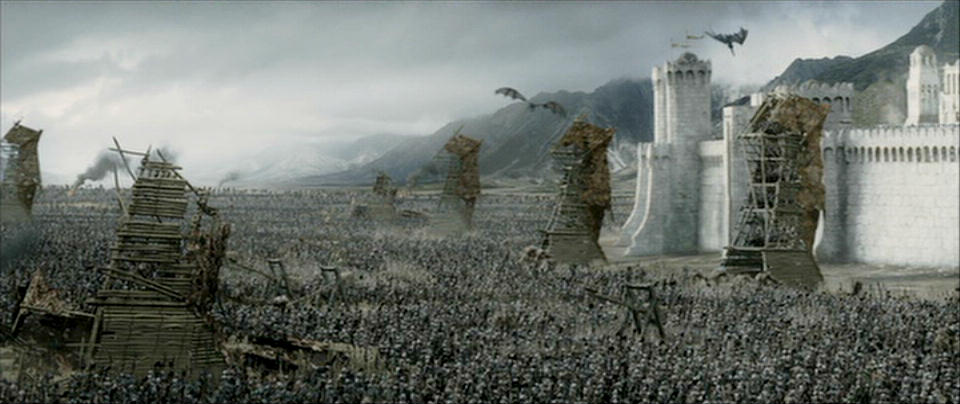
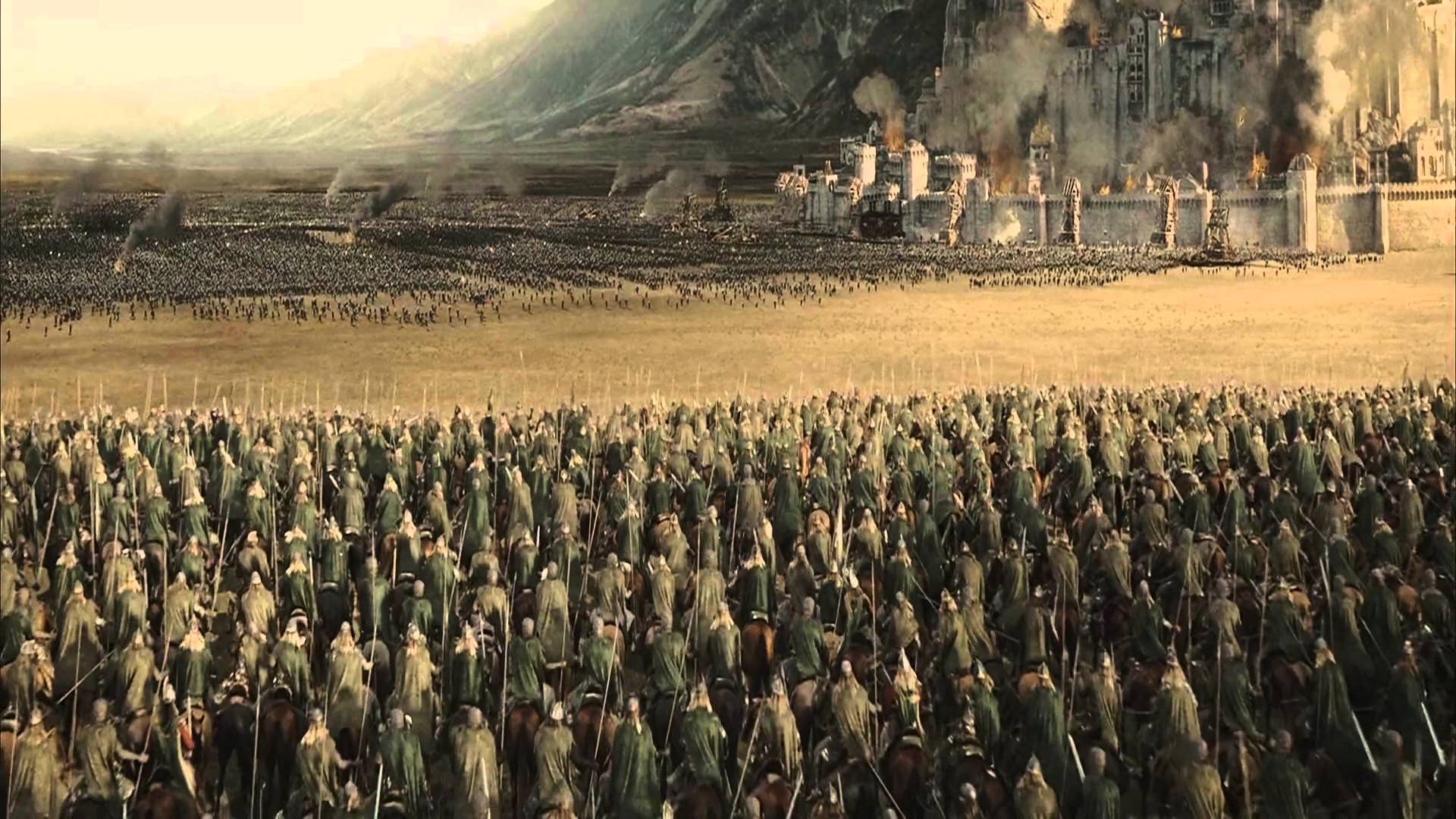
First, we see that massive Orc army marching up to the walls. (In the book, this is more dramatic: the Orcs blow two holes in the Rammas Echor, outflank the defenders, and drive them into retreat, which is where Faramir is badly wounded by an arrow.)

minas-tirith

Then they begin to attack with stone-throwers,

siege1

siege towers,

lotr-siege-towers

and, eventually a giant, flame-filled battering ram.

grond1

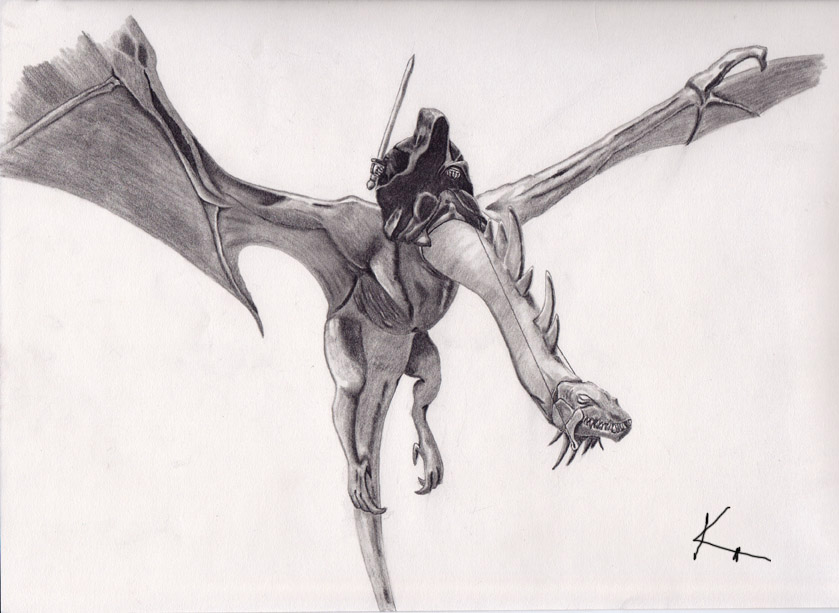
Things look increasingly desperate for Gondor as the Orcs press their attack, led by the Chief Nazgul.

witch_king_of_angmar_ii_by_dudeskindasketchy-d4d6uvd

And that’s when the Rohirrim appear.

rohirrimabouttocharge

And move to strike the Orcs from behind.

Charge_rohirrim

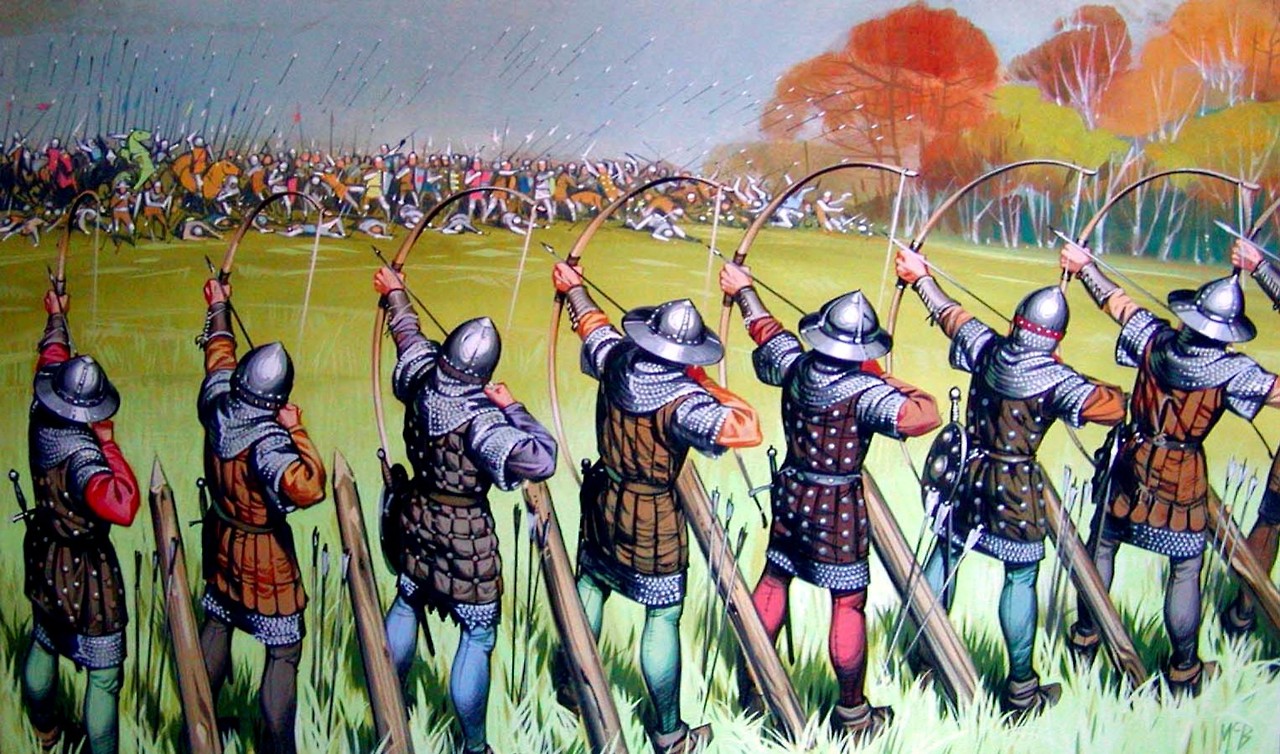
When the Orcs realize what’s happening, they try to stop the attack with bows.

archery

This immediately reminded us of the 1415 battle in which English longbowmen and their clever use defeated an army of brave French knights, Agincourt.

OLYMPUS DIGITAL CAMERA

Unlike Agincourt, however, arrows didn’t stop the Rohirrim, who sweep through the enemy—but are brought up short by the sight of a row of mumakil—giant war elephants—bearing down on them.

img-2845793-1-charge-1024x425

Seeing this scenario made us think of another attack by huge, lumbering things in a galaxy long ago and far away—

Battle_of_Hoth

The film goes on from there, including an attack by a ghost army, instead of by the actual forces brought from southern Gondor by Aragorn, but we want to back up a bit to the actual siege and another one which bears a strong resemblance to it.

For centuries, the Ottoman Turks had been expanding their dominions.

Ottoman_Empire_Map_1359-1856

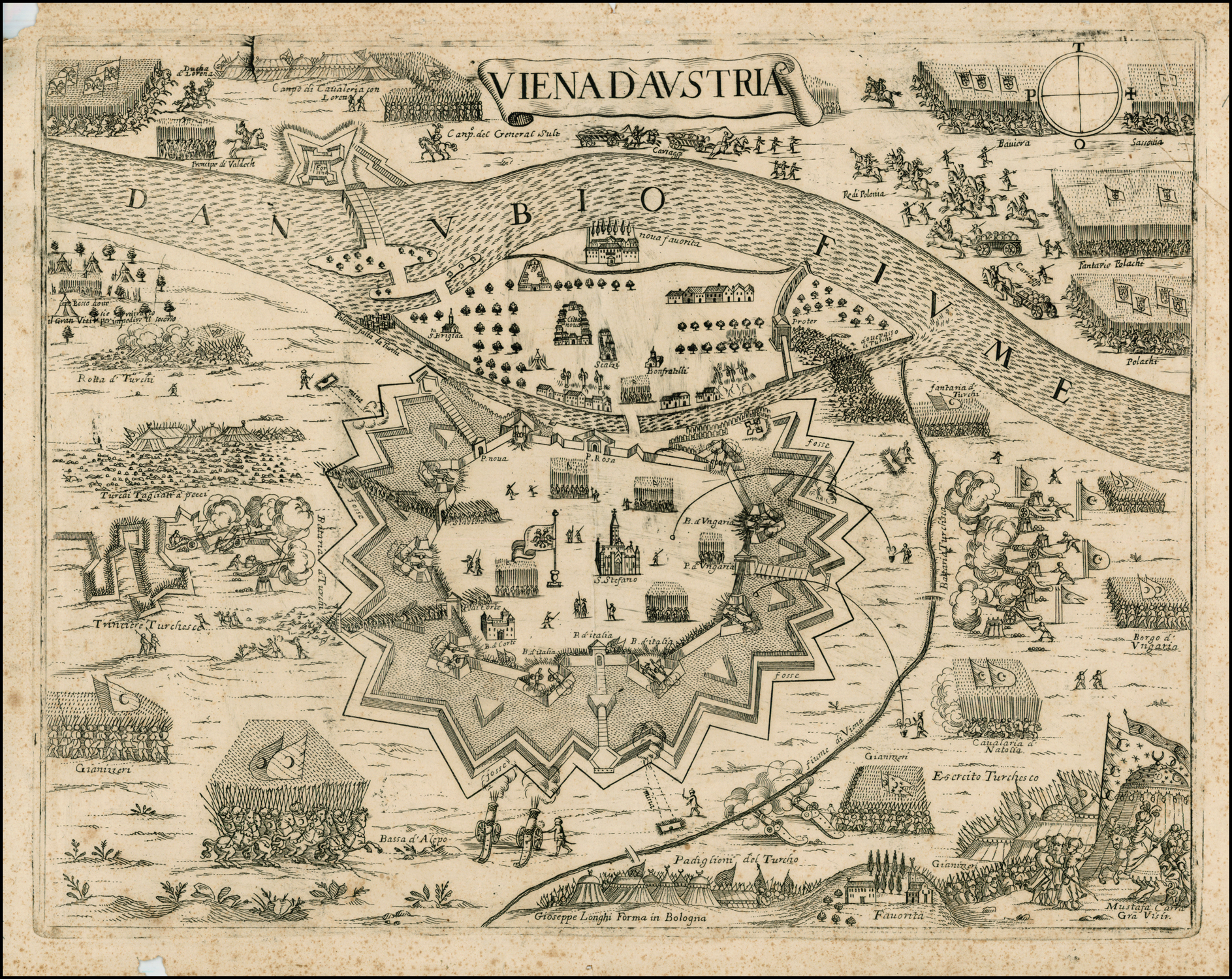
They had first reached Vienna in 1529,

Siegeofvienna1529

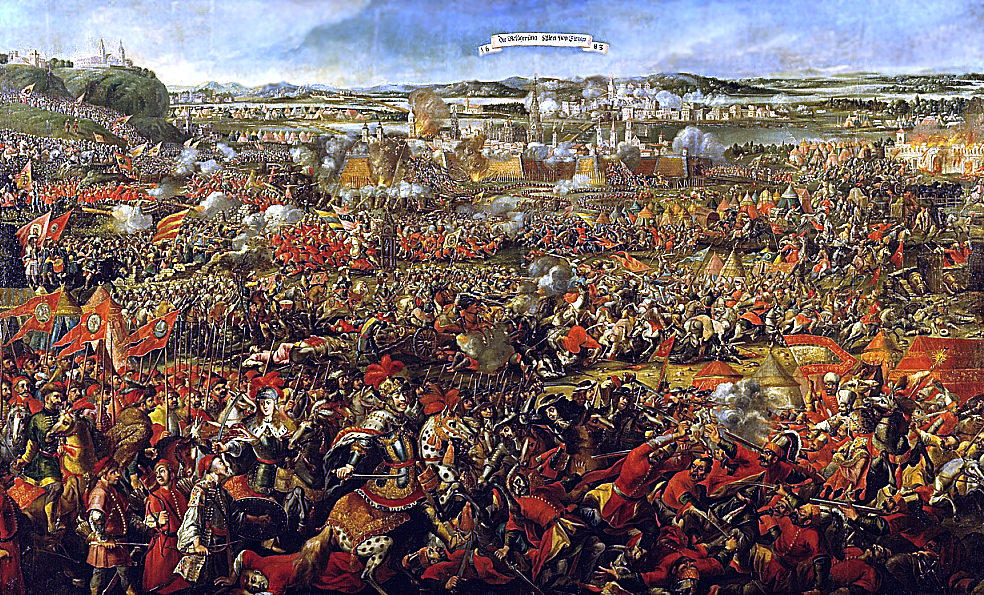
but had given up the siege. Now, however, in 1683, they were back.

Battle_of_Vienna_1683_map

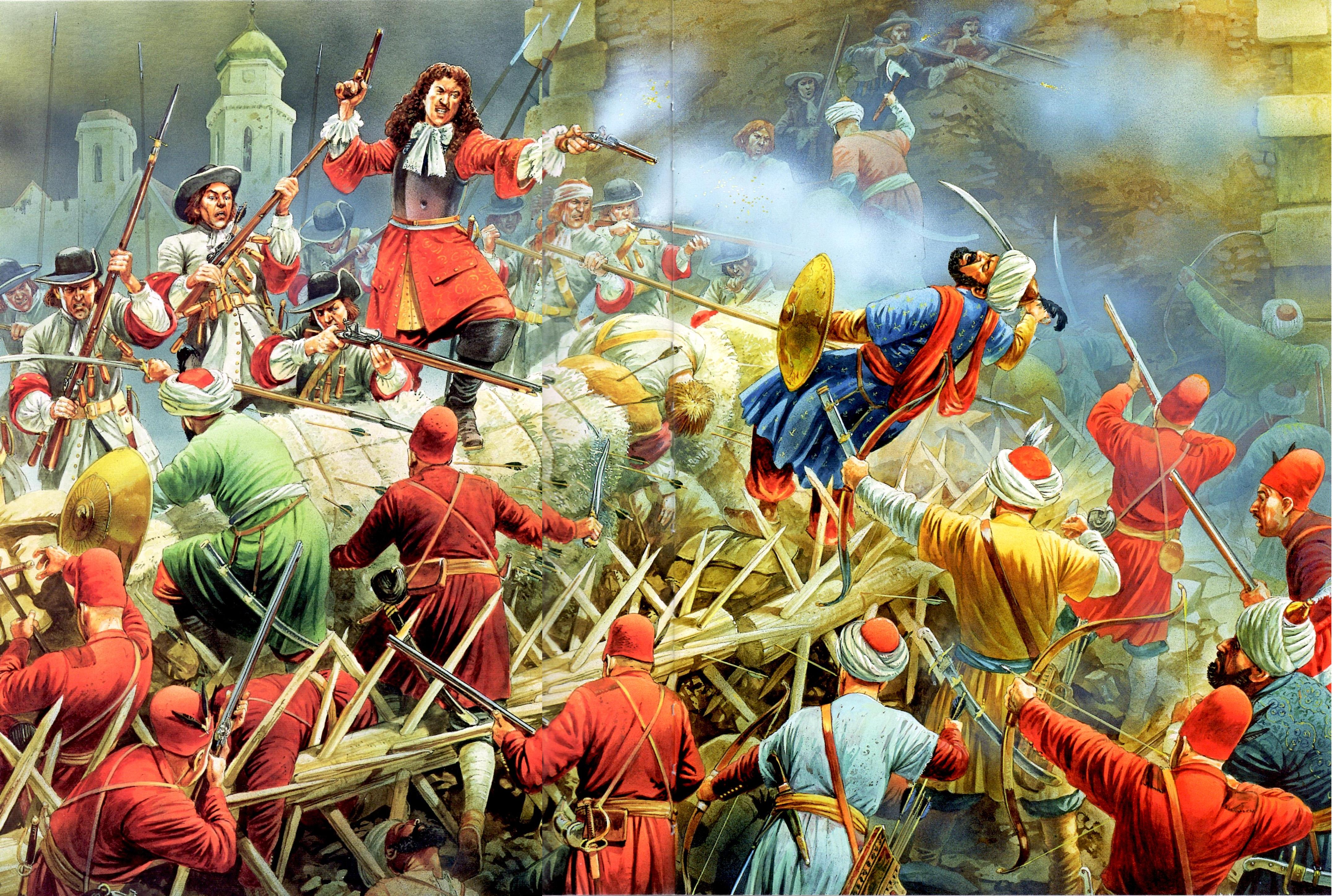
Their attacks against a dwindling number of defenders in a crumbling town

1-vienna-1683

had brought them to the edge of conquest when an army of reenforcements, including cavalry from the army of the combined state of Lithuania/Poland, had appeared. Some of the cavalry were the famous Polish winged hussars.

Battle_of_Vienna_1

Just as the Rohirrim are led by their king, Theoden, so are the Poles led by their king Jan Sobieski—

bitwa-pod-wiedniem-obraz

The reenforcements, Poles in the lead, rush upon the Turks and drive them back through their camps and out of the siege entirely.

Atak_husarii

Battle_of_Vienna_1683_11

So similar, isn’t it? No giant war elephants, ghost armies, or Nazgul, but the basic elements of siege, relieving army with cavalry led by a king attacking an unprepared enemy, and chasing off the besiegers, is nearly identical.

Tolkien was an extremely well-read man, with a strong interest in history. Was the siege and relief of Vienna somewhere in the back of his mind when he began to plan the siege of Minas Tirith?

Thanks for reading!

MTCIDC

CD

Where Did It Go– And Why?

17 Wednesday Jun 2015

Posted by Ollamh in J.R.R. Tolkien, Military History, Military History of Middle-earth

≈ Leave a comment

Tags

Arbeia, Boromir, Cavalry, Denethor, England, Faramir, Film, Gondor, Hadrian's Wall, Helm's Deep, Iliad, Minas Tirith, Offa's Dyke, Osgiliath, Pelennor, Peter Jackson, Rammas Echor, Script, The Great Wall, The Lord of the Rings, Tolkien, Wansdyke

Dear Readers,

Welcome, as always!

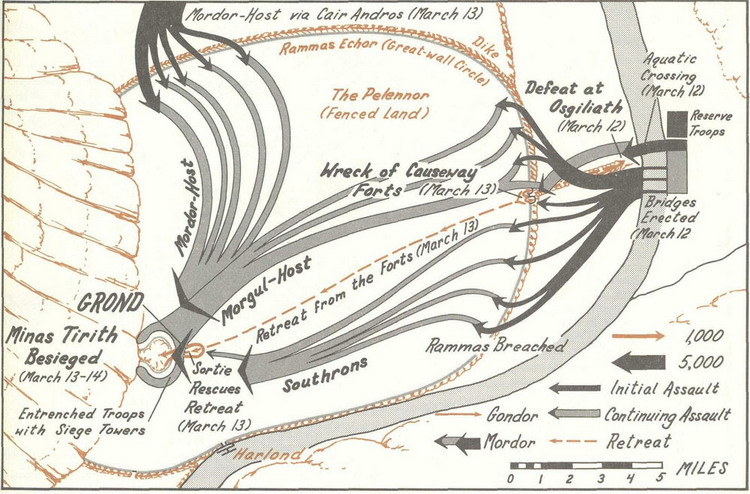
     In this post, we want to consider the Rammas Echor, which, in the original, had holes blown in it by the invading army of Sauron, but was demolished completely by the script writers for Peter Jackson’s LOTR.

The%20Siege%20of%20Minas%20Tirith

     We first meet it when Gandalf and Pippin, in their rapid journey to Minas Tirith, are briefly stopped at what appears to be a sally port in it (rather than a major gate, as Shadowfax is said to have “passed through a narrow gate in the wall” 749). Gandalf briefly trades remarks with an officer named Ingold (who appears briefly later in the story to report that the northern section has fallen, 821) before he and Pippin continue their journey.

     It is described thus:

   “Gandalf passed now into the wide land beyond the Rammas Echor. So the men of Gondor called the out-wall that they had built with great labour, after Ithilien fell under the shadow of their Enemy. For ten leagues [about 30 miles in the English system—about 48 km in the metric] or more it ran from the mountains’ feet and so back again, enclosing in its fence the fields of the Pelennor: fair and fertile townlands on the long slopes and terraces falling to the deep levels of the Anduin. At its furthest point from the Great Gate of the City, north-eastward, the wall was four leagues [12 miles—about 19 km] distant, and there from a frowning bank it overlooked the long flats beside the river, and men had made it high and strong; for at that point, upon a walled causeway, the road came in from the fords and bridges of Osgiliath and passed through a guarded gate between embattled towers… “ 750.

     With so much of Tolkien, one can find illustrations from the usual artists—the Hildebrandts, Howe, Nasmith, and Lee—but for this particular—and important—architectural feature, we haven’t discovered—so far—a single illustration.

     It’s made of stone and has evidently not been well-maintained: “Many tall men heavily cloaked stood beside him [Shadowfax], and behind them in the mist loomed a wall of stone. Partly ruinous it seemed, but already before the night was passed the sound of hurried labour clould be heard: beat of hammers, clink of trowels, and the creak of wheels.” 748 And, as mentioned above, it has gates, but, beyond that, what does it look like?

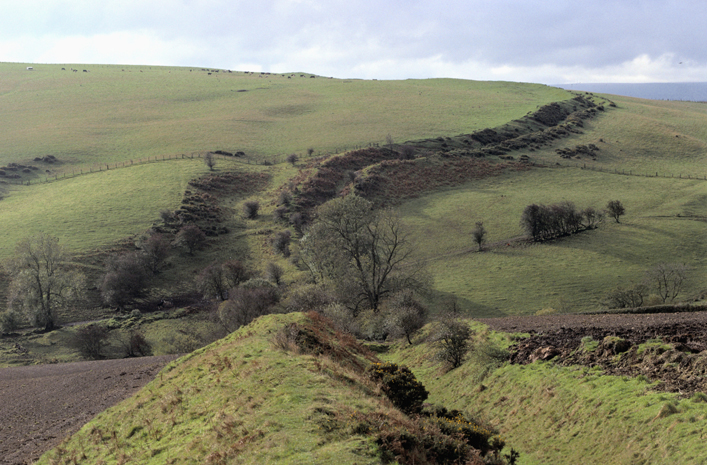
     England has a long history of long walls. There are the surviving earthen walls and ditches of the Dark Ages or early medieval Offa’s Dyke

Offa's_Dyke_near_Yew_Tree_Farm_-_geograph_org_uk_-_450420

1990s, Near Knighton, Wales, UK --- Offa's Dyke near Knighton in Wales. The dyke was created by Offa the King of Mercia from 757 to 796 AD and roughly formed the boundary between England and Wales. --- Image by © Homer Sykes/CORBIS

and Wansdyke

wansdyke

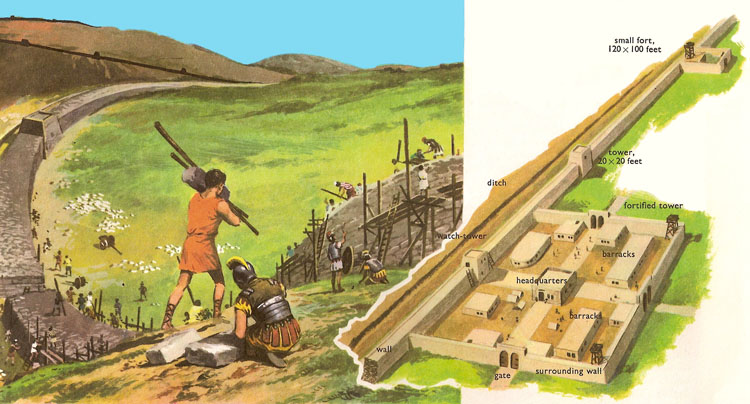
and, of course, the well-known 2nd –century AD work, Hadrian’s Wall, with its surviving stone work and its elaborate series of mile castles, gates, and supporting forts and camps.

Hadrians_Wall Hadrian's Wall phase 1 Central sector

   We might also cast further afield and in time. In Book 7 of the Iliad, the Greeks dig a ditch, fill it with sharpened stakes, and build a stone wall behind it to protect their ships from Trojan attack.

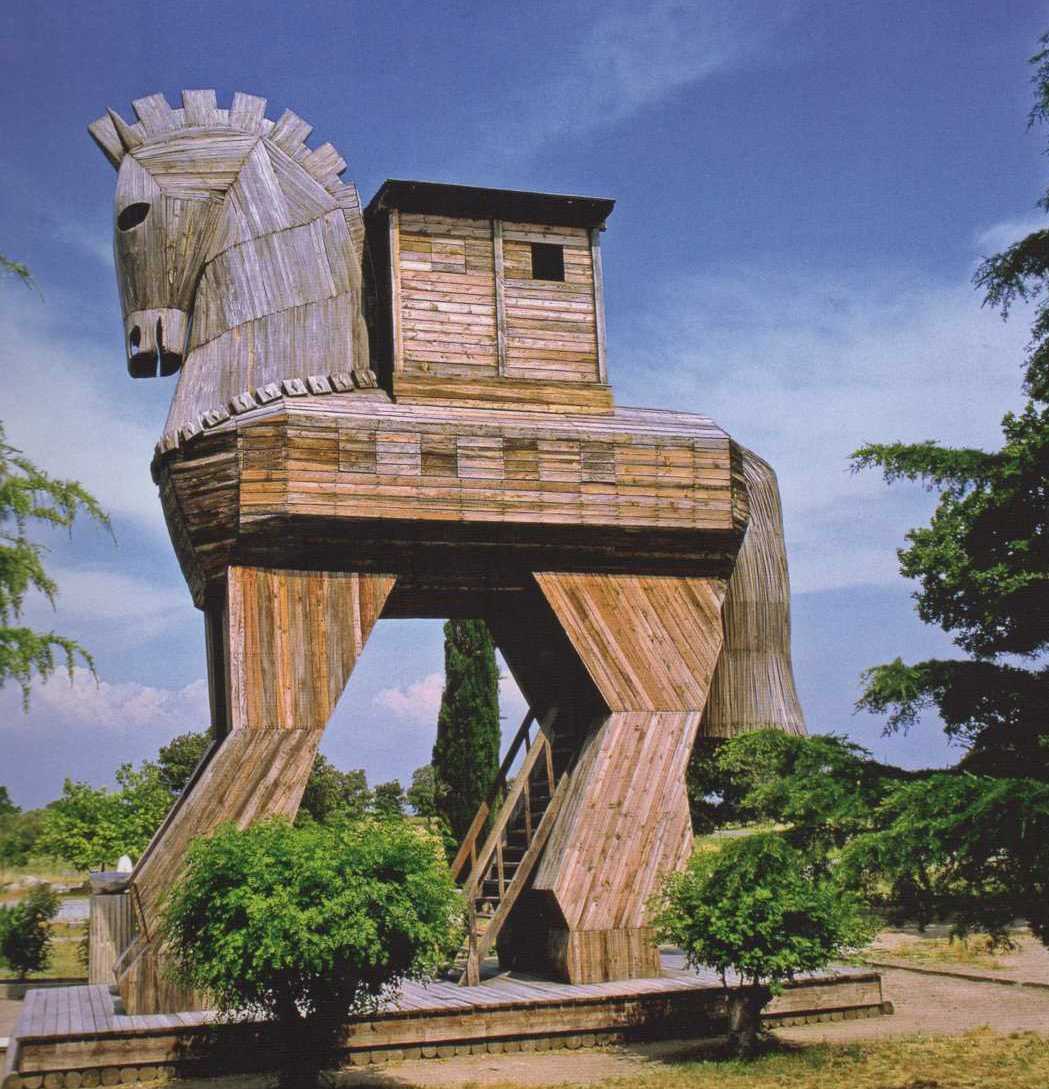
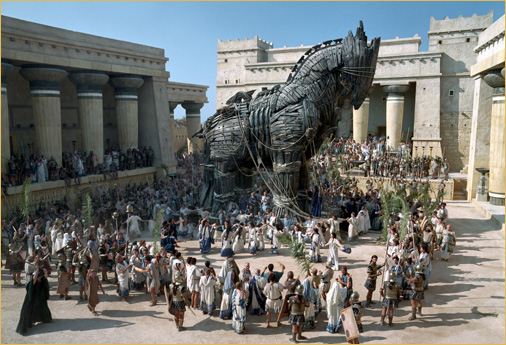
[We can’t find an image of that, but here’s a picture of one of our favorite features of today’s Truva/Hisalik, just to remind you of a later feature of the Trojan War—along with a still from the 2004 Brad Pitt film, known to those of us who love Homer for its rather casual attitude towards the traditional story.]

617-5-horse1

trojan-horse%20troy%20the%20movie

And how can we fail to mention the Great Wall of China?

thegreatwall_rcv

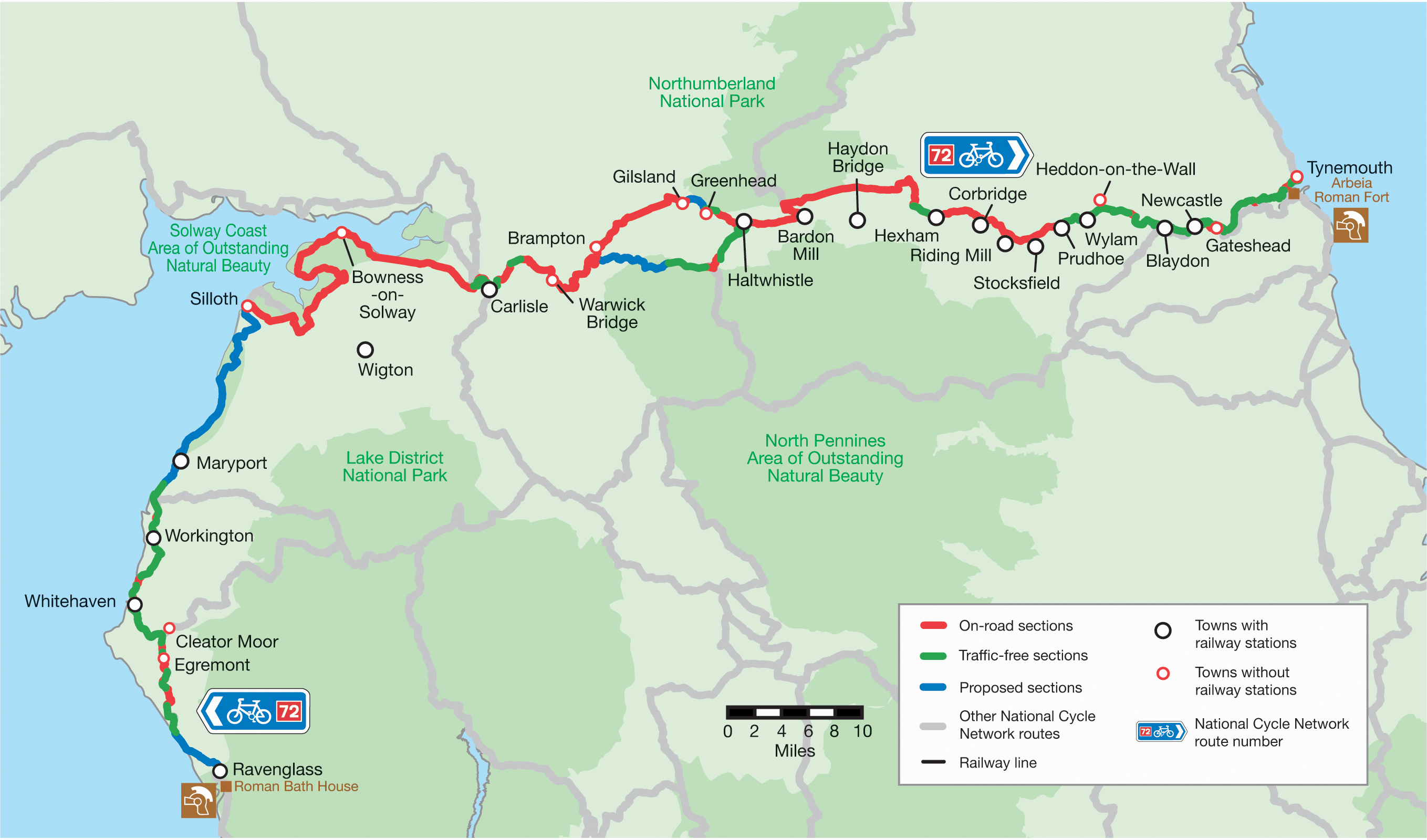
     For us, Hadrian’s Wall might do, with its stretch of stonework across the entire width of England (73 miles, 117.5 kilometres).

map-hadrians-wall

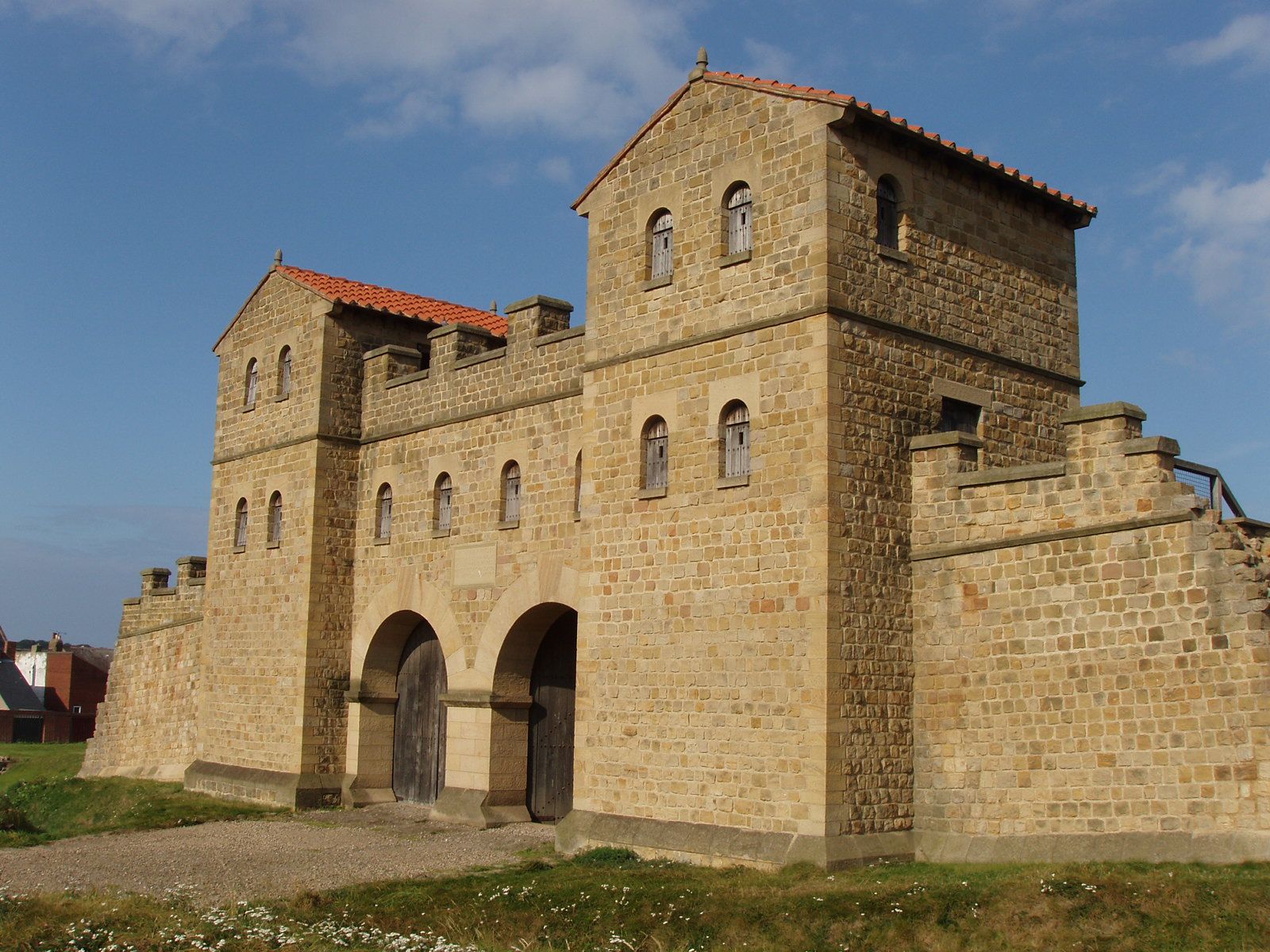
It even has the requisite main gate, which will be defended by Faramir.

This is actually from the Roman fort of Arbeia, South Shields—a great site—but it gives you an idea of what something a little grander—after all, it connected the Pelennor with Osgiliath—might look like.

F00638REW

     That event, however, is in The Lord of the Rings, where Faramir maintains his reputation as a brave and far-sighted commander, as Beregond says to Pippin:

     “But things may change when Faramir returns. He is bold, more bold than many deem; for in these days men are slow to believe that a captain can be wise and learned in the scrolls of lore and song, as he is, and yet a man of hardihood and swift judgement in the field.” 766

FaramirCaptainGondor

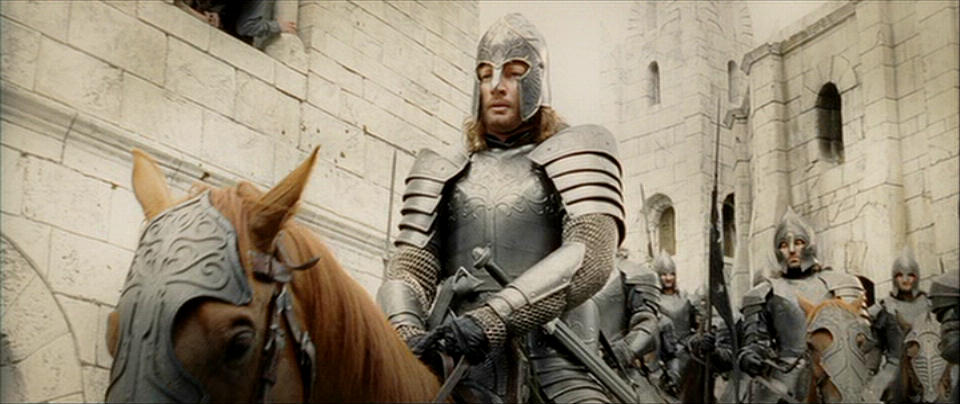
     In the film, it is quite a different matter. There is no Rammas Echor and Faramir, in contrast, is badly wounded in a cavalry charge against the walls of Osgiliath while his father, Denethor, has a rather messy and all-too-symbolic lunch.

maxresdefault

gondorianerritt-cb182208

gifdenethoreating

     What has happened here? First, no intelligent—maybe even foolish—commander would attack a stone wall with cavalry, and we know that Faramir is, indeed, intelligent. Second, what has happened to the Rammas, where Faramir actually had been just before he fell, commanding the rearguard?

     First, we would suggest that the script writers took their cue from the final scene between father and son, in which Faramir, already told by his father that his father had preferred his elder son, Boromir, volunteers to direct the defense of Osgiliath:

“But at length Faramir said: ‘I do not oppose your wil, sire. Since you are robbed of Boromir, I will go and do what I can in his stead—if you command it.’

     ‘I do so,’ said Denethor.

     “Then farewell!’ said Faramir. ‘But if I should return, think better of me!’

     ‘That depends upon the manner of your return,’ said Denethor.

     Gandalf it was that last spoke to Faramir ere he rode east. ‘Do not throw your life away rashly or in bitterness,’ he said. ‘You will be needed here, for other things than war. Your father loves you, Faramir, and will remember it ere the end. Farewell!’” 816-817

     To them, this might have indicated that Faramir—who had clearly been Gandalf’s pupil, as his father has said:

“See, you have spoken skillfully, as ever; but I, have I not seen your eyes fixed on Mithrandir, seeking whether you said well or too much? He has long had your heart in his keeping.” 812

does not listen to his tutor and deliberately sets out to get himself killed. In the text, however, Faramir is actually acting responsibly, fighting in the rearguard of the retreating detachment driven from the Rammas:

“Even as the Nazgul had swerved aside from the onset of the White Rider, there came flying a deadly dart, and Faramir, as he held at bay a mounted champion of Harad, had fallen to the earth.” 821

     (And we might add that Prince Imrahil, who brings the wounded Faramir back, says, “Your son has returned, lord, after great deeds…” 821, which, of course, could easily be understood to be ironic and is perhaps meant to be so on the part of Imrahil, considering Fararmir’s last words to his father and Denethor’s reply.)

     Thus, we see Faramir’s wounding completely changed, but what about the wall he had been defending?

     When one reads through the various chat sights, there was once a considerable amount of discussion about the Rammas Echor, but all was speculation, it seems, as we were unable to find anything said by the writers themselves. In the text, instead of concentrating on the main gate, Sauron’s engineers detonate explosions to each side and the troops then pour through the breaches to take the defenders in flank. This could be seen as a repetition of a similar earlier event at Helm’s Deep, in which Saruman’s forces blew a hole in the defenses.

blowingupthewallathelmsdeep

     As well, we think that, for the director, the big visual attraction was the attack on Minas Tirith. This means that it could simply have been a matter of where to spend time—and/or possibly money—and so the Rammas was sacrificed. If the decision had already been made to change—we will say misinterpret– the story of Faramir, simplifying it drastically and shifting the focus (just think of that dripping mouth!), then the choice to discard this defense would have been an easy one.

     So, suppose you were script writer or director, what would you have done, dear readers?

     Thanks, as always, for reading (and, we hope, speculating).

     MTCIDC

     CD
Newer posts →

The Doubtful Sea Series Facebook Page

The Doubtful Sea Series Facebook Page

  • Ollamh

Categories

  • Artists and Illustrators
  • Economics in Middle-earth
  • Fairy Tales and Myths
  • Films and Music
  • Games
  • Heroes
  • Imaginary History
  • J.R.R. Tolkien
  • Language
  • Literary History
  • Maps
  • Medieval Russia
  • Military History
  • Military History of Middle-earth
  • Narnia
  • Narrative Methods
  • Poetry
  • Research
  • Star Wars
  • Terra Australis
  • The Rohirrim
  • Theatre and Performance
  • Tolkien
  • Uncategorized
  • Villains
  • Writing as Collaborators
Follow doubtfulsea on WordPress.com

Across the Doubtful Sea

Recent Postings

  • Through a glass… January 7, 2026
  • Heffalumps? December 31, 2025
  • We Three Kings December 24, 2025
  • A Moon disfigured December 17, 2025
  • On the Roads Again—Once More December 10, 2025
  • (Not) Crossing Bridges December 3, 2025
  • On the Road(s) Again—Again November 26, 2025
  • On the Road(s) Again November 19, 2025
  • To Bree (Part 2) November 12, 2025

Blog Statistics

  • 104,098 Views

Posting Archive

  • January 2026 (1)
  • December 2025 (5)
  • November 2025 (4)
  • October 2025 (5)
  • September 2025 (4)
  • August 2025 (4)
  • July 2025 (5)
  • June 2025 (4)
  • May 2025 (4)
  • April 2025 (5)
  • March 2025 (4)
  • February 2025 (4)
  • January 2025 (5)
  • December 2024 (4)
  • November 2024 (4)
  • October 2024 (5)
  • September 2024 (4)
  • August 2024 (4)
  • July 2024 (5)
  • June 2024 (4)
  • May 2024 (5)
  • April 2024 (4)
  • March 2024 (4)
  • February 2024 (4)
  • January 2024 (5)
  • December 2023 (4)
  • November 2023 (5)
  • October 2023 (4)
  • September 2023 (4)
  • August 2023 (5)
  • July 2023 (4)
  • June 2023 (4)
  • May 2023 (5)
  • April 2023 (4)
  • March 2023 (5)
  • February 2023 (4)
  • January 2023 (4)
  • December 2022 (4)
  • November 2022 (5)
  • October 2022 (4)
  • September 2022 (4)
  • August 2022 (5)
  • July 2022 (4)
  • June 2022 (5)
  • May 2022 (4)
  • April 2022 (4)
  • March 2022 (5)
  • February 2022 (4)
  • January 2022 (4)
  • December 2021 (5)
  • November 2021 (4)
  • October 2021 (4)
  • September 2021 (5)
  • August 2021 (4)
  • July 2021 (4)
  • June 2021 (5)
  • May 2021 (4)
  • April 2021 (4)
  • March 2021 (5)
  • February 2021 (4)
  • January 2021 (4)
  • December 2020 (5)
  • November 2020 (4)
  • October 2020 (4)
  • September 2020 (5)
  • August 2020 (4)
  • July 2020 (5)
  • June 2020 (4)
  • May 2020 (4)
  • April 2020 (5)
  • March 2020 (4)
  • February 2020 (4)
  • January 2020 (6)
  • December 2019 (4)
  • November 2019 (4)
  • October 2019 (5)
  • September 2019 (4)
  • August 2019 (4)
  • July 2019 (5)
  • June 2019 (4)
  • May 2019 (5)
  • April 2019 (4)
  • March 2019 (4)
  • February 2019 (4)
  • January 2019 (5)
  • December 2018 (4)
  • November 2018 (4)
  • October 2018 (5)
  • September 2018 (4)
  • August 2018 (5)
  • July 2018 (4)
  • June 2018 (4)
  • May 2018 (5)
  • April 2018 (4)
  • March 2018 (4)
  • February 2018 (4)
  • January 2018 (5)
  • December 2017 (4)
  • November 2017 (4)
  • October 2017 (4)
  • September 2017 (4)
  • August 2017 (5)
  • July 2017 (4)
  • June 2017 (4)
  • May 2017 (5)
  • April 2017 (4)
  • March 2017 (5)
  • February 2017 (4)
  • January 2017 (4)
  • December 2016 (4)
  • November 2016 (5)
  • October 2016 (6)
  • September 2016 (5)
  • August 2016 (5)
  • July 2016 (5)
  • June 2016 (5)
  • May 2016 (4)
  • April 2016 (4)
  • March 2016 (5)
  • February 2016 (4)
  • January 2016 (4)
  • December 2015 (5)
  • November 2015 (5)
  • October 2015 (4)
  • September 2015 (5)
  • August 2015 (4)
  • July 2015 (5)
  • June 2015 (5)
  • May 2015 (4)
  • April 2015 (3)
  • March 2015 (4)
  • February 2015 (4)
  • January 2015 (4)
  • December 2014 (5)
  • November 2014 (4)
  • October 2014 (6)
  • September 2014 (1)

Blog at WordPress.com.

  • Subscribe Subscribed
    • doubtfulsea
    • Join 78 other subscribers
    • Already have a WordPress.com account? Log in now.
    • doubtfulsea
    • Subscribe Subscribed
    • Sign up
    • Log in
    • Report this content
    • View site in Reader
    • Manage subscriptions
    • Collapse this bar
 

Loading Comments...