Tags
Athens, Augustus, Brutus, cattle, Celtic tribes, Charlemagne, coins, deniers, Diocletian, Lydia, Philip II, Queen Victoria, The Lord of the Rings, Tolkien, weregild, William the Conqueror
As always, welcome, dear readers.
In my last posting, “Blood Money” (20 May, 2026), I mentioned that, in early Western history, weregild, that is, compensation for a killing, might be paid in cattle,

or in money, more specifically, in the Merovingian/Carolingian kingdom, for which we have reparation lists, in a coin called a “denar” (more modern “denier”).
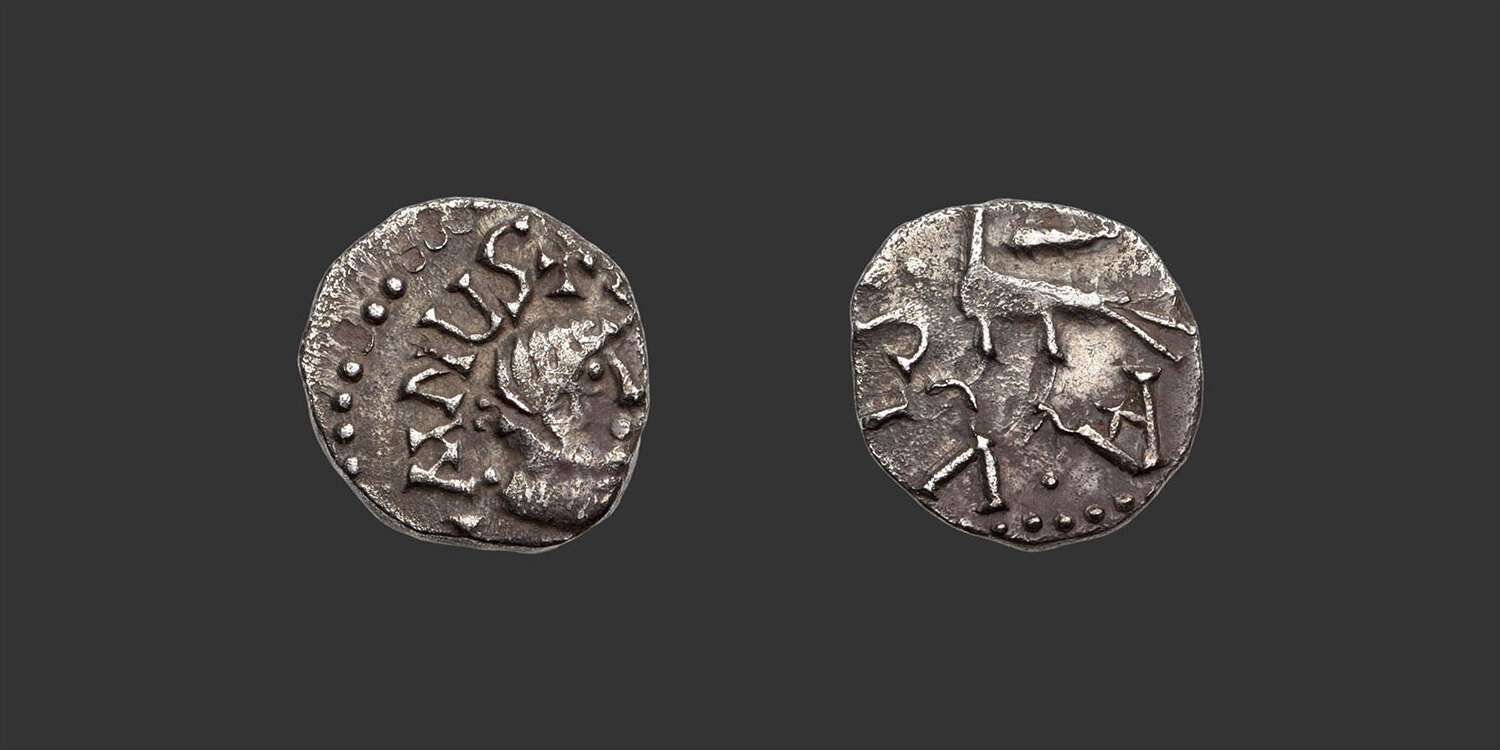
I think that we can assume that cattle might have been used before money, suggesting just how old such a custom must have been.
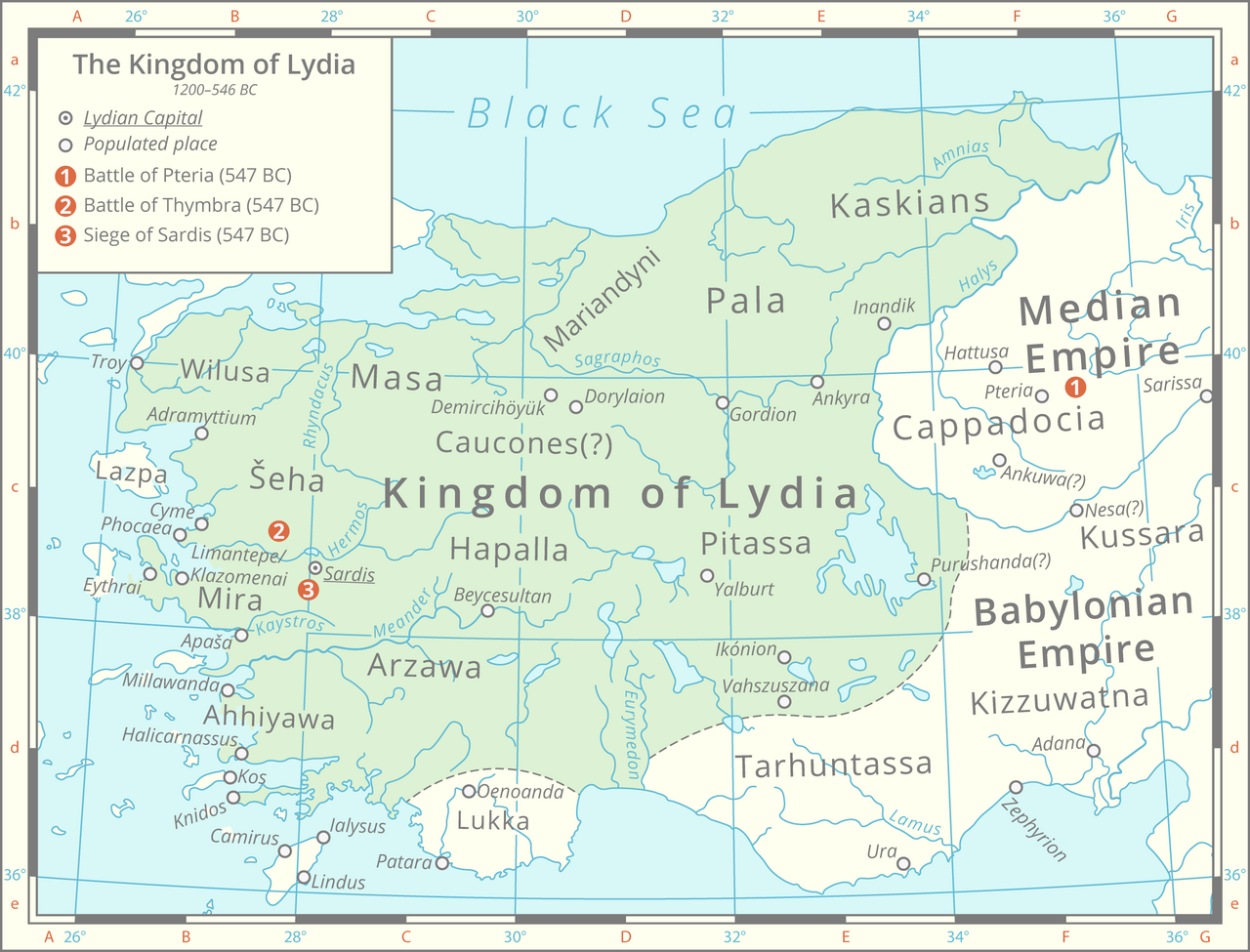
Money, in the Western world had first appeared in the 7th century BC, in Lydia, in western Asia Minor.
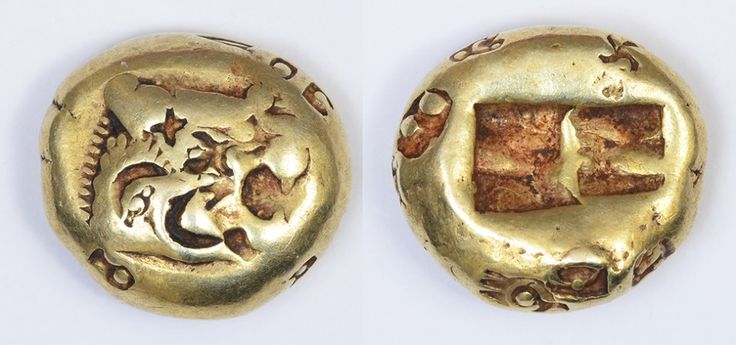
(you can read more about Lydian coinage here: https://www.worldhistory.org/article/797/the-importance-of-the-lydian-stater-as-the-worlds/ )
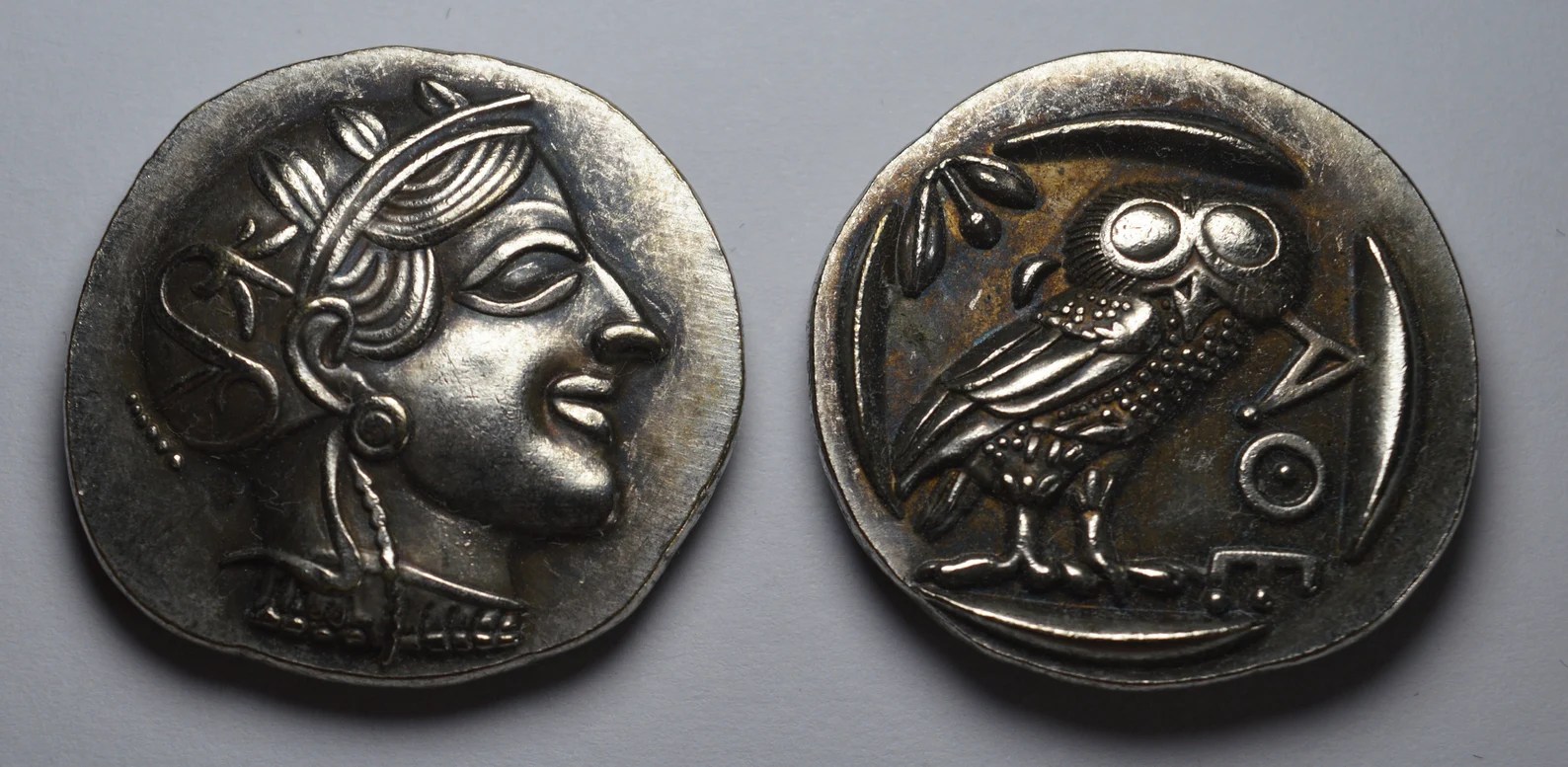
This is a rather crude coin, but, picked up by the Greeks, coins became more sophisticated, commonly produced by city-states with emblems of that state and of its divine patron stamped on them, as in this Athenian coin, with Athena and her owl.
The first Western ruler to put his own head on a coin appears to have been Philip II of Macedon, the father of Alexander the Great, in the 4th century BC.
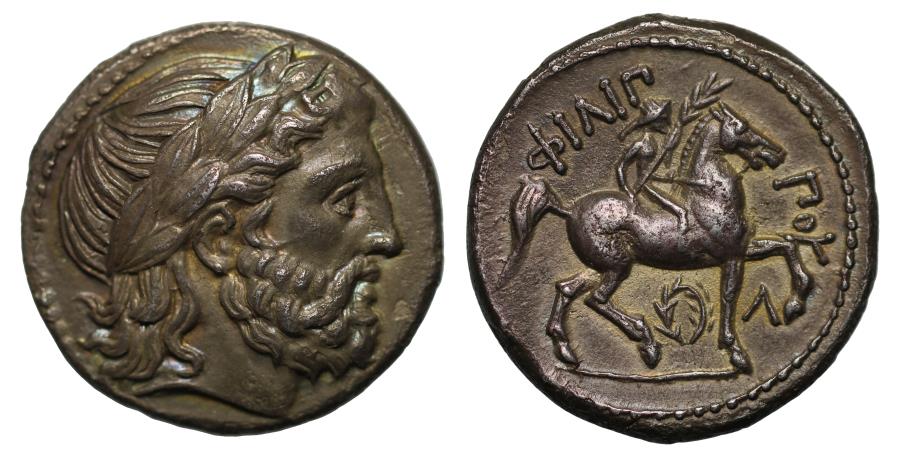
Philip has also put his name on the reverse, in the possessive case, saying “of Philip”, next to the horseman. This is a big claim: does he mean the horseman or the coin or maybe the silver of which the coin is made? In fact, I think that it’s a greater claim: that, because of the silver—and probably the horseman, as well—Philip has the backing—and therefore the right—to produce such coins, giving them their worth.
And this is an important claim: anyone might produce a piece of metal with a decoration of some sort on it, but what is its worth unless there’s something—or someone—substantial behind it to guarantee that worth?
The reverse is true, as well: if you can produce such coins, then you must have a certain worth, as well.
A perfect example of this thinking may be seen in this well-known coin from the last century, BC.
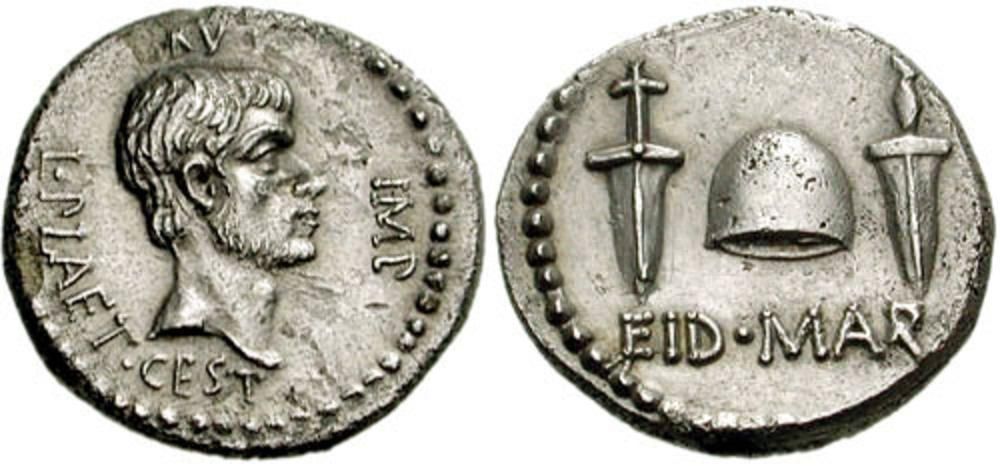
It is a coin issued by one of Caesar’s assassins, Brutus, and, on the reverse (the back), he’s stating his claim to be believed: 2 daggers, a liberty cap, and the date: the Ides of March. This implies that, on the Ides (the 15th–of March, in this case), with a knife, Brutus participated in the freeing of the enslaved Roman state (the cap was worn by a slave in a liberation ceremony)—when he was involved in Caesar’s murder.
On the obverse (the front) is his family name, his portrait, his claim to be an official of the state (“IMP”—short for “Imperator”—that is, the holder of “imperium”, the state’s power of life and death over citizens, given to magistrates, governors, and generals when they were sent out of Rome on a mission), and the name of the master of the government mint which issued the coin, Lucius Plaetorius Cestianus.
Putting all of this together, it asserts both the claim that the coin has value and that the person under whom it was issued has the state’s backing to have done so—with the added claim that the person depicted on the coin had that authority because he was involved in the liberation of the state from a tyrant: the coin, then, of a (self-appointed) hero of the Republic.
This is an unusual approach as, mostly, governments simply assert their power by issuing currency—often, in the later West, by modeling their coins on those of their illustrious predecessors, as Charlemagne clearly did on this coin, depicting himself as if he were a Roman emperor (that wreath on his head even goes as far back at Philip II) and making a Roman-style claim—
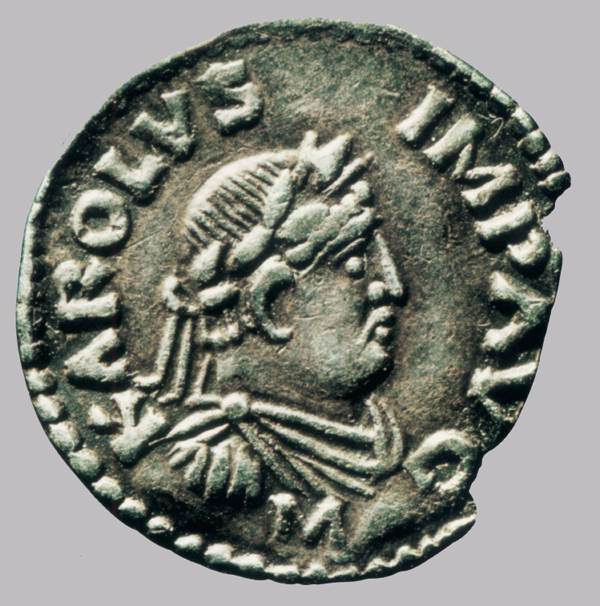
that he holds the imperium, as well as the title which the Roman Senate had awarded Octavian, “Aug”, “Augustus”, which, after Diocletian
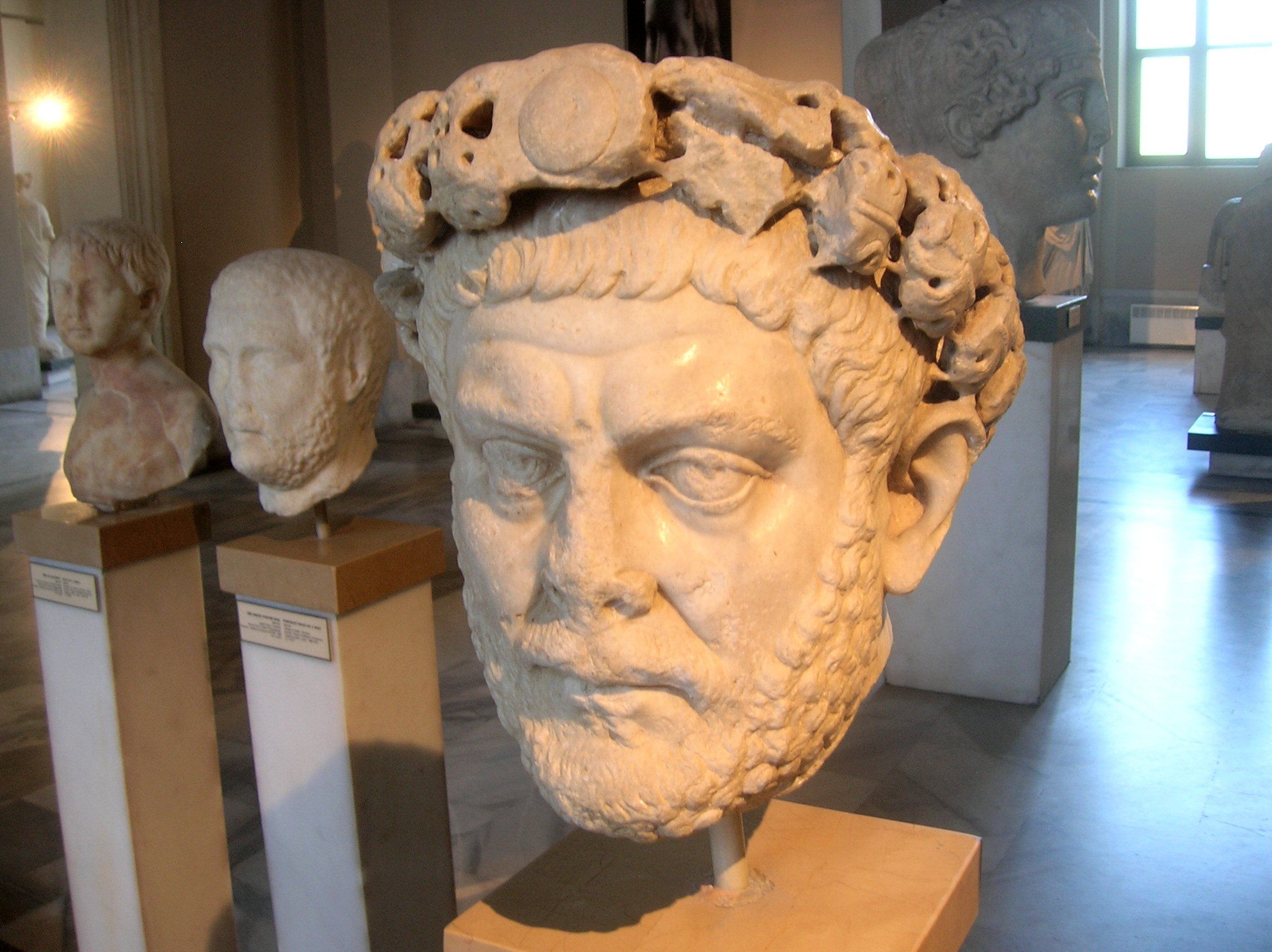
had divided the Roman empire in 293AD, had been the title for the two senior rulers.
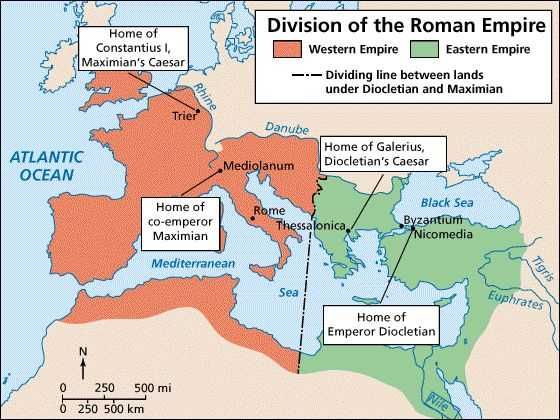
(“co-emperor” = Augustus and “Caesar” = each Augustus’ assistant)
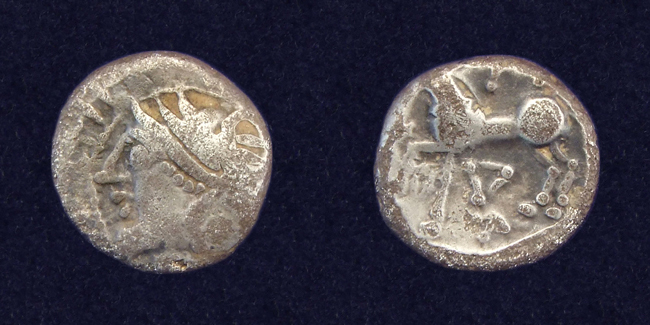
In the Gallo-Celtic world, coins were first issued by tribes (probably through their kings)—this is a coin of the Lingones, a tribe from east central Gaul.
It would appear that the practice was extended to their Celtic cousins, in Britain, as we see here, in this coin from the Atrebates, who lived in the Thames valley.
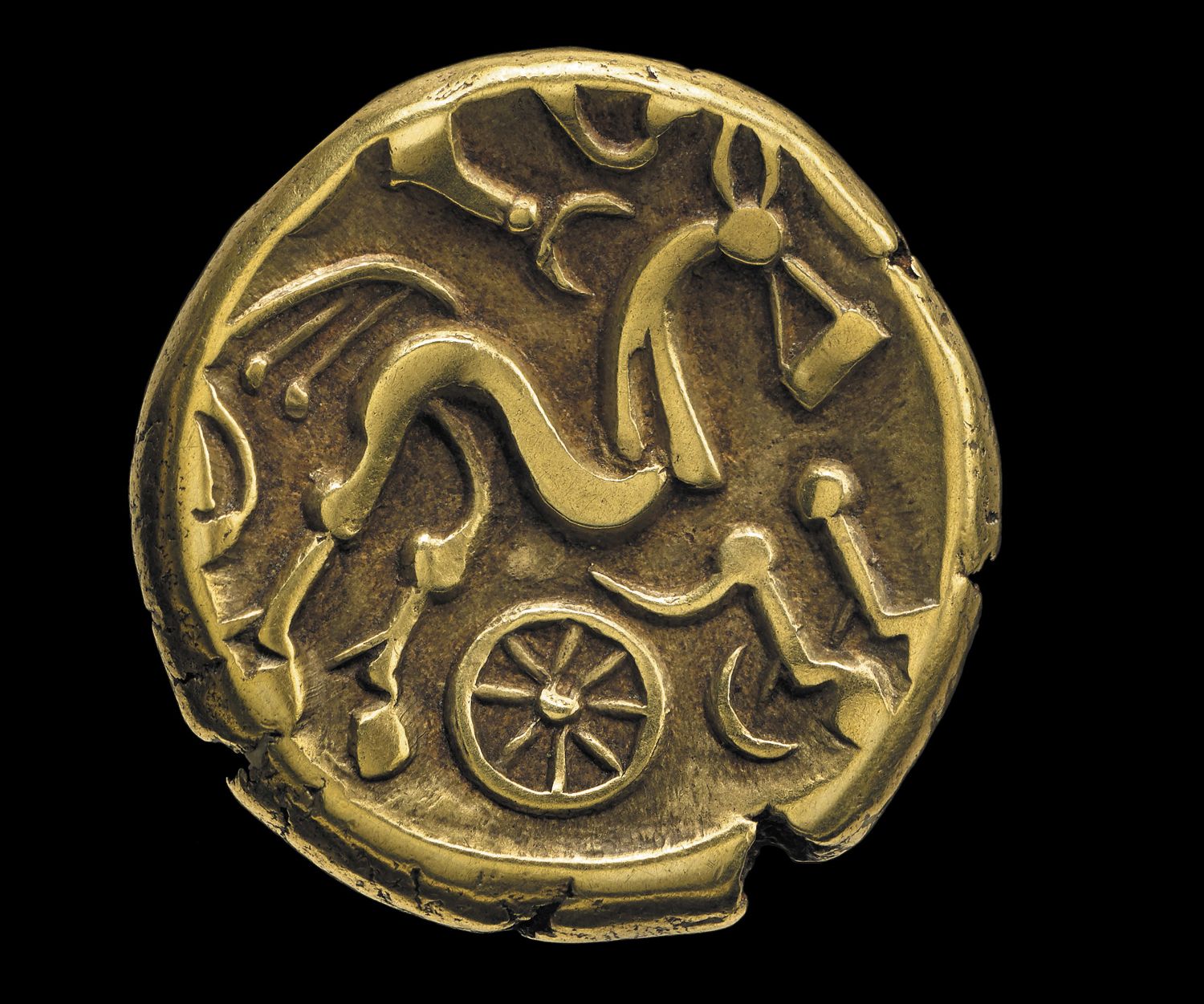
(You can read more about British Celtic tribal coins here: https://coinweek.com/the-ancient-celtic-coinage-of-britain/ )
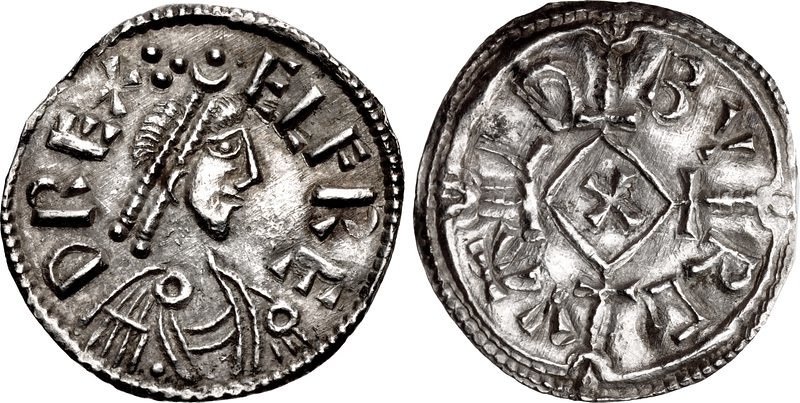
When the Romans arrived after 43AD, these coins disappeared, to be replaced by standard Roman issues, but, through the centuries which followed, it was still a mark of authority that a ruler would issue coins, as in this of Alfred the Great, king of the Anglo-Saxons, 886-899AD,
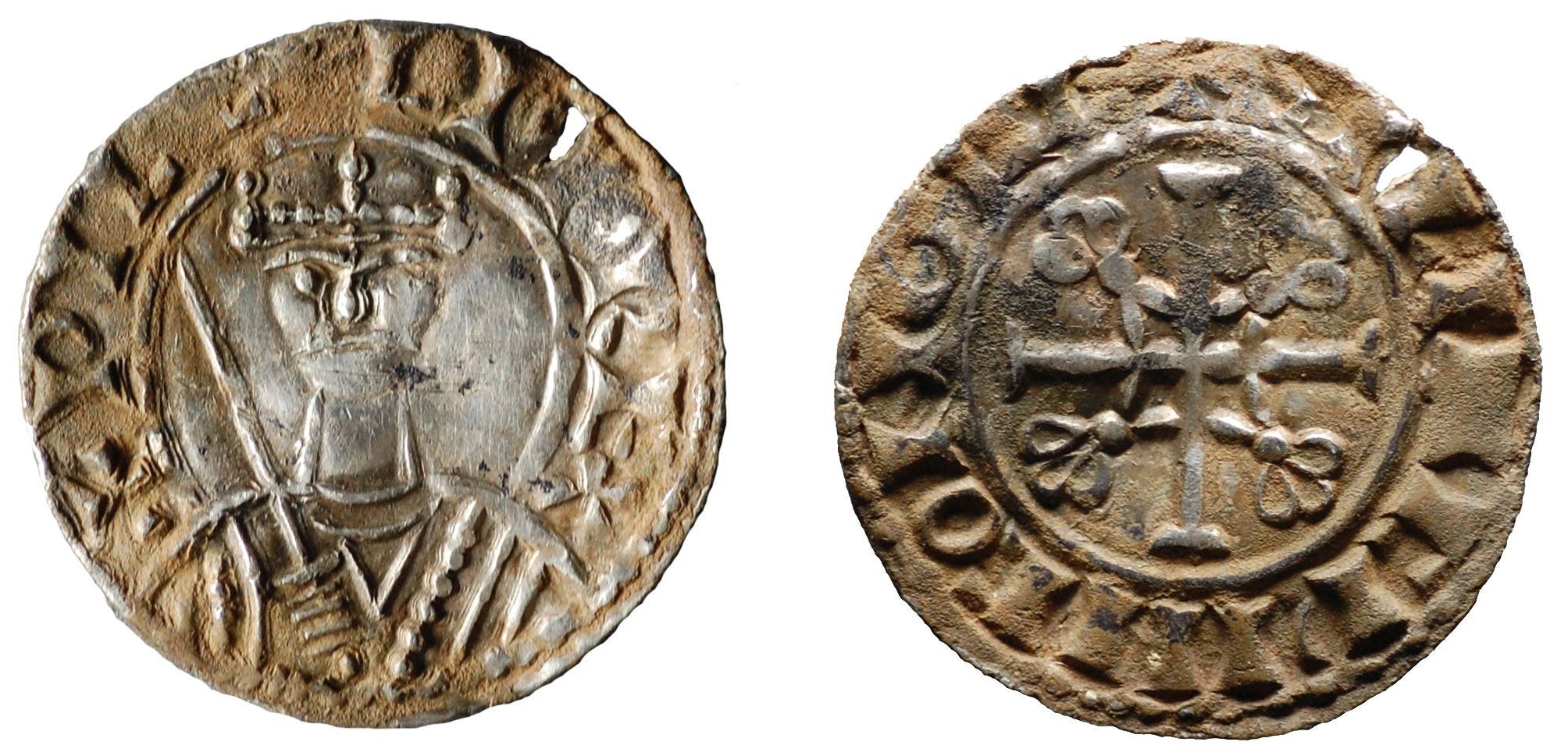
or this of William the Conqueror (ruled England 1066-1087),
or this of Queen Victoria (ruled 1837-1901).
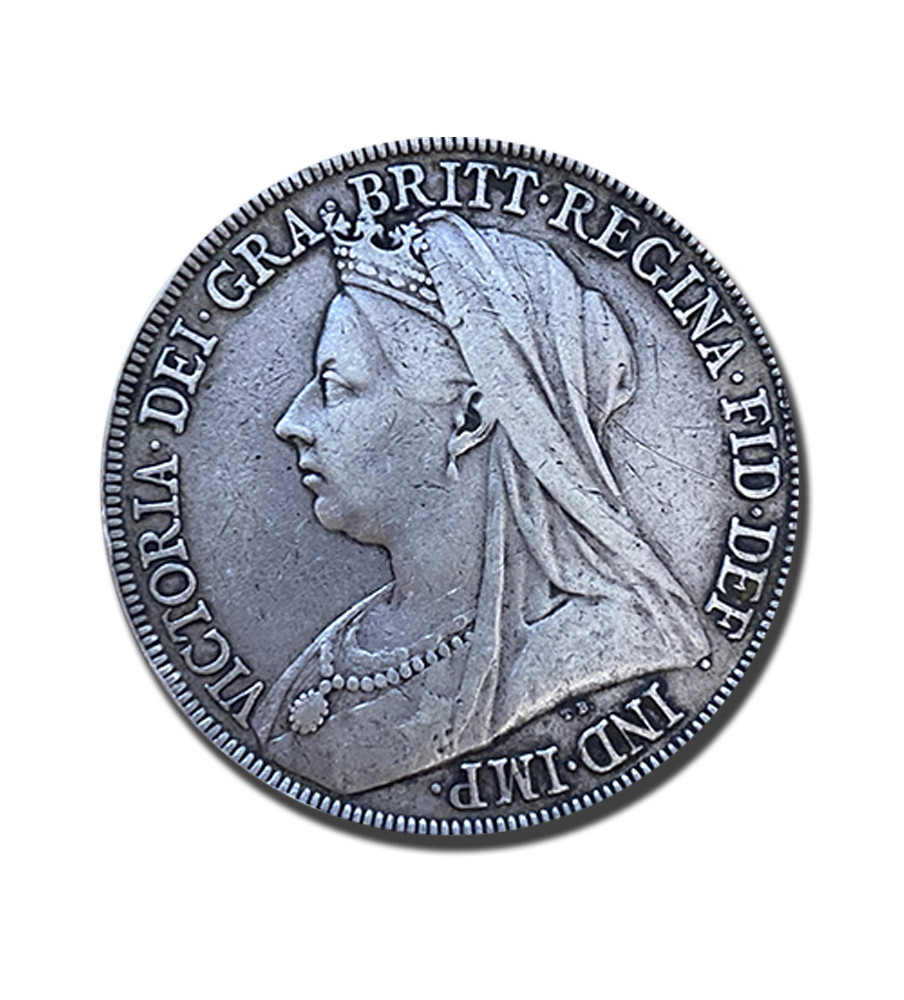
(Notice the rather grandiose contrast in what’s being told you on the obverse of this coin vs that of Charlemagne–not only is she Queen of Britain—by the grace of God—“Dei Gra-tia”—but Defender of the Faith”—”Fid-em Def—ensor” and, post-1877, Empress of India—“Ind-iae Imp-eratrix”)
Interestingly, the British government still used the ancient Germanic system of coin value (perhaps inherited from those same Merovingian/Carolingians who produced the “denar” from the beginning of this posting) until 1971, when it shifted to the decimal system used in much of the rest of the world. (Here’s a really useful article on pre-decimal coinage: https://www.royalmintmuseum.org.uk/journal/history/pounds-shillings-and-pence/ And I can’t resist this wonderful skit from Horrible History on Tudor money: https://www.youtube.com/watch?v=j0Qv9uSNWCk )
And this brings us to the point (at last) of this posting: a new coin in the UK: a 50p (that’s 50 pence or half a pound in post-1971 money)
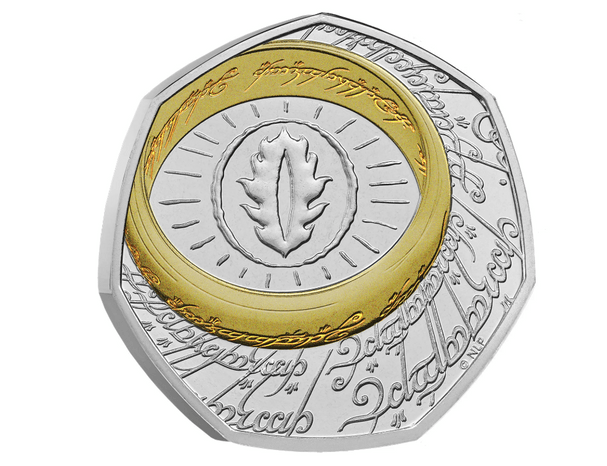
with a special reference for those of us who read and enjoy Tolkien: it’s a coin commemorating the 25th anniversary of the premier of the Lord of the Rings films (You can read more about it here: https://www.bbc.co.uk/newsround/articles/cgmpneen13mo )–a fine gesture, but, note that, even as it has images from the Tolkien world on the reverse, on the obverse there’s all of this—
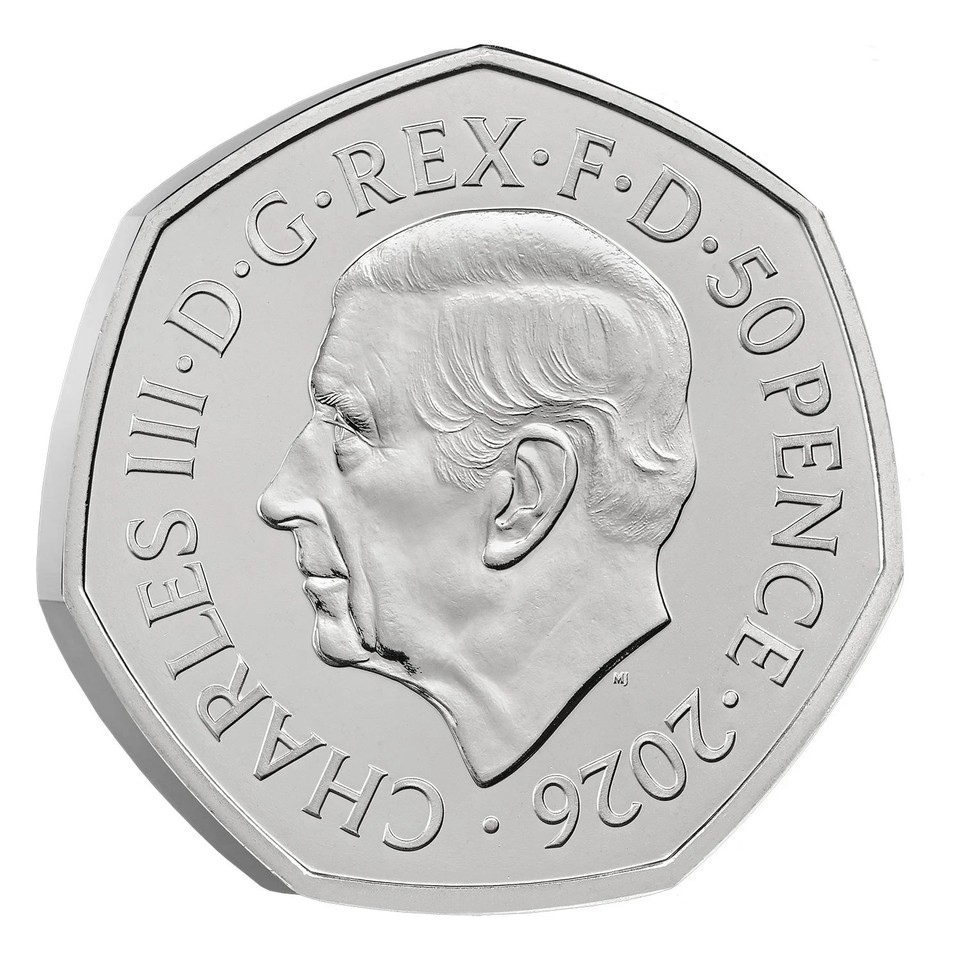
the King’s profile—just like Philip II’s from the 4th century BC–with the same D[ei] G[ratia] and even F[idem] D[efensor] you can see on Victoria’s coin, lacking only the claim to be IND[iae] IMP[erator]. Perhaps some things never change?
Thanks, as always, for reading.
Stay well,
Be glad that you don’t have to do arithmetic problems in pre-decimal coinage,
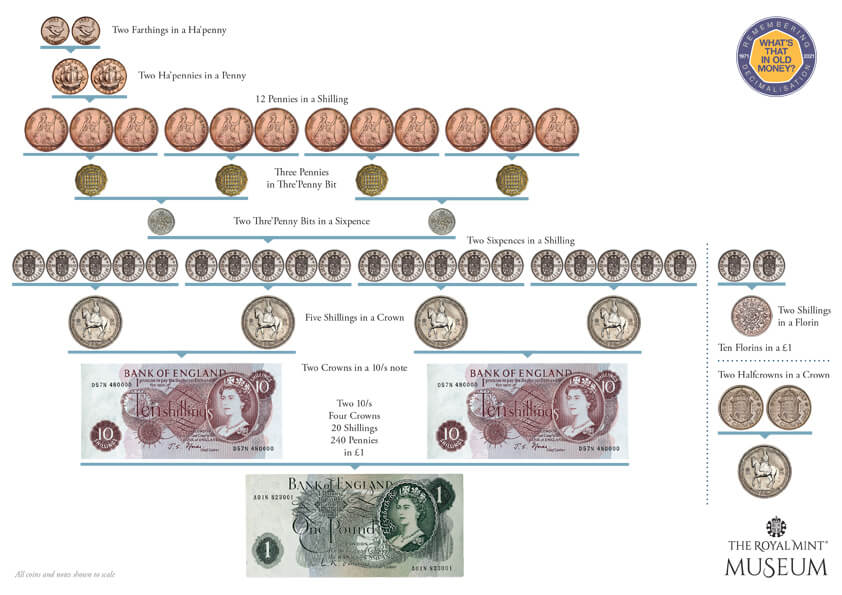
(This chart is from that Royal Mint Museum site listed above)
And remember that, as always, there’s
MTCIDC,
O
PS
In case, looking at them, you’ve wondered why those early coins seem so random and lumpy, see: https://www.numisdon.com/ancient-coin-minting-techniques/
PPS
For more on coins and Mordor, see: “In Mint Condition”, 4 August, 2021.
 doubtfulsea