• About

doubtfulsea

~ adventure fantasy

Category Archives: J.R.R. Tolkien

Are You Sitting Down?.2 (Some Thrones, but No Games)

11 Wednesday Oct 2017

Posted by Ollamh in Economics in Middle-earth, J.R.R. Tolkien, Literary History, Narrative Methods

≈ Leave a comment

Tags

A Game of Thrones, Bag End, basins, Bree, British monarchs, Buckland, canopy, cart, Cirith Ungol, Coronation Chair, Coronation Throne, Crick Hollow, Edoras, Edward I, Edward VII, Edward VIII, Edwardian, Elizabeth II, Elrond's house, Furniture, George V, George VI, Gondor, high table, Iron Throne of Westros, Lia Fail, Lothlorien, Medieval, Middle-earth, Minas Tirith, monopodium, Moot Hill, parlor, pubs, Rivendell, Rohan, Shire, Stone of Scone, Tara Ireland, The Hobbit, The Lord of the Rings, The Prancing Pony, the Stone of Destiny, throne, Tolkien, Tom Bombadil, UK pubs, Victorian Bedroom, Victorians, washstand

Welcome, dear readers, as always.

In our last, we were talking about furniture in Middle-earth—in that post our subject was The Hobbit.  We continue with The Lord of the Rings and conclude with one specialized piece of furniture.

We begin where we began last time, with Bag End.
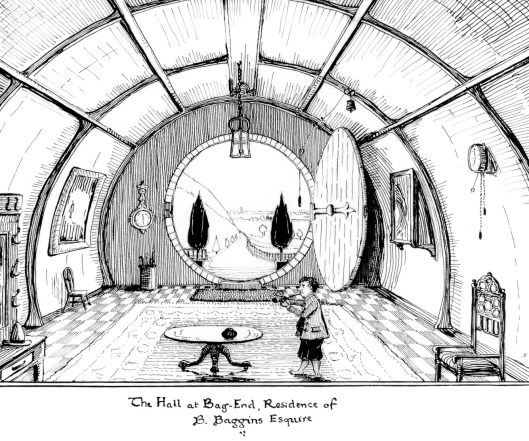
image1bagend.jpg

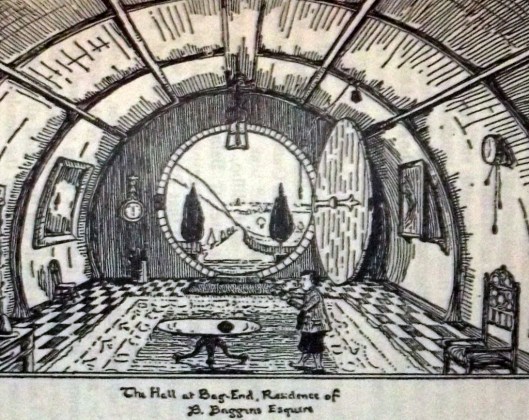
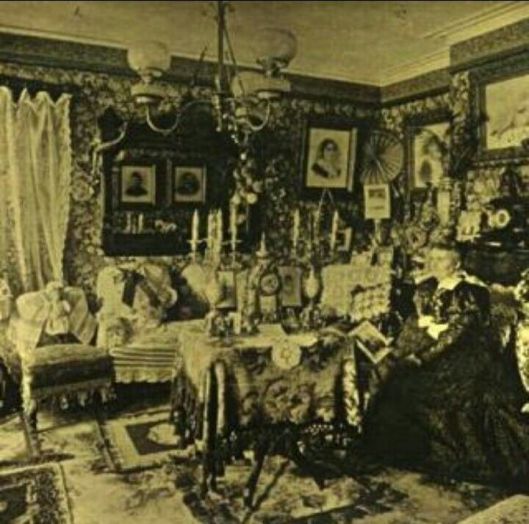
With all of its rooms and the stuff in them, we suggested then that what JRRT was really doing was depicting the kind of overcrowded place later Victorians and Edwardians—the people with whom he, born 1893, would have grown up around—would have preferred.
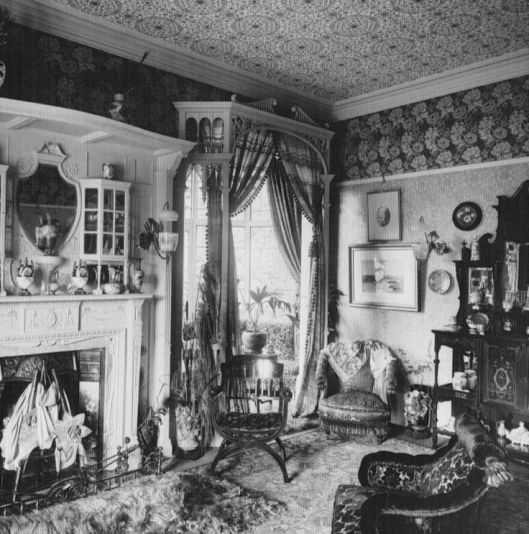
image2vicparlor.jpg

[Note, by the way, the table in the middle of the entryway in Tolkien’s picture of Bag end, and compare it with this “monopodium” table with claw feet, which could be seen in such a parlor.]
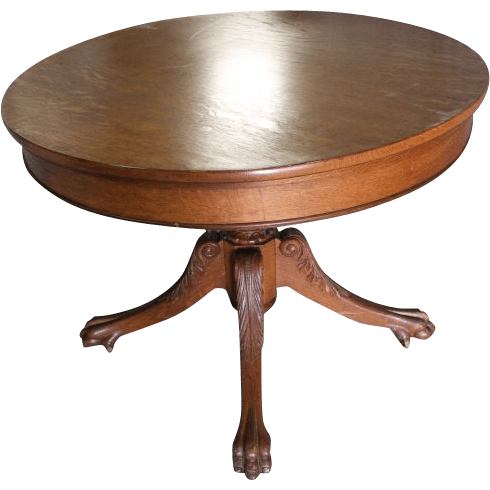
image3monopodium.png

Once the three Hobbits leave Bag End for their journey to Crick Hollow,
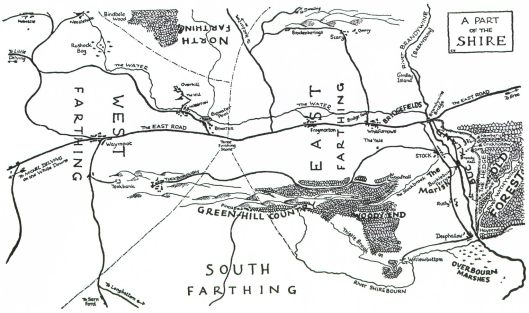
image4shiremap.jpg

having sent “two covered carts…to Buckland, conveying the goods and furniture…” (and the next day sending off another) (The Fellowship of the Ring, Book One, Chapter 3, “Three is Company), they will spend a great deal of time walking (and paddling and riding), but will enter few buildings.  Here, by the way, is a cart—we imagine “covered” simply means that a blanket of some tough coarse fabric, like canvas, (called a “tilt”) would have been pulled over the load.
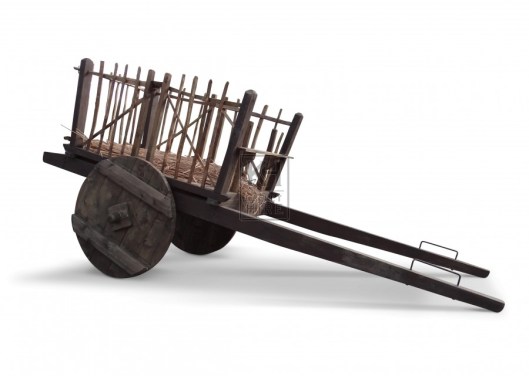
image5cart.jpg

Our chances of getting much furniture detail are not high, then, but let’s see what we find.

Beyond Buckland, the first indoors for the hobbits is Tom Bombadil’s house.  As the hobbits enter, they are in:

“…a long low room, filled with the light of lamps swinging from the beams in the roof; and on the table of dark polished wood stood many candles, tall and yellow, burning brightly.

In a chair, at the far side of the room facing the outer door, sat a woman…” (The Fellowship of the Ring, Book One, Chapter 7, “In the House of Tom Bombadil”)
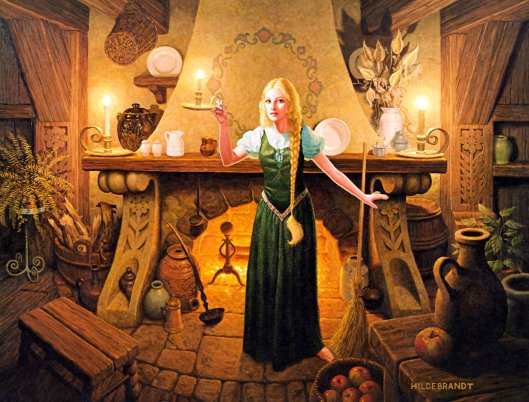
image6agoldberry.jpg

The hobbits are given “low rush-seated chairs”.
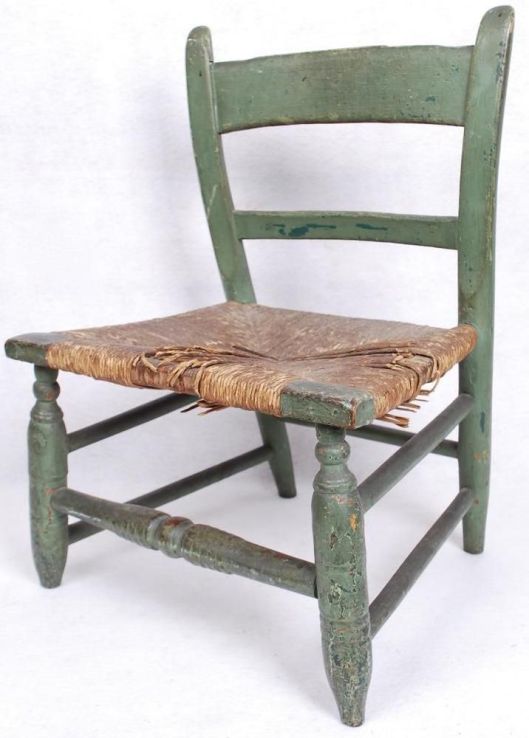
image6rushseatchair.jpg

And, shortly, are shown their bedroom:

“They came to a low room with a sloping roof…There were four deep mattresses…laid on the floor along one side.  Against the opposite wall was a long bench laden with wide earthenware basins, and beside it stood brown ewers filled with water…”

Not much to go on here.  We’ll presume that the bench is wooden and plain, and the basins and ewers (a big pitcher—ultimately from Latin aquarius, “having to do with water”) are of the kind one would have seen in a Victorian bedroom, when indoor bathrooms were still only a wish—or were only in the homes of the extremely wealthy.
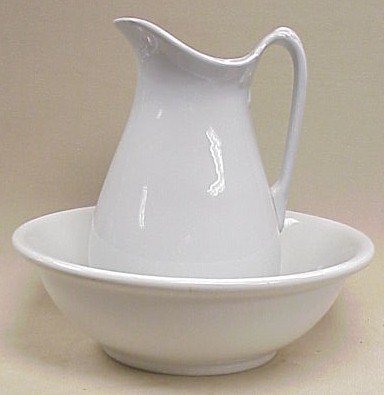
image7ewer.jpg

[Victorians, by the way, could have specialized places for such pitcher/basin combinations.  They’re called “washstands” and here’s a simple but functional one.]
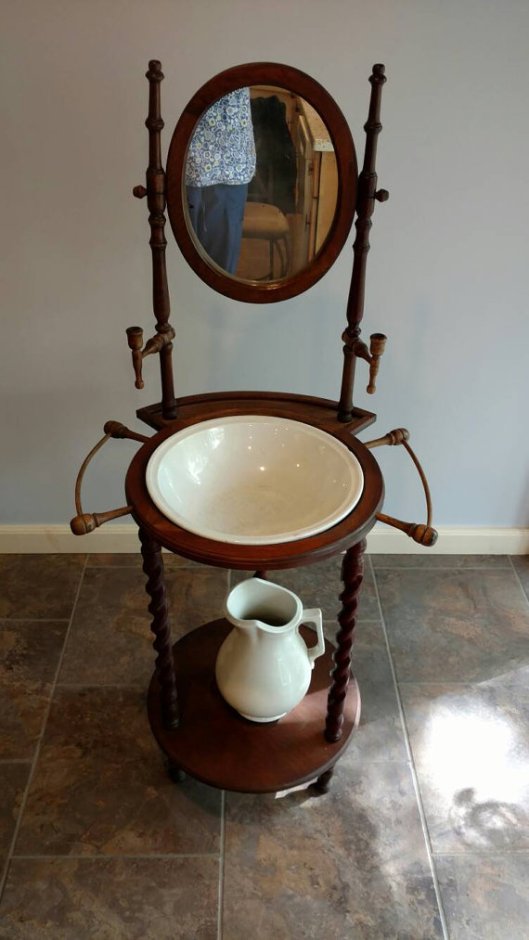
image8awashstand.jpg

Next on their journey (we won’t count the barrow—although the Wight does mention a “stony bed”) is the Prancing Pony.
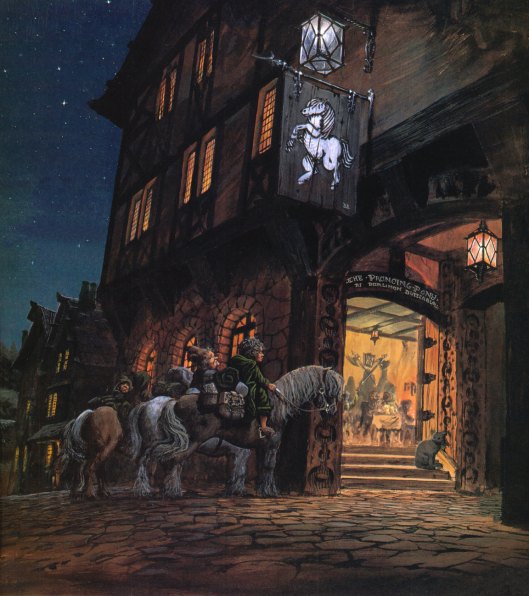
image8prancingponey.jpg

Again—what we have is functional.  The hobbits are initially led to what the landlord, Barliman Butterbur, calls “a nice little parlour” where “There was a bit of bright fire burning on the hearth, and in front of it were some low and comfortable chairs” and “a round table, already spread with a white cloth”. (The Fellowship of the Ring, Book One, Chapter 9, “At the Sign of the Prancing Pony”)

This sounds like a small, private room, found in some UK pubs, and called a “snug” (etymology unclear—but used to mean “comfy” as early as the 1620s).  Here’s one, in fact, from an Irish pub.  (We don’t advertise—this was simply the image which fit best with both our impression and the book.  And “fit best” does a double duty here, as “snug” can also mean “fitting tightly”.)
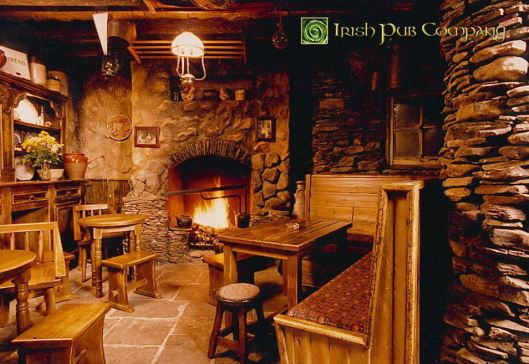
image9snug.jpg

The same will be true of the bedroom the hobbits don’t use—and just as well!—plain and nondescript.

So when, if ever, are we given something with more detail?  If not in Bree, perhaps in Rivendell?
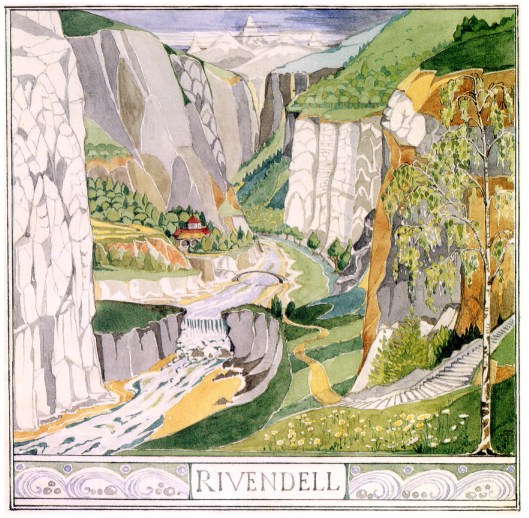
image10rivendell.jpg

Frodo comes to in a generic bed, but the “hall of Elrond’s house” is a bit more promising:

“Elrond, as was his custom, sat in a great chair at the end of a long table upon a dais…In the middle of the table there was a chair under a canopy…” The Fellowship of the Ring, Book Two, Chapter 1, “Many Meetings”)

A “dais” is a raised platform.  If you’re a Harry Potter fan, you’ll remember it at “High Table” (as it’s called in English schools), where the students of the four different colleges meet to dine and the faculty sit on such a platform.

image11hightable.jpg

This is a left-over medieval custom, when royalty/nobles sat on a kind of stage, above the lesser folk, for formal meals.
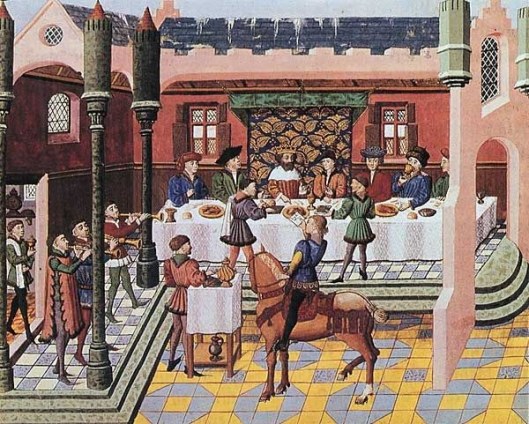
image12feast.jpg

(Oh—and don’t ask about the horse—but it wasn’t required.  Horse and rider do appear at a banquet, of course, in the 14th-century poem “Sir Gawain and the Green Knight”—which JRRT once edited.)

image13agawaingreen.jpg

And that “chair under a canopy” reminds us of thrones with canopies, like this at the Palace of St. James, in London.
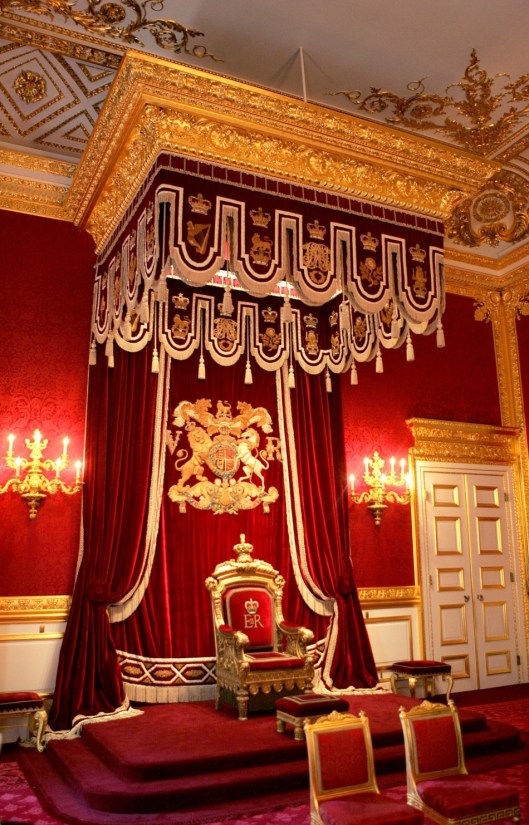
image13thronecanopy.jpg

Which brings us to the subject of thrones, in general.  After Rivendell, indoors will consist of Lothlorien

image14lorien.jpg

for the fellowship, then nothing for Sam and Frodo till Faramir’s cave hide-out and, beyond, the Tower of Cirith Ungol
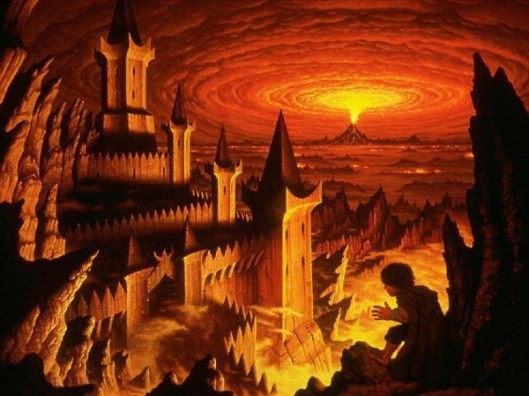
image15towercirithungol.jpg

Hardly places to find any furniture beyond the functional!

For the others, we have Edoras

image16edoras.jpg

and Minas Tirith.

image17minastirith.jpg

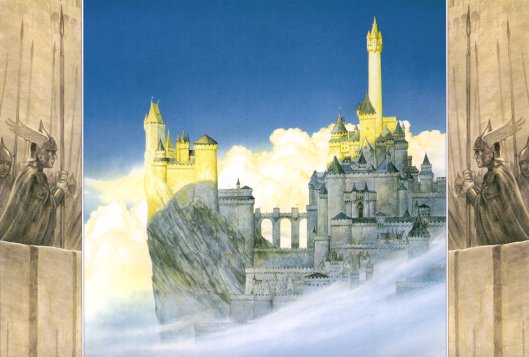
And here we want to conclude by discussing a similar piece of furnishing in each—those thrones.

These days, when we say or write “thrones”, well, what comes immediately?  A Game of Thrones and the Iron Throne of Westeros.
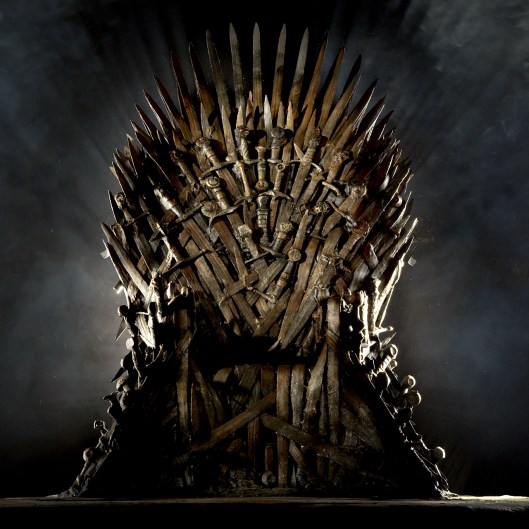
image18ironthrone.jpg

The thrones of Rohan and Gondor are a bit less complicated.

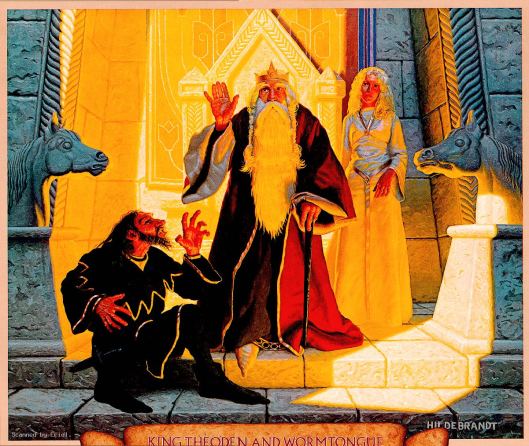
Theoden’s is described simply as “a great gilded chair” on a “dais with three steps”.  (The Two Towers, Book Three, Chapter 6, “The King of the Golden Hall”).

Here’s Allen Lee’s interpretation
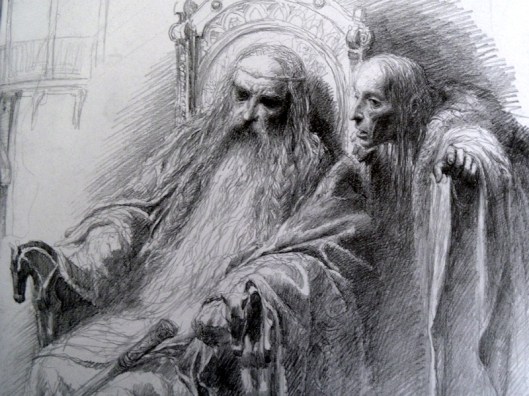
image19alee.jpeg

and here is the Hildebrandts’.

image19bhild.jpg

The throne of Gondor is just a tiny bit more elaborate:

“At the far end upon a dais of many steps was set a high throne under a canopy of marble shaped like a crowned helm…” (The Return of the King, Book Five, Chapter 1, “Minas Tirith”)

Here’s an image from the film.
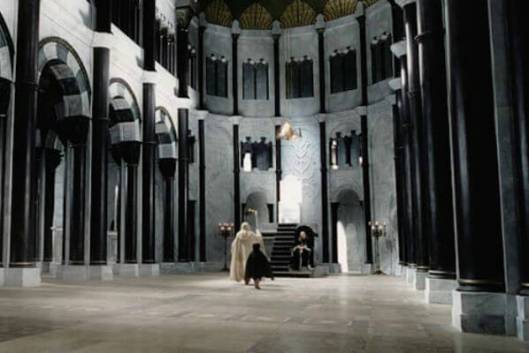
image19cthroneroom.jpg

But wait—there’s no one on it.  Let’s look lower:

“At the foot of the dais, upon the lowest step which was broad and deep, there was a stone chair, black and unadorned, and on it sat an old man gazing at his lap.”image19ddenethor.jpg
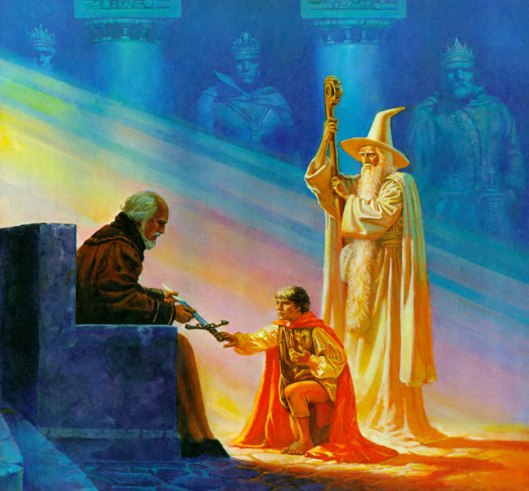
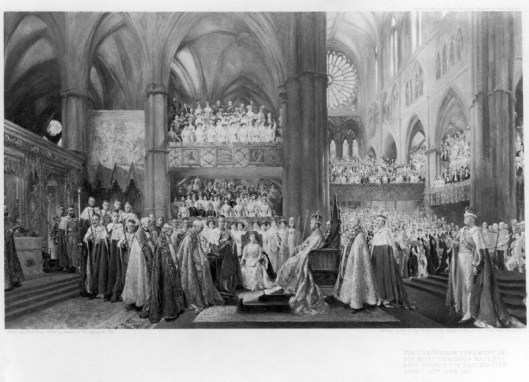
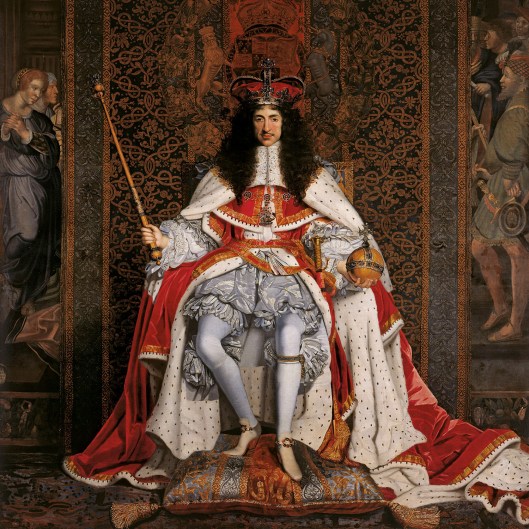
During his lifetime, JRRT would have seen the coronation of five British monarchs:

Edward VII
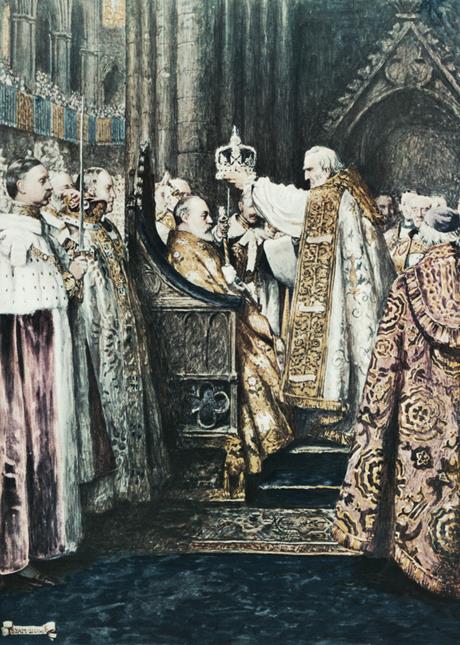
image19ed7.jpeg

George V

image20geo5.jpg

Edward VIII

image21ed8.jpg

George VI

image22ageo6.jpg

and the current monarch, Elizabeth II.
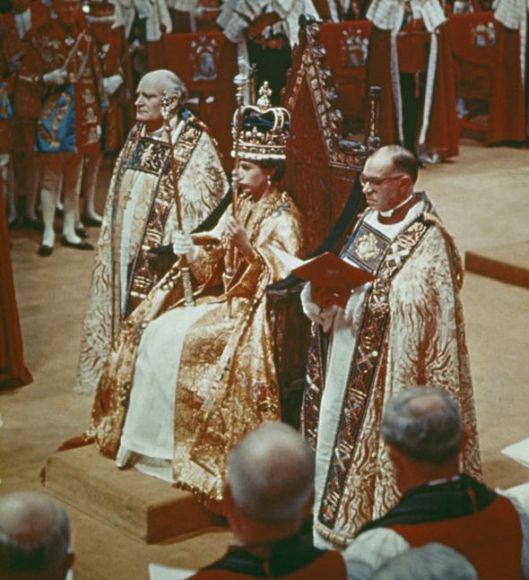
image22liz2.jpg

You’ll notice that, in every case, the throne is the same.
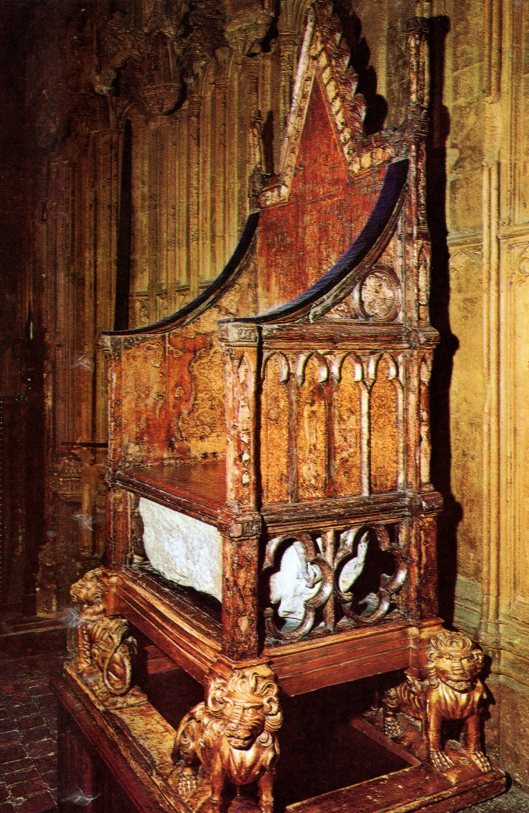
image23throne.jpg

This is the so-called “Coronation Chair”, built between 1297 and 1300 and used since for crowning English monarchs.  It was especially commissioned so that it could hold the “Stone of Scone” (pronounced “skoon”—not like the pastry).  This was an ancient piece of Scottish royal history which Edward I,
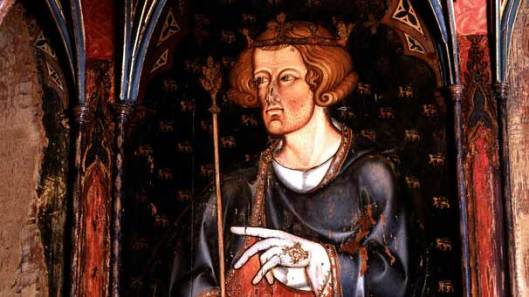
image24ed1.jpg

in an effort to control Scotland, had stolen from its place on Moot Hill, near the Abbey of Scone.

image25sconeabbey.jpg

Supposedly, it was a stone used in the crowning of Scottish kings back to the time of the first one, or that it was even older, having been lugged from Tara, in Ireland, where, under the name “Lia Fail”, “the Stone of Destiny” it was used in coronation ceremonies there.  Its purpose was confirmation:  tradition had it that, when the true king bestrode it (a great old verb form), it gave a great shout.
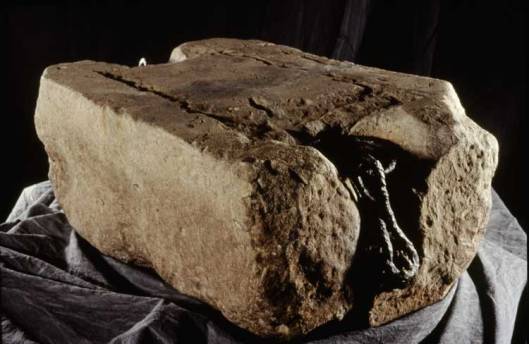
image26liafail.jpg

As far as we know, no shouting has been reported, over the centuries—perhaps because it’s being used for English kings and therefore the stone is holding its tongue till it’s taken back to wear it belongs?

What do you think, dear readers?

Thanks, as ever, for reading.

MTCIDC

CD

PS

And did you notice something(s) out of place in JRRT’s drawing of Bag End?  We’ll talk about it in our next…
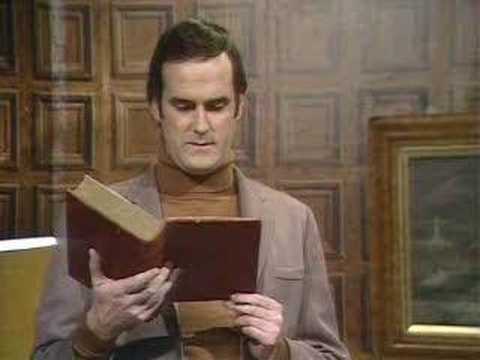
image1bagend


Are You Sitting Down.1?

04 Wednesday Oct 2017

Posted by Ollamh in Imaginary History, J.R.R. Tolkien, Narrative Methods

≈ Leave a comment

Tags

19th Century, An Introduction to Old Norse, Bag End, Beorn, Charles Dodgson, E.V. Gordon, Edwardian, Elvenking, Furniture, Goblins, Hildebrandts, House, Iron Age Farmhouse, Lewis Carroll, Listen with Mother, Master of Laketown, Monty Python, Norse house, Sackville-Bagginses, The Hobbit, Through the Looking-Glass, Tolkien, Victorians

Welcome, dear readers, as always.

Several times, Monty Python skits included the pattern, “Are you sitting comfortably?  Then I’ll begin.”

image1a.jpg

It was clear, when we first heard it, that, like so much of Python material, it was one of those references which an audience in Britain in the early 1970s would have understood immediately and chuckled at, but it was only with the advent of the all-knowing Wikipedia that the reference came clear to us.  (Here’s a LINK, so that, if you don’t know it already, you, too, can be suitably enlightened.)

But it made us think—not everything does, we promise!—of Tolkien and what must sound like a very odd subject—furniture.

Furniture?

Consider Bilbo’s Bag End:

“The Door opened on to a tube-shape hall like a tunnel:  a very comfortable tunnel without smoke, with paneled walls, and floors tiled and carpeted, provided with polished chairs, and lots and lots of pegs for hats and coats…The tunnel wound on and on, going fairly but not quite straight into the side of the hill—The Hill, as all the people for many miles round called it—and many little round doors opened out of it, first on one side and then on another.  No going upstairs for the hobbit:  bedrooms, bathrooms, cellars, pantries (lots of these), wardrobes (he had whole rooms devoted to clothes), kitchens, dining-rooms, all on the same floor, and indeed on the same passage…” (The Annotated Hobbit, Chapter 1, “An Unexpected Party”)

Here is JRRT’s version of the entryway–with Bilbo—or is that JRRT himself?  There appears to be a strong resemblance…
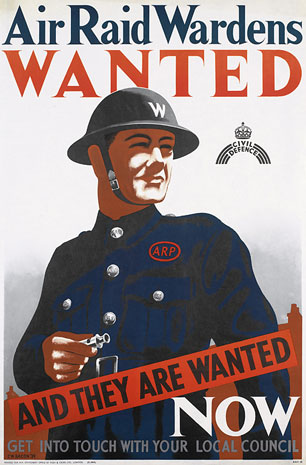
image2a.jpg

image2bilbo.jpg

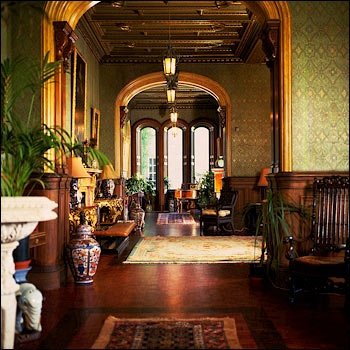
As the narrator tells us, “This hobbit was a very well-to-do hobbit…”, but, at the same time, we could easily see this description (ignoring the fact that it’s about a hole, albeit “not a nasty, dirty, wet hole…nor yet a dry, bare, sandy hole…it was a hobbit-hole, and that means comfort”) applied to the kinds of late-Victorian/Edwardian interiors with which Tolkien was familiar.

image3hall.jpg

People of this world—middle-class England—seem to have loved to live among piles of possessions—heavy furniture, thick carpets, heavy drapes, and knickknacks galore.

image4.jpg

(Oh–and swords, apparently.)

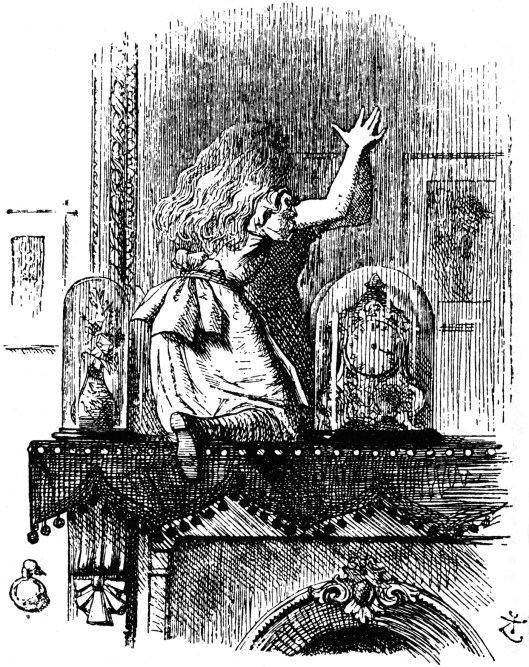
To us, this has a slightly claustrophobic effect—and we imagine that it may be why Alice in Through the Looking-Glass (1871) attempts to escape it–

image5lookingglasshere.jpg

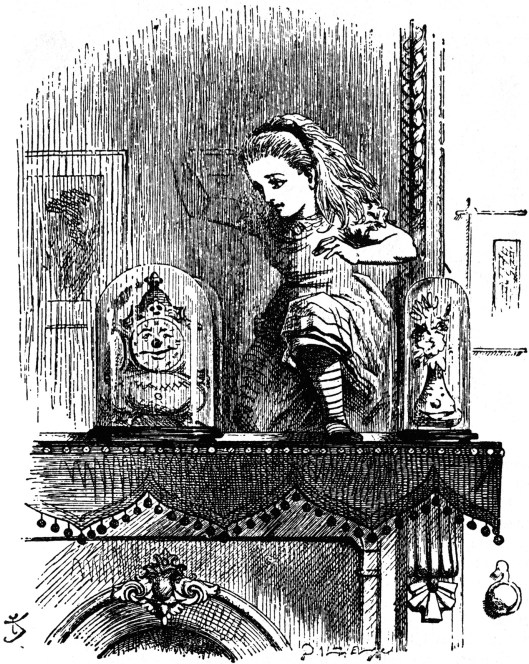
only to find herself in a distorted version of the same room on the other side of the mirror.

image6lookingglassthere.jpg

[Here’s the actual mirror, from the childhood home of the real Alice, which is said to have inspired Charles Dodgson/Lewis Carroll to write a sequel to the first Alice book.]

image7alicemirror.jpg

What about other Middle-earth interiors, beginning in The Hobbit?

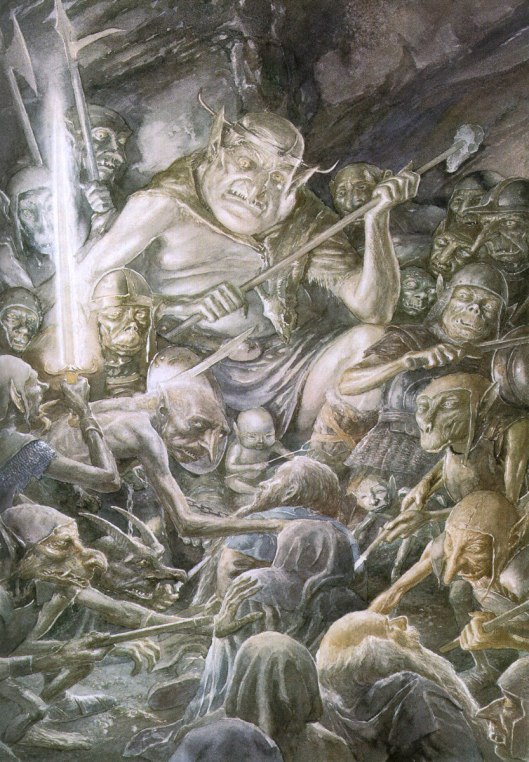
Surprisingly, there is really nothing before the Dwarves and Co. reach Beorn’s house.  There is no description of any inside in Rivendell and, beyond that, the only “indoors” we see before Beorn is the main cave of the goblins and the only “furniture” is this:

“There in the shadows on a large flat stone sat a tremendous goblin…”  (The Hobbit, Chapter 4. “Over Hill and Under Hill”)

image8goblinstone.jpg

Beorn’s house, as we see in Anderson’s The Annotated Hobbit (170-171), appears to be based upon an illustration to be found in E.V. Gordon’s An Introduction to Old Norse (1927) (with an older history yet—see Anderson, 171).

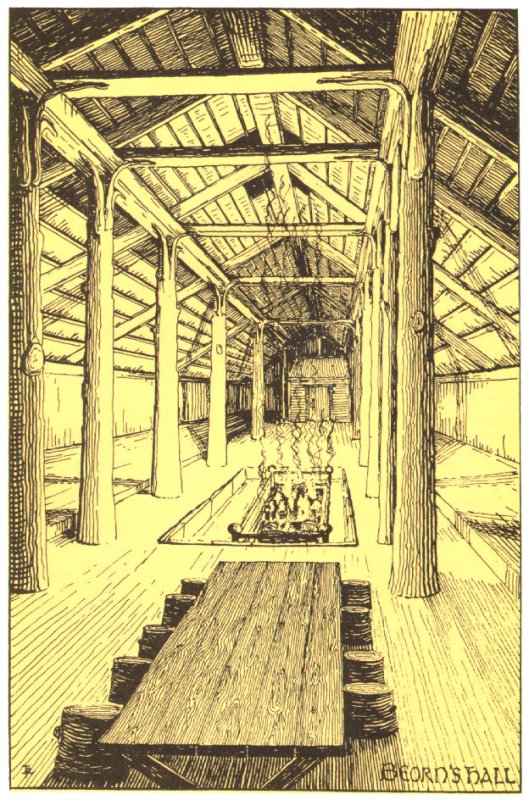
image9beornshall.jpg

The Hildebrandts saw Beorn’s house as rather like a giant log cabin,

image10aabeornshouse.jpg

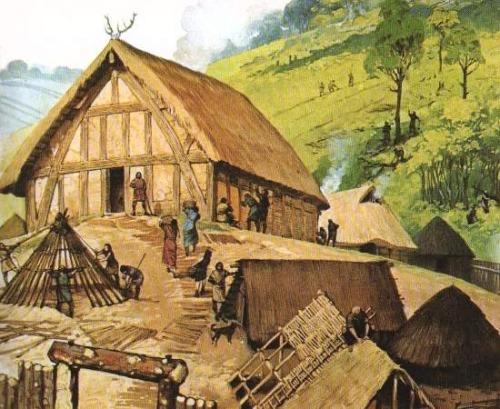
but we imagine the outside of Beorn’s house to look rather more like this view of an Iron Age farmhouse

image10bb.jpg

And here’s a reconstruction of a Norse house interior which is a little more “lived-in”, to give you the idea of what Beorn’s house might look like day-to-day (without the magic animals, unfortunately).

image10bvikinghall.jpg

As Tolkien’s illustration shows, however, this is hardly based upon a Victorian parlor!  As the narrator describes it (with magic animals as the kitchen staff):

“Quickly they got out boards and trestles from the side walls and set them up near the fire…Beside them a pony pushed two low-seated benches with wide rush-bottoms and little short thick legs for Gandalf and Thorin, while at the far end he put Beorn’s big black chair of the same sort…These were all the chairs he had in his hall…What did the rest sit on?…The other ponies came in rolling round drum-shaped sections of logs, smoothed and polished, and low enough even for Bilbo…” (The Hobbit, Chapter 7, “Queer Lodgings”)

Beyond Beorn’s house, there is mention that the Elvenking sat “on a chair of carven wood” (The Hobbit, Chapter 9, “Barrels Out of Bond”) and the Master of Laketown has a “great chair” (The Hobbit, Chapter 10, “A Warm Welcome”), but we have come deeper into the Middle-earth/medieval world, it seems, where furniture (at least in the narrator’s view) is sparse and we will only begin to see more abundance, at least in a general way, when we return to the Shire and the unwelcome event of the auction of Bilbo’s possessions on June 22nd:

“The legal bother, indeed, lasted for years…and in the end to save time Bilbo had to buy back quite a lot of his own furniture.” (The Hobbit, Chapter 19, “The Last Stage”)

“Furniture” is, unfortunately, a vague word, mentioned just previously in relation to the Sackville-Bagginses who were “busy measuring his [Bilbo’s] rooms to see if their own furniture would fit.”  We’ll have to make do here with our original idea of Bilbo the Middle-earth Victorian’s house,

image10vicparlor.jpg

but, in our next, we’ll have a look at households (and palaces) in The Lord of the Rings, to see what we may find (and we have a hunch the inventory will include a quantity of thrones…)

Thanks, as ever, for reading!

MTCIDC

CD

The Nazgul Brothers?

27 Wednesday Sep 2017

Posted by Ollamh in J.R.R. Tolkien, Military History, Military History of Middle-earth, Narrative Methods

≈ Leave a comment

Tags

aircraft, anti-aircraft gun, Aviation, Bellerophon, bombers, British Army, dogfights, Dragons, early airships, flight, flying machines, Great War, harpies, Hermes, machine gun, manoeuvres, military intelligence, Nazgul, Paris, Pegasus, Schlieffen Plan of 1914, Sir Douglas Haig, Sir James Grierson, The Blitz, The Lord of the Rings, Tolkien, trench fever, trenches, Wraiths, Wright Brothers, WWI Trenches

Welcome, dear readers, as ever.

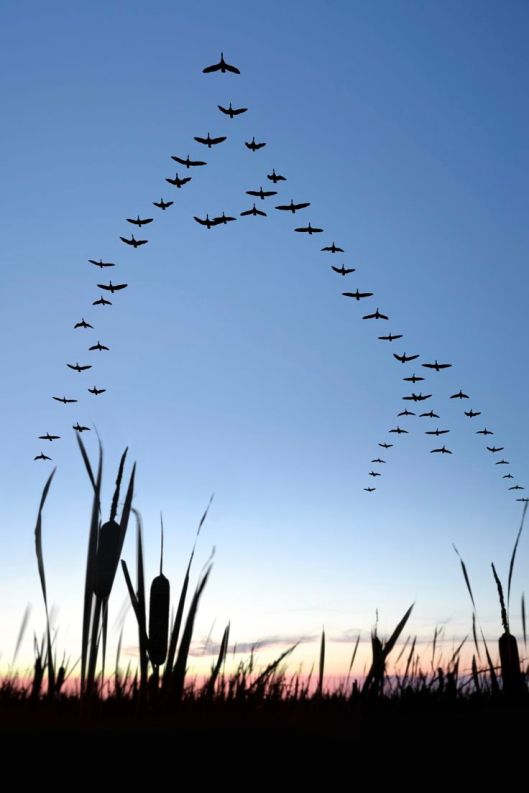
Imagine a world where there were no airports, no contrails, no roar of engines, no small silver objects crossing the skies, the sound of their flight trailed behind them.  The only flying things would be birds and those in different seasons, some permanent, some migratory (or used to be—where we live in North America the Canada Geese, whose great chevrons across our skies used to be powerful signs of winter to come or spring soon to appear, now squat here year round).

image1geese.jpg

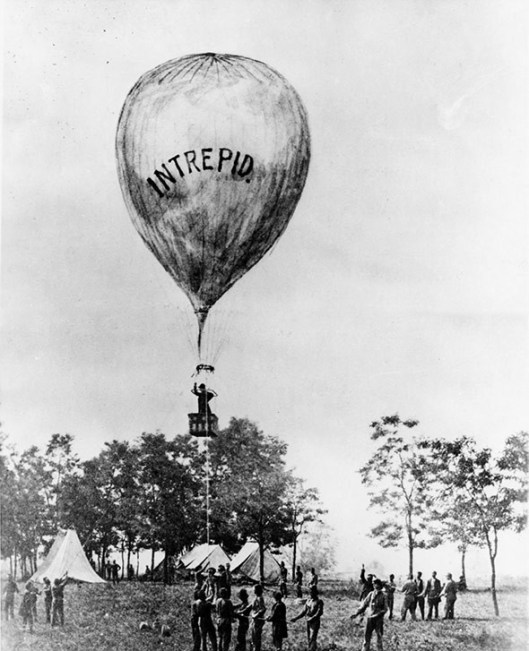
This would have been England in 1892, the year JRRT was born.  There were early airships—basically big balloons of various sorts, but they were primarily stationary and used for (limited) military intelligence.

image2intrepid.jpeg

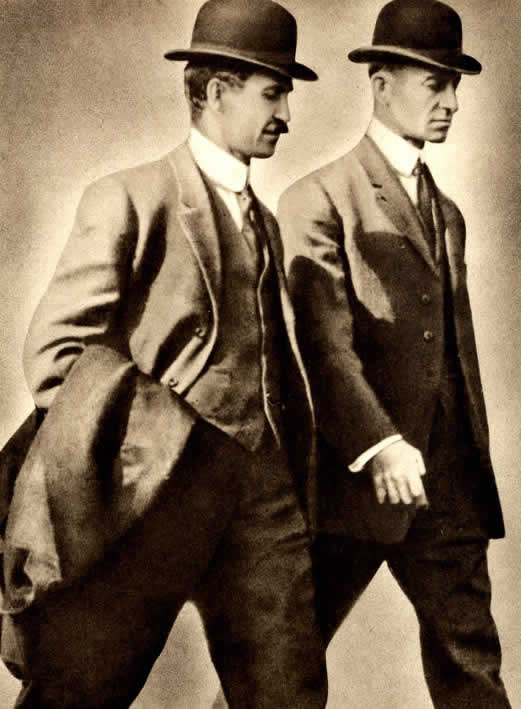
Then came the Wright brothers

image3wrights.jpg

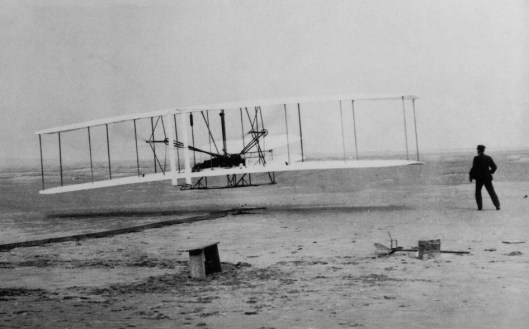
who, in December, 1903, produced the first engine-propelled, manned flight in their enlarged kite.

image4kittyhawk.jpg

Thereafter, flight would, literally, take off, but the Wrights, who were idealistically inclined, believed that such an invention would actually end war by making it too terrible.

The British army thought differently, however, and there were soon aerial observation units attached to military formations.  In fact, Sir James Grierson

image5grierson.jpg

tactically outfoxed his rival, Sir Douglas Haig,

image6haig.jpg

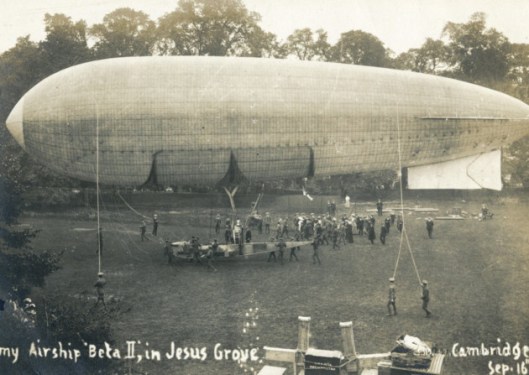
not only by his skillful use of aircraft for observation, but also by his keen understanding of how to conceal his own movements from Haig’s aircraft

image7airship.jpg

in the army manoeuvres of 1912.

image8manoeuvres.jpg


The Great War, when it came, two years later, would then be the proving ground for all sorts of aerial experimentation.

First, it was just observation.

image9be2.jpg

A British aviator, flying north of the army, first spotted the massive German columns which were designed to outflank the British and French armies and capture Paris in the Schlieffen Plan of 1914.

image10schlieffenplan.gif

Because observation was their task, the earliest aircraft were unarmed, but this changed and soon there was aerial combat, the so-called “dog fights”, the popular images being “knights of the sky” who jousted with manoeuvres and machine guns, rather than with lances, maces, and swords.

image11joust.jpeg

image12dogfight.jpg

Next came the use of aircraft to disrupt enemy formations and their movements, bombing and strafing, sometimes as part of major attacks, the whole idea being to dominate the sky over the enemy’s trenches, while protecting your own.

image13dogfightingovertrenches.jpg

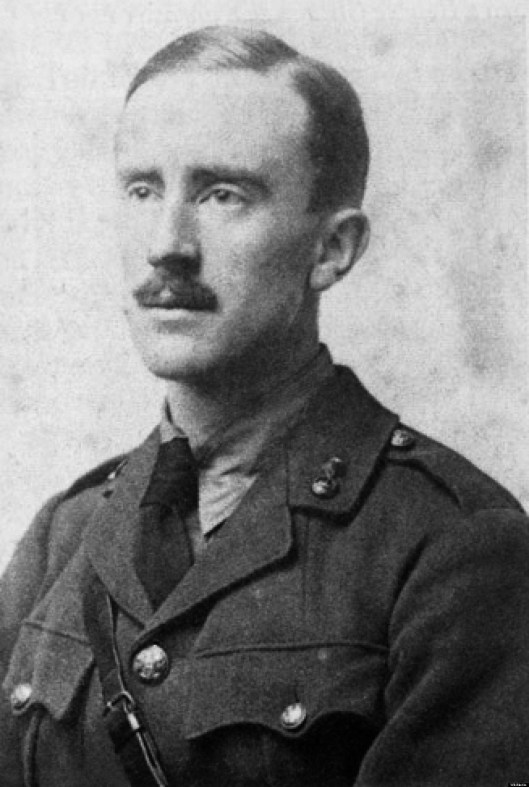
And this is where we imagine 2nd Lieutenant JRR Tolkien

image14jrrt.jpg

in the summer of 1916, standing in such a trench,

image15atrench.jpg

looking up, and thinking…

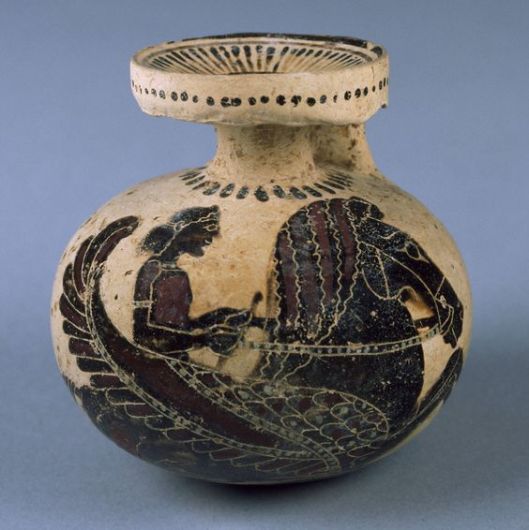
We can also imagine him imagining—not seeing flying machines, but something much earlier.  After all, with his education, background, and interests, it would have been difficult not to think of classical harpies

image15harpies.jpg

or Hermes

image16hermes.jpg

or Bellerophon, mounted on Pegasus.

image17bellerophon.jpg

And, with his Norse passion, there would also, of course, be dragons…

image18smaug.jpg

And, perhaps a combination:  a Bellerophon mounted on a miniature dragon?

image19nazgul.jpg

In the world of the trenches, there were two defences against aircraft:  friendly aircraft in the air

image20dogfight.jpg

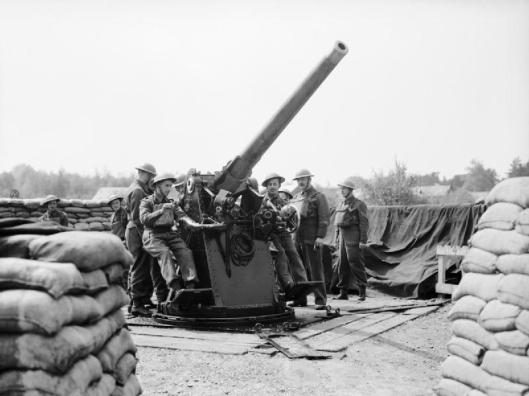
and anti-aircraft guns on the ground.

image21aagun.jpg

But the war ended fairly quickly for the scholarly lieutenant, laid low by a more primitive enemy than Industrial Age Germans with bombs:  lice.

image22lice.jpg

JRRT became sick with what was then called “trench fever”, an illness conveyed, like typhus, by the bite of the tiny insects who colonized the clothing and bodies of soldiers in every dugout in Europe.  Wracked with recurring fevers, headaches, and complete exhaustion, among other complaints, men ill with trench fever were brought to base hospitals and, if sick enough, were sent home, as there was no cure, to recover as best they could.  Tolkien spent the rest of the war in the hospital or in garrison in England and thus escaped the last and perhaps worst years of the war in the trenches.

At home, he became Professor Tolkien, taught his classes, fathered four children, and then a second war came, one in which the primitive air war of the first war was intensified by more sophisticated aircraft, more powerful explosives, and plans to bomb Britain into ruin and submission in what was called “The Blitz”.

image23blitz.jpg


JRRT went back into service, this time as an air raid warden, even as two of his sons were more directly involved in the war.

image24airraidwarden.jpg

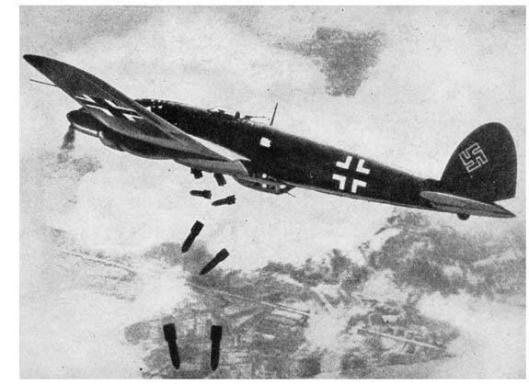
Night after night, the bombers came,

image25bomber.jpg

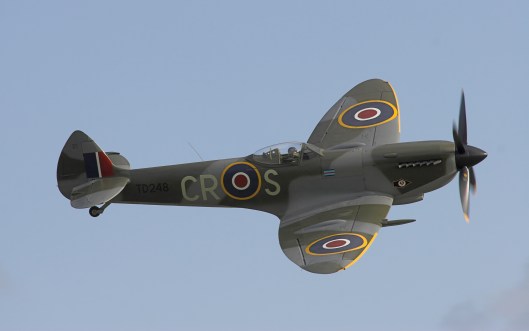
to be met with the same weapons as the previous war:  aircraft,

image26spit.jpg

anti-aircraft guns

image27aagun.jpg

and, because the enemy began to attack at night,

searchlights.

image28searchlight.jpg

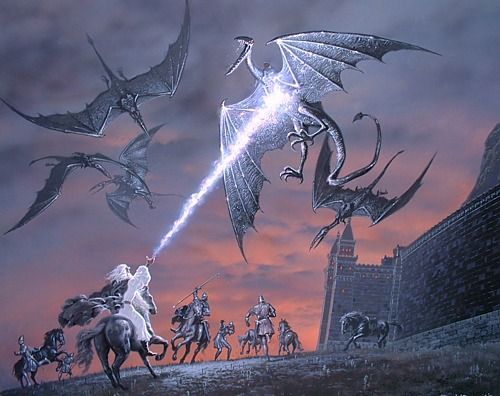
And this brings us back to our imaginings.  Working on The Lord of the Rings, staring into the night sky, listening for enemy bombers, would Tolkien have thought of danger to Middle-earth in the form of flying things, not machines but terrible figures mounted on even more loathsome creatures—and what could be done about them?  Magic, perhaps?

image29gandalf.jpg

Thanks, as always, for reading!

MTCIDC

CD

Crowning Achievement

20 Wednesday Sep 2017

Posted by Ollamh in Artists and Illustrators, J.R.R. Tolkien, Literary History, Narrative Methods

≈ Leave a comment

Tags

Alexander the Great, Alice in Wonderland, Barrow-downs, Barrow-wights, Bayeux Tapestry, Brunhilde, Charlemagne, Cheshire Cat, circlet, Cleopatra VII, diadem, Egypt, Egyptian crowns, Elightenment France, Eowyn, French Revolution, Gondor, Gondorian crown, Greek, Greek coins, Hildebrandts, Imperial Crown of the Holy Roman Empire, Julius Caesar, Lupercalia, Marcus Antonius, Medieval, Napoleon I, Nazgul, Octavian Augustus, Pharoahs, Philip II, Pontifex Maximus, Ptolemy I, Queen Elizabeth I, Queen Elizabeth II, Queen Victoria, Richard Wagner, Rohan, Romans, Tenniel, The Lord of the Rings, Theoden, Tolkien, William Shakespeare, Witch-King of Angmar, wreaths

Welcome, dear readers, as ever.

Recently, one of us was lecturing on ancient Egypt, a country of two lands, in fact, Upper and Lower, and each could be represented in the crown worn by the pharaoh.

image1crownsof-egypt.jpg

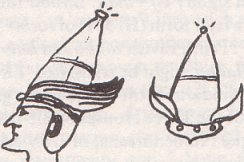
Within in blink, we began to think about JRRT’s illustration of the traditional crown of Gondor,

image2jrrtcrown.jpg

of which Tolkien says:

“I think that the crown of Gondor (the S. Kingdom) was very tall, like that of Egypt, but with wings attached, not set straight back but at an angle.

The N. Kingdom had only a diadem (III 323).  Cf. the difference between the N. and S. kingdoms of Egypt.”

(Letters, letter to Rhona Beare, 10/14/58, 281)

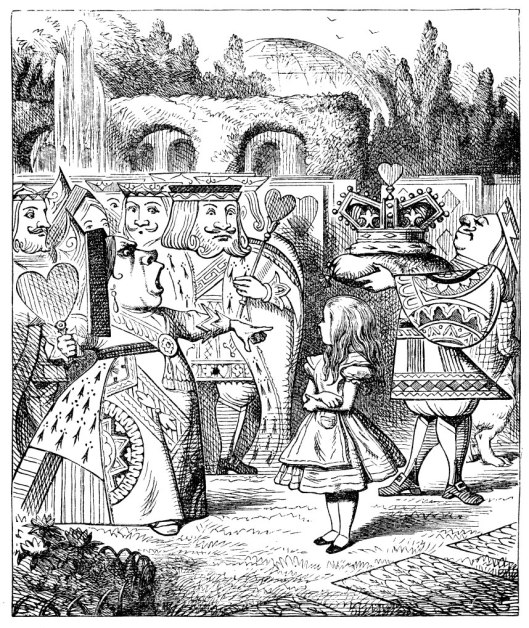
For us, the first crown we believe we ever saw as children was either one in an illustrated fairy tale (here’s a Tenniel illustration from Alice)

image3atenniel.jpg

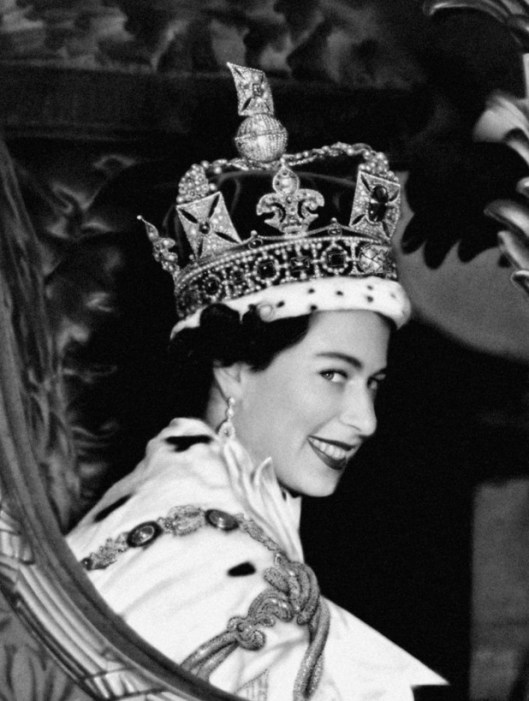
or the actual one of Queen Elizabeth II, and that hardly fits JRRT’s idea about the southern crown—or the northern one

image3er2.jpg

or that of her ancestor, Queen Victoria

imaage4vr.jpg

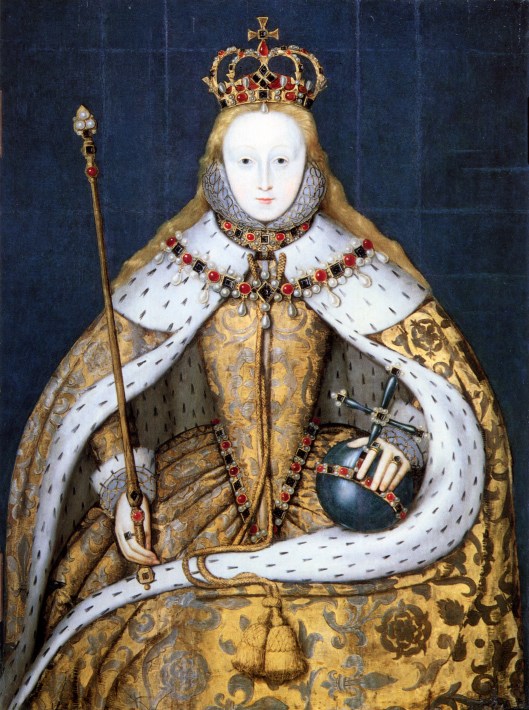
or that of their distant ancestor, Elizabeth I.

image5er1.jpg

When we think of a “diadem”, however, we are reminded of the earliest western European crowns, which, in contrast to Elizabeth’s, is barely there at all.

Here is the first type of crown we know of being depicted—it’s that “diadem” in a Greek form, being on a coin of Philip II, King of Macedon and father of Alexander the Great (the reverse—the back side—the front side is called the “obverse”—shows Philip’s Olympic victory horse and Philip’s name in the genitive—possessive—case, “of Philip”—showing not only possession of the horse, but of the victory, of the coin, and, by implication, the right to issue coins).


This became a regular pattern, both of coin and of crown for those who followed Philip, and, thinking about Philip’s victory, we can imagine that the original of the crown was based upon the wreath athletic game victors wore.


And coins like Philip’s set the pattern for classical coins—and crowns—for centuries.  Here’s the crown pattern on the head of Ptolemy I, one of Alexander’s generals.


At Alexander’s death, Ptolemy seized Egypt, making it a family possession for the next nearly three hundred years, all the way down to his greatgreatgreat etc granddaughter Cleopatra VII.

image9cleo.jpg

The pattern was not confined to Greece or Egypt, however—Julius Caesar wore something similar—

CaesarCoin_Wikipedia_960.jpg

although, unlike Ptolemy and other such rulers, Caesar might have hoped to muddy people’s perceptions of what such a thing symbolized and what position (dictator for life) he’d forced the Senate to give him.   Rome had hated monarchs, after all, since they’d kicked out their last king 450 years before.

(And see Act I, Sc.2 of Shakespeare’s Julius Caesar in which, at the festival of the Lupercalia, Marcus Antonius publically offers him a crown and Caesar rejects it, much to the loud delight of the mob.)

In the Greco-Roman world, wreaths had many purposes:  besides Greek kings and winners at games, people at parties and weddings and other festive occasions wore them, as well as celebrants at religious rites.

image12symposium.jpg

Perhaps Caesar hoped that, appearing in one, he might appear less like a Hellenistic king and more like anything from an Olympic victor or party-goer to a priest (he was Pontifex Maximus, head of religion in Rome, so there was a certain credibility to the latter).

image13pm.jpg

Malicious people in Rome also suggested another reason for the wreath:  Caesar was sensitive about his thinning hair.

image14jc.jpg

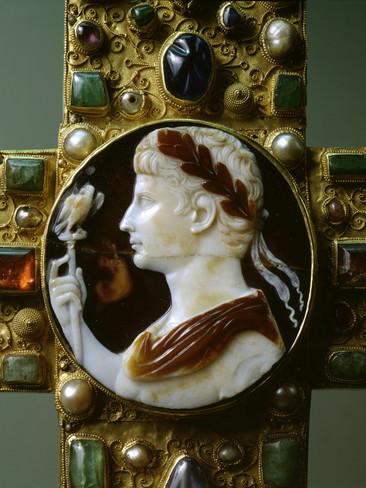
Caesar’s grandnephew and successor, Octavian/Augustus, continued the tradition,

Augusts-in-Ancient-Roman-Cameo.jpg

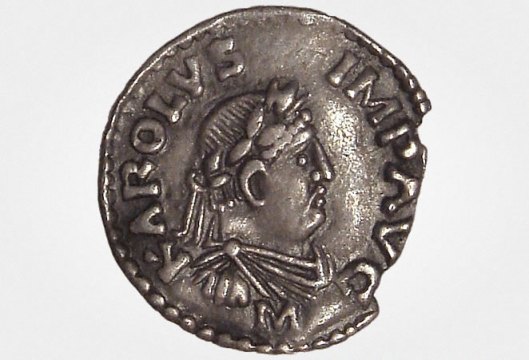
as did following emperors for several centuries—and even Charlemagne, hundreds of years after the last western emperor, revived it.

image16charlemagne.jpg

At some point, just after Charlemagne’s time or thereabout (c1000ad), a new pattern appeared, which you can see in the famous “Imperial Crown of the Holy Roman Empire”.

image17impcrown.jpg

Instead of a wreath, this was a built-up circlet, with lots of “bits and bobs” on top.

This newer look persisted in various more or less complicated forms in the west for centuries

image18king.jpgimage19king.jpgimage20king.jpgimage21king.jpg

and seems to underlie the crowns seen in more recent times (often with what appears to be a red velvet balloon in the middle).

image22er1.jpgimage23chas2.jpgimage24geov.jpg

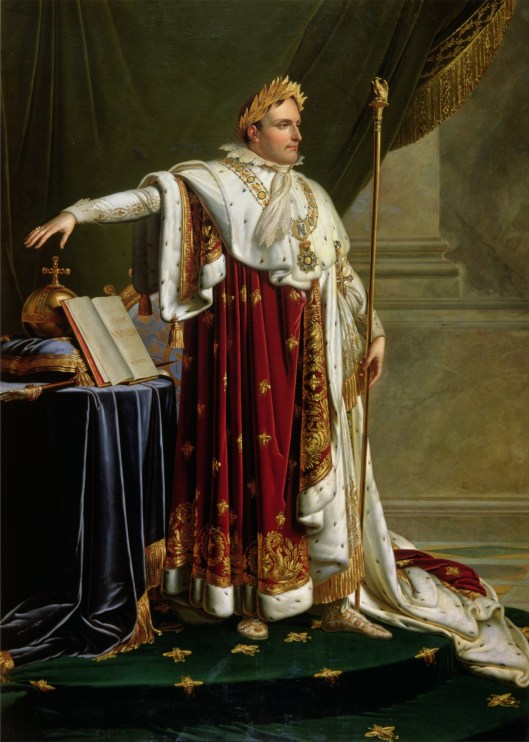
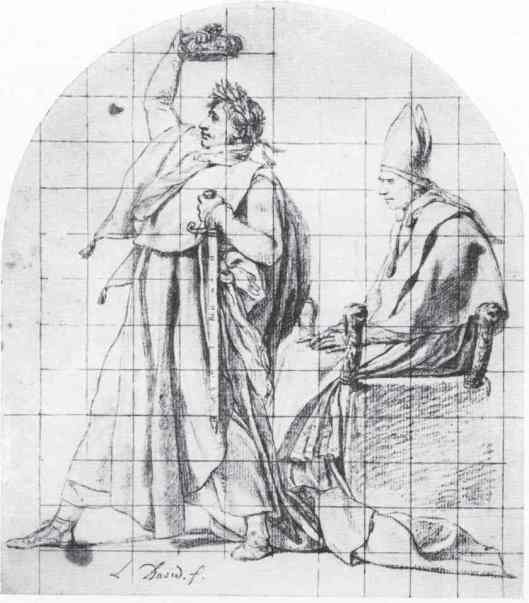
There is a throwback, however:  Napoleon I.  He had grown up in Enlightenment France, in a world which idealized classical learning and art, and so, when he made himself emperor in 1804, his model wasn’t medieval and Germanic, but Augustine.

image25agus.jpg

image25nappy.jpg

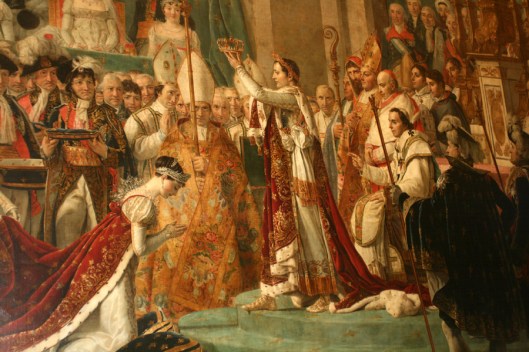
This doesn’t mean that he wasn’t aware of that other model and he would have used it—the so-called “crown of Charlemagne”–at his self-coronation

image26napcoron.jpg

had it not suffered the fate of many medieval treasures and been destroyed during the French Revolution (the famous Bayeux Tapestry was almost converted to wagon covers by revolutionaries).  In fact, a “crown of Charlemagne” did turn up for the ceremony—“recreated” by a clever Paris jeweler.

image27charlcrown.jpg

[A footnote about the coronation.  In the painter David’s sketches for it, he shows the pope (Pius VII) with his hands in his lap.

image28pope1.jpg

Napoleon saw the drawing and said to David that the pope should be blessing the occasion—after all, that’s why Napoleon had dragged him all the way from Rome.  David redid his sketch, of course!]

image29pope2.jpg

Beyond the Crowns of Gondor, most of the crowns seen in The Lord of the Rings are described as “circlets”—

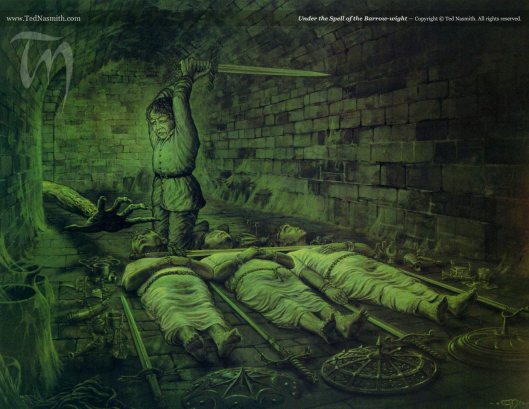
  1. Sam, Merry, and Pippin, laid out in the barrow:

“About them lay many treasures of gold maybe, though in that light they looked cold and unlovely.  On their heads were circlets, gold chains were about their waists, and on their fingers were many rings.”(The Fellowship of the Ring, Book One, Chapter 8, “Fog on the Barrow-Downs”)

image30barrow.jpg

  1. Theoden:

“Upon it sat a man so bent with age that he seemed almost a dwarf; but his white hair was long and thick and fell in great braids from beneath a thin golden circlet set upon his brow.” (The Two Towers, Book Three, Chapter 6, “The King of the Golden Hall”)

image31theoden.jpeg

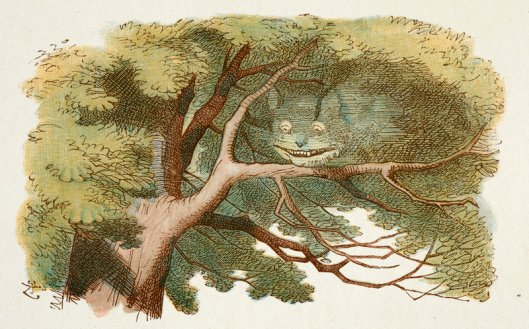
But there is one which, well, looking at the various illustrations of its wearer, reminds us of Alice’s comment upon the Cheshire Cat:

“Well! I’ve often seen a cat without a grin…but a grin without a cat!  It’s the most curious thing I ever saw in my life!” (Alice’s Adventures in Wonderland, Chapter 6, “Pig and Pepper”)

image32cheshirecat.jpg

On the Fields of the Pelennor, a “great shadow descended like a falling cloud.  And behold! It was a winged creature.”

This might be bad enough, but:

“Upon it sat a shape, black-mantled, huge and threatening.  A crown of steel he bore, but between rim and robe naught was there to see, save only a deadly gleam of eyes:  the Lord of the Nazgul.” (The Return of the King, Book Five, Chapter 6, “The Battle of the Pelennor Fields”)

image33eonaz.jpg

We are aware of at least half-a-dozen professional renderings of this scene (and we plan to discuss them all in a future post), but it seems to us that those eyes, seeming to float in space, make it extremely difficult to illustrate it, no matter what crown—simply described as “steel”—he’s wearing.  And that brings us back to our original crown.  As JRRT described it:

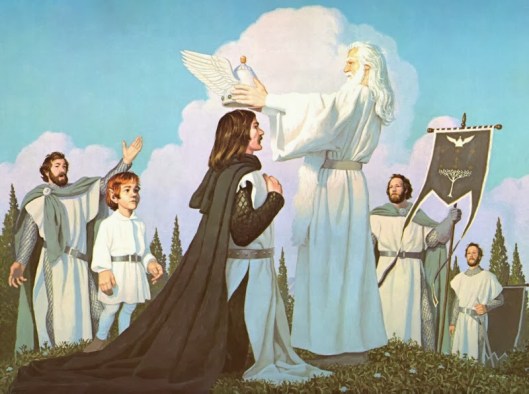
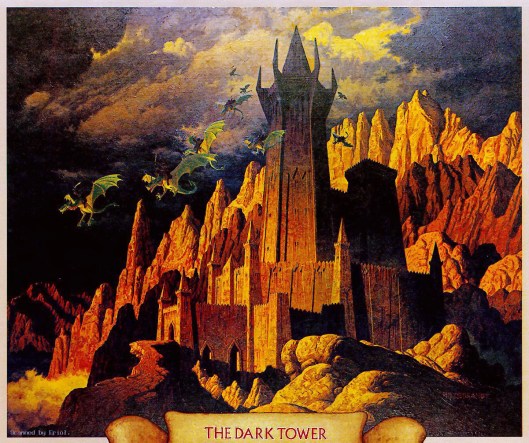
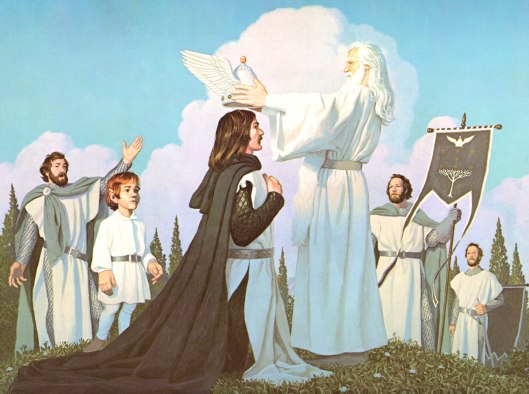
“It was shaped like the helms of the Guards of the Citadel, save that it was loftier, and it was all white, and the wings at either side were wrought of pearl and silver in the likeness of the wings of a sea-bird, for it was the emblem of kings who came over the Sea; and seven gems of adamant were set in the circlet, and upon its summit was set a single jewel the light of which went up like a flame.” (The Return of the King, Book Six, Chapter 5, “The Steward and the King”)

If his drawing (seen at the beginning of this post) is what he had in mind, then the only professional illustration we’ve seen of it, by the Hildebrandts, is only an approximation.

image34coronation.jpg

And, in fact, reminds us all-too-easily of Brunhilde, the Walkuere, from Wagner’s operas.

image35brunhilde.jpg

If illustrators as good as the Hildebrandts struggle, this must be a tough one.  The designers of the P. Jackson films are even farther away from the original, as so often.

image36aragorn.jpg

Here, however, we have some sympathy!  Somehow the medieval world of Middle-earth can not easily assimilate an Egyptian artifact.  And so, we suspect that they thought “circlet” and “wings” and left it there.  What do you think, readers?  How do you imagine the crown?

Thanks, as ever, for reading.

MTCIDC

CD

In the Future, Use the Past

13 Wednesday Sep 2017

Posted by Ollamh in Artists and Illustrators, Fairy Tales and Myths, Films and Music, Heroes, J.R.R. Tolkien, Literary History, Narrative Methods

≈ Leave a comment

Tags

A New Hope, A Princess of Mars, Ages of Middle-earth, Death Star, Edgar Rice Burroughs, Emperor Palpatine, Frank Schoonover, George Lucas, Hildebrandt, Mos Eisley, Oxford, Percival Lowell, Return of the Jedi, Sauron, science fiction, special effects, Star Wars, Stonehenge, Tatooine, The Empire Strikes Back, The History of Middle-earth, The Last Jedi, The Lord of the Rings, Tolkien, tower of St Michael

Welcome, as always, dear readers.

As The Last Jedi (Star Wars 8) approaches (and Star Wars Rebels, season 3 has appeared via the postman—season 4 premieres in mid-October—sadly the last season, as Disney has canceled season 5), we’ve been thinking about the original Star Wars of 1977.

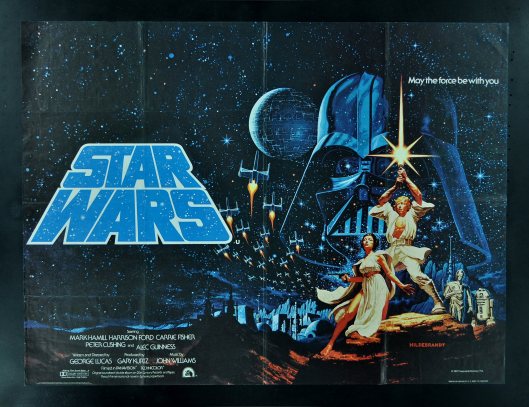
image1poster.jpg

This poster—the second ever Star Wars poster, in fact (used by 20th Century Fox in the UK)– is a great link to JRRT—as if we don’t seem to make such links every time we write!  It’s by two of our favorite Tolkien illustrators, the Hildebrandt brothers.  Here’s a picture of the surviving twin, Greg, with that very poster (his brother, Tim, died in 2006).

image2gh.png

(Clink here for a LINK to an interesting little piece from 2010 about the Hildebrandts and George Lucas.)

We believe, however that there may be a deeper link.

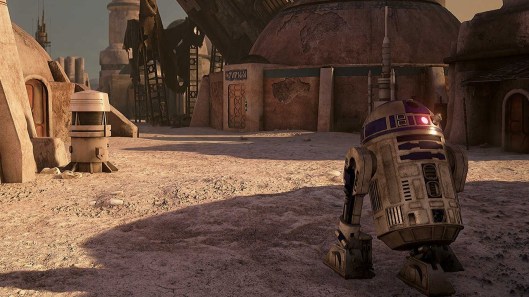
The original reviews (here’s a LINK to summaries of some of them) were a mixture, with some critics enthusiastic about what they saw and others (in our view the stodgier ones) calling the film things like “puerile”.  One element which was occasionally commented upon was the look of the picture—and not just the (for the time) dazzling special effects—but the fact that all the worlds depicted were lived-in, not shiny and new—well, almost.  Consider Mos Eisley, for example,

image3moseisley.jpg

which looks dusty and battered, suggesting the passage of time as well as the effects of the harsh desert climate of Tatooine.

Or the Jawa sandcrawler, old and clearly rusting–

image4jawasandcrawler.jpg

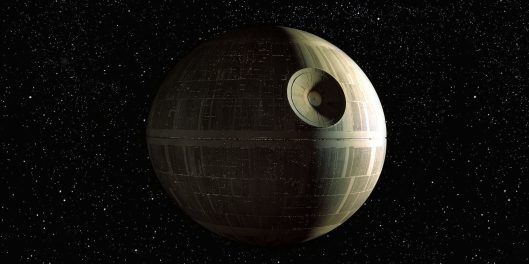
We said “almost” shiny and new because there’s one part of this galaxy with a different look:  the Death Star.

image5insidedeathstar.jpg

It looks like it’s dusted and waxed hourly, doesn’t it?  And the outside appears to be just as neat.

image6falconenteringdeathstar.jpg

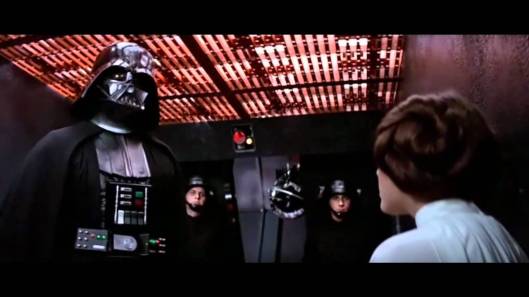
What does this say about the nature of those who inhabit it?  For us, thinking about the spotless Darth Vader,

image7vader.jpg

immediately suggests that the old proverb should be changed to “Cleanliness is next to Un-godliness”!  (Okay—we’re not the neatest and most organized people we know.)

It has been pointed out, more than once and beginning with the director himself, that George Lucas was influenced by Edgar Rice Burroughs’ John Carter series, beginning with A Princess of Mars (first published serially in The All-Story, February to July, 1912).

image8princess.jpg

(And here’s another connection—this cover and the illustrations for its first publication in book form, in 1917, were by Frank Schoonover, 1877-1972, who was the student of another of our favorite illustrators, Howard Pyle, whom we have occasionally mentioned in previous postings.  The convincing detail in this cover painting shows that, just like his teacher, Schoonover did his research—in his case, by very carefully going through the text and taking note of any technical information the author might have mentioned.)

In A Princess of Mars and subsequent books,  Mars has a civilization which is old and in decline (the inspiration for which, in turn, may have come from the work of the amateur astronomer, Percival Lowell, 1855-1916, whose telescopic observations of Mars had convinced him that the planet was—or had been—the home of a dying civilization which had constructed a vast network of canals to supply themselves with water from the polar ice caps—unfortunately, numerous NASA missions have found no evidence of the desperate Martians or their canals).   It would be easy, then, to say that Lucas was just following his source material, but we would suggest that there are two better explanations for showing wear.

The first comes from something Lucas is quoted as having said to his production designers:  “What is required for true credibility is a used future.” In Lucas’ view, then, the story’s believability comes in part from its look:  if things appeared not shiny, but worn, then viewers would be more likely to accept the narrative as somehow “true”, we presume because things in our world so often look used.

There is then, we think a further presumption:  if things look worn, then they have a past, which implies that the here-and-now of the story is a small part of bigger things and, certainly, just looking at the “crawl” at the beginning of the original Star Wars,

star-wars-crawl-163729.jpeg

which leads us to  our second explanation.  This one deals with something deeper, something which we would say might provide another possible link with JRRT and is, in fact, suggested by the titles of the first three Star Wars films made and even in their sequence:  A New Hope, The Empire Strikes Back, The Return of the Jedi.

In two earlier postings, we talked about the condition of Middle-earth at the beginning of The Lord of the Rings, in which everything, from the trees to the houses of Minas Tirith, has grown old and weary—and even potentially hostile, in the case of the trees.  Part of this comes from the fact that Middle-earth is old:  one has only to turn to Appendix B, subtitled “The Tale of Years”, in The Lord of the Rings to see that, in the Second and Third Ages alone, nearly 6000 years have passed.   (In terms of our earth, that’s moving from the late Neolithic Era to modern times, 4000bc to 2017ad.)  This also emphasizes the age and depth of evil, as well as its power to corrupt in the present:  Sauron began to build Barad-dur c. SA1000—5000 years before the main narrative of The Lord of the Rings opens and, in the present, the world is crumbling.

Of course, JRRT lived surrounded by the past.  The oldest surviving building in his daily Oxford is the tower of St Michael at the North Gate, dating from 1040ad, nearly a thousand years before his time,

image9stmichaels.jpg

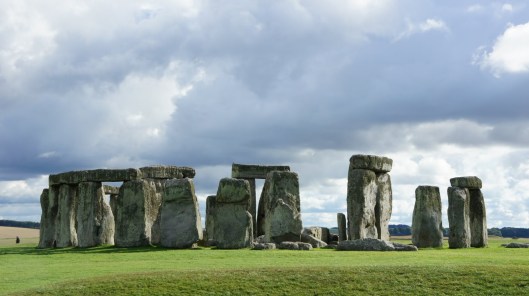
but Neolithic Stonehenge is only 58 miles (93km) southwest of the city and that’s 5000 years old, taking us back to the time when, in Middle-earth, Sauron had begun the Barad-dur.

image10stonehenge.JPG

image11baraddur.jpg

In contrast, Lucas was born in 1944 in Modesto, California, a town only founded in 1870, and grew up in a post-World War II world, where the key was “the future”.  It is a tribute, then, to his story-telling gift that he realized how useful in telling his story the past—even an imagined one—could be and it is interesting to see how he shares that understanding with JRRT and perhaps shares a goal, as well.

We’ve said that our second explanation may be seen in the titles of Lucas’ three films, so let’s consider them in comparison with the general shape of Tolkien’s work to see what that shared goal might be.   (In an interview, Lucas even described the three as being like a three-act play, suggesting the dramatic progress inherent in the movement from one to another.)

At the beginning of the first film, it is a dark time in the galaxy:  the repressive regime of the evil Emperor Palpatine dominates and resistance is confined to “The Rebel Alliance”, which has scraped together a fleet (and, presumably an army—we see elements in Rogue One, which takes place before this film) to resist, but seems to spend most of its time running and hiding.  The past is only implied, but the fact that there is an Empire and a resistance suggests much, just as the run-down condition of places like Tatooine might suggest both age and that the galaxy has become run-down because of that Empire.

image12palpatine.jpg

At the beginning of The Lord of the Rings, we find ourselves in a place with a long history, as we see from the many pages of the “Prologue”.  It has been a quiet place, but the world outside is becoming less so, with sinister forces growing, as Frodo hears from passing dwarves:

“They were troubled, and some spoke in whispers of the Enemy and of the Land of Mordor.” (The Fellowship of the Ring, Book One, Chapter 2, “The Shadow of the Past”)

In time, readers are brought to see that the dwarves are grossly understating the case:  the Enemy is real, Sauron, and that he has not only huge armies, but the Nazgul and a would-be ally in his enemies’ camp, Saruman.  The same may be said for the Empire:  not only do they have huge fleets and armies, but they have the “ultimate weapon”, the Death Star.

image13deathstar.jpeg

We will learn, as well, that, for all his great age and might, Sauron has an Achilles’ heel:  to give the One Ring its power, he has had to pour most of his power into it.  Thus, if he regains the ring, he will be much more powerful than he is at present, but, should the ring be destroyed, Sauron will be virtually destroyed with it.  As this struggle has been going on in Middle-earth for thousands of years, the idea that Sauron is vulnerable could easily be termed “a new hope”, just as Luke, the son of the Enforcer of the Galaxy, Darth Vader/Anakin Skywalker, will provide a new hope for the Rebels (especially when we are told about “the Chosen One”—for whom he can be taken).

For a time, things do not go well for those opposed to Sauron:  he combines psychological/meteorological attacks with the march of huge armies, and even pirate raids on Gondor’s south coast. Gondor is overrun and Minas Tirith is assaulted.  This is clearly The Empire Strikes Back, just as the pursuit of the Rebel fleet to Hoth and the destruction of Echo Base disperses the Rebels and casts a shadow over the hope felt after the destruction of the Death Star.

This is not the end, however, for the Rebels or for the good people of Middle-earth.  Not only is the Ring destroyed and Sauron disembodied, but this paves the way for The Return of the King, with all of the reflowering-to-come, as we have suggested in a previous posting.

image14crowning.jpg

And there is a strong echo in the title of Lucas’ third film, The Return of the Jedi, in which the Emperor is destroyed and balance brought back to the Force—and the galaxy.  (Of course, with Star Wars 7, we see that the happy ending is only temporary, but we have hopes that, by the conclusion of 9, there will come a final rebalancing and peace at last.)

image15return.jpg

Lucas’ acknowledges many sources but, so far, we have yet to locate a quotation from an interview or anywhere else in which he says, “Yes, I’ve read Tolkien closely and, indeed, there is a strong affinity between my work and his”, but we believe that we can suggest, at least, that he, like JRRT, is following the same path in creating a world in turmoil, a visibly-aging world.  Into this world, he places his protagonist who provides a new hope, faces the might of a not-easily-defeated enemy, but, by his bravery and determination, finally brings about the destruction of that enemy (interesting in both cases he does not do so himself—Gollum inadvertently destroys the ring, just as Anakin, not his son, kills the Emperor) and the promise of renewal in the return of the Jedi—and the King.

And what do you think, dear readers?

Thanks, as ever, for reading!

MTCIDC

CD

Re: Tree Two

06 Wednesday Sep 2017

Posted by Ollamh in Fairy Tales and Myths, J.R.R. Tolkien, Narrative Methods

≈ Leave a comment

Tags

decay, Ents, Entwives, Fangorn, Fangorn Forest, Laurelindorenan, Lothlorien, Minas Tirith, Ronald Foerster, Samwise Gamgee, Ted Sandyman, The Green Dragon, The Lord of the Rings, Tolkien, trees

Welcome, dear readers, as ever.
A posting or two ago, we had been talking about the symbolic uses of trees in Middle-earth, mostly as symbols of decay and regeneration.
Without going into a lengthy essay, we thought we had said what we could. But we had forgotten something—or, rather, someone.
While gossiping in The Green Dragon, Sam, slowly becoming annoyed at Ted Sandyman’s skepticism about the out-of-the-ordinary, replied to Ted’s “There’s only one Dragon in Bywater, and that’s Green”, by asking:
“But what about these Tree-men, these giants, as you might call them? They do say that one bigger than a tree was seen up away beyond the North Moors not long back.”
Ted is not convinced, and Sam presses on: “But this one was as big as an elm tree, and walking—walking seven yards to a stride, if it was an inch.””
“Then I bet it wasn’t an inch. What he saw was an elm tree, as like as not.”
Undaunted, Sam continues: ‘But this one was walking, I tell you; and there ain’t no elm on the North Moors.’ “ (The Fellowship of the Ring, Book 1, Chapter 2, “The Shadow of the Past”)
The topic shifts in another direction, with Ted still not persuaded, but we readers were struck by what Sam just said. As always with JRRT, the texts are so rich that one is always falling upon something read sometimes many times before, but somehow not seen, and this was one of them. (And, as always, we can hear Sherlock Holmes disdainfully commenting, “You see, but you do not observe.”) If the North Moors are like moors in our world, they are wild and windswept
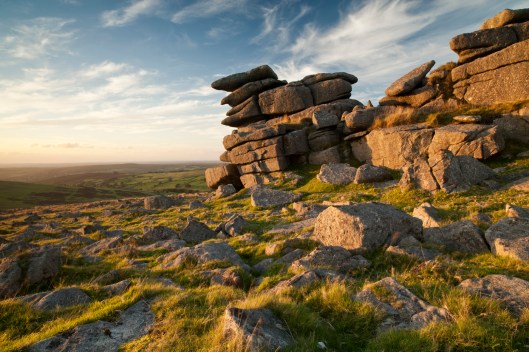
image1dartmoor.jpg
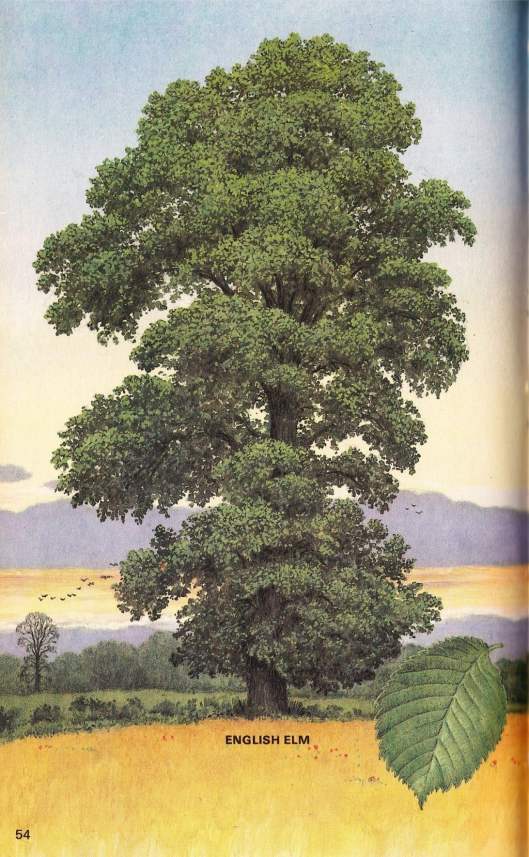
with virtually no trees, except in hollows and streambeds. And certainly no elms
image2engelm.jpg
as Sam says. Ted Sandyman dismisses Sam’s assertion, suggesting that it was an illusion or maybe an elm, but we know better: it was an Ent.
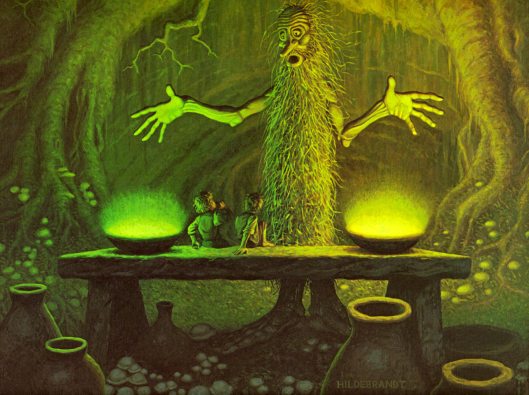
When Merry and Pippin meet their first, he is very vividly described:
“They found that they were looking at a most extraordinary face. It belonged to a large Man-like, almost Troll-like figure, at least fourteen feet high, very sturdy, with a tall head, and hardly any neck. Whether it was clad in stuff like green and grey bark, or whether that was its hide, was difficult to say. At any rate the arms, at a short distance from the trunk, were not wrinkled, but covered with a brown smooth skin. The large feet had seven toes each. The lower part of the long face was covered with a sweeping grey beard, busy, almost twiggy at the roots, thick and mossy at the ends. But at the moment the hobbits noted little but the eyes. These deep eyes were now surveying them, slow and solemn, but very penetrating. They were brown, shot with a green light.” (The Two Towers, Book Three, Chapter 4, “Treebeard”)
image3treebeard.jpg
We are not so mathematically sophisticated as to be able to determine, from those fourteen feet of height, the length of the Ent’s stride, unfortunately, but we are later told that this Ent, who is, of course, Treebeard, can move at quite a ground-eating speed, having, by the time he brings the two hobbits to Wellinghall, come “about seventy thousand ent-strides.”
(Actually, if, as Sam says above, an Ent’s stride was 7 yards, with 3 feet in a yard times 70,000, Treebeard has brought them about 280 miles (450 km) in a few hours!)
Treebeard formed part of our previous discussion, suggesting not only was his forest, Fangorn, in decline, but likewise Lothlorien:
“Do not risk getting entangled in the woods of Laurelindorenan! That is what the Elves used to call it, but now they make the name shorter: Lothlorien they call it. Perhaps they are right: maybe it is fading, not growing…They are falling rather behind the world in there, I guess…Neither this country, nor anything else outside the Golden Wood, is what it was when Celeborn was young.”
The decline of Treebeard’s world appears to come from two causes. First, there is an elderly and declining population of Ents:
“We are tree-herds, we old Ents. Few enough of us are left now…Some of my kind look just like trees now, and need something great to rouse them; and they speak only in whispers…
Hence, part of the Entish population is fading into the trees they herd. The other reason is more delicate. The Ents, although deeply attached to the trees, are, in fact, more like humans: they have two genders, suggesting that they reproduce the way mammals do. Unfortunately, something has gone wrong and the female half of the species has disappeared. As Treebeard explains:
“When the world was young…the Ents and the Entwives…walked together and they housed together…But our hearts did not go on growing in the same way: the Ents gave their love to things that they met in the world, and the Entwives gave their thought to other things…So the Entwives made gardens to live in. But we Ents went on wandering, and we only came to the gardens now and again…”
After ages pass, the Ents try to see the Entwives again, but:
“We crossed over Anduin and came to their land; but we found a desert: it was all burned and uprooted, for war had passed over it. But the Entwives were not there.”
And, from that time, the Ents have been without the Entwives and the implication must be that, although some of the trees, as Fangorn says, are “getting Entish”, unless the Entwives are found, there will be no young Ents to continue their line into the future. As Treebeard says, “…there were never many of us and we have not increased. There have been no Entings—no children, you would say, not for a terrible long count of years.”
All of this fits in with the theme we suggested in our previous posting: trees can symbolize the decline of Middle-earth, not only in their hostility, but, in the case of the Ents (who are almost trees), through what amounts to infertility, just like Minas Tirith, with half its buildings empty.
Treebeard holds little hope of the future, as well:
“We believe that we may meet [the Entwives] again in a time to come, and perhaps we shall find a land where we can live together and both be content. But it is foreboded that that will only be when we have both lost all that we now have…”
In that previous posting, we also suggested that the defeat of Sauron and the return of the rightful king brought about new growth and regeneration, something seen in the vegetation from the White Tree sapling in Minas Tirith to the phenomenal new fertility of the Shire. In the case of the Ents, however, there appears to be no happy ending, as, taking his farewell of Merry and Pippin, Treebeard says wistfully:
“Fare you well! But if you hear news up in your pleasant land, in the Shire, send me word! You know what I mean: word or sight of the Entwives.” (The Two Towers, Book Three, Chapter 10, “The Voice of Saruman”)
And yet—if we return to that conversation between Ted Sandyman and Sam, perhaps there is news for Treebeard. As far as we know, what Ents there are now in Middle-earth—including the three eldest, Fangorn, Finglas, and Fladrif—all seem to live in the forest of Fangorn—so who is that “Tree-man, giant, one bigger than a tree…big as an elm tree and walking—walking seven yards to a stride” which Sam’s cousin Hal saw “up away beyond the North Moor not long back”? The Lord of the Rings ends without our ever finding out, so we guess we can only hope that, one day, Merry and Pippin sent word.
Thanks, as always, for reading.
MTCIDC
CD
PS
We happened upon this illustration by Ronald Foerster of an Entwife—what do you think?
image4entwife.jpg

In Bad Hands

30 Wednesday Aug 2017

Posted by Ollamh in Heroes, J.R.R. Tolkien, Literary History, Maps, Military History, Narrative Methods

≈ Leave a comment

Tags

CBS Television News, Denethor, Dunkirk, Early newspapers, early radio, Ecthelion, fake news, Gandalf, Henry IV, Isengard, Lifestyle Magazine, Minas Tirith, Nazi, Nazi Propaganda, news, newspaper, Orthanc, Osgiliath, Palantir, propaganda leaflet, Relation, rumors, Saruman, Shakespeare, texting while driving, The Detroit News, The Illustrated London News, The White Tower, Tolkien

Welcome, dear readers, as ever.
Not so long ago, news came to most people through one—very undependable–source: rumor and gossip. As Shakespeare’s Rumor (depicted as “all painted with tongues” in a stage direction), who appears at the beginning of Henry IV, Part 2, Prologue, 1-5, describes herself:
“Open your ears, for which of you will stop
The vent of hearing when loud Rumour speaks?
I, from the orient to the drooping west,
Making the wind my post-horse, still unfold
The acts commenced on this ball of earth.”
At almost the same time as this play was written and first performed (1596-99), the first printed Western newspaper appeared, the Relation, in Strasbourg in 1605.
image1a1609newspaper.jpg
For the next 300-and-some years, newspapers were then the accepted conveyor of popular information about local, national, and world events. Until 1842, these could only convey that information in words, but, in that year, the first illustrated newspaper appeared, The Illustrated London News.
image1billustratedlondonnews.jpg
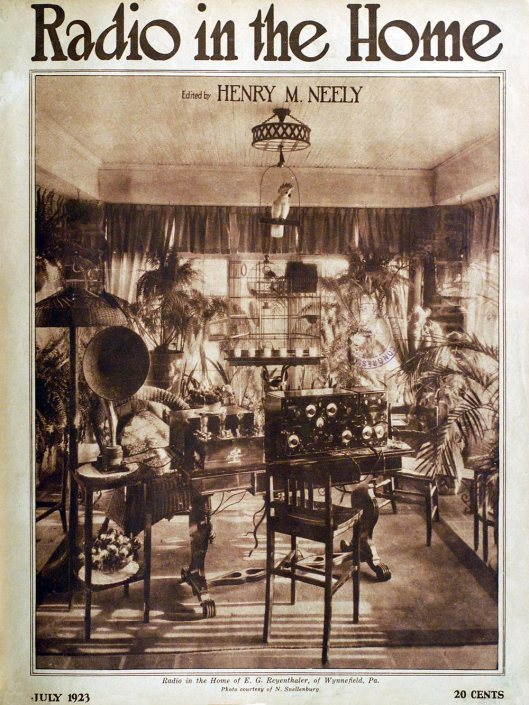
And soon other newspapers followed, opening a wider world of information to the reading public. In under a century, however, news appeared in a new form of technology entirely: the first news broadcast by radio believed to have been on August 31, 1920, by a set owned—perhaps not surprisingly by a newspaper— The Detroit News. Considering what radios looked like in the early 1920s, we doubt that many people heard it (this is an image from Lifestyle Magazine from 1923).
image1cearlyradio1923.jpg
Radios soon improved, however, so that, along with newspapers, people could tune in to hear news, news sometimes more up-to-date than even the newspapers could supply. And then came television. Experiments had been made with television broadcasting as early as 1940, but steady broadcasting really only began in 1948, with CBS Television News.
And then the internet appeared, so that, today, more people are believed to get their news from some form of electronic means than any other (or so electronic means tell us). Practically anywhere you go in our world, you see people staring at screens (not always reading the news, of course—with the universe of apps, people can be doing almost anything imaginable), many of them so portable that you can watch people doing it while walking
image1walktext.jpg
eating,
image2eattext.jpg
even while driving (which, frankly, terrifies us!).
image3textdrive.jpg
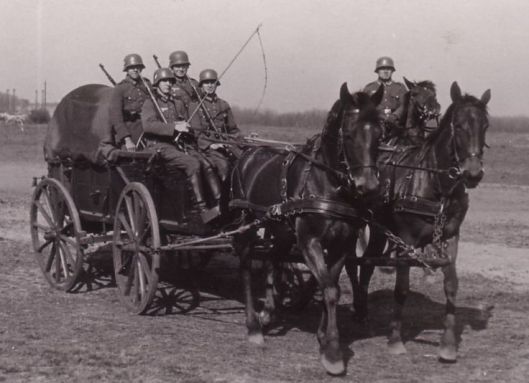
There is a problem with news, however, in every era. Shakespeare’s Rumor may have been pushed to one side by later technological innovations, but, in the form of so-called “fake news”, it’s still with us. And, in fact, faked news—news distorted—or even manufactured—has become a standard feature in newer technology. One has only to think about Nazi propaganda (certainly not the first, but perhaps, for us, the most extensive and most vivid), where—just as one example out of thousands—the mostly horse-powered German army of 1940
image4awehrmacht.jpg
was publicly depicted as streamlined and gasoline-powered (or, even more high-tech, diesel-powered).
image4bwehrmachttruck.jpg
Some time ago, we talked about literacy in Middle-earth. There was no printed material, of course, and literacy appears to have been limited (we only have to mention Gaffer Gamgee saying of Sam, “Mr. Bilbo has learned him his letters—meaning no harm, mark you, and I hope no harm will come of it.” to imagine that not only was it limited, but there might even be a certain suspicion attached to it.)
And what news there was came by the oldest of methods:
“There were rumours of strange things happening in the world outside; and as Gandalf had not at that time appeared or sent any message for several years, Frodo gathered all the news he could. Elves, who seldom walked in the Shire, could now be seen passing westward through the woods in the evening, passing and not returning; but they were leaving Middle-earth and were no longer concerned with its troubles. There were, however, dwarves on the road in unusual numbers. The ancient East-West Road ran through the Shire to its end at the Grey Havens, and dwarves had always used it on their way to their mines in the Blue Mountains. They were the hobbits’ chief source of news from distant parts—if they wanted any: as a rule dwarves said little and hobbits asked no more. But now Frodo often met strange dwarves of far countries, seeking refuge in the West. They were troubled, and some spoke in whispers of the Enemy and of the Land of Mordor.” (The Fellowship of the Ring, Book One, Chapter 2, “The Shadow of the Past”)
(See also the scene in The Green Dragon a little later in the chapter, where there is discussion, all based on hearsay, about Shire and extra-Shire events, between Sam and Ted Sandyman.)
For two people in Middle-earth, however, news came by a method in a strange way like that of the internet: the palantir, and that news which they received was not to their advantage. Made “from beyond Westernesse, from Eldamar. The Noldor made them…” Gandalf tells Pippin. (The Two Towers, Book Three, Chapter 11, “The Palantir”)

The palantiri were made “to see far off, and to converse in thought with one another.” Although there were seven, one, that at Osgiliath, was the master: “each palantir replied to each, but all those in Gondor were ever open to the view of Osgiliath.” Saruman had one of the others
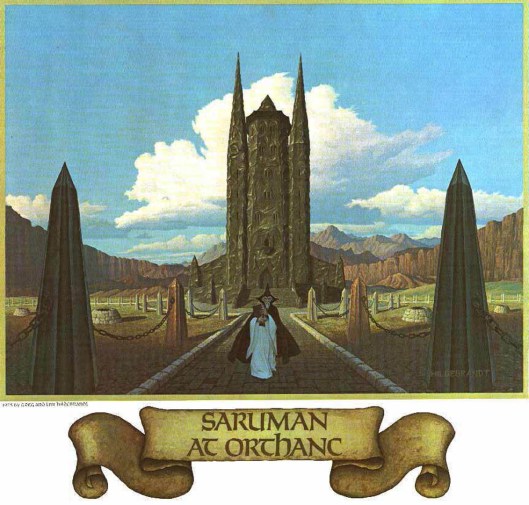
image4saruman.jpg
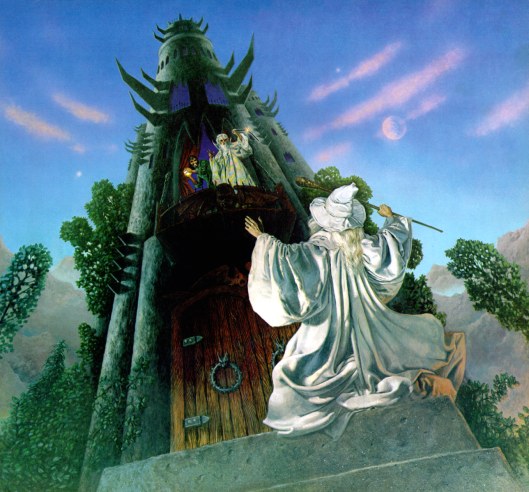
—the one under discussion in this chapter, after Pippin had almost come to disaster from looking in it—which Grima flung off Orthanc
image5sarumanorthanc.jpg
in what, although unexplained, must have been an attempt to brain Gandalf.
image6gandalforthanc.jpg
Unfortunately for Saruman, what he presumably thought would benefit his quest for what he speciously tells Gandalf is “Knowledge, Rule, Order; all the things that we have so far striven in vain to accomplish…” (The Fellowship of the Ring, Book Two, Chapter 2, “The Council of Elrond”), becomes a snare, as it seems that the master stone of Osgiliath has fallen into Sauron’s hands and “Easy it is now to guess how quickly the roving eye of Saruman was trapped and held; and how ever since he has been persuaded from afar, and daunted when persuasion would not serve.” (The Two Towers, Book 3, Chapter 11, “The Palantir”)
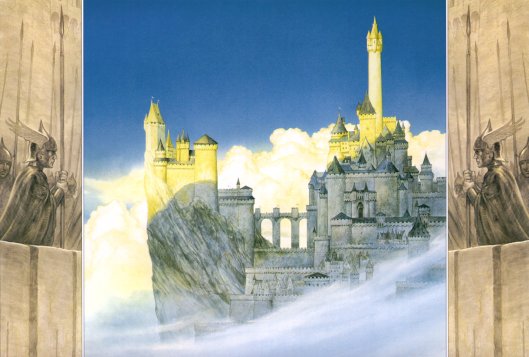
There is another surviving stone, however, and, though it doesn’t turn its possessor into an unwilling ally of Sauron, its propaganda—faked news—does terrible damage, all the same. In the White Tower of Ecthelion in Minas Tirith,
image7awhitetower.jpg
Denethor
image7denethor.jpg
holds a palantir and he, too, is caught, as Gandalf surmises:
“…I fear that as the peril in his realm grew he looked in the Stone and was deceived: far too often, I guess, since Boromir departed. He was too great to be subdued to the will of the Dark Power, he saw nonetheless only those things which that Power permitted him to see. The knowledge which he obtained was, doubtless, often of service to him; yet the vision of the great might of Mordor that was shown to him fed the despair of his heart until it overthrew his mind.” (The Return of the King, Book Five, Chapter 7, “The Pyre of Denethor”)
This overthrow, brought on by Sauron’s propaganda, results in Denethor accusing Gandalf of plotting “to rule in my stead, to stand behind every throne, north, south, or west” as well as delivering what clearly sounds like the “speech long rehearsed” Gandalf has long ago said that Saruman delivered to him in Orthanc:
“For a little space you may triumph on the field, for a day. But against the Power that now arises there is no victory. To this City only the first finger of its hand has yet been stretched. All the East is moving. And even now the wind of thy hope cheats thee and wafts up the Anduin a fleet with black sails. The West has failed. It is time for all to depart who would not be slaves.”
“to depart” quickly seems a euphemism for something much more radical as Denethor:
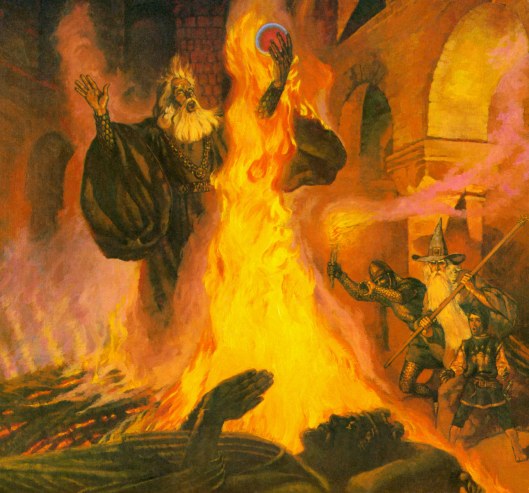
“leaped upon the table, and standing there wreathed in fire and smoke he took up the staff of his stewardship that lay at his feet and broke it on his knee. Casting the pieces into the blaze he bowed and laid himself on the table, clasping the palantir with both hands upon his breast.”
image8denethorontable.jpg
Here, we thought of all of those people we see who seemingly can never put down their phones—even in death Denethor still grips the very thing which has brought about his destruction.
image9textdrive.jpg
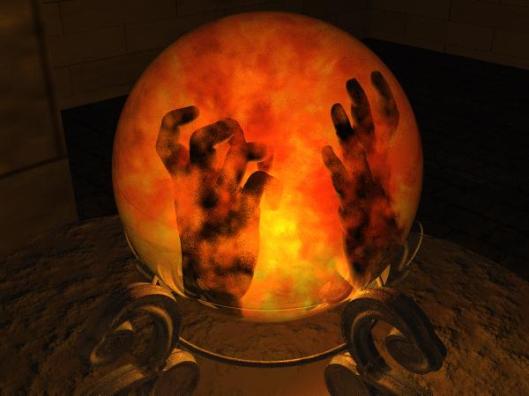
Was JRRT sending us, here in the future, a warning: beware of your source of news—and sometimes let go of what brings it to you? We can only add his description of Denethor’s palantir when it was retrieved from the pyre:
“And it was said that ever after, if any man looked in that Stone, unless he had a great strength of will to turn it to other purpose, he saw only two aged hands withering into flame.”
image10dshands.jpg
Thanks, as always, for reading!
MTCIDC
CD
PS
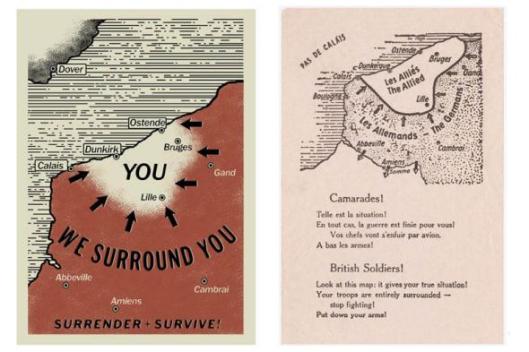
The new film, Dunkirk, opens with a British soldier catching a German propaganda leaflet based upon an actual one. Below on the left is the movie version, on the right the original. (Notice, by the way, that, in the one on the right, the English is not quite parallel to the French, including the line, “Your commanders (chefs) are going to flee by airplane.”) If Middle-earth had had a print culture, it’s easy to see such a leaflet being dropped by Nazgul over Minas Tirith!
image11leaflet.jpg

Re: Tree

23 Wednesday Aug 2017

Posted by Ollamh in Imaginary History, J.R.R. Tolkien, Literary History, Narrative Methods, Poetry

≈ Leave a comment

Tags

Alfred Tennyson, Dreamflower, Fangorn Forest, Galadriel, Gondor, Helm's Deep, Isengard, Laurelindorenan, Lothlorien, Lotus-eaters, mallorn, Minas Tirith, Mirkwood, Old Forest, Old Man Willow, Palantir, Rath Dinen, Samwise Gamgee, Saruman, The Lord of the Rings, The Odyssey, Tolkien, Treebeard, trees, White Tree of Gondor

Welcome, as always, dear readers.
image1ajrrttree
The inspirations for our postings come from many places: from something we’re reading or have just watched/seen, from a connection between two texts, or between Tolkien’s world—the real or Middle-earth—and something from the history of this world. Sometimes ideas come from the Sortes Tolkienses—our take on an ancient fortune-telling method, in which one posed a question, then opened a copy of an important text like The Bible or Vergil’s Aeneid, closed one’s eyes, and pointed and the text where the finger landed was believed, through interpretation, to contain an answer to that question. In our case, should we require inspiration, we sometimes use our 50th Anniversary hardbound of The Lord of the Rings to do this and, surprisingly often, what we find gives us an idea about what to write.
In the case of this posting, however, it was more of a “we were working on something else entirely and then there it was.” The “it” here is the White Tree of Gondor.
image1treeofgondor
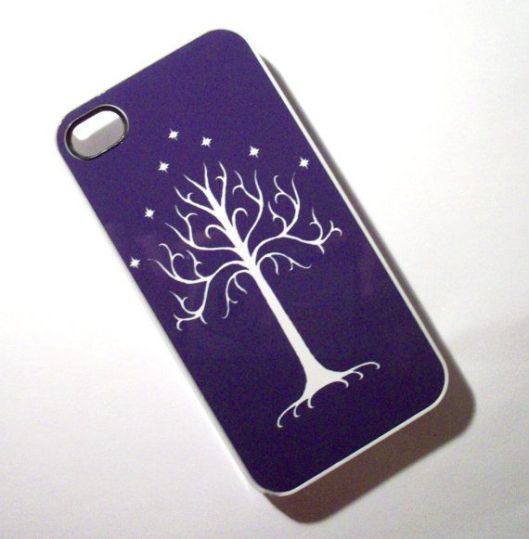
(We confess, by the way, that we have iphone cases with the image—and we are often complimented on them.)
image2phonecase
We had, in fact, been thinking about another post, this one about corruption through technology, as represented by the palantiri, and had been reading references to Denethor. This had led us to his fiery death in Rath Dinen, “Silent Street”, which led to the tombs of the kings and stewards of Gondor. Besides the rulers of Gondor, however, the street had another occupant, the old White Tree, long dead,
image3deadwhitetree.png
but which, when a new sapling
imag4blossom.jpg
was found in the mountains by Gandalf and Aragorn, was still treated with ceremony:
“Then the withered tree was uprooted, but with reverence; and they did not burn it, but laid it to rest in the silence of Rath Dinen.” (The Return of the King, Book Six, Chapter 5, “The Steward and the King”)
This seemed a rather odd thing to do to a tree and this led us, finally, to consider one function of trees in The Lord of the Rings: just as the White Tree is buried, as human rulers were, could trees act as a mirror for the condition of the human world at what would be the end of the Third Age? And can they also act as a mirror of change for the better?
Consider, for example, the dead White Tree as a symbol for the withering of Gondor itself, as Minas Tirith is described:
Pippin gazed in growing wonder “at the great stone city, vaster and more splendid than anything that he had dreamed of; greater and stronger than Isengard, and far more beautiful. Yet it was in truth falling year by year into decay; and already it lacked half the men that could have dwelt at ease there…(The Return of the King, Book Five, Chapter 1, “Minas Tirith”)
And this decay of city and tree appears to be echoed in the natural world of Middle-earth in general, as Treebeard says of Lothlorien:
image5alorien.jpg
“Do not risk getting entangled in the woods of Laurelindorenan! That is what the Elves used to call it, but now they make the name shorter: Lothlorien they call it. Perhaps they are right: maybe it is fading, not growing. Land of the Valley of Singing Gold, that was it, once upon a time. Now it is the Dreamflower.”
[Just a quick footnote here. “Dreamflower” immediately takes us to Odyssey, Book 9, 82-105, where a small party of Odysseus’ men, set ashore to explore, meet up with the Lotus-eaters, who give them the mysterious lotus to eat and that “whoever might eat of the sweet fruit of the lotus, no longer wished to bring word back or to return home/but wanted, feeding on lotus, to remain in the very same place with the lotus-eating men and to forget about home-going.” (94-97, our translation). This certainly could describe at least some of the Fellowship’s reaction to Lothlorien. Here’s an illustration from a cartoon-version:
image5blotuseaters.jpg
Alfred Tennyson wrote a poem on the same subject—here’s a LINK, in case you would like to read his 1832 (revised 1842) interpretation.]
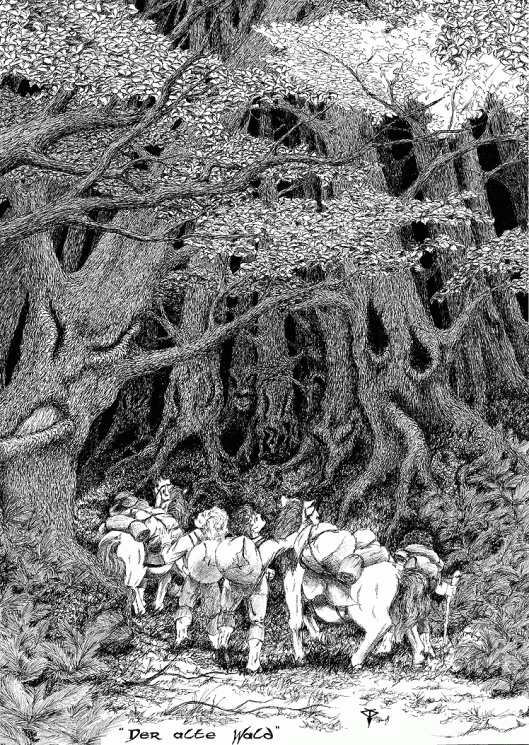
Beyond Lothlorien, other parts of the tree-covered natural world seem more menacing–there’s the Old Forest,
image5oldforest.gif
and Mirkwood,
image6mirkwood.jpg
described by Haldir:
“ ‘There lies the fastness of Southern Mirkwood…It is clad in a forest of dark fir, where the trees strive against one another and their branches rot and wither.’ “ (The Fellowship of the Ring, Book Two, Chapter 6, “Lothlorien”)
It wouldn’t take much imagination to replace “where the trees strive” with “where the humans strive against one another and their kind rots and withers”!
There is the sentient, malevolent Old Man Willow,
image7omw.jpg
and even Treebeard and his forest do not at first offer the kind of invitation one hears in the first verse of this song, from Shakespeare’s As You Like It:
Under the greenwood tree
Who loves to lie with me
And tune his merry note,
Unto the sweet bird’s throat,
Come hither, come hither, come hither:
Here shall he see
No enemy
Than winter and rough weather.

Instead, when Treebeard
image8fangorn.jpg
overhears Pippin say:
“This shaggy old forest looked so different in the sunlight. I almost felt I liked the place.” (The Two Towers, Book Three, Chapter 4, “Treebeard”)
he says, “ ‘Almost felt you liked the Forest!’ That’s good! That’s uncommonly kind of you…Turn round and let me have a look at your faces. I almost feel that I dislike you both…”
Treebeard’s hostility towards Pippin and Merry actually springs from another source—Saruman:
“He and his foul folk are making havoc now. Down on the borders they are felling trees—good trees. Some of the trees they just cut down and leave to rot—orc-mischief that; but most are hewn up and carried off to feed the fires of Orthanc.”
Treebeard’s growing anger, however, then marks a turn in the behavior of the natural world: somehow the appearance of Pippin and Merry acts as a catalyst:
“Curse him, root and branch! Many of those trees were my friends, creatures I had known from nut and acorn; many had voices of their own that are lost for ever now. And there are wastes of stump and bramble where once there were singing groves. I have been idle. I have let things slip. It must stop!”
And it’s not simply the Revenge of the Ents. Treebeard has a larger strategy, saying to the two hobbits:
“You may be able to help me. You will be helping your own friends that way, too; for if Saruman is not checked Rohan and Gondor will have an enemy behind as well as in front.”
As we know, Treebeard convinces the other Ents to help and, in a short time, they not only destroy Isengard
image8trbdisen.jpg
but also the orcs at Helm’s Deep,
image9helmsdeep.jpg
effectively removing Saruman from the story except as an empty threat—and a final, petty Sauron, ruining the Shire, which included cutting down numbers of trees—among them the famous Party Tree. And here we see one more symbol, perhaps. Long before, Galadriel had given Sam a gift which, in her wisdom (and perhaps in her foresight?) seemed almost perfect for a gardener:
“She put into his hand a little box of plain grey wood, unadorned save for a single silver rune on the lid….’In this box there is earth from my orchard, and such blessing as Galadriel has still to bestow is upon it…Though you should find all barren and laid waste, there will be few gardens in Middle-earth that will bloom like your garden, if you sprinkle this earth there.’ “ (The Fellowship of the Ring, Book Two, Chapter 8, “Farewell to Lorien”)
Once the Shire has been scoured of Saruman’s final evil, Sam remembers this present and uses it, spreading the earth across the Shire:
“So Sam planted saplings in all the places where specially beautiful or beloved trees had been destroyed, and he put a grain of the precious dust in the soil at the root of each.” (The Return of the King, Book Six, Chapter 9, “The Grey Havens”)
And his plan succeeds:
“His trees began to sprout and grow, as if time was in a hurry and wished to make one year do for twenty.”
In midst of such fertility, there is an extra favor. Sam had found within Galadriel’s box “a seed, like a small nut with a silver shale [shell or husk].”
Sam planted this in the Party Field, where the tree had once stood, and, in the spring:
“In the Party Field a beautiful young sapling leaped up: it had silver bark and long leaves and burst into golden flowers in April. It was indeed a mallorn [the golden tree specific only to Lothlorien], and it was the wonder of the neighborhood.”
Just as the human world of Middle-earth, stunted by Sauron and his minions, is now free, so is the natural world free once more—no more orcs to abuse its forests, no malevolent will to taint its woods, and the reflowering of the Shire and, at its center, the mallorn, may stand as a symbol for that rebirth—and even be twinned with the new White Tree of Gondor, far to the south.
image10mallorns.jpg
[With thanks to Britta Siemen’s blog, where we found this image—LINK here]
Thanks, as ever, for reading!
MTCIDC
CD

Healing (II)

16 Wednesday Aug 2017

Posted by Ollamh in Heroes, J.R.R. Tolkien, Literary History, Narrative Methods

≈ Leave a comment

Tags

Akira Kurosawa, Aragorn, athelas, bleeding, Boromir, cinquefoil, Eowyn, Faramir, four humors, Greco-Roman, healers, herbal medicine, Hildebrandts, Japanese block prints, John Bradmore, Kingsfoil, Macbeth, Medieval medicine, Medieval Monastery, Merry, Morgul Knife, Nazgul, Prince Hal, Prince Imrahil, Pyre of Denethor, Rammas Echor, The Battle of the Pelennor Fields, The Grey Havens, The Houses of Healing, The Lord of the Rings, The Return of the King, Throne of Blood, Tolkien, Washizu, Westernesse, Witch-King of Angmar, wounding, Yoshitoshi, Yoshitoshi's Courageous Warriors

Welcome, dear readers, as ever.
Two postings ago, we were talking about woundings in The Lord of the Rings and thinking about the medical care there as compared with that available in what we always think of as the actual parallel medieval world. We had gotten as far as Boromir, who, we imagined, would have been beyond help, pierced as he was by multiple arrows.
image1boromir.jpg
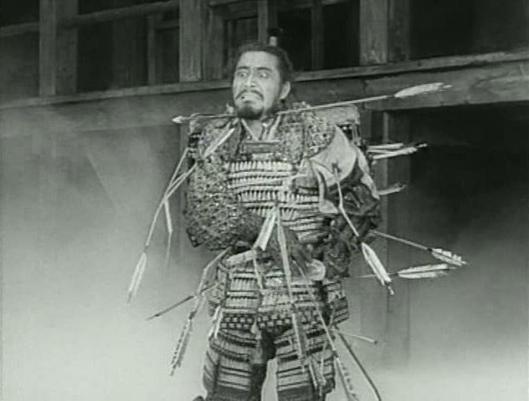
(We had also said that Boromir’s wounding reminded us of the death of the Macbeth figure in Kurosawa’s Throne of Blood, 1957.
image2throne.jpg
To which we would add—just because we love Japanese block prints (ukiyo-e)—this figure from Yoshitoshi’s series Yoshitoshi’s Courageous Warriors—1883-1886—)
image3yoshi.jpg
[Here, by the way, are some great links—one to a massive collection of Yoshitoshi prints, the other is an excellent guide to the world of Japanese block prints in general—both highly recommended!]

http://yoshitoshi.net/

http://www.ukiyo-e.se/
The next wounding is that of Faramir.
After the fall of the Rammas Echor, the long wall which was meant to protect the far side of the Pelennor, Faramir was leading the rear guard, but:
“…there came flying a deadly dart, and Faramir, as he held at bay a mounted champion of Harad, had fallen to the earth.” (The Return of the King, Book Five, Chapter 4, “The Siege of Gondor”)
At this time, we are not told of how the arrow was removed (we later are told that Prince Imrahil did it on the battlefield), but, that which concerned John Bradmore about the wounded Prince Hal in our 1403, after he had suffered an arrow wound,
image4halwitharrow.jpg
now afflicted Faramir: infection.:
“During all this black day Faramir lay upon his bed in the chamber of the White Tower, wandering in a desperate fever…”
In our medieval world, medicine was based upon a combination of beliefs, some of which even dated back to the Greco-Roman world.
One major foundation block was the idea that the body was governed by four elements, called “humors”: black bile, yellow bile, phlegm, and blood.


image5humours.png
They determined personality and behavior, but, although they were natural to the body, they could be thrown out of balance and part of a medieval doctor’s job was to rebalance them.
image6meddocs.jpg
This rebalancing could include doses of all sorts of things—dangerous metals, like mercury, concoctions from various plants, some of which were helpful, some poisonous, and bleeding—based upon the idea that, by removing blood, you were helping rebalance the body’s natural humorous proportions.
image7bleeding.jpg
In Faramir’s case, a doctor might try a number of drugs based upon plants which were believed to bring fever down:
angelica
image8angelica.jpg
chamomile
image9chamomile.JPG
datura
image10datura.jpg
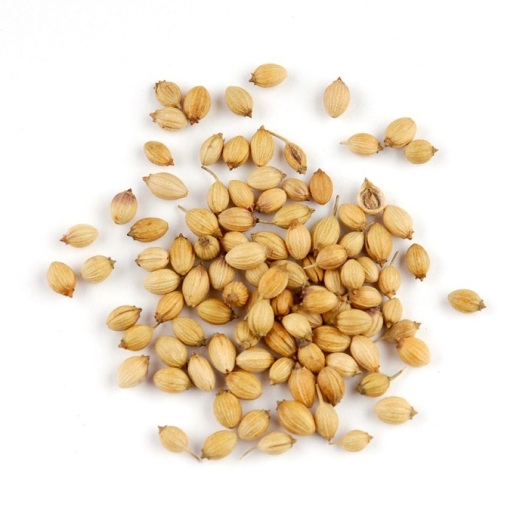
or coriander
image11coriander.jpg
In the text, however, although Pippin suggests that Gandalf be consulted, Denethor dismisses the suggestion and Faramir is left to burn—before almost being literally consumed by fire along with his mad father.
[And here we would suggest that the over-the-top scene of Denethor’s death in the film missed an important point. In the book, it is clear that what drove Denethor to try to set up a kind of Viking funeral for himself and his son was the palantir by which his mind was poisoned by a Sauron whose influence over him he fatally underestimated. And what a wonderfully spooky moment JRRT describes when the orb survives the fire which destroys the Steward:
“And it was said that ever after, if any man looked in that Stone, unless he had a great strength of will to turn it to other purpose, he saw only two aged hands withering in flame.” (The Return of the King, Book Five, Chapter 7, “The Pyre of Denethor”)]
We will return to Faramir, but, first, we want to look at two more woundings, both occurring almost in the same moment: when Eowyn and Merry face the chief of the Nazgul.
image12eowyn.jpg
In confronting the Witch King, Eowyn suffers what might seem a perfectly ordinary battle wound in a world of hand-to-hand combat such as this:
“Out of the wreck rose the Black Rider, tall and threatening, towering above her. With a cry of hatred that stung the very ears like venom he let fall his mace. Her shield was shivered in many pieces and her arm was broken; she stumbled to her knees.” (The Return of the King, Book Five, Chapter 6, “The Battle of the Pelennor Fields”)
image13merrynaz.jpg
Eowyn is saved from the Nazgul by Merry, who “had stabbed him from behind, shearing through the black mantle, and passing up beneath the hauberk had pierced the sinew in his mighty knee.”
Combined with Eowyn’s final blow at the wraith’s face, this destroyed what we presume was an undead being, but, in return, both Merry and Eowyn take an invisible wound, something which the medical people of Minas Tirith can only observe:
“But now their art and knowledge were baffled; for there were many sick of a malady that would not be healed; and they called it the Black Shadow, for it came from the Nazgul. And those who were stricken with it fell slowly into an ever deeper dream, and then passed into silence and a deadly cold, and so died. And it seemed to the tenders of the sick that on the Halfling and on the Lady of Rohan this malady lay heavily.” (The Return of the King, Book Five, Chapter 8, “The Houses of Healing”)
Eowyn and Merry (and Faramir) have been taken to “the Houses of Healing”, which, in our world, would be a hospital, something which, in our Middle Ages, would either have been part of a monastery/cloister, or were a private foundation, supported by charitable donations.
image14medhosp.jpg
Medical people there could certainly have set Eowyn’s broken arm, even sealing it in plaster to keep it immobile, but the Black Shadow would have been as difficult for them as for the healers in Minas Tirith. Comas were recognized in the Middle Ages, but there was little to be done: apparently, comatose people lose the swallowing function, which means that someone in that condition would die of dehydration, probably within a few days (speed of dehydration depends upon many factors, as well as the individual, but the longest we’ve seen is about 10 to 12 days).
To their credit, those in the Houses of Healing tried to do something by observation:
“Still at whiles as the morning wore away they [Eowyn and Merry] would speak, murmuring in their dreams; and the watchers listened to all they said, hoping perhaps to learn something that would help them to understand their hurts.”
But the Shadow spreads quickly as day fades:
“But soon they began to fall down into the darkness, and as the sun turned west a grey shadow crept over their faces.”
And there is the added difficult of Faramir, who “burned with a fever that would not abate.”
At this point, both medieval healers and those in Minas Tirith were stumped—until another factor was added. In fact, two.
Plants have been used since ancient times for medicine world-wide, so it should be no surprise that Middle-earth should have a parallel. In this instance, the plant is called “kingsfoil” or athelas. (The “foil” in the first name is—in English—based upon the Old French foil/foille, “leaf”, which comes, in turn, from a Latin word for leaf, folium—perhaps JRRT was inspired by the plant called “cinquefoil” = “fiveleaf”. Athelas is also a compound, based upon Sindarin athaya, “helpful” and lass, “leaf”.) [There’s a really useful posting on possible our world parallels for this herb and we provide the LINK here.]
When Aragorn tended to Frodo’s Morgul-knife wound earlier in The Lord of the Rings, we would have seen its use then:
“He threw the leaves into boiling water and bathed Frodo’s shoulder. The fragrance of the steam was refreshing, and those that were unhurt felt their minds calmed and cleared. The herb had also some power over the wound, for Frodo felt the pain and also the sense of frozen cold lessen in his side…” (The Fellowship of the Ring, Book One, Chapter 12, “Flight to the Ford”)
This is not all to the treatment, however. Just before he uses the herb, Aragorn appears to employ some sort of counter-spell to that which was on the knife:
“He sat down on the ground, and taking the dagger-hilt laid it on his knees, and he sang over it a slow song in a strange tongue. Then setting it aside, he turned to Frodo and in a soft tone spoke words the others could not catch.”
This pattern of speech and herb is now employed in the healing not only of Eowyn and Merry, but of Faramir, as well, and forms both a part of the movement towards the eventual defeat of Sauron and the return of light to Middle-earth, and of the confirmation of Aragorn as the rightful heir to the throne. As the herb-master, when called upon by Aragorn to produce the herb, recites:
“When the black breath blows
And death’s shadow grows
And all lights pass,
Come athelas! Come athelas!
Life to the dying
In the king’s hand lying!”
Previously, the herb-master says “it has no virtue that we know of, save perhaps to sweeten a fouled air, or to drive away some passing heaviness…old folk still use an infusion of the herb for headaches.” Now, however, Aragorn proceeds to use it three times in quick succession, along with something else, to bring back the three so sunk towards death:
“Now Aragorn knelt beside Faramir, and held a hand upon his brow. And those that watched felt that some great struggle was going on. For Aragorn’s face grew grey with weariness; and ever and anon he called the name of Faramir, but each time more faintly to their hearing, as if Aragorn himself was removed from them, and walked afar in some dark vale, calling for one that was lost.”
Moving to Eowyn, Aragorn uses the athelas again, but summons her, as well:
“Then, whether Aragorn had indeed some forgotten power of Westernesse, or whether it was but his words of the Lady Eowyn that wrought on them, as the sweet influence of the herb stole about the chamber it seemed to those who stood by that a keen wind blew through the window…”
image15aragheal.jpg
And a third time, with Merry: “I came in time, and I have called him back.”
We’ll end the second part of our discussion of woundings here—or almost. There is one more patient whom it appears even the king can’t heal:
“But I have been too deeply hurt, Sam.” Says Frodo. “I tried to save the Shire, and it has been saved, but not for me. It must often be so, Sam, when things are in danger; some one has to give them up, lose them, so that others may keep them.” (The Return of the King, Book 6, Chapter 9, “The Grey Havens”)
image16greyhavens.jpg
And yet, there is perhaps the promise of healing beyond Middle-earth, something which may even bear a faint suggestion of the scent of Athelas:
“And the ship went out into the High Sea and passed on into the West, until at last on a night of rain Frodo smelled a sweet fragrance on the air and heard the sound of singing that came over the water…the grey rain-curtain turned all to silver glass and was rolled back, and he beheld white shores and beyond them a far green country under a swift sunrise.”
Thanks, as ever, for reading.
MTCIDC
CD

Dancing with the Elves

09 Wednesday Aug 2017

Posted by Ollamh in Fairy Tales and Myths, Imaginary History, J.R.R. Tolkien, Literary History, Narrative Methods

≈ Leave a comment

Tags

19th Century, A Midsummer Night's Dream, Anglo-Saxon, Arthur Rackham, Beren and Luthien, dance, Dicky Doyle, Elbereth Gilthoniel, elf ring, Elves, Fairy, fairy ring, Fairy Tale, Folklore, In Fairyland, Kenneth Grahame, Peter Pan in Kensington Gardens, Song, The Hobbit, The Lord of the Rings, Tolkien, Victorian, William Shakespeare

Dear readers,

Welcome, as always.

In The Lord of the Rings, Elves are powerful, human-like figures– immortal, skilled, and revered as counselors. In Tolkien’s work, however, they have not always been this way– early drafts suggest a sort of Victorian confusion, as if Tolkien’s elves have ancestral ties to both the tall, beautiful elves of the Anglo-Saxons, and to the jovial, delicate elves and fay of the mid- to late- 19th century.

In the beginning of June this year, Christopher Tolkien published an edited version of his father JRRT’s story, “Beren and Luthien”, which was originally published as a part of The Silmarillion, a history of the Elves.

beren-e-luthien-alan-lee.jpg

Within this book are previously unpublished earlier drafts and versions of the story, and in the introduction to them, Christopher Tolkien comments upon them: Beren was originally a gnome (which he was quick to explain meant an immortal figure– not what we would find in gardens),

il_fullxfull.1076091410_mapj.jpg

and then an elf, before his final incarnation as a mortal man. Luthien, the immortal Elven princess, is referred to by Tevildo, Prince of Cats, as “Princess of Fairies”. After being ordered to dance before him by the dark lord Melkor, Luthien began

“Such a dance as neither she nor any other sprite or fay or elf danced every before or has done since… magically beautiful as only Tinuviel ever was… and Ainu Melko for all his power and majesty succumbed to the magic of that Elf-maid, and indeed even the eyelids of Lorien had grown heavy had he been there to see” (76).

BL-back.jpg

What we found curious here was JRRT’s uses of “Elf” and “Fairy” as seemingly synonymous with each other, when, depending on to which story an Elf or Fairy belongs, they may be quite different. Being people who spend a good deal of time in the Victorian world, when we think of dancing fairies, what is more likely to come to mind are the tiny winged figures who appear in Kenneth Grahame’s Peter Pan in Kensington Gardens (1906), with illustrations by Arthur Rackham.

fairy_tiff.jpg

20245801 Fairies never say we feel happy....jpg

We might also be reminded of the little people who inhabit Dicky Doyle’s In Fairyland (1869)

7c11afdbc1cc79ed7cf88e64e80b8528--richard-doyle-conan.jpg

115cbac12c146d78a0f2753bfae597b9--antique-books-old-books.jpg

What we see in the Victorian sense of fairies and elves in images and stories is a revival of Elizabethan fairy-stories, which focus on little people: much like the fairies of William Shakespeare’s A Midsummer Night’s Dream, for example, the fairies in Kensington are light-footed, winged beings who wear flowing garments, and they fancy calling themselves “dancey” rather than “happy”.

Dicky Doyle’s In Fairyland finds Elves in the “Elf World” to be the same sort of creatures. The picture below gives us an idea of the jovial nature of Victorian Elves, and is captioned, “The little Elves would cross over the border, and come into the King’s fields and gardens.”:

356d133220f9a2875cd80f0ad16cab6c.jpg


J.R.R. Tolkien was born in 1896, at the end of the Victorian period. It would be understood if the Victorian sense was residual in his work– after all, he was a child when Arthur Rackham’s illustrations met the height of their popularity, at the beginning of the 20th century, and he mentions in his letters having seen them.

In his Middle-earth, however, we see a very different kind of Elf.  Tolkien describes how he imagined them in a letter to Naomi Richardson on 25 April 1954:

” ‘Elves’ is a translation, not perhaps now very suitable, but originally good enough, of Quendi. They are represented as a race similar in appearance (and more so further back) to Men, and in former days of the same stature… [they] are in fact in these histories very little akin to the Elves and Fairies of Europe; and if I were pressed to rationalize, I should say that they represent really Men with greatly enhanced aethetic and creative features, greater beauty and longer life, and nobility…” (Letters, 176).

Below are a few artists’ renditions of what these Elves might look like, and they’re very different from the imaginations of Arthur Rackham and Dicky Doyle.

61954a630522d2bbce39220223dc89ef.jpg

galadriel-hildebrant.jpg

aab7b11adf539086efc6762490bc7417.jpg

ted nasmith_the complete guide to middle-earth_departure at the grey havens.jpg

tumblr_n2gwteLx4b1tnpw9xo1_500.jpg

And some images from Peter Jackson’s films, as well:

Haldir_w_elves.jpg

Gli-Galad_y_Elrond.jpg

When JRRT refers to “the former days”, we can assume that he means two things:

  1. The former days of Middle-earth, such as in The Silmarillion
  2. The former days of our world–specifically, Anglo-Saxon Elves, which resemble the Elves of Middle-earth in their stature and beauty. Thus, the “former days” refer to a former rendition of Elves– one which, belonging to the Anglo-Saxons, would be familiar to JRRT.

(Attached here is a very useful book on this subject by Alaric Hall, which provides an in-depth look at pre-Elizabethan and pre-Victorian Elves.)

These Elves are almost the polar opposite of the Elfin and Fay creatures of the Victorians, and we found it curious that they would have anything in common. As demonstrated by Rackham’s “dancey” fairies and Luthien in Beren and Luthien, however, we found one thing: a love for song and dance.

While looking through Jack Zipes’ collected anthology of Victorian Fairy Tales, The Revolt of Fairies and Elves, we came across an example of this in “Charlie Among the Elves”, in which the protagonist, a young boy who finds himself, by some sort of magic or dream, in the world of fairies and elves. The elves invite him in and greet him with a song:

“…they struck up a melody which Charlie thought was the very sweetest music which he had ever heard in the whole course of his life, and thus ran the song of the Elves:

In the waning summer light

Which the hearts of mortals love

’Tis the hour for elfin sprite

Through the flow’ry mead to rove.


Mortal eyes the spot may scan,

Yet our forms they ne’er descry;

Though so near the haunts of man,

Merrily our trade we ply.”

In some folklore, there is also the danger of dance. Fairy rings, also called elf rings, are supernatural places created by the dancing of either fairies, elves, or witches. They have been considered hazardous by much of Western folklore to those outside of the fairy world; in these stories, mortals who have stepped inside have been cursed, trapped, or simply disappear.

fairy-ring.jpg

Plucked-from-the-Fairy-Circle.jpg

Rackham-Come-Now-a-Roundal-L.jpg

Charlie was lucky that he had come across benevolent creatures, and this reminded us of another instance when an adventurer was greeted by Elves through song: in The Hobbit, which is where Tolkien first introduced Elves, before he later understood them. Before The Lord of the Rings and The Silmarillion, Bilbo, Thorin, and Company are greeted by Elf-song in Rivendell:

” ‘Hmmm! it smells like elves!’ thought Bilbo, and he looked up at the stars. They were burning bright and blue. Just then there came a burst of song like laughter in the trees:

‘O! What are you doing,

And where are you going?

Your ponies need shoeing!

The river is flowing!

O! tra-la-la-lally,

here down in the valley!’ ”

As the Elves in both “Charlie Among the Elves” and The Hobbit are jovial and playful in their music, we might think that Tolkien had not completely abandoned the Victorian Elfin world, after all; of course, in The Lord of the Rings and in The Silmarillion, the Elves, just as much as the stories, take a more serious turn. Playful tunes are replaced with much more serious poetry, and in their native tongue, such as the Hymn to Elbereth Gilthoniel:

“A Elbereth Gilthoniel
Silivren penna miriel
A menel aglar elennath
Na chaered palandiriel.
O Galadhremmin ennorath
Fanuilos, le linnathon
Nef aer, si nef aeron!
A Elbereth Gilthoniel!
We still remember,
We who dwell
In the lands beneath the trees
Thy starlight on the western seas.”

pl_elbereth.jpg

When trying to reconcile these sorts of Elves and Fairies, rather than assessing them through their physical and behavioral qualities, we may look at them through something just as important in understanding them: music. The Silmarillion explains that the Elves, as well as the world and everything in it, including good and evil, originated from song.

But just as Elven music changes from The Hobbit to The Lord of the Rings, so the Elves have changed– they are human-sized, but also perhaps more serious and melancholy, as a parallel to the world Tolkien had created, which was much more complex than he originally realized.

The songs in The Lord of the Rings, and the later versions of Luthien, which present her as an Elf princess– a beautiful being which Beren falls in love with as soon as he sees her dance– express that melancholy. As the tale of Beren and Luthien reflects the way Tolkien wishes us to see Elven folklore– romantic, adventurous, and, ultimately, sorrowful– perhaps we can conclude that JRRT’s Elves are really fairies grown up.

And what do you think, dear readers?

MTCIDC,

CD

← Older posts
Newer posts →

The Doubtful Sea Series Facebook Page

The Doubtful Sea Series Facebook Page

  • Ollamh

Categories

  • Artists and Illustrators
  • Economics in Middle-earth
  • Fairy Tales and Myths
  • Films and Music
  • Games
  • Heroes
  • Imaginary History
  • J.R.R. Tolkien
  • Language
  • Literary History
  • Maps
  • Medieval Russia
  • Military History
  • Military History of Middle-earth
  • Narnia
  • Narrative Methods
  • Poetry
  • Research
  • Star Wars
  • Terra Australis
  • The Rohirrim
  • Theatre and Performance
  • Tolkien
  • Uncategorized
  • Villains
  • Writing as Collaborators
Follow doubtfulsea on WordPress.com

Across the Doubtful Sea

Recent Postings

  • Do You Speak Villain? (Part 3) February 18, 2026
  • Do You Speak Villain? (2) February 11, 2026
  • Do You Speak Villain? (Part 1) February 4, 2026
  • Towering January 28, 2026
  • Tolkien Among the Indians January 21, 2026
  • Thin and Stretched January 14, 2026
  • Through a glass… January 7, 2026
  • Heffalumps? December 31, 2025
  • We Three Kings December 24, 2025

Blog Statistics

  • 107,656 Views

Posting Archive

  • February 2026 (3)
  • January 2026 (4)
  • December 2025 (5)
  • November 2025 (4)
  • October 2025 (5)
  • September 2025 (4)
  • August 2025 (4)
  • July 2025 (5)
  • June 2025 (4)
  • May 2025 (4)
  • April 2025 (5)
  • March 2025 (4)
  • February 2025 (4)
  • January 2025 (5)
  • December 2024 (4)
  • November 2024 (4)
  • October 2024 (5)
  • September 2024 (4)
  • August 2024 (4)
  • July 2024 (5)
  • June 2024 (4)
  • May 2024 (5)
  • April 2024 (4)
  • March 2024 (4)
  • February 2024 (4)
  • January 2024 (5)
  • December 2023 (4)
  • November 2023 (5)
  • October 2023 (4)
  • September 2023 (4)
  • August 2023 (5)
  • July 2023 (4)
  • June 2023 (4)
  • May 2023 (5)
  • April 2023 (4)
  • March 2023 (5)
  • February 2023 (4)
  • January 2023 (4)
  • December 2022 (4)
  • November 2022 (5)
  • October 2022 (4)
  • September 2022 (4)
  • August 2022 (5)
  • July 2022 (4)
  • June 2022 (5)
  • May 2022 (4)
  • April 2022 (4)
  • March 2022 (5)
  • February 2022 (4)
  • January 2022 (4)
  • December 2021 (5)
  • November 2021 (4)
  • October 2021 (4)
  • September 2021 (5)
  • August 2021 (4)
  • July 2021 (4)
  • June 2021 (5)
  • May 2021 (4)
  • April 2021 (4)
  • March 2021 (5)
  • February 2021 (4)
  • January 2021 (4)
  • December 2020 (5)
  • November 2020 (4)
  • October 2020 (4)
  • September 2020 (5)
  • August 2020 (4)
  • July 2020 (5)
  • June 2020 (4)
  • May 2020 (4)
  • April 2020 (5)
  • March 2020 (4)
  • February 2020 (4)
  • January 2020 (6)
  • December 2019 (4)
  • November 2019 (4)
  • October 2019 (5)
  • September 2019 (4)
  • August 2019 (4)
  • July 2019 (5)
  • June 2019 (4)
  • May 2019 (5)
  • April 2019 (4)
  • March 2019 (4)
  • February 2019 (4)
  • January 2019 (5)
  • December 2018 (4)
  • November 2018 (4)
  • October 2018 (5)
  • September 2018 (4)
  • August 2018 (5)
  • July 2018 (4)
  • June 2018 (4)
  • May 2018 (5)
  • April 2018 (4)
  • March 2018 (4)
  • February 2018 (4)
  • January 2018 (5)
  • December 2017 (4)
  • November 2017 (4)
  • October 2017 (4)
  • September 2017 (4)
  • August 2017 (5)
  • July 2017 (4)
  • June 2017 (4)
  • May 2017 (5)
  • April 2017 (4)
  • March 2017 (5)
  • February 2017 (4)
  • January 2017 (4)
  • December 2016 (4)
  • November 2016 (5)
  • October 2016 (6)
  • September 2016 (5)
  • August 2016 (5)
  • July 2016 (5)
  • June 2016 (5)
  • May 2016 (4)
  • April 2016 (4)
  • March 2016 (5)
  • February 2016 (4)
  • January 2016 (4)
  • December 2015 (5)
  • November 2015 (5)
  • October 2015 (4)
  • September 2015 (5)
  • August 2015 (4)
  • July 2015 (5)
  • June 2015 (5)
  • May 2015 (4)
  • April 2015 (3)
  • March 2015 (4)
  • February 2015 (4)
  • January 2015 (4)
  • December 2014 (5)
  • November 2014 (4)
  • October 2014 (6)
  • September 2014 (1)

Blog at WordPress.com.

  • Subscribe Subscribed
    • doubtfulsea
    • Join 78 other subscribers
    • Already have a WordPress.com account? Log in now.
    • doubtfulsea
    • Subscribe Subscribed
    • Sign up
    • Log in
    • Report this content
    • View site in Reader
    • Manage subscriptions
    • Collapse this bar
 

Loading Comments...